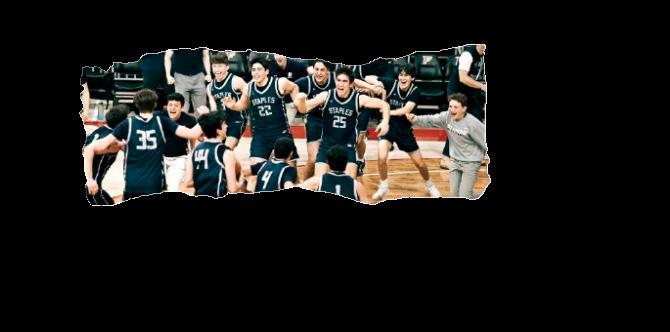







The Staples boys’ basketball team is looking to continue their upward trajectory after a historic season that saw them win the FCIAC title
Inklings News is uncensored, unedited by administration, and does not allow prior review.
The Editorial Board determines editorial opinions that are authored by the Editors-in-Chief. Inklings News serves as an open forum for the public and welcomes letters to the editor and other submissions. Send signed letters to inklingsnews@westportps.org. Submissions will not be edited prior to publication.
Inklings News reserves the right to not publish advertisements that promote products that could be harmful to student health.
Inklings News is a member of the Columbia Scholastic Press Association and the National Scholastic Press Association and supports the Student Press Law Center.
The decisions of Inklings News and Westport Public Schools are made without regard to race, color, age, sex,religion, national origin, sexual orientation, marital status, disability or any other discriminating basis prohibited by local, state or federal law
2
The Editorial Board shares its thoughts on Staples’ approach to AI.
5 | Perfect timing
Phoebe Rosenberg breaks down the “optimal” approach to weekend work.
8-9 | Trump year one
Tucker Lane looks back at key moments from the first year of President Trump’s term.
12-13| Historic Winslow
Inklings explores the historical past of a well known town park.
One Staples student made a remarkable 50-million yearold find.
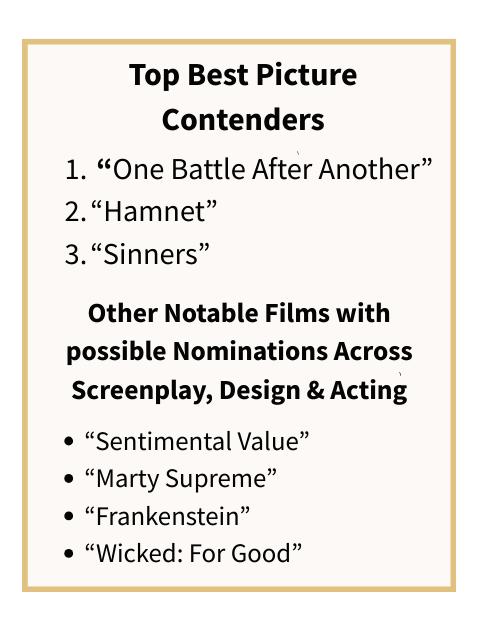
17 | Award season
Recapping the year’s hottest film and music.
Alex Gordonos shares crucial insight on how to survive exam season
90 Days-in
Andi Jacobs, Sophie Smith
Managing Editor
Will Enquist
Associate Managing Editor(s) Anna Petrosino
Creative Directors
Camille Blundell & Bianca Mastocciolo
Business Manager
Olivia Saw Advisors
Joseph DelGobbo & Mary Elizabeth Fulco
Inklings goes Inside the boys’ basketball team’s effort to defend their FCIAC title.
19 | Interactive
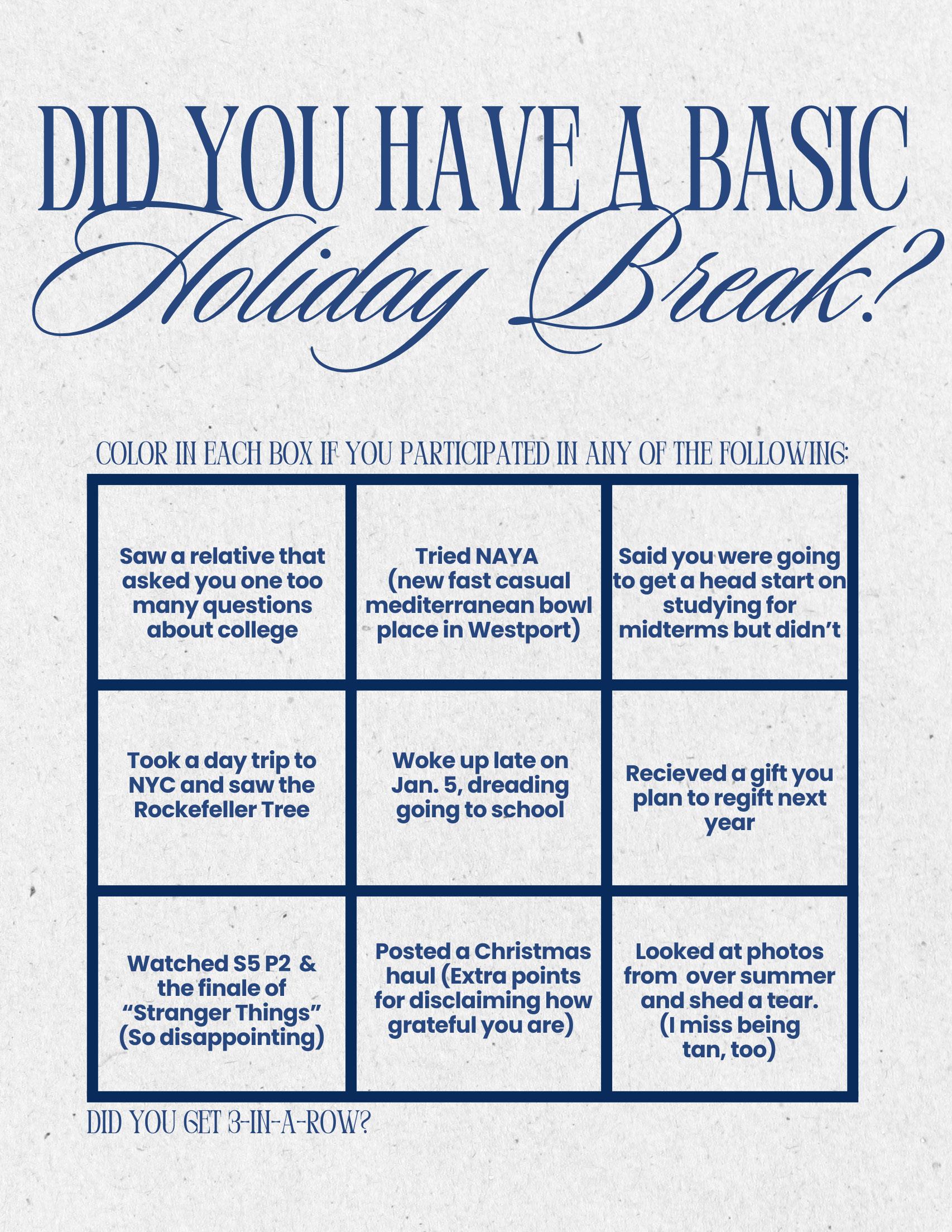
How basic was your winter break?
Competitors past and present reflect on their participation in Staples’ program
Inklings investigates teacher use of artificial intelligence in the classroom
Editors Lily Ashford
Katie Brill
Sutton Bulkeley
Ann Marie Maccaro
Chloe Mitchell
Ella Turner
Juliet Varsov

The Editorial Board voted unanimously in favor of this opinion.
Superintendent omas
Scarice has endorsed AI in several district-wide emails. is October, he stated that, “ e questions before us are not if we should engage with AI, but how.”
However, the Staples handbook de nes AI plagiarism as, “any use of AI software platforms without the written and explicit permission of the teacher.”
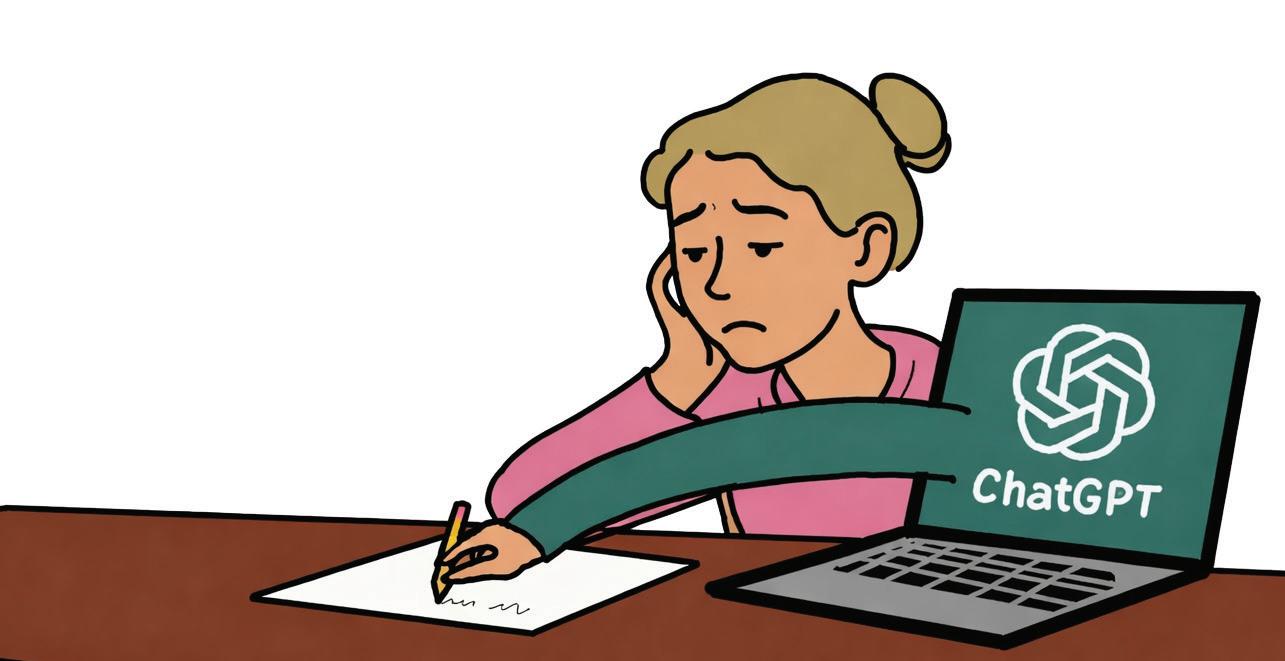
Some teachers encourage their students to use AI while others prohibit it entirely. So, it may come as no surprise: students are confused.
Consider the following real-life ethical dilemmas members of our Editorial Board
aged to use in middle school, gives corrections to x grammatical errors on essays. So, can we take an essay we wrote entirely by ourselves and then input it into Grammarly to x any grammatical errors? Does it depend on the subject? e teacher? e class?
If we could even nd a reliable AI detector, what percentage of AI use would be deemed acceptable by the school? 20%? 10%?
When information within an assignment can be completed through quick online searches, students feel more inclined to utilize AI.
Faculty and students must ultimately work together to promote an environment that has transparent standards and also acknowledges the complexity of
AI. have faced.
If a student took personal notes on a book’s themes, and then inputted those notes into AI and asked it to organize them in preparation for writing an essay, is that plagiarism?
Is it ok to use AI to create an outline? A thesis? A precis? If a student does not comprehend a reading, can they ask AI to explain it to them and help them analyze it?

Grammarly, a platform many students were encour-
Graphic by Bianca Mastocciolo
Students who attempt to experiment with AI at all run the risk of getting punished for its usage. But students who play it safe might not produce work that is up to the standards of those using AI.
e Board believes that there is a need to completely redesign assessments. For instance, some English teachers have replaced traditional annotated bibliographies with source conferences, and computer science teachers often give quizzes testing students’ understanding of the coding projects they submit. If teachers redesigned assessments to push independent critical thinking, then AI won’t help, and everyone can win.

Whether students use it or not, the fear of being agged for AI limits students. For instance, many students now avoid an em-dash because it is popularly generated by AI. If a student does use AI, they may purposefully add mistakes such as spelling errors as evidence that it is human written.
In addition, it is possible that teachers are inadvertently contributing to increases in student use and reliance on AI.
ere also should be more

careful consideration given to outlining per-
missible use of AI for adults and faculty. While students live with ongoing paranoia and doubt about AI use, some teachers are freely employing the same technology, generating full tests and even drafting college recommendations. e Editorial Board is especially dismayed by the number of teachers who have admitted to using AI for college recommendations. ose letters are meant to be written by people who have a connection with the student. While it may feel like AI helps teachers improve their writing and therefore build ethos, it actually removes the emotion that colleges look for in a recommendation. Many members of the Editorial Board believe it is ethically wrong for a teacher to use AI without informing the student for whom the letter is written.
But instead of students placing blame on teachers, or teachers placing blame on students, faculty and students must ultimately work together to promote an environment that has transparent standards and also acknowledges the complexity of AI usage.
Alex Gordonos 27 Staff Writer
Everyone knows the feeling: after relaxing, partying and seeing family for the holidays, the year rolls over and everything gets worse. e optimism from summer is gone, the longing for New Years has passed and looming in front of you is a bleak, cold and empty winter with the dread of midterms. So, to make sure you make it to spring, here are some tips to get you through midterms.
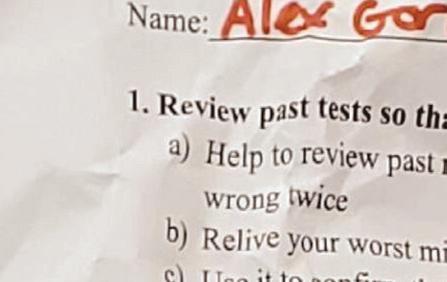
Review past tests: ght the urge to break down and cry from seeing all the mistakes you’ve made leading up to now. Instead, use them to learn, and whatever you do, don’t get the same question wrong twice. Now's the time to truly learn the one unit that “sounded easy”… until you took the test.


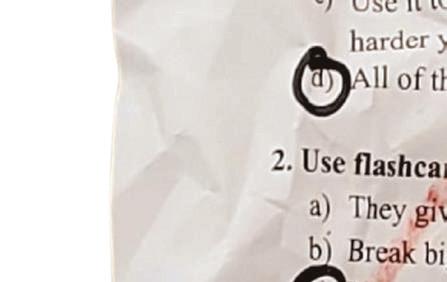

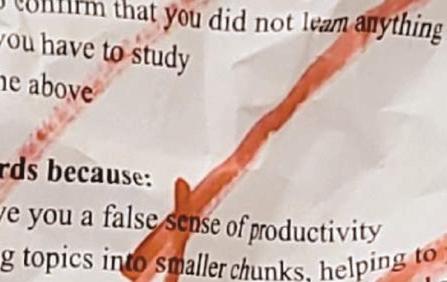
Flash cards: Look, no one likes making them, but when you need to cram four months of information into your head on a tight schedule, ash cards are a must have. Breaking down the most important topics into little chuncks and taking them on one at a time can help make sure nothing slips through. e last thing you want is to be sitting an hour into your history midterm and forget that obscure old dude your textbook in- sisted was EXTREMELY important despite nobody caring about him since the 1940s …. Or was it 1840?


Study groups: Nothing says a happy welcome back from vacation like reminding your friends that midterms are about to cook both of you. e two greatest enemies to a good study session are procrastination and boredom and study groups can help ght both. Nothing keeps you from breaking down over re-reading six chapters in four days like seeing someone you know su er the same fate. Just make sure they aren’t going to distract you with music recommendations or a story that feels like it came out of a 2000s teen movie.













Study now, worry later: Well look, despite what Power School and your parents say, a bad grade isn’t the end of you, as long as you learn from it. With midterms being 10% of your grade, it’s best to put those bad grades in the past. At least we’re halfway through the year, despite being two units behind the syllabus, but hey, that’s a problem for

Phoebe Rosenberg 27 Arts Web Editor









As the world’s top procrastinator (a title I award to myself because I deserve it), I’ve been working tirelessly (correction: “while tired” because I put this article o to the last minute) to answer one of the greatest unsolved mysteries of my generation. No, it’s not why it takes some teachers the whole quarter to put in a homework completion grade, and it’s not who actually eats the cafeteria’s soft pretzels. is dilemma is far more pressing. I embarked on discovering the answer to the age-old question of when it is the best time to do weekend homework. Luckily, I’ve graciously decided to bestow my ndings onto the Staples student body.






















Doing your homework on Friday after school is awful. Does anyone want to do two days of work over the course of one night? I don’t know about you, but that’s my me-time! It’s my WELL DESERVED award for all my hard work. e minute the nal bell rings, I have no desire to participate in anything school-related. So completing homework on Friday is a total bust.































For me, Saturday is my sleep-in day. It’s the day I can sleep for 12 hours, plus a nap or two to bump up my hours-of-sleep-per-night weekly average. It’s like vacation, and it’ll take pulling teeth (or maybe a substantial bribe) to get me to do work during my unpaid time o . at makes Saturday crossed o for completing homework, too.








































A normal person would leave completing homework until Sunday night. ey stay up late nishing and then complain that they got no sleep, spending all night working, even though they had all weekend to do it. It is reliable, and would get the average procrastinator to actually open up their notebook or laptop. But I’m not average. Sunday homework completion is simply impossible.


























A true, pure bred procrastinator knows that the best time to do weekend homework is 5 a.m. on Monday morning. It is the perfect setting: a small window of time to build stress, a more immediate consquence if you don’t nish and all my motivation is back for the school week. Some may call it crazy, but as a professional in this situation and the world’s number one procrastinator (in case you forgot), I’m right, and you’re wrong. I can con dently say this method works about 50% of the time. Many of us are already spread thin during the work week like the last human in “Doctor Who,” so spending our precious weekends slaving over a computer or a thousand worksheets doesn’t feel like the move. At least doing my homework when I’m half asleep keeps my weekends free. Just know that if you want to hang out at 5 a.m. on Monday, I’m busy.











Zara Saliba ’26
Paper Managing Editor
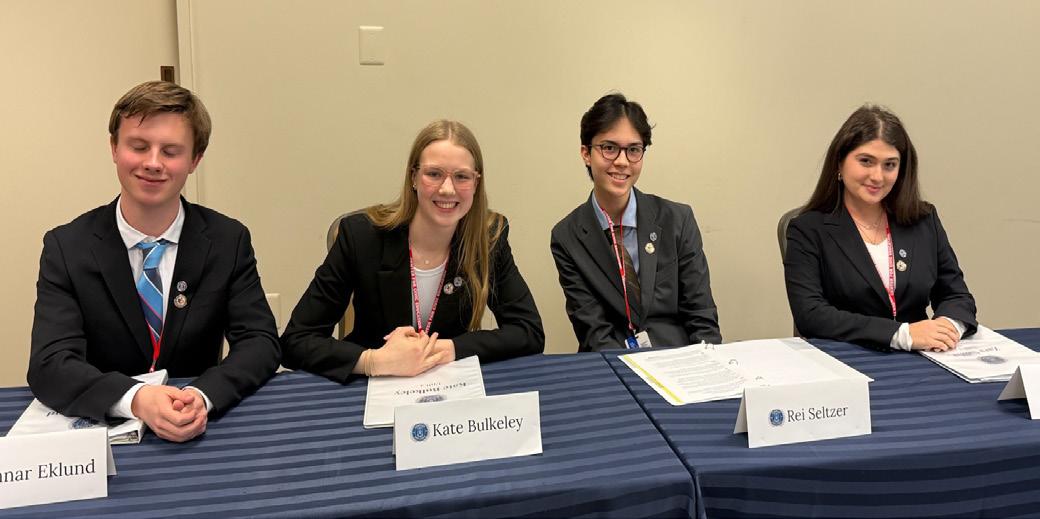
Draft, revise, rehearse, repeat. Draft, revise, rehearse, repeat. That’s the motto the students hardat-work in room 2064 during period 3 follow while preparing their responses for the Connecticut “We the People” competition.
Zara Saliba ’26
Web Managing Editor
Every year, social studies teacher Suzanne Kammerman’s AP Government and Politics: We the People class spends its periods preparing for a national competition that specializes in different aspects of the American Constitution and government. Split into six different “units” of the curriculum, the class is divided into groups that focus on the Articles of Confederation; gerrymandering, racism and other facets of the past, present and future of the United States.
“My favorite question my unit has is whether or not the
American revolution should be classified as social or political,” Sienna Schwartz ’27, a member of unit two, said. “It’s interesting to explore the different facets of American history that you don’t normally consider.”
This year's competition is set for Jan. 24, 2026, a quick turnaround after midterms and winter break.
We the People is truly a class like no other “
competition. Once the essays are finished, which answer the main questions for the competition, the judges ask follow-up questions that require outside research, which is what each of the units focus on once their drafts are complete.
- Jake Shufro ’26 “
The class’s preparation for the competition is divided based on the status of the projects, from working on drafts of the responses to the questions to starting open-ended research in order to prepare for the “questioning” aspect of the
“Right now we are revising our first drafts of our responses,” Schwartz said. “Our final drafts are due next week and then we might start questioning [soon].”
With each unit focusing on a different part of the curriculum, finding resources for questioning becomes a shared process. Units often exchange articles, emails and interviews with their classmates, or even reach out to outside contacts.
“My favorite memory was speaking with the Texas National Movement during the research phase," Jake Shufro ’26, a member of last year’s unit three, said. "Although we did not agree with their viewpoints, it gave us the unique opportunity to respectfully dialogue with a perspective that is very different from what we believe in Westport.”
Staples' We the People’s vast alumni network makes it easy for students who have questions, want extra practice rehearsing, or need any general advice. Typically each year, students from the past We the People team will offer suggestions or come in to help periodically throughout the school year.
“They helped us anticipate what we might get asked by the judges," Mia Bomback ’25, a member of the 2024 We the People team, said.
This system is tried and true,
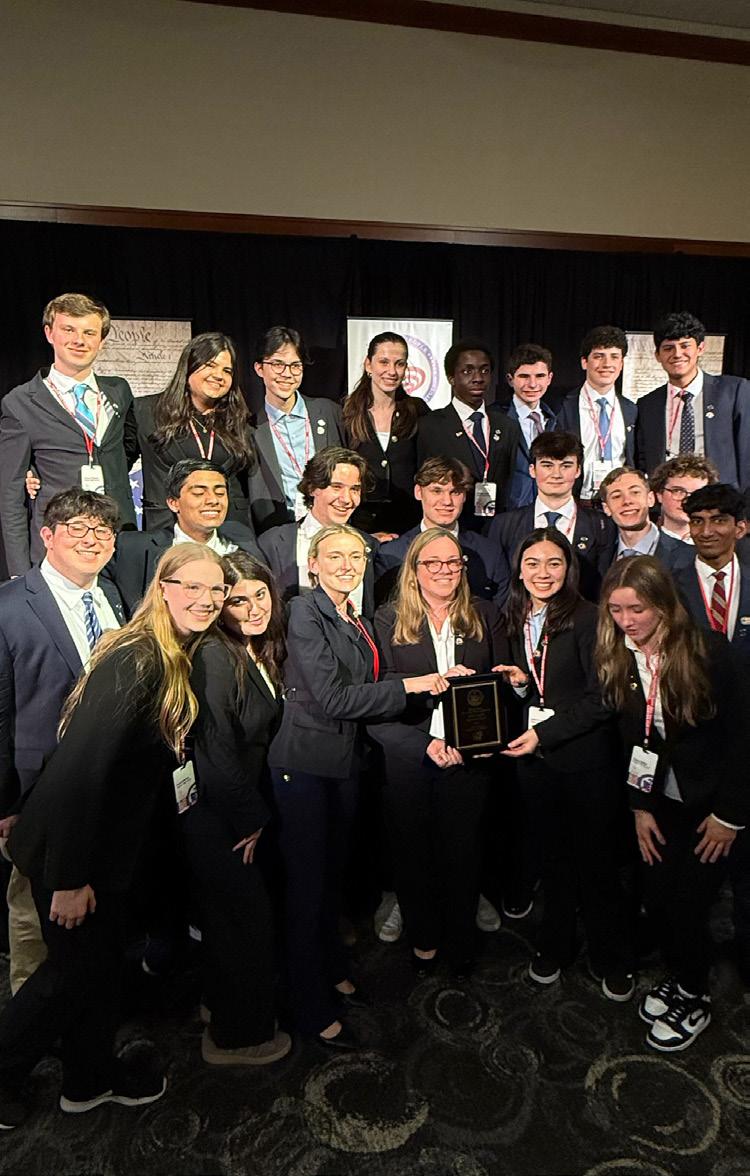
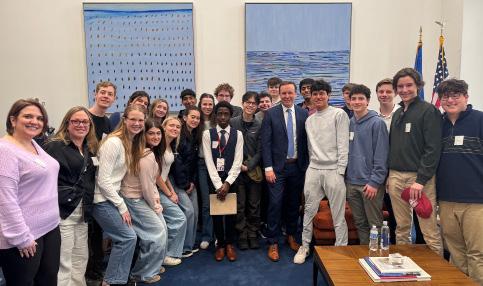
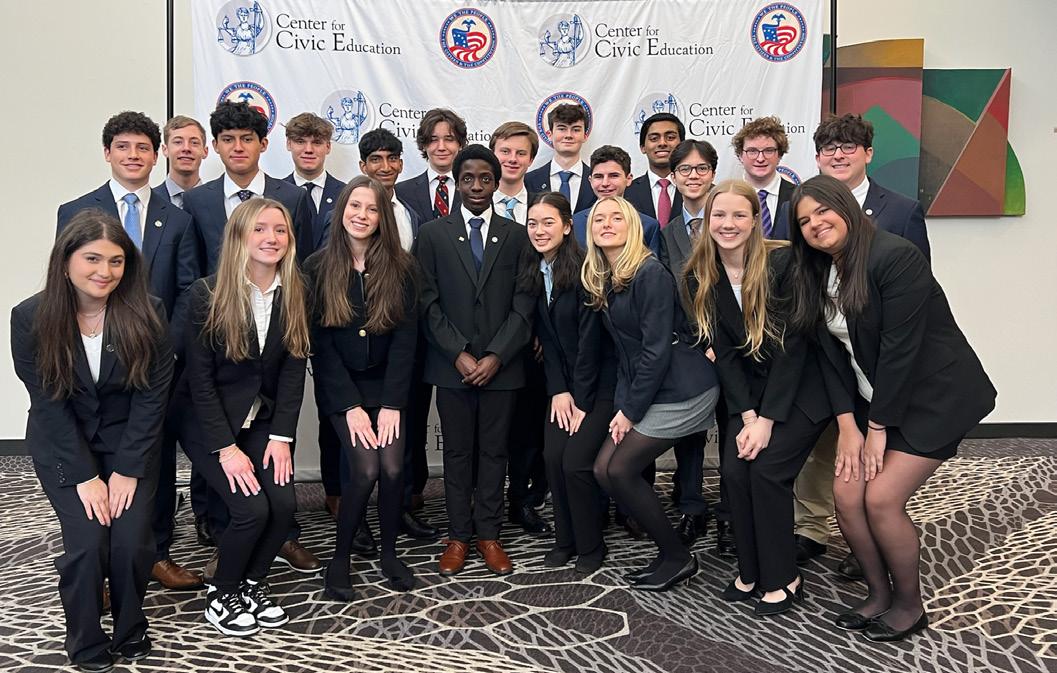
VICTORY SPIRIT The We the People team celebrates after winning at nationals, including Aidan Lapatine ’26, Lila Boroujerdi ’26 and Greyson Peters ’26, with their eighth place award.
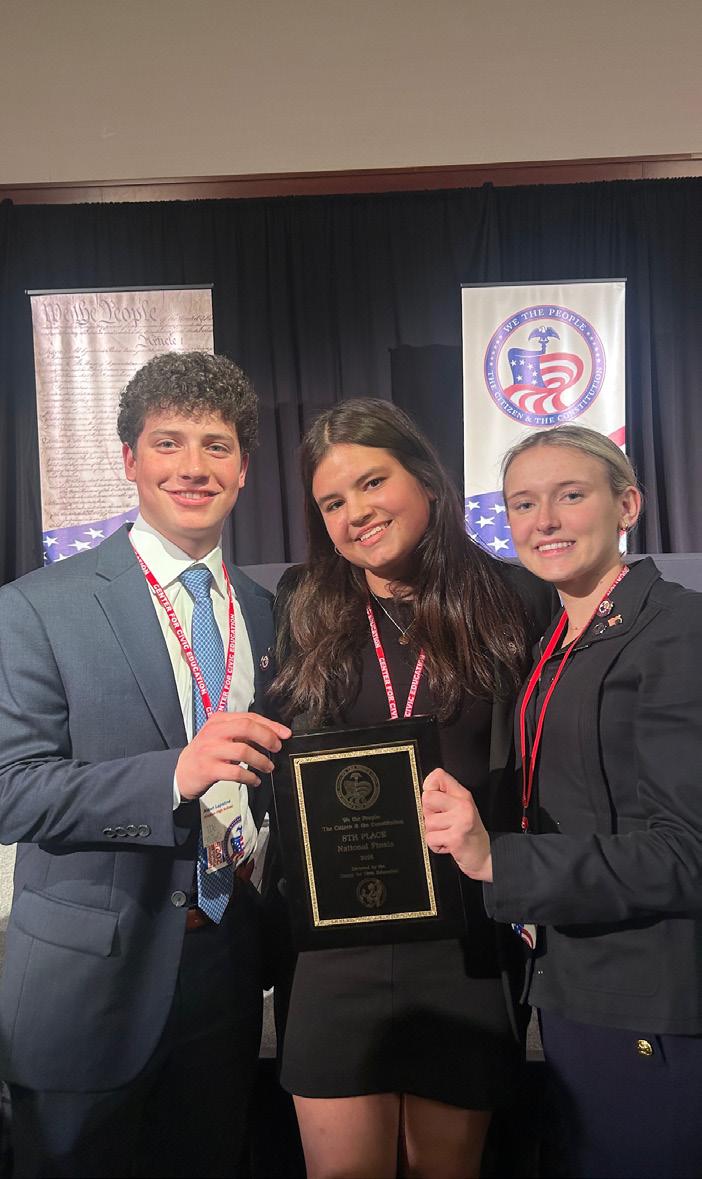
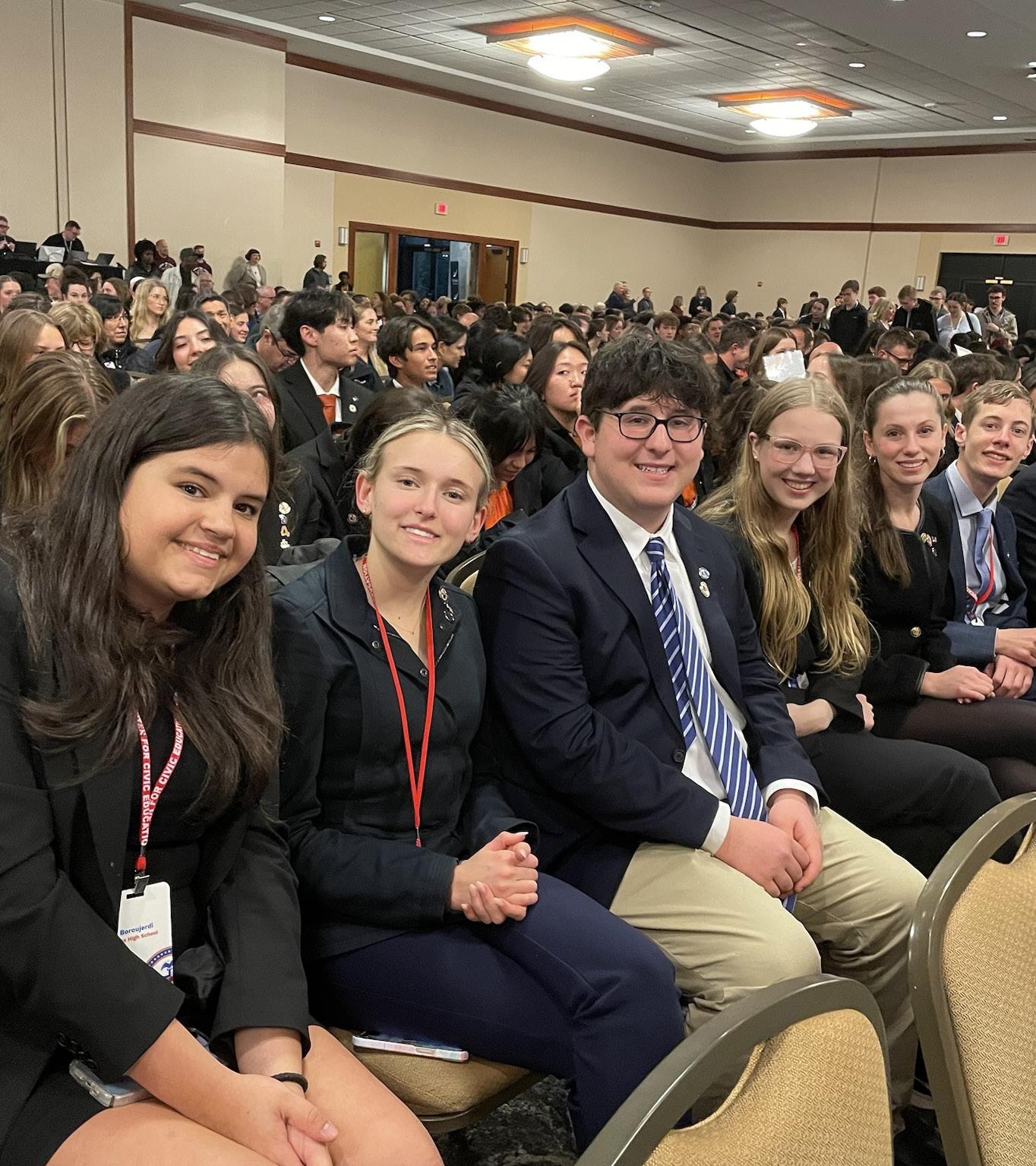
as Kammerman now enters her tenth year preparing for the competition with Staples. The familiar formula has led the school’s team to victory at the state level numerous times. Last year, the team advanced to the national level, scoring eighth, the highest the Staples team has ever placed.
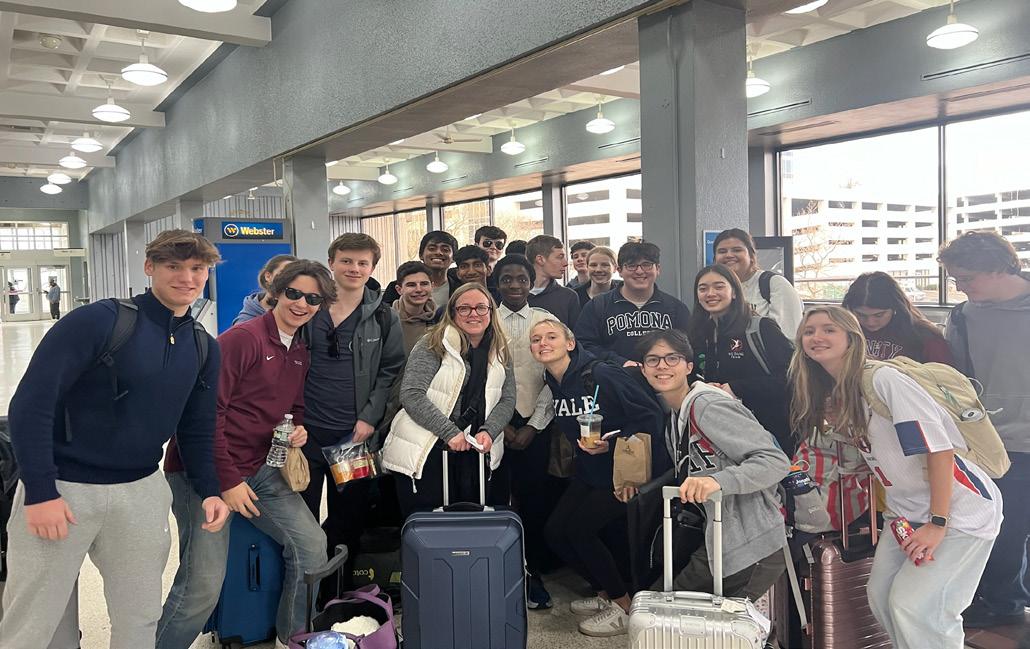
The greatest, and most fulfilling part of the competition, according to We the People alumni, is the feeling of moving on to the national competition in Washington, D.C. in the spring. In order to do this, the team needs to place first at the state competition.
There is another way to qualify for the national competition, using the “Wildcard.” Given to certain second-place teams in different states, the Wildcard permits those schools to compete, along with the first place team from that state. Typically 13 wild cards are given out.
“The DC trip was the highlight of my time at Staples High School,” Shufro said. “We
were able to explore the city and make use of our hard work during the hearing questions.”
While the preparation for the competition certainly has its stressors, the traditions that come along with it are some that previous We the People students remember fondly.
“The pressure is on for sure,” Mehmet Madigan ’27 said. “I think we need to be really prepared.”
Regardless of competition pressure, the network that We the People provides its students with is immense, and the connections transcend state borders. A great way to make friends and connections, We the People is more than just a competition.
“We the People is truly a class like no other,” Shufro said. “As one of the few classes that emphasizes group work throughout the year, it taught me the importance of collaboration and collective responsibility.”
Lily Ashford ʼ27 Paper Editor
Tucker Lane ʼ27 Staff Writer
Jan. 20



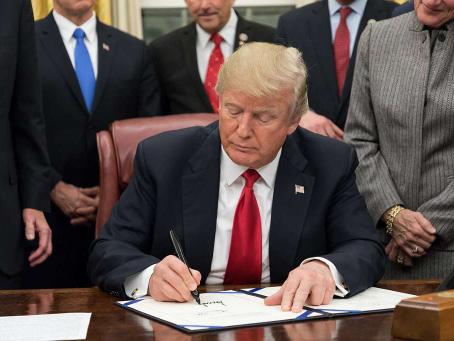
Donald Trump is inaugurated as the 47th president of the United States and signs 26 executive orders, breaking the record for most signed in a single day. (ABC)
June 9


Trump authorizes the deployment of 700 U.S. Marines and 2,000 National Guard members to Los Angeles following reports of significant unrest. (NPR)
Trump announces a baseline 10% tariff on all imported goods as part of his administration’s new trade policy. (Politico)

April 2

The Trump administration orders air strikes on three Iranian nuclear sites — Fordow, Natanz, and Isfahan — following intelligence assessments on Iran’s nuclear program. (NPR)


June 21


Oct. 8
6


Trump participates in negotiations that lead to a temporary peace agreement between Israel and Hamas. The deal includes a pause in hostilities and aid deliveries. (BBC)
The government shuts down during negotiations between Trump and Congress over the federal budget, stopping non-essential operations until a funding agreement is reached.


Trump signs an executive order creating task forces to investigate price-fixing and anti-competitive practices in the food and agricultural supply chain. (The White House)
For the sixth consecutive month, U.S. Border Patrol reports no illegal migrants have crossed into the United States. (New York Post)


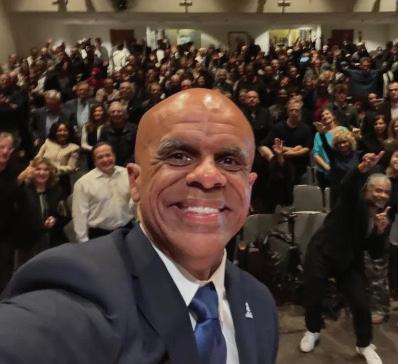
munity and building the future of Westport. Despite this demanding pace, Christie said he enjoys the work, in part due to the people.
“We have a great leadership team here in town and town hall, and a great, great staff,” he said.
Deeper community engagement is a central tenet of Christie’s approach to governing. During his campaign, he went door-to-door and hosted dozens of events to hear directly from residents. He plans to continue this listening tour during his administration to guide his decision-making process.
Trey Ellis, the celebrated documentarian, Columbia professor, longtime Westport resident and friend of Christie who spoke at his inauguration, believes in the First Selectman’s approach.
ginning in town,” Christie said. “There’s a new opportunity to work together and engage with the community and continue to make our amazing town even better.”
Perhaps the busiest group in all of Westport are teenagers, and Christie recognizes their importance. He believes that teens should have a say in what’s going on in town.
“There's an opportunity to do more,” Christie said, “to work with the Youth Commission or other youth groups in town.”
It feels like there’s a bit of a new beginning in town “ “
“[He] has the values that I think most of us in Westport have come to share,” Ellis said. “We need to understand that we're lucky to live in a place that's so well resourced […] but that comes with some responsibilities.”
- Selectman Kevin Christie
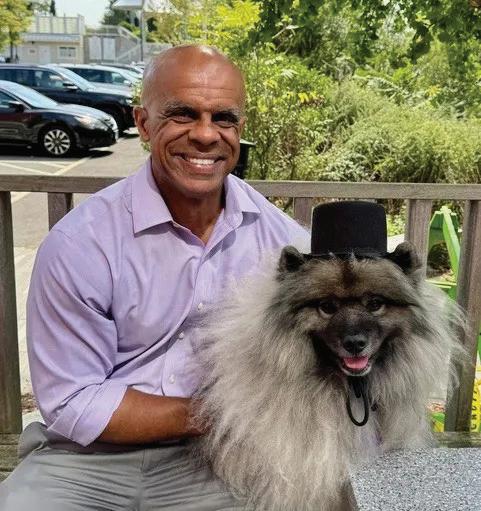
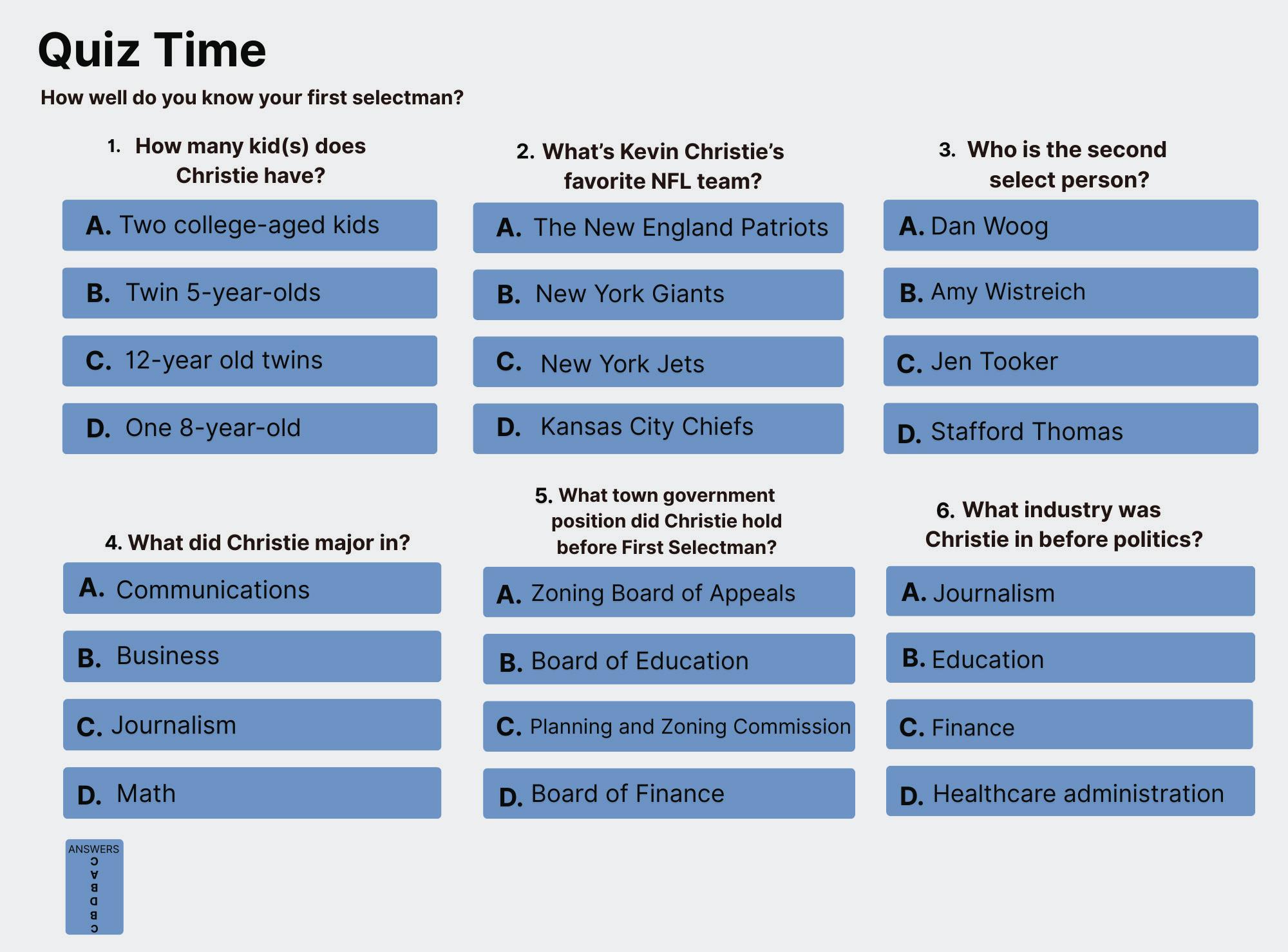
Christie encourages Staples students to reach out with ideas on how to make Westport a better town—not just for teens, but for everyone. That includes Christie’s own kids. Despite his packed schedule, he made it clear that his most important time is spent with his children.
“There's not as many opportunities to play around in the backyard anymore,” Christie said, “but the times that we do, we truly enjoy them.”
Looking ahead, Christie views his term as a new chapter in the town’s history, especially since he was elected as the first Democrat in 12 years. “It feels like there's a bit of a new be-
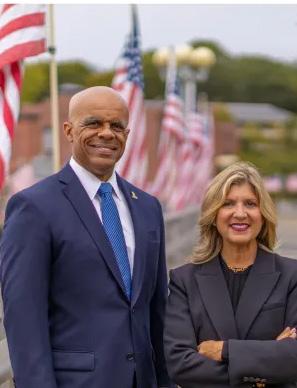
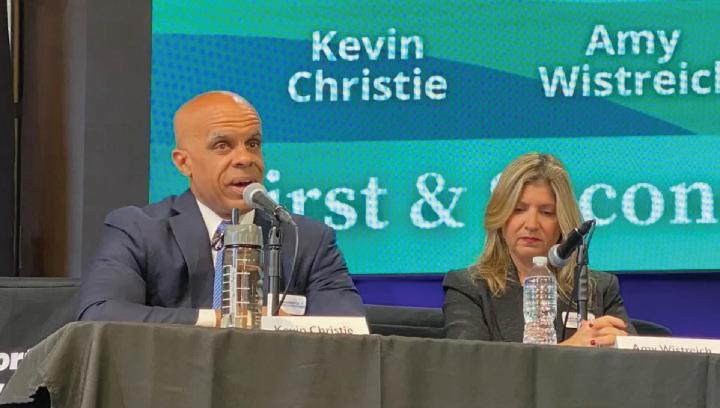
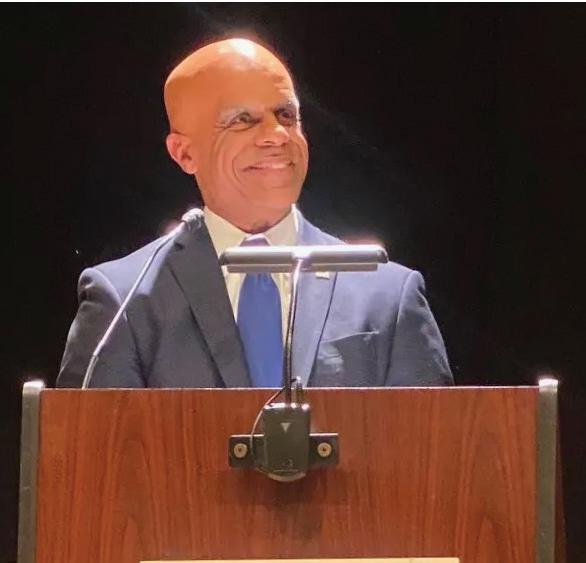
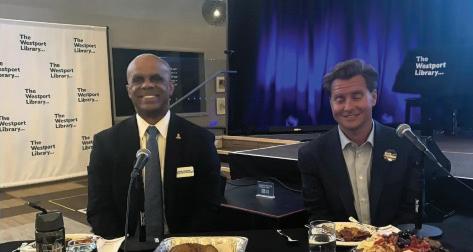
LISTENING Kevin Christie connects with residents at town events, forums, and meetings across Westport.


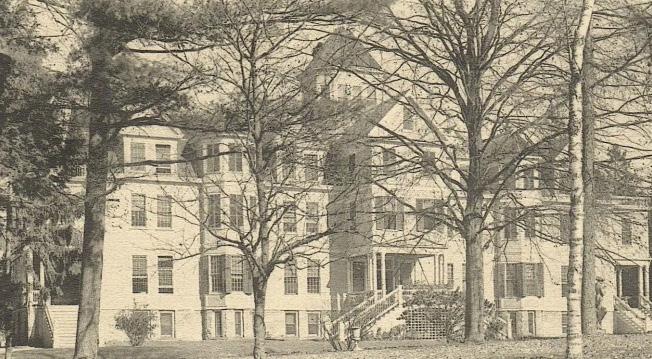
The Westport Sanitarium, pictured during its time as a sanitarium, was located at the corner of Post Road East and Compo Road North.


Ann Marie Maccaro ʼ27
Paper Editor

Winslow Park, located at the center of Westport, has a darker past than some may know. To most Westport residents, Winslow Park is where dogs can roam free and long scenic walks are taken. But before it was the town’s park, it was home to one of Connecticut’s most notable psychiatric
12 features
facilities. e Winslow property history is stamped with controversial treatments, tragic events and persistent rumors. Its history is that of a whisper, but there’s no reason why we should turn a deaf ear to it.
e property started in the 19th century as a beautiful mansion, but was sold to Frederick Ruland, an alienist (what is now referred to as a psychiatrist). Ruland was on the Psychiatric Board of Connecticut and he had hopes of running a
sanitarium. e Winslow land was exactly what he was looking for. Ruland transformed the 100-acre property in 1891 and it ran until 1960 as the Winslow Sanitarium.
“Patients were admitted for everything from psychiatric issues like depression to alcoholism or addiction to laudanum,”
Ramin Ganeshram, Executive Director of Westport Museum for History and Culture, said. Some patients’ narratives describe experiences that are

intense and unsettling. One man was arrested for talking to his imaginary friends, while another was admitted for trying to shoot at Redcoats. Another woman had set the Compo Inn on re in an attempt to get rid of spirits.
ere were multiple lawsuits from patients and families against the Winslow Sanitarium
“ ere were several cases alleging patient abuse. In most cases, they were acquitted of

it…” Ganeshram said. “Given the amount of patients that came to the sanitarium, you know, not really a signi cant number, although any allegation of abuse is signi cant, right? But you have to understand, during this period of time, there were really no laws regulating how sanitariums treated people.”
After the sanitarium closed, it was sold to a man named Baron Walter Langer von Lagendorf who owned Evyan perfumes. e greenhouse, that was once used for occupational therapy in the sanitarium, was then used as an experimental perfumerie as means for growing orals and plants to experiment with scents.
purchased the property to make it into a public park[…],” Ganeshram said. “ e building was torn down in the 70s.”
all that’s left is little of the original foundation
Today at Winslow, all that’s left is little of the original foundation, a manmade valley and an extensive history many still don’t know about. While the history that lies in Winslow and within Westport is dark, it o ers a revealing glimpse into how society once treated mental illness and how far we have come since then.
But if you walk the quiet trails at dusk, you might just feel the weight of the past lingering within the soil, trees and air, just beneath the surface of Winslow Park.
“Eventually, it fell into disarray, and it was the town that










































Ella Turner ʼ28
Paper Editor
Serena Goldfarb ʼ28
Paper Editor
Since the release of the artificial intelligence tool
ChatGPT, the use of AI in students’ schoolwork has become increasingly prevalent. More recently, however, there has been a rise of AI usage within another group—teachers.
Westport Public Schools is looking to embrace AI to enhance the learning environment. This is led by a district-wide initiative to introduce AI tools for staff. So far there have been a number of programs that teachers have been encouraged to use.
“The main tools teachers have been guided to use with their students [are] School AI, Magic School, Adobe Firefly
87% of surveyed students believe a formal policy should be in place regulating AI usage amongst teachers
and AI features within Canva. Those are all data privacy compliant,” Head of Technology Natalie Carrignan said.
Administration is currently working on offering another AI tool to be implemented in the coming months.
“Teachers who are interested have the opportunity to try Google Gemini,” Principal Stafford W. Thomas Jr. said. “It will be more widespread in the district next semester and certainly next year, in terms of the number of Pro accounts teachers are able to get for free.”
Despite the number of resources available, some students believe AI should not be used by teachers in any way.
“It is not okay for teachers to use AI for tasks that require human subjectivity,” an anonymous student wrote in a survey. “This can include things such as grading, creating assignments or tests, and planning lessons.”
On the other hand, some students see possible benefits of AI usage by teachers.
“Teachers can use AI in ways that push the boundaries for what they can provide to their students,” a second survey responder wrote. “My computer science [teacher] using AI to create study podcasts, is a great example of this.”
56.8% of surveyed students do not support the directive of encouraging AI usage for planning and creating classroom assignments
In some classes, such as Science Research Honors, AI is used openly. Science Research teacher Amy Parent has her students use ChatGPT as a lab assistant.
“I’m using it [for] informational gathering, not writing,” Parent said. “We have a database called PubMed… where you can find articles; [however], AI has a way of finding articles more quickly than PubMed… so I’ve become more efficient in supporting my students.”
In the English department, teacher AI usage has been much slower. In many cases, teachers are creating paper assessments to further inhibit the use of AI anywhere in the classroom.
“I think what we do in the English department hasn’t changed all that much,” English teacher Mary Katherine Hocking said. “I feel like the format, though, has changed… to in class on demand essays, sometimes done by hand to avoid any AI input outright.”
On the other hand, Special Education teachers have found AI to be helpful, as it allows them to easily adapt courses for a variety of students’ needs.
“[I use AI] for goal work in class [that] I need to create for students,” an anonymous special education teacher wrote. [“I think] students can use AI to support their learning such as making practice exams, getting explanations for topics or units they do not understand.”
Teachers being upfront about AI usage has been a rising discussion among Staples students. Some students feel as if teachers have been withholding information about AI-generated assignments. Maia Lange ’28 explained how she felt when she received an assignment she suspected was created with the assistance of AI.
“It made me not really take [the assignment] seriously because it felt like they weren’t taking it seriously,” Lange said. “They didn’t make the assign-
95.3% of surveyed students presently believe one or more of their teachers use AI

46.9%
of surveyed students have one teacher being upfront about their AI usage
ment, so why should I have to do it?”
Students also have had strong reactions upon learning some teachers have relied on AI to help write college recommendation letters.
“[I feel] extremely disrespected. For the years that I’ve been in the Westport district I’ve been taught that using AI, especially on important assignments, is prohibited. It just shows that you can’t practice what you preach and if you can’t even abide by your own
rule then how could you expect your students to?” a student survey responder wrote.
Despite wavering opinions on teacher AI use in general, 87% of the 122 surveyed students hoped that there will be a formal policy outlining how teachers may and may not use AI. Currently, no such policy exists. Principal Thomas has indicated that a more comprehensive idea of AI usage has been an ongoing discussion during Board of Education meetings.
“Certainly we’re looking to embrace it,” Thomas said, “but it’s going to take place at different speeds and in different departments.”

Teachers can use AI in ways that push the boundaries for what they can provide to their students.”
-Surveyed student

Certainly we’re looking to embrace [AI] but it’s going to take place at different speeds and in different departments.” “
- Principal Stafford Thomas Jr.





grading tests? forming lesson plans? writing college recommendations?
by Sophie Smith
Live on Paramount+ and CBS television network






Grapics by





Live on Hulu and ABC

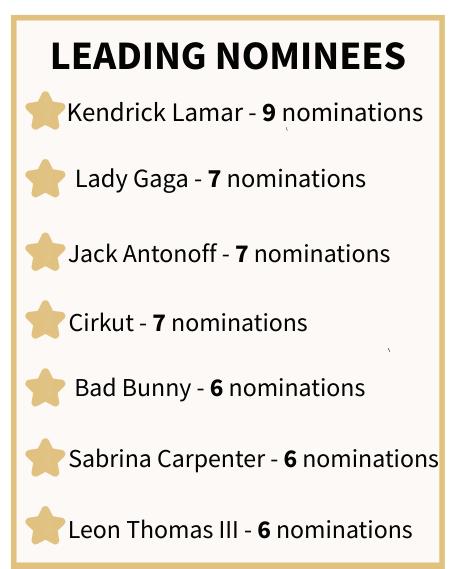
Nominations released Jan. 22






Anna Petrosino ʼ26 Associate Managing Editor
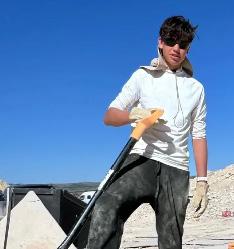
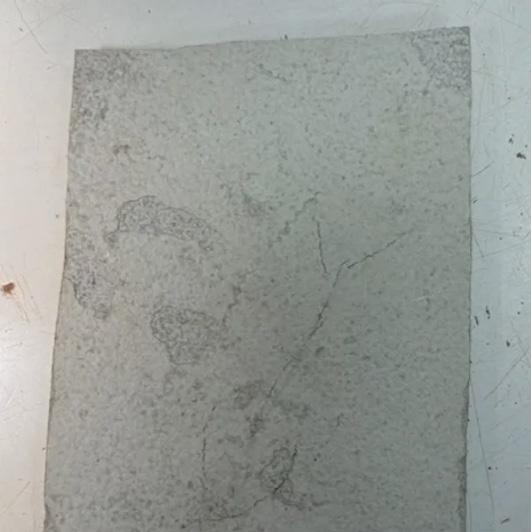
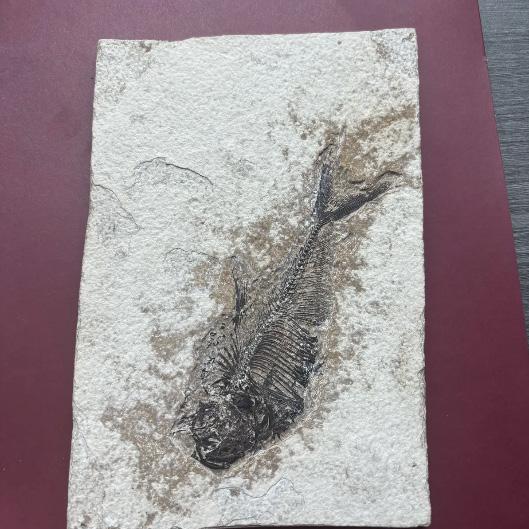
On a hot July afternoon in the Green River Valley, the slab of rock in front of Jonny Dobin-Smith ’26 looked exactly like the hundreds he’d already split open that week. But then, voila! A never-before-discovered 52 million year old extinct passionfruit fossil was discovered by Dobin-Smith ’26.
“I named it Passiflora Furiosa,” Dobin-Smith ’26 said. “Passiflor is something for passionfruit.”
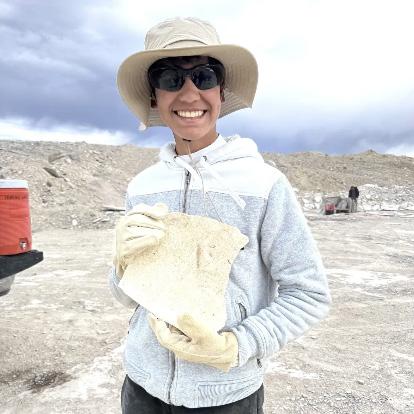


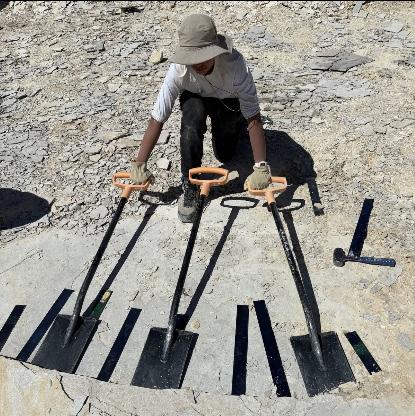
at the Green River Valley. The dig process started with him taking a huge slab of rock on the ground, then he took 30 to 35 small tiny shims and hammered them in to make a crack. Next, he stuck a shovel in it and wobbled up and down to separate it.
After it was separated, he and five other people picked it up to flip it upside down and angle it against the sun to look for the bumps on the rock to see if there was something underneath. Immediately, Dobin-Smith’s advisor of the dig recognized the uniqueness.
“The leader of the expeditions was one of the world premiere paleobotanists, so he could just look at it, tell and see,” Dobin-Smith said.
While this is Dobin-Smith’s first original find, he has uncovered a collection of
cluding a Trex tooth found on another dig in North Dakota.
His passion for fossils isn’t a sudden take for a hobby, but instead part of who he is.
Dobin-Smith also plans to pursue paleontology and geology in further education and expand his website digitwithjonny.com, an educational website that teaches and inspires preschool students.
“When I was a kid,” Dobin-Smith ’26 said. “I really liked dinosaurs.”

Tanush Arora ʼ26 Staff Writer
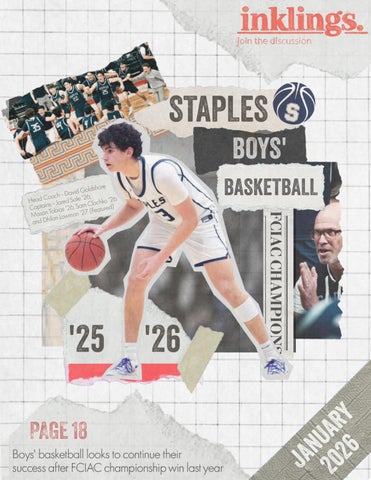
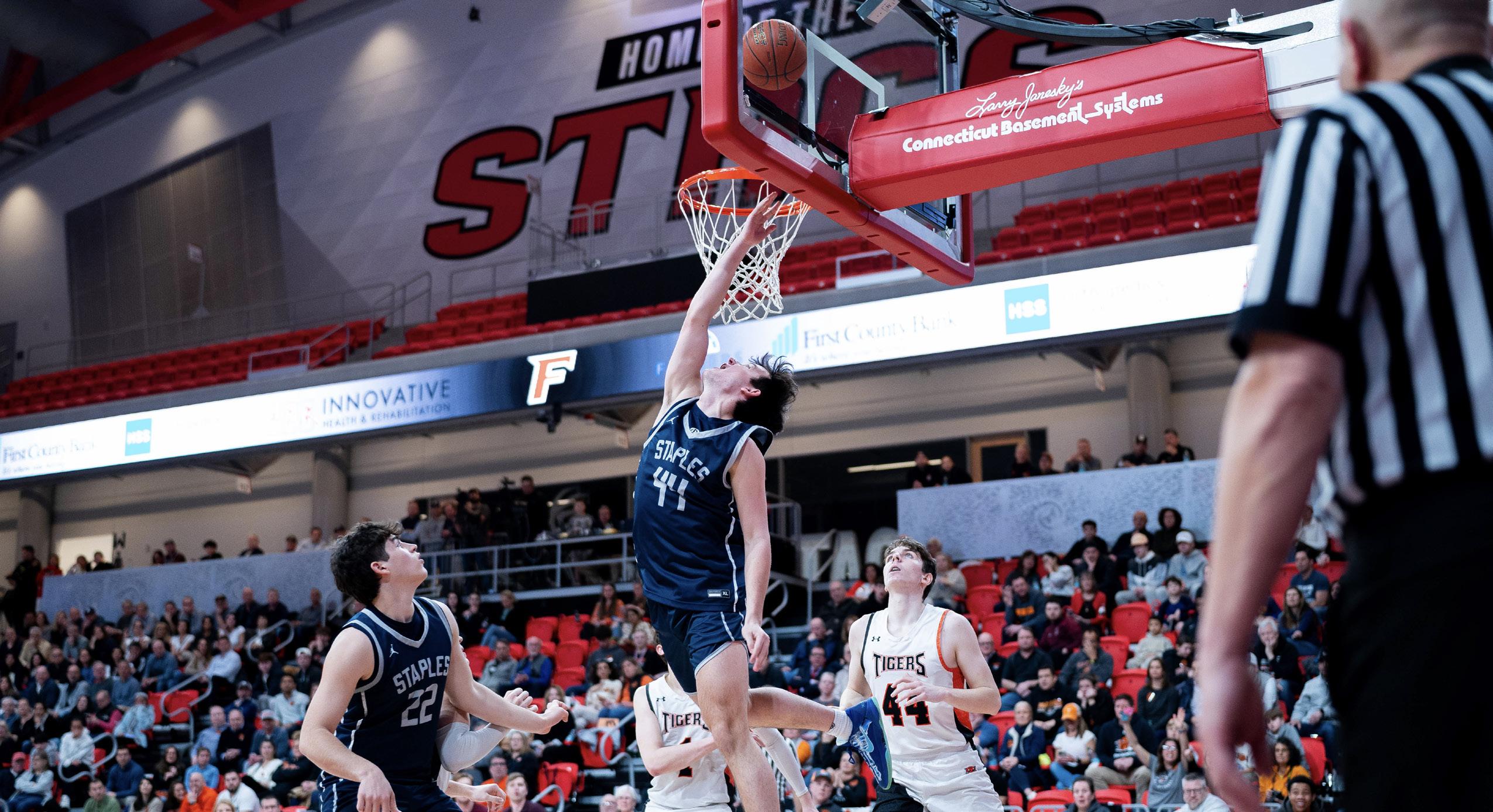
Combining returning varsity experience with many developing underclassmen, the Staples boys’ basketball team is seeking to ride the wave of last year’s historic finish while solidifying itself as a Fairfield County Interscholastic Conference (FCIAC) contender.
At the end of last year’s season, the Wreckers finished with a 21-4 overall record and captured their first FCIAC championship since 1963; the team’s performance was built on high energy, discipline and clutch-time poise.
“Last season showed us what we’re capable of,” Oliver Vynerib ’26 said. “Now we’re trying to prove it wasn’t luck or a one-time thing.”
Sam Clachko ’26, Mason Tobias ’26, Dhilan Lowman ’27 and Jared Sale ’26 have been selected as the four captains for the 2025-26 season. They have been
leading the team, seeking to instill a culture of brotherhood.
“I think what makes our team different is how much we trust each other,” Vynerib said. “Everyone buys into their role, and no one’s trying to play hero ball. We just want to play the right way.”
Interest in the program has surged after last year’s championship, and preseason open-gym sessions have been packed.
“Guys didn’t need to be pushed to show up,” Vynerib said.“The energy from last season carried over. Everyone wants to be a part of what we’re creating.”
that are geared toward pace and spacing. Wreckers star shooting guard and Connecticut College commit Clachko, who got First Team All-FCIAC honors last season, is focused on seeing the group continue their positive trajectory from last season.
Last season showed us what we’re capable of “
- Oliver Vynerib ’26 “
“We’ve really been putting our efforts in to make our practices feel like the speed of the game,” Clachko said. “We want to play fast, but think smart with the ball. That’s going to be huge in close games this season.”
This year, the team’s mindset has changed, too.
Younger players are also attempting to make a difference this year, with many stepping into more prominent roles on the court. Aaron Schorr ’27 has embraced the opportunity to learn from the veterans.
“The older guys set such a good example,” Schorr said. “They’re super competitive, but they also help us out and keep things positive. It makes me want to play harder.”
The players have been honing their skills through shooting practice, strength training and competitive scrimmages
“It was unbelievable to win the FCIAC last season,” Clachko said. “But it also put a target on our back. Teams are going to come after us now, so we have to be even sharper.”
The Wreckers also start the season with the Cardinal Shehan Center Fall League title, serving as an early indicator of the team’s championship potential. If they can restore last year’s intensity and continue to expand offensively, Staples could again become one of the most dangerous teams in the FCIAC.
“If we keep pushing each other and stay locked in, we can make another run for sure,” Clachko said. “We know what it takes now.”