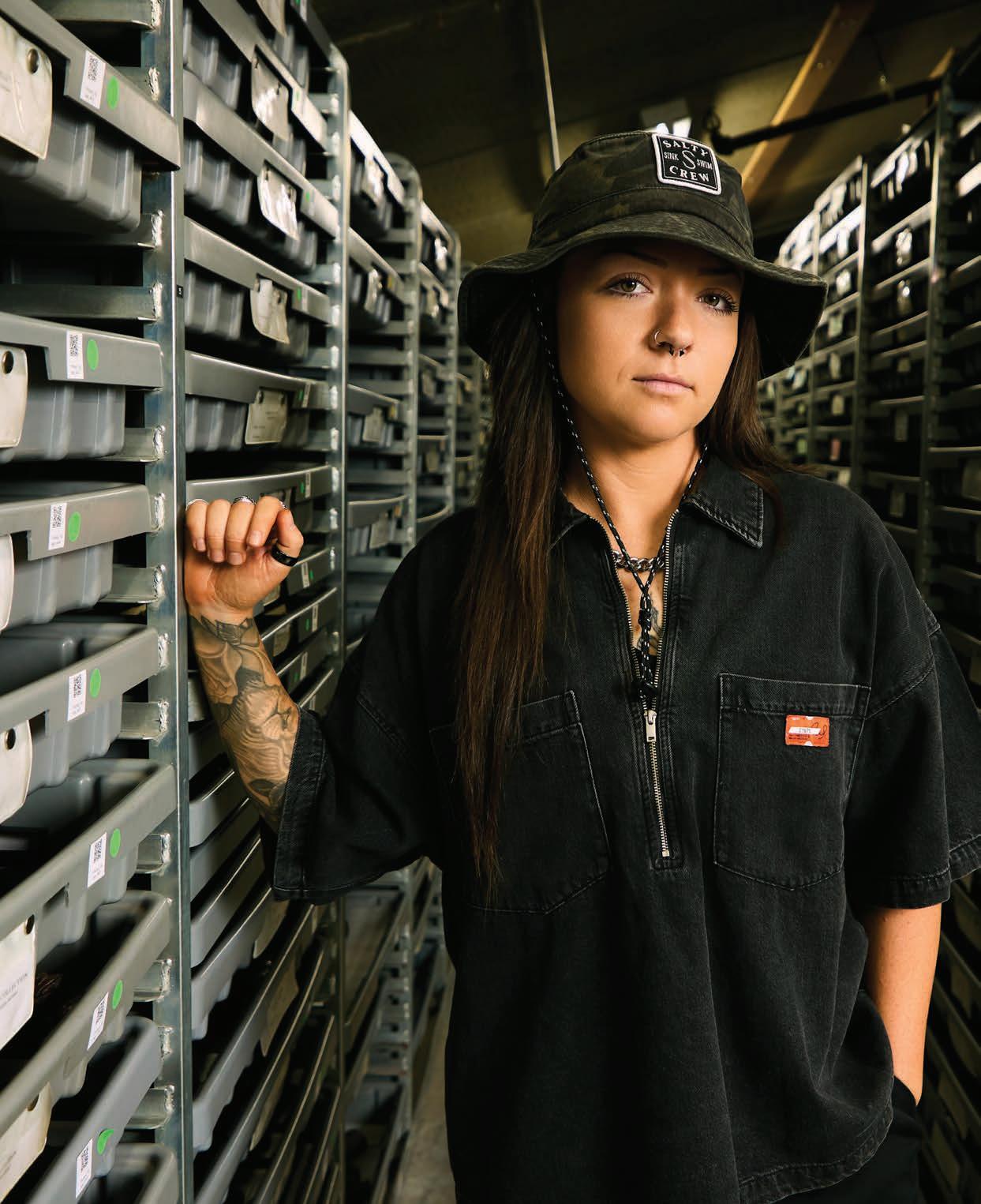
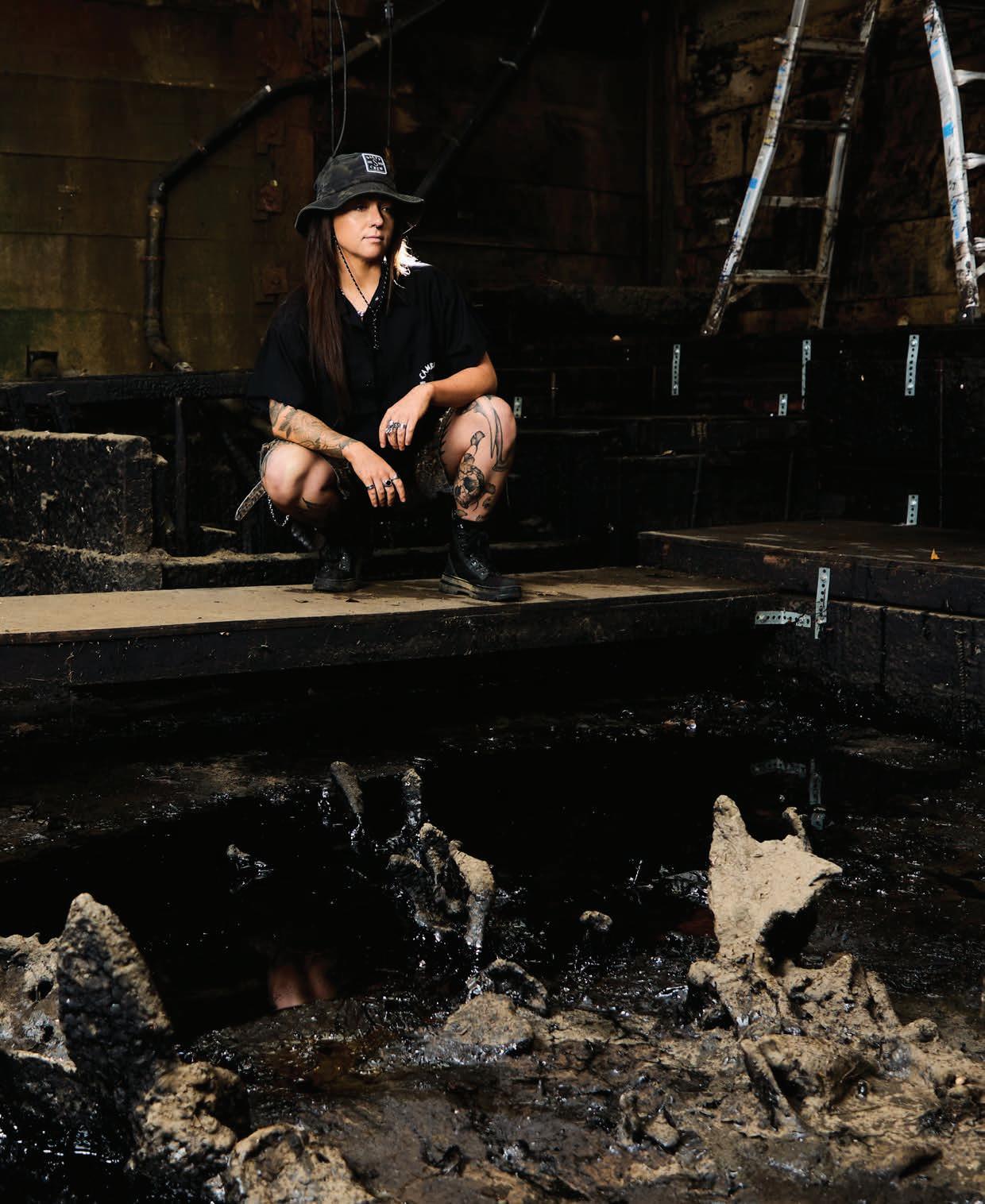
We all have stages in life when we strive for resilience, using our voices to make things happen, and discovering what makes us unique. We have the freedom to choose the easier path, the one less traveled, or the one out of view.
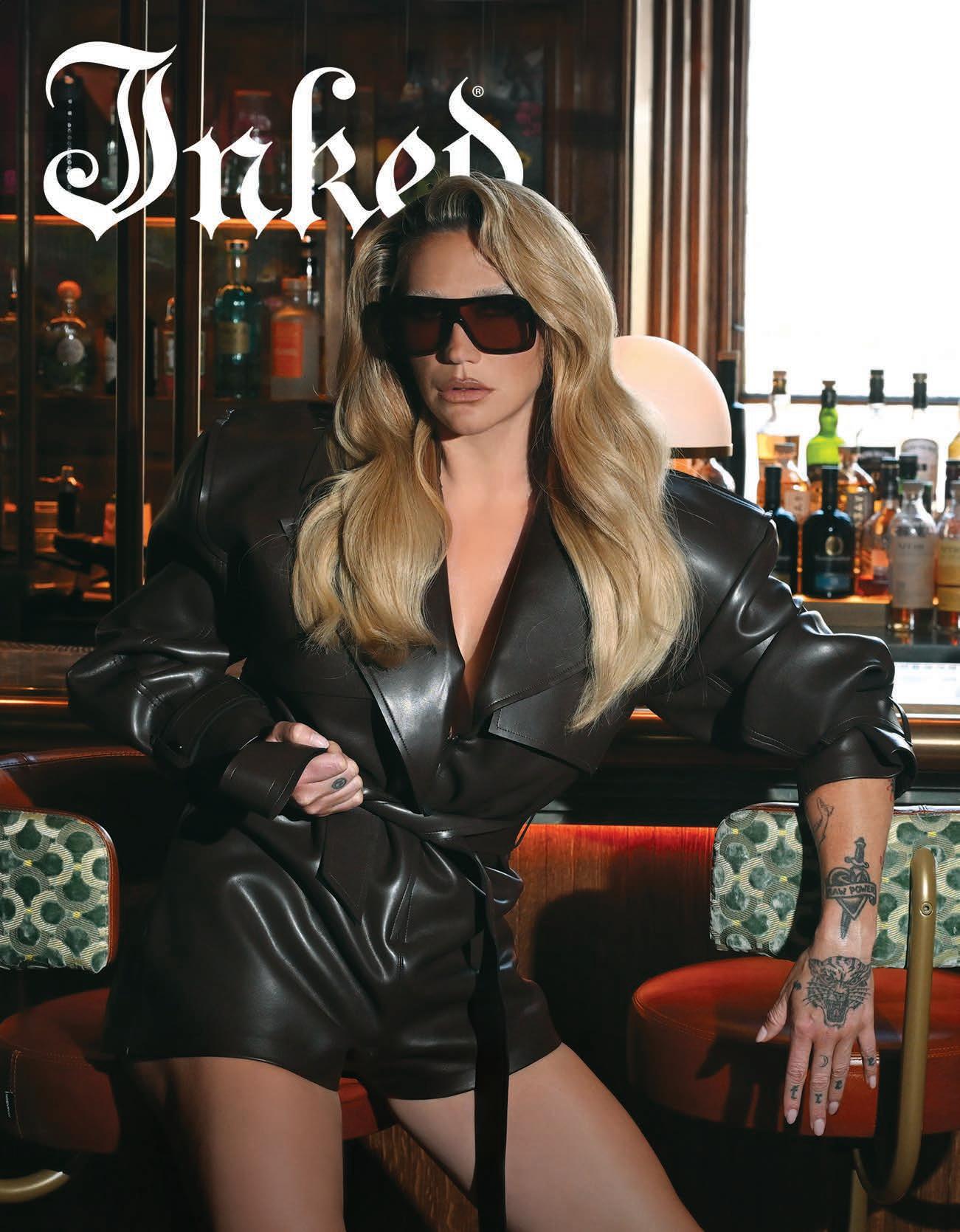
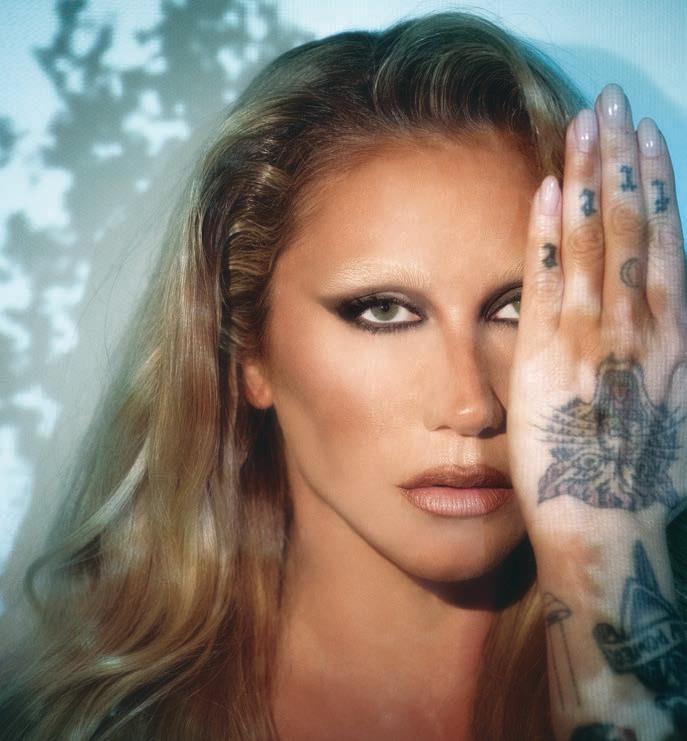
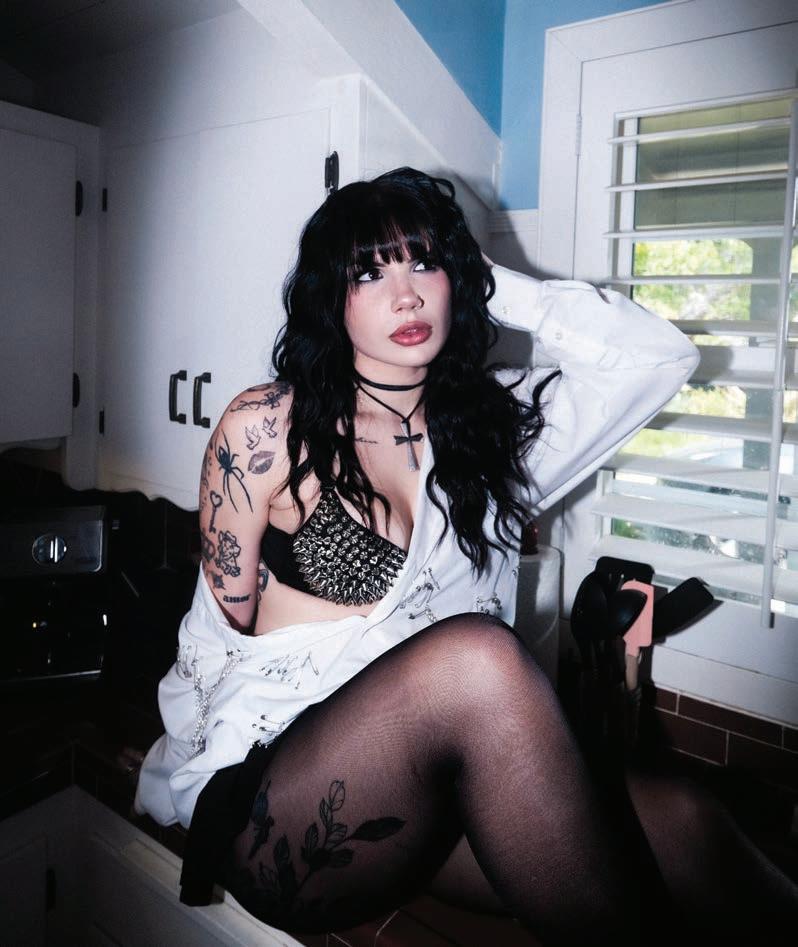
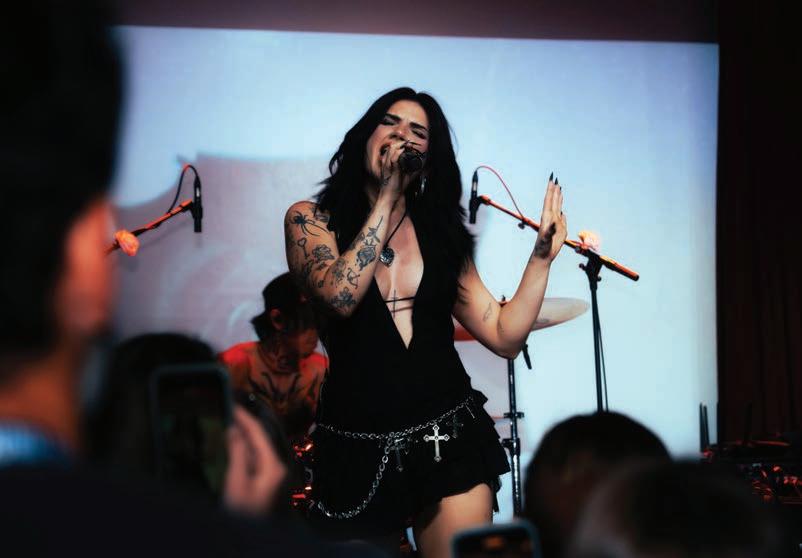
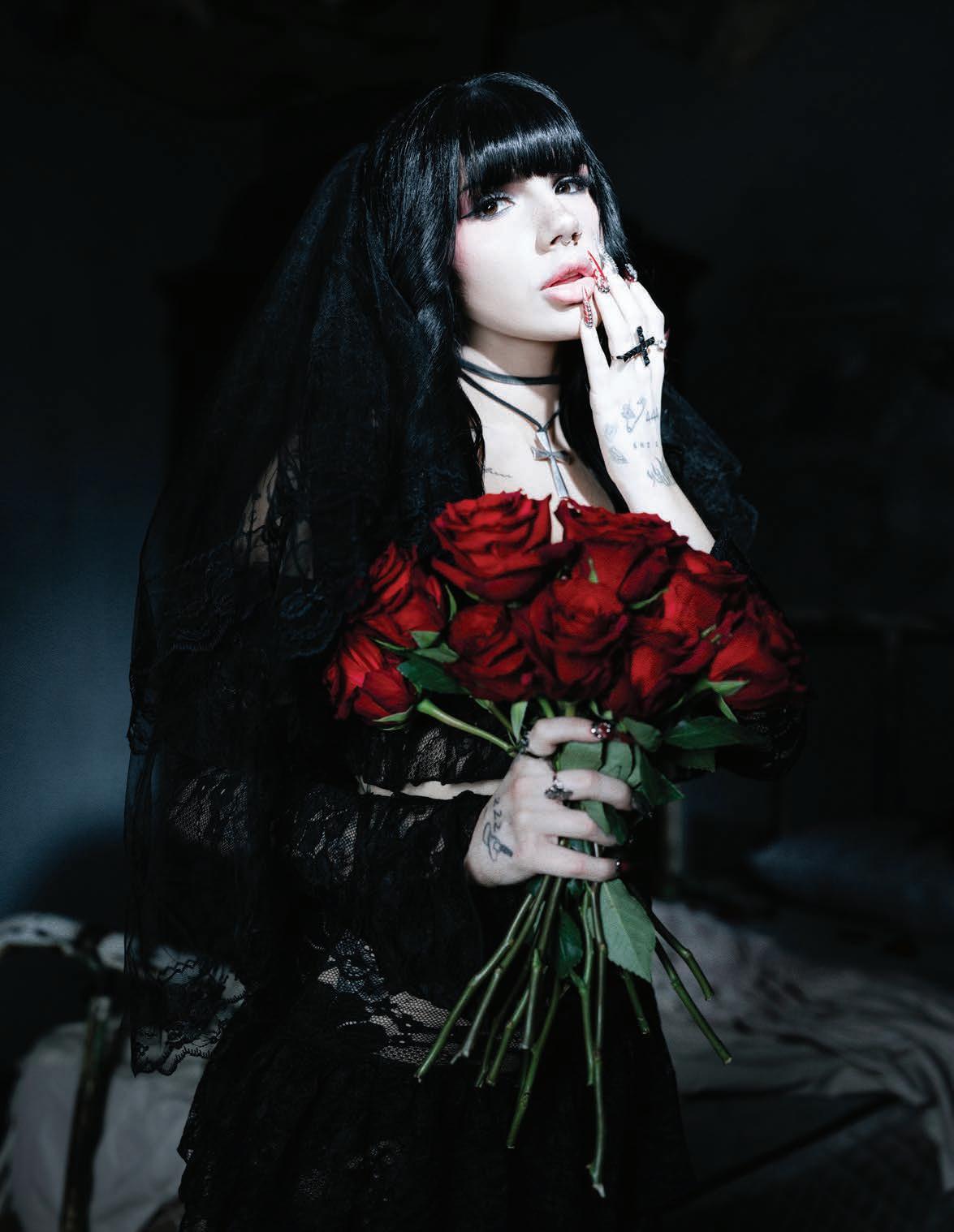
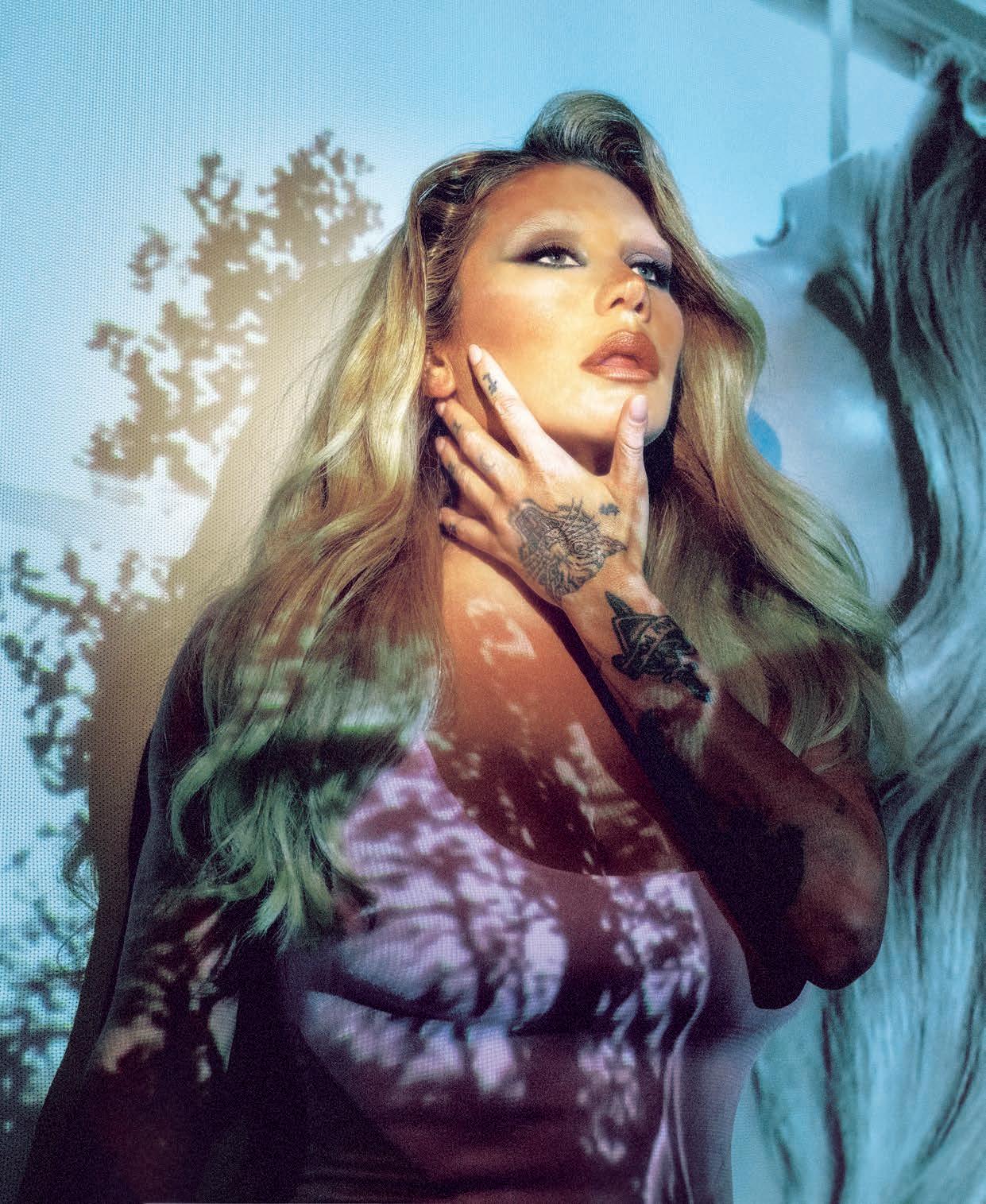
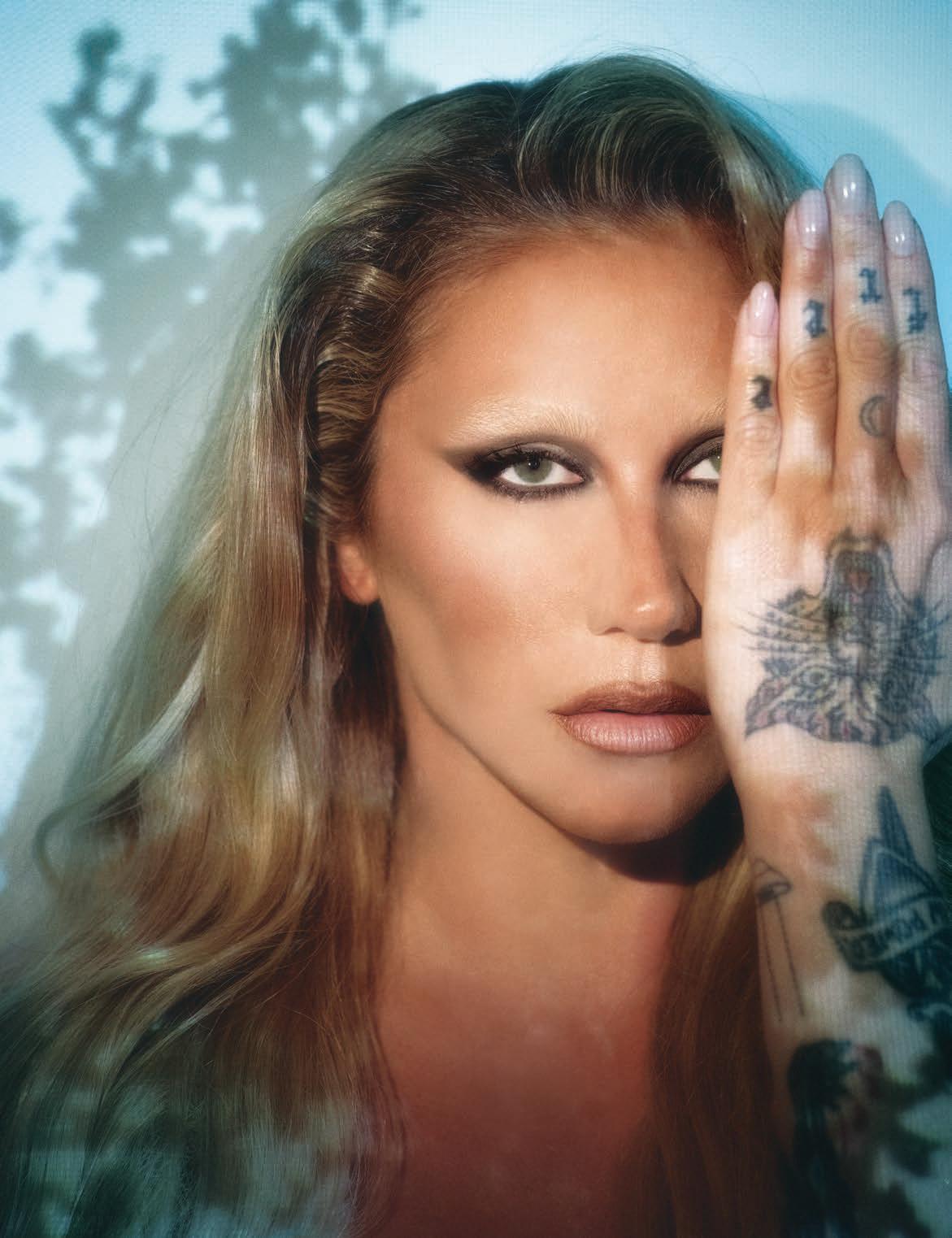
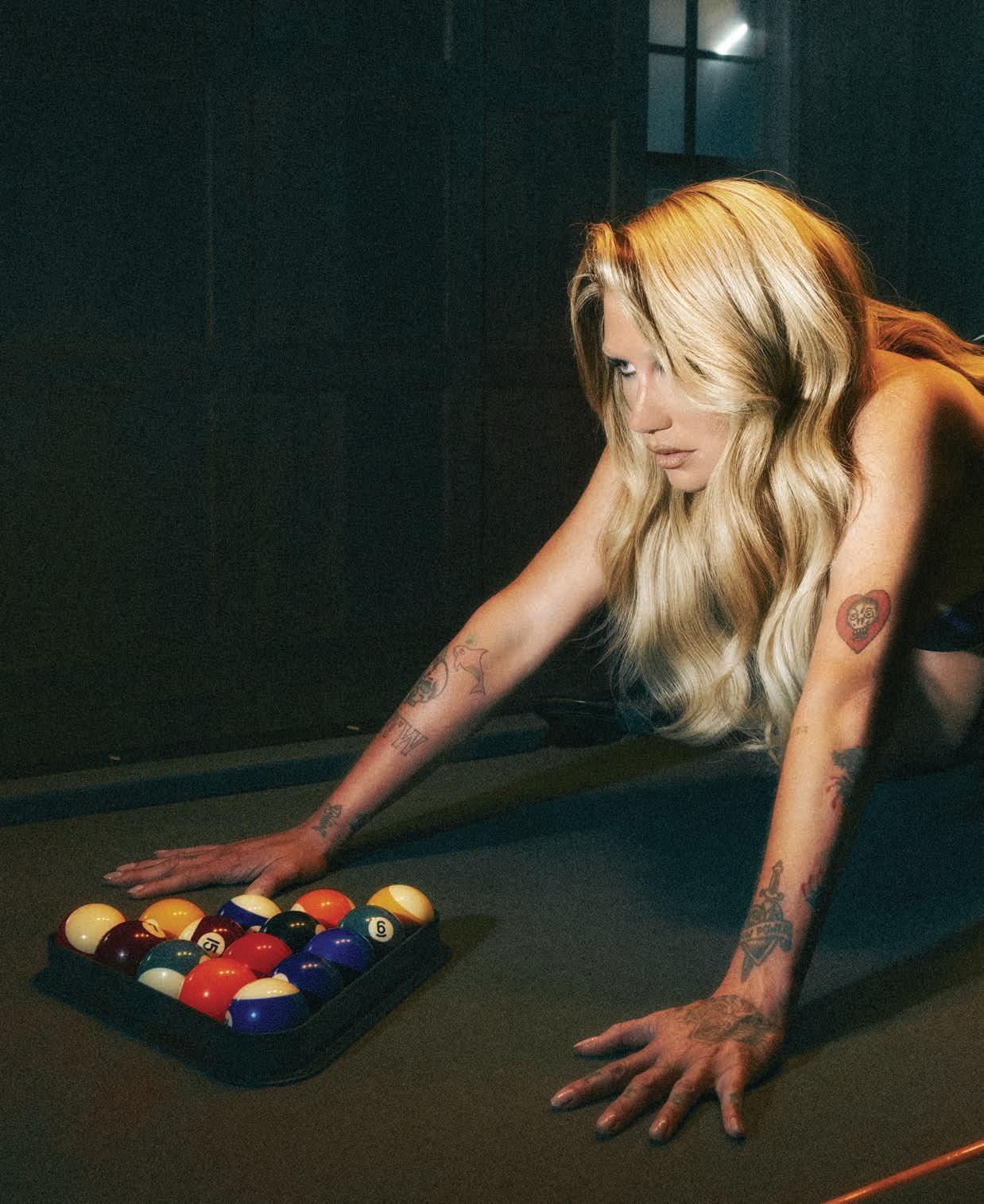
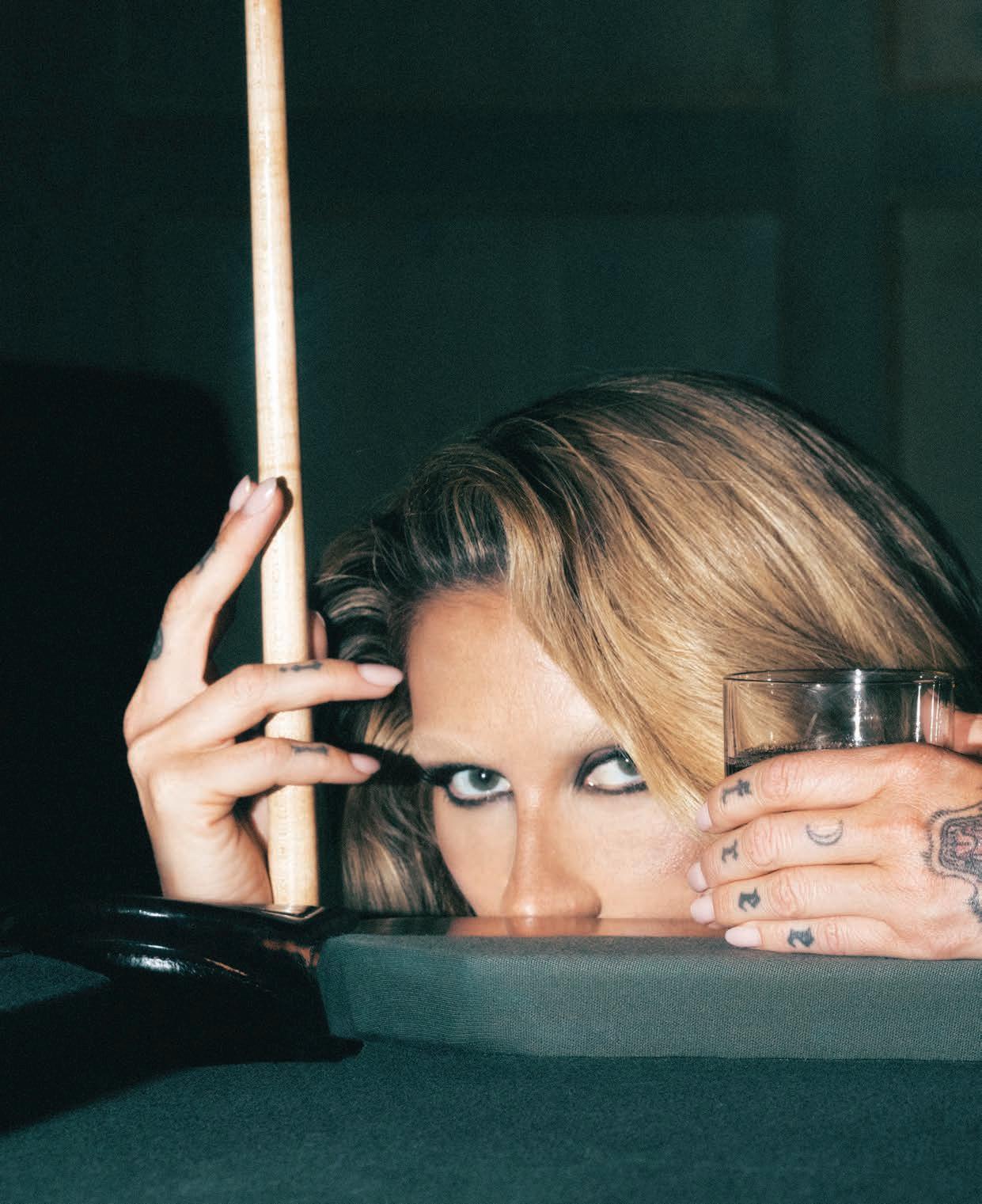
From achieving lifelong dreams to redefining the rules, freedom fills the pages of this issue of Inked, and singer-songwriter Kesha’s story epitomizes this power of autonomy and independence, which made her a clear choice as our cover story. Kesha has literally reclaimed her voice, opening new doors that greet the people she loves most: her fans. The term “freedom” carries a lot of meaning for the “We R Who We R” star, and it threads through her upcoming documentary, tour, and latest album, “.” She admits that she’s fixated on freedom and wants to encourage others to protect their joy and independence with some help from her music and the community that surrounds it. Her backstory is powerful, but the sequel is mighty, and it’s just beginning.
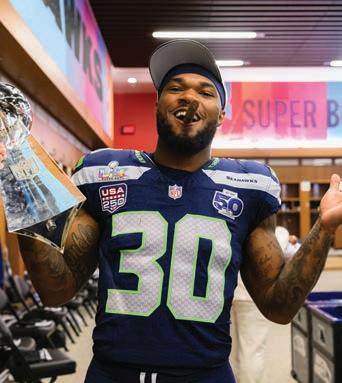
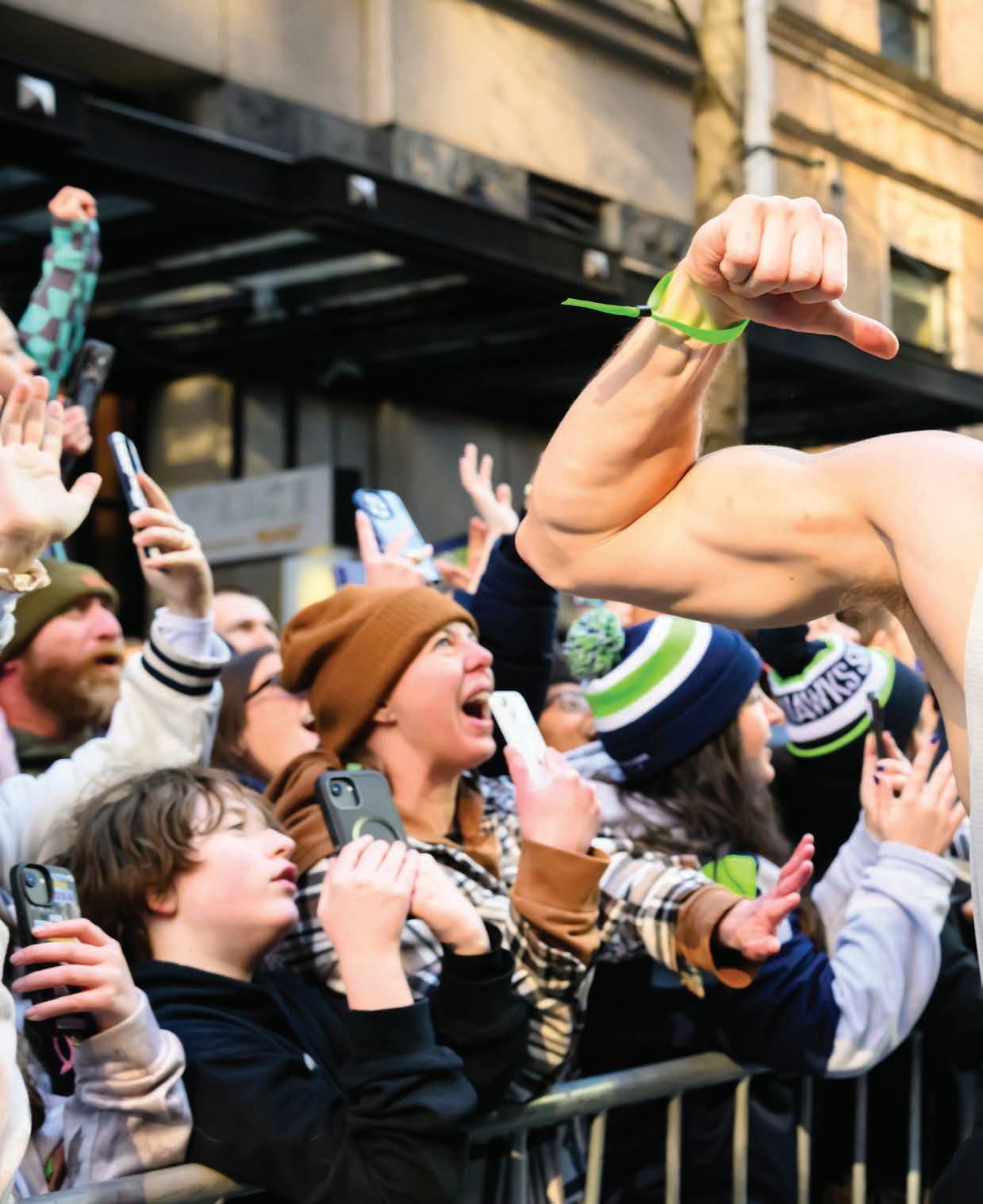
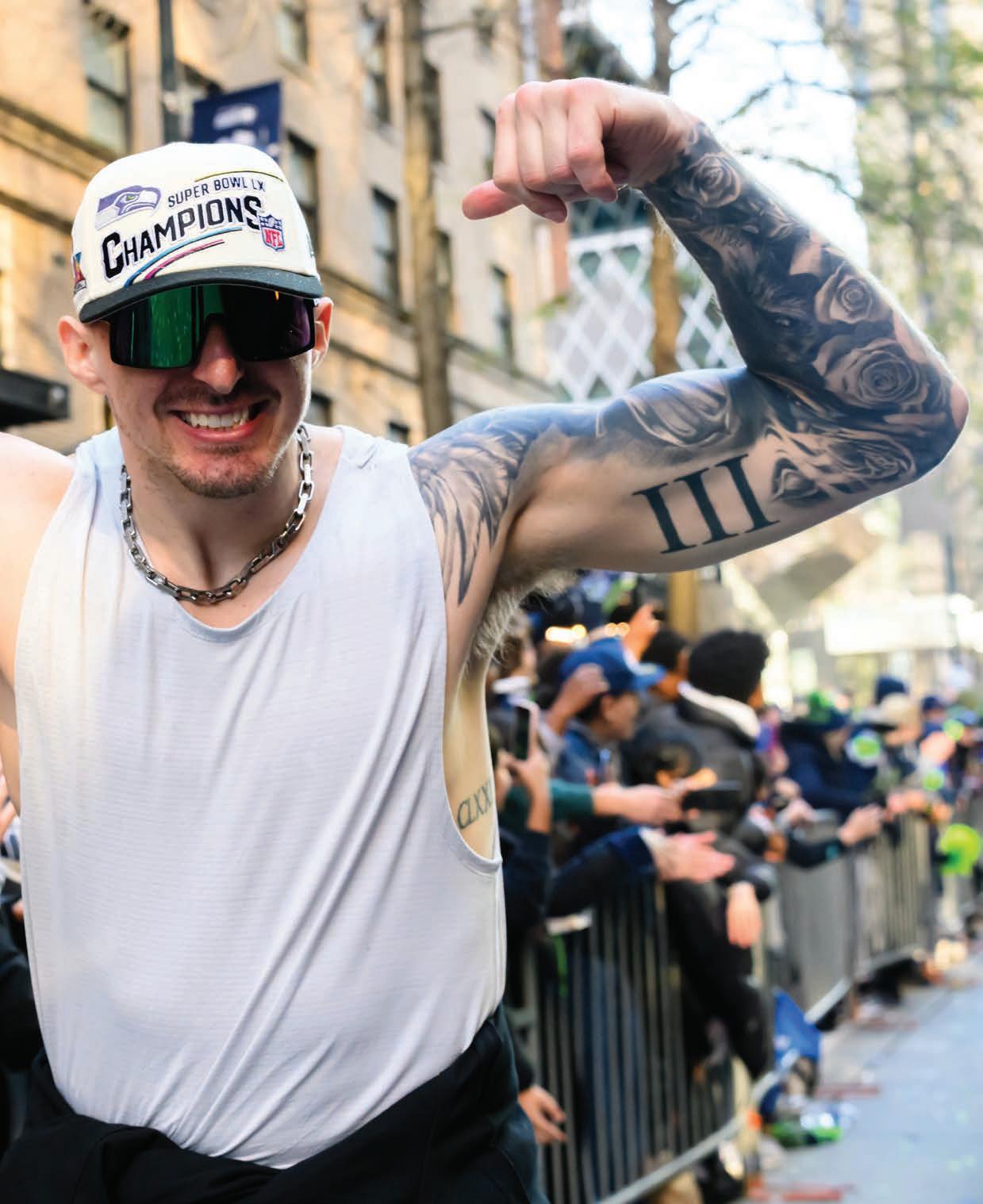
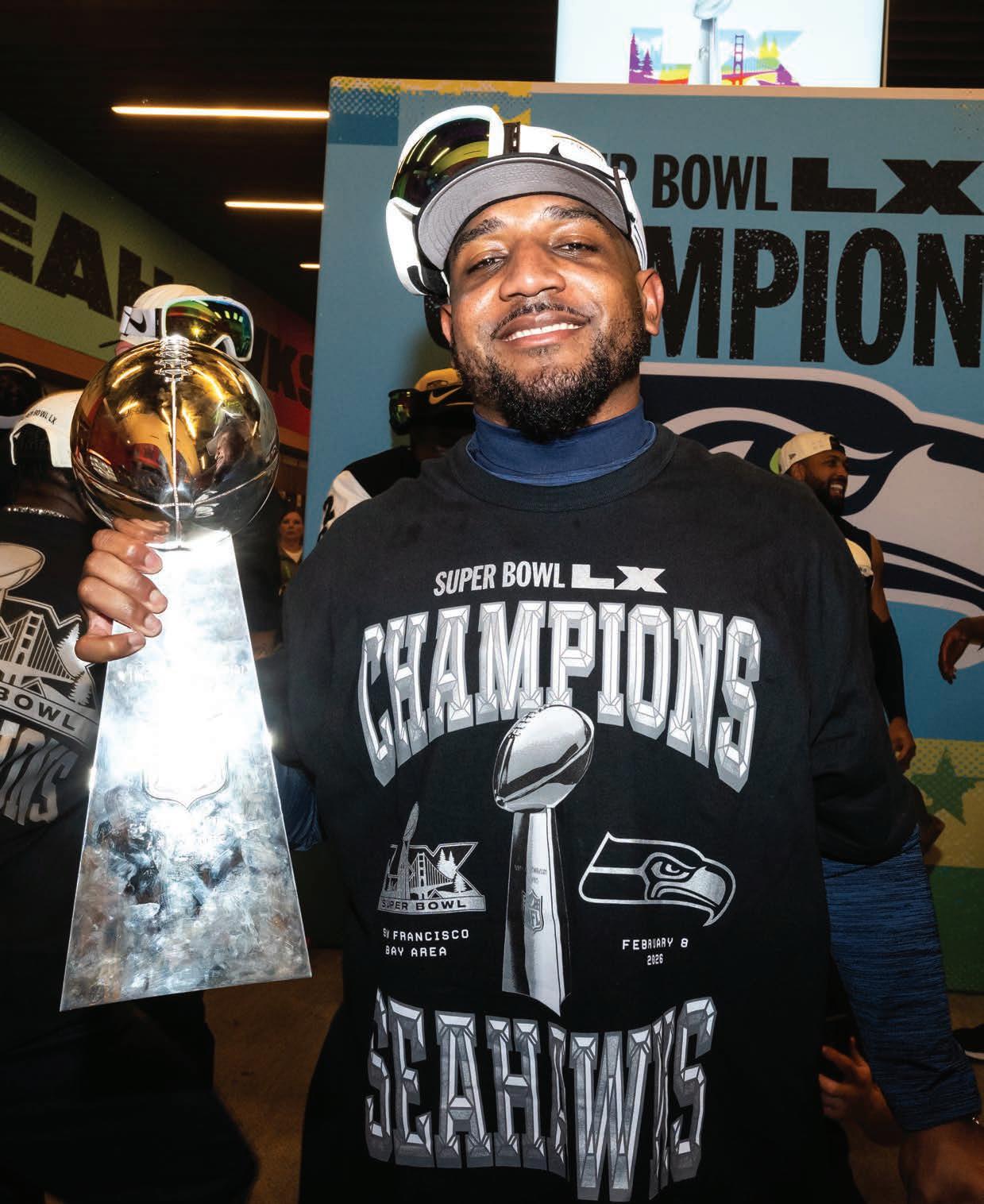
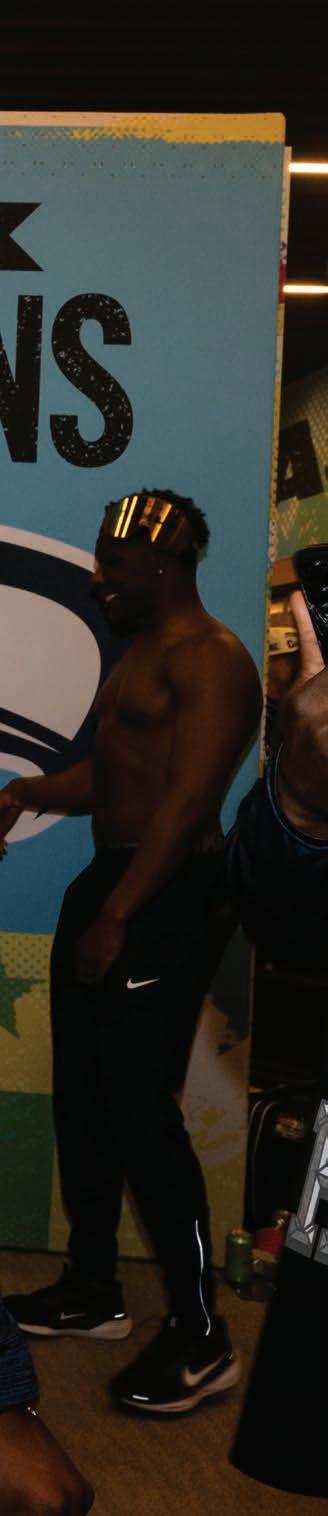
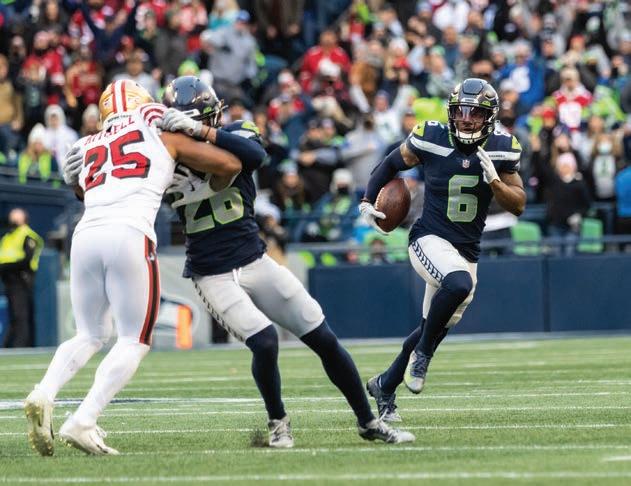
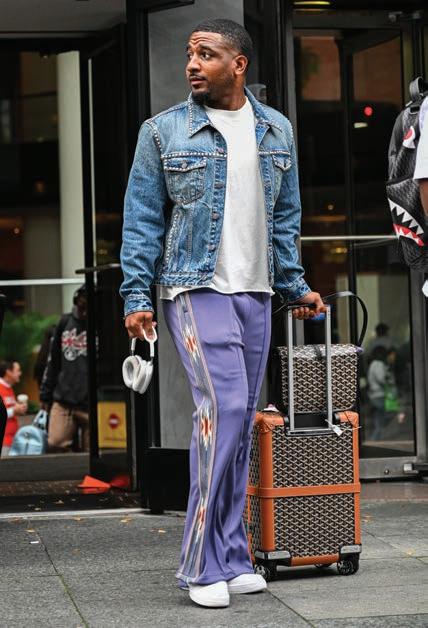
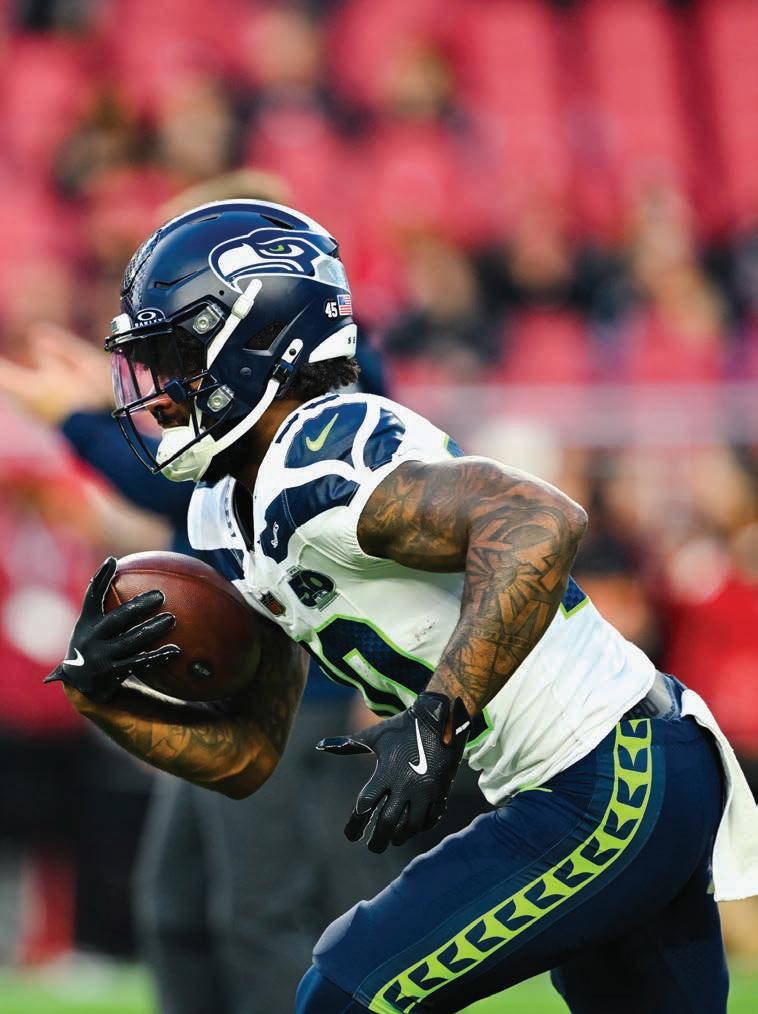
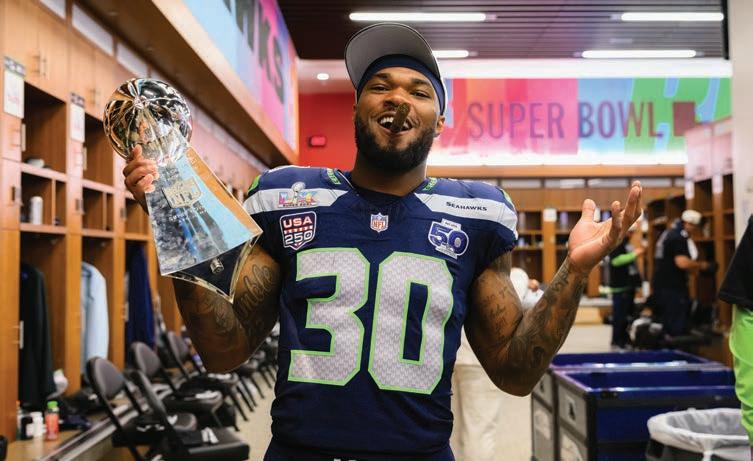
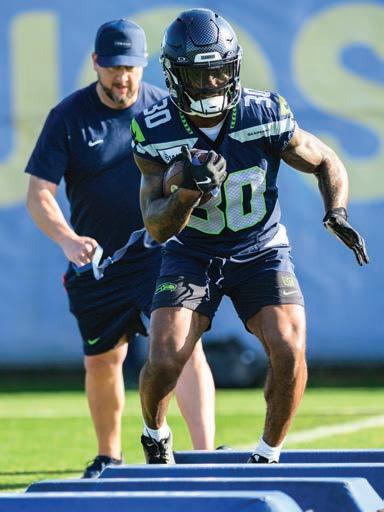
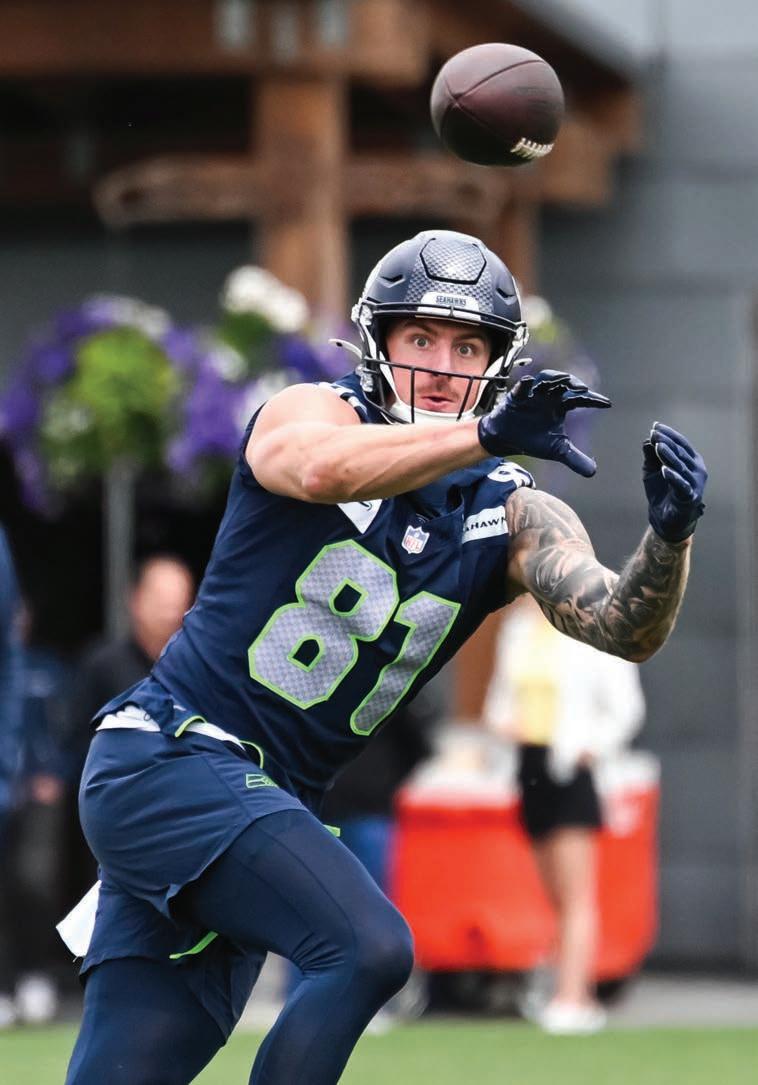
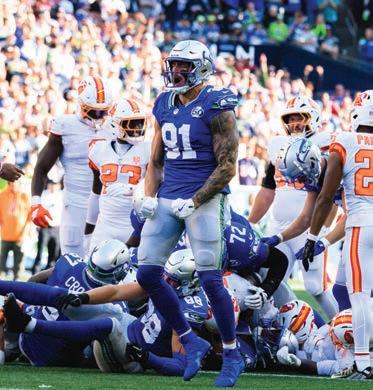
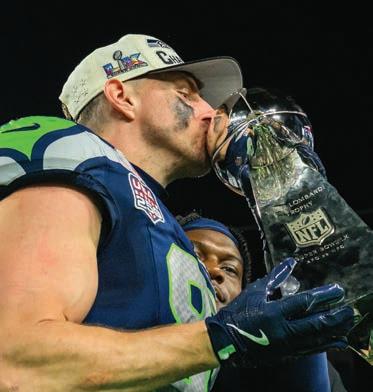
Through the strength, endurance, and adaptability of its team, the Seattle Seahawks’ game plan ultimately led to a Super Bowl championship title. United in ink, three players deduce how they achieved greatness in the NFL’s 2025 season, how they used their strengths as motivation, and how tattoos formed a special community, inside and outside the locker room.
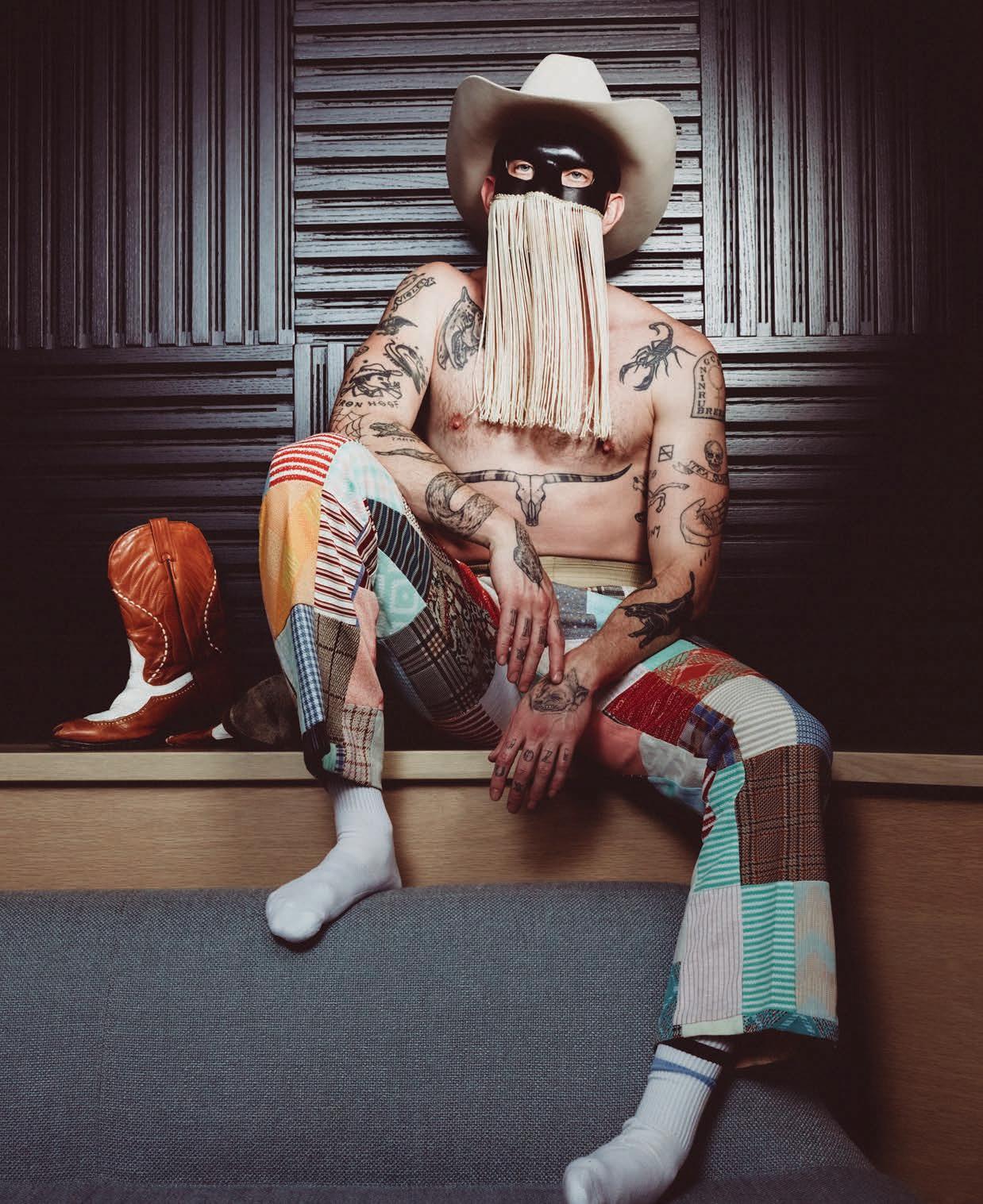
We look into the lives of Orville Peck and Bailey Spinn, two singersongwriters who followed risky paths that could have led to nowhere, yet somehow their voices guided them through the rough terrain. We also dish on Pro Snowboarder Sage Kotsenburg and Zoologist Lindsay Nikole, who took chances in their fields, going the distance to turn their pastimes into professional triumphs.
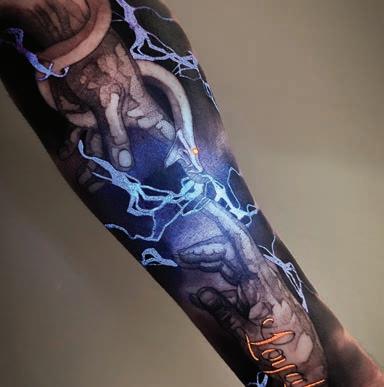
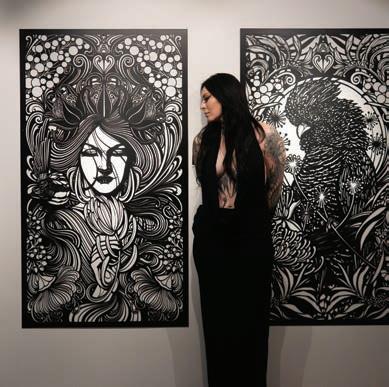
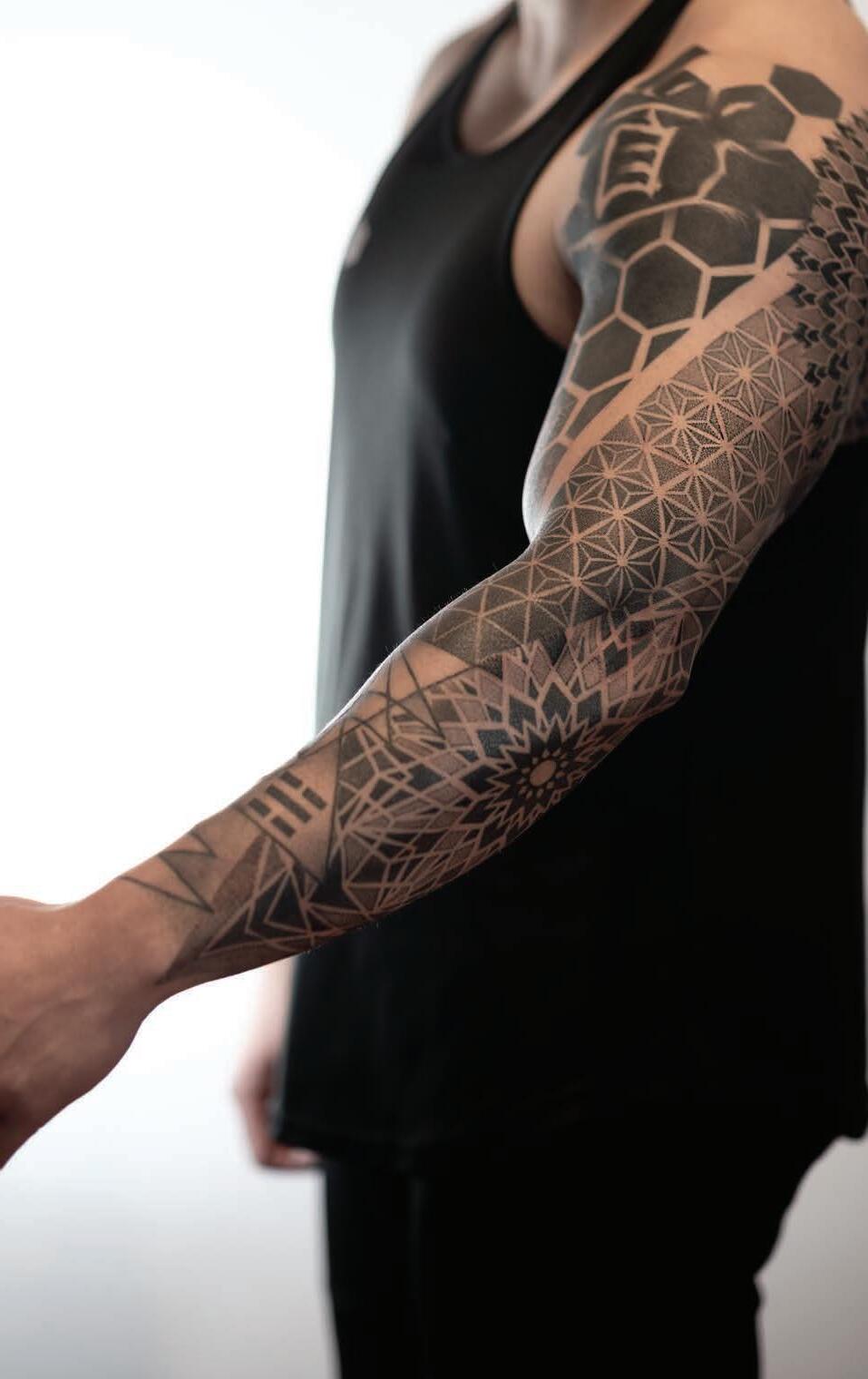
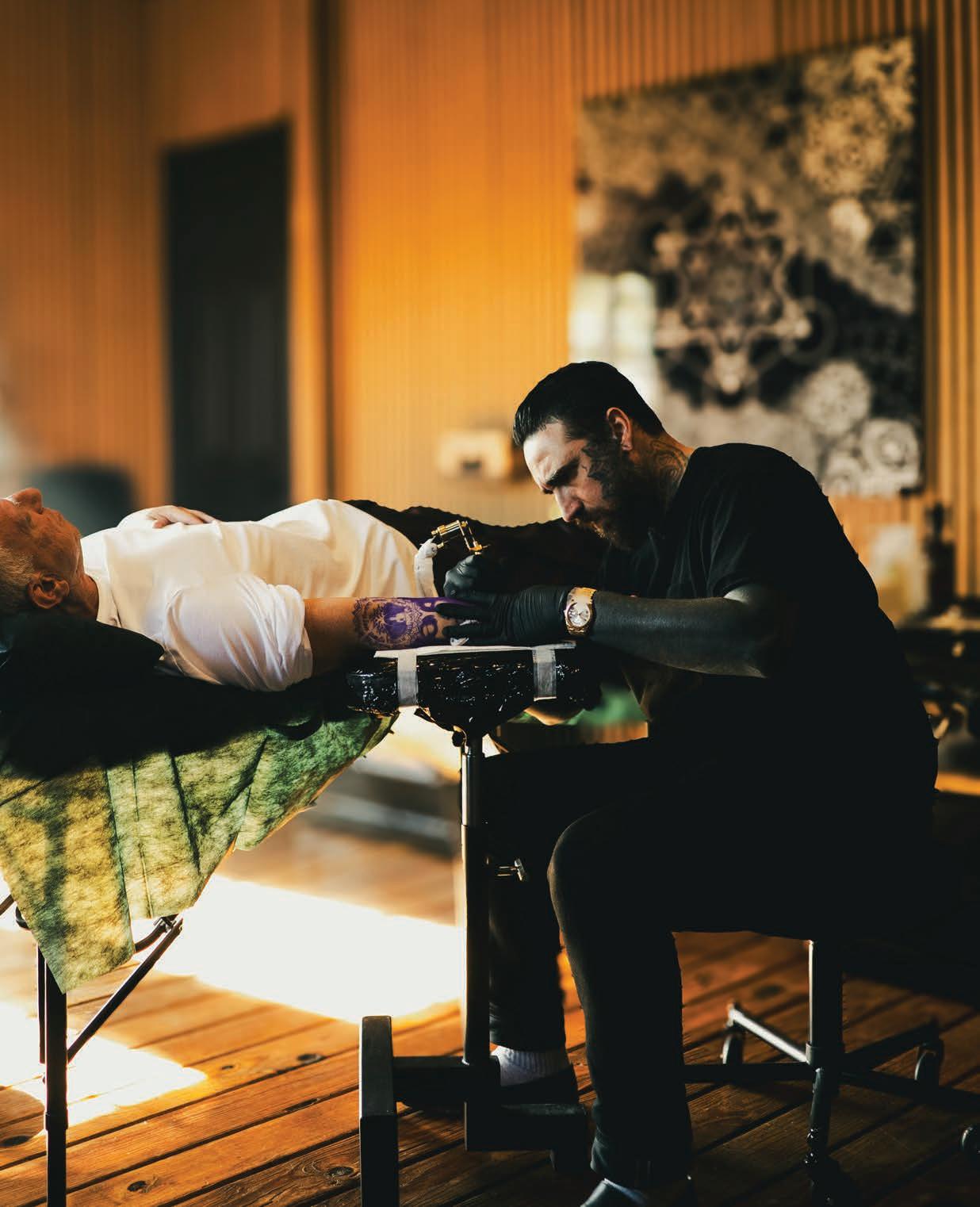
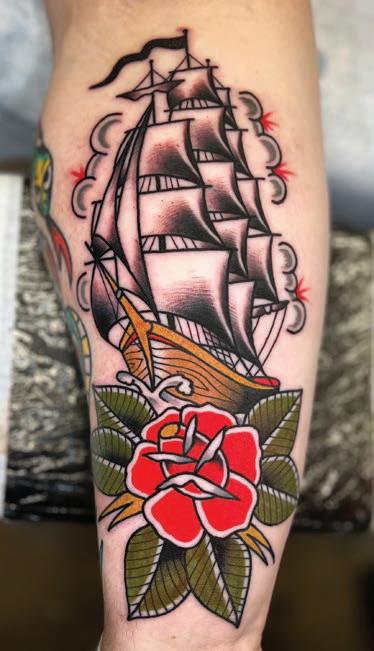
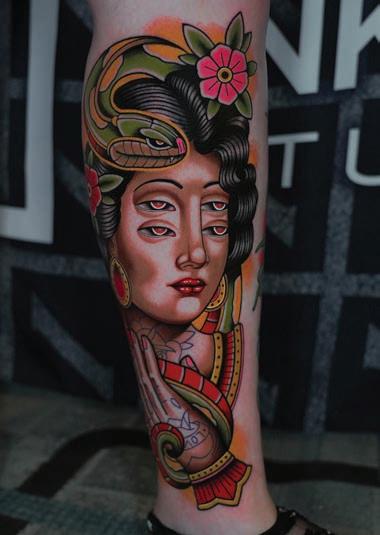
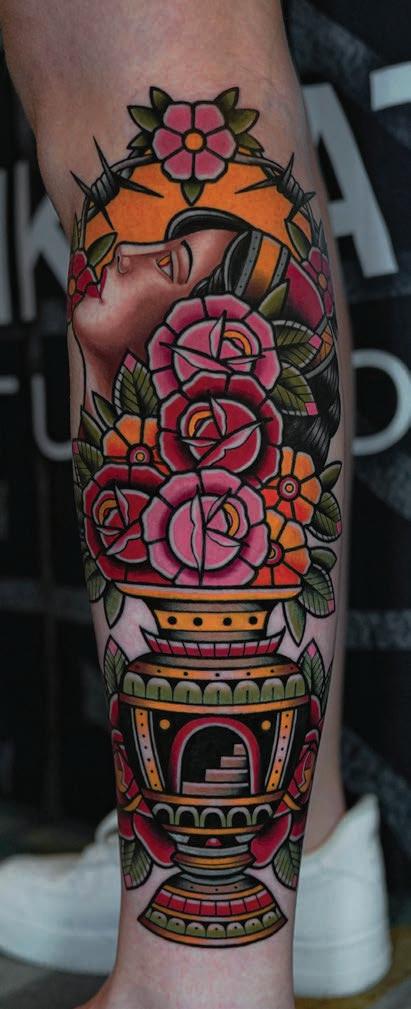
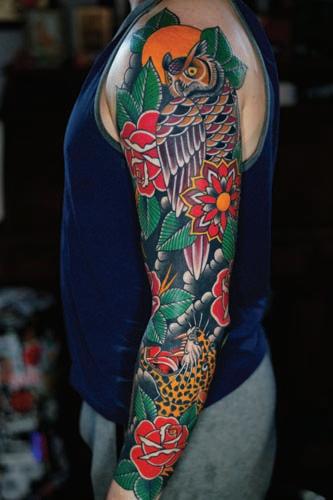
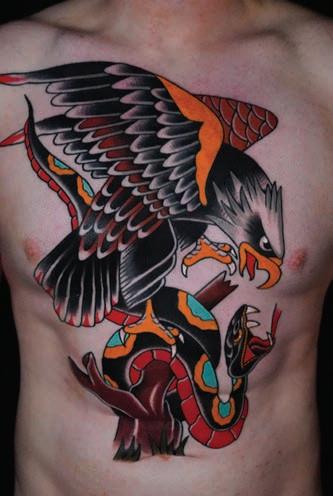
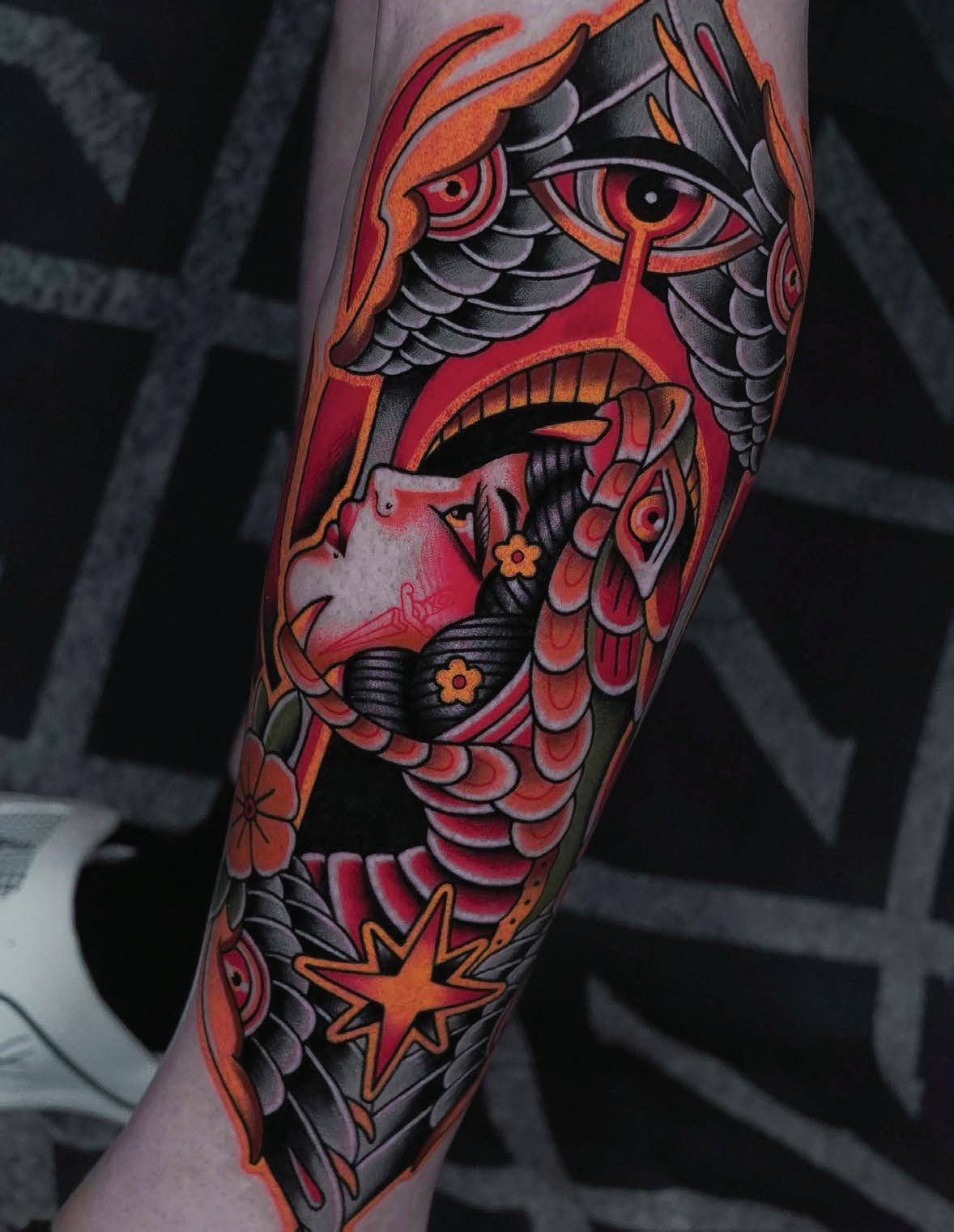
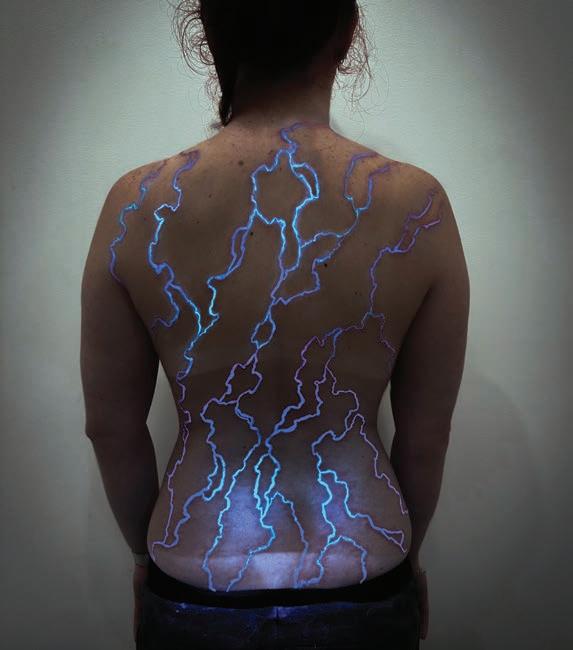
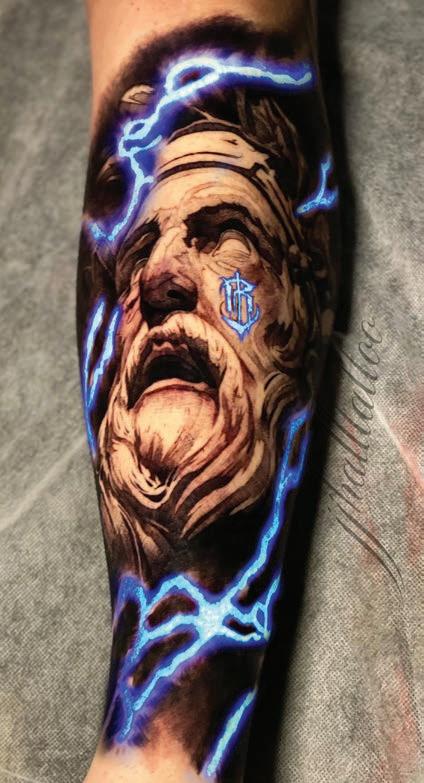
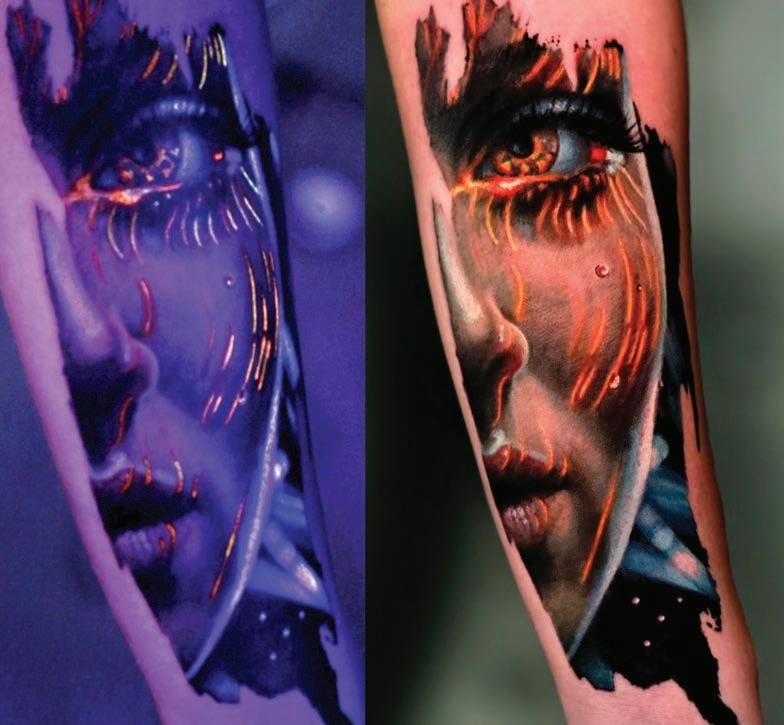
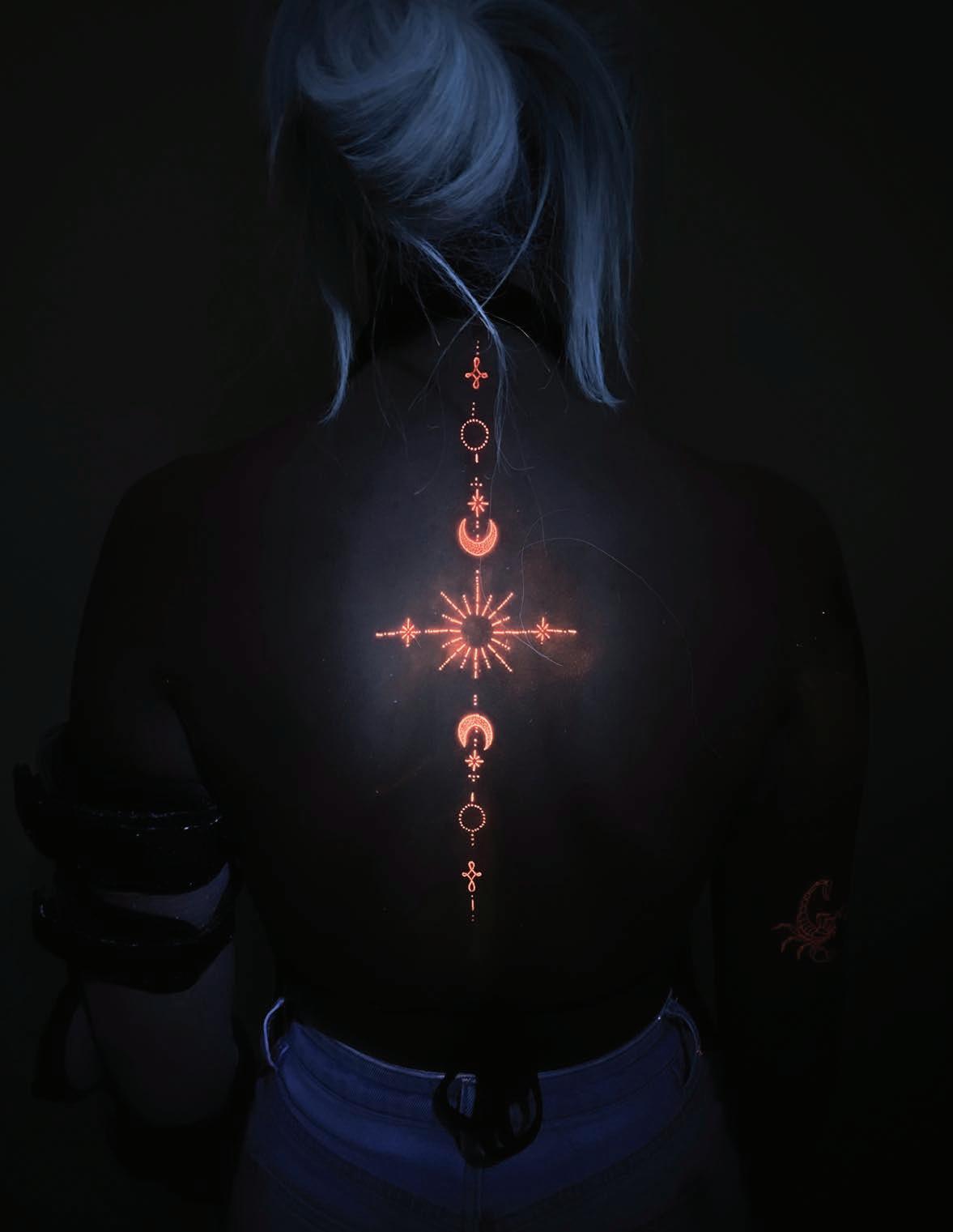
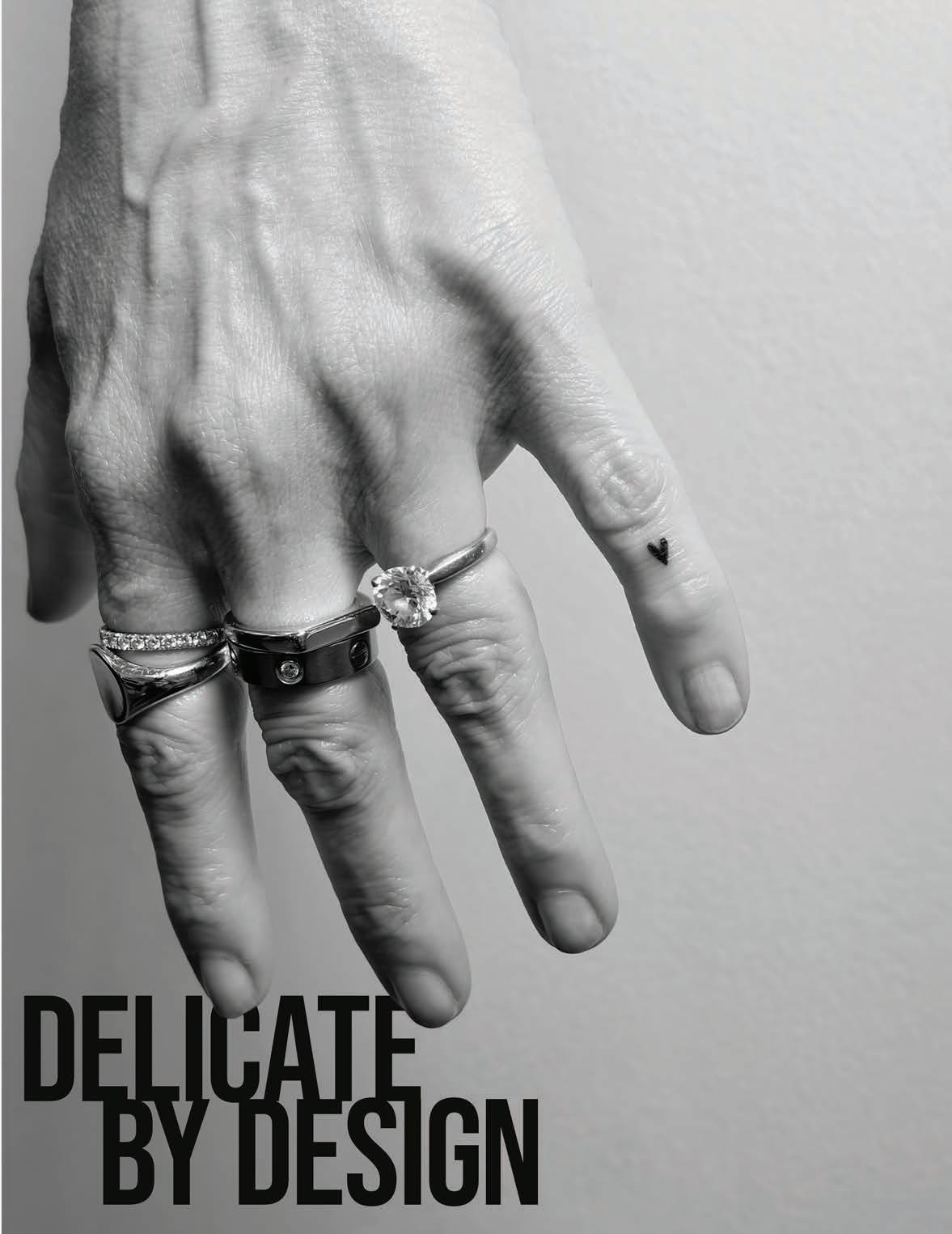
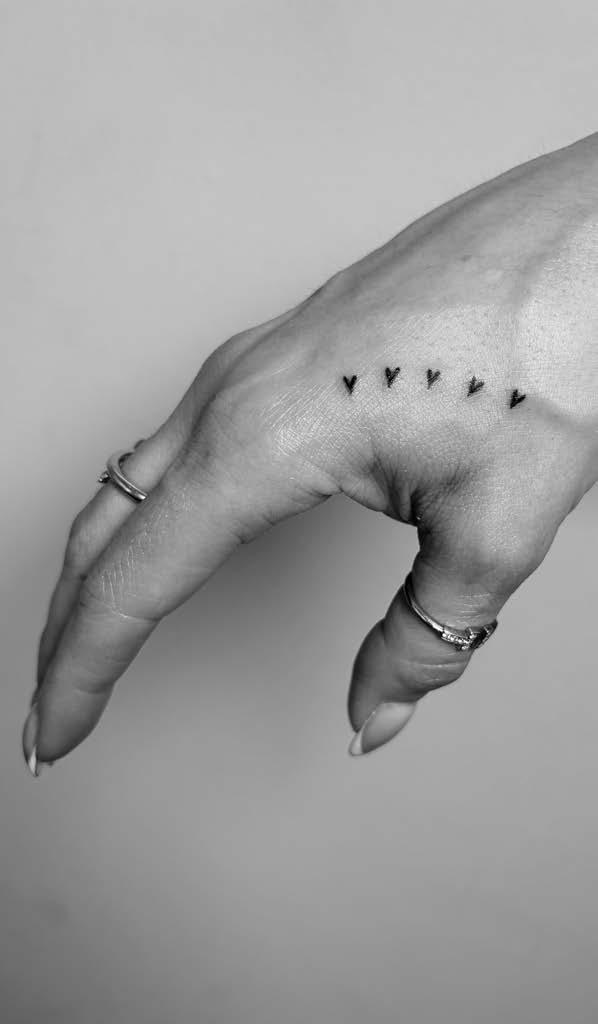
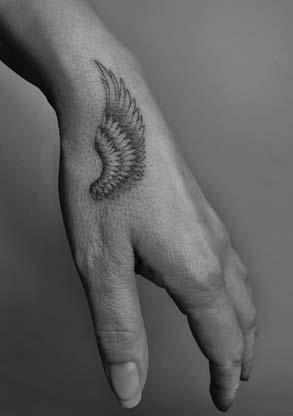
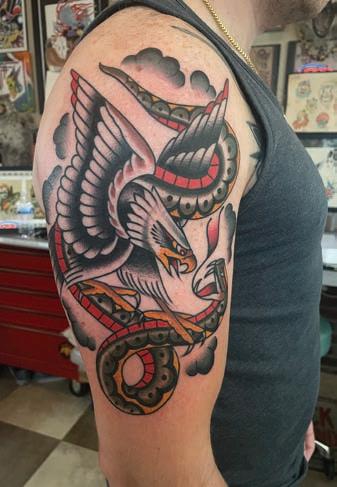
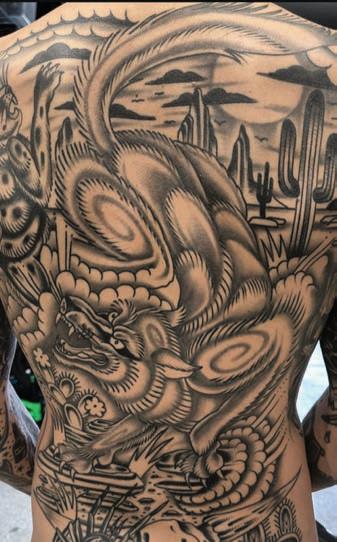
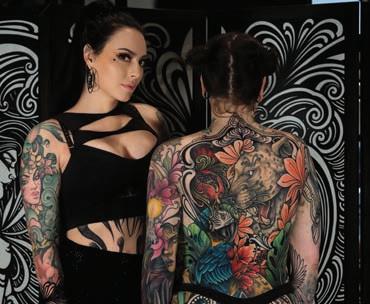
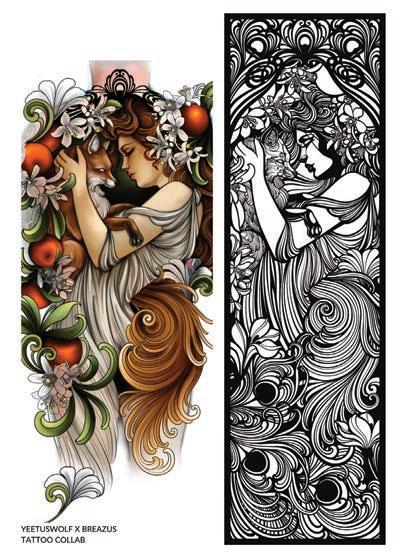
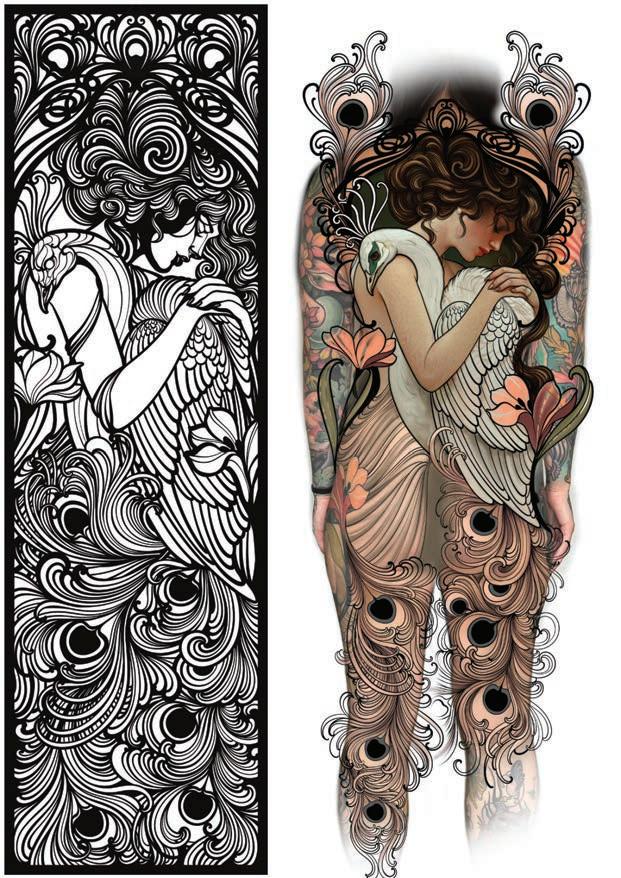
We highlight the storied histories of two beloved Arizona bike rallies, and examine the Denver tattoo scene through the lens of artists from three tattoo studios. And, of course, we offer a visual feast, diving deep into UV tattoos, American Traditional tattoos, delicate fine-line tattoos, and tattoo-inspired metalwork.
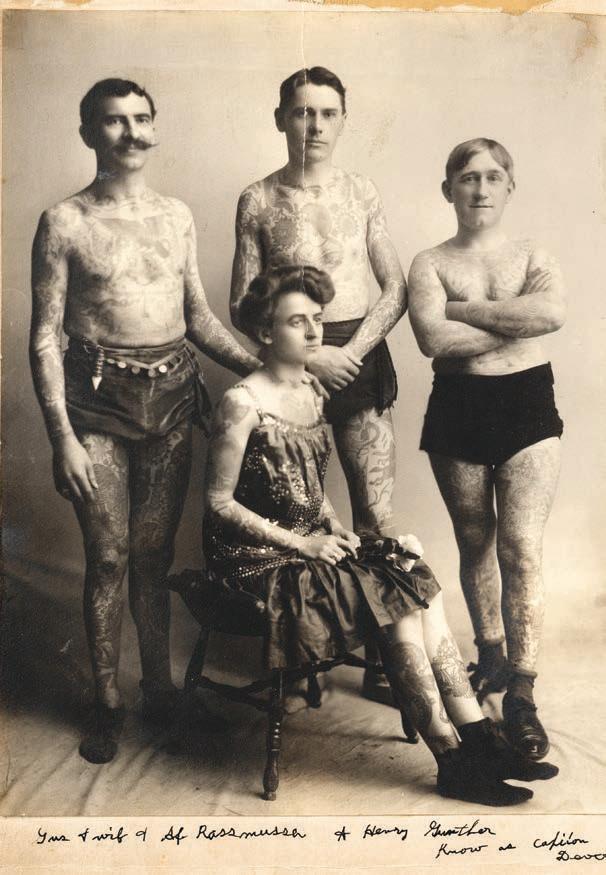
Tattoos are declarations of voice, offering freedom to the people who bear them and multiple paths to discovery. As you flip through the following pages, we hope you find inspiration and affirmation that there is more than one path to embracing your individuality.
Darrin Austin
Publisher
PUBLISHER Darrin Austin
VP OF PRINT MEDIA Toby Thompson
VP OF OPERATIONS Tianna Kaye
VP OF ADVERTISING Christa Lebar
PR/MARKETING MANAGER Carson Leathers
MANAGING EDITOR Amy Higgins
DIGITAL MARKETING Jennifer Kraybill
GRAPHIC DESIGN Fanie van Niekerk
WEB DEVELOPMENT Peter Talavera
SOCIAL MEDIA / VIDEOGRAPHER Collin Pape
OFFICE MANAGER/PENNSYLVANIA Jami Pearlman
ACCOUNTS RECEIVABLE /PAYABLE Chris Watson
FULFILLMENT Theresa Jones
CONTRIBUTING WRITERS
Alex Shimalla / Anna Smith / Annie Stopak / Elaine O’Connor Maguire
Emily Adam / Gil Macias / Joey Skladany / Kate Daniel / Kellie Speed
Max Freedman / Nicole Stover
CONTRIBUTING PHOTOGRAPHERS
JSquared Photography / Ryan Pfluger / Christopher Kolk / Leigh Keily
ADVERTISING Kaydee Dici / Jaime Van Bogaert / Wallace Cedeno
CORPORATE LOCATION
Inked Holdings, LLC. 15210 N. 75th Street, Unit B
Scottsdale, AZ 85260
WEBSITE INKEDMAG.COM
SUBSCRIPTION INFO subscriptions@inkedmag.com
Artist-approved tattoo fading you can trust.
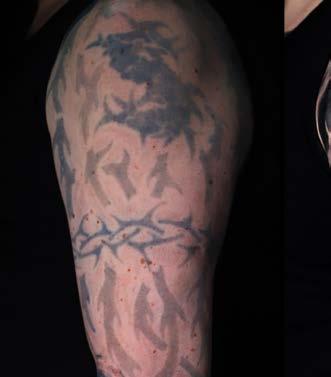
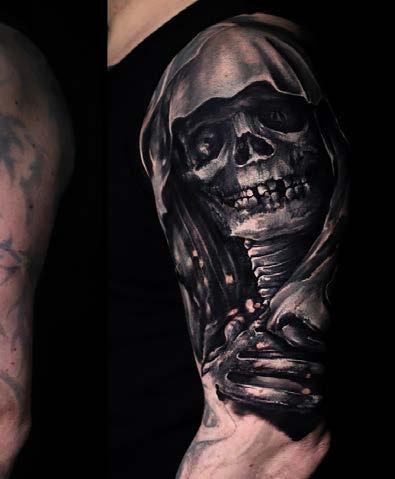
Make room for something new, refine old details, or rethink your placement – anything’s possible with Removery.
Laser tattoo removal has definitely opened up previously unavailable opportunities to repair or redo old or simply unwanted tattoos. The ability to lighten an old tattoo has increased the tattoo artist’s work capacity and opened up gaps that were previously impossible to overcome.”
– Marek Pawlik @marekpawlik_tattooartist
After Removery Treatment
After Tattoo Cover-Up
SMART TOOLS FOR SKIN ART
NEW PRODUCTS FOR TATTOO ARTISTS AND THEIR CLIENTS AT EVERY STAGE OF THE GAME.
BY INKED
Since its ancient beginnings, the art of tattooing has continually advanced, and with the rapid pace of technological innovations, the way artists practice has accelerated faster than ever. From AI and UV to illustration assistance and skincare, tattooing-focused companies are helping tattoo artists grow, evolve, and stand apart from the competition by offering services that can turn a great tattoo into a brilliant masterpiece.
MAGIC PEN
A stylus for the skin
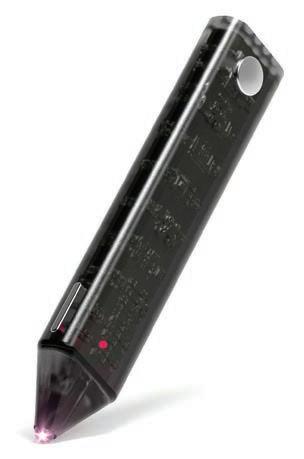
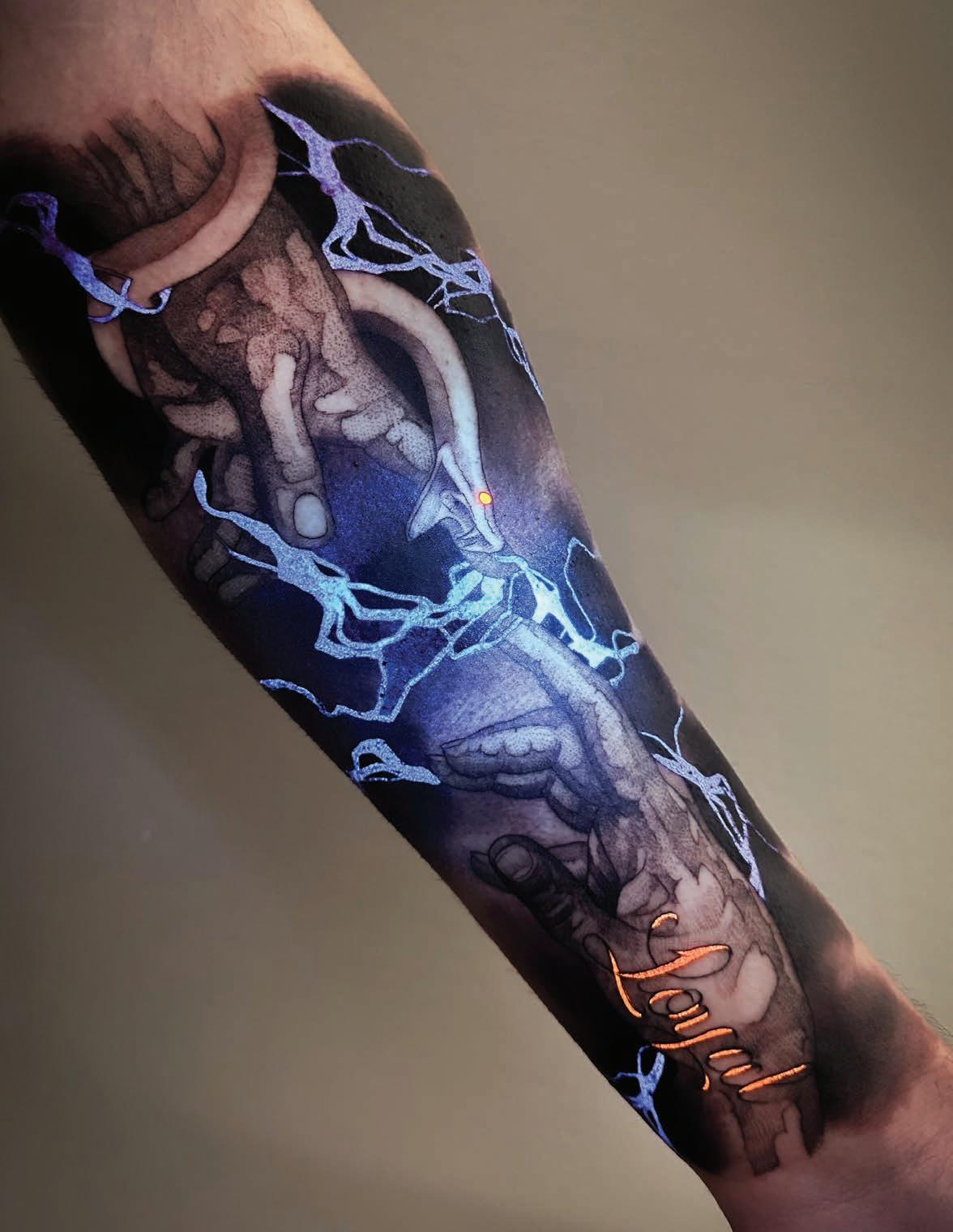
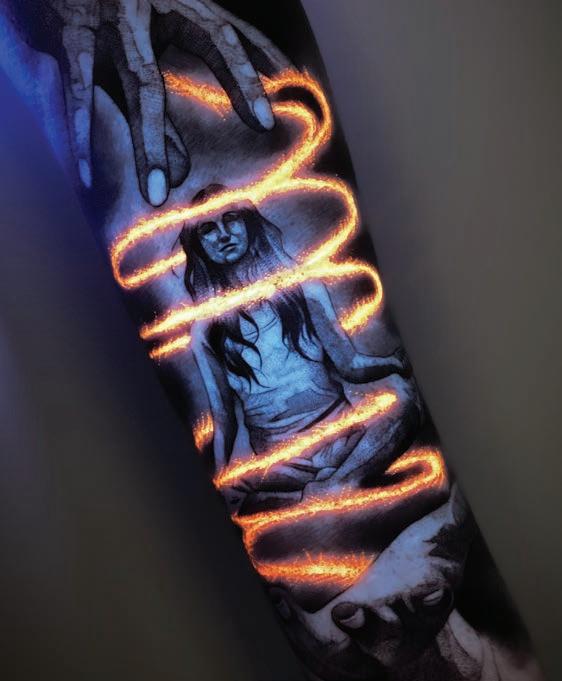
When HYPRSKN’s Magic Ink and Magic Pen combine efforts, the results are spellbinding, with tattoos that appear and then disappear before your eyes. When the Magic power couple is used together, tattoo artists can draw, write, edit, and erase. The Magic Pen uses UV light to capture Magic Ink’s color-changing particles, making the tattoo visible. When the light source is removed, the ink “disappears,” only to return with another dose of UV light. hyprskn.com
INKJIN
Discover original tattoo designs
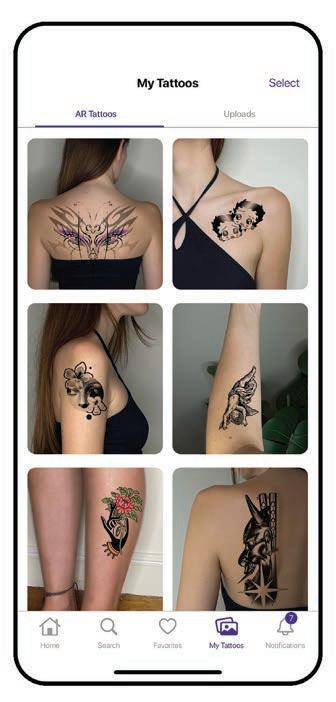
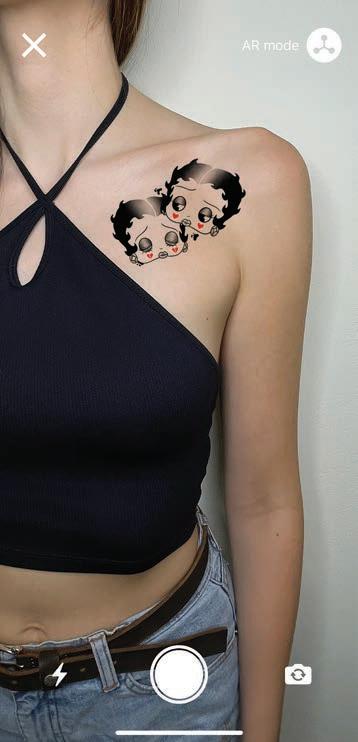
For some, the most difficult parts of the tattooing process are the first steps: deciding what they want, where they want it, and who they want to ink it. Inkjin has answers to all of those questions. Its digital platform features 3,600-plus original designs to choose from and a slew of handpicked artists to do the job. Customers can preview tattoos on their bodies using Inkjin’s AR tool and determine the cost of their projects using the AI estimator. Inkjin is also great for tattoo artists, serving as a business tool for bookings, deposits, and information-sharing. inkjin.com
PHOMEMO
M08F Wireless Stencil Printer
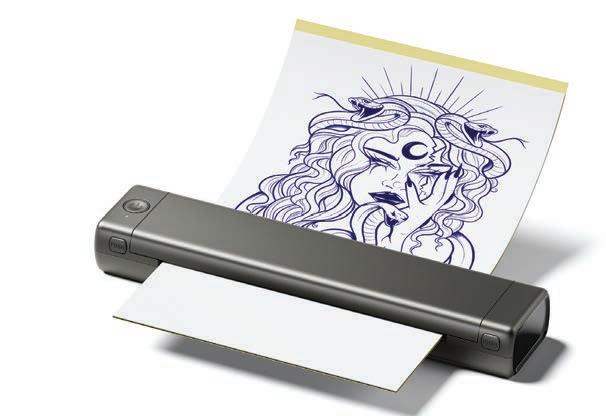
Specially designed for tattoo applications, the ultra-slim Phomemo M08F Wireless Stencil Printer is small but mighty. Shorter than a standard ruler and weighing less than 2 pounds, the M08F can go where you go, sliding into most travel bags with ease — a convenient companion for on- and off-site tattooing. Its inkless thermal technology creates crisp, high-definition transfers without the mess of ink or toner, and the rechargeable battery can produce up to 220 smudge-free pages per full charge. phomemo.com
PROCREATE
Art for everyone
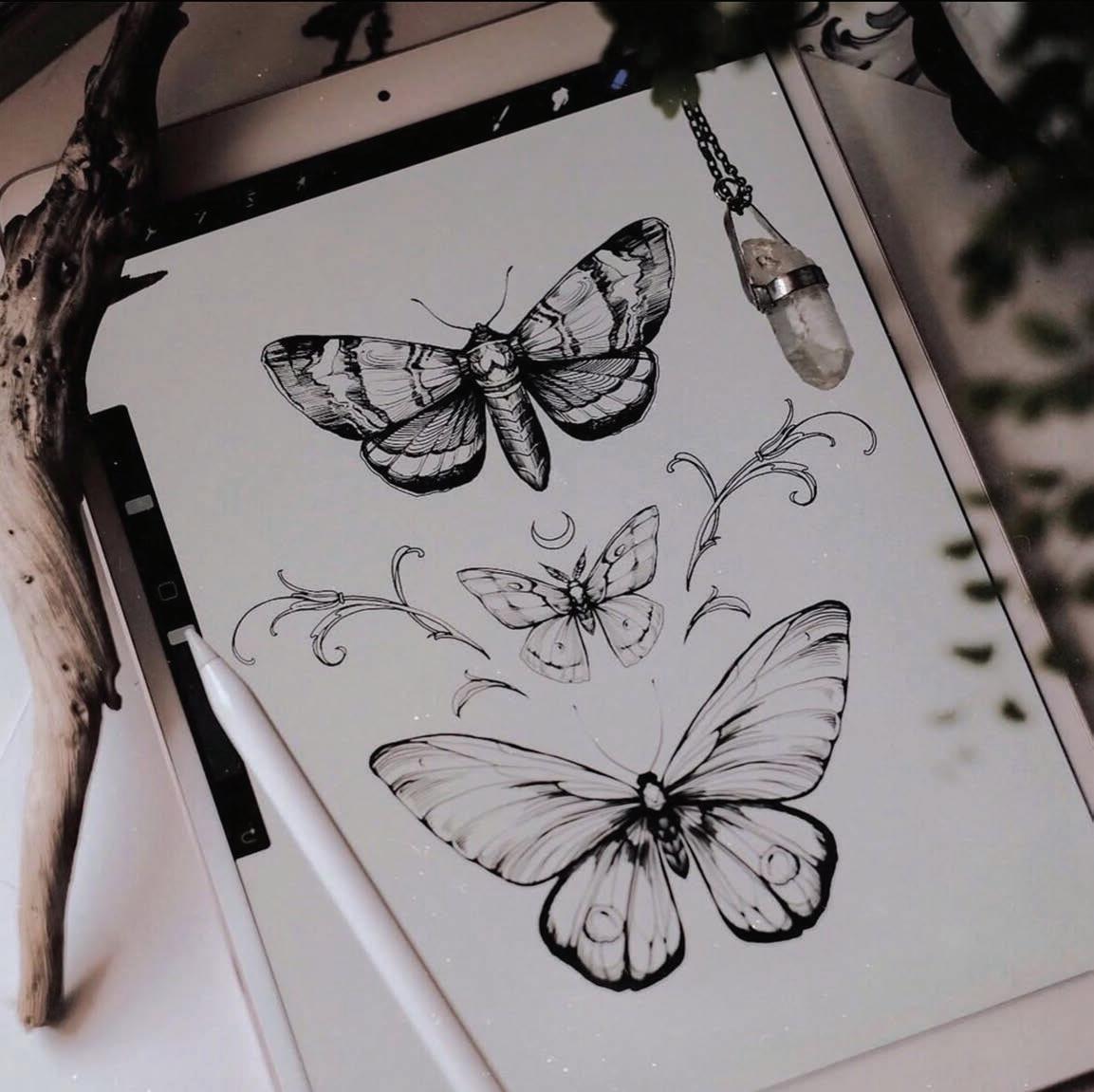
Procreate offers limitless possibilities for tattoo artists looking to refine their designs or experiment with new ideas. Procreate helps artists collaborate more effectively, making it easier to visualize and modify designs until they reach the ideal tattoo design. This award-winning digital illustration app offers hundreds of brushes and colors, and creative tools that can warp, layer, blend, erase, refine, and more. Procreate’s latest upgrade includes an expansion of drawing tools, such as pencils, paints, inks, markers, pens, and brushes. Whether your style leans more toward realism, illustrative, American traditional, or even watercolors, Procreate offers artists flexibility, control, and clarity. procreate.com
SKINGRAPHICA
Skincare for skin art
When you book a tattooing session, you willingly subject your skin to trauma. The SKINGRAPHICA four-phase system helps protect your skin before, during, and after the ink sets in. “SKINGRAPHICA is the first prestige brand engineered to preserve the art while treating the skin,” the company touts.
About two weeks before your session, prepare your skin with its PRIME tattoo preparation serum. PRIME hydrates and fortifies the skin, creating a supple surface that heals more efficiently and helps ink settle more evenly. When the ink is complete and after your tattoo artist allows your covering to be removed, move to stage two, LOCK, to soothe and protect your healing skin. Use PROTECT as your daily defense cream, safeguarding your skin and ink from harmful UV rays and fading.
Stage four, LUME, brings old tattoos new life. “For LUME, it’s important that it is used on tattoos suitable for restoration,” says Mat Baxter, cofounder and CEO of Australia-based SKINGRAPHICA. “This is typically tattoos 5 years or older, that show obvious signs of fading. Tattoos with washed-out effects or watercolor styles are not ideal candidates for restoration.”
As a veteran tattoo artist, fellow Cofounder Mikael Rämgård has a deep understanding of tattoo culture. That combination of insight and luxury skincare means your canvas and tattoos will stay vibrant now and into the future. skingraphica.com
SACRED GEOMETRY 2.0
Drawing app for symmetry, geometry, and drawing tools
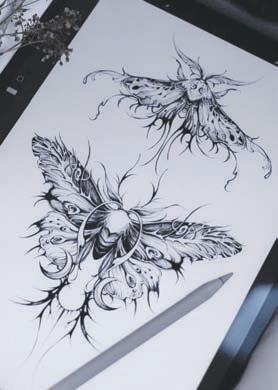
CEO and Founder Dillon Forte created Sacred Geometry “for tattoo artists, designers, educators, and anyone inspired by the mathematical beauty found in nature.” Just a year after its initial launch, the Sacred Geometry Drawing App has received an upgrade.
Sacred Geometry 2.0’s improved interface comes with a redesigned fill tool, SVG import and export options, and new tools like Nautilus Mode, which offers tattoo artists two spiral-design options. The app’s updates refine, duplicate, move, scale, and organize designs quickly, helping tattoo artists optimize their performance and save invaluable time.
Forte, a Texas-based tattoo artist, has a global reputation for his innovative geometric designs. He has tattooed stars like Chris Hemsworth, Kat von D, and Kehlani, and has tested his tattooing prowess underwater, on Mount Everest, and inside an Egyptian pyramid.
Sacred Geometry 2.0 is available exclusively on iPadOS and is compatible with iPadOS 14 or later. sacredgeometryapp.com
ARIZONA BIKE WEEK
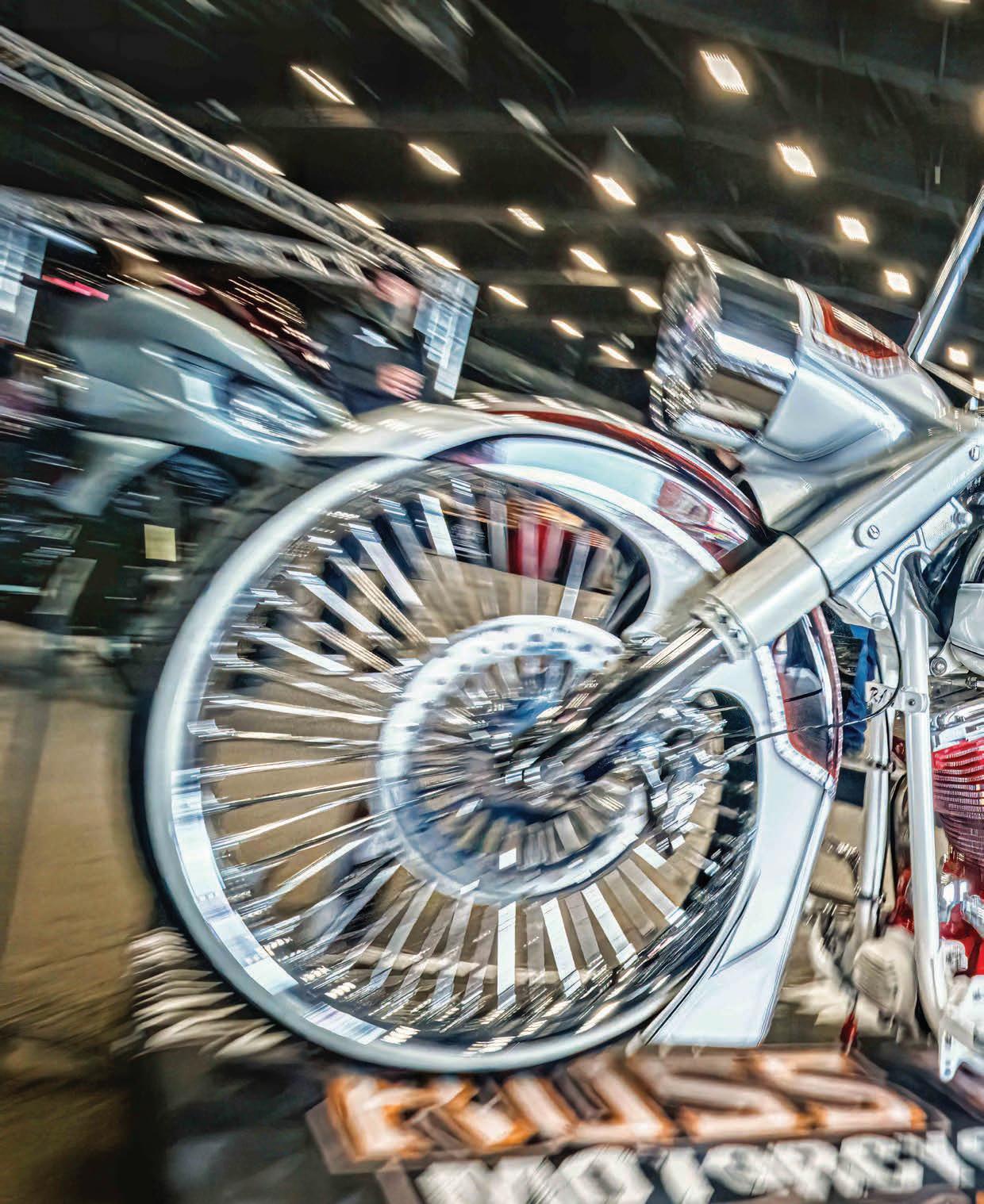
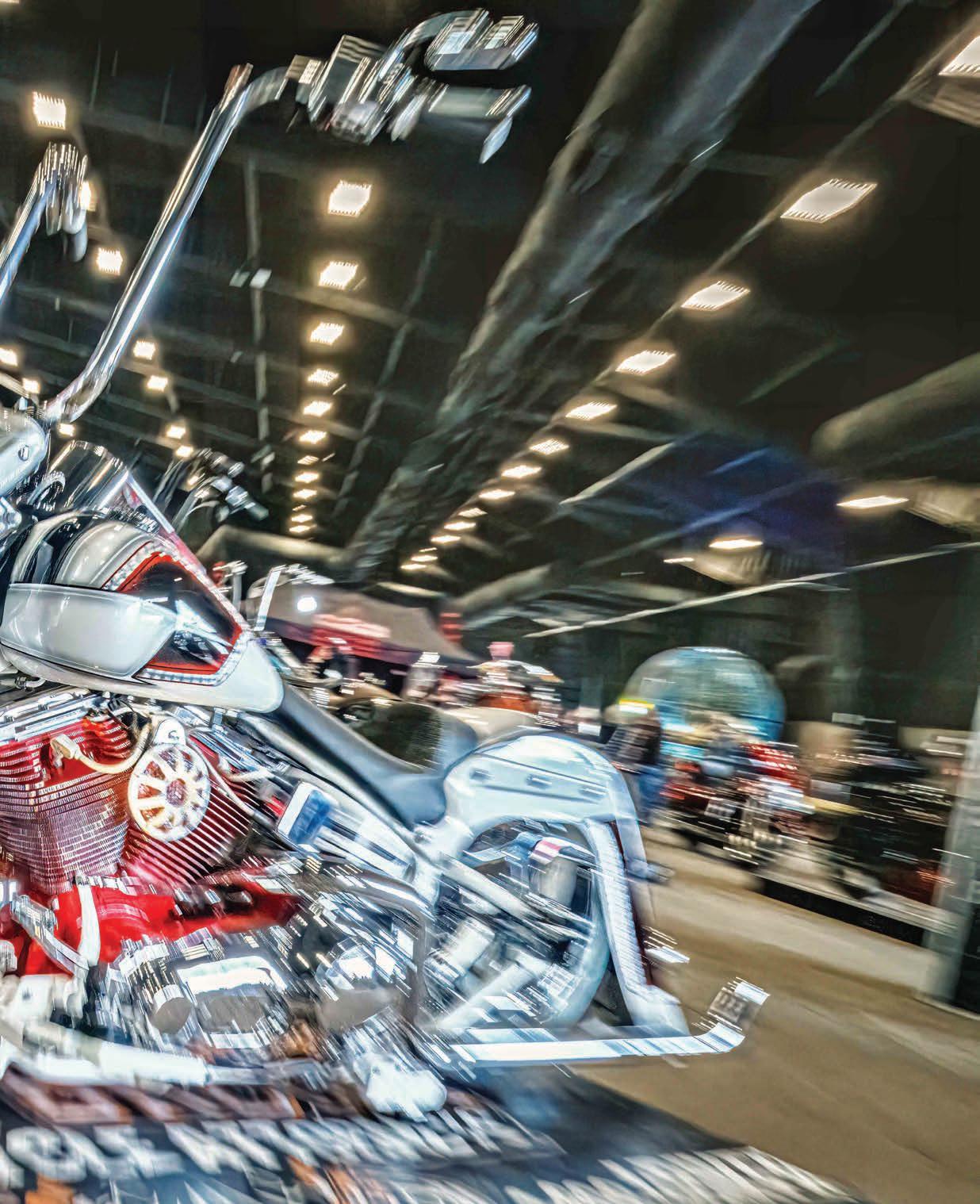
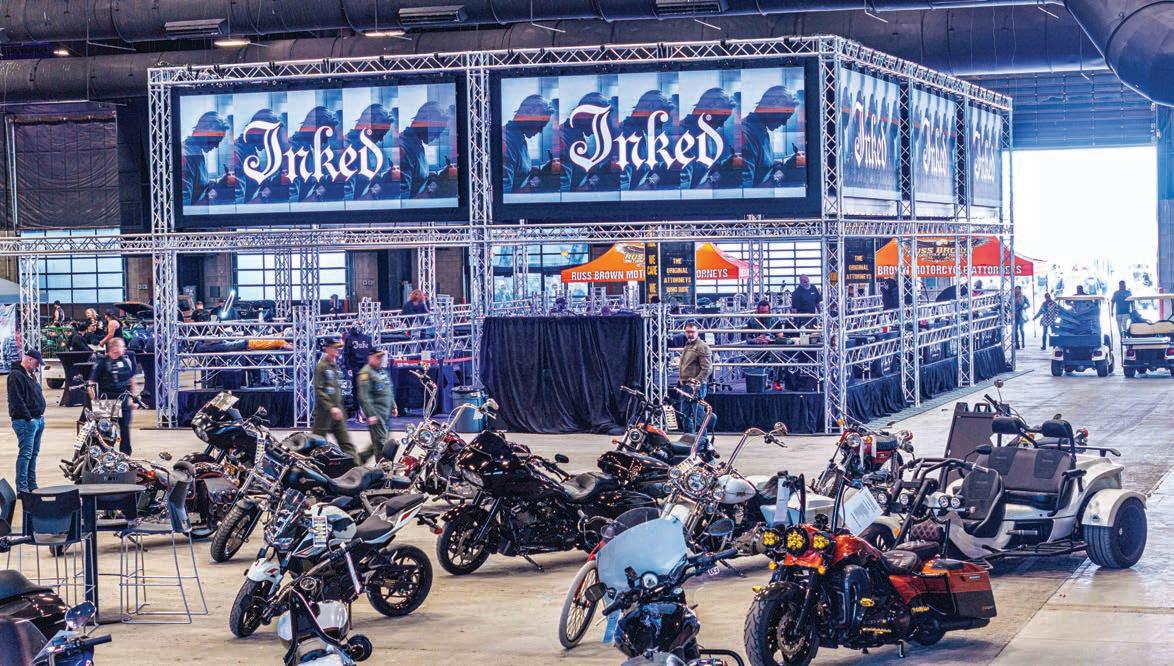
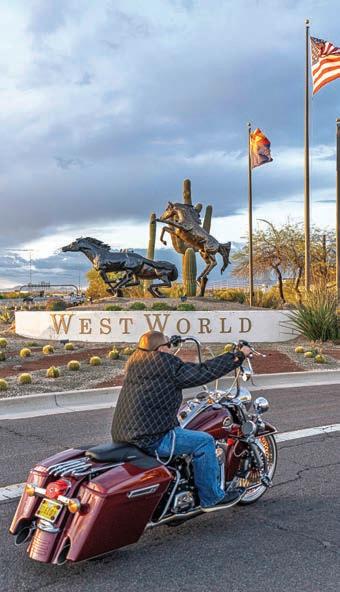
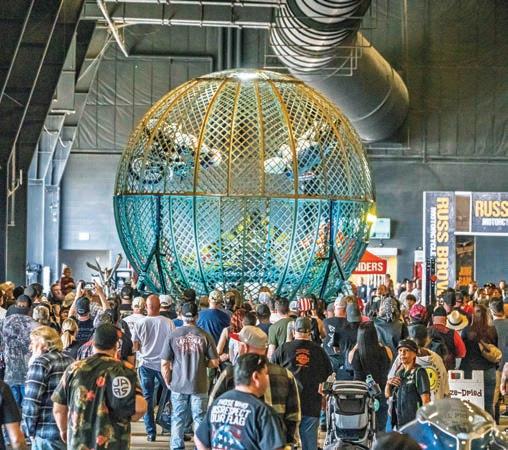
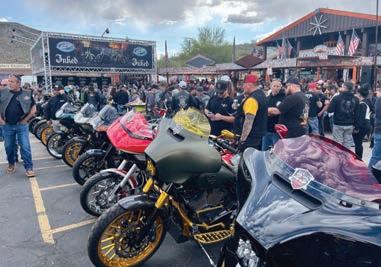
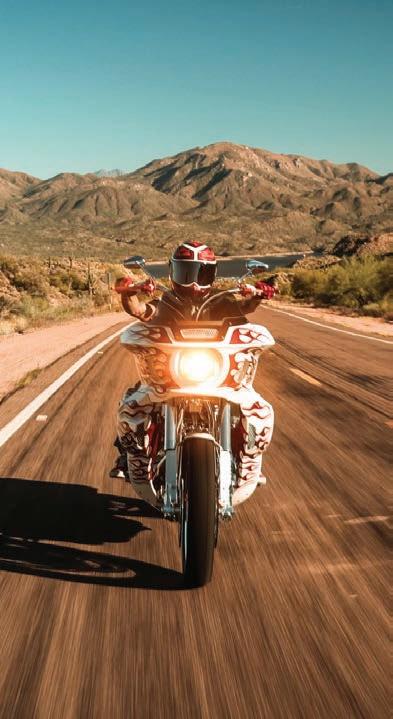
Widespread rumbles, revs, and burnt rubber will fill the WestWorld grounds when tens of thousands of motorcycle buffs and spectators emerge for Arizona Bike Week. A premier biking event for nearly 30 years, ABW returns April 8-12, with new entertainment alongside returning fan favorites.
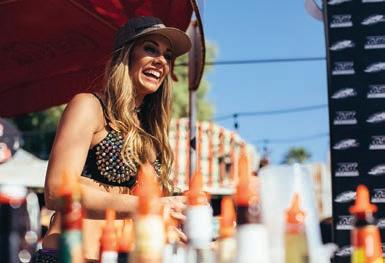
“As a promoter, what makes Arizona Bike Week special is the balance,” Kristina Shaffer explains. “During the day, you’re immersed in motorcycle culture, demo rides, builders, racing, charity rides, and the vendor community. By night, the rally transforms into a full concert experience. It becomes more than an event; it feels like a temporary city built around the culture. It’s the ultimate biker vacation.”
A CULTURAL GATHERING
ABW expanded its entertainment lineup this year with more high-power entertainment, including the Arena Wars Fighting Series, where
MMA fighters battle for the championship belt, and Slide School at the HellRacer Dome, where ABW guests can register for a professional bike riding training session with Johnny Lewis.
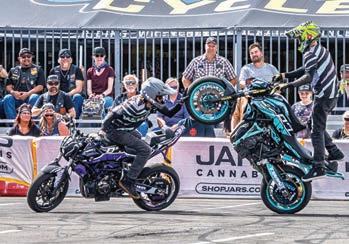
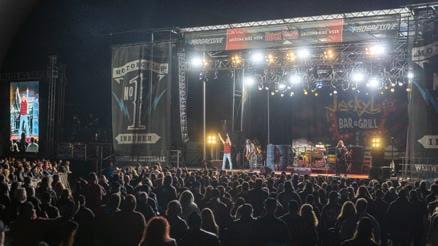
Yet the mainstay entertainment is here to stay. Daytime demo rides, stunt shows, and racing bring in strong crowds of all ages, while evening concerts in the RockYard summon music lovers with heavy-hitting headliners. For 2026, special guests Znora, Drop Diezel, Christopher Shayne, and Stereo Rex will heat up the main stage for featured acts Black Stone Cherry, Jason Bonham’s Led Zeppelin Evening, Cody Jinks, and Ted Nugent.
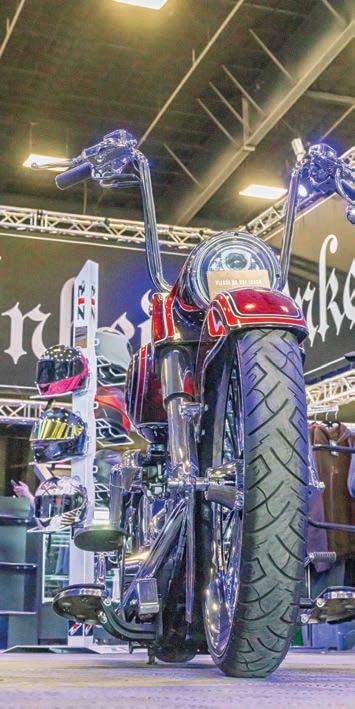
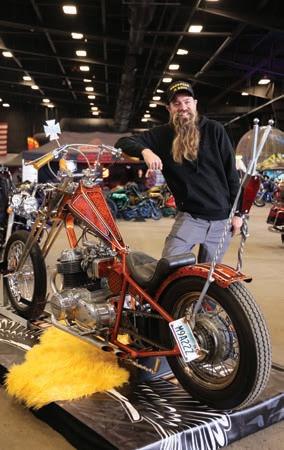
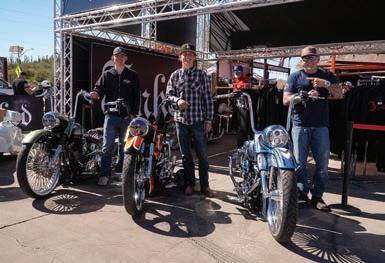
The bike shows are unquestionably at the heart of ABW. Several bigwig bike builders will be on-site for ABW 2026, including Rick Fairless of Strokers Dallas, Arizona’s Joe Norkin and Jason Nance of Raw Customs, and Armondo “Mondo” Porras of Denver’s Choppers, who is widely known as the “Godfather of Choppers.”
Norkin sees motorcycles as an extension of the rider — it’s their ego, their identity, their connection to the world — so there’s a lot of blood, sweat, and tears going into a build. He compares today’s bike shows to chariot competitions during the Roman Empire. “Man decorated his chariot. He decorated his horses. It’s always been done, since the beginning of man — that competition,” he says. “Custom motorcycles, custom cars, that’s the ego side.” Meaning, the best-looking horse and the bestlooking chariot won the prize and bragging rights, much like today’s bike show winners.
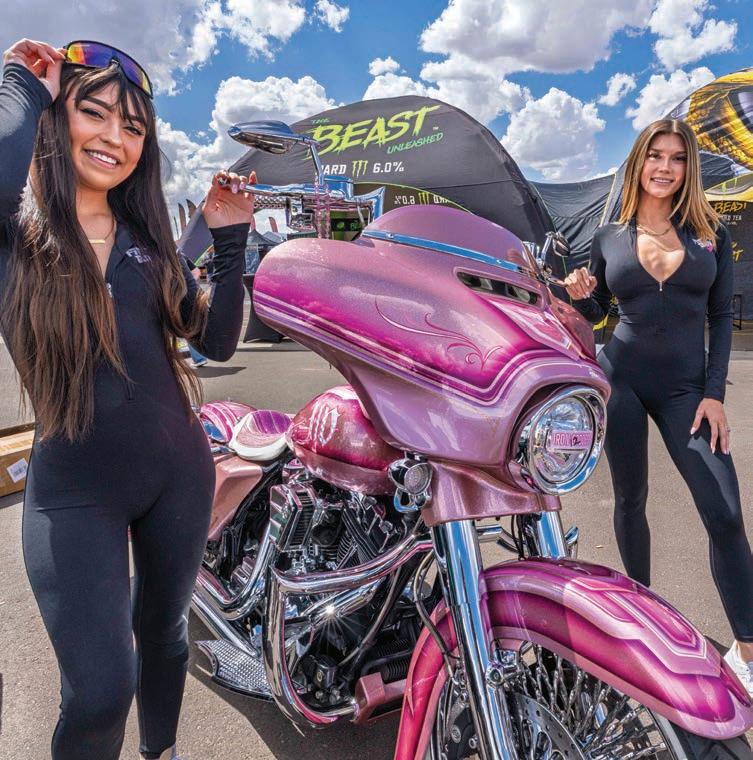
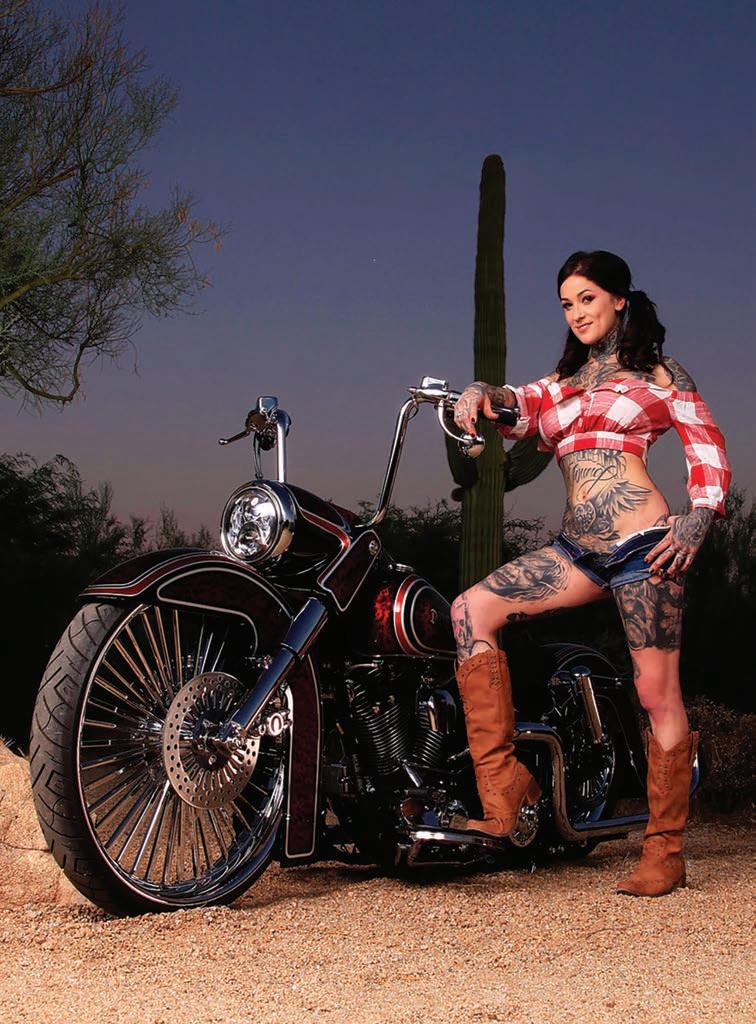
Ladies get a lot of love at ABW. In fact, female attendance and participation have grown significantly over the years, according to Shaffer. And with increased interest comes increased representation, including the Iron Goddess All Female Motorcycle Show and ABW’s newest
addition, Women’s Vicla Showcase, celebrating Spanish pride, creativity, and craftsmanship in the women’s biking community.
“Iron Goddess creates a platform where women are recognized not just for their bikes, but for the journeys that brought them there,” says Iron Goddess Motorcycle Show Executive Director Bunnie Geer. “What began as one show has grown into a thriving community rooted in empowerment, connection, and the undeniable presence of women in the motorcycle world.”
Each year, ABW hits the road to raise funds for a variety of causes with its charity bike rides.
“Charity rides have always been a foundational aspect of Arizona Bike Week, reinforcing the community and philanthropic spirit of the motorcycle world,” Shaffer explains. “Beyond fundraising, these rides create meaningful shared experiences and remind attendees that the rally is about connection, purpose, community, and giving back.”
WestWorld offers on-site camping options, so guests can soak up every electrifying moment. “Camping also helps foster community, convenience, and a stronger sense of belonging throughout the week,” Shaffer says. “‘Camping neighborhoods’ have formed. People who have met at the event from different states request their same campsites each year and plan their week-long stay via email and group chats.”
Year after year, riders return to ABW at WestWorld for the craftsmanship and camaraderie. It’s a community crafted by chrome and kinship, and an experience that stays with you long after the dirt, dust, and ringing of the ears settle into memories of open roads, roaring engines, and whispers from the desert calling you back for more.
INKED MAGAZINE
STUNT SHOWS
STEVE “SKEETER” WENDIG
STUNT SHOWS
CONCERT SERIES
IRON GODDESS MOTORCYCLE SHOW
CAVE CREEK BIKE WEEK
BLENDING BIKER CULTURE AND SMALL-TOWN REVELRY INTO ONE UNFORGETTABLE RALLY.
Since its 1998 launch, Cave Creek Bike Week has grown increasingly popular among motorcycle enthusiasts, vendors, and casual
fans of great moments, music, and mild mischief-making.
“The thing grows leaps and bounds every year — 20 to 30% every year,” says Mark Bradshaw, owner of The Hideaway Grill and Cave Creek Roadhouse, and the boss behind CCBW. “It takes all year to plan, even now. This is something that’s grown over the last 30 years into what it is today. It’s known to be second to Sturgis, as far as fun rallies, good times and bikes and people and talent, if you will, with the builders and everything else.”
What started with just under 30,000 attendees now brings in nearly 100,000 bike culture fans and talent from around the globe. CCBW, a free annual event held at The Hideaway, Roadhouse, and select offshoot locations, offers a community vibe, summoning guests to ride in, grab a beverage, and soak up the high-octane festivities and fuel. It’s 10 days of music, bike shows, and vendors daily, with traveling bartenders hyping up the crowd and unforgettable ride tours throughout the week.
CCBW 2026 will kick into gear on April 2 with a kickoff bash, igniting 10 days of incredible engines, entertainment, and high-desert high jinks through April 12. Each day from 10 a.m. to 2 p.m., attendees will have their share of contests, bull riding, and live entertainment, including hard rock band Buckcherry storming the stage on April 11. Additionally, attendees can enter to win a ravishing 2023 HarleyDavidson Low Rider, which will go home with the winner on April 12.
HOG HEAVEN
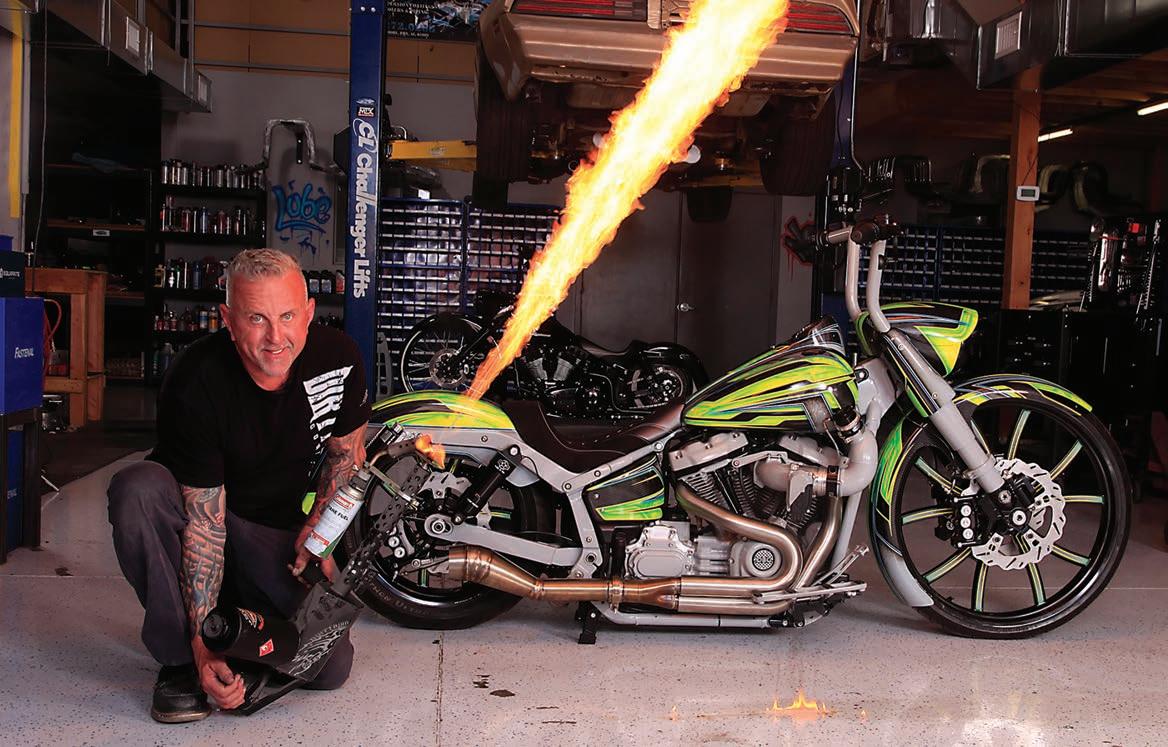
Long before the streets are overrun with CCBW motor junkies, custom bike builders focus on their newest bike show projects, beautifying bland machines with frame modifications and accessories, and upgrading parts to improve performance and efficiency. “Arizona has always had the most bike builders compared to any other state, so the competition is fierce. Everybody’s always stepping up their game,” says legendary
JOHN SHOPE
MARK BRADSHAW
CHASE BRADSHAW
CREDIT: MARK BRADSHAW
Arizona bike builder John Shope.
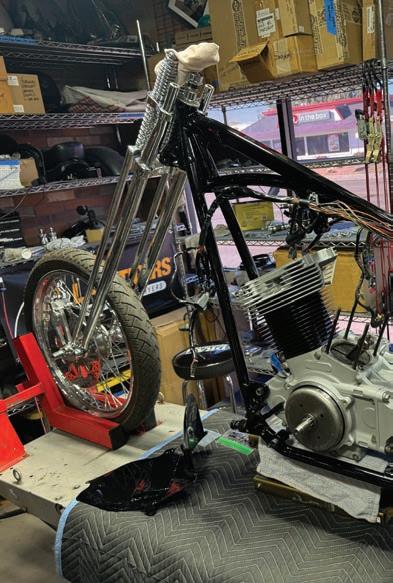
This year, world-renowned bike builder Paul Yaffe will present a modified 2006 Harley-Davidson Fat Boy for CCBW’s Friends Throwdown on April 7 in Cottonwood, Arizona. Every year, a new Friends Throwdown motorcycle theme is determined, and “Springer,” a fork-like suspension system popularized around 1940, won the honor for 2026, meaning each entry needs a Springer to qualify to enter.
“I decided to take a bike and put a Springer on it — get a long Springer, chop the frame up, stretch it, change the geometry of it, and make it a full custom,” Yaffe explains. At press time, the bike’s gold-flame paint job had just been completed, and reassembly was underway.
After the Springer Friends Throwdown crowns its winner, the event guests and participants will ride down to Cave Creek to join in on the revelries, where Yaffe’s custom
Hog will be displayed at his booth and given away to a lucky bike lover.
“Cave Creek is a unique, badass town,” Shope says. “Cave Creek Bike Week is organized by local Cave Creek business owners. It’s free for guests to attend, unlike most major bike rallies.”
The Hideaway and Roadhouse also serve as pre-tour riding hubs, a favorite CCBW feature. “Every day we have a ride,” Bradshaw explains. “It might be to Globe, it might be to Route 66, it might be up Yarnell Hill, it might be to Prescott, it might be down to Tombstone.” In the vast Arizona desert landscape, the options are endless.
The Hideaway’s slogan, “There are no strangers here, just friends you haven’t met yet,” stretches beyond its confines into CCBW, the Cave Creek community, and beyond. “I guarantee a good time,” Bradshaw says. “You come once, you’ll tell your friends, and come back time and time again.”
Paul Yaffe’s “Chopper on the Cheap” YouTube series guides viewers through his bike-building process, from inception to completion and unveiling. Enter the contest to win his Springer bike by following the channel at youtube.com/ paulyaffeoriginals.
CREDIT: JOHN SHOPE
PAUL YAFFE’S “CHOPPER ON THE CHEAP”
CREDIT: CHASE BRADSHAW WATCH AND WIN
FULL-LEAN MACHINE
KYMCO’S AK 550I PREMIUM COMBINES POWER AND PRECISION WITH GRACE AND GRIT.
BY GIL MACIAS
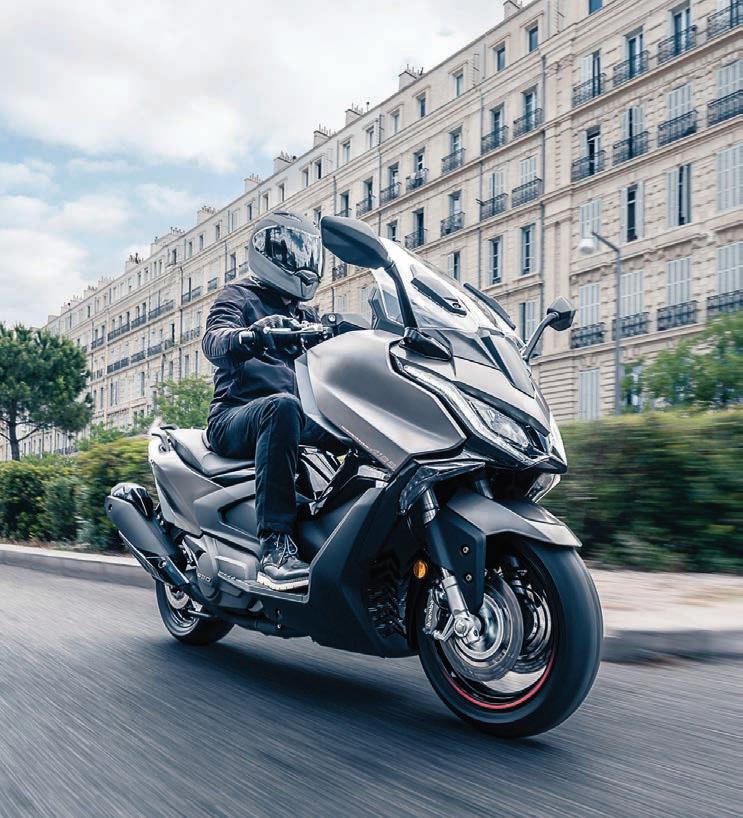
The traditional boundary between “scooter” and “motorcycle” has been blurring for years, but with the arrival of the KYMCO AK 550i Premium, that line hasn’t just been blurred — it’s been completely erased. For those of us who prefer traversing the roads on two wheels, there is often a compromise: you either choose the soul and visceral power of a sport-touring motorcycle or the practicality and ease of a high-end scooter. With the AK 550i Premium, KYMCO is betting you don’t have to choose. On paper, the AK 550i Premium makes a bold claim as the most powerful maxi-scooter currently available in the U.S. market. Its heart is a 550cc liquid-cooled parallel-twin engine churning out a robust 51 horsepower. While those numbers are impressive for the class, it’s the delivery that matters. KYMCO has implemented dual power modes — full and rain — allowing riders to toggle between a maximum, high-revving character, and a more controlled, safety-oriented response when the weather turns.
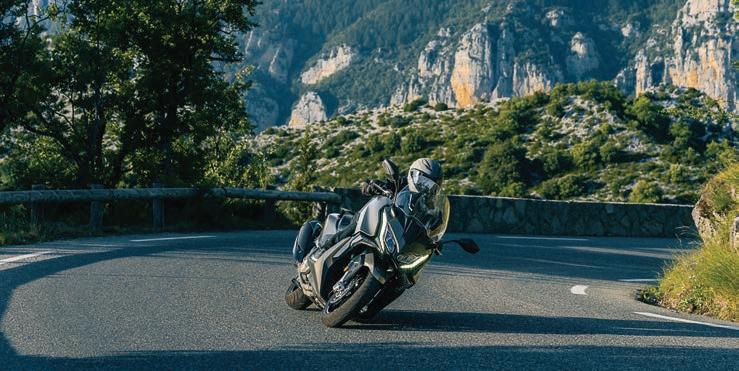
However, power is useless without balance. Enthusiasts know that the “soul” of a bike is often found in its geometry. The AK 550i Premium achieves a perfect 50-50 front-to-rear weight distribution, a feat usually reserved for sportbikes. This balance, paired with a low center of gravity, results in a machine that corners with predictability, confidence, and control. You don’t “muscle” the AK 550i Premium; you flow with it.
For the long-haul riders, the Premium features really shine. KYMCO has integrated the Bosch 9.1 Cornering Anti-Lock Braking System (AIBS), which works in tandem with a Traction Control System (TCS). For the uninitiated, this is high-level wizardry that adjusts braking pressure based on your lean angle, preventing the wheels from locking up even when grabbing the binders mid-corner. And when it comes to shedding speed, the inclusion of Brembo radial brakes provides the kind of tactile feedback and stopping power one would expect from a middleweight sportbike.
While the performance credentials are clear, the AK 550i Premium doesn’t forget its
touring DNA either. Riders will appreciate the electric-adjustable windshield, which dials in the airflow on the fly. For chilly morning departures, the three-stage heated handgrips are a welcome luxury, and the keyless ignition adds a layer of modern convenience for a seamless “hop-on-and-go” ride.
The AK 550i Premium also features cruise control, making it a viable candidate for those scenic, long-distance adventures rather than just urban sprints and daily commutes. It bridges the gap for the motorcyclist who wants
the flickability and ease of a step-through scooter but refuses to give up the tech and mechanical prowess of a modern touring bike. Ultimately, the AK 550i Premium seems like a machine designed by people who actually ride. It respects the rider’s desire for muscle and performance, but it also understands that sometimes you just want to get where you’re going with a bit of grace, luxury, and a lot of comfort. For those looking to redefine their ride, the AK 550i Premium isn’t your ordinary step-through scooter — it’s stepping it up.
DANNY DREYER’S JOURNEY TOWARD WEARING HIS HEART ON HIS SLEEVE.
BY ANNIE STOPAK PHOTOGRAPHY BY COLLIN PAPE
The motorcycle shop was full of life, the kind of place that stimulated the senses and sharpened one’s focus. Like most shops, it echoed a low mechanical hum and smelled of new tires, gasoline, and WD-40.
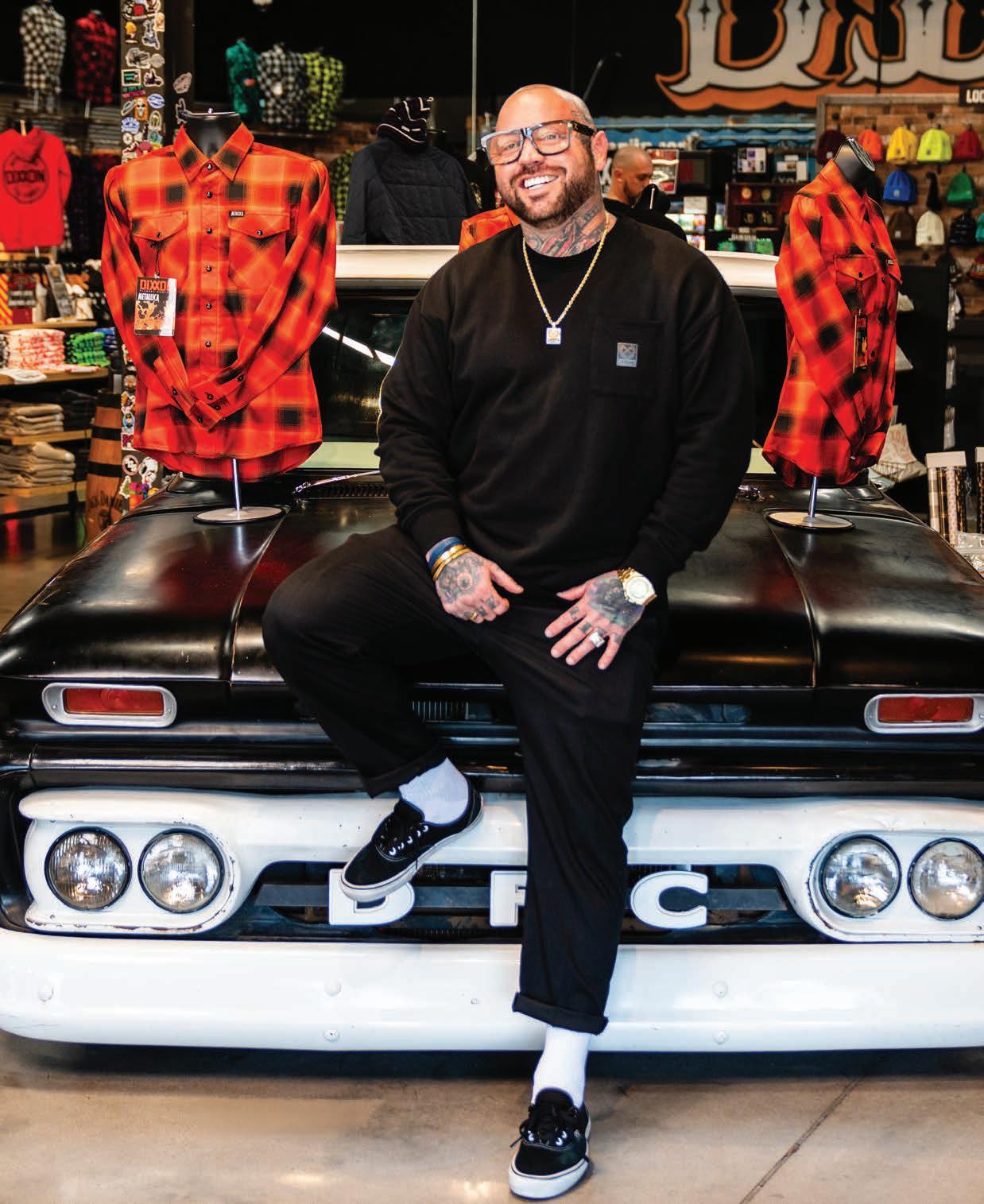
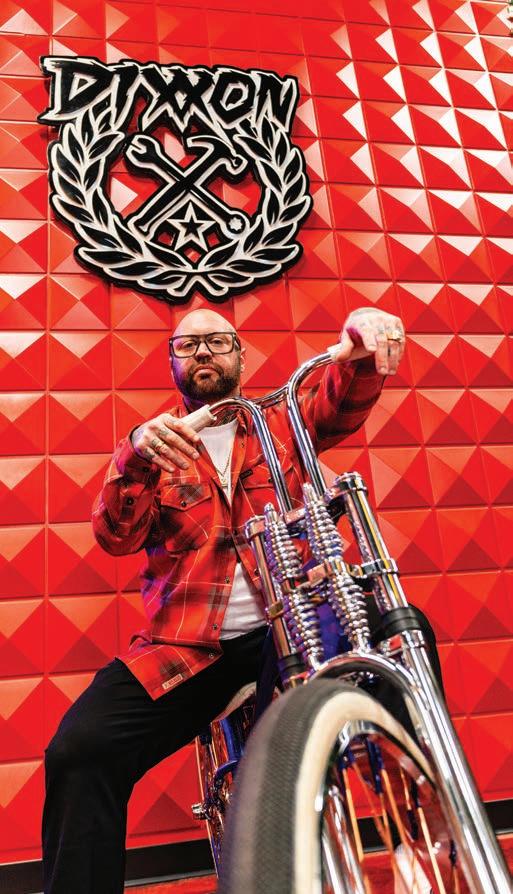
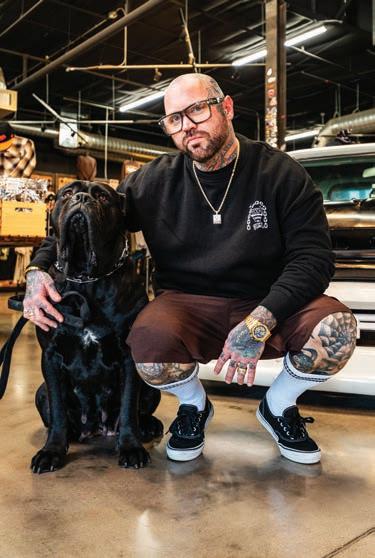
Danny Dreyer spent his early 20s working here in Irvine, California, with his dad, designing the shop’s t-shirts and flannels. His focus on clothing wasn’t due to fashion or fitting in — neither of which he claimed to know much about — it was a way to feel relaxed in his own skin. Over time, his critical eye revealed a deeper truth: it was a way of understanding himself, and eventually, a reason to build something of his own.
LEARNING THE MATERIAL
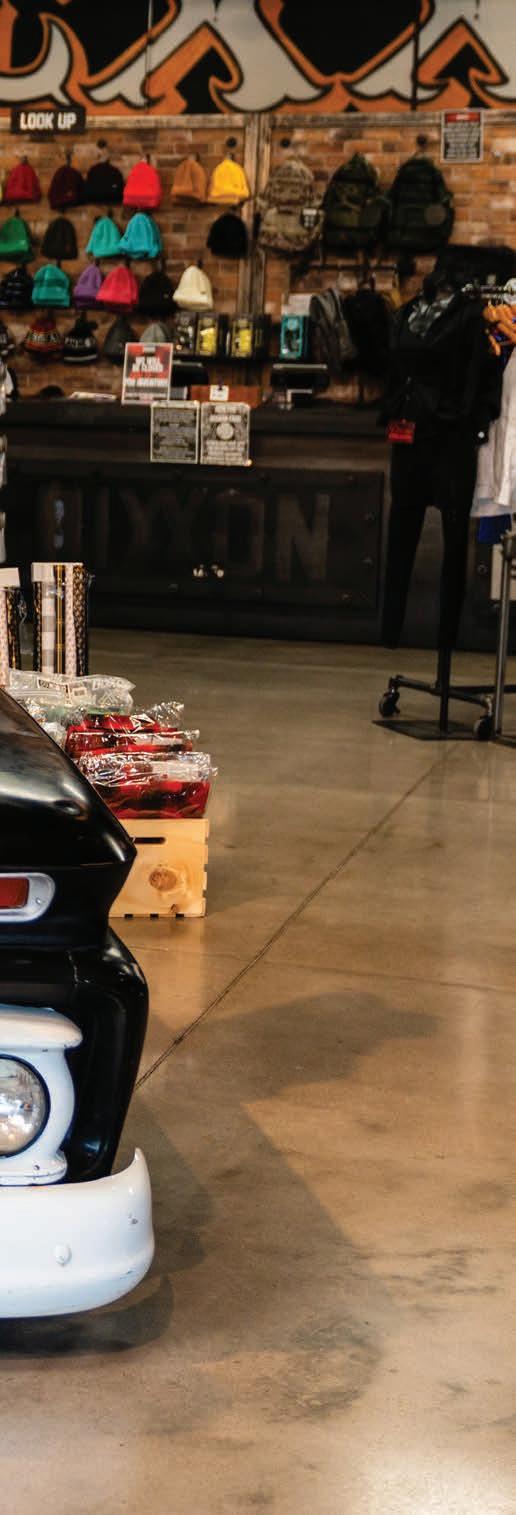
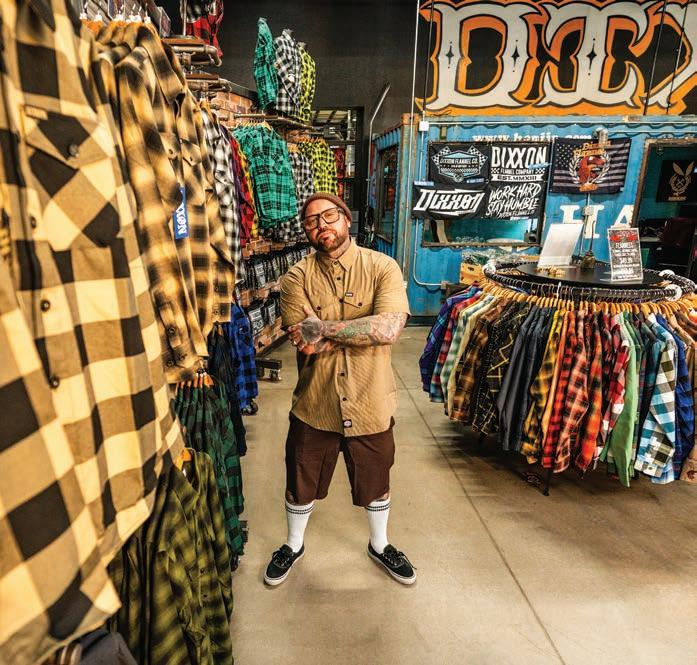
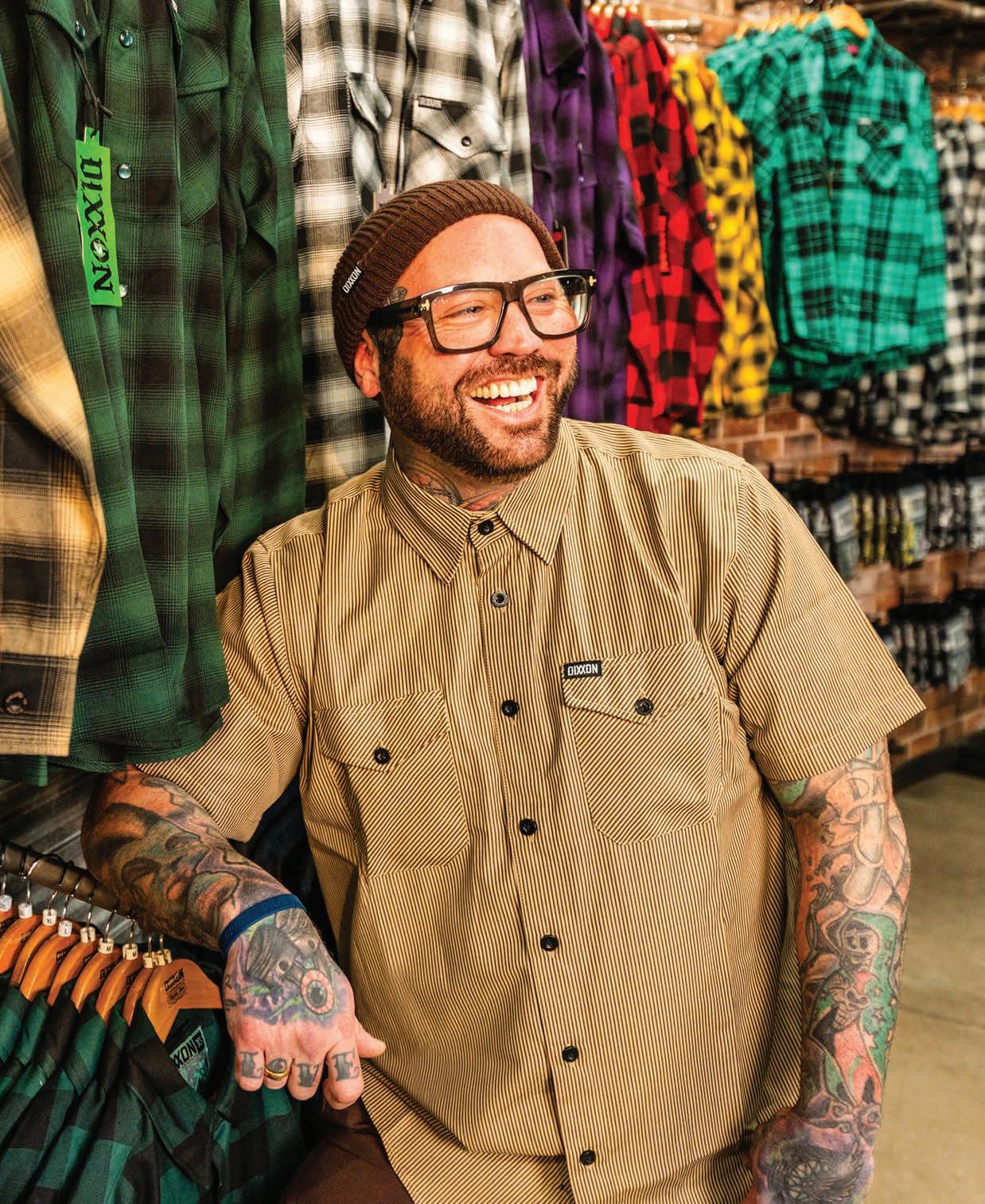
“We don’t sell shirts, we sell feelings,” said 41-year-old Dreyer, owner of Tempe, Arizona-based Dixxon Flannel Co. His apparel business, which opened in 2013, has been incredibly successful, achieving more than $100 million in annual revenue. The brand sells shirts, flannels, and accessories in limited, exclusive drops to bikers, skaters, tattoo artists, and free spirits. “We take our internal feelings — like our favorite memories, and all the things that make us, us — and share them with the world,” he said. “We’re creating a community; we’re creating a synergy.”
It was a sentiment that felt very “Sons of Anarchy,” illustrating the camaraderie and brotherhood that motorcyclists form on the road, yet revealing Dreyer’s tender
side as he reminisced about Dixxon’s Sea Glass Flannel. The shirt got its name from a family trip he took several years ago, where he fondly recalls skipping rocks and collecting beach treasures with his kids. For him, pouring emotion into his brand lets the world see his softer side, while bridging the gap between who he is and who he has chosen to become.
Twenty years ago, before Dixxon existed, Dreyer used clothing as his safe space. It was an avenue to express his internal feelings in a way he couldn’t otherwise articulate. This keen sensitivity is what initially inspired him to set out on a journey to find shirts that felt good to live in.
Dreyer headed into Los Angeles’ fashion district, searching for fabrics that resembled the ones he lived in when he was growing up. That’s when the idea hit him: buy a well-made shirt at wholesale, stitch in his own label, and sell it himself. “I had 180 bucks in my pocket, and I’m in L.A., and I was like, ‘How many (shirts) can I get for this?’” he explained.
Dreyer began selling his product all over town during his limited free time. He soon discovered the local motorcycle swap meet on Sundays, which drew quite a crowd, and sold his newly branded apparel there. “I got home, and I told my wife at the time, ‘Dude, I just made like $800 today. Like, it’s insane, I can’t believe it,’” he said. “I was so excited.” Although selling shirts was his passion, it wasn’t a full-time job. He decided to move his family to Gilbert, Arizona, since it was cheaper and had better public education than Huntington Beach. He quickly landed a
position working 60-hour weeks at Harley-Davidson. At first, the role seemed promising, but eventually became an unsatisfying grind of endless work, everchanging management, and burnout culture. It became clear that it was time to put his focus wholeheartedly into his own venture: Dixxon Flannel Co.
THREADS OF IDENTITY
Dreyer had always felt different from others, which made being a business owner challenging. He had no prior fashion experience, and his attention was either hyper-focused or scattered, adding to the pressure he was already experiencing.
This unsettled feeling impacted his day-to-day life, and it wasn’t until 2024, 11 years after he founded Dixxon, that he finally discovered what was happening was internal. “I’m neurodivergent, and I have the OCD and ADHD thing mixed,” he confided. “When I found out I was on the spectrum,
Creativity used to be a thing that I was scared I was going to run out of. Now I realize it’s my lifeline. That’s what keeps me going.
- danny Dreyer
it started to click why everything was so hard for me socially.”
When business picked up and Dixxon started making money, Dreyer admitted to feeling more lost than he’d anticipated. He never aspired to be front and center, yet he unintentionally became the face of a brand.
Dreyer didn’t recognize himself as this new successful business owner. The fast pace of entertaining brands and keeping up with social events was draining his time and energy. One day while on vacation, he sat and reflected on all he’d accomplished, yet it somehow didn’t feel rewarding. “I’m sitting in one of the most beautiful places in the world, and I can’t figure out why I’m so empty,” he said. “I was so tired, and I developed multiple addictions to just keep going.”
As an introvert, Dreyer has greatly improved how he expresses himself, although he continues to have a very limited social battery. After 13
years in business, this role has given him the courage and the proper podium to sharpen his interpersonal skills and speak from the heart.
PATTERNS OF GROWTH
Dreyer still remembers his restless behavior in the classroom as a kid. His incessant curiosity, free spirit, and vivid imagination made him unique as a child, yet it was difficult for him to express his thoughts and bring his ideas to life. All of this changed when he allowed his sensitive side to emerge and channeled his imagination into his work.
“Creativity used to be a thing that I was scared I was going to run out of. Now I realize it’s my lifeline. That’s what keeps me going,” Dreyer said. He sees life now as his creative canvas, leaning on interior design, fashion, or time with family, allowing his body to slow down and his imagination to soar. He thoroughly enjoys the process, whether it’s designing a new flannel at Dixxon, brainstorming ideas with his wife, or painting with his stepdaughter at home.
“I think it’s really important for my stepdaughter to have creativity at a young age,” Dreyer said. He shared that she is also neurodivergent, and seeing her grow up with it has helped him learn more about his personal struggles, which naturally strengthens their bond. “Now we have this connection, and it’s so great,” he confided.
To take his creativity a step further, Dreyer and his wife work together on various philanthropy initiatives for Dixxon. This is their way of creating a compassionate environment for their employees by leading from a place of love.
The team has proudly collaborated with the Cystic Fibrosis Foundation, High Fives Foundation, Childhelp, Make-A-Wish Arizona, and the B Strong Foundation. Dixxon also honors veterans and first responders through special products and discounts.
“I still haven’t accepted that I’m not the guy selling flannels out of the back of my Scion,” Dreyer said. It was a moment of nostalgia for the successful business owner, as he pondered his early years working with his dad in the motorcycle shop. As he searched for flannels all those years, perhaps he was also searching for answers about himself. Dreyer’s mission in life is clear: He is here to make a difference and create a legacy that is felt rather than earned.
CREDIT: MARINA ABROSIMOVA
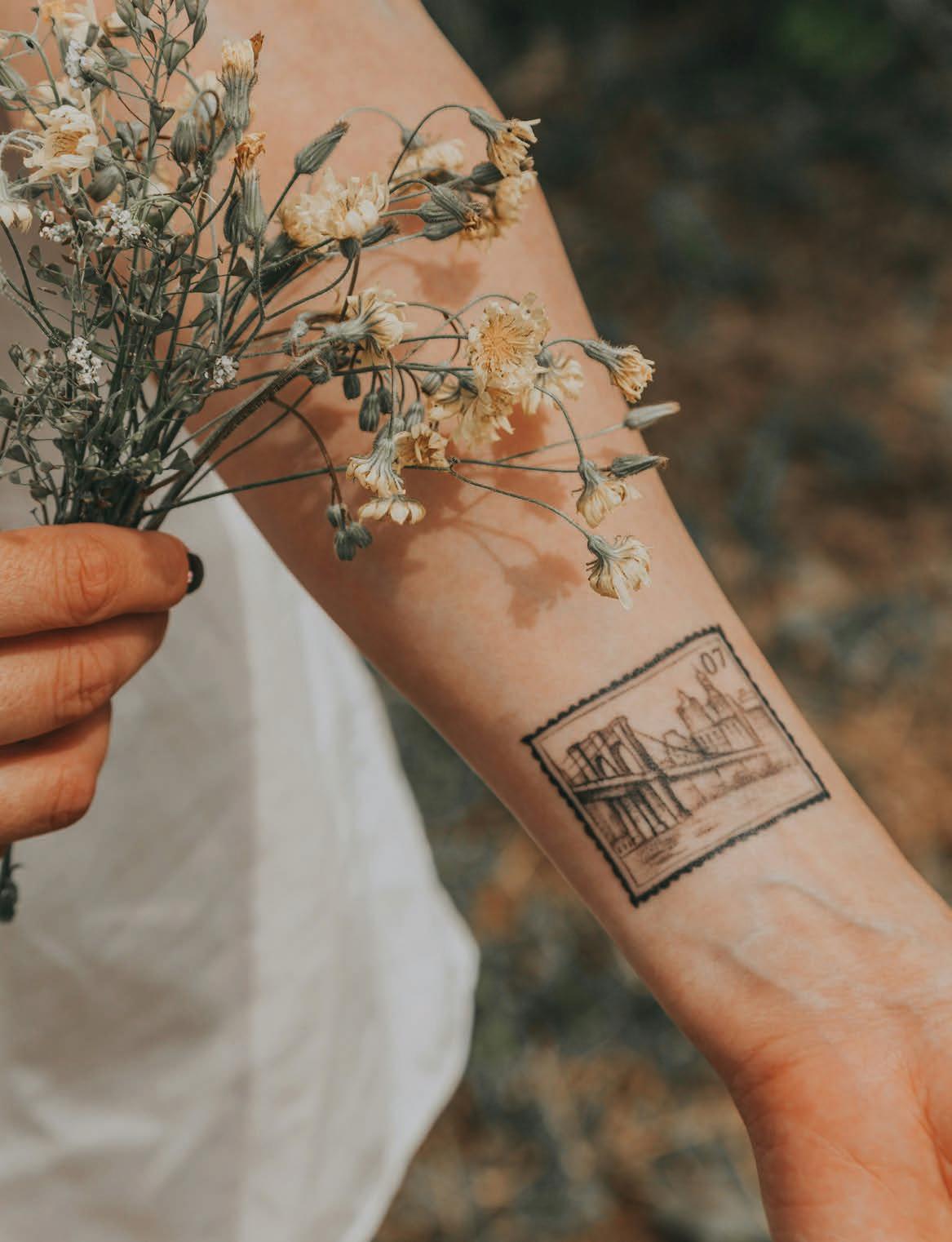
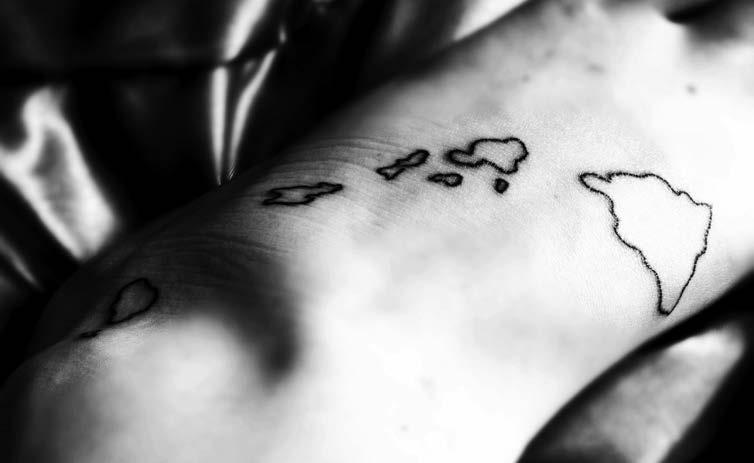
Bucket-list trips are often memorialized by the mass-produced souvenirs, kitschy keepsakes, and photo albums that remain unappreciated in the years that follow. As a more meaningful and personalized alternative, globetrotters are now venturing into tattoo shops across the world to permanently commemorate an epic vacation, while also celebrating the local cultures, landscapes, and people that made it so special.
Ariel Wei, founder and resident artist of Brooklyn-based East Coast Social Club, sees this gesture often in The Big Apple, which continues to be the U.S.’s most-visited destination. “People want (to leave with) a little piece of the city as a tattoo,” she says, noting that hotels have also capitalized on the trend by incentivizing stays with NYC-themed flash pop-up events. “Lately, these designs can be really cute and simple, like a tiny apple, a coffee cup, or a bagel.”
Ink sessions are also shared among travel duos and groups, evolving beyond a basic nod to the locale and into duplicated symbols of love, friendship, or family. “Sometimes people will (even) do a fun little matching set — maybe one gets the coffee cup, and the other gets a bagel. It’s such a cute way to remember their trip together,” Wei says.
As post-pandemic escapism shows no sign of slowing, a few wanderlusters and travel industry professionals shared their insights with Inked on this inspired and artistic movement that serves as yet another medium for post-trip storytelling.
ETERNAL REMINDER
For Toronto-based travel writer Seattle Dredge, the path to travel tats was unintentional, yet significant. “I never planned to collect tattoos like some people collect shot glasses, but every time I traveled, I somehow ended up in a tattoo chair,” she says.
In fact, collecting tats as memories ultimately developed out of sheer convenience. “When you’re living out of a backpack, there’s not really space for ceramic elephants or tagine pots, so permanent body art felt efficient,” Dredge explains. “I guess they’re little snapshots of who and where I was at that moment, without needing to be stuffed into a carry-on.”
SEATTLE
SEATTLE DREDGE / @SEATTLESTRAVELS
SEATTLE DREDGE / @SEATTLESTRAVELS
For some globetrotters, like Dredge, designs are typically dictated by spur-of-the-moment emotions and gut instincts, sometimes in tandem with local artists who either influence or completely control the outcome.
“I was always quite obsessed with learning about tattoo origins and techniques, so if a country has its own traditional method, I want that,” Dredge says. This has included a memorable session with a monk in Thailand, as well as surrendering creative control to a local artist in Tahiti.
“You don’t choose the design; you just sit there and let fate — and a sharpened stick — decide what happens to your skin. And honestly, that’s kind of magical,” she raves, which has led to geo-specific maps, flags, and random symbols that “made sense at the time.” “It’s a beautiful
way to take a piece of the world with you.”
A love for travel and a love for ink follow the age-old “chicken-and-egg” question: Which comes first? For Alessandra Amodio, photo editor at “Travel + Leisure,” the two always went hand in hand.
“I was counting down the days until I turned 18 and had an appointment ready for me on my birthday with a notebook filled with what I wanted tattooed on me,” Amodio shares. “Travel felt very similar. I’ve grown up with a family that not only loves to travel as much as I do but instilled an appreciation for the other cultures. Combining the two was truly the most natural thing.”
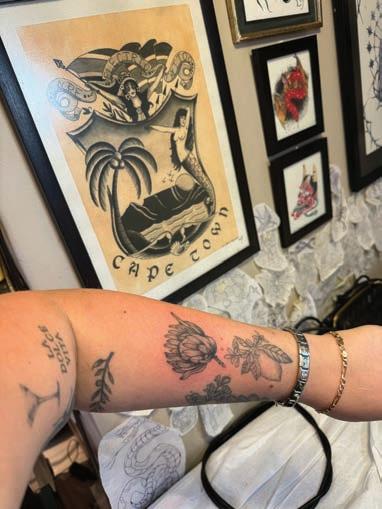
This blended interest has resulted in skin that bears the indigenous flora of her favorite places: a protea flower from South Africa, an
olive branch from Greece, a lemon from Italy, and thistle from Scotland. “I always want the tattoo to tie back into the destination one way or another. It helps that my personal tattoo style and preference lend to a lot of flowers and botanicals, especially if it’s something I’ve personally interacted with.”
A NATIVE TRIBUTE
As a travel content creator and group trip planner, Joe Polito has found a way to integrate tattooing into his multi-day retreats on a larger scale.
“One of the most unexpected traditions that’s formed across the eight group trips I’ve hosted is the last-day tattoo,” he shares. “Everyone bonds so deeply throughout the week that, by the final day, the group wants to mark the experience with something meaningful and rooted in the place we’ve explored together.”
Tattoos have included a beloved guide’s “1, 2, 3, action!” slogan in Vietnam, small mountains in Bali, and an homage to a gregarious coconut seller in Thailand. “Across all these trips, the designs we chose were meaningful because they reflected the trip itself: a local phrase, a symbol tied to the landscape, or a memory we wanted to carry with us long after we left,” Polito says.
To make these sessions even more momentous, the group selected shops dedicated to local craft, whether through technique, one-of-a-kind emblems, or at off-thebeaten addresses recommended by residents. “What matters most is having the tattoo done locally in a way that feels connected to the destination, rather than choosing something purely for its aesthetic. The meaning behind each tattoo is ultimately what gives it its value.” Memories, particularly in the travel space, can elude even the most sentimental of voyagers. But rather than stumbling into a souvenir shop to purchase something that will likely collect dust, consider a location-based tattoo as the ultimate memento and conversation starter. You’ll worry less about whether something is mass-produced when the fond memory is made for and placed on you.
JOE POLITO - @JOURNEYBYJOE
JOE POLITO - @JOURNEYBYJOE
JOE POLITO - @JOURNEYBYJOE
ALESSANDRA AMODIO - @ALESSANDRA ROSEE
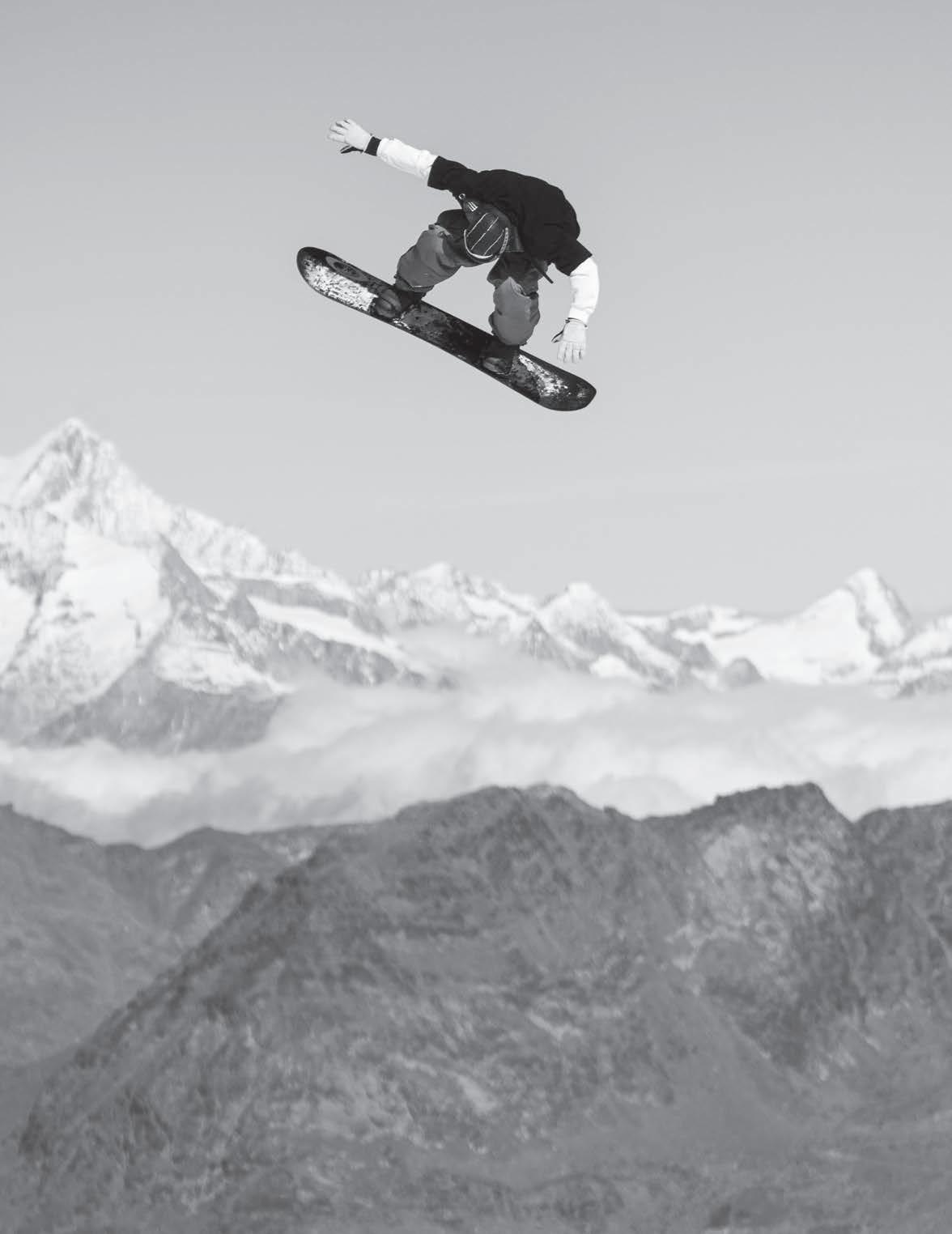
If you know Sage Kotsenburg, you probably remember him winning the first Olympic gold medal in men’s slopestyle at the 2014 Sochi Winter Olympics. A few years later, he left competition behind. It wasn’t just burnout, though he felt that too. He realized he had nothing left to prove and felt drawn to something rawer, more unpredictable, and real.
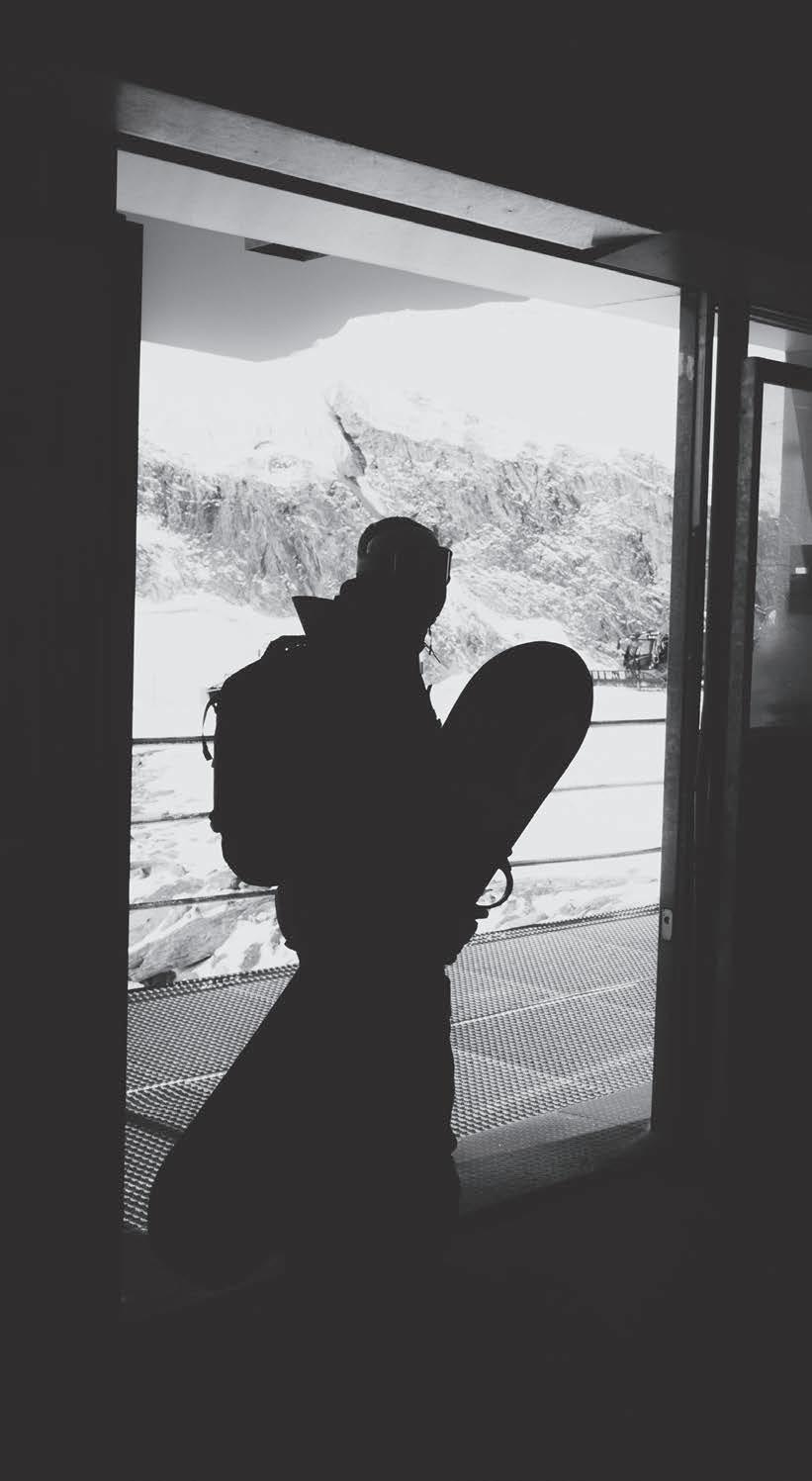
Now, Kotsenburg is exactly where he wants to be: deep in the backcountry, chasing powder, filming, getting hurt, recovering, and heading back out. He found a place where his creativity and toughness collide, in a space he had to make for himself. Now, it’s not just about riding. It’s about building a life centered on movement, freedom, and vision.
“I was really not getting good results,” Kotsenburg says of the 2014 Olympics. “I wasn’t really happy being at the events. I had told myself before the Olympics that that was the last event I was going to do.”
Winning gold pulled him deeper into the comp scene, but his focus had already shifted. A couple of years later, he was fully committed to backcountry and big-mountain riding. “I told all my sponsors that I was going to pursue backcountry snowboarding, and that it was totally ok if they didn’t want to continue the relationship with me down this path,” he says. But his sponsors, including Monster Energy, supported his decision, and their relationship deepened.
A SYMBOL OF HOME
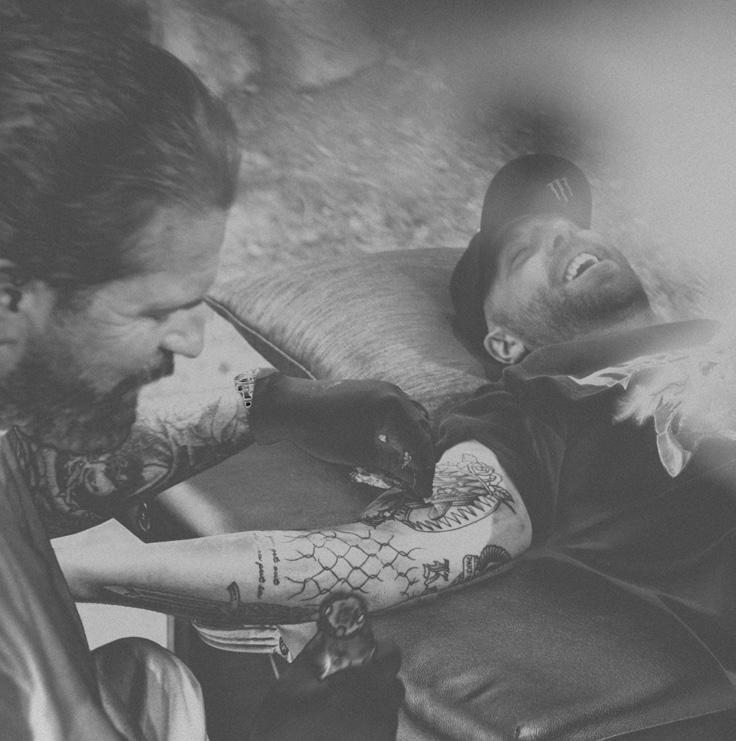
The move to backcountry riding became part of his on-screen story, too. In 2025, Kotsenburg was featured in Monster Energy’s “SELF MADE” tattoo series alongside acclaimed tattoo artist Luke Wessman. In the show, the Monster Energy tattoo ambassador visits the athlete’s world, and the athlete then joins him for a tattoo.
Episode 5 of “SELF MADE” follows Kotsenburg from his early days in Park City, Utah, through winning Olympic gold, and now to creating a new path for himself. The video examines his drive, from pushing through pain to land tricks to dealing with the emotional fallout after Sochi, when the cameras left but the pressure remained.
In “SELF MADE,” Kotsenburg’s dedication to his sport is tangible. He’s open about everything, including how he felt like a phony and almost quit after winning gold. His story is real, built on the work ethic that took him to the top and the humility that brought him back.
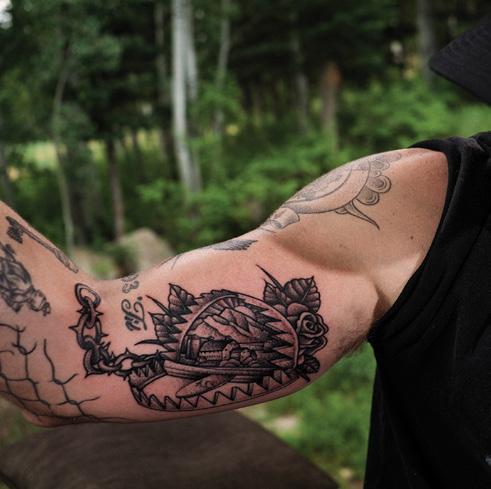
Kotsenburg came to Wessman’s tattooing chair with an idea: Park City’s well-known McPolin Barn. Wessman added a bear trap and the 435 area code, then tattooed it on Kotsenburg’s bicep. “(It) turned out so cool,” Kotsenburg says. “It’s really one of my favorite ones.”
Kotsenburg’s first tattoo was a rose behind his ear, which he got in a hotel lobby during
a Monster trip while the Dropkick Murphys song “Rose Tattoo” played. It was a spur-of-themoment decision that triggered his enthusiasm for more ink.
He still lives in Park City and spends most winters filming projects like “Eternal Descent,” a high-energy snowboarding film with an animated game-inspired intro that shifts to the physical world, journeying to Jackson Hole, Wyoming, Japan, and Alaska. His goal is to leave a legacy, be creative, and take risks for something bigger.
A CHAMPION’S MINDSET
Kotsenburg has always had his own style. If you remember the “Holy Crail” grab he invented at Sochi, you know exactly what that means. A random person on Instagram gave the trick its name, and it stuck. That trick was featured on a Wheaties box, a coveted honor in American sports, and was proof of his champion status.
Now, Kotsenburg is helping the next generation do the same. He works with younger riders, especially those who want to transition from contests to backcountry riding. “Some of the younger kids on the team reach out to me, saying, ‘I just want to get better at riding backcountry.’ So now it feels like I’m passing the torch a bit.”
It’s still unclear whether Kotsenburg will return to the Olympics. There’s talk of adding backcountry riding to the Games, and if it does, Kotsenburg will have 18 months to decide whether he wants to compete again. “I’m at peace now, but damn, it’d be so fun to go back 16 years later.”
Kotsenburg is deeply involved with his gear. He collaborated with his longtime sponsor, K2, to design the Dopamine Collection. He spent time in the prototype factory, building boards, testing new materials, and learning how technology alters the ride.
Kotsenburg also credits his crew for keeping him grounded. In the backcountry, trust is everything. Whether they’re spotting avalanche zones or calling out a bad line, there’s no room for ego. That sense of mutual respect and accountability extends to his partnership with Monster. It’s not just a brand deal to him. It’s family.
Kotsenburg keeps busy off the snow, too. He mountain bikes, golfs, and hikes, and lately he’s been surfing. The ocean, like the backcountry, doesn’t care who you are. You have to show up and respect it, or you get nothing. Kotsenburg loves that challenge. “Surfing has been a tough egg to crack, not living by the ocean,” he says. “I’m kind of addicted to it now. You want what you can’t have all the time, right?”
Today, the goal is to secure a lasting future in the sport he loves while also being a source of guidance for fellow riders. “You’ve got to have your own flavor and your own style. Don’t conform to someone else’s style just because they’re getting rewarded for their tricks,” Kotsenburg tells young snowboarders. “Snowboarding is just expressing yourself. I think having your own style is the biggest flavor you can add.”
You can watch Kotsenburg’s full episode of “SELF MADE” on Monster Energy’s YouTube channel, youtube.com/monsterenergy. It’s more than just a story about winning gold. It’s about what comes after that: the community, the struggles, the growth, and the tattoos that bind it all together.
LUKE WESSMAN & SAGE KOTSENBURG FOR “SELF MADE” / CREDIT: CONNOR WYSE
CREDIT: CONNOR WYSE
WBY KELLIE SPEED
hen vocalist Bailey Spinn first introduced her 2023 debut EP “my worst enemy,” she never could have imagined the online success she would enjoy as a result, even though she admittedly always hoped it would happen.
The TikTok content creator became an almost overnight sensation when she changed up her game, transforming from an online presence to a powerhouse vocalist. “It was definitely a gamble, but my fans stuck with me the whole time, and I am so grateful they did,” Spinn shared with Inked
The 22-year-old Virginia native first made a name for herself when she hit the music scene at the tender age of 17, amassing more than 15 million followers on TikTok and 1.2 million on Instagram.
When she was starting out uploading covers on YouTube, Spinn said she dabbled with social media
After high school, Spinn was accepted to San Diego State University, where she studied for a year. At the time, her social media presence was taking off, with her posted content often going viral, leading her to make the difficult decision to leave college to focus on growing her social media platforms.
“It was a difficult decision to drop out of San Diego State University and move to Los Angeles, but it was a good decision,” she said. “My mom was a little hesitant but understood that I was able to successfully live off social media, so my parents were supportive of it.”
Last year, she wrapped up her first headlining U.S. tour and released her debut album “loser,” which explores a more mature, grittier sound. Spinn said she encountered some negativity when introducing her new music, so she did what she always does and headed to the studio to transform her emotions
as a fun way to conquer social anxiety. “I overcame that barrier, and from there it has just snowballed the entire way,” she said. “I kept practicing and put myself out there way more. I wanted to challenge myself.”
VIRAL BEGINNINGS
The rising pop-rock artist known for her edgy lyrics and cathartic rock melodies said social media has been a great confidence booster despite dealing with the occasional negative commenters, which reminded her of her adolescence. “I had a hard time in high school, but that all changed when I decided to make music,” she said.
into music. She wanted to prove to others that she believed in herself even when others didn’t. The results have been nothing short of impressive.
“A critical step in a heavier direction has been falling in love with heavier music, so I started diving into the genre listening to bands like Slipknot, Spiritbox, Ice Nine Kills, and (singer) Poppy,” the singer-songwriter said. “I just wanted to try something different.”
Spinn believes her confessional songwriting contributed to her fast-track success, especially for the Generation Z age group, who she believes seek that relatable human connection. “They don’t want
something handed to an artist,” she said. “I am glad that people appreciate my honesty. It’s also easier when you write lyrics about your own life.”
Over the years, Spinn says she has received inspiration from many powerhouse female artists. “Starting out, Hayley Williams was a big inspiration,” she said. “I went to a Paramore concert and saw that she’s an incredible artist and vocalist. I’m also a huge Amy Lee fan and love Evanescence’s ‘Fallen’ album. I take a lot of inspiration from that era.”
Spinn’s hit “critical” talks about selfdestruction, isolation, and the fight to pull yourself back from the edge. The emotional song follows up on the huge success of “fear of going out,” which explores the anxiety and insecurities of the Gen Z population.
LOUDER THAN DOUBT
“People Magazine” recently named Spinn as one of its Emerging Artists to Watch, signaling a promising future. Her latest single, “homicide,” released on February 13, is an unapologetic anti-Valentine’s Day ode to the love-filled holiday that channels heartbreak, romantic disillusionment, and emotional burnout, which the artist said will lead to a larger project. “I am also looking at some touring and playing festivals this year as well,” she said.
She even has hopes of a possible future collaboration down the line. “It would be incredible to collaborate with Amy Lee or Courtney LaPlante of Spiritbox,” she said. “I also love Pierce the Veil.”
While continuing to churn out new music, Spinn said there are a few self-reflective songs that she will always hold near and dear to her heart. “I love ‘runner up.’ That’s the first song I ever made and the first approved demo ever,” she said. “I also love ‘front row psycho,’ which was written as a result of people being mean to me on social media.”
Spinn says her body, much like her raw lyrics, is a creative work in progress. “I definitely want more tattoos and am trying to plan them out a little better,” she said. “I was sporadic when I was younger. The first one I got on a whim when I went to get a piercing and left with a tattoo of a rose on my left hand instead. I got a rose because that’s my middle name.”
With about 55 tattoos to her credit, she has several that pay homage to her music. “I have a crown on my arm that I got for ‘happy ending,’” she said. “Another one I am most proud of is a giant classic floral piece that goes from my knee to my ribcage. It was very painful and took about 16 hours in total.”
One of her most meaningful tattoos features her mother’s name inscribed on her back shoulder. “That one that means the most to me,” she said. “She is one of my most favorite people in the entire world.”
Like her tattoos, Spinn hopes fans grasp the essence of her honesty from her singing and songwriting. “They are a piece of who I am,” she said. “Some people have doubted my real interests, so I want them to know this is who I am. I have put blood, sweat, and tears into all of these songs.”
CREDIT: GEMMA CROSS
CREDIT: ETHAN JONES
RED, BLUE, AND BOLD AS HELL
THE DESIGN DNA OF AMERICAN TRADITIONAL TATTOOING.
BY SEAN COLGRAVE, TATTOO EDUCATOR AND CURATOR
Before tattoos were curated for social feeds, they were made fast, bold, and meant to last — not on screens, but on skin. Long before tattooing became a polished global industry, it was a bluecollar craft carried out in ports, barracks, carnivals, and back rooms. It valued permanence over perfection.
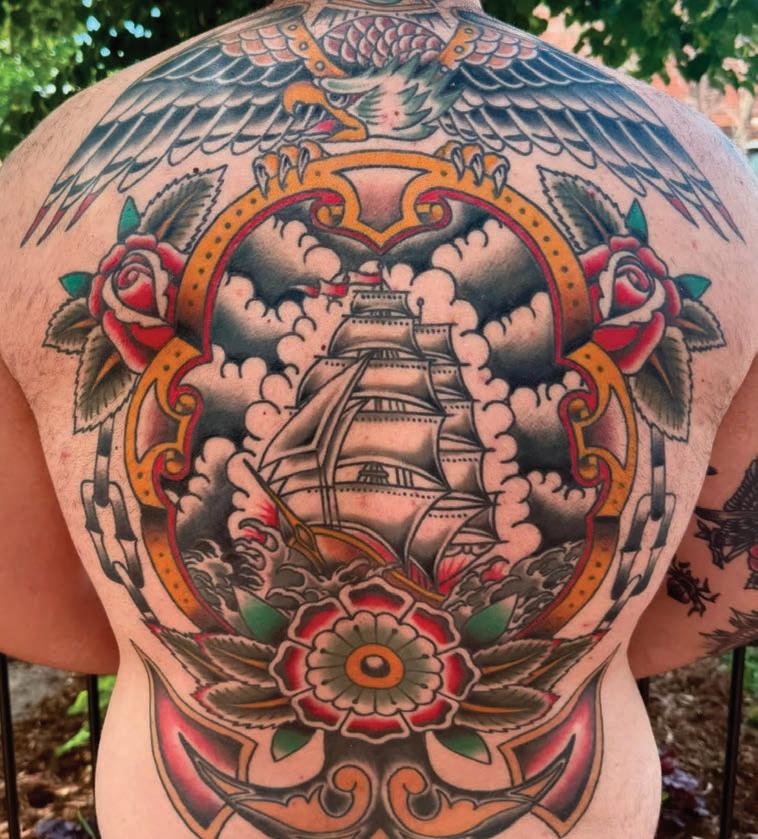
American traditional tattooing was built from need. Thick lines, loud colors, and simplified motifs were engineered to survive sweat, saltwater, and sun. They weren’t “retro” quite yet, but rather revolutionary.
When Ink Met Industry
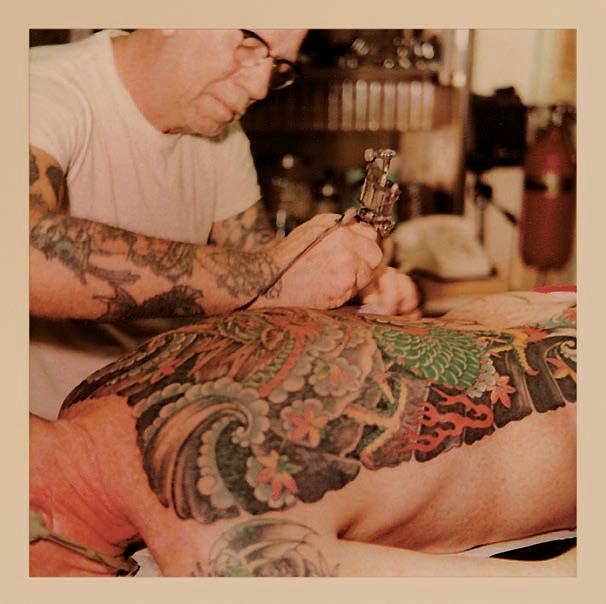
Modern tattooing truly shifted in 1891 when Samuel O’Reilly patented the first electric tattoo machine in New York City, adapting Thomas Edison’s autographic pen. Overnight, the craft changed. What had been slow and physically punishing became faster and far more consistent. Artists could suddenly make work that simply hadn’t been possible with hand tools. Throughout the early 20th century, the machine was constantly reinvented. Electromagnetic coils replaced O’Reilly’s rotary mechanism,
giving rise to the forebear of today’s coil machine. One coil became two, frames were rebalanced, springs tweaked, armatures re-angled. Some early rigs were so heavy that artists suspended them from ceilings with counterweights, just to get through a full day’s work.
As tattooing travelled through industrial port cities and across the American West, it became inseparable from the workingclass world: dockers, miners, railroad men, factory hands, and especially sailors. Tattooing didn’t just follow these people; it belonged to them.
Long before a codified American style existed, tattooing at sea spread imagery across oceans. No one knows exactly when Western sailors began tattooing themselves, but by the 18th and 19th centuries, tattooing was entrenched in maritime culture.
Some designs recorded achievements; others were rooted in superstition. The famous rooster and pig on the feet, for example, were worn to protect sailors from drowning. The real reason chickens and pigs often survived shipwrecks was the buoyancy of their wooden crates, but myth travels faster than fact.
CREDIT: SAILOR JERRY
FROM THE BOOK: “MAUD STEVENS WAGNER: THE MONA LISA OF AMERICAN TATTOO”
In the merchant navy, service wasn’t marked with medals unless you requested one, so tattoos became the sailor’s CV. A dragon signaled time in the South China Sea; a fully rigged ship marked a successful journey around Cape Horn. Within seconds, one sailor could read another’s experiences, skills, and losses. In the 1920s and ‘30s, cities like Long Beach, San Diego, and Honolulu had become tattoo capitals, each shaped by the constant churn of servicemen and the creativity of the artists who worked on them. Here, the visual language of what would become American Traditional took form.
The Blueprint of Bold
Mention “American Traditional” and certain names rise immediately: Bert Grimm, Sailor Jerry, Mike Malone, Lyle Tuttle, Ed Hardy. Many learned from travel, especially through Asia, adapting dragons, tigers, waves, and motifs sailors admired but couldn’t sit multiple days for. Rough copies were made aboard ship: something quick between ports, something to mark the journey.
Tools were primitive. Needles were carved bone or repurposed rigging needles, hence the thick lines. Colors were whatever could be made: carbon scraped from the inside of a lamp, gunpowder in a pinch, Indian ink if you were lucky. These limitations weren’t stylistic decisions; they were the conditions that created the style. Colors used at that time — likely entirely coincidentally — were the natural dyes of products used to waterproof sailcloth; ochre makes a lovely yellow or red dye, and tannin is a nice brown.
Early tattooers were essentially chemists. Pigments came from sign paint, boot polish, or powdered dyes mixed in whiskey bottles. A good red or blue was prized. Red held up under the sun. Blue gave contrast. Black was everything.
Sailor Jerry’s experiments with purple weren’t for novelty; they were about control. His blends created depth without muddying the design, forming part of the color language we now recognize as classic Trad.
Eventually, manufacturers produced inks specifically for tattooing. Pigments stabilized. Blacks stopped healing blue. But the early palette is still the backbone of the style.
Early tattooers were essentially chemists. Pigments came from sign paint, boot polish, or powdered dyes mixed in whiskey bottles. - Sean Colgrave
RYAN MORASKI @RYANMTATTOOS
RYAN MORASKI - @RYANMTATTOOS
MYKE CHAMBERS - @MYKECHAMBERS
The Shape of Tradition
Flash, even in its name, speaks to the tempo of early tattooing. Some say the term came from tattoos being done “in a flash.” Others claim it referred to how quickly an artist could pack up and disappear when police came knocking. Either way, flash was practical. Sheets hung on shop walls, each design priced for speed and clarity. You didn’t customize — laser removal didn’t exist — so you picked a design and stuck with it.
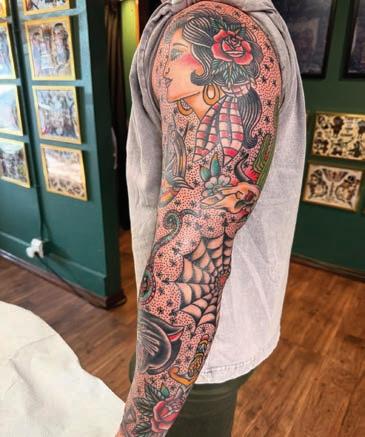
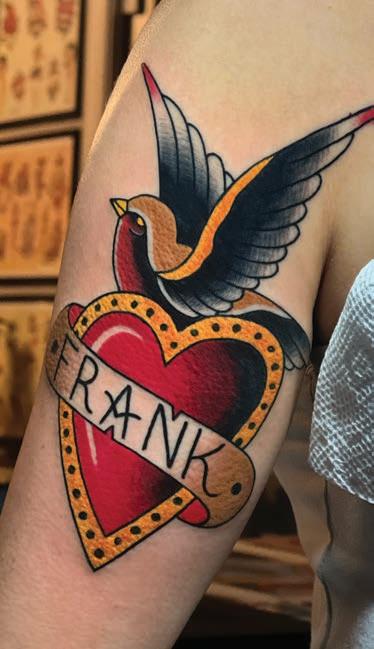
Flash was a visual lexicon. A dagger through a heart meant loss. A swallow meant safe return. A panther meant aggression. Or maybe it meant nothing more than “the artist drew this well, and the client liked it.” In a world with limited literacy and time, pictures did the talking.
Trad design thinking is sometimes misunderstood as simplistic, when in reality it shares logic with Cubism and early modernism: reduce an object to its essential shape so it reads instantly from a distance.
A rose wasn’t a botanical illustration; it was a rose distilled. Thick outlines locked in color, and empty space created structure. Anything unnecessary was removed because unnecessary things blurred. This is why a 70-year-old swallow tattoo, faded and softened, is still instantly readable. But print a high-fidelity portrait at palm size and step back across the room — the detail is lost. Tattooers understood the medium intuitively: art must live on moving, and aging flesh has different rules.
After the war, conservatism pushed tattoos underground. What once symbolized camaraderie became associated with outlaws and bikers.
- Sean Colgrave
From Pride to Rebellion
Early tattooers scavenged heavily from the visual world around them: advertising, comics, military insignia, postcards. Anchors came from naval emblems. Eagles from HarleyDavidson ads. Kewpie dolls from Rose O’Neill’s illustrations. Tattooers clipped, simplified, and redrew what resonated.
Originality wasn’t the point. Function was. A design was repeated because it worked, and repetition built a shared language across port cities. By the 1940s, Trad flash was everywhere, but each artist’s hand shaped the work differently. It was folk art: vernacular, mobile, and rooted in working-class identity.
World War II embedded tattooing into American identity. Servicemen wore badges of courage, faith, and belonging on their skin. Tattoo shops thrived around bases, and some, like Sailor Jerry’s in Honolulu, became cultural landmarks.
After the war, conservatism pushed tattoos underground. What once symbolized camaraderie became associated with outlaws
and bikers. Then, in the 1960s and ‘70s, artists like Tuttle and Hardy brought tattooing into pop culture. Seen on musicians and outsiders, the designs became emblems of freedom.
Still Bold, Still Breathing
Walk into any tattoo shop today and you’ll still see those reds, blues, and yellows. Flash may be digital now, but the language remains unchanged. The anchor still means stability. The heart still means love. The panther still means ferocity — or maybe you just really love cats.
American Traditional endures because it’s honest. It was never about trend. It was about clarity, connection, and the stubborn desire to be seen, even if only by the people who understood.
The artists who built this style didn’t just create designs. They created a way of thinking: Make it simple. Make it readable. Make it last. Because the best tattoos aren’t the ones that look new — they’re the ones that tell the story of the person wearing them.
J LUIS - @JLUIS.SF
J LUIS - @JLUIS.SF
MYKE CHAMBERS - @MYKECHAMBERS
MYKE CHAMBERS - @MYKECHAMBERS
THROUGH SUCCESS, LOVE, AND HEARTBREAK, ARTIST
ORVILLE PECK HAS NO PLANS TO STOP.
BY AMY HIGGINS
BY TRAVIS SHINN
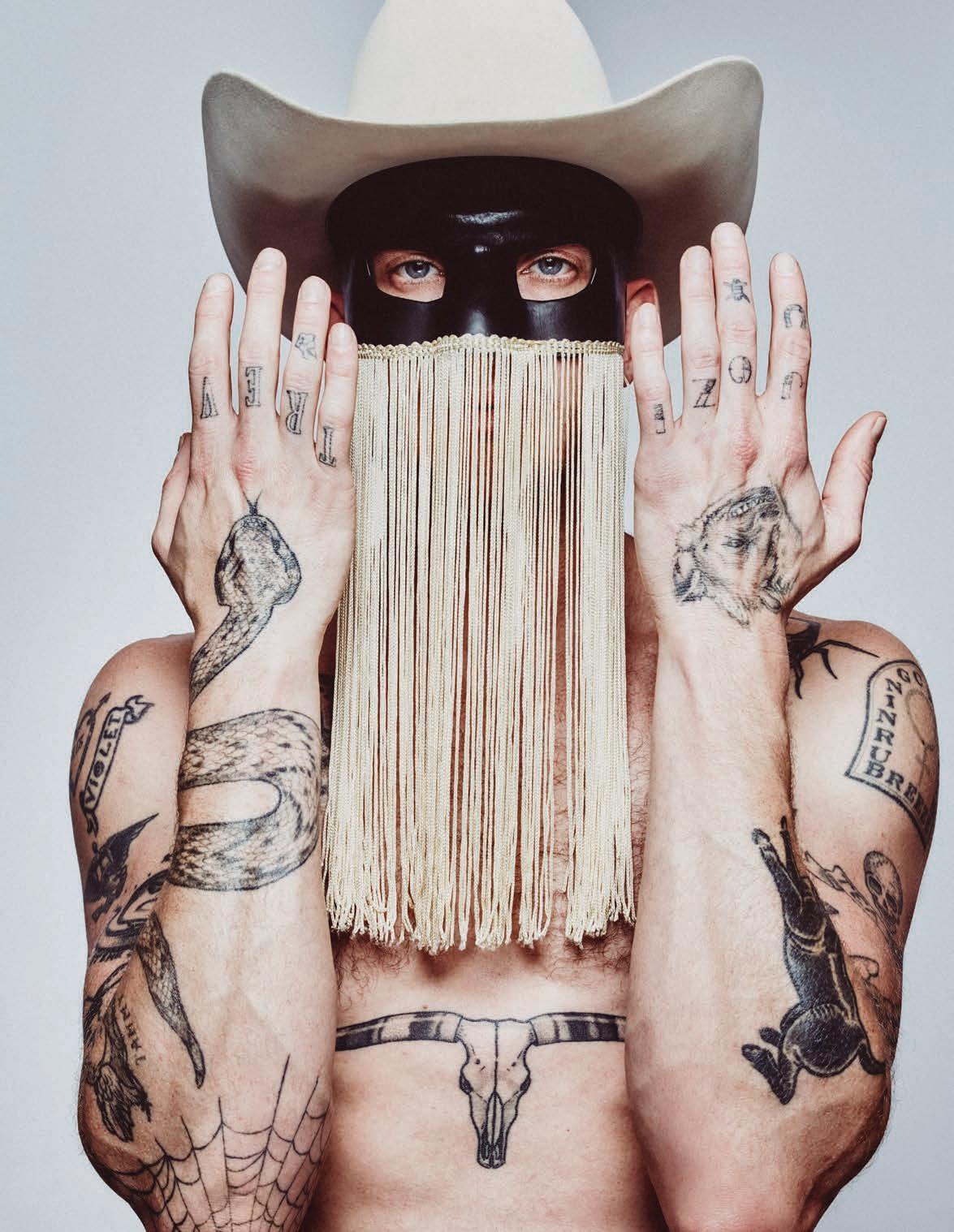
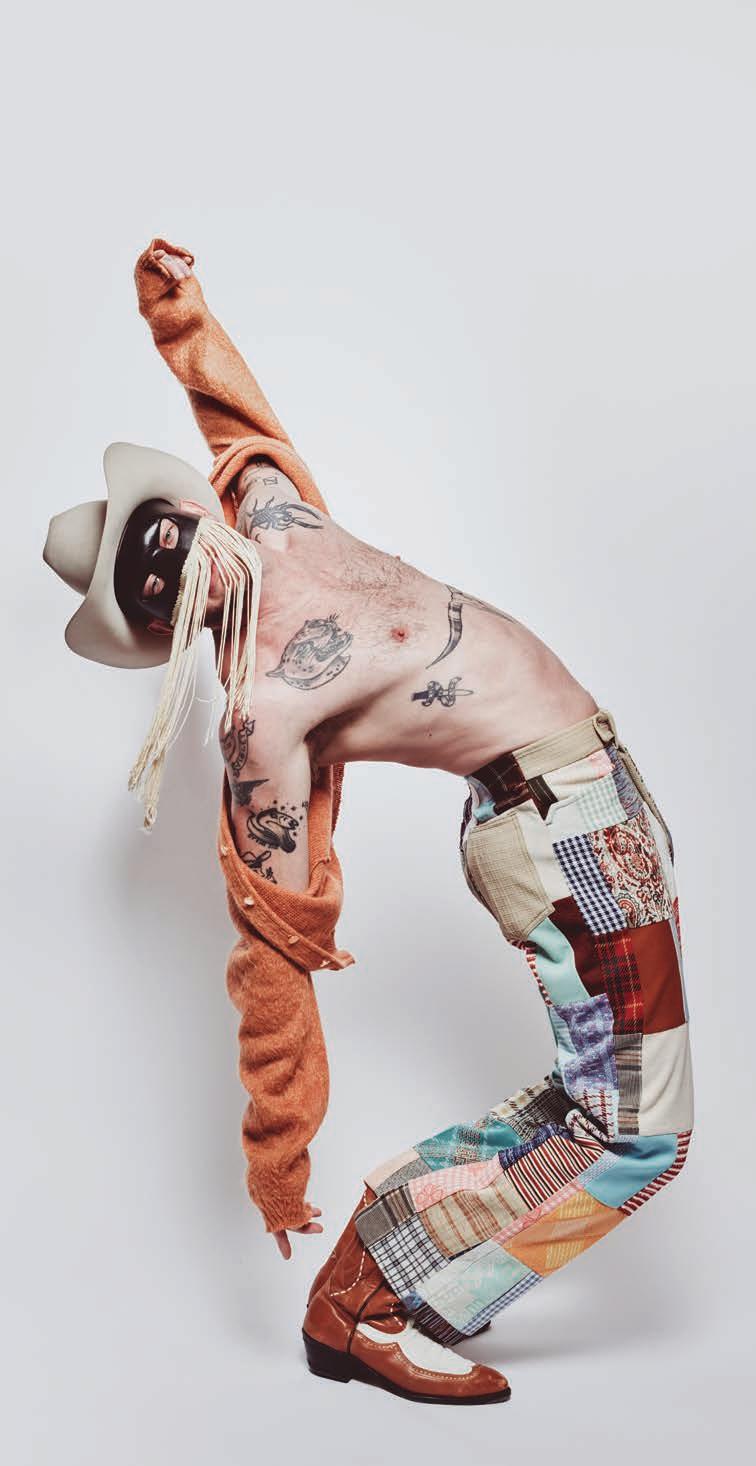
ince 2019, country music star Orville Peck has remained out front in his craft, but the finish line is perpetually — and purposely — out of sight. In 2025 alone, the masked singer outpaced the typical work schedule, balancing a new album, while filming a movie, organizing an annual festival, and making his Broadway debut. And 2026 is already active, with a concert tour, promoting the upcoming “Street Fighter” movie, and writing music for his next fulllength album. While his debut album “Pony” put Peck on the map, his early life was already spent in the spotlight, with theater acting and drumming for punk rock bands. He led with ambition and hard work but gained little financial reward. “I grew up in the DIY scene and the first, I don’t know, eight years of my touring career were me booking tours old school style and showing up to venues and punk houses and sleeping on people’s floors and traveling in a brokendown van,” Peck explains.
PHOTOGRAPHY
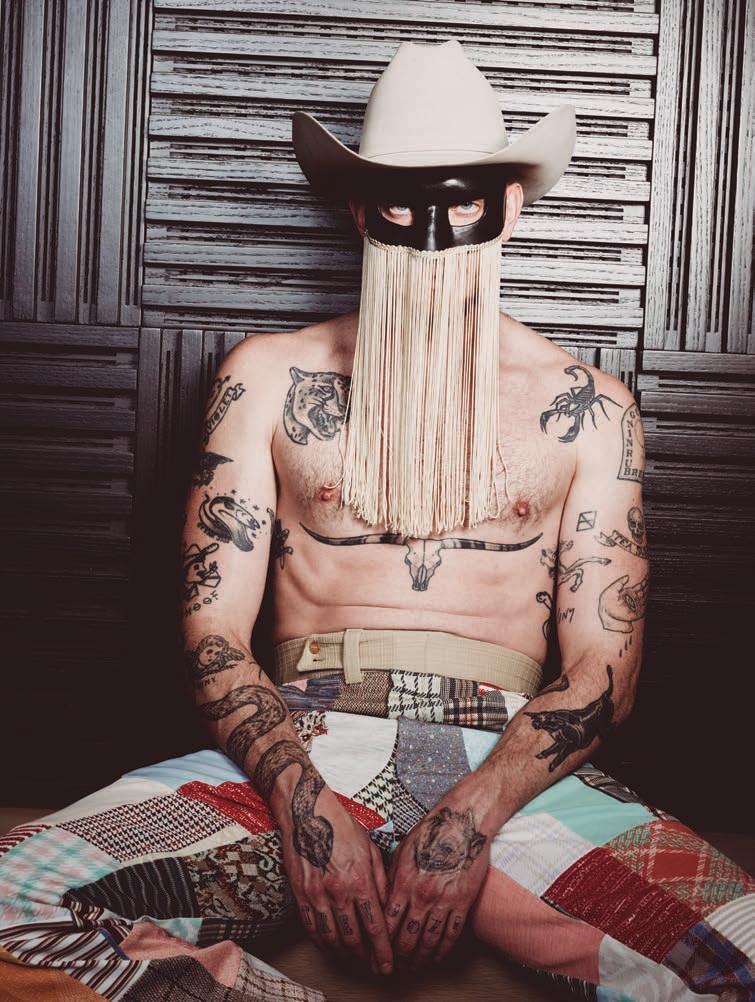
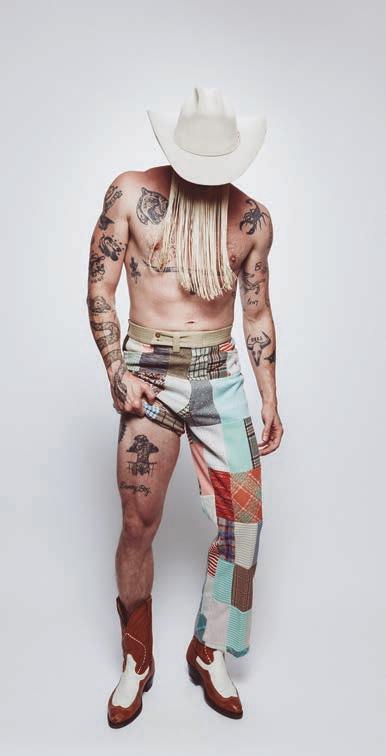
As the singer-songwriter made strides in his career, his tattoo collection grew. The animal lover’s skin is predominantly peppered with critters, such as a golden orb spider, a dancing bull, a hyena, and a puff adder snake that feigns writhing when the artist plays guitar. There’s a lot of sentiment in his ink, too, including a wildebeest skull, a tribute to his grandfather, Bill, and the letters “T-R-E-V” on his knuckles that honor his father, Trevor. Maybe most meaningful of all, Peck’s sister-in-law, Lauren Pitout (@lauren tattoo), is the artist behind most of his ink.
The South Africa-born artist’s life and skin look drastically different today than they did in his youth, but his ambition and hard work remain constant.
THE YEAR OF THE THRILL
2025 was a thrill ride for Peck, one with monumental career highs that kept him away from home for 11 months. A lifelong theater lover, he was cast in the lead role as Emcee for the Broadway play “Cabaret,” something Peck had long desired.
Formally trained in acting at a prestigious conservatory in London, Peck grew up performing on stage, acting for many years before his mysterious masked man persona became recognized worldwide. “I’ve always done acting, sort of in tandem with music, but took a big break from acting and especially theater
I always call my albums horse things, and it’s always a bit indicative of what kind of ‘horse’ I am at the time or what the album’s about.
for about 15 years, and so this was my return to that,” he says. “It’s kind of an incredible dream come true.”
A 128-show run should have left him weary, yet Peck was inspired and wanted to challenge his vulnerability with his songwriting. “Obviously I was performing without my mask, which was so new to me, but the nature of the material being so heavy — with me going in really wanting to do a good job — pushed me to even more new levels of vulnerability,” he says.
What ensued was a seven-track EP album titled “Appaloosa,” a name that aptly aligns with his previous horse-inspired album titles. “I always call my albums horse things, and it’s always a bit indicative of what kind of ‘horse’ I am at the time or what the album’s about,” Peck says. “An Appaloosa is a spotted horse. They have a polka-dot coat that’s very, very unique. And so, a lot of this album is about me finally having this embracing of the fact that I’ve never really been able to fit in, and I always kind of stand out in many different ways in my life, but it’s about embracing that uniqueness and celebrating it.”
Songs from his previous albums were mostly about the “sad, disastrous effects of love” rather than love itself, so Peck pulled away from heartbreak and leaned into love in his song “Oh
My Days,” where he tells the story of finding love after extreme heartbreak. “‘Oh My Days’ is about talking yourself out of something that you know is making you happy because you’re frightened — and overcoming those fears, too,” he says. Peck wanted to create music he wanted to hear, rather than focus on how he perceived others would react. “I was going back to references that I really liked when I was a teenager — there’s all these shoegaze-y, alternative moments on the album,” he says. “It allowed me to pivot to where I came from, having learned a lot of new things along the way.”
For “Appaloosa,” Peck teamed up with Noah Cyrus to chronicle his entry to Broadway in the song “Atchafalaya,” channeled his love of alt-rock in “Drift Away,” and told the story of a relationship in peril in “My Side of the Mountain.” “I think people were happily surprised that I was able to put out any music at all, and so, for it to be a very personal EP with songs I’m very proud of, I think people are very excited about it,” he says.
Through it all, Peck somehow trained, rehearsed, and filmed for the upcoming “Street Fighter” movie, where he plays Vega, a masked Spanish ninja with sharp claws and a haughty disposition. For weeks, he had a grueling routine of early-morning workouts at the gym, followed by two hours of martial arts training, and five or six hours at the recording studio, capped off with nightly “Cabaret” performances. “So, I was doing 16-hour days for about three weeks while I was living in New York to make this album.”
The final touch of 2025 was Orville Peck’s Rodeo, Peck’s seventh year of bringing lesserknown artists to the main stage. “We try to make the lineup as diverse and inclusive as possible — it’s hosted by drag queens,” he explains, noting the event’s massive support, with big sponsors and Live Nation as a partner. “It’s like a real thing now, and I’m very proud of it. It started off as just this idea I had, but it’s become something greater than that now, which is really cool to watch evolve.”
a lot of this album is about me finally having this embracing of the fact that I’ve never really been able to fit in.
LIFE: A PASSION PROJECT
Despite life’s hardships, Peck finds joy with love, choosing hope through his music, advocacy, and self-honesty. He supports LGBTQ organizations like The Trevor Project, and the Elton John AIDS Foundation, an organization he holds dear given the terrible effect the AIDS epidemic has had in South Africa, his beloved birthplace.
“The most important thing I think that we can do sometimes is to try and carve out happiness where and how we can find it, especially in times when it is just so easy to get disheartened about what’s going on in the world,” he says of the “Appaloosa” closing song, “It’s the End of the World.” “This was my way of grabbing the person next to me and just saying, ‘You know? Eff it, let’s Thelma and Louise it and just try and find some happiness in all of this despair.’”
Peck has nearly finished writing his next full-length album, yet the finish line remains in the distance. He aspires for more acting roles, a part of him he is rediscovering and embracing. His world is in constant forward motion with no signs of slowing. “I think it might be some form of mental illness,” he says jokingly, “but we’re figuring it out.”
PICTURED: ERIC SAUBERT
When the ink dried on the 2025 NFL season for the Seattle Seahawks, its “Two-High Defense” and “West Coast Offense” were forever engraved in the annals of Super Bowl history as signature components of the winning program instituted by Head Coach Mike Macdonald.
For the outside world, it was a classic underdog story that started at Macdonald’s first team meeting with the Seahawks in April 2024, when he predicted, quite accurately, how his team would win the NFC Championship game in front of a ruckus home crowd. But inside the tall glass walls of the team’s state-of-theart practice facility in Renton, Washington, another element added to the championship DNA of this NFL family: the Seahawks’ wide-ranging tattoo community, including General Manager and Team President John Schneider, who has visible body ink on his forearms.
It was a cold February afternoon in 2024 when Macdonald walked through the doors of the Virginia Mason Athletic Center, along the shores of Lake Washington, to fill the vacancy left by Pete Carroll, arguably the most popular Seattle coach in the history
of pro sports. His even-keeled, on-to-the-next-one demeanor marked a departure from the larger-thanlife personality of his predecessor.
In an era when league executives highly covet offensive play-callers from the Shanahan-McVay coaching tree, this, in many ways, was considered an under-the-radar signing. But, for Schneider and the rest of the Seahawks brain trust, acquiring this defensive-minded coach in particular was the most vital step in planting the foundational seeds that would bear fruit two years later — almost to the exact day — at Super Bowl LX, where the youngest head coach in the NFC West hoisted the Vince Lombardi Trophy surrounded by tattoo collectors like Quandre Diggs, Eric Saubert, and Cam Akers.
ETCHING A PATH TO GLORY
Most people outside Coach Macdonald’s locker room didn’t foresee a chilly championship parade on the horizon for the NFL’s only Pacific Northwest team. But Diggs, a three-time Pro Bowl free safety who rejoined the team after one and a half seasons away with the Tennessee Titans, could sense that the young defensive
backs from the newly nicknamed “Dark Side” had the potential to approach a standard once set by the legendary “Legion of Boom” team that won Seattle’s first title back in 2014.
“I knew early,” Diggs said. “The majority of guys who were starting and making those plays — those were my young guys. I was a big brother to a lot of those guys. So, I’ve always had faith in all those guys and always believed in them from the jump. For me, to see the growth and to see the change that Mike (Macdonald) instilled into those guys — it was impressive.”
Meanwhile, on the opposite side of the practice field, Saubert, the most experienced tight end on the roster, was sharing insight with his fellow position players.
Much like the team’s starting quarterback, Sam Darnold, and offensive coordinator at the time, Klint Kubiak, Saubert had previous stops with the San Francisco 49ers and other teams that ran similar personnel packages to the wide-zone running plays that distinguish the Shanahan-McVay offense. His ability to interpret the
terminology for the newly installed offense made him a go-to communicator for his younger teammates.
“Everyone was very quick to buy into this system,” Saubert said. “We’d obviously seen it work at different capacities around the league. Sam (Darnold) obviously had some familiarity with the system as well. The types of people that we had teaching the offense to us and the types of people we had in our locker room running the offense, it couldn’t have been a better combination. That paid dividends for us throughout the playoff stretch — our run game was operating at another level.”
After steamrolling past the San Francisco 49ers and Los Angeles Rams in the NFC divisional and championship games, Akers, who was signed late-season to add depth to the running game and special teams, shared his winning pedigree with those who sought his advice on what to expect leading up to the Super Bowl. He was one of the few players on the team who’d already earned a ring, years before this magical run.
“My main advice to the guys was ‘It’s the biggest game of your life, but don’t treat it like that,’” Akers shared with Inked Magazine “Because, mentally, you have to block the outside noise. Don’t let the moment get too big. Get your rest, prepare, and make sure you’re mentally ready. The game plan was already there.”
The result was a Super Bowl performance so one-sided that, by the time recording artist Bad Bunny took the field for his halftime performance, the Seahawks’ running back Kenneth Walker III had already rushed for 94 yards. Meanwhile, their opponents, the New England Patriots, had failed to score in the first half, despite being led by the league’s MVP runner-up, Drake Maye.
It wouldn’t be long before the game clock hit zero, and Macdonald’s team was showered in a haze of blue and green confetti, below the highdefinition scoreboard at Levi’s Stadium in Santa Clara, California. This was a highly sentimental moment for Akers, one that tied his love for football to his love of tattoos.
WINNING ETHOS X TATTOO CULTURE
The winning ways of the team that overcame 60-1 odds to capture the second Super Bowl in the Seahawks’ franchise history are undoubtedly a reflection of the iron will and player accountability that Macdonald built their culture upon. But in several instances, it was his tatted-up play-
ers who helped bring balance to the competitive work environment with a popular creative outlet that strengthened team chemistry.
With so many tattoo collectors on the squad, the stories behind their body ink gave the players a variety of ways to connect emotionally, from their faith and college playing careers to the cities that raised them, and the family lineages they represent. Many of the guys, like three-time Pro Bowler Leonard Williams, 2025 Offensive Player of the Year Jackson SmithNjigba, and the game-breaking return man Rashid Shaheed, have large-scale tattoos that carry different meanings.
PICTURED: CAM AKERS
For Akers, the sentiment behind his most recent tattoo session is something that will always be linked to the NFL’s biggest stage. “There’s only one person who’s done my tattoos,” Akers said in a somber tone of tattoo artist Talmond “Jammal” Jones. “The last time he tattooed me was after the (2022) Super Bowl, when he flew to L.A. He sadly passed away.”
Akers procured a backpiece from the Atlantabased tattoo artist, along with the image of the Super Bowl trophy. Four years later, when he took the field for the Seahawks’ 29-13 victory over the New England Patriots at Super Bowl LX, it was a full-circle moment that allowed him
“My main advice to the guys was ‘It’s the biggest game of your life, but don’t treat it like that.’” Because, mentally, you have to block the outside noise. Don’t let the moment get too big.”
- Cam Akers
to carry the legacy of his late friend. During the interview, his teammate, Diggs, revealed that he, too, has permanent ink that represents a heartwarming bond.
“The inside of my arm was the first part of my sleeve to go all the way down,” Diggs explained. “It’s a ribbon, and a key, and a world — because my family is my world. And then, my outside part is a big wolf and two smaller wolves. It symbolizes my mom, and the two smaller wolves are me and my older brother (former San Diego Chargers player Quentin Jammer).”
Both Diggs and Saubert plan on getting their legs tattooed sometime during the off-season. With a newborn on the way, Diggs intends to stick to the tradition of honoring his family, while Saubert, who leans toward realism tattoos, plans to commemorate his alma mater, Drake University, and each of his NFL career stops. Saubert also plans on getting a tattoo of the Super Bowl trophy, like Akers.
Saubert will likely continue to get his ink from John David Staniforth, aka Mr. Ginger Jaw, a Georgia-based artist who completed the St. Michael piece on his arm, along with the wolves and roses on his sleeve. While undecided on his next tattoo, Akers said he resonates with defensive tackle Byron Murphy II and punter Michael Dickson’s preferred tattoo styles. He indicated that he’ll look to add more art to his backpiece sometime during the off-season. By the time training camp rolls around in the latter part of July, the ink will have dried on new contracts, and once-empty skin canvases will have been filled with more stories to share with teammates. As Coach Macdonald writes the next chapter in the franchise’s history, time will tell if it will once again result in the ink enthusiasts on the team adding another Lombardi Trophy to their tattoo collections.
PICTURED: ERIC SAUBERT
THE MUSE OF KESHA FOCUSES ON AUTONOMY, HER
FANS, AND THE MOMENTS THAT SHAPED HER.
BY AMY HIGGINS
PHOTOGRAPHY: RAPHAEL RAPTOPOULOS
MAKEUP: ALANA LUCKY
HAIR: CLYDE HAYGOOD
STYLIST: WILFORD LENOV
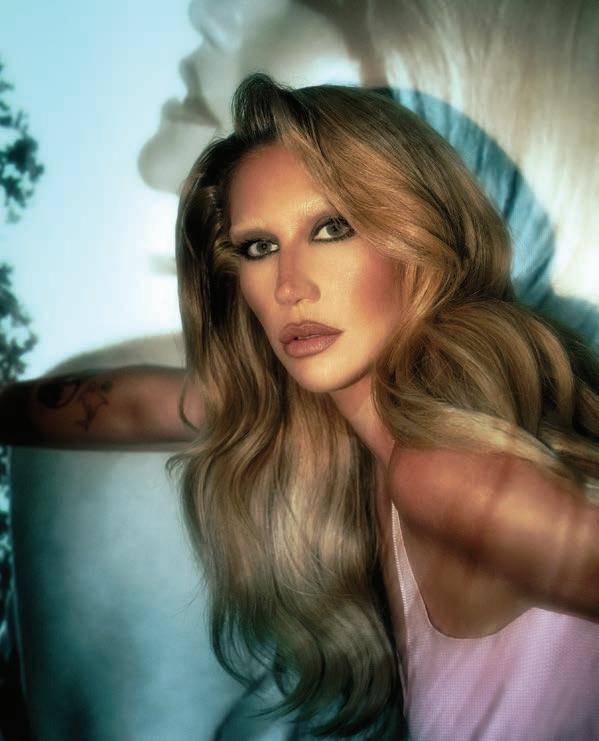
esha was fresh-faced, radiant, and relaxed, lounging on a downy-soft pillow-filled bed in Belgium when she sat down with Inked for a longdistance video chat. Although she just finished a strenuous workout, she was beaming, seemingly invigorated, as if she hadn’t just spent the previous month continuously performing for her The Tits Out Tour and traveling around and across continents to promote “.” — or, “Period,” for simplicity’s sake — her first album under her independent record label, Kesha Records.
“I haven’t toured Europe in a while — it’s been too long,” Kesha said. “And it’s just so wonderful to be back, and I just feel like it’s so full circle in this really beautiful way. It just feels so good.”
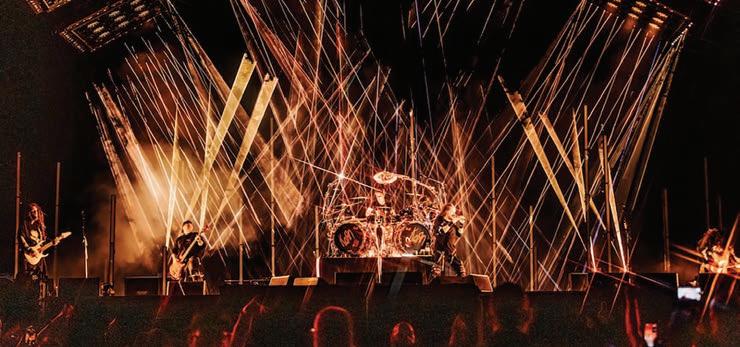
The Tits Out Tour kicked off on July 1, 2025, at a sold-out show in West Valley City, Utah. At showtime, the strobe lights flashed as Kesha slowly materialized through a veil of haze, a doppelganger mannequin head of her likeness in her hands, and yelled, “Salt Lake City! Are you ready for freedom? We do not stand abuse in my house, so put your middle fingers up. You know what to do!”
The crowd was ready, almost predicting her opening song, “TiK ToK.” Kesha rewrote the opening lyric referencing Sean “Diddy” Combs, who was once revered but is currently serving prison time for prostitution-related charges. “In times like these, (the lyric change) stands for a
ALL IN, ALL TOGETHER
In 2025, Kesha took her Tits Out Tour across the United States through September 2025, and included a sold-out show at Madison Square Garden, her first time headlining at the famed arena.
The last time Kesha performed on the MSG stage was in 2018 at the Grammy Awards during the “Me Too” movement, when she delivered a profound rendition of “Praying” that critics called “emotional” and “powerful.” But when the MSG arena lights shone down on her on July 23, 2025, the vibe was different.
“To have this return to the stage that had stood for so much and felt so heavy many years ago now felt so exciting and so playful. That energetic shift was really interesting. It just meant a lot to me,” Kesha said, adding, “Cassie Ventura sent me these beautiful flowers, and my fans ended up giving me an 11-minute standing ovation after I sang ‘Praying,’ which, quite frankly, was one of the most beautiful moments in my life.”
This night inspired “Freedom,” a documentary that Kesha is working on that highlights that night’s performance and includes “intimate behind-the-scenes footage that breathes life into the story.” “Some of the footage is documenting the whole tour. Some of it goes back even further to when I gave my TED Talk. And some of it’s even older. So it really is about that night,” she said. “It’s about my show, but it stands for a lot more than that for me.”
MY INTENTION ON THIS TOUR IS TO RECONNECT WITH MYSELF AND MY FANS AS A FREE WOMAN, AND ALSO REALLY INSPIRE PEOPLE TO FEEL LOVE FOR THEMSELVES AND FEEL THE COMMUNITY OF A LOVING, SAFE SPACE. IT’S ALL I’VE EVER WANTED TO DO. I’VE BEEN DOING THIS FOR A LONG TIME, AND THIS IS THE FIRST TIME I CAN SAY I’M IN CONTROL OF EVERYTHING ABOUT MY CAREER.
lot,” Kesha said, and 16 years since the hit song was released, “I (still) absolutely love singing that song. That was the first song that connected me to a lot of these people, and I’ll forever be grateful for that.”
“TiK ToK” started as her introduction to the world as an independent artist and has become somewhat of an anthem that evolves with Kesha and her Animals, fans who have remained faithful through every rotation.
“My intention on this tour is to reconnect with myself and my fans as a free woman, and also really inspire people to feel love for themselves and feel the community of a loving, safe space. It’s all I’ve ever wanted to do,” Kesha said. “I’ve been doing this for a long time, and this is the first time I can say I’m in control of everything about my career.”
Kesha is devoted to her fans, the people who identify with her, and who laid the bricks that helped build the Kesha empire. “They have been absolutely the love of my life and stood beside me through many beautiful things and then some very excruciating moments in my life, and my fans have been there through everything,” she said. “I wanted this era to be for us.”
The Tits Out Tour resumed in 2026, rerouting to Brazil, Australia, New Zealand, and Europe, and on March 23, 2026, the artist announced that she will hit the road yet again for her aptly-named The Freedom Tour, starting on May 23, 2026, at the North Island Credit Union Amphitheatre in Chula Vista, California.
“I’ve lived through the fire,” Kesha shared in The Freedom Tour press release. “This tour is about what comes after. Freedom isn’t just leaving something behind — it’s discovering that what you have lived through has made you magnificently into who you are.”
In between tour performances, Kesha doesn’t slow down. She has been putting the final touches on her documentary, rocking at bigname festivals, and creating new music, which she plans to release later this year.
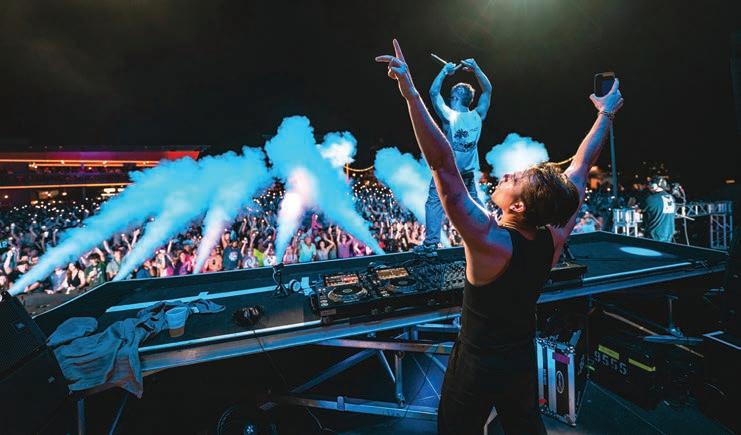
After her show in Brazil this past January, the songwriter went to an afterparty, where she landed behind the DJ booth, rousing the crowd. “I had the whole club singing along with me,” Kesha said. “So, I’m just really excited to make this album in a way that’s very much my own. I might throw the Sao Paulo after-hours vocals in the track and have it feature Sao Paulo. I want to
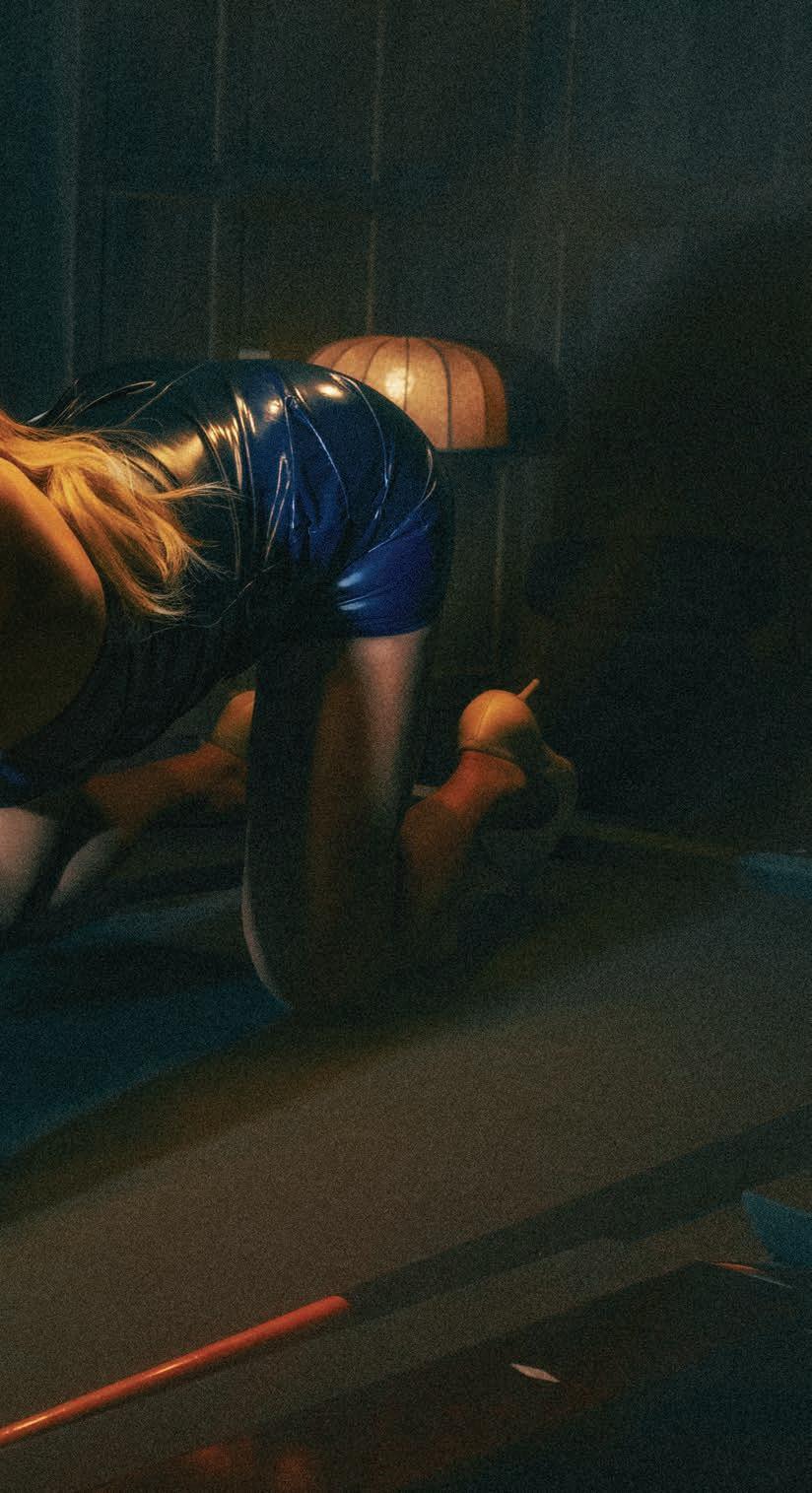
DRESS: Naked Wardrobe
SHOES: Flor de Maria
I USUALLY GET TATTOOS WHEN I’M HAVING A REALLY WONDERFUL, MONUMENTAL NIGHT THAT I WANT TO REMEMBER FOREVER.
make this album uniquely, and I want it to feel like community in what I’m making as well.”
These shared experiences are lifelong mementos, opportunities to connect and grow. Kesha is carrying these moments with her to the studio, creating new music that her fans can identify with.
“It’s weird — I don’t ever stop, because I feel like the muse is with me right now. It’s just a really exciting time in my life right now,” Kesha said. “I’m rebuilding my career and claiming my sovereignty. It doesn’t feel like work; it feels like purpose, and I’m absolutely obsessed and slightly addicted to just feeling more and more free. And chasing the muse and feeling inspired and loving myself and loving others and making music — all of this is so exciting.”
MARKED BY THE MOMENT
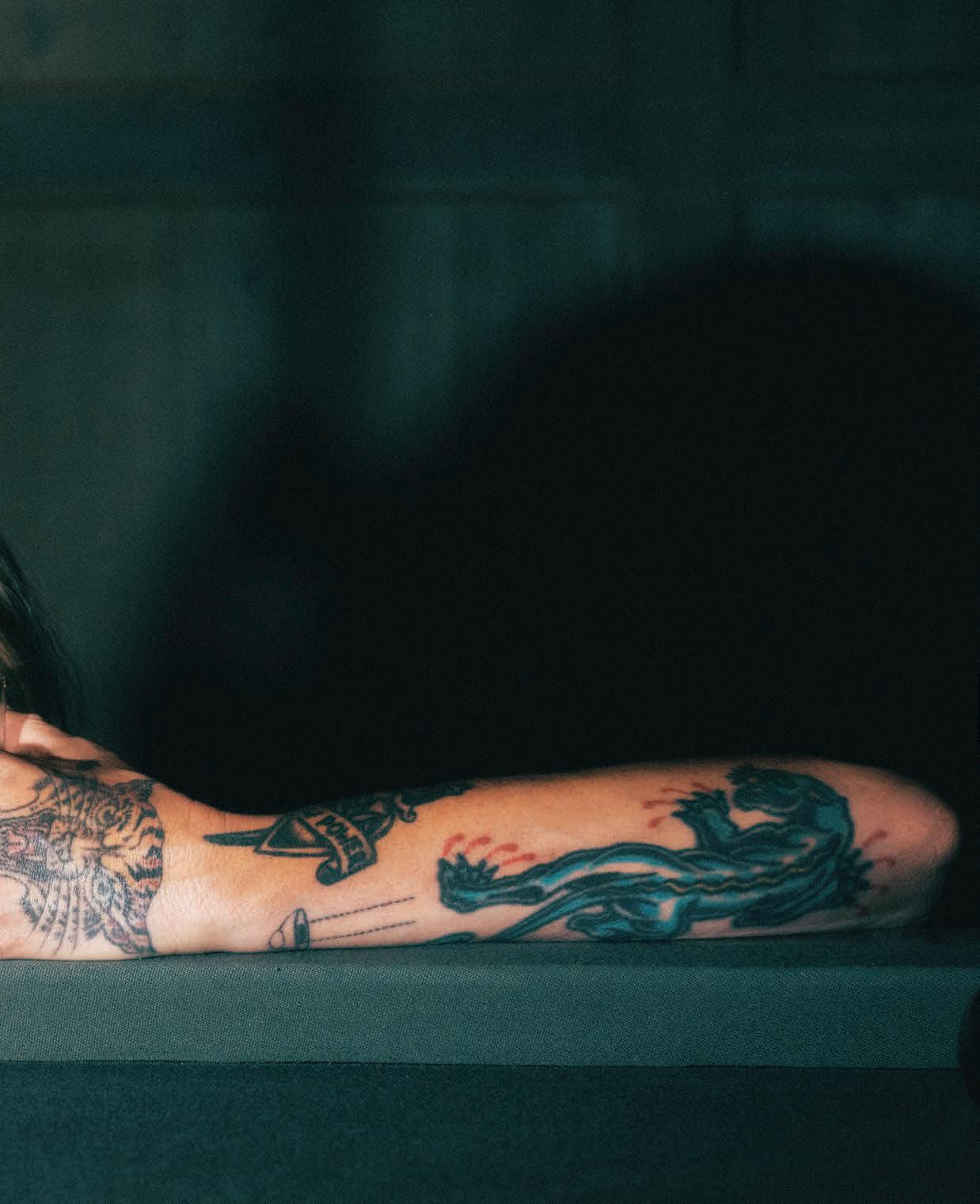
“I feel like my tattoos are a roadmap of my life,” Kesha explained. “And it’s really interesting because there are definitely some that I don’t like, and I certainly didn’t need to permanently ink them on my body. But I also look at all of them, even the ones that aren’t my favorite, with so much fondness because I usually get tattoos when I’m having a really wonderful, monumental night that I want to remember forever.”
Her most recent tattoo was inked in 2024 at her friend Kyle Richards’ home, where Kesha forever memorialized “JOYRIDE.” on her arm with a tattoo of the song title. “That was my first song that I got put out on Kesha Records, where I had the rights to my own voice, and it meant a lot to me.”
Kesha looks to a trifecta of the most celebrated names in music to help guide her through her life story, including Iggy Pop, whom she commemorated in ink with his “Raw Power” album. “I’m never going to be a sellout, and that’s because I grew up listening to Iggy Pop,” she shared of her connection to the “Godfather of Punk.” “I’m always going to be true to how weird I am because I listen to David Bowie. And I always want to keep my heart open. That’s Dolly Parton.”
Kesha’s mother, singer-songwriter Pebe Sebert, wrote the 1978 hit “Old Flames (Can’t Hold a Candle to You),” which Parton covered in 1980 for her “Dolly Dolly Dolly” studio album. In 2017, this connection carried forward when Kesha collaborated with Parton to cover what could be called her mother’s crowning achievement.
“It’s so beautiful, so full circle, to have my mom be an iconic songwriter in her own right,”
she shared. “And to do this standard song with one of the most iconic women in music, and then to actually be able to do a duet to my mom’s song with Dolly Parton — that’s an insane sentence. Like, what a crazy life I’ve had. It feels really beautiful.”
From her iconic “SUCK IT!” lip tattoo to the large-scale tiger on her ribcage, to paying homage to her fanbase and debut album with the word “ANIMAL” imprinted on her foot, Kesha’s portfolio of tattoo art is abundant.
“I got this tattoo — stick and poke — from my friend Jules the night I was leaving for my very first tour ever, and I got this lovely dead fish tattoo,” she said, laughing, while pointing to her right arm. Pointing to a fish skeleton on her right wrist, she said, “I have a matching one with Bob the Drag Queen and Big Freedia from when I was on the Kesha cruise (in 2019). We just had the most beautiful night, and I was out at sea with thousands of my fans. I love thinking about, even if some of them are just really kind of silly, they still make me happy.”
TO HAVE THIS RETURN TO THE STAGE THAT HAD STOOD FOR SO MUCH AND FELT SO HEAVY MANY YEARS AGO NOW FELT SO EXCITING AND SO PLAYFUL.
FROM BREAKTHROUGH TO BELONGING
Kesha’s major break into the music scene came in 2009, when she was a guest vocalist in Flo Rida’s single “Right Round,” a number one Billboard Hot 100 song for six consecutive weeks. But Kesha came roaring into the music spotlight as a solo artist soon afterward with her 2010 album “Animal,” debuting at number one on the Billboard 200.
Kesha bloomed from her “Blah Blah Blah” days into a global “BOY CRAZY” icon, earning two number one albums, four number one songs on top 40 radio, and tens of millions of followers on social media and beyond. She’s flourishing and evolving, taking back control of her voice, but remains the same unapologetic, fierce, fun-loving, community-focused woman she’s always been. It’s a new chapter of freedom, love, and a deeper sense of purpose: her fans.
“I think it just boils down to, I’m really proud of myself,” Kesha said. “And I’m excited to share my story, whether it’s on stage in my tour, or in the documentary, or little moments of myself in songs. It just feels so different now that I’m in control of myself.”
The last time zoologist Lindsay Nikole left the grassy savannas of Southern Africa, she had worked closely with the Cheetah Conservation Fund in Namibia. Now, Koya, one of the CCF resident cheetahs, rests firmly on her shoulder and is one of the many tattoos she chose to dedicate to her passion for felinology.
Nikole left a piece of her heart in the nature reserves, where she hoped her college degree would provide a career path to continue her research. However, upon graduating in 2020, her job search stalled, and soon the Oregon State University alum found herself back in her old bedroom at her parents’ Los Angeles home, just in time for the COVID-19 pandemic.
While quarantining, her roommate noticed that living with a tattooed and pierced scientist who wielded ancient DNA analysis and effortlessly pronounced complex scientific animal names, like Sahelanthropus tchadensis, with Gen Z verbiage and comedic one-liners was definitely a vibe — one the world should experience.
Taking her roommate’s advice, Nikole procured a greenscreen and committed to making one educational video a day with her iPhone. She let loose as the face of a self-made brand that combined microlearning presentations and infographics with her unfiltered penchant for deadpan humor. During this new venture, Nikole’s fear of speaking faded away, giving rise to a bevy of clips that earned her breakthrough success and a shoutout from fellow content creators like Miniminuteman, who called her “TikTok’s Zoology Superstar.”
VIRAL BEGINNINGS
Nikole went viral and booked a TikTok commercial that bolstered her income. She then rented out new digs and settled on a filming spot inside her larger living space. The young visionary recreated the homely look of her childhood bedroom wall as her backdrop setting, tying together elements of her passion for bioarchaeology in Africa with her past as the lead guitarist of the alternative rock band The Unknown, which also featured her younger sister in the rhythm section. Now, the Warrick bass guitar that once belonged to her sister occupies the left side of the wall as a decoration. It hangs next to a whiteboard that became an essential part of her big transition from TikTok to YouTube.
A world of possibilities unfolded with the addition of Nikole’s video editor, Gian Franco, bringing new life to the whiteboard in her backdrop with animation and image overlays in post-production. The support behind Nikole’s content has evolved from a small DIY crew to an international production team complete with six researchers and a pair of science writers. In January, the team scored one of its biggest victories when Nikole surprised her followers by interviewing Will Smith days ahead of the debut of “Pole to Pole with Will Smith,” his new series with National Geographic television.
Her team continues to grind independently, creating a slew of originals and on-deck projects with aspirations of a partnership with a major Hollywood studio somewhere down the line. Their material has the potential to resonate with audiences across the entire viewership spectrum, from the HISTORY channel to Adult Swim.
“We film it and send it off to three different editors on a chain just to see what that kind of workflow looks like for my team, in hopes that we can do (a partnership) in the future,” Nikole said, adding, “That would be ideal, but I do really love the creative freedom of YouTube. So, there’s definitely pros and cons to both.”
“EXTINKED” ORIGINS
Among the most creative shows from Nikole’s 2025 lineup was a docuseries called “EXTINKED,” a play on the words “inked” and “extinct.” The science-focused program is inspired by her affinity for a motley collection of extinct prehistoric animals and her decision to honor their existence with new tattoos on her body.
Last year, Nikole’s team traveled to Portland, Oregon, for the first season. Filming took place at Shokunin Tattoo, where the artwork was completed by Nikole’s longtime friend and Ink Master season 11 alum Angel Rose.
The celebrity tattoo artist was a natural choice for the show because of her knack for black-and-grey realism, Nikole’s preferred tattooing technique. Before this series commenced, Rose applied a double-headed snake tattoo to Nikole’s right leg, and then added five new tattoos to the same region of her
lower body during the filming of “EXTINKED.”
The enduring connection between the tatted-up entrepreneurs fit the show’s profile appropriately — like the stencil placement of the four-horned Diabloceratops that Rose put on Nikole’s upper thigh minutes into the series premiere. As the season unfolded, the experimental mash-up of their careers translated on-screen beautifully with fun observations about prehistoric life, fossils, and myriad other profoundly educational whatnots that aren’t typically discussed in vibey settings like tattoo parlors.
In a recent interview with Inked Magazine, Nikole got down to the science of her latest sitting, being on the receiving end of Rose’s tattoo machine. She alluded to the correlation of additions that included an image of the Dimetrodon, a synapsid that she described as “more closely related to humans than dinosaurs,” and the Sahelanthropus tchadensis, a hominin that she described as the earliest separation between mankind’s common ancestor with chimpanzees.
THE RIGHT SIDE OF MY BODY WILL REPRESENT THE LIVING, AND THE LEFT SIDE IS GOING TO BE ALL EXTINCT.
- LINDSAY NIKOLE
“Each (episode) is a different situation,” Nikole explained. “The Paraceratherium (episode 5), that’s my favorite extinct animal. They’re giant hornless rhinos. They were the largest land mammals to ever exist, that we know of.”
She continued: “The Smilodon (episode 2) is an extinct saber-toothed cat, and, with my background working with big cats and now my new love for paleontology and extinct animals.”
Nikole’s collection of body ink began on her 18th birthday, when she had “Everything will be okay” written in Greek tattooed on her skin. She didn’t know it at the time, but she gained a new hobby that would bear a signature part of her identity in the coming years.
CAREER-DEFINING INK
Like many tattoo collectors, Nikole has developed a theme for the way her body art is displayed. Just under the collarbone are tattoos that say “As Above” and “So Below,” sentiments that align with her career and personal life.
“The right side of my body will represent the living, and the left side is going to be all extinct,” she said. “So, it’s kind of this transition from living to extinct on either side of my body. Most everything that I have is plants and animals, except for my guitar, which is tattooed on my right arm. I also have an Oryx on my back, which is this antelope that lives in Africa.”
The collarbone tattoos were created by a Los Angeles-based artist named Connie Kang (@lollipop_skin). Sean Harder (@seanharder), over at Third Street Tattoo, handled the octopus, bird of paradise, and the plants on the right side of her body. Nolan Duran (@nolan_void), who also operates out of Third Street Tattoo, is responsible for the Oryx displayed on Nikole’s back. The 28-year-old is already thinking about her next tattoo, which is something that just might fit the concept for season two of “EXTINKED.”
“I have this idea to get a piece of the As Tall as Lions album, because I used to play along to it on drums, and it meant so much to me as a teenager,” she explained. “There’s this one section of the album art that I want to get tattooed somewhere on my ‘extinct side’ of my body since the band broke up.”
It’s been just over a half-decade since Nikole embarked on a career change that has made her a synonymous figure in zoology for a whole new generation of incoming science buffs. The content that she’s created, including her work as a published author, indicates that a return to the grassy plains is almost as likely as an upcoming tattoo appointment. Nikole’s penchant for forging her own path means that a return to making music isn’t out of her reach either.
TI get a healthy amount of people flying internationally for my work. People just think it’s cool from what they tell me.
- Jonny Hall
o heavily paraphrase that one Ben Franklin quote, in the world of tattooing, nothing is certain except ink and fads. Fine-line is in; glow-in-the-dark tattoos are out. Even UV tattoos, the much broader group of styles to which glow-in-the-dark tattoos belong, were highly popular a decade ago before waning. Now, though, they’re back and better than ever.
Case in point is Jonny Hall, the highly popular Sydney-based artist innovating the “UVealism” style in which UV inks comprise a substantial part of highly realistic pieces. He innovated this style in early 2020, just over four years after he first started tattooing. Although some people were initially skeptical, his pivot paid off.
“People felt obligated to message me when I first started my journey and tell me that UV was a fad and it was tacky and dangerous,” Hall says. Now, he’s at over 570,000 Instagram followers and booked out four to five months in advance. “I get a healthy amount of people flying internationally for my work,” he says. “People just think it’s cool from what they tell me.”
UV tattoos aren’t just experiencing a renaissance. They’re here to stay, and the reasons why people seek them out are as universal as with other tattoo styles.
“The most common reason is originality and the desire to make an impression,” says tattoo artist Julia Penza, who began working with UV inks at the start of her career. “Since this technique is still relatively uncommon, it tends to create a strong impact on people, especially when seen in person.
“Another reason,” she adds, “is the desire to have a tattoo created in memory of someone, or a piece with a deeply personal meaning — something like an amulet that remains hidden from other people’s eyes.” Since some of these tattoos’ features only display under very direct ultraviolet light, they’re like a well-kept secret among the person who gets them, their tattoo artist, and anyone else they choose to let in. “These are very intimate tattoos,” Penza says, “made primarily for the wearer rather than for public display.”
This poignancy draws people of all ages and genders to this tattooing style. “I’ve had girls and boys who have just turned 18, who want the first small piece to test the waters, to 50-, 60-, 70-year-old clients hit me up,” Hall says. “I’ve had bikers message me and ask me what I can do with their 1% symbol, if I can add UV to that.”
UV PROTECTIONS
Although there’s a widespread desire for UV tattoos, there might be even greater demand were there no safety concerns around the phosphorescent and fluorescent inks that powered the bygone glow-inthe-dark fad. Most UV tattoo artists disavow the former ink and work with the latter.
“For a tattoo to glow in complete darkness, a phosphorescent pigment would be required,” Penza says. “However, such substances are unstable and unsafe for the human body, which is why they are not used in professional tattoo practice.”
“People have a misconception that fluorescence must be dangerous,” Hall says, adding that the phenomenon of fluorescence occurs throughout nature. But Dr. Carson Bruns, co-founder, president, and chief science officer at the nanotechnology and bioscience company HYPRSKN — which is known for Magic Ink, an emerging UV-based ink that’s rewritable, erasable, and reprogrammable — offers a different perspective.
“Fluorescent versus phosphorescent, I wouldn’t necessarily say one’s safe and one’s unsafe, or one’s more safe than the other,” Bruns says. “I don’t think there’s enough rigorous scientific testing to really decide one way or another which, if any, are safe or how safe they are.”
JONNY HALL
JONNY HALL / @JJHALLTATTOO
JONNY HALL / @JJHALLTATTOO
Bruns doesn’t mean to suggest that getting a UV tattoo or any kind of ink is dangerous. If anything, he says, as an abundance of people continue to get tattoos, including UV pieces, few continue to report significant adverse effects.
“Even though there’s this lack of (regulatory) oversight, and even though there’s very little safety testing for any particular pigment that you’ll find in any given tattoo ink, tattoos as a whole have this very long history of being applied quite safely,” Bruns says. “It’s pretty rare for something bad to happen after you get a tattoo, and even when it does, which might be 1 to 2% of the time, it’s always a non-life-threatening thing, and it’s usually not the pigment’s fault. It’s usually because of a bad practice or poorly sterilized ink or something like that.”
Magic Ink, in particular, is exceptionally safe since it’s the first tattoo ink made from pharmaceutical-grade, medical-grade,
IT’S PRETTY RARE FOR SOMETHING BAD TO HAPPEN AFTER YOU GET A TATTOO, AND EVEN WHEN IT DOES, WHICH MIGHT BE 1 TO 2% OF THE TIME, IT’S ALWAYS A NON-LIFETHREATENING THING, AND IT’S USUALLY NOT THE PIGMENT’S FAULT. IT’S USUALLY BECAUSE OF A BAD PRACTICE OR POORLY STERILIZED INK OR SOMETHING LIKE THAT.
- DR. CARSON BRUNS
implant-grade materials. Bruns says the photochromic materials in the ink have gone through rigorous safety testing and a dermatological clinical trial. The word “photochromic,” in particular, explains this futuristic UV tattooing technology’s unparalleled abilities.
“(It means) an organic dye that, when it absorbs the right color of UV light, (its) molecular structure undergoes this sort of rearrangement,” Bruns explains. “It almost reacts with it, in a way, and changes shape a little bit and changes properties, which is what makes it change color.
“Magic Ink doesn’t glow at all in UV light, but it does change color under UV light,” he adds. With other inks, he explains, “as soon as you remove the UV light, they’re going to stop glowing almost right away. With Magic Ink, you remove the UV light, and it’s going to continue to be the color that it changed to until you’re ready to turn it off yourself with a bright white light or if you go out in the sunshine.”
INK THAT ENDURES
From the jaw-dropping shapeshifting pieces possible with Magic Ink to the stationary yet still breathtaking art made with more widely used inks, it’s clear that UV tattooing technology is a big reason why this style is here to stay. So too is the everyday person’s interest in these tattoos.
“If more public spaces were equipped with UV lighting, the number of UV tattoos would definitely increase,” Penza says. “And if tattoos that truly glowed in complete darkness ever became possible and safe, the effect would undoubtedly be explosive.”
Hall says that his inbox is blowing up with questions from other tattoo artists asking him how they can get into UVealism.
“People thought it was important to tell me how dangerous (UV ink) was and (that I) shouldn’t be using it,” he says of how people reacted to his past work. “Now, I’ve had artists from top shows, art shows at Ink Masters, slip in my DMs and say, ‘What ink are you using?’”
Bruns agrees that UV tattoos are of both the present and future. “As a scientist, I’m not that excited about fluorescent or phosphorescent inks just because (they’re) almost old news, but I do think that people are making really cool art with it and that they’re going to continue (doing so),” he says. He also envisions a world in which Magic Ink becomes just as commonplace: “I hope that, in 20 years, people will be like, ‘Oh, that’s an old thing that’s kind of been around for a long time. But we’re still doing new stuff with it.’”
JONNY HALL / @JJHALLTATTOO
JUILA PENZA / @JULIAPENZA.TATTOO
JONNY HALL / @JJHALLTATTOO
WINTERSTONE’S REFINED TATTOOS MAKE THEIR MARK ON HOLLYWOOD.
BY KELLIE SPEED
From delicate finger tattoos and tiny floating hearts to words inscribed in cursive and dainty stars sprinkled about, it’s no wonder tattoo artist WINTERSTONE’s micro designs have attracted such a Hollywood cult following. Whether it’s Matt Damon looking for a way to honor his late father on his arm, Jessica Alba seeking a script on her wrist, or Lady Gaga wanting a rose tattoo to wind down her spine in honor of her Oscar nomination for “A Star is Born,” the single-needle designs are the product of the famed tattoo artist’s sharp eye for precision.
“People come to me for powerful and meaningful tattoos, and it has been that way since day one,” WINTERSTONE told Inked. “I felt like I was destined to become this type of artist because I love helping people.”
Before becoming a tattoo artist, WINTERSTONE (@winterstone) worked as a graphic designer for Disney, had his own clothing line, Mr. Winter, and for years was the real-life cliché of a struggling artist.
Now, the popular tattoo artist who “hopes to be an inspiration for people living paycheck to paycheck” attracts clients from every walk of life, ranging from first-time tattooers to a recent 75-year-old looking to have “Gammy” inked in honor of her grandchildren.
The California native said his business “has been built around the female” seeking a sophisticated, elegant, and more feminine design than traditional tattoos with much bolder lines. “When I broke into the business — I would say this without sounding like a cocky asshole — that I pushed the tattoo industry into a different realm of this is not guys anymore,” WINTERSTONE said. “This is now women wanting to get small, dainty tattoos, and they don’t want to look tattooed. They just want to have cute little keepsakes on their body.”
What WINTERSTONE said fulfills him “so much” now is knowing he created something truly meaningful for every client. “It’s less about the tattoo and more about the conversation,” he said. “Every single tattoo in my studio is treated with extreme care and full heart.”
After watching well-known tattoo artists create works of art on his own body, WINTERSTONE eventually found his personal style, gravitating toward the fine line aesthetic. “I was tattooed by some very famous tattoo artists in life, and the people I was around used single needles to create a super soft, black and gray note,” he said. “I was watching and taking notes. I learned how to tattoo from getting tattoos and understanding what it felt like in my skin, which allowed me to accelerate my career.”
With the “mind of an engineer” and the talent of a fine artist, the trendsetter, who looks forward to future branding opportunities, treats each custom creation like a curated work of art. That’s why clients don’t approach him to design a random tattoo without any meaning.
“If somebody comes with an idea I am not comfortable doing, I just say no and refer them to a friend that would be good with that style,” WINTERSTONE said. “I have developed a skill that
allows me to say no. It allows conversation to be had in the studio. Then I will sit down and draw something a little different or ask the client, ‘How else would you represent this idea?’ Then they trust me into drawing something for them, and I usually tattoo it on them.”
There’s no room for error when creating a fine-line design due to its sharp nature. “When someone comes into the studio, I make sure every single person has a flawless experience,” WINTERSTONE said. “It’s a huge goal of mine for everyone to feel super special when they come in. It takes a lot of energy out of me, but it’s something that makes me super happy.”
I LEARNED HOW TO TATTOO FROM GETTING TATTOOS AND UNDERSTANDING WHAT IT FELT LIKE IN MY SKIN, WHICH ALLOWED ME TO ACCELERATE MY CAREER . -
WINTERSTONE
Despite being told he wouldn’t make it as a tattoo artist, WINTERSTONE went for it and garnered a fast celebrity following thanks to social media postings from celebrities like Miley Cyrus, Hilary Duff, and Bella Thorne showing off their new ink. “Lady Gaga was massive, and I woke up to like 200,000 followers and a year’s worth of appointments after that,” he said. Since getting his first tattoo when he was about 17 years old, WINTERSTONE has gone on to get many more, covering his arms, chest, stomach, neck, and back. Like his clients, all of the ink he gets must be meaningful. One of the most memorable tattooing experiences he had was a heartfelt creation he tattooed on his late mother, who passed away from Alzheimer’s. “My brother, my sister, and I have a specific ‘W’ for our last name that our dad created that I was able to give to my mom.”
It was a special moment for the tattoo artist, who, coincidentally, created a successful name for himself by transforming moments like these into permanent art.
CREDIT: ELIJAH CLOWER
THREE GENERATIONS OF TATTOO ARTISTS ON THE EVOLUTION, EROSION, AND ETHICS IN A CHANGING TRADE.
BY KAT TODOROVIC
n 2007, Denver-based tattoo artist and Think Tank Tattoo shop owner Jake Bray stood shivering on the street outside Purple Lotus, which was once his apprenticeship shop in Frisco, Colorado. The brisk Summit County air nipped at one’s toes even when fully clothed, a luxury Bray didn’t have that day.
His bare feet met the frosted pavement with an unsettling sort of comfort, the kind only an apprentice with nothing left to prove — and very little to warm — could manage. Snowflakes clung to his leg hair, glowing in the haze of his own breath as he took off on the route he knew far too well.
After Bray toweled off the snow from his arms, the grind continued beneath the shop’s heaters inside. He pieced back together the guts of a dismantled tattoo machine left for him the night prior, then leaned into the meticulous work of inking tribal lines and Kanji-style characters, all long before he’d earned approval for custom designs. Pass after pass, the lesson stayed the same.
Old-guarded apprenticeships broke wills down to a pulp, leaving only a raw hunger for the tattooing lifestyle. Add to that the vulnerability of a
mentor looming behind you, painstakingly critiquing every stroke. Some artists, like Travis Koenig of Denver’s Bound By Design, no stranger to Bray’s kind of initiation, consider that a form of “self-hatred.” Still, “drawing on people is cool,” Koenig said, noting that it carries a lasting responsibility to both the craft and clients who wear those designs for life, even if the artists themselves don’t have retirement plans.
CULTURE CLASH
Both Think Tank and Bound By Design were among the few reputable shops available to Denverites through the mid- to late-2000s. But in 2012, Colorado’s legalization of marijuana collided with the rise of social media. Platforms like Instagram hit their golden era, giving artists a new, expansive way to market themselves. That intersection sparked a wave of tattooers heading West in search of space, autonomy, and their own curated clientele.
Bray followed suit, moving to Denver in 2015 and joining the Think Tank team. He squeezed into the notably small booths, working shoulder to shoulder with heavyweights like Scottie Deville, Adam Rosenthal, and Rick Brown.
Koenig, already in the city, noticed the shift too — both the surge of artistic talent and an unexpected camaraderie among the scene. Shops began supporting and learning from one another rather than fending off rival artists and their motorcycle crews.
Even though there were no Molotov cocktails to worry about, 2020 had other plans. When the COVID-19 pandemic shuttered shops across Denver, the familiar buzz of tattoo machines fell silent. Conversely, the yearning for ink only grew, resulting in more demand than supply. Skilled illustrators and hobbyists alike, with more time than patience, took matters into their own hands. And, with Amazon’s two-day Prime delivery just a click away, tattoo machines, needles, and ink arrived on doorsteps with no licensure required.
With needles now accessible to anyone who could hold a pencil, COVID-era tattooers sprouted across Denver like wildfire. Some still sought mentorship, walking into shops to demand knowledge and declare raw talent, but that overconfidence often outpaced discipline. Many of those self-taught artists were consequently turned away because their egos refused to walk the necessary line for that lifestyle. Yet those very artists still believed that their wings, glued together by Amazon Basics, could fly them to the same sun of notoriety and accolades others had fought to earn.
But even Icarus learned the hard way that ignoring warnings only hastened the fall. Many of those self-taught artists, with chipped shoulders and resentment toward anyone who gatekeeps the craft, opened their own private studios in response. Most resemble boutique spas serving cucumber water on silver platters rather than classic shops lined with flash walls and filled with chattering artists acting as creative springboards. Those ring-lightsoaked storefronts multiplied faster than anyone could track, prioritizing aesthetics and Instagram follower counts.
THE FALLOUT
Tattooing demands a keen ear more than glam, from disinfecting equipment properly, to mastering healing technique, and even understanding how to price work fairly. For a once-respected industry, a new generation has mistaken access for expertise, leaving the gates of Denver’s tattoo world in ruin. Veterans Bray and Koenig sit in this gaping opening with rusted iron bars around them. They are now wary of taking apprentices at all, with rare exceptions for those they’ve known for years. Ultimately, “nothing good comes easy,” Koenig said, adding that the real test lies in a person’s character.
RITUAL TATTOO / CREDIT: ENRIQUE PARILLA
@TRAVISKTATTOOS
@TRAVISKTATTOOS
Thankfully for Angel Ramirez, current apprentice at Denver’s Ritual Tattoo owned by William Crandall, his decade-long connection to the shop and immersion in the scene allowed his grounded persona to shine, a quality Crandall recognized from the start.
Now two years into his apprenticeship, Ramirez often peers over Crandall’s shoulder, studying each pressurized pass of the needle and subtle shift in angle. The craft has much to teach, after all, despite Ramirez’s years of adjacent knowledge. Even the so-called “simpler” styles, like American Traditional, can be deceptively tricky due to using a single needle thickness across multiple design elements, making every slip of the finger painfully visible.
Crandall may not send Ramirez on naked runs down Denver’s streets, but he still
from the ground up, paying homage to the steps required to secure your place in a lineage rooted in history.
keeps him on his toes. Maybe it’s a brightly colored wig slipped on while tattooing a client, or a faint blue tint on his hands from an unassuming glove laced with a lethal dose of stencil fluid. Shops like Ritual Tattoo and those harmless pranks are intentional efforts to preserve the classic walk-in atmosphere and moral backbone that built this culture
That kind of altruistic echo sits in stark contrast to the rise of private studios, where everyone’s tattooed with thought-out arm sleeves that blend into backpieces and bloom into full-bodied tapestries. Even when the hoodies and ski passes come out for the winter, the integrity of those designs and the people who wear them hold the Western Front Range strong, whether anyone sees the ink or not. The real difference, though, isn’t who wears the ink. It’s who’s earned the right to make it. And in a landscape where the lines between tradition and progression have blurred, it’s becoming nearly impossible to tell where one design ends and another begins.
@JAKEBRAY15
@JAKEBRAY15
@JAKEBRAY15
BY PETE CROATTO
She once thought tattooing would last forever. Brea Lanyon was in her 20s, a time when most of us are too busy trying to excel at one thing that we ignore the possibilities that lie ahead.
Lanyon, who turned 30 last year, has finally embraced that she’s an artist. She has scaled back on her inkwork but expanded her artistic vision. The Australian, known for her striking art nouveau style, will never lose touch with her first love. It is etched into her soul.
Tattooing is the foundation of a burgeoning artistic empire. She had her own show of 50 metal installations in November 2025, “Skin to Steel,” inspired by her tattoos and sketches, and another exhibition is on the way. Her website, brealanyon.com, offers books, bling, and artworks. Her Google Drive throbs with ideas, but not all of them will soar.
“It’s long game shit,” Lanyon says.
Each failure and success provides an education. The experiences she creates for Bravo, a private dining service, with her partner and fine dining chef, Adam Perconte, have shown Lanyon the value of restraint in her art. Lanyon grew up in the outback, a harsh climate for creativity that is an indispensable part of who she is. In a way, all these endeavors are a way of making up for lost time.
THE CREATIVE COMPOUND
On a Saturday afternoon in mid-February, it’s 70 degrees Fahrenheit in Melbourne, a taunt to the millions of Americans who have been pummeled by snow. Lanyon is happily housebound. Thirty seconds before a Zoom call, she was updating her website. A meal is being prepared in the kitchen, which will become content for the masses. In the “House of Hustle,” creativity is a utility that runs 24/7.
The pace has not corroded Lanyon. Today, she looks luminous in a simple black top, silver chain, and technicolor arm ink that contrasts with her skin tone, the color of whole milk. Work is a comfort, part of her natural state, but drawing is a form of meditation. “It’s a step away,” she says. “It’s silence from the world.”
Quiet pushed Lanyon into this phase of her life. When the COVID-19 pandemic hit, tattooing became an impossible occupation. But Lanyon drew, and that work eventually led to her first book, “Isolation.” When she decided to create laser-cut bookmarks, she was hit with inspiration: make them bigger. That gave rise to her “Skin to Steel” installations. She has not looked back.
“I don’t ever want to get to the end of this life and think, ‘Fuck, I really wish I had tried that,’”
she says. Since Lanyon can give projects her complete attention, not going for it “would be doing a disservice to myself.”
With that freedom comes responsibility. Much has been learned in the moment, including how to be an entrepreneur.
“I’ve learned 95% of sales are based on emotions, and my artwork is all emotion,” Lanyon says. “It’s all storytelling. So, it may take longer for me to sell a piece, but I know it’s going to the person it was meant to be with. And that’s how I operate. I don’t know if that’s a great business model, but that’s where I’m at, and that’s what makes me happy. And at the end of the day, the work must belong with the people it resonates with.”
FOSTERING FORTITUDE
The need to be authentic came from her mom and dad. Lanyon was raised in Boort, an outback farm town of 600 people in Victoria. She drew pictures of her dad’s farm equipment when she was just 2 years old. In high school, teachers urged her to marry a nice man and teach, but she wanted to be a tattoo artist. As soon as Lanyon graduated from high school, she left for Melbourne.
She was 18 when she flew to Melbourne and got her first tattoo — a rose on her right
You’ve got to be comfortable with just holding on before it kicks off. That’s how I see it.
hip — at Victims of Ink from the legendary Sara Fabel, her favorite artist. “I was showing her my shitty drawings, telling her how much I wanted to be a tattoo artist,” Lanyon says. “She was so encouraging of it.”
Lanyon’s childhood is the inspiration for her next exhibition, “Harvest: The Architecture of Abundance,” the second show in her VANTA “Steel Statements” collection (Volume II). It will be part of the National Gallery of Victoria’s (NGV) Design Week in May 2026 at West Melbourne’s West End Art Space.
“Growing up on a farm, I witnessed it all,” Lanyon says. “I witnessed the hard work, the relentless days, the droughts, the loss, the resilience, the cycles. You have a good year, you celebrate it. It’s met with gratitude, and then you go through it all again. I’m talking about every system involved in a harvest: community, collaboration, and gratitude. So,
it’s big. There’s a lot of storytelling involved.” This time, since there are 15 pieces, she says she can go “so much deeper.”
Lanyon admits she needs a regular staff, not just freelancers recruited from Fiverr. Ideas await their release, and she is tattooing less, maybe once every three weeks. “I want to be completely present with my clients,” she explains. “That’s why I limit my time with it.”
This moment of her life feels right — she has more time to craft stories and to make every project click.
“It’s compounding,” Lanyon says. “You’ve got to be comfortable with just holding on before it kicks off. That’s how I see it. That’s what keeps me going, because I believe in it so wholeheartedly. I will be fine.” Now that her first exhibition is on her CV, the pressure to please others is off. “I did feel like I had something to prove for whatever reason then, but now I’m completely content and at peace with myself.”
Lanyon has found herself in her art, pleasing that girl who refused to settle. She can and will tell the next generation that they can live an artist’s life and tell their own story. “Once you are aligned with your North Star, your purpose, whatever you want to call it,” she says, “things just float.”
Tattooing is a unique form of art. An artist can have exceptional skills in building a composition and executing it with a clean, smooth technique, but if the body’s form isn’t taken into consideration, the tattoo won’t harmonize with the body, resulting in a tattoo that looks more like a sticker.
A tattoo only exists on the body, and it needs to be designed to live and move with it. To succeed, tattoo artists need to flex their technical skills by considering one of the key factors in creating body art that looks natural: anatomy.
EVERY BODY’S DIFFERENT
A tattoo artist must “see through the skin,” looking beneath the surface to understand muscle structure and body movement. Attention to anatomy can be the difference between a decent tattoo and a great tattoo, understanding that a drawing is a flat image and the body is a three-dimensional form.
An artist who considers the body rather than just the skin itself understands that every part of the body consists of muscles, and each muscle has its own form and structure. A big mistake some artists make is forgetting that muscles are dynamic parts of the body that move and change volume with every casual activity, like rotating the wrist or relaxing the hand.
People don’t live in a single pose, and neither do tattoos, so it’s crucial to place dynamic artwork on dynamic zones to create harmony. Tattoo artists should consider dayto-day movements when creating a sketch, being mindful of how the tattoo will look in movement. For example, when a client reaches for a water bottle versus bending the arm to drink it.
The goal is always to keep the focus on the tattoo design’s logical center — positioned on an area with the least motion, allowing the main object to remain readable in different positions. To ensure the main object is easy to read and doesn’t get lost among the other design elements, placement is key.
While the basic build of the body is important to understand, an artist should never forget that each body is unique and has its own geometry and features. Posture, muscle tone, fat percentage, mobility, and day-to-day activities affect the shape and flow of the body; therefore, a tattoo artist can’t position a tattoo precisely the same way on everyone.
To achieve a natural look on the body, an artist should always remember that anatomy matters more than symmetry. Nothing in nature is symmetrical, including the human body, so the task is to create a balanced look with complementary design elements.
Nothing in nature is symmetrical, including the human body, so the task is to create a balanced look with complementary design elements.
- Artem Alekhin
Every detail in the design needs a purpose, and if an element does not make sense in the placement, it is better to avoid it and keep the integrity of the work.
LOCATION, LOCATION, LOCATION
Placement of the secondary elements is equally important because the dynamics of the skin and body differ. They should not be overly detailed nor take attention away from the main element.
In areas with high mobility and skin deformation, it is better to avoid static shapes, such as building outlines, swords, and similar objects, because they will not adapt well to the body curves. In the design stage, it is also important to think anatomically for the placement of the tattoo, so it can be easily continued in the future.
One common mistake is placing small objects in the center of a key zone. For example, a script tattoo positioned at the center of a forearm. When the artist doesn’t offer placement alternatives to a client, the area becomes less efficient for building a composition in the future — it becomes more difficult to connect a new design to the existing tattoo.
Working with geometric and fine-line projects requires the artist to follow the logic of the human eye, not a mechanical axis or a ruler. Straight lines and geometric forms can be very sensitive elements of the design, since the artist can’t always account for volume and body movement on the paper. This is why it is important to know how to draw freehand on the body. Working with a marker on the body allows adjustments in the existing design, such as adding elements, changing the scale, and adapting the shapes to the anatomy.
Negative space is also an important tool that allows the artist to control the composition, because skin has less contrast than paper. Empty spaces also give the project the needed contrast to make the composition easier to read.
Placement can be powerful when a tattoo is designed for a specific person’s anatomy. It can highlight or minimize body features and soften asymmetry, affecting a client’s perception of their body. Understanding anatomy gives artists the confidence to build a work of art that a client will eagerly carry on their body for life.
WHERE DRIVING BECOMES LIVING
Apex Motor Club—the premier private motorsports club designed for those who live to drive. Just 35 minutes from Phoenix and Scottsdale resorts, Apex offers an exclusive trackside community where performance, passion, and lifestyle meet. With 3 professionally designed circuits, state-of-the-art facilities, and a vibrant member culture, Apex redefines the automotive playground.
PHASE 2 GARAGE CONDOS NOW SELLING
Own your personal motorsports oasis. Our trackside garage condos aren’t just storage—they’re highly customizable, luxury spaces where you can showcase your collection, host friends, or relax between track sessions.
DRIVER DEVELOPMENT | CONCIERGE CAR PREP | PRIVATE EVENTS | APEX VAULT TRACKSIDE GARAGE CONDOS | NEW MEMBERS’ CLUBHOUSE IN 2026
Inked Studios is the partnership and brainchild of Sean Dowdell and Mario Barth — two powerhouses in the tattoo industry. Last fall, the duo opened their third Inked Studios, adding Las Vegas to the mix with their existing Miami and New York City shops.
“Vegas has been so good to both Mario and I for many years,” Dowdell says.
“There was a great amount of shared pride that went into the studio. I feel like the industry as a whole has been extremely supportive of what we are trying to accomplish as we scale.”
When Barth and Dowdell purchased the studios, the brand’s creative director had already carefully curated the artists, but that didn’t stop interested artists and piercers from flooding the inboxes of
Barth and Dowdell when they announced the opening of their Las Vegas studio.
The brand’s current artists hail from around the world, from Greece to Venezuela, and each shines in their own way. Whether it’s the longevity of their career thus far or the style they offer, the artists at Inked Studios give clients a personalized, high-end, almost-luxury tattooing experience. That “uniform, elevated customer experience,” as Dowdell describes it, can only go so far. It’s the individuals wielding the tattoo machines and piercing instruments that really make a studio stand apart. These are just a few of the tattoo artists at Inked Studios New York City, Miami, and now, Las Vegas.
*Some quotes have been edited for length and brevity.
CREDIT: ALEXANDER “AXEL” LOPEZ
TONY VILELLA >
New York City
How does your background come into play in your work?
I was a pupil of Verani Tattoo, a very respected Brazilian artist known for his Japanese/Oriental work. That time gave me a very strong technical base in structure, line discipline, and durability. Later, I moved to São Paulo to study classical art with Paulo Frede, one of the leading names in classical painting in Brazil. Today, that classical background is present in every tattoo I design. I treat the skin like a canvas: I organize the values first, decide where the light is coming from, and build depth and focus just like in a painting. Combined with the technical discipline I learned in Japanese-style tattooing, it allows me to create realism that is not only visually rich but also clear and strong enough to age well over time.
How do you describe your style of realism?
I’m always thinking about how the piece reads from far away as a single image, not just as a collection of details. I design everything with healing and aging in mind, so the tattoo looks powerful not only when it’s fresh, but also years later.
What’s your favorite thing about being a tattoo artist?
Tattooing has given me a lot over the years. Through this craft, I’ve been able to travel, come to the United States, be recognized within the industry, and, most importantly, make a living from art. The best part is still that direct connection between me, the ink, and the skin — being present with the client in that moment and creating something meaningful together. All the recognition is great, but the real joy is in doing the tattoo itself, day after day.
Specialization: Realism, cover-ups, and large-scale projects
Your story begins in Greece. Tell us about your mentor and how he helped you realize your potential as a tattoo artist.
George, my husband, saw something in me that I couldn’t see yet. He didn’t know how to tattoo, but he became my mentor in the purest way. He stayed up all night studying techniques, then he translated everything into Greek and taught me. He was the one who pushed me to risk everything for art. He gave me permission to believe in my potential before the world did.
We read that you were the first woman from Greece to receive a U.S. Extraordinary Ability green card due to your tattooing. How did that recognition feel?
It was one of the most intense chapters of my life! To be, as far as I know, the first woman from Greece to receive this recognition for tattooing felt bigger than me. It felt like a win for every artist who was told, “This is not a real job.”
You describe your work as “turning emotions into art.” What does that mean for you and for your clients?
One day, George asked one of my clients in New York, “Why did you choose Lena?” The client answered, “Because she turns emotions into art.” We thought it was beautiful, but then it happened again in Greece and then in another country. Different people, different stories, different backgrounds, but the same sentence. That’s when I realized this is exactly what I do.
What’s the relationship like between you and your clients? How do you approach your sessions?
My clients are partners in a very personal journey. Most of the clients I work with now are big projects that need multiple sessions. This is a gift because the kind of person who is ready for this level of commitment usually doesn’t stay “just a client.” Very often, they become someone I deeply care about and feel connected to.
You have been a tattoo artist for almost 30 years. What’s been one of your most memorable sessions or pieces?
I wouldn’t be able to choose one particular piece/ session. I would say I have the most fun creating large-scale pieces that include faces and hands, which I find the most expressive.
How would you describe your style of tattooing?
After 20 years of tattooing, I would consider myself a well-rounded artist, but I particularly enjoy tattooing illustrative realism.
What do you enjoy the most about being a tattoo artist?
The interactions with my clients, and I get to do what I love every day.
What does it mean to you to be an Inked Studios artist?
When talking about tattoo studios, it feels great to be part of the most — if not the best — recognized and established name in the industry.
What was your journey to becoming a tattoo artist?
As a child, I always painted my skin with pens. After graduating from art school and getting a tattoo myself, my interest for the tattoo craft just grew bigger.
What inspired you to be the type of artist you are today?
The interactions with my clients really push me to grow and be better technically and as a person. Can you tell us about a particular tattoo session that held special meaning for you?
When I got tattooed for the first time.
What do tattoos mean to you?
They’re a very good way to remember or respect anything that has importance.
Specialization: Color realism and black and gray Instagram: @raven_wood_tattoo
Tell us about your artistic journey — from Venezuela to Miami. I was born in Venezuela, where my love for art started very young. The journey to Miami transformed my life. The city gave me new opportunities, new perspectives, and the space to grow creatively. I originally began my career in fashion. Somewhere along the way, tattooing found me, and when it did, everything clicked.
What does being a tattoo artist mean or signify to you?
Tattooing is connection. It’s trust. It’s the moment when someone sits in my chair and opens a little piece of their world so I can turn it into something meaningful. It also represents growth. Tattooing pushed me to evolve, to be patient, to be present, and to truly understand the responsibility that comes with marking someone’s skin.
You describe tattoos as “reflections of memory, identity, and transformation,” and also as “connection, healing, and truth made visible.” Tell us more about that.
Tattoos are pieces of who we are. Every tattoo carries a story. For many people, getting tattooed becomes a moment of connection and healing. It’s a way of bringing something internal into the physical world. They show growth, resilience, and the parts of ourselves we choose to carry forever.
If you’re not in the studio, what are you doing?
I’m usually drawing, designing, or developing ideas for new projects. I love finding ways to translate the energy and storytelling of my tattoos into wearable art. When I’m not creating, I’m recharging — anything that helps me stay grounded and inspired.
Specialization: American traditional, neo-traditional, micro-realism
Beginning in Venezuela taught me discipline and resilience. Tattooing there means creating with intention and adaptability. The people I met along the way shaped my vision and helped me grow. Moving to the U.S. refined that path, but Venezuela is where the foundation was forged.
You’ve judged upward of 30 conventions. How has that shaped your perspective as an artist?
Judging so many conventions changed everything. You start noticing nuances — intention, rhythm, cleanliness, technical flow, consistency. It elevates your standards and makes you more responsible about what you reward because that can influence other artists. It made me grow and be even more demanding with myself.
What’s been a particularly memorable session or piece, and why?
Every tattoo leaves something in me. People come and go through my life because of tattooing. Some stay, some move on, but all of them leave a mark. With each person, I learn, reflect, and grow. What makes a session memorable isn’t just the piece, but the story, the moment, the conversation, the energy we share. The human connection is what truly makes a tattoo unforgettable for me.
A lot of your work is done freehand. Why do you prefer that method?
Freehand gives me true freedom and connection. Designing directly on the person allows the tattoo to adapt perfectly to their body’s forms and movement. It’s almost like sculpting on skin. It keeps the art alive, spontaneous, precise, and deeply personal.
Specialization: Black and gray, color, cover-up, realism, restoration
Billed as “the most exciting two minutes in sports,” the Kentucky Derby has been held at the famous twin-spired Churchill Downs since 1875. The derby takes place on May 2, and Kentucky Oaks, the premier race for 3-year-old fillies, is run the day before. The derby is limited to a field of 20 starters, and the winning horse is draped in a blanket of more than 400 red roses, inspiring the phrase “Run for the Roses.” Derby week begins on April 25 and is packed with festive events.
MAY 6 - 10
WELCOME TO ROCKVILLE
Daytona Beach, Florida
Following a record-breaking event in 2025, Florida’s largest rock, metal, and punk music festival will return to Daytona International Speedway. The festival will feature over 160 bands across five stages, including headliners Guns N’ Roses, Foo Fighters, Bring Me The Horizon, and My Chemical Romance. Fans will kick off the Welcome To Rockville celebration at the official pre-party on Wednesday night with performances from Fuel, Local H, Adelitas Way, and Ashes Remain. Pre-party passes are included with all camping packages and are also available as standalone tickets.
MAY 8 - 10
IBIZA TATTOO CONVENTION Ibiza, Spain
This dynamic event will transform Ibiza into a hub where the finest body art meets the island’s unique charm. Visitors will have the opportunity to connect with more than 150 talented tattoo artists, witness captivating live performances, immerse themselves in urban culture, and soak up a truly unforgettable ambiance throughout the entire weekend. For three days, the island will vibrate with live tattoos, contests, exhibitions, live music, alternative lifestyles, and experiences that make this event one of the most anticipated in the Mediterranean.
THE KENTUCKY DERBY
IBIZA TATTOO CONVENTION
CREDIT: CHURCHILL DOWNS RACETRACK
MAY 22 - 24
BOTTLEROCK NAPA VALLEY
Napa, California
Featuring three days of the best in live music, wine, food, and brew, BottleRock Napa Valley comes to the Napa Valley Expo over Memorial Day weekend to feature more than 75 bands performing, with rocking headliners like Lorde, the Foo Fighters, and Teddy Swims. Four music stages and one culinary stage will feature some of the world’s top music artists and chefs, while local wineries and restaurants will top off the experience with world-class food and exceptional wine.
MAY 22 - 24
NEW YORK EMPIRE STATE TATTOO EXPO
New York City
Dedicated to bringing some of the world’s most famous artists together in one place, this event, held at the New York Hilton Midtown, is one of the largest gatherings of elite international tattoo artists worldwide. It unites and showcases over 500 artists, creating a unique experience of artistry, creativity, and culture. The schedule includes curated shows, live tattooing, seminars, and workshops. Entertainment will include burlesque performances, the Coney Island Circus Sideshow, Plomo Magic, Cervena Fox, and a concert by Contracorriente.
JUNE 18 - 21
ART BASEL
Basel, Switzerland
This highly anticipated fair brings the international art world together. It will feature over 200 leading galleries and more than 4,000 artists from five continents. Some of the finest exhibitions take place concurrently in and around Basel, creating a region-wide art week. The show will take place at the Swiss exhibition site Messe Basel and is divided into sectors, including Galleries, Unlimited, Feature, Statements, Premiere, Edition, Kabinett, Parcours, and Magazines. Each sector has a specific focus, from monumental works to solo presentations by emerging artists.
JUNE 18 - 20, 25 - 27 AND JULY 2 - 4
SUMMERFEST
Milwaukee
Billed as the world’s largest music festival, this popular event, held on the shores of Lake Michigan, will bring over 600 artists to Henry Maier Festival Park’s 12 stages for three weekends of aweinspiring performances and unforgettable experiences. Headliners will include Garth Brooks, Megan Moroney, Don Toliver, Carín León, Ed Sheeran, Cody Johnson, Post Malone, Muse, Alex Warren, and Jelly Roll. Special experiences will include culinary adventures, interactive performances, games and friendly competitions, Latin Music Day, and an explosive fireworks show.
JULY 3 - 5
ARTISTIC INK FESTIVAL
Ubon, Thailand
Held at Ubon Hall in Central Ubon, this is the largest tattoo and art festival in the lower northeastern part of Thailand, specifically the Isaan South region. The two-day event will feature 130 booths and bring together leading Thai and international tattoo artists. It will provide tattoo enthusiasts with opportunities to meet artists, watch live tattooing, and choose their preferred designs. In addition to tattoo art, the event will include competitions, performances, and exhibitions by talented artists.