Ong Johnson leads the Technology Practice Group at Halim Hong & Quek, focusing on TMT law with recognised strength in FinTech and Personal Data Protection. In FinTech, he is widely regarded as one of Malaysia’s leading lawyers who truly understand financial technology.
Lo Khai Yi, Halim Hong & Quek
Lo Khai Yi is a technology and data lawyer specialises in the core field of Technology, Media and Telecommunications (TMT). His practice spans technology outsourcing, telecommunications, data privacy, blockchain, fintech, and intellectual property.
Le Ton Viet, Senior Associate, Russin & Vecchi
Viet is a Senior Associate who has close to a decade of experience practicing corporate and commercial law, with a focus on privacy and data cybersecurity; real estate and hospitality management. His work involving data privacy includes cybersecurity issues, data audits, due diligence, governance programs and compliance. Viet is also involved in Russin & Vecchi’s insurance practice.
Victoria Woods, Partner, Head of Commercial, Hadef & Partners
Victoria is an English qualified solicitor holding a Bachelors degree in Law with more than twenty years’ experience as a practising solicitor gained from both the UK and the UAE markets.
Paul T. Salanga, Chief Legal Officer and General Counsel, Maharlika Investment Corporation
Carina Wessels
Executive: Governance, Legal and Compliance, Alexander Forbes Group Holdings
Preeti Balwani
General Counsel at Hindustan Coca-Cola Beverages
Ron Yu
University of Hong Kong, Chinese University of Hong Kong, Hong Kong University of Science and Technology
Stanley Lui
APAC Legal Director, TI Fluid Systems Co-Founder, White Hat Guys
In-House Community
Before joining MIC, he spent over 26 years as a Partner at Picazo Buyco Tan Fider & Santos. He holds a Juris Doctor and an A.B. in Philosophy from Ateneo de Manila University.
Magazine
Carl Watson General Counsel, Arcadis Asia
Raymond Goh
General Counsel, International of China Tourism Group
Sally Dyson Director, Firm Sense
Yosr Hamza Director, Legal Counsel, Gartner
Navrita Kaur Chief Legal Officer, Omesti Group
Rebecca Hong Managing Counsel, Intel Corporation
Vecchi Managing Partner, Russin & Vecchi
Sesto
Morgan Lewis Expands Middle East Presence with New Riyadh Office
Morgan Lewis has strengthened its longstanding commitment to the Middle East with the opening of a new office in Riyadh, marking a significant step in its investment in the Kingdom of Saudi Arabia. The move reflects the firm’s strategy to build a deeper on-theground presence and support clients navigating the region’s increasingly sophisticated legal and commercial landscape.
The office launches with a six-lawyer team that brings strong local and international experience. M&A and capital markets partners Dr Sultan Almasoud and Sanjarbek Abdukhalilov join from A&O Shearman, while experienced Saudi disputes practitioner Saeed Alqahtani joins as of counsel from Al Tamimi & Company. Dr Almasoud will serve as Managing Partner of the Riyadh office and lead the firm’s Saudi practice.
The Riyadh team will work closely with senior Morgan Lewis partners across the region, including finance partner Sourabh Bhattacharya and long-time Saudi practitioners Sara K Aranjo, who heads dispute resolution and international arbitration across
the Middle East and Africa, and Ayman A Khaleq, co-leader of the Middle East practice. Together, they offer a platform designed to support clients as regulatory frameworks evolve and investment activity accelerates across the Kingdom.
Firm Chair Jami McKeon noted that Saudi Arabia has been central to the firm’s global work for decades, and that a local presence marks a natural next step. Firm Managing Partner Steven Wall described the opening as a meaningful extension of the firm’s regional commitment, strengthening existing relationships while supporting new ones.
Morgan Lewis has advised clients in the Middle East for more than 40 years and is now one of the few global firms with offices in all three major Gulf hubs: Dubai, Abu Dhabi and Riyadh. The new office will deepen the firm’s support for institutional investors, family offices, sovereign entities and multinational companies active in sectors such as digital infrastructure, energy, aviation, funds and emerging technologies including AI.
Reed Smith Expands Regional Footprint with New Riyadh Office
Reed Smith has strengthened its longstanding presence in the Middle East with the opening of a new office in Riyadh, following approval from the Saudi Ministry of Justice. The launch marks an important step in the firm’s expansion across the region and builds on more than four decades of activity, including the opening of its Abu Dhabi office in 1978. With Riyadh now added to its network,
the firm operates three offices in the Middle East and 34 globally.
The new Riyadh office includes three arrivals from Mahassni & Co: partner Emad Alshaikhi, senior associate Foram Majmudar and government relations officer Sami Saafa. Alshaikhi previously served as co-managing partner of Mahassni & Co and led its dispute resolution practice. With more than 15 years of experience advising on major disputes, government projects and landmark transactions, he brings deep knowledge of the Saudi market. Majmudar, who is US-qualified, has advised on significant transactions and projects, including Riyadh Metro, NEOM initiatives, PIF-backed developments and large-scale joint ventures. Saafa will support the firm’s regulatory engagement and client relationships.
To support the office’s launch, the firm’s EME managing partner, Gregor Pryor, will be seconded from London to Riyadh. His role will include working closely with clients, building the team and integrating the office within the firm’s wider platform. Global managing partner Casey Ryan noted that the expansion reflects Reed Smith’s long-standing commitment to the region, describing the Kingdom as a dynamic and rapidly evolving legal market.
Pryor highlighted the strategic importance of Saudi Arabia’s economic diversification under Vision 2030, which continues to generate opportunities across finance, energy, entertainment, life sciences and transportation. With an on-the-ground presence and access to the firm’s international capabilities, the Riyadh team is positioned to help clients capitalise on these developments.
Reed Smith now has more than 25 lawyers in the Middle East, including seven partners. The new Riyadh office is based in the Laysen Valley complex on King Khalid Road.
Solomon & Co Joins BGI Global as Exclusive India Member
Solomon & Co, Advocates and Solicitors, one of India’s oldest full-service commercial law firms, has joined BGI Global as its exclusive representative firm in India. With offices in Fort, Bandra and Pune, the firm brings more than a century of legal experience and a strong domestic platform to BGI’s growing network of independent international law firms.
The collaboration strengthens Solomon & Co’s ability to support clients with cross-border interests by providing coordinated access to
legal capabilities across multiple jurisdictions. BGI Global, established over 25 years ago, includes member firms across Europe, America, Africa and Asia, and continues to grow its network of independent firms and corporate service providers.
Managing Partner Aaron Solomon described the partnership as an important step in broadening the firm’s international reach, noting the value of BGI’s strong presence in Spain and its established network across key global markets. He highlighted opportunities to collaborate on multi-jurisdictional matters and to engage with peers on emerging legal developments. He also underscored the importance of initiatives such as BGI’s lawyer exchange programme, which he said will help develop future talent with a global outlook.
BGI Global President Mark Summerfield welcomed Solomon & Co to the network, citing the firm’s reputation, local insight and international mindset as a strong fit for BGI’s model of high-quality independent firms working collaboratively across borders.
Kundra & Bansal Rebrands as KBD Partners and Strengthens Leadership Team
Indian corporate and commercial law firm Kundra & Bansal has rebranded as KBD Partners and expanded its leadership team, marking a new chapter in its evolution as a full-service firm with a strong domestic and cross-border focus. With offices in New Delhi and Gurugram, and associate offices in Mumbai and Bangalore, the firm advises global institutions, government bodies, corporates,
family offices and not-for-profit ventures across a wide range of sectors.
Partner Shivendra Kundra continues to lead the firm, bringing more than three decades of experience in M&A, cross-border transactions and corporate governance. He is joined by two senior practitioners who broaden the firm’s capabilities. Subodh Pasad Deo, a veteran in competition law and regulatory compliance with a distinguished civil service background, strengthens the firm’s advisory offering on regulatory matters. Gurmeet Bindra heads the litigation practice, advising on arbitration, insolvency, employment and complex disputes.
In a joint statement, the Partners described the transition to KBD Partners as an important moment in the firm’s journey. They noted that the expanded leadership team enhances the firm’s ability to deliver innovative, high-quality legal solutions while building on the legacy of Kundra & Bansal.
The firm reaffirmed its commitment to pro bono work, including initiatives in law, environment, education and healthcare, and continues to contribute thought leadership through articles and forums.
MOVES
CMS INDUSLAW has added Mathew Thomas as an equity partner in the capital markets practice, along with his team. He will be based in the firm’s Mumbai office. Thomas has more than 15 years of experience in equity, debt and hybrid securities offering. He has advised domestic and international clients in capital markets-related transactions, including IPOs, rights offerings, qualified institutions placements. He has also worked on public offering and institutional placement of units and debt securities by REITs and InvITs. Prior to joining the firm, Thomas was with Saraf and Partners, and previously worked with JSA, Trilegal, Shardul Amarchand Mangaldas & Co and Khaitan & Co.
Trilegal appointed Raya Hazarika as a partner in its corporate practice, strengthening its bench of corporate lawyers and expertise in complex transactions. Hazarika, who has more than 12 years’ experience, brings a strong track record in M&A and private equity deal-making, particularly across infrastructure and real-asset sectors. She advises on private equity investments, M&A, joint ventures, regulatory matters and corporate governance. Her cross-sector experience spans real estate, logistics, data centres, digital infrastructure, healthcare and technology, aligning with India’s evolving investment and regulatory landscape. Her appointment lifts Trilegal’s equity partnership to 150.
Morgan Lewis has added A&O Shearman partners Dr Sultan Almasoud and Sanjarbek Abdukhalilov to its newly launched Riyadh office. Almasoud, a leading corporate and capital
markets lawyer, becomes managing partner and head of the Saudi practice. He previously co-led A&O
Shearman’s Riyadh office and spent more than a decade as managing partner of its legacy firm. His work spans M&A, restructurings, IPOs, joint ventures, capital markets and regulatory matters, with expertise in fast-evolving sectors such as AI and digital infrastructure. Abdukhalilov, who helped build Shearman & Sterling’s Saudi corporate practice, joins as partner with a focus on M&A, joint ventures and inbound investment.
Trilegal has appointed leading tax practitioner Jitendra Motwani as a partner in its Taxation practice, strengthening the firm’s ability to deliver integrated tax solutions amid a complex regulatory environment. With more than two decades of experience in indirect taxation and regulatory litigation, Motwani advises and represents clients across GST, Customs, Trade, Central Excise, VAT, Service Tax, Foreign Trade Policy and FEMA. He regularly appears before the Supreme Court of India, several High Courts, Tax Tribunals and other quasi-judicial bodies. Known for his deep regulatory insight and commercially focused approach, he brings strategic clarity to complex tax matters.
RPC has added Jeremiah Chew as a partner in its Singapore office, where it operates joint law venture RPC Premier Law, further strengthening its Intellectual Property, Technology and Competition offering across Asia. Chew joins
MOVES
from Norton Rose Fulbright, where he advised clients predominantly on non-contentious commercial and transactional matters, with a strong focus on the technology sector, alongside contentious instructions.
JSA Advocates and Solicitors has appointed Amitabh Sharma as a partner in its Gurugram office. Sharma, who previously served as a partner at Khaitan & Co and managing partner of HSA Associates, brings more than 25 years of experience in general corporate work, M&A, private equity, projects and financing. He has advised multinational companies, financial institutions, private equity firms and government entities, and sits as an independent director on several listed and unlisted company boards. His cross-border experience includes transactions across the US, Canada, Australia, Brazil, Indonesia, South Africa and Mozambique. Sharma is an alumnus of Delhi University’s Campus Law Centre.
Yoon & Yang has added veteran antitrust lawyer Keum Seok Oh as Partner and former Korea Fair Trade Commission (KFTC) Commissioner Yeong Ho Shin as Senior Advisor. With more than 30 years’ experience each, they will also co-lead the firm’s Corporate Risk & Regulatory Response Center, advising on regulatory compliance and corporate risk. Keum, a former judge and long-time head of Bae, Kim & Lee’s antitrust practice, has led major cases before the KFTC, including Apple’s role in the 2016 Qualcomm investigation. Yeong, a former
KFTC Standing Commissioner, oversaw major dominance, cartel and merger cases involving Naver, Google and others, and later served in academic roles.
Goodwin has appointed Youjung Byon as a partner in its Private Investment Funds practice in Hong Kong. With more than 15 years of experience, she advises Asia-based fund sponsors on the formation of private investment funds, including buyout, growth, debt, venture capital and real estate vehicles. She also counsels founders on governance, economics, co-investment transactions, regulatory issues and operational matters. Byon holds a JD from the University of Pennsylvania Law School and engineering degrees from Yale University. Admitted in New York and Hong Kong, she works across China, Japan and Southeast Asia, and is fluent in Korean.
JSA Advocates and Solicitors
has expanded its Corporate Practice with the addition of Kanchan Sinha as a Retained Partner in its Gurugram office. Sinha brings more than 21 years of experience across corporate and commercial matters, M&A, joint ventures, private equity, foreign investment, business transfers and cross-border transactions. She previously worked with Sembcorp Green Infra and Acme Solar, and most recently served as Vice President–Legal for hydrogen and M&A projects at Sembcorp Industries. Sinha began her career at leading law firms and is a graduate of the National Law Institute University in Bhopal.
DEALS
A&O Shearman acted as sole international counsel to Citigroup Global Markets India, JP Morgan India, ICICI Securities and Kotak Mahindra Capital on the Rs16.6 billion (US$187m) IPO of food company Orkla India, listed on 6 November 2025. Partner and India Group co-head Pallavi Gopinath Aney led the team.
Allen & Gledhill advised CIMB Bank Singapore Branch, HSBC Singapore Branch and Standard Chartered Bank (Singapore) on PUB’s S$500 million (US$385.5m) 2.486 percent green notes due 2055, issued under PUB’s Green Financing Framework. Partners Margaret Chin and Sunit Chhabra led the team.
Allen & Gledhill advised DBS Bank, Deutsche Bank Singapore Branch and HSBC Singapore Branch on Giti Tire’s S$750 million (US$577.5m) multicurrency MTN programme and S$150 million (US$115.5m) 5.75 percent sustainability senior notes due 2030, issued under its Sustainable Financing Framework. Partners Margaret Chin and Sunit Chhabra led.
Allen & Gledhill advised IOI Consolidated (Singapore), a subsidiary of IOI Properties Group, on acquiring City Developments’ 50.10 percent stake in Scottsdale Properties, owner of the commercial components of South Beach. The deal, based on a S$2.75 billion (US$2.15b) property value, gives IOI full ownership. Multiple partners led the team.
Allen & Gledhill advised the Housing and Development Board on S$1 billion (US$779.3m) fixed-rate notes due 2035
under its S$42 billion multicurrency MTN programme. Partners Margaret Chin and Sunit Chhabra led the firm’s team.
AZB & Partners advised GF on its US$240.6 million acquisition of VAG, including Indian subsidiary VAG Valves (India), from Aurelius Alpha Invest New GmbH. Partners Divya Mundra and Kritika Agarwal led; completion was on 1 October 2025.
AZB & Partners is advising Avenue India Resurgence on the IPO of Asset Reconstruction (India), via an offer for sale of about 105.5 million shares by multiple selling shareholders. Partners Varoon Chandra, Lionel D’Almeida and Janhavi Seksaria lead; the 1 August 2025–signed deal is pending completion.
DEALS
AZB & Partners is advising InCred Capital Financial Services on its Rs12 billion (US$135m) stake acquisition in IL JIN Electronics (India). Partners Anand Shah and Harshil Dalal lead; the 30 September 2025–signed deal is pending completion.
AZB & Partners is advising The Carlyle Group on its Rs16.6 billion (US$189m) acquisition of Intellifo, including Indian entities, from Invesco. Partners Anil Kasturi and Nandita Govind lead; the 26 August 2025–signed transaction is pending completion.
Baker McKenzie advised China Pacific Insurance Group on its HK$15.556 billion (US$2b) zero-coupon convertible bonds due 2030, the largest HK$ zero-coupon convertible, and a landmark offshore issuance by
a state-owned financial enterprise. Partner Wang Hang led, supported by FenXun.
Baker McKenzie Cairo advised Egypt Kuwait Holding on its exit from Delta Insurance via a Mandatory Tender Offer by Wafa Assurance, the first insurance acquisition under Egypt’s 2024 insurance law. Mohamed Ghannam and partner Hani Nassef led.
Baker McKenzie advised CIG Shanghai on its US$594 million Hong Kong global offering, rising to US$683.1 million with over-allotment, for AI-critical infrastructure components provider CIG Shanghai. Partner Christina Lee, supported by colleagues and FenXun, led.
Baker McKenzie represented Takeda in a global oncology partnership with Innovent Biologics, giving Takeda ex-China rights
to late-stage assets IBI363 and IBI343 and an option on IBI3001, plus a US$1.2 billion upfront payment and milestones. Multiple partners across offices led.
FenXun and Baker McKenzie Wong & Leow advised CapitaLand Investment on Rmb1.2 billion (US$169m) sustainability-linked Panda bonds, including the market’s first five-year sustainability-linked tranche. The bonds support CapitaLand’s 2030 Sustainability Master Plan targets. Senior partner Shirley Wang and principals Min-tze Lean and Allen Tan led.
Clifford Chance advised SANY Heavy Industry on its Hong Kong IPO raising over US$1.7 billion. SANY, already Shanghai-listed, is a leading global construction machinery company. Partner Tim Wang and colleagues,
DEALS
with Shanghai He Ping Law Firm, led the joint operation team.
Clifford Chance advised Jardine Engineering Corporation on a joint venture and strategic investment with ALBA Group Asia in ALBA Green Gas Holding, expanding JEC’s waste-to-energy footprint in Asia. Partners Bryan Koo and Kelly Gregory led, supported by Shanghai He Ping Law Firm on IP.
Clifford Chance is advising Partners Group on selling its 24.9 percent minority stake in logistics provider Apex Logistics to majority shareholder Kuehne+Nagel, valuing Apex above US$4 billion. Partner Bryan Koo, supported by partner Edith Leung, leads.
CMS INDUSLAW advised Zepto on its Series H funding at a US$7 billion valuation, supporting growth and a potential IPO for the quick-commerce company. Partners Winnie Shekhar and Rashi Bharadwaj led.
CMS INDUSLAW advised Ingka Investments
Sustainable Resources, IKEA’s investment arm, on acquiring Saimaa Solar, which will operate a 210 MWp solar project in Rajasthan. The deal is Ingka’s first Indian renewables investment. Multiple partners led the team.
Davis Polk advised Zenergy on placing 45.92 million new H shares for about HK$504 million (US$65m). Zenergy manufactures lithium-ion EV and ESS batteries. The firm also advised its April 2025 IPO. Partners Li He and Jason Xu led.
DEALS
Davis Polk advised Seres Group on its Hong Kong H-share IPO raising about HK$14.3 billion (US$1.8b), the largest Hong Kong/US automotive IPO in four years. Seres focuses on new-energy vehicles and components. Partners Li He, Jason Xu and Ran Li led.
Davis Polk advised Nasdaq-listed Pony AI on its Regulation S dual primary Hong Kong listing, raising about HK$6.71 billion (US$863m). The firm also advised its 2024 Nasdaq IPO. Pony AI is a leading autonomous mobility company. Partners Li He and Jason Xu led.
DLA Piper advised CPE on its investment in SML Group, a global RFID and
brand-identification solutions provider serving major apparel and retail brands worldwide. Beijing corporate partner James Chang led, supported by a multi-office team.
DLA Piper advised the sole sponsor and underwriters on Xuanzhu Biopharmaceutical’s Hong Kong IPO under Chapter 18A, raising about HK$781 million (US$100.5m). The oversubscribed listing spins off the company from Sihuan Pharmaceutical. Partner George Wu led.
Economic Laws Practice advised Motilal Oswal Investment Advisors on Gem Aromatics’ Rs4.5 billion (US$51m) IPO, comprising fresh shares and an offer for sale. Gem Aromatics manufactures speciality
ingredients including essential oils and aroma chemicals. Partners Geeta Dhania and Prashaant Vikram led.
Goodwin advised FountainVest, alongside CPE, on investing in SML Group, a global leader in item-level RFID and digital-identification solutions. Hong Kong partner Daniel Dusek led, supported by specialists across debt, tax, antitrust, trade, IP and data privacy.
JSA Advocates & Solicitors advised Goyaz Jewellery and its founders on a Series A round led by Norwest Venture Partners, marking Goyaz’s first institutional equity raise. Partner Rishabh Gupta, supported by partner Preetha Soman, led.
JSA advised Avaana Sustainability Fund on investing in Bacalt BioSciences, a Bangalore start-up producing biopolymers from agro-industrial waste. The round, also backed by Lubrizol’s European arm, will fund R&D scale-up, pilot facilities and international go-to-market plans. Partner Siddharth Mody led.
JSA advised GTCR on its €4.1 billion (US$4.74b) acquisition of generic drugmaker Zentiva from Advent International, giving GTCR control of a pharma business serving over 100 million people in more than 30 countries, including an Indian plant in Ankleshwar. Partner Sidharrth Shankar led.
Latham & Watkins advised CICC, Morgan Stanley and JP Morgan on WeRide’s HK$2.4 billion (US$309m) dual-primary IPO in Hong Kong and the US, the first 18C specialist tech
DEALS
company with WVR in Hong Kong. Partners Benjamin Su and Terris Tang led.
Latham & Watkins advised Aster Chemicals and Energy on its US$1 billion sustainability-linked debt financing, arranged by DBS and OCBC, to support ACE’s refinery and petrochemicals assets in Singapore. The loan includes sustainability-linked adjustments. Partners Timothy Hia and Kong Chuan Wei led.
Paul Hastings (Hong Kong) advised CICC and UBS, as joint sponsors and underwriters, on Ningbo Joyson Electronic’s US$437 million Hong Kong global offering. Joyson provides intelligent automotive electronics and safety technologies. Founding partner Raymond Li and partner Steven Hsu led.
DEALS
Paul Hastings (Hong Kong) advised Fibocom Wireless on its HK$2.9 billion (US$373m) Hong Kong global offering. Fibocom, listed in Shenzhen, provides wireless communication modules. Partners Raymond Li, Peter Cheng and Steven Hsu led.
Rajah & Tann Singapore advised Zenkyoren on the US$100 million catastrophe bond Nakama Re (Series 2025-1), providing Japan earthquake protection. The first-of-its-kind deal uses Asian Development Bank bonds as collateral. Partners Simon Goh, Lee Xin Mei and Cheryl Tan led.
S&R Associates represented IHH Healthcare and subsidiaries on Rs44.09 billion and Rs175.99 million open offers for stakes in Fortis Healthcare and Fortis Malar Hospitals, raising IHH’s indirect holdings to 31.17 percent and 62.73 percent. Partners Sandip Bhagat, Rajat Sethi and Raya Hazarika led.
S&R Associates represented ICICI Securities, Citigroup, JP Morgan and Kotak Mahindra on Orkla India’s Rs16.67 billion (US$188m) IPO. Partners Sandip Bhagat and Juhi Singh led.
Saraf and Partners advised Dassault Aviation on acquiring an additional two percent stake in Dassault Reliance Aerospace from Reliance Aerostructure for about Rs1.75 billion (US$20m), giving Dassault 51 percent and control of the joint venture. Senior partner Vaibhav Kakkar led.
Saraf and Partners advised Goldi Solar and promoter Ishverbhai Dholakiya on raising Rs14.22 billion (US$160m) growth capital
and a strategic partnership with Havells, including dedicated one-gigawatt module capacity. Partner Navomi Koshy led.
Shardul Amarchand Mangaldas & Co advised Lloyds Metals & Energy on acquiring 49.99 percent of Thriveni Pellets, strengthening its iron-ore and steel value chain and pellet capacity. Multiple partners led the transaction.
Shardul Amarchand Mangaldas & Co advised Urban Company on its Rs19 billion (US$214m) IPO, the first Indian listing of a home-services provider and the most oversubscribed new-age IPO. Partner Prashant Gupta and colleagues led.
Shardul Amarchand Mangaldas & Co represented Blue Tokai Coffee Roasters on a bridge-funding round of about US$25 million
from existing investors A91, Verlinvest, Anicut Capital and 12 Flags. Partner Nikita Goyal led.
Simpson Thacher represented Morgan Stanley Real Estate Investing on the final close of its North Haven Real Estate Japan Strategy Fund I, raising ¥131 billion (US$889m), far above its ¥75 billion target. Partners Jason Herman, David Azcue and David Whelan led.
Simpson Thacher is advising Sumitomo Mitsui Financial Group on expanding its global alliance with Jefferies through a Japan joint venture in wholesale equities and increasing its economic investment in Jefferies to up to 20 percent. Multiple partners across jurisdictions lead.
Skadden advised Mininglamp Technology, China’s largest data-intelligence application software provider by revenue, on its HK$1.02 billion (US$131m) Hong Kong IPO with weighted voting rights. Partner Paloma Wang led, supported by colleagues.
Skadden advised underwriters led by Citigroup, JP Morgan and Goldman Sachs on Mitsubishi Corporation’s US$1.6 billion multi-tranche senior-notes offering under Rule 144A/Reg S, listed in Singapore. Partner Kenji Taneda led.
Skadden advised NIO on its US$1.16 billion offering of ADSs and Class A shares. NIO is a leading global smart-EV company. Hong Kong partners Shu Du and Jonathan Stone led.
Trilegal advised HDFC Capital Advisors on forming HDream Fund, a US$1 billion-target
DEALS
private credit fund focused on sustainable affordable and mid-income housing in urban India, anchored by IFC. Partners Sai Krishna Bharathan and Pallabi Ghosal led.
Trilegal advised Bain Capital on a platform with Sattva Group to acquire land and develop co-living assets across India under the ‘Colive’ brand, alongside a US$20 million strategic fundraise. Multiple partners led.
Trilegal advised on the Rs6.9 billion IPO and listing of transformer-maker Atlanta Electricals, with proceeds used for debt repayment and working-capital needs. The IPO was oversubscribed 70.63 times. Partner Richa Choudhary led.
TT&A advised General Catalyst India on investing in Meolaa E-Commerce, which plans a portfolio of purpose-driven, digital-first microbrands, starting in the beauty and personal-care sector. Partners Sachin Mehta and Harshit Chandra led.
TT&A advised Jefferies India, as broker, on SMBC’s secondary sale of up to 16.4 million Kotak Mahindra Bank shares for about Rs62.56 billion (US$705m). Partner Abhinav Kumar led.
WongPartnership acted as Singapore counsel to Terraform Labs in SICC proceedings on costs for intentional violation of a recognition order, securing full costs against non-parties and reinforcing Singapore’s crossborder insolvency regime. Partners Smitha Menon, Ho Soon Keong, Ling Pei Lih and Goh Ziluo led.
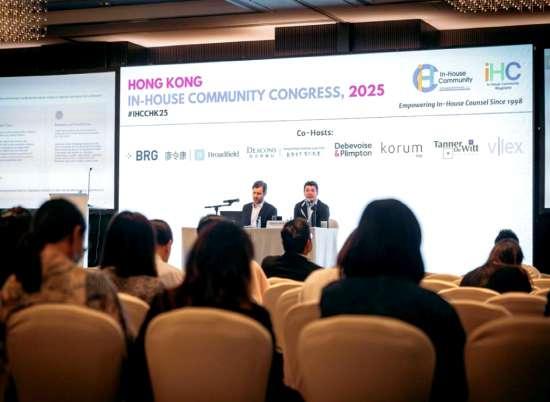
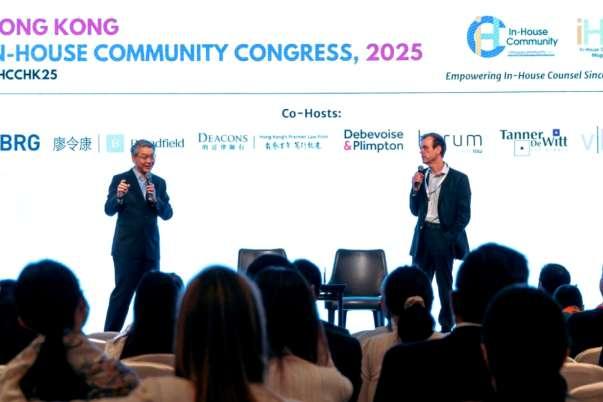
Hong Kong In-House Community Congress 2025
This year’s Congress stood out not only for the depth of its content but also for the resilience shown by the community. Although a typhoon required the event to be moved, the turnout and energy on the day reflected a group of professionals who remain committed, flexible and engaged. The conversations that unfolded reinforced why this annual gathering continues to be one of the region’s most meaningful forums for in-house counsel.
After opening remarks from Rahul Prakash, the programme began with a session on employment issues delivered by Tanner De Witt. Russell Bennett provided a focused and
practical overview of ten key areas that regularly affect HR and in-house teams. He covered topics ranging from employment protections and MPF off-setting to the implications of foreign-law governing agreements. Attendees appreciated the clear explanations of common pitfalls and emerging risks, which offered valuable guidance for those overseeing cross-border workforces.
This was followed by a session led by Gordon Davidson and Fergus Saurin of Broadfield Asia on restructurings and insolvencies. Their discussion explored commercial considerations, stakeholder priorities and lessons from recent market developments. They also highlighted the distinction between
The Hong Kong In-House Community Congress 2025 brought the community together despite a rescheduled date, creating a day defined by resilience, collaboration and high-quality discussion.
consensual and non-consensual approaches and noted that liquidation, often viewed as the last resort, can sometimes open the door to new strategies. Many participants found this candid and practical session particularly useful, given the increasing complexity of restructuring matters in the region.
The late morning continued with a panel by BRG on managing high-stakes disputes and investigations. Moderated by Isaac Wong, the panel brought together Vorapong Sutanont, Lydia Tang, Jay Gomez, Jeffrey Huang and Murphy Mok. They unpacked trends in Asia-Pacific disputes, evolving regulatory scrutiny and the practicalities of investigation strategy. Attendees noted how valuable it was to hear concrete advice on preparing
internal teams for investigative scenarios and managing the growing interplay between cross-border enforcement agencies.
After lunch, Debevoise & Plimpton delivered a detailed update on corruption, sanctions and corporate governance. Emily Lam, Gareth Hughes and Philip Rohlik outlined developments in both U.S. and Hong Kong enforcement, including FCPA trends, sanctions updates, SFC actions and HKEx governance expectations. The session provided a structured roadmap for anticipating the regulatory issues that may shape 2026.
The afternoon continued with a session on APAC legal leadership, moderated by Titus Rahiri of KorumLegal. Panelists Corinne Katz
of CLP, Effie Vasilopoulos of Broadfield Asia and Felix Wang of Synergy Consulting shared perspectives on how the GC role is shifting across the region. Their discussion touched on the growing expectation for GCs to act as strategic partners and commercial advisers, balancing value creation with risk calibration. Participants responded strongly to the emphasis on collaboration, adaptability and continuous learning.
In a complementary session, Brian W Tang and Paul Haswell explored AI adoption and its impact on in-house teams. Brian highlighted findings from ALITA and discussed how generative tools are reshaping workflows and decision-making across the region. Many attendees commented that the session offered both a
broad overview of emerging trends and a practical sense of what is needed to build responsible AI governance within organisations.
The day concluded with presentations from VLex and Deacons. Daniel Hobson and Paul Haswell discussed AI-powered research and how these tools can help in-house teams manage complexity more efficiently. Eliza Siew and Andy Yu closed the knowledge programme with an update on data privacy in Hong Kong and Mainland China, outlining developments that will influence compliance expectations in the year ahead.
What stood out throughout the Hong Kong Congress was the strong sense of shared purpose. Sponsors, speakers and attendees repeatedly noted how the event reaffirmed the cohesion and forward-looking mindset of the in-house community. Despite the rescheduling challenges, the energy remained high and the programme was consistently well received. The day served as a clear reminder that the community is not only keeping pace with change but actively shaping how legal leadership evolves across Asia.
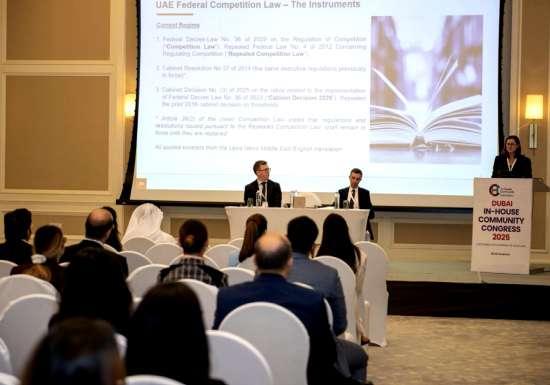
Dubai In-House Community Congress 2025
The Congress brought together a diverse group of legal and compliance professionals who are helping shape the next phase of corporate legal practice in the Middle East. Throughout the day, the programme highlighted the region’s fast-moving regulatory environment and the strong appetite among in-house counsel for practical insights they can apply directly to their work.
After opening remarks from Rahul Prakash, managing director of In-House Community, the day began with a panel discussion on AI governance. Moderated by James Dunne of Hadef & Partners, the session featured
Anastasia Shkarina of Aluma Solutions and Mehrdad Molaei of SLB. The conversation centred on what in-house lawyers are learning as they experiment with AI tools in real time, particularly in an environment where no formal rulebook exists yet. The discussion touched on internal governance, data sensitivity and the expectations being placed on in-house teams to help set organisation-wide guidelines for responsible AI use.
A focus on practical readiness continued into the next session, where Taher Abdeen Ibrahim and Mohammed Abbas Al-Obaidi of Hadef & Partners outlined ten essential considerations for dispute resolution in the UAE. Attendees
T he Dubai In-House Community Congress 2025 offered a full day of discussion and learning that reflected the pace of change across the UAE and the growing strategic role of in-house teams.
noted the clarity with which the speakers compared the DIFC and ADGM systems to the federal courts and explained how provisions such as Article 222 influence strategic decisions. Their guidance on fees, immediate procedures and issues around personal liability resonated strongly with counsel managing active disputes.
The Congress then shifted to virtual assets, with Hasanali Pirbhai from Norton Rose Fulbright offering an overview of the UAE’s regulatory landscape and emerging real-world use cases. Many participants commented on how quickly this area has developed and how frequently business teams now seek
legal guidance on asset issuance, licensing and compliance.
The afternoon sessions continued the same momentum. Ahmed Yehia Hamdalla of SAT & Co delivered a clear and structured explanation of insurance dispute resolution, outlining how complaints and appeals progress, the impact of key policy clauses and the importance of maintaining strong documentation. His examples drawn from recent practice helped in-house counsel connect the concepts to day-to-day challenges.
Later, Hadef & Partners returned with a walk-through of the lifecycle of M&A
transactions. Patrick Tweedale, Paul Wynne and Diana Froyland covered deal structuring, regulatory checkpoints and the UAE’s merger control regime. Their practical insights on when approval is required and how to navigate the submission process gave attendees a helpful roadmap for both cross-border and domestic deals.
The final session of the day featured Clyde & Co, with an engaging presentation by Sara Khoja on managing a MEA workforce in a regional and global context. She highlighted recent labour law changes in Saudi Arabia, the UAE, Qatar and Egypt, and provided a wider perspective on global workforce
trends. Her practical advice on compliance, mobility and HR transformation gave attendees useful takeaways to apply within their own organisations.
Throughout the event, many participants observed how valuable it was to hear not only legal updates but also lived experience from peers and experts. Several attendees noted that the Congress serves as a reminder of the strength of professional connection and how much can be gained through shared conversation. For newer members of the community, the day reinforced the importance of staying engaged with regional developments and with each other.
The day concluded with closing remarks from Rahul Prakash, who highlighted the sense of progress running through the event. The Dubai Congress showed how quickly the region is evolving and how in-house counsel continue to step into broader leadership roles within their organisations. The conversations are set to continue, building on a day filled with insight, exchange and community.
Navigating Malaysia’s Mandatory Personal Data Breach Notification Obligations under the PDPA
Ever since the Personal Data Protection (Amendment) Act 2024 came into full implementation on 1 June 2025, organizations operating in Malaysia have entered a new era of compliance under the Personal Data Protection Act 2010 (“PDPA”). Beyond the new mandatory appointment of a Data Protection Officer (“DPO”), arguably one of the most significant and far-reaching developments is the introduction of mandatory personal data breach notification obligations, as it is without doubt a change that will have a profound impact on how organizations manage and respond to personal data breaches.
In relation to personal data breaches, there is a common saying in the industry: “it is not a matter
of if, but when.” This statement holds true, as there is nothing embarrassing about experiencing a personal data breach, but what truly matters is how an organization manages and responds to it in compliance with the PDPA.
Importantly, the law is clear that a data controller who fails to comply with the personal data breach notification obligation commits an offence and shall, on conviction, be liable to a fine not exceeding two hundred and fifty thousand ringgit or imprisonment for a term not exceeding two years, or to both. This is not a matter that any organization can afford to overlook or take lightly, given the potential legal, financial, and reputational consequences that may follow.
ONG JOHNSON, LO KHAI YI
Given the importance of these new notification obligations, the relevant provision under Section 12B of the PDPA is reproduced below for ease of reference:
“(1) Where a data controller has reason to believe that a personal data breach has occurred, the data controller shall, as soon as practicable, notify the Commissioner in the manner and form as determined by the Commissioner.
(2) Where the personal data breach under subsection (1) causes or is likely to cause any significant harm to the data subject, the data controller shall notify the personal data breach to the data subject in the manner and form as determined by the Commissioner without unnecessary delay.
(3) A data controller who contravenes subsection (1) commits an offence and shall, on conviction, be liable to a fine not exceeding two hundred and fifty thousand ringgit or imprisonment for a term not exceeding two years or to both.”
Therefore, in this article, we aim to provide a clear, step-by-step legal and practical framework to assist companies, general counsels, in-house teams, and DPOs in understanding how to effectively discharge their personal data breach notification obligations under the PDPA. While we certainly hope that such incidents never occur, should they happen, we trust that this article will serve as a practical and reliable guide to navigate the process with confidence and compliance.
We have structured this article into 3 key sections:
(i) Understanding what constitutes a personal data breach;
(ii) Identifying the circumstances in which the mandatory personal data breach notification obligation to the Commissioner is triggered; and
(iii) Identifying the circumstances in which the mandatory personal data breach notification obligation to affected data subjects is triggered.
PART (I): UNDERSTANDING WHAT CONSTITUTES A PERSONAL DATA BREACH
In the event of a suspected personal data breach, the most crucial first step for any organization is to determine whether the alleged incident genuinely qualifies and constitutes a “personal data breach” under the PDPA. Only if the incident falls within this definition will the subsequent notification obligations be triggered. Therefore, understanding what amounts to a “personal data breach” forms the very foundation and essential starting point of the entire process.
The term “personal data breach” is expressly defined under the PDPA. For ease of reference, the legal definition is set out below:
“Personal data breach” means any breach of personal data, loss of personal data, misuse of personal data or unauthorised access of personal data.
In accordance with the definition of “personal data breach” under the PDPA, a “personal data breach” broadly encompasses four key circumstances involving personal data:
(i) Any breach of personal data,
(ii) Any loss of personal data,
(iii) Any misuse of personal data, or
(iv) Any unauthorised access of personal data.
In essence, as long as an incident concerning personal data falls within any one of these four circumstances, whether it involves a breach, loss, misuse, or unauthorised access, it will be
regarded as a “personal data breach” within the meaning of the PDPA.
A critical point to emphasise is that the law is agnostic as to the source, intent, or manner in which the breach arises. The PDPA makes no distinction between internal or external causes, accidental or deliberate acts, or whether the incident originates from employees, contractors, service providers, or external threat actors. What matters is the fact that the personal data has been compromised in one of the four ways prescribed by law.
This understanding that the law is neutral as to the source, intent, or nature of the incident is extremely important, as a common misconception is that a personal data breach is confined only to external cybersecurity threats such as ransomware attacks, phishing campaigns, distributed denial-of-service (DDoS) incidents, or SQL injection exploits. In reality, many personal data breaches stem from internal or operational lapses, such as human error, system misconfigurations, misplaced devices, or inadvertent disclosure of personal data to unintended recipients. Recognizing this breadth of coverage is key for organizations to establish effective internal reporting, escalation, and response mechanisms from the outset in the event of a personal data breach.
PART (II): IDENTIFYING WHEN THE MANDATORY NOTIFICATION OBLIGATION TO THE COMMISSIONER IS TRIGGERED
Once it has been properly determined that an incident constitutes a personal data breach, the next critical step is to assess whether it triggers a mandatory notification obligation to the Commissioner.
It is important to emphasise that not every personal data breach requires notification, as the statutory obligation to notify the Commissioner
is only triggered where the personal data breach causes, or is likely to cause, “significant harm”.
Assessing whether a personal data breach causes, or is likely to cause, “significant harm” is a legal determination that requires careful consideration of both qualitative and quantitative factors. In practice, there are 5 key criteria to be evaluated, and the personal data breach is regarded as causing, or being likely to cause, “significant harm” if any one of the following criteria is satisfied.
A personal data breach is considered to cause, or be likely to cause, “significant harm” if there is a risk that the compromised personal data:
(i) May result in physical harm, financial loss, a negative effect on credit records, or damage to or loss of property;
(ii) May be misused for illegal purposes;
(iii) Consists of sensitive personal data;
(iv) Consists of personal data and other personal information which, when combined, could potentially enable identity fraud; or
(v) Is of significant scale. A personal data breach is considered to be of “significant scale” if the number of affected data subjects exceeds one thousand (1,000).
In assessing whether a personal data breach causes, or is likely to cause, “significant harm”, it is important to appreciate that this is ultimately a legal assessment, as the outcome of this assessment will determine whether the mandatory personal data breach notification obligation to the Commissioner is triggered.
Therefore, especially in situations where the internal findings are unclear or ambiguous as to whether the threshold of “significant harm”
has been met, it is prudent to err on the side of caution and seek professional legal assistance because a misjudgement may potentially expose the organisation to unnecessary regulatory scrutiny and potential enforcement action, carrying legal and reputational risks that may far outweigh any perceived short-term benefit of self-assessment.
If the assessment concludes that a personal data breach meets the criteria of “significant harm,” the mandatory obligation to notify the Commissioner is immediately triggered, and in such circumstances, the organisation is under a strict legal duty to notify the Commissioner as soon as practicable, and in any event no later than 72 hours from the occurrence of the personal data breach.
It is crucial to emphasise that this 72-hour period runs from the occurrence of the personal data breach itself, and not from the point at which the organisation later reaches the conclusion that the personal data breach causes, or is likely to cause, significant harm. This distinction, though subtle, carries profound compliance implications and underscores the need for swift internal escalation, prompt incident assessment, and timely notification once a personal data breach is suspected.
PART (III): IDENTIFYING WHEN THE MANDATORY NOTIFICATION OBLIGATION TO AFFECTED DATA SUBJECTS IS TRIGGERED
It is important to appreciate and understand that the company’s mandatory personal data breach notification obligation does not end with notifying the Commissioner, as the next step is for the company to carefully assess and evaluate whether the statutory obligation to notify the affected data subjects is triggered. If such a personal data breach notification obligation to the affected data subjects is triggered, the company must also
notify the affected data subjects in accordance with the prescribed timelines and methods.
Similarly, the assessment of whether the mandatory personal data breach notification obligation to affected data subjects is triggered follows the “significant harm” test, where the company must consider whether the personal data breach causes, or is likely to cause, “significant harm” to the affected data subjects. Where this threshold is triggered, the company is required under the PDPA to notify the affected data subjects accordingly.
The legal assessment of “significant harm” requires the company to examine whether any of the following four criteria are satisfied. A personal data breach will be considered to cause, or be likely to cause, “significant harm” to affected data subjects if there is a risk that the compromised personal data:
(i) May result in physical harm, financial loss, a negative effect on credit records, or damage to or loss of property;
(ii) May be misused for illegal purposes;
(iii) Consists of sensitive personal data; or
(iv) Consists of personal data and other information which, when combined, could potentially enable identity fraud.
It is worth noting that the four criteria listed above for assessing whether a personal data breach causes, or is likely to cause, “significant harm” to affected data subjects are substantially similar to the criteria applied when determining whether a breach triggers the notification obligation to the Commissioner.
However, the key focus of the analysis differs. The legal assessment for notifying the Commissioner considers whether the personal
data breach, taken as a whole, meets the threshold of “significant harm”. By contrast, the assessment for notifying affected data subjects specifically examines whether the breach is likely to cause “significant harm” to those individuals directly impacted.
Therefore, in the event of a personal data breach, the company should not simply rely on the outcome of the “significant harm” assessment for the Commissioner. Regardless of the outcomes, the company must also independently conduct a separate and focused legal assessment to determine whether the “significant harm” threshold for notifying affected data subjects has also been triggered to ensure that the company discharges its statutory notification obligations with clarity and precision.
If the company confirms that the significant harm criteria for notifying affected data subjects is triggered, it must then notify the affected data subjects without undue delay, and in any event no later than seven (7) days after the initial notification is made to the Commissioner, as referenced above.
For ease of reference, we set out below an illustrative timeline to demonstrate the statutory notification requirements, assuming both obligations are triggered, following an example where a personal data breach occurs on 1 January 2026 (with the precise time of occurrence disregarded for simplicity):
ILLUSTRATIVE TIMELINE – PERSONAL DATA BREACH NOTIFICATION TO COMMISSIONER AND AFFECTED
DATA SUBJECTS
Scenario Assumption:
(i) Personal data breach occurs on 1 January 2026 (precise time disregarded for simplicity).
(ii) Both “significant harm” tests for the Commissioner and for affected data subjects are triggered.
STEP 1 – INITIAL NOTIFICATION TO COMMISSIONER
(i) Requirement: Submit the Notification Form to the Commissioner, together with any available supplementary personal data breach information.
(ii) Deadline: Within 72 hours of the occurrence of the personal data breach.
(iii) Date (Illustration): 4 January 2026.
STEP 2 – NOTIFICATION TO AFFECTED DATA SUBJECTS
(i) Requirement: Notify affected data subjects without undue delay, and in any event within 7 days after the initial notification is made to the Commissioner.
(ii) Deadline: Seven days from the initial notification date.
(iii) Date (Illustration): 11 January 2026, calculated from the initial notification on 4 January 2026.
CONCLUSION
In conclusion, personal data breaches are undeniably on the rise, not only in Malaysia but globally. What makes this development particularly significant is that personal data breach notification is now a mandatory obligation under the PDPA, and failure to comply can attract both substantial financial penalties and imprisonment, as an infringement of the PDPA constitutes a quasi-criminal offence in Malaysia.
Given the seriousness of these notification obligations, it is imperative for organizations to treat personal data breach preparedness as a core aspect of their compliance framework. As a
starting point, companies should at least implement a clear internal personal data breach protocol that outlines reporting lines, escalation procedures, and responsibilities across the organization. Additionally, conducting regular personal data breach simulations and training ensures that all employees, from executives to operational teams, are fully aware of their roles
and can respond swiftly and effectively should an incident occur.
By taking these proactive steps, organizations not only safeguard themselves against regulatory exposure but also foster a culture of strong personal data awareness, accountability, and resilience across all levels of the organization.
Ong Johnson, Halim Hong & Quek
Ong Johnson leads the Technology Practice Group at Halim Hong & Quek, focusing on TMT law with recognised strength in FinTech and Personal Data Protection.
In FinTech, he is widely regarded as one of Malaysia’s leading lawyers who truly understand financial technology. With deep expertise in blockchain and tokenisation, Ong Johnson is frequently sought for complex regulatory matters and engagements with Bank Negara Malaysia, the Securities Commission Malaysia, and the Labuan FSA. He has been instrumental in projects involving Malaysia’s stablecoin, asset tokenisation, DeFi P2P, tokenised money, e-money, payment systems, money broking and digital asset custodianship.
In Personal Data Protection, Ong Johnson’s practice covers advisory, compliance, and enforcement response for multinational clients across sectors. Recognised as a leading authority personal data protection and in managing and responding to large-scale data breaches involving multiple jurisdictions, he is among the top thought leaders in Malaysia’s data privacy space and a key voice in shaping national policy and regulatory transformation. His contributions include drafting the Data Protection Officer Competency Guideline, the Management of Data Protection Officer Training Service Providers Guideline, and the Data Protection Officer Professional Development Pathway & Training Roadmap. In recognition, he received a Certificate of Appreciation from the Commissioner for laying the foundation of Malaysia’s DPO ecosystem and advancing the national data protection landscape.
Lo Khai Yi, Halim Hong & Quek
Lo Khai Yi is a technology and data lawyer specialises in the core field of Technology, Media and Telecommunications (TMT). His practice spans technology outsourcing, telecommunications, data privacy, blockchain, fintech, and intellectual property.
Khai Yi has led major mandates such as Tesla’s market entry into Malaysia, represented a Broadcom regional channel partner, on several of its regional software negotiations, represented a Singapore MNO in its first Malaysian acquisition, and assisted a Singapore network infrastructure company with its cross-causeway submarine cables laying project. He has also counselled licensed crypto exchanges and blockchain innovators on tokenisation and sandbox licensing.
A recognised thought leader, Khai Yi frequently speaks at leading industry platforms including the Legal Tech Summit, Legal 500 GC Summit, and the National Technology Innovation Sandbox, and regularly trains corporate leaders on data protection, fintech, and emerging technology law.
As Co-Head of the Technology Practice Group at Halim Hong & Quek, Khai Yi jointly leads a team that serves as outsourced Data Protection Officer to over 30 organisations — including global F&B groups, digital exchanges, hospitals, and education institutions. Together with Johnson, Khai Yi was also invited to take part in several working groups established by the Personal Data Protection Commissioner tasked to shape the national data protection policy through the drafting of guidelines and policy documents to support the growth of data protection landscape in Malaysia.
Aligning Business Practices with Vietnam’s New Personal Data Protection Laws
On June 26, 2025, Vietnam enacted the LPDP1, a milestone that upgrades and consolidates the country’s privacy regime. It builds on Decree 132, which has guided personal data protection since July 1, 2023. The LPDP creates a single, strong framework to protect privacy. And Vietnam has not stopped there. In September 2025, the Ministry of Public Security released a draft decree to implement the LPDP (“Draft Decree”). It provides guidance for key LPDP provisions. Enterprises and individuals that process personal data in Vietnam should stay alert to the country’s privacy regime. Rules are being created and implemented quickly, and enforcement is catching up.
WHAT ARE THE KEY OBLIGATIONS AND COMPLIANCE CHALLENGES UNDER THE LPDP?
The LPDP becomes effective on January 1, 2026 and will co-exist with Decree 13. It consolidates most of the existing rules under Decree 13, adds further requirements and provides guidance on implementation. If a company is already compliant with Decree 13, significant changes to core data governance is not required. However, changes in certain fields such as marketing and AI may be necessary.
One of the key obligations that carries on from Decree 13 is the obligation to prepare, submit and maintain a data processing impact
assessment (“DPIA”) and an offshore data transfer impact assessment (“DTIA”). These impact assessments, once submitted to the authorities, must be updated every 6 months if there is any change or immediately upon the occurrence of (i) a corporate restructuring or cessation of business, (ii) a change of the personal data protection service provider, or (iii) expansion or amendment of the business scope, that concerns the processing of personal data.
The LPDP waives the requirement for a DTIA, in cases where the data subject personally transmits his or her own data overseas (for example, a data subject uses services provided by an offshore entity).
On the other hand, unlike Decree 13 which is silent on the specific requirements for a data protection officer (“DPO”), the LPDP introduces a general DPO framework but defers the specifics to the Draft Decree, which will become a secondary instrument when adopted. Earlier LPDP drafts proposed demanding requirements and conditions for the DPO and the personal data service provider, but such restrictive language has been omitted from the final text. The current version of the Draft Decree fills the gap by establishing concrete qualifications for a DPO, which, among other requirements, includes having attended a course and passed a qualifying test administered by a licensed Vietnamese institute.
HOW ARE CROSS-BORDER DATA TRANSFERS REGULATED, AND WHAT PRACTICAL APPROACHES ARE COMPANIES TAKING?
The LPDP does not create a new, standalone regime for cross-border transfers. Instead, it builds on Decree 13 by strengthening existing obligations, such as preparing and maintaining a DTIA, by clarifying the definition
of “cross-border transfer” and by carving out several limited exemptions. As a result, organizations that already comply with Decree 13 for outbound transfers will not need to change their current approach in any material way. However, new obligations arise under the Law on Data3 and its implementing instruments and companies operating in Vietnam should be aware.
The Law on Data and its implementing instruments introduce separate duties that companies operating in Vietnam must track closely if their data will flow across Vietnam’s borders. Under this framework, data owners must perform risk assessments, conduct impact assessments for cross-border transfers and processing, and complete prescribed procedures, including obtaining prior approval where Core Data or Essential Data are involved. Decree 165/20254 and Prime Minister’s Decision 20/20255 further specify that, in certain circumstances, a dataset containing personal data may be classified as Core Data or Essential Data. In practice, maintaining a rigorous data inventory and granular data-flow maps is indispensable to align business operations with these layered legal requirements.
TO WHAT EXTENT DOES THE LPDP ALIGN WITH OR DIVERGE FROM GLOBAL STANDARDS SUCH AS THE EU’S GDPR?
At a high level, Vietnam’s LPDP tracks global standards, particularly the GDPR6, with extraterritorial reach, familiar principles (purpose limitation, data minimization, transparency), and the LPDP provides comparable rights for data subjects. However, the LPDP operates differently.
The LPDP is firmly consent-centric. As a rule, processing requires freely given, specific, informed, and unambiguous consent, with a
separate consent for sensitive data. Narrow exemptions exist (eg, legal obligations, emergency, life or health protection, contractual necessity, or limited “legitimate interests”), but they all function as exceptions and not as broad alternative legal bases. Notably, LPDP recognizes “legitimate interests” as a concept, though still in a restricted form.
Beyond personal data rules, companies must account for the Law on Data’s parallel controls. This dual-track system emphasizes classification of data and clearly demonstrates that national security and public interest are given priority. Regulators retain discretion to scrutinize and, in some cases, pre-approve cross-border data flows. By contrast, the GDPR relies on adequacy decisions, appropriate safeguards (notably Standard Contractual Clauses (SCCs), Binding Corporate Rules (BCRs), and limited derogations for specific situations.
In practical terms, a GDPR-compliant program can be a good baseline for companies in Vietnam. However, Vietnam’s approach will require an additional layer of work, including data classification, impact and risk assessments and filings or approvals. Companies operating in Vietnam should build these steps into their practices and monitor evolving guidance.
HOW ARE REGULATORS IN VIETNAM ENFORCING THE LAW — AND WHAT IS THE CURRENT ENFORCEMENT LANDSCAPE?
The LPDP confirms that the Ministry of Public Security, specifically the Department of Cybersecurity and HighTech Crime Prevention (“A05”), is the lead enforcer. A05 also leads enforcement of the Law on Data, reconfirming Vietnam’s policy posture: national security and public interest
can outweigh commercial convenience and commercial interests.
However, as with other regulations in Vietnam, the strict framework operates mainly as a deterrent. Companies are expected to maintain dossiers, filings, and records ready for inspection. In 2024, A05 launched the first LPDP compliance inspection program, requiring selected organizations to submit reports and respond to inquiries. Even without a finalized sanctions framework and with a limited target set, the program signaled the future: documentation-heavy inspections. The aim of the program was also to understand implementation challenges and to create a business-friendly regime while making clear that self-enforced compliance is the default.
Channels for public complaints are also expanding. The National Portal of Personal Data Protection enables anyone to report violations. This increases the likelihood that investigations will begin with complaints or tips, rather than from random audits. Although the LPDP strengthens enforcement by introducing stricter penalties (including revenue-linked fines for serious violations such as trading personal data), in practice most cases originate from complaints or targeted inspections. This approach reinforces the deterrent effect while a comprehensive sanctions framework is expected to follow soon after January 1, 2026.
CONCLUSION
Vietnam’s LPDP marks a decisive shift from fragmented guidance to a unified, consent-centric regime, one that mirrors global privacy principles while including Vietnam-specific controls and documentation expectations. For organizations already aligned with Decree 13 or the GDPR, the
path forward only requires recalibration and refinement.
In practice, a successful compliant program should include the following steps:
• build and maintain a data inventory and data-flow maps;
• operationalize DTIA/DPIA updates;
• prepare for DPO qualifications once finalized;
• tighten cross-border transfer practices, especially where Core or Essential Data may be implicated; and
• prepare incident and inquiry response with complete audit trails.
With complaint channels expanding and inspections heavily reliant on paperwork, strong documentation is both the first line of defense and the fastest route to establish compliance.
Viet is a Senior Associate who has close to a decade of experience practicing corporate and commercial law, with a focus on privacy and data cybersecurity; real estate and hospitality management. His work involving data privacy includes cybersecurity issues, data audits, due diligence, governance programs and compliance. Viet is also involved in Russin & Vecchi’s insurance practice.
Viet is a member of the Data Protection & Security Practice Group and the Tech Practice Group of Meritas, the international grouping of law firms.
Le Ton Viet, Senior Associate, Russin & Vecchi
An Analysis of Adopted Amendments to the DIFC Data Protection Law
The changes proposed to Article 6(3) (a) and (b) of the DIFC DPL with respect to the scope of the DIFC DPL were adopted. The changes to Article 6(3) (a) were not material, and controllers, processors and sub-processors which are incorporated in the DIFC remain firmly within the scope of, and thereby must comply with, the DIFC DPL.
The changes to the extra-territorial scope of the DIFC DPL, as contained in Article 6(b), and, in particular, the removal of the words ‘other than on an occasional basis’, are of note, notwithstanding the DIFC consultation describing the changes to the law as simply restating its original intent. Under Article
6(b), controllers, processors and sub-processors will be in the ambit of the DIFC DPL, regardless of where they are incorporated, if their processing takes place in the DIFC as part of a ‘stable arrangement’. Transfers of personal data made out of the DIFC as part of such processing will also be included, which means that where personal data is collected in the DIFC and subsequently transferred out of the DIFC for further processing, the relevant controller, processor or sub-processor carrying out such collection and subsequent transfer may fall into the remit of the DIFC DPL, in regard that personal data, even where its incorporation location is outside of the DIFC.
VICTORIA WOODS, DIANA FROYLAND AND JULIE BEETON
A stable arrangement, as expanded upon in DIFC issued guidance, includes any ‘legally binding or recognised agreement or relationship of an existing, valid sort’. The removal of the words, ‘other than on an occasional basis’, makes it clear that the longevity or frequency of an arrangement is irrelevant to what is deemed a stable arrangement, provided the arrangement is ‘stable’, so, one-time contracts that involve the processing of personal data within the DIFC, including transfers of such personal data outside the DIFC as part of that contractual arrangement, may still be sufficient to qualify as a stable arrangement for the purposes of the DIFC DPL.
By way of example, a contract formed between a vendor who is based outside of the DIFC and a purchaser based inside the DIFC that results in personal data being processed, for example, by way of collection in the DIFC, and including any transfer of such personal data made outside of the DIFC as part of such processing, may be a stable arrangement falling into the scope of the DIFC DPL. This means that the vendor must comply with the DIFC DPL in respect of the Personal Data it processes pursuant to that arrangement, even where the vendor is established outside of the DIFC.
As was noted in the guidance issued for the consultation on the proposed changes to the DIFC DPL in February, this is not considered a change to the law, but rather a restatement of its original intent. This follows decisions of the DIFC courts regarding the extraterritorial scope element of the DIFC DPL. The 2024 DIFC court decision regarding Careem and its use of drop-off and pick-up points located in the DIFC provides particularly helpful guidance. You can see the full judgment here.
As a notable limitation to the extra-territorial scope of the DIFC DPL, the suggested addition of an Article 6(c) to the law, which proposed
that the processing of the personal data of a data subject in the DIFC would be governed by the DIFC DPL, regardless of the place of incorporation of the controller or processor, if such processing involved:
a. offering goods or services to data subjects in the DIFC; or
b. monitoring the behaviour of a data subject in the DIFC, has not been adopted into the law.
This means that the DIFC has not gone as far as the EU General Data Protection Regulation (GDPR) with respect to the ‘targeting’ of data subjects. However, as our example above and the Careem case both illustrate, Article 6(b) is, nevertheless, sufficiently broad to bring a wide range of entities established outside the DIFC within the scope of the DIFC DPL, where their dealings or operations in the DIFC amount to a stable relationship.
PRIVATE RIGHT OF ACTION
As we noted in our prior article, relating to the consultation, data subjects whose personal data is processed in violation of the DIFC DPL, or whose rights have been breached, were limited to seeking recourse through the DIFC Commissioner in the original law, and, only after the DIFC Commissioner had declined to take enforcement action could a data subject appeal directly to the DIFC Court.
The amendments proposed, which grant data subjects the right to initiate personal actions in the DIFC court against a breaching controller, processor, or joint controller, without first having to await enforcement action by the Commissioner, have been adopted in full.
DATA SHARING
The DIFC DPL includes provisions in Article 28 regarding the steps a controller or processor must take before disclosing personal data to a public authority. Prior to the amendments to the law taking effect, these steps included, under Article 28(2), the transferring entity taking reasonable steps to satisfy itself that:
a. the request was valid and proportionate; and
b. the requesting authority would respect the rights of data subjects under the DIFC DPL.
The amendments, which were proposed to the law, added a further requirement for controllers and processors transferring personal data to public authorities to ensure that affected data subjects had the right to seek other legal forms of suitable redress in the requesting authority’s jurisdiction.
These proposed amendments, however, have not been adopted, and, Article 28(2)(b) (as mentioned above), has also now been removed from the DIFC DPL. One might suppose that this suggests something of a softening of the obligations on controllers and processors
receiving data sharing requests from public authorities, however, in our view, the removal of Article 28(2)(b) does not materially change the existing obligations found in Article 28 because, under Article 28(1)(c), the transferor, if practical, must obtain written assurances from the requesting authority that it will honour the rights of data subjects and comply with the data protection principles set out in Part 2 of the DIFC DPL (which includes data subject rights). Therefore, the transferor must, insofar as is feasible, take steps to seek to ensure that the requesting authority will respect the data subject’s rights under the DIFC DPL in any event.
While, notwithstanding the amendments made to Article 28, the obligations under Article 28 have not materially changed, the fine for breach of Article 28 has increased from USD 10,000 to USD 50,000, therefore, Article 28 remains critically important in the context of public authority data sharing requests.
FINES
All proposed fine changes and new fines have been adopted as were proposed in the consultation, and these, as they stand today, see table 1.
19 Failure to submit the DIFC’s DPO annual assessment *New* USD 25,000
20 Failure to carry out a data protection impact assessment prior to undertaking high risk processing activities
28 Failure to comply with Article 28’s public authority data sharing requirements
*Increase* from USD 20,000 USD 50,000
*increase* from USD 10,000 USD 50,000
Table 1
Article Contravention Fine
Victoria Woods, Partner, Head of Commercial, Hadef & Partners
Victoria is an English qualified solicitor holding a Bachelors degree in Law with more than twenty years’ experience as a practising solicitor gained from both the UK and the UAE markets.
Victoria heads the Commercial Practice at Hadef & Partners, frequently advising both local and international clients on cross-border transactions involving, IP and brand protection, commercial agency, data protection, consumer protection and competition law issues, across a wide range of business operational matters including the sale of goods and services, outsourcing, and consultancy arrangements, distribution, franchising, e-commerce, and hospitality management.
Victoria’s commercial advisory practice covers a range of corporate commercial topics, in a number of sectors including TMT, food and beverage, FinTech, leisure and hospitality, healthcare and life sciences, education, and consumer goods and retail. She provides strategic advice relating to the growth of her clients’ businesses, and their relationships with their customers and third parties, advising on transactional matters including joint venture, agency, franchising and licensing arrangements. She supports her clients with the preparation and negotiation of partnering and collaboration agreements, technology and software licensing, hosting and support contracts, distribution and manufacturing agreements, IP licensing, hospitality management documentation, data transfer agreements, and customer and supplier terms and conditions.
Victoria has been with Hadef & Partners in Dubai since 2012, prior to which she practised at London City firm Lewis Silkin LLP, predominantly advising clients on corporate transactional and commercial matters in the media and healthcare sectors.
Diana Froyland, Senior Counsel,
Hadef
& Partners
Diana is a Senior Counsel qualified in English law and a member of Hadef and Partners’ commercial team. She brings over seventeen years of post-qualification experience, twelve of which have been spent in the United Arab Emirates. During this time, she has developed significant expertise in advising both local and international clients on a diverse range of transactional and contractual matters across various business sectors.
Her commercial practice is dedicated to delivering practical legal advice on issues that arise throughout a business’s lifecycle. This includes guidance on business and consumer contracting, outsourcing, supply of goods and services, e-commerce, consumer protection, competition law, data privacy, distribution, franchising, and agency law.
Julie Beeton, Senior Counsel, Hadef & Partners
Julie is a Senior Counsel in the Commercial practice. She has more than 20 years legal practice experience, 14 years of which have been within the UAE market. She has expertise in corporate/ commercial law, data protection, education, hospitality, cross-border transactions, corporate governance and compliance. Outside of the UAE, she has practised in Canada and in the United Kingdom, and has worked in private practice as well as in-house where she held Senior Legal Counsel and General Counsel positions.
Prior to teaming with Hadef & Partners, Julie was the head of the legal team for the Registration Authority at the Abu Dhabi Global Market (ADGM) where she led the team responsible for drafting and developing all commercial legislation in the financial centre.
Do We All Need To Be Technology Savvy?
Join Paul Haswell is a partner at Howse Williams in Hong Kong, as he explores the transformative impact of technology on the legal profession in his new column for IHC Magazine. Paul offers insights into the challenges and opportunities for in-house and external counsel, providing thought-provoking perspectives on the future of law in the digital age.
Every year in Hong Kong I give a series of talks designed to ensure that the participant lawyers attending them can acquire enough CPD points to ensure that they reach the re quired minimum amount set by the Law Society so that they can continue to practice for another year. Over the last few years those talks have focused on data privacy, case law updates, effective drafting, or artificial intelligence (there have been a lot on artificial intelligence).
being a tax lawyer (who could probably say “I am better at maths than you”).
But this year was a bit different, as I was asked to give a presentation on what precisely a technology lawyer does. It almost led to an existential crisis as I began to wonder… “what exactly do I actually do?” The answer is complicated.
Being a technology lawyer is not like being a corporate lawyer (who might say “I do M&A work” or “I do IPOs”). Nor is it quite like being a disputes lawyer (who might say, “I send scary letters and sue people”). It’s certainly not like
Technology is all pervasive now. Which means technology law is as well. We all walk around carrying computers with us in the form of smartphones, which we use for hours each day despite never having read any of the many end user licence agreements we signed up to so that we could use them. Indeed, I daresay your phone most likely sits on a bedside table beside you whilst you sleep. But it wasn’t always like that.
When I attended university in the late 1990s the internet was in its relative infancy. Google didn’t exist yet, and neither did social media. Whilst I had a computer it was not connected to the internet; I had to go to the university’s computer lab in order to send e-mails, communicate via e-mail lists with people all over the world (which admittedly blew my mind back then) or surf the internet using Netscape Navigator. I was studying for a law degree, and my obsession with
technology meant I knew I wanted to be a technology lawyer… but I didn’t exactly know what a technology lawyer was. I knew it sounded cool though.
When I began my training contract at a law firm not everybody in the office had access to a computer, and if you wanted to search for cases and precedents you either trawled through books or used the one Lexis terminal which was in the firm’s library (and you paid per search). Fast forward to my second seat as a trainee solicitor and I was part of a TMT (“Technology, Media and Telecoms”) practice. TMT seemed incredibly cool to me as I worked on licensing of software, disputes involving botched IT systems, and IT contracts. It was even cooler when the “M” in “TMT” meant that I got to meet the occasional celebrity such as Jamie Oliver and Tom Jones too.
was everywhere, and was dominating every industry, every home, and every aspect of our lives.
Life suddenly became very busy indeed as demand for technology expertise within the law increased. An area which had previously been considered niche was now pervasive.
Unfortunately when it became time for me to qualify as a solicitor the dotcom crash was taking place and seemingly everyone I worked with thought technology law was no longer relevant. Nevertheless, I continued to work on matters making claims where IT systems had not delivered what they had promised, and I continued to assist clients with licensing of software, data, and any other technology. I also got very excited about new technology developments, be it the advances in computer generated graphics or the fact that you could now have video calls over the internet using Skype (so long as your internet connection was good enough).
But then Google went public, and YouTube launched, and social media began to take off. The European Union decided it really had to do something to protect people’s data and people were buying NFTs and trading cryptocurrency. Suddenly technology
We have now reached a point in time where we are all going to learn to be tech lawyers.
Many of the richest and most prominent companies and individuals in the world have a background in, or are heavily invested in, technology. Members of the public became as likely to be targeted for a cyberattack as a large institution, and the impact, the law surrounding it, and possible regulation of technology now has a profound influence on every element of our working and personal lives. The battle for dominance in technology has become synonymous with the battle for dominance in the economic and geopolitical space, and almost every issue we face as lawyers, as parents, as children and as a species is now inexorably linked to technology and technology platforms.
Suddenly in the space of just a decade or so the skills and expertise that belong to a technology lawyer are suddenly skills that are needed by everybody. Whether it’s knowing applicable data laws and their provisions, knowing the risks and pitfalls associated with the use of AI, or just making sure you don’t inadvertently send all your company’s money to cyberfraudsters, at least a working
knowledge of technology law and the risks associated with technology is key.
The battle for dominance in technology has become synonymous with the battle for dominance in the economic and geopolitical space….
Similarly, a good knowledge of technology and the laws applicable to it is important to protect your personal rights and privacy in the face of rapid advances in the tech world. It is also key to protect your family and friends from just some of the problems that AI alone has led to, such as the enablement of AI deepfakes, identity fraud, and the spread of misinformation.
Here in Hong Kong, technology law is still a relatively niche area. But that shouldn’t be the case. Every private practice lawyer, every in-house lawyer, and arguably every individual
needs to have at least some understanding of how technology can be used or misused, how it impacts our day to day lives, and what our rights are in the face of an increasing rise in the power of technology companies.
Regardless of our area of work, of our background, or of our clients, we have now reached a point in time where we are all going to learn to be tech lawyers.
Paul Haswell
Paul Haswell is a partner at Howse Williams in Hong Kong, specialising in Technology Transactions and Sourcing. With over 20 years of experience, he focuses on TMT matters, including data and cybersecurity, telecommunications, and emerging technologies like AI and blockchain. A tech enthusiast since childhood, Paul has handled major technology disputes and offers a blend of legal expertise and passion for innovation.
Outside of his legal work, Paul is a tech and law podcaster and a DJ. He co-hosts the “Sunday Escape” radio show on RTHK and the podcast “Crimes Against Pop.” A music lover with an extensive vinyl collection, Paul enjoys discovering and sharing new music. He’s also a sci-fi fan, particularly of “Doctor Who.”
Getting to know… Paul T. Salanga, Maharlika Investment Corporation
A corporate dealmaker turned nation-builder, Paul Salanga reflects on the shift from private practice to public service.
You made a significant shift from private practice into the role of General Counsel for the Philippines’ first sovereign wealth fund. What motivated that transition, and what were the biggest adjustments you faced early on?
After more than 26 years with Picazo Buyco Tan Fider & Santos, one of Manila’s largest law firms, the move from private practice to the public sector was both a major change and a natural evolution. I was looking for a new challenge, and MIC offered an opportunity unlike any other. The work would still centre on corporate, M&A, financing and capital markets, but now viewed through the lens of a government-owned and -controlled corporation (GOCC).
I was also inspired by our President and CEO, Joel Consing, a long-time client whose own move from a blue-chip multinational to government service embodied a real commitment to nation-building. Joining him at MIC was both an honour and an extraordinary opportunity.
One of the biggest adjustments was joining a government startup where many systems had to be built from scratch. MIC is sui generis—a one-of-a-kind GOCC—so even our government partners sometimes had to determine which rules applied. Navigating this landscape required adaptability, patience and creativity. Despite the challenges, the opportunity to contribute to national development has made the transition deeply meaningful.
How did your experience in private practice help—or fall short— when dealing with the different expectations, scrutiny and accountability of the public sector?
Private practice equipped me well for MIC’s transactional and advisory work. Years of handling complex deals provided the discipline and confidence needed for MIC’s investment activities. However, private practice did not fully prepare me for the multi-layered oversight environment of a GOCC. Decisionmaking is naturally more nimble outside government; there are fewer layers of review and less exposure to institutions such as congressional oversight committees, the Commission on Audit and the Office of the Government Corporate Counsel.
for the heightened scrutiny under which a sovereign wealth fund must operate.
What mindset shifts were essential when moving from advising clients externally to shaping legal strategy internally for a national investment institution?
The most profound mindset shift was embracing our role as stewards of public funds. Unlike private practice, where commercial objectives drive decisions, our work at MIC carries responsibility to the Filipino people. This is felt even more strongly today amidst public frustration over corruption and controversies dominating national discourse.
In evaluating transactions, I constantly ask: How will this benefit ordinary Filipinos? How will this matter in the long run? This lens keeps us aligned with MIC’s mission. It reinforces the need for integrity, transparency and discipline. Our recommendations must withstand legal, commercial, ethical and social scrutiny, because we are building an institution intended to command public trust.
We are stewards of public funds. Every decision must withstand not just legal and commercial scrutiny, but ethical and social scrutiny as well.
Maharlika was essentially a government startup. What were your first priorities when building the inhouse legal team, and how did you decide which capabilities needed to be established immediately?
Understanding why government processes exist—and how they safeguard public interest—required patience, perspective and adjustment. It brought a deeper appreciation
From day one, MIC needed a legal team capable of operating at full speed. The priority was to recruit lawyers with deep experience in capital markets, M&A and financing—professionals who could immediately grasp complex structures and engage with counterparties at a high level.
This approach allowed us to provide sophisticated support to the investments group while establishing MIC’s governance foundations. The team we built is technically strong, mission-aligned, hardworking and committed to excellence in government service.
When recruiting your initial team, what qualities or skill sets did you consider non-negotiable for a sovereign wealth fund environment? And what does your team structure look like today?
Extensive transactional experience was non-negotiable. We needed lawyers who could operate confidently in M&A, financing and capital markets work, and who could manage negotiations and documentation with minimal ramp-up time. Integrity, sound judgment and the ability to operate under public scrutiny were equally essential.
Today, the Legal Services Group consists of seven lawyers, including myself and our corporate secretarial counsel, soon to be eight with a new associate joining. We are supported by two Legal Assistants. This structure allows us to provide timely, expert support to MIC’s growing portfolio of deals.
What practices did you put in place early on to set the tone for culture, governance standards and effective decision-making within a newly formed public-sector investment fund?
I set a deliberate tone of excellence in government service. My aspiration is for MIC’s legal team to become the gold standard among GOCCs—anchored on professionalism, expertise, collaboration and the highest governance standards.
To achieve this, I implemented a comprehensive project-tracking system to ensure visibility over workloads and prevent bottlenecks. We also hold bi-monthly team meetings to review matters, share insights and problem-solve collectively. These practices foster accountability, cross-learning and discipline, shaping a culture that will serve MIC well long-term.
Salanga with his team.
GETTING TO KNOW
CONTINUED
You have said the legal team plays a critical role in ensuring Maharlika’s success. How do you ensure it is viewed as a strategic partner rather than a gatekeeper?
Our approach is built on partnership. The legal team works closely with the investments group with a solution-oriented mindset. We engage early in deal discussions, help identify viable pathways and frame issues in terms of what can be done responsibly within the law and MIC’s governance framework.
governance and compliance safeguards remain firmly in place.
We also collaborate closely with the Corporate Services Group on foundational work for a startup GOCC, including HR and labour policies, internal manuals and organisational design. This integrated approach ensures MIC grows with both agility and accountability.
Looking back on your journey, what advice would you give to lawyers considering a move from private practice into a senior in-house role, particularly within the public sector or a sovereign fund?
Legal is not a hurdle—it’s an enabler. Our role is to help execute transactions responsibly, efficiently and with public trust at the centre.
By contributing constructively and understanding the operational realities of our colleagues, we demonstrate that legal is not a hurdle but an enabler of sound, compliant and timely execution. Over time, this builds trust and positions legal as a strategic contributor to MIC’s mission.
How does the legal team work with the investment and operations groups to balance innovation, transparency, compliance and longterm national objectives?
In MIC’s context, the balance is less about innovation versus transparency and more about execution versus compliance—an equilibrium especially critical in government service. Many colleagues from the investments team come from the private sector, where speed is paramount. Our role is to ensure that as we pursue transactions with urgency,
My advice is: do it. The work is demanding and the oversight more layered, but the sense of purpose is incomparable. Technical skills matter, but success depends on adaptability, resilience and a genuine commitment to public service.
You must be prepared to operate with transparency, navigate complex governance structures and make decisions with real societal implications. But the experience is deeply meaningful and fulfilling. Few roles allow you to contribute so directly to national development and institutional nation-building.
Approach the role with integrity, openness and a clear sense of mission, and you will find the journey profoundly rewarding.
Paul T. Salanga is the Chief Legal Officer and General Counsel of the Maharlika Investment Corporation. Before joining MIC, he spent over 26 years as a Partner at Picazo Buyco Tan Fider & Santos. He holds a Juris Doctor and an A.B. in Philosophy from Ateneo de Manila University.
IHC Directory
Your ‘at a glance’ guide to some of the region’s top service providers.
Practice Area key
Alt’ Investment Funds (inc. PE)
Antitrust / Competition
/ Regulatory
& M&A
— Law Firms — ASIA
CHINA
Broad & Bright
Tel: (86) 10 8513 1818
Email: broadbright@broadbright.com
Contact: Mr Jun Ji (Jun_ji@broadbright.com)
Website: www.broadbright.com
COM • CMA • ENR • LDR • TMT
East & Concord Partners
Tel: (86) 10 6590 6639
Email: Beijing@east-concord.com
Contact: Mr. Dajin Li Website: www.east-concord.com
BF • CM • CMA • IP • LDR
Llinks Law Offices
Tel: (86) 21 31358666
Email: master@llinkslaw.com
Website: www.llinkslaw.com
BF • CM • CMA • INV • LDR
W. K. To & Co.
Tel: (86) 10 8587 5076
Email: wktoco@wktoco.com
Contact: Cindy Chen
Website: www.wktoco.com
CMA • E • LDR • RE • REG
HONG KONG
Conyers Dill & Pearman
Tel: (852) 2524 7106
Email: hongkong@conyers.com
Contact: Christopher W.H. Bickley, Partner, Head of Hong Kong Office
Website: www.conyers.com
BF • CM • CMA • INV • LDR
Elvinger Hoss Prussen
Tel: (852) 2287 1900
Email: xavierlesourne_hk@elvingerhoss.lu
Contacts: Mr Xavier Le Sourne, Partner, Ms Charlotte Chen, Counsel Website: www.elvingerhoss.lu
* Elvinger Hoss Prussen’s Hong Kong office provides inbound and outbound legal services only under Luxembourg law
Learn to Dive and Fun Dive with the Winner of the PADI Outstanding Dive Centre/Resort Business Award!
Tel: (852) 9047 9603, (852) 2792 4495
Email: info@splashhk.com
Website: www.splashhk.com
— Charitable — Organisations
Impact India Foundation
An international initiative against avoidable disablement. Promoted by the UNDP, UNICEF and the World Health Organization in association with the Government of India.