Upcoming Events, Page 2 | President’s Message, Page 4
Public Defenders Office & Veterans
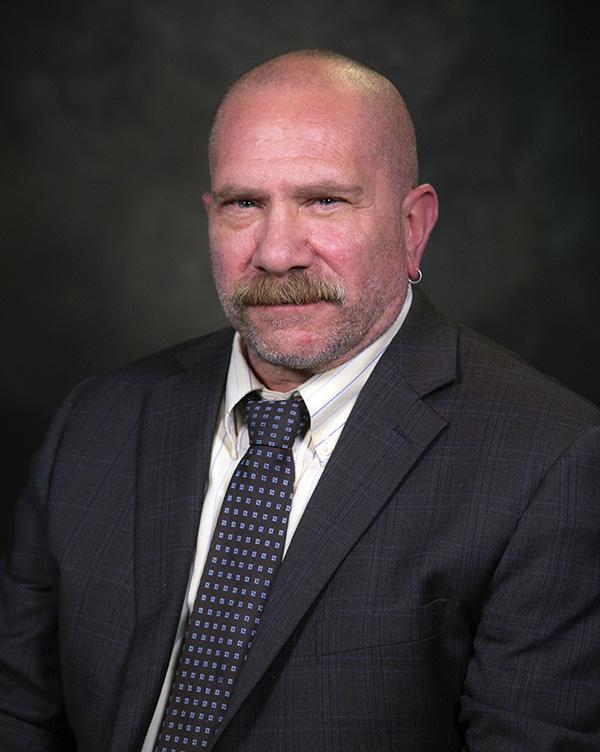
In Memoriam of Keith Watson
October 20, 1964 – December 23, 2025


ICBA Logo and Letterhead Policy

Upcoming Events, Page 2 | President’s Message, Page 4
Public Defenders Office & Veterans
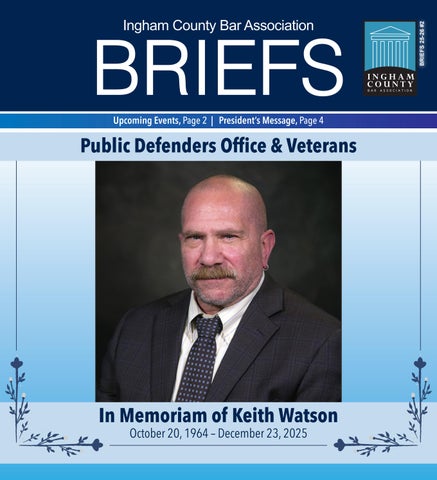
In Memoriam of Keith Watson
October 20, 1964 – December 23, 2025
Founded in 1895, the Ingham County Bar Association continues its longstanding tradition of service to the legal profession and the greater Lansing community, bringing lawyers together to join in a strong organization that works to achieve objectives that transcend the individual.
INGHAM COUNTY
BAR ASSOCIATION
P.O. Box 66
Grand Ledge, MI 48837 www.inghambar.org
BOARD OF DIRECTORS
President
Alexander Rusek
Foster Swift Collins & Smith PC
President Elect
Jessica Zimbelman State Appellate Defender Office
Vice President
Mary Bowen Michigan Attorney Grievance Commission
Treasurer Nolan Erickson Grewal Law PLLCn
Secretary Catherine Tucker Sinas, Dramis, Larkin, Graves & Waldman, P.C.
Immediate Past President
Lindsay Dangl Murphy & Spagnuolo PC
Jordan Ahlers-Smith Speaker Law
Tiffany DeBruin DeBruin Law PLLC
Logan Byrne Byrne Law, PLLC
Theodore Seitz
Dykema Gossett PLLC
Chris Wickman Nichols Law Firm
Kristina Bilowus
MSU College of Law
John Dewane Ingham County Prosecutor
Alternative Dispute Resolution (ADR)
Jenna Ribbons
Signature Solutions
Gabrielle Lawrence
Foster Swift
Criminal Defense Law
Marisa Vinsky
Chartier & Nyamfukudza, PLC
Chris Wickman
Nichols Law Firm, PLLC
Employment & Labor Law
Kelly McClintock
Blanchard & Walker PLLC
Family Law
Jessica Larson
Mallory, Lapka Scott & Selin PLLC
Nicole Samuel
Samuel Law, PC
Paralegal/Legal Assistant
Megan L. Cochrane
Foster Swift Collins & Smith PC
Emily Erbisch
O’Keefe Law, PLLC
Probate & Trust Law
Ernscie Augustin
Augustin Law Offices
Real Estate Law
William D. Tomblin
William D. Tomblin & Associates
Ellen E. Ward
Oade Stroud & Kleiman PC
Mitchell Zolton
Fahey Schultz Burzych Rhodes PLC
Young Lawyers
Logan Byrne
Byrne Law, PLLC
Annual Dinner
Theodore Seitz / Jessica Zimbelman
Annual Meeting
Alex Rusek / Michael Van Huysse / John Fraser
Ask A Lawyer Committee
Raymond Harris / Brandon Schumacher
Awards
Kristina Bilowus / John Dewane / Jackie Dupler
DEI
Kristina Bilowus / Jackie Dupler
Education
Chris Wickman / Catherine Tucker
Meet the Judges
Nolan Erickson / Tiffany DeBruin
Membership
Mary Bowen / Catherine Tucker
Nominating Committee
Lindsay Dangl / John Dewane
Past Presidents’
Lindsay Dangl
Section Chair Liason
Jessica Zimbelman / Chris Wickman
Shrimp Dinner
Alex Rusek / Michael Van Huysse / John Fraser
Social Deliberations
Kristina Bilowus / Tiffany DeBruin
Social Media
Tiffany DeBruin / Jackie Dupler
Sponsors
Katie Tucker / Theodore Seitz
Wellness Committee
Chris Wickman / Kristina Bilowus
EXECUTIVE DIRECTOR
Madelyne Lawry 517-627-3938
As we navigate the demanding rhythms of our practice filled with many filing deadlines, client calls, and the intricacies of litigation and transactional work, it is all too easy to become insulated within the walls of our offices. We often measure our value in billable hours or successful verdicts. However, as members of the Ingham County Bar Association, we possess a unique set of tools that obligates us to look outward. We are not just lawyers; we are community leaders.
For 2026, I want to issue a challenge to our membership: to view volunteerism not as an “extra” to be squeezed into the margins of a calendar, but as a core component of our professional and personal identities.
The legal profession is, at its heart, a service profession. Yet, the community’s need for our specific skillset extends far beyond those who can afford our retainers. Access to justice remains a critical issue in Ingham County. Organizations like Legal Services of South Central Michigan are constantly in need of private attorneys willing to take
a pro bono case or staff a clinic. Helping a tenant navigate an eviction notice or assisting a family with a guardianship matter may take a few hours of your time, but for that client, it is life-altering.
However, our ability to serve is not limited to legal representation. Lawyers are trained problem solvers. We know how to govern, how to negotiate, and how to think critically. These are the exact skills desperately needed by local non-profits, school boards, and community organizations.
Whether it is an arts organization, a food bank, or an animal shelter (like the Capital Area Humane Society https:// www.cahs-lansing.org/), these entities need guidance on governance, risk management, and strategic planning— areas where even a junior associate has valuable insight to offer. Lawyers can make a positive lasting impact on our community by serving on these types of board of directors.
We also have a duty to the next generation. With Michigan State University College of Law and Thomas M. Cooley Law School in our backyard,

Alexander S. Rusek , Foster Swift
arusek@fosterswift.com
the opportunities for mentorship are abundant. Helping a law student prepare for moot court or simply taking them to coffee to discuss the realities of practice is an act of volunteerism that strengthens the future of the Ingham County Bar Association.
Finally, let us not ignore the selfish benefit of service: it is good for us. Study after study has shown that community engagement combats burnout. It reconnects us with the human element of our humanity and provides a sense of purpose that a paycheck cannot buy. Stepping away from the adversarial nature of our day jobs to build something positive in the community is restorative.
As we move forward, I ask you to find one new way to give back in 2026. Whether it is taking a new pro bono case, volunteering at a soup kitchen, or mentoring a student, your engagement matters. Let us show that the Ingham County Bar Association’s members are not just advocates for our clients, but champions for the community as a whole.
By Arnold Williams (CPT, Retired)

Arnold Williams (CPT, Retired)
Wearing the uniform was both an honor and a privilege for me, I wore it for over 26 years. I enlisted in the Michigan Army National Guard (MIANG) in 1989 and retired in 2015. My career path took me from Green to Gold, to Green and back to Gold. I have had multiple deployments, numerous service schools, and an inordinate amount of leadership training.
Through all the leadership training, and interpersonal interactions and a Team member, Squad member, Platoon leader, and Company commander. I have gained many attributes that have translated to the civilian world.
I started my journey in 1989 looking through the “Yellow Pages”, an old forgotten book that held everything from advertisements to local listings of
all the businesses within the state, the pages were yellow ergo the name of the book. There was an advertisement that basically said, “work one weekend a month, two weeks in the summer, learn a skill and earn money for college”. I was hooked. I called the number two weeks later and I was on a plane to FT. Leonard Wood, MO. It was the best thing to ever happen to me outside of my family.
The Army has been a large part of my adult life, and it has helped me to be successful in every job I have ever held. For this article I want to highlight my current civilian career. I am a Deputy Chief with the Detroit Police Department. When I joined the Police Department, I had already been in the MIANG for nearly 10 years. At that time, I had made the rank of Specialist, received a commission to Second Lieutenant, went Inactive Ready Reserves, and returned to duty as a Sergeant, long story. But I had all this experience in being a Soldier and leading Soldiers under my belt when I joined the Police Department. The military taught me discipline, accountability, honor, and integrity. These are attributes that a good police officer requires. During my time in police academy, I was made the class leader and I was able to help me fellow student police officers acclimate to the demands of police academy. I helped
with drill and ceremony, calling cadence, and with accountability of my fellow student police officers.
Later in my career as a police officer, I was able to move to various positions of leaderships and would not have been as prepared as I was with the training and experiences I received in the military. The military requires that you continue training and certifications to promote to higher ranks. I applied this doctrine to my civilian career; I received my bachelor’s degree and went on to receive my master’s degree. These degrees helped me to gain promotions and appointments. I was able to apply my military experience in leading and supervising members of various ranks. I have been able to guide and mentor members; I have taught the importance 360 evaluations to determine if we as leaders need to tighten our shot group when it comes to providing our rank and file with the tools they need by improving ourselves. Resiliency has also become a watch word in modern policing; the military prepared me for this change in policing by introducing me to the importance of resiliency.
The military prepared me to have a long and successful career with the Detroit Police Department.
Arnold Williams (CPT, Retired)
By Chris Wickman

Chris Wickman cwickman@nicholslaw.net
On behalf of the ICBA Wellness Committee, we are happy to continue our regular “Park Profiles” column showcasing one of Ingham County’s greatest resources – our public parks! Parks are great places to maintain or find your wellness whether it’s exercising, playing, socializing, or simply enjoying some quiet time. You can enjoy them with a partner, friends, children, a dog, or even find peace for yourself!
Our next park profiled will be Albert A. White Park in northern East Lansing. With an access point at the corner of East Lake Lansing Road (east of Abbot near the weird curve) and Birch Row,

White Park offers a broad variety of experiences available for such a small park. There is a paved path from the pavilion adjoining the Whitehills Elementary School along the lake, through a wooded area, and back out. There’s also a dock and lake for fishing, observing the wildlife, or even doing yoga or taking a nap (both real experiences I’ve seen.) There’s also a large dirt path that winds through the woods for those who prefer a little less of a paved experience. You can also connect with the Northern Tier Trail for a longer walk.
What I personally love about White Park is taking a lunchtime walk. It helps me get away from the traffic and the office and enjoy some peace and quiet – unless the kids are at recess out on the playground or the marching band is practicing on the field nearby which is fun for its own reasons (unless you’re listening to a highly sensitive court of appeals argument you recently did that is not appropriate for children). I can choose on a day-by-day basis if I want to zone out while walking, think peacefully about work in a different environment, or walk the winding trail through the woods where I often see hundreds of squirrels and your occasional deer or other wildlife. I especially like it when Aspen Schiller-Nichols (pictured) joins me on the walks. She especially likes running on the bridges and the raised wooden path and sniffing everything she can find. - Chris


More information about the Albert A. White Park can be found at https://www. cityofeastlansing.com/facilities/facility/ details/Albert-A-White-MemorialPark-25. If you want your favorite Ingham County park featured (or would like to write a feature of your favorite park) contact co-chairs Chris Wickman (cwickman@nicholslaw.net) or Kristina Bilowus (bilowuskristina@law.msu. edu).

By Aiah K. Senesie, J.D.

Government shutdowns in the United States have wide-ranging impacts across federal agencies, but few groups feel the strain as acutely—and as personally—as the men and women serving in the U.S. Armed Forces. While service members continue to defend the nation regardless of political gridlock, the financial operational, and emotional consequences of the shutdowns can be profound. Understanding these effects is essential for appreciating the sacrifices made by military families and for highlighting the urgency of political stability on matters of national security.
Although laws have been updated over time to protect active-duty military pay, government shutdowns still create uncertainty. In many past shutdowns, active-duty personnel were required to continue working without initial guarantee of timely pay. Congress sometimes passes emergency legislation to ensure pay, but this is not automatic, leaving service members anxious during
budget standoffs. Even the threat of delayed pay can destabilize financial planning, especially for lower-ranking enlisted members living paycheck-topaycheck.
For the Reserves and the National Guards, drills training weekends, and administrative functions can be cancelled or postponed, leading to missed pay. Reserve members relying on drill income feel the pinch instantly.
A shutdown does not halt national defense, but it does restrict many operations essential to readiness. Training programs are often paused, delaying certifications, especially schools, and professional development. Civilian employees in the Department of War, who perform vital base functions, may be furloughed. This affects maintenance of aircrafts, vehicles, and ships. This also affects administrative operations, logistics and supply chain management and healthcare support at military treatment facilities. Military academies and training centers may suspend certain activities or delay programs. Even short disruptions can have long-term readiness consequences. Service members with families often budget tightly. Fear of missed paychecks can lead to late rent or mortgage payments, increase credit card debt, cause emotional distress at home. The Department of War childcare centers, staffed largely by civilian employees, may limit services or close. Schools also
experience disruptions when employees are furloughed. Non-emergency appointments at military hospitals or clinics may be postponed due to reduced staffing.
Service members are trained to operate under pressure, but shutdowns introduce stress unrelated to the mission. Uncertainty about pay and benefits harms morale. The perception that political dysfunction is affecting their livelihood can breed frustration. Families may feel undervalued by the nation they sacrifice for. Shutdowns send a message—intentional or not—that national leaders are willing to leave military families in limbo.
Shutdowns often suspend or slow vital services provided by federal agencies. While healthcare conditions, administrations functions (claims processing, call centers, education benefits) may slow down.
PCS orders may be frozen or delayed. This leads to housing complications, overlapping rent/mortgage burdens, and travel planning uncertainty. Processing of new recruits slows down. Certain enlistment incentives may be delayed.
Contractors support nearly every function on modern installations—from mechanics to cybersecurity specialists. During shutdowns contractors may stop working and stop receiving pay. Projects supporting national defense can fall behind schedule. Service members often
absorb extra duties normally handled by civilian contractors, increasing workload and stress.
U.S. government shutdowns are more than political standoffs—they have real, immediate, and far-reaching consequences for service members and their families. The people who dedicate their lives to protecting the nation should not have to worry about missed paychecks, cancelled childcare, or delayed healthcare because of legislative gridlock.
Recognizing the burden placed on military families during shutdowns should compel lawmakers to prioritize stability, ensure timely funding and safeguard the well-being of those who sacrifice the most. The government shutdown may be over, but the impacts on the military and their families are not!



Donor-advised funds are
Endowment funds to suit your client’s charitable intent, forever
Legacy funds require no up-front gift
Professional staff provide personalized service and community knowledge
Laurie Strauss Baumer President & CEO


By Christine Caswell, Caswell Law PLLC

Christine Caswell christine@caswellpllc.com
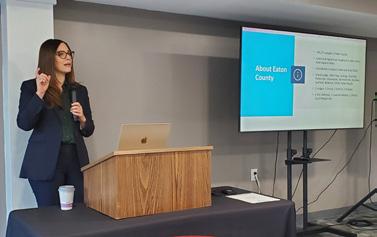
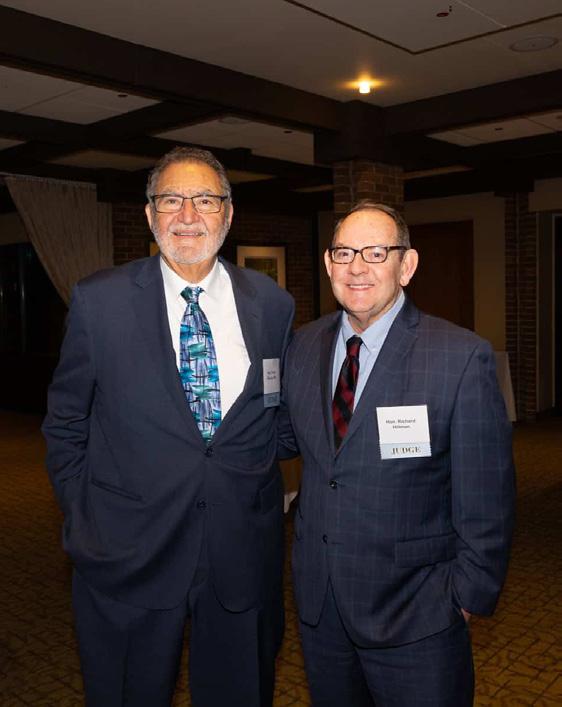
The Hon. Amanda G. Pollard, the probate judge for Eaton County, spoke to the ICBA Probate Section on November 19 with updates and insights on court procedure and the practice of law.
“We are considered a medium sized county by SCAO,” Judge Pollard stated of Eaton County. She noted that Ingham County and Eaton County are about the same in physical size, but Eaton has a population of about one-third of Ingham’s. “We cover Grand Ledge, Delta Township, parts of Lansing, Charlotte, Dimondale, Potterville, Vermontville, Mulliken, Sunfield, Eaton Rapids, Bellevue, and Olivet.”
Judge Pollard was appointed to the bench in February 2024 and reelected last November. She is a 2011 graduate of the Michigan State University College of Law, was previously in private practice in family and probate law, and has worked for both the Ingham County and Eaton County Probate Courts. She did her internship with Ingham
County and said, “It was the first court where I witnessed guardianship and conservatorship proceedings. It was so impactful that it changed my entire plan while in law school.”
The judge praised her staff and pointed out that, “We are a small office, so we don’t always have time to prepare estate and trust paperwork at the counter, unless it is an emergency. Please let us know if it’s urgent. Otherwise, the staff will contact you when you are requesting paperwork or a hearing.”
Judge Pollard also said that the court is working with the State of Michigan’s archives to ensure all records are preserved. Eaton also rotates with the Clinton and Ingham County Probate Courts on mental health petitions, and the judge serves on a rotating basis for the Kalamazoo Psychiatric Hospital.
Two unpublished 2025 cases that the judge highlighted were In re Wessels Family Trust, 2025 WL 3002414 (Mich App 2025) where the central issue was whether the trustee’s proposed final distribution conformed with the terms of the trust. In Wessels, the probate court decided on issues of law at a status conference rather than allowing for an evidentiary hearing on disputed issues. The Court of Appeals found there were legitimate questions of fact, requiring the court to hold an evidentiary hearing.
The second case was In re Conservatorship of DLW, 2025 WL 2956698 (Mich App 2025). The main issues on appeal were the conservator’s
inventory and accounting fees, as well as the fee for the guardian ad litem. The findings were 1) the conservatorship is not responsible for inventoried assets until after receiving letters of conservatorship 2) payment of property taxes on the property where the protected person lived but did not own it was proper and 3) the reasonableness of guardian ad litem fees does not require an evidentiary hearing. “The conservator is not responsible for what happened on the day of the hearing,” the judge said. “The day the letters of authority were issued is different from the hearing date.”
As far as practice tips for guardianships and conservatorships, Judge Pollard asked that attorneys need to file acceptance of appointment documents with the initial filing, as well as providing completed orders and letters with the proper contact information. She noted that the Eaton County court does not have a public guardian or appoint anyone. Attorneys need to make their own arrangements (along with acceptances) for proposed guardians and conservators.
In closing, Judge Pollard stated, “I am honored and humbled that this is the job I get to do for my community.”
Cheri Patton, Register
Decedent Estates & Trusts x1277
Jessica Kiel, Deputy Register
Mental Health, GA & CA x1278
Katie Blossom, Deputy Register GM, DD x1276
Nicole Bayha-Varney, Judicial Assistant X4175

January 26, 1936 – December 13, 2025
The Ingham County Bar Association and Foundation appreciate her numerous contributions to the organizations. A Celebration of Life was held on January 24th in Mason.
View Obituary Here https://www.dignitymemorial.com/ obituaries/mason-mi/roberta-gubbins-12665474
By Dwayne L Gill USMC Veteran

Dwayne L Gill USMC Veteran
Each November, our nation pauses to honor the men and women who raised their right hand and swore an oath to defend the Constitution of the United States. Veterans Day is more than a ceremonial holiday; it is a moment of reflection, gratitude, and renewed commitment to the ideals that service members carried with them into uniform. For members of the Ingham County Bar Association, and for readers of “Briefs”, this day carries a particularly profound connection. The principles that guide our legal system integrity, justice, duty, and fidelity to the rule of law are the same principles that veterans fought to safeguard.
The story of America cannot be told without the story of its veterans. From World War II to Korea, Vietnam, the Gulf War, and the long conflicts in
Iraq and Afghanistan, each generation of veterans has carried forward a legacy forged in discipline, resilience, and sacrifice. While history books capture the major battles and global consequences, the essence of military service lies in thousands of personal stories the deployment orders tucked into a uniform pocket, the long nights away from home, the missed holidays, the fear, the laughter, the teamwork, and the constant commitment to something larger than oneself.
To veterans, service is not defined solely by medals or rank. It is defined by character. It is defined by moments when the uniform demanded more of them than they thought they had to give, and yet they gave it anyway. It is defined by the willingness to step forward not because it was easy, but because it was the right thing to do.
Many veterans are naturally drawn to careers in law. The military instills a profound respect for order, structure, and fairness principles that align closely with the work of prosecutors, defense attorneys, judges, and public service lawyers. Veterans bring with them a refined sense of accountability, calmness under pressure, and the ability to see both the individual and the mission. These skills translate seamlessly into the courtroom, negotiation table, and
community-based legal work.
Transitioning from military to civilian life is not without its challenges. Veterans must navigate shifts in identity, family dynamics, and professional purpose. Yet legal institutions including Ingham County courts, government offices, public defenders, private firms, and nonprofits increasingly recognize the value veterans bring. Their discipline, leadership, and decisiveness elevate the legal profession in meaningful ways.
Here in Ingham County, members of the Bar who are veterans often speak about how service shaped their approach to justice: the importance of ethical decision-making, the responsibility of authority, and the necessity of treating every person with dignity. These lessons form the backbone of a justice system worthy of public trust.
Veterans Day also reminds us of the service members who still wear the uniform including the many men and women of the Michigan National Guard and Reserve who reside in our region. Ingham County is home to Guard members who serve as lawyers, court employees, law enforcement officers, social workers, and public safety professionals. Their commitment is extraordinary. They balance monthly drills, annual training, civilian careers, and family life with an unwavering
readiness to deploy anywhere in the world.
Recent years have shown just how critical their dual mission is. From supporting public health responses during COVID-19 to assisting during natural disasters, humanitarian missions, and civil emergencies, the Guard continues to play a vital role in protecting our communities.
Their service today reminds us of historical moments including the 1967 Detroit unrest when National Guard units were deployed in difficult circumstances. Though modern training, equipment, and protocols are far more advanced, the underlying principle remains unchanged: when their state or nation calls, they answer.
Veterans Day is not only a moment for reflection; it is also a call to action. Supporting veterans requires more than words. It requires systems, programs, and daily practices that honor their service by meeting their needs.
In the legal community, this includes:
• Advocating for and supporting Veterans Treatment Courts, which offer structured, accountable, and compassionate pathways for veterans
dealing with trauma, substance use, or reintegration struggles.
• Recognizing the signs of servicerelated challenges, such as PTSD, depression, or traumatic brain injury, and approaching cases with both fairness and understanding.
• Connecting veterans to resources, including mental health services, employment programs, education pathways, and housing support.
• Engaging in pro bono work, especially in areas where veterans struggle disproportionately such as benefits disputes, housing issues, and expungements.
• Creating spaces in our profession where veterans feel seen, heard, valued, and supported.
These commitments strengthen not only the lives of veterans but the integrity of the justice system itself.
Veterans Day is not a celebration of war. It is a celebration of service of the values veterans uphold and the freedoms they protect. As lawyers, judges, and court professionals, we work each day within a system that exists because generations of veterans defended it, often at immense personal cost. This truth should
inspire us to approach our roles with humility and responsibility.
When we uphold the rule of law, advocate for justice, and serve our clients and community with honor, we pay homage to those who safeguarded the very system we practice within.
So, to all veterans in the Ingham County Bar Association, in our families, and across our community: thank you. Thank you for your courage, your sacrifice, and your unwavering commitment to the principles that define our nation. Your service did not end when your military career did. It continues in every case you handle, every client you represent, every argument you make, and every act of leadership you bring to our legal community.
Veterans Day is more than a date on the calendar. It is a promise a promise to remember, to honor, and to continue the work of building communities worthy of the sacrifices made by those who served.
To every veteran reading “Briefs”: We are grateful. We stand on your shoulders. And we honor you today and every day.
Dwayne L Gill Associate Vice President GCSI
For Immediate Release
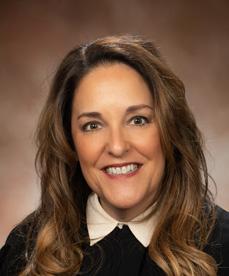
LANSING, MI – The Michigan Supreme Court has appointed the Honorable Lisa McCormick as Chief Judge of the 30th Circuit Court, effective January 1, 2026, and has reappointed the Honorable Shauna Dunnings as Chief Probate Judge of Ingham County, also effective January 1, 2026.
Judge McCormick is a Circuit Court Judge for the 30th Circuit Court in Ingham County, where she is assigned to, and presides over the Family Division. Judge McCormick was appointed in 2020 to this judicial seat by Governor Whitmer and was later in the same year elected to that seat as the incumbent. Judge McCormick is responsible for a docket that includes child abuse and neglect cases, child custody, parenting time, child support, delinquency, and
Personal Protection Order hearings. Judge McCormick presides over the Family Treatment Court in Ingham County. In 2021, Judge McCormick was appointed by Governor Whitmer as a seated member of the Human Trafficking Commission for the State of Michigan. Judge McCormick is the co-chair of the Michigan Judges Association Family Law Committee and the Chair of the Community Corrections Advisory Board. In 2024, Judge McCormick was appointed to the State Drug Treatment Court Advisory Committee and is chair of the Family Treatment Court Subcommittee.
As part of her leadership team, Judge McCormick has appointed Probate Judge Shauna Dunnings as Chief Circuit Court Judge Pro Tempore and Judge James Jamo as Presiding General Trial Division Judge, effective the same date. Judge McCormick will continue to serve as the Presiding Judge of the Family Division.
“I am honored to serve as Chief Judge for the Ingham County Circuit Court. I remain committed to upholding the highest standards of judicial responsibility and working collaboratively to ensure our court serves the community with fairness, transparency and respect” said Judge McCormick
Judge Dunnings was elected to the Probate Court bench in 2018 and has served as Chief Probate Judge since 2022. She is also completing a one-year term as Chief Circuit Judge. Judge Dunnings will continue presiding over a docket that includes probate cases, juvenile delinquency, neglect and abuse, and adoption cases. Judge Dunnings also presides over the Phoenix Treatment Court.
Before joining the bench, Judge Dunnings held several key leadership roles within the Michigan judiciary. Her experience includes serving as Assistant Friend of the Court and Attorney Referee in Eaton County; Friend of the Court and Deputy Court Administrator in Ingham County; and later as Circuit Court Administrator for Ingham County.
Judge Dunnings remains active in several professional and judicial organizations. She currently serves as President-Elect of the Michigan Probate Judges Association, is a member of the Judicial Section Council of the State Bar of Michigan, and serves on the Michigan Supreme Court’s Commission on Fairness and Public Trust in the Michigan Judiciary.
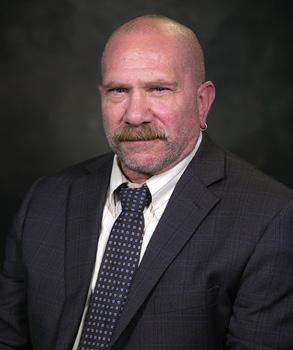
October 20, 1964 – December 23, 2025
This issue of Briefs is themed for the Ingham County Public Defender ’s Office. The Office, headed by Mr. Keith Watson, contributed directly to the publication and we thank them for their participation. After the deadline for articles, but before publication, their Office and our legal community were shaken by the passing of Keith Watson on December 23, 2025 at the age of 61.
Keith was a graduate of Concordia University and had his Master’s degree from Central Michigan University and his Juris Doctor degree from Thomas M. Cooley Law School. Prior to joining the Public Defender’s Office upon its creation, Keith was a long-time defense attorney. He also worked as a guardian ad litem advocating on behalf of children in child welfare cases – a role he truly loved with all his heart.
He is survived by his wife of 25 years, his stepdaughters, his brother, his mother-in-law, and his 8 grandchildren. To the legal community, Keith was an avid defender of the Constitution and an effective advocate for his clients. Those who worked with him in the legal system – whether they be fellow defense attorneys, prosecutors, or judges and their staff, describe him with fondness. To those in his office, he was a mentor and a leader – and those words ring far short of what he meant to those in his office. He led by example – not only in his passion for his clients, but also his willingness (despite being “Da Boss”) to step in and handle any task – whether it is helping with a client meeting or handling arraignments for the day. To those opposing him in court, he was a fierce and fearless advocate exhibiting control and mastery of the law on behalf of his clients – but never unfairly or outside of his ethical bounds. To his friends, he was a kind man and always the supportive shoulder who would show up on his motorcycle and in his leather jacket when he was needed.
Keith’s positive impact on our community will continue to be felt for a long while. His absence will be felt equally as much. The Ingham County Bar Association extends our most sincere condolences to his colleagues, friends, and family. May the light of his life continue to inspire those who knew him.
Keith Watson, Served as Chief Public Defender until his passing in December of 2025
There are several staff who support our work, including; three Investigators, three Social workers, five Paralegals, one Tech/Clerk, six Clerks, numerous Assistant Public Defenders, and the Assistant to the Chief Public Defender and Administrator.
Our Assistant Public Defenders represent the indigent accused in the following criminal courts:
54A District Court
54B District Court
55th District Court
30th Circuit Court
Case types include Capital, Felony, and Misdemeanor Criminal Cases and we also handle Probation Violations and some appeals. Assignments are made based on each attorney’s qualifications. Misdemeanor attorneys and attorneys who handle lower-severity felonies are given the opportunity to co-chair cases with our Capital offense qualified attorneys in order to grow their skills and in return, qualify them to take higher level offense cases.
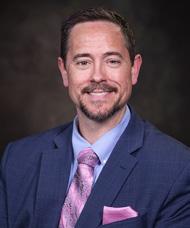
Deputy Chief Public Defender
Stephen Cornish
This year so far, our attorneys have been assigned to 4,859 cases. Of those cases; 318 were Capital, 1,113 Felonies, 1,924 Non-traffic misdemeanor, 1,177 Traffic misdemeanor and 645 Probation Violations. We denied about 3% of cases because the defendant did not qualify based on income. Roughly 5% were sent to conflict counsel because our office represented either a co-defendant or alleged victim. In approximately 1.5% of our cases, the defendant hires their own attorney after the Public Defender appointment has taken place. Our attorneys provide zealous representation of our clients, as evidenced by these cases represented by our office:
In the matter of the People of the State of Michigan vs Grant Thompson, Open Murder, The Ingham County Office of the Public Defender was able to achieve one of the hardest things in the practice of law, a Not Guilty Verdict in a homicide case. This result does not go alone to the lead attorney, Stephen M. Cornish, our Deputy Chief Public Defender, but rather the holistic approach that we’ve built here in Ingham County. From day one, Deputy Cornish brought in a team to assist
him with the voluminous file. As we have on staff investigators, Michael Taylor, formally of the Leslie Police Department, began digging through the case. He reviewed discovery, interviewed witnesses, walked the scene, took photos, and all around helped create a picture of the events that transpired. Luke Goodrich, as second chair, dug into the forensics, in the process learning great amounts of information in regards to bullets, impacts, stippling of wounds, shell casing, and firearms in general. This information made his cross exam of the People’s experts turn in the favor of the defense. Kayla Douglass, the head paralegal for the file, assisted in motion practice, organization, discovery tracking and confirmation of receipt, and over all the upkeep on the files. All these members allowed the lead counsel time to focus on the trial itself and achieve this verdict for our client.
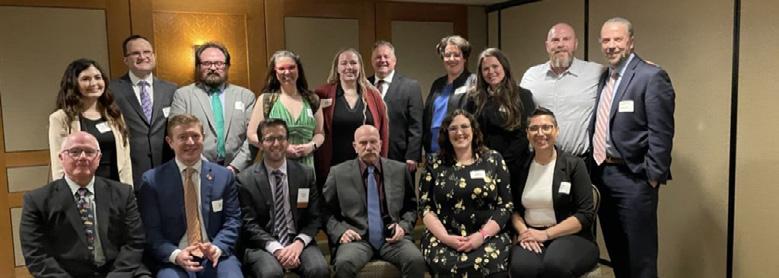
The matter of the People of the State of Michigan v. Rachel Piland, 2nd Degree Murder, highlights a long and hardfought matter that went up to the higher courts and back and was finally tried after 7 ½ years. This case highlights the diligent and careful approach to a case that had many complications. It was truly a “team effort” by our office, with
extensive motion practice, appellate filings, hard work by our Investigators, and contributions from multiple attorneys, paralegals and other support staff.
In the matter of the People of the State of Michigan vs. Laureli McGrew, the Ingham County Office of the Public Defender successfully argued that the Ingham County Animal Control dog bite ordinance was void and unenforceable because the Legislature had not granted the county the authority to promulgate the ordinance. In that matter, Assistant Public Defender Jonathan Forman argued the motion from the ground floor, bringing a motion to dismiss in the 54B District Court arguing that the county only had authority to enact dog-related ordinances related to the Dog Law of 1919. After the motion was denied, APD Forman took the case on interlocutory appeal to the 30th Circuit Court. Judge Draganchuk issued an opinion agreeing with APD Forman’s argument, and determined that the county had no authority to enact ordinances imposing criminal sanctions on owners of dogs who bite. The Prosecutor’s Office appealed to the Court of Appeals, and that Court declined to accept the case. The matter was ultimately dismissed.
In the matter of the People of the State of Michigan vs. Ricky Jack, the Ingham County Office of the Public Defender achieved a result that led to change for criminal defendants across the state. In that matter, the defense had been provided police reports, but witness contact information was redacted by the Ingham County Prosecutor’s Office. A team of lawyers, including Chief Public Defender Keith Watson, Assistant Public Defender Ed Hess, and Assistant Public Defendant Jonathan Forman, filed a motion arguing that the Prosecutor’s Office was required to provide unredacted police reports. After Judge Jamo granted the defense’s motion, the Prosecutor’s Office appealed to the Court of Appeals. That Court affirmed in a published opinion, requiring unredacted police reports, and the Supreme Court denied the Prosecutor’s application for leave to appeal. Based on the Office of the Public Defender’s efforts, prosecutor’s offices across the state are required to provide unredacted discovery to defense attorneys.
Our office receives a percentage of funds from local shares out of Ingham County, the Cities of Lansing and East Lansing. The majority of our funding comes from the Michigan Indigent Defense Commission (MIDC). As recipients of this funding, our office must adhere to
the standards set forth by the MIDC. Compliance to these standards is reported quarterly and funding is reapplied for annually.
The Office of the Public Defender represents criminal defendants who are indigent. In Ingham County, the Office of the Public Defender was created to replace the Court Appointed Counsel system and improve the quality of indigent criminal defense in the county by having a fully staffed, full-time office handling indigent criminal defense. The attorneys in the Office of the Public Defender are employed by Ingham County but work exclusively for their clients’ benefit.
What we’ve built in Ingham County is changing indigent defense in Michigan. We don’t approach cases as the attorney runs every part of a case, we have a team approach. One that, as shown by our record, works.
Please take note that the Ingham County Bar Association does not do Lawyer Referrals. If you need to use this service provided by the State Bar of Michigan, please call them at (800) 968-0738 between the hours of 9:00 a.m. and 5:00 p.m., Monday through Friday, to speak with a lawyer referral representative or you can use the links below.
• Lawyer Referral and Information Service Registration Form
• LRIS Quick Reference Guide
• Become a Lawyer Referral Service Panel Member

by Scott Atkinson | Michigan Bar Journal

December 2025
EAST LANSING, Mich. — Nicole Evans, the Court Administrator for the 54-B District Court in East Lansing, has been sworn in as chair of the State Bar of Michigan’s Representative Assembly.
The 150-member Representative Assembly is the final policy-making body of the State Bar. It was created by the Michigan Supreme Court in 1971 to increase geographical representation and member participation in State Bar policy. Former chairs are distinguished attorneys in all areas of the law and have included professors, elected county prosecutors, state appellate defenders, and administrative law judges. Nicole Evans is the first active court administrator to serve as chair.
As a court administrator, Evans works in the courthouse every day, which gives her a unique perspective as an attorney that she said will help her as RA chair.
“I want to use my experience as a court administrator to move the court into a place of service. I want to use available technology to allow our users to have an informed experience and not be afraid,
because now they’re engaging with court staff who are here to assist them as opposed to people who are going to place judgment,” she said.
As chair, Evans said she plans to continue her commitment to providing the public with the best service possible. She plans to do that by focusing on access to justice efforts, addressing Michigan’s legal deserts, and increasing attorney awareness of the RA.
54-B District Court Chief Judge Molly Hennessey Greenwalt praised Evans, “The Court has an exceptional court administrator in Nicole Evans. Her service as RA chair is groundbreaking. Yet, at the same time, it is entirely consistent with a lifetime of service to the East Lansing community and the legal profession.”
For further information, see Michigan Bar Journal, October 2025, https:// www.michbar.org/journal/Details/ Seeing-people-as-people-Nicole-Evans-sworn-in-as-2025-2026-Representative-Assembly-chair?ArticleID=5173, or contact the 54-B District Court at (517) 351-7000.
By Kristina Bilowus
The views expressed in this article are written as the author's personal opinion and do not necessarily reflect the views of the ICBA, nor are they tied to any of the author's professional affiliations.

Kristina Bilowus bilowusk@msu.edu
As 2025 winds down and we look ahead to the new year, I wanted to share a short note of self-care and reflection. As readers may know, I write the DEI column for Briefs. And there is always so much I can say on the topic. However, after a long and often-challenging year, I charge each of us to take care of ourselves in 2026, and beyond. And I also encourage us to take care of each other. If we don’t, who will? As these topics may sound familiar, maybe it’s time we take a step back and re-address with fresh intentions for a new year.
One of the most prevalent topics of discussion surrounding the field of law is stress. We learn it early on in law school. Between time management and the rigors of coursework, balancing your studies/career with a personal life, and setting yourself apart from your peers, stress can be a significant factor. As
practitioners and as we advance in our fields, the presence of stress may be constant.
We know that stress may manifest in physical, mental, and emotional symptoms. Lack of sleep, physical pain, increased anxiety, lack of focus, and depression are just some of the ways stress can harm our lives. Perhaps you have already found healthy ways of managing it, such as through working out, journaling, meditating, walking, or sharing your feelings with someone you trust. Sometimes, the need for professional care is warranted. We see physicians for out physical health, why should that be different for our mental and emotional health?
Keep in mind that the goal is not the complete elimination of stress, but rather healthy maintenance. Without healthy maintenance, stress can become toxic and may lead to unhealthy traits.
Diving right into the next topic, unhealthy traits can be acquired or exacerbated with the stress of the legal profession. Abuse of alcohol and/or drugs can become a serious issue. Binge drinking, alcohol dependency, and reliance on drugs is not a new topic for those in the legal field. Pressure, stress, and unhealthy coping skills can lead to these dangerous habits. Additionally, social events centered around drinking such as happy hour-style events,
can make it even easier to fall into these unhealthy habits. I am happy to share that many are recognizing the relationship between social settings and alcohol and are finding healthier alternatives.
Such healthy alternatives can be a physical activity like taking a walk or hosting a yoga class. Opportunities like a bowling night or miniature golf can be another great way to let off some steam in a safe environment. Other ideas such as a book club, watch parties for a movie, and game nights can provide important social engagement without the need for alcohol.
Furthermore, unhealthy habits expand beyond problematic drinking and drug use. With busy schedules, deadlines, and the constant treadmill of work needing to be done, we sometimes neglect the needs of our bodies. Adequate sleep and rest, healthy eating, and exercise are some of the essential elements of well-being we forgo for our work. While we all may experience a week of not sleeping well here and there, or a “cheat” day to eat whatever we want, the behavior becomes unhealthy when it becomes a habit. As humans, we all have good days and bad, good habits and less than ideal traits; it’s important to be mindful of when something starts to seriously affect your well-being.
Which leads to my third and final segment on how to try and care for yourself.
As busy professionals, we all have a lot on our mind. As we are in the midst of the holiday season, I am reminded the added pressure and turmoil, this season can take. Therefore, I first encourage you to know yourself and lean into that self-intuition.
You may already have a good sense of your strengths, weaknesses, and coping mechanisms for stressful situations. For some of us, we are in the process of getting to know ourselves better. I encourage this season to be one of selfreflection. Get curious about your stress triggers and how you manage them. Find ways to incorporate mindfulness and healthy traits that you can utilize even with a busy schedule. Remember that perfection is not the goal. Rather, we keep learning, trying, and giving ourselves the grace to do better.
Additionally, this can also be an excellent time to understand what triggers stress for you. Is it an overwhelming case load? The feeling of constantly being behind? Lacking time to complete the ever-growing to-do list?
Are you trying to balance work with family life, and not feeling you are giving both your best? While not an exhaustive list, these types of openended questions can be a great way of assessing the year ahead and making adjustments to your schedule.
Take the time to plan ahead and intentionally schedule breaks, meals, and time for yourself ahead of the beginning of the week. If you are still figuring out your schedule, weigh decisions about the essentials that you need to accomplish, and where you can scale back a bit.
Guard your free time jealously. Free time is a rare commodity in our profession. Talk to a family member, close friend, anyone you trust – don’t be afraid to extend your community beyond the law bubble. Some of the most important people in our lives, are the ones that know us the longest. This helps to ground you and also maintain the bigger portion of yourself that isn’t tied to the legal profession.
Be mindful of instances where you may be putting yourself at risk. As the legal profession is a busy one, many lawyers
cope with stress through dangerous behaviors. Stay away from illegal drugs and be mindful of alcohol consumption. Find healthy ways to unwind and relax; avoid substances that threaten your livelihood and even your life. You aren’t expected to be perfect. Start early and often in establishing healthy patterns. And if the stress threatens to overwhelm you, don’t be afraid to reach out for support and guidance.
The legal profession can be an overwhelming, stressful, and even lonely place sometimes. It is also one that is richly rewarding, necessary, and transformative. For the times that are less than ideal, be sure to surround yourself with good people, healthy habits, and opportunities to rest and refuel. It’s like the proverbial adage: when flying, put on your own oxygen mask first before assisting others. Keep this in mind as you hone your legal journey. Take care of yourself, and you will be an even better advocate for others.
ICBA may offer scholarships to prospective members who may be experiencing a hardship and cannot pay the standard rates to be an active member of the Bar.
Recipients will remain anonymous. It is up to the discretion of the ICBA President to grant scholarships, but it can only be approved on an annual basis (i.e. this is not a benefit that automatically renews year-to-year).
The scholarship application can be accessed here.
By Albert T. Lansana Jr., Master of Operational Studies, M.S.A, Organizational Leadership, M.B.A

Leadership in high-performance environments is both a science of decision and an art of restraint. Whether in combat command, corporate leadership, education, healthcare, non-profit organizations, or the legal profession, the ability to influence under pressure defines success. Yet the same intensity that drives results can also distort motives.
In an earlier essay, “Do Military and High-Performance Organizations Perpetuate the Dark Triad?”
I explored how traits such as Machiavellianism, narcissism, and psychopathy can emerge in cultures that reward dominance and control. This reflection continues that conversation, shifting not only from personality to practice but also a step further from the dark traits to the subtle misuse of emotion in leadership.
I refer to this as emotional predation, the deliberate manipulation of emotion to control, coerce, or condition others under the guise of authority. Unlike overt toxicity, emotional predation hides behind charisma, mentorship, or loyalty. It thrives where emotional influence is mistaken for inspiration, and dependency is confused with trust.
My perspective is shaped by diverse leadership experiences and academic study in operational strategy, administrative systems, and executive management. Those combined lenses revealed a constant truth: discipline sustains missions, but emotion is one of the qualities that sustain people by helping them remain motivated, resilient, and engaged over time. When that emotion is exploited, performance becomes hollow, and trust erodes.
Behavioral research shows that manipulative and self-focused traits, collectively known as the Dark Triad (Paulhus & Williams, 2002), are often embedded within competitive systems. These traits can yield confidence and drive, but when unchecked, they produce destructive climates (Castille, Buckner & Thoroughgood, 2016; Padilla, Hogan & Kaiser, 2007).
While the Dark Triad traits are relevant to understanding emotional predation,
they are not the sole contributors. Emotional predation can also arise from systemic issues, cultural norms, or situational pressures. For example, in organizations where performance metrics are prioritized over well-being, leaders may unintentionally exploit emotions to meet targets. Similarly, cultural norms that equate authority with emotional dominance can foster environments where manipulation is normalized. Situational pressures, such as crises or resource constraints, can also push leaders to misuse emotional influence as a survival strategy.
These broader factors highlight that emotional predation is not always rooted in individual personality traits. It can be a product of organizational dynamics, societal expectations, or external stressors. Recognizing these influences is essential for addressing emotional predation comprehensively.
While hierarchical and highperformance environments, such as military and corporate settings, are often associated with emotional predation, its impact is not confined to these contexts. Emotional predation can occur in education, where teachers may manipulate students’ emotions to enforce compliance, creating climates of fear or dependency that hinder creativity and engagement (Keashly, 1998). In
healthcare, it can manifest when leaders exploit the emotional vulnerability of staff to maintain control during highstress situations, which can lead to burnout and reduced morale (Tepper, 2000). Non-profit organizations, despite their altruistic missions, are not immune; emotional predation can arise when leaders use emotional appeals to secure loyalty or suppress dissent, eroding trust and collaboration (Lipman-Blumen, 2005).
In the legal profession, emotional predation can also occur. Lawyers may exploit clients’ emotional vulnerability during sensitive cases, using fear or guilt to influence decisions, particularly in family law or criminal defense (Kramer, 2013). Judges may misuse their authority to intimidate attorneys or litigants, while senior legal professionals might pressure junior staff through fear or career-related threats to enforce compliance with unethical practices (Paulhus & Williams, 2002).
These examples highlight the universal nature of emotional predation and underscore the need for ethical leadership practices across all sectors. By addressing emotional predation in diverse contexts, leaders can better understand its pervasive nature and develop strategies to combat it effectively, ensuring that organizations across industries are built on trust, integrity, and emotional equity.
The alternative to emotional predation is emotional intelligence, the ability to understand, regulate, and use emotion ethically (Goleman, 1995). Leaders who develop emotional intelligence move from manipulation to stewardship,
fostering trust, morale, and sustainable performance. Addressing emotional predation requires a commitment to ethical practices, transparency, and emotional intelligence.
Transparency and boundaries build trust. Leaders who communicate openly about stress or uncertainty prevent manipulation from taking root (Ashkanasy & Daus, 2005).
Transparency ensures that clients, staff, and colleagues are treated with honesty, while boundaries protect against emotional confusion that impairs judgment.
Relational equity strengthens morale and trust. Predators demand loyalty, but partners build fairness. Emotional equity, which includes mutual respect, inclusion, and reciprocity, ensures fairness in decision-making and promotes collaboration over coercion (Colquitt et al., 2001).
Empathy paired with accountability enhances motivation and ethics without diluting standards (Kock et al., 2019). Empathy must be balanced with accountability to ensure justice and ethical practices are upheld.
Feedback and reflection transform emotion from a weapon into wisdom. Emotional predators suppress feedback, but ethical leaders invite it. Leaders can encourage feedback from clients, staff, and peers to identify and address emotional manipulation, fostering a culture of continuous improvement.
Purpose over ego ensures emotional energy builds unity, not fear. Servant leadership, as Greenleaf (1977) argued, transforms command into service. Prioritizing justice and fairness over personal gain ensures that emotional
influence is used to elevate rather than exploit.
By embracing emotional intelligence and ethical leadership practices, leaders can move from being predators to partners, ensuring that their organizations, whether in law, healthcare, education, or other sectors, are built on trust, integrity, and sustainable success.
Emotional predation corrodes what no plan can replace, the moral architecture of trust. It transforms belonging into compliance and passion into fatigue. In combat, commerce, education, healthcare, non-profit work, and the legal profession, that collapse is fatal to cohesion.
Operational science teaches that no strategy survives first contact unchanged. Organizational science teaches that no strategy endures without emotional integrity. Leaders who cannot regulate emotion cannot sustain excellence.
A review of academic databases reveals that emotional predation has not yet been defined as a formal construct in leadership or organizational psychology. The phrase appears rarely, if at all, in peer-reviewed research. However, related frameworks such as predatory leadership (Kramer, 2013), toxic leadership (Lipman-Blumen, 2005), emotional abuse in the workplace (Keashly, 1998), and abusive supervision (Tepper, 2000) describe closely aligned phenomena.
This essay introduces emotional predation as a proposed conceptual lens,
a refinement of those earlier frameworks that isolates emotion as one of the primary vectors of manipulation. Its purpose is to sharpen ethical awareness, not to redefine pathology.
Conclusion
Emotion is part of the leadership architecture. Leaders either leverage it to protect or consume the people within their organizations. Predators use emotion to dominate. Partners use it to elevate. The distinction determines whether an organization merely performs or truly endures.
References
•.Ashkanasy, N. M., & Daus, C. S. (2005). Rumors of the death of emotional intelligence in organizational behavior are vastly
exaggerated. Journal of Organizational Behavior, 26(4), 441–452.
• Castille, C. M., Buckner, J. E., & Thoroughgood, C. N. (2016). Prosocial citizens without a moral compass? Journal of Business Ethics, 149(4), 919–930.
• Colquitt, J. A., Conlon, D. E., Wesson, M. J., Porter, C. O., & Ng, K. Y. (2001). Justice at the millennium. Journal of Applied Psychology, 86(3), 425–445.
• Goleman, D. (1995). Emotional Intelligence Bantam Books.
• Greenleaf, R. K. (1977). Servant Leadership. Paulist Press.
• Keashly, L. (1998). Emotional abuse in the workplace. Journal of Emotional Abuse, 1(1), 85–117.
• Kock, H., Johlke, M. C., & Raferty, A. (2019). Empathy in leadership and its impact on job satisfaction. Leadership Quarterly, 30(2), 1–14.
• Kramer, M. (2013). Introduction to Predatory Leadership
• Lipman-Blumen, J. (2005). The Allure of Toxic Leaders. Oxford University Press.
• Padilla, A., Hogan, R., & Kaiser, R. B. (2007). The toxic triangle. Leadership Quarterly, 18(3), 176–194.
• Paulhus, D. L., & Williams, K. M. (2002). The Dark Triad of personality. Journal of Research in Personality, 36(6), 556–563.
• Tepper, B. J. (2000). Consequences of abusive supervision. Academy of Management Journal, 43(2), 178–190.
• Albert T. Lansana Jr. | Master of Operational Studies | M.S.A., Organizational Leadership | M.B.A.
Thank you to the Sponsors
Abood Law Firm
Alane Family Law PC
Buhl Little Lynwood & Harris PLC
Chartier & Nyamfukudza PLC
Dickinson Wright PLLC
Dykema
Fahey Schultz Burzych Rhodes PLC
Foster Swift Collins & Smith PC
Grewal Law PLLC
Murphy & Spagnuolo PC
Sinas Dramis Law Firm
Speaker Law Firm PLLC
Willingham & Coté PC
Click to view photo gallery.
By Chris Wickman
Chris Wickman cwickman@nicholslaw.net
This is a weird article for a Wellness column, but I’m writing this column to share something that’s been a part of my personal health changes since January 2025 and to include a delicious simple recipe for some deviled eggs. Over the last year, I’ve lost over 50 pounds. One of the changes I’ve made is swapping out my morning grain (cereal) for some protein including a hard-boiled egg. (I know. Eggs?! In this economy?!) Although you should enjoy eggs in moderation, studies have shown that one egg a day can improve your good cholesterol, lower the risk of cardiovascular disease, and provide a rich efficient source of protein and vitamins without negatively impacting your health. Part of my weekly meal prep is to hard boil five eggs, de-shell them, and put them in a container in the fridge eating one a day. They stay good and it’s a quick part of my normal breakfast with a sausage link (cooked during meal prep) and a banana.
Deviled eggs are also a commonly-made side that is disproportionately popular compared to how easy they are to make. When I make my deviled eggs, I often get approached with guesses at how I get such perfect hard-boiled eggs – boil them in vinegar, the eggs have to be old/new, or one of 100 other tricks. The answer is it is simpler than that.
1. Start a pot of water on high.
2. Once the water is boiling, slowly lower the eggs in allowing them to get a few seconds in the water to come to temp before touching the bottom of the pot (so they don’t split the shell and end up with a mess in your pot). I personally use a simple small mesh metal strainer for such.
3. Boil them for 15 minutes.
4. After 15 minutes, take them out and put them (shells and all) straight into an ice bath. Don’t be shy about the ice – I will use a whole tray of ice for 6-12 eggs because the colder the water the better your success.
5. A single tap on a hard surface will crack the shell and you can pull it off nice and easy. The shell doesn’t stick to the egg whites and you get a nice clean smooth surface.
Now for the deviled eggs recipe. For 6 eggs (12 halves):
1. You hard boil the eggs and cool them in the ice water.
2. You cut them in half (saving your
egg yolks in a bowl) wiping off your knife between eggs so you don’t get the messy yolk on the outside of the pristine eggs.
3. You add a quarter cup of mayonnaise, a teaspoon of rice wine vinegar, a teaspoon of Dijon mustard, and a quarter teaspoon of garlic powder
4. Mash all that together and then you can dispense the egg yolk mixture into the halved eggs with a spoon, an icing dispenser, or if you’re fancy - the cut off corner of a plastic sandwich bag with the yolk mixture inside.
5. Add a pinch of smoked paprika (I especially enjoy the Bourbonsmoked paprika from Bradly’s HG that I got when at a cooking class) to each egg and don’t be afraid to vary it up in quantity to match the different tastes of those eating it. There’s lots of ways to add the paprika, but I haven’t found anything better than a quick pinch of it with clean hands to match the efficiency and maximize control.
And that’s it – a quick simple recipe for some delicious deviled eggs. You can add your spice of life to it –truffle oil, bacon bits, pretzels, guacamole, ham or salmon, chipotle mayo, etc. Try different things and enjoy the results – in moderation. Cheers!
By Fredlisha Lansana

Five years ago, I wrote about balancing marriage, motherhood, and military service, a story of perseverance in the face of constant change. Three years later, I shared how those same lessons of discipline and faith guided me from soldier to city council candidate, driven by a desire to serve my community beyond the uniform.
Now, as I reflect on this next chapter of my journey, I realize that my story has come full circle, one still rooted in service, but now grounded in sisterhood, advocacy, and the shared strength of women veterans.
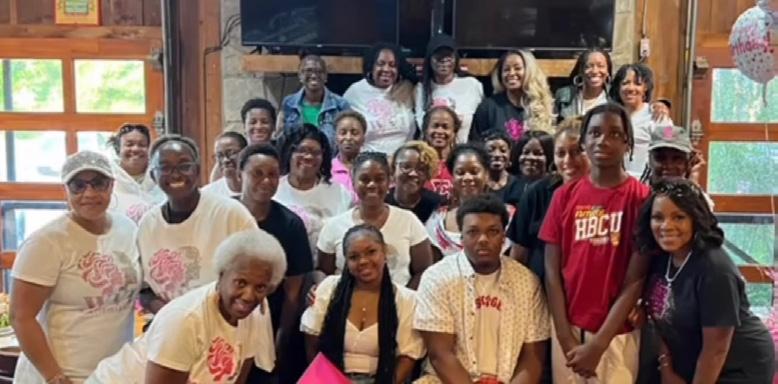
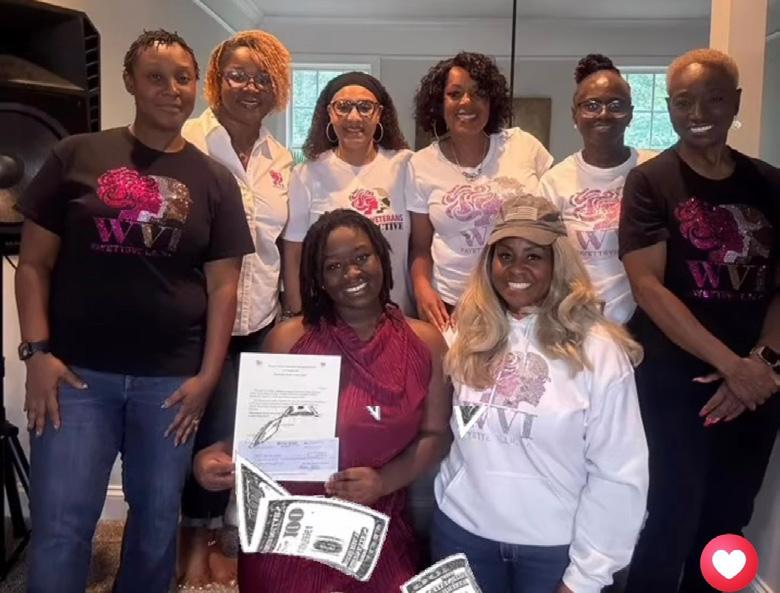
For the past two years, I have proudly been a member of Women Veterans Interactive (WVI), an organization that truly embodies compassion in action. What drew me in, and what keeps me engaged, is simple: we don’t make women veterans jump through hoops to get help. Whether it’s finding assistance for a mortgage or rent, putting food on the table, or simply needing someone to
talk to during tough times, WVI steps in with love, grace, and understanding. There’s no judgment, no red tape, just genuine support.
Through WVI, I found not just a network, but a family. The camaraderie and mentorship within our Fayetteville chapter are unmatched. Our chapter president and several of my fellow members have become true mentors, women who lead with integrity, empathy, and resilience. They inspire me daily to reach back and uplift others, ensuring that no sister veteran feels forgotten or alone.
Being part of this sisterhood has reminded me that advocacy doesn’t always begin in a courtroom or a council chamber; sometimes, it begins in the quiet moments, when one veteran helps another navigate life after service. That’s where healing happens. That’s where leadership begins.

branch, or background. We’ve all faced unique challenges, from reintegration into civilian life to managing families, careers, and personal growth. Yet, through it all, we continue to rise together. WVI gives us space to do just that: to rebuild, to empower, and to remind each other that our service didn’t end when we hung up the uniform. It simply took on a new form.
Looking back on my military career, I still carry the same values that shaped
me: loyalty, duty, respect, selfless service, honor, integrity, and personal courage. But through WVI, those values have deepened. They’ve transformed into acts of compassion, mentorship, and advocacy for women who share my journey. I’ve seen firsthand how collective resilience can move mountains and how one woman’s story can light the way for another’s breakthrough.
As I continue my work within my community and alongside my sisters in WVI, I am reminded that strength is not just about enduring hardship,
but about creating spaces where others can heal, grow, and thrive. Together, we are redefining what it means to serve: beyond the uniform, beyond the battlefield, and beyond ourselves.
To my fellow women veterans: your story matters. Your voice is needed. And your journey, no matter how winding, still has purpose. Whether you’re just finding your footing or you’re already leading the charge, know that there’s a sisterhood waiting to lift you up. Service may have brought us together, but sisterhood keeps us going.
ICBA MEMBER DIRECTORY
Are you listed in the online member directory ?

Thank you to Our Sponsors
Abood Law Firm
Alane Family Law PC
Buhl Little Lynwood & Harris PLC
Chartier & Nyamfukudza PLC
Dykema
Fahey Schultz Burzych Rhodes PLC
Foster Swift Collins & Smith PC
Grewal Law PLLC
Murphy & Spagnuolo PC
Sinas Dramis Law Firm
Speaker Law Firm PLLC
Warner Norcross & Judd LLP
Willingham & Coté PC
Click to view photo gallery.
IN GENERAL
Publication Schedule
Copy Deadline
BRIEFS Committee Meetings
Author and Article Pictures
Article Length and Format
• Raising the Bar announcements:100-200 words
• Local legal events notices:100-150 words
• Columns: 300-500 words
• Articles: 700-1,000 words
• Submit articles in a Word .doc/.docx
Article Ideas
Opinion Articles
Author Information
INSERT RATES
ARCHIVED ISSUES
BRIEFS Insert Contract, Rates & Policies
All section meetings will be held at Signature Solutions Group’s Office (Anchor Room) at 741 N. Cedar St, Set 101-A, Lansing 48906 (south side of the building, there is a separate conference space entrance).
We look forward to resuming our usual from Noon-1pm second the Thursday of each month meetings beginning on January 9, 2026.
**Please let us know if you/your organization would like to sponsor the event by providing lunch.
The Ingham County Bar Association’s Criminal Defense Section is comprised of criminal defense attorneys who defend people accused of committing crimes. The Section is dedicated to sharing knowledge related to emerging and important topics specific to criminal defense. The Section is also committed to offering opportunities for attorneys to hone critical skills needed to defend those accused by the government.
If you are looking for a way to learn about the latest in forensics or practice your evidentiary knowledge, they you’ll want to join this section.
Contact Chris Wickman cwickman@nicholslaw.net or Marisa Vinsky marisa@cndefenders.com
The Employment and Labor Law Section holds its meetings from noon to 1 p.m. each month at WMU-Cooley Law School, 300 S. Capitol Ave., Room 911, in downtown Lansing.
Section Chair is Kelly McClintock. Contact Kelly if you have ideas for topics and speakers.
Upcoming Meetings: 4th Tuesday of the month – Noon, Location: TBA
If you have questions about Section meetings, please email Kelly at mcclintock@bwlawonline.com.
The Family Law Section meets on the 2nd Wednesday of the month from noon to 1 p.m. Location TBD. Lunch is provided.
Section Co-Chairs are Jessica Larson and Nicole Samuel
Upcoming Meetings: 2nd Wednesday of the month (no meetings June, July, August) at Noon, Location – Zoom
If you have suggestions for meeting topics, want to sponsor a lunch or just have general questions, please email Nicole Samuel nicole@newburglaw.com or Jessica Larson jlarson@mclpc.com
All section meetings will be held at Chalgian & Tripp Law Offices, 1019 Trowbridge Road, East Lansing, MI 48823
Section Meetings: 12:00 - 1:00 p.m. (in person with Zoom option)
• Wednesday, February 11, 2026 - Kevin Gebhard - ABC's of Medicare
• Wednesday, March 11, 2026 - Judge Shauna Dunnings and Probate Register, Ryan Buck - Ingham County Probate Court Updates
**Please let us know if you/your organization would like to sponsor the event by providing lunch
The Paralegal/Legal Assistant Section offers free networking and educational events for legal staff in Ingham County. Meetings are held the third Wednesday of each month, virtual.
Section Co-Chairs are Megan Cochrane and Emily A. Erbisch
If you have questions or would like to learn more about the Section, contact Megan Cochrane mcochrane@fosterswift.com or Emily Erbisch emily@okeefelaw.net.
The Real Estate Section holds its meetings at noon on the fourth Thursday of each month. Location TBD.
Section Co-Chairs are Bill Tomblin, Ellen E. Ward, and Mitchell Zolton.
Upcoming Meetings: 4th Friday of the month unless specified otherwise via Listserv (No meetings June, July, August, and December) — Noon
Location: TBA Lunch is served at meetings. Upcoming speakers and topics will be announced. Member input is always appreciated.
If you plan to attend a meeting, please RSVP to Bill Tomblin at Wdtomblaw@aol.com