02 | SHE’S NEXT
• Hunschofsky aims to unite Democrats under GOP supermajority

02 | SHE’S NEXT
• Hunschofsky aims to unite Democrats under GOP supermajority
BY JANELLE IRWIN TAYLOR
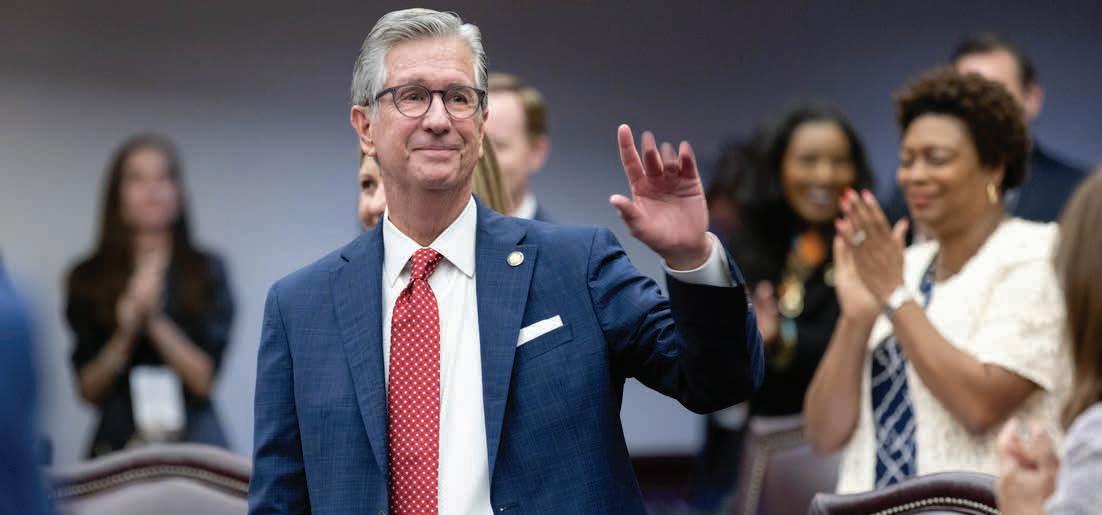
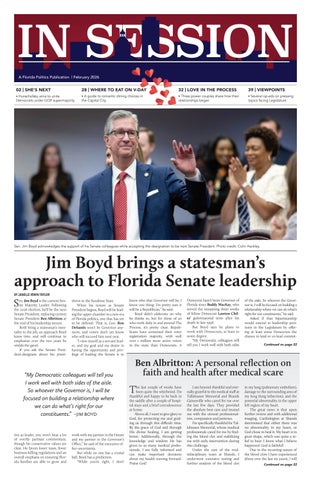
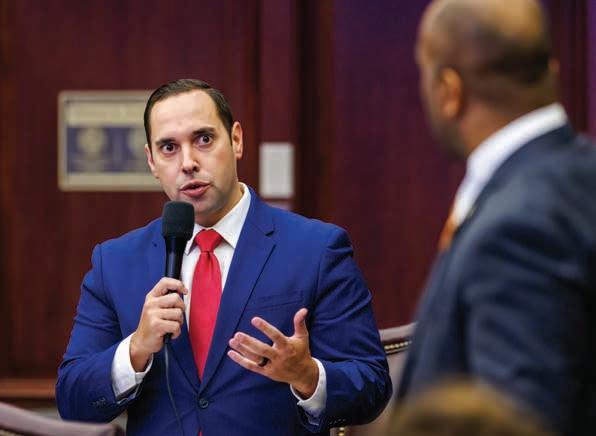
Sen. Jim Boyd is the current Senate Majority Leader. Following the 2026 election, he’ll be the next Senate President, replacing current Senate President Ben Albritton at the end of his leadership tenure.
Both bring a statesman’s mentality to the job, an approach Boyd leans into, and will continue to emphasize over the two years he wields the gavel.
If you ask the Senate President-designate about his priori-
thrive in the Sunshine State.
When his tenure as Senate President begins, Boyd will be leading the upper chamber in a new era of Florida politics, one that has yet to be defined: That is, Gov. Ron DeSantis won’t be Governor anymore, and voters don’t yet know who will succeed him next year.
“I view myself as a servant leader, and my goal and my desire in having the opportunity and privilege of leading the Senate is to
“My Democratic colleagues will tell you I work well with both sides of the aisle. So whoever the Governor is, I will be focused on building a relationship where we can do what’s right for our constituents.”
–JIM BOYD
ties as leader, you won’t hear a lot of overtly partisan commentary, though his conservative values are clear. He favors lower taxes, fewer business-killing regulations and an overall emphasis on ensuring Florida families are able to grow and
work with my partner in the House and my partner in the Governor’s Office,” he said of the executive office uncertainty.
But while no one has a crystal ball, Boyd has a prediction.
“While you’re right, I don’t
know who that Governor will be, I know one thing: I’m pretty sure it will be a Republican,” he said. Boyd didn’t elaborate on why he thinks so, but for those of us who work daily in and around The Process, it’s pretty clear. Republicans have cemented their voter registration majority, with well over 1 million more active voters in the state than Democrats. A
Democrat hasn’t been Governor of Florida since Buddy MacKay, who served the remaining three weeks of fellow Democrat Lawton Chiles’ gubernatorial term after his death in late 1998.
But Boyd says he plans to work with Democrats, at least to some degree.
“My Democratic colleagues will tell you I work well with both sides
of the aisle. So whoever the Governor is, I will be focused on building a relationship where we can do what’s right for our constituents,” he said. Asked if that bipartisanship would extend to leadership positions in the Legislature by offering at least some Democrats the chance to lead or co-lead commit-
The last couple of weeks have been quite the whirlwind. I’m thankful and happy to be back in the saddle after a couple of hospital stays and a brief convalescence at home. Above all, I want to give glory to God, for protecting me and guiding us through this difficult time. By the grace of God and through His divine healing, I am getting better. Additionally, through the knowledge and wisdom He has given to so many medical professionals, I am fully informed and can make important decisions about my health moving forward.
Praise God!
I am beyond thankful and eternally grateful to the medical staff at Tallahassee Memorial and Shands Gainesville who cared for me over the last few days. They provided the absolute best care and treated me with the utmost professionalism, compassion and patience.
I’m specifically thankful for Tallahassee Memorial, whose medical professionals cared for me by finding the blood clot and stabilizing me with early intervention during this challenge.
Under the care of the multidisciplinary team at Shands, I underwent extensive testing and further analysis of the blood clot in my lung (pulmonary embolism), damage to the surrounding area of my lung (lung infarction), and the potential abnormality in the upper left region of my heart.
The great news is that upon further review and with additional imaging, Cardiologists at Shands determined that either there was no abnormality in my heart, or God chose to heal it. My heart is in great shape, which was quite a relief to hear. I know what I believe happened. God is faithful! Due to the recurring nature of the blood clots I have experienced (three over the last six years), I will
BY JESSE SCHECKNER
Parkland
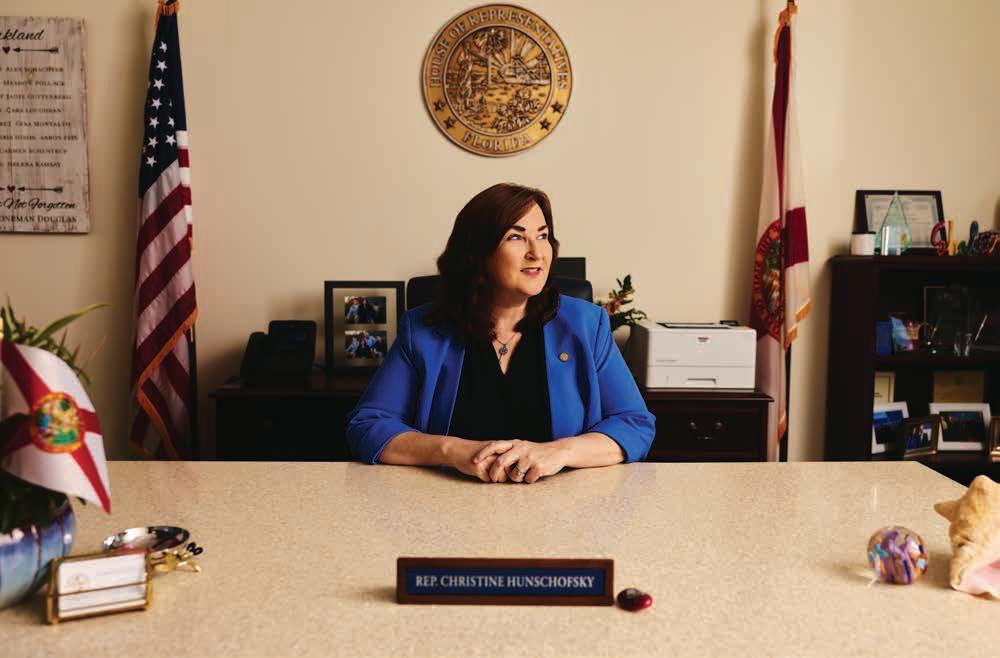
Rep. Christine Hunschofsky is set to become House Democratic Leader after the 2026 elections. It’s a pivotal time for the caucus, now years into an effort to escape a GOP supermajority.
As she prepares to take the proverbial baton, Hunschofsky wants the transfer to be seamless. That means continuing to advance priorities now pushed by current Leader Fentrice Driskell, led by affordability.
“We’ve been talking a lot about affordability for quite a while now, because that’s what we’re hearing at home,” she said, pointing to rising housing, property insurance and health care costs and a broader cost-of-living jump that wages haven’t matched.
Hunschofsky said she expects her agenda as Leader to evolve with events, but pointed to long-standing workforce issues, gun safety and mental health as core focuses.
The Florida chapter of the
“Christine
is a hard worker and a good legislator, and I hope she puts the same level of care, determination and hard work into her role as Leader.”
National Association of Social Workers named Hunschofsky its “Elected Official of the Year” in 2025, citing her legislative efforts to reduce barriers for school social workers, strengthen the state’s behavioral health system and allow social workers to practice across state lines.
“Mental health is always going to be something I’m focused on,” she said. “But a lot of what I look to focus on going forward will depend on things that happen and don’t happen this Session.”
Hunschofsky’s path to Tallahassee began with her just trying to gain a community foothold after
–DAN DALEY
moving from Boston to Parkland in 2000. With no local family or friends, she joined moms’ clubs, served on her homeowners’ association board, coached Little League, held parish leadership roles and regularly attended City Commission meetings.
“I was active,” she said. “That’s how you get to know the community and become part of it.”
In 2013, she won a Special Election for the Parkland City Commission with 84% of the vote. Three years later, after successful efforts on school-quality issues and streetlight initiatives, she ran for Mayor and won by 52 percentage points.
It was a turbulent time. She navigated Hurricane Irma, the 2018 mass shooting at Marjory Stoneman Douglas High and the onset of the COVID pandemic.
“A hurricane is difficult,” she said. “But when you go through something like a mass shooting, it changes you forever.”
Her leadership won commendation and encouragement from then-Rep. Kristen Jacobs to run for state office. The original idea was for Hunschofsky to run when Jacobs reached term limits in 2022, but Jacobs — who died of colon cancer in April 2020 — asked Hunschofsky to run for her seat two years early.
Hunschofsky did, winning 96% of the vote against a lone write-in candidate. In the past two election cycles, she has won re-election without opposition. And since taking her seat representing House District 95, Hunschofsky has enjoyed a 59% passage rate on sponsored bills.
Hunschofsky secured the Leader-designate post in February 2024, defeating Rep. Kelly Skidmore of Boca Raton in a secret caucus ballot. Hunschofsky said she did not arrive in Tallahassee with a plan to seek the caucus leadership, but warmed to the idea after seeing infighting among her caucus peers.
“Sometimes it’s hard on members of our caucus because we’re in a superminority,” she said. “I see the role of Leader as bringing people together toward a common cause.”
Coral Springs Democratic Rep. Dan Daley praised Driskell’s tenure, including what he called record fundraising, and said the next test is whether Hunschofsky can build from there.
“Christine is a hard worker and a good legislator, and I hope she puts the same level of care, determination and hard work into her role as Leader,” he said. “We need a loyal opposition that is well-organized and large enough to matter and make a difference.”
BY JESSE SCHECKNER
A bill to mandate new nonpartisan constitutional loyalty oaths for Florida educators failed to surmount its first Senate hurdle.
Jacksonville Sen. Clay Yarborough pulled the measure (SB 430) from consideration after learning it didn’t have the support needed to advance.
A House companion (HB 147) by Miami Lakes Rep. Tom Fabricio, a fellow Republican, now has
little chance of passing.
Current state statutes already require many public employees, including School District workers and higher-education staff, to pledge support for the Florida and U.S. Constitutions.
Many other states — including Arizona, California, Georgia, Illinois, New York and Texas — have similar oaths.
SB 430 would have updated Florida’s oath to include vows of professionalism, independence,
objectivity and nonpartisanship, and a promise to uphold standards of ethics, foster respectful learning and serve as a model of good character.
Yarborough, the son of a teacher, told Florida Politics that before the Senate Education Pre-K-12 Committee meeting commenced, several members expressed concerns about the bill and told him they wouldn’t support it.
He maintains that the new “balanced language” his bill would
have added to Florida’s oath “would allow Florida to maintain the highest, objective standards among school personnel.”
The proposed oath language reads: “I do solemnly swear (or affirm) that I will support, protect, and defend the Constitution and Government of the United States and the Constitution and Government of the State of Florida; that I am duly qualified for employment as a member of the school personnel in this state; that I will well and
faithfully perform the duties of a member of the school in a professional, independent, objective, and nonpartisan manner; that I will uphold the highest standards of academic integrity, and professional ethics; that I will foster a respectful learning environment for all students which promotes critical thinking, civic responsibility, and lifelong learning; and that I will serve as a positive role model in both conduct and character, so help me God.”




SUPPORT FOR THE FLORIDA FARM BILL MEANS:

Securing a safe, domestic and resilient food supply.
Supporting American producers, jobs and families.
Strengthening Florida’s economy and rural communities.
Protecting all farmers from disparagement not based on scientific data or evidence.




THANKS TO COMMISSIONER WILTON SIMPSON, THE FLORIDA FARM BILL ADVANCES PRESIDENT TRUMP’S AGENDA TO PROTECT OUR FARMERS, OUR FOOD AND OUR FAMILIES.

The florida house republican campAIGn committee is now accepting resumes from qualified individuals SEEKING employment on Florida State House campaigns during the 2026 election cycle.
Positions WILL BE available AFTER THE LEGISLATIVE SESSION for trusted field staff and experienced senior staff members.
Applicants should possess prior campaign experience, strong professional references, and a demonstrated commitment to advancing the mission and objectives of the Republican House Majority. must be a proven team player.
Roles require a willingness to travel throughout the state of Florida and the ability to perform in a demanding, fast-paced campaign environment, including LEGENDARILY extended and irregular work hours as necessary. WE SEEK SERIOUS PEOPLE FOR SERIOUS JOBS.
A college degree and participation in post-graduate campaign training programs are preferred but not required. solid technical skills welcome. recognize that there is no campaign task we assign that is beneath you. prove your value.
Submit
BY GABRIELLE RUSSON
After thousands of state-owned vehicles went missing last year, the Senate Governmental Over sight and Accountability Commit tee is proposing to change how Florida’s centralized fleet is run.
A Committee bill (SB 7032) would remove control from the Department of Management Ser vices (DMS) and instead allow each state agency to handle its own vehicle purchasing, mainte nance and disposal of old vehicles at the end of their useful life.
However, the bill isn’t a man date and still gives state agencies the option to contract with DMS to handle their fleets of vehicles, watercraft or aircrafts if they do not want the added responsibility of managing it themselves.
The bill also adds new over sight so state agencies would be required to track their vehicles and submit quarterly reports, which are sent to the legislative appropri ation committees.
SB 7032 would not have an impact on state revenues or costs, according to Senate staff analysis.
The Florida Auditor General found glaring problems with DMS’ centralized fleet management in January 2025.
The state’s new vehicle track-




BY JESSE SCHECKNER
Florida doesn’t wait for other states to stumble onto answers.
The Sunshine State has emerged as a vibrant proving ground where policy ideas are tested early and then exported. That instinct to act first is showing up again as antisemitic violence and intimidation continues to surface far beyond campus gates.
Florida leaders from both parties say they intend to keep that kind of hate from taking root on college campuses by backing a $2.3 million budget request to expand a first-in-the-nation, research-backed safety pilot for Jewish students.
Miami Republican Sen. Alexis Calatayud and Tallahassee Democratic Rep. Allison Tant are championing the expansion. The plan would extend programming and security upgrades beyond the University of Florida, Florida State University and the University of South Florida, where the pilot began, to include Florida
International University, Florida Atlantic University, the University of Central Florida, and the University of Miami.
The proposal, branded as the Florida Hillels Jewish Student Safety Initiative, builds on a $1.3 million pilot launched in 2025 that paired physical security upgrades with Hillel International-led campus climate work, including antisemitism education, stronger coordination with university leadership and improved incident response. This year’s project would expand that model with additional security enhancements, threat surveillance, trainings, cultural programming, curriculum resources and dedicated liaisons.
Importantly, the project also centers on longitudinal measurement. Independent research conducted by Burson found Florida’s campus environment for Jewish students compares favorably to the national landscape, but also flagged persistent, day-to-day challenges.



47% experienced antisemitism on campus in the last 12 months, including being targeted, excluded or harassed for their beliefs (compared with 83% nationally).
67% said they felt uncomfortable expressing Jewish identity on campus.
56% knew Jewish students who avoided activities due to safety concerns.
32% witnessed Jewish students or staff being targeted or excluded.
25% said they felt very safe discussing religion or identity in class.
Calatayud said Florida should reject the idea that campus antisemitism is an unavoidable fact of life.
“Florida doesn’t have to accept the national status quo on campus antisemitism. The pilot proved we can pair real security upgrades with the education and relationships that prevent incidents in the first place,” she said. “This project continues those efforts by scaling what works, measuring it honestly, and making sure Jewish students can show up on campus without looking over their shoulder.”
Tant framed the initiative as
part of a broader public-safety strategy, arguing that hate incidents rarely stay neatly contained.
“We have learned that those who target Jews are more likely to threaten safety broadly. This initiative intercepts hate, strengthens trust across differences, and makes Florida the nation’s safest choice for Jewish students and their allies,” Tant said. “This initiative is about taking concrete steps, security, support, and accountability, and expanding them so more Florida campuses get the benefit of what we’ve learned.”
Adam Lehman, President and CEO of Hillel International, said the combination of security and community-building is the point.
“The safety of Jewish students is our top priority, first, foremost, and always. Hillel is committed to building welcoming campus environments where Jewish students can fully express their identities,” Lehman said. “The pilot showed what’s possible when we combine security, education, and community support, and we’re ready to bring that proven approach to more campuses across the state.”
Sponsors and advocates say Florida’s early move into a research-backed model is not just politically durable, but also replicable. And if the state’s emergence as a national bellwether holds, others will likely follow suit.











In 2025, the Florida Legislature initiated the nation’s first state-funded effort to protect Jewish college student safety through a research-backed approach that includes:




BY JESSE SCHECKNER
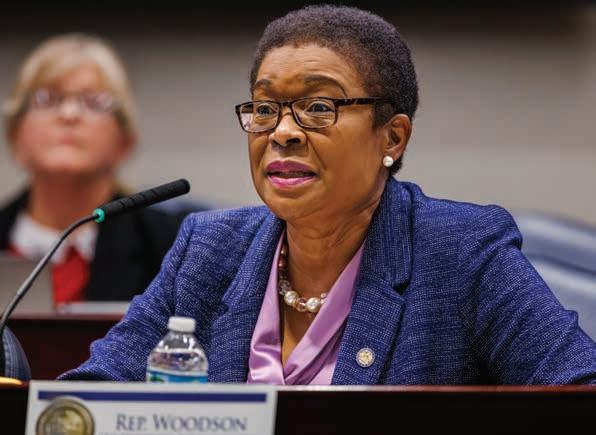
Democratic Rep. Marie Woodson is prioritizing bills this Session on an array of issues, from surgical safety and insurance network disruptions to child protection.
But there’s a central theme that unites them, she said: putting people first.
“When I took the vow of office, I vowed to protect the people of the state of Florida,” Woodson said. “That’s what I do every day. I look out for them, protect them and make sure they have a better quality of life, a way to become more self-sufficient and successful.”
One of Woodson’s top health care measures (HB 93) would require hospitals and ambulatory surgical centers to use smoke evacuation systems during procedures likely to generate surgical smoke.
She said the push, which Democratic Sen. Tracie Davis is carrying in the Senate (SB 162), has drawn resistance.
“Some people are against it. I don’t see why,” she said, adding that hospitals are already required to use small equipment to capture surgical smoke, but some don’t.
“They might be thinking they
could get sued. I don’t care about that. By 2035, we’re expected to have a nursing shortage in Florida. We have a shortage of doctors. Let’s do right by those people.”
Woodson is also carrying a measure with Sen. Shevrin Jones (HB 577, SB 114) in response to a dispute between Florida Blue and Memorial Healthcare System that left many Broward County patients out of network.
Jones was among them, telling Florida Politics the disruption left him “in limbo,” paying out-of-pocket and in need of another doctor.
The legislation would require at least 60 days’ notice before insurers and providers end network relationships. Patients in active treatment could continue seeing their provider under the same contract terms for up to six months or through postpartum care.
Woodson said she has received many calls about the issue.
“I want to put certain things in place to make sure people are covered, that there’s a grace period before they can tell you, ‘Hey, your insurance is not taking this,’” she said. “Because by the time they do the negotiations, you don’t even
have time to look for a different hospital or doctor; you’re just being dropped.”
On public safety, Woodson’s HB 83 would require officers making an arrest to ask standardized questions about minor children and verify that they are safe and with a responsible guardian, with authority to contact the state abuse hotline if needed.
She is also backing a bipartisan proposal with Sen. Ileana Gar-
cia (HB 533, SB 562) to create a bill of rights for people with disabilities, including the right to use preferred alternative communication methods in schools, health care settings and public interactions.
Woodson said people with disabilities can sometimes be made to feel invisible because of their special communication needs.
“Sometimes others act like they are not even there,” she said. “I want to make sure that whatev-
er they use to speak is allowed either in school or through the state of Florida, that they have the right to communicate in whatever preferred manner they have.”
Woodson, who serves as House Minority Whip, has represented HD 105 since 2020. The district spans part of Miami-Dade and Broward counties, including Hallandale Beach, Hollywood, Pembroke Park and West Park.







BY PETER SCHORSCH
As Florida lawmakers consider legislation that would expand exemptions to school vaccine requirements, families, business leaders, community organizations, faith leaders and health care providers are raising concerns about preventable diseases and community protection — issues that have taken on new urgency as the Senate Health Policy Committee voted 6-4 to advance SB 1756.
The bill would expand nonmedical exemptions, allowing parents to opt out of routine childhood immunizations based on “conscience” objections. Health organizations warn that loosening standards could lower vaccination rates further and increase the likelihood of outbreaks in Florida schools and child care settings.
One Tallahassee mother knows how quickly a vaccine-preventable disease can change a family forever. Cathy Mayfield lost her 18-year-old daughter, Lawson, an accomplished equestrian and vibrant 18-year-old preparing for college, to bacterial meningitis after what first appeared to be routine migraine symptoms. “Lawson went from a vibrant, full-of-life, extremely healthy young woman to life support and death within 36 hours — a loss no parent should ever endure,” Mayfield said. “That is why vaccines matter. They prevent diseases that can steal our children without warning.”
Health advocates say stories like Lawson’s illustrate how quickly serious infectious diseases can progress and why prevention measures matter.
The group Florida Families for Vaccines says proposals now moving through the Legislature that would expand vaccine exemptions based on conscience objections could weaken community protection for students. “These may sound like administrative changes, but they carry real implications,” said Kas Miller, Director of Florida Families for Vaccines. “In states where exemptions expanded beyond medical need, vaccination rates fell and outbreaks returned,
“Lawson went from a vibrant, full-of-life, extremely healthy young woman to life support and death within 36 hours — a loss no parent should ever endure. That is why vaccines matter. They prevent diseases that can steal our children without warning.” –CATHY MAYFIELD
like measles, pertussis, and other illnesses parents today have rarely seen, thanks in large part to decades of successful immunization programs.”
Those concerns are being voiced as Florida has seen recent activity involving two highly contagious, vaccine-preventable illnesses: measles and pertussis.
In the past several weeks, pediatric measles cases have been confirmed in Collier, Duval, Hillsborough and Manatee counties, with Ave Maria University now
up to 11 confirmed cases, with 24 more people awaiting results, according to the school’s clinic at the time this article was written. Meanwhile, state data show pertussis, also known as whooping cough, is rising at the same time nonmedical exemptions and lapses in childhood DTaP coverage are increasing.
Florida Families for Vaccines notes that existing law already allows important medical exemptions and says expanding nonmedical exemptions could weaken protections that have supported
stable, consistent school operations for decades. “Parents are not asking for new requirements or sweeping changes,” Miller said. “What we want is simple: Keep the safeguards that have worked.”
Recent statewide polling underscores that point. A poll from Donald Trump’s favorite pollster, Jim McLaughlin of McLaughlin & Associates, found that 79% support maintaining the state’s current school vaccine requirements. The statewide survey of likely 2026 Florida voters shows
strong majorities across political parties, regions and demographics expressing concern that weakening standards could lead to preventable outbreaks. The poll also found that two-thirds of voters said they would be less likely to support a legislator who votes to remove school vaccine safeguards.
“Parents want consistency,” Miller said. “They want to avoid preventable disruptions, and they want to ensure their children are learning in safe, stable environments. No matter where people fall politically, they want schools protected from preventable disease outbreaks.”
For Mayfield, preventing another family from experiencing a loss like hers remains the focus. “If sharing Lawson’s story helps even one family take preventive steps, then her legacy is making a difference,” she said.

BY PETER SCHORSCH
As Florida lawmakers consider proposals that would expand exemptions to school vaccine requirements, Florida Politics spoke with Republican pollster Jim McLaughlin, President Donald Trump’s favorite pollster and President of McLaughlin & Associates, about what recent statewide polling shows about voter attitudes on the issue.
Q: WHAT DOES THE RECENT POLLING TELL US ABOUT WHERE FLORIDA VOTERS STAND ON SCHOOL VACCINE REQUIREMENTS?
MCLAUGHLIN: The polling paints a very clear picture. Florida voters strongly support keeping the state’s current school vaccine re-
quirements in place. Nearly 8 in 10 voters (79%) say they support maintaining these long-standing safeguards, and that support is broad and consistent across regions, demographics and party lines. What stands out most is that this support includes Republicans. According to the data, 71% of Republican voters favor keeping the current requirements, along with strong majorities of independents and Hispanic voters. When you see that level of agreement across the electorate, it signals that this isn’t a fringe or partisan issue. Voters view these requirements as a basic, practical measure that helps keep kids safe and schools functioning.
Q: HOW DO VOTERS RESPOND WHEN THEY LEARN MORE ABOUT PROPOSALS THAT WOULD
EXPAND EXEMPTIONS OR WEAKEN CURRENT STANDARDS?
MCLAUGHLIN: Voters become more concerned, not less. The polling shows that about two-thirds of Floridians oppose eliminating or weakening childhood vaccine requirements. More importantly, 74% say they are worried about outbreaks of preventable diseases if these standards are rolled back.
When voters are presented with specific scenarios, such as increased disease outbreaks, classroom or child care disruptions, or Florida becoming the only state without school vaccine standards, more than 70% say that information makes them more likely to support keeping the current requirements. That tells us voters are thinking about
real-world consequences, not abstract policy debates.
There’s also strong support for specific, long-established vaccines.
The data shows overwhelming approval for maintaining requirements for vaccines like polio, MMR and TDAP. These are time-tested protections that voters trust and don’t want to see undone.
Q: WHAT SHOULD LAWMAKERS TAKE AWAY FROM THIS DATA AS THEY CONSIDER THESE BILLS?
MCLAUGHLIN: The political implications are significant.
According to the polling, 66% of voters say they would be less likely to support a legislator who votes to eliminate school vaccine requirements. That includes majorities of independents, seniors and Repub-
licans, groups that are especially important in Florida elections.
What this really shows is that voters see this issue as settled. They associate current vaccine requirements with public safety, parental responsibility and stability in schools and child care. Rolling back those protections doesn’t align with where the electorate is.
From a political standpoint, maintaining the existing standards is clearly in line with voter expectations. Lawmakers who move to weaken them risk being out of step with a broad and durable consensus among Florida voters.



BY JANELLE IRWIN TAYLOR
Rep. Adam Anderson is a consistent champion for legislation advancing research into rare diseases and genetic conditions that can often be fatal.
“Genetic counselors guiding difficult diagnoses are in short supply. However, Florida aims to rightset our specialization efforts at the intersection between education and employment. We’re standing by Florida families and those students willing to take the next step,” Anderson said of the legislation.
a national leader. It also established the Sunshine Genetics Pilot Program with $3 million in initial funding, laying the foundation for a new $100 billion genomic medicine industry in the state.
In 2024, Anderson successfully ushered through a bill (SB 1582) that created a grant program to fund scientific and clinical research on rare diseases.
His measure is moving swiftly through the legislative process, as is an identical measure in the upper chamber carried by Sen. Danny Burgess (SB 1376).
If passed, the measures would
Anderson is now backing a bill (HB 1115) that would address a shortage of genetic counselors in the state and strengthen Florida’s capacity for advanced medical care and genetic research.
establish the Genetic Counseling Education Enhancement Grant Program within the State University System (SUS) to support the development of American Board of Genetic Counseling-accredited graduate-level programs to eliminate Florida’s status as a genetic counseling desert.
With just 179 licensed genetic counselors in the state, patient demand is not being met. And that’s important.
Genetic counselors guide families facing complex genetic diagnoses that can confuse and scare those facing rare conditions. The counselors also serve as essential partners in research, innovation and precision medicine.
Anderson is tragically aware of how critical these types of resources are to families facing the unimaginable. Because for him, the nightmare is not imagined.
His son, Andrew, passed away from Tay-Sachs disease, an ultrarare fatal genetic disorder with only 16 cases annually nationwide.
Since his son’s death, Anderson and his family have been active in advancing research in rare diseases through the Cure Tay Sachs Foundation and their AJ Anderson Foundation. Anderson previously worked with former House Speaker Chris Sprowls to create Tay Sachs Awareness Day in Florida on Aug. 10, Andrew’s birthday.
And Anderson successfully ran a bill (HB 907) last year, which Gov. Ron DeSantis signed in June, establishing the Sunshine Genetics Act. The law authorized the expansion of pediatric rare disease research and positions Florida as
But as evidenced by his continued push for more research and resources to understand and treat rare and genetic diseases, Anderson isn’t stopping. His bill this year would allow grant funds to be used to recruit and retain qualified faculty, provide financial aid to students, and establish or expand clinical rotations required to obtain a master’s degree in genetic counseling. The funds would be barred from use for general administrative costs, new facility construction and non-program-related activities.
Participating universities under the bill would be required to maintain detailed compliance records and submit annual reports on expenditures and program outcomes. The SUS Board of Governors would then compile the information from reports into a statewide submission.
Currently, the University of South Florida is the only state school with an active genetic counseling program, with another at Florida State University awaiting approval.
If approved by the full Legislature and signed by DeSantis, the measure would take effect July 1.
BY PETER SCHORSCH
Data centers are dominating national headlines and discussion in Tallahassee this Session. Legislation in both the House and Senate aims to prevent proposed hyperscale data centers from impacting electricity rates and the environment. Job creators want to make sure Florida remains open for business and stands ready to lead in America’s AI race against China. Why can’t we do both?
Perhaps we should start with the fundamental question: What is a data center?
Data centers are buildings that organizations use to house data and power technology. For example, the information contained in what is commonly referred to as the cloud is stored in, and powered by, data centers.
Americans are increasingly reliant on data centers for activities like storing photos, streaming media and joining calls. Businesses big and small depend on data centers to process data, run applications and connect networks. As our demand for these functions grows, so does the need for data centers.
Though it seems like a foreign concept, there are already more than 120 data centers in the state.
The debate centers around hyperscale data centers, which are larger in size and typically house 5,000 or more servers. Hyperscale
data centers power everything from mobile banking to hospitals. Infrastructure at this scale supports rapid growth as the need for digital services continues and escalates, while maximizing efficiency and resiliency.
States such as Georgia, Texas and Virginia, have already pursued the opportunity to meet this increasing demand and boost their local economies. Advocates of hyperscale data centers in Florida want to ensure the Sunshine State does not fall behind.
SB 484 and SB 1118, sponsored by Sen. Bryan Ávila, would establish comprehensive requirements for data centers, ranging from land development regulations to development of minimum tariff and service requirements for customers. The Senate bill was heard on Jan. 20 in the Regulated Industries Committee. Kevin Doyle of the Consumer Energy Alliance spoke to the benefits of data centers for communities.
“Developers of data centers work closely with utilities on long-term resource planning to ensure that they have the power generation and reliability they need to power data centers without impacting customers,” Doyle said. “Data centers invest in enhancing the infrastructure. These improvements will strengthen reliability for all customers without

putting additional financial burden on residential or other commercial customers.”
Adam Basford, vice president of governmental affairs at Associated Industries of Florida, underscored Doyle’s points by highlighting the economic impact of data centers.
“Data centers are powerful economic engines,” Basford said. “They generate billions in annual economic impact and millions in tax revenue that support schools, infrastructure and public services in the communities
that host them.”
A recent economic impact study by the Regional Economic Consulting Group states that data center development in Central and Southeastern Florida would produce $263.5 million in sustained annual benefits for the regional economy.
These figures may seem a stretch, but real-life case studies provide concrete evidence of the positive transformations other communities have realized from data centers.
In Loudoun County, Virgin-
ia, data centers contribute $26 in revenue for every $1 in services the county provides, representing nearly half of the entire county’s property tax revenues. The county has used this influx of resources to strengthen schools and infrastructure without straining existing services. At the same time, Loudon County has reduced taxes on its residents, sending valuable money back to the pockets of the people who earned it.
On the national level, President Donald Trump has advocated for the expansion of artificial intelligence infrastructure, including hyperscale data centers. In his AI Action Plan, released in July 2025, Trump calls for “the United States to achieve and maintain unquestioned and unchallenged global technological dominance.”
The plan discusses the necessity of data centers for national defense and homeland security. Recommended policy actions include the evaluation and assessment of potential security vulnerabilities and malign foreign influence arising from the use of adversaries’ AI systems. Will Florida roll out the welcome mat for hyperscale data centers?
The Republican front-runner for Governor of Florida is supportive. In a speech last November, U.S. Rep. Byron Donalds called on government to move at the speed of business.
“Under my leadership, we will invest in AI, quantum computing, and fintech to ensure efficiency and facilitate innovation. Together, we will make Florida the financial capital of the world!,” he posted on X.
FEBRUARY 12, 2026
BY GABRIELLE RUSSON
Putting a constitutional amendment on the ballot to protect religious expression in public schools has gained momentum in the House and is moving through the Senate, too.
The proposal seeks to prohibit discrimination against students for praying, wearing religious clothing or making art, and shield students sharing their viewpoints on God and other religions.
If HJR 583 advances this Legislative Session, the issue would be placed on the 2026 General Election ballot for voters to decide.
HJR 583 has drawn fierce debate during the committee process from critics who warned the resolution was meant to only protect Christians, the majority religion. They also argue that protections already exist in the First Amendment and the state constitution.
Meanwhile, some Republicans have countered that the measure is needed to put God back into schools. And even if religious protections are in place, public school officials are sometimes confused about the students’ legal rights.
“A lady asked me once, ‘If I had
a wand and could do one thing legislatively, what would it be?’ And I said, ‘I would put God back in everything,’” said Rep. Taylor Yarkosky, a Montverde Republican.
“We’ve taken God out of it since the 1980s when I was a kid growing up when Ronald Reagan was President. And I truly believe that is the crux of a lot of what we deal with up here.”
HJR 583 would require at least a one minute moment of silence in first period classrooms for all grades.
Up to two minutes for opening remarks — which could include prayers — would be allowed over the public address system at high school championship games.
“A student may organize prayer groups, religious clubs, and other religious gatherings in the same manner and to the same extent that a student is permitted to organize secular activities and groups,” HJR 583 says.
As long as students take tests, there will always be praying in school, quipped Rep. Yvonne Hinson, a Gainesville Democrat who was a former principal.
“Why is the resolution need-
ed given that religious freedom is already protected?” Hinson asked Rep. Chase Tramont, the bill sponsor, during debate in the 2026 Session.
“Yes, it does exist,” agreed Tramont, a Port Orange Republican. “We’re looking to codify very specific expressions that are in schools that are not really spelled out specifically in the constitution.”
That protection, he argued, is important especially if the legislation was ever repealed.
“These are God-given rights. So a God-given right deserves and demands the utmost amount of protection, and that’s what the constitution offers,” he said.
Rev. Dr. Russell Meyer, Executive Director of Florida Council of Churches, said he is fearful that the proposed constitutional amendment would allow students to get passing grades for using their religious opinions instead of science.
“I have no objection with a student sharing their religious opinion, but it’s not an excuse for learning science-based facts,” Meyer said.
Meyer, interfaith leaders, several students and Democrats have voiced their concerns that HJR 583 could bring unintended consequences and open the door for some students to be pressured, bullied or even discriminated against.
For example, would students from all faiths be allowed to give a prayer at the start of a high school championship game?
“I imagine that the person who was chosen to give that prayer at the championship football game comes from the dominant form of religion,” Meyer said. “I don’t imagine it being a Muslim student. I don’t imagine it being a Jewish student or a Buddhist or a Hindu
or an atheist.”
Meyer also doubted such a ballot question would reach at least 60% of the vote to pass.
“This would lock into the constitution a set of cultural values that go against the majority of Floridians. I ask you, why do you think it will reach a 60% threshold when 55% of Floridians are religiously nonaffiliated?” Meyer asked.
House Republicans have complained about the lack of religion in society today. They believe HJR 583 would help protect students of strong faith.
“I feel like along the way we’ve somehow forgotten our history and that this country was founded on Judeo-Christian principles,” said Rep. Kim Kendall, a St. Augustine Republican. “Our Founding Fathers had two required readings in school. One of them was the Holy Bible.”
The support to put the issue on the ballot extended beyond just Republicans. One Democrat was a vocal supporter during one of the bill’s committee stops in the House.
“I’m wondering, when did we stop putting God at the forefront of our priorities? I’m trying to figure out what is the actual debate here?” said West Palm Beach Democratic Rep. Jervonte Edmonds, who went on to praise Tramont. “I know in the Bible it says, ‘where there’s no leadership, people will perish.’ So thank you for bringing leadership to the state.”
During one committee stop, Tramont said his resolution shouldn’t be controversial.
“People love to say that Christianity is not under attack. And yet all I heard today from a lot of folks was signaling out how people are afraid of the dominant religion, the Christian religion,” he said.
for property insurance consumers when
today is not extensive enough to provide a good baseline knowledge of residential property insurance,” he said.
Ávila pointed to other states’ online tools as examples of what Florida could emulate, singling out Hawaii’s portal as offering an “ample breakdown” of costs. In Florida, he said, the goal is to put rate drivers into a format that ordinary policyholders can quickly grasp.
One simple, standardized snapshot many governments use is the image of a dollar bill, broken down by what each cent goes toward.
“What I’m trying to get at is something almost like that,” he said.
SB 832 would direct the Office of Insurance Regulation to define report terms and post each insurer’s report and related info. It would also prohibit insurers from including land value when setting coverage amounts or adjusting dwelling and structure claims.
to attract insurers to Florida while creating a competitive market with lower prices and better coverage.
“This is something that can make our residents more knowledgeable when they make decisions as to what coverage they get,” he said. “It’s going to be very beneficial, just from an education and transparency standpoint. And we want that with every industry.”
A substantively identical companion bill (HB 767) has also been progressing in the House. That bill’s sponsor, Marco Island Republican Rep. Yvette Benarroch, said when premiums rise, “families deserve transparency so they can understand what is driving those costs and make informed decisions.”
She emphasized that the legislation does not cap or set rates.
BY JESSE SCHECKNER
Florida homeowners could soon get a clearer answer to a question that’s become routine with virtually every renewal notice: Why did my premium go up again?
Legislation now advancing in Tallahassee would require property insurers seeking a rate change to produce a consumer-facing “rate
transparency report” — a uniformly formatted document, written in “plain language,” that spells out what’s driving costs.
Under the proposal (SB 832), insurers would have to break premiums into percentage slices tied to major cost factors, such as reinsurance, claims, fees, commissions and profit. Consumers would
receive the report at the time of a quote and again at renewal, giving them a consistent way to compare carriers and understand each component of their bills.
The bill’s sponsor, Miami Springs Republican Sen. Bryan Ávila, called the stricter disclosure requirements smart, simple policy.
“The information we have
That final piece wasn’t included in a version of the bill Ávila carried last year. He called it a logical correction for most homeowners, since land generally neither crumbles nor burns down; the structures upon it do.
“Now, we’ve seen some cases, particularly in St. Augustine, where there’s been erosion on the coast,” he said. “That’s a different story. But for the overwhelming majority of policies in Florida, the land isn’t going anywhere.”
Ávila pitched SB 832 as a vital thread in a legislative tapestry lawmakers have woven in recent years
SB 832 drew limited pushback in its first stop last month, when an industry representative offered constructive criticism about what the cost breakdowns should look like and possible confusion they might cause if presented poorly.
George Faijoo, a lobbyist representing the Florida Insurance Council, said the group had concerns about added complexity, but generally supports the bill’s overarching objective of improving consumer understanding.
“It makes perfect sense,” he said. If approved and not vetoed by the Governor, the legislation would go into effect July 1. The measure would have no fiscal impact on the state, Senate and House analyses of the bills determined.

BY BRENDAN FARRINGTON
Imoved to Miami from Massachusetts in 1997. The next year, Rep. Howard Futch started the call to replace the mockingbird as the state bird.
It immediately made sense to me. Here I was in a glorious new world filled with ibises, pelicans,
egrets, wood storks and a plethora of species that blew my mind as a lifelong northerner. If I wanted to see a mockingbird, I could go back to Massachusetts. There are plenty of them there. And everywhere, really. They’re all over the freaking place. Four other states have the mockingbird
as the state bird (Texas, Mississippi, Arkansas and Tennessee). Canada has them. Mexico, too.
I mean, c’mon, Florida! Have a little more imagination. The state with the “Florida Man” reputation can’t have a boring (and more than slightly annoying) bird as its state bird!

Now 28 years later, it appears the mockingbird’s days may be numbered. It no longer has the protection of the NRA (more on that later). What has changed is the scrub jay is now being kicked to the curb as the mockingbird’s likely replacement in favor of the flamingo, a favorite of bird paparazzi. The flashy bird even greets millions of people hoping to get rich quick when they buy a Florida Lottery ticket.
So, while change might finally be coming, I fear Florida could screw up the deal as only Florida can. As strange as it may sound, after three decades of debate, maybe we need to think this through a little more.
Who doesn’t love flamingos? I have well more than a dozen depicted around my house in some form or another. My favorite part of visiting Hialeah Park in the 1990s was watching the flamingos take flight after the seventh race. They’re one of my favorite creatures in Florida zoos.
But the very few wild flamingos in Florida came here from Caribbean countries without a visa. Until recent storms, there haven’t been any wild flamingos in Florida for decades. How can the state trying so hard to send so many uninvited Latin Americans back to where they came from embrace a bird that’s trying to take the job of what should be a native species?
It reminds me of the folks who wanted to replace the statue of Confederate Gen. Edmund Kirby Smith in the U.S. Capitol’s statuary hall with one of Walt Disney, who never lived in Florida.
While the flamingo is now the hot pick, the scrub jay was for years the main contender. An endangered bird unique to Florida, it’s kind of like the Bob Dole of bird politics: always part of the discussion to take the top spot. After three tries, Dole finally earned the Republican nomination for the presidency, only to be defeated in the General Election by Bill Clinton
Dole later did Viagra commercials.
Similarly, the effort to make the scrub jay the state bird was beaten back by NRA lobbyist Marion Hammer for years. She just doesn’t like scrub jays, and if you were a lawmaker who wanted to stay friendly with the NRA, you weren’t in favor of the scrub jay either.
But now that Hammer has lost the sway she once had, it would seem like it’s the scrub jay’s chance to finally sit on the throne where advocates have spent years trying to place it.
But, like politics, this generation of policymakers doesn’t want to refight past battles with losing candidates. So instead, for its years of effort, a current bill would designate the scrub jay as the state “song” bird. That’s sort of like being named Chair of the House State Administration Budget Subcommittee when you’ve been working your whole life to be the House Appropriations Chair.
My question is, why let a handful of term-limited legislators pick the state bird for generations to
come? And why are we limiting the candidates? This is the Free State of Florida! Let the people decide! I’ve seen bunches of people express other opinions, from pelicans to osprey to others. Even before this year’s debate, the website www. flockingaround.com suggested, “the snail kite, a species delicately tied to the Everglades and marshes of Florida, would be a GREAT choice for the Florida state bird.”
Personally, I have a soft spot for another pinkish bird with a unique bill: the roseate spoonbill. But I don’t think I’m going to persuade the masses.
The point being, let’s open the debate up to Floridians. There were about 1 million people in Florida when the mockingbird received the state bird designation in 1927. The center of the state’s population was Dixie County. Who wanted to live in swampy South Florida without air conditioning?
We now have 23 million people in the state.
And even if a bill making the flamingo the state bird makes it to Gov. Ron DeSantis’ desk, is there any guarantee he’ll sign it? I haven’t seen the Governor weigh in on this, but he strikes me more as a mockingbird kind of guy.
Have you ever been divebombed by a mockingbird? Like DeSantis, they attack people whether they pose a legitimate threat or not. And have you ever wondered why mockingbirds mimic other birds? It’s a power play. It fools other birds. It’s the same sort of power play DeSantis used when mimicking Donald Trump in his failed bid to take over another territory: the White House.






BY JANELLE IRWIN TAYLOR
Two veteran political journal-
ists have departed one Florida outlet to establish a new one, while two seasoned reporters step in to replace them.
Former News Service of Florida veteran journalists Dara Kam and Jim Saunders have joined State Affairs, a nonpartisan news and policy platform featuring in-depth coverage of state governments.
The two are launching State Affairs Florida, expanding the national platform to the Sunshine State starting Feb. 2.
Kam will serve as Senior Statehouse Reporter for the new bureau, while Saunders will serve as managing editor.
“Florida’s policy decisions ripple far beyond its borders. Opening a Tallahassee bureau lets us bring depth, context and institutional knowledge to coverage that too often gets flattened by daily churn,” State Affairs Editor-in-Chief and Chief Content Officer Alison Bethel said.
“It’s part of our broader vision to steadily expand our footprint nationwide with fair, independent journalism. Dara and Jim know
Florida’s Capitol and power centers inside and out, and they share that commitment.”
Meanwhile, Gray Rohrer and Ana Goñi-Lessan have replaced Kam and Saunders at the News Service of Florida. Rohrer will serve as Executive Editor, while Goñi-Lessan will be a senior reporter for the outlet.
Kam, who previously hosted “Deeper Dive with Dara Kam” for News Service of Florida, will con tinue podcasting under a new title, “Between the Lines with Dara Kam.”
State Affairs officials describe the outlet as a “policy and politics intelligence platform” that com bines “on-the-ground, nonpartisan reporting from statehouse jour nalists with AI-powered legislative and regulatory tools.”
News Service of Florida Group Publisher Tom Allon said of the staffing shuffle at his outlet that “transitions are a natural part of any newsroom.” He assured that Rohrer and Goñi-Lessan’s expertise “en sures that our coverage remains as sharp and reliable as ever” and said the outlet is moving “into a season of expansion and innovation.”





Revolutionary insights into cancer biology and metabolism are driving Moffitt’s work to understand how targeted nutrition can help prevent cancer, enhance treatment effectiveness and reduce toxicity. Because prevention truly starts with nutrition.
Scan to discover how Moffitt is turning meals into medicine.
tees, Boyd said he hasn’t thought that far yet. He acknowledged that, typically, the majority party controls most leadership posts. Nevertheless, he vowed to ensure Democrats have a seat at the table.
“Whatever capacity they serve, they will have a voice in the room,” he said, adding praise for Senate Democratic Leader-designate Tracie Davis
“We’ve already had good conversations about our ability to work together. So I’m confident that whatever role that that ends up being, my friends across the aisle will definitely have the ability to have their say in what we do,” Boyd said.
He offered an example he sometimes uses at home with his family.
“I say, ‘You know, the Democrats in their community got elected, just like I did in my community. So, you know, we control the majority, and I’m happy to be part of that majority, but that doesn’t mean they shouldn’t have a say as well.’ So I respect who they are, what they stand for, and I trust we’ll have a very good relationship, a working relationship moving forward.”
And Boyd has adopted a saying by former House Speaker Dean Cannon, who presided over the chamber early in his legislative career. Cannon would tell him of the Republican Party’s supermajority in the chamber, “just because you can, doesn’t mean you should.”
The adopted motto shows Boyd isn’t looking for shocking, controversial legislation, but rather policy he truly believes helps Floridians.
At the end of the day though, Boyd’s job as Senate President will be more about policy and
Continued from page 1 - Albritton
I’ve
never experienced anything like this level of support, encouragement and love. It is
truly overwhelming. Missy and I feel blessed to have so many people reach out to us...”
–BEN ALBRITTON
remain under the care of a Hematologist and begin a medication regime to help prevent future issues related to clotting. I have a number of follow-up appointments and additional screenings to complete over the next few months as I recover from the blood clot in my lung and adjust to the new medication. The future is bright. Words cannot express how amazed Missy and I have been by the outpouring of love, support, and prayers we have received over Continued from page 1
budget than singing Kumbaya across the aisle.
And he’s got a plan for that, too.
This Legislative Session, lawmakers are poring over several property tax cut proposals, whether eliminating them altogether (with the exception of the portion that pays for public schools and public safety), slashing them for seniors, increasing homestead exemptions, or a number of other options on the table. Whatever emerges successfully from Session will then go before voters for their consideration later this year, where the issue faces a tough ballot test due to Florida’s 60%-plus-one vote threshold for passage.
If voters approve any sort of property tax reduction, it will be Boyd leading the Senate through that chamber’s deliberations on how to move forward with the change. Challenges could be plentiful, with local governments already foretelling shortfalls that could impact local police and fire budgets and, as some have cautioned, require tax increases elsewhere that could offset savings for property owners paying less.
“I don’t believe we can abolish all of the homestead property taxes,” Boyd acknowledged.
But he also agrees with others in his party that rapidly rising property values in recent years have created something of a windfall, and that all governments — whether it’s the state or a city or county — should be able to identify ways to ease tax burdens.
“I think all of us can find ways to tighten our belts, and our communities ought to be able to do that as well,” Boyd said.
“As we’re looking at what might be the right property tax proposal, we also remind ourselves, as leaders and as elected officials, that we
ought to be able to do things in a more efficient and more tax-friendly way for our constituents.”
The property tax issue has arisen largely as a response to increasingly challenging affordability issues across not just Florida, but the entire nation. It’s expected to be a major focal point in the Midterm Elections this year. By the time Boyd takes the gavel, voters will have sent a message at the ballot box one way or the other.
And in Florida, there is a persistent affordability issue that’s mostly unique to the Sunshine State.
Property insurance rates have for years been among the highest in the nation. Homeowners have seen some downward movement on those rates following legislation cracking down on frivolous lawsuits. More providers have come into the state market, driving prices down.
Still, pain points remain, but Boyd hypothesized additional relief on the horizon.
“The reforms that we put in place are starting to really work through the system and through the actuarial tables that will provide homeowners in Florida some additional relief in the short years ahead,” he said, though he didn’t offer any insight to any potential additional legislative fixes.
The Senate President-designate also reminded that Floridians, like other Americans, are facing rising health care costs. There, he said it will be imperative to work with federal partners to ensure Floridians aren’t priced out of coverage.
“That’s always going to be a tough issue, because there’s only so many dollars to go around. But again, spending in the right places and spending it on the right things
are important,” Boyd said.
While affordability is the kitchen table issue of the day — as it often has been throughout history — public education is also a hot button topic. The issue has become a national one, and Florida is often considered the original proving ground for school choice policies. Former Gov. Jeb Bush was a champion for choice, and the fervor for it, particularly among Republicans, has only gotten more intense since his tenure in the early 2000s.
As with any policy, there are always detractors. School choice critics over the years have frequently derided such policies as a loss for traditional public education. The argument goes, particularly for school vouchers that allow students to use public funds to pay for private school, that choice programs are funneling funds away from public education.
But even with a large contingent of critics, school choice has been relatively popular, and it earns at least some bipartisan support.
Still, the battle rages on. This year, there are two issues facing lawmakers. One is an effort to add some transparency measures to the existing universal school voucher program, a fix bill (SB 318) that Sen. Don Gaetz is running. The other is in relation to the controversial Schools of Hope program.
That program began as an effort to ensure students in underperforming areas were able to access quality education by allowing charter schools to co-locate in underutilized public school facilities.
But some provisions landed with a thud. The program doesn’t require charter schools to compensate school districts for use of their
resources, which has prompted pushback from some local School Board officials. And new language added to the program also made it so that essentially any school in the state is subject to the co-location requirement, regardless of educational attainment in the area.
The pushback prompted Sen. Darryl Rouson to file a repeal bill (SB 424), with Reps. Ashley Gantt and Robin Bartleman backing the House version (HB 6023). While it’s unlikely either will gain traction in the GOP supermajority Legislature, Boyd acknowledged there may be some unintended consequences.
“Can we make it better? Should we try to make it better? Absolutely,” Boyd said.
But at the end of the day, he’s a huge supporter for school choice done right.
“Sadly, there’s some public schools that are just not getting the job done, and kids don’t have a chance,” he added. “Generation after generation they find themselves in poverty because the kids and the families that they’re a part of just don’t have a chance to break that cycle.”
Boyd said he supports public schools — he’s a product of them himself — but strongly believes that when the system isn’t meeting a community’s needs, or an individual family’s needs, they should have options that do.
“I can’t tell you the number of parents I’ve had come through my office, and … they’ve just had tears in their eyes and say, ‘You know, my child was in a failing school. There was really no chance for success. I didn’t know what was going to happen, but this opportunity came up for this school or that school, and it’s made every bit of difference in my child’s life.’”
Florida has to offer and shows the power of love in this great state. We felt your support and your prayers, and we are beyond grateful. Missy and I could not be more blessed in every single way.
Health scares often come along out of nowhere and knock us off our feet when we least expect it, when our time and our priorities are focused elsewhere. I know from my own experience and from others who have shared with me, that in many cases the mental anxiety that comes along with being sidelined can be just as bad as the physical pain of an illness or injury.
Session is a high-stress, time-limited environment, and it’s understandable that our health and wellness can sometimes take a back seat to other priorities. And, there are some aspects of our health that are out of our control. However, my own health scare served as a stark reminder that no matter how busy we feel, we have a responsibility to take our health seriously to the extent that we can.
I’ve
agement and love. It is truly overwhelming. Missy and I feel blessed to have so many people reach out to us, regardless of political party or geography. THAT is the best that
1 Corinthians 6:19 instructs us that our bodies are temples of the holy spirit. We cannot do the work the Lord has called us to do if we are not taking care of ourselves and also mindful of our responsibilities to our families. As we move forward toward the final and often busiest weeks of Session, my prayer is that all involved in this process will make their health a priority, so we can finish out Session strong!
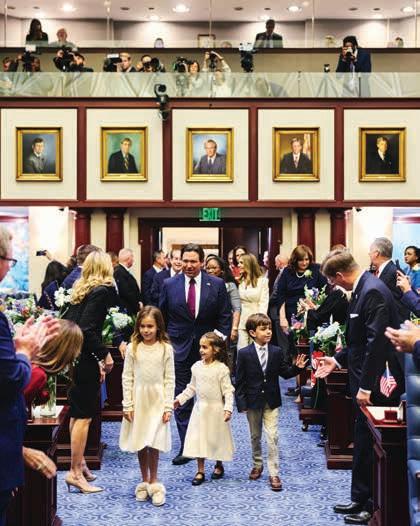
Legislative Session Opening Day is the epitome of pomp and circumstance. There are flowers and ceremonial presentations, speeches and appearances. It’s also one of the few opportunities for family members and other guests to appear on the floor.
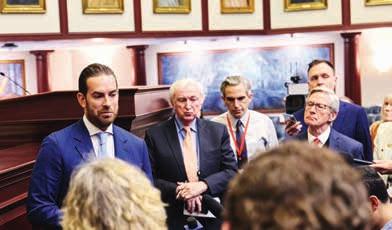
Yet despite the celebratory nature, few news organizations send professional photographers to capture the many moments — ranging from cute to powerful — that show the softer, collegial side of the Florida Legislature. Florida Politics is honored to be among those who do invest in memorializing these moments, and this photo spread is just a small sampling of the powerful moments that punctuate the first of 60 days of what is otherwise critical work ensuring state government functions for the people it serves.
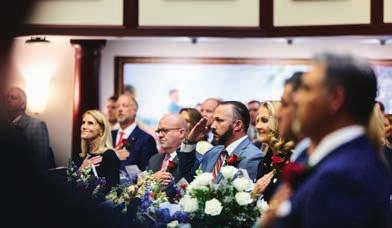
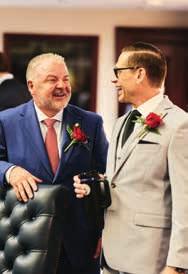
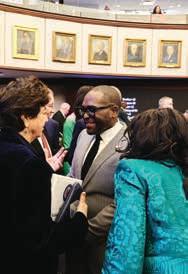
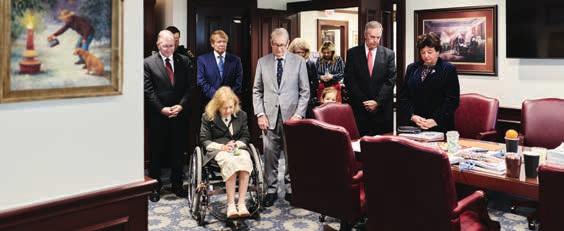
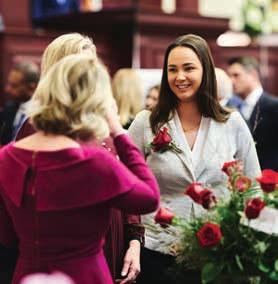
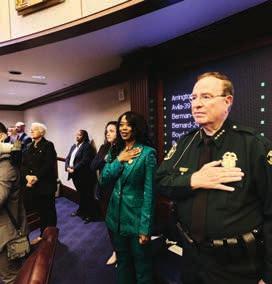
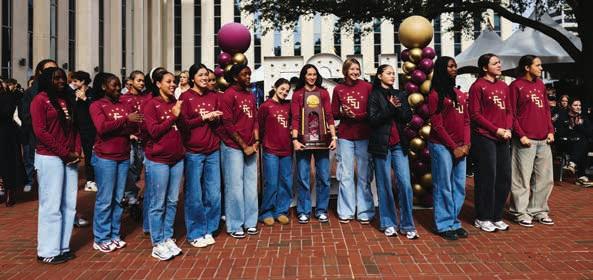
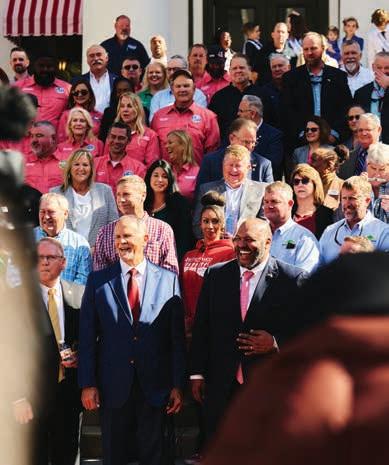
attention during the Pledge of Allegiance during the first day of Session. 8 & 9.
day
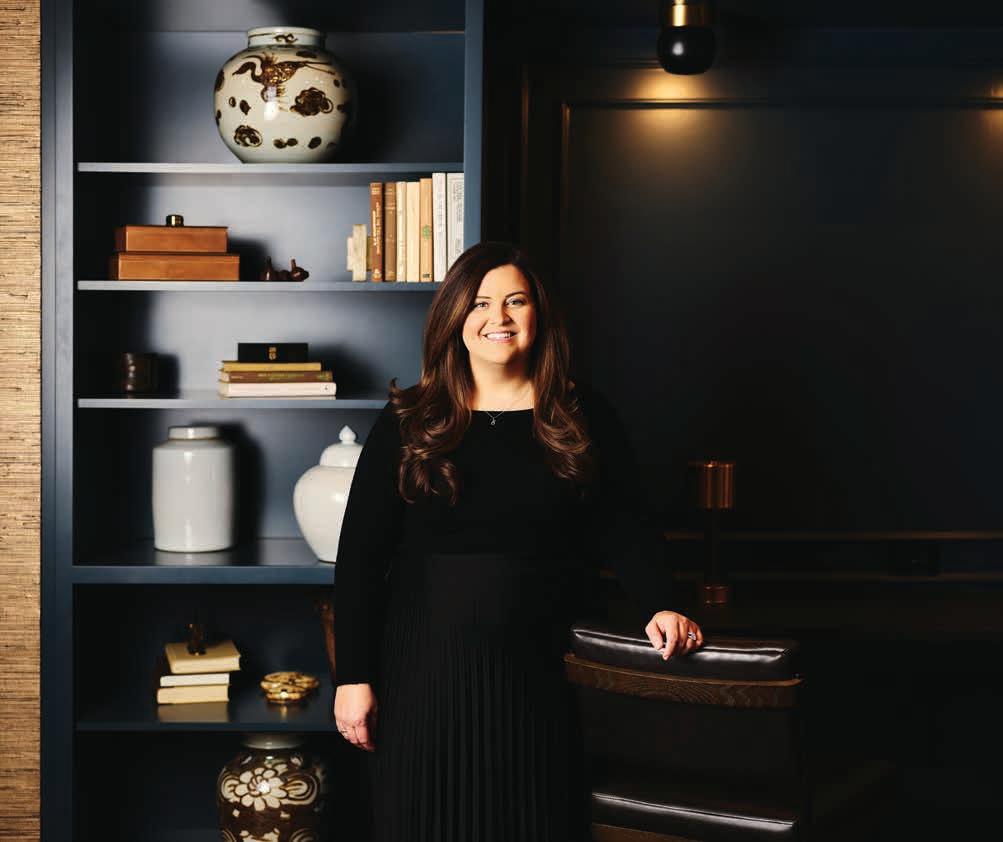
BY BRENDAN FARRINGTON
Anna DeCerchio earned her law degree from Florida State, passed the bar exam in 2015 and still hasn’t spent a day practicing law.
Life had other plans.
While in law school she began interning at the Southern Group lobbying firm, where she got a taste for working with government.
“I interned in this world and I enjoyed it so much, I told my parents that I didn’t think I really want to practice law, and they were like, ‘Isn’t it a little late for that?’” DeCerchio said with a laugh. “It all worked out.”
After earning her degree, she began working as a legislative aide to future House Speaker Paul Renner, who is now a candidate for Governor.
“She has the trifecta. She’s a triple threat.”
–RACHEL CONE
From there, DeCerchio worked in Gov. Ron DeSantis’ budget office, later became a Deputy Chief of Staff interacting with several executive agencies and eventually was named Chief of Staff at the Department of Environmental Protection (DEP). DeCerchio, 35, has now been at Southern Group for about a year, where she feels like she’s finally settled into her forever job. She has also started a family since joining
Southern Group, giving birth to daughter Emily last Fall.
“I hope this is the last job I ever have,” she said. “It’s a good feeling, but you also can never be complacent, right? You have to always continue to be more successful, to do more for your clients and continue to move the needle. This is not a world where complacency gets you far.”
Southern Group is also hoping this is DeCerchio’s last job. Rachel Cone, a managing partner at the firm’s Tallahassee office, said DeCerchio’s mix of legislative, executive and agency experience gives her a unique skill set.
“Anna was a really critical hire because it’s rare when you get someone who comes out of government at that high a level of a position who also has legislative expe-
rience and direct Governor’s Office experience,” Cone said. “She has the trifecta. She’s a triple threat.”
While DeCerchio is restricted from directly lobbying DEP for another year, she still serves as a valuable advisor for clients on regulatory issues.
“Just having that expertise to add to our already existing regulatory practice that we have, we’ve been able to provide a well-rounded service offering clients to navigate the regulatory apparatus,” Cone said. “She understands the business. She understands and can speak with a ton of confidence how government works.”
And it’s not like DeCerchio’s law degree isn’t helpful. She said it shapes the way she thinks about approaching legislation
“There’s reading and under-
standing bills, knowing how to amend legislation, what are the requirements for things like single subject so that things can pass judicial muster,” she said. “But also understanding how to research and write and have a little more substance to what we do is important.”
Her experience at DEP meshes nicely with a lot of her current work, which includes representing developers.
“I call it practical environmentalism. You want to have a state that continues to grow and economically flourish and we need development, but how can you do it in a way that allows Florida to maintain its healthy ecosystems and what makes Florida Florida,” she said.
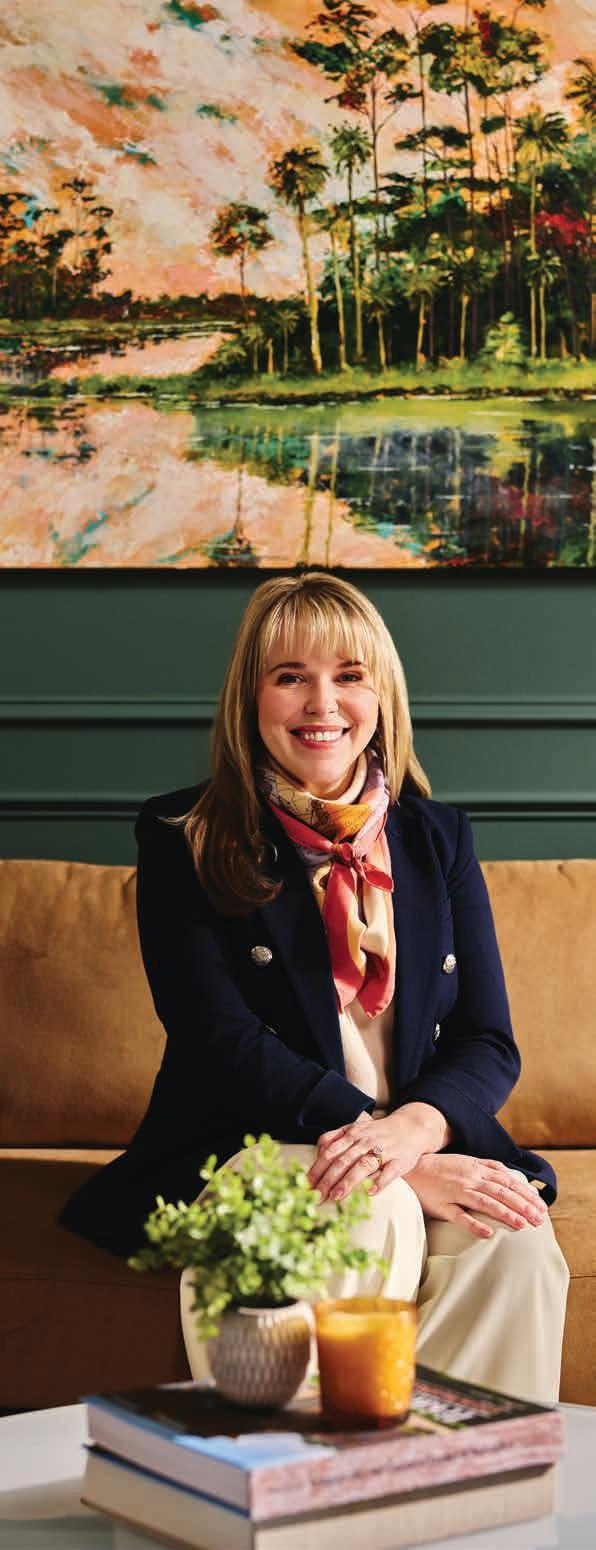
BY BRENDAN FARRINGTON
It’s not easy starting a new lobbying firm just before a Legislative Session. It’s also not easy starting a family when your firm isn’t even officially a year old.
But that’s how Tara Reid-Cherry rolls. She started her business, Trianon, last year — though she didn’t announce it until after Session. She considered 2025 to be like a restaurant soft opening: Reid-Cherry was in business and serving clients, but just hadn’t made the grand opening announcement.
And now she is adding becoming a mom to her responsibilities.
“I guess that’s the hard thing I’ve decided to do. Last Session, my hard thing was I just decided to start a new business. This Session, my hard thing I’ve decided to do is have a child,” she said.
Reid-Cherry began Trianon after more than a decade of experience in politics and lobbying. She previously worked on Gov. Rick Scott’s and Gov. Ron DeSantis’ campaigns.
“She
Reid-Cherry launched the firm a few weeks before the 2025 Session began.
Raised in Putnam County, Reid-Cherry majored in political science at Florida State University — though at first she was actually interested in pursuing a career in musical theater.
“Politics was not really something I was interested in. I got into it later in my 20s,” she said.
But she began rethinking her future and reached out to the Scott campaign, and that work eventually led to lobbying.
“I approach a lot of my work like a campaign,” she said. “There’s a deadline, there’s a time limit that we have to get things done and you work nonstop until the job is done. And whether you win or lose, leaving nothing on the field and knowing you’ve talked to everyone you can and you’ve advocated the best way for your client. That’s what a campaign taught me — long days and long nights.”
In the 2027 Session, she’ll work
does it the right way in this process, which is always be honest, work hard for your clients, represent their brand well. She’s absolutely one of my favorite people.” –DARRICK MCGHEE
Now she has more than 15 clients, including several municipalities and groups with interests in education, health care and family and child welfare.
“I’ve known Tara since she was on the Rick Scott campaign. I had the chance to watch her grow in her career. I’ve had a front-row seat to who she’s become in starting this firm,” said lobbyist Darrick McGhee. “She does it the right way in this process, which is always be honest, work hard for your clients, represent their brand well. She’s absolutely one of my favorite people.”
McGhee and Reid-Cherry have shared a couple of clients, including AMIkids, a nonprofit that helps troubled youths.
“She loves those kids. It’s the things that you do behind the scenes when nobody’s watching and the way she advocates for the kids during the budget process when the kids aren’t here and the clients aren’t here,” McGhee said.
For the moment, the firm consists of Reid-Cherry, Sarah Katherine Massey as government affairs director, and two consultants. Massey has experience working with House Speaker Danny Perez and Senate President Ben Albritton
those 15-hour days with a new child. Her husband, Blaine Cherry of the family-run polling firm Cherry Communications, has an office in the same building as Reid-Cherry, so there will be a lot of tag-team parenting.
“I see all of the moms around the Capitol who do this and do this incredibly — balancing clients and children, and so I feel like I have plenty of resources, you know? People to go to for guidance,” she said.
When she’s not working, Reid-Cherry says her life is pretty low-key and she spends a lot of time at home. She likes to crochet, unwinds to “Real Housewives” and enjoys strolling through Tallahassee Nurseries.
“During Session, I don’t go that many places, but out of Session, when no one else is in Tallahassee, that’s when I can go to the nursery, or Black Radish and Ology, for coffee at least. Those are the places I love,” she said.


Check-in:
Seats










BY ROCHELLE KOFF

Valentine’s Day inspires a yearly search for a romantic dinner destination. But what makes a restaurant romantic can vary, depending on the couple. It might be the site of a first date or a memorable night out.
Still, there are some restaurants that help set the mood. Maybe it’s the cozy setting, the attentive service or the fine meal — likely a combination of all three.
To help your search, here are a dozen places that offer that special something. Make reservations as soon as possible, and let love do the rest.
The charming downtown restaurant and bar, located in the storied David S. Walker Library, features an eclectic menu and a book-size compendium of cocktails. The Valentine’s Day menu will offer special drinks and dishes
that will be available on Feb. 13 and 14. Reservations will be accepted on those days. 209 E. Park Ave.; 850-354-9739.
The upscale restaurant, which is celebrating its 10-year anniversary in 2026, exudes a romantic but comfortable atmosphere. For Valentine’s Day, Blu Halo will feature specialty cocktails and an option for a three-course preset menu along with a condensed version of its regular menu. If you haven’t been there lately, Blu Halo has expanded, adding a 65-seat dining room. 3431 Bannerman Rd.; 850792-7884.
CLUSTERS & HOPS
Savor a fine glass of wine and European-inspired fare in an intimate bistro with a retail gourmet shop, all from longtime owner Kent Steels. Valentine’s Day
specials, offered on Feb. 13 and 14, will include a Portuguese and Spanish prosecco sangria, grilled oysters and a black cod special. Charcuterie and cheese boards are perfect for a shared experience. Look for decadent desserts, made in-house, such as cheesecake and pecan pie, chocolate-coconut cake and peanut butter pie with toasted bourbon pecan whipped cream. Clusters & Hops has added more days to its schedule, so it’s now open from 4 to 10 p.m. MondaySaturday. 1866 Thomasville Rd.; 850-222-2669.
DAMAS
Set in a historic cottage on the grounds of Goodwood Museum & Gardens, Damas is a lovely space for a romantic evening. The fromscratch destination, from restaurateur Amanda Morrison with chef Jasmine Dunn, is presenting a four-course dinner on Friday,

Feb. 13. Damas features a curated wine list with choices from female winemakers. Stop by for brunch on Feb. 14. Goodwood Museum & Gardens, 1600 Miccosukee Rd.; 850-228-5611.
HAYWARD HOUSE
Owner Ashley Chaney has created a contemporary flair in this iconic location, where diners will find a varied menu with dishes such as French onion soup, steak frites, halibut roulade and braised short rib ragu. Hayward is now serving the lavish caviar brand, Regiis Ova, from award-winning chef Thomas Keller. 228 S. Adams St.; 850-825-7081.
THE HUNTSMAN
RESTAURANT AND BAR
If you and your sweetie are game for something different, look for adventurous dining at this sophisticated restaurant. The Huntsman gets attention for its selection of items such as deer, elk and bison, but game is a small part of the menu, which changes. Look for dishes such as wood-fired rib-eye and grilled lobster, duck cassoulet and mojo oyster mushroom steak. On Valentine’s Day, The Huntsman will present a six-course tasting menu. Diners have a choice of a meat-focused or a vegan lineup. 320 E. Tennessee St.; 850-765-1887.


The downtown fine dining destination may be a popular place for a power meeting or a posh night out, but Il Lusso also stands out as an elegant backdrop for a night of romance. Diners will find a menu that includes top steaks and chops, housemade pasta (half or full portions available) and Italian dishes in a gleaming dining room with a big city vibe. On Valentine’s Day, look for specials. Keep in mind, you can order custom cakes or make other special requests in advance. Il Lusso offers a stellar wine list and cocktails. 201 E. Park Ave.; 850-765-8620.
French food just seems inherently romantic. Escargot. Crepes. Croissants. It’s the language of love — n’est-ce pas? No wonder Little Paris is a popular destination on Valentine’s Day. Chef Herve Alcesilas will be presenting a special menu on Feb. 14. Or stop by Feb. 15 for a Valentine’s Day jazz brunch. 1355 Market St.; 850-765-7457.
Open since 2018, Mimi’s Table is a cozy, white tablecloth setting. Executive chef/owner William Lawson presents French, Italian and Southern-inspired cuisine with dishes such as salmon Provençal, rack of lamb and seafood grill. Look for specials on Valentine’s Day, and leave room for homemade desserts. 1311 Miccosukee Rd.; 850-999-8406.
One of Tallahassee’s newest dining destinations, The Monroe offers Modern American cuisine in an attractive setting with a fun vibe. The menu features a mix of small and large plates with gluten-free and vegan/vegetarian options plus half- and full-size portions of pasta. For dessert, you and your honey will want to share The Monroe Wonderball. It is indeed a wonder: a dark chocolate ball filled with soft chocolate mousse, brownie pieces, cashew praline and more, from pastry chef Anastasia Shine. We won’t spoil the surprise Wonderball finish. 1320 S. Monroe St.; 448-231-2965.
With tables draped in white linen, chandelier over the bar and a fine-dining menu, Savour is an elegant and eclectic space from restaurateur Drew McLeod in downtown Tallahassee. Chef Ashley Mayo serves creative fare with upscale steak and seafood choices, with dishes inspired by the season. 115 E. Park Ave.; 850-765-6966.
Chef Zeke Bardhi has been at the helm of his lovely Italian restaurant on Kinhega Drive for three decades, serving house-made pasta and bread and fine Italian favorites. The dining room is cozy and eclectic, but it’s tough to beat the classic ambiance of dining on the covered patio, with its elegantly appointed tables, enhanced by gardens and the scent of flowers. 3596 Kinhega Dr.; 850- 894-9919.






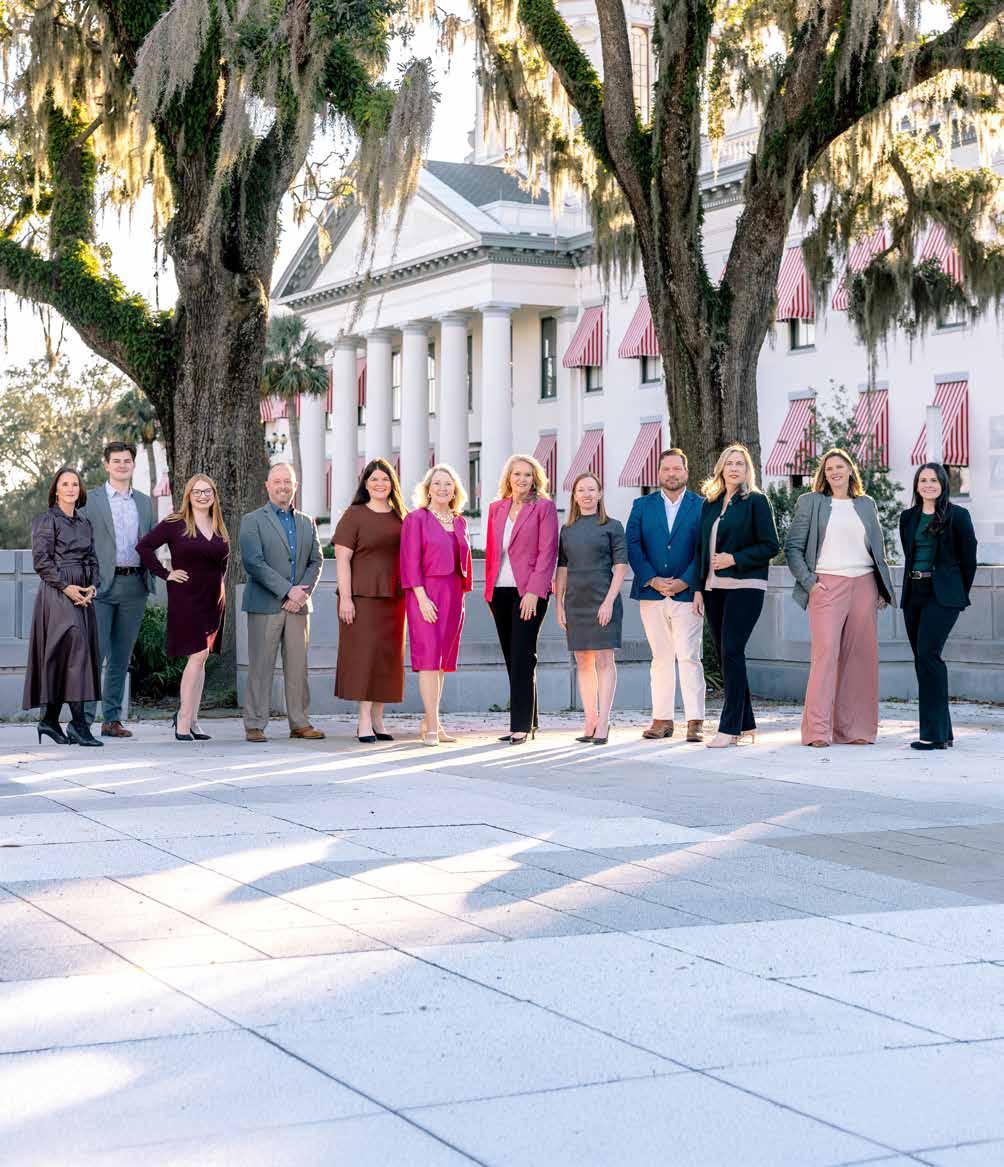

BY ROSANNE DUNKELBERGER
For Maggie Gahan and John Wallace, it wasn’t love at first sight, or the second, or the next dozen or so. There was even an interlude where she was a bit peeved at him.
But in their case, familiarity bred not contempt, but connection. After Wallace, 24, graduated from Florida State University (FSU), the timing was right — and they’re happily headed to the altar in December.
They met at a leadership banquet at FSU when Gahan, 23, was a freshman and Wallace was a sophomore. “We were friends, but not super close friends. We had so many mutual friends,” he explained. One of those was JP Gutierrez III, Wallace’s fraternity brother who became a good friend to them separately and served as a low-key Cupid in their relationship. More on that later.
“We were on the same executive board, ran in the same circles,” Gahan continued, “but then you kind of went and did your thing and I did my thing and we would talk every now and then, but not super seriously for like a year or two.”
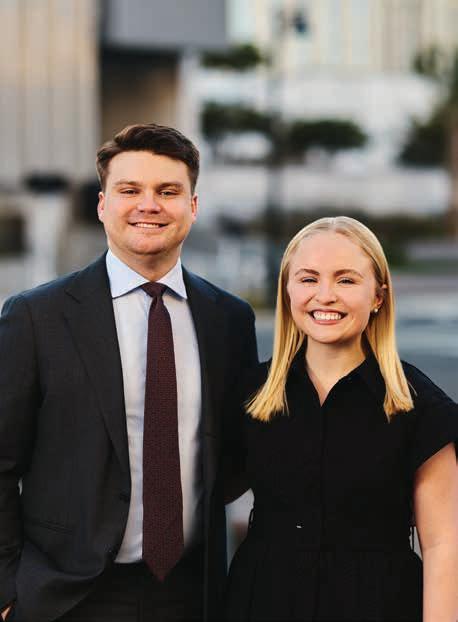
That executive board was where Gahan’s opinion of her future husband ticked downward. The board met at 8 a.m. and Wallace was often a no-show.
“I was just like, where is this kid? Why has he not been showing up? I’m like, if you’re going to be on this board, you’ve got to do your job. And he wasn’t coming, so I was not very happy,” she recalled.
After Wallace graduated, she learned that he was attending a state and local government economics class scheduled at the same time, and all was forgiven.
While he was working post-graduation in the Senate Majority Office and Gahan was in her last year of college, they started dating. As Gahan neared graduation, Wallace strategized a bit and dropped a flea in Gahan’s ear about calling Red Hills Strategies President/Owner Amanda Bevis to ask about the possibility of an internship at the communications shop.
“I had not a plan in my mind to stay here after I graduated, but then I started working for Amanda my senior year and a month in, she’s like, ‘You’re staying’. And I loved it. When I graduated, I was like, ‘Yeah, I’m not leaving.’ Sorry, Dad, no D.C. for me.”
Gahan is now a director at Bevis’ consultancy, doing Process-ad-
jacent communications work. Notably, she played an integral part in the passage of Lucy’s Law, which toughened Florida’s boating safety laws, increasing the penalties for reckless operation and boating under the influence.
Wallace is the Campaign Manager for Chief Financial Officer Blaise Ingoglia, who is running to retain the position he was appointed to by Gov. Ron DeSantis in 2025.
Of note, Wallace works alongside Gutierrez, who is a special assistant in Ingoglia’s campaign.
As with any couple involved in campaigns, their wedding is set for after Election Day. Even their engagement was wrapped up in politics. The week before their planned vacation at the beaches of 30A, where Wallace planned to pop the question, he was asked to interview for his current job in Tampa.
“In the span of 10 days we went from … leaving that job to getting engaged to working in a new job,” Gahan reported. “It was adventure whiplash.”
On a side note, JP (also Wallace’s best man) got engaged 30 days after them and will be getting married in January, 30 days after the newly minted Wallaces.
Their honeymoon plans aren’t totally set yet, but for their first international trip they will head to Rome to be blessed by the first American Pope.
“And then we’ll do London and I think Switzerland,” he said.
“We’re going to go the weeks of Christmas and New Year’s, when everything’s decorated with the Christmas markets,” Gahan added.
A fundamental part of their relationship is their Catholic faith, although they came to it in very different ways.
Gahan describes herself as a “cradle Catholic,” who didn’t attend mass during her freshman
year. Wallace was a constantly moving military brat with a Catholic mother. He only sporadically went to church growing up.
While in college, he had an “extremely devout” roommate. “He started getting me to go to mass with him,” Wallace said, and he was confirmed while still at FSU. Gutierrez was his sponsor.
Their faith is “super equally important to both of us but in very different ways,” he said. “I get a lot more theological.”
For their wedding, “he’s like, ‘Can we say the Our Father in Latin?’ I’m like, I’ve never heard that in my life,” Gahan said.
For the past three years, both have taught catechism classes at the Co-Cathedral of St. Thomas More — where they’ll be getting married. She teaches third, fourth and fifth graders, he teaches confirmation classes to sixth-, seventhand eighth-grade students.
“While we’re in Tallahassee, we’re just trying to be very synced into the community. So, going to local coffee shops or restaurants or seeing friends who are in town, especially right now,” Gahan said.
For dining out, they often choose Savour or take a short trip to Thomasville to eat at Jonah’s Fish & Grits. But her “absolute favorite” restaurant is Black Radish. “I love that you can sit at the chef’s counter. It’s like watching a show.”
“I would say between work, travel and seeing friends, most of our time is occupied,” Gahan commented. “Eventually we’ll have a dog in the mix.”
Just to set the record straight, Wallace would like us to know he’s not the one who’s anti-dog. It’s their landlord and, while tempted, his fiancé’s not willing to take a chance and sneak a pup in their home.
“I’m a little bit too much of a rule follower, but if I wasn’t, I would totally have had a dog by now,” she said.
























or worth. Leave those decisions to a local citizen jury, not politicians or special interests.
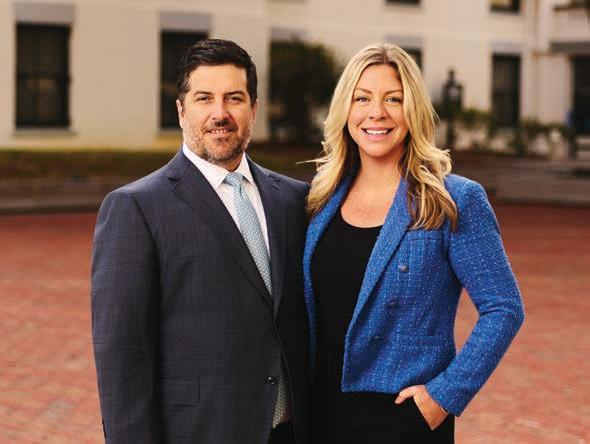
BY ROSANNE DUNKELBERGER
“Summer loving, had me a blast. Summer loving, happened so fast. I met a girl crazy for me. Met a boy, cute as can be …”
So sang Danny Zuko and sweet, innocent Sandy Olsson about their romance in the movie “Grease.” A quarter century later, in a life-imitates-art moment, Chris and Ashley Chaney recreated the young love scenario on Sanibel Island.
She was 18, fresh out of high school, spending the Summer at her snowbird grandparents second home before heading back to her Canadian home to attend college. He was 22, a local guy and fellow FSU Seminole, bartending at a resort while considering his next step in life.
And then … well, let’s have them narrate.
“We fell in love … a Summer romance. We were inseparable that Summer as soon as we met,” Ashley said.
“Her dad actually introduced us, believe it or not,” Chris added.
“We would go shelling, we would go to the beach, we would go fishing. There’s not a lot of young people down there … so it was kind of just us,” she continued.
“We had a great time. Those are good, good memories.”
Ashley would return north for university, but the couple communicated in what Ashley calls an “old school” kind of way. No smartphones, no texting, no unlimited long-distance minutes. “We kind of kept in touch, but it was a different time. We didn’t even have cellphones. I called from my dorm room. … It was very innocent and old school.”
For Ashley, college was a bust, so after one semester she returned to Sanibel — and the love story has continued for 20 years.
They would spend a few more years in Southwest Florida before relocating to Tallahassee so that Ashley could attend Florida State University. To put herself through school, Ashley worked in food service jobs, gaining experience and responsibility, ultimately leading to sales and event planning.
Today, the 38-year-old owns Hayward House Bistro, located downtown literally in the shadow of the Capitol in a corner spot (formerly Andrew’s Grill) that has been a dining hot spot for those involved in The Process for decades.
“Even before I opened the restaurant, my work in events was very heavily in the political space,” she explained. “My clients for my
career, and now my customers — not all, but a lot of them — are political people. And Chris and I have been together for a really long time. As his career has risen and his connections are my connections, and our life is just together, I’ve been very fortunate to kind of be in it without actually being in it.”
A veteran of campaigns (Bill McCollum and Rick Scott) and state government (the Agency for Health Care Administration), Chris, 43, is now a partner at The Advocacy Partners, with a practice heavily focused on health care policy.
While he was always interested in politics, Chris said his true baptism by fire came in 2000, when all eyes were on Tallahassee during the 36-day Presidential Election recount. “I was living in Smith Hall on the west side of campus, and you’d get anywhere near downtown there’s all the television trucks. … Yeah, it was a wild time,” he recalled.
He would also get an up-close glimpse of The Process in Florida working as a bellman and valet at the Governor’s Inn.
As befits careers tied to the vagaries of politics, their 2011 wedding in Ashley’s Canadian hometown was scheduled after Scott was first elected and inaugurated
as Governor. But poor planning led to their daughter being born on the first week of Session in January 2015.
“He had just started a new job at the firm. We had a new baby. We had a new house. You know, it’s just kind of like everything happened all at the same time,” Ashley said. “Our second, we planned better. She was born in October, and it was a Spring Session that year.”
With jobs that both rev up during Session, their personal life can get hectic. But with help from a nanny and friends, the Chaneys make it work. And a Thursday night date — usually dinner — is sacrosanct.
“We definitely have to be intentional to carve out the time,” she said. “That has been really great, because you are able to just focus on each other, drown out all the noise, and focus on sharing a meal that somebody else has prepared in a different restaurant that is not my own.” Their local favorites include IlLusso, Sage, Black Radish and Bella Bella.
Valentine’s Day plans? Fuhgeddaboudit.
“Valentine’s Day has never been a big thing for us because when we were getting together, we were both working in different restaurants, and you know that’s a big night in the restaurant business, right? I’ve only ever been in the restaurant business, so that’s just a workday,” Ashley said.
“There are a lot of similarities in what we do. There’s a very defined beginning and end. There’s a beginning and an end of a dinner service (or) an event, right? There’s a beginning of the Legislative Session and there’s an end to the Legislative Session. Very rarely in jobs do you get that.”
After holding a green card for a decade, Ashley became “a very proud American citizen” in January 2025.
There wasn’t a whole lot of culture clash between the international couple, although one early interaction could have ended in disaster.
“I almost wrecked my car once when we first got together,” Chris said, adding that Ashley’s speech “was very clearly Canadian.”
Ashley picks up the narrative, saying, “We were first dating and we were on Sanibel and Chris was driving.
Chris continued: “And going around a corner we were talking about your accent, and I said, ‘Say outhouse.’”
Ashley said the word in her best Canadian accent during our interview and it sounded something like “oothoose.”
“And he thought it was hilarious,” she said. “He was laughing so hard he almost ran us into a palm tree.”

At FIU, Dr. Diana Azzam and a group of leading researchers have developed a personalized approach and treatment to address recurring pediatric cancer with a proven 83% effective rate in an initial human trial. The approach involves processing a patient’s blood and, using automation, testing it against hundreds of FDA-approved drugs to identify the drug with the greatest potential to reduce an individual’s cancer tumor.
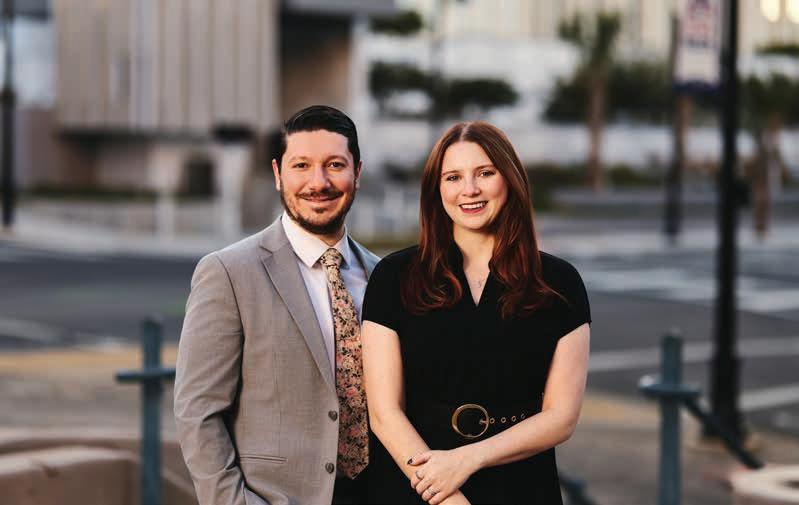
BY ROSANNE DUNKELBERGER
Newlyweds Ash-
ley and Zach Colletti made a smooth transition from coworkers to besties to roomies. But when it came to taking the leap into love, they seemed to be the last to know.
“We would often get asked how long we’ve been dating,” Ashley said.
Zach chimed in: “And we’re like, ‘No, we’re coworkers. I don’t even think that’s allowed.’”
When they met in 2020, both were working as legislative aides for then-Sen. Jeff Brandes — and both were dating other people. But in the confines of a three-person office in the Capitol, the duo had plenty of opportunities to get to know each other in the friend zone.
“On Fridays, during committee weeks (and) in Session, Sen. Brandes and the other legislative aide would both go back to St. Pete. But because we both lived here, we would be the only two in the office,” he said. “So that’s when we started to get close. It would just be us and we would just hang out and talk for most of the day.”
Within a few months, Ashley would move back to St. Petersburg and “we just talked long distance for a long time.”
“We wouldn’t talk on the phone,” Zach clarified, “texting … and if we were in the same area we would hang out. For our generation, phone conversations outside of professional or talking to your parents, I think it’s kind
of like lost.”
In the Summer of 2021, after Ashley’s move, the Senator suggested Zach make a one-month visit to St. Petersburg to get a better feel for the district. Zach needed to find a place to stay and Ashley was just moving into a place with an extra room … and their “platonic roommate” era began.
“Toward the end of that year, we did finally start dating and we’ve been together ever since,” she said.
Ultimately, Zach was able to permanently move to St. Petersburg. Ashley signed on as Campaign Manager for Sen. Nick DiCeglie’s run for the upper chamber and now serves as his Pinellas-based legislative aide.
Zach currently wears three hats in his career. He is Director of Operations for Enwright Rimes Consulting, overseeing the activities of the campaigns his firm is working with. He’s also active in the government affairs side of the business, and one of those clients is responsible for his second job title: Executive Director of Conservatives for Clean Energy in Florida. He was also recently named Political Director for the Pinellas County Republican Executive Committee, organizing at the granular level.
“There are always things that I
can take from one of my silos and apply them to another,” he said. “It all kind of informs each other, which is nice.”
When planning a traditional wedding became overwhelming, the couple eloped (sort of) last May to Pass-a-Grille Beach. It was one of their favorite walking spots “where we used to go as friends,” she said, “and we would just hang out,” he said, “before we realized we were actually dating,” she said. (They have an uncanny ability to complete each other’s sentences.)
Only parents and grandparents attended the beachside vows, but the group decamped to Shadrack’s dive bar (no judgment, that’s what Zach calls it) for pizza and drinks with additional friends and family.
They had a mini-honeymoon in Savannah, Georgia. “We’re planning our big one for after this upcoming campaign season,” Ashley said, although they’re not quite sure of the specifics. “We’re between like tropical, do nothing and rot on the beach and have everyone bring food and drinks to us,” he said. On the other end of the continuum, plans for Iceland or a 100-mile hike through Britain while staying at historic pubs were mentioned.
This year, they’ll be spending Valentine’s Day in Tallahassee and
plan to keep up with their annual tradition: heart-shaped pizzas cooked at home combined with some sweet treats, red wine and a movie, followed by a walk on the Lafayette Heritage Trail with their rescue dog, an accident-prone foxhound named Rummy Cooking together, hiking and nature-based activities are their favorite way to spend their free time, as well as eating out — especially brunch. Their favorite brunch haunts include Table 23, Uptown Café and Madison Social. “So, anywhere with a mimosa,” Ashley quipped.
On a more serious note, the couple shares an appreciation for the foibles of each other’s work life.
“It would be very difficult, I feel like, if we both weren’t in this because it’s hard to explain to someone, ‘Yeah, I do have to go out for drinks for three hours after work every night,’” Zach said. “That’s part of my job, actually.”
“It’s a unique industry to work in, so it’s nice to have someone who understands,” Ashley continued. “Every day at 4 o’clock I tell him, ‘I’m planning to be home for dinner, but TBD if my boss has an event I have to go to.’” It’s ever-changing and it’s very inconsistent.


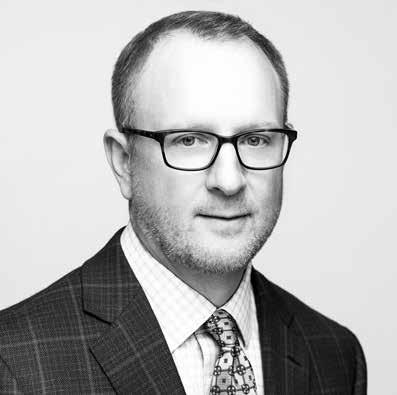
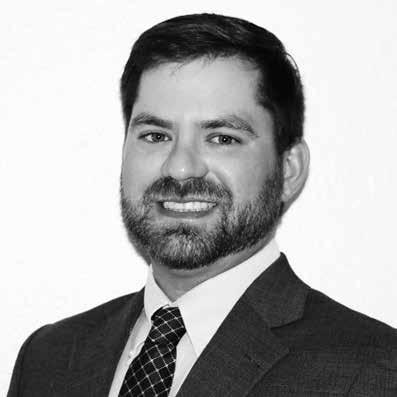
BY JEB SMITH
As part of his America First agenda, President Donald Trump is fighting to protect Florida farmers. In December, he issued an executive order declaring that “an affordable and secure food supply is vital to America’s national and economic security.” He established a task force to protect American farmers from foreign threats and ensure the long-term sustainability of American agriculture.
Here in the Sunshine State, we must advance our own state level policies to support this national agenda.
Commissioner Wilton Simpson’s Florida Farm Bill will do just that. The proposed legislation, which is sponsored by Sen. Keith Truenow in the Senate and Rep. Danny Alvarez in the House, protects our food supply, strengthens our economy and advances the President’s America First commitment to treat food security as national security.
A strong agriculture industry in Florida is essential to feed families across our nation. The fruits of Florida farmers’ labor — or so the metaphor goes — are not just enjoyed within our own state. Our warm climate and rich soils allow Florida farmers to provide a steady stream of fresh fruits and vegetables when most of the rest of the country is covered in snow. In fact, the fresh fruits and vegetables grown in Florida during the winter are served at dinner tables up and down the Atlantic coast and all the way to the Mississippi River.
What’s more: Agriculture is an economic engine in the state
We must strengthen, not abandon, our public schools
BY ANDREW SPAR
Iam the father of two daughters — one who graduated from a Florida public school and one who currently attends one. Like any parent, I want my youngest to learn in a safe, secure school, fully staffed with empowered teachers and staff who can ignite her passion for learning.
Despite the many obstacles facing our public schools, my daughter’s public school meets her needs and meets my expectations as a parent. At the same time, I have been frustrated by the laws that
of Florida, one that contributes $180 billion to our economy each year and supports 2.5 million jobs. This industry is incredibly important to our economy, but especially in times of uncertainty. When construction is quiet and tourism slows, farmers continue to plant, tend and harvest, providing the food and fiber our nation depends on. It’s the most consistent pillar of our economy, no matter what headwinds we face.
If we don’t maintain the strength of Florida agriculture, our own communities and those across the nation will be forced to turn to foreign countries for the food they need. Such a shift in demand for the essentials we need to survive will have consequences far more serious than logistics and trade. It creates vulnerabilities for our safety and security.
The Florida Farm Bill seeks to bolster Florida agriculture in a multitude of ways. The legislation puts an emphasis on conservation easements. These public private partnerships between the state and private landowners protect natural spaces from development and keep agricultural lands in operation.
The bill also shields farmers from local regulations that would prevent them from using gasoline-powered tools. Such bans prevent farmers from utilizing the resources they need to get the job done in the most cost- and fuel-efficient way.
Importantly, the bill invests in the workforce that cares for livestock. It creates a loan-repayment program to recruit and retain veterinarians who care for food ani-
have placed limits on my daughters’ schooling and made it harder for students like her to get the education they deserve and need.
Floridians have made it clear in our constitution: We want strong public schools that provide a high-quality education for every child. However, as a parent, an educator and the President of the Florida Education Association, I have seen how these restrictions make it harder for them to deliver for students, not easier. This overregulation has led some families to leave public schools for privately managed schools that lack transparency, accountability and high
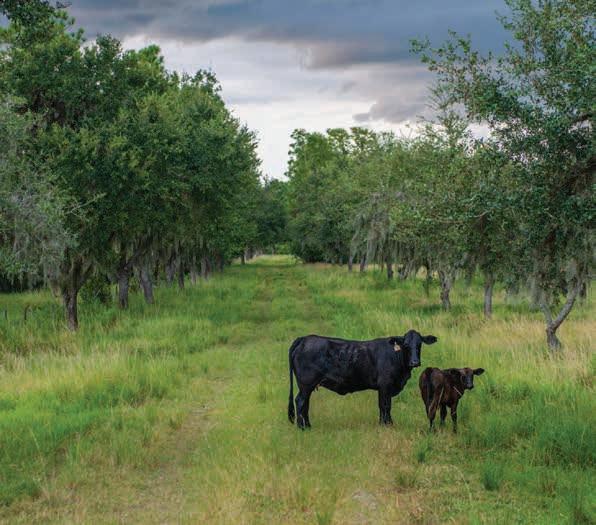
mals and support a safe, productive livestock sector of the industry.
Finally, the legislation protects Florida farmers from disparagement that can harm their business and derail entire industries. With so much at stake — our food supply, our economy and our national security — activists from inside and outside
standards, and are driven by profits rather than student success.
If student success were the priority, Florida would be working with teachers, staff, administrators and parents to strengthen our public schools. That means fixing the massive teacher and staff shortage, expanding support for students’ mental health, removing barriers that hamper teaching and learning, and ensuring students have the resources they need to succeed at the highest level. To do this, lawmakers must dramatically increase their investment in Florida’s public schools and remove the outdated, punitive laws that hold

our country should not have the power to unravel agricultural businesses without consequences.
We must stand with the President, the Agriculture Commissioner and other Republican leaders for our farmers in support of a safe and prosperous future for our nation. I urge the Legislature to cast
students back.
It is time for Florida to level the playing field by removing the laws that systematically disadvantage public schools.
This starts with ending policies that divert more than $4 billion a year from public schools into private voucher programs with little transparency or focus on student outcomes. If education is about opportunity, not corporate profit, public school buildings should not be handed off to corporate charter operators at no cost, all while those same public schools foot the bill.
And if the Legislature genuinely values educators, Florida should be in the top 10 in average teacher pay, not 50th in the nation for the second year in a row.
their vote in support of the Florida Farm
Lawmakers, you still have a chance to unburden public schools and implement policies that address the many challenges they face. By supporting policies like HB 963 and SB 1216/HB 1187, the Legislature can take meaningful steps to improve Florida’s education workforce and retain experienced educators. Parents, community members and voters are demanding leadership that puts students first — and it’s time to deliver.
The choices before you are clear: You can stand united with Florida’s public school students, parents and educators to strengthen our public schools, or fail to act, limiting our students’ ability to achieve new heights. Choosing public schools, as well as the students, families,and communities that rely on them, is the only choice worth making.
Andrew Spar is President of the Florida Education Association, the state’s largest association of professional employees, with over 120,000 members. Learn more at feaweb.org.
The truth is teaching is hard, and teachers’ working conditions are students’ learning conditions. When public schools are chronically underfunded, and educators are unable to afford to live in the state where they teach, public school students lose. Our students are not dollar signs or profit centers; they are Florida’s future. And when public schools are treated unfairly, it’s our public school students who pay the price.
BY CINDY MEIDE your child’s life
When my child was born with severe hemophilia A, our family learned very quickly that access to care isn’t a political talking point – it’s the difference between stability and crisis, independence and emergency rooms, childhood and constant fear.
Hemophilia A is one of the most expensive chronic conditions to manage. My child is now 19 and has lived with this disease every day of her life. Her medication is not optional. It is preventative care that keeps her from bleeding episodes that can lead to permanent joint damage, hospitalizations, or worse. For families like mine, affordability and access must go hand in hand. You cannot separate the two.
Access isn’t abstract when it’s
Over the years, we’ve lived with constant anxiety about whether insurance coverage would be there when we needed it. Early on, we faced the terrifying reality of lifetime caps — knowing our child could max out her health benefits before she was five years old, but succeeded in advocating to eliminate these caps. Today, the challenges look different, but the stakes are just as high.
My child receives one shipment of medication each month, which includes four weeks of treatment, administered once a week. The cost to our insurer is roughly $66,000 per month, or about $16,500 per dose, just to prevent bleeding. If she does have a bleed, the medication required is differ-
ent and even more expensive.
That cost may sound shocking, but what’s often missing from the conversation is that the right medicine, given consistently, actually saves money. Since starting a breakthrough medication in 2018, my child has been bleeding far less, has a better quality of life, avoids emergency care, and is successfully navigating college away from home. Before that, she needed multiple infusions a day, relied on ports, and spent time in a wheelchair because she couldn’t walk due to repeated bleeds. That breakthrough medication changed her life, but access to it was not guaranteed.
We’ve also experienced firsthand how insurance policies meant to “control costs” can drive costs higher. After a routine dental cleaning, my child developed a mouth bleed that lasted ten days. Our insurer would not send enough medication to cover even 24 hours. We were forced to take multiple trips to the emergency room and the children’s hospital. In an attempt to limit medication, the system spent far more money, and my child suffered unnecessarily.
Now, we’re facing another barrier: copay accumulator policies. The manufacturer of my daughter’s medication provides copay assistance, which goes directly to the pharmacy benefit manager. Today,

copay assistance is still accepted, but it no longer counts toward our deductible or out-of-pocket limit.
That means the PBM collects the copay assistance and still requires our family to pay the full deductible and out-of-pocket maximum.
This is why “Most Favored Nation” proposals like that within Florida’s HB 697 worry me. HB 697 would tie drug pricing in Florida to prices set in other countries – systems where patients often wait years for new treatments or never gain access at all. Lower prices on paper don’t help families if the medicine isn’t available when it’s needed.
For families living with conditions like hemophilia, cancer, autoimmune disease, or other chronic
conditions, even small disruptions can lead to emergency care, hospitalizations, and long-term harm. Stability saves lives, and it saves money.
Florida has better options. We can lower costs by making sure the negotiated discounts are passed directly to patients at the pharmacy counter. We can ensure all copay assistance counts toward deductibles and out-of-pocket limits. We can improve transparency and accountability for insurers and pharmacy benefit managers, without putting access at risk. Affordability matters. Access matters. And for families like mine, they are inseparable.
Cindy Meide is the mother of a teenager living with severe hemophilia and is based out of Northeast Florida.

Florida’s Specialty Hospitals for Children are driving the future of pediatric cancer treatment and research to ensure no child has to leave Florida for world-class, specialized cancer care.
Thank you to Governor DeSantis and the Florida Legislature for your leadership in prioritizing the health and well-being of Florida’s children with a historic investment to make our state a leader in nationally ranked pediatric cancer care.



BY SHEILA CLARK
Florida stands at a crossroads.
A sweeping health care reform proposal (HB 693) quietly includes a three-section repeal of Certificate of Need (CON) protections for hospice facilities, skilled nursing facilities, and intermediate care facilities for people with disabilities. Those provisions would strip the state of its ability to say “no,” “enough” or “not good enough” before new providers enter one of health care’s most vulnerable spaces. As someone who has watched this play out in California, I urge Floridians to pause before repeating our mistakes.
I lead the California Hospice and Palliative Care Association, and for years we have grappled with the consequences of a licensing framework that provided limited front-end authority over
hospice entry. California is now a national epicenter of hospice fraud. The pattern is depressingly consistent: rapid proliferation of newly licensed hospices under a framework that emphasized entry over demonstrated clinical capacity; aggressive and sometimes illegal referral practices; and Medicare billing for services that were never delivered, were not medically necessary, or involved patients who were not terminally ill. Millions of federal dollars have been misspent. More importantly, families have been harmed.
Federal regulators have repeatedly flagged the problem. California leads the nation in serious hospice complaints and inspection concerns, according to Office of Inspector General findings. More than 80% of California hospices are overseen primarily through
private accreditation rather than direct state survey processes, an arrangement that has not proven sufficient to deter abuse. A 2022 California Hospice Licensure Oversight Report described a sophisticated, multimillion-dollar Medicare fraud scheme tied to organized crime that operated for years before being dismantled. That was not an isolated episode; it was a symptom of a system that allowed unchecked entry and delayed intervention.
State regulators have worked within these constraints to investigate complaints and pursue enforcement, but the tools available to them were largely reactive rather than preventative. Some argue that enforcement after the fact is sufficient, that regulators can simply shut down bad actors once they are identified. That assumption
ignores reality. Fraudsters move quickly. In California, we have seen “license flipping,” where owners sell hospices shortly after licensure, often before regulators can act. Once damage is done, clawing back funds or restoring trust is extraordinarily difficult.
Florida’s current CON framework functions as a gatekeeper. It requires applicants to demonstrate community need, financial stability, staffing capacity and clinical competence before patients are ever put at risk. Repealing CON without replacing it with a meaningful alternative (and no preventative alternative has been identified given that free market principles do not apply) removes that filter entirely. It invites a surge of opportunistic providers into a market where patients and families cannot shop around in moments of crisis.
California’s hospice fraud crisis ultimately required reliance on tax enforcement and other backend tools that fall outside traditional health licensing oversight. Those measures can help expose bad actors, but they are remedial, not preventative. Florida has the advantage of foresight. You can choose not to dismantle a system that protects patients before harm occurs, and not to place regulators in a position where they are forced to respond after trust has already been broken.
Hospice care depends on trust, trust that when a family opens their home at the end of life, the provider is there to serve, not exploit. Florida lawmakers should scrutinize HB 693’s quiet CON repeal with that trust in mind. Learn from California’s experience. Once the door is opened, closing it again is far harder than keeping it responsibly regulated in the first place.
Sheila Clark is the President and CEO of the California Hospice and Palliative Care Association.
BY DOUG WHEELER
Calls to cap credit card interest rates are once again gaining traction in Washington. Proponents argue that government-imposed limits on annual percentage rates (APRs) would offer relief to struggling households.
The appeal is understandable. It sounds compassionate. It polls well. But it is also dangerously misguided.
History, economic theory and real-world evidence all point to the same conclusion: Interest rate caps are not reform, they are price controls. And like every other price
control, they punish the very people they are supposed to help.
At their core, credit card rate caps represent a rejection of free-market principles. In a functioning market, prices convey information about risk, cost and demand. When lawmakers impose an arbitrary cap on prices — from rent ceilings to prescription drugs — they distort those signals. The predictable result is reduced supply, fewer choices and worse outcomes for consumers.
Credit is no exception. Lenders must price loans according to risk, operational costs, compliance burdens and broader economic condi-
tions. When government prevents lenders from doing so, credit will simply stop being offered to many. Empirical research consistently highlights that interest rate caps reduce access to credit, particularly for borrowers with lower incomes or imperfect credit histories.
When banks retreat, the demand for credit does not just recede. States that have experimented with strict rate caps have seen credit dry up for lower-income and subprime borrowers. Households once “protected” are pushed toward less reliable alternatives such as payday lenders, pawn shops, rent-to-own stores, or informal

lending arrangements with far fewer consumer protections. Florida already knows this dynamic well. When regulated credit becomes harder to access, unregulated credit fills the gap — and it is almost always more expensive, less transparent and more dangerous for consumers.
Federal Reserve researchers studying Illinois found that an interest rate cap reduced lending to subprime borrowers by 38% and worsened the financial well-being of many households. Similar outcomes have been documented in Missouri, Oregon, Arkansas and abroad.
Supporters of rate caps often frame the issue as a battle against “sky-high” APRs. But this reflects a misunderstanding of how credit card pricing works. APRs are not simply profit margins; they reflect the cost of funds, the risk of default, fraud protection, customer service, technology investments, and compliance with a growing web of federal regulations. Over the past two years alone, the Federal Reserve raised interest rates by more than 500 basis points, dramatically increasing the cost of extending credit. Artificially capping rates does nothing to change those underlying costs — it merely forces lenders to pull back or shift costs elsewhere.
Ironically, credit cards are among the most effective tools for financial inclusion in the modern economy. They are highly regulated, offer fraud protections and — according to the Consumer Financial Protection Bureau — serve as the primary way “credit invisibles” establish a credit history. Rate caps would shrink this onramp to financial stability, making it harder for millions of Americans to qualify for auto loans, mortgages or small-business financing later in life.
Florida is a state of working families, retirees on fixed incomes, small-business owners, seasonal workers, and newcomers still building credit. We are also a state where access to short-term, flexible credit often matters more than it does in Washington talking points. Whether it’s hurricane recovery, medical bills, car repairs, or simply bridging a paycheck gap, credit cards are a financial lifeline for millions of households. Capping interest rates doesn’t make those needs disappear. It just makes legal, regulated credit harder to find.
There is also no credible evidence that APR caps save consumers money. Conversely, studies consistently show that price controls actually reduce access, limit choice and often force borrowers into larger or longer loans to qualify for capped rates. In other words, the policy treats the symptom while worsening the disease.
Lawmakers should be clear about what interest rate caps are: government price controls that undermine competition and restrict consumer choice. Efforts to help struggling families should focus on policies that increase competition, reduce regulatory costs, promote financial literacy and address inflationary pressures that raise borrowing costs across the economy.
Good intentions are not enough. When it comes to credit markets, price controls have been tried — and they have failed — too many times to count. Let’s resist the temptation to repeat those mistakes and instead trust the principles of a free market that have expanded opportunity for generations of Americans.
Doug Wheeler is the Director of the George C. Gibbs Center for Economic Prosperity at the James Madison Institute.
BY LT. COL. (RET.) AL SANTOS
President Donald Trump has warned about the dangers of allowing China to gain influence over the digital infrastructure that supports America’s economy, military and institutions.
That concern is well-founded. If data center development is discouraged here at home, those facilities do not simply disappear. They are more likely to be built in countries with weaker protections for free speech, fewer safeguards for sensitive data and closer alignment with authoritarian governments.
During my career as a U.S. Army Foreign Area Officer, I spent years working inside American embassies and alongside partner nations to advance U.S. security interests. Much of that work focused on identifying risks before they became crises and protecting
the infrastructure that enables communication, stability and military operations.
That same lens applies today as Florida debates how to approach artificial intelligence and the data centers that power it.
Artificial intelligence and the data centers that support it are rapidly becoming core elements of U.S. national security. While often discussed in economic terms, these facilities also support critical services — from health care delivery and emergency response to secure communications, military logistics and intelligence processing. They are part of the digital infrastructure that modern societies rely on to function safely and securely.
America’s competitors understand this clearly.
China and Russia are investing aggressively in advanced comput-
ing, AI-enabled military capabilities, and the infrastructure needed to support them. These efforts are not just about innovation or efficiency. They are about gaining long-term strategic advantage. China, in particular, has made control over data and digital systems a central component of its national security strategy.
The United States has traditionally taken a different approach. Our strength has come from private-sector innovation, competitive markets and policies that encourage growth rather than restrict it. Florida reflects that model. Its pro-growth environment, access to reliable energy and strategic location have made it an attractive place for technology investment and a key part of America’s digital and defense ecosystem.
That advantage is not guaranteed.
AI adoption is accelerating across nearly every sector, including national defense. Militaries around the world are already using AI to process intelligence faster, strengthen cyber defenses, improve logistics, and support operational decision-making. In this environment, delays matter. Regulatory uncertainty matters. Policies that make it harder to build and operate data centers in the United States do not reduce risk — they push investment and capability elsewhere.
Florida has an opportunity to stay ahead.
The economic benefits alone are significant. A recent study by the Regional Economic Consulting Group found that a single 1-gigawatt data center can create more than 45,000 temporary jobs during construction and generate approximately $406 million in new revenue for state and local communities. These projects strengthen local economies while supporting long-term growth.
Energy reliability is just as important. Data centers require constant, dependable power to operate securely. That makes dispatchable energy sources such as natural gas and nuclear essential. Reliable energy is not a preference — it is a requirement when digital infrastructure supports national
defense, emergency response, and economic stability.
From my experience overseas, I have seen what happens when countries fail to align infrastructure policy, energy planning and security priorities. They become dependent on others for systems they can no longer control. And they are forced to react to events instead of shaping them.
Supporting data center development doesn’t mean ignoring environmental responsibility or community input. It means ensuring policies are balanced, predictable and grounded in long-term strategic thinking. Streamlined permitting, reliable energy access and regulatory certainty help keep critical infrastructure under U.S. jurisdiction and governed by American laws and values.
Florida should continue to be a place where critical digital infrastructure is built and protected — because America’s security, economy and way of life depend on it.
Lt. Col. (Ret.) Al Santos served more than a decade as a U.S. Army Foreign Area Officer, leading political-military engagements across Central Asia and supporting U.S. embassy operations, strategic communications and national security initiatives worldwide.

A trusted leader, convener and advocate for children’s first five years.
Because the foundation for Florida’s future is laid long before they enter kindergarten.

“
Winning the AI race [against China] will usher in a new golden age of human flourishing, economic competitiveness, and national security for the American people.”
President Donald Trump’s AI Action Plan
Enhanced national security
5,322 permanent jobs
$405.8 million in annual ta revenue to state and local governments

Large scale data centers are a key component of America’s AI Action Plan.