Unlocking the Beauty of Charred Accoya Cladding: A Sustainable Marvel
In the world of architectural design, materials play a pivotal role in shaping both the aesthetic appeal and functionality of a structure. Among the myriad of options available, Accoya wood has emerged as a sustainable frontrunner, renowned for its durability and environmental friendliness. However, when charred using the ancient Japanese technique of Shou Sugi Ban, Accoya wood transcends into a realm of unparalleled beauty and resilience. This article delves into the fascinating world of charred Accoya cladding, exploring its origins, benefits, and the aesthetic allure it brings to contemporary architecture.
Understanding Accoya Wood: The Sustainable Champion Before delving into the art of charring, it's crucial to understand what makes Accoya wood stand out. Accoya is not your ordinary timber; it's a revolutionary wood material derived from sustainably sourced, fast-growing radiata pine. What sets Accoya apart is its unique modification process known as acetylation. Through this process, the wood's molecular structure is altered, enhancing its durability, stability, and resistance to rot and decay. Moreover, Accoya is non-toxic and sourced from certified, responsibly managed forests, making it an environmentally conscious choice for architects and builders seeking sustainable alternatives.
The Ancient Technique of Shou Sugi Ban: A Time-Honoured Tradition
Shou Sugi Ban, originating from Japan centuries ago, is a traditional method of charring wood to enhance its longevity and beauty. Historically used to weatherproof wooden structures, this technique involves carefully charring the surface of the wood using fire, followed by cooling, cleaning, and sealing. The result is a striking, charred finish that not only amplifies the wood's natural beauty but also significantly boosts its resistance to pests, fire, and decay.
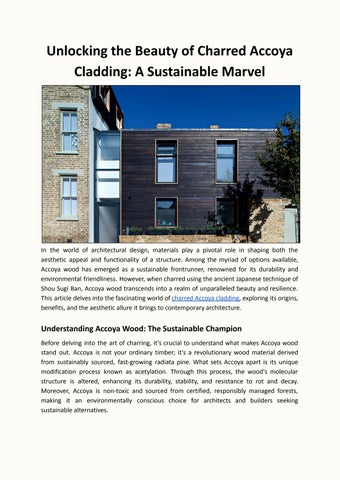
The Marriage of Tradition and Innovation: Charred Accoya Cladding Combining the time-honoured tradition of Shou Sugi Ban with the innovative properties of Accoya wood results in a product that transcends the ordinary. Charred Accoya cladding offers architects and designers a unique blend of aesthetics and functionality. The deep, rich hues achieved through charring add a touch of drama and sophistication to any architectural design, while the enhanced durability and longevity of Accoya ensure that the beauty stands the test of time.
Benefits Beyond Aesthetics: Sustainability and Performance Beyond its captivating appearance, charred Accoya cladding boasts a myriad of practical benefits. Thanks to Accoya's exceptional durability and resistance to decay, structures adorned with charred Accoya cladding require minimal maintenance, reducing the need for frequent repairs or replacements. Additionally, Accoya wood is sourced from sustainably managed forests and undergoes a non-toxic modification process, aligning perfectly with the principles of eco-conscious design and construction.
Versatility in Design: From Contemporary to Traditional One of the most appealing aspects of charred Accoya cladding is its versatility in design. Whether adorning a sleek, modern facade or adding a touch of rustic charm to a traditional cottage, charred Accoya complements a wide range of architectural styles. Its deep, charcoal-black finish serves as a striking contrast against vibrant green landscapes or blends seamlessly into urban environments, offering architects and designers endless possibilities for creative expression.
Conclusion: A Sustainable Marvel of Timeless Beauty In a world where sustainability and aesthetics are paramount, charred Accoya cladding emerges as a true marvel of modern architecture. Through the harmonious marriage of ancient tradition and cutting-edge innovation, Accoya wood transformed by the art of Shou Sugi Ban offers a sustainable, resilient, and breathtakingly beautiful solution for architectural cladding. As we continue to strive towards a more sustainable future, charred Accoya stands as a shining example of how tradition, innovation, and environmental consciousness can converge to create something truly extraordinary. So, the next time you gaze upon a charred Accoya-clad structure, take a moment to appreciate not just its beauty, but the story of sustainability and craftsmanship it embodies.