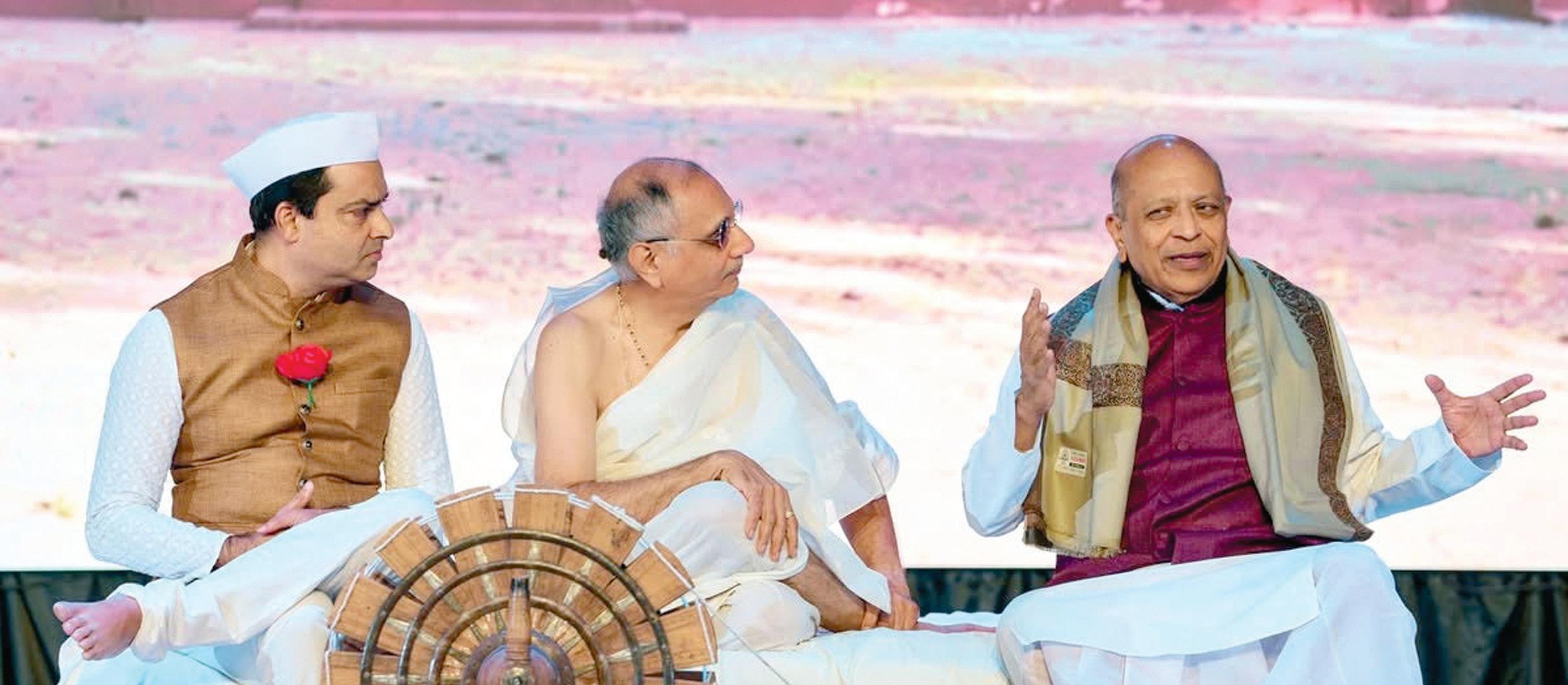
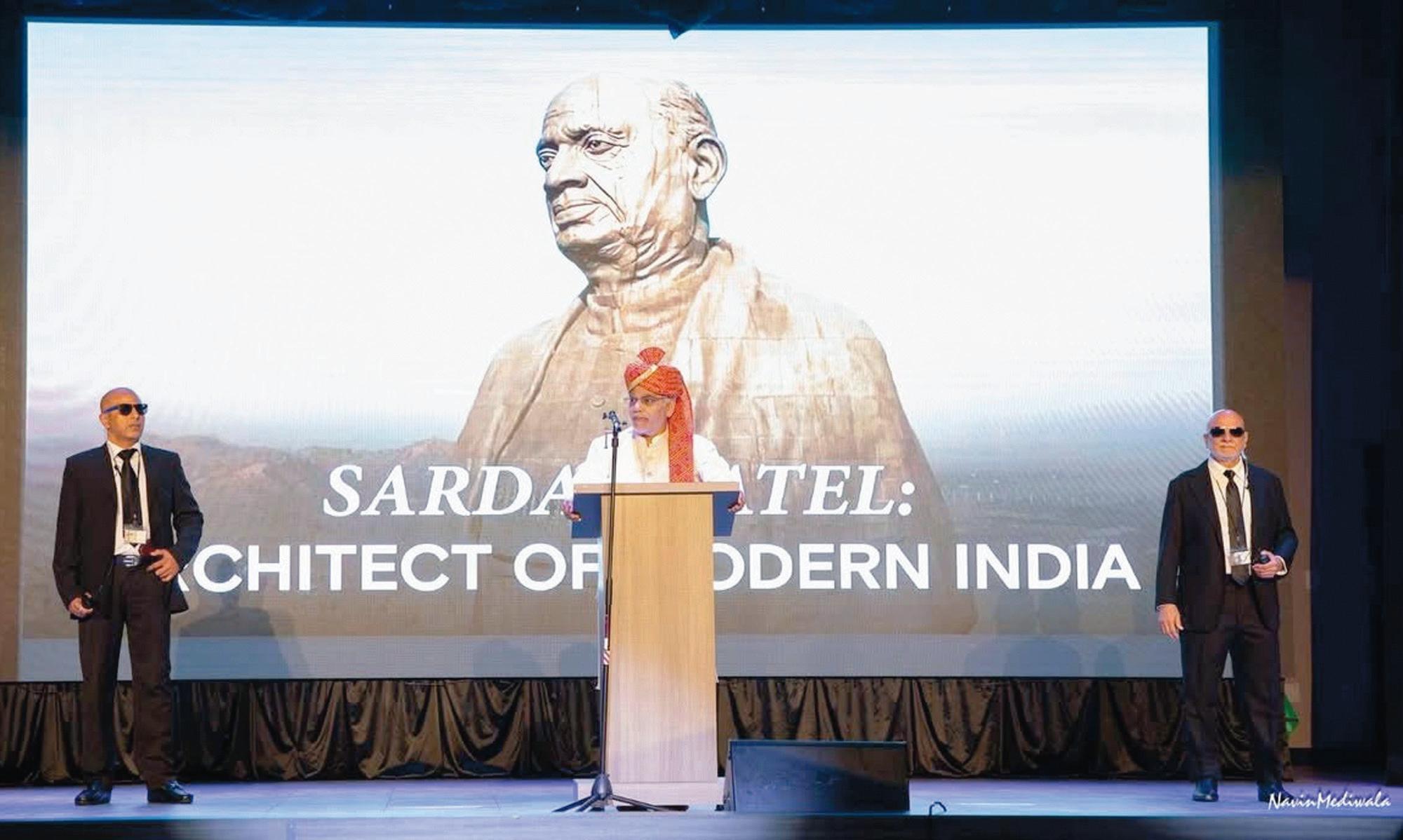
Houston: Consul General D.C. Manjunath joined the celebrations marking the 150th birth anniversary of Sardar Vallabhbhai Patel at the GSH Event Center, featuring a theatrical drama along with cultural performances and community activities.
CG Manjunath paid tribute to Sardar Patel’s extraordinary leadership in unifying India and highlighted the importance of remembering his values of national integration, integrity, and public service.
The event, attended by families and community members, also included poster and essay com-
petition, exhibition displays and traditional displays celebrating the legacy of the Iron Man of India with pride. Dignitaries at the event included BAPS Mandir Swamiji.
A highlight of the evening was a play, “Loh Purush” (Iron Man), written and directly Bud Patel to bring to life Sardar Patel’s life.
The performers also 7-year-old Veda and 8-year-old Hitarthi performing Ganesh Stuti and “Me Rahu Na Rahu”.
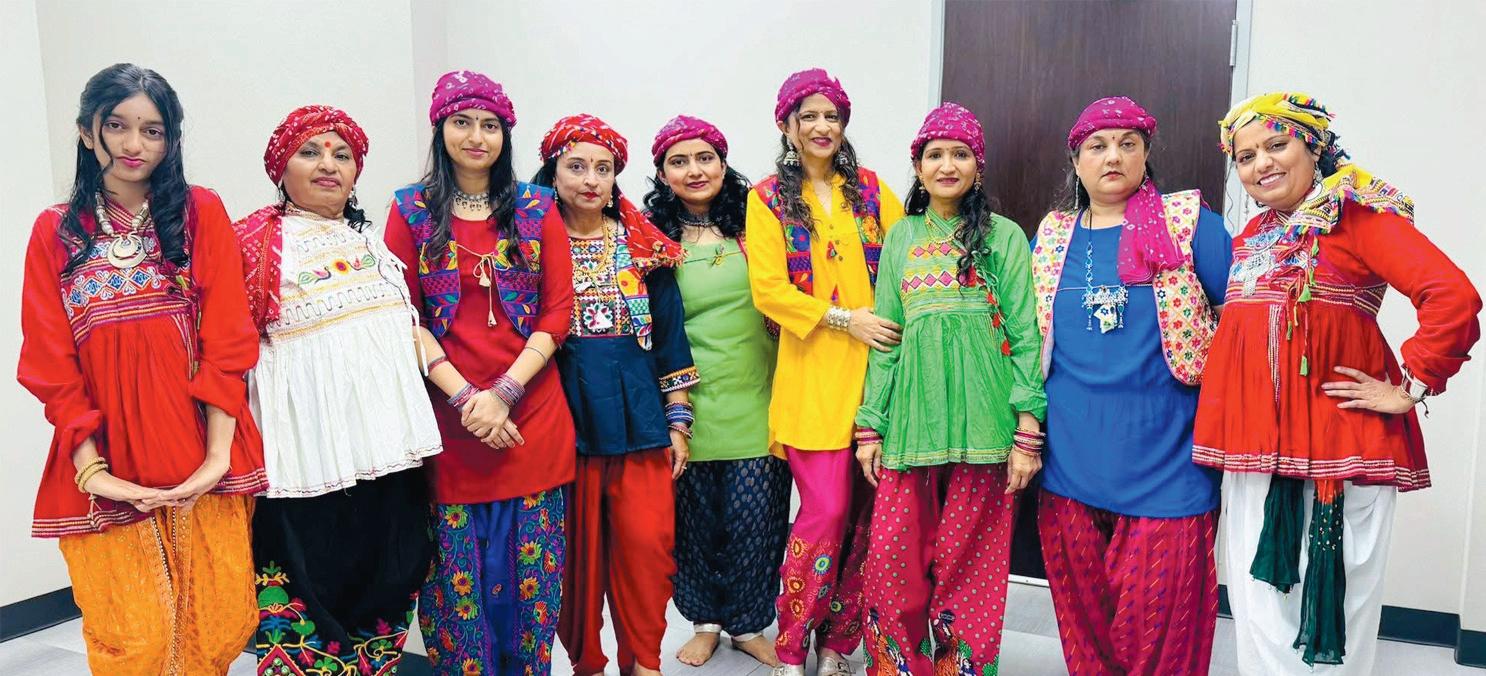
Yogina Patel and her team performed two dance performances that took the audience on a journey through Sardar Patel’s remarkable life.
Scene from the play “Loh Purush”
Yogina Patel and her team of dancers
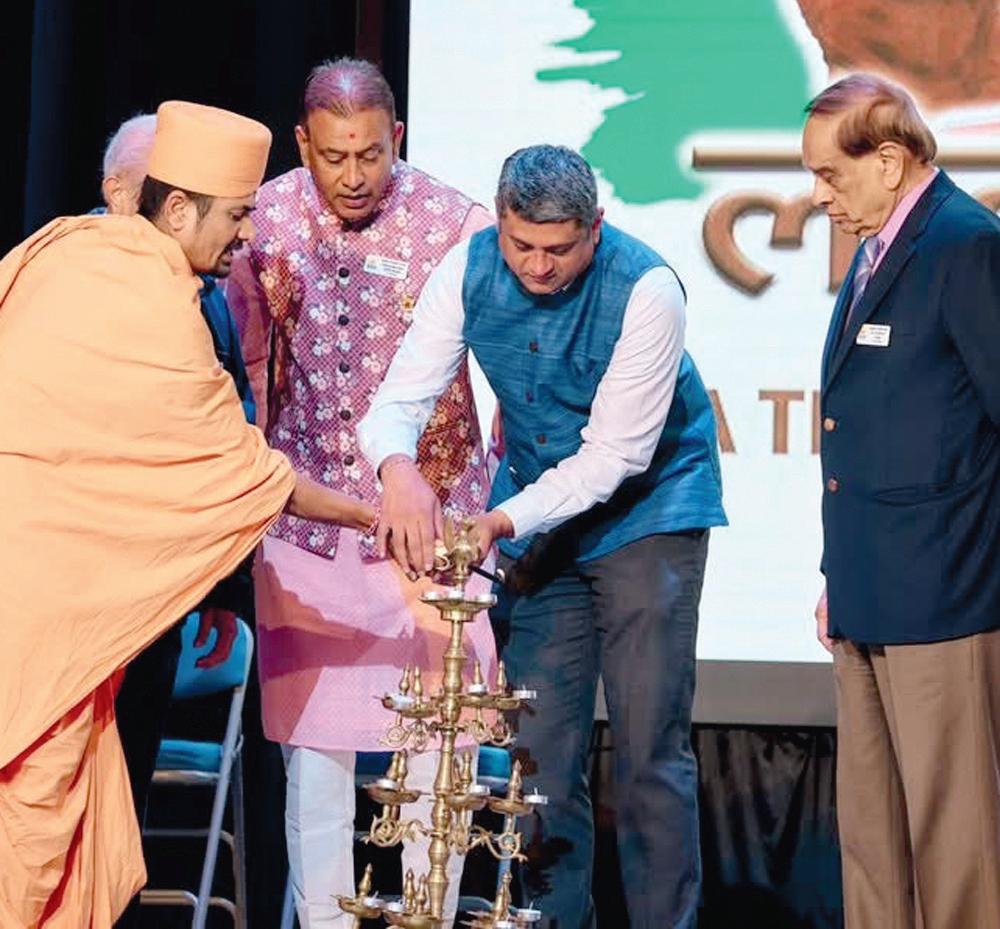
Diya lighting ceremony with BAPS Swamiji, CG Manjunath
Interfaith Thanksgiving: A Night of Unity and Gratitude in Fort Bend County
By JuHi Varma
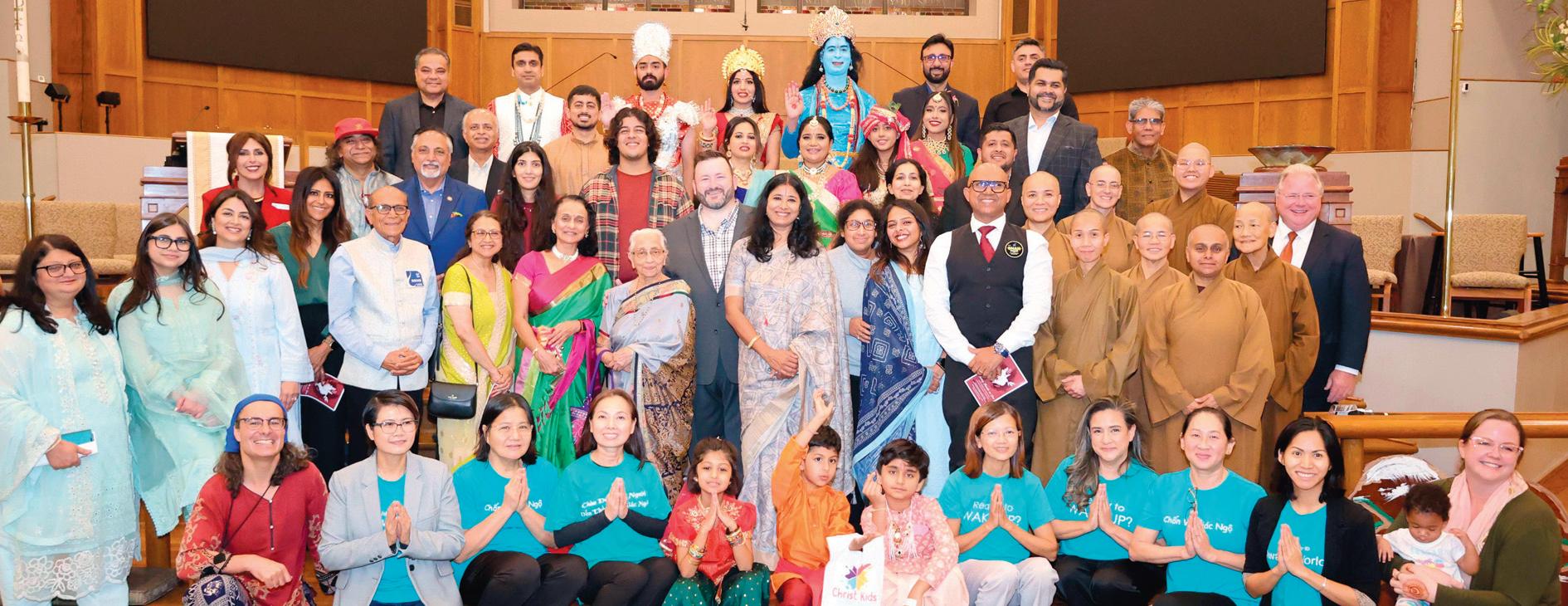
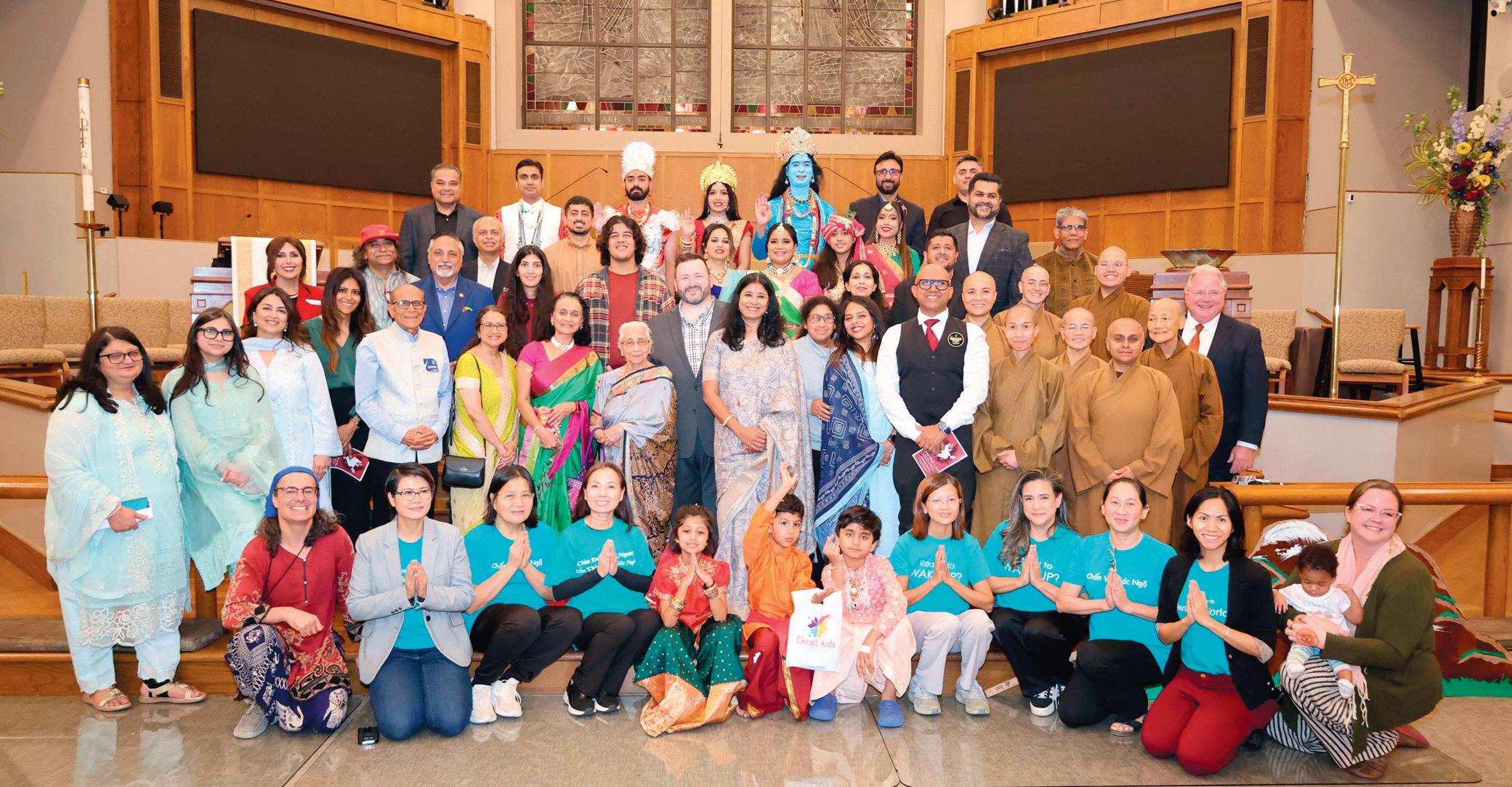
sugar Land: Fort Bend residents gathered at Christ Church Sugar Land for the annual Fort Bend Interfaith Council (FBIC) Thanksgiving service. The service was open to all.
This year’s theme, “Giving Thanks as One,” resonated deeply in a county known for its religious and cultural diversity.
The service featured representatives from many religious communities: Baha’i, Buddhist, Christian, Hindu, Jain, Jewish, Muslim, Sikh, and others. As chair of the council, Pastor John Strader, explained, the evening was intentionally worshipful — not a debate or blending of beliefs — a space for each tradition to share its own voice while standing side by side in mutual respect.
“Someone once said that intelligence is like a map and wisdom is like a compass,” said Samaniji from Jain Vishwa Bharti Institute. “A map shows all the roads, but a compass shows the right direction. And right direction matters more than the number of roads. On a day like Thanksgiving, when we slow down and really look at our lives, this inner compass that helps us notice what truly matters.”
The Hindu community offered a vibrant performance of Govardhan Leela, the story explaining how Krishna came to be known as Giridhari, “the lifter of the hill.”
The skit was organized by Geetha Ravula, founder of the nonprofit Ashirwad – A Blessing Temple, a longtime member of Hindus of Greater Houston, and a six-year board member of the Fort Bend Interfaith Council.
Children dressed in colorful traditional attire brought the tale to life through narration and movement. Their performance illustrated how gratitude, humility, and divine protection are woven into Hindu teachings.
In the story, Lord Krishna protects the village of Gokul from a devastating storm unleashed by In-
dra, the god of rain. After Krishna encouraged the villagers to honor the Govardhan Hill—believing it to be a more fitting symbol of natural protection—Indra, angered by the shift in devotion, sent torrential rains, thunder, and hail upon the village. To safeguard the people and their cattle, Krishna lifts the entire Govardhan Hill with the little finger of his left hand, holding it aloft like an umbrella for seven straight days. Under its shelter, the villagers remain safe until Indra recognizes his error, halts the storm, and seeks forgiveness. The story concludes with the
tradition of Govardhan Puja, a festival in which devotees express gratitude through food offerings in honor of Krishna’s protection. It is through this act that Krishna is celebrated as Giridhari, the lifter of the hill.
Prayers, readings, music, and community prayers echoed throughout the sanctuary.
The Sikh contingent offered music on harmonium and tabla, singing a hymn punctuated by the word “shukrana” (gratitude), evoking a deep sense of thankfulness beyond words.
“We offer thanks for when we
wake up in the morning, during our meal time, when we go to school or work, when we return home safely, for air and water, which are necessary, for shelter, for a sound body and mind, for well and respected community, for our parents, relatives, our siblings, friends, our educators. Let us give thanks for every person and every blessing that we person,” said Bindu Malhotra, about the song.
Sikhism is one of the world’s youngest major religions, emerging about 500 years ago in India from the teachings of Guru Nanak.
Fort Bend’s Baháʼí community was represented by Jennifer SilerHunt, Braden Hunt and Steve Fowler, who sang a song about ‘Truthfulness.’
The Baháʼí Faith, which emerged in the 19th century in Iran and the wider Middle East, centers on the unity of humanity and the shared value of all religious traditions.
A friendly reception followed, complete with a spread of samosas, stuffed grape leaves, cheeses, cakes, cookies — symbolic of the event’s spirit of shared gratitude and hospitality.
The program wove together a tapestry of faith-based expressions: prayers, readings, music — and culminated in a combined interfaith choir, drawing singers from across various congregations to close the evening with a shared song of thanks.
Fort Bend residents gathered at Christ Church Sugar Land for the annual Fort Bend Interfaith Council (FBIC) Thanksgiving service. This year’s theme, “Giving Thanks as One,” resonated deeply in a county known for its religious and cultural diversity.
Sialkot to Houston: Dev Mahajan’s Journey of Resilience and Service
By JuHi Varma
Houston: When Dr. Devinder Mahajan speaks about his life, he begins not in Houston, where he is widely regarded as one of the pillars of the Hindu Indian community, but in the places he left behind as a child: Sialkot and Multan which are now Pakistan. His family’s story—marked by dislocation during Partition, rebuilding from nothing, and a lifelong commitment to service— forms the foundation of the legacy he has built in Houston.
Now in his eighties, Dev ji is soft-spoken, measured, and reflective.
“If it had not been for Partition,” he says, “I don’t think I would have come to United States.”
His earliest memories include meeting Madhav Sadashivrao Golwalkar, the second Sarsanghchalak of the Rashtriya Swayamsevak Sangh (RSS).
“I was at that time maybe 10 and my younger brother was eight,” Dev ji said. “We both went to Multan, where Guruji had come to visit.”
He was 12 when Partition happened.
“In 1947 my father had to drop everything and move to India,” he said. “From a big businessman, he became literally homeless, and he had to then start all over again.”
They resettled in Batala, Punjab.
After Gandhi’s assassination, the RSS was blamed, and Dev ji’s father—like many swayamsevaks—was arrested and jailed for a time before eventually being released. These were formative events.
Coming to America
In 1960, young Devinder came to the US to study at the University of Michigan. He had already completed two years of engineering studies in India, but unlike the British-style system India followed, the American system allowed him to transfer his credits. He fast-tracked through college, eager to start earning as soon as possible.
He knew almost nothing about America at the time—not even that “biscuits” were called “cookies”—but he met each challenge with the same determination that would define his career
and community work for decades to come.
Working through college, one of the many early Indian immigrants who built careers steadily, without fanfare, he become a successful engineer. He married his wife Sushma, a physician, and the family moved to Houston in 1975. Today, the couple has two daughters, both married, and five grandchildren.
“My father was more popular than we were.”
But Dev ji’s connection to RSS and the Hindu reformist tradition of Arya Samaj remained strong. When asked how Arya Samaj of Greater Houston began, Dev ji traces it back again to his father.
ASGH, located on Schiller Road, hosts educational programs and community events—all aimed at passing Hindu values to the next generation.
Dev ji’s father R.C. Mahajan came to Houston in 1979 and made it his life’s mission to con-
nect with the city’s Hindu community. “Everybody in town called him Pita ji… my father was more popular than we were,” Dev ji said with a laugh.
In July 1991, R.C. Mahajan founded ASGH in a space provided by businessman Sunil Mehta at his Highway 6 facility. Construction began on the Schiller Road location in 1997— and over the years it grew into the multi-building 27,000 square foot campus we see today.
It is home to the DAV Montessori School, which offers classes up to 5th grade and integrates Hindu values into its curriculum.
A community formed through patient dedication
Dev ji invites people to see ASGH firsthand. “Come to a Sunday program,” he suggested during our conversation. “You will see children learning, families
gathered, elders sharing knowledge.” He believes that Arya Samaj’s blend of education, culture, and community service has helped Indian American families stay connected to their heritage while adapting to life in the US.
His own involvement with the RSS continued after coming to America-- has advised, supported, and mentored countless Hindu organizations and leaders, often quietly, behind the scenes.
The article you are reading is part of a broader series highlighting influential members of the Hindu community in Houston— particularly those whose early lives were shaped by the RSS.
For Houston’s Hindu population, the institutions that define their religious and cultural lives did not materialize overnight. They were built through years of quiet effort by people like Dev Mahajan.
Dev ji retired in 1999, and his wife retired in 2000. They had planned to travel, play tennis, and pursue real estate, but retirement took a different turn. Dev ji became deeply involved with the Arya Samaj, and his engineering and construction background proved invaluable not only to ASGH but also in the development of the Eternal Gandhi Museum and the Texas Hindu Campsite.
He hopes to complete the Patanjali Wellness Center, with construction expected to begin early next year. The couple has made significant financial contributions to each of these projects.
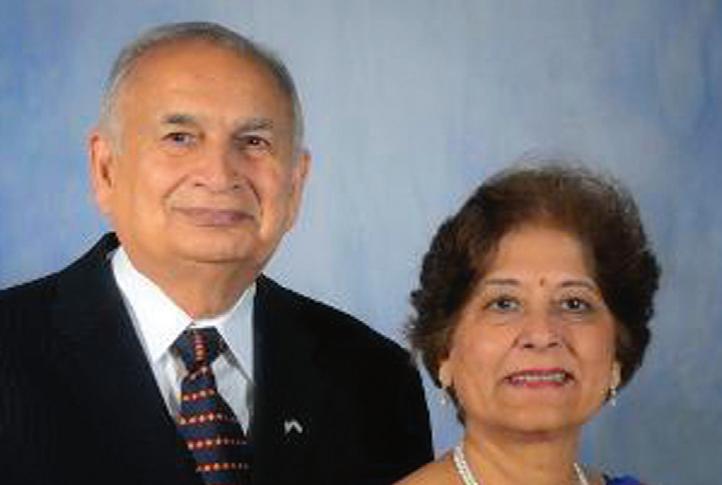
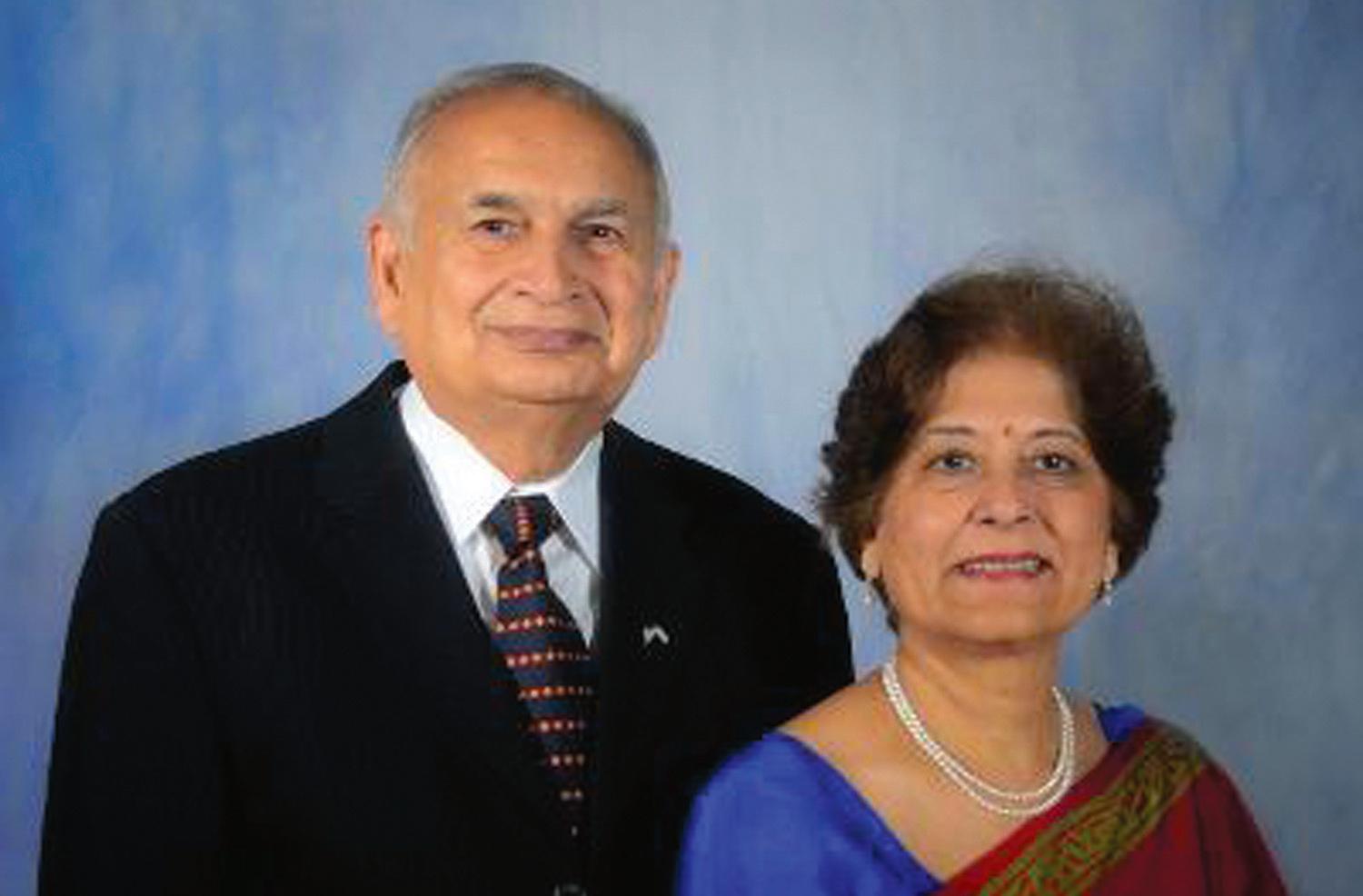
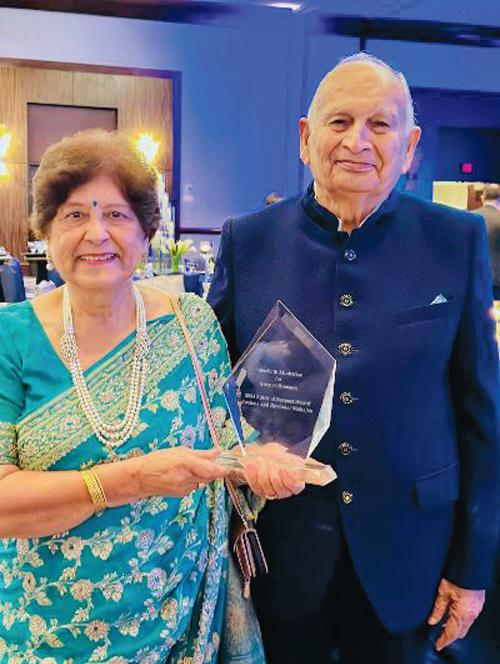
Dr. Dev and Dr. Sushma Mahajan, longtime pillars of Houston’s Hindu community, continued their charitable work in retirement, with Dev ji lending his engineering expertise to projects including Arya Samaj, the Eternal Gandhi Museum, and the Texas Hindu Campsite.
Students from the DAV Montessori School have won multiple statelevel awards. The school offers classes up to 5th grade and integrates Hindu values into its curriculum.
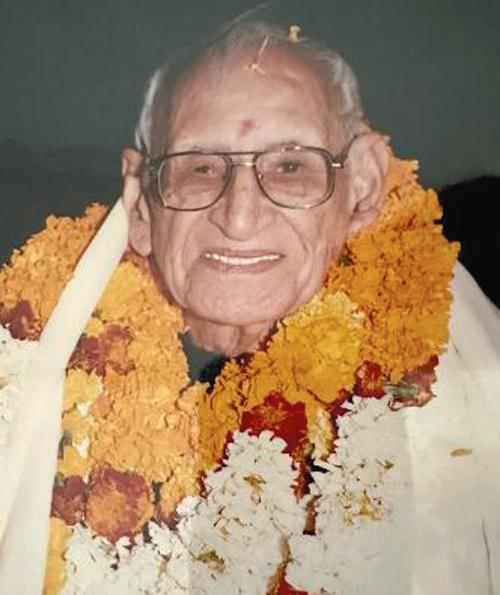
Dr. Dev Mahajan’s father, Ram Chand Mahajan, founded the Arya Samaj of Greater Houston.
NRI Couple Returns After 17 Years, Citing High US Healthcare Costs
mumBai: A Non-Resident Indian (NRI) couple has gone viral on social media after revealing why they returned to India after 17 years in the US. The couple, who have twins, highlighted in an Instagram video that the US healthcare system put a strain on their finances, with insurance being excessively costly while access to healthcare facilities felt like a drag.
“For anyone who’s never dealt with the US healthcare system, here’s a little context. Before insurance even helps, you first have to hit your yearly deductible. Meaning every doctor visit, test whatever it is, you pay until hitting the outof-pocket deductible,” read the caption to the accompanying video.
“For us, that was $14,000 out of pocket on top of monthly premiums. The cheapest plan we were quoted for just the two of us was $1,600/month with a $15,000 deductible. That didn’t even include our twins. So even simple concerns became expensive, slow, and stressful.”
With no support system around and the costs inflating, the family decided to move to India where healthcare seemed ‘accessible’.
“Moving to India wasn’t about perfection. Here, healthcare doesn’t feel like a luxury. We have access to good doctors, quicker care and a support system that actually feels accessible. This move wasn’t about running away, it was running towards a life where healthcare wasn’t a financial burden and motherhood wasn’t a solo battle.”
The couple stated that “India isn’t perfect”, but it gave them something they didn’t even realise they were missing -- ‘Balance and peace of mind’.
As of the last update, the video had garnered over 1.6 million views and hundreds of comments, as the majority of users agreed with the couple’s assessment, while others pointed out that they may require some adjustment getting used to being in India.She lauded the ease of the whole experience and compared it to the US, where it may have cost a fortune to get a simple bandage and stitches.
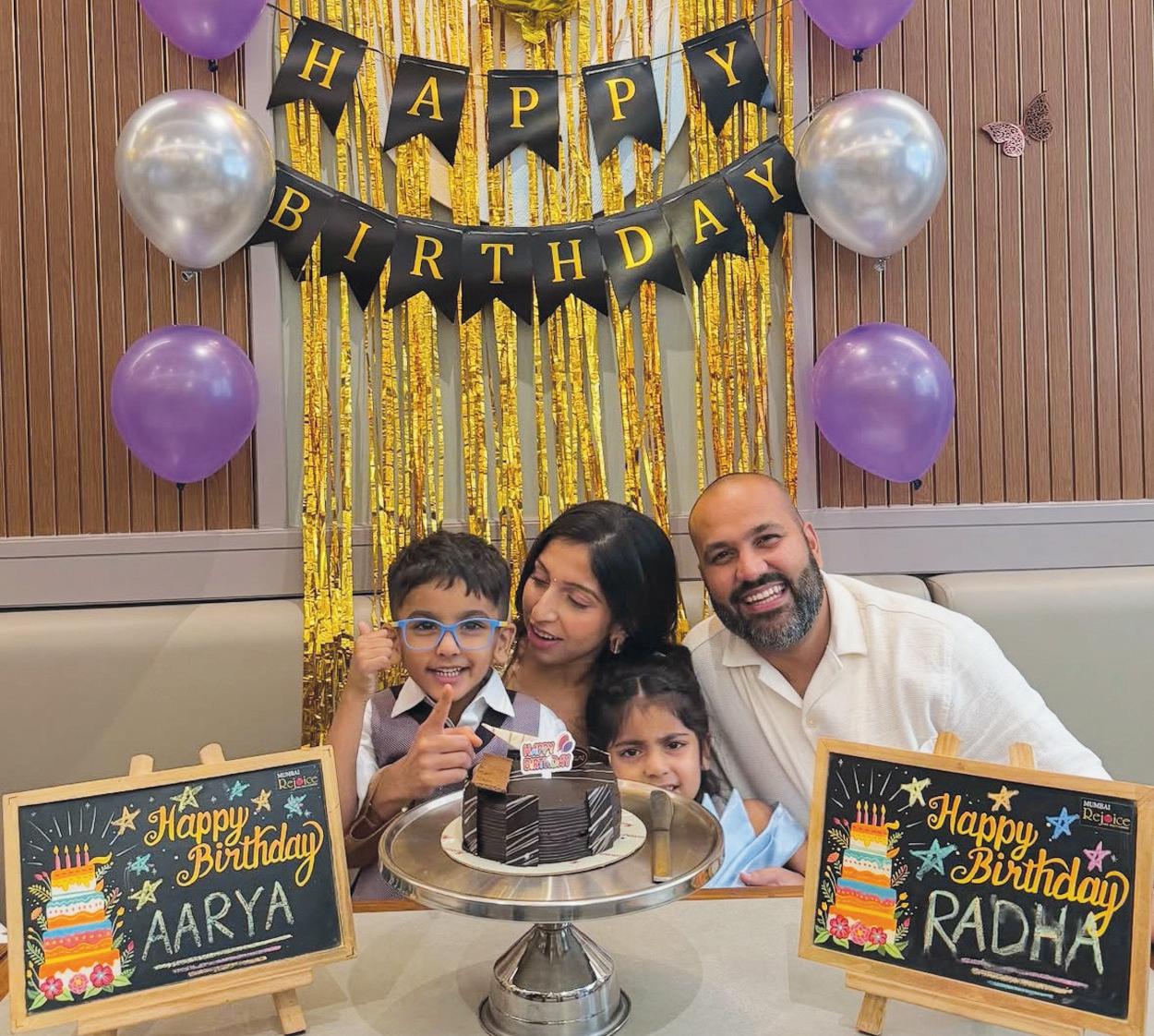
Dhara on Instagram: “One of the most heartwarming parts of moving to India has been seeing Aarya and Radha experience life with their cousins for the very first time.
We hosted a birthday lunch with all their cousins, it was full of laughter, chaos, and so much love everywhere! All of my mom’s side of the family is in the States, but none of my cousins there have kids yet. Here, it’s different, their cousins are all close in age, and they’ve instantly bonded like they’ve known each other forever. Moments like these remind me exactly why we made this move- for roots, connection, and memories that truly feel like home. -- NDTV and Instagram
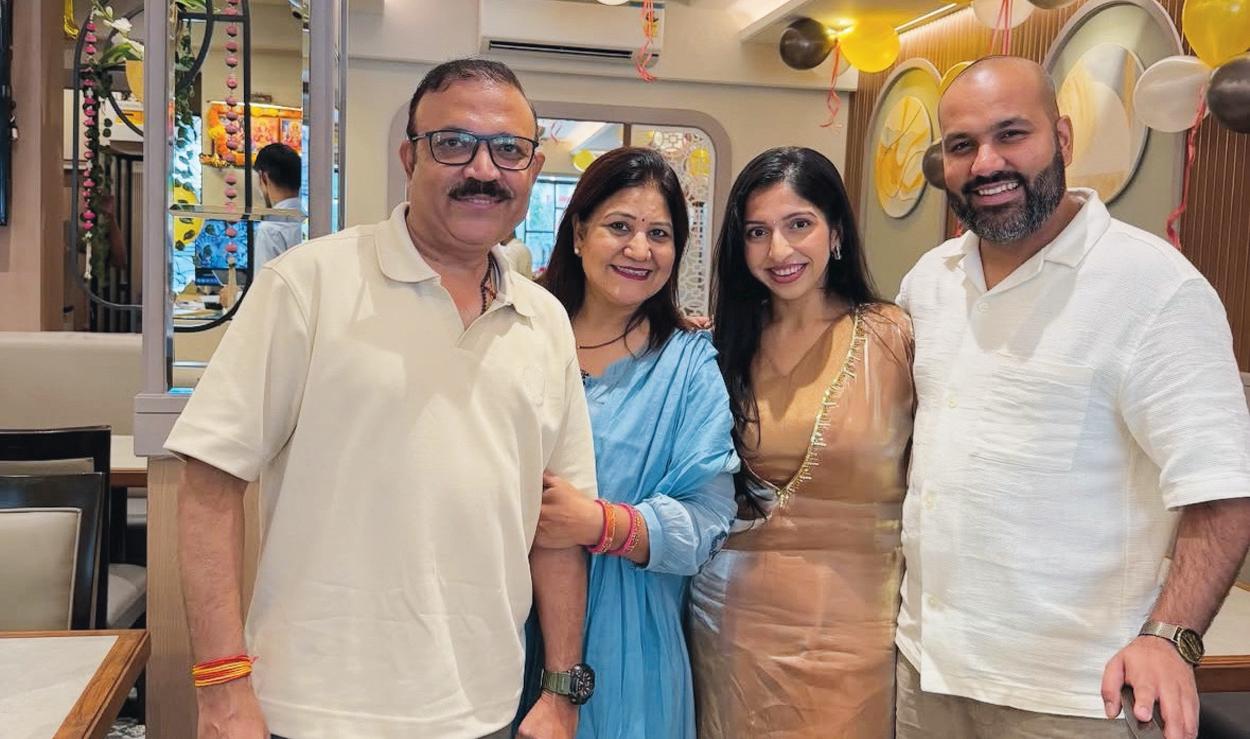
NRI couple (right) with his parents.
Couple in India celebrating kids’ birthdays.
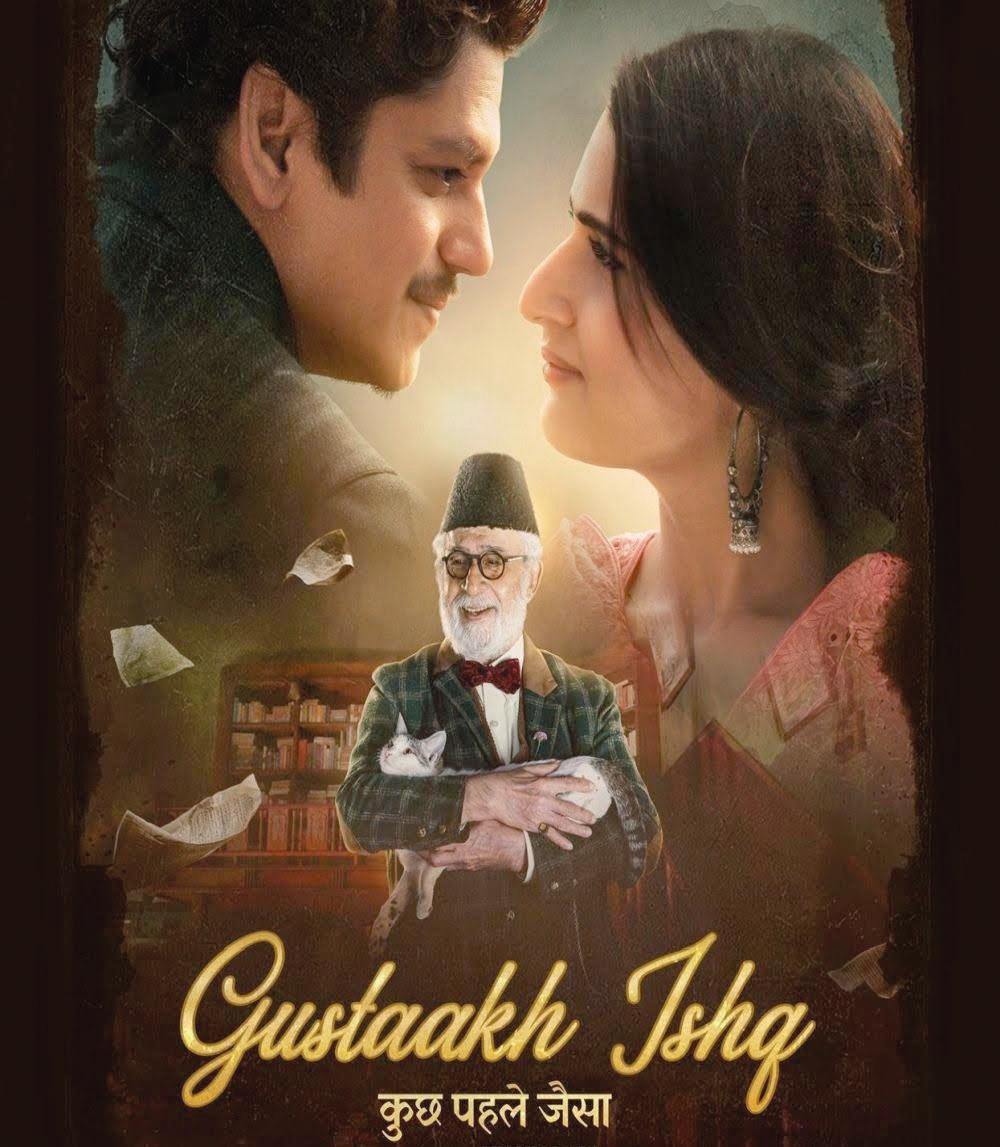
‘Gustaakh Ishq’: Graceful, Yet Underwhelming
By aBHisHek sriVastaV
Story: Nawabuddin travels to Malerkotla to persuade the reclusive poet Aziz Beg to publish his forgotten verses and rescue his late father’s dying printing press.
Review: ‘Gustaakh Ishq’ arrives with an old-fashioned charm and grace that contemporary Bollywood has largely forgotten, or perhaps simply moved on from. It is not in a hurry to impress. Instead, it asks you to settle into its mood, its silences, and its shayari. The world it creates is soaked in ‘tahzeeb’ and ‘adab,’ values that once came naturally to Hindi cinema.
The narrative unfolds at a deliberately unhurried pace, letting the setting and its people reveal themselves slowly. Yet, for all its refinement and sincerity, the film never quite rises to greatness. Even with actors of the calibre of Naseeruddin Shah and Vijay Varma, it remains muted. Ironically, for a film that calls itself a drama, it is often short on moments that truly sting or soar.
The story follows Nawabuddin (Vijay Varma), a man desperate to save the printing press left behind by his late father. Hoping to restore its lost prestige, he comes to know about the unpublished work of Aziz Beg, a gifted poet who has always kept his distance from fame and fortune. Now ageing and steadily losing his sight, Aziz lives quietly in Malerkotla with his daughter Minni (Fatima Sana Shaikh) and Attachie (Sharib Hashmi), the loyal house help he raised like family.
Nawabuddin approaches Aziz under the guise of learning the craft of shayari. With Minni’s help, he tries to convince the poet to allow his work to be published, but Aziz remains stubbornly indifferent. When Nawabuddin abruptly leaves for Delhi to deal with family matters without informing Minni, who has grown close to him by then, it creates a strain between
them. Matters grow more complicated when his brother decides to sell the press, pushing Nawabuddin back to Aziz in a last attempt to honour his father’s final wish. There is real pleasure in watching Shah and Varma share the frame as mentor and student. Yet, for a film rooted in both drama and romance, the two never fully bloom. The film means well and sets the right mood, but the screenplay rarely finds the sharp emotional peaks it so clearly reaches for.Naseeruddin Shah is the film’s strongest anchor. His Aziz Beg is layered with warmth, dignity, and weariness, and the ease with which he delivers poetry is a joy to watch. Those moments stay with you. Vijay Varma brings honesty to Nawabuddin, though there is a sense that he is holding himself back, where a little messiness might have helped. Fatima Sana Shaikh, despite being present through much of the narrative, re-
mains inconsequential to the plot. The Gulzar–Vishal Bhardwaj collaboration once again works its subtle spell, with Ul Julool, sung by Shilpa Rao and Papon, standing out on the soundtrack.
Director Vibhu Puri’s intent is sincere, but the film loses momentum because of its uneven writing. The art direction carries a faint Sanjay Leela Bhansali influence, but the story never quite matches that visual polish.Designer Manish Malhotra’s debut film as a producer is gentle, though it could have taken a few more emotional risks. It leaves behind traces of beauty in its poetry, music, and performances, even as the larger narrative slips through the cracks. It earns quiet admiration rather than loud applause. You walk away remembering individual moments more than the whole. And perhaps that restrained, slightly unsatisfying aftertaste is exactly what defines ‘Gustaakh Ishq.’ -- ToI
Place a number in the empty boxes in such a way that each row across, each column down and each 9-box square contains all of the numbers from one to nine.
Send us the correct answer before December 9, 2025. Email us at indoamericannews@yahoo.com. Please send us your solved Sudoku for your name to be published.