Indian Link is a monthly newspaper published in English. No material, including advertisements designed by Indian Link, may be reproduced in part or in whole without the written consent of the editor. Opinions carried in Indian Link are those of the writers and not necessarily endorsed by Indian Link. All correspondence should be addressed to:
INDIAN LINK MEDIA GROUP
Level 25 / 259 George St, Sydney 2000
GPO Box 108, Sydney 2001 Ph: 02 9279-2004
Email: info@indianlink.com.au
Distant wars, domestic consequences
WBY PAWAN LUTHRA
hen conflict erupts in the Middle East, Australians often view it as a tragedy unfolding far away. Yet experience shows that wars abroad rarely remain distant. The current tensions involving Iran may be centred thousands of kilometres from our shores, but their impact can reach deep into Australian society - not only through economics, but through the delicate fabric of social cohesion in a multicultural nation.
The economic consequences are already visible. Any disruption to the Strait of Hormuz - one of the world’s most critical oil corridors - sends tremors through global energy markets. Rising fuel prices are affecting transport, food costs, and household budgets, placing pressure on jobs and businesses. Higher inflation could complicate decisions by the Reserve Bank of Australia and prolong financial stress for households already grappling with high mortgages and rent. Housing construction may slow as costs rise.
But the deeper challenge may lie elsewhere: in how global conflict reverberates through domestic politics, media ecosystems, and community
relationships.
Australia’s strength lies in its multicultural harmony. Communities with roots in Iran, Israel, Lebanon, Iraq, and across the broader Middle East live side by side in Australian cities. For many families here, events in that region are not merely news stories but deeply personal tragedies affecting relatives, identities, and histories. When conflict escalates overseas, emotions travel quickly across borders.
History shows that these moments can strain social cohesion if they are not handled with care.
After the September 11 attacks in 2001, Muslim communities in many Western countries experienced a surge in suspicion, hostility, and discrimination.
Australia was not immune. Similarly, the Iraq War in 2003 and later the Syrian Civil War triggered heated public debates that sometimes spilled into community tensions and polarised political discourse.
In more recent years, the information environment itself has become more volatile. Social media platforms allow images, rumours, and unverified claims to circulate globally within minutes. Disinformation campaigns, sometimes amplified by ideological actors or foreign influence networks, can inflame emotions and deepen mistrust. A video filmed in one part of the world can be reframed, misrepresented, and used to
provoke anger in another.
This is where the danger lies. Economic stress combined with viral misinformation creates fertile ground for political opportunism. Far-right movements across the Western world have increasingly used overseas conflicts to fuel anti-immigrant narratives and portray multicultural societies as inherently divided. In times of uncertainty, simplistic blame can spread faster than nuance.
Australia has faced such pressures before. Yet it has also demonstrated remarkable resilience. Community leaders, journalists, educators, and policymakers have often worked together to reinforce dialogue rather than division. Multicultural Australia has survived global shocks precisely because most Australians reject attempts to pit communities against one another.
The real test during international crises is not simply economic management, though that matters, but the protection of social trust.
Responsible public debate, credible journalism, and thoughtful political leadership will be essential in the weeks and months ahead. Global conflicts should never be allowed to fracture local relationships.
Wars may begin far away. But whether they divide or unite Australian society depends largely on how we choose to respond here at home.
YOUR SAY
AUSTRALIA DAY HONOURS
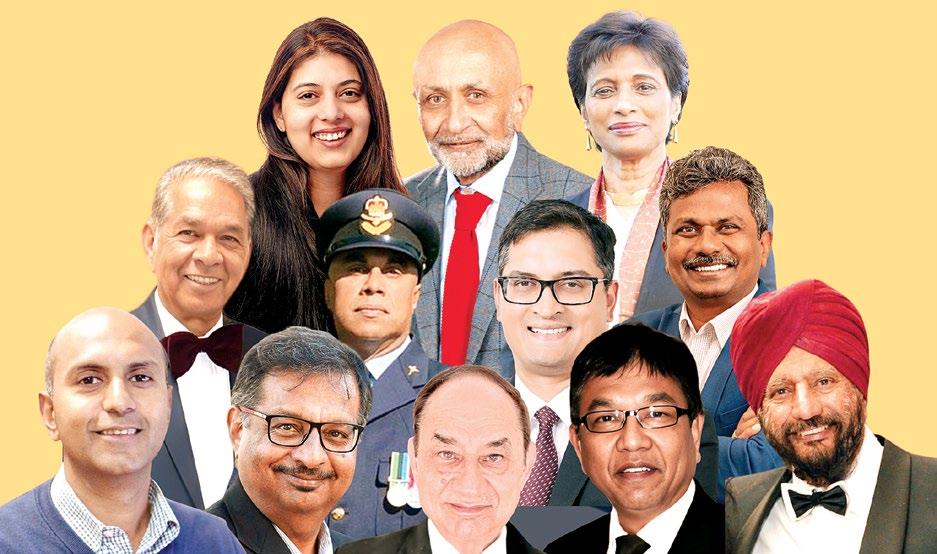
On the thirteen Australians of Indian origin recognised across multiple medal categories in the 2026 Australia Day Honours.
Kanti Jinna wrote: Great list of accomplishments from our diaspora.
Mit Pratap wrote: Thank you for a great edition. Just a question or rather a doubt, are the awardees in India "represented" or are they competitively selected? Your article specifically mentions "Women Underrepresented".
Harish Bajaj wrote: Excellent. Heartiest congratulations to one and all.
Bindi Shah wrote: Congratulations to all the award recipients. (On your observation about the number of women this year, we must) nominate more women. Support isn’t passive. That’s how change shows up. Every nomination disrupts bias, opens doors, and creates the role models the next generation needs. We still have a long way to go.
Rajni Luthra on A Prof. Annamarie Rustom Jagose OAM: Congratulations Prof. Jagose. Must admit I was not aware of the milk-and-money version of Parsi heritage in India, only the milk-and-sugar! Also, I look forward to reading your Salt Water.
Colin Moore on Palanichamy Thevar OAM: Congratulations. I am happy you received well-deserved recognition for your work as a progressive, humane and unifying force in the community.
Wayne Uni on Palanichamy Thevar OAM: Well deserved and couldn’t happen to a nicer person.
Jackie Trad on Palanichamy Thevar OAM: So rightly deserved!
Frank Hinoporos on Mukund Narayanamurti PSM: Congratulations Mukundrichly deserved.
ON DIPAK SANGHVI AM
Sonali Stella wrote: Having such community-minded and hardworking parents shaped who I am today. Super proud daughter here, Dipak Sanghvi - what an achievement!
Jacinta R wrote: Thank you for your service, humanity and kindness. A very welldeserved acknowledgement of your incredible contribution to healthcare and communities.
Duncan Langdon wrote: Dipak, you are a true star and inspiration.
Tass Mousaferiadis wrote: A great acknowledgement of your work.
Shirley Glance wrote: A well-deserved recognition of all the hard work you have put into the health industry. It was my pleasure working with you at Monash Heath. Your insight and ability to think outside the box is an inspiration.
Dr Anil Chinnabhandar wrote: Congratulations Dipak for being recognised for your unrelenting service to healthcare and communities. We remember your dedication and hard work during the 1990s and 2000s despite having a young family. Great achievement which makes the entire community proud of you.
Matina Karvounaris wrote: An outstanding career entrenched in the healthcare industry.
Helen Brunt wrote: I thoroughly enjoyed working with you when you were Chair of the Board of Monash Health.
Rohini Tanwar wrote: You are an inspiration to many.
Bill Letendre wrote: A truly exceptional career. As a long-time USA colleague, I am honoured to have known you in my career.
Philip Mayers wrote: You have done so much for the organisations you have led. Shannon Wright wrote: Fabulous recognition of your commitment and leadership with public health.
Debbie Rigby wrote: Congratulations to one of the legends of pharmacy!
Thinesh Chandraratne wrote: Immense contribution to healthcare and community. Nerine Wilson wrote: A testament to your commitment to healthcare.
Joe Cera wrote: Congratulations Dipper! Does this mean I have to call you Sir??
Shelly Park wrote: A lovely recognition of your commitment and work.
Kay Dunkley wrote: Thank you for all your hard work and all that you have achieved.
Anna Mitchell wrote: Such a worthy recipient.
A Prof Andrew Block wrote: Wonderful to hear, and so well-deserved.
Catherine McAdam wrote: Your contribution over many years has been of benefit to many. Thank you.
Melinda Kant wrote: A true testimony to your commitment to healthcare outcomes. ON FARAH MADON AM:
Dinsha Palkhivala wrote: Wonderful achievement.
Manjoo Sharma Lalwani wrote: Awesome news, Farah! So proud of you.
Jimmy Medhora, Siddharth Maitrak, Tila Gera-Popat, Ramesh Kalagnanam, Manmeet Kaur, Arun Venkatesa and Mala Mehta also wrote in congratulatory notes.
GOING OVERSEAS FOR SURROGACY
Dr PREETI KHILLAN on what Australian families risk: few understand the legal and medical risks involved.
EmpowHer Circle by Prosper wrote: A thoughtful and important discussion. International surrogacy is clearly an area where many families feel caught between their hopes and the limits of current legislation. It’s encouraging to see experts raising the legal, ethical and human rights considerations that deserve national attention. A more informed and nuanced policy conversation would certainly benefit everyone involved.
WHEN GANDHI WENT MISSING
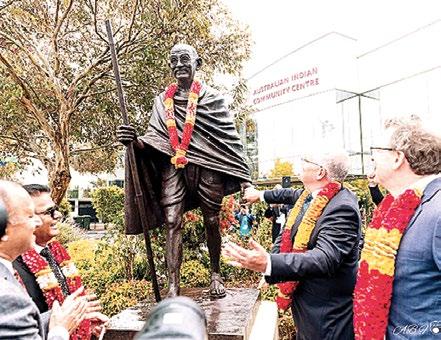
LAKSHMI GANAPATHY on the stolen Gandhi statue at an Indian community centre in Melbourne, and RAJNI ANAND LUTHRA’s check-in on other Gandhi statues across Australia.
Way too many people wrote: What’s the contribution of Gandhi in Australia? What’s a Gandhi statue doing in Australia? Are there any Australian statues in India?
Sean Hill wrote: For anyone whinging about a Gandhi statue, we've also got a Bruce Lee statue in Kogarah, NSW. You all mad about that, too?
Jay S Bansal wrote: Gandhi didn’t directly contribute to Australia’s economic or political ‘success.’ He never governed here. The statues aren’t about that. They recognise his global influence on non-violent resistance and civil rights. His philosophy influenced the life work of Nelson Mandela and Martin Luther King, and movements across Eastern Europe, Asia, and Africa used similar non-violent strategies to fight injustice. So his impact isn’t about building Australia specifically. It’s about ideas - non-violence, peaceful protest, civil disobedience - that influenced democratic societies worldwide, including countries like Australia that value those principles. And yes, India also has statues and memorials recognising world figures like Martin Luther King Jr., Albert Einstein, and Vladimir Lenin - none of who directly contributed to India’s economic or political success. They’re honoured for their ideas and influence. That’s what statues represent.
Anup Prasad wrote: Statues can be stolen. Ideas cannot. Gandhi’s spirit has never disappeared from the hearts of his people - even if the bronze occasionally does.
Mathew Brown wrote: Someone used an angle grinder in the early hours of the morning, and no one heard a thing?
INDIA’S T20 EMPIRE
ANINDYA DUTTA on the new tools in India’s playbook that powered their T20 World Cup triumph earlier this month.
Supantha Bhattacharyya wrote: A captivating piece of creative sports writing. Masterfully blends tactical analysis with a vivid, almost cinematic narrative to celebrate India’s triumph.
R Rangarajan wrote: Many still don't want to, or are reluctant, to acknowledge the fact that Gambhir and SKY have devised the new pattern of hard, relentless hitting, a total U-turn from the Dravid-Shastri era of ‘safety first keep your wickets’ theory. This brand of cricket is in no way connected with the earlier pattern of batting. I am not privy to the dressing room tactics but I stuck my neck out and said emphatically that this team is not a 150-160 team, has set its benchmark very high as the high 200s, that 200-plus is the new normal, that those who stuck to the 150-160 regime will have to step aside and allow the young brigade’s new doctrine to take over wholesale. Gambhir in his presser said this is not a 150-160 team. Anindya himself had to agree here that Kohli and Rahul could not fit into this new pattern of 200% strike rate as a benchmark. Of the seniors, Rohit Sharma was capable of looking at that kind of strike rate. At last, cricket writers have now begun to talk of strike rate, not runs scored. In praising Samson, it must be remembered that those around him too are looking at 200% strike rate. Look at Shivam Dube scoring 8 runs off 2 deliveries to take India over the line and the 30 odd runs in the 20th over. Varma, Kishan, Abhishek, Samson, Pandya, Rinku, Azar are all geared to look at 200% strike rate. Gambhir has set very high standards. Individuals don't matter. Too much praise on Samson would be unfair to the others who are integral parts of the matrix and template.
Get the best of Indian Link straight in your inbox. Scan the QR code to sign up to our weekly enewsletter
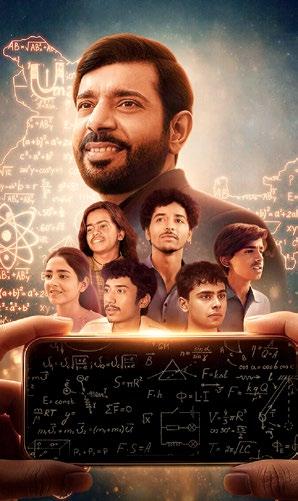
GUESS THE MOVIE
A fake degree… a real heart… and jadoo ki jhappi for everyone. Megha Vaghela, Meena Sunder, Deepti Sharma, Vicky, Eldee D’Lima and Priya Subramanian guessed correctly: Munna Bhai M.B.B.S.
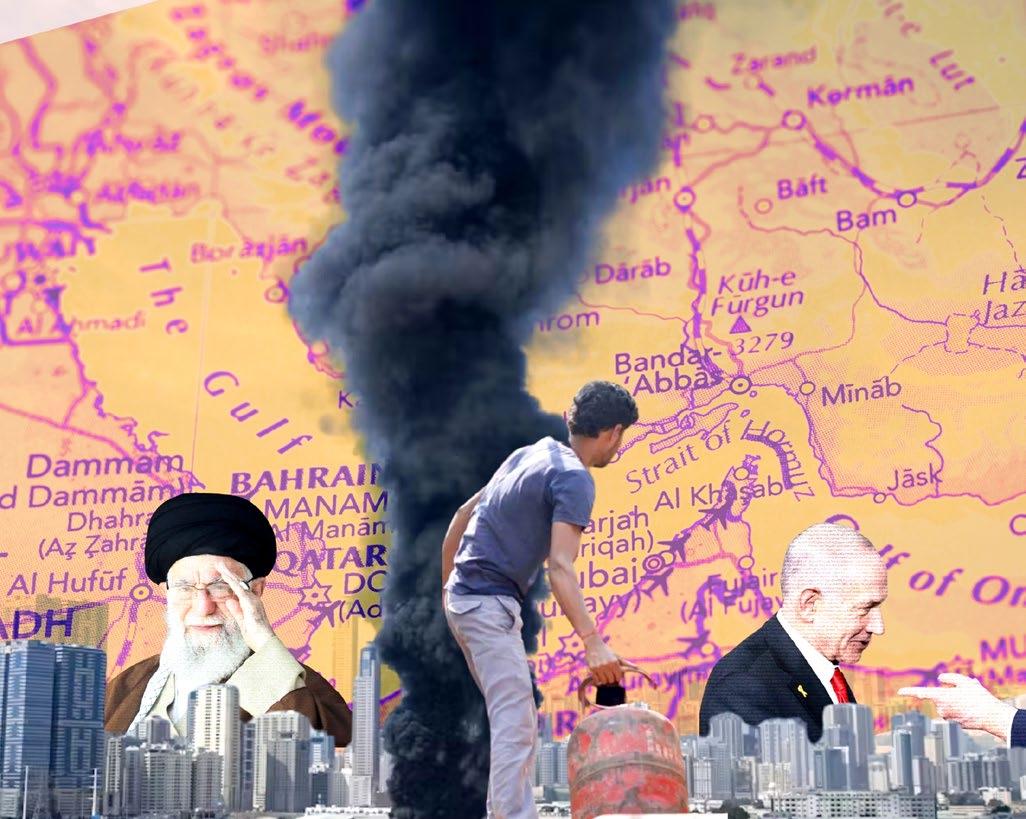
India: A major collateral victim of Netanyahu and Trump’s reckless war
As conflict in the Middle East escalates, India faces immediate economic shocks and the risk of deeper strategic fallout
IBY DARSHAK MEHTA
ndia stands at a precarious crossroads as the US-Israel-Iran war - now grinding into its third week in March 2026 - threatens to upend the region’s fragile balance and drag the world toward catastrophe.
The conflict has devolved into a brutal, no-holds-barred slugfest: a full-contact cage match between the unhinged and the outright deranged.
It has already claimed well over 2,000 lives across Iran, Israel, Lebanon, and beyond.
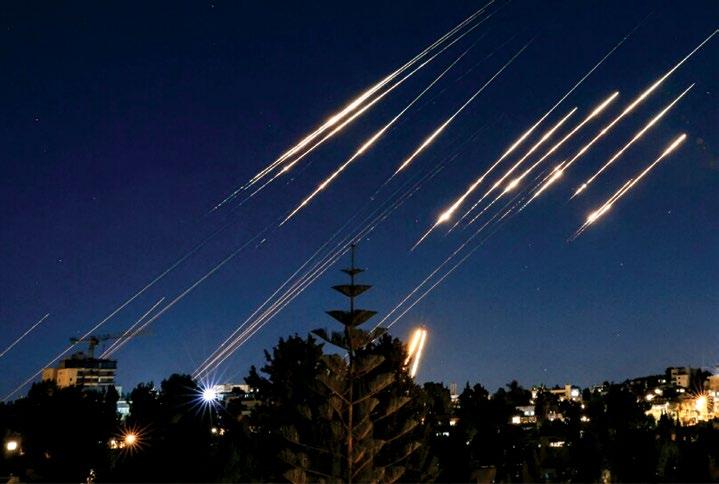
Relentless carpet-bombings, missile barrages, drone swarms, and strikes on
nuclear sites like Natanz continue to drive up the death toll. Nuclear escalation is no longer a distant nightmare - it is a disturbingly plausible next chapter if either side miscalculates or corners the other into desperation.
For India, the stakes could hardly be higher. Over 9 million Indian citizens work across the Gulf, sending home around $50 billion in remittances each year. Prolonged chaos risks triggering mass evacuations, widespread job losses, and a severe blow to household incomes back home. Energy security is equally vulnerable: disruption to Gulf oil flows or the Strait of Hormuz is sending prices soaring, hammering India’s import-dependent economy and stalling its growth ambitions. The war is also forcing painful choices on trade corridors - pitting the India-Middle East-Europe Corridor (IMEC)
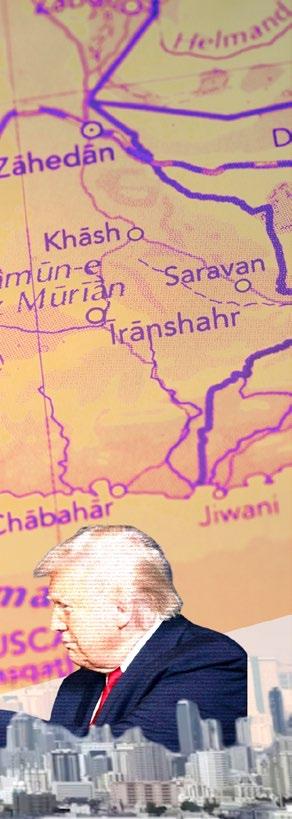
against Iran-linked routes such as Chabahar — while testing New Delhi’s delicate balancing act between deepening ties with the US and Israel on one side, and longstanding relations with Tehran on the other.
This is not just another Middle East flare-up. It is a geopolitical wildfire that may singe India’s economy, diaspora, and strategic autonomy in ways few conflicts have before.
Immediate energy shock and everyday impact
The war erupted on 28 February with coordinated strikes that killed Iran’s Supreme Leader, Ayatollah Ali Khamenei, and targeted major military and nuclear installations. Iran responded with intense missile and drone attacks on Israeli targets, Gulf infrastructure, and US positions. It
also imposed a near-total blockade on the Strait of Hormuz - the narrow waterway through which over 20% of the world’s seaborne crude oil and a large share of liquefied natural gas pass.
The blockade has triggered a severe global energy crisis. For India, the world’s fourth-largest economy and a massive energy importer, the pain has been immediate and intense. Around 80% of India’s natural gas and up to 60% of its crude oil imports travel through the Strait, mainly from the UAE, Saudi Arabia, Qatar, Kuwait, and Iraq.
With commercial insurers withdrawing war-risk coverage and Iranian forces turning away or threatening vessels, supplies have been badly disrupted. Benchmark crude prices have surged past $100 per barrel, with Iranian officials warning they could reach $200 if the standoff continues.
Photos: X
The impact is already hitting ordinary Indian homes and businesses hard:
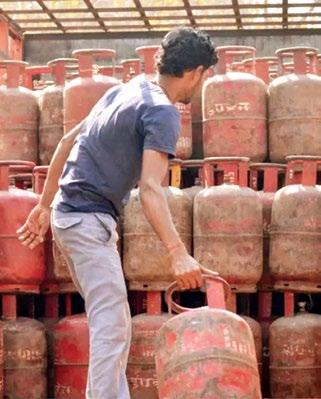
• LPG shortages: Panic buying and long queues have broken out at distribution centres for cooking gas used by hundreds of millions of households.
• Food sector disruption: Restaurants, cloud kitchens, and street-food vendors in major cities such as Delhi, Mumbai, Bengaluru, Chennai, and Pune are cutting menus, shortening hours, or shutting down temporarily.
• Gig workers affected: Food delivery workers, many already financially vulnerable, have seen orders collapse and are urgently calling for government support.
Natural gas shortages are threatening fertiliser production, forcing India to seek emergency urea supplies from China. Higher petroleum prices are driving up the cost of everyday items - from plastic packaging to bottle caps - while large-scale events such as weddings are being scaled back or postponed due to fuel uncertainty.
India’s response and shifting alliances
To cope, India has dramatically increased oil imports from Russia. Purchases jumped 50% in the first week of March to 1.5 million barrels per day, with more tankers
already en route. This shift has delivered a major windfall to Moscow — an estimated extra $150 million in daily oil revenue, with total gains from the redirected demand likely between $1.3 billion and $1.9 billion so far. Russia has emerged as one of the clearest beneficiaries of the conflict.
Diplomatically, New Delhi is walking a tightrope. As the current chair of BRICS (of which Iran became a full member in 2024), India has refused to join Brazil, China, Russia, and South Africa in strongly condemning the initial US-Israeli strikes. At the same time, it co-sponsored a UN Security Council resolution criticising Iran’s retaliatory attacks on Gulf states. India has carefully avoided direct criticism of the strikes on Iran or Lebanon.
Iranian President Masoud Pezeshkian has publicly reminded India of Prime Minister Modi’s earlier description of Iran as a “friend” and urged BRICS to play a more active role in de-escalation. Several calls have taken place between External Affairs Minister S. Jaishankar and his Iranian counterpart to ensure safe passage for Indian vessels. Iran has granted limited permissions for some LPG carriers and Saudi crude tankers, and its ambassador in New Delhi has spoken of potential cooperation both during and after the war. At home, critics accuse the government of
Over 9 million Indian citizens work across the Gulf, sending home around $50 billion in remittances each year. Prolonged chaos risks triggering mass evacuations, widespread job losses, and a severe blow to household incomes back home.
abandoning its traditional policy of strategic neutrality. They point to the muted response to Khamenei’s death (though the foreign secretary did sign a condolence book), the US sinking of an Iranian warship shortly after joint exercises with India, and Modi’s visit to Israel just before the strikes began. Many argue that India’s growing economic, defence, and investment ties with Israel and the Gulf Arab states have come at the expense of its historically closer relationship with Iran.
The human and longterm risks
The greatest long-term risk concerns the Indian diaspora in the Gulf. Around 9 million Indians live and work in the six Gulf Cooperation Council countries, sending home roughly $50 billion in remittances every year. Prolonged conflict threatens their jobs, particularly in oil, gas, and construction, where operations have already been suspended in many places. Safety concerns are rising, with some Indian workers caught in cross-border attacks.
Evacuating even a fraction of these millions in wartime would be an enormous - and possibly unfeasible - logistical challenge, far larger than the 200,000 Indians India successfully repatriated during the 1990–91 Gulf War. India’s foreign policy is being pulled in two directions: strong strategic and
commercial ties with Israel and the Arab Gulf states on one side, and longstanding cultural and geopolitical links with Iran on the other. While increased Russian oil and some American energy options offer shortterm relief, India’s heavy dependence on Middle Eastern shipping routes leaves it highly vulnerable.
A prolonged conflict would almost certainly bring higher inflation, slower economic growth, wider trade deficits, and real hardship for millions of families dependent on Gulf remittances. These pressures are already being compounded by the falling value of the Indian rupee (currently around `65 to the Australian dollar and Rs 93 to the USD).
As the crisis continues, one thing is becoming painfully clear: events in the Middle East are no longer distant for India. They directly affect the price of cooking gas in kitchens, the income of gig workers, the stability of millions of families, and the future of one of the world’s fastest-growing major economies.
Never has the success of diplomatic efforts to restore calm and reopen vital shipping lanes mattered more for India.
Darshak Mehta OAM is a businessman, philanthropist and intrepid traveller. He is Chairman of The Chappell Foundation.
INTERNATIONAL WOMEN’S
Giving to Gain
IBY LAKSHMI GANAPATHY
nternational Women’s Day invites us to reflect on the strength of women, the power of community, and the quiet ways women lift one another up. With this year’s theme, Give to Gain, we speak with trailblazing South Asian women in the not-for-profit sector about what it means to give – and how that giving returns in unexpected ways.
Brisbane’s YASMIN KHAN is founder and chair of The Bangle Foundation, a domestic abuse support service for South Asian women which has been running for over 10 years and has helped thousands of women in our community escape family violence. She was QLD’s Local Hero at the Australian of the Year Awards 2017.
Sydney’s SARITA CHAND is chairperson of Pratham AUS, the Australian branch of a global not-forprofit dedicated to improving literacy levels amongst remote and disadvantaged communities in India, particularly young
girls, to break the cycle of poverty.
Sydney’s SHANTHA VISWANATHAN is president of Pink Sari Inc, who raise funds and awareness for breast cancer amongst South Asian communities in NSW, and encourage greater community uptake of cancer screening.
Who or what inspires you to ‘give’?
Yasmin Khan: My privilege and my faith –as a woman with a voice and education, I see so many women who don’t understand what’s happening to them, and if I can make it easier for them to pick up the
phone and get some answers, then that’s the easiest thing I can do. My faith is also at the forefront of everything that I do – it means I understand and am grateful for the advantages I have. It’s my duty to then use those advantages to the best of my ability to help others.
Sarita Chand: Observing and reading about those who, for no reason other than an accident of birth, can’t make a better future for themselves, and contrasting this with my own circumstances that allowed me to pursue my dreams and make a good life for me and my family. I felt it was necessary for
Sarita Chand
Shantha Viswanathan
WOMEN’S DAY
This International Women’s Day, three inspiring women share how they ‘give to gain’ as leaders of not-for-profits
me to give to those less advantaged, to do whatever I could to help improve their lives.
Shantha Viswanathan: I’m inspired by the people I meet, the wonderful team I’m fortunate to work alongside, and my family who are unconditionally supportive. Volunteering, whether in the cancer space or in my personal life, brings me real joy, fulfillment and new friends. To us at Pink Sari, success and fulfillment come from hearing that someone has undertaken their cancer screening, reached out for support and felt cared for, or taken a positive step to make their health a priority. Giving inspired by the courage and stories of these people, reminds me how much strength, purpose,
see us, we go and see them, and we sit for hours in court with them. We can support them for years, and it’s wonderful that we have clients who trust us with everything. We’ve done nothing but give – our time and money – to make other women’s lives a little less difficult.
Sarita: Since 2015, I have seen for myself the societal change Pratham’s charitable work has brought about in India. I have realised ‘giving’ is most potent and effective when supporting an organisation that has minimal overhead costs, is focused, sustainable and has proven results. Pratham Australia ‘gives’ not by directly working with Pratham’s beneficiaries in India, but indirectly by spreading awareness of its work in our community and by collecting funds for the delivery of its programs in India.
Shantha: I’ve realised giving isn’t just about donating money or resources. It’s also about giving our time, listening, and learning together. My team and I grow through our everyday lived experiences with people impacted by cancer, our reflections, our cancer screening campaigns and yes, even our mistakes. Most of the time people simply want to be heard. Giving without expecting anything in return has shown me the real reward is seeing someone going through health challenges feel supported. In return, what we gain is trust, connection and a constant reminder to us that even small actions can make a big difference.
What does it look like to lead with abundance in a sector that often operates with scarcity?
Yasmin: Go with the right intention – if you want to scrimp and save and always look at the balance sheet, you’ll go nowhere. We’ve started something from nothing and gone in on a wing and a prayer – and 15 years later, we are still here. We are respected in the domestic abuse arena and are known to government and other stakeholders – and all with no money but the right intention, to make lives easier for abused women. It all works out – the donations come in from all areas, and the women get the help they need. Too many organisations worry about the money first; we worry about the client first.
What do you hope the next generation of women ‘gain’ from your leadership?
Yasmin: Empathy and compassion and to think outside the box – be bold and generous. Don’t worry about the things you can’t control, control the things you can – and do the right thing, rather than doing things right. Colour outside the lines, be creative, and don’t be afraid to loudly proclaim your space. And get things done –don’t talk about it – get it done!
Sarita: The Second Chance program has had a transformative effect on 50,000 girls and women in disadvantaged communities in India. It has brought them back into structured learning, supported them in acquiring their Grade 10 certificate, taught them basic life skills, and given them pathways to employment. They have been given hope for a better and dignified future, not only for themselves but also for their children. The impact is ongoing and generational.
Shantha: When I think of the next generation, I reflect on the women before me, my mother and sister who gave generously and unconditionally. I hope the next generation of women grow confident to lead as themselves and understand the power of good teamwork. I hope they experience the joy of giving, because when you give with your heart and without any expectations, you achieve outcomes, gain strength, connection and a sense of purpose that lasts forever.
Read more at: www.pratham.org.au www.banglefoundation.com.au www.pinksari.org.au
positivity and gratitude we gain in return.
How has your understanding of ‘giving’ changed over the time running your NFP?
Yasmin: As a volunteer organisation, we give constantly – and it’s heartwarming that I have surrounded myself with people who have the same attitude. We are not funded, so any donations we receive goes into helping the women, and we pay our own expenses. We have the phone on 24/7 in case someone needs advice, or to tell the tearful story of abuse, and we are the first people they open up to. I am giving of myself to my clients – if they can’t come and
Sarita: Pratham Australia is run entirely by volunteers; all services provided to it are on a pro-bono basis. Given our limited resources we must operate strategically to get the maximum results in engaging with the community. It’s been a learning exercise since our inception in 2015 on how optimally to spread the word, to garner potential donors, and to hold fund-raising events with minimal outgoings.
Shantha: To me, leading with abundance means focussing on the strength of our people and community. Even when funding is limited and resources are stretched, there is always room for teamwork and compassion. I’m constantly inspired by my team and some of the people we work with, who share knowledge, support one another and work with genuine care for the community. When we give our time, energy and trust, we build stronger relationships and achieve better outcomes. Abundance comes from working together and believing that we can create change as a collective force.
Yasmin Khan
Rental racism rampant in Victoria
Almost 70 percent of respondents of a survey by UniMelb have experienced racism whilst trying to secure housing
Arbitrary extra cleaning, additional paperwork and being rejected for a property based on their names or accents are just some of the shocking instances of rental racism a University of Melbourne study released this month has uncovered.
‘Shelter is a dignity’, a collaboration between the University and Tenants Victoria surveying 144 renters, has found almost 70 percent of them have experienced direct rental racism in their search for accommodation, with 60 percent saying they were denied housing based on their racial background.
“This research gives shocking insight into the damaging impacts of rental racism that’s putting families at risk of homelessness, destroying mental health, and leaving lasting scars,” said Tenants Victoria CEO Jennifer Beveridge.
“When a mother and her children are driving around homeless for two months because agents won’t even return her calls, we have a system in crisis.”
One respondent, a Pakistani woman in Glenroy, reports being asked to provide
large deposits of money and multiple references to ‘give weightage’ to her application. Another woman, also Pakistani, tells of an owner who scrutinised whether her toddler was ‘toilet trained’ as the ‘carpets were new’, and another renting a room in an already full six-bedroom house.
A fourth Pakistani woman tells the study, “When we are cooking, we use masala – you know, we like a strong smell with our food. It’s a good smell for us. So, when we had an inspection, I never cooked. Otherwise, if I cook biryani … then their focus will go onto my kitchen. So that’s why I don’t want to
put their focus on my kitchen.”
The toll of rental racism has also been documented in the study, with 67 percent of those surveyed noting a decline in their physical or mental health.
The report calls for an Antiracism Housing Framework to be established, as well as improved reporting pathways, cultural safety training, and adding more multicultural housing workers to the workforce to support renters.
“The discrimination and systemic racism described in our report has damaging consequences, creating barriers to new migrants’ ability to build stable lives in Australia,” said Dr Erika Martino, lead researcher from the University of Melbourne.
“People are experiencing hypervigilance, fear, stress, anxiety and depression. The mental health costs of racism are substantial and reverberate through our workplaces and community. We need to acknowledge, as the title of the report suggests, that ‘Shelter is a dignity’ that everyone deserves.”
Lakshmi Ganapathy
One in seven experience racism at university
The
Government commissioned Racism@Uni Study has found troubling rates of racism on Australian university campuses, and a failing of institutional duty of care
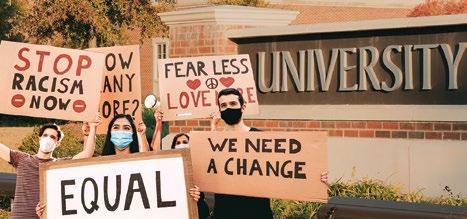
Seventy percent of university staff and students have experienced indirect racism on university campuses, a study from the Australian Human Rights Commission (AHRC) has revealed.
Surveying over 76,000 students from 42 institutions, including 8759 South Asians, the landmark Racism@Uni Study has found universities are failing their duty of care to create a safe environment for students, and that trust in university systems is extremely low.
Giridharan Sivaraman, Race Discrimination Commissioner at the AHRC, says the findings from the Government-commissioned report are shocking and point to a systemic fault.
“The insights and data from this Study highlight that racism at university is not confined to isolated incidents or individual behaviour – it is systemic. Racism is pervasive across the sector, affecting many groups in serious ways,” he said.
International students, First Nations, Palestinian and Jewish students were found to have experienced significant rates of racism, with 77% of South Asian respondents experiencing either direct or indirect racism.
Communal staff spaces, meetings and tutorials were found to be the main arenas of racism, including experiences of being singled out, inappropriate jokes or names, and the inability to openly express views.
“I had a professor in the first year who
thought I bought my assignment or made AI do it because she could not believe an Indian could write that good in the first year of nursing,” one participant shared.
Over two-thirds of respondents reported negative mental health impacts, with only six percent of Asian (including South Asian) students reporting they ‘feel safe’ or are ‘treated with respect’.
Worryingly, 33 out of 42 universities were shown to have ‘limited’ (not culturally or trauma informed) procedures in place to deal with complaints of racism, with two having ‘no evidence’ of any anti-racism complaint procedures. Most institutions also had ‘no evidence’ of antiracism reporting or evaluation.
Federal Minister for Education, Jason
Clare, has acknowledged universities are ‘not perfect’ and have an ‘enormous piece of work’ ahead of them to eradicate oncampus racism.
universities have ‘viscerally broken’ their promise to students and must do better to facilitate a positive university culture.
“We have an obligation to university staff and domestic and international students to ensure the promises we make about the benefits of university experiences are upheld. Those promises are shattered when they are targeted by racism,” he said.
The report has made 47 recommendations, including a national framework for anti racism in universities, diversifying the workforce, and implementing trusted, accessible complaint systems.
“You actually have to talk about racism if you want to confront it. You can’t use euphemisms like social cohesion. Social cohesion papers over the cracks. Anti-racism work tackles the problems in our structure,” Commissioner Sivaraman said at a press conference in Canberra.
Universities Australia, the peak body for higher education, has described the findings as ‘deeply troubling’, and stands ready to make a coordinated, sector wide approach.
“This report tells us we’re not doing enough at the moment to stamp [racism] out where we find it or to prevent it in the first place,” Minister Clare said at a press conference in Canberra.
Commissioner Sivaraman says
“We will continue listening, learning and acting – together – to ensure our universities live up to the standards our communities rightly expect,” they said in a statement.
Lakshmi Ganapathy
Photos: Canva
Photos: Unsplash
How a Melb Gurdwara is tackling drowning deaths
FBY SHARANYA SATHYANARAYANAN
or many migrants, a yearning to swim stirs; the feeling grows, but fear soon takes over, and they stay on the shore. Some hesitate, but others are carried forward by confidence that may not match their skills, resulting in multicultural communities making up a third of annual drownings.
Dr Harpreet Singh Kandra, an academic at Federation University and a volunteer at Officer Gurdwara since 2015, knows that feeling firsthand. Decades ago, a neardrowning incident in India sparked his fear of deep water, and after moving to Australia, he began to see a troubling pattern: holidays meant for joy were ending in tragedy.
No longer could he ignore this problem, starting the Safely Engaging with Water program to help community members gain confidence and skills in water. The program treats swimming as a basic part of settling into Australian life, rather than just focusing on classroom lessons about dangers.
“When we migrate, we learn Australian roads and rules; swimming should be viewed the same way, essential for safety,” he reflects.
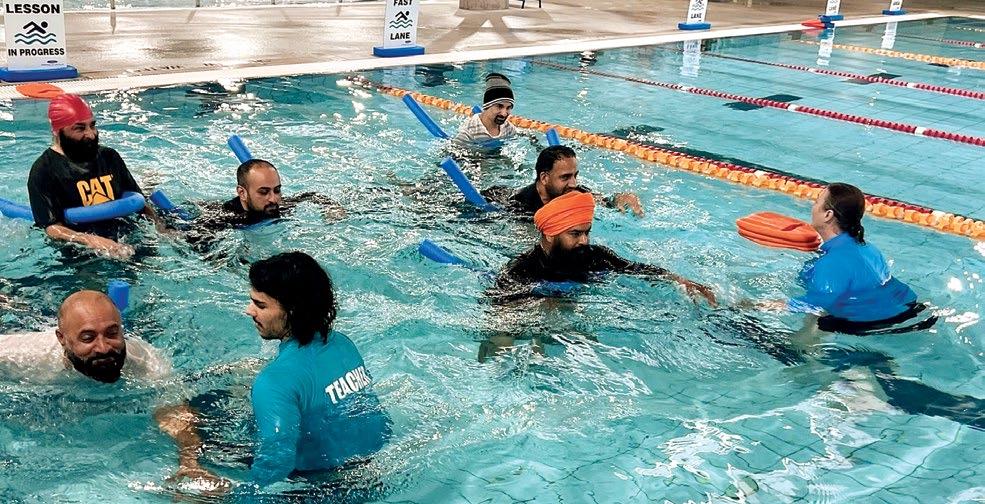
The Safely Engaging with Water program sees participants join 30-minute pool sessions over 10 weeks to practise breathing, floating, controlled movement, and foundational strokes under supervision. The philosophy behind the program is simple: ‘become friends with water.’ After mastering the basics, Life Saving Victoria supports participants to apply these skills in open water, including identifying rips, swimming between flags, and assessing conditions before entering the water.
The program operates on a shared funding model. Participants contribute $100 of the $300 course fee, and the rest is covered by swim centres and Gurdwara fundraising. Dr Kandra says this method helps people stay committed and keeps the program accessible.
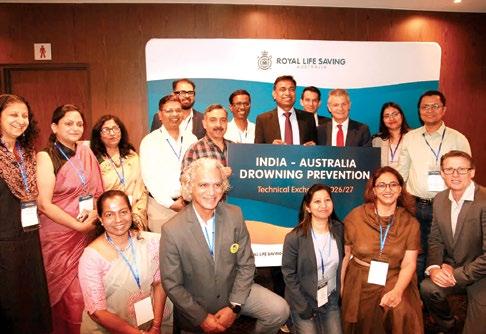
It’s vital work that has transcended borders – last month, Dr Kandra participated in the India-Australia Drowning Prevention Technical Exchange, which brought together policymakers and water safety experts from both nations to advance strategies to reduce drowning fatalities (see pic below).
“There was a lot of mind mapping and brainstorming,” he says. “Everyone agreed that this is a very big problem.”
With India’s estimates for drowning deaths each year ranging from 38,000 to 50,000, discussions focused on improving data collection, strengthening school swim education and addressing cultural barriers.
“If we are not even confident about the numbers, it clearly means something is missing,” Dr Kandra notes.
“When we migrate,we learn Australian roads and rules; swimming should be viewed the same way, essential for safety.”
Inspired by his own near-death experience, Dr Harpreet Singh Kandra is helping community members gain confidence around water
Since the launch of the Safely Engaging with Water program, some 350 people have completed training. Participants tell Dr Kandra that learning to swim has transformed their self-image. Some now feel confident to pursue careers that involve water skills, including emergency services.
“When people connect with water,” he explains, “they connect more deeply with nature and with each other.”
His message to hesitant adults is clear: fear is normal, but it doesn’t last.
“Just as you learned to drive, you can learn to swim,” he says. With lessons, supervision and practice, even old fears can turn into confidence.
Dr Kandra urges communities not only to learn, but to look out for one another. He encourages everyone to actively check safety flags, assess water conditions, avoid alcohol near water, and speak up when someone takes unnecessary risks. Taking these steps together can save lives.
“Each life saved from drowning,” he says, “is worth more than any Olympic medal.”
Participants in the ‘Safely Engaging with Water’ program for migrants
Dr Harpreet Kandra
SBY BLAKE PRICHARD
ome festivals are observed. Holi insists you participate.
I thought Holi in India would be a polite cultural experience. Instead, within seconds of entering the park, someone yelled “Happy Holi!” and a fistful of bright pink powder exploded across my forehead.
Soon my hair was green, my shirt purple, and strangers were hugging me like old friends.
For someone experiencing Holi for the first time, it was less a celebration - and more a joyful ambush of colour.
In the first week of March this year, I was invited to the wedding of my partner’s cousin in Jaipur. While this was an exciting thing to experience, I had been given the rundown of what to expect, what to wear, and how to gently avoid all the Aunties asking about our own wedding, so there was very little that truly took me by surprise.
One part of my journey in India that I was completely unprepared for, was the Festival of Holi, specifically Rangwali Holi. It was pure serendipity that we were in Delhi during Holi, allowing us to experience it in all its messy, colourful glory. When a relative who lived locally found us a place to celebrate, we received strict instructions to “cover yourselves in coconut oil before you go in”. While initially confusing, I was informed that I would be wise to follow his advice if I didn’t want my skin to resemble a sweaty palm holding a handful of M&Ms. We were also advised to bring “as many drinks as you can carry” which, due to closed bottle shops and my fondness for a Kingfisher with dinner, turned out to be about two beers.
After grabbing all the other Holi accoutrements of water pistols, gulal (the coloured powder that would become our playful weapon of choice) and sunglasses, we drove out to meet said relative. He greeted us warmly with hugs, smiles and a concerningly large bottle of Thandai Bhang (a heady mixture of milk, saffron and cannabis) which I politely refused. We gave ourselves a liberal application of coconut oil, before heading into the booming, colour-
Getting Holi
What a first-timer discovered in the joyful chaos of colour
laden affair. Within seconds of arriving, my face was covered in a variety of different coloured gulal, someone had pressed a cold beer into my hands, and I had Aunties, Uncles and kids coming over to wish me a “Happy Holi!”
There is something special about experiencing Holi for the first time, especially as a newcomer to Indian culture as a whole. While I had seen the festival periodically splashed across my screen during late night doom scrolls, I never really understood the feeling behind the celebration until I was neck deep in colour and soaked to the bone. Holi has the warmth and sense of welcome that you might get after being introduced to your partner’s extended family. You are a complete stranger to these people, but you
are taken in with open arms and invited to eat, drink and be merry. There is also a ‘tongue in cheek’ feeling during Holi, and many times I was told “Bura na mano, Holi hai” (Don’t be offended, it’s Holi) after having buckets of water poured over my head by a group of giggling teenagers.
The real surprise wasn’t the mess - it was the welcome. Each time someone shouted “Happy Holi!” and reached for my face with another cloud of colour, it came with laughter, a quick hug, and the sense that participation was the only rule.
At first I worried about doing it wrongwhether to throw colour, who to approach, when to stop. But Holi doesn’t allow much overthinking. The festival pulls you in, and before long the hesitation fades, replaced by the simple pleasure of being included in a
shared moment of joy.
Somewhere between the first hesitant smear of colour and the final burst of laughter, I understood the quiet genius of Holi - joy shared freely is its own kind of welcome.
What looks like colourful mayhem to a first-timer is, of course, something deeper. Holi marks the arrival of spring and the triumph of good over evil, but in practice it becomes a rare social reset: hierarchies soften, boundaries loosen, strangers become co-conspirators in joy, and laughter replaces formality. For a few hours, everyone is equally ridiculous in stained clothes and rainbow faces - which may be exactly the point. Because once the colours fly, difference fades, and what remains is the simple pleasure of shared celebration.
Strangers hugging like old friends
Sprinkler fun
Ambush of colour
Driving without a seatbelt is illegal.
It is against the law for you or your passengers to drive without a seatbelt. Protect your passengers and avoid large fines by keeping everyone’s seatbelt fastened. Police are out there to keep our roads safe. Chances are you will be stopped. Police can be anywhere at any time.
‘I was prepared to shoot this on an
iPhone’
The sensual and the suburban collide in Bina Bhattacharya’s directorial debut ‘From All Sides’
ABY LAKSHMI GANAPATHY
middle-aged, multiracial couple convene in a swinger’s bar, have a spectacular orgy, and then argue with their kids about fabric softener – it’s certainly one of the gutsier ways to start a film, but From All Sides isn’t one to shy away from the provocative…
“I think it’s training my audience as to what’s coming for the next two hours; you’re going to see a movie that juxtaposes the risqué with the mundane, because that’s how life works,” director Bina Bhattacharya says of the opening sequence.
But Bhattacharya is eager to remind me that her directorial debut exploring race and the modern Australian family is not all wanton excess.
“Every sexual interaction in this film tells you something about the characters. And I think that’s the best way…I love a bit of sex in a movie. But I don’t like it when it’s gratuitous,” she explains.
Since its premiere at the Indian Film Festival of Melbourne last year, From All Sides has seen robust crowds at screenings across independent cinemas in Melbourne
and Sydney, arriving on the SBS On Demand streaming library later this year.
The film follows former dancer Anoushka, beset quite literally, ‘from all sides’ by the demands of parenting her two children Clyde and Nina, workplace racism, an anonymous threatening letter, and her sexually adventurous open relationship with husband Pascal.
“It was just a phrase I used a lot with other women of colour who are mothers – we would talk about our lives and they’d go, how are you this week, and I’d say, I’m getting it from all sides,” she says of the title.
For Bhattacharya, From All Sides is ‘a story only she could tell’, from a life spent feeling frustrated by the status quo.
“It’s a very closed shop in Australia. If you didn’t go to the right private school, you really can’t make a film in this country, which is pathetic,” she remarks. “I was in my mid-30s, looking around and noticing nobody my age was getting the opportunity. I was going to have to do it myself.”
“All my heroes are filmmakers that never sought permission – Satyajit Ray, Gregg Araki, John Waters, Sean Baker. They’re all just very talented filmmakers for whom the kinds of representation that they wanted wasn’t happening, so they took matters into their own hands.”
She is proud of the grassroots,
crowdfunded nature of her project, shot in her own backyard Campbelltown over four weeks, with PYT Fairfield’s young artists involved as extras and crew attachments, and an army of aunties catering the set with biryani.
“I don’t have connections. I don’t live in the city. I can’t spend every night schmoozing people with money in the hope that one day they’ll like me enough to help me make a movie. But what I do have is community,” Bhattacharya says. “It’s just about cultivating what you do have.”
Despite the clear community presence, Bhattacharya admits to fearing backlash and judgement about From All Sides more salacious scenes, an intriguing parallel to her protagonist Anoushka’s own paranoia about the consequences of speaking the truth.
“I’m always so terrified that somebody in my community is going to say, this is filth, you’ve made a pornographic movie… It hasn’t happened yet. It will happen one day and that’s okay, I’m ready for it,” she reflects. “All I’ll say is that for every person that’s offended by it, there’s others that think it’s a breath of fresh air.”
“I wonder if my dad was still alive, if I would have had the courage to make this film…My sister said something very kind to me – ‘Bina, if Baba was alive, he would have pretended he didn’t like the rude bits, but
secretly they would have been his favourite.’”
Bhattacharya isn’t interested in being a paragon of virtue, nor does she want to tell stories about such people. From Anoushka, a middle-aged woman who enjoys sex, Clyde, a teenage truant who says the n-word, to Nina, a young woman absorbed by porn, From All Sides is refreshingly full of morally grey characters.
“Good migrant girls fall into this trap of writing virtuous characters all the time – I don’t like movies like that. White people never do this. They can tell a story that’s so totally unflattering about their own family and no one’s going to weaponise it and say, ‘See, we can’t let them into our country’,” she muses.
It’s a far cry from the John Marsden and Tim Winton stories of her youth in Western Sydney, but she hopes to be able to shift the needle towards more realistic representation.
“We’re making movies that are stuck [in] this weird mythical time where we all lived in the country…we have a lot of colonial mythology that we have never really broken out of in our filmmaking; I wanted to make this film for who Australia actually is today, and that is women like me,” Bhattacharya says.
“You should always make a film that you yourself would go and see…middle Australia has a new face.”
Bina Bhattacharya
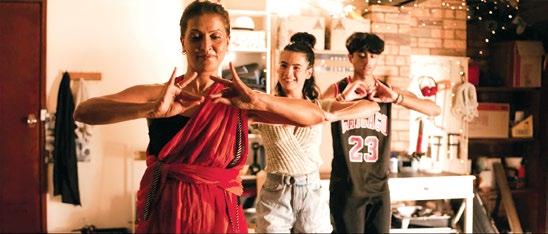
A still from the film
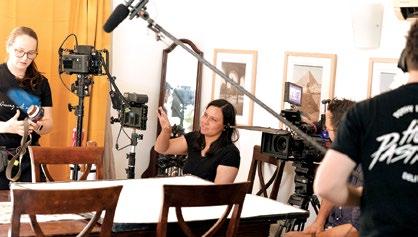
Behind the scenes: Bina at work
Motera massacre
A Bumrah masterclass and a Samson spectacle at the 2026 Men’s T20 World Cup final signal India’s growing dominance in T20 cricket
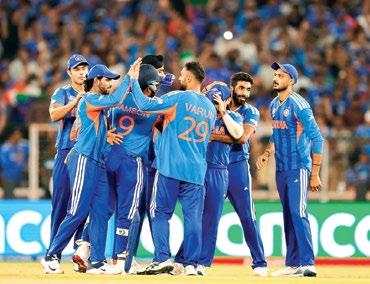
It is the World Cup final and Jasprit Bumrah is on a hat-trick. Two wickets have been shattered by slow yorkers. The third, incredibly, is a repeat. But this one the new batter manages to keep off his stumps more by luck than design. Bumrah gives a dual shrug of his shoulders, throws a beatific smile towards his captain, and walks back to his mark. This was just a taster. He has more
Bumrah’s yorker is special. Very special. It is delivered, at will, with deadly accuracy, from a release point eighteen inches beyond that of his fellow fast men. With eighteen feet from release to impact and a stock ball that travels at 140 km per hour, there is little time for a batter to gauge speed or length. Only 20% of the time on average, does he bowl slower deliveries in T20I. But today is different. This is a batting paradise, and there is only one way to avoid being dispatched to the stands by the heavy swinging bats of modern batters – take pace off the ball and deny the bat swing added speed of the ball on impact. So Bumrah turns the playbook on its head and bowls 83% of his deliveries at 120 km, per head and lower - without changing his action or hand speed on delivery. It is a masterclass in fast bowling.
Chasing a nigh impossible 256 to win, thanks to yet another Sanju Samson classic, brutal and sublime at the same time,
BY ANINDYA DUTTA
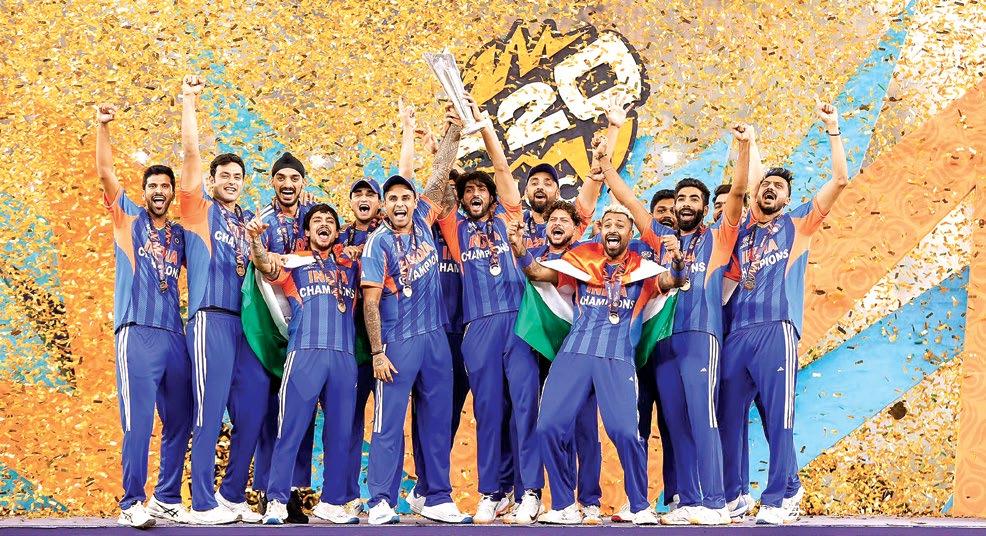
Bumrah’s 4 for 15 is too much for the Kiwis. At Ahmedabad, under lights and a cloud of expectation, India doesn’t just beat New Zealand, they demolish them by 96 runs. It is the largest victory margin in a T20 World Cup final.
On a day when Mitchell Santner won the toss, and on a pitch expected to be high scoring, he bizarrely sent India, the acknowledged batting powerhouse of T20 cricket in to bat. Sanju Samson’s 89 off 46 balls – all wristy insolence and geometric precision, powered his side to 255 for 5, the highest total ever in a T20 World Cup final.
By the time Jasprit Bumrah finished tearing through the chase with his four wickets, India had achieved a few firsts – the first team to defend a T20 World Cup title, the first to win at home, and the first to lift the trophy three times, going past West Indies and England.
The story started some 4 years ago
The real story of Indian cricket’s elevation to these dizzy heights of T20 glory is not about Ahmedabad being a one-night heist. It is the logical culmination of a project that began under Rahul Dravid and Rohit Sharma, when the team’s think tank originally conceived the idea of complete fearlessness and brutal hitting at a frenetic pace being the key to a sustainable T20I winning strategy. But in 2022, at the top of the batting order, Rohit himself was the only one who walked the
Photos: X
talk and batted fearlessly, unafraid of getting dismissed. KL Rahul and Virat Kohli were unable to turn around their approach to the game at such short notice and risk their wicket every time they walked out to bat. It took two years of transition before execution met strategy. But even when the team won the World Cup in 2024, the transformation was only half done, with old wine in new bottles. The team composition, the wine itself, needed to change.
Then Suryakumar Yadav, at the time the world’s most destructive T20 batter, took over India’s T20 side with the street smart Gautam Gambhir as coach. Together, they quietly turned it into the most ruthless white ball operation since peak era Australia.
The SKY era: No loss, no mercy
Since Suryakumar Yadav was handed the reins full time after the 2024 triumph, India have gone through bilateral T20I series the way a combined harvester goes through a wheat field. Relentlessly, efficiently, leaving nothing standing in their wake. India has played 39 T20Is under SKY leading up to the World Cup, winning 31, losing just 8, and not dropping a single bilateral series in that stretch. The vanquished teams included Australia (twice), South Africa, Sri Lanka, England, West Indies, New Zealand, Bangladesh and Zimbabwe.
What separates this phase from India’s previous bursts of white ball form is the complete absence of emotional volatility. Earlier Indian sides oscillated between genius and self sabotage. SKY’s team operates like a low heartbeat assassin, happy to chase 220 or defend 160 with the same, almost irritating, calm. His own batting style, the trademark unorthodox 360 degree audacity, has become both a tactical template and a cultural signal. His own prowess may have started to dim with age, but his presence, calm confidence, and occasional reminder of the peak SKY all speak to the fact that for this team, fearlessness is no longer a slogan, it’s a selection criterion.
ICC White Ball events: An empire India built in three years
If bilateral cricket is the laboratory, ICC tournaments are the examination hall, and India’s transcript since 2023 reads like that of the class topper everyone secretly resents. The 2023 ODI World Cup at home yielded a 10 1 record. Only a freak off day in the final triggered by a once-in-a-lifetime Travis Head innings, stopped a perfect run. In 2024, India went unbeaten through the T20 World Cup in the Americas, winning eight matches with one no result and edging South Africa in a tense
Barbados final. They followed that by winning the 2025 Champions Trophy in the UAE, again unbeaten, finishing with a 5-0 record and another final win over New Zealand. Add the 2026 T20 World Cup defence and you get this scarcely believable record – across the last three major ICC events, India have played 25 matches with 23 wins, one defeat, and one no result. For a team once accused of freezing on the big stage, this is not a change of script, it is a reinvention of the genre.
Selection, tactics, strategy: India finally ‘get’ the T20 format
This T20 World Cup has not just extended India’s dominance, but from the opposition’s standpoint, it has rewritten the playbook with a slightly cruel flourish. And the most significant shift has been philosophical.
For a decade, India picked T20 sides as if they were ODI teams in a hurry. Taking off from the Dravid-Rohit strategic turnaround in 2022, the new management has changed the vintage of the wine. They now select T20 specialists for T20 roles. Every grape in the bottle matters.
Powerplay batting has been entrusted to high intent openers whose strike rate, not reputation, buys them rope. If two of the top three also happen to be wicketkeepers, so be it. This is how an out-of-contention Sanju Samson came into the playing eleven and changed the trajectory of the team in this tournament, more than making up for Abhishek Sharma’s untimely loss of form. Ishan Kishan, a last-minute inclusion in the squad, used an injury to Abhishek to grab the opening slot with a jaw dropping display, and sealed his spot in the Top 3 when the opener returned.
Middle order slots have gone to players who can bat at 1.5 runs a ball from ball one, even if it means leaving out bigger names with prettier averages. Shivam Dube and Tilak Varma have picked up the slack created by an out-of-sorts captain while Rinku Singh warms the bench.
With the ball, India routinely fields at least two adaptable fast bowlers, a pace-bowling and spin bowling all rounder, alongside a specialist spinner, optimising matchup options. So well has this worked that Mohd Siraj and Kuldeep Yadav, two bowlers who
with a group that has actually played those roles under pressure. And they have finally embraced flexibility –promotions, floating finishers, left right combos. In the Indian playbook, these are now tools, not afterthoughts. If the 2010s were about India insisting that their way worked in every format, the mid 2020s are about India admitting that T20 is a different sport – and then becoming
India’s T20 empire vs Australia’s ODI juggernaut
At its peak between 1999 and 2007, Australia treated 50 over cricket like a private fiefdom. They won three World Cups in a row and went 34 matches in the tournament without defeat, including 25 straight wins. They strung together a 21-match ODI winning streak in 2003 alone and turned World Cups into extended coronations.
India’s current run is the closest the T20 format has come to that kind of sustained reign of sporting terror. Three T20 World Cups in total, two in succession, an unmatched winning percentage under SKY, and a 23 1 record across the last three ICC events form an eerily similar silhouette. The difference is structural. T20, with its volatility, depth of global talent and tactical roulette, is far harder to dominate than ODI cricket used to be. And that only magnifies what India are doing. Just as in 2003 after one of their most comprehensive World victories led by Ricky Ponting, we asked ourselves how long the Aussies could continue to dominate the ODI format, the days after the Massacre at Motera, the world will ask similar questions of India in T20I. Just as Australia in their heyday, made one day cricket results feel predictable, India’s dominance in T20 today feels almost inevitable. The reality is that given the depth of talent in India, the continued improvement in standards thanks to the IPL, and the fact that success breeds success, India’s performance in the T20 format, frighteningly for its opponents, is only likely to get better
Drishti Tolani’s My 'Little Dharma' series
A joyful celebration of Hindu traditions and the diverse ways they can be honoured and shared
IBY SRUTHI SAJEEV
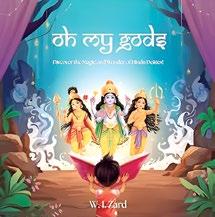
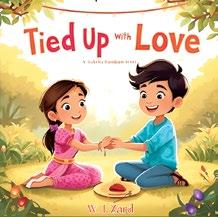
n Drishti Tolani’s book Tied Up with Love, a young boy visits a children’s hospital to tie rakhis. In Let’s Get Lit for Diwali, a young girl in Australia learns that Diwali honours the same values her family celebrates at Christmas. In Colour Me Crazy, Holi is celebrated in the backyards of the Indian diaspora in San Francisco, Singapore and Toronto.
Making up the My Little Dharma series, Tolani imbues the great epics of Hindu mythology with warmth and joy. Published late last year, this vibrant four-book collection showcases how age-old traditions continue to be revered, celebrated and importantly, shared amongst friends and families all across the world.
“I wanted to show the rich, beautiful mythology behind our practices but also show kids how they can make it their own and take it to their community,” Tolani says.
At its heart, each book is a reminder that Hindu traditions aren’t merely upheld for their own sake but are underpinned by messages on what it means to be a good friend, a good sister, a good brother, and a responsible person.
The books offer a sense of cultural pride that Tolani didn’t always have. Growing up in Indonesia, she had the luxury of being surrounded by a thriving Indian community, but at age five, she and her family moved to Australia, where she was often the only brown face in her class.
“Indian-origin kids living in Australia don’t have as much of a connection to
[Hindu] heritage when compared to kids growing up in India or even other places such as Malaysia,” she notes.
The My Little Dharma series was written for her nieces and nephews also growing up in Australia, as an antidote to this disconnect - a way for young children to be more exposed to their culture and eventually, proud enough to share it.
Inspired by books such as Michael Wong’s Unconditional Love, she hopes her books too can make children feel valued, seen and excited to read.
Her background as a primary school teacher, where she helps older children from war-torn or refugee backgrounds improve their literacy, makes her uniquely placed to do so. Her first picture book series, self-published in 2023, Potter the Pomeranian, teaches young children how to communicate with each other and was directly influenced by the issues faced by children on the playground.
“My experiences teaching these children to read has even influenced the type of language I choose to use. It’s challenging to find a balance between descriptive and accessible language. Too much symbolism can go over their heads, but it’s also important to acknowledge their intelligence and not be too obvious either,” she emphasises.
This approach to storytelling proved to be vital when dealing with more complex topics such as reincarnation and avatars in her book Oh My Gods, or when describing the strong bonds between Lakshmana, Sita and Rama in Let’s Get Lit for Diwali.
“In the end, everyone is a reader; they just haven’t found the right story,” she says.
For many young readers, the My Little Dharma series may hold the story that turns them into avid readers, eager to explore ancient myths, modern tales, and communities that share a love of storytelling.
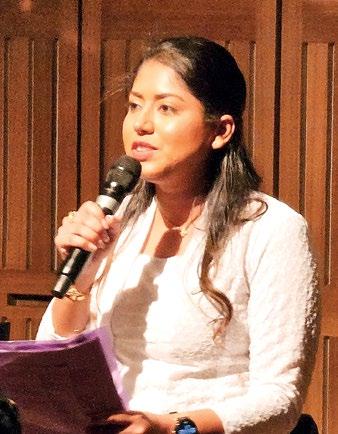
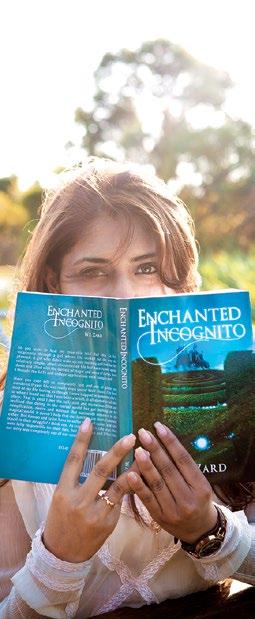
Primary school teacher and author Drishti Tolani writes stories that help children feel seen, valued and connected to culture
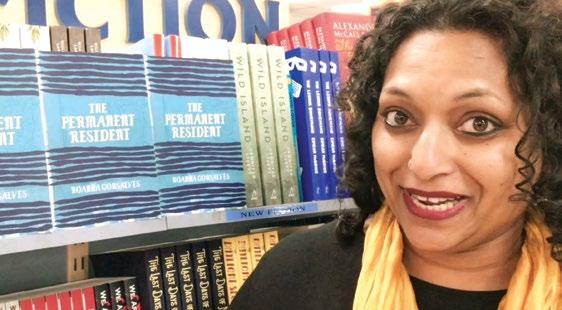
I borrowed my first books in Mumbai. Now, Sydney’s libraries are home
Dr ROANNA GONSALVES on how bookstores and
libraries shaped
her award-winning literary journey
The long arm of the library has made a writer of me. This long arm, a composite of many libraries, created the conditions through which a shy reader could continue to live in her head.
I was born and raised in India. It is a country of daily wage earners in makeshift dwellings trying to survive alongside the world’s richest individuals ensconced in immovable towers.
It is also a country where the practice of circulating knowledge through libraries has a long history.
It ranges from the library at Nalanda University founded in 427CE, over a thousand years before the Bodleian at Oxford, to Radhamani, the “walking library”, who takes books to villagers in rural Kerala. And from nine-year-old Muskan, who started her own library for kids in the slums of Bhopal, to Kavita Saini from Rajasthan, who opened a library for girls not allowed to leave their village.
This tradition of sharing knowledge held in written texts is bound up with aspiration, pleasure and survival.
Borrowed words as toys
For many years, my mother worked at Glaxo Laboratories in Mumbai. Along with tins of the nutrition drink Complan, she also brought home a variety of borrowed books and magazines from what we think was called the “Glaxo Workers Sports Library”.
The privilege of access to such a workplace lending library ensured that, in the safety and comfort of my home, I could read with great pleasure: Enid Blyton, The Adventures of Tintin, Woman’s Era and Savvy magazines, The Illustrated Weekly of India.
Along with mum’s “office” books with their flap on the first page marking the names of borrowers and the dates of their borrowing, we had access to books from Kitab Khana, a circulating library in the tallest apartment complex in our area. It was a storehouse of Archie comics and the Amar Chitra Katha series, Indian mythology told through comics.
Our apartment block had its own circulating library, where I sometimes volunteered so that I could read Inside Outside magazine, a luscious interior design publication edited by Naomi Menezes and Mallika Sarabhai, two women ahead of their time.
The words in these books and magazines turned into imaginative wanderings on the page in my school assignments, where I played with these words as if with new toys: amateur, legionnaire, blistering barnacles.
Later, as an undergraduate at St Xavier’s, Mumbai, among the rows of books and journals stacked on metal racks and wooden shelves in the Lending Library, a
space anchored by Dewey Decimals, soaring with Shakespeare, Austen, Tagore and Rushdie, I began my internship, although I didn’t know it then.
Up a few flights of wood and stone steps, in the Reference Library, amid card catalogues in ornate wooden cabinets, I read, I reflected, I wrote notes on lined paper, surrounded by the stability of oak, the hardiness of teak, and the words of the outside world waiting to be incorporated.
From the British Council Library and the US Information Services Library, there were books borrowed and carted home on crowded Mumbai trains, some read, some unread, most returned on time: Charles Dickens, Joan Didion, Langston Hughes.
The work of writing begins with attention to acts of generosity and care: the writer gifting their imaginative labour to the writer-in-waiting, who is always a reader, often with the library enabling this exchange. It continues as one is startled by another writer’s fresh use of language, as one yields to the surprise of fictive worlds. Amid this slow but sure transmission of knowledge, through the pleasure of reading, a writer is undone and made anew.
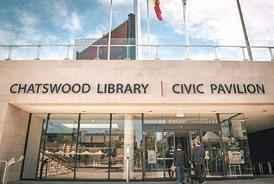
In Sydney, burdened with an empty wallet, surrounded by plane trees and citizenship ceremonies, I settled into the arms of the free council-run libraries, in Chatswood, Ashfield, Campsie, Earlwood and Marrickville, then in Springwood and Katoomba, and the library at the University of New South Wales, my natural homes.
In these places I encountered clarity and conviction in the words of others, clichés stopped in their tracks, expectations subverted and made beautiful on the page: Aileen Moreton-Robinson, Oodgeroo Noonuccal, Gwen Harwood, Michelle de Kretser, Robin Walsh, Marjorie Barnard, Pierre Bourdieu, Henry Reynolds and Hannah Arendt.
Reading rare materials ‘because I asked’
Eventually I came to the Mitchell Library Reading Room at the State Library of NSW, where I could knock, seek, ask for Alexander Lesueur’s 1802 map of Sydney or a 1792 edition of Mary Wollstonecraft’s A Vindication of the Rights of Woman or the journals of Governor Lachlan Macquarie and they would be given unto me.
In Edinburgh, in the Special Collections Reading Room of the National Library of Scotland, overlooking a city of stone and sagacious light, I asked for and received a 200-year-old diary, its paper like linen, the handwriting within it like trees of rowan and beech bending to the wind.
This and other rare materials were lent to me, a woman from the other side of the world, simply because I asked. Weights of different shapes and sizes were provided to protect the material, guidance offered, all my questions answered. Yet again, I was a beneficiary of the long arm of the library reaching out with a commitment to the sharing of knowledge through responsible custodianship.
In March 2024, in the state of Uttar Pradesh in northern India, approximately 427 kilometres from Nalanda University, a viral video showed an eightyear-old girl running away as a politician’s bulldozers demolished her makeshift dwelling. Unlike me, she was growing up without a safe and comfortable home. As she ran for her life, she carried in her arms only the essentials for survival: not money nor food nor clothing but the things that mattered most, her books, her own little library – its long arms protecting her and being protected by her; hopefully, inevitably making her anew.
This article first appeared on The Conversation. Dr Roanna Gonsalves is a writer and Senior Lecturer in Creative Writing, UNSW, Sydney.
Kitab Khana Mumbai
State Library of NSW
Hurrah for local council libraries
Gambling isn’t “just a men’s issue”
anymore
FBY Dr PREETI KHILLAN
or years, gambling harm was spoken about as something that mainly affected men. Men still gamble more often overall, but women are a significant part of the picture, especially as gambling has moved onto phones and into everyday life.
Australian data from the National Gambling Prevalence Study pilot found that 35.9% of men and 28.3% of women reported gambling at least monthly. In terms of more serious harm, the Australian Institute of Health and Welfare reported that in 2022, 2.4% of men and 1.2% of women were in the “high-risk” category on a commonly used gambling harm measure. Internationally, a large 2024 systematic review also found higher gambling participation among men than women (about 49% vs 37%), while estimating 1.41% of adults were affected by problematic gambling.
So, the overall “rates” still look higher in men, but women and families are being affected in very real ways, and easier access means some people slide into harm without anyone noticing until things feel out of control.
The missing statistic:
“How common is cyclelinked gambling?”
Many people ask: “Do we know how many menstruating women gamble more before their period?” The honest answer is we don’t have a clear national number yet. Most big surveys don’t ask when in the menstrual cycle gambling happens, so we
When your cycle meets the betting app: Period mood changes & gambling harm
In
can’t say “X% gamble more premenstrually” with confidence.
What we do have is early research suggesting that the menstrual cycle can change mood and decision-making in ways that might make gambling feel more tempting at certain times. One well-known study that followed women gamblers found that mood tended to be worse in the days before menstruation, and some measures suggested more time and money spent gambling around menstruation, but it also found something many people don’t expect: riskier gambling behaviours were more likely around ovulation (mid-cycle) than in other phases.
Why periods can change mood
Many people feel changes in the one to two weeks before bleeding starts. This can include irritability, feeling teary, anxiety, low mood, poor sleep, fatigue, and
How this can affect gambling
Gambling products are built around fast reward and quick distraction. When someone feels tense, flat, lonely, stressed, or exhausted, their brain naturally looks for relief. A betting app can feel like a quick “switch off,” even if it later leads to guilt, secrecy, arguments, or money problems.
The World Health Organisation describes gambling disorder as involving loss of control, gambling becoming a higher priority than other parts of life and continuing despite harm. That description matters because cycle-linked mood swings can lower our “buffer” against impulses. If your toughest days cluster predictably each month, gambling can become a learned coping shortcut, not because you’re weak, but because the brain is trying to regulate discomfort quickly.
Research supports parts of this picture: mood tends to worsen premenstrually for many women, and in female gamblers, patterns of spending, time, and risk can shift across the cycle, sometimes peaking premenstrually/menstrually and sometimes around ovulation depending on the person.
What helps: Steps that don’t rely on
“willpower”
The most helpful approach is to treat this like a predictable pattern you can plan around, not a personal failure.
feeling “on edge.” The Royal College of Obstetricians and Gynaecologists describe premenstrual syndrome PMS as physical and emotional symptoms in the two weeks before a period, which usually improve once the period starts.
For some, symptoms are more severe and disabling. Premenstrual Dysphoric Disorder (PMDD) is a recognised condition where emotional symptoms become intense and life-disrupting in the lead-up to a period. Jean Hailes (Australia’s national women’s health organisation) notes PMDD symptoms often start one to two weeks before the period and usually settle after bleeding begins, and it encourages tracking symptoms over a couple of cycles to confirm the pattern.
The key idea is simple: during certain parts of the cycle, some brains become more sensitive to stress and less tolerant of overload. Sleep can worsen, emotions can feel stronger, and the urge for quick comfort can increase.
Start by noticing timing. Women’s health guidance often recommends keeping a simple symptom diary across two cycles to identify patterns and triggers. You can do the same with gambling urges: note the days cravings spike, what was happening before the urge, and what the gambling promised you in that moment (escape, excitement, relief, numbness). Once you see the pattern, it’s easier to protect the vulnerable days. Next, reduce access when you know you’re at risk. In Australia, BetStop is a free government initiative that blocks you from all licensed online and phone wagering services in one step. It’s widely used: by 31 December 2025, 54,859 people had registered and 35,135 had active exclusions. This isn’t punishment. It’s a safety rail that protects you from making decisions you’ll regret when emotions are running high. Support also matters, because gambling harm often comes with stress, anxiety, depression, relationship strain, and shame. Evidence-based guidelines recommend psychological treatments such as Cognitive Behaviour Therapy (CBT) and motivational approaches and emphasise making support easy to access. In Australia, Gambling Help Online offers free, 24/7 support, and services like Gambler’s Help provide confidential counselling for the person gambling and for family members affected by it. Finally, if premenstrual symptoms are severe, affecting work, relationships, parenting, or your sense of safety, please speak with your GP or a women’s health clinician. PMS and PMDD are treatable, and improving the emotional “storm” can reduce the urge to seek quick relief through gambling.
The aim isn’t perfection. It’s a safer, calmer month, where your normal cycle doesn’t become the moment a gambling product takes advantage of you.
Dr Preeti Khillan is a Melbourne-based Consultant Obstetrician & Gynaecologist
Photos: Canva Menstrual cycles may affect mood and decisions, increasing gambling temptation at times
female gamblers, spending, time, and risk often peak premenstrually or during menstruation
Adolescent vaping
What lies beneath the smoke
IBY Dr HABIB BHURAWALA
t was a Tuesday morning when 15-yearold James came to see me with his mother. She was worried about his cough. He had always enjoyed playing rugby, but recently he was getting breathless during training. At home, he seemed restless and unsettled. His teachers had mentioned he was struggling to focus in class.
They thought it was a lingering virus. After some gentle questions, James admitted he had been vaping for several months. What started as trying it with friends after school had slowly become a daily habit. He did not realise the vape contained nicotine. Now he felt restless if he went a few hours without it.
This is not a rare story. I am seeing more teenagers across Sydney with similar
patterns. Many parents are caught off guard. Some are unsure how worried they should be about adolescent vaping.
What exactly is vaping?
A vape is a battery-powered device that heats a liquid and turns it into a mist that is inhaled. Many devices look like highlighters or USB sticks, which makes them easy to hide.
While therapeutic vapes can be supplied through pharmacies under medical supervision, most of the products teenagers access are illegal and unregulated.
Parents are often surprised to learn that vaping liquid is not simply water vapour. Studies have found that some products contain:
• Nicotine, which is highly addictive
• Chemicals that are also used in glues and plastics
• Substances that can irritate and inflame the lungs
• Heavy metals such as nickel and lead
Even products labelled nicotine-free have
What does the law say?
Australia has introduced strict laws to reduce access to vapes for young people.
• Adults aged 18 and over can access therapeutic vapes from pharmacies with health professional guidance
• Those under 18 require a prescription
• Most vapes sold in convenience stores are illegal
Parents can find practical advice on Australian government health website (www.health.gov.au) or equivalent state resources.
How parents can respond
Finding out your child is vaping can be upsetting. The first reaction is often anger or fear. However, the way the first conversation is handled can shape what happens next. Instead of saying, “Why would you do this?” Try, “Can you tell me what made you start?”
Many teenagers already feel conflicted. They may be relieved to talk. Some practical steps include:
• Stay calm and listen without judgement
• Encourage a visit to your GP
• Support a structured quit attempt
• Protect sleep routines and device-free time at night
• Keep the conversation ongoing Free support is available through Quitline on 13 7848. The My QuitBuddy app is another helpful tool for young people trying to stop.
When James returned three months later, his cough had improved. He had one setback but was trying again. More importantly, he and his mother were talking openly.
frequently been found to contain nicotine. Reliable information for families is available through the Therapeutic Goods Administration vaping hub.
How vaping can present in teenagers
In real life, adolescent vaping does not usually present as a dramatic emergency. Instead, it appears in quieter ways.
I commonly see:
• Persistent cough
• Shortness of breath during sport
• Worsening asthma
• Headaches
• Poor sleep
• Mood swings
• Difficulty concentrating at school Nicotine affects the developing brain. The teenage brain continues maturing into the mid-twenties. Regular nicotine exposure can affect attention, memory and emotional regulation. Some young people report feeling more anxious or low in mood over time.
Importantly, many teenagers who vape do not see themselves as “addicted” until they try to stop and realise how difficult it is.
Why are teens vaping?
When I ask young people why they started, the answers are usually simple.
• Their friends were doing it
• They liked the flavours
• They believed it was safer than smoking
• They did not think it contained nicotine For many teenagers, vaping is about fitting in rather than rebellion. The packaging and online exposure can make it seem harmless.
Adolescent vaping is not just a passing trend. It is a health issue affecting many Australian teenagers. Early conversations, clear information and steady support at home can make a real difference.
Clinical Associate Professor Dr Habib Bhurawala is a Sydney-based paediatrician and Head of Paediatrics at a major teaching hospital.
Seeing Pride for the first time
On spectacle, protest and the quiet power of visibility at Sydney’s Mardi Gras
TBY SHARANYA SATHYANARAYANAN
he spectacle was expected – the choreography too – as the Mardi Gras parade burst onto my television screen in pinks, purples and pastels.
What I walked away with was unexpected: the understanding that societies can evolve, that spaces can be made for difference, and that joy itself can be a political act.
It all began with the rumble of engines – the meaning of which would settle on me only hours later. Dykes on Bikes were among the first groups to appear, introduced as protectors of the street. Riding together in formation, they moved with a steady confidence that set the rhythm for everything that followed. This was not polite participation, but an unapologetic declaration of arrival – strength, solidarity and presence: we are here.
Equally impactful was the group Quiet Queer later in the parade. They walked carrying books instead of banners, dressed simply. There was no choreography, no performance. They moved slowly, occasionally lifting their books toward the crowd.
Seeing them changed how I thought about the evening. Until that moment, Pride had seemed inseparable from spectacle – from colour, music and movement. But the quietness of this group suggested another kind of visibility. Pride, it seemed, could also be reflective, even contemplative. It did not need volume to be felt.
In between these moments, the parade revealed its breadth. Groups from universities, hospitals and sports clubs walked the route along Oxford Street. Domestic violence advocates marched alongside disability organisations. Corporate floats followed community groups. Older couples walked beside teenagers experiencing their first Mardi Gras, while people using mobility aids joined at their own pace.
Volunteers managed the crowds with quiet efficiency. Even the glitter was
Being seen did not mean conforming; it meant making room for difference.
biodegradable.
It was an unusual sight: activism, institutions and businesses sharing the same celebratory space.
Ten thousand people marched in more than 160 floats, moving slowly from Hyde Park to Moore Park. Amid the celebration, a sense of politics remained constant. References to the Spirit of 1978 recalled the arrests and resistance that marked the parade’s beginnings, while signs and speeches highlighted contemporary concerns, from the rights of trans youth to new legislative debates.
The atmosphere was joyful but thoughtful. Pride felt both celebratory and purposeful – a reminder that visibility has always, and often will, involve struggle.
Watching from afar, I found myself thinking about how public celebration works
in different societies.
In India, where I come from, public festivities often centre on inherited identities – religion, family, centuries-old traditions. Pride marches have grown in visibility, particularly since homosexuality was decriminalised in 2018, but they rarely occupy mainstream civic spaces.
On Oxford Street, by contrast, LGBTQ+ visibility appeared woven into institutional and civic life. Universities marched. Hospitals marched. Corporations marched. The parade felt connected to society rather than separate from it.
No one seemed required to fit a particular mould. And being seen did not mean conforming; it meant making room for difference.
Perhaps that is what lingered most after the parade ended. Mardi Gras was not simply a festival of colour, though it was certainly that. Nor was it only a protest, though its history makes that impossible to ignore.
Instead, it existed somewhere in between – a space where celebration and struggle coexist, where joy carries memory, and where visibility remains both a victory and a responsibility.
For someone watching their first Mardi Gras, even from a distance, it felt less like a parade and more like a portrait of a society negotiating who it allows itself to be.
Photos: X
A slow but steady march of progress
Legal wins signal progress for LGBTQIA+ Indians, but equality remains a work in progress
JBY SANJAY ALAPAKKAM
ust days ago, Sydney’s Gay and Lesbian Mardi Gras season came to a close for another year.
For some in the South Asian diaspora, however, cultural hang-ups and taboos around LGBTQIA+ people still linger – shaped in part by centuries of colonial rule and the imposition of Victorian morality through laws such as the Indian Penal Code. Yet queer identity and the fluidity of gender and sexuality are deeply interwoven with India’s own history: from the carvings of the Khajuraho temples to androgynous figures such as Shikandi and Ardhanarishvara, to the former social prominence of “hijra” communities.
While these arguments helped the eventual overturning of Section 377 of the Indian Penal Code, which led to the decriminalisation of same-sex sexual relations in 2018 (a feat already achieved by every Australian jurisdiction between 1975 and 1997) the legal hurdles faced by Queer Indians back in the motherland neither started nor ended with that issue.
Positively, there have been several advancements since 2018 that are worth celebrating. The march for progress in India has relied heavily on approaching the courts in the absence of political will in some states and territories, and at a central government level.
In September 2025, the Tamil Nadu Medical Council (TMNC) issued a directive mandating that medical professionals complete training on “inclusive healthcare, transgender rights and the ethical responsibilities of healthcare professionals in treating sexual and gender minorities”, as part of their Continuing Medical Education. Such training is vital for queer people to feel safe enough to ask doctors questions about their healthcare, from family planning, to
gender affirming care, to sexually transmitted infections. Tamil Nadu is the first state in India to action such training requirements, and they are the latest in a suite of upcoming equitable measures unveiled through the Tamil Nadu State Policy for Transgender Persons 2025, which also includes expanded access to gender affirming care and preferencing gender diverse folks for housing schemes to offset the social and educational disadvantage faced by trans people. However, absent in the Tamil Nadu policy is any form of employment or educational reservation as seen with the one percent reservation for government roles in Karnataka. The 2025-2026 baseline survey on gender minorities in Karnataka, released in January 2026, has recommended a one percent reservation in private sector jobs for people from gender minorities. If implemented in Karnataka, these recommendations could spur private employers to take more pro-active measures to extend employment opportunities to
trans Indians and act as a model for other states to look to.
Another key development is the contrasting definitions of trans people in Indian courts when compared to the UK. The UK Supreme Court in For Women Scotland v The Scottish Ministers, found that the terms “man”, “woman” and “sex” under the Equality Act 2010 (UK) align with “biological sex”, which the court then applied to limit women to only cisgender women, in the case of antidiscrimination protections and measures. However, Indian courts have continued to take a different route.
Just two months after the UK case, the Andhra Pradesh High Court presided over a case of dowry harassment against a trans woman by her husband and in-laws, under criminal laws banning that conduct. A key issue the Court considered was the husband’s argument that the complainant was ineligible to use the criminal offence due to her inability to bear children, and hence, that she does not qualify as a “woman” under that law. Justice Pratapa rejected the argument that womanhood required one’s ability to bear children and found that “[a] trans woman, born male and later transitioning to female, is legally entitled to recognition as a woman”, maintaining an important principle that legal protections for women are inclusive of trans women.
Ongoing issues for LGBTQIA+ Indians
After the Supreme Court of India in Supriyo v. Union of India in 2023 dismissed the arguments to recognise same-sex marriage and stated that recognition of same-sex marriage was a matter for recognition by the Indian Parliament, little has happened to progress the cause for same-sex marriage by the National Democratic Alliance controlled parliament.
The leading opposition party, the Indian National Congress pledged ahead of the 2024 general election to recognise same-sex unions rather than same-sex marriage – mirroring the
initial first step undertaken in Australia in 2009 before the recognition of marriage equality in 2017. But with the INC losing that election, the policy has been shelved for the time being.
Further, same-sex attracted Indians continue to be barred from joint adoption as couples (though a single person adopting is not barred by reason of their sexuality) and surrogacy, and continue to struggle with inheritance and limited anti-discrimination protections from private companies, including in employment and provisions of goods and services.
Widespread social discrimination and marginalisation, and the ensuing poor living standards continue to stalk transgender Indians even after some legislative efforts have been made in relation to these issues.
Parents opposed to their adult children’s LGBTQIA+ identity or relationships continue to weaponise the police to effectively kidnap their child or harass their child’s partner, with some courts such as the Madras High Court continuing to be an effective bulwark against this misuse of law enforcement agencies.
Despite these challenges, one thing is clear – the march for progress in India continues. Occasions such as Sydney’s Mardi Gras remind us of the need for constructive conversations in our community so everyone can live free from discrimination.
Whether you like to dance, watch rom coms, see parades or speak to community organisations and advocates, this massive festival in our city is a great opportunity to get to know more about LGBTQIA+ people in Sydney and reflect on the need for greater visibility of our own diaspora’s queer love stories, identities and transformations.
Queer Indians have existed throughout the subcontinent’s history and are not a foreign import – what is alien (but has become entrenched through colonial imposition upon our culture) is the stigma, discrimination and persecution of diverse sexualities and gender identities. It is high time that the diaspora fully embraces its queer members, lest it be left far behind by both mainstream Australia and potentially in the future, the motherland too. Now is a great opportunity to start.
Art, identity, and history
Sydney artist Vedika Rampal, featured in the Blake Art Prize 2026, draws on architectural ruins to reflect on art’s colonial inheritances
ABY TANISHA SHAH
virtual visit to Hampi in southern India is featured in Sydney-based artist Vedika Rampal’s Blake Art Prize (for works with religious and spiritual themes).
The archaeological remains of this extensive complex of temple architecture, built between the 14th and 16th centuries, are a travellers’ delight to this day. The ancient structures - part of the living landscape – age and change alongside nature.
In Rampal’s work, the ruins at this UNESCO World Heritage Site become a material inquiry into history, erasure, and the act of re-inscribing Indian heritage.
Titled “inscription against inscription”, the immersive installation pairs two large sheets of copper suspended in a darkened space, their surfaces etched with repeated, enigmatic script-like marks drawn from the landscapes of Hampi’s ruins. These hand-transferred prints mirror sections of lost and fragmented
Indic inscriptions, blurring the lines between text, image and the material’s own weathered history. Across the reflective copper faces, a video of Nandi the bull beside the flowing Tungabhadra River is projected, its presence merging myth, nature and memory.
For Rampal, it all began during a visit to the Ajanta Caves in Maharashtra in 2023. There, she experienced something unexpected. In the 1800s, diary notes by students from the Bengal School of Painting described their journey here as a “great pilgrimage” – a moment of discovering a part of their history they had never known existed. Rampal found herself feeling much the same.
“My experience of visiting the Caves in 2023 (and reading these notes) made me realise that living in a diaspora isn’t new, and cultures like ours are always changing,” she told Indian Link.
It’s a feeling with which many IndianAustralians will be instantly familiar.
Travelling in India and encountering its history through a new lens, is a privilege and a realisation that your relationship with your own heritage is never fixed but always evolving.
And so, the India-born and Sydney-raised
artist describes her practice as ‘existing in a space where clear binaries dissolve’.
Colonial ideas, she explained, have long shaped what gets called art and what gets called artefact, determining which cultures are “civilised” and which are not. Her work pushes back against that.
“When I cannot fit historical pieces of art into binary categories, I start thinking about how we can write over colonial assumptions rather than simply rewriting,” she offered.
The ‘writing over’ is an essential element of her Blake Art Prize work. Re-inscription carries the object with all its symbols and meanings – its inherited meaning derived from colonial viewpoint, and the modern perspective through re-encountering it.
Like a palimpsest.
A palimpsest is a manuscript written over and yet bearing the traces of what came before. For Rampal, this creates a non-linear style of art where the original work, its colonial influence, and modern reinterpretations exist simultaneously.
Of course, there are messages in the materials too.
Rampal works with unfixed copper, jute, acrylic sheets – materials available to her in
present-day Sydney, not romanticised relics of the past. Copper is her favourite, precisely because it cannot be controlled.
“It is a conservationist’s nightmare,” she revealed. “I refuse to seal it with wax to preserve it, because that would reflect the mindset of capturing and controlling objects. If humans are able to live, grow and die, then why must art live forever?”
To deliberately choose impermanence takes courage. It interrogates the imperial urge to preserve and control, while acknowledging that Indian heritage has already been subjected to centuries of Western intervention. In Rampal’s work, there is a constant push and pull between honouring what remains and refusing to keep it frozen in the past.
It is a quiet challenge to the colonial instinct to preserve, to fix, to own.
Meditating on layered histories, erosion and the idea of re-inscription, it asks what a counter-colonial signature looks like on materials that resist preservation.
Inviting people to engage with inscription against inscription, Rampal offers the audience a chance at their own encounter with history. A video installation runs on an endless loop. “You can either spend hours watching it, or seconds,” Rampal described. “(Listen to) the sound piece made at the Tungabhadra riverside – I’d like to know if you can hear snippets of a language you recognise, or something that sparks a memory in you.”
Vedika Rampal is a Finalist in the Blake Art Prize, 2026. The winner will be announced at the official launch on 1 May. See the exhibition from 2 May-14 June at Liverpool Powerhouse, Sydney.
Photos: Liam Macann
Inscription against inscription, by Vedika Rampal
Meet Talwinder, graffiti artist
Street artist Talwinder infuses tradition with loud and rebellious swagger to create a powerful statement on Punjabi pride
TBY LAKSHMI GANAPATHY
alwinder Singh’s never been the kind of guy to ponder and scrutinise. He much prefers freeform, impulse driven expression, the best philosophy for an up-and-coming graffiti artist.
“Nothing so deep – just have fun,” he says about the message behind his works.
The seed of Talwinder’s street art passion came a long time back, when as a child in Chandigarh, he used to doodle all over his walls and notebooks.
“I didn’t know it was called graffiti [back then],” he recalls. “Everything I was consuming [was] from the movies…New York style, the subways, the trains, the huge letters written in English.”
He found himself drawn to the urban, experimental ethos of the art form and the freedom to create outside of institutional boundaries.
“It’s like, real – you know, like selfexpression. Most of the time a lot of artists don’t get their art picked up by the galleries,” he says.
“Graffiti is like the whole world is like a canvas; you can do it anywhere, whatever you want to do, no restrictions, no rules, no one’s going to judge, that kind of stuff.”
It’s an ethos that lends itself well to the commentary within Talwinder’s works, heavily influenced by his Punjabi heritage – ‘Farmer Marching’ depicts an elderly farmer marching and kicking the ground like a revolutionary,
a reimagining of a famous photo from the 2020 farming law protests, and ‘Sikh Anzac’ is a regal portrait of a Sikh man in military uniform, a reminder of their contributions.
The works formed part of Talwinder’s first exhibition, ‘The Punjabi Graffiti’ at Berwick’s Old Cheese Factory in 2024, where he also pioneered his playful and vibrant Gurmukhi lettering.
Inspired by the emergence of Punjabi street culture, including hip hop artists like Raf Saperra, Karan Aujla, and even his namesake, Talwinder’s art infuses tradition with loud and rebellious swagger to create a powerful statement on cultural pride.
“Graffiti is what’s going on; it’s the voice of the streets, you know, for the people. That’s why I did that,” he says about the political sentiment behind these works.
Though graffiti originates from the streets,
Talwinder isn’t out and about tagging buildings; he prefers to work on canvasses, inspired just as much by the works of Van Gogh and Da Vinci as he is graffiti legends like Taki183, Blek le Rat, and Cornbread.
Still, most of the diaspora see street art through the lens of vandalism and anarchy, and Talwinder’s bold, tongue-in-cheek proclamations mightn’t appeal to everyone –of course, he isn’t fazed by such judgement.
“I’m not here for their validation,” he says pointedly. “I just like writing stuff.”
“You have to have a thick skin, man. You just can’t get offended by small things…it is what it is.”
He believes the best way to learn is by opening up to the audacious spirit of the form.
“If you feel like doing [graffiti] you can do this – it’s not like you need a teacher or something, that’s the good thing about this.”
Talwinder’s Gurmukhi lettering is visible across many of his works.
‘Farmer Marching’ (right) is inspired by a viral BBC photo from the 2020 Punjab farmer protests.
The BUZZ
What we’re obsessed with this month
By SRUTHI SAJEEV
Star writer Karan Mahajan returns ten years after releasing The Association of Small Bombs with The Complex, an equally sprawling drama that uses family dynamics to depict deeper societal issues. Set in the 1970s, this novel centres around the greedy and privileged Chopra family as they grapple with tradition, changing norms and the legacy of a patriarch. It’s a book that demands a re-read and perhaps even a five-week discussion at your local book club.
This BAFTA winning film tells the story of an entire region through the eyes of a child. Boong, directed by Lakshmipriya Devi,is a heart-warming drama set in Manipur which follows a young boy’s search for his father. Accompanied by his best friend Raju, the two boys experience the political unrest of their region first-hand. Despite these hard-hitting themes, the film never loses its heart, emphasising the power of childlike wonder in the face of adversity.
Charli XCX unveils her inner romantic with her Wuthering Heights album, seamlessly weaving together synth-pop with orchestral music to explore yearning, heartbreak and the dangers of falling in love. Each single sounds distinct but is composed of the same three elements: the violin, the voice and the synth, with the latter amplifying the heart of each song. It’s a truly modern and fresh take on a much-loved tragedy.
Sydney BIENNALE OF SYDNEY: KULPREET SINGH
14 Mar - 14 Jun, Penrith Regional Gallery
As we write more of these, we’re learning that Italians and Indians have so much to gain from fusing more of our dessert dishes together. Our latest discovery is gujiya cannoli made by Sydney’s Flyover Fritterie. In this genius fusion dessert, cannolis are filled with a coconut, mawa and nutty mixture, and topped off with a delicious saffron syrup. Holi might be over, but why should that stop you from gorging on this sweet treat?
Artist Kulpreet Singh’s latest exhibition is equally heart-rending and optimistic. His extensive work brings together ecological histories with social commentary, diving into the ways we interact with the environment, how it in turn shapes us and the ways we undermine the spaces we call home.
Melbourne SASHI PERERA: PEAR TREE
26 Mar - 19 Apr ACMI, Swinburne Studio, Fed Square
Books Billboard Beats Binge Bites
Perth RAVI GUPTA: KAL KI CHINTA NAHI KARTA
29 March, Perth Modern School
Ravi Gupta wants his audiences to take a chill pill. Drawing from his experience working in corporate, he delves into office politics, family drama and middle-class struggles. Celebrated for his family-friendly set, his humour is perfect for audience members of all ages.
21 March, 2-16 Middle Street, Cleveland
Menaka brings together two worlds through her craft. Using her solid foundation in Carnatic singing, the singer-songwriter blends traditional music with Western influences to create a show which bridges together cultural divides and celebrates global music.
Adelaide VIDYA RAJAN & MEL MCGLENSEY: GREG
17 - 22 March, The Courtyard of Curiosities, Migration Museum
Comedians Vidya Rajan and Mel McGlensey welcome Gregs and non-Gregs to their latest, unhinged comedy show, Greg. Inspired by the name, the two comedians crafted an hour long show of absurdist sketch comedy, improv and crowdwork about what it means to be a Greg, whether it’s worth meeting one and the experience of yearning for Greg’s approval.
Sashi Perera is back with another show, this time with a special focus on pears. Whether that be her last name (which literally translates to pear tree) or the pear- shaped events between Sri Lanka and Australia. Witty and insightful, this is Perera at her best.
Brisbane MENAKA
Along the Silk Road’s living cities
Uzbekistan, where turquoise domes, ancient trade routes and shared histories still converge
OBY SANDIP
n a tranquil winter night in January 1966, Tashkent, the capital of Uzbekistan, became forever associated with India, though in a mournful manner.
India’s second Prime Minister, Lal Bahadur Shastri, died unexpectedly in that city just hours after signing a peace treaty with Pakistan’s President, Ayub Khan. The agreement was brokered in the presence of Alexei Kosygin, then Prime Minister of the Soviet Union, who had mediated the negotiations between the two countries.
News of his death stunned the people of Tashkent. It is said that many gathered on the streets the following day to join Shastri’s final, mournful journey in a gun carriage along the same route to the airport - where only days earlier they had stood with flowers and flags to welcome him.
Moved to commemorate him, Tashkent etched Shastri’s name into its cityscaperenaming a prominent thoroughfare in his honour and installing a bust in a quiet park along the tree-lined avenue, where memory now lingers in bronze and shade.
Today, the statue feels almost like a place of pilgrimage for visitors from India and for people of Indian origin, like me, who come to Tashkent from different corners of the world.
So when I arrived in the city, that quiet, sacred spot was my first stop. I began my journey through Uzbekistan by standing in silence before the Indian leader whose final
moments were lived here.
The ties between Uzbekistan and India stretch back centuries, forged in violence when the powerful Uzbek ruler Timur invaded Delhi in 1398 to expand his empire. A little more than a century later, his great-grandson Babur conquered India and founded the Mughal Empire, which ruled for nearly 300 years until British colonisation. That long history shaped architecture, cuisine and language - influences I could still trace while exploring Uzbekistan.
Uzbekistan’s plov, a hearty rice dish with meat, is often seen as a precursor to India’s biryani. Samsa became samosa,
and non evolved into naan. Even language reflects this shared past, with words like kimat (price), kursi (chair) and gosht (meat) common to both cultures.
Rooted in antiquity, Uzbekistan’s history is a rich tapestry woven from the rise and fall of mighty kingdoms. Its strategic position at the crossroads of India, China and Europe made it a coveted prize in the campaigns of successive empires - Persians, Greeks, Turks, Arabs who brought Islam to the region, Mongols and, later, the Russians.
The land’s story is inseparable from the legendary Silk Road, the vast overland network that linked East and West. For more than two millennia, caravans carrying silk, spices and gold - along with religious ideas and cultural traditions - passed through this territory, shaping it into a vibrant crossroads of civilisations.
Uzbekistan unquestionably showcases some of the finest examples of Islamic architecture - grand mosques, intricately tiled madrasas, majestic mausoleums and soaring monuments. I encountered this architectural splendour in Samarkand and Bukhara, the
HOR
Registan Square
Tribute to Shastri
country’s two most significant historic centres.
Many of these magnificent structures were built between the 14th and 17th centuries under the reign of Timur, founder of the Timurid dynasty, and his successors. Much of what had stood before was destroyed during the 13th-century Mongol invasion led by Genghis Khan, leaving little of the earlier landscape intact.
Samarkand is widely regarded as one of the world’s oldest cities, often mentioned alongside Babylon in Iraq and Varanasi in India. When Timur made it the capital of his vast empire, the city was transformed into a showcase of monumental architecture - its skyline rising with colossal structures that reflected artistic brilliance, spiritual devotion and scientific ambition.
Experts hail Registan Square as the city’s crown jewel. The vast paved plaza is framed on three sides by magnificent madrasas and mosques, their glazed turquoise domes and blue-tiled façades adorned with intricate mosaics and flowing calligraphy - enduring testimony to the splendour of the Timurid empire. The interiors are richly adorned with exquisite mosaics in shades of blue, alabaster and gold. Gazing at the intricate calligraphy, I felt as though sacred verses had been rendered eternal in ceramic and tile within these luminous spaces.
Other notable medieval landmarks in Samarkand include Shah-i-Zinda, a breathtaking necropolis adorned with the mausoleums of Timur’s relatives and trusted generals; the imposing Bibi Khanym Mosque and the Gur-e-Amir, the magnificent mausoleum where Timur lies beneath a vast slab of jade.
Bukhara on the other hand, feels like a living museum, where wandering through its ancient quarters, I sensed the lingering
TRAVEL NOTE BOOK
Getting There Fly Air India (www.airindia.com) to Delhi and Uzbekistan Airways (www.uzaairways.com) to Tashkent.
Stay Hilton Tashkent (www. hilton.com) in Tashkent, Hilton Garden Inn in Samarkand (www.hilton.com) and Wyndham Hotel (www. wyndhamhotels.com) in Bukhara.
Local Tour Operator Contact Orient Mice (www.orientmice. com), a trusted local tour operator for all ground arrangements.
echoes of civilisations reluctant to fade. That feeling deepened as I visited the Chashma Ayub Mausoleum - considered one of Central Asia’s oldest funerary monuments - the formidable Ark Citadel, once home to the rulers of Bukhara, the Bolo-Hauz Mosque, known as the “Mosque of Forty Columns”, and the towering Kalon Minaret, from which the call to prayer once rang out across the city, summoning worshippers to the adjacent mosque.
Tashkent captivated me with its interesting blend of the old and the new. While the newer quarters showcase sleek, modern architecture along broad, tree-lined boulevards and manicured parklands, the historic heart of the city is studded with mosques, tombs and madrasas. During my visit to the Moyie Mubarek Library Museum, I was privileged to see what is believed to be the
world’s oldest Qur’an, displayed reverently in a glass case. For many devout Muslims, even touching the cabinet is considered sacred - a devotion reflected in the long, unbroken queue of visitors waiting their turn.
Exploring Tashkent, I found myself immersed in the lingering flavours of the Silk Road while wandering through the bustling corridors of Chorsu Bazaar. The air was fragrant with ground saffron, cumin and coriander, mingling with the scent of freshly baked bread and sweet halva, all blending with the earthy aroma of handwoven silk carpets.
Stalls brimmed with colour and texture - pyramids of pomegranates, mounds of pistachios, vibrant Uzbek coats and embroidered caps - sustaining a trading tradition that still carries the cadence and charm of another era.
As my flight carried me home, I felt a deep sense of fulfilment - knowing I had walked the same paths once trodden by conquerors and merchants, scholars and pilgrims, travellers who once bridged the worlds of East and West.
Ultramodern Tashkent
Monuments by night Amir Temur Mausoleum
Samarkand Madrasa
Chashma Ayub mausoleum
Local bread
cineTALK
This March, theatres are largely banking on one big Bollywood release. But don’t worry! Sifting through the crowded digital slate, EKTA SHARMA picks the must-watch shows this month for you
SUBEDAAR (Amazon Prime)
An exceptional cast here, led by Anil Kapoor, Radhikka Madan, Aditya Rawal and Mona Singh, is directed by Suresh Triveni (Tumhari Sulu). A retired military officer (Kapoor), after years of serving his country, now faces a far more personal battle. The enemies he must fight are no longer on foreign soil, but within the walls of his own home, threatening the peace and safety of his family. Expect powerful themes of sacrifice, duty, and the quiet strength it takes to protect those we love.
Releasing 5 March
DHURANDHAR: THE REVENGE (In cinemas)
One of the most talked-about and loved films of 2025 Dhurandhar is back with its sequel, Dhurandhar: The Revenge. Directed by Aditya Dhar, the film promises bigger action, higher stakes, and a darker, more intense journey for Ranveer Singh’s spy Hamza Ali Mazari. The cast is as strong as ever, with Sanjay Dutt, Arjun Rampal, R. Madhavan and Sara Arjun - it looks set to be one of the most exciting thrillers of 2026.
Releasing 19 March
MATRIMONIALS
SEEKING GROOM
36-year-old Indian divorcee woman seeking a life partner. You must be PR or a NZ or AU citizen. Looking for a family-oriented man who has good morals and great values. Please text or WhatsApp on 0430 025 516 with your biodata and a photo.
Professionally qualified match for Brahmin dentist girl, practising in Sydney. Divorced, no children. Australian citizen, 1986-born, 5’3”. Interested parties may share profile on mobile and WhatsApp +61 468 342 814, or email profrajayurveda@gmail.com
Indian origin professionally qualified issueless match (working professional, not self employed) from Australia for '88 born 5"3' Hindu Punjabi girl (divorced, issueless), working with a government organization in Sydney. Must have AUS PR, non smoker and preferably teetotaler. Email : matrimonial.ml@gmail.com.
HELLO BACCHON (Netflix)
Based on the remarkable journey of Indian online education platform Physics Wallah, this series starring Vineet Kumar Singh tells the story of an unassuming physics teacher whose determination changed the lives of millions of students across India. It follows how, through simple teaching and an unwavering belief in his students, he helped young people from modest backgrounds pursue their dreams of becoming doctors and engineers. At its heart, the show is an uplifting reminder that sometimes a single teacher challenging the system can spark a movement and empower an entire generation to rise above their circumstances.
Releasing 6 March
March becomes Dhurandhar
Films that were hoping to see theatrical release in March 2026 have silently moved their release dates to make way for ‘Modern Sholay’ Dhurandhar’s second instalment
IBY TORRSHA SEN
ndia is a country that releases films like clockwork. On average, close to ten films arrive in theatres every month across languages. Some are small indie dramas, others are mid budget entertainers, and occasionally a big banner spectacle lands on screens. The ecosystem survives on this rhythm. Every Friday brings a new gamble. But every once in a while, one film arrives that disrupts the entire schedule.
This March, that film is Dhurandhar: The Revenge. A release date announced with the end credits of the first film, anticipation is soaring. Set to release on 19 March, the film has already begun casting a long shadow over the release calendar. Producers who had previously locked March dates are quietly moving away, pushing their films to April or even later. Trade insiders say distributors and exhibitors are advising caution. No one wants to collide with what is expected to be one of the biggest commercial releases of the year.
The success of Dhurandhar lay in its ability to marry old school mass cinema with contemporary storytelling. The first instalment struck a chord with audiences through its high voltage action sequences,
a revenge driven-narrative that kept the stakes personal, and a hero crafted in the mould of classic larger-than-life protagonists. What worked particularly well was the film’s pacing and theatrical scale. It delivered whistle-worthy moments, memorable dialogues and a background score that amplified every punch and confrontation. At a time when audiences were craving big screen spectacle, Dhurandhar reminded them why the theatre experience still matters. The ripple effect is already visible across
the release calendar. Among the most notable shifts is Toxic, the much-awaited project headlined by Yash and Kiara Advani, which has reportedly reconsidered its release timing amid the looming arrival of Dhurandhar. While Toxic carries significant star power of its own, distributors believe the market may not comfortably absorb two massive spectacles at the same time. Alongside it, several mid budget and smaller films across Hindi and regional circuits have also pushed their premieres to April and beyond.
In an industry that thrives on Friday clashes, the current hesitation is telling. Typically, the Indian theatrical market absorbs multiple releases at once. Multiplexes allocate screens based on performance, while smaller films rely on niche audiences or strong word of mouth to survive against bigger titles. Yet, when a film is predicted to dominate screens, the arithmetic changes.
From the moment the teaser dropped for Dhurandhar The Revenge, the film generated the kind of buzz trade analysts pay attention to. High octane action, larger than life narrative, and a scale designed for the big screen have turned it into a classic mass entertainer. Early industry chatter suggests distributors are preparing for a massive screen count across India, leaving very little breathing room for competing releases.
For smaller producers, the logic is simple. Why walk into a storm when you can wait for calmer waters?
Trade analysts are anticipating a `100 cr collection in the first weekend alone, as booking for paid previews and advance booking have begun. Screens, show timings and marketing visibility are everything in the opening days. When a mega release arrives, it swallows a large chunk of the available screens, particularly in multiplex chains. Smaller films risk being pushed into awkward showtimes or losing screens within days.
In that scenario, postponement becomes a strategy rather than a retreat.
This is not the first time Bollywood and regional industries have witnessed such a domino effect. Over the years, blockbuster titles have repeatedly reshaped release calendars. When a film carries strong advance bookings, aggressive marketing and massive fan anticipation, it often ends up monopolising audience attention. However, in this post-COVID-19 era Aditya Dhar’s film perhaps has redefined what a blockbuster looks like. Some trade analysts argue that Dhurandhar is the Sholay of modern times.
Adding to the growing anticipation, the first instalment of the franchise retuned to cinemas on 12 March with a global rerelease across nearly 1,000 theatres. The idea is simple but effective. By bringing the original film back to the big screen a week before the sequel arrives, audiences can revisit the story, characters and unresolved conflicts that lead directly into Dhurandhar: The Revenge. For exhibitors, it also means making the most of the empty theatres leading up to the second part. Theatres prefer the certainty of a crowd puller. In a market where theatrical buzz is everything, the re-release acts like a warm up lap.
Other filmmakers, on the other hand, must weigh the economics. Marketing campaigns are expensive. Promotions are carefully timed around release dates. Moving a film is never an easy decision, but clashing with a juggernaut can be far riskier.
So March, which normally would have been dotted with several theatrical outings, suddenly looks sparse. All eyes are now on 19 March. If the buzz translates into box office numbers, Dhurandhar: The Revenge could reaffirm an old Bollywood truth. In an industry that produces hundreds of films a year, sometimes all it takes is one giant release to make everyone else step aside.
MARCH 2026 BY MINAL KHONA
Minal Khona has been reading tarot cards for the last two decades. She uses her intuition and connect with the cards mostly to help people.
The Chariot - the card drawn for yousuggests a lack of balance: it may be time to step away from unnecessary drama, an old relationship, or even a job that’s run its course. This is a period of inner growth, so don’t resist change. Couples may find their bond deepening or moving to the next stage. Slow down physically before burnout forces a pause. A necessary confrontation could help recover a debt, and a promising new business opportunity may soon present itself.
Some of you may meet a special person, especially if you’ve been hoping for one. If you’re planning to sell property, expect movement or a successful sale. A lucky financial break is possible - even an unexpected windfall. Unhappy at work? Start looking for a role where you can truly shine. Clarity around a chronic health issue helps you correct course. Finances stay stable, with brighter prospects ahead. Be the star of your own life story for the best all-round results.
TAROT
Threes point to the early stages of growth, while the wands signal action - you’re ready to move forward. A few lucky breaks in business or finances could set a positive tone for the month. Singles or couples may decide to marry or formalise commitments. If you’ve been working long hours, make rest a priority. Life begins to improve across love, money and relationships. Focus on what’s constructive and align yourself with people who genuinely have your best interests at heart.
Singles who had high hopes about a current interest may feel disappointed, as an old pattern repeats itself. A sudden illness could temporarily affect income, so plan carefully. A work situation may escalate into an argument before resolving. Overseas travel for work or pleasure is likely. Changes and new beginnings are indicated across career, business and relationships. The key now is action: acknowledge ongoing issues honestly and address them directly, rather than hoping they will resolve on their own.
Let go of a problematic situation and allow the universe to take care of it. Life’s lessons tend to repeat until they’re understood. A new opportunity to increase income is on its way. A family member may create some stress, so protect your energy. Avoid playing the martyr if a relationship is struggling. Rest more and steer clear of those who only take. A positive shift in mindset is coming. Trust that a higher power is in control, and peace will follow.
Virgos may face a period of intense stress. A rocky relationship is likely to end, and other toxic situations must be cleared if happiness is your goal. Circumstances will reflect your own flaws, offering a chance for honest self-correction. Some may leave their job in search of something new. Healing through tears can be deeply therapeutic. Despite the emotional upheaval, finances look stable and even improve. Accepting your realityrather than resisting it - will help you move forward with clarity and strength.
You’ve drawn a card of new beginnings in finances, and by May your bank balance should look healthier. Things begin to fall into place. In relationships, you may feel ready to move on if something isn’t truly working. Lingering ailments ease or disappear. Past dues owed to you are cleared, with new income streams emerging. What feels like a dead end is actually a redirection by the universe. Upskill and build confidence to bridge any gaps in experience and maximise these fresh opportunities.
Singles hoping to marry may receive a proposal, while others feel weighed down by daily responsibilities. Work may seem like a lost cause, but stay put until a better option appears. Finances could feel blocked for now, though losses are likely to be recovered in time. A relationship breakup may not find resolution just yet. Avoid impulsive decisions and plan each step carefully. Turning to spiritual practices or quiet reflection will help you stay grounded and cope more calmly with what unfolds.
The circle of life is turning, ushering in change. If things have been difficult, improvement is coming; if they’ve been smooth, expect adjustments. An ex may reappear, though you’re likely to respond cautiously. Expenses could increase, so spend thoughtfully. Work may feel monotonous now, but upcoming changes will revive it. In strained relationships, a clear decision will either bring closure or renewal. Watch for mood swings triggered by outside influences. A new cycle is beginningstay open to what unfolds.
A challenging month, marked by stress and delays. Singles won’t want to rush into a new relationship, while others may find themselves thinking about an ex - who could even resurface. Home improvements are likely. Take time out from worries and give your mind a much-needed rest. Money that’s been held up should start flowing again. A shift in mindset will help you adapt to changing circumstances. Remember, when things go wrong, something better is often quietly making its way toward you.
You’ve drawn the Aquarius card - a strong cosmic signal from the universe. Singles may meet someone unusual, with a surprising mutual attraction. An unexpected job offer could arrive out of the blue. More money is headed your way, possibly through an inheritance or rewards for past efforts. Practice spiritual cleansing or grounding rituals to clear negative energy. What you desire will arrive in divine timing. Pay attention: the universe will send clear signs that affirm your ideas and guide next steps.
This month brings spiritual growth, intuitive messages and a deeper look at both the positive and the negative. Some of you may feel nostalgic about the past. The selfemployed could see a welcome surge in business after a slow start. An unexpected opportunity is headed your way on the work front. Let go of old, self-destructive patterns and stay firm in your decisions. Trust that the universe will send the help you need, even if outcomes unfold differently than expected.
Cumberland
Holi
Hamed and Councillor Suman Saha
Councillor Suman Saha
Ola Hamed
How Melbourne taught me coffee, weather, and belonging
IBY SHARANYA SATHYANARAYANAN
woke up at 2am, freezing. It was June. June and freezing. As if that wasn’t enough, a pani puri craving hit me, like a lightning bolt. I instinctively opened Swiggy, only to see a ‘Sorry, we don’t deliver to your location yet.’ That’s when I remembered I was in Melbourne.
Cravings, however, don’t care about geography. So, I threw on my coat and ran to the nearest 7-Eleven. Midnight cravings call for emergency measures. That night, I settled for some chips and hot chocolate. A poor substitute for pani puri, but a very accurate introduction to life in Australia.
I had flown to Melbourne armed with thoughts of making new friends and having long conversations with interesting strangers, but ended up running a mini household instead. In my head, a typical day looked like a few classes, a nice dinner and sleep, but in reality, it was a huge pile of dishes and heaps of clothes that appeared out of nowhere. ChatGPT became my routine companion, patiently fielding questions ranging from ‘Why does everything close at 4pm and who decided this?’ to ‘Which internet plan won’t
bankrupt me?’
Navigating the city was another unexpected challenge. The CBD is a maze, and I found myself lost more than once, even with Google Maps in hand. Almost every time, a kind stranger appeared and helped me without judgment. Eventually, I came to accept that getting lost in Melbourne served as a rite of passage for every international student. One day, someone greeted me with a cheerful ‘scarn on?’ and I nodded back, hoping to God it meant something safe. I later learnt that it meant ‘What’s going on?’ but by then, emotional damage had been done. I realised that the Aussie accent was something I hadn’t enrolled in yet.
As the days passed, Kmart became my saving grace. I don’t know where my money went, but I do own 5 glitter packs, 2 trinket boxes and 3 sets of fairy lights - ‘emotionalsupport-clutter’ as I like to call it.
Speaking of things that get out of hand, how can I not mention Melbourne’s weather? As someone who likes to be prepared, I carried an umbrella, a coat and a water bottle to university every day, just in case. I have been fully drenched in rain, dried by sunshine fifteen minutes later, and then made to shiver in the cold all in ONE DAY.
Cultural surprises became my new normal. As an international student from India, one of the most euphoric things you
You’ll have no idea what scarn on half the time, but that’s fair dinkum
could do is attend a yoga chakra-healing session - led by a white instructor. Hearing them enthusiastically talk about ‘unblocking’ my throat chakra made me really wonder if I was missing something about my culture. Why do they know more than I? My root chakra, though, definitely missed my mother’s cooking.
As a huge animal enthusiast, seeing a kangaroo for the first time was an amazing moment. Man, these guys are ripped. Didn’t look gentle at all. I also saw my first aurora, though it mostly looked like an empty sky, but ‘night mode’ to the rescue! It still counted; I had only seen these things online or in textbooks, but now they were a part of my reality.
Melbourne’s coffee is better, hands down. Learning to order it is one of the hardships I’d tell my kids about. ‘Flat white. No sugar. With oat milk. Takeaway.’ Truly a mouthful to learn.
Now, I can say with confidence now that I can order my coffee without panic. I can find my way around the city without getting lost. I can survive Melbourne’s unpredictable weather without breaking down. Like many international students, I’ve found that Australia, with all its eccentricities, is easy to fall in love with. Maybe that’s when you know you’re settling in; when you forget to touch on your Myki. Please touch on your Myki, guys.
Authorised by A.Hirst, Liberal, Cnr Blackall and Macquarie Sts, Barton ACT 2600.
Angus Taylor Leader of the Opposition Member for Hume
Paul Scarr LNP Senator for Queensland
Maria Kovacic
Alex Hawke Member for Mitchell
Deputy Leader of the Opposition Liberal Senator for Victoria
Ted O’Brien Shadow Minister for Foreign Affairs Member for Fairfax