





SEPTEMBER INDIAN LINK SYDNEY • MELBOURNE • ADELAIDE • BRISBANE • PERTH • CANBERRA Level 24/44 Market St, Sydney 2000 • GPO Box 108, Sydney 2001 • Ph: 18000 15 8 47 • email: info@indianlink.com.au FREE SEPTEMBER 2017 • info@indianlink.com.au • www.indianlink.com.au BRISBANE Level 24/44 Market St, Sydney 2000 • GPO Box 108, Sydney 2001 • Ph: 18000 15 8 47 • email: info@indianlink.com.au

SEPTEMBER www.indianlink.com.au Toll Free: 1800 049 087 moneygram.com.au 17-02798 MoneyGram, the Globe and MoneyGram Bringing You Closer are marks of MoneyGram. All other marks are the property of their respective owners. © 2017 MoneyGram. Send at: And anywhere you see the MoneyGram sign Sending money to India has never been easier Fast, reliable and convenient ways to send money
INDIAN LINK
PUBLISHER Pawan Luthra
EDITOR
Rajni Anand Luthra ASSISTANT EDITOR
Harshad Pandharipande
MELBOURNE COORDINATOR
Preeti Jabbal
CONTRIBUTORS
Aneeta Menon, Kashif Harrison, Ritam Mitra, Vandana G, Sanam Sharma
ADVERTISING MANAGER
Vivek Trivedi 0410 578 146
ADVERTISING ASSISTANT
Charuta Joshi 02 9279 2004
EDITORIAL ASSISTANT
Beheshta Wasseh
Indian Link is a fortnightly newspaper published in English. No material, including advertisements designed by Indian Link, may be reproduced in part or in whole without the written consent of the editor. Opinions carried in Indian Link are those of the writers and not necessarily endorsed by Indian Link. All correspondence should be addressed to
Indian Link is a fortnightly newspaper published in English. No material, including advertisements designed by Indian Link, may be reproduced in part or in whole without the written consent of the editor. Opinions carried in Indian Link are those of the writers and not necessarily endorsed by Indian Link. All correspondence should be addressed to
Indian Link
BY PAWAN LUTHRA
There seems to be a prevailing mood among Indian-Australians that any bias, perceived or otherwise, against India or things Indian, will be met with a sharp rebuke and in certain cases, a call to action. This trend, which seems to have emerged over the recent past, has emboldened the community to take a more decisive stand on various issues. What, however, needs to be sifted through, is to be clear about which battles need to be fought, rather than to take affront on each and every issue.
few days’ notice.
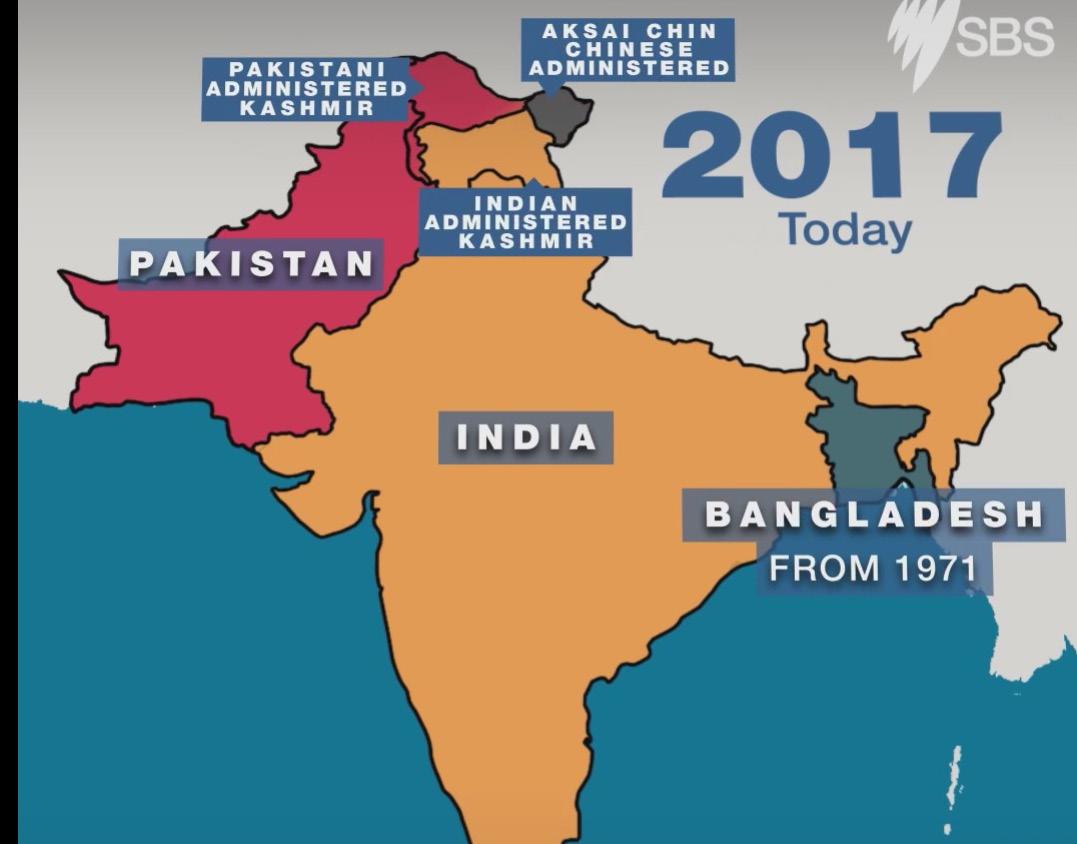
The second and perhaps more extreme issue was the blatant disregard by the government-funded SBS on the sensitive issue of the geographical map of India. Its depiction of the entire state of Jammu and Kashmir as disputed territory did not go down well with the Indian community. What was surprising was that in spite of representations from the community, the Indian diplomatic corps in Canberra and even a letter of protest from Labor Member of Parliament Michelle Rowland, SBS dragged its heels over clearing up the issue. It was, seemingly, with much reluctance, that it finally corrected the online version of the map. As one writer to Indian Link pointed out, “It is funny that SBS doesn’t show Tibet as being disputed or occupied.”
Also on a regular basis, complaints come up about the inappropriate use of our gods and goddesses in commercials. Hinduism’s most-loved god Ganesha seems to be a favourite of advertising companies.
In his most recent appearance - in a Meat & Livestock Australia’s video adGanesha sits at a communal meal in which lamb is served. The idea had the local Hindu community up in arms, issuing a call to the Australia Advertising Standards Bureau to ban the offending film.
Earlier this year, the company Raven Fightwear was urged to withdraw its rashvest which displayed images of a “Battle of the Gods - Hanoman v Ganesha.” Flow Yoga Wear were also forced to withdraw from sale their leggings depicting Lord Ganesha’s form.
Level 24/44 Market St, Sydney 2000 or GPO Box 108, Sydney 2001
Indian Link
Ph: 02 9279-2004 Fax: 02 9279-2005
Level 24/44 Market St, Sydney 2000 or GPO Box 108, Sydney 2001
Ph: 02 9279-2004
Email: info@indianlink.com.au
Fax: 02 9279-2005
Email: info@indianlink.com.au
This year alone, we’ve had a few instances which had the community up in arms. One was a Bollywood event at which the organiser included in his guest list an unhealthy mix of entertainers who had, in public, incited violence and terrorism against India over the unrest in Kashmir. Media pressure from India and strong opposition from the local Indian Australian community forced the organiser to call off the event with but a
This was not the only time SBS got it wrong where the Indian community was concerned. Its earlier reports about PV Sindhu and AAP both turned out to be inaccurate and resulted in SBS having to apologise.
A juggernaut like SBS with an annual budget of over $280 million needs to be more aware of its responsibilities towards the multicultural communities it claims to serve, and a more robust internal compliance system.
Thinking of starting a new career in child care or you just want to advance yourself in the industry? Do you want more pathways into other careers. Then studying at AICT and completing one of our courses can do just that. We specialise in Child Care.

While these issues are important and a balance needs to be kept between sensibilities and shock value, perhaps we also need to see similar passion on other issues which affect the community more directly. The community moral muscle needs to be flexed against domestic violence, seniors’ financial abuse and other social justice issues. By being strong internally as a community, we can harness our strengths to effect citizen action against those who cause affront to us as a whole.

SEPTEMBER 2017 3 INDIAN LINK editorial
Citizen action or vigilantism? Fast Track Your Career in Child Care Study Online or Study Face to Face Study at your own Pace NSW and Queensland State Funding Available Contact: 1300 889 678 email: info@aictlearning.edu.au www.aictlearning.edu.au Like us on FB: facebook.com/AICTLearning/ RTO 91067
Childcare
Australian Institute of
Training
YOUR SAY
HINDUS OUTRAGED AFTER GANESHA USED IN LAMB ADVERT
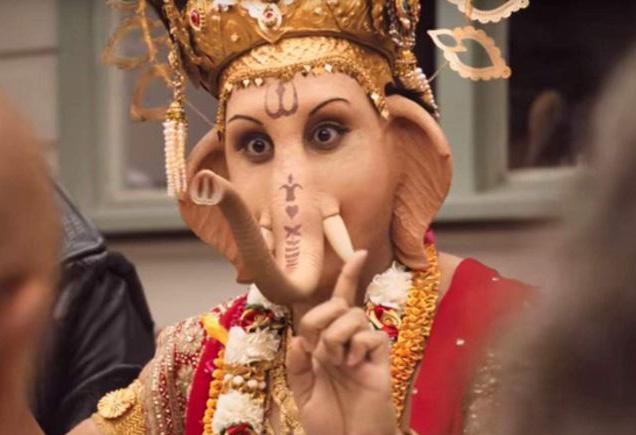
The community reacted to the Meat and Livestock Australia ad that has caused a lot of controversy
Janaki Rathod wrote: Yes it is offensive and unecessary. Most of the Indians are vegetarian and eating meat is any way not a good idea for many spiritual people. The important fact is you are killing an animal, so how can it be good? Shame on these ad makers and people who even considered it funny.
Ruchika Bhasin wrote: I do like the fact that all religions are sitting together and having a meal. What I don’t like is the fact that they completely ignored the sentiment of both Hindus and Muslims. At the end, they speci cally mention lamb that everyone can enjoy, which con rms that they are ignorant / purposely want to ignore religious beliefs of people. Just shows how the socalled creative minds of ignorant people work.
Mayank Ashri wrote: Dear @MeatAndLiveStockAustralia




The recently released ad depicting Hindu God eating meat is highly inappropriate and almost offensive towards people’s sentiments
Payal Gupta wrote: We should not make it an issue to outrage the religious sentiments of people. But yes, it needs to be resented. Any personal attack on any community or culture, above all any religion is objectionable. We have various other ways of publicity. Why adopt a way which can hurt and agitate the concerned masses?
Rajni Luthra wrote: I thought the ad was quite clever: it showed that we must all come together irrespective of our religious differences. Many vegetarians sit at tables where meat is being served without raising a ruckus. I wonder if Ganesh himself would have minded – whether he partook or not. Might be important to remind ourselves of what Ganesh’s pot belly really represents: it is a symbol of the brahmanda, the entire universe and its illusory quality to encompass everything good or bad.
Smriti Yadav-Vig wrote: The current world we live in is too sensitive, be it Hindus or other community groups. I’m a Hindu and no I’m not ‘offended’.
Roopak Kumar wrote: This is absolutely disgusting. It’s ok to have bit of fun but it’s not acceptable to play with people faith and on top misleading facts.
Chandra Kishore wrote: It is insulting. There is a petition going on… we should sign it.



Pranav Aggarwal wrote: Totally condemn and would sign the petition.
Jyoti Kapoor wrote: Shameful! No one is standing properly
GIVING THE GIFT OF LIFE
Our story on organ donors and recipients struck a chord with many Life Giving Stories wrote: Thanks Farzana Ahmad from Indian Link for your coverage of Life Giving Stories 2017. One of the best lines came from Milli Udani: “If receiving an organ is not forbidden in any religion, then why would it be not permitted to donate one.
INDIAN LINK RADIO FATHER’S DAY SPECIAL WITH ALAN FROM TRIKONE AUSTRALIA
Rajni Luthra wrote: Alan, so good to hear you speak so candidly. You sound like a really cool dad, a great guy, and a wonderful family man. I’m sure you’ve convinced many, in your quiet, sage way, to vote Yes! Hope to keep hearing from you on the issue.
SAY IT AGAIN
AN EVENING WITH DR SHASHI THAROOR
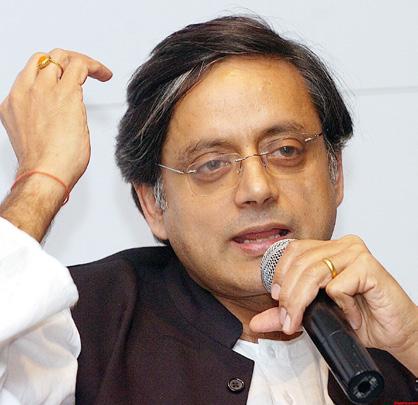
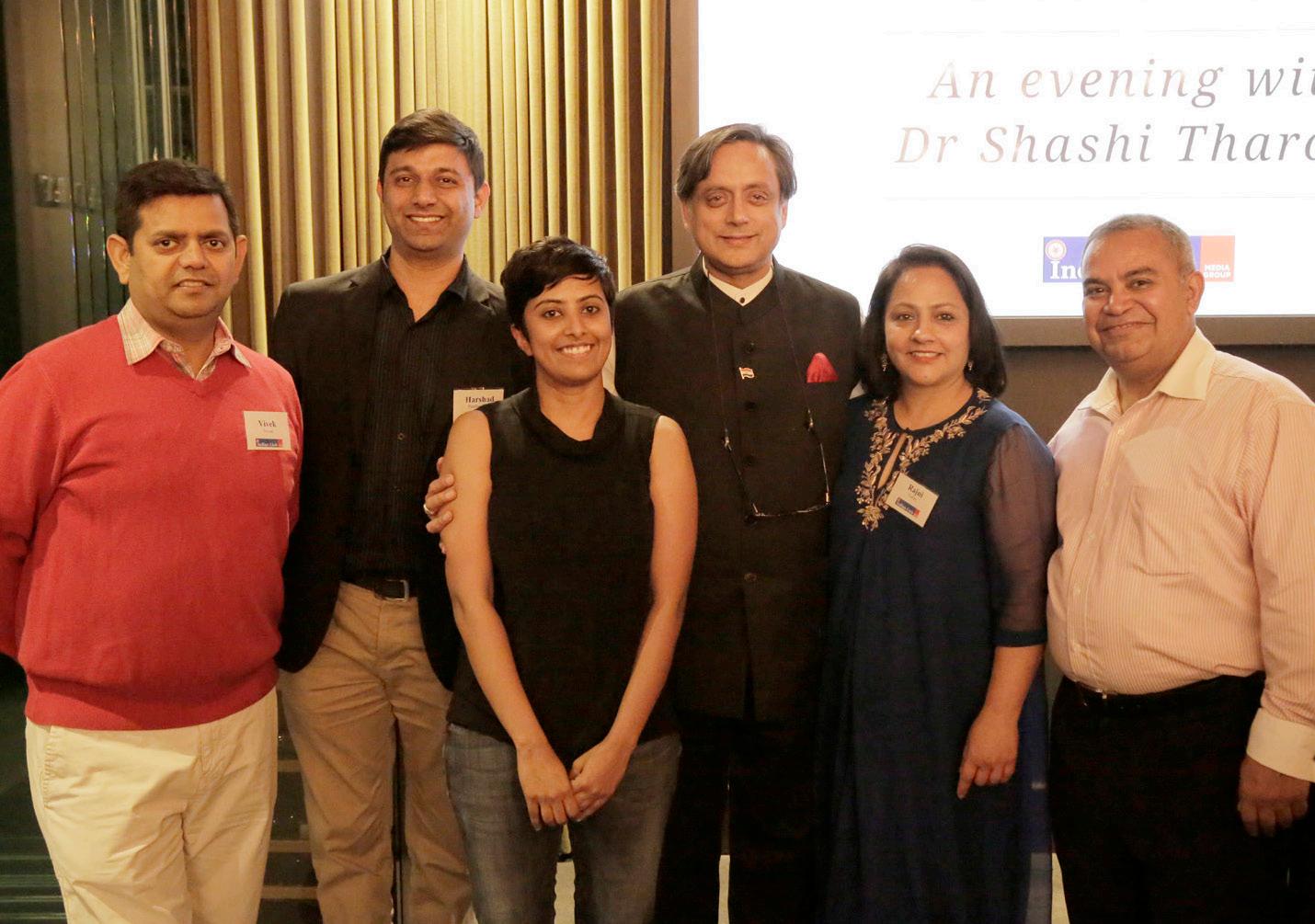
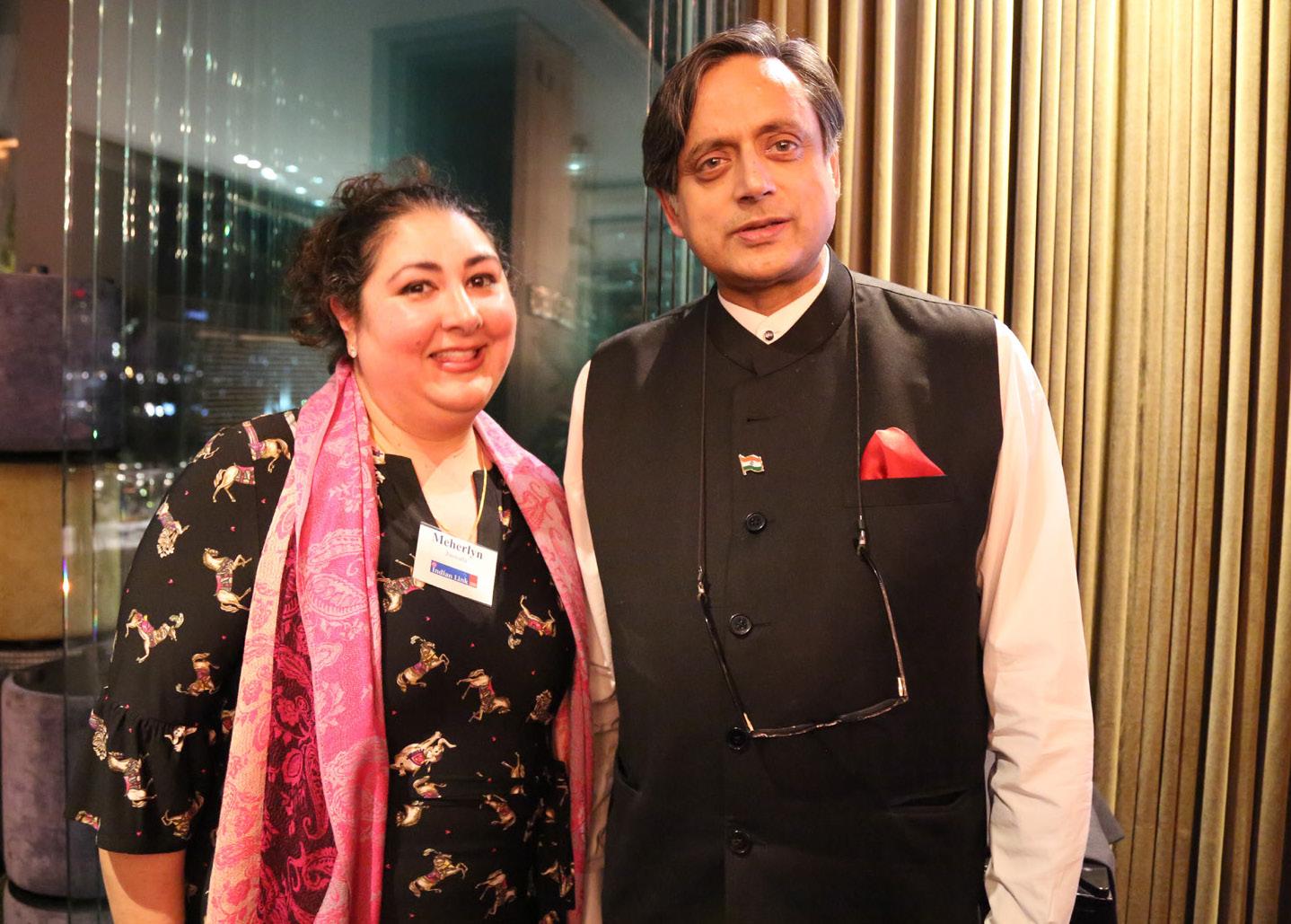
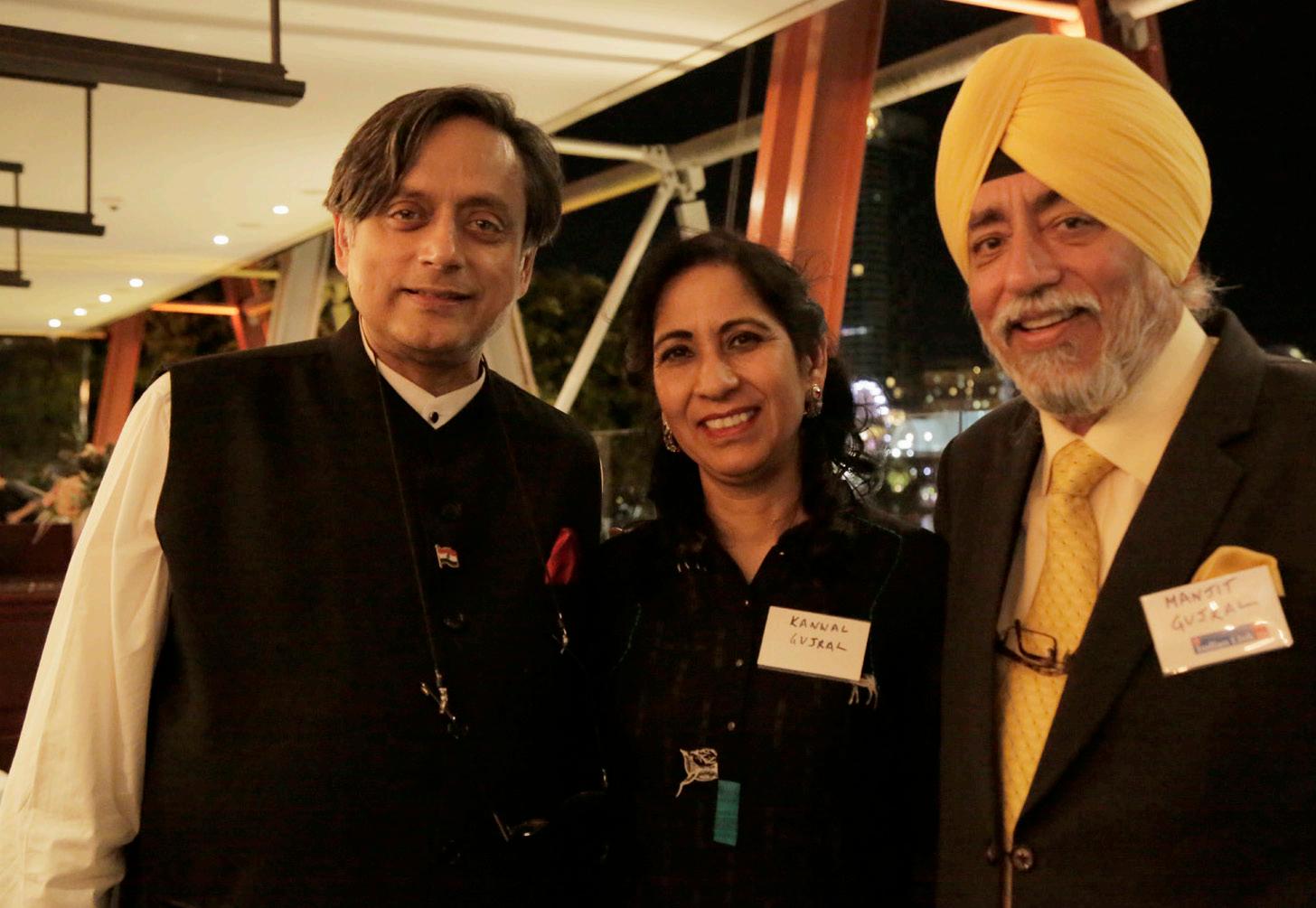
Indian Link hosted former diplomat, writer and politician Dr Shashi Tharoor for a private dinner with a select gathering. They couldn’t stop gushing about the dynamic guest


Shashi Tharoor tweeted: My third event of the day in Sydney. Enjoyable dialogue
Monika Barthwal Datta tweeted: Great evening listening 2& engaging with the brilliant @ShashiTharoor over dinner hosted by @indian_link
Yadu Singh tweeted: At an interesting, informative and enlightening evening with @ShashiTharoor, organized by @indian_link at Manjit’s, The Wharf, Sydney.
Charu Menon tweeted: Fan girl moment!! Thank you @ShashiTharoor for a riveting evening. Eloquent as ever. Come back to Sydney soon. #sydney #IndianLInk #sigh
Fida Saxena tweeted: Dear sir you are one of the most eloquent speakers in present times
COMMUNITY OUTRAGE OVER SBS MAP
Indian-Australians expressed anger over depiction of the entire Jammu and Kashmir state as disputed territory Karthi Keyan wrote: It is funny that SBS doesn’t show Tibet as being disputed or occupied.
EVENTRICKS FLASH MOB AT CIRCULAR QUAY
Our Facebook post on the Bollywood-inspired celebrations of India’s 70th Independence Day was well-liked Kerren Lumsden wrote: Would love to be able to dance like this....
FROM THE ARCHIVES
An Indian Link advertiser SARAH GILLIS dug out an old copy of the newspaper and refreshed some memories
“Live and Work in Australia with Sarah’s help!” This advertising supplement from Indian Link newspaper way back in 2000 celebrated me opening the doors to my own business!
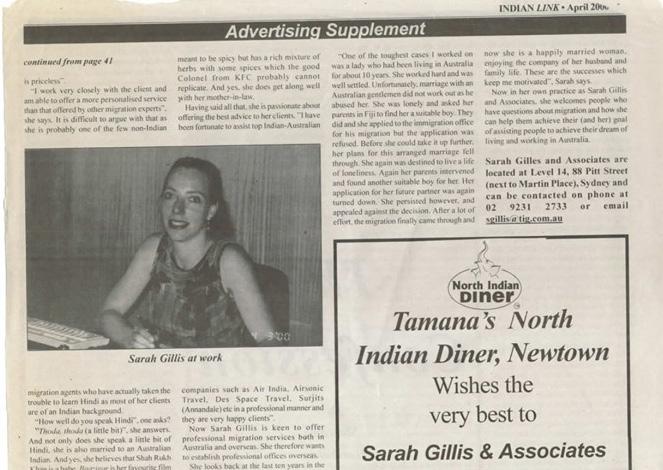

And my doors are still open today. Come and have a chat.
#ThrowbackThursday #Throwback #25Years #SilverYear #tbt
This is the man the British want us to hail as an apostle of freedom and democracy, when he has as much blood on his hands as some of the worst genocidal dictators of the 20th century Shashi Tharoor on Winston Churchill ABC TV’s Q&A
The excuse that apologists (of British empire) like to make is, it’s not our fault, you just missed the bus for the industrial revolution. Well, we missed the bus because you threw us under its wheels Shashi Tharoor on ABC TV’s Q&A
SEPTEMBER www.indianlink.com.au
RUNNING INTO AISHWARYA ON THE STREET
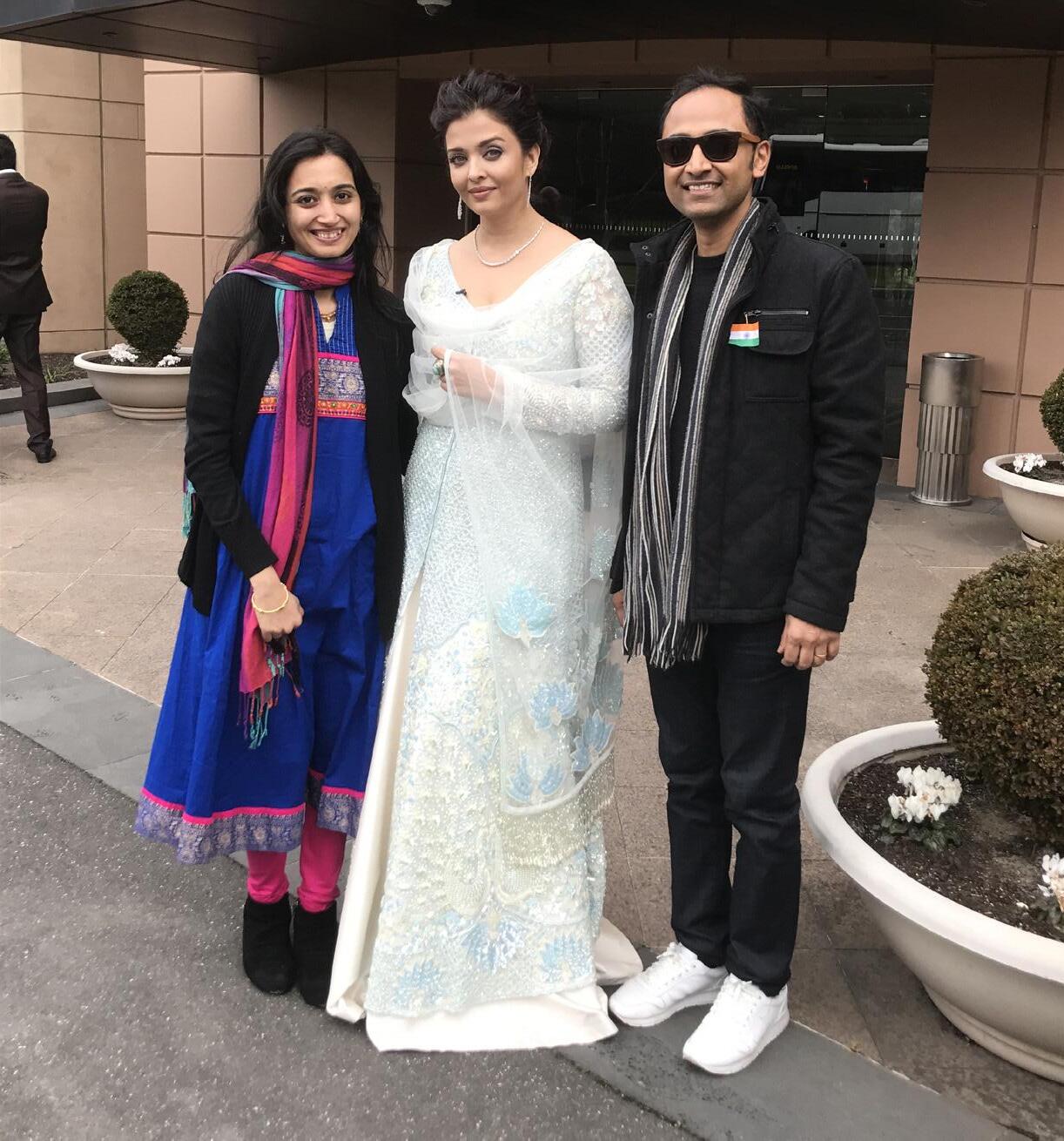
Raj Gondaliya was at the right place at the right time when he and his wife met Aishwarya Rai Bachchan. Raj shares his experience
We all know Aishwarya as an actress, but I can add that she is a humble and warm person as well. As she was about to go for an interview with Rajeev Masand, my wife and I asked her for a photo with her and I can’t believe how considerate she was. She didn’t want us to wait till her interview nished so she asked us to come forward to pose for a photo before it. We had an opportunity to have a quick chat with her, and it was a pleasure talking to her. She’s been in the industry for long but is still grounded. It was also good to see Aaradhya with her during ag hoisting ceremony. She is a hands-on mother, balancing her work life and personal life well. I think it’s inspiring how she has maintained a digni ed status as a daughter, daughter-in-law, wife, mother and above all - a woman.
WHAT WOMEN WANT
The lm ‘Lipstick Under My Burkha’ gets applause for its frank portrayal of female sexuality

Aparna Ananthuni wrote: “Let’s at least have sex?”




This is one of my favourite moments from Lipstick Under My Burkha, this year’s most ‘controversial’ Indian lm.
Leela, a young beautician who is being forced into an arranged marriage, has snuck over to her moody boyfriend’s house in the middle of the night, where he is sleeping with some young boy relatives. They go into the bathroom to have sex, argue, and the boyfriend, Arshad (played by Vikrant Massey), makes to leave in the middle. That’s when Leela asks her question, panting and unsatis ed.
Arshad’s answer encapsulates, in all its ugliness, just what Indian women face when it comes to expressing sexual desire.
“Is that all you want? Sex?” He spits. He then yells that he’ll bring the two sleeping boys in if that’s what she’s after. In one moment, he’s made her lust, her urge, her natural sex drive, into something perverted, unnatural. Why has Lipstick been called ‘controversial?’
Because it tells us that Indian women want to have sex.
It’s nothing more, and nothing less.
It shouldn’t be revolutionary, and it certainly shouldn’t be revelatory, but that’s exactly what it has become. Indian women want to have sex, and that is too shocking a fact not to stir up a ruckus.
It may have been banned for being too “lady-oriented”, but the fact is, what that really translates to is, “no male gaze”. Forsooth!
Because Lipstick tells us, rightly, that sexual repression and freedom from patriarchy go hand-in-hand. Four women, of an assortment of ages and lifestyles, is each shown playing out her own relationship with sexuality and oppression. The youngest, Rehana (Plabita Borthakur), is a college student who breaks free of the burkha forced on her by her parents, and has her rst brush with love, lust and heartbreak. Leela the beautician (Aahana Kumra) is caught between obedience to her single-parent mother, her fun and sexually satisfying relationship with Arshad, and the nagging sense that she shouldn’t have to choose between having fun and being poor and disrespectable. Shireen (Konkona Sen Sharma) is a secret door-to-door sales superstar, but has to grimly endure nightly rape from her emotionless, lazy pig of a husband. And nally, Usha (Ratna Pathak), called ‘Buaji’ by everyone in town, known as an upright ‘elderly’ widow who runs her family business with a rm hand, begins to have secret and highly pleasurable phone sex with her hot young swimming instructor, with devastating consequences.
I suspect those who nd the lm underwhelming simply don’t understand what the fuss is about. But that’s exactly the point.
BAD EXPERIENCE WITH AR RAHMAN SHOW TICKETS
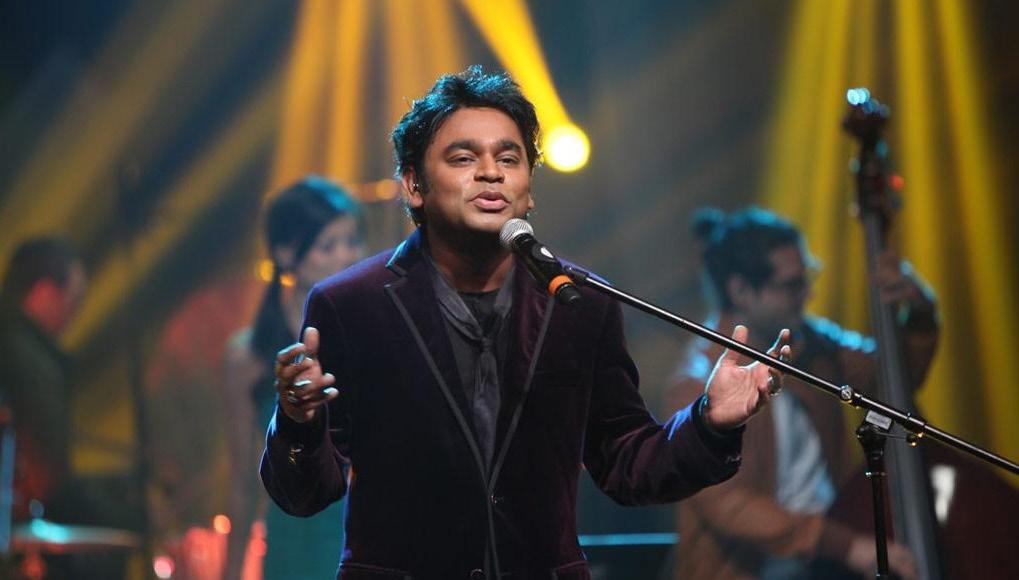
A reader, DHAMAYANTHI SIVA, wrote in, saying she was ‘scammed’ by a ticketing website
I wish to alert all fans of AR Rahman who are thinking of buying tickets to his concert about something of a scam that is currently operating. A few days ago, I found a website called Viagogo to book the tickets. I chose the middle row to get a good view of the stage and the website advertised these tickets at $222 each. We paid a total of $1,151. But yesterday, I received the tickets (via email) which had a face value of $132 each. Further, the seats that were allocated were quite far from the stage. So I will have to bring sets of binoculars to see AR Rahman on stage!
I got in touch with Viagogo straight away. Their response was that they will not be providing a refund or exchange. They did offer a re-sale using their website. But there was no mention of method of resale or price. Surely this is not the idea of organising a concert.
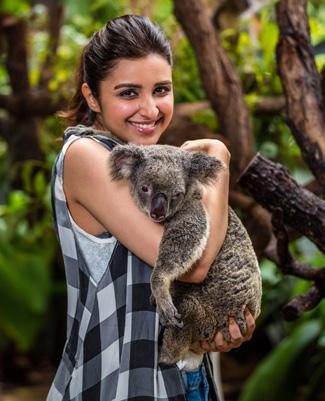
Australia is one of my fav holiday destinations. I’m fascinated by its warm and welcoming people, spectacular nature, unique wildlife, world-class food Parineeti Chopra, on being appointed ‘Friend of Australia’
To be an Indian feminist woman, even one living in the diaspora, and to watch Lipstick, is to feel like a breath has been released. One that has been held for a very, very long time.
Women want sex. Good, consensual, pleasurable sex. And they want it because it feels good.
+ JOIN THE
CONVERSATION
> LOG on to your own Facebook or Twitter account
> TYPE “Indian Link” into the search box at the top of the screen and click on the link that comes up

> CLICK ‘Like’ to join the Indian Link Facebook community or ‘Follow’ @Indian_Link on Twitter


Jugaad: Hindi for clever, low-cost solutions.

Innovation is not only for wealthy economies #ABWI
Austrade’s word of the day a few days ago

Our trade and investment ties with this important partner (India) are becoming stronger each year
Asst Minister Keith Pitt on Aus Biz Week in India

SEPTEMBER INDIAN LINK













SEPTEMBER www.indianlink.com.au DFA0007 Clipboard - Indian English 360x250.indd 1 16/10/2015 10:11:49 AM

SEPTEMBER INDIAN LINK INDIAN LINK’S Diwali Art Competition kidsCallingall12years and under! diwali art comp Use this design as a template to colour in or paint. If you need to, photocopy it. Send in your work, along with your name, address, phone number and age, to: Indian Link, GPO Box 108, Sydney 2001. Last date for submission 6 October 2017. The winning entry will be used for Indian Link’s Diwali cards for 2017 and a selection of the best work will be printed in our November editions. For more details: Call the Indian Link of ce on 02 9279 2004, or email media@indianlink.com.au
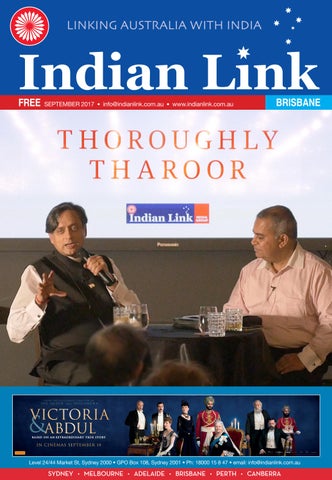
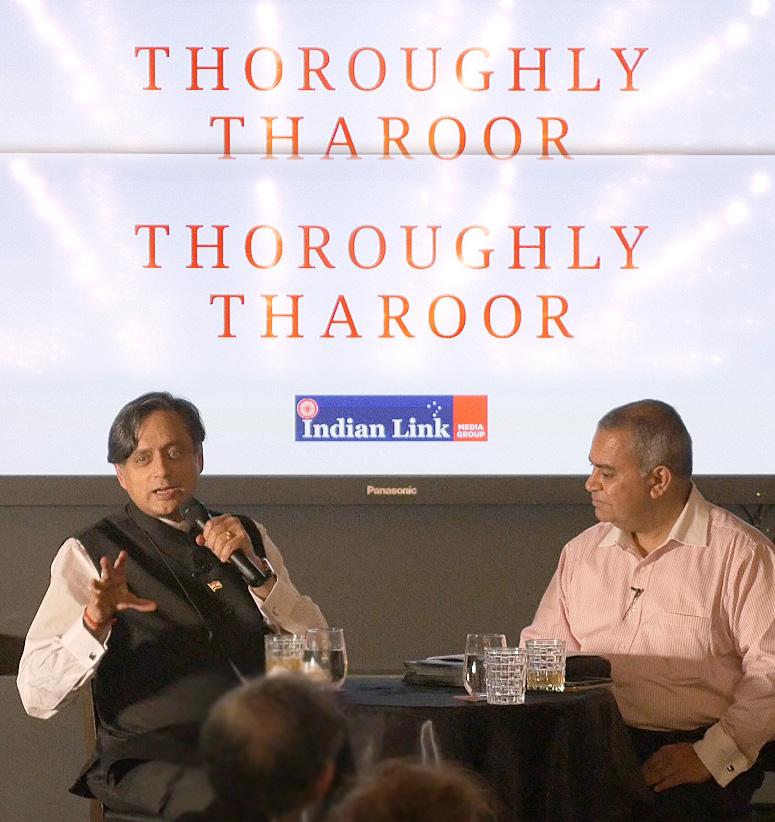
Thoroughly Tharoor
Dr Shashi Tharoor may be an Indian parliamentarian and a former minister, but he is also a globally renowned writer and orator. Known for his astute diplomacy at the UN for nearly three decades, for his insightful views on politics, history and international affairs, and for his scholarly books on these and many other subjects, Tharoor is a much sought-after personality wherever he goes.
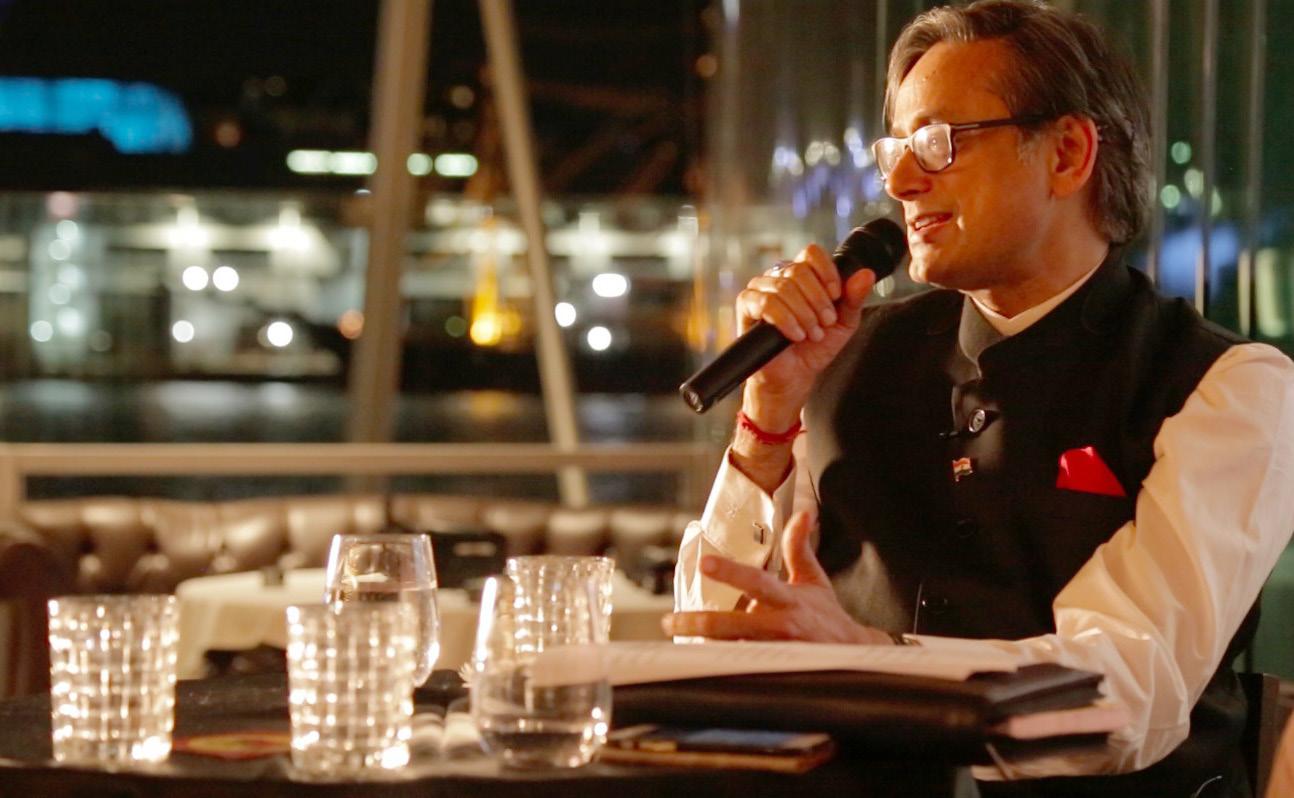
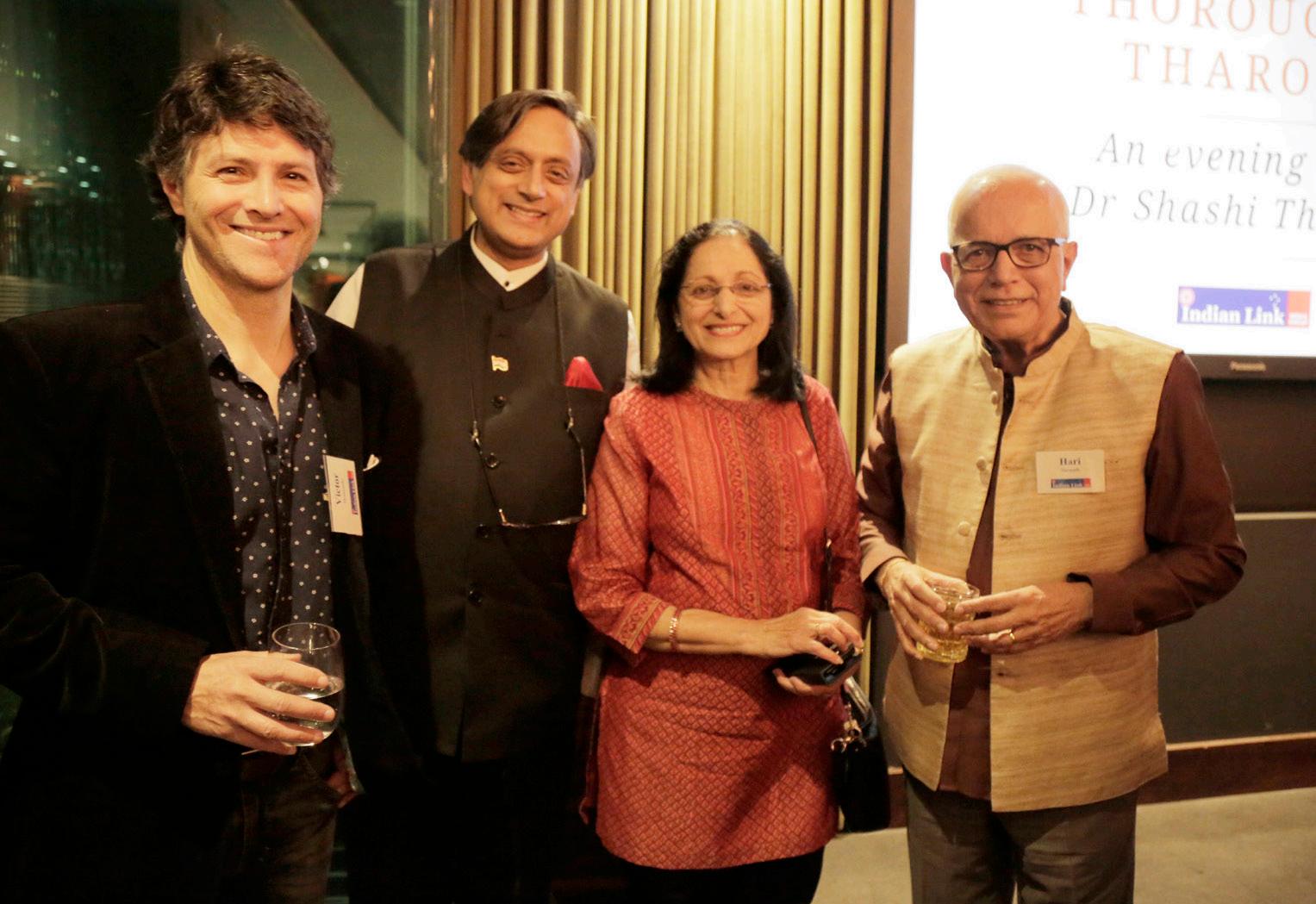
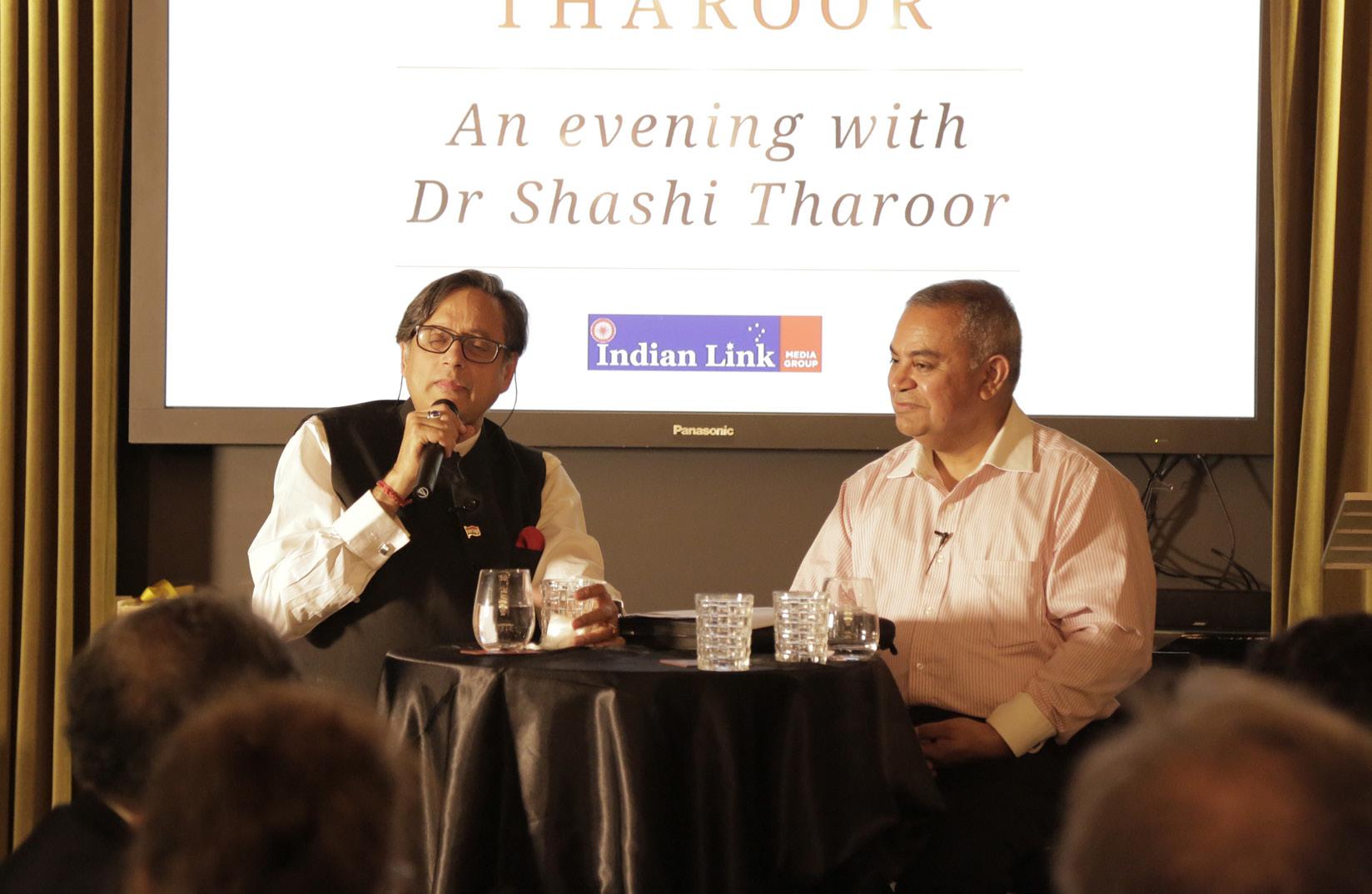
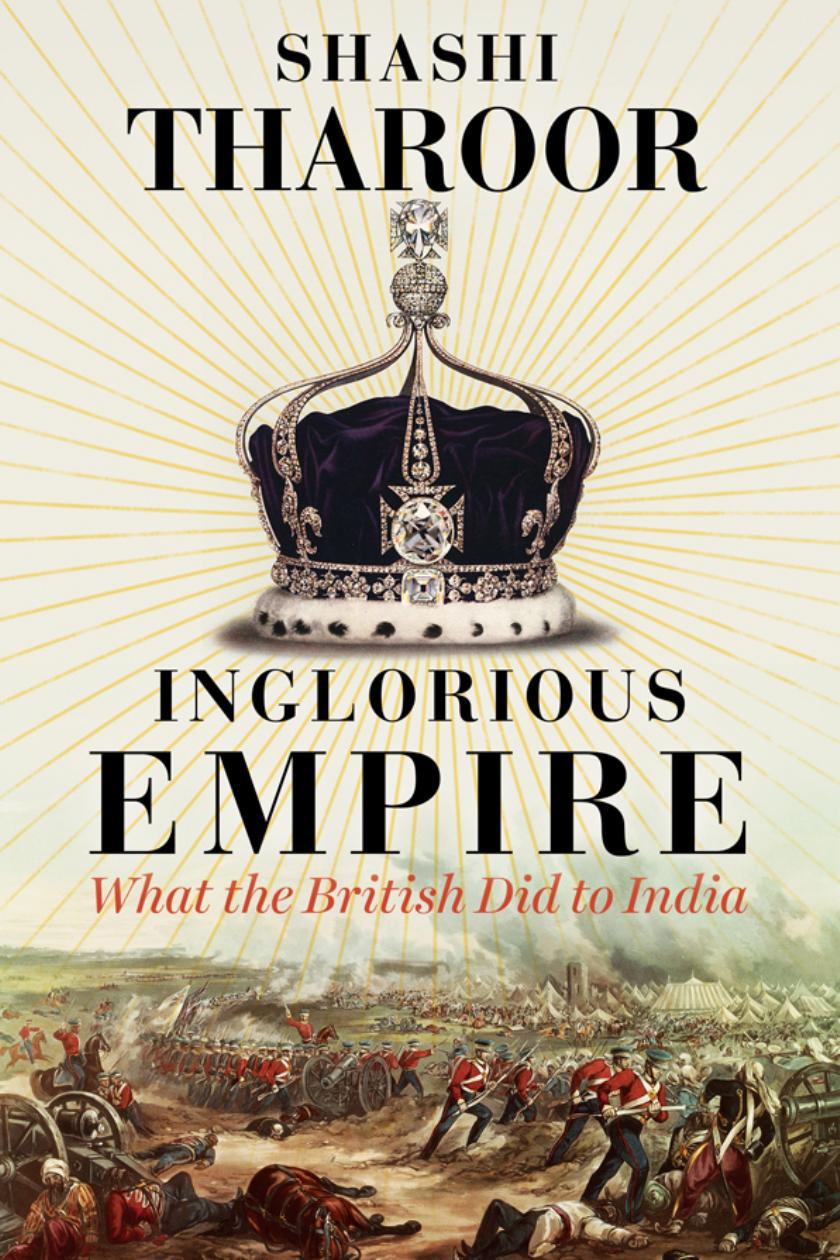
Which is why, it was a very special evening when Indian Link hosted Dr Tharoor for a private dinner with a select gathering of guests from Sydney’s business, social and journalistic circles on 3 September. Dr Tharoor was in Australia to participate in the Melbourne Writers’ Festival and some events in Sydney to speak about his latest book Inglorious Empire: What the British did to India.
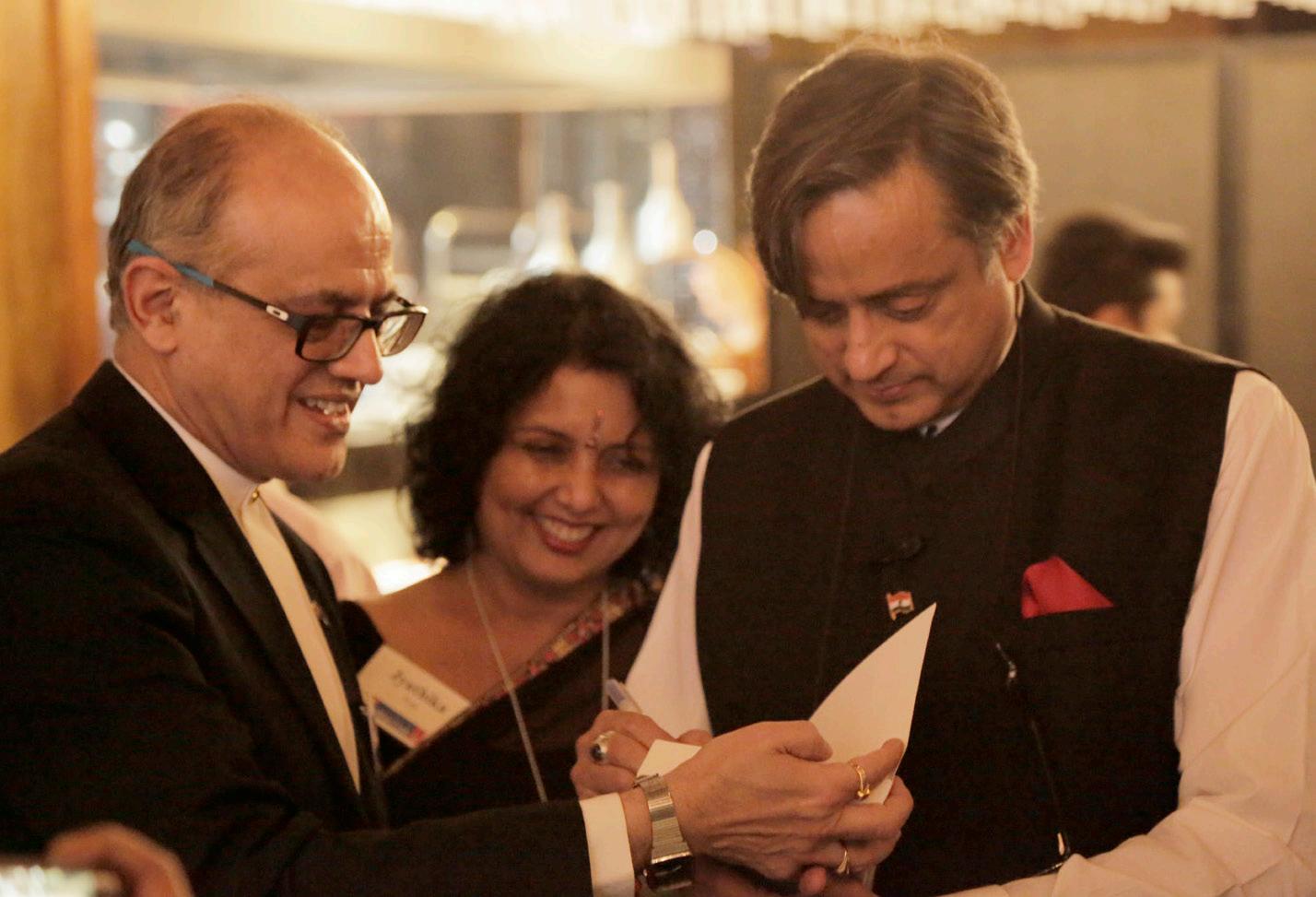
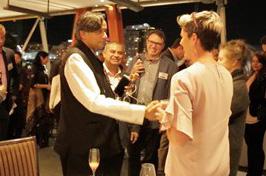
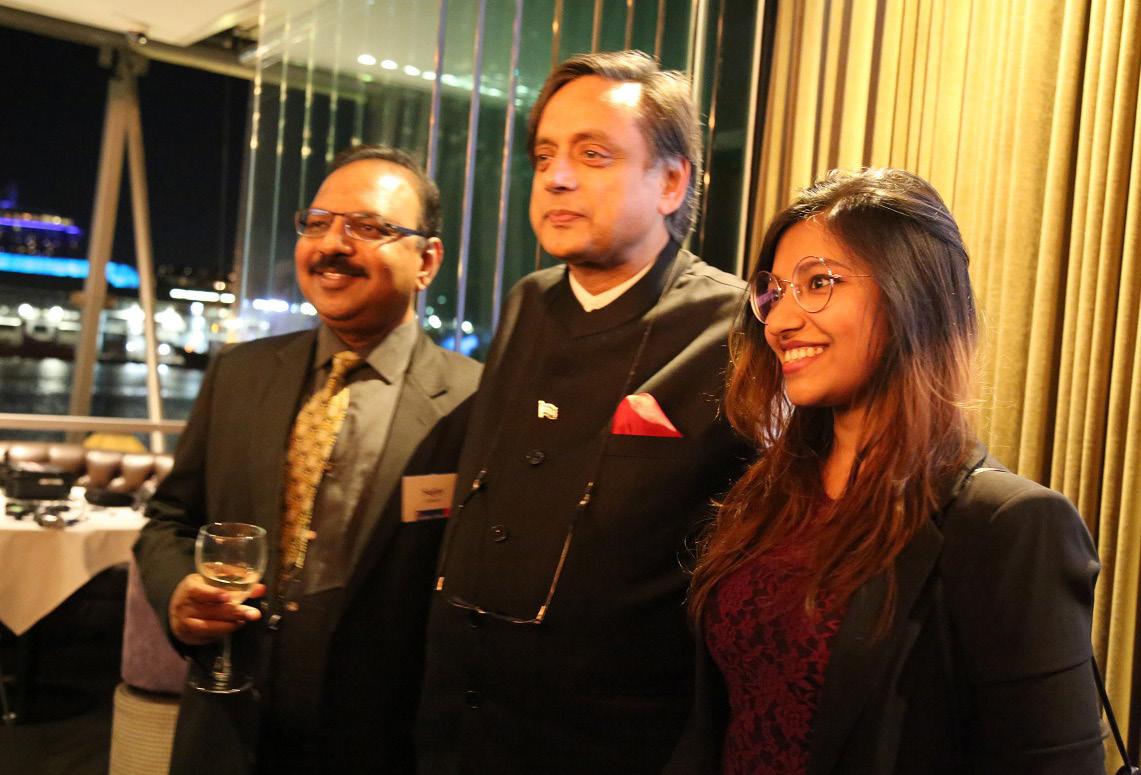
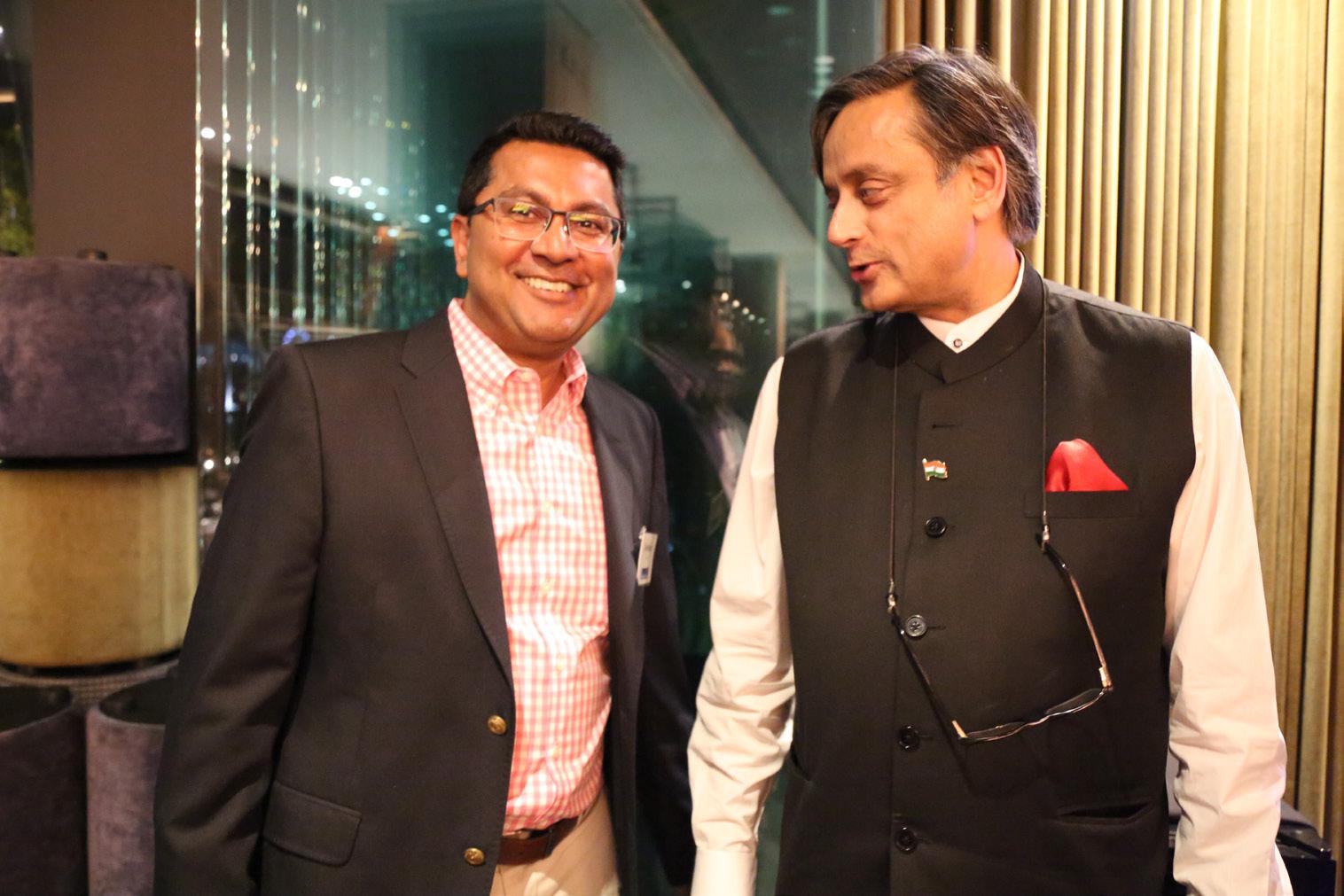
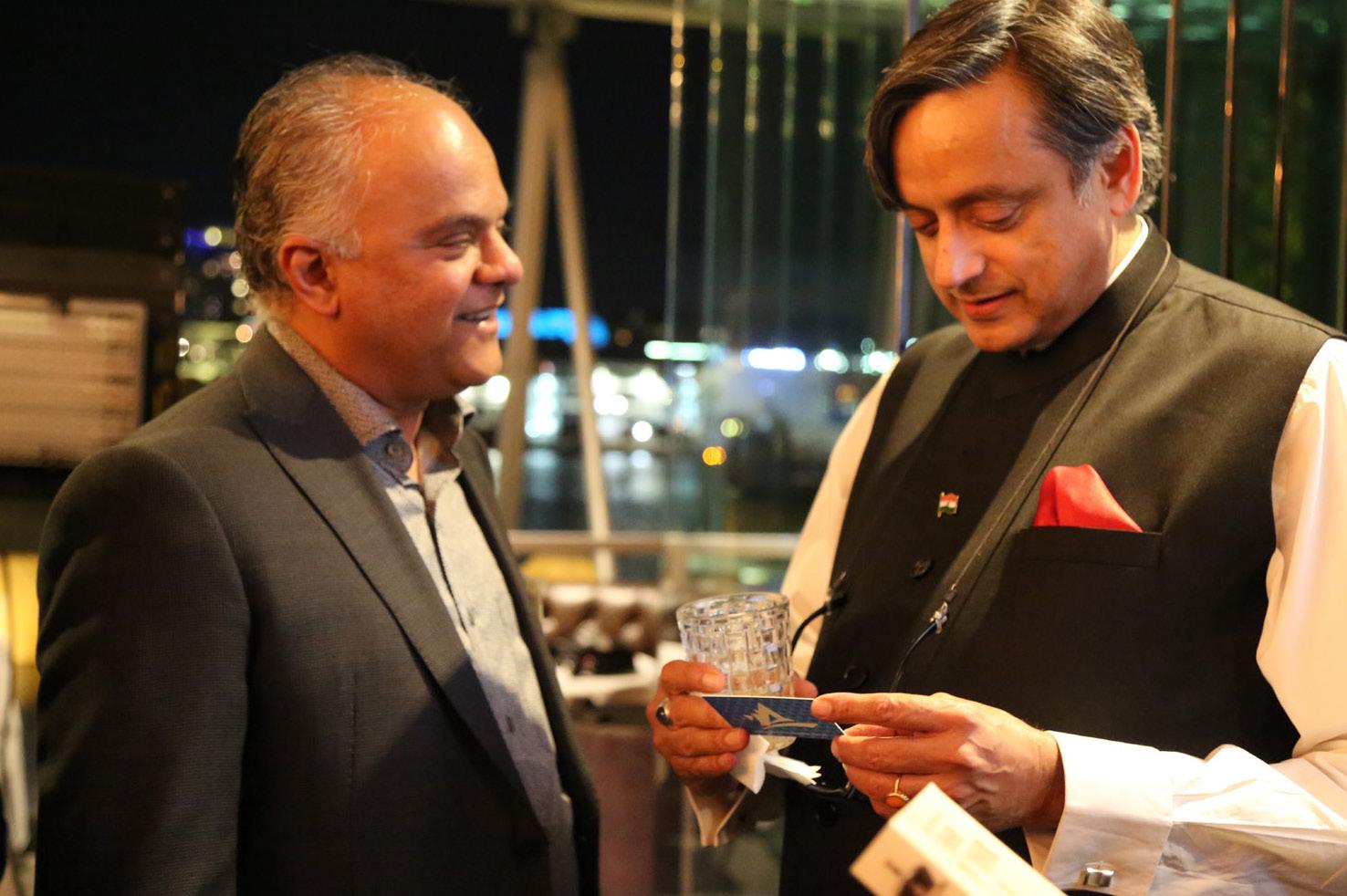
In a freewheeling conversation with Indian Link Media Group CEO Pawan Luthra at Manjit’s On The Wharf overlooking Darling Harbour, Tharoor opened up on a wide range of topics: from British atrocities in India, contemporary Indian politics, religious polarisation across the world and his experiences as a politician. Later, he freely mingled with the guests, signed copies of the book and posed for photographs.
It was an evening that fully lived up to its name: Thoroughly Tharoor. Here are excerpts from Pawan Luthra’s interview.
Q. This is your fifth visit to Australia. What appeals to you about Australia?
Also, what has surprised you about it?
A. It’s a great country. The sun shines a lot. For me, this particular visit is special because of the interest that book appears to have generated. What has surprised me is that this has coincided with your internal debate about the legacy, the statues, in a society that is increasingly conscious of itself as multiracial, and that is fascinating. I remember the days not long ago when Australia had a white Australia policy, when politicians could openly say things like ‘Two Wongs don’t make a White,’ and where one saw Australia rather set in a particular view of itself, and which has changed dramatically in the last generation.
Q. There are obvious parallels between the colonisation of our two countries, and the issue of ‘righting’ of history is hotly debated here as well, just at the same time as your own book comes out. What are your thoughts there?
A. My part in it is entirely coincidental. I happened to be invited to Oxford University (in 2015). Somehow, the speech there about Britain owing India reparations captured the imagination of Indians and Indian diaspora. When it went up on the internet, it was downloaded 3 million times in the first hours. In ngland, they have agreed to teach a different version of history at the university. It’s shocking that you can do A levels in history today without learning colonial history and I think it’s important that they do that. I have also pointed out that a city full of museums doesn’t have museum to
colonialism. It’s shocking that there isn’t a place where school children or foreign tourists can go to see the history of the British engagement in the World War. It’s all brushed under the carpet. And it’s replaced by these gauzy romanticised soap opera type shows, which reflect a distorted view of the reality and cut out the Indians who were colonised. It’s certainly time for people to wake and smell, not the coffee, but the spices.
Q. Do you think that with Brexit, parts of this history would be even more brushed under the carpet?
A. Paradoxically, the opposite has happened. When Brexit happened, a bunch o nglish o ficials, some ci il ser ants and some people close to the ruling onser ati e arty, floated this i arre notion that it didn’t matter that Britain was leaving the EU because they would resurrect what they called Empire 2.0. I was in the UK at the time and said that given the fact that Empire 1.0 was such a bad idea, who would think Empire 2.0 would be resurrected? Moreover, the terms of trade available then won’t be available now. When the East India Company came to India, they started trading. And then they realised that it’s far easier to trade at the point of the gun. Now this is not possible between two sovereign equals. This scuttled their case quite quickly.
Q. Much of what you have written in the book, we in India have known for many years. Non-Indian readers have
been shocked at the atrocities that the British committed in India. What are some of the responses you have got from outside India?
A. It’s too early to speak about the global response, but the response from the UK and Australia is instructive in many ways. The Pakistanis seem to have related to it as well. (Former cricket captain and politician) Imran Khan called me to say how much he enjoyed the book. That kind of resonance in the subcontinent is not surprising. But in Britain, for example, what you’re seeing is an interesting paradox. There was a wonderful column in the London Times praising my book and saying that every Briton should be ashamed of its record in India. The pushback came from an Indian there. It’s interesting that the brown-skinned Britons felt more obliged to defend their Britishness. During a conversation, one person said that, “As a true Conservative, I believe we should have traded with you and not conquered you.” He said no Englishman can be anything but apologetic for what the British did to India.
Q. You seem to have set a date for possible positive action from the British for an apology, April 13, 2019, the 100th anniversary for the Jallianwala Bagh massacre. For our non-Indian guests here, can you give us a background to this horrific incident in history?

A. The Jallianwala Bagh massacre took place on April 13, 1919, and in many ways


SEPTEMBER www.indianlink.com.au
coverstory
Indian Link hosts the diplomat and author for dinner and conversation
was emblematic of the worst of the Raj. India supported the British in World War I. And it did so at tremendous cost. Taxpayers and rajahs contributed to the war effort. 1.3 million Indian soldiers fought for the allies. 76,000 of them perished in the cause. In fact, it can be argued that without Indian help, Britain wouldn’t have been able to fight orld ar I. he reason nationalists supported Britain in the war is because they were led to believe that the reward for their support in the Great War would be what they called progressively responsible self-governance. By this, the Indians assumed that they would get the same white dominion status enjoyed by Australia, New Zealand, Canada and South Africa. But the British, true to form, broke their promise and reimposed on India the wartime restrictions on freedom of speech, freedom of assembly and so on. This triggered protests within India and the British sent generals to various parts of India to quell the unrest.
eneral yer imposed ection (prohibiting the assembly of more than fi e people in mritsar. hat he didn’t realise that this was the time of the Punjabi festival of Baisakhi. Many men, women and children from Amritsar and surrounding villages had gathered at Jallianwala Bagh to celebrate Baisakhi. Dyer didn’t issue them a warning, didn’t fire a warning shot. e ordered his soldiers to fire directly into the bodies of the unarmed men, women and children. The only entry and exit gates were barricaded because as he explained later this would make people easier targets. They fired , ullets that day. ery ullet hit a human being. The British claimed 379 people died. The Indians claimed 1,000. The real number is somewhere in between.
And that wasn’t even the end of the tragedy. Dyer closed the gates and forbade any relatives from attending to the injured and they lay dying. Of course, there was an uproar after this. The House of Commons condemned Dyer. However, the House of Lords passed a resolution praising Dyer. A collection was raised to reward him. The equivalent of a quarter of a million pounds sterling in today’s money was given to him as well as a bejewelled sword. He was hailed as the man who saved India.
So, the broken promises of World War I, the brutality of the massacre, the racism and indifference to the Indian suffering that ollowed and then the ustification o it, put together makes the Jallianwala Bagh massacre seem to me as the worst atrocity of 200 years of the British rule.
What my suggestion is that if a member of the royal family could come to Jallianwala Bagh on April 13, 2019, and sink to their knees in apology and regret for what was done in that place 100 years ago, it would have a cleansing effect on these 200 years of imperial sin. Is it likely to happen? Extremely unlikely. Some very senior friends whom I can’t name have told me that ‘If we apologise to you lot, we will have to apologise to many other countries.’

But I hope some of this will create some sort of consciousness about the issue.
Q. Retrospective rationalisation is a way of agreeing/disagreeing and reviewing the past and using the narrative to suit your present position. If we were to look at this decade in a 100 years’ time, who do you think will be asking for apologies from whom?
A. (Laughs) Don’t know where the list would begin! I’m sure there are Iraqis and other Arabs who would be asking for apologies from those who intervened in their country. Many innocent human beings will be asking the Islamic fanatics to apologise for what ISIS and Al-Qaeeda have done. Perhaps there will be a largish number of Americans who will be asking the descendants of Donald Trump to apologise!
Q. We’ve just celebrated Onam, a festival that is celebrated across religions. Is there a message in it for today’s religiously polarised times?
A. Very much so. In fact, what’s striking in the Kerala context is that it is a state in which people of different religions have coexisted for long. It has the world’s











oldest Jewish diaspora. It also has the world’s oldest Christian population outside Palestine because St Thomas came to Kerala around 52AD. Onam was a Hindu religious festival but today it is a festival owned equally by all communities. There is no sense among Christians and Muslims, who make up 25% each of the state’s population, that the festival has Hindu origins. For them, it’s their festival too. So, there is a lot of sharing, gift-giving and celebrating.
Does that have a lesson for the rest of India? Of course, it does. We are living in a time when those who have come to power have unleashed a set of unpleasant forces that have felt empowered by the ascent of the Hindu chauvinistic party at the centre. They are therefore preaching a very sectarian view of what India is all about and that is not at all in consonance with what it has stood for.
Q. There is a crisis of leadership all across the world, including, with respect, within your own Congress party. There is increasing polarisation in the communities in the US, Europe, India and even Australia. Surely you would expect that the more developed we get, the differences should fade away?
A. Well, it’s not happening, is it? Politics is polarised everywhere: France, the Netherlands, Hungary, Brexiteers in the UK and, of course, Donald Trump in the US. There are two kinds of backlash today. One is against globalisation; because globalisation has produced winners and losers. The losers are saying, ‘Why should we vote for the people who are sending our jobs away?’ So that’s the economic backlash.





SEPTEMBER INDIAN LINK
‘‘
My suggestion is that if a member of the royal family could come to Jallianwala Bagh on April 13, 2019, and… (express) regret, it would have a cleansing e ect
‘‘
The other is a cultural backlash, which only partly o erlaps with the first. It’s a rejection of the globalised, cosmopolitan, sophisticated elite in favour of a nationalism that seems more authentic and more rooted. Mr Modi, for instance, participates in the cultural backlash, but (he rejects) the economic backlash. That’s because the Indian economy needs globalisation.


On leadership, it partially depends on the system. We don’t have a presidential system and were saddled with the parliamentary system. The Prime Minister is simply the leader of the party that happens to get the most number of votes rather than the most popular individual in the country. If we talk about one leader against another, we are playing into Mr Modi’s hands, because he is this largerthan-life leader on a white horse, charging down on his stallion with his sword upraised and who knows the answer to all questions. My point is that he may be that, but why must we offer him another leader on a white horse? Why can’t we ha e a deep ench o ualified and experienced people who can listen to you and understand your problems, rather than a person who says he knows the answers to all questions, but hasn’t delivered much at all in the last two years?

Q. You were one of the earliest adopters of social media among Indian politicians. But there isn’t much of nuance left in the social media discourse. Is it still a valuable medium of communication for politicians?
A. Very much less so than when I started.




I adopted Twitter when none of the Indian politicians were doing it. In a few years, the opposition got onto Twitter. It is almost obligatory to be on Facebook. There are 200 million Facebook users in my country and there is no question of ignoring that. But social media doesn’t have the same utility as it earlier had because initially, you were interacting with real people. You posted genuine thoughts and got genuine responses in the form of comments, banter and so on.

Now, there are so many organised hounds. The BJP has so many of the online cells. On a marching order to a cell, accounts tweet the same message against you. The other phenomenon is a troll who is abusive for a politician like me who has a point of view on everything. Opening up my timeline is a deeply distasteful experience because 80% of the tweets addressed to me are abusive. So all of this has made it less useful than it used to be.
Now, even Twitter trends are manipulated where entire armies of people instruct others to tweet a particular hashtag so that it becomes a trending topic. This has made it much less useful for a person like me looking to engage with the general public.

QUESTIONS FROM THE AUDIENCE
Q. How do you strike a line between acknowledging history and not be











mired in endless grievances of each side involved in that history?

A. The only way to reconcile the two is y actually finding common ground. At the Sydney Opera House and at the Melbourne Writers’ Festival, people began by acknowledging the land, its traditional owners and so on. There is a danger that this can descend into tokenism or a ritual devoid of meaning, but right now, I get the sense that it means a lot. The majority can acknowledge that there was a historical wrong done which is impossible to undo, but there is a moral case that it needs to be acknowledged. Both the colonised and the coloniser will need to acknowledge something of the other side.
Q. In a democracy, we need a strong leadership and a strong opposition. But because the opposition is not very powerful (in India), the ruling party is having its own way. Why is it that the opposition, particularly Mr Rahul Gandhi, has not been able to counter the government effectively?




A. I recognise that this is a widespread perception. As a loyal Congressman, of course, it don’t share it. I know that Rahul Gandhi is not the dumb guy that is caricatured in the media or WhatsApp. But once a brand has been tarnished that way, it takes a long time to recover. What I do know is that it is important to have a deep bench strength. For example, the BJP had a ca inet reshu fle today and out o the nine new ministers, four are ex-bureaucrats and two had to be nominated to the Rajya Sabha. It should be concerning that the
ruling party that came to power with a crushing majority doesn’t have enough talent to form a cabinet of ministers. On the other hand, in the opposition, there is a galaxy of people that are experienced and have served the country.

When it comes to elections, we should acknowledge the political mathematics that the only way we can come to power (in the near future, to defeat the BJP) is through a coalition.
Q. Is there a danger of Indian and Chinese imperialism that will affect the world in the 21st century?
A. Quite frankly, we have been outpaced by China. While both started from the same place in the 1970s, China is far ahead. The race is over. My bigger worry is China and the US forming a sort of G-2 which would be a disaster for the world. As far as we are concerned, we still have 26% of the population below the poverty line. hile we ha e progressed rom when the British left us with 90% of the population below the poverty line, this 26% is still 26% too many. As long as we can provide each citizen with proper education, health care and jobs, we should be happy. It is not a zero-sum game. India and China can both prosper in their own way.
The danger, I feel, is not an India-China imperialism but rather an unnecessary hostility between the two nations.
Q. In the 190 years of British occupation of India, what may come out as their biggest achievement is that laid the foundation of one
SEPTEMBER www.indianlink.com.au
coverstory
country. Looking forward, with more than 25% of the population not understanding the language spoken in New Delhi, how do you see the future of India in the very long term?
A. I think India has actually grown closer over the years. There is more and more in common in terms of religion and culture. Look at the Indian cricket team, for example, and its uniting effect on the country. Now, you get masala dosa in New Delhi, and salwar kameez has already overtaken the sari as the most popular attire in South India. So there is much more integration now. There was an unnecessary ker u fle caused y some members of the BJP recently over Hindi as the national language, whereas it is the o ficial language, apart rom nglish. There were some calls on Twitter for a separate state to oppose this, but they quickly died down. The big advantage India has as one country, is that it’s a larger playing field or e ery ody, an open market, a stronger economy and military. So I don’t think it’s under threat at all. Kashmir is a protection problem, but I see greater clamour from the North-East for acceptance in the mainstream.
Q. We have adopted the democracy system and you have said that it is perhaps not the best system. What system in your view is the best system?
A. I’ve been on a bit of a campaign for the presidential system because Indians instinctively vote for individuals rather than parties. I am a big advocate of

FORGIVE, BUT DON’T FORGET
• It’s possible today to do A-Levels in history in Britain today and not learn a single line of Indian colonial history.
• You can find a statue in the heart of London commemorating the animals that died on the Allies side of the two World Wars, but not a single memorial to the 1.3 million Indian soldiers that fought in World War I or the 1.7 million that fought in World War II, on behalf of the British empire.
• When the British arrived in India, the country had a whopping 23% share of the world’s economy. When they left, it had just 3%.
“I think you have to tell the English: isn’t it time you woke up and faced the reality of your own past?” said Shashi Tharoor to his enthusiastic audience, at the end of his discussion with Raph Epstein at this year’s Melbourne Writer’s Festival on 2 September.
The award-winning writer and Lok Sabha MP was there to discuss the arguments of his latest book, Inglorious Empire: What the British did to India, which looks in detail at the devastating impact the British East India Company and, eventually, the Raj, had on its so-called ‘jewel in the crown’.
directly elected chief executives in all the levels of governance. It strikes me as shameful that a businessman who wants to set up a factory in a town in China can go the mayor and get all the clearances. In India, however, the mayor is no more than a toothless and powerless leader o a glorified committee which has no powers either. So the businessman is at the mercy of some unelected bureaucrat for all the permissions. I don’t agree that democracy re uires us to e ine ficient. e can e an e ficient democracy in a system of directly elected chief executives.
Q. Do you find it easier to deliver your important messages as a politician than as a diplomat?
A. Politics is much tougher work. In my first year in politics, I ound my ack perforated with stilettos not only of my political enemies but my ostensible colleagues who clearly resented my entry into the fold. Some would say that I have still not fully adjusted to politics because of the way I speak my mind. But I have to be the person I am. Because of my views on certain issues, I have been called a quasi-BJP supporter. But I speak from a clear set of yardsticks as to what is right, moral and advantageous to the country. I would continue to speak my mind. I will never tailor my words for the convenience of my party. But when it comes to expressing what I see is the right thing, I will do it. It might not always be the politic thing to do, but it gives me a clear conscience when I sleep at night.
In his persuasive and thoroughly engaging discussion, Tharoor merrily debunked the most trotted-out apologies for the empire:
They gave us the Civil Service
Quoting Nehru, Tharoor quipped that the Indian Civil Service was in fact, “neither Indian, nor civil, nor a service!”
“The British had this pretense of promoting responsible self-government. But in practice they had absolutely no intention of relinquishing any real power to Indians,” he said, citing the ‘appalling’ racism that the few Indians who did make it into the top ranks of the service suffered, including Oxford/Cambridge educated judges who were literally driven to drink and suicide.
They gave us democracy
“First of all, no one gives you democracy. It’s a bit rich to torture, maim, shoot, imprison, and jail a people for a couple hundred years and then celebrate that they’re democratic at the end of it!” Tharoor said satirically, to appreciative applause.
The British could claim that they gave Indians the vote, but in reality, only one in every 250 Indians was eligible. Not only that, but they deliberately divided Indians into communal electorates.
Muslim voters had to vote for Muslim candidates for seats reserved for Muslims, and the same applied to Hindu, Sikh and Christian voters.
As Tharoor said, this was because “They wanted to foment separate communal consciousness in order to prevent democracy emerging.”
They gave us the rule of law
“It was applied with excessive attention to the skin colour of the defendant,” Tharoor parried.













In fact, just three cases of Englishmen being convicted of murdering Indians have ever been found by scholars, although hundreds of murders undoubtedly happened.
Furthermore, India is still “stuck” with the brutal penal code introduced by the British in 1861, which is why it is one of the few democracies in the world where homosexuality is criminalised, and why it has the most “draconian” sedition laws than any sedition law anywhere.
They gave us the free press
Tharoor conceded that the British did indeed leave India with a free press.
“Mind you,” he added, “they imposed a lot of restrictions on the Indian press.” He went on to describe the bestowing of a free press as strategic - part of the need to justify empire in the public space, in an increasingly democratic and liberal Britain.
“Behind closed doors, they were absolutely ruthless and had no illusions about what they were doing. But in the public space, in the public sphere, they had to ha e this language o ustification.

A new nostalgia about Empire seems to ha e descended two new films have come out this year about colonial India, neither of which seems to care to e amine the rapacity, cruelty and horrific racism that was the reality of the British project.
Tharoor believes that the past should be left in the past, but also that acknowledging it allows a better appreciation of the present.
“You know, one of the challenges with our culture as a whole is that we are very much a forgive-and-forget kind of people,” Tharoor mused. “Very little seems to last…and that’s good, because honestly rancour and bitterness are, terribly negative emotions…but I think we should forgive, but we should not forget.”
Aparna Ananthuni
SEPTEMBER INDIAN LINK
At Melb Writers’ Festival, Dr Shashi Tharoor says that the British need to face the reality of their past in India
Equality for all
The Surprise Marriage of Sam and Zlatko – 06th July 2014
Their commitment to the permanence of their love affair began with a visit to a store borne out of the passion of a metalsmith and sculptor – you might have heard of Georg Jensen.
On the 8th day of the 8th month of the year 2008, amid the sparkles and lustre of art inspired elegance, Sam and Zlatko chose their engagement rings together as a symbol of their serene and spirited love while the streets of Melbourne buzzed beyond.
BY ANEETA MENON
Australia. Since then, the matter of whether the law should be reverted to its initial state has been hotly debated.
Opposition to changes
we, as a community, usually celebrate with reckless abandon.
“Who loves and values weddings (and, along with it, marriage) more than our community?” asks Kharishma D’Souza, a corporate banking professional and mother who recently represented Indians on a marriage equality panel in Sydney.
From 12 September, the Australian Bureau of Statistics will be mailing out the Australian Marriage Law survey - a postal poll commissioned by the federal government to gauge levels of support amongst Australians regarding a change to the Marriage Act. The survey is not compulsory, and is not a formal vote to change law. The question will read “Should the law be changed to allow same-sex couples to marry?” and the options to respond will be a simple Yes or No. After its introduction in 1961, the Marriage Act been changed twice. Initially, the legal marrying age was 16 for females and 18 for males. This was amended in 1991 to equalise the Act, making the legal marrying age or all people. rior to , there was no specification in the arriage Act regarding the gender of those seeking to wed. Under the Howard government, the Act was amended without consultation of the electorate to specifically prohi it same sex couples to be recognised as married in
The issue has been as divisive as it has been prolonged, despite routine polling showing that the majority of Australians now support the change. Core opposition to marriage equality comes from socially conservative religious groups, who claim the changes to civil law will impede their religious freedoms. As evidenced by the precedent set by over 22 other nations over the last 17 years, this is simply not the case. Religious organisations will remain free to conduct their ceremonies in line with their beliefs.
other minorities the same access to live equally. Despite many claims otherwise, same-sex and de-facto couples in Australia do not already have the same civil rights as married couples. A crucial area in which there is inequality is surrounding the death rites and enefits o partners, including eing listed on the eath ertificate as next of kin.
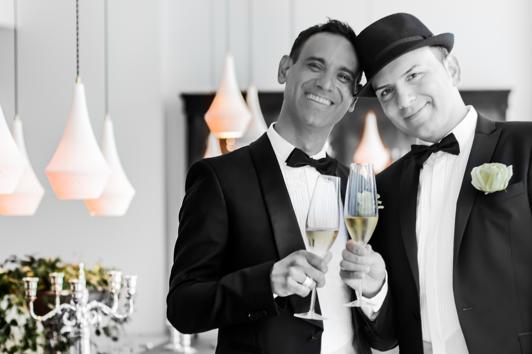
Some time later, by chance, and perhaps by some providence of Paramatma, a faulty watch led Sam on a quest to find his right time. From his many broadcasts for assistance, it was the reply from Georg Jensen’s homeland which helped Sam to recover the perfect function of his timepiece.
In most sub-continental cultures, death rites are one of the most important parts of existence, and a situation where a spouse can be denied input over what happens is unthinkable. This is just one of the many ways amending this law will directly impact people.
Sam & Zlatko’s Surprise Wedding
Impacts on the subcontinental community
When talking to immigrants, particularly those from the sub-continental community, about why they’ve chosen to live in Australia and what they love about it, the answer is almost always freedom. Australia permits our subcontinental community the right to practice our beliefs and embrace our culture free of persecution or discrimination.
s we en oy the enefits o tolerance and acceptance of the greater Australian community, it would be wrong to deny
Whilst the proportion of same-sex couples is comparatively low in subcontinental communities, it is not nonexistent. When I approached a gay friend in a committed-long term relationship to contribute their views for this article, I was met with apologies, and the heartbreaking explanation that “Only a select bunch of Indians know, so that Mum doesn’t get dragged through the mud. Especially while my Nana is alive.” So, whilst we’re usually talking about the community at large, it is important to remember that we must also consider those in our communities who face discrimination, shame and, above all, fear. Not just for themselves, but for their loved ones, about an area of their lives that
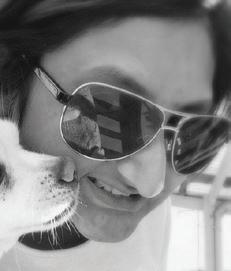
Growing up in Malaysia, it wasn’t until Kharishma moved to Australia that she was able to see the possibility of true equality. “I had plenty of people in my own circles who were discriminated against, but in Australia people are quite accepting. Being different was celebrated.”
The panel, attended by representatives of the multicultural community, was positive and many of the questions were answered. When asked why Kharishma was passionate about this, she said that it was important for her to be part of the way forward for her children and the next generation. “It is our turn to do this. We all love living in Australia, and this (freedom) is why.”
The Asian Australian Alliance, a group that represents the interests of Asian communities in Australia, agrees with Kharishma.
Speaking on the matter, Molina Swarup Asthana, convenor of the Asian Australian Alliance, has said, “LGBTI Asian Australians are being treated as
SEPTEMBER www.indianlink.com.au
mainstream
To ensure that our families and communities are safe, embraced and respected, we must ensure that all the other communities in Australia are safe, embraced and respected
Melbourne-based Indian academic and Odissi exponent Dr Sam Goraya wed his partner, creative artist Zlatko Varenina, in Copenhagen in 2014
second-class citizens as they are currently being discriminated under the law and are being excluded from the civil institution of marriage, which is a right that must be available to all Australians.” Concurring with other community view, she concluded, “To be able to marry and form a family is a basic human right.”
Over time, much of sub-continental culture (both in India and abroad) has been hi acked to ser e personal interest, profit and patriarchy. Therefore, the personal discomfort felt by some of our community by concepts such as marriage equality are understandable. Hesitation, fear and prejudice are due to the multigenerational conservatism entrenched in global Indian culture.

Speaking from the community itself, Kunal Mirchandani of the South Asian LGBT support group Trikone, urged those sitting on the fence to consider the ramifications o their am i alence. “We’ve all been here before,” he says, and explains, “There was a time not long ago when Hindus couldn’t marry Muslims, or widows were forbidden from remarrying. e ha e changed the definition o marriage time and again, and the world didn’t end. ery generation gets to define its own values. And this is your chance to make a difference. Be an agent of change. Challenge the status quo, and let’s make history happen.”
Religious responses to marriage equality

However, looking back at ancient India, and specifically induism, pairings such as these were commonplace. This is to be expected as the Hindu philosophy, at its core, focusses on the journeys of the noncorporeal, genderless soul throughout many incarnations until moksha, or liberation.
Australian Marriage Law Postal Survey



Fast Facts
gets taught in the classroom, and updating the Marriage Act will not change that.
No changes will be made to how couples conceive or adopt children, regardless of the outcome of this survey This is just about whether couples should be allowed to marry.
Marriage matters to Australian society and it matters to many couples. Changing the law will ensure equal rights under the law to all married couples, regardless of gender.
Marriage around the world


Marriage equality was first legalised in the Netherlands in the year 2000!
UK, USA, Canada and New Zealand – countries with the largest sub-continental populations (aside from Australia) have all had marriage equality for years!
Over 22 countries, including almost all developed nations, have equal rights for married couples. They are:
Argentina (2010) | Denmark (2012) | Greenland (2015) | The Netherlands (2000) | South Africa (2006) | Belgium (2003) | England / Wales (2013) | Iceland (2010) | New Zealand (2013) | Spain (2005) | Brazil (2013) | Finland (2015) | Ireland (2015) | Norway (2008) | Sweden (2009) | Canada (2005) | France (2013) | Luxembourg (2014) | Portugal (2010) | United States (2015) | Colombia (2016) | Germany (2017) | Malta (2017) | Scotland (2014) | Uruguay (2013)
Source: http://www.equalitycampaign.org.au
Hindu pundit Rami Sivan states, “The Australian Council of Hindu Clergy gives its un ualified support or e uality o all citizens before the law and supports the right of everyone to live and love in dignity, peace and security.”
While the Judeo-Christian faiths have mixed feelings on the topic, there are many proponents of marriage equality. “It
is in the spirit of Jesus that we say yes to marriage,” Reverend Dr Keith Mascord said at a Christians for Marriage Equality press conference. “It is not in spite of our faith, but because of our faith that we say yes to marriage equality.” At the time of writing, a Facebook page called “Muslims for Marriage Equality” had over 1,300 followers.
There are many cultural rites practiced by our diaspora that the greater Australian community finds con ronting or uncomfortable. Whether it is the ritual shaving of a baby’s head, the painful piercing of a small child’s ears or the circumcision of male infants practiced in some communities, the fact remains that we live in a secular democracy.
The discomfort of some doesn’t make it banned for the rest, and this is no different. This is what it means to live freely, multiculturally and respectfully. To ensure that we, our families and communities are safe, embraced and respected, all we must do is act to ensure that all the other communities in Australia are safe, embraced and respected.
There are many things in this world, particularly in these rapidly-changing times, that are confronting and morally challenging. Luckily, equality is not one of them.
WHY I’M VOTING YES!
Because we should all be equal in the eyes of the law. As a lawyer, I see rsthand how laws are used to divide and demonise communities. How legislation can create an unequal society that prevents people from being treated fairly.
Because when you suffer, I suffer. As a minority in Australia, I know what it is to be told “You don’t belong here”, through the way laws are upheld, through the treatment I receive from strangers, through what the media says. We are all in this together. We know the sting of being an outsider. Nothing will change unless we stand up for others.
Because, 50 years ago, I wouldn’t have been able to enter this country because of the colour of my skin.
Because nothing will change for me. The sun will still rise in the east and set in the west. I will wake up, take the train, go to my job in the city. I will still pay my taxes and save for my next holiday. I will still be married to my husband. A man who, not that long ago, it would have been illegal for me to marry because of the difference of our skin colours.
Because everything will change for the people I love. My friends will be able to love freely and openly. They will know that the majority of this country backs them, supports them for simply being who they are, for loving who they love. They will be able to have a big lavish wedding and wear that big white dress or a sparkling red sari. They will be able to have a small intimate affair surrounded by the people most important to them. They will be given a choice.
They will have the choice, like I did, to declare publicly that they found the person they want to spend the rest of their life with and have Australia recognise that as fact.


Because we won’t be separate anymore.
Because we should all be equal.
Sharika Jeyakumar
SEPTEMBER INDIAN LINK
Aneeta Menon is a business owner, writer and board member of a Hindu temple in Sydney
‘‘ ‘‘
The Australian Council of Hindu Clergy… supports the right of everyone to live and love in dignity, peace and security Hindu pundit Rami Sivan
The Australian Marriage Law Postal Survey is a voluntary poll that will be sent to all enrolled voters in Australia. Civil marriage is different and distinct from religious marriage. No religious group will be forced to marry a lesbian or gay couple against their beliefs. State Government and your local school decide what
Rainbow families
On Father’s Day, Indian Link Radio’s
Kashif Harrison (KH): Alan, welcome to Indian Link Radio. You’re originally from Delhi, you’re a dad of two kids, and you’re from Trikone Australasia.
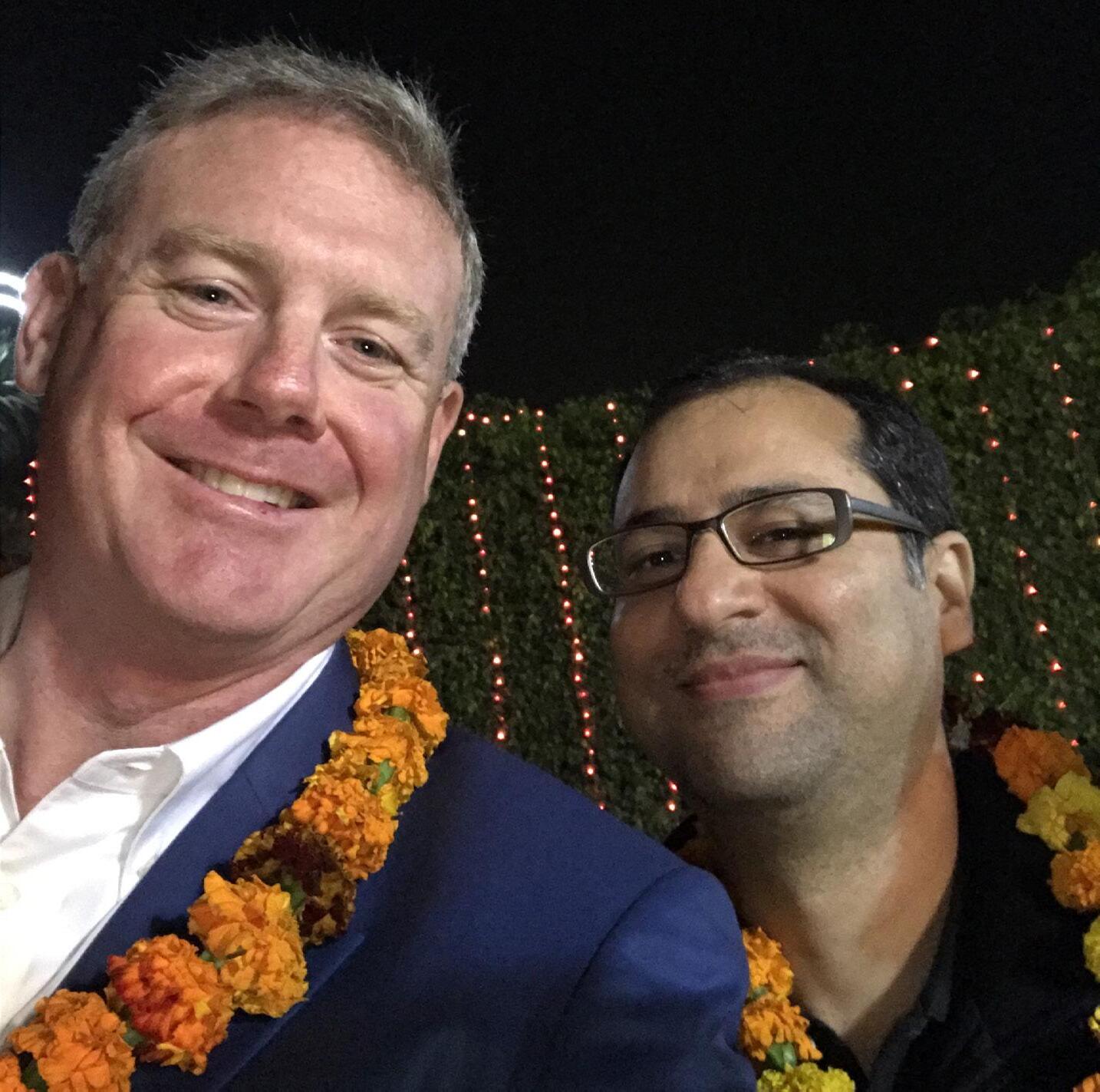
Alan Maurice (AM): I am. Trikone is a social support network for South Asian gays, lesbians, bisexuals. I came to Australia in 1977, as an 18-year-old. I lived with my mum here. She arranged for me to meet with a ortuguese girl one day. I figured later that it was probably just as good as any Indian arranged marriage (laughs). We met, and within a year I realised I had some feelings for her; I didn’t start with any feelings for her, so I thought this Indian idea of arranged marriage must be real because obviously you don’t all in lo e at first sight, there’s no such thing. We got married a year and a half later. I was . e had our first son when I was 28. Today, he is 31. Our second son came along in 1992, and at the same time as that happened, these (other) feelings started to get much stronger in me. Even though I was really happy for 10 years in my marriage and life was great - we had great social life etc - I think I was trying to hide something. We went out a lot; I dragged her to every Indian mo ie I could find ecause she’s not Indian met with family, went out dancing and clubbing with friends. When our second son came, there was this explosion of emotion and at the same time I met somebody in my workplace, an English guy I felt completely in love with. I had no idea what was going on actually. I then started to realise ‘Achcha, so this is love, this is what it means’. Well not so much ‘this is love’, but more like ‘this is love at first sight’.
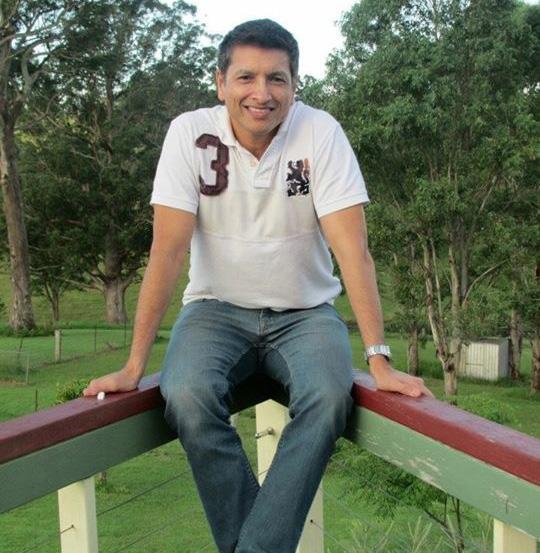
My challenge was, I was still in love with my wife; in fact, I still am. It was a very dark period for me and it was very hard for her - but I knew I had to move out of the marriage. My boys were very young at the time, aged four and one. I lived together with my new partner for 16 years.
During that time I was very connected to my wife and my sons. I would go twice a week and spend time with them, sing them lullabies at night, make up stories to tell them at edtime. ut it was a ery di ficult time. I think they were too young to realise the detail, but it’s hard enough when a marriage reaks up, and it’s definitely hard on children. I know this from my own experience when my parents broke up.
So what she and I did was, we put our children first and we tried e erything possible to make sure their lives were balanced - I hate using the word ‘normal’. Skyway through many years, today we have a very good relationship. In fact my ex-wife and I only became ‘ex’ about three years ago - we were still married for all those years. We just didn’t see the need to get a divorce, I think we both felt that it was a clear-cut arrangement.
So anyway, we still have a good relationship. My sons and I are good too; my older son did go through some di ficult times that was
more to do with the break-up of his parents than anything else) He’s a very strong guy; emotionally he’s a bit charged up so I wasn’t sure how to deal with it. ut o er the last fi e years we have a very good relationship and we’re in business together. One son’s a builder and the other’s an electrician, and I manage their books for them.
KH: You don’t look like a father of two boys aged 25 and 31! So here’s the thing Alan, one of the issues in the ongoing debate about marriage equality, is that same-sex relationships are not good for kids. The perception is that parenting styles are not healthy, and that the kids face physical and mental health issues. But you seem like a wonderful family man: what was it like raising two kids that you seem really proud of?
AM: ook, it’s definitely not easy, I wouldn’t rush out and say, go have children. But to me it makes no difference if you are gay parents or straight parents. If you’re going to have unhealthy children, it’s going to happen, more out of bad habits and not looking after them and watching over them, than anything else. You only have to look across the whole spectrum of families to see how much dysfunction there is anyway. So from that point of view, we are really blessed. But, sure, we did have problems. Going to soccer matches, or parent-teacher meetings, it was always di ficult, ecause in aria ly, someone was looking and saying ‘Where’s their mother?’ or when she went, ‘Where’s the father?’. Even at that level, there is a taboo, as to why the parents aren’t together. n the soccer field, guys might make jokes about gays… and you have to watch your son try to process this horrible experience, of someone saying something knowing his dad is standing right there. And you think, do I say something? How do I support them? It’s a really tough time. And they went through some really tough times. One day my younger son and I were walking down the street in Newtown where I live and these young guys drove by and screamed out some homophobic abuse. My son, 13 , was in complete shock. He couldn’t believe it. But it actually made him stronger in his desire to defend people like myself right across. Now, he’s got a strong sense of social justice from things like this.
KH: At 25 and 31, your boys must be looking at relationships themselves. How are you going to deal with that - if their family is not open to the idea of same-sex marriage or same-sex parents?
Have you thought about that?
AM: Think about it all the time. In fact, e en when they meet a girl or the first time, our first reaction is oh god, now we have to come out again’ in some shape or form. But the blessing is that both my sons are completely okay with it. So when they meet girls, they are really upfront about the
situation - my dad is gay; he’s got a partner, blah blah blah. If you’ve got a problem, speak now. And if it’s a problem it probably ends what was a short-term relationship. I don’t know, they’ve never said it has caused a problem, they are totally cool.
KH: Have your boys been to India?
AM: I took them to India or the first time in 2015. They don’t speak any Hindi. I have a pretty good relationship with a bunch of guys and girls from school, you know - the typical WhatsApp group and that kind of thing. And I am pretty open on Facebook. While friends and family are completely okay with everything, nobody talks about it. I think we discussed it once in one or two sentences, and then it was like ‘Chalo, khao piyo (let’s eat), let’s have a good time’. So that’s about it. They know my sons are quite cool about it, they were quite loving to my sons and made them feel at home. So it was really interesting.
KH: What about the young generation in India?
AM: No in fact, most of the younger generation don’t have any issues.
KH: In the current debate on the issue though, it is said that the Indian community here will probably not accept same-sex relationships.
AM: Yes it’s really interesting, and it happens across most cultures. There is more exposure in India, than there is the Indian community here in Australia. I think it is mostly because when you are a migrant in a new country you kind of lock yourself into the Aradhana class of songs (that you just played!) rather than realise that it is 2017 and maybe there is a new song that is out. So maybe the mentality and everything else is still locked into the Indian you were when you left, or when your parents left and came here. And it is usually the parents that are forcing this mindset.
I stay tuned into Indian news. There’s a lot of stuff happening in big cities. They are having Pride Marches all over the place, which takes a lot of courage because legally, it’s still an issue over there. Some people are really open about it, they are out and proud; and some others are struggling and finding it really di ficult. amily pressure is still a huge thing. They obviously don’t want their children to be gay. They want them to marry
and some parents will say ‘we don’t care if you are gay, you must get married anyway’.
KH: Obviously you’ve been through a lot, but you’re definitely standing up for what you believe in - you’re teaching that to your kids as well. Now, let’s talk a bit about the same-sex marriage postal vote.
AM: To clarify, the actual vote is not going to be due until early November. For me personally, I’m going to be 60 next year. So for me, the marriage thing is not so important. I have had a marriage, I have had a long term relationship and my whole thinking about relationships is different. So I’m not going to rush to bring out the shervani… Marriage equality for me is about equality. It’s about (the fact that) you and I are human beings, we are both equal, we have the same feelings, we have the same emotions, we are the same. And so, what equality does is, it simply raises the bar yet again to say ‘these people are normal’. Which everybody thinks is not the case. We are exactly the same, and by changing it in the law, it gradually changes it in society. And that takes the pressure off children who are being constantly told that there is something wrong with you, or something wrong with your dad. So from a generational point of view, it’s very important that children are made to feel that it’s okay. We have enough negativity around in the world today, enough really bad stuff happening, to not allow children to grow up in a healthy, loving atmosphere.
KH: What are your plans for Father’s Day, Alan?
AM: My sons have invited me and my partner to my mother’s place, where she is going to cook an Indian meal. Both my sons love Indian food. The extended family catches up once a month, there’s about 1517 of us. But tomorrow is just for me for Father’s Day, and my sons.
KH: Happy Father’s Day to you. I’m so glad to have had you in the studio to tell us about your journey. You’re celebrating Father’s Day the same as the rest of us. It doesn’t matter what your sexuality is, you’re living the same normal life like everyone else.
AM: (Laughs) I’m living the same boring life as everyone else!
SEPTEMBER www.indianlink.com.au
special feature
KASHIF HARRISON speaks with Alan Maurice on what it means to be a gay dad













































































































































































SEPTEMBER INDIAN LINK 2 <> NOVEMBER (2) 2011 INDIAN LINK Indian Link The team at Indian Link Saroja Srinivasan Carl Buhariwala Shafeen Mushtaq Dinesh Ramanan Raka Sarkhel Sandip Hor Leanne Woodward Tracey Lennon Niraj Pandya Kashif Harrison Amitt Dutt Gaurav Masand Tanveer Ahmed Anubhuti Madan Deeksha Chopra Minnal Khona Vishma Mistry Danielle Mathias Ashish Chawla Tasneem Zavery Ritam Mitra Preeti Jabbal Kira Spucys-Tahar Vinaya Rai Komal Utsav Jagad Vish Chilumkurti Rajni Anand Luthra Vivek Trivedi Priyanka Tater George Thakur Saloni Kober Frankie Fernandes Jyoti Shankar Usha R Arvind Sagar Mehrotra Priyadarshini Chidambaranathan Purnima Ruanglertbutr Geeta Khurana Mohan Dhall Uttam Mukherjee Darshak Mehta Dhanya Samuel Tim Blight Raka Mitra Petra O’Neill Sukrit Sabhlok Dilip Jadeja Sai Narayan Shraddha Arjun Rani Jhala Sanam Sharma Dipanjali Rao Neelam Vasudevan Saroni Roy Avi Chandiok Grahak Cunningham Raweena Raval Nitika Sondhi Mohan Thite Anup Kumar Deepa Gopinath Sydney Srinivas Astha Singh Emie Roy Chitra Sudarshan Mital Parekh Wespendourtime TELLINGYOUR STORIES Pawan Luthra Kalyani Wakhare 2 <> NOVEMBER (2) 2011 INDIAN LINK Indian Link The team at Indian Link Saroja Srinivasan Carl Buhariwala Shafeen Mushtaq Dinesh Ramanan Raka Sarkhel Sandip Hor Leanne Woodward Tracey Lennon Niraj Pandya Kashif Harrison Amitt Dutt Gaurav Masand Tanveer Ahmed Anubhuti Madan Deeksha Chopra Minnal Khona Vishma Mistry Danielle Mathias Ashish Chawla Tasneem Zavery Ritam Mitra Preeti Jabbal Kira Spucys-Tahar Vinaya Rai Komal Utsav Jagad Vish Chilumkurti Rajni Anand Luthra Vivek Trivedi Priyanka Tater George Thakur Saloni Kober Frankie Fernandes Jyoti Shankar Usha R Arvind Sagar Mehrotra Anusha Menon Priyadarshini Chidambaranathan Purnima Ruanglertbutr Geeta Khurana Mohan Dhall Uttam Mukherjee Darshak Mehta Dhanya Samuel Tim Blight Raka Mitra Petra O’Neill Sukrit Sabhlok Dilip Jadeja Sai Narayan Shraddha Arjun Rani Jhala Sanam Sharma Dipanjali Rao Neelam Vasudevan Saroni Roy Avi Chandiok Grahak Cunningham Raweena Raval Nitika Sondhi Mohan Thite Anup Kumar Deepa Gopinath Ritam Mitra Sydney Srinivas Astha Singh Emie Roy Chitra Sudarshan Mital Parekh Wespendourtime TELLINGYOUR STORIES Pawan Luthra Kalyani Wakhare Farzana Ahmad Royston Rebello
Turning garbage to clean energy
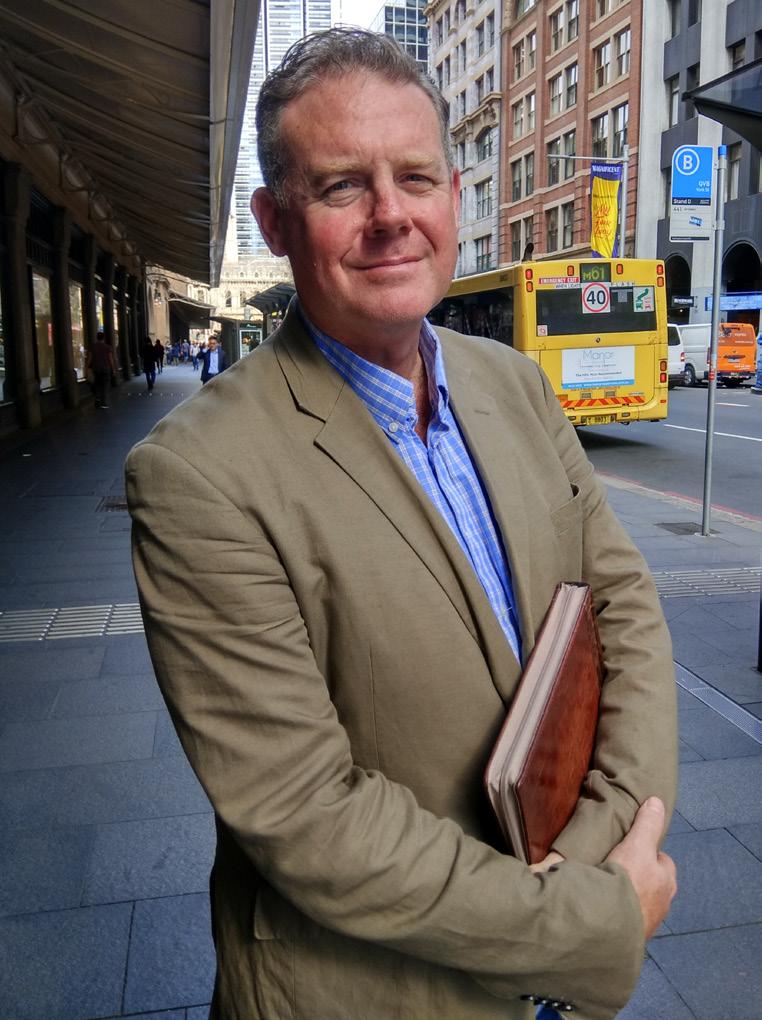
There are an estimated 450,000 people of Indian ancestry in Australia. Some 163,000 Indians migrated to Australia in the last five years alone. But Australians living and working in India are still a rare breed. Just as the average Indian migrant faces a mixed bag of experiences - some pleasant and some challenging - it’s a tricky a air for Aussie expats living in India as well. In this new series, we speak to such Aussies about their life in Indiawhat took them there, what they do, and what they have learnt about a di erent culture and a new way of life. This issue, we chat with JAMES
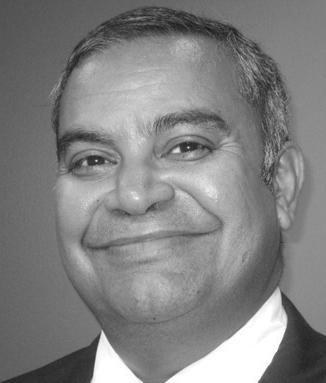
CEO of the Delhi-based Elephant Energy Private Limited, which transforms landfill waste into renewable energy.
BY PAWAN LUTHRA
Amountain of waste 20 stories high.
We’ll give you a moment to let that s(t)ink in.
For most, it would be a revolting sight. But for James Newman, who saw the monster pile at a landfill site just outside New Delhi a few years ago, it was opportunity.
As CEO of New Delhi-based Elephant Energy, Newman, a true-blue Aussie, helps run waste-to-energy projects in New Delhi and Shimla.
While the company’s efforts to deal with o erflowing landfills align per ectly
NEWMAN,
with the Indian government’s ambitious Swachch Bharat (Clean India) Mission, the environmentally-friendly generation of electricity reduces the power deficit in the country.
As an expat working in India, Newman has had familiar challenges: bureaucratic delays, changing political climate, cultural differences. But he has met mostly good people along the way, he reveals, and adds that he sees huge potential for the business and the clean energy sector.
On the personal front, he says that India has been interesting (Delhi’s brutal heat aside), that he’s learnt a few Hindi words, and he lo es oan fish curry in himla.
What do you do in India?
About 5-6 years ago, a friend of mine developed a waste-to-energy technology that I invested in. We then won a project with the New Delhi Municipal Corporation (NDMC). This was for three 70-tonne facilities, meaning facilities that process

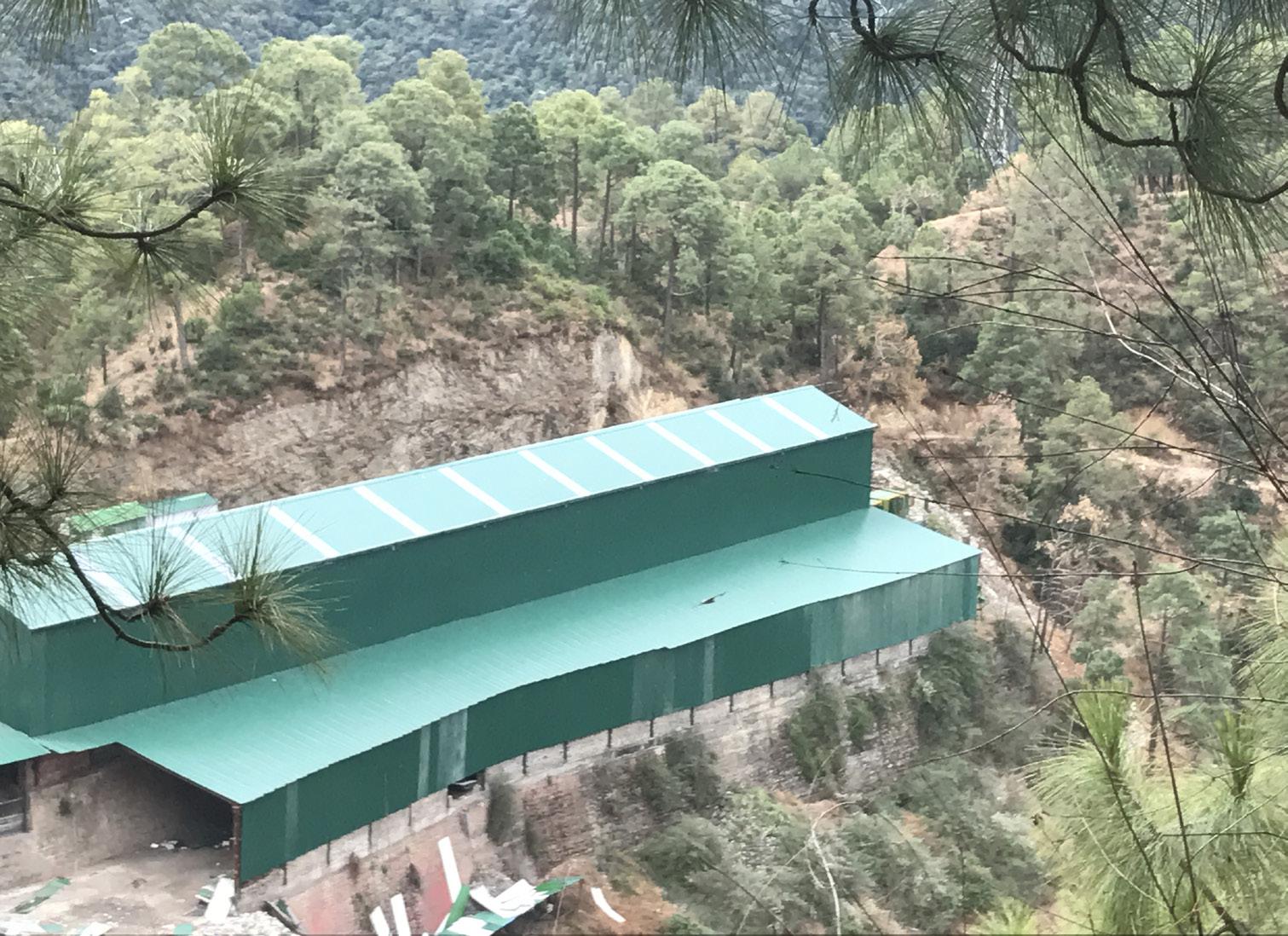
70 tonnes of waste a day. This was even before (Indian Prime Minister) Mr Modi announced the Swachh Bharat Mission. We like to feel that, with our project, we are a solution to Swachh Bharat. Delhi produces 9,500 tonnes of waste every day, so such projects are needed. We also have another 70-100-tonne facility in Shimla where we are concentrating at the moment. The projects in Delhi are currently on hold. So, how exactly do you go from waste to energy?
We basically turn carbon-based waste streams into electricity. We get truckloads of waste, which we then segregate with the help of machines as well as labourers. Once all the glass, metal etc has been separated, we are left with combustible material such as food, paper, plastic and so on. With the help o a process known as gasification, we indirectly heat the waste. This produces a char, which in most cases is inert, and a lot of gases that are combustible. So, you
can run a gas engine with it to produce electricity.
What challenges have you faced at work?
ell, first up, there ha e een positi e changes in how PM Narendra Modi is trying to change to how things happen in India and promote electronic behaviour in go ernment o fices. India’s paper dri en system and files are all ery well known. But dealing with the bureaucracy can be frustrating, especially for someone used to the Western way of doing things. So, it was ery di ficult. he thing is that the doors are easy to open in India. It’s getting through the last set o doors that’s di ficult. Waste is a massive problem in India, as it is in all developing countries. Add to that the fact that there are 300 million Indians that don’t have electricity. So, if we can make electricity then that’s a good thing as well. How did you first get to India?
We continue to look at all South Asian
SEPTEMBER www.indianlink.com.au
expats
countries. India is where there was British law, and where English is spoken broadly. Most importantly, India was where we won our first pro ect with the . here are some , , similar sites in India. o, it’s an attractive market if we get it right. What did you feel when you first saw the mountains of waste on the outskirts of Delhi?
It is one of the most amazing things I have e er seen. elhi is a flat city and there is this huge mountain that’s about 20 stories high and acres in si e. andfill sites ha e been overfull for 10 years. The problem for the government is what to do with it. A 70-tonne facility is a very small site but we can deliver a decentralised solution to the problem.

The needle of Australian-Indian bilateral trade has been stuck at $15 billion for some time now. Why aren’t there more Australian companies in India?
It’s certainly challenging. I was warned about the cultural differences. Although ecause o the colonial influence, cricket and so on, it may seem on the surface that the two countries have a lot in common, India is very, very different in the way business is conducted. Building relationships over a long period of time is something that is taken for granted here, but in a developing country, if there is a dollar on the table, the tendency is to take it. o, it has een di ficult to find partners rather than people who are just trying to make their dollar today and forget about tomorrow.
The way India operates can be frustrating. There is bureaucracy, paperwork and delays, and often wilful delays as a way to incite some payments, whether asked or
otherwise. We are a small, agile business, so we’re able to act in an agile way. But if you’re a large conglomerate from Australia with a big structures, it is a very big challenge to get things done. These delays have no purpose and the expertise of doing it is extraordinary. But I can see that there is an appetite for change. Mr Modi is promising to drain the swamp. He is making changes. It’s a 20-year process but he will have to stick to it.
Let’s talk about your personal experiences of India now. What was your first impression?
I am in India 2 weeks out of 6 now. The first impression was o the elhi airport, and it was good. he tra fic, cars were ‘interesting’ but there were terrible roads. And it was hot! Delhi was so hot. I spent an Indian summer working outside in Delhi, when it was , , degrees. Adjusting, what was the most difficult bit?
ood can e a it di ficult. I ha e een careful about what I eat in India and have never been sick. The Indian diet is a lot richer that I thought, and sugary, creamy and oily. I have never appreciated salads more when I come back to Australia!
What did you find to be the most strange?
It was just coming to terms with how things work. Even the politics is so sophisticated and Machiavellian. Parties don’t seem to mean the same things there as they do here. So, trying to get the read of how things happen is uite di ficult. or e ample, the concepts of honesty are different in an Australian context. There is a lot more forgiveness in India than there is in Australia. “I am sorry, let’s move on and forget about the whole thing” is a sort of
accepted behaviour in India a lot more. So, you can’t be sure of where people are coming from, unless they’ve dealt with Westerners.
Figured out the head wobble?
I think so. We ask our Indian staff who do the head wobble if they are saying yes or no. I think it means ‘I’m hearing you,’ and it doesn’t really mean much else than that. What was the easiest thing settling in India?
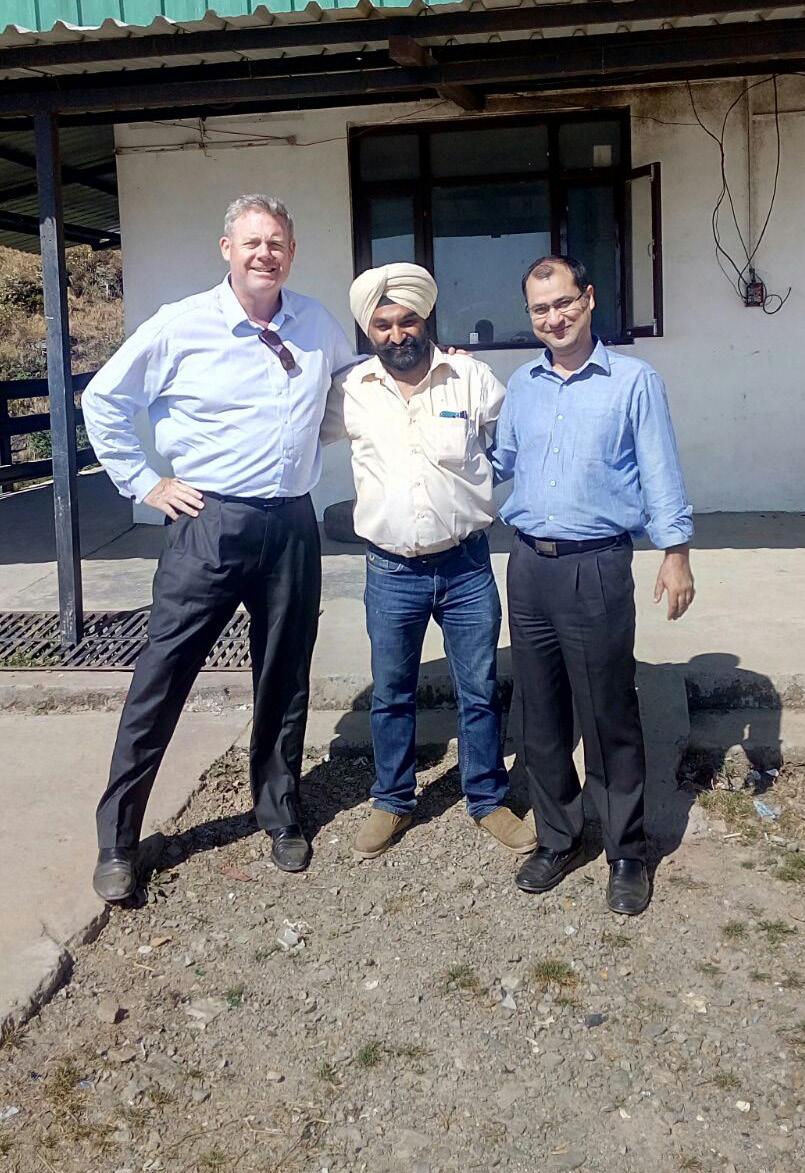
It’s hard to be there away from family but our Indian staff and the Indian director are helpful and have shown us the lay of the land. We met some people in government who are really good. There are many who want to make a difference and there seems to a big motivation across the board to lift India.
How did your neighbours treat you when you first moved in?
Well, the people are friendly. There are lots of old people walking in Safdarjung Enclave, where we have an apartment, and they say good morning to me. Apart from family and friends, what do you miss about Australia?
Clean air! And the food. The food quality in Australia in fantastic. We get good fresh food in Shimla, it’s different but it’s fresh. What’s your India bucket list?
I really need to get to Taj Mahal. It’s probably been embarrassing (that I haven’t been there yet). But I do want to take my wife there. I would also like to go to Manali. I haven’t been to Mumbai. Bengaluru is a good city. And I need to see some cricket matches!
Do you see yourself long-term in India? From business perspective, yes. In the future, I will still be coming to India but probably for short, sharp, more targeted visits.
UP CLOSE AND PERSONAL
Read a book by an Indian writer? No Know any Hindi words? I know how to direct the tuk-tuks, so I know words such as ‘seedha’ (straight) and ‘chowk’ (junction). There is a lot of Hinglish that gets you by. Favourite local dish? I do like my curries, and quite like spicy food. There’s a restaurant in Shimla that cooks a great Goan sh curry.
Cook anything Indian? No! There are a couple of staff in Shimla that are quite good cooks. One of them makes chapatti and he makes it look easier than it is.
Apart from Mr Modi who you mentioned a few times, who is your favourite Indian personality? Sachin Tendulkar is my favourite Indian cricketer, and Dhoni. Some of the other cricketers less so (chuckles)! No, Virat Kohli is a fantastic cricketer and I am sure he is a good man.
Seen a Bollywood movie? I don’t understand them. I usually see them when I get a haircut. Some of them look, um, humorous.
Know any Hindi lm songs? Jai Ho. Love that one.
Any advice to Aussies looking to work in India? You need to have someone on the ground who knows how things operate that you can trust. A lot of activities going on around you are foreign. Without our Indian director, balancing things would have been a lot more dif cult. Australians are a little brash while Indians are very respectful and polite. So, barring the educated people who know the Australian behaviour, Australian directness can be taken the wrong way.
SEPTEMBER INDIAN LINK
“We like to feel that, with our project, we are a solution to Swachh Bharat”
Speckled in stardust
All the glam and gupshup from glitzy IFFM >>
According to Aishwarya, the honour of hoisting the Indian Flag for IFFM would easily be the most memorable moment for her and her daughter Aaradhya.
BY PPREETI JABBAL
Indian Flag Hoisting at Indian Stretchable Time
A royal wave from Aishwarya Rai Bachchan was the closest to an apology or running an hour late to the special flag hoisting ceremony at Federation Square in Melbourne on 12 August.
The stunning actress was in town and ecame the first emale actor to hoist the Indian flag at the Indian ilm esti al o Melbourne (IFFM) this year.
The star arrived looking splendid in a Manish Malhotra soft blue and white gown with daughter Aaradhya in tow dressed in a white ghagra choli.
The child is often seen attached to her mum as an appendage, which makes one wonder, when does she attend school?
Mommy love was showered in abundance as sh ru fled aradhya’s hair, kissed her cheeks and pointed out at things, including the massive crowd at the event.
Thousands queued up from as early as 10 am to reserve their spots to be able to see one of the most beautiful women in the world.
Much later than expected, they did get a glimpse of utter gorgeousness as the Bollywood royalty swept in amidst tight security.
The formal part of the event started with a special address from Ajay M Gondane, High Commissioner of India to Australia.
As the Tricolour unfurled, Aishwarya closed her eyes, saluted the Indian flag and sang the Indian national anthem along with the crowd.
The tricolour confetti that burst out to shower the crowd made up for the not-sorousing rendition of the anthem.
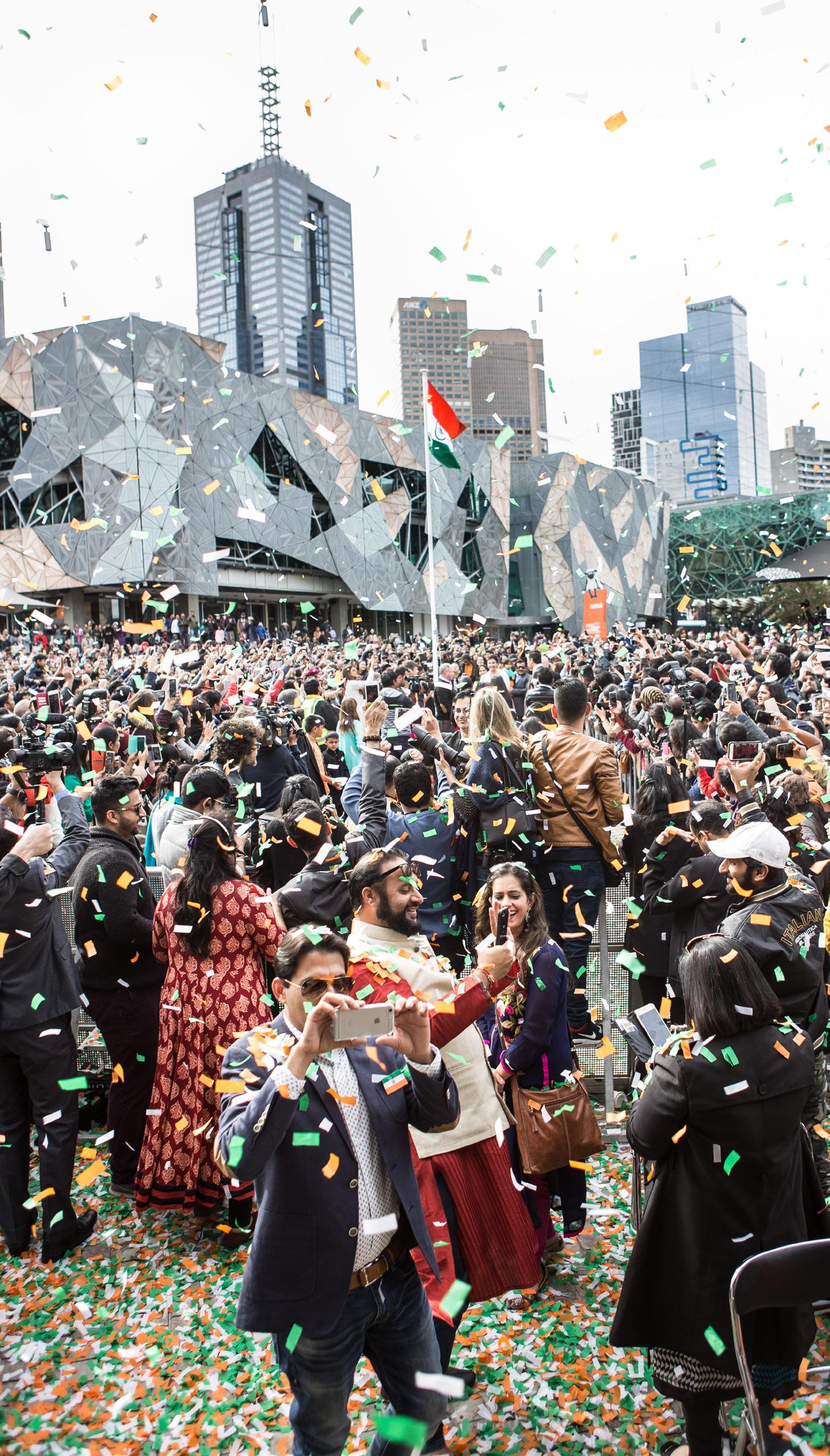
We did not, however, envy the person responsible for cleaning it all up after the event.
Gracious, friendly and smiling, Ash made all the right moves including giving a brief speech in Hindi and then translating it into English.
Unfortunately, not everyone was impressed with the fact that Aishwarya was chosen to do the flag hoisting, and there were some murmurs, particularly on social media, raising a question mark over the choice of the guest. However, we thought that this was being a bit nitpicky, since Aishwarya is a great ambassador for the country, enjoys a clean image and is hugely popular.
Ra ed with Parched and Lipstick Under My Burkha
During the special Conversation Hour held at the ABC studios in Southbank, ABC journalist Rafael Epstein could not stop raving about Parched and Lipstick Under My Burkha, so enamoured he was of the two headline films that kickstarted the esti al in 2016 and 2017.
“My 15-year-old daughter is still recovering from watching Lipstick… with me last evening, he said o the eminist film that was mired in contro ersy or fi e months prior to its release.
Alankrita Srivastava, creator of Lipstick…, spoke at length about the heartening response to her out o the o film.

“ he film is a personal e ploration o the concept of being free, and having dreams and ambitions within the restrictions that are imposed on women in a regressive society,” she said.
Actress Konkona Sen Sharma also talked about her directorial debut and her preference of directing over acting if given a choice.
Among the special guests at the Conversation Hour was Tannishtha Chatterjee, who plays the lead role in Dr Rakhmabai, an Indian woman who fought against child marriage, gender discrimination and right to practise medicine in India.
a ael also in ited Indian film critic and entertainment reporter Rajeev Masand to comment on the current trends in Indian cinema.
“It’s not true that all Indian films are ollywood films, said esti al irector itu Bhowmick Lange. “And it’s a misconception
SEPTEMBER www.indianlink.com.au
IFFM
that all Indian films are o er hours long, she joked, adding that “Through this festival, we keep persisting and showcasing the di ersity o Indian films.
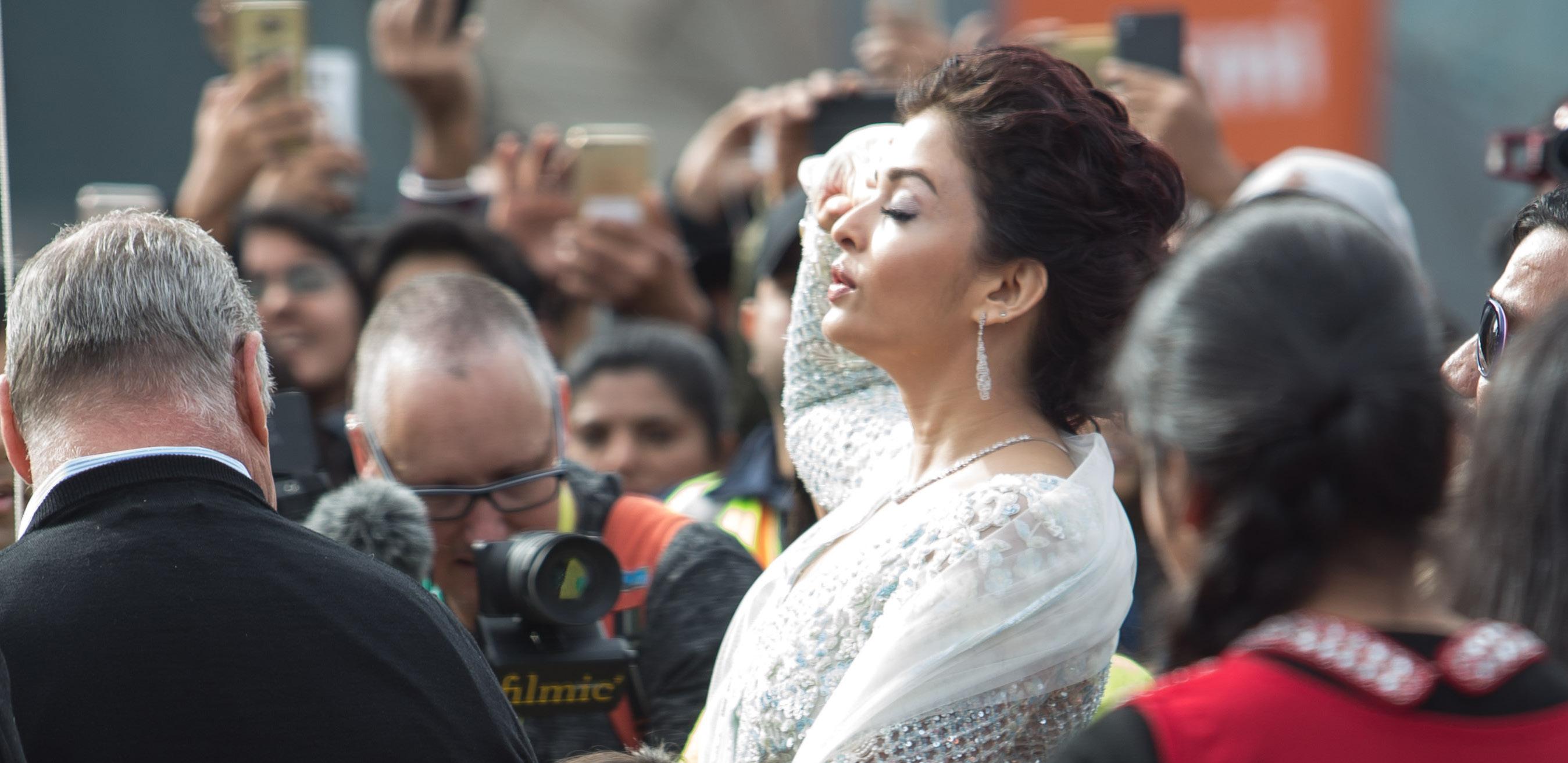
“Indian cinema goes much beyond the song and dance routine that it is often associated with. his year, we ha e films in 20 languages as well as documentaries and short films, so we are catering to a diverse audience and taste,” said Mitu. The Conversation Hour that was broadcast and streamed live made for some interesting listening as Raf skilfully drew out responses from the guests. It helped that each one of them was articulate in their expression and passionate about their work.
The Bengali Bhadralok
During the Conversation Hour, Raf went around the guest panel asking e eryone which film they grew up watching. With Konkona, Tannishtha and Mitu, there were some common themes as they all
come from a Bengali background. Mitu said with a laugh, “We Bengalis think that the world is divided into two type of people: Bengalis and non-Bengalis.”
The conversation then veered, with good
humour, towards Bengali parenting and the culture of elitism that often pervades the Bengali psyche.
The ladies who now rule Bollywood revealed that they were prohibited rom watching ollywood films in their childhood, as they were considered rather common by their Bengali parents.
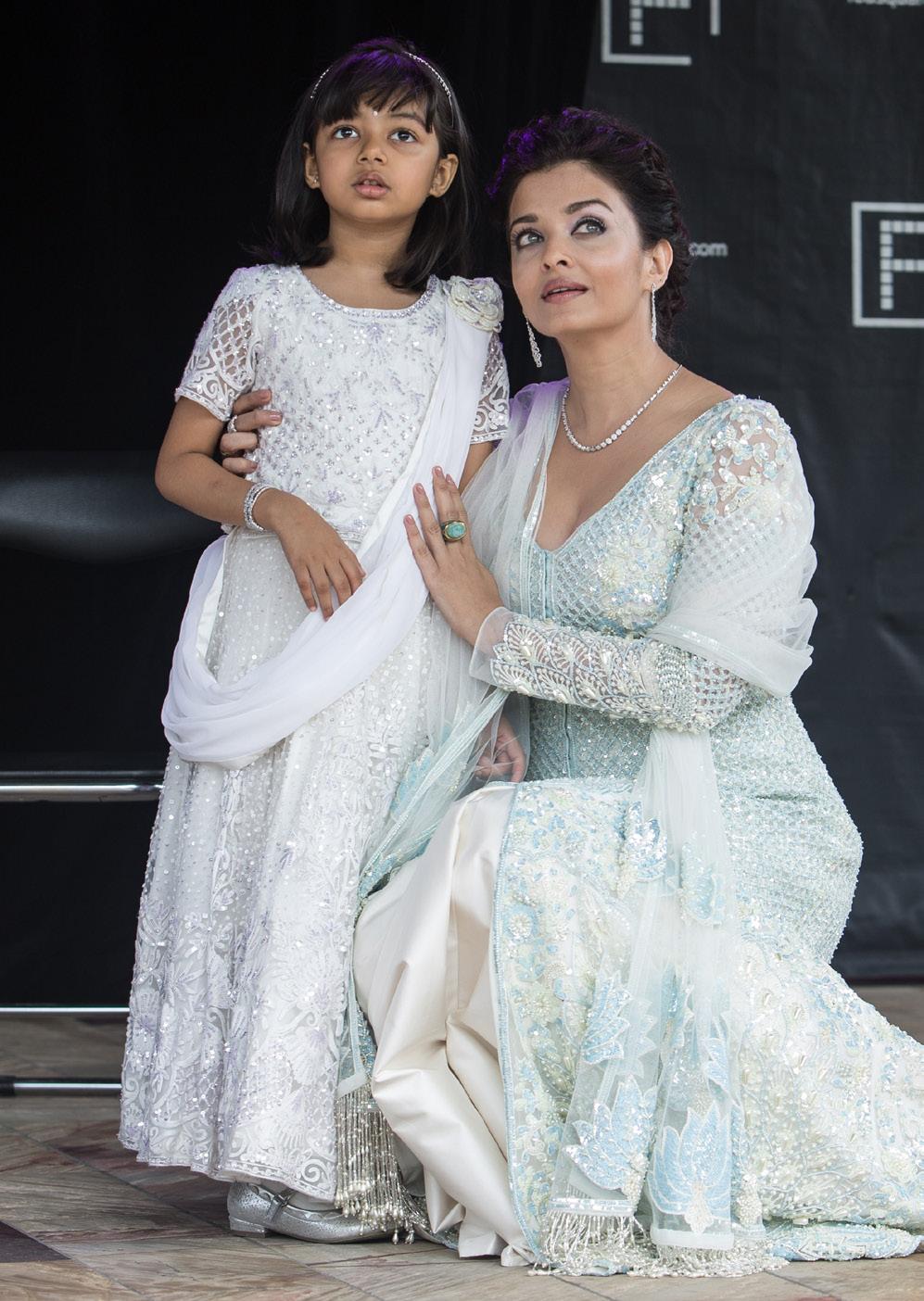
A little glitz, plenty of glamour and a lot of Kakkar sisters
The IFFM Westpac awards night held at the Melbourne Recital Centre was big on honours, starting with the Best Indie Film award given to Alankrita Srivastava’s Lipstick Under My Burkha he entral oard o ilm ertification in India had initially banned this movie for its ‘women oriented content.’ After a long battle with the Board and much furore over social media, the movie was given permission to be screened in India, albeit
with many cuts.
As the Indian Film Festival Opening Night special, the audience in Melbourne got to watch the uncensored version of this rank film on emale desires. ackling subjects like deep-rooted patriarchy and misogyny that shackles the women depicted in it, Lipstick… definitely le t an impression.
The Best Director award was taken by Nitesh Tiwari for Dangal, India’s highest grossing Indian film e er, also listed as the highest grossing Indian film o all time in China.
Rahul Bose collected the Equality in Cinema Award for Poorna, a biographical ad enture film ased on a year-old who struggled past structural and systemic inequalities to scale Mount Everest.
Director Nitesh Tiwari and Bahubali producer Shobhu Yarlagadda received the Telstra People Choice Award for their respecti e films. The latter is the highest grossing Indian multilingual film o all time.
SEPTEMBER INDIAN LINK
Gracious, friendly & smiling, Ash made all the right moves including giving a brief speech in Hindi and then translating it into English
‘‘ ‘‘
Photos: Ravinder Singh Jabbal
ustralian filmmaker arth a is took the Diversity Award for Lion, his muchacclaimed ustralian film on an Indian subject.
Konkona Sen Sharma, who rules the parallel cinema scene in India, won the best actress accolade for her portrayal of Shireen, one of the protagonists in Lipstick Under My Burkha Sen’s directorial debut movie Death In The Gunj was also screened later at the film esti al.
Special mention was made for Rajkumar Rao for his compelling performance in the sur i al drama film Trapped. Rao lived on a coffee-and-carrot diet for 16 days in preparation for his challenging role as a young man locked in an uninhabited room without food, water or electricity.
The immensely talented Rao said he was thrilled with his first e er international award. So was Sushant Singh Rajput who received the Best Actor award for his portrayal of former Indian cricket captain MS Dhoni, in M.S.Dhoni: The Untold Story. Sushant was one of the dancers from Shiamak Davar’s dance troupe that performed at the 2006 Commonwealth Games held in Australia. From a background dancer to an award winner in the Indian Film Festival 2017, his has been an incredible journey.
“My mom said life is a story that you tell yourself and I hope my story is worth telling,” said Sushant as he collected his award.
Shoojit Sircar deservedly took the Best Film award for Pink, an Indian courtroom social drama for his story of women who don’t subscribe to societal standards of culture and morality.
Just as we thought we had seen the lot there was more.
The Leadership in Cinema award went to Karan ohar, Indian film director, producer, screenwriter, costume designer, actor and television show host.
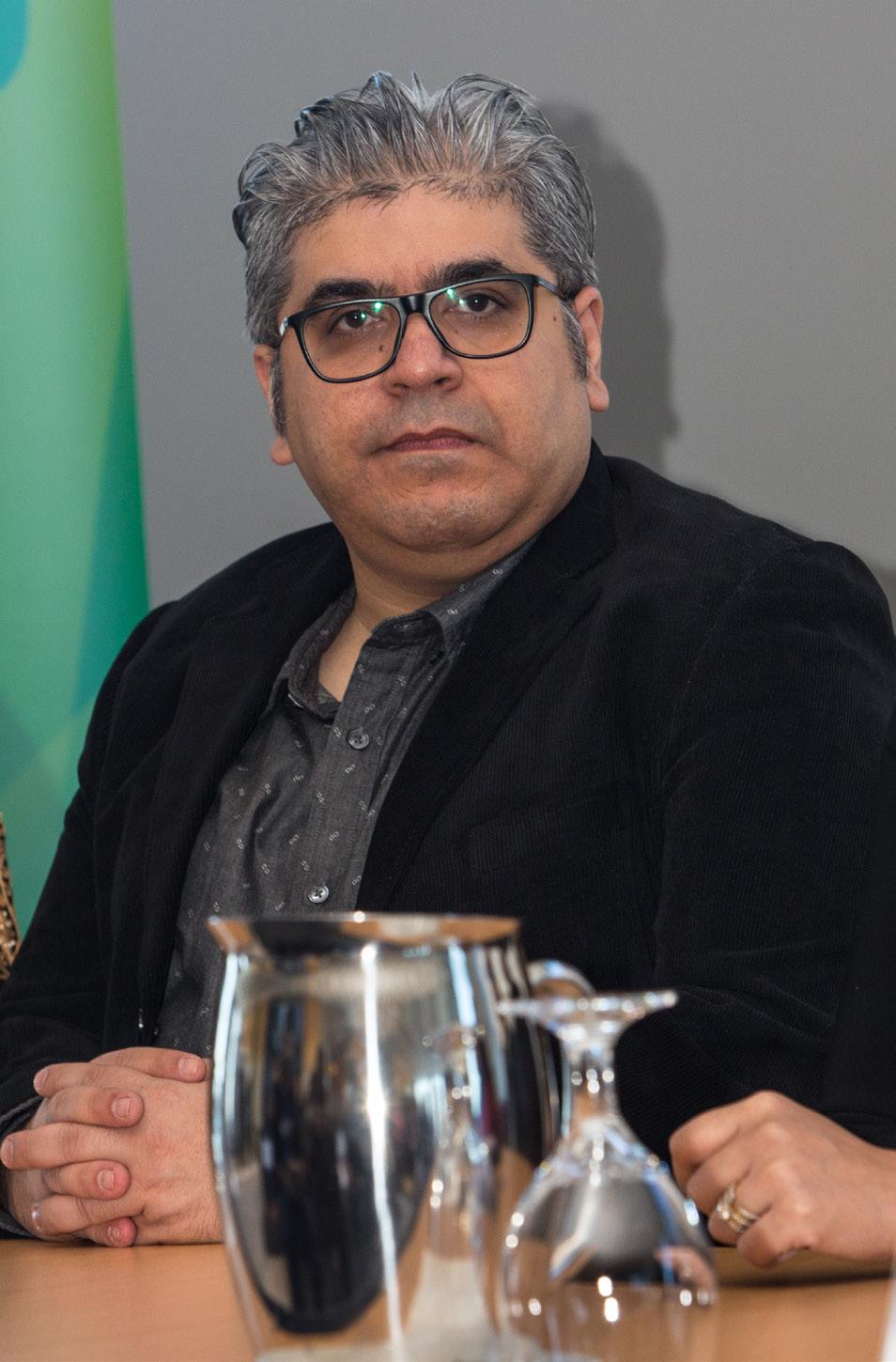
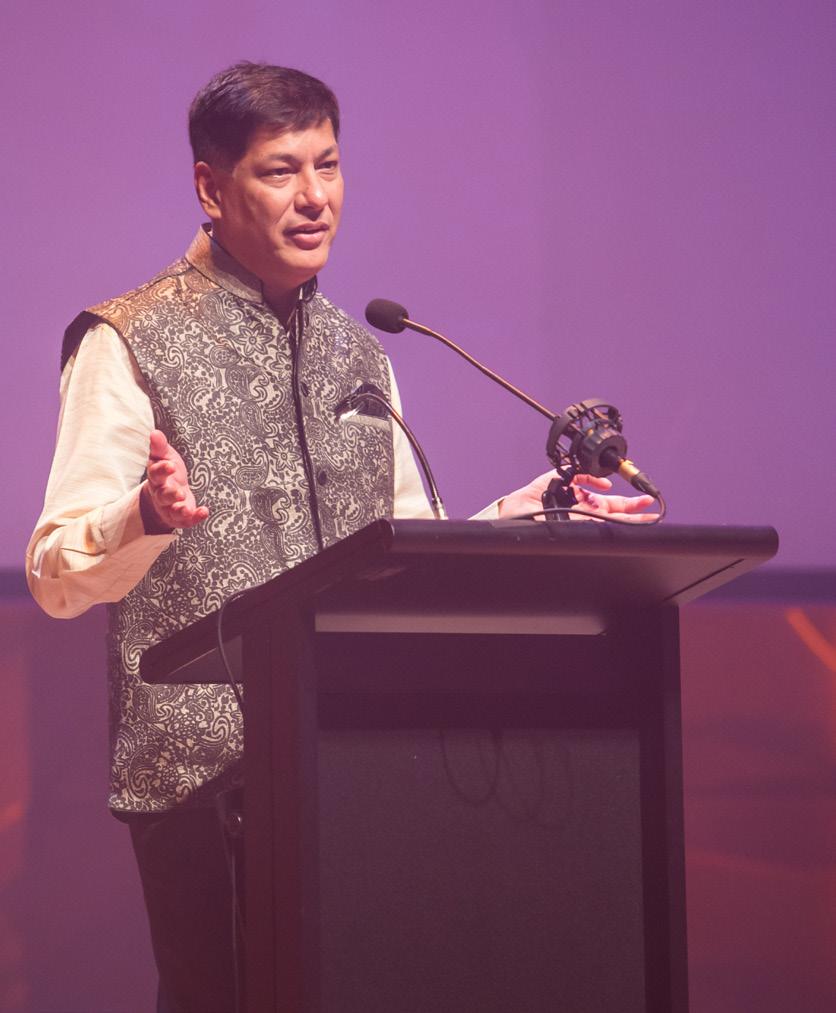
Sporting a different look with nerdy glasses, formal jacket and funky shoes, Karan took to stage styled by Nikita Jaisinghani. In his brief acceptance speech, he let the audience know he was in Melbourne as a guest of IFFM and, with trademark wit, added that he was attending it for free.
Simi Garewal, Indian actress and TV show host, was generously effusive with her introductions of both Karan Johar and the beautiful Aishwarya Rai Bachchan. She invited Ash on stage, calling her, among other things, a legend.
Looking stunning in black and gold, Aishwarya thanked Simi for her
introduction but gently disagreed. “I do not think I am a legend and have a lot to achieve before I even come close,” she said, as she received the Excellence in Global Cinema Award for her contribution to cinema.
ark ellinger’s film Road to Glory won the Western Union Short Film competition for its exploration of the theme of diversity.
As the evening progressed there were occasional dips in energy till the team of children from e.motion 21 took to stage and received a standing ovation.
E.motion 21 is a special school that pro ides dance and fitness opportunities for children with special needs. The children presented a vibrant Bollywood dance assisted by instructors from Shiamak Davar’s Dance School in Melbourne.
The evening was dominated with songs from Kakkar sisters - Akriti, Prakriti and Sukriti - who have recently made their name in play ack singing or Indian films.
The vivacious sisters belted out a variety of songs, in between the awards presentation. However, between the numerous awards and endless songs, it started bordering on ‘too much of a good thing’.
High on style but low on sparkle was the general consensus based on the post event feedback that was collected.
Munni meets Melbourne’s talent
The Telstra Bollywood Competition, once again, saw the ravishing Malaika Arora as the judge of some of Melbourne’s best dancing talent.
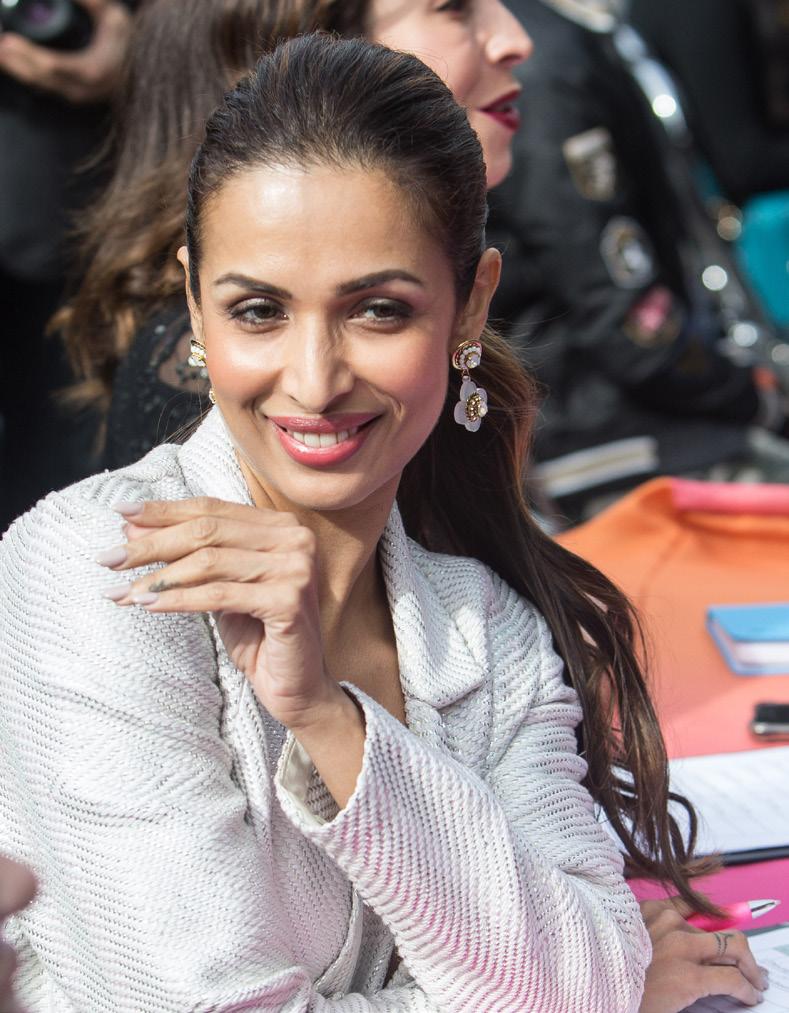

Melbourne artist Bessie Kay accompanied her as judge while Karan Johar and Sushant Singh Rajput joined her over the course of the afternoon.
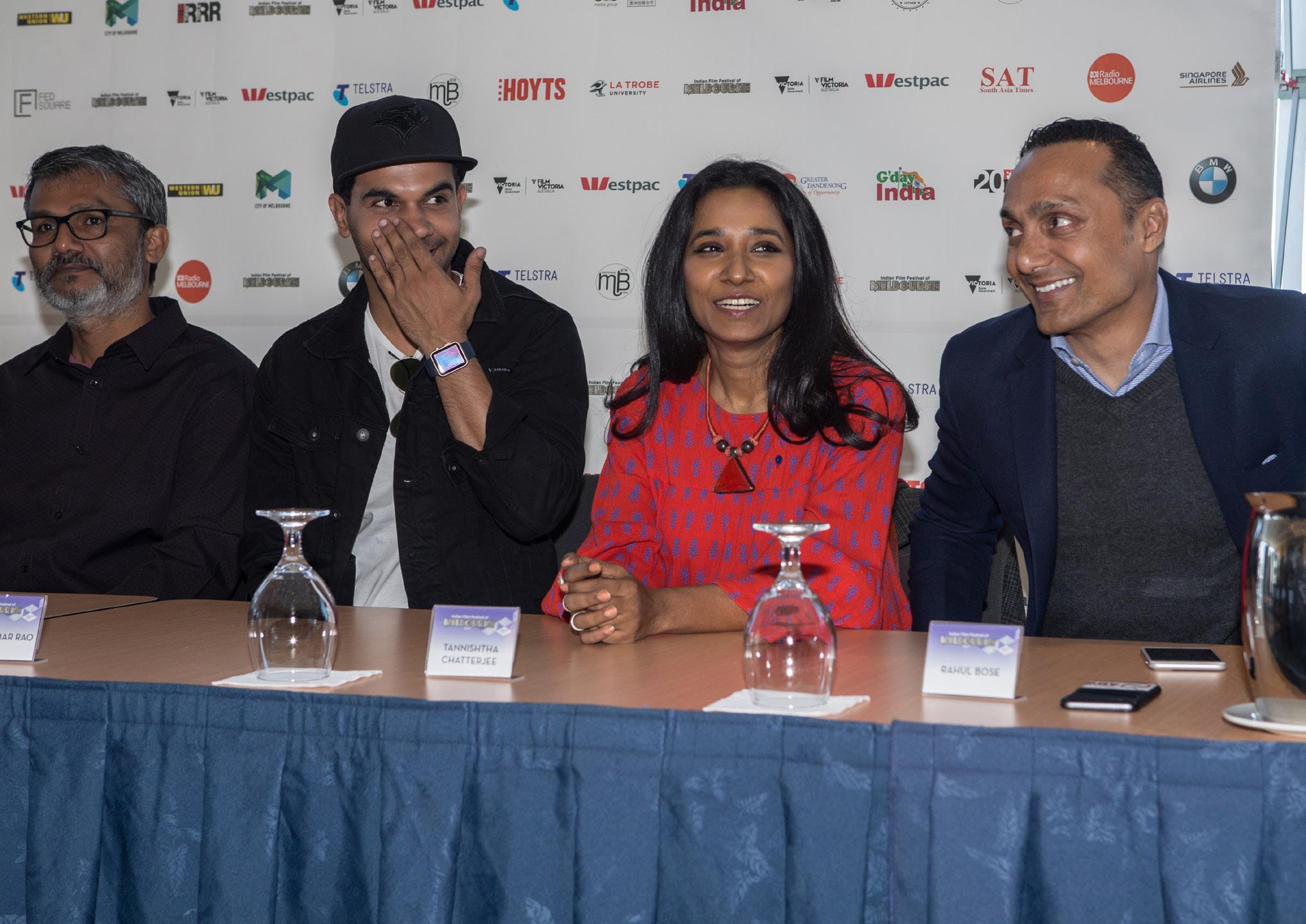
Both Karan and Sushant received much adulation from the crowd as they announced the winners.
The crowd that had come to see Aishwarya did dwindle. However, many people stayed back to enjoy the Bollywood dance competition and find out who won the $1,000 and a trip to India.
Mitu’s mammoth e ort
With her beautiful handloom sarees and infectious smile, the lady who has helmed the Festival has been given the epithet of Melbourne’s most beautiful woman, and we agree.
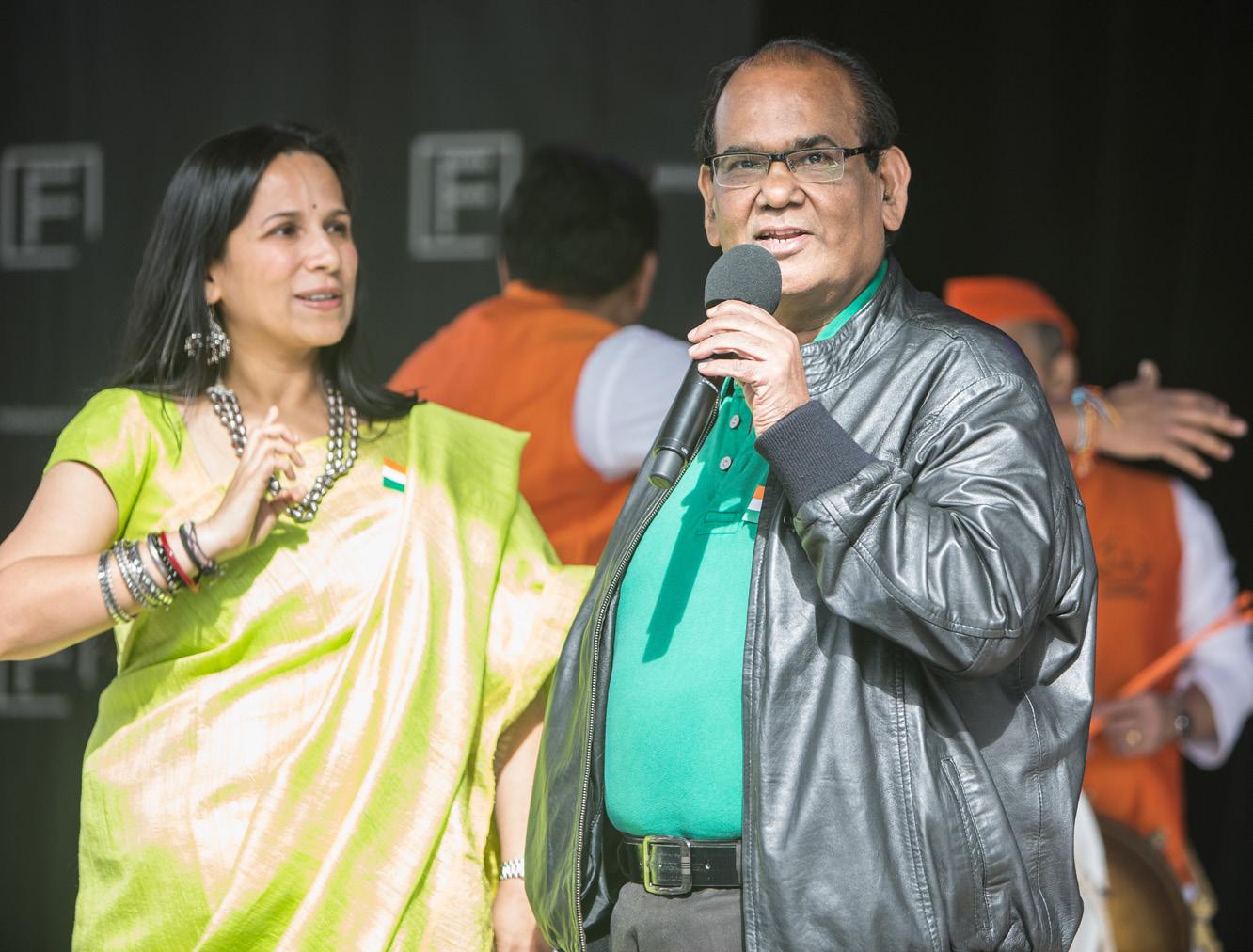
It’s no easy task to align dates and schedules, and attract stars, teams and guests in order to pull off a smooth event, but Mitu Bhowmick Lange seems to have a handle on it all.
Celebrating the best, the diverse, the
SEPTEMBER www.indianlink.com.au IFFM
empowering and the creative from Indian Cinema, the IFFM, under Mitu’s leadership, has over the years carved its niche in the ictorian esti al and film scene.
IFFM was the Winner of the Melbourne Award 2016 for Contribution to Multiculturalism by a corporation and is the Guinness Book record holder for largest Bollywood dance event in 2011.
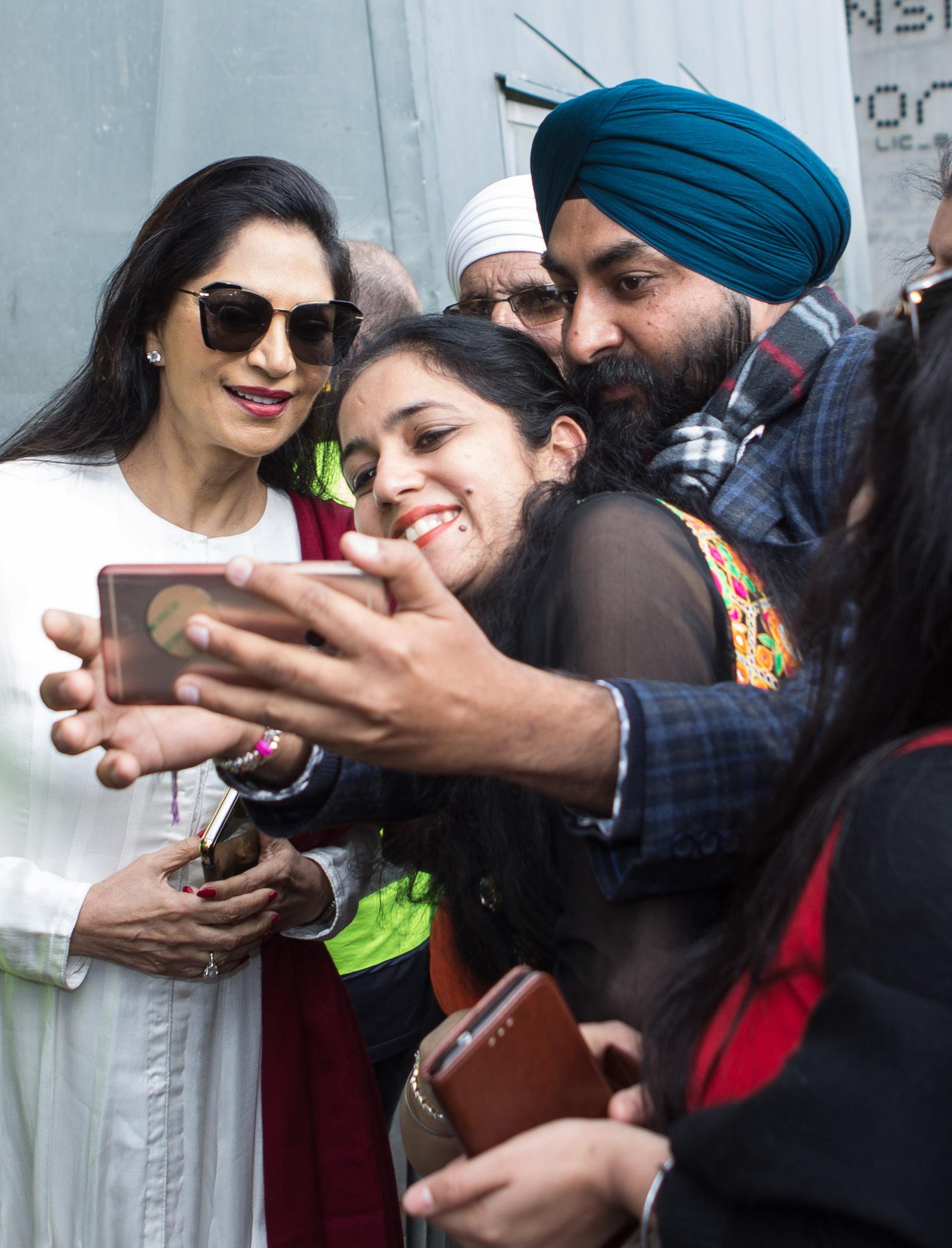
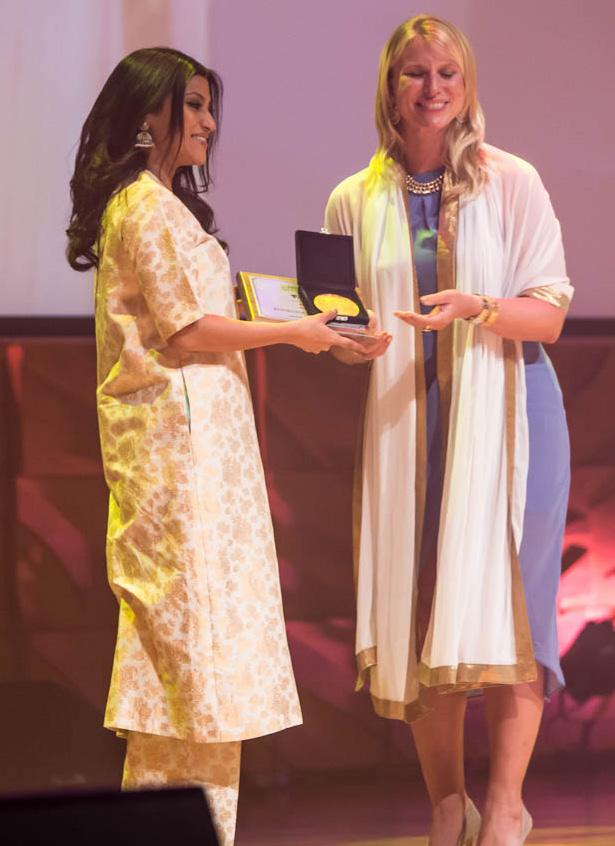
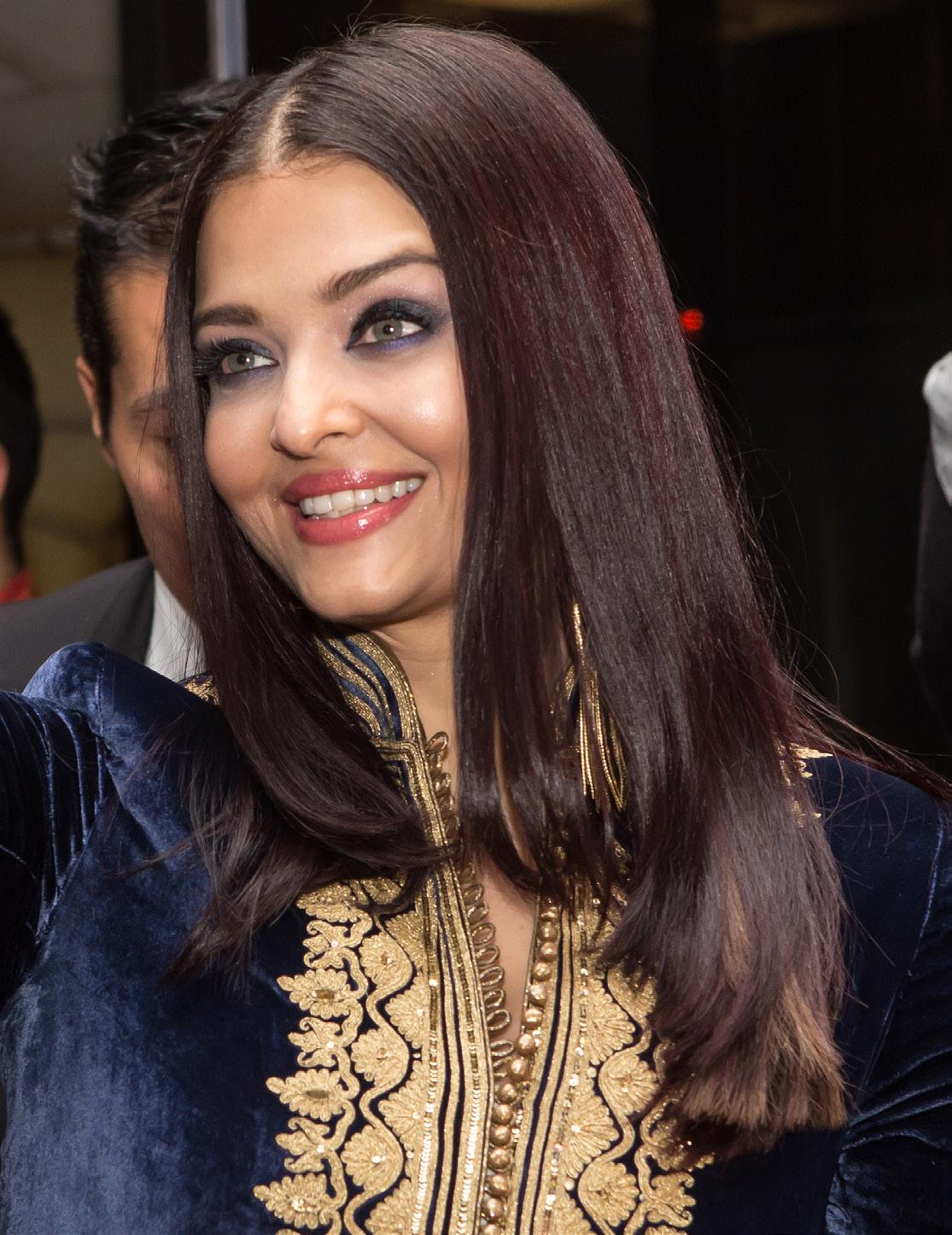
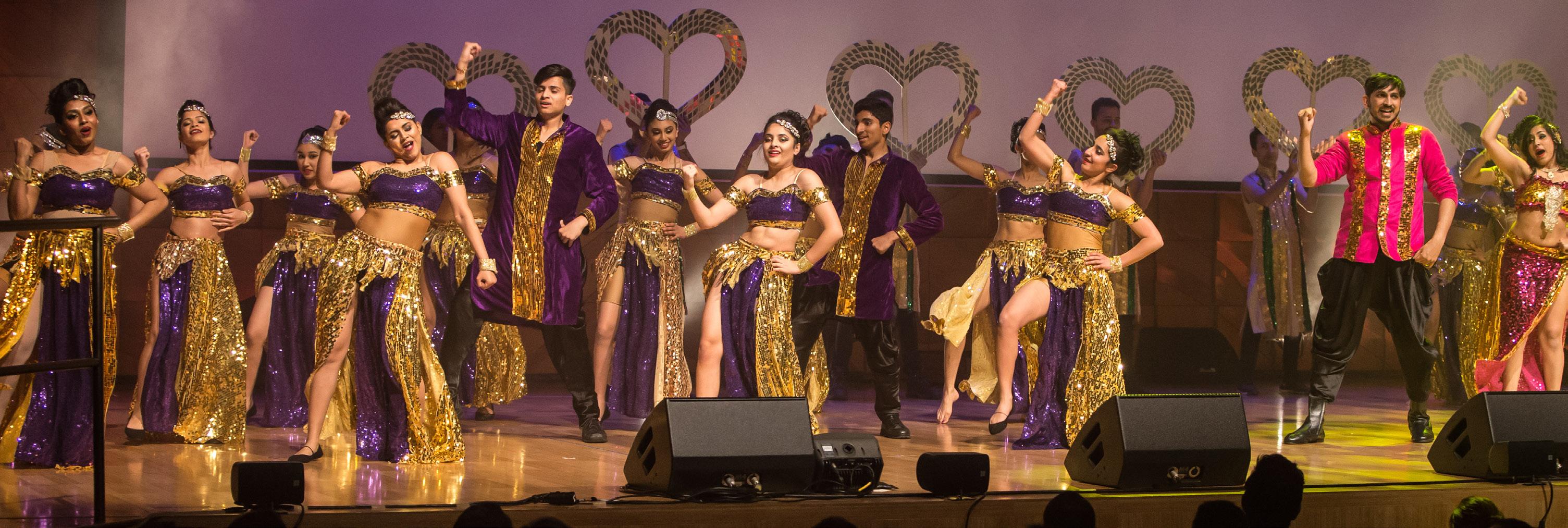
Martin Foley, Minister for Equality, congratulated Mitu and her mind blowing team on another successful, vibrant and happening festival. “In a time when the world sees so much ury and fire eing proposed in some aspects of our life, the role that film communities and films can play to reach across borders and to bring out the best in humanity cannot be underestimated,” said the Minister.
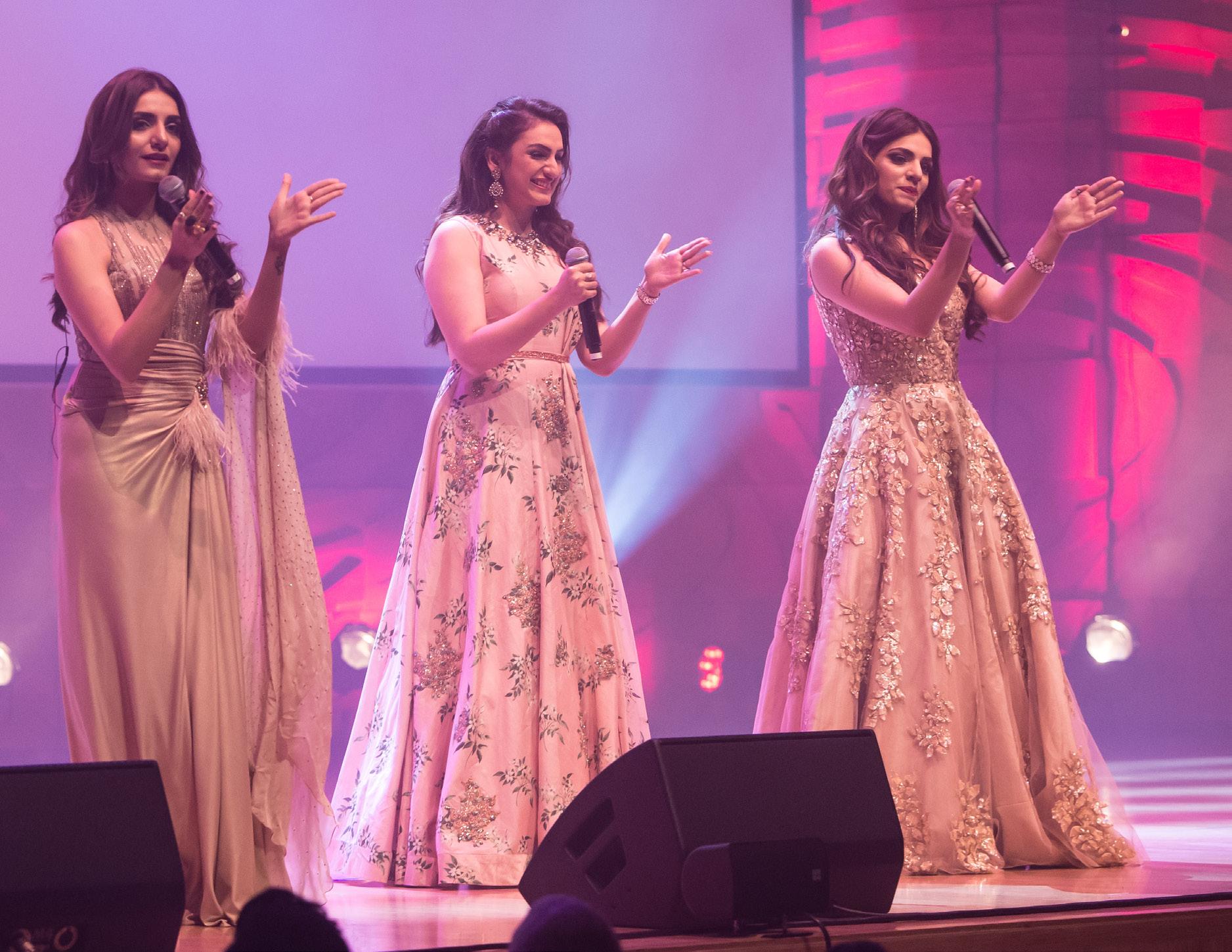
SEPTEMBER INDIAN LINK
I do not think I am a legend and have a lot to achieve before I even come close Aishwarya Rai Bachchan
‘‘
‘‘
Indian basketball heroes set to make NBL history
BY RITAM MITRA
Australian basketball fans are set to cheer on a former Indian captain as well as Team India’s current skipper, after a pair of historic signings by NBL clubs Adelaide 36ers and Sydney Kings. While the 36ers have, in conjunction with the Dream Basketball Academy, signed former Indian captain Vishesh Bhriguvanshi on a one-year training contract, Indian skipper Amritpal Singh has been selected as a member of the 11-man Sydney Kings squad, after his impressive recent outing with the Sydney Kings Invitational Team in China. The duo are the first Indian players e er signed y an ustralian asket all outfit, orming part of a move by both clubs to build up their respective fan bases in the Indian community, both domestically and abroad. Indian Link recently caught up with Vishesh and Amritpal to hear their thoughts ahead of a historic summer of basketball.
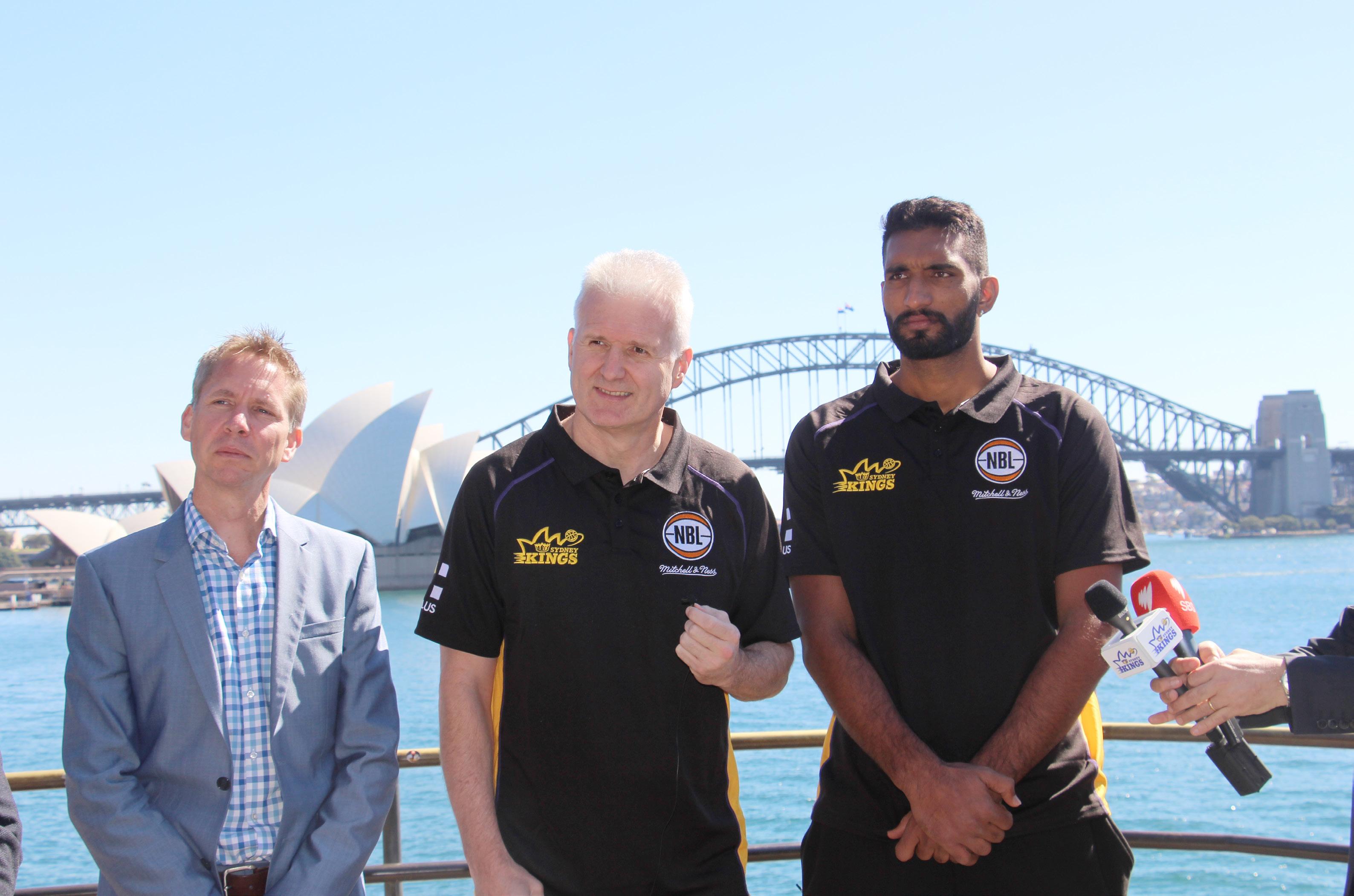
Standing at 7’0” and 116 kilograms, it’s easy to assume that Singh was born to play basketball; but it’s a relatively new foray for the 26 year-old, whose humble beginnings cast his meteoric rise in even more an astonishing light. Born to a family of humble vegetable farmers, Singh grew up helping his ather plough rice fields in Ganna Pind, a small rural village in Punjab with just over 2000 inhabitants.
More than 10 km away from the nearest train station, Singh - a kabaddi player who didn’t know what basketball was until the age of 18 - seemed destined to follow in his father’s agricultural footsteps. But after being introduced to basketball by his uncle in 2009, the towering center found himself representing India at the Asian basketball championships just two years later at the age o , and is now one o the most prolific and dangerous basketballers in the region.
Sydney Kings Head Coach, and Australian basketball legend Andrew Gaze, spoke glowingly of Singh’s pedigree.
“Amritpal was a very strong contributor to the Kings off-season program, particularly during our invitational tour to China,” said Gaze. “His rebounding was a major factor that allowed us to win the Suzhou event, and he also picked up our overall playing
philosophies and schemes quite quickly,” Gaze said.
Amritpal himself was modest. “Playing with the Sydney Kings, my game will improve more,” he said. “I’m very excited because it’s a big opportunity for me and a lot of Indian basketball players are looking up to me. I want to do my est in my first season with the Kings and I hope the Indians will support me and the team”.
One man who knows Singh better than most is his India teammate, Vishesh Bhriguvanshi. “It’s a big thing that (Singh) got selected for the Kings,” says Bhriguvanshi. “He performed very well in the China invitational tournament. He’s a nice guy and a good player. He’s one of the big 3 in the Indian national team, and it’s definitely great that he’ll play in ustralia he’ll learn so many things and he’ll help the national team more.” It’s a sentiment Singh reciprocates, noting fondly the time he and Bhriguvanshi have spent playing together in the domestic club scene.
Bhriguvanshi’s journey to the top is no less remarkable: at a relatively slight (by asket all’s standards ’ , the year old shooting guard rom aranasi first started playing basketball with his elder brother at the age of 12. Within a year, he was
representing his district and state; by 17, he was already a member of the national side; and by 19, Bhriguvanshi was named captain of the Indian team. Having been born to a lecturer and a school principal, Bhriguvanshi’s future, like Singh’s, could easily have been vastly different if not for a few quirks of fate.

Bhriguvanshi was initially introduced to the 36ers by the Dream Basketball Academy, which is designed to allow young, elite basketballers to transition from high school to the NBL and ultimately to the NBA, under the guidance of some of the best coaches and trainers in the business, including Dream Academy managing director and co-founder Raheim Brown, a former professional basketballer with experience in several premier basketball leagues around the world. Brown’s biggest success story with the Dream Academy to date is the development of US sensation Terrance Ferguson, who in 2016 skipped the traditional college pathway to the NBA, instead opting to spend a year with the Dream Academy and the 36ers, before being picked up by the Oklahoma Thunder in the 2017 NBA draft.
Speaking about his journey to Australia and his upcoming time at the Dream
SEPTEMBER www.indianlink.com.au
sport
Vishesh Bhriguvanshi and Amritpal Singh have been signed on by Adelaide 36ers and Sydney Kings respectively
Academy, Bhriguvanshi is not short of excitement. “The NBL is one of the world’s biggest leagues after the NBA,” he said. “Every player has a dream to play for a reputed league some day, and so it was my dream. Representing the nation is very di erent eeling, and I am definitely proud of that, but playing in a league like this has always been my dream and that is what keeps me motivated.”
“It means a lot because I’ll come to learn so many new things and Raheim will train me,” he added. “It’s a really big thing for me and it was very big news (in India). I was like, eally ’, and aheim said, efinitely, we’ll train you the same way we trained Terrance and try to get you in the NBA’. I’ll try to give it my 100% - every basketball player’s dream is to play in the NBA, and especially coming from a country like India, it’s a very big dream for me.”
Both the 36ers and the Kings are intent on growing the fledgling relationship between their clubs and fans within the Indian community. Sydney Kings Managing Director Jeff Van Groningen noted the significance o ingh’s signing, saying “ e take our responsibility as a member of the global basketball community very seriously and endorse the NBL’s focus on ‘bridgebuilding’ with those that share an interest and passion for our great game both in India and within the Indian community here in Australia. We are excited at what Amritpal can contribute to the Kings as a strong, rebounding big man and we look forward to contributing to his rising career.”



The Dream Academy, meanwhile, is also excited to share Australian and Indian cultures with Bhriguvanshi, noting its ultimate goal of putting Bhriguvanshi through a workout in front of NBA teams or the NBA development league. “With his competitive spirit and style of play on the court and his humble but strong personality off the court, he is a great addition for us,” Brown said. “We look forward to this new relationship, not only with Vishesh, but with the whole of India. He will represent the Dream Academy and the Adelaide 36ers proudly for his country and himself.”

SEPTEMBER INDIAN LINK
Representing the nation is a very di erent feeling, and I am proud of that, but playing in a league like this has always been my dream
‘‘ ‘‘
Vishesh Bhriguvanshi
(Facing page) Basketball great Andrew Gaze welcomes Amritpal Singh to the Sydney Kings.
(Left) Vishesh Bhriguvanshi of the Adelaide 36ers. (Bottom) Amritpal Singh in action
Namaste, Oz!
India will be a leading source market for tourism in Australia until 2020, says Deloitte
India will be the leading source market for tourism in Australia in the next three years, a report by professional ser ices firm eloitte has said.
The report adds that Australia will reach its target of $115 billion in overnight spend by 2020.
A leading source market will be India, with arrivals expected to grow at 12% per year, followed by China and Indonesia , and .
hese figures come rom the assessment of Bryon Merzeo, consultant for Deloitte’s Tourism, Hospitality and Leisure industry group.
It is clear that tourism will remain a high performing sector - along with gas, agribusiness, international education, and wealth management.
This year alone, international arrivals to Oceania (including Australia) have been up in the first our months.
Merzeo notes that, according to a Tourism Australia survey, Australia ranks number one on scenery, sight-seeing, being financially worth tra elling to’, and is an exciting place for conferences.
He says the inbound tourism boom is being egged on by the soft Australian dollar still only valued at around US$0.78 cents.
As well, growth remains strong across many sub sectors of the travel industry,
notably into Australia’s state capitals, which are seeing a hotel building boom. These gateway capitals are also enefiting rom more cruise ships arriving, more direct flights eing added rom overseas markets, (Qantas will soon fly ondon to erth direct), and continued high demand from overseas tourists.
However, there are disparities and growing pains, says Bronwyn White, strategist and co-founder of MyTravelResearch.com. White says she is concerned about inadequate dispersal of tourism dollars beyond Australia’s visitor hot spots.
She believes tourists visiting friends and relatives, especially those from Commonwealth countries such as India, should be encouraged more.
With Tourism Australia no longer responsible for promoting Australia to its home market, local authorities and councils have to reach out to domestic and international travellers.
“Many upcountry local authorities and councils need etter financial planning,
tourism investment support and marketing guidance to really get their share of the tourism dollar,” says White.
Labour supply and skill levels will also be a challenge. With a hotel construction boom underway – there are over 125 new properties in the pipeline across the country – MyTravelResearch.com tourism industry members wonder where the workers will
After backlash, SBS modifies controversial Kashmir map
Amended map shows Indian-administered Kashmir, as well as regions administered by Pakistan and China
Following a huge outcry in the Indian-Australian community over the controversial depiction of Kashmir in an SBS video about the Partition of India, the national public television network has uietly modified the map.


While the earlier map showed the entire Jammu and Kashmir state as disputed territory - which had raised the hackles of several Indians the modified ersion o the video clearly shows Indianadministered Kashmir, Pakistaniadministered Kashmir on the state’s western edge and the Chinese-administered Aksai Chin region on the state’s north-east tip.
Indian Link had, in its Sydney edition for the second fortnight of August and Melbourne edition for September, carried a cover story on the community’s outrage after SBS broadcast the map. The story had also reported on the strong action taken by the
Indian government authorities in Australia on the episode.
India’s High Commissioner to Australia, Ajay M Gondane, had issued an ‘oral demarche’ to the Australian government on the subject. India’s Consul General in Sydney, B Vanlalvawna, had also written to SBS, conveying its ‘strong objection to this wrong depiction,’ and provided it with the approved political map of India.
Some Indian-Australians had also approached their respective public representatives over the issue, prompting Michelle Rowland, Member for Greenway, to write a letter to Michael Ebeid, CEO and MD and SBS on the subject.
Balesh Dhankhar, a Sydneybased Indian, had also launched an online petition, addressed to the Minister for Communications itch ifield, on change.org. It had received over 5,300 supporters in a little over a fortnight.
SBS had earlier issued a media release, strongly denying the allegation made in the online petition that SBS was ‘anti-Indian.’ Referring to the change in the graphic, an SBS spokesperson said, “To assist our audiences to better understand administrative arrangements in the Kashmir region, SBS has made some enhancements to the map in the story on the SBS World News ace ook page or clarification.
“SBS is always mindful of community sensitivities when reporting on global issues and tensions such as this and ensures it remains impartial and balanced in its reporting. SBS has long been a supporter of the Indian community as it is to all the communities we serve.”
It remains to be seen whether the modified ersion o the map mollifies the outraged mem ers o the Indian community. Harshad Pandharipande
come from to sustain the hotel and tourism boom.
er eo notes that ustrade had identified the challenge and has commissioned tourism labour force surveys.
Labour and room supply notwithstanding, Merzeo says, “We are in a fantastic place with a lot of positive growth signs. Everyone seems to love Australia.”
SEPTEMBER www.indianlink.com.au
india-oz
More on Hindus from Census 2017
Numbers saw 60% jump since 2011, Census gures reveal
Apart from India’s Independence Day, 15 August this year marked Krishna Janmashtami, the annual Hindu festival that celebrates the birth of Lord Krishna. It one of the most important days of observance on the Hindu calendar. There certainly were a greater number of
Hindus celebrating Krishna Janmashtami this year, with the 2016 Census of Population and Housing showing that Hinduism was the fastest growing religious group in Australia between 2011 and 2016. ast year, the ensus counted , Australians reporting Hinduism as their religion - 1.9 per cent of the population. This represents a whopping 60% increase since the 2011 Census, when the Hindu population was 275,535.
Australia’s most populous state, New South Wales, is also home to the most Hindus, with 180,000 people out of the state’s population of just under 7.5 million reporting Hinduism as their religion. However, in terms of percentage of the population, the Australian Capital Territory had the highest figure with . per cent o the ’s nearly , residents reporting as Hindu.

New South Wales and Victoria housed the fi e ustralian su ur s with the largest num er of Hindus - Parramatta (NSW), Westmead
Instant Messaging, Instant Delivery and now Instant Money Transfers

Swati, like many others, had migrated to Australia a few months back. Obviously, it was a very different environment compared to back home in India but with the help of her friends and colleagues, she was able to settle in very quickly. And she is not alone. Every year, close to 40,000 Indians make Australia their home helping contribute to the local economy and making a mark for themselves. A combination of a great work environment and a strong community presence make life a lot easier for people like her.
What’s made life easier for people like Swati and her folks now is the instant connectivity available. Be it instant messaging and video chats or sending gifts and managing nancial transactions for their folks, the internet has helped bridge the physical gap to a large extent.
It’s now only logical that the bene ts of
this instant connectivity are extended to one of the core needs of sending money back home. According to the World Bank, Indians send close to $1.8 billion annually from Australia and historically, have had to settle for options that were either painstakingly time-consuming or prohibitively expensive. There was no option, which combined the speed of delivery at a very competitive price.
This too has changed now with online services available that help send money to India in a quick & transparent manner. One such service is Remit2India that’s been catering to the needs of Non-Resident Indians across the globe for over 16 years. Their proposition for Indians in Australia is one of the best as it offers an instant transfer to most bank accounts in India and currently at no fees to the sender. This facility is available 24x7 irrespective of time zones and bank holidays at both ends
up to a maximum transaction size of Rs 1,00,000. More details are available on the website www.remit2india.com and the iOS & Android apps.
Moreover, it gives the advantage to the sender of locking in the rates at the time of the transfer without having to be exposed to the vagaries of the forex markets. Remit2India is also currently running a special limited period offer of a guaranteed A$35 Coles voucher for
(NSW), Blacktown (NSW), Tarneit (VIC) and Point Cook (VIC).
Interestingly, the fi e su ur s in with the highest proportion of Hindus were all in Western Sydney: Harris Park , irraween , estmead , Bungarribee (37%) and Wentworthville (35%).
Hinduism appears to resonate with a younger crowd, with the median age of Hindus in Australia coming in at 31 years, significantly lower than the o erall Australian median age of 38.

With origins in India, it comes as no surprise that just over half (51%) of Hindus living in Australia were born in India. Australia (18%) was the second most common country of birth, followed by Nepal (10%), Fiji (6%) and Sri Lanka (5%).
There is great diversity in the languages spoken at home by Hindus in Australia. Hindi (27%), English (13%), and Tamil (12%) are the three most common, while di erent languages ha e at least Australian Hindus speaking them at home.
every new customer in order to induce senders to try the online option.
So now, within 30 seconds of Swati sending money to her parents’ account in India, she gets a WhatsApp message from them con rming the receipt. Also, her next month’s grocery shopping has been taken care of, thanks to the free Coles voucher.
Indians in Australia are surely getting the best of both worlds.
SEPTEMBER INDIAN LINK
mainstream
ADVERTORIAL
MATRIMONIALS
SEEKING GROOMS
Never married 1971-born (looks younger) Hindu Punjabi Brahmin, 5’4”, slim, vegetarian, family-oriented beautiful girl, currently visiting Sydney. Looking for well settled Australian Hindu match. Siblings are Australian citizens. Respond with photo and details on WhatsApp +61-412 733 796 or email at sheelam_pandit@yahoo.com.
Seeking suitable match for Australian citizen. Sydney-based, Sikh girl, 1991 born, 170cm, quali ed chartered accountant, working for Australia’s leading bank. Parents highly educated and well settled in Sydney. Please respond to hs52216a@gmail.com
Seeking a professionally quali ed, settled match for Sydney-based, never married Australian citizen. Hindu, Punjabi Khatri 44, 5’3” slim, fair, attractive girl. Postgraduate and working on a good position in government organisation. Please send details with photo indsyd2016@gmail.com
Seeking professional match for Australian born and brought up Hindu girl. Sociable and friendly, graphic designer, 26 years old, 5’7”. Family-well settled in Australia for 27 years. Please send details with photo to matrimonialaustralia2017@gmail.com
SEEKING BRIDES
Looking for a suitable girl for a 25-year-old Gill Jatt Sikh boy living in Sydney. He has done B Com Professional from India and is currently pursuing MBA and MPA. Businessman father and homemaker mother, one sister married and living in Australia. The girl should be Australian PR or citizen only and preferably from Jatt Sikh family. Contact +919872037378, +919814037278, 0422183789

A well-settled, clean-shaven 48-year-old (looks only 35) good looking, tall, slim senior manager with one of the four major Australian banks from a Jat Sikh family is seeking a lady with a view to marriage. Citizen of Australia and USA, good natured, sociable with a blend of both Eastern and Western values. Caste and age no bar. Respond to seekerusa@mail.com
INDIAN LINK SOCIAL MEDIA







The fading stories of India’s Partition
 BY SANAM SHARMA
Recently, a friend and I have been seeking and sharing published accounts of stories from the era of India’s partition in . e o ten message each other electronic links to blogs, write-ups, book excerpts and podcasts chronicling the accounts of those who witnessed and survived the horrors of the events of Partition. These stories are often deftly narrated, using words that seldom fail to arouse an array of profound emotions. They make you empathise with the turmoil and tragedy faced by an entire generation that suffered loss and displacement. They make you applaud their resilience to resurrect their lives from the ruins of adversity.
However, as post-Independence India turned 70 this year, this ageing milestone threatens to deprive the coming generations o se eral first hand accounts o the struggle for freedom as the generation that lived through those times turns frail with age and begin to leave us.
India’s Independence in was as sombre as it was jubilant. The chimes of impending freedom brought with them unparalleled savagery as the country was torn asunder into two, leading to the birth of Pakistan. A freshly independent India and newly christened Pakistan, both endured a callous beginning - a beginning dripped in loot and bloodshed of the highest order. By the time both stopped to catch a breath and take stock of their newfound freedom, thousands had been butchered in cold blood across the newly etched borders, during what is often stated as one of the biggest human displacements in modern human history.
Not long after the borders had been fenced and the blood wiped off the divided land, India and Pakistan had turned into two hostile neighbours, destined to be foes for an eternity.
Tales of Partition are often gruesome, laced with plunder and violence of barbaric proportions. They talk about human
misery and utter helplessness while being slaughtered by their own kind. They talk about widows, orphans and the dead – all in multitudes. Time, they say is the best healer, yet the agony and the hurt in the eyes and in the voice of those who had endured these horrendous times hasn’t faded over the years. Each time they narrate their stories, their eyes well up as they re isit the horror inflicted upon them through no fault of theirs. Scattered amongst these stories of tragedy and misfortune are accounts of goodness, camaraderie and brotherhood.
Ordinary citizens who risked their life and limb to protect others from rioting mobs during those dark days. Orphans being adopted and raised by families in both India and Pakistan. Heart-warming stories of siblings and families, who were separated during partition only to be re-united years later. The heartbreak of those unlucky ones who live on, having never seen a loved one since they parted ways then, still hopeful of being reunited with them some day. Tales of childhood friendships cut short as they fell on different sides of the newly etched order in .
Countries are political creatures, born out of the desires of men and women who crave kingdoms. India and Pakistan are no different in their origins. The monarchs always tell tales of glory and triumph. It is not until you have heard the testimonies of ordinary men and women subjected to ruthless regimes that you can carve a true depiction of those times. These Partition memoirs of ordinary folk in both India and Pakistan reveal the real impact of the e ents o . hey are timid enough to break down while recounting the horrors of events, yet they are brave enough to rebuke those who were trusted to safeguard citizens, and failed to do so. They are dripped in a perpetual nostalgia of an era that will never return, yet they are ghastly reminders against such bloodshed in future. 70 years on, as the real heroes of these stories grow old and feeble, it is up to the rest of us to hold on to their legacy. It is up to us to safeguard their stories and pass them on to the next generation for whom India’s Independence will be a mere academic milestone.
So, let’s all dig out these tales of partition and use them as a beacon to usher in India’s next generation.
SEPTEMBER www.indianlink.com.au
subscribe to our channel /IndianLinkAustralia @indian_link indian link
reflection
The lived experience of 1947 will soon be lost unless we record from our own families
TIA SINGH Young Journalist of the Year
Indian Link’s Tia Singh brings home the honours at the NSW Premier’s Multicultural Media Awards 2017


BY
RAJNI
ANAND
LUTHRA


Huge congratulations to Indian Link contributor Tia Singh who took the Young Journalist of the Year honour at the NSW Premier’s Multicultural Media Awards 2017.
Tia received the award from the Minister for Multiculturalism Ray Williams at a ceremony on 30 August.

Tia’s work at Indian Link has straddled many genres: literature, Sikh history, entertainment. Yet, it was her work on gender equality and domestic violence that stood out this past year.


As the community reeled under the shock news of yet another case o horrific domestic a use this time in a high profile ydney amily ia vented her frustration in a piece that was widely read and shared. (‘An open letter to my fellow Indian-Australian youth on violence against women,’ Indian Link August-1 pg 39).




er work reflects the need or di erse voices to be heard in our media landscape, just as much as it does for community youth to tell their stories - whether they are of dancing the bhangra in gay abandon, or angsting about growing up “different”, or even calling out the idiots amongst us who openly treat women as less than equals.
“My connection with Indian Link has reiterated my flair or writing and oice the issues of my demographic,” Tia observed. ia, , egan her association with Indian Link in . er first appearance on our pages, though, was way back in 2010, and on our cover, no less. It is an edition that her mum has preserved carefully, even displaying it at the family home’s formal room. (Tia was one o the high achie ers we profiled that year.)
It is quite clear that family support has been a huge deal for this up and coming youngster.
“I owe a lot to my mum; her belief in me has been unwavering,” she said. “But I dedicate my award to my grandad, my Nanu, who we lost six months ago. As a lover of the arts - he was a poet and a photographer - he encouraged my creative endeavours ever since I was a child, especially to write.
‘‘ ‘‘



(Tia’s) work reflects the need for diverse voices to be heard in our media landscape, just as much as it does for community youth to tell their stories

women like Nikita Chawla, whose husband took a meat cleaver to her head, and Deepshikha Godara, whose intervention order against her estranged husband ran out four days prior to her murder. It starts with one misogynistic joke, one aggressive comment, one remark demeaning women. It is common to joke at the expense of women: we hear it in our songs, we see it in our movies, but just because it is common in our society, it does not make it okay. The Australian government recently launched an anti-domestic violence ad campaign, “Stop it from the Start”. I am all for a bit of banter, but it is On violence against women An open letter to my fellow Indian-Australian youth: When it comes to domestic violence, it should be a deeper conversation than “If he hits me, I’ll just hit him back…” BY TIA SINGHand women in general,” she said. “I wanted to give a voice to trauma.” She went on, “Writing is deeply cathartic. Studies have shown it has the ability to heal physical wounds, so imagine how powerful it is for mental or emotional trauma.” Kaur said that growing up, she was a “fly on the wall,” and posting to social media was a “way of expressing [herself] almost silently.” She claims she accidentally fell in to writing, after reading the works of poets like Khalil Gibran. “I felt seen for the first time, and this was through other people’s words,” she said. It is apparent that the same sensitivity in her own poetry has Photos: Prudence Upton


NATIONAL EDITIONHe kept cutouts of every single article of mine. I wish he was here to see me win the award.”
Congratulating her, CEO Pawan uthra said, “ ia’s knack or finding leads and seeing them through to conclusion is commendable. She has also impressed with her infectious enthusiasm, goodnatured vivacity and ready smile.
I congratulate her on behalf of the Indian Link family and wish her
enabled it to resonate with so many people. Having been told that there was no space for her and her writing in the Canadian literary sphere, youth
be considered ‘taboo’ subjects such as menstruation, abuse, and sex, as well as love, loss and survival. our backs tell stories no books have the spine to carry “I wanted to give a voice to women’s experience, not just my own, but my lineage, ‘‘ ‘‘Kaur was articulate and spoke confidently, warmly and openly answering questions posed by host Sara Mansour, and reading to the audience from her bestselling book. Towards the end of the “In-Conversation” session, Kaur laughingly told her fans that “this is the most I’ve shared in an interview!” An acclaimed poet, 24-year-old Kaur initially appealed to Generation Y as an ‘Insta-poet.’ She took to social media platform Instagram to post her photography and her poetry about issues that she felt passionately about – a step that has now amassed to a 1.3 million strong following. Writing about women’s experience, Kaur taps into what mayall the best.”
‘My heart aches for sisters…’ so Rupi Kaur writes for their pain BY TIA SINGH I didn’t do it in the traditional way… I didn’t smash the gate, I just created a whole di erent gateKaur decided to self- publishing in 2014. “I never paid any mind to those who said I did not fit the mould. I didn’t do it in the traditional way… I didn’t smash the gate, I just created a whole different gate,” she told her smitten fans. Milk and Honey was later rereleased by Andrews McMeel Publishing, and it became New York Times bestseller. Kaur moved to Canada with her family at age 5. Unable to speak English at the time, she began to paint. An ode to her humble beginnings, all the illustrations in Milk and Honey are Kaur’s own. Kaur is currently editing her second book and touring the world, speaking about her journey and meeting fans She credits her success to her dedication to the art, and the unaffectedness in her work. “I wasn’t born a great poet,” she said. “It took discipline and hard work.”Discovering her selves Breaking barriers, one poem at a time In a sold-out session, new age poet Rupi Kaur sat down in front of an audience of over 200 as part of the Sydney Writers’ Festival, to talk about her work and her journey. Kaur is a Canadian- Indian poet, spoken-word artist and visual artist, whose collection of poetry Milk and Honey has sold over 1.4 million copies worldwide. Half expecting to see a room full of young Indian women, it was refreshing and inspiring to see the auditorium brimming with young women - and men - of all cultures, clutching their copies of Milk and Honey. It is a testament to her role in inspiring the younger generation to fall back in love with poetry.concerning how the jokes regarding violence against women come so naturally. It has happened with me: sitting in a group of friends, banter flying here and there, when in response to a joke I made, a generally warm-hearted male friend retorted Mein jooti laava?” (“Should I take off my shoe?”) Do we really find jokes that demean one sex to elevate another, funny? We seem convinced that domestic violence cannot and will not happen to us or our peers. We are educated, we are independent, we live in a civilised society. However, the ying nd nitely an uence JUNEAt Indian Link, we are proud to be able to provide a platform for emerging talent. This latest award marks our third for young ournalists, ollowing itam itra and Namita Gohil (2016).
It also boosts our reputation of being Australia’s most awarded multicultural media group, taking the group’s tally of media awards to 21.

SEPTEMBER INDIAN LINK
NATIONAL EDITION
n the past few weeks, the Indian community in Sydney has been shocked by the story of a well-loved young woman from a high profile family who fell victim to violence at the hands of her partner. We know her as a bright young woman –an independent, educated, charming, warm and friendly person. An entrepreneur with a successful business to her name, she is more than capable of looking after herself, and is committed to family values at the same time. Raised in Australia, she fell in love with a man who lives in the US, and she was convinced that he loved her too. A fairytale wedding ensued. She moved to America, ready and excited to begin a future together with her new husband. Then the abuse began. Scarred, battered and bruised, and quite alone in a new country, she tried every avenue to fix her marriage - enlisting the help of family
I stories of women like Nikita and Deepshika show that this offers no protection from the hands of a violent partner. This conversation has been going on for some time and we have definitely made some progress. But I hope the discussion among women of my generation can go deeper than “If he hits me, I’ll just hit him back…” Moving forward, as a society we have to teach boys that they must treat girls as equal partners in every aspect of their lives – through school, sport, co-curricular activities and within the family. Hopefully they will carry this attitude to adulthood. It is time to look at family violence as much more than a relationship issue, but something that affects the very fabric of society. The repercussions can often move beyond the relationship, affecting family members and friends, as well as exerting an influence well into the next generation.
and a marriage counsellor. She hoped he would change and that her nightmare would become a distant memory. But it didn’t. After months of suffering, with the support of her family, the young woman woman was able to take the brave step of ending her viewpoint When a woman comes out of an abusive relationship people ask, why did she stay with him for that long? Why did she take it? Why didn’t she speak up earlier? Nobody’s first concern is that the man has the audacity to hit the woman
very traumatic marriage. Domestic violence. It is a taboo topic, almost like a dark cloud hanging over our community. When someone comes out and says they are, or were, in an abusive marriage or relationship, we feel confronted, and often don’t quite know what to say. The saddest part, and the hardest perspective to change, is the unintentional victim blaming. When a woman comes out of an abusive relationship people ask, why did she stay with him for that long? Why did she take it? Why didn’t she speak up earlier? Nobody’s first concern is that the man has the audacity to hit the woman. So, why do the women stay? Well, their movements may be completely under the control of the man, and often, they may have nowhere to go. In the case of our community, there may be concerns about the potential stigma as well. But the experts tell us, if he hits you once, he will hit you again. We have grown up thinking that this sort of thing may happen back in India, but surely not here in Australia! We are taught from a young age that nothing should compromise our personal safety or the safety of those around us. Yet one woman is killed, on average, every week as a result of intimate partner violence - and a woman in Australia is more likely to be killed in her own home by her male partner than anywhere else or by anyone else. In the recent past we have mourned for ‘‘ ‘‘








































SEPTEMBER www.indianlink.com.au
TAROT foretell





ARIES
March 21 - April 19
Wish upon a star and soon your wish will be granted! Trust your intuition for you know yours is the only way you wish to follow. Work engagements or outings with family, you will be in the lead for planning a major get-together. The Queen of Cups bears tidings of mirth and gaiety and with the card of The Star, beams to the world that you will be surrounded by love. And yes, Aries, you will be in stellar form!
SEP 2017 BY VANDANA

September swirls in and here we are with our reading for you. Listen in to the melodious chimes of change heralded by the equinox and Jupiter’s journey into lovely Libra – it is a wonderful time to welcome the festive season of Navratri and celebrate the nine nights of the Goddess.


TAURUS April 20 - May 20

GEMINI May 21 - June 20



A sense of wonder and innocence urges you to explore something you may never have tried before. Adventure sports, baking or painting class - you are ready to make a splash, Taurus! With the Queen of Swords beckoning you to engage and expand your knowledge, you will be keen to go with the ow and let the challenge lead you. You may assess later how much you’ve bene tted, but for now you allow the experience to add up to awesome.
LEO
July 21 - Aug 22
This will be a whirlwind month for you as it is ushered in by the Four of Cups. You will have guests! Your favourite friends and family members visiting you make it a very special September. Exciting times, breathless moments, heaps of good food, dancing and conversation keep you going. Then the Priestess card asks you if you need some me-time. This you gladly choose in the last week. For, by then, your dancing shoes are probably worn out, Leo!
SAGITTARIUS

Nov 22 - Dec 21
Your incomparable sunny spirit brightens up your place of work and neighbourhood. September sees you at the centre of a community gathering, bringing to balance multiple interests which only the blessed of Fortune can do. You can genuinely make things about the other person and become the world to them! Even as you are sought after for your ability to bring people together, look out for a special someone who might be waiting for you to glance their way, Sagittarius.
VIRGO

Aug 23 - Sep 22
Circumstances change and happily so. You’ve been waiting for this particular change for some time and it is happening now in your own month, Virgo. A career move, a new house or a new relationship brings you deep satisfaction for you have wished it, worked for it and deserve it. The Page of Coins bears news of an increased ow of money your way. An outstanding payment due to you or a surprise early cheque - celebrations are certainly in order!
CAPRICORN


Dec 22 - Jan 19
The card of Justice assures you of balance. Do you need to strike a balance between your work and personal life, Capricorn? Perhaps work and more work have gured high on your list of priorities. The Six of Swords still in your reading indicates that you are up there in the echelons of your work sphere and your place is secure. With patience, plan your path for the future where your spirit receives adequate nourishment, too. Retreat or weekend getaway?
Have you been trying to get a plan off the ground for some time now?
Perhaps a health concern or a nancial matter has kept your mind occupied. It’s time to break the task at hand into small, practical bits and for that you’ll need to slow down, Gemini. Oh, your Mercury mind-wings are hard to curb! Yet, with the card of The Alchemist standing by you, tall and strong, you’ll turn base elements into noble with your impeccable touch.
LIBRA

Sep 23 - Oct 22
September is for cherishing each moment spent with loved ones. Family time for you, Libra, is sacred. You have an opportunity this month for a large get-together with cousins, nieces, nephews et al. The Sun shows that you radiate positivity and harmony especially towards the children in your extended family. Your sharp mind is aware of mild undercurrents but you bring things to a beautiful balance by prioritizing the bonds of love. And gain allies and fans in the family!
AQUARIUS

Jan 20 - Feb 18
Revel, Aquarius, for now you reap the reward for your work! The Two of Discs brings you recognition for your excellence but… are you already into your next project? You are used to juggling many hats and something of special allure is on its way – a subject close to your heart. The Devil beckons you to tread on unchartered waters so do not hesitate to incorporate new features, new people in your team. Nouveau ideas and you go together!
CANCER June 21 - July 20



You love to learn, Cancer, from the wisdom gleaned from varied experience. You may be asked to share your wisdom this month. You will delve into your resource of myriad memories and in your inimitable style, generously bene t others. The Two of Wands encourages you to experiment and bring creativity to the projects you undertake - so whether it is a public lecture, research, writing or a usual workday that keeps you engaged, you will be appreciated for being unique.
SCORPIO

Oct 23 - Nov 21
Oh, Scorpio! You’ve been feeling hemmed in. You’re too nimble to not know what is restraining you. With The Chariot urging you to conquer, you can identify the cause and set about charting your course. Propelled by a knowledge of philosophy, literature and your own aspirations, you are headed in the direction of ful llment and victory. The Ten of Coins brings you good news on the nancial front and you end the month on top of the game as always!
PISCES


Feb 19 - March 20
Sensitive Pisces, you have been so giving of your time of late that you feel spent. Treat yourself to a soothing, relaxing time with a bit of music, maybe a spot of gardening. This will help you get yourself back as you connect with the elements. Have faith in your creative and intellectual ideas. If you are uncertain about something new, still your fears and go in the direction of your goals for the card of Strength is with you.
SEPTEMBER INDIAN LINK
send Money Overseas most reliably and securely within 10 minutes through moneygram send Money to any bank account at the best rate and flat fee of $15 (No Limits applicable on amounts) exchange your currency with us, we give the best rates and do not charge any commission send money to our own branches in all major towns and cities in Fiji and New Zealand




Ask us about our commercial business, we do import payments





all international business related remittance at best rate and a flat fee of $15.00 only



SEPTEMBER www.indianlink.com.au 15 NATIONAL EDITION St.Lukes 649 846 6637 Brown Bay 649 476 2086 Sylvia Park 649 525 4111 Mid Queen 649 377 5478 New Lynn 649 825 0121 Hamilton 647 834 3293 Wellington 644 589 9582 Parramatta 02 9806 0977 Parramatta 02 9806 0955 Blacktown 02 9831 8033 Liverpool 02 9877 2201 Hurstville 02 9585 2881 Sydney CBD 02 9235 2553 Darling Hbr 02 9211 3021 Brisbane City 07 3220 2881 www.lotusfx.com NeW ZeaLaND BraNCHeS 649 369 1723 Manukau 649 262 2931 Mt.roskill 649 620 4757 Papatoetoe 649 277 4000 Lower Queen 649 365 2280 Pakuranga 649 577 3223 rotorua 647 350 2425 Christchurch 643 343 3357 aUSTraLIaN BraNCHeS FIjI BraNCHeS Suva 679 331 7755 Suva 679 310 0512 Nadi 679 670 2257 Lautoka 679 666 7855 Nausori 679 347 7042 Namaka 679 666 1242 Labasa 679 881 1106 Nasinu 679 339 2007 Ba 679 667 8155
and
Now in India! Please contact for Master, Regional and Unit franchise opportunities in INDIA: Guri Josan 0403 572 722, Manvir Shergill 0413 294 268 or Karan Shergill 0479 126 402

























































































































































SEPTEMBER INDIAN LINK
the BUZZ entertainment
PARINEETI CHOPRA
PARINEETI CHOPRA IS A ‘FRIEND OF AUSTRALIA’
Tourism Australia has appointed bubbly Indian actor Parineeti Chopra as an Indian Ambassador in its ‘Friend of Australia’ (FOA) advocacy panel. With her huge social media presence as well as her persona as a youth icon, Parineeti is well-picked to be selling Australia to the aspirational traveller in India.

Only last year, Parineeti acted as one of many foreign ambassadors for Tourism Tropical North Queensland. She Instagrammed her way through the region as she jungle-surfed in the Daintree Rainforest, ew over the Great Barrier Reef, dived and snorkelled, took a hot air balloon ight and cuddled a koala.
“I love travelling, but Australia is a favourite,” Parineeti said about her new role. “Before I rst visited, I had heard a lot about and seen it on the screen and already loved it. So when I actually got there, it was like meeting a star. It was like, you have only seen him on TV or in pictures, but now you’re meeting him in person... that was the kind of feeling I had!”
Perhaps that’s why she did a ‘Saashtang namaskaar’ (kissed the ground) as she came out of the airport. Check out also an Indian Link YouTube clip where she sportily agreed to an impromptu quiz on Australia.
Hopefully she’ll be able to reel off more facts about Oz when she comes visiting next.
The Friends of Australia programme has been devised as a way for Tourism Australia to foster mutually bene cial long term friendship with those they regard as unique, positive and in uential storytellers. With this, Parineeti joins fellow Indian Friends of Australia, chef Sanjeev Kapoor and renowned cricket commentator Harsha Bhogle.
AUDIENCE IS NOW BORED OF FANTASY FILMS: FARHAN AKHTAR
THE DAME AND THE DASHING
ndian actor Ali Fazal looked dapper as he stepped out in a tuxedo for the world premiere of his lm Victoria and Abdul at the ongoing Venice International Film Festival with legendary actress Judi Dench.

Lucknow lad Ali plays Abdul Karim in the Stephen Frears directorial, in which Dench is seen as Queen Victoria.
The lm is based on a book by Shrabani Basu. It revolves around the relationship shared by Queen Victoria and Abdul, who was a munshi in her government. It also shows his journey on how he became one of the most powerful gures in the court.
Ali is currently on a worldwide promotion tour for the movie. According to a review by The Hollywood Reporter, “It helps that Fazal, with his heartthrob looks and expressive eyes, projects such sincerity.”
The lm releases in Australia on 14 September.
Trust Farhan Akhtar to come up with deep and meaningful insights about the state of the lm industry in India.
The multi-faceted talent feels that the Indian audience has evolved from fantasy lms to stories which are about real issues and are inspired from their surroundings.
“I believe that patterns in the lm industry - in terms of the stories that are presented and what the audience likes to see - follow a cyclic format,” he said recently. “A few years ago, it was the age of NRIs, and love stories were very popular. Everyone was eager to witness the presentation of romance, and the world of fantasies was blooming. Perhaps the audience is now bored of fantasies to some extent and they want to learn about themselves now, share their issues with each other.”
Content driven cinema is ruling the roost today, and so a lot of stories rooted in the Indian ethos are seeing the light of the day. But where they are originating from is also interesting.
“I think that at this moment, the lm industry has started feeling that there is a scarcity of ideas. So people will come in from (different) places. There was a time when a lot of people entered the industry from Delhi - actors, directors and writers - so a lot of lms over the stretch of two to three years were based in Delhi, some three or four years ago. Perhaps people are now bored with stories from Delhi, and they are looking to other places. This is what is following... writers are coming in from Uttar Pradesh, Bihar, Rajasthan. Their stories which are in uenced by what they have seen, and their social environments.”
(He was probably thinking about his upcoming lm, Lucknow Central, while making that analysis.)
Of course, Farhan welcomes such disruption.
“We are very fortunate to be able to interact with these people, with their fresh ideas. We get to collaborate with them and help them bring their ideas on screen and also they help us to re-invent ourselves as artists.”
Good on you, Farhan.
BIG B, HEMA ARE ALL FOR KASHMIR
Bollywood megastar Amitabh Bachchan and veteran actress-politician Hema Malini have featured in Vaadi-e-Kashmir, a short lm aimed at spreading the message of oneness.
“As an Indian, this lm is my attempt to reach out to Kashmir and touch the hearts of our brothers and sisters in the valley,” Hema, who has also curated the lm, said in a statement.
Vaadi-e-Kashmir, which captures the valley’s beauty and people, is directed by lmmaker Pradeep Sarkar and has music and lyrics by Shankar-Ehsaan-Loy and Gulzar.
Amitabh gives a key message at the start of the movie, which showcases Kashmir’s mountains, greenery and shikaras
The vision behind the six-minute lm, the lm’s makers say, is to make our brothers and sisters in Kashmir feel
SEPTEMBER www.indianlink.com.au
UP-TO-DATE NEWS ON WHAT’S HOT AND HAPPENING IN BOLLYWOOD
I
that the rest of the country stands with them and also open many more doors to bring us closer to one another.
The short lm also calls viewers to log on to www.dilsekashmir.com, a platform for the people across the nation to send a message of love to the people of Kashmir.
HARSHVARDHAN KAPOOR FOR ABHINAV BINDRA BIOPIC

Harshvardhan Kapoor says he is “stoked” to be chosen to play shooter and Olympic champion Abhinav Bindra on the silver screen.
Bindra won the country’s rst individual gold medal at the 2008 Beijing Olympics.
Harshvardhan, 26, son of veteran actor Anil Kapoor, made his debut in Bollywood with Rakeysh Omprakash Mehra’s Mirzya. He is currently lming for Vikramaditya Motwane’s upcoming lm Bhavesh Joshi, expected to release later this year.

RANDEEP HOODA HELPS
CLEAN UP MUMBAI BEACH
Actor Randeep Hooda was seen with members of NGO Afraz cleaning up Mumbai’s Juhu beach a day after Ganeshotsav immersions.
In a series of photographs, the Highway actor is seen sporting a saffron coloured turban paired with a black T-shirt and blue jeans while cleaning up the beach.
CAPTION CONTEST
According to a source close to the actor, Randeep, who lives in Versova area, has been quite active with Afraz.
“This seva is his learning from Sikhism that he has been following closely since a year. He feels that seva is something all religions need to adopt,” said the source.
This is not the rst time a Bollywood celeb has campaigned for the beach clean-up. Last month, actress Dia Mirza along with her producer-husband Sahil Sangha was seen cleaning the beach. Sonakshi Sinha has also done her bit for cleanliness on the beach.
DEOL BROTHERS KEEP COMING BACK
Vasectomy. Now that’s a new subject on which to base a Hindi lm. Oh well, why not? We’ve had toilets, sanitary pads, constipation, sperm donation… and before you can say Bollywood is crap, please note all of these topics turned their lms into hits. (OK, so we’re still waiting for the one on sanitary napkins, but going by recent experience, that one will be a hit too).
So this new one, called Poster Boys will star the Deol brothers Sunny and Bobby, and will be directed by debutant director Shreyas Talpade.
If that name sounds familiar to you, you must be a Marathi speaker. The lm, slated for release on 8 Sept, is based on a 2014 Marathi lm called Poshter Boyz
WHO WORE IT BETTER?
Share your views with us on our Facebook page /IndianLinkAustralia
NO FILM INDUSTRY, BUT SIKKIM PRODUCES FIRST FEATURE FILM
It is being touted as the rst ever Sikkimese language feature lm. Pahuna: The Little Visitors, produced by none other than Priyanka Chopra, will premiere at the Toronto International Film Festival (TIFF) this month.
Director Paakhi A. Tyrewala says since the lm deals with negative impact of political violence on the mind of children, she hopes for a peaceful world where there will be no need to make such a lm.
It’s a children’s lm with a realistic subject and tells the story of an unexplored land and in a language less spoken. All of these elements made it tougher to get nancial support, but Paakhi loved the journey of making her rst lm.
Thanking her team, including the cinematographer, story translator, music director and sound engineer, Paakhi said, “Priyanka told me that if I can manage to make a good lm, she will take me to an international platform. Everything is happening. Hats off to my producers and the wonderful team that I have worked with. This lm is as much theirs as mine.”
Here’s hoping Priyanka’s Midas touch will turn out to be good for Paakhi.

WHAT TWEETY BIRD TOLD US THIS WEEK
Match the following tweets to the celebs that made them.
Shabana Azmi, Parineeti Chopra, Sonam Kapoor, Dia Mirza, Amitabh Bachchan

Truly amazed at the calibre of contestants on KBC this season .. such innocence yet such brilliance .. and what stories !!
HONOURED!! Australia India
Say Hello to the Veeres of this crazy adventure called #VeereDiWedding!
D ght is not between Hindus and Muslims but of ideology. Liberals of ALL religions on same side against bigots of ALL religions on d other
A big thank you to all 1200 citizens of #Mumbai who showed up and helped clean our beach! #SayNoToPlastic #SwachhBharat #FreeTheBeach
What’s the chitchat between JUDI DENCH and ALI FAZAL here?

Send in your responses to win@indianlink.com.au and WIN A TICKET to a new Hindi lm
ISSUE CAPTION CONTEST WINNING ENTRY
LAST

What’s AISHWARYA saying to daughter AARADHYA here?

Now remember, Mama has told you many times, never let go of my hand in public
PARIJAT CHEKAVAN KANGAROO POINT, BRISBANE
Parijat wins a ticket to Victoria and Abdul
SEPTEMBER INDIAN LINK
KAPOOR or MIRANDA KERR in SELF PORTRAIT
MIRA
HARSHVARDHAN KAPOOR
PRIYANKA CHOPRA
FARHAN AKHTAR
Share if you agree
Facebook’s Indian users need additional settings to accommodate all that desi-ness




 BY SANAM SHARMA
preserve our privacy.

Mark, if your team were to read this plea, I recommend adding in a few additional settings in the privacy menu for your Indian users. The categories have to be broader that ‘Friends’ and ‘Acquaintances’, and must address our relationships. Here’s a suggested prototype:
For Facebook users of Indian denomination, the privacy setting for ‘Who can view your post’ may includeFriends only, WhatsApp group friends only, WhatsApp Family Group only (except chachi, bua, and Delhi waali maasi), Mum’s family only, Kitty group only, and so on. e t, let’s talk a out profile photos.
As Indians, we do not need Facebook’s ariety o sports themed profile photo frames. The only sports frame we


occasionally use is the ‘Indian Cricket Team’ one (that too only when we play Pakistan). The other 57 of them are useless for us. Instead, we plead to ha e profile photo rames that may protect our precious profile photos from the ‘evil eye’.
Suggested slogans to the Facebook management team for such frames may include ‘buri nazar waale tera moonh kala’, ‘dekho, magar pyar se’ etc. If Facebook wishes to be more creative, it can offer some frames with visuals of half a dozen green chillies stitched together with a lonesome lemon at the end, or that of a broken old sandal, or what we call a ‘Nazar Battu’ (a demon face with its tongue sticking out). I
cannot stress enough the burning need for us to sa e our profile photos’ rom uri nazar’. A lot of us regularly get bedridden and contract other serious ailments due to the inability of Facebook to protect our profile photos rom the e il eye. o please, do take this seriously.


Moving on, we realise that at Facebook you have recently updated those ‘reactions’ to include ‘wows’ and ‘love-its’. Sadly though, as Indians we have our own unique suite of emotions that the current collection of Facebook ‘reactions’ is utterly incapable of expressing. When desis look at a photo or a status update on Facebook, we express emotions that no


current emoji is equipped to convey.
“Look at her skin, surely she has used a filter, “ ow decent she pretends to e normally,” “They must have posted this photo out of jealousy from our photo,” “Do they stay on vacation all the time,” “Has he bought another new car now”we tend to e press oursel es in ull fledged sentences, not single words. So please get your engineers at Facebook to etch out some emojis that can express these elaborate Indian emotions.
Mark, buddy, you give us the above and we pledge to be loyal to Facebook for eternity.
Yours truly,
A needful Indian

SEPTEMBER www.indianlink.com.au
backchat
The whole ‘six degrees of separation’ model may hold true for the world, but, not for us desis INDIAN LINK RADIO APP
‘‘ ‘‘
Understanding Australia’s new broadband
By replacing and upgrading parts of the existing phone and internet network, nbn is bringing more Australians access to fast and reliable broadband services.*
Most homes and businesses need to switch


As most existing landline phone and internet services will be disconnected, it’s important you switch a ected services before your disconnection date.^ nbn will notify you by mail once you can switch to a new plan over the nbn™ access network. You’ll then have up to 18 months before existing services are disconnected.^

nbn is a wholesaler









































This means nbn does not sell to the public. nbn supplies phone and internet providers with wholesale services they combine with their own network services to deliver your new plan. So you’ll need to contact your preferred provider once you’re ready to switch.

You have a choice of speeds
nbn o ers three superfast wholesale speed tiers to providers - 25Mbps, 50Mbps and 100Mbps.* There’s also 12Mbps, which is not considered superfast broadband.* Talk to your phone and internet provider about speed tiers available in your area, as well as the actual speeds you can expect to experience on your new plan (particularly during peak times like the evening).
Factors a ecting your experience



The nbn™ access network and your provider’s network are likely to slow down when more people are online at once. Maximum speeds will also vary based on your modem, Wi-Fi






and other issues.*For more information on how your particular experience will be a ected, speak to your provider.
Important information on device compatibility
Safety-critical devices like medical alarms, fire alarms, monitored security alarms and lift emergency phones, may not be compatible with your new plan at all times.† To help minimise a loss in your services, check with your device provider that these will work on your new plan or whether you’ll need to find an alternative solution. It’s also important you register safety-critical devices with nbn by calling 1800 227 300 or visiting nbn.com.au/compatibility.

Contact a phone or internet provider











*Your experience, including the speeds actually achieved over the nbn™ broadband access network, depends on the technology over which services are delivered to your premises and some factors outside our control (like your equipment quality, software, signal quality, broadband plan and how your service provider designs its network). nbn is a provider of wholesale speeds to internet providers. nbn™ wholesale speed tiers available to your phone and internet provider vary depending on the access technology in your area. ^ Services o ered to phone and internet providers over the nbn™ broadband access network will be replacing phone and internet services provided over most of the existing landline networks, including copper and the majority of HFC networks within the fixed line footprint. Services provided over existing fibre networks (including in-building, health and education networks) and some special and business services may not be a ected. To find out if your services will be a ected, please contact your current phone or internet provider. For more information, visit nbn.com.au/ switcho or call 1800 687 626.† The rollout of the nbn™ broadband access network will involve new technologies, and some existing devices (including many medical alarms, autodiallers and emergency call buttons) may not be compatible with these at all times. You should contact your device provider to find out if your alarm or other device will work when connected to the nbn™ broadband access network and what alternative solutions are available. For more information, visit nbn.com.au/compatibility.

SEPTEMBER INDIAN LINK
© 2017 nbn co ltd. ‘nbn’, ‘bring it on’, ‘Sky Muster’, ‘gen nbn’ and the Aurora
trade marks of nbn co ltd | ABN 86 136 533 741.
device are
BWMNCO0578/250X358/CALD

SEPTEMBER www.indianlink.com.au info@remit2india com www remit2india com * This offer is available for a limited period and to eligible customers only. This offer cannot be combined with any other offer. Also, customers having multiple accounts shall be subject to disqualification. The offer may be discontinued at any point in time, with or without prior notice to the customers. In case of any disputes, the final decision shall be that of Remit2India at its sole discretion. For detailed T&C, please refer to Remit2India website. # The Instant money transfer service is currently available for direct credits from any bank account in Australia into any account within the 28 listed banks in India up to a transaction limit of INR 1,00,000 per transfer. The Instant transfer is available subject to certain limits on the amount sent and also clearing mandatory compliance verification processes. ** Estimated international wire-transfer fee for bank transfers from Australia to India Remit2India - Money Remittance to India at an affordable price. Remit2India is a secure online money transfer service for NRIs to send money to India from United States, United Kingdom, Australia, Singapore, Canada, U.A.E., Hong Kong, Germany, Spain & other Euro Countries. The service allows NRIs to send money safely using wire transfer and ACH/Direct Debit. The money can be received in India through direct account credits. 1-800-859-876 To make sure you don't miss out, send money NOW. Use the code LINK50 if it's your first transaction with us. compared to bank wires on every dollar you send on your first transfer Staying away from family is difficult. Sending love to them isn’t. Instant# fee-free money transfers from Australia to India. Download on the Get it for App Store Android Limited Period Offers +