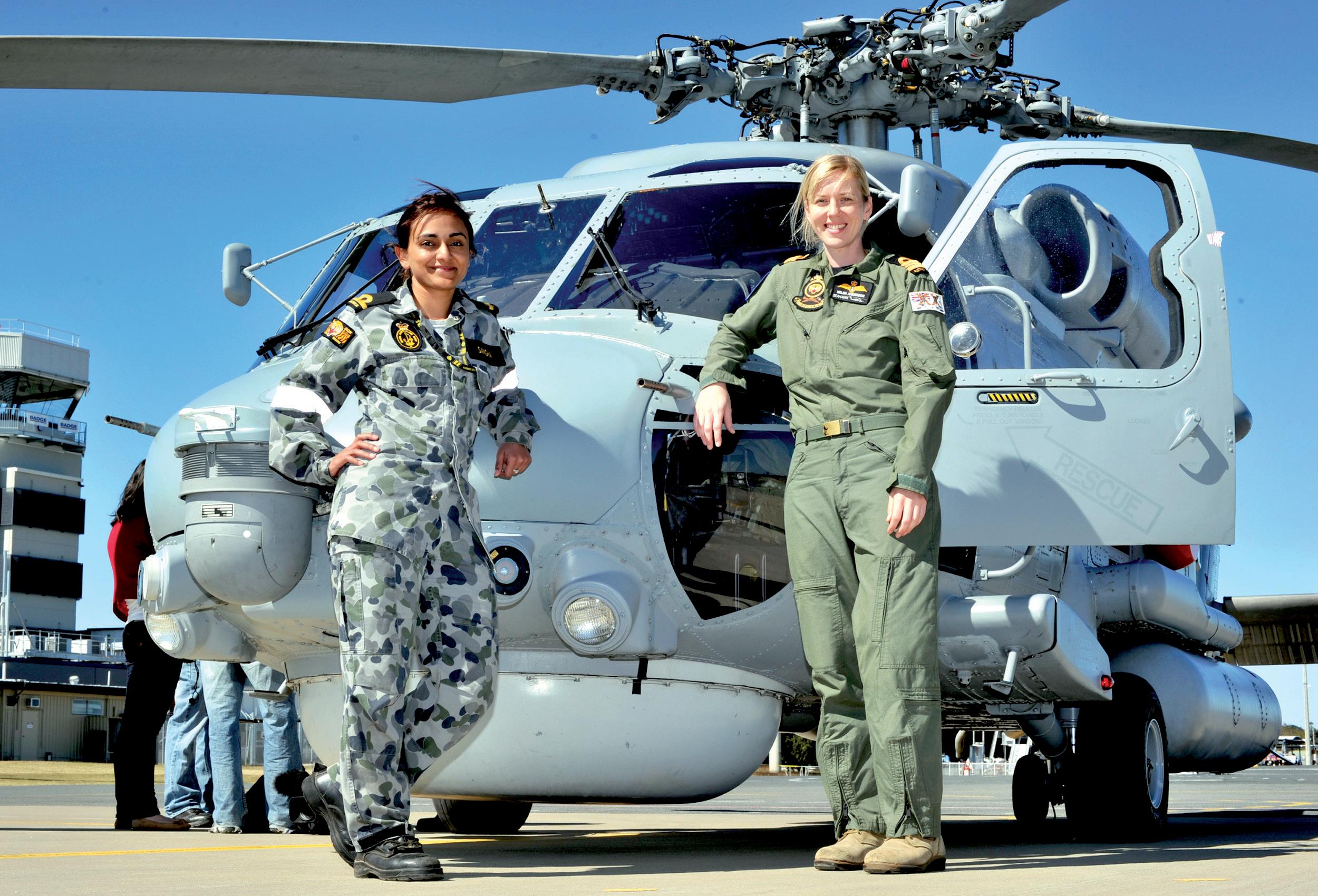

Aviation Engineer Komal Sangha soars to new heights Aiming Sky High FREE Vol. 12 No. 9 • JULY 2012 • www.indianlink.com.au • FORTNIGHTLY MELBOURNE Sydney • Melbourne • Adelaide • Brisbane • Perth • Canberra PO Box 80, Chadstone Shopping Centre, Chadstone VIC 3148 • Ph: 03 9803 0200 • 1 8000 15 8 47 • Fax: 03 9803 0255

2 JULY 2012 www.indianlink.com.au

JULY 2012 3 INDIAN LINK **Special Promotions for July and September 2012 Intakes** To know more, CALL US NOW!!

4 JULY 2012 www.indianlink.com.au
PUBLISHER
Pawan Luthra
EDITOR
Rajni Anand Luthra
ASSISTANT EDITOR
Sheryl Dixit
MELBOURNE
Preeti Jabbal
CONTRIBUTORS

Preeti Jabbal, Frankey G Fernandes, Usha Arvind, Prem Phakey, Sujith Krishnan, Pawan Luthra, Leanne Woodward, Manjula O’Connor, Danielle Mathias, Chitra Sudarshan, Noel G DeSouza, Tim Blight, Carl Buhariwala, George Thakur, Geeta Khurana, Talia Kaur, Devna Luthra, Nancy Althea, LP Ayer.
ADVERTISING MANAGER
Ashish Chawla 0468 389 272
ADVERTISING ASSISTANT


Nitika Sondhi 02 9279
Seeing 27-year-old Simon Sheikh, Director of GetUp Australia collapse on national television was somewhat confronting. A panellist on ABC’s Q&A, Sheikh slumped over the table while reaching for a glass of water. He came to a few seconds later, and was escorted off the set to hospital. It was confirmed later that he was fine, and that the incident was a result of the flu virus but probably also exhaustion after burning the candle from both ends.
Working too hard is possibly something that a lot of us are guilty of. A recent survey on work practices revealed that Australians are working longer hours than ever before, and longer hours than people in many other countries.
Advancements in technology now allow us to be “at work” at all hours of the day. Work is increasingly invading our personal lives, and we are often in work-mode even at off-duty hours.
But is work truly fulfilling us, and at what cost?
In our frenetically-paced world, we are hearing many reports about increasing stress levels, health mishaps at younger ages, and burn-out.
For migrant populations like our own community, the pressure is often doubled. The challenge of settling into the new adopted country comes with its own stresses, especially in the early years. There are new skills that have to be learned fairly quickly off the markand these might be different for men, women and children. The self-imposed pressure to succeed is also high, so that they can finally claim to have “arrived”. The necessary family and social support which they are accustomed to back home, is lacking as well, adding further to demands on the individual.
Particularly vulnerable are professionals with a young family. While mum and dad settle into their new working life, working long hours to make ends meet, they also wish to expose their children to the opportunities available in Australia. The wide variety of activities in sport, music, creative endeavours, even the “hot housing” options, excites them.
The result, too often, is that migrant Indian families are working hard to live not only the Australian dream, but also to give their families the opportunities which are on offer over here. All this takes its toll.
One other additional burden which the Indian Australians love to take on, is owning the family home. But financial constraints and the desire for a large home takes them to suburbs which may not have the best transport links. Typically, they disregard the ease of transport between work and home, and end up spending long hours in the commute, which adds to their already long days. Perhaps, some practicality and sacrifice here could well assist in long-term health issues.
Perhaps it is time we learnt to negotiate a good work-life balance. Our cultural heritage conditions us to focus on tomorrow. But balancing this with living in the moment can add more to our health and happiness. Quality time with family, restful weekends, holidays, hobbies, all need to become more of a priority.
The graveyards, it is said, are filled with people who thought things could not go on without them.
JULY 2012 5 INDIAN LINK
EDITORIAL
2004 DESIGN Danielle Cairis Indian Link is a monthly newspaper published in English. No material, including advertisements designed by Indian Link, maybe reproduced in part or in whole without the written consent of the editor. Opinions carried in Indian Link are those of the writers and not necessarily endorsed by Indian Link. All correspondence should be addressed to Indian Link Level 24/44 Market St, Sydney 2000 or GPO Box 108, Sydney 2001 Ph: 02 9279-2004 Fax: 02 9279-2005 Email: info@indianlink.com.au
INDIAN LINK www.indianlink.com.au Challenge of the work-life balance 4 Individual Tax returns 4 Business Advisory & Taxation 4 Business activity statements 4 Company Accounting & Tax Returns 4 Trust Accounting & Tax Returns 4 SMSF Compliance & Tax Returns 4 Business, Company & Trust Setup 4 BAS & GST 4 Business Plans 4 Cash flow projections Our Services Call 1300 468 222 Full time offices NOW in Adelaide & Caroline Springs Offices located at: “We thrive for Excellent Service & Client Satisfaction” Harish Bisam Director Glenhuntly 1135, Glenhuntly Rd, Glenhuntly, VIC 3163 Caroline Springs Suite1, 218-222, Caroline Springs Bld, Caroline Springs, VIC 3023 Next to Contours Gym Adelaide Suite 26, Level5, 121 King William Street, Adelaide 5000 Melbourne Suite 808, 365 Lt Collins Street, Melbourne, VIC 3000 IT Payroll IT Recruitment Business Advisory & Consultants Medicare levy Exemption certificate Application for free Only $60 tax return for students and under 21’s
PAWAN LUTHRA
Balle balle marks girls night out
The spirit of Punjabi tradition comes alive at this women’s only event
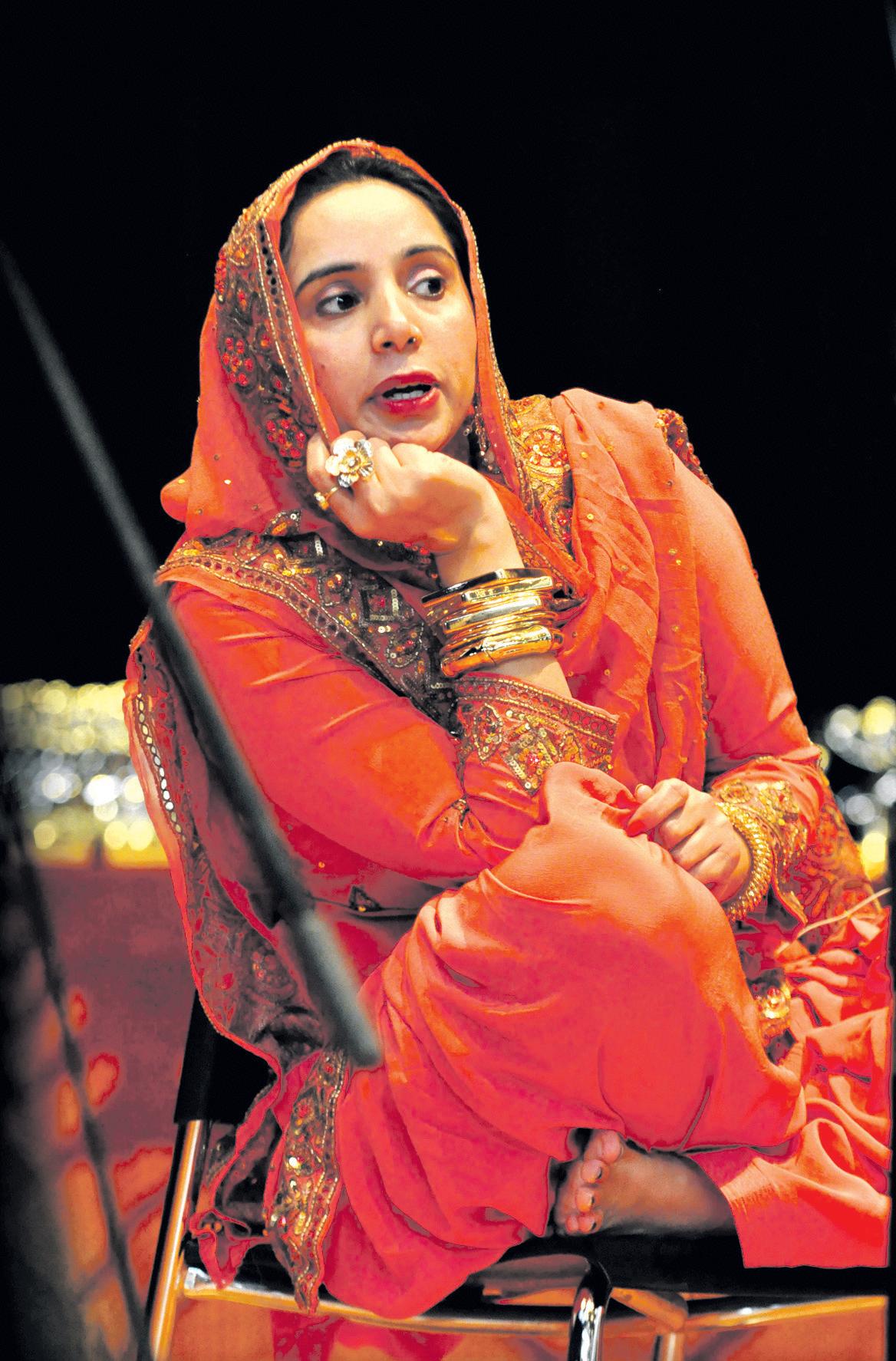
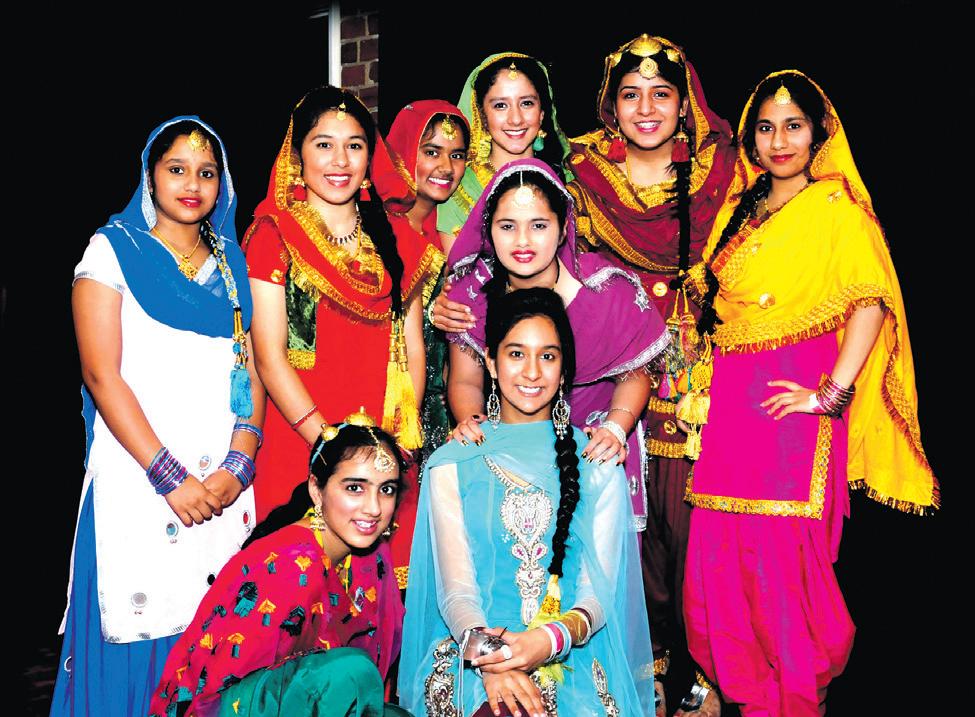
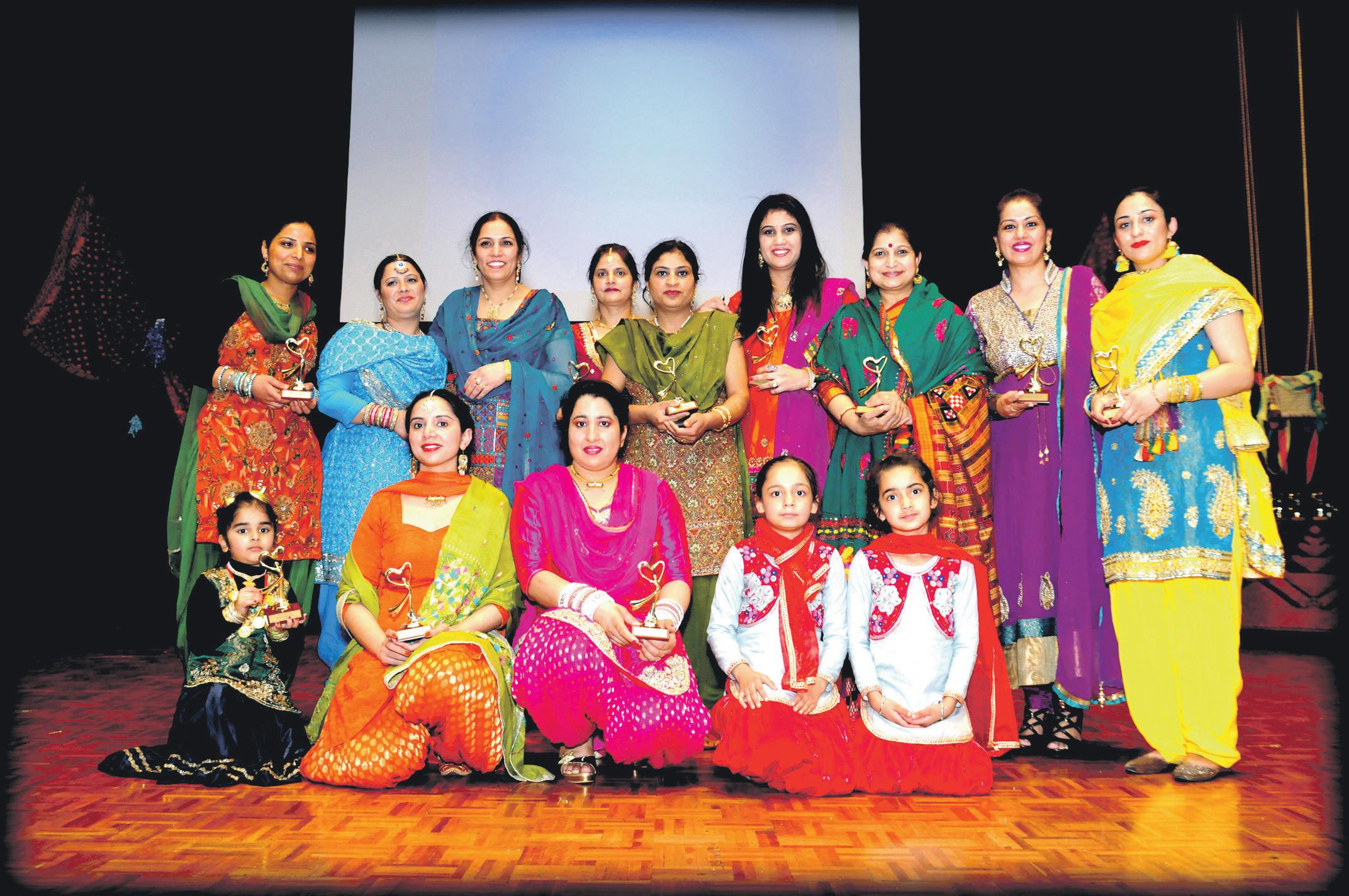
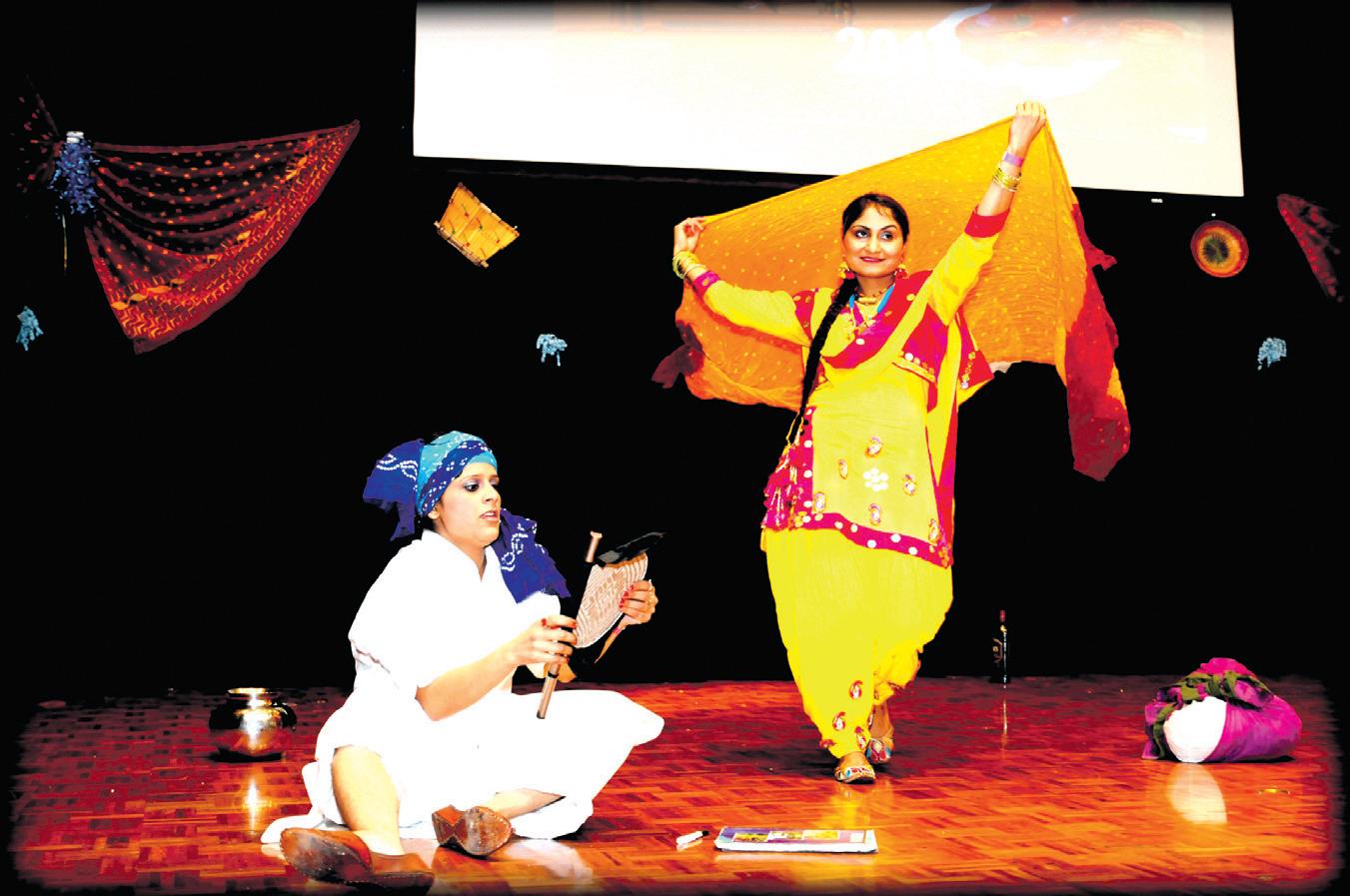
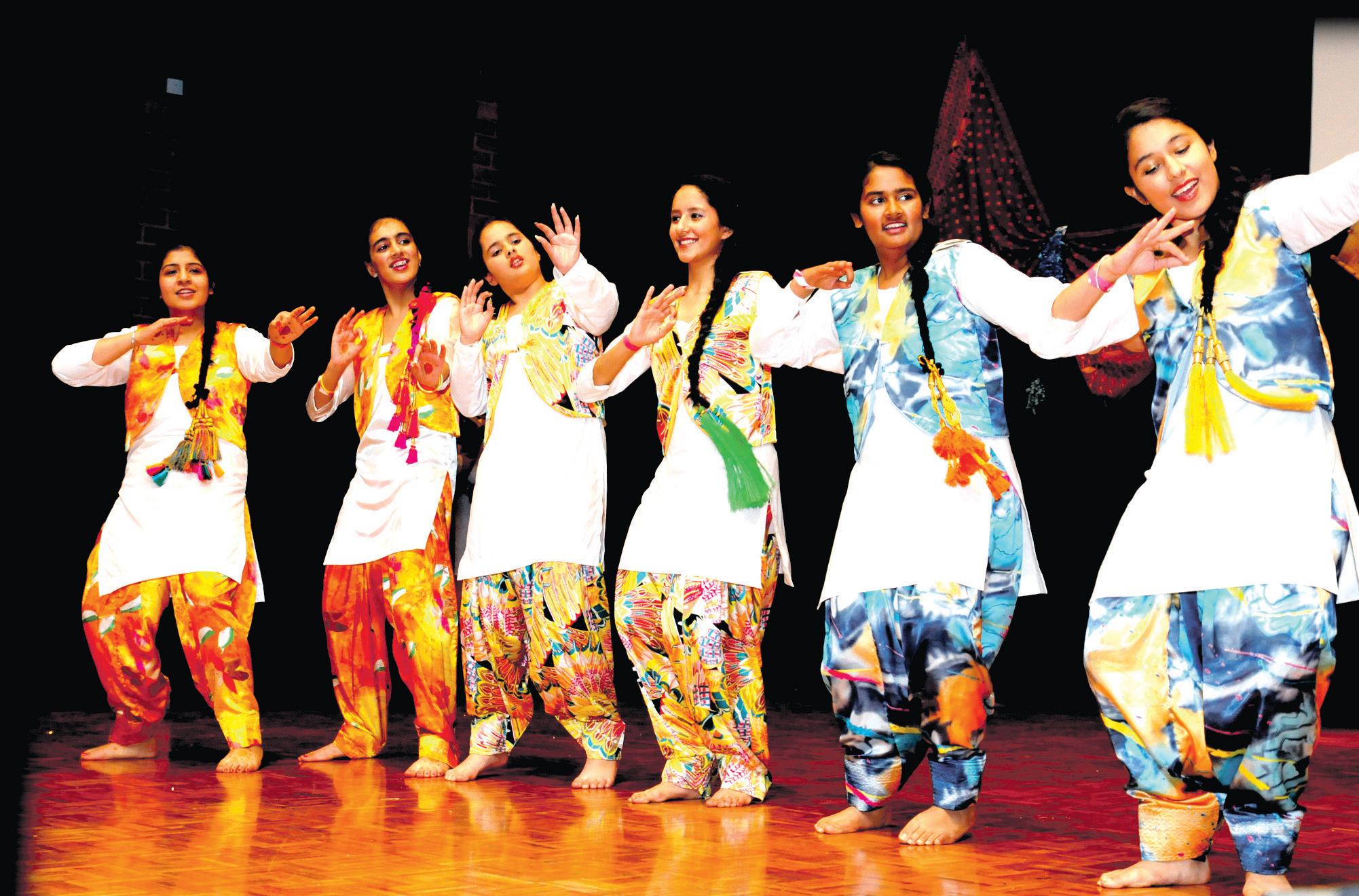
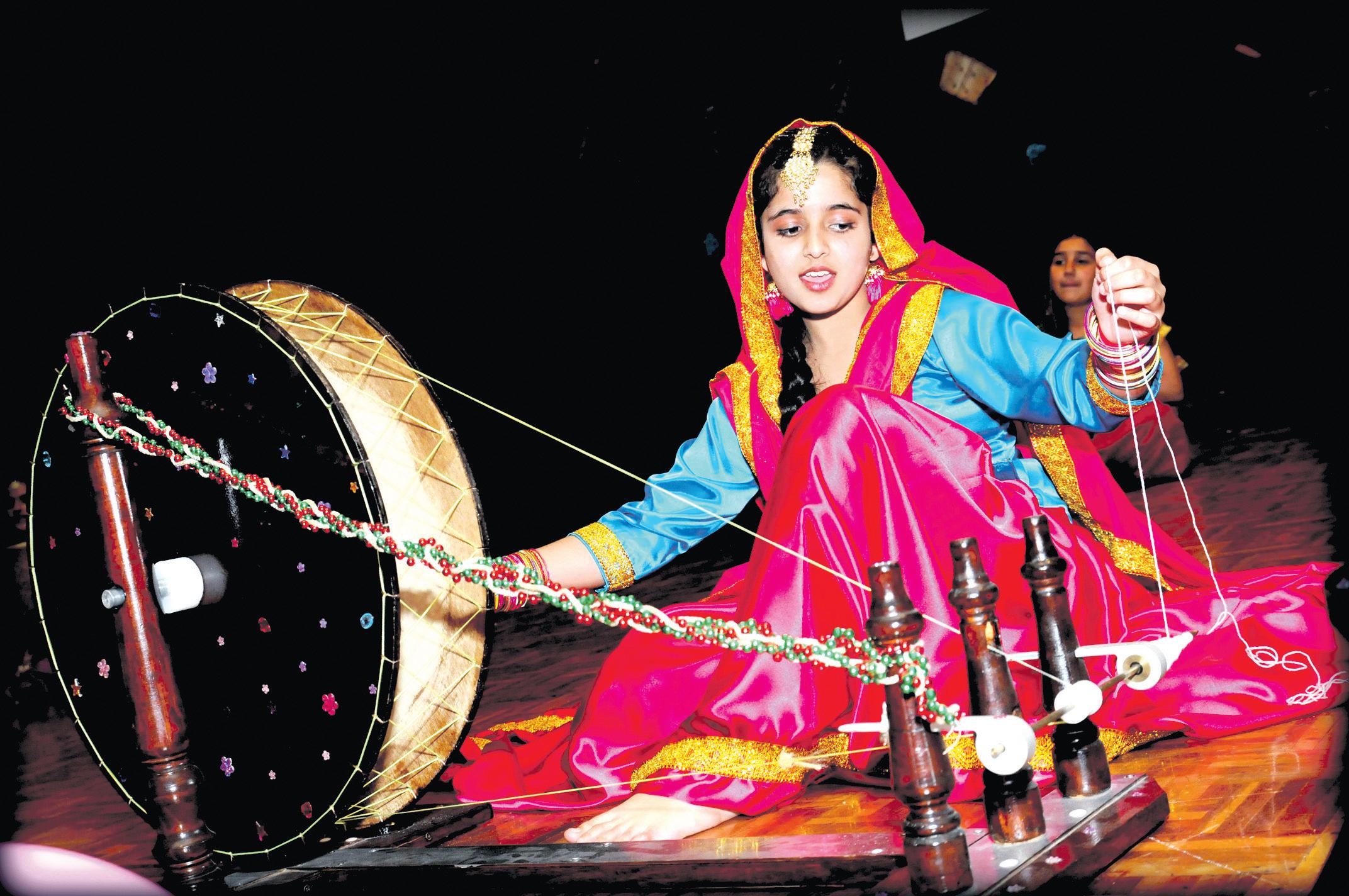
Avibrant outburst of emotions and expressions of a triumphant soul were a recurring theme at the Trinjna 2012 event held recently. Myriad folk dances were performed for an all-women audience, depicting the vitality and exuberance of women from Punjab. Traditionally women in Punjab celebrated many special occasions among themselves, and men were not always privy to the festivities. Many folk dances have originated from this women-only gaiety, the most popular being gidda. This dance translates into gestures, bolian-verses of different length satirizing politics, the excesses committed by husbands, their sisters and mothers, loneliness of a young bride separated from her husband, evils of society or expressing guileless deep love. The dance rhythm is set by the dhols and the distinctive handclaps of the dancers.
The dances at Trinjna event were interspersed with skits and songs; however it was mainly about gidda, bhangra and balle balle. Audience participation was actively sought and prizes were given to the youngest and eldest girl/lady who wore a traditional Punjabi suit. Amidst a riot of colourful outfits, girls as young as 18 months of age were seen sporting the traditional salwar kurta. Some Punjabi Rapunzels got to display their lovely tresses and the one with the longest hair won a prize. There were trophies galore presented to all the participants by chief guests Mrs Rajshree Behera, Mrs Manpreet Kaur and Mrs Kiran Cheema. Ms Manpreet Grewal who recently won the coveted Miss Australian Punjaban 2012 title also presented a special dance item.
Manjot Kaur, one of the organisers of Trinjna said, “This is a unique annual event that encourages women in Australia to experience, celebrate and enjoy the traditions and culture of Punjab.
With each year we are getting more and more people wanting to participate in this fun event.”
Helping a young participant with her vibrant outfit, Manjot added, “By keeping it strictly ‘women only’ we are creating a platform for our women to have some ‘me’ time and get a deserving break from their multiple commitments. Here they can get together laugh, sing, dance and have a great time similar to the womenfolk from the villages of Punjab.”
Talent was witnessed in abundance at this traditional version of a women’s day out, however it was the young girls that stole the show with their power-packed performances. They matched the adults with their energetic steps and expressions. Despite the repetitive nature of folk dances, there were sufficient variations on offer to sustain interest and inspire awe. Replete with multihued entertainment, the Trinjna event can be recommended to anyone who respects the culture of their roots.
Preeti Jabbal
6 JULY 2012 CO mm UNITyS CENE
Photos: Creative Art Media
Sao Joao feast celebrated with

The traditional feast of Saint John the Baptist popularly known as Sao Joao was celebrated with fervour and zest in Melbourne at St Anthony’s Hall, Glen Huntly, Victoria on June 23. The event was organised by the talk of the town Goan community organisers, The Konkanni Cultural and Heritage Inc.
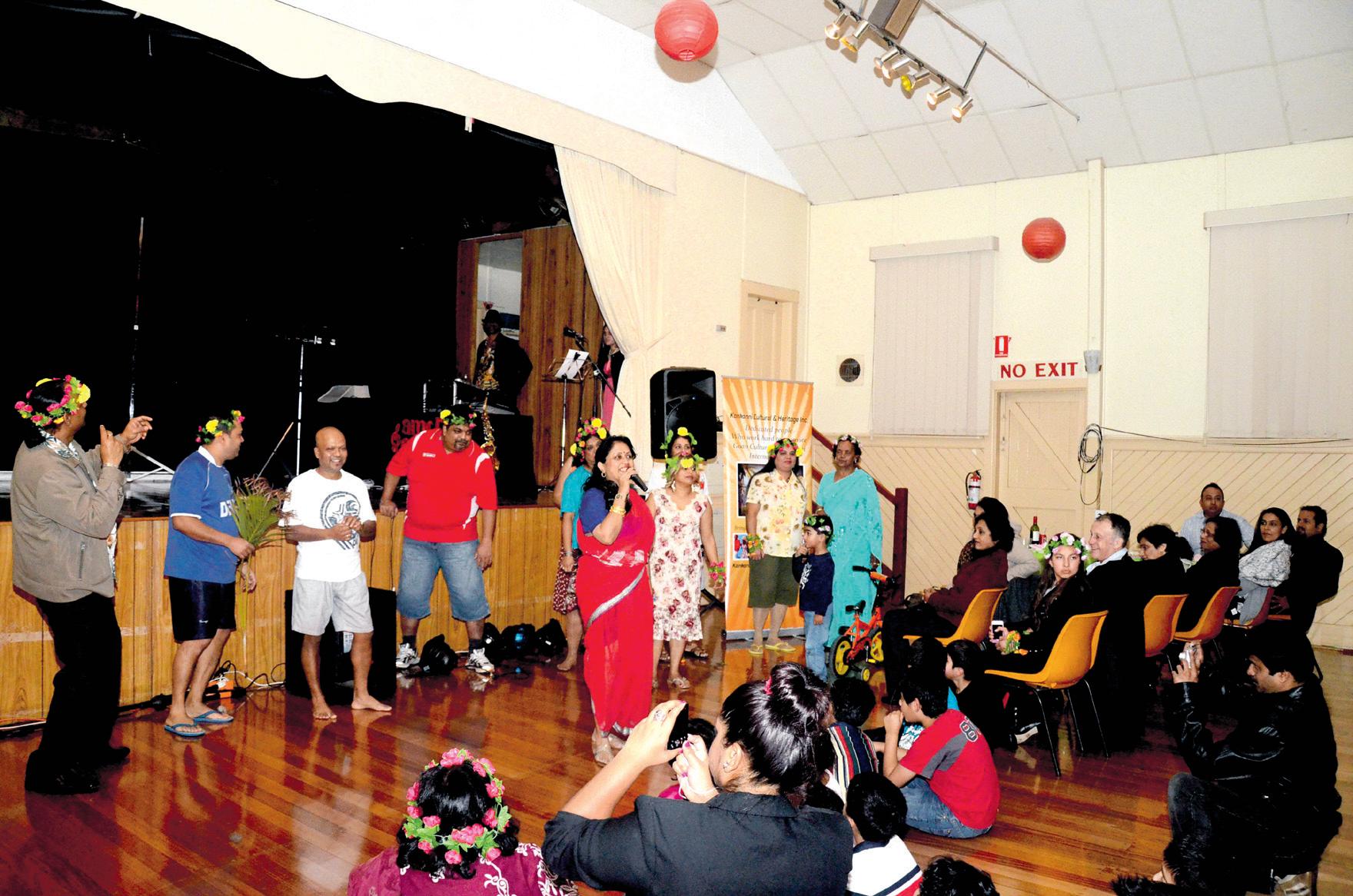
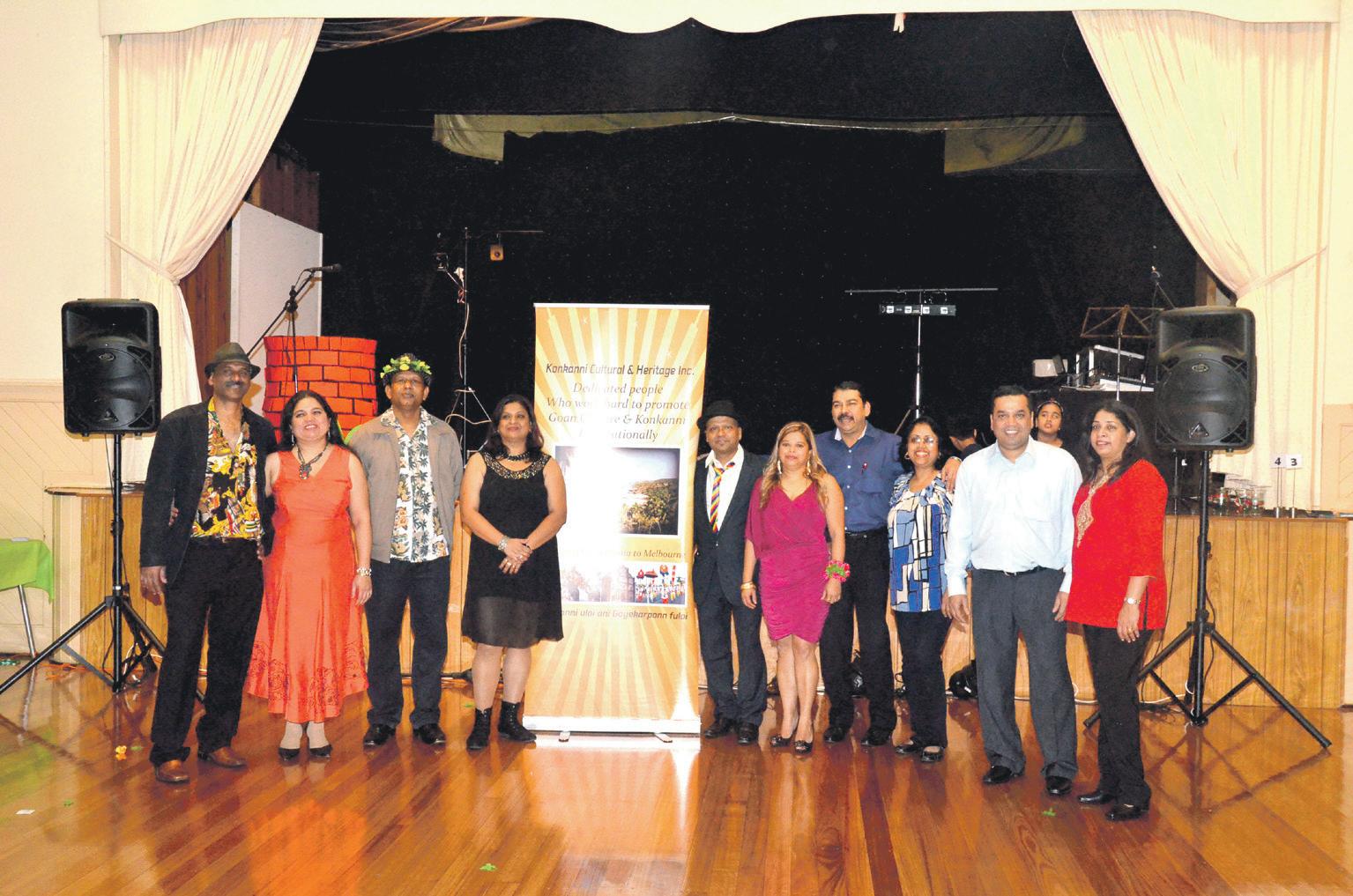
The well-attended event resulted in a packed hall, and began with the screening of the most recent Konkani film on live projection display, followed by a Sao Joao skit. Yolanne Carvalho as narrator of the day began the show by playing a lovely note Adues on saxophone from the most popular Konkani film.
Melbourne’s well-known Konkani stage performers Gladys, Simon, Titus, Royden and Brian enacted the play. A senior member of the Goan community
Mrs Luizinha Mascarenhas, lit the candle at the well while the traditional song was sang by none other than Sarojini D’Sa, nightingale of the Melbourne Konkani stage.
Every female guest on the day was presented with a special colourful headband made of vines and flowers also known as khopel, to mark this unique Goan occasion.
Melbourne’s Goans rock and rolled the traditional Sao Joao march and dance to music played by DJ Alejandro and Amor Sounds. Recently married couple Pavel and Erica were crowned the Sao Joao King and Queen. The event has been much discussed for its entertainment value, with scores of Goans supporting it.
At the Sao Joao festival, caterers Llewjini Caterers served guests with traditional Goan food

including sanas (rice bread) and sorpotel (a spicy, tangy pork dish). The celebration of the feast of St John the Baptist was, from ancient times, a festival of the summer solstice. It is celebrated from the night of June 23, and continues on June 24. Traditions include singing songs and dancing until the sun sets, telling tales, searching for the magic fern that blossoms at midnight, jumping over bonfires, greeting the rising midsummer sun and washing the face with morning dew. Young girls float flower wreaths and collect several species of medicinal plants that they arrange in a bunch and hang
over doorways or dip in a vessel with water. These are exposed to the night’s dew with which they cleanse their faces. Tradition holds it that the medicinal plants mentioned above are most effective when dipped in water and collected from seven different springs. As a fertility rite, women desiring children had to bathe in the sea until they were washed by nine waves. Rural life is celebrated through typical clothing, food, and dance. Square dancing (quadrilha) features couple formations in a mock wedding where the bride and groom are the central attraction of the dancing. A wheel is also rolled downhill to signify
that the sun then rises to the highest point of its circle and at once turns back.
On this festive day people eat caldo verde (cabbage and potato soup), sardinha assada (grilled sardines) and bread, while drinking red wine and água-pé (grape juice with a small percentage of alcohol) while revelling. This festival stresses on the importance of medicinal plants, especially in relation to health, youth and beauty; the protective character of fire to ward men off evil spirits and witches and, finally, the purifying and miraculous effects of water.
Frankey Gerard Fernandes
JULY 2012 7 INDIAN LINK
Sky High Aiming
A young woman’s dream is realised as she soars to new heights in an exciting career in aviation
BY USHA RAMANUJAM ARVIND
Ttraditionally been a male dominated bastion but not anymore, as gender stereotypes are being constantly eroded.
Among the newest crop of graduate aviation engineers with sky-high ambitions is a talented Indian Australian youngster Komal Sangha. And her career is already off to a flying start with the Royal Australian Navy, thanks to a Defence University sponsorship.
Lieutenant Sangha was among the few from her batch at Monash University to bag the lucrative sponsorship. She applied for the undergraduate defence sponsorship while in her second year, and after a series of interviews and selection processes, joined the Navy in her third year of Aerospace Engineering.
The sponsorship included the payment of remaining HECS fees and all study material, as well as a salary while studying. In addition the programme also offered work experience opportunities, mentorship and the ongoing support of the defence services infrastructure.

Aviation, Komal emphasised, is a very intense but enjoyable niche field with manifold opportunities
light up when talking about aviation, is particularly passionate about rotary wing systems in general and specifically Seahawks.
Having recently spent ten months learning all about the Seahawk as part of her training, Komal has conducted regular maintenance-related investigations, provided recommendations to the command, delivered daily engineering briefs on the aircraft, planned squadron detachments and provided advice on weekly squadron flying priorities.
“The Seahawk,” Komal explains, “is a Sikorsky helicopter operated by the Royal Australian Navy to conduct missions primarily in coordination with the ships. It has been designed to take off and land on pitching and rolling ship decks and to operate effectively in salt-laden environments.”
“The helicopter is fitted with one of the world’s most advanced anti-submarine warfare capability to search and hunt submarines,” she added enthusiastically. It is also capable of transferring troops, winching operations, stores replenishment of ships and day-night search and rescue operations.

“Of course, I am biased
“The opportunity to work with complex machinery really appealed to me. I opted for the Royal Australian Navy because of my strong interest in helicopters and ships. The Navy provides the opportunity to witness the integration of ships and helicopters and I was quite keen to be a part of this experience”.
For Komal, working with real flying machines is very much like a dream come true.
“Although they are quite a sight in the blue skies, a lot of hard work and ground labour goes into each flight. In order to provide a safe flight, maintenance staff spends hours troubleshooting and servicing the aircraft, before it is declared airworthy. The sense of achievement from fixing these machines and seeing them take off into the open skies is a key motivating factor that has literally kept us going on various cold, windy and rainy days,” she revealed.
“The last two years have already been a very steep and enjoyable learning curve for me and I can only see my career going up,” she added happily.
Although Komal has always been passionate bout flying objects, it is quite by accident that
Her family moved to Australia in April 2003, when young Komal was in Year 11. “Considering I was already a term behind everyone else, I took up seven subjects in Year 11, including biology, chemistry and physics. I also studied Hindi on Saturdays for the duration of VCE”.
The academically motivated student soon transferred to a Selective high school, which she believes, gave her the additional push to perform her best.
“Although I gained the required ENTER score for medicine, I did not get a sufficiently high score in UMAT,” Komal admitted candidly.
“So I joined Physiotherapy with a view of transferring into Medicine after the first semester. This did not work out as planned, as I did not feel passionate about analysing body parts, learning about diseases, etc. That’s when I made a decision to transfer to Aerospace Engineering and joined Monash University as a mid-year entrant.”
Komal of course, had the full backing of her parents when she made the decision to switch careers mid-course and more importantly, join the defence forces. “Quite a few members of my extended family have served or are currently serving in the
Engineering”.
And this is why she has taken on the mantle of brand ambassador. “I have been very lucky to have been offered a tailor made career pathway and I would like to be a role model for many more youngsters, particularly girls, to choose this profession,” stated Komal.
“From my experience, the defence undergraduate scheme has benefitted me in a number of ways. During my university years, my financial requirements were completely covered. This eliminated the need to search for a part time job and helped me focus entirely on my studies,” she emphasised.
“Additionally, I doubt I could have gained such an enormous amount of experience had I taken up a similar kind of job in the civilian world. I enjoy working for the Australian Defence Force as it allows me to contribute to society, while providing me with job security and satisfaction. As I move further in my life, I intend to follow what I am passionate about, which is helping people and contributing to society in whatever way I can.”
Komal Sangha has since visited many schools, motivating students.

8 JULY 2012 www.indianlink.com.au
COVER STORy
“These days there are various career paths available to school graduates from which they can choose. Regardless of what field they wish to pursue it is vital they research the study requirements, workload and future job opportunities. Those seeking more hands-on experience, prior to a full time commitment to study, should look at apprenticeships and traineeships,” recommends Komal strongly.
“Some institutions also offer mid-year entry to high school graduates who wish to take a break prior to commencing tertiary studies,” she added.
Komal also hopes to inspire migrant kids to diversify their career portfolio.
“It is very easy to get distracted in today’s rat race where competition to perform well is so extreme. It is time for us to divert away from the stereotypical career choices considered suitable for migrant kids. We should start looking at the bigger picture and allow for creativity and progress to stem from everywhere.
Remember, success is not the key to happiness; happiness is the key to success,” she remarks with a far-sightedness that goes beyond her age. She is no doubt inspired by Gautama Buddha’s sagacious

words of wisdom: If you love what you’re doing, you will be successful.
Likewise, Komal’s exposure to the Australian Defence Forces has undoubtedly toughened her up physically and mentally. “The initial training phase is structured in such a way to push you way beyond your extremes in order to get the best out of you. Not only does it give you a better awareness of yourself, it motivates you to perform even better,” she commented.
Komal also firmly subscribes to the core defence values of “courage, professionalism, loyalty, integrity, innovation and teamwork”. As a member of the defence force, it is vital to believe in its organisational values and apply them in everything they do. The initial training assists in teaching the significance of these and how they can be incorporated into everyday life.
After completing initial training as an Aerospace Engineer in the Navy, Komal gained a competency certificate (which she explained is equivalent to Graduate status with Engineers Australia). “As a qualified Aerospace Engineer you can be working in a variety of roles ranging from technical to project positions or even in out-of-category jobs such as human resource management,” she explained.
Currently, a trainee Aviation Engineering Officer at 816 Squadron, Komal has been a part of various squadron detachments operating from Perth, Bundaberg and Caloundra.

“I was given the opportunity to experience helicopter operations in the maritime environment during MIDPAC 2011, a joint exercise involving international navies, conducted at Pearl Harbour,” she revealed. “As part of this, I was flown to Hawaii and sailed back to Brisbane on HMAS Sydney.”
While career fulfilment is obviously her top priority now, the fledgling engineer is also aware of the Navy’s family-friendly approach. “I understand that the Navy attempts to assist service families in every possible way. Members with dependants are given careful consideration with their posting preferences and the Navy endeavours to work towards the satisfaction of its employees, without compromising work requirements,” she described. Her next posting is to Melbourne as the ship’s Aviation Facilities Engineer, which, she explained, “oversees the appropriateness of aviation facilities on ships to suit our helicopters”.
Komal also hopes to return to Nowra to complete her squadron requirement of two years prior to getting promoted to a Lieutenant Commander. “With the
acquisition of new LHDs and a fleet of helicopters, the navy scene is currently hectic,” said Komal. “This will open up further exciting opportunities for aerospace engineers with a possibility of sea postings as well.”
Meanwhile, this enterprising young woman has also charted long-term prospects, which include a Masters in Structural Engineering in the UK.
Firmly rooted in her strong Indian values and identity, Komal always finds time to visit temples. “I find that it keeps my sanity under control,” she quipped. Socialising, exercising and dancing are some of her other interests. Equally passionate about other cultures, particularly their history, cuisine and language, Komal has taken up advanced Italian and is just back from a hectic, but fulfilling trip to this ancient land. Scuba diving is also on the agenda.
But for now Komal is off to Mumbai to attend her friend’s traditional Maharashtrian wedding while her travel diary for next year includes Pakistan and British Columbia.
Lt Komal Sangha is certainly one high flier for whom the sky is the limit.
Detailed information on the Defence University Sponsorship pathway can be accessed at www. defencejobs.gov.au/education/ universitysponsorship/
Clockwise: Sub Lieutenant Komal Sangha
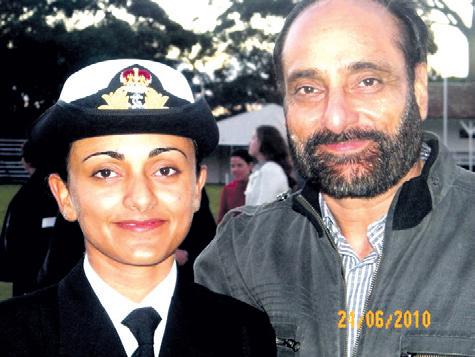
Graduating from Initial Officer Training in 2010 (second from right, front row)
Ready for take-off
With dad Paramjit Singh Sangha
JULY 2012 9 INDIAN LINK
I have been very lucky to have been offered a tailor made career pathway and I would like to be a role model for many more youngsters, particularly girls, to choose this profession.
Komal Sangha


10 JULY 2012 www.indianlink.com.au


JULY 2012 11 INDIAN LINK Dont miss out hot deals for December call now! FROM FROM $900. $1050. FROM FROM FROM $925. $895. $835. Dhaka Kathmandu FROM $915. License no: 32885
A captivating conclusion
IFF 2012 ended on a positive note after ten days of showcasing the best of art and masala from two continents
Those who think all Indian films are fantastical, colourful, musical and melodramatic have obviously not attended the Indian Film Festival 2012 held recently in Melbourne. The opening night’s thriller Kahani and the closing night’s soul- searching movie Memories in March clearly did not fall into any of the above categories. Nor did many other films that were presented among this year’s selection for the IFF, such as Paan Singh Tomar, Michael, I Am Kalam, Bombay March 12, Bol, Saving Face to name a few. Along with all the light- hearted escapism of Indian films, there were some intense, transgressive stories that offered a different perspective to cinelovers. A new and different voice is now emerging from India in the international cinema scene, and it is thanks to Festivals like IFFM that people around the globe are willing to explore that potential.
The Film Festival 2012’s ambassador was Vidya Balan, who is considered to be a high-octane talent in Indian cinema today. She breezed into Melbourne before the Festival to set the stage for more stars to come. Glamorous Bollywood actors Shahid Kapoor and Priyanka Chopra, accompanied by Director Kunal Kohli and Producer/Director Vicky Bahri came to the opening night to promote their new release Teri Meri Kahani. Award-winning filmmaker Rajkumar Hirani, creative writer Abhijat Joshi and iconic director Rituparno Ghosh attended the closing night event. Nationally acclaimed designer Sabyasachi Mukherjee and young animation director Jugal Hansraj were also among the festival guests. A series of Masterclasses were also held to
create dialogue between Indian and Australian film practitioners.

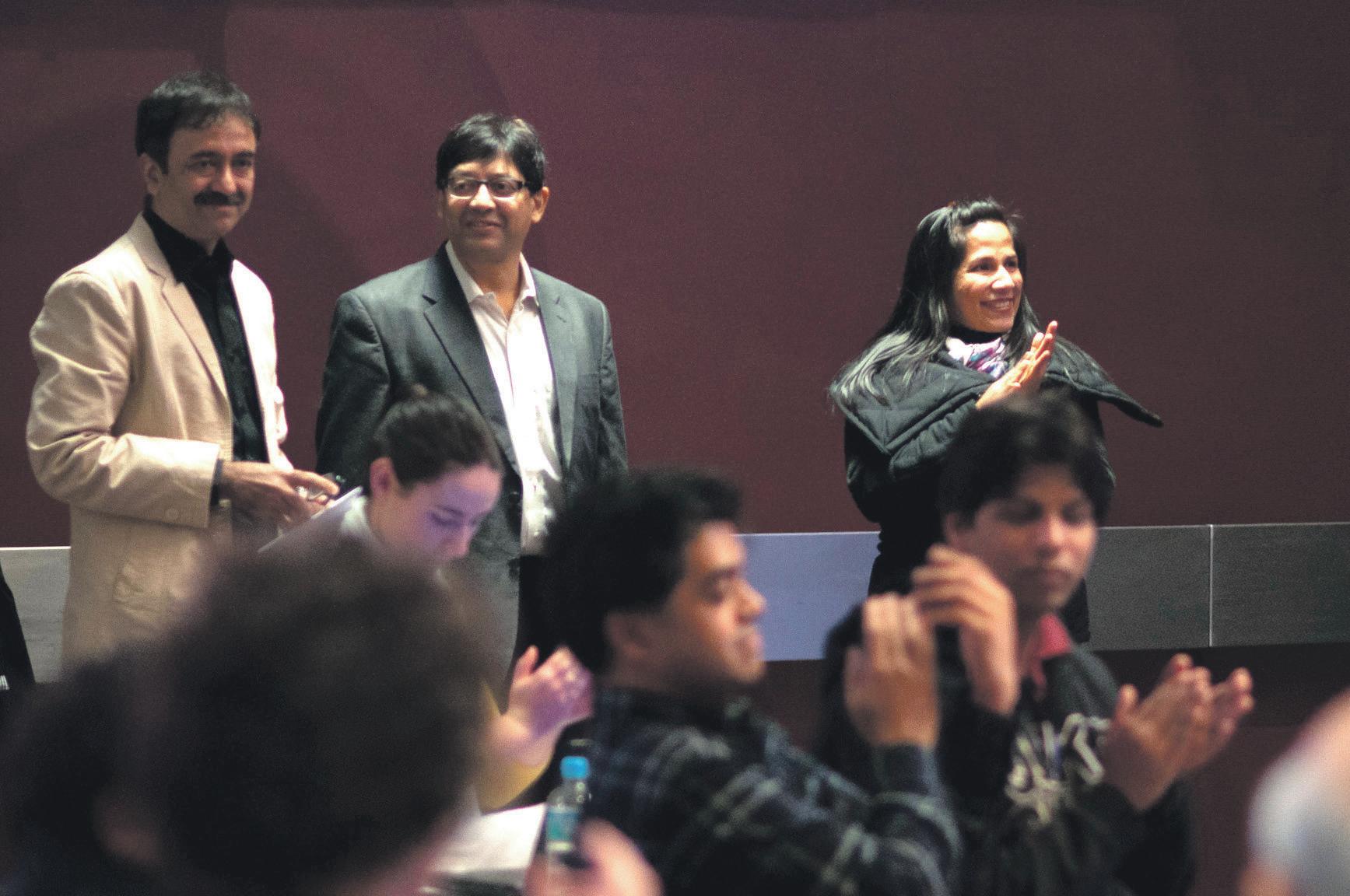
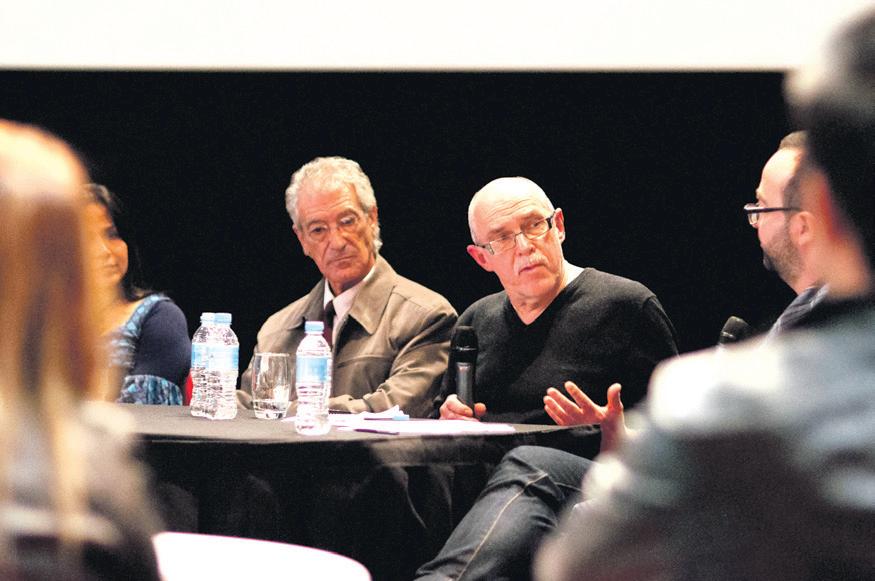


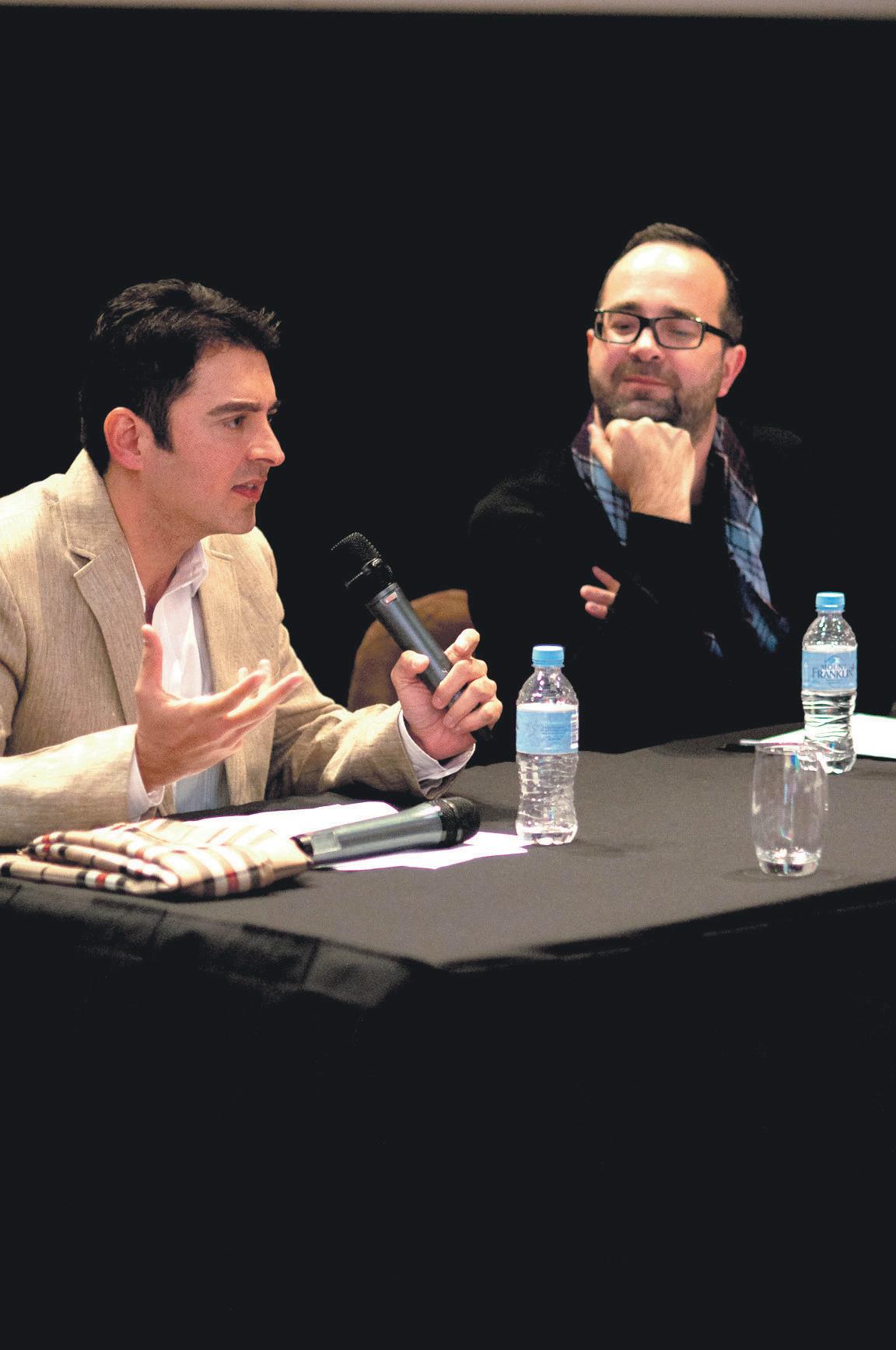
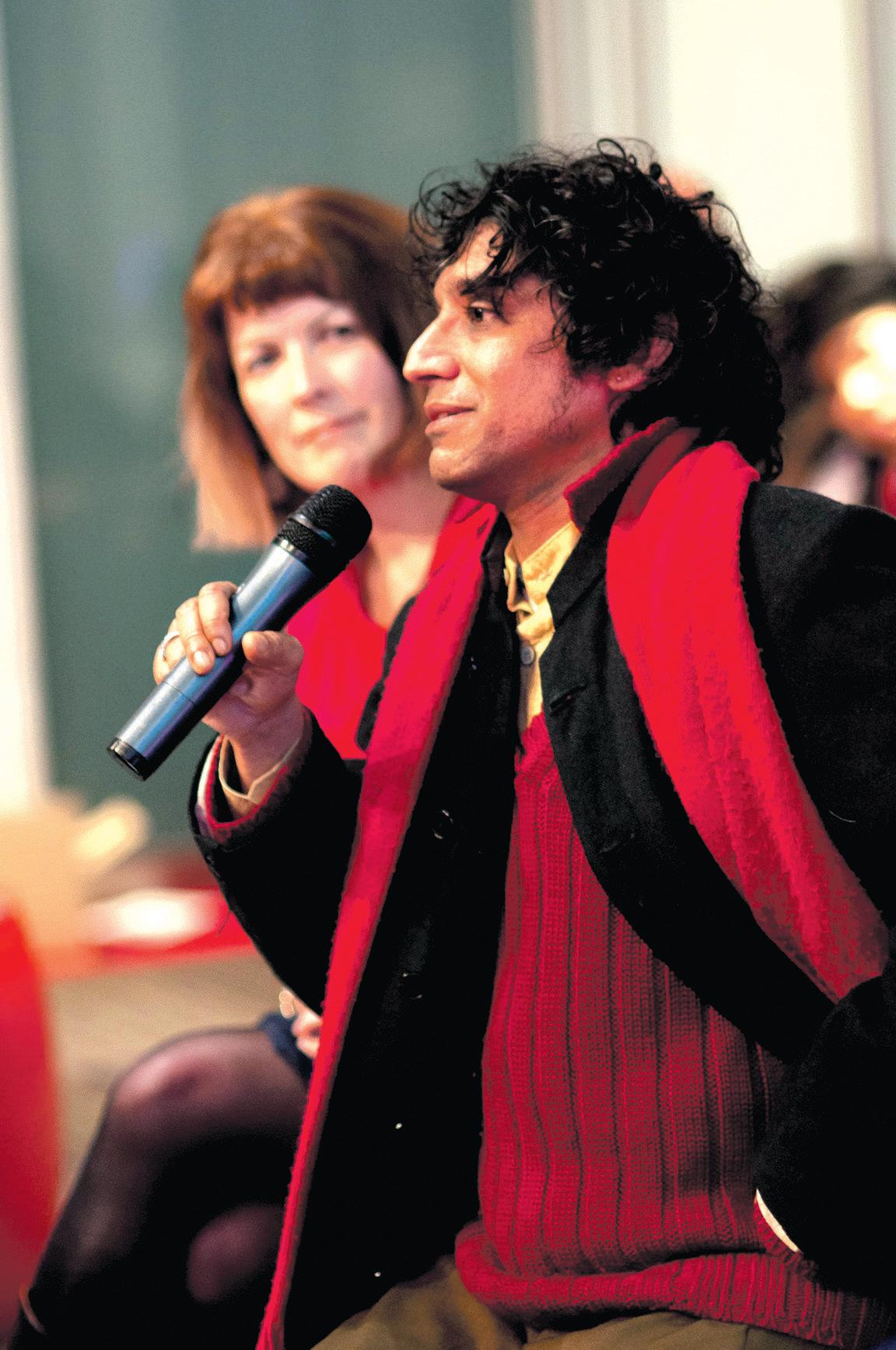
The Victorian Government, City of Melbourne and Film Victoria supported the event, along with sponsors Western Union, Timeout, SBS, LaTrobe University, Australia India Institute and Indian Link Ms Louise Asher, MP Minister for Tourism and Major Events said in her message, “The Victorian and Indian screen industries have a well-established and productive relationship, which the Victorian Government is committed to strengthening, not only by supporting the Festival but also by increasing the opportunities for co-production or joint venture partnerships.”
Festival Director Mitu Bhowmick Lange from Mind Blowing Films copped some controversy from media in relation to the Festival; however she persevered with her aim of offering a multicultural treat for film lovers. “Like Melbourne itself, Indian cinema is incredibly diverse. With over 35 films that include both masala and regional art house films, this Festival offered something for everyone. Besides fostering cultural ties we also hoped to provide a platform for new voices and vision. Our Western Union Short Film Competition encouraged new filmmakers from India, Australia and New Zealand by screening their winning entries during the Festival,” said Mitu.
The two weeks of cinematic pleasure ended on June 22 and Indian film lovers went back to the humdrum of their lives, albeit a bit reluctantly. “It’s not everyday we get to see such a diverse feast of Indian and sub-continental films in Melbourne,” said Festival attendee Kajal Sharma. “It helped that the films were affordable at $10 each, and only the special events were deservedly priced at more than that,” she said. “I think it was total paisa vasool (value for money)!” she added with a satisfied grin.
www.indianlink.com.au m AINSTREA m
PREETI JABBAL
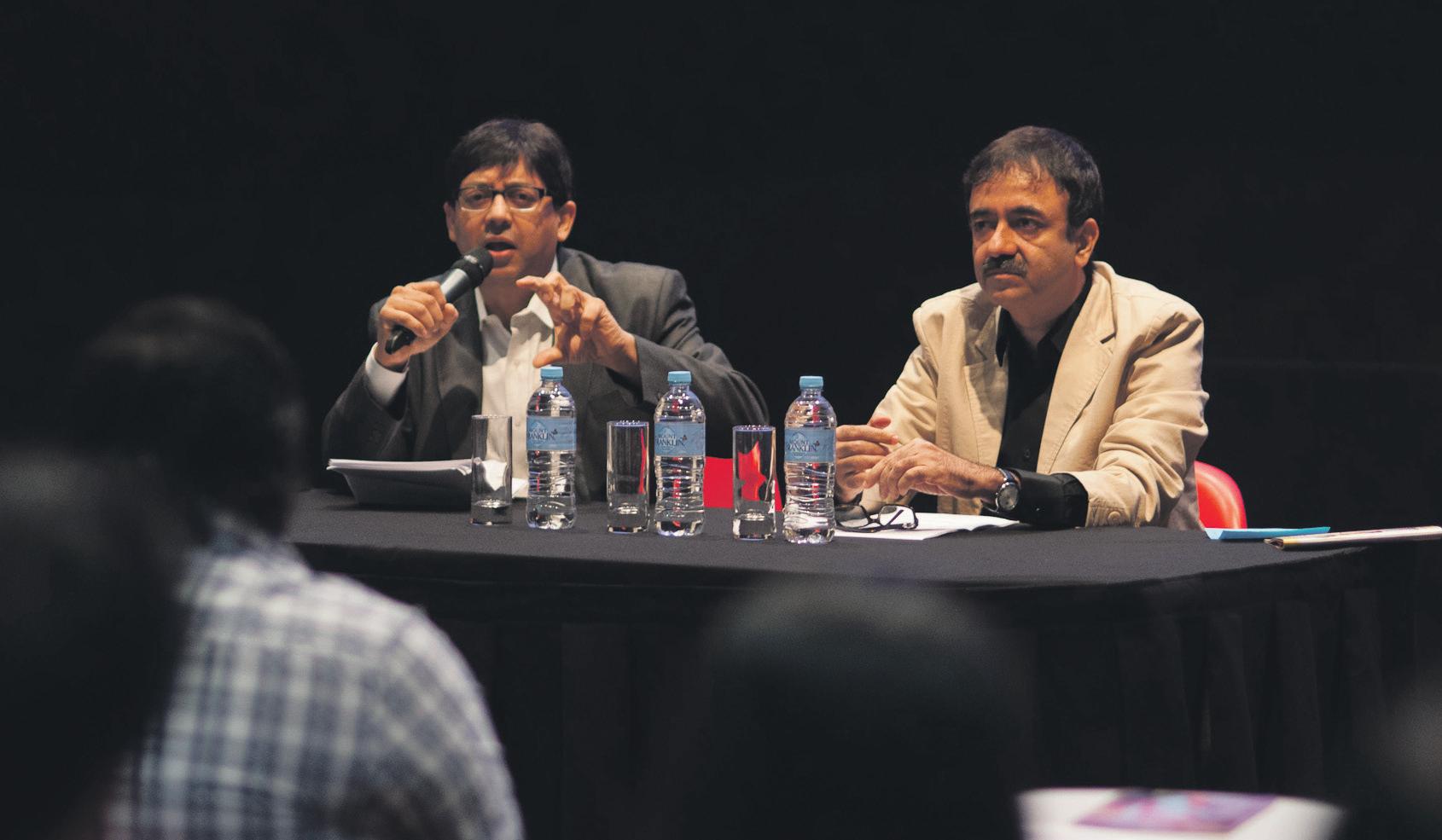
Scenes from Jugal Hansraj’s Master Class
Masters in the making
Renowned luminaries in the Indian film industry share their gyan with a selective audience
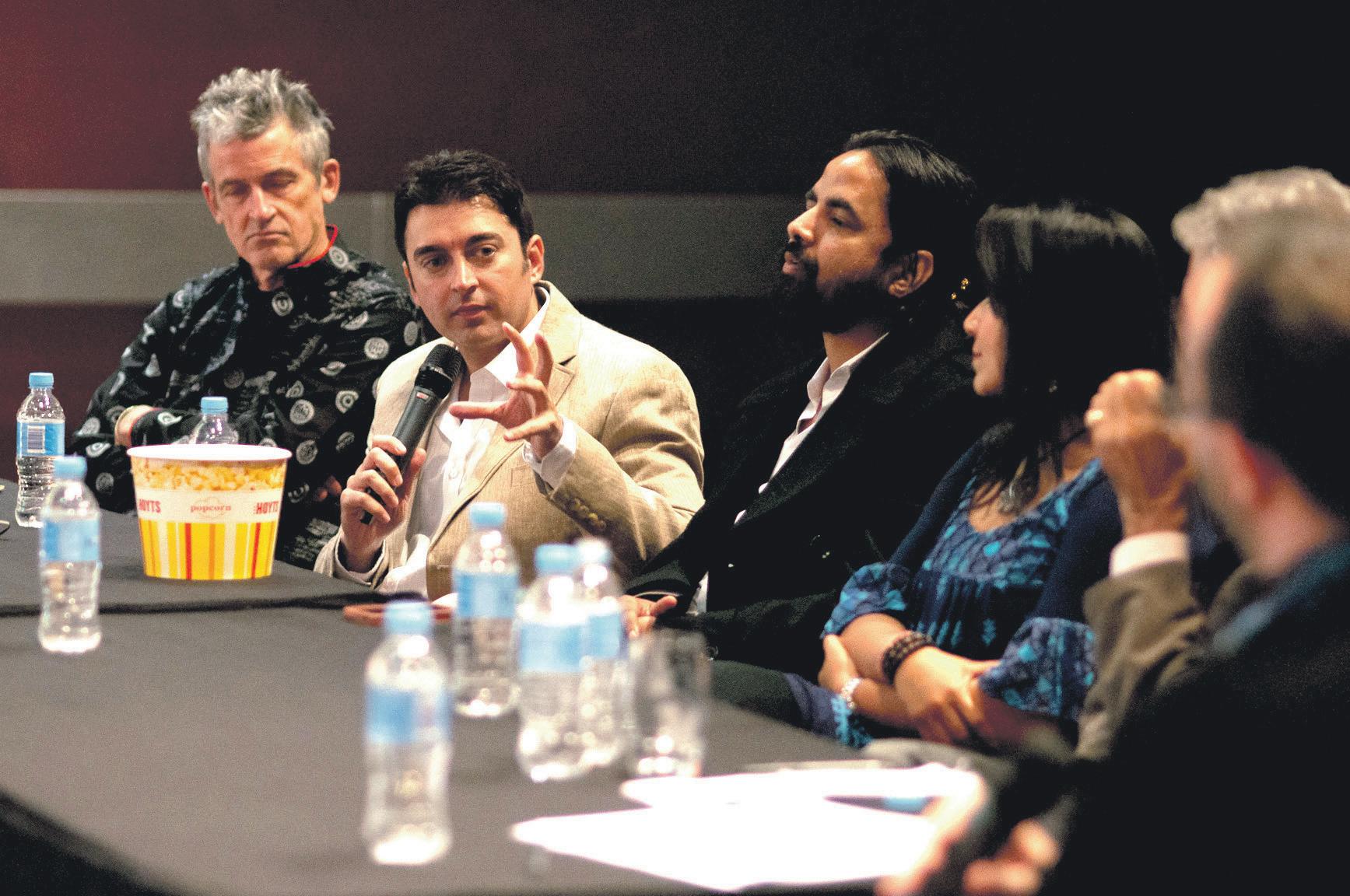
Special Master Classes
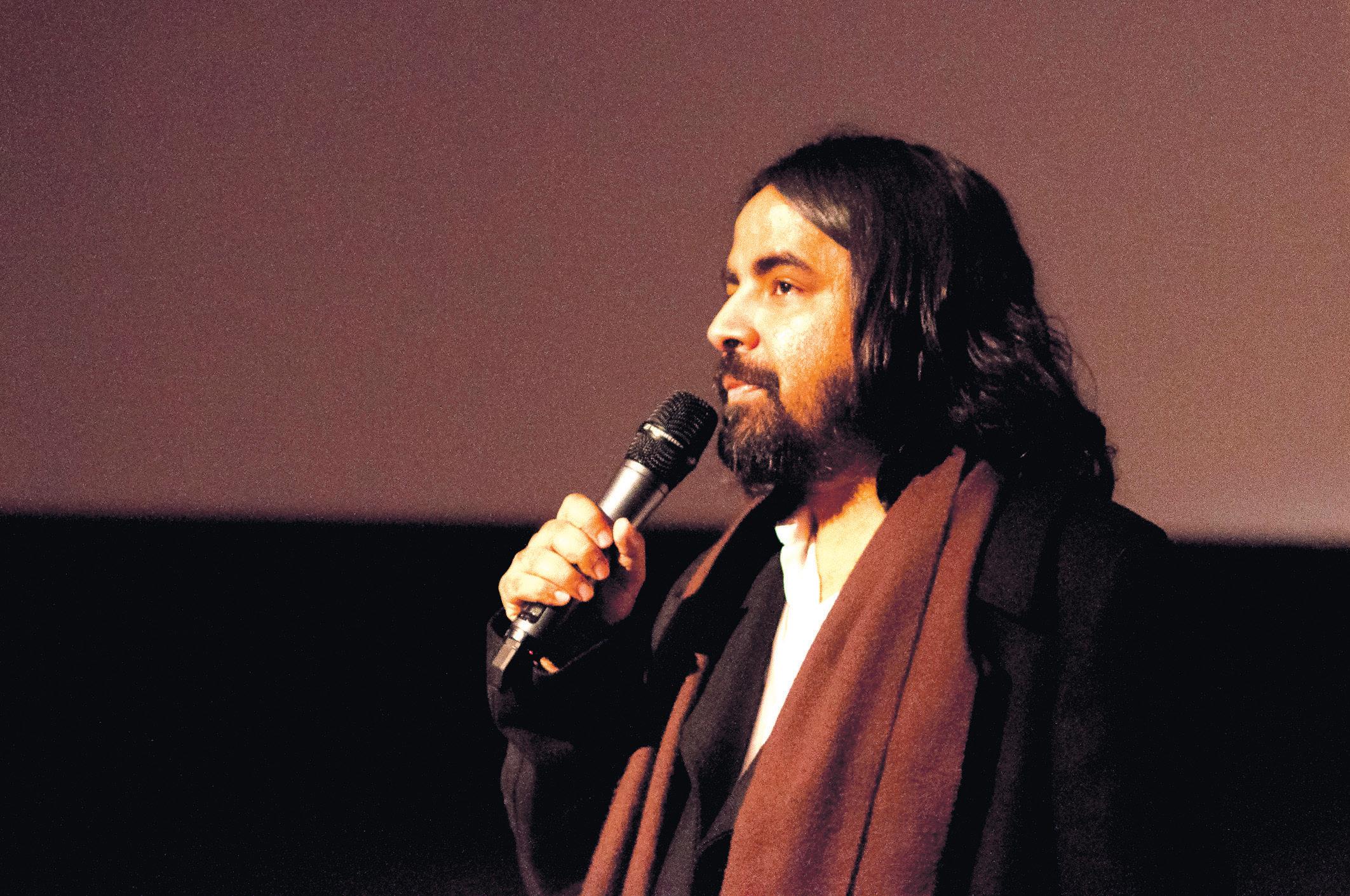
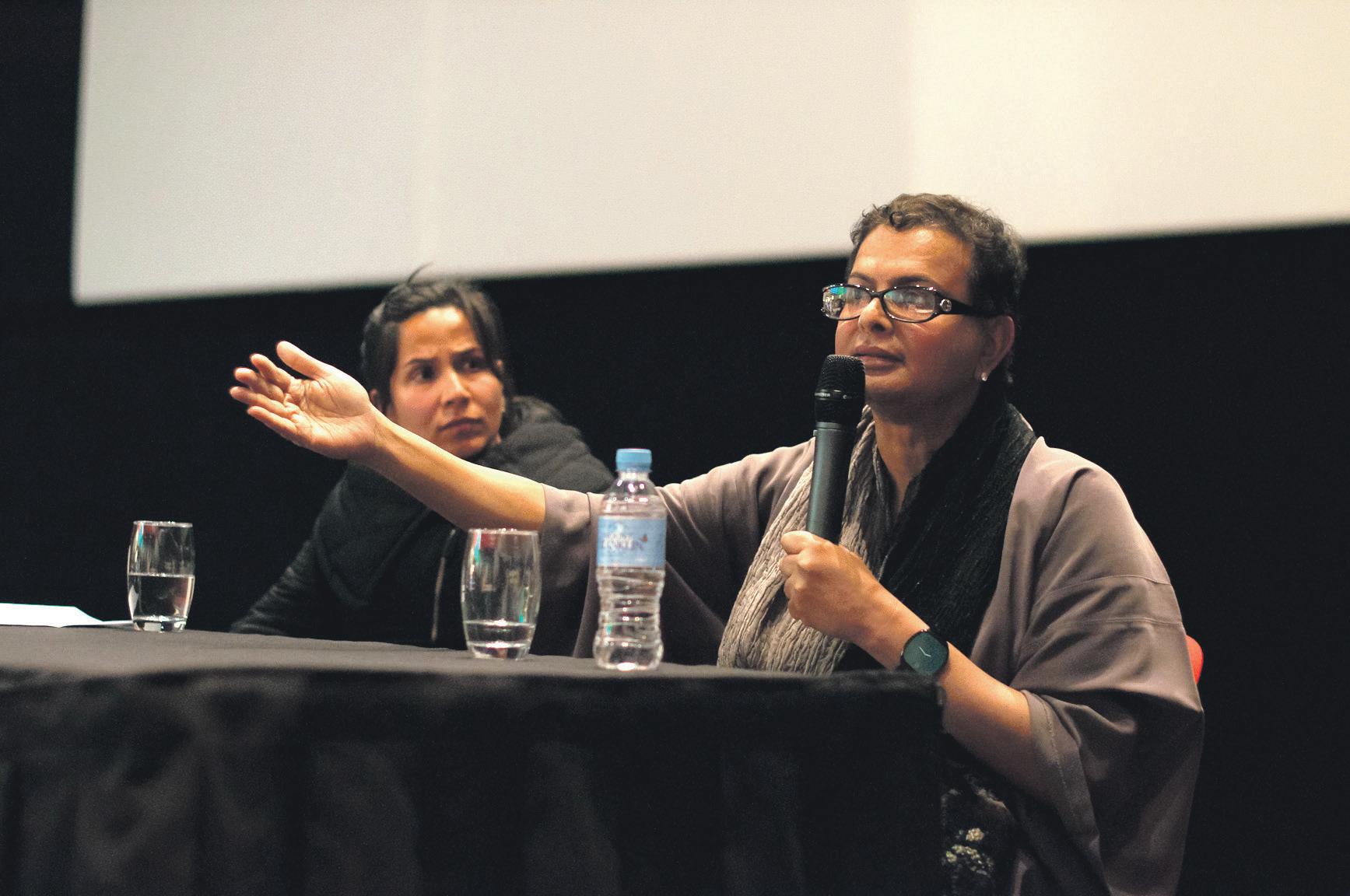
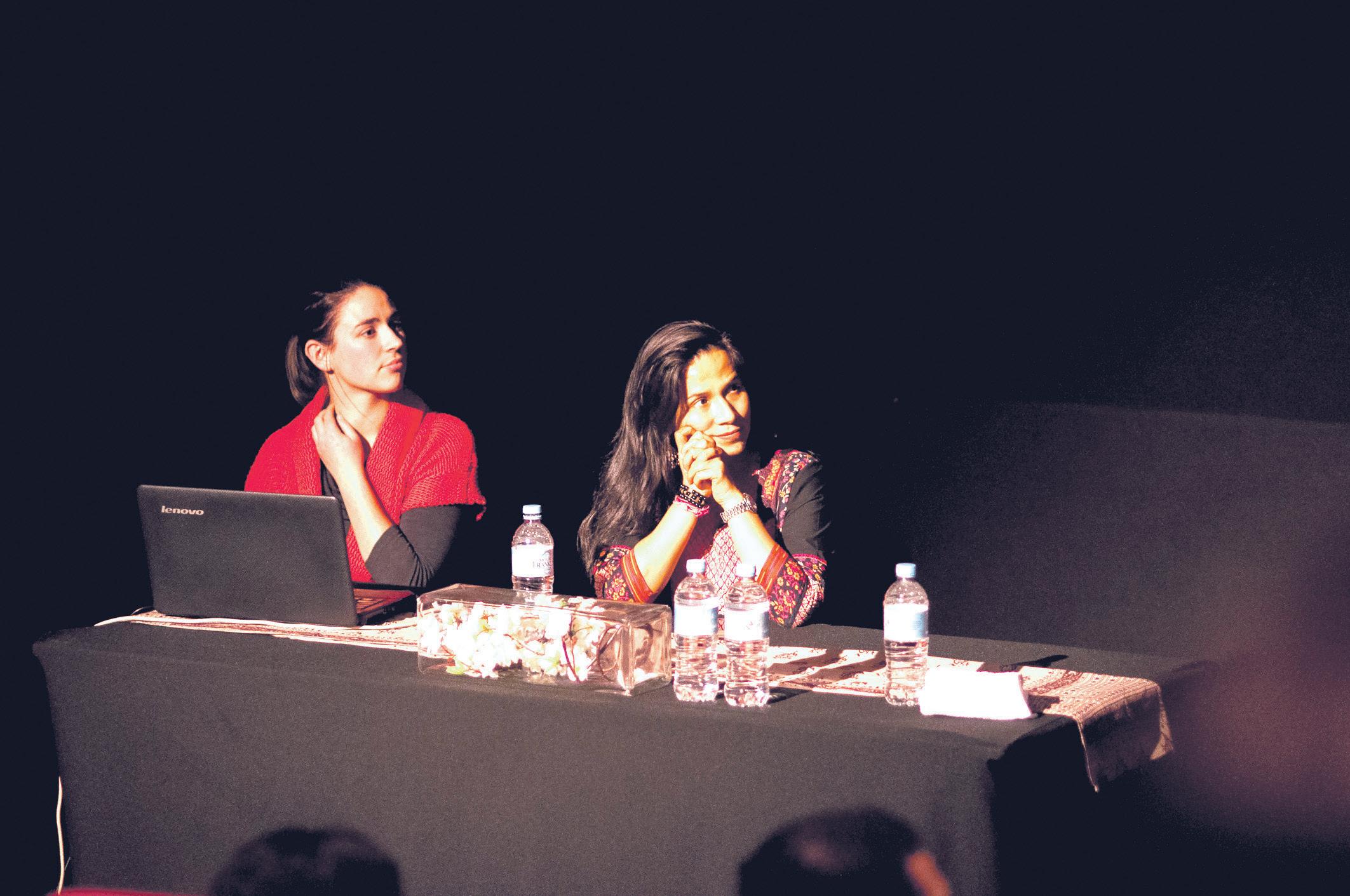
were held as a part of the Indian Film Festival held in Melbourne from July 11-22, chaired by leading luminaries from the Indian and Australian film industry. A select group of Melbournians were treated to workshops and panel discussions which creating an appealing aura of shared thoughts and visions, techniques and opportunities, a treat to attend for these few lucky aspiring filmmakers. Here are excerpts from some of the Master Classes.
Sabyasachi mesmerises with attention to detail
The Master class session held by fashion and costume design legend Sabyasachi was like stepping on a rollercoaster of unstoppable inspirational drive. Speaking about his work, the couture maestro didn’t miss a beat - from his insistence of dressing nonspeaking part actors on the set of the acclaimed movie Black to creating a finite balance on screen between fabric, the weight of the shoes, the colour of lipstick and even the tint of the floorboards.
“Let us not sympathise but empathise with the character,” he said. This sentiment is evident in every production still he showed us; how he developed the art of portraying the psychological undercurrent of a character through his costume design. The master class participants were mesmerised, even amazed at their luck in being a part of it. Just as he emphasised the need to give a movie character – that one moment in which the character releases and shines, this master class was Sabyasachi’s pure and gentle moment of brilliant truth.
Meticulous directing is key
“Themes of loneliness and unlikely connections drive my films,” said Rituparno Ghosh at his Master Class session. The king of Indian arthouse cinema enchanted a full house of Melbourne film aficionados and fans from the Bengali community during his master class, and the closing night screening of the award-winning movie Memories in March starring the cinema legend himself. Rituparno Ghosh covered a range of in-depth topics such as his meticulous directing skill at drawing an actor into his or her role. He shared the example of making Aishwarya Rai wear a sari on set (she always wore jeans) so that her body movement would
change for her role in Ghosh’s much praised movie Chokher
Bali One master class participant and avid fan having seen most of Ghosh’s movies at least six times each, asked a much observant question, “It seems to me that the brilliance of your work lies in your fearless ability to reflect the inner human journey on film by not shying away from making movies predominantly shot in interior settings. What drives you in your filmmaking?”
Rituparno Ghosh responded by speaking eloquently of his passion to reflect the themes of loneliness and unlikely, yet touching human connections in his movies. “The power of cinema lies within the ability to peer into a character’s soul through close ups,” he explained. The profound silence and sheer attention in the room at Melbourne’s Hoyts cinema complex spoke of the undeniable
talent of this ten times National Award winner.
Winning hearts
“In cinema we make too many rules. Don’t follow the formula, go with your heart,” said Abhijat Joshi to a sold-out audience at the master class he chaired with Rajkumar Hirani. Both filmmakers endeared themselves to the audience with their simple, yet powerful stepping stones to audacious storytelling, and their humble nature. A ‘must’ for every filmmaker around the world, their master class rose heads above any screenwriting book or seminar. Why? Because they don’t tell you what formula to apply; instead these screen legends encourage you to feel, to engage with your emotions and if a scene doesn’t make you laugh, cry or increase a sense of dramatic tension within you -
chuck it! Said Rajkumar Hirani, “Make the movie for yourself. Don’t try to please others, it usually doesn’t work.” And if their radically inspiring moviemaking stories from Lage Raho Munna Bhai and 3 Idiots wasn’t enough to blow your mind, it was their words of wisdom that illuminated the soul. “If you want to judge a person’s character, see how he communicates with a person below his or her social standing,” says Raju. The rare gift that Raju and Abhijat bring to life in their work, the knack to inspire personal transformation in a non-preachy manner, was visible in their own attitude whilst conducting the master class. As the saying goes: It’s not what you do, it’s who you are Great leaders inspire action. You can be sure that thanks to Raju and Abhijat, many Melbournians are writing away at their scripts right now.
Rituparno Ghosh covered a range of in-depth topics such as his meticulous directing skill at drawing an actor into his or her role
Both filmmakers (Abhijat and Raju) endeared themselves to the audience with their simple, yet powerful stepping stones to audacious storytelling, and their humble nature.
JULY 2012 13 INDIAN LINK mAINSTREAm
Sabyasachi Abhijat Joshi and Rajkumar Hirani
Rituparno Ghosh
Bhangra beats keep RAVers warm
The evening continued with another bhangra performance that led to the dance floor being opened and the night rocked on with DJ Priya playing the latest and greatest tracks. The delightful
ambience of the venue and good company overall, made the night a great success. Chairman Daljit Matharoo deserves to be commended for orchestrating such a well-organised event.
It was many warm hearts and friendly spirits that kept the winter chill at bay at the Ramgariha Association of Victoria’s (RAV) Annual dinner and dance held recently at Metropol Receptions in Clayton. The event was like a family get-together complemented with delectable cuisine, fine wine and superb Punjabi entertainment provided by the Punjabi Rockers Bhangra Group whose zesty beats bought the venue alive.
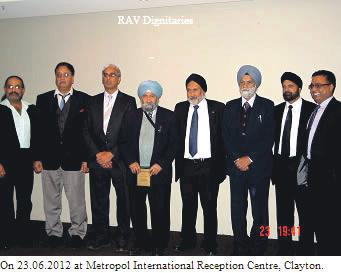
The evening opened with a welcome speech from President Bishan S Khokhar, followed by a bhangra performance that set the mood for the night. This was followed by a formal presentation to the founders and ongoing supporters of the Ramgarhia Assocation: Bishan S Khokhar, Mohinder S Bamrah, Ravinder S Rayat, Balwant S Jandu; Surjeet S Mudher, Jagdish S Virdi, Davinder S Rayat, Parmjit S Panesar, Sunny S Rayat and Satvir S Panesar. They were commended
for their dedication, efforts and commitment to the establishment and continuity of the Ramgarhia Association. A plaque was presented in recognition of their ongoing service.
Sponsors of the event, Consolidated Insurance Agencies; Neena & Manjit Singh Khokhar of Malraj Pty Ltd; LEDEMIT; BPM Group; Ambrosia Developments; Palta Financial Services; Nota Motors (Hallam) were also thanked for their support.
Talks educate seniors on depression and Parkinson’s disease
Citizenship and the Hon. Michael Gidley, Member of Parliament for Monash. Representatives from SBS Hindi programme, 88.3 Southern FM radio station, ZZZ community radio station and Channel 31 were also present, with SBS Hindi and Punjabi programmes offering information about the launch of the brochure and Parkinson’s disease to their audience.
Mr Kostiris addressed the gathering, following which Bollywood dancers took the floor and entertained the attendees. A three-course lunch was served at the conclusion of the function. More information on the disease
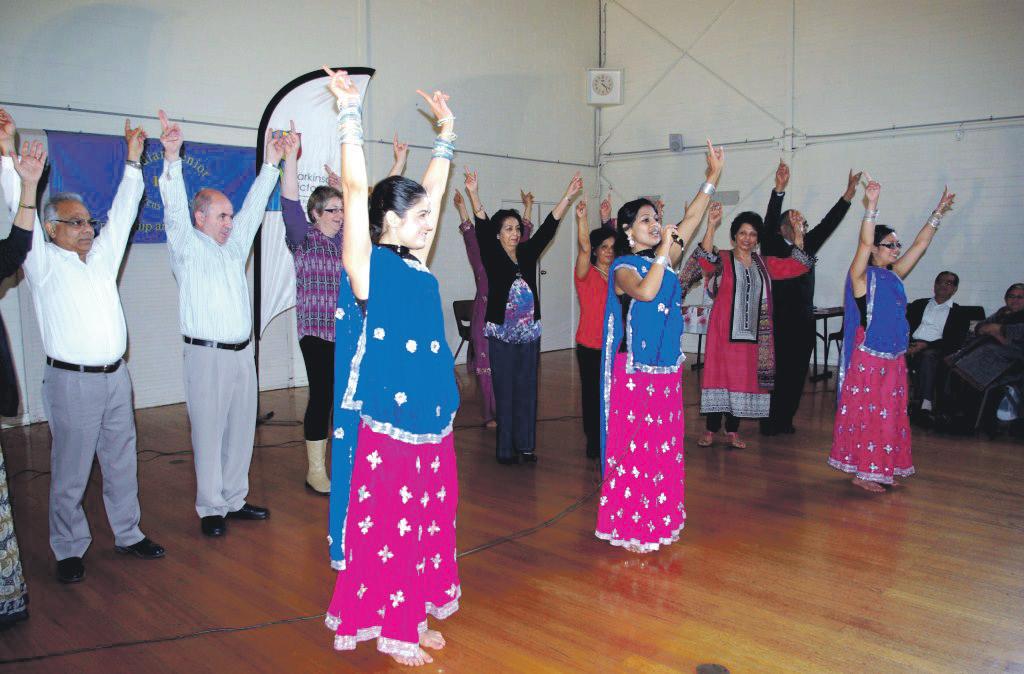
can be obtained by ringing Parkinson’s Australia on 1800 644 189.
ISCA promotes healthy and independent living with dignity. Following that theme, the next event of ISCA on July 14 will present a Physiotherapist who will give a talk and also demonstrate simple exercises for the elderly.
To become a member of ISCA and participate in its activities, information can be obtained from Prem Phakey (President) on 9560 9607, Jasbir Bedi (Vice-President) on 9886 8884 and Koushal Srivastava (Secretary) on 9803 5914.
Prem Phakey
At the June 9 event of the Indian Senior Citizens Association (ISCA), Dr Davinder Kochhar, a practicing Psychiatrist and a member of ISCA gave a well-illustrated talk titled, Many faces of Depression. He explained the common symptoms found in children, adults and the elderly, with examples of several celebrities, politicians and religious leaders who suffered from depression, and recovered to be successful in life. Dr Kochhar emphasised that it was important
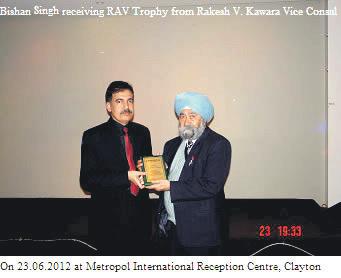
to recognise the symptoms and seek early medical attention to avoid consequences that may lead to disaster. Keeping in mind that several suicides in the Indian community were reported recently in the media, the talk contained an important message and a warning for the community. Further information can be obtained from Dr Kochhar on 9817 5227.
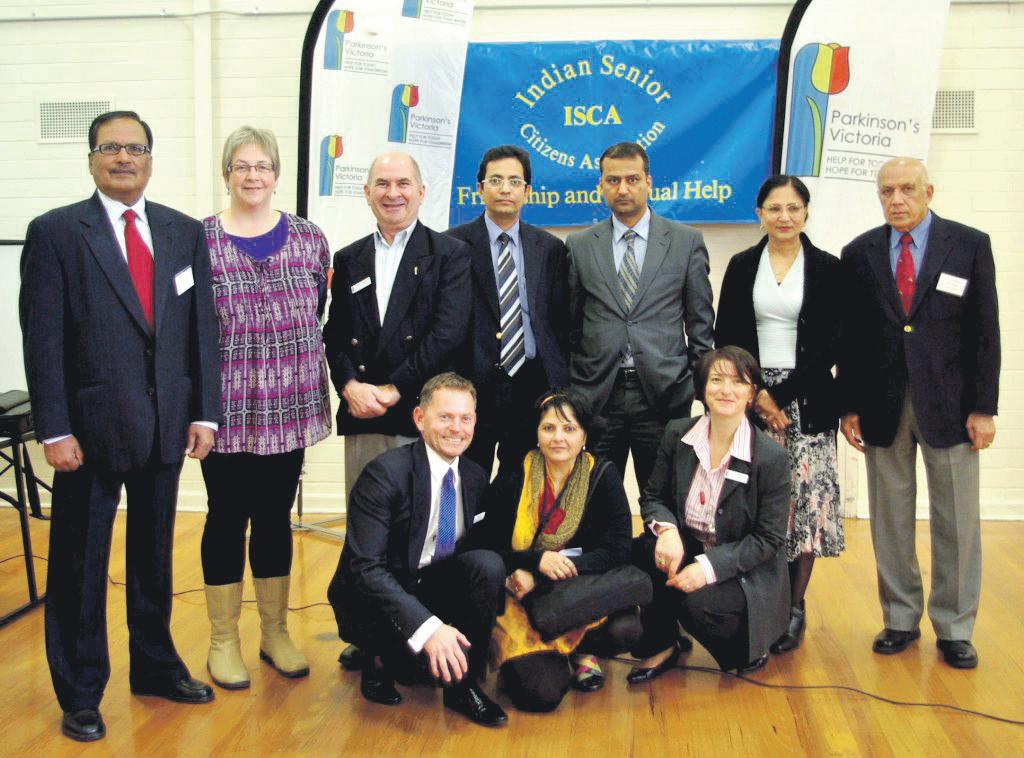
In the previous month on May 9, Parkinson’s Victoria together with ISCA organised a special function to launch a brochure on
Parkinson’s disease in Hindi. The speaker was Dr Sanjay Raghav, a neurologist, who described the nature of the disease and its effect on people. He briefly explained the treatments available.
Mr Peter Raymond, President and Ambassador of Parkinson’s Victoria who suffers from the disease, gave an inspiring talk on his own experiences and how he copes with the condition.
The event was attended by the Hon. Nicholas Kostiris, Minister for Multicultural Affairs and
14 JULY 2012 www.indianlink.com.au CO mm UNITySCENE


JULY 2012 15 INDIAN LINK
Exemplary academician receives OAM
 BY SUJITH KRISHNAN
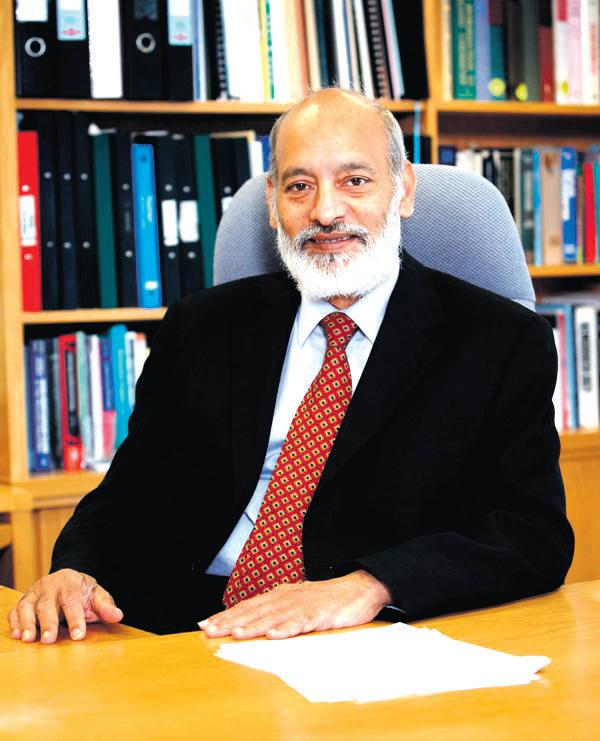
It’s not every day that we come across an inspirational luminary such as Prof Tam Sridhar who has surpassed expectations in the field of chemical engineering. Prof Sridhar has won accolades from all quarters ever since he made his foray in this challenging, yet dynamic field of engineering, which he has studded with achievements beyond compare. His exemplary academic journey is not just astonishing, but is also an indication of his brilliance and determination to strive for excellence.
Adding to this impressive list of accolades is the Order of Australia (OAM), instituted by Her Majesty The Queen in 1975 as “an honour for the purpose of according recognition to Australian citizens and other persons for achievement or meritorious service”. Prof Sridhar was awarded the medal for his contribution to society and science in chemical engineering. With becoming modesty, he acknowledges the award, saying, “I feel privileged to receive this
honour”.
With a rich background in chemical engineering, Prof Sridhar arrived in Australia in 1974 to take up his PhD programme at the Monash University on a fellowship, on completion of which he took up a senior teaching fellowship position at the same university for two years. Despite moving away from Australia for a short period to work as Assistant Professor at the State University of New York in Buffalo, USA, Prof Sridhar was requested to return in 1982 to be employed as a senior lecturer in Monash University.
After a successful period of five years in this position, he was then promoted to the elite rank of Reader. In 1992, he was appointed to the Chair of Chemical Engineering and remained Head for the next 11 years. In 2003, he was appointed as the Dean of Engineering, a position he currently holds.
Apart from academic excellence, Prof Sridhar has also garnered global recognition in the realm of polymers. Currently, he is a Fellow of Engineers Australia, The Australian Academy of Technological Sciences & Engineering, The Australian Academy of Science and The Institution of Chemical Engineers
(UK). He was conferred as an Honorary Fellow and awarded the GP Kane Award by the Indian Institute of Chemical Engineers. He was also awarded the Australian Centenary Medal for service to Australian society and science, and the ESSO
Energy Award for his outstanding contribution to chemical engineering.
In 2003, Prof Sridhar was recognized as one of four Sir John Monash Distinguished Professors and in 2011, he was appointed to the concurrent role
of Vice President (China and India initiatives). Moreover, he has an outstanding record of research with over 140 publications and has worked on nearly 50 competitive research grants, having also supervised more than 20 PhD candidates.
With a strong desire to enhance his contribution in academia, Prof Sridhar played a pivotal role in the establishment of the IITB-Monash Research Academy in Mumbai, a non-profit joint venture between IIT Mumbai and Monash University in 2006. Students from this academy are entitled to spend a year in Australia and are also eligible to receive dual PhD degrees from the two reputed institutions. The academy carries out research in disciplines such as Engineering, Medicine, and Physical and Biological Sciences. More recently, he was also the leading light in the establishment of the Joint Graduate School for Monash University in China.
A family man to the core, Prof Sridhar enjoys being in the company of his near and dear ones the most, and says all his professional achievements pale in comparison with the happiness he acquires by just being with them. Truly an inspirational gentleman!
Businessman Khan to run in council election
E“Enough is enough!”, and announced his intention to stand within the seat of Truganina ward in the upcoming Whyndham City Council elections in October 2012. He advised the public of his intent at a special pre-release event attended by his closest friends and associates during an intimate function held at Point Cook. Many local community members attended the prelaunch event, including Md
Massod, President of Werribee Islamic Centre; MR Ravi Bhatia, President, Australia India Business Council; Mr Farooq, President of the South Asian Community Group; community leaders Jaswinder Singh, Josheph, Manoj Kumar, Amir, Sofia and many more. Leaders in the education industry were also present, such as Mr Gurminder Singh, Jai Anand, Rizwan Ahmaed, Daud and Sundeep.
The Truganina Ward is situated in the north-eastern corner of the municipality. It incorporates industrial precincts in Laverton and Laverton North, commercial and residential areas in Hoppers
area of Williams Landing are also located in Truganina. The ward is home to the West Point business park and Port Phillip Prison. In October 2008, an estimated 31,760 voters lived in the Truganina Ward.
inadequate or in some cases, not available at all. Intaj Khan intends to give such issues their due importance.
Recently recognised by Business Review Weekly (BRW) as the CEO of one of Australia’s fastest growing companies, Intaj is
certainly in a position to draw attention to inequalities within the area.
“Roads are an issue, not enough bike footpath around the area, internet connectivity is an issue and the critical lack of education certainly is an issue in the region,” declared Khan. “These are issues that need attention now and I intend to make sure something is done about them.”
He added, “As well as these topics, I ask the community to let me
know what issues are on their minds. What needs fixing? What needs attention? Let’s discuss the points raised and set about finding a solution. We certainly can’t sit on our hands and wait, it’s time that we pool our collective voices and have our grievances heard.”
Intaj Khan has set up a special Facebook page (facebook.com/ Intaj2012) where interested residents can make contact and to follow proceedings as the election campaign gathers pace.
16 JULY 2012 www.indianlink.com.au CO mm UNITySCENE



JULY 2012 17 INDIAN LINK
AIII members receive awards on 10th anniversary
Australian Indian Innovation Incorporated
(AIII) celebrated its 10th anniversary in Melbourne recently. The AIII is one of the premier Indian associations of Australia comprising of independent organisations and individuals who aim to facilitate opportunities, depict the cultural kaleidoscope of India, and showcase the country through various activities, seminars, festivals, fairs and events. The AIII’s annual Diwali and Holi celebrations have gained immense popularity among members of Indian diaspora in Melbourne. Since AIII’s inception ten years ago, the festivals are getting bigger and better, while attracting active participation from the community, businesses, politicians and individuals.
The AIII anniversary was celebrated in style with a formal dinner dance event held at Princess Court Receptions in Clayton. The guest list comprised of who’s who in the Indian community, along with an influential mainstream presence.
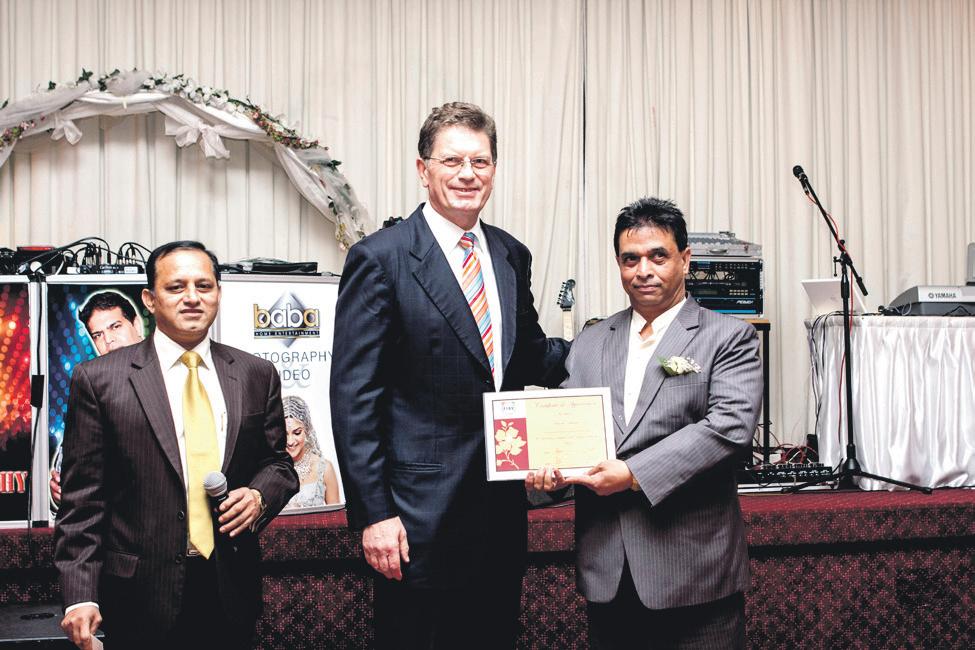
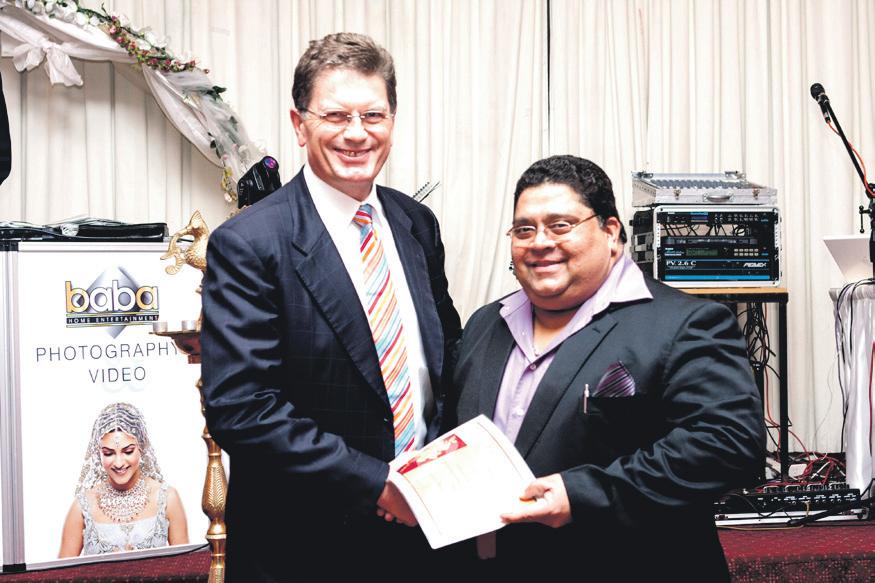
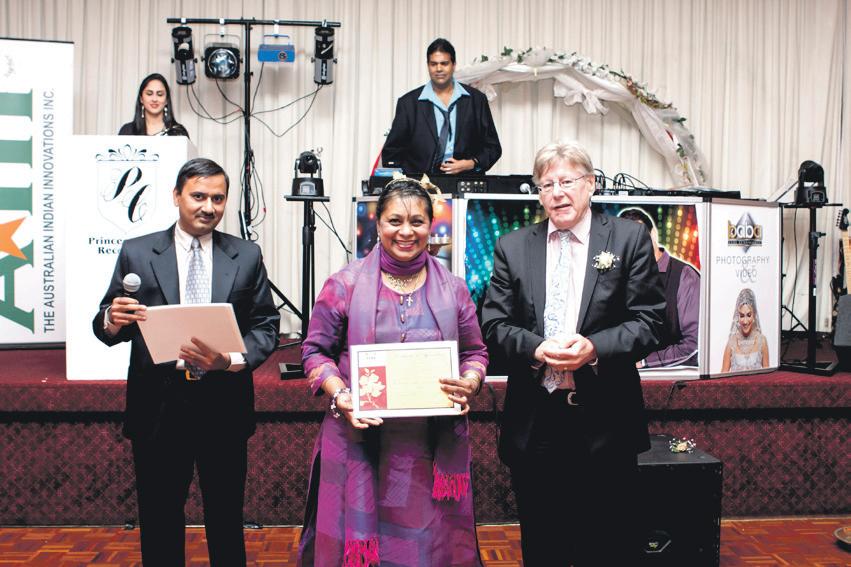
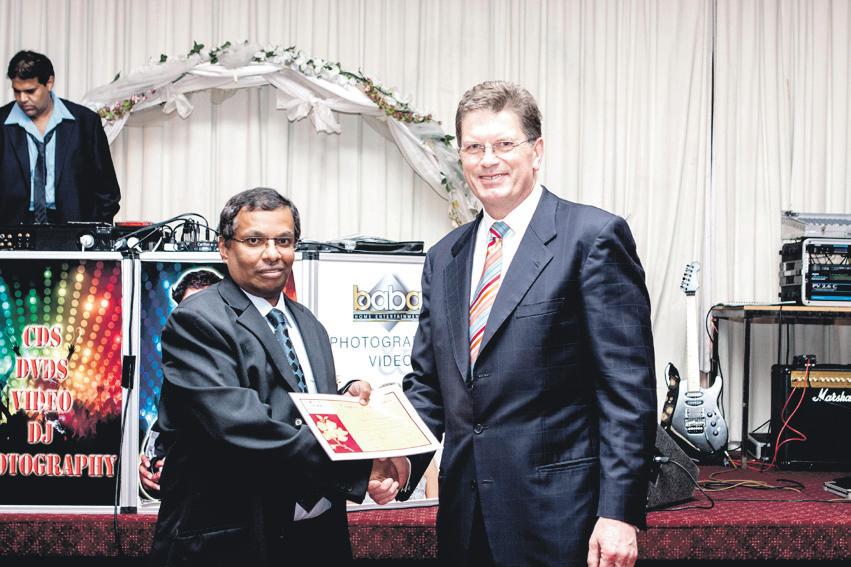
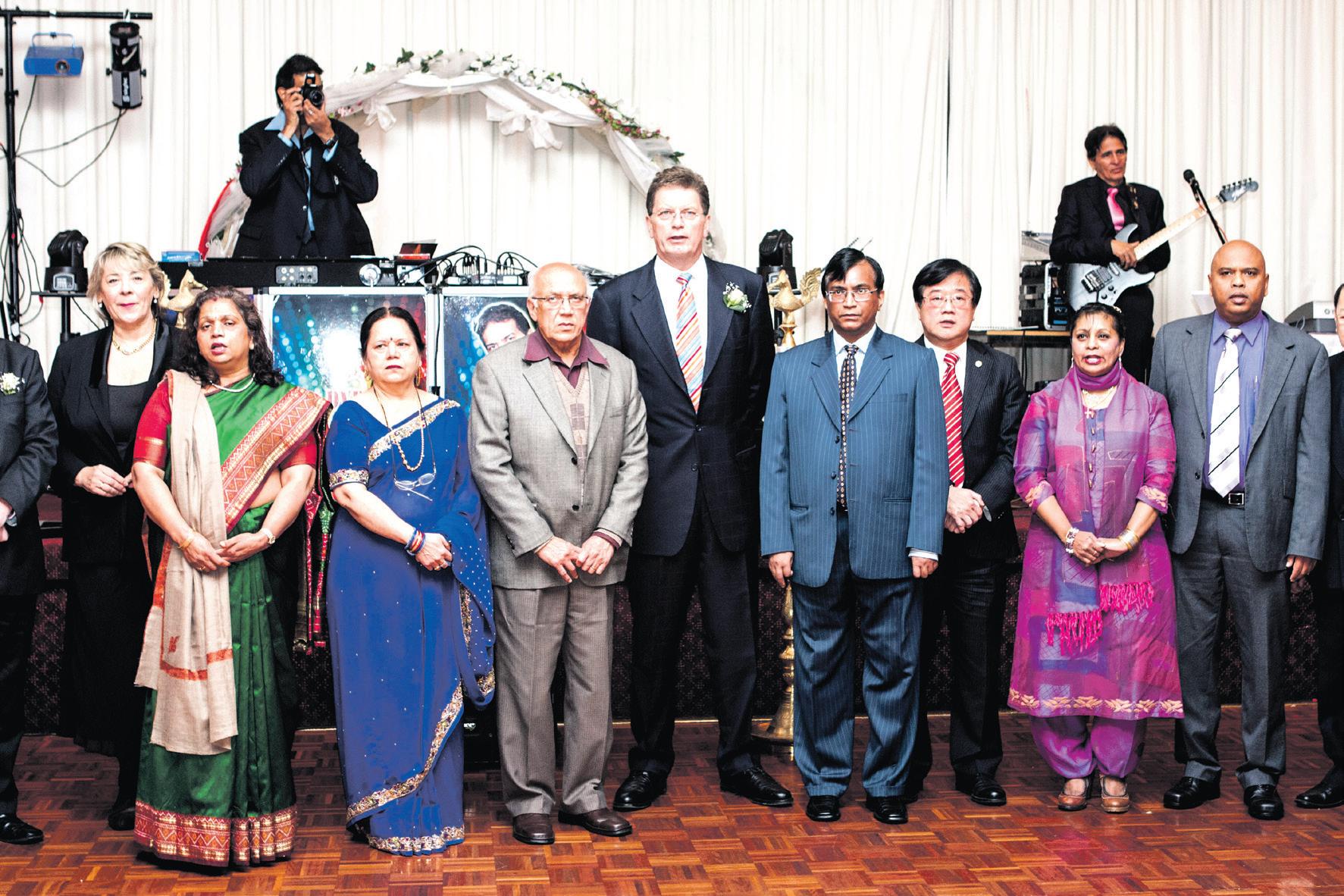
Victorian Premier Ted Baillieu was the chief guest at the event, accompanied by his wife Robyn. Other dignitaries included Inga Peulich, member for the South Eastern Metropolitan region; Jude Perera, Member for Cranbourne and shadow
Parliamentary Secretary for Multicultural Affairs; Bruce Atkinson, MLC for the Eastern Metropolitan Electoral Region; Hong Lim, Member for Clayton; Dr Subhakanta Behera, Consul General of India in Melbourne;
and Youhourn Chea, Mayor of Greater Dandenong. Most of the guests were requested to address the select audience, with the common theme being commendation for the AIII and appreciation of their efforts towards enriching and upholding multiculturalism in Australia.
In what can only be termed as a major auditory coup, a DVD that outlined AIII’s ten-year achievements was displayed with the voiceover from Indian cinema’s mega-celebrity Amitabh Bachchan. Speaking in pure, cultured Hindi, India’s best-known actor spoke about the people, plans and practices that make every AIII event a success. He introduced the AIII committee comprising of President Vernon Da Gama; Trustee Yogen Lakshman; Trustee Babu Akula; Executive Committee Members Neeraj Nanda, Harjinder Soni; Joint Secretary Usha A Sharma; Secretary Pandit Patil; Vice Chairperson Hari Yellina; and Founding Chairperson Geraldine Gonsalvez. Other key players among the general body of AIII were also acknowledged as the President of Federation Of Indian Association In Victoria (FIAV) Vasan Srinivasan presented them with certificates of appreciation.
A light music band, live DJ and dance performances by Natya Bollywood Group kept the audience entertained. AIII ambassador Rima Das was MC for the evening. According to Public Officer Yogen Lakshman, the AIII will continue its commitment to Victoria in promoting harmony in collaboration with the Victorian Government, sponsors and
supporters. “We will continue to lend a helping hand in support of merging community organisations and assist them in showcasing various festivals and events” said Lakshman. “We will continue to support minor charities that work towards the betterment of multicultural Victoria and we are proud to be a considered as
a brand name when it comes to celebrating festivals such as Holi and Diwali in Australia,” he added. AIII is now gearing up for the second half of 2012, proving once again that a little innovation can go a long way. Here’s to many more anniversaries and decades of worthwhile contribution to the community.
What’s on
Saaz aur Aawaaz
Saturday, 14th July, 8pm – 11pm at Mount Street
Neighborhood House, 6 Mount Street, Glen Waverly, Mel Ref: 71 D2, enter from Panoramic Gv carpark. A light Indian musical evening with a melodic programme presented by local artists. Open forum, artist and audience are welcome. Free entry with tea/coffee served. Contact Satish Dutta on 0400 368 303 for more details
Sahitya Sandhya
Saturday, 21 July from 7:30pm
– 10:30pm at Kew Library , Corner of Cotham Road and Civic Dr. Kew 3101, Melway reference 45 D6. Literary evening, with all welcome to participate. New poets are most welcome to recite their poems. Entry free and free Tea will be served. For further information contact Harihar Jha on 9555 4924; Nalin Sharda 0402 108 512, or visit http://sahityasangam. weebly.com/ or www.sharda. org/SahityaSandhya.htm
Sankat Mochan Samiti
Saturday 28 July, 2012, 2:30 to 7:00pm at BMW Edge theatre,
Federation Square. Grand celebration for blissful universal peace.
Free admission, please feel free to invite devotees who may be interested in attending the Mahotsava on behalf of Sankat Mochan Samiti. For catering purposes, please RSVP by July 23. For sponsorship or more details, contact Dr. Sunila Shrivastava on 0427 274 462
Gujjubhai ni Golmaal Saturday, 28 July from 7pm onwards at The National Theatre, St Kilda. Gujarati Comedy king Siddharth Randeria is back in
Melbourne with his brand new Gujjubhai series comedy drama, Gujjubhai ni Golmaal. This rollercoaster ride of laughter is the story of Gujjubhai’s journey to make money and get rich. Gujarai food will be available at the venue. For tickets contact Vishal on 0414 98 5050; Hemal Shah on 0413 71 5277; Prashant Patel on 0430 07 3729; Marut Patel on 0433 17 6440 (Gujarati food available). Tickets prices: $35, $45, $55 $65
Independence Day and Onam celebration Saturday, 18 August from 12 noon onwards
at St Anthony’s Church Hall, 90 Buckley Street, Noble Park 3174. The Overseas Indian Cultural Congress (OICC Australia) will celebrate Indian Independence Day and Onam festival with members and friends. The celebration will start with Onam lunch at noon, followed by a cultural programme invoking the true spirit of Kerala’s culture. For more details contact President Jose M George on josemgeorge@yahoo.com or call 0401 955 965; or General Secretary George Thomas on Gt.lalu@gmail.com or call 0421 359 354
18 JULY 2012 www.indianlink.com.au CO mm UNITyS CENE
Photos: Ravinder Singh
Jabbal
$985.00



JULY 2012 19 INDIAN LINK
Shattering stereotypes or endorsing them?
The TV show Dumb, drunk and racist reveals some surprisingly honest home truths about the many facets of ‘real’ Australia
It’s been pretty quiet in the past eighteen months or so on the “Indian students’ issue” that brought diplomatic relations to a head between India and Australia. Safety measures have been put in place; awareness has increased among the students themselves; rogue agents have been fleshed out who were taking advantage of the system. And while student
numbers may have dwindled, what’s increased is the number of state premiers and federal ministers leading massive trade delegations to India to win back the lost dollar.
So if things are finally beginning to look cordial again, who’s the dumb, drunk, racist who’s raking all the muck up again?
Er, that would have to be Joe Hildebrand, journalist. In fact, that is how he regularly introduces himself to us, ie, once a week, at the start of his TV show called, strangely, just that – Dumb, Drunk and Racist
The ABC2 series, in which
Hildebrand takes a bunch of Indians around the country to decide for themselves whether Australians are ‘dumb, drunk and racist’, has been a surprise hit. (In fact, such a hit that Hildebrand has not stopped beaming ever since that appearance on Q&A the week his show opened).
Of course if you ask him, as I do, he’ll tell you the show is a success because of the “exceptionally handsome and charming host”. Perhaps he could have taken his shirt off in the Bondi beach scenes…? Pat comes the reply, “We would definitely have been moved up to ABC1
then. Who knows, we could have gone mainstream!”
But seriously, Hildebrand agrees that the success of the show is not only that it helps shatter stereotypes for one audience, but equally, that it strikes a few hometruths for another.
“It is a pretty polarising issue really,” he observes. “On the one side we have a group of people, typically the self hating inner city type, who are convinced that Australians are dumb, drunk and racist; on the other hand, we have those who challenge this assertion and are outraged that this can even be suggested! Somewhere
in between, is the vast majority who are open to looking at this topic and then forming their own views”.
It all started with a news report months ago.
“An American journalist who had worked in an Indian call centre reported that the operators were trained to be aware that Australians are dumb, drunk and racist. That triggered the initial research by the TV production company Cordell Jigsaw, the team behind SBS TV’s Go Back To Where You Came From, to research this idea. They tested the theory and then decided to go for it.

20 JULY 2012 www.indianlink.com.au
m AINSTREA m
AWAN LUTHRA
They invited me to host, and off we went”.
Joe seems a natural fit for the program. As the Opinion editor for News, Joe has never been backward in coming forward with his views on issues which may have more of a slant to the right than to the left.
How did they pick their “guests”?
“We struck it good with the four guests from India, really. We had to find people who thought Australia was a dangerous and hostile place to visit, and so it was a bit of a challenge to get them on the plane, as they were worried about their own safety in Australia, but we were able to convince them. Their families were more nervous actually. I am glad to announce that we have got them back safe and sound to India”.
Radhika, Mahima, Gurmeet and Amer head off to various parts of Australia in Joe’s social experiment. They meet White nationalist protesters at Villawood, confused burqa-bashing artists in Sydney’s Newtown district, hijab-wearing African immigrants in western Sydney, Cronulla lifeguards who fought for peace in the midst of riots, an Aboriginal
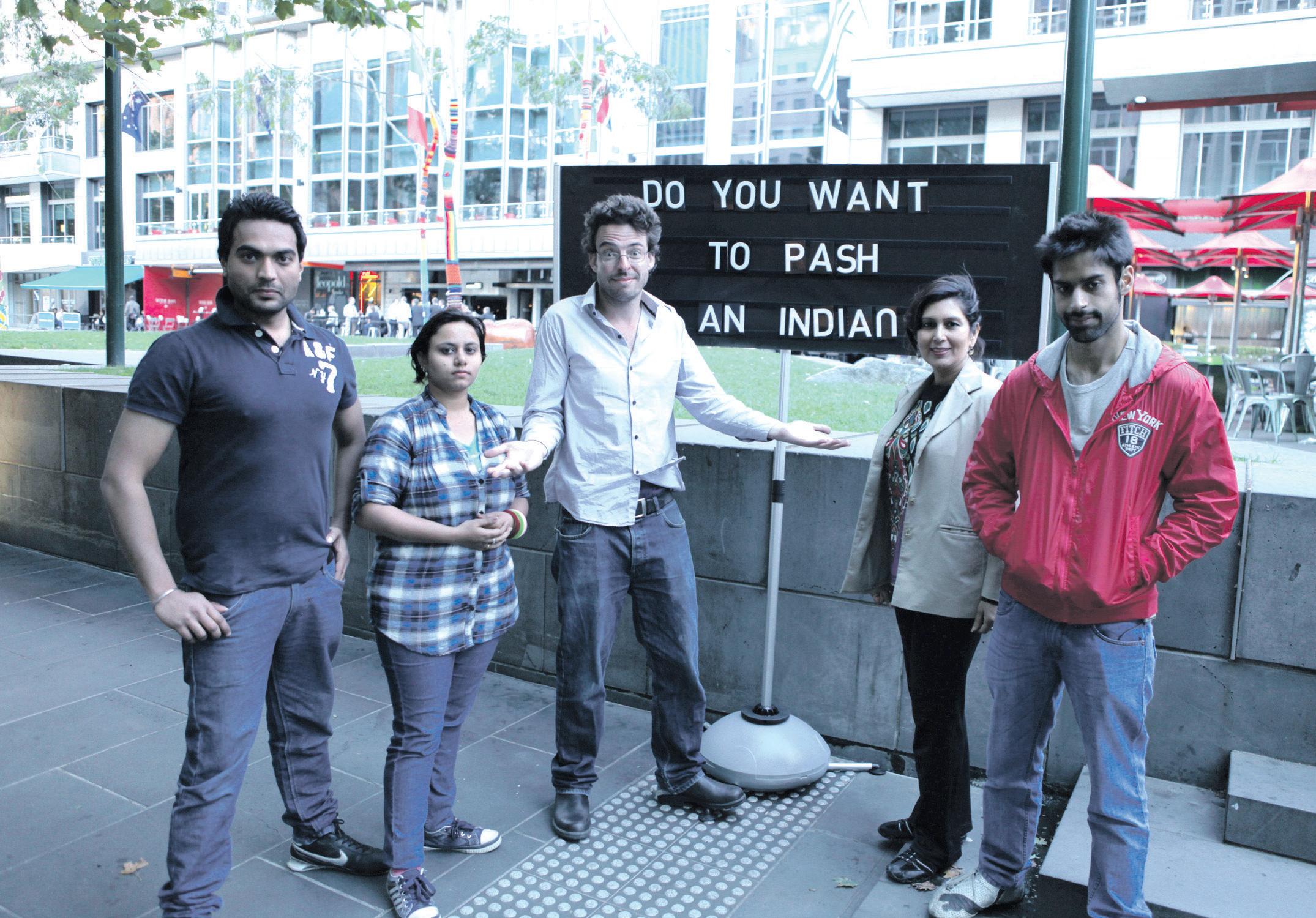
elder in Moree, B&S revelers as well as community-minded mums in Mt. Isa, cattle auctioneers in rural Queensland, a hen’s night party at the Gold Coast, a Pakistani taxi driver, a same sex couple, hostile Aboriginal women, and a host of other interesting people that shape their views on the people of this country and the issues that affect them.
They also meet Indian student Saurabh Sharma, the CCTV footage of whose brutal bashing in a Melbourne train was played incessantly on India’s television screens, sparking outrage across the country.
Of the four, only one, Radhika, had been here before. An educational counsellor, she was here looking to send her daughter to an Australian university, but encountered such racism that she decided to send her to the US instead, and now guides other students away. Amer, a law student, also considered Australia but chose to study at home in India. Mahima, a call-centre worker, frequently encounters racist abuse at work from Australians. Gurmeet, a TV news reader comes with his own set views on Australians.
“They met for the first time
in Delhi,” Joe reveals. “But once the cameras were rolling, they all became very close. In fact, it became like a Big Brother House. They have all have struck a chord with the viewers. Amer is quite popular; and a lot of guys find Radhika very foxy”.
Their own personalities unfold well in the show. Radhika shines through as someone with a lot of sensitivity; Gurmeet as someone who really wants to change societies; Amir as probably the one who would fit in best given his party-loving nature, and Mahima as one with wide-eyed innocence. All different, each has clever insights into the people and society here.
They ask meaningful questions and seem to want to genuinely understand, which is more than we can say for the bunch of Indian journalists who were brought out here by the Australian government at the height of the students’ crisis. (Their reports back home failed to enlighten, let alone alleviate anxiety for concerned families).
Mahima is terrified to learn she has to take a train-ride along the same route and at the same time as when Saurabh was attacked (her facial expression suggests it will probably be like the 1947
train that rolled into Delhi station from Lahore carrying nothing but Hindu corpses), but soon she is happy to try her first beer.
Gurmeet is politically aware, but watch his inability to comprehend why a same-sex relationship should seem normal.
Amer loves Sydney Harbour and the fast food outlets and in Melbourne, ‘the most dangerous city in the world for Indians’, wants to walk on the streets at 2 am.
Radhika feels a spiritual connection at Uluru and weeps as an Aboriginal elder describes the Myall Creek Massacre of 1838.
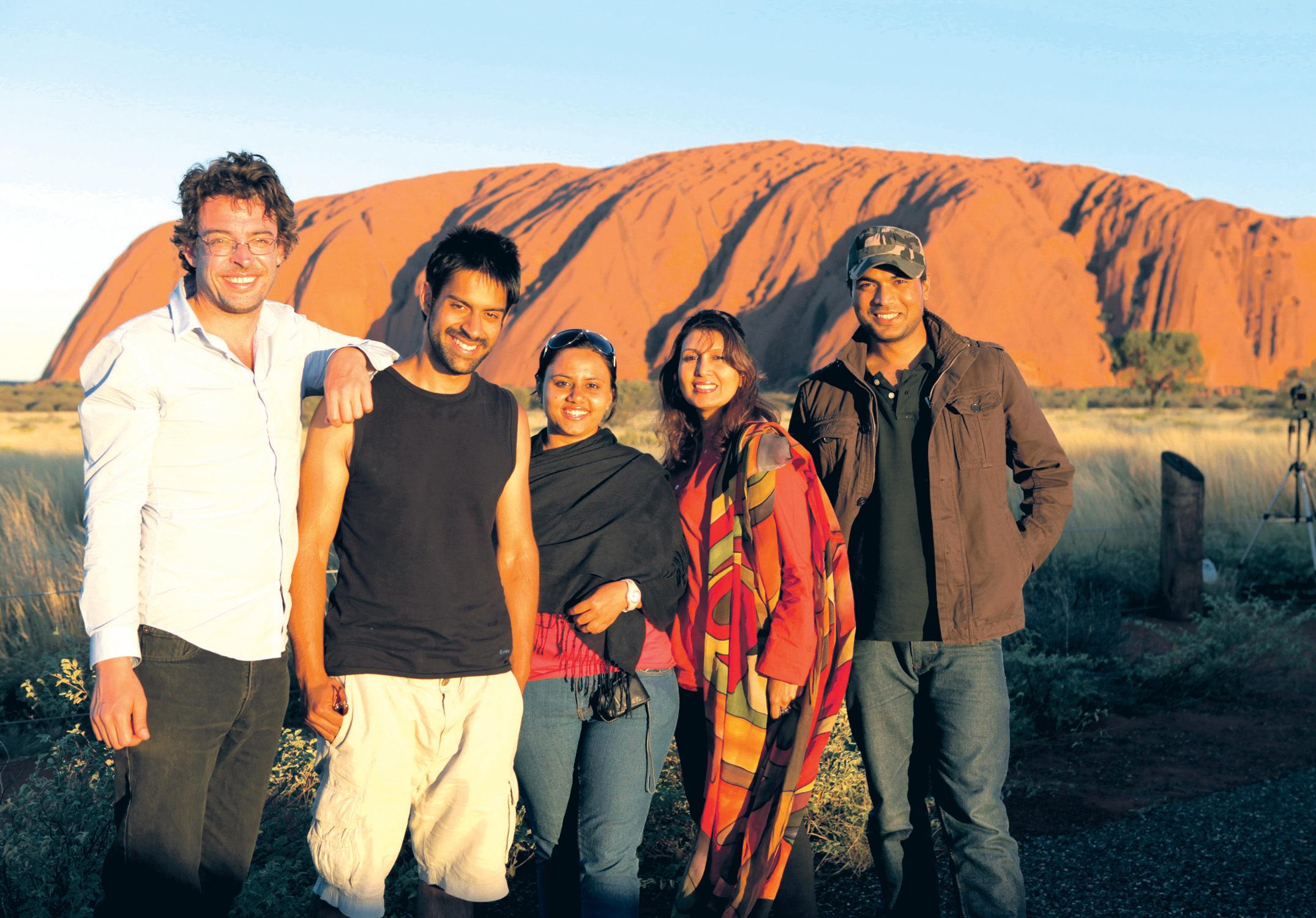
“It was a life changing experience for them all,” Joe reveals. “They were genuinely surprised at what they experienced: at times they were upset and traumatised, other times they were thrilled and screaming with laughter. They were terrified and enthralled, it was an amazing journey for them.”
Equally, it turned out be an eyeopener for him, too.
“I’m sorry to say it turned out quite differently to what we had expected,” he admits. “I had hoped we would be disproving (the stereotype). But I was genuinely surprised at the ambient
racism on the streets of Sydney and Melbourne. The ugly stuff surprised me as people popped out of nowhere with statements of ‘White pride’ or ‘Go back to where you came from’ in an open and aggressive manner. The surprising thing was how often and how unprovoked these statements were… they made me very uncomfortable”.
He continues, “While on one hand there will be lovely people telling the Indians about how wonderful Australia was, some asshole will shout out something nasty and abusive. That just hurt me and made me ashamed. Especially as I had just come back from India and seen the terrible poverty and extremes over there, and realised how lucky we have it here”.
So, does Joe Hildebrand, well known for his thought provoking pieces in The Daily Telegraph, believe that Australians are dumb, drunk and racist?
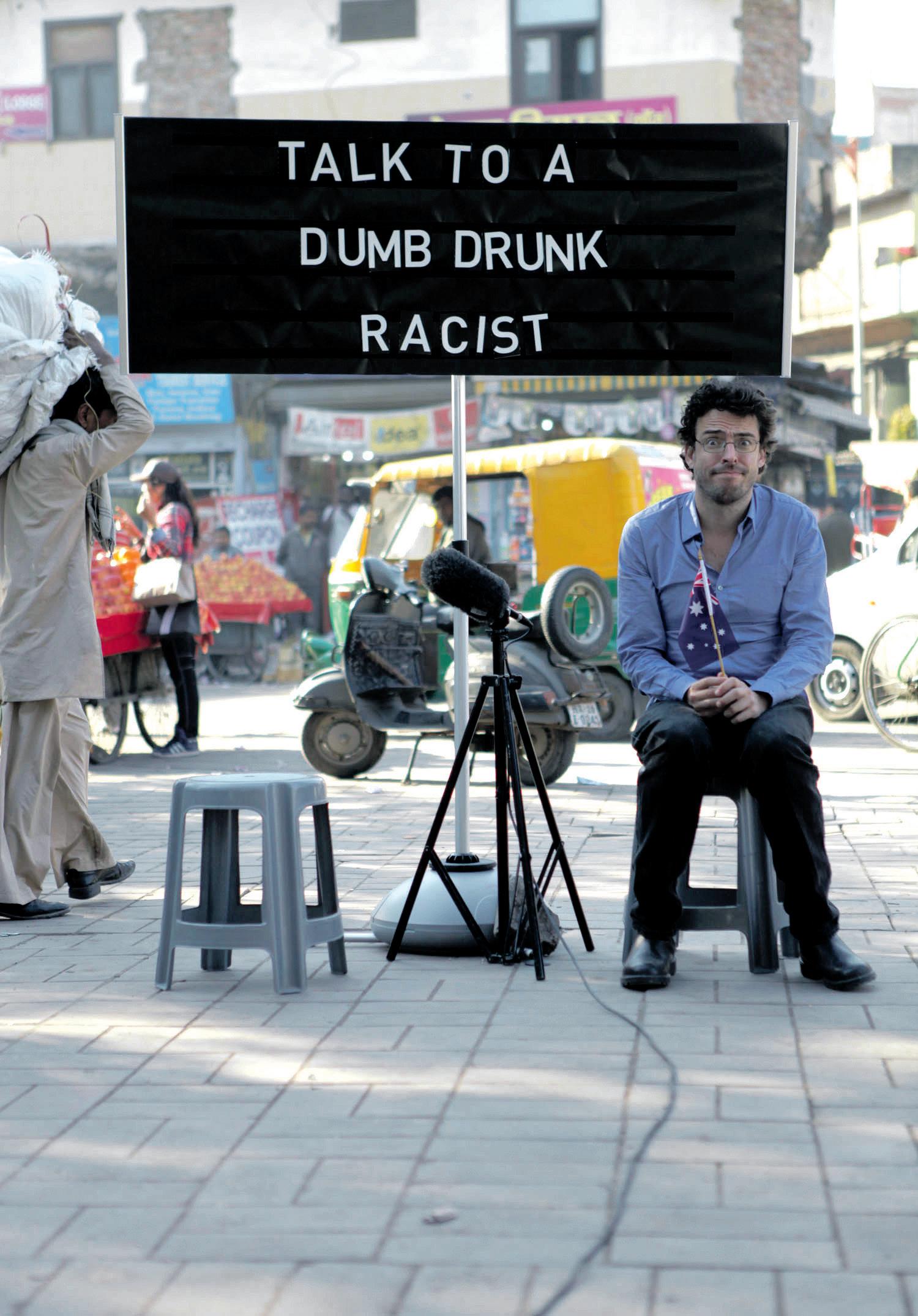
“I don’t think we are dumb,” he replies quite decisively. “But we’re probably pretty drunk, and a few of us are quite racist. There are always a few racists in any country but in a country like Australia we need to have a stronger standard to adhere to. We don’t have a war or religious conflicts or even much political extremism; we are an incredibly wealthy country with a strong moral and religious compass and a sophisticated liberal democracy, so I don’t see why we shouldn’t be a more tolerant and welcoming place”.
Would he like to reverse the concept and take a bunch of Aussies to India and shatter their stereotypes?
“Well, I’m thinking along the lines of a show called Smart, Sophisticated and Tolerant, actually….” he laughs in conclusion. Tune in to Indian Link Radio to listen to a repeat of Pawan Luthra’s full interview with Joe Hildebrand, Sunday 8 July, 9.00pm. Download Indian Link Radio app on your Smartphone.
JULY 2012 21 INDIAN LINK
































22 JULY 2012 www.indianlink.com.au MAY 2012 22 INDIAN LINK Indian Link Saroja Srinivasan Noel G de Souza Shafeen Mushtaq Dinesh Ramanan Jyoti Shankar Sandip Hor Sunil Ranadive Hasnain Zaheer Malavika Santhebennur Roy Lange Akriti Goel LP Ayer Tanveer Ahmed Malli Iyer Vidya Muthanna Minnal Khona Azal Khan Avijit Sarkar Noopur Singhal Ruchi Lamba Sanjiv Dubey Preeti Jabbal Pallavi Singhal Sreedhevi Iyer Komal Utsav Jagad Uzma Beg Rajni Anand Luthra Vivek Trivedi Priyanka Tater George Thakur Mark Sharma Gerard Fernandes Farzana Shakir Usha R Arvind Raka Mitra Anusha Menon Tanmayi Chari Nancy Sood Geeta Khurana Drishti Nanwani Uttam Mukherjee Darshak Mehta Talia Kaur Tim Blight Arveen Sharma Petra O’Neill Sukrit Sabhlok Dilip Jadeja Sai Narayan Shraddha Arjun Rani Jhala Sujith Krishnan Shivangi Ambani-Gandhi Neelam Vasudevan Gaurav Surati Priyanka Rao Sheryl Dixit Auntyji Nitika Sondhi Danielle Cairis Sanam Sharma Deepa Gopinath Ritam Mitra Sydney Srinivas Sudha Natrajan Thomas E King Chitra Sudarshan Ashita Vadher Wespendourtime TELLINGYOUR sTORIEs Pawan Luthra Farrha Khan The team at Indian Link

JULY 2012 23 INDIAN LINK
Feast of kindness revealed
A unique exhibition of artists and writers displays the profoundness of their feelings for India, Australia or both
LEANNE WOODWARD
In the heart of Melbourne, just a hop and skip from Melbourne Central Station is the RMIT Gallery, which has the honour of exhibiting a collection of 117 different artists and writers from India and Australia. The gallery setting for the Kindness/Udarta exhibition is compact, but the small space is undeniably jampacked, much like India. Each artist involved has provided a snapshot of their work, a small insight into a bigger picture. Each artwork in a way describes just one ingredient of the many that go to make up India, or Australia, or both. Looking closer into any of these works can reveal the larger story behind the artist’s creation, and reveal tales of experiences they wish to share. The stories behind the works are absorbing and inspiring, and are available in a hardcover publication produced in conjunction with the exhibition.
I left the exhibition with a smile, because many of the works reminded me of the daily things often taken for granted in Australian and Indian lives. These things are those that give our world character, and are what we love and miss most about a place when we leave it.
The Kindness/Udarta exhibition is a celebration of 20 years of work, and marks the 20th Anniversary of the AustraliaIndia Council, (AIC). The artists and writers participating in the exhibition are only some of many who have been recipients of an AIC-funded grant. These grants have been awarded to persons or groups to help with projects that reflect the values of the AIC. The exhibition is thus, in a sense, a
semi-historical account of 20 years of meaningful work that has been supported by the AIC.
The AIC was formed in May 1992, thanks to the then Senate Standing Committee on Foreign Affairs, Defence and Trade, who identified a need for such a group. The organisation’s primary intention has been to promote Australian and Indian relations, collaboration and connections, understanding and respect, and knowledge, skill and cultural exchange. It participates, encourages and promotes related activities, and supports many of these each year through the provision of AIC grant funds awarded in India and Australia for projects in fine arts, literature, film, sport, education, science, technology, environment, and public health. In addition, grant recipients are also likely to have had personal experience in both India and Australia, and are conscious of elements of both cultures. Through supporting these projects, the AIC is actively working toward maintaining and improving Australia-India connections and where possible, building long term and ongoing connections.
The Kindness/Udarta exhibition is on show until August 25 in Melbourne, with a special cultural event of music and dialogue from participating artists (and more) on August 2. Prior to being presented in Melbourne, this collection of works was presented at the Visual Arts Gallery, at the India Habitat Centre, New Delhi, where it received great reviews. Likewise, the response was also good in our National Capital, Canberra.
Over 117 visual artists and
Schindlers Ark which was later adapted into the film Schindlers
List
Alexis Wright is an Indigenous Australian writer of both nonfiction and fiction, who has notably been a recipient of the Miles Franklin literary award in 2006 for her novel Carpentaria
Les Murray is a multi-award winning poet, well known for writing about rural life in Australia, with down-to-earth characters. He is regarded an Australian Living Treasure, a designation bestowed by the Australian National Trust.
Robyn Beeche is a photographer of fashion and culture, based in northern India since 1985, capturing images of Indian festivals and daily life through her camera. Finally, Callum Morton is an installation artist, also showcasing his work at the exhibition.
The Indian artists contributing include Haku Shah, an artist specialising in rural and tribal arts, and an anthropologist of traditions and folklore. He is renowned for his art, and for establishing a tribal museum at Gujarat Vidyapith, in Ahmedabad

Giriraj Prasad is a Rajasthani potter, well known for creating double-fired pots in colours of
in Terracotta Pottery in India in 1987.
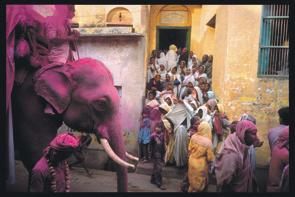
Nalini Malani is a multimedia artist living in Mumbai, with her works incorporating colourful drawings, paintings, performance, animation and film. Themes of her work are often based on unheard and forgotten stories of ostracized and overlooked people.
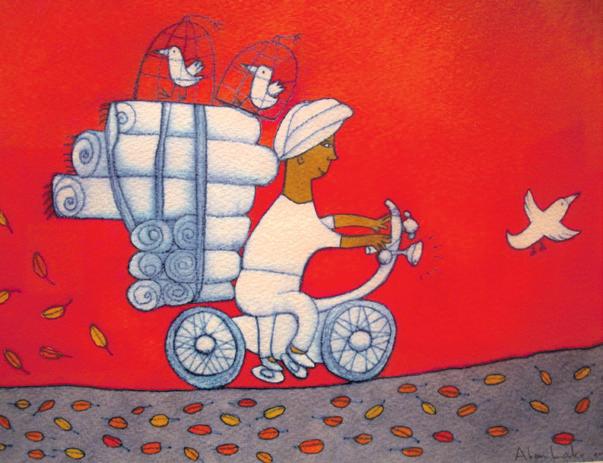
Bharti Kher is a contemporary artist born to Indian parents in the UK, but who now lives in India. Her works are often large, colourful, and immensely detailed. They include large sculpture, paintings and installations. Themes of her art relate to Indian customs contrasted with western values, repression of women in India, and contemplation of the value of traditional roles and rituals in India.
Shilpa Gupta likewise, is also an interdisciplinary artist. She works with video, photography and performance and often involves audience participation to enhance the meaning of her work. She challenges the audience to think about the themes of her work. Her themes largely relate to consumer culture, militarism and human rights.
There are so many more accomplished artists and writers on show at this event, all of whom have engaging and interesting works of art, with thought-provoking stories behind them on display.
I will conclude with an excerpt from a passage on display at the exhibition, taken from a work by Barbara Brooks’ Verandas, published in 2012: ‘Being in India is like putting your head under water and
The artists and writers participating in the exhibition are only some of many who have been recipients of an AIC-funded grant\
Looking closer into any of these works can reveal the larger story behind the artist’s creation, and reveal tales of experiences they wish to share
ARTS

JULY 2012 25 INDIAN LINK




26 JULY 2012 www.indianlink.com.au Solve A ll you R life p Roblem S Girls and boys got married with their own choice and parents approval Not makingmoney in business, immigration not clearing, money comes but does not stay if husband, son or boyfriend not listening to your advise, please contact immediately more then 16,000 cases solved till now Well Established Indian Grocery Shop Good Location & Ample Parking For details and enquiry please contact 042 303 6520 / 0402 75 95 45 FOR SALE From Call 0430 087 262 or 0416 812 002 Register new companies from $550* * Do it online for visit www.goodwillaccountants.com.au (Open 7 days) *Conditions Apply GOODWILL TAXATIONS (Tax Agents)




JULY 2012 27 INDIAN LINK
An Aussie girl in Mumbai
An aspiring young Aussie wins a chance of a lifetime to star in a Bollywood film

was too elated to act with my raw emotion!” revealed Teigan.
BY DANIELLE MATHIAS
As a young child Teigan Lloyd-Evans would sit down with her mum to watch Bollywood films. She never imagined then that she would one day get a chance to be part of the most prolific film industry in the world.
However, the 24-year-old winner of the SBS TV show Bollywood Star has landed a role in a film directed by the legendary Indian film-maker Mahesh Bhatt, and is on her way to a challenging - and hopefully prosperous - Bollywood career.
It was her passion for Bollywood films that made the Gold Coast native decide to audition for Bollywood Star, a reality show that sought Bollywood aspirants in Australia to prove their acting prowess and win a chance to act in a Hindi movie.

“When this opportunity arose, it just felt right,” Teigan told Indian Link. “I could have ignored my interest in this industry, but when you know something feels right, you have to go for it!”
As she got older, Teigan began to see ‘being white’ as being less of an issue in relation to a career in films, despite her Welsh, Danish and Australian backgrounds.
“Why can’t a Caucasian girl be accepted in Bollywood, I said to myself. That just seems ridiculous in this day and age. I believed that with the right help and with persistence… (I could make it). There was nothing I could foresee that was going to stop me on this journey”.
The most challenging aspect of the competition for this gutsy young lady was being unable to speak Hindi, but she was determined to learn the language.
“A lot of people didn’t believe in me because I don’t speak Hindi,” she revealed. “But as I have tried to tell a lot of people, it is a language. A lot of people learn a new language every day for different opportunities in life, so why can’t I?”
From the histrionics point of view, emotions often hindered rather than helped Teigan throughout the competition. She also said that personal challenges allowed her to relate more closely to Bollywood films. “I think in life you go through phases, and it was such an amazing phase of my life being involved in Bollywood Star. I
“Bollywood films have such raw, undefeatable, intense pain and emotion, it just strikes a chord in me. I come from a very small family which has been torn apart and there is no longer a sense of ‘family’ left. That has always been a huge struggle for me, because I know what it is like to have that beautiful family bond and struggle with the loss of it,” she added.
The last few years have been challenging for Teigan: her parents split up, her relationship broke down, and her beloved dog passed away. She tackled Bollywood Star with newfound determination, and came out with flying colours.
During the competition the six finalists were sent to Mumbai to undergo intense Bollywood training and get an insight into Indian culture. In the fourth episode, Teigan and the other contestants were split up and sent to live with Indian families in the slums of Dharavi for 24 hours. It became an experience Teigan isn’t likely to forget in a hurry.
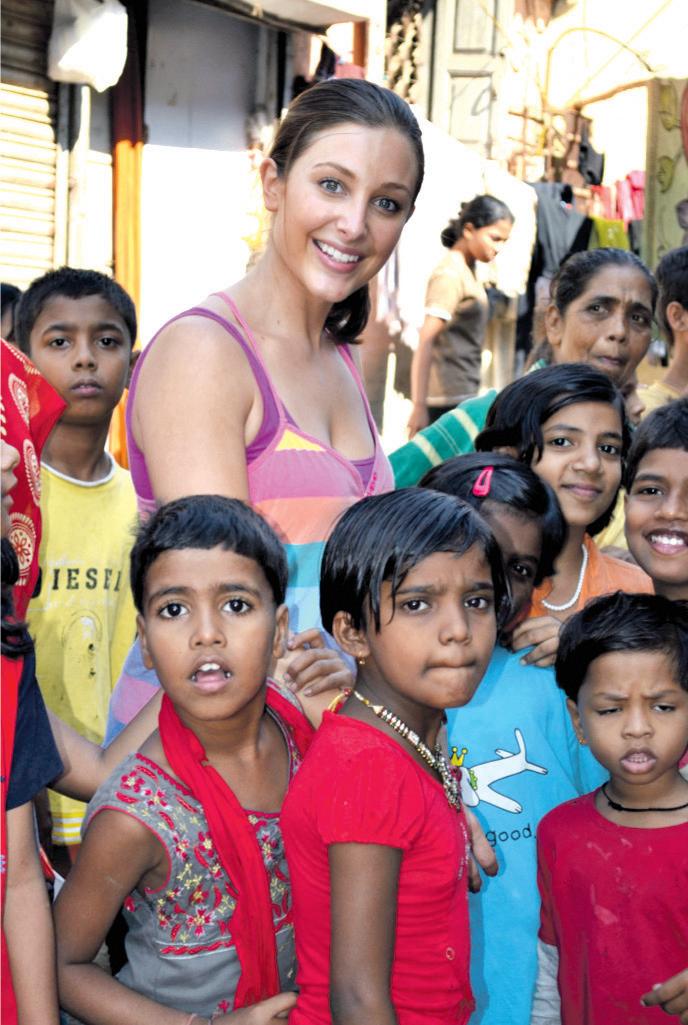
“Mumbai was crazy! It is a place where you can’t stop watching what is going on around you in case you miss something. Living with my little family for a night taught me so many things about how strong people are, and how happiness is rife in all walks of life no matter how sad or heartbreaking. I don’t think I have ever been so impressed with a community in my life!”
Although living in India is such a stark contrast to the Australian lifestyle, the true blue Aussie never felt homesick.
“Of course, I think the majority of Australians would struggle slightly,” she admitted. “But honestly I was just so happy to be there and absorb this amazing place that it didn’t really get to me. We are so fortunate in Australia, and whenever I would start to think about this contrast it made me so grateful to be able to experience a place like India so I can grow as a person and expand my knowledge of the world”.
Teigan had a good rapport with all the judges throughout the competition. Indeed, judge Anupam Sharma’s excited mutterings as soon as she walked into that audition, gave it away that we would be seeing more of her in the coming episodes! But Teigan claims it was with Emma Brown Garrett that she bonded most.
“All of the judges helped me immensely. I had a fantastic relationship with Emma - she is such a lovely woman, she wanted
to help us in any way she could,” revealed the young wannabe actress. Emma Brown Garrett is a Caucasian Australian actress working in Bollywood films.
During the competition, Teigan became very close to the other finalists - Gautam “G-Luv” Koul, Sharon Johal and Sarah Roberts.
“I really hold my relationships with the other finalists close to my heart,” said Teigan with disarming candidness. “They are all so beautiful and so individual. There is honestly not a single bad thing that would even cross my mind about any of them. They are stand up people. Anyone who has the chance to know any one of them is a lucky person”.
Although she is now famous for winning Bollywood Star, there is more to Teigan than just that. She applied 3 years ago to be a student paramedic from Queensland, and is currently in training, living two of her dreams at the same time.
“My experiences with Bollywood Star have helped me to be a better, more caring paramedic,” she said. Teigan’s mother, who not only introduced her to Bollywood but also to Bollywood Star, has been a huge influence in her life and her success. “When I first watched Bollywood, I thought this is just so beautiful, it’s so free, it’s so colourful,” said Teigan’s mother in an interview on SBS. She mother has been very supportive of both Teigan’s career choices.
“My mum would have always rooted for my career as a Bollywood star,” Teigan acknowledged. “She has always said that. I know she is biased because she is my mother, but your mother knows you better than anyone, and she has always wanted me to try this avenue!”
In December this year, Teigan will fly to Mumbai to star in Mahesh Bhatt’s film. “I seriously can’t wait and I am extremely grateful to be able to make a movie with him,” she said enthusiastically.
Teigan described winning Bollywood Star as being the turning point of her life. Through her hard-work, determination and positive attitude, she has made a social impact and has raised the profile of Bollywood in Australia. “I have been getting a lot of positive feedback since winning the title, mostly from young women who are Caucasian and feel they might be interested in giving the industry a go,” she said.
In terms of what the future holds for her two dreams, Teigan said with a smile, “My life in the next few weeks, months and years is going to have serious time management issues! I will do the best that I can with what time I have, but obviously these are two careers that are both very time consuming. I could never make a choice between either of them as I am extremely passionate about both. Just wish me luck!”
28 JULY 2012 www.indianlink.com.au
Commu N i TySC e N e
Mumbai was crazy! It is a place where you can’t stop watching what is going on around you in case you miss something.
Teigan Lloyd-Evans
Teigan Lloyd-Evans in the SBS TV show Bollywood Star
A solution to domestic
BY MANJULA O’CONNOR
Modern neuro understanding of the way the brain works is that the need for control is the ability to purposefully direct and suppress change. We all like to feel in control by stopping change. Yet change is the one thing that happens with regular monotony. When one migrates, a job is made redundant, a spouse wants to leave the marriage, a house is to be sold – all these are situations that cause change and induce anxiety and stress. Because change brings uncertainty, an opposite feeling to the safety of certainty, it causes stress and anxiety. And if the individual has a pre-existing unrecognized level of insecurity and anxiety at deeper level, the need for control is even greater.
Anxiety is uncomfortable, causes agitation and in extreme circumstances, is a known contributor to suicide. So it is natural to avoid anxiety by using defence mechanisms welldefined by Freud and Jung over the centuries. Commonly used mechanisms are aggression, alcohol and control by domination of another person.

Migration breeds isolation and can be a source of much anxiety. One avenue for lowering anxiety is looking for support mechanisms. Women usually are much better at it by seeking meaningful, confiding and supportive relationship from other women. Women seek each other out, but young men may not be able to reach out to others in the same way. Particularly in situations of unemployment, lack of recognition of their education and when sensing a loss of status in society.
In such situations, unfortunately many young men may turn to controlling, dominating and aggressive behaviour towards women, mistaking that for hypermasculine behaviour.
Research suggest that men’s perceptions of other male’s behavioural patterns, be they accurate or not, exert a strong influence on men’s own behaviour towards women. So, this misperception of an acceptable male behaviour pattern as one of disrespect or dominance over women will invite other men to copy such behaviour.
On the contrary, behaviour that is concerned with respect, dignity and equality of women when emphasised by cultural opinion-makers and leaders as the acceptable norm for masculine behaviour even when under stress, will have a copying impact.
The murder of a woman in December 2009 in Sydney by her husband shows the degree of rage he felt when he strangled his wife, then slit her throat at least eight times. He was convicted not of murder but manslaughter, because his evidence was he “lost it” after his wife verbally abused him and said she loved another man. The judge said Singh had been an immature young man, far from his family in India, and did not have the personal resources to deal with his deteriorating marriage.
Speaking as a psychiatrist, I believe Singh would have blamed his wife for his misery, instead of seeking to understand his role in their potential marital breakup. Blaming or displacing the source of pain on to her without selfreflection on his contribution would have only exacerbated their marital woes.
The case of Paul McCuskey’s who received a bravery award from the Humane Society shows another aspect of good use of control and abuse of control. His past history was one of extreme physical violence against his partner and then he finds himself saving an elderly lady’s life in the bushfires crisis. Both instances are examples of the exercise of control and dominance. Men who need to control and dominate but don’t have the confidence to compete against others tend to take it out on their female partners. Because she is physically smaller and not threatening. We all need control. But there is good control and abuse of control. Good control is use of control over one’s life; abuse of control is unfair dominance over others - domestic violence. The abuse of control reflects a deeper layer of insecurity.
How can we use the patriarchal structures of society for the good of all, men and women?
The authority figures of the community such as religious leaders and community and political leaders can play more of a useful role in the community by showing their discomfort with cultural myths and norms that equate male strength with control, dominance and physical violence over women. More needs to be done with clear emphasis on respectful behaviour. Most men are dignified and respectful
of women, and they need to express their discomfort with the behaviour of men who choose the path of abuse, gender oppression, homicide or suicide. Their interventions can help to challenge male socialization practices, and teach men to have empathy for victims, which in turn enhances maturity. Empathy is putting himself in the shoes of the woman and genuinely attempting to understand her thinking and feeling, and why she would seek love and comfort elsewhere, leading to changing himself accordingly. Male community and religious leaders can be role models and highlight the need for consent in intimate relationships within marriage. By exposing cultural myths, research has demonstrated success in increasing the percentage of men who engage in behaviour that reduces the incidence of assaults. This would help men to be better allies to women. Further, any assistance from religious leaders that encourages seeking help by young men and women from health professionals, particularly their family doctor in the first instance, would be of great assistance. This is not always an easy path, but one that will be an exercise in ‘good control’ over their choices, and will lead to enhanced maturity. Women need men to become
For helP, cAll:
Research suggest that men’s perceptions of other male’s behavioural patterns, be they accurate or not, exert a strong influence on men’s own behaviour towards women.
allies and equal partners in the fight against domestic violence and reduce levels of domestic violence that afflict 1 in 3 women currently, which is costing the Australian economy 13 billion dollars every year.
Dr Manjula O’Connor is a Psychiatrist and Senior Research Fellow CIMH at the University of Melbourne, and Vice President , Australia India Society of Victoria.
Men who need to control and dominate but don’t have the confidence to compete against others tend to take it out on their female partners.

JULY 2012 29 INDIAN LINK Your family doctor inTouch 1800 755 988 Police 000
S pe C i A l R epo RT
violence
If men unite against domestic violence, those who practice it will be compelled to change their behaviour for the better

30 JULY 2012 www.indianlink.com.au



JULY 2012 31 INDIAN LINK
(Indian, Srilankan and Fijian Groceries)
Spectators watch a Mixed Martial Arts (MMA) bout at the FCC (Full Contact Championship) 6 fight night in Mumbai on June 30, 2012. Fight nights are gaining popularity in Mumbai as fighters from all over the country are pitted against competitors who have been ‘cross-trained’ to fight in different styles combining a mix of kick-boxing, judo, wrestling, grappling and other martial art forms.
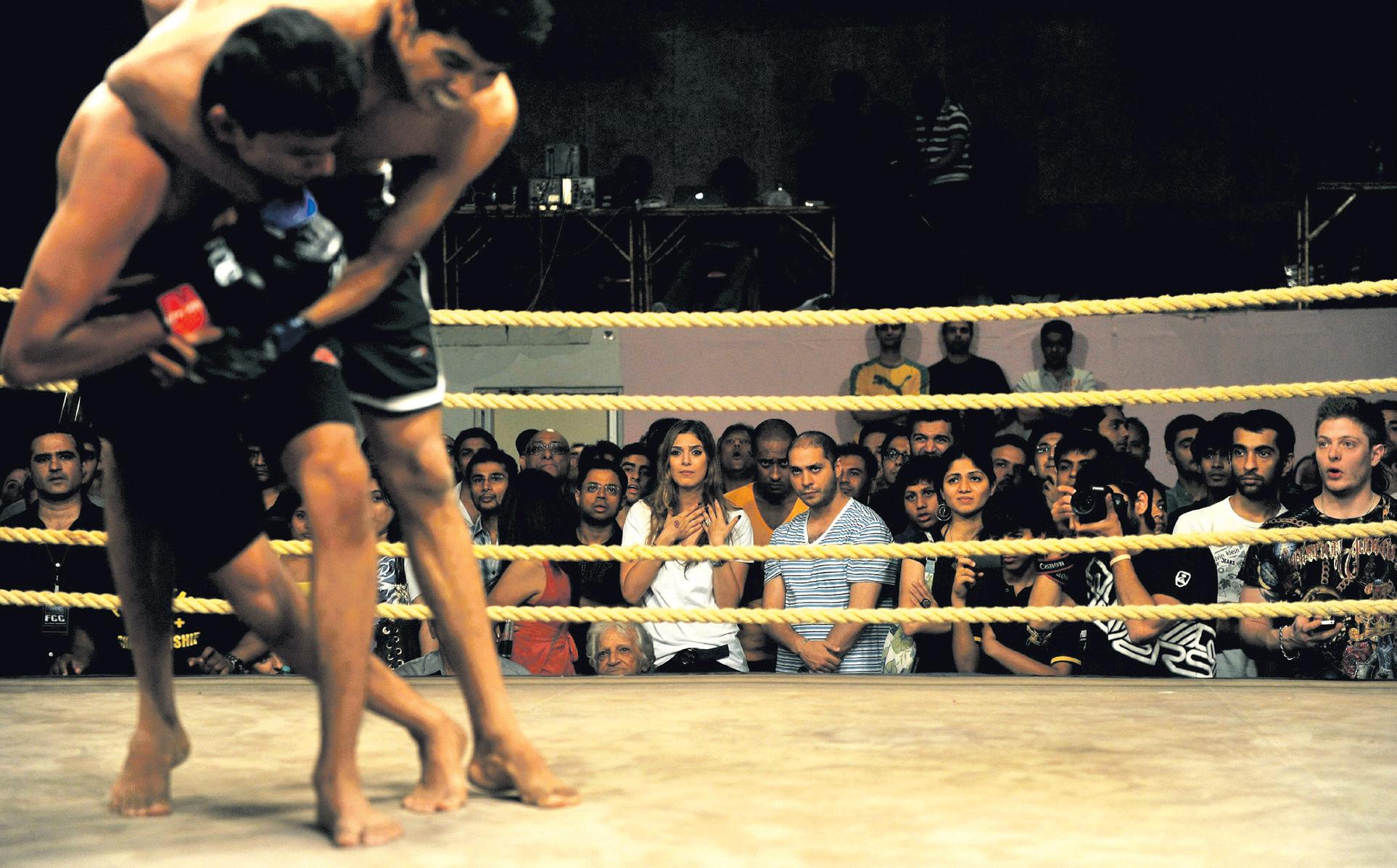
India pushes for 26/11 CBM, Pakistan rejects state role
India recently pressed Pakistan to bring to justice those guilty of the 26/11 attack and said it could be the biggest confidence building measure (CBM) as Islamabad strongly rejected any role of state actors in the carnage and offered a joint probe.
The foreign secretaries of India and Pakistan, Ranjan Mathai and Jalil Abbas Jilani, wrapped up two days of talks on peace and security, including CBMs, Jammu and Kashmir as well as the promotion of friendly exchanges. The talks “were held in a frank and constructive atmosphere”, said a joint statement.
Issues thrown up by the disclosures made by 26/11 plotter Abu Jindal Hamza, which India said point to the involvement of Pakistani state actors in the Nov 26, 2008 terrorist attack in Mumbai, figured prominently in the discussions.
India shared information on Jindal’s disclosures and pressed Islamabad to bring the perpetrators of the carnage to justice.
“Terrorism is the biggest threat to peace and security in the region, and bringing the guilty to justice in the Mumbai terror attacks would be the biggest confidence building measure of all,” said Mathai.
“The arrest of Abu Jindal has added an urgency to the matter. We will continue to pursue the matter to its logical conclusion,” he said.
In response, Jilani said while terrorism was a common enemy of both India and Pakistan, “trading charges will not help”.
Jilani refuted India’s accusation of the involvement of Pakistani state agencies in the Mumbai terror engineered by 10 Pakistanis that left 166 people, including many foreigners, dead and 238 injured.
“I strongly reject any insinuation of any involvement of state agencies in any act of terrorism in India,” Jilani replied when asked about Jindal’s disclosures.
“I assured him (Mathai) that whatever evidence India has, the entire evidence should be shared. We are even willing for a joint investigation into the matter,” said Jilani.
“Whenever we are faced with terrorism, we should intensify cooperation. In case there are certain gaps, we should fill those gaps in the spirit of cooperation,” Jilani said while calling for greater cooperation between the home ministries and respective agencies of the two countries.
Despite differences in perceptions on the issue of terrorism, the two countries decided to pursue the dialogue and stressed on enhancing bilateral trade that could produce win-win outcomes.
“While we might not agree on all issues, we do agree that relations between our two countries have to be normalised. There is a determination on both sides to take forward our dialogue with an open mind and a constructive spirit,” said Mathai.
Stressing that Jindal’s revelations do not constitute a setback to the revived peace process, Jilani underlined that the two countries have to “move from an adversarial relationship to a positive narrative”.
“There is absolutely no setback; the setback is not what we can afford,” Jilani replied when asked whether Jindal’s revelations were a setback to the peace process.
“We have positively assessed the dialogue process. We have made significant progress in all areas.”
Mathai agreed saying, “We have made progress in people-to-people relations and trade. The forward movement on trade is a win-win outcome. We plan to move forward on the trade track.”
The two sides discussed the Jammu and Kashmir issue and agreed to find a peaceful solution “by narrowing divergences and building convergences”.
In this context, both sides discussed strengthening CBMs to step up trade and travel across the Line of Control (LoC) that divides Kashmir and decided to convene a meeting of the working group on crossLoC CBMs on July 19 in Islamabad.
The foreign secretaries also discussed the date for the visit of External Affairs Minister S.M. Krishna to Islamabad.
The foreign secretaries will meet again
in Islamabad to prepare for the meeting of foreign ministers in September.
Krishna recently said he hopes to visit Islamabad in the first week of September for talks with his Pakistani counterpart.
The two countries also discussed revival of cricketing ties and focused on enhancing sports and media exchanges.
After particle discovery, spotlight on Satyendra
The discovery of a new subatomic particle, possibly the Higgs boson considered “a key to the cosmic riddle”, has put the spotlight once again on Satyendra Nath Bose, the Indian scientist from whose surname the
“India is like a historic father of the project,” said Paolo Giubellino, spokesman of the Geneva-based European Organisation for Nuclear Research (also known as CERN), which conducted the experiments to find the elusive ‘God’ particle.
Bose (1894-1974), a physicist from Kolkata (erstwhile Calcutta) and a contemporary of German scientist Albert Einstein, did path-breaking work on quantum mechanics in the early 1920s, using maths to describe the behavioural pattern of the bosons -- one of the two families of fundamental particles that the universe is classified into.
The other family of fundamental particles -- fermions -- is named after Italy-born American physicist Enrico Fermi.
Bose worked with Einstein in the 1920s, providing the foundation for Bose-Einstein statistics, and the Bose-Einstein condensate. He is also acknowledged as the person who laid the foundation of quantum statistics.
However, Bose never won the Nobel Prize, even though in later years the award was given several times for research on bosons.
“He laid the base though his work. He definitely deserved the Nobel Prize. Definitely,” said Archan Majumdar, an astro-physicist at SN Bose National Centre for Basic Sciences in Kolkata.
“However, at the same time, some kind of historical justice has also been done. His name has been immortalised in bosons,” Majumder said.
“And while it is always good to recognise past achievements, it does not take the sheen away from the present successes. What the CERN scientists have done is great. It’s a great leap forward in the fundamental research and knowledge of human civilization,” he said.
Milan Sanyal, director of Saha Institute of Nuclear Physics, though delighted at the discovery, rued the fact that while the Higgs (named after British physicist Peter Higgs) in Higgs boson was in upper case, the boson was in lower case.
“I shall write to CERN on this. It is not a complaint. But I will point it out. I have already received many emails and calls on this. I don’t want to shoot any letter now as they are celebrating. But I shall write to them soon,” Sanyal said.
However, he said scientists of his institute had collaborated with Genevabased European Organisation for Nuclear Research (CERN) for the crucial Compact Muon Solenoid (CMS) experiments.
“On August 26, 2011 we signed three memoranda of understandings with CERN,
one of which was on CMS,” he said.
Five faculty members from the institute were part of the core CMS team.
“Besides, we have 10 Ph.D. students who are part of the project,” he said.
Pine needles fuel business for Himachal villagers
Pine needles, a major cause of forest fires in Himachal Pradesh, are now helping villagers earn money.
The inflammable needles, which fall on the ground in summer and cause forest fires because they have resin, are being used as bio-fuel by a cement plant.
The locals are collecting the needles and selling them at Rs.1.65 per kg to the company.
“Gujarat Ambuja Cements is using pine needles along with charcoal in its kilns. The needles have good calorific value,” divisional forest officer Pradeep Thakur said.
This is the second year in a row when the company is purchasing the needles directly from the local people for its plant in Ropar in Punjab, adjoining the hill state. Last season the company procured 250 tonnes of pine needles.
This time it has procured more than 560 tonnes and the procurement is still on. The forest department is facilitating the trade between the company and the villagers.
Thakur said the company had increased the procurement rate from Rs.1.50 per kg to Rs.1.65 per kg.
“It’s a good source of additional income for the villagers. In the Hamirpur forest division alone, more than 200 families are involved in the job,” he said.
On an average, a family earns around Rs.15,000 per month through pine needles, said an official.
The forest department has set up 20 collection centres in the forest division where the company is procuring directly.
At the collection centres, the needles are packed into bales of 35 kg to 40 kg using machines provided by the company.
“The transportation cost is quite high but in financial terms its use is viable as the company is saving 25 to 30 percent of coal,” Thakur said.
The company is also paying Rs.5 per quintal as royalty to the panchayat concerned from where the needles are extracted.
Manju Devi of Bhoraj village in Hamirpur district said the collection of pine needles was a good source of alternative income.
“Since pine needles are not used at homes as a burn directly (due to the presence of various nitrogen oxides), these lie unused in the forests. The demand picked up after the company started procuring them. We are now earning up to Rs.40,000 in a season (from May to June),” Manju Devi said.
The needle fall starts in April-end and continues till the beginning of July.
Forest officials said the harvesting of needles greatly help checking forest fires too.
On an average, a pine forest yields two to three tonnes of needles per hectare during a season and the state has pine forests spread over 1,500 sq km, found up to an altitude of 5,500 feet.
This summer, forest wealth estimated at well over Rs.2 crore (over $400,000) spread over 20,000 hectares has been destroyed in forest fires.
32 JULY 2012 www.indianlink.com.au
i ND i AN N e WS
P ho T o : AP
A majority of the fires are reported from the pine forests.
“Supplying pine needles to an industrial unit is a great success. We are identifying some other end users too,” said Avtar Singh, chief conservator (Forest Protection and Fire Control).
According to the 2009 Forest Survey of India report, Himachal Pradesh has 37,033 sq km of forest area, of which 3,224 sq km is very dense forest.
PM announces Rs.500 crore for flood-hit Assam
Prime Minister Manmohan Singh recently announced an aid package of Rs.500 crore for Assam, which has been severely hit by floods, causing an estimated 65 deaths and inundating large stretches of land, including cropland.
The announcement came after the prime minister and Congress president Sonia Gandhi undertook an aerial survey of some flood affected districts of the state.
“The Rs.500 crore is sanctioned for immediate relief of the state. A central team has reached the state and will start assessing the total damage of the floods in the state and all the required financial assistance will be extended to the state government based on the assessment of the central team,” said the prime minister, while reading out a statement before the media at LGBI International Airport near Guwahati.
According to the state Disaster Management Authority (SDMA), the floods, affecting all 27 districts of the state, killed at least 65 people recently. Another 16 people were killed in the past two weeks due to landslides, caused by heavy flooding and incessant rainfall.
The prime minister, who is a Rajya Sabha member from Assam, also assured the state of efforts to restore the railway line in the Lumding-Badarpur Hill section of the Northeast Frontier Railway (NFR).
The railway ministry has already been instructed to take up immediate steps to restore the railway line as it is a lifeline for the people in Assam’s Barak Valley, as well as neighbouring Mizoram and Tripura.
With the flood waters receding at some places, Manmohan Singh said the primary focus now would be on rescuing people who have been left marooned in flood-hit areas and providing relief to them.
The prime minister had earlier announced an ex-gratia payment of Rs.1 lakh each to the relatives of those killed in floods and landslides. Besides, the state government will also pay Rs.2.5 lakh each to the relatives of the victims.
He also noted that over 700 army personnel, and 16 teams of the National Disaster Response Force (NDRF), comprising over 600 personnel and 71 boats, have been pressed into service for carrying out relief and rescue operations across the state.
“So far, a total of 4,000 people have been rescued across the state and 20 tonnes of relief material has been airlifted by the Air Force to help the marooned people,” the prime minister added.
“A total of 4.84 lakh people, who have been rendered homeless by floods, have taken shelter in the 768 relief across the state. All the required help was given to the inmates of the relief camps,” he said.
Manmohan Singh said that the state government has adequate stock of food
grain but the central government will provide additional supplies of grain and other materials as and when required.

Meanwhile, Assam’s opposition parties, including the Asom Gana Parishad (AGP), the All India United Democratic Front (AIUDF), the Bharatiya Janata Party (BJP) and others, have expressed their dissatisfaction with the package announced by the prime minister.
AIUDF leader and Leader of Opposition
Sirajuddin Ajmal said that Rs.500 crore is not sufficient as immediate relief as there has been huge devastation and loss of human lives and property in the floods.
BJP state unit spokesman Santanu Bharali also echoed similar sentiments, and also criticised the response of the state government.
“With the waters starting to recede, now the major problem will start in the form of diseases.
However, we have not seen any alertness on the part of the government to deal with the situations that normally arises after the floods,” he said.
Sunita Williams heading back to space again
Indian-American astronaut Sunita Williams is all set to return to the International Space Station, where she spent a record six months in 2006.
Daughter of an Indian American father from Gujarat and a Slovenian mother, Williams is currently making final preparations for a July 14 launch from the Baikonur Cosmodrome in Kazakhstan, according to a NASA announcement.
She will be a flight engineer on the station’s Expedition 32 with Flight Engineers Yuri Malenchenko of the Russian Federal Space Agency and Akihiko Hoshide of the Japan Aerospace Exploration Agency. On reaching the space station she will take over as commander of Expedition 33.
Williams and her colleagues will be aboard the station during an exceptionally
busy period that includes two spacewalks, the arrival of Japanese, US commercial and Russian resupply vehicles, and an increasingly faster pace of scientific research, the US space agency said.
Williams is the second woman of Indian heritage to have been selected by NASA for a space mission after Kalpana Chawla and the second astronaut of Slovenian heritage after Ronald M. Sega.
She holds three records for female space travellers: longest spaceflight (195 days), number of spacewalks (four), and total time spent on spacewalks (29 hours and 17 minutes).
A 1987 graduate of the US Naval Academy, Williams served in various roles as a Navy officer before being selected as an astronaut candidate by NASA in 1998. She received a master’s degree from the Florida Institute of Technology in 1995.
NCC to grow, change training syllabus
The National Cadet Corps (NCC), India’s military youth movement in schools and colleges, is all set to grow with the defence ministry planning to increase its sanctioned strength from the existing 13 lakh to 15 lakh cadets.
The outfit is also readying to change its training syllabus, refining the philosophy to make it contemporary and meet the aspirations of the country’s youth.
These issues were discussed at the NCC Central Advisory Committee (CAC) meeting chaired by Minister of State for Defence M.M. Pallam Raju in New Delhi recently.
“The important issues discussed during the CAC meeting included introduction of a new syllabus based on the refined training philosophy to make it contemporary and meet the aspirations of the youth of the country.
“In addition, an increase in authorised strength of cadets to be enrolled in NCC, raising of additional NCC units and enhanced role of NCC cadets in social and
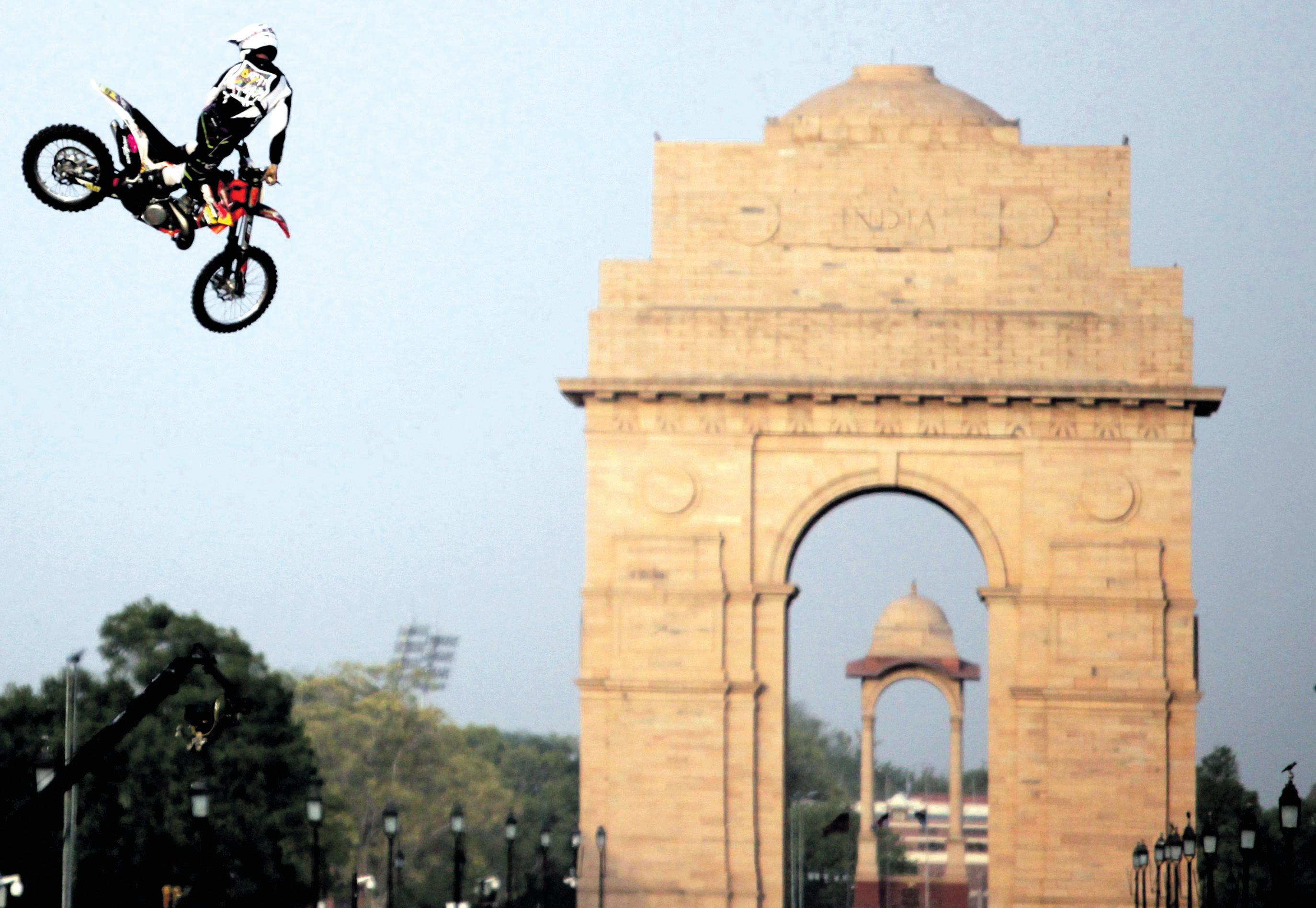
community development programme were also discussed during the meeting,” defence ministry officials said.
Addressing the meeting, Raju complimented the NCC on the excellent performance of its cadets in various activities pertaining to training, sports, adventure, social service and community development.
Describing the NCC cadets as “leaders of tomorrow,” Raju said since they are the key instruments of social change, economic growth and technological innovations, there is an urgent need to channelise their energy in proper direction with care.
On the occasion, NCC Director General Lt. Gen. P.S. Bhalla presented a detailed update on NCC activities in the past two years to the members of the CAC.
CAC is the apex body that advises the government on policies regarding the constitution and administration of NCC.
The CAC also consists of nominated members of parliament, the tri-services chiefs, and eminent educationists.
IANS
JULY 2012 33 INDIAN LINK i ND i AN N e WS
A freestyle motorbike stunt rider flies in midair during a stunt show organised by an energy drink beverage company near the Indian war memorial India Gate in New Delhi, India on 30 June 2012. The show is part of one of the biggest freestyle motocross tours in India.
Where words fail, art
BY ANUSHA MENON

hey say a picture paints a thousand words. But as I fixed my gaze upon Kamalesh’s harrowing oil painting, I began to wonder whether the age-old idiom did this work enough justice. We’d talked about his time at Villawood Immigration Detention Centre plenty of times before. Yet, nothing he had previously told me quite articulated the grimness of life in mandatory detention as vividly as this painting did.
This picture didn’t just paint a thousand words. It spoke infinite, unutterable words of pain and torture. Kamalesh, a Sri Lankan refugee who spent more than two years detained at Villawood IDC, was eventually granted his visa in September 2011. The artwork, which he describes as “refugee feeling,” was painted while he was still in detention.
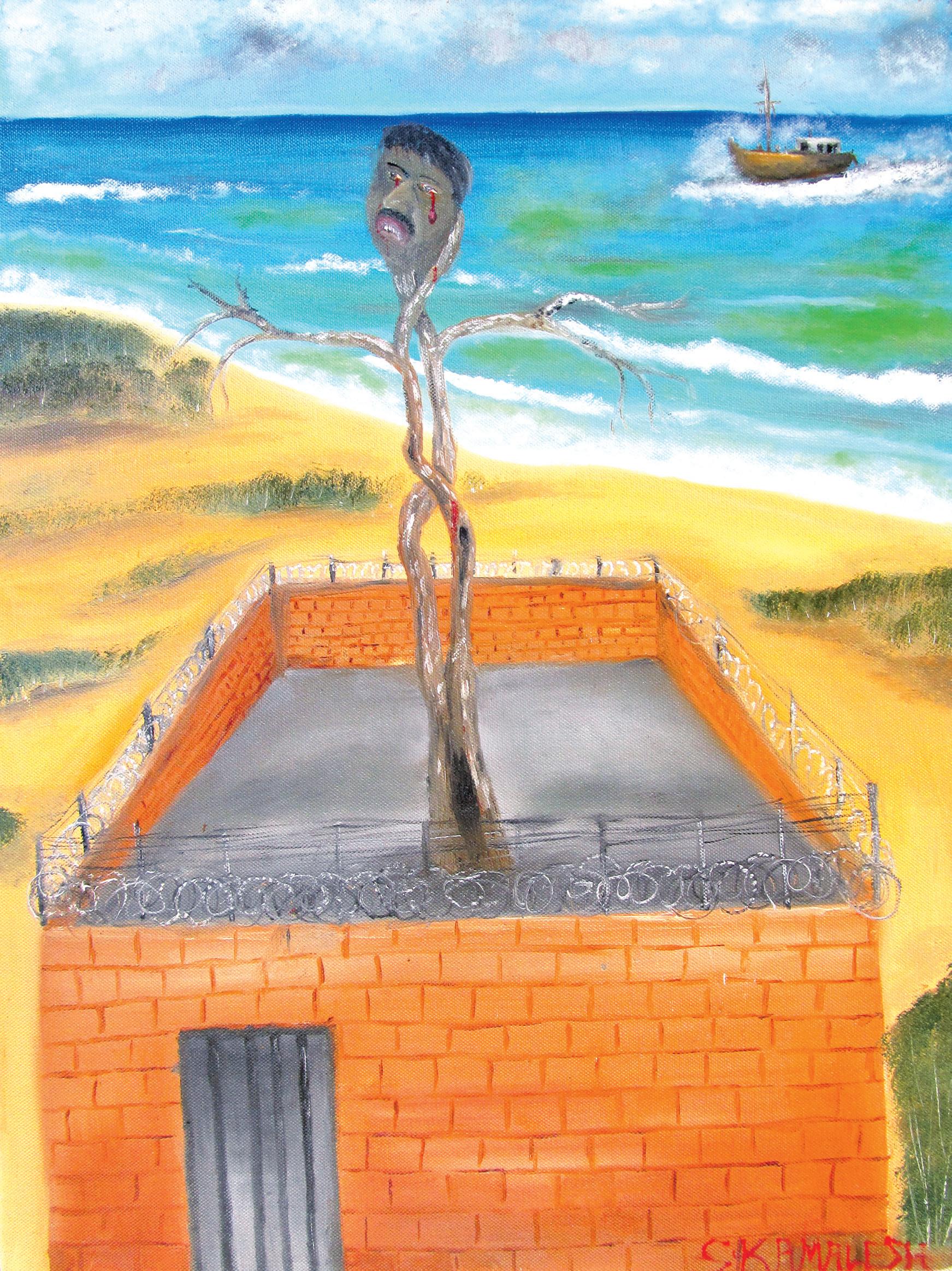
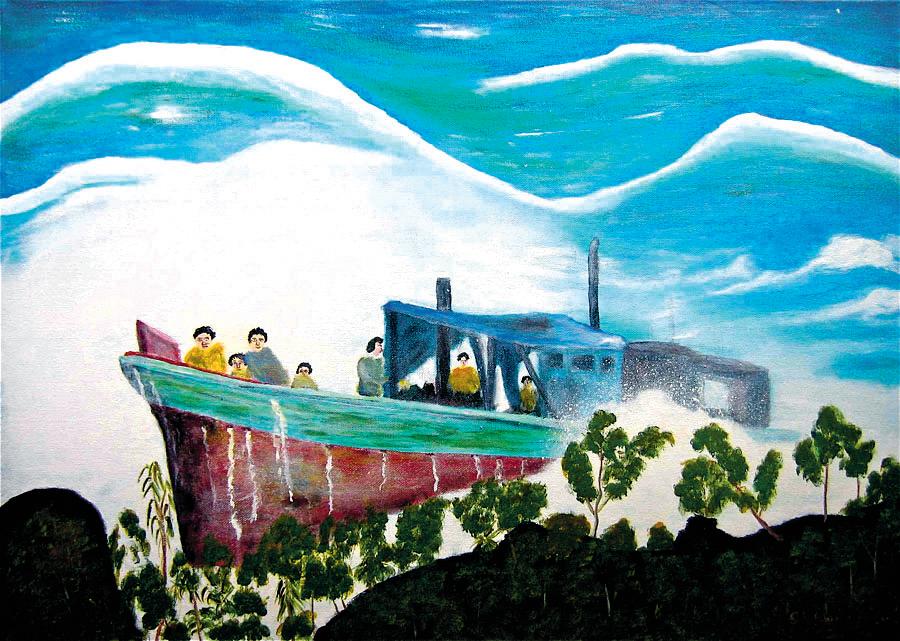
I asked him how long he’d been painting, to which he replied, “Before detention, I had not painted”.
I knew he must have been pulling my leg. The quality of Kamalesh’s work clearly attested to a lifetime of making art. But from his serious tone of voice, I knew he wasn’t lying.
“I learned how to paint from the TVS program Masterclass in Oils with Ken Harris. He is my master,” he said with a chuckle. “When I was in detention, I never missed that show”.
But to create paintings with such intricacy and depth, he needed specific brushes and oil paints. Detainees held in Villawood IDC are rarely permitted beyond the centre premises. It would have been impossible for Kamalesh to go shopping for resources. While Ken Harris taught Kamalesh the very basic skills required in landscape painting, it was the volunteers at the Refugee Art Project that provided him with most of the necessary materials he needed to make his art, and gave him the encouragement and professional guidance he needed to hone his skills.
“One of the most fulfilling parts of this project is seeing detainees enjoy themselves in art, and then develop their
own creative vision and style in spite of the many burdens and constraints that are placed upon them. This was the case with Kamalesh,” said Dr Safdar Ahmed, founder and director of the project.
The Refugee Art Project began in late 2010 as an initiative to provide art classes for asylum seekers in detention, and to showcase their creative work in public exhibitions. More than a year later, the project remains in full swing.
According to the project’s website, most of the artworks done by detainees share the themes of trauma, exile, hope and endurance. The project’s key intention is to express the stories and experiences of refugees in a manner that fruitfully engages with the general public.
“While refugee supporters do essential and valuable work, it occurred to us that asylum seekers are too often being spoken for or about, with little room to speak for themselves” said Dr Ahmed. “Thus, our idea was to empower refugees by giving them a voice through art to the wider community”.
Villawood IDC holds asylum seekers from different parts of the world. Not all of them have a good grasp of English, let alone a basic understanding of it. Art gives everyone the equal opportunity to speak their minds without having to use actual words.
“I was able to express my feelings through painting,” said Kamalesh. “Whatever materials I needed, I asked Safdar and he brought them in for me.”
An aspect of Kamalesh’s artwork that I found particularly striking was the tears of blood seeping from the hollowed eyes of the eerie humanoid tree in the central foreground of the painting. When I asked Kamalesh what these bloody tears meant he said, “Great sadness.” Was the contorted figure meant to be him?
He smiled and shook his head. “No. It can be any refugee that is suffering from being in detention for such a long time,” was his poignant answer.
On March 30, a parliamentary inquiry into mandatory detention confirmed that 90 percent of detainees suffer clinically significant depression. The report also stated that half this number is diagnosed with post-traumatic stress disorder, and a quarter
Kamalesh
34 JULY 2012 www.indianlink.com.au
ARTS
An aspect of Kamalesh’s artwork that I found particularly striking was the tears of blood seeping from the hollowed eyes of the eerie humanoid tree in the central foreground of the painting.
The true trauma experienced by asylum seekers in detention centres comes alive through their artwork
Artworks by Kamalesh Tamil asylum seeker christmas Island boat tragedy Dove Sri lankan army bombing the Tamils right:
(extreme right) with mates at the refugee Art Project’s kitchen open day
speaks
impact the project has had on the mental health of detainees at Villawood. “The act of art-making certainly provides a point of immersion during which detainees can forget about their problems, so it is therapeutic in that way,” he said.
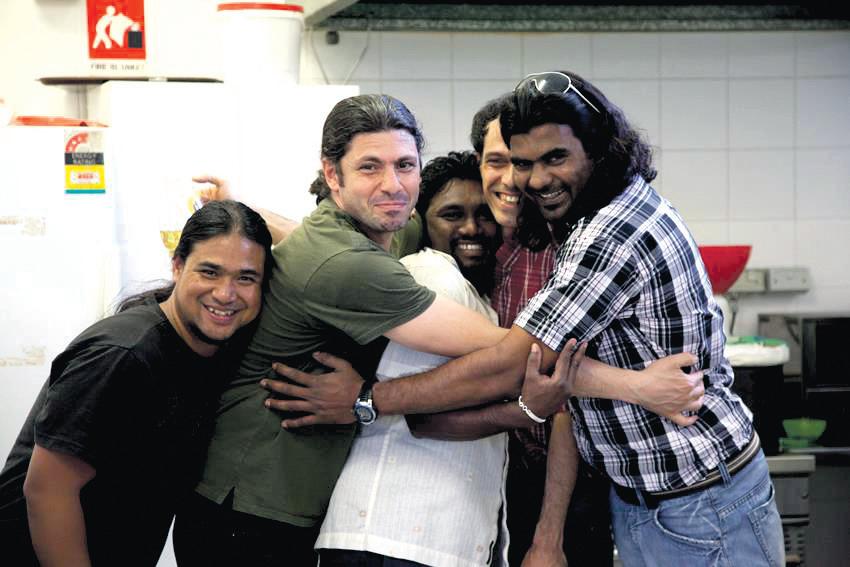

Kamalesh agreed. “When I was inside my room, I would always feel tension. But when I attended the art classes in the visitor’s area, I was able to mix with different people and do painting. This made my mind feel relaxed,” he revealed.
But Dr Ahmed made it clear that art therapy cannot significantly improve symptoms of mental illness. “We don’t see much chance of really helping people until they are taken out of the environment that is making them sick in the first place, which is the detention centre,” he said.
Nonetheless, the momentary solace and enjoyment that Kamalesh found when he mindfully engaged in painting was one of the most memorable parts of his time in detention. In fact, he and other detainees who also participated in the art classes and have since been granted visas, continue to maintain links with the project. Some have even had the rewarding opportunity to see their own artworks publicly displayed.
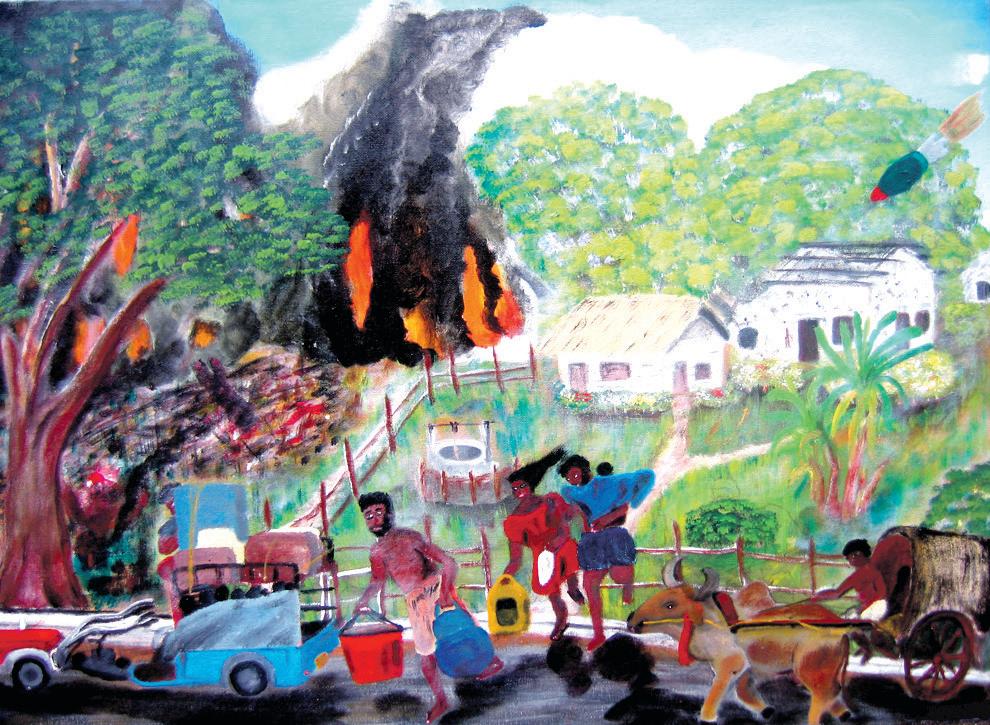
Recently, the project hosted the highly successful Life in Limbo exhibition at the Braemer Gallery in the Blue Mountains. The exhibition, which contains a series of works produced entirely by asylum seekers, will also be displayed in Sydney’s UTS building throughout July and will travel to Melbourne in early October.
Dr Ahmed believes the presentation of these artworks
“We are hoping to get lots of people into the exhibition and really open their eyes to the inspiring talent, perseverance and promise of those who are so unfairly locked away in our detention centres,” said Dr Ahmed.
“The work in this exhibition shows the tenacity, hope and faith of people who have fled the most hellish circumstances to try and forge a new life for themselves and their families, and they should be admired and supported for that,” he concluded.
JULY 2012 35 INDIAN LINK
One of the most fulfilling parts of this project is seeing detainees enjoy themselves in art, and then develop their own creative vision and style in spite of the many burdens and constraints that are placed upon them.
Dr Ahmed
Beyond champagne chic
An enticing book takes a revealing peek into Indian diplomacy and its many intricate levels, writes MANISH CHAND
Indian diplomacy is 50 percent protocol, 30 percent alcohol and 20 percent TN Kaul (India’s legendary foreign secretary in the late sixties), so goes the famous one-liner. But it’s clearly much more than glamorous parties and clinking champagne glasses as a new book, which stitches together analyses, insights and reminiscences of India’s stalwart diplomats, shows.
Titled The Ambassadors’ Club (Harper Collins), the book, edited by KV Rajan, a retired diplomat, weaves rare snapshots of Indian diplomacy in action at some of the fraught and exhilarating moments in India’s management of its foreign relations.
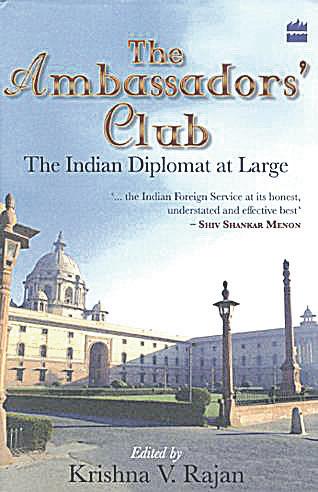
The book bristles with revelations and rare insights into how Indian diplomacy operates on the ground amid challenging situations and takes you beyond clichéd official formulations and discourses that often hide more than they say.
AND Haksar’s brief but compelling account of an impromptu summit meeting between Pakistan’s dictator Ziaul-Haq and India’s then Prime
Minister Morarji Desai in Nairobi in 1978 during the funeral ceremony of Kenyan leader Jomo Kenyatta is one such example that will prod readers to dig deeper into the book.
In the chapter entitled A Singular Summit, Haksar writes: “Bhutto was executed in the following summer of 1979 by the Zia government despite pleas for clemency from many leaders and governments around the world. One which made no such plea was India, the Desai government taking the view that the matter was an internal affair of Pakistan. Whether or not the previous summer’s summit had any role in this can only be a subject of speculation.”
There are also gripping accounts of some of the country’s much-esteemed retired diplomats whose stints coincided with history-changing moments in the countries in which they were posted.
TP Sreenivasan found himself grappling with the aftermath of a coup in Fiji in 1987 which was aimed at undermining the Indianorigin majority in Fiji’s affairs. A

Madhavan recalls vividly what it meant to be in the midst of one of the iconic events of the time, the fall of the Berlin Wall, and how India ingeniously built diplomatic bridges with a reunified Germany.
Jagat S Mehta, the doyen of Indian diplomats and now in his 90s, looks back at his diplomatic stint in China and seems to question Nehru and his advisers in their judgments of Chinese intentions in the late 1950s and 1960s. Commenting on Mehta’s article, KV Rajan, the editor of the book, writes: “Could the India-China war have been avoided if Nehru had been a better judge, or better advised, and his devoted and overawed bureaucrats were not convinced that ‘Panditji knows best?”
What imparts a unique flavour to the book are first-person accounts like that of The Last Days of Salvador Allende, the Chilean dictator, by GJ Malik and Niranjan Desai’s gripping tale of his travails in 1972 as an officer on special duty after Ugandan dictator Idi Amin whimsically expelled all Asians holding citizenship of
India, Pakistan, Bangladesh or Britain.

The Ambassadors’ Club is probably the first in a series of anthologies of reflections and reminiscences by Indian diplomats as they juggle diverse domains ranging from climate change negotiations to labyrinths of WTO talks and fills in on the drama and atmospherics that are missing from more scholarly tomes on international relations. The book should be specially useful to practitioners as well as students of international relations. Above all, it should inspire more young people to join the woefully understaffed Indian Foreign Service.
In a foreword to the book, National Security Advisor Shivshankar Menon recalls how he recently met a young man who had made it to the IFS, but was being dissuaded by his IAS colleagues and his girlfriend from
joining it. Menon says he tried to convince him about the singularity of the diplomat’s job, but in retrospect thought he should just have given him this book to read to discover the joys and challenges of Indian diplomacy.
The book weaves rare snapshots of Indian diplomacy in action at some of the fraught and exhilarating moments in India’s management of its foreign relations.
36 JULY 2012 www.indianlink.com.au
boo KS


JULY 2012 37 INDIAN LINK indianlink.com. Plus talkback, interviews with Bollywood stars, gupshup, masti, and what’s happening in the community 18000 15 8 47 Announcing Indian Link RADIO APP Your favourite songs, anytime, anywhere!
SHARMA’S i ND i AN SW ee TS


Nurturing the neighbours
India reaches out to countries within its periphery, with the intention of building sustainable relationships
of Defence says, “India is a global power, and they are meeting their responsibilities and we welcome that …”
BY NOEL G DE SOUZA
Standard & Poor is at its old game again. This time it has latched onto vague ideas that India faces a financial slowdown, and the agency has threatened to downgrade India’s rating. This is the same rating agency which took years before reluctantly giving India a medium rating. Meanwhile, it had consistently given European countries high ratings when many of them were nearly insolvent.

Around the same time, TIME magazine, quoting the IMF (International Monetary Fund) told a different story. It said that the BRICS group (Brazil, Russia, India, China and South Africa) had a GDP growth of 8% in 2010 which had slowed to 6% in 2012, whereas for the USA the figures were 3% to 2% and for the Eurozone it was 2% to –0.3%.
India has been building its naval resources in recent years. This has received much media attention particularly after the 2008 terrorist attacks in Mumbai which were launched from the sea. Dasgupta and Cohen’s book Arming without Aiming (published in 2010), lauded India’s successful naval modernisation, but it was critical that this success was not underpinned by any stated aims. India’s official stance is that its navy is being used for peaceful purposes such as fighting piracy and to bring stability to the region. Dasgupta and Cohen’s book was published two years ago. India’s stand is now becoming clear.
Manmohan Singh has dedicated himself to strengthening India’s relationship with its periphery, which firstly encompasses its neighbours with whom it has common boundaries
What is intriguing about Standard & Poor is that this threat was published just when India’s Finance Minister Pranab Mukerjee was being touted as its next President. There have been attacks on the Standard & Poor threat by Indian commentators. At last, one would say! At that time a few Indian politicians like Mamata Banerjee were proposing that the Prime Minister Manmohan Singh should be the next President.
Manmohan Singh has dedicated himself to strengthening India’s relationship with its periphery, which firstly encompasses its neighbours with whom it has common boundaries (Pakistan, Bangladesh, Nepal, Bhutan, Burma and China). But there exist others some distance away with which it has had historical and cultural relationships, such as Afghanistan, the Gulf States and Iran on the one side, and Thailand, Cambodia, Malaysia and Indonesia on the other side.
The U.S. Secretary of Defence Leon Panetta has been having talks with Manmohan Singh concerning regional security and defence. India is important with regards to the Indian Ocean, as it is the largest navy in the Arabian Sea and the Bay of Bengal. There is a shift of US naval forces from the Indian Ocean to the Pacific, where Panetta has signalled that six aircraft carriers will be based. These events should be viewed in the backdrop of the South China Sea which China claims as its own, against the other claimants which include Vietnam, the Phillipines and Taiwan.
The USA is calling India a global power. Captain John Kirby of the US Department
This does not mean that India is a military alliance with the USA against anybody. In March this year
India hosted the meeting of the BRICS leaders: Presidents Dilma Rousseff, Dmitry Medvedev, Manmohan Singh, Hu Jintao and Jacob Zuna. These include some of the world’s most populous countries.
Manmohan Singh met Myanmar’s democracy leader Aung San Suu Kyi after a meeting in Yangon, and invited her to deliver the next Jawaharlal Nehru Memorial Lecture in India. Suu Kyi has accepted the invitation, hoping to visit India before long. Singh announced that India has opened a $500 million line of credit from which Myanmar can draw; India is interested in getting energy resources from Burma.
The Australian Defence Minister Stephen Smith, calls India a “natural maritime partner” of Australia, while pointing out that Indonesia is emerging as not just a regional, but a global influence. India, Indonesia and Australia have maritime co-operation agreements. Indonesia shares a common maritime boundary with India north of the island of Sumatra and the Andaman-Nicobar Archipelago. Significantly, Indonesia refers to the Indian Ocean as Samudra Hindia.
India’s relationship with the Middle East goes back centuries. The Middle East is the gateway to Europe. Maritime trade, based on the current reversals in the Arabian Sea, existed since the times of King Solomon. Today the Gulf States are hosts to thousands of Indians and other subcontinentals who make valuable financial contributions to their mother countries. India has no military presence, unlike Pakistan, in those countries, but its navy patrols the Arabian Sea to prevent piracy.
India’s periphery thus stretches over a a considerable swath between Southeast Asia and the Middle East, and Manmohan Singh has been busy building up relationships within its confines.
38 JULY 2012 www.indianlink.com.au
OPEN 7 Days 11am - 10.30 P m • s h OP 4/350 TaylO rs rD, D E lah E y ALL PUNJAB AND BENGALI SWEETS WE cat E r for all occasions • hom E d E liv E ry availabl E ( GULAB JUMAN , KAJU BUR f I , ALL T y PES O f BUR f I AND MAN y MORE INDIAN SWEETS ) 25 y R E x PERIENCE IN SWEETS MAKING Ph: 9356 4400 A LL T y PE O f TRADITIONAL INDIAN SWEETS ARE AvAILABLE HERE
opi N io N
When TV leads the charge
Social activists, networks and advertisers around the world should take note of a radical new TV format creating phenomenal waves of change in India
BY TIM BLIGHT
Something strange is happening in India. Every Sunday morning, millions of Indians haul themselves out of bed to be told about all the things which are wrong in their country.
Unpalatable though the home truths may be, Satyamev Jayate (‘Truth alone prevails’) has nonetheless garnered a massive audience and has become one of the highest rating shows on Indian television. The programme and the issues that it highlights, regularly become the highest trending topics on Twitter. Considered so important for the nation is Satyamev Jayate that it is simulcast on the national broadcaster Doordashan, as well as the commercial channel Star Plus for which it was produced. Although presented in Hindi, it is supplemented with English subtitles, and dubbed in eight regional tongues. And although it is only up to its sixth episode, it is being hailed a revolution in television, not just for India, but for television as a concept. Television has, to date, witnessed many incarnations as a medium of entertainment, education, promotion, information and increasingly, interaction with audiences. However, most television markets are yet to capitalise on the political and social activism which has taken the social media world by storm. Attempts in the past have generally assumed one of two forms: first, as a comparatively shallow attempt to take advantage of Twitter, Facebook or YouTube’s flavour of the month, but never to lead the charge. A special Kony 2012 edition of the Seven Network’s Sunrise may be viewed as a recent example - the programme, along with celebrity twitteratti, responded to the already growing awareness of the viral ‘Stop Kony’ video. The second form of televisual social activism can be seen in programmes which raise awareness, but without the stated aim of promoting political engagement. The Oprah Winfrey Show can be categorised as a highly successful example of this - while it gained political clout for raising social awareness in recent years, it was never wholly a ‘call to arms’
in the way that Satyamev Jayate is. More than a few commentators have suggested that we are witnessing the birth of a new format of television, which acts not just to raise awareness, but as a genuine social movement.
After almost six months of hype on television, print and social media, Satyamev Jayate premiered on May 6, 2012. The first 90-minute long programme, conceived and hosted by Bollywood star Aamir Khan was a melange of facts, figures and heartbreaking interviews on the topic of female foeticide. Subsequent topics have included child sexual abuse, the practice of dowry, forced marriages and the state of India’s healthcare system.
To air a nation’s dirty laundry at 11am on a Sunday morning was a huge risk, especially in a country as proud and conservative as India. Yet somehow the gamble paid off, and commentators have been left wondering why it worked, and if it could be replicated elsewhere.
Analysts have pointed to the host’s public profile as being key to the success of the show, others have cited savvy marketing. Some attribute its success to widespread support for the initiative, with political parties, celebrities and journalists alike agreeing on the programme’s worth (The term ‘Satyamev Jayate’ is also India’s national motto, so it has a particular pertinence). However, none of these can explain why millions of people continue to be confronted with these often sickening topics over their Sunday morning chai. Nor can they explain the massive public engagement with the programme and its social media platforms - the Facebook page received 233,000 ‘likes’ on the day of the premiere episode alone. Furthermore, neither the choice of host nor marketing can explain the huge political impact of the show, which each week successfully encourages viewers to send text messages to petition hotlines, and pledge money to charities, the amounts of which are then matched by the show’s sponsors. Nine days after the second episode aired, and in direct response to that episode’s ‘SMS petition’, India’s parliament passed a landmark bill to legally protect minors against sexual abuse. Perhaps people actually care?
The programme has not been without its detractors, however, who have decried its
melodramatic nature (the host has teared up in every outing so far) and its ‘infotainment’ production, which sees an acoustic song reflective of the week’s topic played at the end of the episode. Journalists who have been working for years to highlight these social issues claim it’s sheer populism and have warned that it won’t solve complex problems, while others have branded it another manifestation of Teju Cole’s White Savior Industrial Complex, repackaged for middleclass Indians. Some cynics have called it a sub-genre of alreadyexploitative reality television. Regardless of what it represents, no-one disputes that it is creating change where it is needed, and that the victims of certain social ills are receiving more attention than ever before. And while they deny that they were motivated by money, the host, networks and sponsors are tallying up a tidy sum from it all.
So from an outsider’s point of view, all of this begs the question: can Satyamev Jayate’s success be replicated in other countries? To be sure, programmes like this are not unprecedented around the world, even in Australia. Early incarnations of This Is Your Life tended to focus on unsung heroes, Australian Story works to tell the stories which don’t make the headlines, and even Seven’s 2002 programme Undercover Angels featuring Ian Thorpe and Nine’s Domestic Blitz were feel-good reality shows. However, nothing
has quite matched the mix of star power, social media, social engagement, political activism, widespread endorsement and genuine appeal that this Indian format has. Modern Australian television has become rather segregated, forcing the masses to choose between what is important and what is entertaining. Crucially, any show would require that X factor which would make people choose discussion of heavy social issues over light entertainment like The Voice
Every country h as its social issues, even if they are not as visible to the mainstream as India. Domestic violence remains a problem in Australia, as does homelessness, the mental health system and bullying. Moreover they remain problems which have the potential to unite Australians, and if given the right treatment, could stir national consciousness in the way Satyamev Jayate has done. A truly divisive issue could make or break the show’s format, and might be better left to another programme. The divisive issue of asylum seekers was highlighted last year by SBS’s excellent miniseries Go Back To Where You Came From, but ultimately it didn’t affect government policy. It’s questionable whether the core concept of Satyamev Jayate is negated when the result is debate, but the government is able to ride out the storm of public criticism occurring on the letters page of newspapers.
More than a few commentators have suggested that we are witnessing the birth of a new format of television, which acts not just to raise awareness, but as a genuine social movement.
Regardless of what it represents, no-one disputes that it is creating change where it is needed, and that the victims of certain social ills are receiving more attention than ever before.

Finally, there exists the view that most Australians, in their middle-class bulk, are simply too politically and socially apathetic to take serious action on social issues unless they are directly being affected. It’s important to remember that the same concern was held about India’s newlycomfortable middle class when this concept was being developed: would people really choose this over the glut of tabloid news channels, game shows and soap operas which ruled the roost? All that was required was enough people to take the risk.
Article originally published on the website www.mediaspy.org
JULY 2012 39 INDIAN LINK vie W poi NT

40 JULY 2012 www.indianlink.com.au
Analysing India
A foreigner’s point of view on the country’s sometimes baffling contradictions and interesting quirks
BY TIM BLIGHT
It’s strange how important national identity is to us humans. Despite being an artificial construct, nationality holds a special place in many people’s hearts. Australian writers can criticize Australia as much as they like, but when a foreign journalist friend recently penned an article about Melbourne’s public transport system, the response was pure vitriol. The respondents, all Australian, appeared to have been personally offended by her rather honest and constructive thoughts. In his book The Clash of Civilisations, political scientist Samuel P. Huntington claimed that with the wars of tribes and ideologies over, cultural identity is the most natural and obvious point behind which people will rally. It is with moderate trepidation therefore that I begin this month’s piece, covering my observations of the Indian psyche.
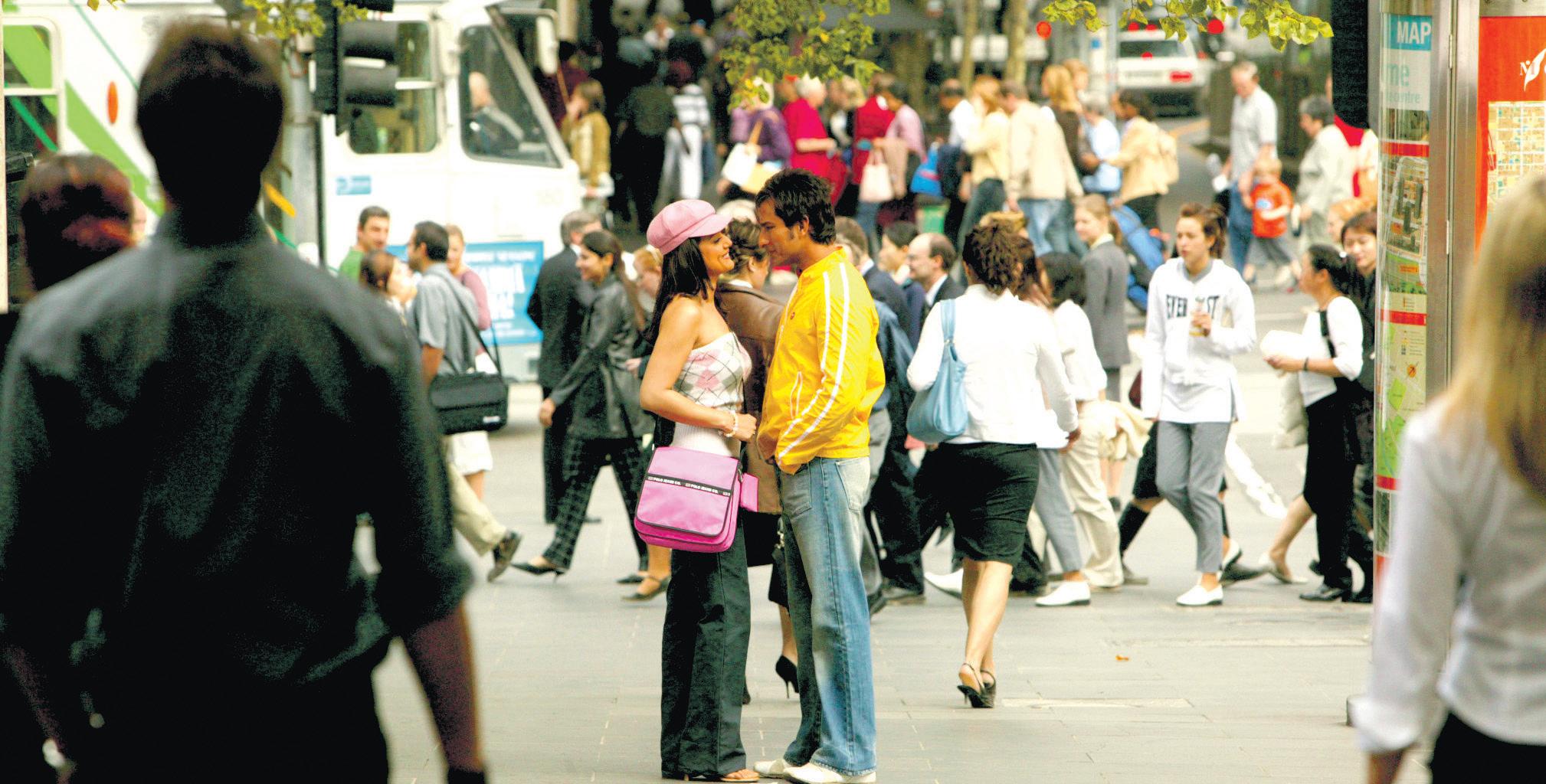
The longer I spend in India, the more I begin to notice the subtle national quirks which make Indians who they are. While Indians may not realise it, these seem to have profound effects on the country and the way that it functions. My first observation is the very common juxtaposition of national pride and self-loathing. Nationalism has swelled in India in recent decades, and although the country has always been a very proud nation, the patriotism shown in the past ten years suggests this is on the increase. In fact, according to many people who I meet, India is the best country in the world. However, I’m often left wondering just how good it is when those same people ask me to help them migrate to Australia.
Which leads me to my second observation; that a majority of Indian people are in a sort of unequal relationship with foreign countries, particularly Britain, America and the Arab Gulf states. With all the issues that plague Indian society, life in the West can be particularly seductive, and as a result a large section of society seems to think that although Mother India is home, the West is somehow basically ‘better’. Bollywood must share much of the blame for this, for its productions nearly always present
a sanitized version of life in the West, overlooking actual issues as social isolation, alcohol-fuelled street crime and the sexualizing of children. Equally, many Muslims on the subcontinent have an almost unfaltering admiration for Arabs as the gatekeepers of Islam. That respect isn’t returned in Gulf Arab states, where many locals treat Indians with contempt, and see South Asian Muslims as being ‘not proper Muslims’ – a sentiment which in fact violates the Qur’an’s egalitarian values. I wonder if this partial inferiority complex is the legacy of historic events. Is the special respect of Indians for Arabia and the West a hangover from the days of the Mughal and British administrations, when one was forced to respect Muslims or Britain?
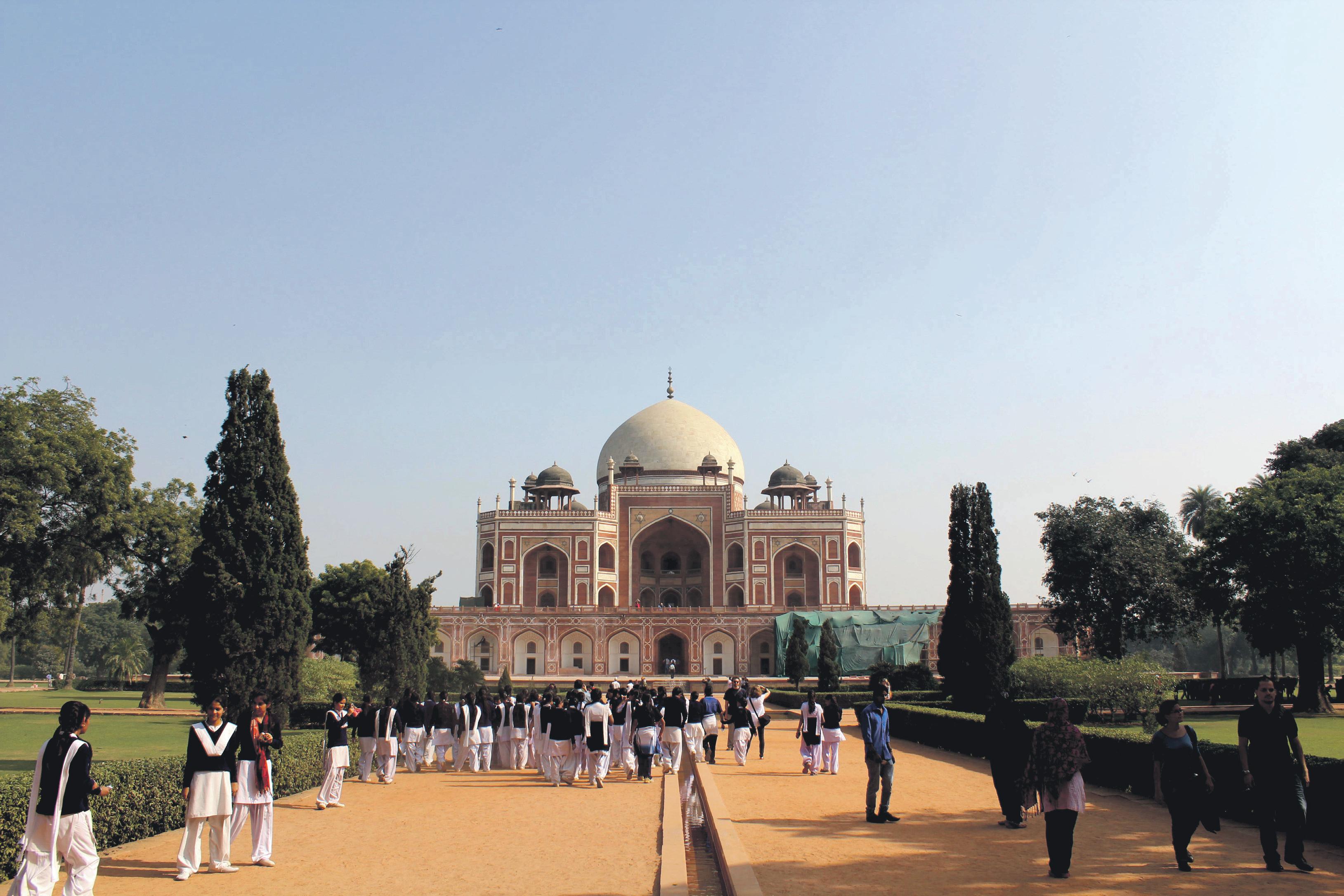
What results is a reality gap which manifests itself in perceptions of India and foreign nations. At home, some Indians are inclined to believe things which might not be accurate, but which compensate for a perceived inferiority. “Buddha was born in India”, “India’s Kanchenjunga is the highest mountain in the world”, and “India has the strongest military in the world” are just a few examples. Meanwhile these same people set their sights on the ‘better’ abroad – and often still believe the filmi stereotypes about money, girls and success in the West. A strange contradiction emerges, where otherwise patriotic Indians dismiss attractions as being ‘too poor’ or ‘too lowly’, simply because they’re in India – when in actual fact, there’s nothing wrong with said attraction. At the extreme end of this spectrum, we see the contradiction in some NRIs who will scrub commodes in the West to make ends meet, but won’t drive through perfectly fine suburbs in India because “it’s dirty”. Apparently, Indian dirt is worse that Western dirt.
The positive side of India’s reality gap is that Indian society remains less cynical that Western society. The belief that a dream might come true still exists in many Indians, no matter how many beatings that dream may take. Lots of students graduating from school actually believe that they will one day be rich beyond their wildest dreams. If they graduated in the West, a large section of society would pull them aside and tell that that no matter how hard they work, some people just never make it. Lots of Indians seem to believe that
love, in the end, will triumph - in the West, it is commonly held that only the lucky ones stick together. When the Delhi Metro opened a couple of years ago, hearts thumped with pride. The same project in Australia would have been torn apart by a society fed up with broken political promises. Despite the constantly broken promises of their government, and despite often complaining about what’s wrong with their country, for better or for worse, Indians are still a hopeful bunch.
I sincerely hope my time in India has rubbed off on me, and made me more Indian in this respect.
So I hope that I haven’t offended anyone, or cut too close to the bone. Moreover, I hope that this is not interpreted as an attack on Indians or Indian values – it is simply a recount of my observations. India is a complex being, and as such psychoanalysing her is a hazardous task. And as for a psychoanalysis of Australian society? Don’t even get me started…
about Indians in western countries (even Salaam Namaste’s impoverished students in Melbourne), living the glamorous life
JULY 2012 41 INDIAN LINK
At home, some Indians are inclined to believe things which might not be accurate, but which compensate for a perceived inferiority.
Architecture wasn’t the only legacy left by the Mughals and the British
A N Au SS ie b oy i N Che NNA i
Although the country has always been a very proud nation, the patriotism shown in the past ten years suggests this is on the increase.
Nationalism has swelled in India in recent decades.
Left: Bollywood stereotypes abound
charms of Kota
Nature walks, pristine beaches, well-maintained resorts and an array of markets are the chief attractions in this cheerful Malaysian city

at islands such as Mataking, off Sabah’s east coast. Sadly illegal dynamite fishing destroyed much of the coral.
BY PETRA O’NEILL


Kota Kinabalu, or ‘KK’ as it is affectionately known, is the capital of the Malaysian state of Sabah on the island of Borneo, only a short flight away from Kuala Lumpur or Singapore.
Kota Kinabalu traces its beginnings to 1882 when an outpost was established by the British, and then a settlement at a fishing village renamed Jesselton after Sir Charles Jessel, of the British North Borneo Company.
To liberate North Borneo from Japanese occupation during World War II, Allied Forces heavily bombed Jesselton, leaving only three buildings standing!
Today Kota Kinabalu is a modern utilitarian city with a compact downtown area of restaurants, cafes and shopping centres predominantly constructed from concrete with streets arranged in a grid pattern that, while lacking in architectural merit, are ideal for walking. The lively waterfront is pleasant where in the evening you’ll find open air hawker stalls cooking up a feast of noodles or freshly caught seafood in giant woks. On Sundays, Gaya Street lined with restaurants and Chinese apothecaries, becomes a fresh produce and handicraft market, while nearby Australia Place named after the Australian soldiers stationed here during World War II, has backpacker accommodation, restaurants and numerous bars. Sabah Museum and the Atkinson Clock Tower are also well worth a visit.
It’s not long before visitors are charmed by the relaxed, friendly locals, the lively atmosphere of its markets and waterfront, and close proximity to attractions for day excursions. My daughter Nicky and I visited three of the five idyllic islands at nearby Tunku Abdul Rahman Marine Park reached by an exhilarating speedboat ride 30 minutes away. While the islands have pretty beaches, bays and sandy coves fringed by coral reefs where you can go snorkelling, the diving sites don’t compare to those found
Reviving the tradition of a bygone era, the North Borneo Railway is a delight. British administrators who came to Borneo in the 1880s paved the way for the opening up of land for cultivation of tobacco, sago, tapioca, pineapples and rice, and construction of the rail line commenced in 1896. The five restored carriages are decorated in timber panelling, the exteriors painted green and cream.
Passengers join the train at Tanjung Aru Station receiving a ticket and passport as a keepsake of their journey. The vintage steam locomotive is one of the last in the world fuelled by wood. The engine is stoked with timber and the whistle blows to sound its departure. With the windows open, we waved at locals as we passed by picturesque lush tropical scenery, paddy fields, mangrove swamps, beaches and villages. Several stops were made to explore a Chinese temple and the small town of Papar, with a vibrant local market selling exotic fruit and vegetables.
Breakfast is served on board with coffee, assorted pastries and croissants; while on the return journey, the Tiffin lunch with compartments stacked high with an assortment of curries was a treat.
At the Shangri-La’s Rasa Ria Resort we spent several enjoyable days cocooned in paradise. With no shortage of activities, I spent my time on jungle walks, took an evening river excursion in search of fireflies and met the well-cared-for orphan orangoutans undergoing rehabilitation in the resort’s nature reserve. I also caught a local bus to visit the nearby town of Tuaran Town with a temple and fresh produce market, while Nicky spent her time relaxing by the poolside, the tropical climate well suited for indulgent lazy days.
Tanjung Aru, with a pleasant beachside setting overlooking the South China Sea is worth a detour for the great buffets at the Shangri-La’s Tanjung Aru Resort.
Excursions nearby to Kota Kinabalu also include whitewater rafting, visiting hot springs, viewing the world’s largest flower,

42 JULY 2012
TRAvel
Kinabalu

Travel noTebook KOTA K INABALU, M ALAYSIA
Ge TTI n G T here From Singapore, Kota Kinabalu is a short flight away (Silk Air or Air Asia). From Kuala Lumpur, you can fly to Kota Kinabalu, Sandakan or Tawau (Malaysia Airlines or Air Asia).
Where To STAY North of Kota Kinabalu, the Shangri La’s Rasa Ria Resort, provides luxurious accommodation with impressive service and attention to detail. Our slippers fitted us perfectly (a rarity since I am usually presented with a huge pair), and our fruit bowl was replenished frequently. The deluxe wing is worth the splurge for the extras, including exquisite chocolates. The hotel offers a comprehensive programme of activities with an environmental focus. Website: www.shangri-la.com
Shangri La’s Tanjung Aru Resort and Spa set in a spacious tropical garden by a beach provides close proximity to the airport and has an impressive tribal art collection. Website: www.shangri-la.com
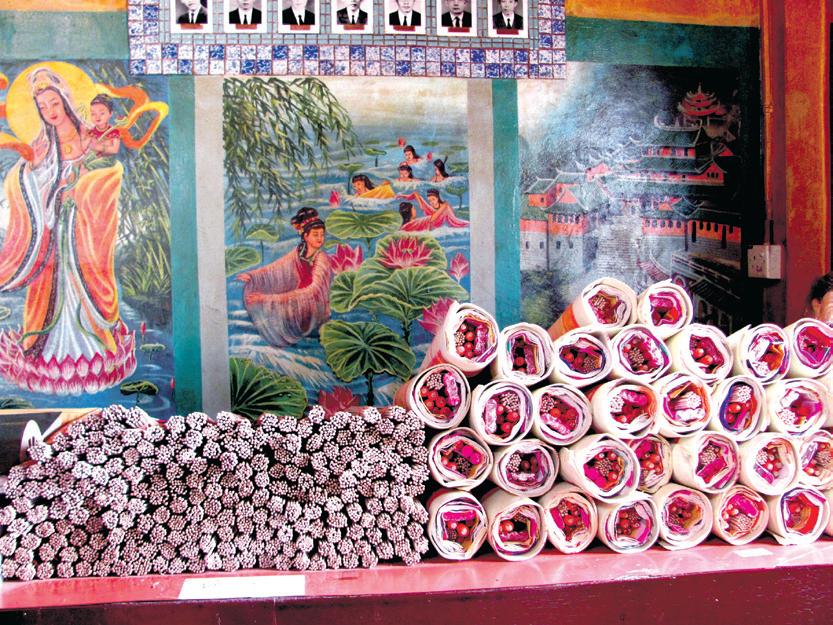
The Hyatt Regency Kinabalu is centrally located with several shopping centres just metres away and great views overlooking the South China Sea. Rooms that include access to the Club Lounge are worth the extra. Drinks and canapés in the early evening was a trip highlight. Website: www.kinabalu.regency.hyatt.com
The North Borneo Railway operates twice weekly. Website: www.suteraharbour.com
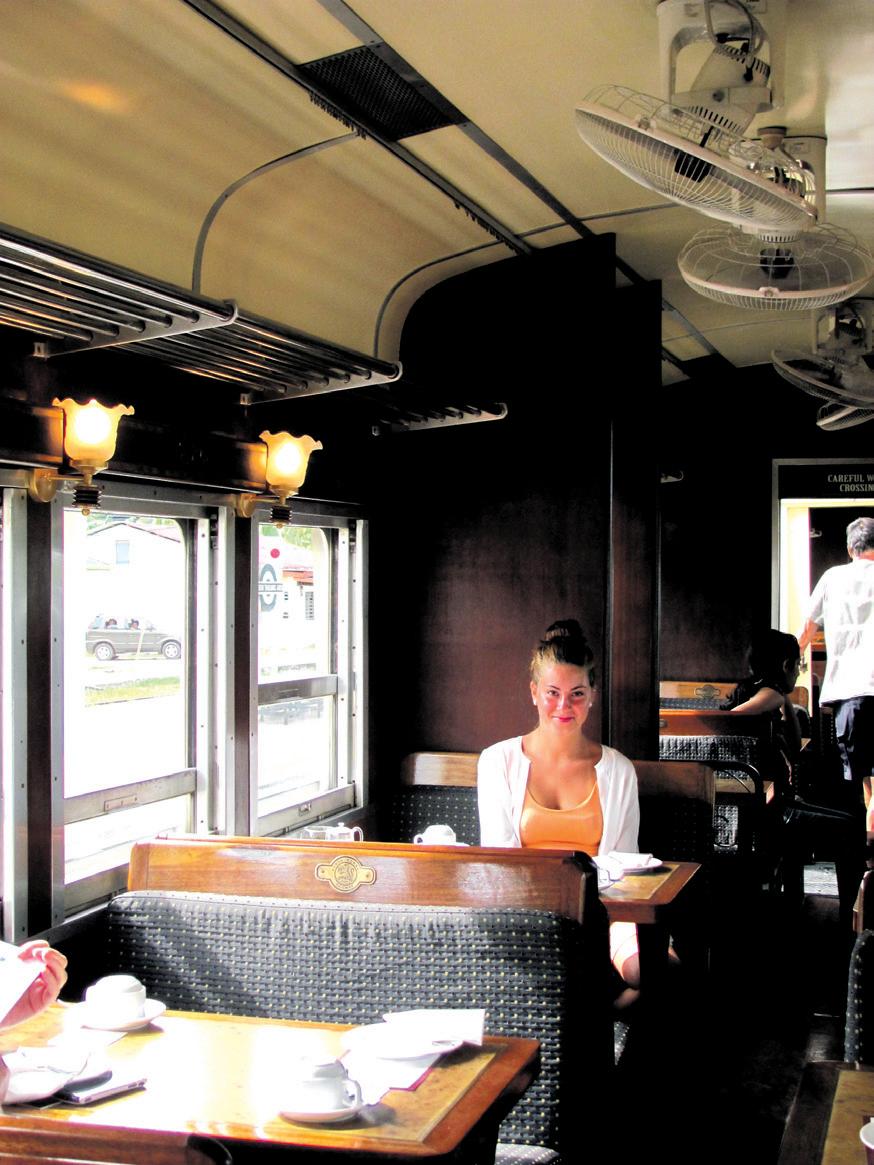
Mataking Reef Dive Resort is lovely, the accommodation luxurious, with Tawau only a short flight from KK (MAS or Air Asia). Website: www.mataking.com

Where To e AT Hawker markets are lively, great fun and provide an excellent introduction to Malaysian cuisine. KK is one of Malaysia’s most ethnically diverse cities, reflected in the variety of cuisines available including Malay, Indonesian, Filipino, Chinese, Indian and local dishes from Sabah, including jungle ferns.
More
I n F or MATI on
With a favourable exchange rate, Malaysia represents exceptional value for money. Even at high-end resorts, room rates, meals and excursions are very reasonable. Borneo Eco Tours offer ecologically sustainable tours. Website: www.borneoecotours.com


Sabah Tourism: www.sabahtourism.com Tourism Malaysia: www.tourism.gov.my
The helpful staff at Sabah Tourism provided detailed responses to all my email inquiries: www.sabahtourism.com
the Rafflesia, or hiking on Mount Kinabalu. Instead we headed east, ending our stay in Sabah on Mataking Island, located near Sipadan Island, one of the 10 top dive sites in the world. After a day out snorkelling, sighting turtles, rainbow coloured fish and reef sharks, we returned to find a large monitor lizard lying at the bottom of our Jacuzzi! Borneo is one of the most dramatic and exciting destinations you will ever experience, and Kota Kinabalu provides the perfect gateway.
JULY 2012 43 INDIAN LINK


44 JULY 2012 www.indianlink.com.au
True tutoring
Year 12 students looking for help in getting ready for their VCE should seriously consider a mature, experienced tutor
BY CARL BUHARIWALA
On many occasions I have been approached by family friends and the general public who have the need for tuition. I have declined all of them for the simple reason that I do not see myself as one who would tutor a student effectively for money. Although I have completed my VCE in 2011 with a score that has allowed me to pursue Law at Monash University, I would not view myself as being suitable to tutor students who are currently sitting for their VCE. Although some may disagree, past VCE students are not the people current VCE students should be seeking when they are in need of extra help and tuition for their subjects. There are a number of reasons for this.
Firstly, schools change their course every year. It is very unlikely that a past VCE student who wants to tutor has done the exact same course your son or daughter is currently completing. Therefore, there will be material which your student tutor has not even come across yet, in the course of teaching your son or daughter. Secondly, students from different schools learn in different ways. They learn how to write their essays in a different format. When applying a formula in mathematics, they learn different ways to set out their answers. Indeed, students should always follow what their teachers require. However, having tuition every week will cause the students to practice a method they have learned at school, as well as the one from their tutor. Therefore

with two streams of thought, it can be hard to consolidate and master any one. The tutor is not going to adapt easily to what the student’s teacher wants. If the tutor has been taught in a specific way, it is hard to change. Thirdly, past VCE students also have to continue studying, and therefore they cannot devote as much time as full-time adult tutors can.
Especially for English when the booklist changes, I would not expect a past VCE tutor to read all the books in such depth as they would have done for their own VCE.
I write this article with the intention of informing parents as well as current VCE students that past VCE students are not suitable for the purpose of tuition. While they may be useful in answering questions on an infrequent basis, they are not the tutors that I would recommend.
The people I recommend are full-time tutors who teach for a
living. These tutors are mature and would teach in line with what is wanted by the VCE examiners. They will know the course backto-front and to a degree of depth that will allow those who need help to really feel satisfied after having an hour of tuition. Nowadays tuition is costly, and I advise parents to invest their money wisely when it comes to finding tutors. Teaching is not easy, and when your sons or daughters are really confused with their subjects, you will want to place your faith in a mature tutor who knows the subject in its entirety. During Year 12, I had an English tutor at the start of the year who was three years into University. I did not find this tutor useful especially when I came to realise that the tutor had not even read the books I was studying in English. I immediately consulted my parents and moved to an established tuition firm, where the tutor was just what
I needed. This tutor knew the subject well, and when I asked strange questions like any ordinary VCE student does, I would receive answers in ways that made me understand what I was studying. This is what a student wants. A teacher who not only teaches, but acts as a mentor. Although mature tutors may have done their VCE or a similar certificate a long time ago, it is their job to teach. As a result they are constantly tutoring and will have consolidated their methods of teaching to deliver tuition that is better than what can be expected from a past VCE student.
I have based this article on my experience and I do not intend to criticise any past VCE student who is a fine tutor. This is my advice, and if you feel I am wrong, please do at least bear in mind to try hard in finding tutors. Most often than not, that one hour every week is the best aid to a student’s VCE.
It is very unlikely that a past vCE student who wants to tutor has done the exact same course your son or daughter is currently completing.
JULY 2012 45 INDIAN LINK
SC hool
They will know the course backto-front and to a degree of depth that will allow those who need help to really feel satisfied after having an hour of tuition.
Casual journalists
you have a passion for writing…. Indian Link Newspaper is seeking reporters in your city, to cover Indian community events, as well as India-related events in the mainstream.
been successfully operating in Sydney for the past 17 and Melbourne for the past 10 years, Indian Link has now established a presence in Brisbane, Adelaide and Perth.
would like YOU to be part of our exciting growth!
remunerations paid. Contact info@indianlink.com.au
So
Having
We
Appropriate
SEEKING GROOMS
Well settled Sikh family in Australia seeks good natured, educated, professional match from a cultured family for their good looking, slim, fair daughter. completed medicine (M.B.B.S), currently doing internship. Please contact singh195950@yahoo.com
Seeking suitable Hindu/Jain match for our daughter, 5’1”, 22 years. Born and brought up in Sydney with Indian family values. Degree in IT. Working as a Software consultant in Sydney. caste no bar. contact father in Australia on email: rlagrawal55@gmail.com
Seeking well qualified match for very fair young looking hindu lady, 54, veg, divorced, daughter living with her. he must be aged 49-55, non smoker with strong moral values. contact lifepartner@hotmail.com.au or call 0404 043 904.
Seeking suitable match (from Australia, never married) for hindu girl, 35 years, chartered Accountant (non-veg), living in Australia over 25 years, with eastern and western family values. Please email with all details on ganesh2011v@gmail.com

Well-educated Jat Sikh family seeks professionally qualified well-settled match for their Australian citizen daughter, Aug ‘78 born, 5’ 4”, well-cultured, family oriented and highly educated with 2 Master Degrees (IT & IS). Working as an Administration Manager in a leading Mnc Sydney. Please email particulars with picture to smatrimony2011@gmail.com

SEEKING BRIDES
Seeking graduate Hindu girl for well established 5’10”, very fair 21/11/1968 born Australian citizen. never married.
Be(electrical) self employed. Vegetarian nonsmoker teetotaller. Please email profile with photo to anandrao68@gmail.com
Decent Mangalorean /Goan gentleman
47 years, seeks marriage alliance from sincere attractive South Indian /Sri lankan/ Pakistani/Bangladeshi bride aged 30 – 52. caste/religion barrier open. Please contact advertiser by writing or phone 5/47 First Ave Seven hills 2147. Ph 02 9676-2512 Mob 0458 153 193. Proper address / phone contact and photograph requested.
Seeking suitable match for clean-shaven Jat Sikh Gill boy, 29 years, 5’9”. MSc. Bed (India). Diploma in hospitality (Australia). Applied Pr in 2009. Belonging to a noble and respected family with moral values. Sister married and settled in Sydney. email australiagill@yahoo. com, mobile 0470 574 071, 0423 238 228.
Matrimonial alliance is required for my nephew, 31 years, 5’10”, fair complexion, engineering graduate, working in real estate, from respectable hindu Punjabi family. no dowry please. Simple girl, decent education with any job in Sydney or a professional from India. contact 02 9613-3057; 0423 084 030.
Compatible match for 1975 born, handsome, clean-shaven Sikh Khatri boy, 5’9”, two post grad degrees from India and recently finished Masters in IT from Australia. Applied for temporary resident visa (currently with full work rights) and working as Vehicle Service Agent for hertz multinational car rental company, earning $4000 per month. Girl should be tall, well-educated with pleasing personality, and must be form Sikh background. early marriage; serious proposals only please. Phone 0422 102 242 or email jas_ghai01@gmail.com
46 JULY 2012 www.indianlink.com.au
m AT Rimo N i A l S
JULY soon
We offer weekly intakes for all our courses!!!! IIPD strives in providing quality education with Experienced and friendly staff. Workplace assistance also provided. Reaching your potential is a dream come true!


JULY 2012 47 INDIAN LINK

48 JULY 2012 www.indianlink.com.au
Warming foods
BY GEETA KHURANA
Well into winter now, one of our main concerns in this season is putting on weight with less activity. For most of us, it is too cold to venture out for our regular exercise. This is the time when we just want to sit down on the couch cuddled up in our quilt and drink hot beverages while watching our favourite TV show or just reading.
Some people suffer from Seasonal Affective Disorder (SAD), which adds moodiness, causing one to stray from their health goals. Studies have suggested that there is an increase in aches and pains during winter, along with an increase in functional impairment associated with seasonal depression. An increase in appetite is also reported, with the start of the winter season.
Nature has its own way of keeping the body warm. Heat can be generated from within the body as well as from food that raises the body’s temperature to help it cope. The body needs to burn more calories to keep warm, and hence there is a need to eat more. However, certain foods have a more warming effect than others. In the winter we tend to increase our intake of hot, spicy and fried foods like puris, samosas, gulab jamuns, carrot halwa and garam garam jalebi But with reduced activity and an increase in the intake of high calorie foods, we pile on the kilos. We can hide this weight under bulky winter clothes but it becomes a major concern in summer.
But we can chase away our chills with foods that generate heat and keep our bodies warm, while not adding to our weight.
Soups
A bowl of hot soup in winter is what our body needs to take the chill out of our bones. Soups can be an excellent way to add veggies, lentils, beans and protein-loaded chicken, fish or meat to your diet without the addition of too many carbohydrates and fats in your diet. Having a low calorie bowl of soup before dinner can help you consume fewer calories
in your meal which in turn can prevent weight gain. Try to make soups with different combinations and also by using different ingredients such as beans, green leafy vegetables, carrots, tomatoes, sweet potatoes, fish, chicken and meat. You can even have thick broths of soup as a meal if you add enough proteins, vegetables, and potatoes or sweet potatoes for carbohydrates. Avoid having very creamy soups or adding too much cornflour to thicken the soup. If you want to buy commercial soups, to control the amount of fat, sodium and calories in your soup, shop for low-sodium, lowfat brands or prepare your own soups at home using low-sodium vegetable broth. Not only are soups hot, tasty and nutritious, but they also provide water which we often forget to consume during winter. Hot liquid also helps break up congestion and liquefy mucus.
Herbs, spices and condiments
Winter is a great time to add condiments and herbs like ginger, garlic, cloves, cinnamon and turmeric to your meals. In addition to their warming effects, they contain phytonutrients and have anti-inflammatory properties that help fight infections and disease. Garlic also has allicin, an antioxidant that helps fight bacteria and strengthens our immune system.
Citrus fruits
Citrus fruit like lemons, grapefruit, oranges and mandarin are loaded with vitamin C and thus help us fight against common colds and flu. These foods strengthen our immune system and the vitamin C also helps combat free radicals and thus may also aid in preventing certain cancers.
Citrus foods are good sources of potassium and folate, the nutrients needed for a healthy heart.
Nuts and dried fruits
Nuts can be a friend or a foe in winter. In India with the Ram Lila come the rehriwalas with peanuts, gachak and revri. Nuts can be very healthy snacks for winter, if eaten in moderation.
They are a good source of energy, protein, iron, selenium, vitamin E and unsaturated fats. Most dried fruits such as dates, figs and prunes are high in fibre which helps with constipation that sets
Whole grains
The traditional Indian whole grain cereals besides wheat and rice include bajra, jowar, oats, barley and corn which have great warming properties. Millets can be used to make hot porridge. Whole pulses and legumes like beans, soybean and lentils can be used in soups and stews. Whole grains and wholegrain breads are a healthy way to add fibre to your diet and also to keep you full.
Seeds
Seeds such as sunflower seeds, flaxseeds, linseeds and sesame seeds are known for their warming effects and health properties. Our winters in northern India were filled with yummies such as alsi ke ladoo, til ki gachak and til ke ladoo Seeds have phyto-estrogens that are good anti-oxidants which help in preventing cancers. These seeds are also good sources of unsaturated fats, proteins, vitamin E and minerals. But it is healthier to add seeds in our cereals and
Lean meats, chicken and fish
These high protein foods are associated with increased heat production and higher thermogenesis. But stick to the grilled and steamed options, rather than the fried ones.
Tea
Teas such as ginger and tulsi tea have been used to treat cough, colds, body aches and pains. Tea has flavonoids which help to strengthen the immune system. But be careful to add low fat milk and not load it with sugar. Ginger tea with half a teaspoon of honey or jaggery is great for winter.
fluids
Water is the most neglected during winters. Make sure you sip on enough soups, tea and juices to keep yourself well hydrated.
Enjoy your winter meals without the addition of extra calories or the fear of cholesterol going high.
Seeds such as sunflower seeds, flaxseeds, linseeds and sesame seeds are known for their warming effects and health properties.


JULY 2012 49 INDIAN LINK
W ell N e SS
The tendency to overeat is higher in winter, but some foods can keep you warm without increasing the calories

50 JULY 2012 www.indianlink.com.au
Precious Paris

The most lively view of the Eiffel Tower is from a distance and at night, when a million alternating fairy lights illuminate the Tower when the clock strikes each hour
n our minds, the vacation balance. The wait then, was unbearable. The A320 flight to Singapore was uneventful, but the 10.45 hours nonstop trip from Singapore to Paris on the upper deck of the gigantic A380800, the largest aircraft in the world cruising at 12,000 meters altitude in 55c below zero and at 1000 km/ph was an experience. I recently had an opportunity to lunch with an A380 pilot who affirmed that the aircraft does fly at 12,000 meters, and the decreased gravitational pull results in better fuel consumption. However the altitude does not interfere with the thrust each engine generates at that height, for those who would like to know. While the A320 had already loaded us with dinner, the A380 quite unapologetically lulled us to sleep by repeating the formality. A crisp 8degrees Celsius around 8am welcomed us in Paris. Luxury coaches transferred us to the Hotel Oceania in Porte de Versailles, where we waited over tea/coffee and cakes for the universal checkout time of 12 noon. Then, after hot showers, we rushed out to view the locality, for we had only three days in Paris. Every third shop, we noticed,
was a restaurant or a place selling wine. The locals instantly identified us as visitors as we were unbusinesslike and visibly slow; my French was a stutter, yet they were cordial. We ate at a restaurant, baffling the staff by settling for coffee, rather than wine at lunchtime. Later, we bought a carnet of tickets from a Metro station a hundred yards away, and went every and anywhere, walking around until late at night, wining and dining on Confit of Duck and Wild Boar Parisienne, found on the menu. After breakfast the following morning we were driven past Avenue des Champs Elysées where the French President’s residence is located, and Place Charles de Gaulle. It would be an understatement to mention that traffic at and around Arc de Triomphe where twelve streets meet, was maddening. Our guide motivated us to study the traffic pattern and stated that if we attempted crossing the street at this place, it would very likely be our last. Therefore, one crosses the streets only via underground channels. Because to see the Louvre, the largest single building in Paris and the largest museum in the world takes three days, we left it out of our itinerary. Our primary interest in the Louvre though, was the glass pyramid a recent French President ordered installed, which the Parisienne discard as an ‘eyesore’. A quick visit to the Opera House, the Tower of Bastille, Montparnasse Bienvenue and a dozen other
were at magical Concorde that has statues of historic figures, curiously all facing in the direction of cities they originate from. To truly absorb the grandeur of the Egyptian obelisk, many fountains and more statues we needed at least a full day there, which we did not have. An area in the old city is called ‘Hill’ even when it is only 57 meters high. Here, we encountered a few gypsies selling homemade jumpers and scarves (European gypsies claim they are originally the banjaras from India). Rose’s Indian appearance magnetised them; one smiled and said, “Ah, Indiènne!” Our next stop was the Eiffel Tower which is gargantuan! Someone rated it as just ‘a dump of iron’, but it is probably better described as ‘la magnifique’ dump of iron. The huge box-lifts that necessarily ascend and descend on a tangent, operate on iron notches that make it virtually impossible to fall or slip. We were allowed only upto the second level, which had a few eating places, but offered us a 360-degree view of the city for miles, and of the river Seine with tourist boats cruising past under us. We now realised that Paris is a city of apartments and ancient monuments, in every direction. The most lively view of the Eiffel Tower is from a distance and at night, when a million alternating fairy lights illuminate the Tower when the clock strikes each hour. After that, we all bought our own lunch, were shown many more monuments and locations, and returned home dog-tired.
At night we were driven into the city where a chu-chu train transported us to a church on a hill around which were shops inundated with tourists and young men and women, and a grand 360-degree view of the city of Paris in lights. Frogs legs and les escargots (garden snails) were on the menu. We were brave enough to try les escargots, yet not brave enough for frogs legs. Around 11pm, the chu-chu train brought us down and gave us a conducted tour of a mile-long Red Light district on both sides of the road. Suddenly in between red lights all around, we saw a colourful rotating windmill, next to which was a neon sign in red proclaiming ‘Moulin Rouge’. This famous show with a score of nearly bare-bottomed and boldly bare bosomed beauties of both sexes in ostrich feathers, with musicians playing live, loud music far surpassed the show Nicole Kidman and Ewen McGregor created on the large screen in the movie of the same name. The third day we were on our
own, so we took the Metro to the Musée d’ Orsay, the Museum of European Impressionists paintings, which we truly desired to visit. It took us five long hours just to browse past five floors replete with a virtual treasure of oils on canvas, mosaics, sculptures and ancient artefacts. Viewing originals by Monet, Manet, Van Gogh, Renoir and scores of others emanated a sense of rare gratitude towards that heavenly icon who lives somewhere up there. It was enthralling, but exhausting. We also needed to view those must-see murals in the ornamental Opera House, but had little strength left, so we settled for another marvel nearby: the Cathedral of Notre-Dame.
After food and wine, tourism is the largest industry of France, and we needed to triumph over hundreds of spectators in order to gain entry. It will be no fantasy to state that what those early centuries architects and painters created, those from this century cannot create!

My journey continues…
JULY 2012 51 INDIAN LINK TRAvel
GEORGE THAKUR
This unique city has the best of menus and masterpieces, viands for one’s stomach and soul





52 JULY 2012 www.indianlink.com.au Register you interest today: Mr Sanjay Agrawal contact number: 03 9413 1481, Mobile number: 0402 023 502 email: sanjay.agrawal@unitedpetroleum.com.au mention



JULY 2012 53 INDIAN LINK
winter
must-haves
Ankle boots
By TALIA KAUR

Gone are the days of bundling up in layers of warm clothes to beat the chill of winter. Special new winter fashion trends have made it possible to look chic and trendy, while keeping warm. So here are 5 winter winners to heat up your look.
Knitted jumpers

Meet winter’s most popular fashion piece. There’s nothing more comfortable than a cozy knitted jumper and it’s become an absolute must-have this cold season. The great thing about jumpers is that they come in so many different styles and colours – from light pastel, preppy ones to dark-patterned drapey ones – so it’s impossible not to find a perfect option for you. A soft cotton or wool jumper will look great with almost everything, so don’t be afraid to let your imagination run wild this season and team them up with different textures, fabrics and patters. You could pair a pastel blue knitted jumper with some floral trousers for a feminine look. If you feel like going for something with a bit more edge, team a leather skirt with a bright knit and add a thin belt at the waist – it’s right on trend, yet so comfortable.
Faux-fur coats


We’ve seen many winter trends come and go, but a luxurious fauxfur coat will always be a timeless winter essential. It’s super stylish, yet so warm! And mainstream fashion stores are not only selling many different cuts, colours and textures, but they’re also making them affordable so there’s a coat to suit everyone. But, it can still be a challenge finding the perfect one. Depending on your sense of style, it can be tricky to pull off a full-length faux-fur coat without looking overdone, especially with the bolder colours. If you’re less of a fashionista, you can opt for a safer option such as the short vest and choose neutral or earthy tones. However, it’s important to remember that no matter if you want to go all out or play it safe, when it comes to rocking this trend, always keep the rest of your ensemble as simple as possible –in the end, you want the coat to make a statement.
This trend, big last winter, is back this season and will be huge for many more winters to come. It’s chic, comfortable and practical during the frequent winter rains. There are ankle boots in every style from platform heels for a night out, to flats for a more daytime casual look. Neutral coloured wedge boots are also a great safe option and are especially hot right now as they add height without being as attention-grabbing as bright heel boots. But if you’re looking to add an edge to your outfit, opt for a western style leather boot. If you want to go one step further, try coloured suede or animal prints, but remember to keep the rest of the outfit simple so the boots are in focus. Also, pay attention to detailing like lace-ups or buckles for a bit more style. Try brightening this cold season up and team a pair of tan leather boots with bright coloured jeans or leggings – it adds a fresh look and is a welcome break from black.

Coloured jeans


The perfect piece to turn these gloomy winter days around! Just about every store has jumped on board. If you’re feeling a little unsure about whether you can pull off this trend, go for pastel colours or richer, luxurious colours like teal blue, burgundy red or emerald green. To finish it off, team it up with neutral tones such as a white shirt and tan boots. This way you’re still including some colour, but making sure it’s not too overpowering. If you are daring and go for brighter colours, be sure to team up with earthy tones, and don’t overdo the accessories. A bright red pair of jeans teamed with a white and cream striped knitted jumper would look great. Another way to be a bit more playful is to pair it with a bold print – polka dots, nautical stripes or even floral, geometrical, leopard or zebra prints.

Berets and beanies

This year’s winter has seen berets and beanies in all different shapes, sizes and styles, and has become the ultimate topping to just about any winter ensemble. Whether you opt for a super slouchy, boho style beanie or a chic French beret, there are so many colours and textures to suit every style.


If you’re wearing a simple coat,
a bright beanie can add a bit more detail and colour, but if you’ve chosen a bright coloured jumper, a neutral beanie will add the finishing touch. Try experimenting with textures and prints as well. Team a solid coloured cotton knit with a faux-fur printed beret, or a cashmere cardigan with an oversized knitted beanie. This will also help to balance the thickness of the fabrics. Also, look for details such as bows and ball tops for a more feminine style. Beanies or berets are also a really cheap accessory
54 JULY 2012
Loud Womens
Sonia Rykiels
ASOS
Joe Frech
John Zach
J Brand
FASHION
Echo
Miss Selfridge
Jimmy Choo

JULY 2012 55
Chocolate cake with a difference
Of all the quirky ways to include chocolate in your food, here are a couple of options that are delicious and somewhat healthy
find, as I did, when you make this more frequently, that everybody will want their own mug, so beware).
BY DEVNA LUTHRA
Teacher: If you had 10 chocolate cakes, and someone asked for 3.75 cakes, how many would you have left?
Student: 10 cakes
Teacher: Okay then, imagine if someone forcibly removed 3.75 chocolate cakes from you, then how many would you have?
Student: 10 cakes and a dead body. It’s said that nine out of ten people like chocolate, and the tenth person lies. I’ve always wanted to try one of the chocolate barfis from the big silver-tray tiered windows in the Indian shops, but Mum always says “Chocolate barfis are terrible!” (I think she just had a bad experience with them at some point…) and it got me thinking about how many different ways there are that we consume chocolate – in a drink, in icecream, fruit smothered in it, the topping for bars and slices and the easiest and probably ‘favouritest’ block or bar. Chocolate cakes were probably the first thing I learned to make (with help from my friends Betty Crocker, Greens and White Wings) and it is said that everyone should have a good chocolate cake recipe in their repertoire. But now, like with phones and computers, there are so many different new modern types! I’ve heard of chocolate mayonnaise cake (apparently this gives a rich and dark texture and not a taste of mayonnaise), chocolate cake with beetroot (how healthy is that?!), chocolate cake with oatmeal, chocolate chilli cakes, and even weird extremes like vegan chocolate avocado cake (not sure about that last one…).
Here are some recipes that our family loves. Chocolate Mug Cake is a ‘lazy’ dessert - easy, simple and quick to make, fun to eat on a cold night as you sit around in your PJs watching TV. (The recipe provided here serves one person only: you’ll
The Chocolate Beetroot has less flour and butter, (Chickpea Cake none at all) so you can convince yourself that they are a healthy alternative!
Chocolate Mug Cake
4 tbsp flour
2 tbsp sugar
2 tbsp cocoa
1 small egg
About 3 tbsp milk
3 tbsp butter or margarine melted, or vegetable oil.
½ tsp vanilla extract
1 tbsp choc chips
1 large mug
Mix the dry ingredients together in a mug
Crack an egg and add it to the mug. Be sure to mix it well to avoid pockets of flour in the corners. Pour in the milk, melted butter/oil and vanilla extract and mix well.
Pop your mug into the microwave for about 2-3 minutes on maximum power, depending on your type of microwave. You’ll know when it’s done when the cake stops rising and sets in the mug.
Run a knife around the sides of the mug, and tip the warm cake out of the mug and onto a saucer.
Chocolate Chickpea Cake
2 tbsp cocoa powder
2/3 cup chopped dark cooking
chocolate
1 x 375g can chickpeas, rinsed and drained
4 large eggs
1/2 tsp vanilla extract
1/2 cup granulated sugar
1/2 tsp baking powder
1/2 tsp salt
Preheat oven to 180 degrees. Grease and line cake pan
Melt the chocolate, either in the microwave (remember to stir
combine.
Add melted chocolate and blend to combine, scraping down sides of bowl well as necessary. The batter will be thick. Transfer into prepared pan and bake until knife inserted in centre comes out clean, about 1 hour depending on the strength of your oven.
Allow cake to cool for 15 minutes on wire cooling rack. Dust with icing sugar just before serving
Chocolate Beetroot Cake
This cake comes out really rich and moist and you’d never guess it was low fat, but there is no butter and almost no flour. Definitely use the best quality chocolate you can buy.

250g good-quality dark chocolate
250g raw beetroot, peeled and
finely grated
250g light brown sugar
40g self-raising flour
40g plain flour
3 eggs
2 tbsp maple syrup
2 tbsp honey

¼ tsp bicarbonate of soda
¼ tsp salt
1 tsp vanilla essence
25g cocoa powder
50g ground almonds
100ml strong black coffee
30ml vegetable oil
150g good-quality dark chocolate
3 tbsp strong black coffee
1 tsp vanilla essence
3 tbsp clear honey
Preheat oven to 180 degrees. Melt the chocolate over a pan of simmering water, then let cool.

In a large mixing bowl, beat the eggs with the sugar, vanilla, maple syrup and honey for three minutes with an electric hand till fluffy. Add in the flours, bicarbonate
of soda, salt, cocoa and ground almonds.
Remove moisture from the grated beetroot with some kitchen paper. Add in the beetroot, cooled chocolate, coffee and oil and mix together.
Pour the mixture into a greased round cake tin and cook in the middle of the oven for 1 hour 30 minutes. After this time, cover the cake with foil and bake for another 30 minutes.
To make the topping, melt the chocolate in a bowl over a pan of simmering water, then remove from the heat and add the coffee and the vanilla essence.
Set aside to cool for 15 minutes before icing the cake. Cut the cake through the middle and ice it in the centre and on all sides.
56 JULY 2012 www.indianlink.com.au foo D
India $890* Colombo $950* USA $1110*
Dhaka $960*
Pakistan $995* Kathmandu $799*
(*incl. taxes, 30kg luggage)
CHEAPEST AIRfARES TO INDIA, PAKISTAN, SRI LANKA, BANGLADESH, NEPAL, AfGHANISTAN.
Kamlesh Patel: 0412 302306
Abdullah: 0430 553246
Ph: (03) 9793 0095

Fax: (03) 9793 0092
Send Money To India, Pakistan, Srilanka, Bangladesh, Afghanistan. Guaranteed Best Rates* *Conditions Apply
Email: k.patel@bookandfly.com.au, abdullah@bookandfly.com.au

ADD: 20 Clow Street, Dandenong. VIC 3175

Are you looking for a career in Family Day Care?
Come along to “Aussom Family Day Care ”
Aussom Family Day Care opened its doors in Jan 2008 and has offices in both Melbourne and Sydney, to provide quality early childhood education and care to children.
• We offer flexible contracts to genuine people interested in caring for and educating children aged between infants to 12years old in their own home,
• We would love to engage a diverse range of educators from many different cultures,
• A commitment to enrol into Certificate 3 in Children’s Services and other criteria apply,
• We have a team of dedicated professionals waiting to help you kick start your career in Family Day Care.
• We offer comprehensive support and guidanceall you need to do is pick up the phone and make an appointment.
Aussom Family Day Care NSw
4/1 Station Road
Auburn 2144
1300 164 794
Aussom Family Day Care Scheme

49 Hopkins Street
Footscray 3011
1300 556 043
M.B.B.S, FRANZCOG Obstetrician & Gynaecologist
Nita has worked recently as a Consultant in Obstetrics and Gynaecology at Gippsland Healthcare Group. She has vast experience in Gynaecology and Obstetrics. She worked as obstetrician and Gynaecologist in various Hospital in QLD and Melbourne as well as at Overseas.
Nita gained her specialist Post Graduate degree in Obstetrics and Gynaecology in India and worked as a consultant in New Delhi for 4 yrs. After Moving to Australia she underwent further training to gain her FRANZCOG– Specialist Degree in Obstetrics and Gynaecology. She is fluent in Hindi, Punjabi and English.
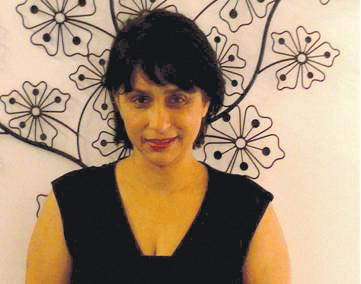
She has started private practice at Melbourne Eastern & South Eastern private Hospital apart from Casey Superclinic and have a operative and delivery at Warragul hospital with consulting session at both Berwick, Pakenham.
After moving to Australia she underwent further training to include FRANZCOG and gained her specialist degree in Obstetrics and Gynaecology in 2010. Nita has worked recently as a consultant at Warragul (W.G.Health) Hospital.
Nita has set up Private Practice in Dandenong with consulting sessions at both Pakenham & Warragul
Obstetrics
• Pre-pregnancy assessment & counselling
• Antenatal, pregnancy management,
• Confinement & Complications
• Management of recurrent pregnancy loss
• Vaginal birth after previous Caesarean delivery (VBAC), RPL & High Risk
• Caesarean delivery
Gynaecological
• Menopause; post-menopausal bleeding
• Vaginal prolapse & Fibroid
• Genital tract infections & CPP
• Abnormal Pap smear; colposcopy
• Pelvic pain & Endometriosis
• Infertility: Diagnosis & assisted treatment
• Family planning, permanent or reversible
• Contraception
JULY 2012 57
INDIAN LINK
Correspondence and
Contact: Silk Medical Suites Telephone: 9792-1191 or Fax: 9792-1180 Silk Medical Suites Unit 4, 118– 120 David Street, Dandenong , Vic 3175 Now ALSo CoNSuLTING IN: Eastcare Medical Centre, 1/125 Main Street, Pakenham Private Consulting Suites, Lansdborough St, West Gippsland Healthcare FEE STRuCTuRE Standard fees apply / Pensioners will be at a reduced fee / “No Gap” billing for Private Hospital Admissions OVERSEAS VISITORS/STUDENTS — upfront payments preferred
For All
Appointments Please
TAROT











ARIES March 21 - April 19
This month, you will be enjoying great health and a vibrant amount of energy. The cards indicate that you will be feeling a lot better with your work situation. You will be thinking of spending more time with a loved one, and want to make a commitment. There is also an indication here that you will be thinking of taking on a new health regime. A short holiday is indicated. Your home will also be on your mind this month.
TAuRuS April 20 - May 20
This month, your attention will be on romance and love. The cards indicate a time of feeling super sexy and your creative juices will be flowing. There is a good job offer around, so you will need to decide what to do. Decisions will have to be made as you will be tempted to go for the offer. On the other hand, you are doing well in your current job. There will also be a new health regime around you.
GEMINI May 21 - June 20
There is a possibility that you will want to change things around your home and re-decorate. The cards indicate a time for making plans and re-assessing your life and future. There are a lot of changes around, you will be feeling full of energy and will enjoy the coming surprises. There is an indication that you will be looking at shedding a few pounds and starting a new, healthy eating pattern. Your car may give you some problems this month.
CANCER June 21 - July 20
This month, there will be a lot of communication flowing, and you will also be travelling. Be careful with work, as you may get into trouble by saying the wrong things. There is someone who is trying to get you into trouble, and will be pressing all the wrong buttons. Keep cool and try to rise above the situation. Be careful about your spending, as you will be tempted to buy some things you may find you do not need.
LEo July 23 - Aug 22
This month, you are going to be a very busy person. There will be some health issues around a family member which will cause stress. Try not to overeat or over indulge, as you will feel very bloated and sick. You may need to get some food testing done as you may be allergic to some foods. The cards show that you need to be strong as a friend will be asking for a loan, and money is tight.
VIRGo Aug 23 - Sep 22
The month will be all about accumulation of assets, money and power. You are looking to make changes and are in the mood to make things happen immediately. Take care of losing your temper, as family matters will frustrate you. You could take on a new project that you have been thinking of doing. You can capitalise on an opportunity. There are some amazing results to be had if you just go for it and take a leap of faith.
PREDICTIONS fOR JULY 2012
By NANCy JADE ALTHEA www.nancysood.com
LIBRA Sep 23 - Oct 22
This month, you will be in a romantic mood. You will be feeling confident and able to impress the one you love. There are chances of greater recognition at work. Take care of your health, as there is a nagging headache around you. You need to take in more fresh air and exercise. Lately you have been neglecting yourself and the stress is building up. You may want to buy yourself some new clothes and change your image.
SCoRPIo Oct 23 - Nov 21
This month should be a very happy time. Your thoughts are on the future and its possibilities. Look for surprises around the home front, they could really be great! Your career will get a major boost. The cards indicate a time of recognition and rewards. A member of staff at your workplace or business may leave suddenly and cause problems. There is secrecy around your family and you will feel left out. Build some bridges, and don’t be too stubborn.
SAGITTARIuS Nov 22 - Dec 21
Your career will take prime focus this month, and it is a great time for real advancement. Your mind is jumping all over the place with possibilities for the future. Relationship issues will probably be a major motivating force for you. Your partner will want advancements in the relationship. There are some issues you need to deal with before you take this decision. There seems to be mistrust and you need to have an open discussion about moving forward.
CAPRICoRN Dec 22 - Jan 19
If you are looking to travel, now is the time. Pack those bags and don’t look back. You need a break. Your career will take a major boost as you turn the tables on any ongoing confusion. Watch those purse strings as there will be a tendency to spend more then you need to. You love life needs a boost, but you will be spending more time socialising. Your popularity will grow and you will feel better about yourself.
AquARIuS Jan 20 - feb 18
Have you been watching the family budget? If you haven’t, you will. It will be your key focus this month, but not in a burdensome way. You may surprise yourself at your own creativity when it comes to juggling financial responsibilities this month. The cards are indicating at time of great planning and also looking at what you would like to do in future. There is a possibility that you may consider studying and furthering your interests in spirituality.
PISCES feb 19 - March 20
This month sees the focus on committed relationships, and you will have ample energy in that area. Some problems or old grievances could surface, and you will have to deal with them. Take time out for yourself in case of stressful situations at work. There are some matters that you are not dealing with, regarding paperwork and matters around the house. Take care of your knees this month as you seem to be suffering with some aches and pains.

STARS FORETELL


JULY 2012 59 INDIAN LINK
the Buzz
Rajesh Khanna recovering
Veteran actor rajesh Khanna recently gave his fans a bit of a shock after landing in hospital in Mumbai for some tests, and staying there for a while. The actor, a mere shell of his flamboyant young self, has been battling health issues for some time now. his ex-wife Dimple Kapadia has been taking care of him. The 69-year-old was pleased to see worried fans lined up outside his house, waving to them and showing them the ‘V’ for victory sign.
Bollywoods celebs visiting rajesh Khanna, aka Kaka, included actress reena roy, former Samajwadi Party leader Amar Singh, his close friend Anita Advani and former girlfriend Anju Mahendru. rajesh Khanna’s daughters Twinkle and rinke, and son-in-law Akshay Kumar also came to see him in the hospital.
But it was thespian Anupam Kher, who worked with the actor in Vijay, who spoke for all of Kaka’s colleagues and fans when he said, “rajesh Khannaji is a part of our youth and belongs to the era that taught us about romance. he also portrayed different aspects of acting. he is the first superstar and I pray to God that he has a long and healthy life.”
Incidentally, Salman Khan made a bid to see the ailing actor after visiting hours, and was politely but firmly turned away by the hospital, much to his surprise. For once the Sallu charm didn’t quite do the trick…
here’s wishing Kaka a quick recovery back to health!
Rahman to rock London Olympics
Grammy award winner Ar rahman will team up with hollywood director Danny Boyle again, to compose a song for the london olympics’ opening ceremony. The music maestro reveals it will be a Punjabi song celebrating
Malaika Arora Khan in Sydney

It was a much quieter trip to Oz for Malaika Arora Khan this time round.

Last year she came down to Melbourne for the opening of Mind Blowing films’ Indian film festival, but ended up dancing her way to the Guinness Book of Records. (She led a record number of dancers gyrating to that all-time hit Munni badnaam hui ). This year’s visit also saw her officiating at the opening of the Indian film festival, but in the Sydney rather than Melbourne chapter of the festival, and no, she did not bring along her dancing shoes. (Or even her husband). Instead, she opted to be a culture-vulture, spending time at the Sydney Opera House after her official duties were finished, and sampling some of the good food this city has to offer.
“Just want to chill,” she claimed, the chill in the air not bothering her at all she walked around in those sexy singlets and off-shoulder dresses…
GUESS WHO
Indian influence in Britain. It’s another feather in the cap for this prolific, yet humble musician extraordinaire, who worked with Boyle in oscar-winning film Slumdog Millionaire and 127 Hours “It’s a part of a medley in the olympics opening ceremony, according to Danny Boyle’s creative wishes!” rahman stated. It has also been reported that music composer Ilayaraja’s composition Naanthaan ungappanda, from Kamal hassan’s 1980 film Ram Lakshman will be a part of the opening ceremony too. Thank goodness Indians in england are now well beyond the curry and cricket combination!
Esha-Bharat wedding makes Bollywood news
Actress esha Deol married businessman Bharat Takhtani in a traditional South Indian ceremony at the ISKcon temple in the Mumbai’s Juhu suburb, following a reception attended by the best of Bollywood. The whole family of dad Dharmendra, mum hema Malini, sister Ahana were present to wish her well and partake of the ceremony. esha is close to her cousin Abhay Deol, who took the part of her brother, as half-brothers Sunny and Bobby were conspicuous in their absence.
The bride looked happy and resplendent in a red lehenga made of three Kanjivaram saris and gold jewellery, while Bharat looked dapper in a white sherwani with zardozi work and a maroon pagdi. The wedding outfits were designed by neeta lulla.
The decor at the temple was simple, yet beautiful and heavily decorated with flowers.
hema Malini claimed she was “very happy” for her daughter, and would miss her. “It was a normal South Indian wedding, with just slight changes. I am very happy for esha, she has found the right person. We all are very happy. I will miss her but she is going to be in Mumbai, so I am happy about that,” said hema, looking gorgeous and elegant in a orange-red hand-woven six yard sari, which she teamed up with a green blouse and kept her hair neatly tied at the back. esha’s dad and yesteryear star Dharmendra kept it simple with black trousers, a white shirt and grey jacket.
Present at the ceremony were Bollywood’s biggies including Amitabh and Abhishek Bachchan, legendary actress Vyjayanthimala looking evergreen in a purple and orange traditional sari, Shatrughan Sinha’s wife Poonam Sinha and her twin sons - luv and Kush. hema’s niece and actress Madhoo, as well as Vinod Khanna, Manoj Kumar, Anu Malik, rani Mukherji, Fardeen Khan ramesh Sippy, Sandip Soparrkar and wife Jesse randhwa were
60 JULY 2012 www.indianlink.com.au ENTERTAINMENT
ABHILASHA SENGUPTA brings us up-to-date on what’s hot and happening in Bollywood
MALAIKA A RORA K HAN
This spunky Punjabi kudi was a model before she entered Bollywood, and represented India in the Miss Universe contest
?
Photo: Indian Film Festival/Mind Blowing Films
also there to bless the couple.
Sahara’s chief Subroto
Mukesh Ambani’s wife and Sunil rane of Atharva Group of Institutes, who is a family friend, were among the other high profile guests.
Top notch Bharatiya Janata Party (BJP) leaders too attended the wedding, from raj Purohit, Mumbai chief of BJP, to party president nitin Gadkari to national vice president Mukhtar Abbas attended the event.
The reception saw even more of Bollywood and India’s elite attending, with an invitation sent out to Sonia Gandhi who couldn’t attend due to security reasons. She has however, invited the newly married duo to visit her at her residence. here’s wishing the happy couple all the very best.

Akshay as Krishna in Oh My God
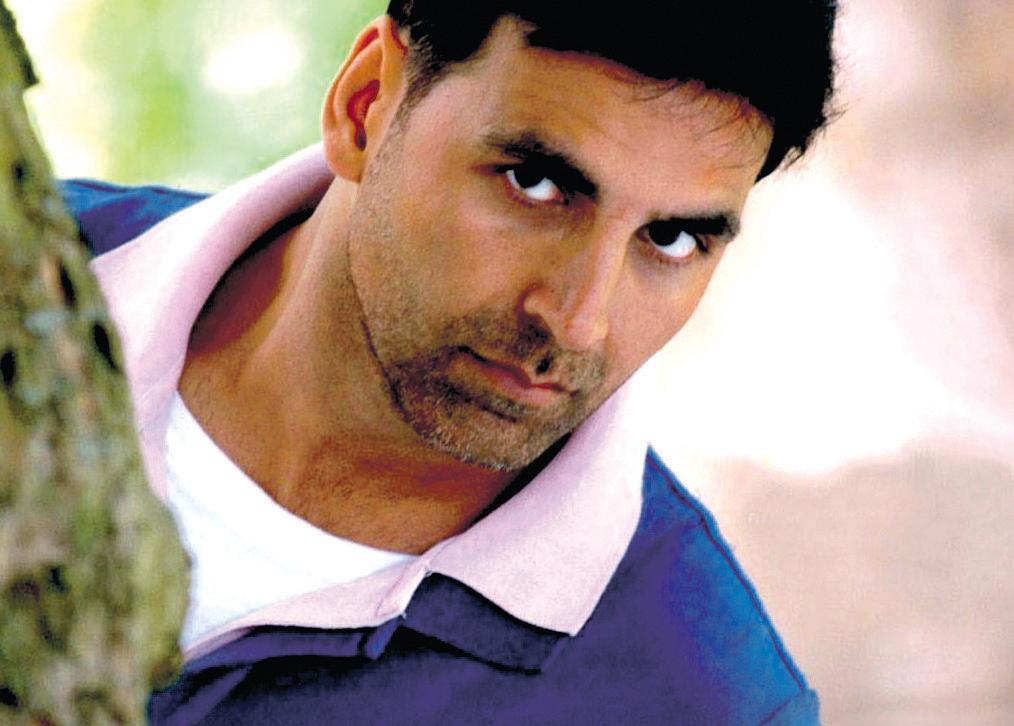
Akshay Kumar is back with a vengeance, and this time it’s in a heavenly avatar. Debut posters of his latest film Oh My God the modern day l the star riding a motorcycle through the clouds with a bright colourful sky in the background. This time Akshay has teamed up with Paresh production venture, who appears in the second poster. It shows Paresh, who plays Kanahaiya, standing with a smile on his face and gods and goddesses surrounding him.
Based on Umesh Shukla’s Gujarati play Kanji Viruddh, the movie is about unconventional happenings in normal day to day lives, and is due for a lateSeptember release.
now Akshay must be feeling his age as the actor’s former karate student Prateek chakravorty has turned director with From Sydney With Love, and actually calls the star ‘uncle’!
“he calls me Akshay uncle. Backstage he asked me if he should call me Akshay uncle or not? I love what comes from the heart,” said the 44-year-old Akshay recently.
“Will you believe me if I say I used to teach him karate? he was a good student but then he stopped,” added the actor. “he always wanted to be a director and an actor, and I am proud that he has become an actor, he has directed his first film and he has taken forward his grandfather Pramod Films’ name ahead”.
From Sydney With Love stars Prateek himself along with Bidita Bag, Sharad Malhotra, evelyn Sharma and Karan Sagoo, and will release in end-July.
looks like exciting times ahead for Akshay fans, so watch this space.
Hrithik impresses Hollywood
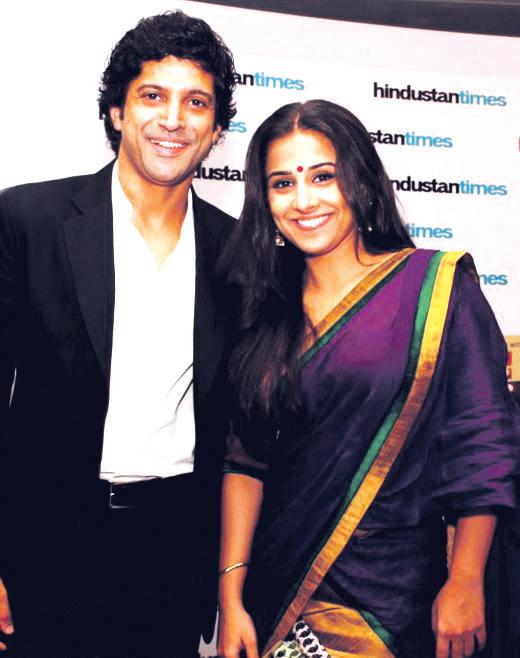
Despite being a booming business, Bollywood’s actors have found it hard to find a firm foothold in big sister hollywood’s hallowed halls. But now, apna hrithik roshan as found a fan in Scott Speer, director of Step Up Revolution, who is impressed with the Indian star’s acting and dancing.
“Yes, of course, anyone who is
interested in dance and music will know about Indian movies. It has a lot of music and dance and colours in them,” Speer said recently. “I liked hrithik oshan as an actor and dancer in the Kites and have seen him Dhoom 2.”
Step Up Revolution is the fourth instalment of dance movie Step Up, due to release in end July.
Speer is an American music video director and has done several music videos for Mexican singer Belinda.
ollywood?
voice, actor Aamir Khan feels that the institution of marriage in India has changed manifold and urges parents to ensure that their children are wellequipped to take decisions about
society and the concept of marriage marriage is now looked upon as
“Although this concept is good, we should empower our kids with right tools to be able to make their own broader level. Marriage should not bring along fear with it. We should provide ample support to our kids and teach them to live happily,” he added.
Aamir was chatting with listeners on a radio show, talking about his ground-breaking series Satyamev Jayate.
The 44-year-old, who made his television debut with Satyamev feels the show has brought him closer to the people of India, and says every citizen should work to make the country a better place
“The effect Satyamev Jayate has taken all over the country proves the fact that we are addressing genuine issues that are prevalent in India. I have, on a personal level, come closer through this initiative to our country,” he said. “For any country to be happy, we need to join hands to work towards the common goal... We should all work together for the betterment of the
Aamir also talked about the response that his show has received till now and says a change has already been brought in society.
“We have crossed the halfway mark and have received positive response throughout the country. The healthcare episode has helped improve generic medicines, the health minister is also supporting us and so is the government,” he said.
Sharing an incident about the bias against the girl child, Aamir recounted, “At a Delhi wedding, a family member said a guest blessed the bride that she will give birth to boys at which point the other members present stated that a girl child is equally
Rekha: If not together in Jalsa, now Jaya and I are together in the same House (Rajya Sabha)
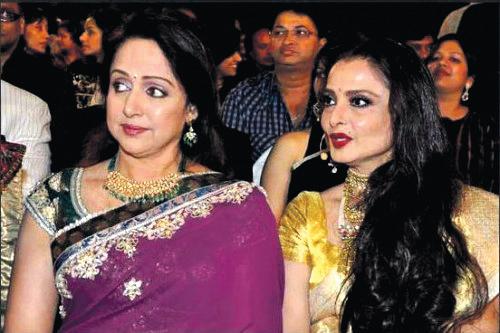
Saba Nabi Wagga Wagga NSW
Saba wins music CD of new Hindi film Bol Bachchan
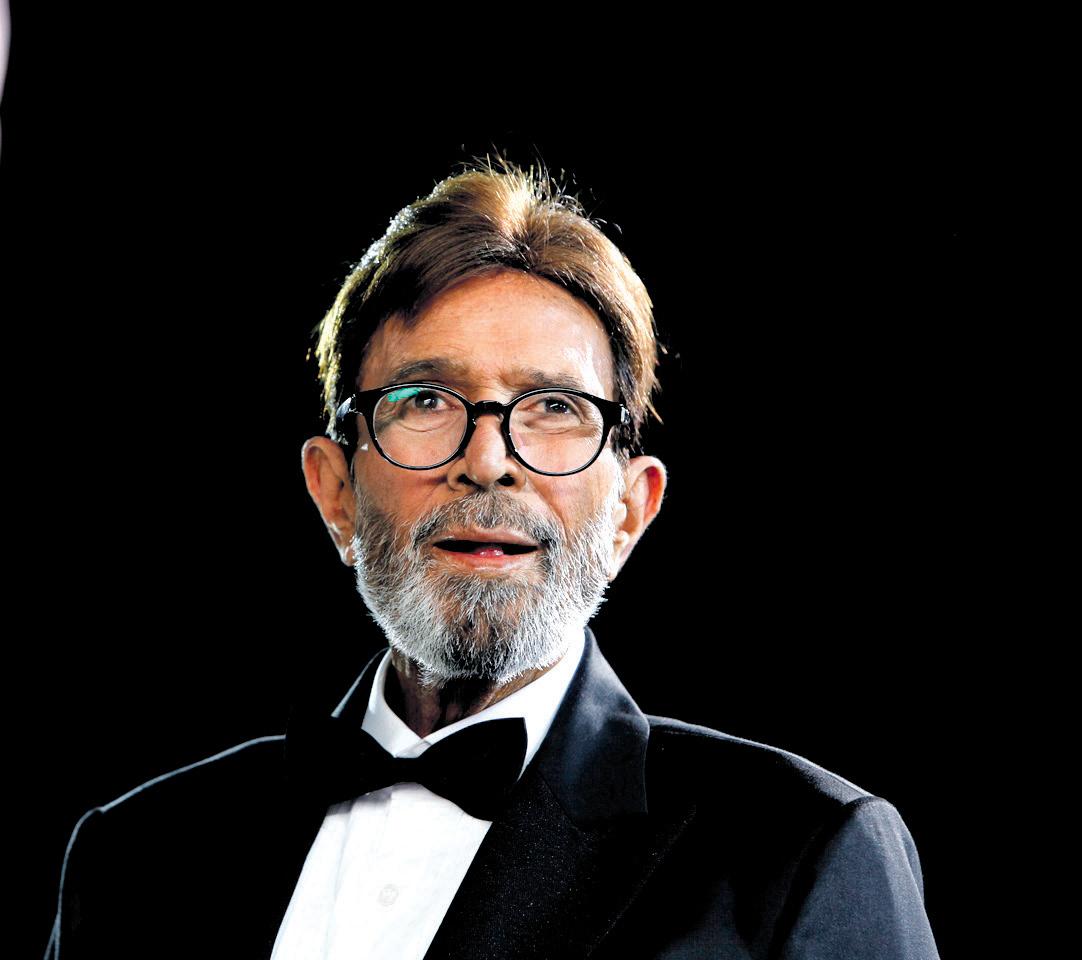

welcome and such gender bias should not exist. I was reading in the newspaper that the people are now going to the police, child helpline - so change is evident (against the bias) and I really believe in India and our people.”
The success of Satyamev Jayate has proved naysayers wrong. “People told me that a show on social issues would be a failure, but now people from (Jammu and) Kashmir to Kanyakumari are associated with the show and want to see change in our society. We should use this opportunity to plan and contribute the most. The required change should be brought about inside,” Aamir said.
Well, there’s no doubt that this is just the beginning of the great heights that the show is bound to reach, in bringing awareness of social issues to the forefront. Good luck to Aamir, the man with the Midas touch!
JULY 2012 61 INDIAN LINK
CAPTION CONTEST Answer to SSeGU ?hoW
Panag between Vidya Balan and Farhan Akhtar here? Send in your responses to info@indianlink.com.au and win a surprise prize
Gul
RAJESH KHANNA
AKSHAy KUMAR
ESHA DEOL-BHARAT TAKHTANI
AR RAHMAN
Last issue Caption Contest winning entry
What’s the chitchat between Hema Malini and Rekha here?
the Buzz
Rajesh Khanna recovering
Veteran actor Rajesh Khanna recently gave his fans a bit of a shock after landing in hospital in Mumbai for some tests, and staying there for a while. The actor, a mere shell of his flamboyant young self, has been battling health issues for some time now. His ex-wife Dimple Kapadia has been taking care of him. The 69-year-old was pleased to see worried fans lined up outside his house, waving to them and showing them the ‘V’ for victory sign.
Bollywoods celebs visiting Rajesh Khanna, aka Kaka, included actress Reena Roy, former Samajwadi Party leader Amar Singh, his close friend Anita Advani and former girlfriend Anju Mahendru. Rajesh Khanna’s daughters Twinkle and Rinke, and son-in-law Akshay Kumar also came to see him in the hospital.
But it was thespian Anupam Kher, who worked with the actor in Vijay, who spoke for all of Kaka’s colleagues and fans when he said, “Rajesh Khannaji is a part of our youth and belongs to the era that taught us about romance. He also portrayed different aspects of acting. He is the first superstar and I pray to God that he has a long and healthy life.”
Incidentally, Salman Khan made a bid to see the ailing actor after visiting hours, and was politely but firmly turned away by the hospital, much to his surprise. For once the Sallu charm didn’t quite do the trick…
Here’s wishing Kaka a quick recovery back to health!
Rahman to rock London olympics
Grammy award winner AR Rahman will team up with Hollywood director Danny Boyle again, to compose a song for the London Olympics’ opening ceremony. The music maestro reveals it will be a Punjabi song celebrating
Malaika Arora Khan in Sydney
It was a much quieter trip to oz for Malaika Arora Khan this time round.
Last year she came down to Melbourne for the opening of Mind Blowing Films’ Indian Film Festival, but ended up dancing her way to the Guinness Book of Records. (She led a record number of dancers gyrating to that all-time hit Munni badnaam hui ). This year’s visit also saw her officiating at the opening of the Indian Film Festival, but in the Sydney rather than Melbourne chapter of the festival, and no, she did not bring along her dancing shoes. (or even her husband). Instead, she opted to be a culture-vulture, spending time at the Sydney opera House after her official duties were finished, and sampling some of the good food this city has to offer.
“Just want to chill,” she claimed, the chill in the air not bothering her at all she walked around in those sexy singlets and off-shoulder dresses…
GUeSS WHo
Indian influence in Britain. It’s another feather in the cap for this prolific, yet humble musician extraordinaire, who worked with Boyle in Oscar-winning film Slumdog Millionaire and 127 Hours “It’s a part of a medley in the Olympics opening ceremony, according to Danny Boyle’s creative wishes!” Rahman stated.
It has also been reported that music composer Ilayaraja’s composition Naanthaan ungappanda, from Kamal Hassan’s 1980 film Ram Lakshman will be a part of the opening ceremony too. Thank goodness Indians in england are now well beyond the curry and cricket combination!
esha-Bharat wedding makes Bollywood news
Actress Esha Deol married businessman Bharat Takhtani in a traditional south Indian ceremony at the IsKCOn temple in the Mumbai’s Juhu suburb, following a reception attended by the best of Bollywood. The whole family of dad Dharmendra, mum Hema Malini, sister Ahana were present to wish her well and partake of the ceremony. Esha is close to her cousin Abhay Deol, who took the part of her brother, as half-brothers Sunny and Bobby were conspicuous in their absence.
The bride looked happy and resplendent in a red lehenga made of three Kanjivaram saris and gold jewellery, while Bharat looked dapper in a white sherwani with zardozi work and a maroon pagdi. The wedding outfits were designed by Neeta Lulla.
The decor at the temple was simple, yet beautiful and heavily decorated with flowers.
Hema Malini claimed she was “very happy” for her daughter, and would miss her. “It was a normal South Indian wedding, with just slight changes. I am very happy for Esha, she has found the right person. We all are very happy. I will miss her but she is going to be in Mumbai, so I am happy about that,” said Hema, looking gorgeous and elegant in a orange-red hand-woven six yard sari, which she teamed up with a green blouse and kept her hair neatly tied at the back. Esha’s dad and yesteryear star Dharmendra kept it simple with black trousers, a white shirt and grey jacket.
Present at the ceremony were Bollywood’s biggies including Amitabh and Abhishek Bachchan, legendary actress Vyjayanthimala looking evergreen in a purple and orange traditional sari, Shatrughan Sinha’s wife Poonam Sinha and her twin sons - Luv and Kush. Hema’s niece and actress Madhoo, as well as Vinod Khanna, Manoj Kumar, Anu Malik, Rani Mukherji, Fardeen Khan Ramesh Sippy, Sandip Soparrkar and wife Jesse Randhwa were
62 JULY (1) 2012 www.indianlink.com.au entertainment a BH i L aSH a S en GUPta
(Find the answer under Caption Contest)
brings us up-to-date on what’s hot and happening in Bollywood
MALAIKA A R o RA K HAN
This spunky Punjabi kudi was a model before she entered Bollywood, and represented India in the Miss Universe contest
?
Photo: Indian Film Festival/Mind Blowing Films
also there to bless the couple.
Sahara’s chief Subroto Roy, industrialist Mukesh Ambani’s wife Neeta Ambani and Sunil Rane of Atharva Group of Institutes, who is a family friend, were among the other high profile guests.
Top notch Bharatiya Janata Party (BJP) leaders too attended the wedding, from Raj Purohit, Mumbai chief of BJP, to party president Nitin Gadkari to national vice president Mukhtar Abbas Naqvi, all attended the event.
The reception saw even more of Bollywood and India’s elite attending, with an invitation sent out to Sonia Gandhi who couldn’t attend due to security reasons. She has however, invited the newly married duo to visit her at her residence.
Here’s wishing the happy couple all the very best.
Akshay as Krishna in Oh My God
Akshay Kumar is back with a vengeance, and this time it’s in a heavenly avatar. Debut posters of his latest film Oh My God the modern day Lord Krishna, show the star riding a motorcycle through the clouds with a bright colourful sky in the background. This time Akshay has teamed up with Paresh Rawal in his production venture, who appears in the second poster. It shows Paresh, who plays Kanahaiya, standing with a smile on his face and gods and goddesses surrounding him.
Based on Umesh Shukla’s Gujarati play Kanji Viruddh, the movie is about unconventional happenings in normal day to day lives, and is due for a lateSeptember release.
Now Akshay must be feeling his age as the actor’s former karate student Prateek Chakravorty has turned director with From Sydney With Love, and actually calls the star ‘uncle’!
“He calls me Akshay uncle. Backstage he asked me if he should call me Akshay uncle or not? I love what comes from the heart,” said the 44-year-old Akshay recently.
“Will you believe me if I say I used to teach him karate? He was a good student but then he stopped,” added the actor. “He always wanted to be a director and an actor, and I am proud that he has become an actor, he has directed his first film and he has taken forward his grandfather Pramod Films’ name ahead”.
From Sydney With Love stars Prateek himself along with Bidita Bag, Sharad Malhotra, Evelyn Sharma and Karan Sagoo, and will release in end-July.
Looks like exciting times ahead for Akshay fans, so watch this space.
Hrithik impresses Hollywood
Despite being a booming business, Bollywood’s actors have found it hard to find a firm foothold in big sister Hollywood’s hallowed halls. But now, apna Hrithik Roshan as found a fan in Scott Speer, director of Step Up Revolution, who is impressed with the Indian star’s acting and dancing.
“ yes, of course, anyone who is
interested in dance and music will know about Indian movies. It has a lot of music and dance and colours in them,” Speer said recently. “I liked Hrithik Roshan as an actor and dancer in the Kites and have seen him Dhoom 2.”
Step Up Revolution is the fourth instalment of dance movie Step Up, due to release in end July.
Speer is an American music video director and has done several music videos for Mexican singer Belinda.
Bollywood to make a hit in Hollywood?
voice, actor Aamir Khan feels that the institution of marriage in India has changed manifold and urges parents to ensure that their children are wellequipped to take decisions about
society and the concept of marriage marriage is now looked upon as
“Although this concept is good, we should empower our kids with right tools to be able to make their own broader level. Marriage should not bring along fear with it. We should provide ample support to our kids and teach them to live happily,” he added. Aamir was chatting with listeners on a radio show, talking about his ground-breaking series Satyamev Jayate.
The 44-year-old, who made his television debut with Satyamev feels the show has brought him closer to the people of India, and says every citizen should work to make the country a better place
“The effect Satyamev Jayate has taken all over the country proves the fact that we are addressing genuine issues that are prevalent in India. I have, on a personal level, come closer through this initiative to our country,” he said. “For any country to be happy, we need to join hands to work towards the common goal... We should all work together for the betterment of the Aamir also talked about the response that his show has received till now and says a change has already been brought in society.
“We have crossed the halfway mark and have received positive response throughout the country. The healthcare episode has helped improve generic medicines, the health minister is also supporting us and so is the government,” he said. Sharing an incident about the bias against the girl child, Aamir recounted, “At a Delhi wedding, a family member said a guest blessed the bride that she will give birth to boys at which point the other members present stated that a girl child is equally
Rekha: If not together in Jalsa, now Jaya and I are together in the same House (Rajya Sabha)
Saba Nabi Wagga Wagga NSW
Saba wins music Cd of new Hindi film Bol Bachchan
welcome and such gender bias should not exist. I was reading in the newspaper that the people are now going to the police, child helpline - so change is evident (against the bias) and I really believe in India and our people.”
The success of Satyamev Jayate has proved naysayers wrong. “People told me that a show on social issues would be a failure, but now people from (Jammu and) Kashmir to Kanyakumari are associated with the show and want to see change in our society. We should use this opportunity to plan and contribute the most. The required change should be brought about inside,” Aamir said.
Well, there’s no doubt that this is just the beginning of the great heights that the show is bound to reach, in bringing awareness of social issues to the forefront. Good luck to Aamir, the man with the Midas touch!
JULY (1) 2012 63 NATIONAL EDITION
CaPtiOn COnte
Answer to essGU O?hW
Panag between Vidya Balan and Farhan Akhtar here? Send in your responses to info@indianlink.com.au and win a surprise prize
St
Gul
RAJeSH KHANNA
AKSHAy KUMAR
eSHA DeoL-BHARAT TAKHTANI
AR RAHMAN
last issue Caption Contest winning entry
What’s the chitchat between Hema Malini and Rekha here?
Cine Talk
A romp into raw, rugged heartland
FiLm: Gangs Of Wasseypur
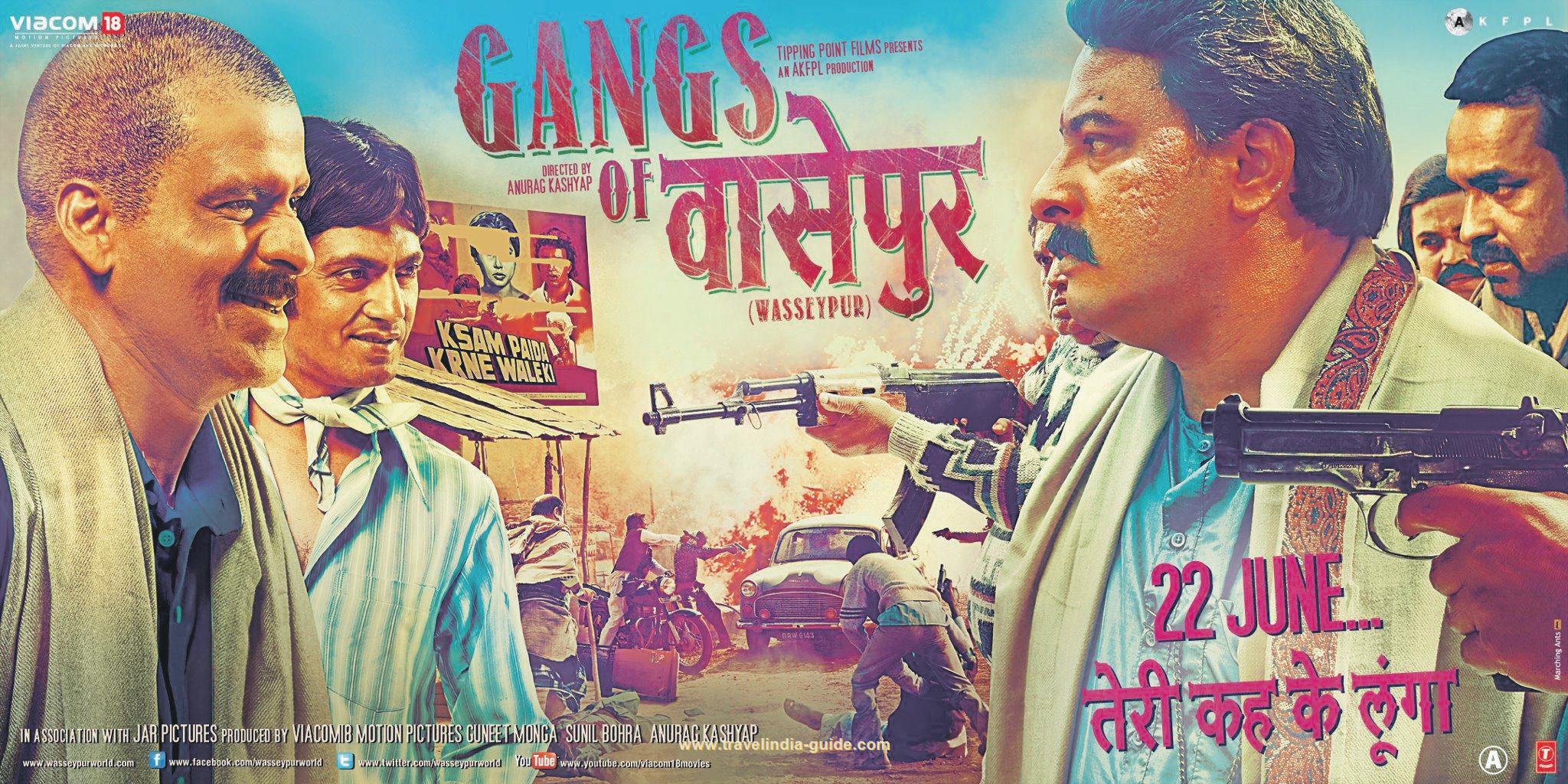
CaSt: Manoj Bajpayee, Nawazuddin Siddiqui, Richa Chadha, Huma Quershi, Reema Sen, Piyush Mishra and others
DireCtOr: Anurag Kashyap
acceptance of an undesirable situation. It comes from within the characters. As they battle each other in bitter futile feuds, they also seem to be battling the demons within themselves. The synthesis of what lies within and without is devastating.
Bleeding brilliance in almost every frame, breathing fire through every available orifice that the characters possess, and whipping up a kind of frenzied, flamboyant bloodshed that was once associated with the Spaghetti Westerns of Sergio Leone and Sam Peckinpah, Gangs Of Wasseypur is, briefly, one huge gang-bang. No protection provided.
From its bludgeoning opening when merciless marauders ambush a powerful enemy’s fortress-like home with armylike meticulousness, Gangs Of Wasseypur takes us into a world where compassion is a dinosaur, forgiveness a faux pas, and kindness an unforgivable sin.
Welcome to Kashyap’s Wasseypur. This is no country for the weak-hearted. Countrymade guns go off without warning, bombs are hurled from two-wheelers and abuses fly out even faster than the bullets. If you are the kind of moviegoer who doesn’t enjoying hearing and seeing the unimaginable things that can’t be done to various parts of the human anatomy, then I suggest you try something more sugary and safe.
The world of Wasseypur is soaked in blood and revenge. The mafia in one form or another rules the little town. To
mainstream Hindi moviegoers, this is not an unknown territory. At least four other recent films
- Paan Singh Tomar, Ishaqzaade, Rowdy Rathore and Shanghaihave hurled audiences right into the notorious anarchy of the north Indian small-town where the barrel of the gun speaks an irresistible language of mayhem.
It’s a strangely dichotomous world where music and songs (Sneha Khan) mock the characters’ subverted herogiri. While the characters indulge in their unmanned violence, viewers become numbed participants in the rites of the wrong-doing.
The almost-ritualistic slaughter of all rules of civil conduct in Gangs Of Wasseypur is not redeemed by the presence of any hero.
Even the main protagonist in the blood thirsty saga is a certifiable rogue named Sardar Khan. As played by Manoj Bajpayee in what is arguably his most feisty and filled-out performance to date, Sardar Khan is a second-generation criminal and social outcast.
In the film’s unforgettable prologue, Sardar’s father (Jaideep Ahlawat) serves as a henchman to the powerful local politician (Tigmanshu Dhulia). Politician has daddy killed by a hired assassin and Sonny-boy grows up swearing revenge.
This in a nutshell, could be the plot for a cheesy 1980s potboiler. In taking the grammar and language of the formulistic vendetta drama from the 1970s and 1980s and converting it into a crackling saga of compelling contemporary currency, Kashyap turns all the rules of mainstream Hindi cinema on its head. He uses the language of Manmohan Desai and Narinder Bedi’s cinema. But he applies these to characters who are as far removed from the world of escapism as Sicily is from Wasseypur.
Oh, did we really say Gangs Of Wasseypur was derived from The Godfather? nah. The two worlds are inter-connected only by their legacy of lineage and violence. Beyond that Kashyap’s mode of storytelling, and the way his characters loom over the proceedings without become caricatural, are frighteningly original and as liberated of reference-points as any of the path-breaking films on gangwars that have emerged out of Hollywood in the last 25 years.
Kashyap celebrates the drama of the grotesque with the relish of a seven-’coarse’ meal. We can count the number of thuds and stabbing sounds every time a victim is cornered and done to death. Violence on this level has never really been a part
of mainstream Hindi cinema before. The end of cinematic niceties is here. Take it or leave it.
Kashyap, in Wasseypur, legitimizes gore with glorious gusto. In the gang war that he portrays with such feral immediacy, victims are chopped up piece by piece, their body parts sent to the butcher’s to eliminate legal evidence. A finger floating in a cesspool of stale blood is a commonplace sight in the world of unchecked mayhem that Kashyap has constructed with such casual resplendence.
His team of technicians are unconditionally mired in the mood of violence. Rajeev Ravi’s camera mows through the imaginary world of Wasseypur with a devilish dispassion.
The film looks layered and even luminous in texture. But the tone of narration is detached. The dereliction of the damned and doomed characters is neither romanticized nor demonized.
Indeed Gangs Of Wasseypur invents a new language of cinematic expression. It creates a world where the characters inhabit a universe of vapid stagnant violence. And yet the narration, never short of breath even in the most breathless state of violence, exudes a kind of vibrancy that comes from neither rejection not
And yet for all its outward show of ruthless machismo Gangs Of Wasseypur is a film with a heart. There is a rather enticing love story featuring Manoj, his screen wife (debutante Richa Chadha) and the other woman (Reema Sen) tucked away in the folds of the ferocious tale.
Manoj’s wife is a very happy happening in this sad but savagely funny tale. She is quite the discovery of the year, and that too in a film mottled with exceptional performances by Manoj, Nawazuddin as his son (more of him in Wasseypur 2), Tigmanshu Dhulia who is clenched, controlled and combative as the villain in chief, Pankaj Tripathi riveting as Manoj’s belligerent enemy, Piyush Mishra remarkably restrained and wise as Manoj’s mentor and guide, and Huma Qureshi, another whammy performer who we will see more of in the sequel.
In fact, every character, big or small, is cast with what looks like first-and-last options. you can’t imagine any other actor playing any of the myriad parts.
Brutal, brilliant, dark, sinister, terrifying in its violence and yet savagely funny in the way human life is disregarded, Gangs Of Wasseypur is one helluva romp into the raw and rugged heartland. Not to be missed. I can’t wait to see the sequel. But be warned. Avoid meals half an hour before and after viewing.
Subhash K. Jha
entertainment
64 JULY (1) 2012 www.indianlink.com.au
Uninteresting story, flat jokes
There are many occasions in this three-tiered love story when the two protagonists simply run out of words as the dialogue slumps into an embarrassing silence.
This, you feel, is very much in character. On paper, I am sure Teri Meri Kahaani must have seemed like a terrific 3-in-1. A sumptuous feast of role and accent transference for the charming pair. Shahid Kapoor and Priyanka Chopra are among the best talent we have today. They are versatile, confident, good-looking and simply cool. Director Kunal Kohli gives them three different love stories to sink their decalcified teeth into.
The problem starts early. none of the three stories is inspired or even interesting. The highpoints in each story are so weak we don’t know when they arrive. Some of the material that has gone into telling the triple-tiered story frankly appears to be a secret joke where the punchline is known only to the writers.
For example in the segment in London 2011 Shahid and Priyanka are named Krish and
Radha and the screechy girl who comes in-between them (Neha Sharma) is, believe it or not, Meera.
This self-consciously mythologized modern day love triangle prompts a friend of the hero to quip, “Yeh Radha aur Krishna ke beech mein Meera kahan se aa gayi?”
Well, LOL to that. Krish and Radha often resort to smileys and LOLs to express their growing fondness. The smileys remain singularly isolated in their amusement. There is not a moment when we empathise with the protagonists or feel the intended flow of their love for one another. What we see are two stars trying to breathe life into a mutual affection that never quite takes off.
the recreate the celluloid version of a high school play where the props are borrowed from the furniture-wali aunty’s store.
And by the way the Lata Mangeshkar-Kishore Kumar duet Likha hai tere ankhon mein from the Dev Anand starrer Teen Deviyaan which plays in the background in a street scene featuring Shahid and Prachi Desai, did not exist in 1960. It came five years later.
That brings us to the music and choreography, so essential to evoking periodicity specially when the lead pair dances so well. But getting Shahid to do Shammi Kapoor? Bad idea. Very bad idea. Shahid’s measured steps would have made shammi LOL.
And we aren’t talking about his tractor.
The attempts in the pre-Partition segment to instil a sense of patriotic pride, is shamefully baggy. The Gora Log are played by junior artistes whose only credential to represent British India is the colour of their skin. The patriotic Indians get to shout Vande Mataram in freshly-stitched kurtas and tops. Mercifully we are spared a re-mix.
With a kind of brisk business-like immediacy and the least amount of fuss, Maximum takes us into the world of shootout killings and the internecine war in Mumbai’s police department which threatens to destroy the very institution built to mend the wounds and fissures in the social fabric.
Writer-director Kabeer Kaushik seems to be a born minimalist. His earlier film Saher was also steeped in the khaki colour. In Maximum the world of legally-enforced corruption is created with such a lack of backprojection, history and vocalized subtexts that you often feel the director takes his audience for granted.
This is not the case. Kaushik presumes that we are intelligent enough to enter the murky morally ambivalent world of his characters without being led by the hand.
Naseeruddin Shah, who plays a ruthless encounter cop Arun Inamdar, is introduced to us when a victim lies bleeding in front of the cop. Characteristically the director plunges into the scene of crime when the dark deed is done. We see Inamdar watching the victim bleed to death and then pumping two bullets into the chap to ensure there’s no unfinished business here.
This is a world of unmitigated
It gets worse. The two other stories are even less engaging. The one set in the film industry resorts to painstaking periodicity to recreate Mumbai in 1960. A tram crosses Mumbai’s heartland. To his credit the art designer tries hard to get the exteriors right. Though some of it is so shallow you feel Kunal Kohli is attempting immorality. Bullets are fired not to stop but to merchanidise crime. And the lawmakers are shown to be as corrupt as the ones they set out to nab and mend.
Pratap Pandit, as played by Sonu Sood, is a man of a few words, much action. We are not given a chance to know him closely. He shifts gears so often we’re left looking briefly at gaping wounds that can never heal in our socio-political system.
The narration assumes a peculiar pace. As guns roar and Daniel George plays out an elegiac evocative background score to underline the senselessness of the violence, we can see the characters’ self imposed emptiness in the face of the volatile noise that they’ve created around their lives. The hollowness hits you in the head more than the heart. And when the emotions seize the plot in a vice-like grip we feel terribly sorry for the characters for the death trap that they’ve built for one another and finally themselves.
The film opens in 2003 at the height of the encounter killings in Mumbai. Two encounter specialists played by Sonu and Naseer are at loggerheads.
Admirably the director doesn’t use the two principal characters to form a central conflict. Kaushik’s narration is as ruthless and stripped of
The worst story of the three is the one set in pre-Partition Punjab. It almost seems to spoof Vidhu Vinod Chopra’s 1942: A Love Story. Like Anil Kapoor in Chopra’s film, Shahid cares not a hoot about India’s independence. He cares only about “love-shove”. And please take the ‘shove’ seriously. The grinning rogue likes to put it in wherever he gets space. humour and other sources of cinematic solace as the world his characters inhabit. A certain amount of familiarity with the world of encounter killings is assumed on the audiences’ part. We are expected to understand the subverted value-system of the encounter cops who do their social cleansing and in the process get so embroiled in blood, their hands are soaked in the very blood that they are meant to wash away.
The clothes suggest a close affinity between boutique wisdom and periodicity. And that seems to be the prevalent mood of the romance. The emotions seem to be obtained off the shelf. Priyanka and Shahid struggle hard to look deeply interested in the lines and in each other.
It’s a losing battle. There’s only so much you can do with conspicuously corny lines like, “Are we like those couples who talk on the sms and online and have nothing to say when they come face to face?”
Even if they are, do we care?
Just why Kunal Kohli, a director
A minimum-fuss crime drama
the scribe does. A subtle illustration of a power-shift that says so much about the socio-economic equations of Mumbai.
The journalist’s character remains a kind of sutradhar. By the end of the film we really don’t know who is in the crime folds for the money and who’s there for the power.
Hence our ‘hero’ Pratap (based on a real-life encounter specialist) is shown to kill criminals, extort money from builders and businessman and hobnob with the powerful and profance. And yet he returns home to a loving wife (Neha Dhupia) and a daughter. The father-daughter scenes are done with a tremulous tenderness.
Sonu invests immense emotion in these scenes. His performance takes him through several moral dilemmas. years pass. Sonu’s body language expresses the deplorable shift in power equations. Here’s a performance that again proves this underrated actor’s unimpeachable versatility.
“When you are slipping you either fight back or you keep quiet,” he tells his journalistfriend, played by Amit Sadh. They share keema-pao at an Irani restaurant. Where the cop used to pay, now, years later,
Maximum is a film that’s far more in-charge of its out-of-control sharp-shooting cops than it seems. yes, there have been any number of films about encounter cops. But this one gets at the underbelly of desolation and isolation of such cops as effectively as Shimit Amin’s Ab Tak Chappan There are some brilliantly executed shootouts.
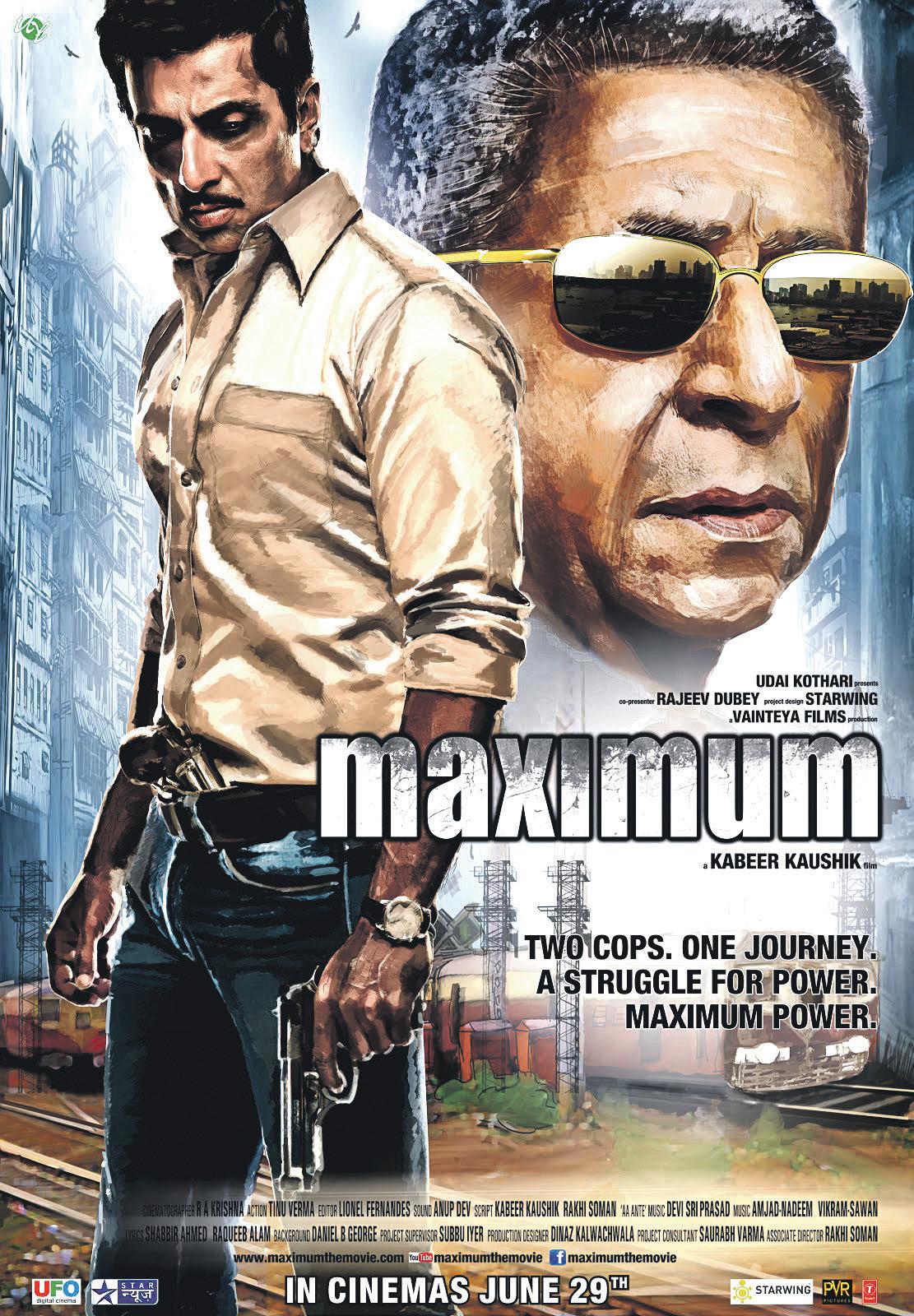
A layered sharp and sagacious look at the internecine world of encounter cops, Maximum is a minimum-fuss crime drama where the characters are so austere in their emotions they somehow seem to be constantly shadow-dancing with their conscience.
The performances by sonu and Naseer Shah propel the plot to a gripping summit. But there isn’t enough of Naseer. Vinay Pathak as a UP politician and
who has shown some sensitivity in handling the man-woman relationship, chose to make this film is mystery solvable only by the actors who agreed to be part of the endeavour.
FiLm: Teri Meri Kahaani
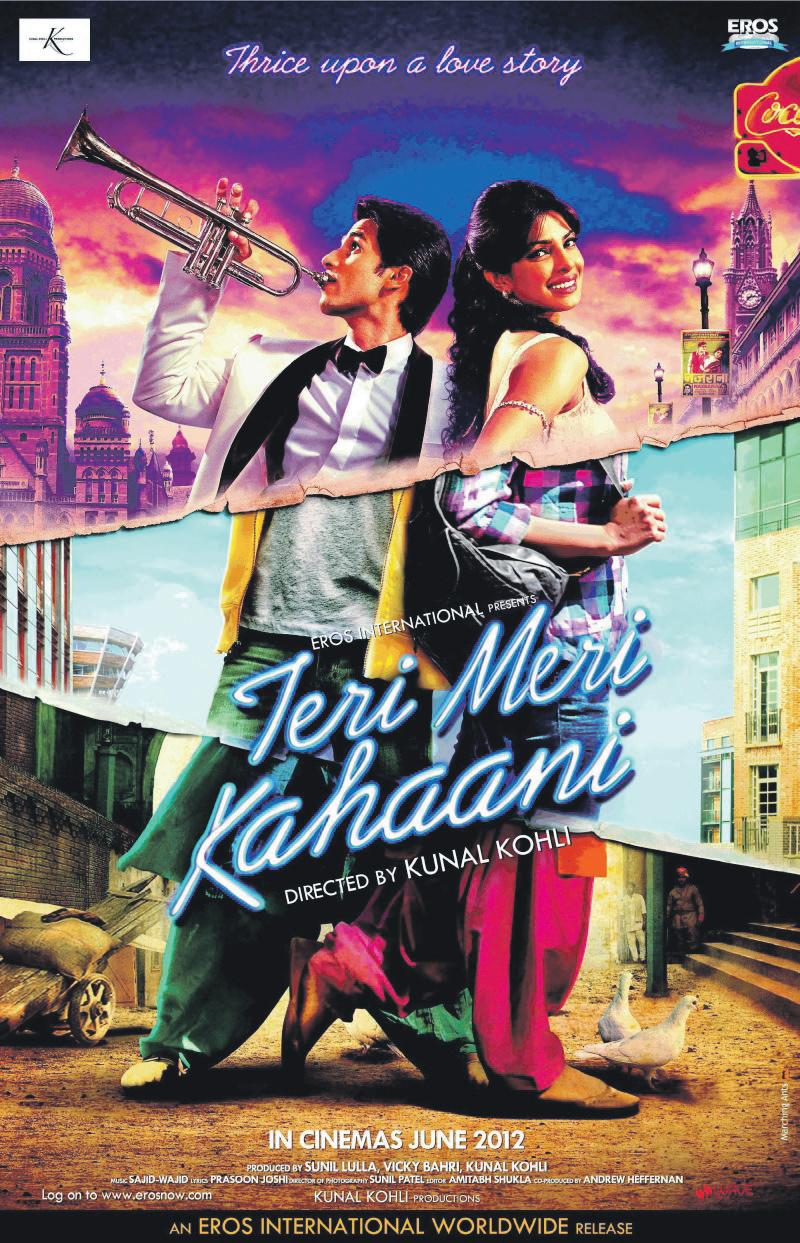
CaSt: Shahid Kapoor, Priyanka Chopra
DireCtOr: Kunal Kohli
Amit as a journalist, both trying to make sense of Mumbai’s confounding cosmopolitanism, add considerably to the film’s powerful personality.
For Sonu Maximum is a new beginning.
FiLm: Maximum
CaSt: Naseeruddin Shah, Sonu Sood, Neha Dhupia, Amit Sadh, and Vinay Pathak
WRITeR-DIReCToR: Kabeer Kaushik
Subhash K. Jha
JULY (1) 2012 65 NATIONAL EDITION
Subhash K. Jha

66 JULY 2012 www.indianlink.com.au
JULY 2012 67 INDIAN LINK

68 JULY 2012 www.indianlink.com.au