Why We Started Still Matters
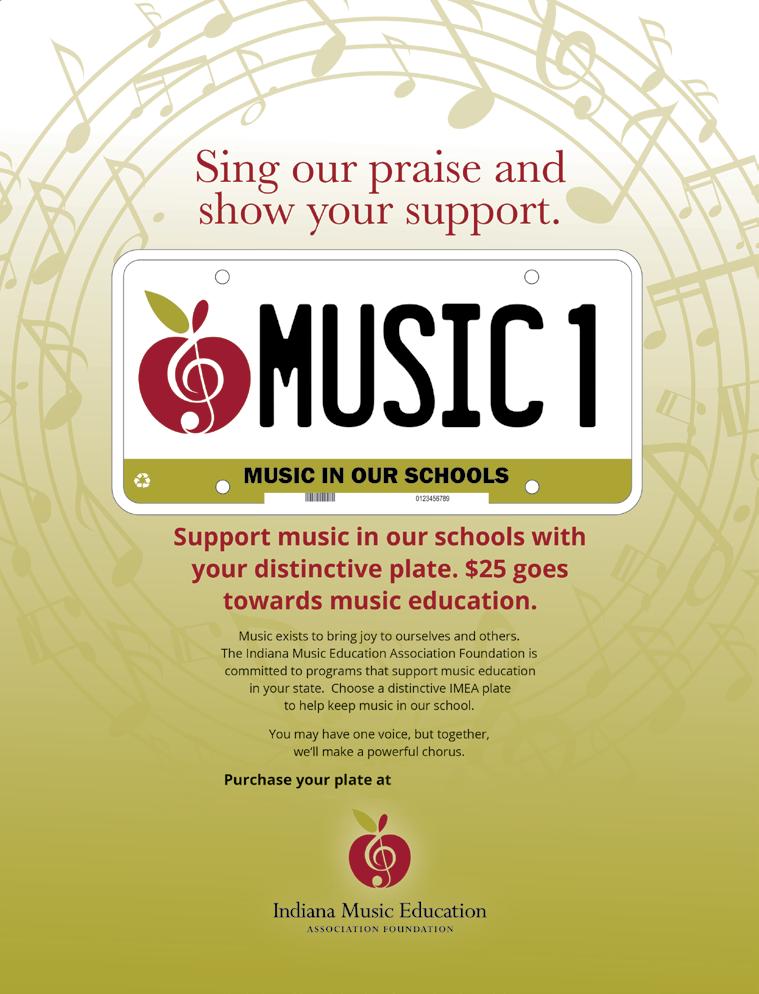
https://in.gov/bmv


NOTES FROM THE EDITOR: MICHELLE BRINKMAN
Forcing Yourself to Slow Down in Order to Finish Strong

At the beginning of the school year, I found myself in a doctor’s examination room receiving the news that I would need major surgery in order to improve my health. I underwent surgery the week before Thanksgiving Break and remained out of the classroom until the first week of January. Initially, my recovery required me to significantly slow down, as I was physically limited and had to rely on my family for even the simplest daily tasks—definitely a challenging adjustment.
After the first two weeks of my recovery, as my restrictions were gradually lifted, I found myself with an unexpected amount of time during what is typically the busiest period of my year. During this time, I began to appreciate and find joy in simple moments unrelated to teaching music. These included watching my dogs sleep throughout the day, spending quiet mornings reading at a coffee shop, observing the variety of birds at my backyard feeders, and taking my daughter to school.
I am pleased to share that the surgery was completely successful, my recovery is complete, and I am feeling better than ever! The necessity of slowing down ultimately allowed me to return to the classroom in January with renewed energy and perspective. Stepping away from teaching music—even temporarily—has deepened my appreciation for the work we do and rekindled my joy and excitement as I finish the year alongside my young musicians.
While I certainly hope that it does not take a major medical diagnosis to prompt you to slow down, it is essential that we intentionally do so in order to finish the school year strong. For many of us, this time of year is particularly demanding, marked by extended stretches without breaks and the competing pressures of professional and personal responsibilities. Taking deliberate time to reflect on one’s well-being is not an indulgence, but a professional necessity. I encourage you to pause, reflect, and identify specific activities that support personal renewal outside of the
classroom. The following suggestions offer possible starting points for cultivating that balance.
• Deliberate nothing time: Set a timer for 20–30 minutes where you’re not allowed to improve yourself, plan, or scroll school stuff.
• Unplug from devices: Complete a jigsaw puzzle, knit, color, build Legos, watch the birds, walk your dog, or bake something.
• Slow mornings or evenings: Pick one part of the day where you move at half-speed—no rushing, no multitasking, no “I should.”
• Change your sensory environment: Dim lights, music with no lyrics, candles, different scents—anything that tells your nervous system “you’re not on duty.”
• End-of-day decompression ritual: Same thing every day after school—shower, change, sit, breathe, whatever. Consistency > length.
• Weekly mini-retreat: A couple of hours once a week where you leave the house without an agenda.
• Digital boundaries: One evening a week where email and school apps are fully off. The world will not end (even though it feels like it might).
• Say no to one extra thing this week—even a small one— and notice how it feels.
As the school year enters its final stretch, taking time for yourself is not selfish—it is essential. By setting boundaries and allowing space to recharge, we as music educators can finish the year feeling grounded and present, modeling for students that meaningful music-making and sustainable teaching begin with caring for the person behind the podium.
Michelle Brinkman Editor, INform Magazine
PRESIDENT’S MESSAGE: KEITH ZIOLKOWSKI
Maintaining Momentum, Forward Together

would like to extend my sincere appreciation to our members, volunteers, and partners for contributing to a highly successful 2026 professional development conference. Participation was strong overall, and we were especially encouraged by the positive growth in collegiate attendance. Supporting and engaging future music educators remains a vital part of our mission, and their presence affirms the strength of our profession.
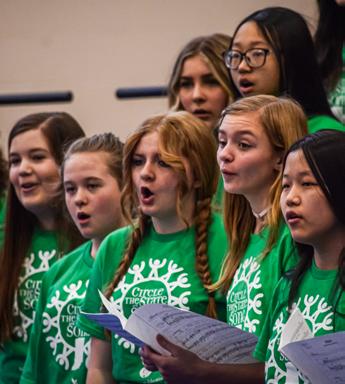
Looking ahead, we are excited for the upcoming Circle the State with Song events. This year, we show a participation growth of more than 300 students representing over 40 new and returning schools. CSWS continues to grow in both size and impact, and we are pleased to note that the event will enter an anniversary year in 2027, marking an important milestone in its history.
Registration is also now open for the Folk Dance Festival, which will be offered at two sites this year. This expanded format allows greater access and flexibility while continuing to provide a high-quality experience for students and educators across the state.
The Indiana MEA Board of Directors continues to make meaningful progress in strengthening the organization through ongoing updates to the constitution, bylaws, and organizational policies. As a volunteer-led board, this work requires thoughtful deliberation and time. While progress may not always be immediately visible, I want to assure our membership that forward movement is consistent and positive.
I would also like to acknowledge the renewed activity and growth of the Indiana Arts Education Network, as well as recognize Tim Cox for his leadership and service as Executive Director. These developments represent important steps in strengthening collaboration and advocacy for music education in Indiana.
Thank you for your continued support, engagement, and commitment to Indiana MEA and to music education statewide.
Warm regards,
Keith Ziolkowski President, Indiana Music Education Association
prelude:
MARK YOUR CALENDARS WITH THESE IMEA DATES!
IMEA will continue to publish further details and information at https://www.imeamusic.org/
2027 PD Conference Session Proposal
Submission Deadline
• March 18, 2026
• https://conference.imeamusic.org/
Folk Dance Festival
• Registration Deadline: April 1, 2026
• April 25 - Greenwood Middle School
• May 2 - Mt. Vernon High School
• imeamusic.org/children-s-folk-dance-festival


2027 PD Conference Performance Group Submission Deadline
• May 6, 2026
• https://conference.imeamusic.org/
Composition Competition
• Entry deadline is June 3, 2026
• https://imeamusic.org/composition-competition
High School All-Region Choir Registration Deadline
• October 7, 2026
Honor Choir Audition Submission Deadline
• October 7, 2026
Circle the State With Song Registration Deadline
• December 9, 2026
PROGRAM OPPORTUNITIES
•

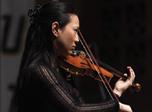
MUSIC MAJORS
Interested in serving in a volunteer leadership role?
IMEA Board Openings
• Composition Competition Chair
• Festival & Clinic Chair
• For more information email the IMEA Office at office@imeamusic.org.
Circle the State With Song Coordinator Openings
IMEA is currently looking for a Middle School coordinator (or co-coordinators) for Area 7. If you are interested or would like more information, contact State Chair Christina Huff – chuff@marion.k12.in.us.
Bachelor of Music
Bachelor of Music
● Music Education
● Music Education
● Music Therapy
● Music Therapy
● Music Performance
● Music Performance
Music Conser vatory
Music Conser vatory

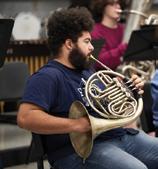

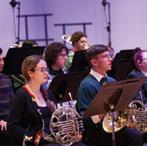
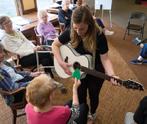

Bachelor of Science
Bachelor of Science
● Music Management
● Music Management
● Music in Liberal Arts
Minor
● Music in Liberal Arts
Minor
● Music Studies
● Music Studies
Music scholarships are available to outstanding students who apply and audition for the Music Conservatory.
Music scholarships are available to outstanding students who apply and audition for the Music Conservatory.
Ensemble Participation Scholarships are available for non-Music majors who perform in a music ensemble.
Ensemble Participation Scholarships are available for non-Music majors who perform in a music ensemble.
For more information about the UE Music Conservatory or auditions, please call 812-488-2742 or visit music.evansville.edu.
For more information about the UE Music Conservatory or auditions, please call 812-488-2742 or visit music.evansville.edu.
2026 IMEA AWARDS RECIPIENTS
Administrator of Excellence
Mr. Adam McDaniel, Assistant Superintendent, New Castle Community School Corporation

“Mr. McDaniel is known for his genuinely caring personality. He gives detailed attention to every student, and makes them feel like they are the most important person in the room when he is speaking with them individually. Not only does he help elevate all arts in our corporation, but he lifts up the soul of each person under his care. Yes, he was and is an incredible musician and teacher, but he blossomed to incredible heights when he became an administrator. His positive reach pushed past the arts; he has highly developed all the Middle and High School departments with the same devotion. Our corporation has benefitted to its highest success under Adam McDaniel’s oversight.”
Collegiate Music Educator of Excellence
Dr. Laurie Williams, Associate Professor; Director of Music Education Programs & Orchestra, University of Indianapolis

“Dr. Williams pours her heart into teaching. She cares deeply for each of her students as individuals and works tirelessly to help them reach their full potential. Laurie’s actions, student successes, caring personality, and leadership at an Institutional, State, and National level are all evidence of her wonderful contribution to the field of music education.”
High School Music Educator of Excellence
Mr. Eric J. Thornbury, Director of Bands/Music Department Chair, Noblesville High School

“Mr. Thornbury’s career is defined by an unwavering commitment to excellence in every facet of music education, performance, instruction, leadership, and professional service. Eric consistently seeks out extraordinary, life-changing musical opportunities that push his students beyond the ordinary and open doors they never imagined.”
Jr. High/Middle School Music Educator of Excellence
Ms. Katy Briel, Band Director, Clark-Pleasant Middle School

“Ms. Briel has created an environment where students thrive and love music. In addition to high quality performing groups, you will see the community that she has developed among music students. Katy is tireless in her defense of music education and educators. She continues to promote music education as something that is truly important for all students.”
Elementary Music Educator of Excellence
Mrs. Staci Miller, Elementary Music Specialist, Choir Director and Musical Coordinator, Yorktown Community Schools

“Staci Miller embodies the qualities of an outstanding music educator through her exceptional teaching, innovative programs, and substantial contributions to the field. Her dedication to her students and her proactive approach to music education make her highly deserving of the IMEA 2026 Outstanding Elementary Educator Award.”
Multi-Level Music Educator of Excellence
Miss Adrienne Pursley, Choir Director, Pioneer Regional School Corporation

“Miss Pursley has grown the interest and quality of the choral music program by leaps and bounds. Under Miss Pursley’s direction, the high school and junior high choirs have won multiple awards and competitions, which had not been done more than one or two times under past teachers.”
Community Impact Award
Dr. John Okley Egger, Director of Music Education & Associate Professor of Music, Purdue University Fort Wayne

“Dr. Egger’s impact is both broad and deep. He generously gives of his time and talents, builds relationships across organizations, and develops meaningful music programs that are inclusive and impactful. He invests in people – middle-school musicians, highschool students, pre-service teachers, music educators, practitioners, college faculty, and
community members – to foster their continuous growth and success. His programs broaden access and build capacity for our community to experience meaningful, lifelong engagement in music. The breadth and depth of Dr. Egger’s service embodies the spirit of IMEA’s Community Engagement Award and demonstrates why he is indispensable to the musical vitality of our community.”
Excellence in Community Engagement Organizational Award (New)
Barker Middle School Music Department, Michigan City Area Schools
Stephanie L. Sobecki & Lucas Snyder, Representatives
“Middle School music departments are often overlooked, yet they are the bridge from early musical interest to high school music. We have made it a mission to create excellent musicians and people, to become more visible and pertinent, and to conduct our programs in a way that catches the attention of the community and creates an atmosphere of welcome and appreciation for our young musicians.”
Hoosier Musician Award
Dr. Scott R. Buchanan, Director of Choral Activities, Indiana State University

“Dr. Buchanan has been a wonderful leader by example for all of his students of a passionate and dedicated musician, he has led collegiate groups as well as lifelong music-making groups around the country and internationally to excellent performance venues, he instills excellence in all of his students and instills and exemplifies life-long music-making through his continual work at Indiana State University and the Melody Makers of Indiana.” “He has gone far beyond the walls of ISU and so deserves recognition for the thousands of students, teachers, and adults he has impacted through music in Indiana and beyond.”
BY STEPHEN CAMPBELL
A Basic Guide to Trumpet Mouthpiece Selection
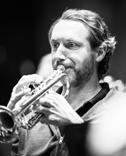
he objective of this article is to provide middle school and high school music teachers and trumpet students with a basic guide to selecting an appropriate trumpet mouthpiece to promote the development of technique and musicianship. To achieve our objective, this article will address why the mouthpiece is important, a basic schedule for middle school and high school student musicians, and a general selection method. The aim is to provide interested parties with a perspective, vocabulary, and a practical method getting started.
A couple of important disclaimers must be addressed. Mouthpiece selection is a subjective topic, so a written guide will only be able to assist to a certain point. Broaching this subject can be like opening a can of worms. There are many ideas on this topic, as there should be. We’re not robots for goodness sake. One challenging element to this process is the biases of trumpet teachers. Everyone possesses a bias, including the author. Just because one person may have a preference for a specific brand does not rule out the validity of others. The best plan would be to engage the services of a qualified performer and teacher who has a positive reputation in the professional area. Such an individual will understand what the students are going through and help provide a critical perspective. This article will reference mouthpieces of Vincent Bach (Conn-Selmer) standard series as a starting point because that is the preference of the author, and these mouthpieces are widely available. However, there are many producers in the country and abroad that have masterful designs and expert manufacturing techniques. Most producers provide ample information and specifications on their websites. The methods mentioned in this submission can be used with any manufacturer. Finally, while an appropriate mouthpiece will help a student musician achieve their goals, students should develop an understanding of how the trumpet is supposed to sound through experiencing high quality recordings and live performances, as well as hearing their teachers set the example in technique and performance. While learning how the trumpet should sound and function is
essential, development is dependent on diligent and consistent practice and effort.
Why is the trumpet mouthpiece so important? In his book Trumpet Science, Ben Peterson writes that, “It is in the mouthpiece that sound production is initiated and sustained, and it is the only place where the player has direct physical contact and control over the vibrating air column that produces the trumpet’s sound” (Peterson 55.) There are several components to the mouthpiece which affect the tone quality which Peterson helps us to understand. This article will focus on the rim, cup, throat, and backbore of the trumpet mouthpiece. The rim of the mouthpiece includes three aspects: the inner diameter which affects lip tissue and aperture size, the contour which affects flexibility and endurance, and the width which determines the distribution of mouthpiece pressure where the mouthpiece comes into contact with the lip tissue. The cup size of the mouthpiece influences the timbre of the tone quality. Generally, deep cups promote ‘darker’ timbres, while shallow cups promote ‘brighter’ timbres. The throat size is “the single largest determining factor for the amount of physical airflow resistance in the instrument” (Peterson 57.) Finally, the backbore of the mouthpiece “is crucial in determining the resonant frequency of the mouthpiece,” and the backbore’s rate of taper “determines how quickly the mouthpiece reaches the standard diameter of the leadpipe” (Peterson 57.)
It would be helpful if there were something similar to a Brannock Device (that thing used to measure a person’s feet for shoes) for our faces to determine what sort of mouthpiece we should use. Unfortunately, no such product exists. Like our feet, our lips change sizes as we progress through adolescence to young adulthood. Just as we typically need to update our shoe size, we will also need to update mouthpiece sizes at various points of growth and development. Also, like shoes, there are different styles to serve different purposes. The shoes we wear for everyday activities should be different from those used for running a marathon. Different still would be those used for a hike. For our purposes, we need to try and find the “go-to” mouthpiece for everyday use.
The author has experienced general success with the following schedule. It must be stated that this schedule will vary depending on the facial features of the individual student musician, as well as how motivated they are to practice
and achieve. Someone who develops a serious interest in listening to music and practicing will likely need to upgrade mouthpiece sizes faster than someone who only plays in their music classes. This will have to be determined on a case by case basis. For beginners (6th grade) a Bach 7C is typically a good place to start. The C cup has the standard depth which will promote a characteristic trumpet tone quality, while the 7 rim is wide enough to help support young people in tone production and endurance. By 7th or 8th grade, it may be good to switch to something a little larger like a Bach 3C. Again, this is the cup depth mentioned above, with a wider inner diameter. As the facial features develop and grow, the students will benefit from having more room inside the mouthpiece, similarl to needing a longer shoe. By the time a student is in high school, a Bach 1 ½ C may be a good option for the same reasons mentioned previously. The author tends to prefer the larger sizes because the muscles in our face and lips swell up a little once we start playing, the same as any other muscle group when being used. That’s why weightlifters like to take those pictures of themselves in the gym mirror rather than waiting until they get home. If the area around our lips swell some, and there’s no room in the mouthpiece, tone production becomes more challenged. Please remember that this is a general guide, not a rule etched in stone.
The following is a method of selecting a mouthpiece for an advancing student musician. Let us suppose that we’re trying to help a high school trumpeter find a mouthpiece which will aid in their development. For this example, let’s assume this person is very interested in developing as a musician and practices regularly. How should they go about identifying an adequate mouthpiece to support their development and musical education? One good option would be to contact a local music store and discuss the possibility of coming in to try mouthpieces. In many cases, they will have, or can get, a variety of sizes of mouthpieces of the same brand. (Remember that different manufacturers have different priorities, sizes, and nomenclature. Even companies which use the same number and letter system as Bach typically won’t be exactly the same.) Once this is arranged, go to the music store to try them out. It is important that the student should have practiced and participated in their fundamental routine ahead of time. Otherwise, they’ll spend the first few minutes not getting an accurate idea of the mouthpieces they are trying. It would also be an advantage to bring a teacher along for this event to help keep things organized and objective. Additionally, using a smartphone to record the trial session will contribute to good decision-making. Ahead of time, decide on what to play. Here’s an example of a good sequence:
• One octave C and F major scale
• Two octave G and C major scale
• Full range chromatic scale
• Very short etude, or excerpt from solo or ensemble literature
Arrange the mouthpieces from smallest to largest. Starting with the smallest mouthpiece, play each item from the above list with good posture, hand position, while producing the best possible sound. Jot down quick notes about general impressions. Evaluate each mouthpiece based on the quality of tone, range, and general effort needed for performance as a starting point. We’ll often know, right away, how we feel, especially if we don’t like something. Wait for a few minutes, and then try the next size up. If we switch to the next mouthpiece too quickly we run the risk of tiring ourselves out, and not getting an accurate assessment of the next mouthpiece. Continue this process until all mouthpieces have been tried, then take the mouthpieces which are not of interest and remove them from consideration. Repeat the test with the remaining mouthpieces, either playing the same material as before or something different, such as a solo or etude. At this point an informed decision can be made. Ask what the return policy is for that store. This is especially helpful if a young musician is having a hard time deciding between two mouthpieces. If they have a return policy, perhaps it would be possible to purchase both, and return one in accordance with store guidelines.
In the event there isn’t a music store nearby that can support this type of trial situation, look up some online retailers and see what their return policy is. It may be possible to buy four or five mouthpieces knowing that all but one may be returned. Many mouthpiece manufacturers offer a set of mouthpieces which a school can purchase for the purpose of allowing the student musicians to try them and decide which to purchase for themselves. The present author has a complete set of Bach mouthpieces which live in their office for student musicians to try.
A note on specialty mouthpieces. In the author’s experience, students occasionally arrive having a specialty mouthpiece for specific situations such as marching band, or “playing lead.” Caution and consideration is advised here. A good reason for using such a mouthpiece is that the student musician is playing the material very well, but they are looking for a more specific sound. For example, they may want a brighter sound, an edgier sound, a sound with more girth, etc. In this instance, the student musician is capable of performing the literature, they’re just wanting a different sound, and a different mouthpiece could help achieve this. An inadequate reason would be thinking that a mouthpiece will be the antidote for a lack of technique.
In general, for the scope of this submission (middle school and high school trumpeters,) if the material in question cannot be performed on a mouthpiece which is satisfactory for tone production and general technique, switching equipment is ill-advised. It would be more beneficial for the student
musician to focus on developing that technique associated with the literature in question in a measured way. Please allow one final shoe-based analogy. The person wanting to walk around the block will not likely need the same type of shoe that someone training for the Olympics would need. The person training for the Olympics would have years of experience in a variety of conditions and would have an understanding of what sort of equipment will help them to achieve their goals. The person just wanting to walk around the block would benefit more from a quality all-around walking shoe better suited to help achieve more of an entry-level goal. The person wanting to walk around their block could purchase the Olympic training shoes, but it won’t make them any better or faster simply because they don’t have the same amount of experience and training.
Entry-level musicians will benefit and develop from measured and consistent practice using a good mouthpiece capable of achieving the goals mentioned above: specifically, characteristic tone quality, range, and effort needed for performance. There is no piece of equipment (mouthpiece, instrument, accessories, etc.) manufactured which will ever

substitute the development of standard techniques and tone production.
Hopefully, readers now have a good preliminary idea of why the trumpet mouthpiece is important and some of the basic ways in which it has an effect on trumpet playing, a basic schedule for middle school and high school mouthpiece selection, and a method for trying to select an appropriate mouthpiece which will support the development of our talented young musicians.
Stephen C. Campbell is currently associate professor of music (trumpet) at Ball State University in Muncie, IN, and on faculty at the Blue Lake Fine Arts Camp in Twin Lake, MI. Stephen also serves as principal trumpet of the Lexington Philharmonic Orchestra in Lexington, KY, second/associate principal trumpet of the West Virginia Symphony Orchestra in Charleston, WV, and second trumpet of the Cincinnati Chamber Orchestra in Cincinnati, OH.


BY ERIC BURGESON
Teach Them to Listen to Jazz

t is vital that your jazz students train their ears. The more listening your students do, the quicker they’ll be able to enjoy convincingly playing their parts. Small-group jazz is the best tool for this, but many students struggle to keep their place. Show them the underlying structure and they’ll never get lost again.
Most jazz performances have a simple 5-part structure.
1. Intro (Introduction)
2. Head (Theme): A melody and set of chords the group has agreed on.
3. Solos (Development)
4. Head Out (Recapitulation)
5. Outro (Cadenza/Coda)
This form is easy to hear. I’ll be using Wade Baker’s track “Blues for Buselli” off of his Profilin’ album (2010) as an example. (see tinyurl.com/2wejfp7w to follow along)
The intro is a creative way to get started, and is usually pretty short. Have your students listen for two things: rising energy and the 4 main roles of a small group.
Jazz Roles in Combo
1. Bass plays a clear bassline.
2. Drumset grooves with the bass and plays a repeating pattern.
3. Piano plays the chords
4. Lead/Melody plays a clear melody.
If any of the roles are missing, the intro is probably being played. Intro types are varied, have your students listen for which instruments are playing. “Blues for Buselli” is a great example of a staggered-entrance intro. The intro starts with drums, then bass and piano join; it ends with a slight crescendo at 0:19.
The head of most tunes is 12 to 16 measures (or longer) and is played twice before solos. Listen for a clear melody with piano, bass, and drums accompanying. Also listen for an “opening-up” quality to the music; everyone will be “staying in their lanes”. Further, this can be a musical energy high point. Rhythm section players create their busiest parts here. The “Blues for Buselli” head is from 0:20-0:32 and then repeats, lasting until 0:45.
Solos are about 80% of the time spent in small group jazz. This section of music frequently has a “settling-in” quality and is a little softer than the head. The rhythm section will create some space for the soloist as well. Have your students listen for that drop in dynamics as a signpost. “Blues for Buselli” has solo performances from 0:46-3:46 (*piano, trumpet, saxophone, respectively). Please note: Your students may struggle to keep their place here. I suggest they listen for when the soloists change.
With some exceptions*, the soloing order follows a pattern.
1. Highest Horns (sax, trumpet)
2. Lowest horns (trombone, bari sax)
3. Piano/guitar
4. Bass
5. Drums
Expressive energy commonly rises up at the end of the solos section (sometimes just a simple crescendo) to relaunch into the out head.
The head out is a simple restatement of the head. Have your students listen for the material from the beginning. The four roles are going to be clearly demonstrated, but be aware that on longer forms (24-32 measures) it is common for the head(s) out to be half as long as the beginning. “Blues for Buselli” has the restatement happening from 3:46-4:12.
Outros can be widely varied. If students are having trouble hearing the outro, remind them to listen for big changes to the head itself. If one of the head’s (4) roles
changes dramatically, it’s very likely that the outro is happening. “Blues for Buselli” uses a hybrid outro with three different techniques; the melody is tagged twice, followed by an “A-train” lick, with a fermata to end. (4:12-4:28)
Listening to jazz does not need to be challenging. A theme is introduced, soloists create variations, and the theme is restated. If your students listen to this music by focusing on that larger form, they can connect to it. Jazz is not mysterious, and everyone can appreciate it.
Teaching tips
• Students need to be able to identify the sound of acoustic bass, drumset, piano, and saxophone/trumpet before approaching a recording.
• Use a straight-ahead or hard bop track at a medium tempo.
• Give the students’ ears context by playing the head first.
• Don’t play the recording all the way through at first, play each section.
• Have students signal when a track passes to the next section.
• Playing the recording multiple times is very helpful.
• Loading the track into a DAW and then projecting the waveform can add a nice visual component.
Feel free to reach out at eburgeson@herronhighschool.org with any questions.
Eric Burgeson holds degrees from the University of Indianapolis (BME, 2006) and the University of Florida (MME, 2018). He is a composer, arranger, music producer, podcaster, and author. He taught band for 11 years in Rush County Schools and is currently the Director of Bands and Jazz Program Director for Herron Classical Schools in Indianapolis, Indiana, where he has been the Director of Bands for the past 8 years.

UKULELE IN THE MUSIC CLASSROOM
June 8-12 | 1 Cr. | Virtual
1-4 p.m.
Lorelei Batislaong
GRANT WRITING FOR THE MUSIC EDUCATOR
June 8-11 | 1 Cr. | Virtual
5-8:45 p.m.
Ashleigh Lore
S UMMER 2026
ORFF CURRICULUM
June 15-19 | 2 Cr.
Pre-req: Orff Level II
8:30 a.m.-3:30 p.m.
Lisa Odom
DALCROZE EURHYTHMICS, BEGINNING & INTERMEDIATE
June 22-June 26 | 2 Cr.
8:30 a.m.-3:30 p.m.
Marla Butke & David Frego
APPLICATIONS OF WORLD MUSIC DRUMMING
June 29-July 1 | 1 Cr.
8:30 a.m.-2:30 p.m. Paul Corbiere
ORFF SCHULWERK LEVEL I & LEVEL II
July 6-17 | 3 Cr.
8:30 a.m.-4:45 p.m.
Betsy Carter, Lisa Odom, Aaron Ford, & Allison Croskey
ORFF ELEMENTAL COMPOSITION
July 13-17 | 2 Cr.
Pre-req: Orff Level II
8:30 a.m.-3:30 p.m. Josh Southard
TO REGISTER OR FOR MORE INFORMATION, CONTACT MICHELLE BADE AT: 765-717-4571 | mbade@anderson.edu | anderson.edu/summer-music
Brochures regarding all summer offerings will be available on our website in the fall.

OFFERING
BY DAMON CLEVENGER AND PAIGE RAUSCHUBER
Get Moving with the IMEA Children’s Folk Dance Festival


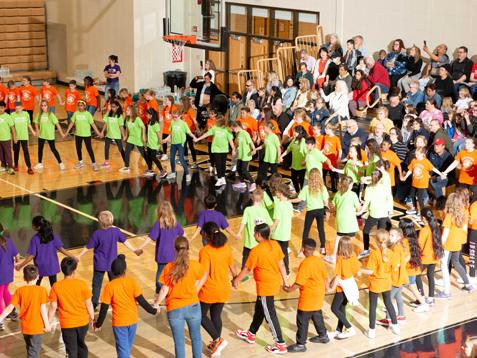
ince 1971, the Indiana Music Education Association (IMEA) Children’s Folk Dance Festival has brought students together to celebrate music, movement, and culture. Originally inspired by the Kentucky Dance Institute, students in grades three through eight learn dances from around the world during the school year and perform them at the festival. Over the decades, the festival has grown, providing Indiana students a unique opportunity to come together and explore rhythm, coordination, and cultural traditions in an active, collaborative environment.
This year the festival is expanding into two sites:Greenwood Middle School on April 25 and Mt. Vernon High School on May 2. Student arrival is at 1:00 p.m., with performances from 2:00–4:30 p.m. Schools may register for just $35, and teachers can bring as many—or as few—students as they like. The school registration fee helps cover a plethora of resources for new and veteran teachers to use in their classroom. While grades three through six are ideal, younger and middle school students have successfully participated in past years. Teachers have the flexibility to lead the full program or only part of it, making it possible to adapt the festival to a variety of schedules and classroom contexts.
One of the strengths of the Children’s Folk Dance Festival is its consistency. While the festival includes 13 dances each year, only two or three are rotated annually. This means teachers and students do not need to relearn an entirely new program every year, allowing schools to build confidence and familiarity over time. Dances for 2026 include Zemir Atik from Israel, Fado Português from Portugal, Tarantella Napoletana from Italy, Chilili from Bolivia, and De Strigat from Romania, offering a rich and varied global experience while maintaining a stable core of repertoire. Some of the dances this year include old favorites like the Chinese Ribbon Dance and Chilili as well as more contemporary dances like Boots on the
Ground which gained popularity in 2025.
Many teachers find creative ways to prepare students. Some integrate dances into regular classroom instruction, while others organize after-school dance clubs. Teachers might focus on a single grade level or divide instruction across multiple classes before bringing students together for the festival. IMEA also offers t-shirts and snack packs for only $12, so teachers don’t have to worry about coordinating these items themselves—everything is provided on the day of the festival, making participation even easier and more enjoyable for both staff and students.
Beyond the fun of dancing, the festival supports music education standards, aligning with IN Anchor Standard 6, which encourages students to listen and respond to music by interpreting and expressing it through movement. Through folk dance, students develop musical concepts such as beat, phrase, and form, strengthen listening skills and direction following, build confidence and physical coordination, make cultural connections, and most importantly, have fun.
The IMEA Children’s Folk Dance Festival is co-chaired by Damon Clevenger and Paige Rauschuber. This festival is more than a performance; it is an opportunity for students to move, collaborate, and experience music dynamically. Registration is now open, and teachers are encouraged to participate and discover how this affordable, flexible, and fun program—with optional t-shirts and snack packs—can bring the joy of music and movement to their students.
Contact Information for Registration or Questions:
• Damon Clevenger – damonclevenger@msdlt.k12.in.us
• Paige Rauschuber – prauschuber@gws.k12.in.us
Festival Locations & Dates:
• Greenwood Middle School – April 25, 2026
• Mt. Vernon High School – May 2, 2026
• Cost: $35 per school; optional t-shirts & snack packs
$12 per student
Damon Clevenger is a dedicated music educator with 15 years of experience teaching elementary general music and choir at Winding Ridge Elementary in MSD Lawrence Township on the east side of Indianapolis. He earned his undergraduate degree from Ball State University and holds a Master’s in Music Education from Anderson University. Damon has completed Orff Certification Levels I, II, and III, as well as training in Modern Band, World Drumming, and Feierabend approaches. He currently serves as the Children’s Folk Dance Festival chair on the IMEA board, where he is committed to promoting the joy of music and dance among young learners. His innovative teaching methods and passion for fostering a love of music drive his engaging classroom experiences.
Paige Rauschuber, an elementary general music specialist, has a passion for fostering interpersonal skills and developing character and leadership through music education. Paige has spent nearly a decade at Westwood Elementary in Greenwood, Indiana, where she teaches K-5 general music, choir, and Orff ensemble. She presents professional development sessions throughout Indiana, teaches early childhood with the Indianapolis Children’s Choir, and assists with the musicals at Greenwood Middle and High Schools. She received both her master’s and bachelor’s degrees in music education from Butler University in Indianapolis, Indiana.

BY BRIAN N. WEIDNER
The New Indiana High School Diploma: Job Based Experiences in the Arts

he New Indiana High School Diploma was adopted in December 2024 and will go into effect for the graduating class of 2029. Previous issues of INform have reported on elements of the new diploma and resources available through IMEA and partner organizations for addressing the diploma. This article will investigate job-based experiences as part of the requirements for Enrollment, Employment, and Enlistment seals on the High School Diploma as well as the Honors Plus designations for each seal. Dependent on the specific seal and designation, the number of job-based experience hours varies from 75-650 hours throughout a student’s high school experience.
Several models have been presented by the Indiana Department of Education that relate to various career trajectories through school-based entrepreneurship, internships, intensive job shadowing, and workplace simulations. Within each of these settings, a handful of criteria must be present for a valid placement including:
• Sustained contact with job spaces for a minimum of 25 hours per placement
• Active engagement with professionals within the field of work, explicitly not including school personnel
• Experiential learning opportunities situated within real world or simulated settings
Further details can be found in the Indiana Department of Education’s Work-Based Learning: Menu of Experiences found at https://www.in.gov/doe/diplomas/
The arts as a profession present some unique differences and opportunities that need to be recognized as part of any intentional sustained plan for connecting arts students to professional job spaces such as:
• Emphasis on entrepreneurship and gig economy practices
• Volunteer or part-time roles for established artists
• Flexible responsibilities including artistic creativity and administrative roles
• Community-based focus that may not have permanent physical locations for job experiences
As schools consider the development of job-based experiences, the arts should be included as options for students with consideration of these unique characteristics in mind.
Identifying Opportunities for Job-based Experiences
For arts educators looking to develop job-based experiences in the arts for their students, a few general guidelines should be developed to ensure that students meet the expectations of the Honors Plus seals as well as positive experiences within workplaces.
Each job-based experience requires a professional within that field to serve as a supervisor, coordinator, or mentor, in addition to a school teacher, counselor, or administrator. For the arts, these individuals could include teaching artists, arts facility managers, non-profit administrators, arts business owners, and other professionals working in the arts. Students should be actively engaged in activities that are traditionally part of the arts workplace in which they are getting their experiences. These experiences can include artistic creation, administration, marketing, teaching, facilities management, and other activities. Upon initiating a relationship, a clear outline of expectations for the student should be created in collaboration between the supervisor, the students, and school personnel. This outline should include measures to ensure student well-being, including considerations for youth protection, site-specific safety measures, and processes for reporting concerns to school personnel. Recognizing that careers in the arts often lack permanent locations as workplaces, guidelines should also be placed on issues of communication, location, and transportation.
Opportunities for Job-Based Experiences
Every community is different, but opportunities for collaborations between schools, non-profit organizations, and arts businesses exist in all corners of the state. In addition to museums, performance spaces, galleries, arts centers, music stores, and other permanent institutions that welcome volunteer (and paid) roles for high school workers, arts opportunities can be found in rural, suburban, and urban communities. A few options that exist in many communities include:
• School-based community arts centers
• Music ministries within churches, synagogues, and other places of worship
• Community music ensembles (in administrative and supportive roles)
• Public library arts programs
• Public art projects
• Seasonal community festivals involving music and the arts
• Summer camps and programs
• Community art/music/dance schools
• Local music or art stores
• Freelance performance opportunities (under supervision with a teaching artist)
Experiences that meet requirements of the High School Diploma can include paid or volunteer roles. While these experiences require engagement with professionals and artists outside the school itself, these experiences can be collaboratively designed with school personnel, students, and non-school professionals. Provided that the experience cumulatively is at least 25 hours, they can include employment, internships, job shadowing, collaborative projects, and student entrepreneurship.
Brian N. Weidner is the assistant professor of instrumental music education and coordinates the graduate program in music education. He holds a Ph.D. in Music Education from Northwestern University with additional degrees in music and education from Olivet Nazarene University, Northern Illinois University, and Illinois State University. Before coming to Butler, he was a lecturer in the music and education departments at Lake Forest (IL) College. Previously, he taught at McHenry (IL) High School for 12 years, serving as its Fine Arts Coordinator and Director of Bands.
He has published articles in the Journal of Research in Music Education, Music Educators Journal, Bulletin of the Council for Research in Music Education, Journal of Music Teacher Education, Psychology of Music, and regional journals and has presented nationally and internationally. He is also the author of Brass Techniques and Pedagogy. His research focuses on the development of independent musicianship through large music ensembles and processes of disruption in music teacher education.
BY DR. MILT ALLEN, ARTIST EDUCATOR, JUPITER INSTRUMENTS
We’re Not Okay. And That Matters

et’s just say it out loud. Indiana music education isn’t “fine.”
And judging by the conversations I had in hallways, stairwells, doorways between sessions, and those quick moments that started with
“Hey… can I just say something?,”
most of you know that too.
This year’s IMEA Conference wasn’t short on great music-making or meaningful sessions. But underneath all of that, there was a quieter current running through the building. I heard it in supportive comments whispered after the keynote, in knowing looks, in conversations that started strong and ended with a sigh.
“Thank you for saying that.”
“I thought it was just me.”
“I didn’t know I needed to hear that.”
Those moments matter. They tell us something real is going on.
Why We Started Still Matters
Most of us didn’t get into this because it was easy, stable, or especially predictable. We got into it because music gave us something we couldn’t quite explain, but we knew it mattered. Somewhere along the way, the job got heavier. More complicated. More measured.
Across Indiana right now, music educators are navigating funding concerns, policy changes, staffing shortages, schedule compromises, program cuts and a level of fatigue that doesn’t always show up on the outside. In the halls, many of you shared versions of the same quiet question:
“How do I keep doing this well without losing myself?”
That’s not weakness. That’s honesty.
From Leadership to Empowerment
One of the ideas that seemed to resonate, and that many of you stopped me to talk about, was the shift from leadership to empowerment.
Leadership often gets framed as position or authority. Empowerment is different. It’s about agency. Trust. Giving people room to think, feel, and contribute meaningfully. When teachers feel empowered, they make braver musical choices.
When students feel empowered, they don’t just follow, they engage.
In a time when so much feels imposed from the outside, empowerment becomes something we can still control inside our classrooms and rehearsal rooms.
Artistry Over Excellence.
Expression Over Perfection.
Indiana has a long tradition of strong programs and high standards. That matters. But several of you shared a concern I hear often: when excellence becomes the only measure, artistry can get squeezed out. When perfection becomes the goal, the joy sometimes goes with it.
What I see across this state are educators doing their best to protect expression, sometimes quietly, sometimes creatively, sometimes in small acts that never make a program or a report. Those choices matter more than you may realize.
We’re Not Okay — But We’re Still Here
The keynote title: We’re not okay, but we’re all gonna be alright, seemed to strike a chord not because it was clever, but because it was honest.
Being “not okay” doesn’t mean we’re failing. It means we’re paying attention. And despite everything, Indiana music educators are still showing up. Still adapting. Still choosing students over cynicism.
I saw that resilience not just on stage, but in the hallways, in the encouragement you offered each other, in the way you listened, and in the relief that comes from realizing you’re not alone.
As we move forward, my hope isn’t that things suddenly get easier. My hope is that we give ourselves permission to be human, protect the parts of music that brought us here in the first place, and remember that empowerment often starts small, in a rehearsal, a conversation, or a risk taken in good faith.
Indiana music education isn’t finished. It’s evolving. And while evolution can be uncomfortable, it’s also where new music comes from.
Thank you for the honesty, the hallway conversations, and the quiet encouragement you offered one another. We may not be okay right now.
But together?
We’re still very much in the music.
Dr. Milt Allen is an award-winning conductor, educator, and speaker whose career thrives at the intersection of music, mission, and movement. A true outlier in the field, he defies the conventional paths of music education—choosing instead to chart bold, human-centered routes that challenge, inspire, and transform.
Whether leading ensembles, speaking to educators, or trekking across continents, Dr. Allen brings fearless energy and curiosity to every endeavor. His global adventures—musical and literal—have taken him from bustling rehearsal rooms to remote corners of the world, each journey reinforcing his belief that music is a universal language of courage, connection, and change.
With decades of experience as a band director, conductor, and clinician, he combines practical wisdom with unshakable passion. His sessions and stories challenge the conventional, urging musicians and educators alike to embrace the messiness of creativity, harness the power of risk, lead with empathy, and always keep learning. Of special note is his current emphasis on teacher mental health and how to thrive in an ever changing educational environment.
Milt’s work is rooted in a deep commitment to human potential whether it be via a rehearsal, keynote or a coffee conversation,
Dr. Milt Allen is living proof that music, like life, is an adventure—and everyone deserves the chance to play it boldly.
ARE YOU PASSIONATE ABOUT MUSIC?
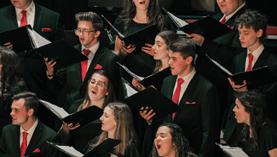
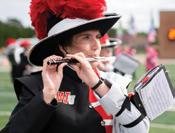
If so, IWU’s Division of Music and Theatre is the place for you. Majors in Music, Music Education, Music Therapy, Worship Arts, Composition, and Performance, as well as a minor in Music, all provide perfect opportunities for you to grow in your musical talents in valuable ways. Ensembles and opportunities like the Marching Wildcats, Chorale, Orchestra, Jazz Band, Theatre, and more provide additional avenues for you to showcase your musical talents in worthwhile ways.


Bring the Joy of Music to Your Students
With Sweetwater’s best-in-class Instrument Rentals Program
100% of rental payments apply toward rental purchase*
Enhanced premium rental fleet with upgraded cases, bows, strings, and mouthpieces
Lightning-fast shipping directly to student’s home
Award-winning service with a single point of contact
Advance-shipped exchanges limit repair downtime with the Instrument Protection Plan*
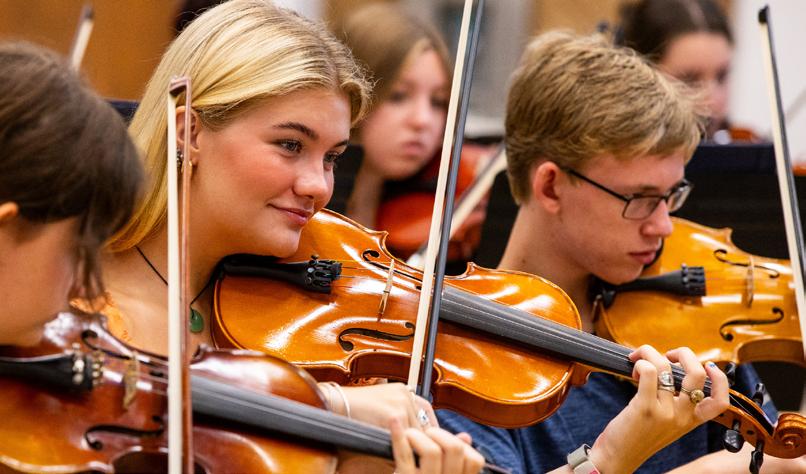
Set your music program on the right track with best-in-class instrument rentals for your new and returning students. Shop a full range of method books, instrument care supplies, reeds, mallets, sticks, music stands, and more — all backed by the best customer support in the music education world. Whether you’re directing students to instrument rentals, recommending step-up instruments to assist advancing students, or preparing your classroom from A to Z, Sweetwater has you covered!
*The terms and conditions for renting instruments on a rent-to-own basis vary depending on your state. Please carefully review the rental agreement terms and conditions for an explanation of your rights and obligations when renting an instrument on a rent-to-own basis.
**Certain maintenance and repairs may be available to rental customers at no additional cost, depending on state of residence and/or participation in the Instrument Protection Plan.