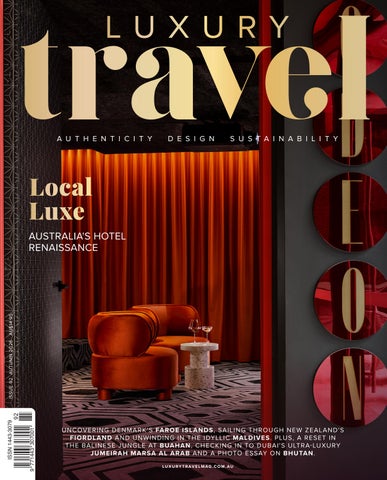
Luxury Travel #92

Page 1


Aboard our business class private jet, we forgo the formalities of commercial air travel, flying on direct routes to reach remote and captivating destinations. We enjoy a range of exclusive experiences and stays in luxury accommodation. At every stage, we are accompanied by a Captain's Choice Tour Manager and Tour Doctor from Australia, as well as local guides. On these journeys, everything has been considered and included.

ANCIENT & REMOTE WONDERS OF CHINA BY PRIVATE JET

AFRICAN ADVENTURES BY PRIVATE JET

Beijing - Xi'an - Yinchuan - Sayram Lake - Kashgar - Chengdu - Guilin - Shanghai 18 Days, departing 28 May 2027

Cairo - Luxor - Maasai Mara - Volcanoes National Park - Victoria Falls - Cape Town 14 Days, departing 24 August 2027

THE SPIRIT & COLOURS OF INDIA BY PRIVATE JET

Delhi - Agra - Varanasi - Kochi - Udaipur - Jaipur - Delhi 15 days, departing 27 October 2026. 13 Days, departing 18 October 2027

LATIN AMERICA & ATLANTIC ISLANDS BY PRIVATE JET

London - Azores - Havana - Amazon - Atacama Desert - Salvador - Madeira - London 18 Days, departing 5 August 2026

GORILLA TREKKING IN UGANDA

Contributors this

18 Where in the World Spotlight on an inspiring location

20 In the Know

Latest travel happenings from around the world

30 Luxury Travel Products

Beautiful items to take on your travels

36 Dispatches

A collection of authentic experiences, outstanding design and sustainable travel initiatives

48 Online Spotlight

What’s trending on luxurytravelmag.com.au

54 Australia’s New Luxe

Our cover story checks you in to a raft of new luxury hotels opening across Australia’s major cities, from boutique boltholes to gleaming towers by big-name international brands

62 Pause

A peaceful photo interlude

Kingdom in the Clouds A photo essay of Bhutan by Nuno Alves 12 Publisher’s Note

ABOVE, RIGHT Exploring

Still the One Aspen may draw A-list crowds, but this ski resort town will always remain humble at heart

At the Edge of Existence

Denmark’s untouched Faroe Islands unite basalt cliffs, myth and memory through an elemental landscape shaped by sea and wind

Awe and Antiquity

A voyage with Ponant proves that sailing the high seas is the perfect way to uncover the history, heritage and magical mythology of Greece

In the southwest corner of New Zealand, the country’s largest national park brims with natural beauty

Echoes of an Empire

From medieval fortresses to grand capitals, cruising the Danube uncovers

ABOVE, LEFT Golubac fortress in Serbia © Denis Shevchuk/iStock
the Med with luxe line Ponant © Blaud Olivier

CONTENTS

115 linger

BEAUTIFUL PLACES TO DWELL FOR THE DESIGN DILETTANTE

116 By the Sea

A pioneer in Australia’s mod-motel world, Halcyon House still stands out 10 years down the track

122 Wild at Heart

At Tubu Tree Camp and Wilderness Mombo in Botswana’s Okavango Delta, comfort and safari magic go hand in hand

128 Island Time

On its own six-hectare island in the North Ari Atoll, Constance Halaveli Maldives feels both refined and relaxed

134 Written in Stone

A restored 12th-century castle in Tuscany’s wild Maremma hills, Castello di Vicarello is the life’s work of an inspirational Italian family

140 Where Stillness Settles

A beloved adults-only Fijian hideaway evolves with care and heartfelt hospitality

146 Suite Life

A makeover of Singapore’s iconic Marina Bay Sands brings with it the flashy new Paiza Collection of suites

150 Suite Life

Culture and community define the design of Sydney’s hippest new hotel, The Eve

157 savour

A MENU OF INDULGENT GOURMET & WELLNESS EXPERIENCES

158 Rainforest Reverie

In the rainforest north of Ubud, Buahan reimagines Balinese luxury, without walls

166 Sail Away

With its pioneering dining concept, staggering coastal views and superyacht DNA, new Dubai resort Jumeirah Marsa Al Arab is riding the wave

174 In Good Taste

On Oceania Cruises’ newest ship, Allura, fine dining finds a lighter rhythm, pairing Master Chef pedigree with champagne brunches, bubble waffles and a sense of pleasure

182 The Original Tastemakers

From grand dining rooms to global menus, a raft of iconic dishes and drinks were born in legendary hotels and have gone on to shape how the world sips and sates in style

188 Rendez-vous

A beautiful place to gather and dine

190 Natural Selection

A Q&A with Balinese chef Wayan Kresna Yasa

TOP

ABOVE,
Constance Halaveli Maldives © Adam Bruzzone
ABOVE, MIDDLE The Eve’s pool © Georg Roske
ABOVE, BOTTOM Dining at Jumeirah Marsa Al Arab © Shulzhenko Dmitri

PUBLISHER’S NOTE

“The coffee-table book-style publication you’re holding is something we are immensely proud of, particularly in an era when print standards are so often compromised.”

There’s no better antidote to the ‘January blues’ than a party – and that’s exactly what I, and some 100 travel industry friends, did at the start of February when we celebrated the winners of the 2025 Luxury Travel Gold List Awards.

Held on the gorgeous rooftop of Sydney’s recently opened 25hours Hotel The Olympia, with views over the Paddington treetops, it was the perfect way to usher in 2026 while honouring the industry’s best hotels, resorts, cruise lines, tour operators, experiences and people.

As publisher, it was especially rewarding to see first-hand the impact the Gold List continues to have in the industry, and how far the brand has come since Indesign Media welcomed Luxury Travel into the Indesign Media family just four years ago.

In that time, we have cemented our position as Australia’s highest-quality travel magazine – not only editorially, but as a physical product. The coffee-table book-style publication you’re holding is

something we are immensely proud of, particularly in an era when print standards are so often compromised.

In this issue, I penned a feature on the idyllic Likuliku Lagoon Resort in Fiji (p140), which underwent an extensive refresh last year. I was born in Fiji, and the country will always hold a special place in my heart. It was incredibly meaningful to be back in the archipelago with my family.

If you haven’t already, I invite you to sign up to our weekly newsletter at luxurytravelmag.com.au to stay up to date with the latest in luxury travel – from the most exciting hotel and resort openings to curated listicles, in-depth features, reviews and trend pieces.

You can also connect with us on Instagram (@luxurytravel_mag), Facebook (@luxurytravelmagazine), LinkedIn (/luxury-travel-magazine) and Pinterest (@luxurytravelau). Happy and safe travels.

KAVITA

Publisher Kavita Lala

EDITOR’S NOTE

“With more than 20 luxury hotel openings across the country in the last decade, many of them emerging post-Covid, Australia is experiencing a new wave of luxury hospitality.”

AA question I get asked a lot is, “Which is your favourite hotel in the world?” I always respond with the same, mysterious (read: safe) line: “I couldn’t possibly. It’s like asking me to choose a favourite child.” Little do they know I have just one child. You might expect this response from a travel editor asked to assess the entire global landscape, but surprisingly, I have recently started using it when asked about Australia alone.

With more than 20 luxury hotel openings across the country in the last decade, many of them emerging post-Covid, Australia is experiencing a new wave of luxury hospitality – and this time, it’s all about style in the city. Luxury travel expert Ute Junker explores this exciting new chapter in this issue’s cover story, Australia’s New Luxe (p54), and paints a picture of an increasingly sophisticated destination with a luxury offering of true global calibre.

It’s an exciting time on our home turf, and within these pages you’ll find reviews on one such new

property, Sydney’s The Eve (p150), along with a regional New South Wales favourite, Halcyon House (p116). Beyond our shores we check in to more luxury hotels impressing through design, dining and a defined sense of place – in Botswana, Italy, Fiji, Singapore, the Maldives and Bali – and indulge aboard Oceania’s newest ship, Allura (p174).

True to Luxury Travel’s ‘authenticity’ pillar stamped on every cover, this issue also showcases a raft of lesser-visited – and unimaginably beautiful –destinations, including Denmark’s Faroe Islands and New Zealand’s remote Fiordlands.

I’m also proud to showcase the work of Singaporebased photographer Nuno Alves, whose stunning photo essay documenting the daily rhythm of life in Bhutan (p104) leaves me wanting to go to the world’s ‘happiest nation’ now more than ever.

Maybe I’ll see you there.

Editor Madelin Tomelty in the Maldives

Entries Open May 2026

The Luxury Travel Gold List Awards set the benchmark for the finest in travel across Australia and beyond, celebrating the evolving luxury traveller who explores the world responsibly. From world-class resorts and cruises to unforgettable experiences, the Gold List honours the very best in luxury travel.

Luxury Travel Team

Publisher

Kavita Lala kavita@luxurytravelmag.com.au

Editor

Madelin Tomelty madelin@luxurytravelmag.com.au

Creative Director

Sylvia Weimer sylvia@spacelabdesign.com

Brand + Partnerships Manager Dan Kinsela dan@luxurytravelmag.com.au

Assistant Editor + Sub Editor Natasha Dragun

Head of Production

Anna Carmody anna@indesign.com.au

Production Coordinator Charlotte Yap production@luxurytravelmag.com.au

General Enquiries media@luxurytravelmag.com.au

Contributors

Nuno Alves, Belinda Craigie, Roderick Eime, Bella Falk, Kee Foong, Louise Goldsbury, Susan Gough Henly, Jenny Hewett, Ute Junker, Tatyana Leonov, Jocelyn Pride, Barry Stone, Craig Tansley

Events Coordinator Roisin Fagan roisin@indesign.com.au

Accounts

Vivia Felice vivia@indesign.com.au

Indesign Media Executive Team

CEO Raj Nandan raj@indesign.com.au

Group Operations Manager

Sheree Bryant sheree@indesign.com.au

Online Manager Radu Enache radu@indesign.com.au

Head Office 98 Holdsworth Street, Woollahra NSW 2025 luxurytravelmag.com.au

Acknowledgement of Country

We acknowledge the Traditional Owners of the land on which we live and work and recognise their continued custodianship and connection to the land, waters and community. We pay our respects to them and their Elders past, present and emerging.

Become a subscriber subscriptions@luxurytravelmag.com.au www.luxurytravelmag.com.au/subscribe

Yearly subscription

Australia $160

International: AUD$252

Connect with us @luxurytravelau #liveluxurytravel

Printed in Singapore. Luxury Travel is printed on paper that meets both PEFC and FSC certifications, sourced from sustainable and responsibly managed forests, and ISO 14001 Environmental standards.

Cover image

Glamorous spaces inside Sydney’s 25hours Hotel The Olympia © Justin Nicholas

CONTRIBUTORS

Some of the talented writers whose inspiring stories feature in this issue

UTE JUNKER

Covering luxury hotels for more than 20 years, Ute Junker has been showered with rose petals on arrival in India, been greeted by a margarita butler in Mexico and watched elephants grazing from her deck in Botswana, among many other highlights. In this issue she dives deep into new-wave luxury in Australia for our cover story, and discovers that when trying to find the country’s best new openings, it pays to look in unexpected places (p54).

Lisbon-born and Singaporebased, Nuno Alves is a travel photographer drawn to places that reward patience and presence. Having lived in Europe, the Middle East and Asia, his work focuses on quiet human moments, cultural nuance and the poetry of everyday life. For this issue, he journeyed through Bhutan, documenting the country’s landscapes, rhythms and rituals through a contemplative photographic approach (p104).

Kee Foong blames his parents for his wanderlust and love of food, passions he has somehow fashioned into a career. Kee has had the privilege of setting foot on all seven continents yet remains in awe of how much there is left to explore. As an Academy Chair for the World’s 50 Best Hotels awards, Kee gets to stay in very nice hotels and resorts, too. This issue, he checks into the Paiza Collection Suites at Marina Bay Sands, Singapore (p146).

One of Australia’s most prolific cruise writers, Louise Goldsbury is a nautical nomad. In between some 100 cruises, she has lived in London, New York, Portland, Taipei, Danang, Darwin, Fremantle and Sydney. Louise specialises in small ships, obsessing over the food, wine and wellness experiences. For this issue, she sailed around the Caribbean on Oceania Cruises’ most luxe ship, Allura, and discovered how high the culinary stakes have been raised (p174).

NUNO ALVES
KEE FOONG
LOUISE GOLDSBURY

HEAVENLY HIDEOUT

Nestled where mist lingers on fjord-kissed waters and ancient beech forests meet mountain peaks, Elysium Lodge is the kind of New Zealand escape that makes other hotels blush. Part boutique retreat, part playwright’s dream, it perches above Lake Wakatipu with views so good they practically write postcards themselves. Forget the typical alpine lodge tropes –dark timber and earnest plaid. Elysium is a confident fusion of contemporary calm and rugged wilderness poetry. Interiors feel curated not contrived: soft linens, smoky greys, earthy leather and sculptural lighting that feels like modern art on a mountainside. Each suite (there’s space to sleep 12) frames the landscape like a living portrait, letting the play of light on water become part of the decor. Outside, pathways weave through native flora, inviting slow mornings with coffee in hand and evenings warmed by a fire pit or alfresco spa under Southern Cross skies. The sense here isn’t just of place but of permission –permission to pause, to stare, to be gently undone by the sheer drama of the view. Here, design and nature don’t compete – they conspire to make you stay a little longer, breathe a little deeper and maybe, just maybe, surrender to the stillness.

elysiumlodge.com

IN THE KNOW

Travel happenings from around the world

WALDORF ASTORIA NEW YORK

The grande dame is back – and she’s dressed for a new era. After an eight-year, billion-dollar restoration, Waldorf Astoria New York has reopened its Park Avenue doors, polishing its Art Deco bones while ushering in a new chapter of Manhattan glamour. Once the address of presidents, screen sirens and society’s upper crust, the landmark now pairs heritage details – marble floors, gilt accents, that iconic clock –with dramatically reconfigured guest rooms, a new crop of restaurants and bars, and private residences carved from the upper floors. Public spaces have been meticulously restored, suites expanded, a Guerlain spa added and service recalibrated for a more contemporary, residential feel. The result? Less hushed museum piece, more living legend. A hotel that has shaped hospitality trends since 1931 is, once again, setting the pace.

hilton.com

HANNAH ST HOTEL

Melbourne has its fair share of boutique boltholes. But few plant themselves quite so confidently at the epicentre of Australia’s cultural capital as the freshly minted Hannah St Hotel. Opened in Southbank, directly alongside the vast Melbourne Arts Precinct transformation, the property is fast staking its claim in a neighbourhood already synonymous with theatre, galleries and late-night creative energy. Conceptualised by Flack Studio, design is richly layered and unapologetically expressive: custom furnishings, sculptural lighting, tactile finishes and floor-toceiling windows framing the skyline. Works by Australian artists including Justene Williams and Jazz Money anchor public spaces, shifting the mood from decorative to deliberately curated. Level nine operates as the social core, with a 20-metre heated indoor pool, sauna, steam room, gym, co-working spaces and even a podcast studio. Five dining venues – from Coupette Corner Bistro & Bar to rooftop cocktails at The Terrace Lounge – position the hotel as much a local hangout as a place to check in.

hannahsthotel.com

MOONLIGHT BASIN

Big Sky just got bigger.

One&Only Moonlight Basin has opened in southwest Montana, the brand’s first US and first alpine address, set across 97 hectares and encircled by more than 6,880 hectares of protected wilderness near Yellowstone’s boundary. Designed by Olson Kundig, it’s deliberately low-rise – timber, steel and stone tucked into forest, with floor-to-ceiling glazing framing the peaks outside. Rooms and suites span three lodges, while freestanding cabins add fire pits and viewfacing soaking tubs. A private gondola links to Big Sky Resort, with trails, alpine lakes and a substantial spa (oxygen bar included) rounding it out.

oneandonlyresorts.com

INTERCONTINENTAL

HALONG BAY

Karsts rise straight from the water at Halong Bay – and now there’s a front-row seat that doesn’t involve boarding a cruise.

InterContinental Halong Bay Resort has opened within the UNESCO-listed coastline near Halong Marina, positioned as a land-based gateway to one of Vietnam’s most iconic landscapes. Architecture draws heavily on place and myth. Designed by WATG with interiors by P49Deesign, the lobby references traditional bamboo basket boats, while guestrooms echo the ‘descending dragon’ legend that shaped the bay –turquoise tones, brass accents and textures inspired by fish scales, pearls and rippling water. The resort spans 174 rooms and suites alongside residences and private villas. Six dining venues range from seafood-led Marina Kitchen to rooftop Roku & Sky Bar with a sake library, plus a Cantonese restaurant to follow. Beyond the pool and Hidden Lagoon spa, experiences connect guests to the region: floating fishing villages, pearl farms and cave systems – positioning the hotel as an alternative base before or after a bay cruise.

ihg.com

ARDOUR MILTON PARK BOWRAL

Sydney weekenders, take note. Ninety minutes south of the CBD – beyond the suburbs and into cool-climate country – the Southern Highlands unfolds in vineyards, hedgerows and heritage villages such as Berrima and Bowral. Here, Ardour Milton Park Bowral marks a new chapter for a local institution, relaunching the former Milton Park Country House Hotel & Spa as the founding property of the Ardour Hotels & Estates collection. Originally built in 1910 as a private residence, the estate has undergone an AU$10-million makeover by MAC Design Studio. Arrival spaces and lounges have been reworked and the 44 guestrooms refreshed with layered tones of sage, blush and cobalt, brushed brass accents and restored heritage furnishings. Dining steps forward with Horderns restaurant and The Polo Bar – complete with a dedicated charcuterie room – while the Èliva wellness spa will follow, positioning the property as a flagship for a broader portfolio of immersive regional stays.

worldsapart.club

© Paul Bamford

INTERCONTINENTAL SYDNEY

COOGEE BEACH

Sydney’s most reliable beach day just got a hotel upgrade. InterContinental Sydney Coogee Beach has taken over the former Crowne Plaza directly opposite the sand, putting an international polish on one of the city’s most easy-going coastal pockets, about 20 minutes from the CBD and beside the Bondi to Coogee walk. Rooms now lean bright and breezy – lighter palettes, tactile finishes and balconies angled towards the Pacific so the soundtrack is surf rather than traffic. Downstairs, Rick Stein at Coogee Beach supplies the long-lunch factor with seafood-led menus and ocean views, backed up by a pool, spa and wellness offering that firmly tilts the stay from business base to beach weekender.

ihg.com

BAINES’ LODGE, AN A&K SANCTUARY

Rebuilt from the ground up, Baines’ Lodge, an A&K Sanctuary has reopened on the Boro River floodplains at the edge of Moremi Game Reserve in Botswana’s Okavango Delta. It’s officially A&K Sanctuary’s smallest and most secluded address, with just six stilted suites linked by timber walkways. The ‘African pavilion gallery’ design, created with Luxury Frontiers, nods to explorer-artist Thomas Baines through a Delta-toned palette of papyrus greens and weathered timbers. Expect an Explorer’s Lounge with microscopes and maps, Leica binoculars on arrival, plus a pool terrace aimed squarely at the floodplain views. Safari is deliberately intimate – four guests per vehicle – with walking safaris and night drives, mokoro trips when water levels allow, and star baths on private decks also on the agenda.

abercrombiekent.com

NOBU HOTEL, RESTAURANT AND RESIDENCES MALDIVES

The Maldives has its fair share of dreamy island resorts. But not many come with a cult following before the doors even open. Nobu Hotel, Restaurant and Residences

Maldives will land on the private island of Munyafushi in Laamu Atoll, pairing barefoot seclusion with one of hospitality’s most recognisable culinary names. The layout keeps things intentionally intimate: 26 beach villas, 30 overwater villas and just 10 ultra-exclusive Nobu Island Estate Residences –each on its own private islet with yacht access. At the centre sits a Nobu restaurant, also set on a separate island, effectively turning dinner into a boat ride. Architecture follows the brand’s Japanese-inspired minimalism – natural textures, clean lines and contemporary detailing – while amenities lean fully resort-scale: spa, diving facilities, tennis courts and a main pool designed around uninterrupted Indian Ocean horizons.

nobuhotels.com

EMIRATES WOLGAN VALLEY, A RITZ-CARLTON LODGE

One of Australia’s most anticipated comebacks is heading for the Blue Mountains. Emirates Wolgan Valley, a Ritz-Carlton Lodge will reopen in mid2026, transforming the former conservation-led resort into the world’s first Ritz-Carlton Lodge. Set within a vast protected valley around three hours from Sydney, the 40-key, all-inclusive retreat occupies less than two per cent of the surrounding wilderness, keeping its low-impact ethos intact while aligning service and design with The Ritz-Carlton’s global standards. Private lodges – each with its own pool – will be redesigned to echo traditional Australian homesteads, while guided nature experiences and overnight sleep-outs deepen immersion in the landscape. Long regarded as a pioneer of conservation-based luxury tourism, the property’s return pairs environmental stewardship with a new international platform – less a new hotel than a significant revival of one of the country’s defining nature stays.

emirates.com

DANIELI, A FOUR SEASONS

HOTEL, VENICE

Alegend returns to the lagoon. Danieli, A Four Seasons Hotel, Venice is set to reopen in 2026, ushering one of the city’s most storied addresses into a new era under Four Seasons stewardship. Perched on the Riva Degli Schiavoni steps from Piazza San Marco, the property spans three historic palaces – including the 14th-century Palazzo Dandolo – their Venetian gothic architecture meticulously restored. Murano glass, carved stone columns and frescoed ceilings are being conserved rather than replaced, while guest rooms are reworked to feel more residential in scale. The revival introduces a new spa, refreshed dining and carefully upgraded infrastructure threaded discreetly through the historic fabric, allowing modern comforts without compromising the building’s patina. Rooftop terraces again frame lagoon sunsets, and the grand staircases and salons that once hosted aristocrats and artists return to active use as social spaces rather than museum pieces.

fourseasons.com

AVENTORA RESORT

BAÍA FORMOSA,

MINOR RESERVE COLLECTION

On Brazil’s far north-eastern coast, luxury has long taken a back seat to wind, waves and wide-open sand. Aventora Resort Baía Formosa aims to change that, introducing a low-density, high-end retreat to Rio Grande do Norte’s quietly spectacular shoreline – and becoming the first property in Minor Hotels’ new Reserve Collection when it opens in 2028. Planned for the coastal village of Baía Formosa near Pipa, the project keeps its footprint intentionally restrained: around 50 keys paired with a limited collection of branded residences. Architecture is designed to sit lightly among Atlantic forest, dunes and mangroves rather than dominate them. On your doorstep are opportunities for surfing, kitesurfing, dolphin spotting and paddling through estuaries; back at the resort, there’s a spa, wellness spaces and destination dining centred on regional produce and seafood.

minorhotels.com

MANDARIN ORIENTAL

PUNTA NEGRA, MALLORCA

ASpanish cliffside once known for quiet coves is about to become Mallorca’s most talked-about table booking. Mandarin Oriental Punta Negra opens mid-2026 near Puerto Portals, set among Aleppo pines on a storied Balearic headland with direct access to two secluded bays. The 131-room retreat is deliberately low-slung and residential in feel. Interiors favour hand-placed stone, natural textures and sun-washed palettes framing uninterrupted Mediterranean views, while accommodation ranges from garden casitas to rooftop suites with private pools. Curated artworks and outdoor installations turn terraces and pathways into openair galleries. Food is the centrepiece: Matsuhisa brings Nobu Matsuhisa’s Nikkei precision, Leña channels Dani García’s firedriven cooking, alongside Levantine-leaning Leppoc, terrace tapas at Sobretaula and relaxed poolside Aubara. A spa blends local herbal traditions with Mandarin Oriental rituals, supported by indoor and outdoor pools overlooking the sea.

mandarinoriental.com

Morning mist lifts slowly off the tea slopes above Ella, and a train whistles across the Nine Arch Bridge below. Uga Ghiri will open here in July 2026 on the former Sutherland Estate, placing guests directly above one of Sri Lanka’s most photographed landmarks and expanding Uga Resorts’ growing collection across the island to nine properties. Centred on a restored hill-country manor, the four-hectare retreat unfolds into just 15 standalone villas, each generous in scale and oriented towards the valley, with expansive glazing and private jacuzzis framing the tea-carpeted landscape. Days follow the terrain: tea experiences, Sri Lankan cooking sessions and arrack tastings on site, with cycling routes, temple visits and conservation walks beyond. A compact spa blends rejuvenating therapies with the cool highland climate, keeping the emphasis firmly on slow immersion in place.

ugaresorts.com

PURE AMAZON, AN A&K SANCTUARY

Remote even by Amazon standards, Peru’s PacayaSamiria National Reserve is a maze of wetlands, blackwater channels and seasonally flooded forest. Exploring it now comes with a lighter footprint aboard A&K’s Pure Amazon, designed for just 22 guests and positioned as a small-scale introduction to one of the planet’s most biodiverse ecosystems while supporting community-led conservation. Interiors by Milan-based architect and A&K artistic director Adriana Granato balance clean lines with deeply local craft: kené textiles by ShipiboKonibo artist Deysi Ramírez, a bronze-and-clay arapaima installation by Silvana Pestana and hand-embroidered cushions produced by the BENEAI Collective of Indigenous women artisans. Outings vary with the river’s moods – skiff journeys into narrow creeks, wider waterways and night safaris tracking black caimans – alongside kayaking, forest walks and even piranha fishing. Wildlife regularly includes pink river dolphins, macaws and three-toed sloths, keeping attention firmly on the surrounding wilderness rather than the vessel itself.

abercrombiekent.com

PONANT YACHTING

Sails rather than engines are quietly returning to luxury travel. With Ponant Explorations Group launching its new Ponant Yachting division, the expedition cruise specialist is turning its attention to fully private catamaran voyages designed more like chartered villas at sea than traditional cruises. The collection brings together vessels including Spirit of Ponant and La Désirade, with Spirit of Ponant II joining in 2026. Each carries just nine to 12 guests looked after by a four-person crew – captain, first mate, chef and hostess – with all-inclusive itineraries shaped around snorkelling, paddleboarding, wing foiling and sailing in calm-water destinations from the Mediterranean to French Polynesia. Built in France with contemporary design and generous indooroutdoor space, the catamarans are intended to access smaller anchorages beyond the reach of larger ships, shifting the emphasis from on-board scale to complete privacy and tailored exploration. au.ponant.com

© Julien Gazeau
© Julien Champolion

LUXURY IN THE HOME

In your home, as you plan your adventures, be surrounded by beautifully designed pieces inspired by all corners of the globe

Canadian design label Sonoforma has reimagined guitar amplification as elegant furniture you’ll happily live with, not hide in a cupboard. Hand-crafted from solid teak with mid-century-inspired joinery, pieces like the Rhapsody cabinet and Serenada credenza fuse premium Celestion speakers and guitar storage into coffee-table-worthy forms. The result is serious sound quality and real musical performance, but wrapped in a refined aesthetic that complements living spaces instead of clashing with them. RRP from AU$1,770

sonoforma.co

The soon-to-be-released Transparent Aroma Diffuser from Swedish design studio Transparent makes fragrance an intentional part of the home, blending minimalist form with fine ultrasonic mist. Housed in a lantern-like glass reservoir and aluminium base, it turns water and essential oils into a whisper of aroma without heat or flame, and its clear silhouette lets you watch the process unfold. With curated Nordic-inspired scents like pine and cedar or your own favourites, it’s an elevated way to shape atmosphere that feels calm, refined and utterly now. POA

transpa.rent

Gozney’s cult pizza obsession just got more approachable. The Arc Lite keeps the brand’s signature rolling flame and serious 500°C heat, but packs it into a lighter, compact design that fits balconies, courtyards and anywhere space is tight. It sits below the Arc and Arc XL in the line-up, making it an easy entry into live-fire cooking at home –blistered crusts, smoky edges and all. RRP from AU$649

au.gozney.com

Art you can wrap yourself in. Ngaarlu, the new Gumbaynggirr and Bundjalung family-owned design house founded by Otis Hope Carey and Sophie Willing, debuts with A Story of Seven Currents – a collection of seven limited-edition, hand-woven tapestry blankets. Each piece features Carey’s original artwork, paired with poetry written and translated into Gumbaynggirr by Clare Webb of Language Shared. Rooted in the belief that “we are tide, shaped by story and sea”, Ngaarlu weaves Australian Indigenous culture, language and contemporary design into heirlooms made to be held, gifted and lived with. RRP AU$1,200

ngaarlu.com

The limited-edition Monk armchair from Molteni&C reimagines the 1973 classic by Afra and Tobia Scarpa through a collaboration with Cabana Magazine. A walnut frame and leather backrest are punctuated by a laser-cut motif inspired by Viennese cane weaving, revealing a bold red panel beneath – modernism with personality. Sculptural yet warm, it’s a collector’s piece that feels as gallery-worthy as it does inviting. POA

molteni.it

Hotel checkout blues? Solved. The MY BED bedding set from Sofitel brings five-star sleep home in an indulgent 18-piece ensemble, tailored in Italy to mirror the brand’s suites worldwide. Choose crisp cotton percale for cool nights or silky 600-threadcount sateen for cocoon-level comfort, layered with featherbed, down duvet and perfectly stacked pillows. It’s less linen upgrade, more lifestyle change – the closest thing to permanently sleeping in a hotel. RRP from AU$3,200.

shopsofitel.cn

TRAVEL IN STYLE

Fashionably luxe looks to pack for your journey

These geometric aviators from Saint Laurent take a familiar silhouette and give it runway edge. Crafted in glossy acetate with a sleek silver bridge, they balance structure and minimalism in true Parisian style. Engraved temples add a subtle designer signature, while full UV protection keeps things practical. Effortlessly cool with tailoring, denim or oversized knits, they’re the kind of sunglasses that finish a look before you’ve even left the house. RRP AU$755

ysl.com

Disco, but make it grown-up. This one-shoulder chiffon-trimmed sequined tulle gown from Stella McCartney reworks an archival silhouette in fresh colourways for a Net-a-Porter exclusive. Covered in light-catching sequins, the draped one-shoulder cut keeps things sleek, while a floaty chiffon panel softens the drama as you move. Equal parts glamour and ease, it can handle black-tie, cocktails or a dance floor with the same effortless confidence. RRP AU$4,190

net-a-porter.com

Timekeeping gets a jewelled twist. At this year’s Tiffany & Co. showcase during LVMH Watch Week 2026 in Milan, the maison leaned into its design heritage to present a trio of standout timepieces that feel as precious on the wrist as they look on the wrist. The showstopper is the limited-edition Tiffany Timer, a 40mm platinum chronograph dressed in iconic robin’s-egg blue with baguette diamond indices and a customised El Primero movement – just 60 pieces worldwide. Meanwhile, the Sixteen Stone Mother-of-Pearl and Eternity Baguette models marry gem-set opulence with wearable sophistication, blending textile-inspired motifs, freely rotating diamonds and dazzling snow-set cases for a distinctly modern take on jewellerydriven horology. POA

tiffany.com

The Chloé Gold-Tone Marble Necklace is less accessory, more wearable sculpture. A chunky chain blooms into a floral centrepiece set with glossy portoro marble, framed in warm gold-tone metal. Earthy yet polished, it’s the kind of statement that instantly elevates simple knits or crisp tailoring – relaxed Parisian attitude with a confident edge. RRP AU$1,260

net-a-porter.com

Have you ever wondered what time would smell like? The latest Essences trilogy (Act II) from Amouage answers with fragrances that feel as cerebral as they are seductive. Conceived by creative director Renaud Salmon, each scent is inspired by a geometric symbol – line, dot and circle – translated into olfactory form. Line 618 journeys towards infinity through pineapple, pepper and creamy sandalwood; Remain captures a single suspended moment in radiant citrus, white florals and smoky resins; Sequence turns in an endless loop of red fruits, rose, oud and leather. A meticulous double-infusion process lends remarkable smoothness and depth, while sculptural flacons echo the curves of Omani desert dunes. RRP AU$759 (100ml)

amouage.com

Meet your new favourite travel companion – and yes, it’s cuter than your carry-on allowance. The Roma Weekender from SABEN is here to glam up your grab-and-go game. Part of the Mirage collection, it’s crafted from buttery-soft lamb leather with a plush, pillowy finish that practically begs to be touched. But this beauty has brains too: a roomy interior swallows spare shoes, beauty kits and that ‘justin-case’ outfit, while sturdy handles and a detachable strap keep airport dashes drama-free. It’s the sweet spot between polished and practical – equal parts style statement and soft-sided workhorse. Warning: may cause sudden urges to book a weekend away. RRP AU$659

saben.com.au

If the onset of winter has you in a style slump, the collab between Maison Kitsuné and Hunter is your puddle-proof pick-me-up. The capsule reimagines Hunter’s weather-ready classics with the Paris-meets-Tokyo label’s playful fox graphics and cool, city-friendly colourways. Think Downpour boots with attitude, sleek raincoats in beige and laurel green with custom linings, plus totes and a punchy orange umbrella that turns drizzly commutes into a fashion moment. Practical? Absolutely. Boring? Not a chance. Consider it your excuse to embrace the rain – and look very good doing it. RRP from AU$110

hunterboots.com.au

TECH SAVVY

Luxe gadgets to take with you on your adventures – or to look forward to when you get home

The icon is back – sharper, sleeker and more mechanical than ever. The Big Bang Original Unico from Hublot revisits the 2005 disruptor that redefined modern watch design, now powered by the brand’s in-house Unico chronograph movement. Refined to 43mm, the case reveals its column wheel calibre through a sapphire caseback, while signature screws, layered construction and material fusion remain intact. Black ceramic, titanium and ‘King Gold’ editions showcase Hublot’s art of fusion at full throttle. Two decades on, the Big Bang still refuses to whisper. RRP from AU$62,200

hublot.com

Motorola’s new Brilliant Collection pairs standout devices with crystals by Swarovski, turning everyday essentials into eye-catching style pieces. Dressed in luminous Pantone Ice Melt and hand-set with shimmering Swarovski crystals – including a 26-facet jewel on the iconic razr hinge – the collection includes a crystal-accented Motorola razr flip phone and moto buds loop earbuds. It’s where premium engineering meets couture-level design, so your tech doesn’t just perform, it shines. RRP from $1,700 motorola.com

When ‘bespoke’ still feels too basic, meet Sartoria Meccanica from MV Agusta – the ultimate atelier for riders who want a motorcycle that no one else will ever have. Launched as the brand’s most exclusive customisation program to date, it invites connoisseurs into a direct collaboration with MV Agusta’s designers and engineers, turning paint schemes, materials and technical components into one-off masterpieces. Think custom carbon, titanium and billet-machined details, premium leathers and personal design cues that elevate each build into true twowheeled art. It’s craftsmanship without compromise, Italian style dialled up to the highest degree. POA

mvagusta.com

Headphones that are collectible? The Beoplay H100 G-Dragon Edition from Bang & Olufsen celebrates the brand’s 100th anniversary with just 188 units worldwide – a nod to both the centenary and South Korean rapper G-Dragons’s signature number 88. The flagship H100’s elite sound and advanced noise cancellation are reimagined with cult fashion brand Peaceminusone’s daisy emblem, a custom leather pouch and bespoke packaging. It’s high-fidelity meets high fashion – equal parts audio icon and art piece. RRP AU$3,120

bang-olufsen.com

Fresh from Leica’s latest release cycle, the Q3 Monochrom strips photography back to its most powerful elements: light and shadow. Built around a dedicated 60-megapixel, fullframe monochrome sensor and paired with the legendary Summilux 28mm f/1.7 ASPH. lens, it delivers extraordinary depth, contrast and detail without the distraction of colour. Crafted in Germany and designed for purists, it’s a camera for those who believe black and white isn’t nostalgic – it’s definitive. RRP from AU$12,090

leica-store.com

The MINI Paul Smith Edition turns a cult-favourite hatch into a rolling work of design, celebrating the creative partnership between MINI and British artist Paul Smith. Featuring the signature Paul Smith multicolour stripe on a sleek exterior, bespoke interior cues and exclusive badging, it’s a joyful blend of playful personality and everyday practicality. Limited and collectable, this special edition puts fun front and centre – perfect for style-minded drivers who want their car to be as expressive as their wardrobe. POA mini.com.au

AUTHENTIC EXPERIENCES

Encounters and journeys for genuine connection

DUBAI FROM THE DECK

Dubai is flashy from the sky, but from the water it tells a different story. The Lana Dubai is inviting guests to swap highways for waterways with the launch of its sleek new yacht experiences along the Dubai Canal. Travellers step onto a Sunseeker Predator 57 dressed in The Lana’s signature style. From here, the city unfolds at a slower, more intimate pace: traditional dhows drift past glassy towers, hidden marina corners appear and the skyline glows gold at sunset. Experiences range from shared sunset cruises to full-day private charters, plus a seriously chic ‘Tea at Sea’ featuring patisserie by Angelo Musa. It’s not just about being on a boat. It’s about seeing Dubai from the perspective that shaped its trading roots and coastal culture.

dorchestercollection.com

ITALY BEHIND THE VELVET ROPE

Ponant Explorations is trading crowded hotspots for couture-level access with a new Italian voyage that dives deep into the country’s craft, culture and quiet glamour. Sailing from Livorno to Venice aboard the elegant Le Boréal on the ‘Made in Italy, the Luxury Edition’ itinerary, just 184 guests will explore Florence, Capri and Venice through the lens of legendary design houses including Gucci, Bottega Veneta, Brioni, Pomellato and Ginori 1735. Think private palace receptions, behindthe-scenes atelier visits and intimate encounters with master artisans who keep centuries-old skills alive. Pre- and postcruise extensions deepen the immersion – from the Gucci archive in Florence to vineyard tastings in Chianti and a designled escape around Verona.

au.ponant.com

THE REAL CITY ON A PLATE

Forget fine dining fanfare – Culinary Backstreets is leading travellers straight into the kitchens and corner shops that truly define Buenos Aires and Rio de Janeiro. Its new full-day walks swap trend-hopping for storytelling, revealing how migration, memory and resilience shape what ends up on the plate. In Buenos Aires, guests graze their way through historic cafes, parrillas and bakeries, tasting buttery medialunas, empanadas and grilled meats while uncovering the immigrant influences behind Argentina’s food identity. In Rio, the journey winds through the city’s oldest neighbourhoods, where Afro-Brazilian, Portuguese and Middle Eastern traditions meet in dishes like feijoada and moqueca It is less about ticking off dishes and more about meeting the people who keep culinary heritage alive – one bite, one story at a time.

culinarybackstreets.com

© Oliver Blaud

REMOTE AND RARE

Some travel moments cannot be scheduled, staged or repeated – and this is one of them. Quark Expeditions has once again achieved the nearimpossible, flying guests by helicopter to the remote emperor penguin colony on Antarctica’s Snow Hill Island, one of the most inaccessible wildlife sites on the planet. Reaching the colony requires a perfect alignment of sea ice, weather and expert polar navigation. From the expedition ship Ultramarine, twin-engine helicopters lift small groups across the Antarctic Sound to land within viewing distance of thousands of emperor penguins – a sight witnessed by only a handful of travellers each year. Strict conservation rules mean time on the ice is carefully managed, making the experience feel even more extraordinary. Add expert guides, specialist photographers and the vast silence of Antarctica, and the result is something truly beyond luxury.

quarkexpeditions.com

INDONESIA UNFILTERED

If your idea of luxury is access, not excess, Silolona Sojourns has just opened the hatch. The phinisi yacht specialists have unveiled five new voyages through some of Indonesia’s most remote islands – places where culture is living, reefs are thriving and tourism still feels personal. Sailing aboard the handcrafted Silolona and Si Datu Bua, guests can now book individual cabins, making these onceprivate expeditions accessible without losing their intimate feel. Routes range from sacred villages and ikat-weaving communities in Sumba and Alor, to the marine wonderlands of Raja Ampat and Cenderawasih Bay. Along the way, travellers meet local families, witness ancient rituals and explore coastlines few outsiders reach. Days might bring village visits or reef dives; nights end with locally inspired feasts under the stars.

silolona.co

SEVEN ICONS, ONE EPIC JOURNEY

Private jet travel reaches new heights with the 2027 ‘New World Icons’ journey from Four Seasons Hotels and Resorts. Celebrating a decade of private jet experiences, this 20-day, globe-spanning adventure links seven standout destinations – including first-time stops in Jaipur, Anguilla and Los Cabos – with returning favourites Hong Kong and Langkawi. Guests travel aboard a custom-configured Airbus A321neo-LR designed for just 48 passengers, with a dedicated Four Seasons team ensuring seamless service from take-off to touchdown. Experiences range from snowmobiling across Iceland’s Langjökull Glacier and exploring Venice’s palaces to navigating Langkawi’s mangrove forests with a naturalist and enjoying Caribbean waters in Anguilla. Each stop pairs rare local access with signature Four Seasons stays, including the newly reintroduced Hotel Danieli in Venice and the brand’s latest resort in Cabo San Lucas.

fourseasons.com.au

SLOW TRACKS THROUGH ANCIENT TURKEY

Ancient cities, underground worlds and skyline-defining mosques unfold at the unhurried pace of a luxury train on Golden Eagle’s new ‘Turkish Treasures’ journey. Golden Eagle Luxury Trains is rolling out a nine-day rail adventure for 2026 that travels from Istanbul to Cappadocia, linking Turkey’s headline icons with deeper historical layers along the way. Expect private cruising on the Bosphorus, wandering the marble streets of Ephesus and exploring the rock-cut churches of Göreme. The route also threads through Ankara and the thermal terraces of Hierapolis, blending classical ruins with living culture and surreal landscapes. Travel is aboard the Golden Eagle Danube Express, where polished service, chefprepared cuisine and elegant cabins make the journey as memorable as the epic destinations.

goldeneagleluxurytrains.com

DESIGN

Exceptional architecture and design from around the world

KYOTO THROUGH A DESIGNER’S LENS

Kyoto is getting a hotel that reads like a slow architectural poem. Opening in coming months, Capella Kyoto sits pretty in the Japanese city’s historic Miyagawa-cho district, transforming a former elementary school into a sanctuary of layered design, craft and quiet discovery. Conceptualised by Kengo Kuma and Singapore’s Brewin Design Office, the 89-room retreat unfolds like a traditional machiya townhouse – through thresholds, courtyards and moments of pause. Shojilined alleys lead to intimate chambers, reclaimed timber from the original school finds new life in restaurant interiors, and a sculptural karahafu roof crowns a central courtyard performance space. Even the gardens tell a story, preserving a beloved cherry tree from the site’s past. Private onsen suites, moss-framed tsuboniwa courtyards and a sequence of light-and-shadow transitions make the building itself the main event.

capellahotels.com

FROM ICE RINK TO ICON

The skating may be over, but Milan’s new arena is just warming up. Arena Milano Santa Giulia, designed by David Chipperfield, was built for Olympic ice hockey – but its real purpose is long-term city life. Inspired by the form of a Roman amphitheatre, the oval structure wraps tiered seating in a layered, colonnade-like facade that glows at night, giving Milan a bold new landmark in the regenerating Santa Giulia district. A generous public podium surrounds the building, designed as everyday civic space rather than eventonly territory. Inside, flexibility is key. Once the ice melts, the arena transforms into a 16,000-seat venue for concerts, festivals, basketball, shows and large cultural events. Instead of becoming a ghost of Games past, the arena is built to stay busy – a modern amphitheatre for Milan’s next act.

arenamilano.it

SAFARI STYLE IN THE TREETOPS

Forget ground level – this safari camp is taking luxury to the canopy. Anantara Kafue River Tented Camp, opening in 2026 above the banks of the Kafue River in Zambia’s vast Kafue National Park, lifts guests into the treetops rather than planting them on the plains. Instead of carving into the landscape, the camp rises lightly above it: villas and walkways elevated on rosewood platforms so wildlife and seasonal waters can move freely below. With just 10 villas and three dramatic Horizon Terrace Suites, the architecture dissolves boundaries through sliding walls, open-air decks and outdoor showers. Interiors by South Africa’s MRS Studio mix contemporary polish with organic textures and locally sourced materials, echoing the tones of river and savannah. The highest suites perch 14 metres up, turning private terraces into wildlife-viewing platforms. Lantern-lit paths and river-facing lounges complete a design that feels woven into the forest itself –safari style, elevated

anantara.com

A BIGGER CATCH

The Harbour City’s new Sydney Fish Market is what happens when great seafood meets great architecture. Reimagined by Danish firm 3XN, the vast waterfront home on Blackwattle Bay swaps the old jostle-andrun energy for space, light and harbour breezes – without losing the market’s salty soul. The star is the sweeping, scalloped roof, inspired by waves and fish scales. It is not just sculptural – it harvests rainwater, integrates solar cells and channels natural light and ventilation, keeping the building cool while flooding the interiors with daylight. Beneath it, stepped terraces cascade towards the water, creating places to sit, slurp oysters and watch ferries drift past. Inside, 40-plus traders still hustle seafood at scale, while new restaurants, raw bars and waterfront dining spots turn a quick fish run into a lingering experience. Cooking schools, tours and public promenades open the working market to the city.

sydneyfishmarket.com.au

LONDON’S LANDMARK REBORN

One of London’s most recognisable landmarks is stepping into a glamorous second act. Waldorf Astoria London Admiralty Arch transforms the 1912 ceremonial gateway between Trafalgar Square and The Mall into a hotel where Edwardian grandeur meets contemporary design flair. Originally designed by Sir Aston Webb, the landmark has been meticulously reimagined by RSHP with interiors by Studio PDP, balancing heritage detailing with a softer, residential sense of luxury. Grand corridors, soaring ceilings and original stonework now frame elegant guest rooms, hidden bars and intimate lounges carved from former government offices. Dining is set to be a headline act. Celebrated chefs Clare Smyth and Daniel Boulud will each helm signature restaurants, bringing modern British precision and French culinary polish to one of the capital’s most storied addresses. hilton.com

WHERE COLONIAL MEETS COOL

Set within the greenery of Fort Canning Park, METT Singapore gives a 1926 colonial landmark a stylish new personality. Designer Jeffrey Wilkes keeps the building’s breezy architecture – long verandas, high ceilings and elegant symmetry – then layers in modern, nature-inspired interiors that feel relaxed rather than formal. Wilkes’ signature dark-blue accents run through the spaces, paired with warm woods, soft textures and sculptural furniture that subtly nod to the surrounding parkland. Interiors open easily onto terraces and gardens, blurring the line between indoors and out and reinforcing the hotel’s resort-like rhythm. Heritage provides the framework, but the mood is contemporary, social and quietly glamorous – colonial architecture with a beach club state of mind.

metthotelsandresorts.org

© Simon Anders
© David
Iliff

SUSTAINABILITY

Responsible, regenerative and eco-tourism initiatives

AUSTRALIAN DESERT DREAMING

Tasmanian Walking Company’s new ‘Uluru-Kata Tjuta Signature Walk’ isn’t just another hike –it’s the first time visitors can stay overnight inside UluruKata Tjuta National Park, in eco-sensitive camps and an exclusive private lodge shaped around the desert’s rhythms and hues. Across five days in the Northern Territory, small groups trek 54 kilometres from the soaring domes of Kata Tjuta through red dunes and mulga woodlands to the base of Uluru – all while soaking up Indigenous knowledge from guides steeped in Anangu culture. Camp One and Two are nestled discreetly in the desert, with spacious canvas tents, hot showers and stargazing spaces that tread lightly on Country. Nights three and four are spent at a sustainably crafted private lodge with wellness sanctuary offerings to rejuvenate after each day’s walk. More than an adventure, this is cultural sustainability in motion – a walk that supports traditional land-care practices, celebrates living stories and reveals the deep bonds between people and place that have endured for more than 65,000 years

taswalkingco.com.au

SADDLE UP FOR SLOW ADVENTURE

Hoofbeats, horizons and heritage set the pace on the new ‘Horse Trek Series’ from World Expeditions. The responsible travel pioneer is launching six immersive riding journeys across Argentina, Chile, Nepal, Kyrgyzstan and Mongolia – places where horses are still woven into daily life and culture. Designed as a slower, more accessible alternative to multi-day hiking, the series opens remote landscapes to a wider range of travellers, from experienced riders to total beginners. Picture Patagonian plains with gauchos, Himalayan valleys where horses remain vital for transport, and Mongolia’s sweeping steppe explored alongside nomadic herders. Sustainability is central. Each trip follows strict animal welfare standards and ‘leave no trace’ principles, developed with local communities to ensure horses are well cared for and tourism benefits stay local. Led by regional horsemen and cultural guides, these journeys swap summitbragging for meaningful connection – travelling in step with land, animals and tradition.

worldexpeditions.com

Conservation just got a luxury-resort glow-up. Six Senses Fiji has helped return the critically endangered Fijian crested iguana to nearby Qalito Island for the first time in more than four decades – a milestone that blends high-end hospitality with hands-on environmental care. The resort’s own forest on Malolo Island has quietly become one of the species’ safest strongholds, thanks to years of habitat regeneration, invasive-species control and the planting of more than 800 native trees. Iguana numbers there have jumped by 65 per cent since 2022, creating a rare opportunity to establish a second wild population. Under the guidance of conservation biologist Peter Harlow, 12 adult iguanas have now been translocated and are being closely monitored as they settle into their new island home. It’s a powerful example of the Six Senses sustainability ethos in action: where restoring ecosystems, supporting biodiversity and protecting cultural and natural heritage are woven into the guest experience, not treated as an afterthought.

sixsenses.com

TINY LIZARD, BIG COMEBACK
© Lachlan Gardiner

WILD NEPAL, SHARED WITH HEART

Western Nepal is stepping into the wildlife spotlight – and Community Homestay Network is leading the way with a new journey that blends conservation with culture. The community-led tourism pioneer has launched ‘Live the Tharu Way’, a multi-day experience in the little-visited regions of Bhada and Bardiya. Here, travellers stay with Indigenous Tharu families, learning traditional cooking, daily village life and centuries-old customs that reflect a rich mix of Nepali and North Indian heritage. Beyond the homesteads, the wild calls: jeep safaris in Bardiya National Park offer the chance to spot elephants, one-horned rhinos and even the elusive Bengal tiger. But the real impact goes deeper than wildlife sightings. Income from each stay supports women and young people, helps keep cultural traditions alive and spreads tourism benefits to regions that see few visitors. communityhomestay.com

IN THE SLOW LANE

The Philippines has just served up its first official ‘Slow Food Travel’ destination –and it is deliciously different. On Negros Island in the central Philippines, part of the Visayas region between Cebu and Panay, Slow Food and the Department of Tourism Philippines are championing a new kind of culinary travel rooted in biodiversity, heritage and community. Often called the country’s organic capital, Negros invites visitors to swap restaurant-hopping for real connection. Think planting mangroves, harvesting cacao, learning coffee cupping with local growers and tasting heirloom ingredients like batuan, adlai and Criollo cacao at their source. Visits to fishing communities, organic farms and artisan producers reveal how food traditions and ecosystems are deeply intertwined. Every experience is designed to directly benefit farmers, fisherfolk and cooks, ensuring tourism supports livelihoods while protecting fragile environments.

slowfood.com

© Eiliv Aceron
© Rupesh Lekhak

LUXURY WITH A LIGHTER FOOTPRINT

High-end travel is getting a conscience. G Adventures and National Geographic Expeditions have launched ‘National Geographic Signature with G Adventures’ – a new collection of immersive journeys where sustainability, science and community benefit sit at the heart of every itinerary. Across 32 trips worldwide, travellers go beyond sightseeing to support real conservation and cultural preservation. In Peru, visits to Indigenous weaving cooperatives help keep ancient Quechuan traditions alive. In South Africa and Botswana, guests travel with conservationists then learn how to take the perfect safari snap: hands-on protection in some of the world’s greatest animal sanctuaries. Every trip is led by experts, from archaeologists to wildlife specialists, and directly supports the non-profit National Geographic Society as well as local community initiatives.

gadventures.com

RIDE FOR THE LAST TIGERS

Luxury meets frontline conservation on the 2026 ‘Tiger Express’, a railand-resort journey across Malaysia supporting the survival of the critically endangered Malayan tiger. Led by The Datai Langkawi in partnership with Save Wild Tigers, Eastern & Oriental Express and Raffles Singapore, the week-long itinerary blends cultural immersion with hands-on conservation learning. After a glamorous start in Singapore, guests travel by rail through Malaysia to Taman Negara National Park, where rainforest explorations reveal the fragile habitat of one of the world’s rarest big cats. The journey continues via heritage-rich Penang before ending at The Datai Langkawi, set within ancient rainforest on Datai Bay. Proceeds support vital tiger protection work at a time when fewer than 150 Malayan tigers are thought to remain in the wild.

thedatai.com

© Paul Hilton

WHAT’S NEW ONLINE

A curated collection of exciting destinations, rare experiences and editor-approved escapes – now live at luxurytravelmag.com.au

➤ The latest luxury hotel, resort and lodge openings

➤ Stories on under-the-radar places we love

➤ First-hand, in-depth hotel and cruise reviews

➤ Unseen imagery and extended features

➤ Insider destination guides

EDITOR’S PICKS

The Most Stunning Places you can Stay in the Himalayas

The Himalayas span five countries and an extraordinary range of landscapes –from fertile valleys and cedar forests to stark high-altitude deserts. In this roundup, we highlight a collection of standout retreats across the region, including palace estates above the Ganges, contemporary sanctuaries in Bhutan, and design-led lodges in Ladakh and Mustang. Each property offers a different way to experience the mountains, with the landscape always firmly at the centre of the stay.

➤ More at luxurytravelmag.com au. Search for ‘Himalayas’’

In Bali’s quietly beautiful Sidemen Valley, an adultsonly, sustainable retreat offers a slower rhythm of life, shaped by rice terraces, ritual and daily village life.

➤ Read more at luxurytravelmag.com.au and search ‘Sideman’

Eating Da Nang, One Dish at a Time

From after-dark cocktail hideaways and dawn coffee rituals to Michelin-recognised noodle stalls, the Vietnamese city of Da Nang boasts a food scene that moves effortlessly between the everyday and the extraordinary.

➤ Read more at luxurytravelmag.com.au and search ‘Da Nang’

A slow journey through Ireland’s historic heartlands reveals its enduring sense of romance.

➤ Read more at luxurytravelmag.com.au and search for ‘Ireland castles’ The Cahkal Hotel is Cosy Perfection in

The Cahkal Hotel blends Nordiccool design, foraged fine dining and cocooning comfort with views that stretch across Arctic wilderness.

➤ Read more at luxurytravelmag. com.au and search for ‘Cahkal’

JUST BACK FROM

“To call this 75 squaremetre vaulted-ceilinged expanse a tent is a blatant understatement. Our insulated, climatecontrolled Cocoon Pool Suite is a light-hearted lesson in safari chic…”

Wild Coast Tented Lodge

Tanya Bywater checks in to Wild Coast Tented Lodge on the fringe of Sri Lanka’s Yala National Park, and discovers an immersive safari experience where eco-conscious design, close-range wildlife encounters and the raw force of the Indian Ocean converge.

➤ Read more at luxurytravelmag.com.au and search for ‘Tented lodge’

LUXURY, DELIVERED WEEKLY

Get all the above and more straight to your inbox.

➤ SIGN UP NOW AT LUXURYTRAVELMAG.COM.AU/NEWSLETTER

AUSTRALIA’S NEW LUXE

Across Australian cities, a wave of high-end hotel openings points to a quieter, more confident kind of luxury – shaped by design, locality and the way people actually want to stay

WORDS BY UTE JUNKER

Entrances don’t get more glamorous than this. Arriving at Melbourne’s tallest hotel, The Ritz-Carlton, you pass through not one but two jaw-dropping lobbies. Stroll in from the street and you find yourself in a lightdrenched ground-floor space that provides a case study in how just a handful of design elements can pack a punch, especially when those elements are a curved brass staircase, a streamlined chandelier and a tranquil pool of water.

Express elevators zip you up to reception in the sky lobby on the 80th floor, which offers extraordinary bird’s-eye views across the city and out along the coast. Gazing down at the breathtaking panorama, you know you have landed in a special space.

The arrival experience at boutique property The Eve, in Sydney’s inner-city suburb of Redfern, is different yet no less memorable. Step inside the hotel’s four-metre-high doors and you pass through a tiled portal into a low-ceilinged lobby looking out onto a secret garden, beyond which a cloistered corridor leads toward the rooms. It’s an unusual design but a deliberate one, according to the hotel’s general manager, Ben Mellor.

THE NEW WAVE

Standout luxury hotel openings and relaunches of the past decade include:

Crown Towers Perth (2016)

Sofitel Sydney

Darling Harbour (2017)

The Calile, Brisbane (2018)

The Ritz-Carlton, Perth (2019)

Crown Towers Sydney (2020) W Melbourne (2021)

Sofitel Adelaide (2021)

The Tasman, Hobart (2021)

The Langham, Gold Coast (2022)

The Porter House Hotel Sydney (2022)

Kimpton Margot Sydney (2022)

Ace Hotel Sydney (2022)

Capella Sydney (2023)

W Sydney (2023)

The Ritz-Carlton, Melbourne (2023)

The Eve, Sydney (2025)

25hours Hotel The Olympia, Sydney (2026)

RIGHT Sequoia Lodge in the Adelaide Hills © Julian Cebo OPENING Bar Julius at The Eve © Georg Roske

“Instead of prioritising white-glove service, hoteliers are creating character-filled retreats that embrace the neighbourhood and appeal to welltravelled locals as much as international visitors.”

LOOKING AHEAD

There are even more new hotels on the Australian horizon, with The Waldorf Astoria Sydney set to debut in 2027 and the Ritz-Carlton Gold Coast later this year, while the much-missed Emirates Wolgan Valley will reopen as the world’s first Ritz-Carlton Lodge.

“As the ceiling compresses and you move toward the cloisters, it’s a way of shifting your mindset from what may have been a chaotic ride in, to the more serene side of the hotel,” Mellor says. “You can see the way people’s shoulders just drop as they start to relax.”

Both properties are part of a post-pandemic wave of high-end openings showcasing a fresh Australian approach to luxury. All of these new hotels – including pace-setters such as Capella Sydney and 25hours Hotel The Olympia in nearby Paddington; Sequoia Lodge in the Adelaide Hills, a short drive from the South Australian capital; and The RitzCarlton Hotel, Perth – emphasise design, sense of place, and the importance of doing things differently.

A LONG-AWAITED WAVE

It’s been a long time since Australia saw such an influx of landmark properties. Sydney in particular suffered through a long dry spell: the 2017 launch of the Sofitel Sydney Darling Harbour marked the first new international luxury hotel since the 2000 Olympics.

The last time we saw such an accommodation boom was around 20 years ago, when Australia finally embraced the luxury lodge phenomenon. Qualia Hamilton Island launched in 2007, rapidly followed by Kangaroo Island’s Southern Ocean Lodge in 2008, Emirates Wolgan Valley in the Blue Mountains in 2009 and Tasmania’s Saffire Freycinet in 2010.

Initially targeting overseas guests, these remote lodges showcased the country’s most spectacular landscapes, providing five-star service to lure big-spending travellers. This time around, the energy and investment is concentrated in and around our capital cities. And instead of prioritising white-glove service, hoteliers are creating character-filled retreats that embrace the neighbourhood, appealing to welltravelled locals as much as international visitors.

At 25hours Hotel The Olympia, where rooms are styled in two different ways – the bold Renegade look or the softer, more romantic Dreamer – the check-in is modelled after a video store in a nod to the building’s former incarnation as a cinema. Guests can even borrow actual VHS tapes –remember them? – to play in their room.

Back at The Eve, guests sunning themselves by the rooftop pool can partake in a wellness ritual including a tonic from local company Ikkari. “Guests love to learn about the tonics, the natural ingredients they are made of and the fact that they are local,” Mellor says.

Connecting guests with the local community is a priority, reflecting a global trend driven by Millennials and Gen Z, who want to feel part of the scene instead of holing up in their hotel room. “It is about location – what they

OPPOSITE The groundfloor lobby at The RitzCarlton Melbourne

RIGHT, TOP Sequoia Lodge © Duy Dash
RIGHT, BOTTOM The pool at Melbourne’s Ritz-Carlton

can do, touch, feel and see,” says Rachael Harman, general manager of The Ritz-Carlton, Melbourne. In other words, who wants to have a Nespresso in bed when you could be enjoying a matcha latte at the hippest cafe in the ’hood?

LUXURY STEPS OUTSIDE THE LOBBY

Some properties take it further, curating experiences that showcase the surrounding area. At Sequoia Lodge, that includes nature-focused activities such as guided walks and evening stargazing. Over in the Harbour City, guests at the downtown oasis of calm that is Capella Sydney can sign up for bespoke experiences as part of the ‘Capella Curates’ program, including an architect-led tour of the Sydney Opera House and an Indigenous experience hosted by a local Elder. “We invite guests to engage deeply with Sydney’s spirit, uncover its hidden stories and leave with a genuine sense of connection,” says Capella’s hotel manager, Anthony Metcalfe.

In the age of Uber, a hotel’s location is far less important than it once was. Who would have guessed a few years ago that we would see a luxury hotel in Redfern, long known more for its grit than glamour? Even The RitzCarlton Melbourne’s Lonsdale Street site would have been considered too far from the ‘Paris end’ of Collins Street just a few years ago.

It is a change that reflects both the growth in the number of Australians choosing staycations, and the fact that more and more international visitors are on their second, third or even fourth visit to the country. First-timers in Sydney may long for a harbourside perch; several trips in, they are ready to try something new.

EATING LIKE A LOCAL

What is non-negotiable is having great food as part of the offering. Around the world stuffy hotel restaurants have been replaced with buzzy diners beloved by locals – and Australia is no exception, with both Olympus and Lottie at The Eve, and Atria at The Ritz-Carlton, Melbourne, all scoring hats in the latest Australian Good Food Guide. Meanwhile, fresh from an AU$60-million upgrade, Sofitel Sydney Wentworth now sports four buzzy establishments by Hand Made Hospitality, and seafood king Rick Stein has made his big-city restaurant debut at the new InterContinental Sydney Coogee Beach.

Today’s hotels may offer a very different take on luxe, but one time-honoured principle has not changed: nothing beats stellar service. Among many things to savour at The RitzCarlton and one of my favourite memories, is of check-in. When confirming my departure date, the manager asks if I’d like a late check-out. I would indeed, I say, mentioning that my flight doesn’t leave until late afternoon. When I ask if 2.30pm might be possible, he smiles. “Let’s make it 3pm,” he suggests. Now that is true luxury.

FROM TOP The Sunset Suite at Sydney’s The Eve; the same hotel’s Eve Suite. Both © Georg Roske OPPOSITE, CLOCKWISE FROM TOP Sequoia Lodge © Duy Dash; a Renegade room at 25hours Hotel © Alan Jensen; Capella Sydney

ALL IN THE DETAILS

For a different way to eat local, check your in-suite snacks. Minibars have also had a makeover, with local artisanal products now replacing global brand names.

CHERRY-PICKING THE BEST IN SHOW

Travellers

ready to see Japan in a new light are gravitating to self-guided, tailor-made itineraries

Searching for quiet luxury, treasures off the beaten track, local encounters and a more considered pace? InsideJapan’s ‘Best of Japan’ self-guided adventure cherry-picks destinations that shape holiday memories. Rather than race between landmarks, be led by curiosity into smaller neighbourhoods, intimate bars and cosy eateries where local life brings a sharper focus. After all, true luxury is having the time to linger, learn and – just for a moment – live like a local.

FROM TOKYO TO TAKAYAMA

The ‘Best of Japan’ itinerary starts and ends in vibrant Tokyo with its temples, tea ceremonies, towers and neon-lit avenues. See how the streets and monuments of the historical district of Asakusa contrast with the energy of Tokyo’s bustling Shinjuku and Shibuya hubs. The Fuji-Hakone-Izu National Park region offers lake tours, villages and hamlets, sculpture parks and art galleries, not to mention a traditional multi-course kaiseki-style meal. Relax in a hot spring in the shadow of Mount Fuji and stay at one of the best traditional ryokans in the region.

The ancient capital of Kyoto is famous for its historical architecture, trainee geishas (maiko), textile precincts and mesmerising temples. Adding to its ambience are lantern-lit alleyways, traditional Japanese tea houses and numerous places to eat memorably. On the west coast, in the Seto Inland Sea, is the island of Miyajima, a small isle less than an hour outside the city of Hiroshima. It is home to the Itsukushima Shrine and its ‘floating’ torii gate. For ‘Best of Japan’ guests, Miyajima is more than just a day trip: an overnight stay in a traditional ryokan

allows you to experience the town in a more relaxed, less crowded way. Take the cable car to the top of misty Mount Misen for thrilling views and experience the serenity of the Daisho-in Temple at night. Your itinerary includes a visit to the history-packed symbol of resilience that is Hiroshima, with its Peace Memorial Park and Museum.

Stop overnight in Osaka and visit its famous castle. Then, experience the delectable foodie life before heading to the enchanting city of Takayama, in Gifu Prefecture, with its artisanal ambience, festivals, markets and sake tastings.

PEOPLE POWER

‘Best of Japan’ itineraries are thoughtfully tailored by specialists at InsideJapan, which, with InsideAsia, sits under the umbrella of award-winning global tour operator, Inside Travel. Itineraries are crafted by specialists dedicated to cultural adventure.

InsideJapan, established in 2000 and today a leading independent Japan travel specialist, has a 24/7 Customer Experience team based on the ground in Nagoya, ensuring seamless support and insider access. InsideAsia crafts adventures across Vietnam, Cambodia, Laos, Thailand, Malaysia, Borneo, Singapore, Hong Kong and South Korea.

Inside Travel’s guiding philosophy is ‘People Make It’, a conviction that cultural adventure comes alive when people are involved, engaged and connected. That means getting beneath the surface to experience a slice of local life. Bespoke journeys such as the deluxe ‘Best of Japan’ itinerary (from AU$25,760 per person, twin share) are tailored to individual interests, timeframes and budgets. Included

are 14 nights’ accommodation (six nights Japanese-style), breakfast daily, six evening meals and four lunches. Airport transfers are by private car as are transfers between train stations and accommodations. Local transport passes, cards and tickets are provided as are private guides as per the itinerary.

insidejapantours.com

ABOVE The itinerary includes a private audience with a maiko (trainee geisha) in Kyoto
PICTURED
Aboard the Amanoi catamaran in Vinh Hy Bay, Vietnam
© Aman

STILL THE ONE

Aspen stands apart from the world’s great ski towns – not because of its celebrity draw or five-star hotels, but because it remains, at heart, a small US town that refuses to perform

My friend Lea chastises me every time. “Just leave them there,” she tells me, referring to my ski boots that are standing against a fence beside the gondola in the middle of town. “No-one steals anything in Aspen.”

She should know – she’s lived in the Colorado ski destination off-and-on for 30 years. I should too – I’ve been a regular visitor since 2004. For a decade, I didn’t miss a season. “Aspen’s just a little country town,” Lea says.

Never mind that every celebrity type, every corporate mogul and every wannabe descends on it, especially around the Christmas holiday season. Aspen is still, at its heart, the same humble ski village it always was. And that’s its appeal. Very showy people might come here, but Aspen itself is the antithesis of pretentious.

CHILDLIKE WONDER

Aspen reminds me of my childhood town, Byron Bay… but with snow. Its past mirrors Byron’s – the domain of farmers and ranchers, Aspen became the gathering place of hippies and counter-culturists in the 1960s and ’70s. Money and famous people with even more money followed, but the alternative vibe of Aspen never changed. All it takes is the roll-out at a Grateful Dead tribute band at local live music venue, BellyUp,

to be reminded. Forget all the private jets – Aspen is chill. “In Aspen you either have three homes or three jobs,” town historian Tom Egan says. “Most of us fall into the latter category; the rest fly around in their private jets and keep out of our way.”

A REAL TOWN, NOT A RESORT

Created along the pretty Roaring Fork Valley, there’s not just one resort in Aspen, but four on the one ski ticket. Snowmass is one of North America’s largest, and Buttermilk is rated America’s best beginner mountain. Here, 160 years of history still stands on the grid of broad streets that constitute the town, many of them Victorian-era buildings from a prosperous silver mining past.

You don’t get that in other Colorado resorts like Vail – which was never a town, just a Bavarian-themed ski resort conceived in the 1960s – or Beaver Creek.

Aspen’s uber-luxe offerings blend into its streetscape, overshadowed by mountains that are right there, casting shadows over the streets. I’m sure the look-at-me crowd must be disappointed by how understated expensive hotels look here. Even the most iconic, The Little Nell – Aspen’s only fivestar, five-diamond property and its only hotel with ski-in, skiout access to Aspen Mountain – feels more cosy than classy.

OPENING PAGE

Aspen never fails to deliver snow and charm in winter ©

ABOVE On the winter slopes © Aspen Snowmass
OPPOSITE A bluesky day in Aspen © Craig Turpin
Tamara Susa

GOOD TO KNOW

Consider Aspen’s shoulder seasons for less crowds, and better prices – go after spring break (mid-March) when the snow is still great but the temperatures are warmer. The best snow falls from late December to early April, but it’s best to avoid busy periods like Christmas and President’s Day Weekend (mid-February).

WHILE YOU’RE HERE

Snowshoe with a naturalist through the 1800s ghost town of Ashcroft to Pine Creek Cookhouse for a gourmet lunch beneath 4,300-metre-high mountains.

Hear from some of the world’s most famous leaders at the Aspen Institute. Stay on property at Aspen Meadows and hike through 20 private hectares.

Visit the 3,300-square-metre Aspen Art Museum, located in a dramatic Shigeru Ban building and dedicated to contemporary works.

Walk the John Denver Sanctuary on the edge of town (Denver is a former resident).

Little Nell’s exterior is unassuming, and inside guests gather on low couches in a lounge off its lobby. When I visit, Elle Macpherson and pop star Gary Barlow are here relaxing, deep in conversation. Guests treat it like their private residence –dogs are allowed and staff don’t judge you based on what you wear. And while there might be US$50,000 bottles of wine offered in signature restaurant Element 47, there are none of the exclusionary five-star inclusions many other ski resort hotels are famous for. Opulence, in Aspen, is approachable. Outside, Ajax Tavern feels like a casual après bar… albeit frequented by people in $20,000 ski jackets.

FAME IS INCIDENTAL

Too much talk of Aspen fixates on its regular celebrity visitors. But that is doing it a disservice. Encounters with A-listers are rare, and there is so much more to the destination than famous people (although Kevin Costner’s ranch, located just outside town, is worth a visit). At my other favourite lodging, Hotel Jerome, though, I can’t help but picture John Wayne and Gary Cooper drinking beside me at signature watering hole, J Bar, once Hunter S Thompson’s defacto office. It’s set in a three-storey, red-brick hotel built during Aspen’s silver-mining boom in the 1880s. After WWII, Old Hollywood took the hotel over, and now all of Aspen’s post-Indigenous history can be felt here. There’s a yesteryear grandeur, but it’s also very fun – it’s probably the only place in America bellboys can wear cowboy hats and not look kitsch.

Food has long been Aspen’s drawcard. In the Art Deco building next door to Hotel Jerome you’ll find speakeasy cocktail bar Bad Harriet. When I visit they serve a 13-course omakase tasting menu, part of a 14-week program by hot New York sushi restaurant Taikun Sushi. And just around the corner is the first Matsuhisa (from Japanese celebrity chef Nobu Matsuhisa) to open outside of Beverly Hills, located inside a converted 120-year-old Victorian house.

Each time I’m in Aspen I discover new restaurants. This time I fall for PARC Aspen and executive chef Mark Connell’s (ex-French Laundry) cast iron-seared steaks. And the best part is, I can eat at the bar in my ski clothes. On Aspen’s mountains there are equally gourmet dining options at restaurants like Snowmass’s Lynn Britt Cabin. But every local’s favourite spot is Bonnie’s Restaurant, a rustic, timber-walled eatery where you line up for your meal. My first true ski crush destination may well be my tasty last.

JOURNEY NOTES

There are direct flights from Los Angeles to Aspen. The town is located five kilometres from the airport. Check in to The Little Nell or Hotel Jerome. aspensnowmass.com, colorado.com, thelittlenell.com, auberge.com

“In Aspen you either have three homes or three jobs.”

ABOVE Checking in to The Little Nell

OPPOSITE, TOP Aspen’s charming historic streets © Tamara Susa

OPPOSITE, BOTTOM LEFT

There’s plenty to do in Aspen other than ski © BTX Productions

OPPOSITE, BOTTOM RIGHT Luxe living inside Hotel Jerome

AT THE EDGE OF EXISTENCE

A solo return to Denmark’s untouched Faroe Islands traces basalt cliffs, myth and memory through an elemental landscape shaped by sea and wind

Ifirst came to this flute-shaped island, this wild, rugged place, six years ago. I drove through its ageing single-lane mountain tunnels and its towering, sculpted valleys and trudged northwards over its treeless terrain beneath gargantuan promontories until I could go no further. It profoundly touched me then, and now I’m back, dwarfed again by the same stupendous landforms so joyously familiar. I was by myself then, and now, too – no locals out tending to wandering sheep, no visitors.

This place, the Faroe Islands, conflicts me. On the one hand, I’d be happy if no other tourist knew about its untouched, rugged landscapes. Why burden this vulnerable island with more people? On the other hand, it’s a place too special to keep to myself. Indeed, more people are coming to these 18 windswept islands in the middle of the North Atlantic, and particularly here to Kalsoy, ‘my’ flute-shaped island. They come for the mind-bending hike to Kallur Lighthouse, sure. But there’s an added lure now, as if more were needed: a headstone. It marks the final resting place of the most famous fictional spy in the history of film and literature: James Bond, who was killed at this very spot at the end of Daniel Craig’s final outing as 007 in the 2021 film No Time to Die. The headstone, made of Faroese basalt, lies beneath the 788-metrehigh cliff of Nestindar and was cut by a local stonemason in the village of Skopun on the Faroese island of Sandoy. It reads: “In Memory of James Bond 1962 – 2021. The proper function of man is to live, not to exist.”

THE PULL OF KALSOY

The remote Faroes, with their almost 800 assorted islets and skerries, lie roughly midway between Iceland and Norway, 320 kilometres northwest of the Scottish mainland. Politically, they are a self-governing territory within the Kingdom of Denmark. These volcanic islands and islets are outrageously dramatic – a visible manifestation of the Greenland-Scotland Ridge, an ancient uplift of basaltic lava. It’s as though Norway and Scotland – my two favourite landscapes – got together and had a baby, making something even more beautiful than mum and dad. The tunnels came later.

The first undersea tunnel in the Faroes opened in 2002, invisibly connecting the islands of Streymoy and Vagar, and another followed in 2006 linking Eysturoy and Bordoy. There are now four undersea tunnels with a total length of 33.3 kilometres. Add another 17 mountain tunnels dating back to the 1960s and together they unite over 90 per cent of the archipelago’s 56,000 inhabitants – and have transformed the Faroe Islands into a single connected place.

Mykines, with its population of just a dozen or so – a number that guarantees it’ll never get a tunnel – is on my must-see list this time because of its famous puffin colony. My local guide, however, wants to show me something else first, some decaying relics of the Faroe Islands’ human past: its peat huts.

ABOVE The charming town of

OPPOSITE The Faroes turn up the natural drama © Finnur Justinussen

OPENING PAGE

Exploring the islands on foot © Chris Riefenberg

Klaksvik

“These volcanic islands and islets are outrageously dramatic – a visible manifestation of the Greenland-Scotland Ridge, an ancient uplift of basaltic lava.”

AN ARCHIPELAGO STITCHED TOGETHER

Peat – soil composed of decayed vegetable and organic matter – is not only an effective carbon sink, but can also be used as fuel when cut into segments and dried. Until just a few generations ago this land, with no trees for firewood, used peat for cooking and heating. Reminders of this time are now hard to find, but a series of peat huts – stone storehouses where the peat was stacked for drying – are still dotted around Mykines, if you know where to find them.

The weather in the Faroes is, to put it bluntly, psychotic. Locals joke that seasick Vikings were left behind here, too ill to continue on their voyages of conquest. Fog, rain and wind can come from everywhere and all at once. “If you want to see the Faroes,” goes the saying, “stand still. It’ll blow right past you.” And yet, the Faroes’ climate is surprisingly mild, with temperatures moderated by the North Atlantic and the Gulf Stream, rarely dropping below -2°C in the winter or exceeding 20°C in the summer.

Low-lying flora abound in the Faroes. Purple marsh thistles are common, as are yellow buttercups, the creeping everpresent Arctic willow, juniper, blankets of heath, fungi, lichens, and over 30 species of mosses – over 400 types of plants in all, a forest in miniature. But strong winds and salt-laden air make it difficult for trees to get a foothold.

The lack of trees means there isn’t wood available for smoking fish, an otherwise common Scandinavian culinary practice. Instead, in the Faroes the catch is hung beneath the eaves of cabins and air-dried, leaving nature to do the rest. This ancient art of Faroese fermentation is on show in all its glory at a restaurant in the capital Tórshavn, on the island of Streymoy, where I enjoy one of the most memorable meals of my life. Ræst, which loosely translates as ‘half rotten’, tells the story of fermentation – one of the least understood aspects of Faroese culture – in a dining room housed within a turfroofed building in the city’s Old Town. Here, I experience a three-hour marathon of sea urchin, scallops in local seaweeds, cod terrine, langoustine, sea cucumber and traditional Faroese fermented lamb.

Shellfish, mussels and clams are bountiful in the Faroes, but were once thought of as pauper’s food or relegated to use as bait when fishing for cod. These entrenched attitudes to seafood help explain the challenges faced by an emerging and increasingly sophisticated Faroese food scene.

NEVER FINISHED

Back out in the wild, I witness the ‘floating’ lake of Leitisvatn on the island of Vágar and hike to the black sand beach at Fossá Waterfall on Streymoy. I cross the rickety, makeshift wooden bridge over the 300-metre deep Rituskor gorge on Suðuroy with Lillian, a local guide-turned-friend from Klaksvik on the island of Borðoy. Hiking together along Suðuroy’s gloriously windswept hillsides and over the bridge and back has become an enduring and treasured memory, and already I yearn to return.

I now know that the Faroes are never ‘finished’. I’m still to take a helicopter to lonely Fugloy, the Faroes’ easternmost island, and still to see the 25,000 pairs of European storm petrels on Svínoy. In Old Norse, Svínoy means ‘Swine Island’. It was likely named by Vikings who came here a thousand years ago, were seduced by its endless bounties, and chose to stay.

I know how they felt.

JOURNEY NOTES

Australian-based tour company 50 Degrees North specialises in creating bespoke tours to the Faroe Islands and throughout the Arctic. fiftydegreesnorth.com

Finnair offers daily flights from Singapore direct to Helsinki, Finland. From there, connect with Atlantic Airways through Copenhagen to the Faroe Islands. finnair.com , atlanticairways.com

ABOVE Therapy amid Faroes nature © Per Morten Abrahamsen

OPPOSITE, TOP Cruising between islands © Jan Erik Waider

OPPOSITE, BOTTOM LEFT Local seafood abounds

OPPOSITE, BOTTOM RIGHT A colourful fishing village

AND ANTIQUITY AWE

A voyage with luxury cruise line Ponant proves that sailing the high seas is the perfect way to uncover the history, heritage and magical mythology of Greece

It’s toward the end of my eight days sailing around the Aegean that I feel it. Overlooking sparkling waters surrounding the island of Hydra – with donkeys clipclopping on the stone pavement and cats lithely reclining next to fishing boats – is when the penny drops. I am utterly enamoured with Greece.

I am, of course, not the only one. One of the world’s most visited countries, Hellas, as it is known by locals, has captured the hearts and imaginations of many throughout centuries. “It takes a lifetime to discover Greece, but it only takes an instant to fall in love with her,” quipped the American writer and artist Henry Miller.

And there is so much to love: rich history, ancient cultural and religious sites, nourishing cuisine, natural beauty, abundant sunshine, and people who are warm and welcoming. The cradle of Western civilisation bore so much of what we learn, teach, and live by today: democracy, philosophy, literature, theatre, formalised sport (the first Olympic Games took place here in 776 BC). And mythology – told through enduring works like Homer’s Odyssey and Iliad – that continues to inspire storytellers today, from page to stage to screen.

SAILING POSEIDON’S SEAS

These are notions I return to often during my days aboard French-flagged Ponant’s Le Bougainville, which serves as a glorious home for my own Hellenic odyssey. Sailing feels a fitting mode of exploring Greece and its thalassic way of life, which stems from its 13,676-kilometre coastline – the longest in the Mediterranean – spanning the mainland and more than 6,000 islands.

Le Bougainville amplifies our oceanic setting through a contemporary design that employs neutral tones and maritime accents – seashells and white anemone-shaped ceramic art in our stateroom are subtle and refined. On the upper deck, a Nordic-style sauna has a picture window to the sea for calm contemplation, while a swimming pool at the stern invites guests to take a dip while watching the ship’s rippled, wavy trail. Below deck, the Blue Eye lounge is an ambient pre- or post-dinner destination for cocktails or champagne with an underwater view.

Her boutique capacity – just 184 passengers in 92 staterooms and suites – means Le Bougainville is intimate, yet at 131 metres with seven decks, she offers plenty of space and privacy. Guests can keep to themselves. Or, swap stories in Le Nautilus restaurant, where shared tables encourage socialising with fellow passengers, and new friendships are forged by the voyage’s end.

ABOVE Charming Hydra © Julien Fabro

OPPOSITE Cruising the Med © Blaud Olivier

OPENING PAGE

Exploring the colours of the Greek isles © Ponant/Julien Fabro

WHILE YOU’RE HERE

In Athens, visit the Acropolis and Parthenon devoted to the city’s namesake goddess, Athena.

The National Archaeological Museum features a large collection of artefacts and art from Greek antiquity, such as the Mask of Agamemnon.

The island of Limnos is home to Ochra Blue, which features a beautiful collection of art works, jewellery, and ceramics made by local artisans.

Stop by Rafalia’s Pharmacy on Hydra, founded in 1890 and still run by the same family, for an array of soaps, skincare products, and fragrances made in-house.

GOOD TO KNOW

Take note of dress codes at religious sites such as the monasteries of Meteora, where modest attire is required. On the island of Hydra, there are no cars. Travel is by foot, donkey, or water taxi.

“My morning ritual aboard Le Bougainville starts to feel akin to Christmas morning as a child, anticipation and excitement brewing as I pull back the curtains each day to see deep-blue waters just metres from my bed.”

LEGEND ON LAND

My morning ritual aboard Le Bougainville starts to feel akin to Christmas morning as a child, anticipation and excitement brewing as I pull back the curtains each day to see deep-blue waters just metres from my bed. It’s a similar feeling stepping off the ship, too, joining guided excursions to sites that are rooted in centuries-old history and mythology.

Stopping at the city of Volos, which is linked to the mythical homeland of Jason and the Argonauts, I see Mount Pelion, believed to be the home of centaurs and the birthplace of mythical medicine. I get occasional glimpses of the great Mount Olympus, famously home to the Greek gods. While it may be touted as one of the settings for the film Mama Mia!, a dive into the waters around Skiathos brings to mind its origin story – created from rocks thrown during a clash between Titans. And the volcanic island of Limnos, with its picturesque blue-domed-roof church, is tied to Hephaestus, the outcast child of Zeus and Hera, who became the god of fire and volcanoes.

Greece’s otherworldly attractions prove to be both conceptual and literal. The striking and sacred Meteora, the country’s second-most visited mainland destination and a UNESCO World Heritage Site, is unique for its chain of towering rock formations topped by Eastern Orthodox monasteries, their elevated setting chosen by monks for the proximity to the heavens. The red roof of Roussanou monastery matches the changing autumnal hues of the trees that blanket the landscape. And in a sight that beautifully conveys this region’s holy affinity, beams of sunshine break through rain clouds that sporadically shower and rumble with thunder. “Poseidon and Zeus are maybe not happy about us being here today,” jokes our guide.

OPPOSITE, BOTTOM

RIGHT A sleek cabin © Nicolas Matheus

OPPOSITE, BOTTOM

RIGHT Between Greek isles © Philip Plisson

HISTORY RELIVED

On the northernmost stop of our voyage, Kavala’s Archaeological Site of Philippi is another of Greece’s 20 UNESCO World Heritage Sites. A fascinating glimpse into a fortified city founded in the 4th century BC and built on a section of the Via Egnatia, an ancient route connecting Europe with Asia, it was later a centre of the Christian faith following the visit of Saint Paul in 49-50 CE. Walking on one of the oldest roads in Greece, we pass a Roman-style theatre that was used for both performances and sport, past still-standing columns that once held up ancient temples and a Byzantine basilica, and stop to take in centuries-old mosaics and stones with inscriptions – a true and tangible glimpse into the past.

Our penultimate night aboard Le Bougainville sees a farewell gala, during which 118 crew members are introduced by captain Renaud Dalle. “I wish that the memories of the cruise will stay with you for a long time,” Dalle says to gracious applause, “and maybe the sea will call you back.” I’m not sure if it’s the sea, a figment of mythology, or simply my newfound love for Greece, but I can already hear it.

CRUISE NOTES

Ponant’s next ‘European Autumn in the Aegean Sea’ sevennight voyage departs on 1 November 2026 from Athens aboard sister ship Le Champlain . Rates start from AU$7,680 per person. ponant.com

OPPOSITE, TOP The drama of the Acropolis in Athens © Ponant/ Adrien Morlent
OPPOSITE, BOTTOM LEFT Le Bougainville at sea © Nick Rains

LAND SHADOW

In the southwest corner of New Zealand, the country’s largest national park brims with natural beauty. Arguably the best way to explore this otherworldly environment is on an intimate cruise

WORDS BY JOCELYN

Colour vanishes into the ether as the Fiordland Jewel pushes further into Doubtful Sound (Patea). Swirls of muted sunlight peek faintly through the clouds, layers of jagged mountains melt into the horizon and the steely water is dotted with diamonds. An idyllic scene entirely in monochrome. It’s 30 minutes into a six-night cruise in New Zealand’s (Aotearoa) Fiordland National Park (Te Rua-o-Te-Moko) – and nature has already crafted the phenomenon I hoped to see.

To the Māori, Fiordland (Ata Whenua) translates as ‘Shadowland’. I see why. Created over centuries by glaciers carving a pathway to the Tasman Sea, light dances in shadowy flickers within the 14 deep-sided fiords (called sounds) here, within 12,600 square kilometres of ethereal landscape. Over the following days, the elegant 22-guest catamaran – complete with a top-deck helipad for easy arrivals or departures – is our floating home as we explore sounds, including Doubtful and Dusky (Tamatea), bigger, but lesser-known cousins of Milford Sound (Piopiotahi) to the north. And we couldn’t be in more capable hands.

“The rhythm of the sea surges and white water slaps the hull, before ribbons of emerald-green, snowcapped mountains emerge reflected in the mirrored water.”

A FAMILY AFFAIR

Fiordland is in the Swale family’s DNA. “I first came here when I was six months old,” captain Jack Swale says, manoeuvring the Jewel through a narrow waterway fringed with dense forest. Born into a crayfishing family, Jack’s father Rob took the plunge and built a boat created to share the raw wilderness of one of the most remote corners of the planet. With younger brother Joe (also with a captain’s licence) as first officer, there’s a lovely homegrown vibe to the journey. We’re sailing at full capacity, and the majority of my expedition companions are New Zealanders. “To be here is a lifelong dream,” says fellow guest Adrian, who has hiked many of the country’s great walks.

The magnitude of the landscape is omnipresent. As is weather, which changes faster than a resident bottlenose dolphin riding our bow wave. “Rain is the lifeblood of Fiordland, and the waterfalls are the veins,” Jack explains as we traverse Crooked Arm (Taipiri-nui), where dozens of waterfalls tumble and trickle down the ancient granite walls. “If it was pouring, they’d be thundering – 95 per cent of waterfalls disappear within minutes of rain stopping.” An unimaginable yearly downpour of between six and nine metres adds to the intrigue, and has me doing a rain dance.

But there’s no sign of clouds the first night as we anchor in Snug Cove, lulled to sleep under a blanket of stars and a Blood Moon. An early start rewards us with a pink- and purplestreaked sky before the sun turns the mountaintops golden and the Jewel cruises into the Tasman Sea to head south.

IN COOK’S WAKE

Hugging the rugged coastline, we transit the waters Captain Cook once sailed the Resolution through in 1773. “We still use the charts Cook mapped,” Jack says. “And he did it without modern technology.”

An open sea attracts a constant stream of curious Buller’s and Royal albatross, especially when we stop to fish. With the giants of the sky circling the boat, we use fancy rods with electric reels to pull in a haul of blue cod, much to the delight of chef Lucas Kaminski Sampaio, who swapped cooking at a Michelin-starred restaurant in Portugal for the New Zealand wilderness.

Nearing the entrance to Breaksea Sound (Te Puaitaha), the rhythm of the sea surges and white water slaps the hull, before ribbons of emerald-green, snow-capped mountains emerge reflected in the mirrored water. We pause at Resolution Island (Tau Moana), New Zealand’s fifth-largest (non-main) island, to pay homage to Richard Henry – known as the ‘grandfather of conservation’ for his plight to save the nation’s much loved flightless parrot, the kākāpō, from stoats and weasels brought by 19th-century settlers. Although there’s little trace of human interaction remaining here, the legacy of Henry lives on through the success of introduced species eradication programs within Fiordland – and further afield.

ABOVE Taking in the stunning scenery © Ma Jones Photography

OPPOSITE, TOP Sunset at Dusky Cove

OPPOSITE, BOTTOM LEFT Intimate spaces on the Fiordland Jewel © Ma Jones Photography

OPPOSITE, BOTTOM RIGHT Wildlife abounds in Fiordland

PLAYING IN NATURE

Meandering the labyrinth of waterways in Dusky Sound we kayak, hike, fish or cruise in the tender. Magic wildlife moments abound – the hushed silence as rare Fiordland crested penguins (tawaki) glide past the bow; an aerial gymnastics performance by a pod of bottlenose dolphins, doe-eyed New Zealand seal (kekeno) pups swimming beside the kayaks. And on land, we creep along craggy tracks beneath canopies of twisted beech trees feeling like we’ve been swallowed back in time.

During the second-last day, my rain dance is answered. In buckets. With a storm brewing, Jack tucks the Jewel deep into Revolver Bay and we gather together in the cosy lounge-dining area, glued to the picture windows as the landscape is flung into a fractured jigsaw. With torrents of rain cascading down the mountains, gale-force wind slices across the waves making the fiord look like a cauldron of blackened lava.

A dinner of the sweet crayfish plucked from the water earlier by the Swale brothers, together with a glass of Wet Jacket chardonnay, is a fitting finale to celebrate touching and being touched by Shadowland.

CRUISE NOTES

The six-night ‘Southern Fiordland’ itinerary on Fiordland Jewel operates between May and September. Guests fly one-way by helicopter between the ship and Te Anau, and are transferred the other way by ferry/coach from Manipouri. Rates start at AU$4,950, all inclusive (excluding alcohol). fiordlanddiscovery.co.nz

ABOVE

PARADISE FOUND

At Royal Davui, Fiji’s adults-only private island, slow travel isn’t a

trend – it’s simply how life unfolds

There’s a moment, somewhere between the boat cutting its engine and your feet touching warm timber jetty, when the noise drops away. Not metaphorically. Literally. The hum of notifications, deadlines and departures are all gone. In their place: wind in the palms, reef murmuring against coral, the soft slap of tide on rock.

Royal Davui Island Resort sits alone in Fiji’s Beqa Lagoon, a true private island in every sense. There are no neighbouring hotels. There’s no passing traffic. Instead, just 16 villas tucked into jungle, each angled toward the horizon, each with its own plunge pool suspended above impossible blue.

Long before ‘slow travel’ became shorthand for virtue, Royal Davui was built around it. When you check in you’re not given a program to follow, and there’s no roster of compulsory experiences. Everything is personalised. You wake when the light finds you. Coffee stretches into breakfast, breakfast lingers into a leisurely, sun-drenched lunch. Owner Christopher Southwick puts it simply: “Luxury isn’t about excess. It’s about time, stillness and authenticity.”

WHERE TIME SOFTENS

Mornings might begin with a swim straight from your villa, the lagoon still mirrored, turtles tracing lazy arcs beneath the surface. Or perhaps it’s a kayak, paddling slowly along the reef line, salt drying on sun-kissed skin. There are daybeds positioned just so –under shade, angled to catch the breeze.

The perfect perch to enjoy a cocktail as a reward for your early activity. Meanwhile, snorkelling reveals coral gardens just metres from shore. Sand cays appear with the tides, fleeting crescents of white sand perfect for a barefoot wander or a private picnic that feels almost conspiratorial.

A sunset cruise skims the edge of Beqa Island, past quiet villages and the homes of many of the resort team – a reminder that this island is part of a vibrant Fijian community, which it is active in contributing to.

Back on shore, the spa works its quiet alchemy. Couples’ treatments unfold in serene, private treatment rooms, accompanied by the gentle rhythm of wind and water. And then, night. With no light pollution, the sky becomes theatre. The Milky Way spills overhead in startling clarity, and the only glow comes from lanterns and starlight.

A SLOWER TABLE

Dining follows the same rhythm – unhurried, intuitive and deeply immersed in local produce and place. Royal Davui’s menus shift daily according to what’s been harvested, what’s in season, what the sea offers up. Any given day, guests can head out fishing and return with their catch, which the chef prepares not only for their table but for the island community. There are vegetables from the garden, and fruit from the isle. It doesn’t get any fresher (or tastier) than that.

royaldavuifiji.com

TOP Sunset over Royal Davui’s pool
MIDDLE The resort dazzles from the air
LEFT A resort villa © Rob Rickman

EMPIRE ECHOES OF AN

From medieval fortresses to grand capitals, a late-season voyage along the Danube uncovers the layered histories that have shaped Central and Southeast Europe

The two forlorn mannequin ‘prisoners’ sit on a rough-hewn bench behind ancient, rusting bars, reminding me that their fate – back many hundreds of years ago – was once uncertain. Such was life deep in the dank bowels of Baba Vida, Bulgaria’s only medieval fortress that’s been preserved in its original form. There is plenty to remind us of yesteryear here in Vidin, a city on the banks of the Danube in Bulgaria’s far northwest corner. Climbing Baba Vida’s metres-thick parapets, I glimpse Romania on the opposite bank of the river, reinforcing just how strategically important Vidin’s location has been across the centuries.

If there’s one consistent theme of our AmaWaterways ‘Gems of Southeast Europe’ itinerary, it’s castles. Through the ages, the mighty Danube River, running 2,850 kilometres from Germany’s Black Forest to its mouth in the Black Sea, has been a vital lifeline and an essential strategic objective, carrying crucial cargo of all kinds and forming boundaries between modern and ancient nations.

There are hundreds of such castles and fortresses along the waterway, with clusters near the capitals of each of the 10 countries along its route. During the chilly, misty November days of my visit, each takes on a surreal aura as its towers and battlements protrude through the gloom.

In the lead-up to Christmas festivities, many are transformed with cheery fairy lights and electric tinsel, belying the dark histories of each fearsome construction. Built of sturdy rock and stone to discourage and repel invaders, there are no fairytale banners or knights on white horses. Instead, I learn of a parade of despotic kings and their subjugated people.

A CHAPTER IN HISTORY

The 700-year-old Golubac Fortress in Serbia is an imperious redoubt straight out of Game of Thrones or Lord of the Rings It was the centrepiece of decades of conflict between the Serbian ruler, Stefan Lazarević, and his neighbours, including the rampaging Ottomans who were long on the warpath throughout the region. Inside the fortress are extensive displays of armour and gruesome ancient weapons used by both the defenders and attackers.

Further along in Hungary is the ancient Roman city of Pécs, accessed by a coach transfer from the port at Mohács and characterised, refreshingly, more by its magnificent places of worship and architecture than fortifications. The centrepiece is the imposing Roman Catholic Basilica of Saints Peter and

Paul. In true Catholic style, it is vast and opulent, having been damaged and restored numerous times over the centuries. Its current form only came about in the late 19th century.

The city’s Christian influence is reinforced by the UNESCO World Heritage-listed Early Christian Necropolis of Pécs, with its extensive Roman tombs and mausoleums dating from around the 4th century. The former Mosque of Pasha Qasim (now a church) dominates Széchenyi Square in the city centre, which is resplendent with festive decorations when I’m in town and also hosts an annual Christmas market.

ON-BOARD FESTIVITIES

As we continue our odyssey on this great waterway, our imperious flagship vessel – the 135-metre, 196-passenger ‘double-wide’ AmaMagna – we enjoy pre-Christmas celebrations on board including festive fine-dining specialities in each of the ship’s four venues. Particular mentions go to the ever-reliable Main Restaurant and the buzzy Jimmy’s Wine Bar & Restaurant, where sumptuous sharing platters are served at communal benches.

At this time of year, temperatures hover around freezing, so the Sun Deck can only be enjoyed in brief sittings. Still, the forward-facing Al Fresco admits plenty of soothing sunlight to complement guilt-easing vegetarian dishes and balmy beverages.

As we cruise westward against the lazy current, we come upon our last stops: Belgrade and Budapest, two historically significant cities that both once existed behind the oppressive, so-called Iron Curtain. Today, they’re crafting their own post-Soviet renaissance.

Belgrade, the capital of Serbia and former Yugoslavia, is the more sombre of the two cities, still bearing scars from both WWII and the more recent NATO bombings of 1999. We tour the massive neo-Byzantine Serbian Orthodox Church of Saint Sava, with its finishing touches still being applied after 90 years of on-again-off-again construction. Whether a Christian or not, one can’t help but be impressed by the intricate and ornate interior, with soaring arches glistening with gold inlaid iconostasis and detailed frescoes in the vast nave, all under a 30-metre-wide dome, 70 metres above your head.

Our last stop is a fitting finale. Hungary’s twin cities of Buda and Pest have risen, quite literally, from the ashes of WWII to create a bustling, modern metropolis that respectfully preserves the grandeur of its storied past. Magnificent buildings embrace a tasteful blend of neo-gothic, art nouveau, baroque, Romanesque and modernist styles, belied only by signage of their multinational retail tenants.

THE MAGIC OF CHRISTMAS MARKETS

Each year, towns and cities along the Danube and across Europe transform their central squares into bustling Christmas festivals. Originating at a time when citizens needed to stockpile food and provisions for the long winter months, today these glittering markets have become an essential tourism drawcard – not only for major centres like Vienna, Prague and Munich, but also for smaller regional towns and villages, attracting visitors from the world over wanting to experience a truly white Christmas.

In Central Europe – think Bavaria, Saxony, Alsace, Bohemia and parts of Switzerland – there’s a lot of diversity in market character, shaped by local produce, crafts and culinary traditions. Expect popular produce like mulled wine (glühwein), roasted chestnuts, gingerbread (lebkuchen), chimney cake (kürtőskalács in Hungary and trdelník in Czechia and Slovakia), with music and religious celebrations reinforcing the markets’ community function.

“Hungary’s twin cities of Buda and Pest have risen, quite literally, from the ashes of WWII to create a bustling, modern metropolis that respectfully preserves the grandeur of its storied past.”

One building holds particular significance for me. On my only other visit to Budapest, 15 years ago, I stumbled on the stunning Párisi Udvar (Parisian Passage) just a few hundred metres from the Erzsébet Bridge on the eastern side of the Danube (Pest). I peered into the dim, desolate central courtyard and, despite the gloom, was immediately struck by the exquisite interior of what was clearly once a prestigious retail venue. I later discovered it was designed by the Hungarian-born, German architect Henrik Schmahl and inspired by the Passage des Panoramas in Paris. Keen to revisit this site, I’m delighted to find it has been restored to its former glory and is now a five-star hotel, part of The Unbound Collection by Hyatt, with the queue to its cafe stretching down the street.

Today, life along the Danube is a far cry from centuries past, and while the ancient remnants remind me of more turbulent times, the pitiful incarcerated mannequins of Baba Vida belong in the distant past.

CRUISE NOTES

AmaMagna ’s ‘Gems of Southeast Europe’ cruise operates between Budapest and Giurgiu, with rates starting from AU$3,649 per person. amawaterways.com

ABOVE, LEFT Golubac fortress in Serbia © Denis Shevchuk/iStock

ABOVE, RIGHT Al Fresco restaurant on AmaMagna

OPPOSITE Inside the Church of Saint Sava in Belgrage, Serbia

CITY GUIDE

Vancouver

British Columbia, Canada

Nestled between the Pacific Ocean and the Coast Mountains, Vancouver is a city where urban sophistication meets untamed nature in the most unexpected ways. Where else can you kayak to work, ski on Grouse Mountain (just 20 minutes from downtown) during your lunch break, and sip cocktails at a swanky waterfront venue while watching the sun sink into the horizon? This west-coast Canadian gem delivers the cosmopolitan energy of a world-class city while keeping the great outdoors always within reach. A thriving culinary scene that rivals any global food capital, a deep Indigenous cultural heritage, and that impossibly beautiful backdrop of mountains and sea make Vancouver utterly irresistible.

THE ICONS

Stanley Park

At roughly 400 hectares, Stanley Park is the lush, green heart of Vancouver’s downtown peninsula – the largest urban park in the city and one of North America’s great inner-city forests. The land was home to Indigenous peoples – including the Musqueam, Squamish and Tsleil-Waututh Nations – for thousands of years, and today the park’s famous totem poles at Brockton Point celebrate the rich cultural traditions of First Nations peoples in the region. The Stanley Park Seawall curves around the space’s perimeter for about nine kilometres, offering walkers, runners and cyclists uninterrupted views of the North Shore mountains, the downtown skyline and the waters of English Bay. Ancient cedars and Douglas firs tower overhead while the ocean laps gently at the shoreline – nature on a scale that feels both intimate and grand.

Capilano Suspension Bridge Park

Suspended some 70 metres above the Capilano River and stretching 137 metres across a canyon, the Capilano Suspension Bridge has thrilled visitors since its original build in 1889. It still stands today as one of Vancouver’s most iconic attractions. Beyond the bridge, the Treetops Adventure carries you up into the forest canopy across seven elevated walkways among towering Douglas fir trees, giving you a true sense of nature’s scale. For an even bigger adrenaline rush, the Cliffwalk clings to the granite rock face in a labyrinth of narrow walkways and viewing platforms high above the canyon, offering spectacular views of the river and forest below. In winter, the park comes alive with its Canyon Lights display, when more than a million LED lights illuminate the suspension bridge, Treetops Adventure and Cliffwalk, transforming the rainforest into a magical twilight spectacle.

OPENING PAGE The city’s stunning skyline
Vancouver
TOP, LEFT Cycling the Seawall
Destination Vancouver
OPPOSITE Stanley Park’s
colourful totem poles © Kazutoshi Yoshimura
ABOVE, LEFT Mountain views abound © Hulbert Kang
ABOVE, RIGHT Granville Island’s Public Market
© Nelson Mouellic

MUST DO

Forbidden Vancouver Walking Tours

Vancouver’s glossy surface hides a deliciously dark past, and these expert-led walking tours peel back the layers to reveal the city’s seedier history. From illegal opium dens and prohibitionera speakeasies to unsolved murders and political scandal, your guide navigates you along alleyways and historic streets while serving up stories – some that never made it into the official history books. The tours transform familiar downtown blocks into a stage set for Vancouver’s most colourful characters and controversial moments. Book the ‘Holiday History and Hot Chocolate’ tour in winter, or try the ‘Lost Souls of Gastown’ or ‘Dark Secrets of Stanley Park’ for year-round intrigue.

ART AND CULTURE

Bill Reid Gallery of Northwest Coast Art

Housed in a heritage building in the heart of downtown, this intimate gallery is dedicated to Bill Reid, one of Canada’s most celebrated Haida artists and a key figure in the renaissance of Northwest Coast Indigenous art. Reid’s masterful gold and silver jewellery, monumental sculptures, and intricate carvings demonstrate the sophistication and beauty of Haida artistic traditions. The gallery rotates contemporary works by Indigenous artists alongside Reid’s pieces, creating a dialogue between generations and showing how these ancient art forms continue to evolve and inspire.

WINE AND DINE

Miku Waterfront

Perched on the edge of Coal Harbour with floor-to-ceiling windows framing the North Shore mountains, Miku pioneered aburi-style sushi in Vancouver – a technique where flameseared fish is finished with carefully crafted sauces that intensify every bite. The oshi sushi arrives as edible art, each piece a study in balance and precision. Don’t miss the salmon oshi, where torched sockeye practically melts on the tongue. The sumiyaki charcoal-grilled dishes and desserts by a Kyototrained pastry team round out a menu that’s as cutting-edge as it is refined.

¿CóMO?

Taperia

Step into this Mount Pleasant hotspot and you’re instantly transported to a bustling Spanish tapas bar – all energy, chatter, and the intoxicating smell of garlic and sherry. Michelin Guide-recommended, ¿CóMO? does small plates with big personality. Snag a spot at the stand-up bar or settle into a table and work your way through jamón Ibérico, perfectly fried croquetas, Spanish conservas, and plates that change with whatever’s exceptional that day. The gin-and-tonic menu alone is worth the visit, and the wine list leans heavily Spanish with excellent sherries and Cava.

Anh and Chi

Vietnamese cuisine gets a contemporary makeover at this award-winning Main Street restaurant, where fresh, local ingredients meet bold Southeast Asian flavours. The menu reimagines traditional dishes with creativity and respect – think inventive takes on pho, banh mi and rice-paper rolls. alongside craft cocktails that incorporate Vietnamese ingredients like lemongrass and fish-sauce caramel. The space itself buzzes with energy – bright, airy and modern – while maintaining the warmth of a neighbourhood gathering spot.

NATURAL BEAUTY

Nature doesn’t just surround Vancouver – it’s woven into the city’s DNA. Green spaces abound and they’re astonishingly accessible; the North Shore mountains loom so close you can be hiking rainforest trails within 20 minutes of leaving downtown. Enjoy gentle forest walks along the Capilano River or follow the Seawall, which stretches 28 kilometres around the waterfront, connecting parks and beaches in an unbroken ribbon. Ocean, mountains and temperate rainforest aren’t weekend escapes here – they’re part of daily life.

WELLNESS EXPERIENCE

Circle Wellness

For a uniquely Vancouver wellness ritual, Circle Wellness on Granville Island offers the world’s first private, self‑guided thermal spa circuit. Book a 90‑minute session and you’ll have the full experience to yourself: hot and cold plunge pools, saunas, steam rooms and relaxation spaces modelled on Scandinavian bathing traditions. Moving between heat and cold invigorates body and mind, and the clothing‑optional private setting feels like an urban sanctuary, a world away from the city outside.

STAY HERE

The Westin Bayshore, Vancouver

Location doesn’t get better than this: perched on the edge of Coal Harbour with Stanley Park literally at your doorstep and panoramic views of the North Shore mountains. This 499 room urban resort feels like a getaway despite being minutes from downtown. Year round heated indoor and outdoor pools, cedar barrel saunas and a full service spa create a wellness focused retreat vibe. H2 Kitchen + Bar serves Southern style smokehouse cuisine with knockout views from the garden terrace, while H Tasting Lounge channels art deco glamour with craft cocktails and Pacific Northwest small plates. In winter, reserve one of their waterfront domes for an intimate dining experience. It’s the ideal base for exploring Vancouver while feeling utterly pampered.

Rosewood Hotel Georgia

If you prefer to be in the thick of downtown’s action, this 1927 heritage hotel delivers old world glamour with contemporary luxury. The restored building exudes jazz age sophistication, from the lobby’s soaring ceilings to the 156 guest rooms where heritage details meet modern comfort. Hawksworth Restaurant has earned its reputation as one of Canada’s finest dining rooms, while Sense Spa provides urban sanctuary. The location on Georgia Street puts you steps from shopping, galleries and the city’s theatre district.

GETTING AROUND

Vancouver earns high marks for walkability, with most downtown attractions easily reached on foot. The city’s bike share program makes two wheeled exploring simple, while the SkyTrain and bus network efficiently connect neighbourhoods. For a quintessentially Vancouver experience, hop on the SeaBus across Burrard Inlet to North Vancouver – the 12 minute crossing offers spectacular harbour and mountain views. Ride sharing services fill any gaps, though you’ll likely find yourself walking more than you expect in this pedestrian friendly city.

ABOVE When in Vancouver, the best way to explore is on foot.

TOP Capilano Suspention Bridge ABOVE Vancouver is surrounded by water
THIS PAGE Taking months to create, a sand mandala is a quiet lesson in patience
OPPOSITE Roadside vendor and her child

KINGDOM IN THE CLOUDS

In a world flooded with information yet starving for wisdom, the Kingdom of Bhutan offers something quietly radical: proof that ancient wisdom and modern tools can coexist without conflict or compromise

A PHOTO ESSAY BY NUNO ALVES
THIS PAGE A golden stupamaking workshop at Taj Gangtey Resort & Spa
OPPOSITE A cheeky farmer’s daughter selling freshly picked guavas during her school break
THIS PAGE A vibrant welcome dance at Taj Paro Resort & Spa OPPOSITE In the mountains, a water-powered prayer wheel spins continuously
THIS PAGE Taj Paro Resort & Spa is deeply rooted in traditional Bhutanese architectural language
PICTURED
A Junior Suite at Hôtel Le Soleia, Nice, France © Alexandre Tabaste

ICONS: HALCYON HOUSE

BY THE SEA

Opened in 2015 on the New South Wales north coast, Halcyon House helped pioneer Australia’s design-led boutique hotel movement. A decade on, it’s still defined by place, nostalgia and joyful maximalism

WORDS BY MADELIN TOMELTY

In 2015, during the early stages of my career in travel publishing, I got wind of a new luxury boutique hotel opening on the New South Wales north coast. There was a lot of excitement about the beachfront Cabarita property, which had just 22 rooms and suites and showcased a vibrant, eclectic aesthetic that was downright audacious. Even more intriguing was that the hotel inhabited what had previously been a run-down surfer motel called The Hideaway, whose main clientele had been backpackers and road-trippers.

Rather than bulldozing the outdated building and starting afresh, new owners Siobhan and Elisha Bickle – working with architect Virginia Kerridge and celebrated interior designer Anna Spiro – kept the motel’s basic bones intact and fully embraced its 1960s roots, using its former life as the foundation of the hotel’s design language and guest experience. In the decade since, boutique motel-turnedluxury-hotels have cropped up across Australia: think Mollymook’s Motel Molly, Byron Bay’s The Sunseeker, Yamba’s Il Delfino Seaside Inn and the Gold Coast’s Mysa Motel. Residential-inspired design now reigns, marking a shift from the minimalist, neutral and ‘safe’ aesthetic of the corporate noughties to a luxury hotel landscape defined by personality and individuality. It’s easy to forget that Halcyon House was almost certainly a trailblazer in this space – a place where the visual, tactile and relaxed-yet-attentive experience defined luxury, rather than the amenities alone.

But I haven’t forgotten.

HALCYON HOUSE’S

BIRTHDAY SUIT

By the time I finally make the journey to the seaside retreat in late 2025, the hotel is celebrating its 10-year anniversary, and a few things have changed. For one, I now have a husband and three-year-old in tow. For another, Halcyon House has become a bona fide homegrown icon, firmly embedded in Australia’s luxury hospitality zeitgeist.

Pulling into the porte cochère I clock the blue, retro scrawl of the hotel’s logo emblazoned on the instantly recognisable whitewashed facade, with its original open-air corridors, arches and 1960s breeze blocks. Restaurant Paper Daisy also looks just as I imagined: joyful and welcoming with its French brasserie-style tables and chairs, the interior walls covered with antique artworks that create the feeling of stepping inside the dining room of a well-travelled friend. When I visit, the terrace and poolside areas have swapped their signature nautical blue-and-white outfits (returned

in March 2026) for ice-cream-hued numbers in pink and mint, replete with scalloped edges and tasselled umbrellas to celebrate the hotel age reaching double digits. The collaboration with local luxury outdoor furniture brand Business & Pleasure Co. lends the poolside a vintage, Slim Aarons-inspired feel – an effortlessly glamorous spot to sip a welcome Paloma on check-in.

WHERE DESIGN DOES THE TALKING

No two rooms are the same at Halcyon House. The hotel’s playful style incorporates an abundance of bespoke fabrics, wallpapers, artworks and antiques, making it tactile and charming, detailed and curated – without feeling busy.

Our Deluxe Room is positioned on the second floor, at the opposite end from Paper Daisy, and is among the quieter, more private accommodations available. The space is unabashedly joyful, with layer upon layer of texture and detail that compel me to touch and feel everything. The hallmark, whimsical Anna Spiro prints abound from floor to ceiling – stripes, florals and geometric motifs working in quiet harmony thanks to a cohesive coastal palette of blue, white and driftwood brown. Antique furniture and art add another layer of lived-in charm, while the balcony looks out over the turquoise pool to the palm trees burning amber in the setting sun.

I particularly love the roomy bathroom, with its marble twin vanities and high-quality brass English tapware. The traditional tub is not only beautiful but supremely easy to linger in –something that can’t be said of many modern tubs, which increasingly prioritise looks over practical comfort.

If I had to nitpick, the choice of youthful, tongue-in-cheek EVO amenities feels slightly off-brand for such a curated property, particularly given the number of luxe Australianmade options now available, unlike when the hotel first opened. The exposed balconies, too – a remnant of the original motel – mean the level of privacy typically expected of a luxury stay is largely confined to the room itself.

DINING AND RECLINING

Dining at one-hatted Paper Daisy is one of the joys of staying at Halcyon House. The convivial atmosphere here on a Sunday afternoon is contagious, with tables ranging from ladies’ lunches to group gatherings and family meals with children in tow (like ours). It’s a vibe as we indulge in Sydney rock oysters, king prawns and ultra-unctious grilled Kiwami wagyu chuck tail flap MB9+. The cocktails are standouts – something acknowledged at the 2025 Australian Wine List of the Year Awards, where Paper Daisy won ‘Best Cocktail List in Australia’ – and if it were up to me, the delicious tipples would continue to flow. But our restless toddler’s patience runs out. Thankfully, just beyond the terrace lies the sand and swell of Cabarita Beach, so we kick off our shoes and finish the afternoon building sandcastles.

BEYOND CABARITA

Hire the hotel’s Mercedes for the day and go exploring Byron Bay – 30 minutes north – and beyond. Make a pit stop at Bangalow, where you’ll find excellent bar-restaurant You Beauty. A true surprise, we enjoyed one of the best meals of 2025 here. Order the green risotto.

HEALING AMID NATURE

There’s no denying the healing power of nature, and Halcyon House takes full advantage of the wellness properties offered by its beachside setting. Each month the hotel hosts a ‘Moonlight Sound Healing’ session on the sand. Think gentle waves, the low hum of sound bowls, the vibration of gongs… all while you lie back and let the evening’s glow lull you into a state of bliss.

“Spaces like this make you feel like you’re in a family establishment – you can see and sense the love that has gone into every nook and cranny to create a cosy and comforting home away from home.”

LEFT Halcyon House overlooks Cabarita Beach

© Kara Rosenlund

ABOVE Palm Springs

retro vibes by the pool

© Kara Rosenlund

Experiencing this contrast of glamour and relaxed coastal energy in real time, it’s easy to see why guests return to Halcyon House time and again.

More coastal-style luxury is on offer at Halcyon House’s recently expanded spa – a serene, breezy and beautiful space. Its carefully curated store, with its array of elegant Australian lifestyle brands, is a good enough reason to pop in, even if you’re not enjoying a satisfyingly firm massage like I am. There’s a state-of-the-art sauna, cold-plunge pool, steam room and treatment rooms. But I find myself most drawn to the wellness space’s design in the upstairs pre- and post-treatment lounge. Harmonious print clashes and lashings of coral and baby blue are offset by nods to colonial plantation style – oak flooring, sturdy wooden antiques, botanical artworks and walls lined with vintage magazines, including National Geographic, Belle, Vogue Australia and the long-gone Collective Hub

Spaces like this make you feel like you’re in a family establishment – you can see and sense the love that has gone into every nook and cranny to create a cosy and comforting home away from home

A RETURN TO A SIMPLER TIME

With the rise and proliferation of design-led boutique hotels over the past decade, there’s no doubt Halcyon House – with its maximalist, curated, vintage-inspired interiors – is no longer as aesthetically unique as it once was. Even corporate hospitality brands now have their own boutique offshoots targeted at Halcyon’s very clientele: travellers seeking a designled, individual experience of luxury.

But Halcyon House is a property so rooted in its destination that there is nowhere else like it. Its surfy bolthole roots tap into a nostalgic desire to return to a simpler, bygone era of Australian coastal life – something that feels increasingly rare in a busy, modern world. Is it expensive? Yes. But as any luxury traveller knows, you can’t put a price on a feeling, and this place excels at transporting guests back to those halcyon days – minus the backpackers.

HOTEL NOTES

Rooms at Halcyon House start from AU$750 per night for a Classic Room, including breakfast at Paper Daisy. Apple TV, Foxtel, complimentary minibar and wifi, and use of the bikes and surfboards is available to all guests. halcyonhouse.com.au

WILD AT HEART

At Tubu Tree Camp and Wilderness Mombo in Botswana’s Okavango Delta, comfort proves unexpectedly influential, even in a landscape where wildlife is the main event

WORDS & PHOTOGRAPHY BY BELLA FALK

As a wildlife photographer, I’ve long believed it doesn’t matter where you stay on safari. Why pay for high-threadcount sheets and elegant decor when, outside the lodge, the animals are the real highlight? As long as you have a clean room, a mosquito net and enough power to charge your batteries, nothing else matters, right?

But even an opinionated person like me can admit when they’re wrong. And as I walk into my suite at Wilderness Tubu Tree lodge in Botswana, I grudgingly accept that yes, this time, I’m mistaken.

This is so much more than just a place to sleep. Built on a raised platform shaded by jackalberry and marula trees with a private veranda overlooking a floodplain where wildebeest graze, my ‘tent’ is larger than my entire London flat. Decorated in natural tones of peach and taupe with blonde-wood panelling and sleek black fittings, this is a contemporary approach to safari chic: Scandi simplicity meets African magic.

Tubu Tree is a luxury retreat that’s soothing rather than showy, where you can watch animals from the pool on a sticky afternoon or sip a South African chardonnay by the firepit with someone on hand to top you up as soon as your glass gets low.

COMFORT, RECALIBRATED

Completely rebuilt in 2024, Tubu Tree is one of Wilderness’ 16 camps in the Okavango Delta, the world’s largest inland delta and a UNESCO World Heritage Site, famed for its unspoiled landscapes and abundance of wildlife.

The camp sits on the west side of the Delta in the Jao Private Concession, a 60,000 hectare expanse of floodplains studded with lofty fan palms and sausage trees. With just 12 rooms –three belonging to Little Tubu, a separate wing for exclusive group use – it’s intensely secluded. Here, you can spend hours following lionesses on the hunt and only see one other car.

“We have five to six leopards,” boasts my guide Lucas Ramoka, who efficiently delivers one, resting in an acacia tree, on my first afternoon. Later, Lucas and I are the only companions of a handsome lion with a blow-dried bouffant mane, who poses imperiously like an ’80s rockstar, calling softly to his pride while I shoot dozens of photos, each more gorgeous than the last.

Back at camp, everything is impeccable – from the fluffy bathrobes hanging in the closet and the way my laundry is returned, pressed and scented in a handwoven basket, to the three-course meals featuring tender barbecued pork or flamegrilled teriyaki chicken with tangy lemon quinoa.

“This is an eating safari,” jokes acting manager Polly Borupile at afternoon tea, as I pile my plate with flaky jam tarts and slices of sunshine-yellow pineapple, ready for the dusk safari.

As well as offering some of the best animal-spotting opportunities in Africa, Wilderness also funds conservation and education, supporting local schools, empowering communities and helping protect some 2.2 million hectares across eight African countries. So you can relax and enjoy your stay, knowing that your holiday is helping to protect these priceless landscapes and the wildlife that call them home.

OUT OF THE ORDINARY

Botswana is not just about the game drives. Take a boat safari in a traditional mokoro canoe, soar over the Delta on a doorsoff helicopter ride, or spend the night in Tubu Tree’s ‘Star Bed’ – an outdoor platform decked with fairy lights and mosquito nets, where you’ll be sung to sleep under the African sky with a chorus of frogs and hippos.

“Lucas and I are the only companions of a handsome lion with a blow-dried bouffant mane, who poses imperiously like an 1980s rockstar.”

PLACE OF PLENTY

I’d stay longer at Tubu Tree if I could, but there are other adventures on the itinerary. After three nights I transfer to Moremi Game Reserve in the heart of the Delta to visit Mombo Camp, Wilderness’ flagship lodge. It’s an icon that’s hosted presidents and Hollywood stars, and whose trophy cabinet bulges with awards, including being voted ‘Best Resort in the Rest of Africa 2024’ (outside East and South Africa) by Condé Nast Traveler

Known as the ‘Place of Plenty’, Mombo has some of the most prolific game viewing in Africa – in just three days I see everything from a pack of painted dogs to a prowling leopard and even a minutes-old baby impala being nudged to its feet by an anxious new mother.

Each of Mombo’s eight chalets is connected by a kilometrelong boardwalk that winds between giant mangosteen and fig trees, “If you meet an elephant, turn back,” says manager Edward, thrillingly. Inside, the rooms are vintage Out of Africa opulence, with dark-wood shutters and leather Chesterfield sofas, an antique brass roll-top bath and sliding French doors

leading onto a veranda with a daybed and plunge pool that I’m told those same elephants may try to drink from.

But this isn’t some dated relic clinging to past glory: every mod-con has been added, from the walk-in wine cellar with 1,000 bottles to choose from to the fitness suite with topend equipment and the high-speed wifi. Forget eating what you’re served – at Mombo there’s an à la carte brunch menu of popular favourites like eggs Benedict or beef tacos, and even a pizza oven.

“For me, the camp experience is so important,” says Nadia Jones, a fellow guest. “You don’t want to come back from an excursion and feel uncomfortable. It’s not just about the wildlife.” And she might be right. For the first time I’m tempted to skip the morning game drive in favour of a couple more hours luxuriating between the feather-soft sheets of my bed. Maybe threadcounts do matter after all.

HOTEL NOTES

Rates at Wilderness Tubu Tree start from US$1,480 (about AU$2,350) per person. Rates at Wilderness Mombo Camp start from US$2,810 (about AU$4,450) per person. Wilderness offers three nights at Tubu Tree and three nights at Mombo on a full-board basis, including return air transfers from Maun and international return flights from Sydney, starting from AU$22,251 per person based on twin-share. wildernessdestinations.com

ISLAND TIME

On its own six-hectare island in the North Ari Atoll, Constance Halaveli Maldives feels both refined and relaxed – the sort of place where romance and family life sit comfortably side by side

WORDS BY MADELIN TOMELTY

Finding sand between your sheets is generally not a pleasant experience. But with a powdery white beach and vivid turquoise lagoon just metres from our villa’s bedroom doors, I’m happy to accept a bit of sand –also on toes, hair and skin – as a small side effect of spending six nights in paradise. Days at Constance Halaveli in the North Ari Atoll of the Maldives unfold with all the unhurriedness you’d expect in an archipelago nation known for being one of the most naturally beautiful – and luxurious –destinations on Earth.

It’s a place that seems to suit my three-year-old, who begins our first day twirling au naturel on the deserted beach, dancing to a sunrise soundtrack that apparently only she can hear. Nearby, a real life ‘baby shark’ swims through the shallows. My husband’s happy place, meanwhile, is Jahaz Bar & Lounge on the main beach – and I do mean on the beach. The only ‘floor’ is powder-soft sand. We spend an hour here most afternoons, with a cocktail and an idyllic view of the resort jetty snaking to Halaveli’s overwater villas.

EXCLUSIVITY IN THE SEA

Constance Halaveli exclusively inhabits one of the 1,200 islands that comprise the Maldives. Spanning just 500 metres from end to end with 87 overwater and beachfront villas shrouded by lush palms, its intimate size makes its private island status all the more noticeable, making it alluring for milestone holidays – especially those of the romantic variety.

For those with tots in tow, kids’ club Coconut Tribe is open to children aged four to 11 – although the beach, the shallow, bath-warm water and afternoon ice-cream ritual is all the entertainment mine needs. Plus, there are plenty of complimentary water toys like pedal boats, canoes, stand-up paddleboards, fun tubes and banana boats to fill any moments of boredom. Pizza-making classes are also available.

Our expansive indoor-outdoor Family Beach Villa showcases a rustic style of luxury and would benefit from an update – as would the restaurants, where the furniture and design feels dated. But we love the ingenious addition of a kids’ bunk room adjoined to the main bedroom – perfect for our family’s situation – and the beautiful, fully open-air bathroom next to the pool. Just beyond the outdoor dining area, a wooden gate opens to reveal the pristine beach and a pair of loungers beneath lush green foliage, inviting more beachside relaxing –until hunger springs us into action.

ABOVE Constance Halaveli Beach Villa

OPPOSITE Postcardperfect Halaveli moment © I Rettlinger OPENING PAGE Blissful beach moments at Constance Halaveli

WHO IS CONSTANCE?

Mauritius-based Constance Hotels & Resorts has nine hotels and resorts in Mauritius, the Maldives, Madagascar, Seychelles and Rodrigues. Constance Halaveli is one of its leading hotels, along with Constance Prince Maurice in Mauritius and Constance Lemuria in the Seychelles.

SUSTAINABILITY IN ACTION

Constance Moofushi works with an in-house marine biologist to monitor coral health, guide responsible snorkelling practices and educate guests about the fragile ecosystem of the South Ari Atoll.

“Threads of pink and orange fairy floss form above while graceful reef sharks glide below in water that appears to be lit from beneath.”

GOOD FOOD, GOOD MOOD

Anyone who has stayed at a private island resort knows the importance of a strong dining offering – with nowhere else to eat, the options must consistently deliver. Halaveli responds to this with four restaurants and two bars, although only two open for lunch. The Jahaz is a buffet restaurant and the guest go-to, but we prefer Kaika Sushi Bar next to the main pool, where the chef prepares melt-in-your-mouth sushi and sashimi platters featuring freshly caught salmon, kingfish, tuna and scallops right in front of us. Laidback dinner spot Meeru Beach Grill, which has a smattering of tables and chairs right on the sand and welcomes bare feet, offers an à la carte menu of freshly grilled seafood and meats, served under a blanket of stars.

‘Floating’ over the crystal clear shallows midway along the Halaveli jetty is Jing Bar and fine-dining Jing Restaurant, undoubtedly the most romantic spot in the resort. We begin evenings on the bar deck watching the sky and sea in equal measure – threads of pink and orange fairy floss forming above while graceful reef sharks glide below in water that appears to be lit from beneath. The restaurant’s refined Asian-fusion cuisine and service are in step with the elegant, candle-lit setting, while the 22,500-bottle cellar features more than 1,600 labels from around 325 producers.

EASY TEMPOS

At Constance Spa over the water, I settle into Halaveli’s gentle rhythm even more, experiencing a melting massage with a view of marine life thanks to the transparent floor hidden under the massage table. The spa’s skin treatments utilise products by French luxury skincare brand Sisley along with natural products inspired by plants from the Indian Ocean.

A short speedboat ride away in the South Ari Atoll is Halaveli’s sister property, Constance Moofushi, an all-inclusive concept offering a more rustic style of luxury – and more of a vibe. Moofushi utterly wins me over, even despite its less luxurious accommodation offering. Halaveli might be polished, but Moofushi delivers charm in spades – along with fantastic diving opportunities right on your doorstep.

In-house marine biologist, Vinita, takes me on a snorkelling adventure along Moofushi’s house reef – one of the best in the atoll – and in under 20 minutes I see everything from those ubiquitous blacktip reef sharks and clownfish to parrotfish, stingrays and fluorescent giant clams.

Because I’m partial to a sundowner, I particularly love Totem Bar, the resort’s tiki-style, palm-fringed watering hole. With its handcrafted driftwood accents and a beachfront, poolside position, it’s the kind of place that promises a good time.

But it’s at Alizée, a few steps away, where Moofushi dials up the romance on our last night – even if our daughter is still with us, and is immediately captivated by two glowing, eggshaped orbs illuminating our private table on the sand. From my family before me to the full moon in the sky and the guests dining beneath native trees strung with lanterns like golden pendants, I’m not sure where to look. It’s just another moment that brings into focus why every luxury traveller should experience the Maldives at least once in their life.

HOTEL NOTES

Constance Halaveli is located 25 minutes by seaplane from Malé International Airport. Rates start from US$875 (around AU$1,235) per night on a half-board basis. Rates at Constance Moofushi start from US$690 (around AU$970) per night on an all-inclusive basis. constancehotels.com

RIGHT Sunset vibes from the bar at Constance Halaveli’s Jing Restaurat
OPPOSITE, CLOCKWISE FROM TOP Romantic moments at Constance Moofushi; snorkelling at Moofushi; relaxed villa vibes at the same resort

STONE WRITTEN IN

A restored 12th-century castle in Tuscany’s wild Maremma hills, Castello di Vicarello is the life’s work of one Italian family, shaped by heritage, art and an unhurried sense of belonging

WORDS BY SUSAN GOUGH HENLY
OPENING IMAGE The lush grounds of Castello © Victor Friz
ABOVE Stunning Tuscan views from the pool © Valentina Sommariva

WHILE YOU’RE HERE

Make time to visit Siena –the spa town of Bagno Vignoni – with its spectacular Piazza del Campo and cathedral. And the medieval hilltop villages of Montalcino and Montepulciano, renowned for their Sangiovesebased red wine. Or, go for a swim off the sandy beaches in Maremma National Park.

Adecades-long labour of love of the Baccheschi Bertis family, the 12th century Castello di Vicarello is hidden amid oak forests, olive groves and vineyards in Tuscany’s wild southern Maremma region. As remote as it feels, it’s only an hour’s drive to Siena and 40 minutes to Italy’s west coast.

In the 1980s, Carlo and Aurora Baccheschi Berti were dividing their time between Milan and Bali, immersed in the worlds of fashion, textiles and furniture design. When Aurora discovered the ruins of Castello di Vicarello, which had once been a fortress of the Republic of Siena, they relocated to Maremma with their three young sons to embark on a meticulous 12-year restoration project.

In 2003, they opened the Castello as a one-of-a-kind luxury boutique hotel, which not only showcased a centuries-old Tuscan heritage but also a contemporary design aesthetic that melded Italian style with Indonesian artefacts and a striking personal art collection. Starting with just three suites, they now have 10, plus the four-storey, two-bedroom Villa La Vedetta, which opened in April 2025 in a former guard tower.

While Carlo and Aurora are still intimately involved in the Castello’s design decisions, they now live on the Greek island of Sifnos and have passed management to their three sons: youngest Corso oversees Castello di Vicarello’s hotel operations; oldest Brando manages the estate’s vineyards and winemaking operations; while middle child Neri runs a sister property, the boutique Vico Milano hotel in Milan.

A WELCOME WITH A VIEW

After following winding country roads with jawdropping views across undulating valleys, we arrive at the cypress-treeframed Castello di Vicarello on a blue-sky day in June. The hilltop castle is imposing, a soaring fortified post of stone that must have rebuffed many an invader. Today, we walk through an archway into an intimate stone courtyard, adorned with fragrant creepers and pots of red geraniums. Corso and the family’s beloved dog Uva offer a warm welcome.

The atmosphere is informal with no real reception area –just an intimate office filled with museum-worthy antiques. We visit the original arched medieval kitchen, which opens out to a luminous greenhouse with a long dining table. Nearby is a winter living area decked in maroon velvet sofas and piles of art books on a large coffee table underneath a contemporary chandelier of crystal orbs.

The castle is surrounded by the estate’s vineyards and olive groves as well as a walled kitchen garden. There are two pools: a travertine infinity pool offers sweeping views across the Tuscan landscape, and a heated green-marble wellness pool is nestled in the olive grove.

TUSCAN DREAMS

The Torre Suite with vaulted, beamed ceilings, is atop the castle tower. This is where Carlo and Aurora stay when they are at Castello di Vicarello and, as such, it offers key insights into their design philosophy. A king-sized sleigh bed is positioned to capture the best views, with a comfortable sofa and velvet chairs surrounding a large stone fireplace. An antique writing bureau invites journaling, and an eclectic collection of paintings and objets d’art highlight the family’s wide-ranging travels. There’s a large dressing room with an armoire and Indonesia rattan day bed, and the spacious bathroom features a grey marble bath, glassed-in shower stall, two vanities and an inviting chaise lounge. The suite also has a terrace with fabulous views over the castle courtyard and gardens to the undulating Tuscan countryside in the distance.

We’re staying in the apricot-toned Sassi Suite, a separate stone building set just below the castle. Its elongated terracotta-floored living area sports a comfortable couch perfectly positioned in front of floor-to-ceiling windows with views across the travertine pool to the valley beyond. The bedroom features a very comfortable hand-carved bed, while the large bathroom is lusciously appointed in pink marble.

ABOVE, TOP Alfresco dining
© Valentina Sommariva
ABOVE, BOTTOM The retreat embraces Tuscan history © Valentina Sommariva
OPPOSITE PAGE, FROM TOP
All rooms are unique in design
© Matteo Serpi; Castello glows at sunset; accommodation design unites tradition with modern touches © Matteo Serpi

The self-contained Villa Vedetta has an expansive living area with leather wing-back chairs around a stone fireplace, as well as a dining room and kitchen in a glass winter garden, which opens onto the sundeck overlooking a heated marble swimming pool. The rooftop deck offers panoramic views across the estate’s vineyards towards the Castello. Each of the two bedrooms sport marble showers in their black-and-white marbled ensuite bathrooms, with one also featuring a copper bathtub. Organic beauty treatments, massages and yoga classes take place in an outdoor Balinese-inspired sala, which is set on a quiet terrace overlooking the olive groves. For the ultimate experience, guests can also stay in the modern, teaklined spa suite, complete with hammam and sauna, floor-toceiling windows overlooking the Tuscan countryside, and an oak-barrel hot tub on the sun deck.

COUNTRY DINING

We enjoy a delicious breakfast of house-made pastries, breads and jams, eggs from the estate’s free-range chickens, and freshly squeezed orange juice at a marble table on the courtyard terrace before a cooking class with head chef Massimiliano Volonterio. He takes us to the kitchen garden to collect tomatoes and basil before teaching us how to make pappa al pomodoro, the traditional Tuscan soup of tomatoes, garlic, bread and basil, alongside fresh tagliatelle pasta and a delectable tiramisu. As we feast on our creations, we think of Aurora, whose My Tuscan Kitchen cookbook inspired all the property’s recipes.

After spending the afternoon hiking the estate’s fivekilometre trail down to the tranquil Ombrone River, we enjoy a splendid candlelit dinner atop the castle’s grassy rooftop terrace. The feast centres around a succulent Florentine T-bone steak, sourced from chef Massimiliano’s favourite farmer, which we wash down with Castello di Vicarello’s superb Tuscan red wine made from a blend of cabernet sauvignon, cabernet Franc and petit verdot. A full moon bathes the scene in an ethereal light and the ever-vigilant Uva makes sure no scrap is wasted. We wouldn’t want it any other way.

HOTEL NOTES

Castello di Vicarello is a two-hour drive from Florence. Suites start from around AU$1,000 on a bed-and-breakfast basis. castellodivicarello.com

STILLNESS SETTLES WHERE

A beloved adults-only Fijian hideaway evolves with care, where overwater bures , reef-rich lagoons and heartfelt hospitality continue to define the art of slowing down

BY KAVITA LALA

TThe lagoon was completely black. My daughter and I were in a small boat heading back to Likuliku Lagoon Resort after dinner on Malolo Island, the water around us offering no horizon, no reference point, only depth. Our boatwoman lifted her torch every 30 seconds, sweeping a narrow beam across the surface of the water, just enough light to tell us where we were and how much we could not see. It was quietly unsettling at first, then oddly exhilarating. By the time the lights of our retreat appeared ahead, floating like a promise in the darkness, the crossing had already become one of those moments that lodges itself in memory. Not dramatic or staged, simply real.

This is Likuliku – a place that reveals itself in this way. Slowly and intimately. Not through spectacle, but through moments that ask you to be present.

A QUIET ARRIVAL

Set within a protected cove in the Mamanuca Islands, the adults-only Likuliku Lagoon Resort has long been revered as the only retreat in Fiji offering authentic overwater bures. Yet its appeal has never rested solely on architecture. Likuliku carries something that draws people back for quiet, for connection, and for a sense of ease that feels increasingly rare.

The resort underwent a three-month renovation in 2025, and the result is a property that feels quietly renewed, with its essence intact. The way spaces flow, the way privacy is preserved and the way the lagoon becomes part of daily life has all been elevated with restraint rather than reinvention. One of the most notable enhancements is the expanded collection of beachfront bures. Eleven new villas now line the shore, each offering private plunge pools, generous decks and open-air, cabana-style lounging. One of these becomes our home for a few days, and as an adventurous land crab wanders inside our villa one afternoon before retreating, unfazed, it’s a reminder that at Likuliku, nature operates on its own terms.

LEFT Likuliku’s overwater bures © Hamilton Lund
“Likuliku has always attracted a particular type of traveller – those who value restraint over excess, privacy over performance and connection over novelty.”

The overwater bures, though, remain Likuliku’s defining signature. Our host takes us across the jetty to view them, glass-clear water revealing coral and fish below. At the final villa, without looking back, she reverses the buggy straight towards the edge, the bridge barely wide enough to accommodate us. For a brief moment it feels inevitable that we will tip into the lagoon. Instead, the buggy settles perfectly into place.

The bure hovers above the reef in quiet balance. Even postrenovation, these villas retain their original reverence for place: natural materials, clean lines and an ever present connection to the sea, with a glass floor in the lounge affording direct views of the marine life below.

OVER THE WATER

Social spaces have also been subtly reworked to encourage unhurried connection among guests. Dua Tale Bar now eases visitors into the evening with sculpted seating and soft light, while Masima Island Bar remains the heart of the pre-dinner ritual. Feasting continues to be central to the Likuliku experience. Fijiana, the resort’s main restaurant, serves contemporary Pacific cuisine shaped by seasonal Fijian produce, with a strong emphasis on seafood. Menus change regularly, but typically feature reef fish, prawns and local vegetables, handled with a light, modern touch that suits the island setting.

While enjoying dinner here one night, the staff gather to sing, voices filling the open air with layered harmony. Another evening brings traditional fire and dance performances that remind us we could only be in Fiji.

Saluwaki offers a more intimate, reservation-only dining alternative, with a multi-course degustation format designed for quieter, more considered meals. Together, the two venues reflect Likuliku’s understated approach to luxury – refined, thoughtful and closely tied to place.

A bonus for guests is the easy access to two distinct resort experiences throughout their stay. One evening, we cross to neighbouring Malolo Island for dinner. Cocktails at the jetty follow, the lagoon slowly turning gold as the sun slips away.

ABOVE, FROM TOP Masima Bar sits on its own island in the lagoon; an overwater bure ; dreamy views from a beach bure
RIGHT Dusk falls over the lagoon

GOING GREEN

The critically endangered Fijian crested iguana has lost much of its dry forest habitat to development, farming and invasive predators such as cats and rats. At Likuliku Lagoon Resort, the Na Vanua Conservation Hub supports captive breeding, habitat restoration and research, with successful hatchings and releases helping stabilise local populations while raising guest awareness of Fiji’s fragile island ecosystems.

CARE AND CONTINUITY

At the resort’s Na Vanua Conservation Hub, we’re invited into the enclosure where critically endangered Fijian crested iguanas are being bred and protected. Spending time with them while learning about habitat restoration and long-term conservation initiatives reframe the stay – the landscape is not just beautiful, it is fragile, and actively cared for. That sense of purpose extends beyond conservation. Invitations to village visits connect guests to local communities, offering context and continuity.

Likuliku has always attracted a particular type of traveller – those who value restraint over excess, privacy over performance, and connection over novelty. It’s for couples marking milestones and families with older children seeking meaningful time together. It’s for solo travellers craving stillness, too, and the recent renovation ensures the resort is keeping up with luxury travellers’ expectations without veering into unfamiliar territory for loyal return guests. The new incarnation refines what already works: space, privacy, cultural respect and human connection.

Tulia, the resort manager who has been part of Likuliku since its inception, embodies the ethos that sets this place apart. Her presence is constant yet understated. She welcomes guests on arrival, checks in quietly throughout their stay, and stands at the jetty to wave each departure goodbye. It is not a ritual performed for effect, it’s just how hospitality is practised here – authentic Fijian hospitality that is warm, intuitive and deeply rooted in place. It is also why Fiji continues to resonate so strongly with Australian travellers. Beyond the scenery and seclusion, it is the people who make the experience feel so deeply meaningful.

HOTEL NOTES

at Likuliku Lagoon Resort start from AU$1,962, inclusive of meals. likulikulagoon.com

Rates
RIGHT, BOTTOM Sunset enjoyed at Masima Bar
RIGHT, TOP Dining at Saluwaki © Rob Rickman
RIGHT, MIDDLE Direct access to the Likuliku lagoon from an overwater bure

EUROPE, ELEVATED

Unhurried elegance, infinite horizons,

secret

shores… Ponant Explorations’ luxury fleet delivers destinations of dreams in the off-season

Europe has more tricks up its sleeve than the most discerning traveller could ever imagine. Waving the magic wand that unlocks its rewards is luxury expedition cruise specialist Ponant Explorations, whose bespoke fleet embraces thrilling landscapes, cities and coastlines. Enjoy Northern and Southern Europe plus the North Atlantic, calling in on Scandinavia, Iceland, Scotland, the Faroe Islands, the Mediterranean, the Italian Riviera, the Dalmatian Coast, the Ionian Sea, and hotspots such as Barcelona, Nice, Corsica and the Côte d’Azur.

Ponant Explorations’ 10 small ships, which accommodate 32 to 264 passengers, are designed to reach places larger cruise liners can’t, enabling access to secluded ports and harbours, whether from Venice to Athens or navigating the Scottish Isles. Itineraries promise more time ashore, flexible exploration and an introduction to rich culture.

FOR ALL SEASONS

Knowing when to visit the world’s most seductive continent is key. Europe doesn’t need peak summer to shine. Guests of Ponant Explorations have the shoulder-season advantage, visiting during spring and autumn months when days are sun-filled but mild, the pace slower and crowds smaller. Stunning off-peak destinations – with a colour palette of dazzling white, inky blue and sunset bronze – come with unrivalled access, comfort and cultural heft. Small group excursions led by local experts are designed to immerse and educate.

There are as many temptations on board as there are on shore. Enjoy exquisite dining with options inspired by the flavours of regions visited each day.

Soak up the European sun by the ship’s outdoor pool. Book spa treatments that use premium products such as Clarins or Sothys. Look forward to theatre, dance and music. Order French Champagne and take advantage of an open bar and 24/7 room service.

Ponant Explorations, founded in 1988 by a group of sailors from the French merchant navy, sets a global standard for luxury small-ship explorations and sustainable travel. One of the stars of the Ponant Explorations fleet is the three-mast flagship Le Ponant, the first superyacht to be recognised by Relais & Châteaux, a portfolio of the world’s finest travel addresses.

A boutique sailing experience, the 88-metre vessel has four decks and a 1,212-square-metre sail area. With a maximum of 32 guests and a crew of 33, Le Ponant is the last word in comfort and service. Expect fine food at The Diamond restaurant, which celebrates all things terroir via the freshest bounty from local markets.

This unique three-masted schooner, with its hybrid propulsion system, can rely solely on its sails. But it can also connect to the electricity network in certain ports, to limit its ecological impact. Le Ponant is equipped with a desalination and wastewater treatment system; its biodegradation process works without the use of harmful chemicals.

NEW HORIZONS

Next year, set sail on Le Ponant to the French Riviera or the Corsican Shores. The French Riviera delivers Nice, Cannes and Monaco, a region rich in glamour, gastronomy and history – a destination for those seeking luxury and relaxation.

Corsica seduces with an abundance of picturesque villages, beaches, and pitchperfect pizzazz.

The icing on the cruise cake? Ponant Explorations takes care of both pre- and post-voyage arrangements, from land transfers and hotel accommodations to embarkation, disembarkation and all flights.

au.ponant.com

TOP Exploring Greece’s streets, without the crowds
© Julien Fabro
MIDDLE Le Ponant
© Tamar Sarkissian
BOTTOM A slow afternoon by the pool aboard a Ponant Explorations sister ship

SUITE LIFE

Paiza Collection, Marina Bay Sands

SINGAPORE

WHY STAY HERE

Fresh from celebrating its 15th anniversary, Marina Bay Sands – arguably Singapore’s most recognisable landmark, crowned by one of the world’s most famous pools – recently emerged from a US$1.75 billion transformation. The sprawling resort has been reconfigured into two hotel ‘themes’: The Sands Collection and the ultra-luxe Paiza Collection, with the number of rooms reduced from 2,500 to 1,850, making way for a dramatic increase in suites.

Launched in November 2024, the Paiza Collection’s 370 rooms and suites occupy the upper floors of the resort’s three 57-storey towers, with sweeping views across the skyline, Gardens by the Bay and the surrounding straits. Marina Bay Sands remains a city unto itself – an epic convergence of retail, dining, entertainment and culture, complete with casino, theatre and museum.

Arrival sets the tone. After clearing immigration at Singapore Changi Airport, I’m met by a hotel representative and ushered into an opulent Rolls-Royce Cullinan Black Badge. Paiza Collection guests enter via a discreet VIP entrance and check in privately within their suites; I’m guided by a dedicated butler who deftly navigates the resort’s scale throughout my stay.

DESIGN

The Paiza Collection’s top suites – the Royal Collection – are grand residences conceived by interior architect Steve Leung. My penthouse-style Skyline Suite on the 50th floor spans 200 square metres and is offered in two configurations: one with a soundproofed media room and karaoke system holding 300,000 songs; the other with a golf room featuring a state-of-the-art swing simulator. Floor-to-ceiling windows frame sunsets over the city and views of the nightly lightand-water show in the bay below.

A restrained palette lends the suite the sense of a calm, urban retreat. There’s a generous living and dining area with a white onyx table for six, a fully equipped kitchen with marble-topped island, and a bedroom appointed with a handmade Savoir mattress and 600-thread-count Frette sheets.

The walk-in wardrobe conceals a large safe with watch winders, while the marble bathroom features a jacuzzi bathtub sized for two. Craftsmanship is evident throughout, from bespoke rugs by TCC Carpets to hand-painted Fromental wall coverings and hand-hammered metalware by Pinetti. A neat flourish: a night fridge stocked with artisanal waters sourced from Europe.

DINING

With more than 80 dining venues through the Marina Bay complex, the choice can feel overwhelming. A strong starting point is Jin Ting Wan, the new flagship Cantonese restaurant on the 55th floor, for refined dim sum and classics such as spotted coral grouper poached in superior lobster broth, which can be paired with premium teas or Chinese and Western wines. Waku Ghin, too, delivers fine dining under the watch of JapaneseAustralian legend Tetsuya Wakuda.

Elsewhere, the celebrity chef roster of restaurants includes Cut by Wolfgang Puck, Maison Boulud by Daniel Boulud and Estiatorio Milos by Costas Spiliadis. For local flavour, Jumbo Signatures serves a polished take on Singapore’s unofficial national dish of chilli crab.

Breakfast for Paiza Collection guests comes with three excellent options: the exclusive Paiza Sky Residence club lounge (try the kaya toast), Rise on the ground floor for a huge buffet of local and international dishes, or the rooftop Spago Bar & Lounge. Ce La Vi, also on the rooftop, draws a crowd for sunset drinks and latenight DJ sessions.

FUTURE FOCUS

Looking ahead, Marina Bay Sands is preparing to rise again with a sculptural fourth tower that feels less like an extension and more like a bold new chapter for the skyline. When it opens in the early 2030s, it will bring a fresh suite-only hotel, headline dining and a state-of-the-art entertainment arena, adding another layer of spectacle to a city already famous for it.

SPA & WELLNESS

The star of Marina Bay Sands is its 150-metre SkyPark Infinity Pool, an architectural marvel spanning all three towers, 57 floors above the city. While the pool attracts crowds, Paiza Collection guests enjoy access to a private section. A temporary Banyan Tree Spa operates as the resort refines its wellness offering. During my stay, a private sound bath is arranged in-suite, incorporating singing bowls, gong, drums and a didgeridoo.

OUT & ABOUT

Given the scale of Marina Bay Sands, it would be easy not to leave. Still, the futuristic Gardens by the Bay sit right next door, while the ArtScience Museum hosts an immersive TeamLab exhibition. The National Gallery Singapore and cultural districts such as Chinatown, Arab Street and Little India are all a short taxi ride away.

PAIZA COLLECTION

SKYLINE SUITE

SIZE 200 square metres

PRICE PER NIGHT From SG$7,000 (around AU$8,130), plus tax and service charges

WEBSITE marinabaysands.com

ABOVE, FROM TOP Bay views from the suites © Owen Raggett; fine dining at Jin Ting Wan; yoga with a view

SUITE LIFE

The Eve

SYDNEY, AUSTRALIA

WHY STAY HERE

If Sydney is familiar territory, The Eve feels like the natural choice. This is the place to stay for those in the know – a luxury hotel in a neighbourhood that’s off the main tourist trail (but not by too much), and puts guests firmly in the centre of inner-city Sydney living. Proudly perched at the intersection of gritty Redfern and buzzing Surry Hills on the site of the oncemaligned Redfern Mall, the 102-room property is the headliner of Wunderlich Lane, a new mixed-use precinct that was 10 years in the making. Opened in early 2025, The Eve delivers a highly curated, design-led experience in a neighbourhood defined by vivid and emotional history – the heart of the city’s Aboriginal political activism, where surrounding streets honour notable Indigenous figures through large-scale murals.

Also on the area’s doorstep is Crown Street, which funnels to the heart of Surry Hills – still one of the city’s trendiest areas, peppered with an array of shops, restaurants and pubs. And a 10-minute stroll in the other direction, down Baptist Street, gets you to the design mecca that is Waterloo’s Danks Street, with its high-end furniture stores and galleries along with a small selection of eateries.

The Eve leans into its eclectic roots, and does so with impressive panache – it is, in my opinion, the cool kid of the Sydney hotel crowd. I can’t help but notice how ubiquitous the Australian accent is among guests during my stay, making me realise that I’m not the only local keen to become part of the addictive vibe.

DESIGN

There is something special about staying in a brand new hotel – let alone one so imaginatively and boldly designed as The Eve. The sensory experience begins the moment you set sights on Wunderlich Lane’s attention-commanding, mixed-brick exterior. Sydney firm SJB, with director Adam Haddow at the helm, paid homage to the site’s federation-era roots through the curved brickwork and terracotta blades of a heritage-listed former bank, which anchors the precinct. Inside, everything feels considered and expensive, like stepping into the penthouse of a wealthy friend with impeccable taste.

The Eve is a meeting of Australian creative minds, interpreting colour, texture and biophilic design principles through an ultra-modern lens that strikes a balance between contemporary slickness and residential warmth. There is an aesthetic moment at every turn, beginning in the lobby – from the calming, whitewashed cloistered walkway to the eyecatching gold The Moon sculpture by artist Tarryn Gill, which appears to be weeping.

“I liked the idea of people checking out and, if they’d had a wonderful experience, the moon would shed tears as they left,” says David Stein, who curated artworks throughout the hotel. Among other standouts that make up The Eve’s gallery is a mixed-media installation made from sequins, white Lycra and lead lighting. Add designer furniture and you have spaces that feel considered, not contrived, loud or polarising. The design highlight for me comes in the form of The Eve’s lobby hangout,

Bar Julius, where a vaulted Barrisol ceiling is emblazoned with a digital print adaptation of an original work by Surry Hills artist and co-founder of Dinosaur Designs, Louise Olsen – daughter of the late John Olsen. One of Australia’s most celebrated artists, John was well known for painting ceilings across Sydney in the 1960s. Louise’s tribute is a spectacular jewel in the crown of the hotel’s interior.

Throughout Bar Julius, a rich palette of burgundy, marble and leather echoes the cocooning mood of Europe’s great lobby bars, with a decidedly contemporary energy that makes the intimate space hard to leave.

DINING

Bar Julius’ dining offering, created by Sydney hospitality group Liquid & Larder, doesn’t make leaving any easier. We feast on ocean-fresh Sydney rock oysters with bloody Mary vinaigrette; watermelon tartar with nori, avocado and finger lime; and a sumptuously rich wagyu that’s not for the faint of heart. That uniquely Australian approach to gastronomy – fresh ingredients, front and centre, perfectly balanced and full of flavour – is on show, and once again reinforces my love of this country’s dining scene. Breakfast is also served here, giving guests a different perspective of the space’s vibrant design in the morning light.

Up on the lush rooftop, Mexican restaurant and mezcaleria Lottie – designed by George Livissianis of restaurants Apollo and Olympus fame (read more below) – takes a different approach. Where Bar Julius nods to old-school glamour, Lottie feels set on new-world energy. With my three-year-old as my dining companion on a Saturday evening, I feel oddly out of place among a sea of glamazons of all ages, dressed to the nines and ready for a night out. Lottie is, no doubt, a scene –though on this visit, the buzz occasionally eclipses the finer details of service and cuisine.

Other culinary options come courtesy of numerous restaurants in the Wunderlich Lane precinct, with Greek restaurant Olympus (Livissianis again), located off the lobby, getting plenty of praise not just for the food but also for its garden courtyard featuring a 50-year-old bougainvillea at its centre – rescued by The Eve’s landscape architect Daniel Baffsky from a local nursery.

IN THE SUITE

Our west-facing Sunset Suite is in keeping with the Australiana palette on show throughout the hotel, a cosy space awash in rich shades of green, with curved upholstery and harmonious textural clashes of terrazzo, wood and velvet. The room oozes an inviting, residential ambience, though it is more compact than the term ‘suite’ might suggest, with the usual separate living space distilled to a banquette lounge and small dining table along the wall facing the bed. There’s 16 square metres of outdoor space on the balcony, complete with a four-seater dining table – though the weather-proof metal chairs favour durability over comfort. The ensuite is the star of the show, with a large freestanding bath, his-and-hers basins, and a luxurious mix of materials in glossy tiling and terrazzo.

SPA & WELLNESS

Surprisingly for a luxury hotel, The Eve does not have an in-house spa. Instead, staff direct guests next door to Sydney beauty outfit The Parlour Room, a pilgrimage site for those wanting to glow. It’s all a part of The Eve’s positioning as the gateway to the Wunderlich Lane precinct and the surrounding neighbourhood – and a deliberate move to support local operators. But I choose to get my wellness hit in the form of vitamin D, swimming and sunning at the hotel’s glamorous 20-metre rooftop pool. With its retro, LA-inspired style replete with terracotta-hued umbrellas, cabanas and cocktails – not to mention a daily 4pm ice-cream offering – it’s an inner-city sanctuary worthy of the hype.

SPECIAL TOUCHES

As someone who loves lotions and potions, the beautiful quality and fragrances of the bathroom amenities by Saardé –whose flagship store is located on the ground floor of The Eve – do not go unnoticed. Suite guests also gain exclusive access to complimentary local transfers in a Range Rover Sport. Be sure to put in a request upon check-in.

IF YOU WANT TO UPGRADE

The Eve Suite is a moody bolthole with an enviable corner location overlooking Wunderlich Lane, replete with separate living, dining and sleeping areas. The dining space accommodates six guests, with a stocked wine fridge and locally sourced minibar for intimate entertaining.

Georg Roske

OPPOSITE, CLOCKWISE FROM TOP LEFT The Sunset Suite; Bar Julius; the hotel’s lobby. All © Georg Roske

SUNSET SUITE

WEBSITE theevehotel.com.au

BUSH REBEL

Safari design has long played it safe – khaki, canvas, rinse, repeat. Then along comes Masiya’s Camp at Royal Malewane to shake the dust off the genre. This six-tent retreat in South Africa’s Greater Kruger is the latest vision from Liz Biden, founder and creative force behind The Royal Portfolio, known for her boldly layered, art-led interiors across some of the country’s most distinctive stays. Here, the architecture keeps a low profile –timber decks, lantern glow, wide-open views – while the interiors do the talking. Think carved Indian and East African doors, Persian rugs, vintage florals and contemporary African art, punctuated with unexpected hits of rose, turquoise and inky blue. The blush-toned canvas nods to the Lilac-breasted roller and the pink wash of African sand at dusk, but this is no saccharine safari set. The camp honours Wilson Masiya, Royal Malewane’s first Master Tracker, whose deep bush knowledge still underpins the lodge’s guiding legacy. Each suite opens to a private deck with a heated plunge pool and outdoor shower, while shared spaces dial up the drama with a pizza oven, braai, fireplaces and a central bar surveying the wilderness. It’s soulful, storied and gloriously un-beige.

theroyalportfolio.com

POWDER, PEAKS, ONSEN

In Japan’s Hakuba Valley, deep powder and steamy onsen baths unite in one of Asia’s most compelling alpine escapes

Snow drifts through cedar branches like confetti. Steam rises from outdoor hot springs into air so crisp it almost rings. At dusk, serrated peaks glow blush-pink against an indigo sky. Just a few hours from Tokyo in the Japanese Alps of Nagano Prefecture, Hakuba Valley feels cinematic – vast, hushed and quietly thrilling. Storm systems rolling in from the Sea of Japan deliver the kind of dry, featherlight powder that skiers cross hemispheres for. Bluebird mornings reveal sweeping bowls and ridgelines that seem to stretch forever. The snow here is generous, the terrain varied and the rhythm addictive.

10 MOUNTAINS, ENDLESS MOOD

Hakuba’s allure lies in its scale. Ten separate resorts ripple across the valley, each with its own personality. Hakuba Happo-One Snow Resort is the grande dame – host to Olympic downhill runs and long, leg-burning descents that reward strong legs and steady nerve. Hakuba Cortina Snow Resort is where powder lovers disappear into tree runs after a storm, whooping through waistdeep drifts. Hakuba Iwatake Snow Field sits high on a panoramic ridge, pairing wide, confidence-building cruisers with views so expansive they silence even the most seasoned skier. Days unfold in satisfying sequences: first chair beneath a pale sunrise, long arcs through sunlit pistes, a late-afternoon run as shadows stretch blue across the snow. Hakuba encourages exploration – a different mountain, a different mood, every day. And then, the shift.

STEAM AND SAKE

As lifts close, the valley exhales. In the historic Happo district, traditional ryokan inns glow behind paper screens. Guests slip into cotton yukata robes and ease into steaming onsen baths, snowflakes dissolving on the water’s surface. Muscles loosen. Breath steadies. The mountain quiets.

Dinner might be a refined kaiseki progression of seasonal vegetables and pristine sashimi, or a lively izakaya spread of grilled skewers and local sake. Food, like skiing, is ritual here.

Echoland brings a different tempo. Cosy bars and spirited restaurants draw an international crowd, all bound by a shared love of great snow. Laughter spills into the night, ski stories grow taller and the atmosphere hums against the alpine backdrop.

Accommodation mirrors the evolution. Alongside classic inns, sleek chalets and design-led apartments now dot the valley, offering underfloor heating, generous living spaces and the kind of discreet, intuitive service Japan does best. Luxury here is understated – a perfectly timed shuttle, boots warmed overnight, a bath drawn while you dine. What lingers is the balance. One moment you are carving through pristine powder beneath Olympic peaks. The next, you are suspended in steam as snow falls silently around you.

The Hakuba Valley Day Pass is your ticket to all 10 resorts in the region. The journey from Tokyo to Hakuba Valley takes about three hours. hakubavalley.com

WORDS BY NATASHA DRAGUN
TOP Ten resorts draw skiers to the Hakuba Valley © Hiroya Nakata
MIDDLE Catching a ride to the peak © ENGAWA Co., Ltd
BOTTOM Apres-ski

BUAHAN, A BANYAN TREE ESCAPE

JUMEIRAH MARSA AL ARAB

OCEANIA ALLURA

HOTELS: THE ORIGINAL TASTEMAKERS

TRAVEL WITH CELESTIA’S EXECUTIVE CHEF

PICTURED
Dining at Grand Hotel Villa Serbelloni, Bellagio, Italy © FT Foto

RAINFOREST REVERIE

In the rainforest north of Ubud, Buahan reimagines luxury without walls or doors, inviting guests into full communion with Bali’s landscape and spirit

WORDS BY MADELIN TOMELTY

With the white noise of the Tjampuhan Waterfall behind us, the priest hands me a canang sari – a Balinese offering of flowers and incense, and asks me what I would like to release. I’m wearing traditional attire – a kebaya lace blouse, kamen wrapped skirt and selendang waist sash – and we’ve just trekked down some steep terrain to the Ayung River, where holy water flows out of the valley walls. As I decide on what I’d like to purge, I place the offering on the water. It floats away downstream, taking what no longer serves me far away and out of my life.

The ‘Soul Freedom Journey’ experience offered at Buahan, a Banyan Tree Escape in central Bali, is inspired by a traditional melukat purification ritual, used to cleanse both spiritual and energetic impurities and bring a person back into balance. It’s a fitting goal for my time at Buahan, where I’m spending three nights of rare solitude at the start of the rainy season, and am determined to rest and disconnect.

I discover quickly that this is not difficult at Buahan, which is blissfully remote, located about 30 minutes north of Bali’s spiritual centre of Ubud in the even lusher Payangan region. Within minutes of arriving, Bali’s increasingly gridlocked roads become a distant memory as I take in Buahan’s enveloping view of the mist-shrouded jungle of the Ayung River valley and the seven peaks of Bali’s highest summits beyond.

ABOVE Toja Spa
OPPOSITE Pops of colour around the main pool © Madelin Tomelty
PAGE
villas are stilted over jungle

SUSTAINABILITY AT ITS HEART

80 per cent of the resort is built from recycled wood.

80 per cent of Buahan’s staff hail from neighbouring villages, with the resort offering locals employment opportunities beyond traditional farming.

The resort works with skilled local artisans and farmers.

Buahan also works with local conservationists and champions the ‘Bring Back the Light’ campaign promoting organic, chemical-free farming to restore biodiversity and bring back the fireflies that once illuminated the area.

GOOD TO KNOW

Every villa features an ingenious, adjustable climate canopy that directs cooled air over the bed, creating a cocoon of comfort inside the cotton mosquito nets. When it rains, there are rattan and plastic sheeting barriers that unwind from the roof to keep the space dry.

“The cerulean pool on the restaurant level, edged with cherry red loungers and umbrellas, forms the property’s only exclamation point – a modern interruption in an organic blanket of green...”

NO WALLS, NO DOORS

The first property in Banyan Tree’s Escape portfolio – which centres on deep immersion, simplicity and connection to place – Buahan quite literally breaks barriers between the inside and outside, manmade and nature. Its ‘no walls, no doors’ concept is bold and, to me, compelling – although one colleague confessed she cancelled her stay at the eleventh hour for that very reason.

Resort manager Puspa Anggareni is not surprised to hear this, telling me that some people are concerned that ‘no doors’ amounts to a lack of security or privacy, while others are simply deterred by the idea of bugs. As an Australian, I am largely unfazed by the latter, while the privacy issue is more likely to be a consideration for couples – although the villas are spaced so far apart, they shouldn’t worry. As for the security question, it’s a valid one, especially for solo female travellers like myself. But Anggareni explains that Buahan’s isolation and remoteness creates a layer of security in itself. The jungle becomes a natural fortress, with the community of Buahan – the nearby town that is the retreat’s namesake – the property’s willing protectors.

Buahan is not for everyone, but, with just 16 villas, it’s not trying to be. “It’s like your baby, right? Nobody else thinks your baby is the most beautiful thing in the world – but you do,” says Anggareni. And I do think Buahan is, indeed, a very beautiful baby, and the type of property many people (like me) are yearning for – a place for rest, retreat and recovery. Concerns or stressors from life back home – life beyond the treetops – tend to simply melt away whenever you look up or out, near or far, no matter where you find yourself in Buahan’s 16-hectare ribbon of untouched rainforest.

HOME IN THE TREES

Buahan’s open-air villas nestle seamlessly into the jungle, dissolving into the landscape as they trickle down the hillside toward the mighty Ayung River. My sprawling 160-square-metre Buahan Valley Pool Bale villa is inspired by Balinese bale banjar (traditional open-air pavilions), set high up on the hill with a breathtaking, vivid green panorama,

perfectly offset by the villa’s dark wood. The heated pool is framed by a deck with lounges and a bale, and one afternoon I spend hours here reading and watching squirrels in the trees, dragonflies and black butterflies in the breeze – no fewer than 18 finches flutter, bathe and drink from the 32°C pool water.

The elegant, open-plan living and sleeping area has a firepit on the balcony, a stunning hand-carved wooden bed and lounge, and handwoven, plant-dyed textiles throughout. The bathroom end of the villa boasts ceramic sinks made by local artisans and a deep beaten-copper tub in the perfect spot to soak – and soak up the views.

LOCAL DELICACIES

At the heart of the property is a two-storey pavilion that houses the Botanist Bar and sole restaurant, Open Kitchen. The cerulean pool on the restaurant level, edged with cherry red loungers and umbrellas, forms the property’s only exclamation point – a modern interruption in an organic blanket of green and recycled wood. But Botanist Bar, which feels suspended in the sky, is the best place to enjoy sunset, the creative botanical-infused cocktails a perfect accompaniment as the trees and mountains take on a blue, otherworldly glow.

Open Kitchen adheres to a noble plant-based, zero-waste philosophy, with a changing five-course tasting menu included in the nightly rate. I try it on my first night; while interesting, the menu leans towards depth and richness, with limited lighter elements to offset the intensity of flavour and texture. On the following evenings, I opt for the à la carte menu instead, which offers both Indonesian and Western options, with and without meat. Craving warming comfort food, I settle on nourishing local dishes such as soto ayam and beef rib soup, which do not disappoint.

BEING WELL

OPPOSITE, TOP RIGHT Dining at Open Kitchen

OPPOSITE, BOTTOM RIGHT Local produce stars on the menu

Buahan further distinguishes itself with a considered menu of experiences that showcase the local environment, culture and traditions, fully immersing guests in the destination. There are cycling adventures through villages and swathes of green farmland, hikes to Mount Batur, sound healing, full-moon ceremonies and ayurvedic cooking classes, among many others. Traditional healing techniques as a pathway to personal growth and inner balance is the core of Toja Spa’s wellness offering, and I get a taste of this in a pranic healing treatment with a local healer. He works on my chakras with mysterious silence and without touching, before giving me a full body massage that leaves me, like the ‘Soul Freedom’ experience, feeling noticeably lighter. The vivid dreams

OPPOSITE, LEFT Experiencing the ‘Soul Freedom Journey’

that follow that night along with some unusual physical symptoms the next day lead me to wonder if indeed, something might have shifted within.

But a wellness treatment at Buahan is a bonus, not a necessity. The natural environment – and the temporary home that is my villa – has a profoundly healing effect all on its own. Sleeping in, waking up slowly, making a Balinese coffee and just being in Bali’s jungle heart makes it easier to listen to my own body. And what it’s saying is remarkably simple: do less, and do it more often.

Rates at Buahan, a Banyan Tree Escape start from AU$1,125 on a half-board basis. banyantree.com

ABOVE, TOP Open-air living with a rainforest view
ABOVE, BOTTOM The resort’s dreamy Botanist Bar
TRAVEL NOTES

SAIL

AWAY

With its pioneering dining concept, staggering coastal views and superyacht DNA, new Dubai resort Jumeirah Marsa Al Arab is riding the wave

LEFT The eye-catching

Jumeirah Marsa Al Arab
WORDS BY JENNY HEWETT

Sitting at my table in the light-filled breakfast room of Dubai’s newest ultra-luxury resort, I’m faced with a dilemma. Shall I attempt the just-shucked French oysters first or the crispy potato masala Indian dosa pancake? Will I move onto Japanese yakitori, scoff a plate of cheese or devour a pastry? Dubai rarely steps a foot wrong in the indulgence department, but dining destination The Fore at the new superyacht-inspired Jumeirah Marsa Al Arab is casting off to sea with a novel architectural offering that revolutionises standard hotel feasting.

The first concept of its kind in the emirate, the venue, which occupies the ‘bow’ of the resort, each day evolves from an open-plan breakfast hub serving Mediterranean, Indian, Japanese and Pan-Asian cuisine into four high-end restaurants from midday, each with their own identity. “The chandelier comes down, the walls close and the space becomes four different restaurants and a bar,” says my hotel tour guide, sales and marketing executive Priscilla Garcia.

ABOVE Dining alfresco on Madame Li’s terrace © Rupert Peace
RIGHT Italian fare stars at restaurant Rialto

The restaurants – elevated Asian-fusion concept Madame Li, French brasserie Mirabelle, The Bombay Club by Michelinstarred chef Manav Tuli and moody Japanese izakaya Umi Kei – are part of an impressive folio of 11 dining experiences that are putting the wind in the sails at this striking, culinary focused hotel.

A MOVEABLE FEAST

With its colourful decor, crane motifs and vibrant wallpaper, the interiors at Madame Li later that night effortlessly set the scene. Crispy Peking duck pancakes are served with kumquats, cucumber and chilli, and the fried dumplings are rich in umami, bursting with wagyu, foie gras and truffle. The next morning, I’m seated in the French section of The Fore for breakfast. It feels like an entirely different experience, with a fresh seafood counter beckoning just beyond my table, lavishly overflowing with shellfish.

It’s that same consistency to concept distinction that I notice when I arrive for my booking at Umi Kei. The dimly lit space has its own personality, with an omakase-style bar as well as table seating, alongside an extensive selection of polished Japanese dishes. The menu boasts everything from wagyu beef cutlet sandos, sushi and house-made ramen to small plates from the robata grill. The standout is the otoro tuna belly steak with ponzu dipping sauced; seared on the robata grill, then finely sliced to melt in your mouth.

BEYOND THE TABLE

The dining experiences, which further include posh Italian Rialto and Greek-leaning spot Iliana, are cementing this resort’s status as one of the finest destination-dining hotels in the emirate. But it’s far from this resort’s only calling card. Its beachfront location – complete with astonishing views of the iconic landmark Burj Al Arab, also from the Dubai-grown Jumeirah brand – is impressive, and each of the 386 rooms has a large terrace from which to admire the coastline. It seems only fitting that room interiors have been designed to evoke the glamour of a classic Italian Riva boat, anchored with golden flourishes and sumptuous textures like marble and soft leather.

As a guest staying in one of the suites, I get access to the exclusive lliana Pool Club each day and enjoy refreshing cocktails, grilled Carabinero prawns and taramasalata in the adjoining Iliana restaurant one afternoon.

LITTLE PERKS

Butler service is offered around the clock via WhatsApp, guests get personalised slippers on arrival, and the Bali-esque Iliana Pool Club is reserved for suite guests only, and is afforded pinch-me views of the Burj Al Arab.

OPPOSITE, FROM TOP The hotel’s adult’s-only pool; Greekstyle fare at Iliana © Shulzhenko
ABOVE Slick service in Rialto Bar © Rupert Peace
“The chandelier comes down, the walls close and the space becomes four different restaurants and a bar.”

BACK TO THE FUTURE

That’s not where the feel-good fun ends, however. The resort’s 3,500 square metre Talise Spa is spread over three levels, with relaxing treatments available alongside experiences grounded in science at the recovery-focused The Remedy Suite. Book in for hyperbaric oxygen therapy, cryotherapy or try out the region’s first ‘chromo space bed’, which uses colour and light to promote both physical and mental wellbeing. As I’m sprawled out naked here in the dark, I can’t help but feel like I’m next on the menu. Luckily, I’m not.

HOTEL NOTESS

Rates at Jumeirah Marsa Al Arab start from AU$602 for a Marina Deluxe Room. jumeirah.com

ABOVE Stunning views from the hotel’s Presidential Suite © Rupert Peace

IN GOOD TASTE

On Oceania Cruises’ newest ship, Allura , fine dining finds a lighter rhythm, pairing Master Chef pedigree with champagne brunches, bubble waffles and an unmistakable sense of pleasure

At first, the sommelier’s headset seems unnecessarily theatrical. But then he unveils the first pour, Clos du Temple, and the polite hum of conversation swells with enthusiasm.

Arguably the world’s most expensive rosé is a strong start to this food-and-wine-pairing lunch, named after Clos’ own vintner Gérard Bertrand. With each course, the volume rises: louder laughter, clinking glasses, and animated comparisons of aroma and finish. No wonder our host needs a microphone. Allura brings the fun to Oceania Cruises’ trademark ‘finest cuisine at sea’.

PLAYFUL, NOT PRECIOUS

Although this is the line’s most luxurious ship (and newest, launched in July 2025), its fresh dining options are more playful than posh. The Crêperie is a dessert parlour for grown-ups, serving French crêpes, Belgian waffles and ice-cream sundaes. I’m too overwhelmed to personalise a creation, so I stick to my favourite: banoffee, oozing in a bubble-waffle wrap.

“The most difficult food to prepare at sea? Bread and pastries, because of the humidity in the galley. Oceania’s chefs insist on French flour, not American, which is delivered from its country of origin to every ship in the fleet.”

OPENER Aquamar Kitchen

© Oceania Cruises

BOTTOM, LEFT Jaques

© Alexander Rudolph

BOTTOM, RIGHT Allura at sea © VRX Studios

OPPOSITE PAGE Seafood stars at Allura ’s brunch

Most days, I begin with breakfast at the semi-alfresco Aquamar Kitchen, choosing from the wellness-focused cuisine, juices and smoothies. Healthy bowls can also be customised from a list of proteins, vegetables, grains, legumes, fruit and dressings. Avocado toast is a whole section, with optional toppings such as Mexican-spiced prawns, pomegranate or salmon flakes.

These concepts were developed by executive culinary directors Eric Barale and Alexis Quaretti, who have both been inducted into the Maîtres Cuisiniers de France. Oceania is the only cruise line with two Master Chefs of France on staff, overseeing every detail of the dining experience.

Half of this ship’s 800 crew is dedicated to culinary operations, including 140 chefs – one for every eight guests. Everything is made from scratch, from the soups to the sauces, and fresh produce is purchased along the way in local ports.

The most difficult food to prepare at sea? Bread and pastries, because of the humidity in the galley. Oceania’s chefs insist on French flour, not American, which is delivered from its country of origin to every ship in the fleet.

DINING AT SEA

The signature French restaurant, Jacques, makes a comeback on Allura after it was skipped on the previous Oceania vessel, Vista. Among the enhancements are new vegetarian dishes and tableside preparation of the hand-cut beef tartare. A dessert trolley brims with perfect profiteroles, mille feuille, rum cake and custard flan.

OCEANIA’S UPGRADES

Dining is included in Oceania Allura fares, but exclusive culinary experiences are available for an extra fee. Top picks include:

Gérard Bertrand Food and Wine

Pairing – an educational six course lunch served at French restaurant Jacques.

The Moët & Chandon Champagne

Experience – three courses, pre-dinner, matched with rare vintages, at Aquamar Kitchen.

The Dom Pérignon Experience – a six-course dinner showcasing rare vintages in an intimate setting.

CHEF-LED TOURS

Shore excursions, led by Oceania Cruises chefs, are offered in more than 40 ports around the world. “In San Juan, we are hosted by the owners of a hydroponic farm where we dive deep into edible flowers, herbs, and hydroponic and micro greens,” says chef Kathryn Kelly. “In Cozumel, we join a master tequila sommelier for a tasting and pairing of tequila and mezcal. And in Costa Maya, we uncover the ancient and modern significance of maize through a hands-on cooking experience with a local chef and shaman.”

Glamorously revamped with a gold-and-white decor, the Grand Dining Room has 270 new recipes for breakfast, lunch and dinner. At the champagne brunch, a string quartet welcomes diners to an indulgent spread of lobster, king crab, oysters, caviar, pâtés, carved meats, Italian charcuterie and cheese, and chefs whipping up omelettes and pasta.

Specialising in Japanese-Peruvian fusion, Red Ginger has also added a dozen dishes including miso-glazed scallops on bomba rice, topped with chalaquita (salsa).

The ship devotes much space to its Culinary Center, a lively cooking school for passengers to learn from the chef instructors. Allura has expanded this venue to an adjacent Chef’s Studio, where 18 guests can sit down with a glass of wine while listening to seminars about the cuisine of the itinerary’s destinations.

The education continues at the new LYNC Digital Center, which hosts classes about AI, smartphone photography, videography and social media. A popular lesson, ‘Snap & Savor’, demonstrates how to take better pictures of food, followed by a hands-on cooking class to put your newfound skills into action

FROM SHIP TO SHORE

As we sail from Miami to the Caribbean on Oceania’s ‘Radiant Islands Retreats’ voyage, there’s no shortage of colourful moments to capture. Oceania offers several excursions that explore the region’s flavours, such as the ‘Island Taste and Tales’ tour in Falmouth, Jamaica. After lunch and a rum tasting, the small group learns how to make duckanoo – a traditional treat made from batata (sweet potato), coconut, cornmeal, cinnamon, nutmeg, brown sugar and vanilla, wrapped in a banana leaf.

OPPOSITE The Grand Dining Room © VRX Studios

In Nassau, capital of the Bahamas, the local delicacy is conch. The best place to try this freshly caught seafood is Arawak Cay, known as the Fish Fry, a 20-minute walk from the cruise terminal along Junkanoo Beach. Waterfront shacks sell conch fritters or serve it raw in a ceviche-style salad. Sit outside and watch turtles swimming past to eat the scraps thrown into the sea.

If you don’t know where to eat in a port, the ship’s chefs are happy to share their recommendations. “When guests step ashore, we want them to feel the same warmth, attentiveness and cultural connection that they experience on board,” says Kathryn Kelly, director of culinary enrichment.

“Bahamians are renowned for their friendliness and their joy in sharing traditions, and you can feel the pride that local vendors take in presenting their craft,” she says. “Many of Nassau’s eateries are family-run, with generations working side by side, welcoming travellers as though into their own homes. That sense of community resonates deeply with us, as we strive to foster the same close, comfortable atmosphere on our ships.”

CRUISE NOTES

The 1,200-passenger Oceania Allura’s 12-day ‘Radiant Island Retreats’ cruise departs Miami. Ports of call include George Town, Cayman Islands; Falmouth, Jamaica; Oranjestad, Aruba; Willemstad, Curacao; Kralendijk, Bonaire; Cabo Rojo, Dominican Republic; and Nassau, Bahamas. Fares start from AU$6,670 per person, twin-share. oceaniacruises.com

TOP, LEFT The ship’s indulgent gala brunch
TOP, RIGHT Allura ’s striking pool deck

URBAN MEETS ALPINE

Lake swims, old-world cafes and cutting-edge culture in Switzerland’s most stylish city. Welcome to Zurich

Morning light slides across the surface of Lake Zurich, turning the water silver. A tram hums past, cyclists glide along the promenade and, somewhere behind the church spires, the faint outline of the Alps hangs on the horizon. Zurich doesn’t shout for attention – it seduces quietly, with the kind of effortless poise that makes you wonder why you ever treated it as a stopover.

Switzerland’s largest city sits at the meeting point of lake, river and forest, where the clear Limmat cuts through a medieval old town before slipping north. It’s a place where culture and nature don’t compete for your time, but instead, they share it. One moment you’re standing in front of a modern masterpiece, the next you’re floating in cool lake water with mountains in view.

OLD TOWN RHYTHM

The story begins in the Altstadt Old Town. Cobbled lanes curl between guild houses, hidden courtyards and centuries-old facades, while the twin

towers of the Grossmünster rise above the rooftops like a pair of stone sentinels. St Peter’s Church, with its famously oversized clock face, keeps time over a neighbourhood that feels both preserved and quietly alive.

Zurich mornings belong to cafes. At Café & Confiserie 1842, tucked into the Old Town, locals cradle cups of heisse schoggi (hot chocolate) so thick it feels like dessert in disguise. Across the river, the historic Hotel Storchen presides over the Limmat, and its Barchetta Bar spills out towards the water, perfect for a latemorning coffee with a river view. After a lakeside stroll or boat ride, Café Felix offers old-world elegance and a warm refuge from the breeze.

From the Old Town, the city opens out towards the lake. A promenade fringed with parks and bathing spots runs for kilometres, dotted with swimmers, paddleboarders and sunseekers stretched out on wooden decks. On warm days, Zurich takes on a Mediterranean air, the pace softening

THE SMART WAY TO SEE ZURICH

For visitors, the Zurich Card is a quietly brilliant travel companion. It covers unlimited travel on trams, buses, trains and even certain boat routes within the city and surrounding region, making it easy to move between museums, neighbourhoods and nature without a second thought. Beyond transport, the card unlocks free or discounted entry to many of Zurich’s top museums and cultural attractions, along with additional savings at selected shops and venues. For a short stay, it streamlines everything –fewer tickets, less planning, more time to actually enjoy the city.

as people drift between water, grass and terrace tables. It’s here that the city’s personality becomes clear – urbane, yes, but never disconnected from the landscape that frames it.

CULTURE & COCOA

Art anchors the urban side of that equation. Kunsthaus Zurich, the largest art museum in Switzerland, pulls you into a sweep of European art history, from classical works to bold contemporary pieces. Then there’s Zurich West, once an industrial quarter, now a creative playground where warehouses are turned into galleries, design studios and experimental spaces. The Löwenbräukunst-Areal, a former brewery complex, stands at the heart of this reinvention – gritty bones alongside cutting-edge art.

As evening falls, culture moves from canvas to stage. The Tonhalle Zurich delivers world-class classical performances in a grand setting, while the Zurich Opera House, perched near

the lake, offers nights of drama and music with a view. Step back outside and the city hums with a different rhythm –bars, late dinners, conversation spilling onto pavements.

Food in Zurich walks a similar line between tradition and modernity. Historic dining rooms reinterpret Swiss classics with precision, while newer kitchens push Alpine ingredients in creative directions. Cheese, of course, has pride of place. At Stadtkäserei, the city dairy, visitors can dive deeper into Swiss cheesemaking through workshops and tastings. For something more theatrical, fondue leaves the restaurant entirely: think a cheese fondue cruise across Lake Zurich or a winter ride on the Fondue Tram, turning a national dish into an experience. At the other end of the spectrum, IGNIV Zürich by Andreas Caminada is a refined yet fun dining destination in historic Niederdorf, where the celebrated chef’s signature sharing concept unfolds in an intimate, design-led ‘nest’ setting. Awarded two Michelin stars, it pairs precise, seasonal cooking with elevated, polished service.

Then there’s chocolate – less a treat here than a cultural pillar. The Lindt Home of Chocolate draws visitors with immersive exhibits and a towering chocolate fountain, while smaller beanto-bar makers such as Laflor, Garçoa and Taucherli show the craft side of Zurich’s sweet tooth.

And just when the urban pleasures start to feel indulgent, Zurich reminds you how close nature sits. A short train ride lifts you to Uetliberg, the city’s ‘home mountain’, where forest trails lead to sweeping views over rooftops, lake and distant peaks. Back at water level, boats glide across Lake Zurich, passing vineyards and quiet villages, the city skyline slowly receding behind you. Stay a little longer and Zurich begins to work its quiet magic; the ideal place to do just that is at Baur au Lac. This isn’t just another luxury hotel, it’s a living piece of Swiss history and hospitality. Nestled in its own private park on the shores of Lake Zurich, it has been welcoming discerning guests since 1844 and remains familyowned through seven generations.

ABOVE

TOP Zurich stuns from every angle © Jan Geerk
LEFT The city’s Old Town © Beatriz Gaspar
Exploring Kunsthaus art © Franca Candrian

TASTEMAKERS ORIGINAL THE

From grand dining rooms to global menus, these iconic dishes and drinks were born in legendary hotels and went on to shape how the world sips and sates in style

Long before celebrity chefs and viral food trends, luxury hotels were the original culinary tastemakers. Behind velvet drapes and under glittering chandeliers, chefs and bartenders created dishes and drinks that captured the spirit of their era – modern, indulgent, worldly. Some were born from improvisation, others from homage to famous guests. But all carried the polish and theatre of grand hotel dining rooms and bars.

Over time, these creations slipped beyond their birthplace, travelling across borders and menus to become global classics. From salads and sandwiches to decadent desserts and cocktails, their stories reveal how hotels have long shaped not just where we travel, but how we eat and drink.

In these gilded settings, dining was never just about sustenance; it was about spectacle, status and storytelling.

A new dish could ripple outward from a single menu to define an era’s tastes, carried home by well-heeled travellers and replicated by ambitious chefs. Today’s luxury hotels still play that role, quietly debuting flavours and ideas that will shape tomorrow’s cravings.

DINING LEGENDS

WALDORF SALAD – WALDORF ASTORIA, NEW YORK

Crisp, creamy and a little bit posh, the Waldorf was the socialite of the salad world. Dreamed up by Oscar Tschirky, the Waldorf Astoria’s famously charismatic maître d’, it debuted at a society event in the 1890s when ‘fresh’ and ‘fashionable’ were the ultimate status symbols. Originally just apples, celery and mayonnaise, it later picked up grapes and walnuts. Because even salads glow up. Its appeal was simple: it felt light, modern and just exotic enough to impress dinner guests back home. Before wellness was a movement, the Waldorf made produce glamorous, and proved a hotel dining room could set trends that travelled far beyond Fifth Avenue.

PEACH MELBA – THE SAVOY, LONDON

If dessert could take a bow, Peach Melba would. Created by Auguste Escoffier for Australian opera legend Dame Nellie Melba, this dish began life as pure theatre: peaches and ice cream presented in an ice-swan worthy of a standing ovation. The raspberry sauce was added later, like a perfectly timed encore. It captured a moment when hotel dining rooms were stages, chefs were artists and famous guests inspired edible tributes. Light, elegant and just dramatic enough, Peach Melba turned dessert into high society entertainment.

LEFT A glam dining room in The Savoy, London © John Hardy

CAESAR SALAD – HOTEL CAESAR’S, TIJUANA

Born out of chaos and charisma, the Caesar Salad was a show from the start. Restaurateur Caesar Cardini created it during a Fourth of July holiday rush when supplies were low but expectations were high. His solution? Toss romaine, egg, parmesan, olive oil and Worcestershire sauce in a big wooden bowl right at the table, with plenty of flair. Anchovies joined later, but the drama stayed. Hollywood stars helped spread the word, and soon this once-improvised hotel salad became a global menu mainstay. Its magic lies in the mix of bold flavour and tableside performance – part meal, part moment.

EGGS BENEDICT – WALDORF ASTORIA, NEW YORK

Brunch royalty with a hangover backstory. Legend says Lemuel Benedict, worse for wear after a long night, wandered into the Waldorf Astoria and ordered buttered toast, poached eggs, bacon and hollandaise as a cure. The kitchen, sensing genius, swapped in English muffins and ham, and a classic was born. Rich, comforting and unapologetically indulgent, Eggs Benedict helped turn late-morning dining into an occasion. It’s the kind of dish that makes you linger over coffee, order another round and pretend you don’t have anywhere else to be – exactly the mood grand hotels do best.

SACHERTORTE – HOTEL SACHER, VIENNA

Dense, dark and dressed to impress, the Sachertorte is Vienna’s most famous slice of chocolate seduction. First created by Franz Sacher in the 19th century and later elevated to icon status at Hotel Sacher by his son Eduard, the cake layers rich chocolate sponge with a whisper of apricot jam beneath a glossy, mirror-like glaze. The exact recipe used by the hotel remains a closely guarded secret, adding to its mystique. While versions appear in cafes around the world, purists insist the ‘Original Sacher-Torte’ – complete with its signature chocolate seal – tastes best in the chandeliered calm of the hotel itself, served with a cloud of unsweetened whipped cream.

PARKER HOUSE ROLLS –PARKER HOUSE HOTEL, BOSTON

Legend tells of a baker at this hotel (now the Omni Boston Parker House) angrily throwing unfinished dough into the oven, creating the signature folded shape of the now prized rolls. Whether true or not, the soft, buttery buns became beloved highlights of the hotel dining experience. They spread widely across American homes and restaurants, proving that even the bread basket could become a hotel-born classic. Fun fact: the hotel is also attributed to the creation of the Boston Cream Pie, that indulgent, custard-filled sponge cake topped with ganache glaze.

TARTE TATIN – HÔTEL TATIN, LAMOTTE-BEUVRON, FRANCE

Golden, glossy and gloriously upside down, Tarte Tatin is the dessert equivalent of a happy accident. According to culinary lore, it was created by the Tatin sisters, Stéphanie and Caroline, at their family-run Hôtel Tatin (now La Maison Tatin) in the Loire Valley in the late 19th century. One sister reportedly caramelised apples in butter and sugar, realised she’d forgotten the pastry, slapped it on top and baked the whole thing anyway – then flipped it out to serve. The result was magic: tender fruit suspended in amber caramel beneath a crisp pastry lid. Parisian restaurateurs quickly adopted the dish, polishing its presentation while keeping its rustic soul.

ABOVE The ‘Original SacherTorte’ served at Hotel Sacher
RIGHT Tarte Tartin © iStock/ Alex Pro

“Behind velvet drapes and under glittering chandeliers, chefs and bartenders created dishes and drinks that captured the spirit of their era – modern, indulgent, worldly.”

MAGICAL MIXOLOGISTS

SINGAPORE SLING – RAFFLES HOTEL, SINGAPORE

Created by bartender Ngiam Tong Boon in the early 1900s, this pink gin-based cocktail was designed to look like fruit juice so female patrons of the hotel’s legendary Long Bar could drink discreetly in public. Its tropical flavour and sense of ceremony made it emblematic of colonial-era travel glamour. The bar remains a pilgrimage for cocktail lovers, selling up to 1,200 Singapore Slings every day, with the drink accounting for about 70 per cent per cent of its revenue. Meanwhile, across the globe, other Raffles Hotels & Resorts have embraced the Sling’s legacy, offering their own regional riffs that pay homage to Boon’s creation while reflecting local ingredients and flavours.

MARTINI – KNICKERBOCKER HOTEL, NEW YORK

Few drinks carry the icy authority of a perfectly made Martini. One origin story places its refinement at New York’s Knickerbocker Hotel, where bartender Martini di Arma di Taggia is said to have mixed an early version for John D. Rockefeller. Spare, bracing and unapologetically grown-up, the Martini became the signature of serious hotel bars –places of polished wood, quiet power and whispered deals. Its legend only grew with James Bond, whose preference for his Martini “shaken, not stirred” turned the drink into a symbol of cinematic sophistication.

BLOODY MARY – THE ST. REGIS, NEW YORK

Brunch would not be brunch without it. While the Bloody Mary began life in Paris, it was at the St. Regis Hotel in New York that bartender Fernand Petiot gave the drink its now-familiar personality – boosting the seasoning, spice and savoury depth to suit American palates. The hotel even renamed it the ‘Red Snapper’ for a time, though the original name stubbornly endured. It became the unofficial morningafter ritual of grand hotels, equally at home beside white tablecloths or on sunlit terraces. More than a cocktail, the Bloody Mary is a mood: restorative, indulgent and forever tied to late nights followed by leisurely hotel mornings.

PIÑA COLADA – CARIBE HILTON, PUERTO RICO

Sunshine in a glass, served with a paper umbrella and zero regrets. The Caribe Hilton in San Juan claims the creation of the Piña Colada, perfected by bartender Ramón ‘Monchito’ Marrero, who set out to capture the spirit of Puerto Rico in liquid form. Cream of coconut, pineapple and rum blended into something smooth, sweet and transportive. Unlike the tailored Martini or savoury Bloody Mary, this was pure escapism: a drink designed for pool decks, sea breezes and the unhurried rhythm of resort life.

COOKING ACROSS OCEANS

From Balinese wood fires to New York kitchens and now aboard Celestia , a private Indonesian phinisi yacht, chef Wayan Kresna Yasa cooks with memory, movement and a deep respect for place – shaping menus that taste of culture, coastline and connection.

How does food play a role in your travels?

Whenever I travel, I end up cooking for family and friends. I like to cook Balinese and Indonesian dishes, but things they haven’t had before. I love to share the experience of my cuisine with others when I travel, especially overseas.

Is there a travel memory, from Bali or from your time cooking in Chicago and New York, that still informs the way you chef today?

My first memory of cooking in Chicago and New York is the farmers’ markets and all the ingredients. It reminded me of being back home in Bali, where we have similar fresh produce hubs, but with different products. The way I cook today is based around finding the freshest local products and working with fishermen, farmers and artisans. I always find a way to combine my cooking skills with new ingredients that I find, but modernise it a bit without jeopardising the flavour. People from around the world come to Bali and Indonesia to see what the country looks and tastes like. As a chef, I take this opportunity to showcase our heritage.

Tell us about a meal you’ve experienced while travelling that has stayed with you. Besides Indonesian food, I love dumplings and dim sum. When I travel to Hong Kong for work, I always walk between jobs. Along the way, I try all the dumpling and dim sum stalls. Everything is so amazing, and there are dishes you cannot experience anywhere else in the world. Everything is simple, but so incredibly good. I also love Chicago and New York-style pizza. When I’m in Bali, I crave it.

What has been one of your most authentic food experiences?

My first goal when I moved to the US was to learn how to cook in a Western country. Moving back to Bali, I wanted to use the new skills and the experience to explore the flavours of Bali and Indonesia through a more international, worldly lens. Cooking over a wood fire with Balinese spices is definitely the most authentic culinary experience.

How does life cooking at sea shape your creativity in the kitchen? Sailing with Celestia gives me a fresh

perspective and opportunities to discover new products special to the region she travels. From the fresh seafood caught directly from waters that surround us to spices and produce sold in local markets, there is always something new to taste and implement in my cooking in new and exciting ways.

And since we source the vast majority of our menu sustainably, with 90 per cent of produce coming from Indonesian islands, the flavour profiles on Celestia’s menus are distinctly Indonesian. It’s a challenge, but it’s a good challenge to push my team and I to be creative.

What’s your favourite ingredient in the kitchen?

I love using fresh Indonesian herbs like lemongrass, torch ginger and lesser galangal (Kaempferia galanga). They are fundamental in any kitchen I work in, and I incorporate them into as many dishes as I can.

When you travel, what are the three items you never leave behind?

My headphones for music, my laptop and my iPhone. It may sound boring, but these are essential on the road.

An evening meal aboard Celestia

CANADA page 98

UNITED STATES OF AMERICA page 66, 174

CARIBBEAN page 174

YOUR MAP TO WHERE THE STORIES IN THIS ISSUE COME FROM

DENMARK page 72

ITALY page 134

UNITED ARAB EMIRATES page 166

BULGARIA, SERBIA, HUNGARY page 92

GREECE page 78

MALDIVES page 128

BOTSWANA page 122

INDONESIA page 158

AUSTRALIA page 54, 116, 150

NEW ZEALAND page 84

SINGAPORE page 146

FIJI page 140

“Travel makes one modest. You see what a tiny place you occupy in the world.”
GUSTAVE FLAUBERT

AUSTRALIAN BESPOKE COLLECTIVE

Unique in Australia, escape to one of our three Adult Retreats curated over 17 years by the privately owned and operated Australian Bespoke Collective. Each Adults Retreat includes over 21 Complimentary Inclusions and Private Spaces to do everything or do nothing beautifully.

Indulgent Escape Packages to Rest, Rejuvenate and Explore.

PALM COVE, QUEENSLAND

Gold Winner 5 Star Luxury Accommodation Queensland Tourism Awards 2025

D 28 Signature experiences and inclusions (Valued at $2,356)

D Daily à la carte breakfast & barista coffee

D Candlelit three-course à la carte dinner for two, one night

D Daily Pool Butler service

D Reef House Mixology, interactive Cocktail Class and Wine Appreciation Classes

D Tropical sorbet served at 3pm, poolside

D Twilight punch and canapés, each day

D Beach Yoga and Aqua Aerobics classes

D Endless summer, mineral and tranquillity pools and the Reef House Day Spa

D 21 Signature experiences and inclusions (Valued at $850)

D Daily à la carte breakfast & barista coffee

D $100 Credit to enjoy towards dining

D Hosted wine and food pairing

D $25 Gatekeeper’s Day Spa credit per person

D Experience dining within our three hatted Hardy’s Verandah or Martha Hardy’s Restaurant

D Award winning wine cellar showcasing 1300+ Australian & International wines

D History tour & complimentary glass of sparkling

D Guided Yoga and Meditation

D 13 open fires, High Tea and 175 year history

D 32 Signature experiences and inclusions (Valued $2,100)

D One complimentary night included

D Daily à la carte breakfast & barista coffee

D Spring fed hot pools & infrared saunas

D Guided Yoga and Meditation

D Daily Guided Nature Walk along the Heysen Trail

D South Australian Cheese Discover Experience

D Bee Experience, up close and personal

D Meet the Maker, South Australian winery tasting

SEQUOIA
Adults Retreat

DESIGNED FOR YOUR WELL-BEING

HÄSTENS BEING COLLECTION

When was the last time you took a moment to just be? Sleep quality is an integral factor in our overall well-being, and at Hästens, our dedication to improving your well-being is driven by our dream of making the world a better place. The Being Collection embodies our vision and features healthy fabrics, such as hemp and linen, that wick moisture from the skin.

Turn static files into dynamic content formats.

Create a flipbook
Luxury Travel #92 by Indesign Media Asia Pacific - Issuu