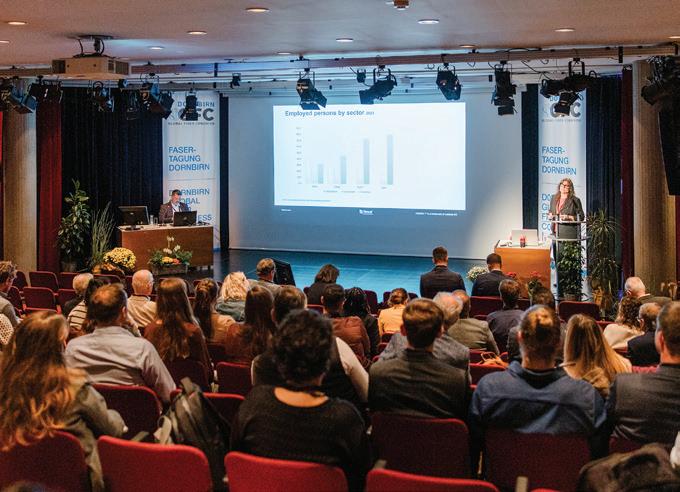
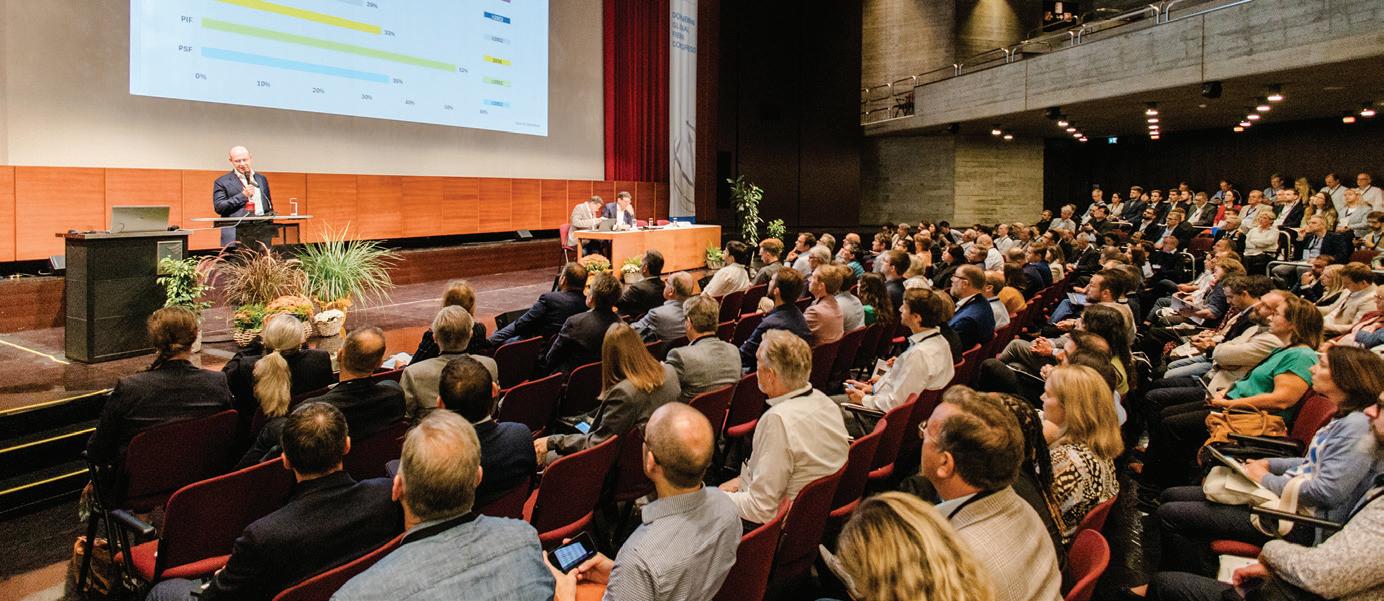
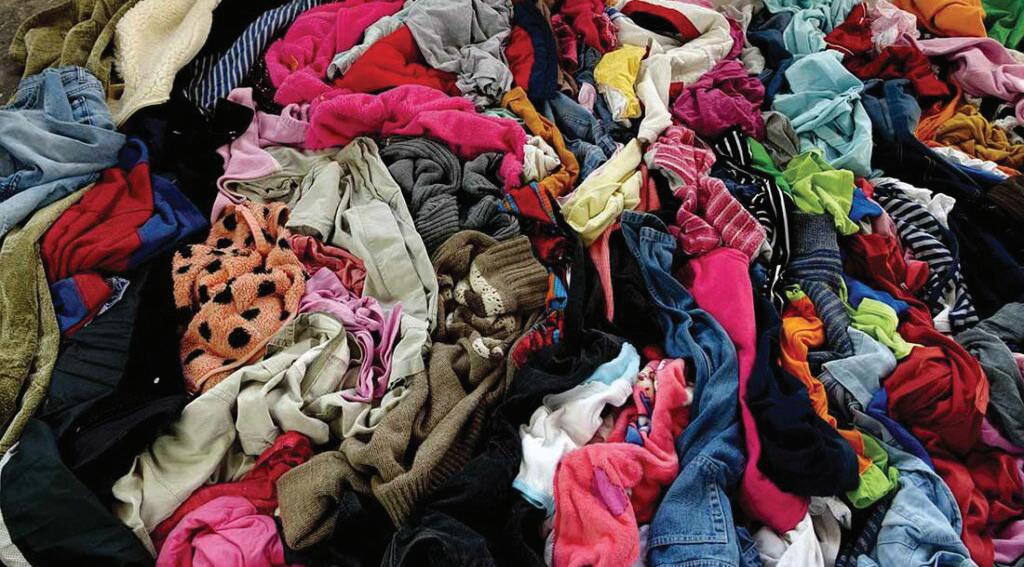
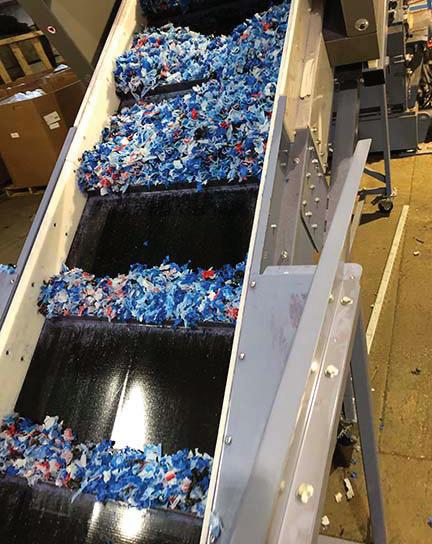
GFC 2025 Explores Recycling and Textile Waste as Pressure Mounts for Solutions
PROTECTIVE WORKWEAR
Europe’s Protective & Performance
Textiles Expand Amid Uncertainty
March 23–25, 2027
Kansas City Convention Center
Exhibit Where Global Nonwovens Business Happens
At IDEA®27, your booth is more than just space—it’s your launchpad for new business. Over three powerful days, you’ll engage directly with decision makers from major nonwoven manufacturers, showcase your latest products and technologies, and build partnerships that drive results.
IDEA®27 is the world’s preeminent event for nonwovens and engineered fabrics— where innovation meets opportunity.
Kansas City, Missouri Don’t let
Why Exhibit at IDEA®27
Join thousands of professionals from over 60 countries who come to IDEA® to source solutions, form collaborations, and shape the future of nonwovens. Exhibiting at IDEA®27 positions your company at the center of it all.
• Connect with brand owners, converters, roll goods producers, material and equipment suppliers, and service providers.
• Achieve in three days what would take months of calls, emails, and travel.
• Meet current customers and new prospects ready to do business.
• Collaborate on solutions that improve product performance and sustainability.
• Expand into new markets and grow your business globally.
Reserve your exhibit space today and position your company at the center of the nonwovens world. ideashow.org
CEO Q&A: Bombay Dyeing Launches Biodegradable PSF
By Arun Rao, International Correspondent, India
Fiber Innovation: Defining the Future Annual Showcase of Advancements in the Marketplace
Complied by Caryn Smith, Publisher and Chief Content Officer, IFJ
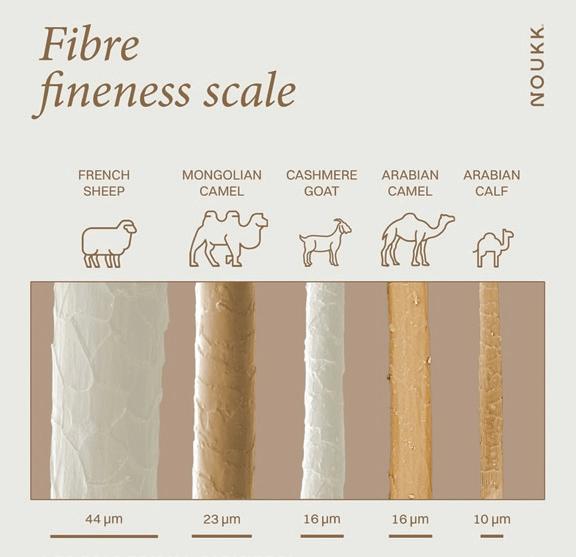
Arabian Camel Hair – Expanding the Natural Fiber Horizon
By Diletta Del Giudice
Why Europe Needs Its Own Berry Amendment
By Adrian Wilson, International Correspondent, IFJ
DORNBIRN GFC 2025: Textile Industry Rallies Around Circularity and Fiber Recovery
By Geoff Fisher, European Editor, IFJ
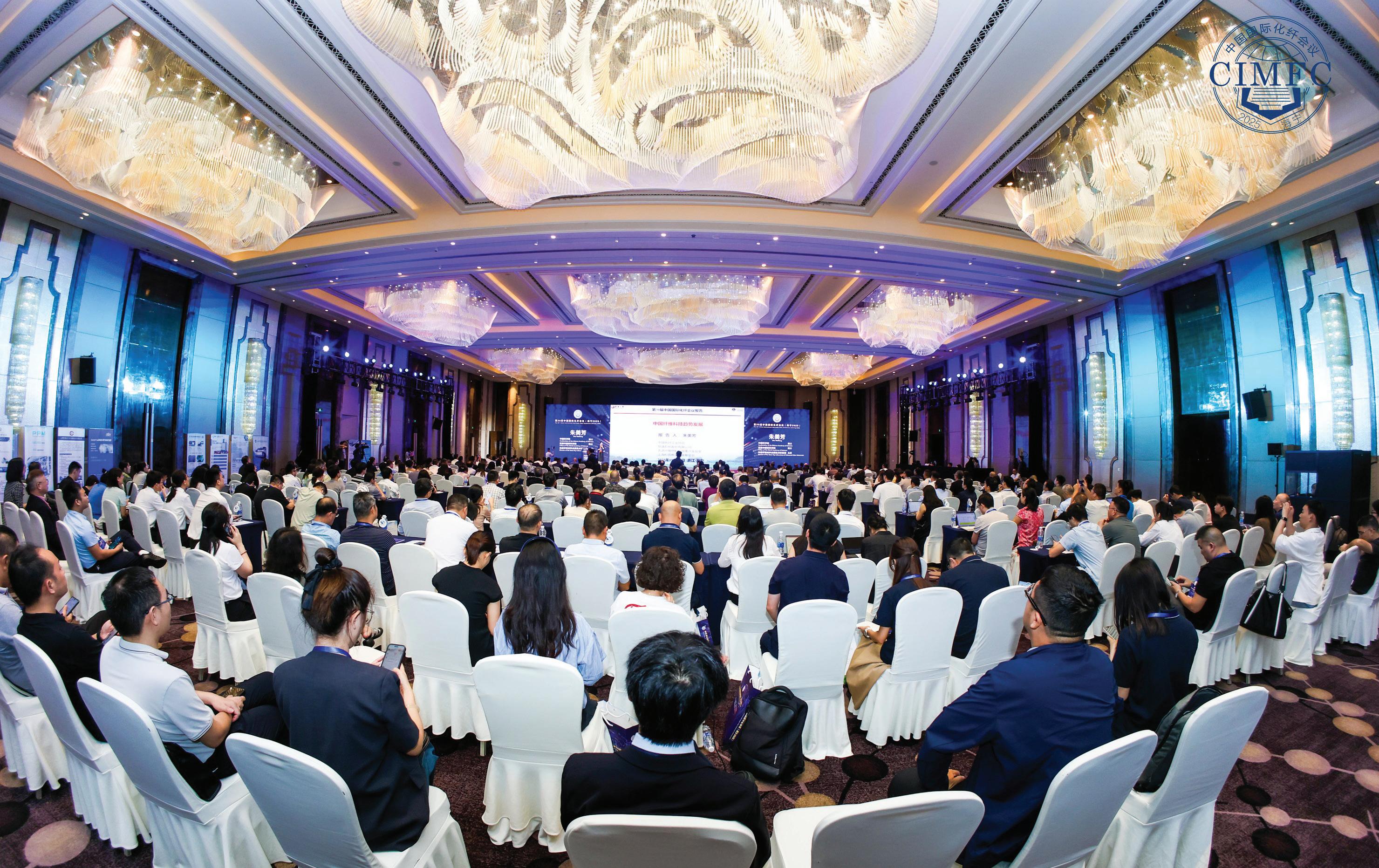
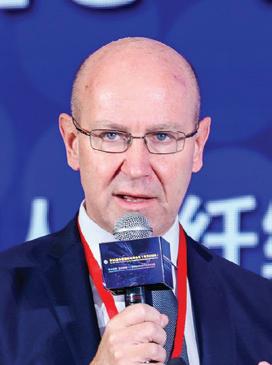
CIMFC 2025: The Road Ahead: Cautious Optimism in Uncertain Times By Jason Chen, China Correspondent, IFJ
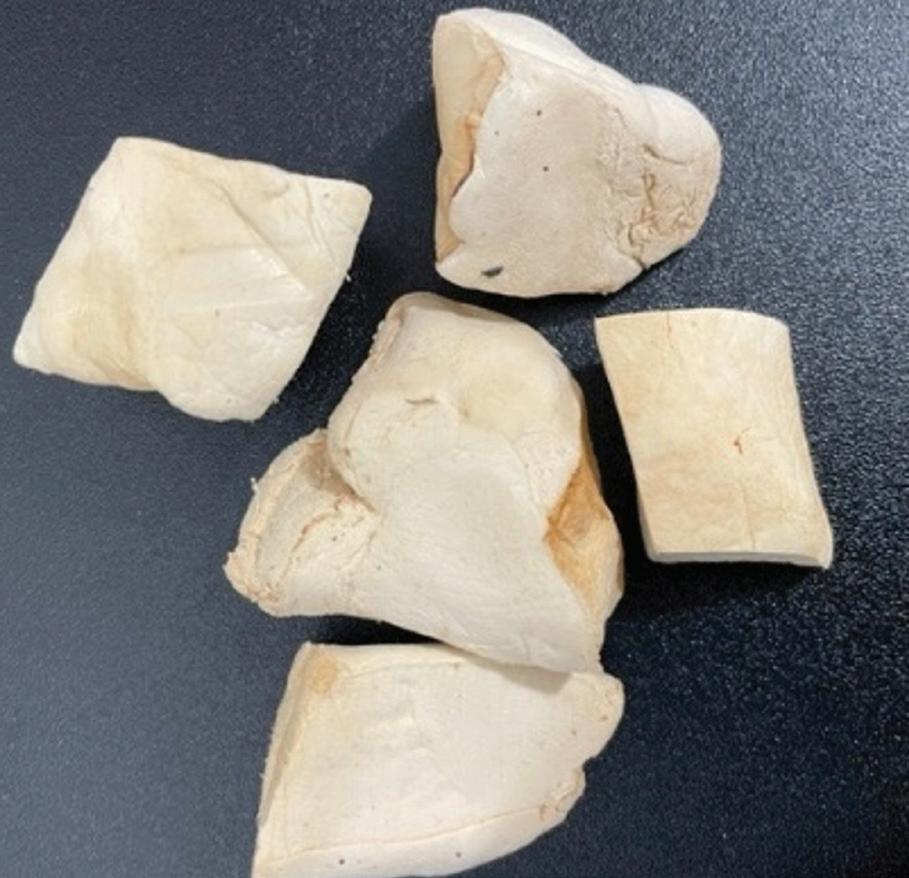
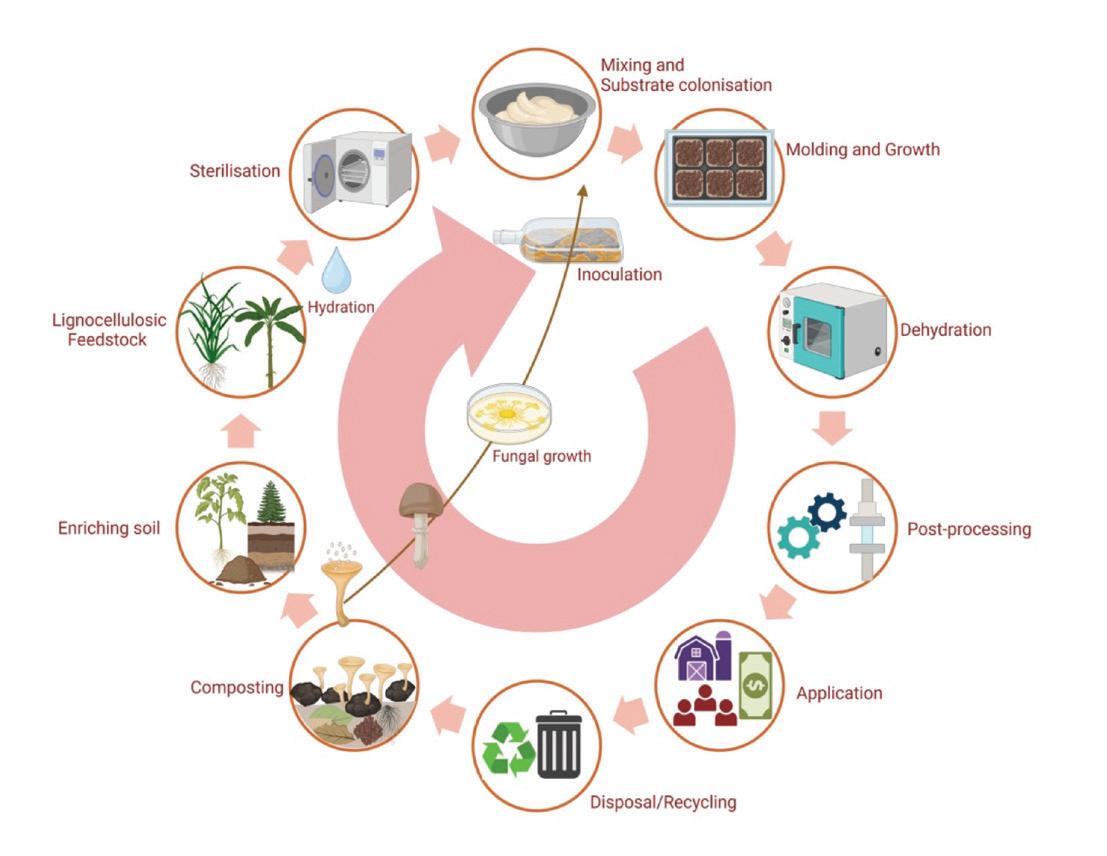
Mycelium-Based Biomaterials By Sanjay Wahal
Circular Industrial Parks By Raymond Chimhandamba, International Correspondent, Africa
“The chief enemy of creativity is ‘good’ sense.”—Pablo Picasso
The textile industry has long been grounded in precision: repeatable quality, strict process control, and reliable performance. Yet the most transformative advancements of the past decade came from the very opposite of “good sense.” Bio-engineered spider silk that behaves like a living material. Circularity models that turn textile waste into new fiber feedstocks. Carbon-negative fibers grown from captured CO₂. Ten years ago, these belonged in science fiction – or the sketchbook of an artist dreaming beyond reason.
In the quote from Pablo Picasso, he was not speaking against logic or discipline –he was challenging complacency. “Good sense” is the comfortable voice that says ‘stay within the familiar, follow best practices, don’t take risks.’ Yet every breakthrough in art, as in industry, begins with someone who dares to ignore that voice.
Picasso understood that creativity rarely emerges from safe thinking. It requires resisting the urge to default to what we know and instead pushing toward what we can imagine. In our world, that might mean questioning entrenched cost models, rethinking supply chains built for linear economies, or adopting technologies not yet proven at scale.
This year’s Annual Innovation issue, starting on page 16, highlights companies, fiber developers, and research teams who embraced that philosophy – who said “yes” to ideas that, might challenge “good sense.” Hills, Inc. announces Twisty Fiber™, trilobal filaments individually twisted along their length, redefining synthetic fiber behavior. Gottlieb Binder GmbH & Co. KG and MS Ultrasonic Technology Group introduced a breakthrough ultrasonic welding closure system that requires no adhesives or glues, while Dukane’s CLE™ Curved Leg Elastic Technology eliminates
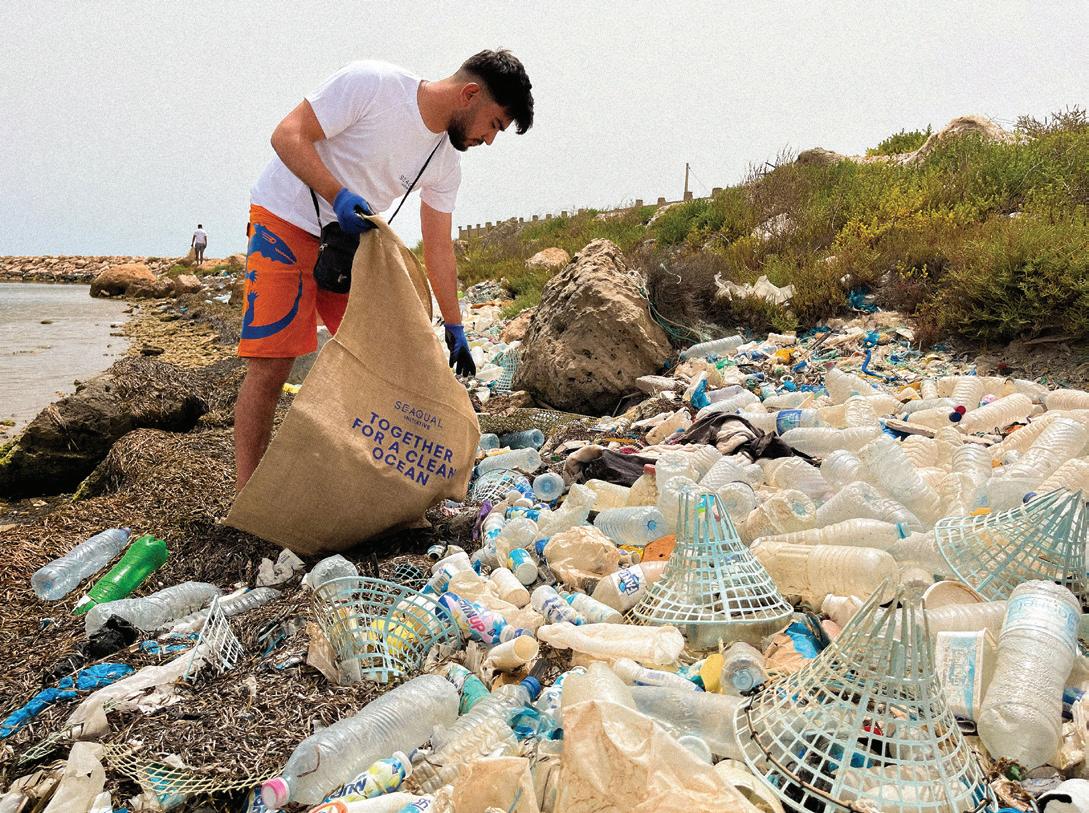
hot-melt adhesives in hygiene products, improving performance and reducing waste. Others are pushing boundaries in material sourcing and fiber function: from mycelium-based biomaterials and Arabian camel hair expanding the horizon of natural fibers, to Cottonsie®, which transforms cotton into a directional fluid management system through engineered microstructural gradients. Meanwhile, SEAQUAL® YARN, a certified recycled polyester made from marine plastic, is setting a new standard in transparency and impact by enabling brands to directly participate in ocean recovery.
The question that all industry should be asking themselves: How can we break free from ‘good sense’ of today’s marketplace and move into developing sustainable options for future economies. Progress is not born from playing it safe – it comes from the courage to rethink what fiber can be and what textiles can do.
In other articles, Jack Ryan from NIRI discusses ‘Bridging the Gap Between Concept and Commercialization in Medical Product Innovation’ on page 10; Adrian Wilson reports on page 40 about Europe’s dedicated efforts in the protective workwear amid pressures of heightened geopolitical uncertainty and tightening sustainability expectations; and Geoff Fisher, on page 44, shares the ‘Waste to Worth’ efforts on display at this year’s installment of the Dornbirn Global Fiber Congress.
There is much to digest in this issue, enjoy the read!
Caryn Smith Chief Content Officer & Publisher, INDA Media, IFJ
Caryn Smith Chief Content Officer & Publisher, INDA Media csmith@inda.org +1 239.225.6137
Jason Chen International Correspondent, China jasonchen200501@hotmail.com
Geoff Fisher European Editor gfisher@textilemedia.com +44 1603.308158
Textiles Recycling Expo USA, Apr. 29-20, Charlotte, NC
FEDTEX 26, May 19-20, Raleigh, NC INDEX, May 19-22, Geneva, Switzerland
+ Global Nonwovens Alliance - GNA Supplement
INDA WOW, Jun. 29-Jul. 2 2026, Nashville, TN
Techtextil & Texprocess NA, Aug. 4-6 2026, Raleigh, NC
Adrian Wilson International Correspondent adawilson@gmail.com +44 7897.913134
Jack Eaton Chief Commercial Officer NIRI enquiries@nirigroup.com
Thought Leaders on Global Market Regulations and Sustainability Trends for Automotive, Aerospace, Marine, and Hydrogen Sectors
Digitalization & Smart Textile Production Trends –AI, Sensors and the IoT
Fiber/Textile Cutting Systems
Arun Rao International Correspondent, India Owner, Taurus Communications arun@tauruscomm.net
Raymond Chimhandamba International Correspondent, Africa Handas Consulting ray@raychimhandamba.com
Advertise in IFJ in 2026 & REACH THOUSANDS GLOBALLY
International Fiber Journal reaches a vast network of qualified professionals who employ fibers, nonwovens, technologies, equipment and more to optimize operations. With unique readers in markets that have strong crossover, IFJ offers print and digital opportunities to maximize marketing investments with a range of solutions based on true thought-leadership platforms.
IFJ subscribers are in 67 countries. There are 17 countries with signficant readership (print and digital).
Request a Media Kit: Advertising@inda.media today!
• Fibers: Polymers & Bio-Polymers
• News in Converting Paper, Film, Plastics, and more ...
Efficient Processing of High-Performance Fabrics for Personal Safety
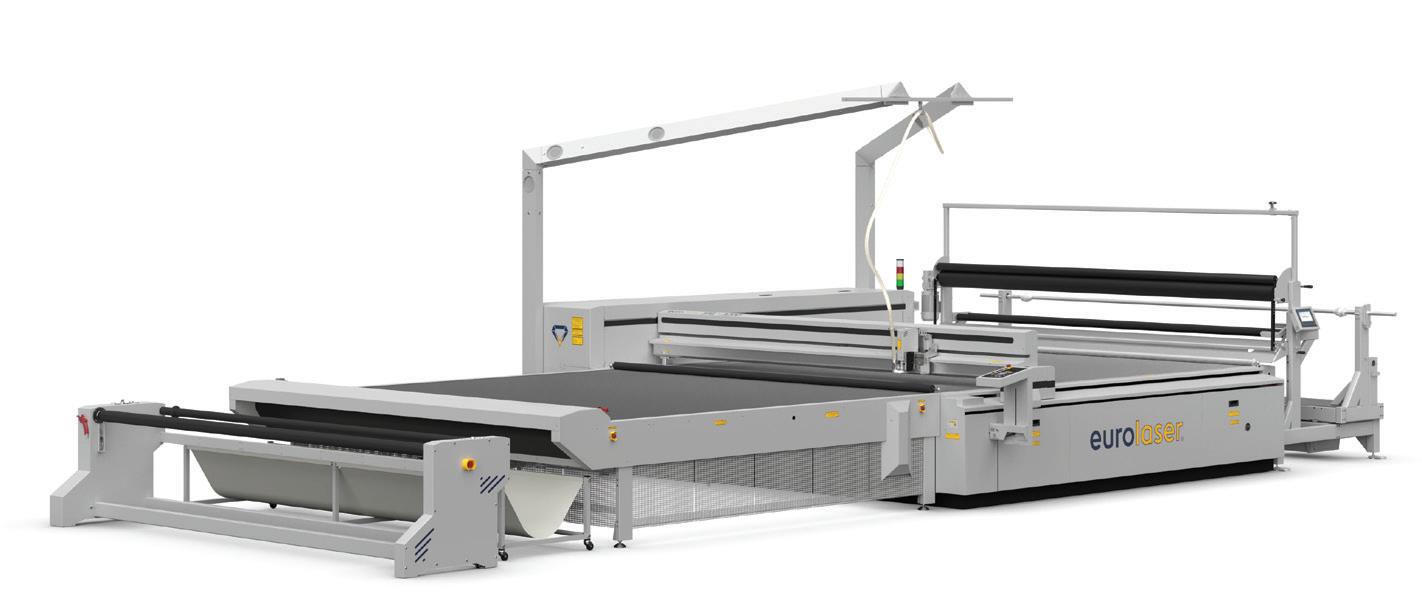
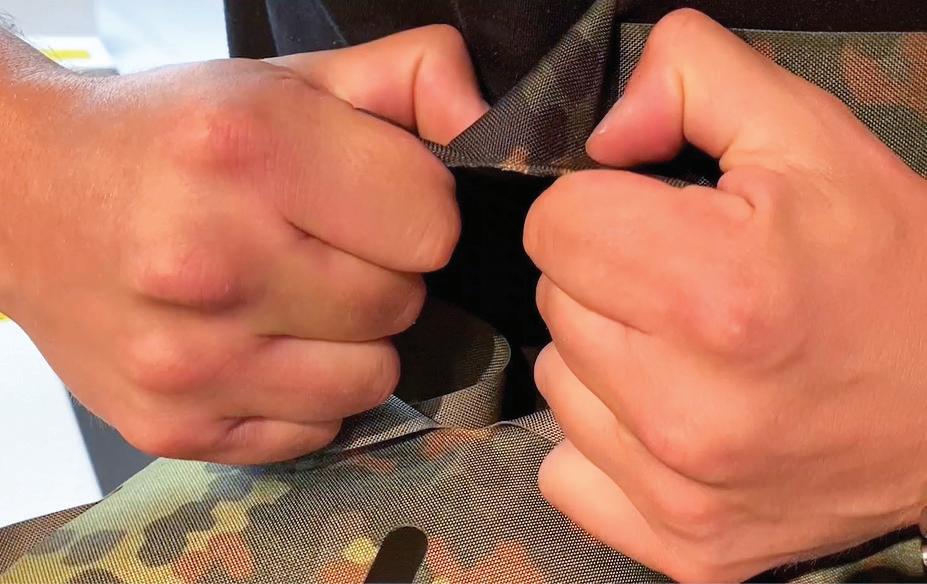
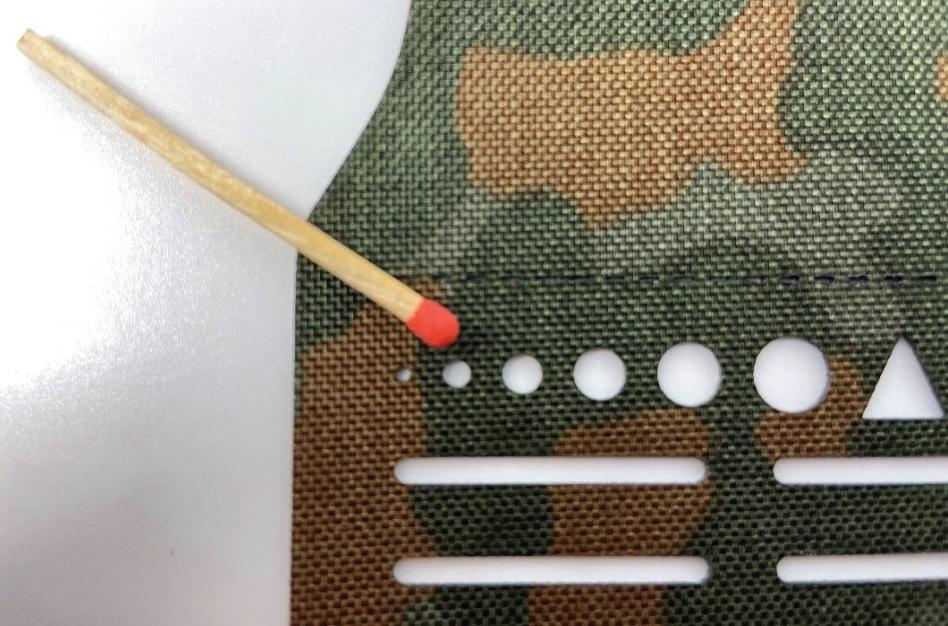
Personal protective equipment (PPE) must function flawlessly under extreme conditions. Whether in law enforcement, firefighting, military, or industrial safety applications, protective textiles such as Aramid, Kevlar® or Cordura® are required to deliver maximum resistance to heat, cuts and abrasion. However, these properties also make the materials difficult to process. eurolaser GmbH, based in Lüneburg, Germany, has been supporting the PPE industry for many years with highly specialised CO₂ laser cutting systems developed precisely for these challenges.
Proven in the Field
Manufacturers of protective vests, flameretardant clothing, ballistic panels and tactical gear face complex material and processing demands. Over the past decades, eurolaser has collaborated closely with PPE producers to develop laser-based solutions that enable precise, reproducible and scalable cutting processes. The result is a technology that ensures reliable processing of resistant textile composites –even in 24/7 industrial operation.
Efficient Cutting of Complex Protective Materials
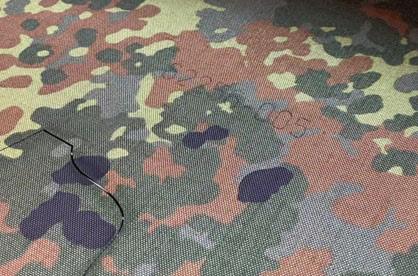
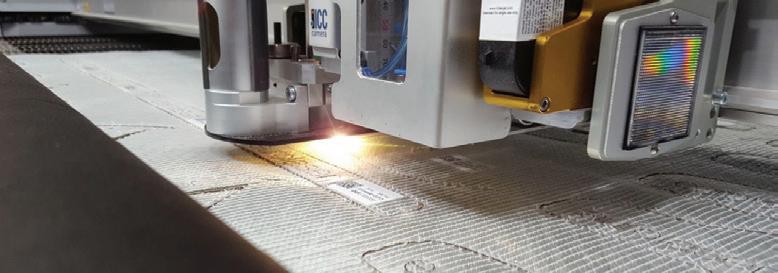
Textiles like Kevlar®, Cordura® and similar composites are designed to withstand mechanical stress. Conventional cutting tools often struggle with these fibres due to tool wear, fabric distortion or insufficient edge quality. eurolaser’s contactless laser technology overcomes these barriers. The laser beam cuts with pinpoint accuracy while simultaneously sealing the edges, preventing fraying and eliminating the need for time-consuming post-processing such as hemming or taping.
Tailored for Protective Textile Production
eurolaser systems are optimised for largeformat material handling and continuous production processes. Using a conveyorbased system with automatic edge control, protective fabrics can be processed directly from the roll with consistent accuracy. This automation significantly reduces manual handling and increases throughput, especially in the production of repeating components such as vest panels, collar protectors or helmet padding.
Optional process modules also enable permanent markings, perforations or serialisation to be carried out during the cutting process – allowing downstream workflows like assembly, inspection or logistics to be streamlined in a single production pass.
Efficient Use of Valuable Materials
Especially in the PPE sector, raw materials are high in cost and often subject to
stringent quality controls. eurolaser integrates intelligent nesting functions and material tracking options into its software and hardware to help maximise material yield. Barcode-supported length tracking and sensor-controlled feed ensure precise positioning and full transparency in order handling. This minimises waste and makes planning easier – even with varying lot sizes or custom-fit parts.
Reliable Solutions for Demanding Industries
With more than 30 years of experience in industrial laser processing of technical textiles, eurolaser supports PPE manufacturers worldwide with custom-configured machine solutions. The systems are designed for maximum reliability, low maintenance and high precision – even in demanding production environments. Whether for initial prototyping or fullscale industrial output, eurolaser provides a flexible and scalable platform that meets the specific demands of protective textile processing.
www.eurolaser.com
TECH
SPOTLIGHT
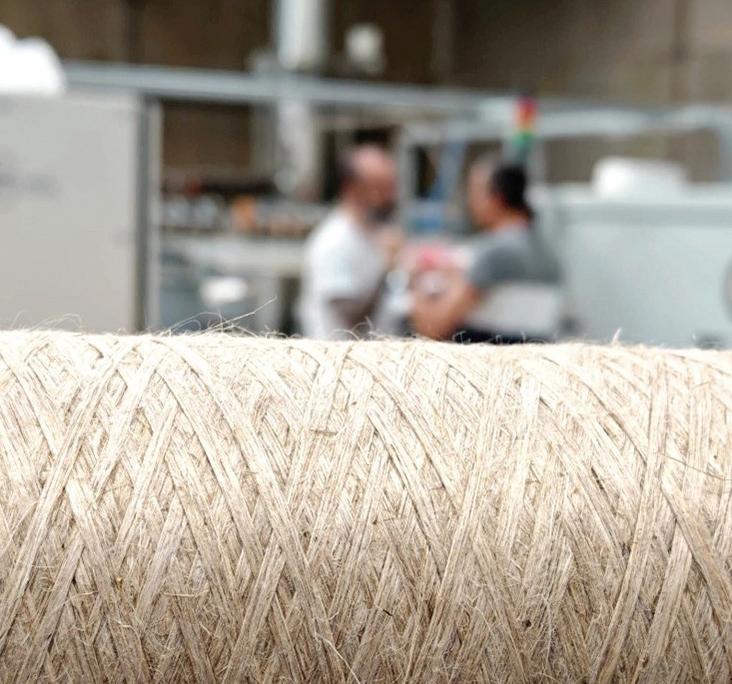
Flax-fiber rovings produced using Fibroline’s dry powder impregnation solutions.
Fibroline and Depestele Join Forces on Eco-Friendly High-Performance Flax-Fiber Rovings
In an effort to develop a new generation of flax-fiber rovings, French companies Depestele and Fibroline have partnered together in developing new ways to process flax rovings and improve its consolidation and fibers’ thermal bonding stages. Depestele, a family-owned business that has been processing linen since 1850, is a European leader in flax production. Depestele is committed to energy transition and environmental preservation and has joined BPI’s Coq Vert community in an effort to promote industrial sustainability. Meanwhile, Fibroline is an engineering company and a leader in ecofriendly impregnation technologies with more than 50 patents worldwide.
A Production Process with Room for Improvement
To produce reinforced flax-fiber rovings, Depestele must find a way to bind the fibers together. After being refined and stretched along the production line, the non-twisted flax ribbons consist of discontinuous fibers that tend to slide, making them difficult to handle. A binding agent must be applied to enhance their mechanical properties, allowing the subsequent roving to be further processed for weaving and other applications. To achieve this, Depestele aims to obtain rovings with a minimum tensile strength of 20 N after the binding step.
Until now, Depestele has been using a water-based liquid impregnation technology that requires a drying step before winding the material. To improve productivity and reduce environmental impact, this process needed to be optimized. The drying stage consumes a significant amount of energy and can result in low machine uptime. Finally, it has also occasionally caused incompatibility with certain resins.
Advancing Towards Sustainability
In order to modernize and decarbonize its operations, Depestele sought an alternative to traditional liquid impregnation. By adopting Fibroline’s dry powder impregnation, the company has taken a decisive step toward a more efficient, eco-friendly, and competitive industrial process.
Fibroline has pioneered a breakthrough dry powder impregnation technology, capable of embedding powders directly into a wide range of substrates through the use of alternating electric fields. This clean and efficient process eliminates the need for liquid baths, opening new horizons for sustainable and high-performance materials. As such, it is an innovative and viable alternative to conventional liquid binding methods used thus far. The development of this new generation of products took 18 months, resulting in a machine being designed, built and then set up on Depestele’s installations in Normandy, where the company is located.
A Joined Effort to Tackle Challenges
Fibroline and Depestele worked on all the parameters of this impregnation technique. First, the process had to be fully adapted to avoid damaging 300 or 520 Tex flax ribbons. The R&D teams had to ensure the impregnation did not cause any tension on the yarns while still providing the adequate amount of powder to properly impregnate them. This meant redesigning the electrodes within the machine and finding the right voltage and frequency for the process. It resulted in dry powder impregnation solution avoiding high mechanical tensions on the yarns, which damage the non-twisted ribbon and slow down the process and enables the optimization of the machine uptime.
Fibroline also researched the best chemical combination of powders to impregnate
the fibers. This technology paves the way for the use of many thermoplastic or thermoset polymers to prepare ecofriendly materials. By using powder-form chemistries, Fibroline and Depestele could focus on bio-sourced affordable powders that would both guarantee the required mechanical properties of the rovings and offer a fully bio-sourced product. This included working on the best size and shape of the particles to ensure the best powder deposition and impregnation within the fibers.
Concerning the industrial line, Fibroline and Depestele teams adapted it to fit Depestele’s requirements regarding processing speed and integration after the current dry ribbon production process. The new technology had to work fast enough to meet Depestele’s production yields. The teams also adapted the line to the specific environmental conditions which are required for flax production and then chose the best option for powder fixation. They chose a flat-belt calender, which can efficiently drive and fix the yarns by applying a certain pressure and temperature to flow the powder to the max, improving the bindings between the fibers and then their mechanical properties. These efforts resulted in the production of rovings impregnated with few percent of binder with a mean tensile resistance of about 35N, completely fitting with Depestele’s requirements.
Many Possibilities & Developments
Dry powder impregnation process enables Depestele to launch a new generation of innovative products. Aligned with the company’s commitment to developing more sustainable materials, this technology can be adapted to various applications. Depestele’s collaboration with Fibroline has already resulted in the creation of flax UD tapes, highlighting the vast potential of this groundbreaking impregnation technology.
www.fibroline.com
www.groupe-depestele.com
For details on how to submit your company’s technology for consideration as a “Technology Spotlight” in IFJ, contact Ken Norberg at ken@ifj.com or +1 202.682.2022.
NOTES TECH
Sunbrella Launches Sunbrella Interiors
Sunbrella, the global leader in performance fabrics, announced the launch of Sunbrella Interiors, a new sub-brand dedicated to elevating the design, comfort and durability of fabrics and products for interior spaces.
Debuting at High Point Market this October, Sunbrella Interiors offers fabrics created specifically for the home, weaving trusted performance with luxurious textures and lasting style.
The portfolio features plush chenilles, refined bouclés and other soft, textural fabrics, as well as products including window treatments, throws, and more – all designed to elevate everyday living. Each reflects the latest innovations from Sunbrella’s vertically integrated manufacturing process, including advancements at its North Carolina-based novelty yarn plant that deliver new levels of softness and sophistication. Every fabric and product is stain-resistant, easy to clean, and engineered to last – qualities that have long defined the Sunbrella name. www.sunbrella.com
Samsara Eco Opens Plant to Scale Circular Plastics
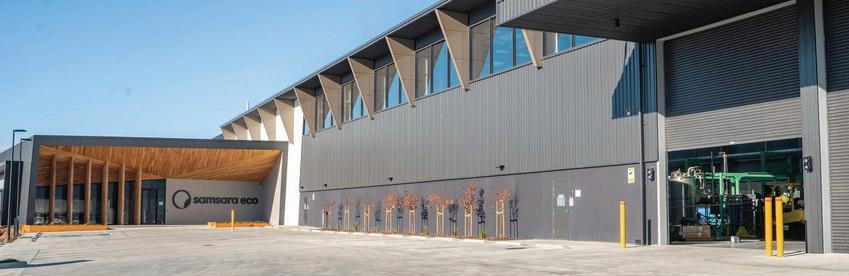
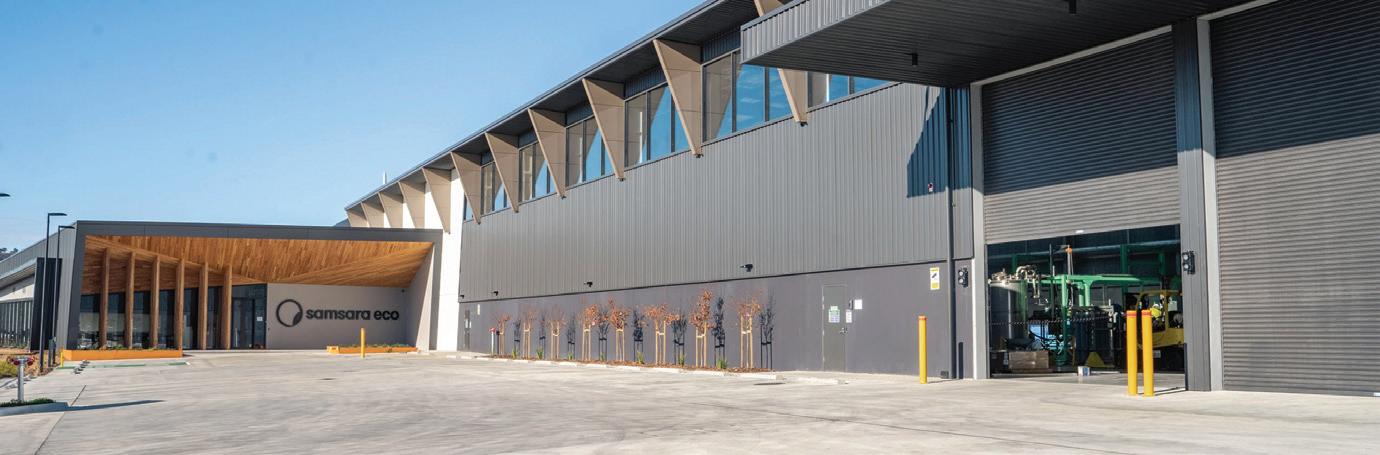
Biotech innovator Samsara Eco in Australia has opened its first plant, representing a significant milestone in the fight against plastic waste. The new plant will exponentially increase the company’s ability to produce virgin-identical, low-carbon circular materials like recycled nylon 6,6 and polyester with broad applications across apparel, packaging and automotives, at scale.
Located in Jerrabomberra, Australia, the new headquarters and plant houses EosEco, Samsara Eco’s breakthrough enzymatic recycling technology. The technology uses AIcrafted enzymes to break down mixed plastics destined for landfill into recycled raw materials,
FET Launches UHMWPE Fibers for the Biomedical Market
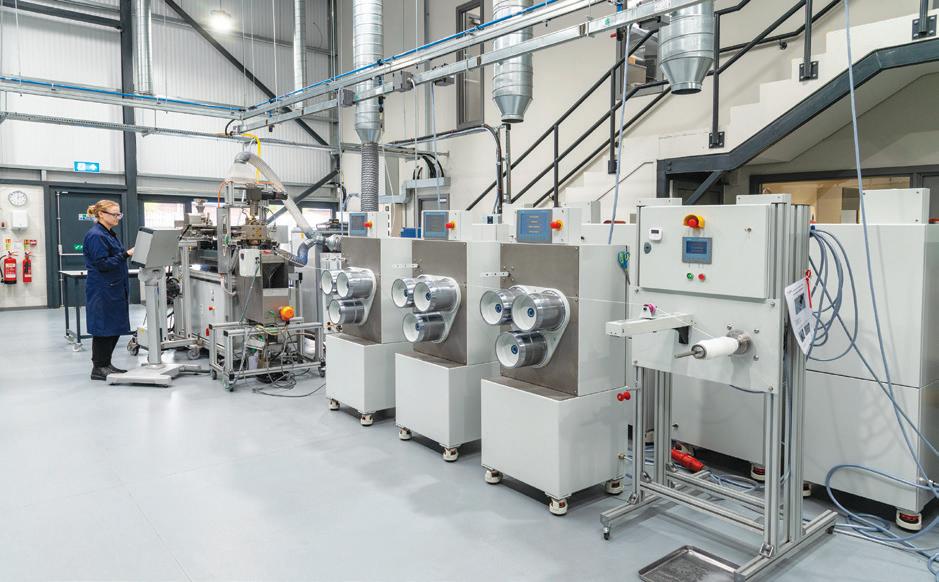
British company Fibre Extrusion Technology Ltd., (FET) recently launched the FET-500 Series of gel spinning systems that could revolutionize research and development of UHMWPE fibers.
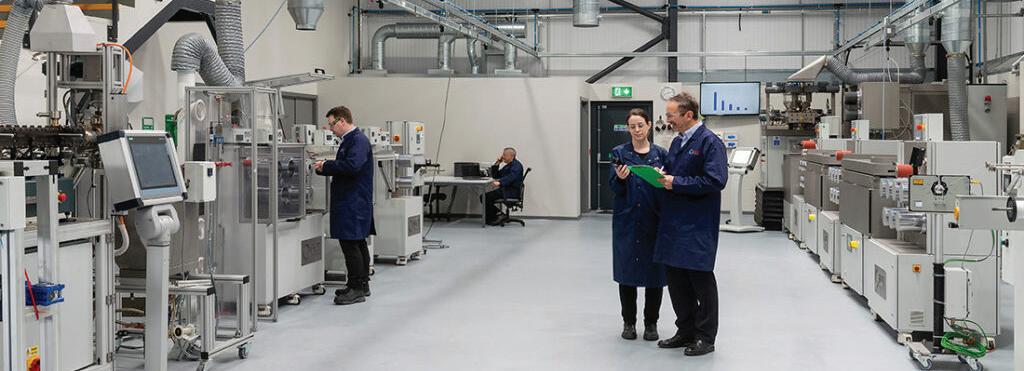
FET has built a reputation in medical fiber extrusion technology and innovations, designing and delivering high-performance equipment for a range of precursor medical products, including extrusion systems for production of both resorbable and non-absorbable sutures. FET’s equipment supports small-scale, adaptable production and rapid new product development.
There is a growing demand for R&D of UHMWPE fibers, which are prized in many industries due to their extraordinary properties. Current production processes are complex and tailored to the largescale output of existing fiber grades. This rigid supply chain has stifled innovation in this untapped product market.
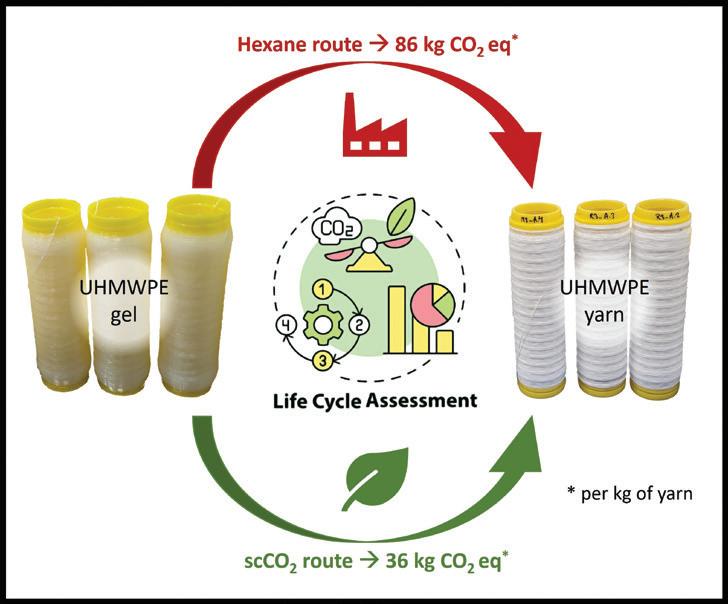
The FET-500 gel spinning systems will open up for smaller production volumes and more customization and research. The FET-500 enables a flexible and consistent process, able to produce quality fibers with less than 100 grams of polymer, while avoiding the harsh processing chemicals that were historically associated with gel spinning. The key to unlocking this lab and pilot scale flexibility is the use of supercritical carbon dioxide as a green solvent in a patent-pending process. www.fetuk.com
ready for brands to incorporate into their next product line. The facility also houses expanded enzyme production facilities, allowing Samsara Eco to further build out its proprietary AI-powered enzyme discovery and development platform to find recycling solutions for a broader range of plastics.
The circular materials made at Jerrabomberra will feature in upcoming product lines for global brands like lululemon, as well as pilot programs and trials with brands across textiles, automotive and packaging. The facility will also host world-first research including finding recycling solutions for the
likes of spandex with The LYCRA Company, and Samara Eco’s collaboration with Deakin University’s Recycling and Clean Energy Commercialization Hub, part of the Australian Government’s Trailblazer Universities Program. Today, only 10% of plastics are recycled and less than 1% of textiles are recycled into new textiles, perpetuating a linear economy. Samsara Eco aims to rewrite those numbers by recycling the unrecyclable to keep highvalue materials out of the landfill. www.samsaraeco.com
Samsara Eco-facility in Australia.
Sunbrella Interiors.
FET development center in the UK.
Milliken Launches Millad ClearX™ 9000: The Clear Choice for Polypropylene
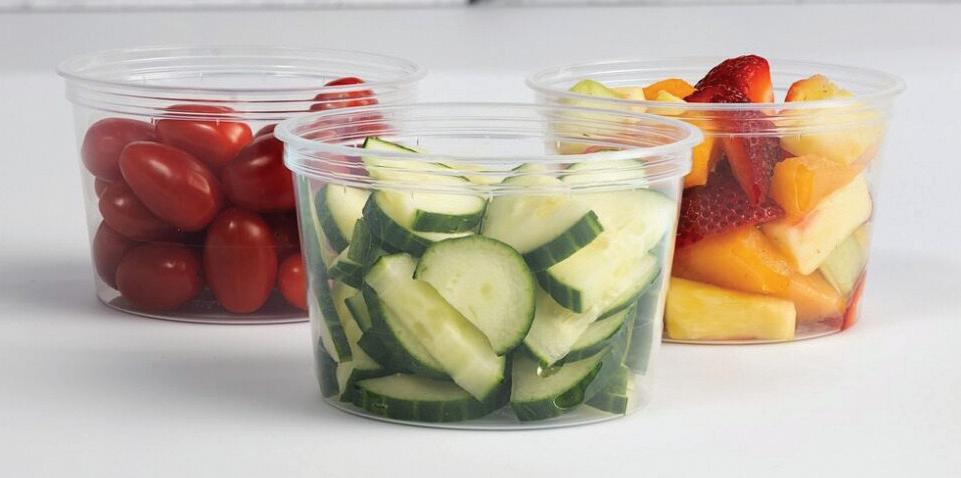
Milliken & Company announced the launch of Millad ClearX™ 9000, the next generation clarifying technology for polypropylene (PP) developed to deliver ultra-clear transparency at reduced additive loading levels. Ideal for food packaging, home storage, and medical applications, Millad ClearX™ 9000 sets a new standard for value, aesthetics, and operational efficiency in transparent PP applications.
Millad ClearX™ 9000, Milliken’s next generation clarifying technology for polypropylene (PP), delivers ultra-clear transparency at reduced additive loading levels.
Building on the proven Millad® platform, Millad ClearX™ 9000 provides manufacturers with an advanced solution that:
• Achieves ultra-clear PP using more efficient loading levels, reducing the amount of clarifying additives needed.
• Lowers extraction and migration rates in PP packaging and parts – critical for food-contact and medical applications.
• Eliminates the need for segregated virgin and PCR resin streams, enabling greater composition flexibility.
“Millad ClearX ™ 9000 is a breakthrough for the polypropylene industry, delivering ultra-clear transparency with less clarifying additive and greater flexibility for our customers,” said Wim Van De Velde, SVP and
Lenzing, Mill Partners Introduce TENCEL™ Lyocell Fiber Innovation for Denim at Kingpins
The Lenzing Group, a leading global producer of regenerated cellulosic fibers for the textile and nonwovens industries, officially launched TENCEL™ Lyocell – HV100 at Kingpins. The new fiber innovation was developed in response to value chain partners seeking textured aesthetics inspired by natural fibers.
TENCEL™ Lyocell – HV100, which evokes an authentic, raw texture, was launched at Kingpins.
The innovation employs Variocut technology to create deliberate variations in fiber length within the bale, producing a textured look on the final product, typically associated with natural fibers.
TENCEL™ Lyocell – HV100 inherently has the environmental benefits and consistent quality of LENZING™ cellulosic fibers. Through controlled variation in staple lengths, these fibers create the subtle irregularities in the fabric that contribute to the distinctive qualities and appearance of natural fibers. Adding to the texture, the fiber’s matte finish also highlights an opaque look, offering mills and brands expanded creative possibilities for developing fabrics with natural fiber aesthetics. The fibers deliver a still soft, but less liquid hand feel for premium denim products, achieving a natural softness without any washdown shade complications or the extreme draping that could feel unnatural. www.lenzing.com
Managing Director of Milliken’s plastic additives business. “This launch reflects Milliken’s ongoing commitment to advancing material science and helping our partners meet evolving market demands.”
Millad ClearX ™ 9000 has broad FDA conditions of use approval (A-J), opening doors for its use across a wide spectrum of foodcontact applications. By enhancing additive compatibility, it helps resin producers and converters experience less downtime, less waste, and quicker changeovers – delivering measurable improvements in manufacturing efficiency. The technology also allows for improved compatibility with other Millad clarifying agents, giving producers the flexibility to optimize formulations for both virgin and post-consumer recycled (PCR) PP, supporting sustainability initiatives.
www.milliken.com
New American Fabric Seeks Partner for Breakthrough Antimicrobial Textile Technology
After years of collaborative research and more than $300,000 in grant funding and institutional support, New American Fabric (NAF), a Texas Tech University startup comprised of textile and antimicrobial researchers, announced the successful laboratory-development of a next-generation organo-selenium finishing compound for cotton and other natural fibers. The technology now moves from the laboratory to the marketplace, and the team is seeking a commercialization partner to license and scale the innovation for consumer textile applications.
Developed through a partnership between Dr. Noureddine Abidi, Interim Associate Vice President for Research and Innovation and Managing Director of the Fiber & Biopolymer Research Institute, and Dr. Ted Reid, a National Academy of Inventors (NAI) senior member and internationally recognized expert in selenium chemistry, the compound represents a major advance in durable, cost-effective antimicrobial textiles.
The finishing compound is applied using standard textile-finishing equipment and processes, enabling seamless integration into existing cotton textiles finishing lines. Once cured, the treatment demonstrates robust antimicrobial performance comparable to AATCC100 standards in laboratory settings, providing long-lasting protection against odorand infection-causing microbes.
Unlike conventional silver-based antimicrobial treatments, which carry high material costs, this organo-selenium finish delivers a superior level of performance at a fraction of the cost. The selenium compound establishes covalent chemical bonds to cellulose in cotton fibers, therefore avoiding the issues of leaching and staining associated with silver, ensuring durability through laundering and wear. www.newfabric.us
Indorama Ventures launches Skin-Friendly Range of PET Fibers, Filament Yarns
Indorama Ventures Public Company Limited, a global sustainable chemical company, recently launched a new skin-friendly range of PET fibers and filament yarns for apparel, tested against 17 harmful chemicals and certified to standards like OEKO-TEX® Standard 100, DIN EN 71-3, and ISO 17294-2.
Under the product brand deja™ Care, the company uses more environmentally friendly chemicals during the PET polymerization process. That enables customers and brand owners to offer skin-sensitive solutions like certified maternity wear, underwear, infant and children’s wear, school uniforms, or simply essential fashion that touches consumers’ skin every day.
All deja™ Care fibers and yarns are manufactured in fully integrated, in-house facilities in Asia, ensuring end-to-end control and traceability. Having already proven their performance in hygiene applications like baby wipes and diapers, these products now offer apparel brands a clear path towards responsible fashion. Fabric makers also benefit from cleaner, thus less polluting wastewater and lower sludge generation and disposal during fabric manufacturing. That supports more eco-friendly production practices. www.indoramaventures.com
Makalot Unveils Breakthrough Textiles and Expanded Americas Supply Chain Ahead
Makalot Industrial Co., Ltd., a global textile and apparel leader, announced several new textile technologies and sustainable fabrics, ahead of Functional Fabric fair 2025. Evan Sheu, Product Innovation Manager at Makalot, said their return to the Fair this year is highlighting how new advancements in smart clothes create whole new functions and capabilities.
Makalot’s WIIM smart textile platform which will be on display integrates advanced technology into garments while prioritizing safety and wearability, offering cutting-edge solutions such as physiological-signal-sensing textiles (ECG, EMG, EEG), cooling and heating systems, motioncapture garments, and muscle-stimulation wearables.
WIIM’s state-of-the-art conductive materials include LIGHTFIBER: A patented electroluminescent fiber that emits light via AC current, making it the world’s first wearable neon light. Ideal for activewear for safe, flashlight-free night-time outdoor activities, it offers visibility of up to 100 meters, multiple color options, and endless design potential; and Elastic Conductor: A breakthrough material that offers true stretchability for electronic conductors in e-textiles and is tested through more than 2,200 wash cycles.
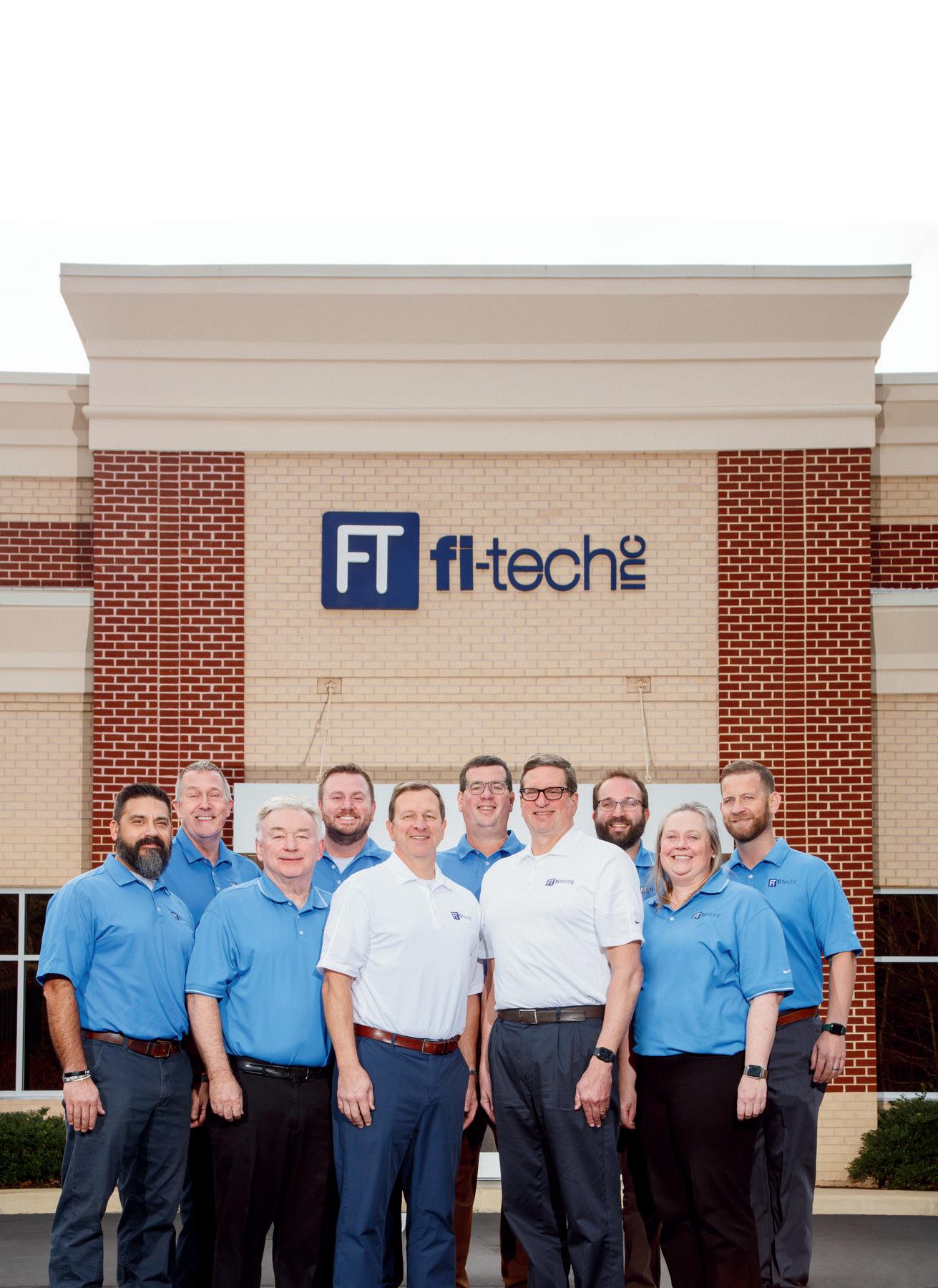
Our Fi-Tech Team connects you to the most technologically advanced suppliers serving the Polymer, Synthetic Fiber, Nonwoven and Textile Industries.
Other WIIM innovations on display include Heated Vest Co-Developed with Clim8: Lightweight, safe, washable, and battery-powered, with heat levels adjustable via the Clim8 app, and Smart Tracking Textiles: For clothing brands: RFID fibers enable long-distance wireless identification and inventory management, with durability of up to 100 washes; For consumers: Duo-frequency labels provide smartphone-paired features like authenticity checks, washing instructions, and health tracking.
Makalot will also showcase its latest synthetic and natural fabrics that offer comfort and style while providing sustainable options for greater consumer choice:
• Thermoplastic Polyester Elastomer (TPEE): A recyclable synthetic fiber offering durability, comfort and extended product life.
• Thermo-Regulation Wool: A finely spun wool blend with a soft handfeel and natural temperature control, ideal for single-layer garments.
• Linen-Inspired Fabrics: Sustainable alternatives that replicate the breezy feel and earthy look of linen without the resource-intensive flax cultivation.
• Natural-Fiber Leggings: Made from organic cotton, bamboo, and regenerated cellulose fibers, these leggings offer breathability, softness, and skin-friendly comfort. www.ditf.de
By Jack Eaton Chief Commercial Officer, NIRI
De-Risking Medical Product Innovation through Collaboration
Bridging the Gap Between Concept and Commercialization
Developing next-generation products in the medical sector comes with commercial risks. Jack Eaton, chief commercial officer at NIRI, considers the social and commercial factors influencing the market; tools and strategies that can help inform R&D; how companies can de-risk development and reduce costs without sacrificing performance, and how collaboration with an external partner can help keep pace with demand in a rapidly evolving market.
The Need for Innovation –and the Challenges
he healthcare sector faces a range of pressures: improving patient outcomes as medical science advances; value for money; and stringent performance requirements to meet increasing sustainability demands. Where environmental legislation impacts all sectors, for medical device and product manufacturers, there are specific issues impacting R&D: polymer and fibre compositions, fabric structures, modes of use, product lifecycle – waste and lack of circularity – are all under increasing scrutiny. As environmental legislation drives demand for alternatives to traditional materials – and PFAS-related regulations are perhaps the most significant and current example of this – product innovation and the investigation of alternative materials are critical. But this demand can present a risk for R&D investment, where some markets are already saturated: innovation needs to address unmet needs, delivering clear benefits to healthcare providers and patients, alike.
The challenges for commercially viable, timely innovation often centre around performance. The demand for improved performance must balance the need to maintain compatibility with existing manufacturing processes and infrastructure, while integrating new materials science developments. Simply switching materials leaves a performance gap, yet sustainability is critical – where evidencebased environmental benefits need to be weighed alongside cost and performance. And cost is a major factor for patient-centred design: an ageing population, with the related issue of long-term care for chronic conditions, requires medical technology
Jack Eaton is the chief commercial officer, NIRI. Operating out of Innovation House in Leeds, UK, NIRI is a global leader in product development for fibers, nonwovens and advanced materials, having successfully completed over 900 projects for over 450 companies. They provide expertise, full prototyping, and analytical capabilities designed to accelerate innovation, develop commercially viable products, and provide world-class scientific advisory services. To learn more, email enquiries@ nirigroup.com or call +44 (0)113 350 3829. Learn more at www.nirigroup.com.
developers to balance the opportunity for improved product design alongside healthcare delivery costs.
Measuring Innovation – Starting With A Baseline and Taking an Agile Approach
Demonstrating value and reviewing current returns on product innovation can help determine a rationale for investing in new product development strategies, and the New Product Vitality Index can offer invaluable insight. Where speed to market is a factor, embracing an agile and collaborative approach can help companies be first to market – addressing rapidly changing demands within commercially viable timeframes. The New Product Vitality Index (NPVI) is a key performance indicator that measures the proportion of revenue or profit generated by products, typically over three to five years. A high NPVI will indicate a robust R&D pipeline, suggesting a healthy return on investment in innovation. It can help enable R&D alignment with market demands, make the case for allocating resources to high-impact projects, and provide a steer on market competitiveness.
Building this measurement into your R&D strategic reviews can ensure resources are allocated to the highest-impact products and projects. Where regulatory requirements and customer expectations demand sustainable products, the NPVI can help establish the value of cutting-edge product development, and support your own sustainability strategy.
But there are factors outside of a company’s control, e.g., supply chain disruption, inflation, rising raw material costs, and fluctuating demand. With the need to adapt quickly to emerging market requirements and circumstances, the guiding principles of agile development make it a compelling approach for the successful commercialization of R&D investment.
Agile principles can be distilled into three overarching concepts: adaptability, customer focus, and iterative progress. A dynamic, adaptable approach helps mitigate inflexible goal-setting, allowing the project team to pivot so new insights can be incorporated into the development pipeline as requirements evolve and feedback is received. Feedback is vital to agile development – the continuous integration of customer responses ensures the final product meets market needs, improving the chances of commercial success.
To maintain momentum, iterative progress – where products are built, tested, and improved cyclically rather than linearly – enables R&D teams to identify and rectify issues as they occur, refining functionality and enhancing final design. Enhanced collaboration and communication between teams, bringing in external experts, breaking down silos, and fostering a holistic approach to development can reduce risk and improve cost efficiencies. The iterative process, with early and frequent testing, allows issues to be identified rapidly, helping avoid the sunk costs of product features misaligned with market needs while ensuring the product is robust and market-ready.
Current Challenges for Innovation in Medical Product Development
We've already mentioned one of the key challenges facing the sector –and nonwovens generally – in addressing PFAS. Widely used for their water-, stain-, and oil-repellency properties, the carbonfluorine bond has almost twice the bond strength of a carboncarbon bond, meaning that chemicals resist natural, chemical, biological, and microbial degradation. Multiple carbon-fluorine bonds mean that where one bond may be broken, others may still persist – hence the term 'forever chemicals'. Growing public awareness of the pervasiveness and harm caused by PFAS, both to ecosystems and through bioaccumulation in the body, means legislators worldwide are restricting their use, with many imposing a total ban. Finding a direct replacement for PFAS through alternative chemistries is challenging, both technically and in terms of timescales for development and testing in relation to legislation.
The nonwovens and textiles sector is already well-placed in sustainable product development, helping medical, hygiene, and pharmaceutical companies navigate sustainability regulations,
with much of this research focused on composite structures, textile components, and surface functionalization. Two approaches to the question that NIRI is working on are overperformance and a shift to 3D thinking.
Reviewing product specifications can be a helpful starting point when adapting products that previously incorporated PFAS, as they may be over-specified for actual, real-world usage. At the design stage, decoupling combined requirements can help to ensure that new developments are compatible with circular economy approaches. As a recent PFAS position paper highlights,
“This misalignment can be improved by properly taking into account the differences between new medical products and existing products already placed on the market, when setting sustainability requirements (including chemical restrictions). This will integrate the medical and sustainable innovation and ultimately bring new healthcare products more efficiently to patients.” 1
Taking a 3D approach can be equally valuable. Holistic thinking – moving from 2D to 3D – enables materials and layers to be combined for improved performance. We recently developed a PFASfree oleophobic woven-nonwoven laminated composite. Here, a PFAS-coated woven material and an SMS nonwoven fabric, again treated with a PFAS coating, showed an oil droplet contact angle of greater than 90 degrees, and avoided oil penetration. When the PFAS was removed from the woven fabric, the contact angle reduced from 118 degrees to 33 degrees after five seconds, showing poor oil repellence. We next introduced a PFAS-alternative coating and laminated the woven fabric to a nonwoven. While both of these improved the contact angle, neither option – in isolationwas oleophobic, with the oil starting to penetrate the fabrics after five seconds. When the two strategies were combined, the contact angle increased, and so we established that combining variables or strategies can enhance performance. Through iterative development – tailoring the PFAS-alternative coating application parameters and the structural properties of the nonwoven – we developed a PFAS-free woven-nonwoven composite with performance comparable to the original PFAS-coated woven material.
The Role of Biomaterials in Medical Innovation
Biomaterials already play a significant role in providing diagnostic or therapeutic capabilities, with fibre and fabric-based applications including scaffolds for tissue regeneration, wound care, stents and implantable devices. Modified biomaterial formulations and processing methods are being explored to develop and manufacture new medical formats to meet the demands of an evolving healthcare sector. Certain biomaterials have wellestablished compatibility with fibre spinning and textile processing methods, while other may be incorporated into mixed
NIRI
Certain biomaterials have well-established compatibility with fibre spinning and textile processing methods, while other may be incorporated into mixed polymer formulations as components for fibres or as coatings.
polymer formulations as components for fibres or as coatings. It is more common for natural biopolymers and synthetic polymers to be used as materials for making fibres and filaments, whether as additives in commixed polymer formulations or alone, or as fabrics and porous coatings. Each formulation is determined based on a range of requirements: physical properties; economic considerations; regulatory requirements; compatibility with the fibre or textile manufacturing platform, and specific medical needs.
While new biomaterial development holds significant promise, there are issues with their development for clinical use. They can be challenging to process and manufacture at different scales, leading to high development costs and longer time-to-market. Where regulatory requirements demand good manufacturing practice and validation, in-house infrastructure can be limited –where facilities for end-to-end biomaterial development may be lacking. Material selection can prove complex: while biocompatibility can be investigated in laboratory settings, safety and performance over the anticipated lifespan must be considered. For example, alginate and collagen are sensitive to processing conditions, e.g., temperature, pH, ionic strength, and over-processing, which can denature proteins or alter their molecular structure, impacting functionality and performance. Similarly, moisture levels of highly hydrophilic biomaterials can be challenging to control during processing, but this is critical to ensure structural integrity and performance. And many biopolymers lack inherent mechanical strength and require reinforcement through blending or cross-linking to ensure a balance of flexibility and durability.
To address these considerations, working with an external partner can help bridge the gap between concept and commercialisation, through access to a broad range of expertise and facilities, and alternative processing methods. For example, electrospinning is a common method to produce nanofibrous webs from polymer solutions or melts. This includes wet, dry, dry-wet and gel spinning of biomaterials into continuous filaments, or staple fibres and melt spinning for thermoplastic biopolymers. Depending on the final products' required structure-property relationships, a wide variety of fabric-forming techniques can then be employed. This enables the creation of three-dimensional, porous, and highly functional fabrics that can be made very cost-effectively from a range of biomaterials.
In addition to fibre and fabric manufacturing, textile substrates and the materials from which they are made can also be modified. Fractionalization is a key area of innovation. By modifying biomaterials at the molecular level, as well as at the fibre and fabric levels, it is possible to enhance physical properties and therefore performance, tailoring materials to meet precise clinical needs.
But there are other versatile fibre-spinning and fabric-forming methods that may produce high-performance products, such as dry, wet, dry-wet, and gel spinning of biomaterials into continuous filaments or staple fibres, as well as melt spinning for thermoplastic biopolymers. Various techniques for fabric forming can follow, depending on the structure-property relationships required by the end product. This approach – utilizing an extensive range of processing methods that may not be available in-house – facilitates the creation of three-dimensional, porous, highly-functional fabrics to be made cost-effectively from a range of biomaterials.
Functionalization is also key to innovation in medical product development and, looking beyond fibre and fabric manufacturing, textile substrates and the materials they are made from are also capable of modification. At the molecular level, biomaterials’ modification can enhance physical properties and performance, whereby materials are tailored to address the specific clinical requirements of the proposed or existing product.
This is an aspect of new product development that NIRI’s clients increasingly raise as a challenge for their businesses’ R&D: the demand to reduce costs – whether raw materials, manufacturing costs, or improving efficiency - without sacrificing performance.
De-Risking R&D Through Collaboration
Issues of resource limitation – whether skills, technologies, or production facilities – can be overcome through recourse to external experts. This timely, cost-effective approach helps companies achieve the speed required to develop new technologies to meet market and consumer demands, while reducing financial risk and the impediments to in-house R&D budgets.
Time is of the essence in getting new products to market. Over half of product development leaders have reported that innovation is not being driven fast enough, while companies often face the challenge of recruiting the necessary expertise in a timeframe that aligns with new product development.2 And recruitment costs can present prohibitive financial risks where products are early-stage.
A cyclical, iterative development process using an Agile approach and collaborating with an external partner for new product development can bring a large knowledge base and a pool of expertise, alongside access to prototyping facilities that may not be available in-house. Testing and refining products onsite narrows the gap between concept and prototype, accelerating the R&D process while reducing commercial risk.
In a recent research report, Gartner highlighted the trade-off between speed and value and the need to balance these demands with strategic thinking. They note, “A lack of understanding of the trends in customer and market problems results in narrowly focusing on one specific solution, rather than developing a deep understanding of the problem.” 3
This is where an Agile approach, involving external collaboration, can reap real competitive benefits in the ever-evolving medical sector: by providing critical insights into market trends, including the regulatory landscape, helping R&D teams refine their objectives, share knowledge, and reduce risk.
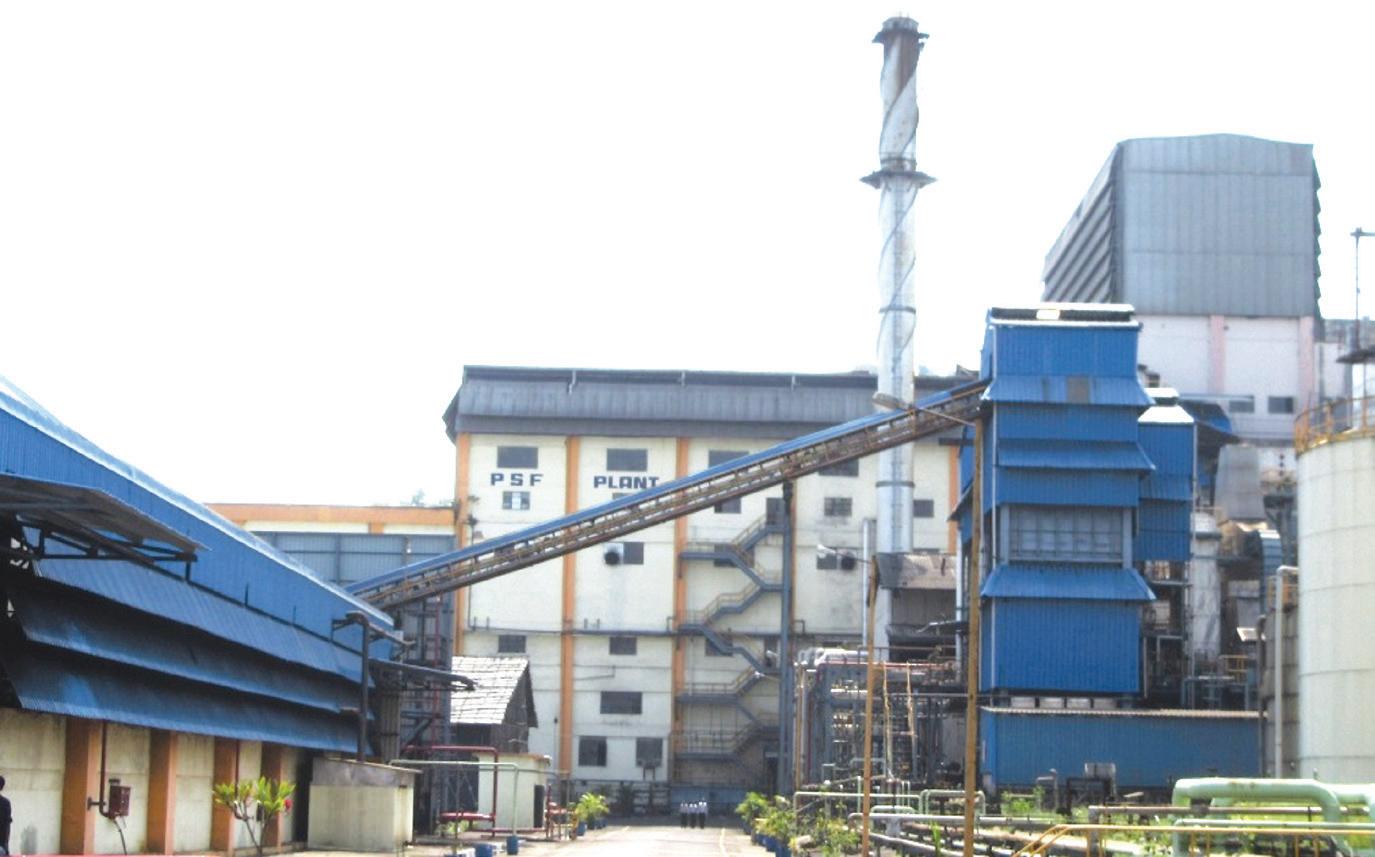
Ltd has recently launched a biodegradable fiber that degrades within five years. The fiber manufacturer foresees a large market for this fiber, given consumers’ high awareness of environmentally friendly clothing. The garment made from this fabric will degrade within five years, and the company has licensed a technology to produce this biodegradable fiber. It will be one of the first Indian companies to produce biodegradable fiber and will also be among the pioneers worldwide. Every lot produced will include a certificate indicating that the fiber is biodegradable.
Bombay Dyeing will produce the same range of fibers in both deniers and cut lengths as they are currently offering in their PSF range. They have installed new equipment for manufacturing these biodegradable fibers, which are connected
Q+A
IN THIS ISSUE: RAJNESH DATT
CEO
(Polyester Division), Bombay Dyeing & Manufacturing Co. Ltd, India
with the existing PSF production technologies. However, the cost of the biodegradable fiber will be higher than that of conventional PSF fibers.
International Fiber Journal: Kindly provide a history about the textile division of Bombay Dyeing & Manufacturing Co.
Rajnesh Datt: Bombay Dyeing, owned by the Wadia family, traces its history back to January 10, 1736, and is one of the oldest business houses still operating in India. That was the day the group got its first order from the royal family of England to manufacture and supply a warship. In the early 19th century, the Wadia Group started dealing in textiles. The group would buy greige fabric in India, send it to England to be dyed or printed, then bring it back to India and sell it in the market.
On August 23, 1879, the company built a dyeing house in the city of Mumbai, which was called Bombay in those days, and hence the Bombay in its name. With the passage of years, Bombay Dyeing expanded into spinning and weaving and was the first in India to start home textiles retail store chains under the name of Bombay Dyeing and continues to be known amongst the best brands for home textiles in India, despite the entry of various retailers in the home textiles retail space.
The company forayed into the manufacturing of Dimethyl terephthalate (DMT) in 1983, a raw material for polyester production. With the advent of the 21st century, most polyester fiber manufacturers shifted to PTA, another raw material for PSF. And so in 2006, Bombay Dyeing decided to put up a PSF manufacturing plant at the same location as the DMT plant.
IFJ: Please share details about the manufacturing infrastructure and the annual capacity of the polyester fiber business.
Datt: Our PSF production capacity is close to 15,000 metric tons per month if only
Bombay Dyeing & Manufacturing Co, Ltd.
commodity PSF is manufactured. When speciality fibers are also manufactured alongside, then the capacity is around 13,500 metric tons per month.
IFJ: Which are the core company products and solutions you offer for the market and the nonwovens industry in particular?
Datt: We offer our fibers in denier ranges from 0.5 to 17.0 and in cut lengths from 32mm to 130mm. We are one of the biggest Indian manufacturers of specialty fibers. Speciality fibers include black, microfibers for nonwoven fabrics and super fine fibers for producing fabrics which give an effect similar to silk. Around 40% of our production is dedicated to specialty fibers.
Within specialty fibers, we also manufacture supermicro fibers with a denier of 0.5. 5.5 miles in length, these super microfibers weigh only 0.6 grams and are purchased by a nonwoven fabric manufacturer in Japan, which produces automobile fabrics destined for high-end car applications.
As a percentage of production, our exports account for 35-40%, with the rest consumed in the Indian market. Within fibers destined for nonwoven fabric producers, against the manufacturing of 2,500 metric tons per month, more than 90% is exported.
IFJ: What are the applications of fibers destined for the nonwovens industry?
Datt: Nonwoven fabric manufacturers use both polypropylene (PP) and polyester staple fibers (PSF) as raw materials. PP is more costly when compared with PSF. However, PP also has better strength than PSF. For example, where there is a high volume of footfalls like in airports, carpet backing is made from PP, while PSF is used in backings for carpets which have a one or two time use.
Nonwoven fabric producers prefer PSF when producing automobile fabrics, filling fabrics for winter jackets, furniture fabrics, face wipes, connecting fabrics for diapers, and even tissue paper. We have a very active product development team
that continuously develops new PSF varieties and practically launches a new fiber variant every year.
Within nonwovens, we have a smaller domestic market in India compared to exports; Indian nonwoven manufacturers mostly prefer to produce nonwoven fabrics from PP. But the ones we supply in India are the biggest and most reputable nonwoven fabric producers. When considering exports to nonwoven fabric producers, a majority of our exports are shipped to countries in the European Union, and here too they include some of the biggest and most reputable manufacturers of nonwoven fabrics, with production plants in several countries. We also export to countries on the American continent. Our fibers are used in various technologies for the production of nonwoven fabrics like spunbond, spunlace, thermal bonding, etc.
IFJ: Please share details of biodegradable PSF which Bombay Dyeing has launched recently?
Datt: We recently launched a biodegradable fiber that degrades within five years. We foresee a very big market for this fiber, considering the high awareness among consumers for environmentally friendly clothing. The garment made from this fabric will degrade within five years, and we have licensed a technology to produce this biodegradable fiber. We will be amongst the first Indian companies to produce biodegradable fiber and will also
be amongst the pioneers worldwide. Every lot produced will include a certificate indicating that the fiber is biodegradable. Those consumers who personally believe in wearing sustainable clothing will be most delighted. We will produce the same range of fibers in both deniers and cut lengths as we currently offer in our PSF range. We have installed new equipment for manufacturing these biodegradable fibers, which are connected to our existing PSF production machinery. However, the cost of the biodegradable fiber will be higher than that of conventional PSF fibers.
IFJ: Could you share the key trends in consumer demand and the growth trajectory of the Indian apparel market, with a focus on polyester usage?
Datt: When speaking about PSF, it has properties that are very close to cotton and are naturally wrinkle-free. So, while yarn made from cotton is porous and breathable, PSF yarn is also porous, and so the fabric made from PSF yarn is also breathable. In contrast, polyester filament yarn is not porous, but fabrics made from it are tougher than those made from cotton or PSF and are used in home textiles, industrial fabrics, or luggage.
There is also a limitation in growing cotton in terms of land, as the same land also competes with other food crops like grains and vegetables. Cotton production in India and China, the two largest cotton producers in the world, has stagnated
Bombay Dyeing & Manufacturing Co,
for many years, while PSF consumption is increasing each year. One-hundred percent PSF shirts may not be common, but 100% PSF t-shirts are common. Shirts are normally made from a blend of PSF and cotton in various percentages. Shirts made from PSF are also wrinkle-free.
IFJ: How important is the sustainability factor for your company? What sustainable products or solutions do you offer to your customers? Do you have any compliance certifications?
Datt: We have already shifted around 50% of our electricity consumption to solar power and are planning to increase the share of renewable energy to 100% by a combination of solar and wind by December 2026, subject to government approvals and regulations. We are also big-time into rainwater harvesting. We have nearly all types of compliance certifications, including BIS, Oeko-Tex, ISO, etc.
IFJ: What is the advantage of the products that you offer vis-à-vis those offered by the competition?
Datt: We are the only producers in India who manufacture only PSF, while other companies also manufacture PFY, POY, FDY, etc., along with PSF on the same machine. Since we produce only PSF, we maintain very specific technical parameters, ensuring consistent quality
throughout the year. By contrast, manufacturers of POY, PFY, FDY, and PSF average all technical parameters across products.
For example, POY, PFY, and FDY need modified polymers, while PSF needs a non-modified polymer. PSF has a lower intrinsic viscosity, while others have a higher one. There are many other such parameter differences. For those producing quality PSF yarns or fabrics, we would be the first choice.
IFJ: Please share details of your presence in the Indian domestic and export markets. Also, please share details on your distribution or sales channels.
Datt: Within India, we usually sell directly to textile mills as the bale size is 881 pounds. But we also supply through distributors appointed in various regions of India. For exports, we mainly supply directly to textile mills in various countries, but we have also appointed distributors who store it in warehouses. In India, direct selling to mills account for 90% of our sales, while in case of exports, direct sales to mills account for around 60% of export sales.
IFJ: Any planned capacity expansion or new investments?
Datt: Bombay Dyeing is probably the only debt-free company in the world’s polyes-
ter manufacturing industry and is cashrich. We now have plans to expand and are in talks with various Indian state governments to set up another PSF plant.
IFJ: What challenges do you foresee in the next few years?
Datt: Production and consumption have already reached pre-COVID-19 levels. I do not see any challenges for the PSF industry. PSF consumption has been growing at a simple annual rate of 2.5-3.0%, and I see the industry growing at the same pace in the future as well. Since PSF has limitations in use compared to PFY, the growth rate is ok.
IFJ: Your expectations on the future growth and opportunities in the Indian as well as overseas markets?
Datt: While PSF consumption is growing at a steady 2.5% worldwide, PFY is growing faster at around 5% due to a higher number of existing and new applications. But in a few countries, like Germany and Japan, growth has stagnated. The only silver lining we see is in the growth of biodegradable fibers. Garments are an eternal part of our lives, and various colours affect our emotions, so even if growth is not very high, it will remain stable. A huge population and rising incomes have become strengths for India, which is also luring various companies from the world.
Arun Rao started his career in the textile industry and has worked across the segments of spinning and weaving production. He forayed into the sales function, beginning with selling branded innerwear and graduated to selling clothing of wellknown brands. He then joined Fibre2fashion, a B2B textile website, as News Editor for seven years. Recently, he launched Taurus Communications, a PR & advertising agency focused on the textile industry value chain. With a love for journalism, he freelances for renowned textile magazines, along with managing the agency. He is the international correspondent, India, to the IFJ
Bombay Dyeing & Manufacturing Co, Ltd.
Complied by Caryn Smith, Publisher and Chief Content Officer, IFJ
F Fiber Innovation DEFINING the FUTURE
Annual Showcase of Advancements in the Marketplace
iber industry companies in the supply chain are investing in research and development to bring new ideas to the world for enhanced solutions, and for many, plans include a strong focus on sustainability. Innovation requires intentional measures to meet long-term social and environmental benefits and improve the overall quality of solutions.
Innovations range from efficiency and effectiveness in design, to responsible sourcing with materials that are bio-based or feedstocks that draw on regenerative, and/or sustainable agriculture principles to advance circularity; to advancements that extend product life, and more. Needless to say, the supply chain is changing, and offering up new and improved solutions.
We asked companies to submit their most recent advancements and we are pleased to highlight the following companies and their achievements.
Beckmann Converting, Inc.
eckmann Converting, Inc, is a “roll-to-roll” toll converter delivering ultrasonic laminating services to its customers who design and make textile products for diverse industries and applications. The company continues to serve its customers during the economic and global trade disruptions of 2025 by continually innovating and paying close attention to the details of its ultrasonic bonding processes. These efforts are translating to growing volumes of production and successful support of new product development programs for current and prospective customers.
BMany new product applications have higher performance requirements that are challenging the capability limits of today’s textile composites. Product designers are seeking laminating processes with minimal impact on critical performance characteristics. The Beckmann technical team can select from any of 10 or more ultrasonic anvil rolls for the right roll pattern that will best achieve the customer’s requirements. At least four of them have been very effective over the decades in filtration applications.
As an alternative, the company can utilize an innovative approach referred to as “Lane Bonding” in certain situations. Rather than laminating a given bonding pattern across the full width of the material’s web, “lane bonding” laminates selectively in narrower “lanes” in machine direction. The areas between these bonding lanes remain completely unbonded
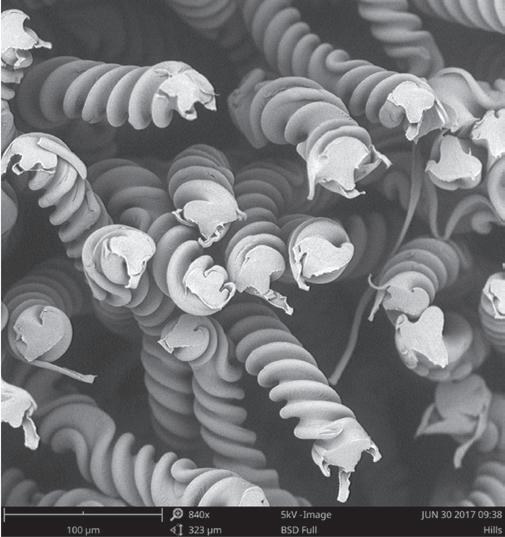
Hills, Inc. recently introduced Twisty FiberTM, a new type of synthetic fiber consisting of trilobal filaments individually twisted along their length. Twisty FiberTM is a bicomponent fiber that can be made as a multifilament yarn, staple fiber, and spunbond webs. Use in nonwovens offers superior air permeability, bulk, and filtration properties. Finished products offer higher bulk, more surface area, and uniform porosity as compared to regular round or trilobal filaments. These fibers are ideal for applications such as filtration, wiping cloths, absorbent products, and sound-deadening sheets. When fibers are packed together in a finished product, there is only contact at points rather than along the length of the fibers. Even if the filaments are parallel and tightly packed, the spiral grooves do not mesh because the spiral direction alternates along the length. This means the fibers only touch the tips, and not the crotches of the trilobal. Therefore, there are millions of uniform pores between
and “open,” enabling each textile layer to perform its job to the fullest extent possible. The number of lanes, the width of the bonded area, and the distances between the lanes are driven by the needs of the application and downstream converting processes. Beckmann Converting has developed specialized equipment and processes to enable this novel approach to ultrasonic lamination of technical textile composites.
The U.S.-based company converts continuous, wideweb, roll-to-roll customer-owned technical materials into multiple-layer high-performance textile composites. Ultrasonic laminating lines process raw materials up to 126 inches wide with finished products incorporating two to seven layers of nonwovens, films, knits, wovens, meshes, and other materials. Beckmann Converting operates on a fully registered ISO9001:2015 Quality Management Program.
The company website contains multiple tools to support people in new product development roles. The Virtual Swatchbook, supplemented by a hardcopy Laminating Sampler, enables the customer to learn details about options for ultrasonic laminating their products.
the filaments, forming a tortuous airflow path. These two features ensure high air permeability and filtration efficiency in filter applications. The sponge-like structure also absorbs liquids well and traps particles, making it excellent for wiping cloths. The high loft of nonwoven products makes them ideal for sound-deadening applications.
Pore size can be selected based on filament denier. Smaller pores are achieved with a lower filament denier. Bulk can be controlled by adjusting the aspect ratio (OD/ID) of the trilobal filament cross-section. Higher aspect ratios will result in higher bulk. Aspect ratio can be changed with process parameters and/or spin hole leg lengths. Different applications will require the right balance between bulk and pore size. Filtration products can be tailored to match the desired particle capture size and air permeability. Wiping cloths can have larger pores to capture dirt and absorb cleaning solutions.
Visit www.hillsinc.net or email jhaggard@hillsinc.net.
Hills Introduces Twisty™ Fiber
Modified Closure Systems with Consumer-Transparent Sustainability Enhancements
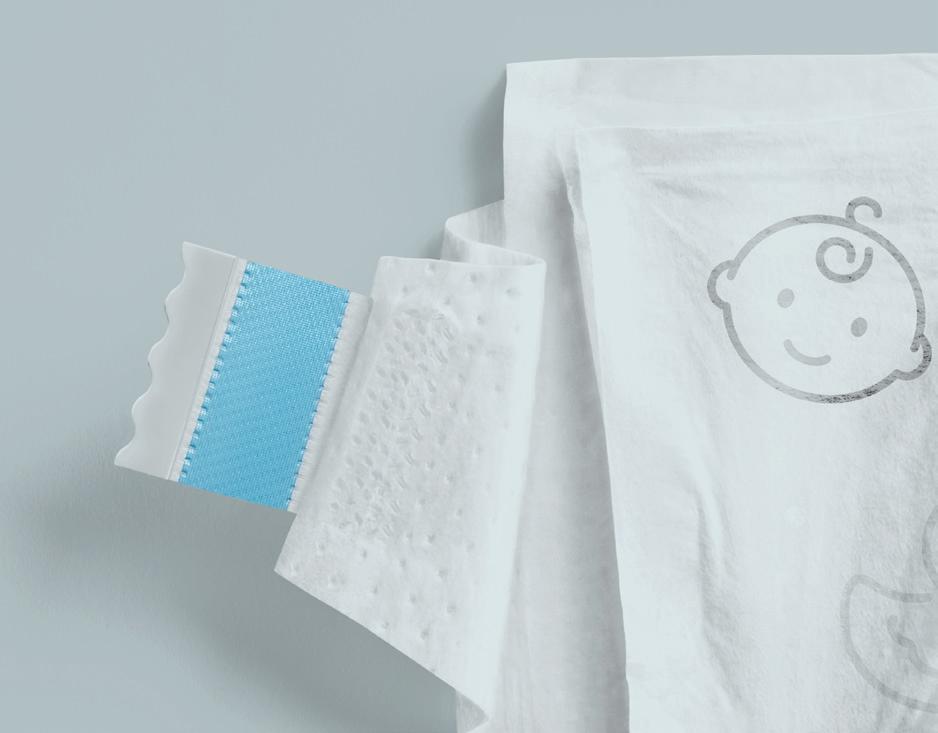
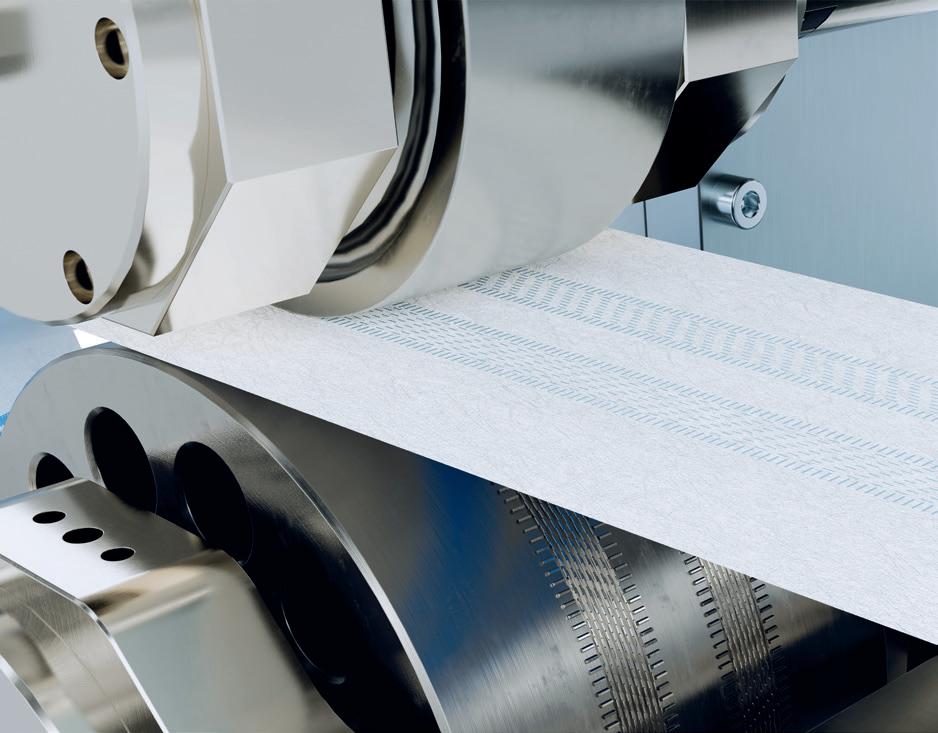
Gottlieb Binder GmbH & Co. KG and MS Ultrasonic Technology Group have released a new ultrasonic welding solution for producing a closure system without the need for adhesives or glues. Thanks to advancements in the latest ultrasonic welding technology, a particularly soft closure is created, which also reduces production costs, simplifies processing and removes logistic transport and storage requirements. This solution is an effective alternative to conventional glueing methods and optimizes product performance while removing the consumption of materials associated with producing the glues themselves.
“A key attribute of incorporating this approach of ultrasonic welding into new or existing diaper, incontinence, and side tape production lines is that it brings the benefits of simplification without drawing extra or unwanted consumer attention to the nature of the change,” says Nick Carter, Head of Innovation at Binder. “While the consumer's use of the absorbent hygiene product remains focused on the improved feel and confidence in the closure system, the change in how the closure is constructed is not highlighted. For product marketers and designers, the ability to achieve the same or better performance in a simpler construction, while minimizing product and process modification and associated brand risk, gives product manufacturers maximum flexibility in the way they present the product improvement and sustainability enhancement to their target markets.”
The advantages of the new ultrasonic welding technology have multiple touchpoints across production, marketing and sales functions:
• Remove need for glues/adhesives
• Highly stable integrated structure without ageing concerns of laminate
• No outgassing or other odors
• No issues with unwanted tackiness
• More efficient use of hook material (surface weld greatly reduces loss of engagement elements)
• Options for reducing grabbing or scratchiness of fastening tape edges
• Based on well-known, reliable technology
The ROI for this technology appears in five different ways:
• Actual cost of the adhesive or glue conventionally used in attaching the fastener to the pull tab is directly removed
• Less energy required to create the effective bond between the fastener and the pull tab, resulting in direct savings from that efficiency
• Efficiency in operation as less time is required to start a line, bring the line to equilibrium or steady state, and to shut down the line
• Reduced labour costs are directly related to setting up the line, achieving steady state, and less clean-up, being a key advantage in reducing how much effort is actually required to operate the line
• Up-time efficiency:
- The line can be started quickly and less effort is required to achieve steady state as the line is running, allowing for the potential of higher overall production during the operational or production shift
- Shutting down the line requires significantly fewer time-consuming steps and clean-up can be completed in minutes
Binder and MS Ultrasonic have a multiyear plan to further expand on ultrasonic welding technology. Binder itself is further developing fastening tapes that can be used with the ultrasonic welding technology to achieve yet higher performance attributes, specifically targeting the hygiene and personal care markets. www.binder.de/en
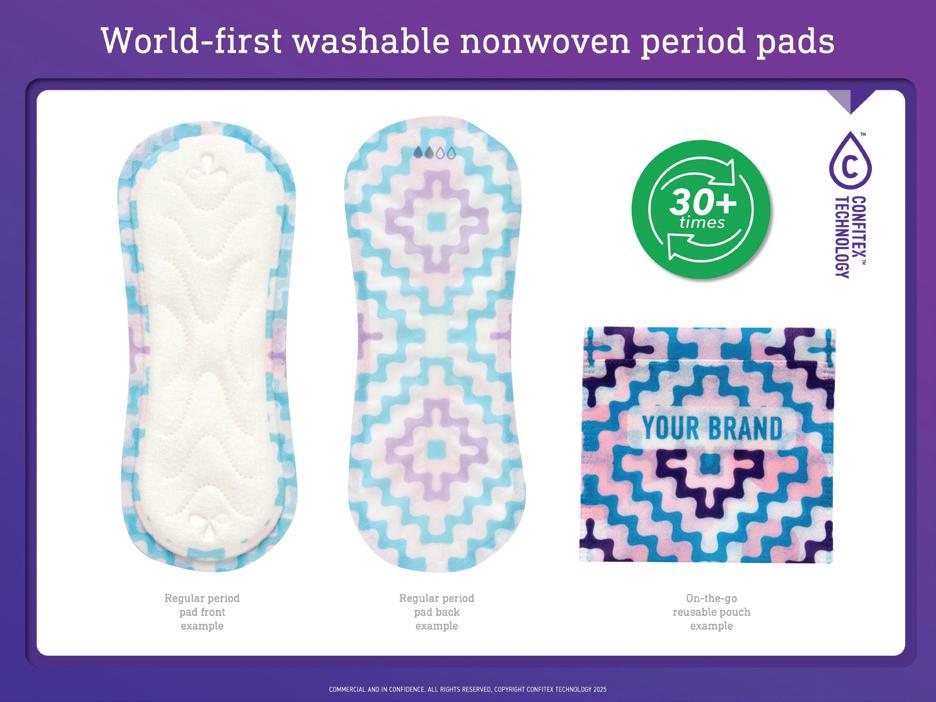
Confitex Technology makes traditional singleuse nonwoven products washable and reusable, partnering with the world’s leading retailers and category brands to deliver high-performing, independently verified private label reusable hygiene solutions.
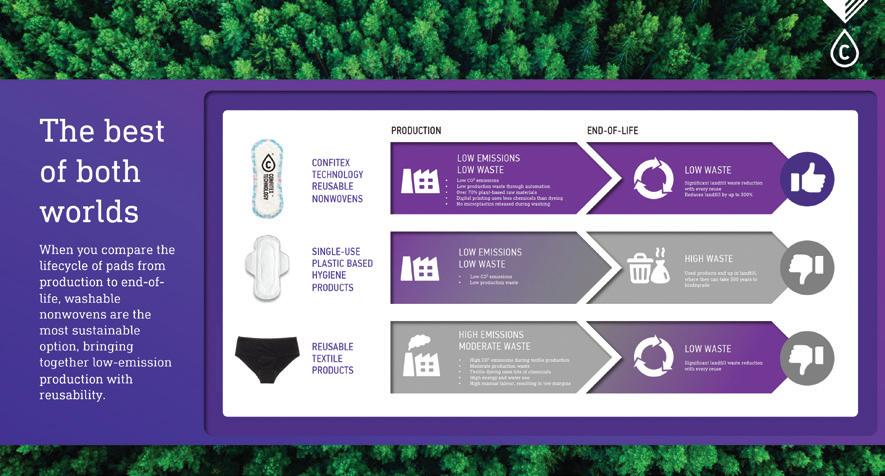
Confitex’s breakthrough represents a pivotal opportunity for nonwovens amid accelerating regulatory pressure and surging consumer demand. Rather than cannibalizing the industry, Confitex’s washable pads contain a higher percentage of nonwoven materials per gram than traditional singleuse equivalents – many of which rely on foam cores rather than nonwovens and superabsorbent polymers (SAPs).
Alternative reusable products, such as menstrual cups and period underwear, do not use nonwovens, meaning the industry risks losing market share as consumers shift to reusables.
“The global reusable hygiene market is valued at $18-20 billion and projected to reach $29.9 billion by 2031, growing at 6.7% annually*,” said Frantisek Riha-Scott, Founder and CEO of Confitex Technology. “Reusable period products are growing 2-3 times faster than disposables, with 20-30% of consumers globally seeking reusable alternatives.”
“Just one reuse gets around single-use plastic regulations,” continued Riha-Scott. “By making nonwovens washable and reusable, our technology creates an entirely new reusable category, giving the nonwovens industry a firm foothold in a reusable future.”
Confitex’s washable nonwoven pads look, feel, and perform like familiar single-use pads – making for an easy psychological conversion – but can be washed, tumble-dried, and reused at least 30 times.
The innovation integrates and stabilizes nonwoven fibers with proprietary technologies, enabling automated production at 2,000-5,000 pads per hour. They use 100% natural, nonwoven cores, which contain higher nonwoven content than many single-use alternatives.
to-end solutions from consumer insights to product design, manufacturing, and go-to-market support.
The company’s portfolio includes over 100 patent applications (48 granted, 60+ pending) protecting innovations across waterproof textile solutions, absorbent systems, automated construction, and the groundbreaking nonwoven stabilization technology.
Manufacturing facilities span Asia and Europe, with U.S. expansion planned for 2027. The company maintains ISO 13485 (Medical Devices), MDSAP, and OEKO-TEX Standard 100 certifications.
“The nonwovens industry can use this technology to capture the high-growth reusable market,” said Riha-Scott.
Production machinery costs approximately 10% of traditional single-use lines, enabling competitive pricing while delivering clean, low-emission manufacturing.
With single-use products comprising approximately 10% of global landfill, this technology delivers major waste displacement per product lifecycle.
Confitex has invested in comprehensive third-party testing through Intertek, UL, and SGS with verified claims for absorbency, leakproof performance, durability, washability, and PFAS-free certification.
As a private-label manufacturer partnering with leading global retailers and category brands, Confitex provides end-
“With 20 billion single-use pads and tampons disposed of in U.S. landfills annually, the opportunity is substantial. Our purpose is to transform millions of lives and meaningfully reduce Earth’s landfill by making single-use hygiene products reusable. We’re inviting the entire nonwovens industry to join us in making reusable the new normal.”
Confitex Technology has been named one of three finalists for the 2025 Hygienix Innovation Award, recognizing the company’s revolutionary patented technology. The winner (to be announced at Hygienix 2025, on November 17-20 in Florida, while IFJ is at press). Presented annually by INDA – the Association of the Nonwoven Fabrics Industry, the award honors breakthrough technologies that advance the absorbent hygiene industry.
Contact Frantisek Riha-Scott at frantisek@confitex.com. www.confitextechnology.com
isposable baby diapers have long relied on petroleum-based nonwovens to provide dryness, comfort, and leakage protection. While effective, these materials pose significant challenges for both the environment and skin health. Cottonsie® introduces a breakthrough alternative: the first disposable cotton diaper, made with cotton nonwovens in all three critical layers – the topsheet, backsheet, and acquisition distribution layer (ADL). This patent-pending technology repositions natural, soft, and breathable cotton as a high-performance material for absorbent hygiene.
Historically, cotton’s use in absorbent products was limited by its tendency to retain moisture, leaving the skin surface damp. Cottonsie® overcomes this challenge by engineering cotton’s structure to reduce moisture retention, ensuring a consistently dry topsheet. As a result, Cottonsie® proves that natural fibers, when innovatively designed, can deliver the same dryness and leakage protection as leading national brands – without reliance on plastic.
Innovative Fluid Management
At the heart of Cottonsie®’s design is a technology that transforms cotton into a highly effective fluid management system. While untreated cotton tends to absorb and hold liquid at the surface, Cottonsie® modifies the fiber structure to create a microstructural gradient that rapidly transfers liquid vertically into the absorbent core. This maintains breathability and softness at the surface while moving moisture away from the skin.
The result is a system that meets industry benchmarks for absorption speed and dryness. Cottonsie® achieves a strikethrough time of 4.284 seconds and a rewet value of just 0.098 g – figures comparable to leading synthetic-based diapers such as Pampers. In practice, this means liquid is pulled away from the skin quickly and stays locked in the core, reducing irritation and minimizing the risk of diaper rash.
Sustainability Without Compromise
Cottonsie®’s material profile represents one of its most important contributions. The diaper is constructed from 100% cotton nonwovens for the topsheet, ADL, and backsheet, combined with a thin-profile biodegradable superabsorbent polymer blended with elemental chlorine-free pulp. Synthetic components such as elastics and closures account for less than 10% of the product by weight.
Independent testing shows that Cottonsie® achieves 82% biodegradation within 18 months in landfill conditions – an enormous improvement over conventional diapers, which can persist for centuries. The product is also free from PFAS, BPA, phthalates, dyes, parabens, and fragrances, meeting growing consumer expectations for safety and transparency.
Cottonsie ® changes that equation, establishing cotton as a functional, load-bearing substrate that performs on par with synthetics while offering superior breathability and biodegradability.
Market and Industry Impact
Cottonsie® addresses one of the hygiene industry’s central challenges: reconciling sustainability with uncompromising performance. Previous attempts to incorporate cotton in diapers often failed to achieve adequate dryness or absorption, relegating natural fibers to superficial roles. Cottonsie® changes that equation, establishing cotton as a functional, load-bearing substrate that performs on par with synthetics while offering superior breathability and biodegradability.
Commercially launched in April 2025, Cottonsie® is available through direct-to-consumer channels, with national retail distribution underway. Its arrival marks a turning point for the nonwovens industry and for cotton growers, reopening a multi-billion-dollar application space historically dominated by plastics. By offering parents a diaper that is breathable, soft, safe, and environmentally responsible, Cottonsie® meets the performance standards of today’s caregivers and the sustainability goals of the next generation.
Learn more at www.cottonsie.com.
Dukane’s CLETM Curved Leg Elastic Technology: A New Standard in Sustainable
Elastic Attachment with Ultrasonic Bonding
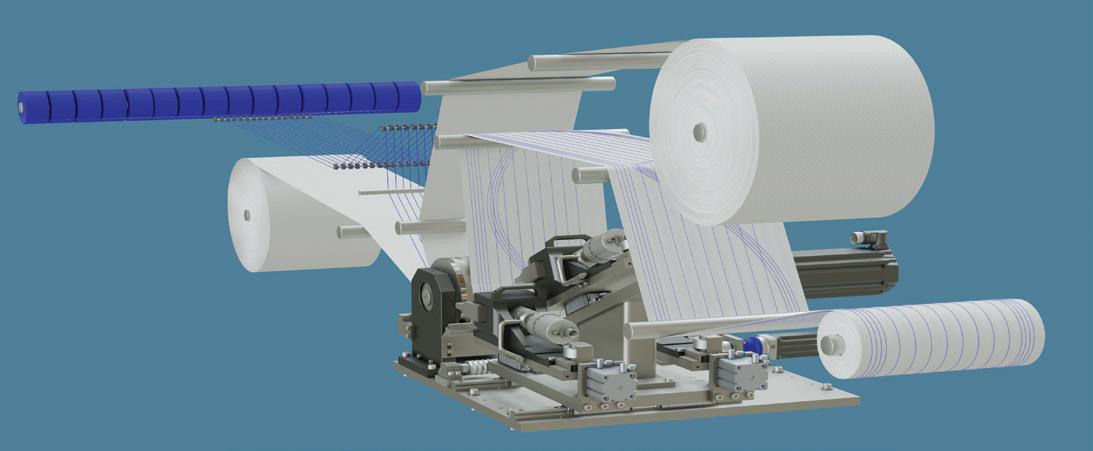
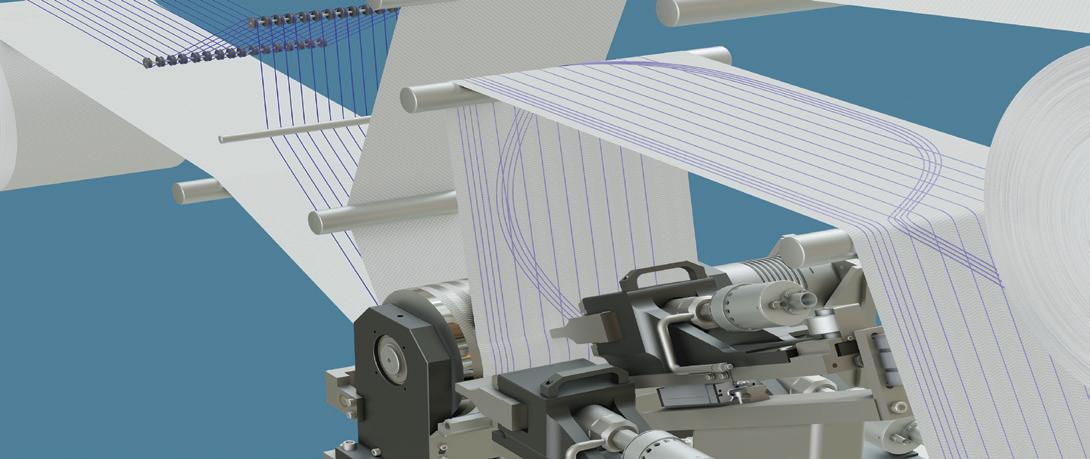
In 2025, Dukane unveiled its latest patented technology for the hygiene industry: CLE™ Curved Leg Elastic Technology, an ultrasonic bonding innovation that eliminates hot-melt adhesives from the attachment of elastic strands. CLE™ streamlines product construction, reduces material waste, and enhances performance and comfort. For the first time, manufacturers can combine curved and straight elastic strands within a single lamination using ultrasonic bonding, a capability previ-
ously thought possible only with adhesives or complex multilayer builds. By replacing those processes with a cleaner, more efficient alternative, CLE™ establishes a new benchmark in sustainable and precise elastic attachment.
Adhesive-Free Ultrasonic Bonding
Conventional diaper and adult-care products rely on 4-10 gsm of adhesive to secure elastic strands, which consumes energy, increases maintenance, and requires additional material. CLE™ eliminates the need for adhesives, using ultrasonics to bond elastic strands directly to nonwoven substrates.
The process allows precise control of the bond pattern to match product die-cut shapes or accommodate curve variations. This adaptability enables manufacturers to create higherquality, comfort-focused designs and quickly modify existing products without requiring extensive equipment changes.
Proven Strength and Comfort to the End Product
Elastic attachment in hygiene products must withstand tension and environmental stresses during storage and use. CLE™ ensures stable elastic creep performance at both ambient and elevated temperatures, ensuring product durability and fit. Without adhesive buildup, finished products are softer, more breathable, and more comfortable for the wearer. Eliminating adhesive also reduces contamination, strand breakage, and downtime, enabling manufacturers to increase uptime and overall efficiency.
Easy Adoption, Faster Market Response
CLE™ technology integrates easily into existing hygiene converting lines, enabling fast adoption with minimal retooling. Manufacturers can quickly implement the process and bring improved, more sustainable products to market sooner while
responding faster to consumer and regulatory demands for comfort and eco-conscious design.
“Curved elastic attachment has always been a process and product design challenge in hygiene converting,” said Christopher Nelson, General Manager of Dukane’s Kimberly Center of Excellence. “CLE™ demonstrates how engineering innovation can solve complex manufacturing challenges with simplicity and elegance. It proves that ultrasonic bonding can deliver both precision and scalability, without the compromises or inefficiencies of adhesive-based systems.”
Building on Proven Expertise
Developed at Dukane’s Kimberly, Wisconsin Center of Excellence, CLE™ builds upon years of ultrasonic innovation. The technology complements Dukane’s patented elastic attachment solutions and underscores the company’s commitment to engineering excellence and sustainability in the assembly of nonwoven products.
Headquartered in St. Charles, Illinois, DUKANE is an award-winning ultrasonic bonding technology leader focused on a customer-centric approach. We develop solutions that meet and exceed the unique requirements of each customer’s application. DUKANE is a global organization representing the world’s most extensive plastic welding portfolio, with international assistance available 24 hours a day. Operating in major verticals including automotive, medical, electronics, packaging, nonwoven, food, automation, and cutting, we bring to bear over 100 years of technological experience on each solution. DUKANE operates facilities and offices throughout North America, Europe, and Asia. www.dukane.com
A Greener and Safer Route to UHMWPE Fibres
By Dr. Jonny Hunter and Dr. Kristoffer Kortsen
HMWPE yarn is prized across many industries for its extraordinary properties. For example, the fibres are ten times stronger than steel by weight, are chemically inert, are resistant to most chemicals, and are hydrophobic. They maintain performance in a wide range of temperatures and, despite their toughness, are extremely lightweight.
UAs a result, they are unbeatable in demanding applications such as high-performance ropes for maritime applications, ballistic protection, and, increasingly, medical implants.
UHMPWE production has, to date, involved the use of large volumes of hazardous solvents, such as dichloromethane (DCM) or hexane. These harmful reagents are used to remove processing oil following the gel spinning process. Once the solvent has been extracted, the solid fibres are drawn at high temperatures to further align the polymer chains, resulting in the final strong and tough fibres.
What Is Different About FET’s Contribution?
For many years, Fibre Extrusion Technology Limited (FET) of Leeds, UK, has been a market leader in the supply of fibre extrusion systems to the biomedical market. In exploring what else could assist these customers, it became clear that there was a need for smaller quantities of UHMWPE fibres in bespoke sizes.
The current systems for manufacturing UHMWPE filament yarns are on a huge scale, with very complex processing routes. This means the supply chain is currently very inflexible with minimal opportunity for new product development. These disadvantages have been fully addressed in the development of the new FET-500 series lab and the small-scale gel spinning system.
One core difference is that FET uses supercritical carbon dioxide (scCO2) to recover the processing oil following gel spinning. FET’s closed-loop system can achieve more than 95% solvent recovery without loss of performance, resulting in residue-free UHMWPE filament yarns via a vastly improved route in terms of safety, logistics, and sustainability. A comprehensive Life Cycle Analysis (LCA) detailing the full environmental savings potential has recently been published with the support of experts at the University of Manchester.
Impact to Carbon Footprint
The LCA concludes that the dichloromethane and hexane washing routes were the most environmentally impactful (804 kg and 86 kg of CO2 equivalents per kg of yarn, respectively). The most sustainable approach is the use of scCO2 with or without a fully renewable power supply (20 kg and 36 kg of CO2 equivalents per kg of yarn, respectively). This data shows a significant reduction in the carbon footprint of UHMWPE yarn produced via this new route. www.fetuk.com
References
• WO2025099405 METHOD FOR PRODUCING YARN WITH SPECIAL SOLVENT EXTRACTION TECHNIQUES AND YARNS OBTAINED BY THE METHOD. Hunter & Kortsen
• Environmental Sustainability Assessment of Supercritical CO 2 in Gel-Spun Ultrahigh Molecular Weight Polyethylene Fiber Production Jair A. Esquivel Guzman, Kristoffer Kortsen, Jonathan C. Hunter, Rosa M. Cuéllar-Franca, and Michael P. Shaver ACS Sustainable Chemistry & Engineering. Article DOI: https://doi. org/10.1021/acssuschemeng.5c07037
Dr. Jonny Hunter is Research & Development Manager at Fibre Extrusion Technology Limited, based in Leeds, UK. His strong academic background is combined with almost 15 years of R&D experience in a range of settings, primarily in medical device manufacturing. Reach him at jonathan.hunter@fetuk.com.
Dr. Kristoffer Kortsen is a Senior Materials and Process Scientist at FET, where he leads the technical development of the FET-500 series systems. He has deep understanding of polymer synthesis, recycling, and processing from a range of academic and industrial positions. Reached him at kris.kortsen@fetuk.com. Both may be contacted at + 44 (0)113 253 7676.
Figure 1: FET-500 series in action.
Figure 2: Summary of the LCA data highlighting the 2.4-fold reduction in emissions via the new FET route.
Advanced Textile Wipe Is a Life-Saving Product
Hybrid decontamination, involving dry decontamination material and a functional chemical component, is a life-saving product.
Efforts are underway to make this decontamination procedure a standard method for personnel and sensitive equipment decontamination.
On October 14, 2025, about 147 participants who save lives, defend the nation, and protect civilians, such as personnel from fire departments, attended a presentation on “Next Generation Decontamination,” by Fredericksburg, VAbased First Line Technology (FLT).
The presentation was made by Frank Roberts, a training specialist at First Line Technology who has served ten years in the United States Marine Corps, beginning his career with the Chemical Biological Incident Response Force (CBIRF).
Tracing the history of personnel protection and decontamination since World War I, Roberts documented developments since the Gulf War in 1990/91, which is considered the era of modern decontamination.
The past decade (2015-present) has seen a leap in research, development, and deployment of modern personnel and military decontamination products and methods, particularly away from corrosive chemicals and toward more water-based methods.
First Line Technology is promoting the hybrid decontamination method as a standard for decontaminating personnel and sensitive equipment, according to Roberts.
Personnel from defense and civil protection agencies who attended the call, such as those from Chicago and South Dakota, briefed on how the use of FiberTect, a nonwoven textile technology developed at Texas Tech University, is effective as a dry agent. In particular, in regions where sub-zero temperatures are common, water-based decon solutions are ineffective. “Dry decon in cold weather climate minimizes water-based technologies,” stated one civil defense personnel who was on the call endorsing the application of dry wipes for decontamination. This technology is not being evaluated in the United States; participants from Canada also advised about its effectiveness as a dry agent.
Hybrid decontamination is a three-step process, which involves:
1. Blot: Remove excessive toxins using FiberTect dry wipe.
2. Apply: Apply chemical formulations to neutralize the agent.
3. Remove: Wipe away leftover toxins and neutralized particles.
Depending on the type of application, FiberTect is a flexible platform technology that allows the use of synthetic or cotton-based absorbent layers, with the active core being high-surface-area carbon. The structure and ease of use are technological advantages that the dry wipe offers to end users.
The next phase of decontamination will be green technology-based, enabling the exploration of alternative materials such as cotton.
Modern decon will be faster, more flexible, and more efficient, Roberts stated. Artificial intelligence may play a role in threat prediction and modeling. Drones will be employed for decon applications, reducing the need for human intervention.
While the dry wipe was invented for decontamination of toxic chemicals, the high-surface-area adsorptive core enables the ability to wipe away fine particles like fentanyl, Roberts emphasized. The United States Army recently evaluated the effectiveness of FiberTect, along with other products, and the results are now public.
FiberTect is a patented technology, which was evaluated by the Department of Energy’s Lawrence Livermore National Laboratory for mustard gas decontamination and recently by the US Army for fine particulate adsorption. Results on mustard gas were peer-reviewed and published in an American Chemical Society’s scientific journal. An important feature is that, due to its unique and robust structure, the wipe does not off-gas volatile compounds like mustard gas.
The hybrid decontamination method highlights University-Industry collaboration, with industry translating academic laboratory research into a commercial life-saving product and enabling it to be a defense industry standard.
Collaboration leads to improvement in decontamination techniques, Roberts noted, and the next phase of this field is all about, “Speed, Safety and Simplicity.” www.fibertect.com
Harper Care by Cleanic: Innovative Wet Wipes and Underpads
Enriched with Flax Fibers for Senior Care
With aging populations worldwide, there is an increasing need for hygiene products that maintain skin health, comfort, and protection for seniors, particularly those with limited mobility. Key challenges include irritation from prolonged moisture, discomfort during daily care, and insufficient absorbency. Underpads and wet wipes are essential in managing these issues, yet many existing solutions still struggle to balance absorbency, softness, and skin compatibility.
In response, the hygiene and nonwovens industry is focusing on natural and dermatologically safe materials. Flax fibers, in particular, combine high absorbency, antibacterial properties, and durability. Drawing on this approach, Harper Hygienics has developed the Harper Care by Cleanic line, consisting of Adult Care Wet Wipes and Adult Care Underpads. Both products are based on inhouse nonwoven technology incorporating flax fibers and natural-origin materials. The product line reflects a broader trend toward breathable, hypoallergenic, and sustainable hygiene solutions that support the skin’s natural barrier. Flax fibers used in the Harper Care by Cleanic line reduce bacterial growth, as confirmed by laboratory tests conducted by the Łukasiewicz Research Network – Lodz University of Technology.
Harper Care Underpads and Wet Wipes: Details
The underpads are available in packs of 10, suitable for placement on beds, wheelchairs, armchairs, and furniture. Each Harper Care by Cleanic underpad measures 900 mm in length and 600 mm in width, with an unfolded foil layer of 1800 mm that includes wings for secure placement under a mattress or other surface. The absorbent layer, measuring 820 mm by 520 mm, ensures effective moisture control and even distribution. Each pad weighs 72.3 g and provides an absorption capacity of at least 1000 g, confirmed through testing in accordance with ISO 11948-1 standard. The absorbent layer is made from 100% natural-origin biodegradable materials, including a blend of flax fibers and cellulose pulp, which provides high absorbency – flax being one of the most absorbent natural fibers – and contributes to bacteria reduction.
The wet wipes come in packs of 60, made from 100% natural-origin nonwoven fabric enriched with flax fibers, which add antibacterial properties, durability – one of the most durable natural fibers – and structural strength. Each wipe is 20 cm by 27 cm, dermatologically tested, pH-balanced, and hypoallergenic. The wipes are Vegan-certified. They support gentle cleansing while protecting the skin's microbiome and reducing bacterial growth.
When used together, the underpads and wipes form a system for personal hygiene support, addressing the key
Hygiene products like the Harper Care by Cleanic underpads and wet wipes utilize natural materials such as flax fibers, which provide absorbency, antibacterial properties, and durability.
needs of cleanliness, moisture management, and skin barrier maintenance in both home and professional care environments. According to Dmitrij Kostojanskij, CEO of Harper Hygienics, the development of the Harper Care by Cleanic line reflects the company’s broader strategy of combining technical expertise with practical innovation:
“The Harper Care line demonstrates how we apply our nonwoven production capabilities and material know-how within the Cleanic brand to meet the growing demand for advanced hygiene solutions,” explains Kostojanskij. “By integrating flax fibers into our designs, we enhance antibacterial performance, absorbency, and durability while maintaining skin safety. Our goal is to ensure that products used in everyday care are not only effective but also based on responsible, high-quality materials.”
Natural Fiber-Based Hygiene Options for Senior Care
Hygiene products like the Harper Care by Cleanic underpads and wet wipes utilize natural materials such as flax fibers, which provide absorbency, antibacterial properties, and durability. These items are designed for daily use in senior care, supporting skin safety through dermatological testing, hypoallergenic formulations, and microbiome protection.
For more details, visit www.harperhygienics.com/en/
H.B.
Fuller
Introduces Next-Generation Positioning Adhesive for Confident, Active Women
H.B. Fuller is excited to introduce PatentPending Full-Care® 6550 SecureFix, a revolutionary positioning adhesive designed for the dynamic needs of active women. This innovative product promises to redefine the standards of comfort and reliability in feminine hygiene products.
About Full-Care® 6550 SecureFix
In today’s fast-paced world, women expect feminine hygiene products that keep up with their active lifestyles –delivering secure fixation without compromising comfort or performance. Recognizing this need, H.B. Fuller has developed Full-Care® 6550 SecureFix, a next-generation positioning adhesive solution for feminine hygiene products. Traditional adhesives often struggle to maintain fixation during movement or in humid conditions, leading to shifting, bunching, or premature release – compromising both comfort and protection. Full-Care® 6550 SecureFix addresses these challenges, enabling products that adhere quickly to underwear and remain securely in place, even under moisture or motion.
With strong peel performance on cotton and microfiber fabrics and up to 20% lower adhesive add-on, Full-Care® 6550 SecureFix ensures reliable hold, reduced bunching, and long-lasting comfort. This allows women to stay active, confident, and protected throughout the day, while supporting manufacturers with an efficient and highperformance adhesive solution.
Full-Care® 6550 SecureFix ensures reliable hold, reduced bunching, and long-lasting comfort. This allows women to stay active, confident, and protected throughout the day.
Key Benefits for Active Users
• Superior Wet Fixation: Unlike conventional adhesives that fail when fabrics are moist, SecureFix strengthens its hold – minimizing pad bunching and discomfort.
• Residue-Free Removal: SecureFix removes cleanly from cotton and microfiber, enhancing user experience and protecting garment integrity.
• Versatile Fabric Compatibility: Performs consistently across a wide variety of underwear fabrics and consumer usage styles – ensuring reliability regardless of the user's placement or movement.
• Cost and Material Efficiency: Offers up to a 20% mileage reduction opportunity, allowing manufacturers to drive
cost savings and material efficiencies.
• Low Application Temperature: Facilitates a low application temperature, further enhancing the product's environmental profile and safety in manufacturing.
Empowering Active Lifestyles
Full-Care® 6550 SecureFix is more than just an adhesive; it's a commitment to empowering women to lead active lifestyles without compromise. By addressing the challenges of moisture and movement, Full-Care® 6550 ensures that women can stay focused on their activities, not their feminine hygiene products.
H.B. Fuller is proud to bring this innovative solution to market, reinforcing our dedication to improving products and lives through adhesive technology. We believe Full-Care® 6550 SecureFix will set a new benchmark in the feminine hygiene industry, offering both manufacturers and consumers a product that truly sticks to its promises.
Since 1887, H.B. Fuller has been a leading global adhesives provider focusing on perfecting adhesives, sealants and other specialty chemical products to improve products and lives. With fiscal 2019 net revenue of approximately $3 billion, H.B. Fuller's commitment to innovation brings together people, products and processes that answer and solve some of the world’s biggest challenges. Our reliable, responsive service creates lasting, rewarding connections with customers in electronics, disposable hygiene, health and beauty, transportation, aerospace, clean energy, packaging, construction, woodworking, general industries and other consumer businesses. And, our promise to our people connects them with opportunities to innovate and thrive.
For more information, please contact Jyoti Mishra, Global Marketing Manager – Hygiene at Jyoti.mishra@hbfuller.com or visit www.hbfuller.com.
KT Corporation
the KT Corporation announces the production of Fission Fibers, consisting of microfibrillated cellulose, produced by an entirely new process that provides fibers of remarkable quality and economics, and is produced from essentially any cellulose substrate, including wood pulp, cotton, synthetics (Lyocell and Rayon), and even non-cellulosic polymers.
TThe fibers are produced in a new type of reactor providing tons/day of production and are remarkably long (average fiber length >1 mm from wood pulp), while providing average fiber diameters ranging from 30-300 nm.
The process is being scaled up to machines producing 2,000 tons/year, operated in 4-machine groups, for a total capacity of 8,000 tons/year. These fibers are currently used to produce filter media capable of intercepting >99.99% of 25-nanometer virus particles in water.
The fibers can be wet-laid to form composites that can hold up to 80% of fine particulates, creating fiber-particle composite filter media for potable water treatment. Such filters meet NSF International standards for simultaneous reduction of organic contaminants (VOCs, PFAS chemicals, NSF 401
STD 42 Class 1 particulate interception. Such filter media can provide copious flow rates even in gravity-flow products, but are also used within pressurized systems ranging from small faucet-mount products to industrial-size filter cartridges. KT Corporation has provided innovative technologies for 50 years. For more information, visit www.fusionfiltration.com
The New Generation of Polyester FR 2.0 of Märkische Faser
Märkische Faser is a German specialty polyester fiber producer since 1972 with the brand GRISUTEN. Protection against fire is today much more important than in the past. Nowadays, you have to leave a room to avoid highly toxic smoke in 30 seconds; back in the 1970s, it took 15 minutes to reach toxicity.
To defend against this, we have a new development –a flame-retardant fiber with better properties than a standard FR fiber.
This is the GRISUTEN FR 2.0 new generation of FR fibers.
The new FR 2.0 fiber has a higher phosphorus content than the standard FR and an additional modification that connects the surface of the fibers with significant results. There is nearly no dripping and almost no smoke.
The FR 2.0 fiber can also be produced in spundyed colors and combinations with other specialties,
such as UV-stable, antibacterial, amorphous, hydrophobic, low-pilling, and hollow options. It’s also possible to produce a high-loaded FR with a phosphorus content up to 10.000 ppm. The fiber is available in 1.5den/3den/6den and 15den and is also suitable for nonwoven and spinning. The fiber also meets the Ökotex standard.
Applications for FR 2.0 include all textiles where fire spread protection is of the highest importance. Upholstery fabrics, bedding, curtains, decorative fabrics, carpets, and more are exceptional applications, especially for textiles that are primarily utilized for public buildings, hospitals, buses, trains, aircraft, ships, and other high-traffic public spaces.
Find more information on www.maerkische-faser.com
Base Material
Binder
A fiber web that has been stretched and pulled to reveal 30 nm Fission Fibers that can be anionic or cationic.
A Holistic Model for the Ocean and the Textile Industry
The ocean sustains life on Earth. It feeds communities, produces more than half of the oxygen we breathe, and hosts unmatched biodiversity. Yet today it faces critical threats: plastic pollution, degraded ecosystems, and climate-driven disruption. Cleaning is essential, but on its own, it is no longer enough.
This realization led to the creation of a combined model: SEAQUAL Initiative and SEAQUAL Foundation. Together, they represent a holistic approach – one focused on cleaning the ocean by transforming marine litter into sustainable textile fibers, the other dedicated to regenerating the ocean by restoring ecosystems and biodiversity.
From Marine Plastic to High-Performance Textiles
At the core of SEAQUAL Initiative is collaboration. Since 2016, it has built a global network, from fishermen and NGOs to recyclers, weavers, and international brands, to transform marine litter into SEAQUAL Solutions, a portfolio of sustainable materials.
It all begins at collection points: cleanup programs, coastal initiatives, and fishing ports where waste from the sea and ocean-bound environments is recovered. This material is then sorted, cleaned, and recycled through a fully traceable and transparent supply chain.
From this process emerges SEAQUAL® YARN – a highquality, certified recycled polyester thread that has become a benchmark in sustainable textiles. Already used in apparel, upholstery, technical textiles, and filtration, SEAQUAL® YARN allows the industry to engage directly in ocean recovery. Every product made with it carries a story of authenticity and impact, verified and free from greenwashing.
Today, some of the world’s most recognized brands have joined this movement, integrating SEAQUAL® YARN and other SEAQUAL Solutions into their collections and products. From Decathlon and Hugo Boss in the fashion and sportswear sectors, to Cupra, Fiat, and Volkswagen in automotive design, to Paul & Shark, Lewis James, and Grupo Maya in home, lifestyle, and luxury segments, all are proving that sustainability and innovation can coexist beautifully. Together, they demonstrate how a single material can connect industries, communities, and consumers in the shared mission of protecting our ocean.
From Cleaning to Regeneration
But while cleaning was the starting point, the mission has grown deeper. SEAQUAL Foundation was born to take the next step: regeneration.
The Foundation supports projects that protect biodiversity and rebuild ecosystems, including:
• Monitoring and protecting sea turtles in the Kerkennah Islands.
• Seahorse conservation and pollution control in the Mar Menor.
• Posidonia seagrass replanting in the Mediterranean.
• Wetland restoration in the Nile Delta.
Beyond science, education and community engagement play a central role – from school workshops and coastal cleanups to awareness campaigns that empower citizens to take part.
A Holistic Solution: Industry and Ecosystems United
What makes SEAQUAL different is the interdependence of the Initiative and the Foundation. Textile and filtration partners who use SEAQUAL® YARN are not just reducing waste, they are actively funding and enabling regeneration projects worldwide.
It is a unique, purpose-driven cycle: waste becomes yarn, yarn becomes product, and product sales help finance ecosystem restoration. The result is a model in which industry and community work together to achieve measurable ocean impact.
Looking Ahead
As the textile and filtration industries face growing demand for high-performance, eco-friendly materials, SEAQUAL demonstrates how sustainability can move beyond rhetoric to measurable results. By engaging with SEAQUAL INITIATIVE and SEAQUAL FOUNDATION, brands can join a global effort that cleans, regenerates, and inspires.
This story is not just about plastic – it’s about people, purpose, and the possibility of transformation. And it’s one that fits naturally into the ongoing conversation about fibers, weaving, knitting, and the future of sustainable textiles. www.seaqual.org www.seaqualfoundation.org
Innovations
Sontara EC® Green Cotton Wipes: Natural Performance Meets Responsibility
Magnera’s Sontara EC® Green Cotton wipes are reshaping the way industries approach precision cleaning with a focus on both performance and environmental responsibility.
Manufactured from a proprietary blend of 100% naturally derived, biodegradable fibers, including pure unbleached TruCotton™ and sustainably sourced woodpulp, these wipes represent a new standard in sustainable nonwovens.
What sets them apart is their ability to deliver the technical capabilities required in industrial and critical cleaning environments without compromise. The wipes offer superior absorbency, low lint release, and a visibly natural aesthetic, ensuring they perform to the highest standards while reducing environmental impact. For industries under increasing pressure to align operations with sustainability goals, Sontara EC® Green Cotton wipes provide a practical and effective solution that reduces reliance on synthetic fibers. The combination of renewable raw materials and highperformance functionality makes them a significant step forward in environmentally conscious cleaning technologies.
TYPAR® Clear Acrylic Flashing
In the construction industry, improperly installed windows and doors represent one of the most frequent and costly callbacks for builders, leading to both immediate repair expenses and long-term risks such as structural damage and energy loss. Magnera’s TYPAR® Clear Acrylic Flashing is the first and only flashing on the market designed to address this challenge by making nail and screw patterns fully visible during installation and inspection.
Developed in response to evolving building codes that require clearer visibility of fastening details, TYPAR® Clear Acrylic Flashing eliminates one of the most persistent pain points for installers and inspectors. Unlike traditional opaque flashings that obscure nailing fins and force multiple installation steps, this product ensures compliance is easily verified without material removal, streamlining the process and reducing the risk of costly rework.
Beyond its transparency, the flashing is engineered for performance in demanding environments. Constructed with a durable polypropylene film and a premium acrylic adhesive, it is waterproof, self-healing, and capable of adhering at temperatures as low as 20°F (−6.7°C). Its UV resistance of up to nine months and split-release liner for simplified application further enhance its reliability on the job site. Combining speed, confidence, and code compliance, TYPAR® Clear Acrylic Flashing offers a solution for multifamily and commercial construction projects.
For more information, visit magnera.com and follow @MagneraCorporation on social platforms.
Microban International - H2O Shield™
₂O Shield™ is a PFAS-free portfolio of waterrepellent finishing technologies tailored for a wide range of textile applications. These technologies mark Microban’s first major expansion beyond its antimicrobial and odor control offerings.
HTo defend against this, we have a new development – a flame-retardant fiber with better properties than a standard FR fiber. This is the GRISUTEN FR 2.0 new generation of FR fibers.
H₂O Shield offers four core formulations – WR1000, WR1001, WR1002, and WR1003 – each optimized for specific textile performance needs.
• WR1000 is suited for general water repellency in lowtouch applications (awnings, shower curtains)
• WR1001 is tuned for wicking performance in athletic and sweat-prone apparel
• WR1002 mitigates chalking or color shift issues, especially on darker fabrics
• WR1003 improves resistance to seam slippage and tearing, ideal for gear and bags
For difficult-to-treat fabrics, an optional pretreatment, WR-P, expands substrate compatibility, enabling lower dosage levels and enhancing wash durability. The advanced formula is applied during the dyeing cycle and is compatible with both natural and synthetic fibers. H₂O Shield has key capabilities such as:
• Reducing water-repellent usage by 15-20%
• Preventing yellowing and spotting
• Minimizing chalk marks and seam slippage
Its chemistry is also anionic, making it easy to integrate into current processes.
H₂O Shield-treated products are capable of meeting an 80+ spray rating after 20 launderings. They are designed to achieve this performance on both synthetic and natural fabrics. H₂O Shield is engineered to work in standard pad application processing. Maintaining high repellent performance while being PFAS-free, H₂O Shield offers brands a
pathway to compliance with tightening environmental regulations and consumer demand for safer alternatives. The modular formulations allow textile manufacturers to tailor finishing treatments for various product categories: from outdoor gear (tents, backpacks, awnings) to performance apparel and home textiles.
H₂O Shield can be integrated with Microban’s antimicrobial and odor-control technologies, enabling multi-functional H2O Shield treated sample comparison.
textile performance in a single treatment workflow.
H₂O Shield’s PFAS-free, customizable finishes deliver high-performance water repellency while addressing sustainability and regulatory pressures.
As environmental expectations rise, this innovation gives textile brands a credible technical advantage in 2025 and beyond.
For more information, visit www.microban.com/coatings/ technologies/h2o-shield or email info@microban.com.
Innovating the Future of Technical Textiles: Şafak’s R&D Vision through Corium & Acryloop
For over six decades, Şafak Technical Textile has been a trusted name in advanced textile engineering, supplying high-performance materials to global industries. Built on a foundation of continuous research and development, Şafak has earned its reputation by transforming innovation into impact – bridging textile craftsmanship with cutting-edge technology.
Among its most recent and forward-looking developments are Corium and Acryloop, two materials that capture Şafak’s mission to combine technical excellence, sustainability, and market relevance in every fiber.
Corium – Redefining Leather Alternatives Across Industries
Corium marks a major leap in the evolution of leather alternatives. Developed on a microfiber knitted polyester base, Corium distinguishes itself from conventional coated or impregnated materials by using a specially formulated waterbased polyurethane solution – not applied through coating, dipping, or impregnation, but through a proprietary surface treatment process engineered within Şafak’s R&D labs.
The result is a next-generation material with a luxuriously soft hand feel, breathability, and outstanding long-term durability. In addition to its refined aesthetic appeal, Corium meets the stringent mechanical, hydrolysis, and UV-resistance requirements of automotive interiors, making it a strong candidate for sustainable seating, door panels, and trim components.
Beyond the automotive sector, Corium applications are increasing in wall coverings, footwear, and other high-performance industries, where its combination of soft touch, durability, and environmental credentials provides a compelling alternative to traditional leather or PVC-based materials.
Currently, Şafak is running multiple joint development projects with automotive suppliers and OEMs to validate Corium’s performance for serial production. With its customizable grain, gloss, and color options, Corium offers
both designers and engineers the freedom to achieve premium results while drastically reducing environmental impact.
The entirely water-based PU system eliminates harmful solvents, significantly lowering VOC emissions and production footprint – a decisive step in line with the global shift toward eco-conscious materials.
Acryloop – A New Dimension in Outdoor Upholstery Performance
If Corium sets a new standard for interior innovation, Acryloop sets a new standard for the outdoor textile market. Made from solution-dyed acrylic fibers, Acryloop ensures exceptional UV stability, colorfastness, and weather resistance, maintaining its vibrancy and mechanical strength even after prolonged outdoor exposure.
What truly makes Acryloop unique is its knitted construction – a remarkable innovation in the outdoor upholstery category. Unlike conventional outdoor fabrics, Acryloop’s elastic knitted structure provides excellent stretch and recovery, ensuring a perfect fit and long-lasting shape retention across furniture, marine, and architectural applications.
By combining flexibility, durability, and elegance, Acryloop redefines what an outdoor fabric can be – not just tough and functional, but also comfortable and aesthetically refined.
A Vision Knitted into Every Fiber
Corium and Acryloop exemplify Ş afak’s commitment to purposeful innovation – where science, sustainability, and design converge. With over sixty years of expertise, Şafak continues to pioneer textile solutions that anticipate industry needs, enhance user experience, and set new benchmarks across automotive and performance textile markets worldwide. www.safaktekstil.com.tr
I Innovation in Motion: A New Generation of Automation for Canister Wipes
n the nonwovens sector, some machines have made their mark. Designed to automate the packaging of canister wipes, certain integrated monobloc solutions have transformed entire production lines. Their agility, ability to simplify complex operations, and production reliability have made them essential.
But 2025 marks a new phase. Faced with rapidly evolving market demands and increasingly complex production environments, engineers embarked on a complete architectural overhaul. The goal was not to modernize, but to redefine.
This redesign was shaped by on-the-ground feedback. Operators, maintenance technicians, automation engineers, and designers collaborated to develop a smarter, more flexible machine – one that reflects real-world manufacturing needs.
Three major goals guided the effort: delivering stable output, simplifying user interaction, and improving integration. The result is a compact system that handles the full downstream process: roll stuffing, liquid dosing, conduction sealing, robotic capping with automatic cap feeding, and labeling – all synchronized with the upstream rewinder.
Responding to a Shifting Market
Toolless format changeovers allow for smooth transitions between SKUs. The dosing system is modular, with tanks and pumps mounted on sliding rails, reducing footprint and simplifying maintenance.
The conduction sealing station was reengineered for better film tension control and compatibility with synchronized printed films. Sensors across the machine deliver smart diagnostics, including film break alerts, lowproduct warnings, and net weight verification.
Robotics: Elevating Repeatability
At the capping station, robotics replaces traditional mechanisms. A pick & place robot now performs cap application with high consistency and reduced vibration.
Movements are recipe-driven: torque control, cap positioning, and height adjustment are auto-mated. The system adapts to different cap types without manual intervention, aided by an advanced cap feeder and optional torque monitoring.
Operator-Centric Design
Despite its technical sophistication, this generation of equipment is designed for human ease. Transparent Lexan doors ensure visibility across stations. Access points are optimized for quick intervention and easy sanitation.
The HMI interface is designed for intuitive use: from recipe changes to diagnostics, operators benefit from clear, simplified navigation.
What Today’s Manufacturers Need
Manufacturers now require compact, complete, and intelligent systems. Floor space is limited, demand is unpredictable, and SKU changes are frequent. As such, fast changeovers, ergonomic layouts, and robust automation are essential to remain competitive.
Looking Ahead
The wipes market is changing. Product diversification, new packaging formats, regulatory pressure, and cost containment all require systems that are adaptable and reliable. Flexibility is now essential: changing product, format, or cap type must be seamless, fast, and minimally disruptive.
A Reimagined Architecture
Servo-driven indexing replaced traditional systems, drastically reducing changeover time while improving accuracy. Format parts are color-coded for easier identification, setup, and training.
The canister wipes market continues to evolve, driven by hygiene trends, innovations in substrate, and growing consumer expectations. To stay competitive, manufacturers need equipment that adapts easily while maintaining high output and quality.
Through increased integration, modularity, and robotics, the latest generation of automation meets the demands of modern nonwovens production environments – today and in the future.
For more information, visit https://shemeshautomation. com or email nelly.d@shemeshautomation.com.
How PureNil™ 0 is Redefining Zero Waste Feminine Care Packaging
Zero Plastic. Zero Waste. Endless Possibilities.™
he global feminine care market is valued at roughly $50 billion and continues to grow as new products enter the category. Consumers increasingly seek natural, organic, and ecoconscious options, aligning their purchases with their values.
TSome brands have made strides with organic products, but packaging remains a critical area in need of innovation. For many companies, this is the next frontier in meeting consumer demand for responsible products.
So, how are these brands meeting sustainability standards today? The fact is, most aren't. Most feminine care products rely on single-use plastic packaging: tampon wrappers, wipes sachets, and multilayer outer packs. While these materials provide discretion, durability, and hygiene, they also create a significant waste burden. Much of this packaging ends up in landfills – or worse, in the ocean. The WHO estimates that over 80% of feminine product waste ends up in landfills. The difficulty has always been balancing hygiene and performance with sustainability – but that doesn’t have to be the case anymore.
Microscope on Microplastics: A Growing Concern
Beyond visible waste, microplastics are increasingly in the spotlight. Early studies suggest that micro- and nano plastics in feminine pads, tampons, and even reusable hygiene products like menstrual cups may pose risks to human health, including inflammation and long-term toxicity (Journal of Translational Medicine). Consumers are noticing: a 2024 CleanHub survey found that 84% are concerned about microplastics and expect brands to act.
SmartSolve Efforts
SmartSolve is the only packaging-technology company that pioneers certified, bio-based, water-soluble materials for people who care about the planet. With a vision to make packaging no longer trash, SmartSolve helps its global customers create zero-waste solutions. The company is privately held and based in Bowling Green, Ohio.
Introducing PureNil™ 0
Building on that success, SmartSolve launched PureNil™ 0, which has been in development throughout 2025. It provides the same flushable performance as the X-Series material but is entirely plastic-free and 100% bio-based – a true zero-waste solution.
PureNil™ 0 offers multiple end-of-life options: flush, recycle with paper, or compost, where facilities exist. It leaves nothing behind while maintaining hygiene, discretion, and product protection. Samples are now available, and rolls can be purchased ahead of full production, scheduled for January 2026. Contact SmartSolve to receive samples before market launch.
Applications include tampon wrappers, sachet pouches for wipes, and outer packaging – offering bio-based, recyclable alternatives that reinforce sustainability messaging at the shelf.
“PureNil™ 0 is more than a material – it’s a breakthrough for brands looking to connect with today’s consumers,” said Vidhu Nagpal, Director of Flexible Packaging at SmartSolve.
SmartSolve’s hallmark is water-soluble technology, and Daye is a notable customer success story. Using SmartSolve’s 3×15 Heat Seal X-Series material for tampon wrappers, the wrappers disperse on contact with water, are readily biodegradable (OECD-301B), and can be printed with the brand logo – combining sustainability, hygiene, and branding. “Our X-Series supports a viable, highperforming solution, and we have several customer success stories,” said Alex Abbott, Chief Revenue Officer at SmartSolve.
Brands now have a viable, scalable, and commercially available alternative that’s fully bio-based, plastic-free, and watersoluble,” added Jonathan Jakubowski, CEO of SmartSolve. “This is the kind of innovation that will help our partners lead, versus just keep up, in the sustainable packaging movement.”
By adopting PureNil™ 0, brands can meet consumer demand for zero-waste packaging, differentiate from competitors, build trust through validated performance, and future-proof portfolios against evolving regulations.
For more on SmartSolve Industries, visit https://smart solve.com/purenil-0/.
TruCotton: Regenerative Cotton Fibers Driving the Next Sustainability Frontier
As the global fiber and hygiene industries intensify their focus on sustainability, one American innovation is redefining what “responsible cotton” can mean. TruCotton™, developed by Wildwood Cotton Technologies, combines regenerative cotton farming with a fully mechanical cleaning process to deliver a natural fiber with one of the lowest carbon footprints in the industry.
With regenerative agriculture gaining global recognition and carbon accounting becoming central to procurement decisions, TruCotton’s approach offers a model for the industry.
Unlike conventional cotton, which typically undergoes energy-intensive wet scouring and bleaching, TruCotton retains its natural color and waxes through a proprietary mechanical cleaning process that uses no water, chemicals, or heat. This simple yet radical difference not only preserves the fiber’s natural properties but also eliminates nearly all emissions associated with traditional cotton preparation.
The sustainability story, however, starts much earlier, in the soil. TruCotton sources its fibers from U.S. growers practicing regenerative agriculture, a system designed to restore soil health, increase carbon sequestration, and improve biodiversity. Through reduced tillage, cover cropping, and precision nutrient management, regenerative cotton fields can capture and store more carbon in the soil than they emit during cultivation. Independent assessments under the U.S. Cotton Trust Protocol and emerging Life Cycle Analyses (LCA) show that regenerative practices can cut on-farm greenhouse gas emissions by 40–70 % compared to conventional methods.
For reference:
Trucotton emissions are:
• 0.677 CO2eq based on conventional agriculture
• - 0.253 CO2eq based on regenerative agriculture
In carbon accounting terms, this translates to a fiber that can reach net-zero or even carbon-negative performance when combined with TruCotton’s waterless cleaning tech-
nology and domestic supply chain. By sourcing, cleaning, and converting within the United States, TruCotton avoids the long transoceanic transport and energyintensive processing typical of imported bleached cellulosic fibers.
While sustainability metrics often focus narrowly on CO₂ equivalents, the regenerative impact of TruCotton extends further. Healthier soils retain more water, reducing irrigation needs by up to 30%, and stronger root systems prevent erosion and nutrient loss. These improvements reinforce the long-term viability of cotton farming communities while directly addressing consumer brand commitments to climate resilience.
From a performance standpoint, TruCotton’s natural waxes and oils yield a uniquely soft, hydrophobic yet breathable fiber, ideal for personal care, wipes, and absorbent hygiene products. Its naturally creamy hue and visible “beauty marks” have even become a visual symbol of authenticity and minimal processing. As brands seek fibers that embody both environmental integrity and sensory appeal, TruCotton bridges that gap.
“Consumers today want proof, not promises,” says Jeff De Gruttola VP at Truotton “TruCotton allows manufacturers to use a fully traceable, U.S.-grown fiber that helps regenerate soil, capture carbon, and eliminate water waste, by delivering a true natural and safe touch to consumers without sacrificing quality or performance.”
With regenerative agriculture gaining global recognition and carbon accounting becoming central to procurement decisions, TruCotton’s approach offers a model for the industry: sustainability not as a marketing claim, but as a measurable, soil-to-fiber reality. In an era when climate impact is as critical as cost and comfort, the cotton of tomorrow may well look like TruCotton, grown for the planet, not just for production. https://trucottonfibers.com
Woolchemy’s neweFibre: Redefining Performance and Sustainability in Disposable Hygiene
n 2025, Woolchemy’s neweFibre became the first hygiene-grade wool used in highperformance nonwovens for disposable hygiene products, earning the prestigious IDEA® Raw Material Achievement Award. This fibre technology forms the basis of neweFlex ADL, a proprietary biobased Acquisition Distribution Layer that delivers exceptional performance while offering odour control, thermal regulation, and breathability.
Meeting demand for sustainable hygiene products is a significant challenge. Plastic has long been preferred for its versatility, tunability, and ability to meet strict performance requirements, but its fossil origin and persistence conflict with consumer expectations.
Wool offers a natural alternative. Its hygroscopic fibre structure and keratin chemistry provide attributes ideal for hygiene products: fluid management, breathability, thermal regulation, and odour control. Cleaned to hygiene-grade purity, neweFibre combines these natural advantages with the performance consistency required by global brands.
“Our technology offers a rare combination of high performance, environmental responsibility, and skin health benefits,” said Woolchemy CEO and co-founder Derelee Potroz-Smith. “We’re proud to be working with global partners who are serious about bringing next-generation consumer products to market.”
From Farm to Future
Woolchemy’s materials start with high-micron wool, naturally composed of over 50% bio-sequestered carbon by weight. Sourced from New Zealand farms known for high animal welfare and transparent supply chains, the fibres are vegetarian certified before being purified into the world’s first hygiene-grade wool: neweFibre. neweFibre retains wool’s inherent performance properties; thermal regulation, breathability, and odour control and meets hygiene standards. It is:
• EU Pharmacopeia-compliant for non-sterile products;
• OEKO-TEX Standard 100, Product Class 1, safe for skin contact including babies; and,
• Made of keratin, the same protein family as human skin and hair, supporting compatibility and comfort.
These features ensure neweFibre-based materials meet the strictest benchmarks for hygiene and skin-contact performance.
Proven Performance
In neweFlex ADL, neweFibre is blended with plant-based fibres delivering:
• Acquisition & rewet (<1.5 s strikethrough, 0.2 g rewet)
• Odour control (reduction of ammonia & TMA)
• Breathability & humidity regulation for enhanced comfort
• Thermal regulation from wool’s protein structure
Case studies with brand partners show improved breathability, thermal regulation, and microclimate management in real-world use, enabling hygiene brands to offer tangible performance and comfort improvements while advancing sustainability goals.
Market Impact and Adoption
The hygiene industry has long relied on low-cost, highvolume plastics, but shifting expectations demand products that are both high-performing and sustainable. Woolchemy’s wool-based materials let brands differentiate with improved wearer experience while reducing reliance on plastics.
With neweFlex’s patent granted in three jurisdictions and pending in 13 more, Woolchemy is working with global partners to bring products to market in 2026, marking a step toward next-generation hygiene products that combine performance, comfort, and circular design.
Environmental Footprint
By converting strong wool into renewable hygiene materials, Woolchemy addresses one of the world’s most wasteintensive industries. Independent studies show that wool, including processed fibres, biodegrades in soil and marine environments. Transforming this abundant fibre into nonwovens enables high-performing products that help reduce reliance on fossil-derived plastics.
Woolchemy is a New Zealand-based materials technology company redefining wool in hygiene and personal care. Founded by Derelee Potroz-Smith and Angela Potroz, the company develops proprietary, high-performance, sustainable, skin-compatible, and patent-protected woolbased materials. Alana Cheape joined in 2019, bringing 12 years of experience in personal hygiene to shape Woolchemy’s commercial and technical direction. Visit www.woolchemy.com or email info@woolchemy.com.
Visual Detection Systems Launches Breakthrough
Fentanyl Detection Wet Wipe for First Responders
In 2025, Visual Detection Systems (VDS), an Ohio-based woman-owned company, is proud to announce the commercialization of its groundbreaking fentanyl detection wipe –First Defense. A handheld field tool designed to help first responders quickly identify the presence of fentanyl. This innovation marks a major milestone in the fight against opioid-related threats and reflects years of collaborative research, testing, and development.
The journey began in 2022 when Dr. Barry Rosenbaum, Sr. Fellow at the University of Akron Research Foundation (UARF), introduced Dr. Abraham Joy’s color-changing fentanyl detection chemistry to James Hull, owner of Summit Glove. Originally intended for incorporation into fentanyl-resistant gloves, the team pivoted to a wet wipe format due to manufacturing constraints. This pivot sparked the formation of VDS, which partnered with Rockline Industries, a leading wet wipe manufacturer, and secured a UARF Spark Fund award to begin development.
“Transforming a lab-based detection system into a fieldready wipe was a challenge we embraced,” said Dr. Joy, now a Professor and Chair of the Department of Bioengineering at Northeastern University Boston MA. “Working with Rockline’s chemists, Douglas Cole, V.P. Global Product Development and Jacob Becker, Sr. Development Scientist, we refined the chemistry to improve sensitivity and ensure reliable performance in real-world conditions.”
In 2023, VDS won an ODOD TVSF Phase 2 award to support commercialization efforts. Despite setbacks –including the temporary absence of a key graduate researcher and early prototype limitations with street drug samples – by mid-2025, the team had developed a new formulation that consistently detects low levels of fentanyl in complex mixtures. Field trials across Ohio, North Carolina, Wisconsin, and Massachusetts yielded enthusiastic responses from law enforcement agencies, with recent tests at the Peabody, MA police department confirming the product’s effectiveness. The fentanyl detection wipe is nominated for the 2025 RISE Conference Innovation award sponsored by INDA.
The First Defense one-step detection process offers a fast, presumptive, visual indication of fentanyl presence, helping protect first responders, EMTs, and healthcare workers from accidental exposure. VDS plans its first manufacturing run with Rockline by November 2025.
“Our mission is to protect those who protect us,” said Ann Hull the owner of VDS. “This product is a direct result of cross-industry collaboration, scientific innovation, and a commitment to public safety.”
In parallel, Summit Glove continues its commitment to domestic PPE production by launching a nitrile glove manufacturing initiative with Ohio Penal Industries – an effort supported by the University of Akron Polymer School, where Professor Kevin Cavicchi teaches Polymer Technology to incarcerated students.
Visual Detection Systems is proud to be an equal opportunity employer and a hub for innovation across disciplines. For more information, visit www.firstdefensewipe.com or contact sales@firstdefensewipe.com.
WelHydroFusion: A Gradient Spunlace Innovation Driving Next-Generation Hygiene Design
In 2025, Welspun Advanced Textiles unveiled WelHydroFusion, a next-generation spunlace nonwoven that redefines how hygiene products manage fluid and comfort. Developed through advanced fiber engineering and hydroentanglement technology, WelHydroFusion combines the essential functions of multiple hygiene layers into one intelligent structure—delivering enhanced fluid dynamics, comfort, and sustainability without increasing material complexity.
While effective, this multilayer approach adds weight, process steps, and cost, and can still result in rewet issues where absorbed fluid returns to the surface.
WelHydroFusion was developed to overcome these limitations through an integrated design that precisely tunes fiber selection, structure, and bonding to manage fluid in a controlled, directional manner. The result is a single, gradient-optimized spunlace fabric that promotes rapid intake, conical fluid flow, and deep retention – all within one nonwoven layer.
Rethinking Fluid Management in Hygiene
Traditional hygiene products rely on multiple layers to manage liquid acquisition, distribution, and surface dryness.
“The goal was to make a material that doesn’t just absorb, but actively manages liquid movement,” said Basudev Basu, Head of R&D, Welspun Advanced Textiles. “WelHydroFusion
WelHydroFusion supports the hygiene industry’s sustainability objectives through its hydroentanglement process – a water-based bonding technique that eliminates the use of chemical binders and adhesives, reducing environmental impact during manufacturing.
achieves that by embedding directionality and capillary control directly into the fabric structure.”
Engineered Gradient Design
The innovation is rooted in the concept of progressive wettability and pore control. By designing the structure so that surface energy and pore characteristics vary through its thickness, the fabric establishes a natural capillary suction gradient. This drives a directional conical flow pattern, allowing liquid to move quickly downward from the point of contact, disperse laterally at the lower region, and remain securely retained away from the skin.
This controlled flow pathway prevents surface pooling and ensures a consistently dry touch. The principle is inspired by natural systems that manage moisture through gradient microstructures – directing movement efficiently without external mechanical intervention.
Unlike conventional assemblies that depend on adhesives or multiple functional layers, WelHydroFusion achieves fluid directionality within a seamless hydroentangled structure, maintaining integrity and softness while improving liquid handling.
Proven Performance Advantages
Internal evaluations confirm that this approach leads to significantly lower rewet, faster strikethrough, and broader fluid dispersion compared to conventional multilayer systems. The optimized structure also enhances tensile strength and
dimensional stability during converting, making it suitable for large-scale commercial production.
These functional gains translate into tangible user and manufacturing benefits:
• Improved dryness and comfort through reduced rewet.
• Consistent absorption under repeated fluid impact.
• Stable converting performance with minimal layer separation.
• Reduced material usage and simplified product architecture.
Sustainable by Design
WelHydroFusion supports the hygiene industry’s sustainability objectives through its hydroentanglement process – a water-based bonding technique that eliminates the use of chemical binders and adhesives, reducing environmental impact during manufacturing. The design is compatible with sustainable and bio-based fibers, enabling lower material consumption and a smaller overall resource footprint.
Market Relevance and Future Outlook
For manufacturers, WelHydroFusion simplifies converting processes and reduces the complexity of sourcing and assembly. For consumers, it offers a noticeable upgrade in comfort, breathability, and dryness – attributes increasingly prioritized in modern hygiene products.
The platform’s adaptability makes it suitable for various applications across feminine hygiene, baby care, and adult incontinence segments, each benefiting from its integrated design and efficient fluid control.
As global hygiene markets shift toward sustainable and high-performance materials, innovations like WelHydroFusion mark an important evolution. They demonstrate how thoughtful manipulation of fiber properties, pore geometry, and bonding energy can redefine what’s possible in a single nonwoven fabric.
WelHydroFusion represents the future direction of hygiene materials – smarter, lighter, and engineered for both performance and planet.
Visit www.welspunliving.com or email basudev_basu@ welspun.com or nonwovens@welspun.com.
Accelerating Sustainable Textile Development with Digital Twins
As the textile industry advances toward digitalization and sustainability, brands and manufacturers are increasingly adopting digital material twins to replace physical samples. These highfidelity digital representations of materials and products capture both color and appearance, enabling companies to minimize physical iterations while ensuring visual accuracy across teams, geographies, suppliers, and customer touchpoints. However, creating accurate digital twins has traditionally required complex scanning systems and deep expertise.
X-Rite is advancing this effort by offering an integrated digital workflow that connects high-precision color measurement, appearance characterization, and realistic digital material representation. By combining existing color management processes with innovative technologies, X-Rite is making digital twins more accessible and affordable for textile brands and their suppliers.
From Spectral Data to Realistic Digital Materials
Traditional digital color workflows rely on spectral data captured by spectrophotometers. While this data defines color precisely, it doesn’t fully describe how a material’s texture, gloss, or transparency affects appearance. X-Rite’s innovation bridges that gap by integrating spectral color measurement with material appearance characterization.
At the core of X-Rite’s workflow is the Appearance Exchange Format (AxF), a standardized, vendor-neutral file format developed by X-Rite for storing and sharing material appearance data, including color, texture, gloss, and translucency, across CAD, PLM, and rendering tools.
Digital material twins can be created by importing a measured material sample or connecting directly to an X-Rite spectrophotometer, such as the MetaVue™ VS3200. This noncontact imaging spectrophotometer combines color imaging with spectrophotometry to characterize today’s most
complexmaterials.ThisinformationisprocessedinPANTORA™ appearance management software, which converts the measurements into an AxF file that accurately reproduces the material’s optical behavior.
The result is a digital material twin that behaves like its physical counterpart, realistically showing how a material’s color and appearance will look under different lighting conditions or fiber compositions. Designers can load these digital material twins into CAD, PLM, and 3D rendering solutions to experiment virtually, sourcing teams can approve materials remotely, and manufacturers can maintain visual consistency from design to production.
Driving Collaboration, Sustainability, and Speed
With X-Rite’s digital workflow, suppliers can digitize fabric libraries and provide brands with verified virtual samples. Physical swatches are replaced by data-rich digital models that enhance collaboration, accelerate innovation, speed approvals, and reduce waste.
As digital twins become integral to textile design and manufacturing, X-Rite is leading the way, bridging measured reality and digital representation to help the industry move toward a smarter, more sustainable future.
Visit www.xrite.com or email ServiceSupport@xrite.com.
ZymoChem’s BAYSE™ Brings Promise of Bio-Based Transformation
for Global Hygiene Industry
This year, California-based materials company ZymoChem launched BAYSE™ Bio-SAP, the world’s first scalable, bio-based, microplasticfree, and biodegradable Super Absorbent Polymer (SAP). The innovation targets the $145 billion global hygiene industry, offering a drop-in replacement for the petroleum-derived materials currently used in billions of disposable diapers and menstrual products worldwide.
BAYSE™ serves as a direct replacement for traditional fossil fuel-based SAPs, which are key components in absorbent hygiene products. Unlike conventional polyacrylate-based materials derived from petroleum, BAYSE™ is manufactured from renewable inputs, such as corn sugar, through a proprietary fermentation process that offers a reduced carbon footprint. The result is a microplastic-free, biodegradable, super-absorbent that performs as well as the fossil-based incumbents.
The product provides the same level of absorbency and leak protection as conventional SAPs. This addresses a critical industry challenge: major consumer goods companies have acknowledged they cannot fully replace synthetic materials without compromising on safety, quality, performance, affordability, and scale.
What distinguishes BAYSE™ from previous attempts is its ability to meet industry requirements without compromise. ZymoChem’s proprietary Carbon Conserving™ platform enables BAYSE™ production at costs competitive with traditional SAPs, achieving pricing parity at scale without the “green premium” that typically accompanies bio-based alternatives. The technology delivers up to 50% higher yields than traditional biomanufacturing methods, while minimizing CO2 emissions during fermentation.
The environmental stakes are significant. An estimated 300,000 diapers enter landfills or are incinerated every minute globally, with over 27 billion soiled diapers ending up in U.S. landfills alone annually. In anaerobic landfill settings, conventional diapers can take over 500 years to decompose. ZymoChem sees a different future for the industry.
Dr. Harshal Chokhawala, CEO and Co-Founder of ZymoChem, stated the company is committed to accelerating the transition to a real-zero economy by developing bio-based materials for everyday products.
“With BAYSE™, we are tackling one of the world’s most wasteful items head-on, offering a sustainable solution that does not compromise on performance or affordability,” said Chokhawala. “While traditional SAPs have been relied upon for the past several decades, they are inherently reliant on a finite source and persist for generations. BAYSE™ has the potential to refashion how the hygiene industry does business going forward.”
BAYSE™ serves as a direct replacement for traditional fossil fuel-based SAPs, which are key components in absorbent hygiene products.
As regulatory pressure on single-use plastics intensifies globally, ZymoChem’s biodegradable polymer represents a meaningful shift in how the hygiene industry addresses its environmental impact without asking consumers to compromise on performance or pay a premium.
Beyond hygiene products, applications for BAYSE™ are numerous – agriculture, cosmetics, water treatment, personal care, wound care, and food packaging industries – where it addresses microplastic concerns associated with petroleum-based SAPs.
ZymoChem is dedicated to decarbonizing the production of everyday items through its innovative biological manufacturing processes. Earlier this year, the company announced that it had achieved commercial-scale production of BAYSE™’s key biopolymer ingredient at multi-metric ton levels, demonstrating commercial viability and positioning itself to produce thousands of metric tons annually. Founded by a team of leading scientists, engineers, and brand builders, ZymoChem is backed by strategic investors such as Toyota Ventures and Lululemon Athletica, as well as industry partners committed to advancing the circular economy.
Learn more at www.zymochem.com or contact the team at info@zymochem.com.
Arabian Camel Hair
Expanding the Natural Fiber Horizon
By Diletta Del Giudice
he textile industry stands at a critical crossroads. With climate change, overgrazing, and water scarcity threatening the stability of naturalfiber supply chains, traditional “noble fibers” such as cashmere and alpaca are becoming increasingly difficult to source ethically and sustainably. Meanwhile, cotton’s high-water footprint and wool’s methane emissions raise additional environmental concerns. At the same time, materials and brands are losing connection with cultural roots and geographic identity, prompting renewed interest in fibers that combine authenticity with sustainability. Against this backdrop, the search for new, scalable, and responsible materials has intensified, and one overlooked resource is finally emerging from the world’s deserts: Arabian camel hair.
TReintroducing An Overlooked Resource
For centuries, Arabian camel hair has been known to desert communities as a symbol of resilience and comfort, yet it has never been industrialized at scale. While camelid fibers such as alpaca, llama, and vicuña have found established markets in Latin America, the fiber of the Arabian dromedary has remained underutilized. Representing nearly 80% of the global camelid population, according to FAO 2024, Arabian camels’ number more than 41 million worldwide, concentrated mainly across East Africa and the Middle East. Each camel produces roughly one kilogram of hair annually, up to 40,000 tonnes of raw fiber every year, comparable in scale to cashmere and alpaca combined.
NOUKK® is now unlocking this untapped potential, the first company to establish a cross-regional value chain for Arabian camel hair, connecting herders in North Africa and the Middle East with advanced processing in Europe. Through its design narrative, “Precious Threads of the Sahara,” NOUKK bridges sustainability and luxury, showing how a heritage fiber can be reintroduced to global markets through modern innovation frameworks.
Technical Properties and Material Performance
Arabian camel hair combines distinctive physical and chemical qualities. Pilot testing revealed fiber fineness as low as 16 microns in adults and around 10 microns in calves, placing it within luxury fiber standards. Naturally rich in keratin, it offers strong tensile performance and resistance to wear, humidity, and chemical degradation.
Its semi-hollow structure creates natural air pockets that enhance insulation and moisture buffering, allowing the fiber to regulate temperature in both hot and cold environments without extra weight. These thermoregulatory traits mirror those of cashmere while providing superior breathability, a result of the camel’s adaptation to extreme desert climates. In addition, the fiber’s soft scales and low lanolin content make it gentle on the skin and comfortable even for garments worn directly on skin.
Arabian camel hair occurs in six natural shades, including a rare white variety. This palette offers creative flexibility for textile design while reducing dependence on chemical dyes and the water-intensive coloring processes common in conventional production. Breed studies conducted across Egypt, Tunisia, and Algeria have identified the most suitable camel breeds for fiber yield and fineness, establishing the first comprehensive fleece map for Arabian camels.
Processing and Innovation
Feasibility has been demonstrated through partnerships with world-leading textile specialists. Early trials confirmed mechanical compatibility with existing equipment and quality benchmarks comparable to other fine animal fibers. Pilot production achieved 100% Arabian camel hair yarns of 14/1 Nm count with measured tenacity around 430 gf, confirming consistency and spinability. The resulting woven fabrics, averaging 240 GSM, demonstrated softness, drape, and resilience suited to luxury applications. These advances were showcased in NOUKK’s first capsule collection, featuring scarves, shawls, and outerwear developed to illustrate the fiber’s aesthetic and performance potential, validating its compatibility with the European luxury-textile ecosystem without requiring major technological overhauls, a key factor for scalability.
Equally important is the fiber’s versatility. Fine fractions are ideal for woven and knitted fabrics, while coarser grades can be engineered into thermal fillings (wadding) for interiors, bedding, upholstery, and performance apparel
such as ski jackets. This dual-stream model ensures full fiber utilization and supports circularity by minimizing waste from the earliest production stages.
A Naturally Sustainable and Ethically Sourced Fiber
The Arabian camel is nature’s model of efficiency. The species thrives in arid ecosystems where water and vegetation are scarce, making it uniquely positioned for sustainable fiber production in climate-vulnerable regions. They naturally shed their hair each spring, allowing fiber collection without shearing or harm, aligned with NOUKK’s animal-welfare standards for the species.
Compared with other livestock, camels require 30-50% less water than cotton and emit up to 60% less methane than cattle, thanks to their distinctive fermentation system. They can survive up to three weeks without water, losing 30% of body weight without harm, a feat impossible for cattle, which may perish after a 10% loss.
Moreover, camels consume a wide range of plant species and do not overgraze intensively like goats, helping prevent soil degradation and desertification. Their lanolin-free hair resists dirt and odors, reducing washing frequency and wastewater impact. NOUKK remains the first and only company to transform Arabian camel hair into luxury-grade textiles, proving the fiber’s ethical sourcing and commercial viability. Altogether, these traits position Arabian camel hair as a low-impact, climate-resilient alternative within the natural-fiber spectrum.
ancestral skills and renew pride in desert craftsmanship, ensuring that the cultural and economic legacy of camel fiber endures for generations to come.
Application Sectors
The potential uses of Arabian camel hair span both luxury and technical industries. In fashion, fine fibers are being explored for tailoring, knitwear, and accessories, providing a credible alternative to cashmere and alpaca. In interiors and hospitality, coarser grades replace synthetic fillings in duvets, mattresses, and insulation panels, meeting Europe’s rising demand for biobased, recyclable materials.
The fiber also features in culturally meaningful items, from prayer mats and traditional attire, to national gifts across GCC countries, linking heritage with modern reinvention. As interest in regionally inspired luxury grows, Arabian camel hair offers brands an opportunity to merge authenticity with sustainability.
Economic Inclusion and Heritage Preservation
Beyond its ecological advantages, Arabian camel hair carries strong socio-economic and cultural value. In many desert communities, the fiber was historically discarded or used only for coarse domestic textiles. Through NOUKK’s regional collection networks, more than 145 herders across North Africa and the Middle East are now engaged in organized fiber supply, generating new income streams in remote and previously excluded communities. Pilot volumes from approximately 3,000 camels have already generated around three tonnes of raw fiber this season, validating both scalability and supply consistency.
This initiative demonstrates how fiber innovation can act as a tool for inclusive development. By establishing transparent sourcing practices and emphasizing fair compensation, NOUKK is transforming camel hair into a viable deserteconomy asset, integrating traditional knowledge into modern textile markets while preserving nomadic heritage.
As younger generations increasingly move away from herding traditions, this new value chain also helps revive
Looking Ahead
The path forward involves expanding collection capacity, refining processing efficiency, and increasing awareness among textile buyers and designers. Future plans include establishing a dedicated full-scale facility in the GCC, capable of managing every stage from raw hair to finished fabrics, ensuring regional traceability, quality control, and independence in the fiber value chain. Pilot collaborations with European mills have confirmed performance parity with established noble fibers, proving that scalability is not only possible but imminent.
As the textile industry continues to seek climate-resilient and ethical materials, Arabian camel hair emerges as a bridge between heritage and innovation. Few new natural fibers have entered global markets in recent centuries; this marks a rare opportunity to expand the natural-fiber library, and diversify the industry’s material landscape responsibly. Beyond performance, the fiber embodies endurance: a quality deeply rooted in the desert’s heritage. www.noukk.com
Diletta Del Giudice is the Brand Manager of NOUKK®, where she leads strategic development and storytelling for Arabian camel hair as a sustainable luxury fiber. With a background in the luxury fashion sector, she has collaborated with leading luxury maisons including Christian Dior, Luxottica, and Longchamp. Focusing on brand communication and cross-market relations across Europe and the Middle East, her work bridges innovation and cultural heritage within the textile industry, connecting desert-sourced natural fibers with European craftsmanship.
UK protective textiles leader Carrington has just joined the Textile Rental Services Association (TRSA) as a strategic step to expand its presence in the United States.
Carrington
Why Europe Needs Its Own Berry Amendment
By Adrian Wilson, International Correspondent, IFJ
Europe’s protective clothing and performance textile industries stand at a critical inflection point. From workwear and healthcare garments to military and civil-defence apparel, the sector is expanding rapidly under the twin pressures of heightened geopolitical uncertainty and tightening sustainability expectations.
Yet amid these shifting priorities, one structural imbalance remains. While the United States enforces domestic sourcing through the Berry Amendment, Europe continues to expose its own protective textiles base to global competition without comparable protection.
High Stakes
The stakes are unusually high. Global revenues for protective textiles are valued at around €13.5 billion ($14.5 billion) in 2025,
according to Vienna, Austria-based analyst MP Corporate Finance, and are projected to reach €20.4 billion ($21.8 billion) by 2034 – a steady five percent annual growth trajectory.
Industrial clothing and workwear account for 52% of the 2025 figure, followed by healthcare and medical garments at 20%, emergency response at 15%, and military and defence at 10%. The remaining 5% covers specialist niches such as pilot antigravity suits, motorsports gear, and anti-static clothing.
While China dominates on a global scale, Europe remains a central force within this market. Six of the world's ten largest exporters are European, and their collective reputation for safety, performance, and quality has long underpinned the continent's industrial credibility. What Europe lacks, however, is the policy coherence to bind its defence ambitions, sustainability agenda, and manufacturing capacity into a single strategic framework.
Fragmented Strength
In general, Europe's wider textile industry is structurally more fragmented than that of the United States and is also more reliant on imports.
Again, according to MP Corporate Finance, the European Union’s textile sector market (excluding clothing) was worth €66.4 billion ($71 billion) in 2023, contributed to by some 64,000 companies with an average headcount of just 7.5 employees per company. This puts turnover per company at an average €1.03 million ($1.1 million). EU personal protective equipment (PPE) imports are around 65%.
By contrast, in 2023 the overall U.S. textile sector was worth €38.6 billion ($41.3 billion), spread across just 8,000 companies and employing on average 20 people each, with turnover per company of around €4.9 million ($5.2 million). U.S. PPE imports are still around 50%, but US specialists in protective clothing also have closer links to defence procurement and a more consolidated and responsive supply base, capable of scaling production under a unified sourcing mandate.
In Europe procurement is governed less by strategic autonomy than by open-market principles. The EU’s preference for competitive tendering and cross-border sourcing has driven efficiency but at the cost of resilience. The pandemic exposed those vulnerabilities brutally, as supply chains for PPE buckled under pressure. In defence and civil protection, that dependence on imported intermediates is now seen as untenable.
Camouflage Over Climate
Against the backdrop of rising defence budgets and a renewed emphasis on security, the political cli mate is shifting. Brussels has softened several environmental milestones, pausing parts of its Green Deal agenda in recognition of the urgent need to rebuild manufacturing capacity. Proposals to delay extend ed producer responsibility (EPR) and relax interim climate targets have granted industry a rare peri od of regulatory breathing space. But this is only a tactical pause. The longer-term direction of travel – towards circularity, trace ability, and chemical stewardship – remains unchanged.
For protective textile manufacturers, this creates both opportunity and danger. The current rearmament cycle will result in a once-in-ageneration demand surge, as Europe re-equips its armed forces and emer gency services. Yet the companies best placed to benefit will be those capable of reconciling short-term procurement readiness with long-
One of Europe’s quiet strengths lies in the circular potential of its workwear and protective clothing systems. Unlike fashion, these garments circulate in closed, trackable loops through industrial laundries, where durability and accountability are built into the business model.
term sustainability. In other words, the next decade will favour not the cheapest producers, but the most adaptable.
The Circular Advantage
One of Europe’s quiet strengths lies in the circular potential of its workwear and protective clothing systems. Unlike fashion, these garments circulate in closed, trackable loops through industrial laundries, where durability and accountability are built into the business model. Each garment can – in theory – be monitored through its service life, collected at end-of-use and channelled back into fibre-to-fibre recycling streams.
Wear Circular
This closed-loop dynamic is already producing tangible results. The Wear Circular alliance, led by Klopman in Italy and TDV Industries and 4F in France, has established Europe’s first large-scale post-consumer recycling facility for workwear. Located in Laval, France, Renaissance Textile currently processes around 9,000 tons of used garments each year and aims to expand to 12,000 tons by 2026 – enough to supply material for roughly 42 million new items annually. Initially limited to white and unbleached fabrics, the process has now been extended to colored textiles, overcoming one of the key barriers to scaling mechanical recycling. Around 85% of usable fibre is reclaimed from each kilogram of clothing collected, and research is ongoing to raise the recycled content in yarns from 15% to 30%. Such progress demonstrates
SteppTEX is a new Austrian company specializing in protective textiles, formed as a joint venture between the German companies Norafin Industries and Trans-Textil. SteppTEX
that circularity and performance are no longer opposing goals but complementary imperatives.
Rental laundries, long a staple of the European workwear market, are central to this model. With fabrics designed to withstand 50 to 100 industrial wash cycles, the economics of rental depend on durability, repairability, and controlled logistics. The laundries themselves are ideally placed to manage collection, sorting, and end-oflife recovery. The challenge, as Klopman’s marketing manager Thomas Sieber has observed, lies in maintaining that discipline at the point of disposal. Incentives for careful sorting and feedstock preparation will be crucial if recycling is to reach an industrial scale.
Procurement to Policy
If circularity offers Europe a technological and environmental edge, policy alignment remains the missing link. The USA has long recognized the strategic role of textiles in national security. Since 1941, the Berry Amendment has required that all uniforms, body armor, and related textile equipment purchased by the Department of Defense be made domestically – from raw materials to finished products. The rule has recently been tightened further under the Fiscal Year 2026 National Defense Authorization Act, closing a loophole that had permitted overseas sourcing for small contracts.
Defence and civil-protection contracts frequently go to the lowest bidder, often outside the EU, diluting both economic and strategic returns.
A European Opportunity
There are signs that attitudes in Brussels are beginning to evolve. In speeches earlier this year, Aurel Ciobanu-Dordea, the European Commission’s director for circular economy, suggested that mandatory EU-based procurement for certain textile categories could be introduced as part of the bloc’s wider sustainability reforms.
integrate sustainability criteria directly into procurement rules, rewarding suppliers who combine domestic production with circular innovation. And it could support Europe's goal of open strategic autonomy by favoring sourcing within the EU and trusted allies, rather than imposing rigid protectionism.
Resilience
Such an approach would transform Europe’s protective textiles sector from a fragmented supplier base into a coordinated industrial ecosystem. It would strengthen resilience against global shocks, accelerate the commercialisation of recycling technologies, and anchor environmental ambition within a robust economic framework. The Green Deal’s credibility, after all, depends not only on regulation but on the capacity to manufacture sustainably at scale.
Tecasafe 360+ is an inherently flame-resistant stretch fabric that has just been launched by TenCate Protective Fabrics and further blurs the line between workwear and casualwear. TenCate
The result is a resilient, vertically integrated domestic supply chain that supports innovation, safeguards jobs, and ensures rapid response capacity. It is, in effect, an industrial policy by stealth – one that aligns procurement with manufacturing and security objectives. Europe has no equivalent mechanism. Despite its commitment to re-industrialization and strategic autonomy, its procurement frameworks remain guided by competition law rather than industrial logic.
Simplifying bureaucracy around recycling schemes and linking Green Deal objectives with local value creation are under active discussion. The logic is compelling – if Europe is to meet its own circularity targets, it must also guarantee a market for recycled materials.
A European equivalent of the Berry Amendment would not need to mirror the American model exactly. It could, for instance, apply to defined strategic sectors – defence, healthcare, emergency services, and critical infrastructure –where traceability, rapid availability, and high performance are paramount. It could
The coming decade presents a rare alignment of opportunity, with rising defence expenditure, revived industrial policy, and a temporary easing of environmental deadlines. If Europe acts decisively, it can convert this window into a lasting competitive advantage. The path forward is clear – build regional supply capacity, anchor recycling within procurement, and legislate for the long term.
In doing so, Europe could achieve what the United States secured eight decades ago – an industry that is not only globally competitive but strategically indispensable.
Adrian Wilson is an international correspondent for International Fiber Journal . He is a leading journalist covering fiber, filtration, nonwovens and technical textiles. He can be reached at adawilson@gmail.com.
FROM WASTE TO WORTH: Textile Industry Rallies Around Circularity and Fiber Recovery
Natural Fibers and the Recycling of Textile Waste were Some of the Major Talking Points at this year’s Dornbirn Global Fiber Congress.
By Geoff Fisher, European Editor, IFJ
As the global textile industry grapples with mounting environmental pressures, the spotlight is increasingly turning toward circularity and responsible material choices. At the heart of recent industry dialogues, textile waste recycling has emerged as a pivotal theme, underscoring the urgent need to divert millions of tonnes of discarded fabrics from landfills and incinerators.
From post-consumer garments to preconsumer offcuts, stakeholders are exploring innovative pathways to reclaim and repurpose fibers, reducing the sector’s carbon footprint and resource dependency, and disrupting the linear take-makewaste economy of plastics and man-made fiber textiles. At the same time, natural fibers, such as cotton, wool, hemp, and flax, are gaining renewed attention for their biodegradability, regenerative potential, and role in sustainable design.
Given textiles’ contribution to the climate crisis, the recycling of fibrous waste was a key underlying theme of this year’s Dornbirn Global Fiber Congress (GFC). The 64th annual event attracted around 500 participants from 35 countries, including representatives from over 260 companies, organizations, and institutions, from fiber producers through to retail brands.
Urgent Need for Systemic Change
Opening the congress, Robert van de Kerkhof, president of the Austrian Fibers Institute and chief executive officer (CEO) of ReHubs, described the macro-challenge escalation of today’s global business environment, and encouraged delegates to develop new approaches to innovation, rethink feedstocks, and reinvent processes.
“Systemic change, which is urgently needed, emerges when policy, science, and industry-led infrastructure move in the same direction,” he added.
“Dornbirn GFC has always been about connecting people and ideas. The message is clear: the global fiber and textile community is eager to collaborate, innovate, and tackle today’s most pressing challenges. The congress is not only a showcase for technologies but a catalyst for real-world solutions.”
Despite the fiber industry’s challenges, Frédéric van Houte, director-general of CIRFS, the Brussels, Belgium-based European Man-made Fibres Association, said that changes and opportunities lie ahead, such as the transition to a circular and bio-based economy, innovation and investment in green technologies and fibers, digitalization, traceability, collaboration, and autonomy.
Global Net Zero: Highly Unlikely
In a thought-provoking keynote presentation, Professor Franz Josef Radermacher,
chairman of the Research Institute for Application-oriented Knowledge Processing (FAW/n), Germany, argued that the 1.5°C goal – the Paris Climate Agreement target to limit global average temperature rise to 1.5°C above pre-industrial levels to avoid the most dangerous impacts of climate change – is far out of reach.
Under the Paris Agreement, only industrialized countries are obliged to reduce their carbon dioxide (CO2) emissions in absolute terms. Together, they currently account for less than 30% of global CO2 emissions, with most coming from developing nations outside the Paris accord due to their relatively poor populations. Africa alone will double its population by 2050; therefore, it will have to build its industrial base, at least until 2030, Radermacher pointed out.
“Even 2°C is unlikely if we do not get rid of the conditional nationally determined contributions (climate targets) to solve the world’s climate problems and achieve net zero,” he said, adding that the only solution is for rich nations to provide aid to the tune of US$1.2 trillion a year for climate protection in developing and emerging economies.
Beyond Man-Made Fibers
The Dornbirn Man-Made Fibers Congress, as it was originally called, was founded in 1961 by Lenzing and CIRFS as a platform focused on innovation in synthetic and cellulosic fibers. The first event in 1962 attracted just 130 delegates from 23 countries.
The name was changed to the Dornbirn Global Fiber Congress in 2018 to reflect its broader international scope. It expanded
ITA postdoc Dr. Leonie Beek, winner of the Paul Schlack Prize 2025, is revolutionizing oil filtration with a bionic textile. Andreas Schmitter
its focus beyond man-made fibers, embracing sustainability, the circular economy, and advanced textile technologies.
One of the noticeable features of this year’s conference was the continued evolution towards embracing natural fibers, with several presentations discussing cotton, wool, hemp, human hair, chiengora (dog wool!), and natural fiber composites.
Dalena White, secretary general of the International Wool Textile Organization, raised important questions about current tools for measuring carbon footprints, accounting systems, and sustainability claims for textiles. “With fossil emissions continually rising at an increasing rate, the key is to draw down more CO2 by encouraging biomass production,” she said.
Sweet Solutions
Dr. Matt Farrell, manager of textile chemistry research at Cotton Incorporated, USA, gave an overview of efforts to convert cotton textile waste into useful chemical components such as glucose for potential use in bio-based products.
In pilot trials at North Carolina State University, Thomas Jefferson University, and the University of Massachusetts— Lowell, the researchers investigated the enzymatic hydrolysis of cellulose using environmentally friendly and chlorine-free oxidation methods, such as ozone and alkaline hydrogen peroxide in combination with mechanical refining pretreatment.
Myths Versus Reality
In dispelling myths from the cotton world, Elke Hortmeyer, head of economic research and communication at the Bremen Cotton Exchange, Germany, noted
Despite advances in recycling technology, very few textiles are currently recycled back into new textiles, with most waste still downcycled, incinerated, or exported.
that the production of 1 kg of cotton fiber requires on average 2,025 liters of water –not 10,000–20,000 liters as has been widely reported. “Such old, outdated and false data is widely spread online that can build competitive marketing claims on shaky ground,” she said.
Cotton is the most widely used natural fiber in the textile industry, accounting for 80% of all natural fibers produced globally. Further, cotton production employs around 150 million people worldwide.
Hortmeyer added that cotton grows well in dry and semi-arid areas, can be grown where little else grows, provides the best economic return per unit of water used, and uses scarce water efficiently. In addition, cotton plants absorb CO2 and sequester carbon in their biomass, while cotton fibers and textiles and naturally biodegradable and recyclable.
Think About Eco-Design
During the ReHubs session on the opening day of the congress, Dr. Acerina Trejo
Machin, chief technical officer of Resortecs, Belgium, and a member of the ReHubs board of directors, pointed out that 78% of clothes are difficult to recycle because they are difficult to disassemble, with inefficient sorting also an issue. This results in feedstock costs that are up to three times more than recyclers are willing to pay. “Eco-design is needed to face legislation, rising costs, and changing customer demands,” she said.
Two innovations from Resortecs, which focus on high-value, easily collectible textile products, are Smart Stitch – sewing threads that melt at high temperatures (150–200°C), enabling easy disassembly of garments, and Smart Disassembly – industrial thermal systems that disassemble and sort garments sewn with Smart Stitch.
Trejo Machin said the technology has already been implemented in almost one million products sold by major brands in more than 60 countries. The company is planning nine Smart Disassembly hubs across Europe, the Middle East and Africa, Asia, and the US, strategically located to reduce logistics complexity and cost. The first line, with an annual processing capacity of 3,000 tonnes, is due to come into operation in Belgium by the end of 2025.
Steps Toward Circularity
Marta Fabra Regalado, quality director at Recover Textile Systems, Spain, said recycled cotton must become a key player, not a niche, if the textile industry is to
Opening session of the 64th Dornbirn Global Fiber Congress. Meaningful presentations filled the 2½ days of the GFC. Dornbirn GFC
The CEO panel at the 64th Dornbirn Global Fiber Congress discussing Camouflage over climate: the fiber industry at a crossroads. Dornbirn GFC
Cotton is the most widely used natural fiber in the textile industry, accounting for 80% of all natural fibers produced globally. Further, cotton production employs around 150 million people worldwide.
embrace true circularity. The company produces a range of post-industrial recycled cotton from carefully sorted materials.
Cécile Martin, innovation and recycling manager at the French producer responsibility organization Refashion, outlined the lessons from more than 100 experiments since 2022 on sorting and preprocessing non-reusable postconsumer textiles and footwear for recycling.
Meanwhile, in early September, the week before the Dornbirn event, Australian biotech company Samsara Eco opened its first commercial-scale plant to recycle waste textiles and plastics in Jerrabomberra, New South Wales.
The lululemon-backed company’s patented EosEco technology uses artificial intelligence-engineered enzymes to break plastics and textiles back into their monomers so they can be recreated into new apparel, packaging, airbags or other textiles.
Samsara Eco currently offers recycled polyamide (PA) 6,6 and recycled polyester, with recycled PA 6 under development, reported Meg Fisher, business development associate.
Industrializing Textile Circularity
Europe’s circular economy in textiles and apparel is facing a formidable challenge. Increasing volumes of discarded textiles, fragile collection systems, and the flood of ultra-fast fashion from Asia are intensify-
ing a crisis of overproduction, waste, and lost value.
Despite advances in recycling technology, very few textiles are currently recycled back into new textiles, with most waste still downcycled, incinerated, or exported. The industry is stuck in a supply/demand deadlock as recyclers struggle to scale without brand commitments, and brands are hesitant to commit without a reliable, cost-competitive supply.
ReHubs has now unveiled its new strategy and tactical action plan: an industry-wide roadmap and portfolio of initiatives designed to unlock textile-totextile recycling at scale and break the supply-demand deadlock.
Supported by more than 30 organizations from across the value chain, the initiative aims to recycle 2.5 million tonnes of European post-consumer textile waste by 2032, which represents 35-40% of Europe’s yearly textile waste, while unlocking €5-6 billion in investments and creating up to 10,000 new jobs across the region.
The two pillars at the core of the strategy are: end-to-end supply chain management to deliver reliable, competitive recycled fibers, and financing orchestration to mobilize and de-risk billions in investment.
Smart Stitch – sewing threads that melt at high temperatures, enabling easy disassembly of garments. Resortecs
Samsara Eco opens its first plant in Jerrabomberra, New South Wales, Australia to scale circular plastics.
Brazilian fashion designer Sofia Mazzucchelli won a Lenzing Young Scientist Award for her garments with living ecosystems from the Walking Gardens collection. IED Barcelona
Samsara Eco
Other Conference Highlights
Other highlights of the conference, which featured 100 presentations over 2½ days, included a CEO panel; the Micro/Force Initiative, a science-based collaboration platform between the Technical University of Crete, Scripps Institution of Oceanography and TU Wien to address microfiber and microplastic challenges; cross-industry sessions linking fibers with energy, pulp and paper; sessions on work and protective wear/defense; and a dedicated session from ITA/RWTH Aachen University, Germany.
And throughout the event, discussion and audience participation was enhanced by the introduction of the Sli.do, a digital interaction tool for delegates.
Industry Awards
During the plenary session, ITA postdoctoral researcher Dr. Leonie Beek was awarded the Paul Schlack Prize for her work on bionic textiles for oilwater separation, based on the model of superhydrophobic biological surfaces, focusing on sustainable separation of oil and water. A prototype floating device –the Bionic Oil Adsorber – has a technology readiness level of 4 and can remove up to four liters of diesel per hour.
The congress also featured the first Dornbirn GFC Innovation Award, where seven start-ups had five minutes each to present their business case to a jury comprising Martin Gritsch-Martyan, Syngroup Management Consulting; Dr. Marina Crnoja-Cosic; mccinnovare; Dr. Andreas Bartl, TU Wien; Dr. Thomas Riegler, IPEF; and Matthias Gluth, Dornbirn GFC/Austrian Fibers Institute; who asked questions and voted, along with the audience, for the winner.
First place went to Amrei Becker, co-founder and CEO of re.solution, Germany, who described a new chemical recycling technology that recovers polyester raw materials from mixed textile waste for the production of new textiles. The process is characterized by a low chemical and water foot-print and runs on green energy, she explained.
Meanwhile, fashion designer Sofia Mazzucchelli of IED Barcelona, Spain, and
André Cunha, a PhD student in Chemistry at the Universidade da Beira Interior, Portugal, were the joint winners of this year’s Lenzing Young Scientist Award, which was presented during the gala evening hosted by the City of Dornbirn.
Connecting Ideas
Summing up the conference, Matthias Gluth, Austrian Fibers Institute managing director, said: “Our mission is to provide more than just a conference. We create a unique platform that brings together industry leaders, researchers, and policymakers to accelerate the transformation toward greener, more resilient value chains.
“What truly makes Dornbirn GFC special are the personal meetings, the spontaneous discussions, and the chance to interact face-to-face. Attending in person is key – it is here that ideas connect, partnerships emerge, and innovation meets real business relevance.”
Next Global Events
The 65th Dornbirn GFC will take place from September 16–18, 2026 – the year Dornbirn celebrates its 125th anniversary
as a city. However, the conference remains a distinctly European affair with around 55% of delegates coming from Germany, Austria, and Switzerland. Few Asian visitors attended this year, although the organizers plan a series of regional events to expand the Dornbirn GFC brand to a global audience. For example, a Dornbirn GFC Asia Techtextil India Symposium will take place in Mumbai on November 18, 2025, ahead of the Techtextil India exhibition, while the 5th Dornbirn GFC Asia/South Korea will be held in Seoul in May 2026. An event in China is also being considered, according to the organizers.
Geoff Fisher is the European editor of International Fiber Journal and editorial director of UK-based Textile Media Services, a B2B publisher of news and market reports on transport textiles, medical textiles, smart materials and emerging markets. He has 40 years of experience covering fibers and technical textiles and can be contacted at gfisher@textilemedia.com.
The 64th Dornbirn Global Fiber Congress featured 100 presentations over 2½ days and attracted around 500 delegates. Dornbirn GFC
The Road Ahead: Cautious Optimism in Uncertain Times
By Jason Chen, China Correspondent, IFJ
At the 30th China International Manmade Fiber Conference (CIMFC), held in September 2425 in Haining, Zhejiang Province, China, experts and executives expressed cautious optimism about the Chinese and global manmade fiber industry, although also admitting that the current global economic climate, shaped by shifting trade dynamics and, most notably, the ongoing China-U.S. trade tensions, had inevitably impaired the potential of the industry.
More than 30 speakers and nearly 400 fiber professionals attended the conference for two days of programming. Speakers and attendees were primarily from
Mainland China, with representatives from Europe, Japan, South Korea, Taiwan, and Thailand also in attendance.
The conference was organized by the China National Textile & Apparel Council (CNTAC), the China Chemical Fibers Association (CCFA), the China Textile International Exchange Center (CTIEC), Haining Warp Knitting Industry Association (HWKIA), Haining Home Textile Industry Association (HHTIA), and Zhengjiang Hengyi Group (Hengyi). Hengyi, headquartered and founded in Haining, is one of the world’s largest producer of petrochemicals and manmade fibers, ranking 220th in the 2025 Fortune Global 500 company list with $62.79 billion in revenue. Currently, the company has a ca-
pacity of 6.37 million metric tons of polyester filaments and 1.18 million metric tons of polyester staple fibers per year.
Mr. Chen Xinwei, president of CCFA, hosted the first day of the Development Forum, which focused on the current situation, challenges, and opportunities in the Chinese and global manmade industry.
China-U.S. Trade Tensions
One of the hot topics in the forum was the China-U.S. trade tensions, which would ultimately culminate in agreements that would limit the negative impact on the
Chen Xinwei
manmade fiber industry, experts said. Mr. Wang Hongyuan, the former vice director of the Department of Economic Forecasting of China’s State Information Center, said that the temporary tariff agreement between the U.S. and China was the result of competition-driven cooperation, a key step toward rebuilding the new global trade order. He highlighted China’s strategy of “dialogue rather than confrontation” in trade talks with the U.S. and said this strategy would be an effective way to resolve or limit the impact of trade conflicts, supporting the growth of the manmade fiber industry.
Steady Economic Growth
Amid current economic uncertainty, Mr. Wang said that China would still achieve its target of 5% annual gross domestic product (GDP) growth this year, and that steady economic growth would continue to boost the Chinese manmade fiber industry.
Economic growth has shifted to manmade fiber consumption and production. In the first half of this year, China’s production of chemical fibers reached 42.358 million metric tons, up 4.9% from the same period of the previous year, at a level similar to its economic growth, according to CCFA.
The Decreased Export to the U.S.
Still, the China-U.S. trade tensions have reduced the export and import between these two largest economies. In the first half of this year, China’s textile exports to the U.S. dropped 5.3%. However, its total textile exports still grew by 0.8% to $143.98 billion.
Where did the growth come from? Data from China Customs showed that the country’s textile exports to the European Union, the UK, Canada, Korea, Pakistan, Chile, and Nigeria grew significantly during that period. For example, China’s textile exports to the European Union in May 2025 were $4.22 billion, a 19.4% increase from the same month the previous year.
In addition, the export of non-garment textiles, including manmade fibers and yarns, performed much better than the garment sector: China’s non-garment export grew by 1.8% in the first half of this year, while its garment export suffered a decline of 0.2%. Manmade fiber is the champion of all textiles, growing by 14.73% to reach a total of 3.45 million metric tons of export in that period.
New Markets
Experts also believed that new applications in new markets would partially drive the growth. Mr. Duan Xiaoping, vice president of CNTAC and former president of CCFA, suggested that new-energy vehicles, aerospace, healthcare, and high-end equipment would be the new driving forces for the manmade fiber industry. For example, China’s production of new-energy vehicles, including electric vehicles and hybrid electric vehicles, grew by 41.4% in the first half of this year. Newenergy vehicles have different demands for automotive textiles than conventional vehicles. For example, electric vehicles require high-performance fireproof and thermal-insulating fabrics, such as aramid composites and flame-retardant nonwovens.
Value Creation
Although China’s manmade fiber industry maintained steady growth, the production didn’t convert to profit. The main reason is that the industry’s position stay relatively weak in the industry chain from oil production to end consumers of textile products. It has a weak bargaining power against its raw material suppliers: China’s average price of polyester fully drawn yarn (FDY) decreased 6.53% from January to July this year as the demand turned weak, while the price of the main raw material, pure terephthalic acid (PTA), lowered only 1.03%. The price decline reduced turnover: in the first half of this year, sales by Chinese manmade fiber producers decreased 6.9% from the same period the previous
year. The weak bargaining power led to lower profits: the Chinese manmade fiber industry’s profits dropped by 2.81% during that period.
To solve this problem, Mr. Duan suggested the industry to focus on high-end products and value creation. With the development and commercialization of multi-functional and advanced fibers, the fiber industry could have a stronger market position and thus secure its profits.
One of the second day’s two forums focused on the advanced fiber materials. The topics include functional carbon microfiber by Teijin, the development and applications of next-generation functional polymer materials by Taiwan University of Science and Technology, and thermal and moisture comfort smart fibers by Wuhan Textile University. The speakers believed that the development and application of advanced materials would create value and secure profits for fiber producers.
Green Developments
Green technologies and developments are not only the fiber industry’s answers to the global environmental calls, but also one of the primary growth drivers, said experts in Mainland China, Europe, Japan, and South Korea.
Currently, Europe, Japan and South Korea are keeping their positions as main global fiber producers through a series of green efforts. On the first day of the Development Forum, Mr. Frederic Van Houte, Director General of the European Manmade Fibres Association (CIRFS), said that Europe maintains its unique status as a specialty fiber producer, which stems from green development on both the production and consumption sides. Based on European regulations, for example the Industrial and Livestock Rearing Emissions Directive (IED 2.0), the European manmade fiber industry are working on emissions reduction, energy savings, waste management, bio-based fibers, and carbon reduction through the carbon trading system.
Wang Hongyuan
Duan Xiaoping
Frederic Van Houte
For the Japanese manmade fiber industry, achieving “textileto-textile” recycling is a key way for the goal of a circular economy; however, significant challenges remain in both technology and system sides, according to Mr. Akihiro Omatsuzawa, director of the Japan Chemical Fibers Association (JCFA). Japan is now focusing on developing polyethylene terephthalate (PET) recycling systems, textile-to-textile recycling technologies, and bio-based fibers. He suggested the industry to share the latest policies, harmonize the regulations, and promote the international standards for resource recycling and sustainable development.
In South Korea, the textile industry aims to leverage innovative technologies and cross-industry collaboration to establish an “industrial supply chain carbon
partnership,” said Mr. Changhun Jeong, secretary general of the Carbon Neutral Center for the Korean textile industry. This initiative seeks to enable the efficient sharing of carbon-emission data and coordinated reduction efforts among companies across the supply chain – paving the way for a more sustainable future.
In China, leading man-made fiber companies also rely on green development to balance growth with environmental needs. For example, Hengyi is now working on four major green projects: waste textile recycling, 2,5-furandicarboxylic acid (FDCA) and polyethylene furanoate (PEF) bio-based materials, biodegradable polytrimethylene terephthalate (PTT) fibers, and using greener technologies, such as nylon direct spinning and dope dyeing, to replace conventional ways in
their production lines, according to Mr. Wang Sonlin, executive vice president of Hengyi Petrochemical Co., Ltd., a Hengyi subsidiary.
PEF is a bio-based, 100% recyclable plastic made from renewable materials like plant sugars, as a next-generation alternative to petroleum-based PET. Yet, FDCA is a platform chemical derived from sugars that serves as a renewable building block for making plastics like PEF.
Jason Chen is an international correspondent for International Fiber Journal . He is a leading journalist covering the fiber industry in Asia and a senior analyst who has published more than 50 books and reports for polymers, composites, and other advanced materials and technologies. He can be reached at jasonchen200501@hotmail.com.
SPECIAL
ISSUE OPPORTUNITY GNA SUPPLEMENT 2026
International Fiber Journal is the exclusive Insider Media Partner to INDA, the Association of the Nonwoven Fabrics Industry
Wide Distribution Benefits:
• Polybags with IFJ March/April issue AND will be featured at the INDA Booth at INDEX26 (May).
• IFJ has insider access to “need to know” details to the vision and mission for the newly-formed Global Nonwovens Alliance (GNA), a strategic alliance formed by INDA and EDANA to unite the nonwoven industry globally and address shared challenges.
• By sponsoring the GNA Supplement, your company aligns itself with the leading innovators in the global nonwovens marketplace.
Changhun Jeong
Wang Songlin
Akihiro Omatsuzawa
Mycelium-Based Biomaterials
Robust Material Platform and Sustainable Alternatives to Fossil and Biopolymer Foams
By Sanjay Wahal
he urgent need to decarbonize material-intensive sectors has brought packaging, insulation, and absorbent foams such as expanded polystyrene (EPS), polyurethane (PU), and polyethylene (PE) into the spotlight. These materials dominate global markets because they are lightweight, low-cost, and mechanically effective. However, their reliance on fossil feedstocks, long persistence in the environment, microplastic generation, and poor end-of-life outcomes – whether landfilled, incinerated, or only marginally recycled – make them increasingly incompatible with circular economy and net-zero goals.
TBiopolymer foams such as polylactic acid (PLA), starch blends, and polyhydroxyalkanoates (PHA) have been introduced as greener alternatives, offering partial improvements in renewability and biodegradability. Yet, they often require high-energy processing and industrial composting conditions that are rarely available in municipal systems. Their feedstock dependence on food crops further raises sustainability and food security concerns, eroding many of their environmental benefits.
In this context, mycelium-based composites (MBCs) have emerged as a novel and disruptive class of biomaterials1-9 Mycelium – the filamentous networks of fungi – cultivated on lignocellulosic waste streams such as agricultural residues, sawdust, and pulp and paper sludge, transforms low-value organic byproducts
into biodegradable, structurally robust materials with foam-like properties10. Unlike synthetic polymers, they are grown biologically rather than chemically synthesized, relying on fungal metabolism to build functional, circular materials.
The potential of MBCs extends beyond technical and material substitution. Their production embodies principles of circular economy: valorizing waste streams, minimizing energy use, sequestering carbon, and ensuring benign end-of-life pathways11-19. They do not compete with food systems but instead create value from underutilized agricultural and industrial residues. As such, mycelium materials represent not only an ecological alternative but also a regenerative industrial pathway.
This article provides a comprehensive review of the science, engineering, performance, and commercialization of mycelium composites, with a particular emphasis on their role in replacing fossil and biopolymer foams. It integrates knowledge from fungal biology, engineering, substrate valorization, lifecycle assessments, and industry case studies to present a state-of-the-art overview. By distilling findings into condensed performance benchmarks and highlighting key research gaps, the article outlines a roadmap for transitioning MBCs from emerging innovation to mainstream material platform.
Mycelium Material Science and Growth Mechanisms
The Biology of Mycelium
At the heart of this innovation is fungal biology. Mycelium, the vegetative root-like
structure of fungi, is composed of hyphae, microscopic filaments that extend into substrates and secrete enzymes that break down lignin, cellulose, and hemicellulose. These enzymes include lignin peroxidases, laccases, and cellulases –each playing a role in converting tough lignocellulosic polymers (waste) into nutrients for fungal metabolism. The result is both digestion and adhesion: the fungus consumes and simultaneously physically binds the organic matter into a bound lightweight, foam-like composite.
Fungal colonization typically spans 7-14 days. Growth dynamics depend on strain, substrate, and environmental conditions. Once a substrate is fully colonized, growth is terminated through heat treatment (60-90°C) or dehydration, leaving a stable, inert composite. Unlike plastics that must be chemically synthesized, mycelium composites are biofabricated (emerging through biological self-assembly) at room temperature, reducing energy inputs by an order of magnitude.
Fungal Strain Selection
Different fungal strains produce composites or biomaterials with distinct properties.
• Ganoderma lucidum (Reishi): Forms dense, hydrophobic mats with strong mechanical integrity. Useful in rigid packaging and structural applications.
• Pleurotus ostreatus (Oyster mushroom): Colonizes rapidly and produces lighter, spongier composites, ideal for absorbent applications.
• Trametes versicolor (Turkey tail): Excels at breaking down lignin-rich substrates, making it effective for pulp and paper residues.
The choice of strain directly influences density, porosity, water absorption, and mechanical strength of the biofabricated composite. Research has begun exploring co-cultivation (e.g., Ganoderma + Pleurotus) to combine strength and growth speed. In parallel, strain engineering using CRISPR/Cas9 is being trialed to accelerate growth and enhance hydrophobicity20,21
Substrate and Nutrients Influence
Fungal mycelium requires a carbon-rich substrate for energy and growth, supplemented by nitrogen and trace elements for the metabolic function of fungi. The choice and formulation of substrate not only dictate material sustainability and cost efficiency, but also significantly impact growth kinetics and composite performance.
Key substrate categories include:
• Pulp and paper mill residues: Deinking sludge, fiber rejects, and coating waste provide a celluloserich, lignin-light matrix ideal for colonization, particularly by lignindegrading species like Trametes. However, these materials are often nitrogen-deficient and require enrichment13
• Agricultural byproducts: Materials like corn stover, wheat straw,
A typical substrate formulation for cultivating MBCs consists of 70–90% lignocellulosic biomass (carbon-rich residues), such as paper sludge or sawdust, which serves as the primary carbon source.
Growth Dynamics and Environmental Control
rice husks, and hemp hurds offer abundant feedstocks with favorable carbon content and structure, albeit with variable composition and need for pretreatment.
• Food processing waste: Brewer’s spent grains, coffee grounds, and sugarcane bagasse are increasingly recognized as high-value waste streams, offering nutrient-rich media, enhancing growth speed
A typical substrate formulation for cultivating MBCs consists of 70-90% lignocellulosic biomass (carbon-rich residues), such as paper sludge or sawdust, which serves as the primary carbon source. This is supplemented with 5–15% nitrogenrich materials, including wheat bran or soybean meal, to support fungal metabolism and growth. The mixture is maintained at a moisture content of 55-70% by weight to facilitate optimal hyphal expansion. Additionally, buffering agents such as gypsum or lime are often incorporated to stabilize the substrate's pH within the ideal range of 5.5 to 6.5, enhancing fungal colonization and reducing contamination risk.
Substrate pasteurization or sterilization is necessary to prevent bacterial or mold contamination, especially in low-pH or nutrient-rich blends. The use of local industrial waste streams not only improves material circularity but also reduces input costs and transportation-related (Scope 3) emissions.
Fungal colonization is a highly sensitive biological process that requires strict environmental control for optimal growth, scalability, and material consistency. Key growth parameters include temperature, humidity, gas exchange, and inoculation methodology.
• Temperature: Most industrially relevant strains grow best between 24–28°C. Deviations outside this range can inhibit enzyme activity, reduce hyphal extension, or promote contamination.
• Humidity: A relative humidity range of 65-85% is essential to support mycelial turgor pressure and expansion. However, excessive moisture can lead to bacterial contamination or uneven growth.
• CO₂ and Oxygen Levels: Elevated CO₂ levels (~1000-2000 ppm) promote vertical hyphal growth and fluffy structures while minimizing the formation of undesirable fruit bodies – ideal for lightweight, absorbent applications. For denser, fibrous mats, high oxygen and active aeration are preferred.
• Inoculation Methods: Spawn (Inoculum)-to-substrate ratios of 5-15% by volume are common. Grain spawn, sawdust spawn, and liquid inoculum are all used, with higher inoculation rates leading to faster colonization – but requiring stricter sterilization to prevent contamination.
Precision in these variables determines product consistency – a critical current issue for scaling. Advanced growth chambers use IoT sensors and AI-based
Figure 1: Structural and Biological Hierarchy of Fungal Mycelium.
feedback loops to stabilize these variables, addressing one of the main barriers to scaling: batch variability10,26
Post-Processing
Growth typically requires seven to 14 days, depending on substrate and strain. Post-processing tunes properties. After colonization, heat treatment (drying) at 65-90°C halts microbial activity (growth), ensures stability, prevents degradation during use. Hot pressing increases density and strength, making composites suitable for load-bearing (construction) or non-load-bearing (thermal & acoustic insulation, textile–leather, absorbency). Biopolymer coatings (PLA, shellac, wax, or chitosan) also reduce water absorption and improve barrier properties. Fire retardancy can be improved with clay, borax, or bio-based treatments. Such modifications broaden the range of potential applications, from packaging to construction.
The microstructure of the composite –including pore size, capillarity, and hydrophobicity – can be tuned by adjusting fungal strain, substrate particle size, growth duration, and post-treatment steps such as baking or surfactant application. This in turn allows the physico-mechanical properties to be tailored to the desired application1-19,23-32. Typical values reported are –
Coefficient: 0.5-0.7; Water absorption: 200-600% of dry weight (coatings reduce this) and Biodegradability: 100% in 3090 days.
These values overlap with fossil foams, though trade-offs exist. EPS is lighter and more hydrophobic; mycelium excels in biodegradability and circularity.
Comparative Assessment with Fossil & Biopolymer Foams
Table A benchmarks material performance across fossil, biopolymer, and mycelium composites. While EPS excels in hydrophobicity and uniformity, mycelium equals its thermal insulation and compressive strength ranges. Its porosity provides excellent acoustic absorption. Unlike PLA or PHA, which require industrial composting, mycelium biodegrades in 30-90 days under natural conditions. Fire resistance remains somewhat of a limitation, though additives such as clay or chitosan coatings improve performance.
Synthetic foams retain strong advantages in moldability, water resistance, and rapid production. However, mycelium materials increasingly match performance in density, compressive strength, thermal conductivity, and acoustic damping with energy treatments contrast favorably with the high temperatures and pressures required for polymer foaming. While water absorption remains a weakness, coatings (chitosan, shellac, bio-waxes) reduce hydrophilicity. Fire retardancy, another
challenge, can be addressed with clay or borax additives without sacrificing compostability. Biopolymer foams, though renewable, remain hampered by energy-intensive processing and restricted compostability.
The comparative profile also reveals mycelium’s unique positioning: not merely a substitute but a platform for multifunctional, circular products that transform waste streams into performance materials.
Process Engineering & Substrate Valorization
Industrial Waste (Substrate) Potential
A key differentiator for mycelium composites lies in the industrial residues valorization. The pulp and paper industry generates over 300 million tons annually of residues (waste) – including primary sludge, secondary biosludge, fiber fines (rejects), and deinking waste – that typically require costly disposal. Their cellulose-rich composition, however, makes them nearly ideal for fungal colonization. Repurposing these residues as fungal feedstock lowers costs, reduces waste, and embeds decarbonization at the source.
Conditioning and Pretreatment
Industrial residues vary in composition and must be conditioned for reproducibility. Particle size reduction ensures uniform colonization. Pasteurization or lime treatment reduces competing microbes.
Figure 2: Production and Life Cycle of MyceliumBased Materials.
Figure 3: Biofabricated Mycelium Foam.
Biodegradability
Mycelium materials increasingly match performance in density, compressive strength, thermal conductivity, and acoustic damping with energy treatments contrast favorably with the high temperatures and pressures required for polymer foaming.
Moisture optimization and pH buffering enhance fungal performance. These steps transform heterogeneous waste into reliable growth media.
Process Engineering Variables
Colonization is influenced by inoculation ratio, substrate density, moisture, CO₂ concentration, and aeration. Adjusting these parameters tunes material performance – density, porosity, mechanical strength etc. For example, higher CO₂ levels yield lighter, more absorbent foams, while compression molding post-growth produces denser, more rigid panels.
Post-growth processing further finetunes products:
• Drying and curing: Arrest growth and stabilize structure.
• Compression molding: Enhances density and impact resistance.
• Coating or lamination: Improves water resistance and barrier properties.
• Additives: Natural fire retardants such as clay or borax can expand applicability.
Such versatility allows diverse applications of MBCs.
Scalability and Infrastructure Compatibility
Fossil-based foams benefit from decades of infrastructure, global supply chains, and mature markets. PLA and PHA, while increasingly available, still rely on industrial fermentation systems and high-purity starch feedstocks. Unlike petroleum-based or industrially fermented materials, mycelium can be locally grown in small batches or scaled through stacked trays and AI-monitored vertical systems. Integration within pulp mills offers closed-loop models with: (i) onsite waste-to-substrate conversion, (ii) shared drying, heating, and packaging infrastructure, and (iii) ESG-aligned branding for circular bioeconomies. Mycelium’s scalability depends on:
• Substrate availability: With global pulp and paper waste exceeding 300 million tons annually, access to feedstock is not a constraint.
• Distributed production: Mycelium materials can be grown near waste sources using modular growth units, enabling localized manufacturing.
• Growth time constraints: Coloni-
zation takes 7-14 days—longer than foam molding—but batch production and mold stacking can mitigate time bottlenecks.
Emerging innovations in vertical farming racks, AI-monitored growth chambers, and rapid-drying systems are helping address the challenges of volume and consistency, bringing mycelium production closer to scalable, high-throughput industrial models.
Product Applications and Engineering Considerations
(A) Void-Fill and Cushioning (Packaging)1-19
Among the most commercially advanced uses of mycelium-based composites (MBCs) are molded packaging and cushioning inserts, traditionally dominated by EPS and PU foams. Pulp-derived substrates such as deinking sludge, fines, and fiber rejects provide excellent bulk density and porosity, enabling lightweight yet structurally robust parts. Mycelium can be grown into virtually any geometry, offering tailored protection for electronics, glassware, and pharmaceuticals. By adjusting growth parameters and supplementing substrates with paper fines, composites achieve compressive strength and impact absorption comparable to lowdensity foams. Once thermally inactivated, these inserts fully compost within weeks, offering a significant end-of-life advantage. Compared with agricultural residues, pulp-
Table A: Performance Benchmarks: Fossil, Biopolymer, and Mycelium Biomaterials.
based substrates provide more uniform molding behavior, particularly for precision multi-cavity components.
(B) Acoustic and Thermal Insulation (Building & Construction)23-32
The interwoven hyphal networks of mycelium act as frictional elements that dampen sound waves while void spaces trap air, delivering strong acoustic and thermal insulation. When grown on porous pulp byproducts, MBCs are effective in low-load-bearing contexts such as wall panels, ceiling tiles, appliance linings, and automotive interiors. Thermal conductivity values as low as 0.03-0.05 W/m·K rival EPS, while noise reduction coefficients (0.5-0.7 in the mid-frequency range) enable effective acoustic control. These materials are fully biodegradable, VOC-free, and free from hazardous fibers, making them safer than fiberglass or mineral wool. Porosity can be further tuned by incorporating paper fines or low-density coating waste, and fire performance can be enhanced through post-treatments with bio-based resins or mineral additives. Integration into modular panel systems allows straightforward installation and compostable end-of-life disposal.
(C) Textiles & Fashion
Mycelium has also been developed as a sustainable leather substitute for the fashion industry, with applications in luxury handbags, footwear, and accessories. While early efforts by firms such as Bolt Threads and MycoWorks targeted highvalue markets, challenges in durability, scalability, and cost have slowed broader adoption. Nonetheless, the field continues to advance, and mycelium remains one of the most promising non-animal, biodegradable alternatives for leatherlike materials.
(D) Absorbent Applications
(Industrial, Spill Containment, and Hygiene)
MBCs grown on fiber-rich substrates with an open-cell structure, high porosity, and
capillarity are well-suited for absorbent systems. Open-cell matrices wick both aqueous fluid and hydrocarbons effectively, enabling use in oil pads, marine booms, and industrial spill response.
Oil absorption by mycelium is typically much more rapid (< 4 minutes) and higher (10-15 g/g) 33 compared to water absorption. Though it can be further engineered for enhanced water absorbency for hygiene applications.
In hygiene products, thin mycelium sheets can serve as absorbent cores in sanitary napkins or incontinence pads, reducing dependence on synthetic superabsorbents and minimizing microplastic contamination. Multi-layer composites can also be engineered for chemical spill containment, simultaneously acting as fluid absorbers and protective transport barriers for hazardous liquids.
Table B compares economic and environmental metrics. Feedstock costs for pulp waste substrates can fall below $0.10/kg, compared to ~$1.50/kg for EPS raw materials. Embodied carbon drops from ~3.5 kg CO₂e/kg for conventional foams to <0.5 for mycelium grown on waste. Colonization times of 7-14 days remain slower than polymer foaming but are offset by distributed, modular growth units located adjacent to waste sources.
The integration of modular mycelium units into paper mills represents a compelling circular model, aligning cost savings with ESG objectives while creating regional green jobs.
Commercial Developments & Start-ups
The past decade has seen an explosion of mycelium startups.
• Ecovative Design (USA): A pioneer since 2007, developed protective molded packaging inserts. Later spun off Forager (mycelium leather) and MyForest (food). Its licensing model has spread technology globally.
• MycoWorks (USA): Raised over $380 million, created Fine Mycelium™ leather, partnered with Hermès, GM, and other brands. Recently, a commercial-scale facility opened in South Carolina.
• MOGU (Italy): Specializes in acoustic tiles and interior panels, sourcing agricultural residues.
• Bolt Threads (USA): Raised over $130 million, developed Mylo™ leather, attracting Adidas, Stella, McCartney, and Lululemon. Paused its Mylo™ operation in 2023.
• Mushroom Materials (New Zealand): On a mission to replace Styrofoam with sustainable fungi-based packaging
• Emerging firms: Grown.bio and Loop Biotech (Netherlands), Biohm (UK), and others are developing furniture, coffins, and construction products.
These firms demonstrate mycelium’s versatility: from luxury fashion to functional packaging, from architectural panels to biodegradable coffins. Scale
(requires control) Typical Colonization Time N/A (instant molding) 7–14 days
Production Energy High (extrusion, blowing) Low (ambient 22–28°C, drying at <100°C)
Table B: Substrate & Economics (Pulp Waste Valorization vs. Conventional).
*The 55–80% moisture content refers to the substrate and mycelium composite during the growth phase, which is essential for fungal colonization and metabolic activity. Final products are thermally inactivated and dried to <10% moisture prior to storage and shipping, ensuring stability and shelf life comparable to synthetic foams.
remains a challenge, with production costs slightly higher than EPS. Nevertheless, the trajectory is clear: niche luxury products are paving the way toward mainstream applications. Business models vary. Ecovative licenses broadly (e.g., to Sealed Air), while MycoWorks does in-house production and emphasizes high-value luxury products.
MOGU targets architectural markets, while Bolt Threads sought brand partnerships. This diversity demonstrates flexibility but also fragmentation. Funding has surpassed $800M across startups, reflecting investor confidence. Global mycelium market is currently valued at over $12 billion. Market entry strategies differ – luxury leather, commodity packaging, construction panels – but all ride the wave of plastic bans and corporate ESG commitments.
LCA & Circularity Metrics
Lifecycle assessment (LCA) studies (Table C) validate the most compelling case of mycelium composites over petrochemical foams.
EPS and PU foams embody 85–120 MJ/ kg of energy and emit 2.4–4.5 kg CO₂e per kilogram produced. Mycelium, grown on waste biomass, requires only 2.5–4.0 MJ/ kg and emits just 0.3–0.5 kg CO₂e. Thus, from an LCA perspective, mycelium reduces GHG emissions by 70–90% compared to EPS/PU. While water footprints are slightly higher than fossil foams, the elimination of toxic byproducts and persistent microplastics offsets this trade-off.
End-of-life options are equally compelling. Mycelium decomposes in soil or compost within 30–90 days, leaving only organic matter – absence of microplastic pollution. By contrast, EPS persists for centuries, releasing styrene and methane. PLA and PHA require industrial composting.
Circular economy alignment is strong: mycelium valorizes low-value waste, requires low-temperature processing, avoids food-feed conflicts and introduces modular, “grown-to-shape” manufacturing that minimizes waste. Distributed production is possible with the co-location of the facilities with waste streams, reducing logistics cost.
Challenges & Future Directions
Technical Barriers
Despite rapid progress, challenges remain.
• Performance variability: MBCs are sensitive to growth parameters and feedstocks – fungal strain and substrates, leading to batchto-batch variation in density and strength.
• Long growth and post processing times: Growth cycles of seven–14 days much slower than instant polymer foaming. Contamination risks increase cost and complexity, particularly in non-sterile industrial settings.
• Moisture Sensitivity: Moisture absorption remains problematic for certain applications requiring exposure to humid conditions.
• Fire resistance: Moderate, requires additives (coatings). This is especially important for building and construction applications.
• Lack of real-time quality control: Makes it impossible to detect biological variability during growth phase.
Commercial Barriers
• Limited Scalability: Manual production steps; lack of sophisticated automation.
• Higher Cost: Economies of scale have not yet been fully achieved. Costs are narrowing but remain above EPS, limiting adoption in costsensitive markets. Integration with waste streams reduces costs but requires capital investment. Electricity use could be reduced by exploring cold sterilization processes and alternative heating technologies, such as infrared heating and lighting. Without carbon pricing or plastic bans, substitution is driven mainly by sustainability branding.
• Regulatory ambiguity and lack of certifications: Few standards specific to fungal-based packaging. Compostability standards vary globally, and certifications for biological materials lag behind established plastics frameworks. Need engagement with ASTM, ISO, BPI for standardization.
• Supply chain immaturity: Sparse supplier of high-quality spores and substrates.
Table C: LCA & Circularity Metrics. *Main driver being electricity used during biofabrication, drying & post-processing steps.
Research Area Key Questions/Needs
Strain Engineering
Substrate Optimization
Hybrid Composites
Moisture & Fire Re-sistance
Process Intensification
Faster colonization + higher mechanical strength
Ideal C/N ratios for pulp/ agro residues
Can natural fibers/biopolymers improve performance?
• Strain engineering: Using CRISPR and adaptive evolution for faster growth (colonization) and improved performance – strength, hydrophobicity.
• Hybrid composites: Blending with hemp, kenaf, jute, flax or PLA to improve strength and durability.
• Eco-coatings: Chitosan, wax, or clay to reduce water uptake while preserving biodegradability.
• Industry 4.0 tools: IoT sensors, AI, and digital twins for growth prediction and quality control. AIcontrolled growth chambers – can reduce variability and enhance throughput.26
• Lifecycle validation: Expanding LCA into soil, marine, and anaerobic digestions environments to substantiate claims.
Future directions are promising; together, these pathways signal a robust research agenda that can bring mycelium composites from niche to mainstream.
Policy Drivers
EPS bans in the EU, India, and the U.S. are accelerating adoption. Certifications (ASTM D6400, EN 13432, ISO 846) are crucial for market legitimacy.
Methods/Solutions
CRISPR/Cas9, adaptive evolution
Factorial design, nutrient supplementation
Hemp, kenaf, PLA/PHA blends
Bio-coatings (chitosan, wax, clay)
Modular fermenters, liquid vs. solid-state fermentation, automated drying
IoT sensors, AI, real-time monitoring
Composting assays, LCAs
Regenerative Materials Paradigm
Mycelium-based biomaterials represent a rare confluence of biology, engineering, and sustainability, and embody a regenerative materials paradigm in sustainable manufacturing. Unlike fossil foams, they degrade fully without polluting or releasing microplastics. Unlike bioplastics, they offer circularity by valorizing waste, reducing embodied energy, and ensuring benign end-of-life outcomes.
They create industrial symbiosis by linking waste management with highvalue product manufacturing. Their performance is increasingly competitive, their environmental advantages undeniable, and their commercial adoption already underway. Their versatility spans packaging, absorbents, insulation, furniture, and even construction. For fibers, foams, and nonwoven industries, mycelium offers not just a substitute, but a strategic pathway to align material science with planetary boundaries.
The road to scale is not without hurdles – biological and substrate variability, scalability, and cost. Scaling the transition requires coordinated advances: biotechnologists refining strains, engineers optimizing processes, designers tailoring applications, and policymakers incentivizing circular solutions. Yes, the trajectory is unmistakable: mycelium composites are poised to anchor the next generation of sustainable
materials, reshaping packaging, insulation, and absorbent industries. In doing so, they provide not just an alternative material, but a model for how industrial systems can align with planetary boundaries.
The field now stands at an inflection point. Together, these efforts can elevate mycelium from an emerging innovation to a cornerstone of 21st-century sustainable manufacturing – a platform not only for decarbonizing packaging and insulation but for catalyzing a new generation of biomaterials grounded in environmental stewardship, local sourcing, and systems thinking. With strategic investment, robust R&D, and cross-sector collaboration, mycelium-based materials have the potential to anchor a new class of naturealigned, climate-smart industrial ecosystems. The moment to accelerate this transition is now.
Author’s Acknowledgment
I am deeply grateful to Bolt Threads (now Bolt), particularly David Breslauer, Josh Kittleson, and Ana Echaniz, for the invaluable experience I gained during my time as an advisor. That affiliation provided me with a broad understanding and firsthand insight into the fascinating world of mycelium and its transformative potential across material applications. Their pioneering work and collaborative spirit played a foundational role in shaping my perspective on fungal biotechnology, process engineering and its role in building sustainable alternatives for the future.
References 1-33 are online at www.fiberjournal.com/ mycelium-based-biomaterials.
Sanjay Wahal is the Founder of Decarbonization, LLC, a strategic advisory & consulting firm committed to accelerating low-carbon transitions through innovation in materials, manufacturing, and energy systems, guided by a strong foundation in policy and systems thinking. With over 30 years of executive leadership spanning technology commercialization, advanced materials, and sustainable industrial practices, Dr. Wahal offers a multidisciplinary perspective to climate-focused innovation. He holds a Ph.D. in Chemical Engineering and an MBA in Strategy and Innovation.
Circular Industrial Parks Closing the Loop in Nonwovens, Textiles, and Packaging
By Raymond Chimhandamba, International Correspondent, Africa
Africa is undergoing a transformative phase in its industrial evolution. Governments and private investors are channeling money into new infrastructure, manufacturing facilities, and regional value chains, and the continent has a unique chance to create new age Circular Industrial Parks (CIPs), sometimes referred to as Eco-Industrial Parks, that offer a blueprint for embedding resource efficiency and waste minimization into the very DNA of new industrial zones.
At their core, CIPs foster collaboration among diverse enterprises to share materials, energy, water, and infrastructure. They turn one company’s waste into another’s raw input, dramatically reducing the environmental footprint of manufacturing activities.
Africa has several promising examples of CIPs, including Ethiopia, South Africa, and Rwanda, among others. The central question is, can Africa’s burgeoning industrial zones leapfrog linear ideologies and become circular by design?
Revitalizing Resilience: South Africa’s Circular Turn in Industrial Infrastructure
South Africa’s industrial parks are transforming traditional zones into strategic platforms for sustainable growth. In alignment with the International Framework for Eco-Industrial Parks (EIPs), the country is embedding circularity into its spatial industrial development strategy, particularly through revitalizing legacy parks and expanding Special Economic Zones (SEZs). Many industrial parks are beginning to conserve water and energy, and in some cases, generating their own inputs – laying the foundation for circular resource loops.
The National Industrial Policy Framework (NIPF) positions industrial infrastructure as a catalyst for new economic activity. By integrating circular principles into infrastructure planning and spatial strategy, South Africa is fostering localized economies that reduce transport emissions, strengthen community-based supply chains, and create green jobs.
Eco-industrial parks are guided by an international framework. EIPs are typically industrial parks with a strong emphasis on sustainability. They benefit from tailored legislative, administrative, and fiscal incentives that set them apart from conventional industrial parks. Industrial Development Zones (IDZs) are strategically located near ports of entry, such as airports and seaports, to facilitate trade and logistics, while SEZs, which emerged later, are not bound by such geographic constraints. SEZs aim to build new industrial capacity and broaden economic
activity, offering a suite of incentives including free trade zones, tax breaks, infrastructure support, and streamlined investment procedures. Firms operating within SEZs enjoy reduced corporate tax rates, building allowances, employment incentives, and customs control areas. Importantly, these zones are not limited to single industries – they accommodate a diverse mix of sectors and technologies, reflecting South Africa’s broader industrial diversification strategy.
Complementing the SEZ and IDZ framework is South Africa’s growing commitment to eco-industrial development. The Eco-Industrial Parks (EIPs) Programme and the Industrial Park Revitalisation Programme (IPRP) reflect a shift toward sustainability-driven industrial planning. EIPs are designed to enhance environmental, economic, and social performance through collaborative resource management among co-located businesses. These parks integrate sustainability into every phase of their lifecycle – from planning and operations to eventual decommissioning – and include both purpose-built greenfield sites and retrofitted brownfield developments.
South Africa’s IPRP has identified thirty industrial parks for revitalization, with R870 million invested to date, according to an Industrial Policy document put together by the South African government’s DTIC, Germany’s GIZ and the Natural Resources Stewardship Programme. Twelve parks have already undergone partial revitalization, collectively employing around 65,000 people.
Bugesera Industrial Park in Rwanda Has a Refrigerant Gas Reclamation System as Part of Its Circularity Initiative
Rwanda is actively developing circular industrial parks as part of its commitment to a circular economy. The Bugesera Industrial Park is a prime example, hosting a Refrigerant Gas Reclamation System at Enviroserve Rwanda Green Park, which exemplifies the integration of circular economic principles within an industrial setting. Rwanda’s national strategy, outlined in its National Circular Economy Action Plan, aims to place the circular economy at the core of its economic decision-making, with these parks serving as hubs for innovation in waste reduction and resource regeneration.
A Refrigerant Gas Reclamation System recovers used refrigerant, which is then processed in a central facility to meet AHRI-700 specifications and be reused, reducing the need for virgin refrigerant production.
Specialized technicians use recovery machines to safely extract the refrigerant from HVAC and refrigeration units before they
are scrapped or serviced. These machines transfer the used refrigerant into dedicated recovery cylinders for storage and transport. The recovered refrigerant is sent to a facility where it undergoes a complex process to remove contaminants, oils, and other impurities. The processed, clean refrigerant is then ready for sale and reintroduction into new systems, closing the loop in the refrigerant lifecycle.
A Promising Example to Build Upon:
Hawassa Industrial Park, Ethiopia
Ethiopia launched its flagship industrial parks –Bole Lemi I & II around Addis Ababa, and Hawassa in the south, to attract textile and garment investments. Hawassa, often heralded as Africa’s first purpose-built Eco-Industrial Park, achieved zero-liquid discharge (ZLD) in its wastewater treatment. The ZLD treatment plant recovers up to 90% of textile effluent, which is reused in dyeing and washing operations, reducing freshwater withdrawals by over 50%. A reverse logistics hub is achieved through centralized collection points for textile scraps that enable fiber-to-fiber recycling.
Rwanda’s national strategy, outlined in its National Circular Economy Action Plan, aims to place the circular economy at the core of its economic decision-making, with these parks serving as hubs for innovation in waste reduction and resource regeneration.
all wastewater is purified and recycled, leaving “zero liquid” discharge at the end of the cycle.
Lake Hawassa remains pristine, without any contamination and deterioration of its water levels. The park treats 11 million liters of wastewater per day, sustaining the entire park, a total of 52 structures comprising 400,000 square meters of manufacturing and ancillary facilities.
Hawassa’s case study throws light on how one of the fastestgrowing economies in the world, like Ethiopia, has facilitated large industrial investment without compromising on its natural resources by implementing a ZLD technology for its water treatment plant at Hawassa Industrial Park. Water is a precious resource for GDP in Ethiopia. Water is not only an extremely precious resource for its natural domestic uses, but also a vital necessity for advancing its economic goals of industrial growth. In recent years, several large textile conglomerates have shifted their focus to Ethiopia, attracting rising investments.
Hawassa Industrial Park is the hub for Ethiopia’s two key industrial sectors - textiles and garmenting, and both are large consumers of water. The park, when all facilities are operating at full capacity, uses 8 million liters of water per day for production, and another 3 million liters per day for domestic purposes such as drinking, gardening, and flushing.
The prestigious textile and garment companies in the park employ nearly 50,000 people. Due to the diversity in industrial processes, the composition of the effluent is unpredictable, making it even more important for the technology employed to be able to process any kind of waste. Located in the same vicinity is Lake Hawassa, richer in fauna than most other water bodies in the country and home to several animals like hippopotami, including several different species of migratory birds.
Realizing the impact these parks might have on its resources, the Government of Ethiopia did not want to refrain from large investment and employment opportunities. Therefore, they had to seek a solution that allowed them to protect their water resources without compromising their economic future. Environmental impact assessments of the park declared that the park was required to have a Zero Liquid Discharge system in place. In that regard, the government had to seek a water treatment process in which
Envisol’s water-sustainability plan at Hawassa Industrial Park was the key factor that won PVH, one of the world's largest apparel companies and owner of iconic brands like Calvin Klein and Tommy Hilfiger, the prestigious 2018 U.S Secretary of State’s Award for Corporate Excellence (ACE) in the category of Sustainable Operations. The annual award, presented by the U.S government, recognizes U.S. companies with international best practices in sustainability and development of the local economies in which they work. According to Arvind Envisol’s website, for every $1 invested in water, there is an economic return of $5 to $13.
Possibilities for the Future in South Africa, Egypt, Rwanda
Coega IDZ in the Eastern Cape is a deep-water port that gives importers and exporters seamless access to global markets. Coega hosts the 342 MW Dedisa power plant, an existing gas-fired facility supplying electricity to the national grid. A 1,000 MW gas-topower project in Coega is undergoing its Environmental Impact Assessment (EIA) process. Construction is expected to follow approval, aiming for completion around 2027. A circular park here could see PP recyclers, PET flake processors, and SAP blenders co-located to benefit from sustainable power sources.
Dube TradePort KwaZulu-Natal is situated next to King Shaka International Airport. This logistics-oriented park has designated real estate for special economic activities. By clustering nonwoven producers with upstream recyclers and logistics companies specializing in reverse distribution, Dube can become a premier African center for circular hygiene and packaging products.
Richards Bay, KwaZulu-Natal, is already home to Nyanza Light Metals, a titanium dioxide (TiO₂) producer that upcycles slag. Nyanza plans to expand into advanced battery minerals, including those used in electric vehicle (EV) batteries, aligning with global trends in the energy transition. Richards Bay is emerging as a key node for circular manufacturing. Nyanza supports industries such
as paints, plastics, paper, inks, and cosmetics, and future links to textile coatings and packaging films are likely. A circular materials park anchored by Nyanza could stimulate downstream value chains in pigments, masterbatch, and coated substrates.
South Africa, Rwanda, and Egypt are each exploring different but complementary pathways to circular industrialization in Africa. In South Africa, research institutions like the CSIR are pioneering bio-based super absorbent polymers (SAPs) from agricultural residues such as maize husks and sugarcane bagasse. By licensing these technologies into Circular Industrial Parks (CIPs), South Africa can localize diaper and femcare raw materials, reducing reliance on imported SAP while enabling compostable, farm-to-fiber solutions. This approach strengthens linkages between agriculture, R&D, and hygiene manufacturing, laying the foundation for more resilient, sustainable value chains.
Rwanda, on the other hand, positions itself as a continental testbed for circular cities and industrial parks. The Kigali Green City project aims to deliver 30,000 net-zero homes powered by renewables with integrated waste-to-energy systems. At the same time, the Kigali Special Economic Zone (KSEZ) provides a platform for green manufacturing. A proposed “Circular Materials Zone” within KSEZ could host innovations like PET-to-nonwoven fiber recycling lines, and blockchain-based traceability platforms. By tapping into Rwanda’s community-based Ubudehe system, waste collection could be formalized at the household level, creating clean input streams for recyclers while empowering micro-enterprises. This model blends digital innovation, community inclusion, and industrial efficiency in a way that could be replicated across Africa.
In Egypt, the Suez Canal Economic Zone (SCZone) demonstrates how scale and strategic geography can anchor circularity. At 460 km², the zone already houses petrochemical and logistics giants, making it ideal for polymer recycling hubs. Planned investments include a 200 MW agricultural waste-to-energy plant, a 150 MW solar park, and advanced plastic sorting clusters. With dedicated space for PET depolymerization, SAP blending labs, and nonwoven recycling lines, the SCZone can become a regional center for high-value circular manufacturing. Together, these initiatives – CSIR’s bio-mass waste into fibers in South Africa, circular urban-industrial nodes in Rwanda, and polymer recycling hubs in Egypt - illustrate Africa’s emerging roadmap toward localized, low-carbon, and innovation-driven circular economies.
Eco-industrial parks (EIPs) are guided by an international framework. EIPs are typically industrial parks with a strong emphasis on sustainability. They benefit from tailored legislative, administrative, and fiscal incentives that set them apart from conventional industrial parks.
Conclusion: Africa’s Circular Opportunity
Africa stands at an inflection point. The conventional, linear playbook of industrialization has strained natural capital and left manufacturing ecosystems vulnerable to global supply-chain shocks. Circular Industrial Parks offer an alternative path – one that transforms waste into wealth, secures material supplies, and delivers social and environmental dividends.
Ethiopia, South Africa, Rwanda, and Egypt each showcase nascent but compelling models. From Hawassa’s water-reuse ingenuity to Coega’s deep-water port synergy, Kigali’s digital traceability, and SCZone’s petrochemical integration, the building blocks of circularity are already in place. Scaling these successes require cohesive policy action, strategic financing, targeted skills development, and robust governance frameworks.
If Africa seizes this momentum – leveraging its youthful workforce, rising consumer demand, and growing political will – it can pioneer truly circular industrial zones by design. The prize is profound: resilient manufacturing ecosystems, new green jobs, reduced import dependency, and a healthier planet. The question is no longer if Africa can build circular industrial parks – it’s how quickly and collaboratively it will do so.
Raymond Chimhandamba, an international expert, author and speaker on Africa’s absorbent hygiene products (AHP) sector is the founder/CEO of Handas Consulting, a boutique consulting company based in South Africa. He has presented at global conferences on the Africa region, such as those led by INDA and EDANA. He is also CEO at Kunakisa Recycling, a plastic recycling start up based in Pretoria, South Africa that he started in 2021. Reach him at ray@raychimhandamba.com or +27 81 487 6785.
Paul Kagame/Flicker
Hawassa Industrial Park in May 2018, of nonwovens production. Photo was taken by Paul Kagame and posted on Flicker. He is a Rwandan politician and former military officer who has been the President of Rwanda since 2000. Paul Kagame/Flicker
Charting a Sustainable and Innovative Future for the Nonwovens Industry OUTLOOK™ 2025 a Success
By Felipe Cossio Cuartero
DANA concluded its flagship event, OUTLOOK™ 2025, marking it as a major success with 475 participants from 207 companies across the nonwovens industry addressing the biggest questions. The three-day conference highlighted the urgent need for a unified approach to sustainability, regulation, and innovation in the absorbent hygiene and wipes sectors..
Budapest, Hungary, 30 September 2025 – EDANA concluded its flagship event, OUTLOOK™ 2025, last week, marking it as a major success with 475 participants from 207 companies across the nonwovens industry addressing the biggest questions. The three-day conference highlighted the urgent need for a unified approach to sustainability, regulation, and innovation in the absorbent hygiene and wipes sectors.
OUTLOOK™ conference always serves as a critical hub for dialogue, bringing together industry leaders, innovators, and policy experts. This year’s conversations consistently centred on how to turn today’s challenges into tomorrow’s opportunities.
Global Insights and Market Realities
The event kicked off with a powerful keynote from Ambassador Ivo H. Daalder, who offered a big-picture view of how global alliances and economic policies are reshaping trade and market opportunities. This strategic perspective set the stage for a deeper dive into the industry’s specific challenges.
Experts from around the world shared insights on the absorbent hygiene product (AHP) markets, particularly in developing countries, where local players are thriving by embracing agility and sustainability. A separate session focused on the wipes sector, where speakers from
Water UK, Euromonitor International, and Suominen Corporation underscored that collaboration, innovation, and credible claims are key to a sustainable future for the category.
Sustainability in the Spotlight
Throughout the conference, sustainability was less of a buzzword and more of a central theme. Sessions provided practical guidance on navigating the EU’s Green Deal and securing funding for projects. A session on Green Claims in Practice was particularly vital, with representatives from the European Environmental Bureau, the TIC Council, and the European Advertising Standards Alliance offering clear advice on how to build consumer trust and avoid greenwashing.
Innovation was also on full display, with HIRO Technologies’ groundbreaking MycoDigestible™ diaper capturing attention. The product, which uses plastic eating fungi to safely break down diapers, offered a glimpse into how biotechnology could create truly circular solutions.
AI and the Future of Nonwovens
The discussions also reached beyond today’s challenges to explore tomorrow’s opportunities. A keynote on Day 3 by Roover Consulting addressed the role of Artificial Intelligence (AI) in the industry. The session showcased real-world examples of how AI can boost creativity and accelerate product development, while also addressing the crucial need for responsible implementation.
“OUTLOOK™ 2025 was a powerful testament to our industry’s resilience and forward-thinking nature,” said Murat Dogru, General Manager of EDANA. “The conversations were about leading the change. We saw an industry that is committed to turning regulation into a
competitive advantage and using innovation to create a truly sustainable future.”
“We saw an industry that is committed to turning regulation into a competitive advantage and using innovation to create a truly sustainable future,” says Dogru.
Networking in Budapest
The value of face-to-face connection was a recurring theme. Beyond the formal sessions, OUTLOOK™ had many networking events, including a cocktail reception at the stunning Buda Castle. Participants valued the side discussions that happen during the conference: “The presentations are great, but the real magic of OUTLOOK™ happens in the hallways and at the evening events. This is where you get to meet the relevant people of our industry—and that’s invaluable.”
“The real magic of OUTLOOK™ happens in the hallways and at the evening events. This is where you get to meet the relevant people of our industry – and that’s invaluable,” noted an attendee.
With a clear path forward and a renewed sense of purpose, OUTLOOK™ 2025 wrapped up, leaving delegates equipped with the knowledge and connections needed to navigate the evolving landscape.
The dates for OUTLOOK™ 2026 were announced for September 22-24, 2026.
Felipe Cossio Cuartero is the Communication Expert at EDANA.
German Investor to Buy Kelheim
Kelheim Fibres GmbH has signed a notarial purchase agreement with financial investor LEO III Fonds, based in Munich, as part of its ongoing self-administered insolvency proceedings. The signing took place earlier in November 2025, with the completion of the transaction scheduled for January 1, 2026.
This planned transaction marks a significant step toward the further development of Kelheim’s capabilities. The new owner intends to invest specifically in production infrastructure, efficiency improvements, and innovation to strengthen the long-term competitiveness of Kelheim Fibres. The company’s strategy will continue to prioritize high product quality, while also focusing on reliability of supply, which has been consistently strengthened following the challenges of recent years.
As part of the successful strategic realignment implemented since the beginning of the year, Kelheim Fibres will increasingly focus on its trilobal hygiene fiber Galaxy, renowned for its outstanding functional properties and sustainable material base. The product portfolio is further complemented by high-performance viscose fibers used in demanding applications, including hygiene products. All Kelheim Fibres products are biodegradable and strictly certified. www.kelheim-fibres.com
Hohenstein, GoBlu Partner to Streamline Verified Chemical Compliance
HSyre Announces Partnership With Nike to Scale Circular Polyester
Syre, the textile impact company hyperscaling textile-to-textile recycling, announced a multi-year agreement with leading sports brand NIKE, Inc., marking a milestone towards a circular materials future for the global apparel industry and beyond.
The partnership reflects Nike’s commitment to scaling sustainable innovation and Syre’s mission to accelerate the great textile shift. It will focus on step-by-step integration of Syre’s circular polyester into core Nike performance lines, with the first products expected within the next few years. Syre will be Nike’s lead strategic supplier for textile-to-textile recycled polyester.
“Our partnership with Syre represents a shift in our materials strategy and how we source,” said Sitora Muzafarova, VP Materials Supply Chain. “Innovation is at the heart of Nike’s DNA and textile-to-textile recycled polyester is essential in our ambition to design and produce breakthrough products that both perform to the highest standards that our athletes expect and are more sustainable at the same time.”
“Together, we are demonstrating how true collaboration and commitment can unlock circularity at scale,” added Dennis Nobelius, CEO Syre. “Every new partnership helps accelerate the buildout of regional supply chains – enabling brands, suppliers, and consumers alike to take part in the great textile shift.”
The companies share a long-term ambition to expand the use of textilederived fibers, supporting a closed-loop ecosystem where end-of-life textiles become the feedstock for the next generation of performance gear. www.syre.com
ohenstein and The BHive® by GoBlu have formed a strategic partnership to simplify chemical compliance and sustainability reporting across global textile supply chains.
The collaboration combines Hohenstein’s testing and certification expertise with The BHive®’s digital infrastructure for chemical data. Together, the two organizations aim to reduce complexity for brands, manufacturers and suppliers facing stricter regulations, customer demands and sustainability goals.
“This synergy provides measurable value,” said Stefan Droste, CEO of Hohenstein. “It leads to improved supply chain transparency, reduced compliance risks and faster certification outcomes.”
The BHive® platform collects and analyzes chemical data for Zero Discharge of Hazardous Chemicals (ZDHC) reporting, turning fragmented documentation into actionable insights. Hohenstein strengthens data integrity with laboratory testing, on-site audit verification and internationally recognized certifications, including OEKO-TEX® ECO PASSPORT. www.hohenstein.us
Canwil Textiles Welcomes Chase Johnson
Canwil Textiles, Inc., a leader in industrial fabrics distribution and value-added textile converting, announced the addition of Chase Johnson as business development manager.
Johnson brings nearly a decade of experience in the textile industry, with a proven track record of building strong customer relationships and developing innovative growth strategies. Most recently, he was with Contempora Fabrics in Lumberton, N.C., where he focused on sales development, key account management and market expansion across several sectors.
At Canwil, Johnson will be responsible for driving growth across multiple verticals, including medical goods, industrial laundry, high-performance fabrics, outdoor equipment and specialty textile markets. He will also play a key role in expanding Canwil’s presence at major industry events, beginning next week with SEAMS in Savannah, Ga., and the ATA Expo in Indianapolis in November. www.canviltextiles.com
EU Steps up Its Circular Economy Efforts With New Waste Rules
The European Union is moving towards a more circular and sustainable economy with the Waste Framework Directive, which officially entered into place this month. The updated Waste Framework Directive outlines standard rules for extended producer responsibility (EPR) in the textile and footwear sectors and introduces binding food waste reduction targets for all union members.
Improved sorting techniques allow textile waste to be processed more efficiently. Automated detection systems help remove disruptive elements, increasing recyclability.
The aim is to reduce waste, cut environmental damage, and boost economic resilience by promoting sustainable practices and reducing dependence on raw materials.
The revised Waste Framework Directive hopes to reduce waste, cut environmental damage and boost economic resilience by promoting sustainable practices and reducing dependence on raw materials.
The revision aligns closely with the EU’s Competitiveness Compass and Strategic Agenda for 2024–2029. https://eur-lex.europa.eu/legal-content/EN/TXT/?uri=CELEX%3A320 25L1892&qid=1760531838376
The new European Circular Textile Coalition
Reju along with 11 other companies representing the textile value chain, recently launched the European Circular Textile Coalition’s manifesto for a fully circular textile economy, urging the EU to transform post-consumer textile waste into a driver of green jobs, innovation and competitiveness.
Europe generates 12.6 million tons of textile waste annually, with most of it landfilled, incinerated or exported and just 1% recycled back into new garments. The coalition stresses that this is no longer acceptable.
“We refuse to accept textile waste as an inevitability, instead, we see it as a solvable challenge for our generation,” the manifesto states. The coalition calls for urgent EU action to match regulatory ambition with investment in recycling and manufacturing systems. “Without system readiness, even the most forward-looking regulations risk falling short. We are here to help
Lenzing Confirmed as Global Leader in Canopy Sustainability Ranking
Lenzing AG has once again taken first place in this year’s Hot Button Report published by the Canadian non-profit organization Canopy. With 34.5 out of 40 points and no known risk of sourcing from ancient and endangered forests, Lenzing remains one of the most sustainable companies in regenerated cellulose fiber production – setting a benchmark for responsible business practices in the textile and nonwovens industries.
“This award is more than just a result – it is proof of our role as an industry benchmark. Sustainability must be viewed holistically and with foresight, and everything new that we create today is a point of reference for the future,” said Lenzing CEO Rohit Aggarwal.
Lenzing’s active projects to protect biodiversity in Austria, Albania, Burundi, Brazil, China, DR Congo, and Tanzania were particularly recognized. Progress in chemical management –above all the fulfillment of advanced standards in two of three viscose plants – also underscores Lenzing’s holistic approach to sustainability.
The Hot Button Report 2025 is further proof that Lenzing AG is well above the industry average. As part of the ranking, Canopy assesses the 34 largest producers of cellulose fibers worldwide in terms of their sustainable wood and pulp sourcing, their efforts to use alternative raw materials, and their achievements in protecting ancient and endangered forests. www.lenzing.com
bridge that gap,” the group highlights. To drive change, the manifesto sets out three policy pillars:
Ensure a competitive European textile chain, bringing production back to European shores to uphold environmental and labor standards.
Prioritize high-quality textile-to-textile recycling, making post-consumer textile waste the main feedstock for new textiles.
Set mandatory recycled content in textiles, with ambitious but realistic targets phased in over time. www.reju.com
Textile waste being processed for recycling via carbon renewal technology.
Lenzing CEO Rohit Aggarwal.
MOVERS & SHAKERS
Microban International Appoints Shermon McMillan as New President
icroban International, a global leader in antimicrobial and odor control solutions, announced the appointment of Shermon McMillan as its new president. A seasoned global executive with a proven record of driving growth at Fortune 500 companies, McMillan will guide Microban strategy, operations and innovation pipeline toward sustainable growth.
McMillan brings a wealth of experience across consumer healthcare and household categories. Most recently, he served as vice president and general manager at The Clorox Company, where he successfully turned around the vitamins, minerals and supplements business, delivering first-time profitability and managing its successful divestiture. Prior to that, McMillan held senior leadership roles at Sanofi Consumer Healthcare, including global vice president, overseeing a multibillion-dollar global allergy, cold and cough portfolio across over 100 countries. www.microban.com
AD SALES
ADVERTISING | SALES
PUBLISHER Driven By Design LLC General Inquiries: advertising@inda.media
Zhang Xiaohua CHINA ifj_china@126.com | +86 13522898423
Dan Noonan DIRECTOR OF BUSINESS DEVELOPMENT
+ EXHIBIT SALES
INDA, the Association of the Nonwoven Fabrics Industry dnoonan@inda.org | +1 919.459.3754
Ask for the 2026 Media Kit!
ADVERTISER INDEX
It’s a New Year of Trending Fiber and Textile Topics! Share cutting-edge news and views to our over 17,500 readers across the globe! Send your content pitch to Caryn Smith at csmith@inda.org today. Deadline for Editorial is Dec.1, 2025 . Advertising Deadline is December 3, 2025. Topics for JAN/FEB 2026 Issue
FOCUS Thought Leaders on Global Market Regulations and Sustainability
SPOTLIGHT Trends for Automotive, Aerospace, Marine, and Hydrogen Sectors
FIBER TRENDS IN ...
• Fibers: Polymers & Bio-Polymers
• News in Converting Paper, Film, Plastics, and more ...
• Nonwovens: Notable Innovations to Watch
SPONSORED CONTENT
• Solution Center: Converting Equipment and Superabsorbent Polymers