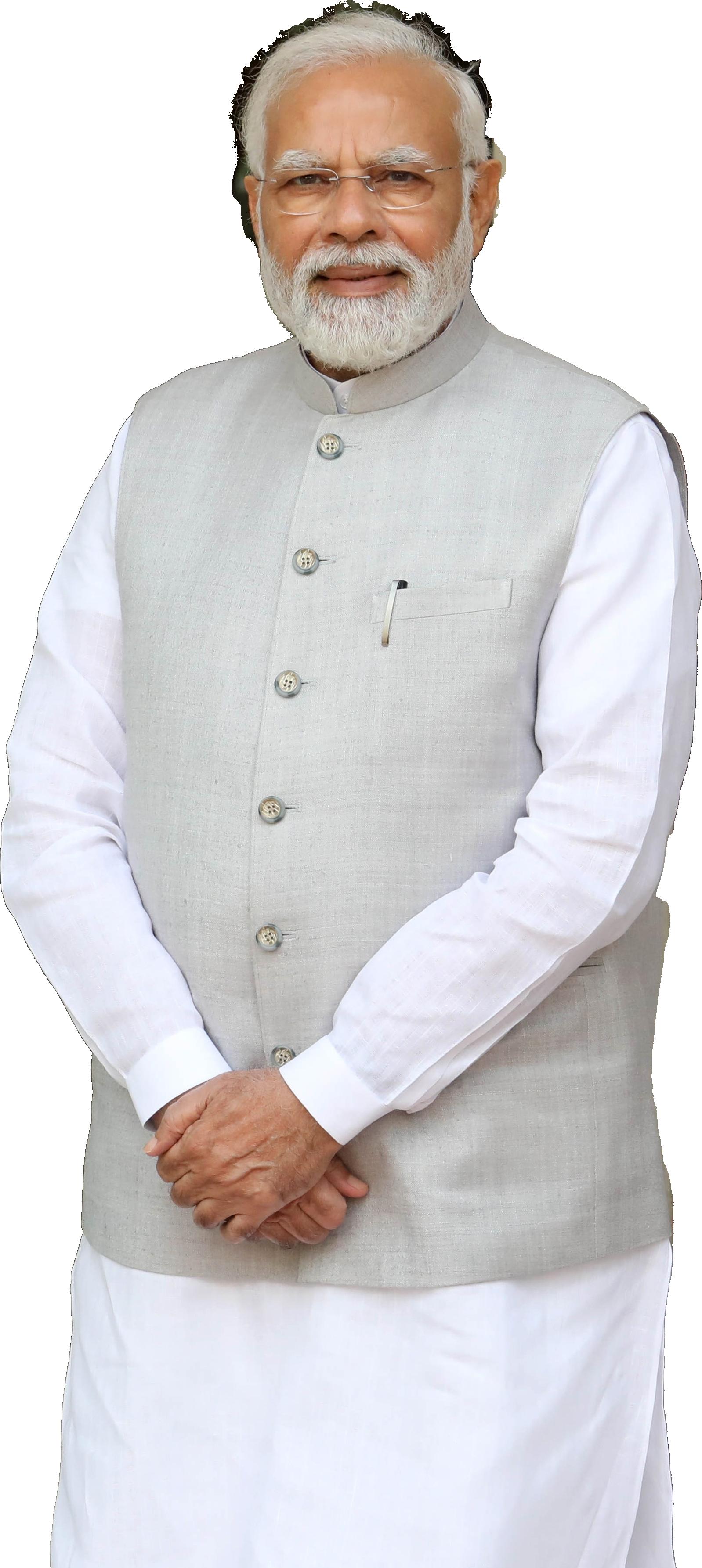
From space to semiconductor, digital to drones, AI to clean energy, 5G to Fintech, India has today reached the forefront of the world
Narendra Modi
This is absolutely the right time to be in the semiconductor industry and we’ve very rapidly gained the confidence of the entire global industry
Shri Ashwini Vaishnaw
Made in India chips manufactured in India will help create a strong and significant presence for India in global value chains — it will make India a semicon hub for the world
Shri Rajeev Chandrasekhar
India, in my opinion, has almost everything you need to have a successful semiconductor industry in the country. We have talent, we have democracy, the largest democracy in the world. We have a market. The population is the market. We are 1.4 Bn now bigger than even China. And language is a big plus. Virtually everybody speaks English. Plus, we comply with international laws. So what more do you need, you have everything to really attract industry's equal ecosystem
The current semiconductor ecosystem in India is largely dominated by global MNCs and Indian corporates
DESIGN/VIRTUAL FAB ECOSYSTEM
LED BY FOREIGN MNCS
Source: Semicon India
MANUFACTURING SUPPLIER
ECOSYSTEM
EQUIPMENT & TOOL
STRATEGIC FACILITIES
EDA & IP CORE
FAB CONSUMABLES
The Semiconductor Startup Ecosystem In India: Key Enablers
INTERNATIONAL CORPORATES
INDIAN UNIVERSITIES / INCUBATORS
Source: Inc42
Note: This is not an exhaustive list
INDIAN CORPORATES INVESTORS (VC, ANGELS, INCUBATORS, ACCELERATORS)
GOVT ORGANISATIONS
N. LAKSHMI NARAYANAN
ASHWINI ASOKAN
NISCHAY GOEL
Growth Of Semiconductor Industry In India: A Timeline
Government initiates semiconductor policy
Inauguration of India's first semiconductor fabrication plant (fab) by SCL in Mohali, Punjab.
Formation of semiconductor associations and societies
Source: Inc42, Secondary Sources
Growth of electronics manufacturing clusters
Increase in semiconductor design services companies
Entry of multinational companies into Indian market
India's first semiconductor policy
Late 2000s
2020s
India's emergence as a key player in the global semiconductor industry
India Semiconductor Mission (ISM) events promoting domestic ecosystem. Micron Technology to set up testing and packaging plant (ATMP) in Sanand, Gujarat.
Tata Group, in collaboration with PSMC, to establish fab in Gujarat CG Power and Renesas to establish semiconductor plant in Gujarat's Sanand
Tata to set up chip assembly and testing unit in Assam
How India's Semiconductor Industry & Startups Stand To Gain
THE OPPORTUNITY
$150 Bn+ Market Opportunity By 2030
Advance Manufacturing
Large Consumer Base
20% Global Design Chip
Talent
CHALLENGES
KEY FOCUS AREAS
Capital Intensive Nature
Knowledge Gap
Talent Acquisition & Retention
Supply Chain
Low R&D High Competition
Fabless Startups & IP
Creation
Manufacturing & Testing
Services
Knowledge Transfer
Incubator & Accelerators
Investor & Funding
IP Protection
GOVERNMENT INITIATIVES & POLICIES
Make In India Campaign
Electronics Manufacturing Scheme Designed Linked Scheme
Modified Programme For Semiconductors & Display Fab Ecosystem
The IP Gap: Only One-Third Of Indian Semiconductor Startups Are Working On Intellectual Property (IP)
Startups that create and design their own proprietary semiconductor technologies and designs.
Startups that possess their own semiconductor IP and also offer a range of semiconductor-related services.
Semiconductor Service Startups In India
Source: Inc42, Secondary Sources
Startups that provide semiconductor-related services without owning or developing their own IP.
Bengaluru
Takes Center Stage In India's Semiconductor Startup Arena
Specialising in GaN materials and electronic components for radio-frequency applications, AGNIT's products hold prominence in drone and telecommunications sectors, offering tailored solutions for critical requirements.
Incore, a processor design company, is revolutionising industries with its innovative RISC-V-based solutions.
Mindgrove designs, scalable, and reliable System-on-Chips (SoCS) in India. These high-performance RISC-V chips can be leveraged in power-constrained environments such as consumer electronics, defense.
Morphing Machines is a fabless semiconductor IP products and solutions company focusing on innovations centered around REDEFINE™, a runtime reconfigurable many-core processor.
Oakter is an Original Device Manufacturer (ODM) that designs and produces electronic smart devices. In 2019, the company made a strategic shift to contract manufacturing. Since then, Oakter has successfully fulfilled numerous B2B contract manufacturing orders.
Notable Semiconductor Plants In India
Technology, Inc.
Tata Group, PSMC
Dholera, Gujarat
Tata Semiconductor Assembly and Test Pvt Ltd (TSAT)
A Deep Dive Into Semiconductor Value Chain:
Global & India
The Global Semiconductor Value Chain
Source:
The Demand & Supply Value Chain
The Semiconductor Use Cases
MEMORY MICROPROCESSORS GPUS
Memory chips function as temporary storage units for data, facilitating the transfer of information
Microprocessors, also known as CPUs, power computing devices with multiple cores, serving as the primary computation units for various applications.
GPUs, responsible for rendering graphics on computer screens, have evolved beyond their initial purpose. Today, they serve as versatile processors, involved in tasks such as cryptocurrency mining and supporting AI applications
COMMODITY INTEGRATED CIRCUITS
Commodity integrated circuits (CICs) handle repetitive processing tasks, while Application-Specific Integrated Circuits (ASICs) are tailored for specific functions. System on a Chip (SoC) represents the latest advancement, integrating all necessary electronic components for an entire system into a single chip.
ANALOG CHIP MIXED CIRCUIT
Analog chips, though somewhat replaced by digital ones, are still vital for handling certain signals and acting as sensors due to their continuous voltage and current variations.
Mixed-signal semiconductors are primarily digital chips enhanced with technology to accommodate both analog and digital circuitry.
Key Applications Of Seminconductors In India
SEMICONDUCTOR
Semiconductor Design Startup Ecosystem In India
SEMICONDUCTOR
India Opens More Opportunity For Semiconductor Startups In Design
BOTTLENECKS IN FABRICATION & ASSEMBLY
Semiconductor fabrication and assembly is primarily a capital intensive area, and is largely dominated by taiwanese players
New opportunities are mostly emerging for Indian corporates, and foreign companies
Razor thin margins
Need for collaboration since knowledge gap is very high Supply chain issue
Source: Inc42, Secondary Sources
ADVANTAGES IN DESIGNING
SEMICONDUCTOR
Designing semiconductors often doesn't require significant capital investment
Offers more customisation opportunities
India has more than 20% design workforce and labour is available for affordable prices
High profits margins
Semiconductor Services In India & Opportunities For Indian Startups
India’s Silicon Symphony: India’s Path In The Semiconductor Services Supply Chain
Semiconductor Services In India: The Use Cases & Opportunities
India's Path To Tech Sovereignty: The Importance Of Semiconductor Services
Self-reliance: Mitigate Risks and Gain Control
Reduced Vulnerability:
Supply Chain Disruptions. Price Fluctuations.
Geopolitical Tensions
Empowerment: Control Chip Production
Negotiate from a Stronger Position
Security: Protecting Critical Infrastructure
National Security: Defense systems and weaponry
Communication networks
Power grids and other vital infrastructure
Reduced Reliance on Foreign Technology
Source: Inc42, Secondary Sources
Economic Boost: Jobs, Investment, and Innovation
High-Value Jobs
Chip designers
Chip Development Engineers
Researchers
Investment Magnet: MNC collaboration and access to Indian innovation. Increased domestic investment in R&D and manufacturing infrastructure.
Innovation Engine chip designs tailored to India's specific needs and applications. Advancements in related fields like electronics, computing, and communication technologies.
Semiconductor Intellectual Property (IP) commands significantly greater financial resources compared to fabrication or Outsourced Semiconductor Assembly and Test (OSAT). For instance, NVIDIA, a leading semiconductor IP company, boasts a market capitalization of approximately $2.37 Tn+, while TSMC, the world's largest semiconductor fabrication company, holds a market cap of $806 Bn+.Given this discrepancy, there is a prevalent consensus among the Indian intellectual community that Indian firms should focus on establishing their intellectual property in semiconductors rather than simply becoming an outsourced manufacturing hub.
The Dawn Of AI Semiconductor & The Opportunity For India
From CPUs To AI Processors: A New Era Of Computing
Global AI Semiconductor Market To Reach $190 Bn+ By 2030
Key Growth Drivers
Surge In Edge AI Processing Demand
The escalating requirement for real-time data processing at the edge, as opposed to centralised cloud servers, propels the demand for edge AI processing. This trend is anticipated to persist, fueling the necessity for specialised AI semiconductors capable of managing intricate computations essential for edge AI processing.
Advancements In Deep Learning & Neural Networks
Rapid progressions in deep learning and neural networks facilitate the creation of sophisticated AI applications, necessitating more potent and efficient AI semiconductors. With AI applications becoming increasingly intricate, the call for high-performance AI semiconductors is set to surge.
Proliferation Of AI-Powered Devices
The prevalence of AI-driven devices like smart speakers, smart home gadgets, and autonomous vehicles propels the demand for specialised AI semiconductors. As AI technology permeates various sectors, the requirement for high-performance, energy-efficient AI chips is poised to escalate, driving the demand for AI semiconductors.
Source: Inc42 Analysis, McKinsey
Note: The distinction of AI and non-AI semiconductors is based on McKinsey's definition.
$21 Bn+ The Market Opportunity For AI Semiconductor In India By 2030
US-China Relations
Amid escalating tensions between the US and China, India emerges as a favored destination for American semiconductor companies. Initiatives like Make In India and Design Linked Incentive (DLI) have piqued the interest of giants like Micron Technology, Microchip Technology, and Texas Instruments, prompting them to contemplate establishing manufacturing facilities in the country.
Focus On Smart Cities & Infrastructure Development
AI is set to play a pivotal role in realising the Indian government's vision of developing fully integrated smart cities. AI technology is anticipated to underpin crucial functions such as connectivity, traffic management, and crime response, among others, facilitating the transformation of urban infrastructure.
Growing Adoption Of AI-Powered Consumer Devices
The Indian consumer electronics market is experiencing a surge in demand for AI-powered devices, including smart speakers, smart home gadgets, and autonomous vehicles. This upward trend is projected to persist, thereby fueling the demand for AI semiconductors across the Indian market.
Types Of AI Chipset & Their Applications
Types Of AI Chipset & Their Applications
Description
GPU (Graphics Processing Unit)
TPU (Tensor Processing Unit)
ASIC (Application-Specific Integrated Circuit)
FPGA (Field-Programmable Gate Array)
High-performance, parallel processing for machine learning and deep learning
Custom-built for machine learning and deep learning, optimised for TensorFlow
Custom-designed for specific AI applications, optimised for performance and power efficiency
Applications
Neuromorphic Processor
AI Accelerator
Edge AI Chip
Neural Network Processor
Source: Inc42
Reconfigurable hardware for adaptive AI applications, optimised for flexibility and performance
Inspired by the human brain, mimics neural networks for efficient AI processing
Specialised hardware for accelerating AI workloads, optimised for performance and power efficiency
Optimised for low-power, high-performance AI processing at the edge
Designed for efficient processing of neural networks, optimised for performance and power efficiency
Note: This is not an exhaustive list, and new types of AI specialised semiconductors are emerging as the technology advances.
Computer Vision, Natural Language Processing, Autonomous Vehicles
Cloud-based AI, Data Centers, High-Performance Computing
Edge AI, IoT Devices, Autonomous Vehicles
Edge AI, IoT Devices, Aerospace and Defense
Edge AI, Robotics, Autonomous Systems
Data Centers, Cloud Computing, High-Performance Computing
Smart Home Devices, IoT Devices, Autonomous Vehicles
Computer Vision, Natural Language Processing, Robotics
AI’s Secret Sauce: Tensor Chips Vs. General Purpose Semiconductors
AI Tensor Chips (TPUs/GPUs)
Traditional CPU/GPU Chips
Application
Specialised for machine learning, AI, and deep learning
General-purpose computing, gaming, and graphics processing
Architecture
Memory Hierarchy
Processing Units
Memory Bandwidth
Specialised Instructions
Custom-designed architecture for matrix multiplication and tensor operations
Optimised for large, sparse matrices and tensor storage
Custom-designed processing units for matrix multiplication and tensor operations
Intel CPUs, AMD 7000 series GPUs (Gaming product line), NVIDIA RTX 40 series GPUs (Gaming product line)
Opportunities For Indian Startups In AI Semiconductors
Opportunities
Description
AI Inference Hardware (IP)
AI-Specific SoC (System-on-Chip) Design
Indian startups can focus on designing and developing low-power, high-performance AI chips for edge devices, such as smart home devices, autonomous vehicles, and wearables. Ola Krutrim is an early mover in this segment.
AI-specific SoCs are custom-designed integrated circuits optimised for specific AI workloads, such as machine learning, computer vision, or natural language processing. AI-specific SoCs contain fixed-function hardware blocks, which are optimised for specific AI algorithms and models.
AI-Enabled Semiconductor Packaging
Startups can focus on developing AI-enabled solutions for optimising semiconductor packaging, including 3D stacking, wafer-level packaging, and fan-out wafer-level packaging.
Cloud Based AI Infrastructure
Indian startups can tap the AI cloud infrastructure opportunity by creating tailored solutions for local businesses. These include scalable AI platforms, efficient resource management tools, and cost optimisation. By doing so, they can drive AI adoption, enhance efficiency, and compete globally. Some notable startups working in this segment include: GPU.net and Models Lab.
FPGA (Field-Programmable Gate Array)
Source: Inc42
Note: This is not an exhaustive list of
FPGAs are integrated circuits designed to provide high-performance computation with low power consumption. FPGAs' reprogrammability is anticipated to make them a preferred choice in fields such as data centres, autonomous vehicles, and computer vision, among others.
Key Growth Drivers For Semiconductors In India
China Plus One Policy
Amidst the global restructuring marked by the persistent chip shortage and escalating geopolitical tensions, nations are increasingly recognising the need to diversify their supply chains. As countries actively seek alternatives to China, India's potential as an alternative destination gains prominence particularly in semiconductor sector
Growing Consumer Electronics Market
India stands out as a prominent player in the global electronics market, as evidenced by the establishment of manufacturing facilities by numerous prominent companies like Apple within its borders. It is projected that electronic manufacturing output will surpass $300 Bn by 2030 in India. Additionally, India ranks among the largest consumers of electronics globally, leading to a significant demand for semiconductors within the country.
Demand In Automobile
Sector
The automotive sector is undergoing significant global transformations, marked by the rising prevalence of electric vehicles (EVs) and self-autonomous cars, driving a surge in semiconductor demand. India's automotive industry, valued at $222 Bn+ in 2022, anticipates further. These combined factors contribute to an increasing demand for semiconductors, which serve as essential components enabling advanced functionalities in modern vehicles, such as power management, sensor integration, and advanced driver assistance systems (ADAS).
The Rise Of Ai
AI has become ubiquitous worldwide, significantly impacting every sector with its continuous innovation, and its growth trajectory is poised to continue. This trend is mirrored in India, where AI adoption is substantial. The growth of AI is directly correlated with semiconductors, as semiconductor hardware is essential for AI utilization. The Indian AI semiconductor market is projected to reach $21 Bn by 2030. India is embracing AI across various industries, leveraging its transformative capabilities to enhance efficiency, productivity, and innovation.
Source: Inc42, Secondary Sources
Government's Role In Fostering India's Semiconductor Boom
Semiconductor Fabs
The Scheme for setting up Semiconductor Fabs in India offers fiscal support to eligible applicants aiming to establish semiconductor wafer fabrication facilities in the country, attracting substantial investments. The fiscal support provided under this scheme varies based on the semiconductor technology node, with percentages of the project cost allocated accordingly: Up to 50% for 28 nm or lower, up to 40% for above 28 nm to 45 nm, and up to 30% for above 45 nm to 65 nm.
Display Fabs
The Scheme for setting up Display Fabs in India aims to attract investments for TFT LCD / AMOLED based display fabrication facilities, offering fiscal support of up to 50% of the project cost, capped at INR 12,000 Cr per Fab.
Compound Semiconductor
The Scheme for setting up Compound Semiconductors / Silicon Photonics / Sensors Fab and Semiconductor Assembly, Testing, Marking, and Packaging (ATMP) / OSAT facilities in India provides fiscal support of 30% of the Capital Expenditure to eligible applicants for setting up such facilities.
Design Linked Incentive (DLI) Scheme
This scheme offers financial incentives and design infrastructure support across various stages of semiconductor design development and deployment. This includes a "Product Design Linked Incentive" of up to 50% of eligible expenditure, capped at INR 15 Cr per application, and a "Deployment Linked Incentive" ranging from 6% to 4% of net sales turnover over 5 years, capped at INR 30 Cr per application.
Key Challenges In Semiconductor Sector In India
Fab Technology Gap & High Costs
India's semiconductor fabrication ecosystem predominantly relies on mature technologies such as 40 nm or older processes, while leading players operate at 5 nm and below. This creates a substantial performance and efficiency gap. Additionally, the high investment costs, typically ranging from $4 to $5 Bn or more, pose a significant hurdle in establishing fabs.
Competition To Enter The Global Semiconductor Market
The global semiconductor industry, dominated by established players, presents barriers for new entrants like India. India faces challenges in catching up with technological advancements, overcoming cost barriers, establishing credibility in a competitive market and shortage of skilled manpower in India's semiconductor manufacturing sector
Material Science Dependence And Supply Chain
High-end chip manufacturing relies heavily on specialised materials such as ultra-pure silicon wafers, most of which are currently imported, leaving India vulnerable to global supplier dynamics and price fluctuations.
R&D And Ip Protection
In this fast-paced sector, continuous innovation is imperative, demanding substantial R&D investment to address the technological gap. Moreover, the industry's reliance on innovation and robust IP protection poses challenges for India's IP regime. To attract companies and promote domestic R&D while safeguarding intellectual property rights, India must strike a delicate balance. Achieving this balance will be pivotal for India's competitiveness and growth in the semiconductor industry
Source: Inc42, Secondary Sources
Key Trends In Semiconductor Sector In India
Trade Deficit & Self Reliance
India grapples with a pressing economic challenge stemming from its semiconductor trade deficit, with imports surging to $67.6 Bn in 2022. Semiconductors alone reached $15.6 Bn, nearly doubling from the previous year. The heavy reliance on imports, primarily from China, Hong Kong, and Singapore, highlights the critical need for increased domestic production. India aims to elevate local sourcing to 17% by 2026, with the goal of substantially reducing import dependency.The Indian government has prioritised initiatives like "Make In India" to address this issue.
Collaboration Between Indian And Foreign Companies
Indian corporations, multinational corporations (MNCs), and the government are collectively injecting significant investments into the semiconductor industry to fortify India's position in the global market. Major players such as Micron, Tata, and CG Power are leading this charge with substantial investments in semiconductor infrastructure.
Government Support
Government policies and initiatives are propelling India towards technological self-sufficiency and bolstering competitiveness in the semiconductor sector. With the central government committing to fulfilling 50% of semiconductor manufacturing setup costs, significant strides are being made. Additionally, several upcoming projects in the pipeline indicate a promising future for India's semiconductor industry, further solidifying its position on the global stage.
The Rise Of Design Startups
India contributes significantly to the global semiconductor integrated circuit (IC) design workforce, accounting for 20% of it. Moreover, there's a continuous rise in design startups in India, with over 100+ startups currently operating. The growth of these startups has surged by 2.4 times since 2014, and this trend is anticipated to continue upward. These startups cater to various industries such as automotive, electronics, and medicine,indicating a promising trajectory for India's semiconductor design landscape.
Source: Inc42, Secondary Sources
www.inc42.com
Inc42 is India’s largest tech media & information platform on a mission to build & serve India’s tech, startup & internet economy. From breaking the latest news to discovering the hottest startups, from spotting upcoming trends to simplifying complex concepts, we cover everything tech in India’s internet economy.
CREDITS
Born in January 2015, Inc42 has become the leading source for news & analysis on India’s rapidly growing tech, startup & internet economy. Inc42, with over 40,000+ published stories, 100+ research reports, 120+ conferences & events & having featured 1000s of entrepreneurs, now reaches over 25 Mn+ tech leaders & professionals every month.
The data provided in this report has been obtained from public and private sources. We have made every attempt to ensure that the information presented in this report is accurate and free from any discrepancies. Ideope Media Pvt Ltd, the parent company of Inc42 Media and Inc42 DataLabs, is not responsible for any inaccuracy in the information presented or for any damages caused by the use of information provided in this report. In case of any discrepancy or errors in the data, you can contact us at editor@inc42.com and we will try our best to update the information in the digital version of the report. We are constantly updating our database of startups due to new person using or relying on any information in this publication.
This report has been prepared in good faith on the basis of information available at the date of publication without any independent verification. Ideope Media Pvt. Ltd. does not guarantee the accuracy, reliability or completeness of the information in this publication. Readers are responsible for assessing the relevance and accuracy of the content of this publication. While this report talks about various individuals and institutions, Ideope Media Pvt. Ltd. will not be liable for any loss, damage, cost or expense incurred or arising by reason of anyperson using or relying on any information in this publication.
This document makes descriptive reference to trademarks that may be owned by others. The use of such trademarks herein is not an assertion of ownership of such trademarks by Ideope Media Pvt Ltd and is not intended to represent or imply the existence of an association between Ideope Media Pvt Ltd and the lawful owners of such trademarks. Information regarding third-party products, services and organisations was obtained from publicly available sources, and Ideope Media Pvt. Ltd. cannot confirm the accuracy or reliability of such sources or information. Its inclusion does not imply an endorsement by or of any third party. The views and opinions in this report should not be viewed as professional advice with respect to your business.