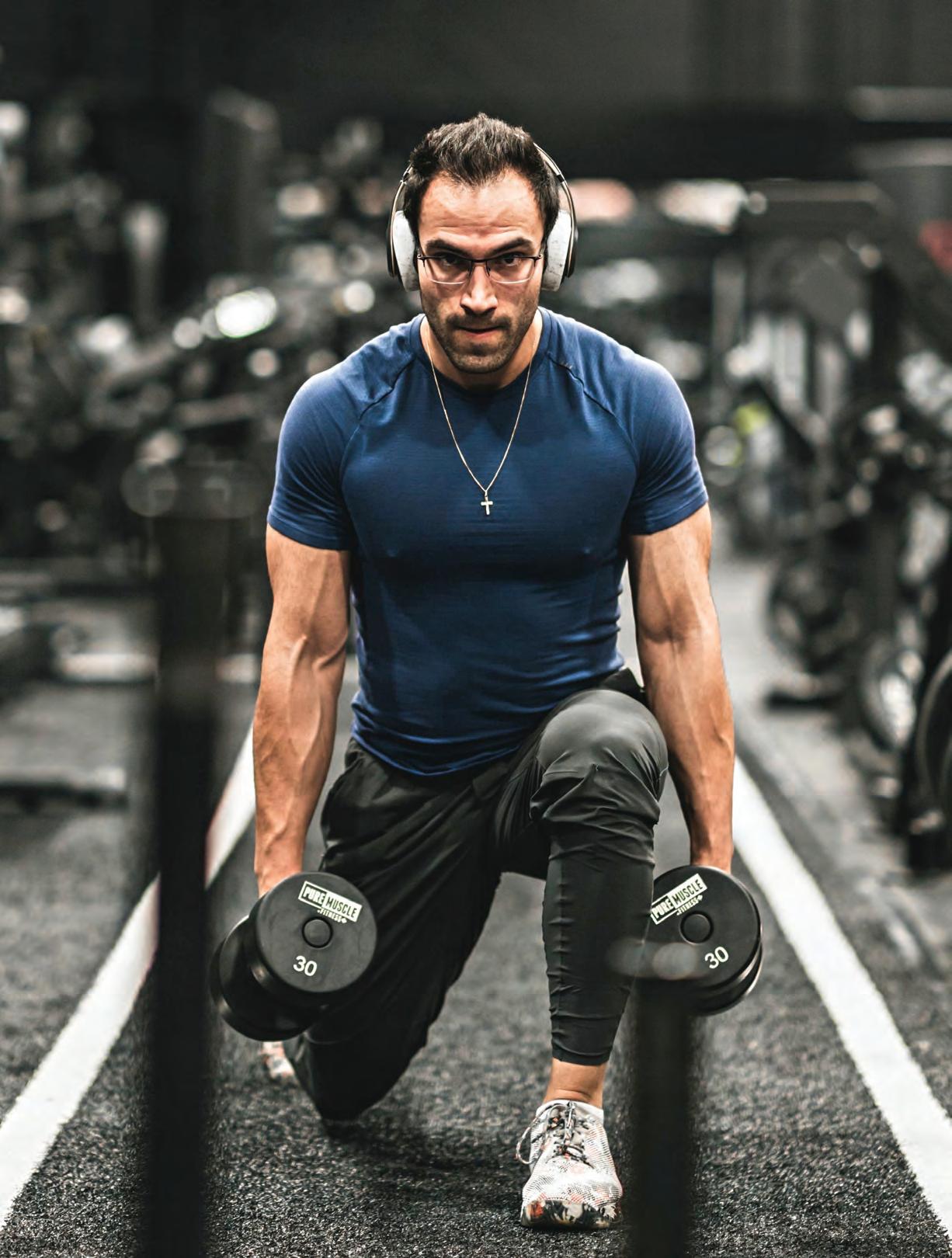
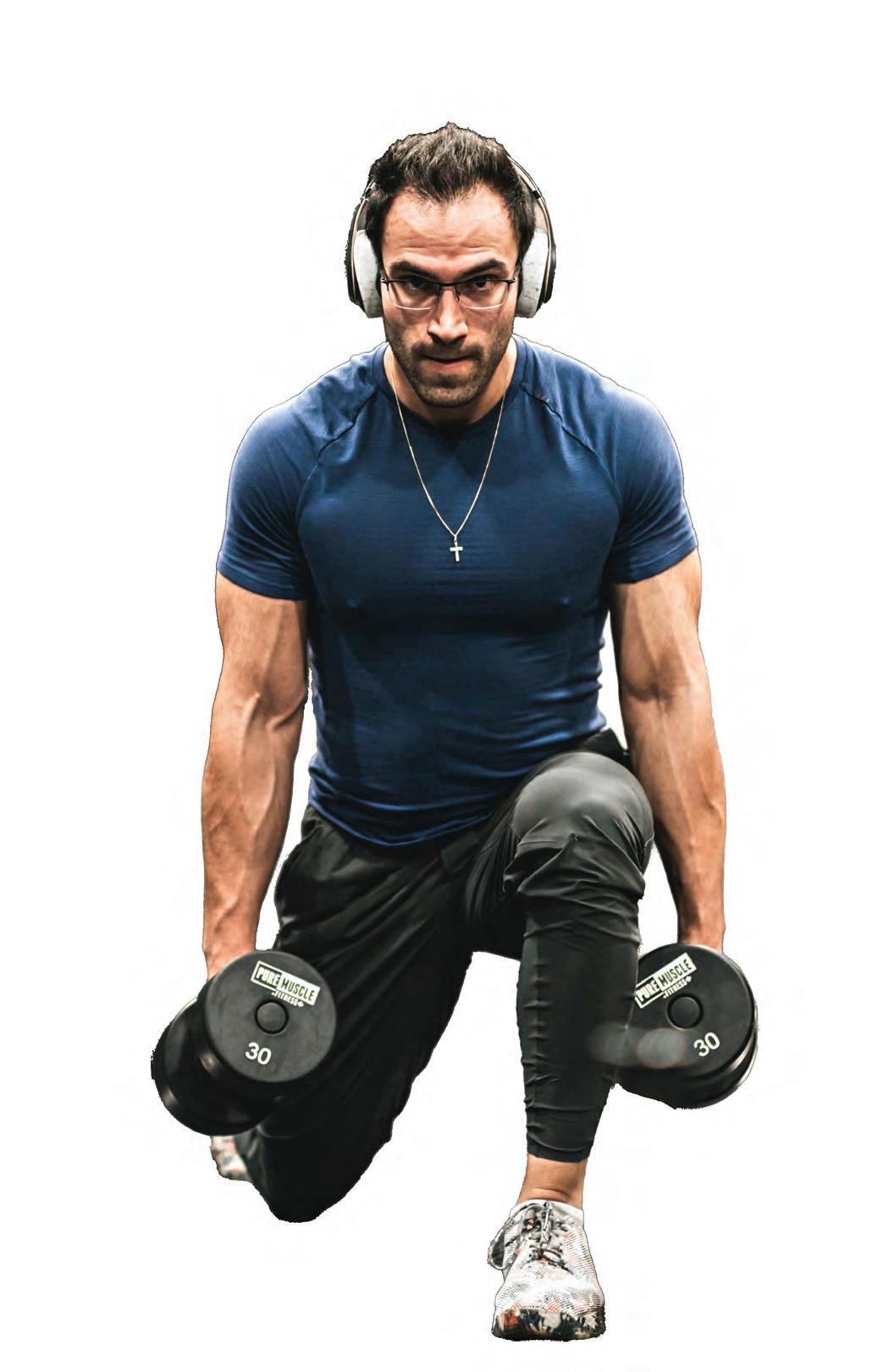
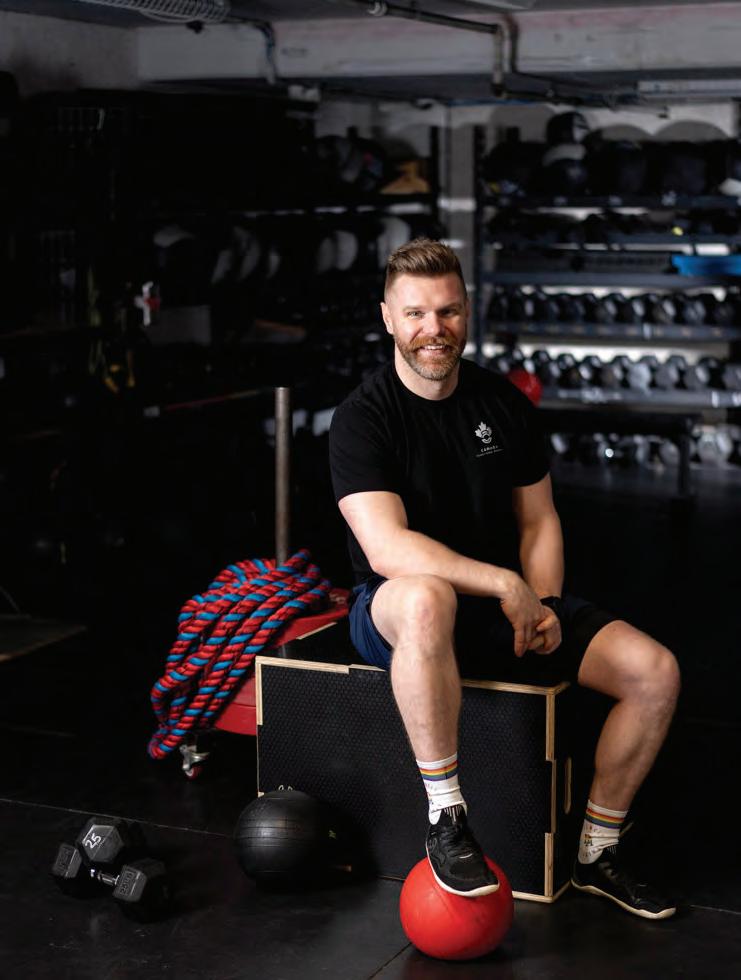
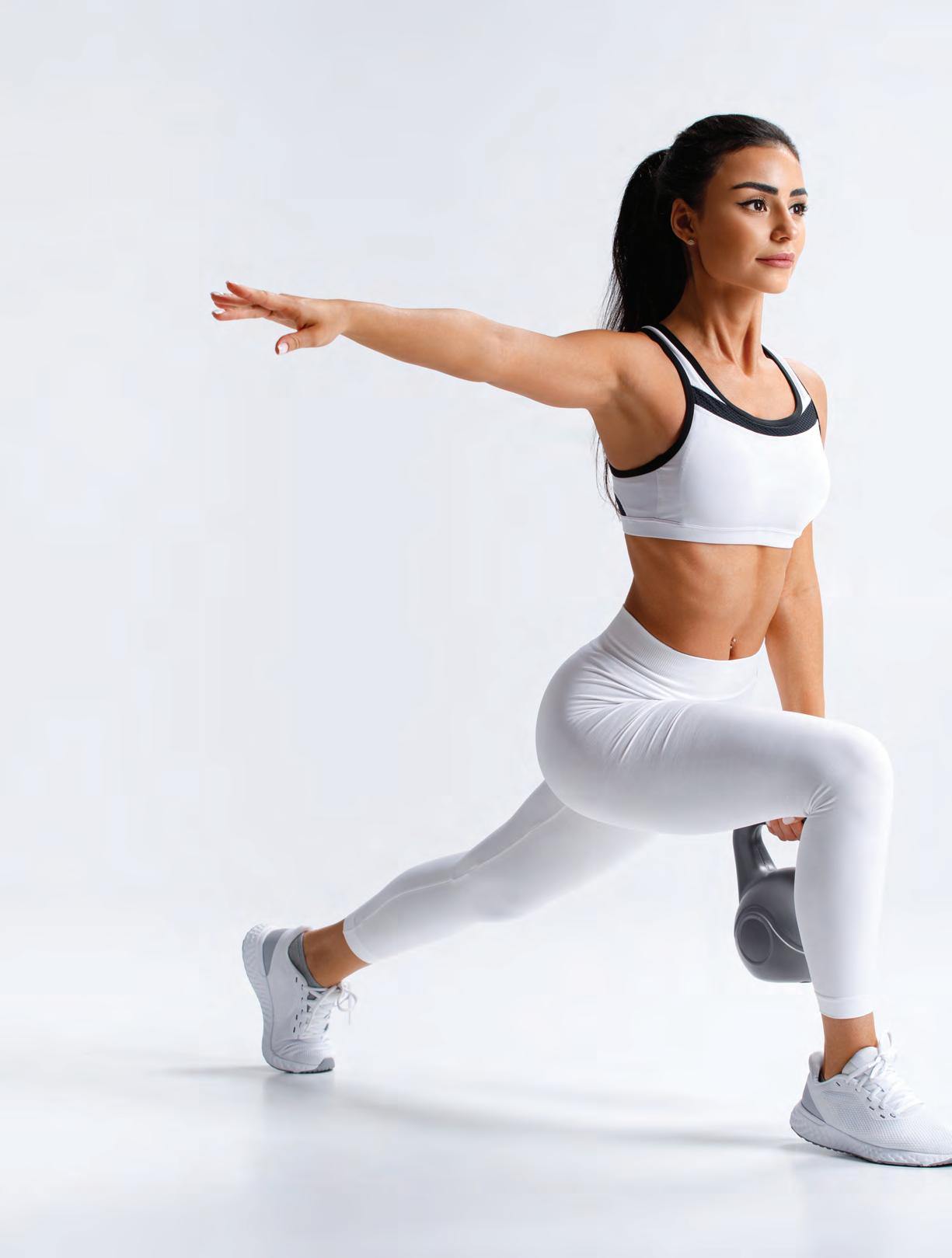
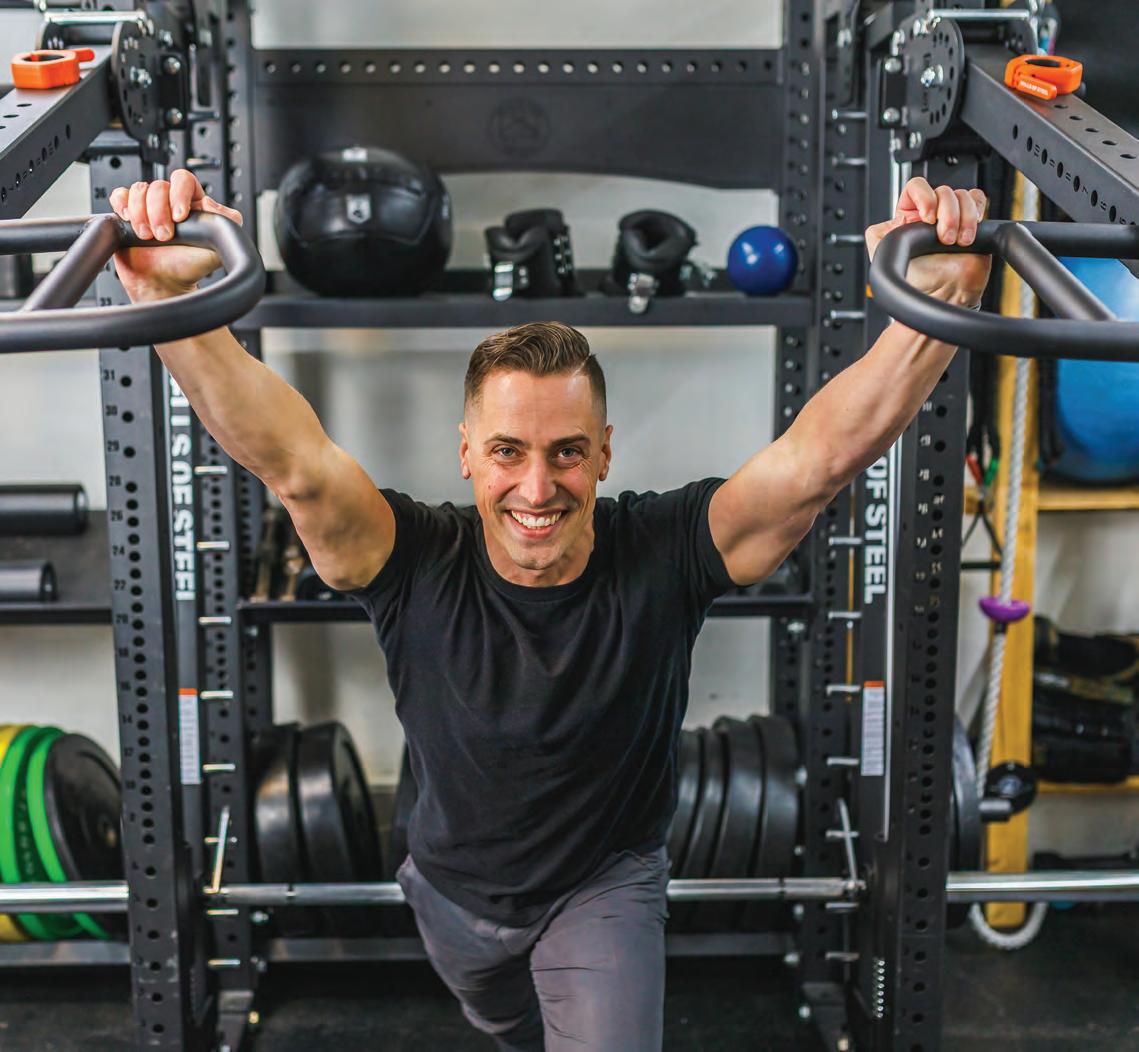
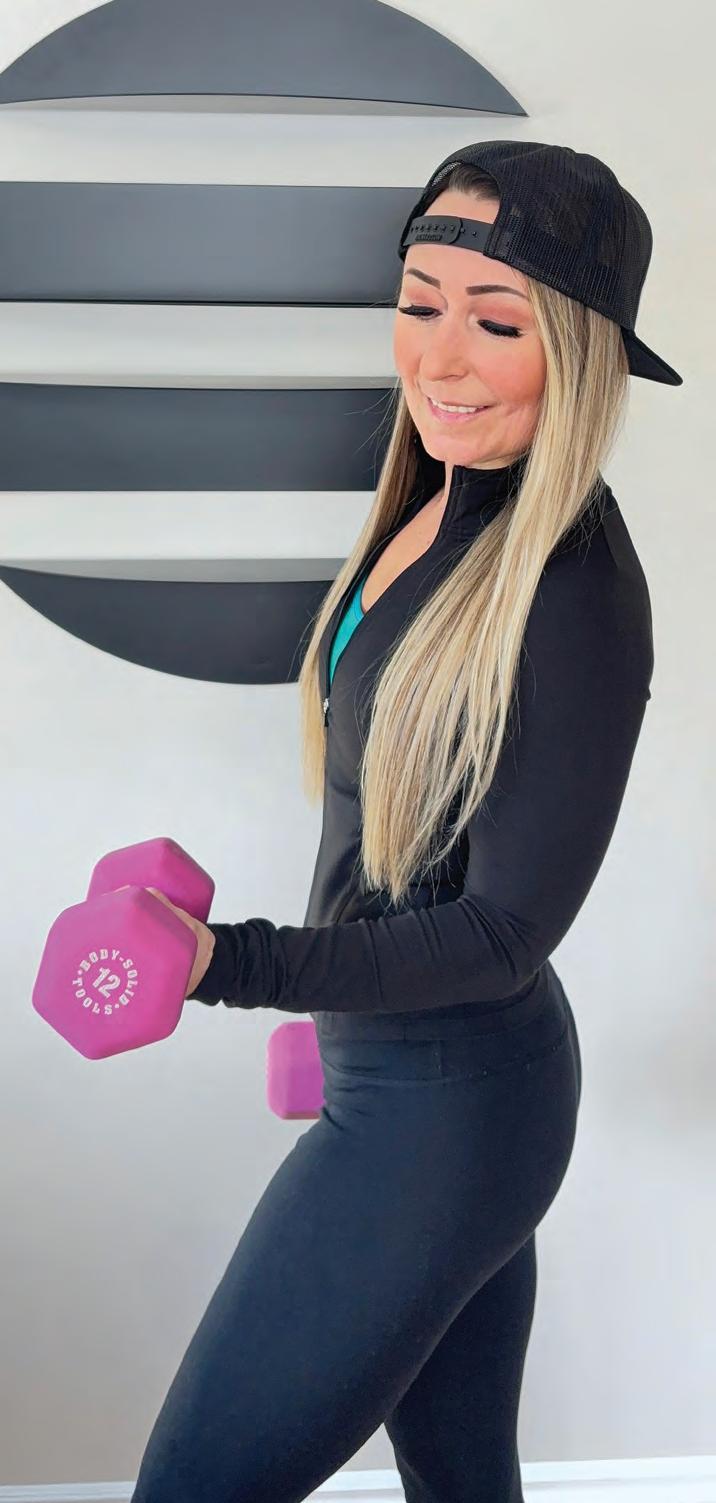
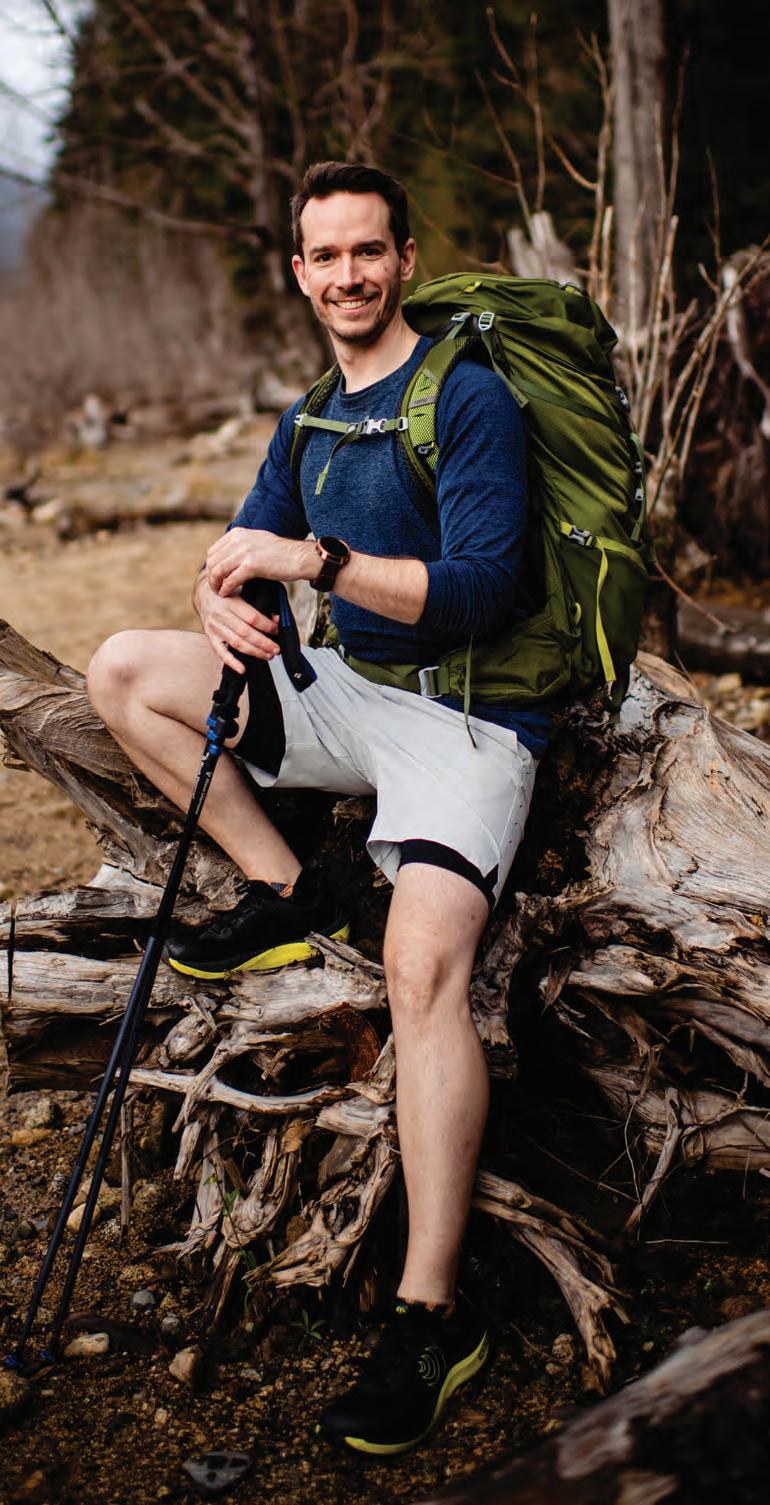
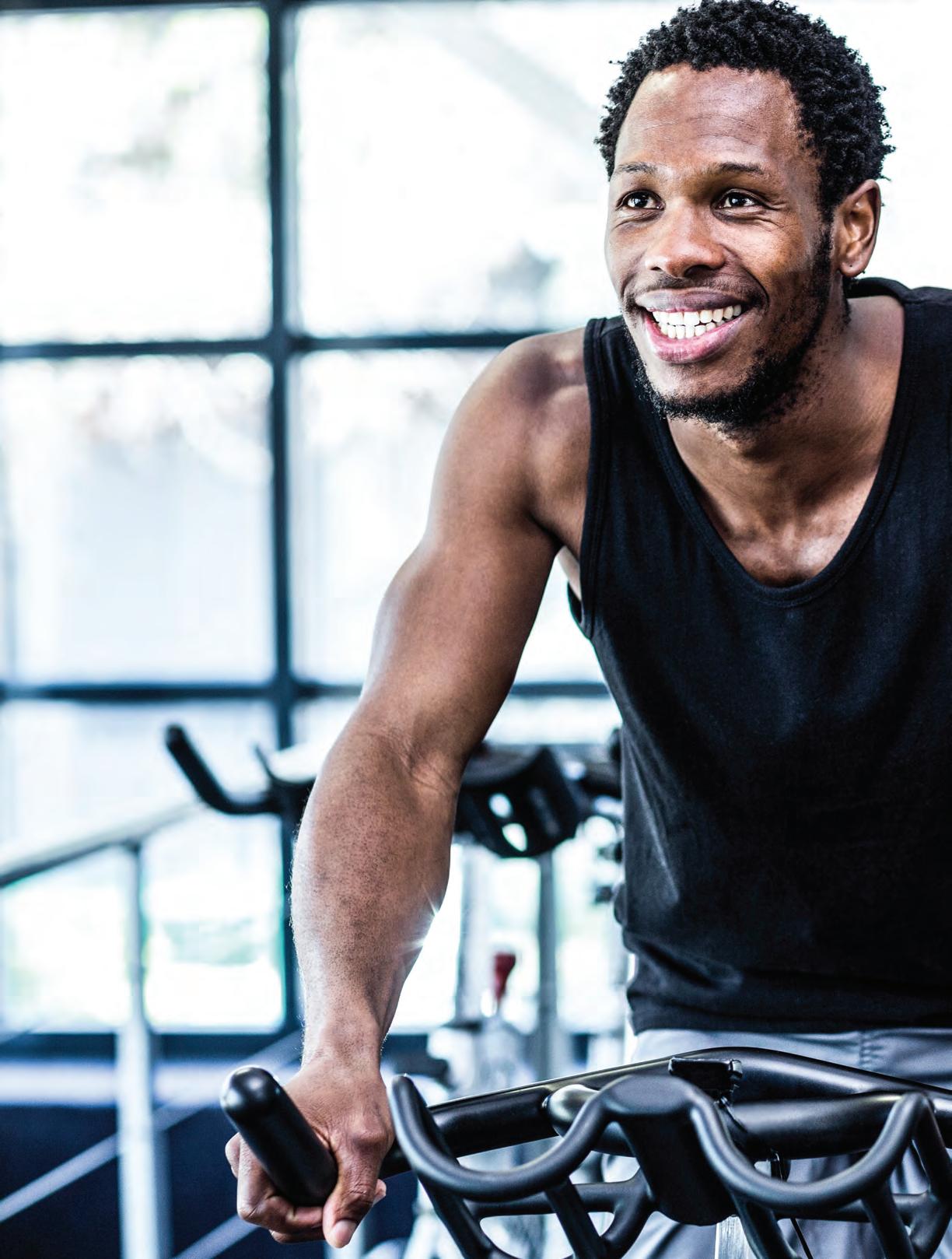
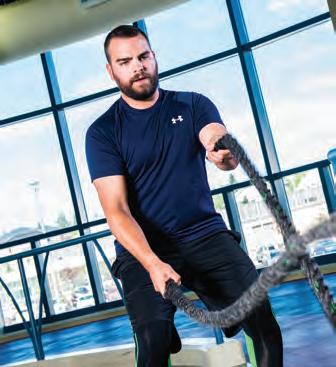
A life on the move starts with strong bones, working with muscles and joints to power strength and stability. Nutrients like calcium, magnesium, and vitamins D3 & K2 help support a durable bone matrix so you can move with confidence.
Jordan Bryden CanPrev Ambassador
Your Health, Your Way
How TELUS Health is a leader in
preventive health
“I
was literally blown away by the amazing experience this was from start to finish. Every single person at the centre was fantastic and took the time to explain step-by-step what was happening – it was beautifully structured, I felt truly cared for. There was an investment in me, no rushing or ‘moving on to the next’. Thank you so much.”
Preventive Health Assessment patient - Toronto, Ontario
Good health. It’s the universal wish for just about anyone who wants a fulfilling life. But how we get there is different for everyone. Eating well and exercising more are the tickets to get there—aren’t they? If only it were that simple. Even your maps app offers different routes to the same destination.
Enter TELUS with offerings in preventive care including personalized health and wellbeing plans crafted for those who want to lead healthier, happier and longer lives.
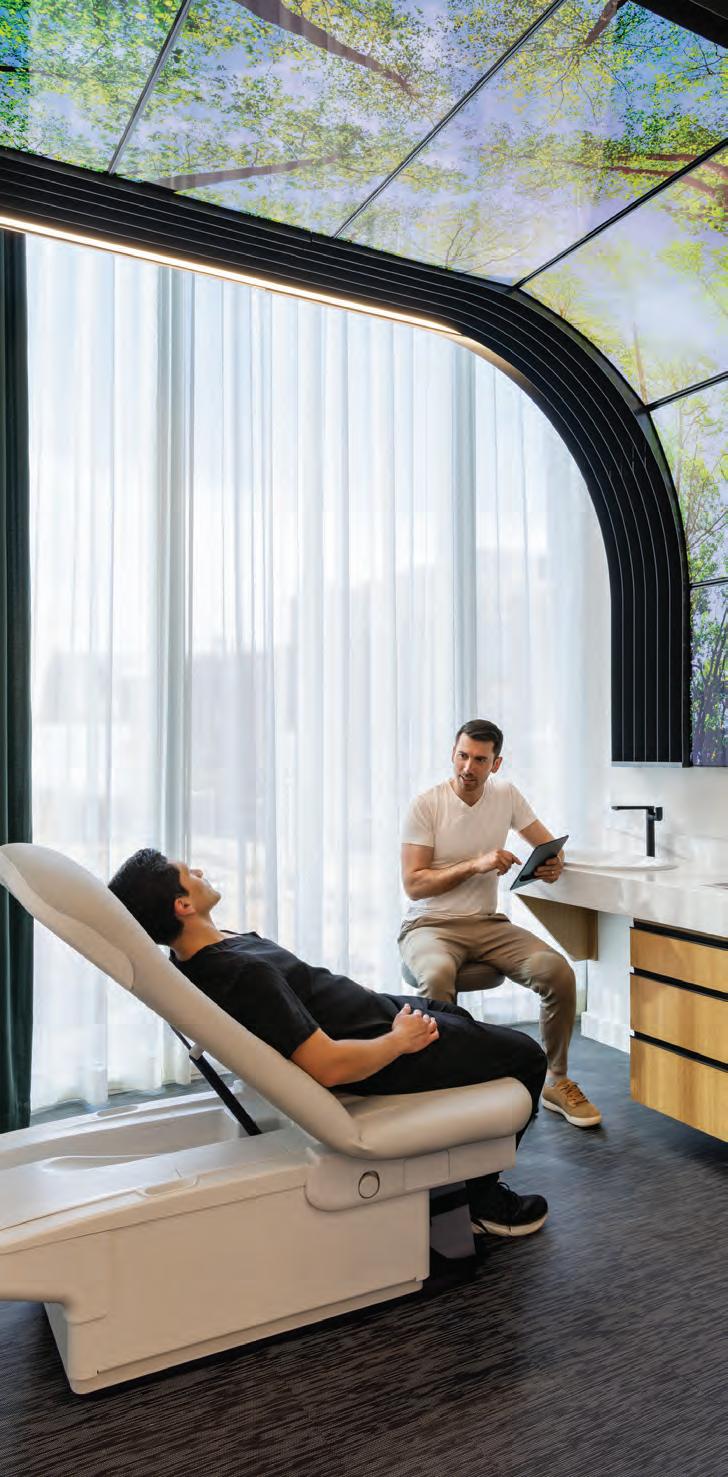
Offered at TELUS Health Care Centres in 14 clinics across the country, the comprehensive Preventive Health Assessment (PHA) program is helping Canadians achieve their most optimal self. Designed by experts to put people in control of their own health, this innovative service builds your health care foundation with a personalized roadmap to help support your long-term wellbeing with a personalized action plan aligned with your unique objectives.
Your journey begins with the PHA, a comprehensive medical assessment, which includes complete lab workups, imaging, fitness and functional movement evaluations, followed by hearing and vision tests, as well as pulmonary function and cardiac stress tests. No assessment would be complete without addressing mental health and cognitive function, so that is on the menu, too. Do you think you might be prone to a condition in your family’s history? Genetic testing could be a great optional add-on to consider to help further guide lifestyle decisions and a thorough proactive strategy.
Prevention is a power you can harness to increase your chances of good health. That means potentially identifying risk factors earlier when intervention is most effective. Prevention means empowering positive lifestyle choices and understanding your body and mind at a deeper level. The PHA provides knowledge, tools and guidance to help people take more meaningful control of their health.
Let TELUS Health Care Centres help support you in reaching your longevity goals. Visit telushealth.com/ contactcarecentres and take the first step towards optimizing your wellbeing today.
Video and space photography captured by Joel Klassen Photography.
INSPIRATION ISSUE 2026
VOLUME 36, ISSUE 3
A leader in the industry for 35 years, IMPACT Magazine is committed to publishing content provided by the best experts in their fields for those who aspire to higher levels of health and fitness.
Sharon is a writer and communications strategist based in Ancaster, ON. She specializes in profile writing and long-form storytelling, spotlighting people, performance, and purpose across sport and business.
SHARONADAIGBE
LOUISE HODGSON-JONES
A professional communications and special events consultant working in the sports and fitness industry, and with non-profit organizations in Victoria, B.C. She is a Guest Editor at IMPACT Magazine and running marathons takes Louise to destinations around the globe.
LOUISEHODGSONJONES LOUISE.HODGSONJONES
SCOTT CRUICKSHANK
A Calgary, AB writer who has covered every level of amateur and professional sports in Canada. Scott is a regular contributor to IMPACT, and enjoys sharing the stories of lesserknown figures in the sporting world.
SCOTTLCRUICKSHANK SCOTTCRUICKSHANK.BSKY.SOCIAL
DANYAEL HALPRIN
A Calgary, AB journalist whose writing appears in leading publications across North America. Danyael’s first illustrated children’s book A Magical Passover Starring the Tooth Fairy will be published by RE:BOOKS Publishing in March 2026.
DANYAEL
JENNIFER KEABLE
A Burnout Prevention Coach and speaker who helps athletes and professionals build sustainable success through mindset, recovery, and aligned action. A two-time burnout survivor with a background in psychology, Jennifer teaches the tools that turn performance into longevity—on and off the field, from Calgary, AB.
JENNIFER.KEABLE JENNIFER-KEABLE
DR. AHMED TAWAKOL
A cardiologist with a clinical and research focus on cardiovascular imaging based in Boston, MA. A graduate of Stanford Medical School, Ahmed is Director of Nuclear Cardiology and CoDirector of the Cardiovascular Imaging Research Center at the Massachusetts General Hospital, and Associate Professor of Medicine at Harvard Medical School.
MASSGENERALBRIGHAM AHMED-TAWAKOL ATAWAKOLMD
CONTRIBUTORS Sharon Adaigbe, Dr. Earl Campazzi, Pamelia Chia, Dr. Syl Corbett, Scott Cruickshank, Geoff Dakin, Simon (Thor) Damborg, Michael Greger, Danyael Halprin, Andrea Katz, Jennifer Keable, Amber Labonte, Emily Meyer, Amber Sayer, Vijaya Selvaraju, Kelly Starrett, Dr. Ahmed Tawakol, Heather Teichrob.
PHOTOGRAPHERS Alan Bailward, Brian Bookstrucker, Danielle Blancher, Bliss Photographic Inc, Sewari Campillo, Pamelia Chia, Adriano Clarke, Jete Devisser, Al Douglas, Isabel Di Nardo, Ethereal Visions, Jamie Everhart, Josh Fingerhut, Froz’n Motion Photography, Graham Howard Photography, Bob Garlick, Guelph Family Martial Arts Media Team, HH Photospark, Patrick Kearns, Kristian Jones Photography, Jordan Leigh, Mackenzie Lyons, Jana Miko, Mukul Kaushik Photography, Gustav Nel, Sharon Nam, Michelle O’Brien, Udit Panchal, Terese Pratt, Carmen Puyo, Saige Dewell Photography, Vijaya Selvaraju, Liz Tremblay, Alicia Tyler, Vairdy Photography, Namaste Vo, WNBF Canada, Dr. Roseanne Woods.
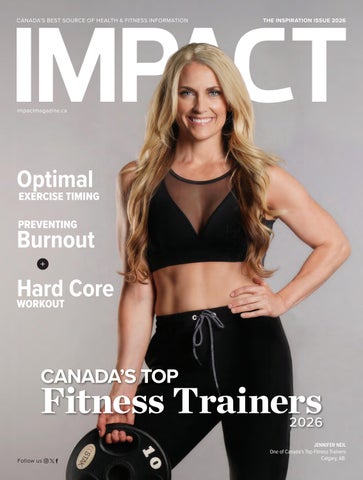
It’s here—our annual Inspiration Issue, featuring Canada’s Top Fitness Trainers, Class of 2026. It’s the issue our readers and industry professionals eagerly anticipate each year!
Now in its ninth year, this program has become a true celebration of excellence in Canadian fitness. It recognizes the passionate, selfless, and transformative work being done by trainers and instructors across the country. These are professionals who dedicate their lives to helping others live healthier, stronger, fuller lives. There is simply no other national platform that honours them in this way. That’s a responsibility we’re proud to carry each year.
As always, selecting this year’s recipients was no easy task. After our editorial team calculated merit scores, our expert panel of industry leaders conducted a meticulous blind review, ensuring every assessment was fair, unbiased, and thorough. The results? Incredibly close, and even tied in some cases. This is a testament not only to the rigorous process we follow, but also to the extraordinary talent, dedication, and passion that exists across Canada’s fitness community. Choosing the ‘winners’ was challenging, because every nominee and finalist demonstrated excellence in ways that inspire, uplift, and transform lives.
In this issue, you’ll meet 36 trainers from across Canada who rose to the top in their respective regions. And the celebration will continue. We’ll gather on May 30, 2026, at Calgary’s Fairmont Palliser Hotel for our annual Awards Gala and Canadian Fitness Industry Conference, celebrating this year’s recipients and bringing together alumni and fitness professionals from coast to coast.
New this year, we’ll present two Achievement Awards and introduce Rising Star Awards, further recognizing the depth of talent shaping our industry’s future.
DIGITAL EDITION
What this program reinforces, year after year, is simple. Every nominee is exceptional. We’ve seen firsthand how this recognition propels careers, strengthens credibility, and opens new doors, and I’m incredibly proud that IMPACT plays a role in that journey.
Beyond this signature feature, this edition is filled with inspiring stories. In our Athletes with IMPACT series, you’ll meet Amy Mawson from Red Deer, Alberta who endured multiple car accidents resulting in traumatic brain injury. She transformed adversity into purpose, building a successful fitness career and developing equestrian-specific programs that elevate and empower others.
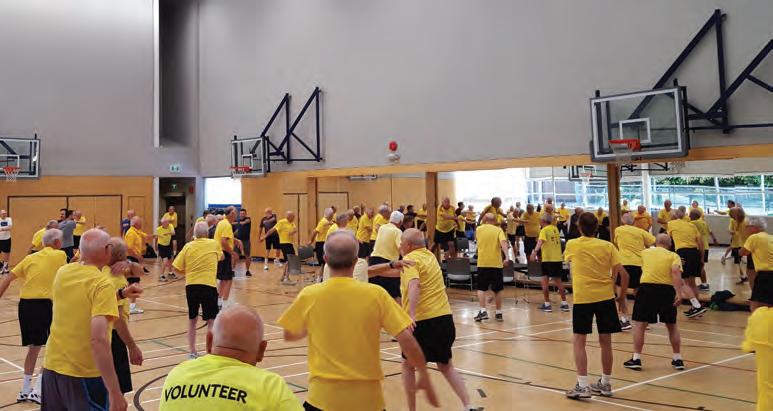
Then there is Barrie Chapman, an 87-year-old fitness instructor from West Vancouver, B.C. whose sold-out Fit Fellas classes bring 170 participants to work out. They don’t just come for the challenging workouts, but for the camaraderie and the community fundraising efforts that evolved from the program. proves you’re never too old to inspire others through fitness.
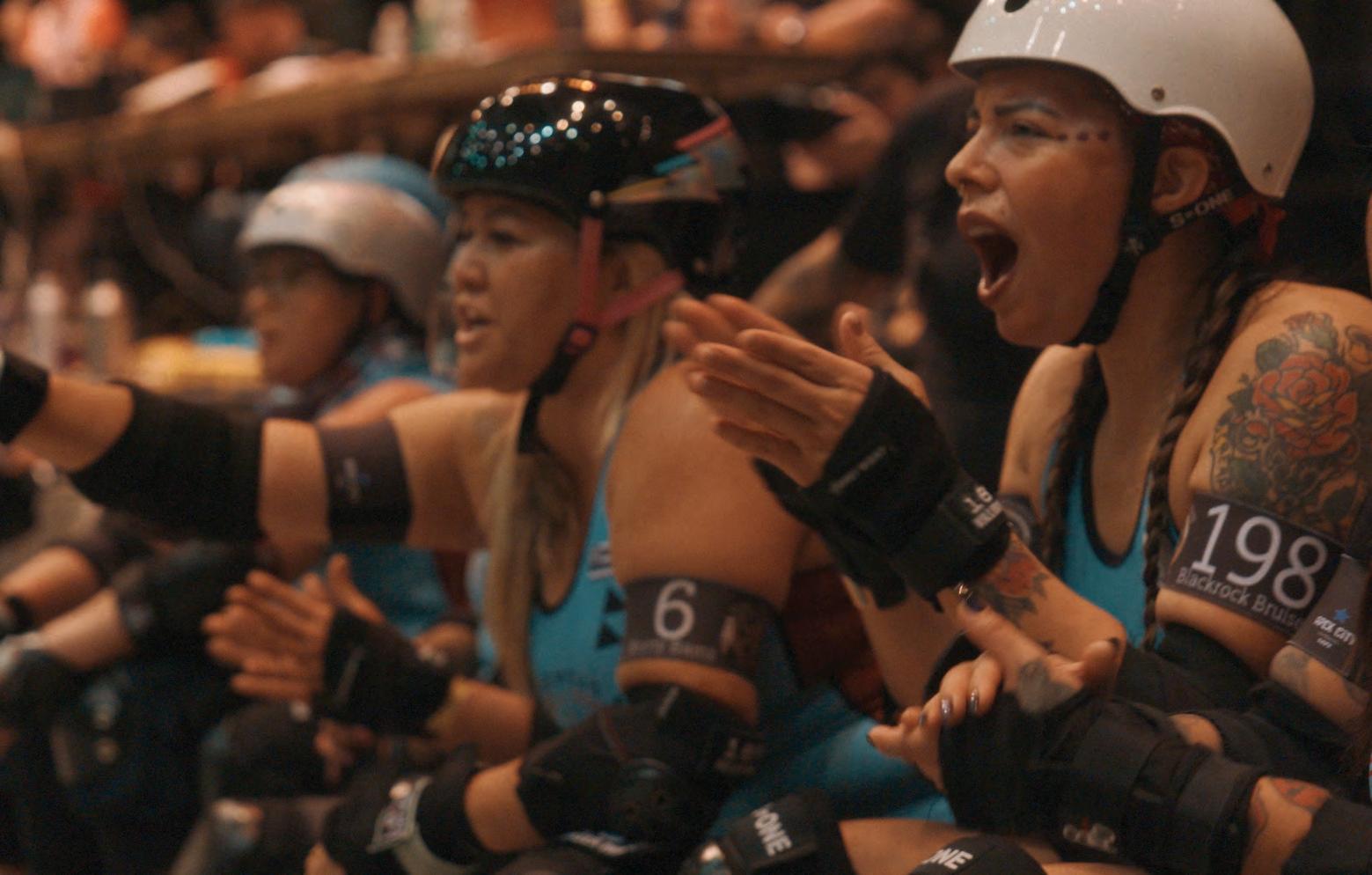
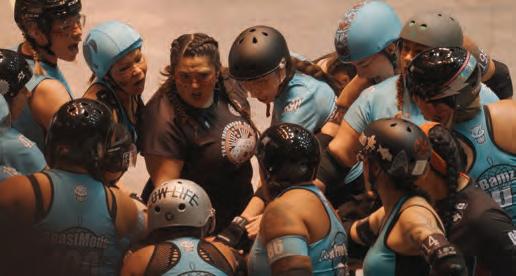
Our Final Impact feature spotlights Team Indigenous Rising, strong, resilient Indigenous roller derby athletes whose story is captured in the film Rising Through the Fray. Their impact reaches far beyond sport, and their message is of power, inclusivity and perseverance.
Of course, this issue is packed with expert advice to support your fitness journey from workouts with our Top Trainers, to expert insights from leading professionals in nutrition, fitness, health, and sports medicine, and insightful editorials such as using AI to support better health and how to prevent burnout (something many of us can relate to).
I think we’ve got you covered again to start 2026 on a strong note.
Didn’t get your hands on a favourite edition of IMPACT? Or maybe your best friend secretly borrowed it from you? No worries. Subscribe to our FREE newsletter and digital edition online at www.impactmagazine.ca
Human-led Workouts Preferred Over AI
While AI technology may be playing a growing role in the fitness industry, according to a 2026 Global Fitness Report from Les Mills most consumers prefer human-led, workout experiences. Based on responses from more than 10,000 consumers across five continents, just 10 per cent of respondents prefer AI-led workouts, while a majority lean toward or strongly prefer training led by a human instructor, citing connection, expertise, and motivation as key factors.
While 62 per cent of Gen Z and Millennials say they enjoy workouts that push their limits, many still face barriers to getting started, including intimidation and conflicting advice in weight rooms. Gym members reported significantly higher satisfaction with their overall wellness compared to non-members. Notably, younger generations showed the strongest preference for human coaches, while adults aged 55+ were the most open to AI-based options.
“Nothing beats the buzz of a live class, and these findings show we remain social animals when it comes to working out,” said Les Mills, Head of Research Bryce Hasting. Overall, the report points to a future where technology supports—but does not replace—human connection.
Edited and reprinted with permission from: https://fitbizweekly.ca.
Fermented Foods Initiative
There’s a growing public awareness of the wide-ranging benefits of fermented foods when it comes to our gut health. So much so that a team of Canadian researchers—including Dr. Raylene Reimer, PhD, RD, a professor of nutrition and registered dietitian in the University of Calgary’s Faculty of Kinesiology—have launched the Canadian Fermented Foods Initiative (CFFI). The online resource is the first of its kind in North America, where researchers, members of the food industry, and consumers can find and share trusted information about the health benefits of fermented foods.
“The crux of the initiative is to compile and build research evidence on the health benefits of fermented foods to push for their greater prominence in Canada’s Food Guide,” says Reimer.
Fermented foods are produced by harnessing bacteria and other micro-organisms to alter the taste, digestibility and shelf life of certain foods.
The site unpacks the myths of fermented foods and offers practical information as to the many types of foods, where to find them, how to cook with them, and how to make them. There’s also a list of recommended apps for tracking gut health.
The latest research: Current Research in Fermented Foods: Bridging Tradition and Science, was recently published in the scientific journal Advances in Nutrition.
Source: new.ucalgary.ca.
Mortality & Exercise
If cross-training is on your fitness regimen then you may lead a longer life! According to a new study from the British Medical Journal (BMJ) it isn’t how long you exercise it is how many different types of exercise you do. Moreover, while some exercise modalities plateau after time, others increased bringing greater benefits.
The study tracked 70,725 women and 40,742 men over thirty years—all physically fit at the start with no trace of illness or injury. Walking, running, racquet sports, strength training and rowing showed lower mortality rates, with those in the highest physical activity variety group having a 19 per cent lower case for mortality.
The study also highlighted activities that were linear—with no plateau— and non-linear. Running, racquet sports and strength training came top in the linear category while the benefits of walking and rowing leveled off once a threshold has been reached. Surprisingly swimming fared poorly, saying it has a “significant non-linear association with respiratory disease mortality.”
One of IMPACT Magazine’s Canada’s Top Fitness Trainers, 2021, Simon is the director and head coach at Raincity Athletics in Vancouver, B.C. and a behaviour interventionist working with kids on the autism spectrum. He also serves as President of the Canadian Functional Fitness Federation. THOR604 | RAINCITYATHLS RAINCITYATHLETICS
Regardless of what any trainer tells you, there’s one thing that is the single most important factor of your workouts: that you do them! Especially for kids or those aging, more important than following a perfect workout routine is that you engage every muscle and movement pattern for 30+ reps (minimum) 1-2x / week. For kids, this is what ensures balanced growth and development of muscles, bones and joints - and for the aging population it’s as simple as ‘use it or lose it’ so as long as you continue to pass through full ranges of motion with a bit of external loading, you won’t lose that muscle mass—and that’s the single most important factor for healthy aging!
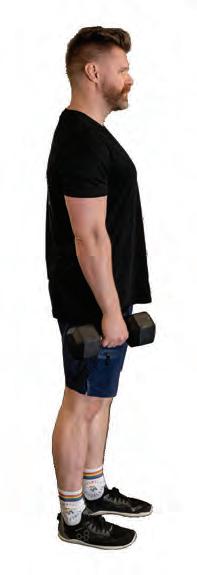
That’s why I’ve put together a single dumbbell workout that hits every major muscle group so that you’ve got no excuse to get it in whether you’re at home, the gym, or somewhere in between—all you need is a weighted object (dumbbell obviously works best) and you’ve got no excuse to not keep your basics going!
I recommend performing 2-4 sets of each exercise. If short on time do them as a superset with a 30-60 second rest between each movement.
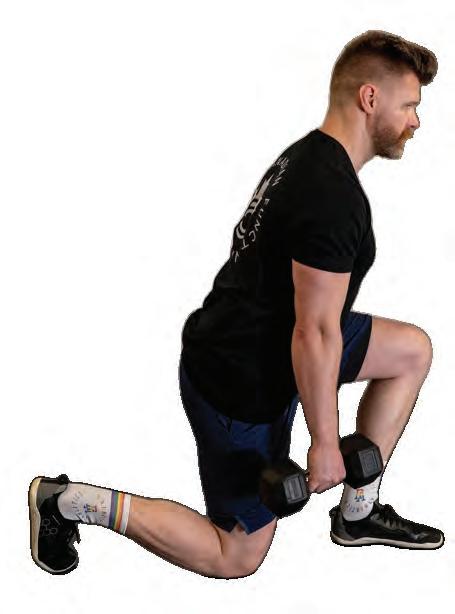
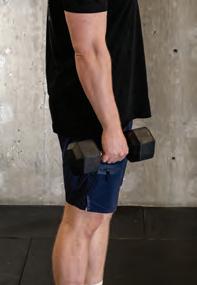
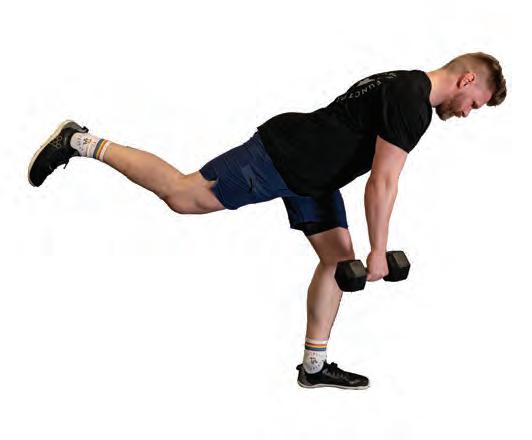
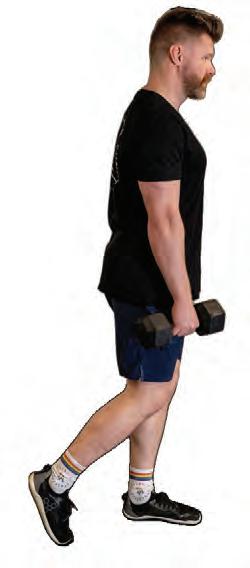
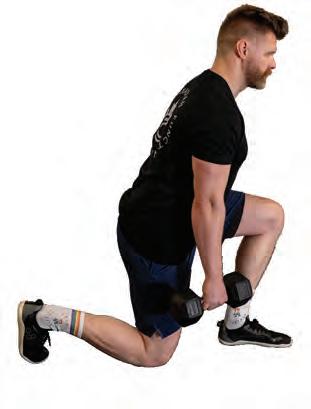
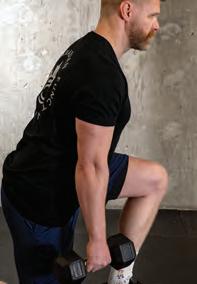
SINGLE-LEG ROMANIAN DEADLIFT INTO LUNGE
6-10 reps (depending on weight) of both movements/side
Pattern: Lower Pull & Lunge
Focus on control through the lower leg, keep the hips square to the ground as you raise your back leg and let your torso tilt down. Focus on lifting the back leg rather than bending at the waist, focusing on targeting the hamstring of the supporting leg rather than how far down the dumbbell goes. Once you come back to standing, we’re going right into a step-back lunge so we can target the glute of that same leg all in one movement.
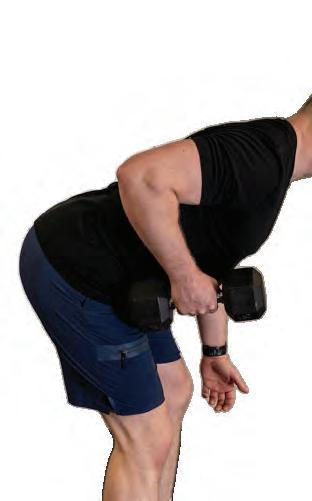
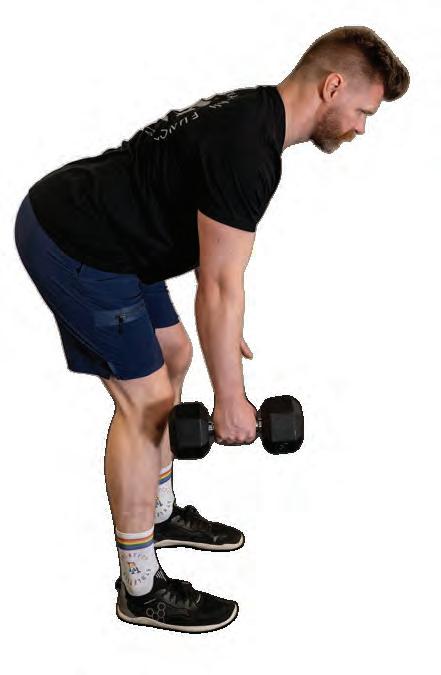
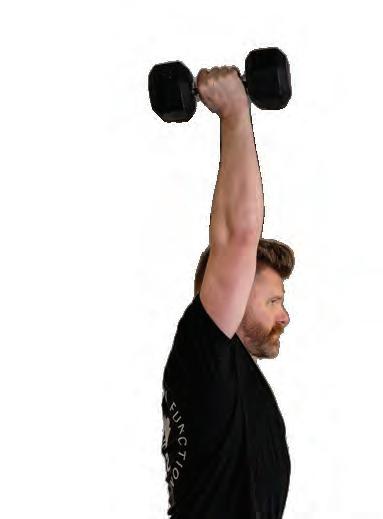
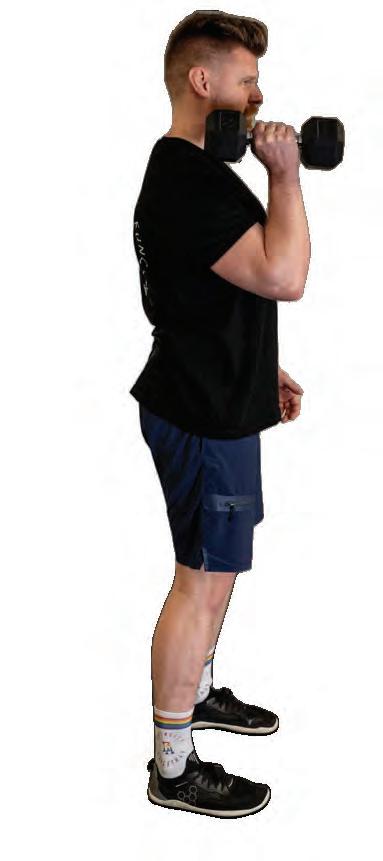
DUMBBELL ROW TO CURL & PRESS
6-10 reps
(depending on weight) of all movements/side
Pattern: Upper Pull & Push
Starting in a hinged position with a flat back, perform a single-arm dumbbell row focusing on driving the elbow back and engaging the lat. Then stand up tall, curl the weight to your shoulder and then press it overhead. If you’ve got a heavy dumbbell, you can treat the curl as a bit more of a swing, and then use the legs to perform a push press to get the DB overhead.
Bonus: If you have two dumbbells, you can do both arms at the same time! •
4
3
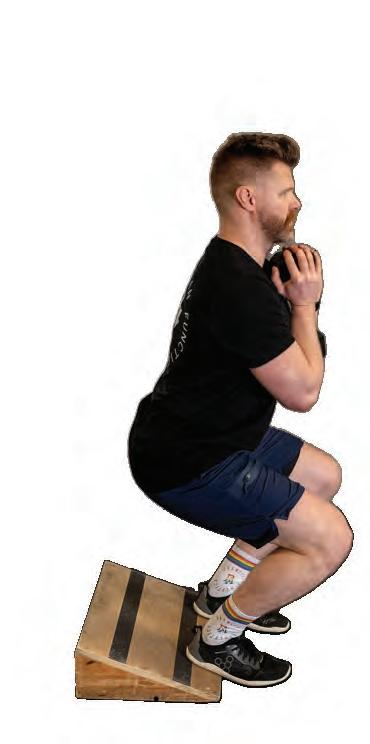
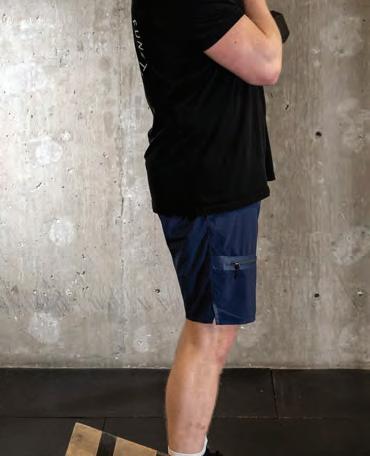
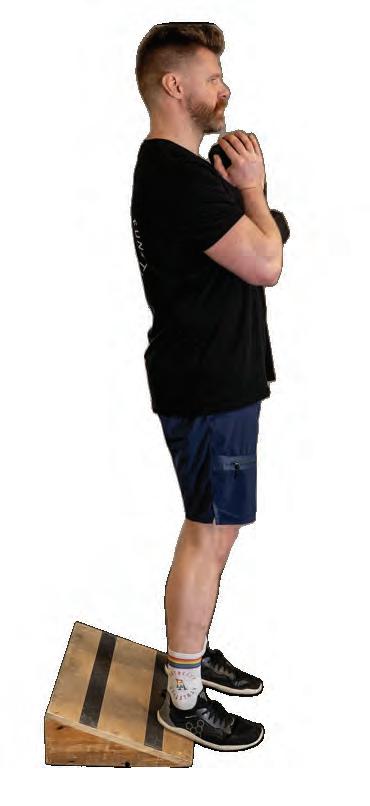
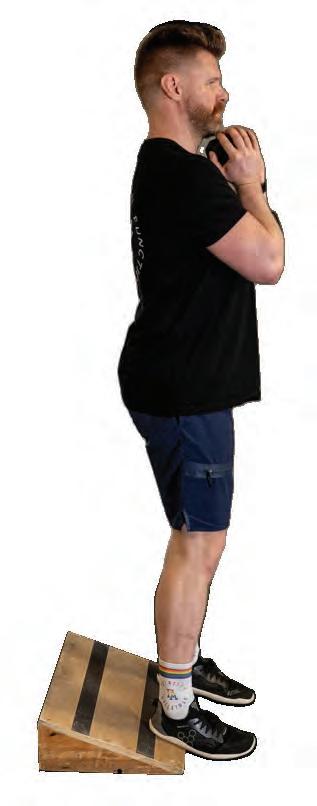
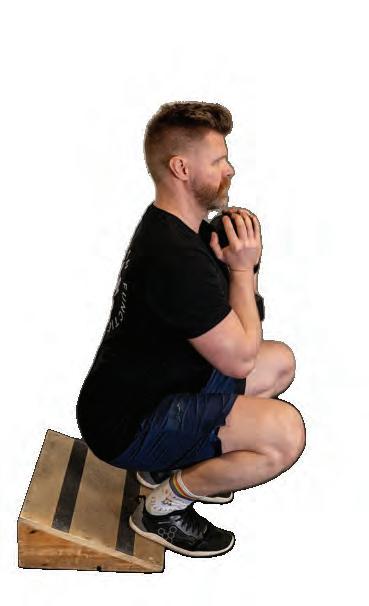
1+ ¼ CYCLIST SQUATS
6-10 reps
(depending on weight) with a controlled tempo The reason we use a cyclist squat (heals elevated) over a conventional squat is we’ve already targeting the hamstrings and glutesso in this move we’re trying to get into DEEP knee flexion to ensure longevity and healthy knees while also targeting the quadriceps more specifically. Elevate your heels with whatever you’ve got that’s one to two inches tall!
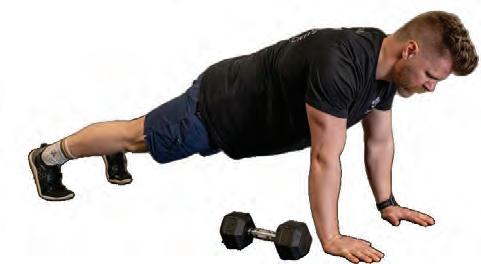
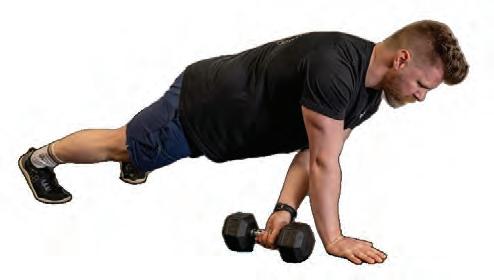
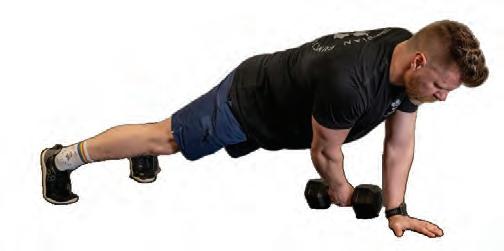
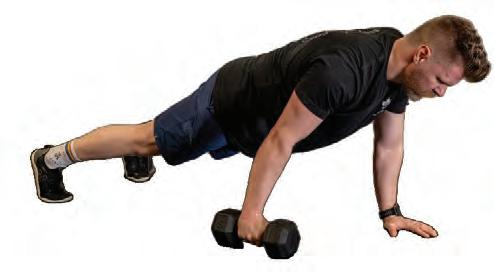
PLANK DRAG THROUGH
10-20 reps
Pattern: Core/Obliques (and scapular strength)
Starting in a tall plank position you’re going to drag the weight across the floor by pulling it (not pushing it) while trying to minimize the movement through your torso. If you’ve got a lot of butt movement going on widen your stance, if it’s too easy bring your feet closer together! This movements not only great for targeting the core and obliques but also helps strengthen our upper back and scapula which helps with mobility and posture as well.
HARD-CORE EXPLORE
If there’s one group of muscles you don’t want to ignore, it’s the muscles of the core!
BY HEATHER TEICHROB JANA MIKO PHOTOGRAPHY
One of IMPACT Magazine’s Canada’s Top Fitness Instructors 2025, Heather has a dynamic background in fitness instruction, instructor training and development, individual coaching and program creation in Calgary, AB.
HTEICHROB HTEICHROB
LOCATION: BIG SKY FITNESS
Asolid core helps generate power while stabilizing the spine and lowering the risk of back pain, making it easier to do sports and everyday activities that require strength and balance. As efficient as it is effective, this comprehensive midsection workout is designed to enhance the function of the critical torso muscles by targeting multiple muscle groups simultaneously.
With a fresh approach to non-traditional core exercises, you’ll explore untapped reservoirs of strength using intentional, controlled resistance to fire up every angle of your abdominals, obliques, pelvic muscles, and back. Dynamically tying shoulders and legs into the mix you’ll work through standing, quadruped, plank and supine positions challenging the entire kinetic chain of the body and leaving you feeling strong, balanced and centred from the inside out. Grab a mat and light to medium dumbbells and let’s explore the core creatively from 360 degrees maximizing results in minimal time.
1
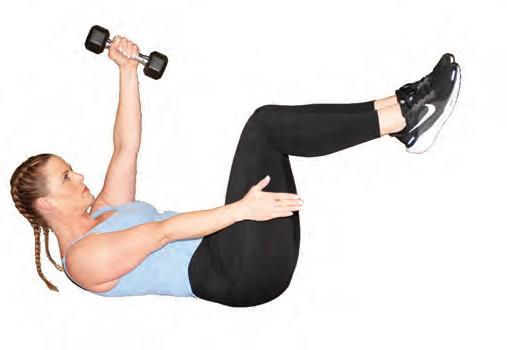
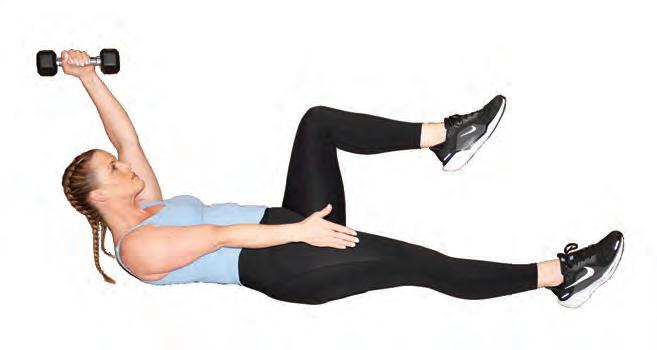
DEAD BUG
1 set, 10-15 reps on each side
Equipment: 1 light dumbbell
A back-friendly exercise that builds core strength, coordination, and body awareness. Suitable for all fitness levels, the Dead Bug supports the spine and pelvis while strengthening deep core muscles. Adding a weight activates the shoulders and challenges the entire postural chain.
1. Lie on your back with arms up towards the ceiling, dumbbell in your right hand, knees bent, feet flat on the floor and heels in line with sitting bones. Lift your feet off the floor, until knees and hips are at 90-degree angles and shins are parallel to the floor. If the low back is uncomfortable, posteriorly tilt the pelvis as much as needed to support the weight of the legs and the work of the exercise.
2. Take a deep breath in and slowly begin to extend your right arm with dumbbell overhead while simultaneously straightening and extending your left leg as far as you can without changing the position of the lower back.
3. W hile exhaling, return to starting position.
4. Repeat on the other side.
Modification: Remove the dumbbell and perform this exercise non-weighted.
2
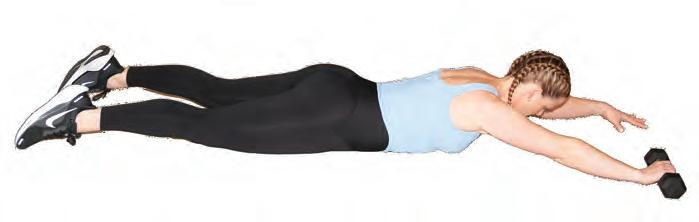
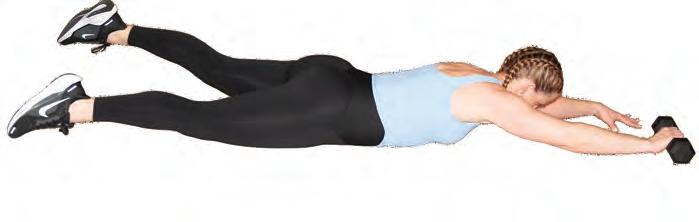
WEIGHTED BACK EXTENSION
1 set, 10-15 reps on each side
Equipment: 1 light dumbbell
Deceptively challenging, the weighted back extension engages the entire posterior chain. Using one dumbbell with a contralateral challenge, it targets the back, core, hips, and shoulders making it a key part of a complete core workout.
1. Lie prone with a light dumbbell in your right hand and arms extended in front of the body. Tent your left-side fingertips into the floor to avoid pressing into your left hand too firmly when you lift.
2. E xtend your legs long and straight behind you.
3. D raw your navel away from the mat creating a strong navel-to-spine contraction.
4. I nhale and reach left leg and right arm (holding the dumbbell) out and up toward the ceiling simultaneously. Briefly hold at the top, then exhale and lower arm and leg to the mat.
5. M aintain a still centre and avoid rocking from side to side.
6. Looking down the bridge of the nose, keep your gaze centred toward the front of the mat to ensure proper cervical alignment of the neck. Focus on length through the torso rather than height of the limbs.
Modification: Remove the dumbbell and perform this exercise non-weighted. •
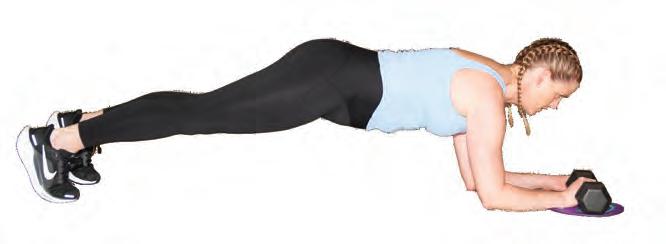
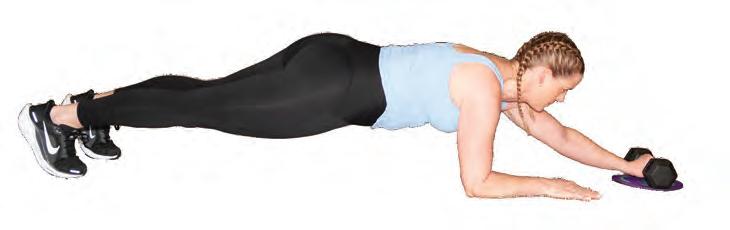
SLIDING PUSH-PULL PLANK
2 Sets (one on each side), 8-10 reps per side
Equipment: 1 dumbbell, 1 slider/disc (substitute a small towel or paper plate)
Strengthen and lengthen with a fresh forearm plank. This core staple builds abs, back, shoulders, glutes, and legs, improving posture and stability. Add weight and sliders to engage the lats and obliques for a deeper core challenge.
1. Ensure you are working on a smooth floor surface. Place the dumbbell on top of a sliding device or disc and move the slider to the top of the mat.
et up for plank with forearms on the mat and shoulders stacked directly above elbows.
efore you lift to toes draw the navel in creating a strong cement block with your torso. Drive through the toes and lift your knees pressing back through the heels. Optionally, keep knees grounded throughout the exercise. each right hand forward and push the dumbbell and slider forward a few inches. Return right forearm under the shoulder. Then reach your left hand forward and pull back in the dumbbell and slider. Repeat with same (right) hand pushing out and opposite hand (left) pulling in.
5. Rest in a comfortable stretch position (Child’s Pose).
6. Repeat on the other side.
Modification: Perform plank from the knees.
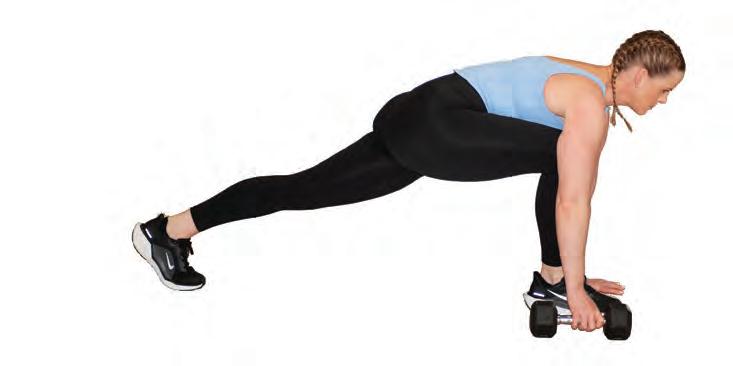
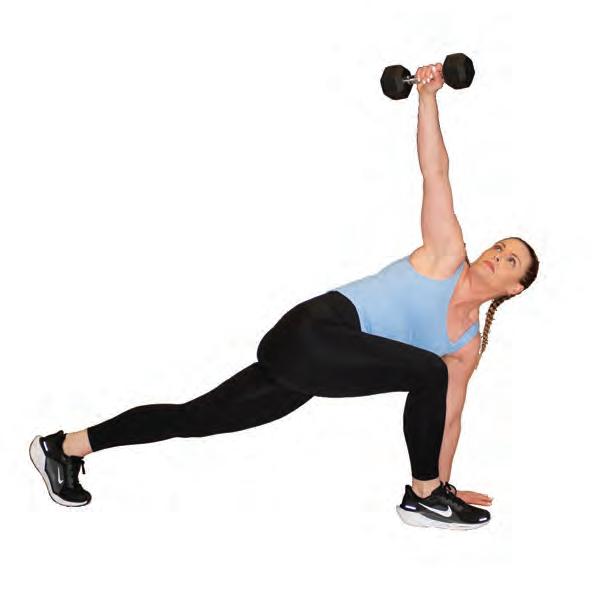
LUNGE WITH ROTATION
1-3 sets, 8-12 reps on each side
Equipment: 1 medium dumbbell
This loaded, rotational exercise engages legs, shoulders, hips, glutes, and core. It builds strength, boosts heart rate, and improves stamina, mobility, and flexibility. Adjustable range of motion makes it accessible for all fitness levels.
1. W ith dumbbell in your right hand, step the right leg forward into lunge position by bending the knee and aligning it over the ankle. Extend left leg behind you and place your left hand down to the floor for support. Hinge forward at the hips so the chest hovers above the thigh and the back remains straight.
2. Lift your back heel as you extend the dumbbell overhead, opening toward your front right leg and rotating through the torso.
3. C ast your eyes upward as you lift the dumbbell, then rotate your head down and in line with spine as you lower the weight.
4. After completing 8-12 repetitions, step your back (left) foot in towards the front foot to return to standing position.
5. Repeat on the other side.
Modification: Stay higher in the lunge position. Opposite hand remains on the thigh as you row the dumbbell to the hip and rotate at the rib cage rather than extending the weight upward and overhead.
Preventing Burnout
How to turn setbacks or losses into success
BY JENNIFER KEABLE
Burnout prevention coach and speaker who helps athletes and professionals build sustainable success through mindset, recovery, and aligned action, from Calgary, AB. JENNIFER.KEABLE JENNIFER-KEABLE
In sport, success has always been measured in numbers—your wins, your stats, your time, your pace, your next goal. But what happens when the drive to perform starts costing your passion, your energy, or your joy? Perhaps it is time to redefine success beyond performance alone, building a foundation of well-being, purpose, and resilience that fuels sustainable excellence.
Here’s the truth:
• A life built on performance alone isn’t sustainable.
• Eventually something gives—an injury, age, pressure, or pure exhaustion—and when it does, you feel the impact.
• Your identity, your confidence, and your sense of worth take the hit.
And when the drive to achieve starts costing your happiness and your sanity, the question is no longer: “How do I perform better?” It becomes: “How do I make my success something sustainable… something that still exists even when the scoreboard or finish line isn’t in sight?”
These are the questions many athletes avoid— until something forces you to face them.
WHEN SPORT BECOMES YOUR IDENTITY
If you’ve been competing for years, maybe even most of your life, chances are you’ve been known for what you do more than who you are.
• T he competitor
• T he one chasing the next personal best
• T he one who pushes through
• T he reliable one
• T he tough one
• T he comeback story
But very few people ever ask: “Who are you outside of the performance?”
Which is why when you hit a setback—an injury, a bad season, a disappointing race, missing qualification for a goal event, burnout, or even retirement—you may feel like the ground disappears beneath you.
Questions start arising that you may not be prepared for:
“What makes me valuable without this?”
“Do I matter the same way?”
“Where do I fit if I’m not performing?”
This is not a personal failing. This is the natural result of defining your worth through performance alone. And this is your invitation to build something stronger.
REDEFINING SUCCESS
The most resilient athletes aren’t the ones who avoid challenge, they’re the ones whose identity doesn’t crumble when challenge hits.
They expand their definition of success beyond the numbers, grounding it into something deeper:
• Your well-being: physical, mental, emotional
• Your purpose: why you show up at all
• Your identity: who you are when no one’s keeping score
• Your connections: the relationships that support you
• Your joy: what makes life feel meaningful again This kind of success can’t be taken away by a bad race, a cancelled season or a career transition. It’s yours—independent of performance.
JOURNALING AS A TOOL
One of the most powerful tools I teach athletes is intentional journaling—and no, not the “dear diary” kind.
This is structured, reflective writing that helps you:
• Understand your internal world
• S eparate your identity from your output
• Clarify who you’re becoming
• Catch burnout before it hits
• Reconnect to your deeper WHY
• Stabilize your mental and emotional state
• T hink more clearly, perform more intentionally
A 2014 Harvard Business Review: Learning by Thinking: How Reflection Aids Performance found that daily reflection improved performance by 23 per cent, not because people worked harder, but because they understood themselves better.
Reflection turns your experience into insight. Insight turns into better decisions, better emotional regulation, and better long-term performance.
Here are a few prompts to get you started:
• “ Who am I becoming?”
• “ Who is that I want to be?”
• “ What part of my identity do I want to strengthen that has nothing to do with sport?”
• “ What do I want to feel this year, not just achieve?”
Answer them honestly, and you’ll discover that your identity is so much bigger than your stats.
longer when you’re aligned, not depleted.
This isn’t about lowering the bar. It’s about shifting from a fragile form of success to one that’s unshakeable. Because when your identity is rooted in who you are—not what you do—setbacks don’t break you. They grow you.
A NEW CHAPTER: REFLECTION, RECOVERY, AND RECONNECTION
The next chapter of your success isn’t found in pushing harder—it’s in learning to reflect, recover, and reconnect with who you are beyond performance.
Reflection helps you understand yourself more deeply. Recovery restores the energy and clarity your sport demands. Reconnection anchors you in an identity that isn’t shaken by setbacks.
You don’t have to wait for burnout, injury, or transition to start redefining what success means to you. You can begin now—with one moment of honesty, one breath, one question that brings you back to yourself.
Because when your identity is rooted in who you are, not what you achieve, your success becomes something sustainable, grounded, and entirely your own.
Your worth has always been bigger than your performance. And your success deserves to be sustainable.
Agility Training Throughout Life
Practicing agility training early can reap long-term benefits
BY DR. SYL CORBETT
Endurance athlete, scientist and coach specializing in physical literacy, founder of Athleticwise and Rock On, based in Calgary, AB. ATHLETICWISE
Agility is the integration of several physical and neurological components working synergistically. It incorporates balance, coordination, reaction time, strength, mobility, and cognitive processing. Agility is not just how quickly someone can move, but their ability to identify the task-relevant clues and execute an accurate and rapid motor response. It is often mistakenly thought of as a skill solely for professional athletes, such as soccer players changing direction full-tilt or hockey players pursuing the puck and evading opponents.
In reality, agility is one of the most important physical capacities that is often overlooked yet is required throughout our lives. An athlete may appear fast by having high-level agility, moving efficiently no matter the task. More so than flashiness and quickness on the field; it is about everyone’s ability to move efficiently, react quickly, and maintain their centre of mass in a dynamic environment. When you step off a curb, catch yourself slipping on ice, pivot to avoid a collision, or reach to steady yourself after a misstep, you are employing agility. These movements necessitate communication between the brain, nerves, muscles, and joints; hence agility is as much a brain skill as a physical one that you need day-to-day.
AGILITY STARTS IN CHILDHOOD
From childhood to older adulthood, agility training plays an essential role in physical health, brain function, injury prevention, and overall quality of life. The ability and confidence to move in many ways is fundamental for children and teens. Running, jumping, chasing a ball, skipping, changing direction, and reacting to stimuli helps wire the brain for efficient movement patterns and motor control. It also supports motor-skill development, coordination, and confidence. Children who move efficiently are more likely to enjoy physical activity and stay active as they
age. Importantly, agility work also reduces injury risk by teaching children how to decelerate, absorb force, and control their bodies in space.
For adults, agility training enhances both performance and resilience. Whether someone is an athlete, a recreational exerciser, or simply navigating busy daily life, agility underlines efficient movement. It improves joint stability, neuromuscular control, and the ability to transition smoothly between tasks. From a performance standpoint, agility allows adults to generate and control force more effectively in a given range of motion. From a resilience perspective, it guards against common injuries such as ankle sprains and knee strains by improving proprioception and neuromuscular coordination.
Agility training also tests the nervous system more so than traditional exercise such as running on a track or road cycling. Multi-directional movement, decisionmaking, and reaction drills stimulate brain regions involved in attention, timing, and coordination. This kind of training builds movement capacity. Rather than a preplanned route, opt for reactive drills, i.e., responding to an unanticipated stimulus to further challenge yourself.
BRAIN HEALTH
One of the most powerful yet underappreciated benefits of agility training is its impact on brain health. Agility tasks require constant information processing: visual input, proprioceptive feedback, balance adjustments, and swift decision-making. This stimulates neural pathways involved in executive function, memory, and motor planning. Agility training strengthens the connection between the brain and body, supporting the idea that movement is not just physical activity but, in addition, cognitive training. An example might be throwing a lacrosse ball over your shoulder and quickly catching it. Agility balls are a fun tool to incorporate in your routine as well. These balls are uneven making their retrieval after a bounce challenging.
This brain–body integration becomes even more key with age, as neuromuscular and central nervous systems may decline. Agility training helps slow this degradation by continually challenging the nervous system in meaningful, functional ways.
PRACTICE AGILITY MOVEMENTS
Perhaps the most critical role of agility training emerges later in life. According to the World Health Organization (2007) falls are one of the leading causes of injury, loss of independence, and reduced quality of life in older adults. While strength and endurance matter, falls are rarely caused exclusively by lack of strength. They are caused by delayed reactions, poor balance, and inability to adjust quickly to unanticipated situations. Practicing changes of direction, balance recovery, stepping strategies, and reaction drills teaches the body how to respond when balance is contested. This is not about speed for speed’s sake, it is about control, awareness, and confidence.
Agility training also reduces reticence of movement, which is a major contributor to inactivity in older adults. When people trust their ability to move, they will likely be more active. Adopting an active lifestyle may help maintain strength, bone density, cardiovascular health, and social engagement.
Agility training should evolve across the lifespan. In youth, it is playful and free of constraints. In adulthood, it is purposeful and performance driven. In later life, it becomes protective and builds confidence. The common theme is challenge, variety, and controlled movement.
Agility training is not optional, but essential. It supports safe movement, quick thinking, injury avoidance, and independence. It improves athletic performance, daily function, and healthy longevity. Perhaps most importantly, it keeps people functional, capable, malleable, and engaged. Training agility prepares us not just to move, but to move aptly at every age. In the end, agility is not reserved for the elite. It is about everyone’s ability to adapt and reap a better quality of life.
AI Tools for Better Health
Track, analyze, and improve your wellness journey
BY DR. EARL J. CAMPAZZI
and
Author of Better Health with AI: Simple Steps to Real Results,
over 35 years of clinical experience, Dr. Campazzi bridges traditional medicine with modern technology in his Palm Beach, Florida practice.
EARL-CAMPAZZI
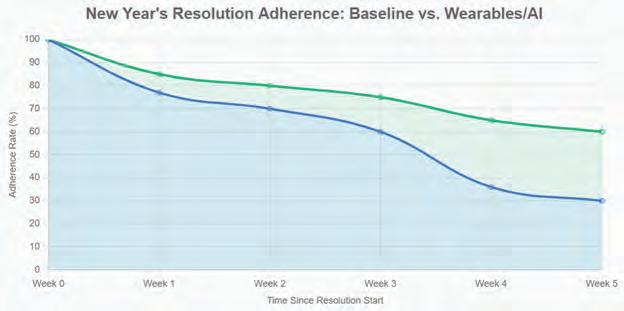
ANew Year often comes with New Year’s resolutions, then often followed by the unofficial Quitter’s Day (the second Friday in January) or a gradual “falling off the wagon” in February. This year is likely to be different because of AI. Wearables, sleep trackers, food-logging apps, and AI integrators will enable you to work smarter, not harder. They help prevent overtraining sparked by early enthusiasm, avoid crash dieting, and provides timely reminders during busy days. Here is an AI-generated prediction of the effect. The blue baseline shows how people give up on their new year's resolutions, and the green line shows when they use wearables with data analyzed by AI. It shows better adherence to new year's resolutions.
(roughly 40 to 100) generally signals better recovery, while lower values (under 30, especially under 20) can indicate overtraining and the need for rest.
3) Personalize nutrition using AI tools such as Cronometer or Levels
A single breakfast banana spikes my blood sugar to 150, but it won’t do that for everyone. Nutrition is inherently personal. Blood sugar control matters because spikes place stress on the body, increase inflammation, and can contribute to fatty deposits in arteries, especially in the heart and brain. Cronometer excels at detailed food tracking, particularly micronutrients, though it requires manual entry. For those who prefer ease over precision, photo-based apps like Foodvisor, Calorie Mama, and Snap It estimate food content automatically. The most important step is using a program such as Levels (which requires a continuous glucose monitor) to see how your diet, movement, and sleep shape your blood sugar patterns.
Here are six practical ways anyone can start using A I tools to improve their health and reach their fitness goals in 2026.
1) Optimize sleep using wearables like Oura, Fitbit, or Sleep Cycle
Just as buildings require strong foundations, fitness and health depend on the willpower needed to sustain them. Think of a day after a poor night’s sleep: you’re more likely to reach for carbs and caffeine, and workouts feel much harder. Before sleep trackers, we only knew how long we stayed in bed and how we felt. Now we can identify what genuinely affects our sleep. Should we avoid late caffeine or reduce it altogether? Do evening workouts keep our heart rate too high at night? Does late screen time matter to us personally? Data lets us prioritize sleep and find the drivers that ensure a better day follows.
2) Use HRV data from Apple Watch or Whoop to improve training and avoid overtraining
Anyone who has swung a golf club knows the “sweet spot” on the club face that makes the ball fly straighter and farther. Pros find it 90 per cent of the time, while weekend golfers hit it maybe 20 to 30 per cent. HRV (heart rate variability) helps us find the sweet spot between over- and under-training. If your resting pulse is 60, your heart beats roughly once per second, but in reality, it varies slightly: 1.01, 0.99, 0.98, 1.02, and so on. These micro-variations reflect how well the heart adapts to nerve input. Higher HRV
4) Start the year with one simple daily tracking habit—steps, sleep, or hydration
Around 100 years ago at Western Electric’s Hawthorne Works, researchers discovered an unexpected effect: simply being observed increased productivity. For beginners, before diving into AI, track just one habit. It doesn’t matter which—steps, time spent walking, or morning weight. You become both the observer and the observed, and the instinct to improve follows naturally. Over time, you can feed that data into AI and let technology track additional measures. Most importantly, let AI integrate everything so you can see whether your efforts are improving your health
5) Use apps like Breathwrk or Calm to reduce stress and support recovery
It isn’t all about effort, relaxation plays an equal role. Adrenaline sharpens focus and strengthens muscles when danger appears, but constant low-grade stress works against us. Breathwrk, Calm, and similar guided-meditation apps help lower blood pressure, reduce inflammation, and support emotional regulation, among other benefits.
6) Use AI to prepare for more effective doctor visits
Modern appointments are often rushed, and it’s easy to forget concerns you meant to raise. AI can organize your thoughts, but it can also do far more. Listing your medications and supplements prompts AI to flag potential issues. St. John’s wort conflicts with most anti-depressants. CoQ10 often needs monitoring or supplementation when taking a statin. Medications from different specialists may interact. The deeper value of AI lies in integration: wearable data, symptoms, and test results analyzed against vast medical literature can offer insights for you and your physician. This enhances clinical care rather than replacing it.
AI is poised to transform health and medical care. Its access to the scientific literature, combined with the ability to measure how we live and move, creates a breakthrough unlike anything before. The greatest gap today is simply awareness and practical know-how.
COMPETITION AT THE AFFILIATE LEVEL
How CORFit leverages a global brand to build community, culture and capability
For affiliate gym owners, the challenge today extends well beyond delivering great workouts. The modern fitness landscape demands a more comprehensive approach one that supports community, drives meaningful member engagement, and aligns with brands that elevate rather than dilute identity. From CORFit’s perspective as an affiliate gym owner, the HYROX experience has proven to be a powerful catalyst across all three.
At its core, HYROX offers something uniquely compelling: a standardized, globally recognized fitness program and competition format that remains highly accessible at the local level. Unlike traditional elite-only race formats, HYROX has successfully democratized fitness competition, creating a platform where everyday members, competitive athletes, and first-time participants can all find a sense of belonging. That accessibility has been one of the most valuable aspects for affiliates like CORFit.
Community Growth Through Shared Purpose
One of the most immediate impacts CORFit observed after activating HYROX was a noticeable shift in community
cohesion. Preparing for a HYROX-style event gives members a shared objective, something tangible to train toward beyond general fitness or routine. This collective purpose fosters accountability, camaraderie, and consistency, all of which are foundational to both athletic development and long-term community growth.
Training cycles built around HYROX principles naturally encourage shared experiences. Seasoned athletes help newer members understand pacing, movement efficiency, and race strategy, while those newer to competition bring enthusiasm and fresh energy. The result is a training environment that feels collaborative, inclusive, and purpose driven.
HYROX also enables CORFit to engage a broader demographic. Participation spans age groups, fitness backgrounds, and experience levels. This inclusivity reinforces CORFit’s role as a true community hub. One where fitness is challenging, accessible, and ultimately very rewarding.
Elevated Member Engagement
From an engagement standpoint, HYROX provides structure and narrative to CORFit’s programming and event calendar. Members are not simply attending classes; they are training together toward a defined outcome with progression and context. That clarity of purpose consistently drives higher attendance, stronger effort, and deeper buy-in.
HYROX training emphasizes functional fitness, endurance, strength, and resilience. These are qualities that translate directly to real-world performance. Members feel fitter, more capable, and more confident, reinforcing the value of their investment in both effort and experience. Importantly, this progress is not limited to podium-focused athletes; it is equally meaningful for members completing their first event or reaching a personal milestone. Engagement also extends beyond the training floor. Travel to HYROX events, participation in CORFit-led simulations, and shared recaps or community gatherings have strengthened relationships and transformed individual fitness journeys into shared achievements.
Brand Alignment and Credibility
From a brand perspective, aligning with HYROX has elevated how CORFit is perceived, both internally and externally. HYROX brings global credibility, consistency, and professionalism. These qualities reflect positively on affiliates who champion the brand locally. The affiliation signals that CORFit is connected to a larger movement, without compromising its unique culture or coaching philosophy.
Rather than changing what CORFit stands for, HYROX has amplified it. The brand has been integrated thoughtfully into training and events while maintaining high coaching standards and a community-first approach. This alignment has also created opportunities beyond day-to-day operations. HYROX simulations and events have generated sponsorship interest and partnerships with like-minded organizations, further positioning CORFit as a leader within the local fitness ecosystem.
Democratizing Fitness, Locally and Globally
Perhaps the most powerful aspect of HYROX is its ability to bridge local training environments with a global fitness movement. Members train at CORFit under coaches they trust, knowing they are preparing for an event recognized on an international stage. That connection is deeply motivating and reinforces consistency and commitment.
By democratizing access to high-tier competition, HYROX has successfully leveled the playing field. When embraced authentically, it enhances community culture, athletic development, and long-term engagement both locally and globally.
A Culture Elevated
Ultimately, the HYROX experience has elevated fitness standards, mindset, and culture within the CORFit community. Members train with greater intention. Coaches program with clearer objectives. The organization operates with stronger direction and identity.
From an affiliate gym owner’s perspective, HYROX is not just a program or event, it is a framework for engagement, growth, and alignment. When implemented thoughtfully, it strengthens community bonds, improves member outcomes, and positions CORFit as part of a global movement while remaining firmly rooted in local impact. The results speak for themselves. So too do the smiles and the unforgettable high five train punctuating CORFit's post-workout ritual.
Mobility Training
Your path to better movement
BY KELLY STARRETT
Doctor of Physical Therapy, co-author of bestsellers, Ready to Run and Built to Move and co-founder and Chief Health Officer of The Ready State in San Rafael, CA. THEREADYSTATE THEREADYSTATE
Mobility isn’t just for elite athletes—it’s for everyone. Whether you’re chasing peak performance, recovering from injury, or simply aiming to age well, mobility training is the foundation of a durable, capable body. At The Ready State, we believe everyone—regardless of age, sport, or physical capacity— deserves access to tools that improve movement and reduce pain.
Let’s break down what mobility training really is, why it’s essential, and how you can start integrating it into your routine—because moving well isn’t optional if you want to thrive.
UNDERSTANDING MOBILITY TRAINING
Mobility training is a structured approach to improving the way your body moves. Unlike traditional stretching routines, mobility training incorporates active movement, strength, stability, and control within a full range of motion. Whether you’re an athlete, a weekend warrior, or someone looking to improve everyday movement, mobility training helps enhance joint health, reduce pain, and optimize performance. At its core, mobility training ensures that your body can access and maintain functional ranges of motion under control. This is crucial not only for injury prevention but also for maximizing movement efficiency in both athletic and daily life activities.
WHAT DOES MOBILITY TRAINING INVOLVE?
Mobility training is more than just stretching—it’s about preparing your body to move well. A comprehensive mobility practice includes:
• Active Range of Motion (AROM) Drills: Engaging muscles to control movement through a full range of motion (e.g., deep squats, controlled shoulder rotations).
• Joint Mobilization Exercises: Movements that help improve joint articulation and synovial fluid circulation, like wrist circles or hip CARs (Controlled Articular Rotations).
• Soft Tissue Work: Using tools like foam rollers, lacrosse balls, or massage guns to break up adhesions and improve tissue quality.
• Isometric Strength Training: Holding positions at the end range of motion to develop strength in vulnerable positions (e.g. loaded stretching for hamstrings or hip flexors).
• Dynamic Stretching: Controlled movements that lengthen muscles while keeping them engaged, such as thoracic rotations. By combining these elements, mobility training helps create a resilient, adaptable body ready to handle the stresses of sports, exercise, and daily movement (are we thriving yet? That’s the goal!).
HOW IS MOBILITY TRAINING DIFFERENT FROM STRETCHING?
Many people confuse mobility training with stretching, but they serve distinct purposes. Traditional static stretching involves passively holding a position to lengthen muscles, while mobility training actively engages muscles to improve movement quality.
Static Stretching
• Passive muscle elongation
• P rimarily increases flexibility
• L imited impact on movement mechanics
• Can be useful post-exercise for relaxation
Mobility Training
• Focuses on active movement and control
• Enhances strength and joint function
• Improves movement patterns and stability
• Supports athletic performance and injury prevention
WHO CAN BENEFIT FROM MOBILITY TRAINING?
The short answer? Everyone. Mobility training isn’t just for athletes—it’s for anyone looking to move better, feel better, and prevent injuries (is that YOU?).
Some key groups who benefit include:
• Athletes: Improved movement efficiency, reduced injury risk, and enhanced performance.
• Active Individuals: Better movement for activities like running, lifting, and recreational sports.
• O ffice Workers: Counteracts the negative effects of prolonged sitting by improving posture and joint mobility.
• A ging Populations: Maintains functional independence and reduces stiffness as we age.
• Rehabilitation and Injury Recovery: Helps restore movement patterns post-injury and prevents compensatory movement issues.
KEY COMPONENTS OF MOBILITY TRAINING
A well-rounded mobility training program should focus on the following components:
• Joint Articulation – Ensuring that joints can move freely within their full range.
• S oft Tissue Quality – Reducing adhesions and improving muscle elasticity with self-myofascial release techniques.
• Active Control – Strengthening end-range positions to reinforce stability and movement competency.
• Movement Integration – Applying mobility gains to real-life movements like squatting, lunging, and overhead reaching.
HOW DOES MOBILITY TRAINING AFFECT DAILY ACTIVITIES?
Mobility training isn’t just about improving sports performance— it has a direct impact on everyday life:
• Reduces Pain and Stiffness: Addresses common issues like lower back pain, tight hips, and poor posture.
• Enhances Posture and Ergonomics: Helps counteract the effects of prolonged sitting and screen time.
• Improves Strength and Stability: Ensures you can perform everyday activities (e.g., bending, lifting, reaching) safely and efficiently.
• Increases Movement Confidence: Makes exercise and daily movement feel easier and more natural.
Mobility training is an essential practice for optimizing movement, reducing pain, and improving overall physical resilience. Whether you’re an athlete or just looking to move better in daily life, incorporating functional mobility training into your routine will pay long-term dividends.
This article has been reprinted with permission from www.thesteadystate.com.
MOBILITY TRAINING Q & A
HOW OFTEN SHOULD I DO MOBILITY TRAINING?
Consistency is key! 10-15 minutes per day is enough to see improvements. You can integrate mobility training into your warm-up, cool-down, or as a standalone session.
What equipment do I need for mobility training?
Mobility training can be done with minimal equipment, but some useful tools include:
• F oam rollers
• R esistance bands
• Lacrosse or massage balls
• Yoga blocks
CAN MOBILITY TRAINING REPLACE MY REGULAR WORKOUT?
No, but it should be a key part of your routine. Mobility training enhances performance in weightlifting, running, cycling, and sports by improving movement efficiency and reducing injury risk.
Introducing the Class of 2026
BY SHARON ADAIGBE, LOUISE HODGSON-JONES AND ELAINE KUPSER
After months of review, debate, and careful consideration, we are proud to unveil Canada’s Top Fitness Trainers, Class of 2026!
Every year, this project reminds us just how extraordinary our industry truly is. From coast to coast, nominees continue to raise the bar, not only in technical excellence, but in leadership, integrity, and community impact. The depth of talent this year was remarkable. In fact, the scores were so exceptionally close they were separated by literally the slimmest of margins, reflecting just how strong and competitive this year’s field truly was.
Because of that razor-thin margin, we will be formally recognizing the finalists at this year’s AWARDS GALA and Canadian Fitness Industry Conference on May 30, 2026 while celebrating the official Canada’s Top Fitness Trainers, and presenting Finalist Honours.
New this year, we will present Achievement Awards and Rising Star Awards, celebrating both established leaders and emerging voices shaping the future of Canadian fitness.
Now in its ninth year, this national recognition program continues to spotlight professionals who exemplify what it means to lead in fitness today. Each year we have invited you—our
readers and industry peers—to nominate trainers and instructors who are making a measurable difference. The 2026 nominees delivered inspiring stories of resilience, innovation, education, and service. Their combined experience spans decades, disciplines, and diverse communities, yet they share a common purpose in elevating others and empowering Canadians to live healthier, stronger lives—physically, mentally, and emotionally.
Our evaluation process remains thorough and independent. Nominees are assessed on education, certifications, tenure, philanthropy, leadership, and community contribution.
Personal philosophies and written submissions are blind-scored by our expert panel to ensure fairness and integrity. Social media following and popularity metrics are not part of the equation. Substance matters here.
At their best, fitness professionals are mentors, advocates, safe spaces, and catalysts for confidence. They shape culture inside their facilities and far beyond their walls.
To every nominee, finalist, award recipient, and member of this year’s class—thank you for the work you do and the lives you change. We are honoured to celebrate you.
The stage is set. Let’s begin.
Congratulations to All 2026 Nominees & Finalists
Nicole Adjeleian, Sean Allt, Tammy Andersen, Wendy Ashe, Justina Bailey, Denise Beatty, Janelle Brade, Maureen Brintnell, Damien Cachia, Rae Cameron, David Campbell, Cassidy Carson, Cassidy Conaghan, Simon Creasey, Kate Czerwenka, Chad Deines, Jean Diaz, Laurel Dickson, Rahmi Diomande, Logan Dube, Zita Dube-Lockhart, Lemar Durant, Peter Estabrooks, Kenton Exner, Michelle Falzone, Luis Fitz, Hannah Fletcher, Laura Flood, Kim Gibas, Ryan Grant, Louise Green, Bara Haban, Toni Harris, Yana Hempler, Rich Hill, Julie Hodge, Curtis Howden, Ally Hunter, Katarina Hyndman, Chris Hynes, Anita Ivic, Nick Jacobson, Krista Johnston, Dawn Joseph, Shamila Kamaldeen, Ewa Kieras, Vanessa Klassen, Karen Kobel, Ines Kortebi, Ken Kotyk, Chrystal Ladouceur, Noelle LeBlanc, Rex Lopez-Henthorn, Janice MacAulay, Rafal Matuszewski, Cory Maystrowich, Nate Montey, Jenn Moore, Sherri Motohashi, Nick Mueller, Mitch Murphy, Liz Naccarato, Paul Nam, Jennifer Neil, Victor Nuñez, Michelle O'Brien, Nick Ontkean, Kat Ostroumova, Simon Paige, Michelle Petrovic, Terese Pratt, Carmen Puyo, Crispin Redhead, Tasha Reiter, Logan Rempel, Theresa Rindress, Ace Rodriguez, Taras Rushchak, Amy Russell, Daniel Salazar, Scott Salling, Priyanka Sharma, Ronnie Shiu, Vyshnavi Sivakumaran, Nathan Skoufis, Geoff Starling, Naz Tabibi, Rithik Tarika, Samantha Thompson, Jennelle Thomson, Drew Tyler, Uli Webster, Olson Werenka, Joe Woods, Rosanne Woods, Marie Young, Cindy Yu, Ania Ziemirska.
ANITA IVIC | 43
Founder of Imprint Pilates Toronto, ON
IMPRINTPILATES IMPRINTPILATES
DANIELLE
BLANCHER
Since 2008, Anita Ivic has focused on the intersection of movement conditioning and rehabilitation, helping clients achieve better daily function through precise alignment and stability. Whether working with beginners or Olympic athletes, Anita’s expertise ensures that every movement pattern is sustainable and resilient.“I saw how empowering it is when people learn to move without pain or return to the activities they love. That impact inspired me to dedicate my career to guiding others through that process and helping them find lasting ways to feel better.”
Training is not just about exercise; it’s about transformation, resilience & helping people reconnect with their bodies in meaningful, lasting ways.
PAUL NAM | 47
Owner at The Workout Loft Toronto, ON
PAULNAM.LOFT THEWORKOUTLOFT
SHARON NAM
Seeing people become physically and mentally stronger makes me happy.
Paul Nam is a 24-year veteran of the fitness industry whose expertise spans bodybuilding, martial arts, and holistic health. A prolific author of 21 books and a seasoned studio owner, Paul’s career began with a competitive spark at age 18, leading to a first-place bodybuilding win by age 19. Over the next two decades, he competed in more than 25 shows before transitioning his focus toward longevity and sustainable health. Today, Paul is a recognized international media guest who leverages his extensive background in health sciences and sport nutrition to build comprehensive fitness courses. “When you simplify training and nutrition, results happen. After years of competing at the highest levels, I’ve shifted my focus to helping people become both physically and mentally stronger in a healthy, sustainable way.”
KAT OSTROUMOVA | 37
Founder and CEO at Kat International Wellness Toronto, ON
KATOSTROUMOVA
ISABEL DI NARDO
With close to a decade of experience, Kat Ostroumova has redefined what it means to live well with a hormonal disorder. A true embodiment of resilience, Kat transformed her own 20-year battle with hypothyroidism into a mission-driven career, eventually reaching the competitive stage as a multiple top-three WBFF athlete.
As an award-winning specialist, Kat focuses on the intersection of metabolic health and mindset coaching. “My mission is to empower women through science-backed fitness and nutrition programs tailored to their unique biology. I’ve lived the struggle of feeling ‘down and out,’ and I’ve learned that transformation is possible. I want to inspire women to not just manage their symptoms, but to flourish and thrive.”
Mental and hormonal health leads to physical wealth.
SIMON PAIGE | 39
Pro Trainer, Canadian Fitness Professionals Inc & Personal Trainer, GoodLife Fitness Toronto, ON
FASCIALSTRETCHSIMON FASCIALSTRETCHSIMON
SIMON PAIGE
Investing time into your health is one of the most important gifts you can give yourself.
Simon Paige is an award-winning Strength and Conditioning Coach and Fascial Stretch Therapist whose influence extends from professional turf to the classroom. With a resume that includes coaching the Toronto Wolfpack and Canada Rugby League, Simon balances high-performance athletics with a prolific career in education. He is an instructor for some of the world’s leading fitness education companies and mentors thousands of aspiring professionals and clients each year.“I became a trainer to impact the community and the people around me, striving to serve everyone I work with to the highest level possible. Through the principles of positive guidance, accountability, and the right physical and emotional support, everyone has the ability to achieve their goals."
CARMEN PUYO | 48
Group Fitness Instructor, Equinox Toronto, ON
CARMENPUYOFITNESS CARMEN PUYO
CARMEN PUYO
Since 1997, Carmen Puyo has built her career around helping people discover their own strength and feel at home in their bodies. Having struggled with her weight and low self-esteem as a child, she found that fitness was the first place where she felt truly strong, capable, and confident. This life-changing transformation sparked a lifelong mission to help others experience that same sense of empowerment and belonging. “I don’t believe fitness is about perfection. It’s about growth, resilience, and feeling proud of what your body can do.”
My goal has always been to create a space where people feel supported, seen, and encouraged.
CRISPIN REDHEAD | 62
Owner, Gyrotonic Toronto by Crispin Toronto, ON
BYCRISPIN CRISPIN REDHEAD
FROZ'N MOTION PHOTOGRAPHY
Over the last 40 years, Crispin Redhead's career has been an evolution of movement, beginning with elite performance at the Toronto Dance Theatre and transitioning into a pioneering role in the fitness industry. After an injury cut his professional dance career short, he transformed his setback into a mission of resilience, becoming one of the first male certified Stott Pilates instructors and later a Master Trainer in the GYROTONIC® Expansion System. Over the years, he has helped individuals from all walks of life regain independence and strength. “For me, true success comes from helping others feel their best physically, mentally, and emotionally along with building a supportive, caring community along the way.”
When I see someone gain strength, confidence, and joy through movement, I know that my work has been meaningful.
LOGAN REMPEL | 27
Co-owner and Founder, T3 Fitness and Kinesiology
Charlottetown, P.E.I.
T3FITNESSANDKINESIOLOGY T3 FITNESS AND KINESIOLOGY
MACKENZIE LYONS
Aformer professional basketball player and collegiate allconference athlete, Logan Rempel’s career was reshaped by two knee surgeries that deepened his understanding of recovery and resilience. Today, he manages a thriving practice that bridges the gap between clinical rehabilitation and everyday wellness. Logan specializes in evidencebased programming for clients managing chronic conditions, motor vehicle accident recovery, and transitions from physiotherapy back to sport or work.“I realized through my own recovery and my time playing professional basketball that movement and coaching are about much more than performance; they are about empowerment and quality of life. My education allows me to guide even the most complicated cases, ensuring that exercise is never 'one size fits all.”
I am dedicated to helping people of all ages build long-term resilience and strength.
THERESA RINDRESS | 37
Founder, TRxrcs
Montreal, QC
THERESA_FITNESS_FOODIE THERESA RINDRESS
ANAHID PAPAZIAN, LIFETIME PHOTOS
Originally a competitive water polo player, Theresa Rindress initially sought certification to improve her own strength before discovering a natural talent for oneon-one connection and program coordination at the YMCA. Over the last decade, she has expanded her expertise across TRX, group fitness, and specialized certifications, eventually launching her own online training and group business, TRxrcs, in 2020. Her approach is defined by adaptability and a deep commitment to the individual journey, whether the goal is competitive excellence, injury rehabilitation, or mental health support.“I believe we are all on a fitness journey—whether to age well, excel in sport, or fight illness—and I became a trainer because I truly care about the stories behind those goals.”
Show up for your session in whatever state you are and we will carry you forward on this journey together.
VYSHNAVI SIVAKUMARAN | 36
Owner and Lead Coach at Fitness In Place
Toronto, ON
VY_SHE_LIFTS VYSHFITNESS
KIM PAYANT PHOTOGRAPHY
VMovement heals. Kindness matters. And showing up—for people and with people—can change someone’s life.
ysh is a powerhouse in the Toronto fitness scene, using her platform to champion South Asian women and all individuals who face barriers to health and wellness. As a Functional Strength Coach, she leverages her powerlifting expertise to help others own their strength. Her business, Fitness In Place, stands as a model for inclusivity, providing live, interactive community workouts in a body-positive, safe environment. “Representation matters and I aim to be a voice for those who feel unseen. By offering scholarships and sliding-scale access, we ensure that movement is a right, not a privilege, and that every person can feel powerful in their own skin.”
NATHAN SKOUFIS | 31
Owner, Guelph Family Martial Arts
Guelph, ON
GUELPHFAMILYMARTIALARTS GUELPH FAMILY MARTIAL ARTS
GUELPH FAMILY MARTIAL ARTS MEDIA TEAM
A29-time world martial arts champion with nearly three decades of experience, Nathan has translated his elite competitive background into a life’s work of compassionate, individualized coaching. He bridges the gap between high-level conditioning and inclusive wellness, specializing in supporting clients navigating autism, ADHD, trauma, and mental health challenges. His approach is rooted in the belief that true progress begins with building stability and trust, ensuring that his gym remains a judgmentfree environment for families and individuals of all abilities. “I know what it feels like to start from a place of selfdoubt, and I never forget that when I’m working one-on-one with someone.”
My mission is simple: meet every individual where they are, and help them move toward where they want to be.
DREW TYLER | 51
Co-owner, F45 Port Credit Mississauga, ON
F45_PORTCREDIT F45 PORT CREDIT
ALICIA TYLER
After a distinguished basketball career that took him from varsity play to professional courts across France, England, Holland, and Belgium, Drew translated the discipline of elite athletics into a 23-year career in fitness. Eventually co-founding F45 Port Credit with his wife, Alicia, his transition from professional athlete to coach was driven by a desire to provide the same lifechanging mentorship he experienced as a young player. “I aim to equip every individual with the tools, confidence, and understanding required to live a healthy and fulfilling life for decades to come.
Seeing individuals overcome obstacles and achieve things they never thought possible is what fuels me.
JOE WOODS | 27
Head Coach, Reach Personal Training; Head Strength and Conditioning Coach, Cheer Canada's Co-Ed and All-Girl national teams Toronto, ON
_JOESTRONG
ADRIANO CLARKE
Joe Woods' career is rooted in the belief that chronic pain does not have to be permanent. After pivoting from a path in physiotherapy, Joe dedicated himself to personal training as a way to provide more proactive, long-term support for his clients. Now, he helps individuals move past the fear of movement that often follows an injury.“I originally wanted to be a physiotherapist, but I realized there was so much untapped potential in the gym to help people both physically and mentally. So many people live in daily pain because of our modern sedentary world, and I want to show them it doesn't have to be that way.”
The gym is for everyone, and exercises can always be simplified to meet a person's current abilities.
DENISE BEATTY | 51
Owner, The Fitness Fix Calgary, AB
FITNESSFIX.CA THEFITNESSFIX HH PHOTOSPARK
After experiencing a significant injury and the long, painful road to recovery, Denise Beatty turned her experience into her life’s work for over 20 years. She now supports people through their own healing journey using an integrated approach that combines applied neurology, core and strength training, targeted cardiovascular work, and high-intensity interval training (HIIT) to achieve optimal results. “I decided then that I wanted to work with people through their entire process of healing, be an advocate for them, and be a trainer that understood injuries so I could support treatment and not make anything worse. I want people to feel safe, to learn through their injuries, and feel empowered in every class and session.”
People deserve to have a chance to heal, get stronger, have support…so they can keep moving forward.
PETE ESTABROOKS
| 66 Owner, The Fitness Guy Calgary, AB
FITGUY1959 THE FITNESS GUY (CANADA)
BRIAN BOOKSTRUCKER
Since beginning his career in 1984, Pete Estabrooks has been a cornerstone of the Canadian fitness community. After earning a degree in Physical Education from the University of Calgary in 1990 and becoming a certified personal trainer shortly afterwards, he opened his first dedicated training space in 1998. He applies a deep, refined understanding of exercise strategies to a diverse clientele, helping everyone from "great grandpas" maintaining their independence to competitive athletes chasing peak performance. “I became a trainer to study the vital link between movement and success, and how exercise fuels personal enthusiasm for life. I have had the pleasure of sharing the joy of exercise and the magic of movement for over 40 years now.”
The more you do, the more you can do.
CURTIS HOWDEN | 42
Co-owner, Calgary Movement Studio Calgary, AB
COACHCURT.H CURTIS.HOWDEN
GRAEME HOWARD PHOTOGRAPHY
FBy asking,
“What can I do today?” we create forward momentum, prioritize the most impactful actions, and build confidence
step by step.
or over two decades, Curtis Howden has dedicated his career to empowering individuals to reclaim their physical freedom. His deep commitment to breaking through barriers is informed by his personal journey as an elite performer navigating the challenges of multiple sclerosis. For him, physical freedom is more than a goal; it’s a way of life. His philosophy is rooted in helping each client discover their own potential to live without physical limitations, no matter where they start. “My training philosophy centres on the principle of doing your best on the day. The human body is an extraordinarily adaptive system, and meaningful progress is always possible when we continue to move, engage, and strive.”
EWA KIERAS | 65
Trainer at NewMeFitness Calgary, AB
COACHEWAYYC EWA KIERAS FITNESS COACH YYC
KRISTIAN JONES PHOTOGRAPHY
SMovement is the foundation for feeling good, both emotionally and physically.
ince starting her own fitness journey in 2007 following a recovery from a serious car accident, Ewa Kieras has turned personal adversity into a mission of resilience. After experiencing firsthand the life-changing benefits of movement, she spent seven years as a coach before launching her own studio five years ago, where she leads small-group and online functional workouts. A two-time cancer survivor who never paused her coaching, she exemplifies resilience, inspiring her community to prioritize long-term health.“My life experiences taught me never to stop coaching and inspiring people to become stronger. My goal is to empower everyone to live healthy and happy lives by building sustainable habits that lead to long-term well-being.”
KEN KOTYK | 44
Strength and Conditioning Coach at Kotyk Athletic Performance
Calgary, AB
KOTYKPERFORMANCE KENNETH KOTYK
GUSTAV NEL
What motivates me most is watching people realize they are capable of more than they thought.
Drawing on his background as an elite Olympic bobsledder, Ken Kotyk translates the high-stakes discipline of international competition into a dedicated career in strength and conditioning. After earning World Cup podiums and a fourth-place finish at the 2006 Winter Olympics, Ken transitioned from the national team to the weight room, bringing with him a deep mastery of explosive power and resilient movement.
Today, through Kotyk Athletic Performance, he applies the mechanics of sprinting and jumping to help clients of all ages build functional strength and lasting confidence. “Years of training taught me that everyone is an athlete; the only thing that changes is the level. My philosophy is rooted in teaching mechanics that are functional and transferable to both sport and everyday life.”
MITCH MURPHY | 41
Owner, 12 Fitness
Calgary, AB
12FITNESS 12FITNESS
BLISS PHOTOGRAPHIC INC
After deciding to pivot from physiotherapy to personal training, Mitch Murphy transformed his lifelong passion for the gym into a professional mission to help others reach their peak potential. His coaching style is rooted in his "12 Components of Fitness," a comprehensive framework that bridges the gap between elite athletic performance and sustainable, everyday health. By integrating old-school strength fundamentals like squatting with neurological skills such as agility and coordination, Mitch creates highperformance programs that prioritize functional longevity as much as power and muscle building. “I’ve learned through my own journey as an athlete that health truly is your wealth.”
I
want to help people treat their bodies like the most important thing in their lives.
JENNIFER NEIL | 46
Personal Trainer at GYMVMT Calgary, AB
JENNIFERNEILWBFFPRO JENNIFER NEIL WNBFCANADA
Drawing on her extensive background as a multibusiness owner, educator, and elite athlete, Jennifer Neil translates a lifetime of resilience into a sophisticated, evidence-informed approach to human performance.
“I became a trainer because I know what it means to start again, having navigated profound personal loss and my own physical injuries while raising three sons. I’ve made it my mission to help others reclaim their health and confidence through a strategy that respects the emotional and physical dimensions of healing”
Her methodology uniquely blends strength and conditioning with therapeutic modalities such as the Graston Technique® to bridge the gap between recovery and peak performance.
Optimal physical, mental, and emotional health is the foundation for a life fully lived.
MICHELLE O’BRIEN |
44
Owner, O’Brien Fitness
Winnipeg, MB
OBRIEN.FITNESS
MICHELLE O’BRIEN
With a career spanning 24 years in the medical health and fitness industry, Michelle O’Brien bridges the gap between clinical rehabilitation and high-performance wellness. After earning her degree in Kinesiology and Applied Health, she spent a decade in a medical fitness setting rehabilitating cardiac patients, a foundation that now informs her evidence-based approach at O'Brien Fitness. Michelle’s methodology looks beyond the gym floor, integrating sleep, nutrition, and mindset to ensure every client achieves a sustainable transformation. “I am passionate about providing evidence-based guidance and cutting through the misinformation in the fitness world. My philosophy is centred around integrity, education, and empowerment by helping my clients make changes in a healthy, predictable, and sustainable way."
Everyone is capable of achieving incredible things, but we just need the right tools to realize our potential.
TERESE PRATT | 57
Owner, Choice Fitness Calgary, AB
CHOICEFITNESS CHOICE FITNESS
TERESE PRATT
Fitness isn’t just about physical gains—it’s about resilience, confidence, and the power of the human spirit.
Terese Pratt has been a dedicated force in the fitness industry, combining two decades of experience with a deep specialty in women’s health, focusing on helping women navigate the complexities of perimenopause and menopause. Terese’s career was born out of a personal mission to break cycles of lifestyle-related illness following the loss of several family members. “When you understand your 'why,' fitness stops feeling like punishment and becomes something you enjoy. Early in my career, I watched a client with Parkinson’s transition from nearly needing a wheelchair to completing a sprint triathlon, and that experience showed me that being a trainer is about changing minds and lives, not just bodies. "
PRIYANKA SHARMA | 33
Yoga Instructor at Yoga with Priyanka Calgary, AB
YOGA_PRIYANKASHARMA YOGA WITH PRIYANKA SHARMA
MUKUL KAUSHIK PHOTOGRAPHY
AMovement is medicine, and every person deserves to feel strong and connected to their body.
n internationally trained yoga and fitness expert, Priyanka Sharma brings over 15 years of global experience from India, the UAE, and Canada to her coaching practice. She has refined a methodology that bridges the gap between traditional yoga principles and modern functional training, specializing in injury rehabilitation, posture correction, and holistic strength. “I became a personal trainer to empower people to feel at home in their bodies and discover a transformation that goes deeper than physical results. Yoga taught me that fitness is not just about flexibility or strength, but about balance, awareness, and the ability to carry yourself through life with resilience.”
JENNELLE THOMSON | 49
Personal Trainer at Big Sky Fitness
Calgary, AB
JEN_ENERGY
JOSH FINGERHUT
I want to learn, inspire and mentor so this profession becomes more important, respected and necessary to health and wellness.
After suffering a debilitating injury over 20 years ago, Jennelle Thomson decided to become a trainer, driven by a clear mission to prevent others from getting hurt in the gym and to help them build confidence in their bodies’ capabilities. Her practice is dedicated to high-stakes rehabilitation and life-changing milestones— from helping seniors regain floor mobility to preparing high-risk patients for life-saving surgeries.“My mission is to make sure no one ever gets hurt in the gym and to help them become confident in their body's capabilities and strength so they say yes to the opportunities life brings their way.”
ROSANNE WOODS | 59
Instructor at Bow Valley College; Trainer at MNP Community & Sport Centre Calgary, AB
DR.ROSANNEWOODS DR ROSANNE WOODS
DR.ROSANNEWOODS
WFitness is not an obligation, it is an opportunity to honour the body and strengthen the foundation for a long, vibrant life.
W ith more than 25 years of experience in the health and wellness industry, Dr. Rosanne Woods provides a rare bridge between academic rigour and practical, compassionate coaching. Known for an evidenceinformed approach, Rosanne specializes in helping individuals navigate the aging process with strength and resilience, mentoring dozens of students each year while maintaining a dedicated practice focused on sustainable wellness. “I’ve always believed that movement is one of the most powerful tools we have to change our lives. Early in my career, I saw how strength training could restore confidence, reduce pain, and give people back parts of their lives they thought were gone.”
SEAN ALLT | 39
Founder and Head Coach at Backcountry Strength; Instructor and Mentor at The PT Academy Chilliwack, B.C.
SEANALLTCP SEAN ALLT
JETE DEVISSER
Sean Allt’s 15-year career in fitness is defined by a deep-seated commitment to addressing the "whole person," a philosophy born from witnessing his mother’s struggle with inadequately treated health challenges. Today, he has guided dozens of fitness professionals while also helping his own clients build the resilience needed for high-level outdoor pursuits. Through his work at Backcountry Strength, Sean integrates lifestyle coaching and mental skills training to ensure his clients are as mentally sharp as they are physically strong. “I became a trainer to become the person my mom would have benefited from most during her most challenging times. My mission is to empower people with the skills, tools, and habits to lead a fulfilling life.”
By focusing on purposeful movement and mental clarity, we build the confidence required for any quest, inside or outside the gym.
LOGAN DUBE | 42
Director of Fitness Education at Pain-Free Performance Specialist Certification Victoria, B.C.
LOGANDUBE.3DFIT LOGAN DUBE
LOGAN DUBE
I’m committed to equipping trainers with tools to adapt movement for every body, because strength isn’t just physical—it’s empowering.
Logan Dube draws on a diverse background that spans professional soccer, club management, and two decades of fitness leadership. Since beginning their second career in 2005, Logan has trained a vast spectrum of individuals, from elite athletes and performers to young gymnasts and veterans. Their approach is uniquely informed by their own experience growing up with juvenile rheumatoid arthritis; after being told they might struggle to walk. Logan discovered that intentional, adapted movement was the key to physical and mental resilience. “My path into fitness was shaped by growing up with juvenile rheumatoid arthritis; I discovered that staying strong and training with intention made an enormous difference in my confidence and sense of possibility.”
HANNAH FLETCHER | 42
Owner of Hannah Fitness Vancouver, B.C.
HANNAHFITNESS HANNAH FITNESS
SEWARI CAMPILLO
Hannah Fletcher is an awardwinning fitness leader known for her positive and illuminating coaching style. Her perspective on resilience deepened significantly in 2018 following a diagnosis of aggressive inflammatory arthritis; this personal journey transformed her understanding of exercise from a performance tool into a vital source of healing and empowerment. By meeting clients exactly where they are—mentally, physically, and emotionally—Hannah helps them dismantle the "adulting" barriers of wellness, making the path to strength both inviting and joyful.
“My goal is to listen and honour my clients' needs in the present moment while helping them step into their fullest potential. Since my own diagnosis, I have seen firsthand that we possess the resilience to overcome even the most formidable challenges.”
Exercise is a hero for our bodies, and when paired with a positive mindset, it unlocks our inner superpowers.
DAWN JOSEPH | 50
Kinesiologist and Core Specialist at Simply Core Fit Vancouver, B.C.
SIMPLYCOREFIT SIMPLY CORE FIT
LIZ TREMBLAY
Dawn Joseph has over 25 years of experience dedicated to the mastery of core training, functional movement, and injury prevention. Based on the belief that traditional sports are not the only path to fitness, Dawn draws from her background in "alternative" disciplines like gymnastics, rowing, and baton twirling to offer a unique perspective on athleticism. She is widely known for her "tiny tweaks" —precise anatomical adjustments during one-to-one and online sessions that unlock significant gains in strength and performance. “I became a trainer because I wanted to change the narrative that fitness only belongs to those who succeed in traditional sports. Everyone has the capacity to learn and succeed.”
My mission is to teach the basics and watch people excel at what they love because they are strong from the core out.
LOUISE GREEN | 53
Founder of Size Strong Strength Training North Vancouver, B.C.
LOUISEGREEN_BIGFITGIRL LOUISE GREEN
VAIRDY PHOTOGRAPHY
For over 18 years, Louise Green has been a trailblazing advocate in the fitness industry, dedicated to dismantling weight bias and reshaping exercise culture. She is internationally recognized for creating accessible, strength-focused programming that prioritizes the needs of people in larger bodies. “I became a personal trainer after watching larger-bodied participants struggle to make classes fit their bodies instead of the other way around. I realized that adherence was low, not because people lacked motivation, but because the environment wasn’t built for them.”
Louise has authored Big Fit Girl and Fitness for Everyone, establishing herself as a global leader in fostering environments where movement is defined by joy and autonomy rather than appearance or stigma.
My goal is to make fitness a place of possibility and autonomy, not pressure or shame.
RAFAL MATUSZEWSKI | 34
Owner, LIFT Collective Langley, B.C.
RAFMATUSZEWSKI RAFAL MATUSZEWSKI
JORDAN LEIGH
I believe that when people learn how to move with intention, strength, and awareness, every part of their life improves.
Rafal Matuszewski’s path into fitness was born from his own personal struggle with weight and depression, a transformation that fueled his mission to bridge the gap between rehabilitation and high-level performance.
Specializing in Kinstretch, functional movement, and nervous system-based training, Rafal focuses on joint integrity and foundational patterns. Today, he channels his two decades of experience into mentoring new trainers, ensuring they have the skills to build successful, empathy-driven practices. “I became a personal trainer because I wanted to give clients more than workouts. I wanted to give them the tools, autonomy, and long-term physical freedom to understand how their bodies work and build strength that supports their real life.”
JENN MOORE | 51
Program Architect at You Got This With Coach Jenn Vancouver, B.C.
COACH_JENN_MOORE JENN MOORE
ALAN BAILWARD
As a personal trainer and lifestyle transformation specialist, Jenn Moore has dedicated her career to helping individuals navigate the complexities of chronic illness, injury, and life-altering transitions. Her professional focus is deeply rooted in her own recovery journey through Ulcerative Colitis, multiple surgeries, and cancer—experiences that led her to become a prominent advocate and Ambassador with Ostomy Canada. “I became a personal trainer after rebuilding my own life through multiple surgeries and an ostomy; movement helped me reclaim my body, my energy, and my hope.”
I
believe strength is not defined by appearance, but by resilience, function, and the confidence to live fully.
VICTOR NUÑEZ | 35
Coach at Level Up Performance
Port Coquitlam, B.C.
COACHVICNUNEZ VICTOR.MATTHIASNUNEZ
MARCH MEDIA
Victor translates a decade of experience and a background in NCAA football into a coaching practice centred on sustainable, highperformance movement. His evolution from a competitive athlete to a functional movement specialist allows him to guide clients through rebuilding their bodies for long-term capability. A dedicated community volunteer, he balances his time between the fire department and the weight room, always leading with a "people-first" mentality. “I focus on teaching proper movement and creating programs that grow with each client over time.”
My goal is to help people move well and feel strong for the long term.
MICHELLE PETROVIC | 31
Co-owner, Nori Athletics
Port Moody, B.C.
MICHELLEPETROVIC MICHELLEPETROVIC94
ETHEREAL VISIONS
FI want every woman who walks through our doors to feel more like herself—and leave ready to thrive.
or the past decade, Michelle Petrovic has dedicated her career to helping women reclaim their strength and sense of self through purposeful movement. She supports a diverse community of career professionals, business owners, and mothers who are ready to reprioritize their own well-being. “Women give so much to others, often at the expense of their own well-being; I’m here to help rewrite that story.” Michelle’s coaching style is both holistic and sustainable, moving beyond simple workouts to focus on the long-term habits that improve energy, lifestyle, and overall confidence. “The gym changed my life when I needed it most, and that experience inspired me to become a personal trainer so I could create that same impact for others.”
SCOTT SALLING | 41
Founder at F.I.T. Academy Port Coquitlam, B.C.
FITACADEMYCANADA SCOTT.SALLING.2025
SAIGE DEWELL PHOTOGRAPHY
SMy goal is to help clients see their health as a true asset, empowering them to achieve successes they never thought possible.
cott Salling, an Athletic Strength and Conditioning coach and certified Personal Trainer, has been a pillar of the fitness industry since 2010. A pivotal moment in his career came at age 23, when he helped a close friend navigate an early-onset Multiple Sclerosis diagnosis through strength training —an experience that saw them eventually complete a triathlon together. Today, Scott views health as a person's greatest asset. “I believe that mindset is everything. It is a simple phrase, but it is driven by what I call 'The Big Three': effort, attitude, and gratitude. Gratitude is the fuel we need to keep going when times get hard, helping us centre ourselves and appreciate the journey even amidst life’s challenges.”
DANIEL SALAZAR | 27
Personal Trainer at Innovative Fitness and House Concepts
Port Moody, B.C.
MR.SALAZARLIFTS
UDIT PANCHAL
Fitness is a lifelong journey of mastering your habits and your mindset.
AKinesiologist and Olympic weightlifting athlete with nearly a decade of experience, Daniel Salazar specializes in bridging the gap between high-performance coaching and clinical care. His approach is deeply informed by his volunteer work with Fraser Health’s Cardiac Rehabilitation program, where he helps patients rebuild physical trust after life-altering health events. His methodology is rooted in the belief that preventive care and disciplined movement are the ultimate tools for long-term health and self-mastery. “I became a fitness instructor after witnessing how health (or the loss of it) can shape a person’s life. My mission is to create an environment where people feel supported, challenged, and empowered to discover strength they didn’t think was possible.”
ULI WEBSTER | 52
Founder of Forever Active Personal Training
Vancouver, B.C.
FITWITHULI
PATRICK KEARNS
For over a decade Uli Webster has helped individuals navigate the transition into their 40s and beyond with a renewed sense of vitality. Specializing in fitness for adults over 40 and seniors into their 70s and 80s, Uli provides a bridge between medical referrals and lifelong physical independence. Her programs prioritize functional strength and balance, ensuring that her clients possess the physical resilience to remain active in their communities and confident in their own homes. “I became a personal trainer because I wanted to help people discover their potential, especially those who thought their best years were behind them. Movement is one of the most powerful tools for living a full, healthy life.”
I am passionate about showing my clients that it is never too late to feel strong and capable again.
PANELISTS2026
JEFF BOOKE, CALGARY, AB
CEO of MNP Community & Sport Centre
MNPSPORTCENTRE MNPCENTRE
Born in Toronto and raised in Winnipeg, Jeff has been active his entire life. Through this lifelong involvement in sport, Jeff was encouraged to pursue degrees in physical activity and sports studies from the University of Winnipeg, a recreation studies degree from the University of Manitoba and a Haskayne MBA from the University of Calgary. His 26-year track record of leadership and management excellence was recognized in 2009 with his selection to Calgary’s Top 40 Under 40, in 2014 with a Leaders of Tomorrow distinction and again in 2022 with a Queen Elizabeth II Platinum Jubilee Medal. In his spare time Jeff enjoys cycling (mountain and road), hiking, hanging out in the gym and spending time with family.
SYL CORBETT, CALGARY, AB
Founder of Athletic Wise & Rock On Clay ROCKONCLAY DR-SYL-CORBETT-DC-PHD
Syl is an endurance athlete, scientist and high-level coach in physical literacy and brain health, based in Calgary, AB. She has competed in numerous World Championships in triathlon, mountain running, snowshoeing and marathons, and is the founder of Athleticwise and Rock On Clay. Dr. Syl has recently self-published numerous books on health and lifestyle strategies. Respected by colleagues and clients alike, she plays a pivotal role in shaping the future of athletic performance and healthcare.
Matt Devine is a transformation coach, endurance athlete, and neuro empowerment specialist whose journey from burnout and health crisis to purpose-driven leadership inspires individuals and organizations to unlock their full potential. As co-founder of Heroes Unleashed, he blends decades of corporate leadership with neuroscience-based transformation strategies to help people break through limitations and create lasting change. Matt’s endurance feats include seven marathons in seven days, cycling 12,500 km across Canada, and leading the Heroes Unleashed Cross Canada Challenge, raising over $250,000 for children’s charities. Today, his coaching empowers individuals and leaders to build clarity, resilience, and purpose.
ANDREA KATZ, WINNIPEG, MB
Integrative Nutrition & Health Coach, Owner of Best You Nutrition BESTYOUNUTRITIONCOACH ANDREAKATZBYN
Andrea Katz is not your typical wellness professional. She’s an integrative nutritionist, solo parent, and founder of Best You Nutrition – a business she built while navigating the loss of both parents and becoming a mother at 43. Andrea helps women 40+ rediscover vitality, energy, and balance through food and daily habits. With a background in psychology, she specializes in digestive health and behavior change, empowering clients to build sustainable, personalized routines. Through programs and tools like the Daily Food Mood Journal, Andrea helps clients understand the connection between food, mood, and behaviour, fostering lasting health, confidence, and high performance.
Stephen Sinanan is a highly respected fitness professional, recognized as one of IMPACT Magazine’s 2024 Canada’s Top Fitness Trainers and a 2025 Top Fitness Instructor. Drawing from his personal journey, he uses his platforms to inspire, motivate, and uplift others, helping them build strength, confidence, and resilience. Stephen believes movement should be accessible, enjoyable, and empowering for everyone. He is committed to fostering inclusive, welcoming spaces where people of all fitness levels feel supported and capable. Through coaching, leadership, and connection, he encourages individuals to embrace movement as a lifelong practice that enhances health, well-being, and confidence.
MNP Community & Sport Centre 2225 MacLeod Trail South Calgary, AB T2G 5B6 403-233-8393
mnpsportcentre MNP Community & Sport Centre www.mnpcentre.com
MNP Community & Sport Centre
It’s a place where you will find friends, find your community, and find a place where you belong. When it comes to sport and a healthy lifestyle, we’re here to help you find the path that is right for you. Whether you’re working out in a group fitness class, catching up with friends over a game of pickle ball, or training for your next endurance race. At MNP Community & Sport Centre there is something for everyone under the tent. There will be even more coming soon under the tent with the LEAP! Featuring new leisure waters, and exciting renovations across the facility.
World Class & Accessible Facilities
• 25,000 sq. ft. fitness centre
• 2 Indoor running tracks
• 5 Gyms with pickleball/basketball courts
• 2 Olympic-size swimming pools
• Strength & Balance Studio
• TechnoSPIN Spin Studio
• Group Fitness Classes included with Membership
• A ffordable Personal Training 1-on-1 or in Groups
• On-site Childcare during workouts
Group Fitness Classes
From Get Ripped, Spin Beats to Hot Yoga, and Deep Water, there is an option for everyone. Led by expert coaches, these classes take place at a variety of times to help meet the needs of even the busiest schedule. Whether you are looking for a relaxing low intensity work out, or you are ready to feel the burn we have a class for you.
3433 Sport Performance
MNP Community & Sport Centre is the exclusive home of 3433 Sport Performance. Whether you are just starting your training journey, or are an experienced pro, 3433 offers both inclusive community based and customized coaching options for a variety of different sporting options. Their team will help you find the motivation you need to reach beyond your plateau and meet your personal goals.
To learn more about memberships, programs & training, please visit mnpcentre.com
The Missing Piece: Why Your Strength Routine Needs the Ultimate Cardio Upgrade
The current fitness landscape is dominated by the resurgence of dedicated strength training, Pilates, yoga, and other low-impact classes. While these types of exercise can help build muscle, improve core stability, and protect bone density, they lack a critical piece of the longevity puzzle.
Longevity experts agree that while strength is crucial, your cardiorespiratory fitness remains the single strongest predictor of a long, vibrant life. The key metric to understand is your VO2 Max, a measure of how efficiently your body utilizes oxygen, and studies confirm that dedicated training to boost this capacity is the most effective biological defence against age-related decline.
If your current routine is only resistance or low-intensity work, you are missing the necessary, heart-pumping cardio required to maximize your VO2 max.
This is the gap filled by Orangetheory Fitness Canada. Its science-backed, 60-minute, coach-led sessions expertly integrate the two non-negotiable pillars of healthspan: Cardio and Strength. Every Orangetheory class dedicates a portion of time to strength and blends this with its defining differentiator: variable-intensity cardio blocks on the treadmill, rower, and floor combined with periods of active recovery. The workout guides you to accumulate minutes in the Orange Zone (84–91% of max heart rate), supercharging your cardiorespiratory capacity, building better
stamina, and effectively supporting the body to burn fat post workout. This controlled exposure to interval cardio intensity combined with periods of active recovery is the gold standard for increasing your VO2 Max, delivering the essential cardiovascular gains that passive movement cannot.
Equally important is the positive impact this type of training has on the body’s management of cortisol, the “stress hormone.” Contrary to misleading wellness narratives, research shows that cortisol spikes are normal and temporary during vigorous exercise. In fact, variable-intensity training can contribute to reduced resting cortisol levels in the long term.
With time at a premium, Orangetheory takes the complex science of human performance and simplifies it into the most efficient and energizing 1-hour total body workout. Seamlessly transitioning between high-impact cardio and targeted strength, it eliminates the need to choose between workouts and removes the guesswork from achieving the optimal dose of both intensity and resistance. It’s a multi-vitamin that delivers the high-level cardio your body demands alongside the strength it requires to live a long and healthy life. It’s the missing puzzle piece.
Ready to give your heart and lungs the attention they deserve? With studios across Canada, book your first FREE class at Orangetheory Fitness at https://www.orangetheory.com/en-ca.
Vivo for Healthier Generations: A Community Where Everyone Belongs
All Your Wellness in One Place. From energizing workouts and aquatics to restorative mind–body practices and inviting community spaces, Vivo brings everything you need to feel your best together under one roof. A Vivo Membership offers all-access to a thoughtfully designed, state-of-the-art facility where movement, recovery, and connection come together seamlessly.
Enjoy a newly renovated Fitness Centre, sauna and steam room, lane and leisure pools, an Indoor Park, climbing wall, arenas, and gymnasiums with dedicated sport court time. Meet friends for a game of pickleball or badminton, then unwind with a soak in the hot tub. During the winter months, escape the cold in our Indoor Park — a light-filled space designed for walking, reflection, and connection with nature, without the elements. With everything in one place, Vivo makes wellness feel effortless, removing the stress of commuting between multiple locations so you can focus on what matters most: feeling good.
Start the year with a routine that truly fits you. Whether you’re building new habits, returning to movement, or rediscovering your rhythm, Vivo offers flexible options that adapt to your lifestyle. From gentle daily yoga to high-energy HIIT classes, a wide range of Group Fitness experiences are included with your membership and available every day. Drop-in classes make it easy to move when it works for you, offering variety, consistency, and expert instruction that meets you where you are. Create a routine that feels enjoyable, sustainable, and uniquely yours — one that can grow with you throughout the year.
Wellness at Vivo extends far beyond physical movement. Your membership opens the door to meaningful connection, personal growth, and year-round programming for all ages and stages of life. Our welcoming spaces are designed to support both activity and restoration, encouraging moments of calm alongside moments of energy. Settle into our dry sauna after a workout and let the warmth ease tension and quiet the mind. In these restorative moments, wellness becomes not just something you do, but something you experience.
At Vivo, wellness is integrated, intentional, and designed to support your whole self — all in one inspiring place.
OVERCOMING
After multiple car accidents, leading to brain injury, Amy Mawson found restorative healing through fitness and equine-assisted healing
BY DANYAEL HALPRIN JANA MIKO
A Calgary journalist whose writing appears in leading publications across North America. Her first children’s book A Magical Passover Starring the Tooth Fairy will be published in March 2026.
DANYAEL
In November 2022, Amy Mawson was badly rear-ended, resulting in severe whiplash, a lower back injury, and a vestibular concussion. She experienced nausea, dizziness, headaches, shallow breathing, and diminished cognitive function.
Before the accident, Mawson was adept at multi-tasking, but now too much stimulation overwhelms her brain. “I’ll be in the store looking at my grocery list, trying to talk to the cashier with music playing overhead, and then I’ll reach capacity and start to cry. That’s weird and awkward,” she says. “I miss my old brain.”
Due to her structured routine of vision therapy, fitness training, and equine-assisted wellness, the 47-year-old from Red Deer, Alberta, says today she’s in the “best physical fitness of her life,” all the while managing the ongoing traumatic brain injury (TBI).
At the gym, she works on restoring her equilibrium, balance, coordination, depth perception, and proprioception by using the Bosu ball, exercise ball, bands, squats, lunges, and crossbody exercises to activate both sides of her brain. Visualization— mentally walking through an activity—also invites her brain to engage the right systems before movement begins.
“My cognitive functions lowered after my accident, but what I came to learn was that movement/fitness/exercise creates capacity in our brain.”
This was Mawson's third serious car accident. She was in a head-on collision at 18 years old, and at age 22 was rear-ended on her way to a horse show—Mawson was a professional rider and trainer.
Unable to take time off work to rehab after her second accident, she self-remedied, intuitively programming her gym workouts based on what her body was telling her that day. “If I rode six
horses and they were all drifting in one direction, I’d focus on correcting my imbalances.”
Eager for more fitness knowledge, Mawson completed her canfitpro Personal Trainer Specialist certification in Toronto in 2002. She then worked as a fitness trainer at GoodLife Fitness and World Health gym.
Over the years, Mawson worked in various roles for Olympic and elite equestrians. These programs caught the attention of an international show-jumping stable just outside of Calgary, spurring her move to Alberta in 2003. A 2004 feature in Oxygen Magazine highlighted Mawson’s recovery after her two car accidents and how her commitment to her gym workouts helped rebuild both her physical strength and emotional confidence. Then after leaving an abusive marriage in 2017, Mawson started her business—To The Core—a year later.
To The Core offers programs that combine faith-based coaching, equine-assisted experiences, and functional wellness to restore balance in body, mind, and spirit. Some of her clients are athletes, seniors, and individuals who manage addictions, PTSD, and autism. When training her high-performance riders she reminds them to check in with themselves at the beginning of each session, be present, and self-regulate. “It’s incredible how much of our energy and emotions influence the horses.”
Mawson began designing equestrian-specific fitness programs after seeing the direct correlation between a rider’s imbalances and the horse’s compensating performance. Taking riders off the horse and into the gym, she’d point out that pushing harder through one foot in a squat, for example, translated to pushing
I asked myself what I can do. I can teach people; I can help people.
harder on one side of the stirrup than the other. Or, noticing that riders are struggling with their turns due to bracing through their ribcage and stabilizing with their hands, Mawson has riders sit on a stability ball using a resistance band to simulate the holding of the reins. The objective is to keep the torso centred with the hands soft and independent.
In April last year, Mawson was invited to speak at the 2025 Brain Health Summit in Victoria. The conference was hosted by Brain Changes Initiative, a non-profit group dedicated to providing advocacy, support, and education for TBI survivors. It was founded by brain injury survivor Dr. Matthew Galati. His rehab and research show that whether it’s a healthy brain, an injured brain, or a mild developmental disability, aerobic activity increases the flow of blood and oxygen to the brain, creates new brain cells, and raises levels of neurohormones, all enhancing cognition, mood, and overall well-being.
Nature is the best medicine for Mawson, and she feels blessed to live a life around horses. “For a while I didn’t feel like I had a purpose. I felt like I lost everything. But I can’t be here without a purpose,” she says. “I asked myself what I can do. I can teach people; I can help people.”
Mawson believes her life's mission is to help realign potential and elevate others. And, of course, “time spent with horses offers a sacred reset.”
INSPIRING FIT FELLA
Barrie Chapman proves you are never too old to embrace fitness and make a difference in other people's lives
BY SCOTT CRUICKSHANK JAMIE EVERHART
A Calgary, AB-based writer covering all levels of sport for websites, newspapers, and magazines all over Canada. SCOTTCRUICKSHANK
He’s gone for a swim. A long walk is already in the bank. And when he finishes his mid-morning—and freshly picked—grapefruit, he may work in a round of golf.
This is the pace Barrie Chapman maintains during his winter vacation. Which, as it turns out, resembles his routine at home in West Vancouver, where, with little deviation, he heads to the gym five days a week—teaching one fitness class and participating in four other sessions.
Chapman, you should know, is 87 years old.
“I’ve always kept moving. You got to keep the body parts going,” he is saying the other day from Palm Desert, California. “If you want to retire and do nothing? You’ve got a problem. If you retire, do other things, do things that keep your mind active, do things that keep your body active.”
No surprise, Chapman, as a lad growing up in Vancouver, was busy, throwing himself into whatever he saw. Soccer, baseball, football, hockey. He swam competitively. “I was never outstanding as an athlete,” he says. “I was one of the regular guys, not the star.”
But he was packing something else—unbridled enthusiasm— a character trait that would serve him well through a rewarding 37-year career with the BC Telephone Company. As a senior manager in corporate communications, he distinguished himself with a decidedly innovative approach. “I was a bit of a renegade.” Among his many flashes of inspiration, he created a fitness program for BC Tel when the head office shifted from downtown Vancouver to Burnaby. That initiative had been the envy of other corporations. He was open-minded, too. For a while, Chapman travelled around the province with legendary skier Nancy Greene, who, in partnership with BC Tel, was giving high school presentations. “She goes, ‘I run every morning. You’re coming with me. Bring your running shoes,’” he recalls. “That’s what started me running. I found it to be a good mind-cleansing thing.”
Even if knee and hip issues eventually curtailed that pursuit, Chapman didn’t gripe. “That’s the way it is,” he says. “You get older and you have to adjust to new ways of getting exercise.”
So, when Chapman retired in 1996—at the age of 57—his plans did not necessitate a TV Guide subscription and a La-Z-Boy recliner.
Eager to stay active, he heard about a gang called Fit Fellas. Impressed—but too young to officially join the senior men’s program—he taught the sessions, eventually becoming manager. Fit Fellas soon jumped from two classes per week to five. Then came another wrinkle. “Some of the old guys were dropping out because they couldn’t keep up with the regular class,” explains Chapman, who decided to add a series of toned-down workouts, dubbed the Senators Program. “These guys are all in their 90s, and it keeps them involved.”
Eight classes are now scheduled every week at the West Vancouver Community Centre. Enrolment, when he arrived, was 38. Currently 170, membership is at capacity. Instructors are nine volunteers, including Chapman, who provides the training. “I love these guys,” he says of the Fit Fellas. “I look forward every morning to getting out of bed. It makes me go.”
In addition to being the handiest place to get advice—familiar faces include doctors, plumbers, accountants, ministers, engineers, electricians, lawyers, cops—gatherings serve as wonderful social opportunities. Post-sweat, most of the chaps traipse next door to the West Vancouver Seniors’ Activity Centre for cups of joe. “We sit around and solve all the world’s problems,” says Chapman. And a birthday means a celebratory round of cinnamon buns.
In addition to fostering camaraderie and enhancing fitness, Chapman has arranged a Fit Fellas fundraising campaign for the Lions Gate Hospital Foundation. Understandably, many organizations, including the municipality of West Vancouver, have recognized his contributions. “I feel proud of what I’ve done,” he says. “It feels good when guys tell me how much it means to them. Or their wives tell me.”
Even the academic world is taking notice. UBC and Simon Fraser University researchers have written papers about the upside of the unique initiative.
You get older and you have to adjust to new ways of getting exercise.
Feedback can also be heartrending. One gentleman, while struggling through cancer diagnoses and treatments, embraced Fit Fellas as a sanctuary. “He said to me, ‘Barrie, if it wasn’t for this program, I would’ve been dead two or three years ago,’” says Chapman, adding that his late friend, even after bouts of radiation and chemotherapy, would gamely return to the gym. He applauds that mindset. After all, it’s one he adopted years ago.
He remembers when his father was diagnosed with a “weak heart.” The doctor’s recommendation? “Take it easy, watch TV, read—instead of getting off your ass and going for a walk,” Chapman recalls. “When I saw my dad deteriorate, I said, ‘I don’t want to be like that. I want to keep fighting and plugging till the end.’”
He cackles. “I’ll be on my death bed, but I’ll be lifting a dumbbell with one arm.”
Running In the M RNING
A practical guide to building an early morning running routine that supports energy, training consistency, and long-term health
BY AMBER SAYER, MS, CPT, CNC
NASM-Certified Nutrition Coach and UESCA-certified running, endurance nutrition, and triathlon coach and senior fitness and news editor with Marathon Handbook, from Massachusetts, USA. AMBER.SAYER | MARATHONHANDBOOK MARATHONHANDBOOK
Choosing the best time of day to run is personal. Some runners bounce out of bed full of energy (no snooze button required), while others are true night owls who do their best thinking, and their best living, after sunset.
I’m firmly in the first camp. There’s nothing better than getting outside early, logging your miles, and starting the day feeling like you’ve already won. Morning runs can feel calm, focused, and oddly empowering, before the emails, meetings, and the rest of life kick in.
That said, you don’t have to be a natural early bird to run in the morning. Plenty of night owls end up becoming morning runners simply because it’s the most reliable way to fit training into a busy schedule. And once it becomes routine, it’s often easier and more enjoyable than you expect.
Whether you’re already up at dawn or trying to break up with the snooze button, the right morning-running strategies can help you stick with the habit and get the most out of it.
WHAT ARE THE BENEFITS OF RUNNING IN THE MORNING?
1. Calorie Control and Weight Loss
Morning exercise has been shown to help reduce your appetite for the rest of the day, potentially helping you control your caloric intake. These appetite-attenuating benefits of an early morning run may be accentuated if you run on an empty stomach (fasted exercise). For example, one study found that men who exercised before
2.
breakfast, without eating, ate fewer calories throughout the rest of the day than those who exercised after eating. There’s evidence to suggest that people who work out in the morning tend to exert more energy throughout the day, which can support weight loss and better health.
Fat Burn
Running in the morning on an empty stomach has been shown to increase the relative percentage of fat oxidation, meaning that more of the calories you burn during the run come from stored body fat. This won’t help you burn more total calories, but it may help train your body to be more efficient at burning fat and sparing glycogen stores.
This can benefit marathon, ultramarathon, and other longdistance runners because running out of glycogen on race day is a common problem, even with the best fueling strategy.
3. Sleep Quality
Exercising in the morning, compared to exercising in the afternoon or evening, has been shown to significantly improve sleep quality, especially in the later hours of sleep.
4. Blood Pressure Control
Morning exercise has been shown to be more effective for managing hypertension—high blood pressure—than running in the afternoon or evening.
5. Productivity
A morning run can help improve attention, working memory, and executive function throughout the rest of the day.
6. R ace Simulation
Morning workouts will prepare you for races, both physically and practically—such as what to eat before running in the morning, how to move your bowels before a morning run— because most races take place early in the morning.
7. Run Adherence
A morning running routine is often easier to practice consistently, without distractions and other obligations coming up throughout the day. An ACSM (American College of Sports Medicine) study in 2020 found that a consistent morning exercise routine improves exercise adherence and weight-loss outcomes.
HOW CAN I MOTIVATE MYSELF TO RUN IN THE MORNING?
Go To Bed Earlier
This sounds obvious, but to feel less groggy and certainly less prone to hitting the snooze button when it is time to wake up you must get to bed earlier. You won’t be doing your body any favours if you are not getting enough sleep.
Try gradually shifting your bedtime and wake-up time 15 minutes earlier each day over several days to a week, depending on your new morning exercise schedule.
Give Yourself a Buffer.
Try to wake up at least 30 minutes before your planned run time. Then get ready for your day in other ways, perhaps packing your lunch, getting your work bag in order, having a little coffee, and a pre-run snack.
Lay Everything Out the Night Before
Remove as many friction points as possible before you go to bed. Lay out your full running kit with everything you’ll need in one spot. This way you’re far more likely to get out the door.
Have a Pre-Run Snack
While some runners do feel fine running fasted, especially for short, easy runs, most people perform and feel better with something small on board, particularly for longer runs or anything with intensity.
Getting up 30–60 minutes before your morning run gives you time to digest a light snack that’s higher in simple carbs. A sports drink, a few bites of banana, or a small piece of toast can top off your energy and make the first miles feel much smoother.
And if you’re running longer or harder, fueling becomes even more important: going out completely empty can leave you dragging early, make it harder to hit your target effort, and increase how quickly your body must dip into other energy sources once glycogen runs low.
Do a Dynamic Warm-Up
You should always warm up before running, but a thorough warmup routine is even more important when you are running first thing in the morning.
A brisk walk or light jog, followed by dynamic stretches, before you dive into the meat of your workout or longer run, will help you feel more limber and fluid and may reduce the risk of pulling a muscle.
Prep your Post-Run Food
Consider making your favourite coffee or tea to warm you up when you get home. Or, for summer morning workouts, motivate yourself with the promise of a nutritious, refreshing smoothie. Some runners even end their early morning run at a favourite coffee shop or bakery for a post-run treat.
Get
the Right Running Gear
A morning runner needs specialized running gear to ensure safety in the dark. A reflective vest, running headlamp, and strobe lights for your running shoes can help improve visibility for you and drivers on the road.
Try the Treadmill
If you hate the idea of running in the dark but don’t have another time of day to run, you can always head to the gym and run on the treadmill.
Run Commute
Double dip your morning run with your commute to work. Pack a light running backpack with a change of clothes and your running gear and try running to the office. You could save money on gas or bus tickets, and maybe even save time driving to the office.
Recruit a Friend
Having a running buddy waiting for you will increase your accountability and help you stay consistent. Some running groups meet in the mornings, so you may find others who are eager to get their miles in with you before the sun rises.
Overall, running in the early morning before the workday can help you jumpstart your day on the right foot, both physically and mentally. You will have already accomplished something before the workday begins, and you don’t have to worry about finding another time of day to run when things get busy and hectic.
There’s nothing quite like starting your day with a healthy dose of endorphins to put you in a good mood and improve your physical and mental well-being.
This article is edited for length and reprinted with permission from Marathon Handbook - www.marathonhandbook.com.
Exercise and a Healthy Heart
Combining aerobic exercise and strength training leads to greater health benefits
BY DR. AHMED TAWAKOL
A cardiologist with a clinical and research focus on cardiovascular imaging. Director of Nuclear Cardiology and Co-Director of the Cardiovascular Imaging Research Center at the Massachusetts General Hospital, from Boston, MA. MASSGENERALBRIGHAM ATAWAKOLMD AHMED-TAWAKOL
When most people hear that exercise is good for the heart, it’s easy to think that it’s just about burning calories or managing weight. The reality is far more powerful. Decades of research show that physical activity reshapes the heart, blood vessels, muscles, and even the brain, producing benefits that extend well beyond what the scale can measure.
However, not all exercises are created equal, and both quantity and intensity matter. Guidelines recommend the equivalent of 150 to 300 minutes of moderate-intensity aerobic activity each week. But what does that look like? One simple way to gauge intensity is by considering how it would affect your speech: during light activity, such as a slow walk, you can sing; during moderate activity, you can hold a conversation but not sing; during vigorous activity, it becomes challenging to even hold a conversation. Compared to the heart benefits of moderate activity, light activity requires roughly twice the time to match its effects, while vigorous activity can achieve similar results in half the time.
CARDIOVASCULAR HEALTH
Strength training adds another layer of protection. Maintaining muscle mass preserves the body’s ability to produce beneficial chemicals, reduces inflammation, and enhances overall cardiovascular health. In other words, the muscles themselves produce things that keep us healthy. Together with aerobic activity, strength training forms a foundation for a strong heart and body.
Many of exercise’s heart benefits are believed to be related to gains in cardiorespiratory fitness and muscle mass. To achieve those gains, several guidelines recommend combining aerobic and resistance exercises. One strategy to improve cardiorespiratory fitness is to add high-intensity interval training (HIIT) to your routine, which may yield greater improvements than moderateintensity continuous training (and is more time efficient as well). Resistance training should be done at least two days a week. Here, it is important to emphasize proper form, since injuries from resistance exercises can interrupt your routine and wipe out recent gains. While this is important, the most important exercises are the ones that you enjoy doing. Those are the ones that you’ll maintain for years.
The good news is that it’s never too late to start. While lifelong activity offers the greatest cumulative benefit, even individuals who begin in middle age or later experience meaningful improvements in heart health and exercise tolerance. Transitioning from a sedentary lifestyle to light to moderate activity produces measurable gains, reinforcing that any movement is better than none.
Whether you choose tennis, cycling, yoga, Pilates, or swimming, the key is that you enjoy it. Be sure to give yourself credit for activities outside a formal gym setting as well. Recognizing these efforts can help you see that you are meeting your health goals and motivate you to keep them up. A long walk with friends counts. Yardwork can at times be more demanding than a tough gym session. Dancing is a wonderful form of exercise and may also confer additional psychological benefits. It all adds up.
BRAIN HEALTH
Exercise also strengthens the brain, contributing to the brainheart connection. Physical activity promotes neuroplasticity— the growth and branching of neurons—enhancing memory, cognition, and overall brain function. Even in older adults, exercise thickens gray matter in critical brain regions, a sign of ongoing neural growth and rewiring. These changes help reduce stress signaling, lower sympathetic nervous system activity, and decrease systemic inflammation, accounting for about 10 per cent of the cardiovascular benefits of exercise.
While exercise is overwhelmingly beneficial, its heart benefits appear to plateau at higher levels. In fact, some studies show a partial loss of those heart benefits with extreme training. For instance, individuals who run multiple marathons per year may experience chronic inflammation and poorer coronary health than expected, likely due to inadequate recovery. For most people, the sweet spot remains 150 to 300 minutes of moderate-intensity activity per week. Beyond that though, additional exercise may still improve brain health and reduce stress, particularly for those under high stress.
Another key takeaway is that any gains towards the recommended physical activity goals lead to improvements in health, and that intensity and activity type can be tailored to individual preferences. Light, moderate, and high-intensity activities can be combined to meet weekly goals, while strength training preserves muscle and amplifies systemic benefits. Exercise reshapes the cardiovascular system, maintains muscle, improves traditional risk factors, and rewires the brain to enhance cognition and reduce stress and inflammation. Exercise is medicine for the heart, brain, and body. Starting at any age provides meaningful benefits, and consistent, appropriately dosed activity maximizes protection against cardiovascular disease. By combining aerobic and strength training, allowing for recovery, and engaging in regular physical activity, it is possible to achieve a healthy heart, a resilient brain, and a longer health span, with a body equipped to thrive over the long term.
The Myth of Perfection
Why even elite athletes need a strength program to avert breakdown
BY GEOFF DAKIN, BPE, RMT
A Calgary, AB-based Amazon bestselling author, former NHL therapist for the Vancouver Canucks, founder of Alignment First Inc., and developer of the Alignment First Protocol, a proprietary corrective exercise system. ALIGNMENTFIRSTINC GEOFF.DAKIN
You could be forgiven for thinking Olympic and professional athletes have perfect bodies— perfectly aligned, perfectly conditioned, and perfectly balanced. I used to believe that too.
But when I was a young therapist working in the NHL with the Vancouver Canucks, I learned otherwise.
Promising rookie and first-round draft pick Jason Herter was a record-setting defenceman in university—a generational talent. Yet a severe pelvic torsion and the compensation patterns it created helped trigger a sports hernia problem that kept him off the ice and effectively ended what should have been a remarkable career.
That experience taught me something that still surprises people: elite athletes don’t break down because they’re weak. They break down because their bodies are fighting themselves.
THE HIDDEN FLAW IN MODERN “INJURY PREVENTION”
In sport, we’re trained to respect outputs: speed, strength, skill, tolerance, work ethic. That’s why athletic bodies can fool clinicians. They don’t look fragile. They look resilient. But performance is not the same as capacity.
Capacity is the quiet bandwidth beneath the surface: the margin the nervous system relies on to manage threat, organize alignment, coordinate breath mechanics, distribute load, and absorb the normal friction of training and life. An athlete can keep producing even as that bandwidth shrinks, right up until the system can’t afford its strategy anymore.
Strength and conditioning builds capacity in obvious ways. But alignment—how the body organizes itself against gravity—is what determines whether that capacity can be expressed efficiently, or whether it leaks away through compensation.
When alignment is off, every stride, pivot, jump, and lift subtly increases mechanical friction within the system. Over time, that friction becomes tendon irritation, joint overload, and eventually,
injury. Many programs try to solve that by building a bigger engine e.g. by getting stronger, faster, and more powerful. Even when “injury prevention” includes balance drills, bands, and stability tools, it’s often lipstick on a pig if the underlying alignment problem remains unsolved.
WHY RUNNERS’ KNEES AND FEET KEEP BREAKING DOWN
Many IMPACT readers are runners, so let’s make this practical. Chronic knee and foot problems such as runner’s knee that keeps returning, plantar fascia that never fully settles, Achilles flare-ups that show up the moment mileage climbs are often the body complaining about imbalance, not a lack of grit or fitness. Yes, many runners have less-than-ideal form, and coaching matters. Smarter training loads matter. But there’s a ceiling to how much “form” can fix if the structure underneath is crooked. Two common culprits show up again and again: Pelvic asymmetry. A rotated or tilted pelvis changes how the hip socket meets the femur. One side becomes a little better at driving, the other a little better at stabilizing. The runner may not notice at first—output can stay high—but the cost rises quietly. The knee and foot often become the “complaint department” because they’re forced to manage shock absorption and alignment at the same time. Tibial torsion and foot mechanics. If the lower leg and foot are turned out, the knee often dives inward to find stability, especially under fatigue. That increases stress through the patellofemoral joint, the IT band, and the tissues around the ankle and arch. You can cue “knees track over toes” all day long but no amount of coaching permanently fixes a twisted lower leg or a foot that can’t load well. The body will revert the moment speed, hills, or distance demand real output.
This is the athlete’s paradox in running clothes: strong bodies can compensate so
well that they delay obvious warning signs. Early on, the first signals may be subtle — a stride that feels “off,” asymmetrical fatigue, slower recovery. Pain often arrives later, and sometimes abruptly.
THE FERRARI PROBLEM
Think of it this way: even a Ferrari can need a wheel alignment. You can tune the engine, fill the tank, and adjust the steering—but if the wheels are crooked or the frame is bent, you’ll still burn through tires. And with a more powerful engine, the eventual disaster is likely to be nasty.
The same is true for the human body. You can’t out-train a structural imbalance.
THE MORAL OF THE STORY
The moral is simple: strength and conditioning builds capacity, but alignment builds resilience.
Until an athlete’s body is truly organized against gravity—from teeth to toes—every sprint, lift, or stride is performed on borrowed time. Injury prevention must evolve beyond isolated muscles and energy systems to include the deeper mechanics of posture, alignment, and neuromuscular balance. Because those deeper mechanics determine whether an athlete’s horsepower turns into performance or breakdown.
The Best Time to Exercise for Weight Loss
What is the optimal exercise timing for maximum benefits? Research has revealed some interesting facts.
BY MICHAEL GREGER, M.D. FALCM
Author, physician, professional speaker and founder of nutritionfacts.org, from New York. NUTRITION.FACTS
Is it better to exercise in the morning or the evening? Before breakfast or after breakfast? There was a Nobel Prizewinning exercise physiologist who said he always ran a mile every morning before breakfast. Was he right? Let’s find out.
More than a dozen experiments have been published comparing the amount of fat burned in a fasted versus fed state, and every single one found more fat was burned on an empty stomach. On average, a single bout of low-to-moderate intensity activity before a meal burned off three grams more fat than the same amount of exercise after a meal. That’s about three-quarters of a pat of butter’s worth of fat—enough to improve insulin sensitivity. The same amount of exercise, but more fat loss, all because of timing.
But just because you burn more fat while you’re exercising doesn’t necessarily mean you end up with less fat at the end of the day. Maybe your body offsets the extra fat loss that occurs during exercise with a little extra fat storage when you finally do eat, balancing it out. Researchers in Japan set out to investigate the possibility that your body makes up for it later by measuring 24-hour fat balance after 100 minutes of running, either before breakfast or after lunch. On the exercise-after-lunch day, they burned a total of 608 calories of fat over the course of that day. In contrast, on the exercise-before-breakfast days, in the same 24-hour period they burned through nearly 90 per cent more, 1,142 calories of straight fat. So, the next day, they woke up with about a quarter-cup of fat less after the same amount of exercise. That’s remarkable!
What about walking? Sixty minutes before breakfast, after lunch, or after dinner? Over the 24 hours they exercised in the evening, 432 calories were burned off. On the afternoon exercise day, they burned off 446 calories of fat. They also had a control day with no exercise at all, and on that day, they burned through 456 fat calories. That’s disappointing—it’s like they never walked at all! But the same amount of exercise before breakfast resulted in 717 calories of fat loss.
Over the course of a day timing matters, so much so that when it comes to an hour of walking, exercise increases 24hour fat burning only when it is performed before breakfast. Exercise in the afternoon or evening and end up with more fat than not exercising at all, but exercise in the morning and at least your fat balance comes back to baseline.
All such similar studies on both men and women show we burn through more fat on the days we exercise before, rather than after eating. After reading the chronobiology chapter in my book, How Not to Diet, though, an alternative explanation may spring to mind. Maybe it’s just a morning thing. Maybe it has nothing to do with meals, and your circadian rhythm is just dictating the difference? No. Exercising in the morning after breakfast appears no better than exercising in the evening after dinner and exercising before breakfast works better than immediately after breakfast—both still in the morning. It really does seem to be a pre- versus post-meal effect. But why?
Carbohydrate is the preferred fuel of the body. When you eat sugars or starches, they get broken down and converted into blood sugar. After a meal, blood sugars rise and your muscles are quick to snatch it up for fuel without having to rely much on your energy stores. If you instead take a siesta, and your muscles have no immediate need for energy, the excess blood sugar from a meal can be stored in our muscles in the form of glycogen for later use. Glycogen is just a bunch of blood sugar molecules strung together into a mass of branches that can be broken off and used for quick bursts of energy any time we need them.
If you exercise after a meal, your muscles can siphon off some of the extra blood sugar floating around for energy. Before a meal, your muscles must instead resort to dipping into your energy stores and end up burning mostly a
combination of glycogen and fat. That explains why you burn more fat during fasted exercise, but what about all the extra fat burned throughout the rest of the day?
Glycogen is more than a store. Glycogen isn’t just an energy reserve but acts as a sensor capable of activating metabolic pathways. Exercising before breakfast can exhaust as much as 18 per cent of your glycogen stores, and that depletion can act as a powerful rallying cry to your fatty tissues to start pulling more of their own weight by breaking down more fat. The lower glycogen stores fall, the greater the sustained 24-hour fat loss.
How long do you have to go without food to trigger this effect? Six hours may be sufficient; so, it doesn’t have to be before breakfast. If you timed it right, you could exercise before a late lunch, or if you have an early enough lunch, maybe before dinner when you get home from work. If exercise in a fasted state isn’t possible, does it matter what you eat? Insulin release after a meal appears to play a critical role in suppressing fat breakdown, explaining why lower glycemic foods—in this case, muesli versus cornflakes—can have less of an effect. Lentils were identified as a promising option for maintaining athletic endurance (which can take a hit on an empty stomach) while maintaining more of the fat dissolution. Lentils are said to be “unlikely to be consumed by the general population…due to low palatability.” They obviously haven’t tried my mom’s lentil soup!
Edited and reprinted with permission from www.nutritionfacts.org.
Strong Bones for Life
How plant-based nutrition and lifestyle support healthy aging
BY ANDREA KATZ
Bone health is something many people do not think about—until it becomes a problem. Yet osteoporosis affects more than 2.3 million Canadians, and women account for nearly 80 per cent of diagnosed cases. While bone loss is a natural part of aging, especially after menopause, the way we eat and live each day plays a powerful role in how strong and resilient our bones remain as we age.
Healthy bones are what allow us to keep doing what we love—walking, traveling, lifting, dancing, and staying engaged in an active, fulfilling life as we get older.
The encouraging news? Bone health is not built overnight—but it is built daily. Nutrition, movement, and lifestyle habits can meaningfully slow bone loss, reduce fracture risk, and support long-term independence.
WHY BONE LOSS ACCELERATES WITH AGE
Most people reach their peak bone mass by age 30, which means the habits we build early in life matter. However, bone loss typically begins in our mid-30s for both men and women. For women, the rate of bone loss accelerates significantly during perimenopause and menopause, when estrogen levels decline.
Estrogen plays a vital role in bone remodeling—a constant process where old bone is broken down and new bone is built. As estrogen drops, bone breakdown begins to outpace bone formation.
Women can lose two to three per cent of bone mass per year during the menopausal transition, with the most rapid decline occurring in the first decade after menopause.
This matters because fractures are not minor events. Research shows that 22 per cent of women and 33 per cent of men who experience a hip fracture die within a year, highlighting why prevention is so important.
Certified integrative nutrition coach, specialist in digestive health and behaviour modification and owner of Best You Nutrition, from Winnipeg, MB.
NUTRITION: THE FOUNDATION OF STRONG, RESILIENT BONES
Bone is living tissue, and it requires consistent nourishment to stay strong. Several nutrients work together to build and maintain bone—and plant-based diets can provide all of them when thoughtfully planned.
1. Calcium
Gives bones their structure and strength. Plant-based calcium sources include:
• Fortified plant milks and yogurts
• Calcium-set tofu
• S esame seeds and tahini
• Chia seeds
• A lmonds
• B eans and lentils
• L ow-oxalate leafy greens such as kale, bok choy, and collard greens
• Figs
Calcium is best absorbed in smaller amounts (about 500–600 mg at a time), spread throughout the day and consumed with meals. Vitamin D helps improve calcium absorption, which is why consistency matters more than large single doses.
2. Vitamin D
Helps the body absorb calcium and plays a direct role in bone metabolism. While sunlight is a source, many Canadians are deficient—especially in winter months.
• Plant-based sources include:
• Fortified plant milks
• Fortified cereals
• Mushrooms exposed to UV light
Supplementation is often necessary, and many experts recommend 2,000 IU daily, particularly for older adults.
3. P rotein
Provides the framework that minerals bind to in bone. Adequate protein intake also helps preserve muscle, which reduces fall risk.
• Plant-based protein sources include:
• Tofu and tempeh
• L entils and beans
• Ch ickpeas
• Eda mame
• Q uinoa
• Nuts and seeds
Aim for protein evenly distributed across meals rather than concentrated in one sitting.
4. Magnesium and Vitamin K
Magnesium supports bone structure and helps regulate calcium balance, while vitamin K activates proteins involved in bone formation. Plant-based sources include:
• Vitamin K: kale, spinach, broccoli, Brussels sprouts, cabbage, and fermented foods like natto
GUT HEALTH: THE UNSUNG HERO OF BONE STRENGTH
Strong bones do not just depend on what you eat—they depend on what your body can absorb. A healthy gut plays a critical role in the absorption of calcium, magnesium, and vitamin K, all of which are essential for bone strength. When digestion is compromised or inflammation is high, even a nutrient-rich diet may not fully support bone health.
Fibre-rich plant foods feed beneficial gut bacteria, helping reduce inflammation and improve mineral absorption. Just as important are probiotic-rich foods, which support a diverse and resilient gut microbiome. Plant-based probiotic options include sauerkraut, kimchi, miso, tempeh, and fermented vegetables. For strong bones and a strong gut, include a variety of:
• Vegetables and fruits
• B eans and lentils
• W hole grains
• Nuts and seeds
• Fermented plant foods
A healthy gut doesn’t just support digestion—it helps ensure the nutrients you eat actually reach your bones.
MOVEMENT MATTERS: BONES NEED STRESS TO STAY STRONG
Bones respond to physical stress by becoming stronger. This makes weight-bearing and resistance exercise essential. Bone-supportive movement includes:
• Strength training 2–3 times per week
• Walking, hiking, dancing, tennis, and stair climbing
• Balance-focused activities such as yoga or Pilates to reduce fall risk
Movement doesn’t need to be extreme—consistency matters more than intensity.
LIFESTYLE HABITS THAT PROTECT BONE HEALTH
Beyond food and exercise, these everyday habits also influence bone density:
• Avoid smoking
• L imit alcohol and excessive caffeine
• P rioritize sleep for hormone balance and tissue repair
• Manage stress, as chronically elevated cortisol can weaken bones
• Stay hydrated—bone tissue is metabolically active and needs fluid
THE TAKEAWAY
Bone health is not about quick fixes or focusing on a single nutrient—it’s about the small, consistent choices you make every day. How you eat, move, rest, and manage stress all shape the strength of your bones over time. With a well-planned plantbased diet, regular weight-bearing movement, and supportive lifestyle habits, it is possible to age with stronger bones, reduced fracture risk, and the confidence to stay active, mobile, and independent for years to come.
Premium Healthy Home Essentials
Atruly healthy kitchen goes beyond nutrition, extending to the materials used to cook, store, and prepare food. Many conventional kitchen products contain coatings, plastics, or chemical treatments that can release unwanted substances over time. Choosing thoughtfully designed alternatives made from stainless steel, cast iron, and ceramic, for example, helps reduce everyday chemical exposure while supporting safer, more sustainable living. These durable, high-performing IMPACT top picks reinforce the idea that health is shaped by what we eat and the tools we use to prepare our meals.
Breville
JOULE™ OVEN AIR FRYER PRO
Breville’s smart Element IQ® system makes healthy, precise cooking effortless. Six quartz heating elements, PID temperature control, and intelligent algorithms maintain stable, even temperatures, reducing the risk of overcooking and preserving nutrients. With Breville+ app, you can access specialized cooking modes for even more control. Crafted from durable black brushed stainless steel and equipped with versatile accessories— from a non-stick pizza pan to air fry and roasting baskets—it supports safe, everyday cooking for a healthier home.
$799.99 CAD I WWW.BREVILLE.CA I BREVILLECANADA
This multi-functional cookware set makes healthy cooking effortless. Made in Italy with a patented ceramic non-stick coating, it’s free from harmful chemicals like PFAs, PTFEs, PFOAs, nickel, and heavy metals, so you can cook with peace of mind. Lightweight and heatefficient, it replaces up to 13 pieces of cookware, letting you sauté, simmer, bake, steam, all on any stovetop, including induction. From meal prep to serving and storing, it’s designed for safe, everyday use.
$725 CAD I WWW.KILNE.COM I KILNECOOKWARE
This versatile chopper makes healthy meal prep effortless and organized. Its integrated storage caddy neatly houses the dicing kit, S-blade, reversible shredder, adjustable slicer, and dough blade, all color-coded for easy use. The ultra-durable BPA-free bowl and lid withstand everyday use and are dishwasher safe for easy cleanup. Powered by a brushless induction motor with high torque, it tackles even the toughest tasks, helping you prepare nutritious, perfectly cut ingredients for safe, everyday cooking.
$415.99 CAD I WWW.BREVILLE.CA I BREVILLECANADA
Breville PARADICE™ 9
Kilne COOKWARE
Vitamix
ASCENT X5
This is the ultimate tool for effortless, healthy blending. With ten preset programs, it simplifies everything from smoothies to soups, nut butters, and more. Its 1.4-litre container is BPA-free and fully approved for food contact, giving peace of mind with every use. Sleek, durable, and built to last, the Ascent X5 combines performance, safety, and style, making it a smart, everyday addition to any kitchen focused on wellness.
$1099 CAD I WWW.VITAMIX.COM I VITAMIXCA
Hamilton Beach
VARIABLE TEMPERATURE KETTLE (1.7 L)
This variable-temperature kettle makes safe, everyday hydration effortless. With a stainless-steel interior and BPA-free design, water avoids contact with plastic, reducing potential chemical exposure. Adjustable temperature settings and a convenient keep-warm mode make brewing tea, coffee, or other hot beverages simple and precise. Sleek, durable, and user-friendly, it’s designed to support a healthier kitchen and safer daily routines, ensuring every cup is as clean and nourishing as possible.
$79.97 CAD I HAMILTONBEACH.CA I HAMILTONBEACHCA
Breville THE JUICE FOUNTAIN™ COLD XL
Cold Spin Technology™ keeps juice cool while preserving nutrients, letting you enjoy fresh, vibrant flavours with minimal heat transfer— less than 1°C. The titanium-reinforced cutting disc and Italian-made micro mesh filter work together inside a stainless-steel juicing basket for optimal performance and durability. An extra-large 3.5-inch feed chute accommodates whole fruits and vegetables, making nutrientrich juice quick and effortless. Designed for everyday use, this juicer supports a healthier kitchen and a more wholesome lifestyle.
$499.99 CAD I WWW.BREVILLE.CA I BREVILLECANADA
Easy Mixed Vegetable Samosas
Golden triangles of comfort in every bite
RECIPE BY VIJAYA SELVARAJU TANYA PILGRIM
Cooking expert, founder of the Spica Group Inc., TV personality and author of Indian Food is Easy from Toronto, ON.
VIJAYASELVARAJU VIJAYA-SELVARAJU
These samosas are a crowd pleaser. Their crispy tenderness makes them incredibly moreish, and the best part is that they’re made with store-bought frozen spring roll wrappers, which fast-tracks this recipe! The filling features potatoes, carrots, and peas, which are very simply flavoured with cumin seeds and fresh coriander. The contrast between the soft filling and the crunchy, crispy shell is addictive.
Makes 30 samosas
Samosas
INGREDIENTS
• 2 Tbsp. canola oil, plus more for deep frying
• 1 Tbsp. cumin seeds
• 1 medium onion, finely chopped
• 1 medium russet or Yukon gold potato, peeled and diced (about 2 cups)
• 1 small carrot, peeled and diced
• ½ cup water, divided
• Kosher salt
• ½ cup frozen peas
• ¼ cup chopped fresh coriander (cilantro)
• ¼ cup all-purpose flour
• 20 frozen spring roll wrapping sheets (about 10 × 10 inches/25 × 25 cm), thawed
• ½ cup Mint Coriander Chutney for serving
• Chutney (see below), for serving
DIRECTIONS
Heat 2 Tbsp of the oil in a frying pan on medium-high heat. Add the cumin seeds and let them toast and crackle for 15 seconds. Add the onion and sauté until it has softened, 3 to 4 minutes. Add the potato and carrot to the pan, and sauté for 2 to 3 minutes. Add ¼ cup of the water, season with salt to taste, stir, and cover with a lid. Cook for 5 minutes. Most of the water should be absorbed by the vegetables at this point.
Remove the lid from the pan and add the frozen peas. Cook for 1 minute, until the peas have warmed through. Remove the pan from the heat and stir in the fresh coriander. Allow the mixture to cool for 10 minutes.
Place the flour and the remaining ¼ cup water in a small bowl and mix to form a thick paste.
Cut the stack of thawed spring roll wrapper sheets into 3 even rectangles, about 3¼ × 10 inches (8 × 25 cm) each. From 1 rectangle, peel away 2 sheets together to form the pastry for the samosa. Store the remaining sheets under a damp cloth to prevent them from drying out.
Fragrant and zippy, mint coriander chutney is a staple in Indian cuisine. Great with Easy Mixed Vegetable Samosas. The freshness of the herbs and tang of the lemon in this chutney really elevate and perk up the flavour of this dish effortlessly.
Makes 1 ½ cups
Mint Coriander Chutney
INGREDIENTS
• 1 cup fresh coriander (cilantro)
• 1 cup fresh mint leaves
• ¾ cup chopped sweet white onion
• 4 Thai green chiles
• Juice of 1 lemon
• Kosher salt
DIRECTIONS
Add the fresh coriander, mint, onion, chiles, and lemon juice to a small blender. Season with salt to taste. Blend until smooth. Store in an airtight container in the fridge for up to 1 week.
Nutrition facts per Tablespoon Calories 3; protein 0.12 g; fat 0.03 g; carbs 0.75 g.
Sambal Goreng
Flavour-packed
heat with a protein boost
RECIPE AND PHOTOGRAPHY PAMELIA CHIA
Pamelia is a Singaporean recipe developer, culinary teacher, and food writer with a background in food science and eight years of experience in professional kitchens. She currently lives in the Netherlands. PAMELIACHIA EXPERIMENTBOOKS
When people suggest that a vegetarian diet lacks protein, I point to sambal goreng. In this popular Indonesian, Singaporean, and Malaysian dish, protein comes in two main forms—tempeh and tofu—that are cut into small cubes, deep-fried, and stir-fried with lots of aromatics. It was Nurdiana, a passionate home cook from Singapore, who first taught me to cook this dish. In her family’s version, the aromatics are sliced finely rather than being ground into a paste so that each mouthful is a textured and varied experience. My own touch comes with the addition of lime leaves and a homemade spice paste.
Serves 4
INGREDIENTS
Tempeh, Tofu and Beans
• O il for deep frying
• 7 oz. tempeh, cut into ½ inch cubes
• 7 oz. extra-firm tofu, cut into ½ inch cubes
• 5.75 oz. green beans, thinly sliced into 2-inch lengths on a diagonal Sambal
• 1 0 dried red chiles, halved
• ½ cup oil
• 1 ½ small red onions, chopped
• ½ inch piece of Galangal
• 1 ½ inch turmeric root
• 1 stalk lemongrass, bottom half only
• 2 Tbsp. tamarind
• 2 Tbsp. sugar
• 1 t sp. salt
Assembly
• ¼ cup plus 1 Tbsp. sambal (see above)
• 5 shallots, thinly sliced
• 4 garlic cloves, thinly sliced
• 2 red chiles, thinly sliced
• 2 t hick coins of galangal
• 2 makrut lime leaves
• 1 stalk of lemongrass, bottom half only, finely chopped
• ½ cup coconut cream
• 2 Tbsp. plus 1½ tsp. tamarind concentrate
• 1 Tbsp. sugar
• 2 t sp. salt
• C ooked rice, for serving
DIRECTIONS
1. F or the tempeh, tofu, and beans, fill a wok or large saucepan with 2 inches of oil and set it on high heat. Line a dish with paper towel. Allow the oil to heat to 400°F. Carefully add the tempeh to the hot oil and deep-fry, stirring frequently, for 3 to 4 minutes or until golden brown. Using a slotted spoon or spider skimmer, transfer the tempeh to the prepared dish.
2. Repeat the process with the extra-firm tofu. When the tofu is light golden brown, 3 to 4 minutes, transfer it to the dish with the tempeh. Set aside.
3. B ring a saucepan of salted water to a boil over high heat. Blanch the green beans for 2 minutes, or until crisp-tender, then drain and set aside.
4. F or the sambal, place the dried red chiles in a medium bowl. Cover with boiling water and set aside to soak for 30 minutes. Transfer to a separate bowl with a slotted spoon, leaving the seeds behind. Rinse with warm water and repeat soaking to flush out as many seeds as possible.
5. I n a blender, grind the chiles, oil, red onion, garlic, galangal, turmeric and lemongrass to a smooth paste.
6. Transfer paste to a saucepan and cook on medium-low heat, stirring for 15 to 20 minutes until creamy and a deep terra cotta-coloured paste.
7. Turn off heat and stir in tamarind concentrate, sugar and salt to taste.
8. S ambal can be stored for 3 days refrigerated, or up to 2 months in the freezer.
9. F or assembly, combine the sambal, shallots, garlic, red chiles, galangal, lime leaves, and lemongrass in a large saucepan or wok set on medium heat.
10. Sweat the aromatics for 3 minutes or until they turn soft and translucent, then add the fried tempeh, tofu, coconut cream, tamarind concentrate, sugar, salt, and ¾ cup water. Bring to a simmer. Add the blanched green beans and stir them through.
11. S eason with salt or add more sugar or tamarind concentrate to taste. It should taste like a harmonious blend of salty, sweet, tangy, smoky, spicy, and rich flavours. Serve with hot rice.
Nutrition facts per serving Calories 760; protein 18 g; fat 59 g; carbs 42 g.
From PlantAsia: Asia’s Vegetable Wisdom in Recipes, Stories and Techniques by
2025. Reprinted by permission of the publisher, The Experiment. Available everywhere books are sold. theexperimentpublishing.com.
Light, zesty, plant-based and pure sunshine on a plate
RECIPE BY CHEF AMBER LABONTE AL DOUGLAS
Pastry chef at Mysa Nordic Spa & Resort, a peaceful, 5-star, 18-acre paradise in PEI, named as one of Spas of America’s Top 100 for two years in a row. MYSANORDICSPA MYSANORDICSPA
Serves 20
INGREDIENTS
• 7 cups all-purpose flour
• 4 cups raw or Demerara sugar
• 4 t sp. baking soda
• 2 tsp. kosher salt
• 4 ½ cups oat milk
• 1 1 /3 cup canola or grapeseed oil
• 4 Tbsp. apple cider vinegar
• 8 tsp. vanilla extract
DIRECTIONS
Mix all dry ingredients in a bowl. In a separate bowl, mix all the wet ingredients. Mix wet into dry with a whisk until smooth. Pour into parchment lined full pan. Bake at 350° F for 40 minutes or until a skewer comes out clean.
Citrus Buttercream
INGREDIENTS
• 1 lb. vegan butter
• 1.5 kg. icing sugar
• 2 lemons, zested
• 1 g rapefruit, zested
• 1 tsp. citric acid
• ½ tsp. vanilla extract
• P inch of kosher salt
• Oat milk to thin if needed
DIRECTIONS
Mix with stand mixer with the paddle or electric hand blender. Cream the butter until it starts to get pale and add sugar gradually. Add oat milk if needed. Use teardrop piping tip and pipe width wise in lateral wavy motion and the large part of the tip on the bottom.
Vegan Cake Soak
INGREDIENTS
• 4 cups oat milk
• 1 vanilla bean
DIRECTIONS
Scrape the vanilla pod into the milk and whisk well. Once the cake is cold, cut into size and soak briefly (3 seconds) on all sides without submerging the whole piece.
3 Citrus Curds
Repeat this recipe 3 times - once with one orange juice-orange food colouring, once with grapefruit juice-red food colouring and once with lemon juice yellow food colouring.
INGREDIENTS
• 2 cups white sugar
• 3 /4 cup cornstarch
• 4 cups of juice (orange, grapefruit, lemon)
• 2 d rops of food colouring each: orange, red, yellow
• ¼ cup vegan butter
• P inch of kosher salt
• P inch of citric acid
• ½ cup oat milk
DIRECTIONS
In a medium sauce pot, mix sugar and corn starch. Add the rest of the ingredients except butter and heat until it just starts to boil and becomes thick. Stir very often to make sure everything gets incorporated and is a smooth consistency. Remove from heat and stir in butter and cool. Once cool, using a high-powered immersion blender puree until smooth and put into piping bags with 3mm tip.
3 Fruit Pearls
Repeat this recipe 3 times - once with one orange juice, once with grapefruit juice and once with lemon juice.
INGREDIENTS
• 250 g juice (orange, grapefruit and lemon)
• 50 g simple syrup
• 2 g agar agar
DIRECTIONS
Ahead of time add 1 litre of canola oil in a tall container and place in refrigerator. It should be cold but not solid. Mix and heat the fruit juice mixture to a simmer and let cool slightly. Place in a small tip squeeze bottle and continuously squeeze drops into the oil. Once the pearls are solid, strain and rinse with cold water. Store in the refrigerator.
Lemon Curls
Repeat this recipe 3 times - once with one orange juice, once with grapefruit juice and once with lemon juice.
INGREDIENTS
• 10 lemons
• 4 cups sugar
DIRECTIONS
Using a string zester, zest the lemons and soak in cold water. Heat the sugar and water to a boil and add zest. Simmer for 10 minutes. They should look like stained glass, slightly opaque.
Nutrition facts per serving Calories 450; protein 6 g; fat 15 g; carbs 75 g.
DEFINING THEIR OWN BORDERS
How Team Indigenous Rising goes beyond sport to reclaim identity and build community
BY EMILY MEYER 7TH SCREEN / NISH MEDIA
Freelance writer, editor and travel enthusiast living in Calgary, AB. EMILYMEYER EMILY.MEYER.TRAVELTALES
Strong. Resilient. Indigenous.” It’s the words the members of Team Indigenous Rising share before they take to the track. And it’s the words that have come to define the team and the incredible individuals who come from around the world to be part of it.
What started in 2017 with Indigenous skaters Mick Swagger and Jumpy McGee as a way to bring together Indigenous people in the sport of roller derby has grown into a movement inspiring anyone who has ever felt like they don’t belong.
The creation of Team Indigenous allowed Indigenous women to come together—to feel seen and heard—in a sport that has historically lacked diversity. It was also a bold statement, as they became the first borderless team in roller derby history to attend the Roller Derby World Cup—meaning members of the team didn’t come from the same geographic region.
As a result, unlike many derby teams who live locally and can train together, the members of Indigenous Rising—who come from more than 30 Indigenous Nations across the world—can’t train together. Rather, they only get to learn about each other’s styles when they meet at competitions, making their ability to come together as a team a truly remarkable feat.
It didn’t take long for Kanien’kehá:ka filmmaker Courtney Montour to learn about this inspiring team breaking barriers in the sport of roller derby and feel compelled to share their story.
“It was absolutely groundbreaking for this team to stand up to the [World Cup] committee and say, ‘We don't want to represent the countries and the colonial borders that have been put upon us,’” says Montour. “I knew right away that more people needed to know about their story.”
After years of planning and production, and with a hiatus due to the COVID pandemic, Rising Through the Fray is now making its debut until April in select theatres across Canada and the U.S.A.
The film evocatively captures the deep bond between team members, with a focus on three members of the team known as Sour Cherry of the Saulteaux Nation, Krispy of the Cherokee Nation, and Hawaiian Blaze of the Hawaiian Nation.
These three skaters share deeply personal experiences about what it means to be Indigenous and the challenges they have faced honouring their identities in a world shaped by colonial systems.
“Roller derby is the backdrop of the film, but Rising Through the Fray is not a sports documentary,” says Montour. “It's about Indigenous Rising and how they created a space for Indigenous women to be seen and represented on the track.”
Indigenous Rising hasn’t just inspired Indigenous women and created a safe space for them; they’ve also inspired the creation of other borderless and diasporic teams in the sport. Including Indigenous Rising, there are now six such teams.
“We’re proud to have inspired them to claim their space in the roller derby community,” says Krispy.
Indigenous Rising is changing the face of roller derby, creating a ripple effect that is making space for a new generation of inclusion in the sport. And their determination to fight for representation is a testament to what’s possible when Indigenous women create space for themselves—and for each other.