THE EV MOTORIST GREEN BOOK
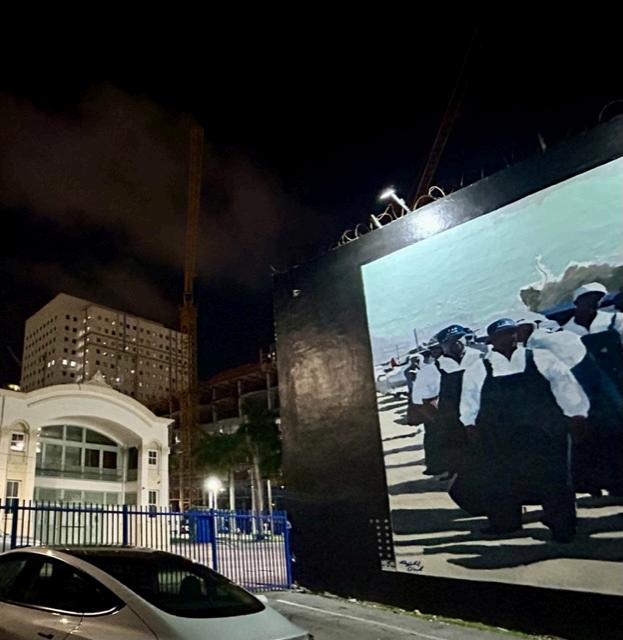
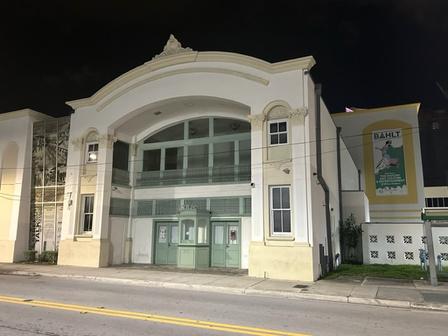
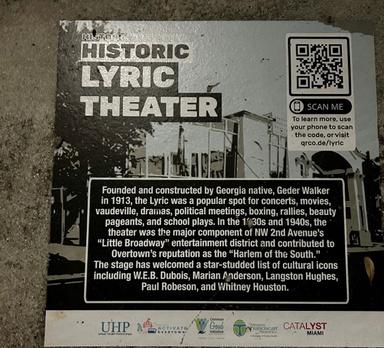
“The Historic Lyric Theater” in the Overtown community in Miami
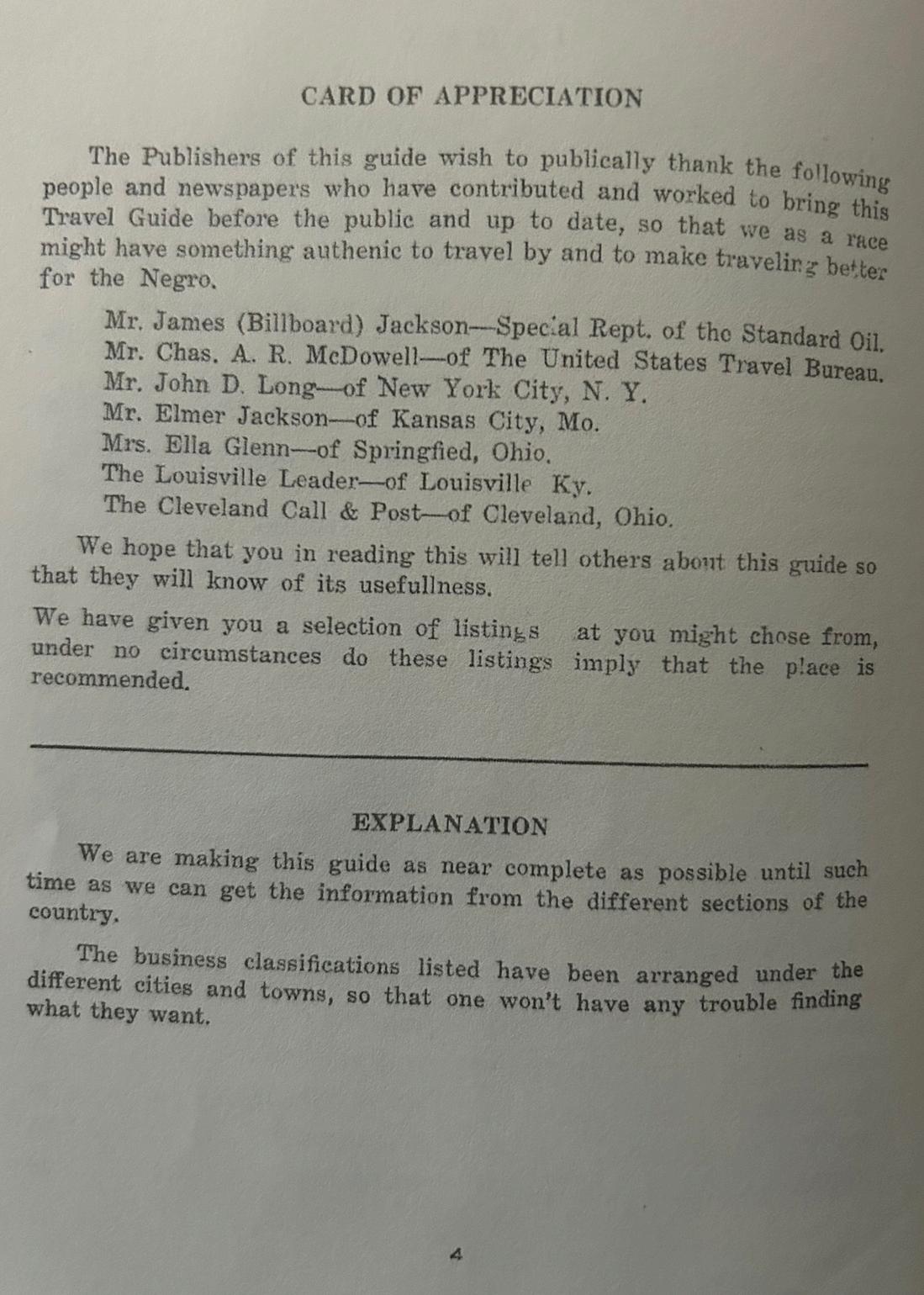
The EV Motorist Green Book was created as a guide to promote electric vehicle adoption amongst Black drivers. It pays homage to “The Negro Motorist GreenBook,” established in 1936 and published by Victor H. Green.
The premise of “The Green Book” was to give motorists and tourists a guide to hotels and tourist homes, taverns, beauty salons, nightclubs, and more in cities around the country, which were safe havens for Negro motorists to patronize.
With the EV Motorist Green Book, we aim to do the same thing by providing safe travels for Black EV motorists by not only getting past the range anxiety that comes with EV ownership but also providing a roadmap for installing EV infrastructure in communities where travelers can feel safe while charging. They can visit Black-owned restaurants and businesses, historic sites, HBCUs, and more along their route.
We began our trip in Washington, D.C., and drove down to Miami, Florida in an electric vehicle, mapping out stops along the way, identifying current infrastructure in place, and experiencing some of the food, people, and richness in communities that make them special and perfect to support innovating electric transportation and other clean transportation options,
The EV Revolution" refers to the ongoing and rapid transformation of the automotive industry and transportation sector driven by the adoption of electric vehicles (EVs).
This transformation is characterized by a shift away from traditional internal combustion engine (ICE) vehicles powered by gasoline or diesel to vehicles that are powered by electricity.
Several key factors contribute to the EV Revolution:
Environmental Benefits: Growing awareness of climate change and the need to reduce greenhouse gas emissions has led to increased interest in electric vehicles. EVs produce zero tailpipe emissions, which can help reduce air pollution and combat global warming.
Technological Advancements: Advances in battery technology have significantly improved the energy storage capacity and efficiency of EVs. These improvements have led to longer driving ranges, shorter charging times, and more affordable electric vehicles.
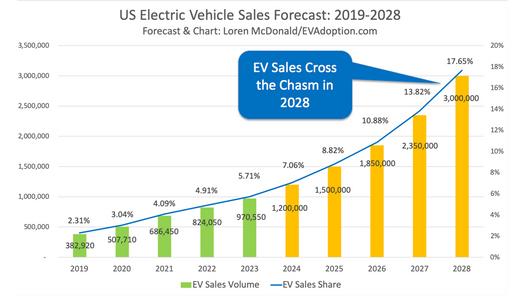
Cost Savings: Electric vehicles can be more cost-effective to operate in the long run. Electricity is generally cheaper than gasoline, and EVs have fewer moving parts, which can lead to lower maintenance costs. Additionally, many governments offer incentives and subsidies to encourage the adoption of electric vehicles, further reducing the overall cost of ownership.
Noise Reduction: Electric vehicles are quieter than traditional internal combustion engine vehicles, which can lead to reduced noise pollution in urban areas.
Government Incentives: Many governments offer incentives to promote the adoption of electric vehicles, such as tax credits, rebates, and access to highoccupancy vehicle (HOV) lanes.
Expanding Charging Infrastructure:
The shift toward renewable energy sources, such as solar and wind power, complements the EV Revolution by providing cleaner and more sustainable sources of electricity for charging EVs.
Consumer Demand: Growing interest in sustainability and ecofriendly transportation options has driven consumer demand for electric vehicles. As more models become available, consumers have a wider range of options to choose from.
By addressing environmental, health, economic, and social disparities, the adoption of electric vehicles in disadvantaged communities can contribute to a more just and sustainable transportation system, fostering a more equitable and healthier society for all
Impact Energy is keenly aware of the great significance of EV adoption in disadvantaged communities which often bear a disproportionate burden of climate change and extreme weather events, pollution, and environmental degradation due to their proximity to industrial areas, highways, and other sources of pollution. By adopting EVs, disadvantaged communities can contribute to the reduction of greenhouse gas emissions, helping combat climate change. EVs produce zero tailpipe emissions, reducing air pollution and improving air quality, which can directly benefit the health and well-being of residents. The adoption of EVs, electric city and school buses, Ebikes, electric shuttles, and other clean forms of transportation will aid in the decrease of carbon emissions in these hardest-hit areas.
Electric vehicles help reduce exposure to harmful pollutants such as fine particulate matter (PM2.5) and nitrogen oxides (NOx), which are known to contribute to respiratory and cardiovascular diseases. By promoting EV adoption in disadvantaged communities, we can help mitigate the adverse health effects associated with air pollution.
Low-income individuals often spend a higher percentage of their income on gasoline and maintenance for traditional vehicles. Electric vehicles have lower operating and maintenance costs, potentially saving money for residents by reducing their financial burden. EVs can provide an accessible and costeffective means of mobility, improving access to jobs, education, healthcare, and essential services.
As the EV industry expands, it can create job opportunities in manufacturing, infrastructure development (such as charging stations), and maintenance. Targeted policies can help ensure that disadvantaged communities have access to these employment opportunities.
Promoting EV adoption in disadvantaged communities ensures that they have access to clean and advanced transportation technologies, reducing the environmental disparities that exist between more affluent and underserved areas, and creating steps toward a more equitable and inclusive transition to a sustainable future. It ensures that all segments of society can benefit from clean transportation solutions.
There were some important considerations that we wanted to note as a part of this trip that we believe made a significant difference in our driving and charging experience.
We selected Hertz because they have the biggest and most available selection of EV vehicles.
Hertz also has a large selection of Model 3's. We were not able to get a different manufacturer due to unavailability. Our preference would have been a car that was more affordable if purchased and to see how that charging network supported the road trip. We also were not sure if Hertz and Telsa had any kind of partnership to carry an abundance of cars.
Details:
Service-
In advance of pick-up, they sent an email “how to get acquainted with the electric vehicle.”
Sent follow-up emails about the car experience. Routine emails to ensure a seamless experience.
The car was at 73% charge at pickup Cost- $570.67 over 4 days
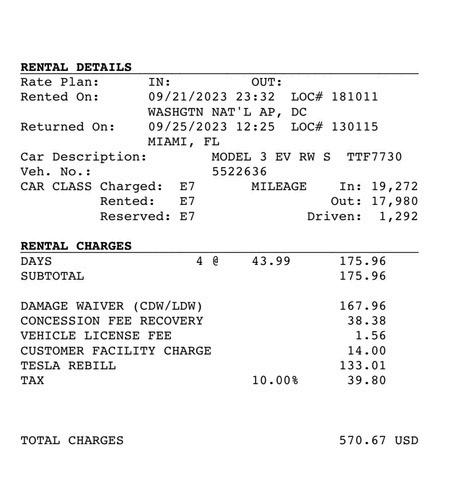
Cost continued-
The “Tesla Rebill” charge of $133.01 was the cost to us for charging the car on the Tesla network.
Distance-
We traveled 1,292 miles
Charging Network-
We used Tesla Level 3 DC fast-charging stations
The charging network for Tesla is extensive. We never had any problems or worry about running out of battery life.
The car will notify you of how much charge you will have to reach your destination and where charging is located in between if you need it.
Charge time was on average 30 minutes
They were easy to spot with a specific “red” glow
There were on average 8 stations at every stop
The car was pretty easy to grasp once using
The brakes are regenerative and you barely need to touch them to stop. We learned the hard way. It’s difficult to find the windshield wipers. They are supposed to turn on when detecting rain but did not.
It can be difficult to adjust the heat/air and get it to regulate
It only takes Type C charging cords and only from the back seat. The front has charging that you just lay your phone on. My iPhone seemed to not charge fast and got hot pretty quickly, so I took it off. I ended up using my portable charger most of the time.
Dark dashboard- it’s pitch black!
No locks- safety concern
No above-door grab bars
Side mirrors were adjusted manually. Unable to access the glovebox. Were not issued a passcode when the car was rented.
Other-
There were some important considerations that we wanted to note as a part of this trip that we believe made a significant difference in our driving and charging experience.
Reliable map and GPS system
The map must be programmed to the view that the driver prefers.
The system will confirm what % battery is available once you get to your next destination.
The system will recommend supercharger stops on your way to your next destination. If you don’t plan to stop you need to “ remove charging stations” from your route.
The system doesn’t appear to let you order your stops.
The GPS was also a little slow to compute and had you making quick turns.
We did spend $3.00 for a parking fee once by utilizing a parking garage to charge.
The hum of the car can be loud when the car is charging.
To charge, you have to back into the spot. Defogger and air circulation systems take a while to work
You don’t have to turn the car off, it turns itself off when the driver exits the vehicle
Screen/dashboard adapted to the time/sunset at 7 pm
Some folks enjoyed movies and watched other forms of entertainment while charging. It was a leisure-charging experience.
Low cell reception on the AT&T network while charging in the parking garages however, EV charging was still strong
We ran into some bad thunderstorms in Virginia and believe the wind force or elevation caused the charging to decrease faster, but only slighlty
Roadtrip Facts:
Our grant supported the travel from Washington, D.C. through Miami, Florida
We picked that route due to the historical significance of Blacks moving through the Southeast/South
We selected communities using the Department of Energy’s Energy Justice Dashboard
These communities are already the most energy-burdened and would benefit from clean transportation solutions.
We searched for historic landmarks, Black-owned restaurants, HBCUs, and other notable places of interest.
Our Path:
We began in Washington, D.C., and drove Highway 95 South to Fredericksburg, VA., and then to Richmond, VA
We left there and traveled to Fayetteville, NC
We then traveled to Charleston, SC by way of Interstate 26 East
We got back onto 95 South to US 17 to Savannah, GA
We left Savannah via Interstate 16 West to 95 South to Jacksonville, FL
We completed the trip via 95 South to Miami, FL.
This road trip provided us an opportunity to immerse ourselves in the local sites and culture of communities. We interacted with residents, tried regional cuisine, and experienced the unique character of different places.
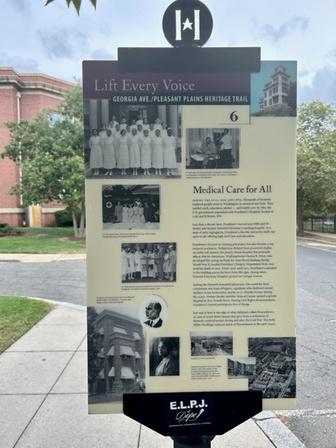
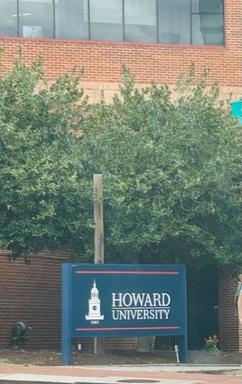
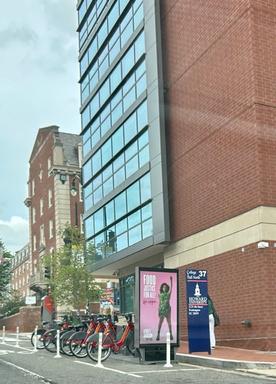
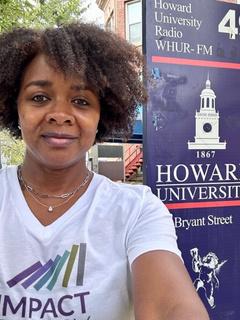
Our ride started in Washington, D.C. at the HBCU campus of Howard University. Established in 1867, Howard ranks among the highest producers of the nation's Black professionals in medicine, dentistry, pharmacy, engineering, nursing, architecture, religion, law, music, social work, and education.
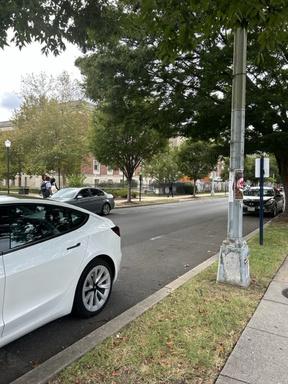
We noticed that were was no obvious EV charging available except for more than 1 mile away according to an app. There was mostly street parking (that was permitted), and no visible transformers for EV charging stations to connect to. There were sufficient bike lanes around the campus, but many were external to the main parts of the campus.
Electric Transportation Opportunities:
Curbside EV charging pilot utilizing street lights
Electric shuttle services
Electric bikes and scooters
Fleet EV conversion (A lot of delivery trucks in the area)
This road trip provided us an opportunity to immerse ourselves in the local sites and culture of communities. We interacted with residents, tried regional cuisine, and experienced the unique character of different places.
We drove to some historical D.C. sites to check out the EV infrastructure surrounding them. Unsurprisingly, there wasn’t much. Much of the parking offered was street parking. We did not identify any charging station near any of the locations.
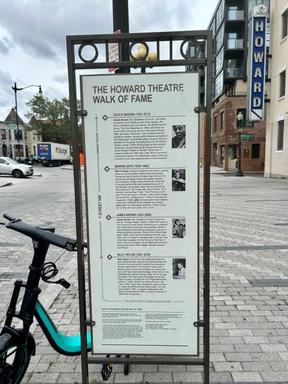
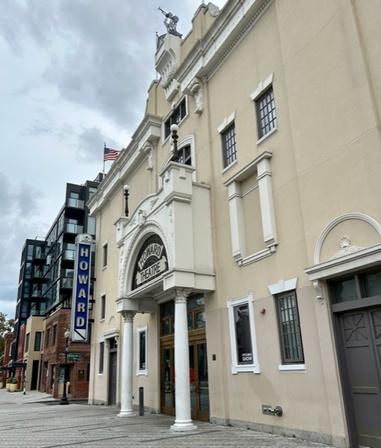
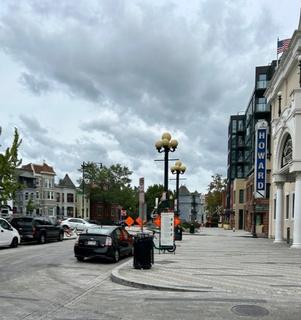
The Howard Theatre
The Howard Theatre, dubbed the “Theatre for The People” by The Washington Bee, opened in 1910, The Howard Theatre has been a cherished cornerstone of African-American entertainment and a vibrant hub for artistic expression, unifying musical artists from across the racial divide.
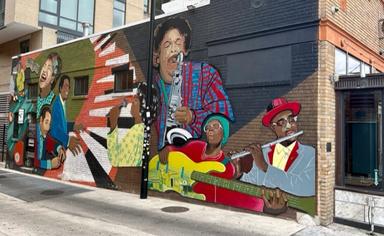
We noticed mostly on-street parking and very few spaces. It was on a quiet and quaint street with a murallined alleyway. We did not notice any nearby transformers.
Electric Transportation Opportunities:
Curbside EV charging pilot utilizing street lights
Parking garage charging
Electric bikes and scooters
This road trip provided us an opportunity to immerse ourselves in the local sites and culture of communities. We interacted with residents, tried regional cuisine, and experienced the unique character of different places.
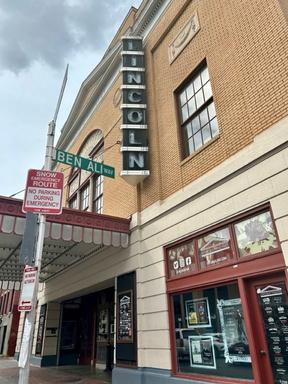
The Lincoln Theatre/Ben’s Chili Bowl
Situated next door to one another were The Lincoln Theatre and Ben’s Chili Bowl, where the U Street Corridor served as a center of culture and life for Washington’s Black community
The Lincoln Theatre was sold to A.E. Lichtman in 1927. It came to be known as “Black Broadway,” and it predated and influenced Harlem’s renaissance.
Ben’s Chili Bowl, is a proudly black-owned, and historic landmark in Washington, DC's culture. It was built in 1910 and was originally a silent movie theatre called the Minnehaha Theatre. It was later converted into a pool hall and then Ben and Virginia Ali purchased the iconic restaurant on August 22, 1958.
Electric Transportation Opportunities:
Curbside EV charging pilot utilizing street lights
Electric city buses
Electric bikes and scooters
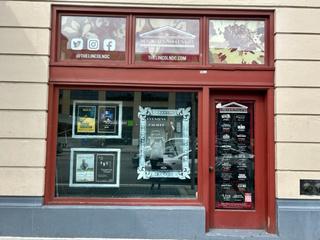
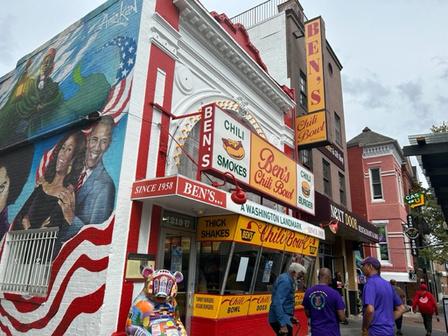
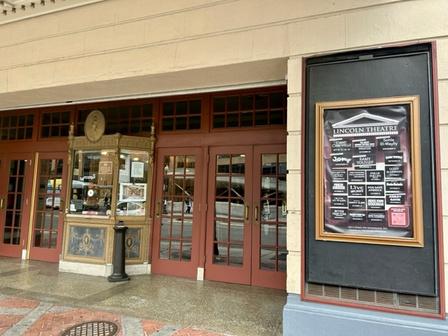
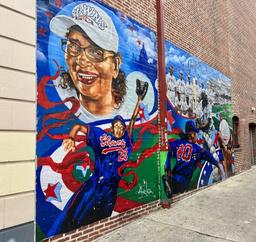
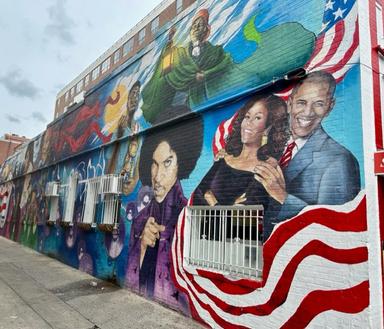
This road trip provided us an opportunity to immerse ourselves in the local sites and culture of communities. We interacted with residents, tried regional cuisine, and experienced the unique character of different places.
We continued into the Anacostia/Berry Farm Community. They are 10% energy burdened here which means a household spends more than 10 percent of its income on energy, it is considered extremely energy burdened.
Frederick Douglass was among the first AfricanAmerican residents to settle in Old Anacostia in 1877 and Barry Farm, a community for newly freed African Americans.
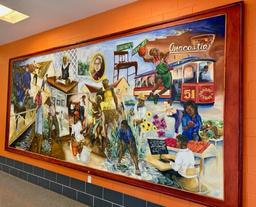
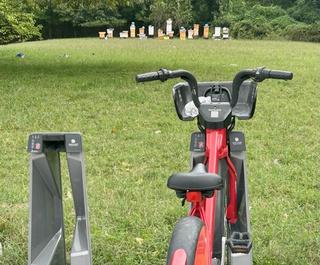
We noticed the deep community pride by noticing all of the beautiful murals. We centered a part of our observance near a small park where there were electric bikes present, but there were no bike lanes marked anywhere throughout the community. The park was especially intriguing because there was a beekeeping set up in the back.
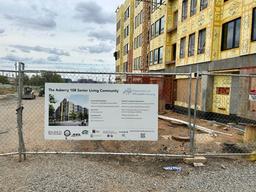
We then made our way to the Berry Farms Recreation Center where it seems to be a community hub. The street leading to the recreation center was narrow and we didn’t identify any parking lot. They were in the process of building a senior center next door.
We had an opportunity to speak with a gentleman who identified himself as the coach of the football team. There were numerous trophies inside the case and he was quite proud. We discussed our purpose there and while there didn’t seem to be a lot of interest in our work, he was kind and wished us safe travels.
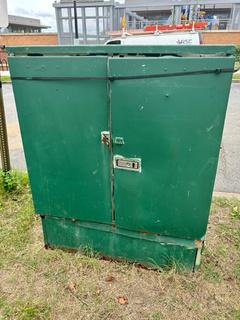
One thing we took particular note of was the transformer outside which was very old and held together by zip ties.
Curbside EV charging pilot utilizing street lights
EV charging at the Barry Farms Recreation Center
Electric school and city buses
Electric bikes and scooters
Vacant lots for charging infrastructure to be placed
Electric shuttles for the senior center
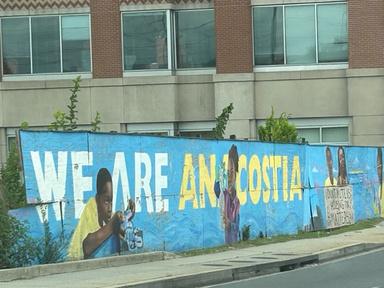
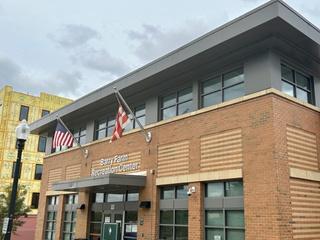
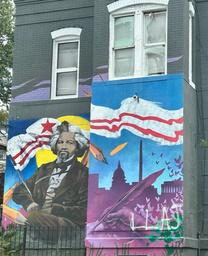
This road trip provided us an opportunity to immerse ourselves in the local sites and culture of communities. We interacted with residents, tried regional cuisine, and experienced the unique character of different places.
As we arrived in Fredericksburg, it immediately reminded us of a small and quaint old colonial town. Fredricksburg residents experience a 2-3% energy burden and are considered to be disadvantaged.
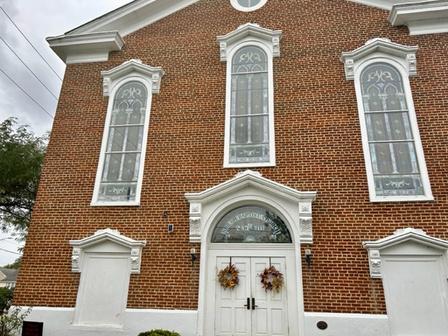
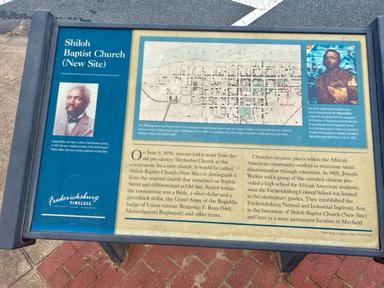
We arrived at the visitors center to pick up a brochure of the tour, but sadly they had just closed. We went over to the Shiloh Baptist Church, one of the sites located on the tour to try and find out more information and what was gathered was so much rich historical information.
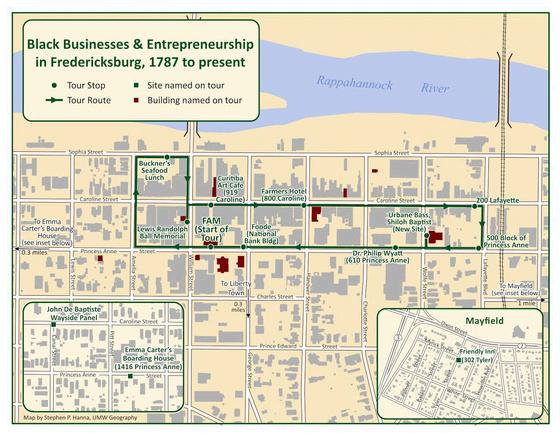
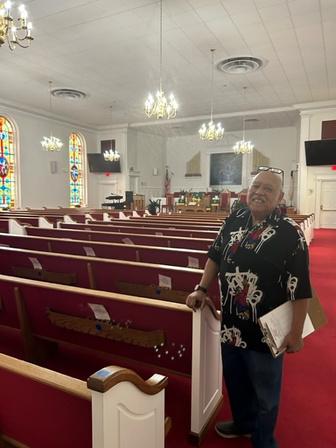
At the new site for Shiloh Baptist Church, I approached Officer C. Ford and asked a couple of questions. He mentioned that the church was feeding the homeless that night, but he wanted to see if someone could speak to us. Deacon Doug Richardson gave a behind-the-scenes tour of the church, explaining all of its rich history.
This road trip provided us an opportunity to immerse ourselves in the local sites and culture of communities. We interacted with residents, tried regional cuisine, and experienced the unique character of different places.
Shiloh Baptist Church (New Site) cont.
He spoke of how the new site of the church, which used to be a stable house, was created due to the old church site by the river being damaged, but that once the old site was repaired, many in the congregation wanted to stay at the new site, creating two church sites. He also told of how Blacks could not congregate without a white person, and therefore how the first pastor was white.
Video links:
The History of Shiloh Baptist Church with Deacon Doug Richardson Part I
The History of Shiloh Baptist Church with Deacon Doug Richardson Part II
Talking EV Affordability with Deacon Doug Richardson
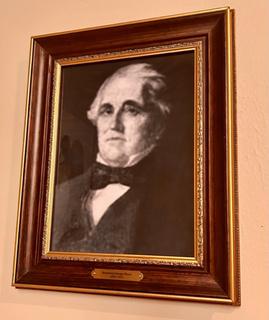
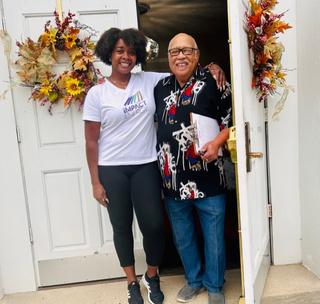
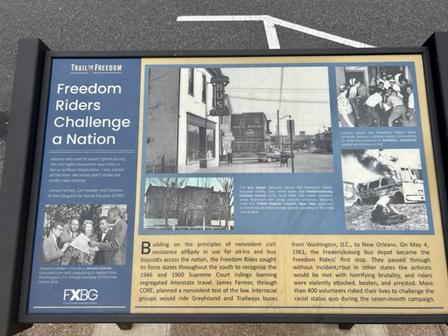
Our next stop was directly across the street at the site of the first “Freedom Rides” to take place at the old Fredricksburg bus depot, challenging racial segregation in bus interstate travel. This site is now a fire station but pays tribute to and bears the historic landmarks of the importance of the movement.
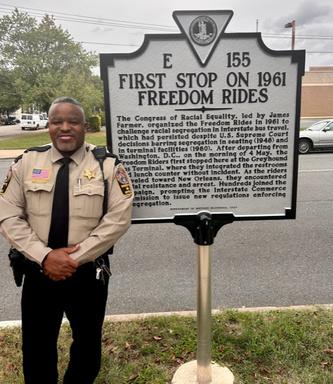
This road trip provided us an opportunity to immerse ourselves in the local sites and culture of communities. We interacted with residents, tried regional cuisine, and experienced the unique character of different places.
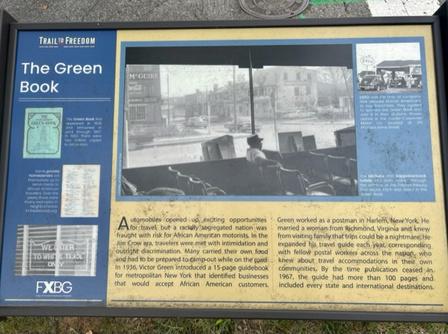
A historical marker was dedicated to “The Green Book” noting where The McGuire and Rappahannock hotels were both visible through the Fredericksburg bus depot window and were safe havens for traveling Blacks.
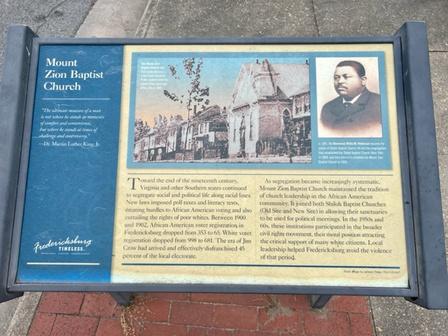
The walking tour also paid homage to Mount Zion Baptist Church whom alongside Shiloh Baptist Church (old and new sites) allowed its sanctuary to be open to be used for political meetings
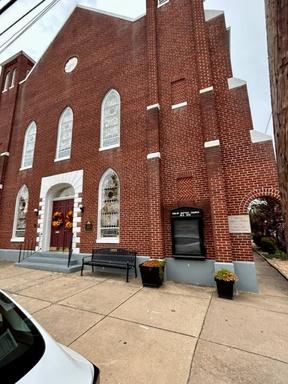
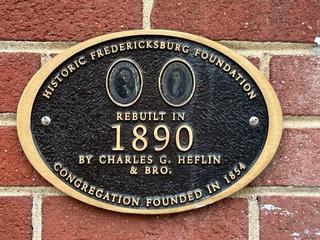
Although there were so many more points of interest on the walking tour for us to see, we ended our time in Fredricksburg at Shiloh Baptist Church (Old Site). While we did not go inside the church, there were numerous markers contributing to the history of the church and the richness and fight of the community.
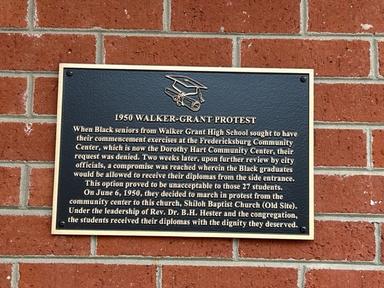
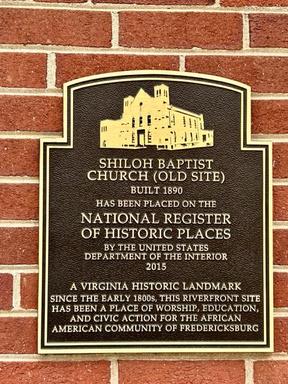
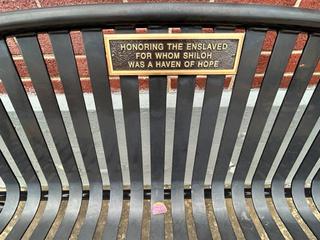
This road trip provided us an opportunity to immerse ourselves in the local sites and culture of communities. We interacted with residents, tried regional cuisine, and experienced the unique character of different places.
Electric Transportation Opportunities:
Curbside EV charging pilot utilizing street lights
Parking garage charging
Electric bikes and scooters
Post office parking lot across from the old bus depot
We arrived in Richmond when it was dark and through a thunderstorm that subsided once we reached the city. We began our trip through Bethel Street and Creighton Road areas near downtown. According to the data, these communities are experiencing an 8% energy burden.
While we did not stop in the communities, we noticed many affordable housing units with the majority of onstreet parking. We did see a few convenience stores, but no charging infrastructure in place. There was a large park which we can assume is a hub for the community, but it was too dark to tell.
Jackson Ward
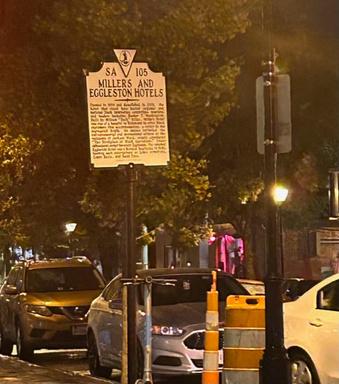
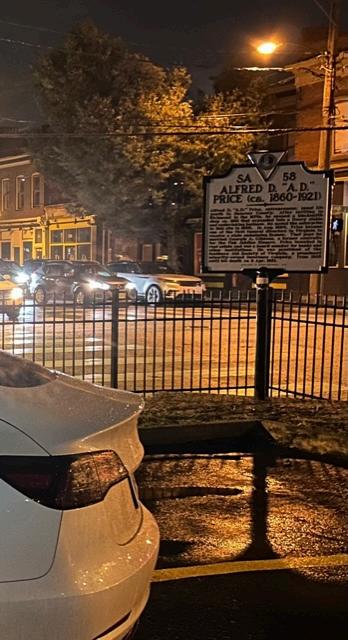
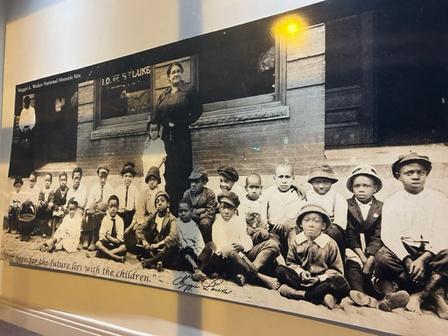
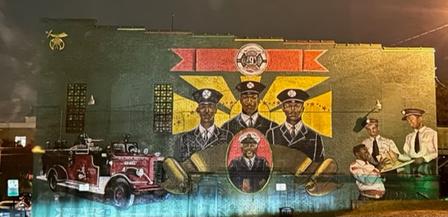
We then ventured into the Jackson Ward area of Richmond, closer to downtown, where there is a %7 energy burden placed upon residents and where previously free blacks joined freed slaves and their descendants and created a thriving African American business community, and became known as the "Black Wall Street of America." There were several historical markers identifying the rich culture of the community such as the Millers and Eggleston Hotels, one of a handful in Richmond to offer black customers fine accommodations, a rarity in the segregated South. and A.D. Price, one of the largest African American real estate owners in his city, and the A.D. Price Funeral Home is now a national historic site
Little Pearl
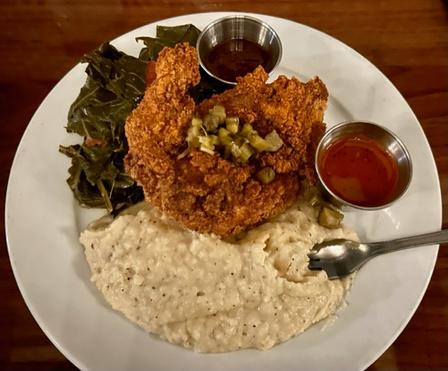
We concluded our Richmond stop with dinner at “Little Pearl,” a Black-owned restaurant located at 416 E Grace Street in Richmond, where we dined on appetizers and meals consisting of some soul food favorites, fried chicken, collard greens, and grits. We spent a significant amount of time at dinner and unfortunately, there were no charging stations.
We did note that there was a Telsa charging station at the Hilton Downtown, however, we believe it was private and not open to the general public.
After dinner, we drove about 13 miles to the nearest charging station and spent about 25-35 minutes charging before heading to Fayetteville, NC.
Electric Transportation Opportunities:
Curbside EV charging pilot utilizing street lights
Parking garage charging
Electric bikes and scooters
Some parking lots in Jackson Ward
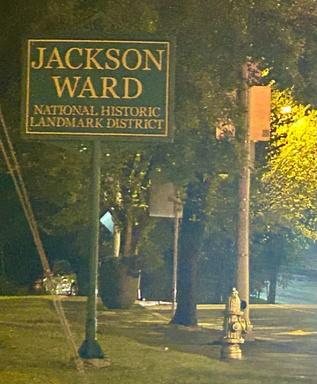
This road trip provided us an opportunity to immerse ourselves in the local sites and culture of communities. We interacted with residents, tried regional cuisine, and experienced the unique character of different places.
This road trip provided us an opportunity to immerse ourselves in the local sites and culture of communities. We interacted with residents, tried regional cuisine, and experienced the unique character of different places.
Our first stop was in Fayetteville, NC which is 7% energy burdened in Cumberland County. We stayed at the Doubletree where the cookies were warm and we were able to take advantage of the on-site Tesla charging. It was, however, located pretty far in the back of the hotel where it was pretty isolated, and you had to walk around to the front to enter the hotel.
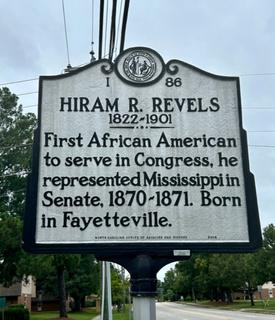
We visited several cited landmarks along the AfricanAmerican Heritage Trail. This trail consists of sites that provide a historical glimpse into the life of AfricanAmericans who resided in Fayetteville and Cumberland County.
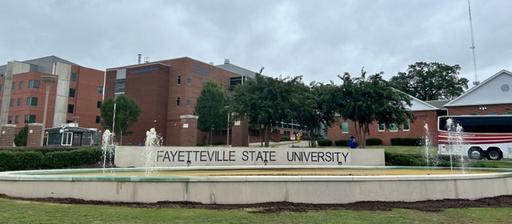
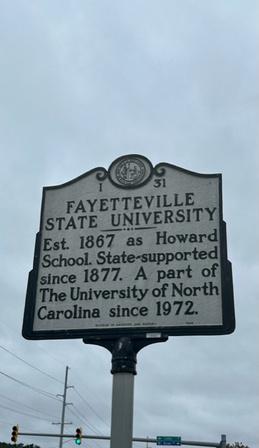
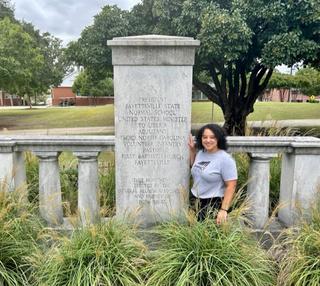
The next morning we visited the HBCU, Fayetteville State University. We were in luck to see the marching band, “Experience This” rallying up to board buses for a game FSU is the second oldest state-assisted institution in North Carolina, founded by seven extraordinary black men in 1867 to provide education for black children We walked the campus looking for any signs of EV charging but found none We did see some plug-in electric carts, likely used for facilities, and noted several options to include charging in parking lots Electric bikes could also be a great option here
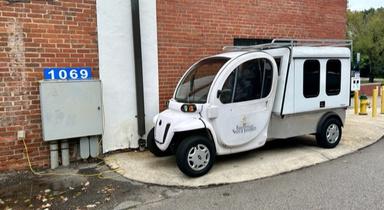
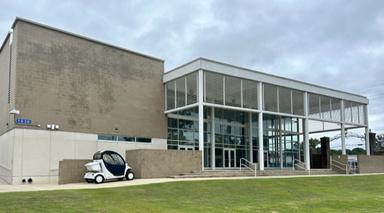
This road trip provided us an opportunity to immerse ourselves in the local sites and culture of communities. We interacted with residents, tried regional cuisine, and experienced the unique character of different places.
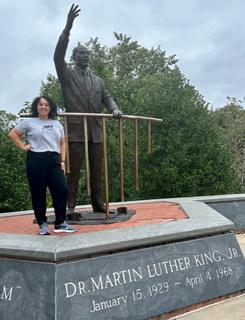
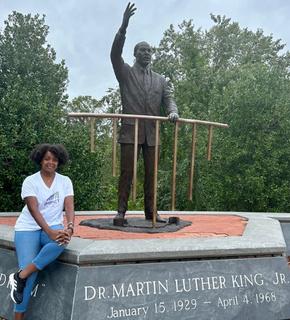
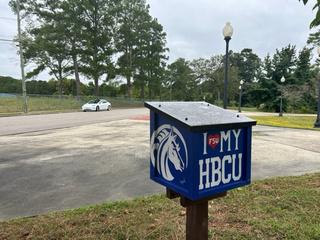
Martin Luther King Jr. Memorial Park 13 acres of land commemorating the life of Dr. Martin Luther King, Jr. It was a peaceful and beautiful spot with a “free” book nook.” There are continued plans to further develop the area and EV charging would be a great option to include as we didn’t see any parking except for on the street. There were plenty of options for bike lanes and it’s not far from FSU, allowing students to easily get there.
There is a beautiful statue of Dr. King, surrounded by his quotes, located in the center of the park, and a sprawling green space located adjacent to the statue.
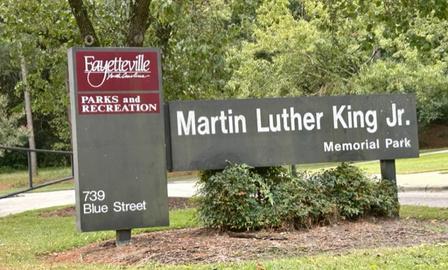
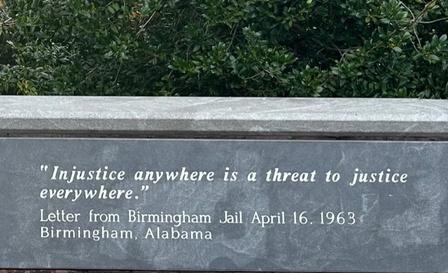
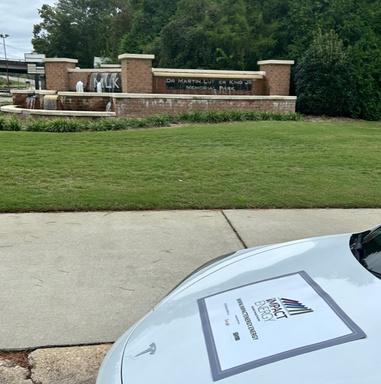
This road trip provided us an opportunity to immerse ourselves in the local sites and culture of communities. We interacted with residents, tried regional cuisine, and experienced the unique character of different places.
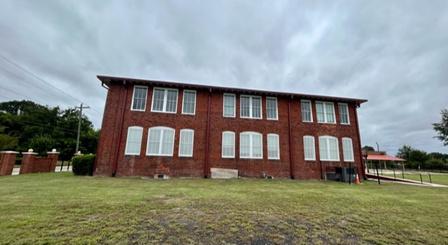
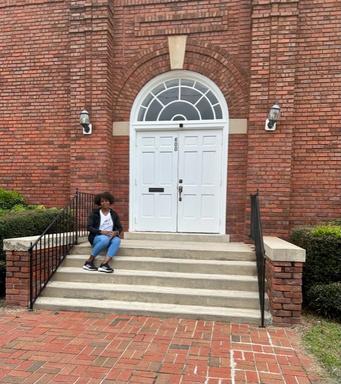
Orange Street School was built in 1915 and is believed to be the oldest building associated with education in Fayetteville. Black students had been attending classes in a small, one-room schoolhouse for nearly 50 years before it was built. It served as an educational institution for 38 years.
While it is now supposed to be a museum, we found it looking vacant with no historical markers or signage. There were plenty of options to place charging infrastructure with parking lot development on site, but the community appears to need some attention and support services.
Electric Transportation Opportunities along the African American Trail:
Curbside EV charging pilot utilizing street lights
Parking lots/parking lot development
Electric bikes and scooters
EV car sharing
Electric shuttles for guided tours
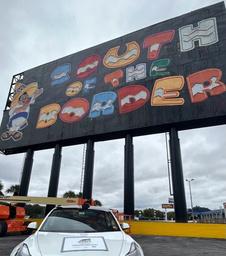
After leaving Fayetteville, we headed to Charleston, SC. We made a couple of interesting stops along the way in Hamer, SC at South of the Border, a 70-year-plus roadside landmark with a 104-foot-tall mascot, Pedro, and at Stuckey’s in Summerton, SC, an old-fashioned convenience and candy store that’s very popular in the South.
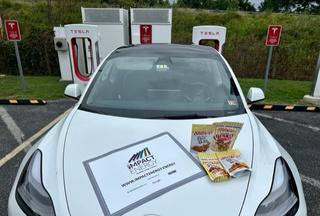
Interestingly, Stuckey’s is where we stopped to charge, as they had several Tesla stations available. We shopped for the old-fashioned candy while we waited. They also had an ice cream shop inside.
Stuckey’s has their own connection to The Green Book where in the 2018 movie, the movie's characters stopped to get a bite to eat, where “ every traveler has always been a friend!”
This road trip provided us an opportunity to immerse ourselves in the local sites and culture of communities. We interacted with residents, tried regional cuisine, and experienced the unique character of different places.
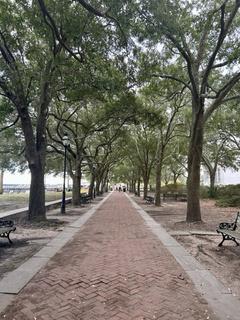
As we made our way into downtown Charleston, SC, we noticed the charming palmetto tree-lined streets and old Colonial-style homes.
We immediately noticed the lack of parking, EV or otherwise, and it took us a few trips around the area to find a paid lot that was available. We checked an app for EV charging and found there were only a couple in proximity, located in parking garages. We also started thinking about the historic feel of the city and how EV chargers would fit in with the aesthetics in keeping the charm.
Charleston is one of the earliest cities in which the African presence in North America began. The epicenter of downtown is the Charleston City Market filled with a diverse collection of vendors and surrounded by restaurants and retail shops
Sweetgrass baskets are an indigenous art form brought over from Africa and are one of the most easily recognizable Gullah traditions Originally made to winnow rice on the plantations, the baskets have become sought-after souvenirs and are even on display at the Smithsonian Institution Charleston is the primary location where the craft is still practiced, and the Charleston City Market houses numerous talented artisans sewing these baskets today
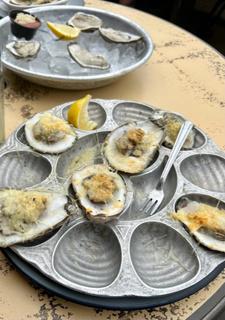
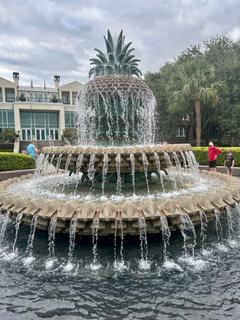
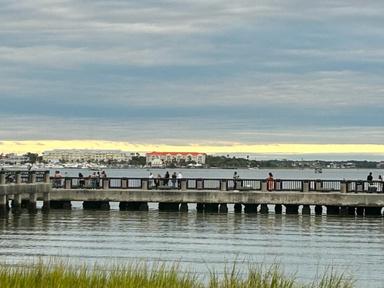
After eating some great seafood from Charleston Crab House, we made our way over to the Waterfront Park Pier. The beautiful palmetto tree-lined walkways almost shades the reminder of how thousands of Africans were brought upon these very shores as slaves.
Mother Emanuel AME Church was founded in 1816 and is the oldest African Methodist Episcopal Church in the Southern United States. On our way to the Eastside neighborhood, we stopped and paid homage and prayer to those 9 patrons who were murdered on June 17, 2015 murders.
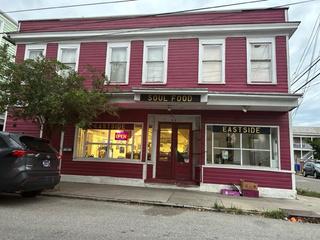
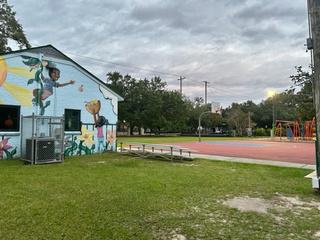
We ventured into the Eastside neighborhood where residents are experiencing a 5% energy burden. The neighborhood is filled with many homes. We noticed electric bikes within the neighborhood, but no bike lanes present. We didn’t see many options for EV charging stations, but street charging is possible. In addition, there were a few vacant lots that could be transformed.
The neighborhood was vibrant with community “out and about.” We noticed a line of men, young and old, lined up outside of a barber shop awaiting their cuts. Their conversations and laughs were loud, boisterous, and happy. We smiled too. It was infectious.
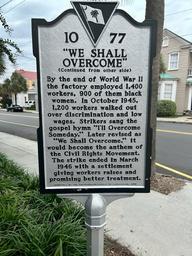
We visited a couple of Black-owned restaurants in the neighborhood and the old cigar factory where 900 Black workers walked out in 1945 due to discrimination and low wages.
Video:
Sounds of Eastside Neighborhood
This road trip provided us an opportunity to immerse ourselves in the local sites and culture of communities. We interacted with residents, tried regional cuisine, and experienced the unique character of different places.
Electric Transportation Opportunities:
Curbside EV charging pilot utilizing street lights
Parking lots/parking lot development
Electric bikes and scooters
EV car sharing
Electric shuttles for guided tours

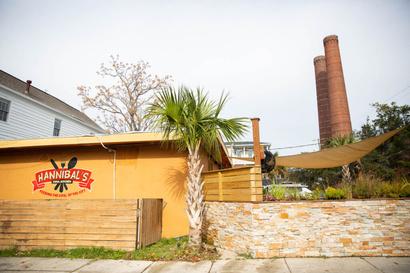
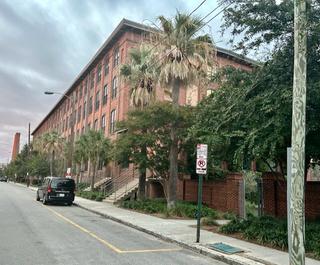
This road trip provided us an opportunity to immerse ourselves in the local sites and culture of communities. We interacted with residents, tried regional cuisine, and experienced the unique character of different places.
The first thing we notice in Savannah upon arriving is the strong sulphuric stench in the air. We’re told it’s from the paper mill, but others say it's from other port industrial sites. In our efforts to clean the emissions of harmful pollutants in the air, this definitely struck a nerve. How can clean transportation benefit a community that has obvious other big issues to tackle?
Much of Savannah residents experience a 5-6% energy burden, supporting the need for energy equity. In addition, being in close proximity to ports and other industrial sites makes them prime targets for clean transportation needs.
The Weeping Time
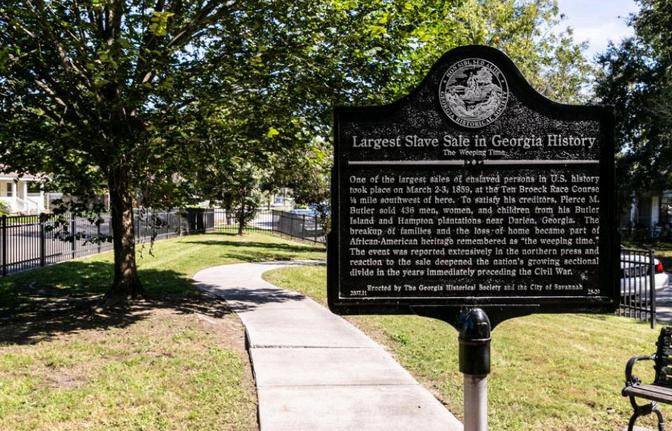
Savannah is full of rich African American and Gullah Geeche heritage. In 1859, one of the largest slave sales in U.S. history took place just a short distance outside of downtown Savannah Known as "The Weeping Time," this historical event was adequately named not only for the families that were torn apart during this time but also for the heavy rain that occurred throughout the two-day auction
Savannah Riverwalk
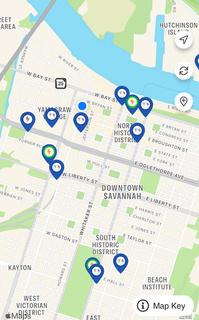
Parking was indeed an issue around the Riverwalk area
We found a place on the street, although there was a parking lot nearby that we passed and later found out that it had charging infrastructure
There was no detection of charging on the streets and most parking lots were private around this area We also did not detect any bike lanes, which would be perfect for this touristy area, along with electric shuttles
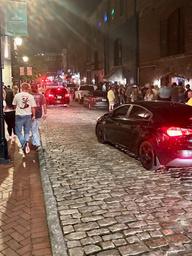
It was late when we arrived in Savannah, but there were crowds of people patronizing the bars and clubs along the cobblestoned streets.
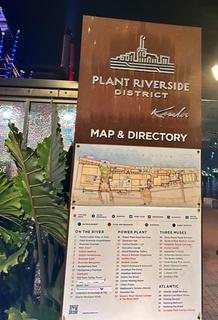
This riverfront entertainment destination was originally a 1912 power plant and has been restored with buildings, hotel rooms, restaurants, lounges, and meeting space. Despite our research, we found no Black-owned businesses in the new district.
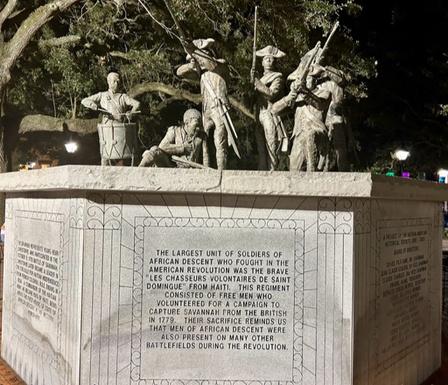
We did a complete circle and ended up in the square, where statues told the story of brave Black men who fought in the American Revolution, standing as a reminder of how deep in the South we really were.
Electric Transportation Opportunities:
Curbside EV charging pilot utilizing street lights
EV charging in parking garages
Electric city buses
Electric bikes and scooters
Electric shuttles for tourist
This road trip provided us an opportunity to immerse ourselves in the local sites and culture of communities. We interacted with residents, tried regional cuisine, and experienced the unique character of different places.
LaVilla Neighborhood
LaVilla is a historic African-American neighborhood of Jacksonville, Florida. It developed after the American Civil War and was eventually annexed to the city of Jacksonville in 1887 and is now considered part of downtown. LaVilla is located in Duval County where there is a 8% energy burden upon residents. LaVilla is also home to several landmarks that are significant in African-American history. La Villa was thriving in the 1920s-1960s and was known as the “Harlem of the South.”
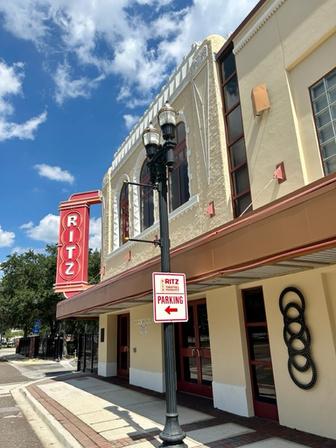
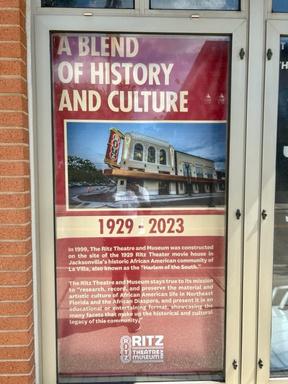
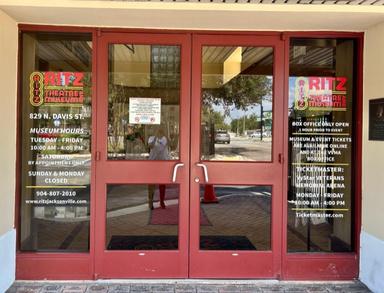
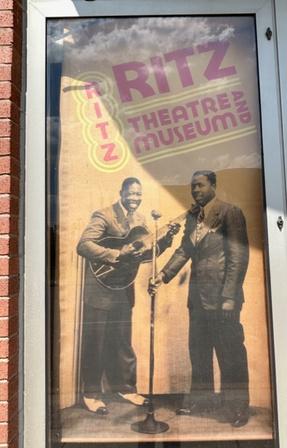
The Ritz Theatre and Museum
The Ritz Theatre and Museum was constructed in 1999 on the site of the 1929 Ritz Theater movie house. Located next to the Jacksonville Urban League, The Ritz's vision is to serve as the destination and resource for our community, making it a great consideration for EV charging or potential community ride-share location
Eartha M.M. White Historical Museum
A generation removed from enslavement in the Deep South, she crossed color lines and achieved levels of success that rivaled White men in her era, Dr White was a humanitarian, entrepreneur, and social activist
While we didn't get to visit this museum, we hope that others will during their travels
Electric Transportation Opportunities:
EV charging in the parking lot
Electric city buses
Electric bikes and scooters
This road trip provided us an opportunity to immerse ourselves in the local sites and culture of communities. We interacted with residents, tried regional cuisine, and experienced the unique character of different places.
This road trip provided us an opportunity to immerse ourselves in the local sites and culture of communities. We interacted with residents, tried regional cuisine, and experienced the unique character of different places.
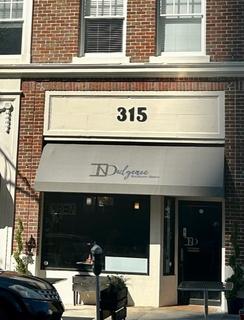
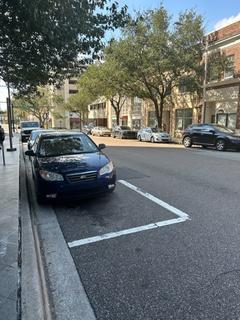
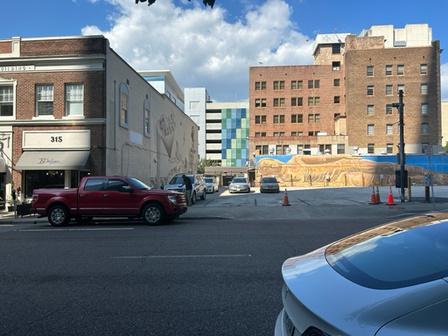
We headed downtown Jacksonville in search of lunch, but it was Sunday and unfortunately, many of the Blackowned restaurants we identified were closed but we wanted to list them in case anyone is traveling through here and is hungry
Indulgence is a Southern Restaurant-Lounge-Winebar inspired by the ancestors of Lavilla “Uptown” in Jacksonville FL Their intent is to commemorate & and pay homage to the 500+ African American-owned & and operated businesses that once thrived in this area between 1867-1960’s. The house Murals and the fine art of the many landmarks and businesses of that era serve as a reminder that we were and still are economically and culturally self-sufficient.
Austin's Soul Food Restaurant
Wildkat Records Bar and Grill
Jenkins Quality Barbecue
There was mostly street parking available downtown and a few open lots. We did not see any charging stations in the immediate area but noted 5 stations within 6-10 miles.
Electric Transportation Opportunities:
EV charging in open parking lots
EV charging in public garages
Electric city buses
Electric bikes
This road trip provided us an opportunity to immerse ourselves in the local sites and culture of communities. We interacted with residents, tried regional cuisine, and experienced the unique character of different places.
Jacksonville
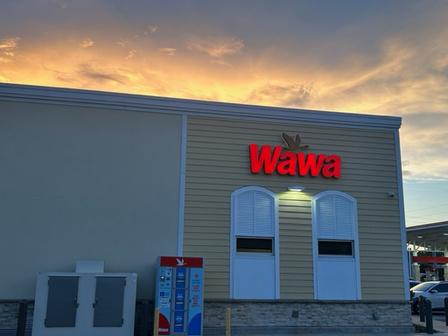
We left downtown and headed for the closest charging station which was about 6 miles away at a WaWa convenience store. Although several people were charging, there were plenty of available spaces.
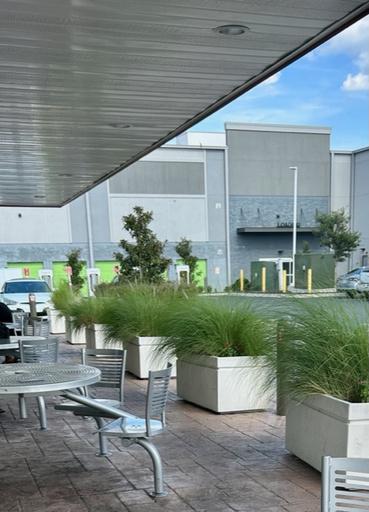
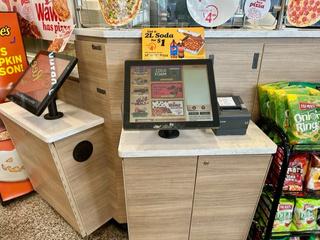
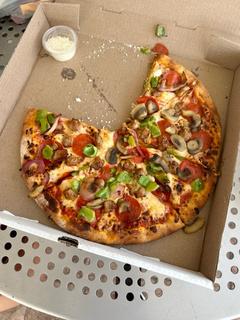
We went to purchase snacks in the store but were recommended to get the pizza. Here, we took our time, sat outdoors at the picnic tables, and ate our pizza while the car was charging. It was a great experience and the pizza was really good.
We noticed along our travels that several WaWa locations had DC fast charging available for Tesla and stopped at another to charge before getting to Miami. Noting to ourselves that if they open the charging network, it would be beneficial to all EV owners.
This road trip provided us an opportunity to immerse ourselves in the local sites and culture of communities. We interacted with residents, tried regional cuisine, and experienced the unique character of different places.
Our first stop in Miami was the Miami Gardens community. The residents in this community experience a 5% energy burden. It was dark when we arrived and we were looking for a Black-owned restaurant that apparently no longer existed.
Although we didn’t see EV charging located in the community on the app, we traveled around the community and ended up in a shopping plaza that could be a potential place for charging infrastructure.
One thing we did notice was a lot of police presence around the area and while we saw someone riding a scooter, there were no bike lanes and the main intersection was quite busy.
A part of the historic heart of Miami, Overtown was settled by the black workers who built Miami's railroads and hotels. It was designated as a "colored" neighborhood after the creation and incorporation of Miami in 1896 and was originally called Colored Town in the Jim Crow era. West Second Avenue served as the main street of the black community during an era which, up until the Civil Rights Act of 1964, barred black residents from entering middle and high-income white areas like Miami Beach and Coral Gables without “ passes.”Today it's known as “The Harlem of the South.”
Overtown is now one of the city’s oldest Black American communities and the second-oldest continuously inhabited neighborhood of the Miami area after Coconut Grove and it’s home to the Lyric Theatre (completed in 1913) and other businesses.
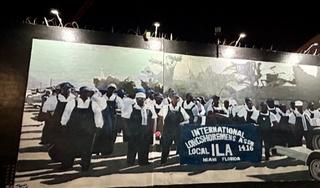
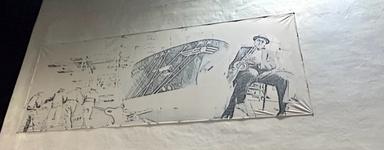
Opening in 1913, the Lyric Theater served as a major entertainment center for Blacks in Miami It’s a 400-seat theater that was built, owned, and operated by Geder Walker, a Black man from Georgia In 1915 it was described as "possibly the most beautiful and costly playhouse owned by Colored people in all the Southland," by the Miami Metropolis newspaper. The Lyric Theater served as a symbol of black economic influence, as well as a social gathering place, free of discrimination, and a source of pride and culture within Overtown.
This road trip provided us an opportunity to immerse ourselves in the local sites and culture of communities. We interacted with residents, tried regional cuisine, and experienced the unique character of different places.
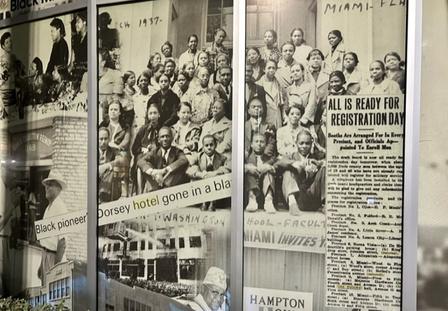
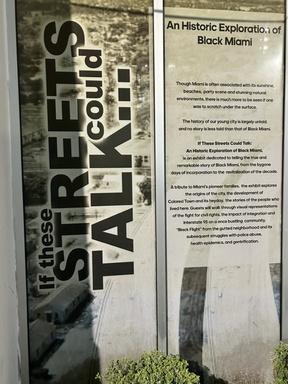
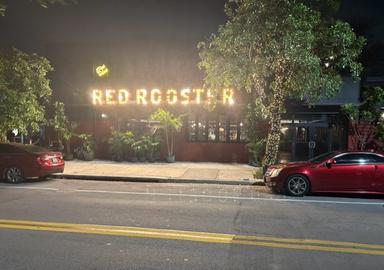
Owned by renowned Chef Marcus Samuelsson, Red Rooster is located in the heart of Overtown, celebrating its unique cultural richness He celebrates the spirit of inclusiveness and community by hiring their family of staff from within the community; inspiring better eating through buying from local customers
We noticed an opportunity for parking lot charging and street parking We also saw people riding bikes, but we did not observe any bike lanes
One additional mention is that while we saw several charging locations on the app, none were centered around this amazing community.
Curbside EV charging pilot utilizing street lights
EV charging in parking garages
Charging in lots
Electric city buses
Electric bikes and scooters
Electric car sharing
By addressing environmental, health, economic, and social disparities, the adoption of electric vehicles in disadvantaged communities can contribute to a more just and sustainable transportation system, fostering a more equitable and healthier society for all
Impact Energy completed a similar grant in Massachusetts and although that company has dissolved, Integrated Solutions is continuing this amazing work We would love to continue our EV Motorist Green Book work by doing the same road trips through other parts of the county where there is just as much rich history and where infrastructure is needed We are in the process of developing another project with a partner, Unified Ground, that expands this vision to make more of an impact on communities and their quest to not be left behind in the energy transition.
Integrated Solutions is a project installation company; therefore, we are not only interested in identifying where charging should go and assisting in place-making decisions, but we want to make this infrastructure happen in these communities identified by installing it as well.
In addition, to help solve EV affordability issues amongst disadvantaged communities, the Integrated Solutions Fund is our nonprofit dedicated to addressing affordability issues with EV charging infrastructure, car sharing, and workforce development around EV and other renewable projects. We are speaking with partners to uplift this program and work.
We will work with local communities, municipalities, utilities, non-profits, and for-profits, to determine the best clean transportation option to support these communities.

The Future IS Integrated
www.integratedsolutionsllc.net
contact: pamela.fann@integratedsolutionsllc.net