Cancellation of Removal (Part IV): Good Moral Character
Federal Case Corner
Sabrina Damast, Esq.
Avoiding and Responding to R-1 Nonimmigrant Religious Worker Request for
Scott Andrew Fulks, Esq. A Long Two Years: Australia’s Path to Re-Opening Its Border Post-Pandemic
Anna Khan, Esq.
Canadian Permanent Resident Options for Software Engineers
Daniel Lee, Esq.
Graduates of Top U.S. Universities Have Lucked Out With the UK’s New High Potential Individual Visas
Vanessa Ganguin, Esq.
Joseph Gentile, Esq.
Claribel P. Madueña, Esq.
Publisher’s Note
Immigration attorneys have unique connections and perspectives on the emerging global crises. We get the trickles of calls in the run-up to these events and directly deal with the onslaught of human tragedies that come from it.
Our last cover focused on the Afghan war’s refugee crisis. As we tried to manage the human disaster unfolding, the Russian invasion of Ukraine created another one.
The tools we have are parole, TPS, asylum, expediting family-based cases, and an interesting new program called Uniting For Ukraine (U4U) that allows fnancially sponsored Ukrainians to enter the U.S. as fast as two weeks after fling. Who knew the government could make things like this happen when it wanted to?
In addition to the legal component, we are an ear to listen, a mind to remember, and a mouth to share what our fellow humans have seen. This can help alleviate some of their stress and keep the realities they went through alive for future generations to know in hopes that we can avoid it from happening again.
Whether voluntary or forced by tragic events, global migration is busier than ever. I hope this issue can help build and grow your practice to serve this community.
President of the Immigration Lawyers Toolbox®
CONTRIBUTORS AND STAFF
Contributing Writers
President & Chief Editor
JOHN Q. KHOSRAVI, E
Editor
ANNA SERGEEVA, E
Cover and Layout
ZION DELA CRUZ
OSEPH TSANG, ESQ
FEURBACHER, ESQ
MICHAEL MIELO
NNA SERGEEVA, ESQ
COTT GREEN, ESQ
EPH GENTILE, ESQ. T P. WEBBER, ESQ
P. MANDUEÑA, ESQ
ABRINA DAMAST, ESQ.
DREW FULKS, ESQ
ANNA KHAN, ESQ
DANIEL LEE, ESQ.
VANESSA GANGUIN, ESQ
If you would like to be considered for submitting an article please contact: Info@ImmigrationLawyersToolbox.com
Disclaimer. None of the information provided here is intended as individual legal guidance. The laws change frequently and some of the information may become outdated. Please consult with an attorney in private to discuss an individual case.
Contrary to popular belief, employee retention is not all about wages. Employees leave high-paying jobs all the time, and it is for one of various reasons, but the biggest reason is often the work environment.
Below are 40 creative and inexpensive ideas to retain employees at your frm without necessarily having to increase the hiring budget (but the key TLDR version: It’s about listening to your employee and benign a good manager):
1. Take Care of Your Team’s 401k Plan
Take away employees’ stress of budgeting and automatically invest 3% of their salary into their 401k plan instead of “matching it.”
2. Bonus Crypto
Buying your team Bitcoin takes the stress out of high-risk investments. This is a creative alternative to bonuses that you already have to give.
3. Life Insurance
Life insurance is inexpensive for a large frm, but employees see indispensable value in it, especially those with young children.
4. Give Your Team Flexible Health Insurance
Abolish a “take-it-or-leave-it” approach to health insurance, and instead give a cash bonus to employees who opt-out.
5. Give Your Team Breakfast
Making breakfast is often an annoying part of your team’s morning routine. Buying them breakfast is literally gifting them 30 minutes a day.
6. Provide Dry Cleaning and Laundry Compensation
If your legal team is required to furnish professional attire, they should be compensated for it.
7. Allow Your Team to Maximize Their Effciency
Reward your team for being as effcient as possible. Enabling them to do 40 hours’ worth of work in 20 does not cost your frm.
8. Help Your Team with Tech Upgrades
Help remove your team’s diffculties with getting new tech gadgets. Link them with your IT professional that is
JOSEPH TSANG, ESQ.
9. Help Your Team Start a Business
This may seem counterintuitive, but helping your team with starting their own businesses can make them a key partner for life.
10. Help Your Team Improve Their Resumes
Again, the principle here is to maintain or increase productivity, while at the same time increasing your team’s satisfaction.
14. Give Your Team Creative Freedom Over Their Own Offces
Giving your team creative freedom over their own offce spaces is cheap and makes them happier.
This again seems counterintuitive, yet develops your employees professionally. This helps them be better at what they do.
11. Give Your Team Value Through Certifcations
Giving your team new skills boosts the value of your team and company. Let them choose the certifcations they want.
12. Assist Your Team with Networking
Bring your employees to law conferences and networking events. Much of their careers are spent networking, so make it easy for them.
13. Allow Your Team to Work Remotely
15. Allow Home Offce Privileges
Provide your employees the resources and equipment to create a great offce at home. This will increase their satisfaction and establish a sense of ownership over their work.
16. Allow Productive Employees Flexible Holidays
This will give your team more of an incentive to increase productivity. As long as the work is getting done, why be so strict on holidays?
17. Allow Team to Have Credit Cards
Allow your team to have a higher level of autonomy by giving them a monthly allowance to manage offce expenses. Removing red tape makes
business easier for your frm.
18. Allow a Courtesy Credit Allowance
Let your team act in your best interest by giving them a monthly allowance to treat their interns and clients. This is also a great marketing opportunity for smaller immigration frms.
19. Give Your Team Access to Keys & Equipment
Give your team a sense of ownership by trusting them with keys and equipment to help themselves. It costs nothing, it means everything.
20. Allow Your Team to Fail
If you want your team to take risks, you need to give them the freedom to experience failure without punishment. This will increase their creativity and make them overall better employees.
21. Allow Creative Bonuses
v Save money by paying your team to do in-house what usually merits outsourcing.
22. Give Your Employees the Ability to do Different Roles
In smaller immigration frms, employees commonly do multiple roles. Compensate these employees for doing what would normally be something that you would hire another person to do.
23. Compensate Successful Employees by Sharing Your Profts
Allowing employees to share in your frm’s profts incentivizes them to bring value to the frm.
24. Give Team Voting Rights
Ask your team what they want to have done when it comes to signifcant business decisions to make them feel like they are involved.
25. Cancel Boring Meetings and Instead Provide Lunch
Curate a fun lunch and have your meeting at the same time to mitigate the monotony of meetings.
26. Give Your Team Group Discounts
Figure out what services your employees like to purchase, and negotiate better discounts with the service providers.
27. Consolidate Your Resources into a Company Library
Give your employees access to the resources that you have amassed over the years, whether this be LSAT resources, or anything else.
28. Hire Professional and Share Skills
Whenever professionals come in to solve problems, allow your team to learn from them. You already paid for it, let it double in ROI.
29. Let Your Team Utilize Their Networks
Let your employees leverage the connections they have made over the years to solve problems that merits hiring other professionals.
30. Help Your Team Invest in Their Children
Give your employees’ kids a scholarship or invest in their 529 plan if they can keep good grades.
31. Protect Your Employees
Use your frm’s skillset to assist your employees with their legal problems. This is inexpensive and tells your employees you value them.
32. Allow Your Team to Take Sabbaticals
Implement a fexible sabbatical plan and give your employees more opportunity for rest to make them want to come back.
33. Create Internship Opportunities
Internships are investments, but the benefts far outweigh the costs. Any intern that you hire is a potential employee.
34. Give Your Team Project Freedom
Allow employees to commandeer their own projects. Allowing your team to take control of projects is fnancially good for your frm.
35. Allow for a Cleaning Day
Improve company culture by curating a company cleaning day.
36. Turn Conferences into Vacations
Allow your team to bring their spouses to company conferences, thus turning them into vacations.
37. Determine Your Company Culture
Defne it carefully so you can attract people who align with your values. This is the most important key to your frm’s success.
38. Create a Mission Statement
A mission statement gives meaning to your employees. Tell them what problem you endeavor to solve and what is your passion.
39. Allow for Impact
Foster a culture where employees feel like their work has purpose, relevance and impact. Again, this gives them meaning, and meaning makes your employees feel like they belong.
40. Create a Meritocracy
Reward high case success rates, client satisfaction, and more to leave no room for accusations of favoritism.
About the Author
Joseph Tsang is the Chair for AILA National’s Law Student Engagement Committee (formerly Outreach Committee) and also the managing partner for Tsang & Associates, an international law frm with offces in Los Angeles, Taipei, and Shanghai. Specializing in complex cases that require creative solutions, Joseph has built a team of experts that assists individual clients and other law frms win approvals. He is a mentor to many law students and lawyers and is an advocate for immigration reform.
A Bona Fide Relationship Doesn’t Always Mean K-1 Visa Approval
WhenI was the acting Immigrant Visa Chief at the U.S. Consulate in Hong Kong, I was fascinated by K-1 fancé/ fancée visas, mainly because our decisions on these applications were life-changing for the benefciaries (and the petitioners). While K-1 visas are technically considered “non-immigrant” visas by the State Department, overseas, they are always interviewed by Consular Offcers in the Immigrant Visa Unit, perhaps because the nature of this visa category is permanent relocation to the United States to be with their partner.
42% of K-1 Visa Applicants Have Problems
Unfortunately, the stakes are incredibly high for the K-1 visa interview. According to the 2018 statistics from the U.S. Department of State’s website, 42% of K visa applications face visa refusals and administrative processing delays. This means that 42% of K visa applicants who plan to marry an American citizen partner will have hiccups in their journey, and some may even be forced to give up on their relationship and marriage because of a failure at the visa interview. For U.S. immigration attorneys of these K-1 clients, the experience is no better—
often they can only watch helplessly as their clients are defeated at the visa interview as they take a hit to their frm’s reputation and word-of-mouth.
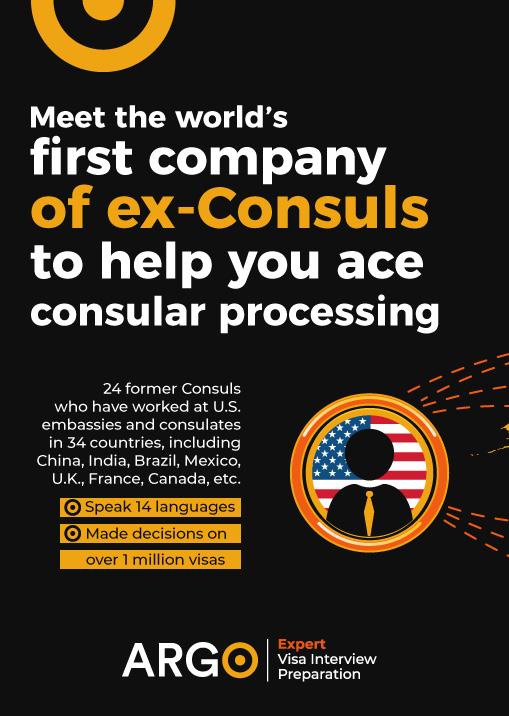
One big problem for K-1 practitioners is that when they spend months on a client’s case and have numerous indepth conversations with the couple in love, they don’t view the case through the same lens as a skeptical Consular Offcer. I recently worked with an immigration attorney on such a case where the attorney believed the K-1 case was “open and shut with a 99.9% success rate” only to have the K-1 visa refused and revoked. The devastated couple is now working with our team of expert ex-Consular Offcers at Argo to give it another try.
e Consular O#cer Gatekeeper
As an Immigrant Visa Offcer, I learned just how much K-1 visa approvals depend upon American Consular Offcers’ subjective perception and understanding of a romantic relationship. Unfortunately, a strong bias exists to view such a relationship through an American lens. In Hong Kong, for example, many K-1 visa applicants were Filipino and Indonesian, as they
resided in Hong Kong as live-in housekeepers in a special status. Any fact patterns unusual from an American perspective, e.g. a signifcant age difference between the petitioner and benefciary, limited instances where the couple have seen each other in person, etc., called for more intense scrutiny during the visa interview.
Generally, benefciaries are nervous about this visa interview, and understandably so. Immigrant visa interviews usually take between 15 to 30 minutes, which is much longer than your usual 3-minute non-immigrant interviews. Consular Offcers will ask a lot of questions, and benefciaries’ answers and how they respond
under the watchful eyes of the Consular Offcer will directly affect the decision on the case. Hesitation or delays (even for understandable reasons like lack of language fuency) can be seen as a red fag by Consular Offcers, which could mean followup interviews, the involvement of the Fraud Prevention Unit, a request for more documentation, etc. This is where working with an expert exConsular Offcer to prepare for the interview can be really benefcial for K-1 benefciaries. After all, it is not fair to expect K-1 benefciaries to present themselves and their situations perfectly at such a highstakes interview when they have never done this before, and there are so many hidden tripwires.
For K-1 benefciaries who don’t pass
muster during the interview, it could be a heart-wrenching experience. Consular Offcers who don’t believe in the authenticity of a K-1 relationship will usually recommend the K-1 petition for revocation to USCIS. If K-1 petitioners and benefciaries have the fnances to try again, they face an uphill battle of a visa revocation already on the government record and a lengthy processing delay. One option is for the couple to get married overseas and to re-fle a I-130 spousal petition, which can take up to a year or more in the current immigrant visa backlog. It is a lot of work and can be a huge fnancial burden to the couple, only to have their future together hinge again on the next interview, which is likely to be even more suspicious and hostile.
How Should Bene%ciaries
Present emselves During the K-1 Visa Interview?
I have always believed that benefciaries of any visa application should take a very proactive approach to the visa interview. And yet often, immigration attorneys advise their clients to say as little as possible during the visa interview for fear that they would say something wrong.
As a former Consular Offcer, the worst interviews I have encountered were the ones where it felt like pulling teeth to get any information out of the benefciary. I would have to ask 5 questions to get one substantive answer. While I don’t recommend saying too much (or too little), visa applicants should proactively offer the information Consular Offcer needs to make an informed decision on the case. K-1 benefciaries should be proactive, concise, confdent, humble, and respectful, all in one interview. They should answer questions in a way that makes sense to the American Consular Offcer.
If this seems like too much to expect your clients to get right on the frst try and without practice, you are right. For visa applications
with as high stakes as a K-1 visa, I recommend that you work with an expert former Consular Offcer who can prepare your clients the right way, given the time constraint of the visa interview and the susceptibility for (fatal) misunderstanding and miscommunication.
My time as a Consular Offcer gave me many behind-the-scenes insights into the world of consular processing and how Consular Offcers like to receive information. In those seven years, I realized that Visa Offcers have our own culture of how we look at cases, what questions we ask, and how we come to conclusions about visa applications and petitions.
At Argo Visa, every single one of our consultants is a former Consular Offcer with special expertise. We have a small team of ex-Consular Offcers who specialize in K-1 fancé/ fancée visas, and can help your clients be prepared for this crucial interview. If you’re interested in learning more about how we can help your frm succeed in your K-1 practice, please e-mail me at mfeuerbacher@argovisa. com.
About the Author
Mandy Feuerbacher is a former Consular Offcer with the U.S. Department of State, and has worked at the U.S. Embassy Beijing, China, the U.S. Consulate General Matamoros, Mexico, and the U.S. Consulate General Hong Kong. In her 7+ years working as a Consular Offcer, she has interviewed over 100,000 visa applicants. She is also a U.S. immigration attorney and runs Argo Visa, the world’s frst company made up of former U.S. Consular Offcers who help immigration attorneys with consular processing.
What Can Go Wrong With a Simple Adjustment Case? The Birth Certifcate!
ANNA SERGEEVA, ESQ.
Anna Sergeeva, Esq. JQKLaw.com Anna@JQKLaw.com
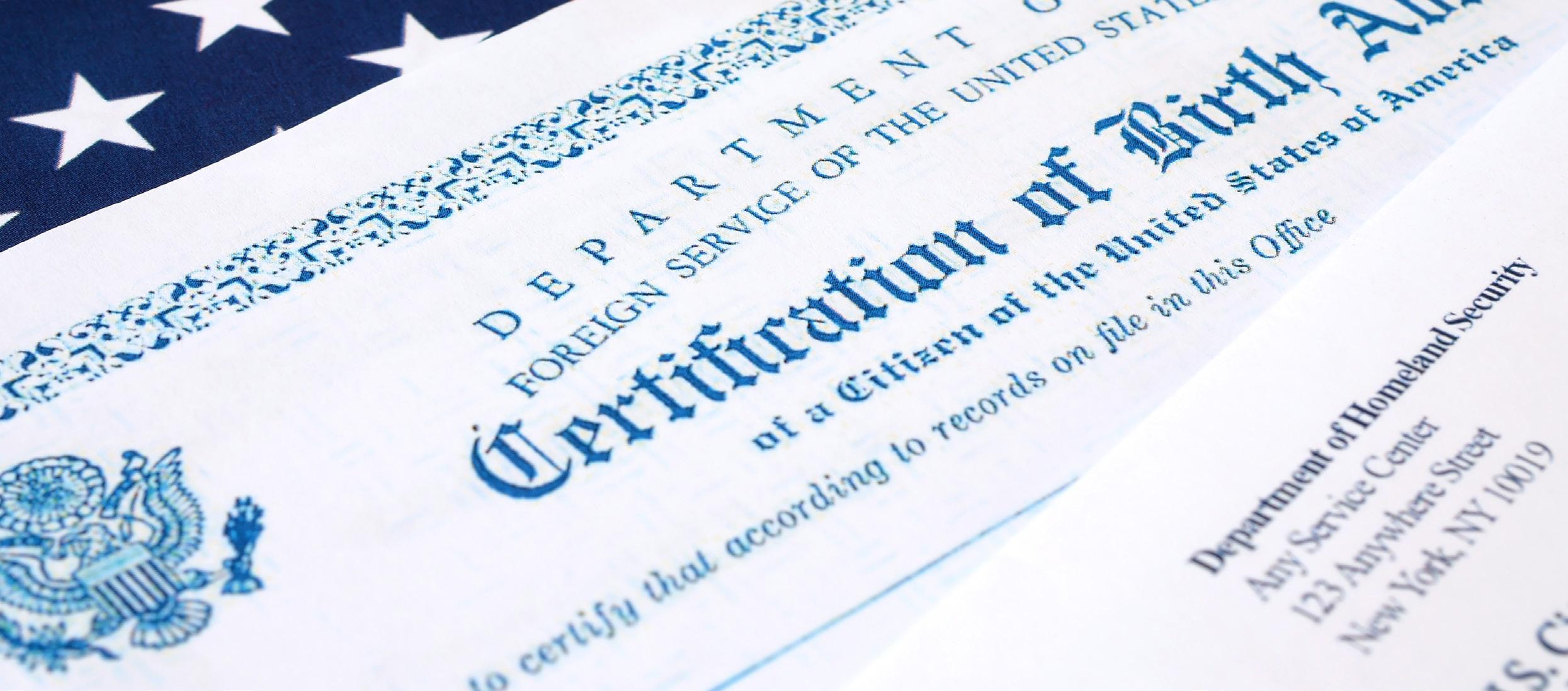
When a client comes to you for an initial consultation, and you quote a fee for a “simple” adjustment of status case, you still may not know what’s “there.” Only after getting documents and fnding out that your client does not have a birth certifcate or a birth certifcate was late-registered do you realize that the case will require more work (which you may not get paid for). Many fnd themselves in this situation. Below, you will fnd some practical tips on what to watch for in a birth certifcate.
Get It In ASAP
When taking a case, one of the frst documents you might want to look at is your client’s birth certifcate (of course, assessing the client’s admissibility is crucial, but we are not discussing it here). You get this green, brown, or blue booklet or page, look at the translation, and realize that it may cause a problem for your case.
Why It Is Important
A birth certifcate is one of the documents proving someone’s identity and relationships through their name, date and place of birth, and parent’s names.
USCIS views birth certifcates with
delayed, amended, and midwife birth registrations as having a high potential for fraud and is much more critical of them than the consulates. If USCIS does not accept the document, they will deny the adjustment of status application.
ings to Watch Out For
1. When the birth was registered: If there is more than one year between the birth date and its registration date, USCIS most likely considers the birth certifcate “late” or “delayed.” However, the BIA in 2017 said that this one-year “bright-line standard has no basis in the regulations or our precedent.” Matter of Rehman, 27 I&N Dec. 124 (BIA 2017).
Once the “late birth certifcate” determination is made, secondary evidence is required. In most cases, it is better to proactively submit secondary evidence and not wait for USCIS to send an RFE. General secondary evidence for the adjustment cases includes religious, medical, and school records and affdavits from people having personal knowledge of the birth.
2. When the birth certifcate was issued: As long as the birth was registered timely, USCIS will most likely accept the recently issued birth
3. The birth certifcate must match the Department of State’s Visa Reciprocity Schedule for the country where the birth certifcate was issued. Requirements are set for the format, issuing authority, security features, the title of the issuing person, and other features and vary signifcantly from country to country. Your client may present an acceptable birth certifcate according to her country, but the U.S might not accept that birth certifcate. For example, French nationals will typically provide you with their EU birth certifcate with multiple languages on the document itself. However, the proper acceptable birth certifcate should be issued by their local municipality at birth.
Another example is for South Korean applicants, where two documents have to be provided: the Basic Certifcate (Detailed) “Gibon Jeungmyongseo (Sang Sae)” and Family Relation Certifcate (Detailed) “Gajok Kwankye Jeungmyongseo (Sang Sae).”
Unfortunately, the Visa Reciprocity Schedule does not always match the reality of the birth certifcate or the procedures for obtaining it. For some cases, including a highlighted Visa Reciprocity printout for a specifc country may save you the hassle of dealing with the issue later.
4. Where required by the Visa Reciprocity, make sure to provide a long-form birth certifcate. Your client may face trouble getting her long-form birth certifcate in time from some countries. You must plan for it ahead of time, especially for adjustment cases based on a marriage to a lawful permanent resident.
5. Verify that the place of birth and parents’ names match on all client’s documents. Sometimes we see different places of birth or spellings on birth certifcates and passports. That would raise a concern on the part of USCIS regarding the validity of your client’s documents.
6. Don’t forget to do the translations! Lack of translation will cause a delay in your client’s case. It might be prudent to supplement a translation even for a birth certifcate with multiple languages, including English. We have seen that with the birth certifcates from Ireland.
7. Make sure the names are spelled consistently throughout the paperwork, including translations. Translators may use different transliteration rules, and that may cause inconsistency.
8. For some adjustment cases, DNA testing may be needed to prove the qualifying relationship exists.
9. If the birth certifcate is unavailable, in addition to secondary evidence, a Non-Availability Certifcate might be required from the proper authorities, depending on the issuing country.
10. Finally, sending a simple color copy of a birth certifcate instead of a black-and-white one is preferred. It may cost you an RFE.
Our job as zealous advocates include catching things before USCIS does. Also, considering the current state of play, immigration attorneys can help beat USCIS backlogs by presenting the most appealing and easy-toadjudicate cases.
About the Author
Anna is an associate immigration attorney at JQK Law Firm, headquartered in Los Angeles, CA. As a frst-generation immigrant from Belarus, Anna is passionate about immigration law. She primarily practices in the felds of family and employment-based immigration. Before receiving a Master of Laws (LL.M.) degree from William & Mary Law School, Anna obtained her frst law degree from Belarusian State University in Minsk, Belarus. Anna is a member of the American Immigration Lawyers Association (AILA) and admitted to the District of Columbia Bar. Anna loves playing tennis, dancing, gardening, and going on hikes with her husband and two sons.
Resources
• Department of State’s Visa Reciprocity Schedule (https:// travel.state.gov/content/travel/en/ us-visas/Visa-Reciprocity-and-CivilDocuments-by-Country.html)
• USCIS Policy Manual, 7 USCIS-PM Chapter 4 A.3.: “Offcers should check the Department of State’s Country Reciprocity Schedule to determine availability of birth certifcates as well as acceptable secondary evidence of birth for specifc countries.” (https://www. uscis.gov/policy-manual/volume-7part-a-chapter-4)
• 8 CFR 103.2(b)(2) and 8 CFR 204.2 (v) briefy talk about submitting secondary evidence.
How to Cut Case Preparation 50% (A Solo Practitioner’s
Success Story)
Michael Miello
Docketwise.com
michael@docketwise.com
You’ve heard the nightmare of the overworked, stressed-out attorney. Buried in paperwork with too many meetings and forced to chase clients while fnding new ones, the attorney develops panic attacks and questions why they chose this profession in the frst place.
You’ve also heard that applying effcient processes into your practice (the notion of “work smarter, not harder”) can be life-changing and provide the calm and order we desire.
Yet, why is it so challenging to implement processes that can improve our lives?
This portrayal is very close to describing the life of a busy immigration attorney. And having spoken to several attorneys (especially solo practitioners and small frms), we discovered that the mere thought of trying new tools feels overwhelming and prevents taking a step forward.
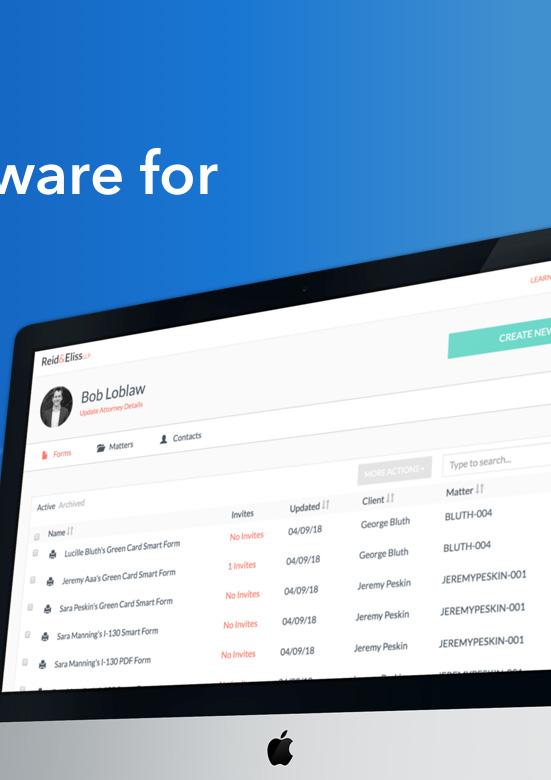
Trying new tools doesn’t have to be daunting, and it can be rewarding. To illustrate, I wanted to share the success story of Ismail Mohammed. He reduced his case preparation time by 50% after moving all his case management activities to Docketwise - the #1 rated immigration so ware.
With the extra time gained, he could focus on what he enjoys most: getting to know his clients and expanding his practice. About
Ismail Mohammed is the owner and sole practitioner at the Law Offce of Ismail Mohammed, a boutique law frm serving families and individuals in the Boston area since its founding in 2004.
MICHAEL MIELLO
Ismail focuses mainly on immigration law and criminal defense. He takes on cases for family-based petitions and applications for naturalization.
Problem
Before coming to Docketwise, Ismail used two other platforms: One for questionnaires and form preparation and one for general case management.
Although Ismail was frustrated with needing to use multiple platforms, his main problem was with immigration forms preparation. The platform gathered inaccurate and incomplete information from his questionnaires and forms.
Ismail spent signifcant time reviewing the information and following up with clients, often delaying his package flings. Time, money, and future business were at risk for Ismail.
Discovery
Ismail knew that there was a better way to get work done.
Ismail sought to replace his existing questionnaire/form software and fnd an easy, all-in-one case management software compatible with his immigration and criminal law practices.
For questionnaires/form preparation, the two non-negotiables were:
1. Accuracy of information inputted into the forms
2. Ease of use for both himself and his clients
As for an all-in-one solution to handle case management capabilities, it needed to include:
- invoicing and billing capabilities
- time tracking (billing by time)
- a way of organizing his immigration and criminal defense cases
- and a secure and easy-to-use client portal.
After researching dozens of software,
Ismail decided that Docketwise was best.
Solution
Shortly after implementation, Ismail was up to speed on Docketwise and beneftting. Ismail reduced his hours managing immigration cases and fled them faster.
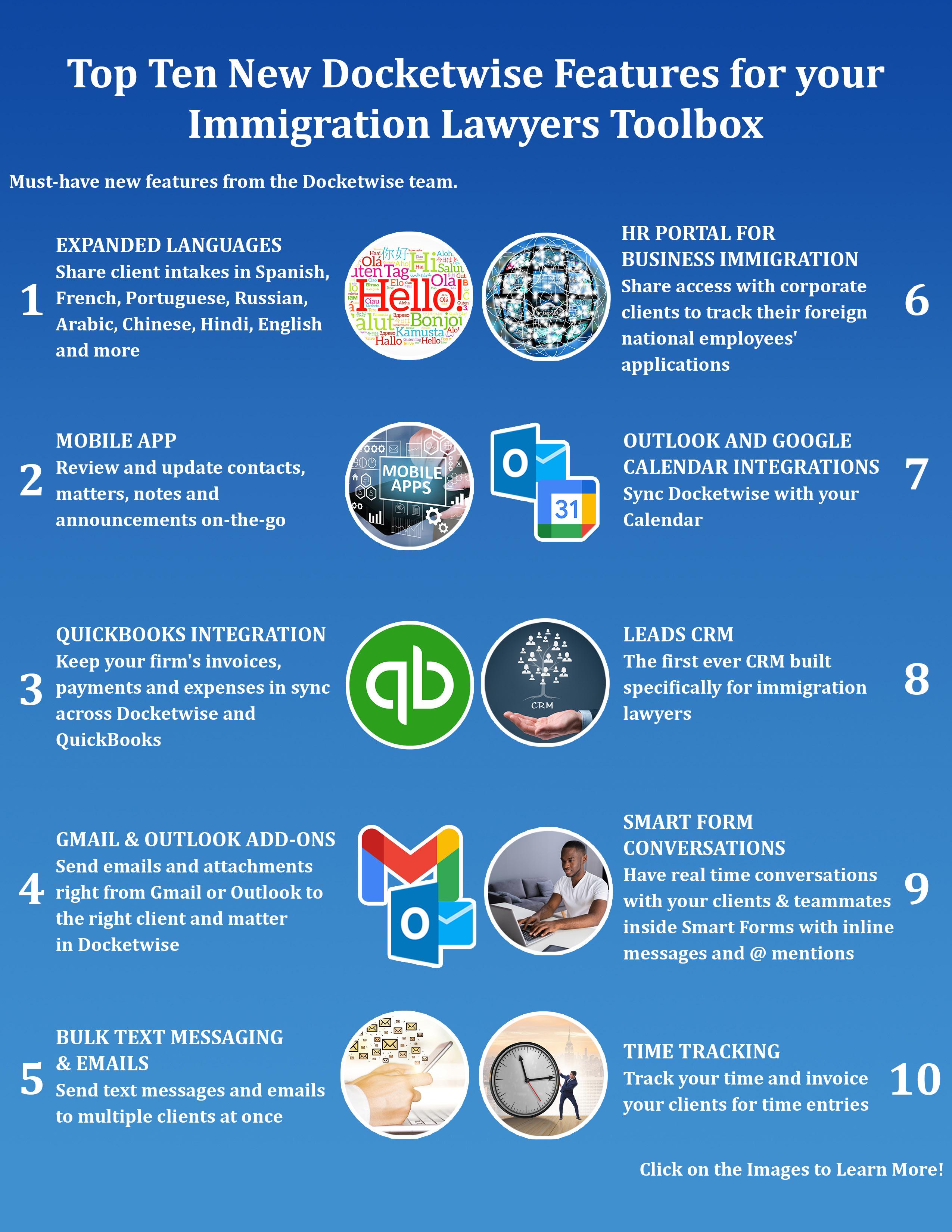
Ismail uses Docketwise Smart Forms and Client Portal to streamline his client onboarding and send out petitions or applications. Docketwise Client Portal helps clients access all necessary documents and information for fling. Since starting with Docketwise, Ismail noted that the time for case flling after entering the attorney-client relationship has reduced by half.
Invoicing and payment processing have become simple with Docketwise and their LawPay integration. The integration makes it easy to share invoices from Docketwise and collect payments or set up payment plans.
The Client Portal offers a secure and convenient way to fnd everything needed from questionnaires, forms, invoices, and tasks. In addition, it provides a safe method to upload all documents to include in the package. Ismail shares receipt notices and case tracking information to the Client
Portal where clients get case status reports.
Docketwise checked all the boxes as a case management solution for Ismail to move his immigration and criminal defense practices into one central platform and ditch the additional subscription.
Ismail recommends Docketwise for anyone involved with immigration cases and taking advantage of Docketwise no-risk free trial.
Are You Interested to Learn How Docketwise Can Simplify Your Life?
The story of Ismail is inspiring to us and why we dedicate our energy to making our software as best as possible for immigration attorneys. The more effcient we can streamline activities for you, the more impact you can have on others.
If Ismail’s story resonated with you, then I welcome you to please reach out to us. Let’s discuss your needs and if we can fnd a solution ft for you.
Thank you for your time, and I wish you a pleasant day!
Michael Miello, michael@ docketwise.com, Docketwise
Immigration Litigation 101 –
Full Admission vs. Pro Hac Vice
ESQ.
Brian Scott Green, Esq. GreenUSImmigration.com briangreen@greenusimmigration.com
As attorneys, our clients ask us to solve a wide variety of problems. Some of these problems, such as delayed adjudications and incorrect denials of benefts, can be solved through lawsuits fled with U.S. District Courts around the U.S. For example, you may be practicing in Chicago and have a client in Florida whose I-765 EAD applications is delayed at one of the U.S. Citizenship and Immigration Services (USCIS)’s service centers. Your client wants a fast resolution but you are faced with a choice: do you try to help your client by yourself, with co-counsel, or do you refer him or her out to another attorney? Many of us will have the instinct to help our client directly, when possible. That brings us to the next question – where can I fle this lawsuit and am I admitted to practice before the right court to take on this case?
Where to Sue?
The federal venue statute at 28 U.S.C. § 1391(e) generally permits lawsuits to be fled against a U.S. government offcer or agency in any judicial district where:
(A) a defendant resides,
(B) a substantial part of the events or omissions giving rise to the claim occurred, or
(C) where the plaintiff resides if no real property is involved in the action. In the immigration context, this often means that we can fle our client’s lawsuit where the USCIS fle is located (e.g., California Service Center, Nebraska Service Center, Potomac Service Center, Texas Service Center, or Vermont Service Center) or where the client resides.
Each District Court Is Di(erent
Choosing among these options involves strategy, but for sake of argument, let’s assume that you want to offer your client all of the available options. If your client’s application is delayed at the USCIS Nebraska Service Center, you can seek full admission to the bar of the U.S. District Court for the District of Nebraska. This U.S. District Court does not require you to be a member of the Nebraska State Bar to qualify for admission. What if your client resides in California? All four of the U.S.
BRIAN SCOTT GREEN,
District Courts in California require an attorney to hold a California State license to practice law before being eligible to be admitted to practice in the state’s U.S. District Courts. In this situation, you would need to work with a “local counsel” who is admitted to the Northern, Eastern, Central, or Southern District of California, and who would move for your admission “pro hac vice,” meaning adding an attorney to a case in a jurisdiction where they are not licensed to practice law.
Some U.S. District Courts, including the District of Colorado, have eliminated pro hac vice altogether. Any attorney wishing to participate in a case before the District of Colorado must apply for and receive full admission. This provides several advantages over the pro hac vice process, including lower costs to attorneys (one admission fee instead of one fee per case) and easier administration of attorney discipline for the courts (since each attorney is fully within the power of that U.S. District Court). With pro hac vice fees as high as $500.00 per case in
the Central District of California and $317.00 per case in the Northern District of California, immigration attorneys have an incentive to gain full admission to the U.S. District Courts where USCIS offces are located, and where their clients reside.
When Full Admission Is Better
Another beneft of full admission, where available, is the ease of fling and receiving notices through the court’s Electronic Case Filing (ECF) system. The Northern District of Texas (NDTX) permits non-Texas bar members to gain full admission to practice before the court, but also requires that at least one “local” attorney (meaning an attorney whose primary law offce is located near the NDTX courthouse in the case) be involved in representing any party to the lawsuit (with the exception of Assistant U.S. Attorneys and U.S. Department of Justice “OIL” attorneys). In this court, full admission is a better choice than appearing pro hac vice. A non-resident fully
admitted attorney can be listed as cocounsel on the client’s complaint and that attorney will receive ECF notices from the beginning of the case.
Attorneys who seek pro hac vice admission for a case enter the case sometime after the lawsuit is fled and will need to apply for and receive permission to use the court’s ECF system. Attorneys who regularly practice before the NDTX will enjoy the privileges of membership and being notifed of all flings in their lawsuit, even when they are not the “lead attorney” in the case.
Current Trends
The trend over the last several years has been for U.S. District Courts to loosen the requirements for admission, permitting more attorneys who are not members of the local state bar to practice in federal cases (which very rarely involve local state law). While not joining this trend, the U.S. District Courts for the Southern and Eastern Districts of New York (SDNY and EDNY, where many immigration-
related lawsuits are fled each year) have liberalized their pro hac vice admission procedure, by removing the need for a sponsoring local attorney. This means that the immigration lawyer who could be fully admitted to the bar of the U.S. District Court for Nebraska (without a sponsor) would only be able to be admitted on a caseby-case before the EDNY in Brooklyn or the SDNY in Manhattan. This is, of course, still much easier than gaining a New York state license to practice law by either sitting for and passing a bar examination, or applying through reciprocity.
How many courts an immigration attorney may want to gain admission to may depend on their client base, the types of clients they represent, and the type of clients that they want to attract. If an immigration attorney is based in California but not licensed to practice law there, they are not able to offer their clients the full arsenal of litigation options, including suing the USCIS California Service Center in the CDCA or NDCA. If that immigration attorney gains full
admission to practice from the State of California, they can be admitted to all four of the district courts there, and can also serve as local counsel for the thousands of immigration attorneys around the U.S. who would like to have their clients sue USCIS in the U.S. District Courts in California.
The USCIS Potomac Service Center, located in Arlington, Virginia, poses a similar challenge. The U.S. District Court for the Eastern District of Virginia requires Virginia bar admission as a perquisite for admission to practice before its court. While the Commonwealth of Virginia has expanded its reciprocity with sister jurisdictions, the process for being admitted still involves a character investigation with background check, and can take many months or longer to complete. For clients who need to fle a lawsuit now, applying for state licensure is likely too long of a process. For these courts, retaining qualifed local counsel who can seek your admission pro hac vice is essential.
While there is no one-size-fts all approach to deciding between full admission and pro hac vice admission for client lawsuits, an examination of the local rules (each year) can guide us. As U.S. District Courts around the U.S. revise their local rules, more and more are opening their doors to qualifed attorneys from other states.
About the Author
Brian S. Green is a solo practitioner in greater Denver, Colorado, who focuses on bringing U.S. District Court challenges to immigration and visa denials and delays, nationwide. Brian has practiced complex litigation and trial work since 2001, and immigration law full-time since 2007. Brian is admitted to practice before eighteen (18) U.S. District Courts around the U.S. Brian “cut his teeth” as a judicial law clerk, assistant public defender, and then as outside trial counsel for General Electric and General Motors Corp. He is a graduate of Washington & Jefferson College and Case Western Reserve University School of Law.
C O L L E A G U E U P D A T E S
M E R G E R & M O V E S
Jesse Bless (former AILA Director of Litigation) becoming Partner at Wasden, Bless & Forney, LLP
Ming Chen is lateraling to UC Hastings College of Law
Andrew J. Zeltner and Karuna Simbeck elected to Partnership at Klasko Immigration Law Partners
David Serwer becomes Partner at Baker Hostetler’s Chicago Office
David Berry, Found Partner of Berry Appleman & Leiden LLP retires
Melissa Crow new Director of Litigation at the Center for Gender & Refugee Studies
Laura M. Jurcevich becomes Immigration Practice Group co-chair at Porter Wright Morris & Arthur LLP
Diane Butler becomes head of Davis Wright Tremaine LLP's Immigration Group
Michelle N. Méndez new Director of Legal Resources and Training at the National Immigration Project of the National Lawyers Guild
“Formally” online immigration service, raises $2.3M in pe-seed funding
Argo Visa, a provider of consultative services to visa applicants by former U.S. visa officers, purchased by BDV Solutions
Docketwise.com, immigration software & case management provider, purchased by MyCase.com
C O L L E A G U E L O S S E S
Tally Kritzman-Amir (1979-2022)
George S. Newman (1945-2022)
Jinjin (Jim) Li (1956-2022)
Rebecca Van Uitert (1977-2022)
Anna Shavers (1947-2022)
Michael Olivas (-2022)
Jerry Erickson (-2022)
Matthew Kramer (-2022)
Yanglier Suarez Lopez (-2022)
Improving an Immigration Practice With Federal Litigation Capabilities
JOSEPH GENTILE, ESQ.
Joseph Gentile, Esq. SarrafGentile.com
joseph@sarrafgentile.com
The ability to litigate in federal court can dramatically improve an immigration law practice. We’ll frst discuss why and then how to add these capabilities to your practice.
Why Litigation Matters
First, litigation skills provide immigration law frms with real fullservice capabilities. By adding a litigation threat, immigration counsel can deepen their relationships with clients and provide the one-stop shopping experience many clients appreciate. It also gives clients and counsel more control over any legal matter, no matter its path.
Second, court-room skills come with certain bragging rights. The ability to navigate the courthouse, understand procedural nuances, debate a point with opposing counsel, or try to educate or persuade a federal judge, enhances an attorney’s reputation as a fghter and – whether warranted or not – matches most people’s concept of a TV “trial” lawyer (even though trials are extremely rare). Also, even if you never have to actually litigate, knowing that you can if it becomes necessary has a profound psychological effect on both counsel and client.
Third, adding litigation capability is no longer optional as it is now a material component of immigration practice. Even if client and counsel agree that litigation is inappropriate given the unique circumstances involved, an informed decision will still require discussing what litigation would entail. An experienced lawyer will therefore need to advise clients on the pros and cons of litigation, what is possible, what is not possible, what is likely, and how much clients stand to gain, pay or lose in the process.
Fourth, and perhaps most importantly, litigation skills enable counsel to get clients what they want most – results. This result plays out daily in the countless immigration applications that are long-delayed or wrongly denied.
Litigating to Compel A Decision
The enormous backlog in immigration applications is well known. Applications that should take months to decide routinely take years, even though the law often requires timely adjudications (30 days in some instances) and where applicants pay substantial application fees. Well-meaning efforts by most immigration counsel – emails, phone calls, and letter-writing campaigns –are frequently futile. This is where litigation comes in.
Faced with these long-delayed and undecided applications, the next step is to sue the government. Pursuant to a Writ of Mandamus, 28 USC § 1361, and the Administrative Procedure Act (APA), 5 U.S.C. § 555(b) & 706(1), applicants can fle a lawsuit in federal court and seek an order compelling the government to make a decision on these long-delayed applications.
While these types of cases can only be brought in federal court and refect all the characteristics of traditional federal litigation, they are relatively simple. For example, there is no jury trial, no discovery, and the issues are straightforward – is the government’s failure to adjudicate an immigration application, given the time it has been pending, reasonable? Also, cases are commonly settled or rendered moot by a decision made within the time it takes for the government to respond to the complaint.
A resolution frequently occurs with no motion practice, only requiring a complaint and some initial housekeeping flings. The local U.S. Attorney’s Offce (USAO) will often represent the government in these suits and generally regard a delayed immigration application as among the least important on their docket. As a result, and especially if the delay is egregious, government counsel will often lean hard on the relevant immigration agency to promptly adjudicate the delayed application and render the case moot.
In some cases (anecdotally, but which appears to be increasing in frequency), the government may seek to transfer the case to another district court, challenge the complaint by fling a motion to dismiss, or both. While this is sometimes a delay tactic or an effort to reduce the work imposed on the USAO handling the case, it will require some effort on the part of counsel (and costs to the client) to oppose or manage.
For cases that progress beyond a transfer and are attacked substantively, counsel may have to prepare or oppose a motion for summary judgment. However, where motion practice is required, the arguments are frequently limited to the papers, meaning the court decides the issues based on the written submissions. Oral argument in these cases is not as common as in some other types of litigation, and telephonic appearances are frequently permitted.
Finally, because actions to compel a decision involve an administrative factual record, discovery and its attendant motion practice are generally avoided in Mandamus/APA cases. As a result, counsel in these cases do not have to contend with the complexities of discovery.
Armed with the skills to assess and bring these cases, immigration lawyers can sketch out a litigation strategy, review the pros and cons with their clients, craft a winning complaint and negotiate a possible resolution with
the government’s lawyers. Even if the decision is to continue waiting, clients deserve the advice and the opportunity to make an informed decision.
Adding Litigation to Your Services
So how do immigration lawyers acquire these skills and – at a minimum – properly advise their clients? There are a few ways.
First, counsel can collaborate and cocounsel with experienced litigators. With the client’s consent, the attorneys can work together, share any fees and jointly beneft the client.
Second, counsel can develop inhouse capabilities by hiring litigators or training their own staff (and themselves) on how to litigate these matters (see below).
Finally, counsel can simply refer litigation matters to experienced and trusted litigation counsel. However, even when referring the matter out, it still pays to learn about the litigation process to properly vet cases and prep clients for the possibility of fling a lawsuit.
How, and the pace at which an immigration lawyer goes about adding litigation to their set of skills requires self-awareness, business judgment, and determination. Whether to add litigation to an immigration practice, however, is a no-brainer.
Self-Teaching Immigration Litigation
There are several things you can do to educate yourself on immigration litigation.
First, this quarterly magazine and the resources available at Immigration Lawyers Toolbox ® are a great start. (Note: My frm and I have no fnancial relationship with the Immigration Lawyers Toolbox ®). Many excellent litigators routinely contribute content here; their insight and experience are valuable.
Second, the American Immigration Lawyers Association (AILA) is a wonderful organization and resource. They have several papers (free
of charge) and invaluable books. Chief among them is Robert Pauw’s Litigating Immigration Cases in Federal Court. There are also many templates available through their Administrative Litigation Task Force initiative. Finally, several AILA Listservs, including federal litigation practice and mandamus litigation issues, will put you in touch with fellow immigration litigators and keep you informed on legal trends, insights, and updates.
Third, observing court proceedings and reading flings (such as complaints and motion papers) can be illuminating. For example, if your client has been waiting for years on a particular adjudication or interview, fnding a similar case and reading the case fle can be eye-opening. These
flings can also serve as models for your case.
And fnally, fnding a mentor in this area is critical. Few of us can learn anything without the help of others, and this is especially true for litigation, where human interaction and nuance play such vital roles.
About the Author
Joseph Gentile is a co-founding member of Sarraf Gentile LLP, a New York-based law frm that represents immigrants and others in complex federal litigation nationwide. The frm’s cases have recovered over $2 billion.
4 Ways the Biden Administration Could Change Immigration Policy Immediately to Alleviate the National Nursing Shortage
ROBERT P. WEBBER, ESQ., MARIA JULIA UCHOA, AND TOM OJA
Robert P. Webber, Esq.
WebberImmigration.com bob@webberimmigration.com
The United States faces a wellknown national labor shortage, with a record number of job openings. The labor shortage is particularly acute in certain important sectors, including healthcare. While the healthcare worker shortage has been longstanding, the COVID-19 pandemic over the last 24 months has made the shortage of healthcare workers even more severe. The stress of the pandemic has increased burnout, and, to some extent, vaccine mandates have resulted in even fewer healthcare workers being available, especially for rural areas. And now, a lack of staffng itself is leading to more burn-out, so many employers are in a vicious downward cycle on staffng.
This article focuses principally on one imvvvportant healthcare occupation –Registered Nurses (RNs) – and how immigration policy modifcations could help resolve staffng shortages in the occupation. The American Nurses Association projects there will be far more Registered Nurse jobs available in 2022 than any other profession, and the Bureau of Labor Statistics has indicated a need for 1.1 million new RNs to fll the gap created by healthcare expansion and retiring nurses.
This article highlights 4 policy changes the Biden Administration could make immediately to alleviate the national nursing shortage. None of these policy changes require action from Congress, which is notoriously unable to pass positive immigration reform.
1. Expand STEM OPT to Include Nursing and Other Healthcare Majors
There are approximately 1 million international students in the United States on F-1 visas. F-1 students in college or graduate school are eligible for 12 months of general Optional Practical Training (“OPT”) after graduation. However, international students who major in certain qualifying felds are eligible for an additional 24 months of OPT. This 24-month term is known as “STEM OPT” – for those majoring in designated Science, Technology, Engineering, and Math (STEM) felds. The Biden Administration has already recognized the importance of STEM OPT. In January 2022, the U.S. Department of Homeland Security made 22 additional felds of study eligible for STEM OPT. But sadly (curiously?), nursing and various other healthcare-related felds of study are NOT listed as qualifying for STEM OPT, even in the updated list containing the 22 additional felds.
Policy Change #1 - The Biden Administration could immediately increase the available number of nurses and other healthcare workers by making nursing and other healthcare majors eligible for STEM OPT. Expanding STEM OPT to nursing would also likely attract more students into the feld as international students would know they would have up to 36 months of work authorization after graduation, which would generally give them enough time to process for a green card.
2. Accelerate 9141 Prevailing Wage Determinations
For Nurses, Physicians, and Other Healthcare Occupations
U.S. employers seeking to hire foreign nationals as RNs generally must go through an immigrant visa petition sponsorship process that involves declaring they will pay the sponsored immigrant nurse the required wage (prevailing wage) for the geographic area where the position is based. Even though RNs are eligible for relatively fast track Schedule A processing for green cards, including an exemption from the individualized labor market test, each sponsoring employer must obtain the prevailing wage from the U.S. Department of Labor (DOL) using Form 9141. Right now, in April 2022, DOL’s 9141 determinations are being issued at the record slow pace of 6+ months.
Policy Change #2 - The Biden
Administration’s DOL could immediately designate all nurses, physicians, and other healthcare professionals as special shortage occupations eligible for fast-track 9141 determinations. All 9141 determinations for nurses, physicians, and other healthcare workers could be done in 30 days (rather than 6+ months). This action would greatly accelerate the process for immigrant visa sponsorship and get more qualifed nurses, paid in compliance with the prevailing wage, into the feld much faster. There are many thousands of cases stalled because of slow processing of 9141 determinations.
3. Designate RNs (Registered Nurses) as a Specialty Occupation
As a general rule, RNs are not eligible for H-1B temporary work visas. This is because the traditional approach at USCIS is that RNs do not qualify as a “specialty occupation.” This policy is justifed because of a historic anomaly. Long ago, RNs would qualify for the occupation based on completion of a two-year nursing degree. But now, in 2022, and for the past several years, RNs generally enter the occupation after completing a Bachelor’s (not an Associate’s) degree. It is wellestablished that over the past 20 years, nursing has become increasingly sophisticated and the fundamental education to enter the feld is a Bachelor’s degree, meaning RN’s should qualify for H-1B designation.
But the USCIS policy persists that registered nursing is not a specialty occupation.
Allowing employers to sponsor RNs for H-1B visas would greatly facilitate U.S. employers hiring nurses from abroad. Right now, nurses from abroad must go through the slowmoving immigrant visa process. If, however, RNs were eligible for H-1B visas, then the process of bringing RNs directly from abroad would be greatly enhanced.
Importantly, while USCIS typically defers to DOL analysis on which occupations qualify as specialty occupations, DOL’s Occupational Outlook Handbook (OOH) currently lists a Bachelor’s degree as the typical entry-level education for RNs. In the past, the OOH listed the entry-level education for a nurse as an Associate’s degree. The DOL also now indicates that RNs are in Job Zone 4, the same zone as engineers and teachers – two occupations which clearly qualify for H-1B designation. Thus, various DOL sources that USCIS relies upon suggest that registered nursing is a specialty occupation.
Policy Change #3 - The Biden Administration could immediately release a memo from USCIS HQ making clear that RNs now qualify for H-1B designation since a Bachelor’s degree is normally the minimum entry requirement for this profession. This policy change is supported by DOL statements and publications on the current minimum education of RNs.
4. Revisit the De%nition of “A#liation” for H-1B Cap Exemption
Making clear that RNs are eligible for H-1B designation (policy change #3, above) is only a partial solution. To maximize the beneft of H-1B designation being available to RNs, USCIS should also revisit the defnition of “affliation” for H-1B cap designation.
Currently, USCIS regulations recognize that certain employers are exempt from the H-1B cap based on “affliation” with institutions of higher education. But USCIS policy has taken a very strict view of what qualifes as an “affliation.”
Policy Change #4 - The Biden Administration could release clear guidance on what qualifes as an “affliated” institution eligible for H-1B cap exemption. By giving employers, including hospitals, health systems, and nursing homes a clear and reasonable roadmap to H-1B cap exemption, these employers could, along with policy change #3, sponsor RNs for H-1B visas exempt from the cap, allowing qualifed RNs to enter
the U.S. workforce from abroad.
Conclusion
The labor shortage in the United States is clearly here. Healthcare is a sector that is particularly hard-hit by the shortage of qualifed workers. Demographic changes put more pressure on the healthcare system – the baby boomers are aging and requiring more healthcare services.
Although comprehensive immigration reform through Congress is ideal, in the short term, policy changes like those suggested above can help America’s nurses, who are tired and overworked.
About the Author
Robert P. Webber is an immigration attorney based in Minnesota. His clients include hospitals, health systems, individual health care workers, as well as self-petitioning physicians, scientists, and medical researchers. Julia Uchoa and Tom Oja are law clerks at Webber Law Firm 2.0.
EB-1A Extraordinary Tips: Review of May 2022 AAO Decisions
KHOSRAVI, ESQ.
John Khosravi, Esq. JQKLaw.com
Info@JQKLaw.com
The EB-1A criteria listed in the regulations seem deceptively simple. However, in practice, you will fnd myriad nuances for each. Moreover, all the different felds interact differently with these criteria. I found the best education on current standards (and things to watch out for) in the Administrative Appeals Offce (AAO) non-precedent decisions. Here are some tips from May 2022 decisions.
Judge the Work of Others
The Petitioner presented events that he was in the flming of a talent-judging type television show. However, the letters provided attesting to this by the show’s producers did not mention if the judging panel was responsible for scoring contestants or otherwise selecting the winner.
You would think that is a given when labeled with the title of “judge,” but you have to be specifc in your letter. They also found evidence that the show broadcast was not provided1
Work Displayed at Artistic Exhibitions or Showcases
The USCIS Offcer reviewing the case mistakenly limited the display of artistic work for visual artists only and said the Petitioner’s showcase of performing arts would not be included in this criterion. The AAO corroborated that USCIS was incorrect and that performing arts are part of this criteria.2
I have found this criterion to be one of the most diffcult to satisfy. USCIS requires evidence of strict standards for membership. In one decision, the Petitioner was a senior member of the Institute of Electrical and Electronics Engineers (IEEE). However, in this case, USCIS accepted this membership, but the AAO disagreed because the requirements for senior membership did not include outstanding achievement, and the Petitioner had not shown that recognized national or international experts judged the achievements of candidates for senior membership.3
Published Material About the Petitioner
A decade ago, I found USCIS to be more generous in this category, but the standards have become stricter. As a reminder, the article(s) provided must be about the Petitioner and the contents must relate to the Petitioner’s work in the feld under which they seek classifcation as an immigrant.
In addition to appearing in professional or major trade publications or other major media (Author’s note: there is a bias for print media), the Petitioner must provide each published item’s title, date, author and any necessary translation. 8 C.F.R. § 204.5(h) (3)(iii). It is best to add the article and the cover of the magazine or newspaper it appears on. If online, the home page and about page should be provided (in addition to the article).
When the article is published on a website, try using online traffc statistics for the website to corroborate that it is a distinguished media organization. You should also provide comparable website statistics for other established competitors to show the standing of the publisher of your client’s article.
Finally, one recent appeal was denied because the Petitioner provided articles from the print editions of publications that were not accompanied by evidence that the articles also appeared in the respective online editions. Also, the print titles did not include circulation numbers of the publication.
Finally, they provided screenshots of videos they appeared in, but the AAO said they had to include transcripts of the video/interview (a summarized transcript could be problematic). This creates a lot more work and costs for the client, especially if translations are required.4
High Salary
When using invoices as evidence of high income, the invoices alone are insuffcient. It would best to show the income coming into the account (or taxes returns, etc.) to show that the payment was honored.
Also, if payment is coming to a company or project, the money might be going to more than the just the Petitioner. For example, if
paid for a show, some costs will go to overhead and payroll for others. So that payment doesn’t necessarily show the Petitioner’s high income.5
Importantly, when comparing the income with other’s in the feld (showing that it is relatively higher), you should compare it with the people in the country where the Petitioner is. If they live in France, comparing to U.S. Gov’t Data (O-NET or the Bureau of Labor Statistics of the U.S. Department of Labor (DOL)) is not acceptable. Should compare to local stats (which can be extremely hard to fnd).
In addition, the comparable salaries should be close to the job/title specifc. Using “computer occupation” numbers for and “IT Project Manager” become the latter’s data is unavailable can be problematic.6
For the Kazarian analysis, after satisfying the 3 minimum criteria, evidence of sustained acclaim is required. In one decision, sustained acclaim was not accepted because the Petitioner changed jobs a number of times in the years immediately surrounding the petition fling, and he provided salary or remuneration evidence of only some of his jobs during that time. With incomplete evidence, the AAO said it would not be able to conclude that his compensation refected sustained national or international acclaim.7
An offcer must fully explain the reasons for denying a visa petition in order to allow a Petitioner a fair opportunity to contest the decision and to allow [the AAO] an opportunity for meaningful appellate review. See 8 CFR Sec. 103.3(a)(1)(i), see also Matter of M-P-, 20I&N Dec. 786 (IA 1993)
Be careful out there!
About the Author
John Khosravi is the Managing Attorney of the JQK Law Firm, a boutique-style Immigration Law frm. He is also the President of the Immigration Lawyers Toolbox®, an education, and media company focused on immigration law, including the only Immigration Lawyers Toolbox® Trade Magazine and the Immigration Lawyers Podcast. He is also a former Professor of Immigration Law at Pepperdine and Loyola Law Schools.
Avoiding and Responding to R-1 Nonimmigrant Religious Worker Requests for Evidence
SCOTT ANDREW FULKS, ESQ.
Scott Andrew Fulks, Esq. DeckertLaw.com scott@deckertlawfrm.com
As with most USCIS petitions during COVID, processing times for R-1 petitions reached all-time highs during 2020 and 2021. More recently, the religious worker nonimmigrant category has decreased, yet long processing times remain. Religious communities often require the benefciary’s services immediately, but frequently this is impossible. Since most religious petitioners remain ineligible for premium processing under current USCIS policies1, avoiding Requests for Evidence (RFE) is crucial to keeping processing times at a minimum2 Those handling R-1 petitions for faith-based organizations should reexamine the initial evidence submitted relating to the following four items
1 Requests for premium processing will only be accepted if the petitioner has previously fled an R-1 petition and completed a successful on-site inspection by the Fraud and Detection National Security Directorate. 2 Total avoidance of R-1 RFEs may be an elusive feat. A recent informal survey of the AILA members of the Religious Workers Interest Group conducted by the author revealed that seasoned R-1 practitioners receive RFEs in nearly 30% of their cases fled under Premium Processing and in 40% of their non-premium processing cases.
Petitioner’s Pro(ered Position
The R-1 regulations provide for three kinds of R-1 positions: ministers, religious occupations, and religious vocations. 8 C.F.R. § 214.2(r). While practitioners can expect RFEs related to all three categories, they can expect signifcant pushback from the California Service Center (CSC) related to religious occupations because of the fexible nature of the position. Eligible positions could include not only ministry coordinators, broadcasters, and missionaries but also translators, cantors, and private school teachers. A religious occupation must be primarily related to a traditional religious function, carry out the religious creed of the community, and not be primarily administrative in its functions. Vital to avoiding an RFE is the inclusion of the following documents:
1. A detailed job description highlighting the religious component of each duty and validating the administrative elements of the job as incidental to the former.
2. A weekly schedule cataloging the duration and kinds of functions that carry out the creed of the community.
3. A support letter signed by the petitioner substantiating how the position is a traditional religious function within the religious community.
Failure to submit the foregoing items with the I-129 can easily result in an RFE and further delay processing. On the other hand, “ministers” are those fully authorized and trained within the religious community to carry out religious functions “usually performed by authorized members” and are not “a person not authorized to perform duties usually performed by clergy.” Id. Whether a particular religious community considers an R-1 benefciary a “minister” will often hinge on whether specifed credentials
serve as the baseline minimum for similarly-situated employees. For example, if either Buddhist ordination at a specifed abbey or a Master of Divinity (M.Div.) degree would normally be required for a “minister,” an R-1 benefciary who does not submit the requisite certifcate may be asked to provide it.
Petitioner’s Religious Denomination and Bene%ciary’s Membership
Importantly, the benefciary must establish that they have been a member of the same religious denomination as the petitioner’s denomination for the previous two years. This requirement
can initially raise concerns if the benefciary was or is a member of a different religious organization than the petitioner. Colloquially, the term “denomination” is often used in certain religious settings to connote a separate association of religious communities within a broader religious movement. However, recent non-precedent AAO decisions have made clear that a “denomination” for R-1 purposes does not require an institutional or governmental relationship between the religious organizations; rather, only a common type of ecclesiastical government is required between the two entities.
“…expect
signifcant pushback from the California Service Center (CSC) related to religious occupations...”
Therefore, the benefciary can be a part of the same “denomination” as the petitioner even if the religious communities belong to seemingly segregated associations: for example, Methodists, Lutherans, and Presbyterians are all a part of the same “denomination.” What is required is for the practitioner to craft a suffciently broad “denomination” to encompass both the benefciary’s and the petitioner’s religious organizations. An RFE can be avoided on this issue by submitting the foundational doctrinal statement or creed for each religious organization.
Nonetheless, offcers at the CSC will sometimes challenge whether the benefciary’s membership is in the same denomination as the petitioner’s denomination. Specifcally, they may request to review evidence of a common type of ecclesiastical government and one or more of any of the following six characteristics established at 8 C.F.R. § 214.2(r)(3):
1. A recognized common creed or statement of faith shared among the denomination’s members;
2. A common form of worship;
3. A common formal code of doctrine and discipline;
4. Common religious services and ceremonies;
5. Common established places of religious worship or religious congregations; or
6. Comparable indicia of a bona fde religious denomination.
that the government cannot inquire into church doctrine to determine a legal matter); Maryland and Virginia Eldership of the Churches of God v. Church of God of Sharpsburg, 396 U.S. 367, 368 (1970) (fnding that courts do not raise First Amendment concerns as long as they do not inquire about church doctrine when settling church disputes).
First, submission of evidence relating to a common type of ecclesiastical government would necessitate for USCIS to evaluate beliefs between religious organizations in violation of the Establishment Clause. Second, it would require for the government to make a fnal determination regarding the faith-based communities’ forms of religious governance as either suffciently common or not. Lastly, it would assume that the offcer is legally permitted (let alone personally competent!) to compare and contrast the core standards between religious organizations in violation of the Establishment Clause. In essence, a USCIS offcer would need to formulate doctrinal conclusions in denying the I-129 petition for these purposes.
at least addresses each organization’s governance and beliefs.
Petitioner’s Ability to Pay
Such a request for the government to evaluate the religious doctrine or structure between faith-based organizations is in direct violation of settled First Amendment case law. Presbyterian Church v. Hull Memorial Presbyterian Church, 393 U.S. 440, 449 (1969) (establishing
Of course, the submission of the foundational doctrinal statement or creed at the outset could help avoid this kind of RFE, however, any response to an RFE requesting to evaluate organizational or doctrinal evidence should emphatically forbid the government’s ability to inquire any further than the mere submission of documents. Because the regulations require that two or more religious organizations share “a common type of ecclesiastical government” and one of the six enumerated characteristics above, something must be submitted. A response suffcient to overcome any RFE under this category should include, frst, a letter signed by the petitioner establishing the First Amendment case law above and, second, any doctrinal statement from each organization in question (regardless of any perceived denominational/doctrinal differences in those statements) that
The R-1 context remains substantially different from other nonimmigrant categories in that there exists no established minimum wage that the petitioner must pay the benefciary. In addition, a petitioner is not required to fle an LCA as a prerequisite to fling the I-129 petition. Nonetheless, the petitioner must establish that the organization has suffcient revenue or assets to cover the benefciary’s proposed salary. If the petitioner is unable to demonstrate this, it should include a statement as to why or how it will be possible to meet this standard by the time the R-1 benefciary is hired. Most importantly, initial submissions should always include redacted W-2s previously issued by the petitioner for current employees if an RFE is to be avoided.
Frequently, RFEs could arise on this matter for those I-129s which extend the stay of the benefciary in R-1 status. The CSC frequently requires prior proof of compliance with past compensation for previous periods in R-1 status. Documents requested include cashed checks provided by the petitioner to the benefciary, a copy of the benefciary’s tax returns,
and a copy of the benefciary’s bank statements showing the deposit of the same checks. By preempting this request at fling, an RFE may be circumvented.
Further distinguished from other nonimmigrant categories, the R-1 regulations do not establish whether the petitioner or the benefciary must pay the fling or legal fees. Nonetheless, the CSC has issued Requests for Evidence (and Notices of Intent to Deny) purporting to require that only the petitioner may pay the legal and fling fees. On-site visits at the petitioner’s headquarters conducted by offcers of the Fraud and Detection National Security Directorate often confuse nonimmigrant categories and ask the petitioner who paid the legal and fling fees. Responses by the petitioner that the benefciary has paid either fee has then been erroneously reported by the FDNS offcer to the CSC. Nonetheless, an RFE on this matter can be avoided by preparing the client to respond to this line of questioning at the on-site visit. If an RFE is issued, a response suffcient to overcome this request and obtain approval is a letter signed by the petitioner that no such regulation exists.
Bene%ciary’s Quali%cations
Further distinguishing the R-1 category among other nonimmigrant visas is the standard of proof regarding the benefciary’s qualifcations for the position. Evidence submitted with the I-129 on this issue can be minimal, however, it should be suffcient to remove any doubt in the offcer’s mind that the benefciary would be competent to perform the proposed job duties. Despite the lessened standard, RFEs can be issued for specifc concerns.
For example, I-129s fled under the “minister” category may result in an RFE if the petitioner has not established that the benefciary is qualifed according to the standards of the petitioner’s own denomination. Offcers will often assume from the petitioner’s previous submissions— or worse, the offcer’s personal knowledge—that the petitioner’s denomination holds to a common prerequisite for similar positions. However, if an established course of education is normally required within the denomination, then initial submissions should include degree diplomas, transcripts, curriculum, and other comparable evidence that the benefciary has completed the prescribed training. Likewise, if ordination is typically required among the denominational organizations, then a certifcate establishing the same is foundational.
To reduce RFEs on this issue, be sure that the benefciary provides a detailed resume highlighting the religious functions previously assumed (even if they have never held a similar position) and listing any volunteer work or roles for religious organizations. This confrms their previous engagement in religious organizations. In addition, the benefciary should submit pictures carrying out similar functions in earlier roles or attending religious functions. However, some faiths are reticent to take photos at the gathering of their religious communities so affdavits by acquaintances testifying to the same would be suffcient.
Conclusion
Because avoiding R-1 RFEs is not wholly possible, it is important for the practitioner to plan for RFEs not only in responses but in also in retainers. RFEs come at a considerable cost in time and labor and should be contemplated in the agreement at either a set fee or hourly rate. Some practitioners include language charging clients for responses to RFEs beyond an established set of hours. Others build them into the initial retainer fee because of the high percentage of RFEs issued in this nonimmigrant category.
Whether or not work done in response to RFEs is built into the retainer, assuring that suffcient evidence is submitted at fling will go a long way to reduce the likelihood of an RFE and the need to gather additional evidence in response.
About the Author
Scott Andrew Fulks works with businesses, families, and individuals on immigration matters. Having spent most of his childhood in South America and later emigrated to Europe as an adult, Scott has a passion for immigrants and the opportunities provided by global migration. He utilizes his bilingual abilities and cultural awareness to guide immigrants through an increasingly complex and unstable U.S. immigration system.
Scott frst joined the frm in 2015. He began practicing immigration law upon graduation from the University of St. Thomas School of Law in Minneapolis. While in law school, Scott successfully obtained asylum for a West African client before USCIS and authored an amicus brief to the U.S. Supreme Court that was infuential in securing a 5-4 decision for the plaintiffs in a landmark First Amendment case. In his spare time, he enjoys spending time with his wife and children, coaching soccer, and supporting Minnesota United.
Cancellation of Removal (Part IV): Good Moral Character
CLARIBEL P. MADUEÑA, ESQ.
Claribel P. Madueña, Esq. ClaribeLaw.com
claribel@claribelaw.com
Welcome to the fnal article in our four-part series of cancellation of removal. Briefy, cancellation of removal is a form of immigration relief available to certain foreign nationals that the Department of Homeland Security is seeking to remove from the United States. See Immigration & Nationality Act (INA) §240A. This remedy is only available to individuals in removal proceedings before an immigration judge. Lawful permanent residents (green card holders) and non-residents may apply for cancellation of removal.
To qualify for cancellation of removal as a legal permanent resident [“LPR”], applicants must demonstrate: 1) lawful permanent residency for at least 5 years; 2) continuous physical presence in the United States for at least 7 years after having been lawfully admitted; and 3) no aggravated felony convictions. For applicants with no lawful immigration status [“Non-LPR”], the requirements are more burdensome as the noncitizen must show: 1) continuous physical presence in the U.S. for at least 10 years; 2) no convictions under INA sections 212(a)(2), 237(a)(2), or 237(a)(3); 3) that their removal from the U.S. would cause exceptional and extremely unusual hardship to their U.S. citizen or legal permanent
resident spouse, parent, and/or child under 21 years old; and 4) have had good moral character for ten years preceding the adjudication of the application. This article will focus on showing that an applicant is a person of good moral character.
Good Moral Character
To establish good moral character [“GMC”], an applicant must frst show that they are “statutorily” qualifed, which is defned by statute under section 101(f) of the INA. Second, if the applicant is not statutorily barred, they must convince the Immigration Judge that they have good moral character, which is a discretionary fnding. See Section 240A(b)(1).
1. Statutory Requirement
Under the statute, an applicant for non-LPR cancellation must demonstrate that they are a “person of good moral character” during the period “not less than ten years immediately preceding the date of such application.” INA § 240A(b)(1). The ten-year statutory period needed for good moral character is calculated backward from the date on which the application fnally is resolved by the immigration judge (IJ) or BIA. Matter
of Ortega-Cabrera, 23 I&N Dec. 793, 798 (BIA 2005). The statutory bars apply only if the disqualifying act happened during the ten years in which GMC is required. A bad act that happened prior to the ten-year period will not bar the person from showing GMC.
It is important to note that this tenyear period for good moral character is different from the ten-year period for continuous physical presence. Indeed, the continuous physical presence stops running when a legally suffcient Notice to Appear is properly served. In contrast, the timeframe for good moral character continues until the fnal decision and is the ten years immediately preceding the decision of the immigration judge, or BIA if the case is appealed. Id. at 798. This sounds simple enough, but you would be surprised to learn that the ten-year GMC period and physical presence period are at times confated.
In October 2018, I had an individual hearing for a client we will call Edward. He sustained four driving under the
101(f)(1).
The Judge incorrectly considered all four DUI offenses, even though three were outside of the statutory GMC period in 2003 and 2005. While the Court has discretion to consider behavior outside of the GMC period when determining whether an applicant will be granted cancellation of removal, the Court is prohibited from applying discretion when analyzing statutory eligibility. When you are preparing your case, make sure you have all important dates and time periods pinned down. Unsurprisingly, we fled an appeal, and the case was remanded back to the Immigration Court from the BIA.
2. Discretion
While having Edward’s application pre-termitted was a loss, the delay was also a gift. After the remand, we had our second individual hearing in May 2022, approximately four years after the frst one. Edward’s last “bad act” in 2014 was now eight years ago, instead of only four. We were able
of the criminal offense and highlight positive factors such as employment history, general compliance with laws, and evidence of support for and from family members, friends, colleagues, and other community members. See Matter of K-, 3 I&N Dec. 180 (BIA 1949). If your client has a criminal history, especially an extensive one, it is critical that you saturate the record with evidence of rehabilitation, ties to the community, employment, and support from family, friends, coworkers, and supervisors. Given Edward’s DUI record, we bolstered his application with redeeming evidence.
a. Evidence of Good Moral Character
Start gathering the evidence early and make sure your client understands what you need! Also, keep in mind that you may need to help them with certain requests. For example, when I request good moral character letters from co-workers, family, and friends, I have a guide that I provide to the
infuence [“DUI”] convictions in 2003, 2005, and 2014. The last arrest and conviction were in 2014, which subsequently led to his immigration removal case. The statutory period for Edward was October 2018 to October 2008. At the fnal hearing, the Immigration Judge pre-termitted Edward’s application concluding that he was statutorily ineligible for cancellation of removal under the “habitual drunkard” category of INA§
to show more years of rehabilitation and remorse, which goes directly to discretion. Nonetheless, Edward still has a GMC problem even though he is not barred under 101(f). In assessing good moral character, the Immigration Judge will weigh many factors to make her determination.
To overcome adverse factors during the GMC period, applicants may point to underlying circumstances
client. The guide states the purpose of the letter and asks the letter writer to share personal anecdotes. Some clients are very cooperative and successful in fulflling their attorney’s requests, while others are not. I recommend providing your client with a list and examples, so they understand the assignment. I will also reiterate how important it is to start early! Below is a list of evidence you should submit; however, it is non-exhaustive, and I
encourage you to get creative!
a. Client declaration. I discussed the importance of a personal statement in a previous article regarding hardship, but it is also necessary that your client show remorse. Judges want accountability, repentance, and reassurance that your client will not commit more crimes.
b. Criminal court completion . In addition to obtaining conviction records, do not forget about the rehabilitative documents, such as: positive probation reports; proof of community service completion, fne payment, class attendance and completion, and counseling. If offenses are alcohol-related, advise your client to attend regular AA meetings in addition to what is necessary to complete probation.
c. Statements from family members and close friends. Your client’s immediate family has likely been impacted by the arrests, and their support or lack thereof is telling. Talk to their spouse, children, and anyone that has a close relationship with your
client. For my client Edward, we had to reassure the Judge that he would not drink and drive again. His wife and children submitted statements acknowledging Edward’s mistakes, but also expressing their gratitude that he had fnally learned his lesson. Edward no longer drinks, does not drive, and has a strong support system, all of which was critical for the Judge.
d. Letters from employers, co-workers, and/or clients. As you know, immigrants are very hard-working so these letters will showcase your client’s work ethic. Also, if your client has received any certifcates, training, and/or education, be sure to include as well.
e. Income tax returns. Not only do these records show physical presence, but they also show that your client has contributed to the U.S. economy and paid their “fair share.”
f. School records/ community service. If your client has gone to school, taken English classes, or volunteers, be sure to include with their application. If your client does
not work because their spouse is the provider, how active is your client in their children’s school? Or the local church? Ask teachers that know your client to write letters on their behalf. The same is true for clergy or other members of the church.
Thank you for embarking on this journey with me. For those of you that are curious, we have not received a decision on Edward’s case, but I remain unabashedly optimistic. I hope that my insight has been helpful, and remember, “learn the law, obsess over the facts!”
About the Author
Claribel P. Madueña is a BoardCertifed Legal Specialist in Immigration & Nationality Law. She is a solo practitioner in the Bay Area with more than 10 years of experience representing immigrants and their families. Her practice primarily focuses on family-based immigration and removal defense.
Federal Case Corner
Sabrina Damast, Esq.
SabrinaDamast.com sabrina@sabrinadamast.com
This recurring column will highlight some of Attorney Sabrina Damast’s favorite federal court decisions. The cases will run the gamut of immigration practice, from detention issues to crimmigration, due process to asylum eligibility.
First Circuit Finds at Massachusetts Conviction for Accessory A er the Fact is an Aggravated Felony
The First Circuit has determined that a Massachusetts conviction for accessory after the fact is an obstruction of justice-related aggravated felony. In so doing, the court determined that the defnition of obstruction of justice unambiguously “does not require a nexus to a pending or ongoing investigation or judicial proceeding.” This widens a circuit split, with the Ninth and Third Circuits requiring a nexus to an ongoing investigation, and the Fourth Circuit
and First Circuit agreeing with the Board of Immigration Appeals that an ongoing investigation is not required. The First Circuit further determined that even assuming a nexus to an investigation is required, the Massachusetts statute meets that requirement. “To be convicted under that statute, the accessory must act with specifc intent to enable a felon to ‘avoid or escape detention, arrest, trial, or punishment.’ Absent an investigation, there can be no prosecution and no detention, arrest, trial, or punishment to avoid or escape.”
The full text of Silva v. Garland can be found here: http://media.ca1.uscourts.gov/pdf. opinions/20-1593P-01A.pdf
Second Circuit Finds at Violation of Protection Order Deportability Analysis is Governed by Circumstance Speci%c Approach
The Second Circuit has determined that deportabilty under section 237(a) (2)(E)(i) of the INA (violation of a protective order) is governed by a
SABRINA DAMAST, ESQ.
circumstance specifc approach, not a categorical analysis. In so doing, the Court noted that the deportability ground does not require a conviction, and the categorical analysis is usually applied to a statute of conviction
The full text of Alvarez v. Garland can be found here:
Second Circuit Eliminates Judicial Review of Withholding-Only Proceedings
The Second Circuit has determined that a non-citizen subject to a reinstated removal order can only seek judicial review within 30 days of the reinstatement determination. The non-citizen cannot seek judicial review of any subsequent decision in a withholding-only proceeding. This, of course, is an incredibly alarming decision, which strips a large group of non-citizens of judicial review of non-discretionary protection from persecution and torture.
The full text of Bhaktibhai-Patel v. Garland can be found here: https://www.ca2.uscourts.gov/ decisions/isysquery/7ab57bdbb5b8-4eea-80f6-61f7193bf77f/8/ doc/19-2565_opn.pdf#xml=https:// www.ca2.uscourts.gov/decisions/ isysquery/7ab57bdb-b5b8-4eea-80f661f7193bf77f/8/hilite/
Second Circuit Remands Terrorism Case
The Second Circuit has remanded an Administrative Procedure Act case, in which the applicant was found inadmissible on terrorism-related grounds. The applicant claimed to have acted only under duress when he used a weapon. The Court remanded for U.S. Citizenship and Immigration Services to determine if the use of a weapon under duress would constitute an unlawful act in the United States or in Afghanistan, as the defnition of terrorist activity requires the activity to be “unlawful under the laws of the place where it is committed (or . . . if it had been committed in the United States, would have been unlawful under the laws of the United States or any State).”
The full text of Kakar v. USCIS can be found here: https://www.ca2.uscourts.gov/ decisions/isysquery/ac4ff7f98a5d-433e-8c2c-54b6af2cc791/6/ doc/20-1512_opn.pdf#xml=https:// www.ca2.uscourts.gov/decisions/ isysquery/ac4ff7f9-8a5d-433e-8c2c54b6af2cc791/6/hilite/
Second Circuit Finds at Making False Statements is a Crime Involving Moral Turpitude
The Second Circuit has determined that making false statements in violation of 18 U.S.C. § 1001(a) is a crime involving moral turpitude because the conviction “necessarily requires ‘deceit and an intent to impair the effciency and lawful
functioning of the government.” This conclusion is in accord with similar conclusions reached by the Sixth and Seventh Circuits on the immigration consequences of a conviction under this statute.
The full text of Cupete v. Garland can be found here:
Fourth Circuit Finds at 237(a)(1)(H) Waiver is Available to the Son or Daughter of a Deceased U.S. Citizen
The Fourth Circuit has determined that a 237(a)(1)(H) waiver is available to an applicant even if her U.S.-citizen father is deceased. Such a person remains the son or daughter of a U.S. citizen, even after the citizen’s death.
The full text of Julmice v. Garland can be found here: https://www.ca4.uscourts.gov/ opinions/211177.P.pdf
Fi h Circuit Finds at BIA Appeal Deadline is Subject to Equitable Tolling
The Fifth Circuit has determined that the 30-day deadline to fle an appeal with the Board of Immigration Appeals is not jurisdictional, and thus, is subject to equitable tolling. Two other circuits (the Second Circuit and the Ninth Circuit) have already reached the same conclusion.
The full text of Boch-Saban v. Garland can be found here:
In a convoluted analysis based more on policy than statute, the Fifth Circuit has determined that recipients of Temporary Protected Status, who travel on Advance Parole after being ordered removed, are admitted to the United States upon return, but are still considered to be subject to an unexecuted order of removal. As such, they would need to reopen their removal proceedings in order to pursue adjustment of status. Without reopening, no agency would have jurisdiction to adjudicate their adjustment of status applications.
The full text of Duarte v. Mayorkas can be found here: https://www.ca5.uscourts.gov/ opinions/pub/18/18-20784-CV0.pdf
Ninth Circuit Finds at Montana De%nes Cocaine
More Broadly an Federal Law
Most lawyers, if asked to compare the derivatives of cocaine in two statutes, would respond by asking “what’s a derivative of cocaine?” The continuing litigation surrounding the isomers and derivatives of various controlled substances highlights the importance of immigration lawyers making friends with chemists, who actually understand the concepts of isomers and derivatives. In Montana, a mismatch between state and federal defnitions of cocaine derivatives likely means that Montana offenses involving cocaine are no longer removal offenses.
Ninth Circuit Finds at a California Conviction for R ape of an Unconscious Person is not an Aggravated Felony
The Ninth Circuit has determined that a California conviction for rape of an unconscious person is not an aggravated felony because it includes intercourse with someone whose consent was procured by fraud. The court found the statute to be overbroad and indivisible.
The court, however, gave the Board of Immigration Appeals another opportunity to decide if the generic defnition of rape includes consensual intercourse obtained through fraud. It seems likely that this conviction will again be found to be an aggravated felony after the Board’s decision on remand.
The full text of Valdez Amador v. Garland can be found here: https://cdn.ca9. uscourts.gov/datastore/ opinions/2022/03/09/13-71406.pdf
Tenth Circuit Recognizes a Pattern or Practice of Persecution Against Transgender Women in Honduras
The Tenth Circuit, in an amazing decision, has recognized the existence of a pattern or practice of persecution in Honduras against transgender women. “The acts of violence are so widespread that any reasonable adjudicator would fnd a pattern or practice of persecution against transgender women in Honduras. The record shows extensive evidence of widespread violence against transgender individuals in Honduras.”
The full text of Gonzalez Aguilar v. Garland can be found here: https://www.ca10.uscourts.gov/sites/ ca10/files/opinions/010110663824. pdf
Eleventh Circuit Reverses
Finding at a Florida Conviction for Burglary of an Unoccupied Dwelling is a Crime Involving Moral Turpitude
The Eleventh Circuit has reversed a fnding that a Florida conviction for burglary of an unoccupied dwelling is a crime involving moral turpitude because there is no requirement that the dwelling be intermittently occupied. This distinguishes it from the Oregon statute for burglary of an unoccupied dwelling at issue in the Board of Immigration Appeals’ decision in Matter of J-G-D-F-, 27 I&N Dec. 82 (BIA 2017). The court remanded for further analysis by the Board of Immigration Appeals.
The full text of Lauture v. Attorney General can be found here: https://media.ca11.uscourts.gov/ opinions/pub/%les/201913165.pdf
Eleventh Circuit Finds at Denial of a National Interest Waiver is Unreviewable
The Eleventh Circuit has determined that it lacks jurisdiction to review the discretionary determination that an applicant does not meet the criteria for a national interest waiver, as outlined in Matter of Dhanasar. This is in line with the decisions reached by the District of Columbia, Third, and Ninth Circuits on the same jurisdictional question. The Court clarifed that a challenge to whether U.S. Citizenship and Immigration Services failed to follow its own procedures or the test set out in Dhanasar would not be jurisdictionally barred, but rather, a disagreement with the agency’s fnding that an applicant does not meet the Dhanasar standard is not reviewable.
The full text of Brasil v. Secretary of Homeland Security can be found here: https://media.ca11.uscourts.gov/ opinions/pub/%les/202111984.pdf
Eleventh Circuit Finds at Florida Marijuana Statutes are Overbroad
In another instance of “this drug isn’t really this drug” litigation, the Eleventh Circuit has determined that Florida’s defnition of marijuana (which includes the stalk of the plant) is broader than the federal defnition of marijuana (which excludes the stalk). As such, Florida marijuana convictions should no longer trigger controlled substance-related removability.
The full text of Said v. Attorney General can be found here:
Sabrina Damast practices in the areas of immigration and nationality law and post-conviction relief. Before opening her own law practice, Sabrina served as a judicial law clerk in the Los Angeles Immigration Court and worked as an immigration attorney in private practice. As a law clerk, she conducted research and wrote more than two hundred decisions for dozens of Immigration Judges. She developed an expertise in all forms of deportation defense, including applications for asylum, permanent residence, NACARA, fraud waivers, and criminal waivers. As an attorney in private practice, she solidifed these skills by representing clients
threatened with deportation.
Sabrina is an active member of the American Immigration Lawyers Association and the Los Angeles County Bar Association. In her spare time, she enjoys singing, swing dancing, and musical theater, and she is the leader of a local Girl Scout troop. Sabrina is a member of the New York and California Bars and is admitted to the Central District of California, the Southern District of California, the Northern District of California, the Eastern District of California, the Ninth Circuit Court of Appeals, and the United States Supreme Court. She frequently publishes articles, teaches CLEs, and gives presentations on immigration law.
A Long Two Years: Australia’s Path to Re-Opening Its Borders
Post-Pandemic
ANNA KHAN, ESQ.
Anna Khan, Esq. YIPLawyers.com
anna@yiplawyers.com
March 2020. I have gotten back from a wonderful national immigration law conference held in Melbourne, Victoria. I wipe the seats down on the plane, just to be extra safe. No mask, I eat the plane snacks happily. The next day I take my little cousin to a jiu-jitsu competition for pre-teens – a room full of children coughing on each other, touching everything in sight without a care in the world.
A week later, the whole world shuts down. As an immigration lawyer, this was the most surreal moment of the entire Covid-19 pandemic
for me. My entire career is built on global mobility and suddenly and in very unforeseeable circumstances, this entire premise is removed. Hard legislation is implemented, preventing any non-citizens, and for that matter, citizens too, to enter the country. No way in and no way out! No ability to predict the future for clients who are also at a loss.
A Brief History of the Rules
If you are like me, you have tried to forget the last two years and could use a refresher. For everyone’s beneft,
“My entire career is built on global mobility and suddenly and in very unforeseeable circumstances, this entire premise is removed.”
here is a quick recap of what happened in Australia:
• 1 February 2020: Australia denies entry to anyone who has left or transited China from 1 February 2020.
• 1 March 2020: Australian government extends travel restrictions and deems Covid 19 a ‘pandemic’. Foreign nationals (excluding permanent residents of Australia) who are in Iran on or after 1 March 2020, will not be allowed to enter Australia for 14 days from the time they have left or transited through Iran.
• 11 March 2020: Australian government extends travel restrictions to include Italy and Korea.
• 17 March 2020: Australian government extends 14-day selfisolation requirement to ALL travelers entering Australia.
Holiday, Prospective Marriage, and Visitor visas.
• 20 March 2020: Only Australian citizens, residents and immediate family members can travel to Australia. Travel exemptions are introduced for all non-citizens traveling into the country. Exemption reasons include being immediate family of an Australian citizen or having ‘critical skills’ in a ‘critical sector’ for Australia’s economic recovery. A travel exemption is also needed for Australian citizens to leave the country. Mandatory hotel quarantine is required in all states and territories.
• 7 April 2020: Government announces new stream to the Subclass 408 visa – Covid-19 Pandemic Even., The purpose is to provide a pathway for certain former and current holders of temporary visas to lawfully remain in Australia, and for those who would otherwise be required to depart Australia, but for the COVID-19 pandemic, are unable to leave Australia.
• 2 September 2020: The Government announces a new ‘skilled occupation list’, which may be exempt from the travel ban into the country. This includes CEO’s, software engineers, and a range of occupations in the medical profession.
• 13 October 2020: a range of waivers to visa application fees is announced for several visa subclasses, including Working
• 25 November 2020: The Government announces exemptions to permanent residence pathways for temporary workers who may have had reduced hours due to the pandemic.
• 9 December 2020: The Australian Travel Declaration is introduced and must be completed by all incoming passengers.
• 31 August 2021: Government announces that until December 2021, the weekly limit on the number of travelers arriving in Australia on commercial fights remains at 3,070.
• 1 November 2021: a parent of an adult Australian will be considered an immediate family member of an Australian citizen or permanent resident for the purposes of applying for a travel exemption to travel to Australia. NSW becomes the frst state to remove quarantine requirements for fully vaccinated overseas travelers.
• 15 December 2021: fully vaccinated travelers who hold certain temporary visas, including skilled workers, international students, and working holiday makers are permitted to travel to Australia without the need to apply for a travel exemption. International students and working holiday makers become eligible for a visa fee refund. International students working in all sectors will be permitted to temporarily increase their hours over the usual 40 hours of permitted work per fortnight. Effective immediately, until the end of 2022, there will be no limit on the
time working holiday makers can work for the same employer.
• 21 February 2022: Australia’s international border will re-open to ALL visa holders who are “fully vaccinated” with an approved vaccine.
• 20 April 2022: The Digital Passenger Declaration replaces the Australian Travel Declaration.
What Does All Mean for You?
As of May 2022, all visa routes have re-opened for all foreign passport holders. This is great news, but has also resulted in wildly blown out processing times for many visas. Reports of Visitor visas taking up to 20 months to process and Temporary Skill Shortage visas taking up to 15 months have meant that what should have been welcoming news is yet another hurdle for individuals and
allowed entry. The Digital Passenger Declaration is the equivalent of an incoming passenger card that must be completed on the plane – it is necessary but only the last step. Negative Covid-19 tests are also no longer required as of April 2022. However, each individual Australian state and territory has its own requirements – the majority requiring travelers to take their own Rapid Antigen Test within 24 hours of entry and self-isolate should it return positive.
Unvaccinated foreign passport holders, regardless of the type of temporary visa they hold, are still required to apply for and have an approved travel exemption before they are allowed to travel into the country. There are medical exemptions and other general exemptions that were created in 2020, including being an immediate family member of an Australian citizen or possessing a ‘critical skill’.
to become eligible for the employer nominated permanent residence, via the Subclass 186 visa temporary residence transition stream.
“The Digital Passenger Declaration is the equivalent of an incoming passenger card that must be completed on the plane – it is necessary but only the last step.”
businesses.
All fully vaccinated foreign passport holders who have a valid Australian visa, can travel into the country without issue. Fully vaccinated currently does not include a booster shot requirement. Everyone must complete the Digital Passenger Declaration (DPD) which is not a visa application and is something that is an additional requirement to a valid visa. Many clients have reported plans to fy into Australia with no visa and only a completed the DPD. This has resulted in postponed fights upon the realization that they will not be
What About the Ones Who Remained in Australia During the Pandemic?
The Government has implanted measures to reward those temporary visa holders that remained in Australia during the pandemic, and helped businesses pull through. One of the most signifcant changes has been for Australia’s Subclass 482 Temporary Skill Shortage visa holders who were previously been unable to apply for permanent residence. On 25 November 2021, the Government announced that the pathway for permanent residence would be opened up to all Subclass 482 visa holders in Australia, including individuals with occupations on the short-term occupation list. These occupations are otherwise not eligible for an employed nominated permanent residence. On 18 March 2022, legislations was enacted to allow any holder of a Subclass 482 (or historical 457) visa who had been in Australia between 1 February 2020 – 14 December 2021
This opened up permanent residence possibilities for a large cohort of individuals, however a small ineligible group remains. The legislation requires that the applicant meet other criteria for this particular stream of the Subclass 186 visa, namely that they have worked with their employer on a Subclass 482 or 457 visa for at least 3 full years before making their application. Given this legislation is only set to commence from 1 July 2022 and cease on 1 July 2024, essentially this means that the cohort of individuals able to apply for permanent residence are those individuals who have worked with their current employer on their Subclass 482 or 457 visa as of 29 June 2021. Anyone who changed employers after that (which would have been many during the pandemic) or has only applied for a Subclass 482 or 457 after that date, will not be able to meet the requirements, unless it is extended (which seems unlikely).
An additional change in Australian immigration legislation has been the removal of the age requirement for the Subclass 186 visa under this stream. This means regardless of age, any individual who meets the criteria can now apply for this visa –something that has not been possible for several years.
What are the Timelines and Process for ose Traveling to Australia in the Near Future?
The processing times for visas across the board has increased. Lengthy processing times are likely to continue for the next 12 months as more businesses and individuals adjust to international travel once again. Ironically, the ease with which the majority of applications were processed during the pandemic due to limited applications being accepted has disappeared. Where Subclass 482 visas were once taking one week, they are now taking months because this visa route has re-opened to all applicants once again.
What is the Impact on Student and Working Holiday Visa Holders?
Student visa holders who arrived between 9 January 2022 and 19 March 2022 may be eligible for a refund of their visa application fees
and have until 31 December 2022 to apply for the refund. Similarly, Working Holiday visa holders who arrived in Australia between 19 January 2022 and 19 April 2022 can also apply for a refund of their application fees, and from 5 March 2022, those Working Holiday visa holders already in Australia can apply for a second or third Working Holiday visa with a nil visa application charge. Individuals outside the country who held a Working Holiday visa before 20 March 2020 which expired between then and 31 December 2021 may also apply for an offshore Working Holiday visa with a nil application charge as long as they did not travel into the country on that visa and make their new application before the end of the year.
Beyond Covid-19 – What’s Next?
What a thrill, Australia is in a Federal election year, the results of which are very hot off the press. A Labor Government for the frst time in close to ten years. This essentially means,
anything is possible both in a positive and negative sense. While the Labor Government has made no comment about the opening of permanent residence pathways, they may well feel that this is too generous and make revisions. Elections will often affect policy on many visas, the biggest usually being Temporary Work visas and Student visas – the ‘controversial’ ones. However, Parent and Partner visas are not immune and processing times for these can also be affected depending on promises made and the policy positions taken. Historically speaking, Labor has placed quite an emphasis on parents and Australian workers. We are very much in a ‘wait and see’ position for what the next few months will bring.
About the Author
Anna Khan is an Australian immigration lawyer. She primarily practices in corporate and skilled immigration, and has spent considerable time dealing with family migration. She encourages readers to reach out with restaurant and food recommendation as this is where her true passion lies. She currently resides in beautiful Sydney.
Canadian Permanent Resident Options for Software Engineers
DANIEL LEE, ESQ.
Daniel Lee, Esq. Fasken.com
dalee@fasken.com
IIntroduction
n the United States the processing time for the permanent resident applications could take several years with uncertainty, depending on the foreign national’s country of citizenship and priority date. To get the worker started sooner, each year many companies in the United States use the H-1B visa lottery system to hire foreign nationals with theoretical or technical knowledge in a speciality occupation. And each year, many companies are not successful in receiving an invitation to submit a H-1B visa application for their candidates. Some of the global talents in the IT industry, including software engineers, have turned to Canada and have successfully immigrated to Canada as permanent residents under the Federal Skilled Worker Program or Canadian Experience Class in as short as six months from submitting a complete permanent resident application to the Government of Canada. This article provides a summary of the Federal Skilled Worker Program and Canadian Experience Class for software engineers to immigrate to Canada as a permanent resident. This article will also introduce an expedited work permit category for
software engineers with a job offer from a Canadian employer to apply for a Canadian work permit in as short as 4 to 6 weeks.
What is Canada’s Express Entry Case Management System?
In January 2015, Canada launched Express Entry, Canada’s application management system for specifc economic immigration programs, including the Federal Skilled Worker Program and Canadian Experience Class. Express Entry was designed to expedite permanent resident applications for foreign nationals with skilled work experience under the economic immigration programs. Foreign nationals who meet the program requirements under the Federal Skilled Worker Program or
Canadian Experience Class can create an online Express Entry profle and periodically foreign nationals with the highest Express Entry points may receive an invitation to apply for permanent residency online. Canada aims to process the Federal Skilled Worker Program and Canadian Experience Class applications within six months from the date that the applicants have submitted a complete application.
During the COVID-19 pandemic, the Government of Canada temporarily paused the Federal Skilled Worker Program and Canadian Experience Class. On April 22, 2022, the Government of Canada announced that Immigration, Refugees and Citizenship Canada will resume Federal Skilled Worker Program and Canadian Experience Class invitations in early July 2022. The vast majority of new Express Entry applications will be processed within the six-month service standard.
What are the Requirements for the Federal Skilled Worker Program?
In order to be eligible for the Federal Skilled Worker Program1 , the foreign national must score at least 67 out of 100 points in the selection factors, which includes the following minimum requirements:
1. Skilled Work Experience: The foreign national has at least one year of continuous full-time and paid work experience in NOC skill type 0 or NOC skill level A or B, including software engineers, within the past ten years.
2. Language Ability: The foreign national meets the minimum language requirement in English or French. For software engineers, an approved language test2 must be taken within the past two years and a score of Canadian Language Benchmark 7 in all four abilities (writing, reading, listening, speaking) must be obtained.
3. Education: The foreign national meets the minimum education requirement (completion of secondary school). For software engineers a higher education is usually required (Bachelor’s degree). If the post-secondary education is not completed in Canada, then an educational credential assessment from a designated organization is required.
Once the foreign national meets the Federal Skilled Worker Program eligibility requirements, the foreign national can create an online Express Entry profle, which is valid for 12 months. If the foreign national’s Express Entry points are high enough, then the foreign national may receive an invitation to apply for permanent residency.
What are the Requirements for the Canadian Experience Class?
Unlike the Federal Skilled Worker Program, the Canadian Experience Class is for skilled workers who have gained Canadian work experience in Canada within the past three years. Whereas, the Federal Skilled Worker Program is for skilled workers who have gained foreign work experience from outside of Canada within the past ten years. In order to be eligible for the Canadian Experience Class3 , the foreign national must meet the following minimum requirements:
1. Skilled Work Experience:
The foreign national has at least one year of continuous full-time and paid work experience in Canada in NOC skill type 0 or NOC skill level A or B, which includes software engineers, within the past three years before applying for permanent residency.
2. Language Ability: The foreign national meets the minimum language requirement in English or French. For software engineers, an approved language test4 must be taken within the past two years and a score of Canadian Language Benchmark 7 in all four abilities (writing, reading, listening, speaking) must be obtained.
3. Education: There is no education requirements for the Canadian Experience Class. To improve their rank in the Express Entry pool, foreign nationals with post-secondary education from outside of Canada should obtain an educational credential assessment from a designated organization for their highest level of post-secondary education completed.
Once the foreign national meets the eligibility requirements in the Canadian Experience Class, the foreign national can create an online Express Entry profle, valid for 12 months. If the foreign national’s Express Entry points are high enough, the foreign national may receive an invitation to apply for permanent residency.
Temporary Canadian Work Permit Options
The minimum requirements for the Federal Skilled Worker Program and Canadian Experience Class were summarized above. Meeting the minimum requirements of the mentioned programs will not guarantee the foreign national will receive an invitation to apply for Canadian permanent residency. This is because only candidates in the Express Entry pool with the highest Express Entry points may receive an invitation to apply for Canadian permanent residency.
Express Entry points can be increased with Canadian work experience. Foreign nationals who are citizens of the United States and Mexico can apply for a CUSMA Professionals Work Permit (similar to a TN visa in the United States) to work in Canada as a software engineer.
Software engineers not currently meeting one of the Free Trade Agreements, such as CUSMA Professionals, can apply for a work permit under the International Mobility Program, where the Canadian employer is exempt from the Labour Market Impact Assessment requirement. The Government of Canada created the Global Talent Stream to provide a simplifed procedure for foreign nationals and their employers in Canada to apply for a Canadian work permit for foreign nationals to work as software engineers.
The Global Talent Stream launched in June 2017, has a list of Global Talent Occupations to fll positions in high demand in Canada, including software engineers. Employers
wanting to hire foreign nationals to fll positions in the Global Talent Occupations List is exempt from the recruitment requirement for Labour Market Impact Assessment for four weeks. Further, the Labour Market Impact Assessment applications under the Global Talent Stream receives expedited processing of ten business days. Once the Labour Market Impact Assessment application is approved, the foreign national and spouse/ common-law partner can apply for a Canadian work permit, and the dependent children under 22 years of age can apply for a Canadian study permit. The Government of Canada also expedite the Canadian work permit applications and aims to process the Canadian work permit applications in about two weeks. This means foreign nationals who want to work in Canada as software engineers can commence their employment in Canada as short as 4-6 weeks if they have a job offer from an employer in Canada.
The foreign national’s spouse or common-law partner will be eligible for an open work permit and can work in Canada without employment restrictions, while the foreign national holds a valid Canadian work permit. The foreign national’s dependent children will be able to study primary school and secondary school in Canada while the foreign national holds a valid Canadian work permit.
Conclusion
Canada has both competitive permanent resident and temporary resident programs for foreign software engineers to move to Canada. Software engineers are in high demand in Canada. There are expedited pathways for experienced software engineers to immigrate to Canada as permanent residents within about six months upon receiving an invitation to apply for the Government of Canada. Software engineers who want to work in Canada temporarily can apply for a Canadian work permit under the LMIA Global Talent Stream if they have a job offer from an employer in Canada. Foreign nationals under the LMIA Global Talent Stream could start their employment in Canada for as short as 4-6 weeks. The processing time for immigration applications are subject to change. However, for both permanent resident and temporary resident programs for software engineers, the Government of Canada is currently prioritizing their applications.
Daniel Lee is a Canadian immigration lawyer at Fasken’s Vancouver, BC offce. His practice focuses on corporate immigration law and employer immigration compliance. His practice is primarily focused on corporate immigration, including facilitating global mobility for employees and facilitating their permanent residence in Canada. Daniel also works closely with employers in developing workplace policies to ensure their workplaces are in compliance with Canadian immigration laws and policies. During the COVID-19 pandemic, Daniel advises his clients on the frequent changes in immigration laws, including the Quarantine Act and the travel exemptions.
Graduates of Top U.S. Universities Have Lucked Out With the UK’s New High Potential Individual Visas
Vanessa Ganguin, Esq.
VanessaGanguin.com
vanessa@vanessaganguin.com
The United Kingdom has launched the High Potential Individual visa - its new easy unsponsored immigration route for graduates of the world’s top universities. The selection of qualifying top universities has caused some controversy as there are only fve European universities on the 2021 list, and none from Africa, South Asia or Latin America.
The good news for graduates of elite US education institutions however is that over half of the qualifying universities for this new UK immigration route are North American. The High Potential Individual visa is a great opportunity for graduates who qualify to come to the UK with their family to work, look for employment, work freelance or set up a business.
On May 30, 2022, UK Chancellor Rishi Sunak insisted: “we want the businesses of tomorrow to be built here today - which is why I call on students to take advantage of this incredible opportunity to forge their careers here.”
Which Graduates Qualify for a High Potential Individual Visa?
Applicants for this new visa should have graduated within fve years before applying from a university on the UK government’s High Potential Individual visa: global universities list for the year their degree was awarded. The UK Government has published these global universities lists based on higher education institutions that featured for that year in at least two of the Times Higher Education World University Rankings, Quacquarelli Symonds World University Rankings and The Academic Ranking of World Universities.
The good news for North American graduates is that over half the qualifying universities on the lists are in the USA, with Canada well represented too. For example in 2021 none of the 37 universities that appeared in two of the above independent guides were from Latin
VANESSA GANGUIN, ESQ.
America, Africa or South Asia, while Canadian graduates meeting the eligibility requirements from McGill University, University of British Columbia or University of Toronto can all apply for a High Potential Individual visa.
Last year there were as many colleges in California (Caltech; Stanford; University of California, Berkeley; UCLA; University of California, San Diego) that qualifed as in the whole continent of Asia (NTU, Singapore; National University of Singapore; CUHK, Hong Kong; University of Hong Kong; University of Tokyo, Japan; Kyoto University, Japan; Peking University, China; Tsinghua University, China).
The other 15 US universities from where graduates can apply are: Columbia University; Cornell University; NYU; Harvard University; MIT; Duke University; Johns Hopkins University; Northwestern University; Princeton University; University of Michigan-Ann Arbor; University of Chicago; University of Washington; Yale University; University of Pennsylvania; University of Texas at Austin.
The 2021 list has only fve higher academic institutions in Europe: Ecole Polytechnique Fédérale de Lausanne, Switzerland; ETH Zurich (Swiss
Federal Institute of Technology), Switzerland; Karolinska Institute, Sweden; Paris Sciences et Lettres Research University, France; LMU Munich, Germany.
The Southern hemisphere of the globe is only represented by the University of Melbourne, Australia.
What Other Eligibility
Requirements are there for the High Potential Individual Visa?
Requirements for this relatively speedy route to the UK are not onerous. Applicants must pass a security and criminality check and be profcient in English to at least the B1 intermediate level – which can be described as “fuency to communicate without effort with native speakers”.
A husband, wife, civil partner, or unmarried partner may accompany a high potential individual, as may children under 18 on the date of application. (Unmarried partners must be in a genuine and subsisting relationship of two years or over.)
Applicants should demonstrate savings of £1,270; £285 for an accompanying partner; £315 for a frst child, £200 for any additional child.
What are the Bene%ts of the High Potential Individual Visa?
The new immigration route is useful for those who want to try working in the UK without being beholden to a particular sponsoring employer.
It will also prove useful for employers who want to hire anyone eligible without the expense or responsibility of being a sponsor. Any employment they undertake will not be subject to having to be coded under a standard occupation classifcation (SOC) code or require a minimum salary. Employers can get to know High
Potential Individuals frst before sponsoring them on a more long-term visa.
Those granted a visa may work, look for work, work freelance or set up a business. They will not be able to access public funds. The visa costs £715 plus the immigration health surcharge (which allows free access to NHS healthcare.)
How Long Can High Potential Individuals Stay?
The amount of leave that successful applicants are granted depends on the level of academic qualifcation they hold. Applicants holding a qualifcation equivalent to a UK Bachelor’s or Master’s level degree will be granted a period of two years. Applicants who hold a qualifcation equivalent to a UK PhD or other doctoral level qualifcation will be granted three years.
This is not a route to settlement in itself, but an opportunity for people to enter the work market in the UK. At any point before the High Potential Individual visa expires switching is permitted into work visa categories that do lead to settlement, such as Skilled Worker, Start up, Scale up, Innovator or Global Talent visas.
About the Author
Vanessa Ganguin, managing partner at Vanessa Ganguin Immigration Law, is one of the most highly regarded experts in UK immigration, with over 27 years’ specialist experience. Vanessa Ganguin’s immigration advice has spanned high court appeals to multinational takeovers. Vanessa advises a wealth of clients from the US, from entertainers and artists to start-ups and big brands moving staff to the UK. She is recommended by Chambers & Partners UK, Chambers High Net Worth Guide, Legal 500 and Who’s Who Legal as a thought leader in immigration law.