Enhancing Water Security with smart, scalable treatment systems
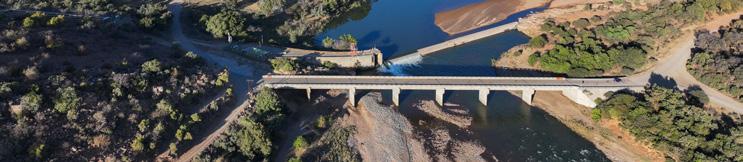
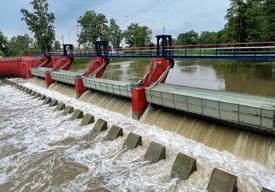
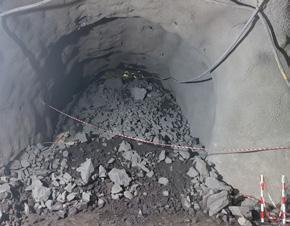
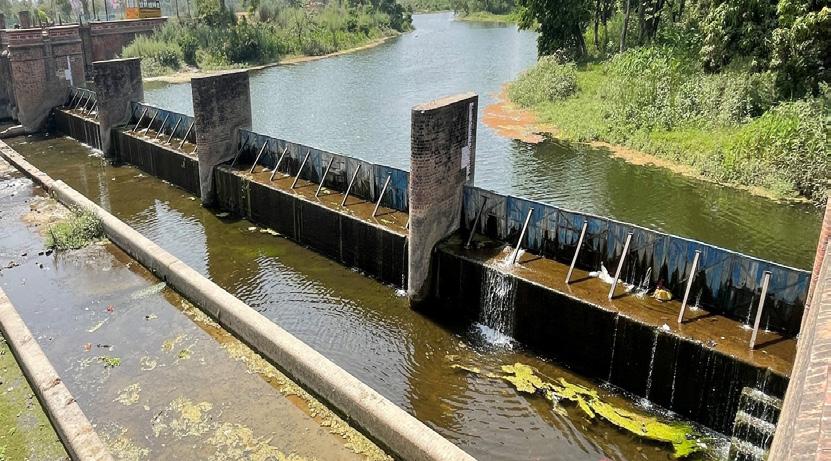
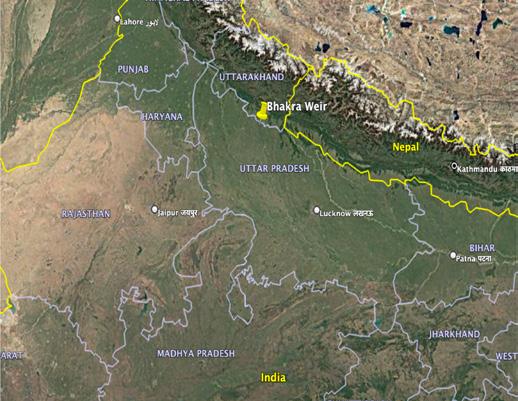
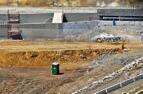
DAMS & RESERVOIRS South African spillway gates gain traction in India
SPATIAL DEVELOPMENT & PLANNING
The crisis behind the crisis
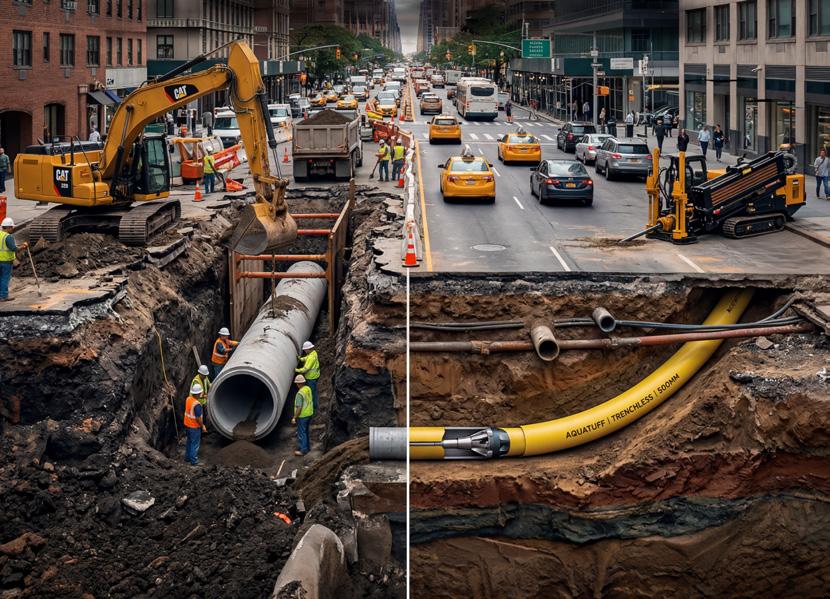
PIPELINE ENGINEERING
Engineering certainty in SA’s polymer infrastructure
IN THE HOT SEAT
LEADING WATER PROJECTS
Stage 1 of the OMM Programme moves into implementation
Over the past five years, we’ve invested extensively in technology, software and cutting-edge fabrication equipment, as well as skills development to ensure that we provide a turnkey solution for the market as a best-in-class OEM. Our focus remains on delivering bulk fluid transfer systems for all sectors.” John Montgomery, General Manager, APE Pumps and Mather+Platt
Across South Africa, a quiet but decisive shift is unfolding in the water sector. Faced with recurring supply interruptions, intensifying drought cycles, aging bulk infrastructure, and growing compliance pressures, businesses and high consumption users are increasingly exploring independent point of use water abstraction and treatment writes Billy James, Managing Executive at NuWater, a leader in decentralised smart water treatment solutions. P6
speaks to General Manager, John Montgomery, about key opportunities and solutions for the industrial and municipal sector in a 3D environment. P10
Spatial Development & Planning
The crisis behind the crisis. Why municipal failures are structurally entrenched, and why “quick fixes” are political
Sustainability
Leading
Water Projects
From commercial close to construction. Stage 1 of the OMM Programme
the Polihali Transfer conduit.
EDITOR Alastair Currie
Email: alastair@infraprojects.co.za
DESIGNER Beren Bauermeister
CONTRIBUTORS Burgert Gildenhuys, Geoff Tooley, Ian Venter, Richard Matchett
Each year, there are a series of interrelated national and international events that serve to highlight the role that water plays in sustaining lives and livelihoods. Foremost among them is United Nations (UN) World Water Day, commemorated every year on 22nd March. This year’s theme is Water and Gender, which speaks to UN Sustainable Development Goal 6: Clean Water and Sanitation, and Goal 5: Gender Equality.
The 2026 UN campaign, “Where water flows, equality grows” is especially relevant in the developing world context, which includes South Africa (as a UN member) with its distinctive urban, peri-urban and rural demographics. Across the board, UN statistics indicate that some 2.1 billion people worldwide are “still living without access to safe water close to home”.
Joint leadership
So, the 2026 theme tackles the issue of bridging infrastructure gaps, plus empowering women both as leaders in the home and as built environment and business professionals to jointly make the changes needed in society. According to World Bank Water Data, globally women make up just over one-fifth of the water sector workforce and remain underrepresented in decisionmaking roles.
Within the South African context, World Water Day has an especial significance because the country went out from the onset of the post-apartheid 1994 democratic transition to make water and sanitation available to every household. The statistics show that great gains have been made, but along the way we’ve neglected to maintain our existing town and city infrastructure, while pressing ahead with new builds.
Rural to urban migration and services affordability
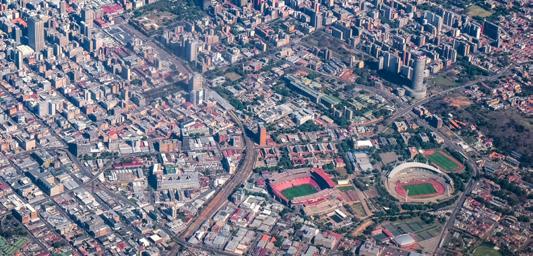
A compounding factor has been a progressive collapse of rural economies and with it a surge in migration to towns and cities. For many unemployed job seekers, it’s a transition to an urban informal settlement, which in most cases have no formal water and sanitation services. Either way, the growth in urban settlement places increasing pressure on available municipal services to support formal development and informal upgrades.
Then there’s the added constraint of affordability for water and sanitation services as tariffs continue to climb,
but without a corresponding improvement in downstream delivery in key centres that include Johannesburg.
Khayelitsha
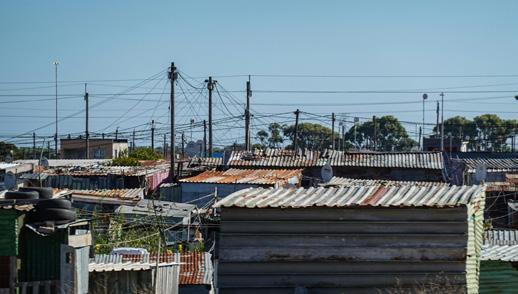
Within the mix Khayelitsha in Cape Town serves as a prime example of the challenges faced by urban planners and municipal engineers to find sustainable solutions. Khayelitsha is said to be among the top five largest slums in the world, with a high percentage of households living in informal dwellings. Thanks to ongoing City of Cape Town interventions, water, sanitation and electrification rollouts have significantly enhanced living conditions, but much more needs to be done. Increased National Department of Human Settlements funding is also required to accelerate formal housing structures.
In the meantime, the daily influx from the Eastern Cape and allied regions into Khayelitsha adds to the burden, and no one knows for sure how large the population is as the Census 2022 data is said to be inconclusive. It could easily be a million plus, and growing, which has major implications for formal municipal water and sanitation planning within the framework of existing dam storage, aquifer and future desalination provision.
Fixing the leaks, closing the gaps
But we know it’s not purely about water treatment and storage. The pressing concern nationwide remains nonrevenue water losses – either technical (real) or apparent (commercial). The former directly impacts water security and the latter municipal finances due to the inability to collect for services rendered.
Ultimately, water is the most essential driver of socioeconomic enablement. The upside is that government is moving forward with major water reforms through initiatives like Phase II of Operation Vulindlela that aim to facilitate intensified investment in water infrastructure.
Foremost, though, the best way to get on top of the problem is to focus on fixing existing networks, and in parallel for municipalities to work with industry and consumers to fast-track solutions that support sustainable longer-term growth
To our avid readers, check out what we are talking about on our website, Facebook page or follow us on Twitter and have your say.
or the publishers.
The
Cover opportunity
In each issue, IMIESA offers advertisers the opportunity to get to the front of the line by placing a company, product or service on the front cover of the journal. Buying this position will afford the advertiser the cover story and maximum exposure. For more information on cover bookings, contact Joanne Lawrie on +27 (0)82 346 5338.
If the WPLG 2026 is going to work, engineering participation is essential
When the first White Paper on Local Government (WPLG) was released in 1998, it set out to create an enabling framework to correct major inequalities caused by the pre-1994 South African apartheid system.
There was a key emphasis on meaningful empowerment and transformation, and a focus on equitable access to municipal infrastructure services. The latter include housing, water, sanitation, and electrification, where significant gains have been made in the past 32 years since our post-1994 democratic transition.
However, it’s common knowledge that for many years now local government service delivery performance has generally not been on par. That has been consistently confirmed by successive Auditor-General South Africa (AGSA) reports. The downstream result is a progressive reversal of the previous positive gains made. Compounding factors include administrative failures, financial mismanagement, dysfunctional funding models, poor infrastructure asset management and inadequate maintenance of essential services. This has negatively impacted lives and livelihoods.
That’s the key motivation for the current work in progress on a revised WPLG in 2026 –comprising 11 chapters – led by the Department of Cooperative Governance and Traditional Affairs (CoGTA). The plan is to revitalise and restore local government delivery mechanisms. That can only be achieved through expert consultation with effective change agents that include IMESA, alongside other key built environment voluntary associations (VAs).
WPLG 2026 emphasis on capacity building
To underscore this point, a key driver in the WPLG 2026 is capacity building in all professional spheres, and especially municipal engineering and finance. What is missing is the added compulsory requirement of professional registration with an applicable recognised body. For the engineering profession in all its facets, our regulatory body is the Engineering Council of South Africa (ECSA), while for the
accounting profession standards are governed by the South African Institute of Chartered Accountants (SAICA). In terms of the Engineering Profession Act 46 of 2000 it is compulsory for anyone performing “identified engineering work” to be ECSA registered. The same mandatory requirement holds true for CA(SA) practitioners, which must be registered with SAICA.
In parallel are the professional registration requirements for essential integrated built environment functions that include architects, construction project managers, land surveyors, quality surveyors and town and regional planners.
All of these professions play their role, but in the end the core delivery foundation for public works is civil engineered, supported by financially sound budgeting and municipal revenue models. Therefore, municipal engineers should be leading the charge.
For anyone professionally involved in infrastructure delivery, it’s an obvious, and therefore superfluous statement. However, although the WPLG 2026 review process was initiated in May 2025, IMESA and its members were not invited to participate as panel members in any of the WPLG 2026 focus areas. However, we did submit input ahead of the stakeholder submission deadline of 31st July 2025 as part of the public consultation process.
Through proactive lobbying, it was only in March this year – the same month that the final revised White Paper was due for submission to the Minister – that we were able to set up a direct meeting with representatives from the WPLG 2026 Finance and Infrastructure review panels to raise concerns about what is contained in the WPLG 2026 in its proposed final format. (We understand that there has been a deadline extension.) Some of our original stakeholder
recommendations have been noted, but IMESA still requires clarification on key issues.
Revision gaps that need addressing Let’s break down some of IMESA’s concerns and resulting input at the meeting. Our first primary request to the CoGTA panellists was clarification on which expert engineers with senior municipal experience have been involved in the rewriting process – and which parts have they had input into.
Our foremost observation was the absence of compulsory professional registration for key officials in the WPLG 2026 revision imminent for final parliamentary enactment.
For example, in terms of current legislation, the Municipal Systems Act (2000) establishes the role and appointment of municipal managers and senior administrators but does not mandate professional registration, where applicable. Nor does the WPLG 2026. Let’s red flag this: no chief financial officer should function without some form of SAICA certification or similar. Furthermore, no municipal manager should exercise an engineering oversight role without professional registration, which many do at present.
At an overall operational level, we asked that the CoGTA guidelines on technical capacity be included in the WPLG 2026. The current CoGTA guidelines stipulate a 3:1 ratio in terms of technical personnel versus non-technical, which for most municipalities has not been achieved to date.
Ultimately, our sharp fall-off in service delivery is directly proportional to the reduction in the authority given to city engineers. The facts are clear. Where municipal engineers as the driving force of civil infrastructure have more say in administration, finance, supply chain management and strategy, the positive results are tangible on the ground. We need to ensure that the approved WPLG 2026 achieves this.
Geoff Tooley, Pr Eng Hon FIMESA, IMESA President: 2024-2026
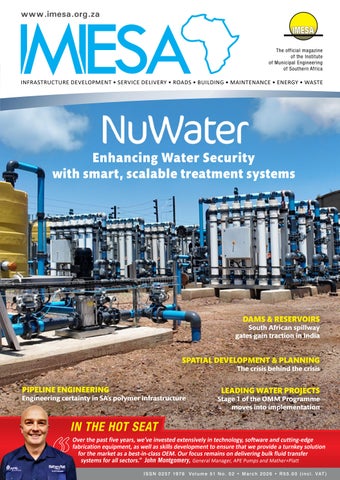
Enhancing Water Security with smart, scalable treatment systems
Across South Africa, a quiet but decisive shift is unfolding in the water sector. Faced with recurring supply interruptions, intensifying drought cycles, aging bulk infrastructure, and growing compliance pressures, businesses and high consumption users are increasingly exploring independent point of use water abstraction and treatment writes Billy James, Managing Executive at NuWater, a leader in decentralised smart water treatment solutions.
Boreholes are being drilled at scale. Private treatment plants are being installed behind factory walls.
Rainwater harvesting is no longer framed as a sustainability initiative, but as operational risk management.
For individual users, the logic is compelling. Water security equals business continuity. Control reduces uncertainty. Independence mitigates exposure to municipal constraints.
For municipalities, however, this shift introduces a far more complex challenge.
Water infrastructure is built on significant fixed costs. Bulk conveyance pipelines, pump stations, reservoirs, treatment works, laboratory monitoring, compliance systems, and skilled personnel must be maintained regardless of fluctuations in demand. When
high volume consumers reduce or exit municipal supply through independent point of use water abstraction, the cost of maintaining the system does not decline proportionally. The revenue base narrows while obligations remain constant.
South Africa has already seen how a similar pattern reshaped the energy landscape. Rapid private generation improved resilience for those who could afford it, yet it simultaneously strained the financial sustainability of the broader grid. The lesson is not that resilience is misplaced. The lesson is that unmanaged system exit can weaken the networks that protect equity and public stability.
Water now stands at a comparable inflection point.
As independent abstraction grows, crosssubsidisation models begin to erode.
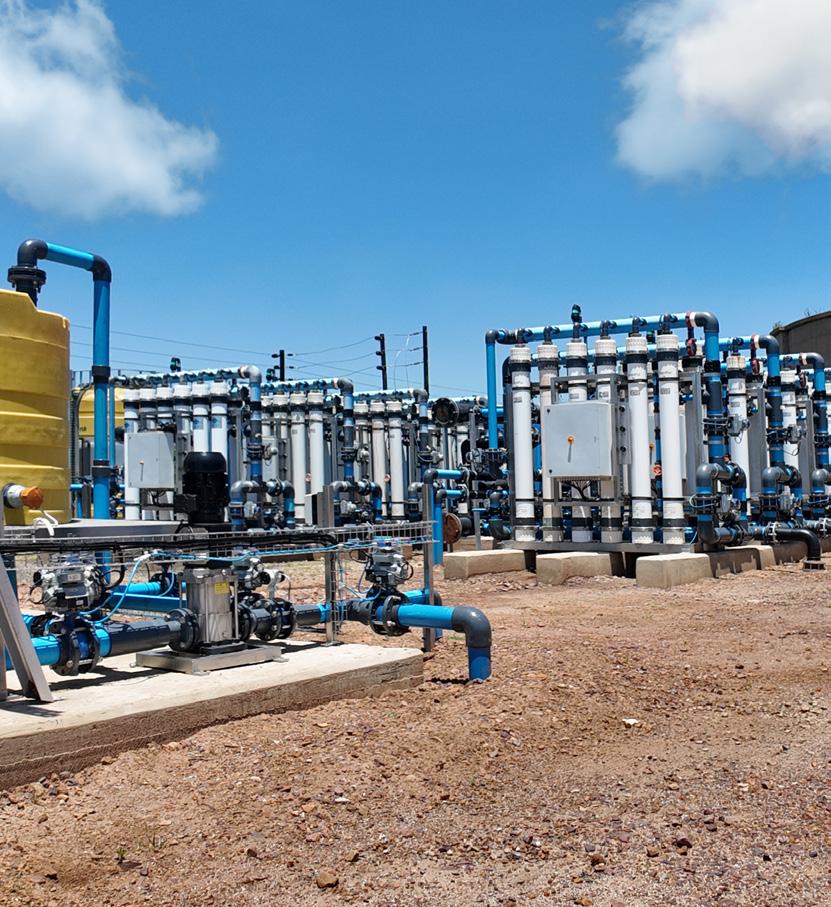
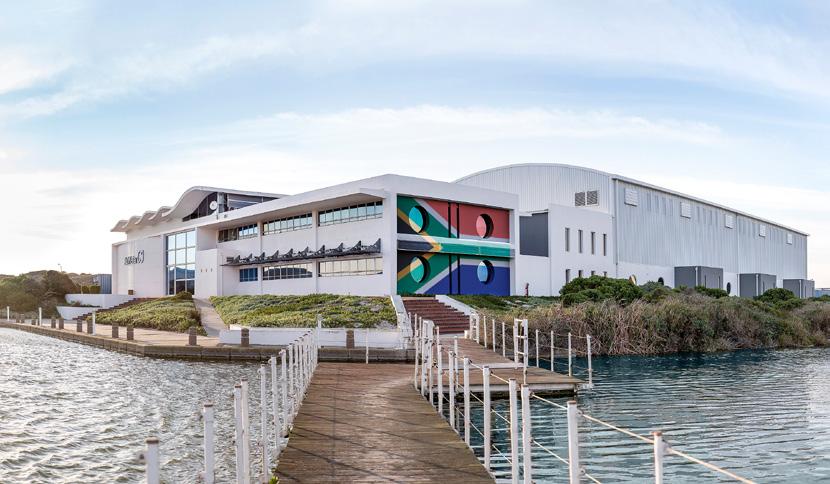
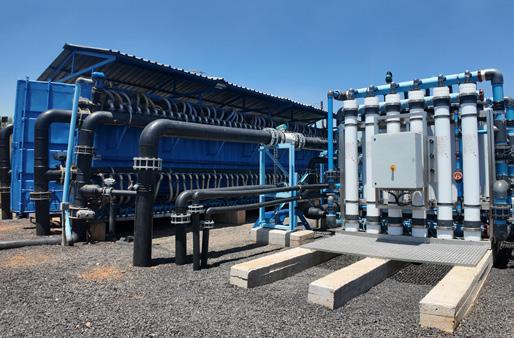
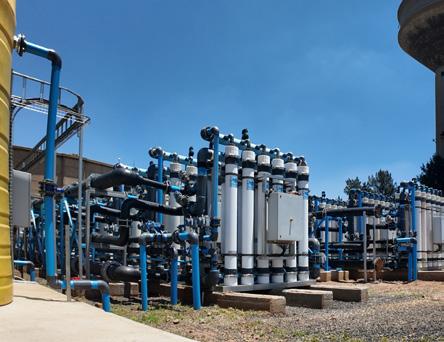
NuWater’s head office and fabrication facility in Cape Town. As a technologyled engineering company, NuWater designs, builds, finances, operates and maintains decentralised plants that treat raw water for potable use, contaminated water and wastewater
Municipal revenue structures depend heavily on higher income and industrial users to support free Basic Water allocations and equitable service delivery. If that base shrinks municipalities are left with difficult choices. Tariffs rise for remaining users, maintenance is deferred, or capital upgrades are delayed. Each of these outcomes compounds long term risk. The critical question is not whether independent point of use water abstraction will expand. It is whether municipalities will shape its evolution or react to it.
Billy James, Managing Executive at NuWater
Implementation of a 10 M ℓ /D interim solution integrated into a permanent water treatment plant to ensure continuous, potable water supply
A case study in strategic augmentation
One municipality recently confronted this reality directly. After consecutive dry seasons, dam levels declined and bulk supply margins tightened. Restrictions loomed. At the same time, several major commercial and industrial users began accelerating plans for boreholes and private treatment installations. The municipality faced a dual threat, physical supply constraints and potential revenue erosion. The situation demanded more than short term rationing. It required strategic augmentation.
Rather than attempting to restrict private initiatives or relying solely on long term capital projects, the municipality partnered with NuWater to deploy decentralised treatment systems that could supplement existing bulk supply rapidly. Within weeks, decentralised units were installed at precinct level and integrated into the municipal network. The systems provided compliant additional treatment capacity, reduced peak load pressure on the primary works, and stabilised supply during the most vulnerable period of the drought cycle.
Crucially, these systems were not isolated assets operating outside regulatory visibility, they functioned under full municipal oversight, supported by real time performance monitoring and quality verification. Engineers retained control; compliance remained transparent. Governance was strengthened rather than fragmented.
The results were measurable. Severe restrictions were avoided. Economic activity continued without major interruption. Large water users remained connected to municipal supply instead of transitioning toward full independent abstraction. Revenue stability was protected during a period of heightened risk. Most importantly, the municipality gained time to plan and execute longer term infrastructure upgrades without operating under crisis conditions.
This experience illustrates a broader principle. Water resilience does not require disconnection from municipal systems. It requires intelligent reinforcement of them.
Decentralised advantages
Decentralised treatment solutions provide municipalities with agility that traditional infrastructure projects often cannot. Large scale dams and centralised treatment expansions are capital intensive and can take years to design, approve, and construct. While they remain essential components of long term planning, they are not always responsive to immediate risk. In contrast, decentralised systems can be deployed rapidly, scaled incrementally, and positioned strategically to relieve pressure where it is most acute.
Integrated digital monitoring further enhances this capability. With IoT enabled sensors and remote performance tracking, municipalities gain continuous visibility into water quality, flow rates, and operational efficiency. This data driven approach supports compliance assurance, proactive maintenance, and evidence based planning. Decentralised augmentation, when implemented within a structured governance framework, enhances operational transparency rather than diminishing it.
The alternative scenario is increasingly clear. If independent point of use water abstraction expands without coordination, municipalities risk entering a downward financial spiral. As high volume users exit, tariff pressure increases. As tariffs rise, additional users seek independence. Infrastructure maintenance becomes harder to fund. Service quality declines, reinforcing the cycle. This trajectory is not inevitable, but it requires proactive intervention.
A NuWater
20 M ℓ /D municipal potable water treatment plant
Hybrid optimisation
A hybrid utility model offers a more sustainable pathway. Under such a model, users remain connected to municipal systems for baseline allocations and infrastructure support. Supplementary capacity is provided through decentralised treatment solutions aligned with municipal oversight. Public-private collaboration enables rapid deployment of technology while preserving governance authority and financial stability.
In this framework, resilience becomes a shared objective rather than a competitive response. Municipalities are able to offer credible, responsive alternatives to full system exit. Businesses gain the certainty they require. Communities retain equitable access. Infrastructure funding remains intact.
The stakes extend beyond engineering considerations. Water security underpins economic productivity, public health, investor confidence, and social cohesion. If municipal revenue models fracture under unmanaged abstraction, the constitutional right to water becomes increasingly difficult to uphold in practical terms. Deferred maintenance, declining reliability, and widening inequality follow.
Conversely, when smart, scalable treatment systems are deployed strategically, municipalities can avert
drought escalation, stabilise supply during shortfalls, and maintain financial solvency.
Proven implementations demonstrate that rapid augmentation is not theoretical. It is operational reality. Systems have already helped municipalities navigate constrained periods without triggering severe restrictions or widespread private exit.
NuWater’s role within this landscape is not to replace municipal infrastructure, but to strengthen it at critical junctures. By delivering decentralised, intelligent treatment solutions that integrate seamlessly into existing networks within weeks, NuWater enables municipalities to respond to risk
with agility and confidence. The objective is not fragmentation, but reinforcement.
Adaptability is key for supply and solvency
As climate variability intensifies and urban demand continues to grow, adaptability will define the resilience of South Africa’s water sector. Municipalities that embrace augmentation rather than resist change will be better positioned to protect both supply and solvency.
Water security is not merely about maintaining flow rates. It is about sustaining the financial, social, and economic systems that depend on reliable service. By integrating smart, scalable treatment solutions into long term infrastructure strategy, municipalities can ensure that resilience strengthens the public network instead of weakening it.
In doing so, they safeguard not only water resources, but the stability and prosperity of the communities they serve.
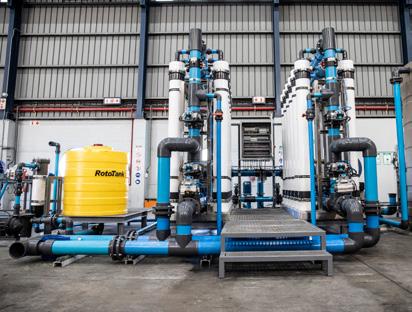
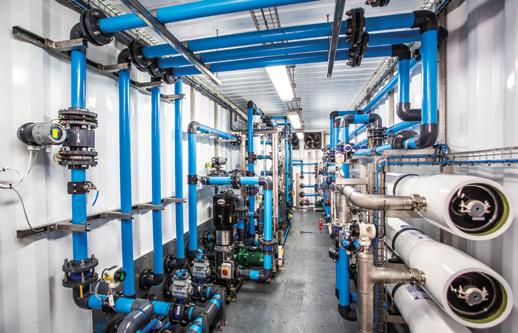
Testing of an ultrafiltration system prior to plant assembly An internal perspective of a NuWater decentralised water treatment plant
SHAPING THE FUTURE OF PUMP INNOVATION
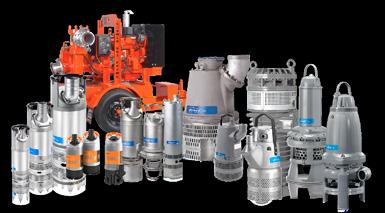
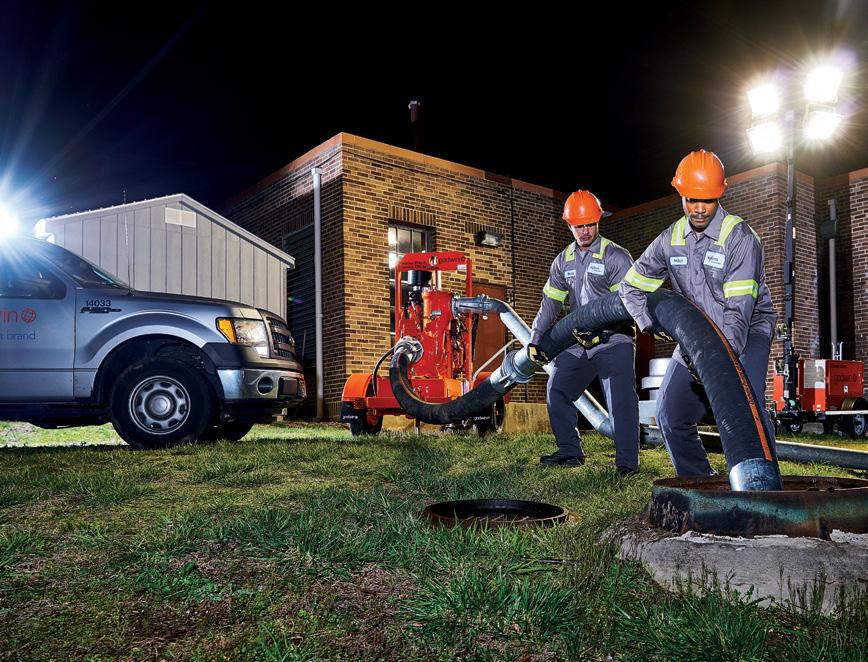
Founded in South Africa in 1952, APE Pumps and sister entity, Mather+Platt, have one of the largest installed pump footprints in the country and today remain industry leaders in their field. IMIESA speaks to General Manager, John Montgomery, about key opportunities and solutions for the industrial and municipal sector in a 3D environment.
What is the Group’s strategy for 2026?
Over the past five years, we’ve invested extensively in technology, software and cutting-edge fabrication equipment, as well as skills development to ensure that we provide a turnkey solution for the market as a best-in-class OEM. Our focus remains on delivering bulk fluid transfer systems for all sectors.
Last year we embarked on a major digitalisation programme to streamline our production throughput, supply chain and project implementation efficiencies to update our ISO 9001 certified quality management system. This year we will further finetune this process so that every facet of the business is integrated and tracked in real-time via our Enterprise Resource Planning (ERP) system. The benefits for the customer are faster turnarounds, full transparency in terms of rebuild and fabrication costs, as well as enhanced capabilities to handle larger-scale projects.
The latter is a core strategy going into 2026, and as an 8ME CIDB graded contractor we are well positioned to take on major new works in both the public and private sectors. That capability is backed by allied group companies like Eigenbau – a leading civil and mechanical engineering contractor specialising in fields that include water and wastewater infrastructure.
We see an upsurge in mining opportunities for our installed systems – driven by buoyant gold and PGM prices. In the meantime, we continue to work extensively with Eskom power stations to refurbish and upgrade their fluid transfer systems, as well as leading Water Boards.
How is digitalisation changing the way you do business?
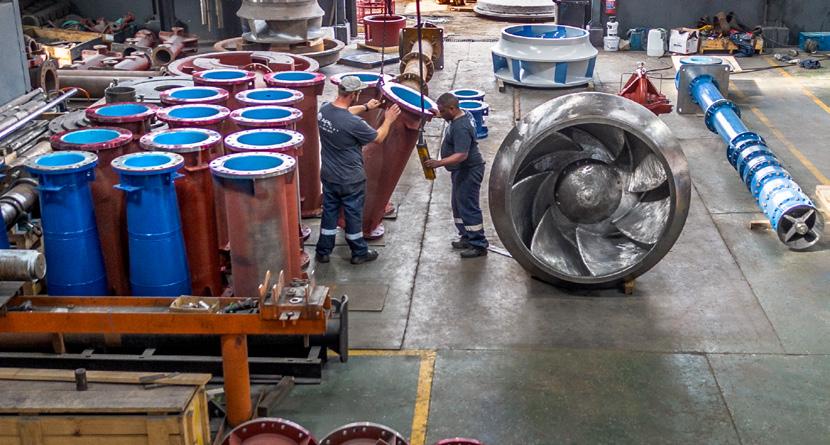
It’s revolutionising how we design and build our pump systems thanks to the employment of key technologies like 3D laser scanning, 3D printing and artificial intelligence (AI).
The global advances in 3D scanning are remarkable, enabling our engineering team to create digital twins that can be shared with the client’s engineering personnel to simulate and execute pump refurbishments and new builds.
In turn 3D printing is adding a new dimension to conventional techniques, such as the verification of fettling removal on impeller vanes. In the past, we’d manually create a wooden model and check the fit.
Furthermore, via our installed systems, the client has virtual access to our digital dashboards
outlining all pump performance parameters, as well as a full maintenance history in a live environment. For example, strip reports and cost; general and sectional arrangement drawings; and pump best efficiency point data. These are backed by our telemetry remote monitoring systems where we have service level agreements (SLAs) in place. Our digital tools also allow us to remediate performance issues where our older installed pumps have been modified using components not supplied by APE Pumps and Mather+Platt. A prime example is the installation of an incorrectly sized impeller installed by third party workshops. Currently we are in the process of finalising an AI selection tool. It’s still in the pilot phase, but when released will assist customers in making the correct decisions when it comes to pump and component specification based on their specific process requirements. Consulting engineers will also be able to use the tool in refining their designs.
Ultimately, there’s no doubt that our evolving digital techniques play an instrumental role in restoring municipal and industrial pump systems to optimum performance levels – based on detailed condition assessments and precise engineering recommendations.
Do you have solutions to fix the growing municipal water/wastewater crisis?
The key challenges are well known, and include bottlenecks in public infrastructure funding,
John Montgomery, General Manager, APE Pumps and Mather+Platt
supply chain inefficiencies, and a corresponding contraction in the number of long-established specialist contractors and OEMs operating in the market.
South Africa’s Water Boards are among the best in the world. There are also examples of outstanding municipal water utilities. However, these tend to be the exception and in general there are widespread skills and capacity gaps at municipal level that need urgent attention.
Since pumps are the backbone of water and wastewater processes, it’s essential that municipalities have an up-to-date asset management register, backed by a comprehensive operations and maintenance (O&M) strategy.
Based on our records, we can confirm where every APE Pumps and Mather+Platt unit was originally installed since 1952. But unless we’re actively engaging with these municipalities, we don’t know which ones are still in service. However, we have the capability to overhaul any group pump irrespective of age. We also provide accredited entry level and advanced training for customer personnel to help ensure best practice outcomes.
What are some of the key contributing factors to poor pump utilisation?
From our experience, the institutional memory at many municipalities has been lost as seasoned personnel retire or move to the private sector. Examples would include the original pump makeup and materials used. There’re often also no mechanisms in place to verify poor or good pump performance in terms of metrics like flow, vibration and temperature.
That’s why it’s essential to have a direct OEM interface and avoid outsourcing repair work to nonOEM third parties, which tends to be a common trend at present, with downstream process issues and wasteful expenditure.
That includes excessive time taken by third party contractors to repair and re-commission critical pump installations, which impacts service delivery and hikes up costs. In contrast, APE Pumps and Mather+Platt have a state-of-the-art fabrication facility where the shortest turnaround possible in industry is achieved. Plus, we provide a warranty where we install and commission our pumps.
Concluding an SLA adds further value, enabling clients to cap pump maintenance costs at preagreed levels. Having accurate records also means there’s a clear audit trail.
Is the local industry under threat from cheaper pump imports and pirate parts?
Decisions based on lowest cost are core factors in inefficient processes and premature pump failure. In critical industries like water and wastewater it’s not an option, but it happens – particularly when it comes to non-OEM compliant pirate parts. It’s not a cost-saving, it’s a liability waiting to happen. In response it’s vital that engineers and maintenance personnel are empowered to make the right procurement decisions using only approved OEM parts. It’s the best return on investment. Plus, it’s essential that municipalities have an adequate stock of critical parts on hand, like rotating elements, as well as operations ready standby pumps.
How are APE Pumps and Mather+Platt helping customers lower process energy costs?
It all boils down to achieving the best possible fluid transfer conditions, given that water and wastewater treatment is very energy intensive, with the electric motors driving the pumps consuming a high portion of the total energy demand. While we are not an electric motor manufacturer, we will
specify the optimum solution for our fluid transfer designs, such as the latest variable speed drives. Other than that, it’s clear that a pump running out of specification will consume more electricity due to factors like faulty wear rings and damaged impellers. Multiply this scenario across a series of underperforming pumps and you have a growing financial burden that ends up being passed onto the consumer.
Are there any new market acquisitions in the pipeline?
We are always on the lookout for potential OEM pump acquisitions in the local market. For us key requirements are alignment with our growth and diversification strategy, plus any acquisition must be a culture fit that matches our dynamic organisation.
What are some of your key recent and current projects?
In South Africa we recently completed the refurbishment and commissioning of the second of four 650 Mℓ/d Mather+Platt pumps at Rand Water’s Lethabo raw water abstraction pump station. Further afield, we’ve also completed the installation and commissioning of six new raw water intake pumps for Blantyre Water Board, as well as supplying spares for pump stations we’ve completed there in the past. Meantime, work in the energy industry is ongoing, plus we’re currently concluding new SLAs in the water sector.
And in closing?
Whether managed in-house or outsourced, professional pump O&M is a non-negotiable requirement for water and energy delivery as core components of a high-functioning economy. Let’s build the future we want by putting excellence first.
3D printing
3D laser scanning
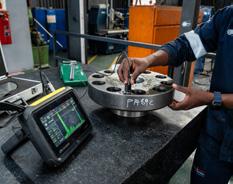
Ultrasonic examination
IMESA NP branch celebrates its new Fellows and Honorary Fellows
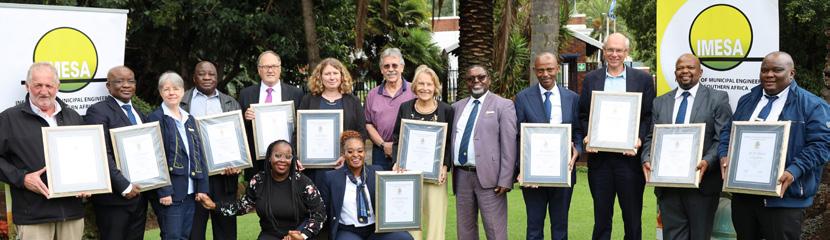
IMESA Northern Provinces (NP) Branch IMESA Fellows and Honorary Fellows attending the certification handover ceremony in March 2026, together with IMESA NP Branch Executive Committee and IMESA EXCO members. From left (standing): Philippus Nice (Fellow); Kwena Maphoto, IMESA NP Branch Chairperson (Fellow); Linda Tyers (Branch Treasurer); Mpoti Machaba (Fellow); Mark Marais (Fellow); Hilna Viljoen (Fellow); Gavin Clunnie (IMESA Past President and Director of IMESA (Pty) Ltd); Allyson Lawless (Honorary Fellow); Vuyani Gxagxama (Vice-President: Technical); Thabo Hlabela, Technical Director: Asset & Business Management (Honorary Fellow); Johannes Karemaker (Fellow); Moeketsi Mohlabi, Vice-President: Operations (Fellow); and Molahlehi Marate (Fellow). From left (front): Khodani Tshovhote (Branch Committee Member and Council Member); and Khomotso Phofa (NP Branch Secretary and Council Member).
At the 88th IMESA Annual Conference in October 2025, special recognition was conferred on members of the Institute of Municipal Engineering of Southern Africa (IMESA) – either as Fellows or Honorary Fellows – for their dedication and commitment.
Subsequently in March 2026, the IMESA Northern Provinces (NP) Branch held a special ceremony in Johannesburg to officially acknowledge and handover the certificates to those recipients who were unable to attend last year’s annual conference.
“It was a privilege and honour to be in the presence of these longstanding IMESA members who have served the Institute with dedication for many years and have contributed significantly to infrastructure development in South Africa,” says Kwena Maphoto, IMESA NP Branch Chairperson.
Award criteria
In terms of the criteria, elected Fellows must be corporate members of the Institute who are professionally registered with the Engineering
Council of South Africa and actively in service. They also need to have been an IMESA member for at least five years and either hold or have held a senior executive or senior professional position in the field of infrastructure engineering. All will have added value in their field of expertise and in their participation in Institute activities.
At the highest level, those achieving Honorary Fellowship status have distinguished themselves through their exceptional contribution to the advancement of infrastructure engineering.
The following members were recognised by IMESA’s EXCO and Council:
Elected as Fellows
• Albertus Bezuidenhout
• Kubendran Govender
• Louis Havenga
• Johannes Karemaker
• Simon Knutton
• Mpoti Machaba
• Mark Marais
• Molahlehi Marate
• Moeketsi Mohlabi
• Ben Molleman
• Philippus Nice
• Hilna Viljoen
• Kwena Maphoto
Elected as Honorary Fellows
• Thabo Hlabela
•Allyson Lawless
“Being elected as either a Fellow or Honorary Fellow is a major career highlight, and our 2025 recipients are well deserving of this recognition,” Maphoto concludes.
Secure your stand now and have the opportunity to:
present your company, products and services to a targeted audience gain industry insight and meet potential partners, suppliers and clients interact with key decision-makers and industry peers.
Sponsor a unique aspect of the conference and enjoy great benefits such as: free exhibition stands complimentary delegate registrations brand representation at the event, promotion of your company in the conference proceedings magazine and online free entry for guests at the social evening and much more.
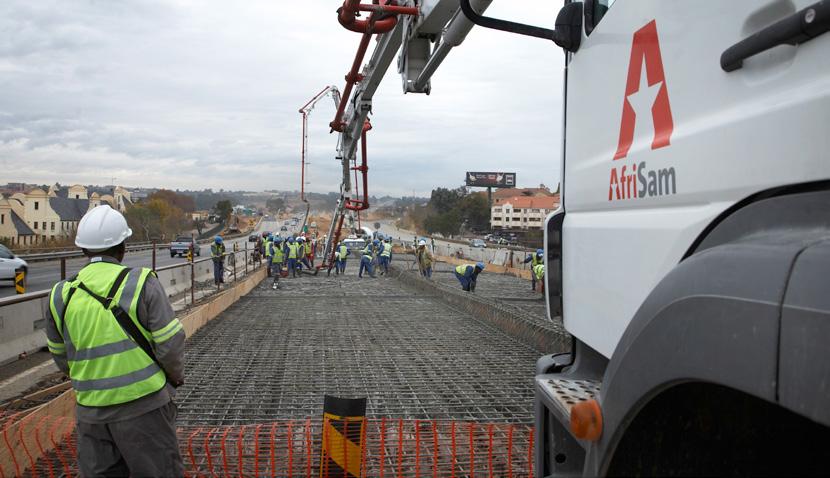
AFRISAM BUDGET BREAKFAST HIGHLIGHTS ECONOMIC UPSIDE FROM COMMODITY PRICE SURGE
The strong rally in commodities such as gold, platinum, rhodium and palladium is creating significant windfall opportunities for South Africa to support its economic turnaround.
Speaking at AfriSam’s annual Budget Breakfast event in Sandton in February 2026, Econometrix Chief Economist Dr Azar Jammine said the exceptional surge in commodity prices could have an “absolutely enormous” impact on the South African economy.
This year marks the eighth consecutive year that AfriSam has hosted its Annual Budget Breakdown Breakfast, bringing together key stakeholders from across the construction sector. The value of the event is reflected in the steadily increasing number of attendees each year, highlighting its growing importance as a platform for industry insight and engagement.
Dr Jammine pointed to an estimated inflow of about R350 billion into the country from commodity sales, arriving just as the economy began showing signs of recovery toward the end of last year. This follows a prolonged period during which South Africa lagged behind global growth levels, resulting in a decline in living standards of between 6% and 7% over the past eight years.
He noted that the key opportunity now lies in government directing this windfall toward higher levels of fixed capital formation through targeted investment in infrastructure, thereby creating an environment in which business can thrive.
“If this can be converted into real investment in new exploration and development in the mining sector, the knock-on effects through the rest of the economy could be unbelievable,” he argued.
Dr Jammine highlighted that the third quarter of 2025 saw a modest uptick in fixed investment
of 1.1% – the first positive movement in two and a half years. The Medium-Term Budget Policy Statement released in November 2025 also indicated that the Government of National Unity was beginning to produce “some positive results”, particularly through its commitment to fiscal discipline.
Higher commodity inflows have also contributed to a stronger rand against the US dollar, helping to reduce inflation to around 3.5%. This supports government’s lower inflation target of 3% and has helped shift inflation expectations downward.
“This has meant that long-term interest rates have declined, resulting in considerable savings for government in terms of interest payments on its debt,” Dr Jammine said.
Improving economic prospects have also been recognised internationally, with ratings agency S&P Global upgrading South Africa’s credit rating for the first time in 16 years.
Turning to the construction sector – which is closely aligned with AfriSam’s core business as a leading construction materials supplier –Dr Jammine reminded the audience that the industry remains under severe pressure due to years of underinvestment in fixed capital.
“Construction, comprising both building and civil engineering, is still about 30% below where it was in 2010,” he said. “By contrast, the agricultural sector is about 70% higher than its 2010 level.”
Employment in construction has also declined, falling by around 5% compared with 2019 levels, making it one of the weakest performing sectors in the economy. Dr Jammine attributed much
Econometrix Chief Economist
Dr Azar Jammine speaking at AfriSam’s annual Budget Breakfast event in Sandton in February 2026
Reliable infrastructure starts with quality construction materials
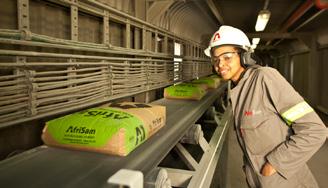
The consistent supply of cement, aggregates and readymix concrete plays a critical role in helping contractors deliver durable and high-performance projects
of the decline in gross fixed capital formation to the deterioration of state-owned enterprises.
“They have seen the decimation of the country’s infrastructure, much of which relates to the era of state capture,” he said. “There has been a rape of our resources to benefit a handful of people interfering with procurement processes and standing in the way of proper service delivery and infrastructure investment.”
This situation is closely linked to crime and corruption, he added, noting that these challenges must be decisively addressed.
From road construction to large infrastructure developments, the availability of high-quality cement, aggregates and readymix concrete is essential for maintaining structural integrity and long-term performance
While private sector investment “has not been stellar”, Dr Jammine acknowledged that it has at least continued to grow gradually over time.
Reflecting the weak state of the construction industry, the number of residential building plans approved remains subdued, at around 40 to 50% below its peak. However, he believes there are signs that this trend may be reaching a turning point.
“Non-residential building plans passed show an even weaker trend, down about 85% from the peak a decade ago,” he said. “Arguably
there was an oversupply in the middle of the last decade, and the Covid-19 pandemic then dealt the sector a further blow.”
Despite these challenges, Dr Jammine noted that renewed investment in infrastructure and mining development would provide an important boost for the construction materials sector, creating opportunities for companies such as AfriSam that play a key role in supplying cement, aggregates and readymix concrete to major infrastructure and development projects.
WESTERN CAPE PROPERTY ASSOCIATION
CALLS FOR URGENT NHBRC REFORM
The Western Cape Property Development Forum (WCPDF) has addressed an open letter to the Minister of Human Settlements, Thembisile Simelane, calling on urgent reforms to the National Home Builders Registration Council (NHBRC). It is also calling on 40 other property development and construction industry associations countrywide to support the letter.
The letter calls on the Minister to address the overall crisis within the NHBRC as a matter of extreme urgency.
Says Deon van Zyl, Chairperson of the WCPDF (itself an NPO representing the full property production pipeline in the Western Cape): “This is a situation which can no longer go without resolution; the WCPDF is itself now inundated weekly as our industry members outline their frustration and disappointment across the broadest functions of the NHBRC.”
The WCPDF also firmly believes the matter goes beyond the Ministry of Human Settlements, and has in turn cc’d the letter to the Ministers and Director Generals of the Department of Cooperative Governance and Traditional Affairs;
Public Works and Infrastructure; Trade, Industry and Competition; Finance; and Basic Education; as well as SALGA’s Human Settlement and Urban Agenda Working Group; the Banking Association of South Africa; CIDB; and the MECs and senior representatives of Human Settlements in all provincial departments.
The letter notes that the Minister of Human Settlements undertook to investigate the dysfunction of the NHBRC, following her department’s findings into the George building collapse in 2024.
However, adds Van Zyl: “While we commend the Minister for publicly acknowledging the failure of the NHBRC via that tragic instance, it seems that little has transpired since her department’s public announcements in April 2025.”
Financial performance and accountability
The letter highlights various concerns around the financial performance and accountability of the NHBRC, with the most recent 2024/25 NHBRC Annual Report seemingly demonstrating a financially powerful but operationally questionable institution. The latest annual report appears to reveal:
• Revenue: The NHBRC appears to have generated R2 426 832 924, adding over
R1 229 594 796 surplus to its capital reserves now standing at R11 394 119 548.
• Investment income: The NHBRC earned R777 469 750 in interest alone.
• Industry contributions: During the financial year, property development and construction industry members paid R145 823 622 in member fees, R520 626 866 in insurance premiums and R11 451 840 in technical fees: a total of R677 902 328, amounting to 28% of revenue earned for the year.
• Insurance claims actually paid out: However, R15 781 968, less than 0.7% of total 2024/25 revenue, seems to have been paid out by the NHBRC in actual claims. This is only slightly higher than the R14 835 197 which the NHBRC paid out in legal fees incurred.
• Employee costs: The salary bill of the NHBRC appears to be R612 497 753 for 550 employees – averaging over R1 113 632 per employee per year.
• Research and development: This amounted to what seems to be only R1 092 613 against revenue (i.e., 0.05% of the NHBRC’s income); this despite the NHBRC’s mandate to:
- Conduct and commission research to investigate construction methods, materials and technologies to support innovation and alternative building methods towards safe, cost-effective and sustainable housing construction.
- Improve and update technical standards.
- Undertake research related to consumer protection.
• Training: Of the total revenue for 2025, only R23 364 412 appears to have been spent on training – a mere 1% of total revenue, despite the mandate of the NHBRC to:
- Provide training programmes for emerging contractors, registered builders and technical staff.
Deon van Zyl, Chairperson of the Western Cape Property Development Forum (WCPDF)
- Develop skills and accreditation.
- Support sector-wide transformation through capacity building.
- Train builders and inspectors in the correct application of new, innovative construction methods to ensure quality and safety.
• Emerging contractors: The NHBRC’s Emerging Contractor Reserve supposedly “targeted at the empowerment of emerging home builders registered with the NHBRC” and which claims to “start and manage their own construction contracting businesses” appears to stand at only R606 480 (for the financial year under review), with “the remaining reserve to be utilised for future years” a mere R3 058 559. These figures raise critical questions about value for money, financial transparency and accountability. The NHBRC’s growing reserves – and particularly its limited claims payments – reflect a self-sustaining bureaucracy rather than a functioning consumer protection mechanism, believes the WCPDF.
Unnecessary regulatory duplication
Equally, the letter highlights the unnecessary regulatory duplication (and resultant costs),
and administrative dysfunction within the organisation.
Says Van Zyl: “Local government, through its building control functions, is already tasked with assessing and approving all building plans under the National Building Regulations – legislation focused on the safety and structural integrity of buildings.
The NHBRC therefore duplicates municipal responsibilities, adding cost and delay without enhancing protection; costs which ultimately land on the very consumer the NHBRC is mandated to protect.
“This duplication raises a fundamental question: Has local government become unable to enforce the National Building Regulations effectively, or is the NHBRC’s continued existence primarily motivated by the financial and legislative power it generates? And why are more political players, both opposition and within the leading party who are truly working towards economic progress in our country, not raising their collective voices?”
The WCPDF stresses that it is not calling for the deregulation of the NHBRC but rather for efficient, non-duplicate regulation that
genuinely protects consumers, while also supporting housing affordability and muchneeded industry growth in terms of skills development.
To this end, it is calling for the establishment of a collaborative task team between the Minister of Human Settlements and other relevant national Ministries to review the NHBRC’s financial model, ensure it fulfils its own mandate, and aligns with national housing objectives.
Concludes Van Zyl: “We further stress that this task team include recognised national industry bodies who have already called for reform of the NHBRC – among them, the Construction Alliance of South Africa, SAFCEC, MBSA and many others. The task team must also invite input from financial institutions, insurers and consumer representatives.
“It is imperative that such a task team establish both interim measures, such as levy reduction or even suspension to alleviate current end-costs on consumers, and agree on a long-term restructuring framework that restores efficiency, trust among our industry and consumers, and full accountability.”
Holding Africa’s Water 30 Countries and Counting
THE CRISIS BEHIND THE CRISIS
Why municipal failures are structurally entrenched, and why “quick fixes” are political theatre
South Africans experience the state of local government daily: taps running dry, sewage spills, crumbling roads, and recurring power disruptions. These are typically framed as “service delivery failures”. In reality, they are symptoms of a deeper structural breakdown that has been decades in the making. By
Yes, corruption matters. Yes, incompetence matters. But focusing on these alone is analytically lazy. They explain how the system fails, not why it keeps failing across provinces, political administrations, and economic cycles.
The hard truth is that South Africa has built a local government service model that is financially and operationally misaligned with household affordability and municipal revenue reality. Water is simply the service where this contradiction is becoming most visible, because there is no substitute for it.
Stop treating symptoms as causes
Public discourse often lists the familiar culprits: poor maintenance, lack of skills, theft and vandalism, weak procurement, and political interference. All of this is real, but it is downstream. The upstream drivers are structural and have accumulated over roughly the past 15 to 20 years.
Service levels were escalated (often by national policy and regulation) without a hard affordability
THE AUTHOR
Burgert Gildenhuys*
discipline. This is a complete deviation from the policies, financial and service discipline introduced in 1994, but over time, became an obstacle to the popular political narrative.
Capital expansion is politically rewarded by emphasising capital expenditure, with punitive measures when these targets are not met. Lifecycle operations and renewal are either ignored or, at best, treated as an afterthought. Utilities were absorbed into the general municipal bureaucracy and used as a cash buffer for other functions. When households cannot pay, the “revenue” is booked anyway and later impaired, turning municipal balance sheets into fiction. When those conditions exist, infrastructure decline becomes the default trajectory, not an exception.
Evidence that the system is regressing, not merely “under pressure”
If the system is only experiencing localised management failure, national water outcomes would not be deteriorating so sharply.
The Department of Water and Sanitation’s 2023 Blue Drop report states that 46% of water supply systems achieved poor or bad microbiological water quality compliance, up from 5% in 2014. That is a decade-long regression in a core public health function, not a temporary “operations glitch”. This deterioration is consistent with a system that is trapped in a cycle of revenue shortfalls, deferred maintenance, rising losses, and operational failure. Once that cycle is entrenched, the debate should shift from “Why aren’t municipalities performing?” to “Why did we design a system that cannot financially sustain the services we decreed?”
The affordability contradiction: high-cost service levels in a low-income country
The country has, in practice, moved toward highcost household service configurations while remaining a society with widespread poverty and, consequently, a real inability by consumers to pay for services.
On the service side, Census 2022 data indicate that over four-fifths (82.4%) of households have access to piped water either inside their dwelling or in their yard. Media coverage of the same Census release notes that about seven out of ten households have waterborne sanitation.
On the affordability side, Stats SA’s official poverty statistics show that poverty remains widespread. Using the upper-bound poverty line (UBPL), Stats SA has previously reported that more
Burgert Gildenhuys is a leading authority in municipal planning, infrastructure investment and public finance, with over 45 years of experience in South Africa and across Africa. As Managing Director of BC Gildenhuys & Associates and Founding Director of Spatial Data Services Africa NPC, he has pioneered infrastructure investment planning, delivering more than 100 investment plans, 30 spatial development projects and 45 capital expenditure frameworks. He has advised CoGTA, National Treasury, the World Bank and USAID, with contributions ranging from South Africa’s National Infrastructure Investment Strategy to Nigeria’s energy reforms. He continues to drive integrated, sustainable approaches to urban planning and finance.
than half of South Africans were poor in 2015 (55.5%). More recent Stats SA analysis (using updated UBPL values) indicates that poverty remains extremely high by this measure, with the poverty headcount at 66.7% in 2023.
Those two realities coexist uncomfortably: we are converging on high-cost, networked, household-level services in a country where the poverty headcount remains very large under official poverty measures. This is not a moral argument. It is a financial one.
Regulation raises obligations; it does not magically create revenue
The crucial mechanism is simple: when the national government raises the “minimum level” of services, it raises municipal obligations, including operating burdens, regardless of whether municipal revenue can sustain it.
Consider the contents of the Proposed Compulsory National Water and Sanitation Services Norms and Standards, gazetted in January 2024. For basic water services, the proposed minimum level is 25 litres per person per day or 6 kℓ per household per month, with the access/delivery point required to be at least at the end boundary of the property (a user connection point).
That is not a small administrative shift. It is a regulatory ratchet: once the standard is set, municipalities are expected to deliver, fund, operate, and maintain it, even when the local payment base cannot cover the lifecycle costs.
On the sanitation side, the same proposed norms define a basic sanitation service as including a toilet with a functional handwashing facility in the yard and place explicit responsibility on the provider for safe containment and sanitation chain management. This, again, may be desirable, but it is not cost-free and is not neutral with respect to municipal operating capacity.
The policy problem is not that standards exist. The problem is that standards are escalated without a hard constraint: What share of households can actually pay for the service at cost-reflective levels, after accounting for indigent support and free basic allocations?
The inability of impoverished households to pay for escalating tariff costs undermines the long-term financial sustainability of municipal services
The hidden escalator: water use, wastewater volumes, and the operating tail
When you move households up the service ladder, from communal/yard access toward in-house convenience, you are not only increasing capital costs. You are increasing:
• Baseline consumption (and therefore bulk purchase or treatment volumes).
• And ultimately the exposure to load-shedding and equipment failure.
Put bluntly: waterborne systems are not “one-off infrastructure”; they are permanent operating commitments. If the revenue model is weak, those commitments become liabilities.
If policy shifts and settlement upgrading materially increase average household consumption, municipalities are forced to fund a higher recurring cost base. If households cannot pay, the difference shows up later in the financial statements as ballooning debtors and impairment, and the municipality’s liquidity position collapses.
Even excellent administrations cannot reverse decades of under-maintenance in a single term. They can stabilise, prioritise, and rebuild discipline, but the notion of rapid restoration is not credible without deep structural reform
Impairment is not merely “bad billing”, it is often unaffordable service in disguise
There is a convenient technocratic narrative that says municipal revenue failure is mainly a systems problem: improve meters, fix billing, strengthen credit control, and the money will flow.
That narrative collapses once you take affordability seriously. Where a household cannot pay for a service bundle at prevailing tariffs, the municipality faces three options:
• Enforce disconnections (politically difficult and often inconsistently applied).
• Carry the debtor book (until it becomes unmanageable), or
• Impair the debt (admitting, implicitly, that the revenue was never realistically collectable).
In many municipalities, the third option becomes the end state. The impairment line item is therefore not simply an accounting detail; it is the formal recognition of a structural revenue gap between the service model and the payment base. When impairments grow, cash evaporates. When cash evaporates, maintenance is deferred. When maintenance is deferred, losses and failures rise. That is the spiral.
This is why “capacity building” alone is not a solution. You can train officials indefinitely, but if the service package is unaffordable for a large share of households, the potential for improvement in collection hits a ceiling. After that ceiling, impairment becomes inevitable.
The political economy: why overreach keeps happening
National departments and political leadership are rewarded for announcing expanded standards, ambitious universal targets, and major capex programmes. The operating consequences are deferred, dispersed, and rarely traced back to the original policy choice.
Municipalities, meanwhile, are stuck with the downstream reality: operating budgets, maintenance backlogs, rising non-revenue water, debt write-offs, and angry residents, all while being told they must “do more with less”.
This is the structural imbalance at the heart of the local government model, where obligations are nationalised, but liabilities are localised.
Why election-cycle “turnarounds” are largely fiction
A party that promises a rapid municipal turnaround after elections is typically doing one of two things: posturing for voters or demonstrating a lack of understanding of how municipal systems fail and recover.
Real recovery is slow because the damage is cumulative:
• Infrastructure condition declines over the years, then fails abruptly.
• Balance sheets are weakened by years of impairments and arrears.
• Skills pipelines take time to rebuild.
• Networks require sustained renewal, not episodic “projects”.
Even excellent administrations cannot reverse decades of under-maintenance in a single term. They can stabilise, prioritise, and rebuild discipline, but the notion of rapid restoration is not credible without deep structural reform.
What structural reform actually requires
If the crisis is structural, solutions must be structural. At a minimum, this requires:
• First, an affordability-driven service framework: Standards must be realistic about what the local economy can sustain, with differentiated service pathways that do not automatically escalate every settlement toward the most capital and operating-intensive option.
• Second, explicit lifecycle funding discipline: Municipalities must be politically and institutionally compelled to fund maintenance and renewal before expansion. Where maintenance remains structurally below depreciation, decline is guaranteed.
• Third, honest revenue accounting: Debtor books must be treated as a measure of collectability, not a political fiction. If a material share of billed revenue is not collectable, the budget is dishonest from day one.
• Fourth, clarity on mandates and consequences: If national policy or regulation raises minimum service obligations, it must either (a) come with a funding mechanism that addresses
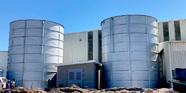
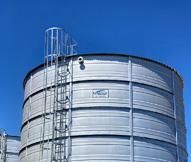
Robust and Reliable
Water Storage
operating realities, or (b) allow credible, lawful service differentiation aligned to affordability and sustainability.
Conclusion: the water crisis is a diagnostic signal, not an isolated failure
Water shortages, sewage spills, potholes and electricity outages are not separate problems. They are the visible end-stage symptoms of a municipal model that has normalised unaffordable service commitments, weak revenue realism, and deferred lifecycle costs for three decades.
If we keep treating this as a “maintenance problem” or a “capacity problem”, we will keep failing, because we will keep addressing the symptom while protecting the cause.
The core reform is uncomfortable but unavoidable: align service levels, operating obligations, and municipal revenue reality, or accept that the crisis will deepen regardless of who wins elections.
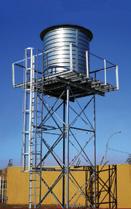
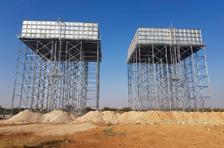
Easily transportable, especially for multiple tanks
Easy assembly, even at elevated heights
NO CRANES REQUIRED
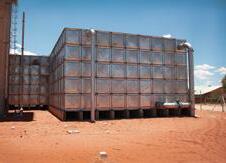
Robust steel tank with high life expectancy
Replaceable liner allows for extended life
DROP BY DROP
RESTORING DIGNITY AND WETLANDS IN SEBOKENG
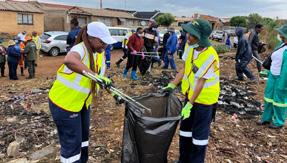
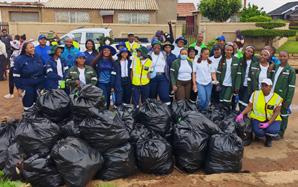
In February 2026, the Drop by Drop: Wetlands Activation programme was successfully implemented in Sebokeng, Gauteng, as part of commemorating Wetlands Month.
Building on previous activations in Soweto and Alexandra, the initiative expanded into the Vaal region with a focused intervention in Zone 3, Sebokeng. Led by Brandscapers Africa in collaboration with Rand Water - Water Wise, the event aimed to educate, mobilise, restore and measure impact within a community directly affected by wetland degradation.
Introduction and aim of the event
The Sebokeng Wetlands Activation was designed to translate awareness into action. The core objectives were clear:
• Educate residents and learners about the importance of wetlands and water conservation.
• Mobilise the community around environmental stewardship.
• Restore degraded wetland areas through visible clean-up efforts, and
• Measure impact through data collection and community feedback.
Over two days of mobilisation, more than 400 households were directly engaged through doorto-door campaigns, flyer distribution, posters, and digital amplification. The outreach concluded with strong participation from the community, Rand Water Young Professionals Forum, SAPS, Rand Water Services, local government representatives, and media platforms including Mail & Guardian, Bizcommunity, eNCA, and VUT FM, drawing approximately 280 attendees over the two-day activation.
Importantly, the activation delivered measurable environmental results: 955 kg of litter was removed from illegal dumping hotspots near the wetland – 104 kg on Day 1 and 851 kg during the large-scale Day 2 clean-up.
Introducing the community survey and its purpose
Beyond clean-up activities, the programme incorporated a structured community survey involving 32 residents living primarily within 300 m of the wetland. The aim of the survey was to:
• Assess community understanding of wetlands.
• Identify key pollution challenges.
• Evaluate perceived health and educational impacts.
• Gauge willingness to participate in restoration efforts, and
• Inform future interventions with data-driven insights.
Key findings from the survey
1 Limited wetland awareness: Only 34% of respondents understood what a wetland is. This highlights a significant knowledge gap despite residents living near the ecosystem.
2 Severe pollution challenges: The table below indicates some of the pollution challenges experienced by residents. These statistics confirm that illegal dumping and sewage spillages are not isolated incidents but chronic issues.
surroundings, and sewage intrusion into school grounds create an environment not conducive to education.
5 Reporting gaps and trust deficit: Alarmingly, 78% of residents have never reported pollution or sewer spills to the municipality. Among those who did report, many received no response. This indicates a breakdown in communication and eroded trust between the community and authorities.
6 Strong willingness to act: Despite these challenges, 84% expressed willingness to be part of the solution and participate in clean-up initiatives. This is perhaps the most powerful finding of all – the community is not apathetic; it is ready.
Conclusions
The Sebokeng Wetlands Activation showed that real environmental restoration happens when education, community mobilisation, and practical action work together. Removing nearly a tonne of waste created visible change, learner participation strengthened youth voices, and survey findings validated community concerns.
However, ongoing challenges such as poor waste management, sewer failures, limited environmental awareness, and weak reporting systems remain. Ultimately, Sebokeng’s wetland is not just a natural ecosystem, it is vital to public health, education, and community dignity.
3 Health Impacts: Nearly half (47%) of respondents reported health problems linked to pollution. Reported conditions included headaches, chest pains, respiratory difficulties, skin irritations, and lung-related issues – particularly affecting children.
4 Impact on education: A significant 78% stated that pollution negatively affects school activities and learning. Bad odours, contaminated
FROM COMMERCIAL CLOSE TO CONSTRUCTION
STAGE 1 OF THE OMM PROGRAMME MOVES INTO IMPLEMENTATION
The transition from planning to active detailed design, early procurement and site establishment marks a turning point for Limpopo’s water landscape. With the Olifants Management Model Programme (OMM Programme) officially moving into Stage 1 implementation as of February 2026, one of South Africa’s most ambitious 50:50 public-private collaborations is now a reality on the ground.
Implemented by Badirammogo Water User Association (BWUA), the OMM Programme is a R25 billion, multi-stage, source-to-tap capital expenditure programme that will expand bulk raw and potable water infrastructure in Limpopo over a ten-year period.
The programme is structured as a pioneering 50:50 public-private collaboration between BWUA’s Commercial Members (mines and industrial users) and Institutional Members (government, represented by the Department of Water and Sanitation [DWS]). This jointly funded and co-governed model allocates risk to support longterm operational sustainability and bankability. Rolled out across six stages, the OMM Programme optimises existing infrastructure while introducing significant new capacity for Sekhukhune District and Mogalakwena Local Municipalities. It enhances regional supply resilience in the Middle Olifants catchment through improved utilisation of the De Hoop and Flag Boshielo Dams, securing additional bulk supply for Polokwane Local Municipality.
Once fully implemented, the programme will deliver approximately 263 000 m³/day through 875 km of pipelines and associated treatment
works. In addition to building capacity to treat and supply potable water to over one million people, the programme will provide potable water reticulation infrastructure to approximately 140 communities, benefitting around 390 000 people through yard connections, while securing reliable long-term supply for strategic mining and industrial operations. It represents a coordinated response to historic supply constraints, positioning water infrastructure as both an economic enabler and a social equaliser.
The Badirammogo Water User Association (BWUA), formerly known as the Lebalelo Water User Association, was established in 2002 to provide bulk raw water to mines –primarily Platinum Group Metals (PGM) and chrome mining companies – and to doorstep communities, through DWS, in the Eastern Limb of the Bushveld Igneous Complex located in the Sekhukhune District Municipality in Limpopo, South Africa.
For over two decades, BWUA has financed, built, operated and maintained more than 125 km of bulk raw water infrastructure, delivering uninterrupted supply with minimal water losses. Since 2024, it has also maintained NOSA 5-star platinum status and holds certification to and compliance with six ISO standards (9001, 14001, 37101, 45001, 50001 and 55001), reflecting a strong record of operational excellence.
Large-scale, commercial mining in the Eastern Limb has been made possible by BWUA’s uninterrupted bulk raw water supply, enabling one of South Africa’s most critical mineral production regions to function and grow.
Following gazetting of its amended constitution in May 2025, BWUA’s mandate was expanded to include potable water infrastructure development under the OMM Programme. While BWUA retains its primary bulk raw infrastructure responsibilities, the operation and maintenance of potable water infrastructure, which BWUA develops as part of the OMM Programme, will remain the responsibility of Water Service Authorities in accordance with the Water Services Act.
ABOUT BWUA
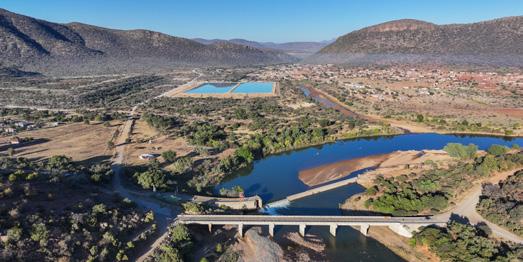
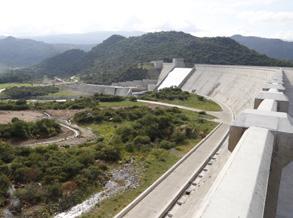
BWUA’s Havercroft weir and storage dams in Modubeng, Limpopo
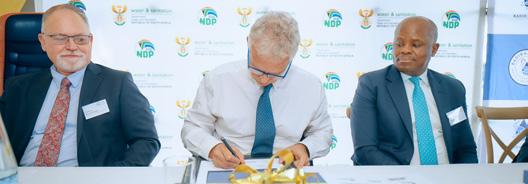
At the OMM Programme Stage 1 Commercial Close Funding Agreements Signing Ceremony are (from left) Dr Kobus Duvenhage CEO of BWUA; Dr Sean Phillips, Director-General, Department of Water & Sanitation; and Mohale Rakgate, Chief Investment Officer, SA Infrastructure Fund, Development Bank of Southern Africa
The OMM Programme is structured to generate significant regional impact, creating an estimated 42 000 direct, indirect, and induced employment opportunities. Beyond job creation, BWUA embeds socio-economic development directly into infrastructure delivery to strengthen its social licence to operate. These initiatives, which include school upgrades, literacy programmes and local contractor participation, ensure project alignment with host communities. By integrating social investment with engineering milestones, the OMM Programme builds the long-term trust necessary for sustainable infrastructure operation.
OMM Programme Stage 1: Commercial close achieved
On 12 th December 2025, Commercial Close of Stage 1 of the OMM Programme, which carries a capital value of approximately R8.5 billion, was achieved through the execution of Facility Agreements with programme financiers, thereby enabling progression toward Financial Close and full implementation.
Funding for Stage 1 has been sourced from Institutional Sector Financing partners including the Infrastructure Fund (as Institutional Senior Lender and Fundraiser) and the DWS (Equity Funder through National Treasury grant and Water Trading Entity [WTE] funding), together with Commercial Sector Financing partners, including ABSA, Nedbank and Standard Bank (Commercial Senior
Lenders), and Climate Fund Managers providing international financing.
This milestone concludes years of financial structuring, shifting the programme from preparation into large-scale infrastructure delivery.
Commencing OMM Programme
Stage 1 implementation
Following Commercial Close, detailed design finalisation, early procurement and site establishment activities for Stage 1 of the OMM
Programme commenced on 2nd February 2026, with completion anticipated within three years. Stage 1 focuses on establishing an integrated bulk raw and potable water supply scheme serving Mogalakwena Local Municipality. The infrastructure forms the first phase of the programme’s source-to-tap solution, linking abstraction at Flag Boshielo Dam to new water treatment works, and ensuring supply for both communities and commercial users.
Key components include:
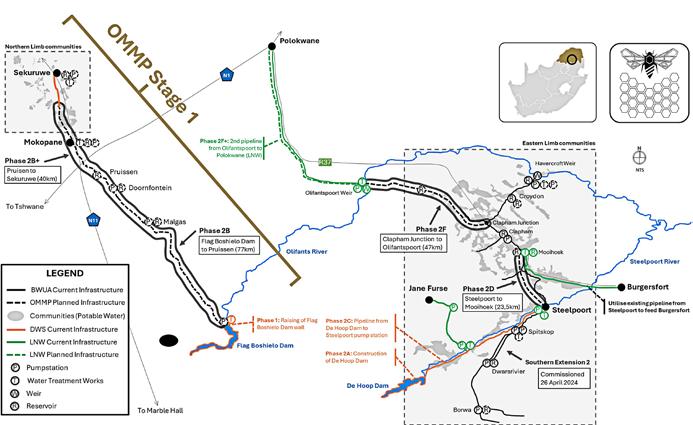
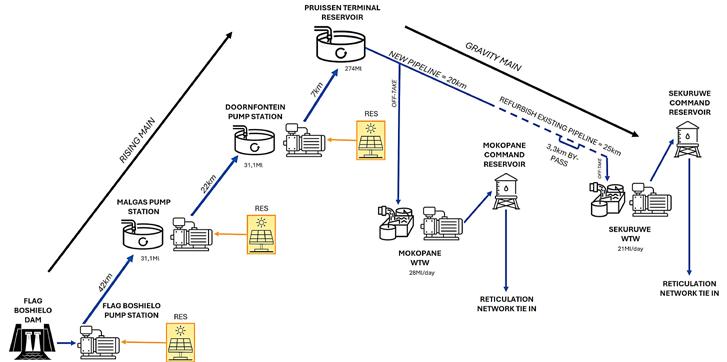
• Bulk raw water infrastructure: A steel pipeline from Flag Boshielo Dam to Pruissen (Phase 2B) and from Pruissen to Sekuruwe (Phase 2B+),
OMM Programme Stage 1 map
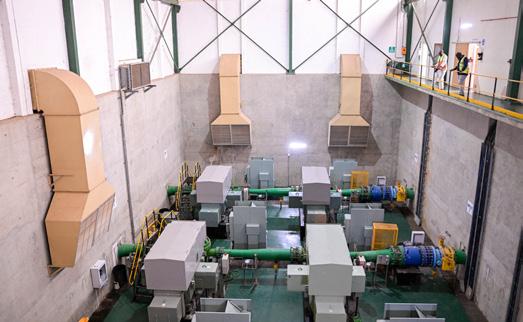
An internal perspective of the Havercroft pump station
three pump stations with integrated renewable energy supply, intermediate balancing dams and a terminal reservoir; and
• Bulk potable water infrastructure: Two new greenfield water treatment works in Mokopane and Sekuruwe.
Bulk raw water: Phase 2B
Phase 2B comprises approximately 71 km of DN1200 steel rising main extending from Flag Boshielo Dam to a new terminal reservoir at Pruissen, near Mokopane.
Water will be abstracted at Flag Boshielo Dam and lifted through three pump stations, which will be located at the dam wall, on the farm Malgas (near Immerpan), and at the farm Doornfontein near Pruissen. Each pump station is equipped with three 3.5 MW pump and motor sets (two duty and one standby), ensuring operational redundancy and reliability.
The rising main is constructed in three sections: approximately 42.5 km from Flag Boshielo to Malgas, 22 km from Malgas to Doornfontein, and a further 6.5 km to the Pruissen terminal
reservoir. Balancing dams at Malgas (31.1 Mℓ) and Doornfontein (31.1 Mℓ) provide hydraulic stability and operational flexibility within the system.
While current average annual daily demand is approximately 94 Mℓ/day, the pipeline is designed for 137 Mℓ/day (50 million cubic metres per annum). This additional capacity allows for daylight pumping aligned with the renewable energy solution and provides long-term system resilience.
The Pruissen terminal reservoir (274 Mℓ) forms a critical interface between pumped and gravity systems, providing storage security and enabling flexible downstream dispatch.
Bulk raw water: Phase 2B+
From the Pruissen Reservoir, Phase 2B+ extends the system through a gravity pipeline network supplying the Sekuruwe and Mokopane Water Treatment Works (WTW), as well as commercial offtake points north of Mokopane.
This phase includes approximately 13.5 km of DN1400 steel gravity pipeline from Pruissen to the Mokopane WTW branch, followed by approximately
9.6 km of DN1100 pipeline to the Piet-se-Kop tie-in point. A short DN1100 connection links the branch directly to the Mokopane WTW, while a DN700 gravity pipeline connects the existing DN1000 raw water line to the Sekuruwe WTW.
An approximately 26 km DN1000 steel pipeline between Piet-se-Kop Reservoir and an elevated steel tank near Sekuruwe has already been constructed but has not yet been commissioned. A condition assessment was undertaken, and the required refurbishment works have been incorporated into the EPC scope.
The Phase 2B+ works also include construction of a new steel bridge across the Dorpsrivier in Mokopane and a pipe jack beneath the N1 national road, ensuring integration of the new infrastructure into the existing municipal environment.
Together, Phases 2B and 2B+ complete the raw water conveyance system from Flag Boshielo Dam to the two new water treatment works, enabling supply to both municipal potable systems and commercial users.
Water treatment works:
Mokopane and Sekuruwe
Stage 1 includes the construction of two new greenfield WTWs, forming the potable component of the source-to-tap system.
The Mokopane WTW, located approximately 1.5 km south-west of Planknek on municipal land within Mogalakwena Local Municipality, has a design capacity of 28 Mℓ/day. The Sekuruwe WTW, located immediately north of Sekuruwe, has a design capacity of 21 Mℓ/day.
Both plants utilise a conventional treatment process suited to the relatively good raw water quality from Flag Boshielo Dam. The treatment
Flag Boshielo Dam
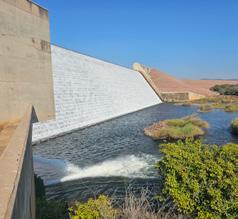
De Hoop Dam
OMM Programme Stage 1 infrastructure schematic
sequence comprises coagulation, flocculation, disinfection and final stabilisation, with objectives including removal of suspended solids, non-organic matter, pathogens, algae and algal metabolites, and stabilisation of the product water.
The plants are designed to operate continuously over a 24-hour cycle and incorporate sufficient redundancy so that failure of an individual process unit does not interrupt the required flow. At Sekuruwe, raw water will flow to the works by gravity, while treated water will be pumped to the respective command reservoirs for onward municipal distribution.
Renewable energy solution and energy security
Pumping large volumes of water requires substantial and sustained energy, with electricity comprising up to 30% of the water tariff (excluding capital repayment). Therefore, energy security is a critical component of Stage 1, particularly given limited grid penetration in rural areas surrounding the pipeline and the instability historically experienced within the national grid.
The raw water pump stations will be powered through a Renewable Energy Solution
combining solar photovoltaic (PV) generation and Battery Energy Storage Systems (BESS). Each pump station will incorporate approximately 15.865 MWp of solar PV generation and 10.5 MVA / 13.265 MWh BESS.
The system is designed around daylight pumping principles. Based on projected demand growth from 94 Mℓ/day to 137 Mℓ/day, the system will require approximately nine hours of pumping per day by 2040, of which an estimated six hours can be supplied directly from solar generation, with the balance supported by battery storage.
Energy will be procured from an Independent Power Producer under a long-term Power Purchase Agreement, providing tariff certainty, reducing the programme’s carbon footprint and limiting exposure to grid-related risks. Capacity will be scaled incrementally over time to match water demand growth and asset performance.
Contracting and delivery model
Stage 1 bulk raw water infrastructure and the two WTWs are being implemented under NEC3 Option A Engineering, Procurement and Construction (EPC) fixed-price lump sum contracts. This structure allocates engineering, procurement and construction risk to the
contractor, while funding and operational risk remain with BWUA.
The use of a functional specification in the WTW tender process encouraged innovative, cost-effective design solutions aligned with municipal service delivery requirements. A Project Management Consultant supports BWUA’s integrated Programme Management Unit in overseeing delivery.
Looking ahead
Stage 1 represents the establishment of a scalable backbone for the regional bulk water system serving Mogalakwena and surrounding areas. With Commercial Close achieved and construction underway, the focus during 2026 and beyond will be on progressive infrastructure delivery, system integration and commissioning.
As subsequent Stages 2 – 6 advance, the OMM Programme will continue to expand regional capacity, strengthen supply resilience and embed a long-term, integrated water management model that aligns commercial growth with social development objectives.
The transition from structuring to construction marks a significant milestone, not only for the programme, but for regional water security in Limpopo.
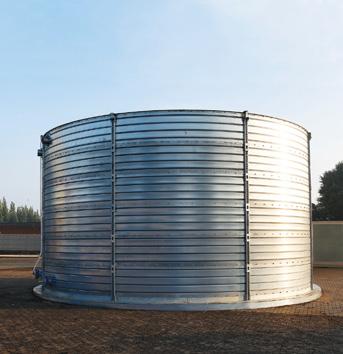
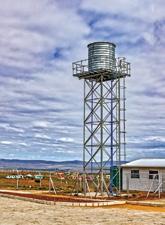
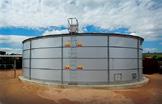
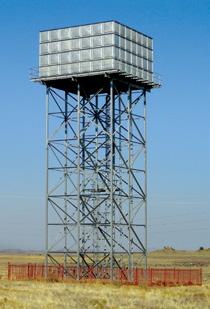
Structa Technology’s Prestanks are hygienically safe, cost effective and a reliable way to store water for commercial sectors, private sectors and even for personalized storage. Temporary or permanent erection at mines, powerstations, building sites, hospitals, water affairs, municipalities, rural communities and agriculture.
Pressed Steel Sectional Water Tanks
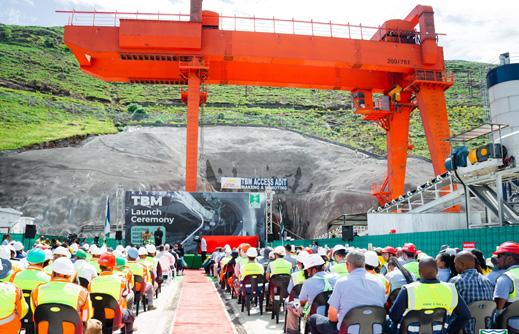
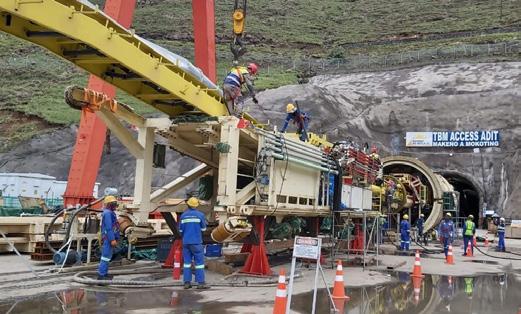
FORMING THE POLIHALI TRANSFER CONDUIT
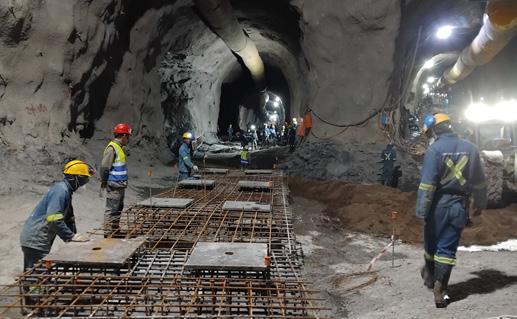
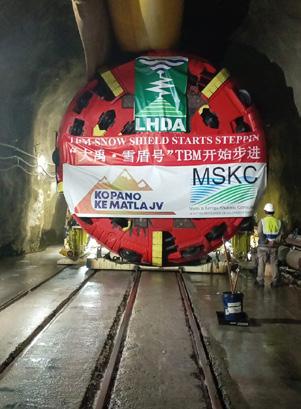
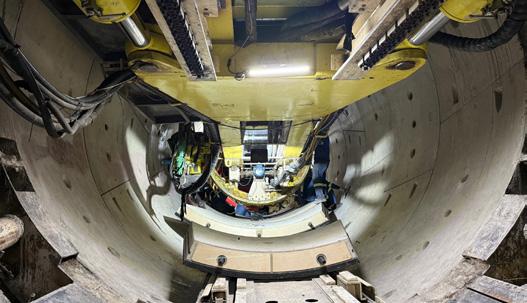
A landmark project in difficult medium-diameter tunnelling
Construction of the Polihali Transfer Tunnel – together with the new Polihali Dam development – form the core components of the Lesotho Highlands Water Project (LHWP) Phase II programme, both of which are progressing in parallel within the country’s Eastern Highlands.
The largest dam conduit constructed to date in Southern Africa, the 4.5 m diameter concrete-lined gravity tunnel will measure 38.5 km in length and is being excavated simultaneously from both ends using drill-and-blast techniques and tunnel boring machines (TBMs).
Appointed by the Lesotho Highlands Development Authority (LHDA) in late 2017, the tunnel design and construction supervision contract is being carried out by the Metsi a Senqu-Khubelu (MSKC) Joint Venture. In turn the Kopano Ke Matla Joint Venture (KKM) was appointed as the Polihali Transfer Tunnel construction contractor in late 2022.
In addition to the transfer tunnel programme, the overall project scope being carried out includes intake works and a gate shaft at the new Polihali Reservoir; outlet works and a gate shaft at the existing Katse Reservoir, with underwater connection to the lake; plus access adits to the tunnel and associated infrastructure works, including site access roads, quarries, plant yards, labour accommodation and other works areas.
Tunnel design
Situated below 2 000 m in elevation, the tunnel passes beneath a mountain range rising above 3 000 m. Most of the alignment has a cover of more than 500 m and some sections approach 1 000 m cover.
The transfer tunnel will exit the Polihali Reservoir below the minimum operating level and enter the Katse Reservoir below the minimum operating level using a “lake tap”. This requires a high level of skill and caution.
TBM deployment
Combining TBM and drill-and-blast excavation allows each method to be applied where it performs best. TBM excavation is the preferred methodology for the long, relatively uniform main transfer
TBM assembly in preparation for the “step in” at the Katse access adit
The Katse access adit TBM launch ceremony held in January 2025
The Polihali Transfer Tunnel is one of the two water transfer main works for Phase II of the Lesotho Highlands Water Project (LHWP). It will convey water from the Polihali Reservoir to the Katse Reservoir, from where the water is transferred via a series of tunnels and the ‘Muela hydropower plant to South Africa.
Phase II increases the water volume in the LHWP scheme by 2 322 m3. This will enable an incremental increase in the volume of water transferred to South Africa from the current annual volume of 780 to 1 270 m3. Simultaneously, the increased volume of water transferred to South Africa will increase the amount of energy out of ‘Muela by approximately 50% and is another step towards attaining energy independence for Lesotho and reducing its reliance on imported energy.
Final preparations at the Polihali TBM assembly chamber
tunnel sections, measuring approximately 34.5 km in length. In turn, drill-and-blast is the preferred methodology for the shorter, complex or connection-intensive sections –extending over approximately 8.2 km. This hybrid approach optimises productivity, safety and cost effectiveness – critical considerations for a project of this magnitude.
Geotechnical conditions, hydraulic requirements and alignment configuration informed the selection of the full length, full circumference shielded TBMs. These are high
performance, hard rock machines capable of delivering exceptionally high thrust and torque to excavate through the predominantly basaltic formations. Here variable rock mass quality, lineaments and localised adverse conditions demand robust machine capability and operational flexibility.
A defining feature of the TBM methodology is overlapping long probe drilling ahead of the face, enabling early detection of lineaments and water-bearing structures and facilitating pre-excavation grouting where required.
Polihali Transfer Tunnel construction milestones
September 2023 First blast at Katse making way for excavation works at the TBM access adit
May 2024 Completion of TBM factory acceptance tests
August 2024 Breakthrough of the upper and lower intake tunnels, paving the way for water transfer
September 2024 Arrival at Katse of the first TBM following successful factory acceptance tests
January 2025 Naming ceremony and official launch of TBM excavation at Katse
June 2025 Completion of Polihali access adit
July 2025 Arrival at Polihali of the second TBM
October 2025 Completion of Polihali TBM assembly chamber and the Katse TBM access adit
November 2025 Polihali TBM “steps into” the tunnel
January 2026 Polihali TBM begins excavation
Groundwater inflow detection and control are integral to maintaining production continuity over long drives.
The permanent lining consists of 60 MPa steel fibre reinforced precast concrete tunnel lining (PCTL) segments erected within the shield. Twocomponent annulus backfill grouting ensures full circumferential contact at each shove, while EPDM gaskets and pressure-relief drainage holes manage internal and external water pressures, ensuring long-term hydraulic integrity.
The design philosophy prioritises sustained, reliable performance over peak advance records. TBM productivity is governed not only by rock strength but by groundwater management, cutter wear in basalt and logistical efficiency across extended drives. Accordingly, machine specification, lining installation, probe drilling and grouting are integrated as a single coordinated production system, informed by lessons learnt from LHWP Phase I tunnelling in similar geological conditions.
The two TBMs, designated for tunnelling from Katse and Polihali, were designed by Robbins and manufactured in China by CCCC TH. It
Installation of the TBM at its launch point within the Polihali access adit tunnel
is among the most sophisticated tunnelling equipment used so far in Southern Africa.
In terms of production milestones, the Katse side TBM achieved a record 58 m of excavation in a single day in open mode without installation of PCTL segments on 8 th October 2025 – a significant benchmark for tunnelling performance.
Key challenges
The project faces significant challenges due to its remote, high-altitude mountainous setting, characterised by limited existing infrastructure and steep valley topography that restricts portal placement and the expansion of work areas.
Geologically, the tunnel will primarily traverse basaltic formations of the Lesotho Formation, which exhibit variable jointing and amygdaloidal zones, alongside localised lineaments and fractured zones. These geological features not only impact excavation stability but also serve as conduits for groundwater, necessitating systematic probe drilling and pre-excavation
grouting to manage moderate but potentially concentrated inflows.
Furthermore, sections with high overburden will introduce elevated in-situ stresses, requiring adaptable support classes for both TBM and drilland-blast operations to mitigate stress-related ground behaviour. The absence of intermediate shafts mandates exceptionally long, continuous TBM drives, intensifying logistical complexities.
Allied logistical challenges include the longdistance transport of TBM components and heavy plant over constrained access roads, demanding rigorous and continuous logistics planning for critical elements like segment supply, cutter replacement schedules, power reliability, and maintenance access.
Project highlights and progress to date
TBM excavation commenced in January 2025, initially through the Katse TBM access adit before advancing into the main transfer tunnel towards Polihali. By mid-January 2026, a total of 614.5 m had been excavated along the alignment. Of this, approximately 175 m was completed in open mode without lining, while 438 m was lined using PCTL segments installed within the TBM shield. The Katse gate shaft excavation is also ongoing and has progressed beyond the halfway mark.
On the Polihali side, the TBM access adit and assembly chamber have been completed, and TBM excavation commenced in mid-January 2026 on tunnel Polihali west towards Katse. By mid-February 2026, 235.8 m had been excavated, equivalent to 156 installed segment rings. The Polihali connecting tunnel excavation has progressed beyond the 1 km mark, and the intake structures and gate shaft works are largely
complete. Following the initial TBM advance, infrastructure and system works are currently in progress, with excavation recommencing in mid-March.
Segment production continues at a dedicated facility on the Polihali site. While physical progress is visible and major milestones such as TBM launches have been achieved, overall schedule performance is under pressure, particularly along the TBM critical path.
In addition, lake tap drilling investigations have been concluded, and detailed design is currently in progress to establish the optimised location within competent ground beneath the live Katse lake.
Key learnings
The Polihali Transfer Tunnel has reinforced that flexibility is critical when dealing with long tunnels in variable ground. The decision to use both TBM and drill-and-blast methods has proven to be the right approach, as it allows adaptation to changing geological conditions and complex interface areas.
In basalt formations, it is not only the strength of the rock that matters, but the jointing, fractures and structural features that influence performance. Continuous probe drilling and proactive groundwater management are therefore essential to avoid surprises and minimise disruption. Early installation of the permanent lining is also important to protect the basalt and ensure the long-term durability of the tunnel.
The project has also shown that TBM performance is not just about machine power or daily advance rates. For long drives in remote mountainous terrain, logistics, power reliability, maintenance planning and segment supply play an equally important role. Any weakness in the system directly affects progress.
The project continues to move ahead steadily. The focus now is on converting early progress into sustained performance towards successful delivery in 2028.
60 MPa steel fibre reinforced precast concrete tunnel lining (PCTL) segments erected within the TBM shield for placement
Breakthrough at the Polihali gate shaft
A view of the TBM cutter head
IGNORED WARNINGS, FAILING INFRASTRUCTURE AND THE COST OF INACTION
The widespread water disruptions experienced across Gauteng during Q1 2026 are not an isolated incident. They are the inevitable consequence of years of neglect, deferred maintenance and ignored warnings about the fragile state of South Africa’s water infrastructure and symbolic of a wider national problem.
Johannesburg, the country’s economic heartland, has once again found itself at the centre of the crisis. While Rand Water’s upstream maintenance is necessary and planned, its impact has been severely amplified by the deteriorating condition of municipal infrastructure. Reservoirs that should have provided sufficient buffer capacity are leaking, bypassed, or unable to store adequate volumes. In addition, aging piping networks struggle to move water efficiently from bulk suppliers to end users.
Warnings that went unheeded
For more than a decade, the Southern African Plastic Pipe Manufacturers Association (SAPPMA) has consistently raised the alarm about the urgent need to invest in water infrastructure.
“Municipalities have routinely failed to spend their allocated infrastructure budgets, especially funds earmarked for pipeline upgrades and maintenance. As a result, networks have continued to age well beyond their design life, leaks have worsened and water losses mounted. Today more than 40% of the available drinking water is lost in many parts of our country,” says SAPPMA’s CEO, Jan Venter.
The consequences of this inaction extend beyond service delivery failures. South Africa’s pipe manufacturing industry has been left fighting for survival. With infrastructure projects stalled or cancelled and capital budgets unspent, demand collapsed. Over the past few years, several manufacturers have been forced to downscale or close their doors entirely, taking skilled jobs, local capacity and institutional knowledge with them.
No time for shortcuts
As government and municipalities scramble to respond to the current crisis, Venter stresses that it is critical that urgency does not translate into poor decision-making. Shortcuts, such as using substandard materials, untested suppliers or non-compliant products, will only lock in the next failure.
This is where SAPPMA plays a vital role. As the custodian of quality, compliance and best practice in the plastic pipe industry, SAPPMA ensures that its members manufacture pipes that are fit for purpose, durable and designed for long-term performance.
“Fixing South Africa’s water infrastructure will not be achieved through blame-shifting or reactive interventions alone. It requires meaningful collaboration between national government, municipalities, engineers, manufacturers and industry bodies,” says Venter.
SAPPMA stands ready to work with decision-makers and municipal officials to help assess infrastructure needs, guide appropriate material selection and support sustainable, long-term solutions.
“The choice is clear: invest wisely now or face a future of recurring crises that will be far more expensive to fix,” Venter concludes.
Jan Venter, CEO at
SAPPMA
5 REASONS WHY A SAPPMA MEMBERSHIP MAKES SENSE
SAPPMA is an Association of leading companies in the plastics piping business, with the purpose of facilitating high standards of ethics, product quality and technical information. It is an open association, registered as a non-profit Section 21 Company and is well regulated by strong Articles of Association and Code of Conduct.
COLLECTIVE VOICE
01
SAPPMA represents more than 80% of the plastic pipe market in Southern Africa and is the only representative plastic pipe forum in the country. Members have a collective voice at engineering associations, consulting engineering firms, municipalities, water authorities and contractors and are also afforded valuable networking opportunities, social interaction and enjoy a sense of community.
TECHNICAL INFORMATION
SAPPMA members have access to objective, expert information on technical matters by way of personal consultations, technical publications, industry conferences and webinars and market survey results/reports.
PRODUCT STANDARDS
Members have free access to the latest product and SANS standards, quality systems and test procedures, test facilities, monitoring and quality control and have representation at SANS Technical committees and other certification authorities.
QUALITY
Members who are pipe producers and installers are set apart from other players in the market by passing the SAPPMA factory audits and adherence to the SAPPMA Code of Conduct.
MARKETING & COMMUNICATION
03 05 02 04
The SAPPMA mark on a product has become a soughtafter quality guarantee that gives customers and end-users the peace of mind that their product meets local and international quality standards. Members are therefore supported by an established brand that is solely aimed at protecting the customer and the infrastructure of the country, as communicated through our marketing and advertising campaigns.
THE FOLLOWING BUSINESSES AND INDUSTRIES CAN QUALIFY FOR A SAPPMA MEMBERSHIP:
• Pipe & fittings manufacturers
• Raw material suppliers
• Consultants
• Construction companies
• Municipalities
• Water Boards
• Contractors & Installers
• Individuals
ENGINEERING CERTAINTY IN SOUTH AFRICA'S POLYMER INFRASTRUCTURE
Unless it’s a force majeure, within the engineering context “bad luck” is not an excuse or an option for infrastructure failure. There is only bad design, poor execution, and the catastrophic tolerance of risk. By
As we close out the first quarter of 2026, the South African infrastructure landscape is at a pivotal juncture. Many of our municipalities face a “Day Zero” scenario not only of water availability but also of infrastructure integrity. Within the pipeline segment, the legacy networks of asbestos cement and vitrified clay – laid during the rapid urbanisation of the mid20th century – have entered terminal failure. Simultaneously, our rapid expansion into new developments requires a construction pace that traditional methods struggle to match.
In this modern context, the engineer is no longer merely a designer of static systems: they are a risk manager, a financial steward and a technical guardian. That specifically applies to the understanding and selection of appropriate technologies, a case in point being the application of the traditional open trench methodology for pipeline construction
Ian Venter
versus the relining (trenchless) approach, a domain of “blind” installation in which precision is paramount.
The geometry of decision: open trench versus relining
The binary choice between excavating a trench or relining a pipeline – either by physically establishing a new route via directional drilling or structurally relining an existing conduit via lining – is the single most consequential decision in the lifecycle of a pipeline project. In South Africa, this decision is rarely purely technical; it is a matrix of geotechnical realities, social impacts, and financial constraints.
The open trench method remains the bedrock of civil engineering in South Africa, codified in the SANS 1200 series of standardised specifications (specifically SANS 1200 LB for Bedding and SANS 1200 DB for Earthworks). The design philosophy
here is predicated on soil-structure interaction, where the engineer has the luxury of visibility.
Mechanisms of load transfer
In an open trench scenario, the pipe is not an isolated structural element; it is a liner for a soil arch. The design approach, particularly for flexible polymer pipes, relies on the Spangler Iowa formula shown below:
D_L × K × W × r³ Δx = ─────────────────────────
EI + 0.061 × E' × r³
Where:
• Δx = horizontal deflection (mm)
• D_L = deflection lag factor (accounting for slow consolidation of soil over time)
• K = bedding constant (determined by the bedding angle)
• W = load per unit length (earth + live loads) (N/m)
• r = mean radius of the pipe (mm)
• EI = pipe stiffness factor (N·mm²/mm)
• E' = Modulus of Soil Reaction (MPa) For flexible thermoplastics, the stiffness of the pipe (EI) contributes relatively little to resisting deflection compared to the support provided by the sidefill soil (E'). The open
trench philosophy, therefore, is an exercise in earthworks engineering.
The relining philosophy:
Precision in the dark
In contrast, relining encompasses two distinct trenchless strategies:
1. New alignment employing horizontal directional drilling (HDD): This creates a new bore path to install a pipeline, typically used to cross highways, rivers, or environmentally sensitive wetlands.
2. Structural realignment (rehabilitation):
This method utilises the existing hole in the ground to install a new pipe, thereby relining the hydraulic grade line and structural integrity without surface disruption.
The defining characteristic of relining methodologies is that installation forces are often the most severe loads the pipe will experience during its design life, and they occur while the pipe is invisible to the engineer. Therefore, with HDD the design philosophy shifts from “supporting the earth” to “surviving the insertion”. The pipe acts as a tension member, where the critical design parameter is the polymer's allowable tensile strength during pullback.
Material Science: The viscoelastic versus the cross-linked
To engineer a polymer system effectively, one must understand the material's molecular behaviour. Thermoplastics, including HighDensity Polyethylene (HDPE), Polyvinyl Chloride (PVC-U, PVC-O, PVC-M), and Polypropylene (PP) are characterised by their ability to melt and reform. At a molecular level, they consist of long polymer chains that are entangled but not chemically bonded to one another.
Their defining engineering characteristic is viscoelasticity. They exhibit behaviour that combines the properties of a viscous
Ian Venter is a consultant specialising in polymer piping systems, representing Polymers and Piping (fittings) Systems South Africa (PPfSSA). With extensive experience in quality assurance and industry collaboration, Ian is dedicated to advancing standards and promoting compliance throughout the pipe manufacturing supply chain.
For further information, phone +27 82 770 8244 or e-mail: IanVenter@PPfSSA.com. ABOUT THE AUTHOR
liquid and an elastic solid. This means their mechanical response depends on the load duration and temperature.
Here viscoelastic response components encompass:
• Elastic response (Spring): Instantaneous deformation when loaded.
• Viscous response (Dashpot): Gradual deformation (flow) over time under constant load.
This behaviour dictates two critical design phenomena, namely:
• Creep: Under a constant stress (e.g., internal water pressure), the material will continue to strain (stretch) over time. If this strain exceeds the material's limit, the material ruptures.
• Stress relaxation: Under a constant strain (e.g., being squeezed in a trench or bent
molecular structure decreases over time as the molecular chains disentangle and slide past each other.
HDPE is a semi-crystalline polymer containing regions of highly ordered, tightly packed crystal structures (spherulites) and amorphous regions. The “tie molecules” that connect these crystalline regions are the source of the material's toughness.
Standard PE100 has decent slow crack growth (SCG) resistance. However, for relining applications where the pipe is dragged over rock, standard PE100 is insufficient. PE100RC (resistant to crack) materials have been engineered with enhanced tie-molecule density or with comonomers (e.g., hexene) to increase resistance to SCG significantly.
Thermosets: The frozen network
and Glass Reinforced Plastic (GRP) pipes – undergo a chemical reaction (curing) that creates irreversible cross-links between the polymer chains. Once cured, they cannot be melted or reshaped.
The installation of a CIPP liner involves impregnating a felt or fibreglass tube with a liquid resin (polyester, vinyl ester, or epoxy) and a catalyst. The tube is inverted into the host pipe and heated (using water or steam) or exposed to UV light.
The material properties (Young's Modulus, flexural strength) are determined on-site by the success of this chemical reaction. Unlike a factory-extruded HDPE pipe with consistent quality control, a CIPP liner's quality depends on the site's conditions – groundwater temperature, resin mixing ratios, and cure speed.
Time as a variable:
Short-term versus long-term design approaches
The most persistent error in South African pipeline engineering is the conflation of shortterm testing values with long-term design
parameters. A pipe that passes a hydro-test on Day 1 is not guaranteed to survive Day 18 250 (50 years).
For relining projects, the short-term design is often the governing condition. The pipe must survive the violence of installation to function as a conduit. During an HDD pullback, the pipe is subjected to axial tension. Here the safe pull strength is typically limited to a fraction of the yield strength (e.g., 40% of yield) to prevent non-recoverable viscoelastic deformation.
For example, if a contractor pulls an SDR 17 pipe with too much force, the pipe “necks” stretch like chewing gum. The diameter decreases, and the wall thins. The pipe is derated before commissioning.
The "knee" of the curve
Long-term design is based on the regression curve (log stress versus log time), codified in ISO 9080 and SANS 4427.
When plotting hoop stress versus time to failure on a log-log scale, thermoplastics exhibit a linear relationship for ductile failure (Stage I). However, at a certain point
the curve dips steeply downwards. This is the “knee”, marking the transition to brittle oxidative failure (Stage II) or degradation.
The design stress (σ) must be chosen such that the pipe remains in the ductile region for its entire service life. Modern PE100 materials have extended the service life beyond 100 years at 20°C.
For CIPP liners designed under ASTM F1216, the long-term buckling resistance is calculated using a long-term flexural modulus.
Geometric determinism: Product selection
Ultimately, geometry is the language of risk. The physical dimensions of the product –standard dimension ratio (SDR), ovality, and wall thickness – dictate its ability to interact with the environment.
In HDD applications, the SDR is often governed by buckling resistance, not internal pressure. In turn, thicker walls (low SDR) reduce the internal diameter, increasing friction losses and pumping costs.
It is important to understand that the resistance of a pipe to external collapse
TABLE 1: Comparative analysis: Trench versus trenchless design
DESIGN PARAMETER OPEN TRENCH APPROACH
Primary stress mode
Soil support (E')
Verification
Critical failure mode
SANS applicability
Compressive/ring bending: The pipe deflects under vertical earth loads
Engineered: The engineer specifies G5/G6 bedding and compaction levels
Visual: Bedding and joints are inspected before burial
Deflection: Excessive ovality due to poor side support
High: Covered extensively by SANS 1200 LB/DB
(buckling) is inversely proportional to the cube of the radius. However, ovality introduces a geometric imperfection that drastically reduces this resistance during relining operations. In ASTM F1216, the design formula for fully deteriorated pipes includes an ovality reduction factor. A seemingly minor 5% ovality can reduce the calculated buckling strength by over 40%.
Wall thickness: The margin of safety
The selected wall thickness must also account for multiple factors for both open and trenchless installations, based on the following forumula:
To minimise risk to an absolute engineering minimum, the following must be observed:
• Eliminate assumptions: Never assume soil conditions. Drill geotechnical boreholes.
• Enforce certification: Mandate that all welders are SANS 10268 certified.
• Data is king: Require digital data logging for every weld (temperature, pressure, time) and every drill shot (torque, thrust, mud pressure, etc.)
• Independent verification: Use third-party inspection bodies to verify test results. Do not rely on the contractor's own quality control.
COMMON ERRORS (RANKED HIGHEST TO LOWEST)
Drawing on extensive industry forensics and failure analysis data, the following errors are ranked by their prevalence and impact on infrastructure failure in South Africa.
RELINING (TRENCHLESS)
APPROACH
Tensile/buckling: The pipe is pulled (tension) or squeezed by fluid (buckling)
Native/in-situ: The pipe relies on the existing ground or annular grout
Data-driven: Reliance on drill logs, pressure transducers and post-installation CCTV
Seizure/collapse: Getting stuck during pullback or collapsing under mud pressure
Low: Requires adaptation of international standards (ASTM F1962, ISO 21307)
Rank 1: Installation incompetence (90% of failures)
The reality: The best pipe in the world will fail if installed by an untrained team.
The errors:
• Cold welds: In butt fusion, failing to allow the heat soak time to complete results in a bond that looks good but has no strength.
• Contamination: Touching the planed pipe face with dirty hands or oily rags. This creates a release layer that prevents fusion.
• Bedding neglect: Dumping large rocks or clay lumps directly onto the pipe in an open trench. This creates point loads that puncture the pipe over time.
• Over-torquing: Tightening mechanical compression fittings until they distort or crack the plastic components.
Rank 2: Procurement driven by “lowest price”
The reality: The Municipal Finance Management Act’s (MFMA's) emphasis on cost often leads to the selection of inferior products.
The errors:
• Buying “regrind”: Purchasing pipe made from recycled material that is sold as virgin PE100. It lacks the oxidative induction time (OIT) stability and will fail prematurely.
• Non-audited manufacturers: Sourcing pipe from manufacturers who do not submit to voluntary third-party quality audits (e.g., SATAS or SABS).
• Ignoring lifecycle costs: Saving 10% on the pipe price (CAPEX) but incurring 500% in repair costs (OPEX) over 10 years.
Rank 3: Design laziness (Legacy copy and paste)
The reality: Engineers reusing specifications from decades ago.
The errors:
• Incorrect ratings: Specifying “Class” ratings (e.g., Class 16), which are outdated, instead of PN/SDR ratings.
• Thermal ignorance: Designing an aboveground black HDPE pipe for 20°C. In the South African sun, it reaches 60° C. At this temperature, the pressure rating must be derated by nearly half.
• Surge neglect: Assuming plastic pipes absorb all water hammer. They dampen it, but fatigue failure from repetitive surges is a major killer.
Rank 4: Operational blindness
The reality: “Fit and forget” mentality. The errors:
• Pressure management: Running networks at pressures higher than design to compensate for leaks, accelerating the failure of the remaining good pipe.
• Reactive maintenance: Fixing leaks only when they surface, rather than using data to replace failing sections proactively.
Contextual conclusion
Going forward, the South African engineering fraternity must make a collective decision. We can continue to attribute our infrastructure failures to “bad luck”, “bad soil” or “budget cuts”. Or we can recognise that luck is a variable we have the power to eliminate.
The transition from open trench to relining technologies is not just a change in machinery; it is a change in mindset. It requires us to move from the visual certainty of the trench to the data-driven precision of the sensor. It demands that we understand our materials – the viscoelastic memory of the thermoplastic and the chemical permanence of the thermoset – not as commodities, but as dynamic structural elements.
There is no legal recourse to luck. There is only the defensible, accurate, and professional application of engineering science. Let us build our infrastructure with a professional certainty that endures.
SOUTH AFRICAN SPILLWAY GATES GAIN TRACTION IN INDIA
As a leading specialist in automatic, self-actuating spillway equipment, Amanziflow Projects has a well-established track record within its South African home market, as well as across Africa and as far afield as Australia. This penetration was recently expanded into the Indian market following orders for its proprietary TOPS gate system for river weirs.
To date, these TOPS gate installations have been installed on three structures in two separate states in India to retain storage for irrigation and to pass the high seasonal floods experienced in the country.
“Compared to electro-mechanical barrage gates, TOPS systems are autoregulated by hydraulics, are highly robust and require minimal maintenance, making them a sustainable choice in India’s rapidly developing economy,” explains Peter Townshend, managing director at Amanziflow Projects.
Country context
India is a huge country and has the largest population in the world at around 1,4 billion people, 22 times that of South Africa. India also has three times the comparable land area, with a population density of 426
FIGURE 1 The Bhakra Weir fitted with falling shutter panels prior to the installation of the TOPS system
FIGURE 2 Location of the Bhakra Weir in India
people per square kilometre compared to only 51 people per square kilometre in South Africa. Farming is the backbone of rural India and agriculture employs about 40% of the workforce, making water security a core priority.
In this respect, a high percentage of India’s average rainfall of 1 180 mm/year occurs during the annual monsoon period from June to September. Overall, the trend is towards long dry periods and short heavy rainfall intervals that can lead to flooding. During the long dry season, agriculture and farming is heavily reliant on dammed water supply for irrigation.
While India has many large dams situated in hilly terrain with long distribution systems for irrigation, the country also makes extensive use of small dams and weirs along rivers to supply water for nearby farmers and human development.
“During British rule in the early 1900s, the use of falling shutter gates on river weirs was predominant to capture and retain surplus water between monsoon seasons,” Townshend explains. “Over the years, this system proved to be unsatisfactory. Currently, extensive use is made of electro-mechanical gates. The downside is that these types of gates have high maintenance requirements, are dependent on electrical power supply, and have many risks of failure.”
However, despite modern advancements, there are still many older masonry weirs in India that employ steel falling shutters for barrage intervention. These are typically bottom hinged steel panels supported by a diagonal strut connected to a release bracket (as shown in Figure 1). These gates are manually raised at the end of the monsoon season and manually dropped open at the end of the dry period to allow for monsoon floods.
“This system, while used for more than a century, does not provide assurance of supply given the climate change impacts being experienced around the world,” says Townshend.
In parallel, typical problems that occur on manual shutter or electro-mechanical gates include:
• Gates not opening to pass floods when required.
• Gates getting flushed away in floods.
• Sediment build-up.
• Faulty electrical or control systems.
• Lack of maintenance, and
• Human error.
South African involvement
Back in 2019, Indian company, Universal Hydro Structures, had already identified the need to
move away from electro-mechanical barrage gates and older applications on Indian rivers and discovered Amanziflow Projects’ TOPS automatic spillway gate system via an internet search.
Subsequently, Amanziflow Projects participated with Universal Hydro Structures in an international conference and exhibition in Bhubaneshwar, State of Odisha, in 2019 where considerable interest was received for the TOPS system.
The first TOPS installation executed by Universal Hydro Structures was installed on the Bhakra Weir, which previously employed a falling shutter gate system. The weir is situated on the Bhakra River in the Rampur District in the State of Uttar Pradesh (as shown in Figure 2) and serves two large irrigation canals.
Bhakra Weir is a very significant structure for irrigation and was constructed in 1926 by Harcourt Butler. This 100-year-old weir is a 60 m long stone masonry structure with an average height of 2 m. It is solidly built and has withstood many large floods. Later in its life, the weir was fitted with 1.2 m high drop panels to increase storage capacity in the nonmonsoon period.
The maximum flood is 1 200 m³/sec with an overtopping of the weir of 4.6 m during the monsoon season. During the low flow season, the gates remain closed to provide storage for irrigation.
FIGURE 2 Gate fully open to pass the maximum flood
Description of the TOPS gates
In terms of the Bhakra Weir TOPS installation, the four interconnected gates are equally sized at 13.5 m in length and 2 m in height. The axle is 2.4 m vertically above the top of each gate and is set back on the upstream side by 3.1 m to be above the maximum flood level.
Each gate consists of a front face against which the water level (WL) acts to open the gate. A ballast tank attached to the front face is filled with water from the upstream reservoir and acts as the counterweight to keep the gate closed against the upstream hydrostatic WL to retain the full supply level (FSL). The gate is connected by pivot arms to the trunnion axle unit.
As the WL rises in a flood, the increase in the upstream force will rotate the gate outwards and upwards. As it rotates, water decants from the ballast tank to lighten the counterweight. The gate will continue to rotate upwards as the WL increases, until at the high flood level (HFL) the ballast tank is empty and the gates float on the HFL (as shown in Figure 3).
As the flood recedes, the gates rotate downwards and inwards, and the ballast tank fills so that the gates will close to retain the FSL in the reservoir. The TOPS system therefore retains the FSL, which is unlike other fuse gates where the increased storage is drained away.
“The TOPS gate is an effective fuse type gate in that it will respond to increased WL from
floods to open automatically without external actuation and operators. It will then remain on the spillway and will close automatically to retain the FSL,” says Townshend.
Performance of the gates
At the Bhakra Weir, the gates are set to open 100 mm above the FSL. The middle gate has a siphon discharge from the ballast tank. This allows the middle gate to open before the other three gates. The siphon gate is also lower than the other three gates to allow flotsam to flow over the gate before it opens.
The gates can also be opened manually by opening a valve on the ballast tank. This will be done occasionally to sluice out accumulated sediment and debris from the reservoir. Furthermore, the pier is fitted with a lifting frame which is used to lift the gate clear of the water, if required, for maintenance.
As an additional intervention, the TOPS system is also fitted with backup discharge siphons to ensure redundancy for the gates to open in the unlikely event of a failure.
Fabrication and installation
The gates were designed in South Africa by Amanziflow Projects and included the fabrication drawings. They were then manufactured in India by Universal Hydro Structures under licence.
They are composed of mild steel and incorporate seals together with seal plates as a standard feature. These seals have embedded PTFE linings to minimise friction as the gates open.
The final finish entails corrosion protection with a high-quality twin pack polyamine paint applied under strict quality assurance procedures.
Following standard protocols, the gates were assembled as a complete interconnected unit at the fabrication works and tested before being dispatched. Once on site, the gates were installed as one system with the pivot arms bolted and connected to the trunnion units. Then once the integrated gate was levelled and checked, the seal frames were concreted in.
When the reservoir reached FSL, the gates were opened manually to demonstrate its workings to open and close as part of the wet commissioning (as shown in Figure 4).
Conclusion
“We’re proud of our role in introducing the TOPS system to India. It’s proven itself at the Bhakra River Weir as well as on the other two installations completed elsewhere in the country to date,” says Townshend.
“A clear winner compared to electromechanical gate options, the TOPS design ensures that gates open and close automatically without any human intervention or external energy requirement beyond the power of water. This makes the system especially ideal in remote rural settings.
“Additionally, TOPS responds rapidly to flood peak flows, staying open to pass flotsam and sediment, and then closing as water level velocities subside to maintain adequate storage in the reservoir.
“Based on the success of our initial installations, a far greater number of TOPS gates are expected to be used across India,” Townshend concludes.
FIGURE 4 TOPS gates open to pass the river flow at the upgraded Bhakra Weir
WATERTIGHT LINERS EXTEND DAM SERVICE LIFE
Thermoplastic liners are well-proven for ensuring watertightness and corrosion protection in water retaining structures, minimising long-term maintenance. They are also optimal for the rehabilitation of ageing concrete dams and reservoirs, extending the life of these vital assets.
Water conservation and demand management are core priorities within South Africa, with a major focus on asset management when it comes to storage to maximise utilisation,” explains Simon Cotton, head of Silver Solutions and allied entity, Water Bladders. The latter is a specialist local manufacturer of water bladders and dam liners for the private and public sector markets.
Their UV stabilised PVC and HDPE liner solutions cater for both earth and concrete dams, concrete reservoirs, as well as steel tanks, along with custom design and installation services. Whether circular or rectangular, all shapes are catered for.
On smaller scale earth dams, the liner is made using a strong 550 g reinforced PVC which has a mesh embedded in it, giving it strength. “Earth dam liners up to around 2 500 m2 are welded into one piece in our factory to the specified dimensions,” says Cotton.
Generally specified for farming, stormwater attenuation or rural supply – the made-up liner is folded and shipped to the client for easy on-site installation as a one-piece solution. These earth dams are low-cost to construct and have the added benefit of using locally sourced materials, with the opportunity to employ community labour.
In terms of the design, the top edge is made larger to overlap the dam. Then once installed and aligned, sandbags can be placed on this overlapping portion to weigh down the edges. This also aids in soil erosion prevention on dam walls, reducing the risk of a structural failure.
“For large-scale dam installations requiring multi-million litre capacities, we use HDPE dam liners, starting at 1 mm thickness and extending up to 2.5 mm, depending on the requirements,” Cotton explains.
“Large-scale dams are more complex and require expert installation to wedge weld the various liner sections together on site to form a seamless sheet,” Cotton continues, adding that this service forms part of Silver Solutions’ and Water Bladders’ turnkey package. “It’s an essential process to ensure a secure, durable leak-free fit and the same process applies for medium-sized PVC lined dams that require multiple sheets.”
Aside from effective water storage, a key advantage of dam liners is that they provide an impermeable barrier, countering the potential
ingress of contaminated groundwater. In addition, Silver Solutions supplies PVC floating covers to reduce evaporation loss, which is a key design consideration to conserve water supply capacity.
“Across South Africa, there’s an urgent need to address our crumbling water infrastructure and combat non-revenue water losses. In Johannesburg alone, the issue of cracked and leaking reservoirs is a growing concern that strains resources to the limit, negatively impacting communities. Our liners are well-suited for remediating these reservoirs, as well as for new construction works,” adds Cotton.
“Dam and reservoir liners are a cost-effective intervention, and our products have a conservative lifespan of up to 15 years. So, whether it’s a community earth dam or a city water tower, it’s both an excellent return on investment and a vital water security containment measure,” Cotton concludes.
WATER BLADDERS
The most cost-effective storage solution, using our high quality bladders
DISCOVER THE CONVENIENCE AND FLEXIBILITY OF
Advantages of Water Bladders:
Dam Liners
W We manufacture 550g PVC dam liners complete to size in our factory, typically up to 2,500m² in size. For larger dams, we send a crew to site who will weld HDPE liners on site
ENGINEERING A LANDMARK SKY CIRCLE FOR THE CITY OF CAPE TOWN
In partnership with the City of Cape Town’s Urban Mobility Directorate, SMEC South Africa is delivering one of the country’s most distinctive pieces of public transport infrastructure – the Sky Circle, an elevated traffic circle that will redefine movement through the intersection of Govan Mbeki Road (M9) and Jan Smuts Drive (M17).
The project forms part of the city’s MyCiTi Phase 2A Integrated Rapid Transit (IRT) programme – a major expansion of Cape Town’s Bus Rapid Transit (BRT) system designed to provide reliable, accessible and affordable public transport between outlying residential areas and key economic hubs. Phase 2A connects communities from Mitchells Plain and Khayelitsha to Claremont and Wynberg, addressing long-standing mobility challenges across the region’s southern corridor. SMEC was appointed to provide multidisciplinary design and construction supervision within the Phase 2A Infrastructure (West) component.
While Cape Town’s Green Point roundabout –commissioned by the city ahead of the 2010 FIFA World Cup – features a pedestrian concourse beneath an elevated structure, the Sky Circle represents South Africa’s first fully elevated vehicular traffic
circle: a grade-separated intersection designed to prioritise MyCiTi bus operations while maintaining traffic flow below. Once complete, the traffic circle will stand approximately 5.5 m above ground and will be dedicated exclusively to MyCiTi buses.
The M9 (Govan Mbeki Road)/M17 (Strandfontien Road/Jan Smuts Drive) junction is one of Cape Town’s busiest and most constrained intersections – a complex environment of high traffic volumes, limited road reserve and dense surrounding development. The city’s vision was to reduce congestion, improve reliability and enhance safety for all road users while maintaining access for businesses and residents. SMEC’s task was
Progress on the Sky Circle elevated roundabout, with formwork and reinforcement visible
panoramic view
to translate this vision into a buildable, futureready design that separates MyCiTi buses from general traffic, improves pedestrian and cyclist safety and limits disruption during construction.
A
of the Sky Circle construction site against the backdrop of Table Mountain
After testing several configurations, SMEC and the city agreed on a compact, thicker-deck concept with fewer columns and a smaller footprint for the Sky Circle. The geometry was refined using design standards based on the American Association of State Highway and Transportation Officials (AASHTO) guidelines to ensure smooth curvature, visibility and operational safety for both buses and private vehicles.
Key design parameters
The project’s key design parameters are as follows:
• Inscribed circle diameter: 54.65 m
• Circulatory carriageway width: 5.45 m
• Entry and exit geometry: 4.51 - 5.95 m wide with a 25 m entry radius and a 45-50 m exit radius
• Service sidewalk (for maintenance only): 0.88 - 1.08 m wide.
These dimensions define the elevated deck’s size and curvature, enabling smooth bus movement, safe turning paths and efficient circulation for large public transport vehicles. This compact design also reduces material use, underground service conflicts, construction duration and lifecycle maintenance demands.
The Sky Circle merges bridge and traffic engineering principles in a single structure –a concept not previously implemented in South Africa. It also incorporates operational resilience: in the event of a MyCiTi bus breakdown, services can reroute seamlessly into mixed traffic lanes upstream, maintaining uninterrupted operations.
The Sky Circle also includes a service sidewalk along the ramps and the circle itself to allow for maintenance activities without impeding the bus operations.
A modular, prefabricated construction strategy has been adopted to accelerate build time and improve safety while keeping traffic flowing beneath the structure. To ensure worker safety during critical stages, a temporary steel bridge spans the northbound lanes of Jan Smuts Drive during construction. Advanced digital modelling and multidisciplinary coordination tools were used to identify potential design clashes early, enabling efficient planning and streamlined construction sequencing. The freestanding circular deck is supported by a compact column arrangement, and the thicker deck minimises
Project: My CiTi Phase 2A –Work Package W4 (Govan Mbeki Road/Jan Smuts Drive Elevated Roundabout)
Client: City of Cape Town (Urban Mobility Directorate)
Location: Cape Town
Start of Construction: Mid-2022
Target Completion: Late 2026
supports, simplifying foundations and reducing environmental impact.
Sustainability
Aligned with the broader MyCiTi Phase 2A sustainability goals, the Sky Circle demonstrates how engineering can drive efficiency and environmental responsibility. By elevating bus movements, the design reduces intersection delays, lowers fuel consumption and cuts emissions. Beneath the structure, upgraded sewer, water and stormwater systems are being relocated and enhanced to improve service delivery for surrounding communities, while new lighting and accessible facilities further enhance safety.
The interchange also anchors the planned Hanover Park Station, advancing the City’s Transit-Oriented Development (TOD) strategy by encouraging compact, connected growth and improving access to public transport for nearby communities. Inclusive Non-Motorised Transport (NMT) routes – including shared pedestrian and cycle paths – are woven through the design to promote safe, equitable mobility for all users.
Works programme
Construction of Work Package 4 (W4) began in mid-2022 following extensive service relocations and geotechnical works. The package covers the route along Govan Mbeki Road, Jan Smuts Drive and Hanover Park Avenue, including the future Hanover Park MyCiTi Station, as well as stormwater, lighting, landscaping and NMT upgrades.
In March 2025, the intersection was converted to a temporary dual-lane traffic circle to allow foundation and column works for the elevated structure while maintaining traffic flow. By October 2025, construction was more than halfway complete. The elevated structure remains on schedule for completion by late 2026, with remaining corridor works – including MyCiTi stations, lanes and related infrastructure –continuing into 2027.
The project also contributes to local economic empowerment, with around R15 million allocated to temporary work opportunities for residents registered on the city’s job-seekers database, and a further R15 million for local subcontractors to provide goods and services to the main contractor.
As the circular deck takes shape above Govan Mbeki Road, the Sky Circle stands as a gamechanger for public transport in Cape Town. By creating a dedicated, elevated bus route that bypasses ground-level congestion, it will improve connectivity between Mitchells Plain, Khayelitsha and the southern suburbs, substantially reducing travel times for thousands of commuters and promoting a more sustainable, efficient and equitable transport system – made possible through strong collaboration between the City of Cape Town and its engineering partners.
Aerial view of the Sky Circle construction site at the intersection of Govan Mbeki Road and Jan Smuts Drive, showing the circular deck structure taking shape above active traffic lanes
PROJECT AT A GLANCE
WEDGE GATE VALVE STABILITY IN MUNICIPAL ISOLATION APPLICATIONS
In municipal water infrastructure, valve reliability is not optional, it is foundational. Isolation valves must perform consistently under pressure variation, thermal expansion, vibration and long-term operational cycles. Here understanding stem guidance design is critical to ensuring sealing stability over time.
Municipal water networks operate under dynamic conditions.
Pressure fluctuations, thermal changes, water hammer and vibration all influence the mechanical behaviour of isolation valves. Over time, these operational realities expose weaknesses in traditional wedge gate valve configurations.
A conventional wedge gate valve typically relies on seal pressure to maintain stem alignment. While functional in stable environments, this
configuration may be susceptible to side loading, uneven wear, vibration-induced damage and eventual gate misalignment. These mechanical stresses increase leakage risk and reduce longterm reliability – particularly in critical municipal applications.
Guided stem wedge gate valve designs address these performance limitations through engineered stabilisation of the stem-to-wedge interface. By incorporating precision guidance mechanisms, the stem assembly remains aligned during operation, reducing side loading and minimising vibration effects.
This alignment stability directly influences:
• Sealing force consistency.
• Tolerance to thermal expansion.
• Resistance to gate tilting.
• Reduced leakage potential, and
• Improved service life.
In municipal installations where access can be restricted and shutdown costs are high, maintaining sealing integrity over extended service periods becomes essential. Rather than relying solely on sealing pressure to maintain alignment, engineered stabilisation ensures that mechanical integrity supports hydraulic performance throughout the valve’s service life.
Installation and operational performance considerations
During installation and commissioning, pressure equalisation plays a significant role in long-term valve behaviour.
Managing pressure differential during operational changes:
• Minimises mechanical shock.
• Reduces risk of valve stickiness.
• Protects against water hammer, and
• Improves operational smoothness.
When combined with guided stem stabilisation, pressure equalisation contributes to balanced loading across the gate assembly, supporting consistent sealing performance under real-world municipal conditions.
Engineering insight
Stable stem guidance preserves gate alignment, reduces vibration-induced wear, and enhances long-term isolation reliability in municipal systems.
Conclusion
As municipalities continue to prioritise infrastructure resilience, component-level design decisions matter. Isolation valves are often overlooked until failure occurs. Specifying engineered stabilisation features within wedge gate valve assemblies can significantly reduce operational risk and lifecycle maintenance costs. Design integrity at installation stage determines performance longevity in service.
The D-Series wedge gate valve offers reliable shut-off performance for demanding water and industrial flow applications
SAVING WATER STARTS WITH SMARTER DATA
South Africa’s water crisis is no longer a distant threat. It is a daily operational reality. As one of the 30 driest countries in the world, with over 98% of its available water resources already allocated, the country has almost no room to expand supply through traditional means.
Demand continues to rise due to population growth, urbanisation, and economic activity, while climate variability, drought cycles, and infrastructure decay steadily erode the reliability of existing systems. In this context, smarter data is not a luxury. It is the foundation of water security.
For water boards, municipalities and bulk suppliers, the path to resilience begins with accurate, real-time information. Without reliable data on flows, pressures, consumption and storage, even the most well designed conservation strategies fall short. This is where VEGA’s advanced measurement instrumentation becomes a critical enabler of South Africa’s water future.
South Africa’s water reality
The Department of Water and Sanitation’s National State of Water report highlights several structural challenges, namely:
• High spatial variability in rainfall, with the east receiving significantly more precipitation than the arid west.
• Declining water yields due to climate change, wetland degradation, and siltation of dams.
• Escalating demand driven by population growth and urbanisation.
• Non-revenue water levels approaching 47.4%, with avoidable losses estimated at 40.8%.
• Per capita consumption of 218 litres per day, far above the global average of 173 litres. These pressures are most visible in the major metros like Johannesburg, Tshwane, Ekurhuleni, Cape Town, eThekwini, Nelson Mandela Bay and Mangaung, where ageing infrastructure, rapid urban growth and limited new water sources converge.
Gauteng, home to nearly 16 million residents, is projected to reach 20 million by 2050, yet dam storage capacity is not increasing at the same pace. The Western Cape faces similar pressures, with its population expected to grow from 7.6 million to 8.5 million by 2050, again without proportional increases in storage.
These realities underscore a simple truth: South Africa cannot build its way out of water scarcity. It must manage smarter.
Smarter data is the heart of water conservation
Effective water conservation and demand management rely fundamentally on the availability of accurate, continuous and actionable data. In its absence, utilities are unable to identify leaks early, maintain stable pressure zones, optimise reservoir levels, efficiently manage chemical dosing, forecast demand with precision, protect strategic water source areas, or respond rapidly to bursts or contamination events.
The Department of Water and Sanitation underscores the importance of enhancing data quality, accessibility, and integration – these elements are crucial for sound water resource management and for planning over the long term. This is where VEGA’s instrumentation becomes transformative.
Accurate monitoring of reservoir and dam levels is an essential component of water conservation. VEGA’s radar sensors, such as the VEGAPULS 6X, offer non-contact, maintenance-free level measurement that remains reliable regardless of condensation, foam or temperature fluctuations. This technology ensures dependable tracking of reservoir levels, prevents overflows, supports better demand forecasting, and enhances preparedness for both droughts and floods.
Given that non-revenue water is approaching 47.4%, early leak detection stands out as one of the most effective conservation strategies. VEGA’s VEGABAR pressure transmitters empower utilities to identify sudden drops in pressure, stabilise pressure zones, reduce bursts caused by fluctuations, and minimise water losses in real-time.
VEGA’s sensors also play a vital role in optimising treatment plant operations. Whether operating sedimentation tanks or chemical dosing systems, these instruments enable precise dosing, help reduce chemical
waste, improve energy efficiency and ensure consistent water quality.
Monitoring South Africa’s Strategic Water Source Areas is crucial, as they supply a disproportionately large share of the nation’s water. VEGA’s long-range radar facilitates river level monitoring, tracks dam inflows and outflows, and analyses catchment behaviour. The resulting data is indispensable for safeguarding the ecosystems that sustain water supply.
Finally, VEGA’s instruments integrate seamlessly with SCADA, IoT, and cloudbased platforms, allowing utilities to leverage real-time dashboards, implement predictive maintenance, receive automated alerts, and achieve network-wide visibility. These capabilities collectively strengthen water conservation and resource management efforts across South Africa.
The future of water security Is measured
South Africa’s water challenges are complex, but the first step toward solving them is simple: measure better. Smarter data empowers utilities to conserve water, reduce losses, optimise operations and plan for a more uncertain climate future.
With robust, reliable and intelligent instrumentation, VEGA is helping South Africa’s water boards and metros turn data into action, and action into resilience. Because saving water doesn’t start at the tap. It starts with the data behind it.
VEGA’s sensors play a vital role in optimising treatment plant operations
WATER CONSERVATION, HIGH DEMAND AND SUSTAINABLE SOLUTIONS IN GAUTENG
Rand
Gauteng, South Africa’s economic powerhouse, is facing one of its most serious water supply challenges in decades.
Although South Africa is inherently a water-scarce country (ranked among the 30 driest in the world), the underlying issues in Gauteng go beyond climate or rainfall variability. Demand consistently exceeds sustainable supply, infrastructure performance is under strain, and consumer behaviour plays a major role.
Rand Water, Gauteng’s primary bulk water supplier, is operating near its licensed extraction limits –currently peaking at roughly 5 200 Mℓ/day of treated water – with about 80% of this supply delivered to the three major metropolitan municipalities: Johannesburg, Tshwane and Ekurhuleni. Recent weekly consumption figures show water use exceeding targets by significant margins, with combined figures well above agreed allocations.
Beyond volume concerns, the province’s per capita water use is around 279 litres per person per day, which is higher than the global average of about 173 ℓ/day. Infrastructure issues, especially aging reticulation systems with high leakages and nonrevenue water, also mean that a significant portion of water is lost before it ever reaches the tap.
Core challenges facing Gauteng’s water systems
1 Excessive consumption: Municipal demand routinely surpasses set targets, resulting in acute pressure on supply networks. In many weeks, the combined metros have consumed water above both permanent and temporary allocation limits.
2 Aging and leaking infrastructure: High levels of physical water losses caused by leaks, broken pipes, illegal connections and outdated distribution systems are a major contributor to excessive demand. Studies show that some municipalities lose up to half of their water before it can be billed or used.
3 Infrastructure funding and backlogs: Poor revenue collection, insufficient maintenance budgets, and delayed infrastructure upgrades further exacerbate the problem, leading to a vicious cycle where repairs lag behind.
4 Licensing and supply limits: Rand Water is restricted by its abstraction licence. Without substantial increases in supply or new resources, water conservation and demand management remain the only viable short-term solutions.
5 Climate variability and peak demand events: Prolonged heatwaves and dry spells drive spikes in demand, adding stress to an already stressed system and increasing the risk of supply disruptions.
Rand Water’s water conservation principles
In response to these pressures, Rand Water has emphasised water conservation and demand management as core strategic priorities. Key principles include:
• Integrated demand management: Working with municipalities to track consumption trends, implement reductions, and stabilise reservoir levels.
• Community education and awareness: Encouraging households and businesses to adopt water-wise behaviours and technologies.
• Leak detection and infrastructure optimisation: Identifying and repairing leaks, managing pressure, and reducing non-revenue water.
• Collaborative action with local authorities: Sharing data and monitoring results to help municipalities target their conservation efforts more effectively.
• Outreach programmes (Water Wise): Directly engaging communities in practical water saving activities, especially in high-usage areas.
Implementing smart metering and sub-metering enable real-time monitoring and leak detection
Built environment contributions to water security
In parallel, there are key interventions that the built environment can make to achieve sustainable outcomes. These include:
• Installing high-efficiency plumbing fixtures to reduce baseline potable water demand.
• Implementing smart metering and sub-metering to enable real-time monitoring and leak detection.
• Integrating rainwater harvesting systems for non-potable applications such as irrigation and flushing.
• Deploying greywater recycling systems to reduce reliance on municipal potable supply.
• Using demand-responsive irrigation systems to optimise outdoor water use, and
• Applying building-level leak detection and water management systems to minimise losses and inefficiencies.
Gauteng’s water supply challenges – driven by overconsumption, infrastructure strain and high losses – require coordinated action across all sectors, guided by demand management and conservation principles promoted by Rand Water. By advancing water-efficient buildings, driving behavioural change and strengthening partnerships, the built environment sector can enhance regional resilience, reduce supply risk and support a more water-secure future.
Water’s Water Wise outreach programmes directly engage with communities to promote responsible water use and practical conservation tips
Rainwater harvesting systems are ideal for non-potable applications such as irrigation and flushing
Need clean processes? We’ll deliver them – and ensure absolute clarity!
Water is the essence of life. That’s why a type of measurement technology is required that does justice to its importance. Our level and pressure sensors ensure quality with precise measured values to support reliable treatment processes – especially when every drop matters.
Everything is possible. With VEGA.
DOES WATER MANAGEMENT NEED ARTIFICIAL INTELLIGENCE?
While many water utilities already use digital monitoring and analytics to manage operations, artificial intelligence (AI) builds on these capabilities by identifying patterns in large datasets, enabling predictive insights, and supporting more informed decision-making.
Utility managers are taking note, with around 15% of large water utilities across the world using AI and set to reach 30% by 2026, according to the Xylem Water Technology Trends 2025 report. By 2035, three-quarters of water utilities will use some form of AI.
With aging infrastructure, climate variability, and rising water demand placing increasing pressure on water systems, utilities are seeking more resilient and adaptive ways to manage operations. Data-driven and AI-enabled tools are emerging as part of this broader digital water transformation.
Experts have good reason to be optimistic about AI adoption in the sector. Already, digital water management systems are producing excellent results. For example, Yorkshire Water Services in the UK, which uses Xylem Vue digital services, reported a reduction in visible leaks by 57% while still reducing annual distribution main repairs by 30%.
Similar digital and AI-driven capabilities are also expanding into industrial water and wastewater operations, where predictive monitoring and process optimisation help improve compliance, reliability, and resource efficiency. Such outcomes show the hidden capacity at every water management site, says Chetan Mistry, Strategy and Marketing Manager at Xylem Africa, WSS.
“Water distribution and treatment sites produce far more data than they use. But that data gets
neglected because of capacity. It would take an enormous amount of time to organise and study the data for patterns and insights. Digital and AI systems are solving those problems,” Mistry explains. “Digital systems record and share accurate and reliable data, which AI systems use to rapidly produce planning information, automation, and other improvements.”
Water management sites utilise smart data and AI services in several ways, including:
• Real-time process adjustment: Water treatment is at its best when the system can maintain consistency, a laborious task since water flows keep changing. Intelligent water systems add intelligence that adjusts processes such as reagent dosing and treatment line control in realtime. Site operators define specific scenarios that automatically adjust operations using information from external technologies such as water management applications and business intelligence systems.
• Predictive demand and optimisation: AI systems predict conditions to manage demand and optimisation. Predictive maintenance systems rely on predictive analytics and AI-driven models, which use performance data and systems such as digital twins to anticipate maintenance conditions for equipment. Similar technologies have expanded to help water managers forecast demand, such as consumption peaks. They also optimise energy consumption by adjusting operations based on demand.
• Advanced metering infrastructure: Smart meters have radically improved water distribution's performance and efficiency, using digital technologies to gauge consumption and feed reliable data into water planning systems. Advanced metering infrastructure (AMI) is the next step in that journey. AMI performs remote reading and integrates and processes information into AI systems, vastly reducing information intervals towards almost real-time monitoring and feedback.
• Decision support systems: Water utilities are using decision support systems (DSS) to inform real-time, medium, and long-term planning and management. DSS tools use AI to analyse large datasets and information from different disciplines, including data from hydrological and meteorological stations, expert knowledge, and local inputs. This analysis models different situations, from simulating water bodies to predicting usage patterns.
While these and other data-driven improvements sound very attractive, utility and infrastructure managers are not always sure where to start. Successful deployment depends on data quality, integration with existing infrastructure, and organisational readiness. Deploying digitisation can become complicated, which is why leading water technology OEMs develop and maintain extensive software platforms designed to meet water utility challenges.
“Companies like Xylem invest substantially in developing water management platforms that are secure, simple to deploy, and make sure the data remains with the utility,” says Mistry. “They create interactive and customisable dashboards and reports, which authorised staff and contractors can access on-site through smart devices and computers.”
The real advantage of using data-driven water management platforms is not just in the new features. It enables utilities to leverage information they already have.
“Data that does nothing only takes up space. But data made useful through cloudbased management software opens additional dimensions for planning and predictive actions such as maintenance,” Mistry concludes.
Chetan Mistry, Strategy and Marketing Manager at Xylem Africa, WSS
Improving South Africa’s Water Quality Since 2016
Improving South Africa’s Water Quality Since 2016
Environmentally Friendly and Sustainably Manufactured South African Activated Carbons
Environmentally Friendly and Sustainably Manufactured South African Activated Carbons
THE LABOUR-BASED BENEFITS OF LOCK GEOCELLS FOR WATER CONDUIT STRUCTURES
Field proven since its introduction in 1981, the Hyson Cells system has seen widespread application on a range of civils projects across South Africa and the world. One of its key benefits is the simplicity of the installation process, which lends itself to labour-based construction practices and job creation within unemployed communities.
This is especially the case in rural areas, where commercial and subsistence farming are often the main economic activities,” explains Sally Hall, head of Hyson Cells.
“Here our honeycomb geocell system proves effective for the construction of farm dams and irrigation canals. However, the scope is highly flexible and extends to include road and runway construction, embankment slope stabilisation, landfill design and stormwater attenuation dams.”
Depending on the application, these sacrificial HDPE formwork cells will either be filled with a specially formulated cement grout for optimum flowability, or granular fill for embankment slopes and load-bearing roads. Available in standard and custom sheet sizes, the minimum cell depth is generally 75 mm and ranges up to 2 000 mm in height. Supplied in compact bales weighing about 50 kg each (depending on size), these Hyson Cells are quick to deploy in standard sections ranging from 100 m² to 200 m², with custom specifications up to 600 m². They are subsequently cut, anchored, laced and joined
cell to cell via an integrated rigging system to fit the design topography. Soil nailing at 1 m² intervals with rigging allows the Hyson Cells mat to stay firmly adhered to the walls and floor.
For canal structures, high slump cement grout mixed on site is typically employed for
3 A perspective of the patented Hyson Cells BubbleLock Blue system 1 2
1 Installation of Hyson Cells’ 3D BubbleLock system following excavation of the trapezoidal shaped irrigation canal base for an agricultural project. The original white product colour shown here was changed to BubbleLock Blue from 1999 onwards
2 Community team members pouring and spreading the pumpable grout infill to form the final canal structure
3
labour-based applications, often with additives such as retarders and plasticisers. Batched readymix truck delivery is another option, with the material in both cases being flowable from cell to cell in slumps of 120 to 150 mm, and then manually spread to fill the cell voids. Rigidity is ensured by placement of reusable high-density foam at the edges.
The cast cells are designed to create an interlocking block paving effect, with no casting joints. This compares to conventional in-situ slab construction, where there’s a risk of cold joints. The latter can occur when a fresh layer of concrete is poured against a previously placed layer that has already begun to set – potentially creating a weak, unbonded seam.
Furthermore, the Hyson Cells system can be placed on any soil type ranging from clays to collapsing sands, black cotton clays and dump rock layer works, as well as in high water table zones. So, ground settlement issues are not a problem.
Wheelbarrows and rakes
Unless light mechanical compaction is required – as would be the case for road construction –in most cases only wheelbarrows (to transport pumpable high slump grout or fills), and
4 No casting joints are needed and the cells can be placed on any soil type ranging from clays to collapsing sands, as well as in high water table zones
5 A parabolic shaped wall-to-floor canal system design for highvolume stormwater transfer
rakes for spreading are needed to complete labour-based installations, with job training conducted on site. “Teams of workers can be paid by the square metre, which should add to productivity and speed of completion,” says Hall.
On a landmark project in Groblersdal where Hyson Cells supplied its 3D Hyson BubbleLock solution, a 44 km canal network was constructed at a rate of 800 m² per day. For the works, community teams were divided into groups and allocated 10 km long sections. Similar high production efficiency was achieved during two projects for the Department of Water and Sanitation at Pongola and Vaal-Harts.
Low and high flow conditions
Once installed, Hyson Cells’ canal designs are equipped to handle large volumes of water and high velocities. “In terms of profiles, a trapezoidal shape with a 600 mm radius between floor and walls is preferred for irrigation as they are the most straightforward to excavate and build, with their relatively shallow design optimised to minimise turbulence,” Hall explains. “In contrast, our parabolic system designs are intended for large, lined stormwater channels that require rapid transfer of high flow volumes. Overall, the system caters for complex profiles, such as canal confluences and culverts.”
Based on field proven research over 45 years, the Hyson Cells system offers the same or better waterproofing characteristics compared to conventional cast in-situ concrete slab construction incorporating rubber jointing.
A key difference is that the HDPE plastic cell walls act as hinges, allowing a minor degree of flexibility in response to groundwater pressure surges. Thanks to their sub 0.12 mm joint gaps, groundwater can seep through into the canal. This is not the case for cast in-situ concrete slabs, which can eventually crack as a result.
“Ultimately though, the best feature of the Hyson Cells system is that it requires far less site preparation compared to non-Hyson Cells methodologies. Plus, it’s simple to construct and an employment creator. Then there are the speed and cost-saving benefits, and the environmental advantages,” Hall concludes.
FROM BIM AWARENESS TO A DIGITAL MINDSET
TURNING
THE TIDE ON INFRASTRUCTURE INFORMATION IN SOUTH AFRICA
More recently, the discussion has matured further.
Professional institutions across South Africa increasingly recognise the need to digitise the built environment professions. The imperative is becoming clear: municipalities and infrastructure owners operate in a datadriven economy. Infrastructure delivery practices must align with that reality.
To understand why this matters, it is important to clarify what digital transformation actually means.
Digital transformation is often confused with digitisation. Software platforms, cloud systems and artificial intelligence tools are presented as evidence of progress, yet technology is
By Richard Matchett, PrEng
Over the past few years, discussion within the BIM community has followed a clear progression. Early contributions focused on defining Building Information Modelling (BIM) and clarifying terminology. The conversation then moved toward adoption at practice level, encouraging professionals in engineering, architecture and construction to examine how BIM changes workflows and to begin embedding digital ways of working.
merely a reflection of transformation; it does not define it. The deeper shift concerns how value is understood.
In traditional practice, drawings, schedules and reports are treated as the final deliverable of a project. In a digital practice, structured information becomes the primary product. Drawings, reports and models are visualisations of data that is created, managed and shared in a broader information ecosystem. When information is structured consistently, classified correctly and validated intentionally, it can serve design, construction, operations and governance simultaneously.
A paper-based mindset organises work around static artefacts and departmental silos. A digital mindset organises work around integrated
systems, coordinated datasets and traceable decision-making. The professional’s role evolves from producing isolated documents toward managing the quality and flow of information across disciplines and lifecycle stages. This shift affects engineers, architects and contractors equally. Parametric design reduces repetitive drafting. Model-based coordination resolves conflicts before construction. Structured datasets enable integration with municipal geographic information systems and asset management platforms. Construction planning improves when scope and quantities are derived from consistent models. Artificial intelligence and analytics tools add value only when built upon reliable datasets.
The significance of this shift becomes evident in the municipal environment. Across South Africa’s cities and towns, infrastructure pressures are visible. Roads deteriorate. Water networks leak. Wastewater systems operate under strain. Public buildings require refurbishment. Municipal technical teams manage increasing demand with constrained budgets and limited capacity.
Richard Matchett, Client Director at Zutari, and member of BIMcommUNITY.Africa
Alongside these physical challenges lies a less visible constraint: fragmented asset information. Municipalities frequently contend with incomplete asset registers, outdated drawings, inconsistent naming conventions and systems implemented independently over time. Data resides across departments, consultants, spreadsheets and archives. In such circumstances, maintenance becomes reactive, budget planning relies on incomplete condition data, audit processes become complex and institutional knowledge is vulnerable to staff turnover.
Reliable service delivery requires reliable information
BIM does not resolve governance shortcomings or funding limitations. It does, however, establish a structured approach to planning, creating and managing asset information across the asset lifecycle.
South Africa carries a substantial backlog of outdated and unreliable infrastructure asset data. Many capital projects still treat documentation as an end point, rather than recognising its importance in the asset management process. Once construction concludes, information is often stored in a shared drive or computer archive, rather than integrated into municipal asset systems. This ineffective transfer of asset information from construction to operation reduces the institution’s ability to effectively manage the assets it has invested in. BIM adoption in South Africa therefore represents more than modelling capability. It represents an opportunity to strengthen the informational foundation of municipal infrastructure.
The adoption of SANS 19650 formalises internationally aligned information management principles. Yet standards alone do not change municipal outcomes. What changes outcomes is how projects are framed at inception.
At the start of a project, information planning is often limited to traditional deliverables, such as “What drawings must be delivered?” In a digitally transforming municipality, the more strategic question is: “What information will operations, maintenance and finance teams require over the next twenty years, and how must this project contribute to that dataset?”
That reframing integrates engineering design, architectural intent and construction execution with long-term asset stewardship. Within professional firms, BIM capability is increasingly established. Through the implementation of BIM, engineers coordinate complex services networks more effectively; architects develop integrated building models that improve performance outcomes; contractors use
We invite all interested parties who understand the importance of information in effective municipal governance and delivery to join our BIM CoDE•SA workshop in Sandton on 6 th May 2026 from 08h00 to 14h00. Please contact angela@bimcommunity.africa for more details and visit www.bimcommunity.africa/bimcodesa. MAY 2026 WORKSHOP
structured models for sequencing and resource planning. These improvements enhance project delivery during the delivery phase of the asset. However, their full value emerges only when structured information supports municipal operations.
Build versus maintain
Municipalities do not simply require new infrastructure. They require infrastructure that can be maintained, funded and sustained. Asset management planning, preventative maintenance scheduling, lifecycle costing and compliance reporting all depend on verified datasets. When information is incomplete, maintenance and repair interventions usually follow failure in a “fix it when it breaks” scenario. Budgets respond to emergencies rather than anticipating performance drops based on reliable data. Over time, inefficiency increases and public confidence declines.
The national backlog of unreliable infrastructure information is significant; addressing it comprehensively will take time. However, progress does not depend on a single reform initiative. Every capital project, whether a road upgrade, a water treatment expansion, a housing development or a civic building, provides an opportunity to improve the quality of information entering the municipal system.
Each project can deliver a physical asset accompanied by a structured, usable dataset describing that asset. If classification systems are applied consistently, naming conventions standardised and attribute data validated at handover, municipal asset registers gradually improve. Project-by-project improvement
to encouraging professional adoption, and now toward embedding accountability within client and municipal systems. The question is no longer whether BIM tools are beneficial. The question is whether municipalities are prepared to treat structured information as a strategic public asset.
Digital transformation in the built environment does not hinge on acquiring additional software. It depends on integrating information management into governance processes. It requires alignment between capital project delivery and operational management. It demands that structured data be specified, produced and accepted as part of normal project outcomes.
Proactive steps for municipalities in the upcoming budget cycle
If municipalities accept that structured information is foundational to resilient infrastructure, then the upcoming budget cycle provides a practical opportunity to act deliberately.
Digital accountability does not begin with software procurement. It begins with institutional capacity, namely:
1 People: Building the right capabilities
Municipalities should identify and prioritise key roles that enable structured information management across their project portfolios. These include:
• IT system administrators capable of maintaining stable digital environments, managing permissions, overseeing backups and ensuring secure connectivity across departments.
• Information managers who can establish
document control, naming conventions and version management.
• Asset information specialists who support municipal managers in defining information requirements for projects and who are responsible for reviewing, validating and formally accepting structured information outputs at project handover.
• Human resource practitioners familiar with BIM-related roles and competencies, able to structure recruitment, performance criteria and skills development pathways aligned with digital delivery requirements.
Without these roles, digital ambitions remain theoretical. Municipalities that wish to transition from fragmented documentation toward lifecycle information management must employ internal custodians of information quality.
Budget allocation for these roles should be viewed as governance strengthening rather than overhead expansion. Structured information reduces long-term inefficiency, audit risk and reactive maintenance expenditure.
2 Process: Embedding information-driven practice
Technology does not create transformation; process does. Municipalities should evaluate and refine their existing processes to reduce dependence on paper-based workflows and to elevate structured digital information as the primary reference for decision-making.
Key areas for attention include:
• Establishing centralised information repositories within a common data environment for active capital projects.
• Ensuring shared information is accessible across relevant municipal departments, rather than confined to individual project teams.
• Reinforcing disciplined information management and configuration management practices to control revisions, approvals and data integrity.
• Increasing emphasis on accurate and validated as-built information as a mandatory project deliverable.
• Transforming traditional drawing offices and plan archives into structured, searchable digital repositories linked to asset registers.
• Assessing current levels of asset information management and maintenance maturity and initiating targeted improvement programmes.
• Linking design, construction and operational phases through a lifecycle approach to asset information, maintenance planning and asset care management.
These process interventions require leadership alignment. They also require that information be treated as a formal output within municipal governance structures, rather than as supplementary documentation.
3 Technology: Foundational enablement
Technology should be understood as an enabling layer rather than a transformative one. Before considering advanced digital tools, municipalities must ensure that foundational digital infrastructure is reliable. At a minimum, this includes:
• Stable network connectivity across departments.
• Adequate server infrastructure or secure cloud connectivity.
• Properly administered email systems using municipal domains.
• Reliable power supply supporting computerbased work.
• Basic cybersecurity and data protection protocols.
These capabilities are not transformative in themselves. They are enabling prerequisites. Without them, structured information management cannot function consistently. Advanced modelling platforms or analytics tools should follow only once these foundational conditions are stable.
4 Information standards: Defining requirements before procurement
Perhaps the most critical proactive step concerns information standards. Municipalities should develop structured information requirements for their primary asset classes: roads, water networks, wastewater infrastructure, public buildings, stormwater systems and energy assets. These requirements should define:
• The attributes required for operational management.
• Asset hierarchies, classes and naming conventions.
• Data formats suitable for integration into asset management systems.
• Clearly defined handover expectations at project completion.
These standards must be embedded in procurement documentation. When information requirements are explicit, the value chain aligns accordingly. Consultants and contractors recognise that structured information delivery forms part of the contractual scope. The effort required to produce validated datasets becomes visible, measurable and remunerated through competitive processes.
In this way, procurement becomes a mechanism for systemic improvement. Structured information delivery is no longer optional or discretionary. It becomes a defined and budgeted outcome of capital expenditure.
A governance moment
South Africa’s municipal infrastructure pressures are immediate. Service delivery expectations continue to rise while fiscal resources remain constrained. In such an environment, inefficiency carries direct financial cost, and unreliable information introduces operational and audit risk. Strengthening the informational backbone of municipal infrastructure is therefore not a technological ambition. It is a governance decision.
By embedding disciplined information management into people structures, operational processes, enabling technology and procurement standards, municipalities can progressively reverse fragmented asset knowledge. Each project then contributes not only a physical asset, but a structured dataset supporting lifecycle stewardship.
The transition from BIM awareness to digital accountability is already underway within engineering, architecture and construction practice. Its long-term success depends on municipal leadership recognising that structured, reliable information underpins resilient infrastructure and responsible service delivery.
Information, when managed deliberately, becomes infrastructure in its own right.
KEEP THE ENERGY FLOWING,
and register with the BCCEI
South Africa’s transition toward renewable energy is reshaping the national landscape. Across the country, cranes, graders and concrete mixers are hard at work on wind and solar farms that will supply the next generation of clean power.
But beyond the visible turbines and solar panels lies the crucial groundwork that makes every project possible – the specialised civil engineering work that provides the platforms, roads and foundations for a sustainable future.
From building access roads and haul routes to pouring reinforced concrete foundations for turbine towers, civil engineering contractors form the backbone of renewable energy construction. Their expertise ensures that every structure is stable, every site accessible and every cable securely routed.
According to the Bargaining Council for the Civil Engineering Industry (BCCEI), these activities fall squarely within the civil engineering scope and that means companies performing this work are required by law to register with the Council.
“Renewable energy projects depend on solid civil engineering fundamentals,” explains Natasha Ramsawhook, legal advisor at the BCCEI. “Foundations, cable trenches, roads, drainage systems and substations are all civil works that fall within our regulated framework.
The companies carrying out this work play a vital role in South Africa’s energy transition, and it is essential that they operate within the country’s legal and ethical labour standards.”
Before a turbine can turn, civil contractors spend months preparing the terrain. Bulk
earthworks, site clearance and compaction ensure stable ground conditions, topsoil must be stripped and stockpiled for rehabilitation, access roads are built to handle trucks carrying 80 plus metre long blades and heavy tower sections.
Once the earthworks are complete, deep concrete foundations are poured to anchor the turbines, while reinforced concrete pads are constructed for substations, transformers and maintenance facilities. Trenches are excavated for electrical and communication cables and stormwater drainage systems are installed to protect against flooding and erosion. Every one of these tasks is defined as civil engineering work and therefore falls under the BCCEI’s scope of regulation.
Collective agreements, registration and benefits
The BCCEI, established under South Africa’s Labour Relations Act, regulates employment conditions within the civil engineering industry through six collective agreements. These cover wages, working hours, benefits and dispute resolution processes.
Registration with the BCCEI is not optional – it ensures that companies comply with national labour legislation and it safeguards both employers and employees through transparent standardised practices. Non-compliance can
Access and haul routes enable the transport, installation and ongoing servicing of major renewable energy components in hard-to-reach areas
result in financial penalties, back-payments, reputational damage and even disqualification from public tenders.
Ramsawhook stresses that registration also brings tangible business benefits. It provides contractors with a Letter of Good Standing, confirming their compliance and improving eligibility for future projects. It also signals to developers and EPC contractors that a company operates ethically and professionally – a key consideration in a sector increasingly funded by international investors who demand strong governance and fair labour compliance.
“Compliance isn’t just an administrative exercise,” she says. “It is about building a resilient professional industry that protects workers, upholds standards and supports sustainable growth. When contractors register with the BCCEI, they are strengthening their own businesses and contributing to the stability of South Africa’s renewable energy rollout.”
As South Africa moves deeper into its just energy transition, civil engineering contractors are literally laying the foundations for a cleaner more resilient future. Their work enables the power lines, substations and roads that keep renewable energy projects running – and through the BCCEI, the industry is ensuring that this progress rests on fair labour practices and sound governance.
“Our message to contractors is simple,” Ramsawhook concludes. “If your company is performing civil works on renewable energy projects, whether as a main contractor or a subcontractor, you are part of the civil engineering industry and must be registered.”
Consistent labour practices and regulated employment conditions help civil engineering teams deliver renewable energy infrastructure safely and efficiently
Durable reinforced concrete foundations and structural works provide the essential stability that keeps renewable energy infrastructure operating reliably for decades
Leading construction company orders first Bell graders
WBHO Construction was the first company globally to acquire the latest generation Bell Equipment G140 grader, purchasing the first four pilot units to roll off the production line at the Richards Bay factory during 2025. Involved in the initial field trials, WBHO placed the order in February 2023, underscoring its confidence in the research and development of the final product.
Established in 1970, WBHO covers activities across the full construction spectrum through its building, civil engineering, roads and earthworks divisions. The company has well-established branch offices across South Africa and also operates in Botswana, Zambia, Ghana, Liberia, Mozambique, Tanzania and the United Kingdom. Across the board, capital equipment like graders form the essential backbone for these operations.
“WBHO was an integral part of the development of our entire new grader range as the design engineers at Bell Equipment consulted with the five top South African companies using graders, to get their input,” explains Bell Equipment Sales Representative, Chris Botha. “This essential feedback was used to refine certain key elements in the design and workability of the new Bell grader range.”
The development of the Bell grader range of machines – comprising the G140, G160 and G200 derivatives – proceeded steadily and by
October 2022 plant managers from the same five companies were invited to a two-day hands-on demonstration of three prototype machines across the full range. This provided a key opportunity to operate the machines, plus provide input and suggestions.
“We were impressed by the machines’ power across the board and especially that of the G140 model, which is the size machine we were interested in,” says Mark Scates, the GM of WBHO Plant. “I recall us making some suggestions on the Bell G140’s transmission and these were subsequently implemented in the production models.”
Sealed premium circle advantage
Michael Minne, a Senior WBHO Plant Manager, was impressed by the serviceability of the Bell grader. “Bell Equipment’s graders come with a
Bell Equipment’s G140 graders come with a sealed premium circle as a standard feature
WHBO’s four new Bell G140 graders are covered by a 10 000 hours/60 months OEM warranty
sealed premium circle as a standard feature, and this greatly reduces the maintenance on the machine. The ergonomics and comfort of the cab, along with its good all-round visibility, certainly got our vote.”
Having the sealed premium circle greatly reduces adjustments to it when using satellite grade control systems and the seal also sees to it that there is less exposure to dust and the environment. This means that the sealed premium circle only has to be serviced every 500 hours.
Pricing and after-sales support
“Other factors like pricing, availability, warranties and support all played a role in our decision,” Mark
points out. “With Bell Equipment’s machine being so competitively priced, this meant quite a big saving to us and the machine’s warranty makes its purchase even more attractive.”
Mark goes on to explain that WBHO’s current grader fleet stands at 50 machines, all in the 140 range, which is a clear indication that they know the product class and capability of this size of grader. He adds that their replacement policy on graders varies between 12 000 and 14 000 hours.
“The four new Bell G140 graders have all been bought with warranties to 10 000 hours/60 months, which greatly reduces our exposure when the machine is nearing the end of its life in our fleet,” he says. “We don’t do rebuilds so the added assurance this warranty provides is a real game changer for us as we’ve become accustomed to the great service we receive from Bell Equipment on our other machines bought from the company.”
Grader deployment
WBHO’s first Bell G140 grader was delivered to a major roads project on the N3 at Key Ridge between Durban and Pietermaritzburg in KwaZulu-Natal. “This was probably the most closely watched grader in the world at that time as technicians from Bell Equipment’s branch in Durban really molly-coddled it,” Michael says.
“Our second Bell G140 grader went to another roads project between Thabazimbi and Bela-Bela, with numbers three and four also deployed on roads contracts near eMkhondo (Piet Retief) and Ermelo respectively,” he continues.
“Feedback received from our grader operators is that although they’re new to the Bell machines, they’re adapting quickly and enjoying the power the machines deliver.”
Working on road construction sites, the Bell G140 graders do everything from flattening heaps of fill material to final cuts prior to asphalting. Both Mark and Michael have been more than impressed with the fuel consumption figures the new Bell graders are returning.
“The new Bell graders operate at a better fuel efficiency than the existing fleet,” says Mark. “Given that our graders work, on average, 1 980 hours in a given year, this saving in diesel amounts to significant numbers with the current cost of fuel.”
Excavator acquisitions
Going forward, WBHO is not only committing to Bell graders but has already experienced the many advantages that the range of Kobelco excavators offers – the latter exclusively supplied and supported by Bell Equipment in Southern Africa.
“We’ve found that 35-tonne machines work best for civil construction and 20-tonne machines are ideally suited for roads construction projects and, to this end, we now own four Kobelco SK380-XDLC10 and five Kobelco SK220XD-10 excavators,” Michael says.
“We’re also enjoying the more compact Kobelco SK75SR-3 excavators which, with no tail-swing, work well in confined spaces such as between concrete columns, bridge abutments and retaining walls.”
Michael adds that they find the Kobelco excavator range advanced in its design, with auxiliary hydraulic ports fitted as standard features. Additionally, most key machine functions are adjustable from inside the cab, which adds to safe operating practices.
“Again, competitive pricing and Bell Equipment’s legendary dependable service were key factors in WBHO’s latest Kobelco excavator acquisitions,” Michael concludes.
TURNING GLASS WASTE INTO SUSTAINABLE VALUE
Unscreened crushed glass from the Pilot Crushtec IC50 impact crusher is fed into the plant for final processing into premiumgrade cullet and saleable sand
Glass is one of the most recyclable materials in the world, yet in South Africa too much of it still ends up in landfill. This represents not just waste but a missed opportunity to conserve resources, save energy and unlock new business opportunities.
Unlike many materials, glass can be recycled indefinitely without losing quality,” says Francois Marais, Sales and Marketing Director at Pilot Crushtec. “Each time we recycle glass, we are not only reducing pressure on landfills but also helping industries save energy and cut carbon emissions.”
Recycling glass has an immediate environmental benefit. Melting recycled glass – known as cullet – requires less heat than melting raw materials such as silica and limestone, which translates into significant energy savings.
Cullet is a vital ingredient in manufacturing fibreglass for insulation, while in the construction sector crushed glass is increasingly being used as a substitute for traditional aggregates in concrete and asphalt. Brick and block manufacturers are also discovering the benefits, which can enhance both the strength and sustainability of their products.
Recycled glass is also gaining popularity in landscaping and decorative applications. Once processed, it can be used as a durable colourful mulch in gardens or as striking ground cover in pathways and water features. Beyond its visual appeal, glass cullet is also proving its worth as a filtration medium in water treatment plants and swimming pools.
The potential does not stop there. Glass cullet is used in reflective road markings to improve night-time visibility and, in some regions, even to replenish eroded beaches. These diverse applications show how glass recycling contributes to both everyday life and large-scale environmental solutions.
Pilot Crushtec is supporting this transition by making the processing of glass more accessible. Its range of modular crushing and screening plants allows waste glass to be efficiently converted into high quality cullet. These modular solutions are easy to deploy, cost effective and scalable, making them an attractive option for recyclers, municipalities and entrepreneurs who want to enter the growing glass recycling market.
Water Institute of Southern Africa wisa@wisa.org.za
Wam Technology CC support@wamsys.co.za
Wilo South Africa marketingsa@wilo.co.za
WRCON ben@wrcon.co.za
Zimile info@zimile.co.za
Zutari charmaine.achour@zutari.com
HIGH-TECH ADMIXTURE SETS NEW WATERPROOFING BENCHMARK
Chryso is setting a new benchmark in concrete waterproofing across Africa as the first and only supplier of a high-performance liquid crystalline waterproofing admixture – Chryso® CWA Liquid 200. When added to cement, Chryso® CWA Liquid 200 chemically reacts with the cement paste to form a non-soluble crystalline structure. This process reduces pore and capillary size throughout the concrete matrix, permanently sealing the structure and preventing water ingress. As a result, the concrete is waterproofed from the inside out, eliminating the need for external membranes, joints or surface treatments.
Patrick Flannigan, Chryso GM Technical and Product Support Management Africa, explains that Chryso® CWA Liquid 200 represents a leap forward in integral waterproofing. “It is not just about preventing water penetration – it is about fundamentally improving the performance, durability and longevity of concrete infrastructure. From a safety, environmental and quality perspective, the benefits over traditional powder-based solutions are significant.”
Using advanced nanotechnology, the liquid admixture offers multiple performance enhancements. These include increased concrete strength and resistance to chloride and sulphate ingress as well as protection against carbonation, chemical attack and freeze-thaw damage. Its ability to self-heal micro-cracks and hairline cracks up to 0.5 mm ensures long-term resilience, even in the most demanding environments.
Multiple applications
The product is suitable for a wide range of applications including basements, water tanks, reservoirs, dams, tunnels, wastewater and water treatment plants, swimming pools, marine structures, roads and bridges. Flannigan says that because it is added directly to the concrete mix, it avoids the need for costly and time-consuming surface preparation and is not constrained by weather conditions, which is an important advantage for large-scale or fasttrack construction projects.
Another key benefit of Chryso® CWA Liquid 200 is its compatibility with all types of supplementary cementitious materials, making it highly adaptable across different mix designs. It also complements Chryso’s broader range of admixture technologies, providing concrete producers with an integrated performance solution.
“Unlike powder waterproofing products that are manually added at batching plants, our liquid solution is accurately dosed through Chryso dispensing systems,” says Flannigan. “This means improved traceability, consistent quality and reduced health and safety risks associated with powder handling.”
The liquid format also improves concrete workability and can enhance hydration, reducing the need for other admixtures and helping optimise cost control. Importantly, Chryso® CWA Liquid 200 is non-toxic, contains no VOCs and is environmentally friendly – aligning with modern demands for greener construction methods.
Complex lift completes key design elements for UAE museum
As the centerpiece of Abu Dhabi’s Saadiyat Cultural District, the Zayed National Museum was designed to honour the legacy of Sheikh Zayed bin Sultan Al Nahyan and share the story of the United Arab Emirates (UAE) with the world.
Developed by the Department of Culture and Tourism Abu Dhabi, the museum strengthens the cultural district’s position as a global destination and adds another architectural landmark to Saadiyat Island.
Its outer structure is defined by five distinctive wing-shaped towers inspired by falconry, shaped to support the building’s climate performance by drawing cooler air through the museum.
On the museum’s first floor, four pod-shaped gallery units form the base of the wings and sit above the top-lit central lobby, which is set into the ground to support thermal performance. These pods were prefabricated at ground level on site, then lifted and installed onto their foundations inside the museum.
Optimising the lifting methodology
The main contractor, JV BESIX and Trojan General Contracting, approached Mammoet in the early phase of the project to develop the best lifting and installation method for the pods and wing components. The initial plan considered using a large crawler crane, but the museum’s elevated construction area and surrounding site constraints meant this option would require significant backfilling to create enough working space for crawler crane operations, including the superlift.
After studying the lifting requirements and site conditions, Mammoet engineers proposed an
alternative method using the Mammoet SK series crane, one of the world’s largest capacity landbased cranes. With its high lifting capability and long outreach, the SK crane allowed Mammoet to position the crane away from the busiest construction zones – staying clear of tower cranes while still reaching the lift points inside the structure.
To suit site constraints and available working space, the SK crane was rigged at two locations: first in the SK350 configuration, and then it was relocated and reconfigured into the SK190 configuration, which required a smaller footprint. This highlights the versatility of the SK series’ design to support complex heavy lifts across changing site conditions.
In both areas, the crane was rigged with a 135 m main boom. Lifts were executed with wind speeds limited to 14 m/s and only under a decreasing forecast, following strict criteria defined in the engineered lift plan to protect people, the load and
One of four pod-shaped gallery units being lifted into position
The museum’s four gallery pods were prefabricated at ground level, then lifted and installed onto their foundations inside the building
the structure. The heaviest lift reached 612 tonnes, with a working lift radius of over 150 m.
Ground pressure was also carefully managed, with the SK crane maintaining a worst-case ground bearing pressure of 26.9 t/m² during these lifts, supporting stable operations without excessive ground preparation.
Precision flexibility
Mammoet engineered bespoke adjustable rigging using strand jacks, enabling controlled tilting, fine adjustment and rotation from fabrication orientation to final installation orientation. This precision was essential to safely install the large, irregular-shaped pods within a tight footprint. This type of adjustable rigging approach, also applied on other complex roof and architectural module installations such as stadium and airport projects, helps make bold architectural designs practical to build.
Now open to the public, the Zayed National Museum offers permanent galleries, special exhibitions and outdoor spaces that connect visitors to the UAE’s heritage and its place in the world.
Interior and exterior perspectives of the completed Zayed National Museum. Its outer structure is defined by five distinctive wing-shaped towers inspired by falconry
www.imesa.org.za
IMIESA , weekly newsletters , social media posts and www.imesa.org are the platforms used by your target audience for information on infrastructure
TO ADVERTISE
Joanne Lawrie
c +27 (0)82 346 5338
e joanne@infraprojects.co.za
TO SUBSCRIBE
e distribution@infraprojects.co.za
Contact us for content marketing
One Partner for Every Application
In today’s demanding industrial and municipal environments, you need more than a product; you need a complete, integrated solution. Xylem’s Water Solutions and Services (WSS) division is your single, expert partner, offering an unparalleled portfolio to tackle your most complex water and wastewater challenges head-on.
We combine decades of experience with a deep understanding of your operational needs, ensuring seamless project execution, from initial assessment to long-term management. Trust us to provide the strategic oversight that turns complex problems into efficient, reliable outcomes.
Unrivaled Technology for Any Environment
From critical Drainage and Dewatering to processing the most abrasive Sludge and Slurry, we provide the world’s leading technology. Our fleet features the legendary reliability of Flygt submersible pumps and the powerful performance of Godwin pumps, ensuring you have the right equipment for any job, no matter how tough. This is more than just hardware; it’s a guarantee of performance, backed by comprehensive support, delivering total peace of mind and operational excellence.
Don’t let water challenges slow you down. Contact our experts today to secure your solution.