

and a giant leap for infrastructure
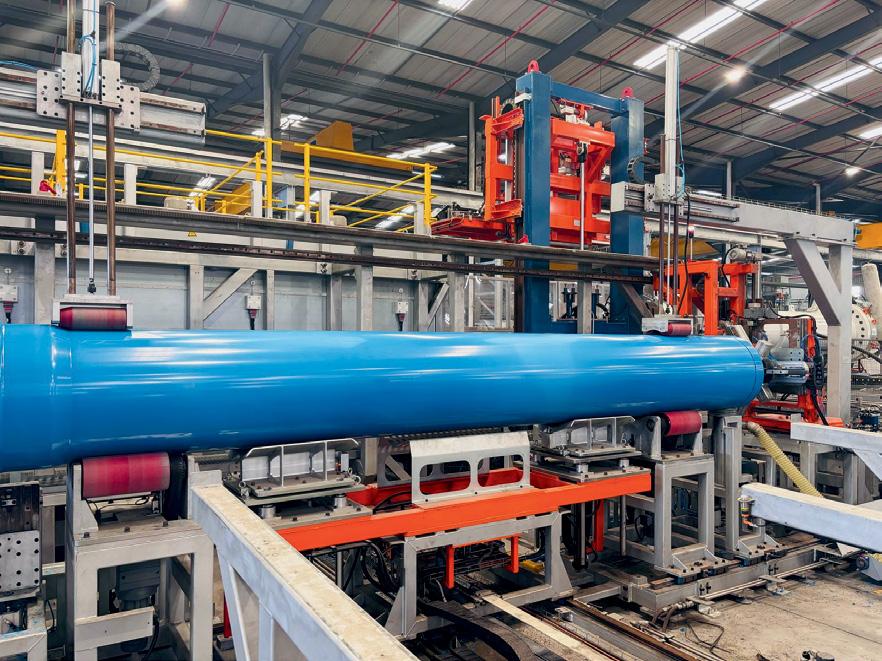
Sizabantu Piping Systems launches Africa’s first locally manufactured pipes, with capability from 710mm to 1200mm, now in full production.
In a landmark moment for local manufacturing, Sizabantu Piping Systems and Molecor have successfully produced large-diameter PVC-O pipes, with future capability of up to 1200mm.



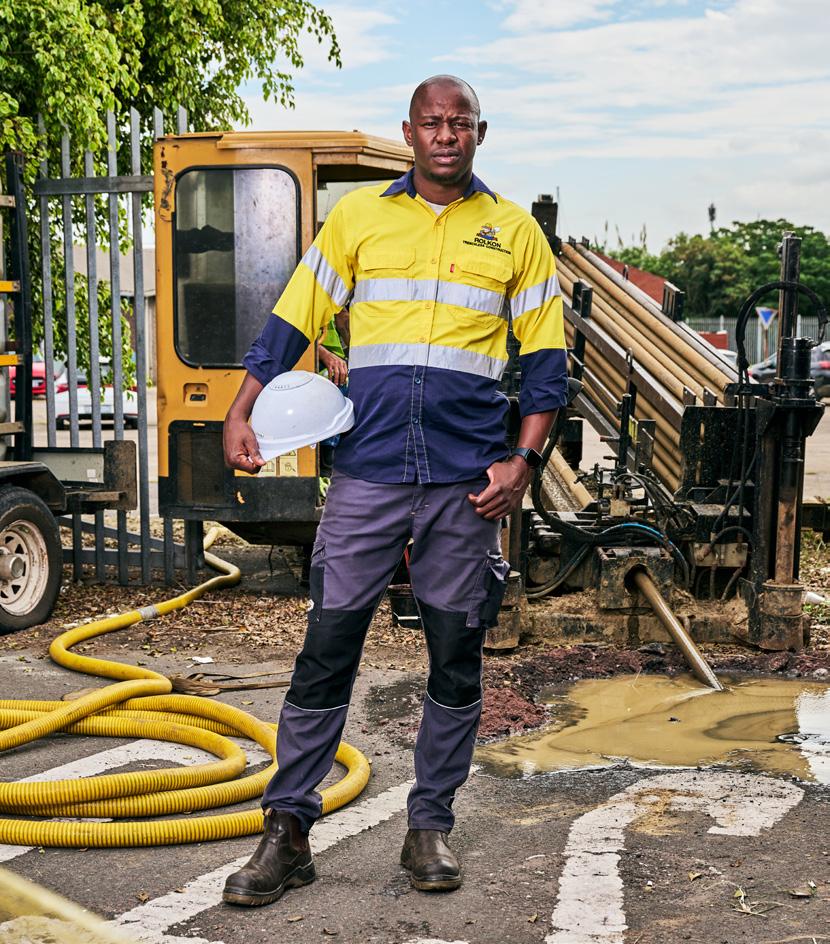
Horizontal Directional Drilling (HDD) is not new to South Africa. Over the past two decades, it has steadily established itself within the country’s construction and civil engineering sector, with many municipalities, engineers and contractors successfully applying it across water, sewer, stormwater and utility infrastructure.
And yet, despite its proven performance, it remains significantly underutilised. In a country facing ageing infrastructure, increasing urban density and growing pressure on budgets and service delivery, this is not a question of relevance, but of perception and adoption.
Rolkon Construction, a market leader in HDD –having been in the business for over a decade – is driving the HDD narrative by focusing on the benefits and applications of this construction option. P6
Cover Story
Ditch the Trench. Reframing infrastructure delivery in South Africa 6
Sustainability
What happens above ground matters below. Protecting groundwater in urban areas 9
IMESA
Dash, stroll and stand together 10
Legal SA's first outcomes-based water bond: A landmark in sustainable finance 13
Technologies, Standards and Specifications for Road Construction Correct material selection is the foundation for durable roads 14
Roads & Bridges
AVX Engineers completes key study to upgrade rural access roads in the Eastern Cape 17 South Africa’s next mega bridge takes shape 18 Eco-sensitive and safe pedestrian bridges 20
Labour Relations
Stronger enforcement and collaboration signal shift in SA’s civil engineering sector 22
Asset Management
Mapping the invisible adversary 23
Project & Programme Management
Urgent need to fill project management gaps 24
Water & Wastewater
Pre-Eminence expands its jetting capabilities 25 A new era for strategic water treatment.
Xylem launches DAF solutions in South Africa 26
Turning research into action. Why water-wise infrastructure must be a national priority 27

























t: +27 (031)266 3263 e: conference@imesa.org.za marketing@imesa.org.za www.imesa.org.za

















EDITOR Alastair Currie
Email: alastair@infraprojects.co.za
DESIGNER Beren Bauermeister
CONTRIBUTORS Burgert Gildenhuys, Dhiveshni Naidu, Geoff Tooley, Grace Olorunsola, Khurshid Fazel, Kiera Bracher, Shailin Moodley
DISTRIBUTION MANAGER Asha Pursotham
SUBSCRIPTIONS
Email: distribution@infraprojects.co.za
ADVERTISING SALES
KEY ACCOUNT MANAGER Joanne Lawrie
Tel: +27 (0)82 346 5338
Email: joanne@infraprojects.co.za
PUBLISHER
IMESA (Pty) Ltd
P O Box 2190, Westville, 3630
Tel: +27 (0)31 266 3263
Email: info@infraprojects.co.za
ANNUAL SUBSCRIPTION: R805.00 (INCL VAT)
ISSN 0257 1978 IMIESA, Inst.MUNIC. ENG. S. AFR.
© Copyright 2026. All rights reserved.
IMESA CONTACTS
HEAD OFFICE:
Manager: Ingrid Botton
P.O. Box 2190, Westville, 3630
Tel: +27 (0)31 266 3263
Email: admin@imesa.org.za
Website: www.imesa.org.za
BORDER
Secretary: Celeste Vosloo
Tel: +27 (0)43 705 2433
Email: celestev@buffalocity.gov.za
EASTERN CAPE
Secretary: Susan Canestra
Tel: +27 (0)41 585 4142 ext. 7
Email: imesaec@imesa.org.za
KWAZULU-NATAL
Secretary: Narisha Sogan
Tel: +27 (0)31 266 3263
Email: imesakzn@imesa.org.za
NORTHERN PROVINCES
Secretary: Lethale Magagane
Tel: +27 (0)72 059 7444
Email: np@imesa.org.za
SOUTHERN CAPE KAROO
Secretary: Henrietta Oliver
Tel: +27 (0)79 390 7536
Email: imesasck@imesa.org.za
WESTERN CAPE
Secretary: Michelle Ackerman
Tel: +27 (0)21 444 7112
Email: imesawc@imesa.org.za
FREE STATE & NORTHERN CAPE
Secretary: Wilma Van Der Walt
Tel: +27 (0)83 457 4362
Email: imesafsnc@imesa.org.za
All material herein IMIESA is copyright protected and may not be reproduced without the prior written permission of the publisher. The views of the authors do not necessarily reflect those of the Institute of Municipal Engineering of Southern Africa or the publishers.

With the first voter registration weekend now confirmed for the 20 th and 21 st June 2026, the wheels have been set in motion for the upcoming Local Government Elections. This follows the end of the current fifth term on 1st November 2026.
Held every five years, these elections are key to shaping South Africa’s future socio-political landscape in the run-up to the National and Provincial Elections in 2029. They will also be the first local government elections held within the Government of National Unity framework formed in 2024, with infrastructure service delivery and employment being top of mind for voters.
So far there are more than R27,6 million registered to vote of which over 4,5 million are in the 18 to 30 band. That latter group will be especially influential in determining the election outcome as they reflect on this year’s Freedom Day speeches. Commemorated annually on 27th April, this landmark event highlights the progress made since South Africa’s first non-racial elections in 1994.
More needs to be done
Within the context of a tough and rapidly evolving global economy, there’s significant and widespread evidence of transformation gains in South Africa. However, it’s also clear that more needs to be done, particularly when it comes to youth unemployment in an increasingly AI environment.
More training institutions also need to be built to cater for growing placement demand, with a focus on futureproof skills across evolving industry growth sectors. Examples include data centres, electric vehicle manufacturing, and renewable energy, where investment hinges on a sustained skills pipeline.
Local and international investors stand ready – with billions on hand – but have specifically stated that they require greater policy certainty and collaboration in mapping macroeconomic decisions. That’s based on the reality of the free-market approach which defines the world’s top performing countries, in conjunction with fair trade practices that advance the United Nation’s Sustainability Development Goals.
Fundamental burning issues for commerce and households are the spiralling costs of water and electricity. It’s also a key concern for municipalities since these are major revenue
streams that are meant to help sustain their operational, maintenance and infrastructure investment strategies. That won’t change going forward, but how enabling pricing is managed will be crucial for local government growth or regression – either stimulating businesses and jobs, or forcing cutbacks, downsizing and, ultimately, disinvestment.
The reality is that all successful businesses evolve and rationalise in the face of competition and technology. So too then must government enterprises across the spectrum. When public sector human resource expansion and overheads outweigh the enterprise’s bottom line, then it’s the taxpayer who foots the bill without an equitable return on their hard-earned investment.
So, making the change we want to see happen requires some tough decisions, especially in terms of the future viability of certain SOEs. A core part of the solution across the board is a concerted focus on attracting bestin-class talent to enable positive public-private peer-to-peer engagement and execution, as per global benchmarks.
Universal municipal performance, with funding support
In the meantime, municipal work in progress is being bolstered by a recent US$925 million loan agreement concluded with the World Bank to support the implementation of South Africa’s Metro Trading Services Reform (MTSR) programme. Key MTSR objectives include “improving the governance, financial sustainability and operational performance of municipal trading services in metropolitan municipalities, particularly in water and sanitation, electricity and energy, and solid waste management”.
In the right hands, this World Bank funding can make all the difference. Additionally, the loan underscores the realisation that every country’s micro and macroeconomic success hinges on foundational excellence in local government delivery.
It’s time for South Africa to shine and for our politicians to step up to the plate.

To our avid readers, check out what we are talking about on our website, Facebook page or follow us on Twitter and have your say.
In each issue, IMIESA offers advertisers the opportunity to get to the front of the line by placing a company, product or service on the front cover of the journal. Buying this position will afford the advertiser the cover story and maximum exposure. For more information on cover bookings, contact Joanne Lawrie on +27 (0)82 346 5338.

















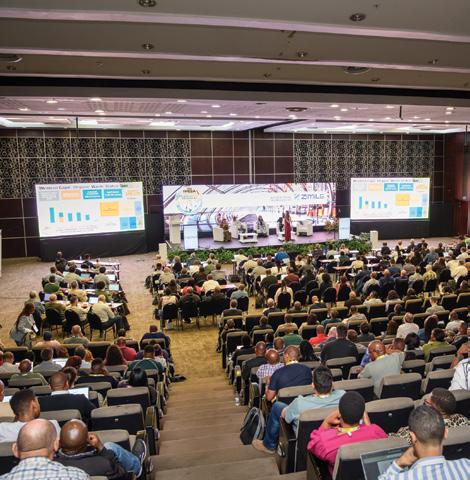
such as: free exhibition stands complimentary delegate registrations brand representation at the event, promotion of your company in the conference proceedings magazine and online free entry for guests at the social evening and much more.
The 1 st April 2026 marked a historic day for the world, as the Artemis II Orion spacecraft – powered by its Space Launch System rocket – lifted off at NASA’s Kennedy Space Center in Florida for its 10 day trip around the moon and back.
Manned by its intrepid crew, this landmark lunar flyby mission is a marvel of science and engineering, with real-time support provided via NASA’s Johnson Space Center in Houston. Another marvel was the near constant communication link provided via the Deep Space Network of earth-based radio antennas, troubleshooting and ensuring the failsafe operation of every essential component – including the crew’s Universal Waste Management System (UWMS), which experienced brief technical issues. While the world watched, the mission progressed, with a successful splashdown off the coast of San Diego, California, on 10 th April.
As an engineer, I am both humbled and proud of what Artemis II demonstrates, namely bestin-class project and programme management dovetailing with cutting-edge technologies. Thanks to NASA’s ongoing research and development over the years, many of these have translated into practical real-world applications in industrial and manufacturing endeavours, as well as construction.
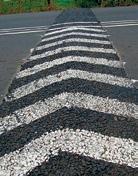
Examples in the built environment include information technology and related artificial intelligence, automation, 3D printing, specialist materials like aerogels for building insulation, coatings, structural integrity sensors and grooved pavements. Invented at the Langley Research Center, the latter technology was originally developed for airport runways to prevent skid accidents. It is now standard for applications like roads, pedestrian walkways, and industrial flooring.
SANSA’s role
Working with NASA, and other key stakeholders like the European Space Agency, our South African National Space Agency (SANSA) – which provided tracking and support services for the Artemis II mission – is part of the global evolution in pushing the boundaries of what is possible with a host of homegrown technologies and services.
That includes SANSA’s Space Weather Regional Warning Centre – the only one of its kind in Africa. Here constant satellite data feeds play an integral role in crucial areas like climate change mitigation management (including flood risk), as well as geographic information system mapping. Among other aspects, the latter is key for spatial development and planning, as well as the calculation of surface water area and dam water volume levels across South Africa.
So, what all this underscores is that South Africa has the capabilities in terms of science and engineering to be an equal partner on the global stage in any field of endeavour. That includes infrastructure, where we’ve built the deepest gold mines in the world, iconic dam and bridge structures, as well as the Gautrain Rapid Rail Link.
Rerouting our infrastructure approach
But it’s the grassroots fundamentals that we continue to struggle with. You need the right team that’s properly constituted and equipped with the right skills. That’s foremost in the municipal engineering environment where the most ambitious scientific and macroeconomic programmes won’t work without the essentials of water, sanitation and electrification.
What we experience currently is a siloed approach to infrastructure, with disconnects between national, provincial and local government bodies. That can and does create a conflict between development planning and implementation, negatively impacting GDP growth.
When it comes to infrastructure planning and execution, IMESA firmly believes that the process must be engineer-led, which has been our standpoint in challenging the final formulation of the 2026 White Paper on Local Government (WPLG). The latter sets out to “fundamentally restructure South African municipalities into professional, financially sustainable, and citizencentric entities”. Despite this,
however, we believe an insufficient percentage of experienced municipal engineers have been consulted during the review process.
Prior to 1998 when the first White Paper on Local Government was released, it was the norm for the Town Clerk, City Treasurer and City Engineer to be professionally registered. However, none of the legislation at the moment requires currently designated City Managers and Deputy City Managers to be professionally registered – it’s a recommendation but not mandatory. Additionally, this is not mentioned as a contributing factor for a decline in municipal performance in the 2026 WPLG.
If we look at the recent 2025 National Green Drop Report – which includes a full audit of 848 municipal wastewater treatment systems – it supports the argument that engineers need to be empowered to reverse a severe performance decline. That includes budgeting and supply chain oversight.
Only 14 systems achieved Green Drop certification in 2025, down from 22 in 2022. The percentage of wastewater systems in a critical state also increased from 39% in 2022 (334 systems) to 47% in 2025 (396 systems). Key factors include poor governance, lack of maintenance, and financial mismanagement. There are also major gaps in technical skills that must be tackled urgently through recruitment, training and mentorship.
NASA has shown the world that when you expertly plan the flight and fly the plan, it all comes together. Let’s follow their example by placing South African engineers and scientists at the heart of our infrastructure renewal, both as professionals and as implementation managers within an enabling political framework. Let’s start with maintenance on our existing facilities first and build it from there.
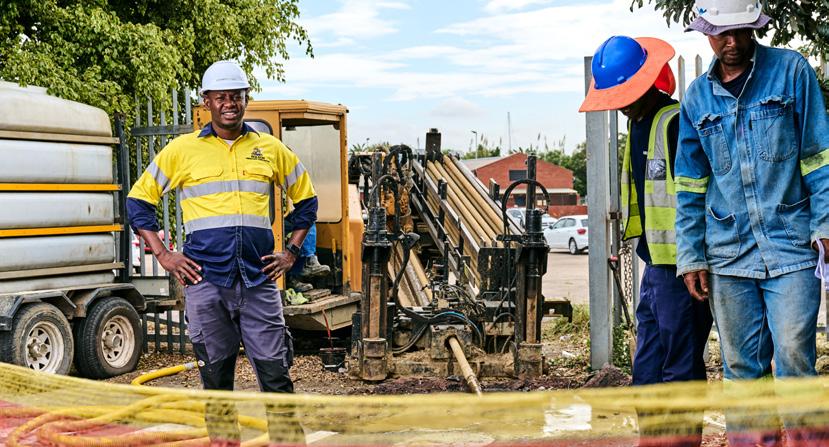
Horizontal Directional Drilling (HDD) is not new to South Africa. Over the past two decades, it has steadily established itself within the country’s construction and civil engineering sector, with many municipalities, engineers and contractors successfully applying it across water, sewer, stormwater and utility infrastructure.
And yet, despite its proven performance, it remains significantly underutilised. In a country facing ageing infrastructure, increasing urban density and growing pressure on budgets and service delivery, this is not a question of relevance, but of perception and adoption.
Rolkon Construction, a market leader in HDD –having been in the business for over a decade – is driving the HDD narrative by focusing on the benefits and applications of this construction option.
HDD is still often viewed as:
• A higher-cost alternative to traditional trenching.
• A specialised solution reserved for complex or high-end projects.
• A method requiring skills and partners that are not widely understood.
At the same time, conventional “digging” is still favoured, being familiar, accessible and mostly aligned to embedded delivery models.
But this comparison is increasingly outdated.
When assessed across the full lifecycle of a project – including reinstatement, disruption, environmental
impact and time – trenchless construction consistently delivers greater value, reduced risk and improved outcomes. In addition, it is advancing a labour force developing unskilled labour to semi-skilled, skilled and specialised operators.
The conversation is no longer about introducing HDD to South Africa. It is about expanding its role in infrastructure delivery.
The case for HDD in modern infrastructure
At its core, trenchless construction enables the installation, repair or replacement of underground services without the need for extensive surface excavation. Using methods such as HDD, pipe cracking (or pipe bursting) and advanced scanning
Rolkon’s end-to-end delivery approach means it can undertake trenchless projects ranging from smaller service crossings to large, complex installations, with drillable diameters from 110 mm to 1 200 mm
technologies, infrastructure can be installed beneath roads, rivers, wetlands, rail lines and built environments with minimal disruption.
In sectors such as stormwater, water, sewer, electricity and fibre where infrastructure coexists with active urban environments, the trenchless advantages (while known to the industry) are increasingly critical and worth reiterating:
• Reduced surface disruption – protecting roads, pavements, and public environments.
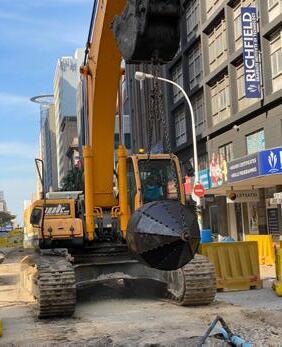
Trenchless methods allow for infrastructure to be installed or rehabilitated beneath and not through constraints such as roads, high water tables and environmentally sensitive areas
• Faster project delivery – with limited reinstatement requirements.
• Lower total project cost – when indirect and lifecycle costs are considered.
• Improved safety – eliminating risks associated with open trenches.
• Environmental protection – minimising impact on sensitive ecosystems.
• Accessibility – avoiding extensive excavations to replace infrastructure that is deep below the surface.
Based in KwaZulu-Natal, Rolkon Construction is a well-known specialist service provider within the trenchless construction space, contributing to the growing adoption of these methods across South Africa. This sees them driving the understanding of the processes and procedures involved in HDD across all sectors including municipalities, developers, engineers and contractors.
In 2025 alone, they installed over 5 500 m of new infrastructure using HDD construction in key infrastructural installations including:
• Water pipelines.
• Sewer pipelines.
• Stormwater infrastructure in complex or sensitive environments.
• Electrical and fibre optic sleeving across roads and dense urban zones.
• Infrastructure maintenance through pipe cracking and cleaning.
In these industries and environments where traditional “digging” methods would result in significant risk, Rolkon’s focus is on minimal disruption and maximum certainty.
A key part of the conversation around trenchless construction is the shift from how infrastructure is installed to how risk is managed. This is where trenchless methods offer the greatest value.
Rather than reacting to site conditions during construction, trenchless projects require a higher level of upfront planning and alignment.
This includes:
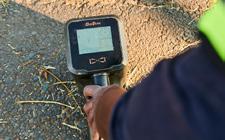
• Pre-site scanning using Ground Penetrating Radar (GPR) to identify existing services.
• Drill design and route planning informed by geotechnical conditions.
• Method selection aligned to soil type, pipe requirements and site constraints.
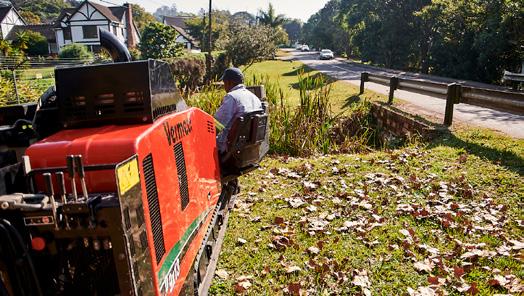
Rather than reacting to site conditions during
• Controlled, precise execution using experienced crews.
As widely acknowledged in the industry, the success of trenchless construction is not driven by speed alone, but by understanding the ground and planning accordingly. This approach reduces the likelihood of delays, rework and unexpected costs, factors that often impact traditional “digging” projects.
Planning is Rolkon’s secret weapon. Every day, every site, every drill, Rolkon manages delivery end-to-end, from initial input and design through to execution and close-out ensuring alignment across all stages of a project to reduce fragmentation, improve accountability and delivery.
Rolkon’s process covers everything from project scoping and technical input; design, drill planning, pre-site preparation and scanning; execution of
in-house teams and equipment; and project closeout and verification.
This approach allows Rolkon to scale to the challenge, supporting trenchless projects ranging from smaller service crossings to large, complex infrastructure installations.
Stormwater infrastructure is one of the areas where trenchless construction offers clear and immediate value, and an environment Rolkon has extensive experience in.
Installations frequently intersect with:
• Wetlands and environmentally sensitive areas.
• Existing road networks and transport corridors.
• High water tables and variable soil conditions, and
• Built environments where disruption must be minimised.
Trenchless methods allow for infrastructure to be installed or rehabilitated beneath these constraints, rather than through them. In addition to new installations, trenchless technologies such as pipe cracking and cleaning enable maintenance and rehabilitation of existing systems and extending infrastructure life without the need for excavation.
Road infrastructure presents a similar challenge. Beneath every road lies a complex and mostly
and industrial areas – replacing water mains to replacing sewer lines under rivers and streams – Rolkon has done it all.
Especially in sewer lines, the complexity of maintaining a flow and fall is critical. Here Rolkon has pipe cracked and replaced many sewer lines.
Sthe reflects one of Rolkon’s core values, “Empower from within”. He started as a part-time scanner preparing drill plans and scanning for services, where his ability to “see underground” and provide the drill team with the technical details to avoid services became invaluable. But it was his presence, commitment and impeccable work ethic that really stood out and earned him the role of operational manager in 2023 and more recently saw him become a shareholder in the business.
Solly Manaso, who has graduated from driver to a driller, and Nkosinathi Khanyile, who is now training and studying to become a health and safety officer under the guidance of a seasoned qualified OHS specialist, are further examples of upskilling at Rolkon which are afforded by the application of HDD.
With over 50 years of combined team experience and a focus on internal capability, the business reflects an industry need: developing skilled, specialised teams to support trenchless growth.
unmapped network of services: water, sewer, electrical, telecoms, many of which require extensive maintenance or replacement.
Because traditional “digging” in these environments results in everything from traffic disruption and extended construction timelines to increased costs related to reinstatement and traffic management, trenchless construction becomes the obvious solution. No more so than in active commercial zones, where trenchless methods support continued economic activity while infrastructure is delivered.
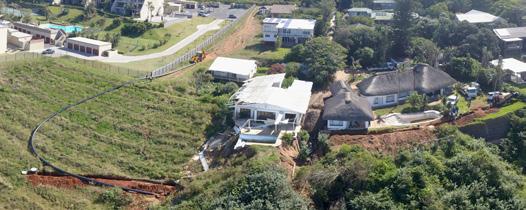
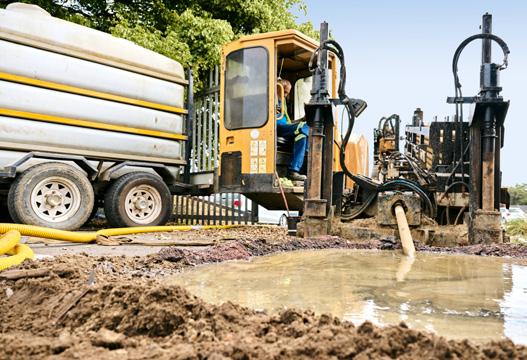
The diversity of HDD is often not known. HDD can install new infrastructure and/or replace existing infrastructure. In a country where aging infrastructure needs repair and upgrading, HDD provides a solution to this problem. Having worked extensively in residential, commercial
HDD is often associated with specialised equipment, and while many companies operate drilling rigs, what defines Rolkon’s approach is how they position themselves, not just as a drill company, but as a delivery partner – with their people, process and pipeline all focused on client centric solutions.
Rolkon has the qualified crews to consistently deliver at the highest level, a crew led by Sthembiso (Sthe) Luthuli, Rolkon’s Operations Manager and now shareholder. Guiding the operational team with precision and purpose, Sthe ensures every rig is correctly crewed, every plan is clear, and every challenge is met with practical, on-site leadership.
“We take our work personally and deliver it professionally. My role is to make sure the team on site is confident, equipped, and proud of the results they achieve,” Sthe explains.
While HDD is often associated with specialised equipment, Rolkon believes this form of construction should reposition itself, focusing on the benefits, applications and client centric solutions it can provide
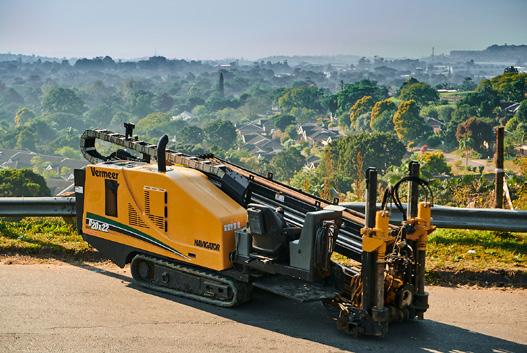
Rolkon believes in showing work delivered and key projects range from electrical installations at Richards Bay Harbour (MG Electrical Main Contractor) to water main replacements in Durban Harbour –both for Transnet National Ports Authority.
They have also completed various installations for several of the major 9CE construction companies in South Africa. However, no job is too small, and they don’t disregard the individual who just needs a small crossing under a driveway.
Rolkon and its team is open to conversation with engineers, contractors and quantity surveyors to share insight into the drilling processes and make-up of costing for projects. There are many costs associated with drilling; it’s not as simple as a rate per metre.
With South Africa’s ageing infrastructure, and growing urban demand, the focus is increasingly on how to deliver more efficiently, more sustainably, and with greater resilience.
“Ditch the trench” is more than a headline, it reflects a broader shift in how the industry approaches infrastructure delivery.
Disruption, risk and inefficiency are not inevitable. Trenchless technology is already part of South Africa’s infrastructure landscape; the conversation now is about moving it from an alternative to a standard.
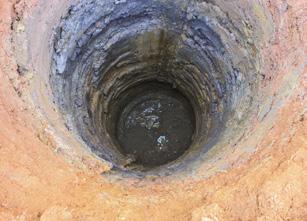

Groundwater is often described as an “invisible” resource – out of sight and, too often, out of mind. Yet beneath our cities lies a vital reserve of freshwater that quietly supports communities, industries and ecosystems. What is less widely recognised is how strongly this resource is shaped by what happens on the surface.

Groundwater does not exist in isolation. It forms part of a connected natural system, replenished when rainfall infiltrates the ground and recharges aquifers. While soils can filter some pollutants, this natural protection is limited. Once overwhelmed, contaminants can move downward and persist in groundwater systems for long periods, often with lasting consequences.
Urbanisation has significantly altered this natural balance. Hard surfaces such as roads, rooftops and parking areas prevent water from soaking into the ground. This reduces recharge while increasing runoff, which often carries pollutants into the environment. As a result, groundwater systems face two growing pressures: declining replenishment and rising contamination risks.
Several common surface activities contribute to this challenge:
• Urban runoff transports oils, heavy metals and other pollutants from roads and industrial areas.
• Sanitation leaks introduce nutrients and microorganisms into the subsurface.
• Waste disposal practices can generate contaminated leachate that seeps into the ground.
• Agricultural inputs in peri-urban areas contribute to fertilisers and pesticides that gradually degrade water quality.

1 2 3

Key actions include:
• Integrating groundwater considerations into land-use planning and zoning decisions.
• Promoting sustainable urban drainage systems that encourage infiltration and reduce pollution.
1 Groundwater resources provide a vital reserve of freshwater that supports communities, industries and ecosystems
2 Groundwater usage must be factored into land-use planning to ensure sustainable supply
3 Unlike surface pollution, which can often be addressed quickly, groundwater contamination is difficult and costly to reverse
• Industrial operations may release concentrated pollutants if not properly managed.
Unlike surface pollution, which can often be addressed quickly, groundwater contamination is difficult and costly to reverse. Pollutants move slowly underground, but their effects can persist for decades.
Equally important is the loss of vegetation and permeable land, which reduces the ability of the ground to absorb water. In water-stressed environments, this weakens resilience during periods of drought and increasing demand.
Protecting groundwater requires a more integrated approach to planning and development.
• Strengthening pollution control and waste management practices.
• Maintaining and upgrading sanitation infrastructure to prevent leaks.
• Protecting and rehabilitating groundwater recharge areas.
Groundwater reflects the cumulative impact of human activity over time. It is not a passive reserve, but a responsive system shaped by the choices made above it. What happens on the surface does not simply disappear – it filters downward, accumulates, and ultimately determines the quality and availability of the water below.


The Dash and Stroll begins!
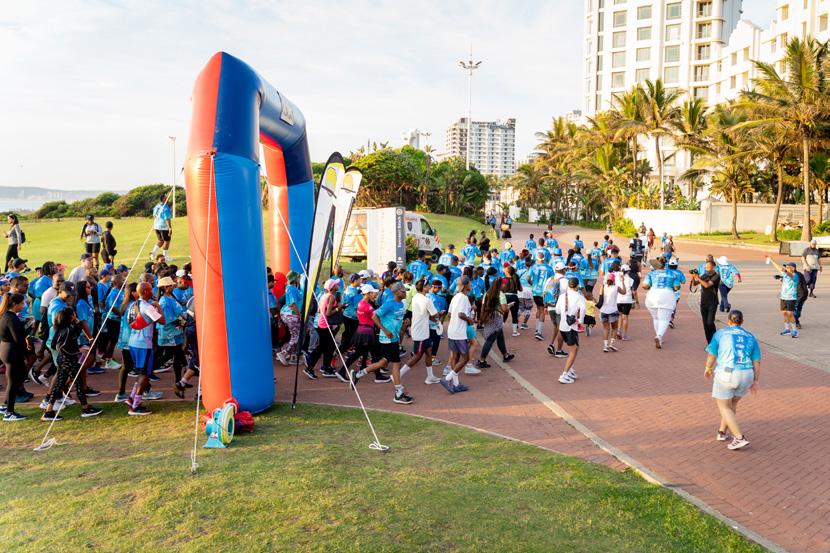
On Saturday 28th March 2026, as the sun rose over Durban’s coastline, the Suncoast Promenade came alive with energy, colour and purpose. From 06:30, engineers, families, students, industry partners and community members gathered for the IMESA KwaZulu-Natal (KZN) Young Professionals Portfolio (YP²) Dash and Stroll Fun Run/Walk, choosing between either a 4 km or 8 km walk/run in commemoration of Human Rights Day. By Dhiveshni Naidu, Pr Eng*
The event was proudly hosted by the IMESA KZN YP²
Sub-committee as part of its ongoing commitment to wellness, community engagement and the sustainable development of the engineering profession.
Running for balance: Mental health and burnout mitigation
Engineering is a profession defined by responsibility, accountability and pressure. Long hours, complex challenges and tight
deadlines are often the norm – particularly for young professionals. The Dash and Stroll deliberately created space to pause, reconnect and reset, reinforcing that work-life balance and mental wellbeing are essential to
1 Participants engaging with stalls at the finish area
2 Where the energy, camaraderie and vibes came together
3 Runners and walkers take in the Durban promenade as they move together 1 2

professional sustainability, not optional extras. The presence of wellness initiatives on the day highlighted IMESA’s proactive approach to burnout mitigation and healthy career longevity.
IMESA in action: Visible community engagement
Hosting the event in a shared public space allowed IMESA to step beyond traditional professional environments and engage directly with the community. The Fun Run/Walk embodied a public show of


support and commitment – demonstrating that engineers are not only infrastructure custodians, but active citizens invested in social wellbeing, dignity and inclusion, in the true spirit of Human Rights Day.
Wellness, NPO collaboration and social impact
The event extended beyond fitness. NPO stalls included Childline and DKMS (Stem Cell Donor Programme), offering participants opportunities to engage with meaningful social causes.
Childline also manned the halfway station on behalf of ICON Construction, strengthening the connection between industry and social advocacy. Therapeutic massages were provided free of charge by DUT chiropractic students, while wellness sponsors ensured hydration and recovery were prioritised.

The atmosphere throughout the morning was energetic and inclusive. A live DJ set the tone, while the MC brought warmth, rhythm and vibrant energy that kept participants motivated.
Families and children were integral to the experience, enjoying a jumping castle and entertainment from a stilt walker, who delighted young attendees with balloon creations. Free Milo was provided to all participants, with sponsor stalls offering refreshments post-run.
While inclusivity remained central, athletic excellence was also celebrated. In the 8 km category, R3 000 cash prizes were awarded to Refiloe Karreebos (First Female) and Mandla Mbatha (First Male). The morning’s moments and milestones were professionally
captured, ensuring the lasting impact of the event milestones.
Sponsor partnerships that made it possible
The success of the Dash and Stroll was made possible through valued sponsor support. SOLFAB anchored the event, with Furken Good Civils as Gold Sponsor. Halfway support was provided by LVSA Valves and ICON Construction, while Silver sponsorship came from LVSA Valves and Afrostructures. Bronze sponsorship was received from Riot Consulting, Small Civils, and SAICE Durban Branch.
Wellness sponsors Denso and Aquelle aligned seamlessly with the event’s focus on health, hydration and balance. Sponsor feedback highlighted appreciation for the authenticity and purpose-driven engagement of the initiative.


4 5 6
Acknowledging the team behind the event

Sincere appreciation is extended to the IMESA KZN YP² Committee for their dedication and teamwork, namely Roxanne Canny, Dhiresh Dhewki, Ntokozo Mjwara, Zlungile Memela, Lenesh Sukhlal, Nkanyezi Mdlalose, and Operations Director of YP² and Membership, Bhavna Soni. Special thanks are also owed to the proactive IMESA Head Office team, Narisha Sogan and Melanie Stemmer, whose coordination and support were instrumental to the event’s success.
Looking Ahead: National momentum and Amazing Race 2026
The success of the KZN Dash and Stroll has sparked discussions around expanding similar wellness-driven engagements
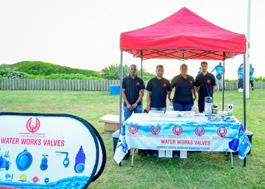
4 Anchor Sponsors, SOLFAB, together with IMESA Deputy President Sibusiso Mjwara
5 Gold Sponsor: Furken Good Civils
6 Silver and Halfway Sponsor: LVSA Valves
nationally. As anticipation builds for the IMESA KZN YP² Amazing Race 2026, events like this reinforce the importance of teamwork, resilience and shared experiences – balancing professional ambition with personal wellbeing.
A collective step forward
As Chair of IMESA KZN YP², I am immensely proud of what was achieved on 28th March 2026 – not measured solely in kilometres covered, but in connections formed, awareness raised and values lived. The
Dash and Stroll reaffirmed that when engineers move together with purpose, we advance not only infrastructure, but people.
*Chair: IMESA KZN Young Professionals Portfolio (YP²)












Water scarcity is one of South Africa's most urgent infrastructure challenges. Climate change, population growth and decades of underinvestment have created a water security crisis that can no longer be deferred. Against this backdrop, South Africa's first outcomes-based water bond marks a significant development in sustainable finance and in the legal frameworks governing impact-driven infrastructure investment.
The reality is that South Africa's water sector is governed by a complex regulatory environment, shaped by the National Water Act and related instruments governing resource allocation, catchment management and environmental compliance. While the framework is robust, chronic underinvestment has left significant gaps in water security infrastructure, prompting growing interest in blended finance structures combining public, philanthropic and private capital.
Outcomes-based instruments, which link investor returns directly to independently verified performance metrics, offer a mechanism for aligning financial incentives with measurable impact.
A first-of-its-kind outcomes-based structure
The Cape Water IAP Removal Project illustrates how outcomes-based financing can be applied to nature-based water security solutions. The project targets the removal of invasive alien plants (IAPs) in strategically important Western Cape catchments.
IAPs consume significantly more water than indigenous vegetation. Their removal improves rainwater flow into dam systems, strengthening regional water security without the need for large

By Khurshid Fazel and Kiera Bracher
treatment plants. While the ecological science is well established, scalable funding and legal structures have historically been lacking.
To address this, an outcomes-based funding structure was developed by FirstRand Bank (FRB) to support the implementation of this project. The only other comparable outcomes-based project globally is the Rhino Bond implemented by the World Bank.
The structure comprises two components: The issuance of notes to investors, pursuant to which investors receive a fixed coupon lower than a market-related coupon and a variable coupon linked to the achievement of certain milestones, being the number of hectares of IAPs removed. The differential between the market-related coupon and the fixed coupon is invested by the issuer to fund certain project costs, as well as the variable coupon payable to the noteholders; and Donations made by philanthropic parties (the donors) to the project implementer. These donations do not earn any return and are not repayable, including where the project does not proceed to completion.
Delivering a transaction of this nature required a bespoke legal architecture, developed by Webber Wentzel. The contractual framework included advice on the FRB Water PerformanceBased Bond, a five-year, ZAR 2.5 billion senior

unsecured bond due on 30th June 2031, issued under the issuer's domestic medium-term note programme and listed on the JSE. It also encompassed the suite of legal agreements required to implement the project, including agreements governing the relationship between the project implementer and the donors.
The legal architecture is without precedent in South Africa. The project documents comprise a fully bespoke suite governing delivery, monitoring and verification across multiple stakeholders. These documents establish a foundational legal framework for outcomes-based, nature-based impact finance in South Africa.
For infrastructure and project developers, this transaction demonstrates that large-scale, nature-based solutions can be structured and financed through capital markets. The legal framework is designed to be scalable and replicable.
For investors and financial institutions, the bond establishes a template for outcomesbased instruments in South Africa. As sustainability-linked investment criteria become more prominent across institutional portfolios, structures that move beyond use-of-proceeds and link returns directly to performance are likely to gain more traction.
For corporates and industrial water users, increasing water scarcity translates directly into operational and supply chain risk. Transactions of this nature are likely to accelerate policy development in areas such as water rights, catchment management and corporate water stewardship.
More broadly, the transaction also signals growing market confidence in outcomes-based sustainable finance.
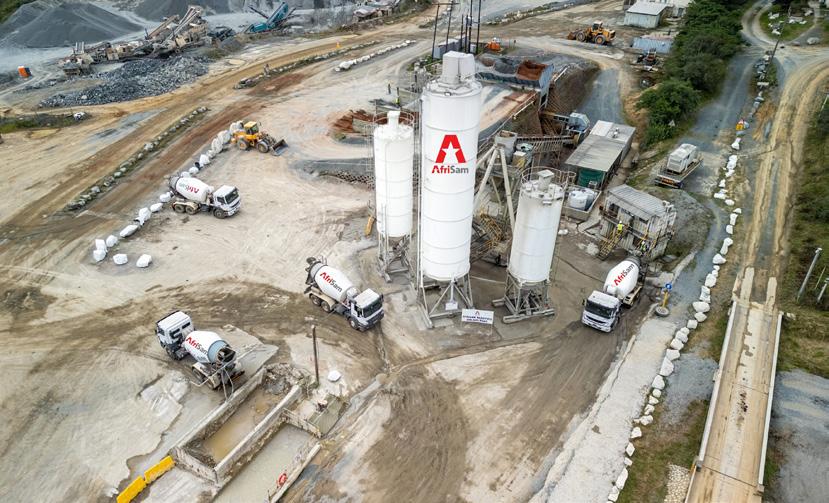
Optimising road asset life and performance requires an integrated approach that combines fit-for-purpose design with laboratory certified material specifications and the right construction methodology. IMIESA speaks to Amit Dawneerangen (AD), AfriSam Construction Materials Executive – Sales & Product Technical, and Nithia Pillay (NP), AfriSam National Product Technical Manager Construction Material, about AfriSam’s suite of solutions for best-in-class pavements.

What are the key solutions provided by AfriSam for the asphalt market?
AD AfriSam supports the asphalt market through an integrated offering that combines high quality aggregates, specialised cement solutions and extensive technical expertise.
Quality and consistency are ensured through a rigorous and structured approach. This includes comprehensive quarterly verification of inherent rock properties conducted by SANAS-accredited laboratories as well as on-site support for sampling and testing of basic material parameters. In addition, AfriSam’s construction materials laboratories are in the process of becoming SANAS accredited, further strengthening quality assurance protocols.
Detailed face mapping of quarry benches is undertaken in alignment with external test results, enabling informed decisions when pairing blasted material with appropriate products. Drill chip analysis is conducted prior to blasting to provide insight into anticipated blast outcomes and preapproved stockpiles are maintained to ensure reliable and consistent supply.
While asphalt is fundamentally a bitumen-based material, its long-term performance is heavily
influenced by the quality of aggregates used in the asphalt mix and the performance of the pavement layers that support it.
AfriSam supplies consistently graded aggregates that meet the demanding requirements of asphalt production, ensuring reliable performance in terms of strength, durability and resistance to deformation. In parallel, the company provides engineered cement solutions used in stabilised base and sub-base layers, drainage structures,
kerbs, edge restraints and concrete pavements that form part of holistic road designs. By supporting every structural layer of the pavement, AfriSam plays a critical role in ensuring asphalt roads perform as intended over their full design life.
How important is the role of cement in optimising asphalt performance?
NP Although cement is not always a direct constituent of asphalt, it plays a vital supporting

role in pavement performance. Cement is widely used in stabilised base and sub-base layers beneath asphalt surfacing, improving stiffness, load distribution, resistance to deformation and moisture resistance of the layer.
Well-designed and properly stabilised layers limit excessive deflection under traffic loading, reduce risk of cracking and rutting and protect asphalt surfacing from premature distress. This is particularly important on heavily trafficked routes, freight corridors and roads exposed to variable moisture and temperature conditions. In effect, the quality of stabilised layers beneath asphalt often determines whether a pavement achieves its design life or fails prematurely.
Does AfriSam manufacture specialised cements for in-situ layer works stabilisation and what are their advantages?
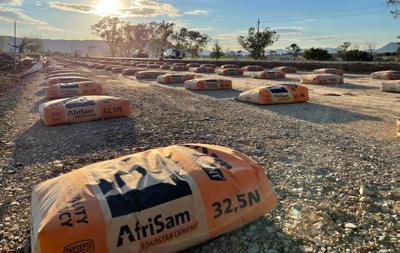
NP Yes. AfriSam manufactures Roadstab, a cement specifically designed and manufactured for in-situ pavement layer stabilisation and recommended for this application in terms of COTO requirements. Roadstab is purposeengineered to meet the performance demands of stabilised road layers and is not a general-purpose cement applied to a specialist use.
Roadstab delivers predictable and consistent strength development, controlled setting characteristics, improved durability, improved moisture resistance and good workability, making it well suited to variable site conditions typically encountered during layer works. Its enhanced moisture tolerance is particularly important in South African conditions where construction
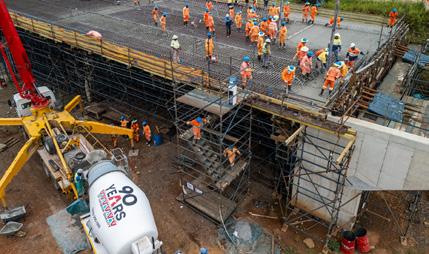
1 AfriSam supports the asphalt market with an integrated materials solution that combines high quality aggregates, specialised cement products and strong technical expertise across the road construction value chain
2 Through its specialised Roadstab cement and engineered materials solutions, AfriSam helps deliver durable stabilised pavement layers that support long-term asphalt road performance
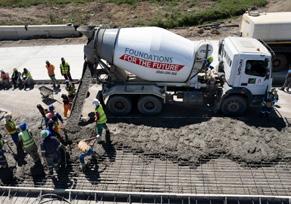
4 AfriSam ensures consistent aggregate quality through rigorous testing, structured quarry management and close technical collaboration with contractors and consultants 2 3 4
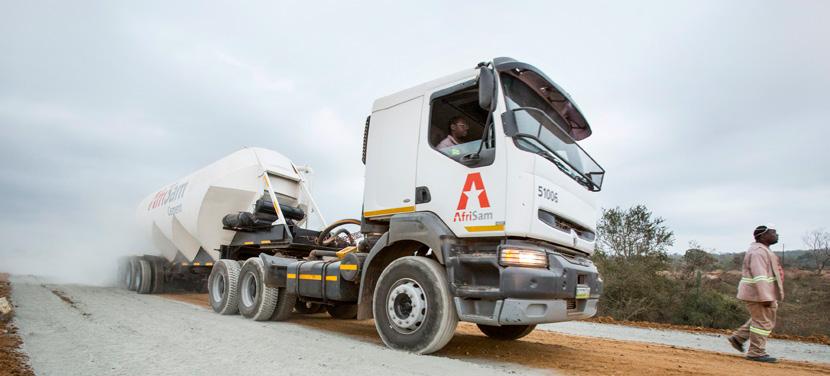
3 AfriSam’s focus on reliable aggregate supply and strict quality control enables asphalt producers to achieve consistent mix performance and durable road surfaces
Is there a clear understanding from consultants and contractors about which cement to specify?
AD Understanding of cement selection for road construction has improved in recent years but there is still scope for greater clarity and consistency across the industry. In some cases, cement selection is influenced by historical practice or availability rather than performance-based design principles and specification requirements.
AfriSam actively engages with consultants, contractors and road authorities to promote correct specification based on application, material properties and site conditions. This includes emphasising the importance of using purpose-designed products such as Roadstab for stabilisation works rather than relying on generalpurpose cements that may not deliver the same level of performance or durability.
often takes place under challenging climatic and moisture regimes.
By forming durable well-bonded stabilised layers, Roadstab improves load distribution and significantly reduces risk of premature pavement failure. This translates into longer lasting road structures, reduced maintenance interventions and improved lifecycle cost performance for road authorities and asset owners.
How important are good quality aggregates for road construction and what are AfriSam’s product offerings?
AD Aggregate quality is fundamental to road performance. Aggregates make up the largest proportion of asphalt mixes and pavement layers and deficiencies in aggregate quality can quickly lead to failures including stripping, ravelling, rutting and deformation.
AfriSam supplies a wide range of crushed stone aggregates produced specifically to meet road construction and asphalt specifications such as COTO, Manual 35, SANS 1083 and special proprietary products. These are manufactured under strict quality control processes to ensure consistent grading,
With deep technical expertise and quality-assured materials, AfriSam supports road authorities and contractors in delivering stronger, longer-lasting pavement structures
strength, durability and resistance to wearing. By providing reliable aggregate performance, AfriSam enables asphalt producers and contractors to achieve consistent mix quality and predictable pavement behaviour.
How does AfriSam contribute to ensuring material quality and compliance within the industry?
NP AfriSam operates accredited laboratories and applies rigorous quality management systems across its cement, readymix concrete and aggregate operations. Monitored scheduled and ad hoc testing, continuous improvement application, regular audits and strict process control ensure that products consistently meet or exceed specification requirements.
Beyond product supply, AfriSam contributes to industry education, technical guidance and standard-setting initiatives. Through participation in technical forums and engagement with industry stakeholders, the company supports best practice, improved specification compliance and a stronger overall road construction value chain.
What are the most common causes of premature road failure?
AD Premature road failure is rarely the result of a single factor. More often, it arises from a combination of issues including inadequate pavement design, poor material selection, insufficient compaction, moisture ingress, overloaded traffic and lack of timely maintenance.
In many cases, failures can be traced back to weak or poorly stabilised base and sub-base layers. Even well-designed asphalt surfacing cannot compensate for inadequate support beneath it. This underscores the importance of correct material selection from reputable material suppliers, proper stabilisation and sound construction practices throughout the pavement structure.
Does AfriSam provide technical support for road design and maintenance?
NP Absolutely. AfriSam offers extensive technical support to consultants, contractors and road authorities. This includes assistance with material selection, stabilisation strategies, mix design guidance, interpretation and reviewing of specifications and on-site problem solving.
AfriSam’s technical teams work closely with project stakeholders to help optimise pavement designs, address construction challenges and improve long-term road performance. This collaborative approach supports better outcomes across the full lifecycle of road infrastructure.
Are sustainable practices important in the road construction market?
AD Sustainability is increasingly important and is a key consideration in road design, material selection and infrastructure planning. AfriSam supports sustainable road construction through responsible raw material sourcing and recycling, energy efficient manufacturing processes and the development of lower carbon cement and readymix concrete solutions.
Durable pavements that require fewer rehabilitation interventions also contribute to sustainability by reducing material consumption, construction disruption and long-term environmental and economic impact. From a lifecycle perspective, performance-driven material choices play a critical role in achieving sustainability objectives.
Should there be more focus on concrete roads?
NP Concrete roads offer clear advantages in terms of durability, load-bearing capacity and lower long-term maintenance, particularly on heavily trafficked routes and freight corridors. While asphalt remains appropriate for many applications, AfriSam believes concrete pavements should receive greater consideration as part of a balanced, performance-based approach to road infrastructure development.
Selecting the most appropriate pavement type based on traffic loading, lifecycle cost and operational requirements ultimately delivers better value for road authorities and users alike.
Which technical committees is AfriSam currently represented on and what are some of the key standards or specification changes in the pipeline?
NP AfriSam is actively represented on several industry bodies and technical committees including those linked to SANRAL and broader industry working groups focused on pavement design, materials and sustainability such as the COTO Road Materials Committee, ASPASA SANS 1083 working committee and sub-committees feeding into the latter. Current areas of focus include performance-based specifications, updates to stabilisation guidelines and initiatives aimed at improving pavement durability and resilience.
And in closing?
AD AfriSam remains committed to supporting South Africa’s road construction industry through quality materials, specialised cement solutions, technical expertise and active participation in industry development. By promoting correct specification, sound design principles and longterm performance, AfriSam continues to contribute to more durable, cost-effective and sustainable road infrastructure across the country.
AfriSam plays an important role in the road construction sector by supplying consistently graded aggregates and purpose-designed cement solutions for stabilised layer works
www.afrisam.co.za

Access to reliable roads remains a critical challenge for many rural communities in South Africa, particularly in the Eastern Cape.
Addressing this need, multidisciplinary consultancy, AVX Engineers, has completed a detailed geotechnical investigation and road design study to support the upgrade of gravel access routes into safer, more durable surfaced roads linking communities to markets, schools, healthcare facilities and agricultural centres.
Camagu Xintolo, MD of AVX Engineers, explained that the report assessed traffic patterns, pavement conditions, geometric alignments, drainage systems and environmental factors, while integrating a community-focused training and skills development programme.
With support from the South African National Roads Agency, detailed assessments of access roads were conducted to identify potential routes for development. Xintolo highlights that the project employed extensive test pits and Dynamic Cone Penetrometer (DCP) testing across multiple roads to map subgrade strength, layer thicknesses, and failure mechanisms, in line with TMH1 and TRH14.
“This data-driven approach ensured pavement designs were tailored to actual ground conditions, preventing under-design that leads to premature failure or over-design that inflates costs,” he said.
Xintolo emphasised that intrusive investigations should be prioritised early in the design phase of any road project, especially where more than 50% of the surface exhibits severe defects.
The study further identified that the project site is located within a moist sub-humid climatic region, with a Thornthwaite index value between 0 and 20, which has significant implications for material selection in road construction.
“Careful consideration must be given to surfacing materials, particularly regarding their sensitivity to temperature fluctuations. This is especially important when using hot mix asphalt, as the incorrect material selection could lead to performance issues under varying climatic conditions,” he stated.
Blocked culverts, overgrown vegetation, informal earth drains and insufficient crossfall were also identified as primary contributors to continued erosion and rutting. “In our view, protection against these elements must be treated as structural priority, as it directly contributes to the longevity of the road surface,” Xintolo added.
Proposed interventions included culvert repairs and replacements, stone-pitched drains and adherence to velocity guidelines to protect structures and soil stability. This underscores that effective drainage, designed with topographic and hydraulic considerations from the outset, is as critical as the pavement itself in climate-vulnerable regions.
Conservative geometric design enhances safety and longevity
“Even at a modest design speed of 40 km/h, inconsistent horizontal and vertical alignments compromised safety and operational efficiency on this project. As a result, non-compliant curves were realigned, cross-sections optimised with proper side drains and chambers and used elevation profiles to guide improvements,” Xintolo highlighted.
These measures demonstrate that rural roads benefit from geometry aligned to recognised standards, reducing the risks of accidents and improving operational performance without requiring high-speed design specifications.
Risks such as land acquisition needs for widening, environmental sensitivities, statutory compliance, and budget overruns were also identified at an early stage. “Mitigation measures included landowner engagement, environmental screening, occupational health and safety audits and stakeholder mobilisation through a Project Liaison Committee. Early and inclusive risk planning is essential in rural settings where social and regulatory complexities can significantly impact project timelines,” he said.
Upgrading rural gravel roads to surfaced standards delivers benefits that extend well beyond the immediate project footprint. “Durable surfaces reduce long-term maintenance costs thus freeing up public funds for further infrastructure investment, while improved geometry and drainage enhance road safety for all users, including pedestrians and nonmotorised transport,” added Xintolo.
“Improved connectivity resulting from road upgrades also supports agricultural productivity in the region, and market access and essential services to the community, which will continue to drive local economic growth in underserved communities,” Xintolo concluded.
Camagu Xintolo, MD of AVX Engineers


The Mtentu Bridge, now under construction on South Africa’s Wild Coast, stands as one of the most ambitious engineering projects ever undertaken in the country. Rising 223 m above the Mtentu River valley in the Eastern Cape, it will become Africa’s tallest bridge and one of the continent’s longest main-span balanced cantilever bridges when complete.
Forming a key part of SANRAL’s N2 Wild Coast Toll Road, the bridge will enhance regional connectivity between KuGompo City (formerly East London) and the KwaZulu-Natal border, reducing travel times by up to three hours while stimulating local economies along the route.
Designed by a team under the HVA Joint Venture – comprising SMEC South Africa, CH2M (now Jacobs), and Axis – the bridge’s conception and design reflect decades of collaboration, innovation and detailed research. SMEC’s role spans project management, concept and detailed design, tender documentation and ongoing construction supervision.
The design team included Dissing+Weitling (architectural design), Melis and Du Plessis (geotechnical services), Nyeleti (BBBEE design) and Dynacon (detailing), with specialist investigations commissioned from the Council for Geoscience for seismic loading and the Council for Scientific and Industrial Research (CSIR) for wind climate assessment. UK based BMT Fluid Mechanics conducted wind tunnel
testing to simulate complex aerodynamic behaviour during operation.
During concept development, engineers faced the challenge of designing a bridge in a remote, environmentally sensitive valley with steep sides and variable topography. More than seven alignment options were evaluated, balancing geometric efficiency with minimal environmental disturbance. Vertical grades ranging from 4% to 6% were tested to optimise both structure and cost.
Several structural systems were explored, including long-span cable-stayed arrangements of up to 480 m, a five-span cantilever configuration and hybrid solutions. The final design – a threespan balanced cantilever with incrementally launched approach spans – was chosen for its structural efficiency, constructability and aesthetic simplicity.
The completed bridge will measure approximately 1 133 m with a 260 m central span. The deck is a prestressed concrete box-girder, designed as
a continuous structure with expansion joints only at the abutments to improve durability and reduce maintenance costs for SANRAL. The 22.8 m wide deck carries four traffic lanes, shoulders and dual 1.4 m sidewalks, varying in depth from 15 m at the piers to 5 m at mid-span. The bridge’s approach spans are incrementally launched in 66 m sections, following vertical sag curves that blend seamlessly into the main spans’ consistent grade.
The main piers, soaring up to 148 m, are constructed as twin-bladed hollow box sections designed to withstand vertical and lateral forces from wind, seismic activity and temperature variations. These monolithic concrete piers rest on spread footings founded on competent rock strata. The foundations’ design was guided by specialist input from the Council for Geoscience and the CSIR, ensuring resilience under complex loading conditions. Extensive wind tunnel testing confirmed turbulent vertical wind components in the valley, making aerodynamic stability a critical design factor.
Beyond its structural magnitude, the Mtentu Bridge exemplifies digital and sustainable engineering. Continuous internal access is provided through the full deck length, allowing safe maintenance and monitoring without external scaffolding or closures.
Artist’s impression of the Mtentu
a four-lane

Project:
Mtentu Bridge – N2 Wild Coast Toll Road
Client:
South African National Roads Agency SOC Ltd (SANRAL)
Location:
Mtentu River valley, Eastern Cape
Start of Construction: August 2023
Target Completion: Mid-2028
The bridge incorporates an advanced Structural Health Monitoring System (SHMS) featuring over 100 marine-grade sensors that measure strain, displacement, vibration, temperature and wind load in real-time. The system includes built-in power redundancy, lightning protection and automated control to ensure continuous
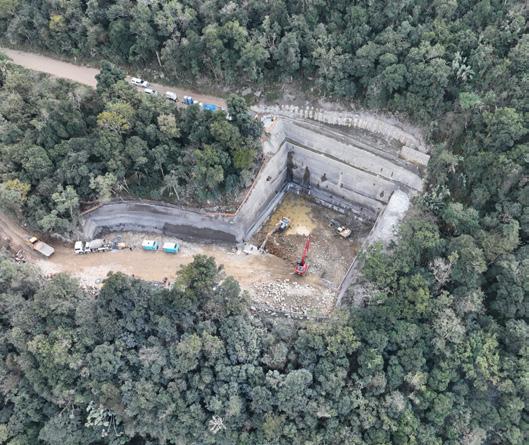
Balanced cantilever pier foundation construction within the steep, indigenous forested terrain of the Wild Coast, illustrating the project’s complex site conditions
operation. It is designed for long-term reliability, with technology upgrades planned every 25 years throughout the bridge’s 100-year lifespan.
Construction timeline
Construction, awarded to the China Communications Construction Company–MECSA Joint Venture, commenced in August 2023 following a four-month mobilisation period, with completion expected mid-2028.
The contract includes not only the bridge but also 18 km of adjoining provincial road upgrades and new community access routes connecting Flagstaff and Mkhambati. The
Abutment works where the Mtentu Bridge deck will tie into the approach roads, ensuring a seamless structural transition
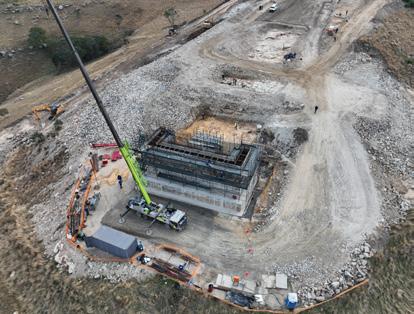
project is expected to create over 1 800 full-time equivalent jobs and inject more than R140 million into the regional economy through local labour and procurement.
Once complete, the Mtentu Bridge will not only stand as Africa’s highest bridge but also as a defining symbol of South Africa’s engineering capability. Its combination of structural complexity, environmental consideration and intelligent monitoring sets a new benchmark for large-scale infrastructure on the continent – and reaffirms SMEC’s role in delivering transformative, future-ready engineering solutions.
ILM pier under construction, forming part of the incremental launch approach
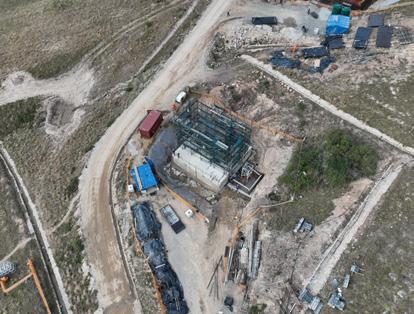
1
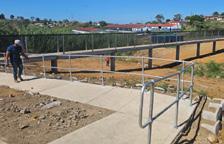
Designed to enhance safety and mobility, two recently completed riverine pedestrian bridge projects within Buffalo City Metropolitan Municipality (BCMM) underscore the role of municipal engineering in building enabling social infrastructure.
2
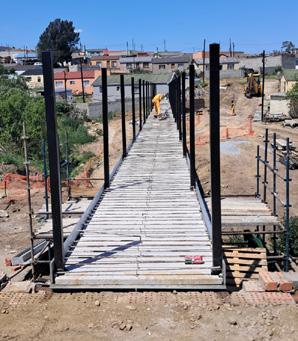
Both situated in Mdantsane on the outskirts of KuGompo City (formerly East London), the structures comprise a pedestrian bridge linking the NU11B and NU12 residential sections in Ward 48, and the Sithembiso School pedestrian bridge linking the northern and southern side of NU3 in Ward 14. Works commenced in May 2025 with a contract duration of six months and a construction value of approximately R5,9 million and R6,9 million, respectively.
The feasibility study and initial conceptual design for both bridges were carried out by consultancy, Mott MacDonald, in December 2017. Subsequently, Western and Eastern Cape based consultants, Engineering Advice & Services (EAS) was appointed by BCMM – Spatial Planning and Development
3
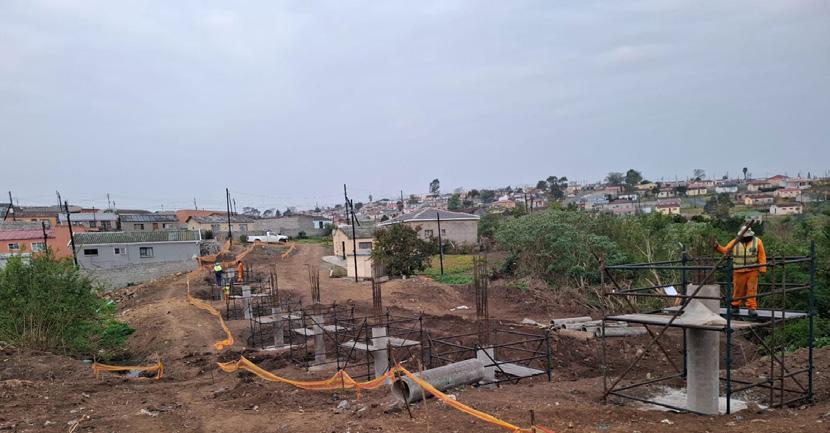
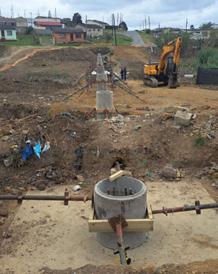
1 Forming the vertical columns to support the bridge deck. These columns are composed of 1 m diameter manhole rings filled with concrete and placed strategically so as not to impede the normal flow of seasonal stream flows
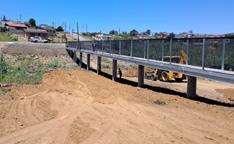
2 The deck comprises a simple steel box girder frame and precast concrete deck with a poured concrete in-situ surface finish
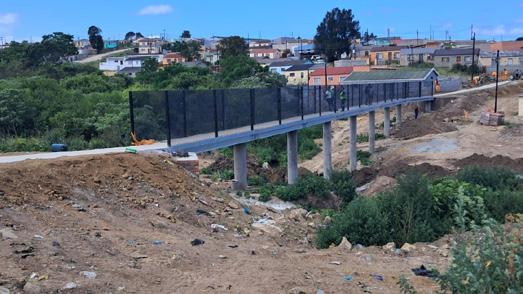
3 A perspective of the NU11B and NU12 link pedestrian bridge at an advanced stage of completion
(Transport Planning Operations) to investigate alternatives, complete the designs and execute construction management.
For the NU11B and NU12 bridge link, Mott MacDonald’s design proposed the installation of a low-level bridge crossing incorporating seven identical 300 mm diameter pipes laid within the watercourse. The latter would perform the dual function of a culvert and the base for a simple walkway deck.
While this was a relatively cheap solution, it did not take into consideration key aspects such as the accessibility needs of wheelchair bound pedestrians, as well as environmental constraints. Pedestrians using the crossing, for example, would have to traverse the underlying stream through thick surrounding vegetation. Additionally, in times of heavy rain, the stream would have overtopped the crossing and become impassable to pedestrians.
This meant that an elevated structure was the best solution. It was also important that
strategically so as not to impede the normal flow of the stream during seasonal rainfall periods and floods.
4 The Sithembiso School pedestrian bridge incorporates a walkway access section integrated with a precast concrete retaining wall system forming part of the embankment stabilisation solution
5 Early stage establishment of the vertical columns
the pedestrian bridge construction could be carried out with relative ease by an experienced contractor and with minimal impact to the environment.
EAS’s approved design consists of a 1,6 m wide precast deck spanning a maximum of 7 m between vertical columns, with heights of approximately 4 m above the riverbed. The vertical columns are composed of 1 m diameter manhole rings filled with concrete and placed


The ravine over which the bridge spans has fairly steep banks and the level of the deck has been designed optimally to a maximum vertical grade of 8.3% to cater for hand-propelled wheelchair access at either end, in line with international design norms. Ends leading to the bridge deck are concrete paved, with fencing installed on either side across the full length of the bridge deck to maximise user safety under all weather conditions. The main contractor was Mvezo Plant and Civils.
Sithembiso School pedestrian bridge
Similar to Mott MacDonald’s proposal for the NU11B and NU12 bridge link, the initial design for the Sithembiso School pedestrian bridge made provision for the installation of

12 identical 300 mm diameter pipes in the watercourse and did not take into account requirements like wheelchair access.
In response, EAS replicated its NU11B and NU12 bridge link design for this structure, with the same successful end result. The overall works on this phase were carried out by main contractor, Mkhokeli Civils and Construction. Ultimately, what these projects demonstrate is the ongoing need for riverine pedestrian bridge structures that are functional, safe and built where they best serve the community in flood prone areas.



Encouragingly, collaboration between public and private sector stakeholders in South Africa’s civil engineering industry is strengthening – underpinned by a firmer stance on accountability across the construction value chain.
According to Lindie Fourie, Operations Manager at the Bargaining Council for the Civil Engineering Industry (BCCEI), recent remarks by the Department of Public Works and Infrastructure that a number of contractors have already been blacklisted in 2026 for noncompliance and unethical practices send a clear signal that enforcement is gaining traction.
“The increased visibility of enforcement actions is an important step in restoring confidence in the sector,” Fourie says. “It demonstrates a commitment to accountability and helps to protect those contractors who are operating responsibly and within the framework of the law.”
Against this backdrop, South Africa’s civil engineering sector is showing early signs of recovery, although ongoing economic pressures continue to constrain the pace and sustainability of growth. While anticipated increases in infrastructure investment and improving project pipelines are providing some optimism, contractors are still navigating tight margins, rising input costs and persistent uncertainty.
Activity in the sector has been supported by renewed focus on infrastructure development, particularly in roads, energy and water projects. However, the benefits are not yet evenly distributed across the industry. Many contractors, especially small and medium-sized players, remain under strain due to delayed project rollouts, payment bottlenecks and limited access to consistent work.
Cost pressures continue to weigh heavily on operations. Escalating fuel prices, material cost volatility and labour-related expenses are eroding margins, leaving little room for inefficiencies. In this environment, disciplined project management,

accurate pricing and stringent cost control have become critical for business sustainability.
Amid these challenges, the BCCEI continues to play a central role in promoting stability, fairness and compliance across the sector.
Fourie emphasises that a structured regulatory environment is essential to building a sustainable and competitive industry.
“Labour compliance is not just a regulatory requirement – it is a cornerstone of a stable and competitive civil engineering sector,” she says.
“When all contractors operate on a level playing field and meet their obligations in terms of wages and conditions of employment, it creates an environment where businesses can compete fairly and projects can be delivered more effectively.”
She adds that the industry must also condemn the abominable practice of some contractors that attempt to exploit the most vulnerable purely to
secure a tender and undercut their law-abiding fellow contractors who tender on BCCEI rates.
She notes that economic pressure often places strain on both large contractors and smaller subcontractors, making compliance more challenging but even more critical. “In difficult economic conditions, there can be a temptation to cut corners. However, non-compliance undermines the entire industry and ultimately impacts project delivery, worker welfare and investor confidence.”
Fourie adds that enforcement alone is not sufficient to achieve long-term stability. “Alongside enforcement, there must be active support for contractors to understand and meet their obligations,” she says.
To this end, the BCCEI continues to support contractor development and compliance awareness, working closely with both established firms and emerging contractors. This includes providing guidance on collective agreements, labour obligations and administrative processes, helping especially smaller businesses to build sustainable, legally compliant operations while remaining competitive in a challenging economic environment.
Despite these positive indicators, challenges remain. The sector continues to face skills shortages, administrative complexity and the lingering effects of historical underinvestment. For meaningful long-term growth, consistent infrastructure spend, streamlined approvals and reliable payment practices will be essential. While the sector remains under pressure, there is growing confidence that stronger enforcement and improved collaboration are laying the groundwork for a more stable and sustainable industry.
Fourie emphasises that consistency will be key. “Sustained infrastructure investment, combined with firm but fair enforcement of compliance, will be critical to unlocking the sector’s full potential. When the right structures are in place and consistently applied, the civil engineering industry can deliver meaningful economic growth, support job creation and contribute significantly to South Africa’s development,” she concludes.

South Africa’s updated corrosion map is not only useful, it’s essential in reshaping infrastructure strategy, and will impact on urban and industrial planning and maintenance, as well as the design of iconic future structures, believes Hot Dip Galvanizers Association of South Africa (HDGASA) marketing manager, Anthony Botha.
The updated map moves beyond a generalised idea of the climate and is far more strategic. It plays a very large role in feasibility studies, identifying the best siting for facilities, how these should be built and what corrosion control measures must be applied,” Botha explains.
He observes that, had today’s corrosion mapping been available ahead of the 2010 Soccer World Cup, stadiums may have been built differently. However, better information will make for wiser future urban and rural planning decisions. The new corrosion map will also support the training and advisory services provided by the HDGASA for designers, engineers, procurement managers, specifiers and construction companies.
“For example, in the current solar photovoltaic race to the top, we are bringing people into line with the current understanding of corrosion control environments for renewable energy development,” he notes.
Understanding atmospheric corrosion
As Botha explains, the durability of steel is constantly challenged by an invisible adversary, namely atmospheric corrosion. Moisture, pollutants and salt-laden air all silently undermine structural integrity, shorten service life and inflate maintenance costs.
“The HDGASA assists in determining rates of corrosion for newly designed hot-dip galvanised steel structures. The quantum of queries centres on the macro and micro-atmospheric environments in South Africa,” he expands.
The initial corrosion map, released in 1991, was heavily weighted towards coastal data. Over the years, Botha says that the HDGASA noticed the impact of climate change and microenvironmental differences. “We have seen this particularly in Gauteng, where the impact of pollution drove some of the highest rates of corrosion in both Sasolburg and Germiston. They were in the middle of what was considered a relatively stable C3 environment.”
Following the 2019 publication of a comprehensive update to South Africa’s national corrosion map in the South African Journal of Science this became a C5 environment.
“In Germiston, the use of galvanised rebar suddenly made more sense than just plain rebar, because the environmental conditions became much harsher than previously,” Botha explains.
While the original information was derived from 15 to 19 sites, the 2019 update analysed over 100. Together with the corrosion rate of zinc in SANS ISO 9223, a clear corrosion map of inland microclimates can now be used to ensure effective specification of hot dip galvanising.
The findings revealed striking variability: Inland corrosion rates ranged from as low as 1.3 µm/year in the arid Droërivier region to over 50 µm/year in industrial hubs such as Germiston and Sasolburg.
Coastal zones showed steep gradients in corrosion severity, with rates dropping by up to 80% within the first kilometre from the shoreline.
Altitude, humidity and SO₂ levels emerged as key modifiers, especially in high-traffic or industrial zones.
Botha notes that the updated corrosion map supports more accurate classification of corrosivity zones using the SANS ISO 9223 standards – enabling tailored decisions for coating selection, inspection intervals and refurbishment planning.
In low-corrosivity inland zones (C2–C3), standard hot-dip galvanised coatings (≥85 µm >6 mm thick steel) may deliver over 30 years of corrosion control with minimal maintenance. In turn, in high-corrosivity coastal or industrial zones (C4–C5), thicker coatings or duplex systems may be required to achieve comparable durability. Inspection intervals can be optimised based on zone severity, ranging from 5 to 20 years depending on exposure and coating type.
“These insights are especially valuable for engineers managing ageing infrastructure, where decisions about refurbishment, replacement, or protective upgrades must be grounded in environmental reality,” he says.
In a country where infrastructure spans deserts, coastlines, industrial belts and highaltitude plateaus, this level of insight is not just useful, but essential. For instance, a galvanised steel structure (>6 mm thick steel) in a C3 inland zone may well retain over 70 µm of zinc coating after 25 years, while the same structure in a C5 coastal zone may require recoating or replacement within 15 years.
“Often, corrosion control is determined by cost. By using inaccurate information for a particular microenvironment, an architect or designer could be under or over-designing, which could give rise to additional costs in the long-term.”
He adds that corrosion mapping could also impact on the evolving circular economy. Without factoring in the micro-environment in which the steel is initially used, corrosion could be too advanced for galvanisation or reuse of steel.
The Programme for Infrastructure Development in Africa (PIDA) – a continentwide initiative designed to close critical infrastructure gaps by 2040 – is a groundbreaking endeavour spanning projects that include energy, transport, ICT and transboundary water systems, with over US$360 billion committed so far.
This unprecedented scale of ambition, however, places delivery capability under the microscope. As governments accelerate infrastructure investment, a new research report from the Project Management Institute (PMI) warns that the region faces growing talent gaps in construction project professionals. Subject to sustained growth, predictions indicate that demand will rise from about 260 000 in 2025 to more than 410 000 by 2035, leaving a shortfall of nearly 150 000 needed to oversee effective programme execution. The report underscores a defining paradox in the region’s growth story: construction is one of the most powerful contributors to GDP expansion and job creation, yet it remains one of the most complex and waste-prone sectors of the economy. PMI data shows that approximately 10% of global project investment is lost annually due to poor performance.
“From transport corridors and energy infrastructure to housing, healthcare and digital connectivity, projects are the vehicles through which we build our future,” explains George Asamani, Managing Director, PMI Sub-Saharan Africa. “But without the right project
George Asamani, Managing Director, PMI Sub-Saharan Africa
management capabilities, we risk delays, cost overruns, rework, and, ultimately, lost value.”
In an industry where design and scope changes are common, poor coordination between on-site and off-site teams can quickly escalate.
“Construction is highly visible and deeply scrutinised,” Asamani adds. “Every bridge, hospital or power plant carries public expectations. When projects go wrong, the impact is felt not just financially, but socially and politically. That is why professional project management is not a luxury, it is what safeguards value, protects public funds and ensures infrastructure delivers its intended impact.”
Digitalisation and talent pipeline
PMI’s research highlights digitalisation, including Building Information Modelling (BIM) and artificial intelligence, as critical levers to unlock efficiency, improve transparency and reduce costly rework and waste. In parallel, investing consistently in professional development, and creating structured career pathways for emerging and midcareer professionals are essential for building a resilient project management talent pipeline. Moving forward, specialised training and certifications, such as Construction Professional (PMI-CP), are helping equip professionals with the skills required to manage the growing complexity of modern infrastructure projects. In parallel evolving thought leadership and professional networks enable practitioners to continuously strengthen their capabilities.
“If we want infrastructure to be a true engine of GDP growth, we must professionalise the way we deliver it. We cannot afford to treat training as a cost. It is an investment in national competitiveness,” Asamani concludes.

Pre-Eminence Trading and Projects – an ISO 9001:2015 certified plumbing, civil construction and industrial cleaning company – has strengthened its operational capacity with the addition of a 4-cylinder jetting trailer from Werner Pumps.
Based in Emalahleni, Pre-Eminence has five years of operational experience working across key market segments that include municipalities, mines, power stations, corporates and educational institutions. Their work focuses on the operation, maintenance and rehabilitation of water and sewer network civil infrastructure, supported by domestic plumbing services and high-pressure jetting and vacuum capabilities.



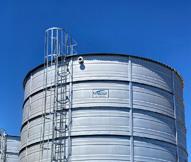
“As our client base expanded, the demand for sewer jetting work increased significantly,” says Palesa Mofokeng, MD of Pre-Eminence. “We already operate a combination jetting and vacuum truck, which we also purchased from Werner Pumps, but it could not always be available for every job. We needed equipment that could close that operational gap without compromising on performance.”
Mofokeng says their decision to partner with Werner Pumps was based not only on equipment quality, but also on the strength of the relationship and after-sales support.
“From our first engagement, we experienced professionalism, clear communication and honest technical guidance,” she notes. “That support has continued post-purchase, and our customers are consistently impressed with the performance of our equipment.”
Looking ahead, Pre-Eminence plans to expand its fleet further, grow its plumbing, civil and industrial cleaning services, and secure additional long-term contracts with municipalities and industrial clients.
Pre-Eminence Trading and Projects’ combination jetting and vacuum truck
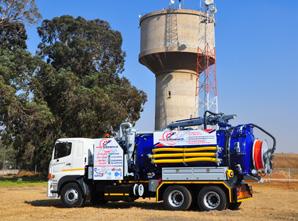
“Reliable, high-performance equipment is essential to scaling our operations while maintaining quality and safety standards,” adds Mofokeng. “Werner Pumps’ equipment enables us to grow with confidence. They are not just an equipment supplier to us, but a trusted partner in our business.”


Xylem, a global water technology company focused on solving complex water challenges, officially unveiled its new Dissolved Air Flotation (DAF) suite for the South African market during a recent event hosted at Xylem Africa's headquarters in Johannesburg. Key sectors include mining, municipalities, agriculture, aquaculture, food and beverage, paper and pulp, chemical manufacturers, and pharmaceutical companies.
DAF is a critical pre-treatment and solids-separation system within broader wastewater treatment systems. It can operate as a standalone solids-separation step or complement downstream biological, filtration or reuse systems to help achieve site-specific compliance and reuse objectives. The compact and modular design enables deployment in constricted and crowded sites. Xylem also provides excellent DAF rental options that support smaller and seasonal projects.
“We are very excited to bring cutting-edge DAF solutions to our local customers. Xylem has introduced our DAF solutions to several other markets, where they have become a big hit among companies of various sizes. They appreciate the logistical benefits of DAF's compact designs and convenient deployment, supported by our expert technicians,” says Chetan Mistry, Strategy and Marketing Manager at Xylem WSS (AMETI).
“South African organisations in the private and public sectors can now also leverage DAF to expand their choices for water treatment and recycling,”
Xylem’s DAF systems use Hellbender™ pumps to release microscopic air bubbles that, following appropriate coagulation and flocculation, attach to suspended and destabilised colloidal particles, enabling their separation from the water phase which can be skimmed away.
The DAF technique efficiently removes total suspended solids (TSS), fats, oils and greases
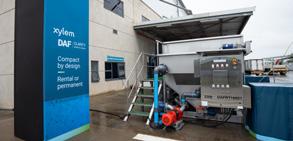
(FOG), and particulate-associated biochemical oxygen demand (BOD) from wastewater streams. These systems offer an effective solution for a wide range of applications, including:
• Thickening of biosolids.
• Product recovery from wastewater.
• Treatment of industrial wastewater to meet site discharge limits.
• Polishing of biological treatment effluent (algae and phosphorus removal).
• Pretreatment to reduce loading on downstream biological treatment systems.
• Clarification of biosolids downstream of aerobic and anaerobic treatment.
• Removal of fats, oils and greases (FOG).
• Temporary treatment of biosolids during harvest seasons.
• Removal of metals and fines.
• Recovery of proteins from slaughterhouse wastewater.
DAF systems are also remarkably compact, often requiring significantly less footprint and depth than conventional sedimentation tanks, depending on design and loading rates. Its combination of convenient sizes and broad applications makes it attractive to numerous industries that clean water for reuse, extract materials from water, or prepare water for compliant discharge into the environment.
Bringing DAF's advantages to Africa
Xylem's DAF solutions and services enable more producers to manage wastewater strategically without excessive investment in wastewater infrastructure.
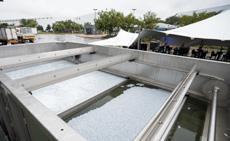

As part of a phased and modular treatment strategy, DAF is often deployed as an entry point into integrated wastewater and reuse solutions, enabling future expansion with biological treatment, filtration, and advanced polishing technologies.
Xylem's DAF units provide efficient wastewater pre-treatment and solids separation with:
• Three DAF models: RT-50, RT-100, RT-240 (100-1 000 GPM flows).
• Durable stainless-steel construction.
• Integrated flocculation tube for enhanced separation.
• Pre-wired control panel for quick setup.
• Continuous support throughout rental terms.
• Simple operation following site integration, safety review and commissioning (connection to process lines and 460V AC power required). From running pilots and proofs of concepts for wastewater management plans, to enhancing the efficiency of established treatment systems and upgrading to cutting-edge treatment methodologies, Xylem Africa and DAF help South African industries and municipalities solve water for all.
Xylem Africa and its partners deliver permanent and rental DAF solutions, calibrated to a customer's requirements and operations, says Mistry.
"Xylem's expert staff and our experienced partners customise each solution as required. We deliver and manage components such as mixer tanks, weir tanks, pumps and conveyors, as well as catwalks and accessories. Our skilled technicians can support on-site staff or run the process on behalf of our customers."
Water is humanity's most essential resource. As water stress and costs increase, organisations are intensifying their strategies to ensure supply and compliance. For many, though, this prospect was out of reach because of the cost and cumbersome ownership of industrialised water treatment options. Backed by Xylem’s engineering expertise and service capability, dissolved air flotation expands flexible, resilient options for wastewater pretreatment and reuse within integrated water management strategies.

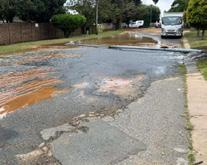
1 2 3 4
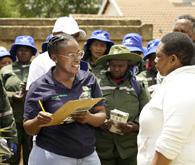
South Africa’s water future depends not only on supply augmentation, but on how effectively existing resources are managed.
Recent market research commissioned by Rand Water’s Water Wise Division and conducted by Quest Research Services confirms that although awareness of water scarcity is high, systemic failures in infrastructure, billing, regulation and public engagement are undermining conservation efforts.
The research aimed to develop a marketing and communication strategy targeting four key audiences: homeowners across five municipalities – City of Johannesburg, City of Ekurhuleni, City of Tshwane, Sedibeng District Municipality and West Rand District Municipality; Water Wise-adopted community groups; and property and green technical industry experts from various companies.
The market research focused on the following key themes: greywater use, water billing, municipal pipe leakages, and water-saving strategies. The key findings are summarised below:
1 Greywater and reuse: A missed opportunity
While property and green industry professionals showed high awareness and usage of greywater systems, residential adoption remains limited. Ironically, many households reuse water informally –without understanding its value or potential. As stated by the researchers, “Greywater is being used informally, but without guidance, incentives or system efficiency”.
This suggests that better regulation, incentives and building guidelines could significantly expand water reuse, particularly in residential developments and mixed-use precincts.
2 Metering and billing: If you can’t measure it, you can’t manage it
The research also highlights a breakdown in trust caused by inaccurate or unclear billing. Homeowners frequently reported charges based on estimation rather than actual usage, while property managers
noted that single bulk meters prevent tenants from taking responsibility for their consumption. “When billing does not reflect real consumption, conservation becomes meaningless.”
Participants consistently called for:
• Transparent, standardised billing formats.
• Clear monthly consumption trends.
• Wider rollout of smart and sub-metering.
3 Infrastructure failure: The silent water thief
One issue cut across all regions of Gauteng: water leakages. Ageing pipelines, burst mains, delayed municipal response times and poor coordination between authorities are driving significant non-revenue water losses. Participants reported that leaks often persist for weeks, contributing to higher bills, damaged roads and widespread frustration. “Unattended leakages are eroding public trust and wasting more water than most people realise,” stated the researchers.
• Car washes: A blind spot in municipal water management
Unregulated car washes emerged as an unexpected but recurring concern. Participants reported illegal water connections, excessive consumption and infrastructure damage from uncontrolled runoff. “Car washes are quietly placing strain on potable water systems and urban infrastructure” was a key report finding. The research recommends stronger regulation, improved enforcement and inclusion of car washes in formal water billing frameworks.
4 Communities are willing – if systems work
Importantly, the study reveals a willingness among communities to participate in water conservation. Many respondents supported the idea of community-based leak monitoring, basic repair training and incentive-driven reporting mechanisms.
Essentially, “People are willing to help conserve water – but only if reporting systems are responsive”. This highlights the potential of combining infrastructure investment with digital platforms, mobile reporting tools and visible municipal responsiveness.
The path forward is clear
• Fix leaks first: Prioritise maintenance, rapid response and rehabilitation of ageing infrastructure to reduce water losses.
• Improve measurement and billing: Expand accurate metering, sub-metering and transparent billing so users can understand and manage their consumption.
• Regulate high use activities: Strengthen oversight of water intensive operations, such as car washes, to prevent illegal use and infrastructure damage.
• Promote water efficient design: Encourage greywater reuse, smart irrigation and low flow systems through clearer guidelines and incentives.
• Align communication with reality: Move beyond awareness campaigns by linking messages to real water challenges and everyday behaviour. Addressing leakages, improving metering accuracy and restoring public trust will deliver faster and more sustainable water savings than supply expansion alone. As urban demand intensifies and networks continue to age, the sector must move beyond awareness and toward coordinated, evidence-based action – where engineering excellence, responsive institutions and informed communities work together to secure the country’s water future.


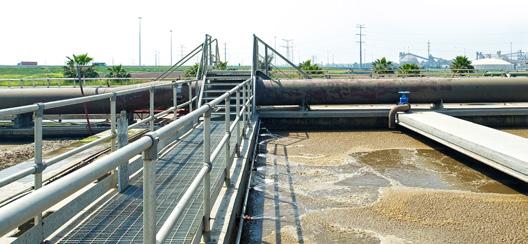
Steve Tshwete Local Municipality, situated in Mpumalanga, was recently crowned the 2025 Green Drop Champions after attaining first position with a score of 85.5% in the Best Performing Municipalities category during an awards ceremony to mark the release of the 2025 National Green Drop Report. Following closely in second and third place were George Local Municipality and Mossel Bay Local Municipality, with a score of 84.4% and 83.4%, respectively.
Setting the benchmark for wastewater treatment, the Department of Water and Sanitation’s (DWS’s) Green Drop programme is a crucial mechanism for measuring and determining adherence to the strictest process standards.
In the latest round, three municipalities within Mpumalanga Province showcased positive gains in wastewater management and were recognised in the Best Progress from 2021 – 2024 awards category. Chief Albert Luthuli Local Municipality in Gert Sibande District came first with an

Pemmy Majodina, Minister of Water and Sanitation
improvement from 11% to 71%; Msukaligwa Local Municipality, also from Gert Sibande District, followed in second place with an improvement from 17% to 66.7%; while Thaba Chweu Local Municipality from Ehlanzeni District achieved third position with an improvement from 10% to 57.6%.
Major red flags
However, overall, the 2025 National Green Drop Report – which includes a full audit of 848 municipal wastewater treatment systems

Wastewater treatment systems that fail to meet minimum operational and environmental standards are disqualified from Green Drop certification, even where other KPAs perform satisfactorily. Disqualification applies particularly where untreated or partially treated
is discharged
receiving
water bodies, where sewer networks continuously spill to the environment, or where treatment works receive inflow but have no operational treatment capacity.
Such systems will not be eligible for recognition and will be classified as critical risk, with the primary Green
Drop score reduced to 30%. The responsible institution must submit a corrective action plan to the Department of Water and Sanitation within 60 days of publication of the Green Drop Report, outlining measures to restore functionality and compliance. (Source: National Green Drop Report 2025.)
The Department of Water and Sanitation achieved 100% audit coverage of all identified Water Services Authorities (WSAs) and Water Services Institutions (WSIs) during this audit period. The assessment covered 144 WSAs across nine provinces (848 systems), 12 Department of Public Works and Infrastructure (DPW&I) Regional Offices (114 systems) and five Public Entity and Private Institutions (36 systems), resulting in a total audit count of 998 wastewater systems, including sewer networks and pump stations.
In addition to the desktop audits, a total of 174 technical site inspections were conducted to verify operational conditions on site, comprising of 158 municipal systems, 11 DPW&I systems and five public entities and private systems. (Source: National Green Drop Report 2025.)
for the 2023/24 financial year – presents a concerning picture of declining performance across the country.
The percentage of wastewater systems in a critical state increased from 39% in 2022 (334 systems) to 47% in 2025 (396 systems). At the same time, systems performing at excellent or good levels have declined sharply from 14% (118 systems) to 8% (66 systems). Even more significantly, only 14 systems achieved Green Drop certification in 2025, down from 22 in 2022.
These results show that systems previously operating at a poor level have continued to deteriorate into critical failure, placing increasing pressure on water resources, the environment and public health.
Compounding factors include inadequate maintenance, failure to adhere to standard operating procedures, shortages of skilled personnel, weak financial management, and governance failures. These challenges are further exacerbated by vandalism, illegal connections, corruption and broader criminal activity affecting infrastructure.
Comments DWS Minister, Pemmy Majodina: “This report is not a routine compliance exercise, but lays bare the true state of wastewater management in our country and reflects how effectively we are protecting our water resources and safeguarding the dignity of our people. The deterioration we are seeing is unacceptable, and it demands urgent and sustained action.”
Key responses from the DWS include the urgent implementation of corrective action plans for all systems in a critical state. The DWS is also intensifying oversight and intends to enforce compliance more rigorously, including taking regulatory action against municipalities that fail to implement required interventions.
“We cannot allow a situation where infrastructure continues to fail while plans remain on paper. Implementation must be immediate, visible and measurable. Where there is inaction, the Department will act,” states Minister Majodina.
Legislative amendments currently before parliament will further strengthen the Department’s ability to enforce compliance and intervene where necessary. These reforms will require municipalities to partner with capable and licensed water service providers where they lack the capacity to deliver, ensuring that technical expertise is brought in to stabilise failing systems.
“This report tells us where we stand as a country. What matters now is what we do next. What will happen is that we will not accept decline as the norm. We will act, enforce and rebuild. The dignity, health and future of our communities depend on it,” Minister Majodina concludes.
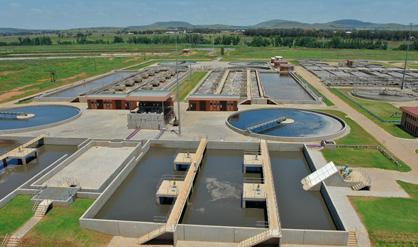
City of Ekurhuleni owned entity, ERWAT (Ekurhuleni Water Care Company), has achieved a major milestone, securing Green Drop certification for six of its water care works (WCW). This is a major achievement considering that only fourteen wastewater treatment plants nationwide qualified for certification in the latest evaluation, eight of which are in Gauteng.
The announcement was made by the Minister of Water and Sanitation, Pemmy Majodina, during the release of the 2025 National Green Drop Report on 31st March 2026. The report, presented alongside updates on the Blue Drop and No Drop programmes, provides a comprehensive evaluation of South Africa’s drinking water quality, service provision, and wastewater management.
The following six ERWAT WCWs received Green Drop certification: Benoni, Carl Grundlingh, Daveyton, JP Marais, Welgedacht and Herbert Bickley. Additionally, the latter three WCWs came first, second and third respectively as the best wastewater performing systems in the country.
Minister Majodina stated that the Green Drop programme remains one of South Africa’s most important regulatory instruments, providing a scientifically grounded, independent assessment of how municipalities safeguard water resources, protect public health, and uphold environmental integrity.
ERWAT’s Managing Director Kennedy Chihota added that the entity will continue to lead the wastewater industry by delivering sustainable, affordable, and high-quality services. “These awards portray ERWAT’s commitment to both the municipal and industrial wastewater sectors, ensuring a sustainable future,” he said.
ERWAT’s achievements during the Green Drop awards are testimony to its dedication to the theme “Water is Life, Sanitation is Dignity” and confirm that ERWAT is indeed the best wastewater management entity in the country.
Kennedy Chihota, Managing Director at ERWAT

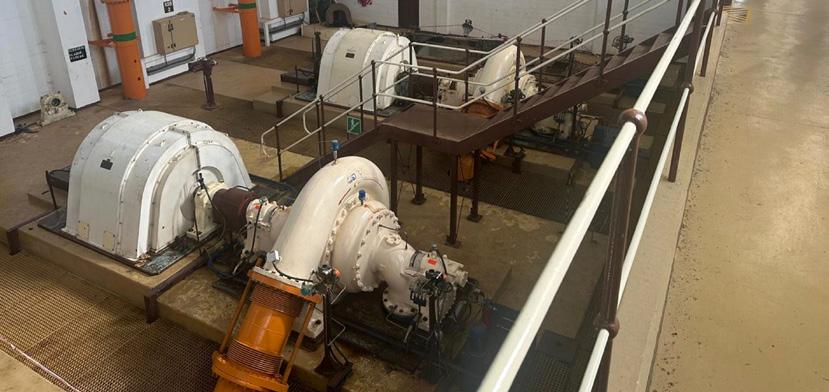
In operation since 1967, these FBL 500-400 double suction split casing pumps perform a vital role at a pump station in the Free State
Equipment manufacturers in the water industry should play a central role in developing solutions to the country’s growing potable and wastewater challenges, says Hugo du Plessis, market area manager for KSB Pumps and Valves.
As Du Plessis points out, manufacturers of pumps, valves and related equipment have an important role to play when systems are being designed or upgraded as they know their products’ capabilities better than anyone else. They should therefore be included at every stage of a project to ensure that the work is carried out within the equipment’s capabilities.
Furthermore, global companies like KSB have a wealth of institutional knowledge, as well as technical expertise that they can lend to consulting engineers, municipalities and water
The Jericho Pump Station in Mpumalanga was built in 1967 and continues to reliably deliver water to communities and industry
boards to determine the best solutions for a region’s challenges.
On-site technical support
“Our operations combine local manufacturing with global engineering knowledge and our engineers are able to support municipalities directly, evaluating systems and optimising pump performance for bulk water transfer, treatment works and reticulation networks,” Du Plessis explains. “Working closely with OEMs also ensures local authorities have rapid service response and on-the-ground technical support once projects have been completed.”
He explains that KSB is currently helping many of the country’s utilities and municipalities to map and measure water supply, assess pump performance and plan remedial action where necessary to ensure systems are operating at full capacity. Advanced tools, including smart meters and data-driven pump monitoring for system optimisation, as well as preventative maintenance, are also being used to allow water boards to identify problem areas and adjust operations before minor issues escalate into major failures
KSB staff are currently working with a number of progressive municipalities on maintenance programmes and refurbishment projects to ensure pumps operate efficiently and safely over the expected decades-long
operation of such a system. KSB also provides training and educational presentations to the next generation of engineers, helping them understand the full water cycle from river to tap and back to treatment so they can manage infrastructure sustainably.
“We engage directly with water boards and consultants to offer solutions that will last 20 to 30 years, where we assist with planning and executing systems that can withstand daily demand and ever-growing communities,” Du Plessis concludes.
An older KSB ELK self-priming pump still operating and pumping sludge at a wastewater treatment works
In a country where reliable water and sanitation infrastructure remains both a pressing need and a long-term national priority, the role of the Southern African Plastic Pipe Manufacturers Association (SAPPMA) has never been more critical.
With South Africa currently consuming approximately 94 900 tonnes of PVC pipes and around 52 000 tonnes of HDPE pipes annually, the sector plays a significant role in enabling service delivery. Demand for these materials is structurally linked to economic growth and infrastructure development. As GDP expands, so too does the need for reliable piping systems to support housing, industry, mining and municipal services,” says Jan Venter, CEO of SAPPMA.
While the economy has entered a period of prolonged stagnation and is expected to continue through 2026 to 2030, there are signs of gradual recovery on the horizon. Forecasts suggest average annual GDP growth of around 2% between 2025 and 2035, with a more conservative 2.2% projected for the early 2030s.
A more infrastructure-friendly political environment, potentially in the form of a GNU 2.0 by 2029, could further stimulate investment in civil infrastructure. This, in turn, bodes well for the plastic pipe industry, particularly from 2028 onwards when new build activity is expected to accelerate.
At the same time, South Africa faces a growing urban population, projected to rise from the current 63% to over 70% by 2030–2035. This rapid urbanisation will place additional strain on existing water and sanitation systems, many of which are already in urgent need of maintenance and upgrades.
The dual challenge of rehabilitating ageing infrastructure, while expanding capacity, underscores the importance of high-quality, durable piping solutions. However, as market conditions become more challenging (driven in part by high virgin polymer prices and economic pressure), the risk of sub-standard manufacturing practices increases.
“During times of economic pressure, there is always a temptation for some manufacturers to cut corners in order to remain competitive. This is precisely when quality assurance becomes even more critical. Inferior pipes may offer short-term cost savings, but they inevitably lead to long-term failures, higher maintenance costs,

and ultimately, compromised service delivery,” Venter warns.
Strict adherence to standards
SAPPMA’s mandate is to safeguard the integrity of the plastic pipe industry by enforcing strict adherence to national and international standards. Through its rigorous audit processes, product testing and member compliance requirements, the association ensures that only high-quality, fit-for-purpose pipes bearing the SAPPMA logo are used in critical infrastructure projects.
Adds Venter: “Quality is not negotiable. Every pipe installed in a water or sanitation system must perform reliably for decades. Our role at SAPPMA is to hold manufacturers accountable and to provide assurance to engineers, municipalities and the public that our members meet the highest standards.”
Beyond compliance, SAPPMA also plays a vital role in education and industry advocacy. By engaging with engineers,
specifiers and government stakeholders, the association promotes best practices in pipe selection, installation and maintenance. This holistic approach helps to ensure that infrastructure investments deliver maximum value over their lifespan.
Looking ahead, the outlook for the plastic pipe industry is cautiously optimistic. While HDPE demand has remained relatively flat since 2022/23, anticipated growth in mining and civil infrastructure from 2028 onwards is expected to provide a much-needed uplift. Similarly, the ongoing need for maintenance and the anticipated surge in new infrastructure projects will continue to drive demand for PVC pipes.
Yet as the industry grows, the importance of maintaining quality standards cannot be overstated. In a sector where failure can have far-reaching consequences for public health, environmental sustainability and economic development, the work done by SAPPMA serves as an indispensable guardian of quality and accountability.
“Infrastructure is only as strong as the materials used to build it. By ensuring consistent quality in plastic pipes, we are not just supporting the industry. We are helping to secure South Africa’s water future,” Venter concludes.
For more information visit www.sappma.co.za
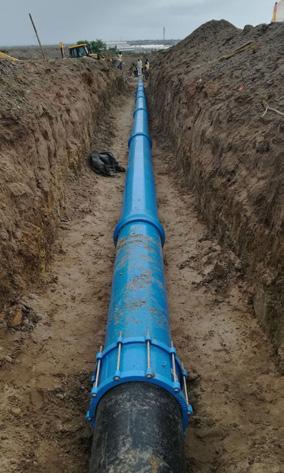
On Saturday, 28 th March 2026, Sithembele Sidzumo and his team from Kaya Properties officially broke ground on Ubuntu Terrace 1 – the first TUHF funded project to receive Affordable Rental Flats (ARF) approval in Cape Town.
Ubuntu Terrace 1 is not just a development,” says Nomfundo Molemohi, TUHF (uMaStandi)
Client Coverage Consultant, Cape region. “It’s a powerful example of what it means to build with purpose and impact. It points the way forward for other entrepreneurs to develop safe, compliant, sustainable affordable housing solutions in Cape Town’s townships.”
This is thanks to the City of Cape Town's amendment to its Municipal Planning By-law. The amendment came into effect on 1st September 2025 and was a big step towards unlocking affordable housing potential in the townships.
“This journey started in 2020,” explains Molemohi. “We wanted the City of Cape Town to recognise and support the township landlords who
were already driving a quiet rental revolution. After years of back-and-forth discussions, expert input, and relentless advocating throughout the process, we are proud of the role uMaStandi played to find solutions and promote affordable housing developments that comply with city regulations.”
Though not without its challenges, the approval process for Ubuntu Terrace 1 was smoothed by working through the citiy's newly established Local Planning Support (LPS) Office. Formed to assist developers with navigating the approval process for ARFs – and staffed by professionals such as architects and quantity surveyors – collaboration between the LPS, TUHF’s uMaStandi team and Kaya Properties made this project’s approval possible.
are correctly interpreted by both the professional team and the property entrepreneur.”
The first of many
City officials, including the Deputy Major of Cape Town, as well as the team from TUHF were present at the groundbreaking ceremony to support Sithembele and his team. Molemohi believes that, now that it is simpler to comply with city by-laws and quicker to achieve plan approvals, more entrepreneurs are likely to come forward to invest in township property developments.
“Ubuntu Terrace 1 not only creates housing where it is most needed, but also creates opportunities, dignity and real change in the community,” Molemohi says. “This milestone is just the beginning, for Kaya Properties, and township property entrepreneurs in general.”
TUHF has already approved funding for two additional phases of Ubuntu Terrace. The three developments combined will create a safe, well-maintained precinct that not only provides decent affordable rental housing but stimulates the local economy and uplifts the neighbourhood and community.
Compliant, sustainable developments like the planned Ubuntu Terrace precinct have a positive impact on property values, ultimately enabling families to build generational wealth from properties that could otherwise be considered dead equity.
“I’m excited to see the construction of Ubuntu Terrace unfold and to walk this journey with Sithembele and his team,” Molemohi says. “Acknowledging the importance of compliance and taking the necessary steps to meet the


The adoption of electric vehicles (EVs) continues to gain momentum, with buildings now becoming a vital part of the e-mobility movement. That requires a whole new approach to energy management, writes Grace Olorunsola, Offer Manager for e-Mobility, English-speaking Africa at Schneider Electric.
Depending on the battery size, charging infrastructure, and charging speed, an EV can take anywhere from four hours to as much as ten hours to charge fully, using AC charging.
Even with DC fast chargers available, which can reduce charging time to 15 to 30 minutes, the reality is that most EV drivers prefer to charge when they are already parked for extended periods.
That is why EV charging is naturally shifting into the built environment: homes, office parks, shopping centres, hotels, and mixed-use developments. This trend, however, introduces a major challenge for building owners and facility managers. EV charging is not a small load; a single AC charger can demand up to 22 kW. Multiply that by ten chargers in a commercial building, and the building’s electricity demand can jump dramatically.
Plus, if you add DC charging, buildings have to provide anywhere from 120 kW to 720 kW per charger, creating a level of demand that most existing building infrastructure is simply not designed to support without significant upgrades.
If EV chargers operate without intelligence, they will simply draw power whenever vehicles are plugged in. As more drivers arrive and plug in, the load climbs higher and higher. Eventually, the building may exceed its subscribed maximum power.
This can trigger financial penalties, increased electricity costs, or worst-case scenarios: overloads that trip supply and cause blackouts,
not only impacting the chargers but potentially shutting down the entire building.
This is where the “new energy landscape” for buildings begins to take shape. EV chargers must become part of an integrated energy ecosystem, where the charger sits at the centre of multiple stakeholders, namely the building and its internal load profile; the electricity grid and its constraints; distributed energy resources (DERs) such as solar PV and microgrids; and the EV drivers.
The future therefore depends on smart EV chargers that can communicate and coordinate across this system, ensuring charging remains
smooth for drivers, while protecting the building from overload.
Load management: the key to EVready buildings
One of the most important capabilities enabling this future is dynamic load management. In a building there is always a maximum subscribed power limit. Smart load management ensures EV charging never pushes the building beyond this threshold.
Thus, instead of charging every vehicle at full power at the same time, a smart system monitors the building’s real-time consumption, the available capacity remaining, and the number of EVs currently charging.
When building consumption rises, the system automatically reduces charging power across vehicles, sharing the available energy intelligently. Then when consumption drops, the system increases charging power again, ensuring vehicles still charge efficiently, but without compromising the building.
EV charging and the rise of microgrids
As EV chargers become embedded into buildings, the role of DERs becomes even more important. Microgrids, solar installations, and battery storage systems can support charging demand while improving resilience and reducing reliance on unstable grid supply. This is especially the case during peak periods or in regions where grid reliability remains a challenge.
Ultimately, the combination of EV charging, energy management systems and distributed energy is what defines the emerging energy landscape for buildings: decentralised, flexible, digitally managed, and increasingly driver centric.
As EV chargers become embedded into buildings, the role of distributed energy resources like solar PV and microgrids becomes a core component


While South Africa’s efforts to significantly decarbonise its energy mix by 2030 have been slow to get off the ground, momentum ticked up significantly in Q1 2026, with much focus on energy reform in both President Cyril Ramaphosa's State of the Nation Address, as well as in the National Budget delivered recently by Treasury. By Shailin Moodley
But there are significant challenges ahead and the following key signposts will be crucial to track South Africa’s progress on its journey to a diversified, liberalised energy market.
The first and most obvious signpost is the actual shift in the generation mix. Progress won't be measured just by new megawatts, but by how new capacity changes the overall profile of the supply.
The Integrated Resource Plan (IRP) 2025 forecasts significant new generation capacity by 2030, with a major focus on gas, wind, solar and battery storage. The rapid addition of private embedded solar, particularly rooftop PV, is already a strong indicator. Additionally, the IRP 2025 reflects an increase in load factor of gas-to-power plants (to 50%), indicating a shift in use case from potentially exclusively peaking to baseload. The broadening of the target energy mix is encouraging.
A huge tick in the scorecard for the energy transition is already appearing, with new utilityscale solar and wind projects reaching financial close and beginning construction. The start of construction on large-scale battery storage projects is another significant indicator, as it signals a move toward grid stability.
Conversely, a major red flag to progress would be any significant delay in the decommissioning of old coal plants without sufficient replacement capacity. This could signal a lack of confidence in the new market. Continued reliance on expensive
diesel peaking plants to cover the gap would also be a poor indicator. The looming threat of the duck/canyon curve and loadshedding will also need intentional solutions requiring advanced planning and execution.
Trader participation: The shift from contracts to a competitive market
Traders are the lifeblood of a liberalised power market (they connect generators to users, create liquidity, and manage risk), with the volume of active participants in the energy market being a key indicator of its health.
The number of licensed electricity traders and aggregators could grow steadily for some

Shailin Moodley, Chief Technology Officer at EXSA
time. These companies facilitate bilateral PPAs and will be the key participants in the future wholesale market – taking on the technological and operational burden of participation.
In late November 2025, NERSA announced a series of decisions that, together, seek to expedite the transition to a competitive electricity market. These include the approval of the Market Operator Licence to enable the shift to a multi-buyer, multi-seller model; the finalised Grid Capacity Allocation Rules (GCAR) for readiness based allocation and queue management; the constitution of the Electricity Market Advisory Forum (EMAF) to facilitate stakeholder input and expert oversight during market establishment; and lastly the issuance of a notice of public participation on the draft Electricity Trading Rules, which Minister of Electricity and Energy, Kgosientsho Ramokgopa, has committed to having gazetted by June 2026.
When the sector begins offering nuanced products (such as short-term contracts, hedges or derivatives), this will mean the market is becoming more sophisticated. The launch and successful operation of a day-ahead market by the National Transmission Company of South Africa (NTCSA) would be the first domino to fall, albeit a heavy one, including a lot of pre-work such as wholesale tariff restructure, trading rules, market code approval, market phasing, and vesting arrangement approval.
The President's announcement in the 2026 SONA on the intention to unbundle the NTCSA
from Eskom, and the funding announced weeks later in the National Budget Speech, are clear statements of intent and should pave the way for transparency and innovation in the private energy market.
The state of the grid: From bottleneck to backbone
The biggest technical challenge to South Africa's transition is the grid. Its expansion rate is a vital signpost of progress in the energy sector.
The NTCSA's Transmission Development Plan (TDP) 2024 sets ambitious targets for new transmission lines (nearly 1 500 km per year).
Consistent announcements of new transmission line projects reaching financial close and beginning construction are crucial.
Additionally, despite delays and industry concern over complexities, the successful implementation of the Independent Transmission Projects Programme, attracting private investment for grid infrastructure, would be a major leap forward and a huge vote of confidence for South Africa’s transition strategy.
Treasury's recent announcement of a new Credit Guarantee Vehicle, in partnership with the World Bank, to encourage large-scale investment into
transmission infrastructure signals momentum in the space. Additionally, government is set to commence the first round of independent transmission projects this year.
That said, delays in environmental and land-use approvals for new transmission lines would be a significant roadblock – beyond which infrastructure takes time to deploy. An inability to meet the TDP's annual targets would mean that new renewable capacity is built in a suboptimal place and/ or cannot get power to consumers, effectively stranding billions in potential investment.
Everything hinges on private capital
Ultimately, market liberalisation is about attracting private capital, bolstered through regaining trust in the system and promoting competition. The regulatory environment and government policy will be the main drivers of investor confidence.
While competitive market positioning existed under earlier legislation, the passage and implementation of the 2024 Electricity Regulation Amendment Act provide a critical tailwind, further strengthening the legal framework for a competitive market. Clarity on wheeling tariffs and a transparent grid access process from NERSA are also crucial.
Leveraging the Just Energy Transition Partnership
– an international collaboration between several developed markets and South Africa – will also be a key financial tailwind. The partnership aims to support our energy transition through initial clean energy funding projects.
In the meantime, while the flow of new legislation has been positive, any sign of a reversal of policy or political pushback on the transition would negatively impact the flow of much-needed capital. This could be anything from another pause on private licensing to a suboptimal market launch.
A lack of transparency in the procurement process would also deter investors, as seen in other countries. Lastly, struggling municipal performance in the distribution sector distorts the perception of municipalities as reliable offtakers, hindering new generation.
Either way, South Africa’s energy landscape is poised for significant change in the next few years. Here trader participation, investor sentiment, grid capacity and energy mix diversification provide critical criteria for performance measurement as we forge a path to a secure, reliable and sustainable energy future. Let’s get after it.
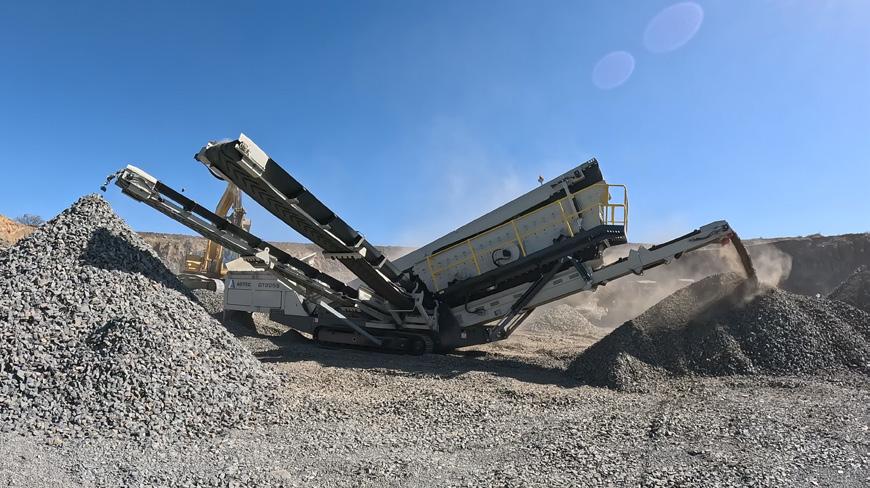
In an operating environment marked by rising input costs, tighter margins and increasing pressure to do more with less, quarry operators are rethinking their equipment strategy.
There is a noticeable shift from single-purpose machines to versatile, multifunctional solutions, according to Andre Kruger, Astec Industries regional product and sales manager. He reports increasing demand from the local aggregate sector for Astec-Telestack’s range of bulk material handling systems and Rock Breaker Technology’s Astec-BTI hydraulic breakers and boom systems.
These renowned, high-performance brands –both of which are supplied and serviced in South Africa and across the African continent by Astec Industries – are helping astute producers to keep their costs down and productivity up.
Astec-Telestack products deliver enhanced flexibility and efficiency in handling dry bulk material, whether from the pit, the port or plant.
Rock Breaker Technology is a leading provider of Astec-BTI hydraulic rockbreakers, boom systems and demolition attachments.
“By replacing traditional fixed infrastructure with mobile, high-capacity and versatile bulk material handling systems from Astec-Telestack, customers can reduce operational costs by up to 80% in some applications, maximise production rates and reap the benefits of superior flexibility.
Astec-Telestack’s tracked, wheeled and railmounted conveyors, hoppers and stackers allow operators to move from pit-to-port, often eliminating the need for wheel loaders and trucks,” Kruger explains.
“Astec-Telestack equipment is used for stockpiling and linking in quarries around the world, handling an array of materials from road base to limestone. All these quarries recognise the many benefits of Astec-Telestack products, including eliminating the need for front end loaders on the site – along with their labour, fuel and maintenance costs. The double handling of the material is reduced
The Astec-BTI CX, BX and BXR range of rock breakers offer 14 models, from 550 joules to 21 500 joules energy class, with most also available in box-style configurations
and productivity increased. With Astec-Telestack products, different grades or material can be moved and stockpiled quickly and efficiently.”
Astec-BTI rock breaker systems increase quarries’ throughput and improve safety. Kruger expands: “By reducing material to the correct size and reducing material blockages efficiently, Astec-BTI rock breakers reduce crusher downtime and increase overall plant productivity. Safety is improved because these systems eliminate the need for secondary blasting and reduce the need for manual handling of rock by operators.”
Astec-Telestack radial telescopic stackers – like the AggStack TS 36 X 140 and the RSL30 fixed radial stacker – offer one of the most cost efficient and effective ways of stockpiling material on the market, Kruger states. “The AggStack unit has a production capacity of 800 mtph while the RSL30 delivers 450 mtph. The reduction of segregation, degradation, contamination and compaction when stockpiling with this equipment ensures ‘in specification’ material for any application. They offer 30%

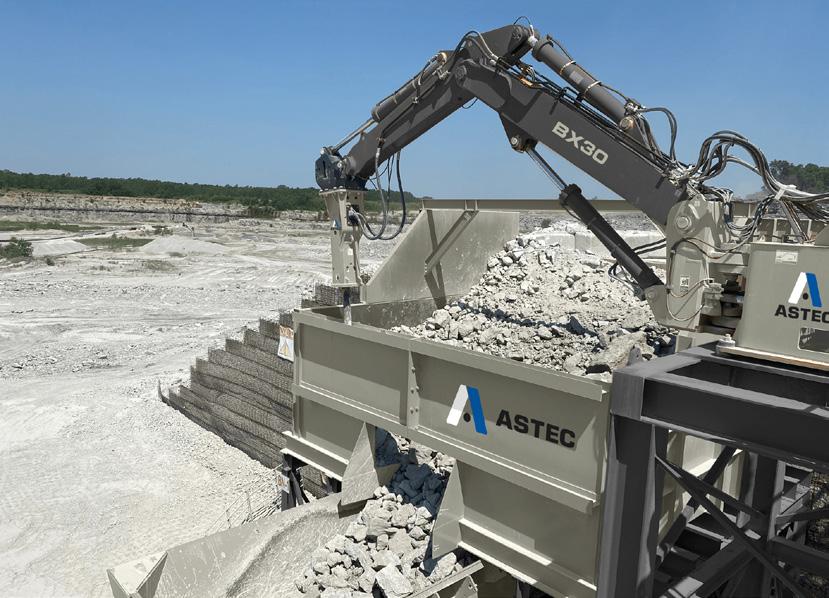
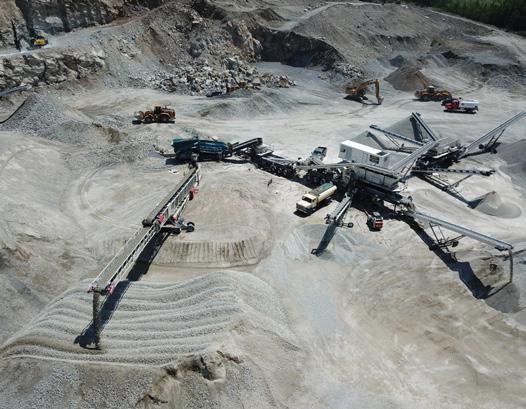
more stockpile capacity on the same footprint compared to standard stackers.”
Available as tracked or wheeled units, with automation, dust suppression and independent power options, Astec-Telestack stackers can be used in mobile or fixed crushing and screening operations. A further benefit of Astec-Telestack’s radial telescopic stackers is that they minimise the need for wheel loaders. This translates into less site traffic, lower emissions and substantial savings on fuel and labour. The automated stockpiling option cuts staffing requirements, further reducing costs.
Astec-Telestack offers the widest range of mobile conveyors in the industry. Machines like the Astec-Telestack TC 424XR Radial Mobile Conveyor and Feeder – which boasts a 450 mtph capacity – are designed for flexibility and can be deployed quickly across different site locations.
Astec-Telestack’s Origin Wheeled conveyor range – which includes the C2000 – offers affordable wheeled stackers combined with the proven Astec-Telestack quality. Suited for short to medium term, highly mobile applications, the C2000’s versatility and portability ensure that it can meet the needs of any stockpiling application, especially in confined areas. It is particularly suited to applications where movements are frequent. Featuring a radial ability from a pinned base, it offers superior stockpiling capabilities compared to other, conical stockpilers.
Astec-Telestack equipment is used for stockpiling and linking in quarries around the world, handling an array of materials from road base to limestone
Breakers designed to last Engineered for surface and underground mining as well as aggregate, construction and demolition applications, Astec-BTI breakers are renowned for their reliability and design simplicity.
“The simple construction of the breakers ensures reliability and low maintenance, which make them ideal for quarries striving to manage costs. Simplicity of design is, in fact, a key element of the Astec-BTI breaker system,” Kruger notes. “The breaker’s control valve also features
An Astec-Telestack TC 421R tracked radial stockpiling conveyor
a simple design to minimise cavitation, thereby reducing hydraulic component wear and increasing the efficiency and lifespan.”
Another noteworthy feature is the excellent power-to-weight ratio. “This offers significant benefits to customers, since larger, more powerful hammers can be mounted on smaller excavators or boom systems, resulting in reduced overall cost to the end user,” states Kruger.
Standard features on all models include a nitrogen cushion chamber designed to absorb piston recoil and recycle the energy to increase the output energy on the next blow; dual retainer pins to ensure positive tool alignment and easy tool replacement; short tie rods that utilise protected threads to yield long life and high reliability; and a protected lubrication point.
Kruger says that mobile and fixed hydraulic rock breakers are increasingly being used for reducing oversize material, rather than secondary blasting.
“Astec-BTI’s Rock Breaker Systems minimise disruptive, costly and unsafe blasting, providing an efficient, safer alternative,” he says, adding that rock breakers provide for selective breaking, as opposed to the indiscriminate nature of blasting. “This can improve material grades, which boosts sales revenue.”
The Astec-BTI CX, BX and BXR range of rock breakers offer 14 models, from 550 joules to 21 500 joules energy class, with most also available in box-style configurations.
Local customers purchasing Astec-Telestack and Astec-BTI equipment through Astec Industries in South Africa can have peace of mind knowing that it comes with Astec’s 24/7 after-sales service, back-up and spares, Kruger says.
“We have local engineers dedicated to these product ranges. They will assemble and commission a customer's machine, offer operator training, service and back-up. We also hold spares to minimise downtime and ensure that our customer can be back in business as quickly as possible. In addition, Astec engineers are able to undertake on-site repairs,” he concludes.
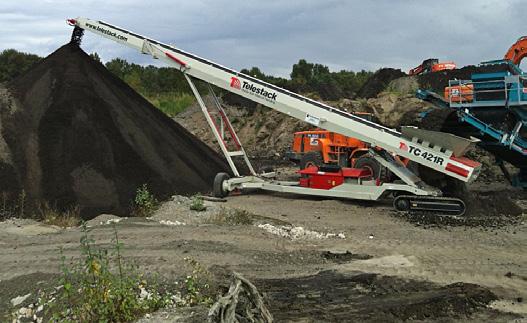

South Africa has changed profoundly since 1994, but far less has changed in the physical structure of its towns and cities than the language of “spatial transformation” suggests. If transformation is judged by the morphology of the city rather than by social or political change within it, the record is much weaker than planning rhetoric admits.
By Burgert Gildenhuys*
South Africa speaks confidently about spatial transformation. The phrase appears in policy, planning discourse and public debate as though it describes an established reality. It does not. If spatial transformation means a fundamental change in the physical structure of the South African city, the evidence is thin.
The country has experienced major political change, social mobility, suburban racial mixing, inner-city demographic turnover and extensive public investment. Yet the broad physical ordering of settlement, peripheral low-income areas, weak links between residence and opportunity, long commuting distances, and infrastructure that often follows inherited patterns remain stubbornly familiar.
That distinction matters. The issue is not whether South Africa has changed. Of course it has. The issue is what has changed. Much
of the debate collapses social, political and service-delivery improvements into a single narrative of spatial transformation. That is too loose. A city can change socially while remaining structurally the same. It can become more demographically mixed, more densely occupied and more economically fluid without fundamentally altering its physical morphology. That is the real challenge in the South African case
What the 1994 argument actually said
In my 1994 paper “Urban Reconstruction and Development: The Petrification of the Apartheid City” , I did not argue that South African cities would remain frozen in every respect. The paper’s focus was narrower and more precise. It was concerned with the city’s physical form: the inherited footprint, the separation of residential areas from
opportunity, the peripheral location of townships, the role of buffers and barriers, and the way in which infrastructure investment could reinforce rather than undo that structure.
The warning was that if post-apartheid reconstruction took the form of servicing, upgrading and extending settlements on the same distorted spatial base, the underlying city would not be restructured. It would be consolidated.
That is why the paper’s imagery remains so powerful. Roads, pipes, electricity networks and housing are not neutral responses to urban need. Once laid, they harden future urban form. They carry sunk costs, future expectations and servicing commitments. They define where later growth will be easiest, where land will gain value, and where densities can intensify. In that sense, infrastructure casts yesterday’s decisions into tomorrow’s city.



For municipal engineers, the importance of physical structure should be obvious. A city is not merely a social space or a legal jurisdiction. It is a serviced footprint. Its form is expressed through movement patterns, catchments, gradients, network capacity, reserve widths, node relationships, travel times and operating costs. Morphology is not an aesthetic matter. It is the deep physical logic of settlement. This is precisely why physical restructuring is so difficult. Once the trunk infrastructure is in place, treatment works are located, major roads are built, stormwater systems are fixed, and whole townships are established, the city acquires inertia. The inherited form begins to govern subsequent investment.


Before 1975
1975 - 1980
1980 - 1985
1985 - 1990
1990 - 1995
1995 - 2000
2000 - 2005
2005 - 2010
2010 - 2015
2015 - 2020
A municipality can speak of compaction, corridors and integration, but if its networks, land-assembly pattern and capital programme continue to favour peripheral growth, the city will keep reproducing itself in recognisable form.
There has been no shortage of real change since 1994. Inner cities have changed dramatically in their use and occupation. Townships have densified through backyard accommodation and incremental building. Some suburbs have become far more socially mixed. New commercial nodes have emerged. Informal settlements have altered the edges and internal texture of many urban areas. Public investment has extended services and formal shelter to millions.
These are not trivial changes. But most of them are changes within the inherited city rather than changes to the inherited city. The broad physical ordering remains legible. Low-income households are still disproportionately located on the edge or
Burgert Gildenhuys is a leading authority in municipal planning, infrastructure investment and public finance, with over 45 years of experience in South Africa and across Africa. As Managing Director of BC Gildenhuys & Associates and Founding Director of Spatial Data Services Africa NPC, he has pioneered infrastructure investment planning, delivering more than 100 investment plans, 30 spatial development projects and 45 capital expenditure frameworks. He has advised CoGTA, National Treasury, the World Bank and USAID, with contributions ranging from South Africa’s National Infrastructure Investment Strategy to Nigeria’s energy reforms. He continues to drive integrated, sustainable approaches to urban planning and finance.
Phone: +27 (0)12 141 2094; Mobile: +27 (0)83 450 0077
Email: burgert@bcga.co.za or burgert@sdsafrica.net
in poorly connected areas. Commuting burdens remain high. Urban growth often continues on marginal or distant land. The daily movement between residence and opportunity still reflects a city whose basic structure was designed around separation.
This is where much of the rhetoric fails. South Africa has done far more to improve conditions inside the existing city than to reorder the city itself.
Policy recognised the problem, but did not solve it
Over time, official policy has increasingly recognised this. Breaking New Ground shifted housing policy away from a narrow product focus and toward sustainable human settlements. The Integrated Urban Development Framework spoke openly of retrofitting existing city footprints into more compact, connected and coordinated forms. SPLUMA introduced a national planning framework built around spatial justice, sustainability, efficiency, resilience and good administration.
All of this was important. But the problem is that better language did not automatically produce better form.
The real test is not whether plans refer to integration, inclusion and restructuring. The real test is whether capital investment, land release, service sequencing and municipal operations move in the same physical direction over time. That has been far less consistent than the policy language suggests. Too often, housing, infrastructure and transport have still been planned in silos. Too often, visible delivery has trumped locational logic. Too often, cheaper peripheral land has won over difficult but better-located land.
The delivery trap
This is the heart of the matter. The post-1994 state was under immense pressure to deliver. That pressure was understandable and justified.
It had to extend water, sanitation, electricity, roads and shelter on a vast scale. But the politics of visible delivery also created a trap. Projects had to be packaged, funded and implemented quickly. Under those conditions, development often went where land was easier, cheaper and more serviceable.
From a narrow project perspective, that made sense. From a spatial perspective, it often meant formalising peripheralisation rather than dismantling it. One could count units, connect services and hand over houses while still reproducing the same old distance between poor households and urban opportunity. The result was delivery without equivalent restructuring. That distinction is critical. Redistribution and restructuring are not the same. Redistribution may purport to improve lives and reduce hardship. Restructuring changes the relationship between people, infrastructure and the urban economy. South Africa achieved a great deal of the first and much less of the second.
Why engineers should care
This is not an abstract planning debate. It goes directly to the work of municipal engineers. Every decision about a road alignment, a bulk main, a sewer outfall, a substation, a stormwater intervention or the timing of a network upgrade has spatial consequences. Engineers do not simply service urban form after it has been decided elsewhere. They help lock it in.
There is therefore no such thing as neutral infrastructure. Infrastructure either reinforces inherited spatial logic or helps redirect it. If a
SOURCE NOTE
municipality keeps extending services to the path of least resistance, the old city wins again. If infrastructure investment is consciously tied to compaction, infill, corridor logic and land strategy, it can begin to change the city more decisively.
That is why engineers should be sceptical of planning slogans that are not backed by network logic, capital affordability and operational consequence. A city is not transformed because a spatial plan says so. It is transformed when physical investment repeatedly supports a different urban pattern.
The hard truth is that South Africa has changed a great deal since 1994, but the physical city has changed far less than the rhetoric of spatial transformation implies. The old city has not survived socially in the same way, but it has survived morphologically to a remarkable degree. It has been upgraded, extended, densified and, in too many cases, reinforced.
That is not a reason for cynicism. It is a reason for clarity. If the problem is wrongly defined, the solution will be wrong as well. The real challenge is not to celebrate change in general, but to ask whether the inherited physical ordering of the city is actually being broken. On that test, the record remains disappointing.
In that very specific and important sense, the apartheid city still stands.
*B(TRP), BAdmin (Municipal Administration), Pr. Pln, ILGM, MIAM (London), ESSA

This article draws on Burgert Gildenhuys’s 1994 paper “Urban Reconstruction and Development: The Petrification of the Apartheid City” and on later policy and analytical work, including SPLUMA, the Integrated Urban Development Framework, the 2025 White Paper for Human Settlements, and South African Cities Network assessments of spatial transformation. This is part one of a two-part series.
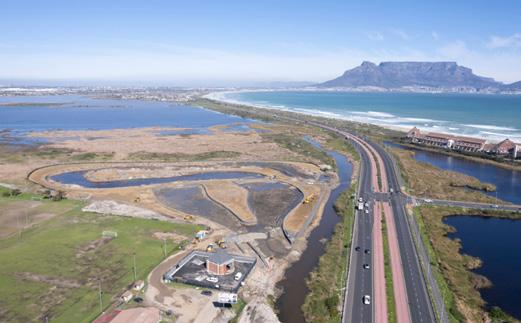
CSV Construction is deep into a substantial upgrade of the Bayside Canal outfall system in Blaauwberg, Cape Town, a critical intervention aimed at curbing flood risk in fast growing suburbs while protecting the sensitive Rietvlei Wetland Reserve. The scale of work demands exceptional volumes of rock and other materials, prompting the contractor to partner with AfriSam as its main supplier.
The canal is a single stormwater outlet for a broad catchment that includes Tableview, West Beach, Parklands and Sunningdale. But with increased development and years of reed encroachment downstream, the infrastructure has struggled to cope.
“This upgrade really broadens the system’s hydraulic capacity,” explains Alex Pospech, Contracts Manager at CSV Construction. “This is critical for preserving the Rietvlei reserve –an important recreational and wildlife resource – while also reducing flood risk in an area that sits very low.”
An important feature of the project is its balance between engineering and ecological considerations. Stormwater entering Rietvlei currently filters through dense reed beds that naturally trap solids and absorb nutrients. The expanded system must honour this natural treatment function, but on a more controlled and higher capacity basis.
The redesigned outfall therefore includes two primary sedimentation ponds, each about 140 m long, to allow heavier particles to settle.
Downstream, a 460 m secondary treatment canal slows the water further so that finer sediments can separate out.
“These structures give us a controlled way to manage sediment loads before the water reaches the reeds,” Pospech notes. “It is a more resilient version of what the wetland has been doing on its own.”
After passing through these treatment stages, the flow spills over a weir and into a reedlined section for nutrient absorption and final
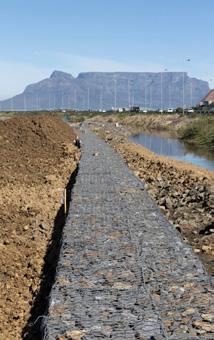
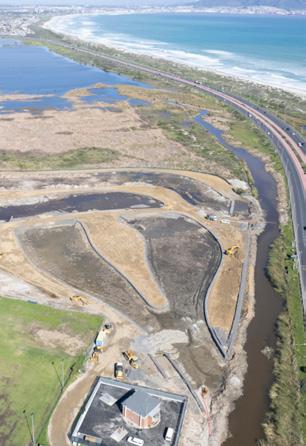
polishing. To handle high volume storm events, CSV is also constructing a nearly 600 m bypass channel along the R27, ensuring major surges can be diverted safely.
The engineering design demands unusually large rock sizes and consistent material availability – requirements that rely on the considerable capacity of AfriSam’s Peninsula Quarry. Ian Trimmel, Territory Sales Manager at AfriSam, says the supply chain has needed careful planning.
“Moving dump rock isn’t simple, as not every truck can handle that kind of load,” Trimmel explains. “We have had to finetune the logistics so the right vehicles can safely collect and deliver what the contractor needs.”
To meet the high demand for gabion stone, AfriSam even set up a dedicated production plant, shifting from the traditional method of hand-selecting stones to an industrial-scale process tailored for this project.
Work on upgrading the canal will continue into 2027, as most work can only be conducted during the dry summer seasons. Once completed, about 45 000 m³ of material –much of it reed-choked sludge – will have been removed using long-reach excavators and articulated dump trucks.
The cleared footprint is being stabilised with 12 000 m³ of dump rock, followed by about 20 000 m³ of overburden and nearly 15 000 tonnes of gabion stone baskets lining key sections of the canal.
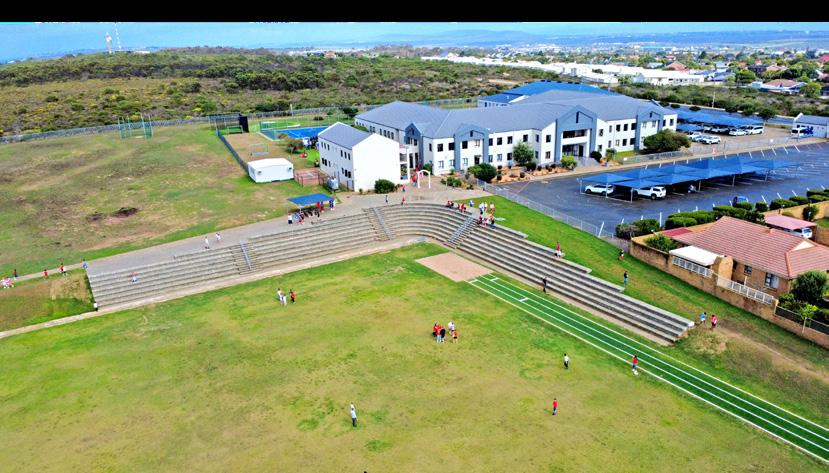
Nestled along the Southern Cape coastline in Heiderand, Mossel Bay, the Curro private school campus boasts a striking example of Terraforce's versatility in South Africa's educational sector.
What was once a plain grass embankment alongside the school's sports fields has been transformed into a sweeping, multi-tiered seating pavilion – purpose-built for the school community to watch sporting events in comfort and style.
The brief was straightforward yet ambitious: provide permanent, structured spectator seating for Curro Mossel Bay's sports fields without the cost and complexity of a conventional steel and concrete grandstand. The solution was equally elegant – a curved, terraced pavilion constructed entirely from
Terraforce® 4x4 Step™ and Terraforce® L11 blocks – following the natural contour of the existing embankment. They were supplied by Mobicast, a Terraforce licensed manufacturer based in the Southern Cape.
The seating tiers fan out in a wide arc, offering unobstructed sightlines across the sports fields to the Indian Ocean beyond. This was achieved by following the natural contour of the existing embankment, starting with four rows of seating and gradually feathering up to nine rows. Steel handrails punctuate the stepped sections, guiding spectators safely up and between the tiers, while brick-paved walkways at the base provide a clean, all-
weather surface. The result is a grandstand that feels both monumental and organically integrated into its landscape.
Construction approach
Ryno Louw of Bauen Contracts says that the most critical and technically demanding phase was the initial setting out. He and his team used a dumpy level to establish the difference between the bottom and top levels and reconciled these against the engineer’s drawings. Each seating tier was carefully planned from this baseline, and the bottom level was then marked and excavated to the correct height, with strip foundations cast to support the first row of blocks.
In terms of stair construction, each row was laid using mortar and reinforcement. Once a row was completed, the void behind it was backfilled and compacted before the next row was installed. This process was repeated
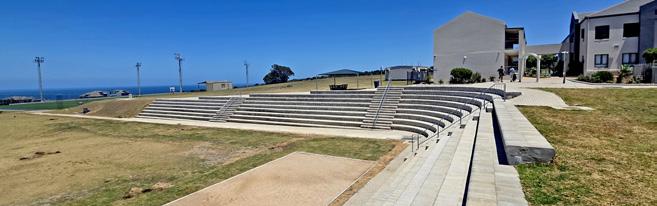
Client: Curro
Architect: BPAS Architects
Engineer: KLS Consulting Engineers
Quantity Surveyor: Calcoli Projects
Main Contractor: Bauen Contracts
Terraforce® licensed block supplier: Mobicast
systematically up the embankment, ensuring structural integrity at every level.
The curve presented the greatest challenge on site, and to maintain accuracy throughout, Louw set out the full curve as a single continuous arc, then subdivided it into shorter, manageable sections marked with building wire. Ongoing inspections were done at each stage to verify alignment and ensure that the curve remained true to the design.
The paving pattern around the steps was also designed and specified by the engineer, and

Construction excellence requires trusted materials... with Sika, our customers can relax
The Terraforce® 4×4 Step™ blocks were installed using concrete infill, rebar and a reinforced foundation to ensure long-term structural integrity
standard paving methodology was followed in accordance with that design.
The 4x4 Step™ block is specifically engineered for terraced applications, offering a consistent tread depth and riser height that meets safety expectations for public use. Its interlocking design – combined with mortar and reinforcement – delivers the robustness required for a permanent public assembly area exposed to the harsh coastal climate of Mossel Bay.
Steel handrails punctuate the stepped sections, guiding spectators safely up and between the tiers

A landmark for the school
The completed pavilion is more than functional seating – it is a defining architectural feature of the Curro Mossel Bay campus. Viewed from the sports fields, the broad, curving tiers of grey Terraforce blocks, framed by the blue of the Southern Cape sky and the ocean horizon, give the school grounds a sense of permanence and pride. It is a space that will serve generations of students, parents and supporters for years to come.
In construction, the most expensive work is often the work that has to be redone. Across both the public and private sectors, the costs of failure are rarely limited to a simple fix. When quality slips, specifications are misunderstood or the application is inconsistent or incorrect, the result is rework, delays, and in the worst cases, significant safety and compliance consequences.
Paul Adams, Managing Director at Sika South Africa, says this “pay twice” reality is back in sharper focus for asset owners, contractors and homeowners alike.
“People tend to treat failure as an isolated incident, but in the built environment, it often becomes a chain reaction that includes additional materials, labour, delays, professional fees, downtime, reputational impact and the ripple effects that come with projects falling behind schedule,” he explains.
“For homeowners, the same logic applies at a different scale. Waterproofing that fails after the first rainy season, sealants that don’t perform as expected, or repairs that aren’t done as a system can turn a small job into an ongoing headache. Nobody budgets for paying twice, yet it happens often.”
A number of well-documented public cases have reinforced the importance of accountability and compliance across the sector, particularly where oversight and building control processes fail. South Africa also faces the challenge of ageing buildings and facilities, with significant maintenance backlogs. In an official parliamentary reply, the infrastructure maintenance backlog for state-owned facilities has been cited at approximately R30 billion.
“These numbers matter because they reframe prevention as a strategy rather than an afterthought. Whether the asset is public infrastructure, a commercial development or a residential property, the lesson is that reactive repairs are expensive,” notes Adams.
He adds that prevention comes down to a handful of fundamentals, including system-led specification, consistent workmanship and access to technical guidance. “In many cases, problems start when products are treated as standalone items instead of part of a working system,” he says.
“Concrete performance, waterproofing integrity, sealing and bonding, reinforcement and protection are all elements that interact, and that same systems thinking applies across different sectors and environments. When systems are compatible and correctly specified, the outcome is far more predictable and safer.”
The sector is increasingly focused on what good looks like in practice, particularly around inspection quality and accountability. The NHBRC, for example, has reported strides in improving the quality of building inspections and in formalising the inspection profession through the accreditation of building inspectors, which Adams says is an important step towards consistency and professionalism.
“If prevention is a discipline, then the choice of partners matter because they help teams implement that discipline consistently,” say
s s-sector experience, from major infrastructure and commercial builds to everyday residential applications, backed by technologies that have been tested in different conditions.”
South Africa has seen what’s possible when complex projects are delivered with the right expertise and systems. Sika solutions have supported some of the country’s most recognised builds, including the stadiums built for the 2010 FIFA World Cup (ranging from concrete additives to flooring solutions), the Gautrain (concrete additives), Kusile Power Station, and projects such as Ludeke Dam. Adams says these projects reflect the value of having access to depth across multiple construction disciplines, particularly when site conditions and performance requirements vary.
“Those builds underline a simple truth,” adds Adams. “Getting it right first time is cheaper, safer and far less disruptive than fixing it later, and peace of mind comes from knowing there’s depth of expertise and support behind the outcome.”
“When you use solutions that have been tried, tested and trusted across different environments, you know you’re supported by real technical expertise. That confidence is exactly why our customers can simply say: Relax, it’s Sika,” Adams concludes.

GCP’s waterproofing membrane technology is trusted globally for use in demanding applications where long-term protection is critical
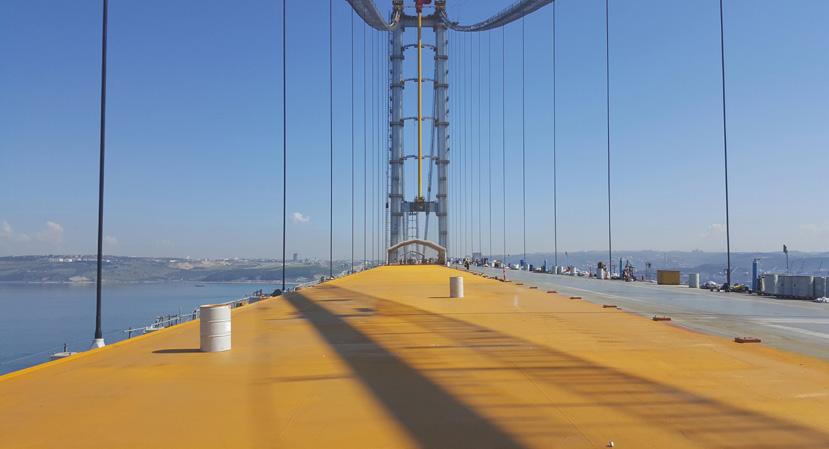
Within the Saint-Gobain group, GCP’s internationally recognised waterproofing membrane technologies are setting the standard for reliability and performance in demanding construction applications. Across Africa, these solutions are available through Chryso Southern Africa, offering contractors and engineers a range of advanced products for below-ground and above-ground protection.
Among the leading solutions in the range are BITUTHENE® 3000 and low temperature membrane, PREPRUFE® 120S pre-applied membrane, and PREPRUFE ® DLM (Detailing Liquid Membrane) – each engineered for specific site conditions to ensure long-term waterproofing integrity.
BITUTHENE® 3000 is a self-adhesive highperformance membrane designed for critical waterproofing applications in basements, retaining walls and substructures. It combines a robust cross-laminated HDPE film with a selfadhesive rubberised asphalt layer, providing excellent adhesion, tear resistance and durability. Its proven track record in both commercial and infrastructure projects makes it a go-to choice for challenging environments.
For projects where colder conditions can impact installation, BITUTHENE ® Low Temperature Membrane offers the same reliable performance with a special adhesive formulation designed to allow easier handling and application in lower ambient temperatures. This ensures quality results year-round.
The PREPRUFE® 120S Membrane is a fully adhered, pre-applied waterproofing system that forms a permanent bond to concrete, preventing water migration and protecting against ingress
even if the membrane is damaged during construction. This feature is particularly valuable for deep basements, tunnels and other belowgrade structures where water pressure can be significant.
PREPRUFE® DLM (Detailing Liquid Membrane) has been developed to deliver the same preapplied fully bonded performance in horizontal applications, offering high durability, chemical resistance and consistent protection for waterproofing details.
“These membranes are proven in projects worldwide and have been extensively tested in the harsh conditions often encountered locally,” explains Andries Janse van Rensburg, Specialty Materials Head - Infrastructure BU at Chryso Southern Africa. “Choosing the right membrane is critical to ensuring the service life and performance of a structure, and our technical team works closely with customers to specify the best solution for each application. With these products, contractors benefit from both ease of installation and long-term protection.”
Through Chryso Southern Africa, customers gain access to not only the GCP range but also the technical expertise needed to ensure correct specification, detailing and installation – all essential for avoiding costly failures later in a project’s life.
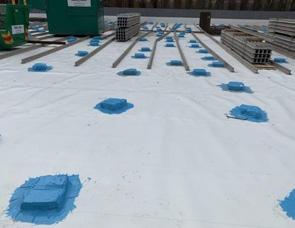
PREPRUFE® DLM is a durable liquid membrane solution specifically designed for demanding horizontal applications
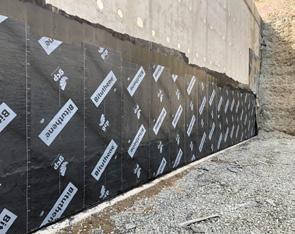
From basements to major civil works, GCP’s solutions deliver dependable waterproofing performance
From commercial basements to large scale civil works, the combination of Chryso’s local support and GCP’s proven technology is providing the South African construction sector with waterproofing membranes that deliver dependable performance in every application.






























































AECOM siphokuhle.dlamini@aecom.com
AFI Consult banie@afri-infra.com
ARRB Systems info@arrbsystemssa.com
Asla Construction (Pty) Ltd johanv@asla.co.za
Atana info@atana.co.za
BMK Group brian@bmkgroup.co.za
Bosch Projects (Pty) Ltd mail@boschprojects.co.za
BVI Consulting Engineers marketing@bviho.co.za
Camjet info.jhb@camjet.co.za
CCG puhumudzo@ccgsytems.co.za / info@ccgsystems.co.za
Civil Designer info@civildesigner.com
Civtech Engineers (Pty) Ltd admin@civtech.biz
Corrosion Institute of Southern Africa secretary@corrosioninstitute.org.za
Dlamindlovu Consulting Engineers & Project Managers info@dlami-ndlovu.co.za
EFG Engineers info@efgeng.co.za
Elster Kent Metering Mark.Shamley@Honeywell.com
EMS Solutions paul@emssolutions.co.za
ENsync Engineers info@ensync.africa
ERWAT mail@erwat.co.za
Gabion Baskets mail@gabionbaskets.co.za
GIBB marketing@gibb.co.za
GIGSA secretary@gigsa.org
GLS Consulting info@gls.co.za
Gorman Rupp Cordeiro@gormanrupp.co.za
Hatch Africa (Pty) Ltd info@hatch.co.za
HB Glass Filter Media info@hardybulkinglass.com
Herrenknecht schiewe.helene@herrenknecht.de
HSA Technology (Pty) Ltd cs@hubersa.com
Hydro-comp Enterprises info@edams.co.za
IMQS Software (Pty) Ltd shemine.adams@imqs.co.za
Infrachamps Consulting info@infrachamps.co.za
Institute of Waste Management of Southern Africa iwmsa@iwmsa.co.za
iX engineers (Pty) Ltd hans.k@ixengineers.co.za
Izinga Holdings info@izingalabezi.co.za
JG Afrika DennyC@jgafrika.com
KABE Consulting Engineers info@kabe.co.za
Kantey & Templer (K&T) Consulting Engineers ccherry@ct.kanteys.co.za
Kitso Botlhale Consulting Engineers info@kitsobce.co.za
KSB Pumps and Valves (Pty) Ltd salesza@ksb.com
Kuhle Mcebo Engineers admin@kuhlemceboeng.co.za
KUREMA Engineering (Pty) Ltd info@kurema.co.za
Lektratek Water general@lwt.co.za
Loshini Projects muzi@loshini.co.za
m4a fagan@m4a.co.za
Makhaotse Narasimulu & Associates mmakhaotse@mna-sa.co.za
Mariswe (Pty) Ltd neshniec@mariswe.com
Martin & East gbyron@martin-east.co.za
M & C Consulting Engineers (Pty) Ltd info@mcconsulting.co.za
MPAMOT (Pty) Ltd mpumem@mpamot.com
Mvubu Consulting & Project Managers miranda@mvubu.net
NOTHI Group info@nothigroup.co.za
NTGR Engineering info@ntgr.co.za
Nyeleti Consulting naidoot@nyeleti.co.za Rainbow Reservoirs quin@rainbowres.com
Re-Solve Consulting (Pty) Ltd maura@re-solve.co.za
Ribicon Consulting Group (Pty) Ltd info@ribicon.co.za
SABITA info@sabita.co.za
SAGI annette@sagi.co.za
SALGA info@salga.org.za
SAPPMA admin@sappma.co.za / willem@sappma.co.za
SARF administrator@sarf.org.za.co.za
SBS Water Systems marketing@sbstanks.co.za
Silulumanzi Antoinette.Diphoko@silulumanzi.com
Siroccon International (Pty) Ltd admin@siroccon.co.za
SiVEST SA info@sivest.co.za
Sizabantu Piping Systems (Pty) Ltd proudly@sizabantu.com
Siza Water (RF) Pty Ltd PA@sizawater.com
Sky High Consulting Engineers (Pty) Ltd nobesuthum@shconsulting.co.za
SKYV Consulting Engineers (Pty) Ltd kamesh@skyv.co.za
Smartlock jp.alkema@smartlock.net
SMEC capetown@smec.com
SOUTH AFRICAN VALUE EDUCATION Sabiha@savegroup.co.za
Southern African Society for Trenchless Technology director@sasst.org.za
SRK Consulting jomar@srk.co.za
Structa Group info@structatech.co.za
Superior Filtration (Pty) Ltd info@superior-filtration.com
TPA Consulting roger@tpa.co.za
Ultra Control Valves peter@ultravalves.co.za
V3 Consulting Engineers (Pty) Ltd info@v3consulting.co.za
Videx Storage Tanks sales@vidextanks.co.za
Water Institute of Southern Africa wisa@wisa.org.za
Wam Technology CC support@wamsys.co.za
Zimile info@zimile.co.za
Zutari charmaine.achour@zutari.com

By partnering with Tjeka Training Matters, Roadmac Surfacing – a Raubex Group Limited entity – is already delivering tangible benefits through its Bloemhof road surfacing project in North West province, positively impacting a poorer community within its operational footprint.
By directly involving local residents in the upgrade of a community centre, the project has also fostered a strong sense of ownership. This, while equipping them with the knowledge to maintain and care for the facility once it has been fully refurbished by the municipality. In addition, the 12 community members who were recruited to the programme have learnt a range of critical skills, including plumbing, carpentry, and glazing.
Coenraad Basson, site agent at Roadmac Surfacing, says he worked closely with Frans Toua, Tjeka’s Chief Executive Officer, as well as the community to ensure a long-lasting impact.
“Raubex Group has built a strong, enduring partnership with Tjeka over many years,” says Basson. “This specialist construction training company understands our skills training and development needs and consistently delivers through clear, open communication directly with Frans.” In carpentry, designated community members repaired stage planks, installed skirting quadrants, hung new doors, replaced door locks, and repaired damaged external eaves. “The eaves repairs were particularly challenging due to the double-storey height, requiring specialised scaffolding to be brought in from Pretoria by Roadmac – highlighting the scale and technical demands of the work undertaken,” Basson explains.
Their plumbing skills were applied through the replacement of broken washhand basins and toilets in the ablution facilities. In addition, glazing repairs were carried out, with broken glass panes replaced to restore safety and functionality. Painting work included repainting the hall interior, ablution facilities, doors, and stage floor planks, giving the space a renewed and refreshed appearance.
“This practical application reinforced the participants’ confidence, competence, and readiness to apply their skills in future work opportunities,” Basson says, adding that he was very impressed with the overall workmanship of the community members.
“This bears testament to the exceptionally high-quality training that they received from Tjeka,” Basson concludes.
The eaves repairs were particularly challenging due to the height, requiring specialised scaffolding
In a November 2025 report, procurement fraud was experienced by 56% of African respondents, dwarfing cyberfraud at 23%. This is according to the “Combatting fraud in a perfect storm” findings published by the Association of Chartered Certified Accountants (ACCA). By comparison, the global prevalence of cyberfraud is 39%, followed by procurement fraud at 34%.
As Africa’s largest economy, South Africa contributes significantly to this shocking statistic and needs to take proactive, preventive measures to rein in procurement fraud,” says Elani Vogel, Senior Forensic Manager at Loxton Forensics.
This is especially true as a revitalised National Prosecuting Authority starts to enforce legislation that is set to curb corruption and hold business entities accountable.
Guilty by association
Section 34A was added to the Prevention and Combating of Corrupt Activities Act 12 of 2004 (PRECCA) in April 2024. It effectively states that any member of the private sector or a state-owned entity is equally guilty if a person associated with them bribes a third party with the intention of benefitting the member’s business.
Simply put: Person A works for Company B; Person A bribes Person C; therefore, Person C awards some business benefit to Company B. If Person A is found out, Company B is guilty by default, regardless of their ignorance of Person A’s actions.
For example, a company’s sales manager bribes a customer’s procurement officer to win a contract for their company. Because the sales manager is associated with the company and the company benefits from the bribe, the company is also guilty of an offence. However, the company is saved if it had implemented “adequate procedures” to prevent its sales manager from bribing others and will not be held accountable.
Although Section 34A technically applies to companies and other forms of businesses in the private sector, directors or senior management
controlling these entities are ultimately responsible for driving the development and implementation of such procedures, especially in procurement. “Which procedures prove ‘adequate’ can only be determined if the organisation knows what their current state is and where their blind spots are,” says Vogel.
While emerging legislation aims to compel corporate leaders to take action against fraudulent acts, procurement fraud can be incredibly difficult to detect.
Cyberfraud occurs infrequently per company but is highly visible when it does. Procurement fraud, on the other hand, often goes unnoticed because it is deeply embedded in legitimate, trusted processes. Collusion between employees and suppliers is a primary driver of procurement fraud, allowing for manipulation of bids, pricing and vendor selection while appearing compliant.
Small, unauthorised but seemingly normal transactions compound over time, eventually costing organisations more than any cyberattack. Unfortunately, traditional controls and audits tend to focus on compliance, missing behavioural patterns that could expose coordinated and repeated misconduct.
“Organisations need to move away from postmortems that only reveal what happened after it’s too late, and adopt a digital, data-driven culture that exposes fraud before it can cause irreparable harm,” Vogel continues.
Vogel says she encourages her clients to move their data to the Cloud as much as possible, and implement a data analytics approach to fraud prevention.


“Preventive forensic investigation can match transactional patterns in organisational data to patterns known to be associated with fraud, something that is often too labour intensive to attempt manually,” she says.
Examples include repeated vendor awards, pricing anomalies and transaction splitting, that point to systemic issues rather than isolated incidents.
Professional forensic investigators can also assist companies in developing the necessary “adequate procedures” required but not detailed by the Act, as well as policies and processes that foster an anti-fraud culture within their organisation.
“Employing preventive forensic technologies and expertise against fraud will help ensure entities comply with the law, maintain their sustainability, lock in profits, and protect their reputation with shareholders and the public,” Vogel concludes.





www.imesa.org.za


















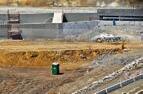









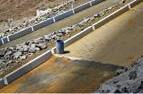
















TO ADVERTISE
Joanne Lawrie
c +27 (0)82 346 5338
e joanne@infraprojects.co.za
TO SUBSCRIBE
e distribution@infraprojects.co.za
Contact us for content marketing opportunities






IMIESA , weekly newsletters , social media posts and www.imesa.org are the platforms used by your target audience for information on infrastructure development, maintenance and service delivery. Our readers are key decision-makers in the industry.