How Signs & Lines engineers crane signage to withstand height, vibration and strict structural compliance
Beyond push-button production: How human automation will revolutionise print manufacturing over the next five years
Where intent shapes materials engineering: Avery Dennison redefines engineering sustainable performance with Greenscape
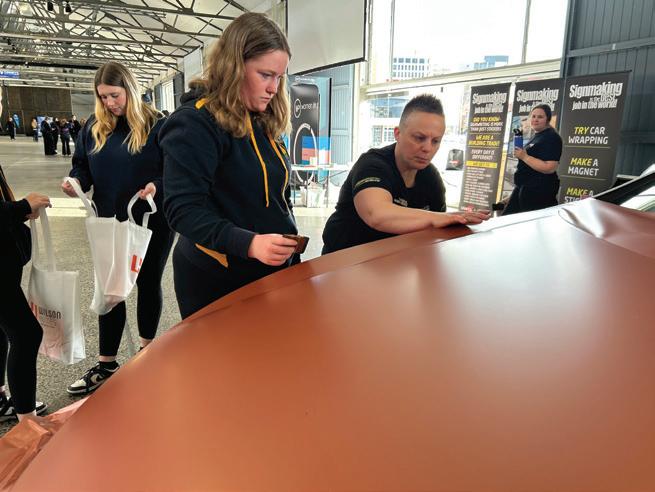
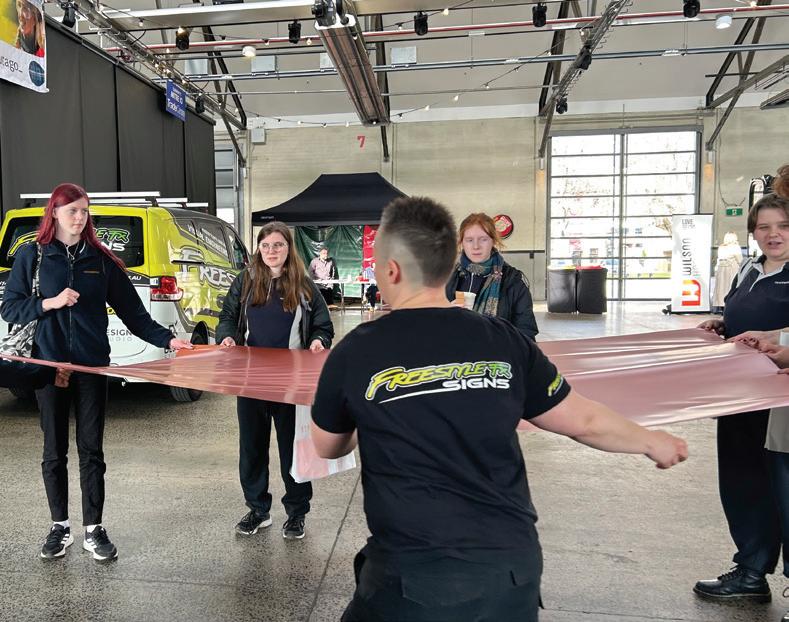
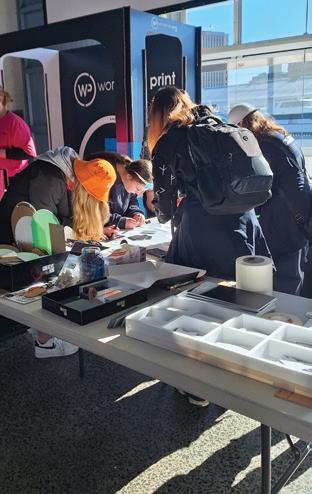
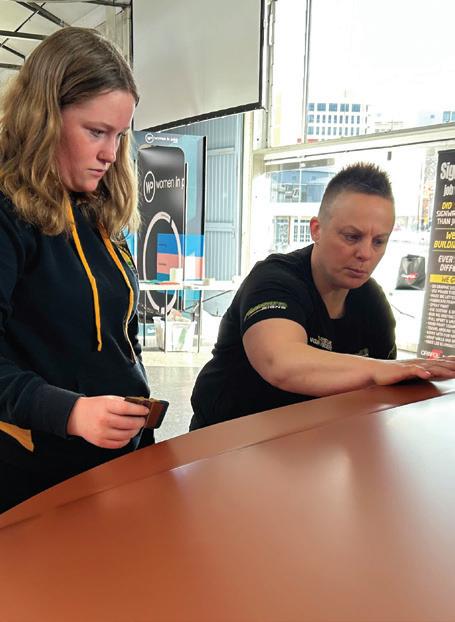
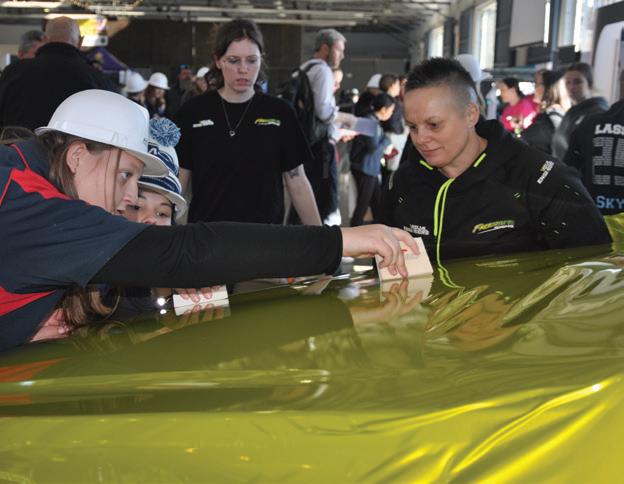
The Future is fearless: How Sacha Rattray is bringing more women into the industry
Payday Super is almost here: Are you ready for the next Superannuation deadline?
The Power of One: How encouragement, or its absence, defines professional growth
Welcome to the February issue of Digital Image Magazine
Settling into the new year rhythm, many are reflecting on the rapid rise and rest of artificial intelligence in 2025. Early enthusiasm promised sweeping change. In practice, the results were mixed. AI has proven to be a powerful and increasingly practical tool, but not a substitute for human judgment, skill or experience. For print and signage businesses, the priority remains in recognising that people are the true competitive advantage for any business.
Central to the industry’s long-term stability and strength is its focus on people. This year’s International Women’s Day theme, on March 8, is “Balance the Scales.” UN Women Australia notes that “when women and girls stand equal, families are stronger, workplaces are fairer, communities thrive, and society becomes safer for everyone.”
In this issue, we explore how that balance is achieved. At the Fearless Festival, Sacha Rattray’s work to attract young women into
the industry highlights how visible, intentional outreach can broaden participation and strengthen the future workforce.
We also speak with Nigel Spicer, General Manager of Cactus Imaging, one of the world’s leading digital grand format printing companies. Spicer offers insight into leadership, sustainability, industry collaboration and the realities of operating at scale in a complex market. His perspective reinforces the importance of strategic alignment between operational execution and long-term vision.
Event calendars are already filling, with FESPA Global returning in May, this year hosted in Barcelona, Spain. The global event brings together leaders in wide-format, signage and specialty print. Closer to home, the Visual Impact Conference and Expo runs from 2–4 September in Sydney. The show will provide Australian businesses with the opportunity to connect, assess new
technologies and evaluate emerging trends shaping the local market. The Australian Sign & Graphics Awards are open, with the gala dinner on 3 September, also in Sydney.
As always, we love hearing and sharing your stories. If you have a project to showcase, a hard-working apprentice to profile, or an achievement to celebrate, contact us at editor@imagemagazine.com.au.
Stay connected with the latest industry news at imagemagazine.com.au, sign up for our weekly newsletter, and follow us on social media @imagemaganz.
Warm regards, Stephanie Editor
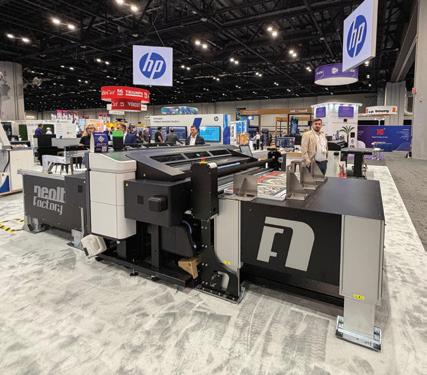
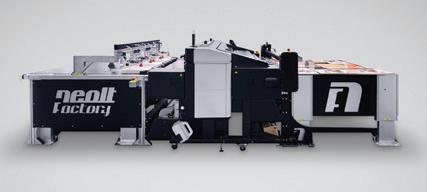
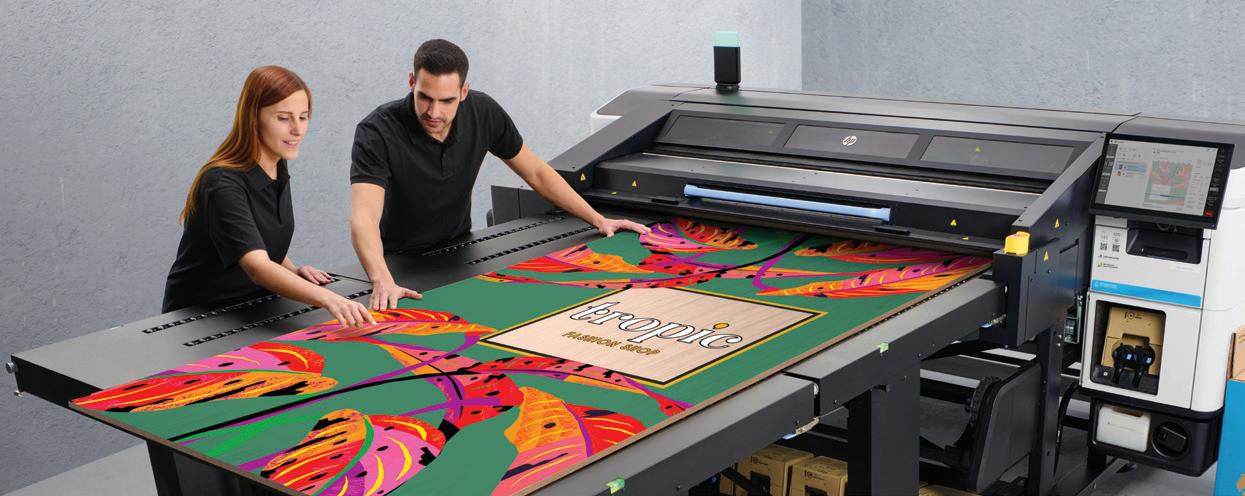
Celmac and Neolt Factory ink exclusive deal for HP-developed Feeder and Stacker
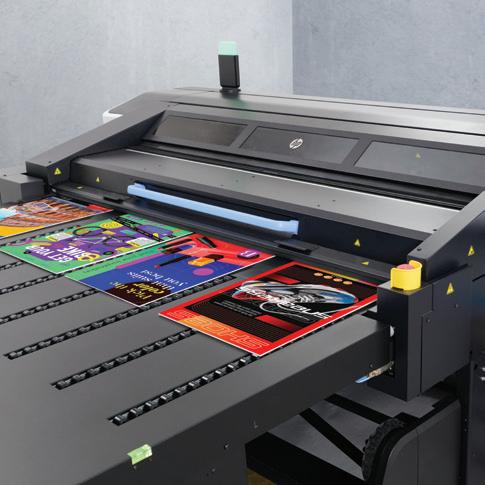
Celmac and Neolt Factory have announced the completion of an exclusive agreement for the release and distribution of the Automatic Feeder & Stacker system jointly developed with HP. The system is designed for attachment to the R-series HP printers, including the R1000, R2000, and the new R530.
“The goal with this system is to remove production bottlenecks, improve safety, and allow for unattended operation. It is designed to meet the demands of modern production environments while offering the flexibility to adapt to different equipment setups,” says Neolt Factory’s Ettore Briccoli Pontiggia, adding that the company was “pleased to partner with Celmac in the Australian
market as they were workflow conscious” he additionally noted Celmac’s technical expertise with HP’s R series printers.
The new system supports up to 40cm of material on both input and output tables and includes automatic height adjustment to maintain level operation throughout the job.
Both the feeder and stacker can be tailored to accommodate varying panel sizes, layouts, and throughput requirements. The system also features autonomous motion control, enabling seamless communication with connected devices and facilitating its operation as part of an integrated print or finishing line.
Celmac’s Jonny Rumney and Matt Hall put the Neolt Factory System through its paces
on the HP stand at Printing United and were impressed with the productivity, especially its integrated software and seamless operation with the HP R series printers, a real winner for Australian print service providers.
Celmac MD Wayne McIntyre confirmed that the company would install complete operating systems in its showrooms in Melbourne, Sydney, and Brisbane, allowing customers to experience the efficiencies of the Neolt Factory Automatic Feeder & Stacker in full production through an HP R series printer. Additionally, the system would be paired with the iEcho Graphics Cutter for a complete workflow solution.
Release information and availability are expected in early 2026.
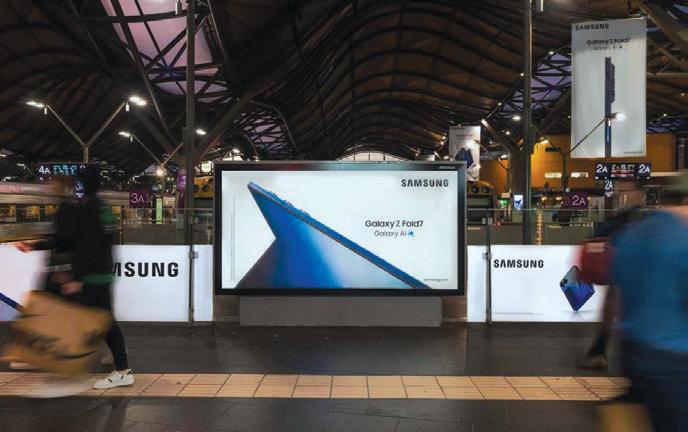
JCDecaux Expands Global Programmatic DOOH
JCDecaux has expanded its global programmatic Digital Out-of-Home (pDOOH) solution beyond airports to street, transport and retail environments.
The offering spans more than 30,000 digital screens across 35 markets, enabling real-time, data-driven campaign activation via VIOOH SSP and over 55 DSPs.
Jean-François Decaux described it as “the world’s first truly global programmatic DOOH media solution”, designed to make out-of-home more flexible and measurable.
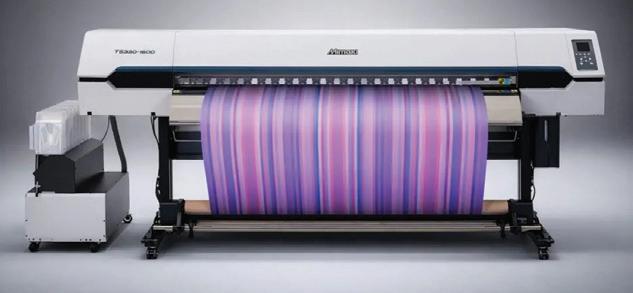
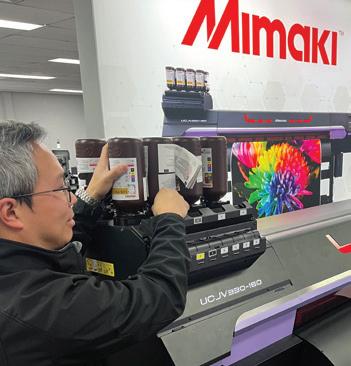
Mimaki Expands TS330 with Wider 1800mm Model Mutoh Releases XpertJet 1641SR Pro II
Mimaki has upgraded its TS330 Series dye-sublimation printers, introducing expanded ink compatibility and a new wider-format model to enhance colour vibrancy and production efficiency.
The update enables full compatibility across the TS330 Series with Mimaki’s Sb411 inks, including Orange, Violet, Fluorescent Pink and Fluorescent Yellow. The expanded configuration supports up to 11 inks, broadening the colour gamut and improving saturation and accuracy for applications spanning fashion, sportswear, soft signage and home décor.
The new TS330-1800 model offers a maximum print width of 1940 mm, allowing single-piece production of wide textile fabrics such as curtains and tapestries. The increased width also enables multiple panels to be printed side by side, reducing sewing, pattern matching, material waste and overall production time.
Arjen Evertse, Director of Sales at Mimaki Europe, said demand for visually impactful textile prints continues to grow, particularly in branded sectors. He noted that the addition of fluorescent inks enables more saturated and accurate colour output, while the wider-format model supports business expansion into digitally printed home décor.
The TS330 Series uses OEKO-TEX ECO-PASSPORT certified Sb411 inks, supporting environmentally responsible textile production.
The TS330-1800 will ship with TxLink5 Lite RIP software to streamline workflow management. Mimaki said the TS330-1800 will Be available across the EMEA region from Spring 2026, extending the upgraded series into wider-format textile applications.
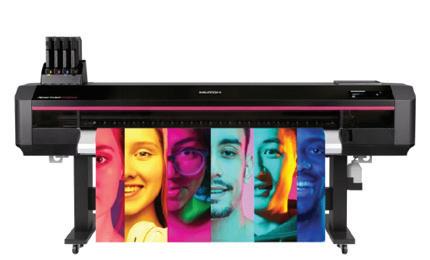
Mutoh has launched the 64-inch XpertJet 1641SR Pro II eco-solvent printer for professional signage and graphics production.
The printer features the AccuFine HD Pro printhead with i-Screen EX control system, delivering speeds up to 17.6 sqm/h. MS51 ecosolvent inks are UL GREENGUARD Gold certified and GBL-free.
Additional automation features include DropMaster 2 and FeedMaster for alignment and feed accuracy. The system targets indoor and outdoor signage, vehicle graphics and retail displays.
Roland DG Expands Global Reach with LSINC Partnership
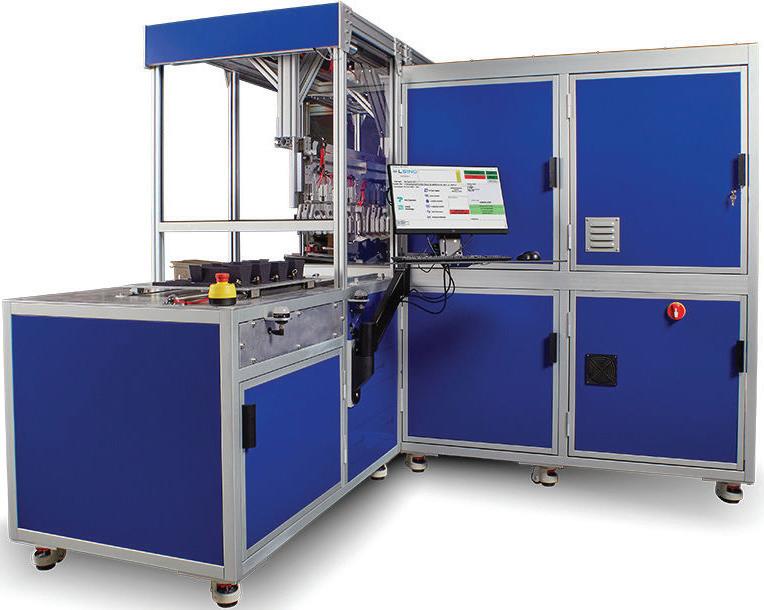
Roland DG has entered a global distribution agreement with LSINC Corporation, extending access to LSINC’s Peri-series direct-to-object printers worldwide.
The partnership builds on earlier collaboration in Latin America and covers the PeriQ360, Perivallo360m and PeriOne
systems. These industrial platforms deliver 360-degree printing on cylindrical, tapered and contoured objects including glass, metal and plastics.
Andrew Oransky, Chief Strategy Officer, Roland DG, said the systems complement Roland DG’s UV portfolio and enable customers to scale production.
The PeriQ360 features quad-spindle configuration for simultaneous printing of four items, while the Perivallo360m supports full-contour printing on complex shapes. The PeriOne provides an entry-level solution for prototyping and small-batch production.
The partnership will debut at PPAI Expo 2026 in Las Vegas.
Kyocera has developed a new inkjet printhead capable of jetting high-viscosity industrial liquids of up to 80 mPa·s, addressing a longstanding limitation of conventional inkjet systems.
The printhead incorporates a proprietary piezo actuator structure and optimised fluid channel design to enable stable jetting of viscous materials. Featuring 1,584 nozzles and a resolution of 360 × 360 dpi across an effective print width of 111.69 mm, it is designed for applications including advanced manufacturing, automotive painting and
additive manufacturing.
Kyocera claims the device is the first in its class to combine more than 1,500 nozzles with support for viscosities of 80 mPa·s or higher. Under evaluation conditions, it demonstrated 280 picolitre drop volumes—up to 20 times larger than conventional systems—and can jet materials up to 16 times more viscous than previous models.
The development responds to industry demand for improved production efficiency and reduced material waste in sectors such as semiconductor fabrication, printed electronics and 3D mould production.
CPH Group Rebrands as ProGrafik
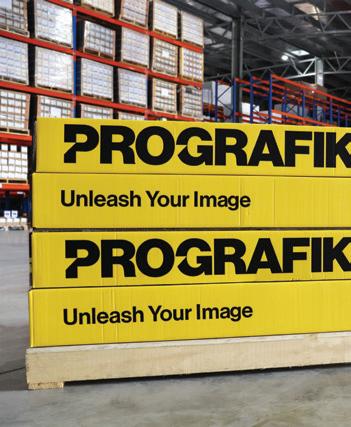
CPH Group, a long-established supplier to the signage and wide-format print industry, has announced a rebrand to ProGrafik, saying this marks a significant new chapter for the Australian-owned and operated business.
The rebrand reflects the company’s evolution into a modern, national trade supplier, bringing more than 60 years of industry experience under a name that more clearly represents its professional customer base and its focus on quality, performance and reliability.
CEO Tristan Hornsey says the new name reflects the company’s evolution from a family hardware and paint store in the 1940s into a national supplier trusted by printers, signmakers and installers.
“We’ve supported the industry for more than six decades,” Hornsey said, “ProGrafik gives us a fresh and focused identity, one that matches our ambition, our expanding product range and the support we provide to customers across the country.”
ProGrafik will continue to operate with the same ownership, team, product range and service model. Hornsey notes that customers will continue to receive the services the business is known for, backed by a renewed commitment to innovation, streamlined ranges
and improved digital ordering.
“The ProGrafik brand has been developed to bring greater clarity to the market and create a stronger, more cohesive identity. It also aligns with ongoing investment in product development, including a new range of ProGrafik-branded products, as the business continues to expand its footprint and support the evolving needs of the industry.”
Pantone has selected PANTONE 114201 Cloud Dancer as its 2026 Colour of the Year, describing it as a “billowy white imbued with serenity”.
The Pantone Color Institute said the shade reflects a global shift towards calm and clarity. Vice President Laurie Pressman said its clean quality “allows our imagination to drift so that new insights and bold ideas can emerge.”
Executive Director Leatrice Eiseman added: “The cacophony that surrounds us has become overwhelming… Cloud Dancer enhances our focus.”
Brand collaborations will include Joybird, Mandarin Oriental, Play-Doh, Motorola, Pura and Post-it Brand.
Meteor Launches Real-Time Nozzle Monitoring
Meteor Inkjet has launched Nozzle Health Technology, enabling realtime monitoring of every nozzle in an inkjet printhead.
The system measures impulse response in milliseconds, identifying blockages or wetting before print defects occur. It integrates with Meteor’s NozzleFix software for automatic compensation or targeted maintenance.
Managing Director Clive Ayling said: “This innovation turns nozzle reliability from a hidden risk into a controlled, measurable parameter.”
The technology is positioned for additive manufacturing, printed electronics and high-speed packaging applications.
Brother Launches Tender Offer for Mutoh
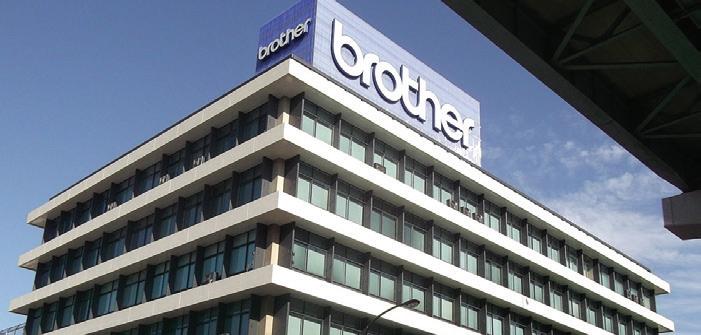
Brother Industries Ltd has launched a tender offer to acquire all outstanding shares in Mutoh Holdings Co., Ltd, aiming to make the company a wholly owned subsidiary.
Announced on 4 February 2026, the offer is priced at 7,626 yen per share, valuing the transaction at approximately 35.0 billion yen. The offer period runs from 5 February to 23 March 2026.
Mutoh’s board has endorsed the proposal and recommended shareholders accept.
Brother currently holds no shares but has secured tender agreements covering 41.68 per cent of voting rights.
Brother said the move aligns with its medium-term strategy to expand its Industrial Printing and Printing & Automation businesses, citing the complementary nature of the two companies’ portfolios.
The acquisition will be funded from cash reserves and remains subject to shareholder participation thresholds and regulatory approvals.
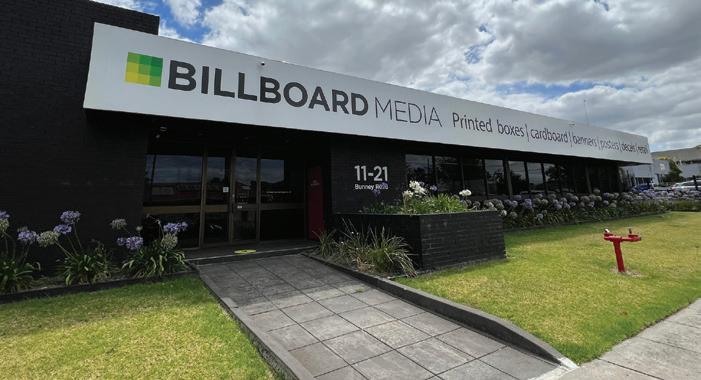
Billboard Media placed in Voluntary Administration
Large-format printer and outdoor media production house, Billboard Media, has entered voluntary administration, with Hall Chadwick partners Richard Albarran and John Vouris appointed on 8 December 2025.
A first meeting of creditors has been scheduled for 18 December 2025 at 10:00am AEDT, to be held at Hall Chadwick’s Sydney offices and simultaneously via teleconference. Creditors are required to lodge proofs of debt and proxies by 4:00pm on 17 December 2025.
Billboard Media is a long-established Melbourne business with a more than 40-
year operating history, originally founded by Randal Shreeve. It evolved into a high-capacity outdoor and retail media production specialist. The company services national campaigns across Australia and New Zealand and operates a substantial fleet of large-format machinery, including multiple EFI VUTEk Q5r five-metre roll-to-roll printers, a significant technology investment in 2021.
At the upcoming first creditors’ meeting, creditors will determine whether to form a committee of inspection and may also vote on whether to confirm or replace the current administrators.
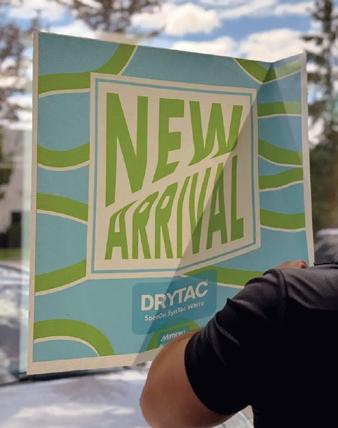
Drytac Launches PVC-Free SpotOn SynTac Film
Drytac has launched SpotOn SynTac, a 3.7 mil (92µ) polypropylene film designed for fast, tool-free installation of indoor and short-term outdoor graphics.
The PVC-free film features a removable dot-pattern polyacrylate adhesive for bubble-free application on smooth surfaces. It is available in white matte and clear gloss finishes and removes cleanly within 12 months.
Dennis Leblanc, Senior Product and Business Development Manager at Drytac, says, “It’s the go-to solution for short-term graphics that need to go up quickly and come down just as easily. When it’s time to take it down, it removes cleanly within 12 months.”
SpotOn SynTac is compatible with latex/ resin and UV printers and is available globally. The company positions the product as a sustainable solution aimed at reducing landfill impact and improving recyclability for short-term campaigns.
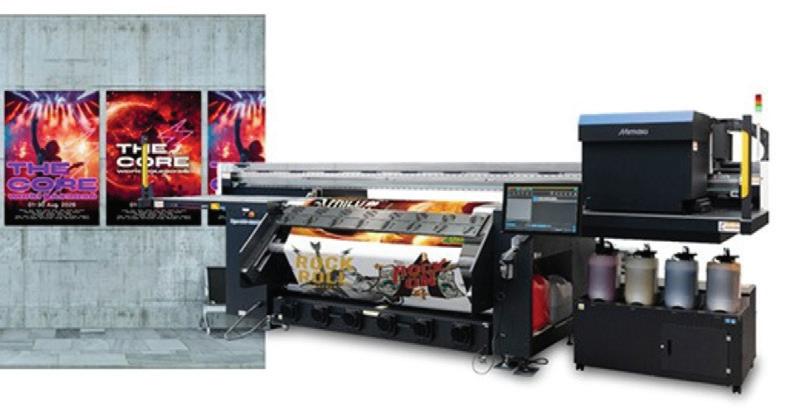
Mimaki announces aqueous AP50 ink for the Tiger600-1800TS sublimation transfer printer
Mimaki has announced its newly developed aqueous pigment ink AP50 for the high-speed sublimation transfer inkjet printer, Tiger6001800TS, with sales commencing in February 2026. The company states that this solution is designed for the volume production of short-term posters, POP displays, and similar applications.
The Tiger600-1800TS combines Mimaki’s proprietary image processing technology with a high-speed drive print head to achieve both high productivity and high image quality. Mimaki says the printer brings its key features of high-speed and high-quality output to the poster and POP graphic printing market through the support of the newly developed aqueous pigment ink, AP50.
AP50 ink is designed to maximise the performance of the printer and deliver vivid colour reproduction. The company says it has excellent drying properties, resulting in sharp, smudgeresistant images. With its high saturation in the red spectrum, it is particularly suited for applications requiring high visibility and impact, such as campaign visuals and food posters.
Its large-capacity ink tanks, holding 10kg each of CMYK ink, enable long-run operation while reducing ink costs per print. In addition, the Ink Save Function included in the standard RIP software optimises ink consumption based on application, allowing for more cost-effective output of large volumes of posters and POP displays.
Mimaki has submitted the aqueous ink for assessment to receive GREENGUARD Gold certification.
The Tiger600-1800TS has a practical speed of 220sqm/h, offering high productivity, while its transport system minimises media wrinkling. It enables the stable mass production of eyecatching graphics for urban settings.
The printer is available as a total solution, including software, featuring a cloud-based monitoring tool, PICT, which visualises printer operation status and ink usage in real-time to support production planning.
Mimaki states that the printer will be available globally in 2026, with European markets launching in February 2026.
IVE Completes $35m Daily Press Acquisition
IVE Group has completed its acquisition of Sydney creative agency Daily Press for up to $35 million, supporting its ‘Now to 2030’ strategy.
The deal includes $25 million upfront, with deferred and earn-out payments linked to performance. Daily Press contributes approximately $23 million in annual revenue and $5.5 million EBITDA.
Managing Director Matt Aitken said: “With creativity increasingly driving marketing effectiveness… Daily Press strengthens our ability to deliver integrated, omni-channel solutions.”
The acquisition includes Daily Press’ proprietary martech platform, Indy.
Nine to Acquire QMS in $850m Deal
Nine Entertainment will acquire QMS Media for approximately $850 million, marking a strategic pivot towards digital out-of-home (OOH) advertising.
QMS operates one of Australia’s largest digital outdoor networks, including major contracts with the City of Sydney and Auckland Transport. The transaction coincides with Nine’s divestment of its radio assets—2GB, 3AW, 6PR and 4BC—to Arthur Laundy for $56 million, and the $15 million transfer of northern NSW television station NBN to WIN Network.
Nine chief executive Matt Stanton said the acquisition supports the group’s digital transformation strategy.
“QMS is a highly complementary media platform, offering Nine the opportunity to drive significant value by leveraging our premium content on QMS screens and creating an advertising proposition that spans from ‘sofa to street’,” Stanton said.
“These transactions will create a more efficient, higher-growth, and digitally powered Nine Group… The purchase and related sales mark a milestone in our Nine2028 transformation.”
QMS is forecast to deliver EBITDA of $105 million in calendar 2026, with more than 80 per cent of revenue contracted through to December 2028. OOH advertising’s share of national ad spend has grown from around 10 per cent in 2014 to 18 per cent, with QMS holding an estimated 15 per cent market share.
The deal, structured with an estimated $780 million cash outlay, remains subject to ACCC approval and is expected to complete by 30 June.
“Winner Winner Chicken Dinner!”
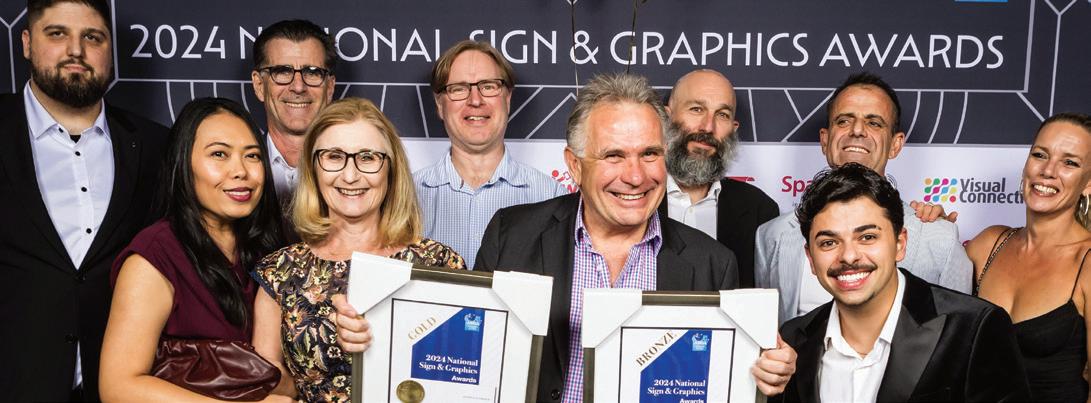
Entries are open for the 2026 ASGA National Sign & Graphics Awards
Hosted and run by ASGA, the Awards are the signage industry’s premier event, recognising achievement and showcasing the best work produced over the past two years.
Entries close at 5pm on Friday, 24 July 2024, industry businesses are encouraged to enter earlier and have their work recognised as among the best in the industry.
Categories cover a wide range of work, including traditional hand-painted or airbrushed work; digital LED and LCD signs; illuminated LED and neon projects; directional and wayfinding signage; engraved, fabricated and sculptural projects; pylon and sky signs; large-format digital print; printed fabrics, textiles and garments, and more.
To be eligible, projects must be completed between Saturday, 1 June 2024, and Tuesday, 23 July 2026.
ASGA President, Mick Harrold, says it’s important for those who intend to enter to select their best work, then also check the Entry Criteria carefully.
“First, identify your best projects from the past couple of years then check the 2026 Award Categories and the 2026 Terms & Conditions to check the eligibility of your chosen project, and to make sure you’ve chosen the best category for the work you’ve selected,” he recommends.
“Then, gather all the required information and photos to give yourself the very best chance of being recognised for your achievements. Remember to provide as much detail as you can - from concept to creation.
“Every signage project tells a story, and making sure our judges know what makes each project so special gives you the best chance of being among our finalists.”
The Awards are the best opportunity for sign and graphics businesses to benchmark their best work against the industry’s premier sign and graphics businesses, he adds.
“It’s also a great way to recognise the achievements of your team, and to increase your profile with customers and the wider industry. Previous entrants have also told us that the entry
process has provided a great platform to review and evaluate your business standards, goals and achievements, and to set team goals and performance standards.”
The Gala Awards Presentation Dinner, which will be held at the Sydney Showground, Sydney Olympic Park, on Thursday 3 September during the Visual Impact Expo, is a highlight of the sign industry calendar.
“As well as showcasing the variety and quality of work our industry can produce, the event is a perfect opportunity to entertain clients, reward your team and connect with industry peers. It’s a night not to be missed.”
The 2026 Awards are proudly supported by Gold Sponsors Avery Dennison, ORAFOL Australia and Spandex, and Bronze Sponsor Currie Group. To enter, or to find out more about the Gala Dinner, go to the Awards page at signs.org.au.
WHY ENTER?
• Elevate your brand: Entering the Awards positions your company as a leader in the industry.
• Boost morale: Show your team you recognise their skills and are proud of the work they’re producing
• Gain exposure: Shine a spotlight on the work you do, to expose your brand and capabilities to existing and new clients
• Celebrate your success: Enjoy celebrating your accomplishments and being recognised and rewarded by your peers
500 new and returning exhibitors for Barcelona 2026
It’s a little over 2 months until the FESPA Global Print Expo 2026, which will welcome more than 500 new and returning exhibitors from over 40 countries.
Taking place from 19–22 May 2026 at Fira de Barcelona, Spain, the event will once again bring together the global speciality print community across print, signage, personalisation, corrugated packaging and textile production.
Visitors can expect product launches, live demonstrations, and practical production solutions across hardware, finishing, software, automation, and sustainability. Technologies on display will range from wide-format and industrial print systems to textile and garment decoration, with a focus on lowimpact inks, materials and efficient workflows.
Confirmed exhibitors at the Expo include Agfa, Brother, Durst, EFI, HP, Mutoh, Roland DG and swissQprint. Cutting and finishing technology will be showcased by Kongsberg Precision Cutting Systems, Summa and Zünd, alongside finishing specialists such as Morgana Systems.
Software and workflow providers will demonstrate end-to-end production solutions covering colour management, RIP systems, job onboarding and scalable automation. Exhibitors include Caldera, Dataline, Enfocus, GelatoConnect SA International, PrintFactory, and XMPie, as well as web-to-print and personalisation platforms such as Design Huddle and OnPrintShop. A broad range of consumables and media suppliers will also exhibit, with companies such as 3M, Ahlstrom, Antalis, Arlon Graphics, Coldenhove, Hexis, Lintec, LX Hausys, Nazdar, Neschen, Sun Chemical and UPM Raflatac presenting inks, papers, selfadhesives and specialist substrates.
European Sign Expo will focus on signage and visual communications,
with exhibitors including Bakker Magnetics, Bermaq, Domino Sign, GOQLED, NSELED Europe and TPS, highlighting illuminated signage, display systems and fabrication solutions.
The new Textile feature will spotlight printing, fixation and finishing technologies from brands including Brother, DGI/d.gen, Durst, Kornit Digital, Klieverik, Monti Antonio, Polyprint, ROQ and Transmatic. The Personalisation Experience will centre on customisation software and automated production, while the new Corrugated platform will provide a dedicated space for corrugated packaging and POS display production, supported by a sector-led conference programme.
“It’s a real pleasure to be back in Barcelona for the first time since 2012,” says Michael Ryan, Head of FESPA Global Print Expo. “Visitors will have the chance to see a multitude of exhibitors, covering all aspects of print and signage, in one place… and leave with knowledge that they can put into practice in their businesses.”
Australian FESPA members planning to attend can contact Jane Dochert to obtain a members-only promotional code when registering for the event. FESPA ANZ Day will return on 20 May at 2:00 pm at Club FESPA, offering a dedicated opportunity to connect with peers and industry representatives.
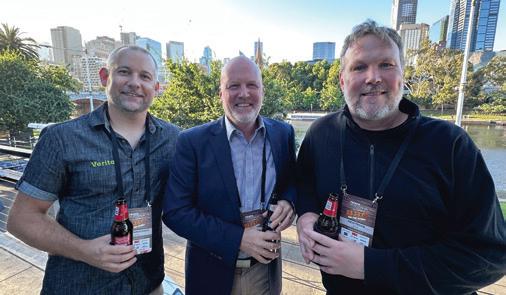
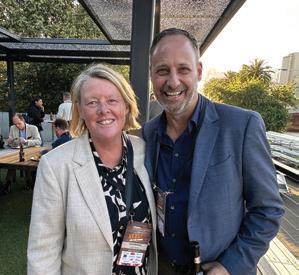
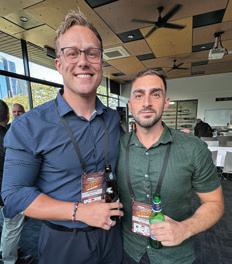
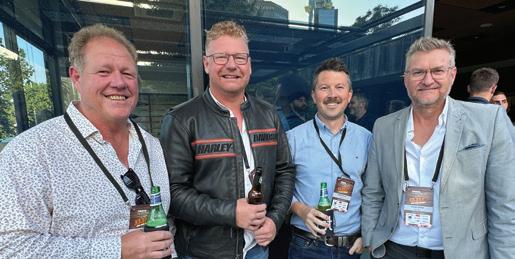
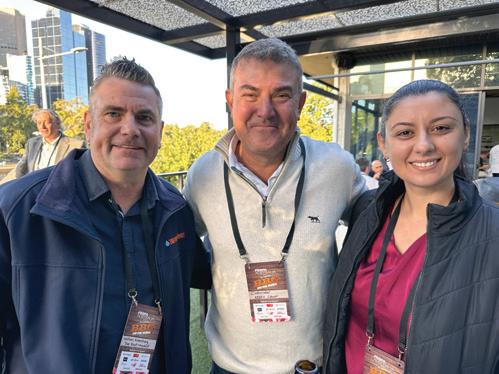
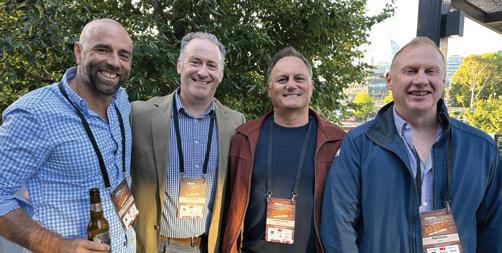
While the global focus turns to Barcelona in May, activity closer to home continues to strengthen the FESPA Australia community. Melbourne hosted the annual BBQ on the Yarra, an informal networking event that brought together industry peers for conversation, connection and shared insight.
Leading beyond the factory floor
Nigel Spicer on scale, collaboration and structural discipline at Cactus Imaging
In 24-hour grand format production, reputation is not protected by machinery alone. It is protected by people, planning and the way a business responds when pressure is at its highest.
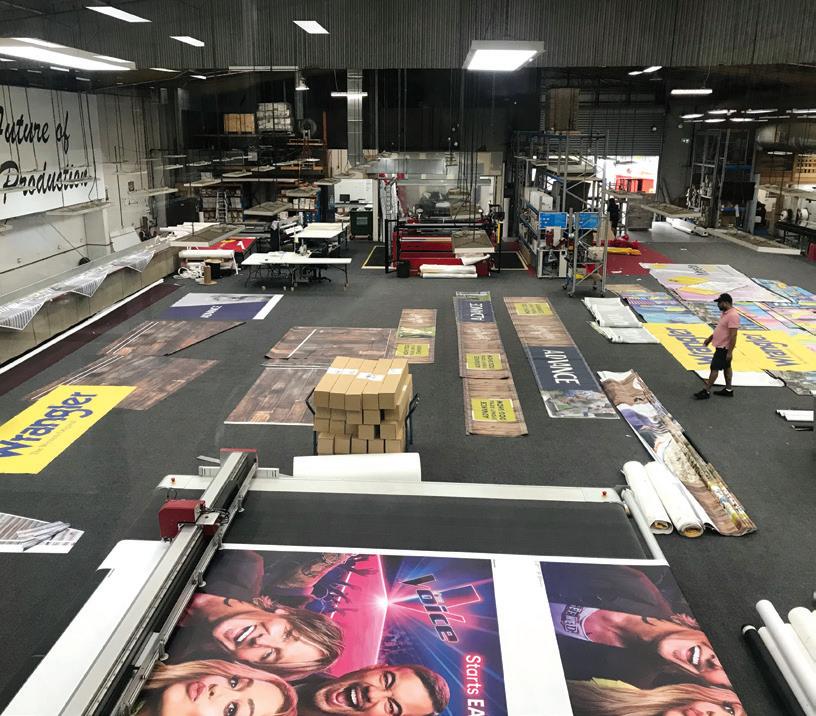
Cactus Imaging is one of Australia’s leading grand-format printing companies, operating from a Sydney facility that runs 24 hours a day, with roll-to-roll and flatbeds on the production floor. Since its 2016 acquisition by oOh!media, the business has remained a central production partner within the out-of-home ecosystem.
For Nigel Spicer, appointed General Manager in 2008 after a decade with the company, scale has always been secondary to structure.
“Our foundation of success is built around people. Our business thrives because of our staff, clients, and suppliers – it’s people who make the difference,” he says.
Spicer’s framing is consistent throughout the interview with Digital Image Magazine: systems matter, but only when they are built around capable teams.
“The key is to have the right people in the right place at the right time,” he elaborates. “People and passion drive success, something that we could not have achieved solely with strategy or systems.”
During his tenure, growth has been driven by both strengthening alignment and pursuing volume. Spicer’s leadership is centred on building depth in operational roles before expanding capacity, embedding clearer accountability as the business scales.
Reliability as a shared discipline
Cactus’ reputation for delivery at scale is grounded in preparation, according to Spicer, who says, “Planning and preparation are crucial.”
He adds that the planning sits on a strong foundation of excellent communication. “Our greatest asset has always been communication. From understanding the client brief and how they deliver their artwork to the final output, we work hard to ensure that everyone is informed at every stage of the project.”
Spicer’s perspective positions communication not just as a courtesy, but as a production control. Structured artwork intake, documented handovers, and defined escalation pathways are designed to reduce ambiguity across high-volume workflows.
He is also forthright about mistakes, which are inevitable at the volumes and speeds of work Cactus undertakes. “We’ve learned that we are not perfect, we make mistakes.” He adds that how a person reacts to the mistake and then puts it right is key. Under his leadership, the company’s culture thrives on the expectation that mistakes are quickly acknowledged, followed by transparent correction and systemic learning rather than blame.
Industry transition, not isolated change
Spicer has spoken publicly about sustainability, emphasising collaboration among competitors and shared industry direction. That same thinking underpins his broader outlook.
He sees structural shifts already underway in wide-format; clients seeking certainty over specification, increasing sustainability compliance expectations, and a greater emphasis on coordinated supply chains.
In sustainability, he frames progress as a collective effort that requires collaboration, education, on-shore capability, R&D investment, and government alignment, rather than isolated product claims.
Measured adoption and operational fit
Spicer’s lens remains consistent across technology, from how AI may reshape how skills are applied to the need for production literacy and communication capability. Humans are centred in the business
framework, as much as the company pushes the boundaries of innovation.
Spicer’s leadership style reflects his long tenure and industry visibility. He actively encourages his team to push themselves and grow through the discomfort of new skills or a challenging role.
As organisations grow, culture can dilute. For Spicer, continuity is reinforced by consistent standards and visible alignment across departments. He frames his views on leadership, growth and sustainability through a single lens focused on the future, and on building something that will endure beyond his tenure.
Under Nigel Spicer’s leadership, Cactus’ scale is not accidental.
It is structured; and it is human.
The Next Etch
Premium frosted glass without compromise
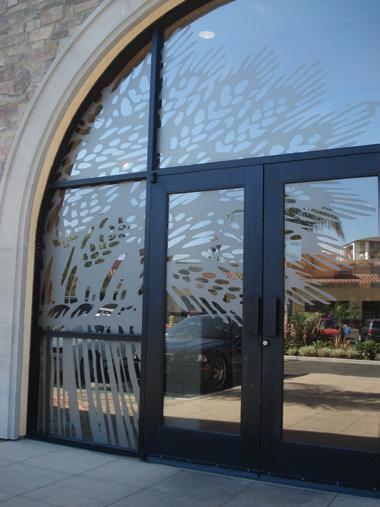
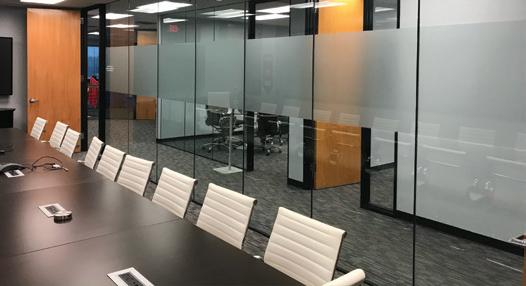
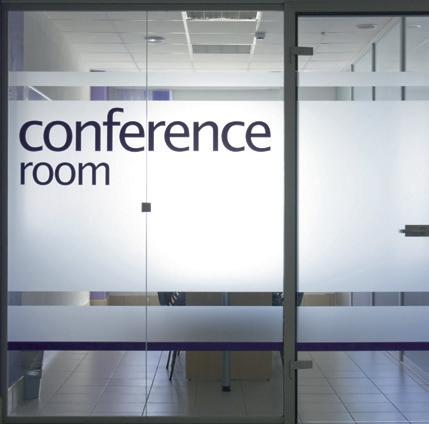
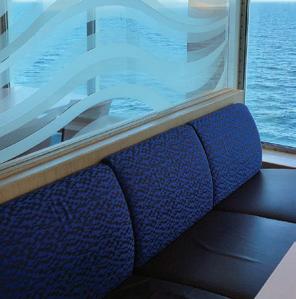
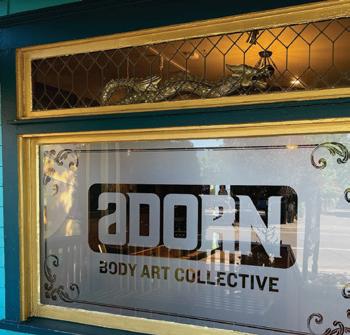
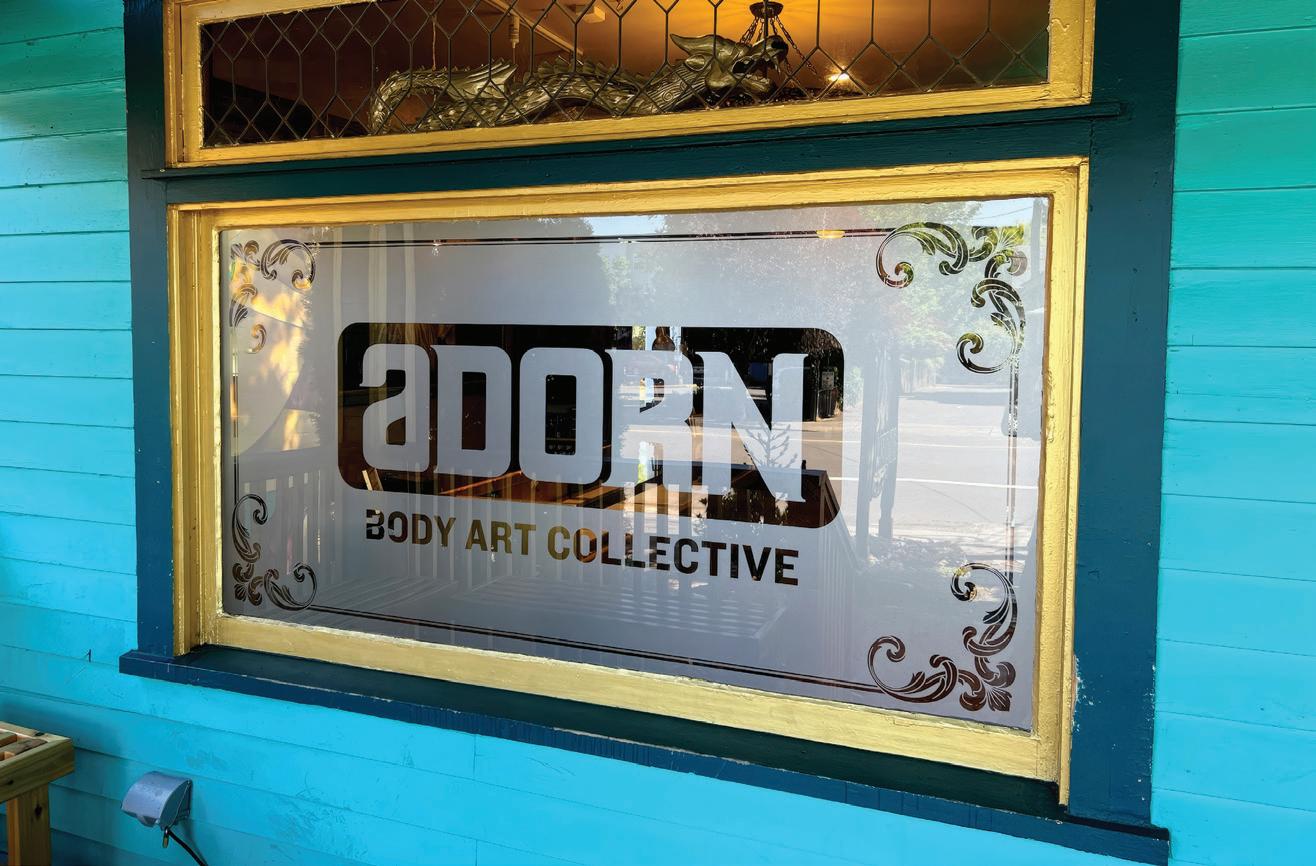
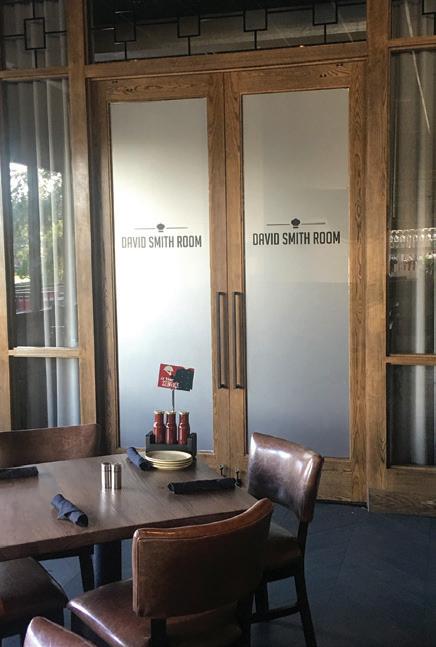
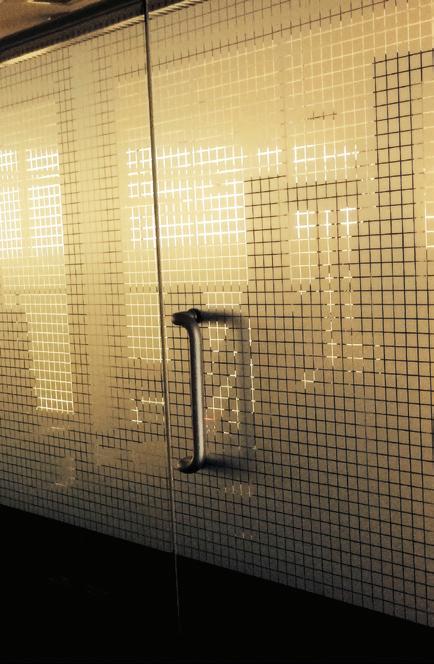
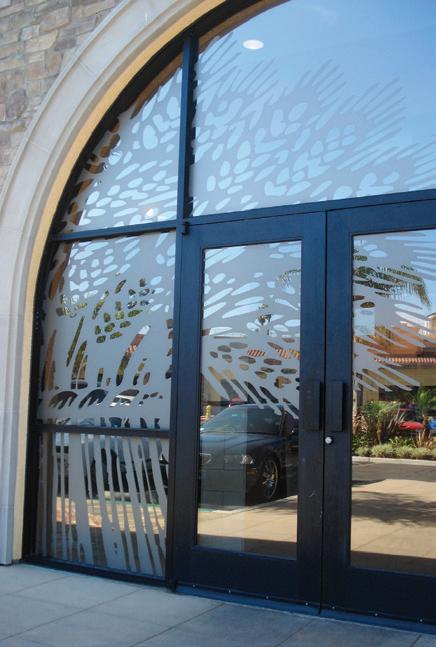
As demand grows for refined architectural glass finishes that balance aesthetics, performance and cost, decorative window films have evolved beyond simple privacy solutions into long-term design assets. Across retail, hospitality, corporate and healthcare environments, etched-glass effects are now expected to deliver visual sophistication alongside durability, consistency and lasting value, without the permanence or disruption of traditional glass treatments.
For many years, polymer-based etched glass films have provided a practical alternative to sandblasting or acid etching, offering a comparable hoarfrost appearance with significantly reduced cost, downtime and risk. Within this category, ORACAL 8510 Etched Glass film became widely specified across commercial glass applications, particularly for glass doors, windows and mirrored surfaces where a subtle, premium finish was required. Its popularity stemmed
from its delicate etched appearance, easy handling and reliable performance across a broad range of applications. Market expectations, however, have shifted. Installers are increasingly required to warrant longer service lives, particularly for shopfronts and exterior-facing glass. At the same time, specifiers and end-users expect finishes that retain their appearance over time without visible degradation. To meet these expectations, ORAFOL has introduced ORACAL 8610 Etched
Glass Film, a direct evolution of the 8510 range. According to the manufacturer, ORACAL 8610 extends performance while maintaining the familiar etched-glass appearance.
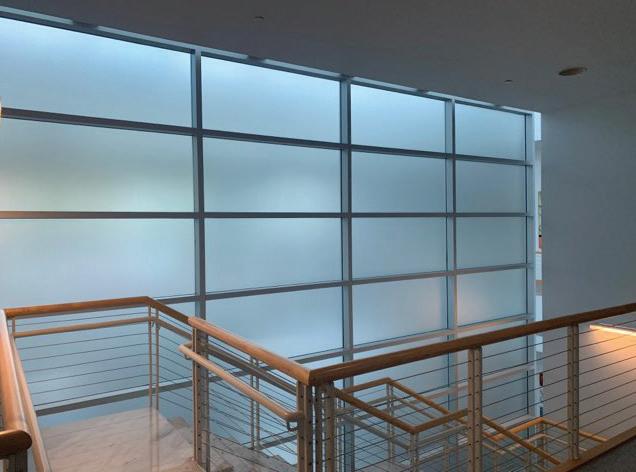
Visually, the transition is seamless. ORACAL 8610 maintains the familiar fine etched-glass effect designers and clients already trust, delivering a soft, sandblasted impression with a medium glossy to satin surface. This balanced finish diffuses light evenly while minimising reflections, allowing the film to perform consistently in both high-light retail environments and controlled interior spaces, without altering existing design intent.
Durability is a key design focus for ORACAL 8610. Rated for up to 10 years under proper vertical outdoor exposure, processing, and maintenance, it exceeds the traditional sevenyear expectation for polymer-etched films. This extended lifespan reflects advances in material formulation and weather resistance, making the film suitable for long-term outdoor use as well as demanding interior applications.
For street-facing shopfronts, glazed entries, and exterior office partitions, this increased durability directly translates into reduced lifecycle costs. Finishes retain their appearance for longer, while installers and signmakers can specify the product with greater confidence, knowing the risk of premature replacement due to fading, peeling or environmental stress is significantly reduced.
From a technical standpoint, ORACAL 8610 is engineered for professional installation. Constructed from a special PVC with a nominal thickness of 0.06 mm, it balances conformability with dimensional stability. Strong adhesive performance on glass and acrylic substrates, combined with robust tensile strength, high elongation and temperature resistance from –50°C to +90°C, ensures reliable handling and performance across varied conditions.
Installation efficiency remains a key consideration. The film applies cleanly to produce high-quality decorative results, with ORATAPE application tapes such as HT95 recommended to support accurate placement and clean release.
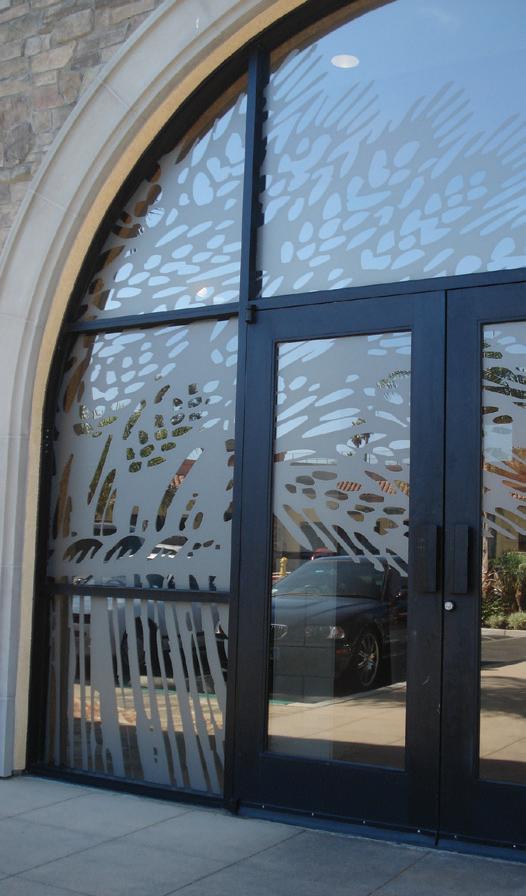
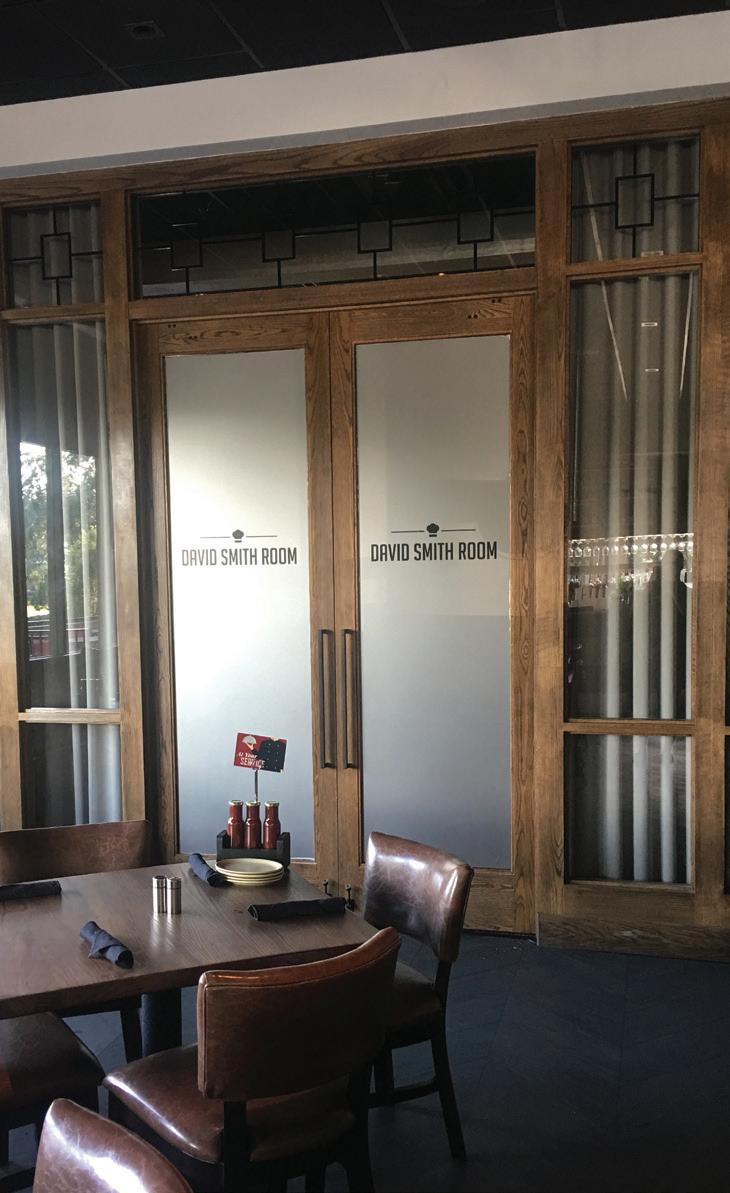
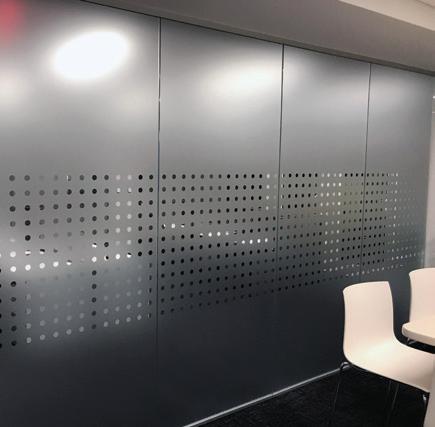
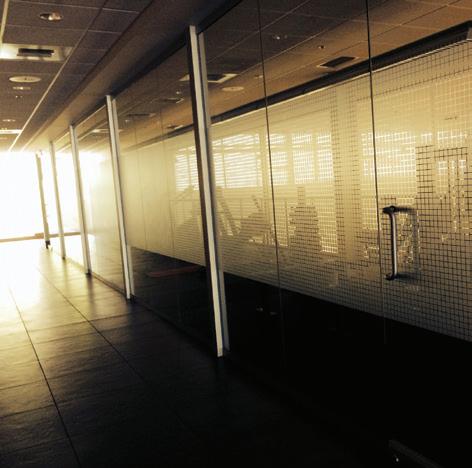
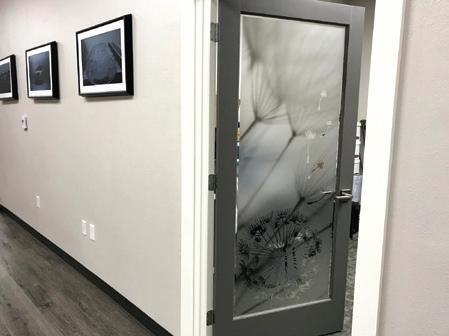
Beyond performance metrics, etched glass films continue to appeal for their versatility. ORACAL 8610 is equally suited to fullcoverage privacy treatments, partial frosting for compliance markings, or detailed cut graphics that combine branding with functional screening. In office environments, it supports transparent, light-filled spaces while meeting privacy and safety requirements; in retail settings, it adds depth and texture to glazing without obscuring interiors.
The transition from ORACAL 8510 to 8610 reflects a broader shift within the signage and architectural film market as environmental exposure, sustainability considerations, and client expectations intensify, with products with
longer service life becoming a defining factor in product selection.
In the Australian market, where intense UV exposure, temperature extremes and coastal conditions place additional demands on exterior films, ORACAL 8610 addresses these challenges directly, responding to the realities of harsher local conditions.
Ultimately, ORAFOL describes ORACAL 8610 as a new benchmark in its polymer-etched glass film range. For designers, it preserves creative intent. For installers, it reduces risk and simplifies specification. For end-users, it delivers a premium etched-glass finish designed to endure.
Refined Wrap Performance
Eight new trend-setting colours expands the 3M™ Wrap Film Series 2080
With eight newly added colours expanding the range, 3M™ Wrap Film Series 2080 continues to place colour at the centre of vehicle wrap design.
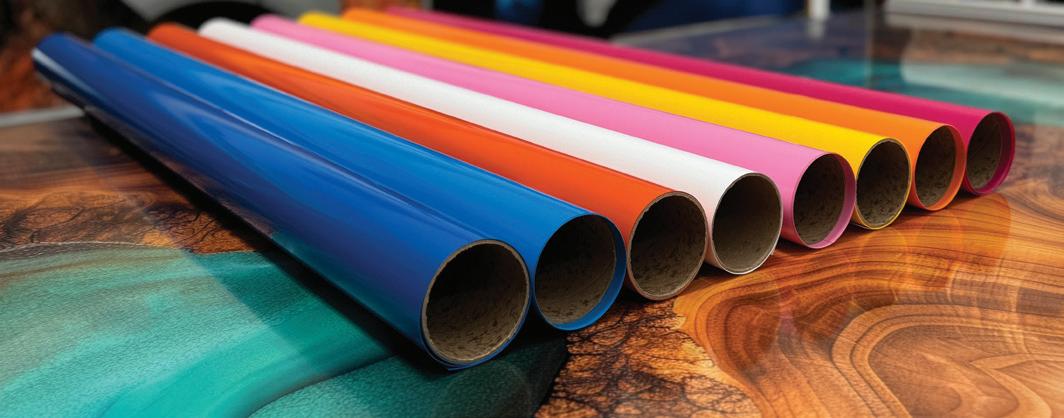
The additional colours include Military Green, Nardo Grey and high-gloss Plum Explosion, extending the existing palette in line with current market styling preferences. The series includes more than 100 colours, textures and finishes across gloss, high gloss, satin, matte and colour flip categories, supporting both creative intent and practical application requirements.
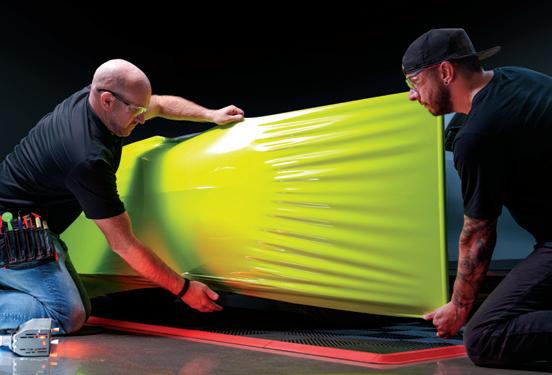
Beyond visual finish, Series 2080 differs from its predecessor in how the material behaves during installation. The film is distinguished from the earlier 1080 Series by its multi-layer dual cast construction, developed to support contemporary vehicle wrapping demands. Improved conformability and stretch allow the film to settle more cleanly into curves, channels and complex body lines, supporting a smooth, paint-like result while reducing the need for corrective work during installation.
A key point of difference lies in the adhesive system. Lower initial tack, combined with
air-release characteristics that differ from the 1080 Series, allows installers to place and adjust panels with a greater degree of control. Air escapes more readily, positioning is less restrictive, and alignment can be refined without undue resistance from the material itself. On modern vehicle surfaces, where panel geometry leaves little margin for error, this contributes to a more predictable installation process.
Roll widths of up to 60 inches allow larger panels to be wrapped in a single piece, reducing joins and helping maintain visual continuity across vehicle bodywork.
For gloss films, the Series 2080 format incorporates a conformable Protective Film Layer applied to the surface of each roll. This layer remains in place throughout installation, protecting the wrap from handling marks and surface impressions that can occur during fitting, without transferring damage to the film itself. By reducing surface friction, it also allows tools and gloves to move more freely across the film. The layer can remain in place during cutting with 3M™ Knifeless Tape and is removed cleanly once installation is complete, including over complex contours.
The result is a gloss finish with high clarity and reflective image quality that differs from typical cast vinyl films. For applications where a uniform, high-gloss appearance is central to the finished outcome, this approach addresses several long-standing challenges associated with gloss wrap installation.
With a rated lifespan of up to eight years and coverage under 3M’s warranty program, Wrap Film Series 2080, is engineered to maintain its appearance under regular use when correctly applied.
For professional installers and signage businesses, the expanded colour range of Wrap Film Series 2080 allows them to respond to current styling trends using a film designed to support controlled, repeatable installation across a wide range of vehicle types. Its balance of conformability, manageable adhesive behaviour and surface protection helps reduce rework, protect finish quality during installation and support efficient production on complex jobs.
To learn more about 3M™ Wrap Film Series 2080, please visit: 3m.com.au/2080 or 3m.co.nz/2080
Restyle your vehicle without the expenseor commitment - of a new paint job.
3M™ Wrap Film 2080 give you a beautiful and durable alternative to paint. With 100-plus colors to select from, there are plenty of ways to design a look that’s all you.
Synthetic Release Liners
Why liner construction plays a critical role in colour vinyl performance
While colour range and surface finish often dominate discussions around selfadhesive vinyl, the performance of colour cut films is equally shaped by what sits behind the adhesive.
In self-adhesive vinyl production, attention is typically focused on colour range, finish and application performance. Less visible, but equally influential, is the release liner. As the structural backing of the film, the liner plays a critical role in protecting the adhesive layer and supporting consistent handling through cutting, weeding and application.
Release liner composition can directly affect shelf life, adhesive behaviour, surface finish and overall workflow reliability. As a result, liner selection has become an increasingly important consideration for manufacturers and installers working with colour cut vinyls, particularly where precision and repeatability are required. Manufacturers such as Arlon have increasingly focused on liner construction as a performance variable rather than a passive backing material.
Paper and Synthetic Release Liners
Paper and synthetic release liners are the two primary liner types used in self-adhesive media.
Paper release liners are widely used due to their lower production cost and inherent rigidity, which can make them easier to handle in certain large-format applications. They are typically silicone-coated to improve moisture resistance and reduce the risk of dimensional change caused by humidity. However, paper liners remain susceptible to environmental variation, which can result in edge distortion or material movement during storage and processing.
Synthetic release liners, most commonly manufactured from polyester (PET) or
high-density polyethylene (HDPE), offer greater resistance to moisture and improved dimensional stability. While generally higher in cost, synthetic liners are designed to maintain consistent flatness and structural integrity throughout storage, processing and installation. Arlon has adopted synthetic liners across its colour cut vinyl ranges to support consistent handling and dimensional stability throughout the production workflow.
Dimensional Stability and Lay-Flat Performance
One of the most significant advantages of synthetic liners is their ability to remain flat. By resisting moisture absorption and environmental fluctuation, synthetic liners reduce the likelihood of material movement during cutting and application. This stability can be particularly beneficial when processing larger graphics or working with flatbed cutting systems, where even minor shifts can result in misalignment, recuts or material waste. Improved lay-flat performance also supports more predictable storage and handling across different stages of production.
Alignment and Multi-Layer Graphics
The translucent nature of many synthetic liners enables greater visibility through the backing material, supporting more accurate alignment of layered graphics. This can reduce setup time when producing multicolour or multi-layer applications, while improving registration accuracy and final visual consistency. For installers producing complex colour graphics, liner transparency can simplify alignment and reduce the likelihood of errors during assembly.
Cutting and Weeding Consistency
Cutting and weeding efficiency is heavily influenced by liner surface characteristics. Synthetic liners provide a uniform, smooth backing that supports cleaner cuts and more consistent release from the adhesive layer. Compared with paper liners, synthetic liners reduce the risk of adhesive bleed caused by cut-through of silicone coatings and help minimise tearing of fine details during weeding. Resistance to moisture and static can also prevent unintended lifting or clinging of vinyl during handling, contributing to more reliable processing.
Surface Finish and Colour Consistency
Beyond production efficiency, liner choice can influence the visual characteristics of the finished film. The smooth, consistent surface of synthetic liners reduces the potential for texture transfer into the face film, supporting more uniform gloss levels and colour appearance. For high-gloss colour vinyls in particular, this can contribute to a cleaner, more consistent visual outcome across the finished graphic.
A Structural Component with Visible Impact
Although release liners operate largely out of sight, their influence is reflected in both handling performance and finished quality. By supporting dimensional stability, reliable processing and consistent surface appearance, synthetic liners play an important role in professional colour vinyl production, particularly in applications where accuracy and repeatability are critical. Explore Arlon’s full range of colour vinyl products at Graphic Art Mart and experience the difference synthetic liners make. www.gamart.com.au
Built for the Wind
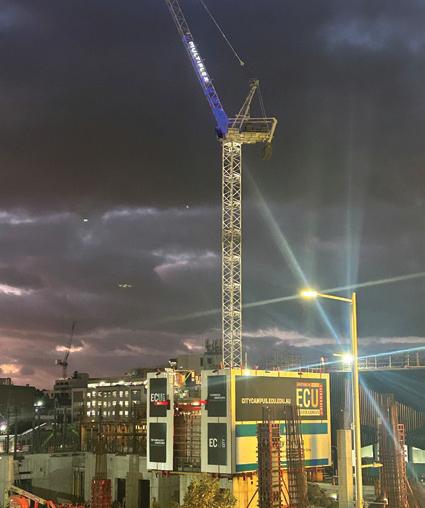
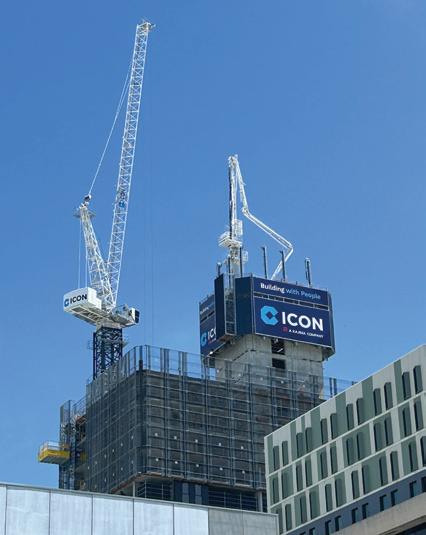
How Signs & Lines engineers crane signage to withstand height, vibration and strict structural compliance
Crane signage may appear simple from the ground, but at height, it becomes a highly engineered structural exercise.
Crane signage occupies a niche category within the signage sector— one defined less by graphics and more by engineering discipline. For Western Australia–based Signs & Lines, the challenge is not just visibility, but structural integrity under constant environmental stress.
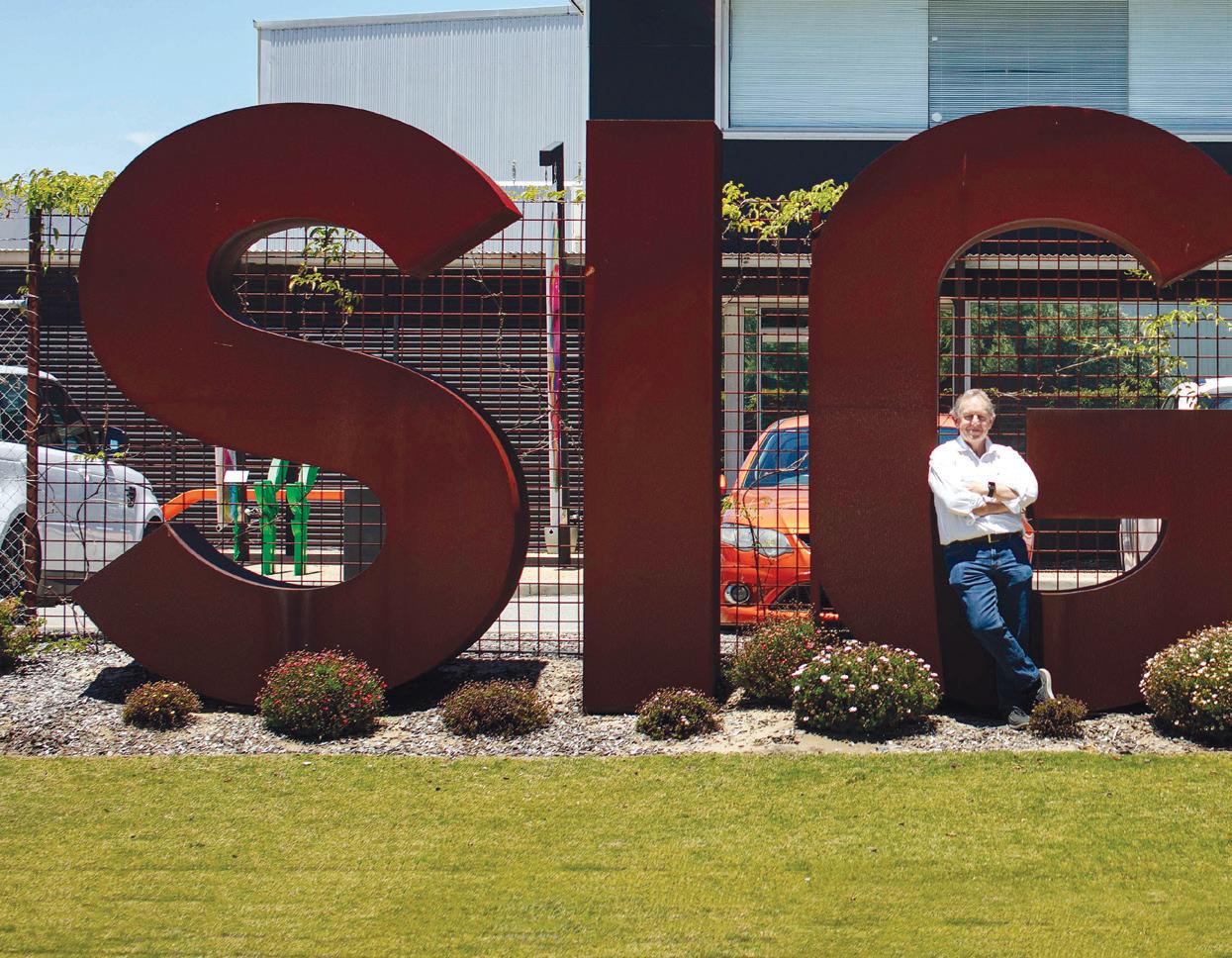
With more than four decades in operation and recognised as the Australian Sign & Graphics Association’s most awarded sign company in 2024, Signs & Lines has delivered crane signage across major infrastructure, construction, government and retail projects. Each installation, however, begins with a fundamental constraint: the crane itself.
No two cranes are identical. Jib length, structural capacity, and operating conditions vary by project, requiring custom-designed signage each time. Technical requirements follow strict engineering protocols to ensure compliance with the crane’s safe workload parameters. The signage must not interfere with access for routine crane maintenance, nor compromise structural performance.
Height amplifies every design consideration. A crane jib can extend 60 metres in length and sit as much as 120 metres above ground. At that elevation, exposure to wind loading is constant. Even mild conditions can cause vibration and flex in the jib. Signs & Lines notes that even moderate wind conditions can introduce vibration and structural movement, increasing fatigue stress on fixings over time.
The company says that engineer certification is often the most significant challenge in crane signage projects. The crane engineer must approve the signage structure before installation, balancing safety obligations with the
client’s expectation of commercial value. This alignment of technical approval and budget reality is the central determinant of whether a project proceeds.
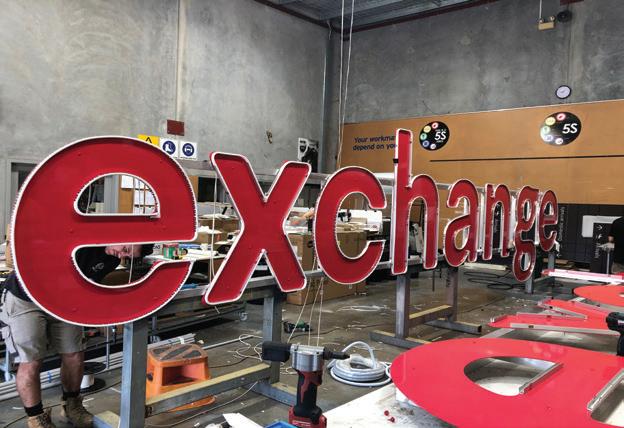
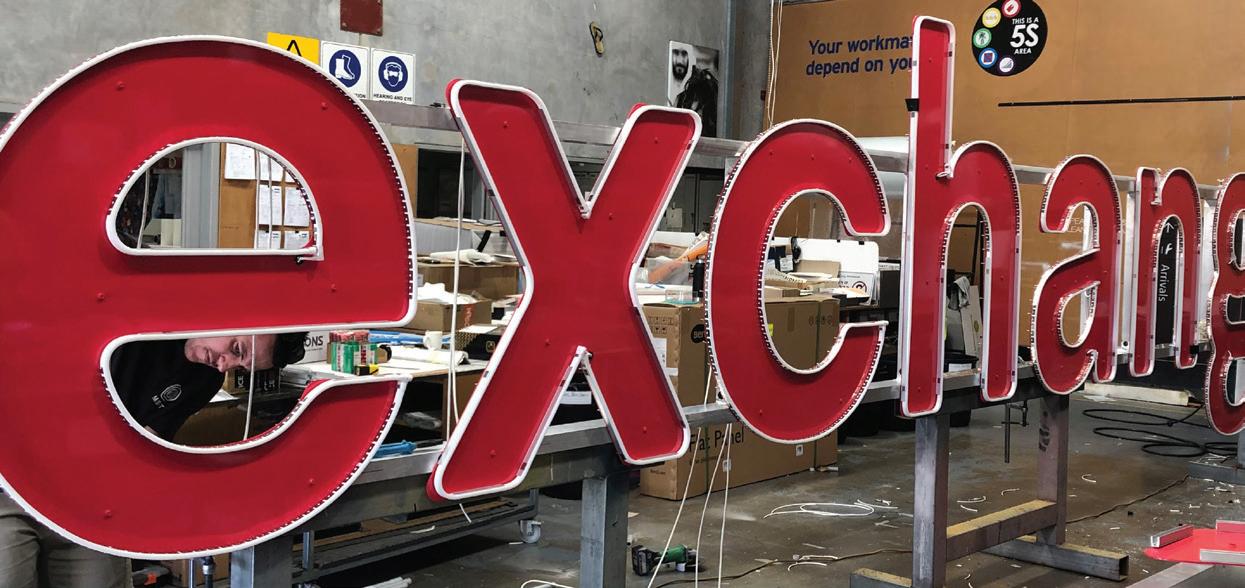
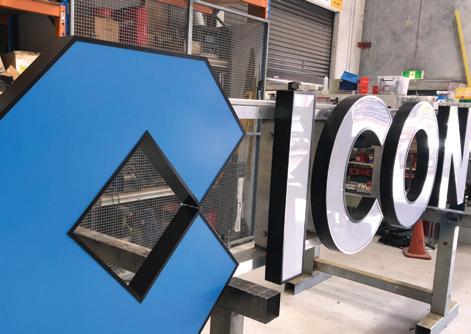
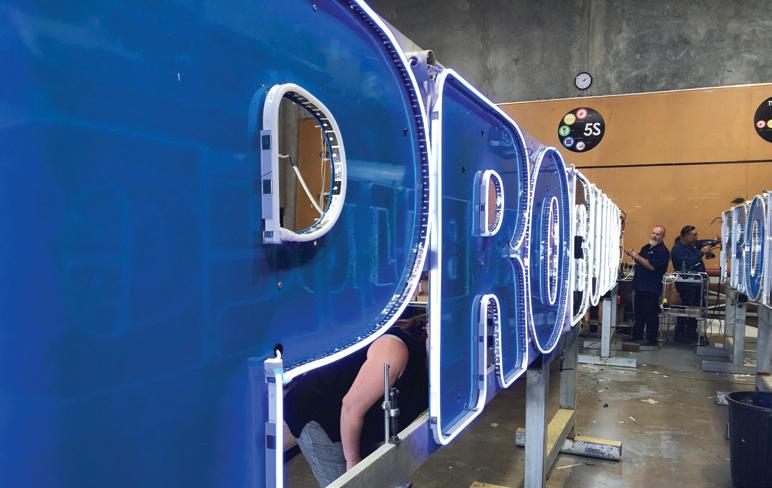
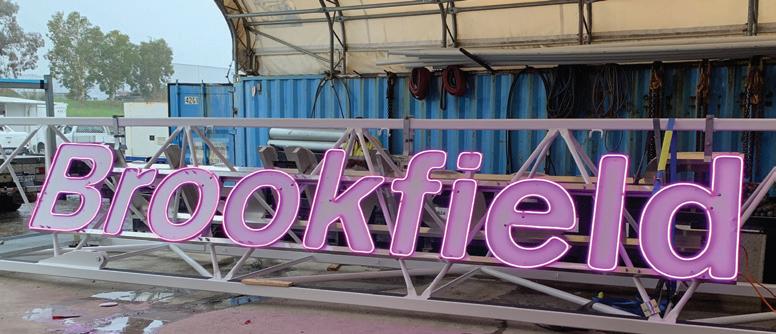
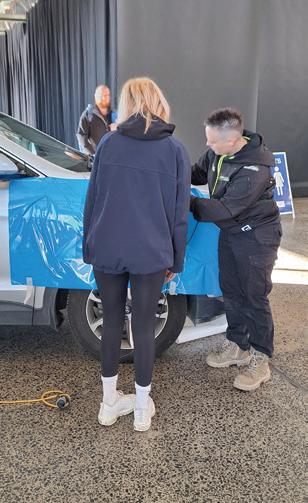
Manufacturing takes place at Signs & Lines’ Midvale facility. Where crane signs exceed three metres in length, they are fabricated in modular sections to simplify transport and handling.
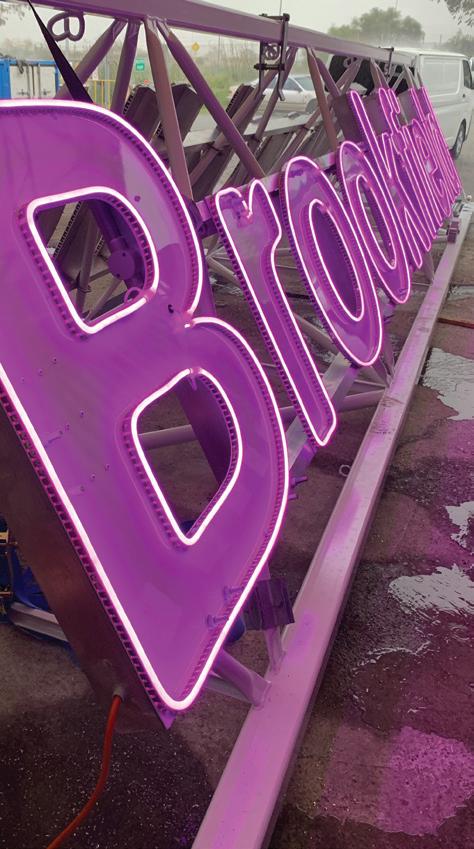
On-site, framework components are bolted together before being fitted to the jib. Illumination systems introduce an additional layer of complexity. Wiring harnesses are custom-designed for each project, reflecting the crane’s unique configuration and structural profile.
Timing is equally critical. The company says installation schedules are tightly managed to ensure crane signage does not disrupt the builder’s program. The signage must be fitted and tested at least five days before transport to the site, and road permits, often required for oversized components, can be difficult and costly to amend if schedules shift.
Any delay during jib fitting can create downstream impacts within tightly managed construction timelines.
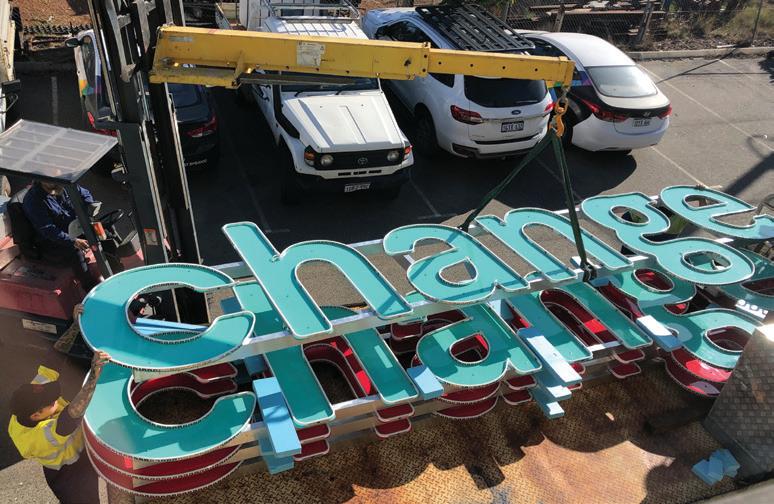
Site conditions add further operational variables. Crane yards are frequently congested with equipment and components, making access to the correct jib section challenging. Coordination with crane suppliers is therefore essential, and in some cases, yard cranes are used to assist with installation.
While crane signage is highly visible, the discipline and technical expertise behind it are largely unseen. The installation process is governed by structural calculation, fatigue mitigation and compliance management.
For Signs & Lines, crane branding is less a graphic exercise and more a demonstration of controlled engineering at height, underpinned by the company’s technical expertise and specialised knowledge.
Roland
DG TY-300
Delivers sharp detail, consistent colour and fast, durable output for premium promotional
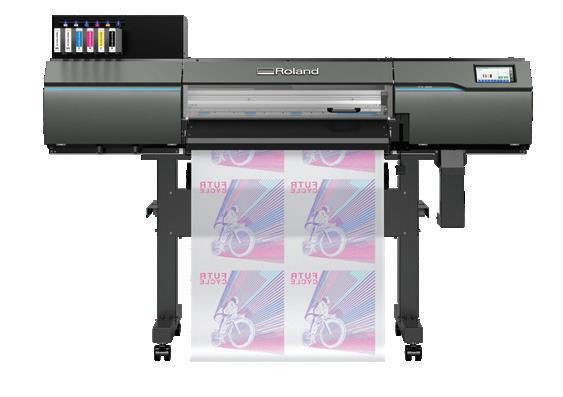
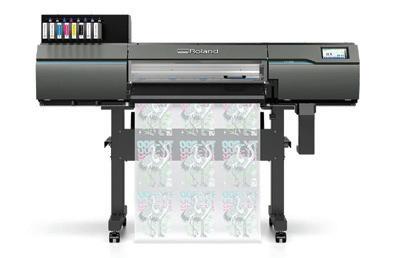
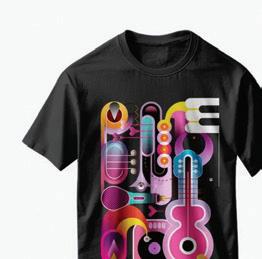
One such solution is the Roland DG TY-300 series, a high-performance DTF printer designed for speed, reliability and versatility. Known for its excellent colour consistency and sharp detail, the Roland DG TY-300 enables businesses to produce durable prints faster while maintaining premium quality, making it ideal for promotional applications such as T-shirts, tote bags, hats, aprons and more. “Print providers need equipment that keeps pace with customer expectations,” says Greg Stone, Roland DG Product & Marketing Manager. “The Roland DG TY-300 series delivers consistent output and maximum productivity - key factors in a competitive market.”
RollsRoller Signature One
Reliable performance for demanding workflows
Built for consistent, professional finishing.
Meeting Modern Print Demands:
Why Hardware investment matters more than ever.
The print industry is evolving rapidly. End users today expect faster turnarounds, consistent quality, greater personalisation and flawless finishes - often all at once. For print businesses, meeting these expectations is no longer just about creativity or print quality; it’s about having the right hardware in place to support efficient workflows and reliable customer delivery. This growing pressure is driving many print service providers to rethink their production environments. Automation, reduced manual
handling, and streamlined workflows are becoming essential, particularly as staffing and skills shortages continue to impact the industry. With experienced operators harder to find and retain, print shops are increasingly looking to machinery that removes manual processing, simplifies operation and boosts productivity without compromising output.
As a distributor of leading hardware brands including Mimaki, Roland DG and Rolls-Roller, Spicers is helping print businesses respond to these challenges by providing proven solutions that align with real-world production demands.
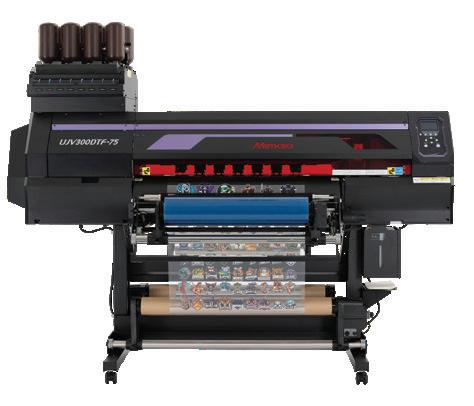
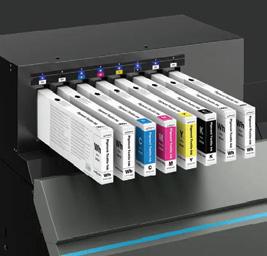
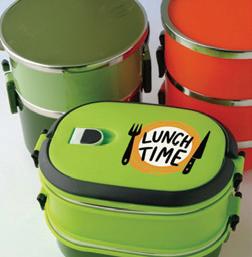
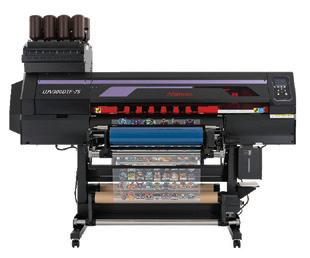
The Mimaki UV DTF system is another example of technology answering current workflow demands. By enabling UV directto-film printing, this solution removes several manual steps traditionally associated with decoration and labelling. The result is faster production, less handling and greater flexibility across substrates. Common applications include promotional merchandise such as bottles, phone covers, lunch boxes and more. Jason Hay, Mimaki National Sales Manager explains, “UV DTF allows print businesses to expand their offering without adding complexity. It’s about efficiency, scalability and opening new revenue opportunities with minimal disruption.”
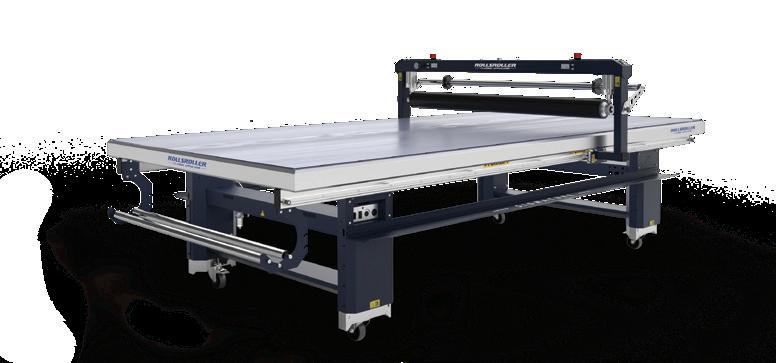
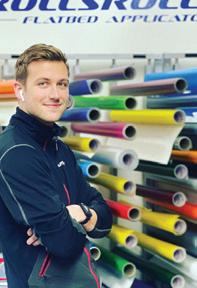
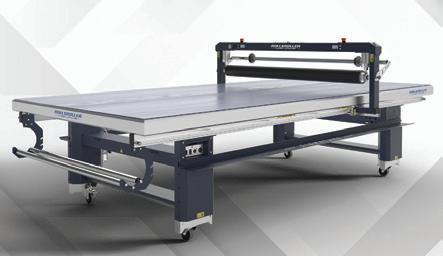
Finishing and application are just as critical as print quality, and that’s where the RollsRoller Signature One delivers. Built to automate and standardise mounting, laminating and application, this industrial flatbed applicator reduces physical strain and operator dependency while ensuring consistent, repeatable results. A rigid steel chassis, controlled pressure and ergonomic design minimise waste, rework and injury. Ideal for graphics, signage and displays. “Automation in finishing is no longer optional,” says Christian Ogenvall, CEO of RollsRoller. “It’s essential for consistent results, operator safety and longterm sustainability.”
According to Laurence Tan, Hardware Sales Manager at Spicers, the value lies not just in the machines themselves, but in how they fit into the broader production ecosystem. “We’re seeing strong demand from customers who want hardware solutions that genuinely improve workflow and efficiency,” Tan says. “At Spicers, we work closely with our partners to bring the right technology to market, backed by the consumables and support customers need to get the most from their investment.”
By offering both hardware and compatible consumables through a single supplier relationship, Spicers provides print businesses with a simpler, more integrated way to operate. Against a backdrop of rising expectations and operational pressure, that partnership approach is proving to be a powerful advantage.
Momentum on the floor
How workflow reliability shaped Easyaz equipment investment decisions
For many regional signage businesses, equipment decisions are increasingly driven by workflow reliability rather than headline specifications.
As turnaround times tighten and labour availability remains inconsistent, predictability on the production floor is now the critical factor in maintaining service levels and margins.
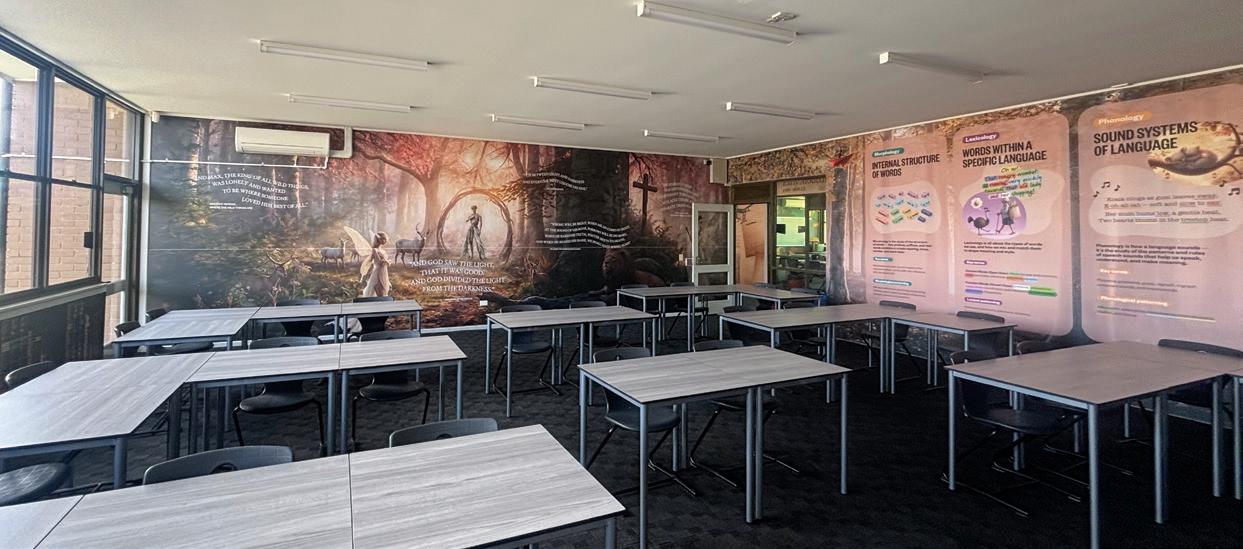
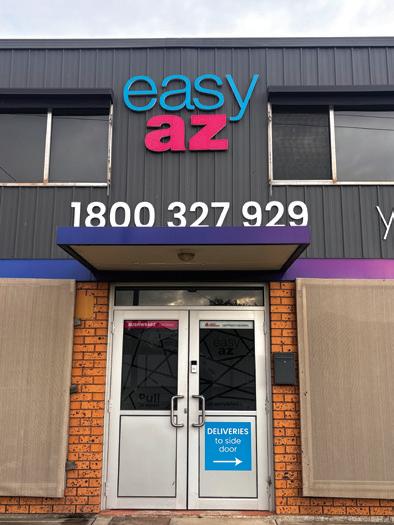
That reality prompted Easyaz, a signage business specialising in real estate and event signage,to reassess its production setup. According to owner Aaron Womersly, the decision to replace an ageing solvent printer was shaped by ongoing operational friction rather than a desire to chase new features.
“We were replacing an old printer that was constantly needing tech support,” Womersly says. “It was becoming difficult to manage downtime in a lean operation.”
The Gippsland-based company selected the Canon Colorado M-series, supplied, installed and supported locally by Currie Group. While output quality and speed were considerations, the defining factors were workflow reliability and the ability to reduce production bottlenecks.
“With our previous solvent setup, drying time and lamination were always part of the equation,” Womersly explains. “That added cost, time and complexity—particularly on larger wall graphics and event work where turnaround windows can be tight.”
The shift to UVgel production changed how jobs moved through the workshop. Instant-dry output removed delays between printing and installation, allowing work to progress without extended curing or additional finishing steps. This proved particularly valuable on a large wall graphics project completed soon after installation.
“Almost straight away, we were able to take
on a big wall graphics job that really made use of the instant dry, the file-to-print ease of use, the toughness of the UV ink and the colour accuracy,” Womersly says. “Without this machine, we may have been able to print on our solvent printer, but we would still have ink dry time to contend with and lamination also being required, which would have increased the cost of the job and the turnaround.”
Beyond the production gains, the transition was supported by a structured installation and training process managed by Currie Group. Easyaz says the installation was completed efficiently, with training focused on practical production use rather than specifications.
“The install was much faster than I expected,” Womersly says. “The training was fantastic, and the support is top shelf.”
Ongoing access to local technical support has helped build confidence in day-to-day operation. “Currie Group’s ongoing support has been faultless; whenever we’ve had a question, they’ve been quick to help, which gives us real confidence to push the machine harder,” he says.
“We’re really proud to support regional businesses like Easyaz. For a small team, reliability isn’t a luxury; it’s everything. We have so much confidence in Canon Colorado M-series that the printer will plain and simply just work, without the typical delays or downtime often seen with alternative technologies. As the workflow is predictable, customers can take on more work, move faster and grow with confidence, and that’s exactly what we love helping our customers achieve,” adds Paul Whitehead, Business Unit Manager –Sign & Display for Currie Group.
Operating in a regional market, Easyaz has taken a deliberate approach to remaining lean, using technology to offset labour constraints. “We run a much leaner operation now and have
invested in technology as the employment market in our experience and in our regional area is lacking,” Womersly says.
That approach has enabled the business to handle more complex work without increasing headcount. “The Colorado M-series has been a genuine game-changer for us; it’s let us keep our team small, deliver faster turnarounds, and take on higher-value jobs that we’d previously have to turn away or outsource.”
Womersley’s experience reflects how small and regional signage businesses assess equipment investment. Reliability, simplified workflows and dependable local support are central to purchasing decisions.
For Easyaz, the Canon Colorado M-series has enabled the consistent delivery of work previously out of scope. Supported by Currie Group, that shift has translated into greater confidence on the production floor, directly impacting the company’s bottom line.
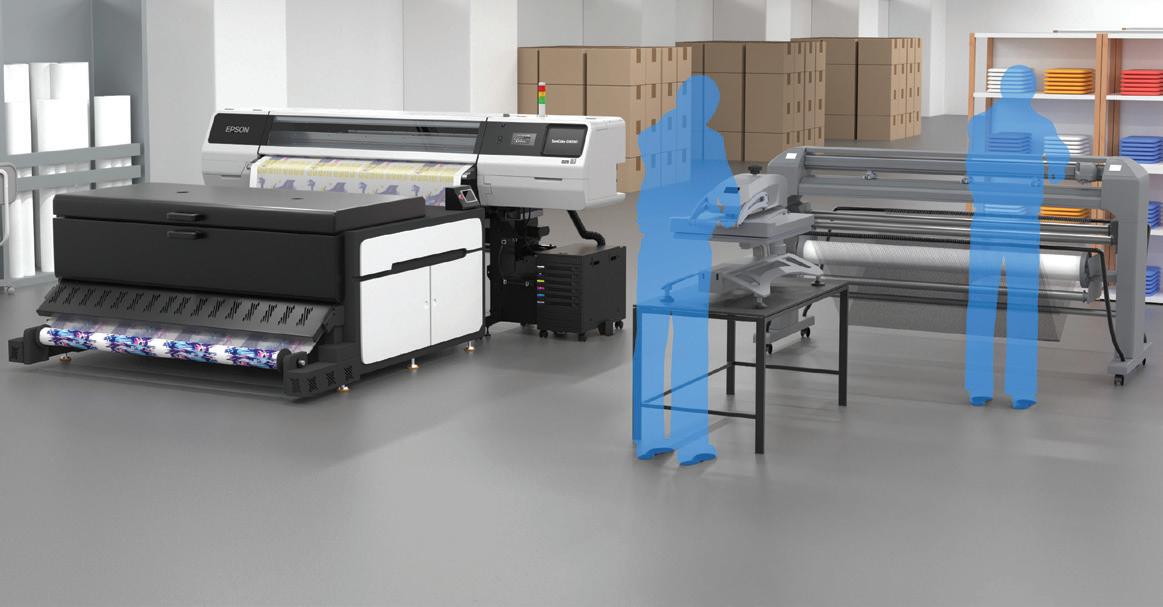
The global appetite for customised apparel, fast-turn merchandise and personalised textile products continues to accelerate, and direct-to-film (DTFilm) printing has emerged as one of the most versatile and commercially viable production methods.
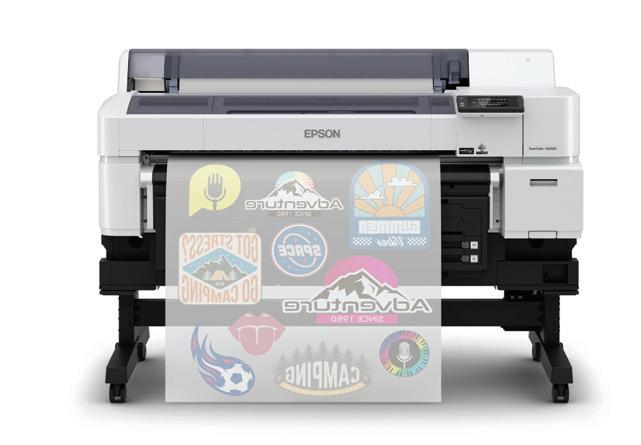
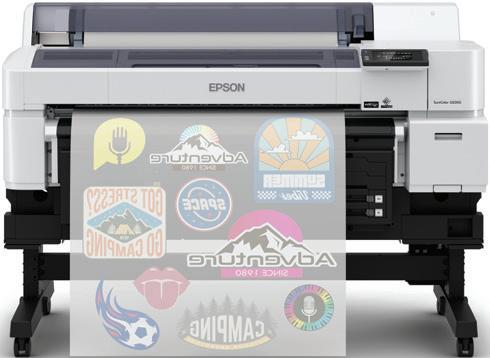
To meet the rising demand for scalability and reliability, Epson has strengthened its DTFilm lineup with the introduction of the new 64-inch SureColor G9060, complementing the proven performance of the 35-inch SureColor G6060. Together, the G - Series positions Epson as a leading force in shaping the next generation of textile imaging.
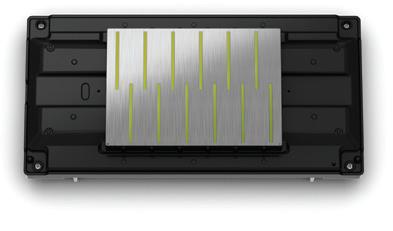
The foundation of Epson’s DTFilm momentum began with the SureColor G6060, a dedicated wide -format printer built for efficient mid -volume production. The G6060 delivers consistent, high-quality output powered by Epson’s PrecisionCore MicroTFP printhead and UltraChrome DF inks, enabling vibrant, accurate imaging across a broad range of fabrics and materials. With support for film widths up to 900 mm, integrated cutting and compatibility with roll-to-roll production setups, it provides flexibility for apparel creators, small studios and merchandising
businesses looking to diversify their capabilities. The printer’s automated maintenance systems, continuous white ink recirculation, inkless nozzle status monitoring, and advanced head cleaning minimise downtime and ensure reliable day-to-day operation. This balance of output quality, workflow simplicity, and low running costs has led to the G6060 being widely adopted across the signage, textile and promotional sectors.
Epson has now built on that success with the launch of the SureColor G9060, marking the company’s first expansion of the G - Series into a larger 64-inch production format. Designed from the ground up for high-volume DTFilm workflows, the G9060 brings a significant leap forward in throughput, durability and automation. Equipped with a user-replaceable 2.64-inch PrecisionCore MicroTFP printhead, the printer delivers production print speeds of up to approximately 32 m² per hour in colour + white, enabling print shops to turn around large transfer orders quickly without compromising colour accuracy or detail. Its sealed 1.6 litre UltraChrome DF ink packs are mess-free, costefficient and optimised for long, uninterrupted print runs.
Both the G6060 and G9060 feature automated head and cap cleaning, continuous white ink recirculation and inkless nozzle status monitoring. The G9060 builds on this with Nozzle Verification Technology, a 64-inch, high-duty-cycle platform and routine maintenance that takes only minutes each week, ideal for sustained, high-volume DTF production.
The increased format width brings new creative and commercial opportunities. Supporting film rolls up to 1626 mm wide and 250 mm in diameter, the G9060 enables the production of oversized graphics, long-run transfers and efficient sheet to roll-to-roll workflows. When paired with third-party powder shakers and oven systems, it can support industrial-scale manufacturing with ease. All consumables are front-loaded for operator convenience and the printer ships with Epson Edge Print PRO software for seamless RIP integration. Like its smaller sibling, the G9060 also connects to the Epson Cloud Solution PORT, enabling remote monitoring, job costing and enhanced service support to maximise uptime.
With demand for personalised apparel and merchandise continuing to grow across fashion, events, sportswear and promotional markets, Epson’s expanded G - Series stands as a future -focused response, combining flexibility, reliability and professional output quality in a pair of purpose - built DTFilm solutions.
The SC - G6060 and G9060 ship with a comprehensive warranty that covers the printhead, bulk ink system, ink and software. Additionally, up to five years of CoverPlus can be purchased for extended peace of mind.
The SureColor G9060 will be available in Australia from mid -2026, with availability in New Zealand to follow shortly after. RRPs will be announced closer to the time of release.
Pushing the flexibility frontier
Versatility key to HP R530 success
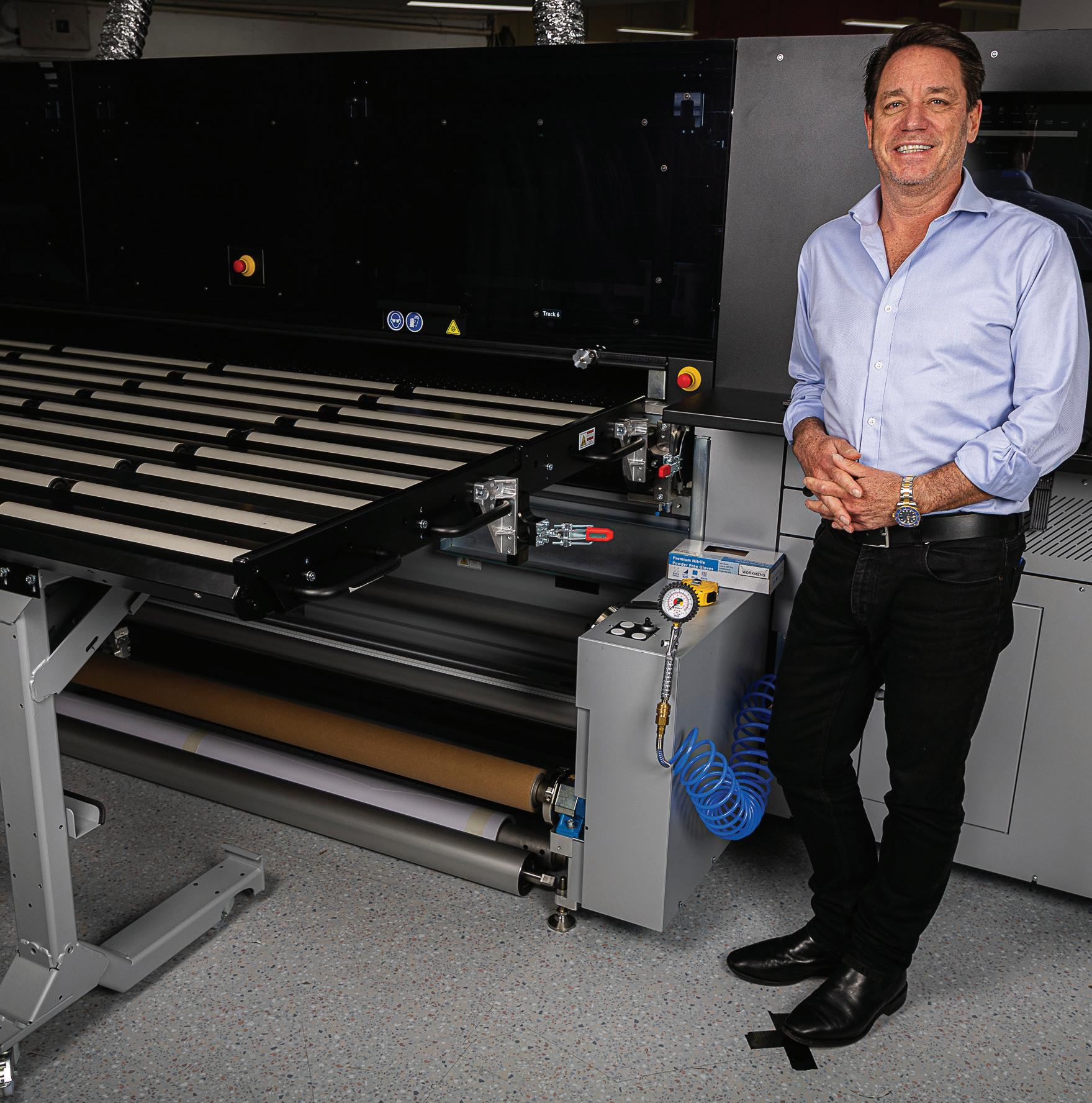
At PacPrint 2025, Craig Hardman, HP’s ANZ Country Manager for Large Format, heralded the HP Latex R530 as the star of the show ‘because of its compact footprint, exceptional versatility – able to switch from rigid flatbed to roll-to-roll in just a few minutes – and Latex printing pedigree’.
“These factors,” said Hardman, “make it a great option both for entry-level and as a production gap-plugger for established print shops.” HP continues to hold a strong position in the large-format production market.
Six months on, his view remains unchanged. HP continues to hold a strong position in the large-format production market and even without a major event to showcase the printer, it has delivered what Hardman describes as ‘a marketshaping level of sales’, continuing to lead as the standout performer in HP’s Latex portfolio.
Whilst the compact footprint of the machine clearly has an important role to play, the real value of this printer is undoubtedly tied up in a narrative that talks to a seamless switch from high-quality rigid prints to roll-to-roll printing –‘in less than a minute and a half after just a few expert tips’.
The HP R530 prints on up to 1.6m wide boards, up to 5cm thick, and Hardman adds that it is the unique HP Pixel Control technology that really helps the R530 stand out. “This technology enables us to print pixels by blending colours like the human eye, delivering the smoothest transitions for enhanced print quality across all print modes and speeds.
This ‘true’ digital image pipeline technology, coupled with our latest generation of inks, delivers vivid colours at fast throughput, resulting in favourable quality both on rigid and flexible, and affirming the printer as a genuine winner in its class.”
HP Latex (water-based) inks already come with a UL ECOLOGO®-certification: the reduced waste and costs made possible through direct-to-rigid printing on recyclable media and through the inks coming in returnable cartridges.
“The printer itself is also manufactured with 25% recycled plastic,” notes Hardman, explaining how HP sees Sustainability as a ‘value’ rather than an ‘attribute’. “The attributes of the R530 are its production efficiencies, speed, flexibility, but the real value to the customer runs much deeper than this and Sustainability is increasingly showing as a stronger and stronger value proposition to our customers across the board.”
Having first invented its water-based latex inks back in 2008 and as a long serving partner of Planet Partners (now for 26 years in Australia), it is this progressive mentality related to HP’s own responsibilities for driving more sustainable options and opportunities for customers, that has also helped to set its products, like the R530, apart.
Hardman continues: “Our HP Sustainability Amplifier was designed specifically to enable our customers to run a sustainability audit across their own businesses, providing them
with a very useful ‘green’ dashboard, as well as making recommendations on materials or practices that might help to improve their environmental score.”
“We also offer HP PrintOS as standard with all our printers now, and there are a range of other value-adds that can be integrated with R530 to assist customers with their production cycles and workflows.”
Hardman continues: “What always surprises me is that you launch a printer with an idea of how customers might use it…then, with the HP Latex R Series, you see customers producing everything from toy designs and lunchbox stickers to artist tiles and the boxes their canvas art ships in. It shows that customers will always take the technology and push it in ways we never imagined were possible.”
“That is why our campaign is all about wanting Print Service Providers to be able to ‘do the best work of their lives’ and with the HP R530 we are genuinely seeing this campaign come to reality.”
Beyond push-button production
Deon Capogreco
Shane Skinner
Print Group Paul Coniglio
How human automation will revolutionise print manufacturing over the next five years
Written by Julian Lowe, National Sales Manager - M-Power Software
The print manufacturing industry stands at a critical juncture. As business owners navigate increasingly complex operational challenges, a clear solution is emerging: human automation through systematic processes and standardised workflows.
Recent discussions among industry leaders Stephen Lamont of Lamont Print and Signs, Deon Capogreco of Big Image, Paul Coniglio of Formul8, and Shane Skinner of Think Print Group reveal that the path forward isn’t just about installing new equipment—it’s about fundamentally rethinking how work gets done. The critical challenges facing print manufacturers
Print manufacturers today face a perfect storm of challenges. Shane Skinner identified the industry’s most pressing concern: attracting new talent. “The biggest challenge we’ve got coming is youth in the industry because everybody’s my age or similar,” he explained. Young people can “go and be a brickie and earn 50 bucks an hour,” making traditional manufacturing careers less appealing. From an outsider’s perspective, Skinner noted, the industry still appears “dirty, repetitive, nothing too exciting going on.”
Compounding this talent crisis is the pressure on existing teams. Paul Coniglio articulated the modern business paradox: “Everyone wants it faster, they want it cheaper, but they want it their way.” This creates immense pressure on bottom lines and staff alike. Meanwhile, owners themselves face burnout—as Skinner observed, “as an owner, we tend to work excessive hours” just to keep operations running.
The 80/20 approach to automation
The solution isn’t wholesale replacement of human expertise, but strategic automation that frees people for higher-value work. Deon Capogreco outlined the pragmatic strategy that’s working for custom printers: “Trying to get the wins in automation where we can—the easy ones first—saves a lot of time down the track. You know, just to get 80% of your jobs might be roughly fine and automatable, and you’ve got that 20-25% that might be challenging and require more personalised adjustments.”
This philosophy extends beyond production. Capogreco emphasised that custom printing companies face unique complexities: “There are so many products, so many variables, so many very specific knowledge points that people have and are required to have to produce a successful job.” The goal, he explained, is “automating where we can and focusing on the custom side of things in a more human way.”
Customer portals and knowledge democratisation
Stephen Lamont highlighted how automation transforms customer interaction. “From an M Power perspective, the automation part of that is basically making a quoting platform that we can change dynamically,” he explained. The key benefit? “Literally means that multiple people can access a platform” rather than relying on “just one person who knows all the knowledge.”
Customer portals have delivered tangible results. “The fact that we can allocate portals to our clients and that bypasses the sales team and goes straight into production—that has eased up our workload from a sales point of view,” Lamont noted. This frees the team to “concentrate on clients who literally cannot use a portal system,” ensuring personalised attention goes where it’s truly needed.
Cost visibility and staff liberation
Paul Coniglio described how automation delivers both financial and human benefits. “We’ve been able to see our true cost base and really manage our profitability across sections of our business,” he explained. Perhaps more importantly, “it’s taken pressure off our staff to get orders through the business quicker and then focus on solving problems for customers as opposed to just sitting there entering repetitive tasks.”
The efficiency gains create breathing room in an industry where customer demand is constantly escalating. As Coniglio noted, automation helps businesses manage the tension between time, cost, and customisation that defines modern manufacturing.
Protecting teams, attracting talent
The human benefits of automation extend beyond immediate efficiency gains. Skinner articulated the broader vision: reaching “a point into the future where we’re not working ridiculous hours” and having “a lot more time to actually work on productive things like sales or being creative in marketing” instead of being “flat out just doing quotes because we can’t keep up.”
Lamont emphasised the philosophical shift required: recognising that teams, not just customers, are the business’s most precious asset. This mindset drives investment in systems that protect staff from unsustainable workloads while maintaining service quality.
Making the industry attractive to young talent requires demonstrating that it’s neither dirty nor repetitive. Skinner noted that when young people do get exposure, “they love being around the machinery, the technology.” Automation that eliminates drudgery while preserving creativity helps shift perceptions and attract fresh talent.
Digital systems as institutional memory
Capogreco highlighted an oftenoverlooked benefit of automation: preserving organisational knowledge. “We’ve put a lot of effort into collating all that information in a digital way,” he explained, describing the integration of M Power with systems for prepress, preflighting, and proofing. This creates “an absolute record of everything you’ve done”—invaluable for business continuity and training.
As the industry faces a demographic shift with experienced workers retiring, these digital systems become crucial for transferring decades of accumulated knowledge to new team members. It’s not just about speed—it’s about sustainability.
The limits of automation
Despite automation’s benefits, the panellists were clear about its boundaries. Lamont referenced a Walmart CEO’s comment about AI potentially eliminating 200,000 positions, noting the executive’s conclusion: “At the end of the day, where people are involved, you have to have people there to handle that.”
“Realistically, we are dealing with people, we’re not dealing with machines,” Lamont emphasised. Every customer inquiry is unique and requires human judgment. The goal isn’t full automation—it’s intelligent automation that handles the routine while preserving human expertise for complex, custom work.
Building the future, today
The print manufacturing industry is experiencing renewed demand. As Coniglio noted, “It’s good to be making money again,” with customers recognising “they needed printed stuff more.” However, capitalising on this momentum requires operational evolution. The manufacturers who will thrive over the next five years are those that strategically implement human automation. By following Capogreco’s 80/20 principle, adopting Lamont’s customer portal approach, embracing Coniglio’s focus on cost visibility and staff liberation, and pursuing Skinner’s vision of sustainable work-life balance, print businesses can build operations that are scalable, profitable, and attractive to the next generation.
The path forward is clear: automate the routine, elevate the human, and create print manufacturing businesses that thrive rather than merely survive. The technology exists; the strategies are proven—what’s needed now is committed implementation.
Human automation isn’t about replacing people; it’s about empowering them to do their best work in sustainable, fulfilling ways. For an industry facing critical challenges, that’s not just a nice-to-have—it’s essential for survival.
Powered by Partnership
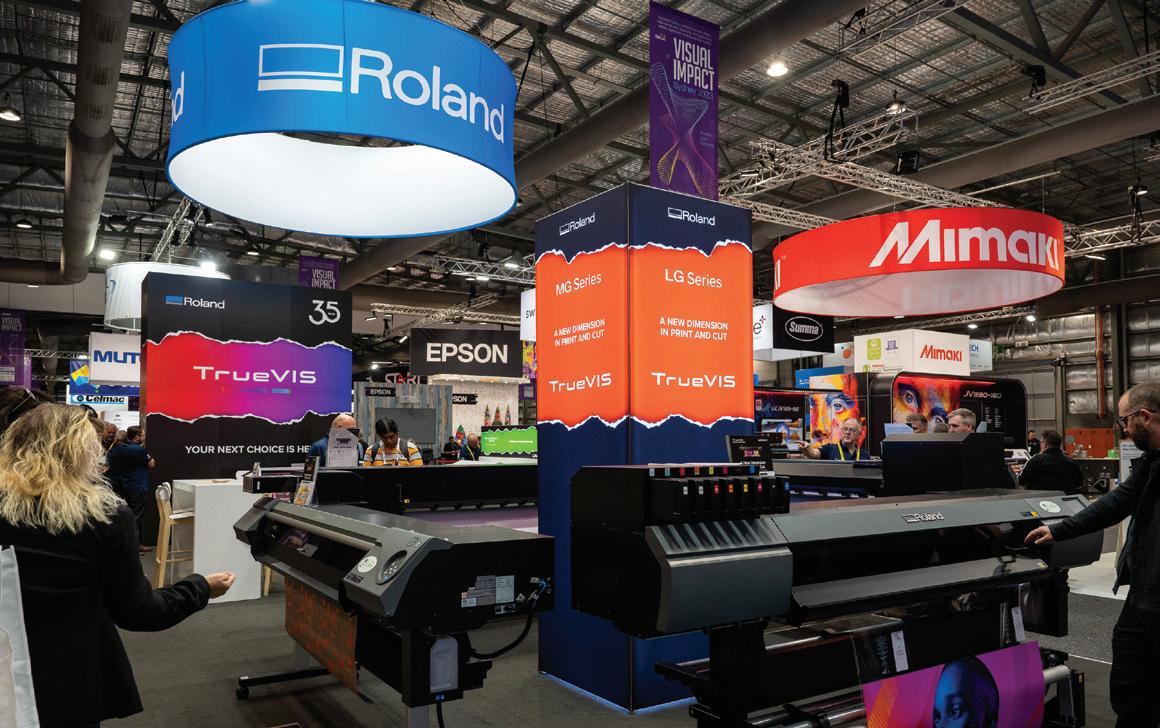
Sponsor & Exhibitor Lists Grow for Visual Impact Expo
Graphic Art Mart and HP Australia have become Gold Sponsors of the upcoming Visual Impact Expo, joining Platinum Sponsor Roland DG and Gold Sponsor Mimaki Australia, who were first to confirm their support.
Karren Challoner-Miles, CEO of supplier association Visual Connections, the show’s host and organiser, says support from these leading suppliers is vital to ensure events like Visual Impact can be delivered to the industry.
“Like Roland DG and Mimaki, HP and Graphic Art Mart have an unrivalled track record for supporting industry initiatives, and we are delighted to welcome them as Gold Sponsors of Visual Impact Expo 2026.
All four companies have also confirmed their stands at the show, joining other recent additions Ball & Doggett, Graphic Art Mart, Interone and Stick-on-Signs, and early bird exhibitors Additive Machines, ADM Systems, Multicam Systems, Mutoh Australia, Pozitive Sign & Graphics Supplies, SA-LED Australia, Shanghai Totem Exhibition Co and Shann Group.
Together, these latest bookings represent over 35% of the available space and ensure the showcase will cover everything from digital print to textile and garment printing, car wrapping, engraving and routing, fabricated and illuminated signage, and more.
“Now that the New Year is underway, we are seeing a lot of the discussions we had before Christmas come to fruition, with bookings confirmed and other stands reserved pending a final decision,” adds Karren.
A look at the floorplan, which is available at visualimpact.org.au, shows that spaces towards the front of the Dome, and down the
central aisle, are as popular as ever, but the ‘in-the-round’ design of this show, together with the co-located Conference, which will drive visitors to the rear of the Dome, means all stands should enjoy steady traffic.
“If you’re thinking of exhibiting and want a particular stand, you’ll need to be quick but be assured we’ll be able to find you a great spot regardless,” Karren promises.
Content programming is in the early stages for the inaugural Visual Impact Conference, which will run each morning during the show and is designed to cover topics that impact on business success at the most fundamental levels.
“The Conference has been developed to answer the many requests we have received over recent years for information and content that goes beyond our traditional seminar programs,” Karren explains.
Targeted at decision-makers and business operations teams, the Conference aims to educate, upskill, and challenge the status quo by drawing on best practices from other industries and markets. Visual Connections has brought on an experienced Conference Programmer who will be fleshing out the three streams:
Day 1: Better business: workplace changes, ethics, talent acquisition, supply chain and the general economic environment
B Navigating sustainability: understanding Australia’s government requirements, waste management, achieving carbon neutral accreditation, international case studies
“The final program will of course be determined by the availability of presenters, but we are in discussion with experts on everything from the global economy, tariffs and trade; to optimised systems and processes; the impact of AI, cyber security threats and case studies and other technological advances; business ethics; sustainability, waste management and net zero…and much more,” Karren says.
Other highlights which will add value for visitors during the show week in Sydney include the ASGA National Sign & Graphics Awards on Thursday, 3 September, and a return of the Make-it-Happen Signage Bootcamps, which proved popular at PacPrint 2025.
Visual Impact Conference & Expo 2026 will be held at the Sydney Showground, Sydney Olympic Park, from 2-4 September 2026. For more information, or to discuss stand bookings or sponsorships, go to visualimpact.org.au, contact Karren Challoner-Miles on (02) 9868 1577 or exhibitions@visualconnections.org.au.
Day 3: Future ready: automation and robotics, data security, lean manufacturing and emerging technologies
FOR MORE INFORMATION please contact the organisers on 02 9868 1577 or email exhibitions@visualconnections.org.au visualimpact.org.au VI Conference and Expo 2026 brings the industry’s leading suppliers, thought leaders and customers together under one roof. Don’t miss your opportunity to
When intent shapes materials engineering
Avery Dennison redefines engineering sustainable performance with Greenscape
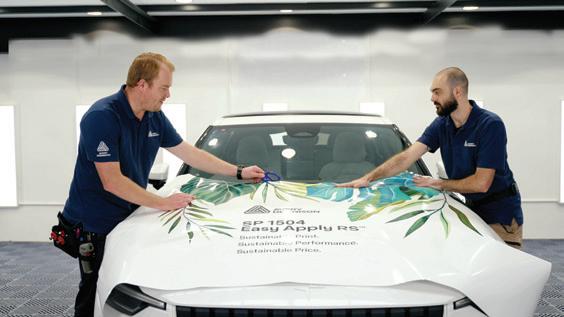
Greenscape brings together Avery Dennison’s non-PVC graphic materials under a single framework, demonstrating how sustainability considerations are integrated into materials engineering while maintaining the performance requirements of real-world graphics applications.
As sustainability expectations become embedded across the signage and graphics industry, material suppliers are increasingly formalising how environmental responsibility is addressed through practical, applicationready solutions.
Within this context, Avery Dennison has formalised its long-standing approach through Greenscape, the umbrella identity that brings together the company’s sustainability-focused initiatives and graphic materials. Greenscape is not a standalone product or certification, but a framework for grouping and identifying graphic solutions that reduce environmental impact while maintaining required performance standards.
Greenscape reflects Avery Dennison’s approach to addressing sustainability at a portfolio level rather than on a product-byproduct basis. By consolidating non-PVC and lower-impact materials under a single
framework, Greenscape provides a clearer view of how sustainability considerations are applied across applications without altering expectations for durability, print quality, or visual performance.
The need to reconcile sustainability with performance is particularly evident in vehicle wrapping and fleet branding. These applications require materials that conform to complex surfaces, withstand prolonged outdoor exposure, and maintain visual consistency over time. Historically, meeting these requirements has relied heavily on PVC-based materials, often creating environmental trade-offs.
Within the Greenscape framework, Avery Dennison’s non-PVC films are engineered to meet these demands. Products such as Sustainable Print SP 1504 Easy Apply are designed to support high-quality print output and efficient application for long-term graphics. The introduction of the Sustainable Laminate SL 6460 High Gloss in 2025 extends this approach, providing a non-PVC protective layer manufactured on a specialised polyurethane coating line and designed for harsh Australian climatic conditions. Used together, these materials demonstrate how Greenscape is applied in practice, combining
durability and visual performance. They reduce greenhouse gas emissions and water use and eliminate harmful VOCs found in traditional PVC products.
Greenscape also extends to shorterterm applications, where sustainability considerations are increasingly relevant due to material turnover and waste. In promotional and advertising graphics, PVC-free films in the Greenscape portfolio offer a more responsible option for retail displays, event signage, and campaign applications, while retaining the versatility and visual impact required in fastpaced environments.
By defining a framework that integrates sustainability initiatives and products across multiple applications, Avery Dennison positions Greenscape to integrate environmental stewardship into materials engineering rather than treat it as a separate or secondary attribute.
Sustainability is now the baseline consideration rather than a differentiator. Avery Dennison’s Greenscape offers insight into how environmental responsibility is being embedded into the design, manufacture and application of contemporary graphic materials, while maintaining the performance standards expected by the industry.
Ink costs could be impacting your profits if not practically managed
When investing in a wide-format digital printer, most businesses focus heavily on the upfront purchase price. Hardware specifications, print speed, resolution and capital outlay often dominate the conversation. Yet one of the most significant cost factors over the life of a printer is frequently underestimated: ink.
In real-world production environments, ink is one of the largest ongoing operating expenses in wide-format printing. A printer with an upfront cost of $30,000 may appear to be the primary investment, but this figure represents only part of the total financial picture. Once the printer is in operation, ink consumption becomes a constant, cumulative cost.
For many print service providers, annual ink expenditure can reach around $10,000. Over a typical five-year equipment lifecycle, that equates to $50,000 in ink costs — a figure that can easily exceed the original purchase price of the printer itself. In practical terms, it is not uncommon for the ink used over time to cost
more than the machine producing the prints.
This reality challenges the way printer investments are often evaluated. Focusing solely on the upfront purchase price risks understating the true cost of ownership and can lead to decisions that appear sound initially but prove expensive over time. A more accurate approach is to consider the total cost of investment (TCI), combining the hardware cost with expected ink consumption across the life of the device.
When viewed through this lens, ink efficiency becomes a critical performance metric rather than a secondary consideration. Even modest reductions in ink usage per job can translate into substantial savings when multiplied across thousands of square metres of output. For businesses operating in competitive markets with tight margins, these cumulative savings can have a direct impact on long-term profitability.
This raises an important question for buyers: how can ink consumption be reduced without compromising print quality, colour consistency or productivity?
Intelligent Ink Management and Long-Term Cost Control
Reducing ink costs is not simply about printing lighter or cutting corners on quality. Advances in colour management and RIP software now allow ink usage to be optimised intelligently, maintaining visual impact while reducing unnecessary ink laydown.
Mimaki has addressed this challenge through a combination of hardware engineering and software-based ink management. Its RasterLink 7 RIP software that includes an Ink Save Mode as standard, at no extra cost. Ink Save Mode is designed to reduce ink consumption while preserving the visual integrity required for signage, graphics and commercial print applications.
Ink Save Mode works by optimising how ink is distributed within an image, reducing over-inking in areas where it does not materially contribute to perceived quality. This allows print businesses to lower ink usage without sacrificing output standards across many everyday applications.
In practical terms, the financial impact can be meaningful. For example, a business using approximately 2.5 litres of ink per month can achieve savings of around $3,000 per year when operating Ink Save Mode at moderate settings. Higher ink-saving levels can deliver further reductions, depending on the type of work being produced.
Crucially, these savings accumulate year after year. Over the lifespan of a printer, intelligent ink management can represent tens of thousands of dollars in avoided costs — reinforcing why ink efficiency should be assessed alongside speed, resolution and media compatibility when making an initial purchasing decision.
Looking Beyond the Purchase Price
For print service providers, the message is clear: the real investment in a wide-format printer extends well beyond the machine itself. Ink costs can quietly overtake the purchase price, reshaping the economics of ownership over time.
By adopting a total cost of investment mindset and prioritising ink efficiency from day one, businesses can make more informed decisions — protecting margins and supporting long-term sustainability well after the printer has been installed.
The future is fearless
How Sacha Rattray is bringing women into our industry
When the Fearless Festival landed in Hobart last year at Princes Wharf No.1, it offered more than the usual careers expo fare.
The festival is a free two-day event designed to help young women explore non-traditional industries, from trades and manufacturing to STEM and creative services.
Among the many exhibitors, one booth brought a distinctly signage-industry flavour: a live vehicle-wrapping activation led by Sacha Rattray from GetVisual Graphics, with materials and technical support provided by ORAFOL.
Sacha was invited to participate in the event
to showcase the craft of wrapping and the range of career opportunities it offers within the signage and graphics sector. She said the experience was both energising and rewarding.
“We led the wrapping activation at the Fearless Festival with ORAFOL supporting as a highly involved sponsor,” Sacha said. “They supplied product, display items, and even helped with setup and pack-down.”
The booth setup mirrored real workshop conditions as far as feasible, with workstations, curved panels and sample wraps that gave students a sense of what it’s like to work in a professional signage environment. ORAFOL’s
generous contribution included supplying premium film and display materials and providing technical support from Tasmanianbased Business Development Manager Sherry Baker. The young, passionate apprentices who volunteered on the day ensured the demonstrations were realistic, and attendees heard first-hand from their peers about a career in signage. Sacha wanted visitors to leave with a better understanding of how creative and technical skills come together in signage, rather than simply collecting brochures.
The Fearless Festival itself aims to challenge stereotypes and open pathways for women
into underrepresented trades. For the signage sector, which continues to face challenges in attracting skilled wrap technicians and signwriters, visibility at events like this is a direct investment in future capability. Sacha’s participation showed what signage looks like as a modern, hands-on, technology-enabled trade.
At first, many of the girls were hesitant to step forward, unsure about whether wrapping was something they could try. With some friendly encouragement and a few light-hearted demonstrations, Sacha quickly broke the ice, inviting them to have a go. What began as cautious curiosity soon turned into genuine engagement. Over the two days, students approached the booth, eager to learn what a wrap technician does. Sacha demonstrated the workflow from cleaning and masking through to heating and finishing, explaining that signage fabrication involves planning, surface engineering and brand execution, not just “sticking on decals.” “The booth was busy
the whole time,” she said. “The kids were so engaged—it was great to see their interest grow once they got hands-on.”
Throughout the festival, Sacha discussed the opportunities the signage trade offers: the combination of design and hands-on work, roles that range from small studios to national fleet programs, and the potential to move from apprentice to project lead. She also spoke candidly about the gender balance in the industry and encouraged women to consider wrapping and signage as creative, precise and reliable career options.
Her involvement aligned closely with the Fearless Festival’s guiding statement: “The future ignores stereotypes. The future is FEARLESS.” By connecting the festival’s educational mission with the technical realities of signage work, she presented the trade as both accessible and forward-looking.
While the 2025 event took place in Hobart, planning is already underway for the next
edition, set for Ulverstone in 2026. “The organisers have already asked us to come back next year when the festival moves to Ulverstone,” Sacha said. She hopes to expand the demonstration by engaging with recent apprentices who discovered the trade through similar outreach programs. For ORAFOL, supporting practitioners like Sacha reinforces the company’s connection to practical training and the next generation of industry talent.
For signage professionals, the Fearless Festival signage activation is a clear working example that shows how engaging with youth and community career programs early can drive both recruitment and industry awareness.
By providing a genuine, hands-on experience and linking it to tangible job pathways, Sacha demonstrated how signage and wrapping are viable, creative, and skilled trades for future workers, particularly young women seeking a career that combines artistry, technology, and craftsmanship.
Payday Super is almost here
Are you ready for the next Superannuation deadline?
The Federal Government’s “Superannuation Payday” reforms are fast approaching.
From 1 July 2026, employers will be required to pay superannuation guarantee contributions at the same time as they pay salary and wages. Effectively, superannuation will be embedded in each pay cycle. For small businesses, this represents a significant structural change to superannuation since the introduction of Single Touch Payroll. In this article I break down what is changing and what businesses need to do.
WHAT IS CHANGING ON 1 JULY 2026?
Superannuation must be paid on payday
From 1 July 2026, employers must make SG contributions at the same time as wages are paid. Effectively, if you run a weekly payroll, it must be paid weekly, if fortnightly, then paid fortnightly, and if monthly, then paid monthly. This aligns super contributions with each pay cycle and aims to reduce unpaid super and improve employees’ retirement savings. Contributions must reach the fund within 7 days of payday
The legislative amendments require that super contributions ‘land’ in the employee’s nominated fund within 7 business days of payday. Under the current quarterly regime, employers have up to 28 days after the quarter to comply. Moving to a seven-day clearance window will materially tighten the compliance timeframe. This is a point of concern, given that clearing houses and intermediaries may not always guarantee that funds will be processed within 7 days, particularly during peak periods or when there are banking delays.
The Small Business Super Clearing House is closing
The ATO’s Small Business Superannuation Clearing House (SBSCH), widely used by small employers, will be permanently closed from 1 July 2026 as part of the Payday Super
reforms. If your business currently relies on the SBSCH, you will need to transition to a commercial clearing house provider, a payrollintegrated solution, or a direct fund payment mechanism. This change alone will require forward planning, and leaving migration until July 2026 may increase the risk of delayed or non-compliant payments during the transition.
Penalties for late payments
As with all government processes, late or missed payments may result in additional liability, interest charges, and administrative penalties imposed by the ATO. Under the incoming payday model, the margin for error narrows considerably, and missing a weekly or fortnightly cycle could generate multiple compliance events over the year.
PRACTICAL IMPLICATIONS
Cash Flow
Under the current quarterly payment requirement, businesses benefit from cash retention across the quarter. Under the incoming regime, businesses will need to update cash flow forecasting, adjust debtor management, and ensure clear plans for working capital. It is recommended that businesses engage with their accountants early to model the financial impact.
Payroll Systems
Businesses should ensure payroll systems can calculate contributions for each pay run, initiate contributions each pay cycle, integrate with compliance clearing house solutions, and generate audit-ready reporting. Do not assume updates will occur automatically, so contact your payroll provider now to obtain documented confirmation that the platform will be fully compliant by 1 July 2026. Additionally, confirm payment processing timeframes, confirmation reporting, and error alerts.
Record Keeping
Employers are already required to maintain
wage and super records. However, under the incoming regime, it will be critical that businesses retain evidence of payment initiation, confirmation from clearing houses, and that the fund has received the payment. Employers should expect the ATO to continue to focus on superannuation compliance enforcement activity, which has increased during recent years.
ACTION PLAN
In preparation for 1 July 2026, businesses should:
1. Review your payroll platform and confirm system capability and integration changes.
2. Engage your provider to clarify processing timelines and fund allocation.
3. Model and assess cash flow impact from the changes.
4. Consider establishing a payment buffer to avoid delays in payment processing.
5. Transition to a replacement solution if your business currently uses the SBSCH.
6. Speak with your accountant now. The Superannuation Payday reforms are more than technical changes. They represent a fundamental shift in employer contribution compliance obligations. The key message for small business owners is: ‘ Do not wait until July 2026.’ Plan early and confirm your payroll arrangements to help reduce compliance risk, preserve cash flow stability and ensure your business is ready to meet its compliance obligations.
Charles Watson GM – IR, Policy and Governance Visual Media Association
Trade Shows Events Seminars Exhibitions
AUSTRALIA
APPA ROADSHOW - MELBOURNE
Monday 23 March 2026
Sandown Racecourse, Springvale, VIC
APPA ROADSHOW – SYDNEY
Wednesday 25 March 2026
Hordern Pavilion, Moore Park, NSW
APPA ROADSHOW – BRISBANE
Friday 27 March 2026
Royal International Convention Centre, Bowen Hills, QLD
APPA ROADSHOW – PERTH
Tuesday 31 March 2026
Optus Stadium, Burswood, WA
WOMEN IN PRINT SPEAKER SERIES 2026 womeninprint.com.au/network May 2026
VISUAL IMPACT CONFERENCE AND EXPO www.visualimpact.org.au/ 2-4 September 2026
Sydney Showground, Sydney
ASGA NATIONAL SIGN & GRAPHICS AWARDS signs.org.au 3 September 2026
Sydney Showground, Sydney
INTERNATIONAL
IMPRESSIONS EXPO ATLANTIC CITY impressionsexpo.com 26-28 March 2026
Atlantic City Convention Center, Atlantic City, USA
ISA INTERNATIONAL SIGN EXPO signexpo.org 8-10 April 2026
OC Convention Centre, Orlando, USA
FESPA GLOBAL PRINT EXPO BARCELONA www.fespaglobalprintexpo.com 19 -22 May 2026
Fira Barcelona Gran Via, Barcelona, Spain
NZSDA AWARDS AND SIGN CONFERENCE awards.nzsda.net.nz 20 June 2026
Auckland, New Zealand
More than being “green”
Sustainability outlook for wide-format printing in 2026
2026 marks a turning point at which sustainability shifts from optional to operational, from marketing language to measurable action, and from a niche offering to an essential competitive necessity. No longer just a nice-to-have, sustainability supports long-term business viability.
Sustainability is often misunderstood as simply “being green.” In reality, it’s a far broader concept. True sustainability is not just about environmental responsibility; it also considers social equity and economic viability. Sustainability shouldn’t conflict with business success; it should enhance it.
Sustainability is about meeting our needs today without compromising the ability of future generations to meet theirs. That principle is now shaping industries worldwide, including the wide-format print industry.
In 2026, sustainability is no longer a fringe conversation. It is a mainstream concern influencing supply chains, purchasing decisions, brand strategy, regulations and consumer expectations.
Implementing sustainability into your business is about staying relevant, profitable and competitive.
Why Now?
Over the past decade, sustainability has moved from concern to urgency.
We are witnessing habitat destruction, climate instability, biodiversity loss, and the growing impact of plastic pollution and microplastics at levels not previously seen. We have experienced how vulnerable we are when natural balances are disrupted. These realities have changed how people think and act.
Business Is Responding, and Print Is Involved
In today’s print market, sustainability considerations influence tenders, supplier selection, material use, and project selection.
Brands are responding to customer demands because that is good business. They are setting ESG targets, phasing out problematic materials, reducing carbon footprints and communicating their achievements loudly and proudly. This is where our industry must pay attention. Many materials traditionally used in wide-format printing, particularly PVC, are inconsistent with the sustainability commitments brands are making.
Contradictions are everywhere. A retailer proudly announces their move away from
plastic while promoting the campaign on PVC stickers. A food brand is switching to recyclable cardboard bread tags while using non-recyclable plastic floor graphics for instore promotions.
In many cases, these inconsistencies are not intentional. It is not about cost either, as sustainable materials are far more commercially viable today than they were even five years ago. Often, it is simply a lack of awareness about better alternatives.
When eco-conscious customers and brands discover material solutions that better align with their sustainability goals, they switch. Offering sustainable print solutions is no longer a niche upsell. It is a smart, forward-thinking business strategy for customer acquisition and retention.
Our Industry’s Plastic Challenge
Plastic is under intense scrutiny. Public sentiment toward plastic is increasingly negative. Perception matters and as an industry, we are significant converters of plastic materials so this puts us directly in the line of scrutiny.
Market shifts are already happening. Some brands are already refusing PVC in their POS materials and embedding PVC restrictions into procurement policies. Western Australia
has introduced bans on single-use plastic promotional film.
If we do not proactively educate customers about our materials and offer viable solutions, there is a risk customers will seek out alternatives they perceive to be more sustainable, like digital advertising or move away from plastic print media all together.
2026 is the year proactive education and looking at what you use will be critical.
Do we need to give up plastic? The simple answer is no but we must be smarter about how we use it. Plastic is not one material. There are several categories, each with different properties, lifespans and environmental impacts. The problem is not all plastic and it’s not just plastic itself but how it is used and poor end-of-life management.
The PVC Dilemma.
PVC self-adhesive film has been the traditional media of choice for sign and print for decades. It is durable, conformable, fire-resistant, cost-effective and familiar. Its performance characteristics are hard to beat for long-term outdoor and conformable applications.
But environmentally, PVC is problematic. It is one of the most chemically complex plastics, containing harmful additives and stabilisers that can leach over time. It is persistent, can’t be recycled, and is increasingly subject to regulatory pressure. Imagine, every piece of PVC you have ever used still exists in some form. In landfills, PVC takes centuries to degrade and can leach harmful compounds into surrounding ecosystems.
sustainability by extending the life of surfaces, prolonging replacement.
Where PVC becomes difficult to justify is for short-term, high-volume promotional graphics such as retail campaigns, trade shows, events and temporary indoor applications. Here, the attributes of PVC are redundant, and PVC-free alternatives that match price, performance and quality can easily be used. This is where the biggest sustainability gains can be made.
Switching materials for high-volume promotional campaigns reduces toxicity, improves recyclability and aligns print with brand ESG goals. It also creates commercial opportunities. Using sustainable products adds value, and value supports margin.
Beyond Materials, Process Matters.
Material choice alone does not define sustainability. Even PVC-free products create waste if used irresponsibly. Sustainability in 2026 is about systems, not just substrates.
Sustainability gains can come from smarter design and layout planning to reduce waste, systems that reuse and refurbish existing substrates and materials, and pathways for recycling.
Waste management and recycling offer some of the most significant environmental benefits. Recycling reduces landfill, conserves natural resources, lowers greenhouse gas emissions and reduces contamination.
Circular economy thinking is becoming embedded in print operations. Product stewardship programs, recycling media and packaging, reclaiming substrates and working
Technology Is Accelerating Change
Print technology also supports sustainability at scale. LED-UV curing systems reduce energy consumption. Water-based and low-VOC inks improve indoor air quality and environmental footprints. Automation and AI-driven workflow systems reduce errors and costly reprints. Lifecycle analysis tools provide measurable data that brands increasingly demand.
Sustainability is becoming data-driven. Measurable performance with tangible outcomes matters more than fancy marketing claims.
In 2026, sustainability should be an important consideration for every print business. Those who educate clients, diversify materials, offer real solutions, implement stewardship programs and communicate transparently will strengthen relationships and margins. Sustainability is not just about the environment’s future; it is about future-proofing your business.
The power of one
How encouragement, or its absence, defines professional growth
The Power of One by Bryce Courtenay is a compelling story of resilience in the face of adversity. In many ways, its central theme closely reflects the realities of the sign and print industry.
Ours is a trade where skills are hard won, expectations are high, and pressure is constant. Within that environment, leaders and senior tradespeople hold significant influence. We have the ability to develop capable, confident professionals—or to undermine them entirely through poor leadership and communication.
That influence is expressed daily, in how we train apprentices, how we speak to staff and clients, and how we motivate people to reach their potential.
I grew up in a family signwriting business. My father was a highly respected, self-taught craftsman, renowned for his brushwork, pin-lining, scrolling, and blended shading. My brother, nine years older, joined the business well before me, so by the time I entered at age 15, expectations were already firmly
established. I had left school without a clear direction and worked in the business largely by default, with little certainty that signwriting was what I wanted to pursue.
Within a year, I began an apprenticeship. My father’s reputation preceded me—particularly at Sign School at the Melbourne College of Decoration, where one of the teachers had previously worked for him. The standards were high, and the scrutiny was relentless.
While I grew to enjoy the trade, mastering brush control proved extremely challenging. Even today, I believe signwriting ranks among the most difficult trades to learn. By the end of my third year, I was improving but far from proficient. The learning curve was steep, and encouragement was scarce. Experienced tradespeople often ridiculed mistakes rather than corrected them. Being “the boss’s son” brought additional pressure, both real and perceived. At one point, even the foreman remarked that the apple had fallen a long way from the tree.
The impact was profound. Confidence
erodes quickly in an environment where criticism outweighs guidance.
This is the central issue. As an industry, we can choose to train, mentor, and support developing tradespeople—or we can belittle them, reinforcing hierarchies at the expense of growth. The outcome is entirely determined by how we use our influence.
Several years later, with my father retired and the family business under my control, I had become a competent signwriter. I could pin-line and blend confidently, yet I had never been told that my work met the standard. That absence of affirmation mattered more than I realised at the time.
In my mid-twenties, the Ash Wednesday bushfires destroyed our village of Cockatoo, prompting my family to leave Victoria and start again. As we travelled north, I took short-term work in Alice Springs and later Darwin. In both cases, business owners asked me to stay on, citing the value of my skills. I assumed this reflected labour shortages rather than merit. It was not until I settled in Perth and began
working independently that my confidence began to recover. I sought work wherever I could, built a client base from scratch, and focused on delivering consistent quality. Clients returned repeatedly, often commenting on both workmanship and reliability.
The contrast was clear. Years of working under the shadow of a respected tradesman, combined with persistent criticism, had significantly delayed my confidence and professional growth.
When I began employing people, I made a conscious decision to lead differently. Training, feedback, and recognition became priorities. While remuneration is important, confidence is equally valuable—and far too often overlooked in apprenticeship environments.
Every individual in a leadership position holds the power to shape careers. Used well, that power builds skilled, confident professionals. Used poorly, it can do lasting damage. Each of us holds the Power of One. How we choose to use it defines the future of our trade.
VERNON KINGMAN is a highly respected and prominent figure in the signage industry. He is known for co-founding Kingman Visual in Perth with his wife, Dianne, in 1984. Starting from their garage, the business grew into one of Australia’s leading signage companies, known for major projects such as Perth’s Optus Stadium and the largest sky sign in Australia at St John of God Murdoch Hospital. In 2020, Vernon sold the company. He remains active in the industry as a consultant, continuing to influence and support other businesses in the field. You can contact Vernon at vernonjkingman@gmail.com.
Reframing debt in the digital economy
How smart financial structuring fuels creative growth
In the digital and creative industries, growth is rarely linear.
Studios scale quickly after landing major clients. Agencies invest in new platforms to stay competitive. Production houses upgrade equipment to meet rising expectations in content quality. Businesses pivot toward AI, immersive media, automation and advanced visualisation. Opportunity moves fast, and capital needs to move just as quickly.
Yet many businesses still treat debt as something to minimise rather than strategically manage. In reality, debt restructuring and refinancing can be powerful tools for enabling innovation, stabilising cash flow and supporting sustainable expansion.
In a sector defined by rapid change, financial agility is just as critical as creative agility.
The financial reality of creative enterprises
Digital, creative and signage businesses operate under unique financial conditions. Revenue is often project-based and cyclical. Margins fluctuate depending on client mix. Significant investment in talent, software, hardware and occasionally intellectual property typically occurs before income is realised.
Common pressures include:
• Upfront investment in production equipment and technology
• Delayed client payments affecting working capital
• Rapid hiring during growth phases
• Expansion into new markets
• Transitioning from service-based work to recurring or product-based revenue
These challenges do not signal instability; they often reflect ambition. The issue is not growth itself, but whether financial structures are designed to support it. Strategic refinancing and restructuring allow businesses to align capital with operational reality.
Moving beyond crisis thinking
Debt restructuring is frequently associated with distress. However, forward-thinking businesses use it proactively. Refinancing may involve:
• Replacing short-term facilities with longerterm structured funding
• Consolidating multiple loans into a simplified arrangement
• Renegotiating repayment terms to improve cash flow
• Leveraging asset value such as equipment or infrastructure
• Introducing revolving credit facilities to smooth project cycles
For businesses in this sector, timing matters. A company may be profitable overall but still experience strain because cash inflows do not align with cash outflows. Structured financing can bridge this gap without slowing momentum.
The objective is not merely survival — it is stability with flexibility.
Funding innovation without disruption
Consider a growing production company expanding into new markets. Investment in high-performance hardware, specialised software licences and skilled personnel is essential to remain competitive.
Revenue is strong, but long client payment cycles and upfront project costs place pressure on liquidity.
A comprehensive financial review reveals opportunities to restructure existing facilities and unlock additional borrowing capacity. By implementing a flexible revolving credit structure aligned with project cycles, the business improved liquidity while continuing to invest in innovation.
Rather than limiting ambition, restructuring supported expansion.
This scenario is increasingly common as businesses invest in automation, AI integration and cloud-based infrastructure. These technologies require capital ahead of immediate returns. Structured financing ensures innovation does not destabilise operations.
Aligning finance with business evolution
Many enterprises often outgrow their original funding structures.
A design and print studio that began as a small operation may now operate internationally, manage complex multichannel campaigns and maintain multiple revenue streams. Yet its financing may still reflect its early-stage origins.
Alternative financing options, such as equipment finance, asset-backed lending or revenue-linked facilities, may better reflect how income is generated. The key is alignment between financial structure and operational model.
Without that alignment, growth creates strain.
Strengthening systems during transition
Periods of operational change present opportunities to reassess financial foundations.
When implementing new ERP systems, upgrading financial software or expanding into multi-entity structures, businesses can use the transition to improve governance and reporting.
Restructuring discussions often highlight inefficiencies in cost allocation, project tracking or intercompany processes.
Strengthening financial systems during growth enhances transparency and builds confidence among stakeholders, lenders and investors.
In creative industries where reputation matters, financial credibility supports commercial credibility.
Managing risk in a volatile market
The economy is dynamic. Client budgets shift. Technology evolves. Consumer expectations change rapidly.
Rigid debt structures can restrict flexibility during market fluctuations. Proactive refinancing, however, can provide breathing room and adaptability. For example:
• Extending loan maturities can ease short-term pressure
• Consolidating facilities can simplify management
• Adjusting repayment schedules can accommodate seasonal revenue
These adjustments allow businesses to respond to opportunities or slowdowns without compromising long-term strategy.
Financial flexibility reduces vulnerability.
Debt as a strategic lever
Perhaps the most important shift for creative leaders is viewing debt as a lever rather than a burden. Strategically structured debt can:
• Fund expansion into new markets
• Support acquisition of complementary capabilities
• Enable investment in emerging technology
• Smooth cash flow volatility
• Reduce reliance on equity dilution
For founders and leaders, maintaining ownership and creative control is often paramount. Thoughtful refinancing can provide growth capital without sacrificing strategic independence.
Practical steps for leaders
For business owners considering restructuring or refinancing, several principles apply:
Start early. Engage lenders or advisors before pressure builds. Proactive action produces stronger outcomes.
Understand your cash flow rhythm—map revenue timing against expenditure. Financing should support this cycle.
Reassess asset value. Production equipment, technology infrastructure and certain intangible assets may offer borrowing capacity.
Integrate finance with strategy. Funding decisions should support expansion plans, not simply address short-term gaps.
Maintain strong reporting systems. Clear financial data strengthens negotiations and builds trust.
Financial strategy as creative enablement
Innovation drives the digital and creative manufacturing sectors. But innovation requires capital — and capital requires structure.
By reframing debt restructuring and refinancing as strategic tools rather than emergency measures, businesses can build financial foundations that support experimentation, expansion and resilience.
The most successful signage businesses are not only creatively bold — they are financially agile.
In an economy defined by transformation, aligning capital with creativity and expertise may be one of the most powerful competitive advantages of all.