WOULD YOU LIKE TO JOIN THE TEAM? WE NEED A DELIVERER IN YOUR AREA. INTERESTED?
LEST WE FORGET
At Rural Reach, our goal is simple: to keep villages in North Devon and Torridgeside connected, informed, and thriving. But to do that, we need your help
If you run a local business, provide a service, or are organising an event—big or small— we’d love to hear from you. This magazine is delivered directly to thousands of homes every month, and it’s the perfect way to let your neighbours know what you offer or what’s happening in your area
Why contribute?
By sharing your news, offers, or event details, you’re not just promoting your business or group you’re helping to build a stronger, more vibrant community Whether it’s a new product launch, a special offer, a community market, or a charity fundraiser, your contribution ensures local people know what’s on their doorstep. How to get involved:
If you’re planning an event, please send us the details at least a month in advance This gives us time to include it in the next issue and helps ensure a great turnout.
Local traders and services: let us know about your special offers, new services, or anything you’d like to share with the villages we serve.
Community groups and societies: we welcome updates, meeting dates, and stories about your activities.
Where we deliver:
Rural Reach is proud to serve the following villages, if you live, work, or run an event in any of these areas, we’d love to hear from you:
Beaford
Bratton Fleming
Brayford
Buckland Brewer
Chittlehampton
Chulmleigh Clovelly
Filleigh
Georgham
Goodleigh
High Bick
Knowle
Muddiford
Littleham
Parkham
West Buckland
West Down
Woolsery
Winkleigh
Rural Reach is here to support local enterprise and celebrate everything that makes our villages unique. Your contributions, whether it’s a short news item, a feature about your business, or a listing for an upcoming event, are what keep this magazine lively and useful for everyone. If you’d like to be featured, share your news, or discuss how Rural Reach can support your business or event, please get in touch. Together, we can make sure that every corner of rural North Devon stays informed and connected.
You can call the office on 01271 326694 or email ruralreach@boomboommedia.co.uk
Warm regards, Graham Harris
Publisher, Rural Reach Magazine
The ground may be frozen solid, or boggy and squelchy I know I feel your pain, along with the back-ache after digging. But trust
Written by Kate Helyer
splodges or stripes, sunset oranges fading to pink, and the deep reds and purples – almost to black. There are classic tight tulip shapes, open, ragged-edged and doubles. Grab that cuppa and browse the luxuriant range of colour and shape to find the one you just cant live without!
Last year, I had a hankering for alliums, but didn’t get them in time! This year I’m ahead of the game Alliums, a member of the onion family will give height to borders in late Spring, when everything else is still waking up. Their stunning bobble-heads come in white, lavender and deep purple and there are miniature varieties available for those smaller gardens.
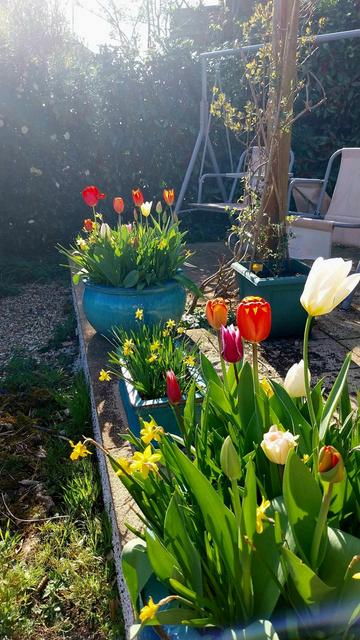
Daffodils and miniature narcissi will add a cheerful splash of sunshine, as early as February and March The secret is to plant them deep enough, around four inches down, otherwise, they’ll come up ‘blind’ (leaves but no flowers). Plant in groups of odd numbers –don’t ask me why it works but it always looks better when bulbs are planted in threes, fives or sevens. Circle them around a tree or edge a path, or even just random groups in a patch of grass.
Tulips come in such a vast variety that there is bound to be a colour and style to tempt every gardener – from pale pastels, clashing
Don’t forget Muscari. These little flowers, better known as grape hyacinths look fabulous planted with pale yellow primroses –a combination that will fill a pot or window box if you are short on space. Finally, for a really impressive potted display, try layering your bulbs Mini narcissi can be under-planted in winter pot displays of any kind (more on this next month) Try this –tulip bulbs in a deep pot, planted low down, on a thin layer of sand to help with drainage. Cover them with an inch or two of compost, but still allowing at least four inches from the top Add in a layer of min narcissi, Tete a Tete or Jetfire are great varieties. These will come up first, followed by the tulips! Two potfuls planted in one go – so now all you have to do is sit back and wait for Spring
Find local businesses, services and tradespeople
WE ARE HIRING DELIVERERS
For our holiday we camped in a beautiful valley with mountains on either side, stunning views with amazing walking and cycle paths which pass traditional style farms
These farms have not changed much over the past 100 years. It is heart-warming to see these beautiful farms right in the centre of the village. The stunning outdoor swimming pool we used had an active dairy farm only 30ft away.
In the summer cows walk up the mountain to graze the grass high up the alp This gives the farms down the valley chance to make hay through the summer to feed the cows in the coming winter.
When this time comes the cows walk down the mountain and pass through the town It is a festival with the cows and farmers taking
It was not so many years ago that Woolsery would have seen cows walking the roads and grazing the fields next to houses This feels like a lifetime ago and it would seem impossible for it to ever return
This brings to mind the last few times we walked our cows up and down our road. Car users had become less accepting of the inconvenience of the cows on the road, some would not reverse to give enough space for the cows to pass, some would even blow their horns with impatience which would spook the cows
Complaints about cow muck making cars dirty and drivers unwilling or unable to reverse a few metres to prevent damage to their vehicle.
I hope in the mountains of Switzerland they can hold on to this tradition, but I must confess I do wonder. The average age of the farmer seems to be getting higher and I am not sure if enough of their younger generation will be willing to work the long hard hours to manage cows in the mountains.
Hopefully by having the festival and celebrating farmers it will inspire the younger generation to continue this traditional farming method for long into the future.
“As Heard by the Herd” – Moo cluckandmoo@mail com
As Autumn is in full swing, the clocks have changed and the daylight hours reduce, many people begin to suffer with Seasonal Affective Disorder (SAD), which is sometimes known as ‘Winter Depression’. SAD can affect people in different ways, but common symptoms include a persistent low mood, irritability, lethargy, food cravings and sleep problems. However it is experienced, these feelings are real and valid.
While SAD can be challenging, there are small, manageable steps that can help support wellbeing and lift mood through the winter months.
Practical Ways to Help Yourself
• Use a light box
A special lamp called a ‘light box’ can help with simulated exposure to daylight.
• Seek natural light
Try to get as much sunlight as possible during the day
• Brighten your environment
Keep home and work spaces light and airy by opening curtains wide, sitting near windows, and adding warm lighting to create a calm and soothing atmosphere
• Stay active
Regular exercise releases feel-good hormones that boost mood and energy
This could be a gentle walk, jogging, or even some winter gardening, which helps connect to nature and daylight Mindfulness, yoga, or deep breathing can also help reduce stress. If the mind feels busy, journaling can help shift perspective
• Eat well
A healthy, balanced diet supports both physical and emotional health. Include plenty of fruit, vegetables, and whole grains, while being mindful of sugar and carbohydrate cravings that can increase during winter.
• Keep a routine
Maintaining regular sleep and waking times helps stabilise the internal clock and supports consistent mood
• Stay connected
It can be tempting to hibernate during winter, but maintaining social contact helps ease feelings of isolation. This could be meeting a friend for coffee or having a quick phone call
• Seek support if needed
If symptoms feel overwhelming or persistent, consider talking to a GP Talking therapies, medication, or further support can make a real difference
Winter doesn’t last forever. Taking small steps to care for oneself can nurture wellbeing and help rediscover energy and positivity.
As the weather gets colder lots of advice and tips about. This one from the NHS. For a cozy and safe autumn, the NHS and safety experts recommend checking your hot water bottle for age and damage
Before first use in Autumn and to avoid burns and leaks from degraded rubber, follow these steps before you start using your hot water bottle for the season.
Check the expiration date Hot water bottles should be replaced every two years, even if they look fine.
Find the "daisy wheel" A date stamp, often shaped like a flower, is usually found on the neck or body of the bottle
The central number is the manufacturing year (e.g., '22' for 2022). The twelve segments represent the months Filled segments indicate the month it was made
Inspect for wear and tear. Look for cracks, splits, discolouration, or brittle areas Do not use the bottle if you notice any damage.
Check for leaks Fill the bottle with cool water, insert the stopper tightly, and turn it upside down to see if any water leaks out
In addition, never using boiling water, and always use a protective cover