iLA acknowledges the Traditional Custodians of the lands, skies and waters throughout Australia and the Torres Strait, where we live and work.
We specifically acknowledge the Whadjuk Noongar people as the Traditional Custodians of the lands on which our head office sits, in Boorloo/Perth, Western Australia (Noongar Boodja). We pay our respects to all Aboriginal and Torres Strait Islander peoples and communities across Australia, and their Elders past and present.
We are committed to walking together to develop culturally safe information and initiatives that enable people to make informed choices and connections, and support strong, self-determining communities.
Artwork Credit: Eulalia Martin (Bunuba/Gija), ‘Growth’ for iLA by Eulalia Martin Nawajarri Designs 2022.
@eulalia_nawajarri_designs
Message from our Chairman and CEO
The 2024/25 financial year was the most significant in iLA’s short history, and one defined by two major milestones.
Firstly, iLA was selected as one of only three non-government organisations featured in the Department of Health and Aged Care’s Digital and Data Strategy. This recognition reflects iLA as a trusted leader in reablement, healthy ageing, and digital innovation. LiveUp and Keep Able were identified to grow their reach, strengthen offerings, and deliver impactful solutions.
For LiveUp, the focus was on extending its healthy ageing approach with new content domains that support people to stay active, connected, and independent. iLA also began developing a mobile app to inspire Australians aged 45 to 65 to take proactive steps to improve their wellbeing. Branded NowNext, the app empowers people to build simple and sustainable habits.
Through this funding, Keep Able strengthened its role as the national leader in wellness and reablement. iLA developed a new website to make resources easier to access, and began work on a Keep Able mobile app. The app will give support workers instant access to the knowledge they need to embed wellness and reablement in everyday care. Both initiatives will launch next financial year, driving capability across the aged care sector.
The second milestone was iLA’s successful tender to the new Single Assessment System (SAS). This defining moment provides long-term term stability and positions us at the centre of aged care assessments across WA.
The SAS streamlines the Regional Assessment Service (RAS), Aged Care Assessment Team (ACAT), and Australian National Aged Care Classification (AN-ACC) assessments into a single pathway that adapts to people’s changing needs.
iLA has secured statewide delivery of Aged Care Assessments (ACA) and metropolitan delivery of Residential Aged Care Funding Assessments (RAC). To prepare, iLA ran a major recruitment drive, expanded systems, and supported our RAS workforce ahead of the December commencement.
Together, these opportunities saw our workforce almost double from 62 to 116, reflecting both the scale of opportunity and the ability of our staff to rise to the challenge.
These achievements didn’t happen in isolation, with AT Chat maintaining its position as a leader in assistive technology. In addition, we were engaged by WA Health to administer the CAEP Plus Grant Program where we funded 36 Western Australians in need of assistive technology.
As part of this evolution, the Board endorsed an updated vision that reflects our belief that every person should have the knowledge and support they need to live well. Our purpose is to deliver trusted and innovative solutions that empower people and help shape the future of ageing and disability in Australia, and this remains at the heart of everything we do.
On behalf of the Board, we congratulate staff on an extraordinary year. We look forward to building on this momentum, consolidating growth, strengthening partnerships, and continuing to lead innovation in the aged care and disability sectors.
Wes Smith Chairperson
Steve Glew Chief Executive Officer
About us
iLA is a for-purpose organisation dedicated to empowering people and communities to live and age well.
We connect communities to tools and resources that support their health, wellbeing, and independence, while also supporting the aged care and disability sectors to deliver services consistent with best practice.
iLA traces its roots back to 1977, when Freda Jacob founded the Independent Living Centre (ILC) WA as an information and advisory service for assistive equipment and technology.
As services expanded and evolved, ILC transitioned into two organisations in 2020 - Independent Living Assessment (iLA), and Indigo Australasia Incorporated (Indigo).
Today, iLA continues to honour Freda’s legacy by empowering people and communities to live well.
iLA’s initiatives include LiveUp, AT Chat, Keep Able, Single Assessment Service, and Sector Support and Development.
Our focus
iLA empowers older people and people with disabilities to make informed choices about their health and wellbeing, while supporting the aged care and disability sectors to deliver person-centred services. Through digital innovation, industry leading research, and aged care assessments, we’re helping shape a more inclusive future.
Our vision
Every person has the knowledge and support they need to live well.
Our purpose
We deliver trusted, innovative solutions that empower people and help shape the future of ageing and disability in Australia.
Our Values
Passion
Dedicated to making a difference and creating change
Authentic
Reliable and sincere in our commitment to do what we say we will do
Embracing
Respect individuality and welcome opportunities with purpose and energy
Integrity
Accountable, honest and transparent in all our actions
Our year in review
iLA continues to grow and exceed expectations. During the financial year 2024-25, performance measures and program deliverables continued to be met, and in most cases, surpassed. Here are just a few of the highlights.
1,476,207
people reached on iLA’s YouTube channels
Everyday tools to help Mob First Nations toolkit launched to provide culturally safe information
1,000+
Artwork: Walking Hand in Hand by Matty Atkinson (Bangerang and Wiradjuri)
Single Assessment Service client satisfaction score
13,512
people engaged at 57 expos and events 95%
759,316
LiveUp website users
8,142 Facebook engagements Over 30,500
SAS assessments delivered
1,500 +
Keep Able LinkedIn followers
Key services
Assessment Services
It has been a momentous year for the assessment team. iLA’s tender was successful to provide services under the new Aged Care Single Assessment System (SAS). This achievement represents a significant milestone in our commitment to delivering high-quality, client-centred assessments. The first component of implementing the SAS was the introduction of the Integrated Assessment Tool (IAT). From 1 July 2024, all existing Regional Assessment Services (RAS) and Aged Care Assessment Teams (ACAT) commenced using this tool, which collects more detailed information to ensure service recommendations and referrals are tailored to each person’s unique needs.
The second component was the establishment of a unified Single Assessment System Workforce, which brings together the expertise of RAS non-clinical assessors, ACAT clinical assessors, and Australian National Aged Care Classification (AN-ACC) assessors.
The previous structures have been consolidated and redefined:
A RAS, which supported access to the Commonwealth Home Support Program;
A ACAT, which approved clients for Home Care Packages, Short Term Restorative Care, Transitional Care Packages, residential aged care, and residential respite;
A AN-ACC, now renamed Residential Aged Care (RAC) Funding Assessments. Together, these form Aged Care Needs Assessments.
This new model provides a single assessment pathway that improves consistency across the aged care system and ensures older people can seamlessly transition as their needs change, without the disruption of changing assessment providers.
Transition from RAS to SAS
In the first half of the year, the RAS team continued to deliver timely, client-centred assessments in the Perth North Metropolitan region while awaiting the outcome of the SAS tender. Between July and December, the team completed 1,210 assessments, meeting all program KPIs and consistently receiving positive feedback from clients and stakeholders.
In October 2024, the outcome of the SAS tender was announced, with iLA successful in securing delivery of Aged Care Needs Assessments across all WA regions, as well as RAC Funding Assessments in metropolitan areas. This was a significant achievement for our organisation and a reflection of the expertise, commitment, and reputation of our assessment team.
The successful tender outcome required a rapid scal e-up to ensure services commenced on 9 December 2024. To manage the transition, an establishment committee was formed to oversee planning and ensure all contractual obligations under the new model were met, while continuing to provide RAS assessments until the end of December.
Establishment of the SAS
Between December 2024 and June 2025, iLA undertook a comprehensive implementation process to establish the SAS across WA. This involved recruiting, onboarding, and training 50 new staff located across metropolitan, regional, and remote areas, including Esperance, Karratha, Albany, the Wheatbelt, Busselton, and even Christmas Island.
A new service delivery model was developed to meet the distinct needs of metropolitan and rural communities. Enhancements were made to existing CRM functionality to support clinical triage and assessment delegation, while office space was expanded to accommodate the growing workforce.
We placed strong emphasis on building capability and quality during this period. Extensive training was completed across the workforce, clinical expertise was expanded to deliver more comprehensive assessments, and a robust clinical governance framework was
developed. The quality assurance framework was strengthened to ensure consistency, and stakeholder engagement was prioritised to maintain trust and collaboration with key partners.
At the same time, iLA commenced work in the residential aged care space, delivering RAC assessments for the first time. This required a transition from block funding contracts to a payment-per-assessment model, further demonstrating our ability to adapt quickly while keeping service delivery client-centred.
Service delivery and outcomes
Maintaining high client satisfaction during this period of rapid scale-up was a priority. We are proud to report a client satisfaction rate of 95%, reflecting the dedication and professionalism of the assessment team.
Client feedback highlights the real impact of these assessments on the lives of older Australians. As one client expressed:
“I have gained considerably from the assessment experience. I am a very independent 82-year-old who lives alone, but being assessed by iLA has made me feel secure about the future. I was very impressed by all the people I have met as a result.”
Looking ahead
iLA is proud of its achievements in the aged care assessment space and the opportunity to continue delivering high-quality, client-centred assessments that ensure older Australians’ needs and goals are understood and met. Our expansion into residential aged care assessments through RAC represents a significant step in supporting the funding and care needs of clients in residential settings. As we look ahead, the assessment team will consolidate service delivery across Western Australia while preparing for the implementation of the new Aged Care Act and the commencement of the Support at Home program in November 2025. This preparation will build on the strong foundations established during the transition to the Single Assessment System and ensure that iLA continues to play a leading role in shaping the future of aged care assessments.
LiveUp
It’s been a big year for LiveUp – our first with Expansion funding and a broadened focus that now spans brain health, mental health and nutrition alongside our core pillars of wellness and reablement and assistive technology. With that support, we leaned further into what makes LiveUp different: accessible, personcentred, evidence-based resources, created with communities and partners, and told through stories that feel real and hopeful.
Research and community impact
Our team’s First Nations work received the 2024 Assistive Technology Service Award from ARATA, a recognition of rigorous work done hand-in-hand with community. Internationally, they co-authored the Ageing Well with PersonCentred Technology Think Tank report, shaping global conversation on ageing well. Closer to home, new assistive technology toolkits were co-designed with and for older Italian people and for First Nations Australians which are now available on the LiveUp website. Insights were shared nationally through Communities of Practice, sector networks and conferences, building influence across Australia.
Community engagement
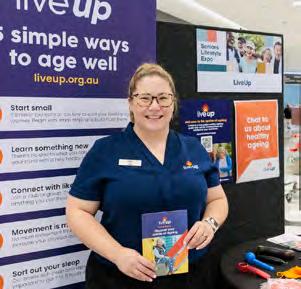
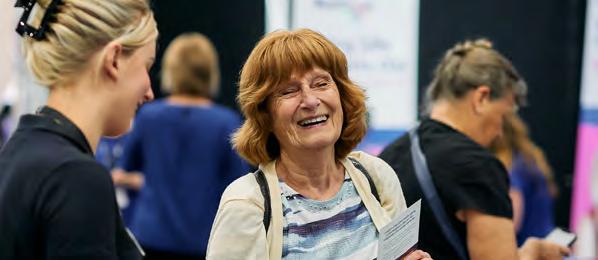
Our team directly engaged over 13,500 people across 57 expos and events, offering approachable entry points to ageing well.
We completed our Local Activation Pilot in Orange, NSW, affirming the value of faceto-face support to build confidence, digital literacy and openness to assistive technology. Collaborations such as with Western NSW PHN and PALS (Pharmacy Addressing Loneliness and Social Isolation) built capacity in regional providers to use social prescribing so older people can stay well and socially connected. We welcomed five Friends of LiveUp partner organisations – collaborations that show leadership in the healthy ageing space.
LiveUp product
This year we launched the new LiveUp website which was co-designed, tested and validated with users, and built on a leading-edge platform custom-built for growth. The relaunch introduced deep personalisation, improved filtering, navigation and search. Usability was a major focus, with features such as estimated read times and sharing options, while accessibility improvements ensure the platform is easier for everyone to use. Behind the scenes, we strengthened our technical foundations with governance processes, stronger security and compliance with Essential 8 standards.
Navigator service
Our Navigator referral service gained strong momentum after its launch in April, with 39 referrals in its first months. The team delivered 52 Healthy Ageing Maps, with work underway to embed a wellbeing-focused approach.
Demand for the Navigator service continues to grow, particularly among people with limited digital literacy, confirming the Navigators’ role as a bridge to LiveUp’s digital offerings. The Ageing Well Advisory Group added further depth, producing three insights reports that highlighted opportunities now being explored across the program.
Content
Our content team partnered with Griffith University and the Centre for Healthy Brain Ageing (CHeBA) to deliver evidence-based resources in the new healthy ageing domains, publishing new articles, videos and other materials at an ambitious fortnightly publishing schedule. Our video offering came to the fore, and we marked a milestone of 1,000 YouTube followers. Community storytelling remained central, including collaborations with Perth Zoo docents in a feature marking National Volunteers Week.
Marketing
Our campaigns reached vast audiences, contributing to a year of record website traffic –754,562 website users generated nearly 2 million page views and 59,000 healthy ageing article downloads. The campaign highlight was the Life Stages Project, a multi-disciplinary initiative spanning content development, sophisticated marketing campaign, and major product enhancement. This series shared authentic stories from four Australians navigating pivotal moments – retirement, downsizing, injury, illness, becoming a grandparent and bereavement –offering heartfelt insights into how connection, purpose and small steps forward help us navigate change.
This was a year of momentum and maturation, deeper partnerships, stronger digital foundations, and a clearer narrative about what ageing well can look like. Thank you to our community partners, contributors and the thousands who engaged with LiveUp. Next year we will continue to build practical tools, evidence-based content and community connections that make healthy ageing and independence a reality for more Australians.
NowNext
This year was the beginning of a bold new program, NowNext, designed to support Australians aged 45–64 to build habits that improve wellbeing now and help avoid pre frailty and age related decline later in life. The project that was initially known as “LiveUp Transformation” formally commenced on 1 July with dedicated funding and a clear purpose: to provide an evidence based, culturally safe and accessible digital tool that makes healthy living simple, relevant and achievable for people in mid life.
Research and design
Working with the Behavioural Insights Team, we held workshops, stakeholder mapping exercises and interviews to identify core and secondary users, their contexts and influences. This process helped us develop personas, define needs, and guide design recommendations. A Theory of Change was created to set our overarching objectives, alongside a co designed user experience framework grounded in behavioural science and clinical expertise.
Content and development
Across the year, 64 healthy habits and 66 wellness articles have been developed with and reviewed by subject matter experts, ensuring the app provides accurate, relevant and practical support. With this evidence base, and a user centred design process, NowNext is taking shape as a mobile app tailored to its audience.
Looking ahead
Exploring opportunities with emerging technologies, including artificial intelligence, is part of the journey to enhance functionality and personalisation. NowNext is progressing towards trial phase, with a soft launch planned for late 2025, the first step in bringing this new digital solution to life.
Key services
Keep Able
Keep Able has experienced rapid growth across the 2024-25 year, expanding and transforming the program to address the Department of Health, Disability and Ageing Data and Digital Action Plan’s key strategic priorities.
This has enabled Keep A ble to further cement its position as a respected industry partner delivering high quality evidence-based resources designed to help community aged care staff deliver wellness and reablement approaches.
Keep Able website development
Continuing to develop innovative, evidencebased tools and resource, Keep Able has produced an expansion strategy and enhancement roadmap to further develop the platform and resources in line with the needs of aged care workers and service providers as they navigate aged care reforms and transition to the new support at home program.
Acceleration of content development was mapped out and prioritised expanding on existing Keep Able offerings in consultation with service providers. The most visited resources were care planning tools and templates, which were developed in collaboration with industry stakeholders and continue to be highly valued and sought after by the sector. Keep Able developed a suite of care planning resources and accompanying customisable templates, checklists and examples to support organisations in achieving wellness and reablement outcomes aligned with the new Aged Care Quality Standards.
The Keep Able development roadmap included a detailed UX review followed by a rebuild and redesign of the website to improve user experience, information architecture and security of the site. The design phase is now complete and included prototyping and user validation to ensure a data-driven and usercentric approach. The project is currently in the
development phase which will be followed by content migration and testing ahead of a relaunch in the new financial year.
The community engagement strategy continues to meet its objectives, with website traffic increasing from approximately 13,000 to 57,500 users during the 2024-25 financial year, a significant increase in overall engagement.
Attendance at industry specific events and conferences across the country has significantly broadened Keep Able’s brand presence and strengthened awareness among key industry stakeholders and organisations.
Keep Able On the Go mobile app
iLA undertook behavioural research into the needs of aged care workers before designing and building a digital wellness and reablement solution; a knowledge management system mobile app for aged care support workers.
Detailed stakeholder mapping, scoping and design took place ensuring the digital solution is evidence-based and grounded in behavioural science principles. The solution decided upon is a Keep Able on the Go app, designed to provide support workers with quick, actionable reablement information through articles, videos, podcasts, and templates. The app content strategy was informed by reablement strategies with a focus on building capacity,
modifying the environment, modifying the task, and promoting the use of low-risk assistive technology. Key features of the app will include offline capabilities to service the needs of front-line workers in rural and remote areas, seamless user experience with low-barriers to access including guest only access, and an advanced search engine utilising generative-AI assisted search functionality.
The app is currently in development phase with plans to commence User Acceptance Testing of the app and a trial phase in the new financial year.
Sector Support and Development
A standout achievement for SSD this year was the second successful ‘Reablement in Reality’ national online conference. Building on the success of last year, the conference attracted over 720 participants, with an event program including a line-up of industry experts who presented on practical tools and insights for aged care workers to implement and provide person-centred care and promote independence. The event received an overwhelmingly positive response with over 90% of attendees saying they were very satisfied with the event.
Responding to the request from CHSP providers, the SSD team have scoped and developed
a series of case study videos to demonstrate real life scenarios for providers to embed best practice wellness and reablement strategies into their service provision. iLA worked collaboratively with service providers across Queensland and Victoria to produce a series of 9 case study videos capturing the perspectives of support workers, allied health professionals, managers, and consumers on what reablement means to them. The videos have been linked to supporting tools and resources on the Keep Able website and have received outstanding feedback so far.
iLA has continued to represent WA in National SSD network meetings and working groups as State Representatives, taking a lead on key national projects such as defining key issues on Dignity of Risk in aged care and disability including investigation of best practice models.
Looking ahead
Keep Able is well positioned for continued growth into 2025-26. With the launch of the new website and mobile app Keep Able will continue to expand its digital presence in the sector and increase its reach through ongoing targeted engagement and strategic partnership building.
Key services
Digital Pilot Projects
In late 2024, iLA received one-off 12-month grant funding from the Department of Health, Disability and Ageing as part of the Aged Care Data and Digital Strategy, to undertake three pilot projects utilising artificial intelligence (AI), augmented reality (AR) and virtual reality (VR).
The purpose of the pilots was to test the potential applicability of these technologies to streamline service delivery and deliver improved service outcomes for older Australians.
Artificial intelligence
The proof-of-concept AI mobile app was developed to help care partners quickly convert assessment data into actionable, reablement-focused care plans, reducing documentation time and improving care quality through intuitive, on-site planning. The mobile application uses AI to convert verbal assessment information into a structured care plan with reablement strategies.
User testing of the AI app was undertaken through the University of Newcastle Living Lab and demonstrated strong support for the app among aged care workers, services providers, and allied health professionals. 100% of participants stating that the AI mobile app improved their ability to delivery higher quality, better-connected care. The app offers faster, more accurate care planning, potentially reducing documentation time from up to two hours to under 15 minutes.
Whilst still requiring further development including validation of the stand-alone Knowledge Bank which powers the AI app, and to ensure that the care plans meet operational needs and address data security requirements, the app offers real potential to improve aged care recipients’ quality of life and
care outcomes whilst also delivering significant efficiencies and helping to address sector challenges such as workforce shortages and assessment backlogs.
Virtual reality
The proof-of-concept VR app was developed to address aged care support workers’ limited training in assistive technology (AT), offering immersive scenario-based learning that improves decision-making, boosts confidence, and may help to reduce AT abandonment. The app may also be suitable for use with the training of allied health students and aged care students’ learning.
Eight assistive products were replicated as three-dimensional digital “twins” in simulated home environments, enabling workers to virtually interact with, manipulate, and learn about each product’s features, thereby enhancing their risk identification and decision-making skills. Prior to user testing, most participants had limited exposure to VR in healthcare and reported low confidence in using such tools. They also note fragmented AT training, typically under 10 hours annually. Post testing, many users agreed that the VR app enhanced their confidence in using and explaining AT, particularly through immersive, scenario-based learning.
Participants appreciated the app’s potential to build trust with clients, support, culturally safe practices, and provide valuable training for rural and early-career professionals. Participants showed enthusiasm for contributing real world scenarios and requested content reflecting diverse environments and cultural contexts, highlighting the potential for co-design of the tool in partnership with the aged care sector and suitably experienced experts to ensure clinically valid, outcome-driven training which closely aligns with the evolving needs of the sector.
Currently if there is a need to test different AT products in a client’s home environment, the only option is for allied health professionals or aged care workers to transport actual
equipment to the home for trialling. This is time consuming and physically demanding for staff who must load, transport, and unload equipment, and ensure stringent cleaning standards are met after equipment use. The AR mobile app was conceived as a proofof-concept for a potential alternative to the physical transportation of AT products.
Augmented reality
The AR mobile app project created 3D models of eight assistive products, enabling support workers to visualise and ‘place’ items in clients’ home environments for clients to view. Aimed at enabling aged care support workers and clients to visualise low-risk assistive technology in real home environments, the app sought to improve communication, confidence, and decisionmaking, with user testing confirming its potential to enhance care efficiency and support personcentred decisions.
Before user testing, most participants had had limited experience with AR. After testing participants’ confidence rose and they also
reported improved AT knowledge. Participants felt the app helped them to raise client awareness, particularly around low-risk AT, and appreciated features such as screenshots for reports. The app was seen to enhance job performance, efficiency, and client trust, as well as reducing the need to transport surplus AT products. Participants identified several areas for further development of the app, including expansion of the library of AT products, adding tutorials, enabling offline use of the app, and improving virtual AT product placement options.
The Digital Pilot Projects tested the feasibility, applicability and potential value-add of each of the three technologies, receiving positive feedback from participants and generating significant interest from universities, aged care providers, and more. The pilots are seen to have great potential for further development and iLA is actively exploring opportunities to continue and expand these projects, in line with the Aged Care Digital and Data Strategy.
Key services
AT Chat
In 2024–25 the AT Chat Chatterbox community grew to 1,515 members and 6,509 followers. During this period, AT Chat co-designed information products with people with disabilities on the topics of travel, gaming, sensory sensitivity, and storytelling.
Multiple products were completed for each topic using approaches such as co-presented webinars, co-written articles, guides, planners, information sheets, blogs, and podcasts. Over 17,500 people accessed these resources, and the information was shared with 28 disability organisations to raise awareness of AT Chat nationally.
AT Chat staff also participated in conferences and expos, including presenting a paper at the AATC Conference in November 2024. An iLA AT Chat representative also contributed to the SEURO GAATO Global Think Tank project on ageing well with person-centred technology.
Responses to the Annual Participant Survey (December 2024) highlighted the high value of the service. All respondents agreed or strongly agreed they were more aware of relevant and valuable AT information and options. Likewise, 100% found the information provided by AT Chat valuable and said it improved their understanding of AT and how it could meet their needs or those of the people they support.
A decline in participants seeking fee-for-service peer mentoring led to a decision to redirect activities towards alternative, non-fee-based approaches. Despite lower numbers, services were received very positively, with one client returning for additional support. Positive feedback included “Thanks so much for this really thorough report. I really appreciate it, and all your assistance with my AT.”
CAEP Plus
In 2024, iLA was engaged by WA Health to establish and administer the CAEP Plus Grant Program. From 30 June 2024 to 31 July 2025, iLA delivered the program to provide financially disadvantaged individuals with access to essential assistive technology (AT) not available through the Community Aids and Equipment Program (CAEP).
The grant was offered to individuals eligible for CAEP and delivered through two types:
1. CAEP Plus Assistive Technology (AT) Grant
Provided individuals with health, disability or aged related functional impairment with funding for basic and essential AT and equipment that allowed them to participate more independently within their homes and community.
2. CAEP Plus Thermoregulatory Dysfunction (TD) Grant
Available to individuals who had a confirmed medical diagnosis of Thermoregulatory Dysfunction, access to basic and essential air conditioning to one area/room of their primary residence, to assist with controlling the temperature in their home.
A total of 36 applications were received, with $130,405.84 approved in funding. The most applied-for equipment type was community access wheelchairs, scooters and mobility aids, followed by air conditioning for thermoregulatory dysfunction. The program also received 126 enquiries from 57 new contacts to iLA.
Positive feedback from referrers and recipients highlighted both the impact of the program and the value of iLA’s communication and support in navigating funding schemes:
“We have the steering controls fitted and working well. They will be a huge life-changing thing for me. I much appreciate your help for this funding. It has been amazing.”
Reconciliation Action Plan (RAP)
The organisation reviewed and began improving its policies and processes to strengthen cultural awareness among staff. These changes aim to improve how we engage with and support First Nations peoples and communities. This work forms part of the organisation’s Reflect Reconciliation Action Plan (RAP).
Several events were held throughout the year, including cultural morning teas and sessions with First Nations guest speakers. New resources were also developed to deepen staff understanding of Australia’s shared history, and to celebrate First Nations peoples and culture.
The RAP Committee are now preparing to develop the next stage of our Reconciliation Action Plan, Innovate. This stage reflects our readiness to make meaningful and lasting change.
Innovate focuses on embedding reconciliation into our policies and strategies, ensuring it is central to the way we work. It calls for genuine, long-term, and mutually beneficial relationships with First Nations communities, moving beyond consultation to embrace co-creation through ideation, design, testing, and validation of our initiatives.
To guide this process, we have engaged a First Nations-owned and operated RAP consultant. They will support the creation of a cultural sharing strategy, provide First Nations representation on the Committee, and help shape our Innovate RAP.
Artwork credit: Walking Hand in Hand by Matty Atkinson (Bangerang and Wiradjuri), produced as part of the LiveUp Everyday tools to help Mob First Nations toolkit.
Organisational Structure
Our Executive Team
People are at the heart of our business. The role of our Executive Team is to provide leadership, direction, and support to enable our people to perform at their very best. Led by our CEO, Steve Glew, our Executive meet fortnightly to review operations, monitor performance, identify new opportunities, and to plan for the future.
Chief Executive Officer Steve Glew
Steve joined the Independent Living Centre WA as the Chief Executive Officer in 2018. Steve has a wealth of experience having worked in senior executive positions for more than 15 years. Steve’s significant experience and strong leadership skills have him well placed to lead iLA into the future as the disability, aged and com munity care sectors undergo significant changes to funding models.
Chief Operating Officer - iLA
Andrea Morris
Andrea has more than 30 years’ experience working within the community service sector, focused on carer, disability, aged care and mental health service delivery and leadership. An experienced leader with qualifications in nursing, business and community engagement, Andrea has particular interest in developing new services and collaborating with teams to successfully navigate change.
Chief Financial Officer - iLA
Peter Byrne
Peter has over 20 years of public sector experience, holding Senior Executive roles in Finance, Corporate Services, and IT across various WA government departments. He has expertise in financial management, corporate governance, and public policy, leading service delivery in child protection, remote Aboriginal communities, and emergency welfare response. Peter holds an MBA, is a CPA, and is a member of the Australian Institute of Company Directors.
Our Board
iLA’s Board members are required to attend a minimum of eight meetings per year. They provide significant contributions where they offer expertise in decision making and ensure they align with the strategic plan of the organisation, governance practices, financial position, and legal obligations.
Our valued Board members have guided the organisation through a period of intense change and growth with their strategic stewardship being significant for shaping iLA’s future and our next phase of evolution.
Chairperson Wes Smith
Group Chief Financial Officer, St John of God Health Care
Treasurer Evan Salt Co-founder/Advisor, Acorn Plan Navigation
Wayne Stone General Manager WA, Medical and Emergency Services, MSS Security
Dr. Claire Cooke Assistant Director, NDIS Quality and Safeguards Commission
Board Finance and Risk Committee
Evan Salt
Dr. Claire Cooke
Wayne Belcher
Steve Glew
Peter Byrne
Key supporters
iLA is proud of what we’ve accomplished this past year and grateful for the support of our partners, collaborators, and community.
We acknowledge the contribution that ADL Smartcare, Anthologie, Aspire4Life, Behavioural Insights Team, Campfire x, Charles Sturt University, COTA Australia, Data League, Department of Disability, Health and Ageing, Department of Social Services, Dovetail, Eleva, Ending Loneliness Together, Flinders University, Griffith University, Growth Advisors, Hatchd, Humaan, Jhavtech, Legal Institute, Little Rocket, Lonergan Research, Meaningful Ageing Australia, Mechanical Rock, Monash University, Orange City Council, Privacy Mayhem, The Shannon Company, Start Beyond, Tango IT, Uncapt, University of Newcastle, University of NSW Centre for Healthy Brain Ageing (CHeBA), and Zyrous have made to our achievements over the past year.