How to Reconstitute Retatrutide: A Complete Guide |
Ignite Peptides
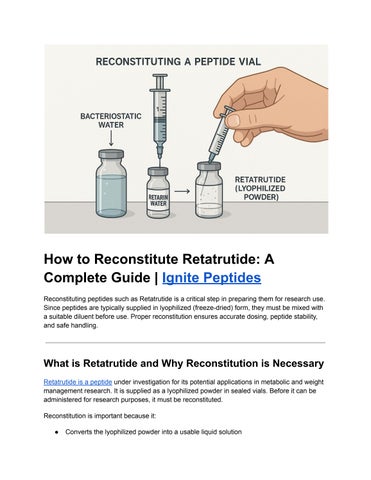
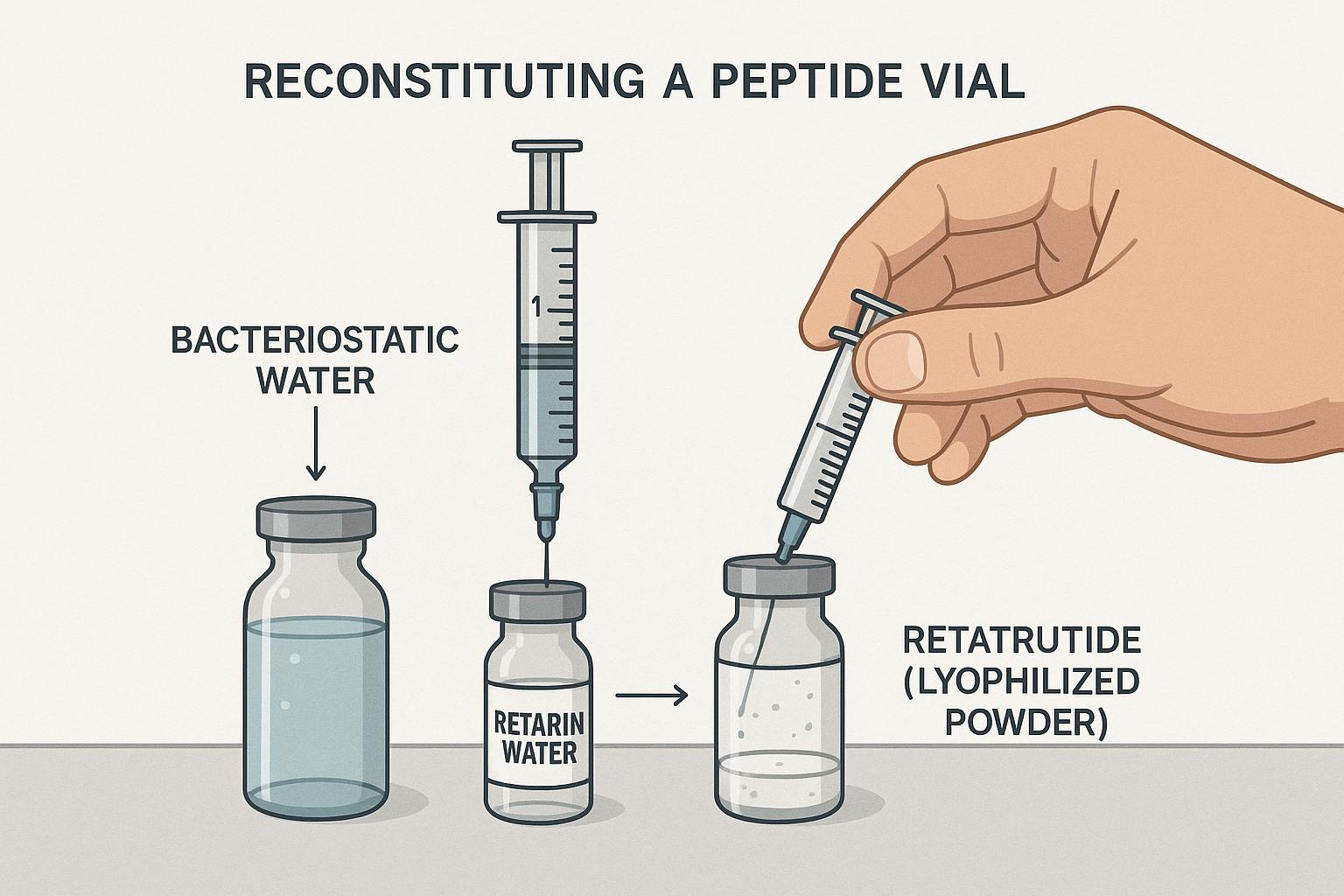
Reconstituting peptides such as Retatrutide is a critical step in preparing them for research use. Since peptides are typically supplied in lyophilized (freeze-dried) form, they must be mixed with a suitable diluent before use. Proper reconstitution ensures accurate dosing, peptide stability, and safe handling
What is Retatrutide and Why Reconstitution is Necessary
Retatrutide is a peptide under investigation for its potential applications in metabolic and weight management research It is supplied as a lyophilized powder in sealed vials Before it can be administered for research purposes, it must be reconstituted.
Reconstitution is important because it:
● Converts the lyophilized powder into a usable liquid solution
● Ensures accurate dosing for research protocols
● Maintains peptide stability and effectiveness
● Reduces the risk of contamination or peptide degradation
Required Materials
To reconstitute Retatrutide, gather the following supplies:
● Retatrutide vial (e.g., 10 mg)
● Bacteriostatic water (preferred diluent)
● Sterile syringes (insulin syringes are often used for dosing)
● Sterile needles for drawing the diluent
● Alcohol swabs for vial tops and work surfaces
● Sterile gloves to maintain cleanliness
● Labels and a permanent marker for date and concentration details
● Refrigerator (2–8 °C) for proper storage after reconstitution
Step-by-Step
Reconstitution Procedure
1. Prepare the workspace
○ Clean and disinfect the work area
○ Wash your hands and wear sterile gloves
2. Disinfect vial tops
○ Use alcohol swabs to clean both the Retatrutide vial and the bacteriostatic water vial
3. Draw the diluent
○ Using a sterile syringe, withdraw the desired volume of bacteriostatic water
4 Inject into the peptide vial
○ Insert the needle into the Retatrutide vial and slowly release the water down the inside wall of the vial
○ Injecting slowly helps prevent foaming and peptide damage.
5 Dissolve the powder
○ Gently swirl the vial until the powder is completely dissolved
○ Do not shake the vial, as this may damage the peptide.
6 Label the vial
○ Record the date of reconstitution, the amount of diluent used, and the final concentration.
7 Store properly
○ Place the vial in a refrigerator (2–8 °C). Do not freeze.
Example Dilution and Concentration Calculations
The concentration of Retatrutide depends on the amount of diluent added:
● 10 mg vial + 2 mL bacteriostatic water = 5 mg/mL
○ 0 1 mL contains 0 5 mg
○ 0 2 mL contains 1 mg
● 10 mg vial + 4 mL bacteriostatic water = 2.5 mg/mg
○ 0 1 mL contains 0 25 mg
○ 0 2 mL contains 0 5 mg
● 10 mg vial + 5 mL bacteriostatic water = 2 mg/mL
○ 0 1 mL contains 0 2 mg
○ 0.5 mL contains 1 mg
When deciding on dilution, choose a concentration that allows accurate and convenient measurement of the intended research dose
Common Errors to Avoid
● Shaking the vial during mixing can damage peptide integrity
● Injecting the diluent too quickly causes foaming and instability
● Using an inappropriate diluent (sterile or tap water instead of bacteriostatic water)
● Failing to label vials clearly with concentration and date
● Storing the peptide at room temperature or in the freezer after reconstitution
Storage Guidelines
● Before reconstitution, store the lyophilised vial in a cool, dry place, away from heat and direct light.
● After reconstitution: Store the vial in a refrigerator (2–8 °C).
● Shelf life: Typically up to 30 days after reconstitution, but the solution should be discarded sooner if it appears cloudy or discoloured.
Example Research Escalation Protocol
In research settings, Retatrutide is often introduced gradually to monitor tolerance and effectiveness. An example escalation schedule is:
● Weeks 1–2: 0 25 mg to 0 5 mg once weekly
● Weeks 3–4: 0.5 mg to 1 mg once weekly
● Weeks 5–6: 1 mg to 2 mg once weekly
● Weeks 7–8: 2 mg to 4 mg once weekly
This is for research purposes only and should not be interpreted as medical advice
Conclusion
Reconstituting Retatrutide requires careful preparation, attention to detail, and proper storage to preserve peptide quality and ensure accurate dosing By using the correct supplies, following each step methodically, and avoiding common mistakes, researchers can maintain consistency and reliability in their studies For a more detailed walkthrough, refer to the full guide here: https://ignitepeptides.com/how-to-reconstitute-retatrutide/
Author Bio:
Dr Junaida is a researcher and science writer specializing in peptide studies and metabolic health With a focus on making complex topics accessible, he provides clear, practical insights for both professionals and learners in the field of biomedical research