A Complete Guide to Reconstituting Retatrutide for Research
Peptides are increasingly important in scientific research, with new compounds like Retatrutide gaining attention for their unique potential. However, before any peptide can be used in a laboratory setting, it must be properly reconstituted Doing this incorrectly risks damaging the compound, altering dosage accuracy, or introducing contamination.
This guide breaks down the what, why, and how of reconstituting Retatrutide in a safe and effective way
What Is Retatrutide?
Retatrutide is a multi-receptor agonist peptide studied for its potential roles in metabolic health, glucose regulation, and weight management While its research applications are promising, handling Retatrutide requires precision. The lyophilized powder form is stable but inactive until mixed with a solvent
Why Reconstitution Matters
Reconstitution means dissolving a freeze-dried peptide (powder) into a liquid solution so it can be measured, stored, and used in experiments
Proper reconstitution ensures:
● Stability preserves the integrity of the peptide
● Accurate dosing correct concentration prevents calculation errors
● Safety sterile handling reduces contamination risk
● Reproducibility experiments remain consistent across trials
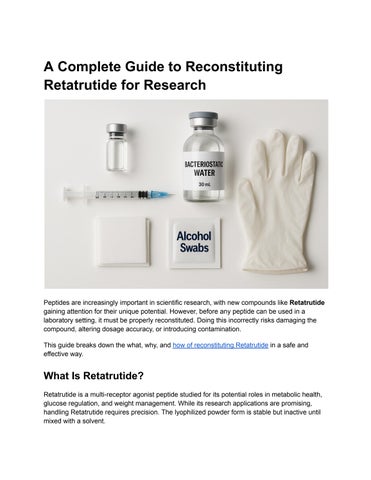
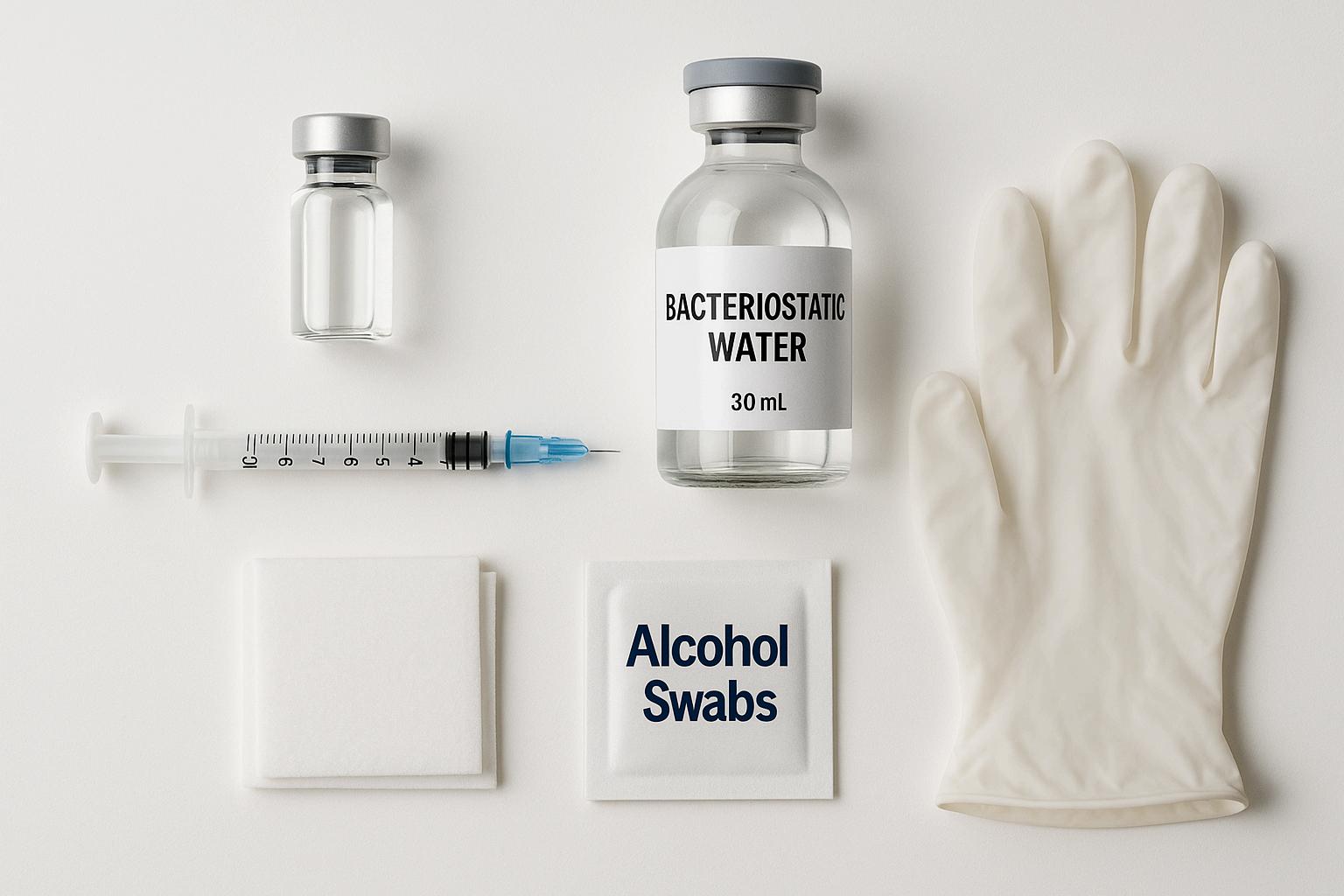
Supplies You’ll Need
Before starting, make sure you have all necessary items:
● Retatrutide vial (lyophilized powder)
● Bacteriostatic water (preferred solvent)
● Sterile syringe and needle
● Alcohol swabs
● Sterile gloves
● Refrigerator (2–8 °C)
● Label/marker for vial tracking
Step-by-Step Reconstitution Process
1. Sanitize your space Clean the working area and disinfect vial tops with alcohol swabs
2 Measure solvent Draw the required amount of bacteriostatic water using a sterile syringe
3 Inject slowly
Insert the needle into the vial and inject water against the vial wall (not directly onto the powder)
4. Swirl gently
Rotate in circles until the powder dissolves completely Avoid shaking, which can damage peptide chains.
5 Inspect the solution It should be clear and particle-free before use.
6 Label and store
Write the concentration and date on the vial. Keep refrigerated between 2–8 °C.
Dosing and Concentration Example
The final concentration depends on how much solvent is added For example, with a 10 mg Retatrutide vial:
Always confirm with a calculator before proceeding in experiments
Storage and Shelf Life
● Store reconstituted Retatrutide at 2–8 °C
● Do not freeze the peptide
● Discard if cloudy or after approximately 30 days
● Use sterile equipment for every withdrawal
● Shaking the vial (damages peptide structure)
● Injecting solvent too quickly (causes foaming)
● Skipping sterile technique (risk of contamination)
● Miscalculating concentration (leads to errors in dosing)
● Storing outside proper temperature range
Key Takeaways
● Retatrutide must be reconstituted carefully for reliable results
● Always use bacteriostatic water as a solvent when possible
● Label and store reconstituted vials properly to extend usability
● Accurate calculations are essential for accurate data in research
Further Reading
For a detailed walkthrough, including calculator examples and extended protocol insights, see this guide: How to Reconstitute Retatrutide
Note: This article is for research and educational purposes only. It does not constitute medical advice Always follow laboratory safety standards and institutional protocols