



The newspaper of the Independent Education Union of Australia NSW/ACT Branch (vol 45 #8) December 2025
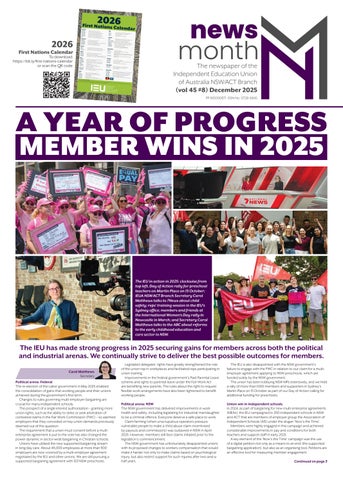
The newspaper of the Independent Education Union of Australia NSW/ACT Branch (vol 45 #8) December 2025

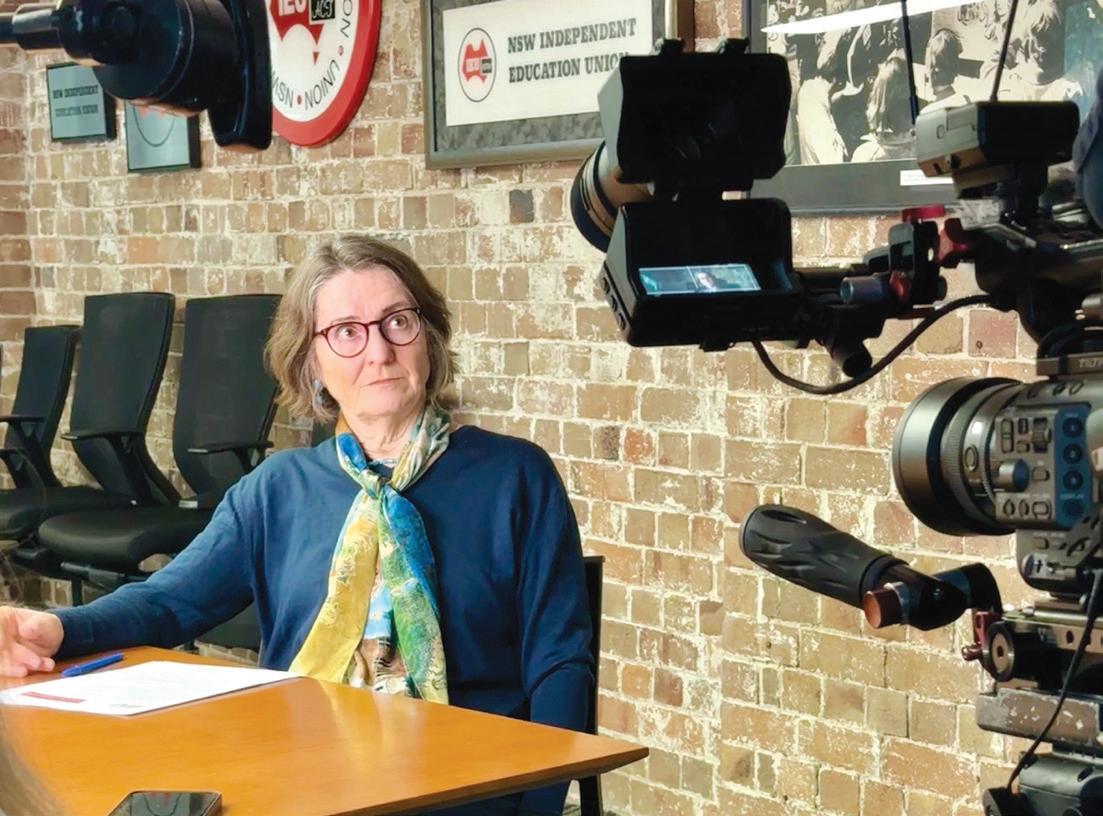

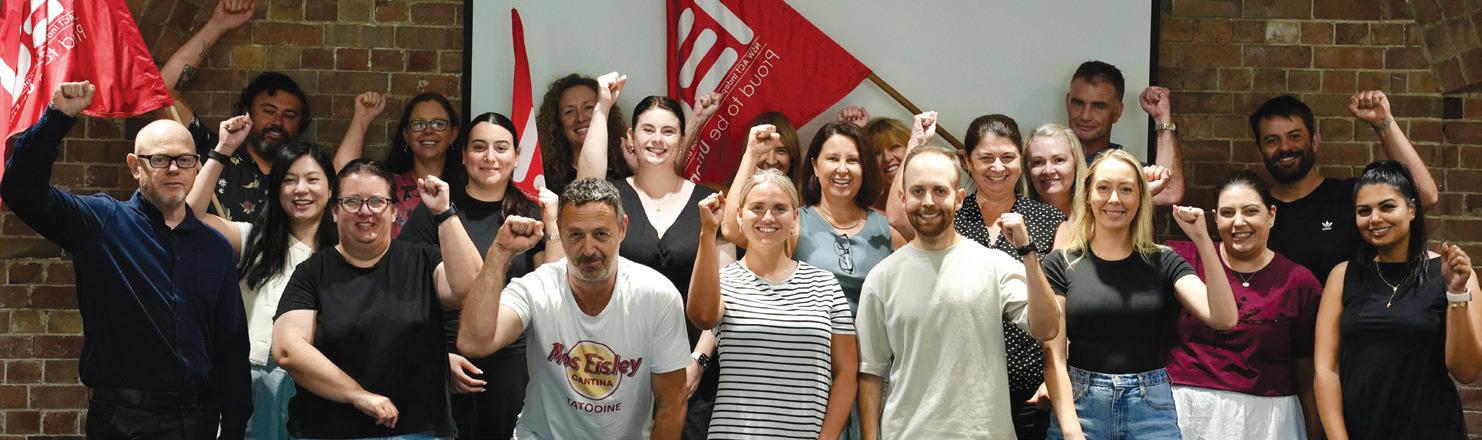

The IEU has made strong progress in 2025 securing

Political arena: Federal
The re-election of the Labor government in May 2025 enabled the consolidation of gains that working people and their unions achieved during the government’s first term.
Changes to rules governing multi-employer bargaining are crucial for many independent schools.
The prospect of a single interest authorisation – granting more union rights, such as the ability to strike or seek arbitration of contested claims in the Fair Work Commission (FWC) – so alarmed employers that they conceded on key union demands previously deemed out of the question.
The requirement that a union must consent before a multienterprise agreement is put to the vote has also changed the power dynamic in sector-wide bargaining in Christian schools.
Unions have utilised the new supported bargaining stream in long day care. About 46,000 employees at more than 500 employers are now covered by a multi-employer agreement negotiated by the IEU and other unions. We are still pursuing a supported bargaining agreement with 103 NSW preschools.
Legislated delegates’ rights have greatly strengthened the role of the union rep in workplaces and facilitated reps participating in union training.
Improvements in the federal government’s Paid Parental Leave scheme and rights to parental leave under the Fair Work Act are benefiting new parents. The rules about the right to request flexible work arrangements have also been tightened to benefit working people.
Political arena: NSW
The NSW government has delivered improvements in work health and safety, including legislating for industrial manslaughter to be a criminal offence. Everyone deserve a safe place to work.
Claim farming (when unscrupulous operators pressure vulnerable people to make a child abuse claim incentivised by payouts and commissions) was outlawed in NSW in April 2025. However, members still face claims initiated prior to the legislation’s commencement.
The NSW government has unfortunately disappointed unions with its proposed changes to workers compensation that would make it harder not only to make claims based on psychological injury, but also restrict support for such injuries after two-and-ahalf years.
The IEU is also disappointed with the NSW government’s failure to engage with the FWC in relation to our claim for a multiemployer agreement applying to NSW preschools, which are funded solely by the NSW government.
The union has been lobbying NSW MPs extensively, and we held a rally of more than 1000 members and supporters in Sydney’s Martin Place on 15 October as part of our Day of Action calling for additional funding for preschools.
Union win in independent schools
In 2024, as part of bargaining for new multi-enterprise agreements (MEAs), the IEU campaigned in 250 independent schools in NSW and ACT that are members of employer group the Association of Independent Schools (AIS) under the slogan ‘Now’s the Time’. Members were highly engaged in this campaign and achieved considerable improvements in pay and conditions for both teachers and support staff in early 2025.
A key element of the ‘Now’s the Time’ campaign was the use of a digital petition not only as a means to an end (the supported bargaining application), but also as an organising tool. Petitions are an effective tool for measuring member engagement.


Newsmonth is published eight times a year (two issues per term) by the Independent Education Union of Australia NSW/ACT Branch.
Executive editor Carol Matthews, Secretary, for and on behalf of the IEU Executive and members
Managing editor Monica Crouch
Contributors Katie Camarena Monica Crouch
Andrew Taylor
Tania Yardley
Photos Katie Camarena Zoe Hercus
Graphic design Chris Ruddle
Proofreader Helen O’Regan
Letters from members are welcome. They do not reflect endorsement if printed, and may be edited for size and style at the editor's discretion. Write to:
Newsmonth
485-501 Wattle Street
Ultimo NSW 2007 GPO Box 116
Sydney NSW 2001
Tel: 8202 8900
Email: ieu@ieu.asn.au
Website: ieu.asn.au

Stepping into the role of IEU President is both an honour and a responsibility I embrace with genuine commitment. I begin this term grounded firmly in our democratic processes and with gratitude for the trust placed in me.
Leadership transitions bring new opportunities. My focus is on ensuring this moment becomes one of strengthened unity and purpose. I want our members to continue to feel confident, supported and represented.
Over the past few weeks, I have chaired two Executive meetings. The Executive, which meets monthly, is responsible for the branch’s financial management and oversees strategic priorities between quarterly Council meetings. I want to acknowledge the professionalism and respectful engagement of all members of the Executive. Strong governance relies on transparency, thoughtful preparation
and steady leadership. I am committed to ensuring that every meeting continues to reflect those values and that all voices are heard in a constructive, respectful environment.
As President, I believe deeply in the power of unity, integrity and respectful leadership. The IEU represents teachers and support staff in non-government schools, teachers in early childhood education and care, and teachers in various other settings.
While our day-to-day roles differ, we are united by shared values: fairness, dignity, professional respect and collective strength. My goal is to ensure that every member, regardless of role, region or sector feels valued, included and connected to their union.
I also want to emphasise the integrity and determination I bring to this role. These qualities have guided my work within the union for many years, and will continue to shape every decision I make as President.
Whether addressing complex industrial issues, championing professional respect, or navigating challenging discussions, I will
approach every matter with honesty, fairness, and a clear focus on the best interests of our members. My determination comes from a deep belief in the value of the work our members do and an unwavering commitment to ensuring that work is respected, supported and recognised.
Looking ahead, we know the profession faces significant challenges: workload pressures, staff shortages, funding instability, and the increasing demands placed on schools and early childhood centres. Yet we also have real opportunities to strengthen our advocacy, deepen our engagement and build unity across sectors. Together we can meet these challenges with clarity, courage and collective strength. Your experiences and stories shape our direction, and I welcome every conversation, whether celebratory, practical or challenging.
Thank you for your support and trust. Together, we will build on our strengths, face our challenges and continue to advance the voice and professional respect of every member.
Lyn Caton Assistant Secretary

The union has been negotiating three new enterprise agreements (EAs) for principals in NSW and the ACT (excluding Broken Bay diocese).
These negotiations have progressed steadily since early 2025, addressing key issues including pay, leave entitlements, workload, wellbeing and professional responsibilities.
All three EAs have been made available to principals to allow them to carefully review the proposed conditions and improvements before voting.
The union recommends a ‘yes’ vote for each agreement, ensuring that the negotiated improvements become legally enforceable.
Should a majority of principals vote in favour, the agreements will be lodged with the Fair Work Commission by the end of Term 4, securing enhanced employment conditions for principals across dioceses.
Pay rises
The three EAs, covering a three-year term, include a 3% annual salary increase for principals – maintaining alignment with teacher and support staff increases.
A one-off Cost of Living Adjustment may be triggered if the Consumer Price Index exceeds 4.5% during the agreement period, further safeguarding principals’ remuneration.
These increases will narrow the remaining salary gap with principals in the Broken Bay Diocese, who have historically received higher pay.
The union has secured significant improvements in parental leave entitlements. Superannuation will now be paid during employerfunded parental leave, and primary caregivers can now share leave entitlements more flexibly within the first two years following the birth of a child.
Aboriginal and Torres Strait Islander cultural and ceremonial leave of up to three days a year has also been introduced.
Workplace wellbeing and safety have been strengthened. Principals will have access to at least one uninterrupted 30-minute meal break daily, travel allowances have been increased to $0.84 per kilometre, with the previous 100-kilometre cap removed.
Additionally, access to delegates’ rights has been enhanced, reflecting updated Fair Work Act provisions.
Proposals such as reducing the notice period from 10 weeks to four were not adopted due to the complexity of principal roles. But employers have signalled a willingness to consider supplementary arrangements in areas such as workers compensation.
Long service leave and classification for teaching principals in small schools remain matters of ongoing attention, with the union continuing to advocate for improvements.
Vote yes
With the agreements now ready for principal review, the union urges members to engage with the process, understand the improvements and vote ‘yes’.
This is a critical step to secure pay parity, improved working conditions and protections for principals in NSW and the ACT.

Over the past few weeks, members in Catholic systemic schools voted on enterprise agreements (EAs) that will cover all Catholic dioceses in NSW and the ACT (except for Broken Bay).
While voting is optional, there was high voter engagement among employees. Across the 10 dioceses, a resounding 98 per cent per cent of those who voted said yes to the EA.
It is pleasing to note the dioceses had already passed on the pay rises for both teachers and support staff prior to the Fair Work Commission (FWC) approving the agreements.
On Friday 5 December, we received notice from the FWC that the Catholic Schools Parramatta Diocese Limited – Schools Enterprise Agreement 2025 had been approved and would commence operation from 11 December.
Strong message in EA vote
The voting data sends a strong message to our employers: we are united in our quest for fair pay and better working conditions; we stand in solidarity with each other in the face of ever-increasing challenges; and we will continue to band together to ensure no employee is left behind.
As the IEU’s Vice President Catholic Systemic, I sincerely thank you for your participation in this process.
We invited you to engage with the negotiation process and you stepped up. Whether in your school-based chapter meetings or as delegates to IEU Council (our governing body of up to 137 members), you
came with a wealth of ideas backed by experience and expertise. You know how to make our workplaces better and fairer.
Your confidence in collective action through your union is valued and truly appreciated.
West Wing wisdom
Now, I must be honest with you. I am currently rewatching The West Wing, the TV drama about the workings of the White House, which aired from 1999 to 2006. It is idealistic and hopeful but also bravely blunt.
Democrat President Josiah Bartlet and his team begin their first term with high hopes but soon realise that doing what is right by the American people will not come easily. At every turn they are faced with hurdles, compromises, and impossible choices to achieve their agenda. I do have a point, I promise. It made me reflect on how the work of our union, and indeed every union, is similar to The West Wing. Yes, we come to the table every three or so years and negotiate the big-picture items of our EA and the diocese-specific Work Practices Agreements (WPA). But all the little things in between also contribute to achieving our goals.
Every time you question the number of extras you have done in the term, or whether the appropriate training has been provided for staff in new roles, or if your timetable load is correct, you are helping the cause. You are keeping your employer accountable and pushing back against work intensification.
You are also reminding them of the collective strength of the union –informed, active and engaged members.
Keep on questioning, challenging and advising and we will get there –together.
Catholic systemic schools
Negotiations for new EAs began with 10 Catholic dioceses (excluding Broken Bay) when the previous EA expired in October 2024. We reached agreement fairly quickly on pay rises – within the framework of pay increases in government schools. However, negotiations continued for months on the union’s claims for improved conditions.
In October 2025, members voted overwhelmingly in favour of the new Catholic systemic schools EA covering nine dioceses and the separate EA to apply to the Parramatta diocese.
In late 2024, the union reached agreement with Broken Bay Diocese after negotiations on a new EA and Operational Framework – again, with members voting in favour of the agreement. This reflected strong improvements in pay and conditions for both teachers and support staff.
Early childhood education and care (ECEC)
Our ECEC team has focused on two supported bargaining MEAs and the Start Strong, Pay Fair campaign for improved preschool funding from the NSW government. The union’s application for a supported bargaining MEA for NSW preschools is still before the FWC.
In addition, the team and members have been tireless in representing the campaign to state and federal government agencies, lobbying MPs and giving evidence in parliamentary inquiries.
Professional engagement
The union has engaged extensively with peak bodies in the education sector, at both the state and federal levels.
We’ve provided a varied program of professional development to members, and expanded our reps’ training program.
The IEU has also supported members with teacher accreditation.
We’ve seen rising demand for support from members seeking to access Band 3 (Experienced Teacher) under the previous AIS Teachers MEA. The IEU assisted 85 members in AIS schools in 2024 to achieve Experienced Teacher Accreditation.
We expect this demand to diminish with changes to the Teachers MEA that commenced in April this year.
This is an edited extract from the IEU’s 2025 Annual Report.
The IEU recovered a record $4.4 million in underpayments to members (nearly double the figure recovered in 2024).
More than 220 IEU reps attended tailored reps training days throughout NSW and the ACT.
Thanks to reps and members in independent schools, our historic “Now’s the Time” campaign resulted in pay increases of up to $20,000 a year for some teachers, while many received $12,000, and support staff also saw big increases.
IEU members at NextSense School for children with hearing or vision loss achieved a strong win, gaining pay rises and better conditions in a new agreement, with union membership doubling at the school during the campaign.
We released 28 statements to the media covering a wide range of industrial and professional issues, generating substantial positive coverage across TV, radio, print and online.
More than 1000 preschool teacher members, supporters, parents and the community rallied for pay rises in Sydney, with strong turnouts also in Lismore and Coffs Harbour.
After two years of tough negotiations, we’ve secured an agreement with 38 Christian schools in NSW.
The IEU, along with the AEU and UWU, achieved the first-ever supported bargaining agreement. Teachers and educators in long day care centres and outside of school hours care won a 15% pay increase, fully funded by the federal government.
Along with pay increases, the IEU secured several improvements to working conditions for teachers and support staff in ACT Catholic Congregational Schools.
The IEU Women and Equity Committee developed new resources based on the positive duty for employers to prevent sex discrimination under the Sex Discrimination Act.


Schools and early childhood education and care (ECEC) centres are dynamic workplaces. As the end of the year is fast approaching, you may be thinking about changes to your working arrangements.
No matter what stage you’re at in your career, one of the most important steps you can take to protect your rights is to get it in writing.
When to get things in writing
There are many situations where your work arrangements may need to change, whether temporarily or permanently. These changes often begin with an informal conversation with your principal (in schools) or director (in ECEC).
While the discussion may seem informal, it can have significant consequences for your employment. Therefore, we advise getting things in writing.
Some common examples include:
Changes to your working hours
You may be thinking about reducing your work hours as you approach retirement, or perhaps because of caring responsibilities. Alternatively, you may be working part-time and have decided to return to full-time work. In all cases, make sure the change is confirmed in writing.
Transition from temporary or casual to ongoing employment
You may have started at your school (or workplace) as a temporary or casual employee. After some time, your employer decided that your role would become permanent. Do not assume that the role is ongoing until you have it in writing. Your job security and entitlements depend on it.
Flexible work arrangements
David Towson Deputy Secretary

Doli incapax is a common law principle that presumes children aged between 10 and 13 cannot be held criminally responsible for their actions. However, this can be rebutted if the prosecution proves beyond reasonable doubt that the child knew their actions were seriously wrong as opposed to merely naughty.
But support and early intervention are what young people need – not prison.
In NSW, a child as young as 10 may be held criminally responsibile. This is too young. While it is rare for such young children to be found guilty of a crime, they are still policed, dragged through courts and remanded in prison.
In November, after considering the recommendations of a review into the age of criminal responsibility, the Minns government passed legislation that alters the way doli incapax operates in NSW.
The review had determined that diversion was the best response for less serious offending by 10-to-13 year olds. The legislation purports to increase the likelihood that young offenders will be better able to access diversionary options as opposed to facing criminal charges.
Diversionary options include formal warnings, behaviourchange programs and youth justice conferences that include the offender, their family and police.
It is not in the best interests of children, families and the community to imprison primary school students. Criminal courts and youth prisons can never meet the complex needs of this small group of young children.
Most children who enter the criminal justice system come from disadvantaged backgrounds. Prison is not what these children need. It only increases the likelihood of recidivism and compounds alienation and disconnection.
The IEU understands community concern about youth crime and the devastating impact it has on victims.
Raising the age and providing support that addresses the causes of offending behaviour will achieve better outcomes for children and promote community safety. Investing in more services for children instead of exposing them to the criminal justice system is more cost-effective.
The IEU has joined with more than 150 other organisations in supporting the #RaiseTheAge campaign in NSW to raise the minimum age of criminal responsibility from 10 to at least 14, in line with international law. As teachers and unionists, we call on the NSW government to invest in education and services for children and families to prevent crime.
We support reforms that divert children away from the criminal justice system and into targeted services and interventions that help them learn accountability, and how to change their behaviour when they veer off the track or are a danger to themselves or others.
If you would like to support this campaign and sign a petition to your state MP, see: raisetheage.org.au
You may have requested flexible work arrangements, and your employer agreed with your request. Make sure you have it in writing and that you are clear on the terms and expectations of flexible work arrangements.
Why a written agreement is wise
Although you may have a good working relationship with your employer, getting things in writing helps you get clarity on the specific rights and obligations for you and your employer.
People change roles, memories differ, and misunderstandings happen. When an issue arises, written confirmation helps to prove what was agreed to, enabling us to enforce your rights.
Getting a written agreement is about protecting you and your rights. It promotes transparency and fairness.
Pro tip: Follow up every meeting with an email.
After any meeting in which you discuss changes to your employment, send a quick follow-up email confirming what you understood was agreed. This creates a written record, even if the employer does not respond. It also gives you a chance to correct any misunderstandings.
Get union advice
As a member, you can seek union advice before you make any changes to your employment. If you are thinking about a change in your work circumstances and are unsure about what you should document, contact your union organiser.
The IEU has been bargaining during 2025 with the Greater Sydney Seventh-day Adventist Conference for an agreement to replace the current Teachers EA which expires in January 2026. The Conference comprises six schools across metropolitan Sydney.
Initial bargaining meetings were productive. In-principle agreements were made that would have seen some improvements to both pay and conditions. Unfortunately, as bargaining progressed the Conference continually refused to agree to several reasonable IEU claims.
Without agreement on these claims, teachers would remain disadvantaged relative to teachers in most other sectors, including in other Adventist Conferences.
From the union’s perspective, the key unresolved issues are as follows:
Length of agreement
The IEU requested a two-year EA, but the Conference insisted on a three-year agreement.
A three-year agreement means salaries would again be at risk of falling behind Catholic systemic schools and NSW government schools after October 2027. The Conference refused to include a pay protection clause to ensure salaries stay competitive in 2028.
Salary progression
Other education sectors have moved to a 7-step salary scale, but the Conference proposed to retain the current 11-step model. This means it would take early to mid-career teachers much longer to reach higher pay levels compared with their peers elsewhere, leaving them financially disadvantaged.
• Long service leave
Currently, teachers cannot access or be paid out long service leave until after 10 years of service. The IEU was seeking a five-year threshold, consistent with other sectors. The Conference rejected this.
• Workplace framework
The Conference proposed removing the clause that makes the Workplace Framework part of the EA. Without this link, workload guidelines are harder to enforce. The IEU insisted that the Framework be part of the EA so it remains binding.
Teachers reject substandard offer
When it became clear the Conference would not accommodate the IEU’s claims, the union surveyed teachers in the Conference. An overwhelming majority of those surveyed responded that the Conference’s offer was unacceptable.
The union wanted to continue negotiating in good faith, but the Conference prematurely ended the bargaining process on 14 November and advised it would put the EA to a vote.
The union was left with no alternative but to recommend that members vote ‘no’.
A majority of Adventist teachers then voted the agreement down. This means the current EA stays in place.
Throughout this process many teachers joined the union so they could stand united with their colleagues.
We congratulate members for standing with one another to send a clear message: teachers in Adventist schools do not deserve a second-rate agreement with inferior salaries and conditions.
Next steps
In early 2026, the IEU will recommence bargaining for teachers employed by the Greater Sydney Seventh-day Adventist Conference.
We will also commence bargaining for employees in South NSW Conference schools.
We call on members in each school to talk to your colleagues and encourage them to join the IEU so we can insist on an EA worthy of your commitment to your work.
We are stronger together.
Charles Wheeler Organiser
David Towson Deputy Secretary
IEU members in the Bathurst Diocese have achieved a major win regarding their long service leave (LSL) entitlements.
Catholic Education Diocese of Bathurst (CEDB) in November reversed its decision to include pupil vacation periods in short blocks of LSL and agreed to restore the leave of members who had their leave unfairly deducted earlier this year.
The CEDB Executive Director of Schools announced the overturning of this decision and restoration of leave in a letter sent to members on 13 November.
“The CEDB apologises, in particular, for the lack of clear communication concerning this change and commits to clearly communicating any future decisions relating to leave provisions prior to implementation,” the Executive Director said.
Affected teachers had applied for their LSL with six-to-nine months’ notice (and had approval from their principal and CEDB). But they were only advised of CEDB’s decision to deduct additional long service leave a few days prior to commencing their leave.
IEU members, including the principals’ chapter, reacted strongly to the initial decision, with over 450 members signing a petition requesting it be reversed and the leave restored.
Although only a small number of members were affected by this dispute, their colleagues stood beside them to fight an arbitrary and unfair decision that had the potential to impact all employees over time. Congratulations, and thank you to all our members in the Bathurst Diocese who signed our petition.
“This is a great win for IEU members and demonstrates the power of collective action”, said Carol Matthews, IEUA NSW/ACT Branch Secretary.
The IEU will be meeting with representatives from the Diocese to discuss this and other issues. We will also be working with affected members to ensure their leave is restored correctly.
More information: Read the letter from CEDB sent to members on 13 November reversing its decision.

Building on the IEU’s success with the Association of Independent Schools (AIS) Multi-Enterprise Agreements (MEAs), the union has now reached agreement with Hunter Christian School to adopt agreements negotiated by the IEU and the AIS.
The new enterprise agreements (EAs) at Hunter Christian School cover both teachers and professional and administrative staff, delivering strong improvements to pay and conditions.
Clearer structure, faster progression
The teachers’ EA offers vastly improved income structures.
The headline change is a structural shift to match sector standards, with all staff benefiting from clearer, more concise pay scales.
For example, the teachers’ pay scale is reduced from 13 steps to seven steps, allowing teachers to reach the top of the scale much faster.
Additionally, HALT allowances are maintained. Notably, teachers at Band 3, Step 13 will now receive the Accomplished
Teacher Allowance in addition to any Leadership Allowance.
Staff will transition to this new structure from the start of the next school year, effective from the first full pay period on or after 1 February 2026.
Better conditions
The IEU fought hard to ensure the new EAs support work-life balance. These new conditions include upgraded parental leave benefits – all staff are now entitled to 14 weeks paid parental leave.
This applies to both the initial and non-initial primary caregivers. Additionally, staff will be able to take one day of ‘special leave’ annually for events not covered by other leave.
Voting
All staff voted on 4-5 December, with a unanimous ‘yes’ vote.
These wins are a direct result of our collective strength. We are stronger together. If you have colleagues who are not yet members, encourage them to join today.
Brindabella Christian College
In a show of solidarity, employees across NSW Christian schools represented by Christian Schools Australia (CSA) have voted overwhelmingly in favour of two new multi-enterprise agreements (MEAs) for teachers and general staff.
The ‘yes’ vote for both MEAs secured key improvements such as 17.5% and 15% pay increases for teachers and general staff over four years, a shorter classification structure for teachers, broader coverage for general staff, improved parental leave entitlements for all employees, and introduced new delegates’ rights and right to disconnect clauses.
Approval of the MEAs by the Fair Work Commission is expected to commence in the coming weeks, ensuring that the benefits secured through this process can be implemented across all 38 schools.
The IEU will be resuming bargaining for ACT Christian schools early next year.
More information: Click here for school-by-school results.
Amanda Hioe Assistant Secretary
An outcome has finally been reached to resolve the long-running saga at Brindabella Christian College (BCC).
The new owner, Christian Community Ministries (CCM), has submitted two applications to the Fair Work Commission, seeking orders that the Christian Community Ministries Schools Enterprise Agreement 2024 (CCM EA) apply to teachers and early learning services employees of BCC, replacing their existing multi-enterprise agreements (MEA).
CCM is a Queensland-based organisation overseeing several Christian schools across Australia. All schools operated by CCM are governed under a single enterprise agreement, CCM EA.
Union pressure delivers results
A thorough comparative analysis of the CCM EA and existing MEAs revealed members will be better off in pay under the CCM EA. However, the union identified that leave entitlements are generally inferior under the CCM EA.
Through strong advocacy and pressure from the union, we successfully negotiated retention of the following conditions for all BCC employees:
a 4.5% location loading available under the CCM EA to ensure pay rates are competitive in the ACT paid maternity leave at 14 weeks
paid paternity leave at two weeks preservation of existing promotional positions (positions of responsibility)
assurance that no employee is financially disadvantaged by the change to CCM EA.
Shortly after the agreement with the union, employees who held promotional positions were issued new contracts confirming their ongoing appointments.
Discussions regarding general staff are ongoing, but the union remains optimistic that similar protections will apply.
Looking ahead
As CCM works to restore stability in governance and operations at BCC, employees are rebuilding confidence in their school.
The union will continue to support its members and build union strength at BCC. Union membership will be critical to securing these improvements in the next CCM EA. If you know a colleague who is not yet a member, ask them to join today.
Amanda Hioe Assistant Secretary
Fear, uncertainty and a lack of trust of employers can stop workers from trying to intervene in incidents of sexual and genderbased harassment.
This is one of the key findings of a new report by Unions NSW into workplace sexual harassment, launched by federal Sex Discrimination Commissioner Anna Cody as part of the International 16 Days of Activism Against Gender-Based Violence.
The report, Ready, Willing, Unable – The hidden barriers to ethical bystander action in the workplace, found sexual and genderbased harassment was common in Australian workplaces, including schools.
Cody said the normalisation and cultural acceptance of harassment, the gendered nature of power and the undermining of women’s authority were obstacles to bystander action.
“Some of the barriers to bystanders speaking out include fear of retaliation, belief that the employers would not take the issue seriously, and uncertainty about what to say,” she said.
Unions NSW Gender Equity Officer Karen Willis said people generally want to be ethical bystanders and speak up when something seems wrong.
The idea of an ethical bystander goes further by offering alternatives such as: speaking up in the moment checking in later with those affected quietly speaking with the individual responsible introducing resources to address inappropriate behaviour in the workplace.
“But this approach can fall short if someone chooses not to speak out due to fear of retaliation, concern about group rejection, uncertainty about what happened or other reasons,” Willis said.
Women are the primary target
More than half of workers surveyed by Unions NSW said they had observed sexual harassment on multiple occasions in the past year. Most perpetrators were identified as men (85 per cent), while women were the primary target (84 per cent).
Younger workers are particularly affected, with almost half of workers aged 15-17 (47 per cent) and workers aged 18-29 (46 per cent) reporting workplace sexual harassment.
The most reported types of sexual harassment observed in the workplace were:
verbal comments or jokes (sexually suggestive or gendered remarks)
• staring and leering (invasive or prolonged looks)
unwanted physical contact (touching, hugging, brushing against) e-harassment (inappropriate messages, emails, or images)
• gendered exclusion (excluding or undermining staff based on gender).
Worryingly, the report found: “Participants described workplaces where sexist comments, subtle undermining and gender bias are embedded in everyday interactions.”
Barriers to action
Many workers want to intervene when witnessing harassment but identify factors that stop them from doing so.
“Fear of retaliation, employment insecurity, power hierarchies and uncertainty about what constitutes harassment are the most common deterrents,” the report said.
Women and gender-diverse workers face additional risks, such as being disbelieved, ridiculed or labelled as troublemakers. Migrant status, disability or minority identity may further amplify a worker’s vulnerability.
The report concludes that inaction is not an ethical failure “but rather a rational response to very unsafe and inequitable workplace conditions”.
“This culture makes it unsafe to speak up, as workers learn that raising concerns often results in punishment rather than protection,” the report said.
The report also argues that sexual harassment and gendered violence are not women’s issues: “They are men’s issues because they are overwhelmingly perpetrated by men and perpetuated through men’s silence and complicity.”
The report said the accounts of workplace culture revealed entrenched sexism, denial and bystander silence, “often described as a boys’ club or blokey environments where harassment is normalised as humour or dismissed as trivial”.
Unions central to solutions
Unions play a strong role in empowering working people to report and resist sexual harassment. Union reps are particularly important as strong allies and effective advocates when they visibly support victims.
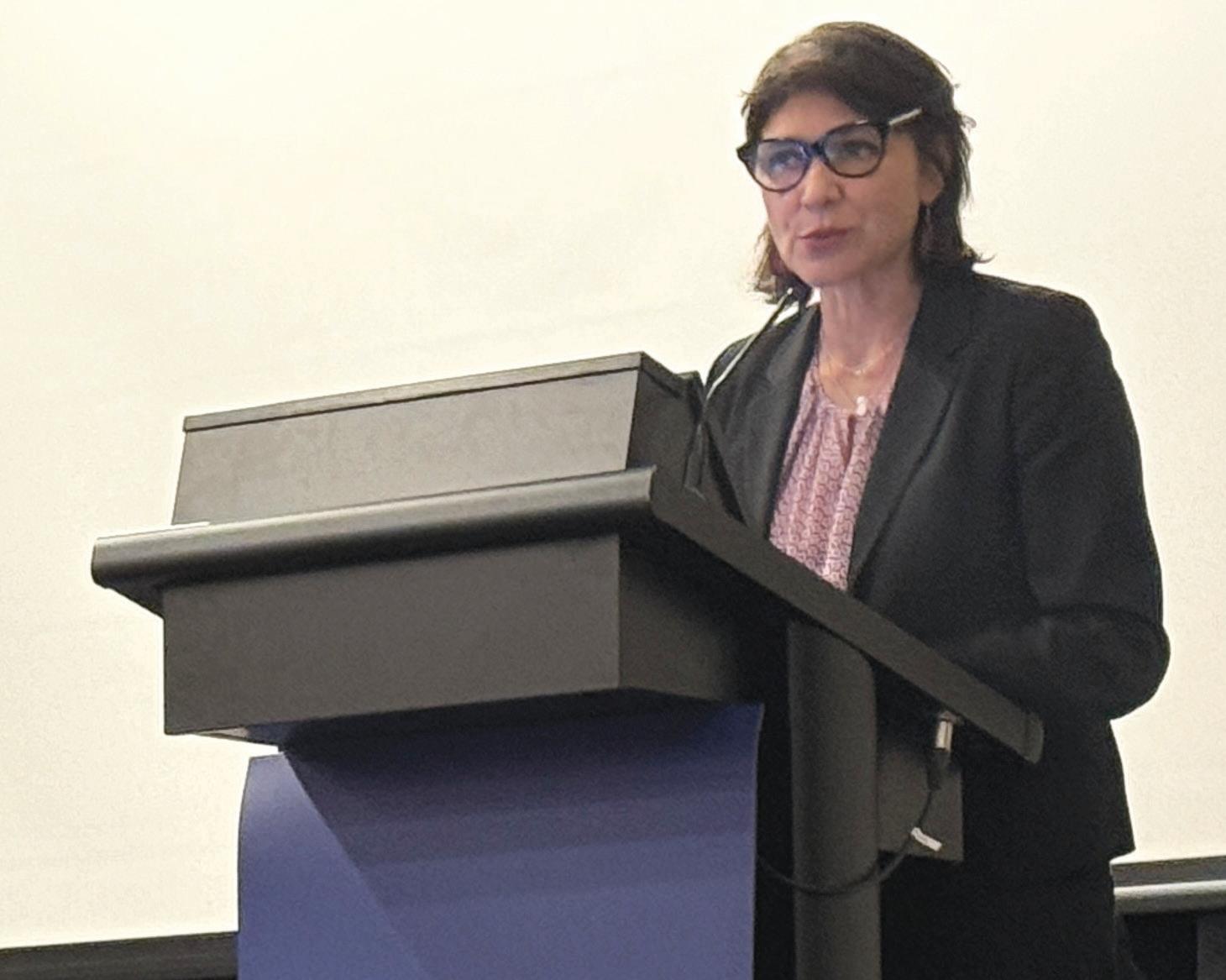
“Fear of retaliation, employment insecurity, power hierarchies and uncertainty about what constitutes harassment are the most common deterrents,”
“The presence of a [rep] as a support person can help individuals feel safer when reporting harassment,” the report said.
The report recommends measures to address workplace sexual harassment, including mandatory, practical training for all staff and leaders, meaningful worker consultation and union engagement.
It also calls for the protection of ethical bystanders through clear anti-victimisation provisions and confidential reporting options as well as gender equity and bystander training across career stages.
Willis said the union movement has always played a vital role in advocating for fair wages and better working conditions.
“Ethical practices are central to our values, so acting as an ethical bystander when sexual harassment or sex-based discrimination occurs truly reflects the principles of unionism,” she said.
More information
Download the full report: unionsnsw.org.au/ publication/ready-willing-unable/
The IEU calls on employers to provide guidance, resources and support to teachers and professional and support staff who are dealing with Australia’s social media ban for under 16s, which came into force from 10 December.
Social media platforms will have to remove users under the age of 16 or face fines up to $50 million.
Platforms included in the ban
Ten platforms are included in the ban: Facebook, Instagram, Snapchat, Threads, TikTok, X, YouTube, Reddit and streaming platforms Kick and Twitch. Lemon8 and Yope have been issued “please explain” notices, indicating they will also be captured by the ban. There have also been calls to expand the ban to online gaming.
YouTube Kids, Google Classroom and WhatsApp are not included in the ban and children will be able to view most content on YouTube, which does not require an account.
The eSafety Commissioner in November advised teachers to continue to use YouTube videos as part of their teaching materials.
“Some of these services allow teachers to embed public video content from other platforms onto the learning management system, such as YouTube videos, its website said. “If the content is publicly available, and does not require the student to log into another platform, students will still be able to watch this content.”
It is important to recognise that the enforcement of the social media ban is the responsibility of tech companies – not children or their parents.
Impact on staff and students
The social media ban will have a profound impact on how children under 16 interact and communicate online.
The ban is likely to affect teachers and school support staff in the following ways:
Students’ mental health and wellbeing may be impacted by changes in access to social media platforms. They may require assistance in adjusting to new ways of communicating and engaging with their peers.
Schools may need to review and reconsider communication methods with students, including halting the use of restricted social media platforms.
Schools may need to consider how to explain the ban to students and their families – and include these discussions as part of teaching digital literacy and responsible online behaviour.
Will the ban work?
The federal government claims the new social media age restrictions will help keep children under 16 safer. Surveys have found seven in 10 children have been exposed
to harmful content and behaviour on social media such as misogynistic material, fight videos, content promoting eating disorders and suicide as well as cyberbullying and grooming behaviour.
Polling indicates strong public support for the ban, driven by frustration at the failure of digital platforms to self-regulate, and parents concerned about cyberbullying.
However, uncertainty remains over whether age-verification technologies will be effective in preventing children under 16 from using social media.
Queensland University of Technology professor Axel Bruns said parts of the social media ban will be “unworkable”.
“Age-verification technology doesn’t exist in the way the government wants it to exist,” he told The Guardian.
A trial of age-checking technology at a Canberra school earlier this year found it wrongly guessed some teenage students as 37-year-olds. Face-scanning technology could only guess ages within an 18-month range in 85 per cent of cases.
The trial also found “concerning evidence” that some technology providers were seeking to gather too much personal information, reported The Guardian
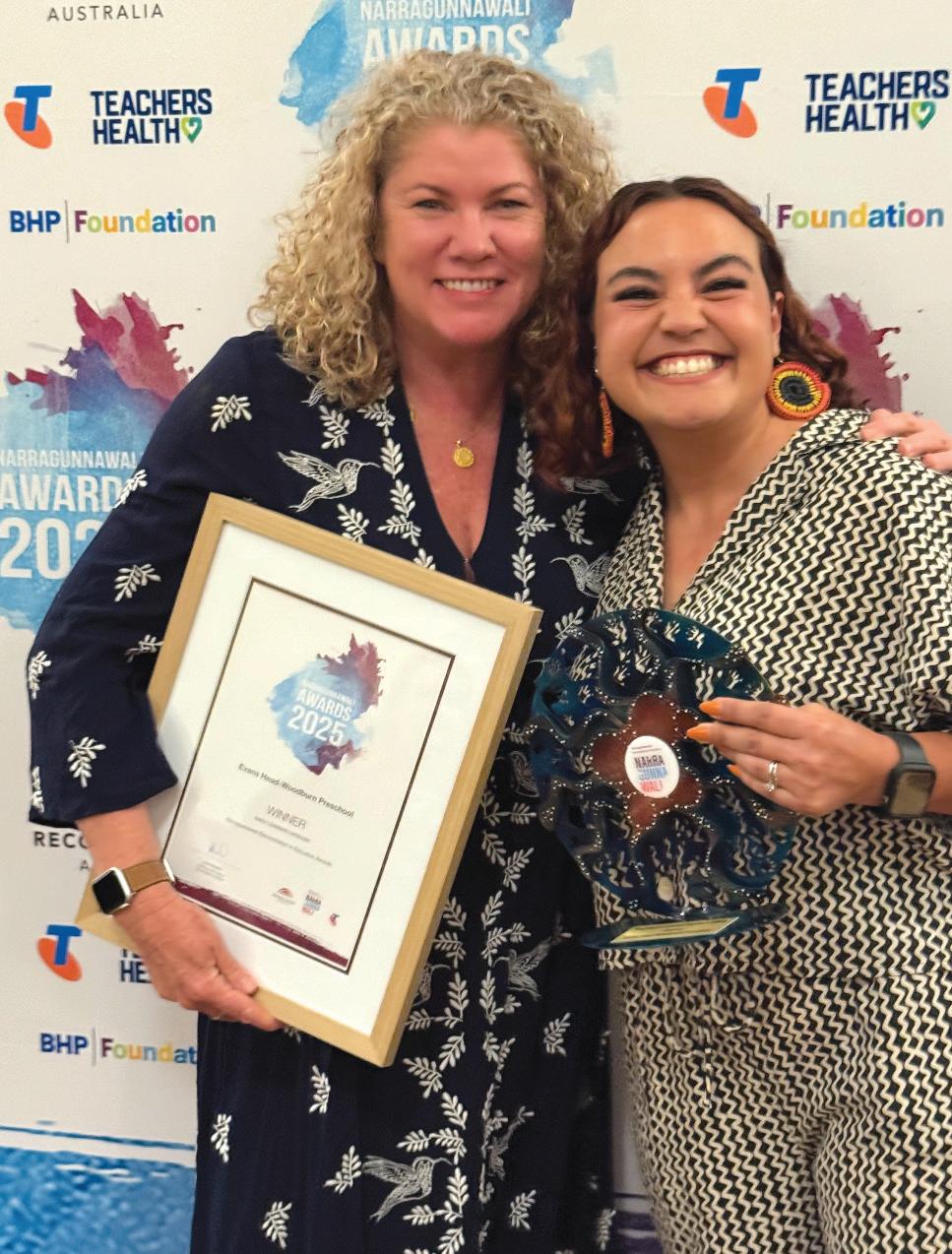
A Reconciliation Action Plan (RAP) is a declaration of commitment and action to promote reconciliation with First Nations peoples.
Evans Head Woodburn Preschool in northern NSW has maintained a RAP, developed with the assistance of Reconciliation Australia’s Narragunnawali program, since 2018.
“Through this RAP, we have developed and implemented programs that strengthen our commitment to reconciliation and embed Bandjalang language and culture in everyday practice,” said the preschool’s director and IEU member Cath Gillespie.
“Our RAP has been a guiding document through many challenges, including the 2019 bushfires, the COVID-19 pandemic, and the devastating 2022 floods that left our service displaced for 33 weeks.”
Evans Head Woodburn Preschool’s commitment to reconciliation was recognised at this year’s Narragunnawali Awards, when it took out the early learning category.
“We entered the awards to share our journey and inspire other early childhood services to walk alongside First Nations communities in meaningful and respectful ways,” Cath said.
Programs foster connection
The preschool has a number of programs that support reconciliation and strengthen cultural connections, including its Cousins Program in which Year 5 First Nations students from the local school visit the preschool regularly throughout the year as mentors.
“This strength-based program fosters cultural safety and lays the foundation for smooth school transitions, as children build relationships with older peers before starting school,” Cath said.
The Boogal Jugoon Nature Classroom brings together a group of preschool children for a full day of learning on Country.
“Guided by cultural knowledge and protocols, the program nurtures deep connections to land, language and community through shared experiences and storytelling,” Cath said.
The preschool also offers Bandjalang language and elder-inresidence programs.
Committed to culture, healing, truth
Cath said the RAP provides a framework for reconciliation initiatives through its design of actions, guiding services to commit to reconciliation and offering resources and support.
“Families know from the outset that our service is culturally safe and committed to a reconciled future,” she said. “We embrace truth-telling and our educators are skilled at delivering this in ageappropriate ways.
“Children often share their knowledge at home, and families frequently tell us their children learn more about culture in preschool than they did in their own schooling.”
Developing a RAP provided an opportunity to look deeply at all aspects of service delivery to ensure it is welcoming and safe for First Nations families, Cath said.
Cath said the Narragunnawali website offered a range of resources to support RAP implementation.
“It is a worthwhile and rewarding experience,” she said.
“Reconciliation is not a checklist – it is a commitment to truthtelling, healing and building strong relationships with First Nations peoples, guided by respect and shared responsibility.”
More information: narragunnawali.org.au


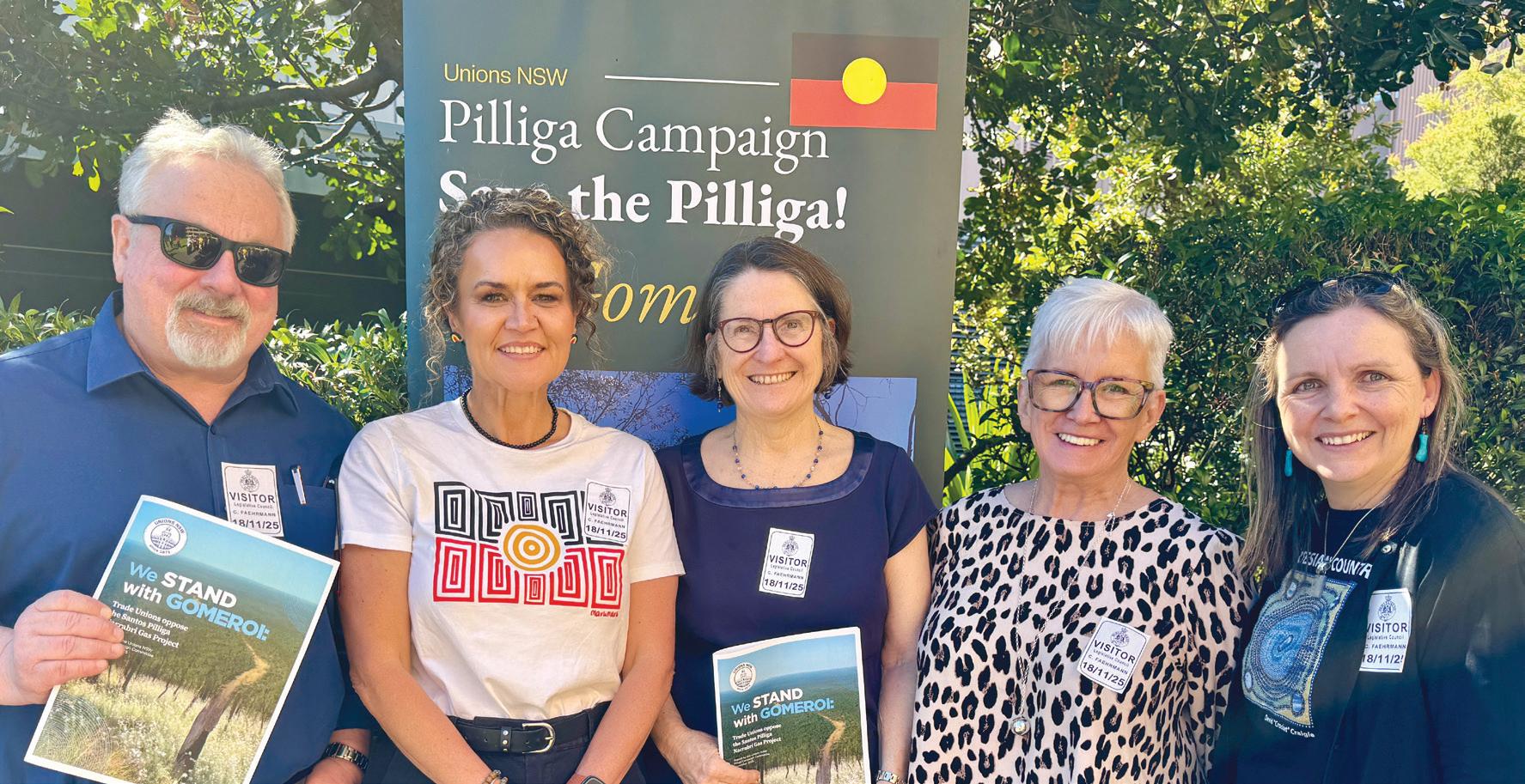
A new report outlining trade union involvement in the Gomeroi people’s decades-long struggle to defend the Pilliga was launched at NSW Parliament House on 18 November.
The We Stand with Gomeroi report highlights union opposition to Santos’ Narrabri Gas Project.
The IEU was represented at the launch by Secretary Carol Matthews, Deputy Secretary David Towson, IEU Executive member Denise McHugh and IEU member Kylie Martinez.
Opposition to Santos’s Narrabri Gas Project, led by Gomeroi traditional owners, is founded on the risks to water, cultural heritage, biodiversity, community health and long-lasting ecosystem damage.
The project also threatens to increase climate pollution and create further division within regional communities.
The risks are heightened given Santos’s track record as a bad environmental and corporate actor. Incidents include covering up major methane leaks, “impossible to fix” offshore gas leaks and a 25,000-litre oil spill off the Pilbara coast linked to dolphin deaths.

Online news site Crikey in October reported that Santos paid no company tax on $8 billion of gas revenue, with the company claiming it made just $21 million in profit.
Gomeroi resistance
Gomeroi people have resisted coal seam gas (CSG) development in the Pilliga for more than 20 years, beginning with Eastern Star Gas and now Santos. At a Native Title meeting in March 2022, Gomeroi people voted overwhelmingly to oppose any agreement for CSG.
Despite this clear “no” vote and widespread public
opposition, the Native Title Tribunal has twice ruled in favour of Santos.
The NSW union movement has been in strong opposition to the Santos project since the Gomeroi voted to oppose CSG projects at the March 2022 meeting.
Throughout Australia’s history, union’s have stood alongside Aboriginal and Torres Strait Islander peoples in struggles for justice, land rights and equality.
Despite the Tribunal’s rulings, unions continue to recognise the Gomeroi as the rightful custodians of the Pilliga and remain committed to upholding their selfdetermination.
First Nations educators weigh in For First Nations educators, this issue is deeply personal. At the report launch, IEU member and Wiradjuri woman Kylie Martinez said: “As an Aboriginal Education Officer and leader of First Nations education across both primary and secondary schools, my work is not a title. It is a responsibility.
“I walk alongside our Aboriginal Torres Strait Islander students, supporting their learning, advocating for their wellbeing, and connecting our schools back to community through truth, culture and respect.”
Kylie then posed a question that every educator should hear: “How am I supposed to teach my students to care for Country while they watch corporations carve through the heart of it?”
The IEU will continue to stand with the union movement in NSW in opposing Santos’s gas project and supporting the Gomeroi people in their fight to protect Country.
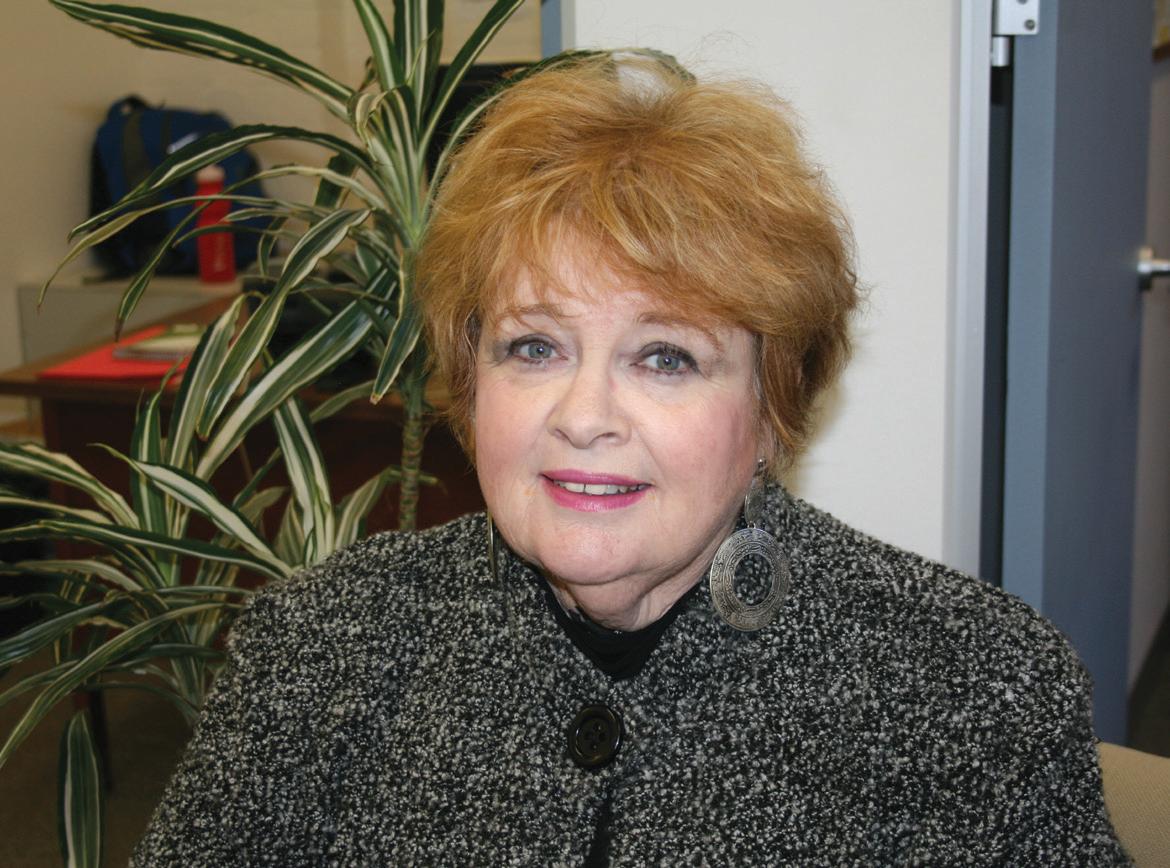

Professional Officer, former teacher and long-term IEU member Liz Finlay is set to leave her role at the IEU after 19 years. She reflects on her career, beginning as a teacher in a Catholic school in 1967.
“Teaching was very different in the 1960s,” Liz said. “Large classes, few resources, no ICT, no photocopiers, low salaries, poor conditions, no maternity leave, no superannuation – and no union for teachers in NSW Catholic schools.”
In the 1960s, Catholic schools were run by religious orders and the ‘lay teachers’ were often untrained or completing teaching qualifications at night.
“I was appointed to St Simon Stock Girls School Pendle Hill, run by an order of Maltese Dominican nuns – it later became Our Lady Queen of Peace Primary School at Greystanes,” Liz said.
During 1967, Liz taught a Year 2 class of 67 students for the princely sum of $15 per week. “Most Catholic school teachers were paid by the parish and received only about one-third of the salary paid to government school teachers,” Liz said.
Liz’s classroom was a small room known as “the dungeon”. “It was used as a storeroom – there was a lot of rubbish, broken tables and chairs and little else,” she said.
Her father helped repair tables and chairs while Liz and her mum painted the room. “My aunt gave me a blackboard, two statues and, most importantly, two large boxes of chalk – and so began my teaching career,” Liz said.
On her first day on the job, the principal gave Liz her teaching resources, a stick of white chalk and a feather duster. “I was told to return the stub of used chalk and I would be given another,” she said.
As poultry farms gave way to housing estates in the area, Liz’s school expanded rapidly and by 1972 a new school had been built.
At one time it was the largest Catholic primary school in NSW. Enrolments in Catholic schools were rising across the state, more and more lay teachers were employed, “and dissatisfaction with salaries and conditions also grew”, Liz said.
Union emerges
In 1966, teachers in Catholic schools began joining the Assistant Masters and Mistresses Association (AMMA, formed in 1954). This influx of new members built strength and brought about big changes.
“Most Catholic school teachers received only a third of the salary paid to government school teachers.”
In 1970, the first award was made for teachers in non-government schools to achieve wage parity with government school teachers. “This saw teachers’ wages double and, in some cases, triple,” Liz said.
“In 1971, we were involved in the first industrial dispute over cleaning of classrooms,” Liz said. “Cleaners were finally employed and we were not required to sweep our classrooms after school each day.”
In 1972, the AMMA became the Independent Teachers Association (ITA), which then became the IEU in 1994.
“In 1977, I represented the union in a case against the Catholic Education Office for remuneration for teachers in unpaid promotional positions,” Liz said. “It was a harrowing day in the Industrial Commission but we won.”
Over the years, Liz was the rep at Our Lady Queen of Peace Primary School, the Intensive English Centre at Westmead and at the Catholic Education Office Parramatta.
Changing direction
After 22 years teaching, Liz changed course. “I decided it was time to move on when one of my Year 3 students informed me I had taught his father,” she said.
In 1989, she took up a role in the ‘New Arrivals’ program, visiting schools to work with migrant and refugee students. In 1994, she pivoted again, to a role in Curriculum, ESL and New Arrivals at the Catholic Education Office in Parramatta.
“Working with disadvantaged schools and assisting refugees from Southern Sudan were real highlights,” Liz said.
She said it was impossible to imagine that the first meeting of a few hundred Catholic teachers would become part of the IEU of 2025 with 32,000 members – “and wages and conditions that could only be dreamt of in the 60s”.
“It’s a direct result of committed union members acting in solidarity and fighting for their rights, wages and conditions,” she said.
The IEU thanks Liz Finlay for her expertise in supporting members in independent schools to achieve Experienced/Accomplished Teacher accreditation, and hence higher salaries. We congratulate her on her retirement, and we will miss her in-depth experience and good humour.
The IEU has been helping members undertaking Experienced/Accomplished Teacher Accreditation in independent schools since 2007. In this time, the union has supported an estimated 1500 members to achieve Band 3 and a significant increase in salary.
At the same time, we’ve negotiated with the employer, the Association of Independent Schools (AIS), to streamline the process. Documentation requirements have been reduced substantially since 2007.
This year, the IEU has continued this support for Experienced/Accomplished Teacher accreditation. Eighty-five members we assisted in 2024 were successful in achieving Experienced Teacher accreditation.
The current AIS multi-enterprise agreement (MEA) has adopted a steps model, replacing the Band 1, Band 2 and Band 3 model.
In the past, teachers remained on Band 2 ($107,461) and were required to undertake Experienced/Accomplished Teacher accreditation to progress to Band 3 ($122,765) – a significant increase of $14,244.
In the new MEA, teachers can progress to the top of the scale ($127,281) without needing to complete the accreditation.
Members may still complete Experienced/ Accomplished Teacher accreditation, which attracts an additional $4979.
The most recent evidence collection period was from February 2024 to August 2025. Members submitted portfolios between April and August, with those who submitted early receiving their results quickly. Members are now required to have evidence for 20 descriptors from Standards 1, 2, 3 and 5, including five descriptors that can be met by classroom observation.
In addition, members may choose four descriptors that do not require evidence. Standards 4, 6 and 7 are met by a principal attestation. Most schools have taken a sensible approach to this and have not required further documentation.
Experienced/Accomplished Teacher accreditation is still complex and requires a large time commitment. Given the progression in the salary scale, fewer teachers have undertaken the process this year.
Members who completed this accreditation process said their reason was more about achieving the title of Accomplished Teacher and less about the allowance. They considered it a positive career move, and the evidence was based on their classroom practice.
Elizabeth Finlay Professional Officer
As schools set their 2026 calendars, now is the time to ask your principal to designate a specific number of pupil-free professional development (PD) days as teacher-directed.
If members don’t claim these days as teacher-directed, they may disappear among the school-directed sessions and topdown training.
During the recent Catholic systemic bargaining round, employers strongly resisted the IEU’s request to lock in a set number of teacher-directed PD days, claiming this would stifle individual principal flexibility.
The Catholic employers were adamant these decisions should be made at the local level. That being the case, members in Catholic systemic schools should put forward their requests secure in the knowledge their principal has the final call.
What’s changed?
Through sustained IEU advocacy, NESA’s PD policy now recognises a much wider range of activities as counting toward the 100 hours required for maintenance of accreditation.
This should ensure teachers can easily reach their 100 hours without schools directing them to undertake PD that may not be immediately relevant to their particular context.
Crucially, the NESA Professional Development Framework now lists mandatory training as legitimate PD.
Mandatory training includes any training your employer requires you to undertake, including CPR, first aid and anaphylaxis, child protection, fraud and corruption, and professional responsibilities.
The IEU believes that when an employer mandates compliance training, this should take place during school hours – training should not encroach onto your personal time. The Catholic systemic agreement explicitly states that such activities “must be offered within designated school time”.
Keep a record
Every teacher must maintain a record of their PD hours. You can do this in a Word document, a spreadsheet, use NESA’s sample PD log, or log the hours directly in your eTAMS account. But don’t put it off: NESA will conduct compliance audits throughout 2026.
If you are selected, you will have 28 days to submit your log. If you have any questions or problems, contact your IEU organiser. NESA will also run an audit to gather information about how PD is being delivered and accessed across the sector. If you’re selected for this audit, the IEU would like to hear from you. Your experience will help shape our advocacy. Contact the Professional Engagement team at pd@ieu.asn.au.
What you need to do
It’s time to act. As calendars are finalised: request teacher-directed PD days at your school remind your principal that mandatory training must be done in school time update your PD log now your professional learning is your responsibility, but it’s also your right. Let’s make sure 2026 reflects that.
Pat Devery Professional Engagement Coordinator
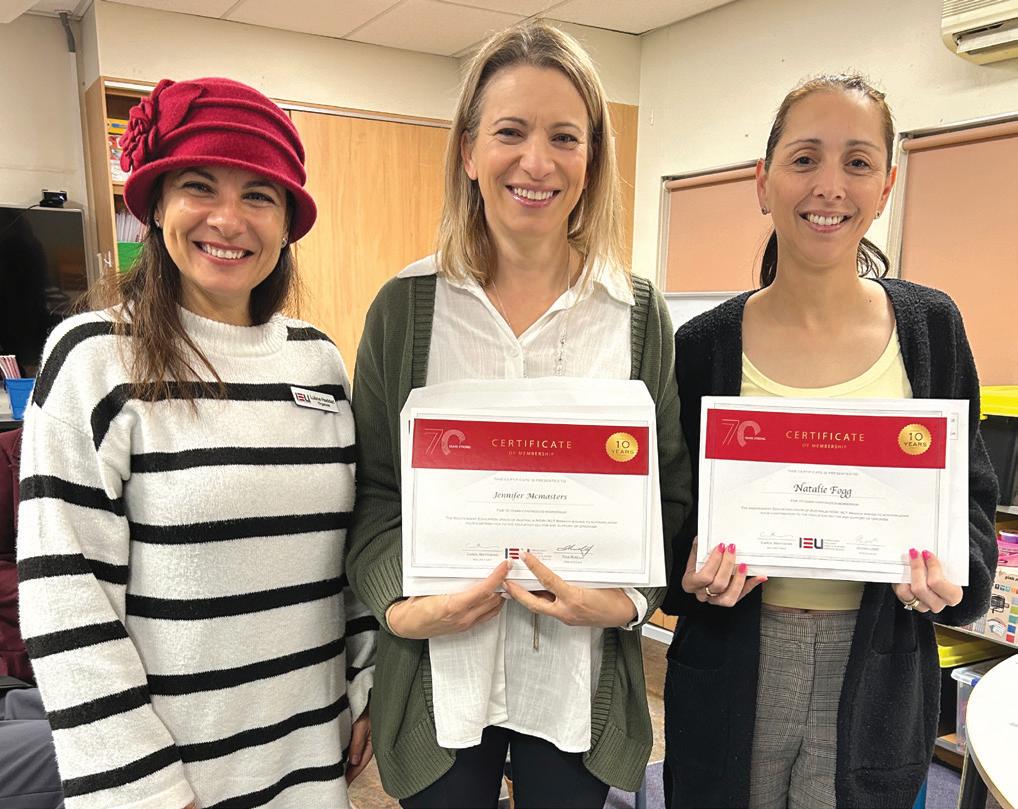
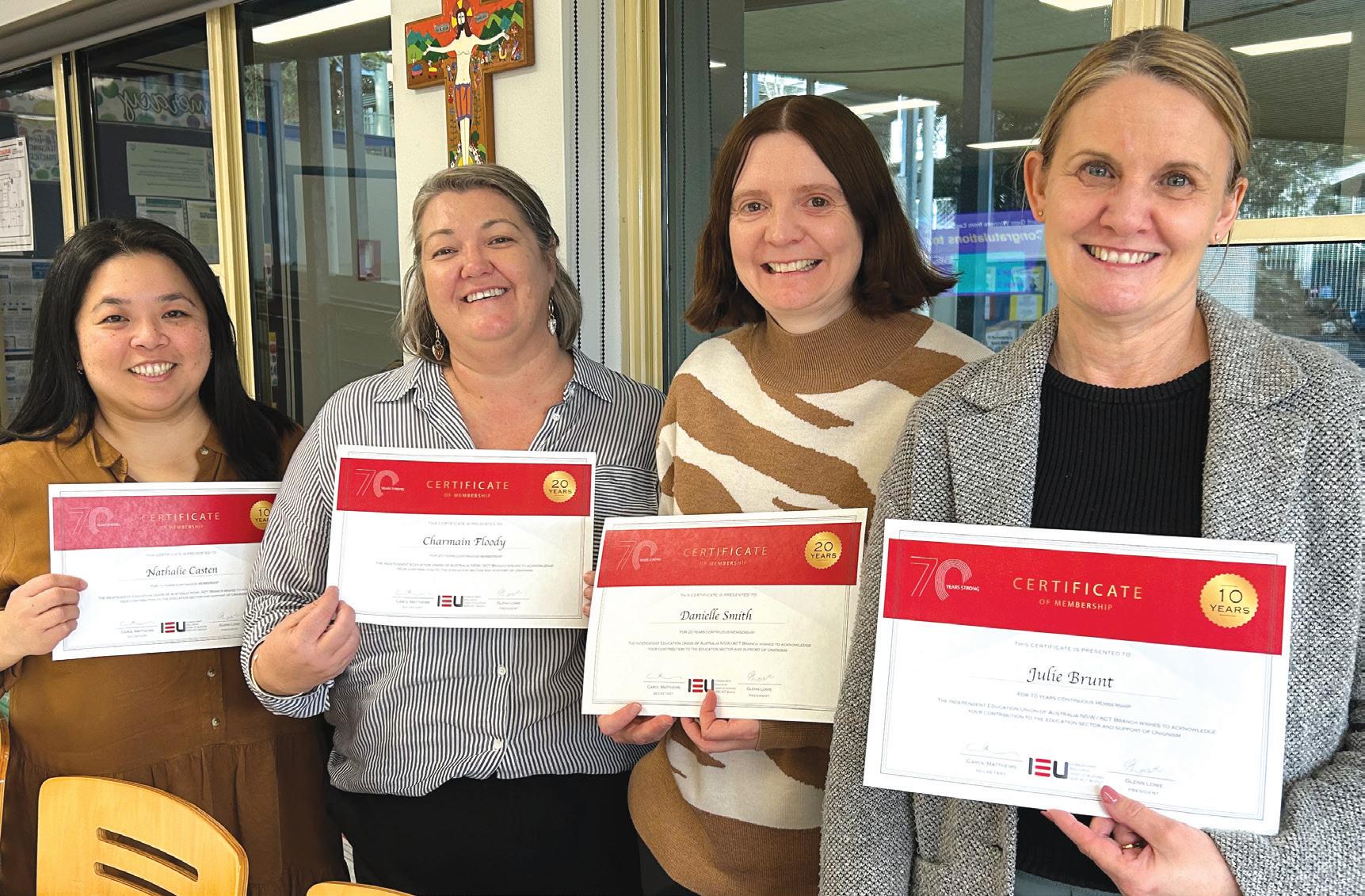
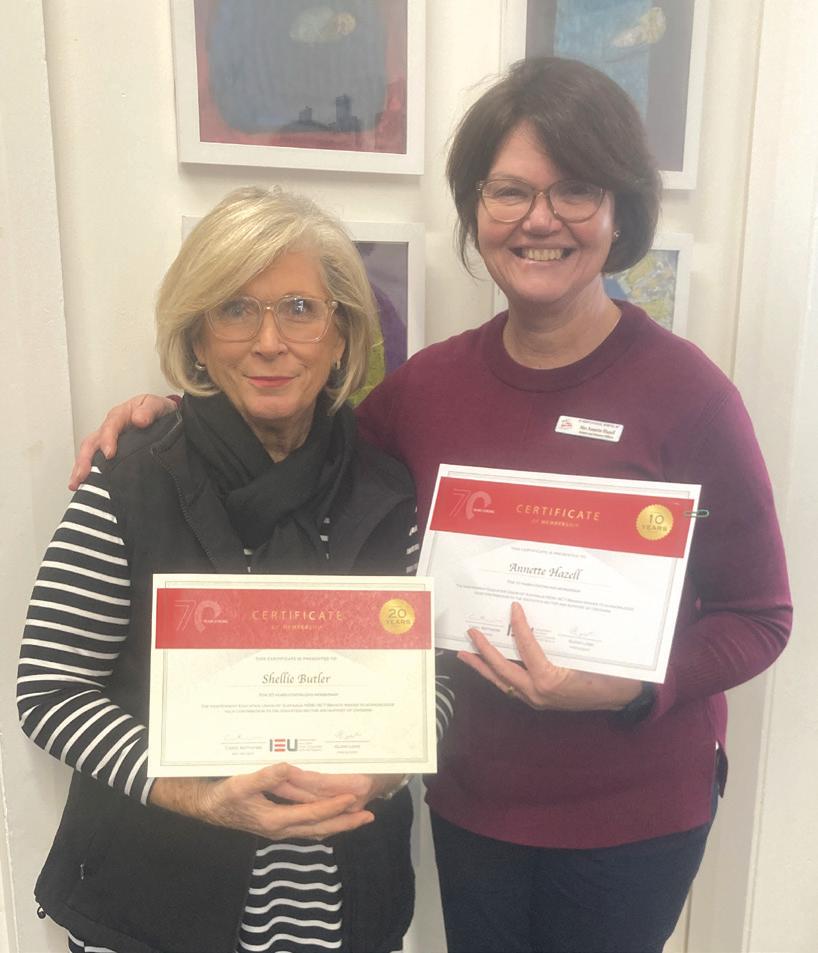
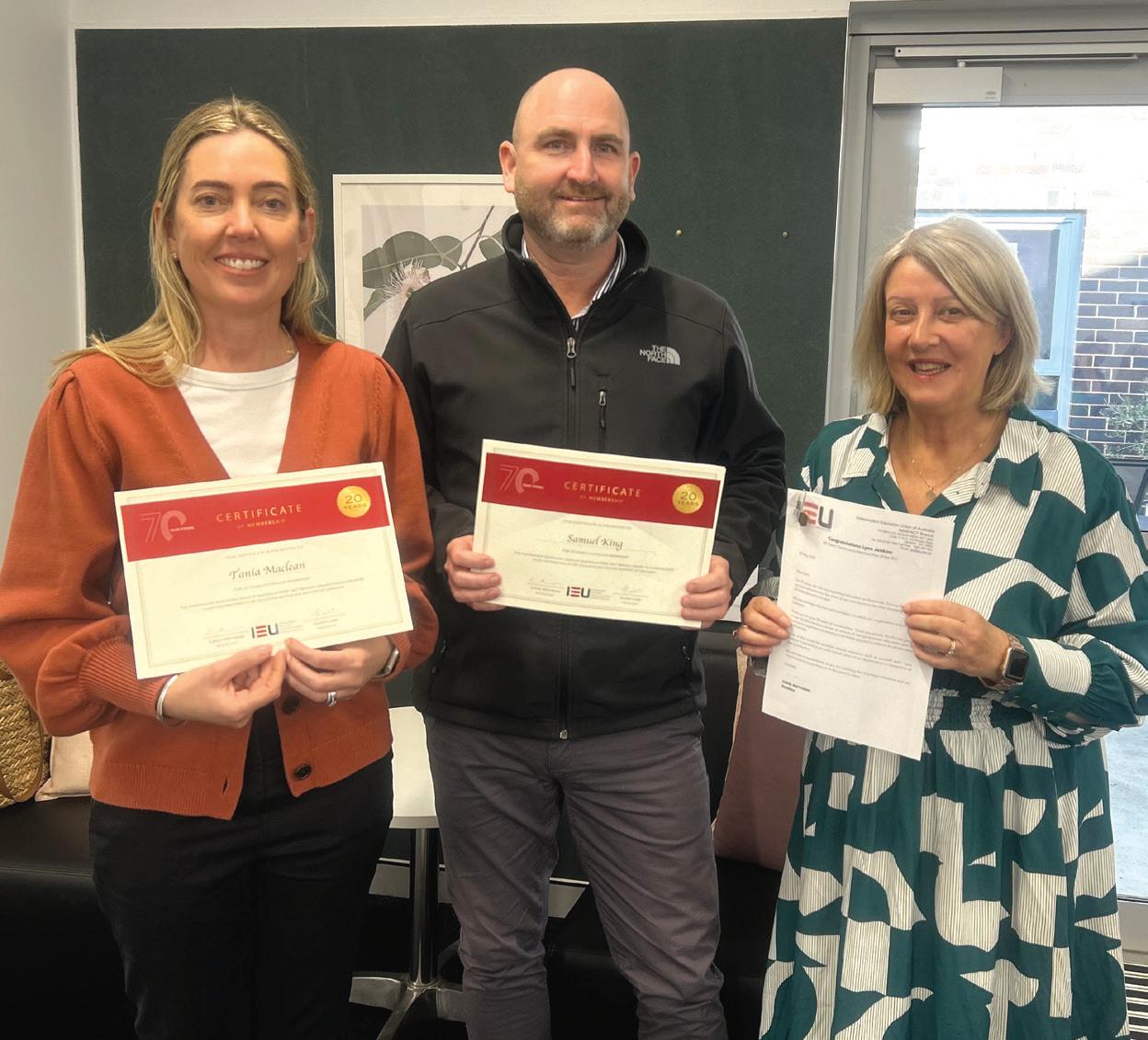
IEU reps share how they’re building strong chapters. Strong chapters make for a strong union and therefore greater bargaining power for all members.
St Christopher’s Catholic Primary School, Panania
share
A teacher for more than two decades, Deborah became the rep at St Christopher’s three years ago to support her colleagues and help bring positive change to the workplace.
Her co-rep Gabriella put up her hand this year to help Deborah assist their mostly younger colleagues at the school.
“We’re very close to our colleagues, so I think being able to support them was just something that felt right,” she said.
“At St Christopher’s, we focus on ensuring that early career teachers are properly supported and mentored.”
Teachers also face the challenge of keeping on top of constant policy and curriculum changes, which adds to already heavy workloads.
“I’ve taught kindergarten for the past four years – and every year has been so different,” Gabriella said. “It kind of feels like you’re reinventing the wheel at times.”


An IEU member since 2005, Deborah said it was important to let young staff know about “how far we’ve come because of the union as well”.
“We only have maternity leave because of the union and long service leave and all these other things,” she said.
A member of the IEU since 2023, Gabriella said union membership had built her confidence to advocate for herself, her colleagues and her school community.
“You know, five years ago, I would have been scared to call a parent up, let alone question something at work,” she said. “I hope then to inspire the rest of the staff to also be OK to have that confidence.”
Outside of school, Gabriella enjoys Latin dance classes as well as spending time at the beach and with her friends – “literally anything that just helps me switch off”, she said. Deborah said she had become “a bit of a greenie” and had turned her backyard into a wildlife habitat with native plants to attract birds, a little pond and a vegetable garden.
St Anne’s Catholic Primary School, Strathfield South
Jacob Wills is in his second year as a classroom teacher at St Anne’s Catholic Primary School in Strathfield South, teaching Year 3 students as well as art and drama.
As Jacob puts it, “part-time I’m a classroom teacher and part-time I’m everywhere else”.


Jacob said he “kind of fell into” becoming a rep last year, sharing the role with fellow teacher Faye Katsoulas who has since stepped back to take on other responsibilities at the school.
“I’m happy to go solo and do it, especially early in my career,” Jacob said.
Jacob is eager to build on the work of his predecessors who have built a strong union chapter at St Anne’s.
“I know how good I have it at my school,” he said. “But I know people I went to uni with don’t have it as good as I do.”
Jacob said he is determined to support his colleagues who have supported him in the past.
“I’m lucky to be working at a school with a lot of experienced teachers who’ve helped me so much, so if I can help them in any way, that’s what I want to do,” he said.
To prepare for the role, Jacob is doing reps training for the second time to learn more about what members are entitled to and how best to support them.
Jacob said burnout is a very real issue even for early career teachers: “I know people I went to uni with have already left teaching – and I graduated in 2023,” he said.
An IEU member since 2024, Jacob said unions make a real difference to people who work in poorly paid, under-appreciated sectors.
Outside of school, Jacob enjoys going to the theatre and reading science fiction. He is determined to beat his record of reading 123 books in one year.
However, he has managed less than 30 books this year, Jacob said. “That’s because I’m working full-time.”
As a leader have you ever thought:
I want to support my staff, but I don’t know what’s going on underneath.
Why won’t they just do their job?
I’m constantly putting out fires – I need strategies, not theory.
Why did that work for one teacher, but it didn’t work for another?
I need practical ways to guide my staff, not micromanage.
• I want to grow as a leader, but I rarely get time to step back and reflect.
Presented by Michael Elphick and Associates (michaelelphick.com.au), this practical, two-day workshop is designed for middle and senior school leaders who would like to build stronger, more motivated teams.
Using Situational Leadership, Herzberg’s Motivation Theory and the DiSC behavioural model, this PD will help you better understand your team and yourself.
From coaching struggling teachers to lifting team morale, this program is for anyone managing the messy, human side of leadership.
You’ll walk away with clear, evidence-based frameworks to help you lead with empathy, manage different personalities, and respond constructively to burnout, resistance and change fatigue. If you lead people, this course is for you. Who it’s for
• Principals
• Assistant Principals
• Year Coordinators and Middle Leaders
• Lead Teachers and Stage Coordinators
Staff managing teams, leading programs, or coaching colleagues
Teachers with leadership potential or aspiring to leadership roles

“This course is engaging and practical – it gave me real tools I could use straight away. The sessions were engaging, highly relevant, and full of insights into how to lead people, not just manage them. This course will genuinely change how you lead your team.”
Michelle Mella, IEU member, Presbyterian Ladies’ College, Croydon
Two-day course: When and where Tuesday 3 March 2026, 9am to 4pm, IEU head office, Wattle Street, Ultimo Wednesday 4 March 2026, 9am to 4pm, IEU head office, Wattle Street, Ultimo Cost
$1150 members
$1350 non-members
This course addresses the Australian Professional Standards for Teachers, Middle Leaders and Principals and provides 12 hours of professional development for teachers maintaining accreditation at proficient, highly accomplished or lead.
More details and register: www.ieu.asn.au/events
Login to register and the IEU will invoice you or your school.
The IEU is pleased to have welcomed several new staff to our Sydney and Canberra offices in the past few months

From styling theatrical costumes to project managing a carbon forestry initiative, Carina Capone brings a diverse set of skills to the role of administrative assistant at the IEU’s Ultimo office.
“No matter the industry, I want to be working with likeminded people who are passionate about what they do and devoted to who they help,” she said.
Carina performs a wide range of tasks providing support to the union’s team of organisers.
“Along with jobs like printing, packing kits and binding agreements, I have clerical responsibilities like taking minutes, formatting and editing letters, maintaining our database, analysing survey data and following up meetings with actionable next steps,” she said.
Carina’s work assists IEU organisers in their role of protecting and supporting members.
“My aim is to ensure systems, processes, policies and paperwork all serve our team so they can serve our members,” Carina said.
“It means keeping information up to date, providing details on the fly, handling queries and
Tahlia Bruce brings a wealth of experience as a teacher and union organiser to her new role of IEU organiser based in Canberra.
Tahlia taught in primary schools and the long day care sector in the Australian Capital Territory for eight years before a four-year stint at the Australian Education Union supporting teachers in Canberra’s government schools.
“Those experiences gave me a clear understanding of how different parts of the education system operate and the pressures that staff face across both school and early learning settings,” she said.
Tahlia’s new role takes her from Canberra to the Victorian border “so my days are rarely predictable”.
“I spend a lot of time on the road visiting schools, meeting reps and supporting members with whatever they’re dealing with,” she said.
“Covering such a large and diverse patch means the work is constantly varied, which is both interesting and challenging.
The IEU’s Canberra office might be smaller than the head office in Sydney, but Tahlia said it is closer to “the policy and political conversations that influence our work”.
“Most days are a mix of member calls, casework, bargaining meetings and school visits – and no two days look the same,” she said.
Supporting individual members is the most satisfying aspect of the job for Tahlia.
“Helping someone through a stressful situation, explaining their rights clearly and making sure they feel heard and backed is the part of the job that matters most to me,” she said. “The social justice side of the work is what really drives me.”
Working for the IEU is a natural progression for Tahlia, who said she tended to speak up and advocate for colleagues during her teaching career.
updating systems so they can focus on what they do best.”
Carina also values the union’s work in fighting for better pay and conditions for teachers and school support staff.
“My first job was in a children’s play centre attached to a preschool that my mother ran,” she said. “While I may not be a teacher myself, a lot of the people I care about are.”
Carina joined the IEU after working for a series of small businesses, arts collectives and social enterprises.
“The opportunity to work directly with a union has been a chance to protect others from the kinds of shady practices, wage theft and safety violations that I have experienced personally,” she said.
From live theatre and board games to making ceramics and visiting the beach, Carina said she has “too many hobbies”.
“But my heart is devoted to dance,” she said. “I come alive dancing – ballroom, Latin, swing – everything from the waltz to the hustle. I’m currently pestering my instructor to focus on the Argentine tango.”

“Fairness and accountability have always mattered to me, so moving into organising felt like a natural next step,” she said. “I wanted to support people in a more direct and meaningful way.”
Tahlia said working for a union means joining a movement that genuinely improves people’s working lives.
“Individual support is important, but the collective change we push for is what strengthens workplaces long term,” she said. “I hope to build stronger chapters, support more confident reps and help create workplaces where people feel safe, respected and fairly treated.”
Life is just as busy outside of work for Tahlia, who has two tween girls and a border collie.
“Most of my downtime is spent with them,” she said. “At this stage, I keep things simple and make space for quiet moments when I can.”

Protecting members’ rights and entitlements is central to Nadia Gubbay-Nemes’s work.
An industrial officer based in the IEU’s Sydney office, Nadia supports members with workplace issues and helps strengthen their employment conditions.
“A typical day involves a mix of advising members on rights and entitlements, negotiating with employers, drafting correspondence or submissions, and preparing for enterprise bargaining meetings,” she said.
“I also spend time analysing industrial instruments (awards, agreements, and legislation) to give accurate advice.”
Nadia said the most interesting part of her role is the impact of industrial advice and advocacy on a member’s day-to-day life.
“The most challenging aspect of the job is the complexity of some matters, balancing the needs of members and the limits of industrial instruments and legislation,” she said.
“But these challenges are also what make the work rewarding and meaningful.”
Nadia joined the IEU because she wanted to work somewhere that “aligns with my values and enables me to provide support to workers”.
“The education sector shapes society, and I wanted to contribute to improving the working lives of the people who make that possible,” she said.
Before joining the IEU, Nadia had extensive experience working in other unions and as a lawyer.
“I value working for a union because unions give people a collective voice,” she said. ‘I hope to contribute to improved and fairer conditions for our members.”
“Outside of work, Nadia said she tries to unwind by spending time at the beach and catching up with friends and family: “I also enjoy reading, baking and pilates.”

Michele Santos has quickly become one of the union’s most recognisable faces (and voices) since joining the IEU in November.
Seated in the entrance foyer of the Ultimo headquarters, Michele provides reception and switchboard services as well as supporting the work of the IEU’s administrative team.
“On a typical day, you’ll find me manning the phones at the reception, talking to our members and directing their calls to the appropriate person,” she said.
“I also manage access to the Sydney office and assist with other administrative tasks.”
Michele said professional communication with IEU members and members of the public, ensuring their needs are met as effectively and efficiently as possible, is the most important aspect of her role.
“I have been the first point of contact in every organisation I’ve represented,” she said. “I understand the power of first impressions and next-level customer experience.”
Michele adds: “Handling high call volumes can be challenging when every call is different. I take pride in representing my organisation – calm body language and tone go a long way.”
Michele brings a wealth of experience from office administration roles in government and the private sector.
“In my previous role at Vera Living, a specialist housing assistance service for people living with a disability, I have seen how the proper support of individuals can make a real impact on communities, and have been fortunate to have had this experience,” she said.
Michele is attracted to roles that help deliver a stronger and more inclusive community – and being part of an organisation that has a purpose beyond profit.
“The IEU’s work representing educators really resonates with me,” she said. “I value organisations that support fairness and community.
“I also enjoy being the first point of contact and ensuring the office runs smoothly, so this role is a great fit for my skills and personality.”
Outside of work, Michele is a keen traveler – in Australia and overseas.
“I love good food, music, podcasts and foreign films,” she said. “I am a keen Pilates reformer enthusiast and love getting out into nature.”
The next milestone in the union’s fight for better pay and conditions in community preschools will be in the Fair Work Commission (FWC) in December – 18 months after the union took the NSW government to task over the matter.
FWC Deputy President Judith Wright is expected to make a recommendation in the IEU’s supported bargaining application before Christmas after hearing from both the union and the NSW government for the final time on 24 November.
The union hopes the outcome will add pressure on the state government to properly fund community preschools to address the ongoing workforce crisis, which IEUA NSW/ACT Branch Secretary Carol Matthews outlined in a letter sent last month to NSW politicians.
Community preschools under threat Matthews told NSW MPs that many community preschools were struggling to recruit and retain staff due to substantial pay discrepancies with other education sectors.
On 10 November, the union met with representatives from the NSW Education Department and NSW Treasury to raise the urgent need for additional funding in light of the expected increase to base pay rates resulting from the FWC’s gender undervaluation review.
“Disappointingly, those representatives did not provide a satisfactory response to the concerns we raised on behalf of our members,” Matthews said.
Community preschools rely on NSW government funding as their main income, which
means a funding shortfall must be balanced by a big increase in fees.
“Without additional funding, preschools will be forced either to dramatically raise parent fees, thereby undermining the NSW government’s commitment to affordable early childhood education, or face the very real prospect of closure,” Matthews said.
The letter to NSW MPs follows the Day of Action on 15 October when 1500 teachers, educators and other supporters rallied across the state in support of the union’s community preschool campaign.
NSW government ignores workforce crisis
Just weeks after the preschool teachers held their Day of Action, the NSW government released the Start Strong for Community Preschools fee guidelines for 2026.
Directors of community preschools have since told the union that implementing these guidelines will result in reduced funding for many preschools in 2026.
This is because the funding guidelines for 2026 have introduced two different rates of fee relief based on equity criteria.
“Although the funding for children meeting the equity criteria has been increased for 2026, the 2026 fee relief for non-equity children has been cut by $891 per child,” Matthews said.
“For some services, the combined impact of these changes means a reduction of tens of thousands of dollars in funding income and will inevitably lead to an increase in parent fees.”
The IEU again calls on the NSW government to fund community preschools fairly.
On 1 December, teachers and educators in the long day care and outside school hours care (OSHC) received the second of two federally funded pay increases.
If your service has signed up to receive the funding, you’ll have received a 5% pay rise, after the 10% pay rise in December 2024.
The IEU has already signed up hundreds of services to receive the funding, which comes as part of a new union-won agreement.
Not sure if you should be receiving the pay rise? It’s not too late and it doesn’t hurt to ask our specialist team. Call (02) 8282 8900 or email ececwrp@ieu.asn.au



Clockwise, from top: Day of Action rally in Sydney, Hear Our Voice campaign, Tina with Midnight Oil singer Peter

Tina Smith: Fond farewell to organiser
The IEU bids farewell to much-loved staff member Tina Smith, who is retiring after more than 16 years as an organiser based in the IEU’s Sydney and Wollongong offices.
A rousing speaker and staunch advocate for workers, Tina emceed the IEU’s Day of Action rally in October, where more than 1000 members and supporters gather in Sydney’s Martin Place to demand pay rises for teachers in community preschools.
Tina said it was the “best day – the rally felt like we finally got our message across to politicians”.
Tina also has fond memories of working with colleagues in the NSW Teachers Federation during the 2022 Hear Our Voice campaign for better pay and conditions in both the Catholic systemic sector and government schools.
Tina has been an IEU organiser since June 2009. Before joining the union, she worked in early childhood centres in the Illawarra region.
Tina said she particularly loved to “keep the bastards honest” – as founder of the Australian Democrats Don Chipp put it – by taking on employers and achieving justice for members in the ECEC sector.
“Best of all is the feeling of camaraderie and working with like-minded people to improve the lives of members and the community,” she said. “I’ve truly loved my time at the IEU”.
As president of the South Coast Labour Council, Tina is also a familiar face at union rallies in the Illawarra region as one-half of the “Arthur and Tina show” with long-term secretary Arthur Rorris.
In November, Tina appeared in The Illawarra Mercury to denounce the NSW government’s attempt to make unfair changes to the workers compensation system.
“The Arthur and Tina team will continue for a bit longer, which means I will still be an active IEU member,” she said.
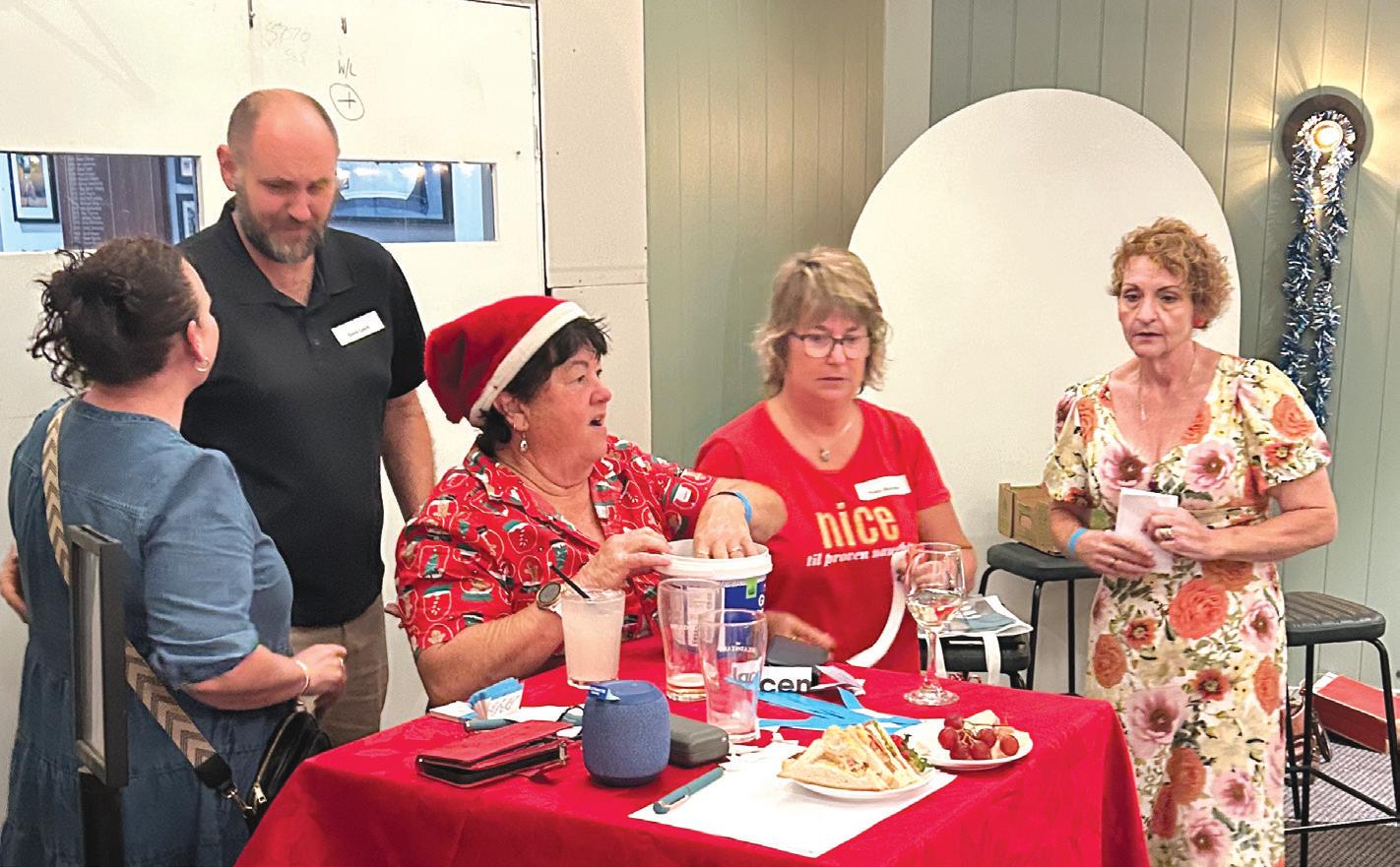
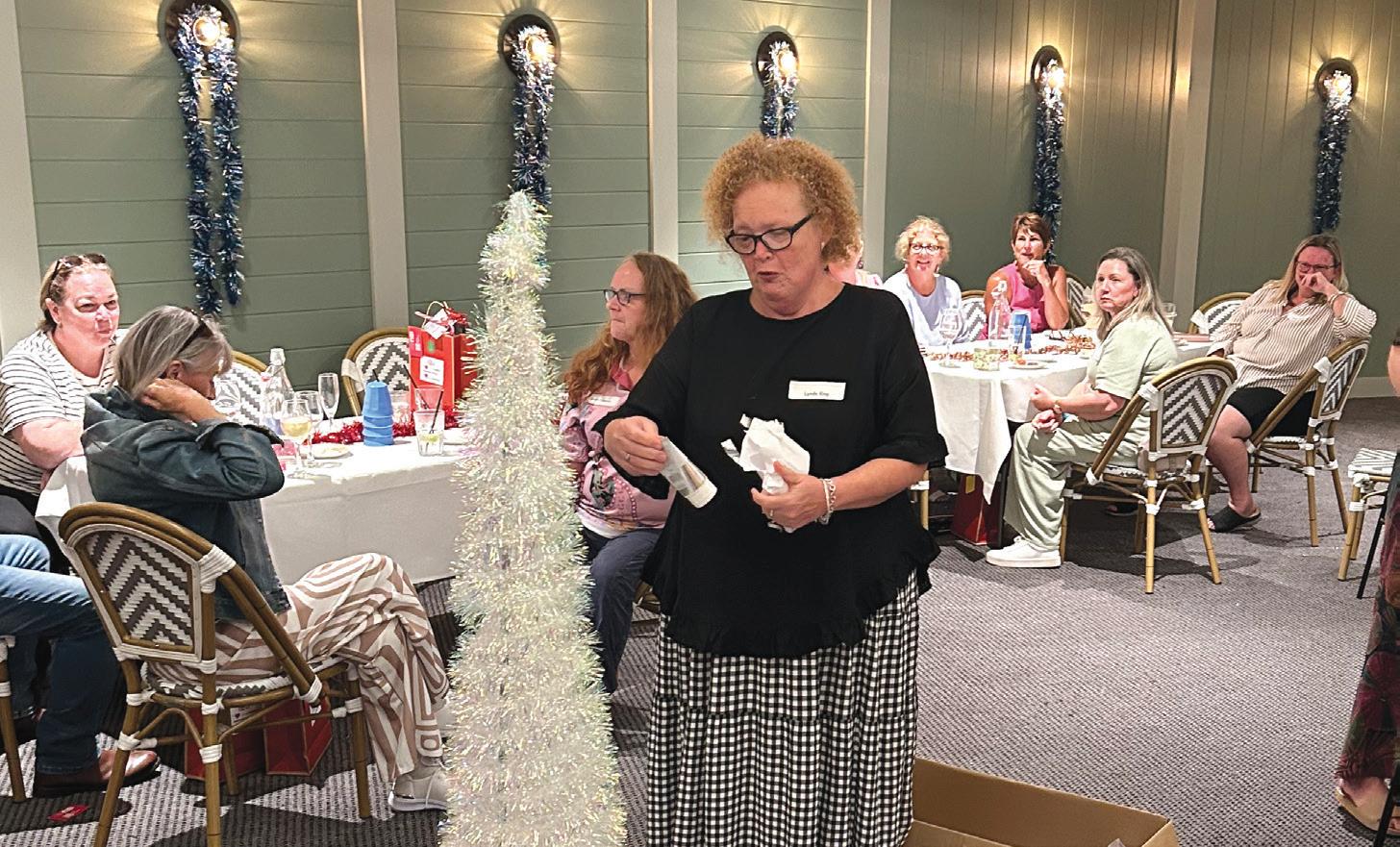
Vickye and Tracey, our legendary reps from St Joseph’s Primary School in Port Macquarie, also rolled out a series of ‘Port Macquarie Parlour Games’ that had the whole room laughing.
Branch Secretary Carol Matthews joined the evening and shared her appreciation for the invaluable work support staff do every day.
for a relaxed evening of connection, laughter and celebration.
With canapés circulating, drinks flowing and the room buzzing, the night struck the perfect balance between festive fun and genuine solidarity.
A highlight of the evening was a raucous round of Secret Santa, in which stealing the best present was all part of the game.
Each attendee received a special merch bag crafted with care by Cassie Barnes from the IEU Lismore office — complete with homemade biscuits, a candy cane, IEU pens, and other goodies.
Beneath the fun, however, was something deeper. Vickye and Tracey spoke powerfully about how the union had stood by them when they needed it most, and how committed they are to building strength for support staff across independent schools.
We were also thrilled to welcome two new members into the IEU on the night — a fitting outcome for an event organised by support staff, for support staff. A huge thank you to Tracey, Vickye, and Cassie — true forces of nature — for making the evening a standout success. Here’s to an even bigger 2026!
Sean van der Heide Organiser
The IEU has 19 geographical sub branches across NSW and the ACT, plus the Principals’ Sub Branch. Sub branches meet four times a year, usually in the first three or four weeks of each term.
Sub branch meetings are a way for reps and members to provide feedback to the union about what’s happening on the ground in their workplaces. The meetings are also an opportunity for reps and members from each region to hear updates from IEU organisers.
Each sub branch sends four to six delegates to quarterly IEU Council meetings. Council is the union’s decision-making body, bringing together about 115 member delegates from throughout NSW and the ACT.
The IEU Executive of 22 members is elected every three years by members.
All reps and any IEU members who would like to develop their union activism are warmly invited to attend their region’s sub branch meeting.
Contact your rep or organiser if you would like more information.
Central Coast
The Central Coast Sub Branch includes Gosford, Erina, Green Point, Lake Munmorah, Tuggerah, Wyong and surrounds.
The Central Coast Sub Branch met on 20 November at the Ourimbah RSL. Seven members attend the sub branch meeting with all major school sectors represented. There was discussion about the recent Christian schools agreement with CSA as well as the Seventh-day Adventist settlement earlier in the year.
Members also discussed differences between the Broken Bay Catholic enterprise agreement (EA) and the one recently settled with other dioceses. These differences include pay rates, face-to-face teaching limits, parental leave and workload.
Members raised issues particular to their own schools, including: • timetabling for learning support teachers
budget reforecasts creating some tension between sick leave ‘quotas’ budgets for paper exhausted before end of year long service leave portability in non-Catholic sectors.
Student behaviour and how schools support teachers were key topics of discussion. One member was pleased to report some positive changes in student behaviour overall at her school due to changes made in entry/exit procedures to class. A more structured approach to this has meant a more settled student body throughout the day.
Jim Hall Organiser
The Central Metropolitan Sub Branch includes central Sydney, Sydney’s inner-western suburbs and Rhodes, Concord and Meadowbank. The Metropolitan East Sub Branch covers Sydney’s eastern suburbs, including Bondi, Waverley and Bellevue Hill.
The Central Metropolitan and Metropolitan East sub branches met on 12 November at the IEU’s Ultimo office.
The meeting of two sub branches was well-attended, with a distinct celebratory atmosphere that reflected the positive outcomes of the year’s collective efforts.
The formal part of the meeting featured reports from representatives across all chapters, outlining workplace challenges and strategies employed to address them. This provided a useful opportunity to draw on the collective wisdom of the group.
Union organisers and officials then delivered comprehensive updates on key campaigns held throughout the year, reviewing strategic developments in collective bargaining, such as the current negotiations for Catholic independent Model A schools.
These reports emphasised the power of collective action and the resilience of our membership. It was particularly encouraging to see the work done by the IEU to support educators employed in Aspect schools and Amadeus music programs.
The meeting concluded with a casual dinner and drinks. The chance to connect with colleagues from various school chapters further strengthened the sense of unity and solidarity within the sub branches.
We look forward to engaging with more representatives in 2026.
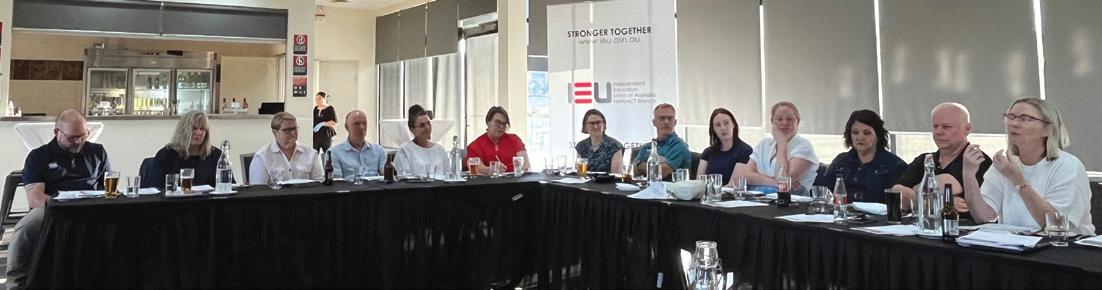
This year ended on a high note for members and delegates attending the final Central West Sub Branch meeting in Bathurst following the news that Catholic Education Diocese of Bathurst (CEDB) had reversed its unfair decision to deduct additional long service leave from teachers taking short breaks adjacent to the pupil vacation period.
With a meeting scheduled with CEDB that same day to discuss the issue and a dispute lodged with the Fair Work Commission, the sub branch meeting was slated to be an update on next steps.
With IEU Secretary Carol Matthews in attendance, the meeting was a great opportunity to celebrate the power of collective action, the work of our reps across the Central West and an opportunity to farewell long-time rep Geoff Hayward after more than 20 years of involvement at chapter, sub branch and Council level. Here’s to building on our wins in 2026.
Donna Widdison Organiser
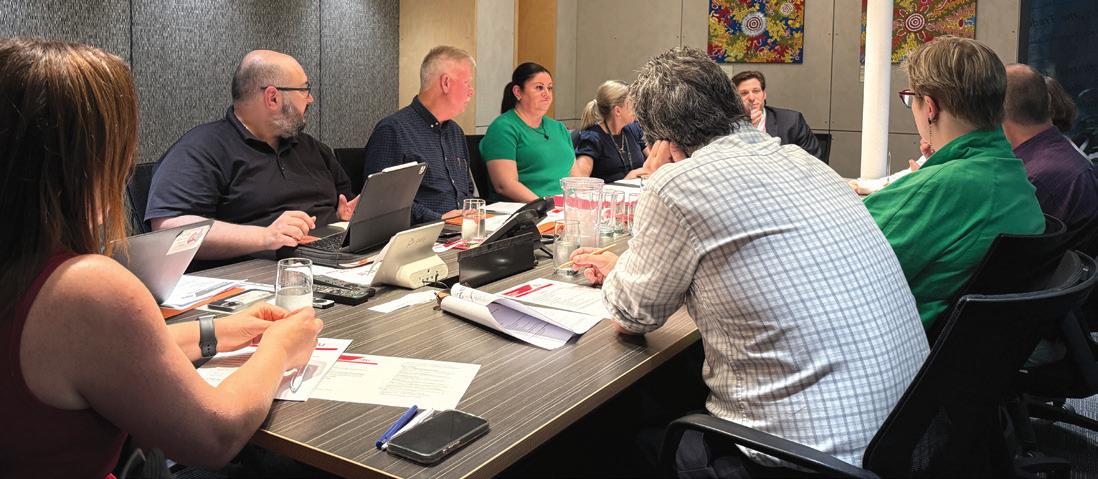
Catholic Schools Parramatta Diocese (CSPD) restructuring leading to redundancies and reduced pay for Learning Support Officers, causing dissatisfaction
WHS training outside school hours at a CSPD primary school was highlighted as a breach of WPA guidelines poor pay and conditions reported at Seventh-day Adventist schools pay disparity between early childhood educators and school teachers.
The Catholic systemic schools EA was finalised with a 98% yes vote, and back pay is expected soon.
The union continues to campaign on behalf of members in AIS schools for greater clarity and consistency around face-to-face teaching hours and extracurricular obligations under the new workload transparency clause. Members expressed concern about pay scales and parental leave negotiations. There was also discussion about NESA announcing audits of PD logs in 2026, focusing on compliance and monitoring standards.
Other updates included: finalisation of the Indie Schools EA announcement of this year’s Environment Grants winners • applications for flexible work under the Fair Work Act
Greg McKinney Organiser
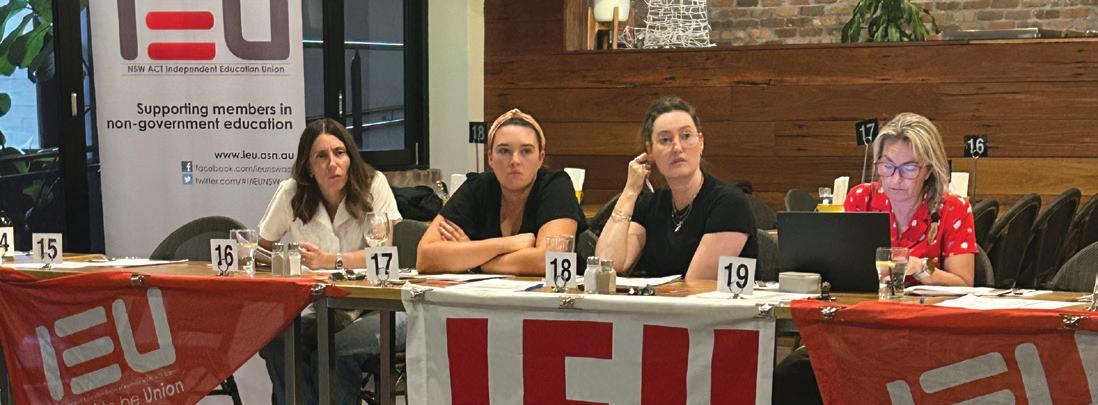
The Hunter Valley Sub Branch met on Awabakal Land on 1 December at
The sub branch meeting is a forum for members and reps to raise issues and concerns affecting them. We worked through our agenda and heard from various chapters about issues in their schools.
In the Catholic systemic sector, concerns were raised about funding allocations affecting learning support assistants leading to redeployments and pastoral care workers who are undergoing changes to contracts.
Maitland-Newcastle teachers and general employees voted strongly in favour of the new EAs that secure improved pay and conditions.
In independent schools, members are pursuing workload transparency, while members in Aspect schools expressed thanks to the union for the ongoing Respect@Aspect campaign for better pay for teacher aides.
Members reported on positive aspects about working at their school, and it was noted that many issues raised during our Term 3 meeting have been successfully resolved due to the ongoing work of the union, reps and members.
Raelene Maxworthy Organiser

Ku-ring-gai
The Ku-ring-gai Sub Branch covers Sydney’s north shore, including Hornsby, Wahroonga, Waitara, Warrawee, Thornleigh, Pymble, Turramurra, Berowra and Asquith.
The Ku-ring-gai Sub Branch met on 3 November at Hornsby RSL with Deputy Secretary David Towson and Organiser Charles Wheeler joined by teachers and support staff from schools in the area.
Our sub branch meetings are divided into two parts. In the first half members reported on issues in each of their schools – workload seemed to be a common theme. It was a great opportunity for members to network and identify commonalities and differences between their schools and sectors.
After a break for dinner and drinks, we came back to discuss broader union matters. Topics included: Seventh-day Adventist bargaining, the Day of Action rally in support of preschool teachers, Catholic Schools Broken Bay restructures, AIS workload transparency and NESA audits.
Charles Wheeler Organiser
Lansdowne
The Lansdowne Sub Branch covers Lakemba to Liverpool, including Bankstown, Fairfield and Auburn.
The Lansdowne Sub Branch met on 6 November at Fairfield RSL for its fourth and final gathering of the year. A record 21 reps attended the meeting, along with four IEU officials. Everyone was happy to welcome several reps attending their first sub branch meeting.
The conclusion of bargaining in Catholic systemic schools was the major topic of the meeting, with organisers reporting on gains in the new EA. There was also discussion among reps about improvements to be pursued in the next EA, particularly around release time.
Several reps from the independent schools sector discussed issues in their workplaces.
Key issues discussed included: concerns in independent schools regarding support staff pay and transparency of agreements excessive workloads for high school teachers, with insufficient role descriptions to address concerns
After the meeting, members enjoyed dinner with colleagues at an Italian restaurant. The first Lansdowne Sub Branch meeting in 2026 will be held in March. The IEU provides a meal following the meeting and new reps are warmly invited to join us.
Aidan Anderson Organiser
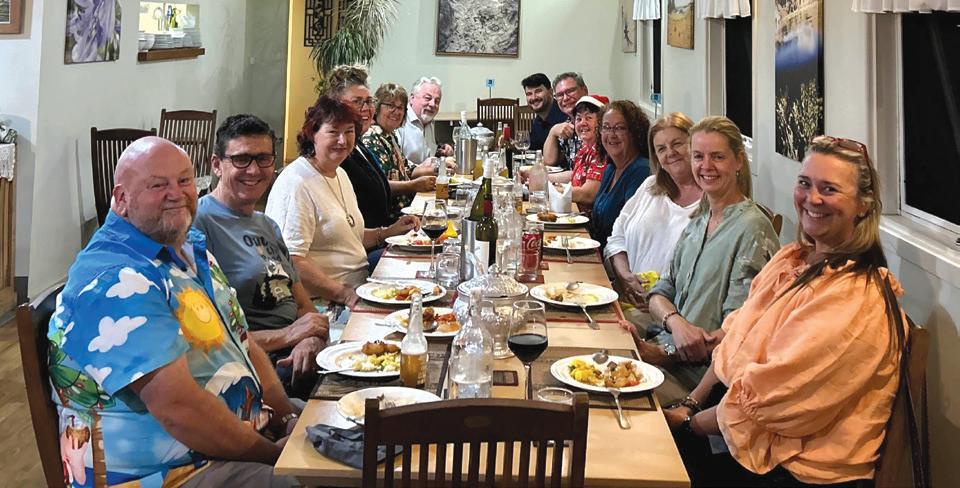
The Mid North Coast Sub Branch includes Coffs Harbour, Kempsey, Port Macquarie, Bellingen, Nambucca Heads and surrounds.
The final Mid North Coast Sub Branch meeting of the year was held at Nambucca RSL on 14 November.
Members reported ongoing challenges in the Catholic systemic sector, concerning staff wellbeing, student behaviour, workload and consultation. Concerns related to RFF changes, timetabling and escalating student issues are placing significant psychosocial pressure on staff.
Members emphasised the need for consistent processes, better communication from leadership and safer working environments.
IEU Deputy Secretary David Towson provided updates on the Catholic systemic EA, with the Fair Work Commission expected to finalise approval shortly. The agreement received overwhelming support, with back pay due from 1 July.
While members welcomed wins such as co-parenting and ceremonial leave, concerns remain about limited progress on support staff long service leave and ongoing workload pressures.
The Work Practices Agreement was also discussed, with the union highlighting workload, class sizes, meeting times and consultation as ongoing issues and areas for improvement.
In the independent schools sector, the union is pursuing clarity on teacher workload transparency statements.
IEU officers reported on the successful Day of Action in October, calling for pay rises for community preschool teachers, with a strong turnout in Lismore. Updates were also provided on PD audits, Aspect workload issues, grants, competitions and upcoming social events.
Members were enthusiastic about the support staff Christmas function in Port Macquarie, committing to promote the event with support staff in their school. Special acknowledgement was given to Tracy Bancroft and Vickye McKechnie for their efforts in driving this event, supported by IEU staff member Cassie Barnes.
The next sub branch meeting will be held at Nambucca RSL on 20 February 2026.
Sean
van der Heide Organiser
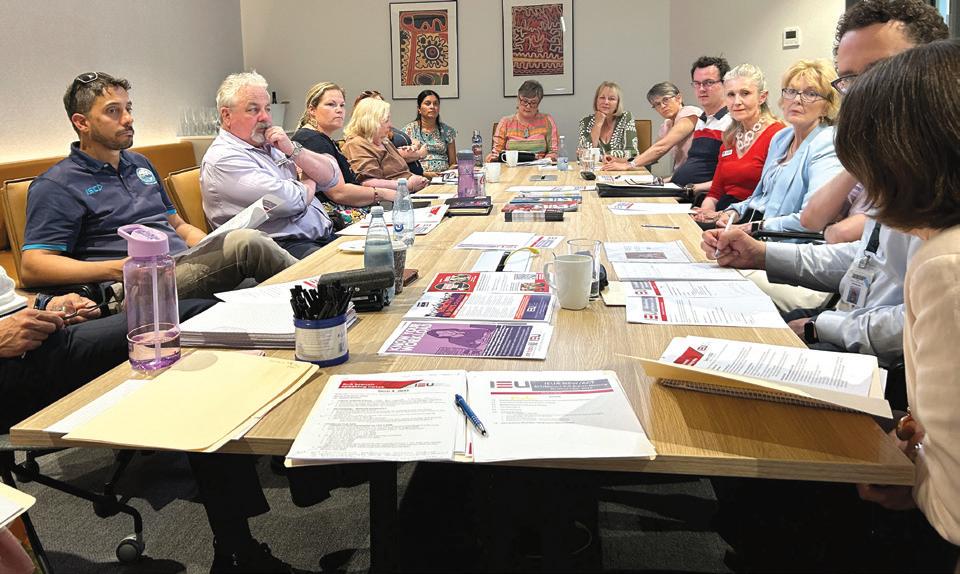
The Monaro Sub Branch covers Canberra and the ACT.
More than 25 members, IEU staff and guests attended the Monaro Sub Branch meeting and Christmas party on 20 November at the IEU’s Canberra office.
Issues discussed included staffrooms with inadequate heating and cooling, flexible work arrangements and a directive to primary school staff that phones and smartwatches must be put into lockers.
Schools have had mixed experiences with the Permit-to-Teach program, including reports of high numbers in some key learning areas, concerns about workload and burnout and missed release time.
Reps were presented with an update on the ACT Christian schools negotiations, which will soon recommence for Trinity and Emmaus, and Brindabella Christian College’s move to new owner Christian Community Ministries’ EA. Catholic systemic negotiations have concluded with an overwhelming ‘yes’ vote. The lower turnout in Canberra-Goulburn may have been due to pay rises already passed on.
Reps in AIS schools discussed workload transparency statements, which will provide the union with documentation to negotiate improved conditions or pursue breaches of the MEA. Some schools have failed to provide clear and sufficient statements.
We shared strategies on how to attract new members in 2026, including induction days, highlighting how members covered by the Catholic systemic EA can access superannuation cocontributions and sharing good news stories about union support.
The sub branch congratulated member Kate McDonald from St John the Apostle Primary School, who won morning tea for her colleagues in the IEU noticeboard competition.
Reps are actively promoting the annual 16 Days of Activism against Gender-Based Violence in their schools.
The next meeting will be held on 26 February 2026 at the IEU’s Canberra office.
The North Coast Sub Branch covers Lismore, Tweed Heads, Kingscliff, Pottsville, Murwillumbah, Mullumbimby, Kyogle, Ballina, Lismore, Casino, Coraki, Woodburn, Yamba and Maclean.
The North Coast sub branch meeting was held on 5 November at the IEU’s Lismore office.
Reps attended from Catholic systemic, Catholic independent, AIS and NSW Christian schools. The meeting welcomed two new reps from Casino Christian School.
Deputy Secretary David Towson and Organisers Sean van der Heide and Richard Ryan were also in attendance.
In the Catholic systemic sector, members discussed the impact of the so-called sustainability project on staff. Numerous temporary staff will not be re-engaged at the start of 2026, while a few permanent staff have been reallocated to other systemic schools in the region.
Assistant principals and other school executives face an increase in their face-to-face teaching load.
Schools have been told to load up classes to the maximum allowed in the WPA, and cut RFF for teachers to the minimum of two hours a week for a full-time load.
Members are concerned that workloads will increase because of cost cutting. Chapters will be vigilant about recording concerns so the union can push back if needed.
The Catholic independent sector reported no major issues, while in AIS schools some staff are encountering difficulties applying for flexible work arrangements.
NSW Christian schools reps are yet to see if salary increases will place financial pressures on schools. Reps in this sector acknowledged that member density is very low and will endeavour to increase it over the next six months.
The next meeting will be the AGM in Lismore on 18 February 2026.
Richard Ryan Organiser
The North West Sub Branch covers the New England region including Armidale, Tamworth, Gunnedah, Tenterfield, Inverell, Moree and Narrabri.
The following issues were discussed:
Independent schools: extra-curricular commitments – such as weekend sports and school performances — place uneven demands on staff.
Catholic systemic: some meetings labelled ‘projects’ but are essentially just meetings. An employer survey asked staff whether to keep the WPA cap or allow extra meetings; members chose to uphold the WPA conditions.
Employees voted strongly in support of the Catholic systemic EA in the Armidale Diocese, with backpay expected soon • AIS campaign: the union is seeking feedback about how schools are complying with the new workload transparency clause. It may be necessary to notify a dispute if schools do not provide the required information.
ECEC: new laws mean personal devices are not permitted to be used when supervising children, which includes taking photos.
Members also discussed the successful Day of Action rally in support of pay rises in community preschools and the Respect@ Aspect campaign for better pay and conditions for teacher aides in Aspect schools.
Teacher members were reminded that NESA will conduct random audits of PD logs from mid-April to mid-July next year.
The next sub branch meeting will be the AGM on 20 February 2026 at the Tamworth Hotel.
Sue McKay Organiser
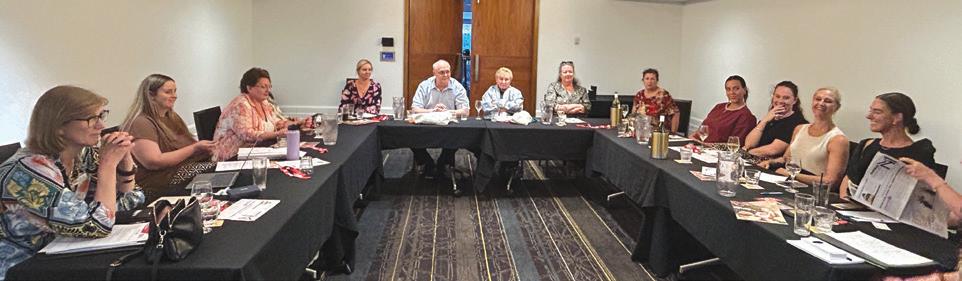
Northern Beaches
The Northern Beaches Sub Branch includes Manly, Dee Why, Collaroy, Narrabeen, Terrey Hills, Warriewood and surrounds.
The Northern Beaches Sub Branch met on 4 November at Dee Why RSL, which was buzzing with people after Melbourne Cup events earlier in the day. Despite the busy venue, our meeting had a warm and positive end-of-year atmosphere, giving members a chance to reconnect and reflect on the year’s key developments across our region.
We revisited the major changes that have shaped the Northern Beaches this year, including the closure of St Cecilia’s Catholic Primary School in Balgowlah, and discussed the ongoing impacts being felt across schools.
Members shared thoughtful updates on the AIS workload transparency clause and how it continues to play out in different workplaces.
These conversations, grounded in lived experience and collective purpose, highlighted the importance of staying connected and informed.
The sub branch is a collegial group of like-minded individuals, and we encourage all Northern Beaches reps and members to come along, contribute and stay engaged.
Our next meeting will be held at the same venue, Dee Why RSL, on 24 February 2026, and everyone is welcome.
Lee Cunningham Organiser
Northern Suburbs
The Northern Suburbs Sub Branch covers Artarmon, Chatswood, Cremorne, Gladesville, Gordon, Hunters Hill, Kirribilli, Lane Cove, Lindfield, Milsons Point, Mosman, North Sydney, Roseville, Ryde, St Ives, St Leonards, Willoughby and Woolwich.
It was great to see reps from a wide range of Northern Suburbs schools at our final sub branch meeting for the year on 5 November.
The discussion was conversational and collegial, with members sharing experiences from their workplaces.
We reviewed the current state of bargaining for a new MEA in Model A Catholic independent schools, noting ongoing concerns about pay and workload transparency and reflecting on member sentiment in that sector.
This led to a broader conversation about the factors that make campaigns effective, including lessons from the 2024-25 Now’s the Time campaign in AIS schools.
Recruitment is a key focus, particularly in engaging support staff and early career teachers in AIS schools. Members suggested strategies to boost membership, including more social events, given the success of events like the AGM dinner and the AIS reps’ cocktail evening in fostering connections.
We also discussed the persistent lack of workload transparency in many AIS schools and the need for reps to push for clear statements from employers before year’s end.
The meeting ended with dinner and friendly conversation.
Caroline Brehaut Sub Branch President
Penrith/Blue Mountains
The Penrith/Blue Mountains Sub Branch covers Penrith to Glenbrook, Katoomba and Blackheath.
The November Sub Branch meeting was held at Nepean Rowers Club and was followed by dinner to celebrate the end of the year.
Members were reminded about the upcoming 2026 elections for delegates to Council. It is hoped that all six positions will be filled in this round. CathWest Innovation College’s McCarthy Campus rep Dannielle Willoughby attended the October Council meeting as an observer, and members expressed gratitude for her participation.

Members in AIS schools reported that some schools are still failing to honour the new clause on workload transparency. IEU organisers are addressing this issue with employers on a school-by-school basis.
The Catholic systemic negotiations have concluded, with the EA agreed and strongly endorsed by employees.
Members remain disappointed that workload issues were not fully addressed in the new Work Practices Agreement and hope the next round of negotiations will deliver greater progress.
The meeting was pleased congratulate the chapter rep from Caroline Chisholm College in Glenmore Park on winning a Teachers Mutual Bank/IEU Environment Grant for their school.
We also moved a motion of thanks to Nicola Miller (chapter rep at Montgrove College in Orchard Hills) who has been a regular at sub branch meetings for many years. We wish her well in her new position and hope she may return as part of the committee for her new school.
Members were also reminded about keeping a log of PD in case you are audited by NESA.
Finally, I thanked attendees for their commitment to the IEU and participation in meetings and events this year. We look forward to a bigger and better 2026, working to improve the conditions of all our members.
Liz Heggart Sub Branch President Principals
The Principals meeting was held on 8 November at the IEU’s Ultimo office in Ultimo, chaired by Niamh Marzol.
Representatives from a wide range of dioceses provided updates, noting significant variation in system stability and support across regions. Key matters discussed included workload pressures, leadership turnover, wellbeing support and ongoing EA issues.
Several dioceses reported constructive engagement with new or acting directors, while others – particularly Bathurst and Parramatta – outlined serious concerns regarding HR practices, staffing instability and increasing compliance demands placed on principals.
A major focus of the meeting was the progress of the Principals’ EA negotiations, with members updated on salary proposals, parental leave improvements, workload considerations and variations across dioceses. Concerns around long service leave practices, especially in Bathurst, were highlighted alongside the union’s continuing advocacy and dispute processes. Updates were also provided on teachers’ and general employees’ EAs, Christian schools bargaining and sector-wide workload transparency campaigns.
The meeting also featured an address from Teachers Mutual Bank outlining services available to principals.
The next round of diocesan, sub branch and director meetings will continue through November, with the EA voting process scheduled for late November, depending on finalisation of the three pending draft agreements.
Lyn Caton Assistant Secretary Riverina
The Riverina Sub Branch covers Albury, Griffith, Hay, Leeton, Thurgoona, Wagga Wagga and West Wyalong.
The Riverina Sub Branch met on 21 November at the International Hotel in Wagga Wagga, with 14 members joining us for an engaging discussion.
Reps shared what has been happening in their schools, with common issues including RFF applied inconsistently, higher duties not recognised, and some schools making changes to start and finish times without genuine consultation.
Members raised questions about kindergarten transition programs for 2026, including student ratios and expectations around readiness, as well as ongoing challenges in securing release time for new educators.
Aspect staff highlighted pressure on support staff, including teacher aides asked to step into teaching roles without recognition.
We also touched on broader sector news. Members welcomed the strong ‘yes’ vote in the Catholic systemic EA. They also noted that some AIS schools are still not meeting transparency expectations around workload.
The preschool teachers’ Day of Action was well received and updates were shared on the IEU noticeboard competition (shout out to our rep Holly who put together a fantastic display!) and the 2025 Environment Grants, which showcased great projects across NSW and the ACT.
Our next meeting will be held on 20 February 2026 in Wagga Wagga, and we warmly invite reps and members to attend.
Tahlia Bruce Organiser
South Coast
The South Coast Sub Branch covers the Macarthur region, the Southern Highlands, Wollongong and the Illawarra region and the northern end of the Shoalhaven region.
The final South Coast Sub Branch meeting for 2025 was held at Wollongong Golf Club on 13 November. Members from
Catholic systemic, Catholic independent and AIS schools were represented.
Information was shared on the Catholic systemic schools EA, the push for AIS schools to provide workload transparency, the Aspect campaign for better pay and conditions for teacher aides, and the successful ECEC Day of Action.
Members from Catholic systemic schools raised issues including the Catholic Education Diocese of Wollongong (CEDoW) application process, staff being contracted to the diocese rather than to a school, PD expectations for part-time staff, and the rigidity of the workday affecting how part-time staff are paid.
Workload concerns were again discussed across all systems, along with worries about teachers leaving the profession. It was noted that this is contributing to teacher shortages, particularly in high schools.
On a positive note, after many years of campaigning by members, CEDoW has secured Fitness Passport for staff.
This was long-term IEU Organiser Tina Smith’s final Sub Branch meeting, and she was given a fitting send-off with speeches from outgoing IEU President Glenn Lowe and Assistant Secretary Lyn Caton. All present wished Tina a happy retirement and thanked her for her many years of service to South Coast members.
Sub branch meetings next year will be held at the IEU’s Wollongong office. Our first meeting of 2026, the AGM, will be on 25 February.
Emily Cranney Organiser
The South East Sub Branch covers Yass, Young, Broulee, Bega, Goulburn, Tumut, Pambula, Googong, Batehaven, Cooma, Queanbeyan and Batlow.
The South East Sub Branch met on 28 November at The Statesman Hotel in Canberra, with 16 reps in attendance.
Assistant Secretary Lyn Caton and Organiser Angela McDonald also attended, providing an opportunity to reflect on the year’s work.
Key issues raised included the use of MyClass for data analysis and ongoing concerns about duplicated work across platforms such as Compass, ESS and NCCD.
Members highlighted practical class sizes in rooms with insufficient space, associated safety risks and broader WHS matters. Significant discussion focused on psychosocial hazards and the impact on staff. Members also considered leadership
roles and reviews, including transitions in key positions for the coming year.
The Sub Branch thanked representatives retiring or moving on in 2026 and formally welcomed new representatives Jacinta, Rachel, and Kylie to their first meeting. We look forward to their continued engagement in 2026.
The next meeting will be held on 27 February 2026 at The Statesman Hotel in Canberra.
Margaret Findlay President
Southern Suburbs
The Southern Suburbs Sub Branch covers the St George area and the Sutherland Shire.
The Southern Suburbs Sub Branch held its final meeting of the year on 28 October at Tradies Gymea. Members farewelled longstanding Sub Branch President Gerard McMullen from De La Salle Catholic College, Caringbah, who will be embarking on the next chapter of his life outside teaching. His dry humour will be missed.
Members were pleased to note the strong vote in favour of the Catholic systemic EA.
It was noted that, under the AIS agreement, schools should publish calendars for 2026 and outline staff workload expectations, as required under clause 16.5 of the new AIS MEA. Members moving from temporary to permanent who have questions should contact their organiser.
Dorianne Dalley from Jack and Jill Preschool, Bexley, reported on the Day of Action rally for pay rises in community preschools held on 15 October.
IEU Deputy Secretary David Towson reminded members that the random NESA audit of professional learning has now come into effect. The union is keen to hear from anyone who has been asked to provide evidence of their professional learning over the past five years.
Finally, members celebrated Mount St Joseph Catholic College, Milperra, winning a 2025 Environment Grant.
The next meeting will be the AGM on 24 February 2026 at Tradies Gymea.
Josef Dabbs Organiser
Your union has been actively bargaining for better pay and conditions in the postsecondary sector throughout 2025.
Navitas Skilled Futures
The IEU has been bargaining with Navitas Skilled Future (NSF), the company that delivers many English migrant programs on behalf of the federal government.
Progress was slowed by uncertainty around government funding of migrant programs. Then in October, the government announced that it would roll over the existing contracts until the end of 2026.
In response, the IEU and NSF agreed to maintain the existing enterprise agreements (EAs), and for NSF to forward two pay rises to staff by way of a Memorandum of Understanding.
These pay rises will be 3% in 2025 (backdated to 1 July), and 2.5% in 2026 (from 1 July).
Negotiations for a new agreement to run from the start of 2027 will recommence in mid-2026.
Taylors College
Negotiations at Taylors College (which runs foundation and pathways programs for the University of Sydney) have been strained.
Taylors College (now owned by NSF) has sought to impose additional work requirements on teachers, particularly in relation to non-term time.
Members resisted these calls, prompting NSF to agree in-principle to a status quo agreement, with pay rises of 3% for both 2025 (backdated to 1 July) and 2026.
UOW College
The pathways college for the University of Wollongong finalised a new agreement in mid2025, with pay rises of 3% in 2025 (backdated to January), and 2.75% in both 2026 and 2027.
There is an inflation trigger for the latter years, so pay might increase as high as 3.5% if inflation exceeds an agreed rate.
WSU The College
Negotiations for a new agreement for staff at Western Sydney University’s pathways college began in October 2025 and are expected to conclude in the first half of 2026.
UTS College
UTS College runs academic English programs for prospective UTS students, and negotiations for a new teachers’ agreement began in
November, with the aim of concluding in the first half of 2026.
Other colleges Negotiations for a new agreement at UNSW College should begin in the next few months. The Fair Work Act includes provisions relating to “good faith bargaining”, under which an employer can be compelled to bargain when it can be demonstrated that a majority of employees (or section of employees, such as teachers) want that to happen.
Employees working under an EA must be better off overall than the underpinning award, so employees are always better off under an agreement. To find out how that might work at your college, contact the IEU.
Kendall Warren Organiser
As the 16 Days of Activism Against GenderBased Violence comes to an end, two recent developments highlight the power of collective action in tackling gender-based violence.
Afghan women return to international play
Forced to flee Afghanistan after the Taliban’s takeover, the Afghan women’s national football squad were among the desperate crowds at Kabul airport in the final days of the United States’ occupation in August 2021. The team arrived in Australia with nothing but the clothes on their backs.
With support from Football Australia and Melbourne Victory the team have continued training in exile. Their commitment paid off earlier this year when FIFA (football’s world governing body) granted them approval to compete internationally again. Human Rights Watch has called this a “human rights victory”.
The team made their comeback at the FIFA Unites Women’s Series in Morocco in October, with players competing under the name Afghan Women United. Many of the athletes describe stepping onto the pitch as an act of resistance.
Despite their return to international play, Afghan Women United is still not eligible to

compete in top-tier FIFA tournaments. Under FIFA’s rules, only national football federations can decide who represents their country. In this case, the Taliban-controlled Afghan Football Federation continues to block any women’s team – inside Afghanistan and abroad – from competing under the Afghan flag.
This restriction has already prevented the team from entering the qualifiers for the 2026
AFC Women’s Asian Cup, which was their sole pathway to the 2027 Women’s World Cup.
FIFA has acknowledged the dilemma and says it is exploring alternative avenues for the team to
participate within global governance rules, but no clear timeline has been set.
Despite these barriers, players remain determined and their message is clear: Afghan women have not been defeated. They are still playing, still resisting and still inspiring the world. One match at a time.
Towards safer work places for women Momentum continues for safer, fairer workplaces around the world with several countries recently ratifying ILO Convention 190 (C190) on violence and harassment in the world of work.
Colombia and Costa Rica are among the newest countries to ratify C190 and join a growing list of nations committing to eradicate gender-based violence.
The ratification follows similar steps taken in recent years by 50 countries including Mexico, Argentina, South Africa, Italy, Spain, the UK, Fiji, Albania and Greece. Global consensus that violence and harassment are unacceptable in any workplace is strengthening, with Latin America leading the way with the most ratifications of any region. Australia ratified the Convention in June 2023, with it coming into force in June 2024.
International conventions may at times appear symbolic, but C190 and its ratifications are important for women workers worldwide.
Ratifications affirm that safety, respect, and equality are not optional. They are fundamental rights.
The global union movement continues to push for universal ratification so that every woman in every workplace can be free from violence and harassment.
At Teachers Mutual Bank, we understand that you dedicate so much time to your students. Now it’s time to make your own goals a priority like owning your first home.
The Australian Government 5% Deposit Scheme is designed to help eligible Australians purchase their first home sooner, without needing a 20% deposit or paying Lenders Mortgage Insurance (LMI).
What is the scheme?
The Australian Government 5% Deposit Scheme makes home ownership more achievable by helping you buy sooner with a small deposit, supported by a government guarantee.
With no income caps, no waitlists and no Lenders Mortgage Insurance (LMI), the Scheme helps get you into your own home sooner! The Scheme helps prospective home buyers, with a minimum 5% deposit, or single parents with a minimum deposit of 2%.
There are unlimited places available under the Australian Government 5% Deposit Scheme from 1 October 2025. The Scheme is available through participating lenders, including Teachers Mutual Bank – a bank created to support people just like you.
Who can apply?
first home buyers with a minimum 5% deposit or single parent or legal guardian with a minimum 2% deposit.
To access the scheme, you need to meet these criteria:
Australian citizen or permanent resident, aged 18 or over have saved a minimum deposit of 5%
be a first home buyer, or have not owned a property or land in Australia in the past 10 years
• buying a home in Australia priced at or below the location’s price cap plan to live in the home as an owner-occupier.
Secretary
Carol Matthews Eora Nation
Deputy Secretary
David Towson Eora Nation
Assistant Secretary Lyn Caton Dharug Nation
Assistant Secretary
* regional centres in NSW – Illawarra, Newcastle and Lake Macquarie
Ready for the next step? Teachers Mutual Bank will help you from here.
Find out more here: tmbank.com.au


Do you put superannuation in the “too hard basket?” Maybe it’s something you know is happening in the background of your life, but you don’t pay a lot of attention to it. However, super is your savings and can ultimately shape your future. Taking a few simple steps now to manage your super could help you build the future you want.
At NGS, we want to breakdown misconceptions that super is ‘complicated’ or ‘confusing’. Super should be straightforward and something that you can get excited about. Starting with these five easy steps, you can get your super on track.
1. Online access
Check your balance by logging into Member Online. While you’re there, you can review your personal details and make sure they are up to date.
2. Consolidate your super Consolidating your super into one account can set your super up for success. Be sure to check your insurance cover before consolidating so you don’t lose any benefits.
3. Check your insurances
Most members have default Death cover, Total and Permanent Disablement (TPD) cover and Income Protection cover. We can help you with your cover and see if you are eligible for NGS Insurance Select or Plus. Find out more about your insurance.
4. Update your beneficiaries
You’ll need to tell us who you would like your super and any insurance benefit paid to in the event of your death. You can do that by making a binding or a non-binding beneficiary nomination.
5. Review your investments
You can’t control the ups and downs of the investment market, but you can control how you invest your super. Talk to us about investment choices and determine which strategy is best for you.
Learn how to ace your super Join our practical session, “Top of the Class –Learn How to Ace Your Super”, where NGS Super
Specialist Brett Hawkins shares simple ways to take control of your financial future.
Super that’s built for what matters
For more than 35 years, NGS Super has partnered with the IEU to help educators build confident futures through: strong performance – solid FY25 returns • competitive fees – more of your money stays invested award-winning service – expert support when you need it.
We’re here to help It’s also a good idea to book a free chat with an NGS Super Specialist. Our Super Specialists are here to help. They can answer your questions about superannuation and clear up any questions you may have. Book your free chat with a Super Specialist.
Help others make super simple too Print this easy five-step checklist and pass it on to a friend, family member or co-worker and help them to manage their super in a simple way.
Disclaimer
This information is general information only and does not take into account your objectives, financial situation or needs. Before acting on this information, or making an investment decision, consider whether it is appropriate to you and read our Product Disclosure Statements and Target Market Determinations. You should also consider obtaining financial, taxation and/ or legal advice tailored to your personal circumstances before making a decision. Financial products are issued by NGS Super Pty Ltd ABN 46 003 491 487 AFSL 233 154.
Amanda Hioe Eora Nation
President
Suzanne Penson
MacKillop College, Port Macquarie Birpai Nation
Deputy President Vacant
Vice President
Catholic Systemic Dioceses
Liz Heggart
Penola Catholic College, Emu Plains Dharug Nation
Vice President Independent Schools and Educational Institutions
Helen Templeton
St Scholastica’s College, Glebe Eora Nation
Vice President Support and Professional Staff
Nicole Downey
St Mary’s Catholic Primary School, Orange Wiradjuri Nation
Vice President
Early Childhood Education and Care Vacant
Vice President ACT
David Caton
Daramalan College, Dickson Ngunnawal People
Financial Officer
Denise McHugh
NESA Liaison Officer
Kamilaroi Nation
Financial Officer
Vacant
General Executive Members
Caroline Brehaut Redlands, Cremorne Cammeraygal People
Sarah Gardiner
Catherine McAuley Catholic College, Medowie Worimi Nation
Amy Kermode
Mount St Joseph Catholic College, Milperra Eora Nation
Michelle Mella Presbyterian Ladies’ College, Croydon Eora Nation
Peter Moore
Our Lady of Mercy College, Burraneer Tharawal Nation
Christine Wilkinson St Joseph’s Catholic College, East Gosford Darkinjung Nation
Amanda Wood St Patrick’s Primary School, Wallsend Awabakal Nation
3 vacancies

Sydney: 485-501 Wattle Street, Ultimo NSW 2007 P 8202 8900
Parramatta: Level 2, 18-20 Ross Street, Parramatta NSW 2150 P 8202 8900
Newcastle: 8-14 Telford Street, Newcastle East NSW 2302 P 4926 9400
Wollongong: 1 Lowden Square, Wollongong NSW 2500 P 8202 8900
Lismore: Unit 4, Lismore Professional Centre, 103-105 Molesworth Street, Lismore NSW 2480 P 6623 4700
Canberra:

Author: Iain MacGregor
Publisher: Hachette
A vivid account of one of history’s most significant events: the approval, construction and fateful decision to drop the atomic bomb – based on new research and interviews, timed to coincide with the 80th anniversary of the Hiroshima attack.
The Hiroshima Men includes Japanese perspectives to complete author Iain MacGregor’s nuanced, deeply human account of the bombing’s meaning and aftermath.

Author: Trent Dalton
Publisher: Harper Collins
Noah Cork has just published the scoop of a lifetime: a whitehot true-crime book about the cold-blooded killer who slipped an unfolding murder mystery into his mailbox.
But if this is his moment of triumph, then why is the tin roof being ripped from the walls of his reality? Why are skeletons standing upright in his closet? Why do people want to run him over in the street?
Dark, gritty, hilarious and unexpected, Gravity Let Me Go is Trent Dalton’s deeply personal exploration of marriage and ambition, truth-telling and truth-omitting, self-deception and self-preservation.

Author: Richard Osman
Publisher: Penguin Random House
The unmissable new mystery in the bestselling, record-breaking Thursday Murder Club series.
Who’s got time to think about murder when there’s a wedding to plan?
But when Elizabeth meets a wedding guest who fears for their life, the thrill of the chase is ignited once again. A villain wants access to an uncrackable code and will stop at nothing to get it. Plunged back into their most explosive investigation yet, can the gang solve the puzzle and a murder in time?
To go in the draw, email entries to giveaways@ieu.asn.au with the title of the book you would like to receive in the subject line. Write your name, membership number and postal address in the body of your email. All entries must be received by Monday 2 February 2026.