San Bernardino Council Receives Navigation Center Update; City With 40% of County Homeless Faces Dec. 31 Deadline
By Manny Sandoval
ASan Bernardino County Library, First 5 Expand “1000 Books Before Kinder” to Boost Early Literacy Countywide HPV Testing Via Easy Self-Collection Now Available to Patients at Planned Parenthood
t a special San Bernardino City Council meeting on Jan. 15, Deputy Director of Housing & Homelessness Cassandra Searcy walked councilmembers through what she called the city’s “current homeless landscape,” then outlined next steps for the 200-bed SB HOPE Campus Navigation Center and a slate of city-funded initiatives intended to move people from street outreach to interim shelter and, ultimately, housing.
“Not to sound redundant, but our city does continue to have the highest concentration of homeless people in the county,” Searcy said. “We have nearly 40% of the county’s homeless that reside in our streets.”
Searcy cited the 2025 point-in-time count showing 1,535 unhoused people in San Bernardino, up from 1,417 in 2024 — an 8% increase — but warned the tally does not reflect what staff and residents see daily. “You can drive around the street and see that that number is not accurate,” she said. “Experts will tell you you should
By Manny Sandoval
Alejandro Gutierrez Chavez opened a San Bernardino County town hall on the creative economy with a challenge: treat arts and culture as essential infrastructure — and match celebration with responsibility.
“As artists, culture bearers, educators, and community partners that are here
probably take your point in time count number and double, if not triple it if you want a more accurate reflection.”
The point-in-time count still matters, Searcy told the council, because it is tied to funding and compliance. “It’s something that is required with our federal funds, some of our state funds, and it serves an overall purpose,” she said, adding that the city uses the number to apply for grants and for auditing.
Navigation Center, Cont. on next pg.
today, we have a shared responsibility not to acknowledge it, but to work for accountability and support Indigenous sovereignty and uplifting Native voices, artists and culture bearers,” said Gutierrez Chavez, executive director of Arts Connection, the Arts Council of San Bernardino County.
The “Creative Economies in Action: Statewide Engagement Tour” stop was
held Wednesday, Jan. 7, at the West End Educational Service Center in Rancho Cucamonga, bringing together the California Arts Council and California for the Arts with local partners including Arts Connection, the San Bernardino County Superintendent of Schools and the Inland Empire Community Foundation.
Gutierrez Chavez told the room that creativity is not confined to galleries or Creative Townhall, cont. next pg.
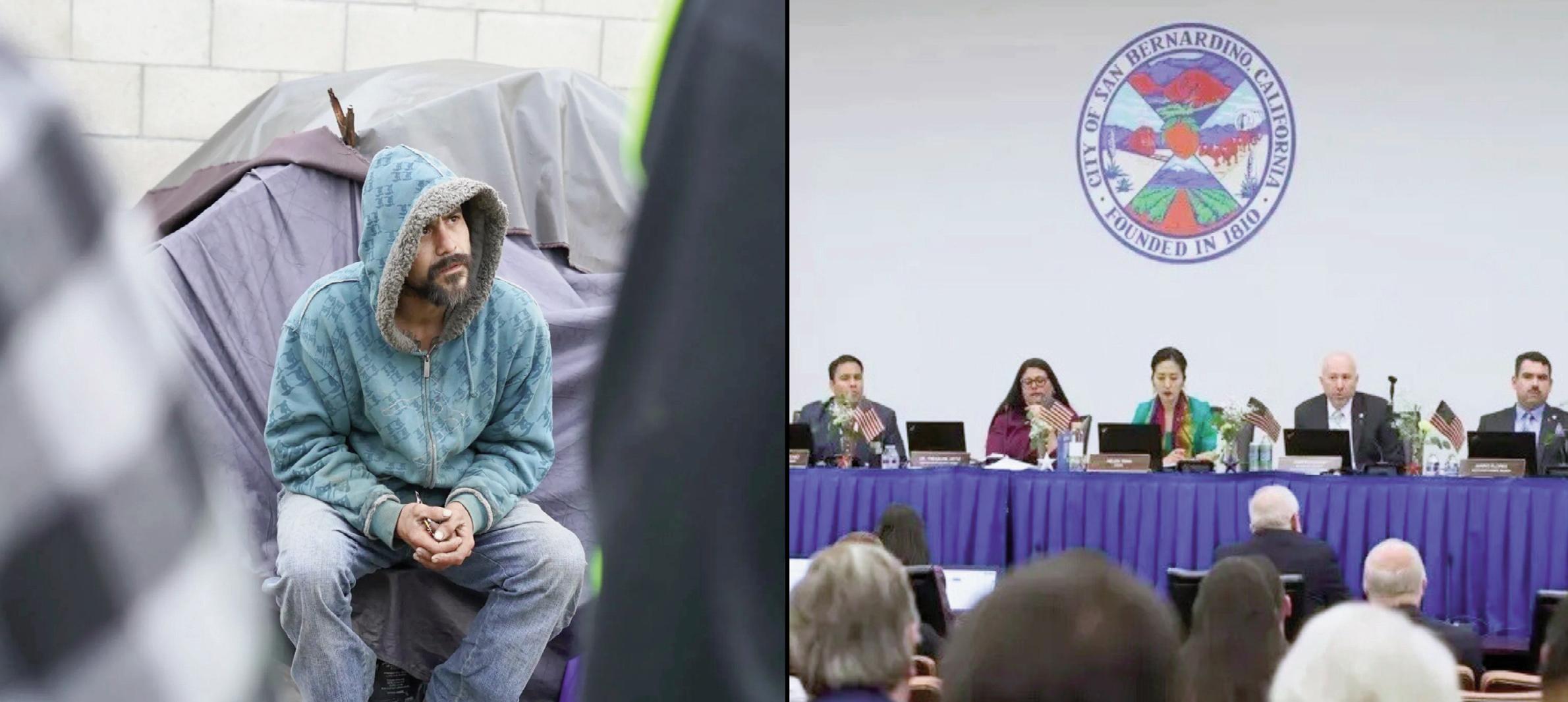
PHOTOS MANNY SANDOVAL (Left) An unsheltered man sits beside a tent during San Bernardino County’s point-in-time count; (right) the San Bernardino City Council meets Jan. 15 to review plans and costs for the 200-bed SB HOPE Campus Navigation Center.
PHOTO MANNY SANDOVAL
From Left: Inland Empire Labor Institute’s Executive Director Esmeralda Velazquez and Daisy Lopez listen to economic ideas for the arts.
PHOTO MANNY SANDOVAL
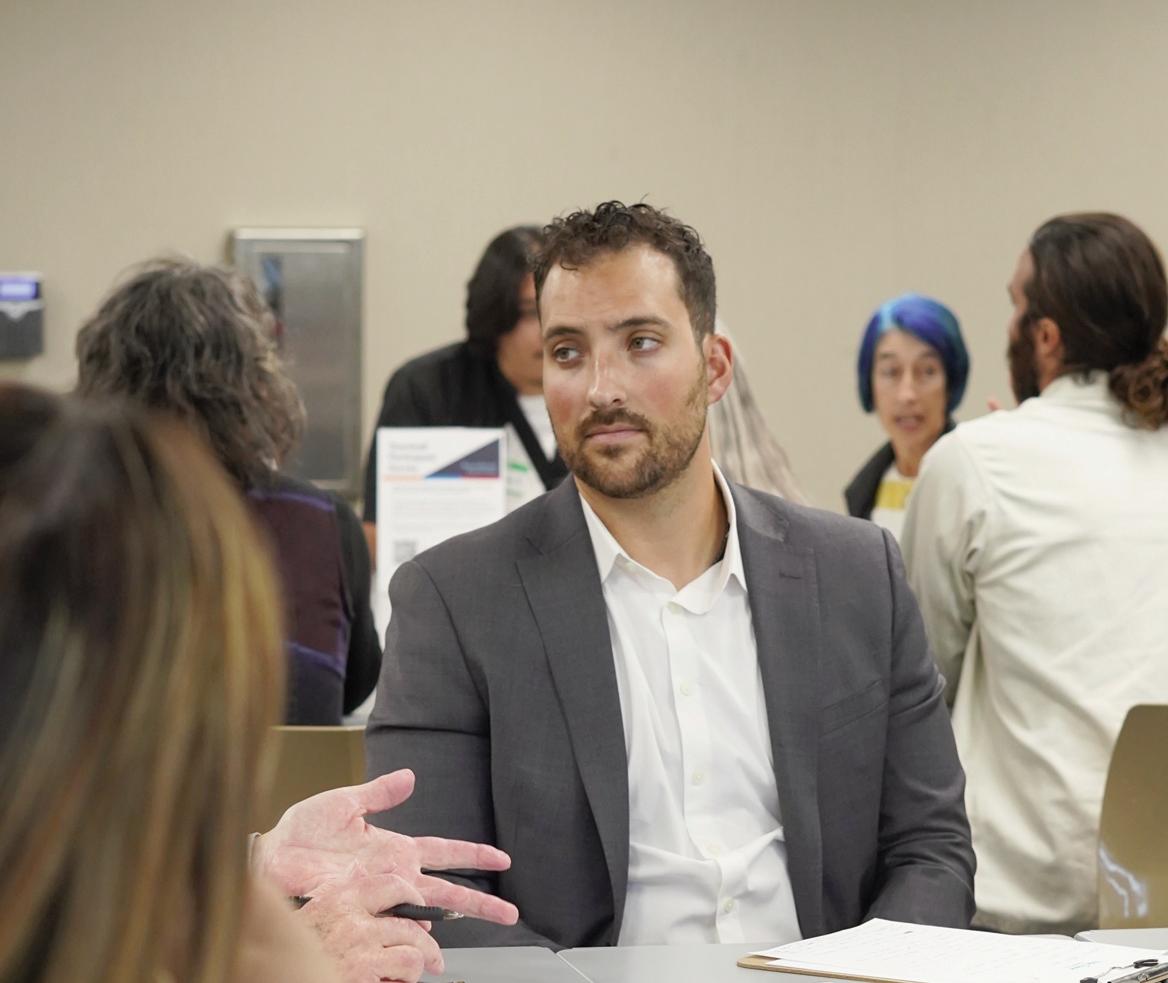
Alejandro Gutierrez Chavez, executive director of Arts Connection, listens as attendees share feedback during a breakout discussion at the Creative Economies in Action town hall.
Navigation Center (cont.)
- Searcy’s presentation described a response pipeline that begins with outreach and encampment resolution, relies heavily on interim stabilization — including a motel voucher program — and aims to feed into navigation centers and housing programs.
Councilmembers broadly praised the scope of the update but pressed staff on sustainability — particularly as San Bernardino moves toward operating a 200-bed navigation center while still trying to reduce the city’s street population.
Councilwoman Kim Knaus said she wanted clarity because the city is “too far in” to reverse course on a major investment.
“We came to this major decision of investing quite a bit of money into a 200 bed Homeless Navigation center,” she said.
“We’re too far in. We’re not turning back or changing any plans, that’s for sure.”
Knaus said she compared San Bernardino to Riverside — another county seat — and said Riverside’s recent point-in-time count was 614 while San Bernardino’s is more than 1,500. She acknowledged the city has expanded bed capacity but said the upward trend demands a clearer financial plan.
“In order for me to really make the best decision for us to move forward appropriately and think about the sustainability of this navigation center, what I need to understand is our true sustainability capacity,” she said.
The questions turned pointed when Knaus challenged cost assumptions and how the city would treat “regional partners” if other jurisdictions are expected to rely on SB HOPE Campus beds. “If that’s the actual cost to actually service an individual that comes into our navigation center, why aren’t we imparting that cost on the other partners that are being a part of the regional approach?” she asked.
As staff tried to reconcile slideto-slide differences, the exchange tightened. “I think a lot of numbers are in this presentation,” City Manager Eric Levitt said, describing the $53,000per-bed figure as an estimate and calling the “regional” figures exploratory. “If you want us to explore it more… we could come back with this with exactly what’s going to occur,” he said.
Knaus said the confusion itself underscored her larger concern: the city must understand not only the operator’s cost, but what it will take for the city to oversee and manage the property. “That doesn’t really reflect the true cost to our city,” she said, adding that even with an operator in place, “it’s just not a
hands-off approach.”
Searcy said the estimate she was describing reflected the operator’s costs, not day-to-day city staffing, and emphasized the city is not positioning itself as the operator. “We’re going to provide oversight, but we’re not going to operate this facility,” she said. “We’re going to allow the operator to do the day to day oversight.”
Levitt told Knaus staff could return with clearer detail on which oversight and property-management duties would fall to the operator and which would remain the city’s responsibility.
“We can come back with whether that property management is in the operator’s contract,” he said, adding that staff would include it in the broader evaluation councilmembers requested.
Councilwoman Dr. Treasure Ortiz framed the sustainability debate as part of a wider funding squeeze. When asked about the $1.4 million allocated over three years for key outreach points and what happens when those funds sunset, Ortiz said the city is already watching state and federal shifts closely.
“Everybody is kind of at a nervous point right now,” she said, pointing to cuts and uncertainty that are affecting cities and the county. “We’re constantly on the lookout,” she added, saying the city is monitoring grants and opportunities and “if it applies in any kind of way, we’re going to go after it.”
Ortiz also raised the political and operational reality that a limited number of organizations have the capacity to move quickly. “We didn’t want the optics of the community saying wow, you guys are awarding everything to the Salvation Army,” she said. “But they are one of the few organizations that have the means and the ability to get the job done.”
Councilwoman Sandra Ibarra, while commending the report, cautioned against simplistic expectations that building beds will clear the streets. “It is not illegal to be homeless in the state of California,” she said, adding that “a lot of people don’t want to be housed,” and that people must choose shelter and services for outcomes to change. She also argued the burden should not rest on one city. “Homelessness is not just a one city, one region problem. It’s everywhere,” she said. “In my ideal world, every city should have at least one shelter.”
Ibarra said she has seen evidence — including a past conversation with elected officials — that some jurisdictions push the problem elsewhere. She described officials “bragging” to her that they buy one-way tickets for people experiencing
homelessness and said the bus route ended in San Bernardino. “Their jaws dropped,” she said, when she told them San Bernardino should bill their cities “a hundred thousand per year per person that you bring into our city.”
Councilmembers also debated enforcement, quality-of-life complaints and jurisdictional limits. Ortiz said residents ask why behaviors visible on the streets persist even as services expand, listing conduct that is illegal regardless of housing status. “Where’s the accountability?” she asked. Levitt responded that police enforce laws but face limitations in certain areas — including Caltrans land — where proactive enforcement is restricted. “Caltrans will not allow them to be proactive on Caltrans land,” he said.
Councilman Theodore Sanchez said the city has increased enforcement over the past two years and argued that homelessness is not a legal shield. “Being homeless does not give you a pass or provides you with immunity from breaking the law,” he said, crediting city attorney agreements and police leadership for improved quality-of-life enforcement.
Sanchez pivoted the discussion back to the project’s funding and timeline, warning the navigation center cannot slip if the city wants to meet the deadline.
“There needs to be a certificate of occupancy by December 31st of 2026,” he said, urging staff to press negotiations with the county and identify how to close remaining gaps. He framed the shortfall as broader than the number on a slide, citing the county contribution the city is seeking and the remaining amount still not covered. Levitt said the city may need to use reserves to keep the project moving while it pursues outside dollars. “My anticipation all along has been… that we would use reserves to fill it while we try to find a way to then backfill those reserves,” he said, arguing that waiting to resolve every funding question before awarding contracts could jeopardize completion.
Mayor Helen Tran asked if the city has sought state or federal partners beyond the county. Levitt said not directly, but said earmarks could be explored.
Tran also asked San Bernardino Police Chief Darren Goodman to clarify the difference between the city’s COAST team and the PEACE Team. “The COAST team doesn’t make arrests,” Goodman said, describing COAST as a multidisciplinary stabilization response for people suffering from mental illness, while the PEACE Team also focuses on enforcement.
Read the full story at IECN.com.
Creative Townhall (cont.)
- stages in the Inland Empire, but shows up “in the classrooms, our neighborhoods, our public spaces like parks, trails, bus benches, and small businesses,” woven into how the region understands itself. At the same time, he described the daily strain he sees among artists and cultural workers who keep creating while working long hours in an economy shaped by logistics and warehousing.
“I work with artists and culture barriers every day and I see them juggling multiple jobs, working from nine to five, working late nights, whether it’s in the most dominant industries such as the warehouse industry, logistics industries,” he said. “And they still make time for their creative careers because they know the value that their work has for our communities.”
From there, state leaders positioned the gathering as part of a broader push to convert that local reality into statewide policy and investment — with a plan they said is meant to drive concrete outcomes, not sit on a shelf.
Rebecca Ratzkin, equity measures and evaluation manager at the California Arts Council, told attendees the strategic plan was not optional.
“So doing this plan actually wasn’t a choice,” Ratzkin said. “It was legislatively mandated.”
Ratzkin said lawmakers funded the California Arts Council to assemble a Creative Economy workgroup “made up of experts from across different sectors of the creative economies and across the entire state,” and required the agency to produce a strategic plan based on that cross-sector work.
She laid out the plan’s goals as a mix of economic development and equity commitments: “To attract Creative Economy business, retain talent within the state,” she said, adding, “So attraction, retention, growth.” The plan also focuses on “sustaining, developing marketable content that can be exported for national and international consumption,” which she described as a strategy “to actually generate revenue.”
Ratzkin added that the plan is also designed to ensure participation and benefits extend to communities historically left out of state investment. The goals include “to make sure that we’re reaching marginalized communities, that we’re living up to our race, equity promise as a state, and to incorporate the diversity of the multiple perspectives of communities across the state.”
Ratzkin described the plan’s development as a phased process. Phase one, she said, built the framework — including establishing the workgroup
and partnering with Institute for the Future, a nonprofit consultant, to guide the work through a “foresight, insight and action” methodology.
She said background research and statewide listening fed into workgroup meetings in 2024, and that the state moved into generating and consolidating action ideas in 2025 — ultimately submitting the report with the governor’s approval in summer 2025.
The plan’s “North Star,” Ratzkin said, is to “lead an inclusive and resilient creative economy that empowers artists, cultural workers and entrepreneurs to drive culture, creativity and innovation.”
She said the plan treats the creative economy as an ecosystem — the people who create, the institutions that support them, and the places where culture is produced and experienced. She also highlighted five “future forces” shaping that ecosystem: mental health and belonging; access to capital and risk taking; technology and tradition; climate impacts; and affordability and livability.
Ratzkin summarized six overarching goals the plan organizes its strategies around: preparing and supporting the workforce; stabilizing and growing creative economy businesses; increasing statewide revenue through cultural identity and tourism; leveraging state opportunities for local cultural and creative development; defining and tracking ROI — which she said includes “return on investment,” “return on imagination,” and “return on innovation”; and developing capacity and infrastructure at both the state and local levels.
As she connected the framework to San Bernardino County, Ratzkin pointed to recent funding that flowed into the region through state programs administered locally.
“Arts Connection was one of the creative core administering organizations,” she said, adding that through that program “they were able to… put in over $4 million in the creative sector here between 2022 and 2024.”
She said the town hall series is part of phase two — an engagement push meant to capture what communities say is missing and what they need to implement the plan. Phase three, she said, is expected to focus on implementation and evaluation, aligned with the state’s fiscal calendar.
The statewide effort arrives with an explicit economic framing from state officials: the California Arts Council has said the plan is designed to strengthen California’s $288 billion creative sectors and support more than 820,000 creative workers statewide.
Full story at IECN.com.
Op-Ed
There Is No Middle Ground When Our Communities Are Under Attack
PHOTO MANNY SANDOVAL
San Bernardino County Library, First 5 Expand “1000
Books Before Kinder” to Boost Early Literacy Countywide
Community News
For many years, the San Bernardino County Library and First 5 San Bernardino have worked together to champion early literacy, and this enduring partnership continues with the expansion of the celebrated “1000 Books Before Kindergarten” initiative — an early literacy program designed to inspire parents and caregivers to read aloud to their children and prepare young learners for lifelong academic success.
The “1000 Books Before Kindergarten” program supports families in building reading habits from the earliest years of life. By engaging in daily reading, families not only strengthen early literacy skills, but build meaningful connections that help prepare children for kindergarten and beyond. The program is free and accessible at all San Bernardino County Library branches.
As part of the countywide Vision2Read initiative, the County Library continues its mission to improve literacy and expand access to high-quality learning opportunities for families across the region.
Vision2Read emphasizes the importance of early reading habits and supports programs that help children build the six essential early literacy skills:
ters at every chance you get and tell your child the name and sound. See if they can repeat it back to you.
Phonological awareness: Rhyming is a wonderful way to introduce phonics and word sounds to your child. Singing is a fun way to introduce rhyming as well.
Through this initiative, programs like “1000 Books Before Kindergarten” play a vital role in preparing young learners for academic success while fostering a culture of reading throughout San Bernardino County.
Through this collaboration, participating families will enjoy:
Free registration at any library branch.
A dedicated reading log system, both physical and digital, to track progress.
Milestone incentives to celebrate achievements along the way.
Access to early learning resources provided by First 5 SB. Family-friendly programs, storytimes and hands-on early literacy activities.
By Javier Hernandez, Executive Director, Inland Coalition for Immigrant Justice
There are moments in history when people are forced to choose a side, when the stakes are too high, the violence too severe, and the truth too urgent for anyone to stand in the middle. Today, as immigrants across the Inland Empire face unprecedented attacks, we have reached one of those moments. And let me be absolutely clear: when it comes to growing authoritarianism and the humanity of immigrants, there is no middle ground.
For decades, immigrants in Riverside and San Bernardino counties have endured abuse, harassment, and violence at the hands of government agencies and local law enforcement. Our region has been a testing ground for some of the most aggressive and dehumanizing tactics used anywhere in California. But what we are witnessing now, the escalation and normalization of violence, demands a new level of political courage.
Families have been shot at by federal agents in broad daylight. Workers have been chased into medical clinics. Children have watched their parents detained in parking lots and grocery store aisles. Cars have been rammed, homes surveilled, and entire neighborhoods terrorized by federal agencies acting with impunity. These are not isolated incidents. This is a pattern. A sys-
tem. A growing authoritarian impulse that sees immigrants not as people, but as targets.
Authoritarianism doesn’t always arrive in uniforms or tanks; it arrives through normalized cruelty, unchecked power, and silence from those who know better. Authoritarianism thrives in silence. It thrives in hesitation. And it thrives when leaders are more afraid of political backlash than they are of the suffering of their own constituents.
Yet too many leaders in both major parties continue to search for a so-called “middle ground,” remaining silent or speaking softly about injustice to avoid controversy, calculating political risks rather than confronting reality.
At the Inland Coalition for Immigrant Justice, we refuse to stand in the middle. Our movement was built on resistance, on exposing the realities of this inhumanity and confronting the machinery of violence that has taken hold in our communities. We will continue to shine a light on the abuse that has been ignored, the trauma that has been hidden, and the bipartisan political cowardice that has allowed this harm to continue. Our work is about truth and accountability. It is about honoring the stories of families who have been harmed and refusing to let their pain be erased by political convenience.
In Riverside and San Bernardino counties, our history is filled with both cruelty and
courage. For every raid, every wrongful arrest, and every act of state violence, there have been organizers, families, and advocates who fought back and who refused to be silent and demanded dignity. That legacy continues today.
ICIJ confronts authoritarianism every day. Through our immigrant defense hotline, legal support, rapid response teams, community workshops, and advocacy, we stand with immigrants not only in moments of crisis, but in the long, exhausting struggle for recognition and respect.
But the fight ahead requires more from all of us. It requires clarity. It requires resolve. It requires choosing the side of humanity… even when it is uncomfortable, unpopular, or politically risky.
There is no middle ground. Not when families are being hunted. Not when children are being traumatized. Not when government agencies operate like a domestic secret police force, with the support of California legislators.
This is the moment we are in. We cannot pretend otherwise.
To every elected official, every organization, and every community leader, the days of silence, neutrality, and half-measures are over. The line has been drawn. And history will remember where we stood when immigrant families in the Inland Empire needed us most.
Vocabulary building: Reading regularly expands your child’s vocabulary by introducing words that may not come in everyday conversations.
Print motivation: Having access to plenty of books as well as modeling an enjoyment of reading helps keep a young child excited about reading.
Print awareness: Words are everywhere, take the time to point them out to your child!
Narrative skills: Ask questions before, during and after reading to help build comprehension. Make up stories with your child to also build these skills.
Letter knowledge: Point out let-
Families can sign up today by visiting any one of the 32 County Library branches. Upon registering, each child receives a reading log and a welcome gift. As books are read and milestones are met, participants earn additional rewards to encourage continued progress toward the 1000-book goal.
For more information about the San Bernardino County Library system, visit library.sbcounty.gov, call 909387-2220 or follow us on Facebook or Instagram.
The San Bernardino County Library system is a dynamic network of 32 branch libraries that serve a diverse population over a vast geographic area. The County Library strives to provide equal access to information, technology, events and services for all people who call San Bernardino County home.
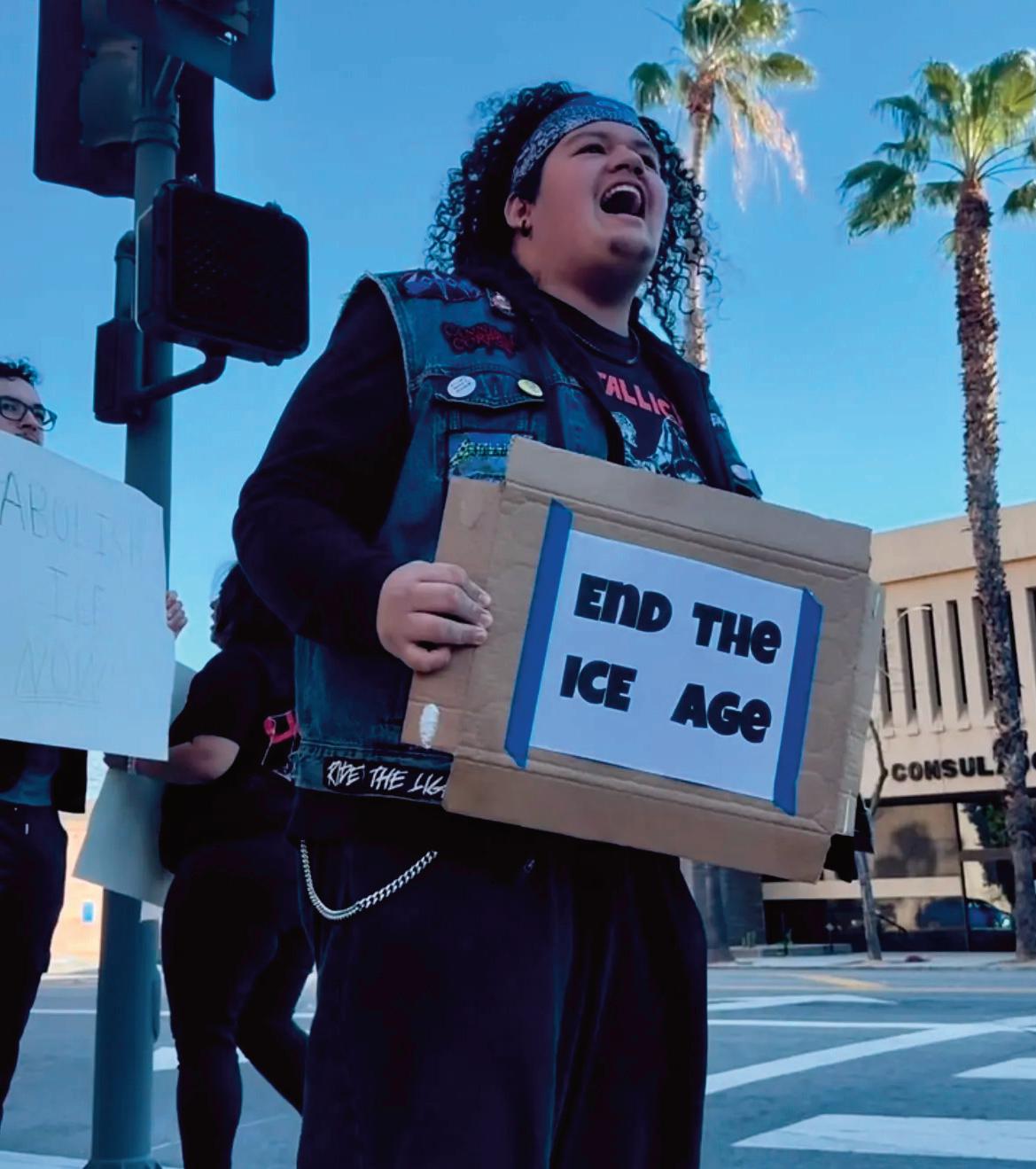
An ICE Out for Good Rally in San Bernardino on Jan. 10th, 2026 pulled resident Benjamin Lopez Lobos to the streets to protest.
Weekend Guide: Five Upscale Vegas Experiences That Deliver Value for Inland Travelers in 2026
By Manny Sandoval
Las Vegas is in a strange moment: still packed with spectacle, but facing a very real tourism slump that has pushed hotels and attractions to compete harder for visitors. Las Vegas Convention and Visitors Authority data shows visitation trended down through 2025, and local reporting has put the year’s decline at about 7% compared with 2024.
For Inland Empire residents, that softness can translate into something practical: more deals, more elbow room, and a “do it big without doing it reckless” kind of weekend — especially when you keep the trip tight, pick one or two splurges, and build the rest around experiences that feel premium without forcing a premium budget.
And the Inland Empire-to-Vegas pipeline is still real. The Las Vegas Convention and Visitors Authority’s 2024 visitor profile found that a sizable share of Las Vegas visitors live in Southern California (including large numbers who arrive by ground transportation), underscoring how much the region fuels Las Vegas weekends.
Here are five experiences that made my New Year 2026 trip feel upscale, fun, and still surprisingly budget-conscious — built for couples and families (with a few age notes where they matter).
1) Stay “on the Strip” without feeling swallowed by it: W Las Vegas at Mandalay Bay
A smart Vegas weekend starts with a hotel that actually helps you recover, and W Las Vegas is built for that. It’s an all-suite, smoke-free property, which made the stay noticeably quieter and cleaner-feeling than much of the Strip — especially at night.
Our suite also made the “attainable luxury” idea feel real. Even the standard rooms start at about 725 square feet, and ours had floor-to-ceiling windows that made the Strip feel present without making the room feel chaotic. The layout included one full bathroom plus a separate half bath, a small detail that mattered more than expected when getting ready to go out and winding down afterward.
When we wanted a rooftop-view moment without turning it into a big spend, we went to Skyfall on the 64th floor — an easy, elevated stop that didn’t come with a cover charge or a minimum spend, which is exactly the kind of “Vegas” experience that
still fits a budget-conscious trip.
Best for: couples who want calm with access, families who want space and a quieter end of the Strip Budget move: use Skyfall as your one rooftop-view stop—one drink, the view, then keep the night moving.
2) The Mob Museum: the most “worth the ticket” deep-dive downtown — with a smart discount window
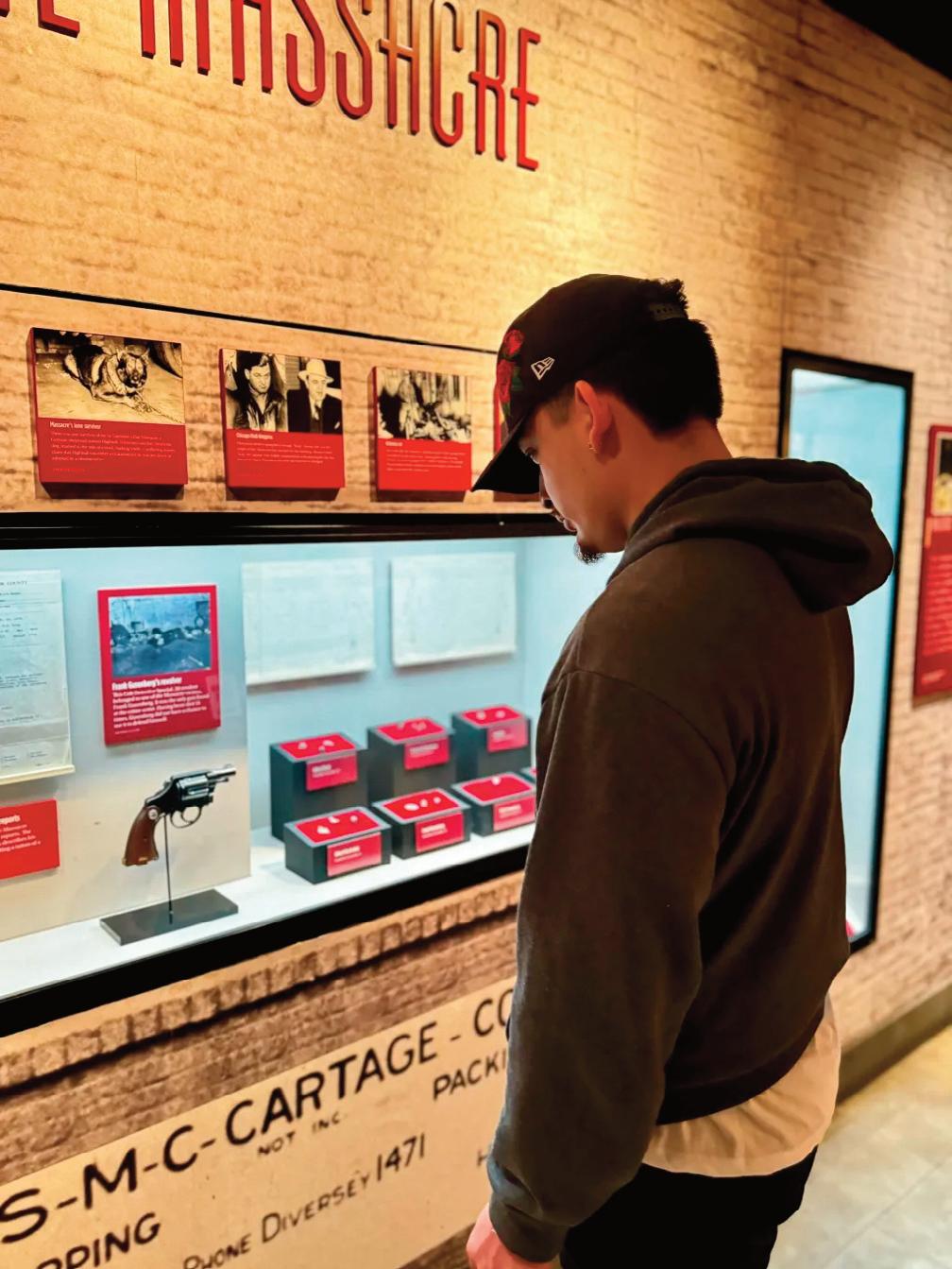
Downtown Las Vegas is where you go when you want history, personality, and less of the Strip’s “everything costs $24 now” energy. The Mob Museum (officially the National Museum of Organized Crime and Law Enforcement) is the rare attraction that feels genuinely world-class: four floors, heavy artifacts, immersive multimedia, and exhibits that don’t sanitize the darker parts of the story.
It’s also a strong value if you time it right. General admission is listed at $34.95, with a cheaper “after 5 p.m.” ticket option at $27.95 (plus discounts for certain groups).
On New Year’s Day, my visit lined up with a packed special program featuring Frank Calabrese Jr., whose story is tied to the Chicago Outfit and the “Family Secrets” era of organized-crime prosecutions. The talk turned a museum visit into something closer to live history — part true crime, part civic lesson, part “how did people actually survive this world?”
Don’t skip the basement: The Underground speakeasy is a full-on Prohibitionera set, and the espresso martinis were balanced enough that my group immediately wanted a second.
Family note: It’s museum-style educational, but parts are intense and some content is graphic — I’d use discretion with kids under 12, and lean older teen/adult for the full experience.
Budget move: go after 5 p.m. for the lower ticket, and treat it as your “main event” for the day.
3) Arts District nights without Strip pricing: Bad Beat Brewing
Las Vegas’ Arts District has become the antidote to the Strip for a lot of locals and repeat visitors: murals and street art, smaller rooms, and a walkable grid of bars and restaurants that feels more neighborhood than tourist corridor.
Bad Beat Brewing is a strong anchor stop — especially in winter, when you want indoor seating that doesn’t feel cramped. The space leans rustic-industrial with natural touches, plenty of room to spread out, and music set at a level where you can still hold a conversation. The brewery’s story also fits the district’s reinvention energy: Bad Beat launched in Henderson in 2014, then relocated into the Arts District after selling its original location, carrying its craft focus downtown.
On my trip, the holiday cocktail menu was the standout, led by a seasonal drink called Big Nick Energy — built with bourbon crème, amaro, coffee liqueur and crème de cacao, finished with a Biscoff cookie. It drank like dessert without becoming overly sweet, and it was made by Kevin, a bartender who was equal parts friendly and insightful — the kind of person who makes a new place feel instantly welcoming. Bad Beat’s year-round Moscow mules were another surprise. Served in copper mugs the way they’re supposed to be, they were elevated by the brewery’s house-made ginger and ginger-chew garnish — a small detail that turned a standard drink into something people at our table kept talking about. And as a stout drinker, I appreciated getting an early taste of a marshmallow stout ahead of its early January debut: strong, balanced, and finishing with a clean marshmallow note rather than a sugar-heavy aftertaste.
Budget move: Make the Arts District your “drinks and atmosphere” night — you can linger in one spot, spend less than you would hopping Strip lounges, and still feel like you found something special.
4) A steakhouse splurge that doesn’t have to break you: Bavette’s at Park MGM
The one “we’re doing it” meal — Chicago-born, Vegas-polished
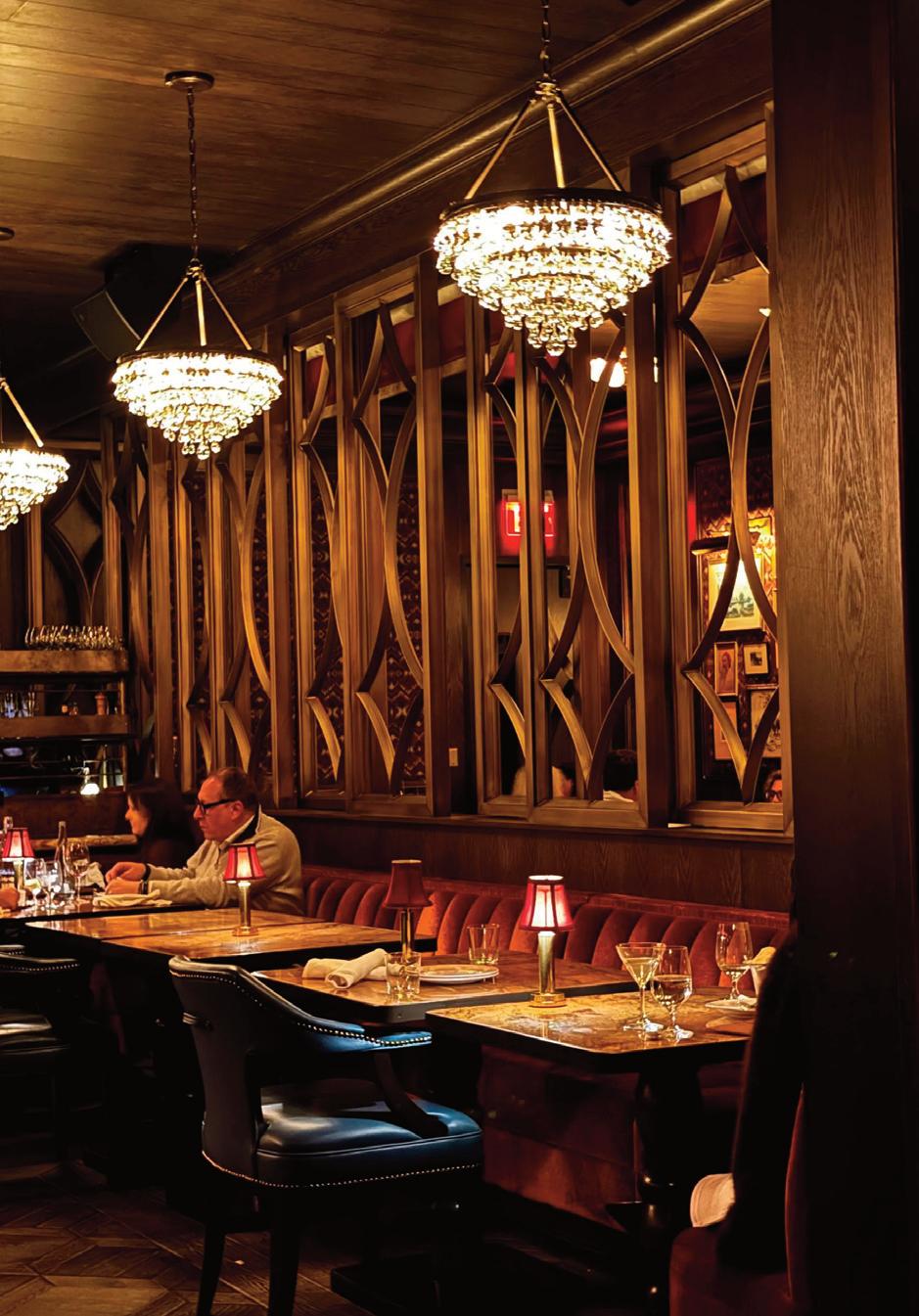
Every Vegas trip needs one meal that feels like a night out — but that doesn’t mean chasing the most expensive cut on the menu. Bavette’s Steakhouse & Bar, a Chicago-style steakhouse at Park MGM, is built for the classic “speakeasy steakhouse” mood: low light, dark wood, a busy bar, and a room that hums even when people aren’t being loud.
The concept comes out of Chicago as Bavette’s Bar & Boeuf, and the brand describes itself as a French-leaning twist on a traditional steakhouse — “without the formality.” That’s exactly how it feels in Las
Vegas: romantic enough for couples, energetic enough for a celebration, and comfortable enough that you don’t feel like you have to whisper.
If you’re doing this as a budget-aware splurge, the move is simple: order something that still feels like Bavette’s without turning it into an all-out blowout. A strong value play is the Ribeye Steak Frites — 10 ounces with béarnaise and hand-cut fries listed at $49.99. It’s rich, satisfying, and built for sharing, especially if you add one salad or side for the table.
Best for: couples, anniversaries, “one big dinner” nights
Budget move: split the ribeye steak frites and add one shared side or salad — you get the full steakhouse experience without the sticker shock.
5) Diner Ross (and the dance-floor surprise) at The LINQ
Not every Vegas night needs to be formal. Diner Ross at The LINQ leans into a full 1970s New York theme — the kind of place that makes dinner feel like you walked onto a set. It’s from Spiegelworld (the team behind Absinthe), and even the entrance is part of it: guests are routed through a “99 Prince” subway-style entry point before emerging into the diner universe.
If you followed the news about DISCOSHOW: yes, the production ended its run Jan. 3, 2026. But here’s what matters for 2026 visitors: Diner Ross remains open (and the adjoining bar concepts continue), meaning you can still catch the spirit of that immersive discoera energy even without buying a show ticket.
On my way out, I got pulled into one of those only-in-Vegas moments — the kind where you’re leaving dinner and suddenly you’re dancing for five minutes because a live DJ is sending people into the night on a high note.
Budget move: go early (right at opening) and keep it as your “fun dinner” — especially if your trip already includes one higher-end meal elsewhere. Diner Ross lists hours Wednesday through Sunday.
Disclosure The Mob Museum and Bad Beat Brewing provided complimentary considerations as part of a media arrangement. The experiences above reflect my reporting and personal impressions from the trip.
PHOTO MANNY SANDOVAL
Alex Sandoval reads through an organized-crime exhibit at The Mob Museum, 300 Stewart Ave. in Las Vegas.
PHOTO MANNY SANDOVAL
The dining room at Bavette’s Steakhouse & Bar at Park MGM pairs a Chicago-style steakhouse sensibility with a moody, speakeasy-like vibe.
PHOTO MANNY SANDOVAL
A marshmallow stout is served at Bad Beat Brewing in Las Vegas’ Arts District, delivering a bold roasted profile with coffee-like notes and a smooth finish that lingers with a soft marshmallow sweetness.
HPV Testing Via Easy Self-Collection Now Available to Patients at Planned Parenthood
An HPV self-collection test kit that PPOSBC is using.
By IECN Staff
January is Cervical Cancer Awareness
Month, and patients of Planned Parenthood of Orange and San Bernardino Counties (PPOSBC) now have access to a compassionate, lower-stress method of getting tested for human papillomavirus (HPV), the most common cause of cervical cancer.
Self-collection HPV testing is now available as an option for patients aged 30 years and older at all nine of PPOSBC’s health centers in Orange and San Bernardino Counties. Self-collection HPV testing is FDA-approved, performed by the patient in privacy at a PPOSBC health center, and can be easily added to any existing appointment; no pelvic examination is necessary.
HPV, which is extremely common in the
U.S., has multiple strains, some of which can cause cancer. HPV vaccination protects against many of these strains, and most HPV infections (9 out of 10) clear on their own within two years. However, according to the Centers for Disease Control and Prevention (CDC), HPV still infects about 13 million Americans and causes 36,000 new cancer cases each year, so it’s essential for every adult to be screened as recommended.
PPOSBC is one of the first Planned Parenthood affiliates in the state of California to offer self-collection HPV testing to patients. Previously, patients were required to do a full pelvic exam just to test for cervical cancer. Now, patients over 30 will be offered the option to self-collect.
Those who elect to do so are given a test kit and instructions, along with privacy to collect the sample themselves in the exam
room. The test results will be sent off to a lab for diagnostics. Test results are ready within three days. Patients who test positive for HPV are called back for further screening, which may include a pelvic exam and a test to find abnormal cells (often called a Pap test). If the HPV test is positive for certain strains or abnormal cells are found, then a colposcopy or LEEP procedure is recommended. All of these services are available through PPOSBC.
PPOSBC providers have reported that many patients appreciate having the option for self-collection HPV testing, and hope it will lead to earlier detection of possible cervical cancers.
“At Planned Parenthood, we prioritize patient choice, compassionate care, and effective cancer screening programs that save lives,” said Janet Jacobson, M.D., medical director, PPOSBC. “Pelvic exams
aren’t an easy experience for anyone, and they are particularly stressful for patients who are not prepared or have a history of sexual trauma or pain. Self-screening lowers this barrier, and we are pleased to offer it to all patients over 30. The earlier we can catch HPV, the easier it is for patients to monitor their health via regular screening and get any treatment they may need.”
“Our doors are open, and we are here to provide care no matter what,” said Krista Hollinger, President and CEO, PPOSBC. “We are proud to offer this level of compassionate, patient-centered care that makes it easier for women to get lifesaving cervical cancer screenings. If you are as committed as we are to ensuring that all patients have choices and access to quality, comprehensive healthcare, we need–and are incredibly grateful for–all the help and support you can provide.”
San Bernardino
PHOTO MEDPAGE
NOTICE OF PETITION TO ADMINISTER ESTATE OF BARBARA J STONESTREET Case No PROVA2500997
To all heirs beneficiar es creditors contingent creditors and persons who may otherwise be interested in the will or estate or both of BARBARA J STONESTREET
A PETITION FOR PROBATE has been filed by Marquece G Stonestreet in the Superior Court of Ca ifornia, County of SAN BERNARDINO THE PETITION FOR PROBATE requests that Marquece G Stonestreet be appointed as personal representative to administer the estate of the decedent THE PETITION requests the decedent s will and codicils, f any, be admitted to probate The will and any codicils are available for examination in the file kept by the court THE PETITION requests authority to administer the estate under the Independent Administrat on of Estates Act (This authority will allow the personal representative to take many actions without obtaining court approval Before taking certain very important actions however the personal representative will be required to give notice to interested persons unless they have waived notice or consented to the proposed action ) The independent administration authority will be granted unless an interested person files an objection to the petition and shows good cause why the court should not grant the authority
A HEARING on the petition will be held on Feb 11, 2026 at 9:00 AM in Dept No F1 located at 17780 ARROW BLVD FONTANA CA 92335
IF YOU OBJECT to the granting of the petition, you should appear at the hearing and state your ob ections or file written ob ections with the court
before the hearing Your appearance may be in person or by your attorney IF YOU ARE A CREDITOR or a contingent creditor of the decedent, you must file your claim with the court and mai a copy to the personal representat ve appointed by the court within the later of either (1) four months from the date of first issuance of letters to a general personal representative, as defined in section 58(b) of the California Probate Code or (2) 60 days from the date of mailing or personal delivery to you of a notice under section 9052 of the California Probate Code Other California statutes and legal authority may affect your rights as a creditor You may want to consult with an attorney knowledgeable in California law YOU MAY EXAMINE the fi e kept by the court If you are a person interested in the estate, you may file with the court a Request for Special Notice (form DE154) of the filing of an inventory and appraisal of estate assets or of any petition or account as provided in Probate Code section 1250 A Request for Special Notice form is availab e from the court c erk
Attorney for petitioner: COLIN J GIBSON ESQ SBN 168978 LAW OFFICES OF COLIN J GIBSON 1353 ELYSIAN PARK DRIVE LOS ANGELES CA 90026 CN123445 STONESTREET Published Rialto Record Jan 8,15,22, 2026 R-448 NOTICE OF
LIEN SALE
Not ce is hereby given pursuant to sections 3071 and 3072 of the Civil Code of the State of California, the undersigned w se the following vehicles at l en sale at said address(s) at said t me(s) on: Monday February 2, 2026 to w t: YEAR MAKE VIN LICENSE STATE 60 FORD 0K12S129687
4JXX905 CA
To be so d by: Storage Locker 13574 6th Ave V ctorville San Bernardino County CA 92395 (10:00 AM) YEAR MAKE VIN LICENSE STATE 21 CHEV
1GNSCCKD1MR128046
To be sold by: Co lision Hero 220 McArthur Way, Upland, San Bernardino County CA 91786 (10:00 AM) Said sale is for the purpose of satisfying lien of the above s gned for tow ng, storage, labor materials and lien charges together with costs of advertising, and expenses of sale
LienTek Solutions Inc P O Box 443 Bonita CA 91908 CNS-4004138# PUBLISHED EL CHICANO 1/22/26 E-170
NOTICE INVITING BIDS NOTICE IS HEREBY GIVEN that sealed bids wi be received in the Nutr tion Services Department of the San Bernard no City Unified School District 1257 Northpark Boulevard San Bernardino, Ca ifornia, 92407, on or before 11:00 a m on Thursday February 26 2026 for Bread/Tortilla Products, under NSB 2026-27-1 Bid documents required for bidding may be secured at the above department Please cal the Nutr tion Services Purchasing Office at 909-8818008 for more informat on Bid/addendum posts: h t t p s : / / s b c u s d n u t r t o n services org/?page=Bidsand Proposals The Board of Education reserves the r ght to reject any or all bids and to waive any irregularities or informa it es in any bid or in the bidding and to accept or re ect any items thereon 1st Pub ication: January 22, 2026 2nd Publication: January 29, 2026 By: Joanna Nord Admin strative Analyst Nutrition Services Department San Bernard no City Unified Schoo District CNS-4004121#
NOTICE TO BIDDERS / INVITATION TO BID
Notice is hereby g ven that the govern ng board ( Board ) of the San Bernardino City Unified School District (“District”) wi l rece ve sea ed bids to construct the follow ng project: F26-01 Exterior Paint – Del Rosa Emmerton Fairfax, Highland-Pacific, Lankershim, Parkside & Roosevelt Elementary Schools ( Project or “Contract”) Contractor Prequalification – not required for this project Contractors must submit sealed bids on or before 2:00 p m , Thursday, February 12 2026 at the D strict Office – Bid Box, located at 777 North F Street San Bernard no California 92410, at or after which time the District will open the bids and publicly read them aloud Any claim by a B dder of error in its bid must be made in compliance with Public Contract Code § 5100 et seq Any bid that is submitted after th s time sha be nonrespons ve and returned to the Bidder The District is not respons ble for Bids that are received after the deadline noted above The Project consists of but not imited to the follow ng scope: Exterior Paint at 7 Sites: Del Rosa Emmerton Fairfax High and-Pac fic Lankersh m, Parkside & Roosevelt Elementary Schools All bids shal be on the form provided by the District Each bid must conform and be responsive to all pertinent Contract Documents includ ng but not limited to, the Instructions to Bidders To b d on this Project the Bidder is required to possess one or more of the follow ng State of California Contractor Licenses: Class C-33 or Class B The Bidder s l cense(s) must be active and in good stand ng at the time of the bid open ng and must rema n so throughout the term of the Contract As security for its Bid each Bidder sha l provide with its Bid form -a bid bond issued by an admitted surety insurer on the form -provided by the District -cash or -a cashier s check or a certified check drawn to the order of the San Bernardino City Unified School District, in the amount of ten percent (10%) of the total bid price This b d security shall be a guarantee that the B dder shall, w thin seven (7) calendar days after the date of the Notice of Award enter into a contract with the District for the performance of the services as stipulated in the bid The successful Bidder sha l be required to furnish a 100% Performance Bond and a 100% Payment Bond f t s awarded the contract for the Project The successful Bidder may substitute securities for any monies withheld by the District to ensure performance under the Contract in accordance with the provisions of Publ c Contract Code § 22300 The successful Bidder and its subcontractors sha l pay all workers on the Pro ect not less than the general prevailing rate of per d em wages and the general prevailing rate for ho iday and overtime work as determined by the Director of the Department of Industrial Relat ons State of California for the type of work performed and the locality in which the work is to be performed within the boundaries of the District pursuant to Labor Code § 1770 et seq Preva ling wage rates are on file with the District and are available to any nterested party on request or at w w w d i r c a g o v / o p r l / s t a t i s t i c s a n d d a t a b a s e s html Bidders and B dders subcontractors shall comply w th the registration and qualificat on requirements pursuant to Labor Code §§ 1725 5 & 1771 1 A non-mandatory pre-bid conference and site visit will be
availab
calendar days after the date of the bid opening Crisp Imaging, 3180 Pul man Street Costa Mesa CA 92626 Phone: (866) 6328329, Public Plan Room: h t t p s : / / w w w
s p p l
m com/jobs/public In addit on Contract Documents are available for review at the following builders' exchange F W Dodge McGraw-Hill Inc Public Plan Room; www construction com 4300 Beltway Place Suite 180 Arlington TX 76081 Diana Boyles Dodge document we@mhfl com
Phone: 1-800-393-6343
Fax: 1-877-836-7711
The Blue Book Building & Construction Network Public P an Room: www thebluebook com 800 E Main St P O Box 500 Jefferson Val ey NY 10535 TJ Downey
CMD GROUP Public P an Room: www cmdgroup com 30 Technology Pkwy S, Ste 100 Norcross GA 30092
Michael Lunan mike lunan@cmdgroup com
Architectural Source Re ations
Specialist Reed Construct on Data (770) 209-3414
Construction Bidboard (Ebidboard) 11622 El Camino Rea , #100 San Diego CA 92130
Phone: 800-479-5314
Email:
support@ebidboard com
Website: www ebidboard com
Dodge Data & Analytics
830 Third Avenue 6th Floor New York, NY 10022
Phone: 877-784-9556
Email:
support@construction com
Website: www construction com Kern County Builders' Exchange 4310 Ardmore Avenue, Ste 100 Bakersfield CA 93309
Phone: 661-324-4921
Email: kcbex@kcbex com
Website: www kcbex com
BidAmerica 41085 Elm Street Murrieta, CA 92562
Phone: 951-677-4819
Email: planroom@bidamerica com
Website: www BidAmerica com
Associated General Contractors of America San Diego Chapter, Inc 6212 Ferris Square San Diego CA 92121
Phone: 858-558-7444
Email: planroom@agcsd org
Website: www agcsd org
The D str ct s Board reserves the right to re ect any and al
NOTICE INVITING PROPOSALS RFP No 26-17 Professional Coaching Support for Teachers School Leaders and District Administrators NOTICE IS HEREBY GIVENthat the San Bernardino City Unified School District of San Bernardino County, State of California, acting through its Governing Board hereafter referred to as the District , is so iciting electronic proposal submittals through its OpenGov eProcurement web portal in response to RFP No 26-17
Professional Coaching Support for Teachers, School Leaders and District Administrators on an as needed basis Vendors who are desirous of securing a copy of the RFP documents may do so by logg ng nto the District s website at: https://sbcusd com/bidpostings RFP responses must conform and be respons ve in accordance with the RFP Documents posted through the District s OpenGov website portal Proposals must be submitted electronically up to but not later than Friday, February 27, 2026 at 1:00 p m Contract award s contingent upon availability of funds Local M nority and Disabled Veterans Businesses are specifica y encouraged to respond The D strict reserves the right to accept or reject any or all proposals and to accept or reject any tem to w thdraw a l ne tem or entire RFP, and to waive any rregu ar ties or informa ties in the Bid document(s) The D strict may award any al or none of this RFP By: Laura Cardenas Director of Purchasing Services Publicat on: Thursday, January 22 2026 Request for C arification: Friday February 13 2026 at 1:00 p m Virtual Public Proposal Opening: Friday February 27 2026 at 1:00 p m h t t p s : / / m e e t g o o g l e c o m / r j qptdj-wgk Late entry w not be perm tted CNS-4003506# PUBLISHED EL CHICANO 1/22/26 E-171
Pet tioner or Attorney: ROBERTO GRIJALBA GARCIA Superior Court of California, County of San Bernard no, Street Address: 247 West 3rd Street, San Bernard no, CA 92415, Ma ing Address: 247 West 3rd Street, San Bernardino CA 92415 Branch Name: San Bernardino Justice Center PETITION OF: ROBERTO GRIJABLA GARCIA FOR CHANGE OF NAME ORDER TO SHOW CAUSECHANGE OF NAME Case Number: CIVSB 2535460 TO ALL INTERESTED PERSONS: Pet tioner: ROBERTO GRIJABLA GARCIA filed a petition w th this court for a decree changing names as fo lows: Present name: ROBERTO GRIJABLA GARCIA to Proposed name: ROBERT GRIJABLA THE COURT ORDERS that al persons interested in this matter appear before this court at the hearing indicated below to show cause if any why the pet tion for change of name should not be granted Any person objecting to the name changes described above must file a wr tten objection that includes the reasons for the object on at east two court days before the matter is scheduled to be heard and must appear at the hearing to show cause why the petition should not be granted If no written objection is timely fi ed the court may grant the petition w thout a hearing NOTICE OF HEARING Date: 2/18/2026, T me: 8:30 am Dept: S30 The address of the court is: same as noted above (To appear remotely check in advance of the hear ng for information about how to do so on the court’s website To find your court’s website go to w w w c
court htm ) A copy of this Order to Show Cause must be published at least once each week for four success ve weeks before the date set for hear ng on the petition n a newspaper of general circulation printed in this county: El Chicano Newspaper Dated: 12/17/25
sections 503 of the Harbors and Navigation Code, the undersigned wil sell at lien sale the following vesse (s) / Trailer(s) at said address(s) at said time(s) on: Tuesday February 3 2026 to wit: YEAR MAKE HULL / VIN LICENSE STATE TYPE
95 REGAL RGMJM051C595
0366TF CA BOAT
To be sold by: Gallardos
Transmission Auto Repair & Towing 12090 Bart ett Ave Adelanto San Bernardino County, CA 92301 (10:00 AM)
Said sale is for the purpose of satisfying lien of the above s gned for towing, storage, labor materials and ien charges, together with costs of advertising and expenses of sale
LienTek Solutions, Inc P O Box 443 Bonita, CA 91908
CNS-4004156# PUBLISHED EL CHICANO 1/22/26 E-173
By Manny Sandoval
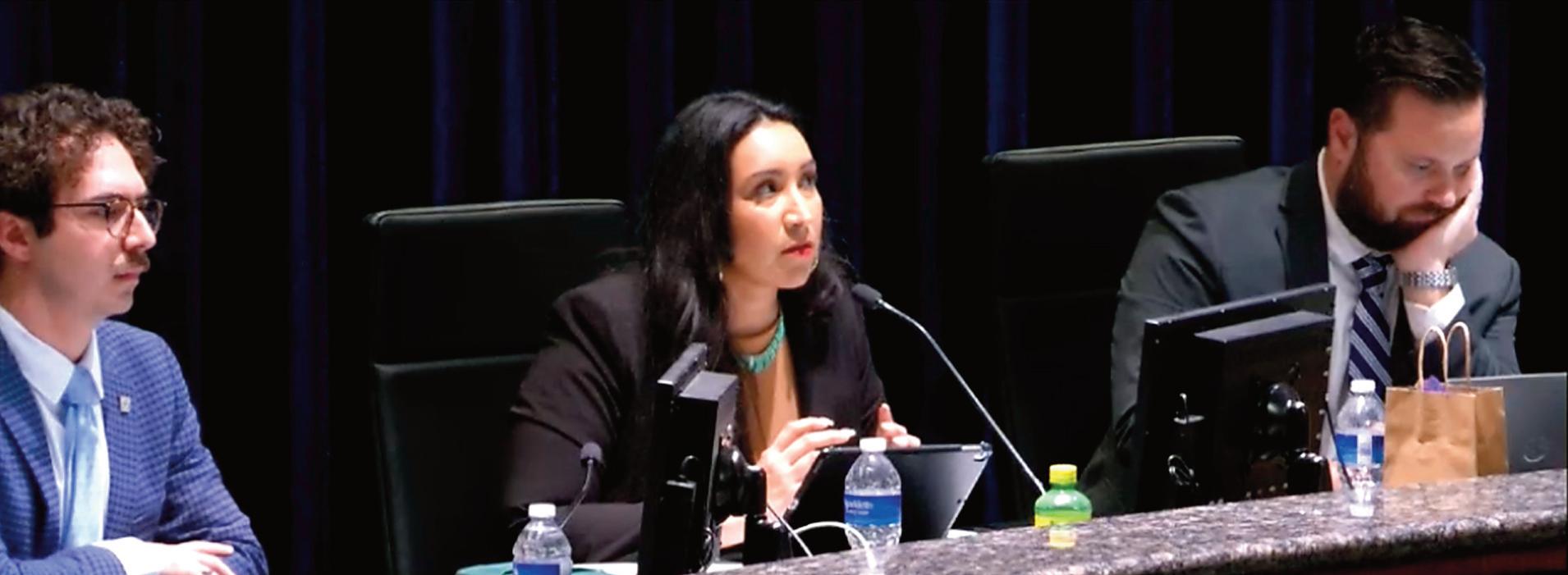
The Riverside City Council voted 4-3 on Jan. 13 to reject a state Homekey+ award of up to $20,137,410, halting a plan to convert a University Avenue motel into 114 studio apartments that supporters said would have brought permanent supportive housing online quickly — and touched off a tense finish to a meeting where most speakers urged approval.
Councilmember Clarissa Cervantes, who represents Ward 2 where the project site sits, voted yes alongside Councilmembers Jim Perry and Steve Hemenway. Councilmembers Philip Falcone, Steven Robillard, Chuck Conder and Sean Mill voted no.
As the final votes landed, frustration in the chamber rose. Some attendees shouted remarks at councilmembers as they left, angry that a project with broad public support had been rejected. The meeting drew more than 100 people in person and the mayor shortened public comment amid heavy participation.
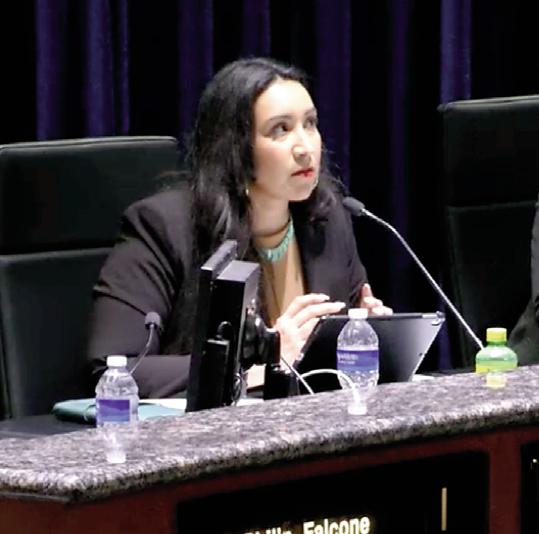
After the vote, Inland Empire Community News contacted the four councilmembers who voted no and asked what influenced their decisions. Falcone responded saying: “I spoke at length on this topic at the May City Council meeting when the grant application was discussed. Those comments remain true.” Robillard did not comment; his assistant, Sol Garay, said: “Unfortunately, Councilmember Robillard is unable for a comment. We encourage you to review the City Council recording for the full discussion and context.” Conder did not respond.
The project — University Terrace Homes — would have acquired and rehabilitated the Quality Inn at 1590 University Ave., converting existing rooms into 114 studio units with kitchens, bathrooms and living areas. Residents would sign 12-month leases, and there would be no limit on length of stay so long as tenants complied with lease terms and paid rent.
The plan included space for on-site operations — including offices for property management and case managers — along with a resident meeting and training room. The development team also proposed a gated perimeter, roundthe-clock security, and on-site staff. The conversion would have produced 94 permanent supportive housing units affordable at 30% of area median income and 20 affordable units at 50% of area median income. Priority would have been given to local seniors and veterans. Eighteen units were slated to be reserved for residents with mobility disabilities and 12 for residents with hearing or vision disabilities.
The Homekey+ program, tied to Proposition 1 approved by voters in March 2024, is intended to increase housing for people experiencing homelessness or at risk of homelessness who also face behavioral health challenges, including serious mental illness or substance use disorder.
Councilwoman Cervantes argued the council’s vote amounted to turning away a rare, time-sensitive chance to add a meaningful number of units in a short window — and she said the project’s target population had been misunderstood.
“People were calling it a homeless shelter,” Cervantes said in an interview after the vote. “That’s not what this is and that’s not what it was going to be.”
Instead, she said, the units were intended for people al-
ready moving through the housing system and seeking placement.
“These are people on a wait list that are preapproved, that are seeking to be housed, that want to call one of these units home,” she said. “We should applaud that.”
She also said the project’s design was unusually serviceheavy, and she pointed to the staffing plan as evidence that the development team had tried to anticipate community concerns.
“This project would have had one of the highest casemanager-to-resident ratios in the county,” Cervantes said.
The project also came with a public-safety argument from city staff: the existing motel has generated significant police activity, including 97 police service calls requiring 222 officer responses between Jan. 1, 2024, and April 26, 2025, plus 67 additional calls from April 27 through Oct. 31, 2025. City staff cited incidents ranging from 911 hang-ups to auto theft and aggravated assault, and said adaptive reuse could stabilize a property that has long strained resources.
But Tuesday’s vote was shaped as much by politics and public trust as by project design.
Cervantes said opposition surged in May after what she described as misinformation spread quickly, forcing her office and city housing staff to spend months in damage control — explaining eligibility rules, services, security and operations.
“When misinformation goes out, it spreads like wildfire,” she said.
She said that over time, outreach efforts shifted some nearby stakeholders from opposition to neutral, and in some cases to support. She singled out the Farmhouse Collective as one of the most persistent critics, describing its owners as a loud voice pressing the council to oppose the conversion.
“Unfortunately the Farmhouse Collective was one of the primary and loudest voices that went to the council in objection to this project,” she said, adding that she believed the business and its owners influenced the political pressure around the vote.
Inside the council chamber, Cervantes said support appeared dominant. She said she asked supporters to stand and estimated that 80% to 90% of those present rose. She also said public input leaned heavily toward approval.
Still, the council majority voted it down — and Cervantes said what bothered her most was the silence that followed.
“I was very shocked and disappointed to notice that two of my colleagues who voted no didn’t even say why or justify their vote,” she said, referring to Falcone and Conder. “They didn’t ask any questions. They didn’t state why they were in opposition to this project. They simply voted no.”
Cervantes said other councilmembers had raised concerns months earlier, but she argued those issues had been addressed through the project’s operations plan, security commitments and staffing structure.
“It felt like, unfortunately, folks came with premeditated
decisions or had already made their mind up,” she said. “That’s not a fair public hearing for an item like this.”
She framed the vote as a test of whether the city’s stated commitment to reducing homelessness extends to accepting permanent supportive housing in real neighborhoods.
“If we don’t want homelessness, if we don’t want to see unhoused people in our streets, we have to be open to building housing to get them off the streets,” she said. “And unfortunately, that was part of the narrative tonight — ‘I don’t oppose affordable housing, but this isn’t the right site.’ And it’s like nowhere feels good.”
Cervantes also emphasized the human stakes she said were lost in the debate, pointing to the project’s senior and disability focus. “I just don’t understand how we could say no to housing seniors, veterans and people with disabilities,” she said.
The financial structure had been one of the core flashpoints in public discussion. The total project budget was $31,710,096, including $26,622,300 in total development costs and $5,050,000 in 10-year operating costs. The city’s capital match contribution was $6,484,890 from Homeless Housing, Assistance and Prevention funds. The operating match totaled $2,750,000, funded through a blend of federal sources and HHAP.
The project also had rental assistance lined up. On Sept. 3, 2025, Riverside Housing Development Corporation was notified that the project would receive 94 Section 8 project-based vouchers, which tie subsidies to units and help keep rents affordable for eligible tenants.
City documents also underscored the demand pressure: as of Nov. 20, 2025, 312 individuals had been prescreened and preapproved for housing through the Coordinated Entry System, with 219 awaiting a permanent supportive housing referral. Ninety-one of those waiting were aged 55 or older.
After the council’s rejection, Cervantes said the city would have to notify the state that Riverside would not accept the award, ending the opportunity.
“We are essentially going to have to decline the $21 million that they have awarded us,” she said.
She argued the consequences could ripple beyond this project, warning that rejecting a major state award could weaken Riverside’s credibility in future grant cycles.
“When a big city says no to funding, the state usually doesn’t then take your future applications seriously,” Cervantes said. “Why are we going to award you if you’re going to say no?”
Despite the loss, Cervantes said the months-long campaign revealed something she views as a path forward: a sizable coalition of residents, nonprofit leaders, housing advocates and local voices willing to publicly support permanent supportive housing — even when it draws political heat.
“I want to give a deep bow of gratitude to our community,” she said. “I’m grateful to everyone who sees the humanity in our unhoused community and those that are struggling.” Then she offered the line she said she returns to when the politics turn cold. “We’re closer to becoming homeless than we are to becoming billionaires,” Cervantes concluded.
PHOTO CITY OF RIVERSIDE
Riverside City Councilmembers Philip Falcone (left), Clarissa Cervantes (center) and Steven Robillard (right) sit on the dais during the Jan. 13 meeting where the council voted 4-3 to reject $20.1 million in Homekey+ funding tied to a proposed permanent supportive housing conversion.