COLTON COURIER WWe e ee



a multi-day walkout in October 2025.

By Manny Sandoval
An open-ended strike by Kaiser Permanente nurses and other health care professionals began Monday morning across California and Hawaii, with picket lines forming in the Inland Empire outside Kaiser facilities in Fontana, Riverside and Ontario — the latest escalation in negotiations that also led to
The work stoppage, called by United Nurses Associations of California/Union of Health Care Professionals, started at 7 a.m. local time and is expected to continue until an agreement is reached, the union said. UNAC/UHCP said 31,000 frontline registered nurses and health care professionals are participating across California and

By Manny Sandoval
ore than 200 volunteers gathered at the NOS Center before dawn Thursday, Jan. 22nd and deployed across San Bernardino for the city’s annual Point-in-Time Count, a oneday survey used to help determine federal funding for homelessness programs and guide local decisions on services and shelter.
Hawaii, affecting more than two dozen hospitals and hundreds of clinics, calling it the largest strike of health care professionals this year.
UNAC/UHCP said its members have been bargaining with Kaiser since May 2025 and that in December, Kaiser management walked away from negotiations and

The count began at 6 a.m. and was expected to conclude at 10 a.m., with support from the San Bernardino Police Department and the San Bernardino County Sheriff’s Department as teams fanned out across the city.
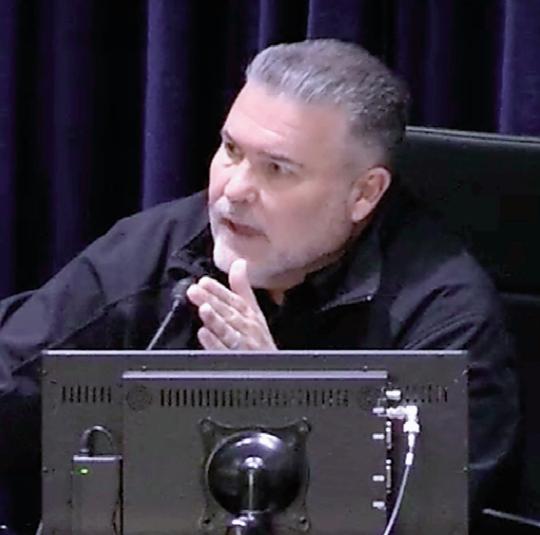
Nearly the entire San Bernardino City Council attended the early-morning kickoff,
Mayor Helen Tran and San Bernardino County Supervisor Joe Baca
Jr., as organizers briefed volunteers on safety, survey procedures and the distribution of hygiene kits intended to provide immediate aid to unhoused people.
Baca thanked volunteers and said the count is meant to do more than generate a number — it’s intended to guide nearterm action and connect some people with help the same day.
Kaiser Strike (cont.)
- attempted to bypass the agreed-upon national bargaining process. The union said it filed unfair labor practice charges with the National Labor Relations Board, alleging Kaiser violated federal labor law by abandoning good-faith bargaining and undermining workers’ protected rights.
Kaiser Permanente said it is prepared to maintain care, arguing the strike is unnecessary given what it described as a historic wage proposal and emphasizing that hospitals and most medical offices will remain open.
Picketing in the Inland Empire is centered outside Riverside Medical Center, 10800 Magnolia Ave., Riverside; Fontana Medical Center, 9961 Sierra Ave., Fontana; and Ontario Medical Center, 2295 S. Vineyard Ave., Ontario, according to the union’s strike notice.
In a statement dated Jan. 25, Camille Applin-Jones, Senior Vice President for Kaiser Permanente Southern California, said, “We have been informed that United Nurses Associations of California/Union of Health Care Professionals have agreed to return to local bargaining where we look forward to being able to finalize new contracts for our employees and their families.”
Applin-Jones said talks with UNAC/UHCP and the Alliance of Health Care Unions have stretched more than seven months. “These negotiations come at a time when health care costs are rising, and millions of Americans are at risk of losing access to health coverage. This underscores our responsibility to deliver fair, competitive pay for employees while protecting access and affordability for our members. We’re doing both.”
Kaiser said its Alliance employees already earn, on average, about 16% more than similar roles at other health care organizations, and in some markets, they earn 24% more. Kaiser said its current proposal builds on that and includes “the strongest compensation package in our national bargaining history”: a 21.5% wage increase over the life of the contract, with 16% within the first two years. The statement said that when step increases and local adjustments are factored in, “the total average increase is approximately 30%.”
Kaiser also emphasized that not all Alliance unions currently in negotiations will participate. The company said the striking unions represent nearly 30,000 health care professionals across California and Hawaii facilities, and in Southern California, UNAC/UHCP represents nearly 27,000 health care workers.
“Unfortunately, despite the recent agreement to return to local bargaining, UNAC/UHCP intends an open-ended strike beginning at 7 a.m. local time on January 26 at some of our Cali-
fornia and Hawaii facilities,” Applin-Jones said.
“Despite the union’s claims, this strike is about wages,” ApplinJones said. “This open-ended strike by UNAC/UHCP is unnecessary when such a generous offer is on the table. The strike is designed to disrupt the lives of our patients — the very people we are all here to serve.”
UNAC/UHCP disputes that characterization, describing the action as an unfair labor practice strike driven by what it says are unlawful tactics that undermine negotiations and intimidate workers. “Kaiser’s own communications to employees reveal exactly why we are striking,” said Charmaine S. Morales, RN, UNAC/UHCP President. “Instead of addressing unsafe staffing and patient care concerns, Kaiser is issuing messages that pressure workers not to strike, exaggerate the risks of participation, and encourage employees to report one another. That is intimidation.”
“Caregivers should not be pressured or frightened for standing up for patient safety,” Morales said. “This strike is about restoring safe staffing levels, timely access to care, and respect for the professionals who deliver that care every day.”
Both sides say patient access is central, but they point to different solutions.
Kaiser said it has been preparing for months to avoid disruptions. “During the strike, our hospitals and nearly all of our medical offices will remain open. Members also have 24/7 access to same-day care through Get Care Now on kp.org and our mobile app.”
Kaiser said some appointments could be shifted to virtual care and certain elective procedures may be rescheduled, and that facilities will be staffed by physicians, experienced managers and trained staff, “with added licensed contract professionals as needed.”
Kaiser said it is onboarding nurses, clinicians and other staff to work during the strike, “the majority of whom have worked at Kaiser Permanente before,” and said many employees have volunteered to be reassigned to work in strike locations.
For many Inland Empire residents, the walkout echoes the last major Kaiser labor action in the region. When workers picketed outside the Fontana Medical Center on Oct. 15, 2025, the second day of that multi-day strike, frontline staff said their concerns went beyond wages and emphasized the connection between staffing and patient care.
“We’re not just striking for ourselves,” said Maria Arevalo Ramirez, a union representative from Fontana. “We’re striking for our patients, future nurses, and the future of healthcare.”
Arevalo Ramirez also emphasized the financial toll of walking out. “We are taking a leap of faith,
not just for ourselves, but for our patients,” she said. “We’re investing that money into patient care and progress for nursing.”
Marcial Reyes, a health care worker who joined the Fontana picket line in October, tied staffing levels to emergency department congestion. “We don’t want to make our patient wait. Give us more staff to take care of our patient,” he said. “We sometimes see patients waiting eight hours. They use the ER because they cannot get appointments.”
And Celina Zumaya, a registered nurse and UNAC member who participated in the Fontana demonstration, said, “This is a very tough job and we’re dealing with life and death,” adding, “We are always short-staffed. The last few days I worked, we were down six bodies in a 24-hour period.”
Kaiser, in its current response, maintains that its offer is already among the most competitive in the industry and says it is ready to close agreements at local tables. “Our focus remains on reaching agreements that recognize the vital contributions of our employees while ensuring high-quality, affordable care,” Applin-Jones said. “Employees deserve their raises, and patients deserve our full attention, not prolonged disputes.”
UNAC/UHCP says the strike will continue “until Kaiser reaches a fair agreement that protects patients and respects caregivers,” and Morales framed the walkout as a measure of last resort. “We’re not going on strike to make noise. We’re striking because Kaiser has committed serious unfair labor practices and because Kaiser refuses to bargain in good faith over staffing that protects patients, workload standards that stop moral injury, and the respect and dignity that Kaiser caregivers have been denied for far too long,” she said.
“Striking is the lawful power of working people, and we are prepared to use it on behalf of our profession and patients.”
Morales also challenged Kaiser’s position on resources and priorities. “When Kaiser says it doesn’t have resources to fix staffing, what we hear is that a nonprofit health care organization would rather protect an enormous financial cushion than protect patients and the people who care for them,” said Morales, UNAC/UHCP President.
As picketing continues outside Kaiser’s Inland Empire sites, the immediate test will be whether routine appointments, specialty services and pharmacy access remain steady — and whether local bargaining can narrow the gap between Kaiser’s insistence that wages are the core issue and the union’s claim that the dispute is rooted in labor practices, staffing and patient-care standards.
PITC (cont.)
- “The most important thing about today is to say thank you,” Baca told the crowd. “Because really this is about the partnership and collaboration, collaboration with the city of San Bernardino, the National Orange Show, the County of San Bernardino, and all our county departments and city departments that are here.”
He said the information gathered can help agencies identify people in need and plan services, then pointed to major county investments leaders have highlighted as part of the region’s response — including the $75 million Pacific Village Phase 2 expansion and All Star Lodge, a former hotel converted into housing for older adults.
Tran urged volunteers to approach the work with urgency and care, emphasizing the importance of listening to the people they encounter. “Listen to what’s going on in their lives so we could understand more and how we could address the concern that’s really out there in our neighborhoods, in our streets, in our city, in our county,” she said.
Police reinforced the safety message with practical guidance, warning volunteers not to conduct surveys alone even if it seems faster.
“For efficiency’s sake, you may think it’s a good idea just to go get the count by yourself,” an officer told the group. “Please, please, please do not do that. Always have a partner with you.”
Officers told volunteers to use the phone numbers provided for law enforcement contacts if they needed help in the field, and to be ready to describe their location by cross streets or landmarks because police would not have the capability to track volunteers’ phones by GPS.
The early-morning deployment comes as city officials have publicly argued that San Bernardino’s homelessness challenge is both large and highly visible — and that the count itself, while required and useful, may understate what residents see day to day.
At a Jan. 15 special San Bernardino City Council meeting focused on an update to the city’s homeless navigation center, SB Hope Center, Deputy Director of Housing & Homelessness Cassandra Searcy told council members San Bernardino continues to have the highest concentration of homelessness in the county.
“Not to sound redundant, but our city does continue to have the highest concentration of homeless people in the county,” Searcy said. “We have nearly 40% of the county’s homeless that reside in our streets.”
Searcy cited the 2025 point-intime count showing 1,535 unhoused people in San Bernardino, up from 1,417 in 2024 — an 8% increase — but warned the tally does not match what staff and residents observe daily.
“You can drive around the street and see that that number is not accurate,” she said. “Experts will tell you you should probably take your point-intime count number and double, if not triple it if you want a more accurate reflection.”
Baca, speaking Thursday, said homelessness is among the issues residents most frequently raise with county offices. “We hear it every day. We get phone calls, you know, people talk about it,” he said.
He pointed to Pacific Village Phase 2, describing it as a $75 million project intended to expand treatment and recuperative care capacity. The county’s Pacific Village Campus Expansion, which broke ground in June 2025, is planned to include 58 units of permanent supportive housing, a 32-bed substance use treatment facility and 32 recuperative care units.
“This project is about compassionate care,” Board of Supervisors Chair Dawn Rowe said at the June 2025 groundbreaking. “We’re creating an environment where people are treated with dignity and supported on their journey to recovery.”
“The groundbreaking of the next phase of Pacific Village marks a critical step toward a stronger, healthier and safer Inland Empire,” Aguilar said. “By expanding access to behavioral health and addiction care, we will improve the health and well-being of our community.”
Baca framed the project as a pathway to stability rather than a temporary fix. “This campus will transform the lives of people who have gone through rough times by giving them a safe place to recover, rebuild, and regain their dignity,” he said. “It’s about providing opportunity, not just shelter.”
Construction on the Pacific Village expansion is underway, and county leaders have said it is scheduled for completion in winter 2026.
Baca also highlighted All Star Lodge as an example of seniorfocused housing. “This is really about providing 76 rooms, which will be permanent supportive housing for seniors,” he said, adding that seniors have been among the larger groups identified in past counts. “Seniors and formerly incarcerated people are a big part of our population,” Baca said.
Read the full story at IECN.com.
Adelanto Detainees, Represented by Public Counsel, Chirla, Immdef, and Willkie Farr & Gallagher Llp File Federal Lawsuit Challenging Inhumane Conditions at Adelanto Ice Processing Center
By Public Counsel
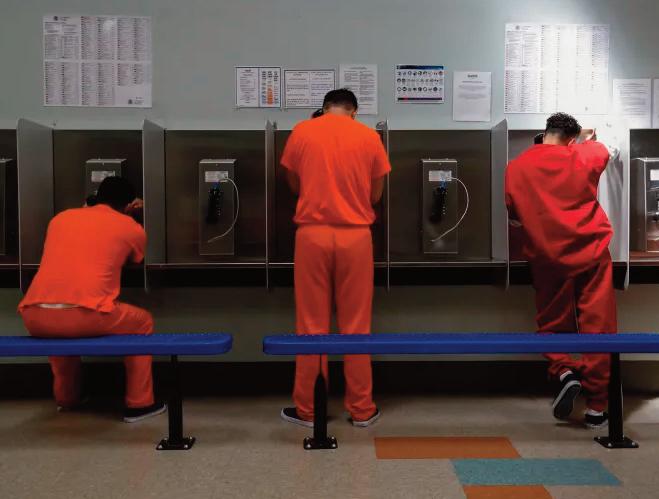
Public Counsel, the Coalition for Humane Immigrant Rights (CHIRLA), Immigrant Defenders Law Center (ImmDef), and Willkie Farr & Gallagher LLP have filed a federal lawsuit on behalf of current detainees, challenging the unconstitutional conditions at the Adelanto ICE Processing Center.
The lawsuit exposes a detention system that is cruel, inhumane, and degrading, with Adelanto serving as a stark example of the harm such conditions cause —where people have been forced to live in unsanitary conditions and subjected to punitive isolation and neglect, conditions that would be considered abuse in almost any other setting. It specifically challenges the denial of basic necessities at the facility—including medical and mental health care, access to the outdoors, adequate nutrition and water, and sanitary living conditions.
The Adelanto facility, a forprofit detention center housing nearly 2,000 immigrants, subjects detainees to conditions that violate constitutional rights and basic human dignity. The lawsuit details a pattern of these abuses, including detainees denied critical medical care for life-threatening conditions, inadequate nutrition, lack of basic sanitation, and prolonged solitary confinement.
On September 22, 2025, Ismael Ayala-Uribe, a 39-year-old DACA recipient, died in ICE custody at Adelanto. A month later, on October 23, 2025, 56year-old Gabriel Garcia-Aviles died after being detained at Adelanto for only about a week. Both deaths remain under investigation.
“Our immigrant neighbors are
being subjected to conditions that violate their most basic human rights—denied medical care, given inadequate food, and treated with cruelty rather than dignity,” said Rebecca Brown, Supervising Attorney with Public Counsel. “The Constitution does not allow the government to cage people in conditions that cause serious injury, worsening illness, and lasting trauma. This lawsuit demands accountability and immediate action to ensure that every person detained at Adelanto receives the humane treatment they deserve under our Constitution. No one—regardless of immigration status— should be subjected to these conditions.”
“Being detained for a civil infraction should never result in serious illness or even death. Our lawsuit aims to stop the human rights violations that our federal government is committing against people they are choosing to imprison, separating them from their loved ones, and in some instances costing them their lives,” said Alvaro M. Huerta, director of litigation and advocacy at Immigrant Defenders Law Center (ImmDef).
“Overcrowding, squalid conditions, and denial of proper medical care are pressure tactics ICE is using to coerce ‘voluntary’ departure. ICE bears responsibility for every preventable illness, every avoidable death, and every unconstitutional injustice these conditions bring about, and we intend to hold them fully accountable in court.”
The facility’s population has surged alongside increased ICE enforcement in Los Angeles, reflecting a pattern where reckless, rights-violating street operations continue once people are detained.
Inside Adelanto, oversight is practically non-existent, and detainees are often made invisible,
Dignity Health Stops Human Trafficking in its Tracks
By Dignity Health
As January marks Human Trafficking Awareness Month in the U.S., Dignity Health is underscoring its unwavering commitment to combating human trafficking and supporting survivors with dignity and compassion across California, a state that consistently reports one of the highest rates of this pervasive issue.
Newly released data offers critical insights into the scope and dynamics of trafficking within the state and highlights Dignity Health’s pivotal role in intervention:
Dignity Health's Impact: Across its hospitals in Arizona, California, and Nevada, Dignity Health identified potential signs of human trafficking in nearly 30,000 patient screenings and social work assessments.
This translates to over 80 potential victims identified daily.
facing punitive conditions that include overcrowding and solitary confinement. In fiscal year 2025 alone, 95 individuals were placed in isolation for one or more days. Operated under contract by the private prison company GEO Group, which is guaranteed payment for a minimum of 640 beds, the facility exemplifies a system where human confinement is monetized and the incentive is to keep people detained rather than safe.
“The rights and humanity of our loved ones do not end when forced into these detention camps for weeks, many for months. Our government’s reckless and brutal treatment of our neighbors in the streets continues inside the camp’s walls by private corporations profiting from our suffering. We must call for accountability and respect of the laws while also appeal to compassion and humane treatment of all whose lives have already been upended by this racially-motivated crackdown,” stated Angelica Salas, Executive Director, Coalition for Humane Immigrant Rights (CHIRLA)
The lawsuit seeks to improve medical care standards, guarantee adequate nutrition and sanitary conditions, end excessive use of solitary confinement, ensure transparency in detention operations, and establish independent oversight to prevent future human rights violations. Detention cannot mean lawlessness and no government agency operates above the Constitution.
Through this litigation, the legal coalition aims to set a precedent that will improve conditions at detention facilities nationwide and challenge a system built on harm that treats detention as the default response rather than investing in care, dignity, and due process.
more challenging to identify and assist. From 2015 to 2021, the percentage of human trafficking cases involving sex trafficking increased from 87% to 89% in California.
Dignity Health’s comprehensive initiatives include specialized training for healthcare providers to recognize the subtle indicators of trafficking, strategic partnerships with local organizations to provide essential support services, and survivorcentered programs that prioritize holistic healing.
Dignity Health - Community Hospital of San Bernardino (CHSB) hosts community education sessions on this topic.
This year, the Understanding and Preventing Human Trafficking workshop will be held virtually for all local partners and community members on Friday, January 23, 2026 from 1 p.m. to 2:30 p.m.
Crucially, more than threequarters of these detections occurred in common hospital areas like emergency rooms, demonstrating that healthcare settings often serve as the only safe touchpoint for victims.
California's Enduring Challenge: Between 2015 and 2021, California experienced a disproportionate rise in human trafficking cases.
In 2015, the state accounted for a significant 18% of all trafficking cases and 15% of all trafficked individuals in the U.S.. While the state's share of national cases has since decreased slightly, California continues to lead the U.S. in human trafficking reports.
Prevalence of Sex Trafficking:
The majority of trafficking in California (89% by 2021) is sex trafficking, frequently occurring in locations such as illicit massage parlors and hotels.
Labor trafficking also persists, often in private residences, though these victims are even
Additionally, CHSB joins the Family Assistance Program for its annual anti-human trafficking walk on Saturday, January 24, 2026 may contact CHSB Health Education Services at (909) 806-1816 to learn more or register for in-person and online health education.
“Guided by our mission of compassion and respect for human dignity, we are committed to supporting survivors with the care and resources they deserve,” said June Collison, President and CEO at CHSB.
Through these dedicated efforts, Dignity Health is actively contributing to building stronger, safer communities, reaffirming its commitment to treating every patient with respect and compassion.
For more information about Dignity Health's human trafficking programs and resources, please visit dignityhealth.org/inlandempire.