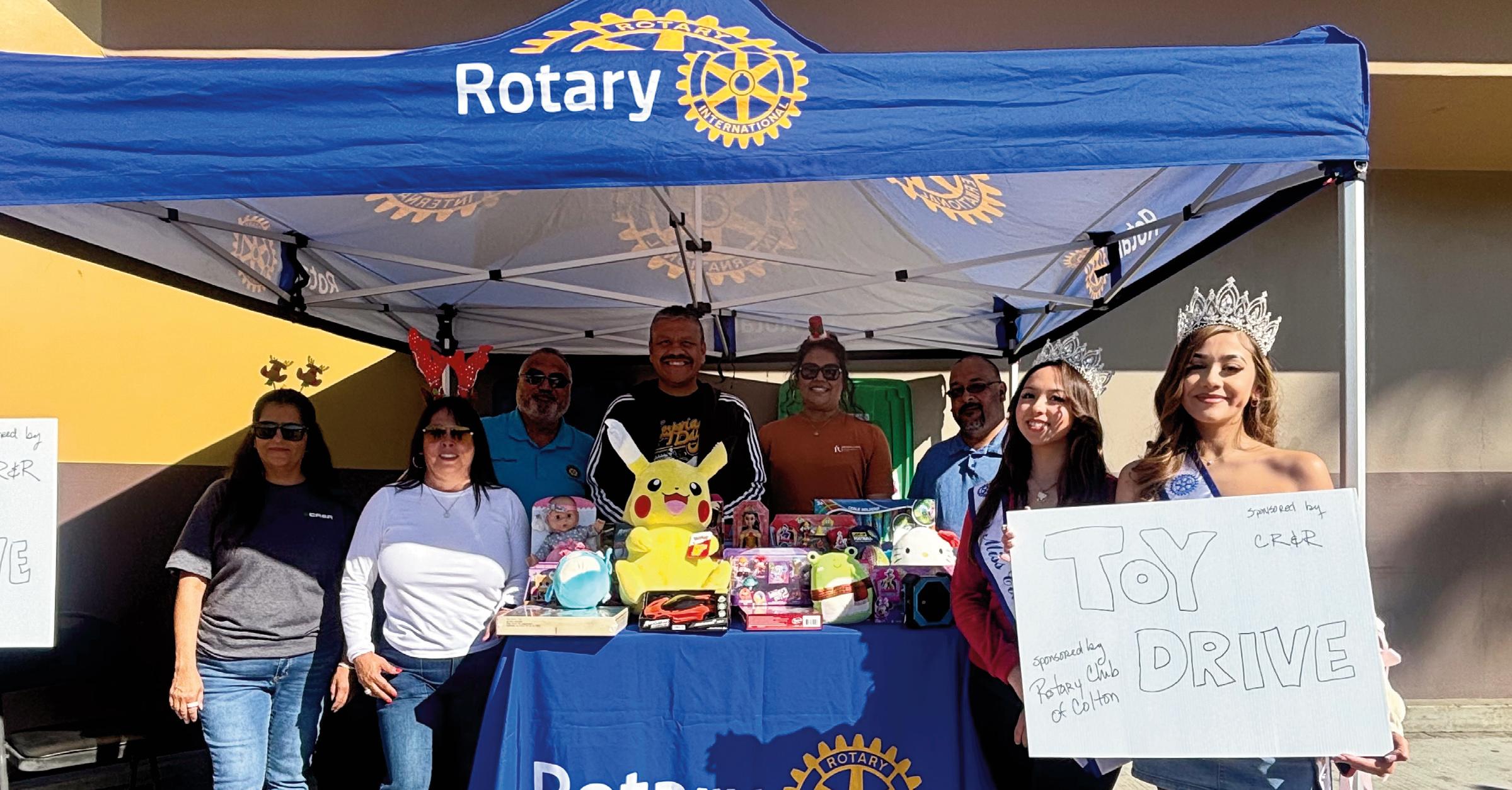
The morning after Thanksgiving, Colton Rotary volunteers were back at work, collecting hundreds of toys for local children and teens during the club’s annual toy drive outside Walmart on South Mt. Vernon Avenue.
On Nov. 28, the drive gathered hundreds of new, unwrapped toys and gifts for youth in the community.
Those who missed the event can still help. The Rotary is accepting new, unwrapped toys and gifts through Dec. 15 at Inland Valley Insurance Agency, 183 W. H St. in Colton. The club is also accepting cash donations.
By Manny Sandoval
Tired of hearing the Inland Empire reduced to crime, homelessness and warehouses, three community-led nonprofits have launched the Our IE campaign, using polling, canvassing, billboards and roughly 900,000 digital ad impressions to shift how residents see their 49-city region — and their power to change it.
Rotary Club President Erlinda Armendariz said, “Distribution will be held at Immaculate Conception Church on Dec.
The campaign brings together Congregations Organized for Prophetic Engagement (COPE), Inland Coalition for Immigrant Justice (IC4IJ) and Starting Over Inc., a Riverside-based organization led by formerly incarcerated people. The three groups teamed up after attending a narrative change convening in Long Beach as part of a Million Voters Project grant and its MVP Echoes Academy, deciding
squarely on how people talk and think about the Inland Empire.
“Our participation in this, Our IE, is really to combat the negativity that circles around San Bernardino, Riverside counties, the totality of the Inland Empire,” said Stanette Dixon, civic engagement project manager at COPE. “Knowing that there are resources here, there are services
regional effort focused
Our IE, cont. next pg.
Rotary Toy Drive, cont. next pg.
PHOTO DENISE BERVER
Colton Rotary members, volunteers and local pageant royalty gather outside Walmart on S Mt. Vernon Ave. during the club’s annual toy drive collecting new, unwrapped gifts.
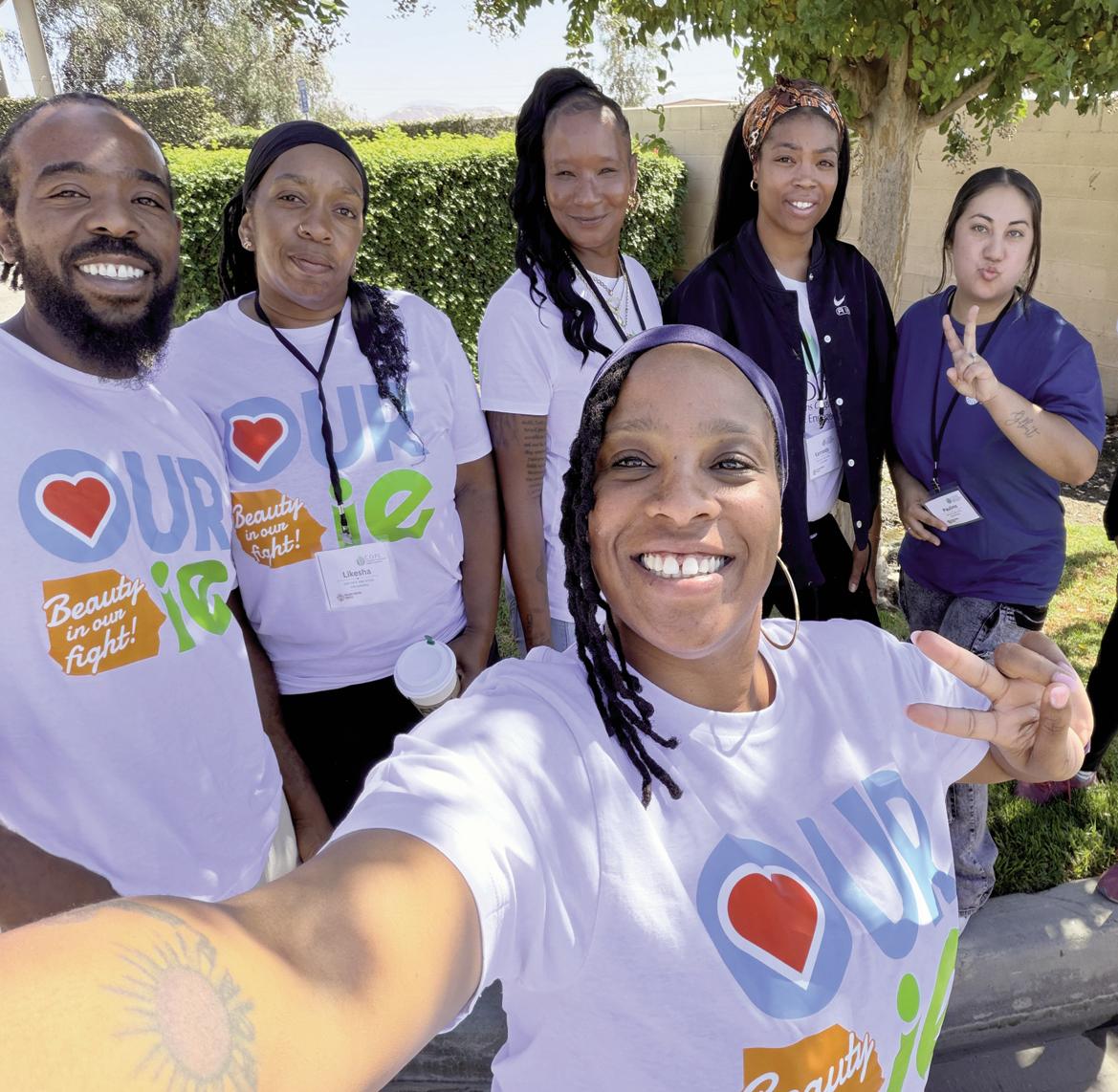
PHOTO COPE
COPE staff and volunteers wearing “Our IE – Beauty in Our Fight” shirts pose for a selfie during door-to-door canvassing in San Bernardino in October 2025.
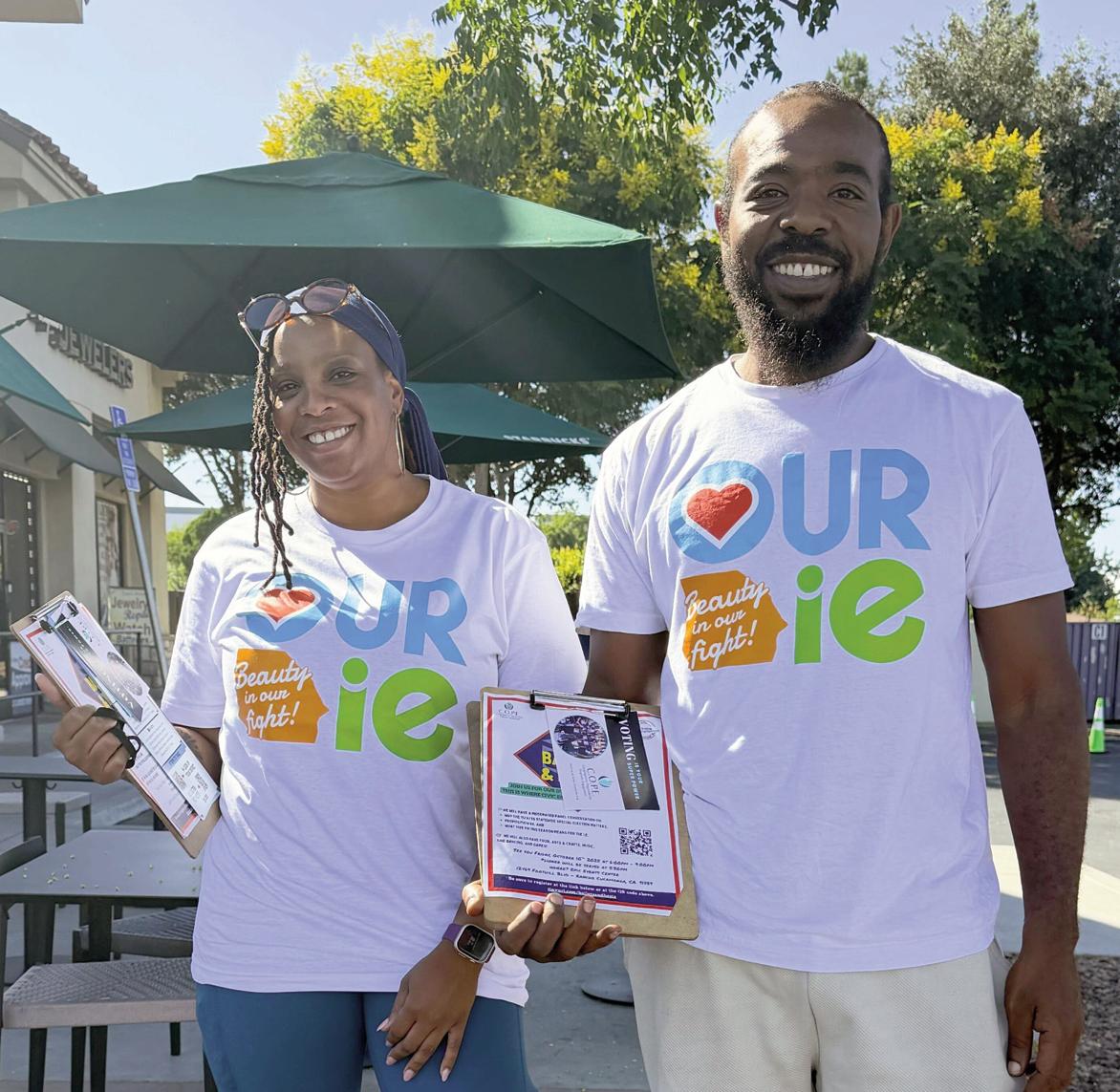
PHOTO COPE
From left, COPE civic engagement project manager Stanette Dixon and civic engagement coordinator T.S. “Tamez” Nolley prep to talk with residents about Prop 50 and what they love about the IE.
Rotary Toy Drive (cont.)
- 20th, at 1 PM. It's located at 1106 N La Cadena Dr.”
Councilman and Colton Rotary member John Echevarria said at the toy drive,
Our IE (cont.)
- here, there is a community here and advocacy here, we wanted to just be part of shifting that narrative for folks so they could see the beauty and the things that we get to experience every day.”
Dixon said San Bernardino, the city that shares its name with the county, often shoulders the brunt of those stereotypes while receiving less funding than surrounding communities.
“When people think of San Bernardino, they think of the crime, the gun violence, the drugs, the homelessness, the lack of community and things to do,” she said. “People are always driving to L.A. or somewhere else to find things to do, and we have a plethora of greatness here.”
COPE civic engagement coordinator
Tamez Nolley said part of the work is reminding people just how vast and varied the region really is.
Nolley said part of the work is simply helping residents grasp the scale of the region. “We actually found out that it was 49 cities,” he said, “and we want people to know how big it is and how many positive resources are available.”
To test messages and better understand how residents feel about their communities and their political power, the Our IE partners worked with the MVP Echoes Academy to conduct large-scale polling.
“We got the opportunity to do some polling,” said Emma Lee, media and communications specialist at Starting Over Inc. “We did see that in the IE, compared to the average California voter, people in the IE were more likely to feel that they have less of a say, less of an impact when they vote. They’re less likely to think that their voice matters.”
Dixon later clarified that, with support from the academy, the coalition reached about 90,000 residents between August and October 2025 through phone banking, door-to-door canvassing and outreach at community events such as Black August and gatherings hosted by the Inland Region Reentry Collaborative.
“We collected stories from the phone banking and the canvassing to ask folks why they love living in the Inland Empire or some positive things about living in the Inland Empire,” Dixon said. “We did capture a couple of stories and quotes from people sharing some positive lights on it.”
At the same time, she said, many respondents said they had moved from places such as Los Angeles County for economic reasons yet “don’t feel like there is funding here” or feel unsupported by local systems.
Nolley said the phone banking revealed both challenges and nostalgia.
“We were just trying to uplift positivity,” he said. “We’re not a bill collector. We’re not trying to sell you anything. Once we say what we’re calling for, a lot of people just sparked their childhood memories… where they used to attend the same festival. So it’s like, we do need to bring that back.”
“Anyone who could not make it out here today, we are accepting new, unwrapped gifts through Dec. 15th. These toys are for the residents of Colton and stay here in town. We appreciate your generosity.”
Inland Empire Community News was
Some callers shared frustrations, he added, and organizers pushed them to think about solutions. “Even like that, some people did have some negative things to say,” Nolley said. “Then we would ask them, ‘Well, do you have a solution to that?’”
When residents talked about what they love, Nolley said they often mentioned longstanding community events. “A lot of the positive feedback was bringing the community back,” he said, recalling Route 66 activities and weekly talent shows downtown. “Just sharing and connecting resources… to bring back a sense of community.”
Dixon said people also uplifted “the Black History Parade we used to do in San Bernardino, the farmers markets throughout Redlands and Riverside, the Lavender Festival, the seasonal events that take place throughout Riverside and San Bernardino.”
On top of conversations, the campaign is betting big on visuals and digital media.
IC4IJ multimedia lead Daniel Reyes designed the Our IE logo and the “swag” — T-shirts and other items organizers wear and hand out at events.
“As far as the logo, I think we wanted it to be something bold and easy on the eyes,” Reyes said. He added a silhouette of the Inland Empire and a tagline suggested by the group: “Beauty in our fight.”
“Our efforts, they are to fight for,” Reyes said. “We want to emphasize that there is beauty in the region. There’s a reason to fight through it.”
Billboards with campaign messages have gone up in Riverside, Fontana, Rialto and near San Bernardino, driving people to the website at our-ie.com. Digital ads across Facebook, Instagram and Nextdoor are amplifying that message even further.
“On my end, I’ve been running the digital ads… and we’ve reached 900,000 people at this point,” Lee said. She said the campaign targets people who live in the Inland Empire, and in particular a segment described as “secure suburbanites” — residents who are expected to be more politically active but “can be tougher on crime,” and whom the group hopes to reach with a different message.
“Some messaging I’ve really been leaning into is, ‘We love it, so we fight for it,’” Lee said. The ads ask questions such as “What do you think of the IE?” and declare “We’re proud to live in the IE. Are you?”
Not every comment has been flattering — “I think someone just wrote, ‘stinky,’” she said — but organizers see the engagement as an opportunity to invite people into a different vision of the region “that you can be really proud to live in.”
The campaign has also intersected with more traditional civic engagement. Ahead of the Nov. 4 special election on Proposition 50, the Our IE team focused on voter education in Bloomington, Ri-
proud to support the toy drive with donations and coverage.
The Colton Rotary meets the second Friday of every month at noon at Denny’s Restaurant, 160 West Valley Blvd. in Colton.
alto, Fontana and San Bernardino, knocking on doors to explain the measure and flag the unusual election date.
“We canvassed, but we really just did voter education,” Dixon said. “We wanted people to know that there was a special election going on… so people could vote on their values.” She said some residents had seen texts and commercials, while others “did not know that there was a special election.”
Nolley recalled that on one of the final days of canvassing, the last person he spoke with “didn’t know” about the election. “He needed the information,” Nolley said, adding that the encounter “just stapled everything” and showed “it was much needed for everybody to know what’s going on.”
Only after building this shared project do the organizers circle back to their home missions.
Dixon described COPE as an Inland Empire–based, faith-rooted group founded “back in the 2000s by a core group of pastors,” with a main focus “to address mass incarceration and to reduce that mass incarceration.” She said the organization works through multiple pillars, including education, faith organizing, “justice transformation,” housing and civic engagement.
Reyes said IC4IJ’s work centers on immigrant communities in the region. “Our goal is to serve the immigrant communities in the Inland region,” he said. “We do it through policy advocacy, community organizing and… breaking down information for folks and making it more digestible, more accessible.” He pushed back against social media narratives that depict immigrants as “parasites” or criminals, noting that the coalition’s own staff is “mixed status… from all backgrounds.”
Lee said Starting Over Inc. is “formally incarcerated-led” and focuses on transitional housing and reentry services for people coming home from prisons and jails, while organizing around issues such as family separation, second-chance hiring and sheriff oversight. She argued that massive law enforcement budgets and lawsuit payouts are crowding out investments in housing, childcare and public health, and that “divisive and hateful” rhetoric is “turning our neighbors against each other.”
For all three organizations, Our IE has become a shared vehicle to connect those issues and constituencies.
“This was a really great starting point for us to collaborate,” Dixon said. “Bringing joy back during this climate has been helpful — just giving people something to celebrate, a reminder of gratitude and happiness in the community where they live, and reminding folks that their voice matters.”
Nolley said the campaign is just getting started and credited the Million Voters Project for helping launch it. “I would just like to give a shout out to MVP for bringing this together,” he said. “That was the starting point of it, and I’m just happy to be a part of the movement.”
Rialto Council OKs Disaster Relief for Vista View Apartment Fire Victims, Landlord and Management Face Scrutiny
By Christopher Salazar
Days after the Vista View Apartment fire displaced roughly 70 residents, the Rialto City Council added an item of “subsequent need” to the agenda and voted unanimously to create a $100,000 disaster relief fund to mobilize relief for victims. Community advocates praised the move but warn the emergency has shown that Rialto is unprepared and must make changes to city ordinances to protect tenants, alleging that the landlord failed to uphold its legal obligations.
Vista View Apartments, a 100-unit apartment building managed by Cannon Management, erupted in flames at approximately 5:15 p.m. on Friday, Nov. 21st. Through the efforts of local fire fighters and police officers, there was no loss of life or serious injury despite 16 units rendered uninhabitable.
In the aftermath, aiding and rehoming victims of the inferno has proved difficult. However, two community advocacy groups, the Center for Community Action and Environmental Justice (CCAEJ) and the Hispanic Coalition of Small Businesses (HCSB), have combined their efforts to provide temporary relief.
But money is a pressing concern.
“We are housing folks and the funds are running out,” said Ana Gonzalez, executive director of CCAEJ, pleading to the Council. “And so, right now, I am here to ask you all to please declare a state of emergency.”
Gonzalez said she spoke with housing attorneys and opined that Rialto does not have sufficient tenant protections in place, making it difficult to adequately represent victims of the Vista View fire.
“The property owner had a meeting with the residents yesterday and basically said, ‘Here’s your deposit, here’s your prorated rent, and we are done because the building is gone,’” Gonzalez said. “But, in fact, there are a lot of state laws that say otherwise.”
She later said that the responsibility to rehome the Vista View tenets “falls on the landlord.” However, this is unconfirmed.
“If CCAEJ did not step in, the Red Cross, trust me, was not going to cover their housing—they told us,” Gonzalez said. “And so we had an emergency board meeting to get the funding to house these folks, otherwise they would be sleeping in their cars or in the streets. We need action from the City Council now.”
Displaced residents of the Vista View complex continued to share their plight with the Council, urging them to declare a state of emergency.
Read the full story at IECN.com.
Op-Ed
When Your Backyard Becomes a Warehouse: Inland Empire Communities Are Paying the Price for Convenience
By Raquel Ramirez, CSUSB student
Abackyard is a place for many that offers a quiet escape from the sounds of clunking machinery, beeping trucks and rushing traffic. Better yet, it’s a place to breathe after a long day and enjoy a sunset view.
But the Inland Empire’s warehouse boom has turned what once was a serene escape into a neverending chorus of beeping loading docks surrounded by staggering gray walls.
When I first covered this topic in my article with the Frontline Observer, I approached it not just as a first-time journalist but as a resident of Rialto. I live right across from the Target Distribution Center. As I’m writing this, I hear beeping trucks outside my window.
The noises and obstructed views alone raise pertinent issues, but reporting on warehouse development made me realize the true cost of warehouses is much worse.
What once was white noise to me, blending into my everyday routine, became a sounding alarm for the action that needs to happen for the region’s future.
Community members have already been sounding the alarm for years. On Tuesday, Nov. 18, the Perris City Council voted 5-0 to draft a moratorium that will be considered on Dec. 9.
The decision reflects the community’s initiatives towards confronting the cumulative impacts of warehouse development.
With nearly 4,000 warehouses concentrated in the region, most of which rely on diesel trucks that release nitrogen dioxide, the transportation and logistics indus-
tries are jointly responsible for growing environmental and health concerns. Both San Bernardino and Riverside counties rank among the top five most ozone-polluted areas in the United States, posing a greater risk to the communities within the region.
The demand for online shopping transformed the Inland Empire into a hotspot for warehouse development. To meet growing demands during the pandemic, corporations rushed to construction without considering the proximity of warehouses next to neighborhoods, schools and parks.
Two warehouses in Bloomington are located less than a mile from Joe Baca Middle School. Caitlin Towne, an educator at the school, says many of the students suffer from asthma.
Granted, the number of warehouses across the Inland Empire has opened many jobs to the community. Currently, the transportation and logistics job category is second in job growth, with projections of a 1.7% increase by 2028.
Towne says many of her former students were working at warehouses in Fontana and Bloomington during the height of the pandemic.
What seems like a great economic industry for the region is, however, an overreliance on lowwage labor. Transportation and logistics are among the lowest-paid positions available, according to the University of California, Riverside’s Inland Empire Labor and Community Center.
Many residents in the Inland Empire endure pothole-filled roads and congested commutes only to work low-wage, high-risk jobs. Some residents even have to travel outside of the region to get a fulfilling and well-paying job.
Even more concerning is that the low-wage jobs available in the region may be cut in half as automation is expected to expand to cut costs and increase efficiency.
As of August, the Inland Empire’s unemployment rate was 6.1%, surpassing both California’s seasonally adjusted 5.8% and the nation’s 4.5%.
Many people are struggling to make ends meet. Entering the workforce and landing a job in logistics isn’t much of a choice, but it is the only option. As Towne said to me, “It’s almost like that’s all they expect of the people in Bloomington is to just work in a warehouse.”
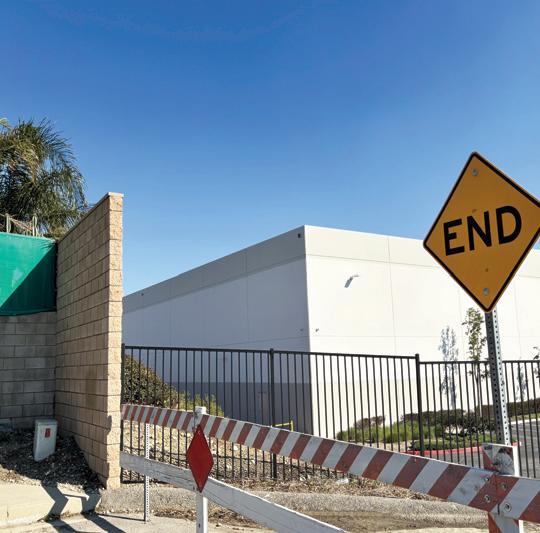
The Inland Empire – a place that offered many homeowners mountain views is now covered in lines of warehouses. We have reached a dead end, and the dead end is warehouses. Caring about the environment and the region’s economy are not mutually exclusive. We must care about both our economy and our environment.
We have seen what courageous community involvement can do for the region. The dead end that we have long faced with warehouses does not have to define our future. We can use our voices to pave a new path for ourselves by calling on our city leaders to make these changes.
To ensure a promising future, both economically diverse and environmentally sustainable, we must demand more than warehouses. Warehouses and lowwage positions shouldn’t come at the cost of the community’s public health, quality of life and environment.
The Inland Empire residents deserve to breathe freely and find peace in the comfort of their own backyards.
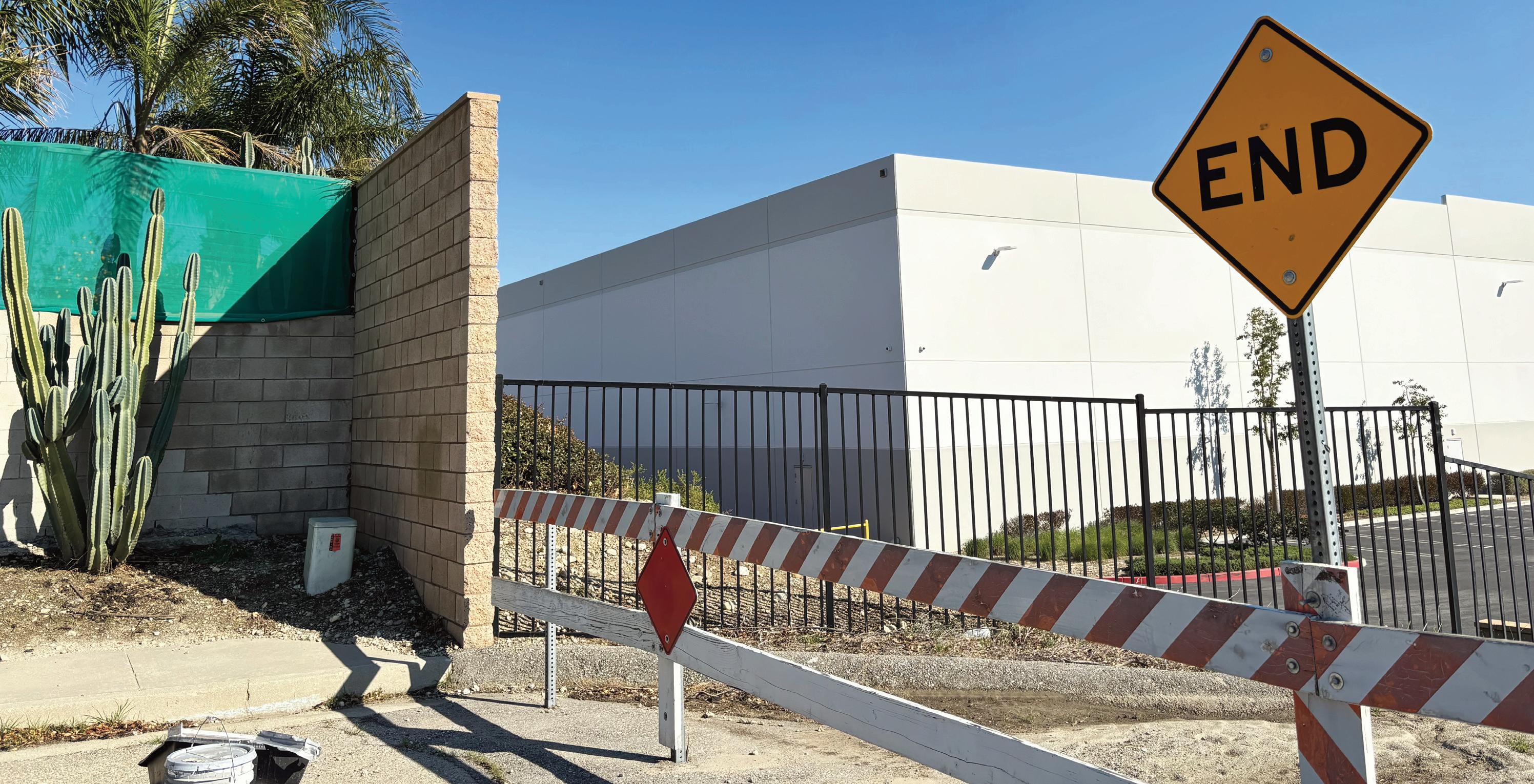
PHOTO RAQUEL RAMIREZ
Warehouses in Rialto are built directly next to residents’ homes, with the sound of trucks backing up heard in the background.
Can Tree Wonderland Turns Canned Goods into Holiday Meals at Feeding America’s NY Rockin’ Christmas in Riverside
By IECN Staff
Feeding America
Riverside | San Bernardino (FARSB) is hosting its 5th Annual Can Tree Wonderland: NY Rockin’ Christmas Edition presented by Albertsons, Vons, Pavilions Foundation on Saturday, December 13th, 2025, a community event that boosts awareness of food insecurity during the holiday season while creating a healthy, creative competition for neighbors to participate in.
“The holiday season is tough on families struggling with food insecurity, and this event lifts our community members’ spirits, brings people together, and provides food and funds for hunger-relief during the holidays when needs are higher,” said Carolyn Fajardo, CEO at FARSB.
The event will take place from 12:00 to 2:00 PM at the FARSB warehouse, located at 2950-B Jefferson St. Riverside, CA 92504.
Can Tree Wonderland begins with a building and decorating competition featuring holiday trees made from canned goods. Groups can use holiday décor to create a themed tree, a classic Christmas
display, or an eclectic design. Once the trees are completed, the event opens for public viewing with a NY Rockin’ Christmas theme on full display, complete with Santa, a life-size NYC skyline, and more.
Attendees can browse the Can Tree displays and cast their vote for their favorite tree as part of the “View & Vote” activity.
Families can also snap a photo with Santa in front of the NYC skyline, take home a memory from the day, and enjoy a complimentary NY-style pizza slice from Mamma Mia’s Pizza, with one slice available per attendee, subject to availability.
Guests will also be able to participate in a Gingerbread House Contest, building a mini gingerbread house from cardboard for a chance to win a prize.
The event is free and open to the public, but donations are strongly encouraged to support FARSB’s mission to alleviate food insecurity across the Inland Empire.
Community members can get involved in several ways. They can attend and vote by joining FARSB at the warehouse on Satur-
day, December 13th for activities, games, and voting for their favorite tree, with festivities starting at 12:00 PM. More information is available at FeedingIE.org/cantree.
Sponsors, businesses, and community groups can also support the cause by sponsoring or building a Can Tree. Participants can purchase or collect canned goods to construct their own tree, with all food donated back to FARSB after the event.
Those unable to purchase or collect enough cans for a full tree can still contribute to the “Community Tree” by donating a single can and proudly displaying their name, club, or business on a can. The Community Tree will be displayed at the Can Tree Wonderland event on Saturday, December 13th.
Can Tree Wonderland: NY Rockin’ Christmas 2025 is made possible by sponsors Albertsons, Vons, Pavilions Foundation, DCH Subaru of Riverside, Vulcan Materials Company, Altura Credit Union, Athen Services, Hodgdon Management Construction, QVC Group, and San Bernardino Elks Lodge 836.
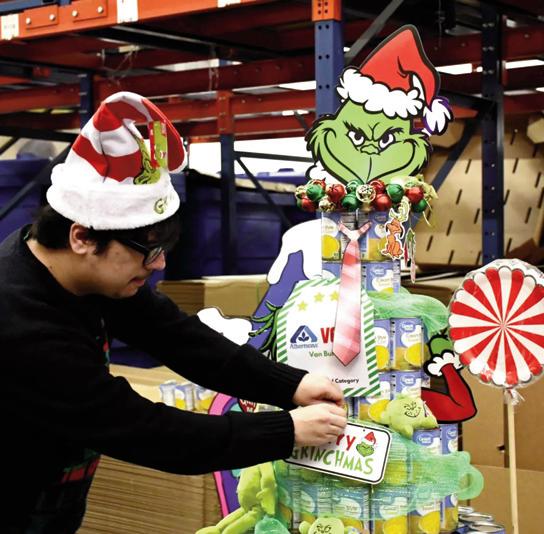
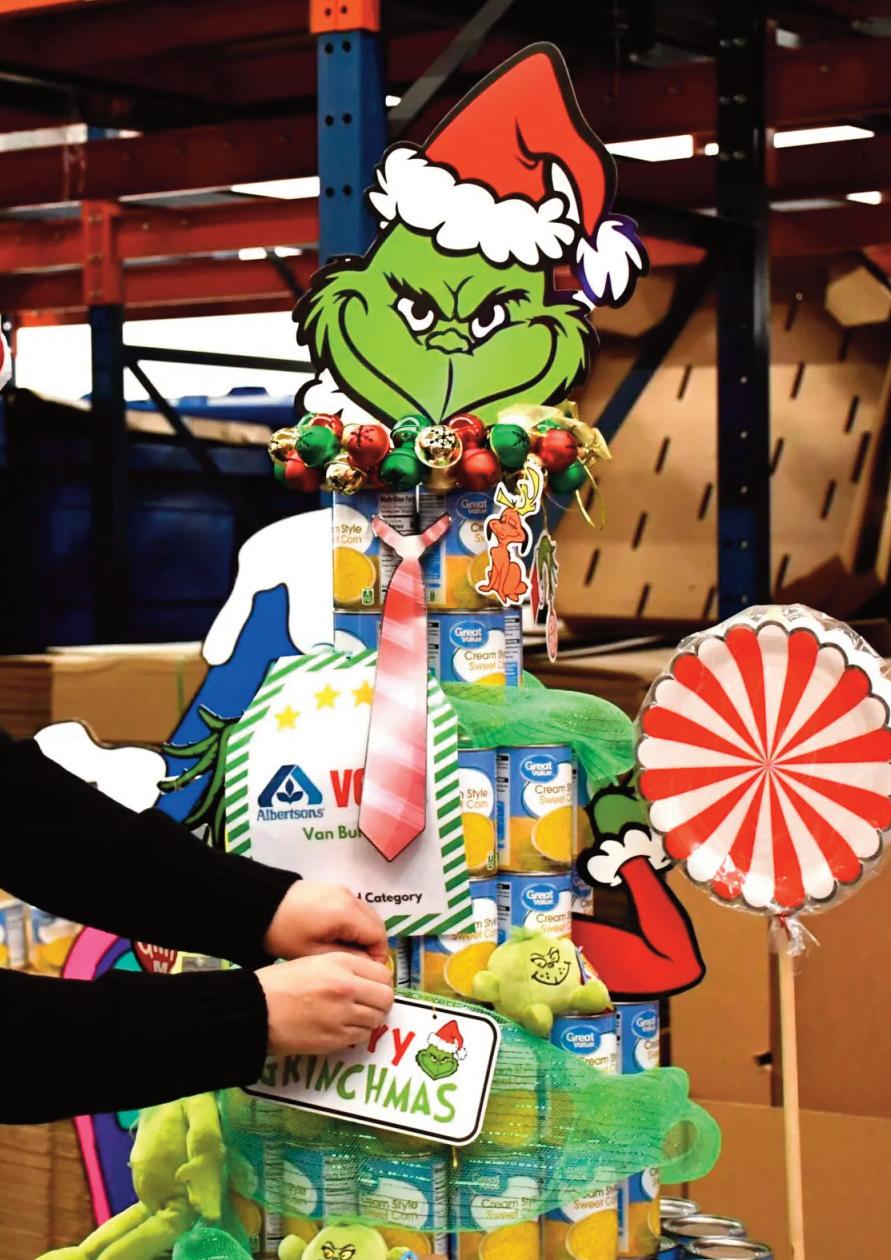
PHOTO FARSB
A volunteer adds finishing touches to a Grinch-themed can tree made from donated canned goods at Feeding America Riverside | San Bernardino’s warehouse.
SCAG Survey: Inland Empire Families Juggle
Childcare Costs, Overcrowded Housing as Remote Work Climbs, Transit Use Falls
By Cal Matters
The Southern California Association of Governments (SCAG) published their annual community survey in October, bringing a snapshot of housing and commuting across San Bernardino, Riverside, Orange County, Los Angeles and Imperial Counties.
The report’s conclusions: we need more childcare, more family-friendly workplace policies and more housing.
Seventy percent of children live in a household where both parents work, requiring these families to pay for childcare.
The construction of new housing has not continued to match demand, said Kevin Kane, SCAG program manager for demographics and housing policy. He pointed to the region’s overcrowding rates, a figure he says is representative of supply not meeting demand, and of people jamming into homes to save on rent.
Overcrowding is defined as more than one person per room in a household. Nine percent of homes are consid-
ered overcrowded in San Bernardino County, compared to 8% in Riverside, 10.5% in Los Angeles County, 10% across the SCAG region, 7% in California, and only 3.5% across the country.
Despite overcrowding, the percentage of households that spend more than 30% of their income on housing costs has slightly declined since 2006. This mirrors a national trend, according to the report. Forty-one percent of households in Riverside and San Bernardino Counties, 43% across the entire SCAG region, and 32% across the nation spend more than 30% of their income on rent. In 2006, the number was closer to 47% in the SCAG region.
The report shows that work-from-home has stabilized, with 10.3% of workers in San Bernardino, 11.5% in Riverside, and 14% from the entire SCAG region working from home in 2024.
That is a jump from before COVID: in 2019, only 6% of employees worked from home. Only 2.7% of workers took transit in 2024, a decrease from 3.8% in 2019, and from 4.9% in 2006, when SCAG began collecting the information.
Home ownership rates have not changed much in recent years. Riverside County has the highest home ownership rate in the SCAG region, with 68% of home ownership compared to 63% in San Bernardino County, 46% in Los Angeles County, 53% across SCAG and 65% across the entire nation.
College education rates are also rising, both locally and nationally. Twenty-four percent of people over 25-yearsold in San Bernardino have a bachelor’s degree, compared to 26% in Riverside, 35% in the SCAG region, 40% across California and 39% across the country. In 2006, those numbers were 17% in San Bernardino, 19% in Riverside, 27% in the SCAG region, 31% across California and 27% across the country.
SCAG, a metropolitan planning organization, is governed by representatives of cities throughout the counties. Its goal with the data is to provide for informed policy decisions in response to the commuting, education and housing needs of the region.
“Freeways don’t end at county borders. Labor markets don’t end at county borders. Your housing search radius doesn’t end at a county border,” said Kane.
New $5 Million Revolving Loan Fund for Inland Empire Nonprofits Launches Dec. 1
By Inland Empire Community Foundation
The Inland Empire Community Foundation (IECF) today announced the launch of the $5 million Inland Empire Nonprofit Loan Fund, created in partnership with the City of Riverside, San Bernardino County, and the Nonprofit Finance Fund (NFF). Beginning Dec. 1, local nonprofits can apply for flexible, affordable loans designed to help them strengthen operations, manage cash flow, and expand their work, particularly in underserved and low-income communities.
The fund aims to fill a long-standing gap in access to capital for community-based organizations that often face barriers to traditional financing. By improving financial stability and supporting growth, IECF and its partners hope to empower nonprofits to better serve the region’s most vulnerable populations.
“Nonprofits carry so much of the work that holds our region together. This fund gives them access to capital that helps them stay strong and keep serving, especially in communities where support is often hardest to find,” said Michelle Decker, CEO of IECF. “The City of Riverside, San Bernardino County, and IECF share a belief that strong communities start with strong nonprofits. By investing together, we’re helping local organizations build stability and impact across the Inland Empire.”
Supported by $2.8 million from the Riverside Nonprofit Resilience Fund—approved by the Riverside City
Council in October 2024—and $3 million from the San Bernardino County Nonprofit Revolving Loan Fund— approved by the Board of Supervisors in April 2025— the fund represents a historic commitment to bolstering nonprofit resilience and expanding critical services for communities most in need. The Nonprofit Finance Fund, selected by IECF, will oversee loan administration to help local organizations grow, adapt, and serve their communities for years to come.
“Non-profits do so much of the heavy lifting that bolsters the efforts of local government,” Mayor Patricia Lock Dawson said. “This revolving loan fund will assist non-profits in growing their reach and the loan repayment will ensure those resources are available for future needs.”
“We are committed to investing every public dollar responsibly to strengthen the organizations that serve our residents,” said Board of Supervisors Chairman and Third District Supervisor Dawn Rowe. “By working together with our regional partners, we’re ensuring that nonprofits have the resources they need to grow and meet community needs.”
Eligibility
Nonprofits serving in the City of Riverside or San Bernardino County may apply for below-market loans ranging from $100,000 to $400,000 through the Inland Empire Nonprofit Loan Fund.
As loans are repaid, funds will be available to other
nonprofit borrowers, extending the impact of the initial investments. Loans will help nonprofits navigate growth, funding disruptions, payment delays, and other hurdles to financial stability and social impact.
Loan awards will be based on thorough assessments of each applicant’s operational strength, financial stability, and repayment capacity, with priority given to organizations that demonstrate strong community impact and alignment with local needs.
“This unique partnership between local governments, the Foundation, and NFF as a Community Development Financial Institution (CDFI) will get more resources into the hands of nonprofits at a time when their communities are asking more of them,” said Jennifer Kawar, vice president of investor relations at NFF.
Application deadline
The first application window opens from Dec. 1 through Jan. 31, 2026. Interested nonprofit organizations are encouraged to visit www.iegives.org/ienonprofitloanfund to learn more.
For further assistance, information sessions will be offered both virtually on Dec. 10 and in person on Jan. 13–14, 2026. Registration details will be available on the website.
PHOTO CAL MATTERS
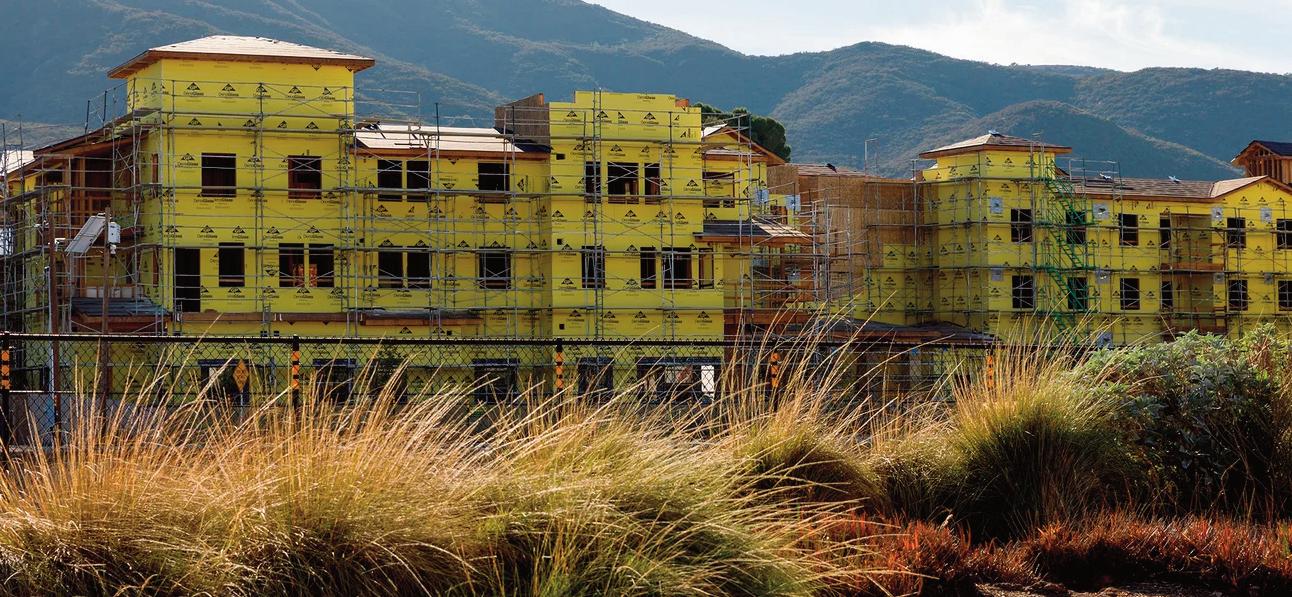
An apartment complex under construction in Temecula in Oct. 2024.
State Housing Secretary Visits San Bernardino County Sites as Affordable Housing Investments Top $84 Million
Community News
San Bernardino County hosted a visit by California Business, Consumer Services and Housing Agency Secretary Tomiquia Moss on Friday for a tour of two major affordable housing communities in the valley region. The visit highlighted the county’s efforts to expand affordable housing and strengthen collaboration with the state.
Secretary Moss toured Pacific Village, one of the county’s flagship revitalization projects, and Arrowhead Grove, a transformative mixed-income development in the heart of San Bernardino. The state contributed $15.8 million to Arrowhead Grove through the Affordable Housing and Sustainable Communities (AHSC) program.
Pacific Village also received significant support from the state, totaling over $69 million. During the visit, Secretary Moss viewed recent progress at both sites and met with local partners to discuss ongoing needs in the affordable housing landscape.
“Communities across California are working hard to meet the moment, and San Bernardino County is demonstrating what strong collaboration can deliver,” said Secretary Moss. “The state is committed to supporting local partners as we expand affordable housing, strengthen neighborhoods and ensure that families have access to safe, stable places to call home.”
Members of the Board of Supervisors echoed the secretary’s emphasis on partnerships and the role they play in advancing housing initiatives and serving residents.
“Our communities benefit when all levels of government collaborate, and Friday’s visit highlighted the progress underway and reaffirmed our shared commitment to supporting the residents who depend on these housing investments,” said Board of Supervisors Chairman and Third District Supervisor Dawn Rowe.
Board of Supervisors Vice Chair and Fifth District Supervisor Joe Baca, Jr., whose district includes both communities, said, “These projects show the power of strong partnerships to bring dignity and opportunity
back into our neighborhoods. When we work together, we’re not just building housing, we’re creating second chances for families who deserve stability, support and a real path forward.”
Second District Supervisor Jesse Armendarez, who attended the tour and has similar housing projects in his district, said, “We appreciate Secretary Moss for visiting San Bernardino County and recognizing the hard work our team and partners have put into ensuring housing is accessible, safe and supportive for the families who call our communities home.”
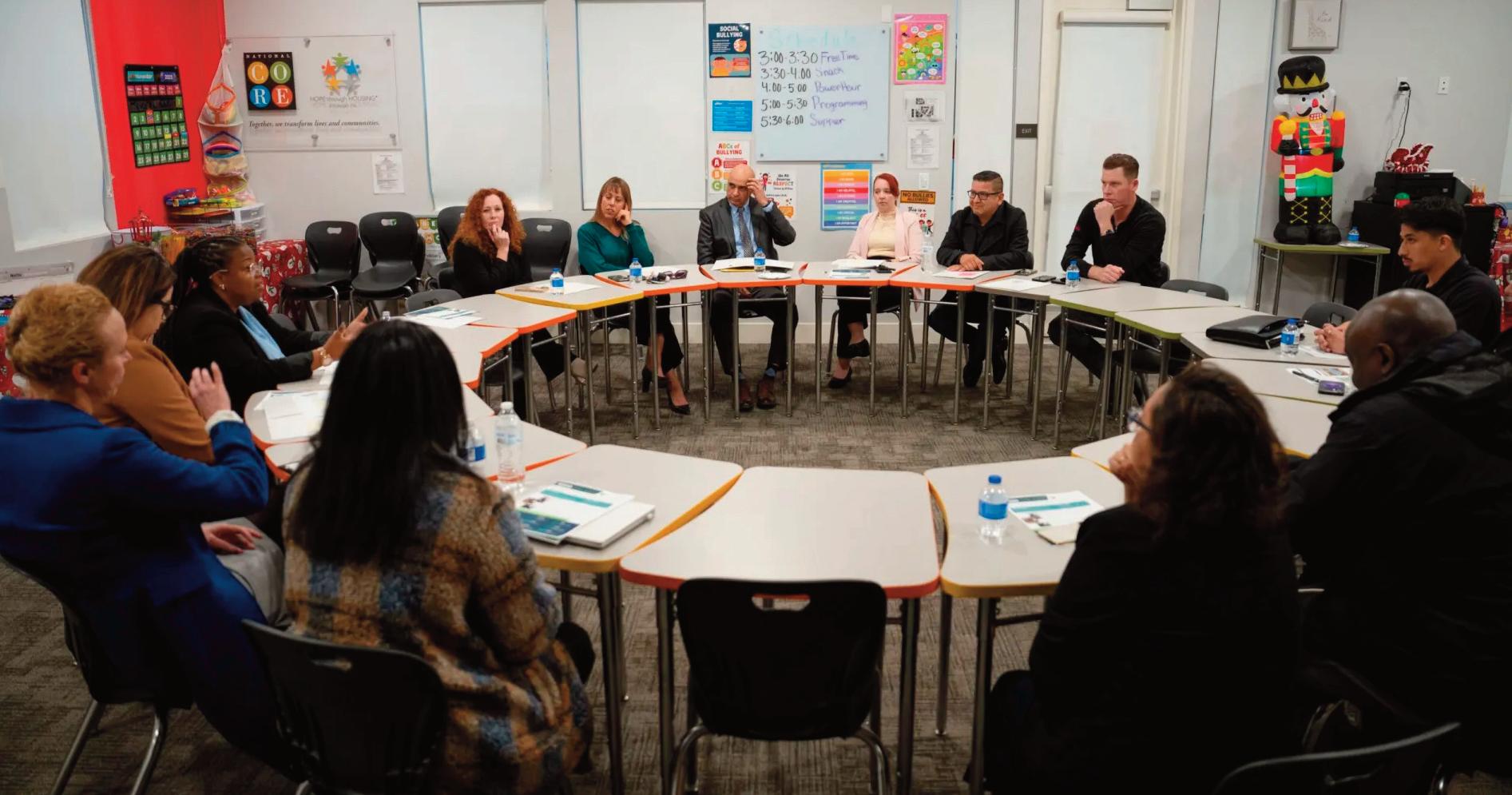
The visit concluded with a roundtable discussion among county and city officials along with housing partners on long-term strategies to support housing stability. Attendees included leadership from the county’s Community Development and Housing Department; the Housing Authority of the County of San Bernardino; representatives from the city of San Bernardino; and regional development and service partners working on local housing initiatives.
PHOTO SB COUNTY
County, city and housing partners take part in a roundtable discussion with Secretary Tomiquia Moss on long-term strategies to expand and sustain affordable housing in San Bernardino County.
PHOTO SB COUNTY
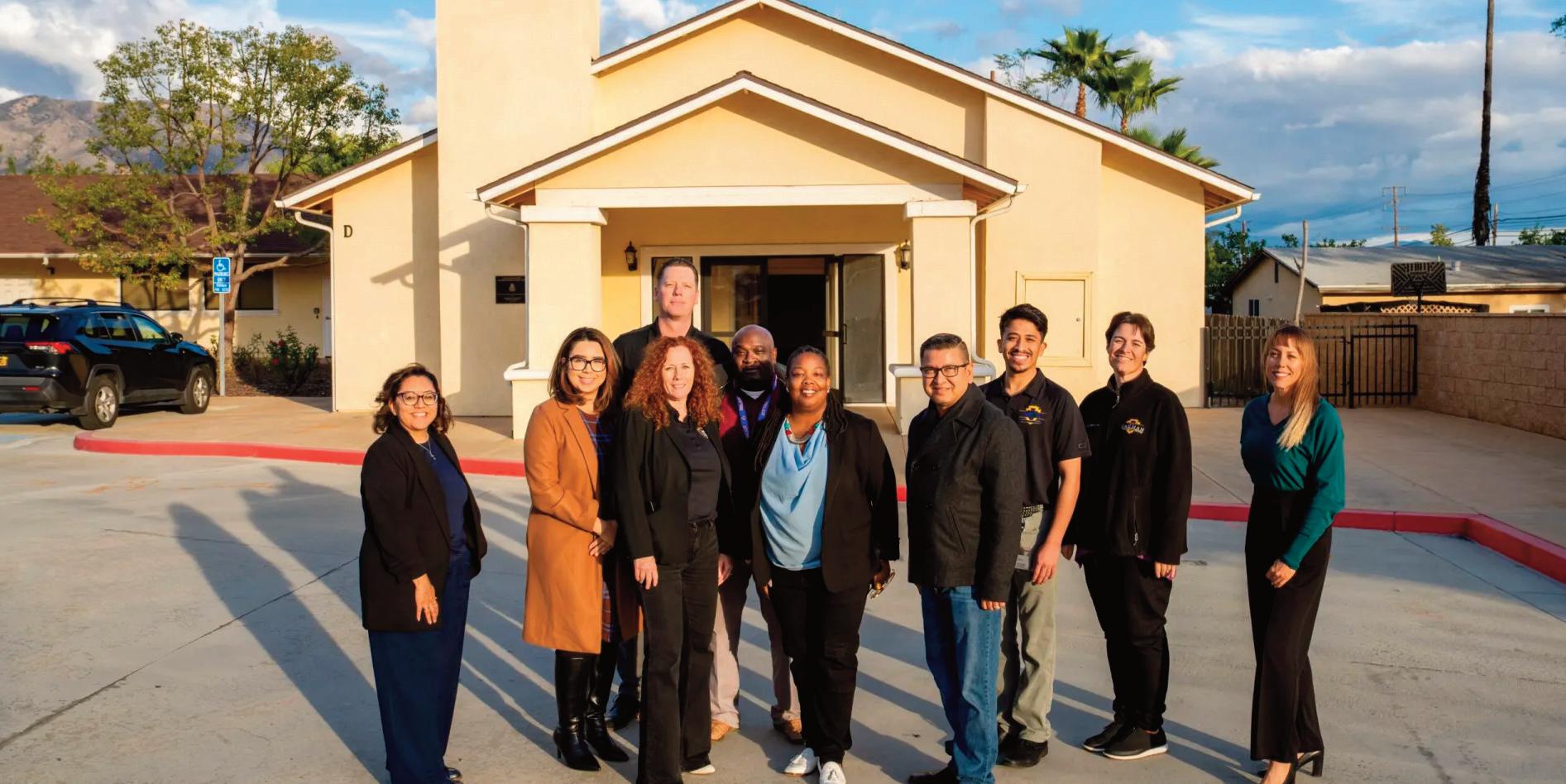
County officials, state housing leaders and community partners gather at Pacific Village in San Bernardino at the start of Secretary Tomiquia Moss’ affordable housing tour on Friday.