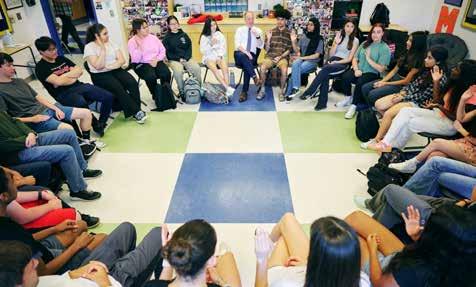
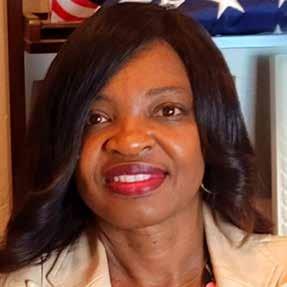
It is time for new leaders to make civic learning and civic engagement a reality for all. It is my great hope that our nation will commit to educating our youth about civics, and to helping young people understand their crucial role as informed, active citizens in our nation.
Justice Sandra Day O’Connor
1930–2023
WHO WE ARE
Founded in 2009 by Supreme Court Justice Sandra Day O’Connor, iCivics is a nonpartisan organization dedicated to advancing civic learning by providing educators and students with the knowledge, skills, and resources needed to embrace and engage in our civic life together. We empower educators and lead the movement to make civic education a nationwide priority so all young people have the confidence to shape the world around them and believe in our country’s future.
Vision
A thriving American democracy supported by informed and civically engaged young people.
Mission
We inspire a passion for civic learning so young people can shape the world around them and believe in our country’s future.
Commitment
iCivics is committed to providing high-quality, equitable, civic education opportunities for each new generation.
CEO LETTER
Nearly 250 years ago, the founders of our nation debated vigorously how to form a new and prosperous nation. Today, despite profound and visceral moments of turmoil throughout that history, the United States stands as the oldest continuous modern democracy. Yet we have reached one of the most consequential civic moments in our country’s history as we face deep internal divisions and distrust.
Trust in our institutions and in one another is currently at an all-time low. This is particularly true for young Americans, who will inherit and steer our constitutional democracy into the future.
At every level—personal, community, national—we see a decades-long rise in isolation and a decline in civic engagement. This civic disconnection is a self-exacerbating cycle. As more Americans feel that government is too remote, too complex, or too broken, there is increasing disengagement from participation and a failure to hold institutions accountable. Too many people feel disempowered.
This is our core challenge: Citizens cannot commit to sustaining and strengthening what they do not value or understand.
What we do today will shape the next chapter of our nation. For those who believe in the American system of governance—its power, resiliency, and the uncanny balance of individual freedom and the common good—the way forward is to rebuild trust.
And the way to do that? Civic education for all––preparing the next generation to navigate and flourish in our self-governing society, one classroom and community at a time.
At its core, civic learning is about how we resolve issues in communities— how the process works, who makes decisions, and why. It is about the knowledge, skills, and behaviors we all need to work toward a greater common good.
K–12 education is and always has been rooted in thousands of communities across the country, reflecting the tapestry of people, places, and perspectives that are among America’s greatest strengths. Each day, K–12 schools reach nearly one-third of the U.S. population—that’s an estimated 100 million students, parents, and educators nationwide.
At the local level, students can most easily and effectively learn about, experience, and practice civics, including the history that shapes policies and perspectives where they live.
“It is not enough to know; one must also do,” advised iCivics Founder Justice Sandra Day O’Connor. Engagement focusing on local solutions with state and local institutions that most directly shape the daily lives of students and their families fosters young people’s confidence and trust in institutions and their fellow citizens and yields civic engagement.
The collective impact of local civic learning can then radiate up toward crucial national, even global, challenges we can only address together.
This is not unbridled optimism. This is achievable. iCivics’ strategy is shaped by a clear vision informed by immense experience, expertise, and real progress.
In the past 15 years, iCivics has evolved from Justice O’Connor’s prescient vision to become the largest, most trusted provider of and advocate for high-quality, nonpartisan civic education for students in the United States. iCivics has steadily and purposefully achieved its leadership position, even in the face of increased polarization.
Over the last five years, we met or exceeded nearly all of our strategic aims:
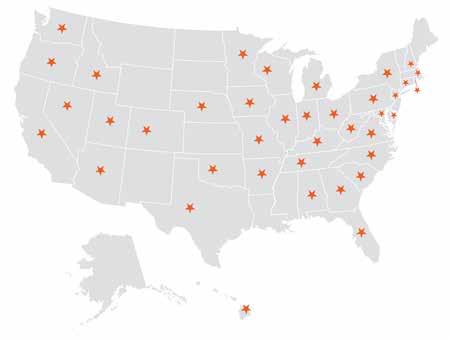
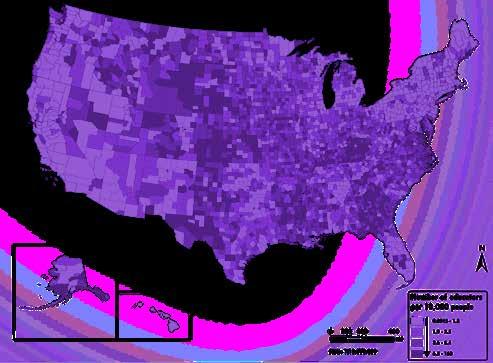
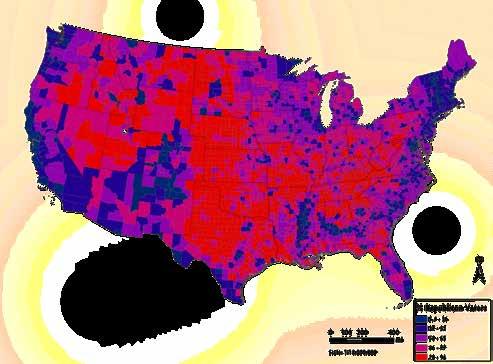
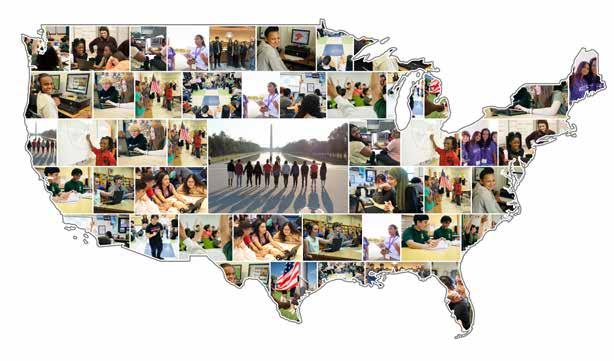
n Expanded our reach: iCivics’ award-winning educational resources are used by more than 145,000 PreK–12 educators each year to reach more than 9 million students across the nation—in all 50 states and in 80% of U.S. counties: red, blue, purple, and every shade between.
n Catalyzed a movement: Our CivxNow coalition is an influential and cross-partisan movement of 346 national organizations and leaders from 41 states, advocating for more and better civic education as a
centerpiece of modern education. Since 2018, CivxNow has supported the adoption of 38 bipartisan policies to elevate civic education in 24 states.
n Evolved for impact: iCivics has developed a gold-standard core curriculum, U.S. History Through Inquiry, that integrates civics and history education. Steeped in inquiry-based learning and localized to the unique needs of districts, Through Inquiry has been piloted in 12 diverse school districts in 9 states and is now being distributed more widely.
The time is NOW to build trust and civic strength: For the Future of U.S.
For the last 40 years, our nation has failed to adequately invest in civic education. We can no longer afford this neglect. We must double down on bringing high-quality civic education to the center of our education system. iCivics is well-positioned to lead. Our organization has scale, expertise, and knowledge—coupled with a pluralistic approach and an unparalleled reach across the geographic, demographic, and ideological spectrum in our nation—to lead at this moment.
“K–12 civic education has the potential to reach nearly 1 in 3 Americans each day.”
For the Future of U.S.
iCivics’ strategic plan for 2025–2030 lays out a framework for success over the next five years. We are seeking critical investments in four fundamental aspects of work that are interconnected and can lead to transformative and measurable outcomes:
Innovate education by empowering educators with resources that cultivate the knowledge, skills, and dispositions students need for informed civic participation;
Inform policy by advancing policy at the state and national levels to make civic education a priority for the health and strength of our nation;
Illustrate impact by evaluating and sharing evidence-based findings that demonstrate the value and impact of civic education for our country’s future; and
Inspire engagement by inviting and engaging a diverse community of learners and leaders in the movement for high-quality civic education.
Imagine this: Every single K–12 student in the United States benefits from a deeply relevant and engaging civic education. Each year, 3.8 million students complete their studies, emerging as better-informed individuals who contribute positively to their communities and influence numerous peers and family members.1 Over time, this would have a profound impact on the health and strength of our constitutional democracy.
We can realize this vision, but we cannot do it alone. We need forwardthinking partners to invest in and support our efforts. Together, we can restore trust and build on our civic strength for the Future of U.S.
Thank you for being part of this journey with us.
Louise Dubé Chief Executive Officer, iCivics
WHY CIVICS
Too
many
young people are losing faith in our country.
Surrounded by political division, distrust, and polarization, too many young people are losing confidence and now view the United States as a “democracy in trouble.”
The best way to strengthen our democracy is to teach it.
Building young people’s faith in our country starts with teaching them how to participate in it—developing the knowledge, skills, and dispositions needed to effectively share their ideas with others and contribute to their communities.
When young people see they can shape our country, they believe in its future.
We need civic education that is relevant, meaningful, and engaging for each new generation. Civic education not only inspires a belief in our country, but also instills in youth a sense of belonging and a confidence to shape the world around them and work with others to solve problems together.
Progress in the Field THE STATE OF CIVICS
Over the last five years, through three national elections and a global pandemic, the civic learning field has made tremendous progress.
Elevating the Cause
Shifting the national mindset to prioritize civic education means engaging all the critical stakeholders in the American public-at-large, including educators, parents, community leaders, and young people themselves. iCivics’ and its partners’ collective and strategic efforts have resulted in a surge of thought leadership and public attention from myriad analytic reports and expert convenings to substantive media coverage in more than 300 high-profile outlets. The ultimate realization of this success is Civic Learning Week, an annual, week-long celebration of civic learning. In just three years, Civic Learning Week has become an unqualified success, engaging expert leaders from across the political spectrum, more than 200 partners, and tens of thousands of participants in all 50 states. And its size and influence are growing each year.
Growing a Movement
CivxNow was founded in 2018 with the goal of uniting the civic education field to fuel constitutional democracy in the United States through more and better civic learning for all K–12 students. What began as the vision of iCivics and 47 initial partners has become the nation’s largest and most influential cross-partisan coalition of 370+ national partners, as well as leaders representing 41 states. Despite an increasingly divisive political climate, the iCivics-led coalition has successfully advocated for 38 best-practice policies advancing high-quality civics in 24 diverse states, as well as coalesced bipartisan support from federal leaders around the need to prioritize civics and history education.
Deepening Impact
In 2021, with funding from the National Endowment for the Humanities and the U.S. Department of Education, iCivics and its partners collaborated with 300 experts to launch Educating for American Democracy (EAD): A Roadmap for Excellence in History and Civic Education for All Learners. The EAD Roadmap promotes robust civics and history content and instructional best practice. EAD offers an inquiry framework that inspires students to learn by asking difficult questions, then seeking answers in the classroom through facts and discussion.
Challenges Ahead
While great progress has been and can be made, this is an incredibly challenging moment for K–12 education, specifically civic education and educators. At a time when the value of civics is clearer than ever, courses beyond Science, Technology, Engineering, and Mathematics (STEM) and English/Language Arts (ELA) remain sidelined in the aftermath of the pandemic. At the same time, what and how civics and history are taught has become increasingly politicized. Our challenge is to amplify the proven case that:
Civics should be the centerpiece of modern education. One of the key founding principles of American education was preparation for civic life. Yet civics has slowly become more of an optional elective than an educational imperative. The knowledge, skills, and behaviors uniquely taught and learned in civics are critical 21st-century skills, as important to the development and professional success of young people as they are critical to the health of our constitutional democracy. Decades of disappearing and ineffective civic education have resulted in generational declines in informed civic engagement, fueling the division and discord seen today.
The evidence is clear: Young people who receive a high-quality civic education are more likely to understand and debate issues, volunteer and vote, complete college, and develop employable skills.2 Yet civics and related topics are among the most under-resourced subjects in the entire education system.
Civics is cross-partisan. A high-quality civic education does not teach students what to think, but how to research and form their own opinions and, most importantly, how to live and thrive in a pluralist society. Polls have consistently shown that the vast majority of Americans across the political spectrum—more than 80%—support more and better civic education in schools.3
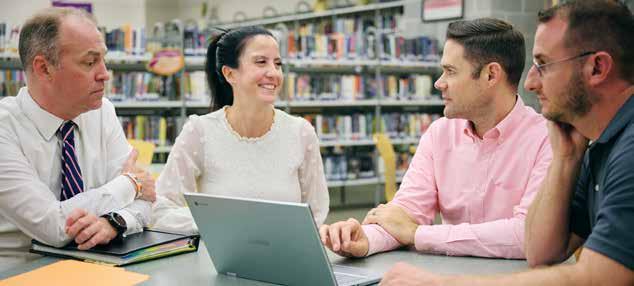
Civic educators are invaluable to our civic strength—and they need our support. Each day, an estimated 228,000 social studies teachers bring civics and history to life in classrooms and communities across the country.4 They do indispensable work helping young people make better sense of the world around them, including the increasingly fraught digital landscape. And yet, they have too often been targets for criticism and worse as our country has become so deeply polarized. There is a clear and unmet demand to provide professional development and support for educators as they guide our students to navigate an increasingly diverse society an digital democracy.
Largely, I lead my class from a place of inquiry. Instead of being the ‘sage on the stage,’ I want to guide my students in understanding how various groups might think about issues. I want to help them find the necessary sources to help them understand.
Shari Conditt History and
A Proven Solution THE STATE OF iCIVICS
iCivics’ Theory of Change
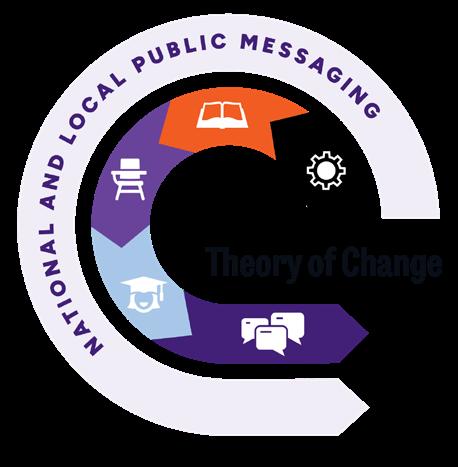
iCivics has a clear opportunity: to reshape how high-quality civic education is taught, learned, and funded in this country. Our state-model theory of change rests on three ambitious and interdependent axes of work, built on best practices:
1. Coordinated State and National Public Messaging: Mobilizing a groundswell of public support for high-quality civic education;
2. Policy Change: Passing meaningful public policy to strengthen the funding, requirements, and accountability behind high-quality civic education; and
3. District Adoption: Scaling iCivics’ inquiry-based classroom instructional model, inspired by the Educating for American Democracy framework.
We then grow within states and replicate the model in other states where the conditions are ripe for civics policy reform.
Proof of Impact
State-by-State Success
Massachusetts
$2.5 million for Civics Education Fund
Impact: 65% of social studies teachers received civics-specific professional learning
Indiana
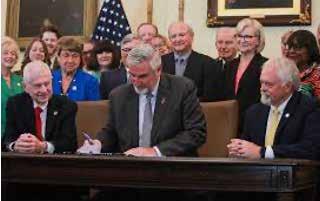
New required semester course in middle school leads to increased demand for civic education
CivxNow State Affiliates
A Scaled Solution
REACHING RESOURCES
Representation
iCivics is Used Across the Nation and is Strictly Nonpartisan
Uniquely Placed to Meet This Moment
iCivics is best positioned to build national momentum around civic education because we are recognized as a leader in the civic education community and have the right brand, tools, and network:
n We are a premier brand backed by an enthusiastic and still-growing teacher-community
n We have a diverse and powerful network as the recognized leader of a wide coalition of influential organizations
n We have inclusive values: We are accessible for all students—free, digitally available, and teacher-driven
n We are nonpartisan and collaborative
n We offer engaging and differentiated games and interactives proven to inspire student interest around the most pertinent civic themes
n We offer a full civics curriculum for middle and high school and our elementary offerings are growing
n We have strong organizational capabilities, including a robust and expert staff and pro bono collaborators
iCivics has enhanced class discussions and allowed students to form their own opinions. Students dive deep into the lessons from the moment they walk in the classroom and engage in critical thinking activities. Above all, students can relate what they learn in the classroom to life outside the classroom.
“ ”
Tanya Dargin
Social Studies Teacher, Scotlandville Pre-Engineering Magnet Academy, Baton Rouge, Louisiana
A DIVERSE AND POWERFUL NETWORK
iCivics helps students understand how to address the world around them—knowing about government, how to check if a source is reliable, form a logical opinion, and consider other opinions with respect. They allow every voice to be heard. Its work will affect generations of Americans, and guide the course of our Republic.
”
Saturnino Pajkos
Strategic Shifts
iCivics is building on its current mission by evolving its products to promote greater student and educator engagement and investing in the measurement and communication of impact.
We met or exceeded our 2020–2025 Goals!
Invest as the Premier Provider
We grew our reach from:
n 122K to 145K educators annually;
n 7.6K to 9M+ students annually;
n 200 to 300+PreK–12 resources; and
n 120 to 200M+ gameplays.
Evolve for Impact
We co-led the development of the Educating for American Democracy framework.
We developed our year-lo Through Inquiry U.S. History I middle school course and implemented it across 10 states.
Catalyze a Movement
We expanded the CivxNow coalition from 240 to 370+ national members and 41 states.
We supported 38 bipartisan policy wins in 24 states.
We launched and grew Civic Learning Week at the national level.
Innovate Education
We will train 50,000+ social studies educators—that’s nearly 1 in 4 of all social studies teacher in the nation.
We will reach 10 million PreK–12 students annually.
Inform Policy
We will establish state affiliates and achieve high school civic education requirements in all 50 states.
We will advance bipartisan and pro-civics policy in 20 states.
Inspire Engagement
We will work to expand the civic education tent, to include not only educators, experts, and policy makers, but also parents, community leaders and funders.
Illustrate Impact
We will illustrate and amplify the impact of iCivics’ resources on student knowledge, skills, and dispositions with at least 10 new studies.
For A Rapidly Changing World
Civic Digital Literacy in the Age of Artificial Intelligence
Outside of school time, the average student spends more than eight hours a day online.7 While the next generation of digital natives is confident as they it swaps between social media apps and introduce the newest trend, that does not guarantee that it has the skills needed to navigate misinformation, disinformation, and AI-generated content.
Research shows as many as three in four Americans overestimate their ability to spot misinformation.8 The worse people’s media literacy skills, the more likely they are to believe and share inaccurate news and information. And while the possibilities for learning with artificial intelligence (AI) seem endless, so too do its perils with its ability to mimic human behavior through generative language, image, video, audio, and computation.
Developed in partnership with experts at the Digital Inquiry Group, Civic Digital Literacy is a collection of nonpartisan, evidence-based, classroom-ready resources that prepare students to skillfully verify the various pieces of information encountered online. This is just the first in a multi-phase set of educator and student resources, that will include professional learning pathways for educators.
Improving instructional practice while sustaining our future
The evidence is clear: Educators are the single most important factor in student learning outcomes. Civics teachers have often told us that they want and need in-depth training. What few professional learning opportunities are available often fail to tackle the most critical aspects of the profession, including increasing depth of content knowledge, making civics relevant, and encouraging students to push their thinking. In 2023, iCivics launched its first professional learning offerings with a growing range of on-demand resources. What’s more, we are meeting a critical need for which school districts have funds allocated. We expect our growing professional learning operation to generate extensive earned revenue to sustain our work for future generations.
Supporting a changing American education landscape
In the post-pandemic era, the landscape and delivery of K–12 education is changing significantly—from decreasing enrollment in public education to growing demand for more flexible and/or hybrid learning to record numbers of educators leaving the profession. iCivics is committed to building on its deep relationships with educators and expanding those networks to include all key education stakeholders —specifically with school administrators, community members, and parents—to meet these varied needs
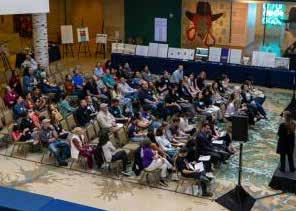
iCivics hosted its first community and family civics showcase in Denver, CO
Research into the impact of civic education has been regrettably limited, although what research there is indicates a positive causal link between civic education and knowledge acquisition and engagement. iCivics is committing to making progress in proving and communicating the impact of civic learning. In the coming years, we will contribute directly and collaboratively to a growing body of evidence with the level of empirical rigor necessary to make clear, causal claims.
STRATEGIC PLAN 2025–2030
OPERATIONAL EFFICIENCY
Empower educators with resources that build the knowledge, skills, and dispositions students need for informed civic participation.
n Enable more districts to invest in quality civic education
n Equip educators with the skills and high-quality resources needed to teach civics
n Evolve our product approach to deliver engaging content that enhances a student’s ability to build civic dispositions, knowledge, and skills
Advance policy at the state and national levels to make civic education a priority for the health and strength of our nation.
n Drive state-based campaigns for proactive civic learning policies
n Increase federal investments in K–12 civic education
n Promote the importance of investing in professional learning for educators
SUSTAINABILITY
Invite and engage a diverse range of learners and leaders in the movement for high-quality civic education.
n Deepen and broaden our connection with educators and students
n Grow and advance the civic education movement
n Strengthen capacity to achieve impact
Evaluate and share evidence-based findings that demonstrate the value and impact of civic education for our country’s future.
n Launch the necessary infrastructure that supports data collection across the organization
n Demonstrate the impact of civic education through research
n Broadcast civic education research findings
By 2030, we will transform civic learning at scale
Professional learning for nearly 1 in 4 social studies educators
Improving educators’ practice is a vital and sustainable investment in high-quality civic learning. Over the next five years, iCivics aims to provide 50,000 educators with rigorous training and proven strategies for mastering content, refining skills, and confidently applying best practices in order to nurture students’ civic development. That equates to nearly 1 in 4 of all social studies educators in the United States.9
All services encompass a full year of support, are comprehensive and customizable, and can be delivered synchronously or asynchronously. To date, feedback from participating educators has been overwhelmingly positive (94%+). Said one educator, “I feel 100% equipped and 0% concerned about my ability to have a positive impact on learning outcomes after this.”
More
innovative
and engaging education experiences
iCivics’ founding philosophy was and remains to meet young people where they are with engaging and experiential learning—beginning with our award-winning digital games and interactives that put young people in the driver’s seat of their constitutional democracy. With rapid advances in technology and pedagogy, iCivics has launched an innovation team to keep pace with promising education trends and user feedback, ensuring we evolve both our product offerings and delivery.
Through Inquiry: Expanding district adoption
Building on the Educating for American Democracy inquiry-based framework, iCivics’ U.S. History Through Inquiry curriculum was developed in collaboration with subject-matter experts and master educational practitioners from across the country. Through Inquiry is a year-long 8th grade core curriculum that covers the years 1580 to 1877. It is aligned to state standards and designed so districts and educators can localize the curriculum for any given community and customize it to meet the needs of any classroom. This inquiry-based approach to teaching history challenges students to ask and answer important questions, explore and analyze primary and secondary sources, and engage in deeper thinking through rich conversations with their peers.
History teacher Maria Sheldon from Ortiz Middle School in Santa Fe, New Mexico, says of the curriculum:
It allows my students to participate in the story of the United States—to feel a part of it—but also to see it from diverse perspectives, encountering multiple narratives and voices making up the country’s rich history.
Over the next five years, iCivics will work toward building a full K–12 inquiry-based continuum while expanding district adoption.
OBJECTIVES QUANTIFIABLE GOALS
Enable more districts to invest in quality civic education
By 2030, iCivics will...
Engage 100 districts to invest in professional learning and supporting products to improve educator practice
Increase available inquiry units of study to progress toward building a K–12 continuum
ACTIVITIES
Expand inquiry-based curriculum offerings
Scale district implementation of inquiry
Prioritize meeting accessibility standards in key districts as a part of district-wide plan
Equip educators with the skills and high-quality resources needed to teach civics
INNOVATE EDUCATION
Evolve our product approach to deliver engaging content that enhances a student’s ability to build civic knowledge, skills, and dispositions
By 2030, iCivics will...
Train 50,000 educators to deliver high-quality civic education
Generate $5 million in revenue from professional learning services
Organize 100% of iCivics content into unique user experiences that address user needs
By 2030, iCivics will...
Engage 10 million students annually with iCivics products
Develop 10 new user experiences to enhance digitization, favoring visually driven products
Build professional learning market and launch offering to facilitate the increase of educator and student engagement
Design and organize resources into product experiences that drive higher levels of educator use and engagement
Explore options for Learning Management Systems (LMS) integration to better support educators
Adapt existing content to deliver new, engaging experiences for students and educators through digital and visual products
Sponsor an innovation team to transform product design and delivery in response to educations trends and user feedback
Foster strategic partnerships to harness AI in product development
By 2030, we will achieve success in all 50 states.
Founded and led by iCivics, the CivxNow coalition is laying the groundwork for sustained and meaningful civic reform across the United States. iCivics understood that despite its broad popularity with teachers, meaningful and enduring change could not occur without deeper investments in civic education. Realistically, how could we expect all students to become informed, and engaged members of civil society—our core vision—if high-quality civic education was sidelined by most states and the federal government?
Since 2018, CivxNow has become a large, cross-ideological, thriving operation. Today, it is a continually growing movement of 370+ influential and diverse organizational partners, as well as leaders from 41 states. The coalition works together to advance civic education as a national priority, advocating for bipartisan legislation at the state and national levels that supports implementation of policies that reimagine and deliver relevant, inclusive, and engaging K–12 civic learning both in and out of school. In this short time, CivxNow has advocated passage of 38 pro-civics bills across 24 states and tripled federal funding for civic education.
Our long-term solution builds on three axes—each one dependent on the other two:
1. Build out a robust infrastructure for the CivxNow coalition to thrive;
2. Bolster public support for civic education policies; and
3. Advance policy reform, both in states and at the national level.
Within five years, CivxNow aims for ALL states to implement policies aligned with the CivxNow State Policy Menu in order to graduate civic-ready students.
We will increase:
n standalone civics course requirements, from 10 to 25 states in middle school; and from 37 to 50 states in high school;
n funding for professional learning, from 5 to 10 states;
n “civic seals” on student diplomas, from 10 to 20 states; and
n adoption of information literacy standards, from 37 to 50 states.
“Since [the nation’s] founding, our civic responsibilities have been a fundamental part of education. However, in recent decades we have strayed from these basic education requirements. Foundational civic education in our high schools will aid our students with a better understanding of our government institutions and their critical role in American society.”
Governor Spencer Cox (R–Utah)
“Civic education provides the groundwork to develop skills for dialogue, understand systemic, institutional and democratic processes, collaborate and cooperate through difference to resolve issues, honor diverse perspectives, and enhance the civic strength of our communities.”
Governor Gretchen Whitmer (D–Michigan)
OBJECTIVES QUANTIFIABLE GOALS ACTIVITIES
Drive state-based campaigns for civic learning policies
Increase federal investments in K-12 civic education
By 2030, iCivics will...
Achieve high school civic education mandates in all 50 states
Advance bipartisan civic education policy aligned with the CivxNow State Policy Menu in 20 states
Establish grassroots organizations in all 50 states to advance state civic policy goals
By 2030, iCivics will...
Explore opportunities to increase federal investment in K–12 civic education
Engage key stakeholder leaders to establish civic education coalitions in their states and advance state policy goals
Run state-based advocacy campaigns in 7–15 key states
Serve as a resource to advocates and policy makers with timely guidance, research findings, and enabling state-level resources
Promote the importance of investing in professional learning for educators
By 2030, iCivics will...
Increase dedicated funding for professional learning for civics educators in at least 15 states
Facilitate ongoing outreach to congressional offices for federal recommendations for K-12 civics
Support and serve as a key resource to advocates and policy makers at the federal level
Expand administration of the NAEP Civic Assessment to grades 4, 8, and 12 with state-level disaggregation to underscore the greater need for civic education investment
Develop civic thought leadership on the value and impact of professional learning in civic education
Design and implement professional learning services in at least 15 states
Highlight the positive impact of professional learning on the quality of educator delivery, and ultimately, student engagement
By 2030, we will prove and amplify our impact.
Civic learning research is regrettably limited. However, what limited research there is indicates a positive causal link between civic education and knowledge acquisition and engagement. Studies have found that civic education in the classroom leads to “greater knowledge about politics and the government” as evidenced by civic knowledge exam scores.10 What’s more, research has shown a greater, long-term propensity for civic engagement, such as discussion of current events and voting, for students who take civic education classes compared to peers who did not. This impact is specifically notable among students with little to no political socialization outside of school, i.e. students whose families are not politically engaged.11 Civic education has
also shown potential as a socio-economic equalizer as the impact has proven greatest for some of the most disadvantaged and/or marginalized student populations.
At the same time, research has consistently validated iCivics’ impact on student outcomes. iCivics’ resources have been shown to contribute to well-developed knowledge-building in civics; successfully encourage students to utilize their own critical thinking skills; bolster students’ sense of agency; and effectively teach students to solve real-world civic problems.12
In other words, both civic education and iCivics have demonstrated a great deal of promise. Both are delivering on that promise. It is time to move to even greater proof, as research to date has simply been too limited in scope and depth. Over the next five years, iCivics will design and implement at least 10 studies that will provide the evidence base to support:
iCivics Impact
Demonstrate that iCivics has a positive impact on students’ civic knowledge, skills, and dispositions, as well as literacy and engagement in learning.
Civic Education’s Impact
Demonstrate that civic education more broadly has a positive impact on students’ civic knowledge, skills, and dispositions, as well as literacy and engagement in their learning...and that this is good for U.S. constitutional democracy.
OBJECTIVES QUANTIFIABLE GOALS
Launch the necessary infrastructure that supports data collection across our organization
Demonstrate the impact of civic education through research
By 2030, iCivics will...
Ensure 100% of iCivics learning activities provide learning data
By 2030, iCivics will...
Provide evidence for iCivics’ impact on student civic knowledge, skills, and dispositions through the completion of at least 10 studies
ILLUSTRATE IMPACT
Broadcast civic education research findings
By 2030, iCivics will...
Achieve recognition as a learning organization that takes impact research seriously
ACTIVITIES
Adapt appropriate products to include new data capture methods
Build out data research and UI/UX research capabilities
Establish a dedicated space for data sharing across our organization
Foster partnerships to enable greater data capabilities
Build an organizational learning framework to drive impact research
Scope and conduct research studies
Integrate assessment capabilities to measure skills in the learning framework using AI
Develop measures of civic engagement using newly published impact studies
Showcase data findings by publishing reports, presenting at conferences, connecting with media outlets, and sharing best practices with educators
Establish a presence across educational research communities, leveraging partnerships
Leverage data findings strategically across audiences to strengthen iCivics’ leading position in the market and advocate for civic education policy
By 2030, we will prove and amplify our impact.
It has been said that civic educators are the gardeners of democracy —not the firefighters. Our work to foster informed and engaged citizenship is both critical for our nation to live and grow and inherently long-term. Of course, this garden relies on a strong and complex ecosystem.
In order to achieve and sustain more and better civic learning, we need to build and engage a wider constituency representative of the American public at large to support this cause. Building on our existing networks of educators, policy makers, experts, and students, we will proactively widen our network to develop a more inclusive and influential movement, including administrators, parents, community leaders, and philanthropists.
Our children should learn the general framework of their government… It must not be a distant thing, someone else’s business, but they must see how every cog in the wheel of a democracy is important and bears its share of responsibility for the smooth running of the entire machine. “ ”
Eleanor Roosevelt
OBJECTIVES QUANTIFIABLE GOALS
Deepen and broaden our connections with educators and students
By 2030, iCivics will...
Maintain brand leadership as the go-to resource for high-quality, nonpartisan civic education resources for educators
Increase active teacher engagement by 75%
Increase educator affinity and product loyalty
ACTIVITIES
Advance the brand and modernize our external communications approach
Execute a successful launch for paid professional learning services
Strengthen data capture/analysis/distribution across all channel
Expand engagement and reach of Civic Learning Week
Articulate and advance our youth engagement strategy
Partner more powerfully with the iCivics’ Educator Network to shape strategy and engagement
INSPIRE ENGAGEMENT
Grow and advance the civic education movement
By 2030, iCivics will...
Expand the CivxNow coalition to 500 members
Achieve policy and public engagement progress at the national and state levels
Strengthen capacity to achieve impact
By 2030, iCivics will...
Increase the amount of new philanthropic funding and partnerships to support iCivics and the civic education movement
Run state-based advocacy campaign in 7–15 key states
Design and explore new engagement strategies and structures to activate local/state/national leaders in support of the civic education community and iCivics, such as integrated marketing for CivxNow
Leverage Civic Learning Week and other events to increase visibility of the civic education movement
Broaden the appeal of civics as a catalytic investment in philanthropy
Share stories and study findings with funders and stakeholders, demonstrating the impact of iCivics products and services
HOW WILL WE ACHIEVE THESE OUTCOMES?
What We Need to Make This Happen
Invest in the Future of U.S.
To implement this plan by 2030, we need to raise $50 million more than our annual projected revenue.
iCivics has always been an investment in the long-term health of our country. Today, it is clear that we need to invest more in educating young people for informed engagement in civic life if we are to sustain and strengthen our constitutional democracy. We need engaging educational solutions to help heal our divisions and build civic strength.
In this critical moment, we are well positioned to prepare young people for civic involvement at scale. However, we are working in a more polarized and politicized environment. The path forward demands new thinking, new commitments, and new alliances.
We need your help. Your tax-deductible donation helps us further our reach and deepen our impact, ensuring the practice of democracy is learned and embraced by each new generation.
The Value of General Support
iCivics is grateful for the support of our donors—at all levels and for all purposes. However, particularly in this time of economic uncertainty and significant shifts in K-12 education, unrestricted giving allows us the freedom and flexibility to direct funds where and when they can have the greatest impact. Our general support donors receive regular updates on the real and measurable return on their investment.
To encourage giving to implement our ambitious strategic plan, the iCivics Board of Directors has pledged to match the first $1.5 million raised dollar for dollar.
n Continue to receive significant pro-bono support
n Continue to raise $9M+ annually with 5% growth year over year
n Raise an additional $50M for the Future of U.S. Fund
n Build its Professional Learning Services into a $5M+ annual net-revenue generator
Investing in the Future of U.S.
With iCivics, it’s not just about supporting a program or a website, but actively supporting the next generation of this country. It’s about supporting an entire generation that can finally find its voice, and that will want to create a better world for all. If ‘the next generation will fix it,’ then we need tools, knowledge, and support systems.
Amanda Donley
iCivics Youth Fellow, Fishers, Indiana
Learn more or make your donation by visiting iCivics.org or email fundraising@icivics.org
Your Support Helps Build Civic Strength
VISIONARIES $2 million and above
A donation at this level can help iCivics propel momentum for the civic education movement
GUARDIANS $1 million and above
A donation at this level can help iCivics develop impact evidence to strengthen the civic education field
PATRIOTS
$500,000–999,999
A donation at this level can help iCivics upgrade one of its award-winning games
LEADERS
$250,000–499,999
A donation at this level can help iCivics build an analytics platform to help measure student progress
ADVOCATES
$100,000–249,999
A donation at this level can help iCivics develop a professional learning pathway to support thousands of educators
FOUNDERS $50,000–99,999
A donation at this level can help iCivics develop innovative and engaging digital and visual interactives
SUPPORTERS EVERY donation counts
A donation at any level will help us inform and engage more students across the United States
“iCivics was a game changer. I’ve seen the impact firsthand. Students who once hesitated to participate are now raising their hands. Those who struggled to comprehend traditional texts are thriving with the scaffolded, student-friendly resources. iCivics isn’t just a resource—it’s a bridge to engagement and understanding for students who need it most.
Kwesi Jackson
”
THE IMPACT OF YOUR SUPPORT
“ ”
iCivics’ Youth Fellowship cultivates essential skills, empowers young people, and nurtures active, contributing members of their communities. We develop a sense of agency, understanding that our voices and actions can have a meaningful impact on our community. We develop a deeper understanding of our rights and responsibilities as citizens. We analyze complex issues, consider multiple perspectives, and propose innovative solutions.
Social Studies Teacher, Hunstville Junior High, Huntsville, Alabama
RISKS AND MITIGATION
Mitigation Strategies
n Leverage the current moment sparking interest in civic education to engage the public and expand support for our mission
What Could Take Us Off Track?
This plan will involve iCivics expanding and experimenting in multiple directions simultaneously. While risky, bold action now could guarantee greater success and stability for iCivics in the long term.
Some risks may be unprecedented, as with the 2020 global pandemic and its aftermath. However, iCivics designed this strategy with the flexibility to shift the timing of our priorities without sacrificing our ultimate vision.
n Use iCivics’ investment framework to determine priorities if decisions need to be made around how to allocate limited funding
n Intensify targeted fundraising efforts from a diverse mix of funders
n Continue developing partner relationships, in particular to support product development, earned revenue options, and resource sharing
n When testing new solutions/approaches, pilot initial efforts to evaluate impact before determining how best to roll out more broadly
This Strategic Plan Works to Mitigate the Following Risks
Customer Management
Meeting district minimum requirements in accessibility and privacy
Managing an increase in district customers while continuing to support
education cost-effectively
K–12 Ecosystem
Loss of Elementary and Secondary School Emergency
Relief (ESSER) grants
De-enrollment trends
Rise of Education
Savings Accounts (ESA)/ school choice
Loss of federal funding
Reputation and Credibility
Navigating unknown returns of impact research
Receiving negative media coverage
Maintaining an expanding brand position
Capitalization and Fundraising
Accessing large unrestricted philanthropic support
Declining K–12 institutional funding
Competitor Landscape
Growing competition in civics education
Scaling iCivics product
too quickly risks lowering product quality
Greater market saturation in supplemental products
Not keeping pace with emerging technologies
Political Environment
Facing unfavorable political conditions
Increasing polarization makes it difficult to achieve pluralism
Inability to build network of advocates to move the needs on policy goals
CONCLUSION
What will the future hold for young people today—those inheriting our nation’s audacious experiment in self-governance?
Will they come of age in a country united by democratic values and civic purpose or fractured by mistrust, disconnection, and civic decline?
One of the most powerful things we can do to forge a positive path is to revitalize civic learning across the United States and make it universally available to all people.
Civic educators are the gardeners of American democracy. We plant the seeds that grow citizens. Yet, it will take the support of ALL of us to build our civic strength. Your support is essential to sustaining and strengthening our constitutional democracy for the next 250 years and beyond.
CITATIONS
1 Lane, P., Falkenstern, C., Bransberger, P., & Western Interstate Commission for Higher Education. (2024). Knocking at the college door: Projections of high school graduates
2 Research by Center for Information & Research on Civic Learning and Engagement (CIRCLE)
3 Research conducted by independent polling firm Cygnal; September 2022
4 Number and percentage distribution of teachers in public and private elementary and secondary schools, by selected teacher characteristics: Selected school years, 1987-88 through 2020-21 (National Center for Education Statistics)
5 “Civic desserts” refers to areas where there is a lack of opportunities for civic and political engagement due to insufficient civic infrastructure and low civic literacy, analogous to a “food desert”
6 Extremely Detailed Map of the 2020 Election; New York Times
7 Hanigan, A. (2024, September 26). The effects of screen time on children: The latest research parents should know. CHOC - Children’s Health Hub.
8 Lyons, B. A., Montgomery, J. M., Guess, A. M., Nyhan, B., & Reifler, J. (2021). Overconfidence in news judgments is associated with false news susceptibility. Proceedings of the National Academy of Sciences, 118(23).
9 National Center for Education Statistics
10 Niemi, R. G., & Junn, J. (1997). Civic Education: What Makes Students Learn. Retrieved from https://eric.ed.gov/?id=ED431658
11 Neundorf, A., Niemi, R. G., & Smets, K. (2016). “The Compensation Effect of Civic Education on Political Engagement: How Civics Classes Make Up for Missing Parental Socialization.” Political Behavior, 38(4), 921–949. doi: 10.1007/s11109-016-9341-0
12 Summary of research available on https://ed.icivics.org/our-impact