IC SummerNewsletter2009


Trustees Emeriti Makram N. Alamuddin ‘61 Everett Fisher Edouard Ghorra ‘33
Robert W. Page Elie A. Sehnaoui ‘56
Walid Daouk ‘77 Said S. Darwazah ‘76
Anne R. Hotchkiss Saeb N. Jaroudi ‘47
Stanley M. Smith Khalid Al-Turki ‘61 Barry Zorthian
Administration
William H. Turner, Chairman
Internat I onal College
Peter H. Gerard - Director of Development
Hiba Chaaban – Director, Human Resources Dr. Raouf Ghusayni – Director, E.R.C. Wadad Hoss - Director, Middle School Talal Jundi, Chief Financial Officer
Editor-in-chief: Moufid Beydoun Production coordinator: Sana Yamout
Lama Khayr – Director, Pre-School/Lower Elementary, Ain-Aar Youssef Korfali – Director, Secondary School
William H. Kent
EDITOR’S NOTE:
James K. MohammedMatthewMarwanYusufAnthonyHolmanJonesA.Kan’an‘71GerritKeatorA.Marshi‘79SafwanMasriJohnG.McCarthy,Jr.AzmiMikatiAnwarAlMulla‘63MirnaB.NoujaimIanReedAidaReed(Luce)A.ReynoldsTalalK.Shair‘83IssamShammas‘63S.H.Al-Soleiman ‘59
Our students have grown a lot, matured a lot and we sincerely hope that we have planted the necessary seeds to produce much needed capable leaders for the future.
Peter H. Gerard
Editor/Writer: Reem Haddad
Munir H. Shamma’a, M.D.’43
For the first time in the past few years, we have had a great uninterrupted school Activitiesyear.were
I will take this opportunity to thank all of those who believe in our mission and supported our financial aid program. Many needy yet deserving students remain at IC because of you.
in full swing with the IC Carnival, Art Festival, Awards Day, International Day and much more. Everything went as planned and we are grateful.
Best Moufidwishes,Beydoun ‘64 Vice President for Alumni & Development
Wael O. Bayazid ‘70
Moufid Beydoun – Vice President, Alumni & Development
Mona Bawarshi ‘67
Board of Trustees
Mishka M. Mourani – Senior Vice President Elie Kurban – Vice President for Administration
Diana Abou Lebdeh – Director, Upper Elementary/Middle, Ain Aar Antoine Boulad – Director, French & Cultural Affairs
Bayard Dodge Ford Fraker

John K. Johnson – President
Donald J. Selinger, Treasurer. Asst. Secretary
Fouad Malouf ‘56, Vice Chairman
IC NEWSLETTER - SUMMER 20092
And once again, we are sad to see our graduate students leave us and yet very pleased to welcome them as new alumni.
I wish you all a wonderful and restful summer.
Camille Cotran ‘74
Amal A. Ghandour Marwan Ghandour ‘63
Thomas W. Hill
EDITORIAL TEAM:
Julia Kozak - Director, Elementary School Ghada Maalouf – Director, Pre School
I would especially like to thank all those who have taken so much interest in the Capital Campaign and have already submitted their pledges. Together, we will succeed in our campaign.
Frederik O. Crawford
T.M. (Mac) Deford
Richard S. Ward, Secretary Raymond W. Audi

Design & Layout: Nazha Merabi
Imad Taher ‘58 Maya Tohme (Nassar)
The Very Busy KGI
Q & A with Raouf Ghusayni
IC KirbyAwardsFunIBArtCarnivalFestivalArtExhibitDayDayLarsonmeets
IC student wins Swimming Championship in France
One Man’s Quest for an Archive
Q & A with Youssef Korfali
with students
International Day

A Tribute to Thomas C. Weaver: A Celebration of his Life in IC and AUB
Fifth Grade Exhibition
Q & R avec Antoine Boulad
National Reading Day
IC NEWSLETTER - SUMMER 2009 3 contentsFeatures
PerformingMarathon Arts & Choirs
Letters to the Editor
a lum N i News Q & A with Jad Azkoul Developme N t N ews Dinners and Events a lum N i u p Dates Alumni Updates Press Release: AUB and IC Announce Successful Sale of Campus Property312927262524232221201817161615141413121110864 Sponsored by:
An “Amazing” Concert
Campus News
When Jeha explained his keen interest in the history of the campus, the elderly man chuckled and invited him to his home (on campus) for a cup of tea. “Ask me everything you want to know,” he said.
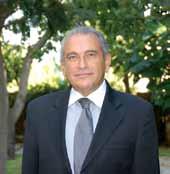
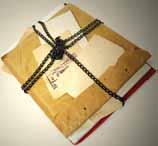
Never was a man as determined as Shafik Jeha. At least when it came to history. And more specifically the history of two esteemed establishments: AUB and IC. At 97, Jeha is walking history book himself. His body may have slowed down but his mind is as sharp as the day in 1982 he came across a box in an AUB office. He opened it warily to find dozens of confidential letters, some handwritten and some typed. The documents were letters between William E. Dodge and Daniel Bliss – the two men vastly responsible for establishing the university. Jeha spent several months summarizing and organizing the papers. It was a treasure for the archives that he had lobbied for years earlier at the university.
And so he set himself on the task. A task with effectively began in 1929 when he first came to the university. He had arrived from his small village of Bishmezin in Koura (northern Lebanon). ‘School’, was a tiny stone shack. Too small to accommodate all the students, lessons were mostly held under a large Juniper Tree. From there, Jeha was admitted to the missionary-run American School for Boys in Tripoli. It was his first venture outside the village and expecting, yet another tree as a school, found himself in a large building. “I was shocked,” he remembered. “This is a school? I thought. I couldn’t believe it.”
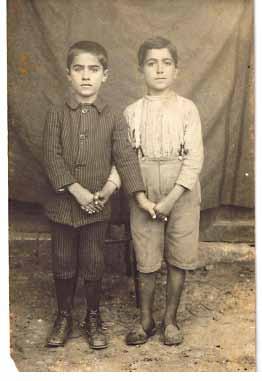
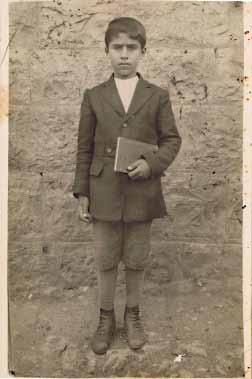
And so began Jeha’s deep curiosity and love for the university and its prep school – and there he would remain throughout his career.
Feature IC NEWSLETTER - SUMMER 20094
His curiosity quenched and with many historical documents in his hands, Jeha began to lobby the university for an archives
Today, the Jafet Memorial Library’s University Archives and Special Collections, is used by students and researchers

The boy did well enough to earn a scholarship to a university in the far off city of Beirut. After an arduous three hour journey in the sweltering sun, the driver pulled up in a narrow empty street. Seeing some kind of archeological fort, Jeha yelled at the driver. “Why in the world did you bring me here?” he said. “I don’t want to see a fort, I want to go to the university!” “But sir,” replied the driver. “This is the university. The American University of Beirut.”
“Every educational institution should have archives,” he said. “AUB didn’t have archives when I arrived and there wasn’t anybody collecting historical documents.”
Jeha soon discovered his real love: history. He would wander around the campus and pause before every building wondering about its history. And so it happened that one day, an elderly man approached him and asked him why
Jeha did. And thus sprang a friendship between Jeha and James Stewart Crawford (professor of Bible and Ethics at the Prep school since 1897) which would last until Crawford’s death. In his quest of history, Jeha followed up with many of the elderly who had witnessed or knew first hand of the birth of AUB.
university administrators were becoming aware of the need to establish an elementary school for its prep school. So far, the university was in agreement with the Ras Beirut school (now demolished) just across from (IC) campus. But the standards were not up to par to feed into the Prep school. The teaching methods were
“Thoselibrary.that knew the history of the university all died,” said Jeha. “And the information they knew went with them. They didn’t record anything. But a lot of information was with me. There were documents that no one had bothered to collect.”Jehacalled on then AUB president Norman Burns (1961-1965) and offered to create an archives library. He was given a small room on campus.
O NE MAN’ S Quest FOR AN a r C hive
he was staring at the buildings so.
Meanwhile,worldwide.
“I could do no more,” he said sighing.
Jeha was devastated. He tried to save what he could but a large part “was gone”, he said sadly. The memory still haunts him more than twenty years later.
The rare book was given to Jeha by Rosalind Reed, MacLaclan’s granddaughter after meeting Jeha (according to Jeha, the book was given on condition that no one else should read it until 50 years after Reed’s death).
Then and now, however, he asks visitors from IC the one question that still plagues him.
Jeha vividly remembers the day when he received a call from Huntington Bliss (his teacher and friend while at the American School in Tripoli) saying that there were dozens of documents stored in Rockefeller Hall, about to be burned. Jeha rushed over there to find the “entire history of IC in the attic!” he remembered. Much of the documents dated back to IC’s inception in Smyrna. He spent all his spare time during the next six months reading and organizing the papers.
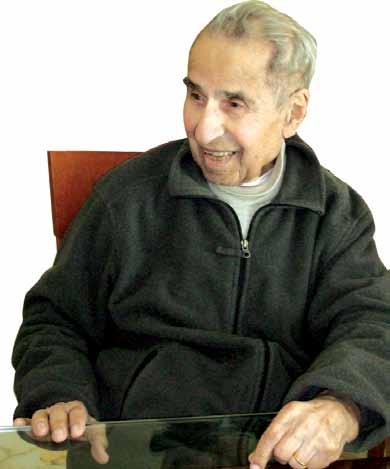
now, had managed to piece together all the documents he found and wrote a concise history of IC from its establishment in Smyrna until its move to Lebanon. But among his proudest possessions is a book of confidential memoires written by Cass Arthur Reed (son in law of IC’s founder and first president in Turkey, Alexander MacLaclan).
In the 1980s, some documents were shipped off to the United States for safe keeping. The rest are currently in the alumni historyinadoptalseriestoday.historicalwasininhistoricalShafikaoffice.Currentpresident,JohnJohnson,isinterestedincreatingpermanentarchiveslibraryoncespaceisfound.By2008,Jehahadauthoredover40textbooksanddozensofbooks.Amongthem“DarwinandtheCrisisof1882theMedicalDepartment”,whichwasoriginallypublishedArabicthenwasreleasedinEnglishin2004.In1947,JeharecruitedbytheLebanesegovernmenttowriteaseriesofbooksaboutLebanon–stillusedinmanyschoolsHisteachingmethodsatICledhimtoco-authoraoftextbooksaboutethicsandnationalcivics(altarbiahwatanieh).Thebooks’successatICledthegovernmenttothemforitsnationalcurriculumuntilitsabolishmentthelate1970’s.HeiscurrentlywritingtheofschoolsinLebanon.
Actually, Jeha had been lobbying IC presidents since the establishment of the school for an archives library. But space was scarce and students were increasing. Jeha lugged his ever growing collection from building to building as space became available – with every move he put up shelves and a filing system. Only to be asked to move again. Frustrated, Jeha finally packed up the collection in about 20 boxes in stored them in a small room in Sage Hall – waiting for the day he would be allotted a permanent place.
“Sage Hall Room 112,” he said. “I will never forget it.” He would check on the boxes frequently and continued to do so after his retirement in 1977. A few years later, Jeha arrived to find the door open. Horrified he looked inside to see a class in session.
Jeha, now a history teacher at IC, threw himself into his favorite task: lobbying for an archives library for the school. “If it wasn’t for me,” he said proudly, “IC’s history would never have been documented.”
Frantic, he looked everywhere for the boxes. They were nowhere to be found. “They just disappeared,” he said. It would be months before a janitor located the boxes in the attic of Sage Hall, drenched with rain water that escaped from the roof.
He packed away what he was able to save and handed them over to the then IC administration.
revamped, old faculty was let go and a new younger staff recruited. Among them was Jeha, whose plans to teach in Iraq had just fallen through. The Great Depression, however, had hit the Prep School hard and student enrollment declined considerably. In 1936, Dr Bayard Dodge, then AUB president, invited the International College in Smyrna to take over its preparatory school. The “Prep” school soon became known as “IC’ and welcomed 901 students from 37 countries in its first year.
His eyes suddenly twinkled. “I do have some things with me,” he said. Jeha, an already established book author by
An essential problem soon came up, however: where to store all the documents?
“Tell me,” he said. “Does IC finally have an archives library?”
Feature
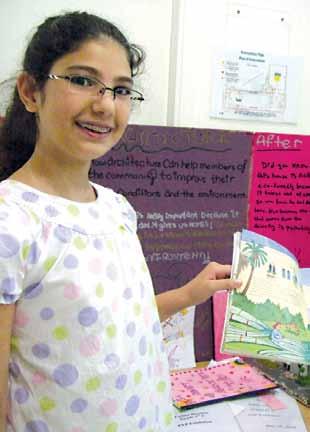
The exhibition, which comes after an intensive month of research, allowed the students to pursue an inquiry into the Planner’s Central Idea -“we are all members of a community that defines who we are.” Each student’s line of inquiry was linked to this idea and their investigations, as varied and diverse as they were, revealed an aspect of their responsible involvement in their community.
For many students, their research stems from personal Amin,experiences.10,was
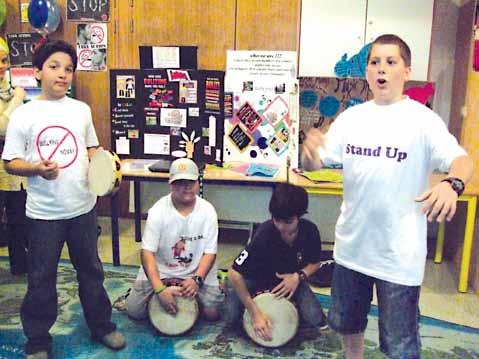
The boys threw themselves into researching their topic. As they delved deeper into their subject, they came to one conclusion: ignore the bullies and stop the cycle of anger.
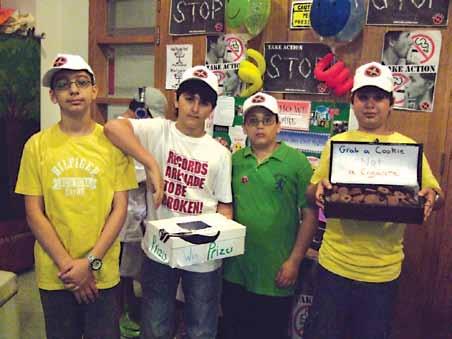
bullied so he bullied Hussein 11. Their group topic was: bullying.
Have you ever wondered how music affects you? Or how to decrease Co2 emissions? Or even how to treat your own Well,pets?
IC NEWSLETTER - SUMMER 20096
The group wrote an anti-bullying rap song which they performed at the exhibition.
gather information at all levels – libraries, internet, surveys, and interviews with various people. They then had to find ways to organize and relay their information – not an easy task for 10 year olds. There was reportedly much frustration but they persevered.
Fifth Grade Exhibition
wonder no more. IC’s fifth graders have practically become walking encyclopedias. Eager to show off their much researched knowledge, students held a two-day exhibition in May for peers, parents and teachers.
More surprisingly, the boys had become good friends.
“I saw bright students struggling on how to organize their information and I saw students, whom I thought would not be capable of doing some of these things, just shining through,” said Di Nardo.
“The whole purpose was to bring to conclusion their years of PYP work,” explained teacher Antony Di Nardo who was in charge of coordinating and supervising the projects. “In terms of research, in terms of developing the study skills, school skills, to work in groups, to organize it, to present the Studentsinformation.”hadto
Every group had a mentor – a parent or teacher and all had to fall back on the skills they have been learning since
“At first we ignored each other,” admitted Amin, “but then we got to talking about the project and then realized it’s just not worth being mean to each other.”
proudly was Elementary School Director, Julia Kozak. She was pleased to see students engaged in “authentic learning related to real life” she said. “Throughout the six week period, students reflected the PYP learner profile attributes. They were inquirers, communicators, risktakers, thinkers, principled, etc. There was a lot of reflection on who they are as Lebanese. They were thinking about the action that can be taken and that action is very important because it shows that students have really learned.”
they have acquired are going to be skills that they use for the rest of the school and university years,” he Watchingsaid.
“Allcooperation.theskills
In a nearby display, Nadia and Fatima were lobbying for environmentally friendly homes. Old Lebanese houses which are being pulled down are “much more eco friendly than modern skyscrapers,” they explained. “They were designed to use the solar energy and had gardens.”
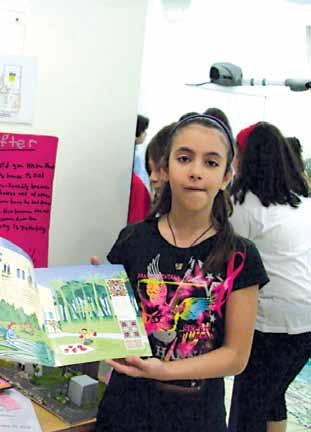
All believed that they could and should make a difference. “A child is nature’s way of giving the world another chance,” said Ali, whose group researched Climate Change. “So maybe I’ll be that child.”
“Music affects your mood,” she said. “It is a cure for people with mental illnesses. It’s therapeutic. People don’t realize its importance.”
“It is our civil rights to breathe clean air,” declared Amer 10.
IC NEWSLETTER - SUMMER 2009 7
But more importantly, they had to rely heavily on skills that are expected from them at this time: collaboration and
Some parents found themselves under scrutiny. One student was upset to see his mother taking up smoking. He was part of a group that had chosen to study the effects of smoking. After a strict sermon, the mother threw away her cigarette.
The group called themselves “Take-Action” and have designed anti-smoking posters, produced a small documentary, and created their own website.
preschool including computer, PowerPoint presentations, websites, research, library, and public speaking.
One group decided to decrease their own CO2 emissions by Theircarpooling.surveyshowed that only 28% of the public (75 questionnaires) were willing to use public transportation. So they had to set the example. Why not just carpool to “Eachschool?of us used to come to school in his own car before,” explained Ramzi. “Now, one car picks up all of us.”
In a corner of the exhibition, Ghida, sat silently watching visitors. As a piano player, she found herself questioning her use of learning music. She wanted to quit but her father kept telling her that one day she will understand the importance of music. And now she has.
Toknowingly.satisfythose
budding needs, nothing would have been easier than just commissioning a carpenter to undertake the projects.
But it’s not the IC style.
In a true show of democracy, every class had to vote for its project. The children themselves tallied the votes. The winning project was adopted by all. The projects are part of the PYP theme “how we organize ourselves.” The idea was to get preschoolers to understand that a community is made up “community helpers” and their interdependency on each other.
But Ryan Mezher jumped in with his own idea. “I know!” he said. “We’ll put our names on the closet and the KGII will know that we made it!”
The next step was to invite architects to class. Together, they took the needed measurements, wrote down the data and drew the designs.
Or, added Isabelle, “we’ll draw Mr Tanios on it.”
carpenters, have suddenly gained much popularity in both schools. “I’ve never felt more loved,” said Shayto as swarms of preschoolers hug him enthusiastically).
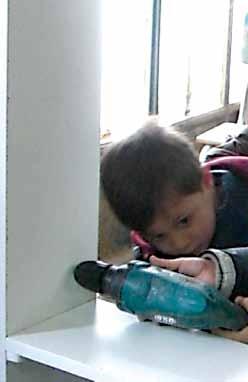
There’s been a lot of excitement lately in Ras Beirut and Ain Aar preschools. Dozens of four-year olds have been very busy strutting around the schools using fancy terms like “architect”, “designer,” “carpenter”, “needs”, “cooperation”, and “measurements.” They are taking themselves very seriously. For indeed, their mission is quite serious: they have chosen to build something. And not just anything. Something that they “need not just want,” explained one little boy very
Meanwhile, in a KGI class of Ain Aar, the children were holding yet another brainstorming session.
Teacher Hiba Kobeissi smiled at her students. Since the project began, she found herself holding several voting sessions as her charges couldn’t decide on which project to choose, then the shape of the closet they had chosen, and then again on were to place the closet. “I told them it’s all right to change their minds as long as they all vote on it,” said Kobeissi. “They learned to accept other people’s point of view and see how decisions are taken.”
Next, the children had to write, email, or make an appointment with the directors of the schools to seek permission for their projects. As carpenters began implementing the designs, preschoolers visited to make sure that all was going as “planned”.
the very Busy KGI
“We all have to paint together or it’s not fair,” declares Isabelle Sayegh as group sat in a circle around their teacher. Maybe, joins in Mark Bou Malhab, “we’ll make patterns on our Ryancloset.”Chidiac was nodding emphatically and eagerly thrust his hand up. Unfortunately, he forgot what his brilliant idea was. “I need more time to think,” he finally declared.
In Ras Beirut, one class decided that they absolutely needed a puppet theatre. It was getting very tiresome waiting for their turn to use the school’s puppet theatre. It was up to them to figure out how to produce this theatre from beginning to end.
(Tanios el Hachem and Ahmad Shayto, the school
Feature IC NEWSLETTER - SUMMER 20098
“The project is coming out with a solution and thinking about the process and living the process of helping each other,” explained Jana Nassar, KGI teacher. And there was much to do. They had to co-design the theatre (with an architect), visit the carpenter, the seamstress, the welder and the painter. They also had to take the measurements themselves and draw the necessary map. Basically, explained Nassar “they used a lot of thinking skills and research.”
Nassar in Ras Beirut reported a noticeable change. “They are more mature on the playground and in class,” she said. “I’m giving them more responsibilities because they can handle it better now.”
IC NEWSLETTER - SUMMER 2009 9
The final step was to set up their special projects. In Ain Aar, the class decided to place their closet in the hallway for storing the construction blocks of the entire preschool. In Ras Beirut and much to their teacher’s amazement,
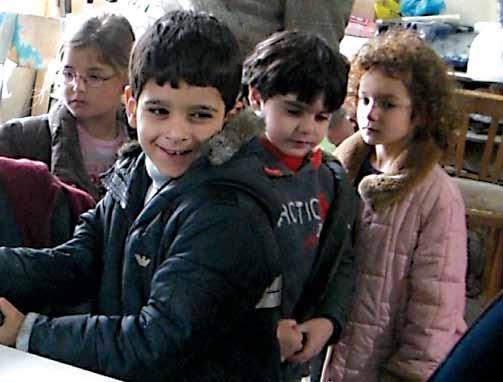
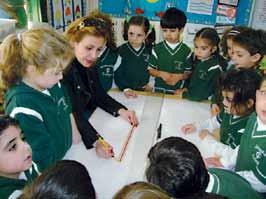
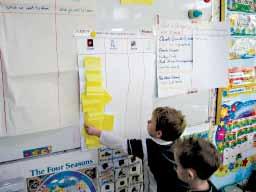
The projects, painted and decorated by the preschoolers themselves, were finally finished. Preschoolers couldn’t have been prouder. Teachers from both Ras Beirut and Ain Aar noted a definite growth in their charges. “They asked questions and become inquirers,” said Vera Chemaly, Ain Aar teacher. “They now can think, do research and feel involved.”
students chose to donate their puppet theatre: it can be found in the preschool library for all to enjoy but reserved for the special use of the KGI Blue on Fridays.
The biggest treat, however, was being trained by Gerard Wirth, the Vienna Boys’ conductor.
Feature IC NEWSLETTER - SUMMER 200910
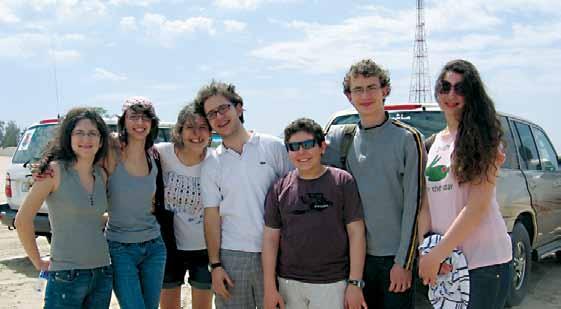
It was by no means easy joining the festival. Students have to send in audition tapes. AMIS receives anywhere from 700 to 800 tapes every year vying for about 120 spaces. Sixteen students from IC auditioned. Seven were accepted – the highest number since the school started participating eight years Participantsago.are then sent the music sheets in preparation for the three-day event.
The “amazing” concert was held in Doha as part of the AMIS International Honor Band and Choir Festival and hosted by American School of Doha on the 19-21st of March. The festival, the 34th since its inception, was attended by 40 International and American schools from around the world. While none of the students are particularly novices to concerts, the AMIS festival offers a unique opportunity not only of singing with peers from various countries but being trained by world renown conductors. At this year’s festival, the participants were led by Elena Sharkova, director of the Symphony Silicon Valley Choral in San Jose, California, conductor of Vienna Boys Choir Gerard Wirth and Steve Peterson, director of bands at Ithaca College in Ithaca, New York.
During one song, Wirth insisted that soloists sit on the floor and take off their shoes. In others, students were suddenly put on the spot to improvise. Best of all, anyone who wanted to solo, could – if he or she were up to it.
The festival was especially poignant to Haitham, a six year veteran of AMIS, who graduates in June. Haitham has been accepted at UBC school of music in Vancouver to study for an Advance Performance and Vocals degree.
Even Randa Sabbah, the head of music department who accompanied the students to Doha, felt in awe at the concert. When offering to help with the Arabic pronunciation for international students, Wirth asked her to take his place.
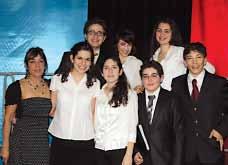
Julia herself admits being nervous at the beginning but soon forgot herself. “It was beyond anything I expected,” she Backsaid.atIC, students and teacher were still on cloud nine. “This festival brought back the Middle East,” said Sabbah. “We were all so proud.”
They sang like they never sang before and they performed like they never performed before. At least, that’s what the seven students said upon their return – all shiny eyed and exuberant – from Qatar.
“He was emotionally driven,” said Haitham Haidar. “What he feels at the spurt of them made him conduct us in a different way.”
Among the youngest was Petro Hajj, who had attended the Junior Amis last year. “There is a huge difference,” he said. “This was so much more professional.”
An “amazing” Concert
This was the first time that an Arab country was chosen to hold the festival. One of the songs chosen was “Ya habibi” by Fairuz. IC students found themselves the center of attention. “It was great,” said Racil Labban, in 5th grade. “Kids there said we were from a cool country. For once, we weren’t looked at as ‘terrorists’”.
Rehearsals began in the morning and continued for eight straight hours. “We were all on the same level,” said Thuraya Zureik, 5th grade. “We all had the same passion for music. If you’re humming to yourself, someone will come up and harmonize with you. We never got tired.”
“I didn’t want to take his place,’ said Sabbah taken aback. “He asked me to sing it. I was embarrassed but I did it.” In front of her eyes, Sabbah’s students grew. She looked on as Julia Sabra’s voice filled the hall as she began the Fairuz piece. “Her eyes were shining,” said Sabbah. “It was wonderful seeing that.”
“In this one Pakistani song, we had to sit on the floor,” said one student as the others emphatically nodded in agreement. “And,” continued another student “we got to sing solos”. “And,” they continued enthusiastically, “we had to improvise on the spot.”
“It was,” they agreed, “just amazing.”
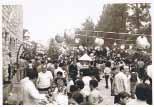
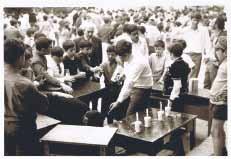
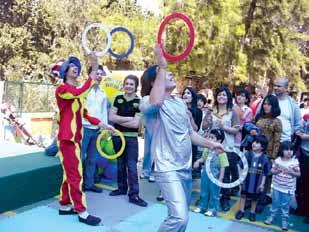
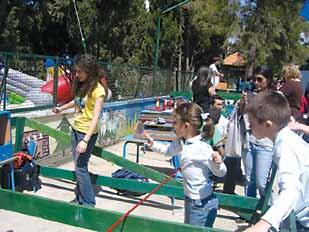
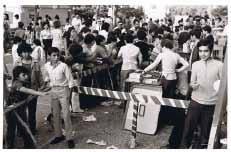
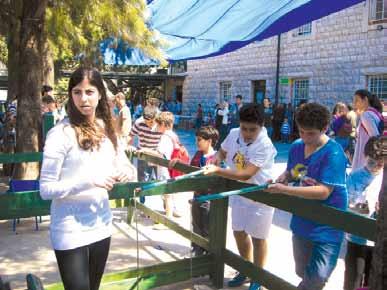
After a two year interruption, the IC Carnival was held on April 25th at the Ras Beirut campus and was attended by almost 1,000 people. The IC Carnival began more than 50 years ago and is regarded as one of the school’s annual highlights.
IC Car N ival

Campus News IC NEWSLETTER - SUMMER 2009 11
All proceeds went to the Financial Aid Fund.
IC NEWSLETTER - SUMMER 200912
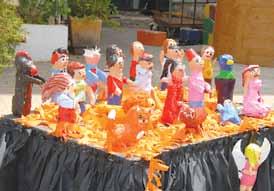
Among the features books were Crayon Mine Cherche Couleurs by Sandra Khalil, Charlie and the Chocolate Factory by Roald Dahl, Pezzitino by Leo Lionni, Le Petit Prince by Antoine de SaintExupéry Dodo les Monstres, and the Wizard of Oz by L. Frank Baum.
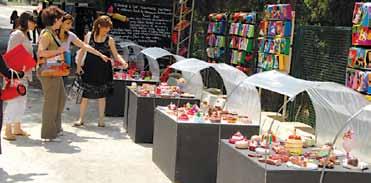
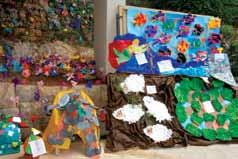
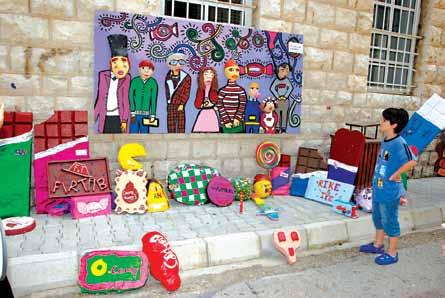
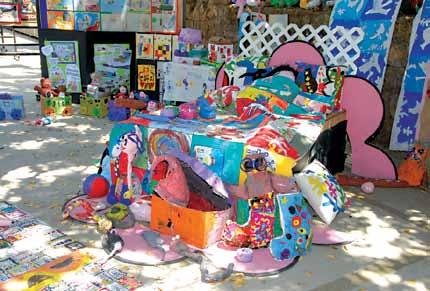
In honor of Beirut being chosen the “World Book Capital 2009”, IC’s Art festival kicked off in May with the theme: Art Books and Art in Books. Selected books came alive throughout the campus as characters and objects from the books were reproduced from various materials.
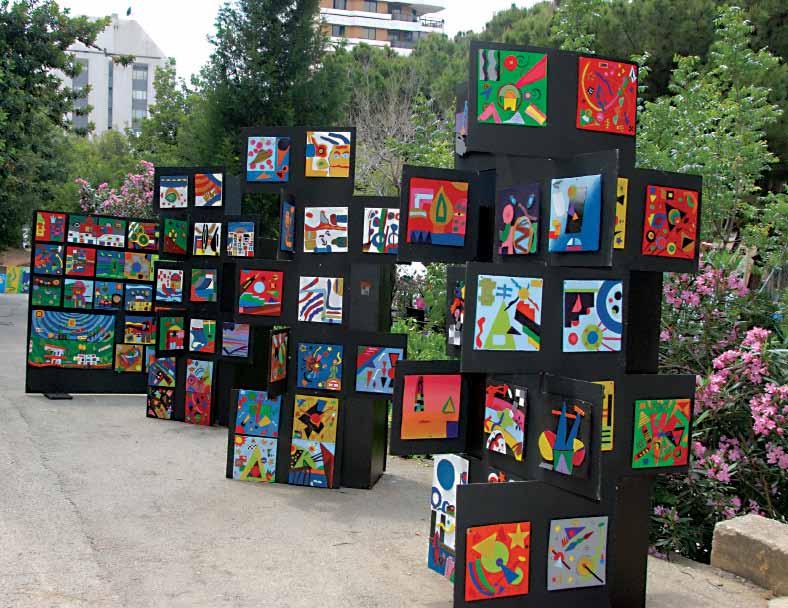
Supervised and organized by the head of the Art Department, Samia Boulad, the Art Festival exhibits the work of the entire student body. The Festival was first launched in 1991. A different theme is chosen every year and involves preschoolers all the way to secondary school students. The exhibition remained on display for a week and was open to all visitors.
Festival
Rana AngelaSirenaZeidanVarmaArnaout
Campus News IC NEWSLETTER - SUMMER 2009 13

iB art exhibit - April 2009
Dima Mabsout Nour Chamoun

Tracy Dariane Dana El Khalil
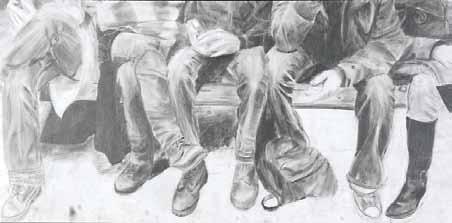
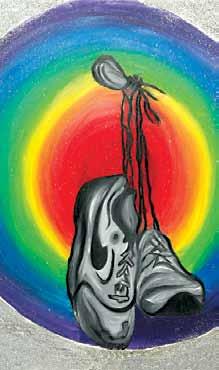
An Awards Day for Middle and Elementary school students was held in June. Awards included the The Abdallah Salim Salam Award for Athletic Excellence, Fifi Sukkari & IC Memorial Award Fund, Elias & Suad Hanna Science Award, The T.M. Award Fund, Wadih Chebat Arabic Prize, Yusuf Akl Award, IC Brevet Award, and the Najib Abu Haydar Memorial Athletic
Campus News IC NEWSLETTER - SUMMER 200914
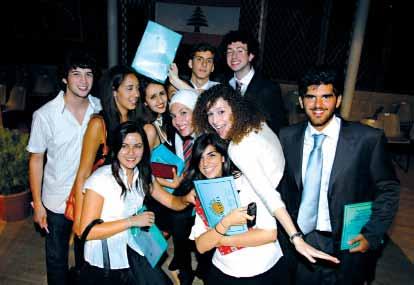
Fun Day
awards Day
Recipients were presented with certificates, medals, cup and prizes.
More than 100 students from the secondary school were recognized during Awards Day held in May. More than fifty awards were handed out to those with high achievements in a variety of fields including academics, sciences, athletics, poetry, art, sports, writing, music, dancing, MUN, information technology, and visual arts. Other notable awards included the IC Alumni Association Scholarship Award, Nabil Rahhal Leadership Award, Mazen Walid Saab Memorial Award, Salim Hachache Award, Ramzi Taher Memorial Award, Bernard Geneslé Award, Drs Ghaleb and Rima Daouk Science Award, Hala Yafi-Shehata (Class of ’86) Memorial Award, Najib Abu Haidar Memorial Award, Abdallah Salim Salam Award Fund for Athletic Excellence and Mahmoud Abdul Baki Award.
Middle school students got to meet award winning children’s author Kirby Larson in April during the author’s visit to Beirut. Clutching her book, Hattie Big Sky, students made their way to the Issam Fares Hall in the elementary school and listened to her
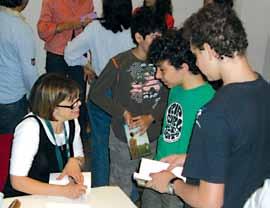
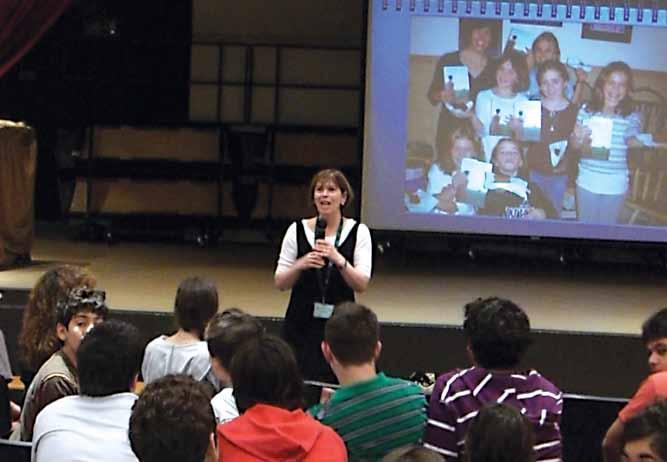
She also had a working lunch with a select group of 9th grade students from both the English and French
Larson had many positive tips for IC student writers and encouraged them to “never give up.”
It all began when her beloved grandmother suffering from Alzheimer’s disease suddenly said one day “the only time ‘Mom’ was afraid was in the winter when wild horses stampeded,” recalled Larson.
Larson’sprograms.latest
Kirby larson meets with students
entertaining account of how she got the idea of writing the book which took four years of research.
Curious, Larson asked various aunts about their family’s history. Larson found out that her great-grandfather had married a woman called Hattie to help care for his children (one of whom was Larson’s grandmother). Further research revealed that Hattie Brooks, at 16, had set out on her own to live in Montana as a homesteader in 1914.
book that she coauthored with Mary Nethery, Two Bobbies: A True Story of Hurricane Katrina, Friendship, and Survival, was published last year.
Larson knew then that she had stumbled on the perfect topic for a book. Hattie Big Sky was published in 2006 and won the prestigious Newberry Honor a year later.
IC NEWSLETTER - SUMMER 2009 15
iC student wins Swimming Championship in France
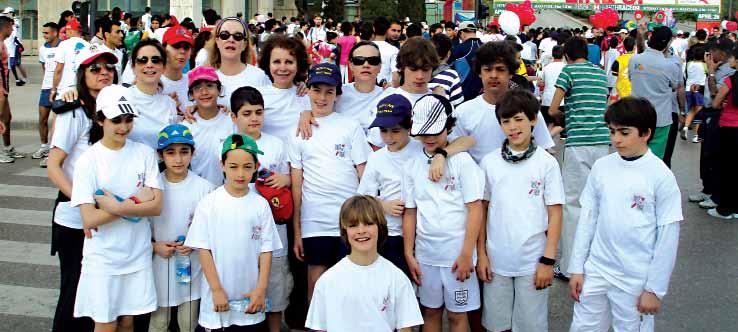
Fourteen IC students joined the HSBC Earth Race held in Beirut on April 26th. The students were running to raise money for Help & Heal – an NGO which provides underprivileged children of Roweissat with educational, recreational, and medical benefits. From Ras Beirut students included: Kamal Kettaneh, Makram
The goal was to make the Lebanese more environmentally aware. At the end of the race, each runner received some seeds to plant. The marathon was held in cooperation with the Union of Italian Sports for All (Unione Italiana Sport Per Tutti-UISP), the ministries of education and the environment.
Kettaneh, Talal Kettaneh, Raymond Eddé, Pierre Eddé, Aya Idriss, Omar Idriss, Zein Idriss, Sahi Zeidan, Rami Kfoury, Jad Kfoury. From Ain Aar, students included: Nayla Tohmé, Dana Tohmé and Jonathan Tabet. The race was held by The Beirut Marathon Association under the slogan “ the earth is turning against Us”.
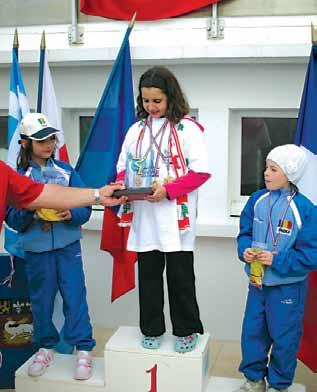
Yasmine Alamuddin, CE2, won three gold medals and one silver medal in the European Club championship held on May 9 and 10 in Le Havre, France. Yasmine, 9, has been training since the age of three.
IC NEWSLETTER - SUMMER 200916
Marathon
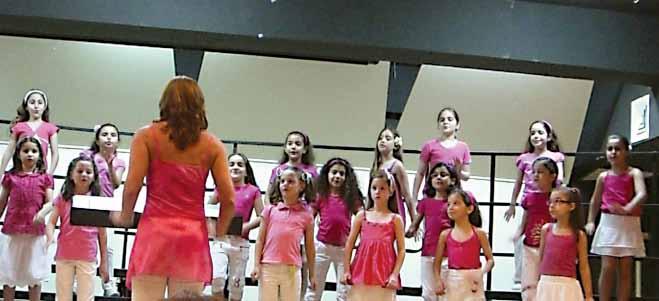
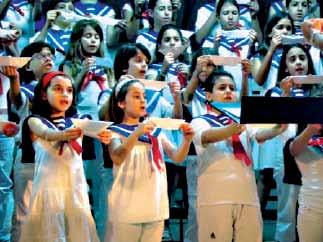
Campus News enior Performing Arts upper elementary Choir Junior Performing Arts little Cherubs choir
(6èmeinstructor,(CE2Chairperson,AinAar),JoumanaKhairallahinstructor,AinAar),DianaKaaki(CE2RasBeirut)andChafiaFarraninstructorRasBeirut)
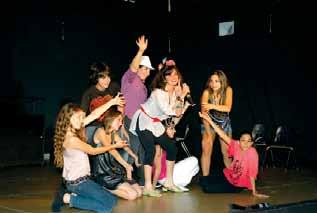
The International Day was organized by a committee chaired by Antoine Boulad (Director of French and Cultural Affairs) and formed of Randa Sabbah (Head of the Music Department), Marie Helene Gholam (Social Studies instructor and
ambassador and his Excellency the Guatemalan ambassador.
IC NEWSLETTER - SUMMER 200918
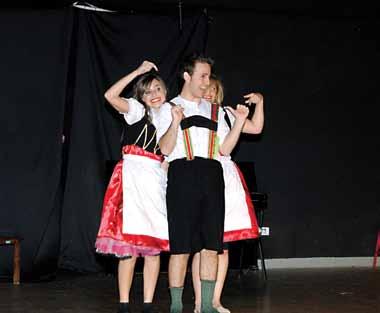
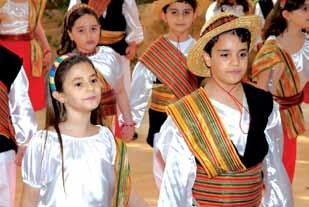
Students from grades 3, and CE2, sixième and first, cinquième and second, were assigned eight countries to represent: India, Korea, Iraq, Guatemala, New Zealand, Germany, Ghana and Ethiopia. Every year, different nations are selected.
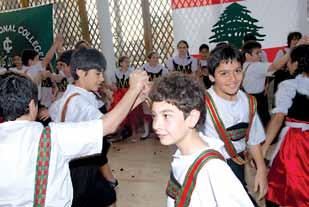
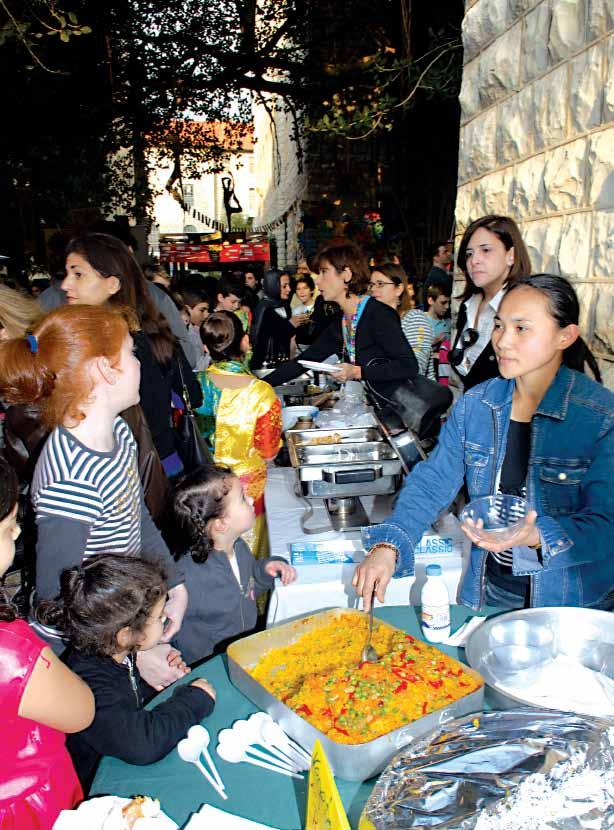
The result was a series of mesmerizing dances: salsa, Hindu, African dance, funeral march, Korean fan dance, Haka Dance and others. The songs were performed in the country’s language. There was barely a space left in the amphitheatre as parents and friends cheered the students. Among the spectators were her Excellency the Ethiopian
iNterNatioNal DAY
Following the performances, guests were treated to spectacular displays along the campus. Parents have been hard at work recreating the nations’ customs. Some had erected replicas of monuments such as the Bab el Babel of Iraq. The India display conducted yoga lessons. Every stand was accompanied by a slide show. As for food, few guests left the camps hungry as food stands offered a huge amount of representative dishes. The New Zealand stand actually offered fruits brought in from New Zealand for the occasion. Ethiopians and Ghanaians nationals were present cooking their custom food.
More than a thousand persons showed up on International day – among them 650 student participants. This was the fourth International Day held at IC. The event attracted more people than expected as students brought their entire families and friends to see them performing.
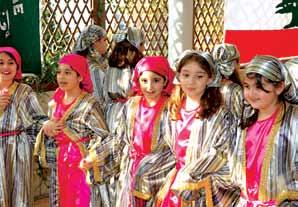
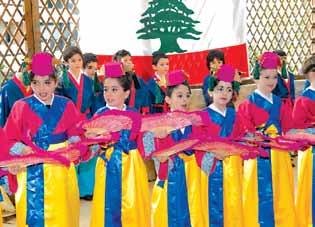
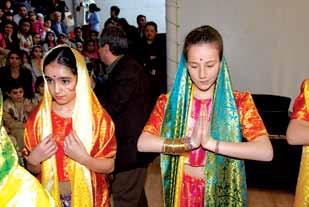
Long after the show had ended, guests continued to mingle in the late evening hours nibbling on the exotic foods and enjoying the serenity of the green campus.
These assignments go much more beyond just reading about their countries. Teachers, parents and students have to research them extensively and come out the representative music, dances, food and Sincedisplays.theend of December, teams of volunteer parents have been meeting with each other and with embassies. Music teachers have been researching the needed music and choreographing the countries’ dances. Students have been practicing and studying the language, economy, history and geography of their assigned countries. The objective is for students to learn, recognize, understand and appreciate the customs of different countries in order to promote respect of others and peace.
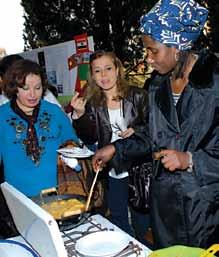
Campus News IC NEWSLETTER - SUMMER 2009 19
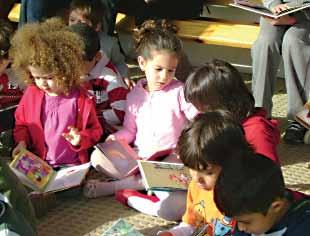
In Ras Beirut, students came to school dressed up as their favorite character in a book of their choosing. They held a special parade where others guessed the book character they represented while in Ras Beirut preschool, students donated a book or more to be sent to underprivileged children.
Campus News
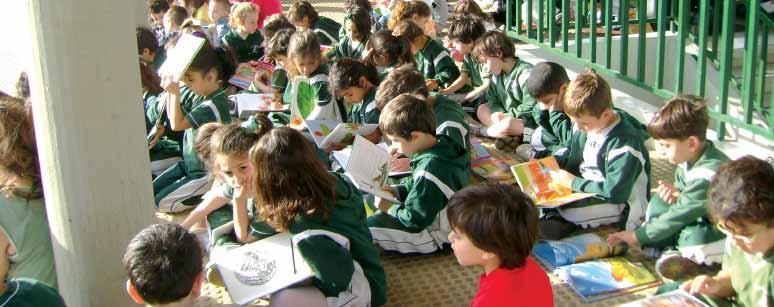
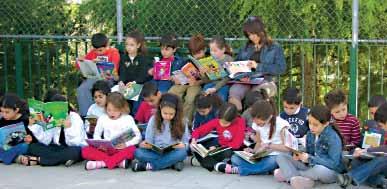
As part of the National Reading week (April 21st – April 24th), Ain Aar preschool and elementary schools began each day for a week with 10 minutes of silent reading. Classroom doors were decorated with illustrations based on book covers prepared by the students, parents came to class to read stories, and students themselves visited other classes and read to each other. The highlight of the week was the arrival of two Lebanese authors, Feyrouz Baalbaki and Samah Idriss who read out their books.
reading Week National

IC and AUB held a tribute to Tom Weaver’s life on May 26 AUB’s Assembly Hall to commemorate the life of a man who gave so much to the two institutions. Tom Weaver passed away in November.
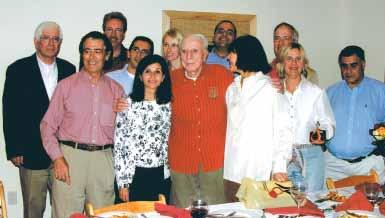
Tom Weaver with former students in 2005
IC, after he made sure he had trained me thoroughly. And I of ten found myself em ulating his approach and thanking him silently for his men Tomtorship.
a Celebration of his life in IC and AUB
IC’s debts to Tom are many. After April 1975, ‘regular academic programs at the Mechref campus had to be abandoned because of the dangers and disruptions of the civil war. An IC
Campus News IC NEWSLETTER - SUMMER 2009 21
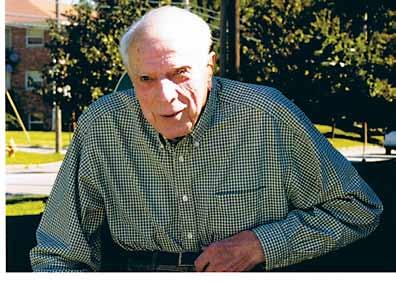
Tom Weaver in 2005
“Before educational research told us that students learn best when they are engaged, Tom was engaging his students in discussions about litera ture, and teaching them to appreciate the beauty of the English language, a passion which we both shared. Before educational research told us that students learn when they per ceive that their teachers care about them, Tom cared, and he did so unob trusively but wholeheartedly. Tom also engaged - and cared about -the teachers in his trust. He was a wonderful mentor, giving guidance and criticism, while ensuring he re spected the dignity of his colleagues, as young or inexperienced as they may be. He would sometimes drop by my classroom and sit in the back, and the feedback he would give me later was always thought-provoking and encouraging. It was my great privilege to succeed him as Head of English at
provide at least token con tinuity and deter possible intrusions or looting, was maintained for several months by a few staff volunteers led by Thomas Weaver, head teacher of English. But repeated occupations and threats by successive militias eventu ally forced even these intrepid IC vet erans to withdraw,’ and Tom moved to the IC campus.
Weaver touched the lives of generations of IC students, par ents, faculty and adminis trators in many ways: master, scholar, musician, equestrian, outdoorsman and bon vivant. Tom spoke several languages and epito mized the best of American culture and values. He was a man of integrity and generosity; he was open and ac cepting of others, and he knew how to communicate with children and adults alike.
PresidentdeliveredThefollowingareexcerptsfromaspeechbyMishkaMourani,SeniorViceandlongtimefriend.
God bless Tom and, as Tom would quickly say as well, God bless IC. May Tom eternally rest in peace.”
Ayant dit cela, j’aimerais malgré tout citer deux phrases qui me sont chères en ce qu’elles prouvent ce que tout le monde sait, à savoir que notre métier d’enseignant consiste certainement moins à transmettre un savoir qu’à inspirer des attitudes. La première est de Abdallah Salam qui aurait dit à sa maman: “Avec M. Boulad, on a appris cette année la démocratie”. Et celle de Amer Tamim qui 7 ans après avoir été mon élève devient président du comité des délégués de classes et qui, à ce titre, vient me trouver pour me proposer le projet de recyclage au Secondaire: “C’est vous qui nous l’avez appris en CM2, Monsieur!”
Q & r avec antoine Boulad
Quels sont vos plus chers souvenirs à l’IC?
Je suis tenté d’emprunter à Baudelaire une escapade: “J’ai plus de souvenirs que si j’avais mille ans!” Comment évoquer en quelques lignes les plus chers souvenirs accumulés durant plus d’un quart de siècle?! Il y aurait un volume d’anecdotes à écrire où figureraient les collègues, en
Ecrire. Lire et écrire! Rédiger un premier roman! Traduire un livre de Faysal Farhat. Prendre le temps de flâner et puis écrire la ville. Plein de projets culturels: organiser au Liban un festival méditerranéen de poésie en lien avec l’art. Fonder une association pour développer les ateliers d’écriture.
est-ce que vous vous souvenez de votre première journée à l’IC?
Honnêtement, je ne le sais pas. Peutêtre, la convivialité. Mais, je ne suis pas de ce tempérament-là: J’espère ne pas trop avoir le temps d’y penser!
Qu’allez-vous regretter le plus à l’IC? Que va-t-il vous manquer le plus?
AntoineBouladestnéàlaRuedeDamas dont il a relaté les histoires dans un livre paru cinquante-cinq ans après. Il a reçu uneéducationlaïqueauGrandLycéede Beyrouth où, dans une revue scolaire, il publie ses premiers poèmes. Il a milité à la fin des années 60 pour exprimer des révoltes et des solidarités. Il a fait des études de philosophie, de sociologie puis de sciences de l’éducation. Il a vécu à Paris de 1971 à 1980, séjour entrecoupé de voyages enTunisie, aux Etats-Unis, au Mexique, au Guatemala, en Europe et dans les pays du pourtour méditerranéen. Il a publié durant l’accalmie de l’été 1975 son premier recueil de poésie intitulé Je réclame le àauministèredel’intérieur.DepuissonretourLibanenseptembre1980,ilenseignel’ICoùilestnommédirecteuren2001.Ilaàsonactifquelquesréalisationsdontilgardelemeilleursouvenir:unprogrammeciviqueetcitoyenauprimaire,lesactivitésducentenairedontlafameusephotodetouslesélèvesdel’établissement,leFestivald’Artdel’IC,lecalendrier,puislePrintempsdespoètesdel’IC,leprojetd’établissementetlaréhomologationdelafilièrefrançaiseparl’AEFE.Ilafondéen1997avecdesamisl’associationAssabilquiacréélapremièrebibliothèquepubliquedeBeyrouth.Ilaétémembredupremiercomitéderédactiondel’OrientLittéraire.Auteurd’unedizainedelivres,Ilestconsidéréparcertainscritiquescommel’unedes«voixlesoriginalesdelapoésiefrancophoneduLiban».
Quels sont vos plans pour votre retraite?
particulier ceux de l’Elémentaire et de Aïn Aar, et les élèves! Sans oublier que c’est à l’IC que j’ai rencontré mon épouse et que l’IC est l’établissement de mes enfants…!
Campus News IC NEWSLETTER - SUMMER 200922
Pouvez-vous nous en parler? Je m’en souviens bien évidemment; cependant, mon souvenir ne porte pas sur l’activité que j’ai animée ce jour-là afin de faire connaissance avec mes élèves ni sur mon sentiment d’étonnement de me tenir pour la première fois de ma vie au milieu de 25 enfants, non. Il s’agissait plutôt de la réaction de ma mère chez qui j’habitais à l’époque, sentiments mitigés, à la fois d’admiration pour l’IC mais aussi de colère et de dépit envers l’établissement qu’elle avait servi pendant plus de vingt-cinq ans en tant qu’enseignante puis directrice des études arabes! C’est qu’au terme de cette première journée, j’avais trouvé dans mon casier une note rédigée par Mme Tabib, directrice de l’Elémentaire en cette année scolaire 1980/1981, une note d’appréciation et d’encouragement. La différence du climat institutionnel entre nos établissements respectifs laissait ma mère pensive, dubitative dès mon premier jour à l’IC! Cette note lui apportait la preuve que la réputation du “système américain” ne semblait pas volée! Je crains que cela ne soit parfois en train de se perdre !
Do you remember your first day at IC? Can you tell us about it?
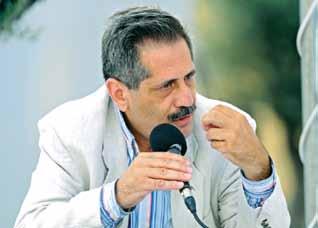
Youssef Korfali, Director of Secondary School, retires after a long career at IC.
What will you miss the most at IC?
Who is foolish enough to work in Lebanon between 1975 and 1990: International College? During the worst days, the darkest nights, the craziest clashes, IC never surrendered. We worked as one team, for one purpose; maintain the good standard of education. These days bring back
Very dear memories stretch in my mind from 1975 until this moment. It is a strange feeling when you get in love and find out that at the end of the road one and only one thing is still there “love”. Some people find it easy to describe love. I would rather like to keep it as discrete as possible. For IC some of us named this feeling the “IC Virus”, I would rather like to call it “love encounter”. Through this relationship I developed and progressed, I learned
What are your plans after retirement?
Campus News IC NEWSLETTER - SUMMER 2009 23
and still feel so much ignorant, I met people and made good relationships, I greeted many with “Welcome to IC”, and I parted with others in the hope of meeting them again Now, that I am on the verge of retirement what am I going to miss? Nothing and everything, nothing because I will make sure to continue this relationship and everything since I will not be able to feel the heart beats see the shining eyes and hear the music of the classes. When you are separated from someone you love you cannot but miss the whole.
those good bright moments during the worst civil war that Lebanon went into. Memories like the success of all graduating students in official exams despite all sleepless nights of fighting, acceptance at AUB, Commencement exercises were never interrupted except for one year, every first school day, the first school day of each of my two daughters and their graduation, all of chemistry classes that I gave, all my ups and downs as a teacher, department chair, coordinator and administrator. I always dreamed that I can fly. It is true I flew with You.
At that time I was teaching graduating students in the French Baccalaureate in a school in Beirut. In the horizon the gloomy fate of Lebanon was being prepared. But who was I to foresee the path of history. I signed the contract and made a visit to Meshref campus where I was supposed to teach 2nde and I met Mr. Dumont the middle school director. I was fascinated by the physical set up and facilities. I was mainly interested to visit the Laboratories building. I can never forget the high quality equipment in each Unfortunately,section. I never had the chance to teach in Meshref. I visited it several times after my first to save some of the laboratories equipment.
What are your fondest memories at IC?
There are no plans for retirement yet. I will just change my work address and I will keep on in the education field. I am just not ready to think about working for a boss like me. It does not sound right and being very demanding I am afraid to enter into conflict with my boss. On the other hand because this job will be my last possible employment, I cannot afford to lose it.
It was March 1975 that I met Mr. Samir Chamma’a who was at that time the secondary school assistant director. “The school is in need of a chemistry and physics teacher in 2nde and 1ère” he said
Q & a with Youssef Korfali
Actually, in my case, there were three “first days:” One was when I joined the elementary school as a student. The school was located in the current preschool building, and the Office Manager was none other than our dear friend Samia Sullivan, whom we then knew as Miss Khalaf. My first teacher was Fouad Haddad who came from my home town of Baakleen and who gave me big support and encouragement. We later spent several wonderful years as faculty colleagues in the department of education at AUB and are still life long friends.
my own teachers – Alfred Khuri, Musa Sulayman, Atif Karam, Yacoub Haddad and many others.
I received a warm welcome from then President Gerrit Keator and great support from Deputy President Edmond Tohme as well as all the directors. My working years with Mr. Tohme were wonderful indeed.
As you know, my work at the ERC has mainly dealt with the professional
Another “first day” at IC for me was when I started teaching here. I was only 21 then, and some students looked bigger than I was. It was thrilling to become a colleague of
Please note that I will be retiring from IC but not from the service of education in Lebanon and the region. I plan to continue teaching at AUB as well as provide consultancy services to institutions which might wish to benefit from my experience. As president of the Lebanese Association for Educational Studies, I will continue to support efforts for educational research and reform in the country. Above all, I hope to have more time to read and write. There are dozens of books in the ERC professional collection that I want to read, and there is a host of educational issues that I’d like to write about, particularly in the area of curriculum and instruction.
What will you miss the most at IC?
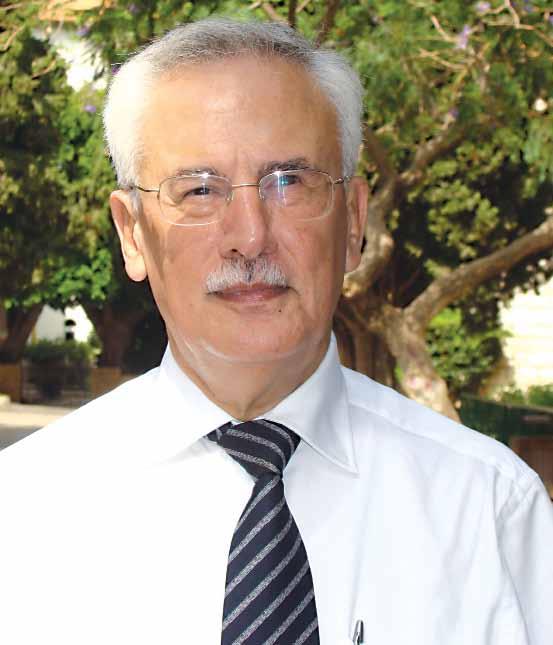
Dr. Raouf Ghusayni, Director of ERC, retiresafterservingICformanyyears.Dr. Unitedandathroughoutgroupsteachers,thecontributionsandcentered,andtheLearningapproachandofSchoolsthethroughthroughoutteachersforestablishingfacultyextensivedevelopmenttheGhusayniiscreditedwithre-establishingERCasaleadingcenterforprofessionalthroughlaunchinganin-serviceprogramforIConcampusandabroadandanactiveOutreachProgramtheprofessionaldevelopmentofinpublicandprivateschoolsLebanon.HeledICtwicetheprocessofaccreditationby(European)CouncilofInternationalandtheNewEnglandAssociationSchoolsandColleges.HeidentifiedintroducedtoICthepedagogicalofPerformance-BasedandAssessment(PBLA)andCriticalSkillsapproachtoteachinglearningknownasSPEC(Student-Problem-based,ExperientalCollaborativelearning).HisotherincludedsupervisingwritingofCurriculumGuidesbyICinitiatingasetofteacherstudywhoholdmonthlyseminarstheschoolyearandrunningTeacherExchangeProgrambetweenICinternationalschoolsinEurope,theStatesandtheMiddleEast.
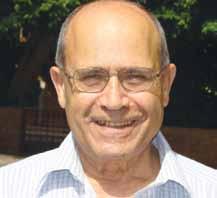
What are your fondest memories at IC?
Q & a with r aouf Ghusayni
My memories center around the life long friendships I made with classmates, students and colleagues. Whenever I see one of them, an image from the past flashes.
Do you remember your first day at IC? Can you tell us about it?
What are your plans after retirement?
One scene I remember vividly as a student was an annual ritual where our principal, Mr. Leavitt, would have me stand in front of Rockefeller Hall with my friend Maroun Kisirwani and take a picture of the two of us to send to the students of a U.S. private school who were raising funds to cover our annual scholarship. The picture would go with a thank you letter from each of us describing our year at IC. Later as a teacher, I worked with Mr. Leavitt and his successor, Mr. Schuller. They both were great men of commitment and vision.
development of teachers. I can testify that the teachers of IC are persons of high professional commitment and are in constant search for new educational ideas and practices. What I will miss most are the numerous occasions where I saw such commitment in action: in deliberations of the Professional Development Committee, in inservice and outreach workshops, and in discussions within the Educational Forum and the Teacher Study Groups. I will also miss the scene of hundreds of teachers from all over Lebanon flocking into Rockefeller Hall on an outreach professional development day. Equally, I will miss the trips with IC teachers on outreach days to various parts of the country from Akkar in the north to Nabatiyeh and Marjayoun in the south. Above all, I will always miss the ERC atmosphere and the special people with whom I worked and lived all those years: Zeina Dayya, Nayla Hamadeh, Joelle Abdelahad, Connie Hadba and Hussein Farhat. I feel they are so much a part of my life.
The third “first day” was when I joined IC as director of the ERC in 1995 after a long career at AUB and the International School of London. The exciting challenge was to re-activate the ERC after it was dormant for a period of time during the civil war.
Campus News IC NEWSLETTER - SUMMER 200924
I was once admitted to the emergency room at AUH, and there was to receive me a former student, Dr. Shawki Kanazi. His presence made things much easier for me. At Stanford where I was studying for my doctorate, my best friends were Eddie Tohme, a classmate, the late Muram Shammas a former student, and Marwan Ghandour, another former student and later an AUB Colleague.
Costi Zarifeh ‘64
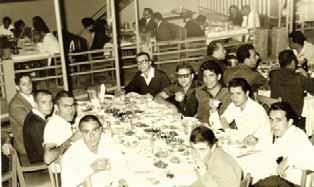
I’m so sorry to hear that Mr. Weaver has passed away. He was such an unforgettable figure especially when we moved up to Meshref, and he was organizing the Horse Riding Club, and looking after the Boarding School. One good part of my school life has left us.. Unfortunately I will not be able to attend the tribute, as I am outside Lebanon living in London. My thoughts will however be with his family and all my colleagues who shared the memories.
In October 1961, we were enrolled in the 4th and 5th years, respectively.
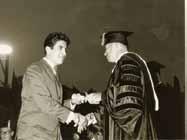
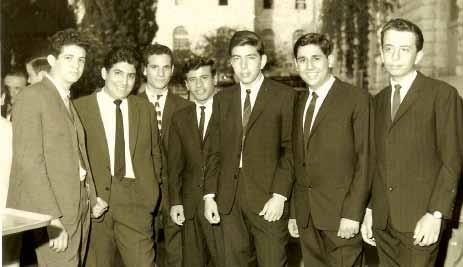
How I wish that the years at IC had not whizzed past so quickly. I would have loved them to have gone by in slow motion.
I am saddened by the passing away of Thomas Weaver. I have many fond memories of him, including going on Skiing trips with him to Faraya as part of I.C extracurricular activities. He was a special man indeed.
Dear HalfwayIC, through our secondary education, my late brother Ramzi and I moved from the National Protestant College to IC.
letters to the editor
classmatesWith
I regret not being able to attend the Tribute as I am based outside of Lebanon, However I will appreciate receiving a Video of the event if it is at all possible.
His remembrance brings back hope that real men can be around every now and then to give new hope and make a difference in the world. Why not have the tribute on line, or tape it. We can then share the memory, with others who value Mr. Weaver as a teacher and as a
their subjects to the highest possible levels.
Looking back at my days at IC, I experience a mixture of pride and nostalgia, with a touch of the ‘Dead Poet’s Society’ thrown in.
I wish I can be there, he was an unforgettable man, teacher, and friend.
Anwar Misbah Soubra ‘78
In the three short years that I spent at IC, I made some life-long friendships that have withstood the test of time.
I shall never forget the likes of Charles Addington, Al Miller, Alfred Khuri, Farid Muja’is, Emile Najjar and Sadik Umar. Some made us laugh, some were naturally funny, some were too serious, but they all made us learn
Markos Papadopoulos ‘75

Nadim Hammam ‘79

After IC, I went to university in the United Kingdom, where I have been ever since.
The teachers were amazing. Each with a different approach to teaching, yet all achieved the task successfully, in their inimitable ways.
My father had been an ambassador and was a philosopher (in fact the second person in Lebanon to have received a PhD in Philosophy, the first being Charles Malik). Without informing my parents, I applied to the Berklee School of Music (Boston, USA). Only after I got accepted did I tell my father. He said: “I’ve noticed that your interest in psychology has decreased and your passion for music
for music, but also wanted to see this crazy guy who was giving a concert in the middle of the war.
I refused, as this would imply my political recognition of a divided Beirut. Finally, they found a place smack on the Green Line: “Ecole de Lettres,” which had an entrance from the East and one from the West. The concert hall was packed with people even standing. People were hungry
Which was your most memorable concert?
Julian was singing in perfect tune before he could speak, and he had a fine sense of rhythm. At the age of five, he asked to play the violin and took it very seriously. When he was 10, we were in Hawaii on a visit, and there was a band in the hotel. Julian picked up his violin and started playing with them. He obviously had a talent for performing.
When did you realize that your son, Julian, was talented in music?
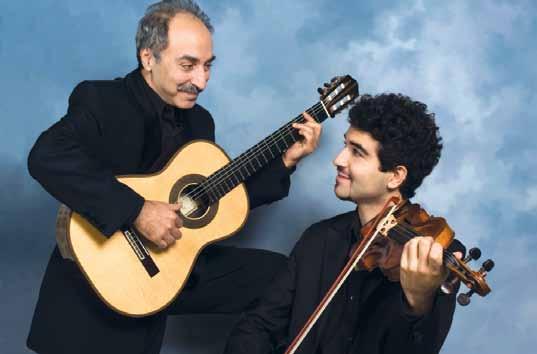
Jad Azkoul ’65 is a guitarist of world renown. He and his wife, Clarissa, who live in Geneva, have two sons: Julian, 21, Kfarhay,lastandattendingUniversity)(currentlystudyingMusicatCambridgeandMichael,19(whowillbeartschoolinEngland).Fatherson(Julian)gaveaconcerttogetherMarchattheMarSabaChurchinaspartoftheBustanFestival.
I got a guitar for Christmas when I was about 12, and took some lessons. But when I came to IC (as a boarder at age 14), I made friends with Zuheir Al-Faqih, who was older and had an electric guitar and with whom I formed a small band at school. At AUB, while studying for my Masters in Psychology, I realized that something powerful was pulling me towards the guitar. The notion of becoming a psychologist was losing its appeal.
No. After two years at the school studying jazz music, I discovered classical music, which I didn’t like before. I then went to Paris to study music for five years. Then to Uruguay to study with a great Master, Abel Carlevaro, to refine my guitar technique and interpretation. Altogether, I was a full time music student for ten years.
When were you first introduced to the guitar?
When did you start performing together?
In Beirut in January, 1980, where I gave my first major concert. It was to take place at AUB. But as we were in the midst of our civil war, this meant that those in East Beirut would not be able to attend. So the organizers said that we’d have two concerts: one at AUB and one in the east side.
alumni News IC NEWSLETTER - SUMMER 200926
Q & a with Jad azkoul
Did your parents support your switch in plans from a PhD in psychology to music?
So I finished my masters and the next day I was on the plane to Boston.
has increased. If you are truly a musician, it would be a sin not to help you but if you don’t finish your masters it would be crime.” Surprised, I asked him why he had never mentioned this. And wisely he said, “Son, it had to come from you.”
Did you ever go back to psychology?
We started playing together at home when he was about eight. As he grew older, I would ask Julian at my concerts in Geneva to join me on stage for an encore. At 15, we gave our first concert where his name was featured on the program. We also formed “The Gentlemen Quartet” with another father and son. We had stopped for a while as Julian was battling a life-threatening illness. But thanks to amazing medical advances, he’s perfectly well now. I love performing with my son. Unlike some fathers and sons who have little in common, Julian and I share the same passion and can spend hours together. I should like to add that his younger brother Mike is an artist in his own right and I am very proud of them both.
Mohamed al Zameli ‘81 and Ghassan Safadi ‘82
Dinners and events
Mr Zameli had gathered 10 alumni at his office to listen to the plans of the Moufidschool.
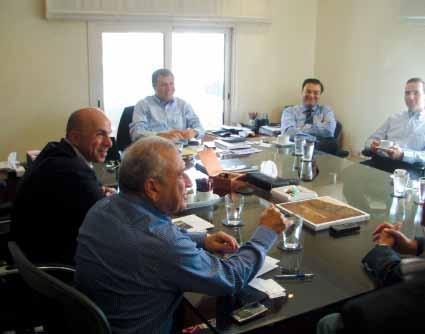
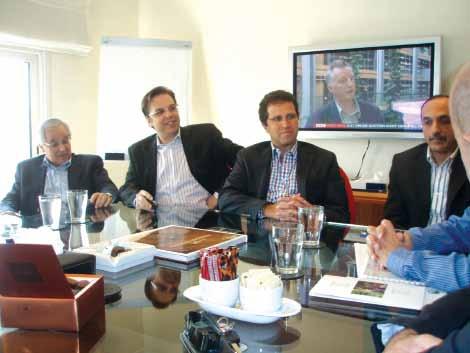
Collecting much needed pledges for the Capital Campaign has began in earnest as IC’s Vice president of Alumni and Development, Moufid Beydoun, spent a week in Saudi Arabia and the Gulf in April meeting up with alumni and IC Thefriends.main purpose was to explain in details the Capital Campaign and the future plans for the school.
Hilal Kabbani ‘67, Fadi Moumneh ‘81, Mazen Kotob ‘85, Marwan Zaydan ‘78
Moufid Beydoun ‘64, Nazih Omari ‘76, Mohamed al Zameli ‘81, Ghassan Safadi ‘82, Amir Sinno ‘83
In Dammam, Fathi Coptan ’74 hosted a lunch for the occasion inviting five other alumni and friends to listen to the goals of the Capital Campaign.
In Khobar, Moufid also met in Houssam Hamze ’56
Development News IC NEWSLETTER - SUMMER 2009 27
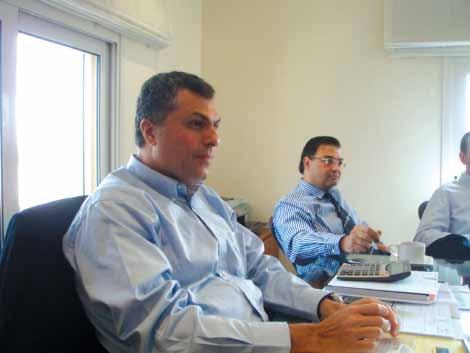
In Jeddah, he met up with Samir Kreidieh ’65, Sheikh Mohamed Basamh ’65, Nafez al Jundi (IC friend), Yasser Kaaki ’88, Mu’taz Sawaf ’69, Yehia Yehia, amer abbas ’64, Said Hatalani ’72, nabil Zaben ‘68 and Mohamed al Zameli ’81
was touched to see the enthusiasm of all for their beloved alma mater.
the Capital Campaign was officially launched last year. the goal is to raise $55m over a period of five years. the Board of trustees has already committed over $10m. the rest is being solicited from alumni, parents and IC friends.
the International College has completed negotiations to purchase its ras Beirut campus from the american University of Beirut. IC is getting ready to launch a huge construction project on its campus. the project will span several years and include a much needed new elementary school, a new auditorium, athletics courts, art facilities, an underground bus and parking system, a new administration building, two extensions to the middle school building, a new preschool extension, a food court, libraries, gymnasium, a black box, theatre and a swimming pool. the historic buildings housing the Middle and Secondary Schools will also be fully renovated. IC has also purchased land at the ain aar campus and will embark on some much needed construction projects in the near future.
Dinner in Dubai
Development News IC NEWSLETTER - SUMMER 200928
In Abu Dhabi, Moufid was joined by IC president, John Johnson and NY based Director of Development, Peter Gerard. In their honor, ramzi talih ’65 threw a dinner party which included Sami Sidawi ’59, ahmad Dabbous ’69, Khaled Souki ’59, and oussama naaman ’70
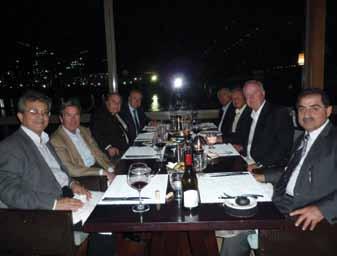
Ramzi Talih ‘65, Peter Gerard, Sami Sidawi ‘59, Oussama Naaman ‘70, Khaled Souki ‘59, Moufid Beydoun ‘64, John Johnson, Ahmad Dabbous ‘69
we are pleased to inform you that walid Daouk ‘77, Ford Fraker and maya Nassar tohme, have joined our Board of trustees.
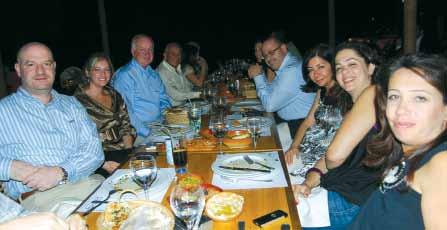
In Dubai, Mazen Daher ’86 had organized a dinner for over 12 young alumni - who had a lot of questions about the Campaign and the future plans for IC.
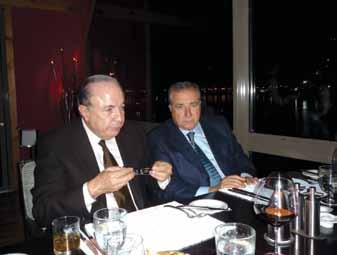
Sami Sidawi ‘59 and Oussama Naaman ‘70
Class of ’’70-‘79
Abed Saghir ‘53 graduated from AUB with a B.Sc. in Agriculture in 1957 and M.Sc. in Agronomy in 1961 and a PhD in Plant Physiology from the University of California in 1964. After his return to Beirut, he was appointed as professor of Weed Science at the faculty of Agricultural and Food Sciences at A.U.B from 1964 - 1987. After that he was appointed as Dean of the Faculty of Agriculture and Prof. of Weed science at the United Arab Emirates University from 1987- 1995. Since then, he is serving as a Consultant in Weed Management and Sustainable Development in Beirut. He is married to Rajiha Mahmoud and has three Children: Dima, with a B.A in English Literature from U.A.E University, Mazen with a PhD in Computer Engineering from University of Toronto in Canada and now Prof of Computer Engineering at Texas A & M in Qatar, married to Ghina Moumtaz, and Bashir who graduated from AUB and now working with Dar-al-Handasah as a landscape Architect in Qatar and is engaged to Hiam Chemaitelly.
Patou Majd Fathallah ‘74 lives in Northern Tuscany and is a renowned sculptor.
Bashar A. Al-Khalili ’88 (Dr) got engaged to Charlotte Lundin in Dec. 2008, and are planning to get married in early summer of 2010. He still works at the Dept. of pediatric oral & maxillofacial surgery at the Eastman Institute in Stockholm, Sweden and is the acting head of the surgical team. My major focus is on implant surgery and bone grafting in young patients.
Class of ’50 – ‘59
alumni updates IC NEWSLETTER - SUMMER 2009 29
Growth Globalization, Innovation, Change and Technology. He is a Fellow of the Institute of Leadership and Management, chartered Fellow of the British Computer Society, and Fellow of the Institute of Directors. He is married to Hanan Boubess has three children and five grand children: Thaer 1971 (Amin 8 Nadim 7), Magd 1974 (Marwan 6 Ziad 2) and Tamara 1979 (Sofia 7 Months).
Class of ’80-‘89
Class of ’90-‘99
Class of ’60 – ‘69
Hani Tannous ’75 is working at Hertz in California. “I am enjoying life close to Zuma and Malibu Beaches. I am looking for an old friend Samir Khwais who graduated in the same year.”
Walid Messeike ‘92 and his wife Sumaya Mourad are proud to announce the birth of their first child, Nadine Messeike, in Sao Paulo on May 6th 2009.
Marwan Stambuli ’65 has been living in Geneva since 1978. He is a Multicultural Creative International Management Consultant and a Leading Global Leadership and Management Educator. He Transformed Knowledge Into Value For 41 Years in 65 Countries to 115 Worldwide Clients and 3150 EMBA MBA and BBA Students of Major Universities Focusing on the Critical Future Challenges of Governance,
The Bottler of the Year award is PepsiCo’s highest international honors recognizing bottlers from different part of the world. Regional Bottlers are selected from the four international regions: Asia, Europe, Middle East/Africa and Latin America, and one Regional Bottler of the year is selected. Representing SMLC was the Chairman Mr. Walid Assaf while Mr El-Khalil represented the PepsiCo International Levant Team.
To all my friends from I.C and A.U.B and the world, I could be contacted in Beirut at tel:961-1315331 or 961-3- 728819, and e-mail @yahoo.com.
Mohamad Hatab ‘88 and Janane Beydoun would like to announce the arrival of their baby boy Nadeem born in Beirut on 9 Jan 2009. Nadeem has an older sister Naya who was born in January 2007.
« Societe Moderne Libanaise pour le Commerce SAL » named 2008 Region Bottler of the Year
Ahmad Soueid ’79 is an architect and lives in Vienna,Virginia..

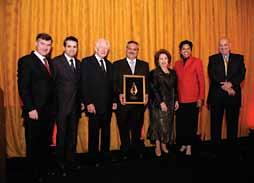
Talal El-Khalil ‘81, Vice President and Market Unit General Manager of PepsiCo International Levant team, received the 2008 Region Bottler of the Year during a gala dinner that took place at the Palace Hotel in New York on Friday March 6th. Lebanon’s regional bottler, the Societe Moderne Libanaise pour le Commerce SAL (part of the Pepsi family and first Pepsi bottler in the Levant and Gulf countries) was named as the recipient of the award.
Samer Katabi ’77 is an orthodontist in Paris.
Maya Charafeddine ’99 and Rami Harb and would like to announce the birth of their first son Sami in April. The couple lives in London where Maya is an Epidemiologist with Data monitor

Maher Abdel-Sattar ’03 writes: “I graduated from UCLA in 2007 with a B.S. in Molecular, Cell, & Developmental Biology and a minor in Human Complex Systems. Ever since, I have been working as an assistant director at a science camp for 6th graders which gave me the chance to work outdoors and enjoy the experience of being a teacher. I recently got accepted to the #1 pharmacy school in the U.S., UC San Francisco, where I will be pursuing my degree in Pharmacy for the next 4 years. Before I move to San Francisco in August, I will be doing some traveling and my destinations will include Beirut, London, Paris, and New York. I’m very proud of my two sisters’ (Mira & Rana) accomplishments at IC and I look forward to attending Mira’s graduation this June.”
Amira Alwan ’92 has been working at Rasd Executive Search – Amrop Hever Group for the past 8 years and currently holding the position of Consultant. She is married to Mazen Najjar and blessed with two kids: Yasmeen and Omar.
Nader Arzouni ‘97 married Farah Chahine in April and is still living in Beirut. He has established with his father their new company MAC AUDIO sarl specializing in professional audiovisual & translation equipment.
IC staff and faculty send their deepest condolences to the Zein family.
We regret to inform you that Farid Abi Shaheen passed away in April 2009. Mr Abi Shaheen was one of IC’s beloved PE teachers. He joined IC in 1947 and stayed until his retirement in 1990. Mr Abi Shaheen frequently visited the IC campus to check on old friends and acquaintances. He was keenly interested in the news of all his students. IC staff will dearly miss his visits.
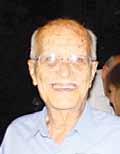
IC faculty and staff send their deepest condolences to the Abi Shaheen family.
Marwan Refaat (Dr) ’96 was elected as a fellow of the American College of Physicians (ACP) in April 2009. Dr. Refaat was the recipient of the International College Scholar Award (first prize) and International College Alumni Award. Dr. Refaat earned his medical degree with distinction from the American University of Beirut School of Medicine in 2003 and was the recipient of the Stephen Penrose Award. He completed a residency in internal medicine at Massachusetts General Hospital/Harvard Medical School. He is completing a cardiovascular fellowship at the University of Pittsburgh Medical Center and pursuing a clinical cardiac electrophysiology fellowship at the University of California San Francisco. Dr. Refaat was the recipient of the best fellow research award from the University of Pittsburgh department of Medicine in 2008 and 2009 for his research on the genetic risk stratification of patients prone to sudden cardiac death and ventricular arrhythmias. He was also the recipient of the Massachusetts General Hospital Research Award in 2007 for his research on ventricular arrhythmias in patients with congestive heart failure.”
We regret to inform you that Marwan Zein ‘76 passed away in March 2009.
and Rami is a Cardiologist.
Hala Nsouli ‘99 writes: “In December 2008, Baker Maktabi ‘98 and I added the first branch to our family tree when we welcomed princess Mia Maktabi into our hearts and life! We are still in the Washington DC area, please do drop us a line when you’re in town!”
Claudia Matta ’05 was selected to represent the Lebanese youth in the UNESCO World Conference on Education for Sustainable Development (ESD) held in Bonn and partake in writing the Bonn Declaration on ESD. Claudia was selected to read a speech at the opening plenary session.
We regret to inform you that Henry W. See, IC Trustee Emeritus, passed away in January 2009.
IC staff and faculty send their deepest condolences to the See family.
alumni updates IC NEWSLETTER - SUMMER 200930
Class of ’00-‘08
“It was very touching for me to represent Lebanon, as well as 25 attending youth members and speak out in front of so many inspirational figures,” she writes. Her speech can be found at: programme/31-march-2009.htmlconference-2009.org/en/http://www.esd-world-
Labib Ghulmiyyah ’93 (Dr) has been an assistant professor of obstetrics and gynecology at the Medical Center since July 2008.
BeIrUt JUne 3, 2009
About IC:
About AUB:
International College was founded in 1891 in Smyrna, Turkey, and moved to Beirut in 1936 at the invitation of the American University of Beirut. Its Ain Aar campus, north of Beirut, serves 800 students in grades pre-K through middle school. IC offers challenging academic programs at all levels for its 3,400 students. Students learn English, French and Arabic, and most graduates are trilingual. At the secondary level students follow one of four curricular tracks: the Lebanese Baccalaureate, the French Baccalaureate, the College Preparatory Program, or the International Baccalaureate.
The American University of Beirut (AUB) and International College (IC) announced today the successful sale of the IC campus property to IC by AUB. Since 1936, the IC campus has maintained its facilities on land owned by the University. With IC now the legal owner of its campus, the College can make capital improvements to its structures that are critical to its success as a 21st century school that attracts and retains top quality students and faculty. IC is located on four hectares on the southern edge of the AUB campus. “After 73 years, it is important that IC fulfill its identity as an independent academic institution so that it might act in the very best interests of its current and future students,” said AUB President Peter F. Dorman. IC President John K. Johnson stated: “Through our rigorous educational programs our students are being prepared to be the leaders of tomorrow. We look forward to modernizing our facilities to support the excellent curricular and extra curricular programs.”
International College, which was founded in Smyrna, Turkey in 1891 as the American Boys’ School, moved to Beirut in 1936 at the invitation of AUB President Bayard Dodge and became affiliated with AUB as its preparatory school. In the 1960s, IC and AUB formed separate Boards of Trustees. While IC is no longer affiliated with the University, its outstanding graduates continue to make their mark on AUB. More than 2,400 IC graduates have matriculated at AUB since the early 1990s—almost 150 freshmen and sophomores every year. 474 IC students are currently pursuing undergraduate and graduate degrees at the University. Former Beirut Deputy and Minister of Economy Basil Fuleihan, Druze leader Walid Jumblatt, former Prime Minister of Lebanon Salim Hoss and MP Pierre Daccache are all graduates of both the International College and the American University of Beirut.
Founded in 1866, the American University of Beirut bases its educational philosophy, standards, and practices on the American liberal arts model of higher education. A teaching-centered research university, AUB has 606 full-time faculty members and a student body of more than 7,500 students. The University encourages freedom of thought and expression and seeks to graduate men and women committed to creative and critical thinking, life-long learning, personal integrity, civic responsibility, and leadership. www.aub.edu.lb
press release IC NEWSLETTER - SUMMER 2009 31








Throughout their respective histories, both AUB and IC have prided themselves for being intercultural and non-sectarian institutions that are open to qualified students regardless of race, religion, economic status, or political affiliation.
AUB And IC AnnoUnCe SUCCeSSfUl SAle of C AmpUS property for ImmedIAte releASe

Internat I onal College P.O. Box 113-5373 Beirut, Lebanon. Tel. 961 1 367420/33, Fax: 961 1 367433. Email: alumni@ic.edu.lb 215 Park Avenue South, Suite 2016, New York, NY 10003, U.S.A. Tel. 212 529 3005, Fax: 212 529 8525. Email: icny@aol.com www.ic.edu.lb