

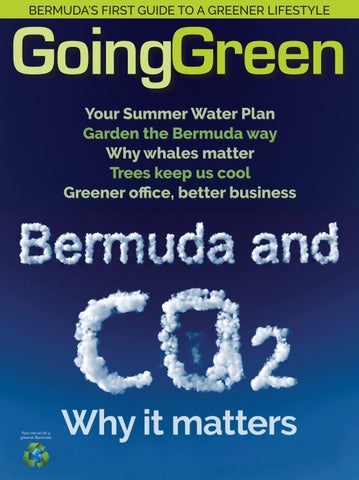
Your Summer Water Plan
Garden the Bermuda way Why whales matter Trees keep us cool
Greener office, better business
Your Summer Water Plan
Garden the Bermuda way Why whales matter Trees keep us cool
Greener office, better business
As one of the world’s largest multiline property and casualty insurers, Chubb has a responsibility to control our ecological footprint in the communities in which we work and live. By introducing numerous environmental initiatives, we strive to reduce our impact on the local environment and are committed to promoting a healthy and sustainable planet. chubb.com

The Chubb Building in Bermuda is LEED Gold® and is using the LEED Dynamic Plaque™ to manage its building performance. The LEED Dynamic Plaque measures and displays current building performance data spanning energy, water, waste, transportation and human experience. Learn more at LEEDon.io.


Page 5
Battery Storage
Page 7
AES beats BELCO increases
Page 9
Grocery shopping and the environment
Page 10
Your pet’s carbon pawprint


Page 12
Belco’s green scholarships
Page 13
Reasons to drive an EV
Page 14
Jeep goes green
Page 16
Your water plan
Page 20
Gardening the Bermuda way
Page 22
Trees are cool
Going Green 19th edition 2026
Publisher: Ian Coles
Director of Marketing: Lissa Fisher
Art Director: Tim Parker
Writers: Jeremy Deacon, Photographer: Stephen Raynor
Page 23
The rhythm of island groceries
Page 24
CO₂ and Bermuda
Page 26
Why whales matter
Page 28
Government’s new plastics policy
Page 30
Your office and the environment
Published by Bermuda Media, 22 Queen Street, Hamilton HM 11, Bermuda. Tel: 441-292-7279.
Email: hello@bm.bm www.bermudamedia.bm
Views expressed within are those of the respective contributors and not necessarily shared by the magazine or staff.
Associated Media: Bermuda Business Visitor, New Resident Guide, Your Future, Bermuda Property Matters, Building Bermuda, House Garden Kitchen and Bath, Your Office and Commercial Space, Health & Beauty, Diversity, Equality and Inclusion, The Bermuda Channel.
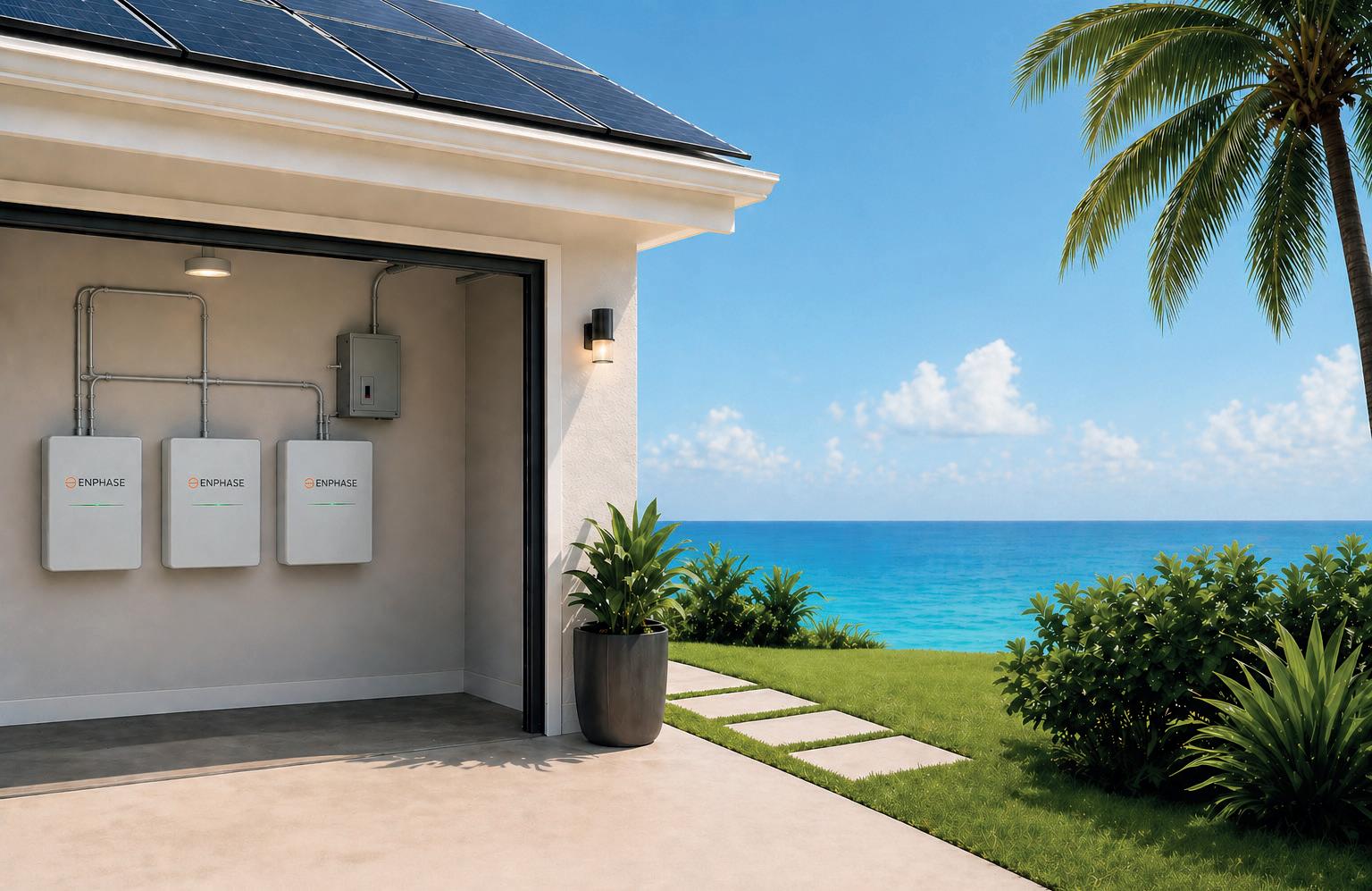
With power outages, hurricane season risks and some of the world’s highest electricity costs, more Bermuda homeowners are looking at battery storage. But how many batteries are enough — and what can they actually run?
For years, Bermuda residents have had two major concerns when it comes to electricity: cost and reliability. Power prices remain high, and during storms or hurricane season many households expect at least some interruption to the grid.
That is why solar battery storage is becoming one of the most talked-about home upgrades on the island. But many homeowners ask the same practical questions: How many batteries do I need? Can they run air conditioning? What about hot water?
The answer depends on the size of the home, lifestyle, and what the homeowner wants to keep running during an outage.
Take a 2,000 sq ft Bermuda cottage with two or three bedrooms, standard kitchen appliances, internet, lighting, water pump and perhaps three or four air-conditioning units.
Most families do not need to
power the entire house exactly as normal during a blackout. Instead, battery systems are often designed to keep the essentials running comfortably.
That can include:
• Lighting
• Refrigerator / freezer
• Internet / Wi-Fi
• TV and device charging
• Water pump
• Security systems
• Ceiling fans
• Selected outlets
• One or two bedroom A/C overnight
Modern systems such as the Enphase IQ Battery 10 provide roughly 10 kWh of storage per unit.
Often enough for:
• fridge
• lights
• internet
• phones
• small appliances
• water pump (managed use)
Good for short outages or overnight essentials.
A popular family option.
Can often handle:
• all essentials above
• longer outages
• modest daytime use
• one air-conditioning unit for several hours, depending on size and efficiency
Moves into premium backup territory.
Can often support:
• larger family usage
• multiple A/C zones used selectively
• longer storm outages
• greater comfort during grid interruptions
Usually yes — but selectively.
Air conditioning is one of the biggest energy users in any home. A modern inverter split-unit bedroom A/C may be manageable on batteries, especially overnight. Running several older units at once is a different matter.
Many Bermuda homeowners choose to prioritise:
• one or two bedrooms at night
• living room cooling in evening
• efficient units only
Traditional electric water
heaters can use a lot of power and quickly drain batteries. For that reason, many battery systems do not prioritise resistance hot water tanks during outages.
Better approaches include:
• heating water while solar panels are producing during the day
• timer-controlled heating
• solar thermal hot water systems
• heat-pump water heaters
Battery storage can make special sense in Bermuda because:
• Electricity rates are high
• Storm outages are a real concern
• Every home needs a water pump
• Solar production is strong much of the year
• Energy independence has real value
Rather than asking, “How do I power everything?” many homeowners now ask: How do I stay comfortable and functional when the grid goes down?
That often leads to a more affordable and efficient system. The best answer depends on your home, your habits and your priorities — but for many Bermuda families, battery storage is no longer a luxury. It is becoming part of modern island living.


AES is helping Bermuda homeowners take greater control of rising electricity costs with advanced Enphase battery storage systems — while continuing to lead the island in proven solar performance.
For many Bermuda homeowners, solar power already makes sense. But the next big step in home energy independence is battery storage — allowing households to store solar energy for use at night, during peak-rate periods, or when the grid goes down.
AES, Bermuda’s most experienced solar provider, is now leading that shift with the latest Enphase IQ Battery systems. Designed for reliability, efficiency and compact wall-mounted installation, these advanced batteries can keep essential household systems running during outages, including lighting, refrigeration, internet service and selected appliances. They also allow homeowners to make better use of the solar energy they generate each day, rather than relying solely on the grid.
As Bermuda’s leading Enphase installer, AES has already installed more than 200 battery systems locally and is the island’s number one Enphase dealer. The company says battery technology has now reached the point where dependable backup power and long-term savings are more accessible than ever.
A solar and battery system is not just an upgrade — it is an investment in the home. It can help reduce electricity bills over time, provide peace of mind during outages, and add long-term value and comfort to a property.
That battery expertise builds on AES’s long-standing reputation in solar energy. Founded in 2008, AES was Bermuda’s first solar company, and today it has installed more residential and commercial solar systems than all other providers combined. In a market where experience matters, that track record has made AES a trusted name for both homeowners and businesses.
Most recently, AES was selected to install major Government solar
projects, including the Government Administration Building, the Post Office, the Palmetto Road Bus Garage and the Transport Control Department. These systems are expected to save the Government close to $500,000 annually, highlighting the financial benefits of wellplanned renewable energy investment.
AES systems use premium Maxeon solar panels, widely regarded as among the most durable and efficient available. They are backed by long-term warranties designed to provide customers with confidence and lasting performance.
“Some of our customers are generating significantly more energy than originally forecast,” says AES founder Tim Madeiros. “While electricity rates continue to rise, our customers are benefiting from fixed energy costs, longterm savings and greater control over their power use.”
With BELCO rates having risen substantially over the past decade, many Bermuda residents are looking for ways to reduce exposure to unpredictable utility bills. Solar power, combined with battery storage, offers one of the clearest solutions available today.
AES is 100 per cent Bermudian-owned and has been serving the island for almost 20 years.
To learn more about solar panels, Enphase batteries and energy-saving solutions, visit www.aes.bm.


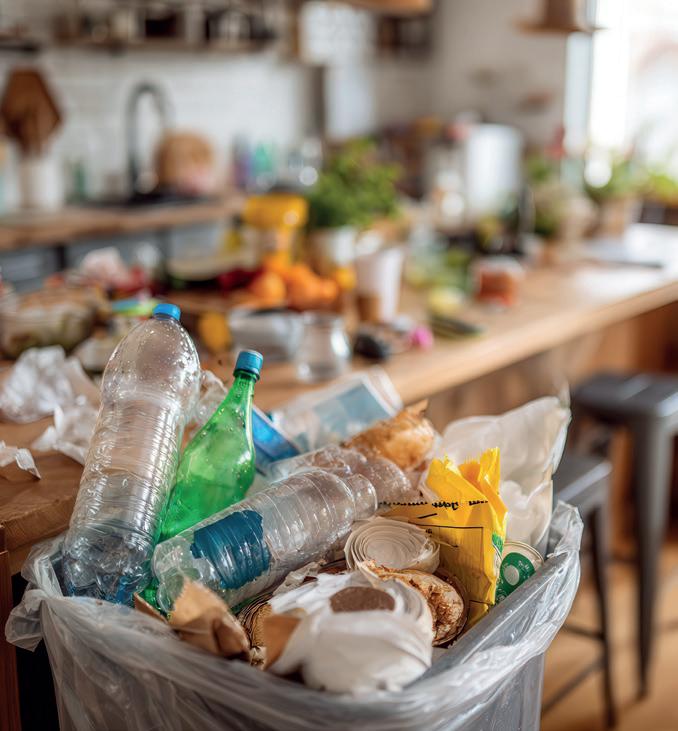
The Waste Management Section of the Ministry of Public Works & Environment periodically conducts a household waste audit. Think of this process like a retail store counting its inventory – you can’t manage a shop without knowing what’s in stock. Similarly, Waste Management’s audit of Bermuda’s household waste helps the section to better understand the amounts and types of waste Bermuda is putting out on the curb for weekly collection. This information helps inform decisions on manpower, infrastructure and how best to formulate educational strategies about waste in Bermuda.
The primary source of waste in most households is the kitchen which is directly related to grocery shopping. For householders, knowing what’s in one’s bin can also act as a powerful household management tool to fine-tune grocery shopping resulting in smarter food choices, reducing grocery shopping bills, household environmental impact and the amount of waste taken to the curb weekly.
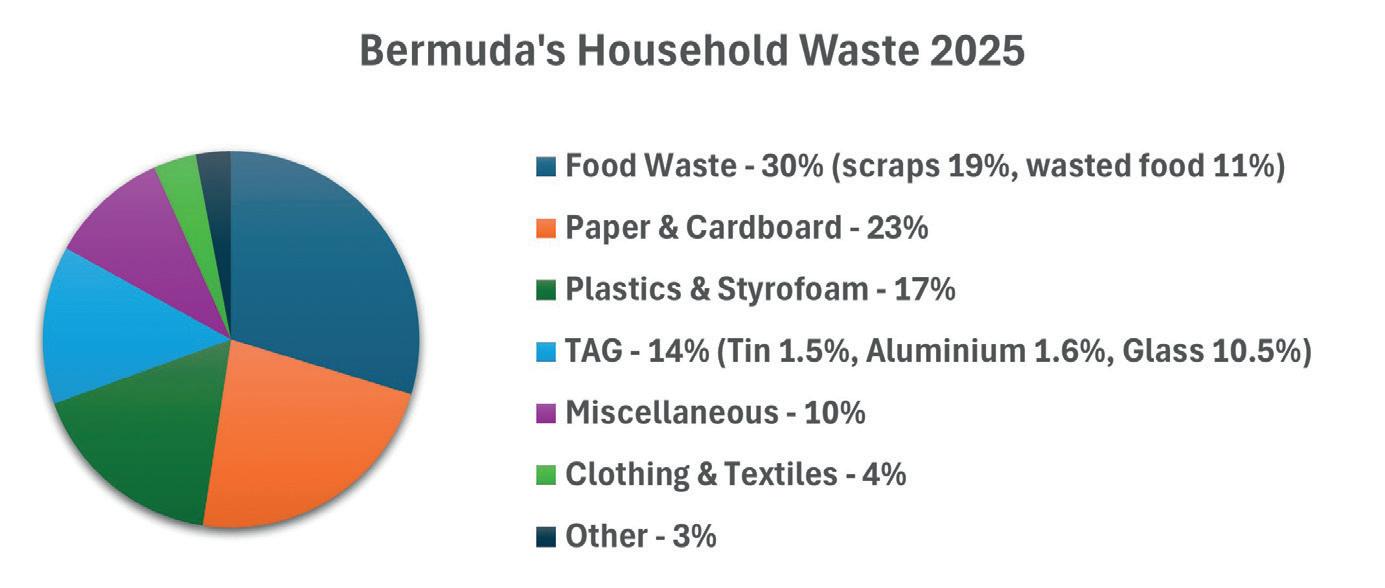
Driving this point home, Bermuda’s 2025 waste audit found that Food Waste, comprised of both Scraps and Wasted Food was the largest waste category by weight at 30%, up by a third from previous years. Food was followed by Paper and Cardboard at 23%, Plastics at 17% and TAG recyclables at 14% of the total household waste stream. In total 84% of the household waste stream is directly related to how we food shop.
Taking some simple steps will go a long way in saving money, reducing waste, and in turn helping the environment; incorporate the 3Rs – Reduce, Reuse, and Recycle – into our grocery shopping routine.
The most important step is to Reduce the amount of waste produced. Avoid over-shopping; never shop when hungry and make a list and stick to it. Look for items with the least packaging and given the ever-increasing body of information surrounding the dangers of plastic packaging, avoid if possible.
back of printer paper for note taking or grocery lists. Old clothing or toys can be donated at one of the many reuse centres and numerous jumble sales around the island, benefiting local charities. Bring your own bags to the store – several grocers are now selling sturdy, reusable shopping bags for purchase and some even offer a rebate for each reusable bag you bring. After unpacking groceries at home, place your reusable bags under your car or bike keys so you’ll remember to put them back in your vehicle for your next shopping trip. A good quality water bottle will last for years.
Avoid fruit and meat wrapped in plastic on a Styrofoam tray; request your meat in butcher paper and buy fruit individually or in a clear or mesh bag. Shopping for fruits and vegetables with local farmers significantly reduces the carbon footprint of food with the added benefit of freshness. Refuse single-use items like napkins, cutlery and straws when purchasing take-out or delivery. Skip the unhealthy snacks; these ultra processed foods are high-calory, high-cost with poor nutrition and high negative environmental impact.
Reuse items as often as possible. If you’re considering buying a single use item, check to see if it’s available second hand, for rent, or can be borrowed. Cloth napkins and cleaning rags provide years of reuse while saving money. Reuse wrapping paper or wrap in cloth; use the
Recycle your Tin, Aluminium and Glass (T-A-G) using blue recycling bags available at all local grocers, right next to the regular household garbage bags. Bermuda offers one of the easiest curbside recycling programs, there’s no need to sort TAG into different bins, and you don’t have to drive your recyclables to a drop-off centre. Blue bags are collected every other Thursday in the West and Friday in the East. When you recycle, you extend the life of precious natural resources and allow the Tynes Bay Waste to Energy Facility to produce energy more efficiently.
Of the 477lbs. of waste each Bermuda resident throws into the bin each year, 84% is a result of food shopping. Through savvy shopping you can make significant steps to reduce food costs while helping the environment. Changing just a few habits can have a huge positive environmental impact today and for the future.
Including pets in our lives has welldocumented benefits related to both mental and physical health. However, as we expand our furry families, we may be increasing our carbon footprint in ways that we might not have considered.
Cats are obligate carnivores and dogs thrive on a meat-based diet. As meat production is costly for the environment, due to the heavy land, water, and energy use, it is one of the most significant parts of our pets’ carbon footprint. According to UCLA researcher OKIN, If U.S based pets formed a separate country they would rank fifth in global meat consumption. He offers the caveat that the meat pets might eat, though safe, might not have entered the human food stream. These environmental impacts are not equal across all types of animal-based protein production. Researchers estimate that the ratio of greenhouse gas emissions for production of beef: chicken: insect is 25:10:1. Lower impact insect proteins are now an ingredient option for both pet and people food. In your home, you can make slight changes in your pets’ diet to reduce their carbon footprint without compromising the quality of nutrition.
What you can do:
• If you are feeding a primarily beef diet, try adding in chicken or other poultry rotationally.
• Look for pet foods that are certified sustainably harvested, fished, or farmed and grown organically. A resourceful twist: Polkadog, a Massachusetts dog treat company, uses the European Green Crab, invasive in New England waters, to make their dog approved Green Monstah dog treats. https:// www.noahsark.bm/polka-d-grn-mnstabns-7oz-pch.html. Here in Bermuda, someone might one day produce a pet treat using the locally invasive lionfish!
• Adopt the nose-to-tail feeding philosophy. Bull sticks, fish skins, lamb horns are examples of healthy treats/ chews that we otherwise might toss into the food waste stream.
• Look for treats that upcycle foods, like imperfect produce, to help reduce food waste. Research shows that up to 8% of the greenhouse gases produced annually can be attributed to food waste.
• Less may be more. Use the 9-Point Body Condition Score as a starting point to see if your pet is an ideal weight. Review your pet’s diet, consider your pet’s activity level, and consult your vet to check if reducing food or treats is recommended. (https://www. aaha.org/globalassets/02-guidelines/

Some simple tips from Noah’s Ark
weight-management/weightmgmt_ bodyconditionscoring.pdf )
• Incorporate meat free days into your own meal planning.
• Clay cat litter (strip mined, nonrenewable, heavy to transport, hard to dispose of) is one of the most significant parts of your kitty’s environmental paw print. Try plantbased cat litter. Alternatives include litter made from recycled paper, upcycled pea husks, corn cobs or kernels, pine, and cassava. These litters perform well and are biodegradable making disposal easy.
• We credit our outdoor hunter cats for helping manage the rodent population (without pesticides!) but they can also have a negative impact on our wild birds. If this describes your kitty, consider a colourful Birdsbesafe collar cover. You can safely place this over your cat’s quick release collar to alert the birds and reduce bird catch by more than 60%. https://www.noahsark.bm/birdsbesafecat-collar-cover.html
• Use compostable dog waste pick up bags.

• Install a pet waste composter in your yard.
• Buy sustainable, durable, natural, and organic pet products when you can. e.g., washable piddle pads and diapers. Pass on or repair toys and collars.
Forget Me Not Canine Center accepts, repairs, and reuses well-loved dog toys and equipment. Donate directly or drop off at Noah’s Ark.
• Reduce plastic dependence. Choose pet bar shampoo (we love Project Sudz!), metal, or ceramic pet dishes.
• Never release unwanted pets into the environment. This is inhumane and can be damaging to the environment. Pet owners have released unwanted turtles (Red-eared Sliders), rabbits, guinea pigs, and fish into the local environment. Think: Red eared Sliders and endemic Bermuda Killifish. A destructive combination. Reach out to animal organizations and your pet store for help in re-homing.
Changing our individual consumption choices may seem like a small thing when compared to corporate or government action but it is still important, especially on our island home.

As BELCO advances its sustainability goals, scholarships, apprenticeships and student opportunities are helping prepare the next generation of Bermudians for careers in a changing energy sector.
As Bermuda Electric Light Company Limited transitions to a more sustainable company, there are many current and future opportunities for Bermudians through scholarships, apprenticeships, on-the-job training and employment.
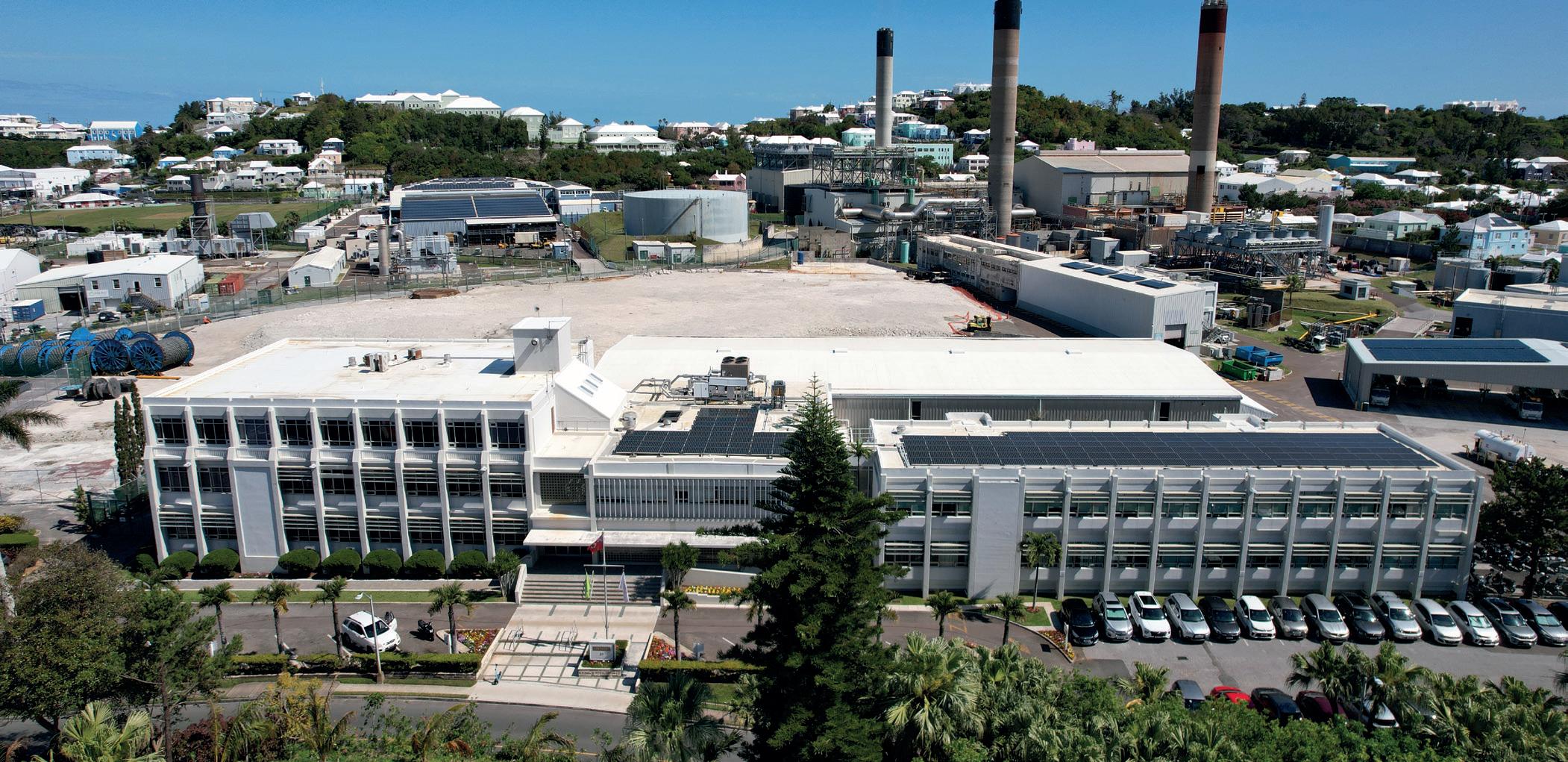
BELCO is committed to achieving a more sustainable future for Bermuda through the implementation of renewable energy technologies, as well as changes to the Company’s operations such as switching to an electric vehicle fleet, reducing paper usage and offsetting the carbon footprint of each employee.
BELCO is also nearing completion of major improvements to the underground transmission grid that will serve customers well into the future with more reliable, safe and cost-effective electricity.
To support that sustainable future, the Company needs qualified and skilled workers, and it is continuing a long history of supporting education and developing local talent. Each year, BELCO provides a range of scholarships for undergraduate and postgraduate students across various
fields of study.
The annual scholarships include a $25,000 engineering scholarship, two $25,000 electrical engineering scholarships, a $25,000 Science, Technology, Engineering and Math (STEM) postgraduate scholarship, a $25,000 business postgraduate scholarship, and an internal scholarship valued at up to $20,000.
Additionally, BELCO provides $1,000 Bermuda College bursaries to graduating seniors of CedarBridge Academy and The Berkeley Institute, as well as STEM education awards of varying amounts.
Each summer, BELCO also offers employment opportunities to college and university students, enabling them to gain valuable work experience. Students are matched to the departments that most closely align with their studies. Available departments typically include bulk generation, transmission and distribution, information technology and human resources.
The BELCO Apprenticeship Programme provides on-the-job training to young
Bermudians pursuing careers in the energy sector, with 15 apprentices joining the Company in December 2021, 10 apprentices in January 2025, and a further seven in January 2026.
The programme offers the opportunity to train in a structured way towards a successful and rewarding career, blending technical training and academic study with work-based learning. Apprentices earn while they learn, helping to launch careers in Bermuda’s evolving energy industry.
Upon completion of the programme, successful candidates are assessed for progression to graded positions and placed in designated areas of the business as Electrical Fitters, Mechanical Fitters, Line Workers and Electrical Jointers.
BELCO’s Apprenticeship Programme has evolved over the past 30 years, and many members of the Company’s skilled workforce are former apprentices who graduated from the programme and are now employed full-time.
To learn more about the opportunities available at BELCO to support a greener future, please visit BELCO.bm.
1. Fuel savings matter more in Bermuda
BELCO says the average EV driver spends about 60% less to power their vehicle than the owner of a gaspowered car, and notes that Bermuda gasoline is roughly $9 per gallon, so local lifetime savings are likely to be even higher.
2. EVs generally cost less to maintain Consumer Reports says EV owners can expect to save an average of $4,600 in repair and maintenance costs over the life of the vehicle, largely because EVs have fewer moving parts and no oil changes, exhaust systems or conventional transmissions.
3. Bermuda is ideal EV territory
Daily distances are short, which makes EV range much less of a concern than it is in large countries. That practical advantage is one reason EVs make particular sense in Bermuda.
4. Home charging is more convenient than petrol-station runs
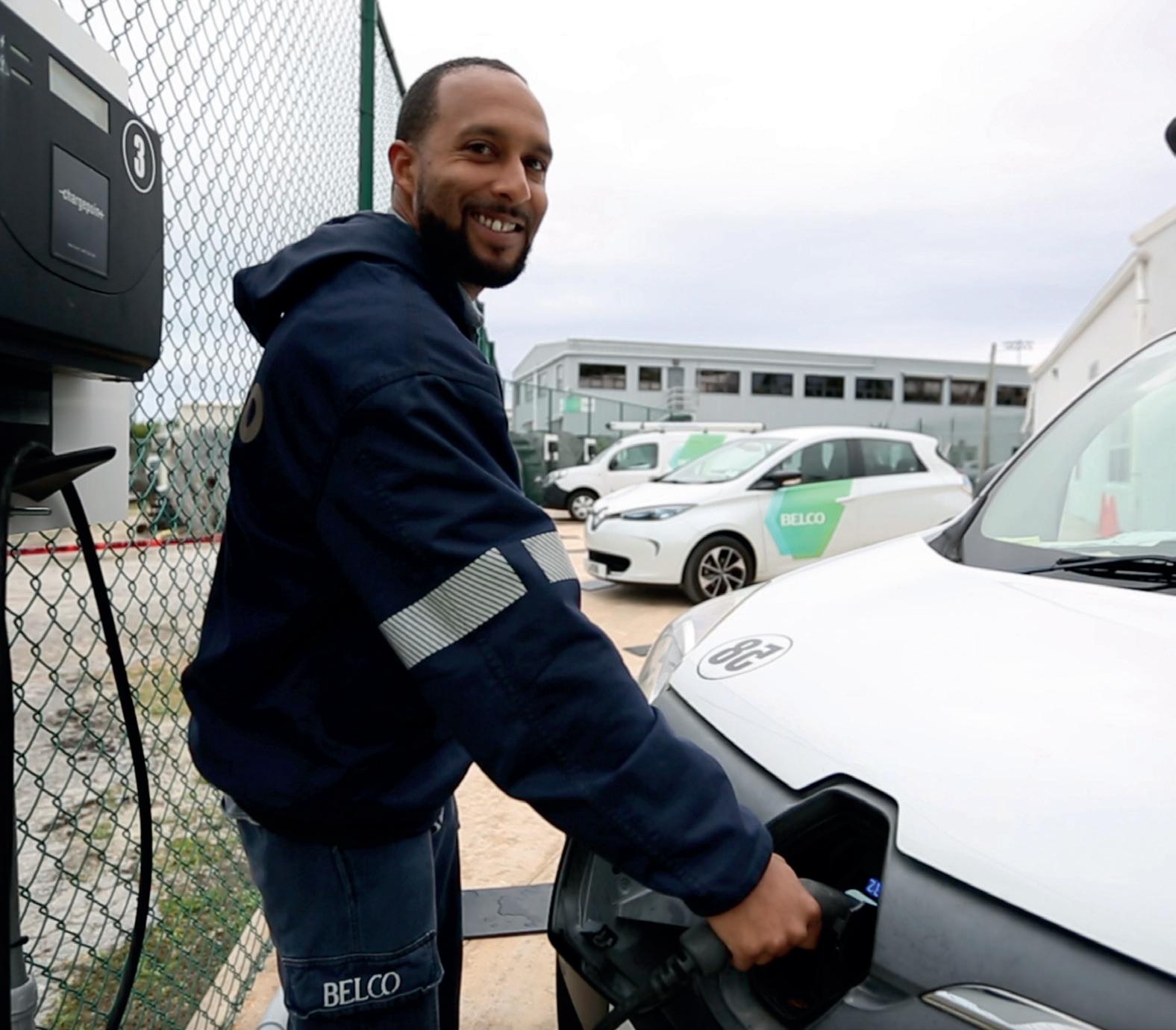
One of the biggest lifestyle benefits of an EV is waking up to a “full tank” at home. Consumer Reports specifically highlights home charging as one of the clear appeals of EV ownership.
highlights the quieter driving experience as one of the practical upsides of EVs.
5. They’re quieter and more relaxing to drive EVs deliver smooth, silent progress in traffic and around town, which makes everyday driving calmer and more refined — especially on the short, stop-start trips common in Bermuda. Consumer Reports
6. They cut tailpipe emissions to zero
Fully electric vehicles produce zero tailpipe emissions, which means cleaner local driving and less direct pollution in our community.
7. Bermuda is clearly moving in this direction
Planning and policy documents in Bermuda show that EV charging infrastructure is becoming part of the island’s future transport thinking, and one planning report notes that new car purchases are expected to move toward electric-only in the medium term. In other words, an EV is not just a current choice — it is increasingly a futureproof one.
For decades, the Jeep name has been associated with rugged capability and outdoor adventure. As priorities shift toward sustainability, however, the brand is also adapting to a changing automotive landscape. The result is the Jeep Avenger, a compact SUV that represents Jeep’s clearest move yet into electrified motoring.
Available exclusively at Prestige Autos in both full-electric and hybrid versions, the Avenger is aimed at drivers seeking efficiency without giving up everyday practicality. The all-electric model features a 54kWh battery and a claimed range of up to 249 miles on a full charge— more than enough for typical daily driving in Bermuda, where distances are comparatively short.
For Jeep, the Avenger is more than a new model. It reflects the wider industry shift toward lower-emission transport, while retaining familiar design cues associated with the brand.
For those not ready to move fully

electric, the Avenger e-Hybrid offers a middle ground. Its hybrid system allows for short periods of low-speed electric driving, particularly in traffic or while parking, helping to reduce fuel use and improve efficiency. Regenerative braking also recovers energy during deceleration, feeding it back into the system.


At the top of the range is the Summit trim, which adds a more premium interior and additional comfort features. Highlights include a panoramic-style roof that brings more natural light into the cabin, along with upgraded finishes and technology. Other available features include:
• 18-inch alloy wheels
• Hands-free power liftgate
• Ambient interior lighting
• Premium seating
• Wireless smartphone charging

The Avenger has already attracted industry recognition, including European Car of the Year and a five-star Green NCAP rating. Jeep says it also retains the practical elements expected of the marque, with terrain management modes and generous ground clearance for a vehicle of its size.
For Bermuda motorists, where shorter journeys and fuel efficiency are often key considerations, compact hybrid and electric vehicles are becoming increasingly relevant. In that context, the Jeep Avenger signals how even long-established off-road brands are evolving to meet new environmental expectations—without losing their identity.
From Top Gear to What Car? and Auto Express, reviewers have praised the Jeep Avenger for its distinctive styling, comfort and efficiency. Here are a few of the positive takeaways.
Top Gear
Called the Avenger “a likeable little city car” that is also comfortable beyond town use — a strong endorsement of its everyday usability.
Autocar
Described the regular Avenger as “competent,appealing, efficient and effective” with genuine off-road ability.
Carwow
Rated it as “a great little city car” with distinctive, rugged styling.
Auto Express
In long-term testing, said its mix of “decent real-world range, comfortable ride quality and funky styling” made it a real family favourite.
What Car?
Said the Avenger is stylish, good to drive and cheap to run — exactly the combination many small-SUV buyers want.
DrivingElectric
Called it an “impressive all-rounder” and said it seems to have “saved the day” for Jeep in the EV era.
Electrifying.com
Said the Avenger Electric is a “composed and easy-going commuter” and one of the best small EVs for its balance of ride an
“Built for the Real World”



7 things to check now before your tank runs low
In Bermuda, water is not something most of us can take for granted.
Unlike many countries where water simply arrives through a large public network, we still rely mainly on rainwater collected from roofs and stored in tanks, with trucked and piped supplies helping to supplement demand.
That makes spring the ideal time to think ahead. A little preparation now can
help households avoid the stress, cost and inconvenience of discovering too late that tank levels are dropping, a leak has gone unnoticed, or the system is not as clean and efficient as it should be.
And according to water specialist Dr. Kent Simmons of Bermuda Water Consultants, one of the biggest problems is simply timing. Many homeowners wait until the dry season begins before


thinking about maintenance—by which point, with water levels already low, they are understandably reluctant to empty a tank for cleaning.
So what should Bermuda residents be doing before the hotter, drier weeks really set in?
1. Check your tank level now — not when it is already a problem
The Government advises residents to check tank levels regularly, and specifically says at least once a month.
That sounds simple, but it is one of the most important habits a household can develop. If you know roughly where you stand going into late spring and early summer, you are much less likely to be caught out.
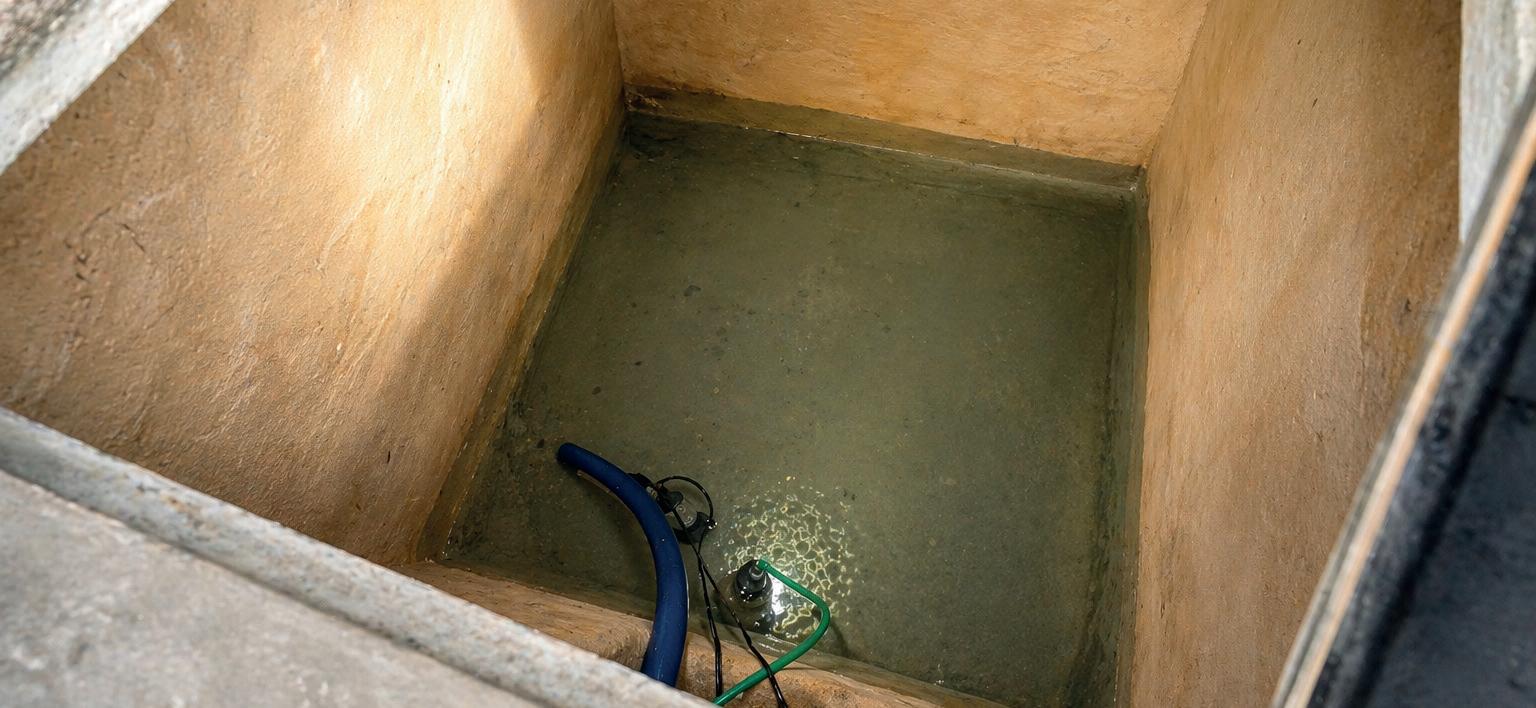
A quick visual check can also tell you more than just the level. Dr. Simmons recommends lifting the tank cover and checking clarity with a flashlight—you should be able to see clearly to the bottom. If you cannot, it may be an early sign that maintenance is needed.
2. Look for small leaks before they become expensive ones
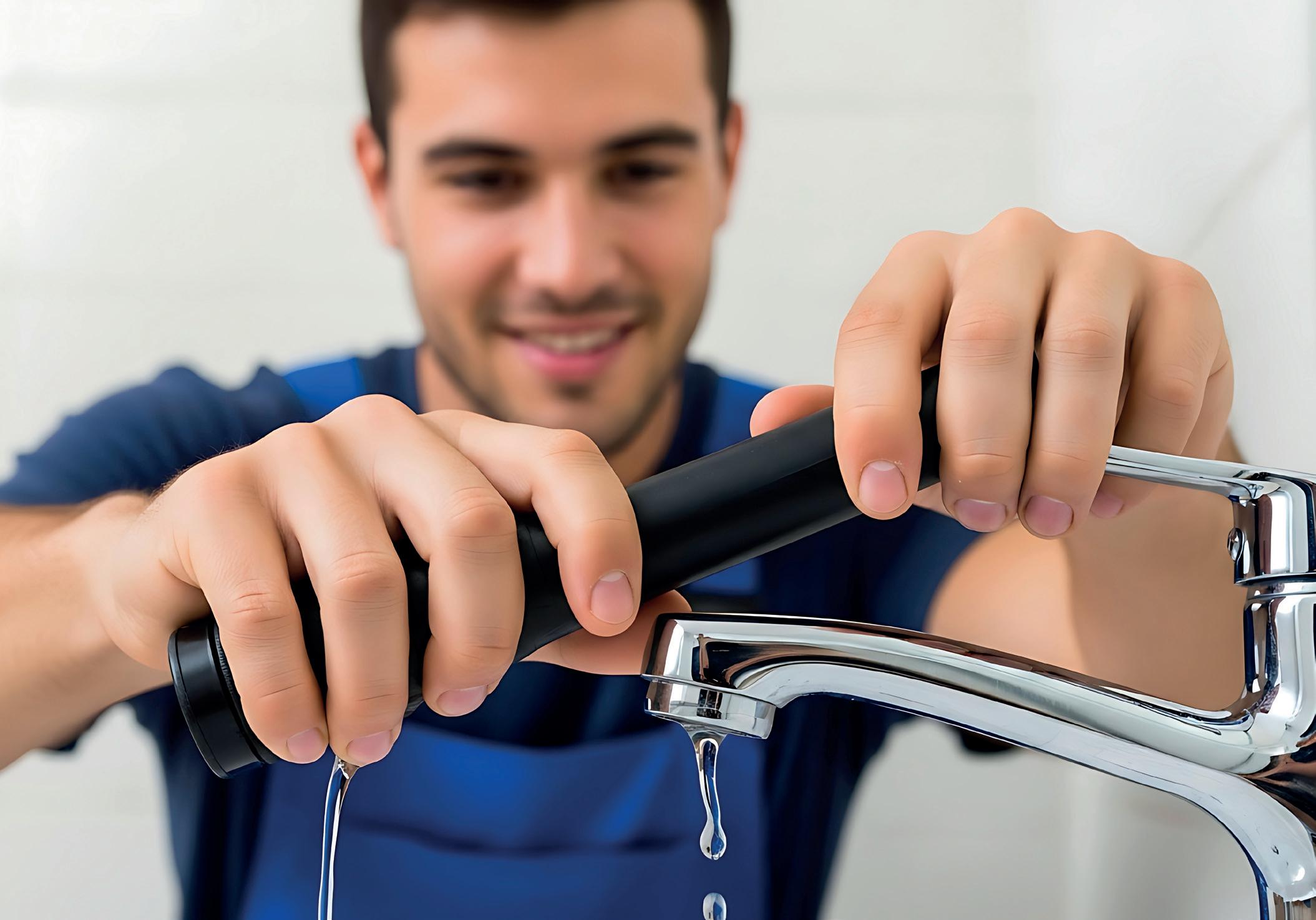
A dripping outdoor tap, a leaking toilet,
or a slow plumbing problem can waste a surprising amount of water over time. In Bermuda, every unnoticed leak matters. An unexplained drop in tank level is often the first warning sign—and one that should never be ignored.
3. Make sure your roof and catchment system are working for you
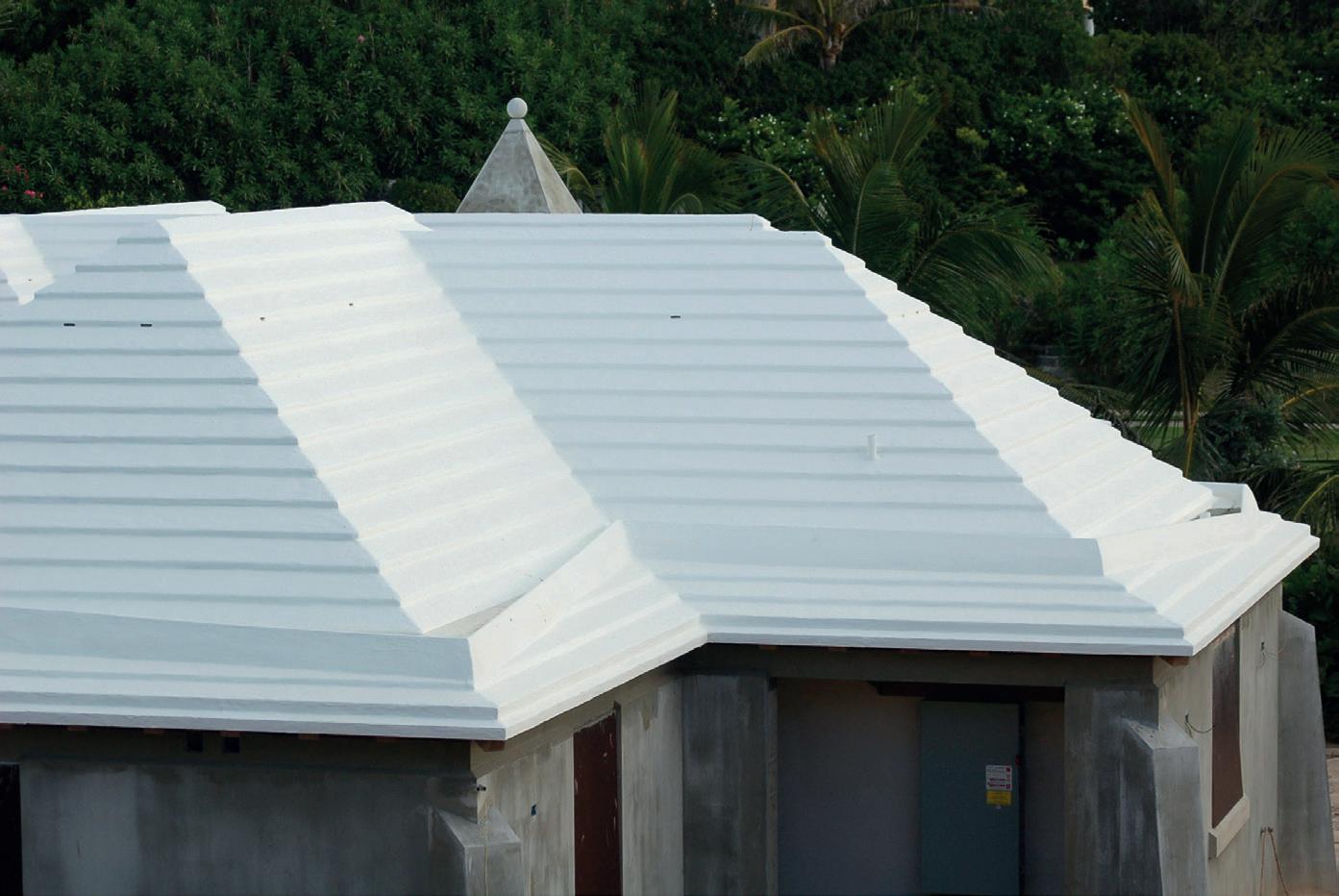
The roof catchment system is still the first step in collecting drinking water. Keeping roofs clean, maintaining
coatings, clearing gutters and trimming overhanging trees all help maximise both the quantity and quality of water entering your tank.
Dr. Simmons stresses that water quality in Bermuda homes is largely determined by this “roof-to-tank” cycle. When that system is properly maintained, tank water is often as safe as bottled alternatives.
4. Think about water quality as well as water quantity
When people worry about water, they usually think first about how much they have. But quality matters just as much.
Warning signs such as a brackish taste, unusual odour, or sudden change in clarity should not be ignored. These can indicate sediment build-up in the tank, disturbances caused by heavy rainfall or water delivery, or even issues within household plumbing systems.
Government guidance recommends cleaning tanks at least every five years—but in practice, many homeowners leave it far longer. Regular inspection, even a simple visual check every few months, can help prevent more serious problems developing unnoticed.
Keeping roof clean and gutters clear maximises quantity and quality of water entering your tank
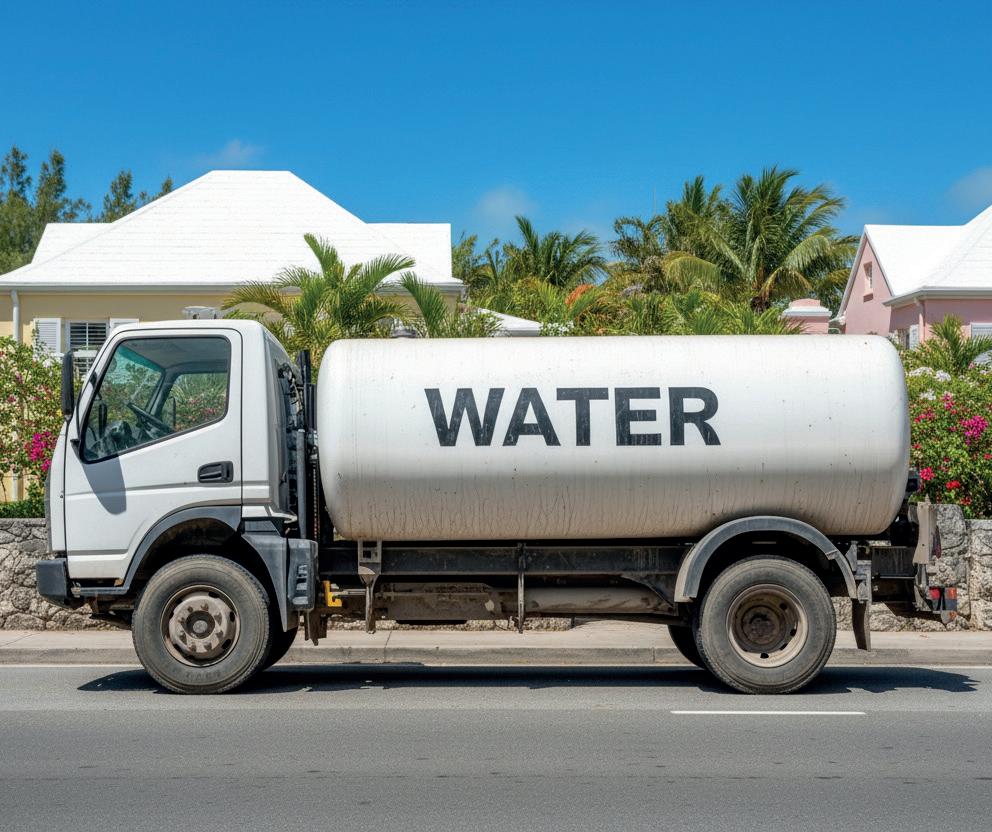
5. Order early if you think you may need water trucked in During dry conditions, official advice is clear: place water orders early to avoid delays during peak demand.
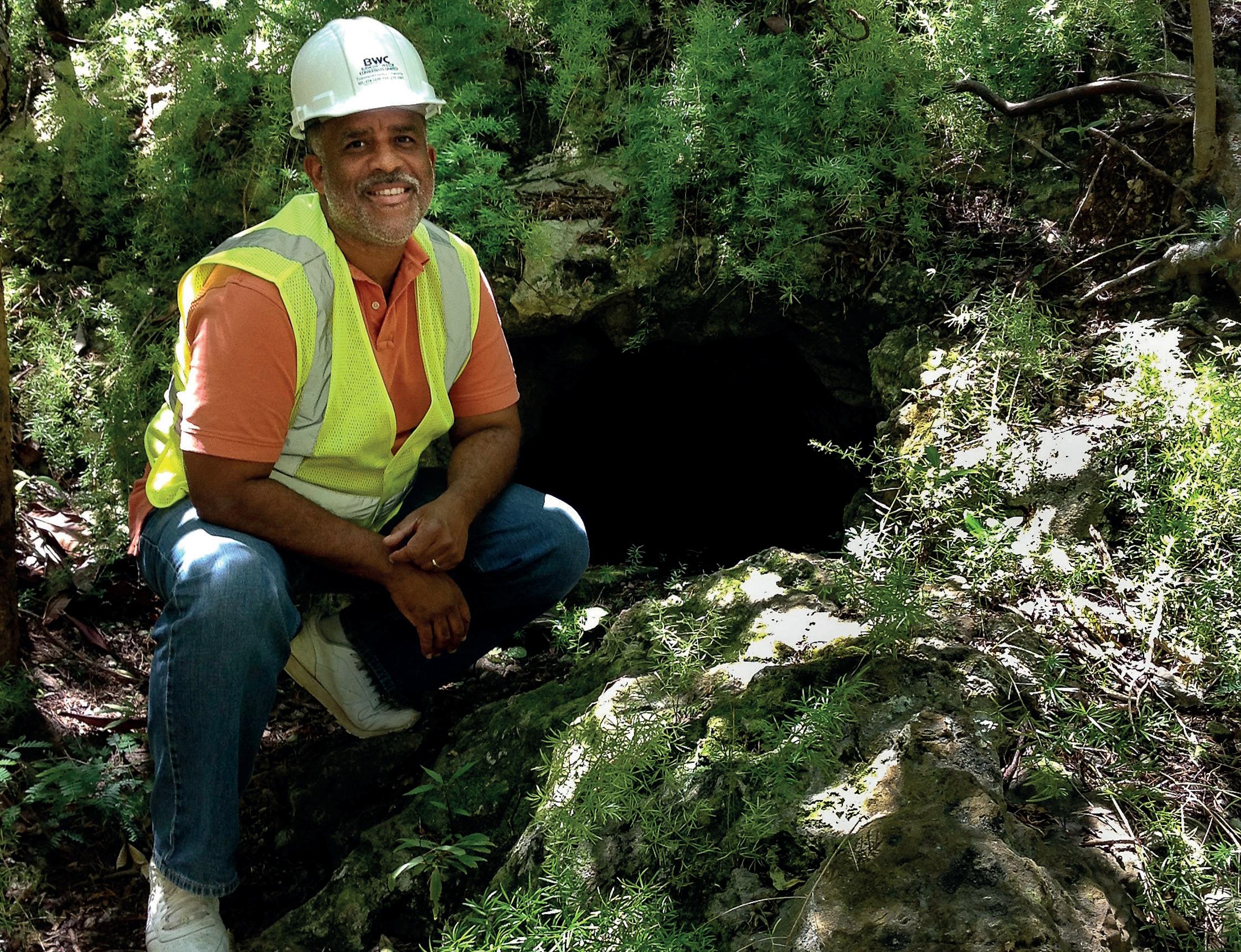
Exploring underground caves, checking buildings for asbestos and testing the water quality at KEMH. While they seem like the duties of three different people, it’s all in a day’s work for Dr. Kent Simmons.
Dr. Simmons is the Managing Director of Bermuda Water Consultants Ltd., a company he founded to capitalise on a much-needed service on the Island. After receiving his Ph.D. in earth science, with a speciality in hydrology and oceanography, from the University of New Hampshire, Dr. Simmons came back to Bermuda to take up a position at the Biological Station (now the Bermuda Institute of Ocean Sciences). During his time there, he had so many enquiries from homeowners and businesses about the quality of their tank water that it prompted him to start his own consulting company.
When new laws and government standards were put in place regarding water quality and other environmental issues, Dr. Simmons found his services to be very much in demand.
“Most business people are looking to cut costs, and up until [the new regulations were put in place], it hadn’t occurred to them that optimising their operations and making them more efficient could actually save them money,” Dr. Simmons says.
“A classic example are the boilers used in laundries and hotels. Boilers will work more efficiently if you maintain a certain chemistry inside them. If you are running the right chemistry in there, you can get the efficiency to increase.”
But it’s not just the quality of running water Dr. Simmons and his company test and help maintain. On any given day, Dr. Simmons can be found testing the air for mould in a residential building or even checking for ground water contamination from oil spills. You might even find him underground or climbing a smokestack — it just depends on who comes calling.
“I always say there is no place in Bermuda that I haven’t been,” Dr. Simmons says. “I have climbed to the top of the smokestack at Tyne’s Bay Incinerator, and I have been to the bottom of some of the deepest caves on the island. I get around in the craziest places!”
Dr. Simmons’ cave-crawling expeditions are often to advise property developers about the feasibility of building above whatever he finds below. Advising on land development and prioritising environmental issues can be contentious. Maintaining a balance is key, and Dr. Simmons says it’s not about saying no to anyone or forfeiting one party for the success of the other.
His advice: “Don’t say no. Instead, find a way around a problem without ever neglecting the welfare of either the business or the environment.”
“Developers will say, ‘We want this project. Now what do we have to do to make it happen?’” Dr. Simmons says.
“We don’t come in from an approach that says, ‘No you can’t do this.’ We say, ‘Okay, if you are going to do this, then you are going to have to design it so that it minimises the impact on the environment.’ And then we work with our clients from that perspective.”
Good planning is not just about convenience—it also helps the wider system function more smoothly when demand rises across the island.
6. Cut waste before summer habits send usage up
The hotter months often bring higher water use, whether from more showers, more laundry, more gardening, or simply more people at home, with returning
students and welcoming family and friends to stay.
Simple measures—shorter showers, fixing leaks, using buckets instead of hoses, and reusing water where possible—can make a meaningful difference over a dry spell.
7. Treat water planning as part of Bermuda resilience
Beyond day-to-day use, there is a bigger
issue at play. Bermuda’s traditional rainwater system is increasingly affected by changing weather patterns, including longer dry periods.
At the same time, experts warn against short-term fixes that can create bigger problems. One common mistake is topping up tanks with groundwater. Because Bermuda relies heavily on cesspits, groundwater is often contaminated and should never be mixed with drinking water supplies.
In that sense, Bermuda homes do not just need a water tank. They need a water plan.
A few simple steps now—checking levels, repairing leaks, maintaining catchment systems, thinking ahead about trucking, and protecting water quality— can save inconvenience later.
And most households still depend on the sky for their supply, that kind of planning is not over-cautious. It is simply good Bermuda common sense.
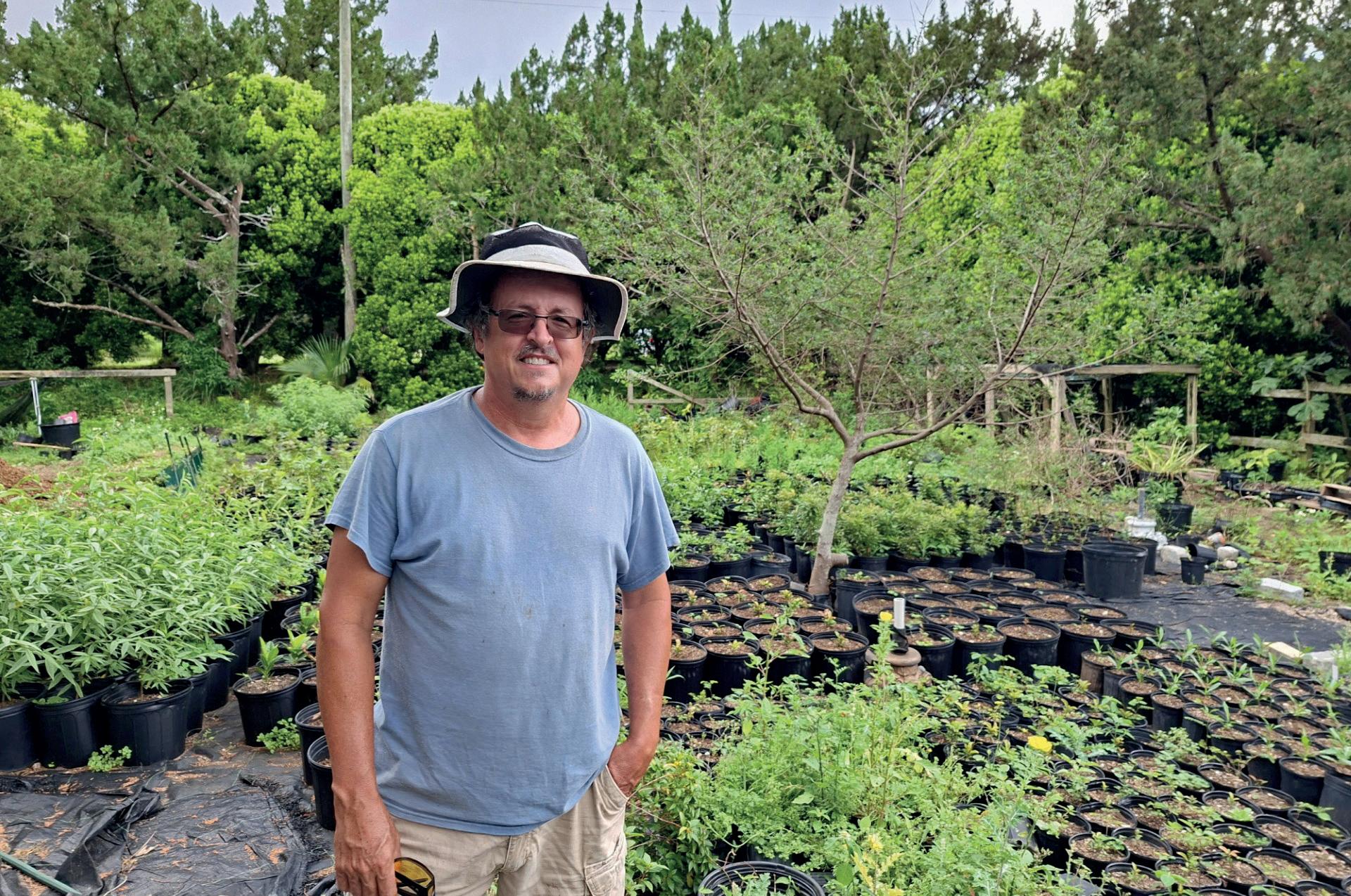
A small Paget nursery is helping preserve Bermuda’s rarest plants — while offering a practical blueprint for more resilient, lower-maintenance gardens
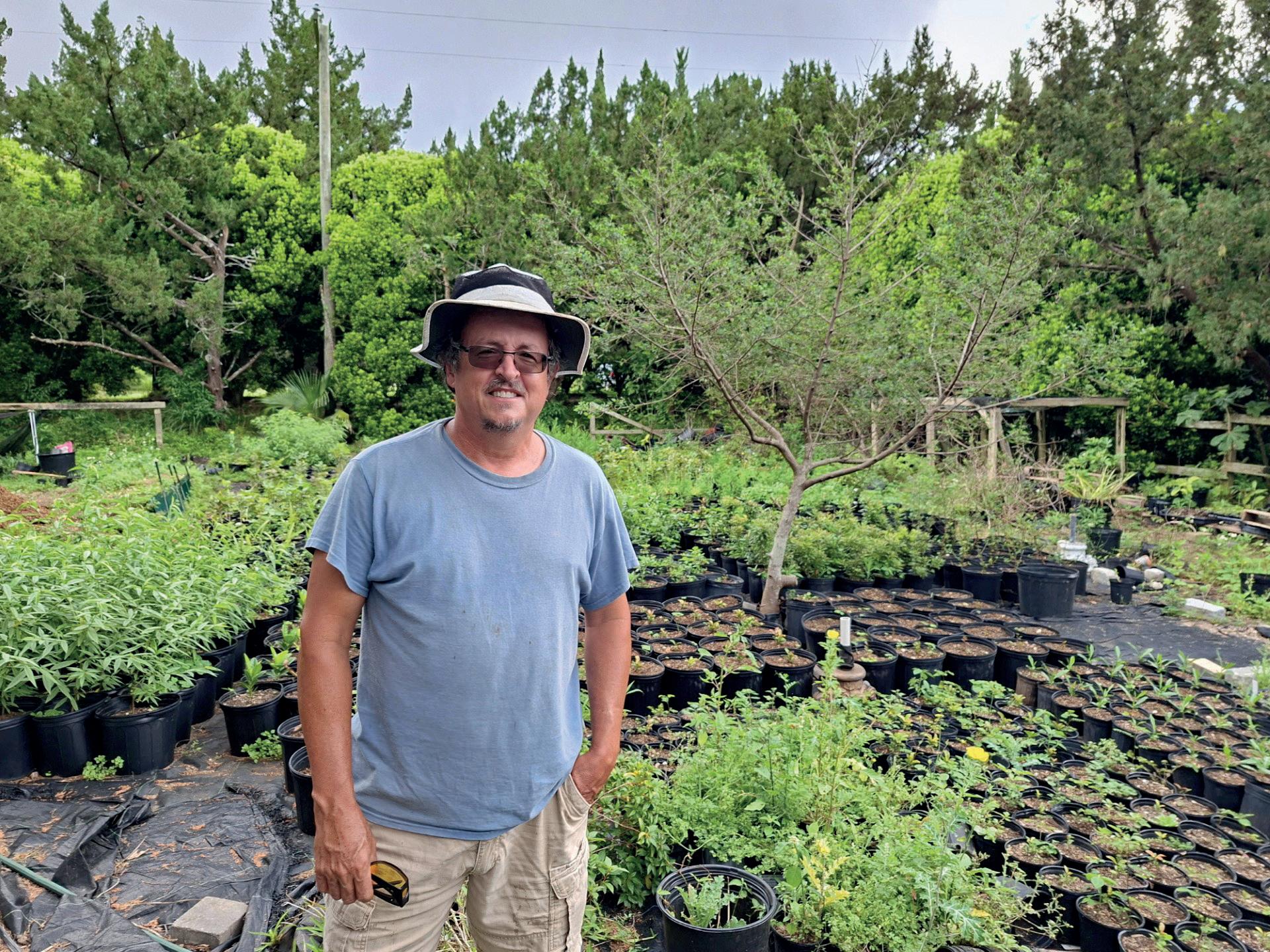
Hidden away along a track lined with olivewood trees is a small space doing an outsized job for Bermuda’s native and endemic plants.
Robin Marirea’s nursery is not the sort of place you stumble upon by accident. Tucked away in Paget, it is modest, quiet and, by his own description, still something of a hobby.
Yet this small nursery is helping keep alive plants that are rare, hard to source and, in some cases, have almost vanished from Bermuda’s landscape.
Mr Marirea began growing native and endemic species after years working at the Aquarium. After hurricanes, he noticed which plants survived best. “A week after, everything’s brown and you can see what a survivor is,” he said. “It’s usually a native or endemic.”
That toughness is one reason these plants matter in a greener garden. They are part of Bermuda’s natural heritage, but they are also well suited to local conditions and can demand less water and maintenance than many showier imports.
Mr Marirea’s interest soon moved beyond the more familiar species. He
started looking for plants that were harder to find and easier to lose.
He recalled searching for St Andrew’s Cross and eventually finding a single plant. “All my plants had descended from that,” he said. As far as he knows, it had been close to extinction in Bermuda.
His nursery remains a labour of love. Asked if it was a passion, Mr Marirea’s reply was simple: “Yes, very much so.” He added: “It’s not about the money.”
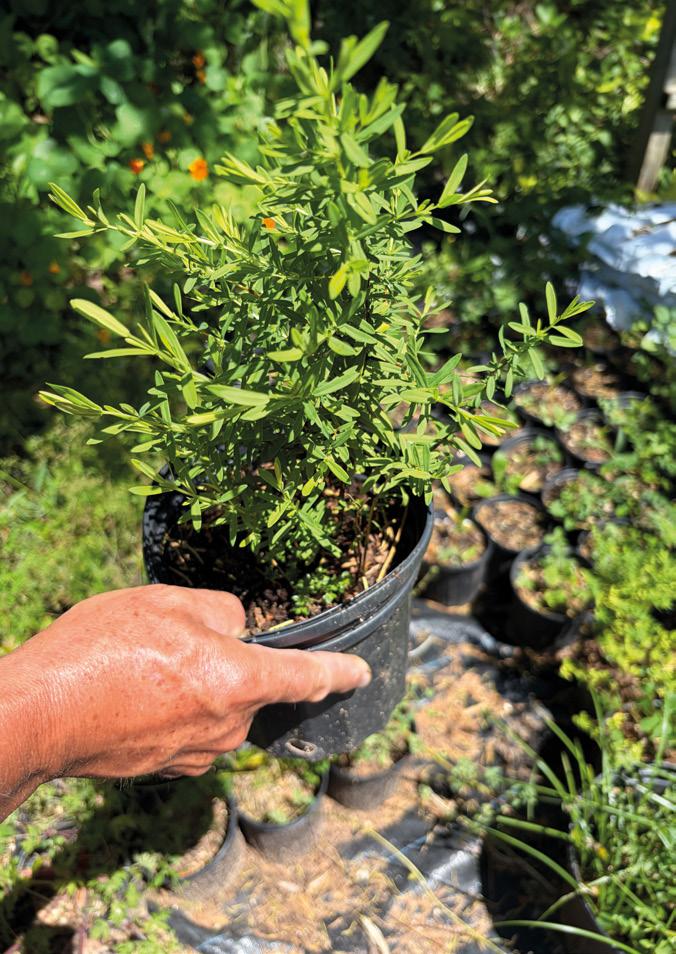
He now supplies plants for environmental projects, including microforests, and is known for growing rare species such as yellowwood, Rhacoma and white stopper, alongside more familiar natives and endemics. Much of his work begins with seed rather than cuttings.
“Seed gives you some diversity,” Mr Marirea said. In his view, that matters because too much cloning can leave plants more vulnerable in the long term.
For householders, the case for planting more Bermuda species is straightforward. Native and endemic plants can form the backbone of a garden that asks for less water, less fuss and fewer inputs.
David Cox, a Chartered Landscape Architect, believes almost every Bermuda garden should have that kind of backbone. “Almost every garden in Bermuda should have a native and endemic backdrop,” he said.
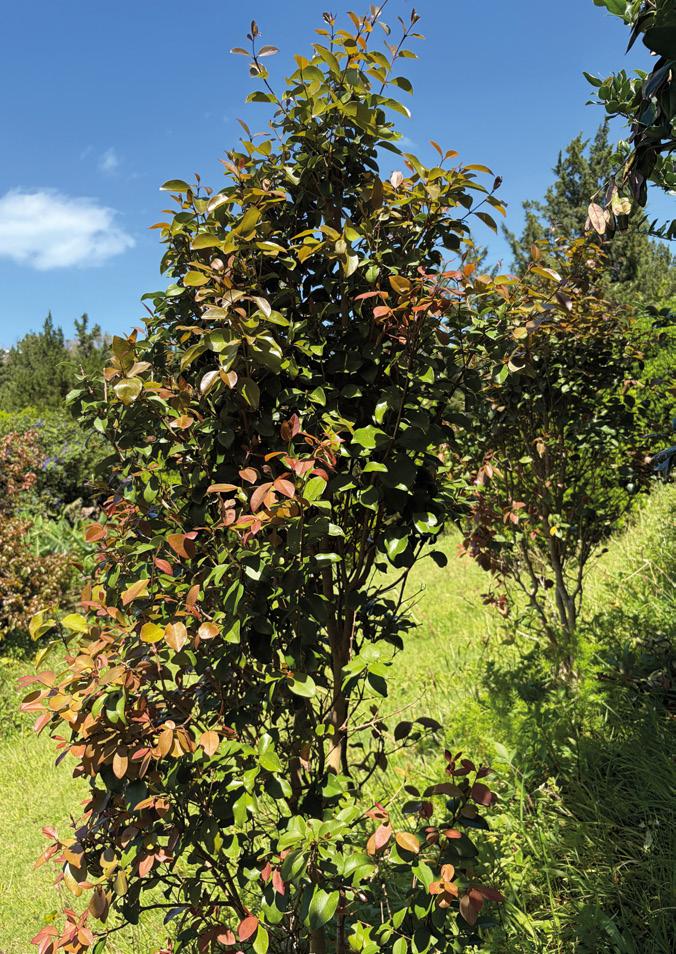
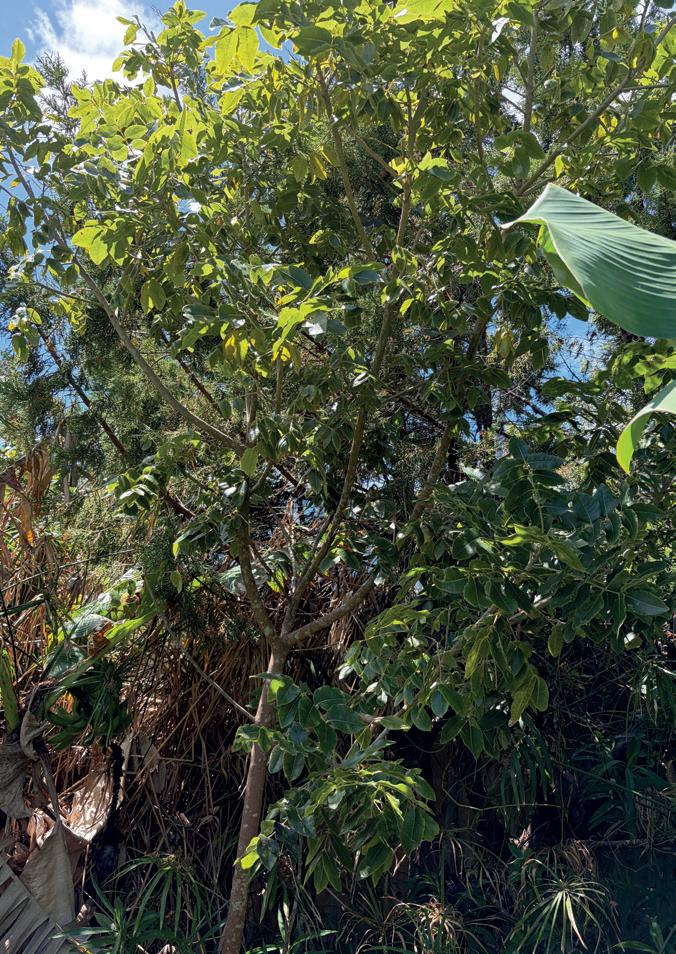
Inland, he points to the three classic endemics: Bermuda cedar, Bermuda olivewood and Bermuda palmetto. On the coast, he recommends natives such as sea oxeye, sea lavender, tassel plant and bay grape.
On second reference, Mr Cox says the appeal is practical as much as environmental. “They don’t need a lot of water, they don’t need a lot of maintenance,” he said. “They’re hardy, and they hold their own.”
He also mentions shrubs including snowberry and turkeyberry as useful choices, especially as part of a layered garden design.
That does not mean every garden has to become a purist exercise in shades of green. Mr Cox is realistic about what most homeowners want. The drawback of relying only on natives and endemics, he said, is that they do not always provide
the colour many people expect.
His answer is layering. Use resilient local species as the structure, then add a smaller number of introduced plants for contrast and colour. “If you do all of this as a green backdrop,” he said, “and then just have three or four colourful plants, that means that 95 per cent of the planting is pretty resilient, bulletproof, non-maintenance.”
That way, most of the garden remains robust and comparatively low maintenance, while a handful of flowering or ornamental plants provide the brighter notes.
The wider environmental case is just as important. Both men return to the same point: greener gardens should not just look good—they should also support wildlife.
Mr Marirea says native and endemic planting helps attract desirable birds. In and around his nursery, he sees birds using olivewoods and cedars, with catbirds nesting in olivewoods and cardinals in cedars.
He also sees bluebirds and whiteeyed vireos foraging there. “You always see them hunting for bugs and stuff underneath the leaves,” he said.
He regularly notices butterflies passing through as well, suggesting these small spaces can offer food or habitat.
Mr Cox makes a similar point from the landscape side. Simpler, more successful planting, he said, usually means less water, less fertiliser and fewer chemicals. “It helps the bees, it helps the butterflies,” he said.
He argues that reliable flowering plants can also be better for pollinators than fussier varieties that bloom only briefly. A common hibiscus that flowers for much of the year, he suggested, offers more ongoing value than more elaborate types that put on a shorter show.
Still, both men strike a note of realism. Not every native is easy. Some of the rarest plants are rare for a reason, Mr Marirea said, and he would not recommend all of them to the average gardener.
“That is one of the ones I wouldn’t recommend,” he said of St Andrew’s Cross, adding that some species can be harder to establish, especially in winter.
And, as Mr Cox notes, success depends on conditions. Sun, shade, soil and exposure all matter. Bermuda’s sandy and clay-heavy areas can differ significantly, and even easy-care plants need to be matched to the right place.
So what should gardeners do first?
Start with the bones of the garden. Choose native and endemic trees, shrubs or smaller plants that suit the site. Use them as the framework. Then add colour carefully, rather than building the whole space around thirsty, high-maintenance specimens.
It is not the flashiest advice. It may not produce the instant theatre of a resort border. But it is a more durable vision of what going green can mean in Bermuda. And in a nursery hidden down a leafy path, Mr Marirea is quietly proving that the plants most worth growing are often the ones that already belong here.
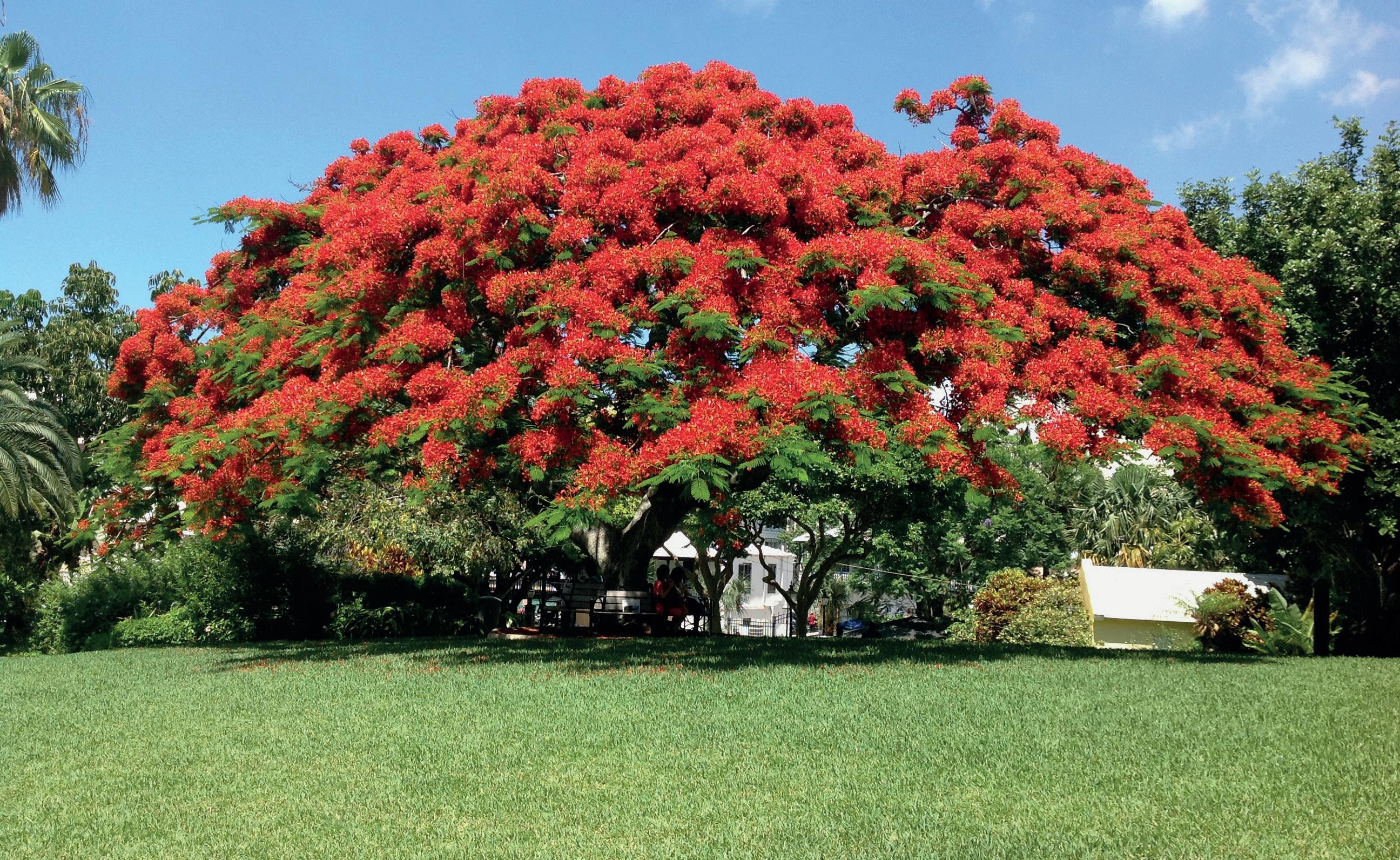
In Bermuda, a greener garden can do more than look attractive. Thoughtfully placed trees and planting can help make homes cooler, outdoor spaces more comfortable, and even reduce energy use during the hottest months of the year.
Shade is one of the simplest and most effective natural cooling tools available. Trees and shrubs can lower the temperature of walls, patios and paved areas by blocking direct summer sun. Anyone who has stepped from a shaded garden path into an exposed driveway already understands the difference.
That cooling effect can also benefit the home itself. Windows and walls exposed to strong afternoon sun absorb heat, which can then radiate indoors. Strategic planting can help reduce that build-up,
keeping interior spaces more comfortable and potentially easing demand on airconditioning systems.
Outdoor equipment can benefit too. Air-conditioning units operating in shaded, well-ventilated areas may work more efficiently than those sitting in full sun. Care should always be taken, however, to maintain adequate airflow and access for servicing.
The key is planning. Not every tree belongs in every space, and successful planting starts with understanding the site. Homeowners should consider available room, mature size, root spread, proximity to foundations, tanks or pools, and how shade patterns change through the seasons.
In Bermuda, local and climate-suited species often make the most practical
choices. Many can be shaped as screening hedges or allowed to develop into small shade trees, creating structure and cooling benefits at the same time. Grouped palms, for example, can soften a sunny corner, while species such as buttonwood can provide useful filtered shade.
The wider benefit is easy to overlook. Trees and vegetation can help cool neighbourhood streets, soften glare, support wildlife and make outdoor living more pleasant—something especially valuable in Bermuda, where gardens are often used as extensions of the home.
Going green does not always require major investment or new technology. Sometimes it begins with something simpler: planting the right tree in the right place.

How Bermuda’s Shelves Move with the Sea — and What That Can Teach Us About Shopping More Sustainably
In Bermuda, grocery shopping has its own rhythm — one shaped by shipping schedules, changing weather, and the realities of island life. For newcomers, it can be surprising at first. Shelves are not simply replenished by trucks moving up and down highways. Here, much of what we eat arrives by sea, on a carefully timed schedule that connects Bermuda to the wider world.
Every week, that story begins hundreds of miles away. At the end of the week, the container ship MV Oleander leaves New Jersey on Friday and arrives in Bermuda on Monday carrying fresh produce and other essentials. Later in the week, the Bermuda Islander arrives with another wave of goods, helping to keep the island’s kitchens and pantries well supplied. The Somers Isle, arriving from Jacksonville every other Tuesday, adds another layer to that supply, bringing everything from staples to specialty items. Together, they create the steady flow that keeps Bermuda fed.
Over time, many residents come to recognize this island rhythm. Certain
days are best for the freshest produce. Some weeks offer more variety than others. And when the weather changes, shopping habits often shift too. Strong winds or rough seas can affect schedules, which means flexibility becomes part of daily life. On an island, that flexibility is not just practical — it can also be a more sustainable way to live.
There is an environmental lesson in all of this. In Bermuda, every product has a journey. Every apple, carton, crate, and container has been grown, packed, shipped, unloaded, stocked, and brought
to the shelf with care. That reality encourages a more thoughtful way of shopping — one that values freshness, plans ahead, and makes the most of what is available.
It also shines a light on the importance of local food. When shipping is delayed or certain imports are limited, Bermuda’s local farmers, bakers, and food producers become even more important. Choosing local produce when it is available is not only a way to enjoy freshness; it is also a way to support Bermuda’s food resilience and strengthen the connection between island consumers and island producers.
Shopping more sustainably in Bermuda does not mean buying less food. It means valuing food more. It means planning meals carefully, using ingredients fully, being open to seasonal availability, and appreciating the effort it takes to keep an island supplied week after week. Even small choices — such as buying local when possible or wasting less at home — can make a meaningful difference.
At Lindo’s, moving with that rhythm has long been part of the job. For decades, buyers have tracked the boats, worked around shifting conditions, and balanced imported goods with the best of what is grown and made locally. The result is an approach that supports freshness, choice, and quality, while also reflecting the realities of island living.
So the next time you plan your weekly shop, think of the wider journey behind it. In Bermuda, groceries do not simply appear; they arrive through a living system shaped by the sea, the weather, and the community itself. And perhaps that is one of the greenest lessons island life has to offer: to shop thoughtfully, waste less, support local, and value what reaches our table.

Arecent clip from a U.S. Congressional hearing made the rounds online. A young climate advocate, called to testify about the dangers of climate change, was asked a simple question: What is CO₂?
He couldn’t answer.
He was then asked what percentage of the atmosphere is made up of CO₂. Again, no answer.
It’s an uncomfortable moment—but also a useful reminder. For all the discussion about carbon emissions, many of us don’t fully understand what CO₂ actually is, or why it matters. And if we’re going to have a meaningful conversation about climate change in Bermuda, it’s a good place to start.
What is CO₂, really?
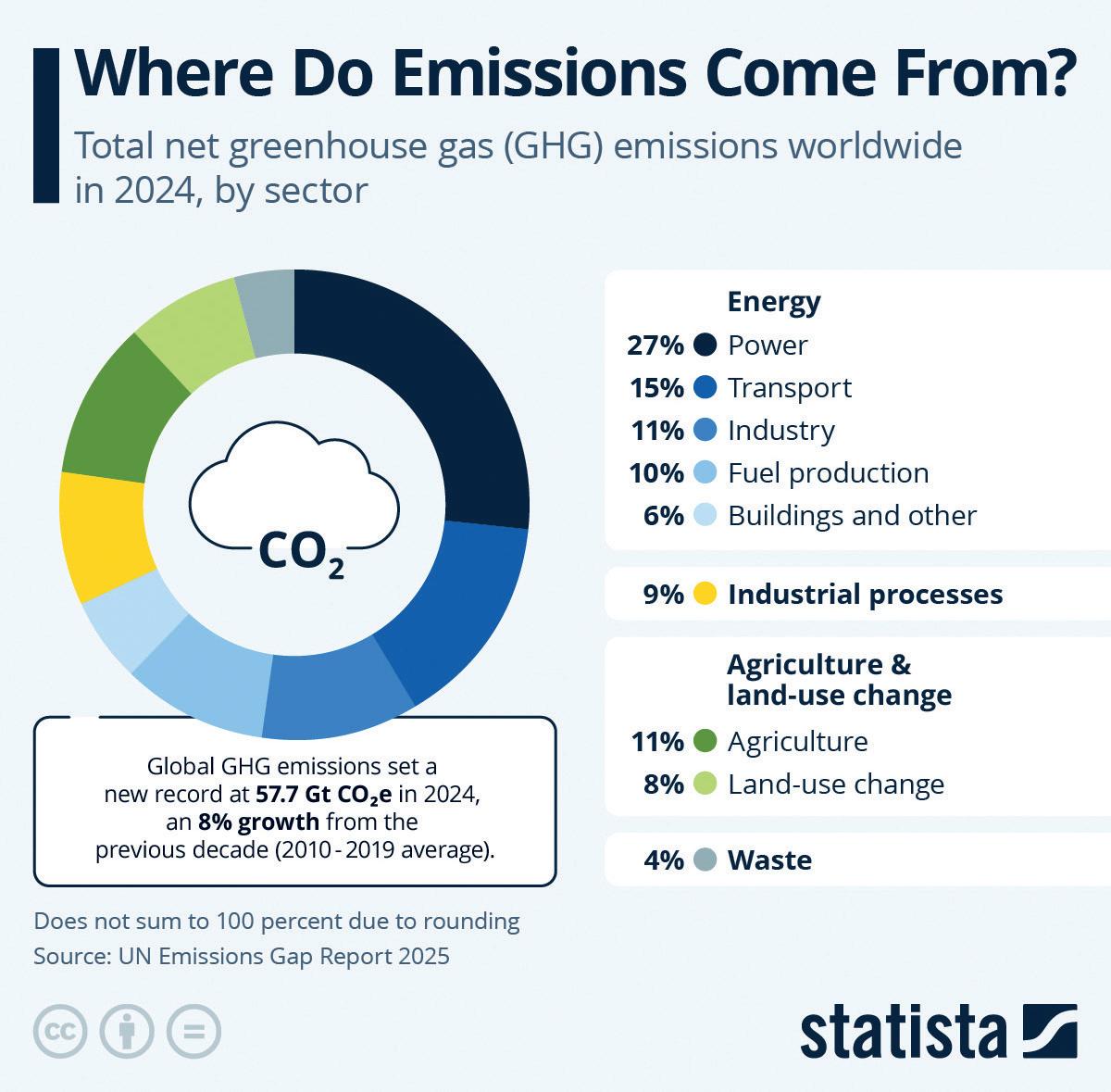
Carbon dioxide (CO₂) is a naturally
occurring gas. It’s produced when we breathe out, when plants and animals decompose, and when fossil fuels like oil and gas are burned.
It makes up a very small portion of the atmosphere—about 0.04%. That may sound insignificant, but CO₂ plays an outsized role in regulating Earth’s temperature. It’s what’s known as a greenhouse gas, meaning it traps heat in the atmosphere, helping to keep the planet warm enough to sustain life.
Without it, Earth would be far too cold.
The issue is not that CO₂ exists—it’s that human activity has increased its concentration significantly over time, particularly since the industrial revolution.
At first glance, Bermuda might seem like
a place largely removed from the problem.
We don’t have heavy industry.
We don’t have large-scale manufacturing.
We don’t have sprawling farmland or vast herds of livestock.
So where’s the connection?
The answer lies in this: CO₂ is a global issue, not a local one.
Carbon dioxide doesn’t stay where it’s produced. Once it enters the atmosphere, it mixes globally. Emissions from large industrial regions—North America, Europe, Asia—affect the entire planet, including Bermuda.
That means Bermuda experiences the effects of rising CO₂ levels, even if it contributes relatively little to the cause.
The ocean connection
For Bermuda, the most important link between CO₂ and everyday life is the ocean.
The ocean absorbs roughly 25–30% of the CO₂ released into the atmosphere. On one hand, this is helpful—it slows the rate of warming. On the other hand, it comes with consequences.
When CO₂ dissolves in seawater, it forms carbonic acid. This process lowers the ocean’s pH, making it more acidic—a phenomenon known as ocean acidification.
Why does this matter?
Because many marine organisms— especially those that build shells or skeletons from calcium carbonate— struggle in more acidic conditions. This includes:
• corals
• certain plankton
• shellfish
Bermuda’s coral reefs are not just ecological assets; they are also a natural defense system, helping to protect the island from storm surge and coastal erosion. Changes to ocean chemistry can weaken these systems over time.
Scientists at the Bermuda Institute
of Ocean Sciences (BIOS) have been tracking these changes for decades. As one long-term study notes, “the presentday chemistry of Sargasso Sea surface waters is now completely different to 40 years ago.”
Further research has shown that surface waters around Bermuda have warmed by approximately 1°C and become more acidic over the past thirty years, while measurements indicate a significant increase—around 30%—in dissolved CO₂ in local ocean waters over that same period.
These are not distant or theoretical changes—they are being measured right here in Bermuda’s surrounding ocean.
Another consequence linked to rising CO₂ levels is global warming, which contributes to:
• rising sea levels (as ice melts and water expands when it warms)
• potentially more intense storms
For a low-lying island like Bermuda, even small changes in sea level can have long-term implications for coastal infrastructure, beaches, and property.
The Government of Bermuda has made this clear, noting that “climate change poses a profound threat to Bermuda’s society, economy, and environment,” and warning that sea levels are expected to continue rising in the years ahead.
It would be easy to conclude that because Bermuda’s direct emissions are relatively small, there is little we can do.
But that’s only part of the story.
While Bermuda may not be a major emitter, we are:
• highly exposed to climate impacts
• well-positioned to adopt practical, visible solutions
Examples include:
• solar energy adoption
• energy efficiency in homes and businesses
• reducing reliance on imported fuel
There’s also a broader role: setting an example. Small island communities often lead in demonstrating what sustainable living can look like at a practical level.
The moment in that Congressional
hearing wasn’t really about one individual — it reflected something wider. Climate change is often discussed in broad, urgent terms, but without a shared understanding of the basics, the conversation can become disconnected from reality.
CO₂ is not inherently “bad.” It is essential to life. The issue is balance— and how human activity has shifted that balance.
For Bermuda, the question isn’t just how much CO₂ we produce, but how global changes affect our ocean, our reefs, and our coastline.
small island, a global
Bermuda sits in the middle of the Atlantic, but it is not isolated from the world’s climate system. What happens elsewhere—thousands of miles away— has a direct impact here.
Understanding CO₂ is a simple but important step toward understanding that connection.
And from there, the conversation about what to do next becomes far more grounded—and far more meaningful.
They migrate past Bermuda every spring—but humpback whales are doing far more than putting on a show. Scientists now believe they play a critical role in capturing carbon and supporting ocean life.
Each spring, something remarkable happens just offshore.
From Bermuda’s South Shore, or out on calm water, humpback whales can be seen making their long journey north — heading toward feeding grounds in New England, Canada, Greenland and Iceland. For many, it’s a seasonal highlight. But beyond the spectacle, scientists now recognise that these animals are doing something far more significant than simply passing by.
They are helping regulate the planet’s climate.
For years, forests have been seen as the natural heroes of carbon capture. But research over the past decade has revealed that whales — particularly large species like humpbacks — play a surprisingly powerful role in removing carbon dioxide from the atmosphere.
Each great whale stores large amounts of carbon in its body over its lifetime. When it dies, that carbon sinks to the ocean floor — a process known as “whale fall”—effectively locking it away for centuries.
But the real impact happens while whales are alive.
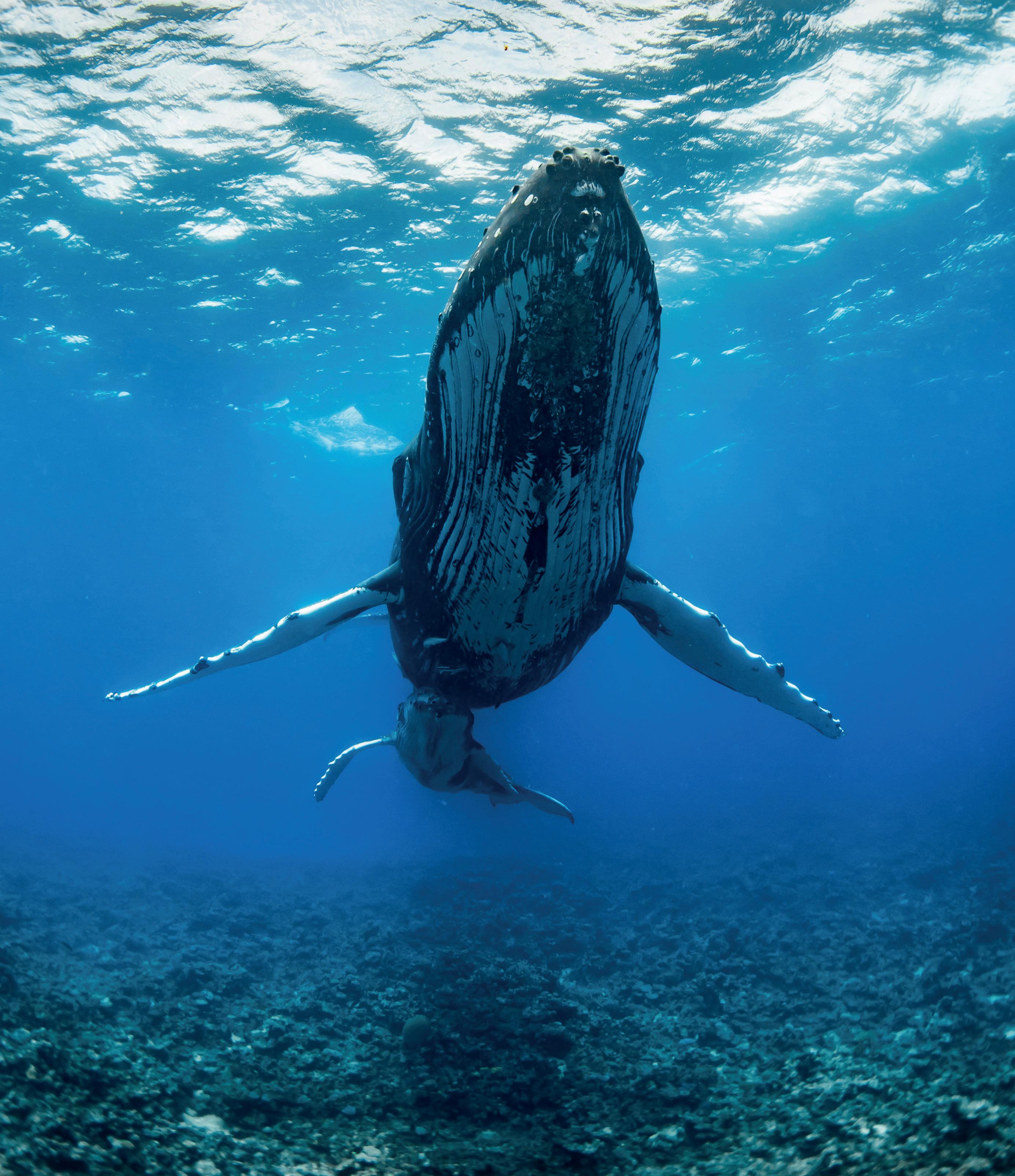
As they dive deep to feed and return to the surface to breathe, whales create what scientists call the “whale pump.” This constant vertical movement brings nutrient-rich waters up from the depths, fertilising the ocean surface.
Those nutrients feed phytoplankton— microscopic marine plants that are among the most important carbon absorbers on Earth.
Phytoplankton capture vast quantities of CO₂ and produce at least half of the oxygen we breathe. In fact, globally, they absorb billions of tonnes of carbon dioxide each year—on a scale
comparable to the world’s largest forests. More whales, quite simply, mean more phytoplankton—and more carbon capture.
This global process has a very local dimension.
Bermuda sits along a key migratory route, meaning humpback whales pass through its waters every year. And according to local whale researcher Andrew Stevenson, their behaviour here plays a direct role in ocean productivity. Humpbacks are particularly effective because of how they move through the water column. Unlike smaller or more static species, they dive repeatedly and relatively quickly, stirring nutrients upward and helping to energise marine ecosystems.
In practical terms, that means more life in the water around Bermuda—from plankton to fish and higher predators. It is one reason why areas where whales are present often overlap with productive fishing grounds.
In other words, the same natural processes that support marine life and local fisheries are also quietly supporting carbon capture.
The importance of whales becomes even clearer when viewed historically.
Before industrial whaling, whale populations were far larger than they are today. Scientists estimate that restoring whale populations to pre-whaling levels could significantly increase ocean productivity and carbon capture globally.
Since the international ban on commercial whaling in the 1980s, humpback whale populations have
made a strong recovery. That recovery is not just a conservation success—it is increasingly seen as a climate one too. But not all species have been as fortunate. The North Atlantic right whale remains critically endangered, with threats including ship strikes and entanglement in fishing gear.
Even for recovering species, the risks have not disappeared.
Modern threats are often less visible but just as serious. Plastic pollution, for example, poses a growing danger. Items such as bags and balloons can be mistaken for food and ingested, sometimes with fatal consequences. Entanglement in fishing gear is another widespread issue, with many whales bearing scars from previous encounters. Vessel strikes also remain a concern, particularly along busy shipping routes.
These pressures highlight a key point: while whales are helping stabilise the climate, they are still highly vulnerable to human activity.
For Bermuda, the connection between whales and climate is not abstract—it is immediate.
The island’s relationship with the ocean is intimate. Water, weather, fisheries, and coastal ecosystems are all part of daily life. The presence of migrating whales is a visible reminder that Bermuda sits within a much larger environmental system.
Protecting whales is not just about preserving a natural spectacle. It is about supporting a chain of processes that helps regulate carbon, sustain marine ecosystems, and ultimately maintain the balance of the ocean itself.
A different way to think about climate solutions
Climate action is often framed around technology—renewables, carbon capture systems, and emissions reduction. But whales offer a different perspective. They are a natural climate solution
already in motion. They require no infrastructure, no energy input, and no new invention—only protection.
In that sense, every whale passing Bermuda’s shores is doing more than migrating. It is contributing, quietly and continuously, to one of the most important environmental challenges of our time.
The next time a humpback surfaces offshore, it is worth remembering: This is not just a wildlife encounter. It is part of a global system working — largely unseen — to absorb carbon, support life in the ocean, and help stabilise the climate.
And here in Bermuda, we are right in the middle of it.
After years of debate, Bermuda has tabled framework legislation on single-use plastics. Supporters see progress at last—while warning that the real challenge will be how boldly government follows through.
For years, Bermuda’s fight over single-use plastics has felt like a conversation on repeat.
Campaigners warned about litter, waste and pollution. Government talked about action. Businesses hesitated. Consumers carried on with cups, containers, bottles and wrappers built into everyday life.
Now, after years of delay, the issue is back before Parliament.
The Single-Use Plastics Act 2026, tabled by the Minister of Public Works and Environment, Jache Adams, would not ban any items immediately.
Instead, it would create the legal framework for single-use plastics to be added to a schedule and restricted after consultation, with changes introduced in phases rather than all at once.
That makes this a significant moment for Bermuda, but also an awkward one.
For Katie Berry, speaking for Beyond Plastics Bermuda, the legislation is both encouraging and frustrating: a real step forward, but one that comes after years in which, she suggests, the Island stood still.
“Everyone had sort of thought that nothing was happening,” she said. “It felt like we were saying the same things over and over again and people were just bored and weren’t listening.”
Still, she is clear that the Bill matters.
“We’re really pleased that Jache Adams is taking it on board and pushing it forward,” she said. “It’s a great first step that at least the legislation is going to be debated and hopefully passed.”
In his ministerial statement, Mr Adams said the Bill was meant “not to ban every item overnight,” but to create “the legal framework for Bermuda’s transition away from the most harmful single-use plastics through consultation, science, and a phased, responsible approach.”

restrictions begin.
For Beyond Plastics, that structure is one of the Bill’s strengths.
Ms Berry said the group was “really pleased that it’s framework legislation” because it means the Government would not need to return to the House every time another item is added.
In principle, that should make future action easier and more flexible, but she also believes the process has been far too slow.
“After about six and a half years of consultation, it said we won’t do anything until we have more consultation,” she said. “It seemed to me a bit of an empty vessel.”
Even so, she accepts the reasoning behind the approach.
“I do think the process that they’re setting out as the example of how to add items onto the schedule is correct,” she added. “They can’t do it a different way and then change it.”
That leaves Bermuda in a familiar position: trying to balance environmental urgency against political caution.

replacements would be accessible and affordable. The Minister also said the first restrictions could come only after a consultation period and pointed to plastic straws as one possible early candidate.
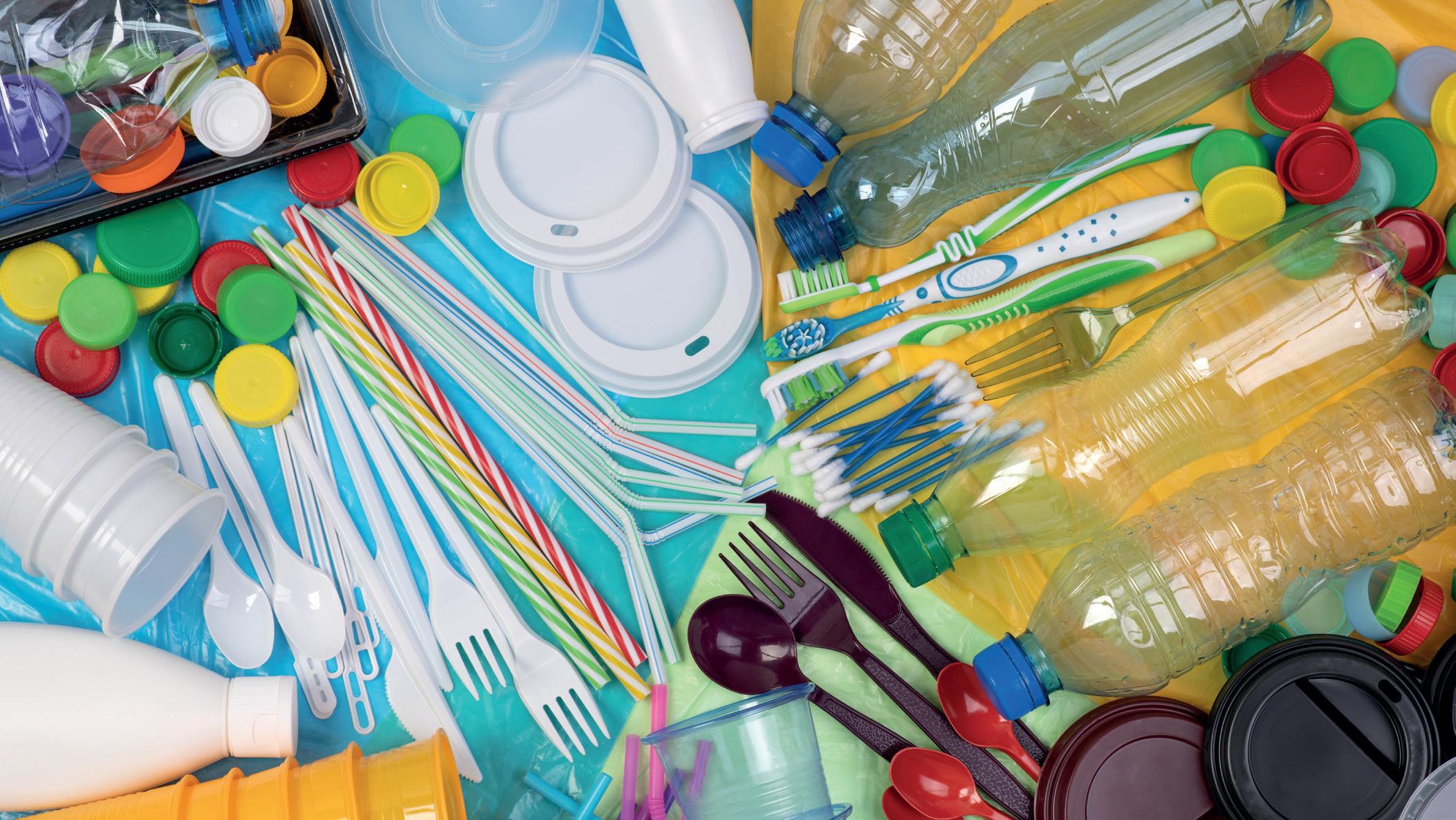
Ms Berry would like the Government to be bolder and said it would make sense to start with a small group of obvious items, including straws, cutlery and plastic cotton buds, because alternatives already exist in Bermuda and the transition would be relatively easy. Instead, she suspects ministers are testing the ground and trying to gauge resistance.
“My impression from the Government is that they are nervous,” she said. “They want to test this and see what happens and see what the pushback is.”
The question behind all this is not just how the law will work, but why it matters.
He said the schedule was intentionally empty for now, so government could consult businesses, environmental organisations and the wider public before
A Versa wall created by Commercial Interiors Group (CIG)
Mr Adams told the House the aim was not disruption but progress. He said the Government wanted to make sure businesses and consumers had time to adjust, and that environmentally friendly
In the House, Mr Adams framed the issue in environmental, economic and cultural terms, warning that plastic pollution threatens Bermuda’s marine ecosystem and that microplastics are now found in water, sand, fish and, increasingly, human bodies. He said Bermuda’s natural beauty is tied to tourism, fishing and public health, and argued that reducing harmful plastics is part of protecting the island’s future.
Ms Berry said the case against plastic has become broader over time and that when Beyond Plastics began, the focus was strongly shaped by litter: takeaway containers, wrappers and other items repeatedly found during clean-ups. Now, she said, the issue has become more personal.
“When I started this … I was really coming at it from a litter perspective,” she said. “Personally, now it’s about health. And you can’t unlearn the health impacts of plastic once you know them.”
She argued that people often try to isolate the issue into one category, such as waste or health, when in reality it runs through the whole system.
“It is not just environmental,” she said. “It’s not just all the health costs. It’s also the fact that it is a social justice issue, and the greenhouse gases and petrochemical industry that create all this plastic.”
At the same time, she said some of the resistance that once defined the debate has eased.
“What is changing is people’s acceptance,” Ms Berry added. “When we first started this, there was a lot more, especially from the business community, ‘we’re going to fight this tooth and nail’.”
Now, she said, some businesses understand that change is coming. Suppliers are offering sustainable alternatives, and businesses that have
already switched away from some plastics are not reporting the cost shocks many once feared. That, she argues, matters because it weakens one of the most common objections.
Still, the hardest habits remain.
Ms Berry said disposable coffee cups and plastic water bottles are likely to be among the biggest stumbling blocks because they are woven into daily routines. She also pointed to unnecessary packaging choices that still shape everyday shopping.
“We do not need to do things like then put our meat on a black Styrofoam container,” she said. “That is the Bermuda choice.”
Some businesses, she suggested, could already go further without waiting for the law. Reusable containers, asking customers whether they are eating in or taking away, and reducing avoidable plastic wrapping are all changes that could happen now. Consumer habits matter too, she said, but they are unlikely to shift fast enough on their own.
“We can’t get away from the fact that we need legislation,” she said. “And we need governments to make those choices for us.”
That is why education, in her view, has to sit alongside the law.
Mr Adams said the ministry would launch a public education campaign with environmental groups, schools and community organisations, arguing that
regulation alone cannot change behaviour. Ms Berry agrees, but says the work needs backing. Beyond Plastics has been into primary schools and many secondary schools, she said, but funding that outreach has been difficult.
In the end, this is what makes the Bill both important and incomplete.
What has changed is the mood. The argument for reducing single-use plastics is no longer marginal, and the legislation shows that government has finally moved beyond talking.
What is changing is the machinery.
Bermuda is at last putting in place a system that could, item by item, begin cutting plastic out of everyday life.
What has not changed is the central tension. Convenience is still powerful, some businesses are still cautious, and government still appears wary of moving too fast.
Ms Berry’s hope is that the law will break that pattern rather than formalise it.
“I hope that the Government is brave enough to push back against business and say, this is what we need to do for the country,” she said. “You think it’s going to be painful, but it’s not as painful as you think it’s going to be.”
What happens next will decide whether this is the beginning of a real shift, or just another careful step in a debate Bermuda has already spent too long having.
Going green at the office does not have to mean expensive solar panels, major renovations or large capital budgets. In many cases, the most effective environmental improvements come from simple habits, smarter systems and small changes that cost little—or nothing at all.
For businesses of every size, the workplace offers daily opportunities to cut waste, save energy and reduce unnecessary consumption. And the added bonus is that many of these steps can also lower operating costs.
One of the easiest wins is waste reduction. Many offices still place an individual garbage bin at every desk, each lined with a plastic bag that is replaced daily. Multiply that across even a modest office and the numbers add up quickly.
Take a ten-person workplace. If each desk bin uses five bags a week, that is 2,600 plastic bags a year.

Some companies have solved this by removing individual bins altogether and replacing them with one or two central waste and recycling stations. Staff quickly adapt, plastic use falls sharply, and cleaning becomes simpler.
If your office still uses older bulbs, changing to LED lighting is one of the smartest low-cost upgrades available. LEDs use significantly less electricity, last far longer and generate less heat.
For offices with multiple fittings, even replacing bulbs gradually as old ones fail can make a noticeable difference over time.
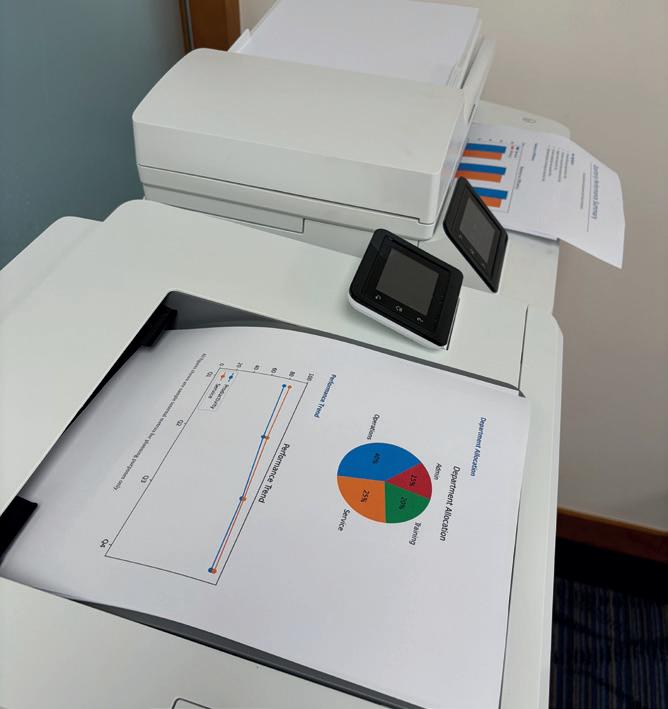
Despite the digital age, many offices still print far more than necessary.
Encourage staff to:
• Print only when needed
• Default printers to double-sided
• Reuse single-sided sheets for drafts or notes
• Use digital signatures and scanned documents where possible
• Store files electronically rather than printing for filing
Less paper means fewer supplies purchased, less storage needed and less waste created.
Break rooms and kitchens are often a hidden source of waste.
Consider replacing:
• Plastic cups with mugs or glasses
• Bottled water with filtered tap water or refill stations
• Disposable cutlery with reusable utensils
• Single-use plates with washable alternatives
Even small offices can eliminate hundreds—or thousands—of disposable items each year through these changes alone.
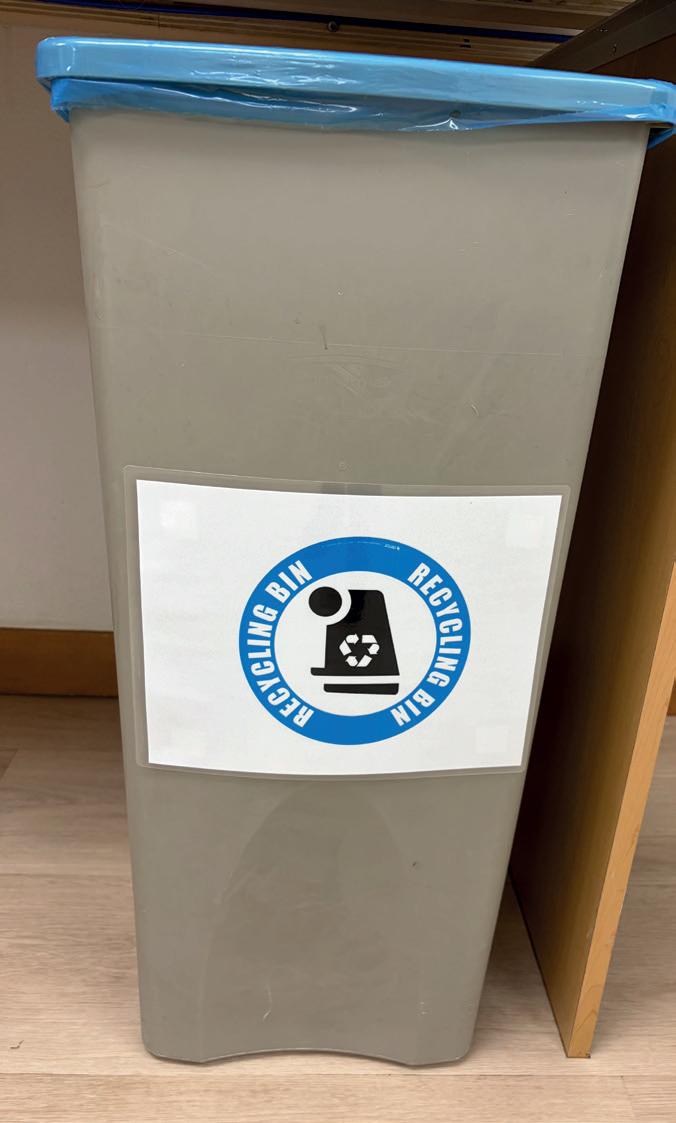
Many offices say they recycle, but poorly placed bins or confusing systems often mean recyclable material ends up in general waste.
A better approach is to place clearly labelled bins in central areas for:
• Paper and cardboard
• Plastic bottles and cans
• General waste
• Printer cartridges or batteries (where appropriate)
The easier recycling is, the more people will do it.
Many devices continue drawing power

even when switched off. Computers, monitors, printers, chargers and kitchen appliances all contribute to unnecessary electricity use.
Simple habits can help:
• Turn off monitors at the end of the day
• Shut down computers overnight where practical
• Unplug chargers not in use
• Use power strips that can be switched off easily
These changes cost nothing and can reduce wasted energy immediately.

Environmental progress often comes down to culture rather than equipment. Encourage staff to:
• Bring reusable water bottles
• Bring lunch in reusable containers
• Walk to nearby meetings when possible
• Combine errands or deliveries
• Report dripping taps or wasteful practices quickly
When people see sustainability as part of everyday office life, small actions multiply.
When ordering office supplies, choose products with less packaging, recycled content or refill options where practical.
Examples include:
• Refillable pens
• Recycled paper
• Concentrated cleaning products
• Bulk-purchased supplies rather than many small orders
Buying better sends a signal internally and externally.
Many businesses delay environmental action because they think they need a grand strategy. In reality, meaningful change often starts with one shelf, one switch, one bin or one new habit.
Remove desk bins. Replace old bulbs. Stop buying plastic cups. Set printers to double-sided.
None of these measures require major spending. Yet together, they can significantly reduce waste, lower costs and create a more responsible workplace.
Going green does not have to begin with a cheque book. Sometimes it begins with common sense.


Paper production uses enormous amounts of energy and water. It’s a major cause of deforestation, carbon emissions and climate change.
BELCO is committed to sustainability, which includes changing our business practices. We’re reducing our paper use and you can help.
SWITCH to paperless billing. It’s easy! Sign up on our website or email info@belco.bm.
SAVE trees, energy and water. We can all do our part to reduce carbon emissions for a more sustainable planet.