How Advanced Fuel Cell Test Bed Systems Accelerate
Hydrogen Innovation
Introduction
Hydrogen technology is rapidly emerging as a key pillar of the global transition toward clean and sustainable energy. From fuel-cell vehicles to industrial power generation and stationary energy systems, hydrogen-based solutions are gaining significant momentum worldwide. However, developing reliable fuel cell technologies requires rigorous testing, validation, and performance analysis.
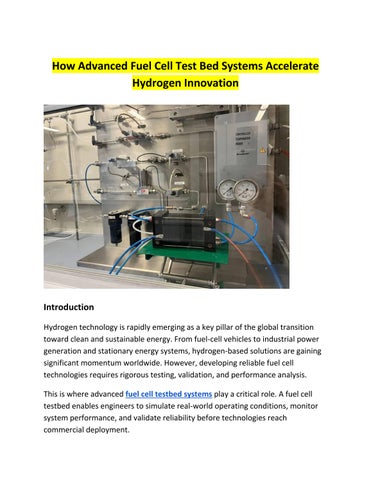
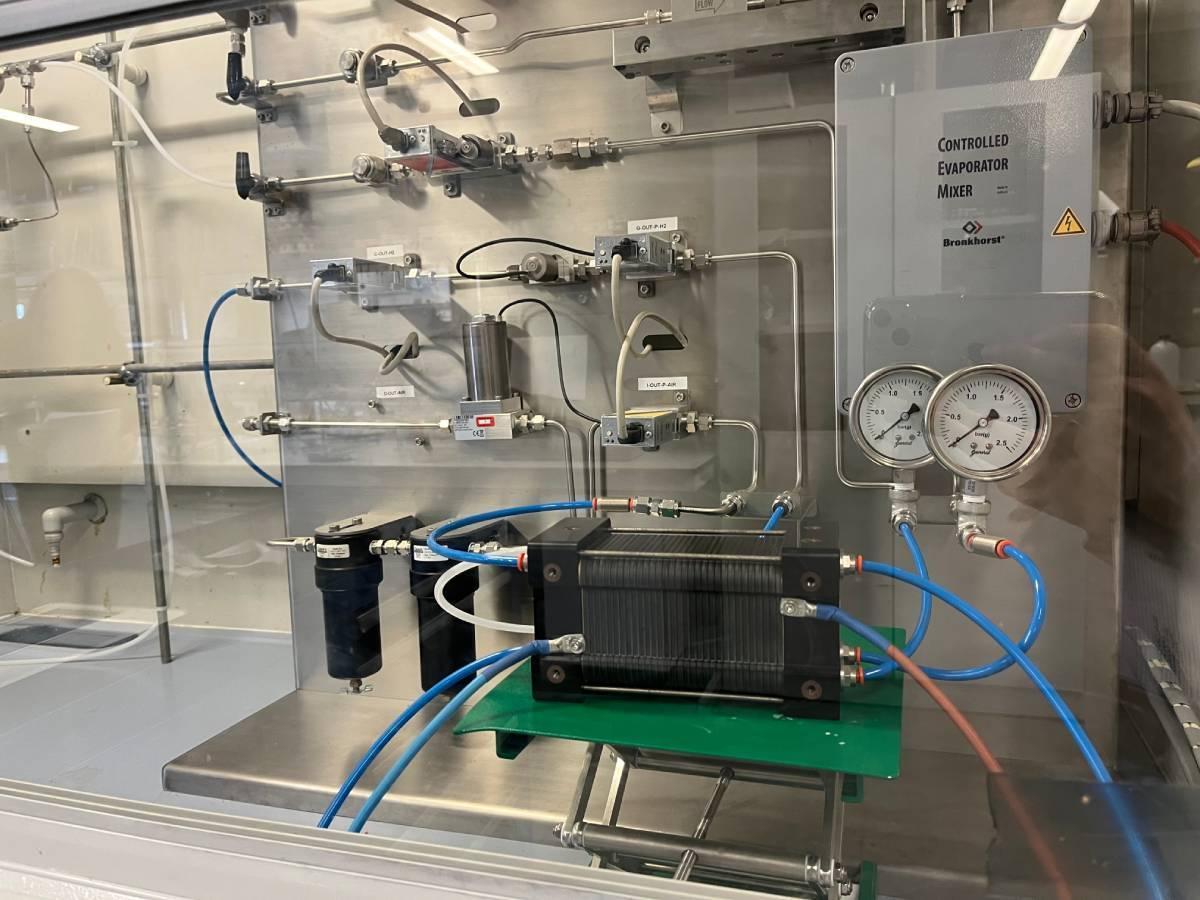
This is where advanced fuel cell testbed systems play a critical role. A fuel cell testbed enables engineers to simulate real-world operating conditions, monitor system performance, and validate reliability before technologies reach commercial deployment.
With the growing demand for hydrogen-powered mobility and energy solutions, modern fuel cell testing infrastructure has become essential for accelerating innovation and reducing development risks.
Understanding Fuel Cell Testbed Systems
A fuel cell testbed is a specialized testing platform designed to evaluate the performance, durability, and safety of fuel cell stacks and subsystems. These systems provide controlled environments where engineers can analyze fuel cell behavior under different operating conditions such as load variations, temperature fluctuations, and hydrogen flow rates.
Modern testbeds integrate advanced measurement systems, automation software, and data analytics tools to monitor critical parameters like voltage, current, pressure, temperature, and gas flow. These insights help engineers optimize system efficiency and improve fuel cell design.
Fuel cell testbeds can be configured for different levels of testing, including:
● Single cell testing
● Fuel cell stack testing
● System-level validation
● Balance of plant (BoP) testing
This flexibility allows researchers and manufacturers to validate hydrogen technologies across the entire development lifecycle.
Why Fuel Cell Testbeds Are Essential for Hydrogen Innovation
As hydrogen technologies become more complex, reliable testing infrastructure is essential to ensure performance and safety.
1. Accelerating Research and Development
Advanced fuel cell testbeds enable engineers to simulate multiple operating scenarios quickly. Automated testing systems allow continuous operation and
real-time monitoring, helping research teams evaluate performance more efficiently and reduce development time.
2. Improving System Performance
Testing platforms allow engineers to study how fuel cells behave under different environmental and operational conditions. By analyzing test data, developers can refine stack design, optimize fuel delivery systems, and improve overall efficiency.
3. Ensuring Safety and Compliance
Hydrogen systems require strict safety validation. Testbeds incorporate safety monitoring features such as hydrogen sensors, pressure controls, and emergency shutdown mechanisms to ensure safe testing environments.
4. Supporting Real-World Simulation
Fuel cell systems operate in highly dynamic environments, especially in automotive applications. Modern testbeds simulate real driving conditions, load cycles, and environmental variations to validate system reliability before deployment.
Key Components of a Fuel Cell Testbed
A high-performance fuel cell testbed typically includes several integrated subsystems that enable precise control and measurement.
1. Gas Flow and Hydrogen Supply Systems
These systems regulate hydrogen flow, pressure, and composition to simulate real operational conditions.
2. Data Acquisition and Monitoring
Advanced sensors collect real-time data on temperature, voltage, current, and humidity levels for detailed performance analysis.
3. Cooling and Thermal Management
Thermal management systems ensure stable operating temperatures during testing and prevent overheating.
4. Automated Test Control Systems
Automation software allows engineers to run predefined test cycles, monitor system behavior, and analyze results efficiently.
Modern testbeds can operate continuously and perform complex test scenarios to support fuel cell research and development programs.
Applications of Fuel Cell Testbeds
Fuel cell testbeds are widely used across various industries involved in hydrogen technology development.
1. Automotive Industry
Automotive manufacturers use testbeds to validate hydrogen fuel cell stacks, evaluate durability, and optimize powertrain integration for fuel cell electric vehicles (FCEVs).
2. Energy and Power Generation
Fuel cell systems used for stationary power generation require extensive performance and endurance testing before deployment.
3. Research and Academic Institutions
Universities and research laboratories use testbeds to study fuel cell behavior, materials, catalysts, and membrane performance under controlled environments.