Portfolio

Page 1


Portfolio

I design architecture for everyday life. I aim to create open, welcoming spaces where people can work, meet, or simply live. Architecture, which is an inherently political act, has the power to change the ways that people coexist, and I believe this should be taken advantage of. Thinking of spaces in terms of who is served and who is left out allows the architecture to take care of the people who rely on it.

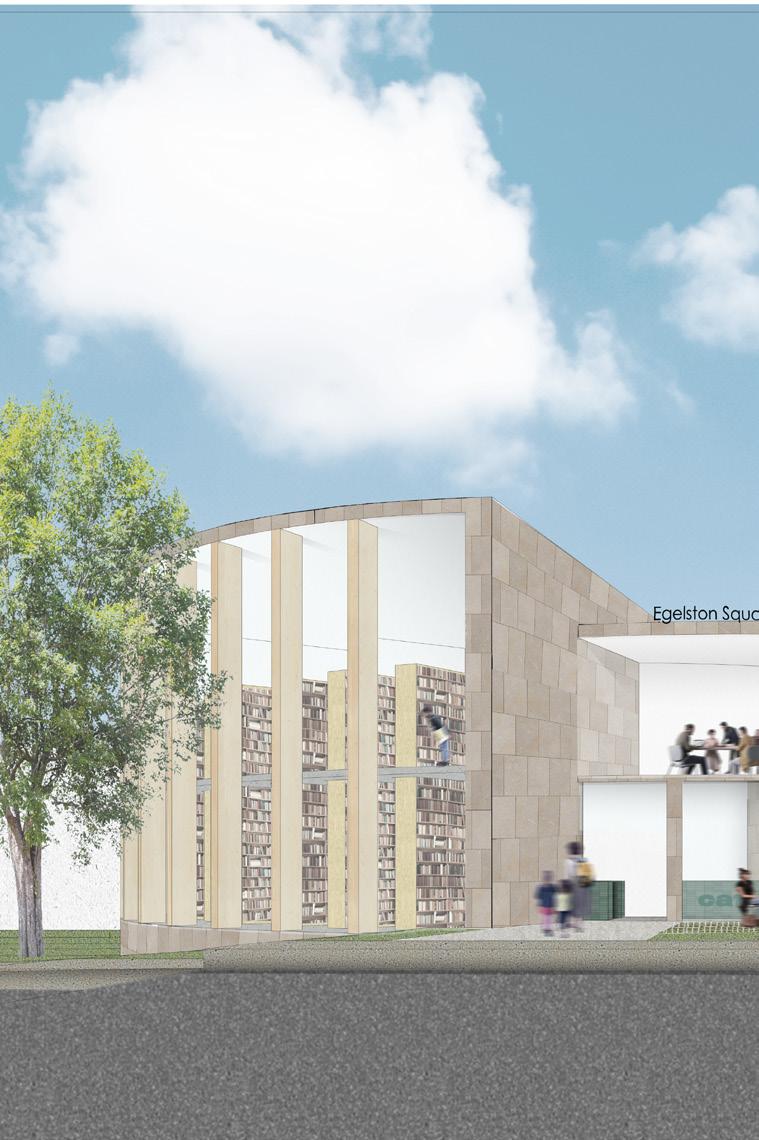
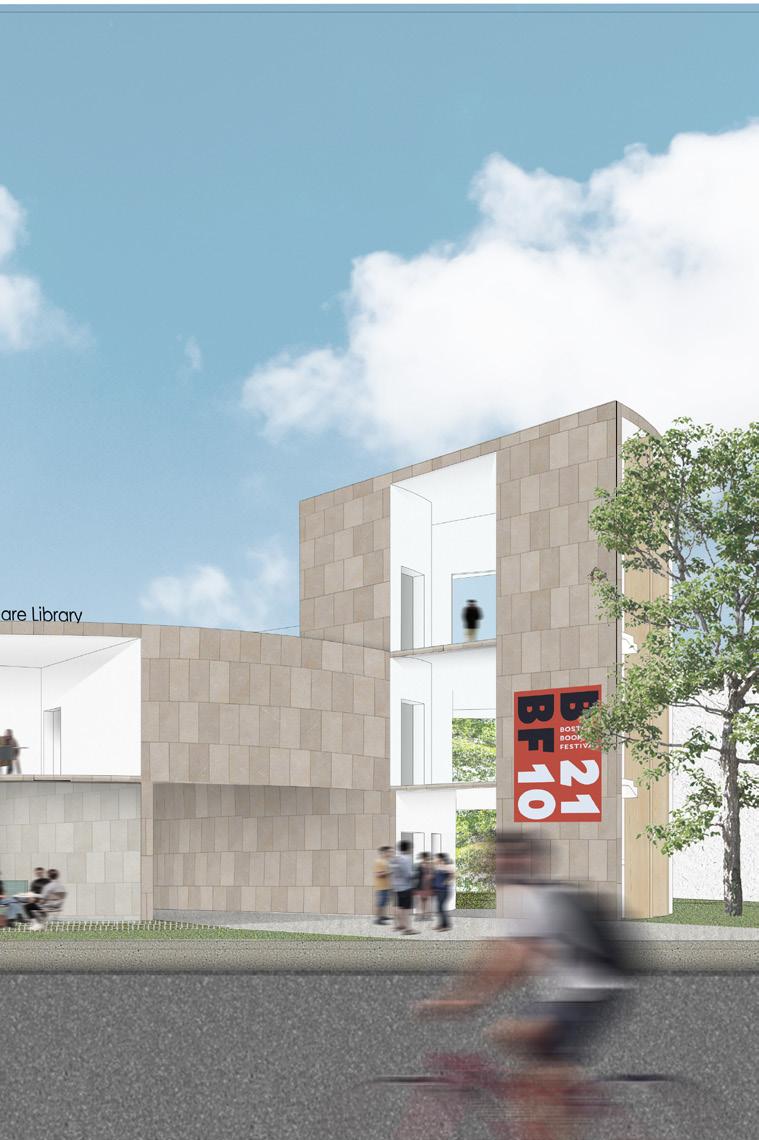
Eye for Egleston Sq.

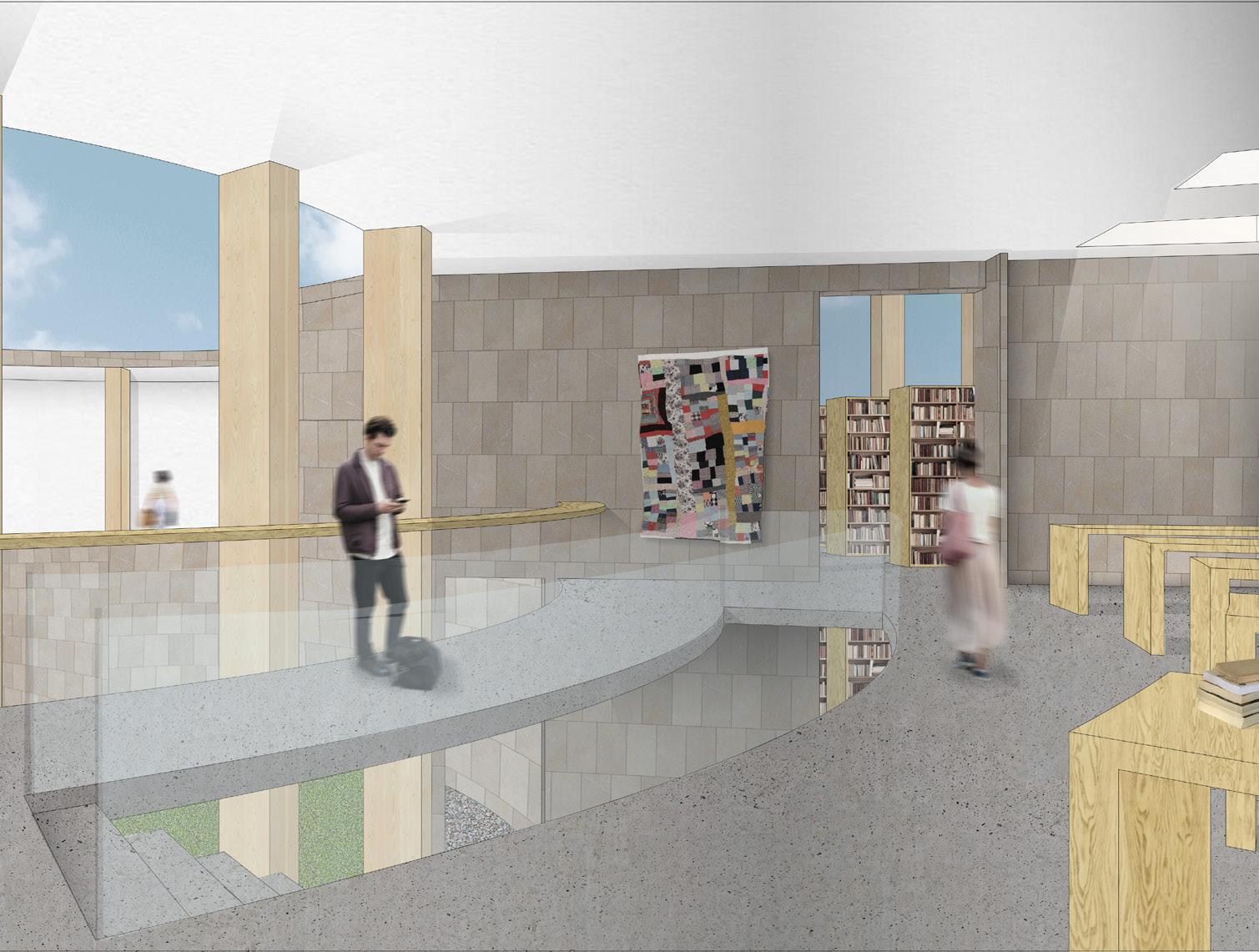
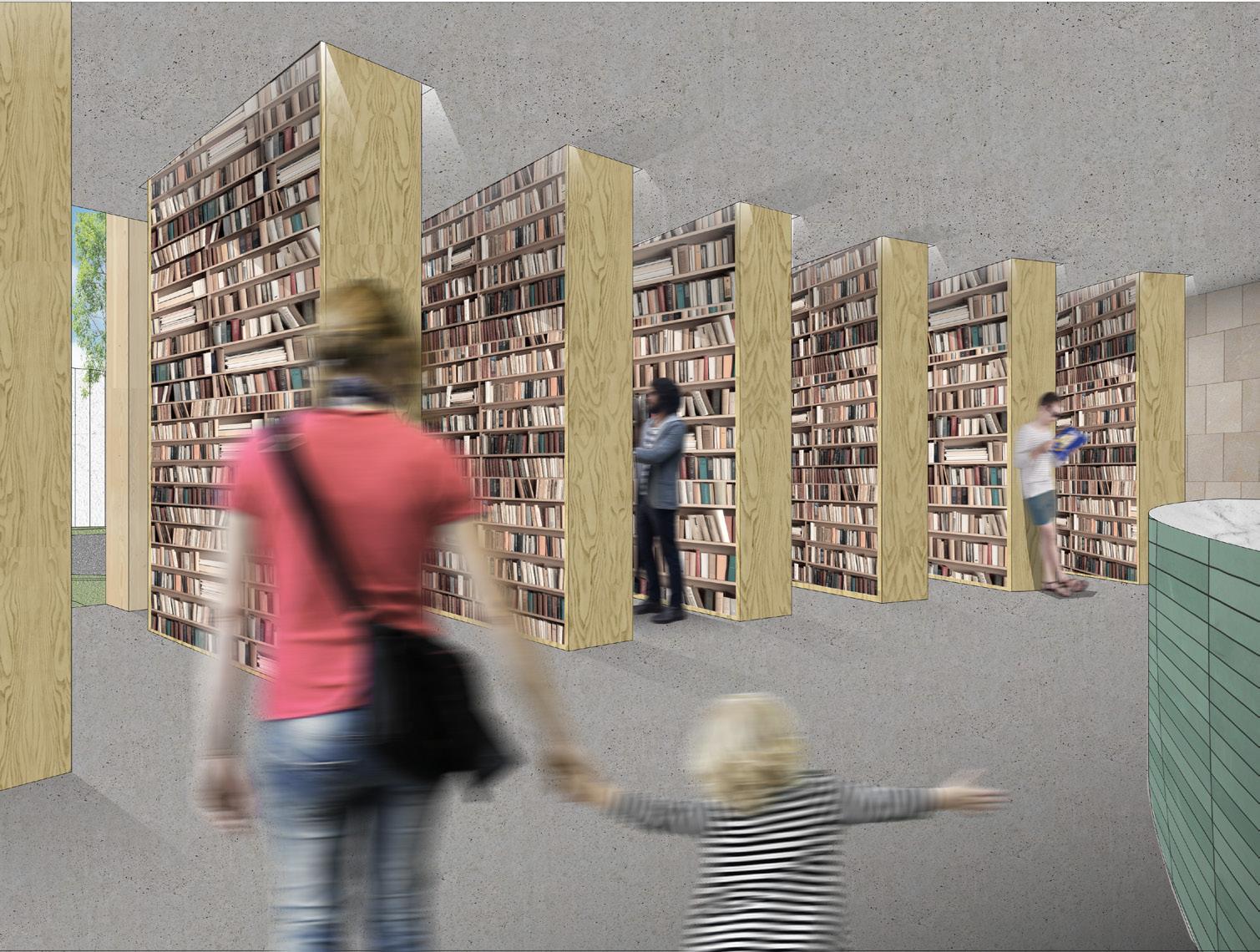
This project proposes a new library for the aging Egleston Square BPL Branch, transforming it into a civic hub that serves the diverse needs of the community. In addition to its primary funcion as a library, the building will house dedicated spaces for a college counseling center that specifically supports local underserved youth, giving guidance, resources, and mentorship to help students pursue higher education. A business center is also incorporated to provide small business owners with access to tools and mentorship to grow their companies and reinvest in the local economy, promoting self-sufficiency within the community.

A large lawn will offer 24/7 access to green space, creating an inviting outdoor area for gatherings, events, or relaxation. A community garden will complement this space, encouraging residents to participate in sustainable practices and engage with nature. The building’s architecture aims to create a welcoming, open atmosphere. The radiating stone walls not only serve as spatial dividers but also as a passive climate control feature, maintaining a comfortable temperature. These aspects, combined with flexible spaces, ensure the library will be an adaptable space that can grow with the needs of the community.

ARCH 2130 | Spring 2025 | Professor Emmanuel Osorno

3rd Floor

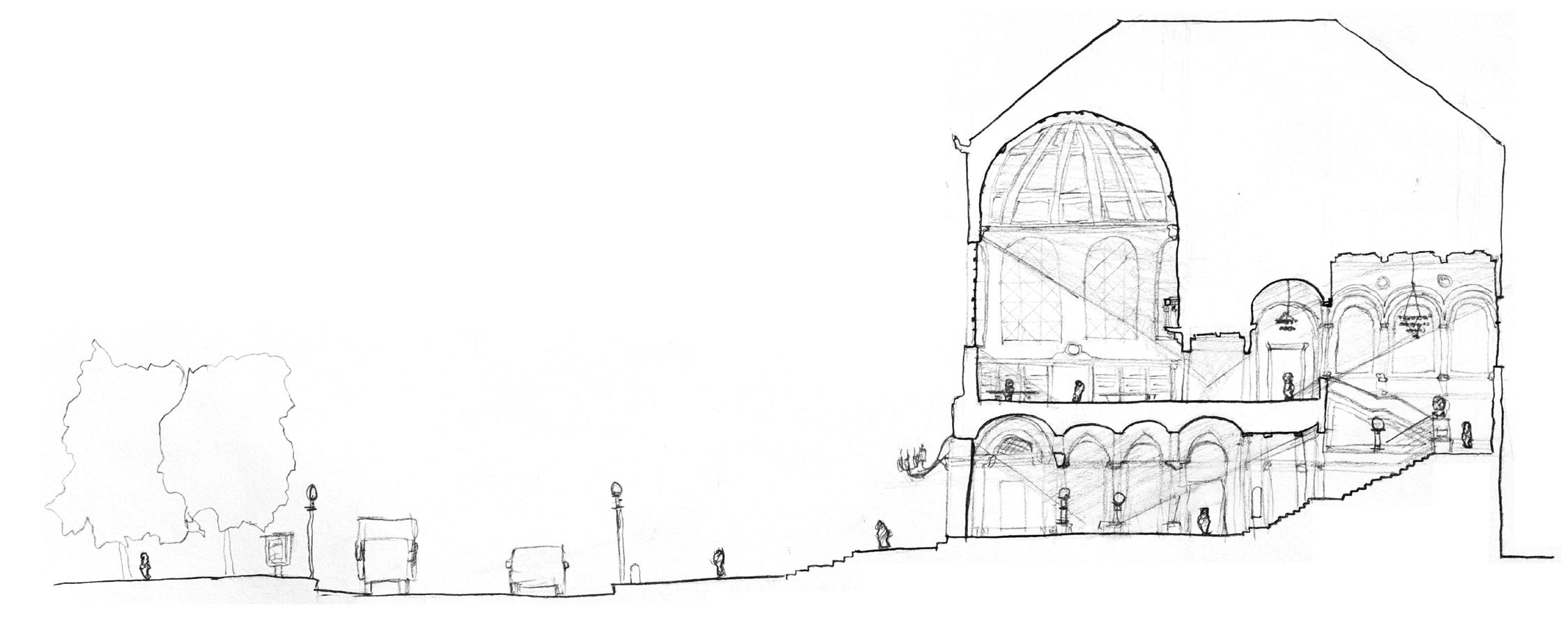
Section AA
Section BB
reading room
street view

lobby and adult collection

Stitched Housing

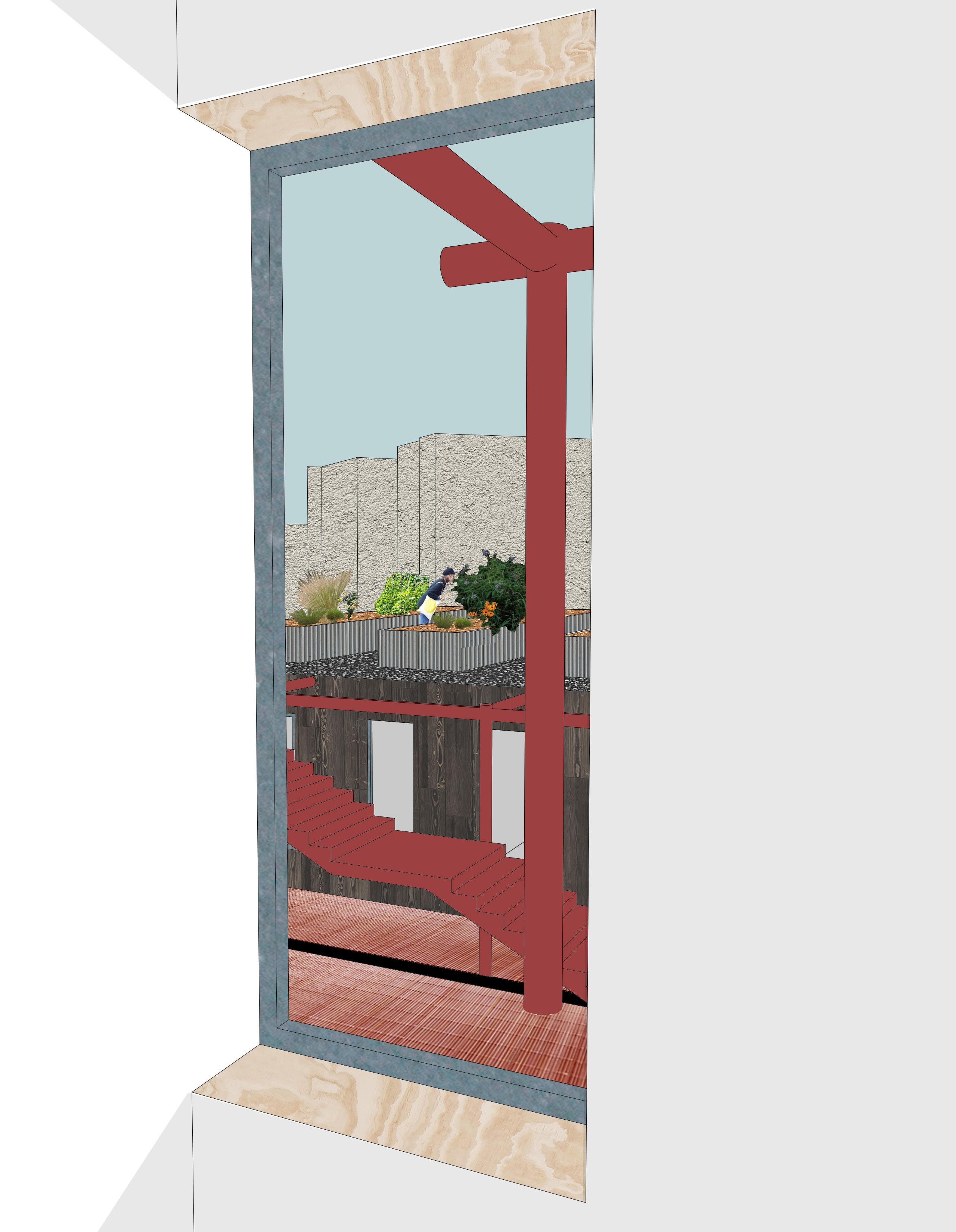
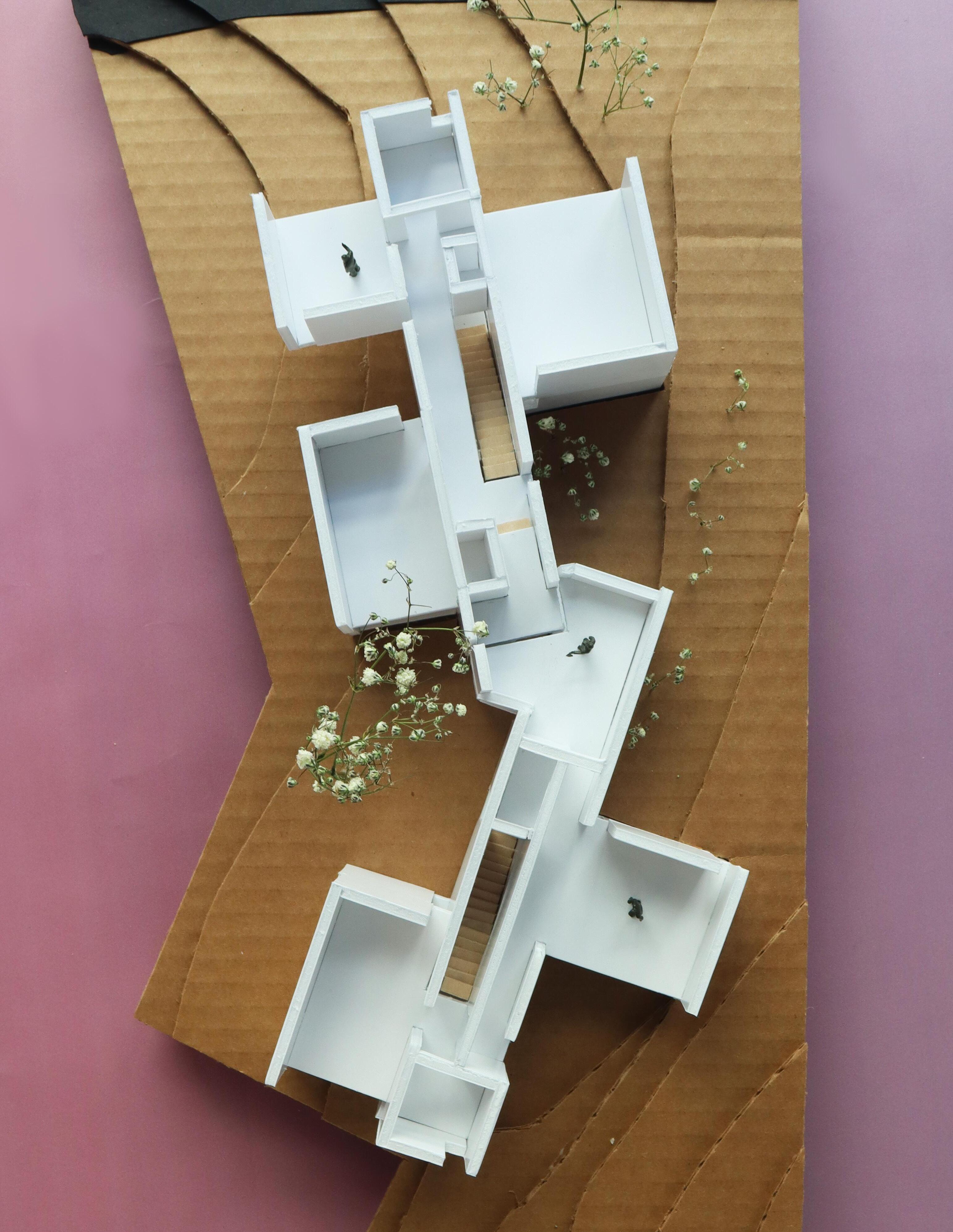
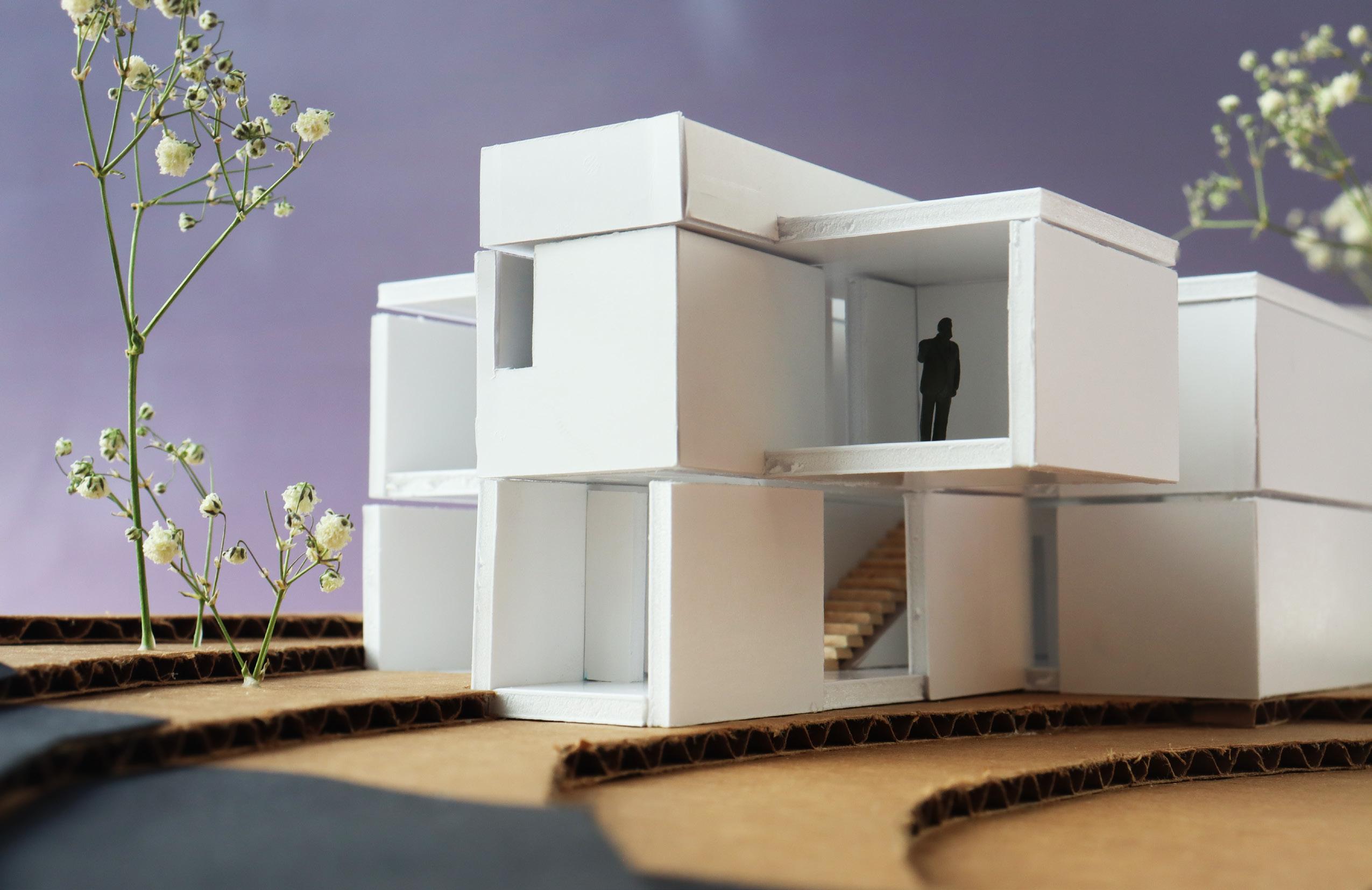
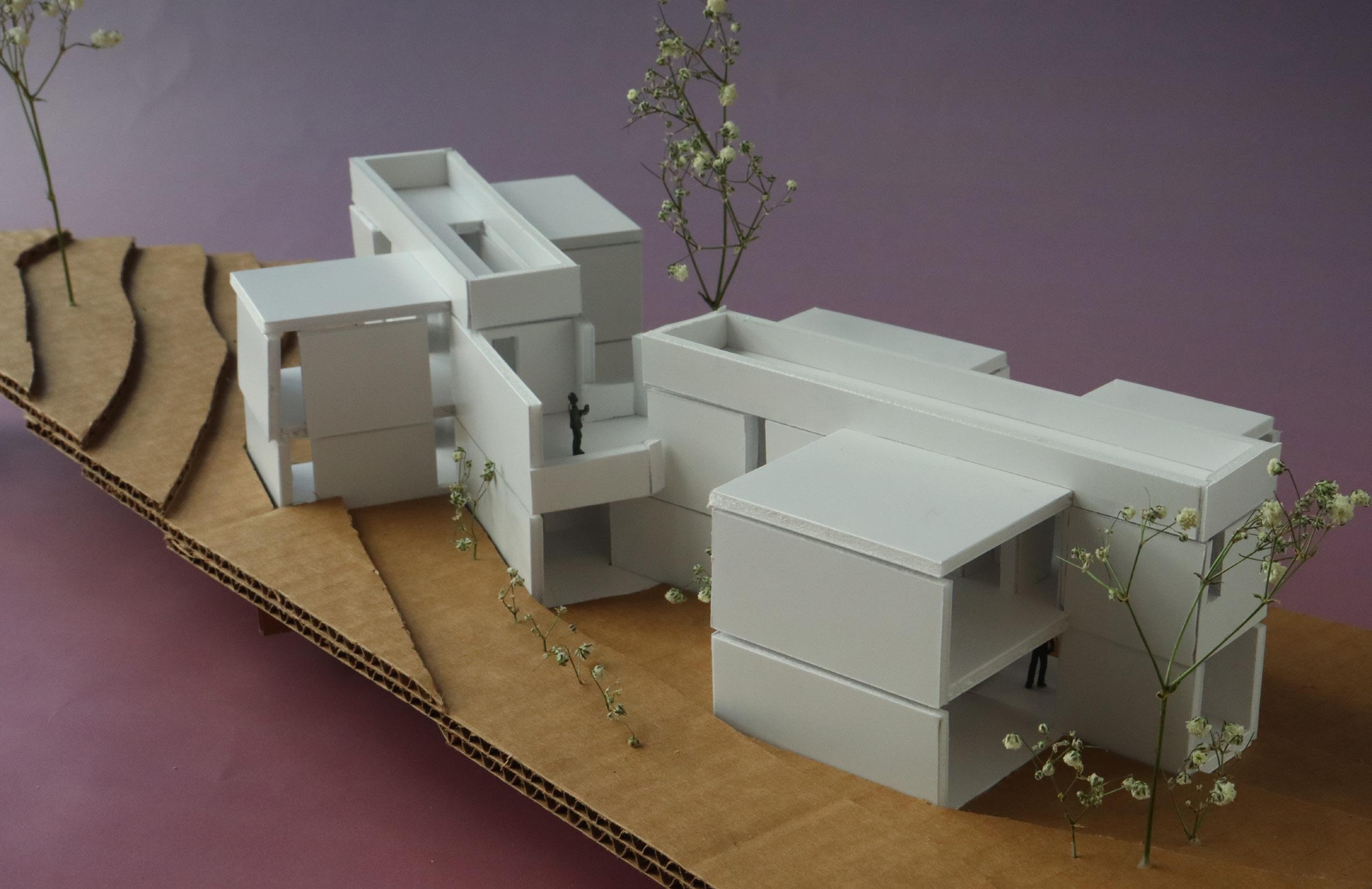
This project transforms a former surface parking lot in East Fenway into a housing development organizaed around a continuous red path which is the sole circulation system connecting all residential units across buildings. By eliminating internal corridors and stairs, the project forces every resident into an unavoidable zone of encounter where daily experiences overlap. At strategic intervals, it expands to claim space for communal living and dining areas, a community garden, and a café open to both residents and neighbors.

As the neighborhood has transformed into a student hub, rising costs of living have created affordability pressures for both long time community members and professors who now call the area home. Smaller sized apartments lower cost while reinvesting the saved area into the public realm. The exterior red corridor becomes both practical infrastructure and a symbolic gesture, sewing together the community together by becoming a third place where students and families can encounter each other outside of transactional relationships and build the familiarity that underpins a genuine community.

ARCH 2140 | Fall 2025 | Professor Anthony Averbeck
1st

4th Floor

5th Floor

Seed Vault Pavilion

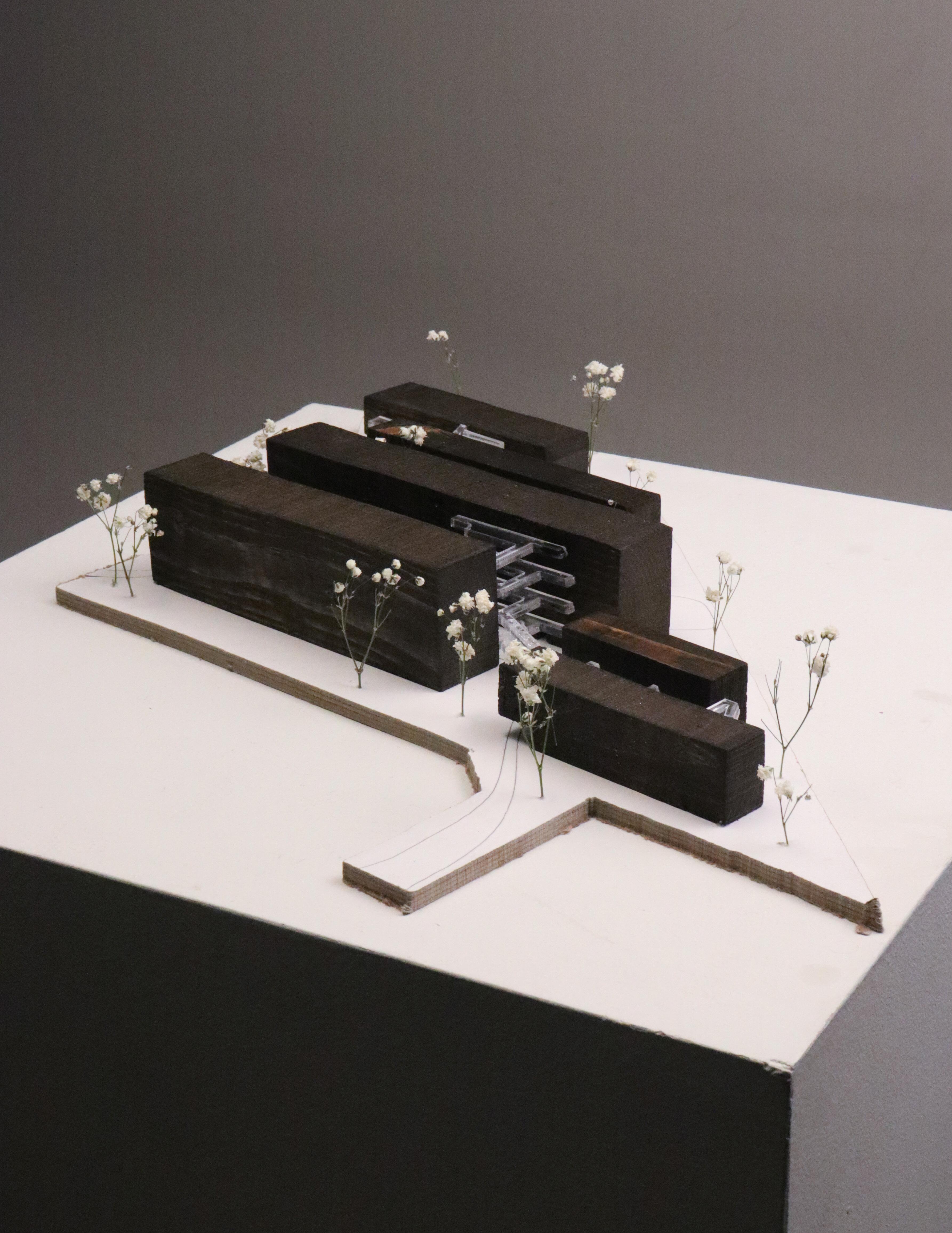
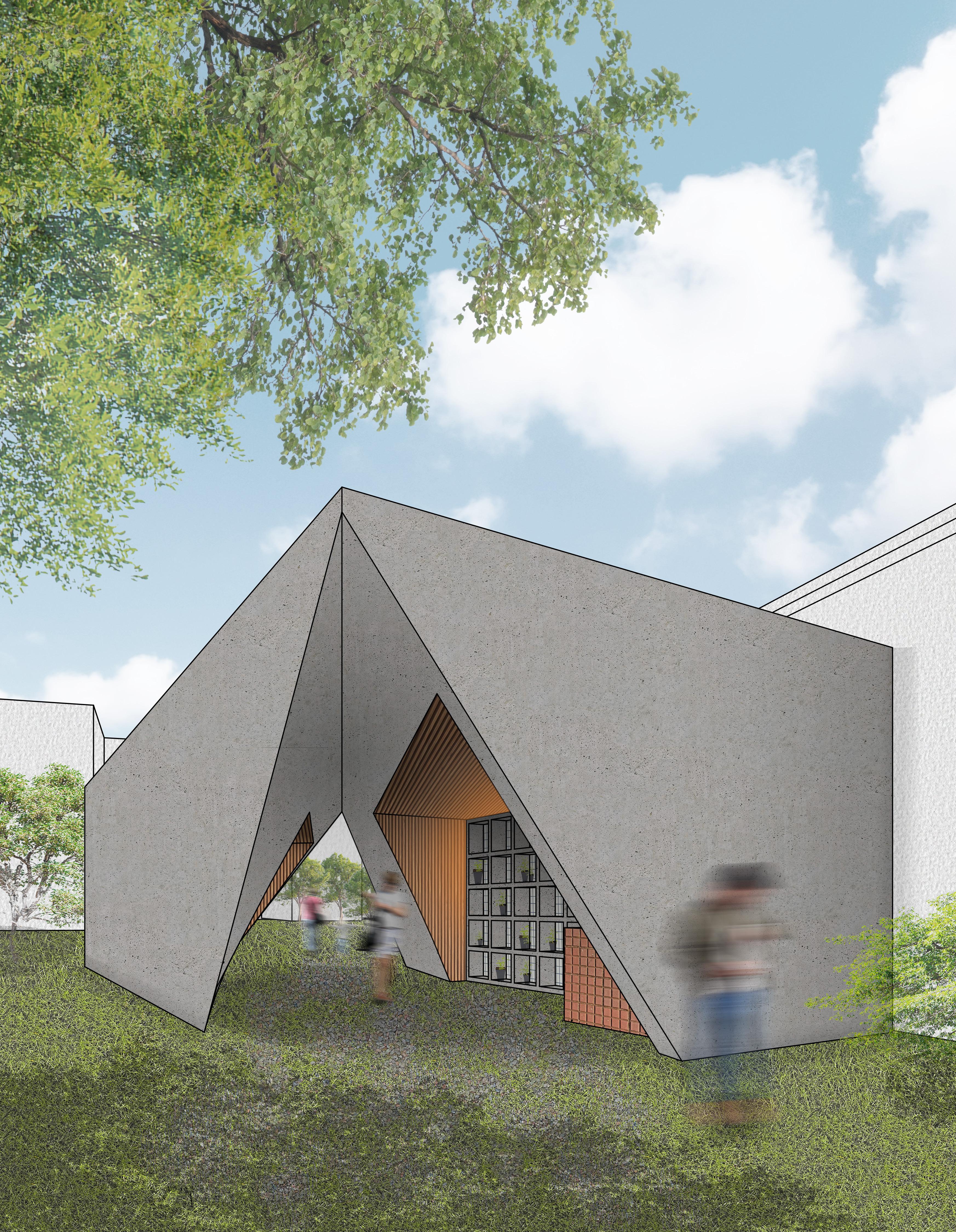
In the dense outer neighborhoods of Boston, the absence of green and community space continues to affect the wellbeing of city residents. This pavilion responds to that need by offering additional programming to an existing tucked away community garden. The pavilion is designed as a threshold between a public seating area/pocket park and a community garden tucked beind a building. A twisted triangular cut slices through the rectangular form, engaging passerby with the space beyond.

As a place for gathering, learning, and sharing, open shelves up front offer a rotating selection of seeds and plants for community use and an info desk provides guidance on gardening and sustainable practices. Toward the back, a seating area offers space for school or library groups, community talks, small performances, or just for neighbors to converse in the shade.

ARCH 2130 | Spring 2025 | Professor Emmanuel Osorno

Broken Symmetry

ARCH 1120 | Fall 2024 | Professor

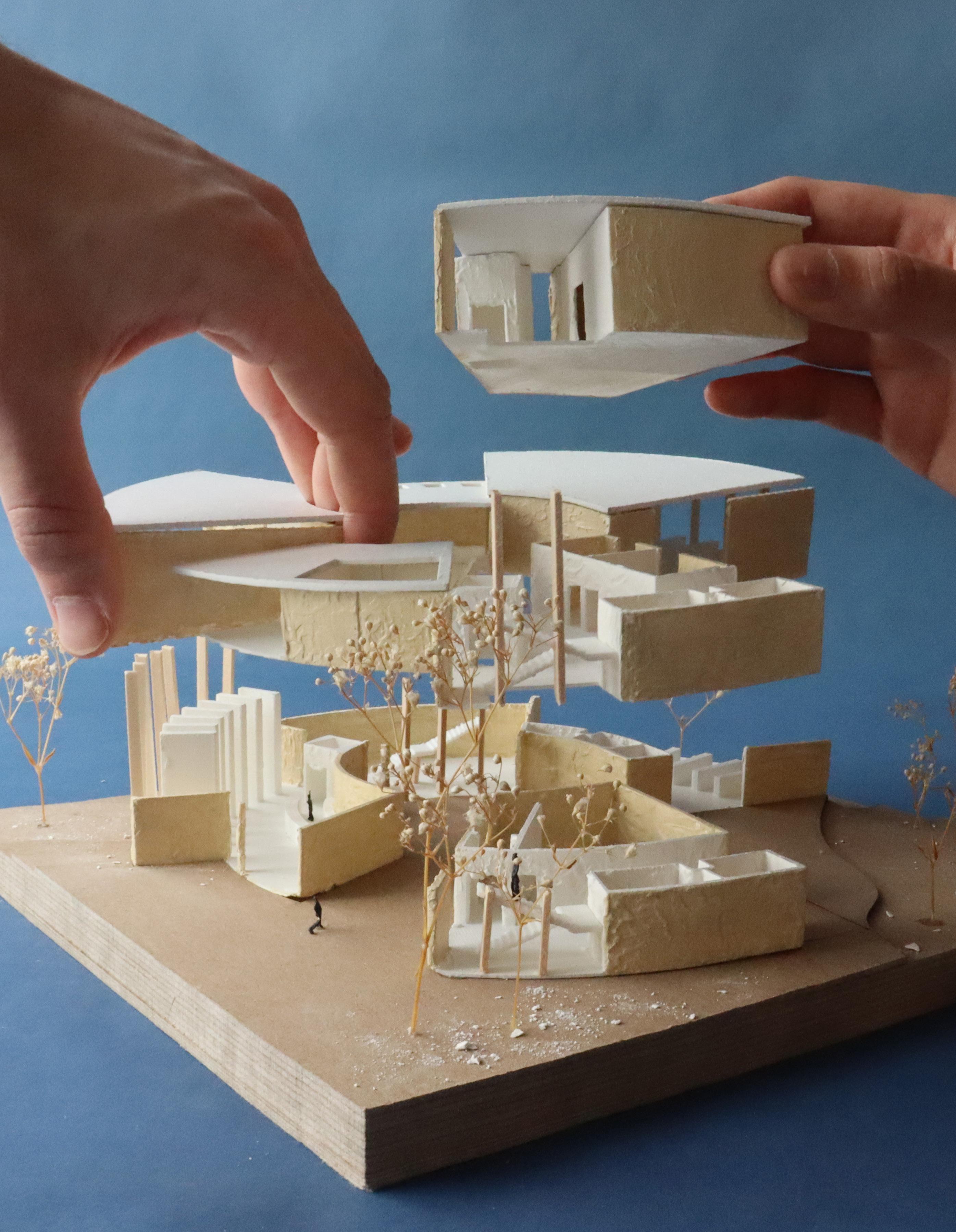
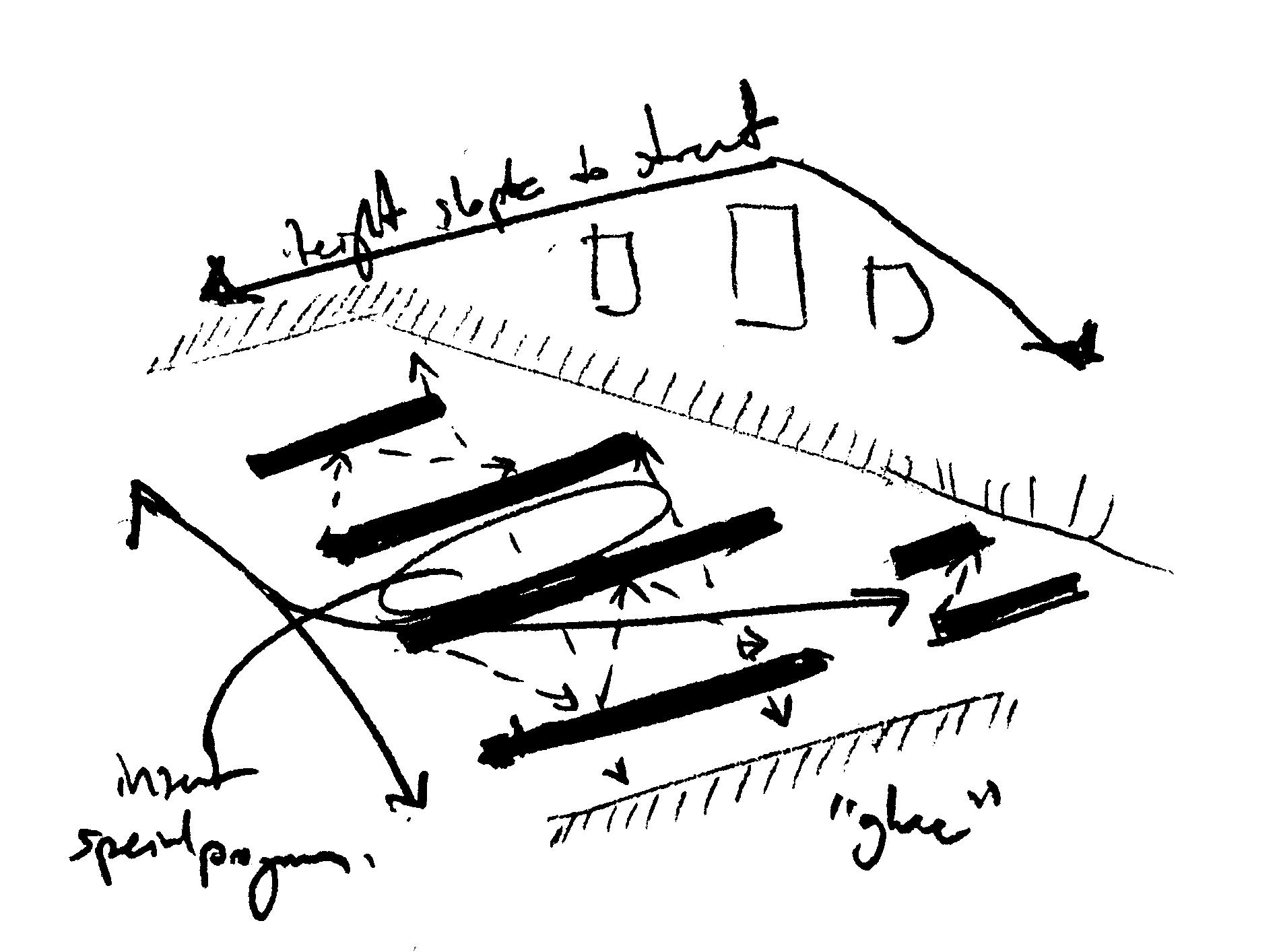
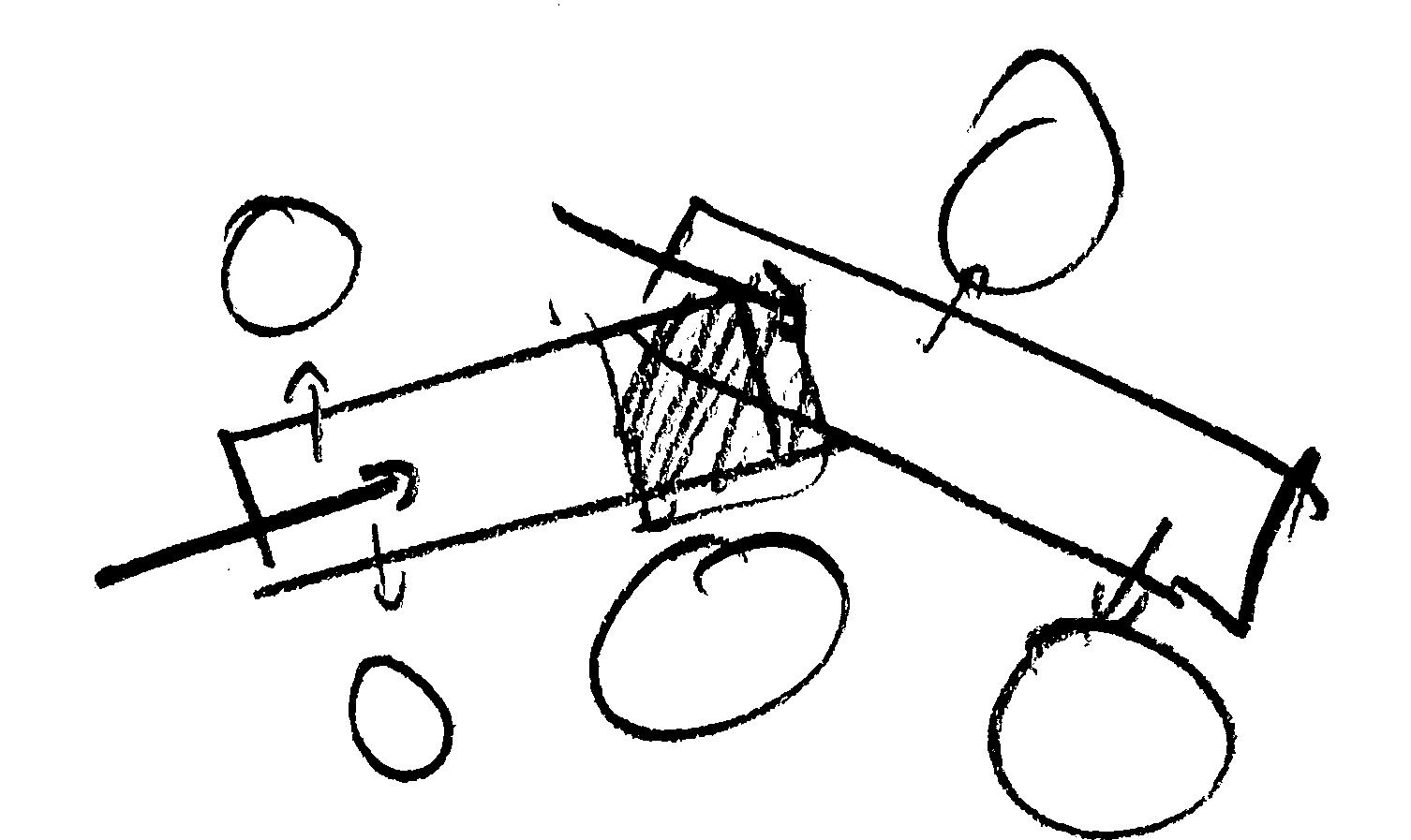
This project proposes a “doubled” house designed to fit a family of three and two grandparents. The design uses a spatial technique of pushing spaces like closets, stairs, and bathrooms into bars of “thick” space that define the main axes of the house. Using these thick bars, rooms are then extended off of it depending on programmatic requirements. This allows for spaces to feel open, while still having privacy from other rooms. Additionally, it allows the two houses to feel distinct while having a shared spatial logic.

To build upon the idea of two intersecting bars, the space between the two buildings is explored as a social aspect. On the first floor, the intersection of the two linear elements is hidden, giving the residents of each space the sense that there is another structure between them while providing privacy. The second floor creates a outdoor space that challenges this, driving the residents to connect.

Public ↔ Circulation ↔ Private
Volumes
Section AA
Section BB

Artistic Works

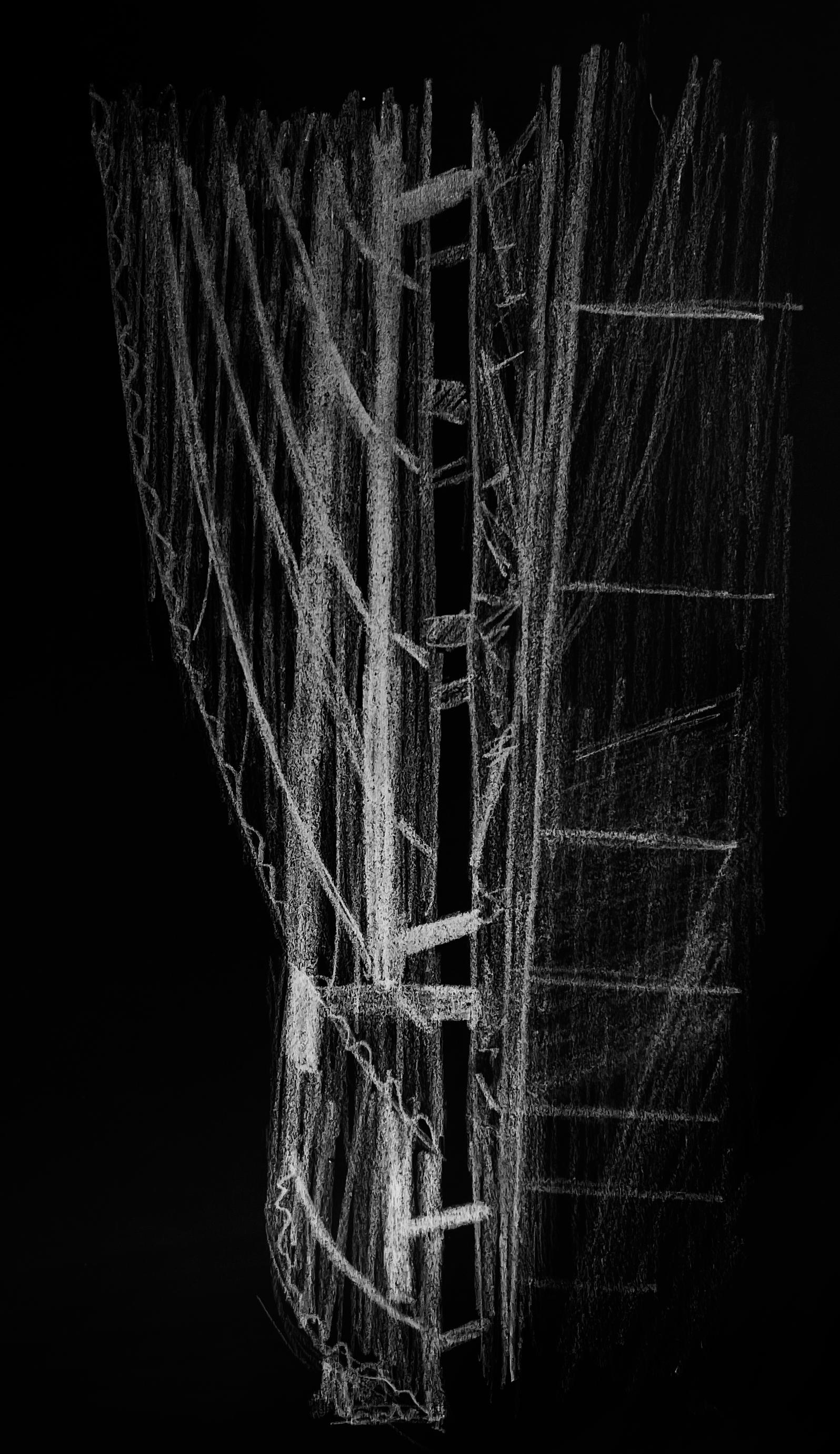
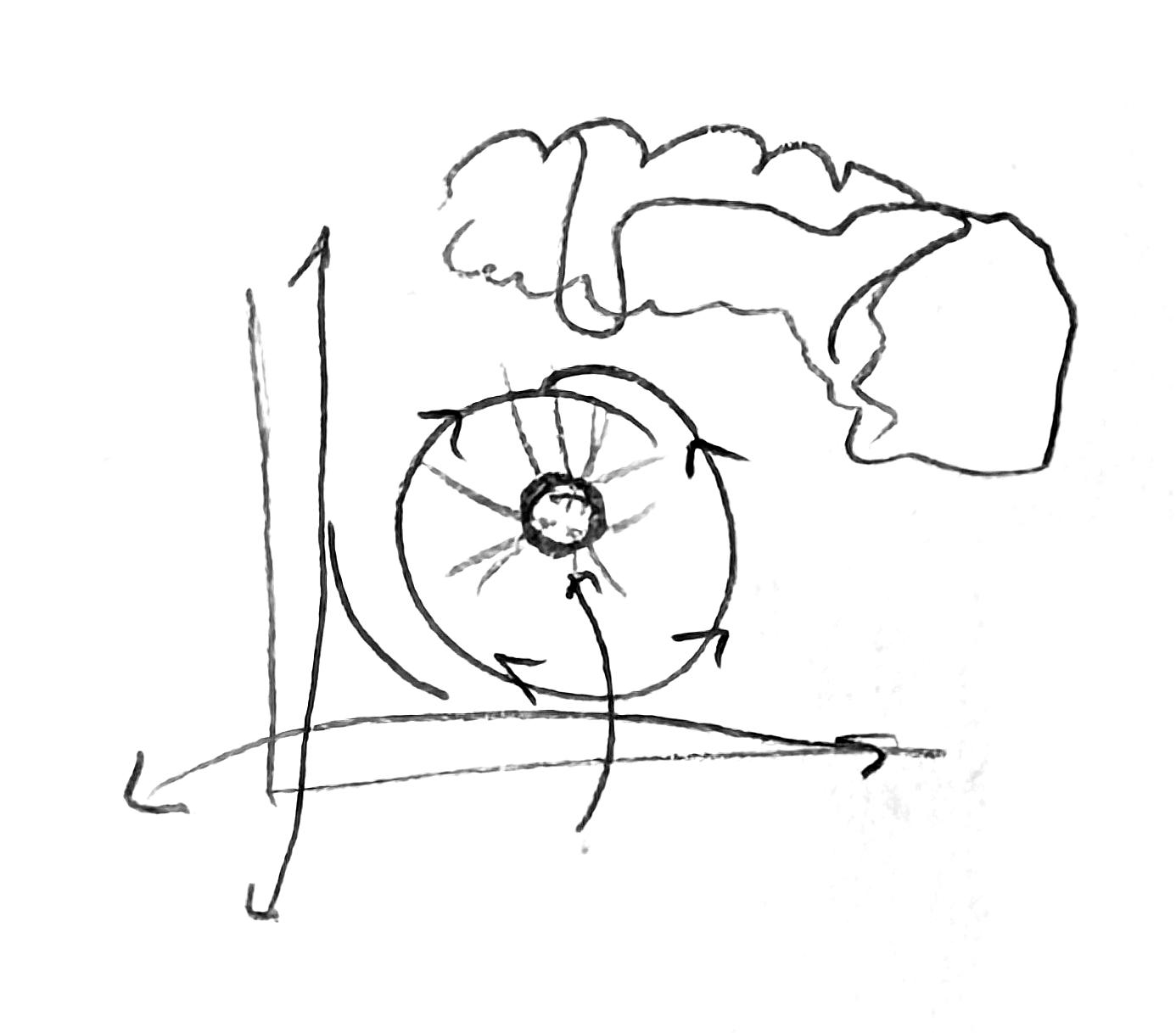
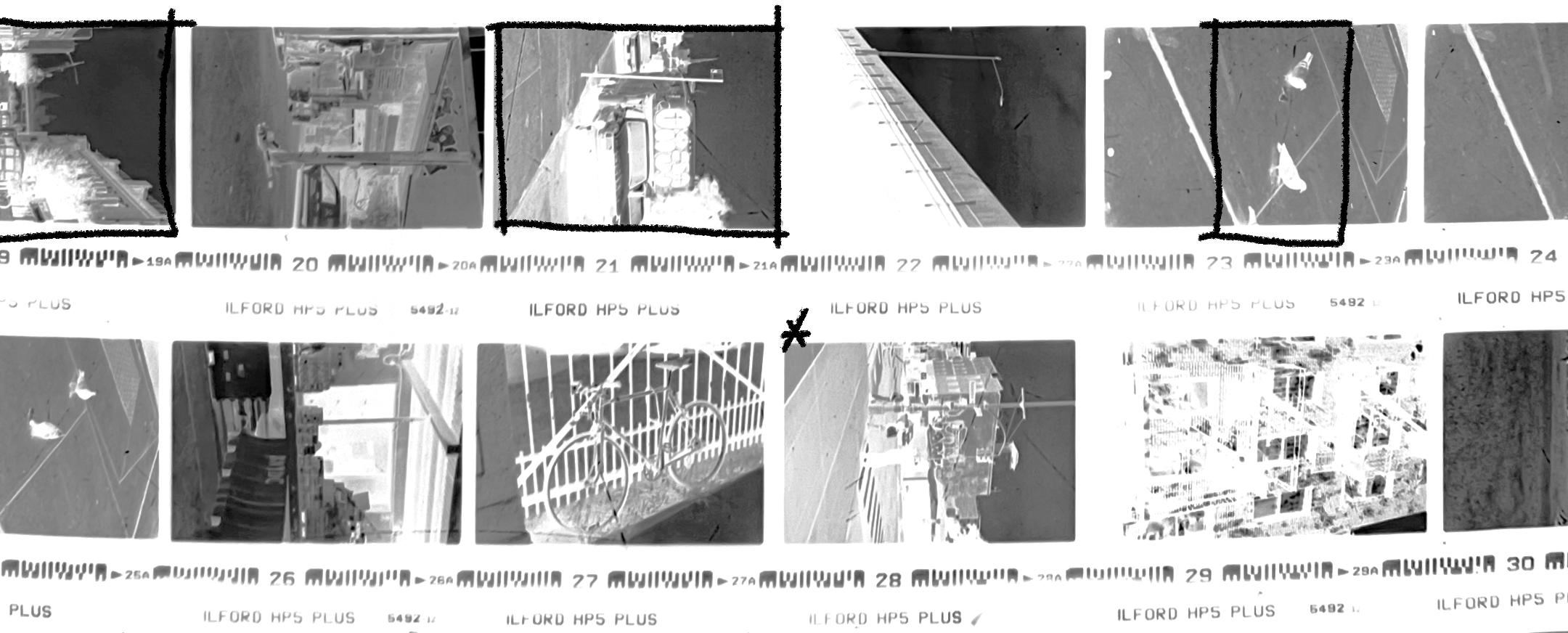
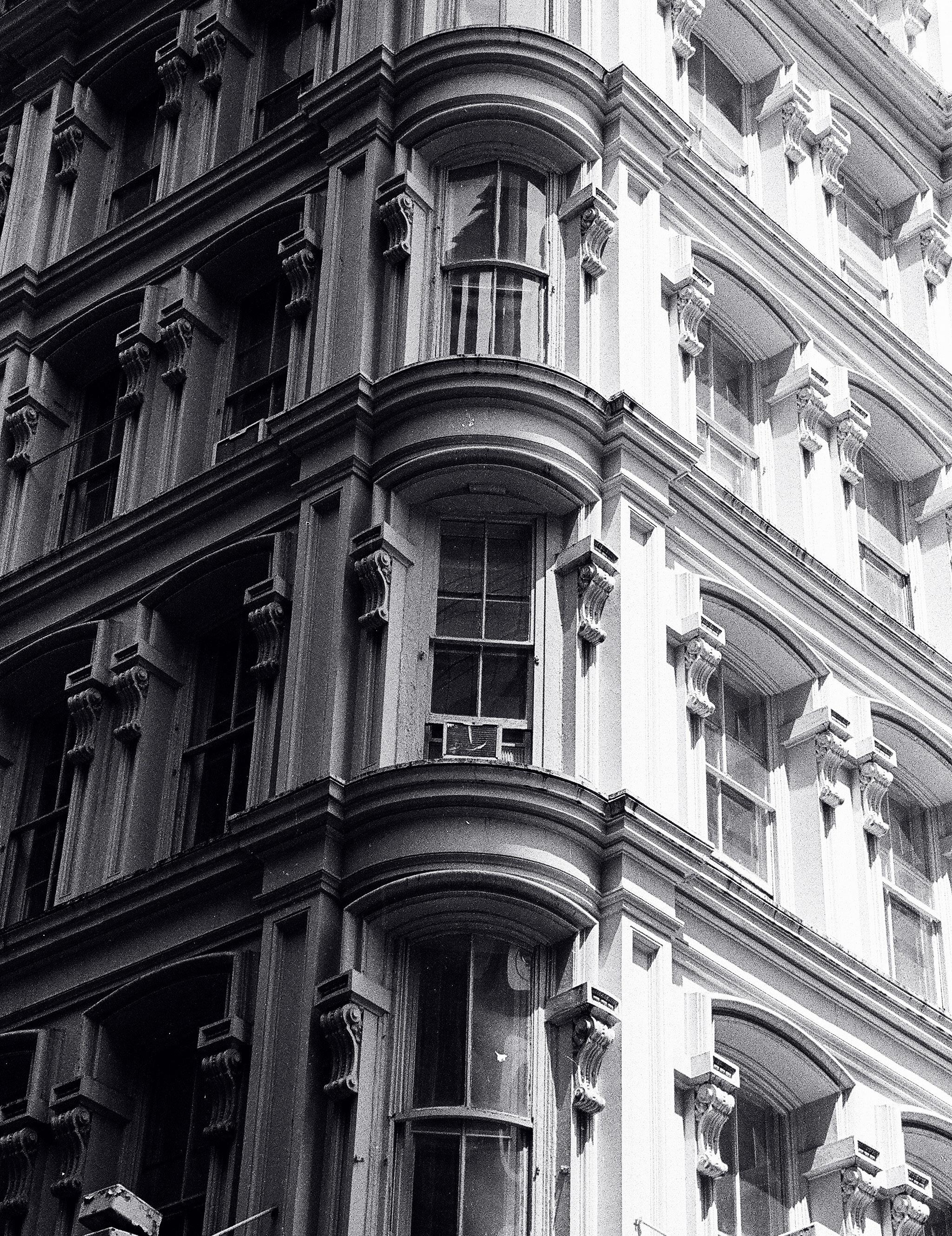
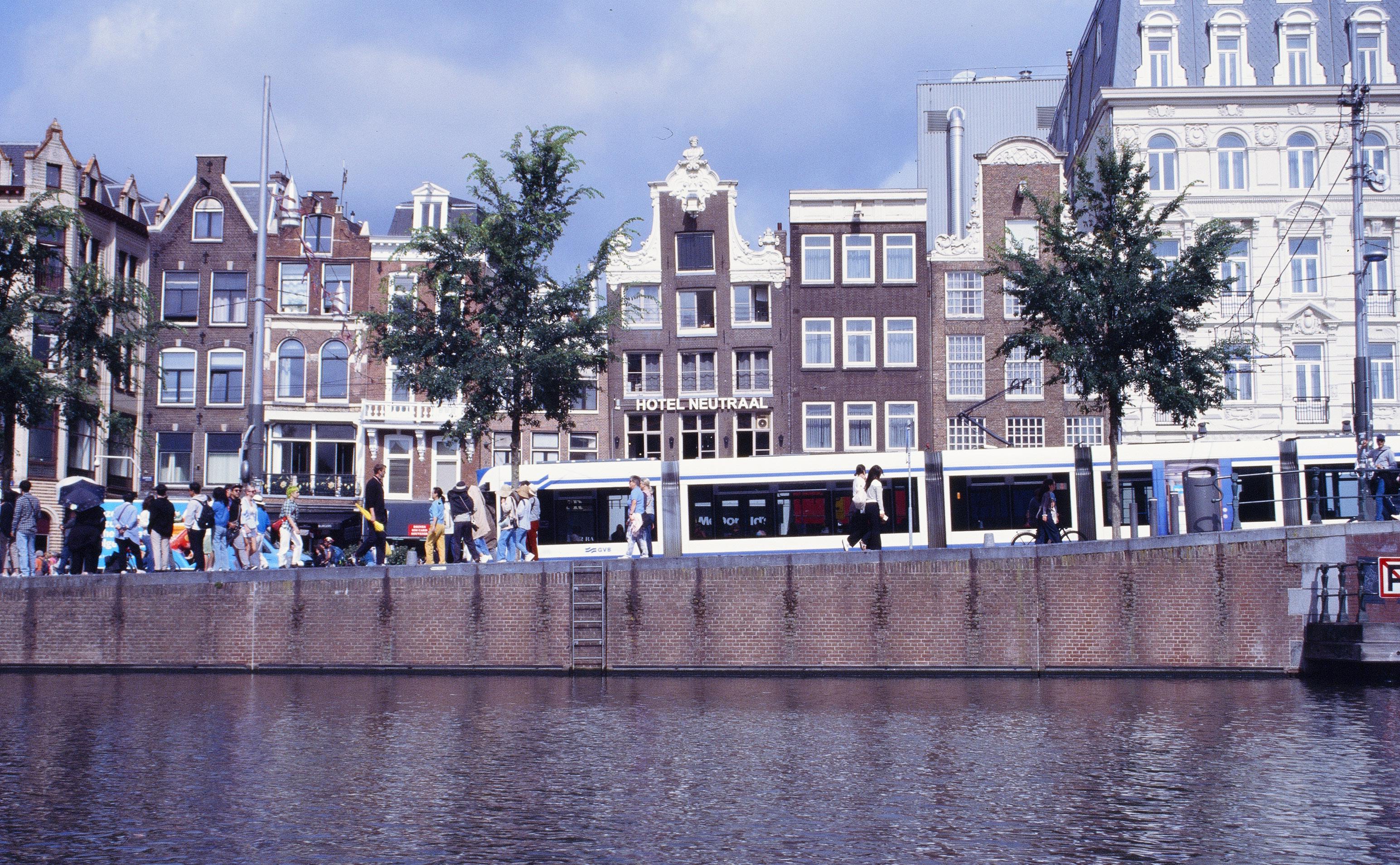
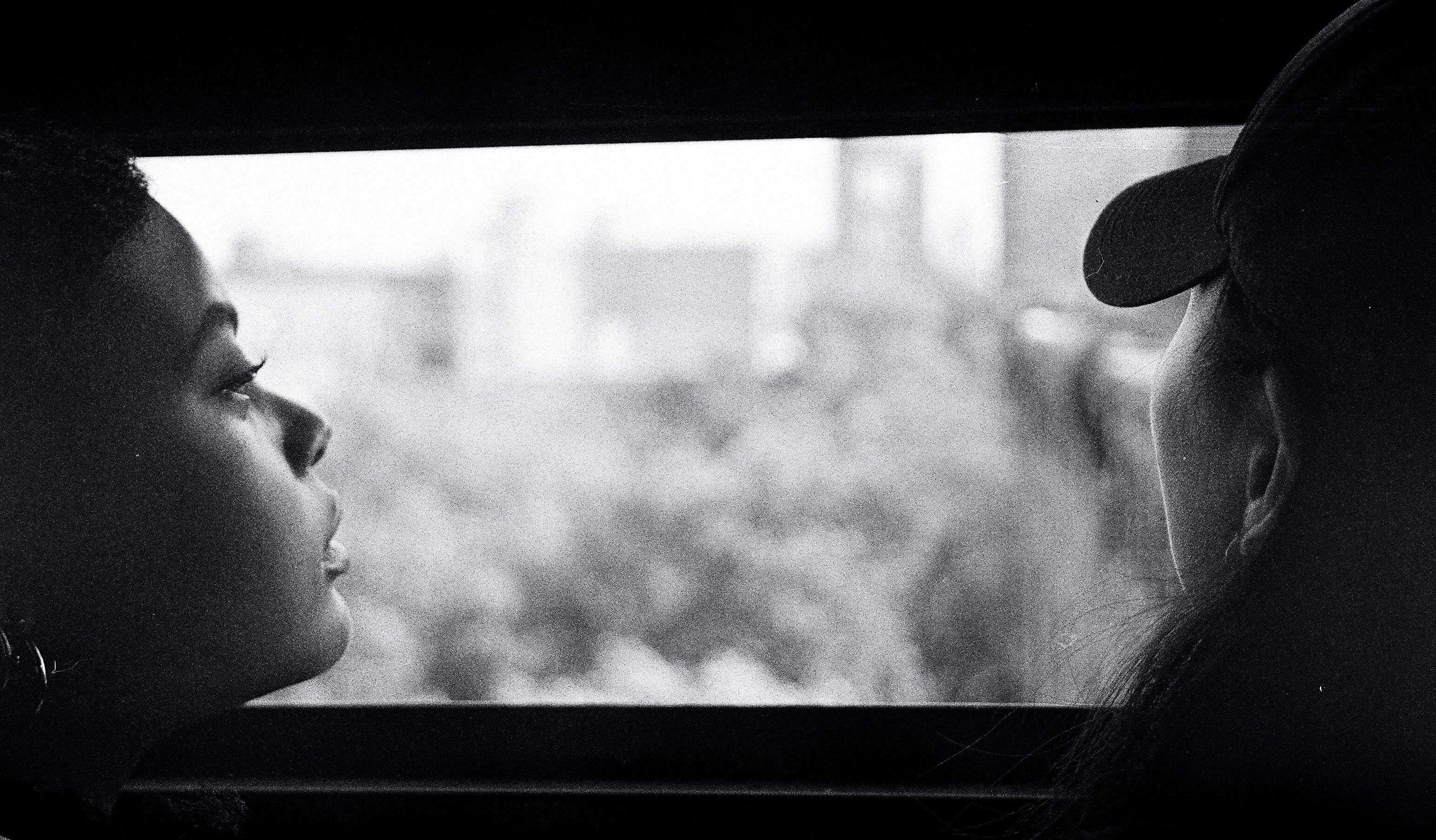
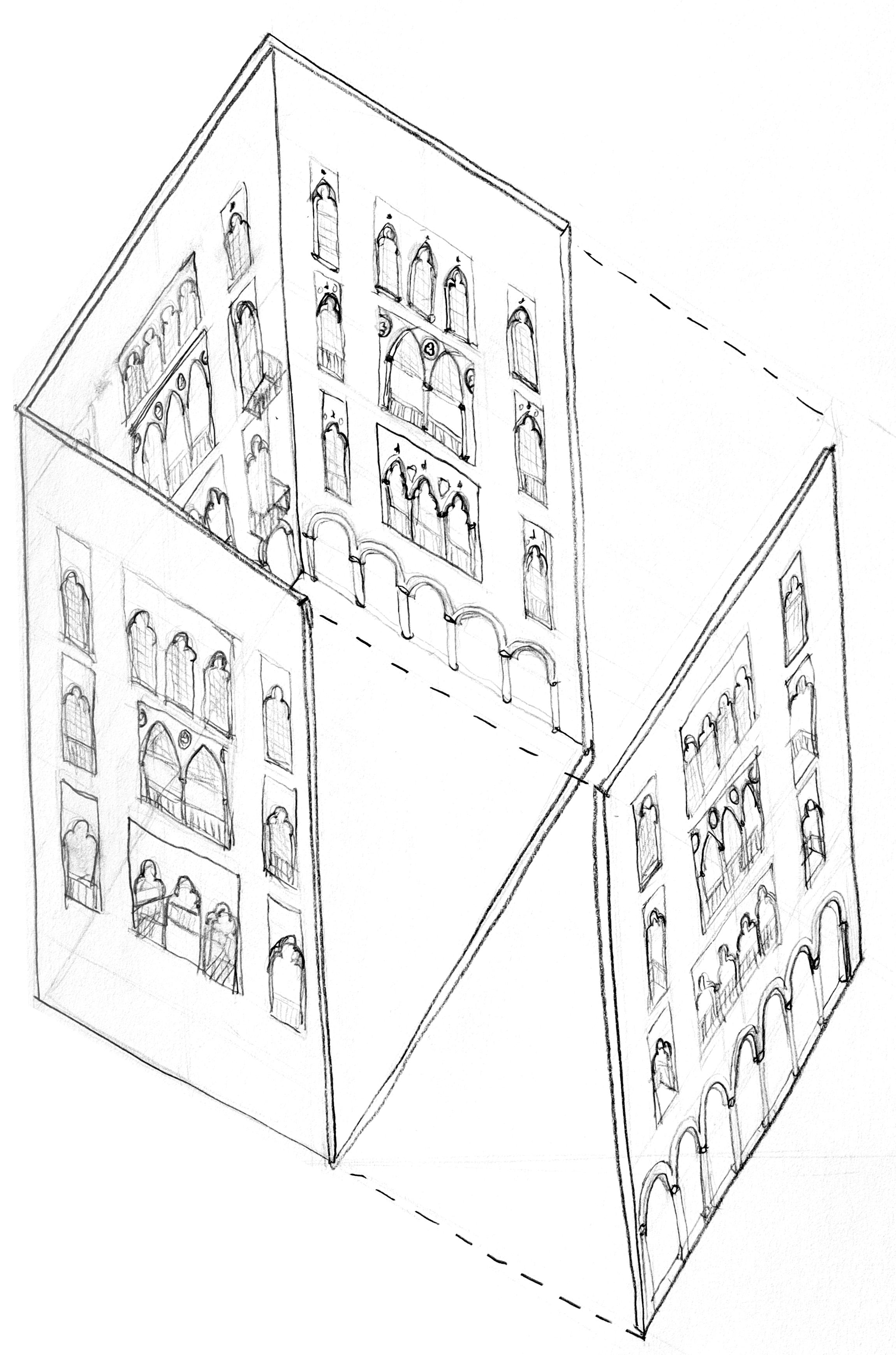
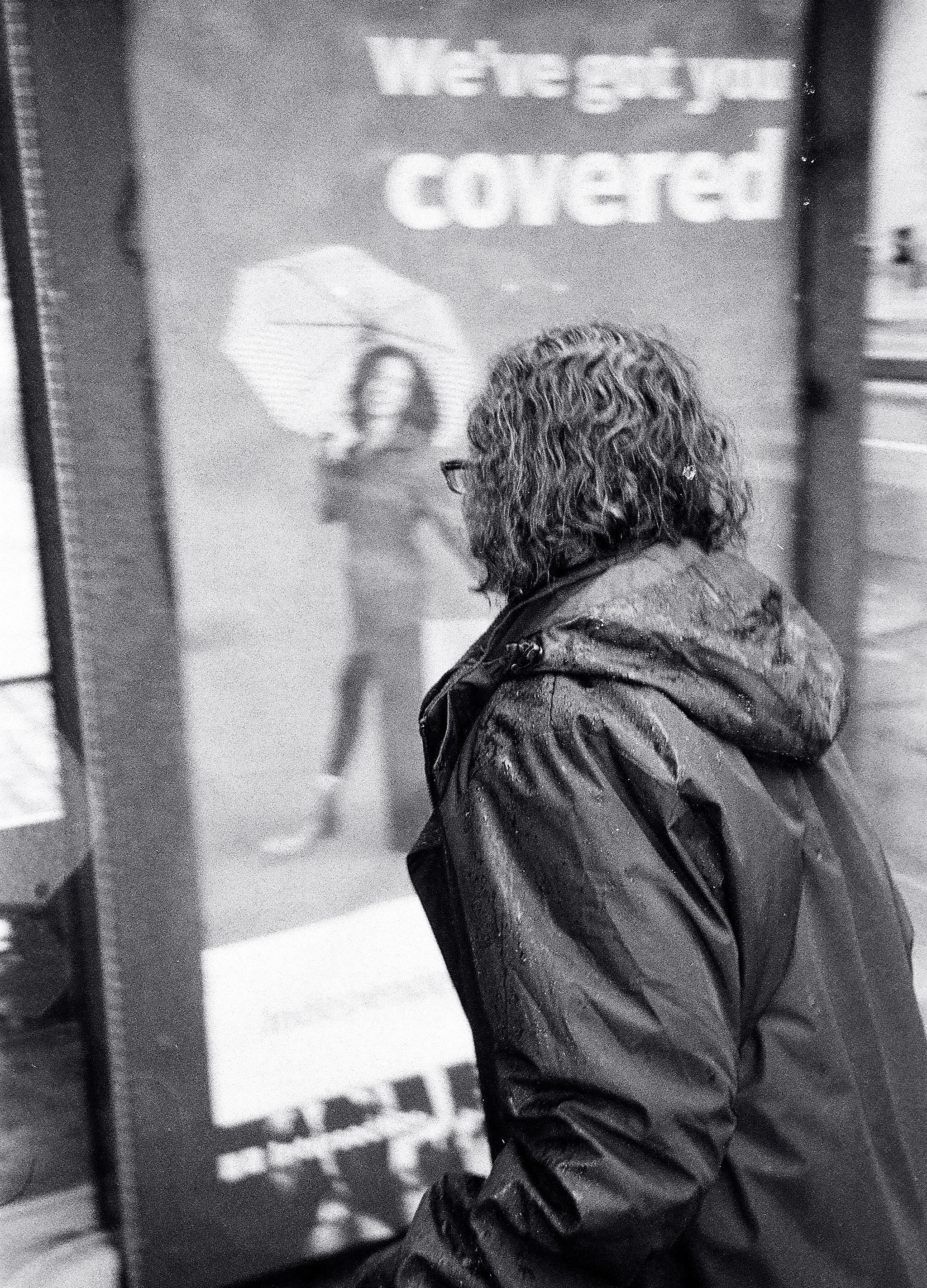
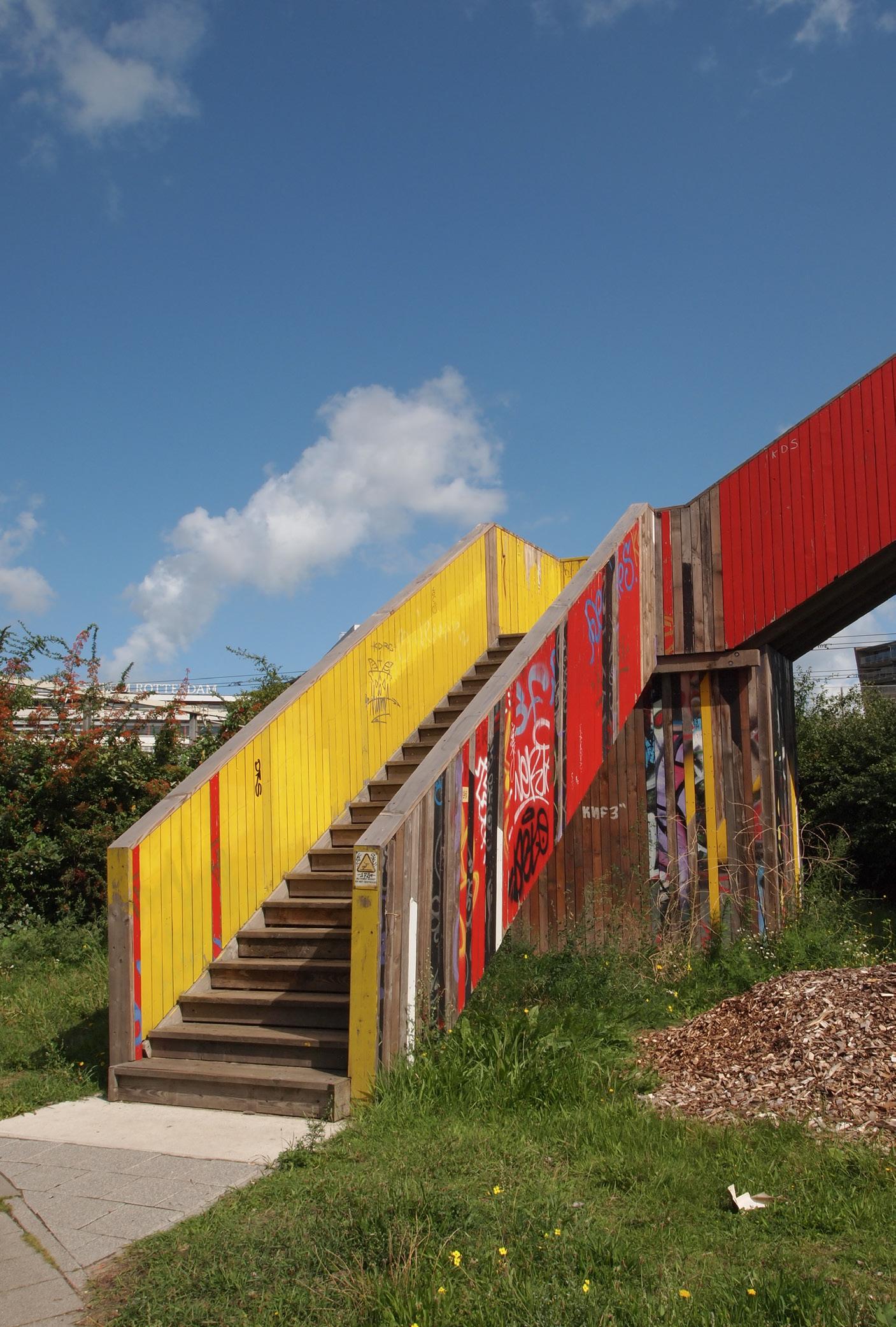
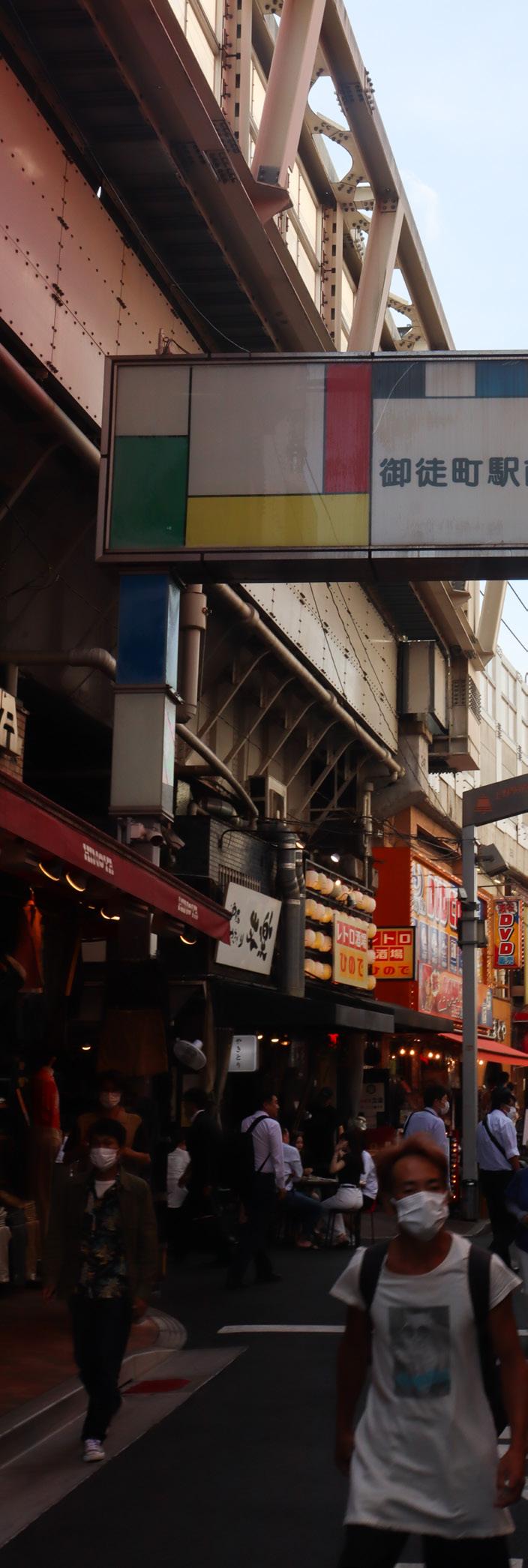
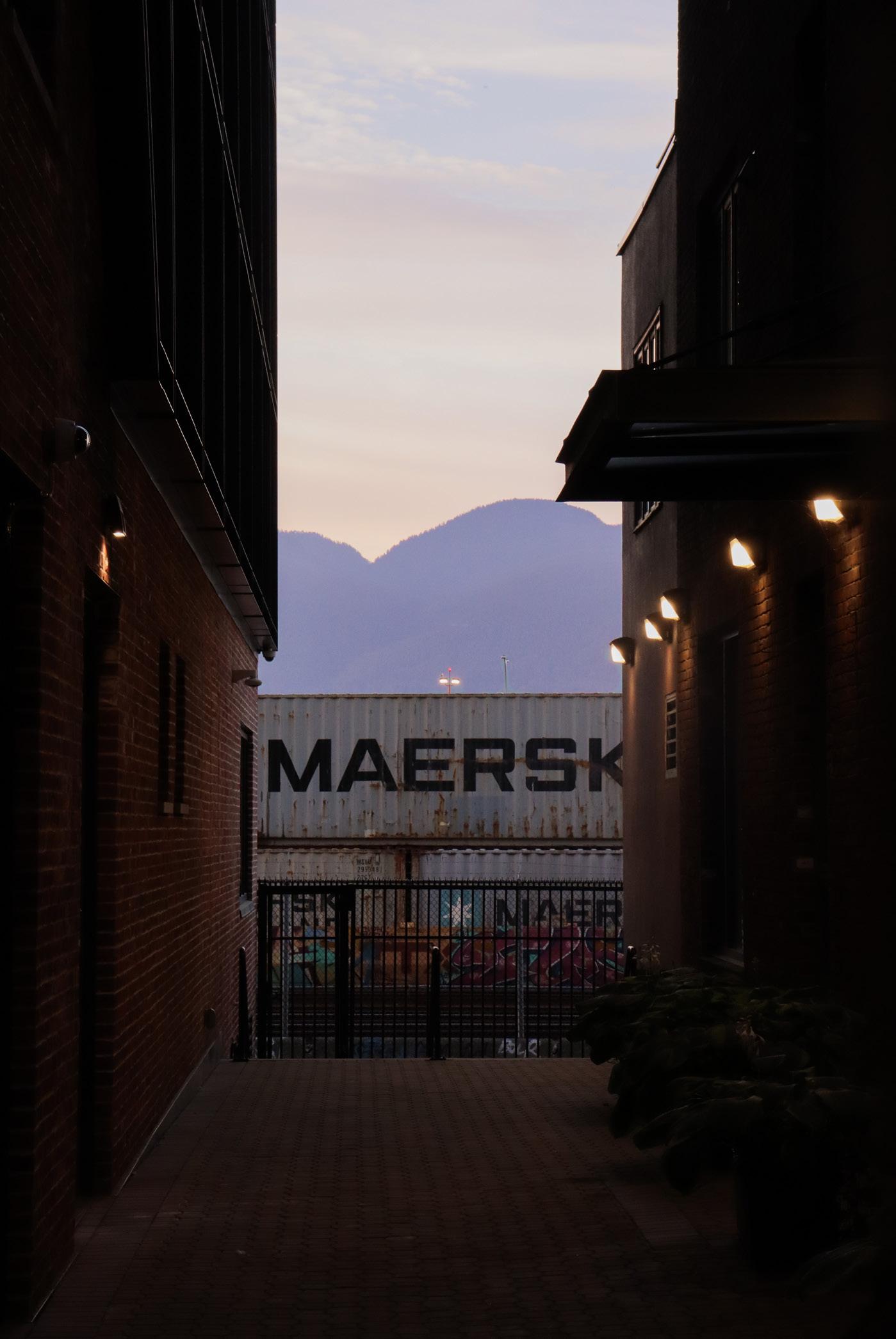
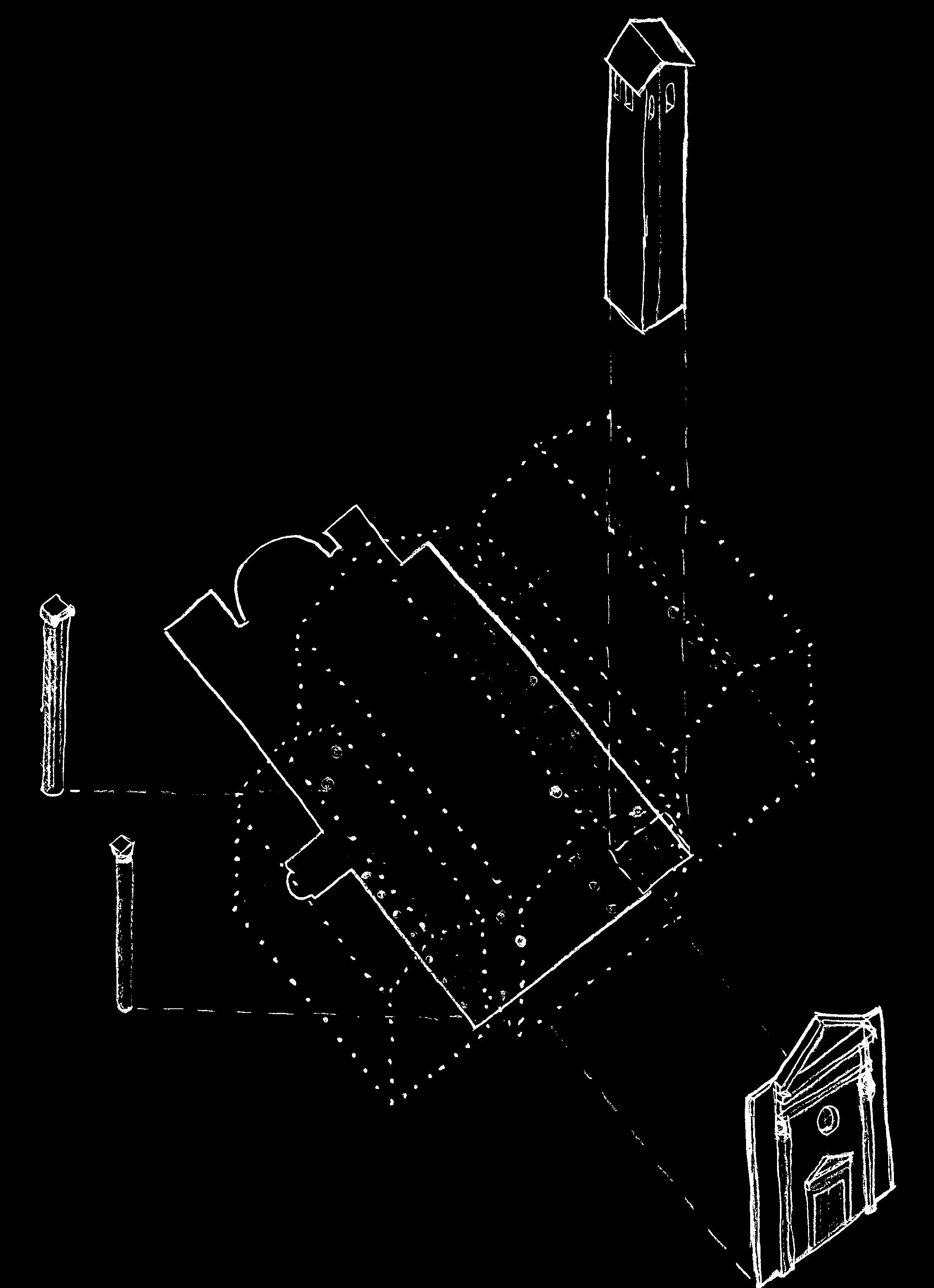
Photography, both film and digital, and sketching play a vital role in my understanding of architecture. Observation of the environments around me allows me to study space, proportion, and human experience. Together, these practices strengthen my ability to observe and document spaces while informing my approach to design. The following works are a collection of photographs and sketches created over the last few years, ranging from architectural to street observations.

Turn static files into dynamic content formats.

Create a flipbook