•
•
•
•
•
•
•
•
•


photos by Jafar Fallahi
•
•
•
•
•
•
•
•
•
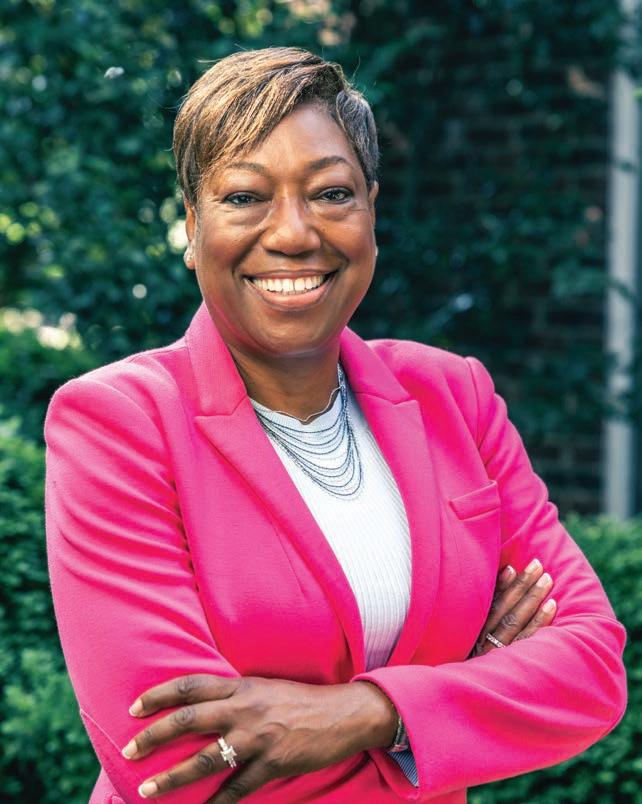
Dear Friends,
As I come to the end of my first term as IAH Director and prepare for a yearlong research leave, I have been thinking a lot about accomplishments and legacy. I am proud of everything we’ve achieved over the past four years, building on the strong foundation laid by the leaders that came before me. Those early dreamers — faculty, staff, board members, and our founding director Ruel Tyson — left a vision that was carried forward by my predecessors and abides with us today as inspiration and motivation. Together, we have launched bold new initiatives while staying true to our mission of empowering faculty and advancing the arts and humanities in the academy and the world.
In the past year, we have seen the ways the Institute’s excellent foundation has propelled us forward. This year, we reached an important milestone with our flagship Faculty Fellowship Program, meeting a fundraising goal set 10 years ago. This phenomenal achievement will allow us to remain steadfast in our investment in faculty research and support, particularly in such a challenging time for academic scholarship and education. I am deeply grateful for all who have supported our vision and our faculty.
As you browse this issue, you’ll see the Institute’s impact reflected in the remarkable accomplishments of our Fellows, including a 2025 Pulitzer Prize winner, celebrated campus leaders, and more.
Now, as Professor Elizabeth Olson steps into the role of Interim Director during the 2025-2026 academic year, I am proud to continue the tradition of leaving a strong legacy of leadership. Betsy is an award-winning faculty member and campus leader, and she is well positioned to build on this legacy and leave her own unique mark at the IAH.
It has been an honor to give back to a place that has given me so much support and a strong sense of community throughout my career at Carolina. Nothing brings me more joy than celebrating the successes of my faculty colleagues and engaging with all who make the Institute a sure place on campus. Though I will miss being at Hyde Hall every day, I am comforted knowing that this vibrant culture will continue.
This is not farewell. It truly is, as Ruel would say:
“To be continued…”
Those early dreamers — faculty, staff, board members, and our founding director Ruel Tyson — left a vision that was carried forward by my predecessors and abides with us today as inspiration and motivation. Together, we have launched bold new initiatives while staying true to our mission of empowering faculty and advancing the arts and humanities in the academy and the world.
The flagship Faculty Fellowship Program provides College of Arts and Sciences faculty with semester-long leaves to pursue ambitious, artistic, and scholarly projects that lead to publication, exhibition, composition, and performance.
• Kathleen Fitzgerald, McGowan Fellow Teaching Associate Professor, Sociology
The Role of Parents in Educating Their College-Bound Children about Sexual Assault Prevention
• David Garcia, Burress Fellow Professor, Music Border Crossings: Latin U.S. History We Weren’t Taught
• Julia Gibson, Turner Fellow Associate Professor, Dramatic Art Becoming Invisible?
• Ji-Yeon Jo, Ellison Fellow Associate Professor, Asian and Middle Eastern Studies
Un/Settling Korean Diasporas: Cinematic Interventions and Transruptions
• Seth Kotch, Arts & Humanities Fellow –Race, Memory, and Reckoning Initiative Associate Professor, American Studies Dead South: A History of the Death Penalty in the Former Confederacy
• Elizabeth Olson, Townsend Fellow Professor, Geography and Environment
The Place of Care: Youth Caregivers and the Care Crisis in America
• Morgan Pitelka, Johnson Fellow Bernard L. Herman Distinguished Professor, Asian and Middle Eastern Studies
The Resilience of Kyoto: Environmental and Cultural Renewal, 1586-1670
• Ana Silva Campo, Taylor Fellow Assistant Professor, History Travelers of the Half-Moon Gate: Religion, Race, and the Right to Wealth in Early Cartagena de Indias
• Rebecca Walker, Schwab Fellow Professor, Philosophy and Social Medicine Physicians and Punishment: ‘First, Do No Harm’ in the U.S. Prison System
• Andrew Whittemore, Bernstein Fellow Associate Professor, City and Regional Planning Pursuits of Permanence: The Privileged Enclave in a Capitalist Society
• Anna Agbe-Davies, Cramer Fellow –Race, Memory, and Reckoning Initiative Associate Professor, Anthropology Making Race Women: An Archaeology of Civil Rights and Civic Responsibility in the 20th Century
• Lisa Calvente, Espy Fellow
Assistant Professor, Communication
The King of New York: Neoliberalism, Hip Hop, and Black Love
• Stephanie DeGooyer, DuBose Fellow Assistant Professor, English and Comparative Literature
Asylum Nation: A History of How States Reject and Protect People
• Juliane Hammer, Belk Fellow Professor, Religious Studies
Islam and Feminism: Activism, Knowledge, Community
• Keren He, Ellison Fellow
Assistant Professor, Asian and Middle Eastern Studies
Anti-Aging in Chinese-Speaking Worlds
• Thomas Hofweber, Pardue Fellow Professor, Philosophy Are Language Models Rational? Comparing Human and Artificial Intelligence
• Sharon Holland, Hyde Fellow Professor, American Studies
Queer Eyes: Readings of ‘Outsider’ Art
• Scott Kirsch, Blackwell Fellow Professor, Geography and Environment Kress Variety Stores and the Architecture of Mass Consumption: A Building Geographies Approach
• Katya Pertsova, Borden Fellow Associate Professor, Linguistics
The Language of Propaganda
A“I’m widening my lens to try to understand not just how North Carolina fits into this bigger picture. Are the things that I was seeing in North Carolina unique to us or really about the region? Are those things unique to the South, or are they more of an American thing?”
— SETH KOTCH
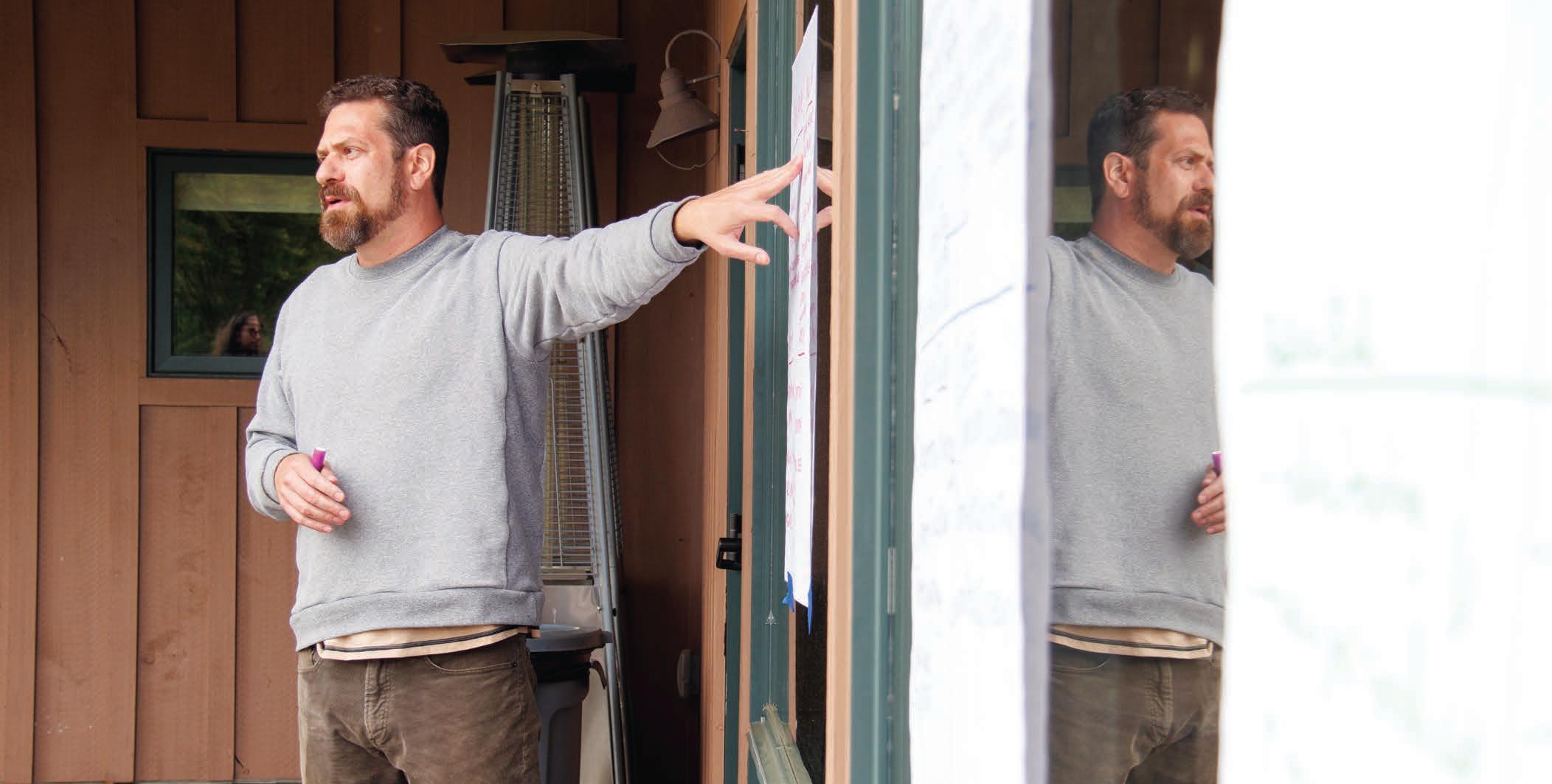
Seth Kotch, who has received three fellowships from the Institute, has focused his work on the history of the criminal justice system in the South.
merican studies associate professor Seth Kotch (FFP ’18, ’24; ALP ’23) researches the history of the criminal justice system, particularly in South and North Carolina. In fall 2024, Kotch was an Arts and Humanities Fellow – Race, Memory, and Reckoning Initiative in the Faculty Fellowship Program.
Trained as a historian, Kotch said that his interest in social justice and historical race research may have been sparked by his enjoyment of movies about crime. “If you are someone who grew up watching The Godfather, which is a historic movie about crime and the way in which it affects and touches different people from different communities in different ways, I think you will get interested in this kind of stuff.”
He pointed to the way he was able to explore that history and identify patterns. “It’s also kind of a detective story because a lot of people who are incarcerated are in families with people who are incarcerated,” said Kotch. “Even a lot of people who work in corrections, for example, tend to be people who have less access to power and education.”
“These are the kind of stories that I didn’t feel had been told, or were opportunities for me to tell new ones,” he said.
Kotch worked on his first book, Lethal State: A History of the Death Penalty in North Carolina (UNC Press), as a Schwab Fellow in 2018. “The death penalty discussion, as much as it’s a big political controversy, hadn’t really been studied very much from a historical perspective,” he said.
His new project, which he worked on during his 2024 fellowship, expands the topic to the South more broadly. “I’m widening my lens to try to understand not just how North Carolina fits into this bigger picture,” said Kotch. “Are the things that I was seeing in North Carolina unique to us or really about the region? Are those things unique to the South, or are they more of an American thing?”
During the Faculty Fellowship Program, Kotch said he was able to work through questions with his interdisciplinary cohort of fellows. “The past is a distant and confusing place, and how the law worked in the past can be doubly distant and confusing. I was able to bring some questions forward, and people were able to ask me questions back. That really helped me clarify my thinking and create a permanent community of support.”
Through his research, Kotch has connected with attorneys who are working to incorporate history into their active cases. It’s a rewarding experience, said Kotch.
“For many historians, that’s really important, and I think it’s hugely gratifying to understand that some of this work is going beyond the boundaries of the classroom or beyond the boundaries of the University to reach other communities and have some kind of impact.”
Read the original interview by Laney Crawley at iah.unc.edu
“The Faculty Fellowship Program is a valued hallmark of the Institute and a clear affirmation of our commitment to empowering faculty and advancing the arts and humanities.” — PATRICIA PARKER
In 2025, thanks to the generosity of its donors, the Institute for the Arts and Humanities met its fundraising goal for its Faculty Fellowship Program. First set in 2014 by the IAH external advisory board and staff, this milestone now ensures sustainable funding to support at least 18 Fellows each year.
This milestone marks a transformative investment in Carolina’s scholars and underscores the vital role of philanthropic support in sustaining academic excellence.
The FFP provides on-campus, semesterlong leaves for faculty members in the College of Arts and Sciences to pursue research and creative work that leads to publication, exhibition, composition, and performance. Excellent arts and humanities scholarship is critical to Carolina’s research enterprise and an essential component in the requirements for faculty tenure and promotion.
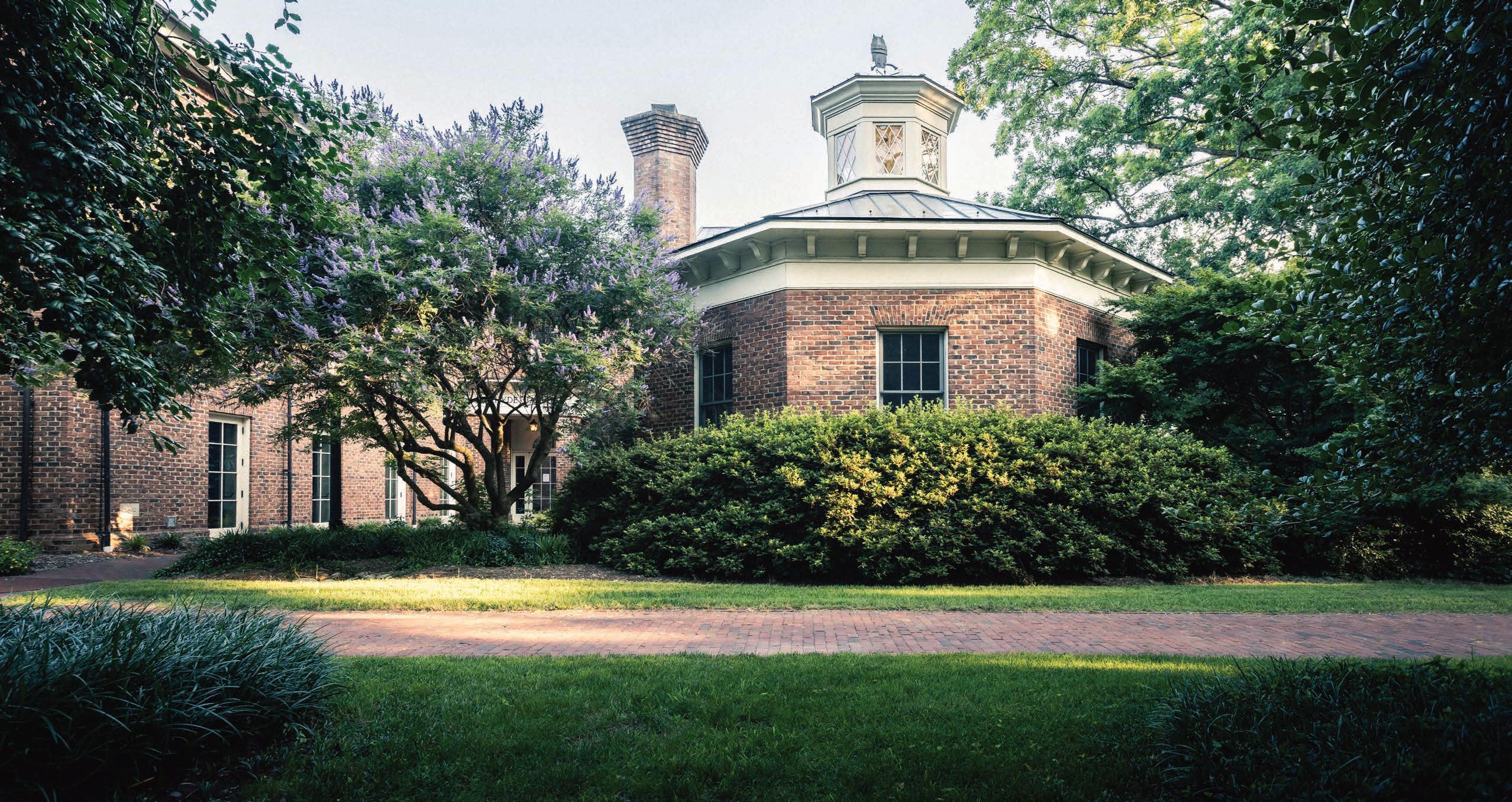
“The Faculty Fellowship Program is a valued hallmark of the Institute and a clear affirmation of our commitment to empowering faculty and advancing the arts and humanities,” said IAH Director Patricia Parker. “As a Fellow myself, I can attest to the
enduring impact of the program. The ideas and community shared within my cohort enhanced my research and academic life long after the fellowship semester ended.”
The program has awarded over 700 fellowships since the first summer cohort convened in 1988. Since its founding, the fellowship program has embodied the Institute’s deep commitment to advancing faculty and scholarship in the arts and humanities. By providing critical support for their research, the program fuels academic excellence and strengthens faculty retention. Faculty Fellows consistently demonstrate a strong commitment to Carolina — 89% of participants remain at or have retired from UNC-Chapel Hill — reinforcing the lasting impact of this investment in their work and well-being.
The Faculty Fellowship Program’s endowment is a testament to the loyalty and vision of the Institute’s community. Forty-six donors — many of them current and former members of the Institute’s external advisory board — came together to make 176 individual gifts in support of the program. Since its founding, the Institute has secured more than $25.7 million in endowed support for this
flagship initiative, ensuring that Carolina’s faculty in the arts and humanities continue to thrive for generations to come.
“The importance of endowing the fellowships can’t be understated. By endowing funding for these fellowships, we are effectively preserving and protecting the IAH’s most essential support service for faculty,” said Lane McDonald, chair of the advisory board. McDonald was also a board member in 2014 when the initial goal was set.
Advisory board member Mary Flanagan has witnessed the growth of the Faculty Fellowship Program firsthand. As a former director of development for the IAH, she not only helped shape its trajectory but also saw the impact these fellowships have on faculty and on the University as a whole.
“This program put the IAH on the map with faculty, and they were effusively grateful for their fellowship experiences,” said Flanagan. “It was a winner and still is!”
McDonald reiterated that this achievement secures the future of the Faculty Fellowship Program. “We can now say with certainty,” she declared, quoting IAH founder Ruel Tyson, “To be continued....”
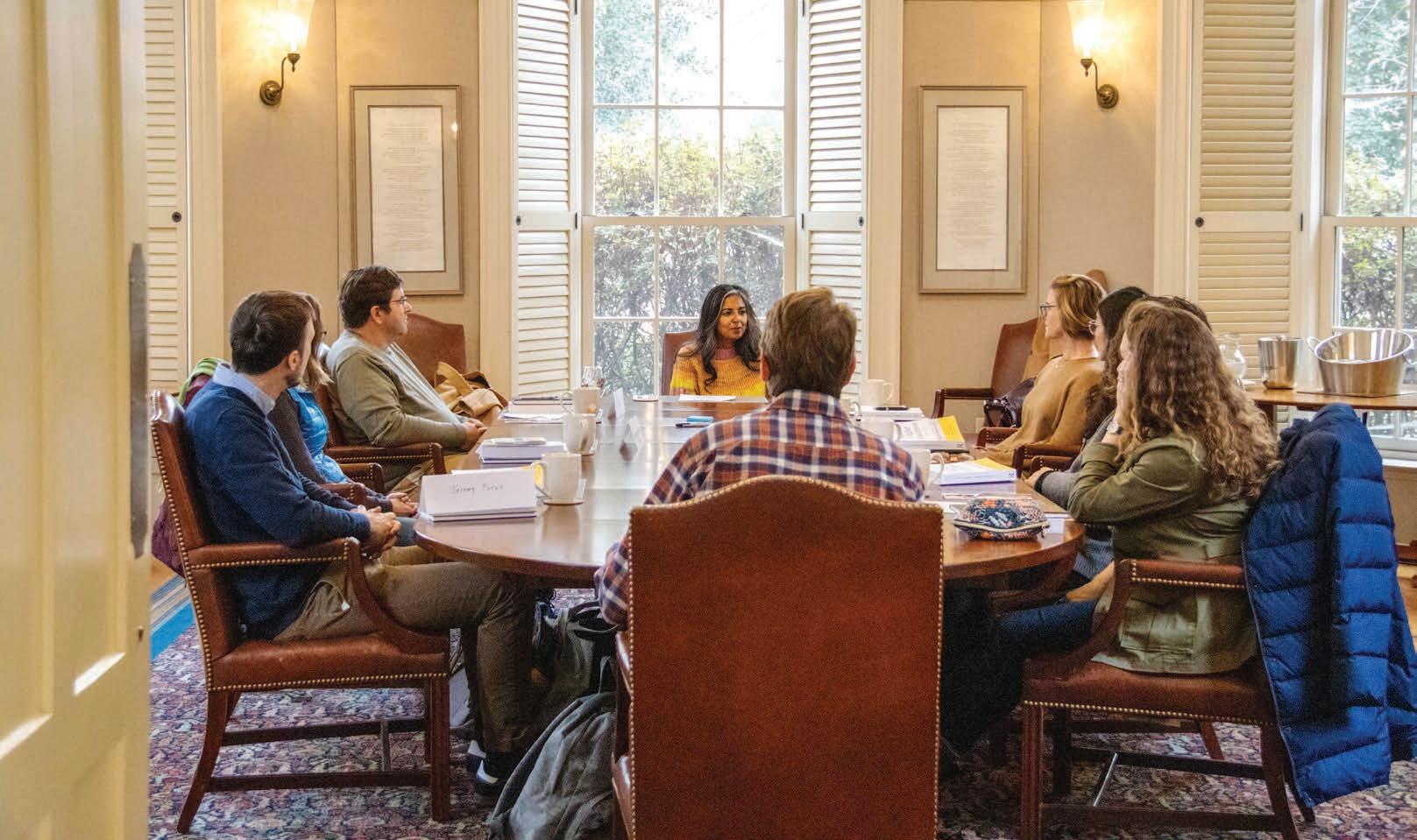
The Tyson Academic Leadership Program prepares fellows to develop leadership capacities, clarify career commitments, build a leadership network within the campus community and extend their contacts to other leaders beyond the university.
• Anna Krome-Lukens Teaching Associate Professor, Public Policy
• Jordynn Jack Professor, English and Comparative Literature
• Roger Mills-Koonce Professor, School of Education
• Erica Johnson Teaching Professor, Global Studies
• Lini Ge Polin Teaching Associate Professor, Asian and Middle Eastern Studies
• Martha King Teaching Associate Professor, Anthropology
• Jeremy Purvis Professor, School of Medicine
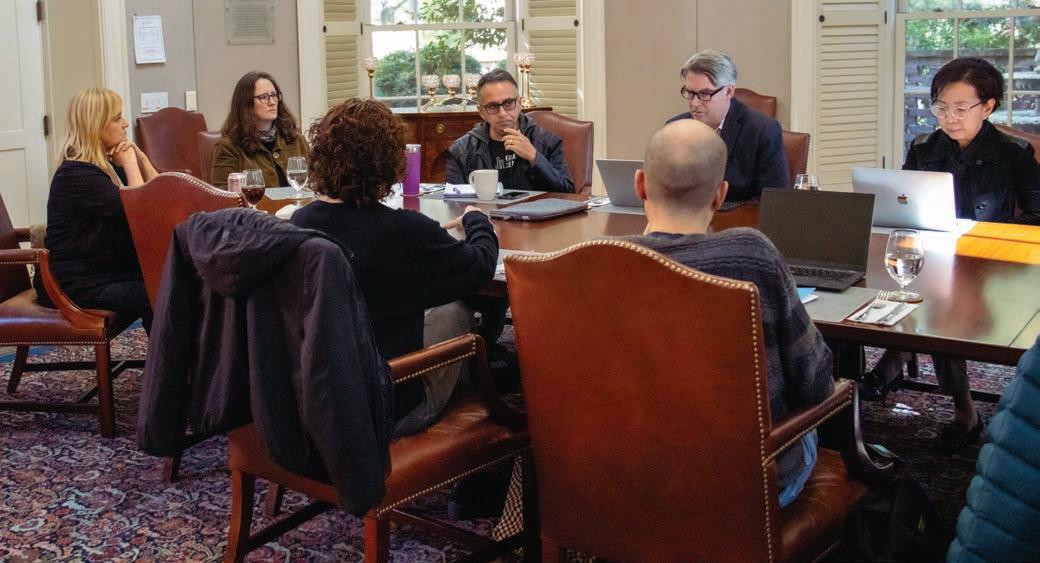
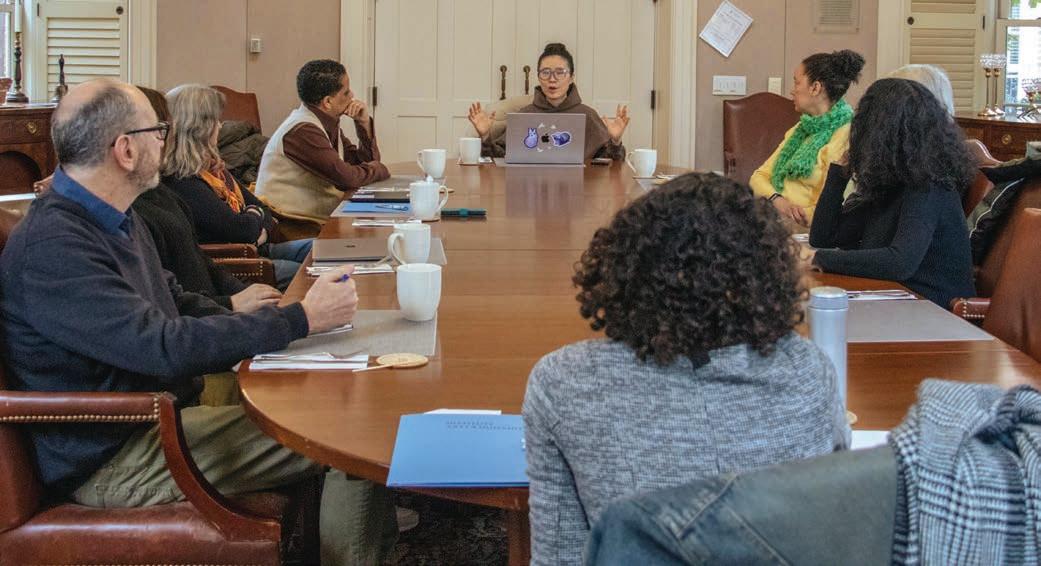
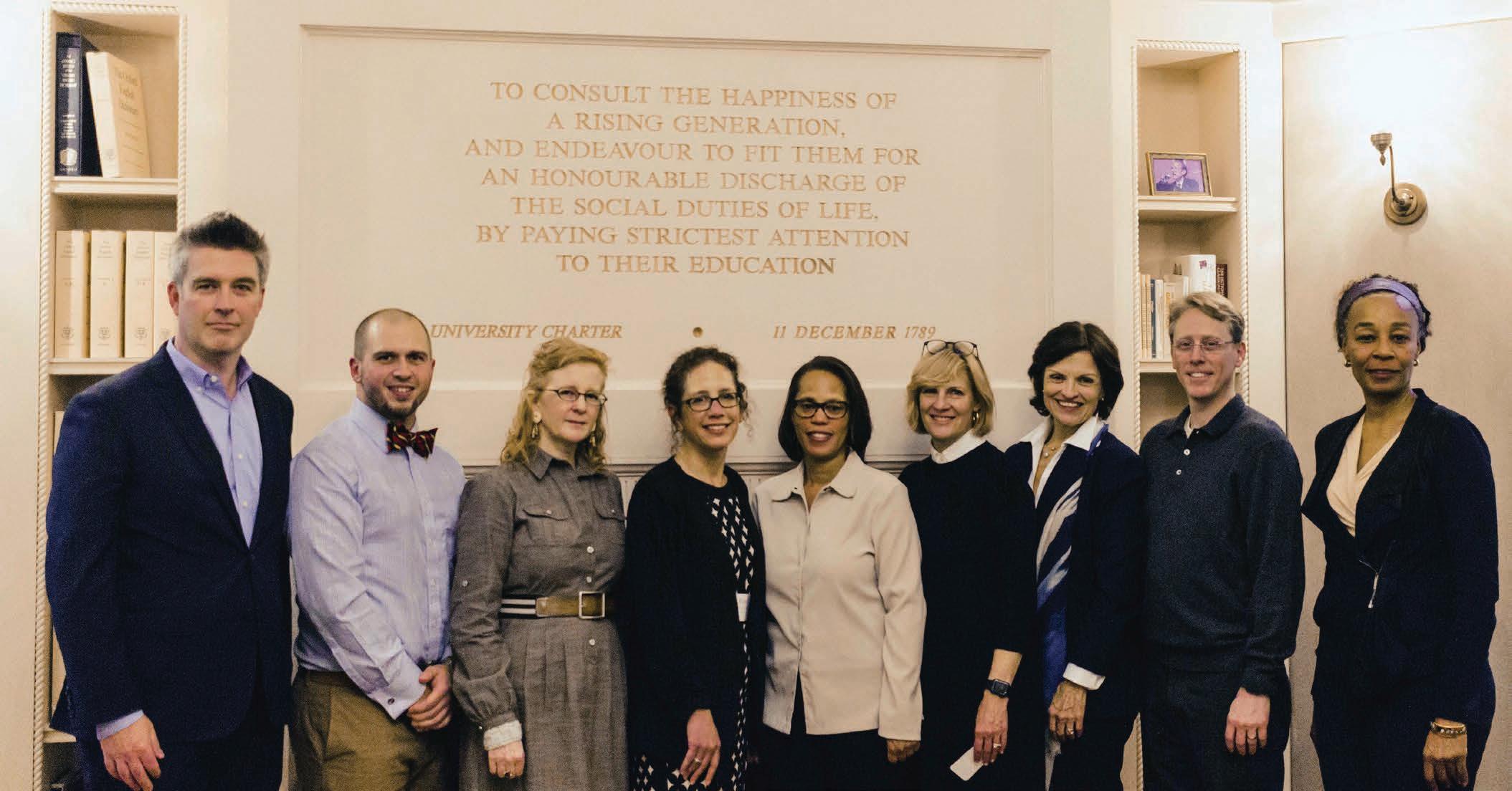
TOP: The Tyson Academic Leadership Program is facilitated by program director Viji Sathy (center) and senior leadership advisor Tony Gambill.
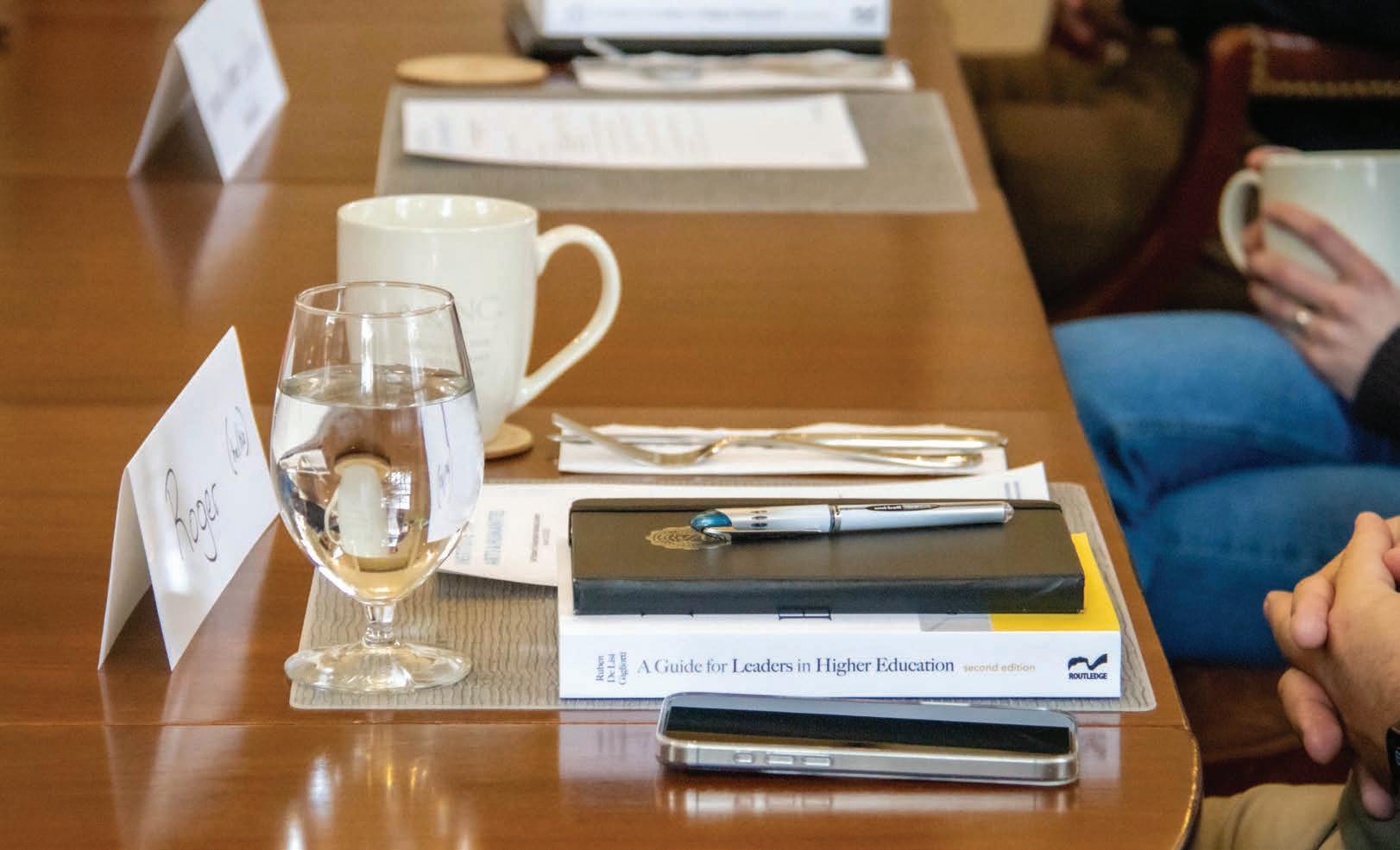
MIDDLE: During a lunchtime seminar, fellows discuss critical issues facing the University and formulate possible responses.
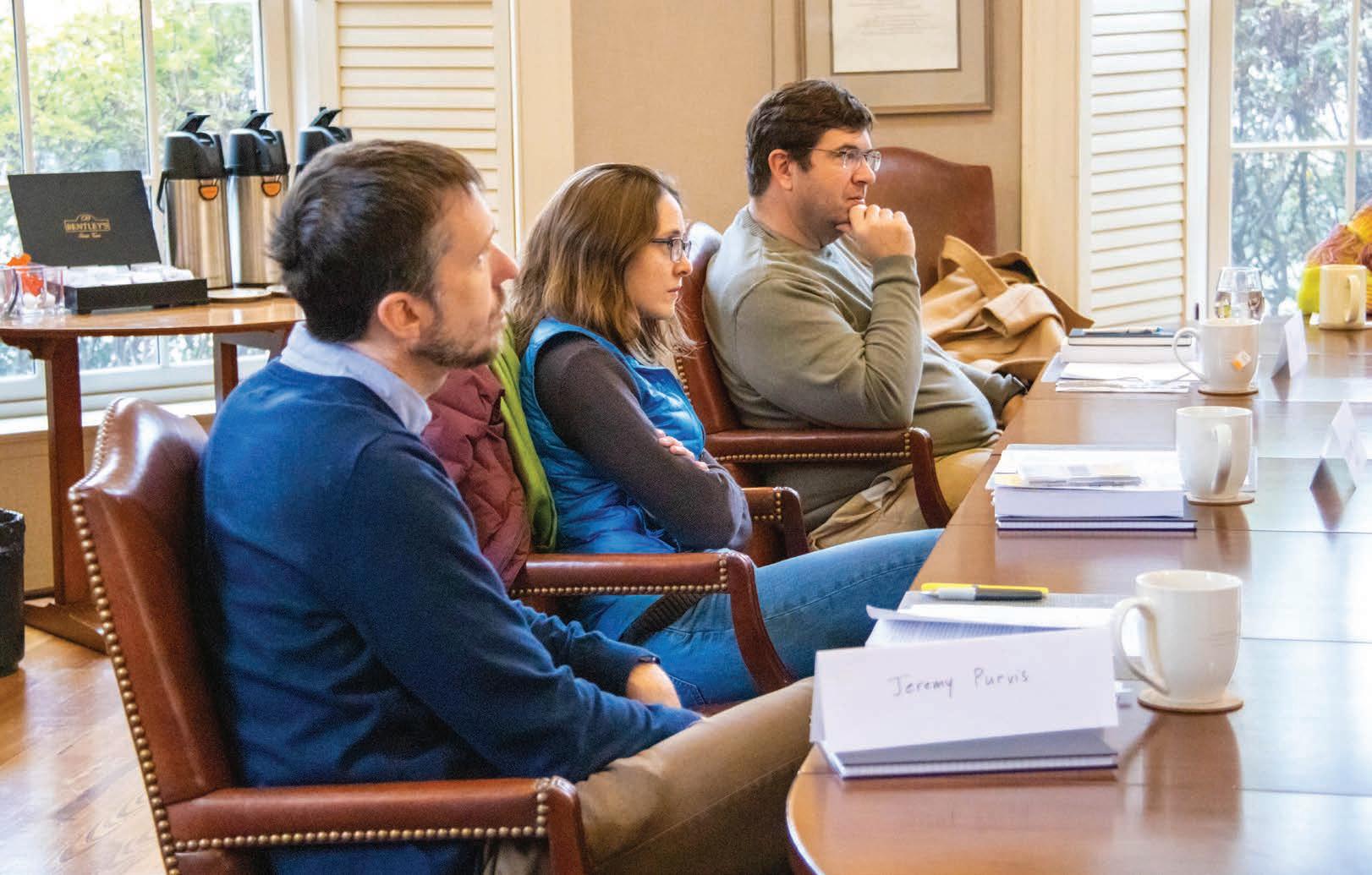
BOTTOM: Faculty from across the university engage with the fellowship program, including the School of Medicine, the College of Arts and Sciences, and the School of Education.
by Ruby Wang

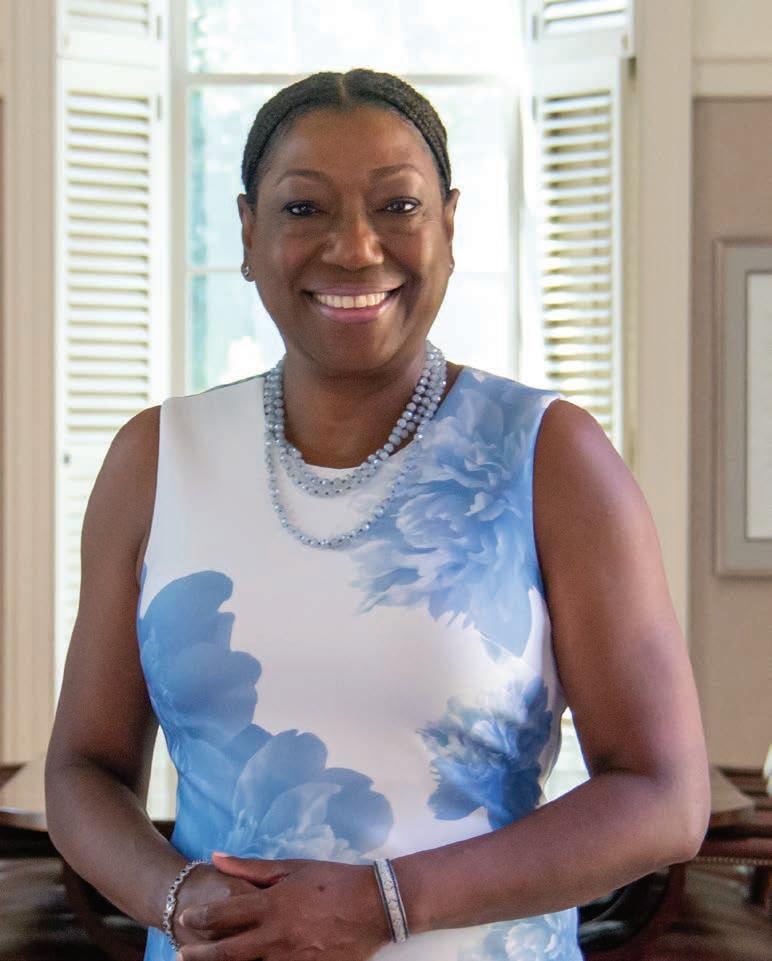
Patricia Parker (FFP ’02, ALP ’11) has been reappointed as the Ruel W. Tyson Jr. Distinguished Professor of Humanities and the Director of the Institute for the Arts and Humanities. After a yearlong research leave, Parker will continue her leadership role as IAH Director for two years with the option for renewal.
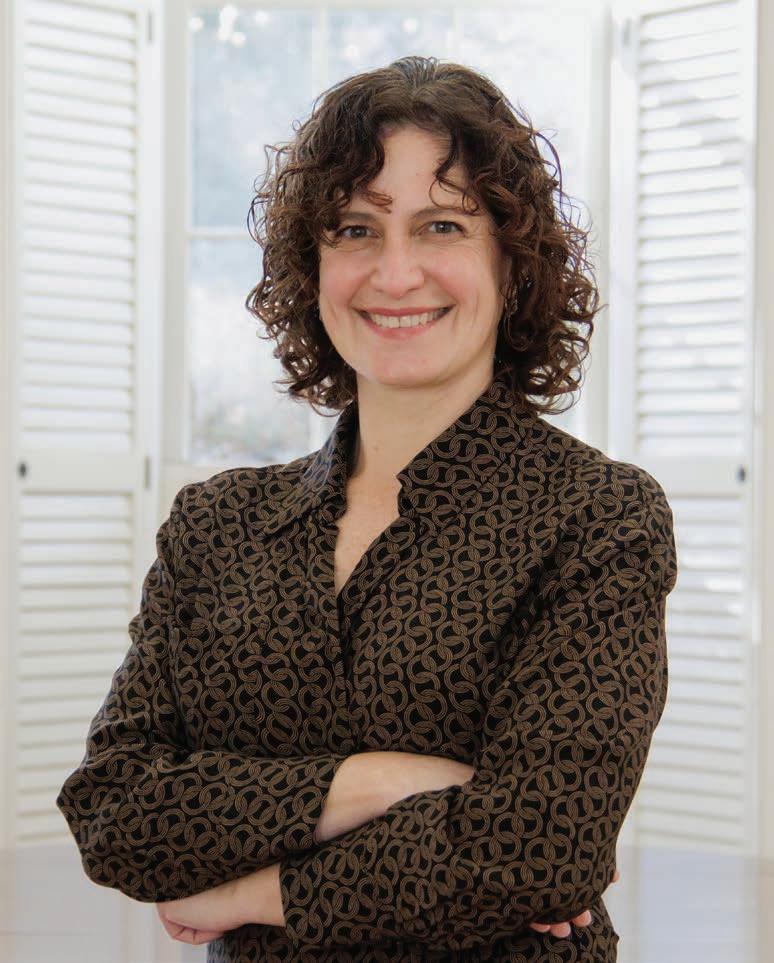
While Parker is on leave, Professor Elizabeth Olson (FFP ’17, ’24; ALP ’19) of the Department of Geography and Environment and of Global Studies will serve as interim director of the IAH from July 1, 2025, to June 30, 2026.
“Serving as IAH Director for the past four years has been one of the most fulfilling roles of my career,” said Parker. “It has been invigorating to come to Hyde Hall each day and work with faculty and staff colleagues, bringing to life the many facets of the Institute’s impact on this campus and beyond.
the Institute launched the Summer International Collaborative Research Grant, which supports faculty building research partnerships abroad.
international Consortium of Humanities Centers and Institutes and successfully led an IAH grant proposal for the CHCI Global Justice and Humanities Practices Initiative.
“I’m looking forward to continuing that great work upon my return. In the meantime, I know the Institute is in great hands with Betsy as Interim Director.”
Parker has served as director since 2021. In this position, she has broadened the Institute’s impact through strategic initiatives focused on fostering belonging, advocating for the arts and humanities with campus and community partners, and strengthening the international profile of the Institute and its faculty constituents. Under her leadership,
Parker has been a member of the Carolina faculty since 1998, and first joined the Institute as a Burress Fellow in 2002. In addition to the Faculty Fellowship Program, she was a Kauffman Fellow for Social Entrepreneurship in 2007 and later joined the Tyson Academic Leadership Program in 2011. She participated in the Chairs Leadership Program when she was first named chair of the communication department in 2015. In 2023, Parker received the Thomas Jefferson Award, one of Carolina’s highest faculty honors.
Parker also serves on the board of the
Olson served as chair of the Department of Geography from 20182023. She has participated in the IAH’s Faculty Fellowship Program, Tyson Academic Leadership Program, and the Chairs Leadership Program. In 2020, she received the George H. Johnson Prize for Distinguished Achievement for an IAH Fellow. Olson is also the inaugural recipient of the William & Sara McCoy Performing Arts Leadership Award, which is presented to a Carolina employee who embodies the values of artistic excellence, educational innovation, and community engagement.
“I’m looking forward to continuing that great work upon my return. In the meantime, I know the Institute is in great hands with Betsy as Interim Director.”
— PATRICIA PARKER

Since 2024, the Institute has partnered with Carolina’s global area studies centers to support faculty at North Carolina Minority-Serving Institutions.
he Institute for the Arts and Humanities partnered with the Carolina Asia Center and the Center for Slavic, Eurasian, and East European Studies to support faculty research across North Carolina through non-residential fellowships. The yearlong fellowships, given to faculty at Minority-Serving Institutions in North Carolina, were supported through funding from the U.S. Department of Education and build on the IAH’s strategic plan to strengthen community engagement through university partnerships.
Carolina has six global area studies centers, while MSIs often do not have similar centers for scholars focusing on international topics. The few professors who do specialize in international and area studies at those institutions struggle to enter positions of leadership on their campuses. Without instructors and researchers in international and area studies, cultivating future leaders well-versed in international issues is not possible.
The fellow receives a stipend and has the opportunity to engage with the IAH and the host area studies center throughout their year. The awards are intended to support the faculty member’s teaching and research on the region of focus, develop their leadership potential on their campus, and facilitate their development as researchers and public intellectuals. At the end of their term, the fellow is invited to present their research in a public lecture in Hyde Hall.
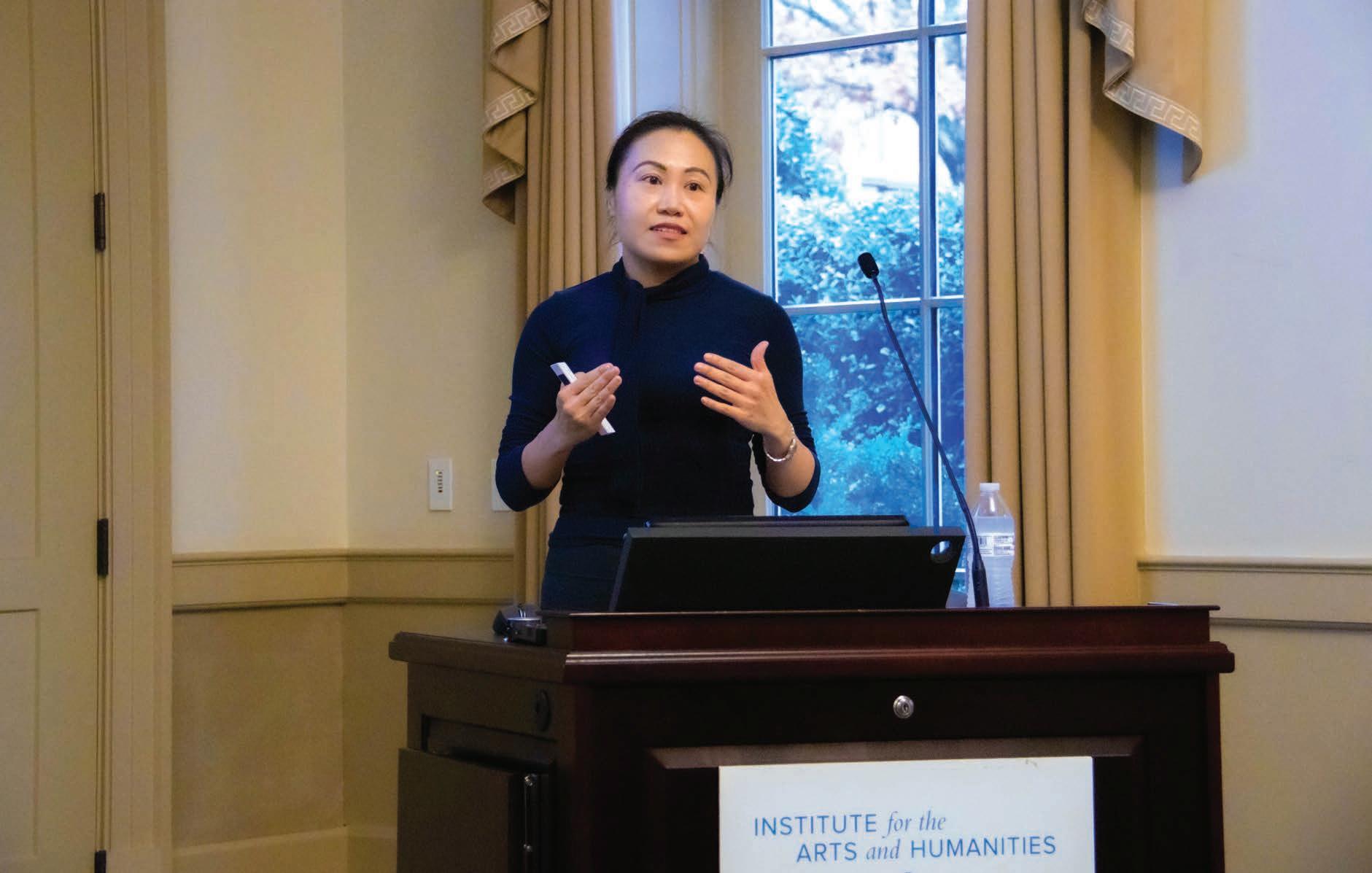
In the first collaboration, the IAH and the CAC hosted UNC Greensboro assistant professor Ting Wang In November 2024, Wang presented her work on declining fertility rates across four East Asian societies: Japan, South Korea, Taiwan, and mainland China. She argued that the low fertility rate in East Asia is a result of insufficient female emancipation due to the conflict between its cultural and economic characteristics.
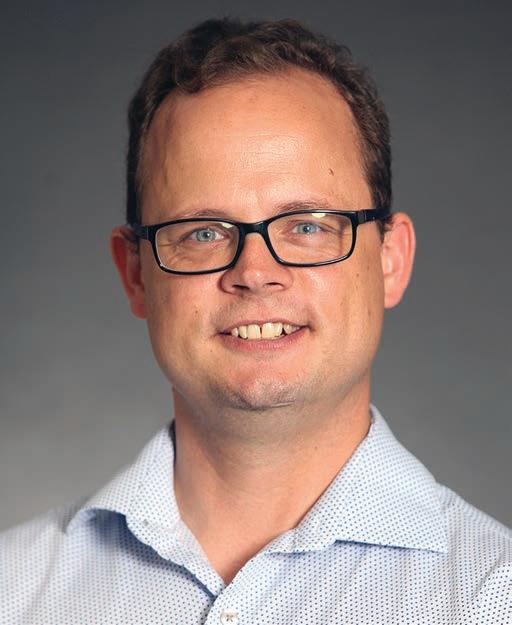
In 2025, the IAH and CSEEES supported UNC Pembroke associate professor Josiah Marineau, who studies Russia and former states of the USSR, with a particular focus on countries in the south Caucasus region, like Georgia.
“These kinds of opportunities are very important for schools like UNCP,” said Marineau, noting that many of his students haven’t had their own opportunities to travel to other countries or outside of North Carolina.
“It’s one thing if I can tell students about other countries, but it’s another to show them through firsthand experience how accessible the world is,” he continued.
As part of the University Teaching Awards, the Chapman Family Teaching Awards give faculty a stipend of $30,000 in recognition of their distinguished teaching of undergraduate students. The awards were created in 1993 with a gift from Max Carrol Chapman Jr. ’66 on behalf of the Chapman family.
• Anna KromeLukens (FFP ’21) Teaching Associate Professor and Director of Experiential Education, Public Policy
• Mariska Leunissen (FFP ’16) Professor, Philosophy

• Michal Osterweil (ALP ’22) Teaching Professor, Global Studies
• Isaac Unah Professor, Political Science
On April 15, Yale University professor Fatima El-Tayeb delivered the 2025 Mary Stevens Reckford Memorial Lecture in European Studies over Zoom. Her lecture, titled “Un/German. Racialized Otherness in Post-Cold War Europe,” examined the impacts of post-Cold War Europe’s reconceptualization of its past and present, with a particular focus on Germany.
Institute Director Patricia Parker introduced El-Tayeb, noting her publications and articles on the intersections of race, gender, sexuality, and religion. She also highlighted her new book with Cornell University Press titled Un/ German: Racialized Otherness in Post-Cold War Europe
“El-Tayeb’s work implores us to look at the complex narratives of the past and consider how they influence the present and our collective futures,” Parker said.
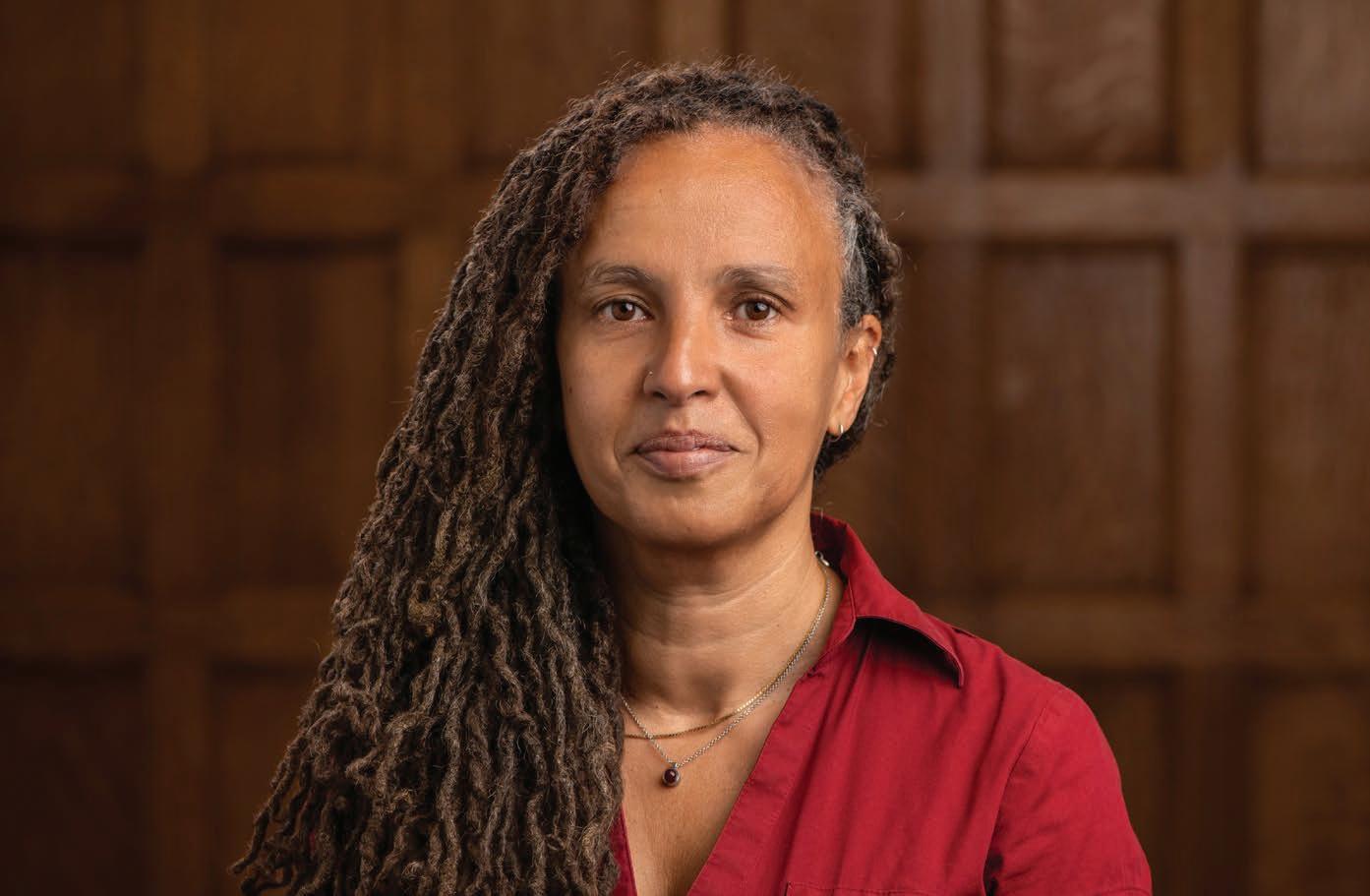
El-Tayeb’s new publication is a translation of her book previously published in German in 2015, which at the time saw discourse and conflicts around refugee migration to Europe. In a podcast interview with Parker following the lecture, El-Tayeb noted that the issues continue to be relevant 10 years later, as she drew connections to the end of the Cold War and the Soviet empire and the narratives that were being written. “But what happens if that whole story that you build… really collapses and you don’t really know where you are in the present?” she asked on the podcast.
The Mary Stevens Reckford Memorial Lecture in European Studies was established in 1990 by classics professor Kenneth J. Reckford to honor his wife, Mary Stevens Reckford. The Reckford Lecture is typically held in February to coincide with Mary’s birthday, but the 2025 lecture was rescheduled and moved to a Zoom webinar due to weather.
Learn more on The Institute podcast: go.unc.edu/Jm52G
“But what happens if that whole story that you build… really collapses and you don’t really know where you are in the present?”
— FATIMA EL-TAYEB
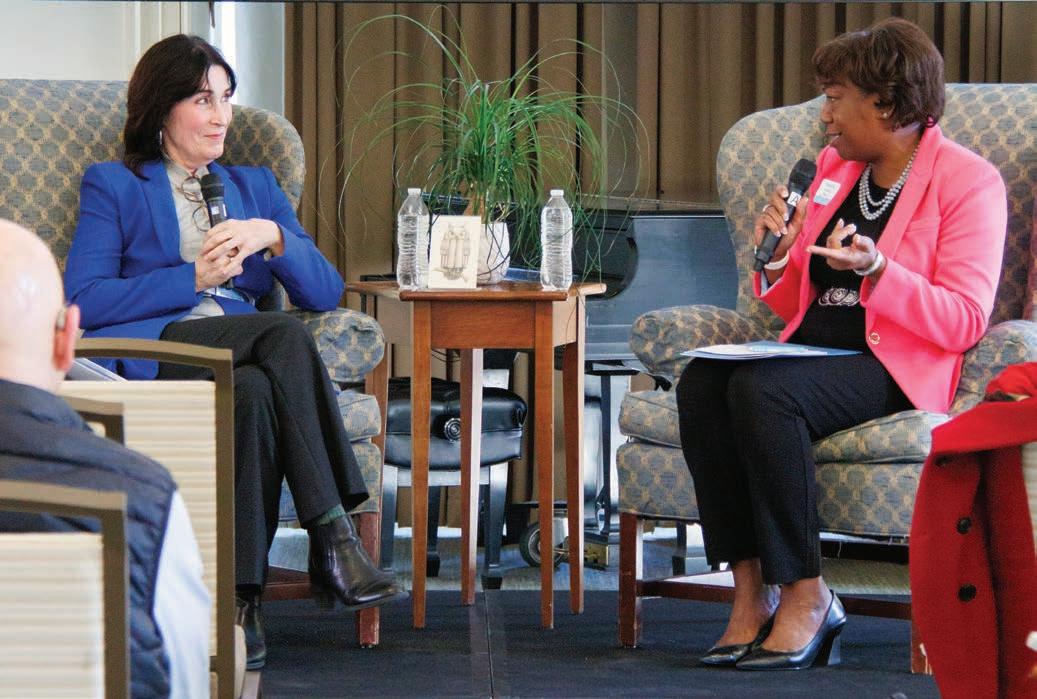
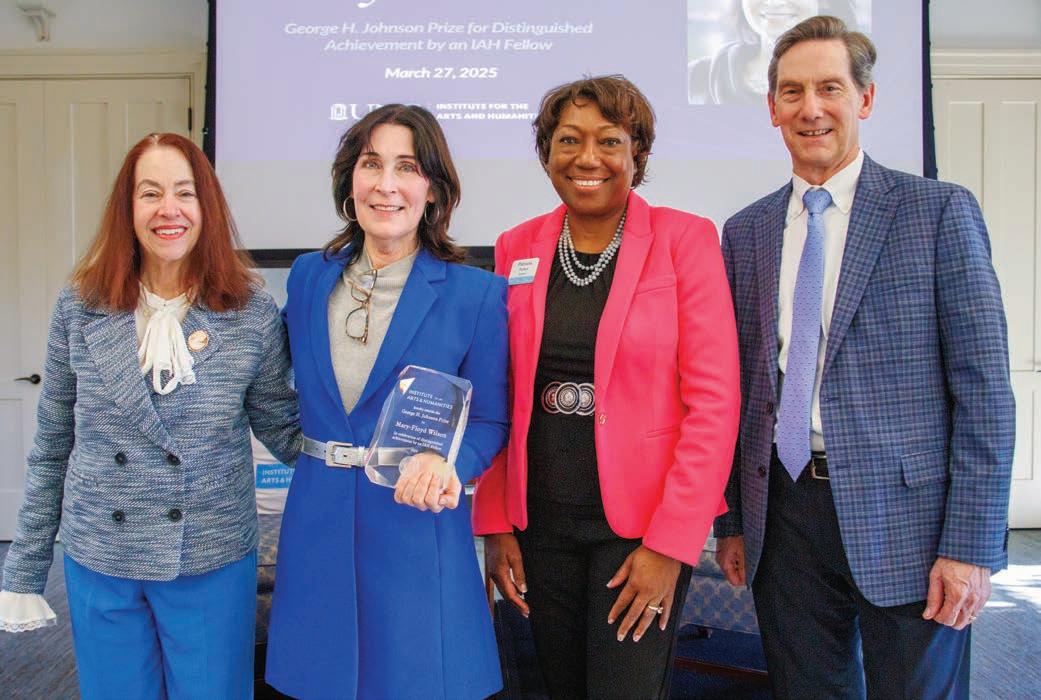
Mary Floyd-Wilson (FFP ’04, ALP ’10), the Mann Distinguished Professor of English, was named the 2024-2025 recipient of the George H. Johnson Prize for Distinguished Achievement by an IAH Fellow.
The award, given biennially by the Institute for the Arts and Humanities, recognizes Floyd-Wilson’s distinguished scholarship, her deep commitment to the humanities, and her significant impact on both the academic community and the broader public.
Floyd-Wilson has long been a member of the IAH community, receiving a Faculty Fellowship in 2004 and later joining the Tyson Academic Leadership Program in 2010. She has also participated in the Chairs Leadership Program as chair of the English and comparative literature department, serving from 2017 to 2022.
“I’m really touched to receive this award. The Institute for the Arts and Humanities had a formative effect on me when I was a new faculty member over 20 years ago — not only for the scholarly support it provided but also for its lasting impact on my sense of community at UNC,” said Floyd-Wilson. “It’s a huge honor to be recognized in this way, and I’m extremely grateful.”
A scholar of early modern literature, Floyd-Wilson’s work explores how authors grappled with ideas of race and difference, the fluid boundaries between science and magic, and changing conceptions of contagion, among other topics. Her research has culminated in two influential monographs and numerous articles that have shaped her field, including helping to initiate the “affective turn” in early modern literary scholarship.
“I’m really touched to receive this award. The Institute for the Arts and Humanities had a formative effect on me when I was a new faculty member over 20 years ago — not only for the scholarly support it provided but also for its lasting impact on my sense of community at UNC. It’s a huge honor to be recognized in this way, and I’m extremely grateful.”
— MARY FLOYD-WILSON
In addition to her research, FloydWilson has been recognized for her teaching. She received the Bowman and Gordon Gray Distinguished Term Professorship for teaching (2015-2020) and the Tanner Faculty Award for Excellence in
Undergraduate Teaching (2006).
Outside of the classroom, FloydWilson has shared her research with the public, including through partnerships with Carolina Public Humanities. One nomination letter cited her as a key leader in the university and the humanities. “She has excelled as a leader within the University, she has gained national status as a scholar, and she has represented the humanities to public audiences far beyond the academic community,” the nominator wrote.
After receiving the Johnson Prize in March, Floyd-Wilson delivered a public lecture in Hyde Hall. Her lecture, “‘Tis an Unweeded Garden:’ Hamlet’s Demonic Environment,” examined scholarly interpretations of the devil portrayed on stage. It was based on a chapter in her upcoming book currently titled Discerning the Devil on the Shakespearean Stage Her 2013 book , Occult Knowledge, Science, and Gender on the Shakespearean Stage (Cambridge University Press), was honored with the Choice Outstanding Title award in 2014. Floyd-Wilson joins a distinguished list of previous recipients, including Kenneth Janken, Elizabeth Olson, and Trudier Harris. The Johnson Prize, named in honor of one of the Institute’s earliest supporters, also includes a $5,000 award.
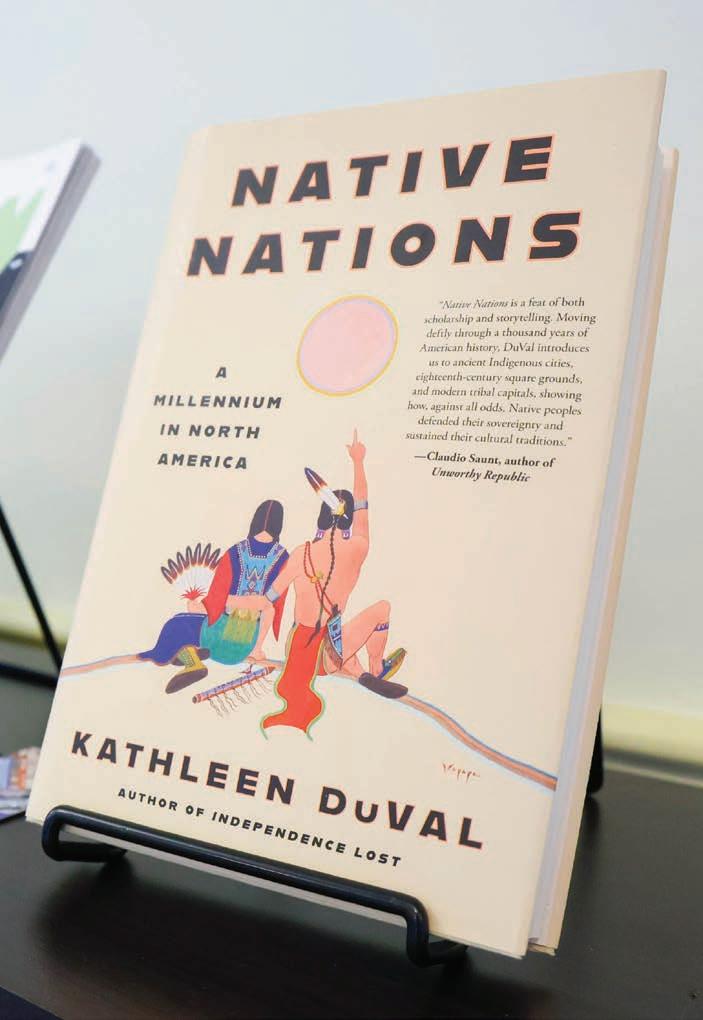
Kathleen DuVal (FFP ’13, ’22), the Carl W. Ernst Distinguished Professor of History and IAH Faculty Fellow, has been awarded a Pulitzer Prize for her book Native Nations: A Millennium in North America (Random House). She worked on the book during her Faculty Fellowship in spring 2022 as a Whitton Fellow.
“I am thrilled to win this incredible honor and to bring it home to Carolina, which has been an amazing home for me my entire career,” DuVal said of winning the prize.
The Pulitzer Prize citation called the book, a panoramic portrait of Native American nations and communities, “a vivid and accessible account of their endurance, ingenuity, and achievement in the face of conflict and dispossession.”
DuVal shares the top honor in the history category with Carnegie Mellon University’s Edda L. Fields-Black, who wrote COMBEE: Harriet Tubman, the Combahee River Raid, and Black Freedom During the Civil War (Oxford University Press).
DuVal is a historian of early America with a focus on the interactions of various Native American, European, and African individuals from the 16th century through the early 19th century. Native Nations is also the winner of the 2024 Cundill History Prize, the largest award for a book of nonfiction in English. In addition, DuVal received the Mark

“I am thrilled to win this incredible honor and to bring it home to Carolina, which has been an amazing home for me my entire career.”
— KATHLEEN DUVAL
Lynton History Prize and the Bancroft Prize, one of the most prestigious awards among scholars of American history.
“This is a well-deserved honor for Kathleen Duval, capping a series of accolades for her sweeping book,” said Jim White, the Craver Family Dean of the UNC College of Arts and Sciences. “We are incredibly proud of Kathleen and grateful that she shares her immense knowledge with our campus and with the world through this book.”
The culmination of a 25-year project, DuVal shows in Native Nations how, long before colonization, Indigenous peoples adapted to climate change and instability with innovation, forming smaller communities and egalitarian government structures with complex economies which spread across North America. Challenging dominant narratives, DuVal refutes that the arrival of Europeans led to the end of Indigenous civilizations in
North America. Instead she vividly reveals the interactions and complex relationships that developed between nations.
The New York Review of Books called the book “a magisterial overview of a thousand years of Native American history, from the rise of ancient cities more than a thousand years ago to fights for sovereignty that continue today.”
DuVal was also recently selected for a National Humanities Center fellowship to work on her next book project, a history of Yorktown, Virginia, titled: Yorktown: The American Revolution and the Making of the United States.
DuVal received her first Faculty Fellowship in 2013, when she worked on her award-winning book, Independence Lost: Lives on the Edge of the American Revolution. From 2023 to 2025, she served on the IAH’s faculty advisory board.
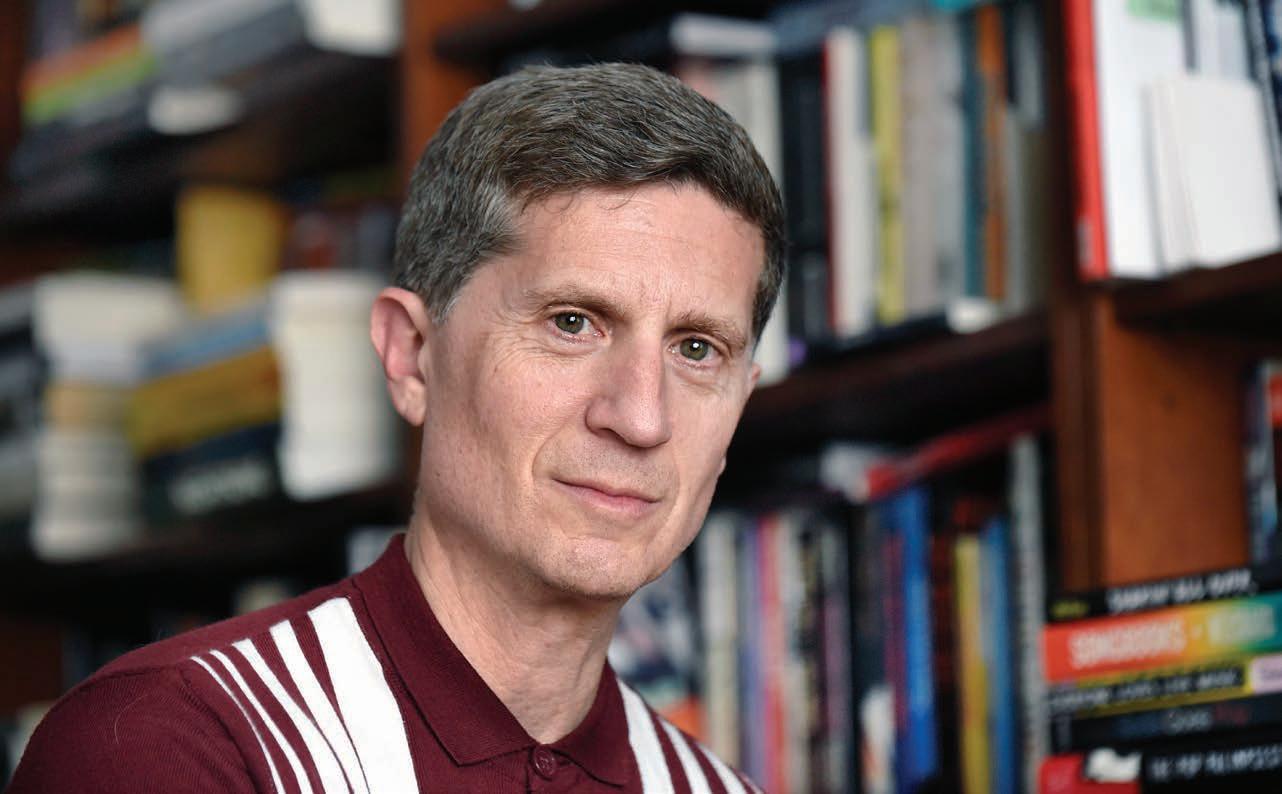
Mark Katz is the John P. Barker Distinguished Professor of Music and former director of the Institute.
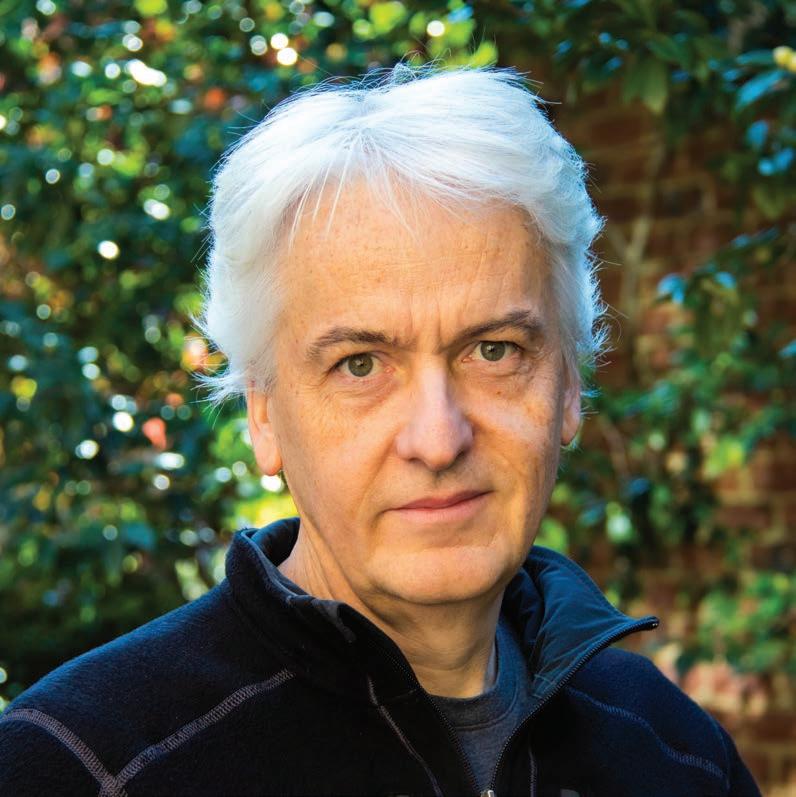
Research and education surrounding artificial intelligence and its future are vital as the world continues to develop and integrate new technologies into everything we do. Just as important as this research, are conversations about the different aspects of life and art that AI is impacting. Philosophy professor Thomas Hofweber (FFP ’15, ’25) and music professor Mark Katz (FFP ’12, ALP ’13) are working to begin these conversations and provide space for them to occur.
In the spring, the professors hosted an event centered around exploring AI’s impact historically and evaluating what place it might have in music as the technology becomes more sophisticated. The event took an interdisciplinary approach, involving perspectives from within the music industry and other sectors.
Hofweber approached Katz with the idea after they sat on a panel together and noted a shared interest in the topic. Katz, who is also a former director of the Institute for the Arts and Humanities, said that he believes Hofweber’s idea to bring in scholars
from all different backgrounds would allow the event to take a holistic, complimentary, and more interesting form.
“We thought we’d put together an event that has speakers and panels with people from different disciplines, and hopefully get a conversation going about this topic, where people participate [with] different perspectives,” Hofweber said.
He also hopes that the workshop could also lead to other potential interdisciplinary projects.
“The question is what kind of value is there to AI-generated art?” Hofweber said. “Will humans properly appreciate it? Is there anything to be appreciated about it? And something I’m especially interested in: is it potentially possible to create art that is of greater aesthetic value than the art that has been created by humans so far?”
Hofweber, who was a spring 2025 Faculty Fellow, said he used the semester to focus on exploring rational norms, like humans have, in language models. His project centers on questioning if language
models are more similar or more different than us, and if they have human-like ways of thinking.
“If the norms of rationality apply, then you can expect, or at least hope for, a certain kind of behavior that’s tied to these rational norms,” he said. “But if they don’t apply, then these machine learning models — particularly if you think of them as engaging in some sort of activity — would be quite different than our human mind.”
Hofweber added that he appreciated the time the Faculty Fellowship gives, allowing him to focus on his research and to discuss ideas with people from other parts of the humanities and the University.
“You get time off from your teaching, you focus more on your research, and you meet all these other people from other parts of the humanities and the university to talk about projects, so you learn what other people are doing.” Hofweber said. “You meet other people across campus. You have lunch together. It’s a great thing. I recommend it.” Story by Laney Crawley
“The question is what kind of value is there to AI-generated art? Will humans properly appreciate it? Is there anything to be appreciated about it?”
— THOMAS HOFWEBER
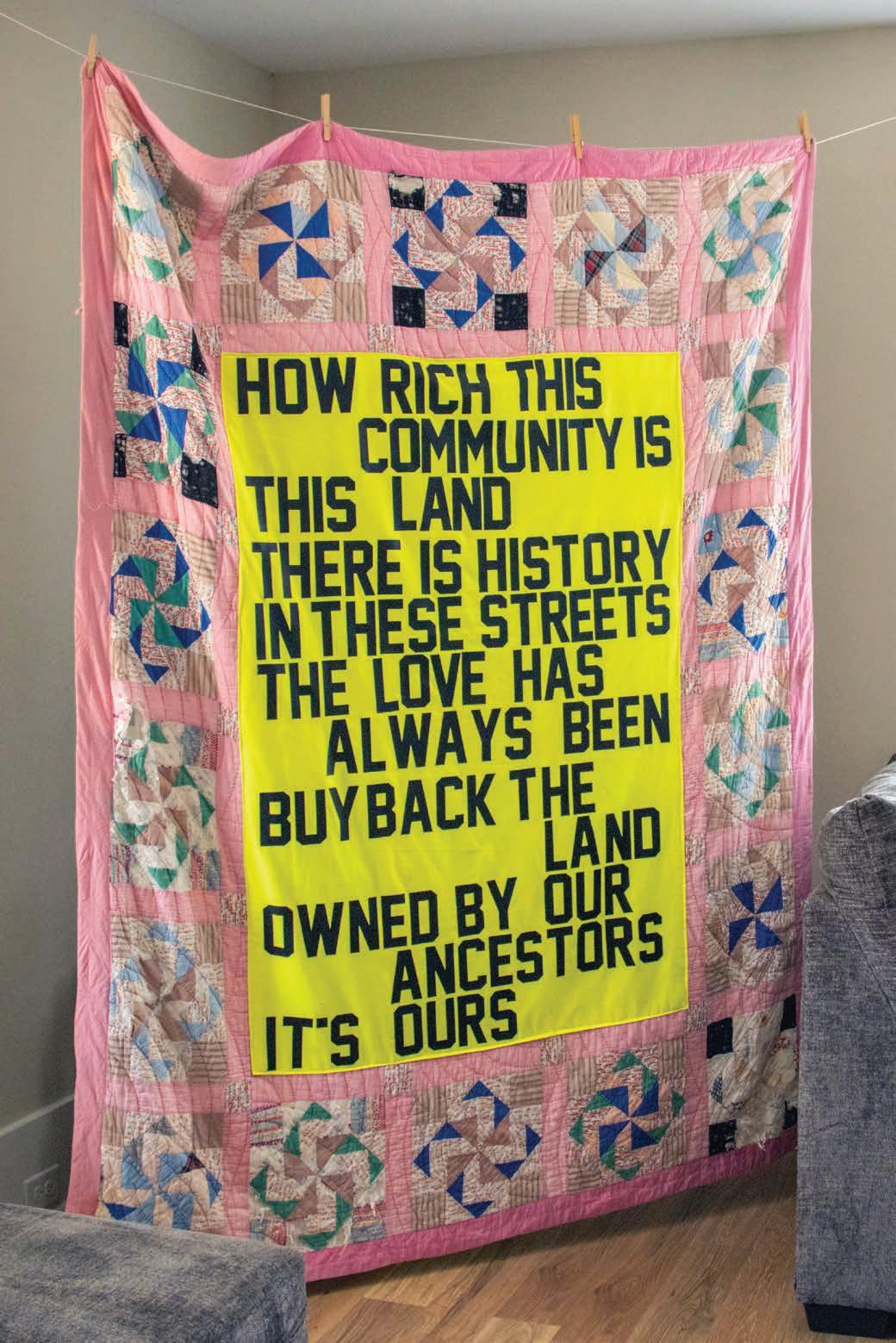
An interdisciplinary project combined storytelling, performance, and art to engage with students in the community to consider the meaning of maps and places. Story and photos by Ruby Wang
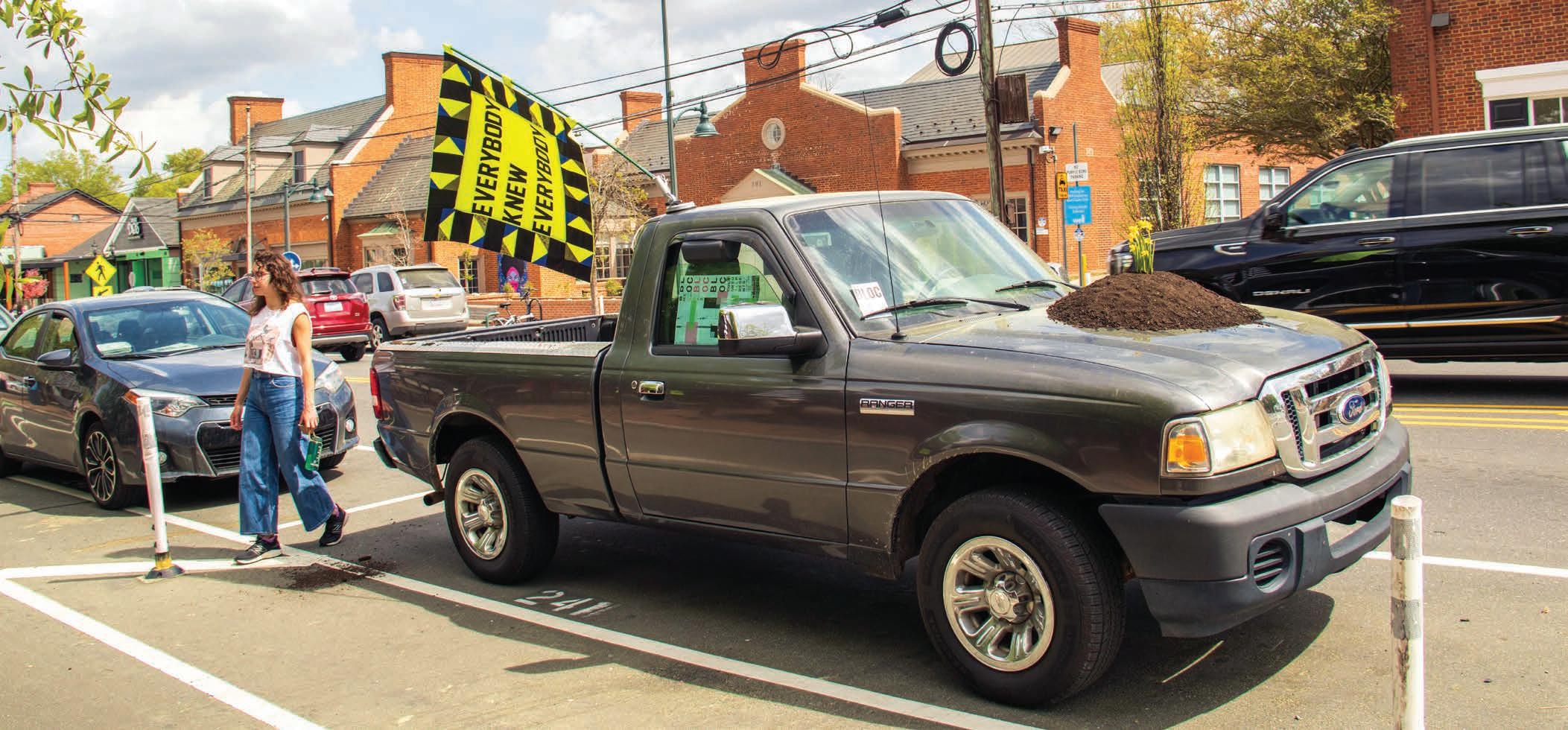
In April, UNC’s Department of Geography and Environment, the Marian Cheek Jackson Center, and the arts collective Culture Mill, invited community members to Bloc, a social practice and community-centered art project. Bloc, which received an Arts and Humanities Grant for Research Diversity from the Institute, is “a practice of circling a place and noticing everything,” connecting storytelling, performance, movement, art, and education.
Bloc involved contributions from incoming IAH interim director Elizabeth Olson (FFP ’17, ’24; ALP ’19), who described the project as a collection of artistic “maps” drawn from “critical geographies of landscape and embodiment.” Bloc aimed to fuse together different dimensions of experiencing geographic surroundings, combining installation art, sound, poetry, and performance to conceptually and physically “map” how one experiences place.
Listening, moving, and reimagining “place”
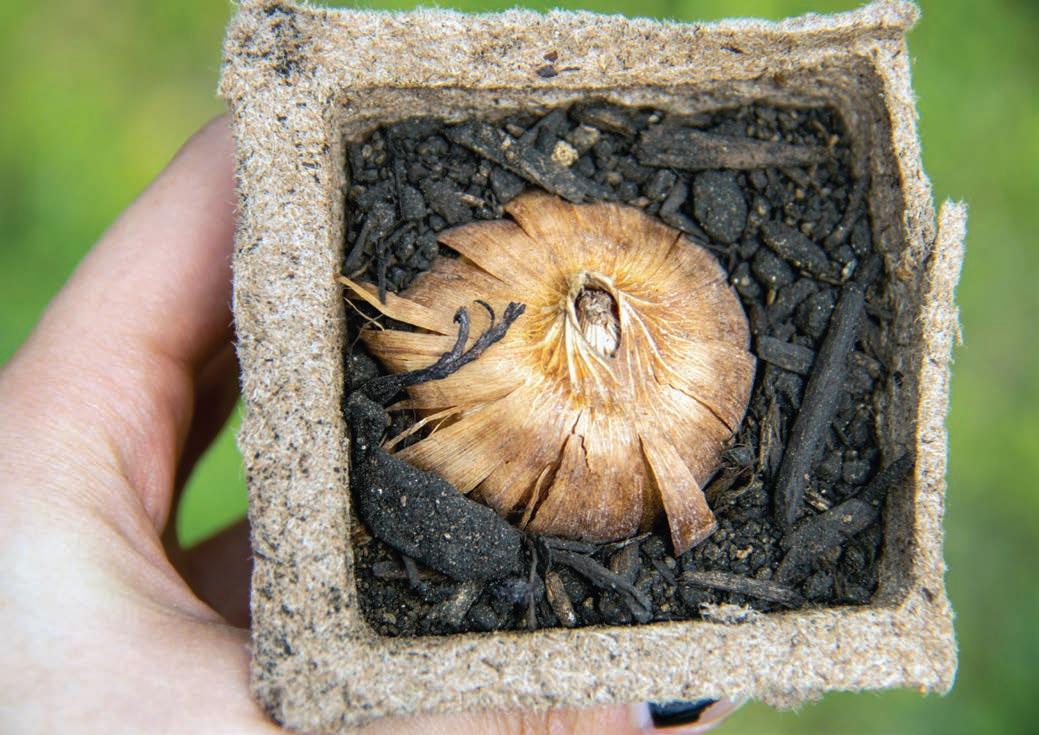
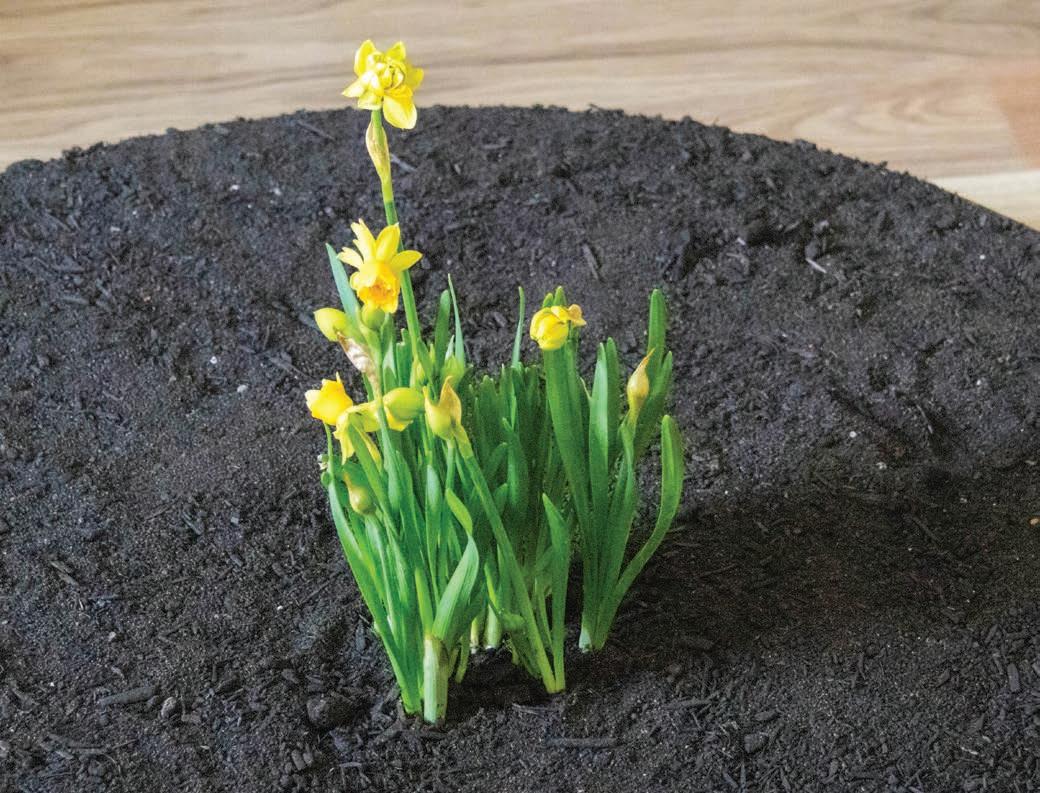
As “a series of maps,” Bloc guided attendees through three sections of programming: listening, moving, and reimagining. As they entered the first map, participants received a seedling that joined them throughout the experience. They were invited to consider how land had been used by the Chapel Hill community.
Next, a walking tour from the
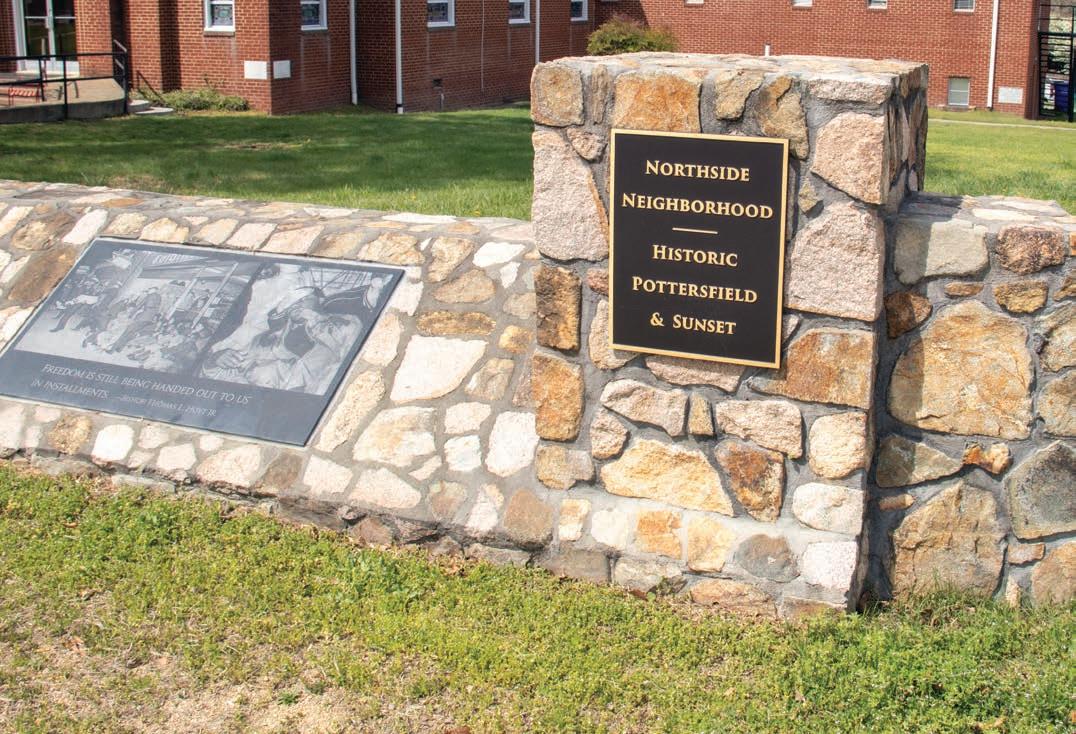
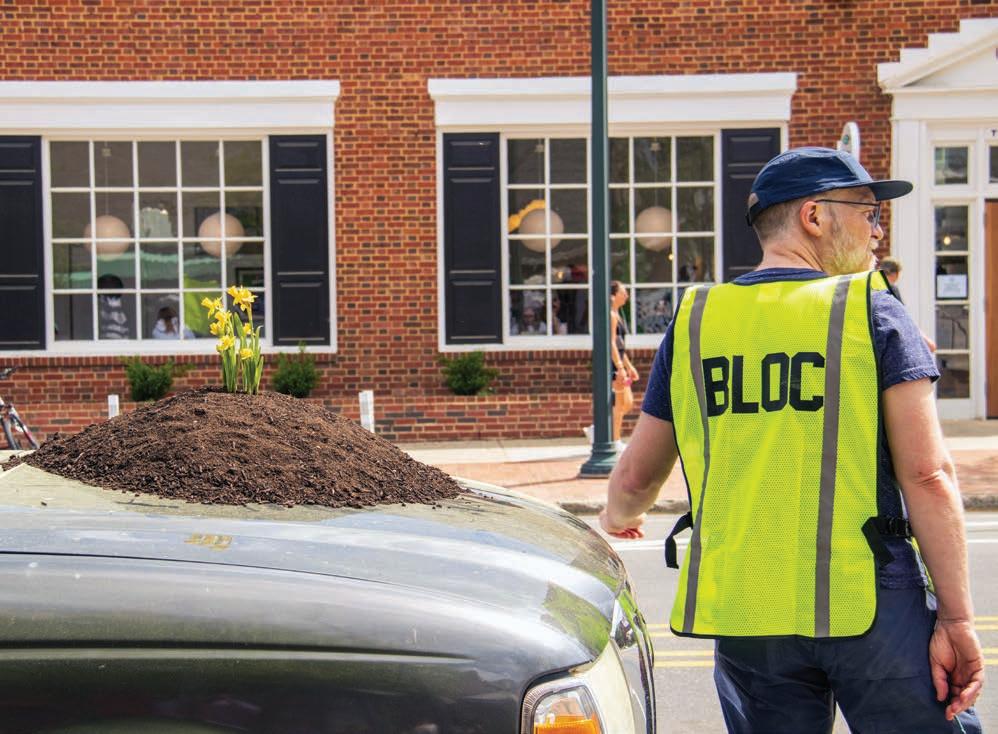
Northside Neighborhood to the Franklin Street storefronts juxtaposed the commercialized spaces against the historical, community-based land in a single block. After returning to the installation site, participants directly connected with the land by planting their seedlings in front of the building.
The last map for “remembering and imagining” invited participants to create a map according to their own experience. Attendees sat in a room decorated with maps created by previous participants with varied interpretations from “a literal map of brick and mortar” to “a place called here.”
Last year, Olson received the William & Sara McCoy Performing Arts Leadership Award for her interdisciplinary approaches in teaching and research. By combining geography with the arts, she pushes students to consider new ways to understand landscape, histories, and cultural narratives. As Olson described, “how might this fusion empower us to address the urgent, ongoing needs for justice, care, and repair?”
Olson considered this question in her First Year Launch course, “Development and Inequality: Global Perspectives,” where students worked on projects to prepare
for Bloc. Olson noted how they “learned about the Northside community, its contributions to campus and our town, and the names of builders, faith leaders, entrepreneurs, civil rights leaders, and workers.” Students worked with the Marian Creek Jackson Center to identify the audio clips from oral histories in the installation’s listening room.
Bloc will become a curated archive and be produced as an academic publication. Documentarians present at Bloc will produce a short film about the project. In the future, the sound score of oral histories and poetry will be available for future visitors to Chapel Hill who wish to learn more about the community.
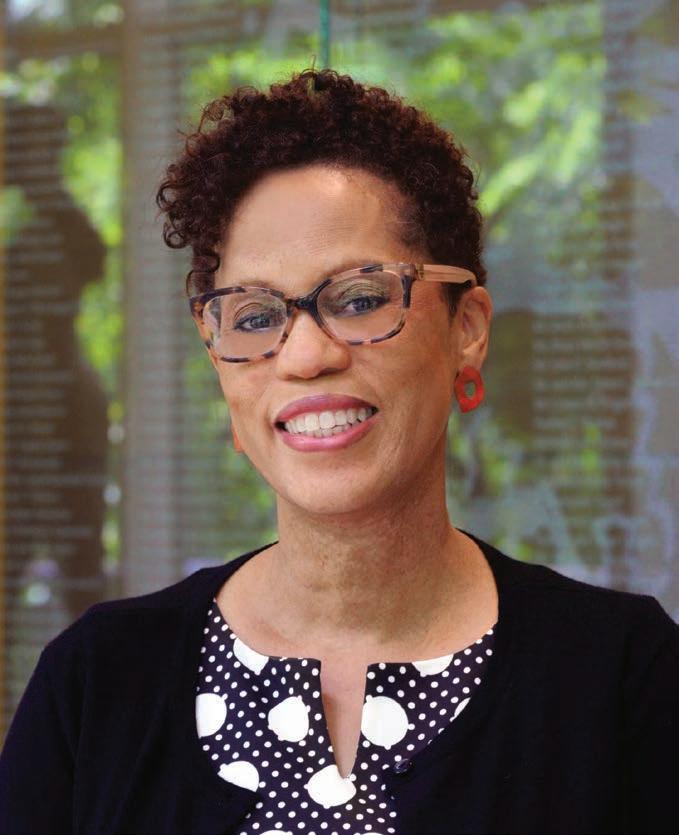
Karla Slocum (FFP ’03, ’20; ALP ’18), professor in the anthropology department, researches the meanings, placemaking practices, and social engagements around race and place. Currently, she serves as senior associate dean for faculty and staff development, working to strengthen professional and scholarly communities among the College’s faculty and staff.
Q: Can you tell us about your experience in the Tyson Academic Leadership Program? How did it support your leadership development?
A: I have participated in about five leadership training experiences over more than a decade and the Academic Leadership Program stands out at the top of the list. There are a lot of things to say about ALP, but I especially appreciate the program’s care around the cohort experience, building a tightly connected group of diversely located participants who discuss and brainstorm around a range of leadership issues (hypothetical and actual) regularly, candidly, and in real time. Puzzling together through solutions
and options for various leadership questions helped me with problem-solving skills and broadened my awareness of the types of issues that leaders face in higher ed. I appreciate that the cohort experience and built-in leadership support live on well beyond the one-year program, providing participants with a trusted group that they can consult and check in with as their leadership journey continues. I haven’t seen any other leadership training cohort endure like I’ve seen through ALP.
Q: As senior associate dean, what do you enjoy most about working with faculty and staff in the College?
A: Carolina isn’t a complacent community where people just show up to do the bare minimum of their job. Even if (or because) there are things they would like to see improved, faculty and staff in the College are dedicated to the work they do that supports student academic success, research inquiry, and so many other areas that are vital to the College. I enjoy working with faculty and staff who really care about the purpose and
quality of the work they do as well as the health and integrity of our community. This is a feature of the College that I don’t take for granted and that motivates me.
Q: You’ve served as director of the Institute of African American Research, co-director of the Moore Undergraduate Research Apprentice Program, and co-chair of the anthropology department’s concentration on Race, Difference and Power, and more! Do your research interests on race and history relate to how you serve in leadership positions?
A: I rely a lot on ethnography as a research method. With ethnography, you need to
build strong and ethical relationships and partnerships with people who are longterm participants in your research. You should be mindful of issues like inclusion and involvement in the research (what are participants’ relationship to the research design, methods, and outcomes?) as well as impacts. Relationship building is key to leadership. Many of my leadership decisions and actions emerge from conversations, consultations, and collaborations with faculty and staff who are the focus of what I do.
Topically, I have recently studied people’s interest in historic places that were sources of freedom, community, relative
prosperity, and security for Black Americans. Ultimately, these are questions about connection to, belonging in, and dedication to a place because of its history, economic and social achievements, purpose, and future possibilities. In my leadership roles, I think about the university as a place. I’m mindful of the imperative of belonging and inclusion while also thinking about what influences people to care about a place they are part of and for the place to feel like a community that embraces them, motivates them, and makes them see attractive futures for themselves.
Interview by Ruby Wang
Read the full interview at iah.unc.edu
“I appreciate that the cohort experience and built-in leadership support live on well beyond the one-year program, providing participants with a trusted group that they can consult and check in with as their leadership journey continues.”
— KARLA SLOCUM

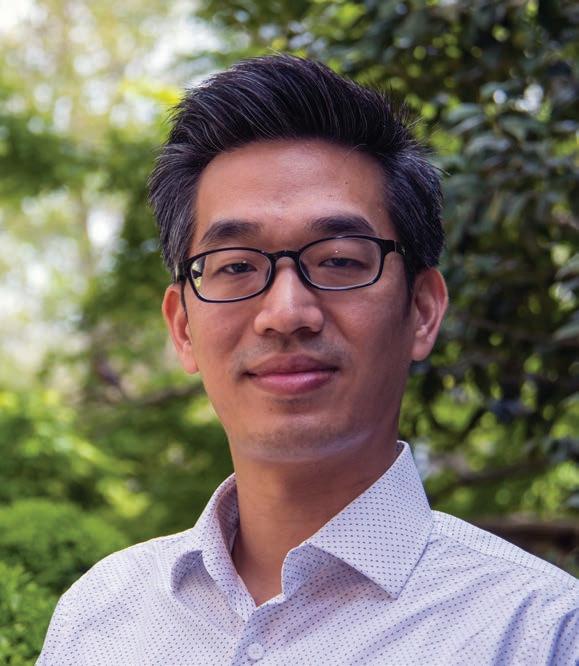
The Institute is a podcast series that highlights the lives and work of the Institute for the Arts and Humanities’ Fellows. In the spring, linguistics associate professor Brian Hsu (FFP ’24) joined the podcast to share different approaches in linguistics research and his own work. Here’s an excerpt from the interview:
I would sum it up as the academic study of language. Generally, linguists ask questions like, ‘what are languages like?’ and ‘why are they the way that they are?’ And this can be answered in a lot of ways. Some of it is looking at the actual languages of the world…. Why are there so many? How do they come to be? Why do they change over time?
Other linguists might ask questions like, ‘how does language interact with society?’
How do certain speech forms come to be associated with particular groups of people depending on say, things like ethnicity, race, class? And how do people strategically use language to express aspects of their identity?
I work in what we might call formal linguistics. It’s really more about looking at the kinds of structures found in language. For example, the types of word order patterns that you see or don’t see across languages, the kinds of sound patterns that you see or don’t see.
My work aims to come up with models for how language is represented in the mind. You can think of the kinds of word order patterns or sound patterns that speakers create as being guided by templates that exist in the mind. Part of my research is trying to find out what those might look like.
Listen to this podcast and more at iah.unc.edu/podcasts

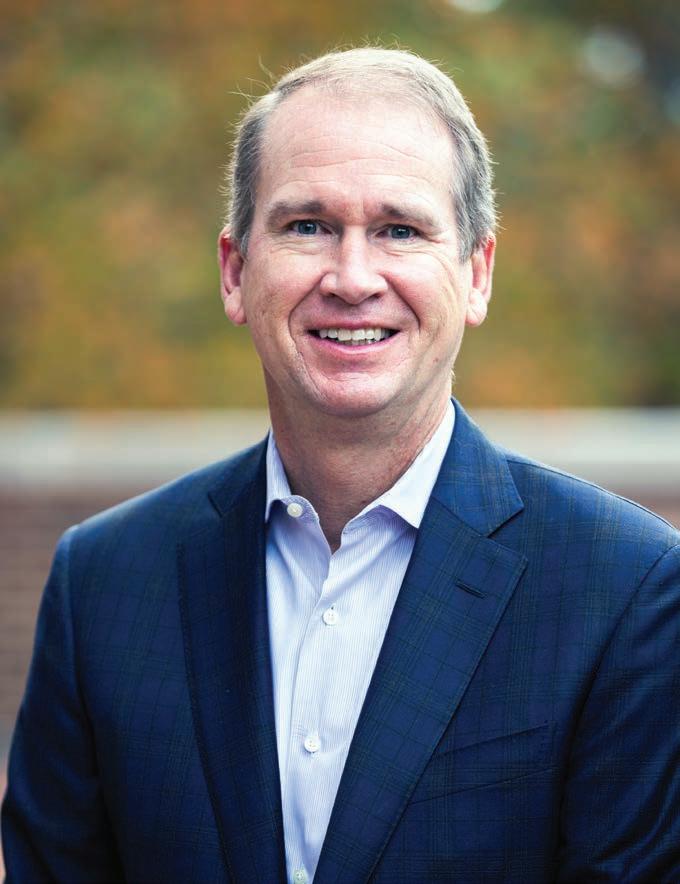
Chair Allen Moseley has served on the IAH External Advisory Board since 2019. He received his B.A. in history from UNC-Chapel Hill in 1991 and earned an MBA from Harvard Business School in 1996.
Today, Moseley is the managing general partner at Noro-Moseley Partners, a company that invests in early growth information technology and health care businesses. In addition to his work with the IAH, Moseley is involved with the Honors Carolina Go Anywhere initiative.
Join Allen in supporting the Institute for the Arts and Humanities by contributing to the IAH Annual Fund to support faculty and their scholarship.
Q: What was your student experience like at Carolina? How do you hope the university can foster belonging for all students and faculty?
A: I wanted to attend a college that was strong academically but also exposed me to many of the wonderful elements of a larger state university. In addition to immersing myself in the broad academic curriculum, I became involved in a number of areas of the University including the Honor Council, the Campus Y tutoring programs, study abroad, and Greek life. There is a tremendous sense of community at UNC fostered by a common purpose of academic and personal growth, all in the most idyllic college setting in the country!
Q: What was one of the most impactful moments for you during those four years that influenced your career decisions?
A: Like many young people out of high school, I had no idea what I wanted to do for a career when I came to UNC. I loved history both through high school and as a hobby, and I took the advice of my father to study something for which you have a great passion. As I went through my history
major and began to think about different careers including finance, I broadened my transcript with a heavy load of economics, finance, and accounting. That is one of the things about UNC I love: the ability to chart your own flexible course academically to meet whatever career goals you may have. My history major combined with more technical finance-related courses proved to be a very good combination, as those writing, presentation, and analytical skills have served me well in my career.
Q: How has your time at Carolina contributed to your success?
A: Carolina prepared me well academically, but in many ways, my life outside the classroom was even more instrumental to prepare me for my career. UNC has a diverse and driven student body with a variety of backgrounds and perspectives. There is no better way to prepare yourself for a career than exposure to many different kinds of people and learning how to work well and constructively with them towards a common goal. I look back fondly on my many late nights in the Student Union serving on the Honor Council, working with my

fellow council members — many with very different backgrounds than me — to discern the truth in difficult circumstances. We all had to explore the balance of compassion and justice to ultimately arrive at a fair decision. What better preparation can you have for the “real world” than that?
Q: Why do you think it’s important to support the Institute for the Arts and Humanities?
A: The faculty are the heart and soul of any great university, and this is very much the case at UNC. I feel passionately that the IAH is a major differentiator for any faculty member here and part of the reason why they might choose to pursue their research at a place like UNC. The IAH fosters a sense of community with our faculty and is truly a safe, calm space to pursue their academic passions. I am very proud to be a part of a board that supports this Institute with our time and resources. Pulitzer Prizes and firstclass research are evidence of the impact a platform like the IAH can help create, but more importantly, the Institute is really one of those unique places that help make UNC truly special.
Interview by Gina Moser

“The faculty are the heart and soul of any great university, and this is very much the case at UNC. I feel passionately that the IAH is a major differentiator for any faculty member here and part of the reason why they might choose to pursue their research at a place like UNC. The IAH fosters a sense of community with our faculty and is truly a safe, calm space to pursue their academic passions. I am very proud to be a part of a board that supports this Institute with our time and resources. Pulitzer Prizes and first-class research are evidence of the impact a platform like the IAH can help create, but more importantly, the Institute is really one of those unique places that help make UNC truly special.”
— ALLEN MOSELEY