ARCHITECTURE
ARCHITECTURE
HYEJI JUN 2023-2025
P : 612-430-1611
E : hyejijun1209@gmail.com
A: 6404 9th AVE NE, Seattle, WA, 98115
Education
Design Experience
Master of Architecture |University of Washington
Sustainable Systems and Design Degree Option, Lighting Design Certificate
Bachelor of Science in Architecture |University of Minnesota
Minor: Studies in Cinema & Media Culture
Certifications
Other Experience
Architectural Designer |LEO A DALY
Collaborated with engineers to align multidisciplinary designs, ensuring accuracy and consistency in architectural documentation for the Xcel Energy Analytical Testing Labs, Office, & Fleet Maintenance Facility.
Developed architectural drawings for the Allina Health Abbott Northwestern MacMillan Simulation & Training Center and Hennepin County Medical Examiner Facility, including plans, sections, details, and schedules, to refine design intent and documentation.
Designed functional and inspiring environments for the Demontreville Jesuit Retreat House, developing and refining design iterations through 3D modeling across multiple software platforms.
Assisted the architect in CA by drafting PR/ASI forms and reviewing submittals for the City of Lake Elmo City Hall & Public Safety Facility to ensure clear communication and client compliance.
Architectural Drafting Intern |GSR Architectural
Drafted architectural drawings of metal fabrications for 4 residential projects through AutoCAD and Adobe Illustrator to deliver visual representations to clients, partnering architects, and constructors.
2024-2025 UW Teaching Assistant |University of Washington LEED |LEED Green Associate
Guided students in hands-on critical thinking and creative problem-solving through the development of physical models, fostering a deeper understanding of spatial, structural, and material principles.
2022-2023 English Academy Instructor |LIFE Academy
Instructed students in grades 1-6 on English phonics and pronunciation through interactive image-based learning, leading to over 8 student acceptances into prestigious international schools.
Skills
Revit, Rhino, Grasshopper, Sketchup, AutoCAD, Adobe Suite, VRay, Enscape, Twinmotion, CNC machining
Research Studio - Metabolism
LOCATION
TYPE MIXED-USE
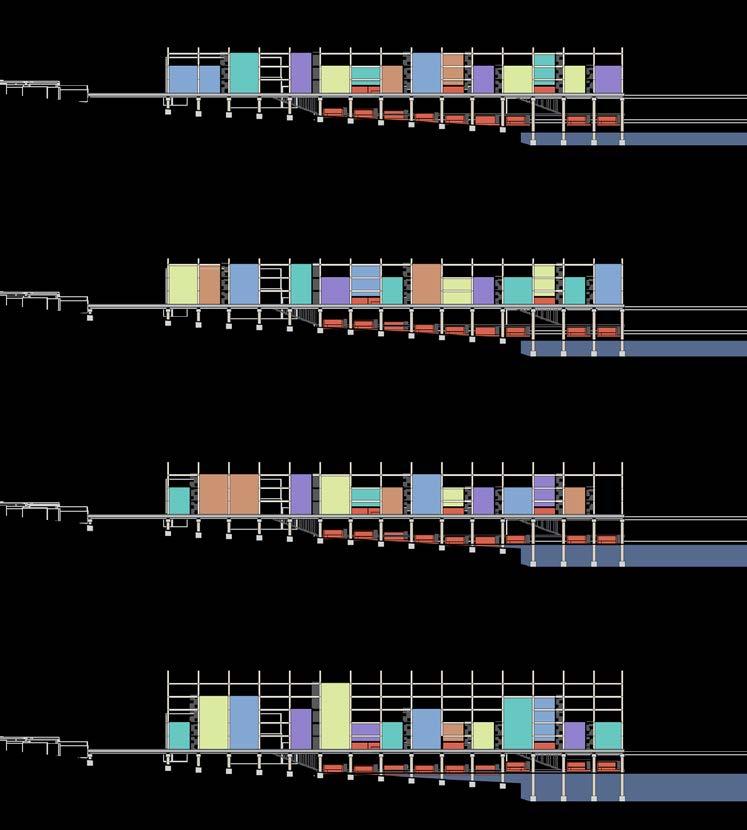
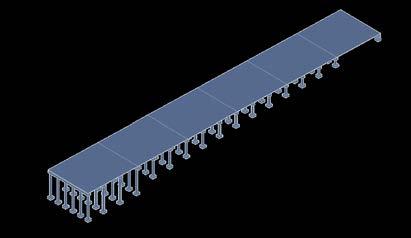
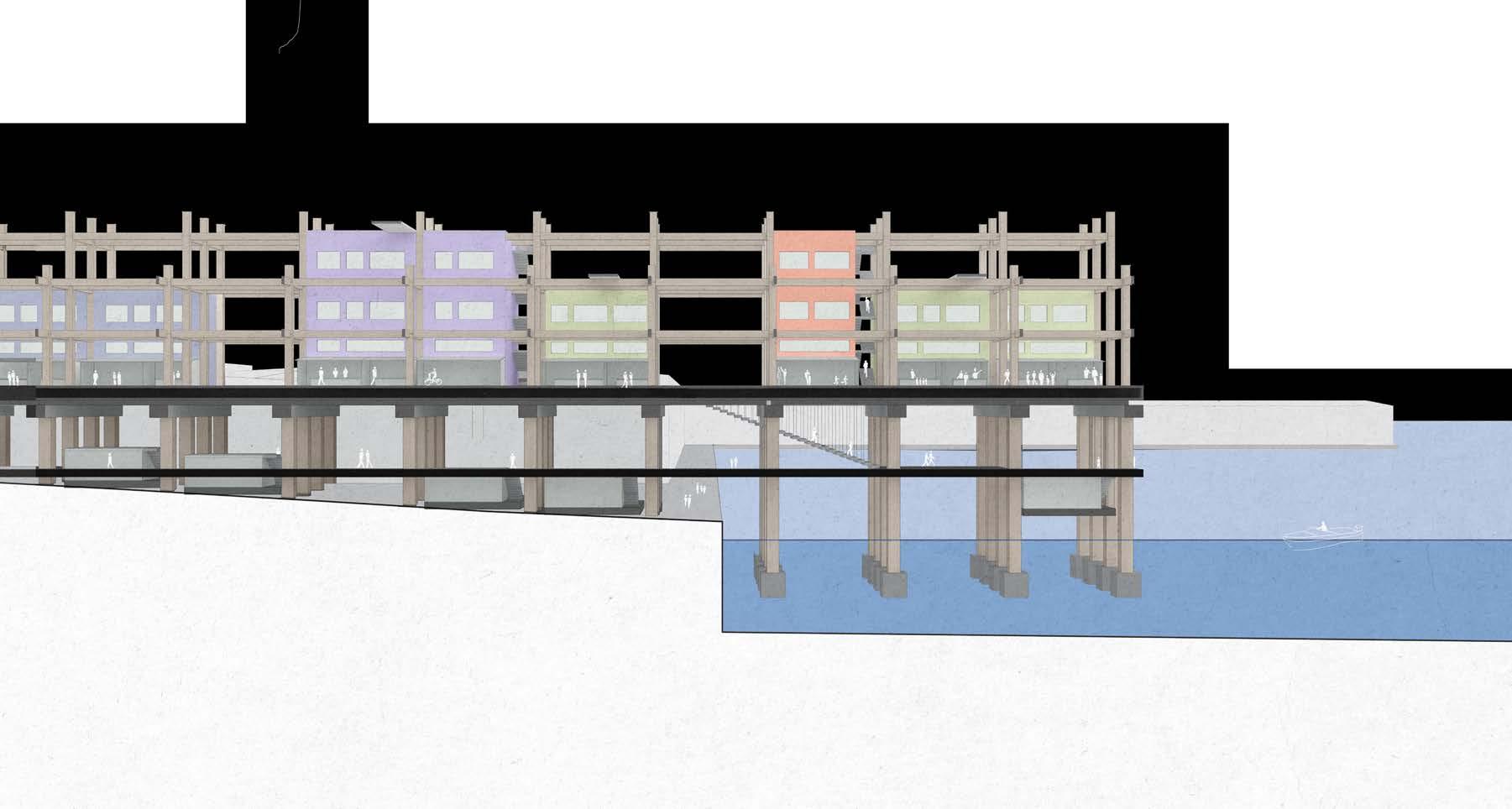
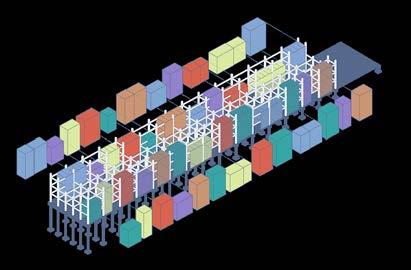
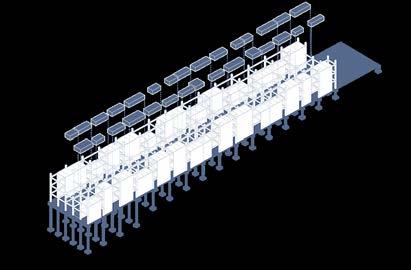
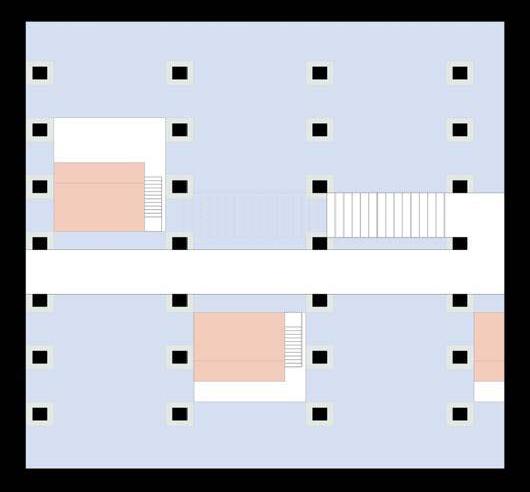
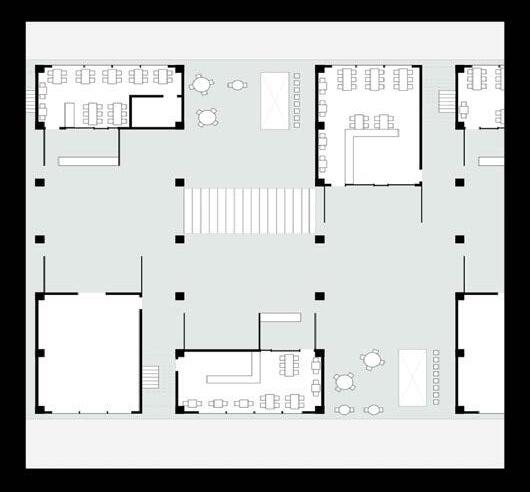
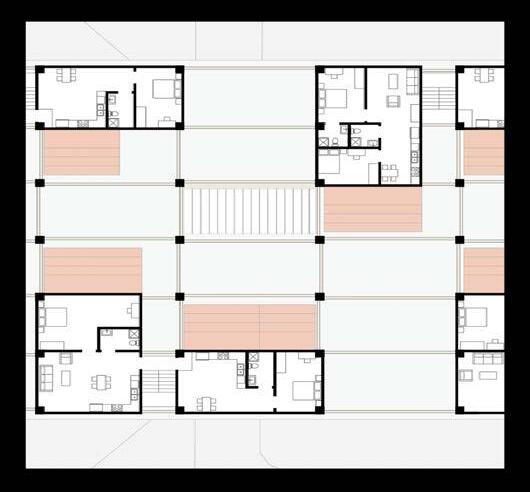
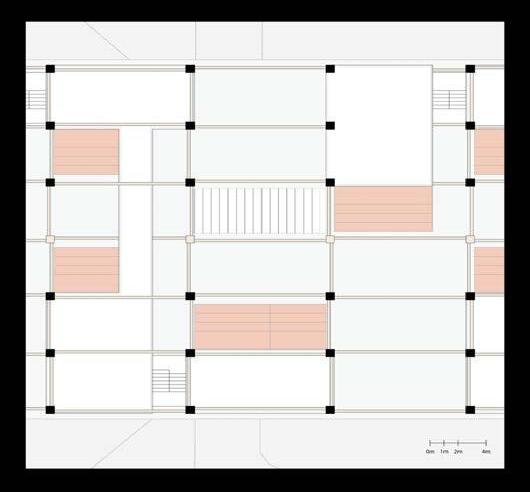
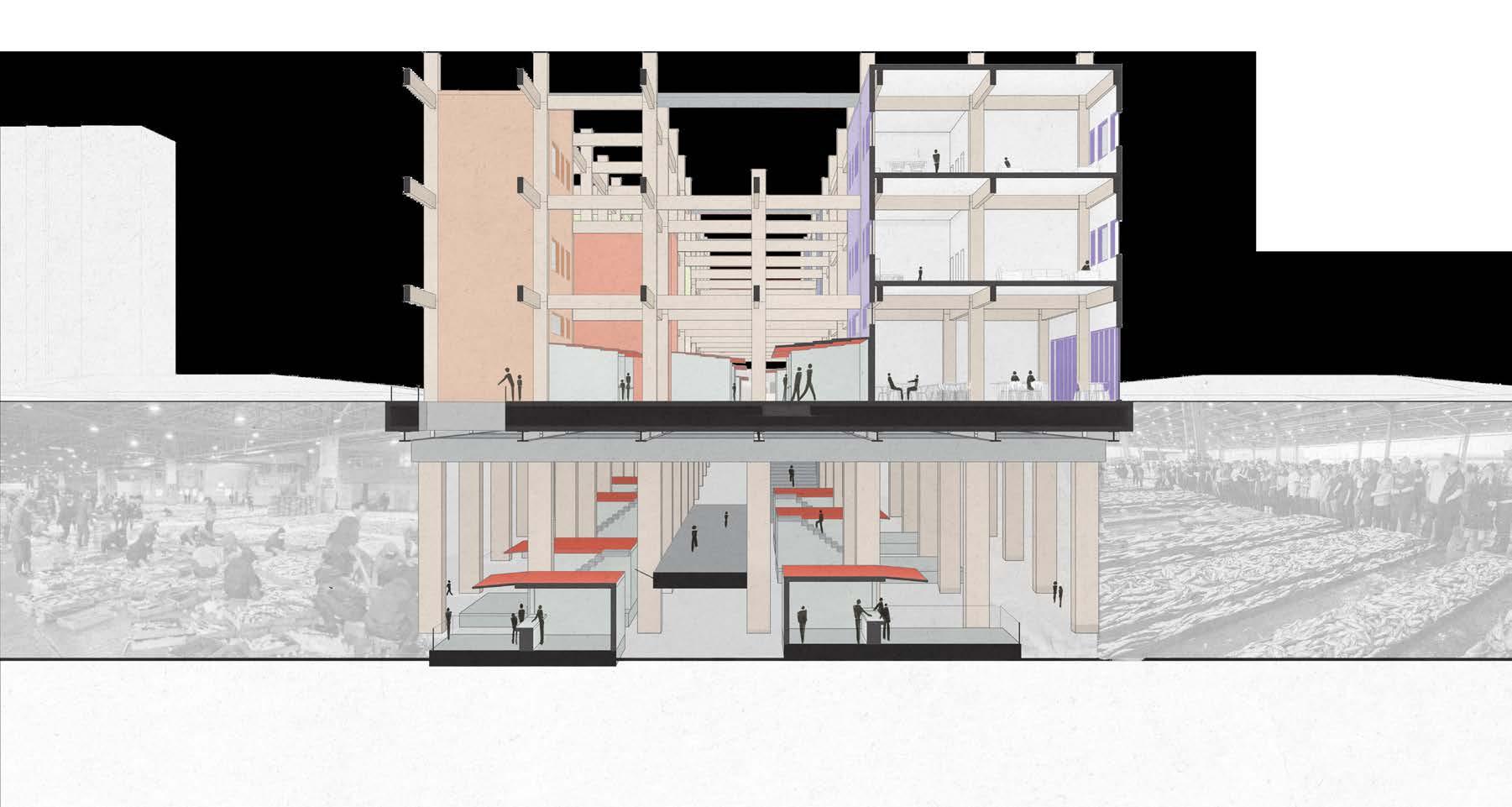
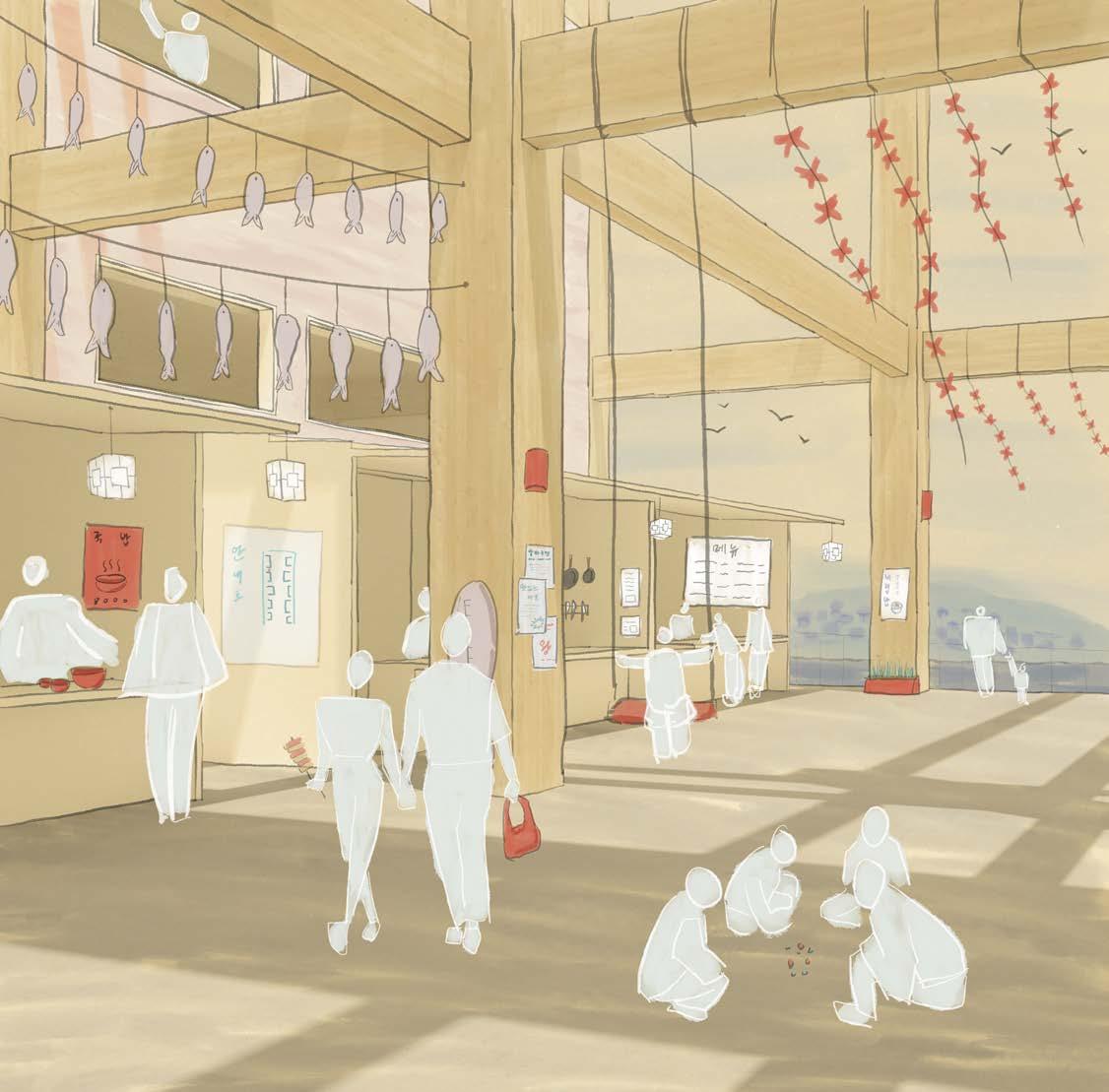
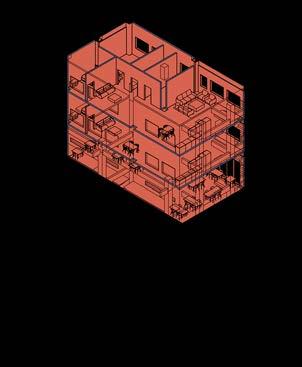
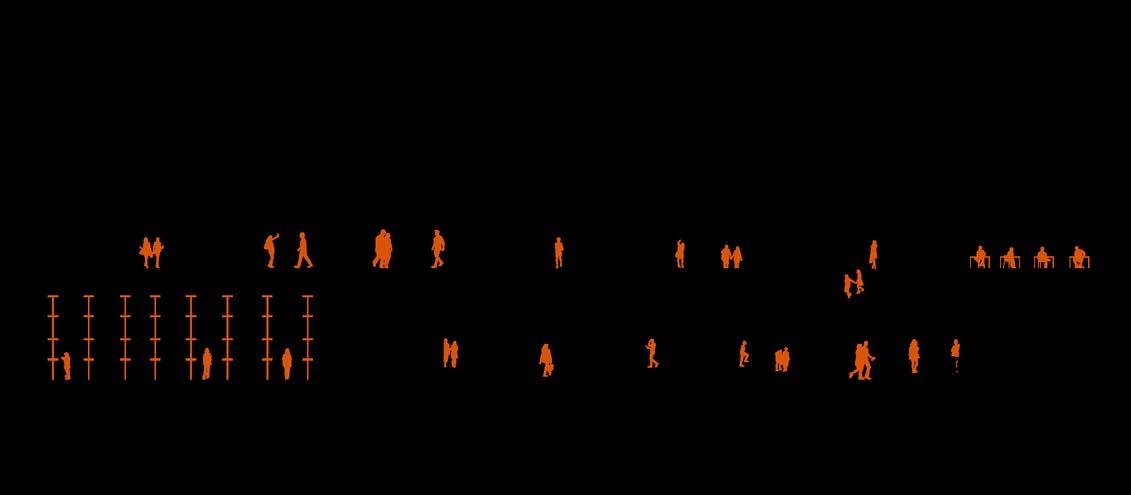
The Inter-Horizons Market embraces the approaching issue of sea level rise by raising the pedestrian level and creating an immersible lower-level underneath and an adaptable frame above. The lower area of the project metabolizes with the timeline of the water, and the upper area metabolizes with the timeline of the needs of the neighborhood.
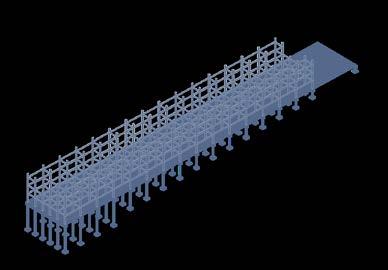
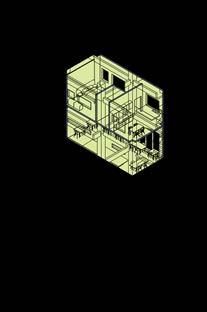
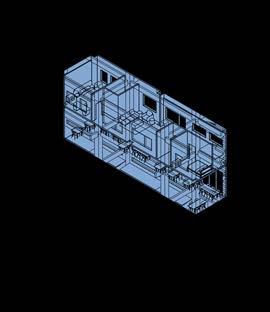
Located in the coastal city of Busan, South Korea, next to a wholesale fish market, the Inter-Horizons Market continues the history and culture that shaped Busan by incorporating two distinct markets that highlight the day and night culture of Busan. The project achieves flexibility through a rigid timber frame that houses ‘inserts’, the built units, that are easily exchangeable depending on the needs of the time.
The project strives to eventually apply this system to other coastal cities in danger of the creeping issue of sea level rise. Each Inter-Horizons system will adopt the needs and characteristics of the area to allow the site to embrace the water while preserving and continuing the city’s identity.


Research Studio - CLT Cannibalism
LOCATION
VANCOUVER, CANADA
TYPE CLOTHING LIBRARY
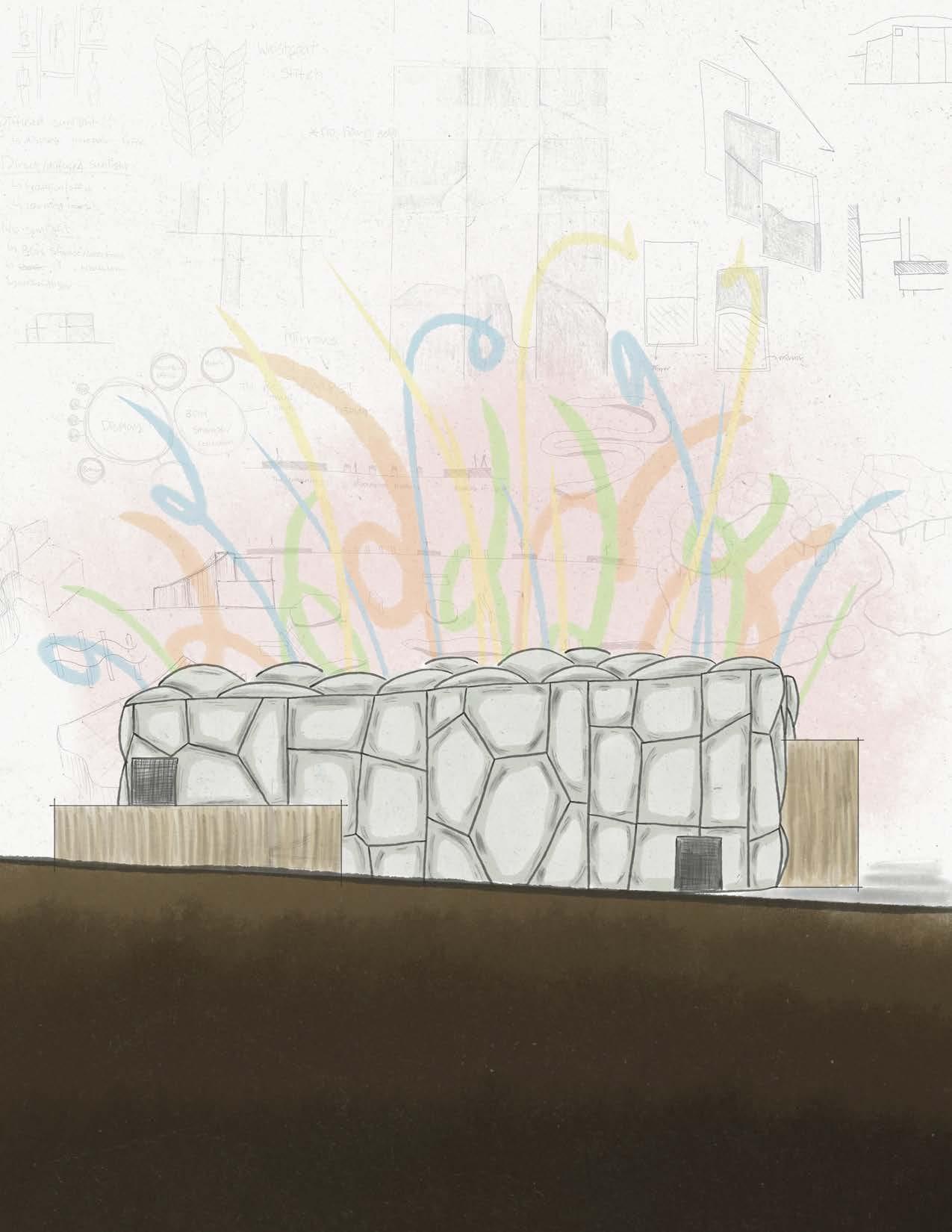
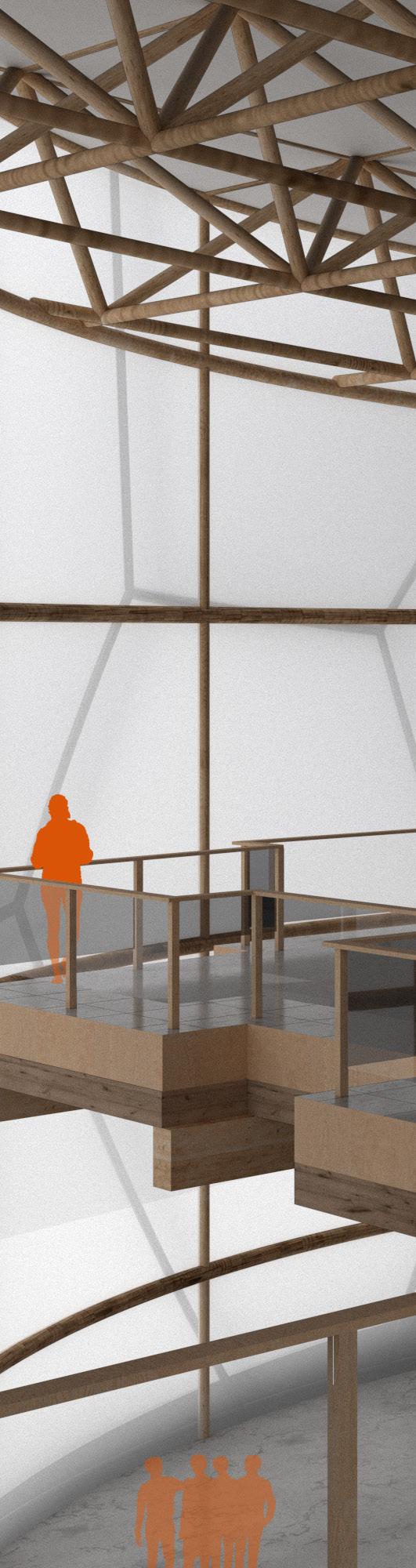
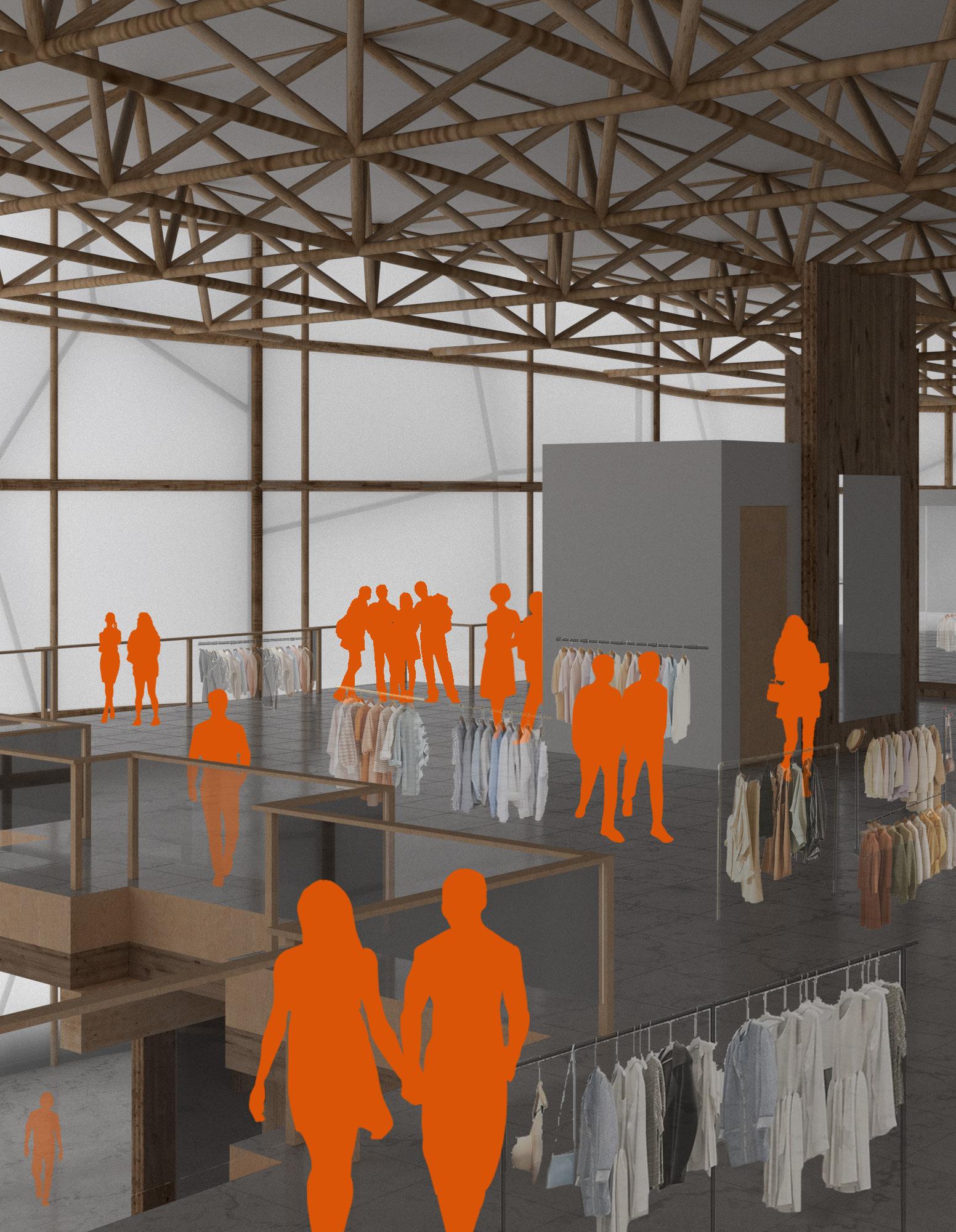
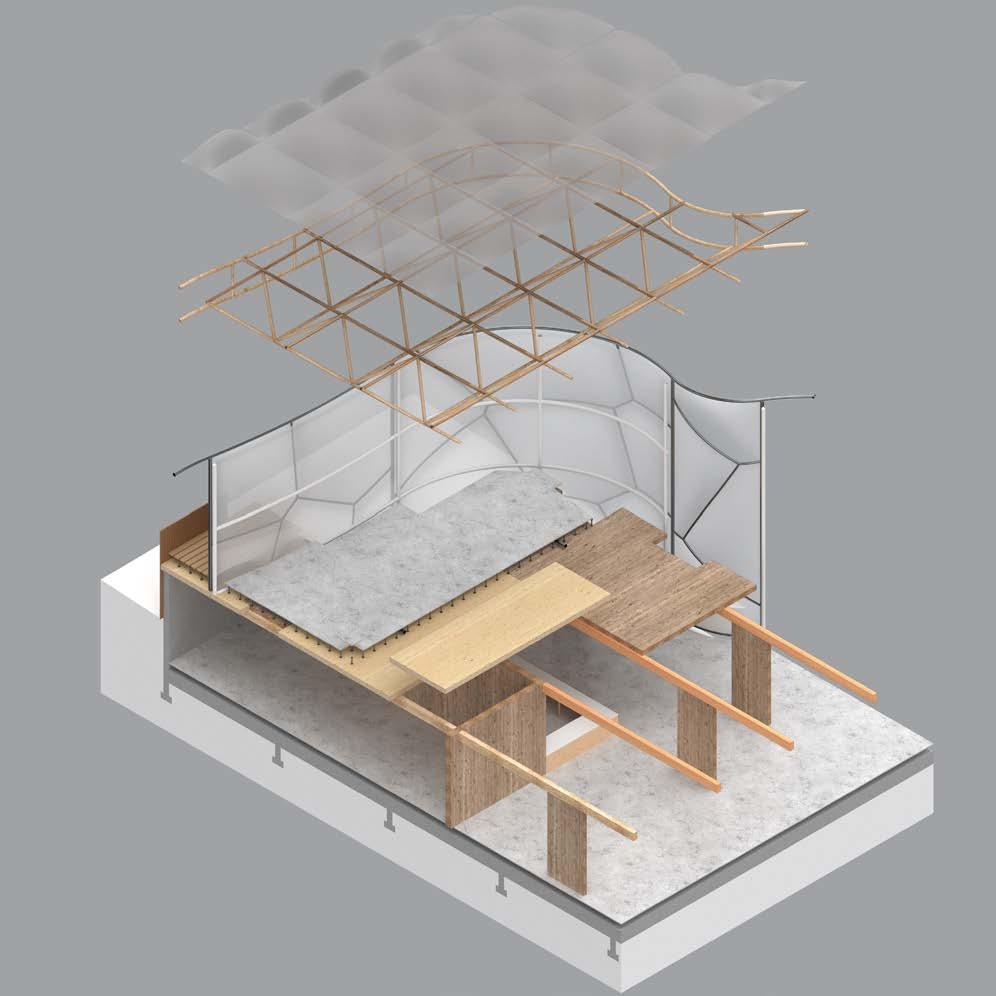
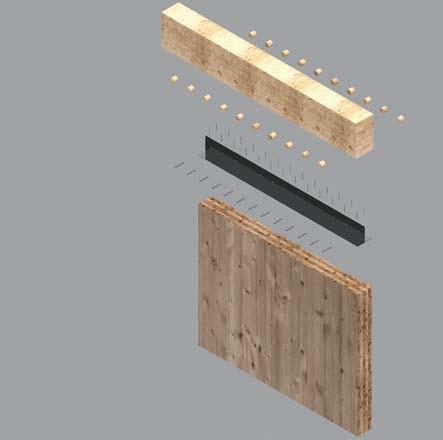
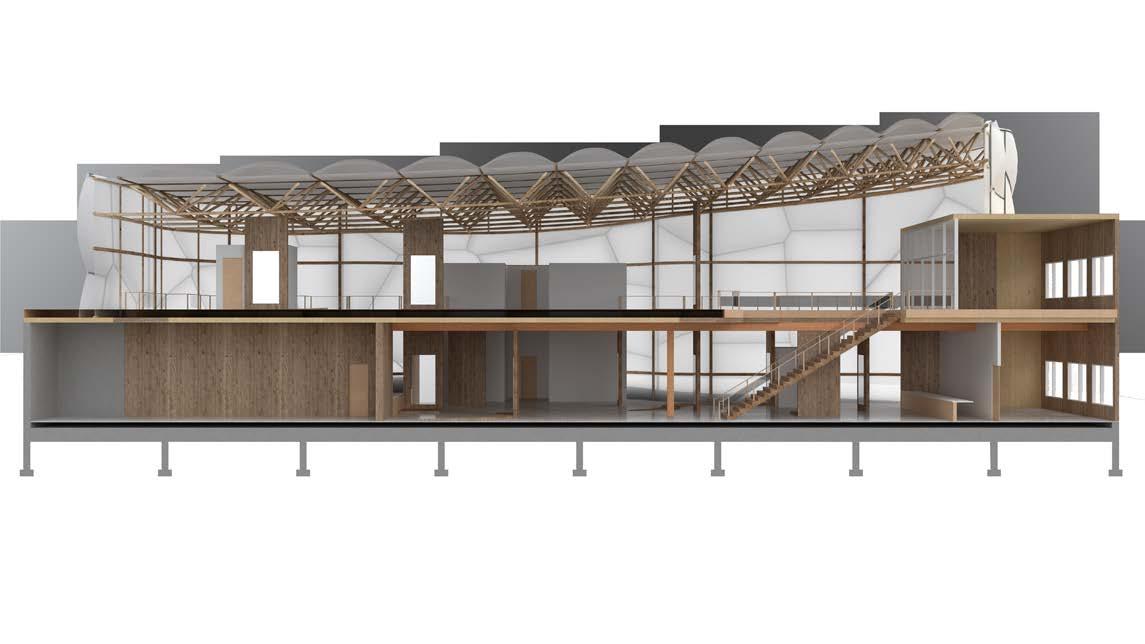
The Fashion Library reuses CLT panels from the First Nations Elementary School, Canada, and “cannibalizes” the parts into the design. The irregular panels shape the floor plate and frame the rest of the structural elements. A new wooden space frame roof and wall system hold up the ETFE which delicately diffuses the light into the building. Like that of a puffer jacket, the ETFE with the reused CLT makes a statement to continue reusing and repurposing clothing, and architectural materials, in a circular economy.
Fashion production comprises 10% of total global carbon emissions. However, 85% of all textiles go to dumps each year. Fast fashion impacts a wide range of environmental factors, but the three main ones are water, microplastics, and energy.
Fashion trends follow a 20-year cycle in which styles come and go, and The Fashion Library will take advantage of this and become a resource to rent, sell, and learn about clothing. This library will archive the recurring trending items for future return, and provide learning opportunities about the different trends and styles. This will take part in the circular economy of fashion by slowing down the rapid production of clothing through a rental system.
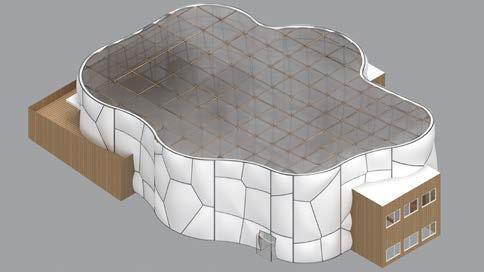
ETFE ROOF
WOOD SPACE FRAME
DOUBLE LAYER FACADE FRAME
ETFE FACADE
RAISED FLOOR DECKING
REUSED 7-PLY CLT
ACCESS FLOOR SYSTEM
NEW 7-PLY CLT
NEW GLULAM BEAMS
REUSED GLULAM BEAMS
REUSED 5-PLY CLT
CONCRETE FOUNDATION AND SHEAR WALLS
Study Abroad Studio - Scan Design
LOCATION
TYPE
COLLABORATORS
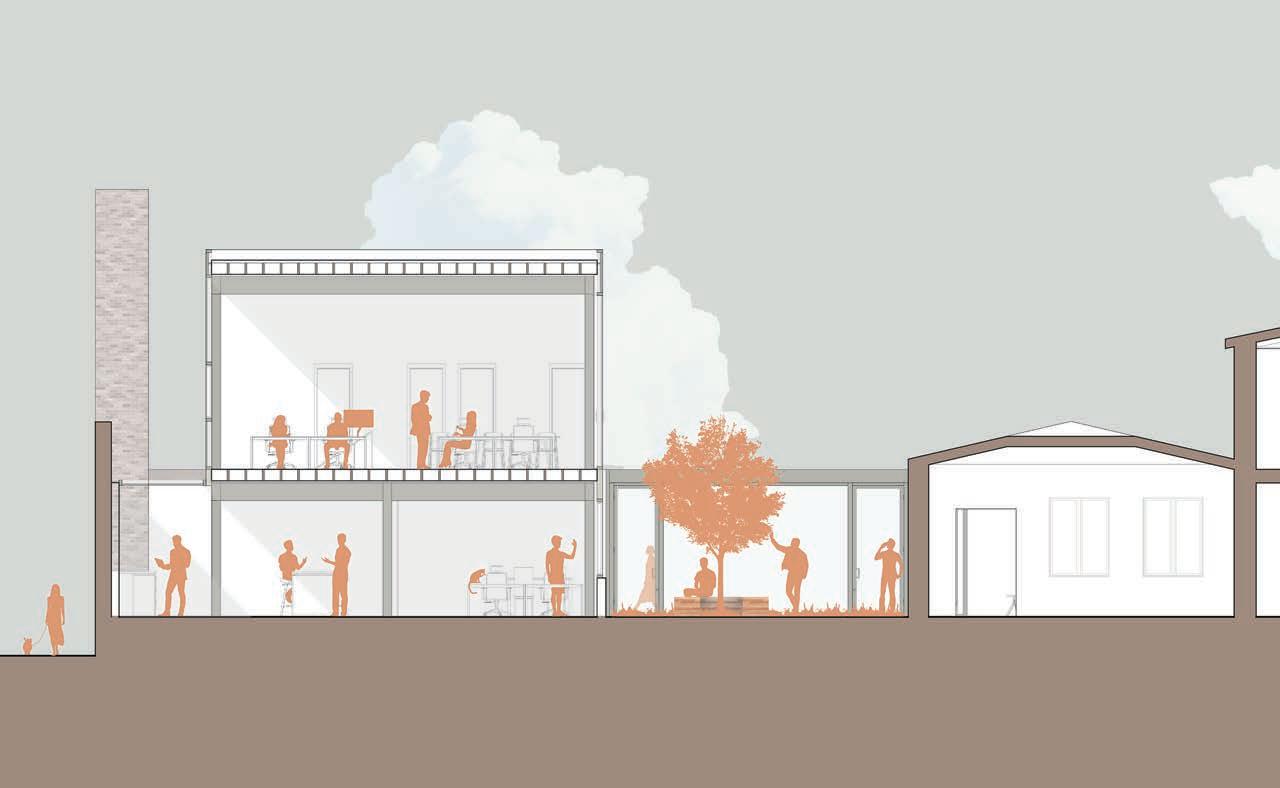
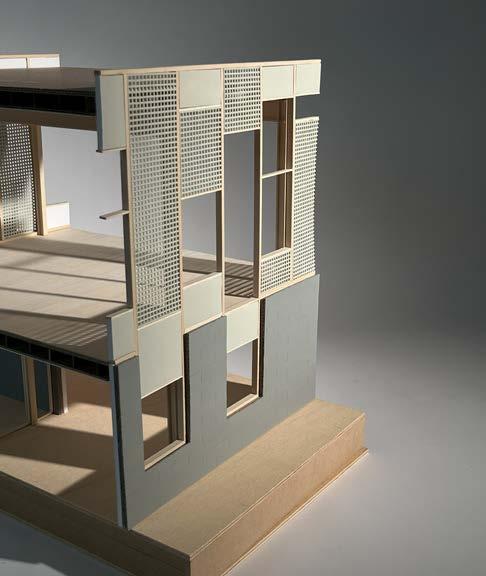
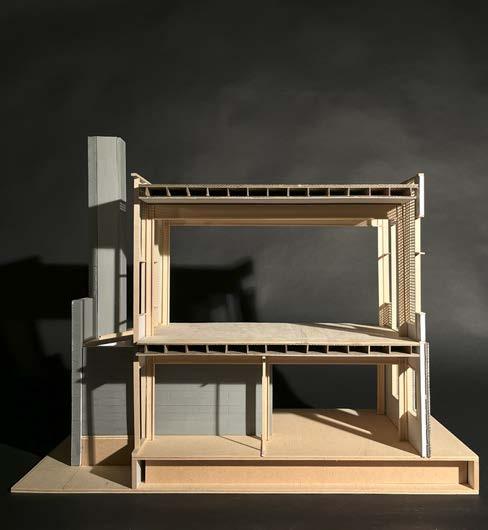
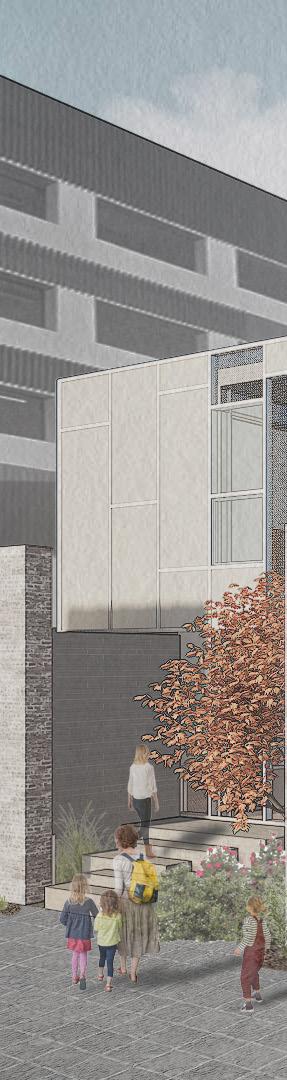
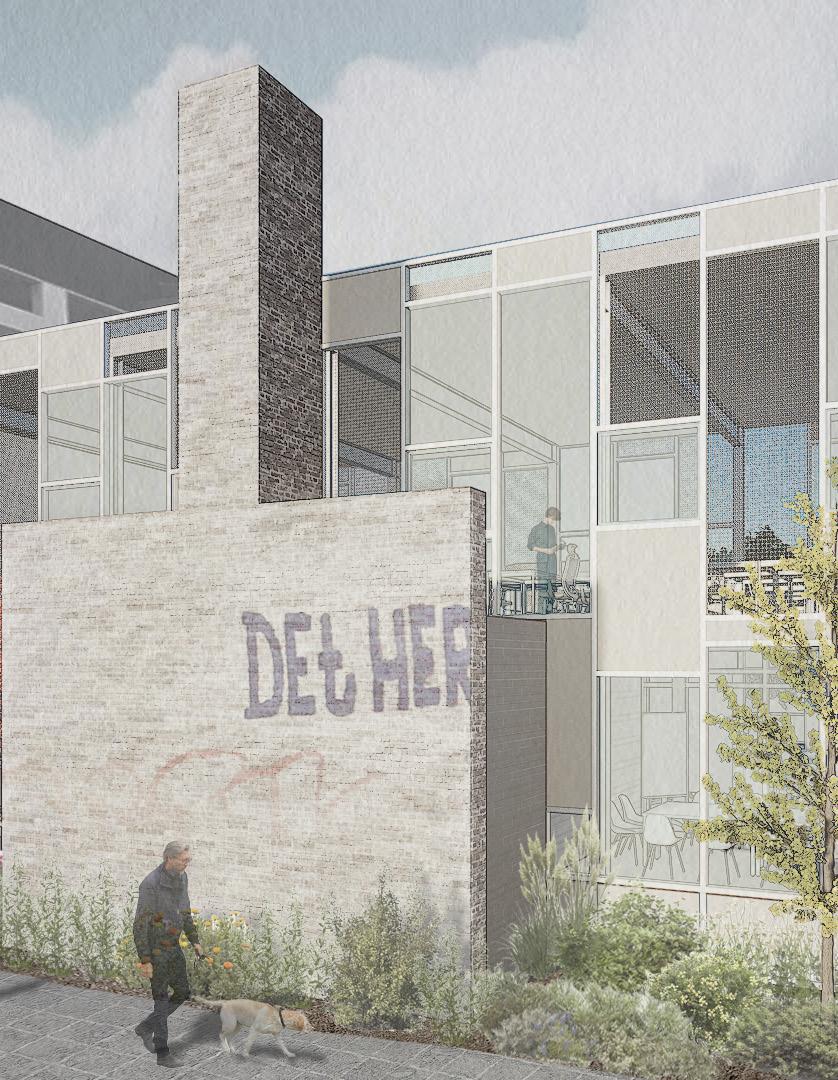
This is a transformative design project for an office building for Lundgaard & Tranberg Architects in Denmark.
The concept evolved from a light box on top of a heavier first level to a light box that weaves into the mass below.
Inspired by the peripheries of the remnants visible on the site, the new design preserves parts of the South firewall. This creates new peripheries that establish a transition between the old and the new and reinforce the evolution of the site and its already existing layers.
There were various material qualities that informed and inspired the design. The new materials build upon the layers of time that were visible and continue to participate in the evolution of the site. The design forms a lightness to the new elements through a combination of various transparencies.
The new addition connects the two parts of the building with a light breezeway, forming a private and a public courtyard. The breezeway can be opened to combine the two courtyards and invite the public into the more secluded parts of the site.

CONFERENCE

PUBLIC COURTYARD
KITCHEN BREEZEWAY

GATHERING
OFFICEDESKS
CONFERENCE

LOBBY
CONFERENCE MODELWORKSHOP
OFFICEDESKS
PRIVATE COURTYARD
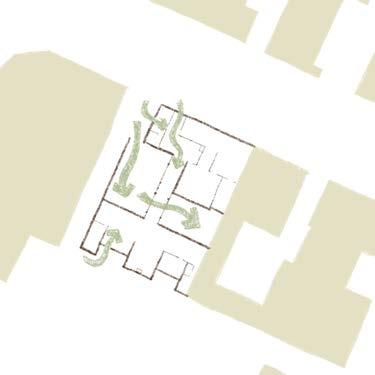
SITE FLOW DIAGRAM


PUBLIC
PRIVATE
SEMI-PUBLIC
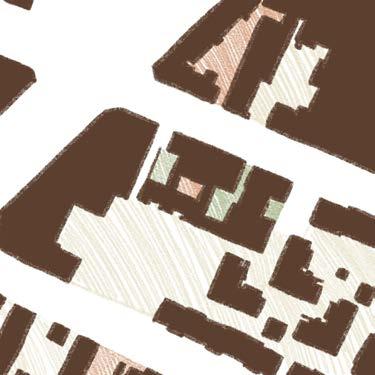
PUBLIC/PRIVATE SPACE DIAGRAM
Digital Fabrication Exploration
FABRICATION CNC MACHINE
3D PRINTER LASER CUTTER
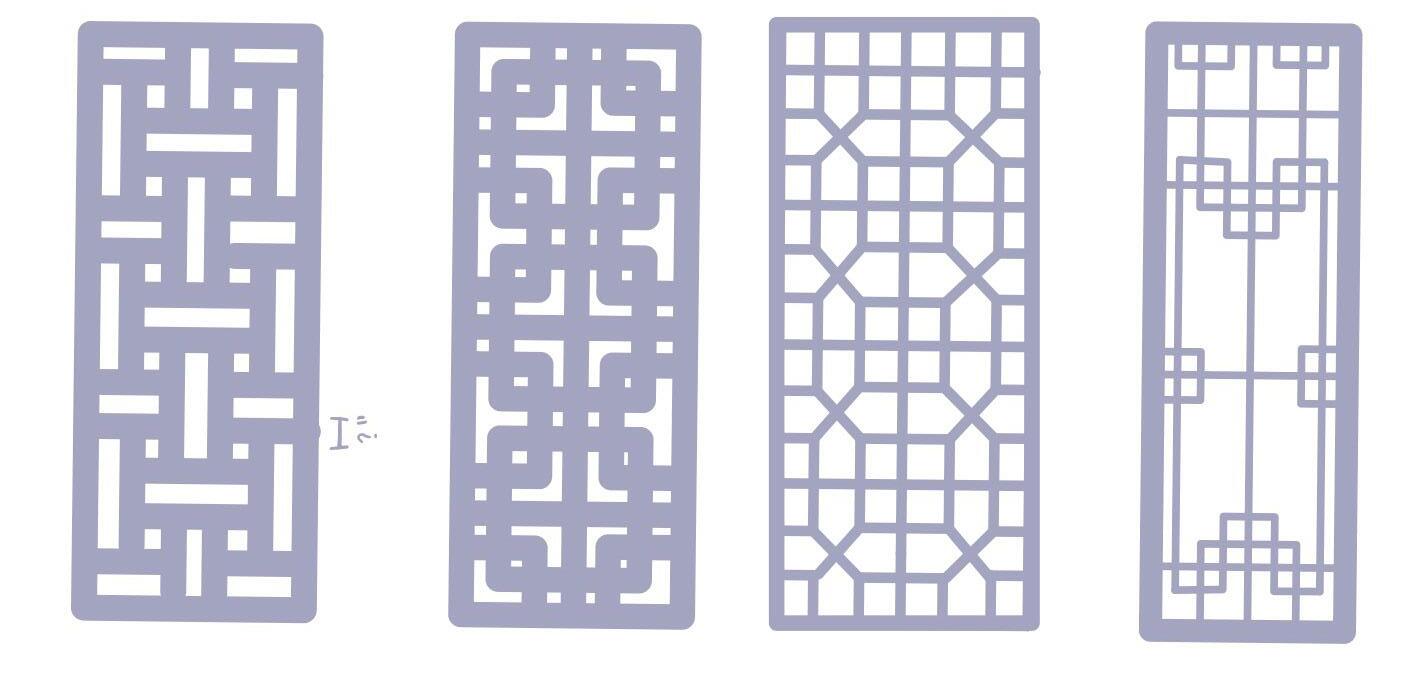
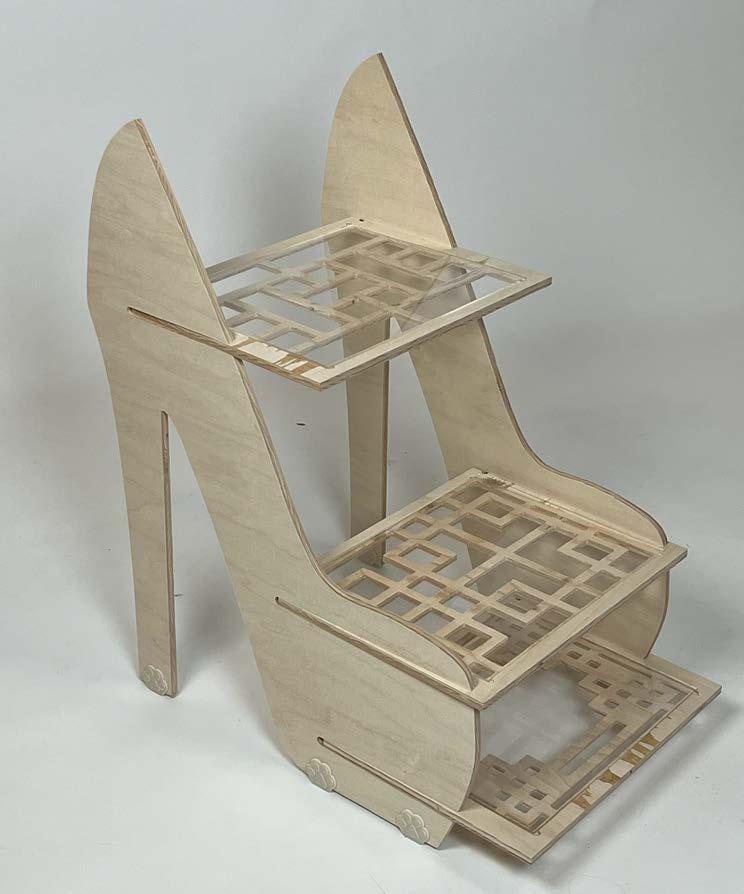
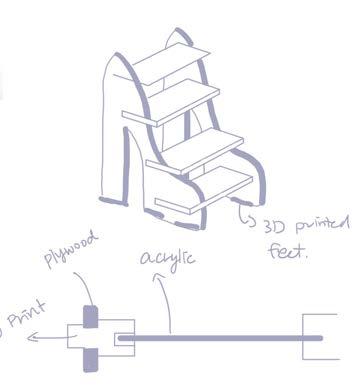
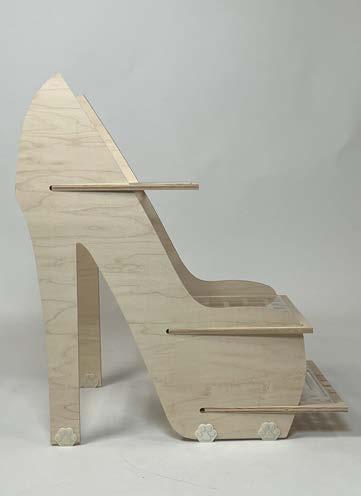
This project is a shoe rack in the shape of high-heels. The slots where the shoes are placed are designed in the patterns of traditional Korean window designs.
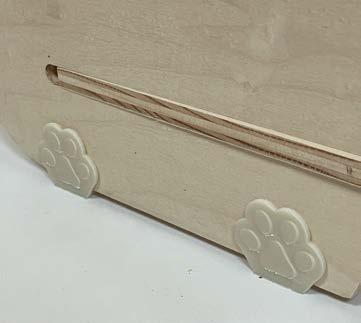
This project used CNC, 3D printing, and the laser cutter. The main structure and design was CNC-ed, the feet were 3D printed to protect the plywood, and acrylic film was laser cut to fit into the platforms to protect the design from dirt, dust, etc. from the shoes.
One difficulty that came up was the long CNC run time. I originally had the traditional Korean window designs to be pocketed, but it would have taken over 2 hours to pocket the design. Therefore I profile cut the wood with bridges instead. This made post processing longer, but the damage on the plywood was decreased.
V.THE WAVE Integration Studio II
LOCATION
RAINIER BEACH, WA, USA
TYPE MIXED-USE MULTIFAMILY
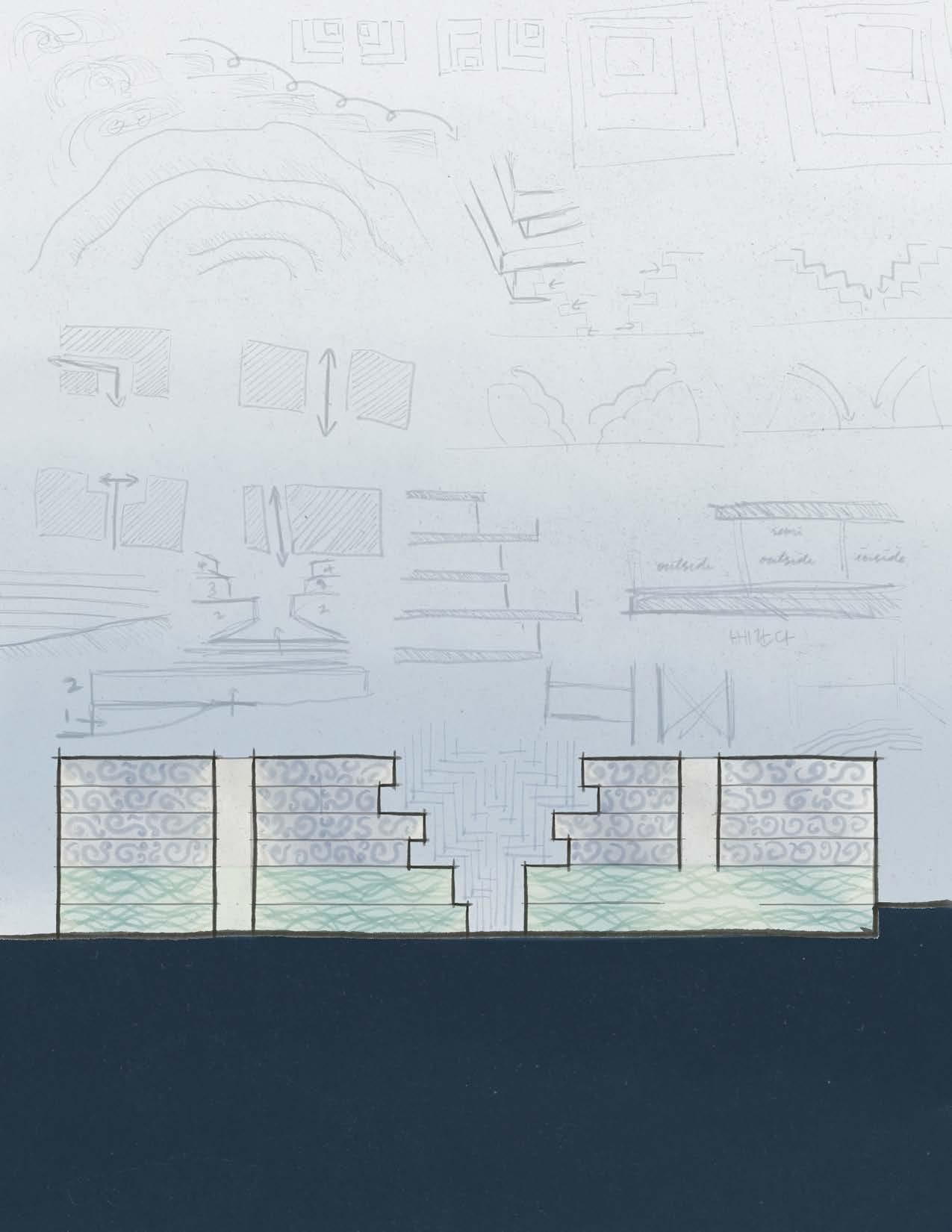
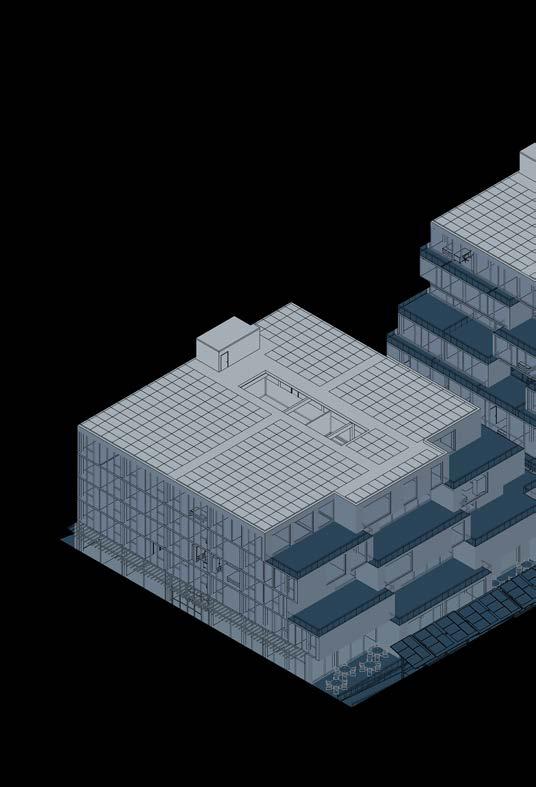
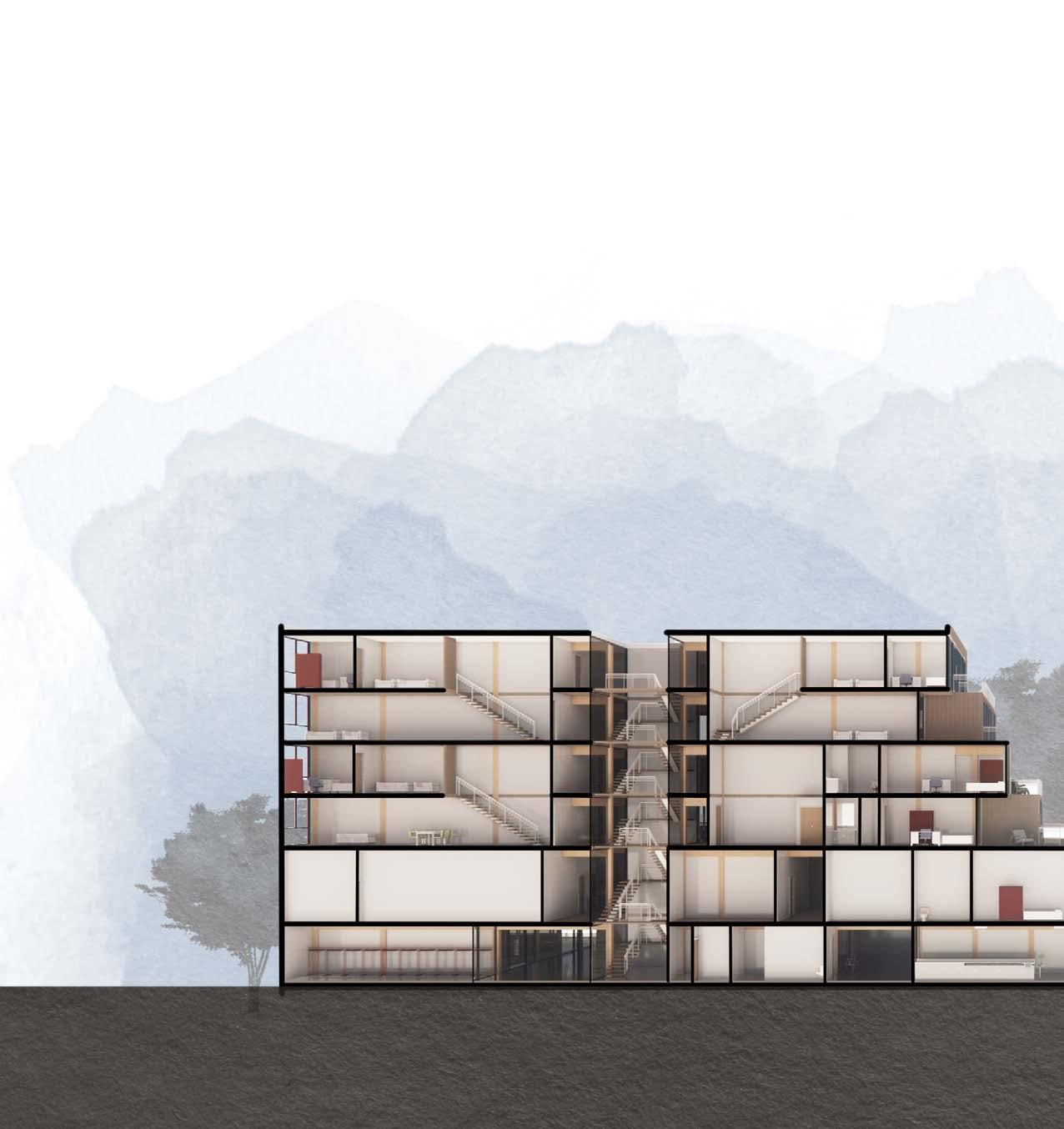
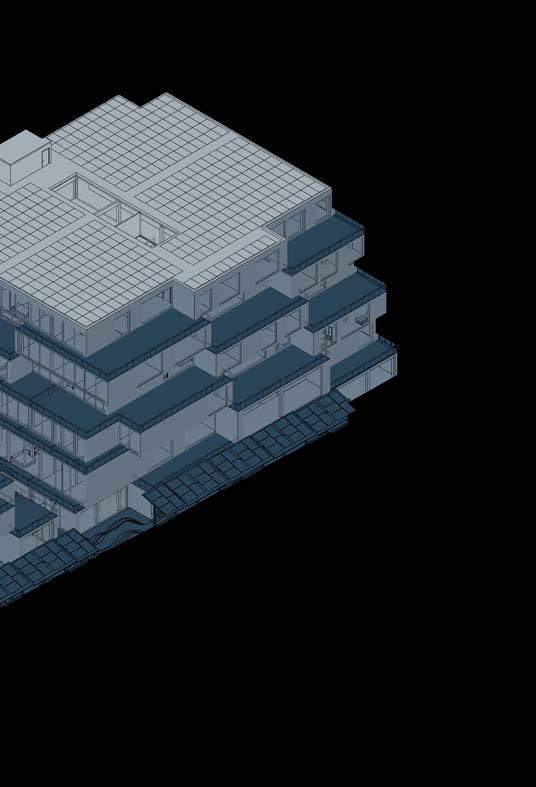
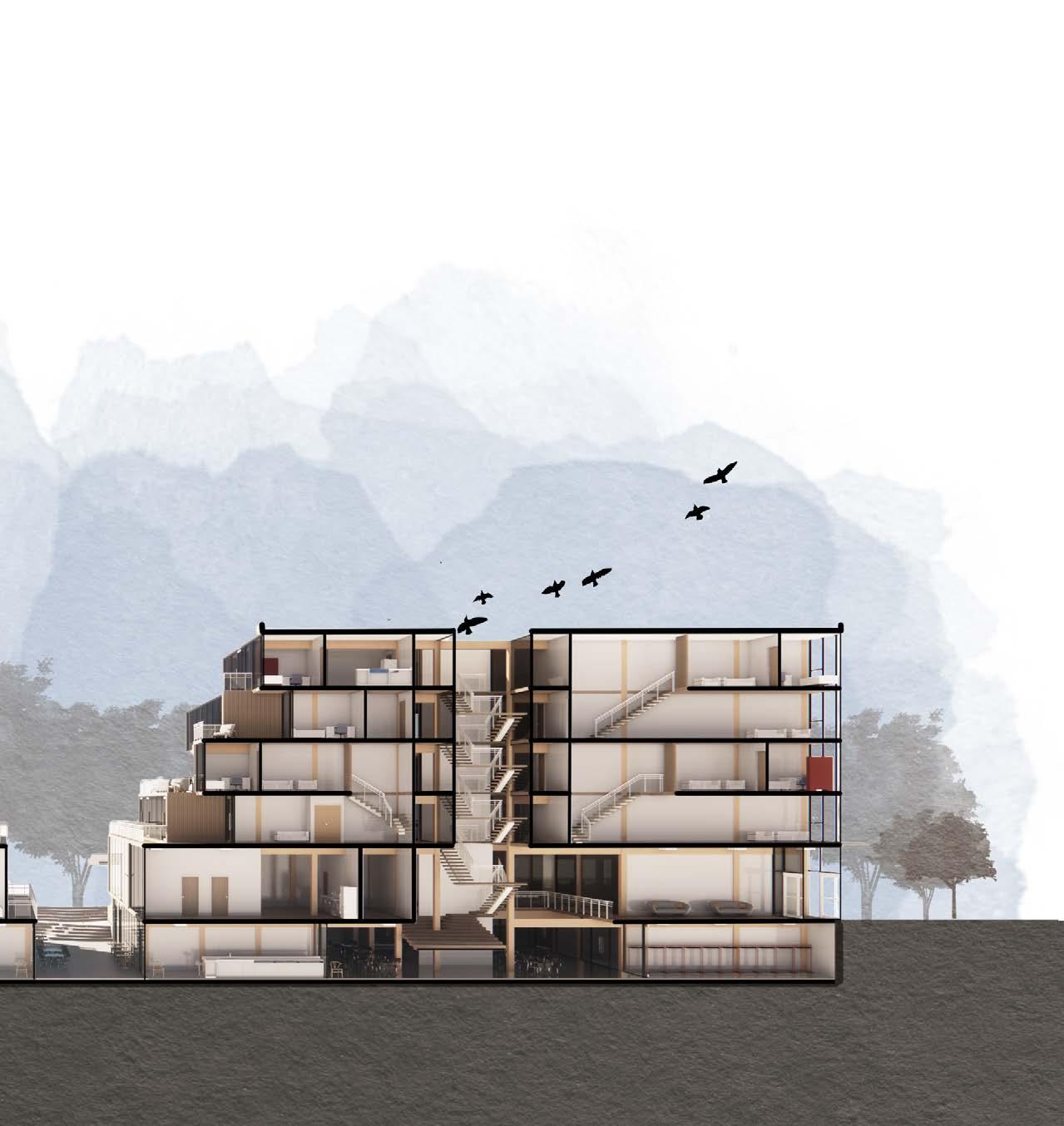
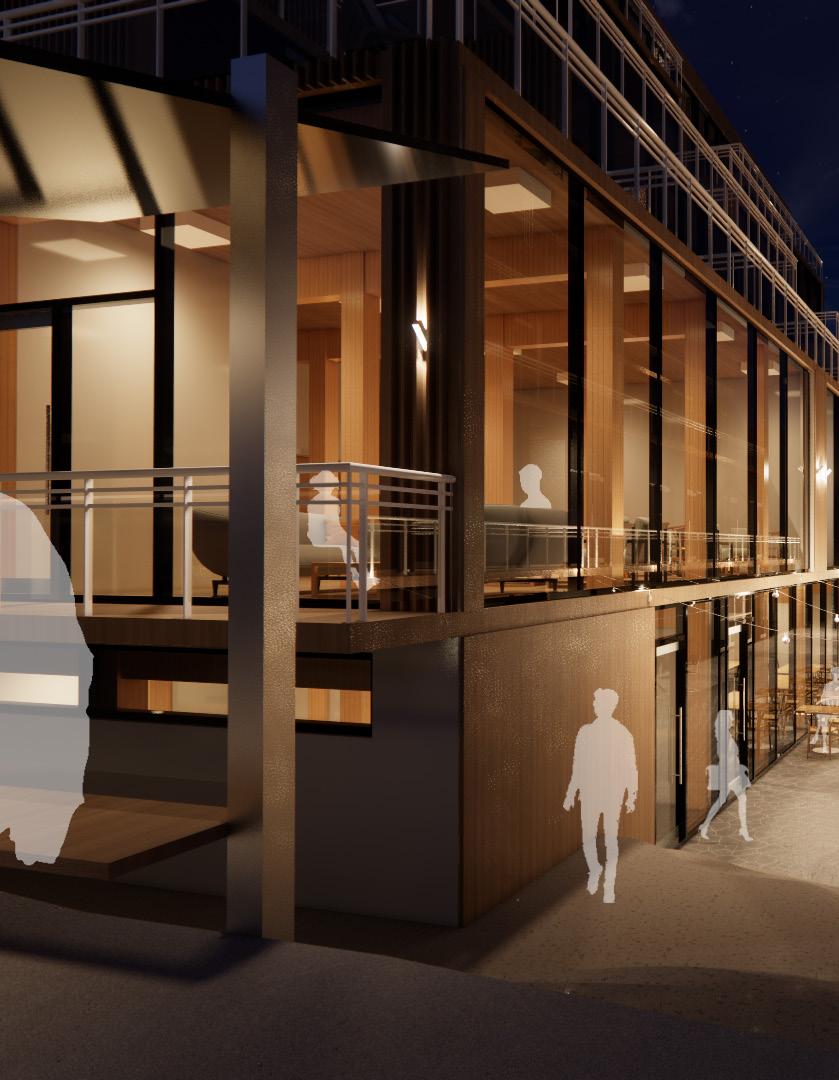
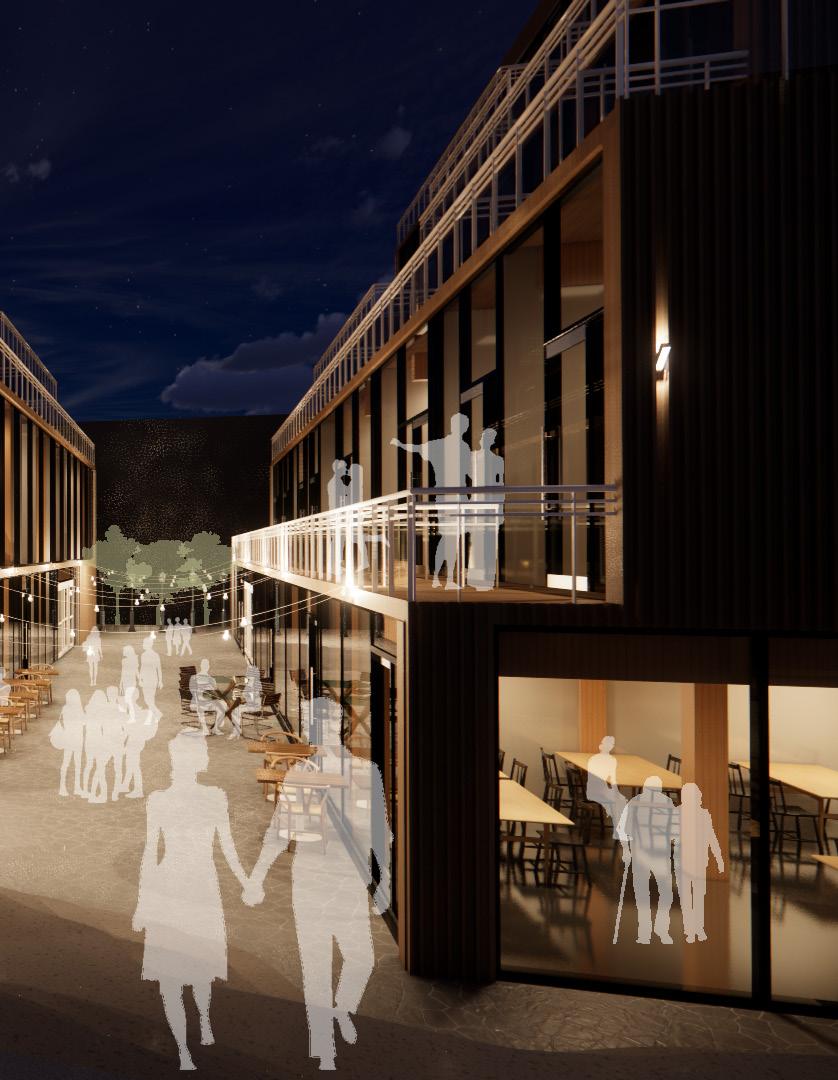
The WAVE is a mixed-use residential building with commercial first and ground floors and residential on the floor above. The site is planned to be re-zoned and rapidly developed with commercial on the first and ground floors. The WAVE activates the currently deserted Director Street into an active commercial center.
The WAVE is designed to create “neighbors” through public and private encounters. These encounters will provide opportunities for the residents as well as the community to interact and create a safe and lively environment.
To provide residents and surrounding communities with a variety of encounters, the design steps in and out to provide multiple levels of connections and privacy. People will be able to meet and encounter others in public spaces, and semi-private encounters are provided in the cores on each floor.
EVERGREEN Integration Studio III
LOCATION
TYPE COMMISSARY KITCHEN RAINIER BEACH, WA, USA
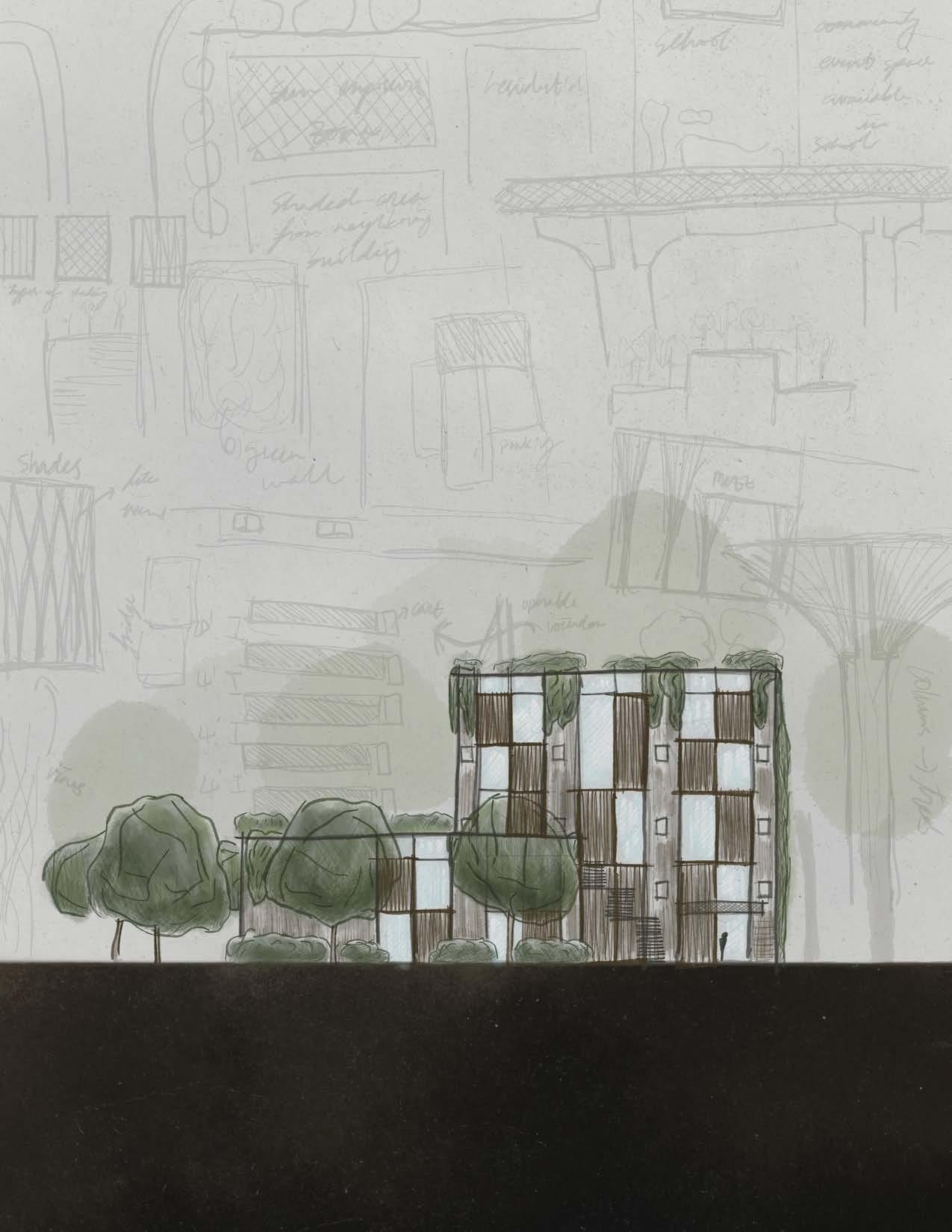
Evergreen is a community center that houses a commissary kitchen, a food court, community offices, and community classrooms. Located in Rainier Beach, Seattle WA, Evergreen incorporates seven of the Framework for Design Excellence Principles: Design for Ecosystems, Design for Water, Design for Well-Being, Design for Equitable Communities, Design for Integration, Design for Energy, and Design for Resources.
Focusing on Design for Ecosystems, Evergreen aims to restore and enhance natural environments within its footprint while also supporting and enriching the surrounding community.
WALK-IN FREEZER STORAGE
TRAINING KITCHEN OFFICES
SOLAR CONTROL THROUGH “VINE” SHADING DEVICES ON WEST GLAZING
OPERABLE POP-OUT WINDOWS
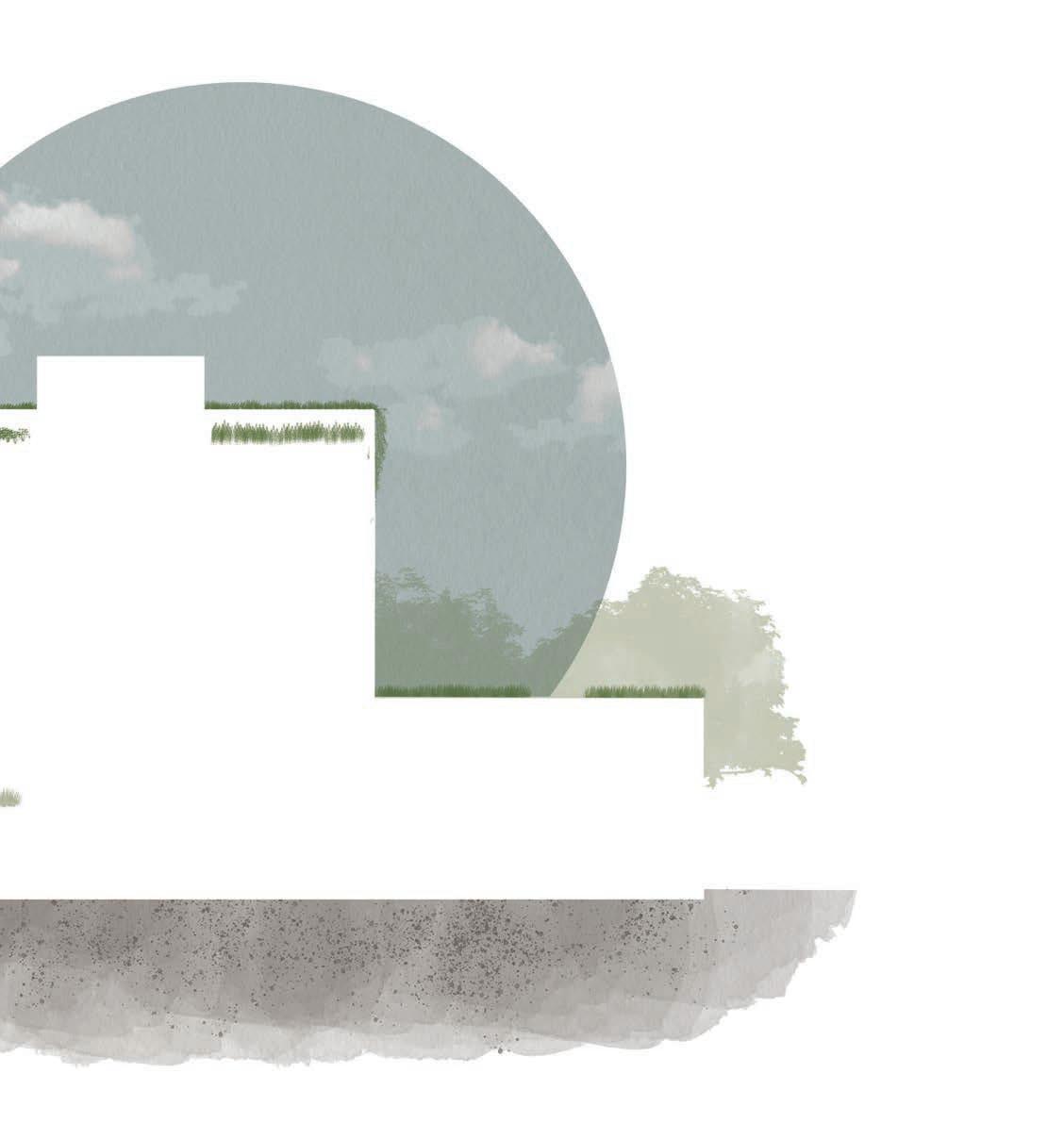
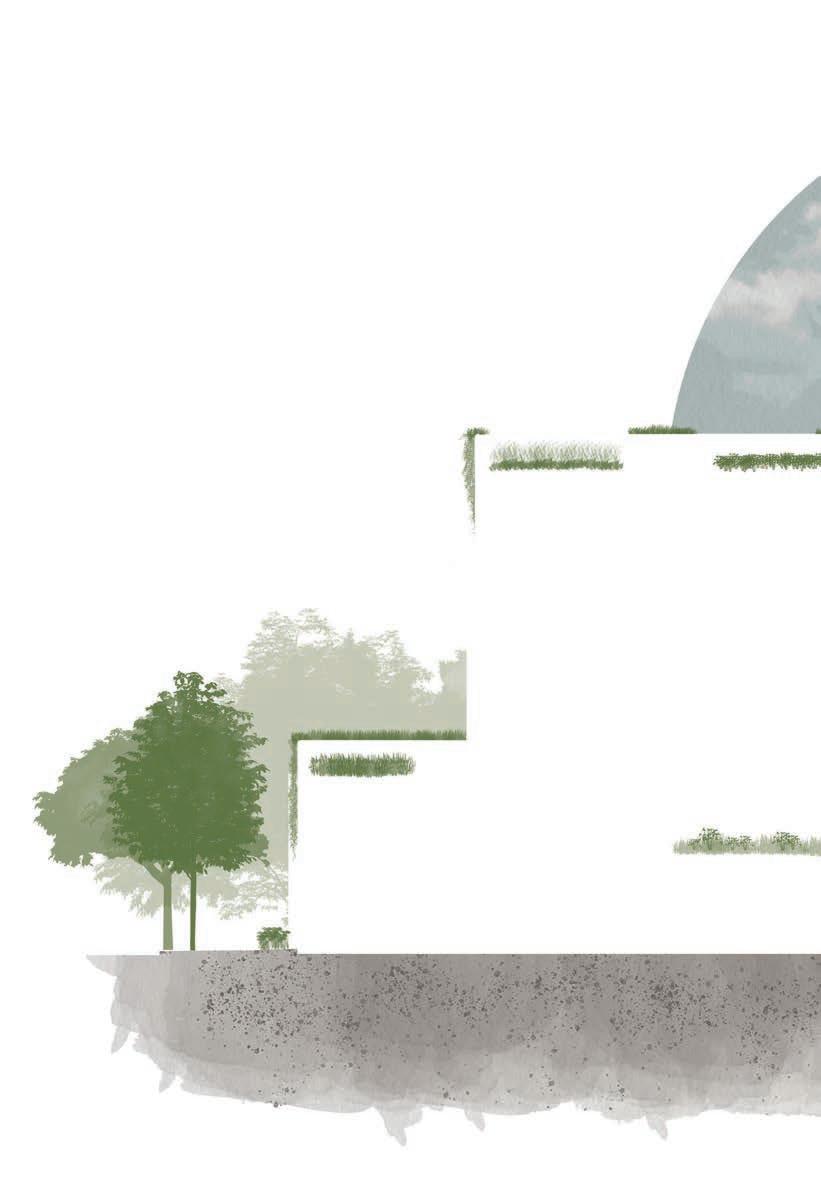
GREEN ROOFS GARDENS FOR EDUCATION USE OF NATIVE PLANTS ENGINEERED STRUCTURE TO HOLD GREEN ROOF TRAYS INTENSIVE PLANTS IN PLANTERS ECOSYSTEMS
WATER
RAINWATER + GREY WATER USED FOR IRRIGATION
RESOURCES
LOCAL MATERIAL USED FOR FACADE CLADDING LOW CARBON TIMBER FOR STRUCTURE LOW CARBON AND MINIMAL USE OF STEEL
ACCESS TO DAYLIGHT IN KITCHENS - UPPER WINDOWS TO ALLOW WALL STORAGE
WELL-BEING EQUITABLE COMMUNITIES ENERGY
ACCESS TO “TO-GO” WINDOWS FROM THE STREET (BEYOND) SEATING AND RESTING PROVIDED IN GROUND LEVEL LANDSCAPE BIKE RACKS NEAR ENTRY
HEATING/COOLING
RADIANT COOLING/HEATING FROM GROUND SOURCE HEAT PUMP (IN MECH RM; TYP.)
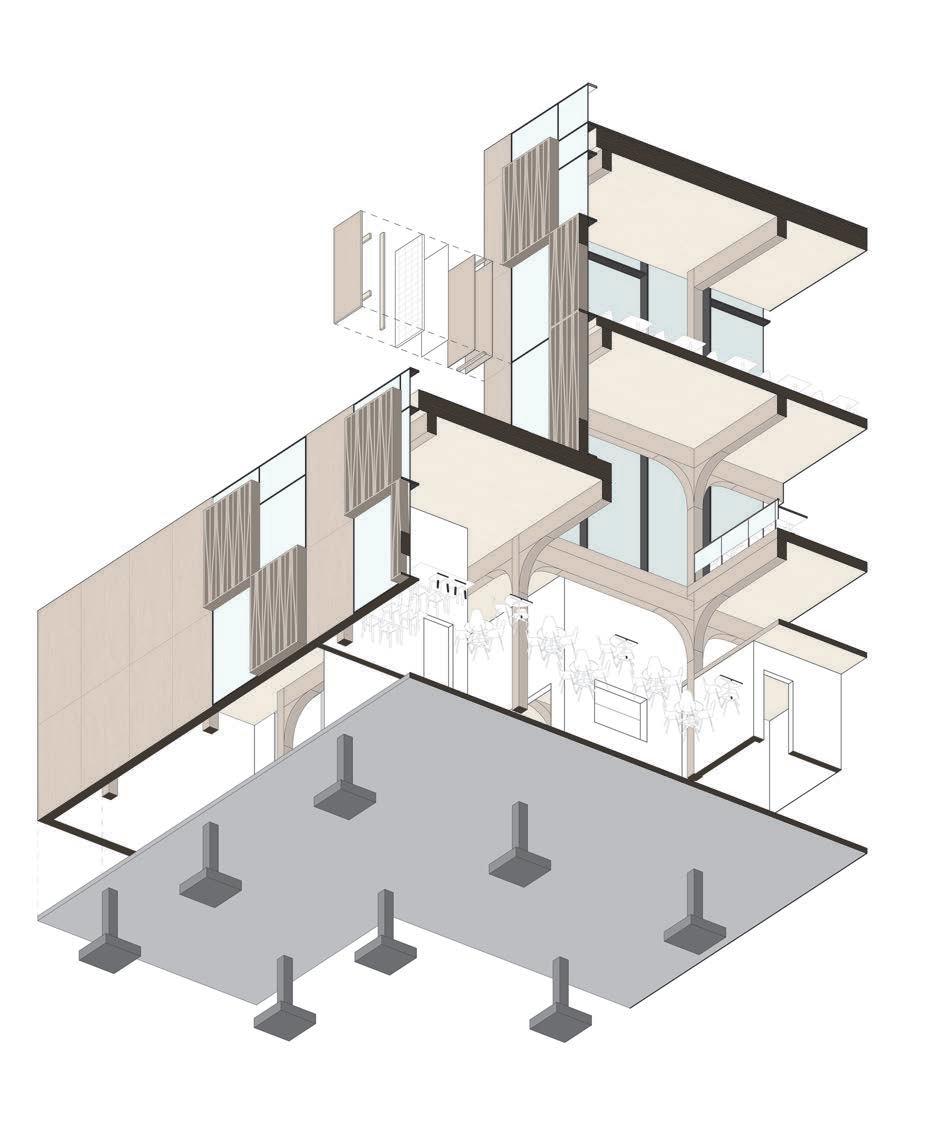
Rigid Insulation
Moisture/Vapor/Air Barrier
Wood Sheathing
Wood Studs with Rigid Insulation
Wood “Vine” Shading Devices (Fixed)
Operable Pop-Out Windows (Low-E, Double Glazed)
7-PLY CLT Floor Panels
Glulam Columns (1’)
Glulam Beams (1’ x 2’)
Glulam Brace Connections
6” Concrete Foundation Slab
Concrete Column Spreads
COMMUNITY ROOM
FOOD HALL
ROTATING VENDORS
WALK-IN FREEZER STORAGE
WALK-IN COLD STORAGE
WALK-IN DRY STORAGE LOBBY
TO BE CONTINUED