The Hyde Park Collection of Fine Jewelry & Timepieces 2025
Editorial Director
Jennifer Ferkenhoff
Jewelry Editor
Erin Otto
Watch Editor
Adam Soshnick
Design Director
Laura Manthey
Photographer
Alvin Nguyen
Public Relations
Caroline Kallman Joffe
Contributors
Jack Forster
Oren Hartov
Roberta Naas
Nancy Olson
Serge Panczuk
Eléonor Picciotto
Kristen Shirley
On the Cover:
Photography by Alvin Ngyen
Styling by Heidi Meek for The Wall group Makeup by Deb Chung
Hair by Louise Moon
Photography Assistance by Chuck Roque, Katherine Palmer
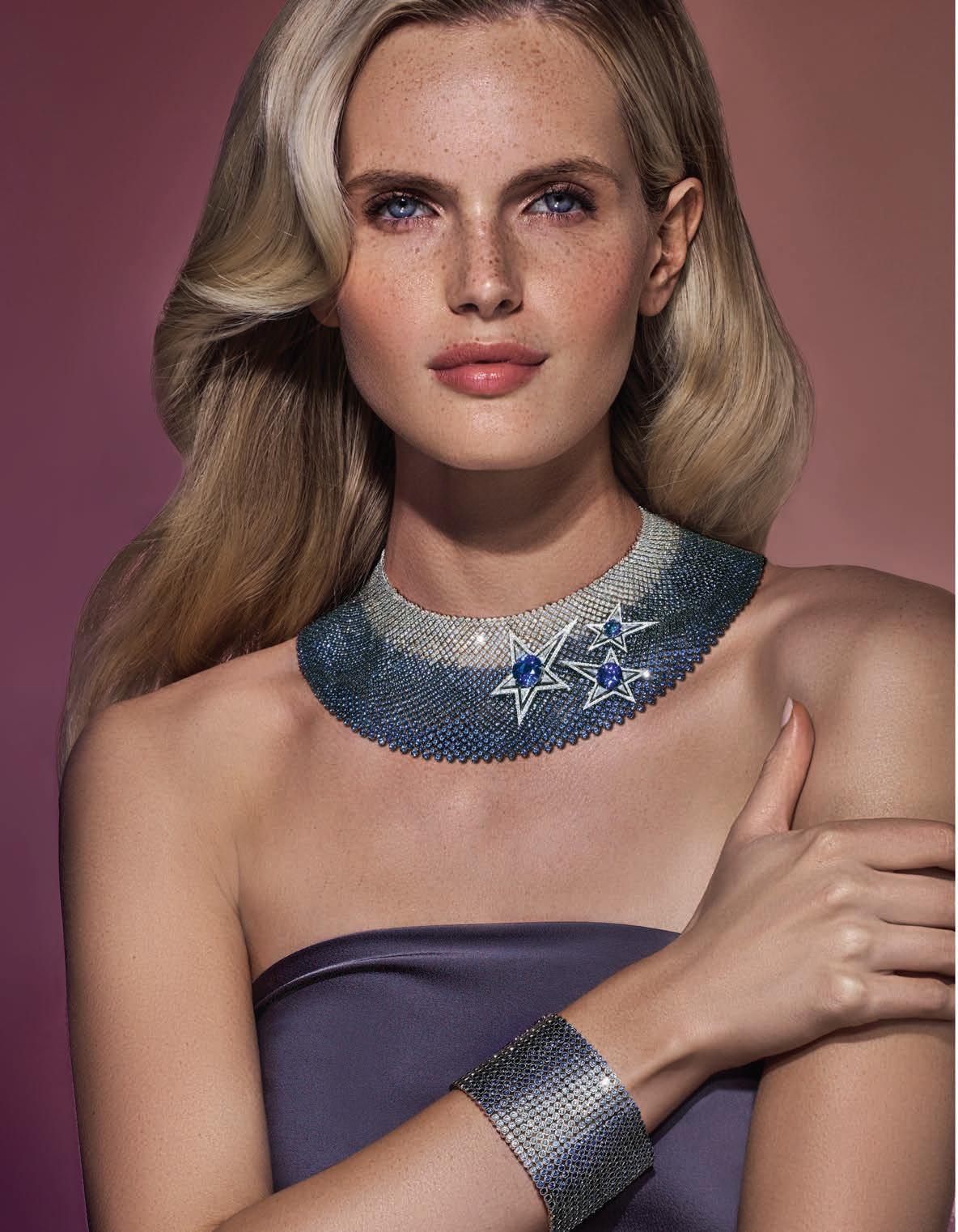
Morgan Fletcher (The Industry) wears Hyde Park Collection diamond and sapphire collar necklace, diamond and sapphire bracelet. Pricing available upon request.
This Page:
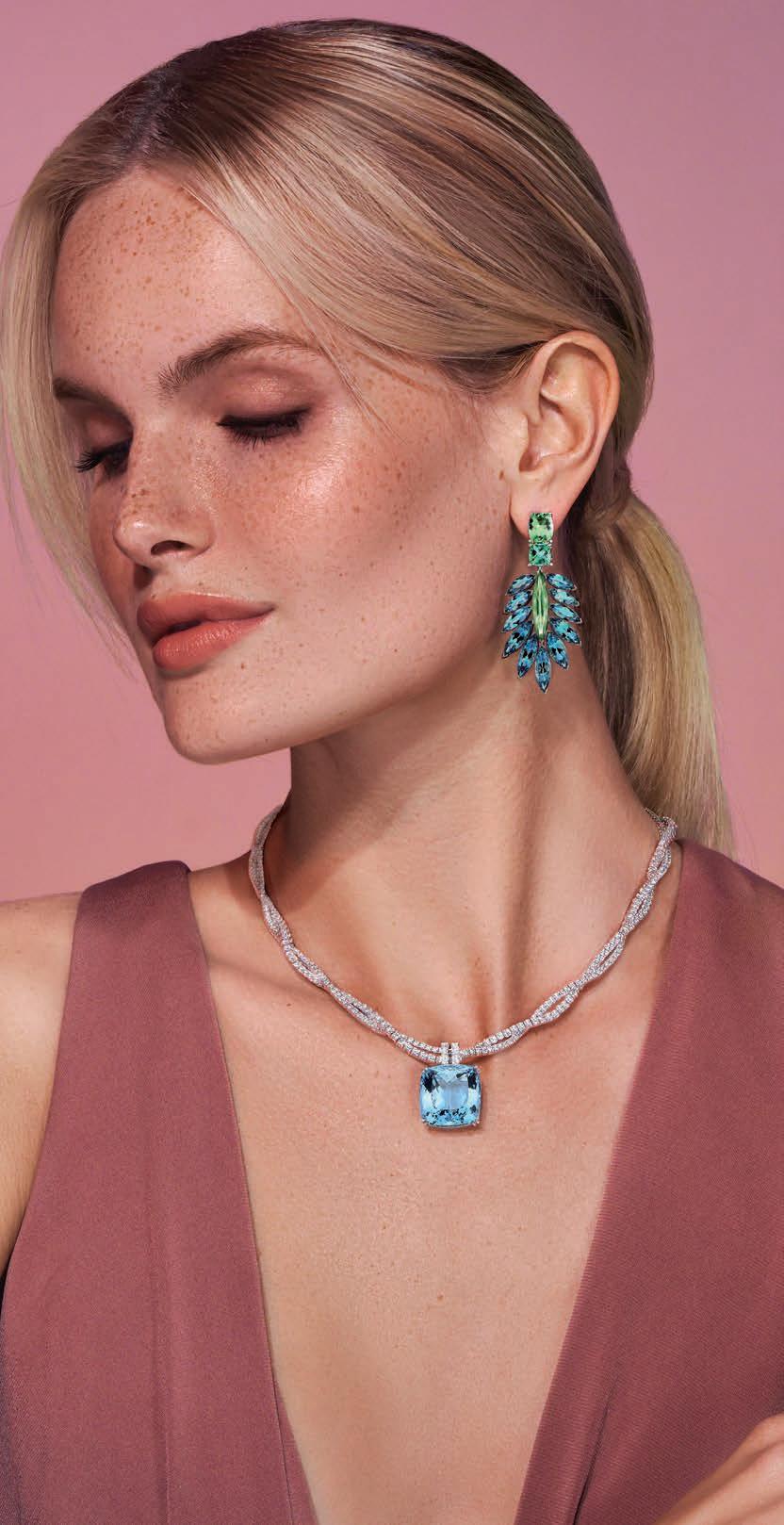
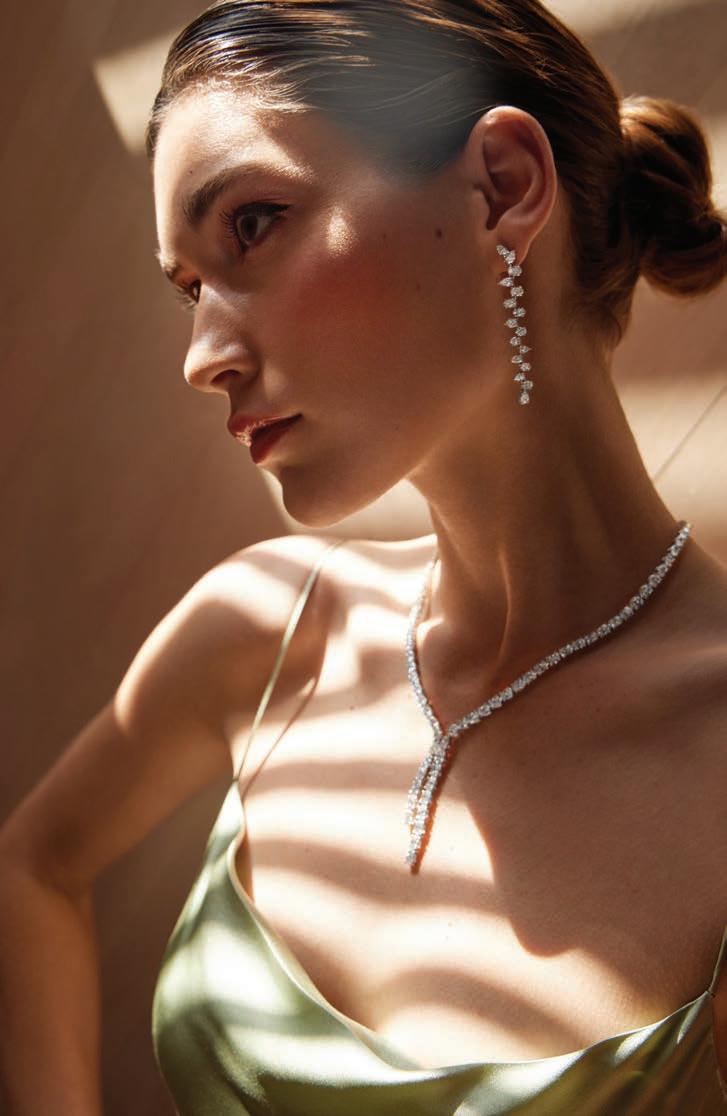
Morgan Fletcher (The Industry) wears Hyde Park Collection aquamarine and tourmaline earrings, and aquamarine and diamond necklace. Pricing available upon request.
Due to the fluctuating prices of diamonds, gold and platinum, prices are subject to change and may vary depending on size, quality and availability. Hyde Park Jewelers is not responsible for descriptive, typographic and photographic errors or omissions. Merchandise may be one-of-a-kind and subject to change. Some items enlarged to show detail.
For mailing list removal, please email unsubscribe-hp@the1916company.com
Welcome to a global community connected by a common fascination, with the world’s finest watches and jewelry at your fingertips. The 1916 Company connects the legacies of WatchBox, Govberg, Radcliffe, and Hyde Park Jewelers for a new era in collecting, content, and community.
Established in 2023, The 1916 Company represents a vision for the future of watch and jewelry collecting, merging four distinct companies under one, new unified brand to form the leading destination and community for fine watches, jewelry, education, and experiences. It is our pleasure to welcome you to our Collector’s Circle.
Coast to Coast and Around the World
The 1916 Company network includes more than 20 boutiques, showrooms, and Collector’s Lounges worldwide, granting you access to both new and collectible pre-owned timepieces, fine jewelry, and a dedicated team to help you navigate with ease.
The 1916 Company Retail Network Showrooms + Exclusive Brand Boutiques
Denver
Cherry Creek Shopping Center
The 1916 Company | Hyde Park Jewelers
Boutiques: Breitling, Omega, Tudor
Newport Beach Fashion Island
The 1916 Company | Hyde Park Jewelers
Scottsdale
Scottsdale Fashion Square
The 1916 Company | Hyde Park Jewelers
Boutiques: Breitling, Hublot, IWC
Schedule a visit as you travel the globe and connect with our client advisors at each location to confirm available brands and collections. Scan the QR code to explore our locations.
Philadelphia
The 1916 Company | Govberg Jewelers
Ardmore
The 1916 Company | Govberg Jewelers
Baltimore
The 1916 Company | Radcliffe Jewelers
Delaware
The 1916 Company | Radcliffe Jewelers
Opening
2025
The 1916 Company Collector’s Lounges
New York Collector’s Lounge
The Fuller Building | 595 Madison Avenue
Miami Collector’s Lounge 4141 NE 2nd Avenue
Manhattan Beach
The 1916 Company
Denver
IWC Boutique, Panerai Boutique
Newport Beach
IWC Boutique, Omega Boutique
A Dynamic Digital Experience
The collections, services, and expertise of Hyde Park Jewelers are now available exclusively through The 1916 Company.
Experience the full authorized brand portfolio of The 1916 Company – both watches and jewelry, complemented by our curated selection of pre-owned watches. Our inventory is ever-changing, and includes the most respected luxury watch houses, renowned jewelry designers, emerging independent brands, discontinued favorites, and so much more – from the extraordinary to the uncommon.
With the expertise and eloquence of Tim Mosso, Jack Forster, and The 1916 Company’s horologically-obsessed team, we bring you insight, opinion, and the world’s finest watches. Our global community and conversation come to life across a new content hub and two new Instagram channels. Follow along and let’s talk watches and jewelry.
upon request.
Hyde Park Collection Sapphire & Diamond necklace and earrings. Pricing available
CONTRIBUTORS
Jack Forster
has been fascinated by every aspect of watches, clocks, and watchmaking for his entire life. He began systematically studying and learning about watches over 20 years ago, and during the first explosion of watch enthusiast forums, he became a moderator on thepurists.com. Jack became a full-time watch writer in 2007, when he joined Revolution Magazine. He joined the enthusiast website HODINKEE in 2015 as managing editor and then as Editor-In-Chief. In 2022, Jack joined WatchBox, now The 1916 Company, as the Global Editorial Director. He is the author of Cartier Time Art: Mechanics of Passion, and has written about watches, and other subjects, for many other venues including CNN, and Vanity Fair
Oren Hartov
covers the watch industry for GQ, Esquire, Robb Report, InsideHook, Analog:Shift, HODINKEE, Watches International, MONOCLE, La Patiala, Gear Patrol, Worn & Wound, and more. A graduate of the Berklee College of Music and a military veteran, he can be found writing songs and playing guitar in Los Angeles and SCUBA diving around the world.
Eléonor Picciotto
was raised in the Parisian watchmaking industry, Eléonor moved to the U.S. to study journalism in Boston then worked at Harry Winston in New York City for two years before landing in Geneva in 2012 to launch the MB&F M.A.D. Gallery. She then toured the Pacific for seven months ending her trip in French Polynesia learning everything about black pearls which gave her the idea of The Eye of Jewelry, an editorial website dedicated to the world jewelry. Based now between Geneva, Paris, and the rest of the world, she combines her watch pedigree and her knowledge of haute-joaillerie and fine jewelry to give a 360° angle about this dazzling industry. Eléonor serves as the editor-at-large of Revolution Magazine is currently shaping the jewelry channel of The 1916 Company.
Nancy Olson
has been in the publishing industry for over 20 years and has written extensively about watches, writing instruments, jewelry, and other luxury accessories. Nancy enjoys traveling the world in search of the best, bringing new information and insights to those who appreciate craftsmanship and quality. In addition to her freelance work, Nancy is managing editor at iW magazine.
CONTRIBUTORS
Serge Panczuk
Roberta Naas
is a veteran watch and jewelry journalist who began her career in the early 1980s, and was the first female watch journalist in the United States. She is the editor and founder of the authoritative watch blog, ATimelyPerspective.com, has written six books on watches, writes for numerous consumer publications – and always brings forth in her work the essence of what makes watches tick.
is a citizen of France and Switzerland and currently lives in Orange County. The “watch bug” hit him when he lived in Geneva for many years. During his time in the most famous watch city in the world, Serge had the opportunity to be very close to not only the timepieces, but also people who create, make and sell them. Serge has been a contributor to many international magazines and watch blogs, including Nobleman Magazine, GMT Magazine, Worldtempus, Watches Magazine and more. To talk watches with Serge, email serge@panczuk.com or find @serge92604 on Instagram.
Alvin Nguyen
Kristen Shirley
is the founder of La Patiala, the luxury encyclopedia. She is a luxury expert who specializes in travel, fashion, fine watches, jewelry, wine and spirits. Kristen is a contributing editor for leading publications, including Forbes.com and Nobleman Magazine. Her work has appeared in Bloomberg Businessweek, Departures, Business Insider, Luxury Tribune, and Editorialist. Previously, she was the Luxury Editorial Director at Elite Traveler, and began her career at ELLE magazine in the fashion department.
is a fashion photographer based in Los Angeles. With extensive work that spans more than a decade of experience focusing on luxury and beauty, he regularly works for global brands such as Elle,Vogue, Harper’s Bazaar, GUESS, and more. He is known for his unique take on lighting and color. As an artist, he loves exploring new concepts and bringing his clients’ vision to life. As a watch collector, his love for GMT and chronograph watches stems from his other passions, racing and travel.
Adam Soshnick
is a Denver-based watch enthusiast with a keen interest in vintage chronographs and off-the-beaten path brands. As Hyde Park’s Digital Marketing Manager, Adam combines his interest in digital media with nine years in the watch industry. Adam has been collecting watches since a young age and is excited to share his passion with you.
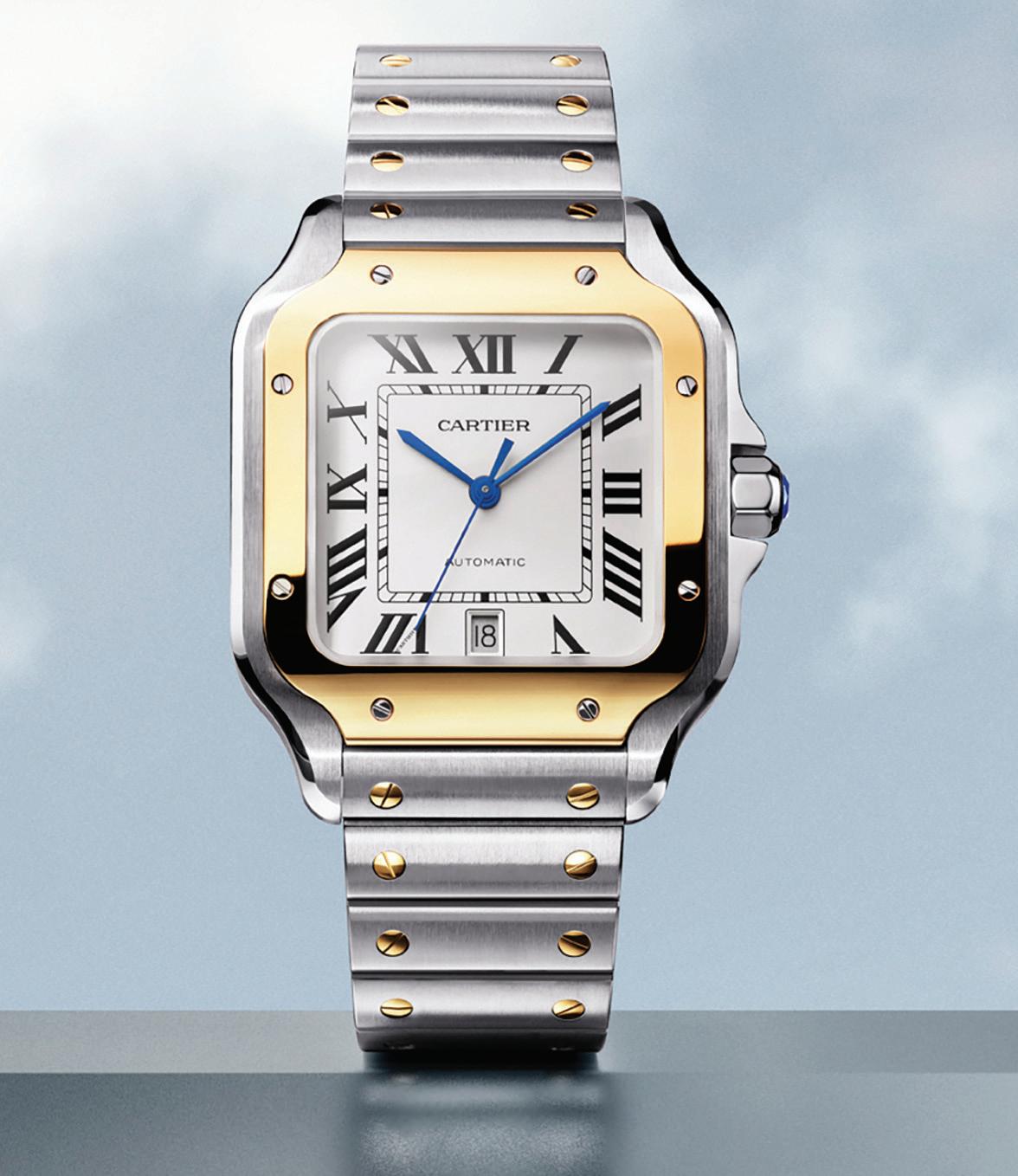
Santos de Cartier: Pioneering Design, Enduring Legacy
With its geometric lines, timeless design, and technical innovation, the 120-year-old Santos de Cartier watch blends classic elegance with a pioneering spirit to reach new heights.
By Roberta Naas
Cartier, the French Maison synonymous with timeless luxury, has been crafting enduring legacies since its inception. From jewelry to watches, the brand represents a blend of emotion, elegance, and unmistakable style. One such emblem of Cartier’s storied craftsmanship is its legendary Santos-Dumont and Santos de Cartier timepiece collections.
Originally introduced in 1904, the Santos watch was the very first wristwatch ever created by Cartier. It was the brainchild of Louis Cartier, who designed it for his friend, the pioneering aviator
Alberto Santos-Dumont – a visionary whose dirigibles once soared around the Eiffel Tower. Santos-Dumont had confided in Cartier that it was difficult to keep pulling his pocket watch out while trying to handle the controls of the heat and air at the same time.
Could Louis Cartier possibly have known that in crafting the first cushion-cornered square watch, complete with screws on the bezel, he was unleashing a creative verve that would endure for centuries? Because that is exactly what has happened.
A Legacy Reinvented: New Santos Timepieces
Fast forward 120 years, and the SantosDumont collection of Swiss-made watches has continuously evolved, blending classic style with top watchmaking prowess in perfectly proportioned works of wearable art.
The newest versions of this emblematic geometric timepiece reinforce the brand’s pioneering spirit and dedication to excellence. Cartier’s recent release of exciting timepieces: new Santos-Dumont watches and new Santos
de Cartier watches – continue the tradition of excellence. Both explore concepts of innovation, color, mechanical prowess and harmony.
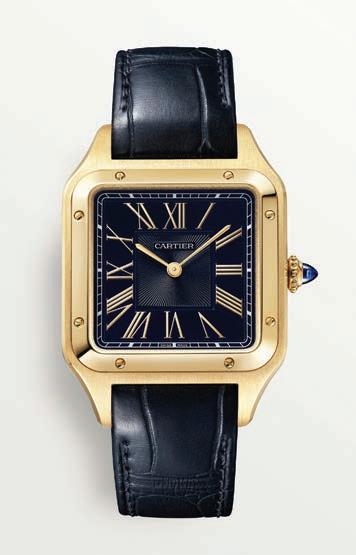
The three daring new Santos-Dumont watches are offered in noble metals such as platinum, 18-karat rose gold and 18-karat yellow gold, each with revolutionary stone Roman numerals on the dial.
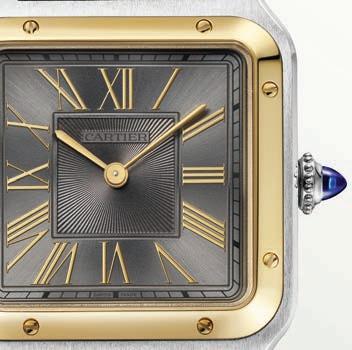
By turning to precious stones such as jade, jasper and dumortierite to form the Roman numerals on the dials of these Santos-Dumont
watches, Cartier demonstrates its adventurous ethos. In fact, the brand is one of the first watch companies to use the rare and coveted dumortierite – a member of the quartz family found in limited quantities in Brazil and Sri Lanka.
The creation of delicate Roman numerals made of these stones is no easy feat. Each piece is masterfully cut and polished, finely worked and then applied to the dial. Their depth and color are further enriched by a center dial in guilloché motif. Each watch boasts a matching cabochon-cut stone on the crown. Only the blue dumortierite features a stunning cabochon-cut crown of blue sapphire.
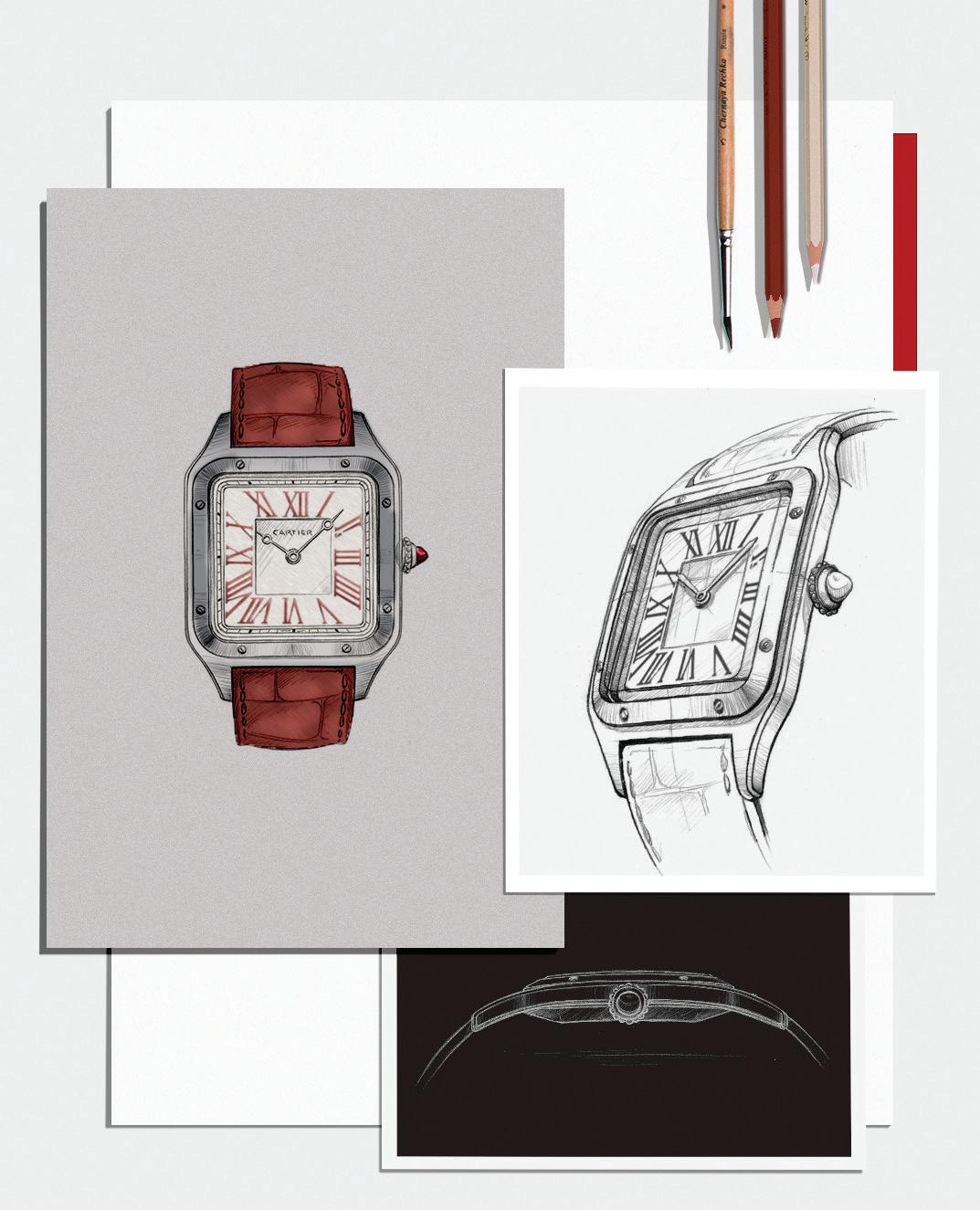
The deep navy blue (dumortierite) and dark green / gray (jade) stone numerals adorn the gold versions, complete with gold hands, while the rich red jasper is reserved for the platinum watch, with matchinghued steel hands.
The watches are powered by a hand-wound 430 MC mechanical winding movement. They are water resistant to 30 meters, feature an engraved caseback with Alberto Santos-Dumont’s signature and are finished with alligator straps. Just 200 individually numbered pieces will be made of each –attesting to the difficulty involved in the making of hardstone numerals.
New Santos de Cartier Watches
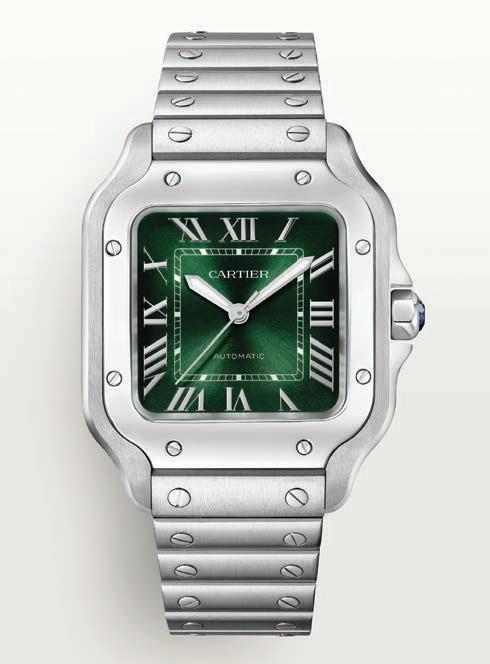
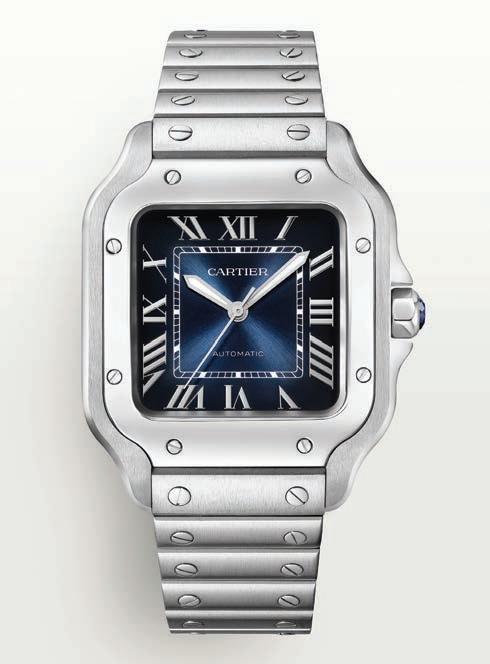
Bringing more color to the forefront, Cartier unveils three new Santos watches with boldly colored dials. The brand already had a Santos de Cartier watch with a navy blue dial, but now expands the selection by introducing three new stainless steel watches with alluring metallic dials. Each dial has a gradient – going from light in the center to darker at the outer edges – with one in green and one in bright blue. Thanks to an incredible hand-lacquered tinting, the lustrous dials are almost iridescent.
Available in two sizes, large (39.8mm) and medium (35.1mm), these watches are equipped with an 1847 MC automatic movement and boast a stainless steel bracelet and interchangeable alligator strap thanks to Cartier’s patent-pending QuickSwitch system.
These wonderful evolutions continue to reflect the timeless elegance and bold innovation of the Cartier Santos collection and underscore the brand’s commitment to blending heritage and modernity.
XPANDABLE ™ GOLD ACCENT: A FUSION OF ELEGANCE AND INNOVATION
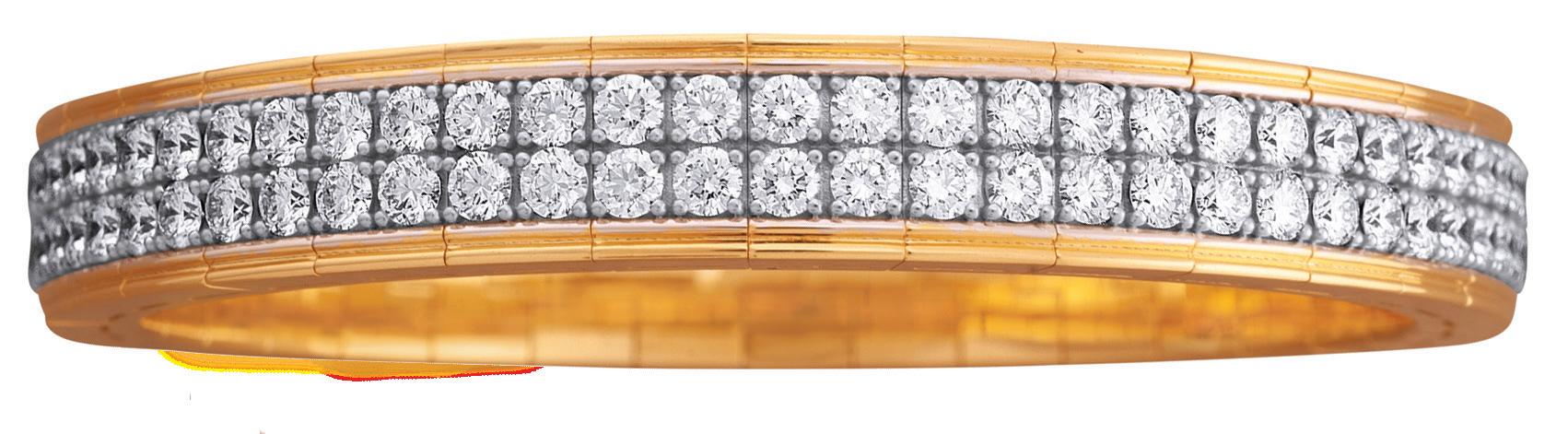
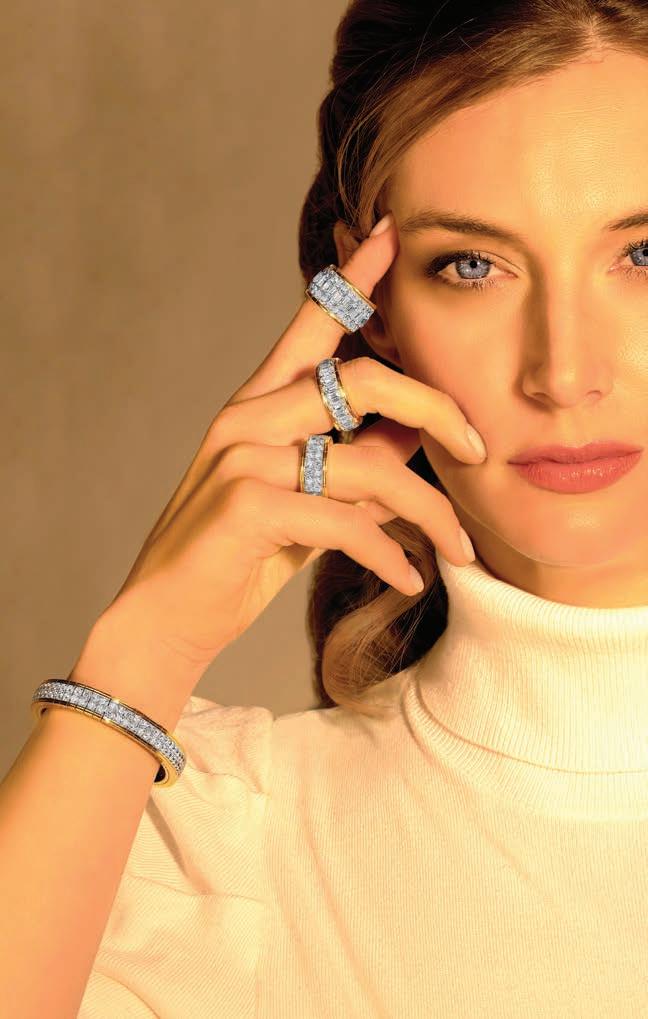
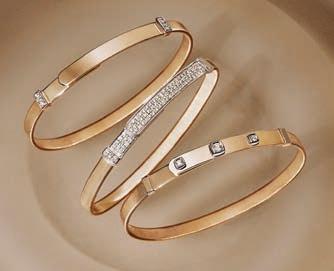
Picchiotti’s Xpandable™ Gold Accent collection marries timeless luxury with modern ingenuity. Featuring flexible gold bracelets and rings, the collection’s signature technology offers seamless comfort and adaptability. Each piece adjusts effortlessly to fit, making it a perfect blend of style and functionality. With intricate designs and Picchiotti’s hallmark craftsmanship, Xpandable™ Gold Accent redefines jewelry versatility, offering elegance that adapts to every occasion and wearer.
Pricing available upon request.
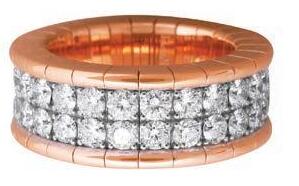
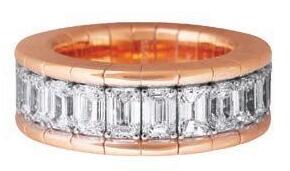
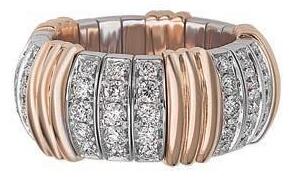
Xpandable™ Collection
3-row diamond ring in 18K rose gold.
Emerald diamond ring in 18K rose gold.
2-row diamond ring in 18K rose gold.
Diamond bracelet in 18K yellow gold.
3-row diamond ring in 18K white and rose gold.
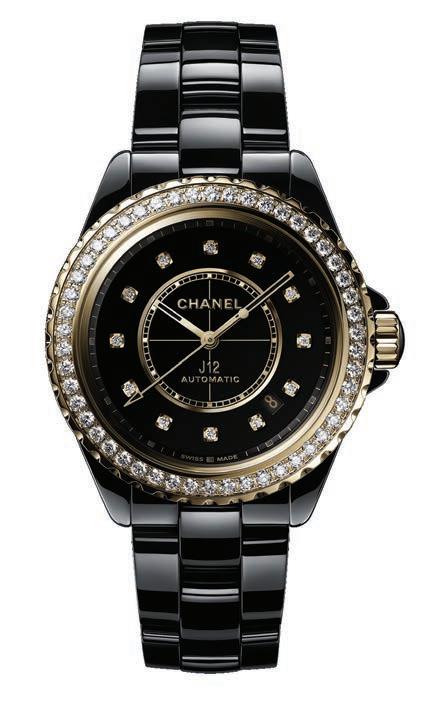
CHANEL J12: A BREAKTHROUGH IN WATCHMAKING
The CHANEL J12 Caliber 12.1 is a triumph in both design and durability. Born in 2000 and inspired by the J-Class yachts of the America’s Cup, it has stood the test of time, with its high-tech ceramic casing surviving intense UV rays, abrasive materials, and shocks. A timeless blend of luxury and resilience, this 38 mm masterpiece embraces your wrist, redefining what it means to wear elegance. The J12’s precise engineering and sleek allure reflect CHANEL’s ongoing legacy of innovation in watchmaking – ready to withstand every challenge, with grace intact.
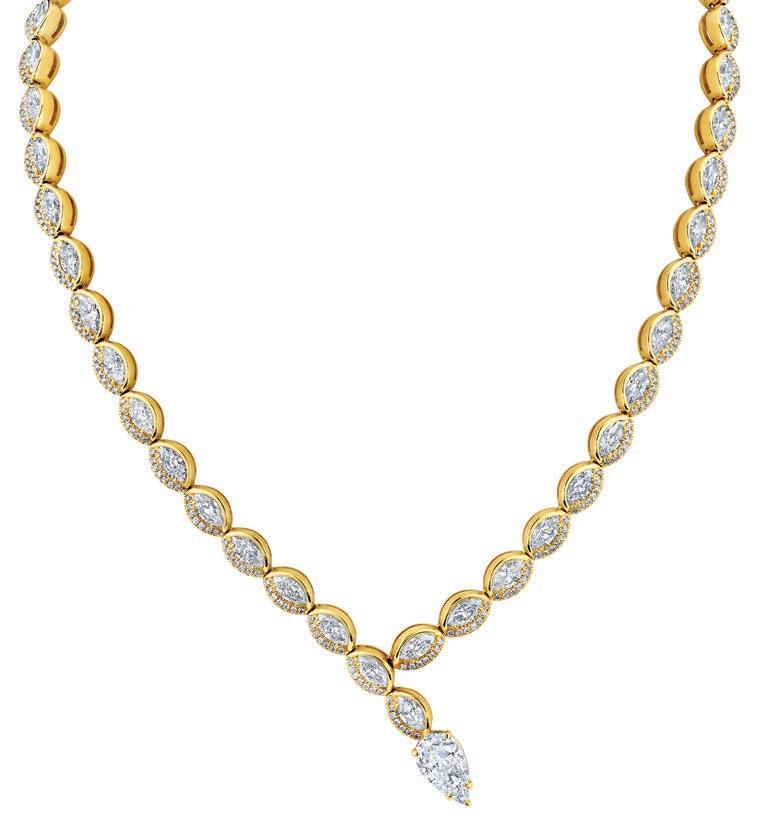
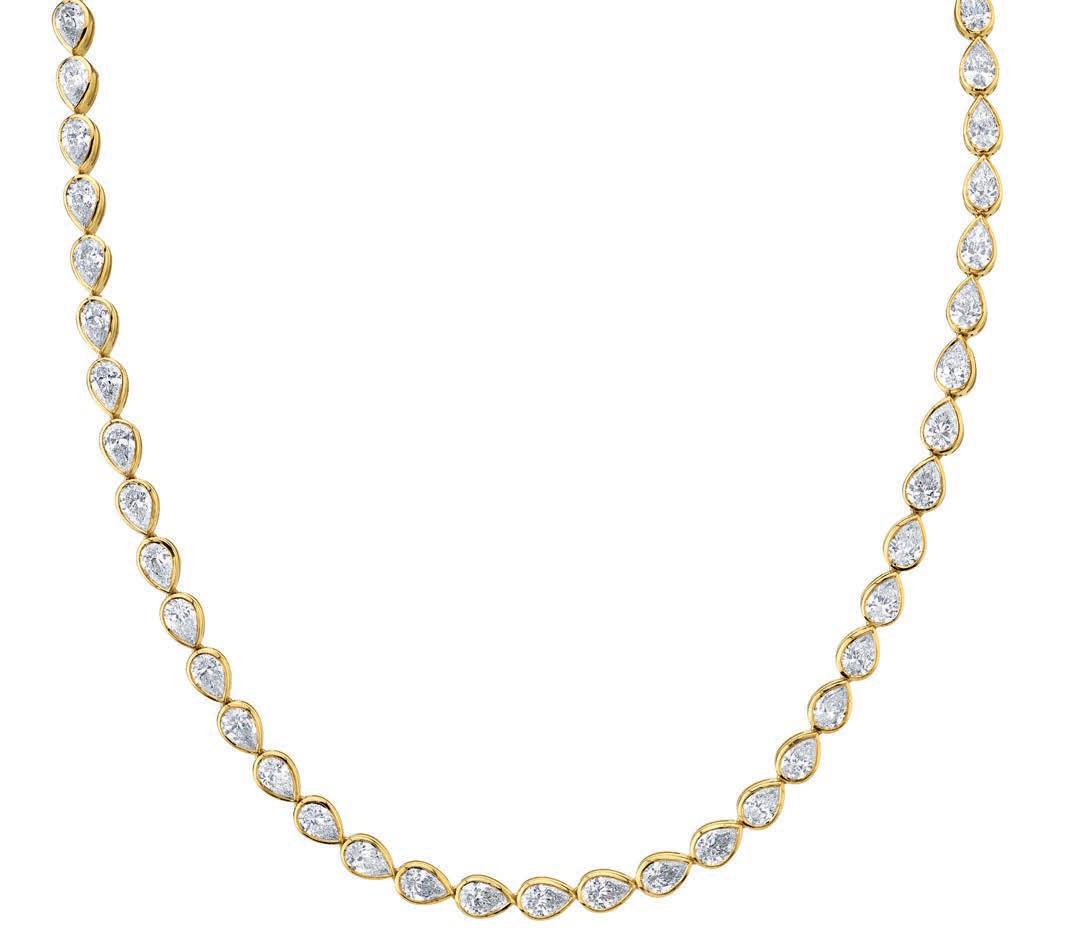
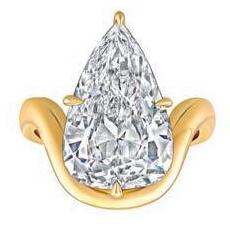
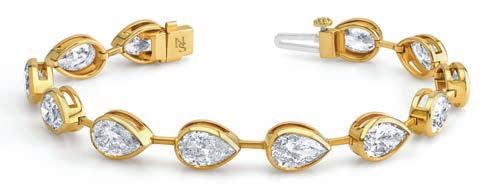
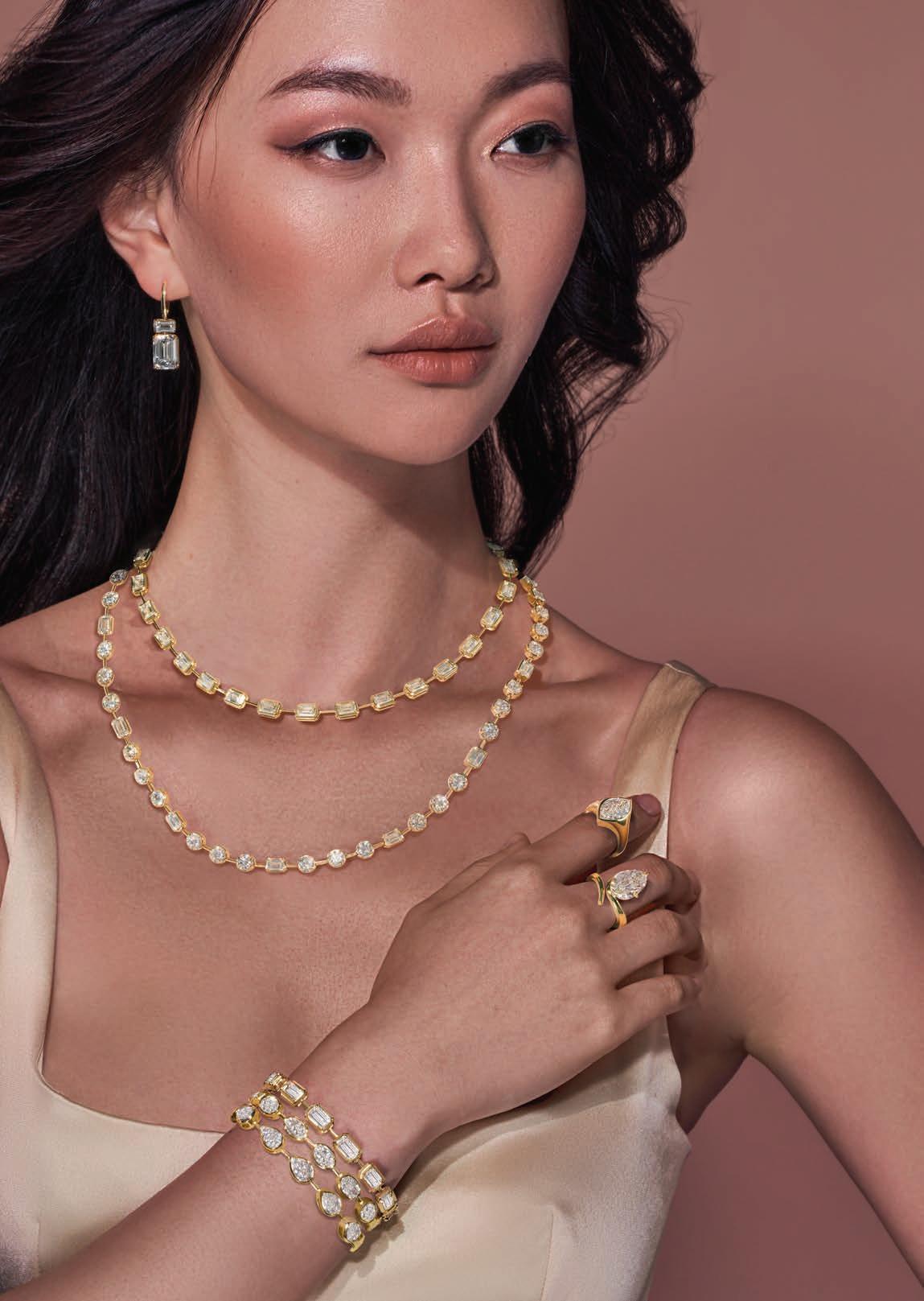
Left Page: Marquis diamond lariat necklace 17.57 carats total. Pear diamond bezel necklace 14.28 carats total. Pear diamond drop earrings 6.16 carats total. Pear diamond bezel bracelet 18.04 carats total. Pear diamond ring 7.03 carats. All in 18K yellow gold.
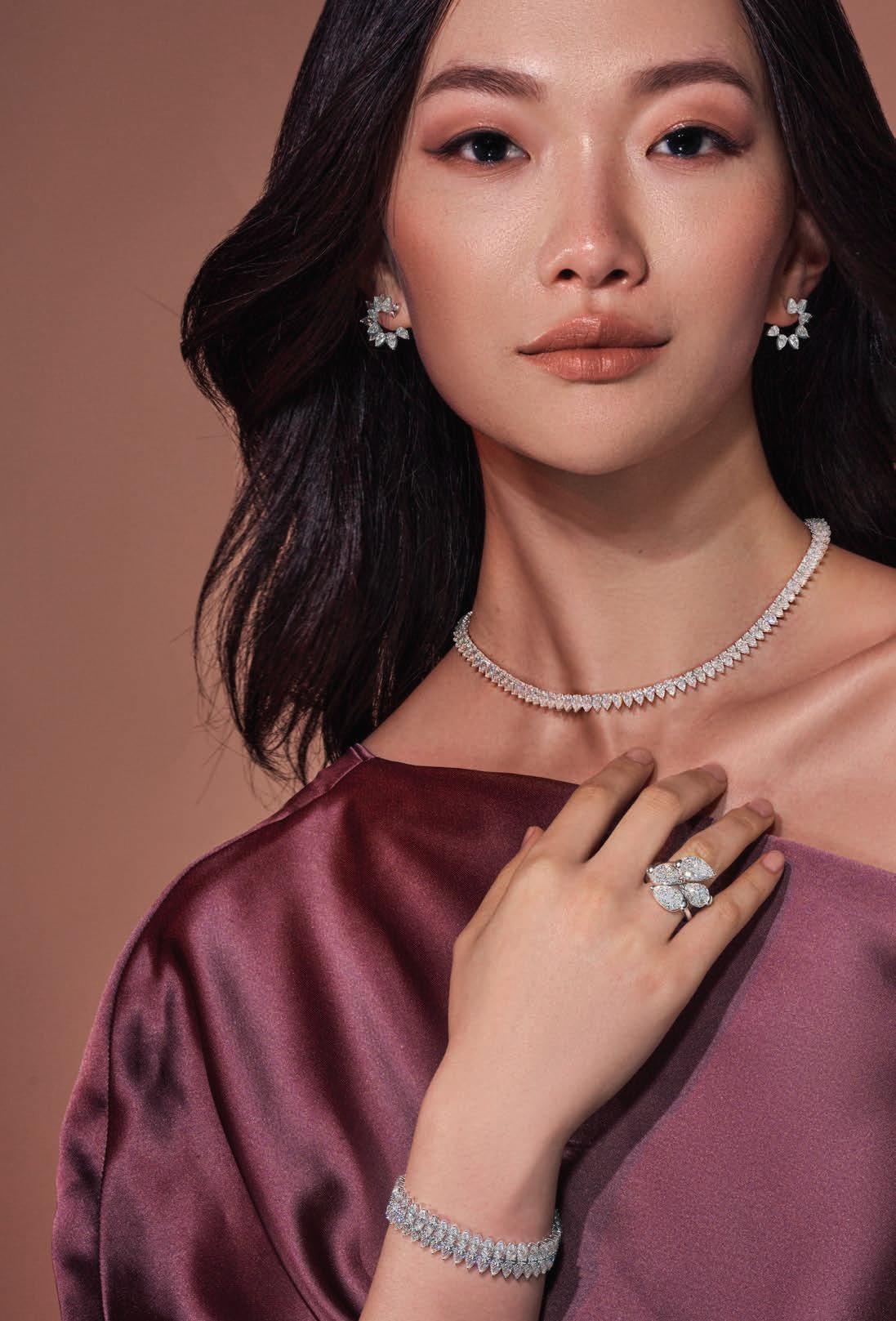
Right page: Pear and oval diamond drop earrings 6.00 carats total. In 18K white gold. Oval diamond lariat necklace 30.75 carats total. In 18K white gold.
Emerald diamond bezel bracelet 6.71 carats total. In 18K white gold. Oval diamond bracelet 11.40 carats total. In 18K yellow gold. Oval diamond bracelet 10.27 carats total. In 18K white gold.
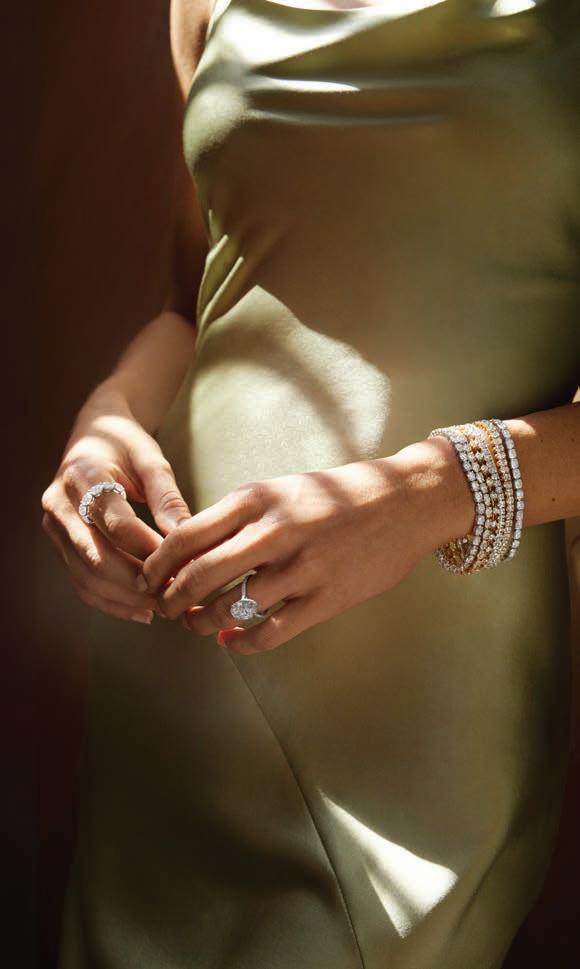
Diamond bar bracelet 4.92 carats total. In 18K yellow gold. Oval diamond bracelet 10.08 carats total. In 18K yellow gold. Oval diamond bracelet 10.13 carats total. In 18K white gold. Oval diamond ring 5.01 carats. In platinum. Oval diamond eternity band 7.97 carats total. In platinum. Pricing available upon request.
From Here to Eternity: The IWC Portugieser Eternal Calendar
Schaffhausen-based International Watch Company has fashioned an impossibly complex timepiece, the likes of which the world has never seen.
By Oren Hartov
In 1762, English watchmaker Thomas Mudge, inventor of the lever escapement, fashioned a pocket watch with a white enamel dial that displayed the day, date, month, leap year, and the phase of the moon – all without the need for manual adjustment. It was the world’s first mechanical perpetual calendar timepiece. It would be over a century and a half before Patek Philippe would put this technology in a wristwatch as a one-off request for a wealthy client in 1925, and another 15 years before the maison put such a product into serial production with the debut of the reference 1526. Once the proverbial wheels were set in motion by Patek, the market was slowly flooded with quantième perpetual timepieces to such an extent that one hardly bats an eye at them today.
But in an age in which a smartphone can instantaneously conjure time and calendar information, the idea of a tiny mechanical computer that can do the same using only gears and springs still exerts a magnetic pull on a certain type of thinker. Kurt Klaus, a legendary watchmaker, is clearly among such thinkers: In 1985, during the quartz crisis, he designed the Da Vinci reference 3750 perpetual calendar for IWC, kicking off a 40-year history of innovation at the Schaffhausenbased manufacture. To date, the brand’s QP movements have been fitted to a variety of cases and collections, from the sporty Big Pilot to the seafaring Aquatimer to the elegant Portofino.
However, the secular perpetual calendar –an extremely sophisticated mechanism that accounts for the Gregorian calendar’s leap year exception rules – has proved so difficult to engineer that only a handful of watchmakers have been successful in bringing it to fruition (Due to the irregular path of the Earth’s travel around the Sun, leap years are skipped at the beginning of each century, but not in years evenly divisible by 400). Accounting for such celestial idiosyncrasy in a mechanical timepiece is no mean feat. Indeed, to date, only Patek Philippe, Svend Anderson, Franck Muller, and Furlan Mari have been able to do it.
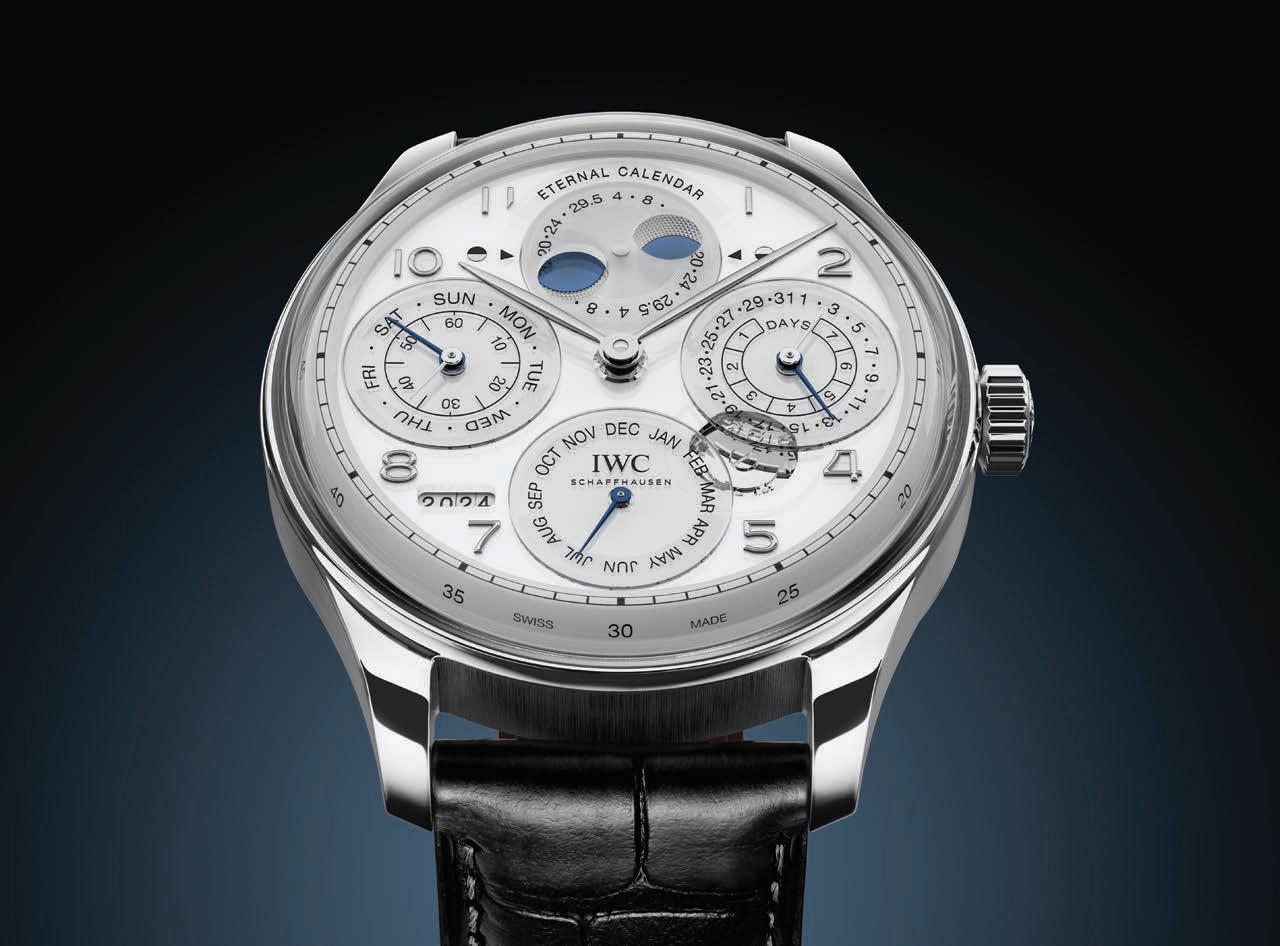
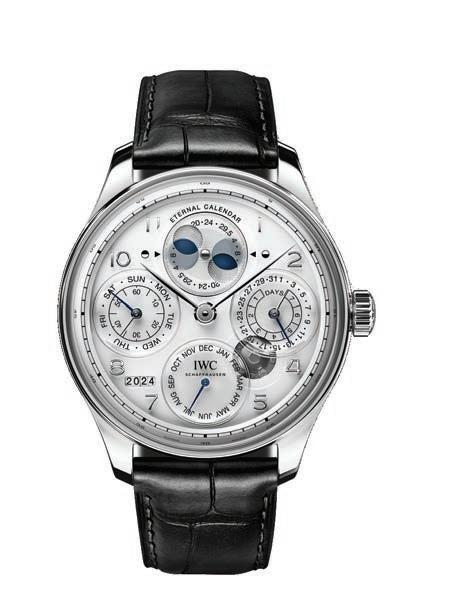
But in Geneva at Watches & Wonders 2024, IWC once again proved its mechanical mettle by releasing the Portugieser Eternal Calendar, a watch that not only accounts for the skipped leap years until the year 3999, but also features a moon phase display accurate for a mindboggling 45,000,000 years. And while you’d be forgiven for assuming that such a sophisticated mechanism would necessitate some kind of gargantuan, grapefruit-sized timepiece, the Portugieser Eternal Calendar measures just 44.4mm wide by 15mm tall.
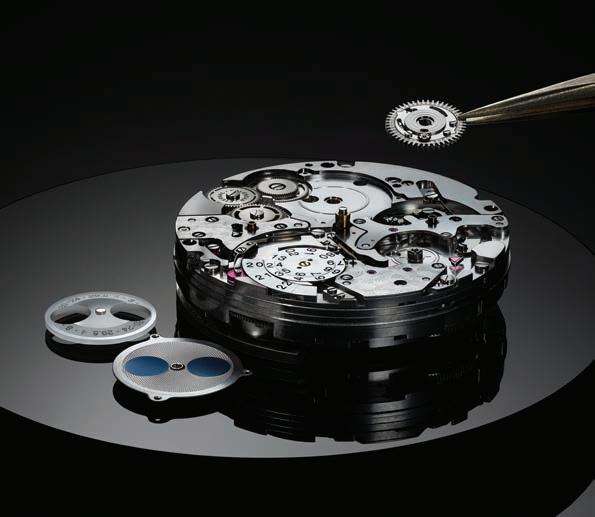
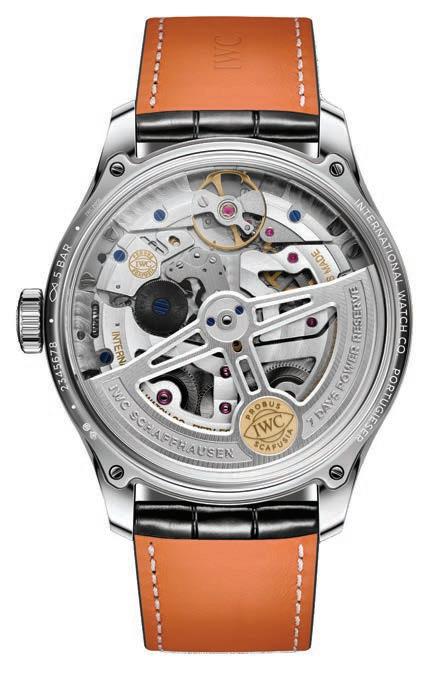
The development process for its movement was so complex that it required a dedicated computer program to simulate more than 22 trillion gearing combinations before IWC could develop the caliber 52640. Built upon the brand’s time-tested Pellaton automatic winding system, it features a bidirectional rotor that provides seven days’ worth of power reserve via dual barrels. Zirconium oxide surfaces reduce service intervals, while a high degree of finishing including Côtes de Genève and circular graining is present throughout the caliber and visible via a sapphire caseback. A three-wheel reduction gear governing the Double Moon display ensures any deviation from the Moon’s path is only by a single day in 45 million years – a significant improvement over both the Da Vinci Perpetual Calendar Chronograph, whose moon phase was accurate to 122 years, and the 2003 Portugieser Perpetual Calendar, which boasted an accuracy of 577.5 years. Incredibly, all of the Eternal Calendar’s displays can be advanced using the crown, ensuring that there are no unsightly pushers present on the watch’s case flanks.
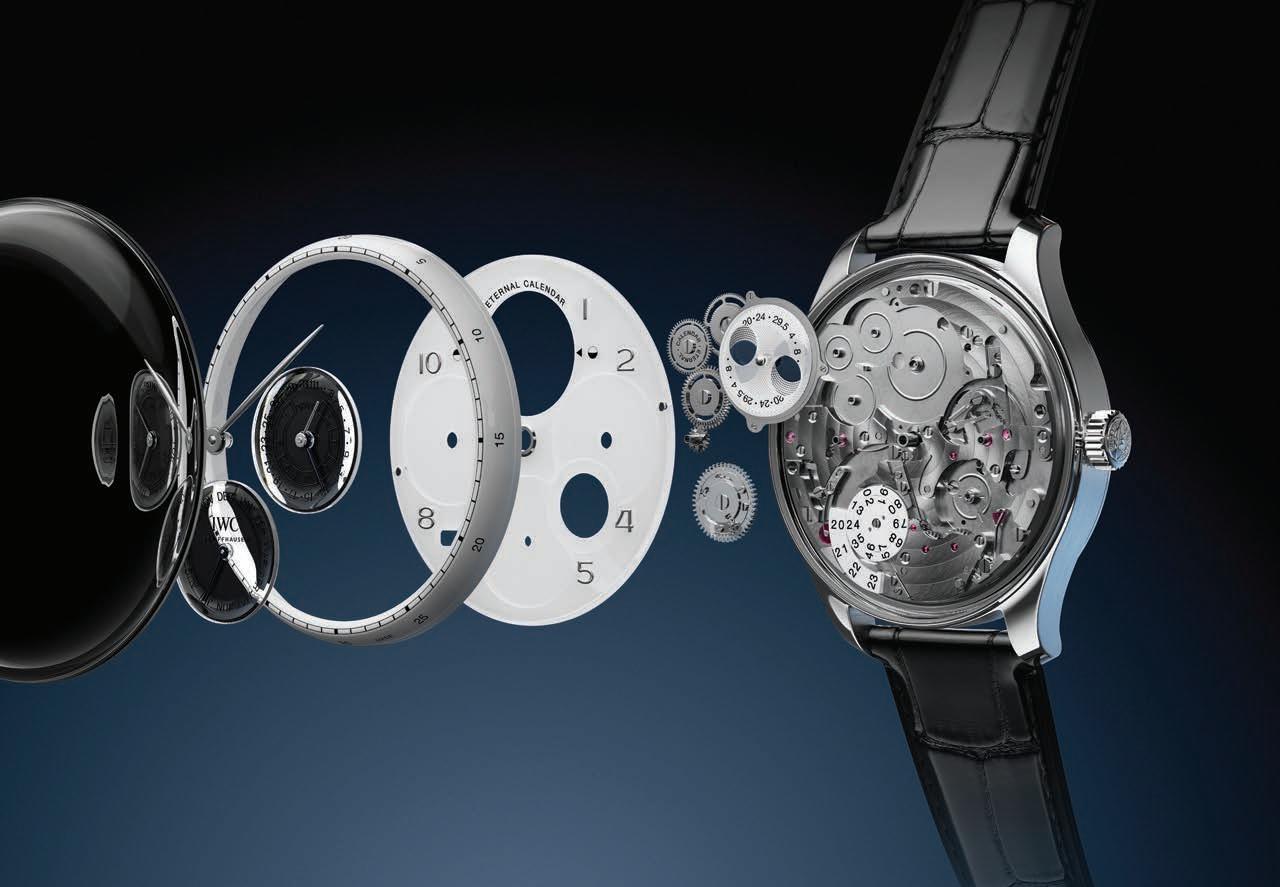
Though its pocket watch-inspired profile situates it clearly within the Portugieser collection, the Eternal Calendar’s dial puts it in a class all its own: First, a glass blank is frosted and lacquered in white, after which the calendar subdials – which are machined and polished separately – are affixed. The dial is then printed, and appliques such as the Arabic hour indices are hand-mounted. A chemin de fer minute track and numerical scale are printed on a white lacquered flange that is seated between the glass dial and an outer crystal. Finally, this outer sapphire crystal is machined, polished, and affixed over the main glass dial.
The characteristic Double Moon display at 12 o’clock shows the phase of the moon as it appears in both hemispheres simultaneously, while the 3 o’clock subdial displays both the power reserve and the date. The display at 6 o’clock is a radial month indicator, while at 9 o’clock it’s a running seconds indicator and radial day display. The year is conveniently shown in a digital readout at 7 o’clock, while rhodium-plated feuille hands complete the elegant picture (Look away too quickly, and you’ll miss the 400-year wheel poking out from behind the glass dial at 4:30).
Housed in a solid platinum case with polished and brushed surfaces and finished with a black alligator leather strap from Santoni, the Eternal Calendar isn’t a classic IWC tool watch, nor is it meant as a svelte accompaniment to evening formalwear. Rather, it’s a mechanical accomplishment of epic proportions, a sign that the Swiss manufacture is committed to continued innovation at the intersection of horology, micromechanics, and imagination.
A New Release From Grand Seiko, Inspired By A Japanese Natural Wonder
The Grand Seiko SLGA021’s design reflects the beauty of Lake Suwa.
By Jack Forster
Grand Seiko was, for many years, one of fine watchmaking’s best-kept secrets. The brand was originally launched by Seiko in 1960, and as the name implies, it was and is meant to represent the highest possible standards in the creation of a watch intended for daily wear. The watches, as they were originally conceived, would offer high precision, hand finishing, and as long a power as possible within the constraints of practicality.
Grand Seiko gradually became more widely known as the first online watch discussion forums appeared and the word started to spread further in online watch communities. Wearing a Grand Seiko in the late 1990s and the early 2000s meant you were a collector’s collector – they were unavailable outside of Japan, and although there were a handful of
third-party retailers who would ship to foreign customers, seeing a Grand Seiko was a rare and exciting occasion.
Grand Seiko was relaunched internationally in 2010 and became a separate brand from Seiko in 2017. Its reputation continued to grow, thanks to the high quality of its movements and the almost unbelievable level of craftsmanship visible in the cases, dials, and hands. Grand Seiko also continued to improve its movements technically, and every component of every watch, from mainsprings to escapements, to quartz crystals in the Grand Seiko quartz watches, to its famous hands and dials, are all made in-house.
One of Grand Seiko’s signature technologies is Spring Drive. Spring Drive exists nowhere else in the watch
industry, and the first Spring Drive watches appeared, after a decades-long development process, in 1998 (The first prototype Spring Drive movement is from 1982).
Spring Drive movements are neither conventional quartz, nor conventional mechanical movements: they are a combination of the two. The power for Spring Drive movements, as the name implies, comes from a mainspring barrel, exactly as you would see in a purely mechanical movement (Spring Drive watches can be either hand wound or automatic). The mainspring powers a conventional gear
train, but Spring Drive does not use a standard mechanical escapement.
The last wheel in the gear train is what Grand Seiko calls the Glide Wheel, which acts as the regulating organ for the watch. As it spins, the Glide Wheel generates a tiny electrical current, which is used to power a quartz timing circuit. The timing circuit controls the speed at which the Glide Wheel turns via an electromagnetic braking system, which keeps the Glide Wheel turning exactly eight times per second.
This in turn controls the rate at which the mainspring barrel unwinds – which is essentially what a standard mechanical escapement does as well. Since the Glide Wheel turns smoothly, the seconds hand also glides smoothly around the dial; the smooth, steady movement of the seconds hand is one of the distinguishing features of Spring Drive watches.
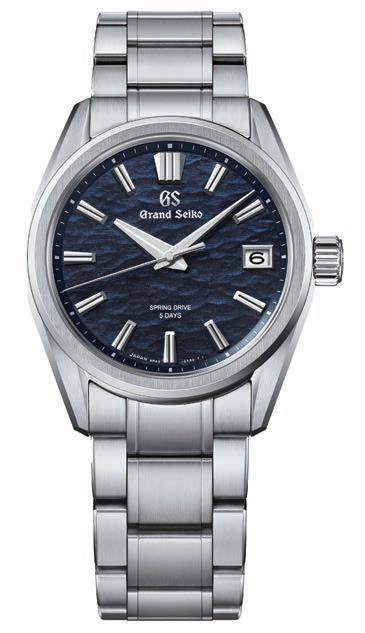
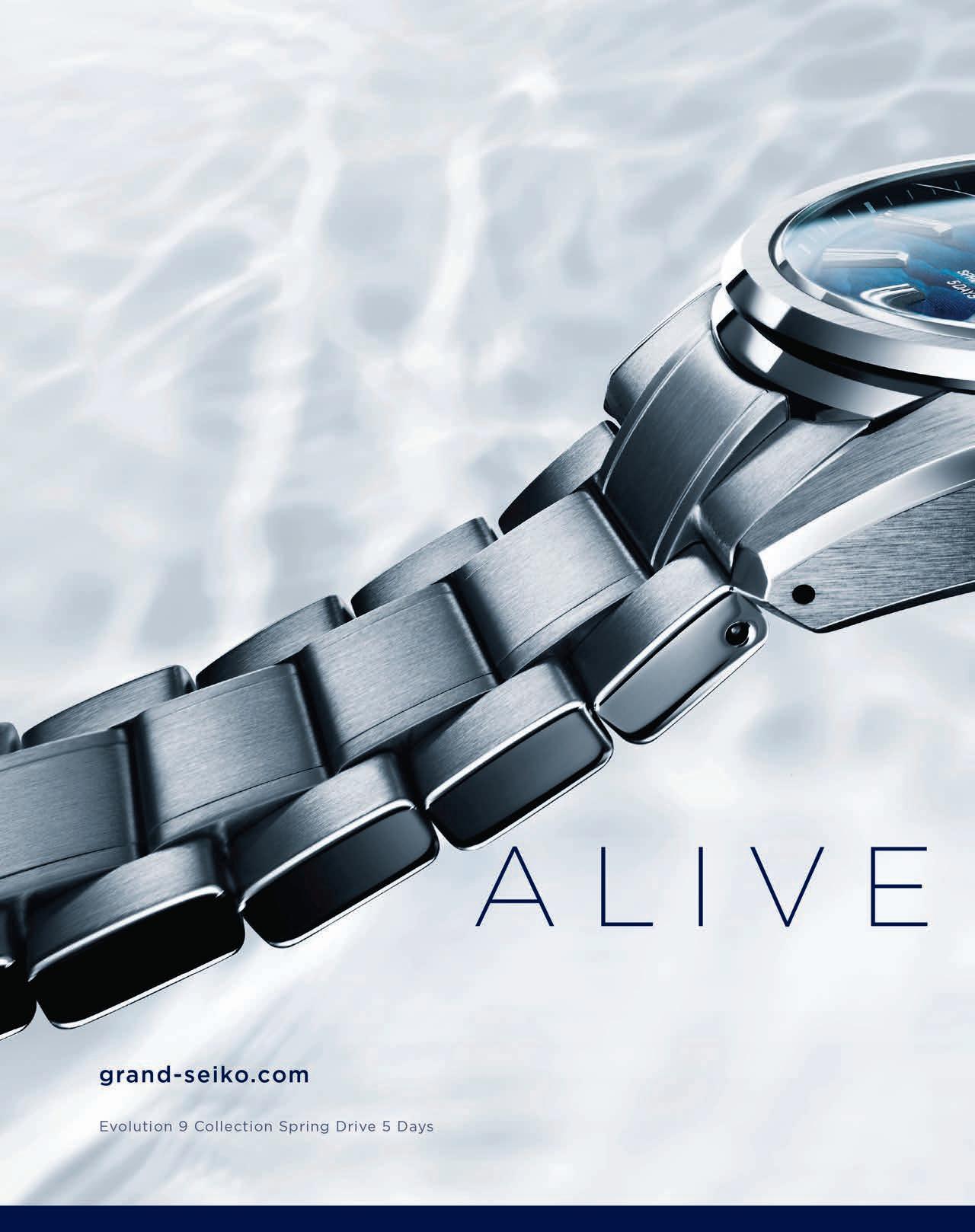
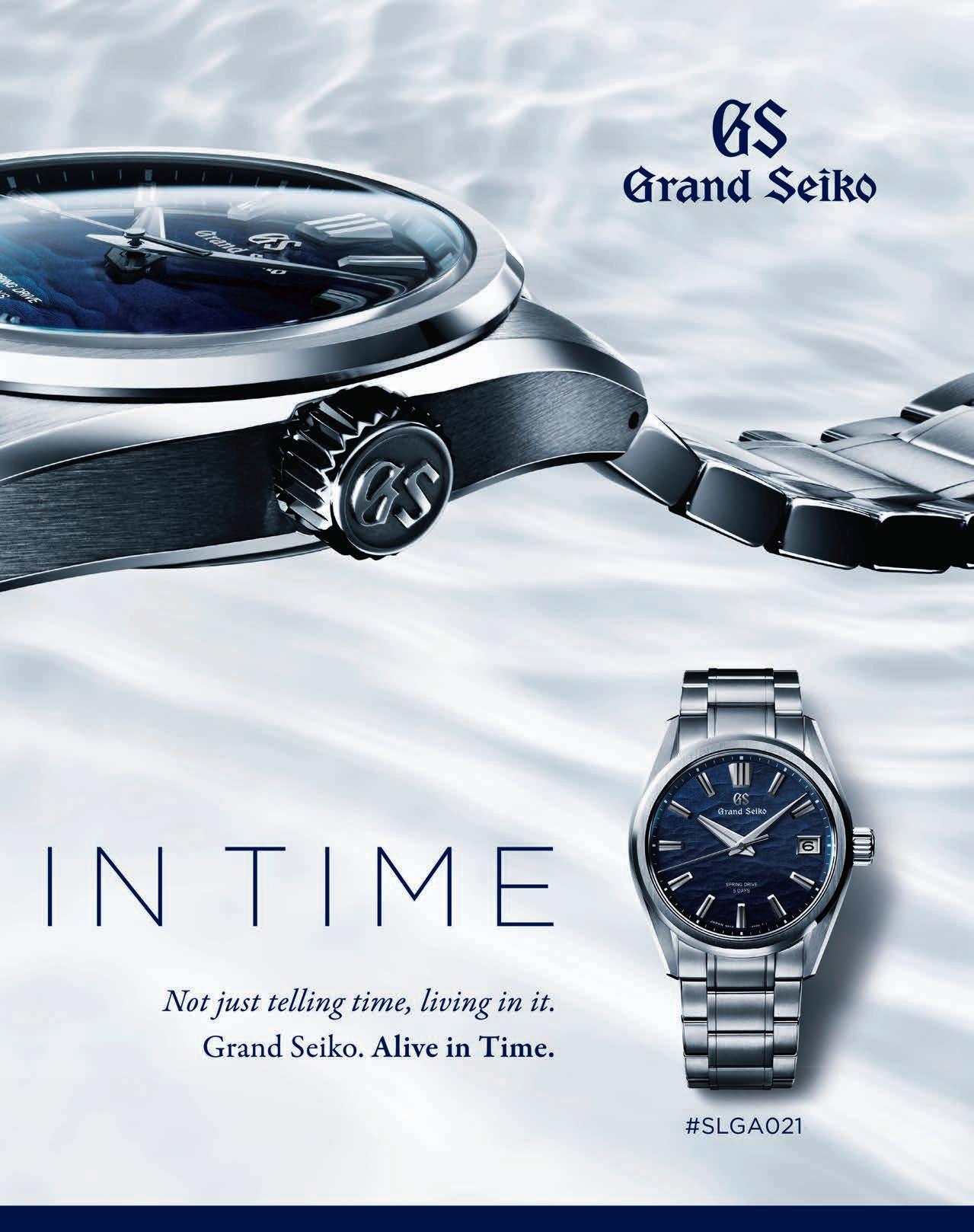
The Grand Seiko Spring Drive 5 Days SLGA021 “Lake Suwa” is one of the latest Spring Drive Grand Seiko watches to use the most up-todate version of the Spring Drive system. The “Lake Suwa” model, like many Grand Seiko watches, has a dial which is inspired by the natural world, the appreciation of which, in Japan, is an essential part of Japanese culture. Events such as the appearance of cherry blossoms in the spring, or the changes in seasons, are deeply ingrained in traditional Japanese agricultural rhythms, and they carry a spiritual significance as well.
Lake Suwa is important both for Grand Seiko and for traditional Japanese culture. While the mechanical Grand Seiko watches are made in northern Japan, in Iwate Prefecture, Grand Seiko’s Spring Drive watches are made in Lake Suwa and Suwa City at Grand Seiko’s Shinshu Watch Studio. Lake Suwa is in Nagano Prefecture, among the mountains in central Japan, and it’s also the site of one of the oldest Japanese Shinto shrines – the Suwa Grand Shrine has been there since the late 7th century. In the winter, Lake Suwa freezes over, and as the ice moves, ridges are formed which, according to tradition, are believed to be caused by Shinto divinities crossing the lake.
The dial of the Grand Seiko Spring Drive
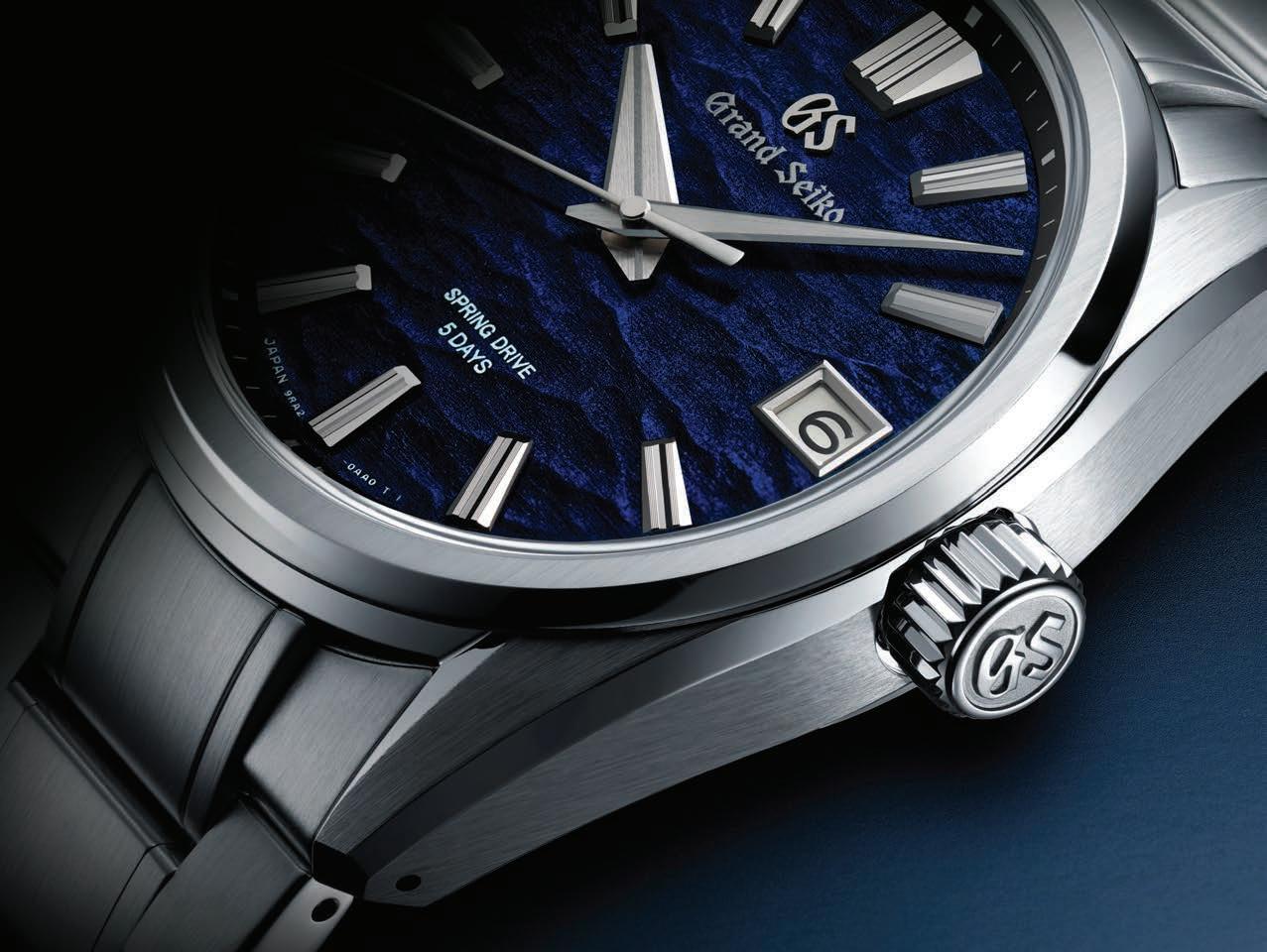
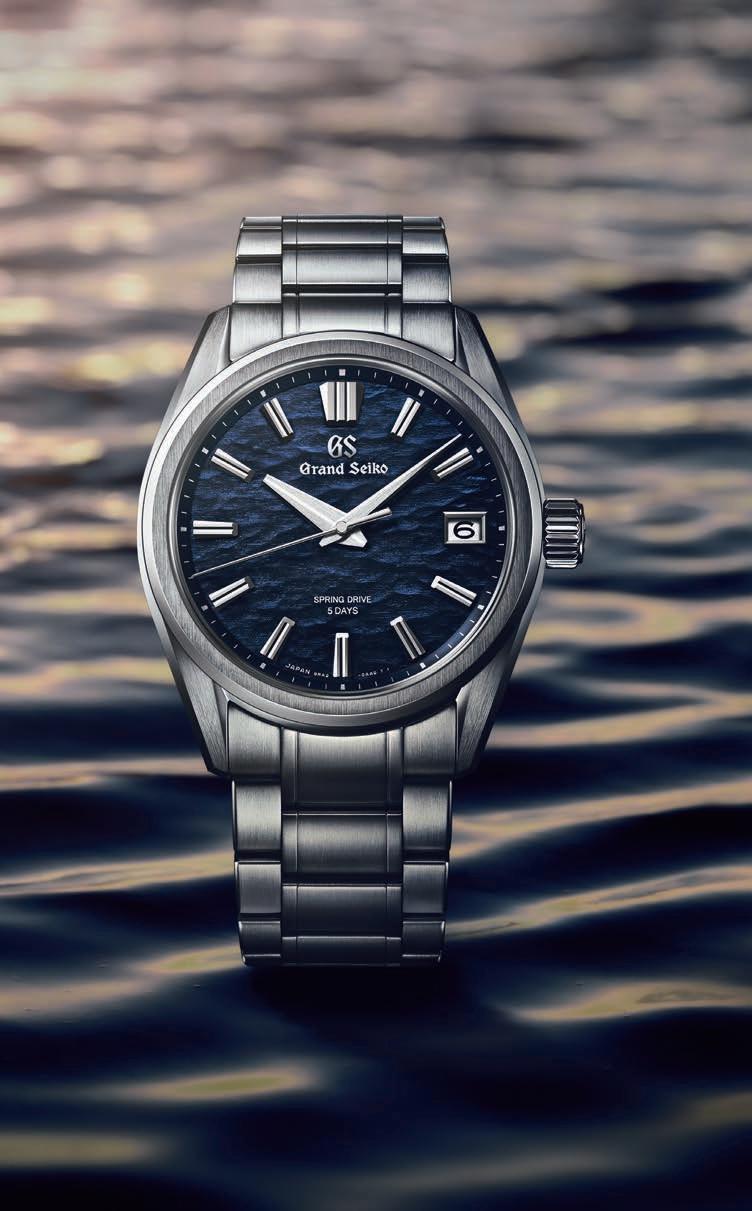
“Lake Suwa” is a very deep, rich blue, which reflects the colors of the waters of Lake
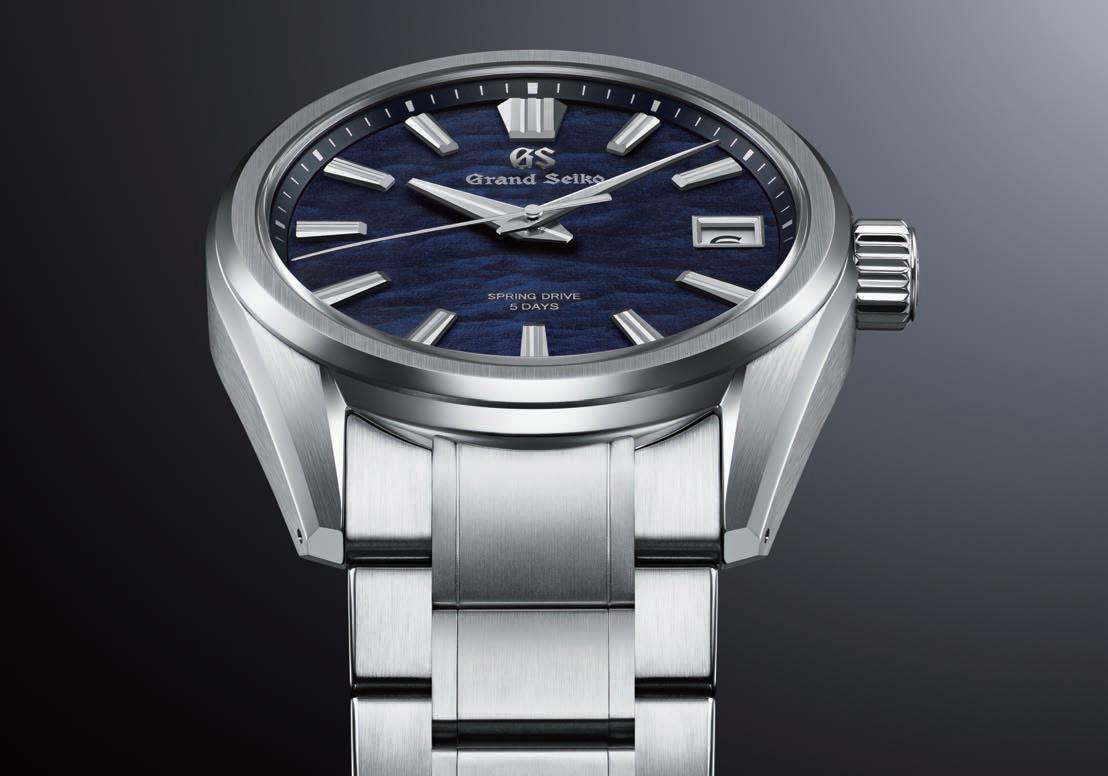
Suwa just before dawn, with the pattern on the dial forming gentle ripples, like the surface of the water stirred by a dawn breeze. The hands and dial markers are diamond-polished and faceted, and the mirror polish makes not only for a very beautiful watch but also for a very legible one. The case design is part of Grand Seiko’s relatively new “Evolution 9” design language, which is based on the well-known 44GS design from the late 1960s. The Evolution 9 cases have flat, polished surfaces with crisp transitions, and larger hands and dial markers intended
to enhance legibility. Cases in the Evolution 9 collection are typically slightly slimmer, with a lower center of gravity, making them substantial in feel, but very comfortable to wear.
The five-day Spring Drive movement, caliber 9RA2, is the latest version of Spring Drive, and in addition to offering a five-day power reserve and high degree of accuracy, this caliber also has a power reserve indicator. In order to keep the
dial as uncluttered as possible, the power reserve complication is located on the movement plate, visible through the back of the watch.
The SLGA021 “Lake Suwa” is a culmination of all the aspects of watchmaking at Grand Seiko that have made Grand Seiko watches some of the most distinctive and interesting watches available today –with deep connections to both the history of Grand Seiko and to Japanese culture.
TIMELESS ROMANCE
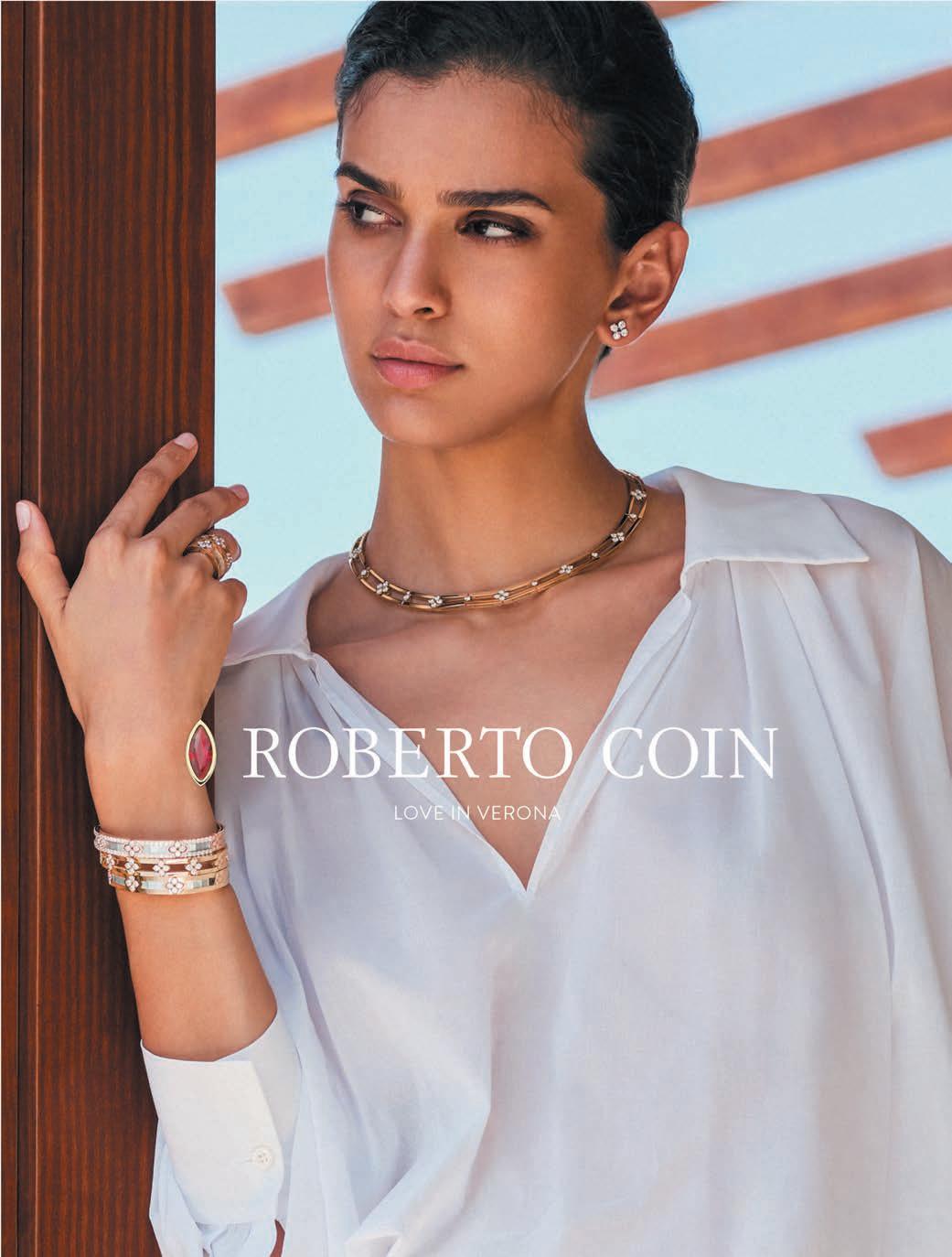
Discover the captivating charm of Roberto Coin’s Love in Verona collection. Drawing inspiration from the romantic Italian city, each piece is a symbol of love and devotion. Expertly crafted, these designs seamlessly combine elegance with deep sentiment. The Love in Verona collection celebrates the enduring beauty of love, infusing every piece with the magic of true affection.
Love in Verona
Left Page:
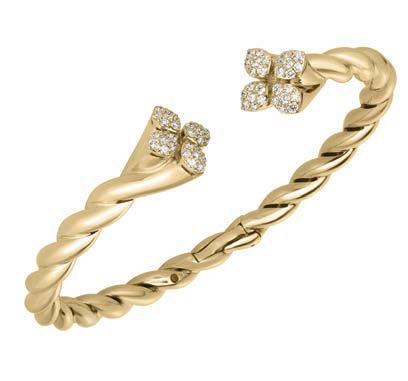
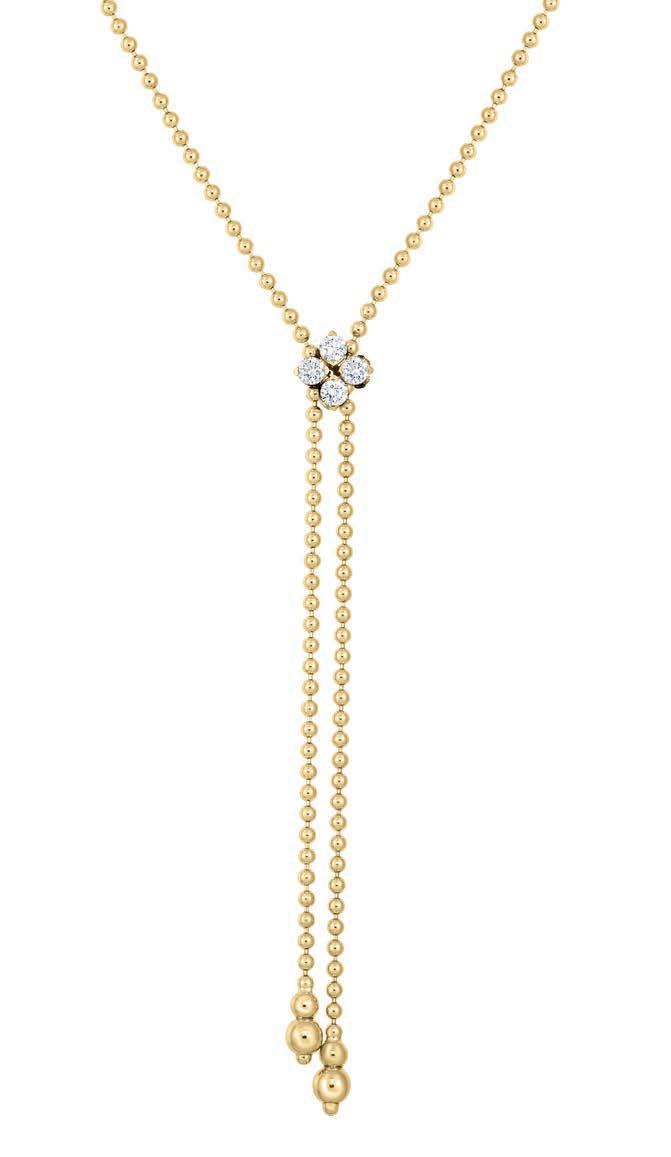
Diamond lariat necklace in 18K yellow gold $4,800. Diamond twist bangles in 18K white and yellow gold $9,990. Diamond flower stud earrings in 18K white and yellow gold $4,940. Right Page:
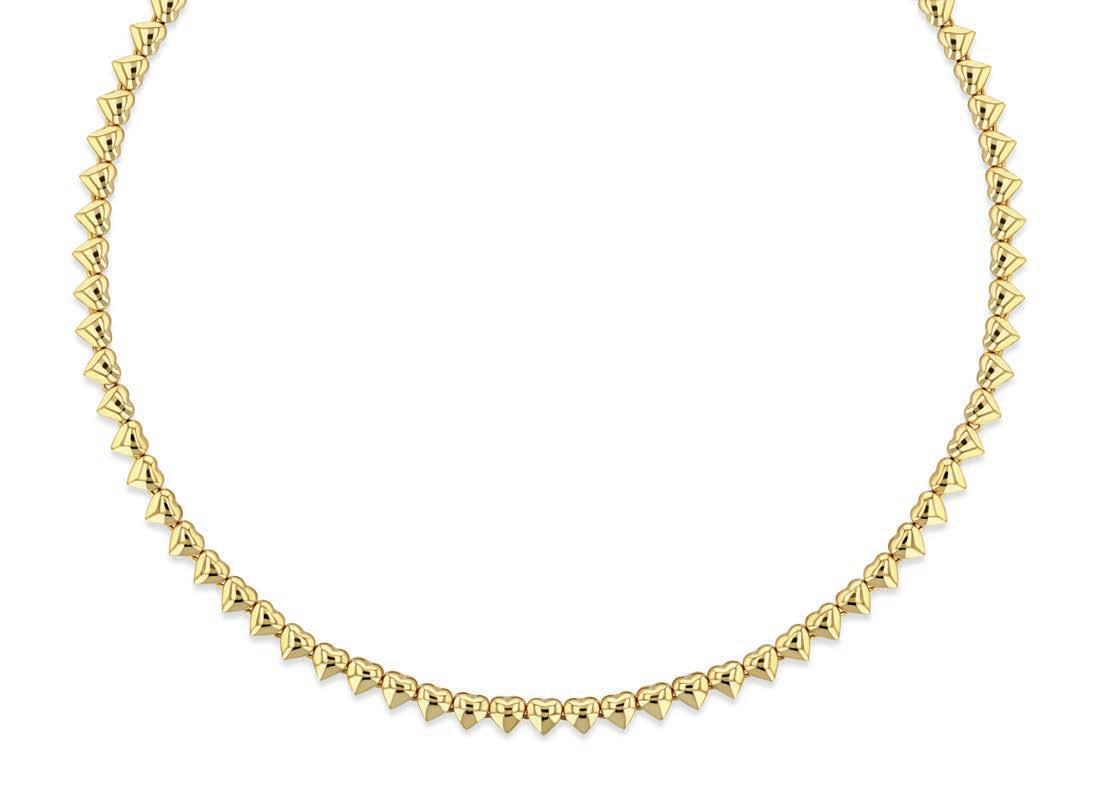
Diamond flower stud earrings in 18K white gold $4,940. Flexible diamond accent collar in 18K yellow gold $37,000. Double band diamond accent ring in 18K yellow gold $11,500. Diamond and mother of pearl ring in 18K yellow gold $12,900. Diamond and mother of pearl ring in 18K yellow gold $29,000. Double row diamond accent bangle in 18K yellow gold $18,550. Diamond and mother of pearl bangle in 18K yellow gold $19,450.
Into the Blue:
Tudor’s Newest Black Bay Chrono Is Its Most Dynamic Yet
A cool new dial brings an aquatic-themed touch to a well-established tool watch.
By Oren Hartov
In 1926, Rolex founder Hans Wilsdorf registered a simple brand name derived from the history of the English monarchy. When he established “Montres Tudor SA” 20 years later, it’s unlikely that he could have foreseen the significance that Rolex’s sister business would take on within the greater watch industry of the early 21st century.
Famed for the dive watches it made for the French, American, Israeli, and other navies in the 1950s, ‘60s, and ‘70s, Tudor used Rolex parts such as cases and bracelets and outfitted them with off-the-shelf Swiss movements, making for less expensive alternatives to pricier Rolex watches. In addition to water-resistant Submariners, the brand also made a bevy of excellent dressier and everyday models, innovative alarm watches, and colorful chronographs.
The latter category is particularly compelling. Tudor’s 1970s chronographs such as the reference 7149 Oysterdate “Monte Carlo” and the reference 7032 Oysterdate “Home Plate” have since become collector favorites, beloved for their aesthetically adventurous dials that serve as more ostentatious alter egos to the relatively conservative Rolex Cosmograph Daytona. In the modern era, however, these and other Tudor watches no longer play second fiddle to their Rolex brethren. After beginning work on its first in-house caliber in 2010, Tudor subsequently established Kenissi, its own movement division, in 2016. By 2017, it equipped a brand-new chronograph, the Black Bay Chrono, with the MT5813, a caliber derived from the Breitling B01. Tudor was officially off to the races.
The COSC-certified MT5813, if not a technical revolution, was certainly a significant feather in Tudor’s cap: Boasting column-wheel activation with a vertical clutch for smooth chronograph operation, it features an anti-magnetic silicon balance spring and a free-sprung balance for increased chronometric precision, plus a beat rate of 28,800 vph. Robust and accurate, it represents a step away from
the sourced-movement days of the 20th century toward both collaborative and completely in-house movement making (The MT5813 is effectively a customized version of Breitling’s B01 movement, which that brand launched in 2009. Breitling in turn adopted a Tudor caliber, the MT5613, into its own B20 movement, cementing the symbiotic relationship).
The Black Bay Chrono was a success. Since its debut, both classic “panda” and “reverse panda” colorways have been added to the lineup — as well as two-tone steel-andgold versions and a special, pink-dialed iteration released ahead of Watches & Wonders Geneva 2024. But the latest version, the Black Bay Chrono “Blue,” is perhaps the strongest example yet of Tudor melding its chronograph history coupled
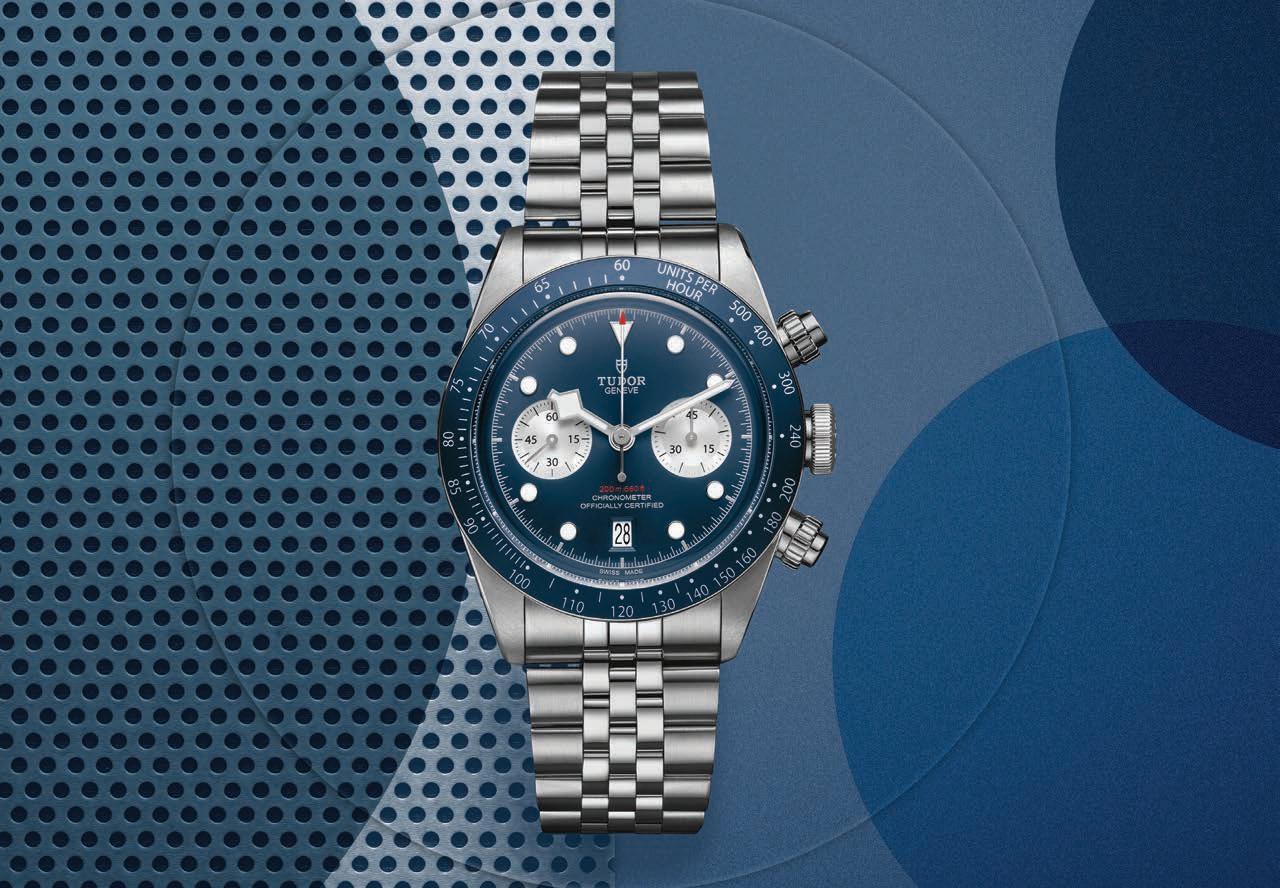
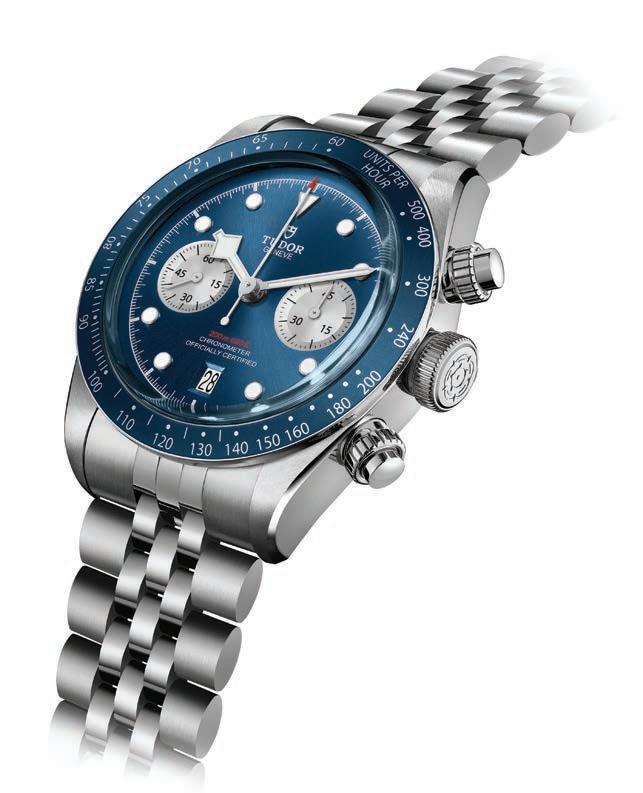
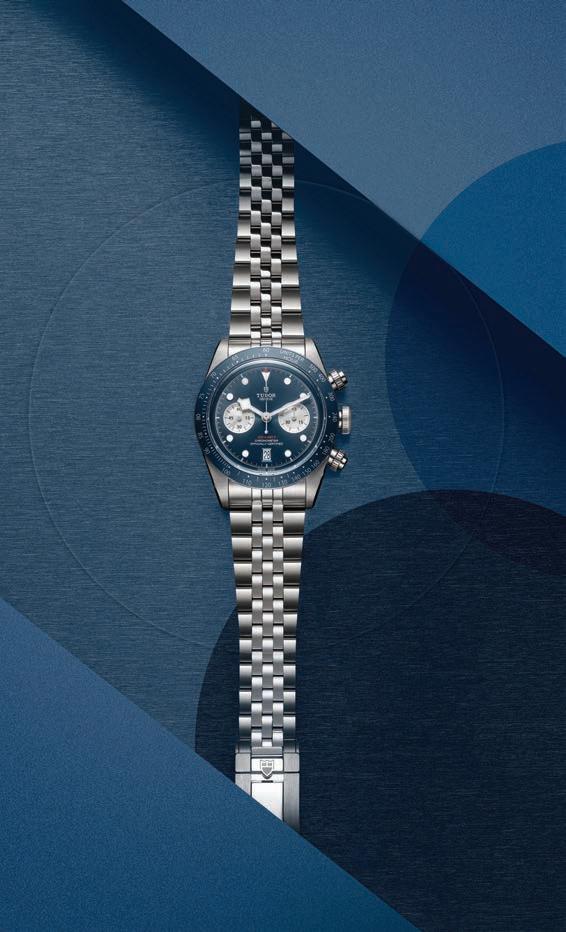
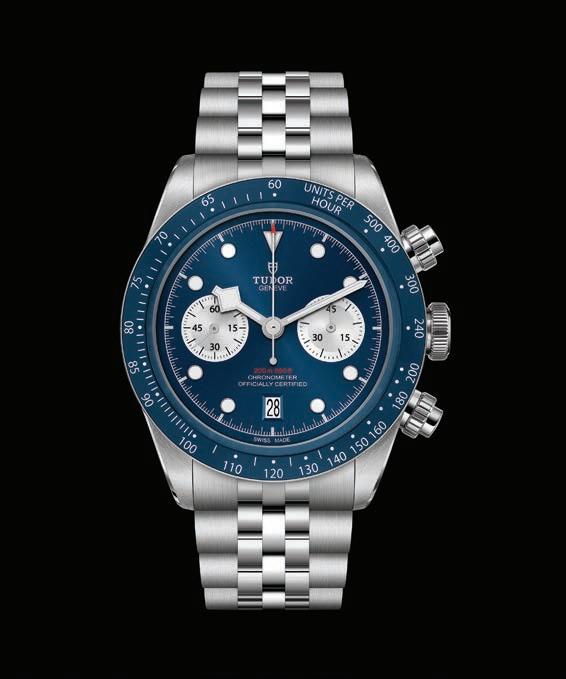
Black Bay Chrono “Blue” Boutique Edition. $5,675
with its dive watch heritage in a cohesive package that honors both product families. A boutique exclusive, it’s only the second Chrono (after the pink reference M79360N-0019) to feature the brand’s relatively new five-link steel bracelet — an elegant alternative to the more businesslike, rivet-style bracelet available on other Chrono models.
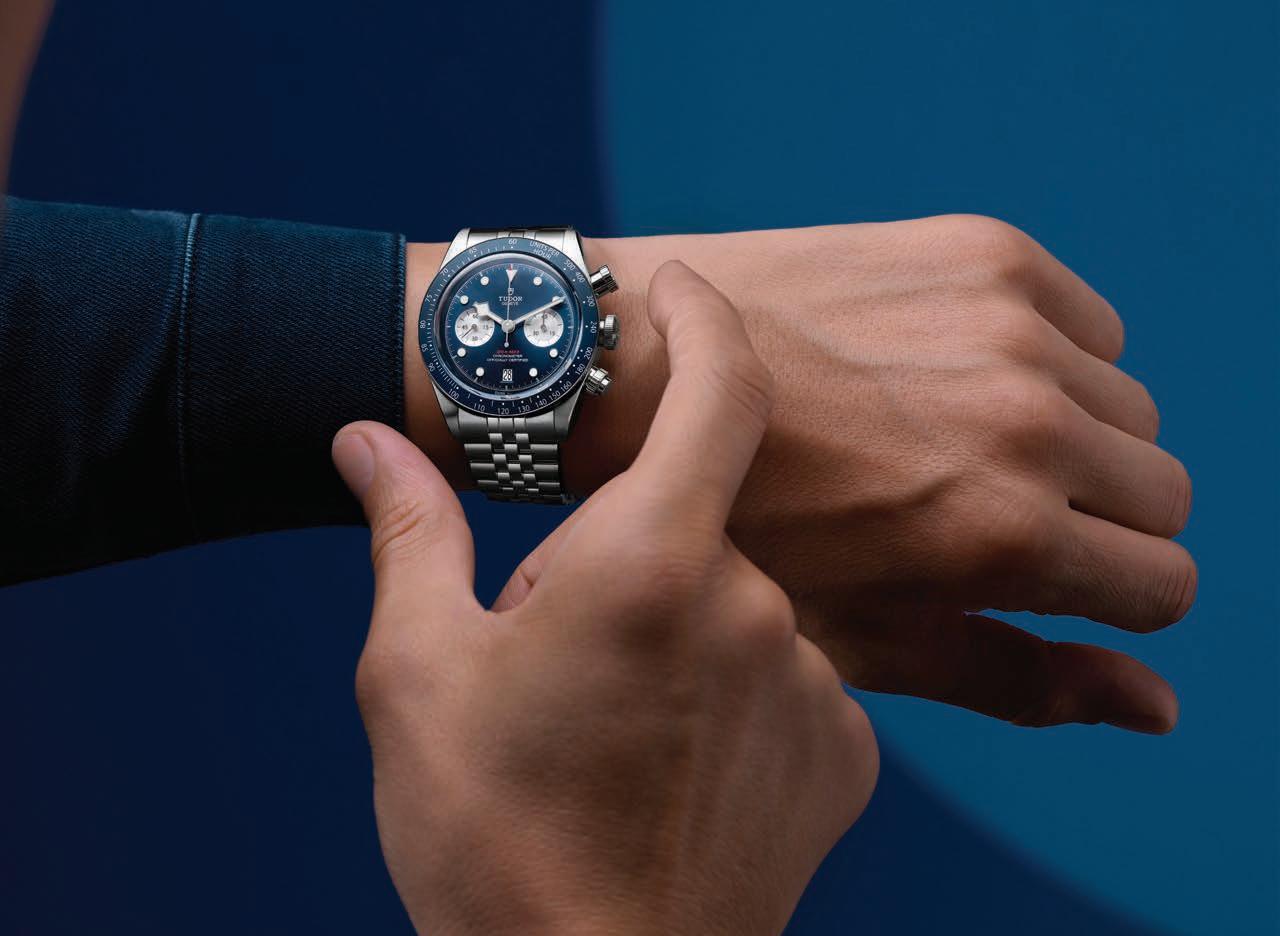
Housed in a 41mm 316L stainless steel case with significant heft, it features telltale signs of a robust tool watch: Knurled, screw-down pushers, a signed, screw-down crown, and a screw-down caseback ensure 200 meters of water resistance, while polished and satin-brushed surfaces provide the welcome sense of refinement that one rightly expects from a Rolex-family product. A fixed stainless steel bezel features a blue anodized aluminum insert with a silver tachymeter scale, which is useful for calculating speed, distance, or production figures — anything you’d like, really.
Measuring 14.4mm tall, it’s 0.5mm thinner than the original Black Bay Chrono of 2017, in line with more recent references produced since 2019.
The blue story continues on the handsome dial, whose deep oceanic hue calls to mind Tudor Submariners designed in the 1970s for France’s Marine Nationale: An outer 1/5th-seconds’ track is punctuated by applied, circular hour indices filled with Super-LumiNova, while dual silver chronograph totalizers track 45 elapsed minutes at 3 o’clock and running seconds at 9 o’clock. At 6 o’clock there’s a convenient, utilitarian date window courtesy of the MT5813 automatic movement, while a luminescent “Snowflake” handset with a red-tipped seconds hand provides yet another tip of the hat to vintage Tudor Submariners designed for military use. Visible beneath a domed sapphire crystal, this aquatic dial — with its seafaring connotations and casual tone — may be the Black Bay Chrono’s most dynamic yet.
Finished with a polished and satin-brushed fivelink bracelet with a “T-fit” rapid adjustment system, the Black Bay Chrono “Blue” is a natural extension of Tudor’s efforts to craft some of the finest tool watches in the world — but it’s more than that.
Representative of the brand’s leaps and bounds as an entity distinct from sister company Rolex that is more than capable of manufacturing its own superlative legacy, it’s a modern distillation of two distinct tool watch families into a single timepiece that any collector would be proud to own.
MASAI COLLECTION: VIBRANT ELEGANCE UNVEILED
Discover the Masai collection by Marco Bicego, where nature’s vibrant palette meets exquisite craftsmanship. Inspired by the art and tradition of the legendary African tribe, the collection showcases 18K gold and brilliant-cut diamonds in contemporary
silhouettes like stackable bangles, huggies, statement rings, and collars. The combination of yellow gold coils and a splash of diamonds creates an ultra glamorous yet effortless collection that proves style and luxury can work together with ease.
On Model: Masai Collection: Yellow and White Gold Split Strand Diamond Necklace. $13,950 Yellow Gold Drop Earrings. $8,950 Yellow Gold 4-Strand Diamond Coil Band. $6,650 Yellow Gold Coil Bangle Bracelet with Cushion-Cut Diamond. $8,250 Yellow Gold Coil and Diamond Bangle Bracelet. $7,900 Yellow Gold Coil and Diamond Pavé Bangle Bracelet. $9,950
Above: Yellow Gold Coil Bangle Bracelet with Diamond Pavé. $7,350 Yellow Gold Coil and Diamond Pavé Bangle Bracelet. $9,950 Yellow Gold Coil and Diamond Bangle Bracelet. $7,900
DEFYING TRADITION
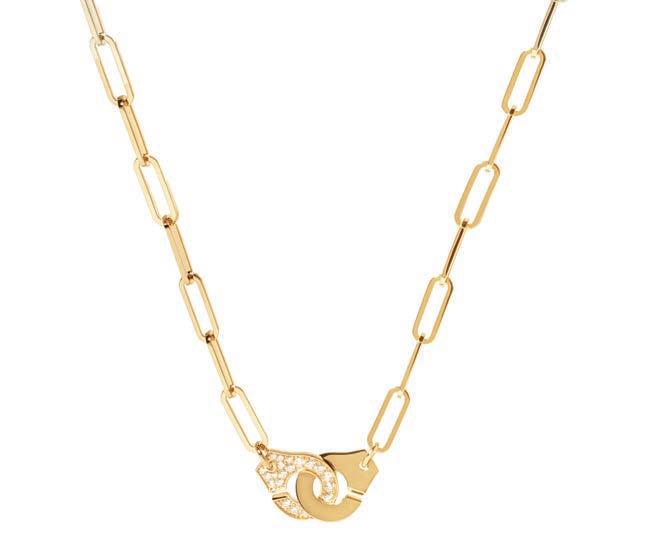
In 1965, Jean Dinh Van created a jewelry brand that defied all expectations. An iconoclast by nature, he crafted metal pieces with his hands like a sculptor, driven by his creative impulse. Jean Dinh Van’s vision was simple: crafting jewelry deeply rooted in design, accessible to all, that can be worn with everything, anywhere, anytime. Jewelry that transcends the conventions of Place Vendôme by transforming everyday objects into wearable art.
Pulse 3-row diamond pendant. $3,890
Menottes R13.5 diamond necklace. $10,700
Maillon diamond link necklace. $6,830
Maillon Star diamond ring. $4,150
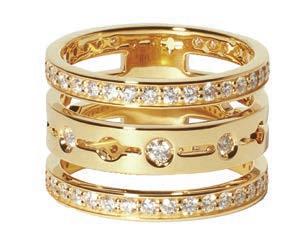
Pulse 3-row diamond ring. $7,300
All in 18K yellow gold.
Zenith’s New
Chronograph
Ready for the Races
By Kristen Shirley
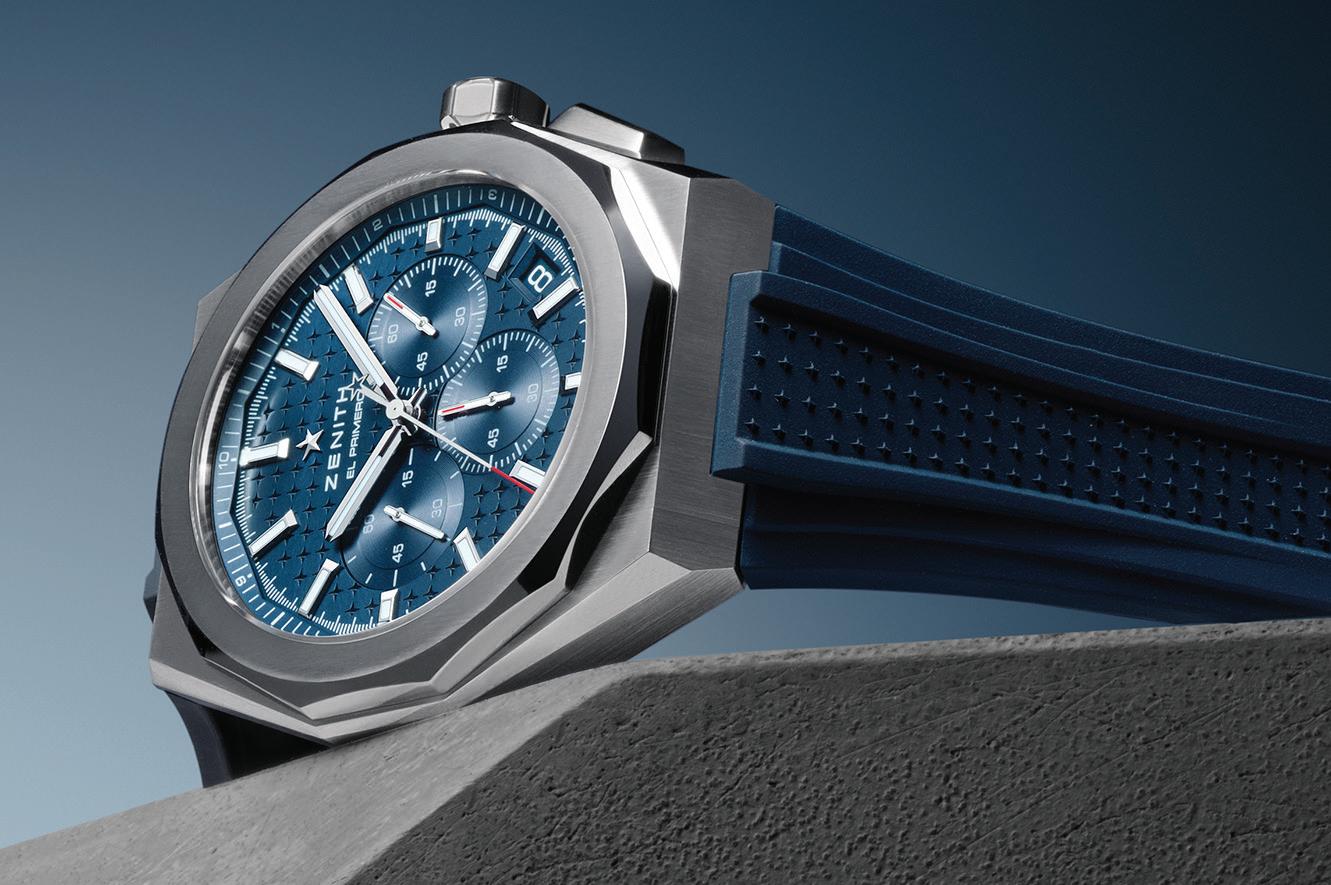
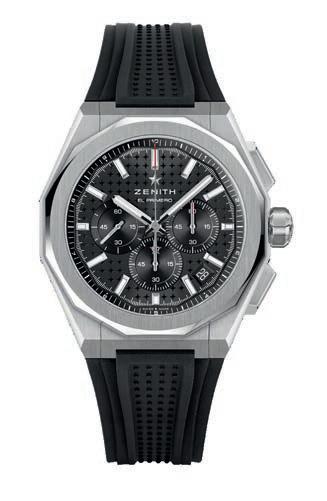
Defy Skyline Chronograph. $13,400
Zenith is one of the world’s oldest watch companies but that doesn’t mean it rests on its laurels. It continually pushes the boundaries of horology, most notably with its extremely precise chronographs. The new Zenith Defy Skyline Chronograph continues a proud tradition of worldclass performance
The Defy Skyline collection is noted for its sleek architectural design. The elongated octagonal case measures 42mm and frames a 12-sided bezel. Both are faceted with sharp lines, and the finishings play up the geometric style by alternating polished and brushed stainless steel. The polished edges shine and catch the light, highlighting the sleek lines. This unique architectural design evokes a glittering cityscape, which gives the collection its Skyline moniker.
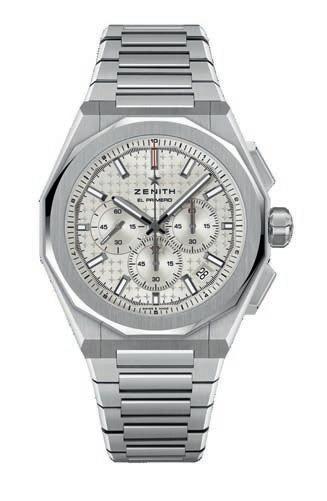
The Defy Skyline Chronograph comes in three colors: blue, silver, and metallic black. The dials feature a subtle four-pointed star motif, a nod to the brand’s motto: “Time to reach for your star.” The stars are engraved in a slightly darker hue than the dial. This elegant dial is nicely contrasted with baton-style hour markers. The hour markers and hands are rhodium plated, faceted, and topped with Super-LumiNova SLN C1, noted for its subtle glow.
This watch displays the date via an aperture situated between 4 and 5 o’clock and it has three sub dials; two are for the chronograph function and one is for running seconds. The 60-minute counter appears at 6 o’clock, and the 60-second counter at 3 o’clock. Running seconds are at 9 o’clock. The dial is proudly emblazoned with El Primero, drawing attention to the powerful, precise chronograph movement just below.
Indeed, the Defy Skyline Chronograph is powered by the El Primero 3600 automatic movement. When the first El Primero caliber debuted in 1969, it was the first automatic chronograph movement in the world. This movement has a 60-hour power reserve and a frequency of 5 Hz. Most watches are between 2-4 Hz, so 5 Hz is quite the technical achievement. Why does this matter? Precision. The higher the frequency, the more precise the timekeeping. In this case, the chronograph can count time to 1/10th of a second. When activated, the central chronograph hand speeds around the dial. It moves faster than traditional chronographs, which make a full rotation every 60 seconds. This one makes a full rotation every 10 seconds. The chronograph hand in the center counts the 1/10th second on the 12-sided flange ring inside the bezel. This design mirrors the geometric design of the bezel. The watch has a screw-down crown, making it water resistant to 100 meters.
The watch comes on a stainless steel bracelet and includes a rubber strap with a star pattern that matches the dial. Zenith employs a quick-change system that is integrated into the case. There are no tools needed and no fiddling around to change the strap. You just push a button, and it pops off.
The Defy Skyline Chronograph nicely blends the lines between a sports watch and a dress watch. It has the technical chops of a top-tier tool watch, but its architectural design and attention to detail elevate it to a watch you can wear in many different circumstances.
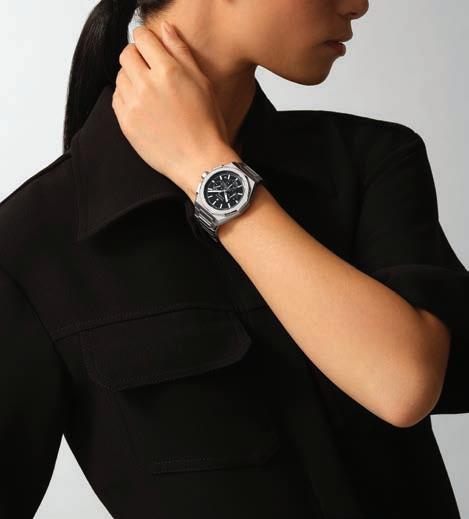
Defy Skyline Chronograph with silver and black dials.
FLORAL DREAMS
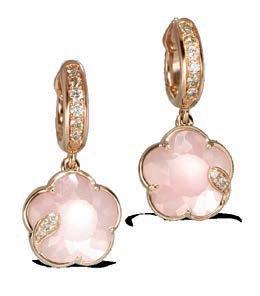
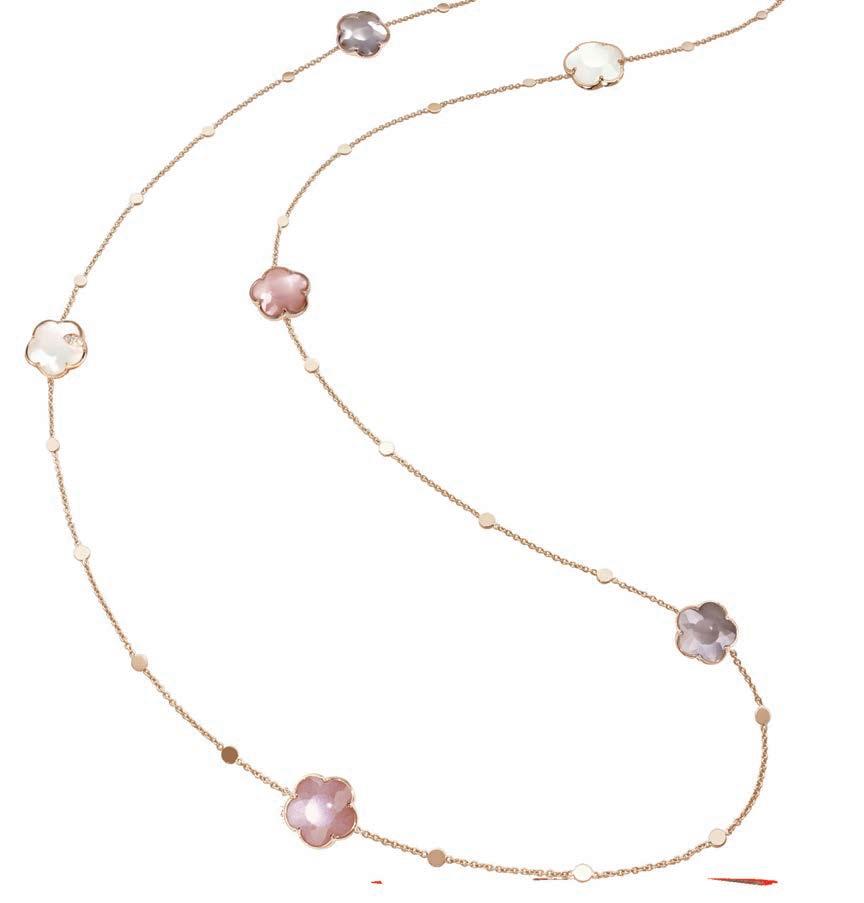
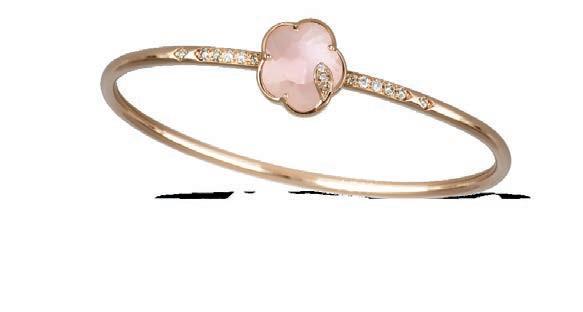
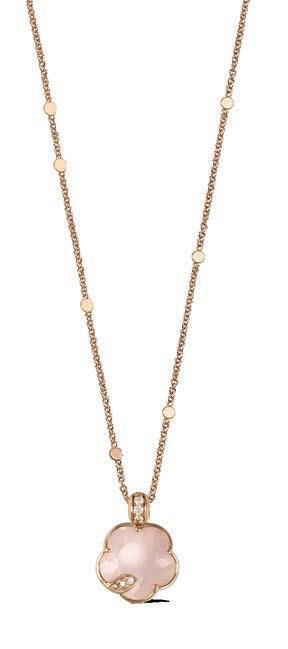
Italian jewelry house Pasquale Bruni enchants with its poetic creations, blending nature and elegance. The Petit Garden collection offers a whimsical escape into a world of delicate blooms, while Bon Ton captures the essence of femininity with its soft, flower-shaped designs. Meanwhile, Petit Joli celebrates the beauty of colorful gemstones, evoking vibrant moments in nature. Each piece reflects Pasquale Bruni’s passion for craftsmanship and timeless beauty, perfect for the modern romantic.
Joli Bouquet Lunaire sautoir necklace with gray moonstone, pink moonstone, white moonstone, and diamonds $7,200. Lunaire earrings with pink chalcedony and white moonstone doublet and white and champagne diamonds $4,600. Lunaire pendant necklace pink chalcedony and white moonstone doublet and white and champagne diamonds $2,800. Lunaire ring pink chalcedony and white moonstone doublet and white and champagne diamonds $2,800. Lunaire bracelet pink chalcedony and white moonstone doublet and white and champagne diamonds $4,600. All in 18K rose gold.
Page Petit Garden earrings in 18K white gold with diamonds $10,250. Petit Garden earrings in 18K rose gold with white and champagne diamonds $7,700. Figlia dei Fiori choker necklace in 18K rose gold with white and champagne diamonds $16,550. Petit Garden choker necklace in 18K white gold with diamonds, pricing available upon request. Petit Garden choker necklace in 18K rose gold with white and champagne diamonds $14,450. Bon Ton sautoir necklace in 18K rose gold with prasiolite, milky quartz and diamonds $7,400. Petit Garden bracelet in 18K white gold with diamonds $9,250. Petit Garden bracelet in 18K rose gold with white and champagne diamonds, pricing available upon request. Petit Garden ring in 18K white gold and diamonds $5,000. Petit Garden ring in 18K white gold and diamonds $7,000. Petit Garden ring in 18Krose gold with white and champagne diamonds $3,900. Petit Garden ring in 18Krose gold with white and champagne diamonds $5,200. Figlia dei Fiori ring in 18K white gold and diamonds $7,100. Bon Ton ring in 18K rose gold with prasiolite and diamonds $4,200.
Left Page:
Petit
Right
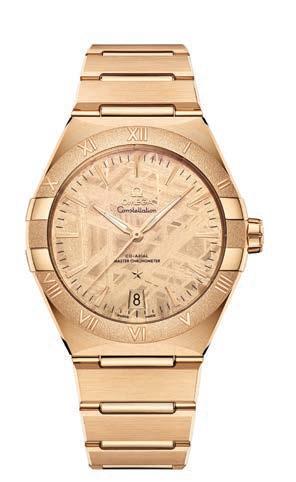
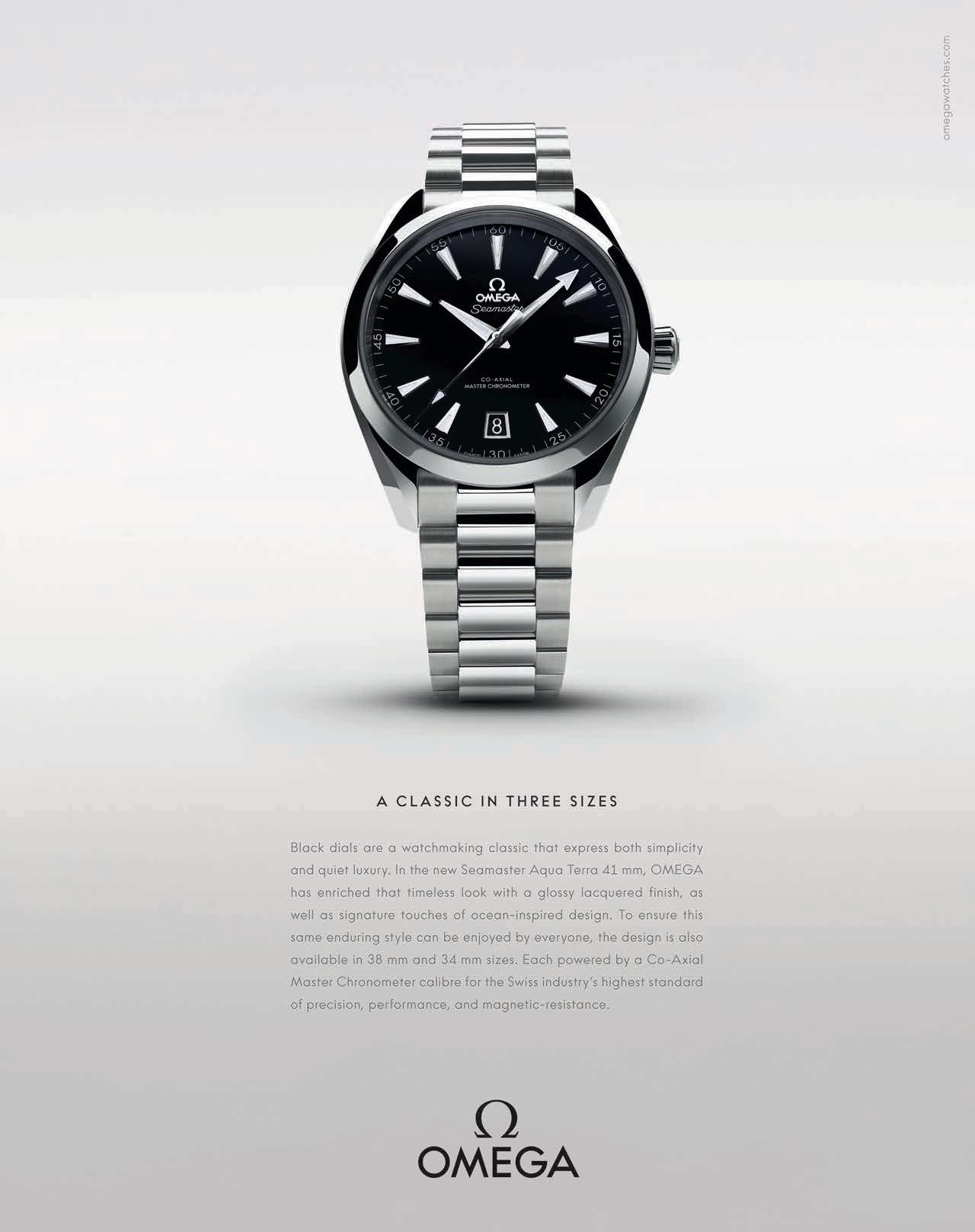
Omega Constellation
Constellation 41mm. $9,700
By Serge Panczuk
In the life journey of a collector, you encounter a few types of watches: ones you love at first sight, ones you don’t like at all, and ones which are intriguing. The two first categories are easy to deal with. It’s either a yes or a no.
The third one, though, is the most interesting because it requires digging deeper, doing more research, learning, trying, and ultimately choosing. For me, the Omega Constellation falls in that group.
This watch has always looked odd to me – in a positive way. The Constellation is an Omega hidden gem which speaks to you if you make the effort to sit back, look deeper, and give it time.
Nowadays, when you can check time on so many different devices, watches are much more than time tellers. They are story tellers. In the Omega lineup, the Speedmaster and Seamaster are highly skilled narrators of amazing adventures: moon, deep ocean, NASA, Royal Navy, or James Bond.
With that in mind, let’s go back to the Constellation. As a collector, my journey with the Constellation has been a long one. To be more precise, a 54,778-mile trip. I landed in Tokyo in early 2022 for what was supposed to be a three-month project. This short stay became an intense 2 ½ years’ experience.
Japan has multiple facets, and watch collecting is a big part of the country’s fascinating culture. It is a lifestyle, not a statement. You see cool watches everywhere. And by cool, I mean really cool.
Not the usual suspects, but the unusual ones: the mavericks, the geezer watches, the oddballs.
Early morning in Tokyo’s subway you can sport nice watches everywhere, aligned with Japanese elegance and refinement. One of the first vintage watch boutiques I visited was in the fancy Ueno, an area known for its cheap and good food, as well as everything vintage.
In the window display of Yuta-San shop were dozens of watches, from many brands. Beside some cool vintage Seikos, I started looking at a small, simple three-handed Omega which happened to be a ‘50s Omega Constellation, with its now legendary pie-pan dial. The depth and originally of this watch were for sure its dial.
Learning a culture is as much about understanding local customs as it is about understanding its style. And blending with it. Japanese collectors love small watches. 36mm is standard; 34 is a good size. Sometimes, men wear 33 to 28mm pieces.
I put the Constellation on my wrist. I removed it, put it on again, and so on and so forth. I left the boutique without the watch. The watch definitively caught my attention. In the next few days, I started to see Constellations everywhere –in boutique windows but also in real life, worn by classic salary men, and – most surprising to me – by a lot of young fashionable people.
One of my assumptions was the Constellation was an “old guy’s” watch. Here, in the fancy Japan, it was anything but that. The Constellation was hot!
Obviously, I went back to Yuta-San and ended up with one on my wrist.
Constellation 41mm. $9,700
Later, while talking with fellow collectors, I also developed my taste for the ‘80s “modern” Constellation, which was introduced in 1982 and is still popular today.
You can immediately recognize this watch by the now famous claws and the integrated bracelet. The ‘80s design followed the trend of sporty integrated watches, with bezels held in place by screws. Omega took a slightly different approach. The Omega Manhattan was dressier and was initially powered by a quartz movement, considered as the must-have technology at that time.
While the “Masters” were focusing on the more active and sportier crowd, the Constellation was the classic classy member of the Omega family.
And this brings us back to Japan. Here, the sporty watches were mostly solid Seikos and Citizens. Speedmasters became a big deal, too, as well as the Constellation – well suited to the formal business style of Japanese executives. The demand for Constellation has never stopped. The watch has always been a hit here.
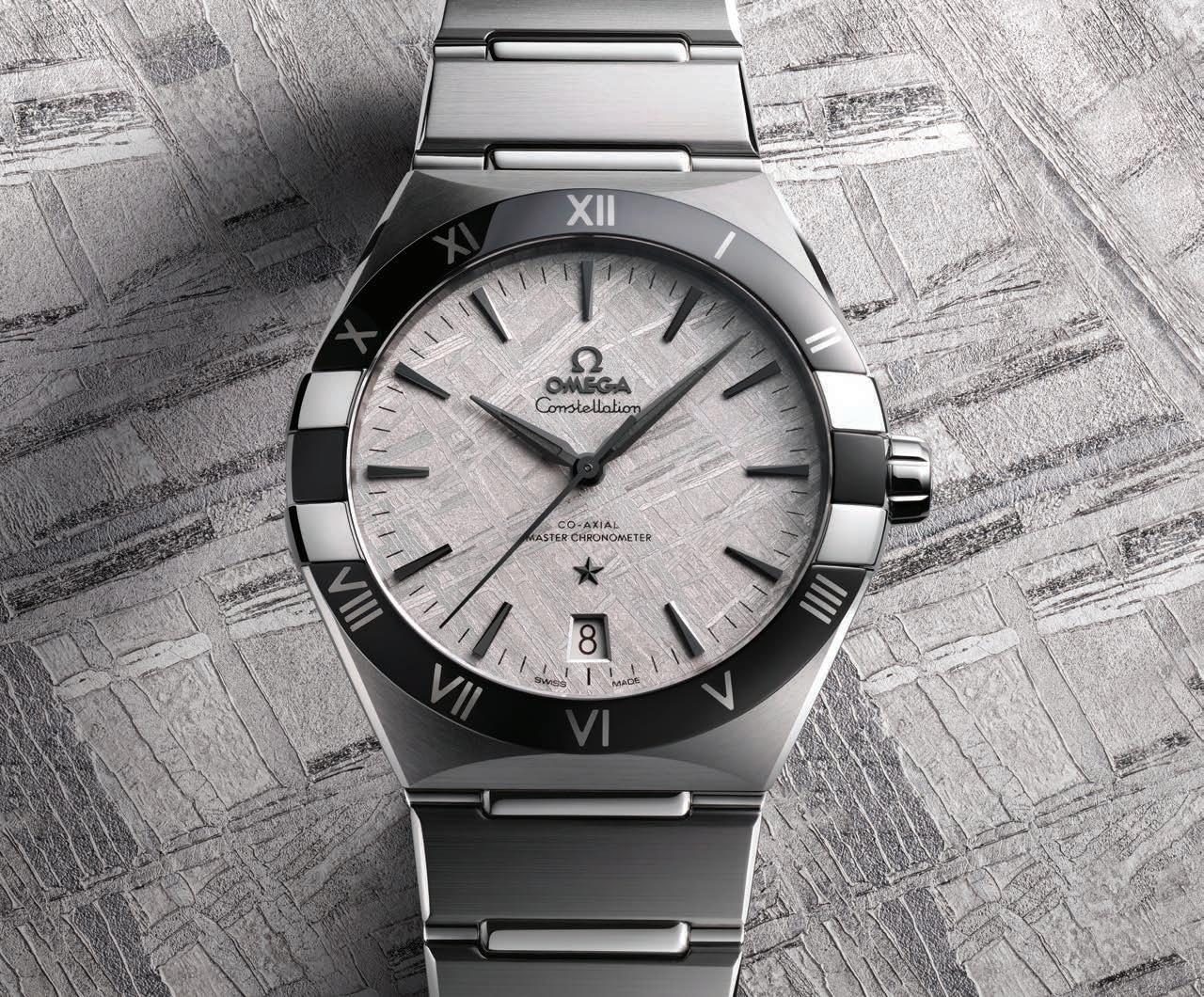
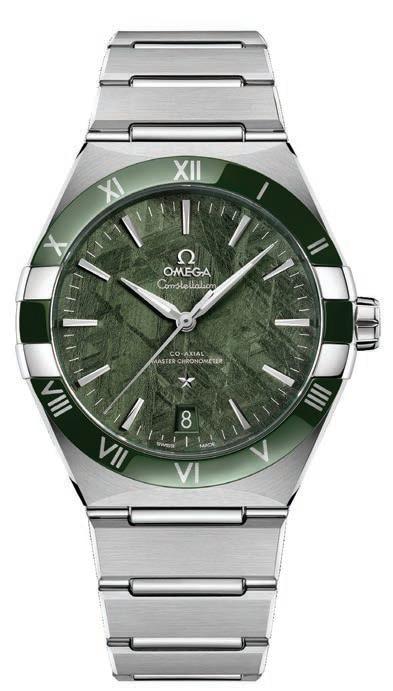
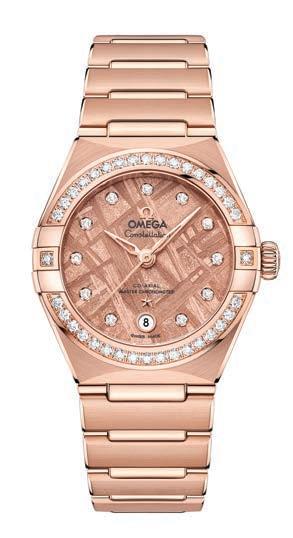
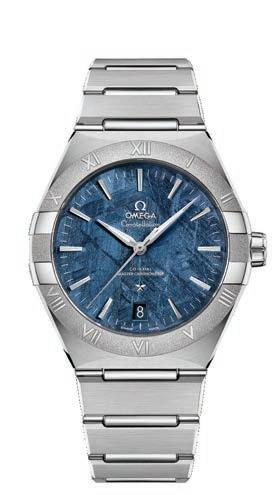
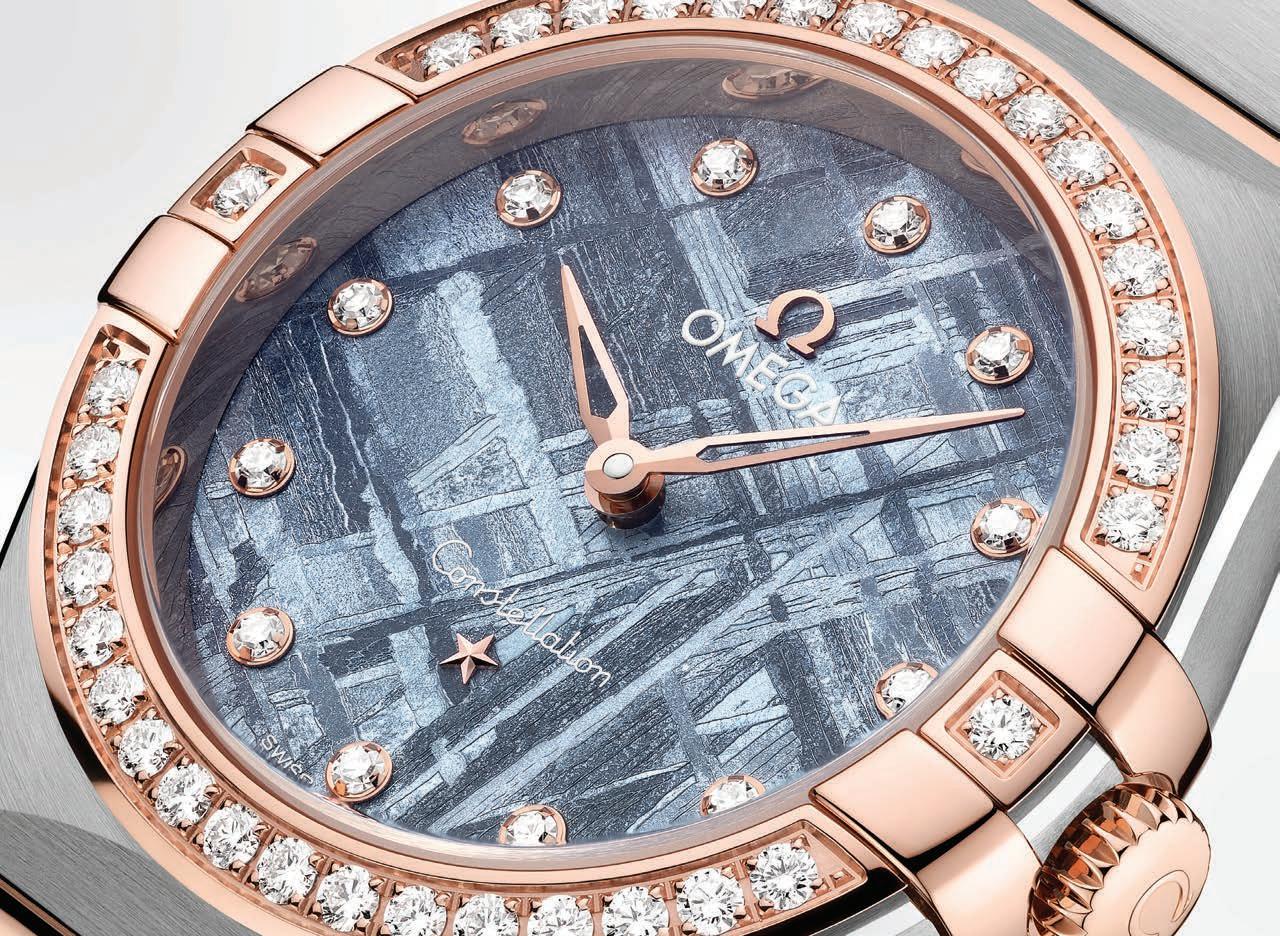
Since the ‘80s, the Constellation has had many iterations, the most recent being the introduction of a few versions with meteorite dials. The claws are still here as well as the integrated bracelet – even if a leather option is available.
This Constellation is perfectly aligned with our time. I feel the watch is now moving from a super classic territory to a more blended one, mixing a sportier look with a very cool new dial made of a rare material: meteorite stone.
My initial comment about the ‘50s Constellation was how much I loved the dial – which was the most attractive part of the watch.
The meteorite dial brings this feeling and emotion. One could think meteorite should be only for a “space” watch like the Speedmaster. I don’t think so. Why? Because it brings us back to the name on the dial.
The name Constellation was chosen to celebrate Omega’s chronometric performances and commemorate the eight awards received by the brand. Constellation refers to the Geneva Observatory.
For years, a star on the dial or an Observatory engraved on the case back were the tribute of this early midcentury (‘30s / ‘50s) chronometer adventure. In
Constellation
41mm Moonshine Gold. $42,400
Constellation 41mm. $9,300
Constellation
29mm Sedna Gold. $33,700
2024, the Constellation’s meteorite dials are a good way to remind everyone about the history and the legacy, but also the originality of this amazing watch.
The new Constellation houses the now highly-celebrated METAS co-axial master chronometer movement, which brings accuracy at another – should we say – sky high level.
If I had to pick my two favorites, I’d go for the mesmerizing blue dial steel 41mm version (on steel) and, to be bold, the full Sedna gold version.
Full gold watches were never my thing, but I have started to appreciate them more and more.
Lately, a new trend is emerging amongst watch lovers and vintage watch collectors. The so-called “geezer” watches which blend eccentric, fun elements of the ‘80s are becoming highly collectible. The full gold Constellation could be queen of this rising style. Anyway, steel or gold, the Omega Constellation is worth your attention.
Give it a try but be careful. You might just fall in love with it!
Constellation 28mm Sedna Gold & Steel. $11,700
CAPTIVATING ALLURE
JEWELS OF UNMATCHED REFINEMENT
PHOTOGRAPHY BY ALVIN NGUYEN
Hyde Park Collection
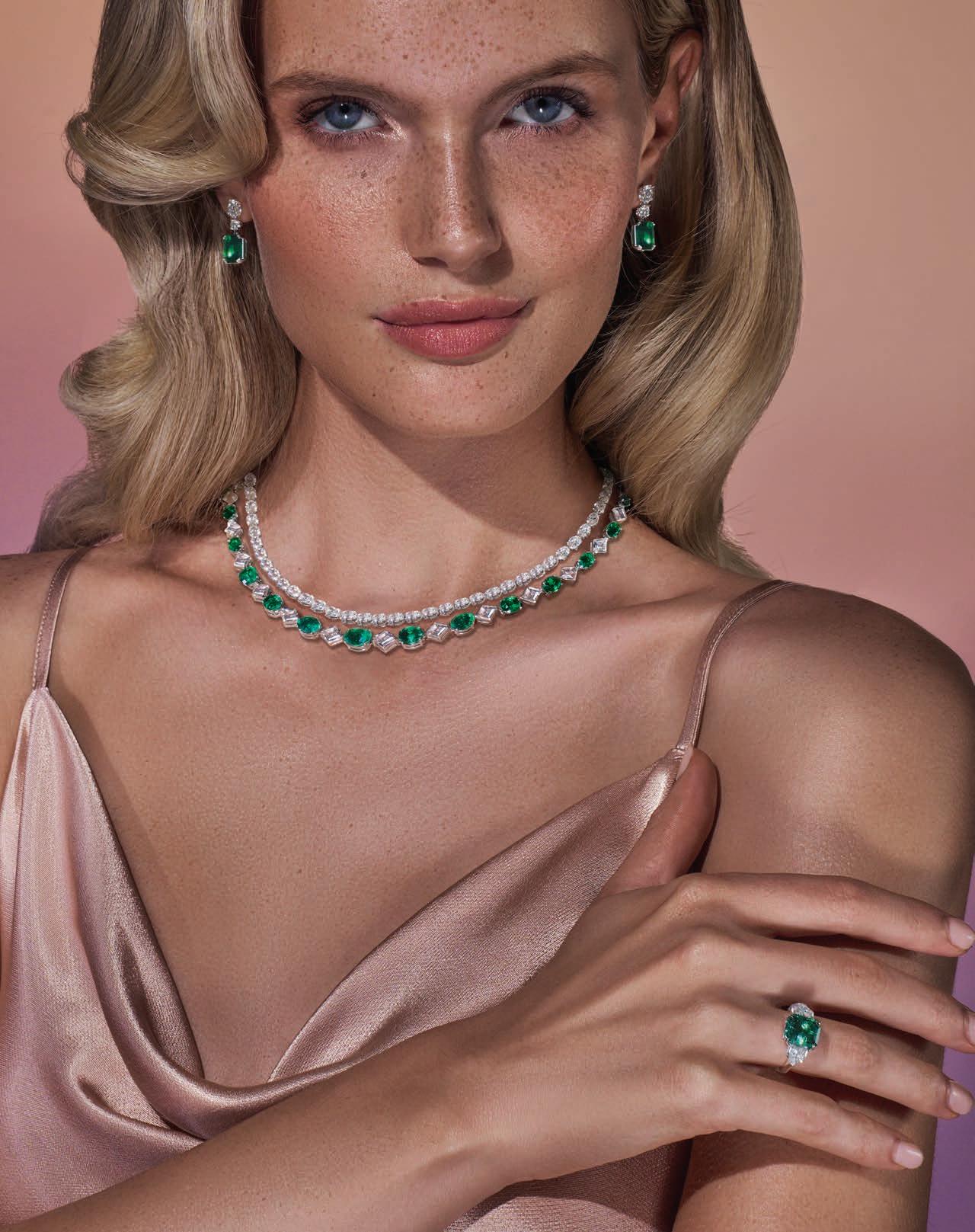
Emerald and diamond earrings. Diamond line necklace. Diamond and emerald line necklace. Emerald and diamond three-stone ring. Pricing available upon request.
Norman Silverman
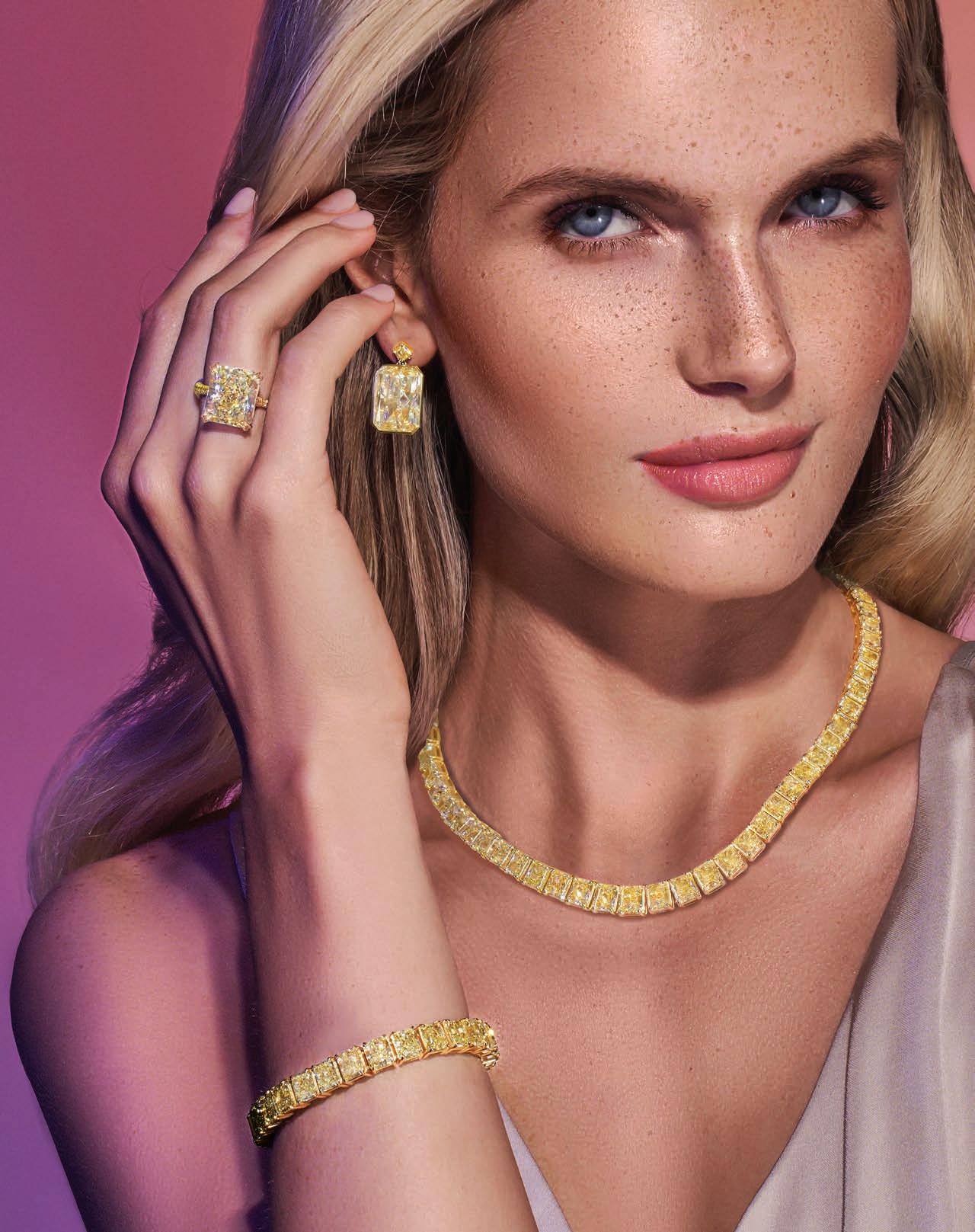
Yellow diamond earrings, ring, necklace, and bracelet.
Pricing available upon request.
HYDE 55 PARK
Hyde Park Collection
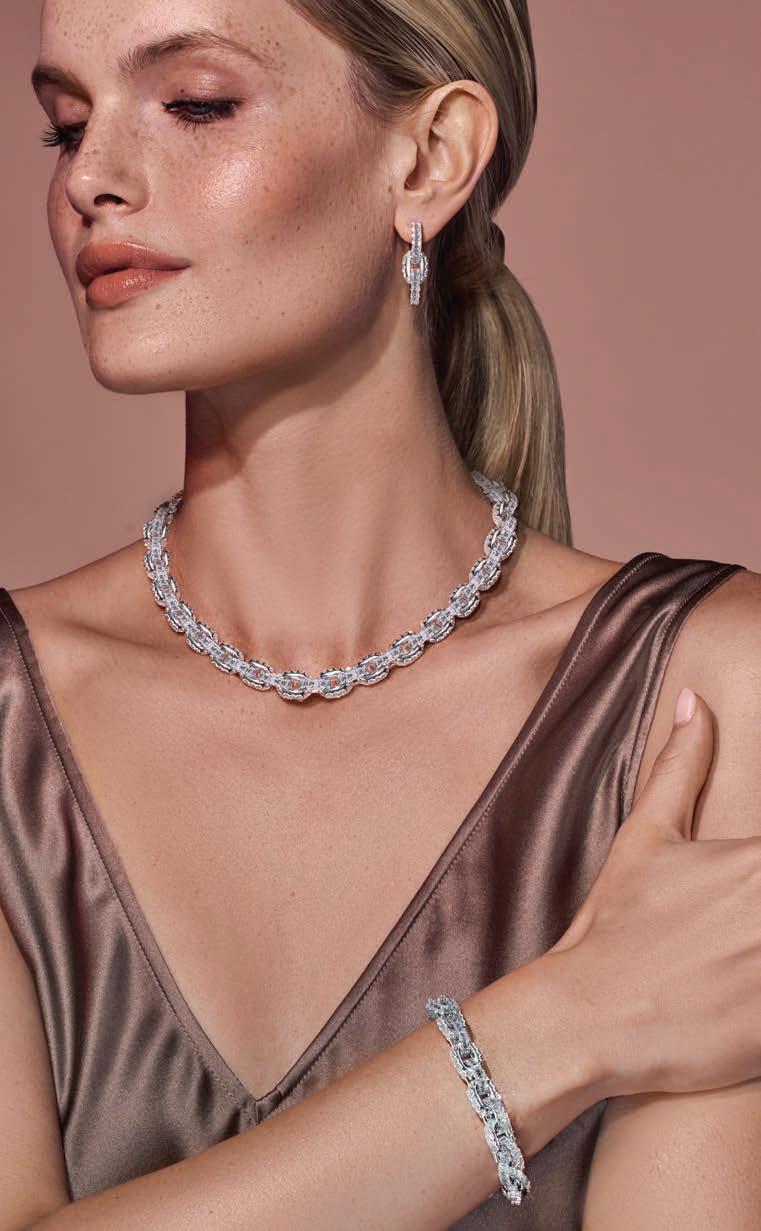
Emerald diamond link earrings, necklace, and bracelet. Pricing available upon request.
HYDE 56 PARK
Rahaminov Diamonds Yellow oval diamond halo earrings, yellow pear diamond halo by-pass ring, yellow and pink pear diamond ring, cushion and pear diamond halo by-pass ring, yellow and white heart diamond by-pass ring, and yellow heart diamond halo by-pass ring. Pricing available upon request.
HYDE 57 PARK
Vhernier
Olimpia diamond pavé earclips, Calla diamond and ebony necklace, and Olimpia diamond pavé ring. Pricing available upon request.
Norman Silverman
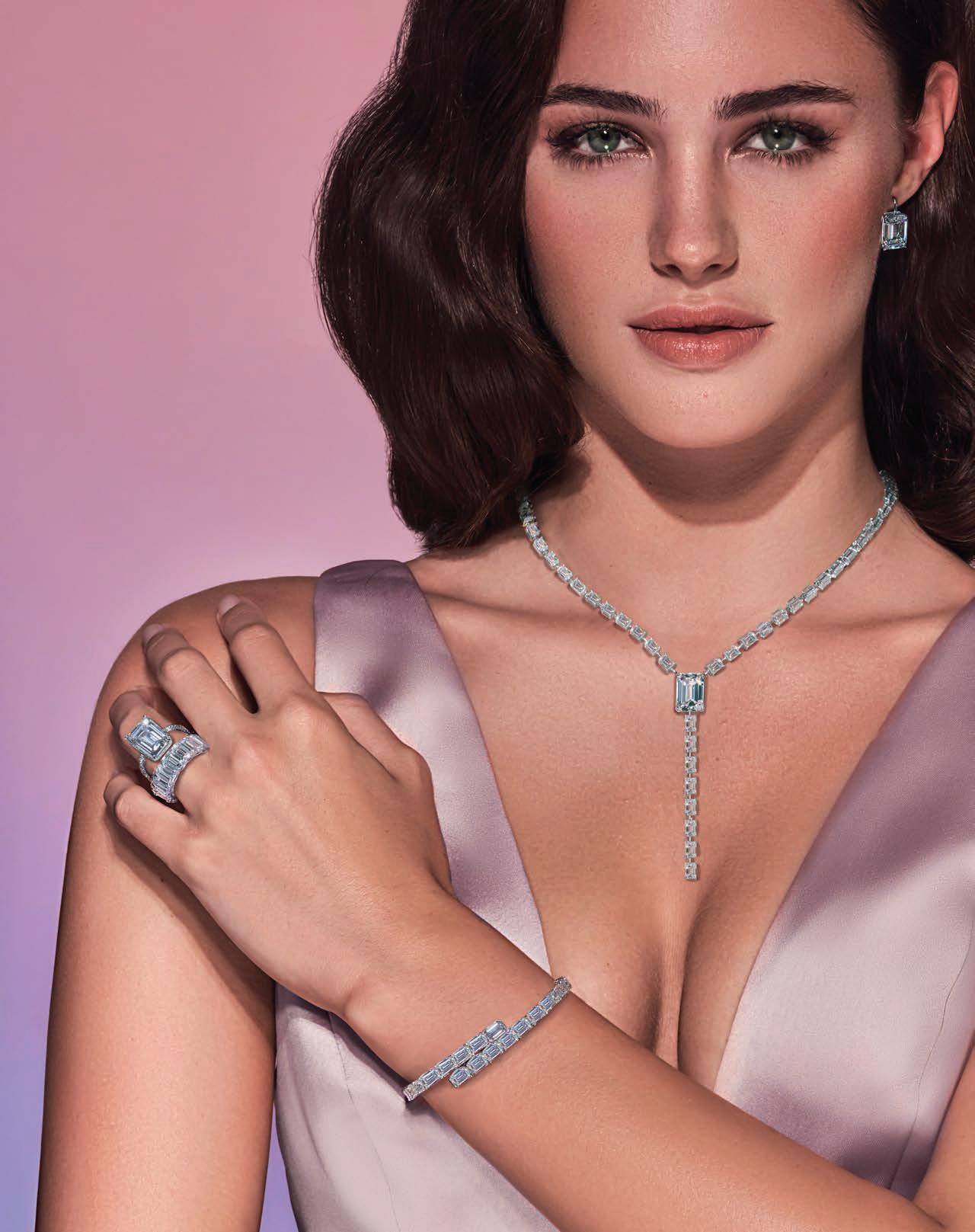
Emerald diamond earrings, lariat necklace, engagement ring, eternity band, and flexible bracelet. Pricing available upon request.
HYDE 61 PARK
Norman Silverman Emerald diamond drop earrings
Nikos Koulis
Me Collection diamond necklace and bracelets. Pricing available upon request.
Norman Silverman Emerald diamond drop earrings, emerald diamond bezel set necklace, emerald and round diamond bezel set necklace, marquis diamond bezel set diamond ring, pear diamond ring, emerald diamond bezel set line bracelet, oval diamond bezel set line bracelet, and pear diamond bezel set line bracelet. Pricing available upon request.
Rahaminov Diamonds
Pear diamond earrings, line necklace, by-pass rings, and two row line bracelet. Pricing available upon request.
Models: Morgan Fletcher ( The Industry ), Junli Zhao (Elite), Jaime Duff (Wilhelmina)
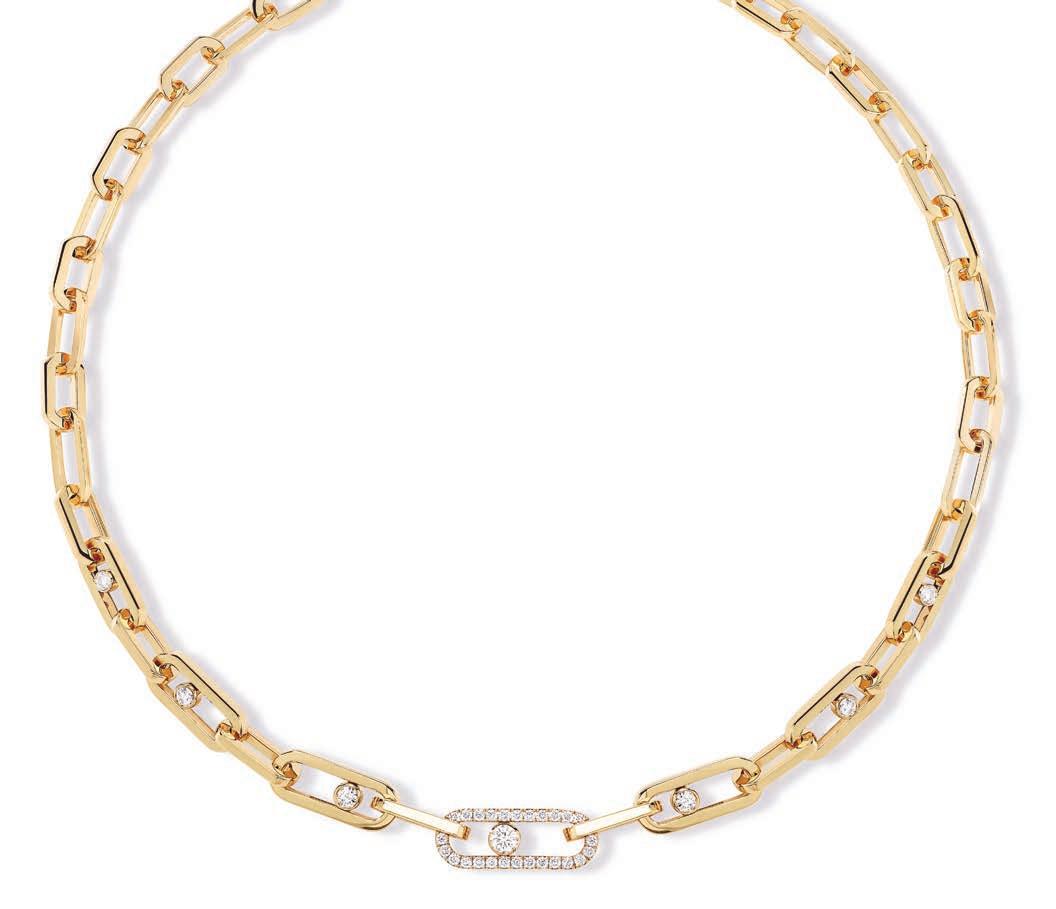
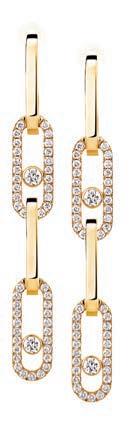
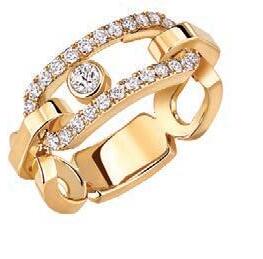
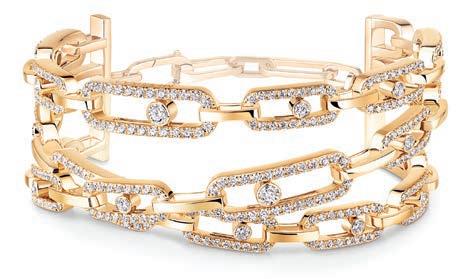
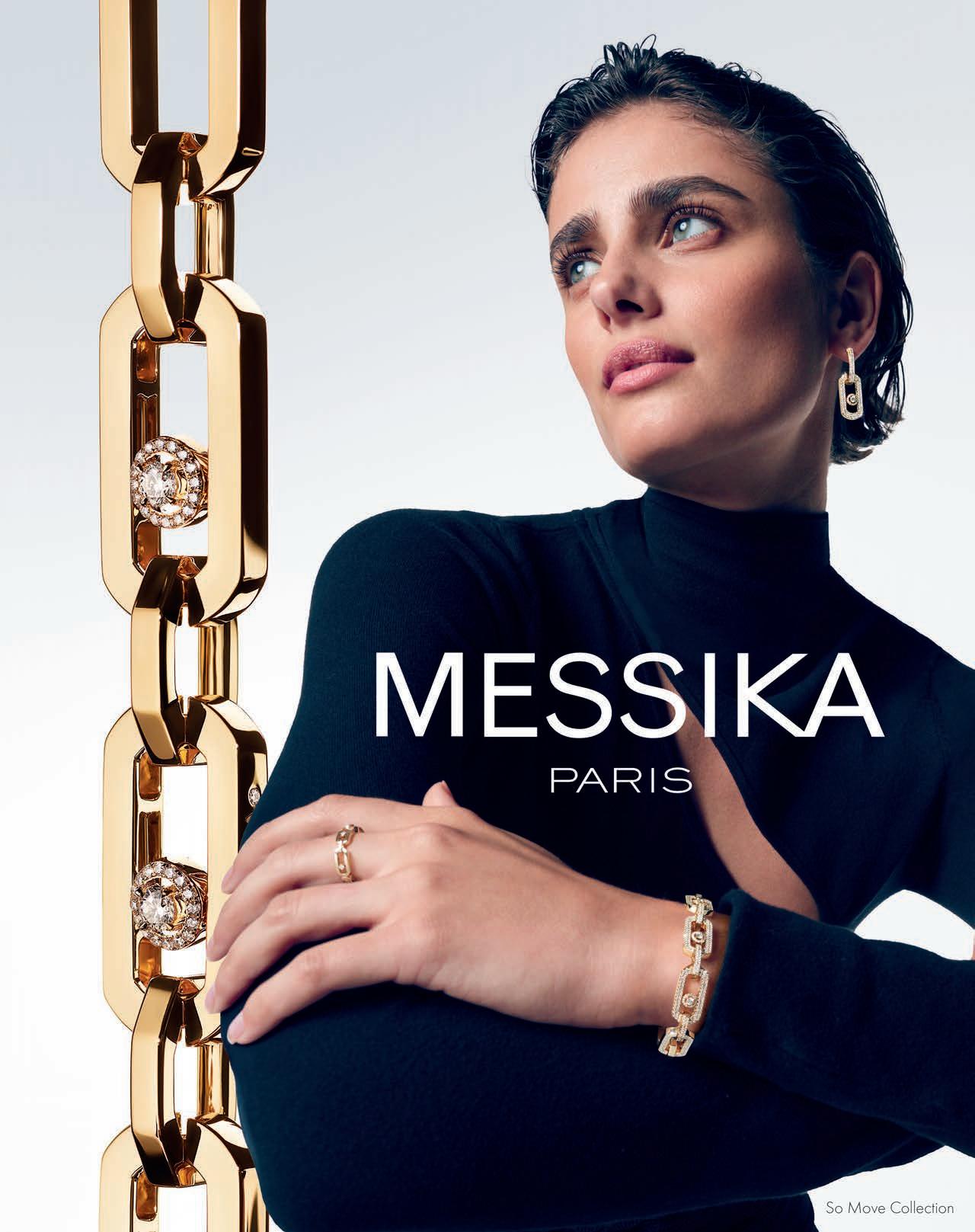
The Messika Move collection redefines elegance with a bold, playful twist. Meticulously crafted, each piece showcases Messika’s signature moving diamonds, creating a captivating dance of light and sparkle. With its contemporary design and undeniable allure, the Move collection is a true reflection of luxury and style. Now, movement takes on a new level of assertiveness. Valérie Messika has reimagined the Maison’s iconic line, infusing it with stronger, more powerful sculptural contours. The Move collection is expressive, radiant, and uniquely bold
Left Page:
Move Link Diamond
Move Link Diamond Ring.
Move Link Diamond 3-Row
Move Link Diamond Transformable
Right Page:
So Move XL Pavées Earrings.
So Move XL Pavé
Move Link Multi Ring.
All in 18K yellow gold.
$14,230
Bracelet. $29,520
$2,430
Necklace. $22,670
$4,640
Cuff. $31,100
Earrings. $13,600
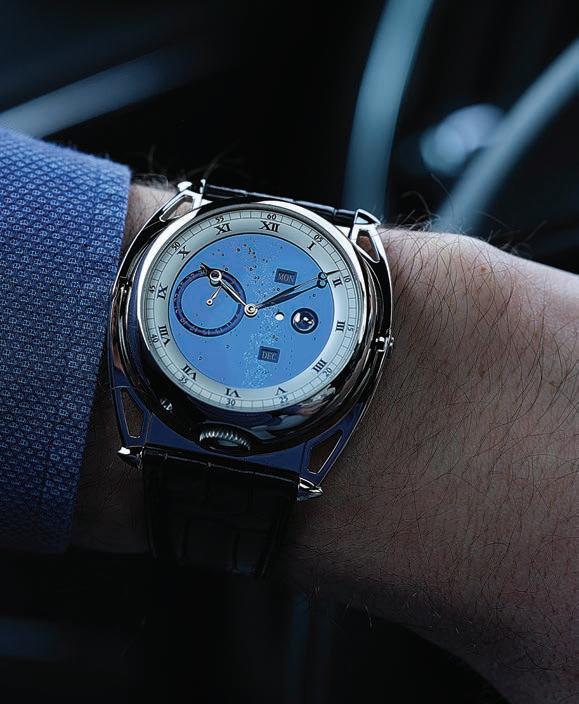
Introducing the De Bethune DB Kind of Grande Complication
Being two-faced has never looked so good.
By Jack Forster
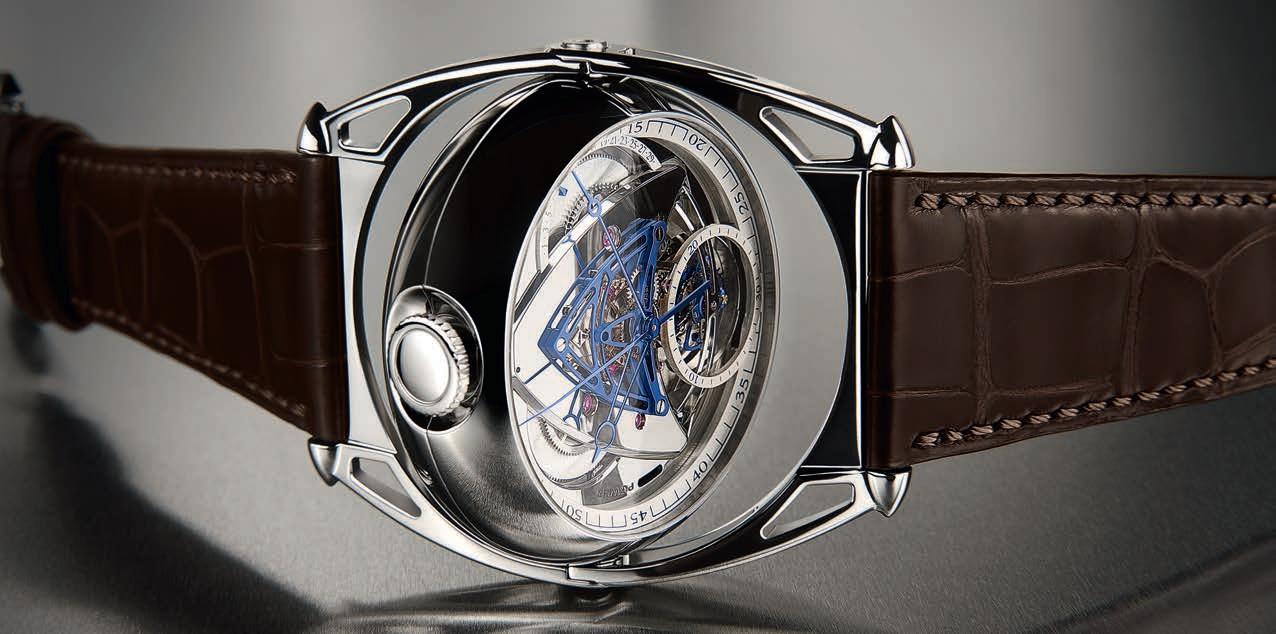
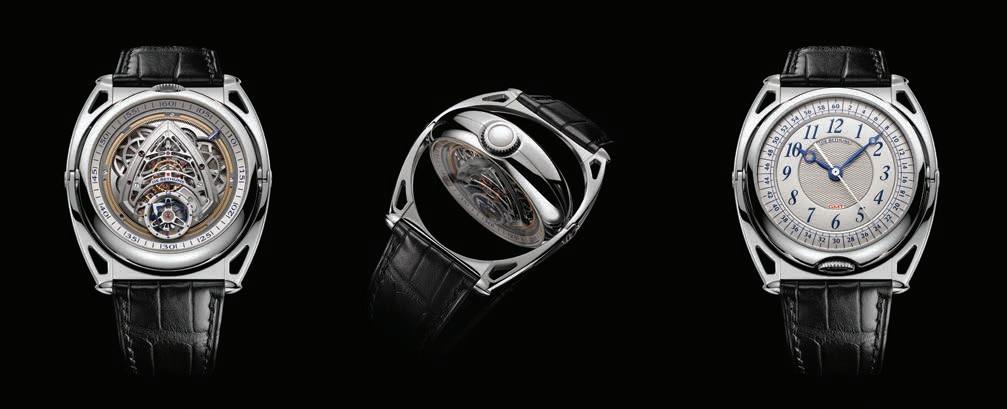
There are many examples over the years of De Bethune’s ability to think outside the box (both technically and aesthetically), but some of the best are undoubtedly the Kind Of Two Watches. These models have a double-sided round case on gimbals inside a pair of articulated “floating” lugs which allow the entire watch to mold itself to the contours of the wrist no matter which face is uppermost.
The name Kind Of Two is a play on words inspired by De Bethune’s Kind Of Blue watches (that name in turn of course was inspired by the classic Miles Davis album of the same name), and previous Kind Of Two watches, like the Kind Of Two Tourbillon and the Kind Of Two Jumping GMT, are effective demonstrations of just why the design works so well for De Bethune.
De Bethune, like the Kind Of Two watches, also has two sides. On the one hand, there are all the elements of classical watchmaking which inform De Bethune’s designs, as well as the fundamental watchmaking problems which underlie its technical innovations. On the other hand, there is De Bethune as an example of the avant-garde side of independent watchmaking. Every independent watchmaker who presents a radically dare-to-be-different design philosophy has to grapple with how to balance the appeal of traditional fine watchmaking values with the appeal of transgressing or enlarging those values and each such brand (I think in no particular order of URWERK, MB&F, and Richard Mille, as three fairly different examples) finds its own way to thread that needle.
De Bethune’s Kind Of Two design allows De Bethune to show off both sides in a single watch quite literally, but of course there is much more to it than that. The Kind Of Two case design also offers a very richly different pair of experiences in a single watch and much more so than is usually true even of other double-sided watches (again, in no particular order I think of the Reverso à Triptyque, the Grandmaster Chime, and the Graves Supercomplication all of which, no matter which of the faces you look at, still draw largely from the same design playbook).
The newest Kind Of Two watch is the DB Kind Of Grande Complication, the latest in a long line of perpetual calendars from De Bethune which began in 2004, just two years after the launch of the brand, with the DB15.
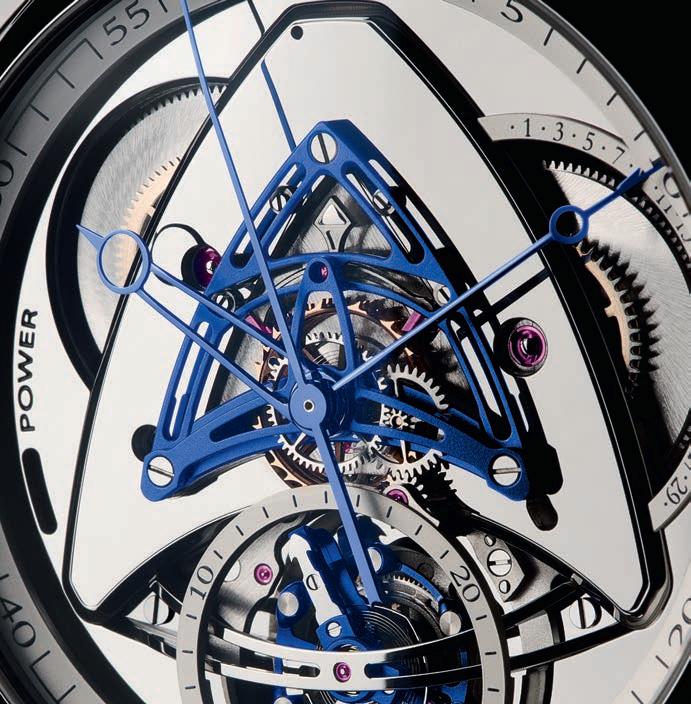
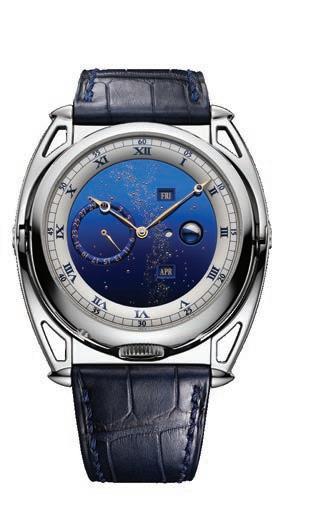
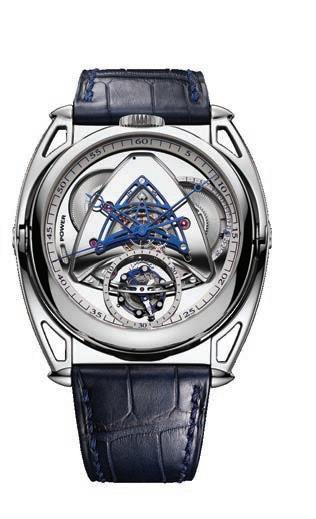
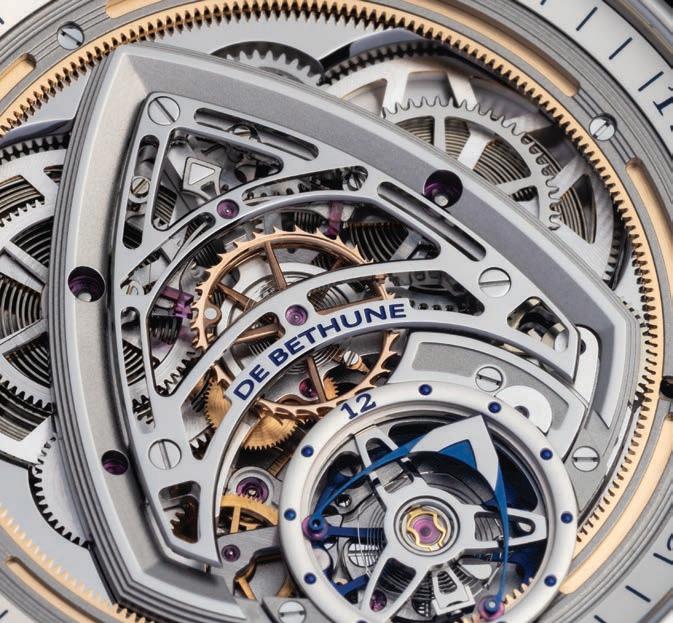
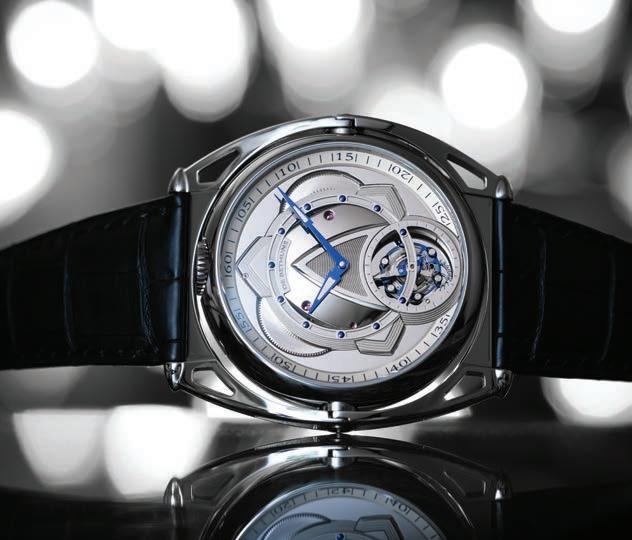
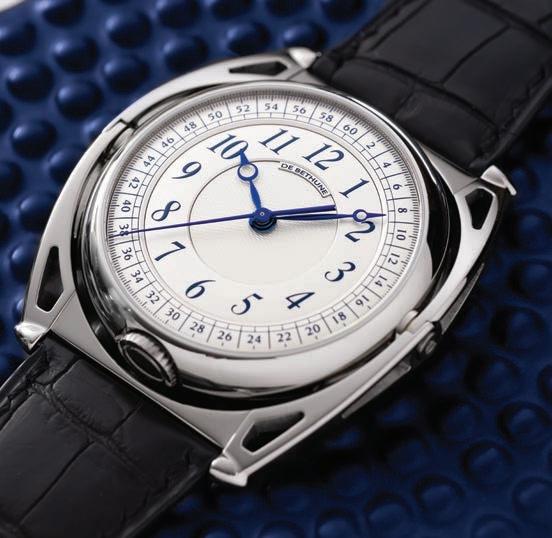
The fact that the identity of the watch is split between two sides gives us a very refined, almost conservative take on one side and a very futuristic vision on the other. The watch is, as the name “Grande Complication” suggests, extremely complex –a perpetual calendar with day, month, and date indications, as well as a spherical moonphase on one side, and on the other, a full view of the De Bethune signature delta-shaped barrel bridge, with the time, deadbeat seconds, age of the Moon indication, power reserve, and visible 30-second tourbillon with De Bethune’s patented titanium and white gold balance visible under a curved bridge.
De Bethune calls the two sides of the watch “contemporary” and “classical” and it’s easy to see why, although the contemporary side has classical qualities, and vice versa.
The classical side shows the calendar indications, as well as the spherical moonphase, against a background of blued titanium. The star field consists of individual white gold pins, representing the stars, and all of the indications – the subdial for the date, month, and day windows, the Leap Year indicator, and the spherical moonphase – seem to be floating freely in the night sky. And, if desired, the star field can be personalized, as with the De Bethune Starry Varius.
The contemporary side is a Kind Of visual museum of technical watchmaking at De Bethune. The 30-minute high speed tourbillon sits under a domed bridge, with the two staggered mainspring barrels under De Bethune’s delta-shaped barrel bridge, which encloses a blued titanium frame within which the saw-toothed deadbeat seconds wheel can be seen. The De
Bethune balance continues the color theme of blue and white metal, with its blued titanium spokes and rim inset with white gold inertia weight.
The design of the balance is intended to provide better precision. The ability of a balance to resist disturbances to its rate has to do with a number of factors, but one of the most important is socalled moment of inertia, which is the ability of a rotating body to resist changes in its rotation. Moment of inertia is a factor of both mass and weight distribution and of the total mass of a balance, the more you can have at the periphery rather than closer to the center, the higher the moment of inertia (this is also the reason most of the mass of a pendulum is in the bob, and not distributed along the length of the pendulum).
In no particular order, the De Bethune innovations and patents present in the Kind Of Grande Complication include the 30-second high speed tourbillon with 36,000 vph balance; the retrograde
age of the Moon indication; the high precision spherical moonphase display, the De Bethune balance spring; the deadbeat (jumping) seconds, and of course, the titanium and white gold De Bethune balance as well.
The balance spring is a De Bethune invention as well – it’s equipped with an extra outer coil which offers the same benefits as a Breguet overcoil, but without the additional thickness the latter requires.
A double-sided watch gives you a chance to have two different experiences with a single timepiece. That can be something as relatively uncomplicated as a Reverso (which invites you to figure out, if you want to, what to do with that blank space on the back of the case) or as highly complex as the Reverso Grand Complication à Triptyque, where the additional faces (three, in the latter case) allow room for additional displays. What is much rarer – so much so that I struggle to think of an example other than De Bethune – is to make a reversible watch that offers two dramatically different design experiences, while at the same time ensuring that they’re linked by a common aesthetic, and in which each side expresses different but complimentary takes on complicated watchmaking.
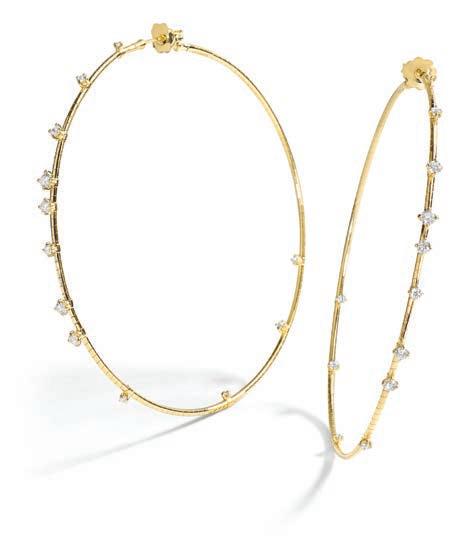
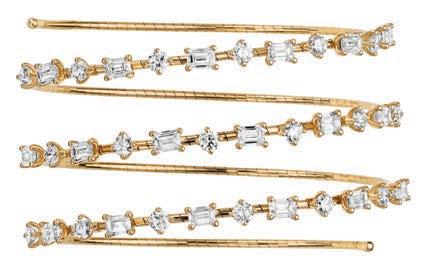
MATTIA CIELO: TIMELESS ELEGANCE, MODERN APPEAL.
Mattia Cielo jewelry transforms the concept of elegance through its innovative and adaptable designs. Founded by designer Mattia Cielo, the brand utilizes advanced techniques that enable each piece to effortlessly conform to the wearer. The collection showcases a perfect fusion of sophistication and contemporary style, adorned with stunning diamonds and gemstones in visionary designs. Prioritizing flexibility, each creation exemplifies a harmonious balance of artistry and functionality, inviting you to experience luxury that flows with you.
Left Page:
Yellow Gold Diamond Hoop Earrings. $5,200
Yellow Gold Round and Emerald Diamond Spiral Bracelet. $39,000
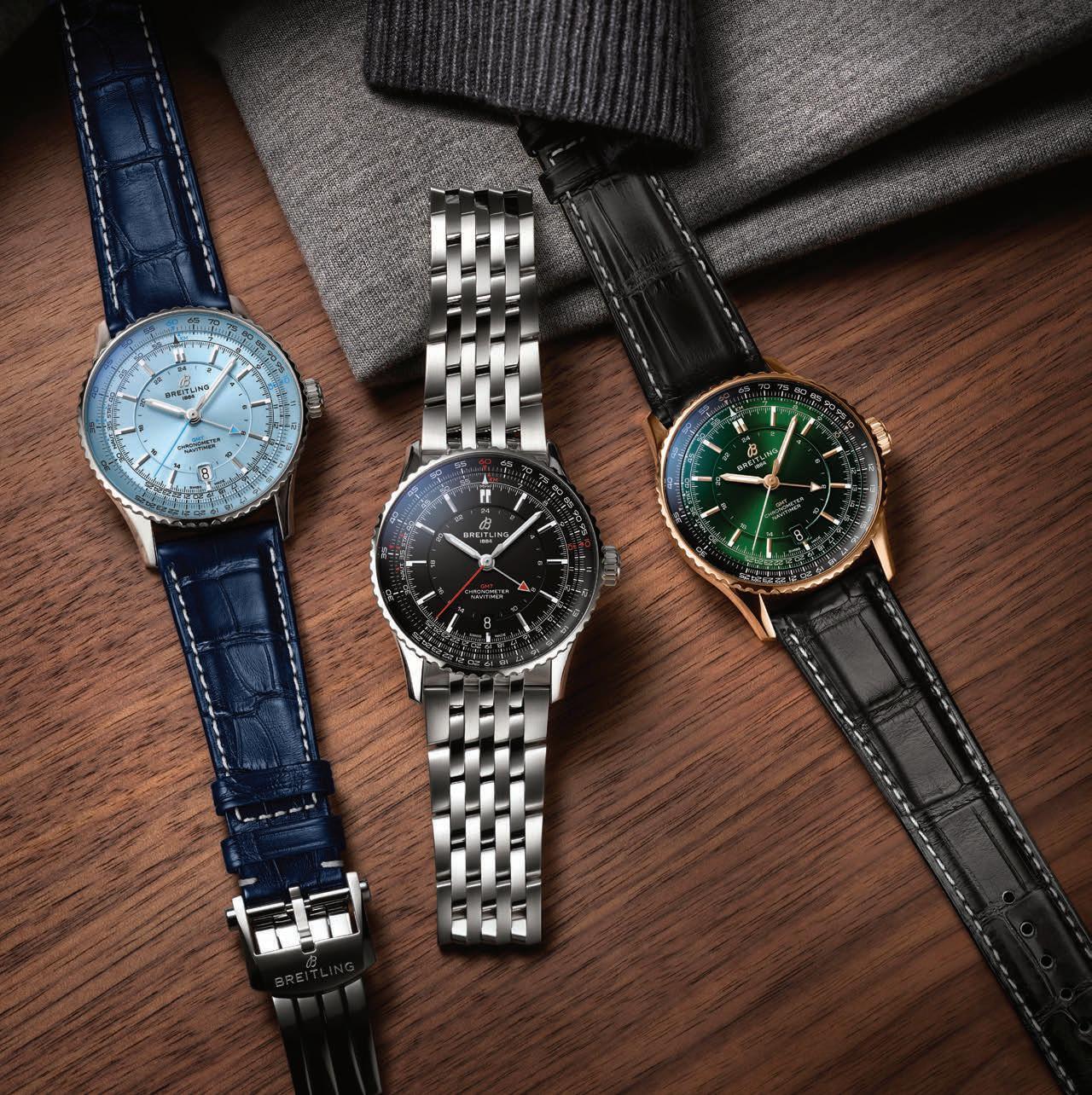
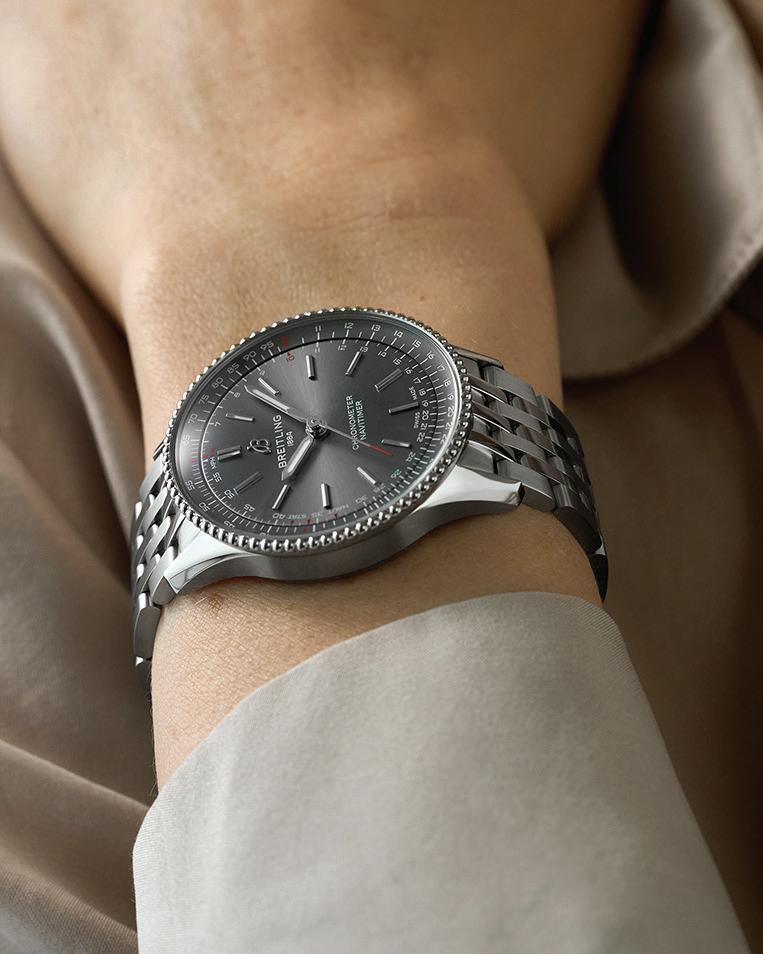
When it comes to pilot watches, Breitling’s Navitimer is one of the most illustrious – and recognizable – Swiss watches around. With a past that includes multiple watchmaking firsts, a present as one of Breitling’s enduring flagship models, and a future that will undoubtedly display fresh aesthetic and functional distinction, the Navitimer remains a world-class game changer. This year, coinciding with Breitling’s 140th anniversary, exceptional new timepieces complement the Navitimer’s essential qualities, while still leaving space for modern interpretations.
The Navitimer chronograph made its debut in 1952, earning fame as the first wrist-worn analog computer for professional pilots. It was a boon for aviation, combining a chronograph with a slide rule on the rotating bezel, designed to deliver significant flight data – such as speed, distance and fuel consumption. Early on, the easy-to-read, cyclopedic dial featured large, luminescent Arabic numerals and monochromatic subdials on a black backdrop.
A portmanteau of “navigation” and “timer,” the Navitimer became a reliable resource for pilots around the globe. And before long it captured the imagination of the general
public as well, following such pacesetters as Miles Davis, Serge Gainsbourg, and Formula 1 world champion Jim Clark who favored the model for its performance and its intimations of flight. It even made its way into space on the wrist of astronaut Scott Carpenter in 1962.
Notable models during countless years of innovation include the first Navitimer with an automatic movement, which debuted in 1969, and an LED example that launched in 1977 in response to the quartz-watch influx of that era. Since then, thoughtful refinements and design transformations have continued to illuminate the tastes of the times, with no hint of slowing down.
New Models
The latest Navitimer watches welcome new 41mm variations, including a GMT and a three-hand Automatic, both available on either a seven-row metal bracelet or an alligator leather strap. The placement of the 24-hour scale on the GMT and the Automatic’s streamlined dial draw attention to the signature circular slide rule, while the notched bidirectional bezel lends a modern touch. Dial choices include enticing tones of silver, ice blue, green, and black, each punctuated by luminescent indexes and hands.
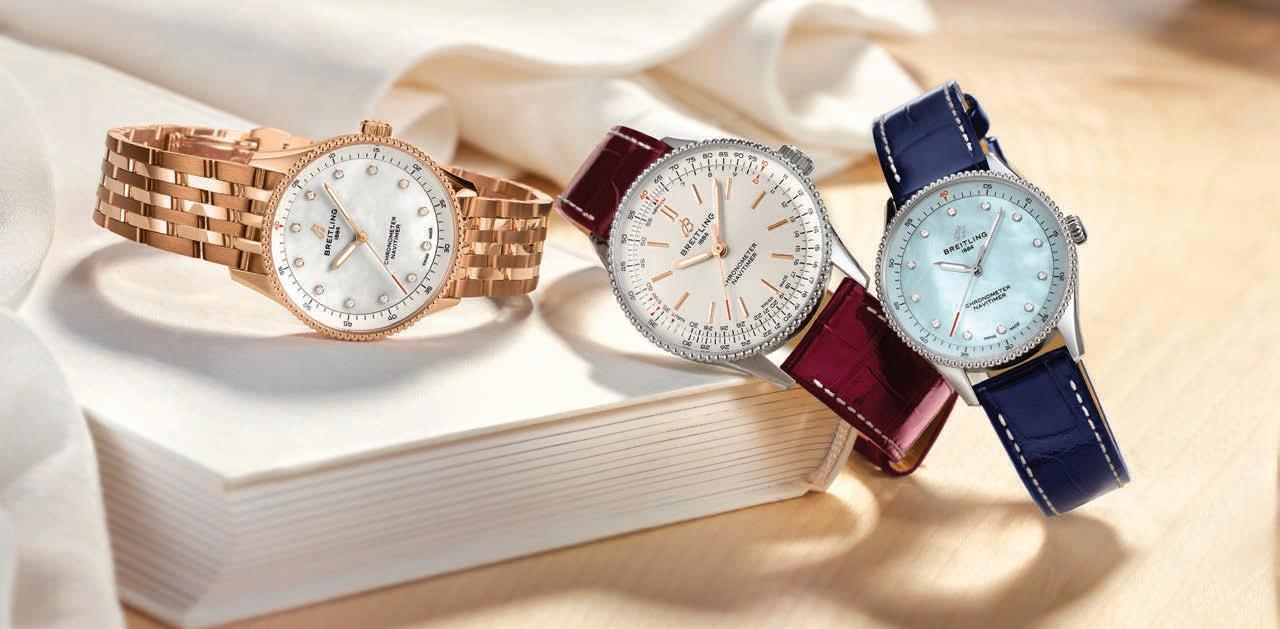
Navitimer 32 and 36 Collections. $22,500 (Left), $5,150 (Center), and $4,500 (Right)
Brushed and polished metal surfaces add further interest to the stainless steel and 18-karat red gold models, as well as a two-tone variation. The full-gold models are crafted from responsibly mined “better gold” in keeping with the Swiss Better Gold Association’s environmental and social standards, thereby granting it the coveted Breitling Origins label.
Breitling’s Caliber 17 powers the hours, minutes, and seconds of the Automatic, while the Breitling Caliber 32 powers the hours, minutes, seconds, date, and a second time zone on the GMT. The former has about 38 hours of power reserve, while the latter has 42.
Navitimer – For the Journey
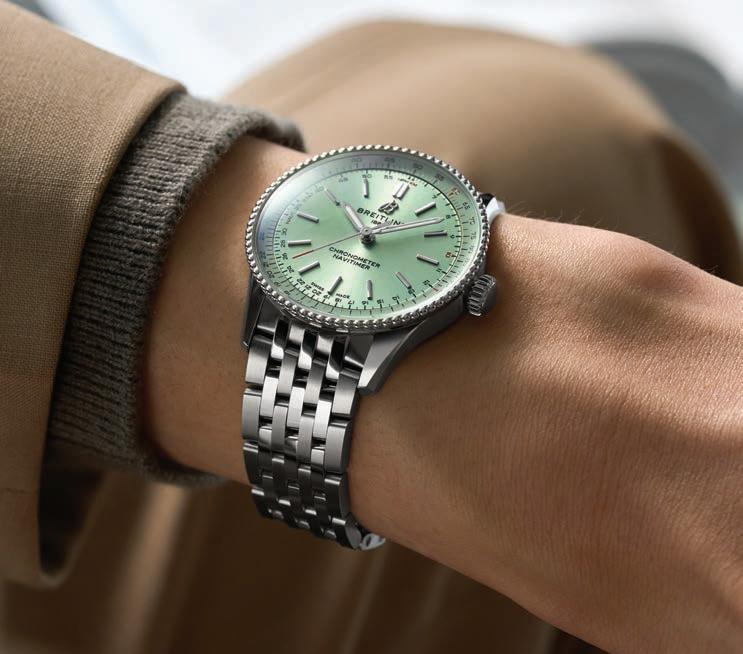
Sleek and slim 36mm and 32mm Navitimer models for pilot watch fans who favor smaller timepieces and elegant jewelry-like details were introduced. And who better than brand ambassador and Academy Award-winning actress Charlize Theron to introduce them in the moving “Navitimer –For the Journey” timepiece campaign.
“My journey has always been about being up for any challenge,” shares Theron. “I traveled from South Africa to Los Angeles when I was quite young and both that physical journey and the journey of being open-minded and ready for new experiences has served me well personally and professionally.”
With a more feminine appearance, while still retaining the Navitimer’s unmistakable essence, the Automatic 36mm has a classic beaded bezel and, of course, the signature
circular slide rule framing the dial. Fitted on a leather strap or a bracelet, the watch cases are crafted from stainless steel, stainless steel and 18-karat red gold, and full 18-karat red gold certified by the Swiss Better Gold Association. Dial colors include metallic shades of green, silver, and anthracite, as well as white mother-of-pearl, set with “better diamonds”–lab-grown stones traceable to accredited producers. Inside beats the COSC-certified self-winding Breitling Caliber 17.
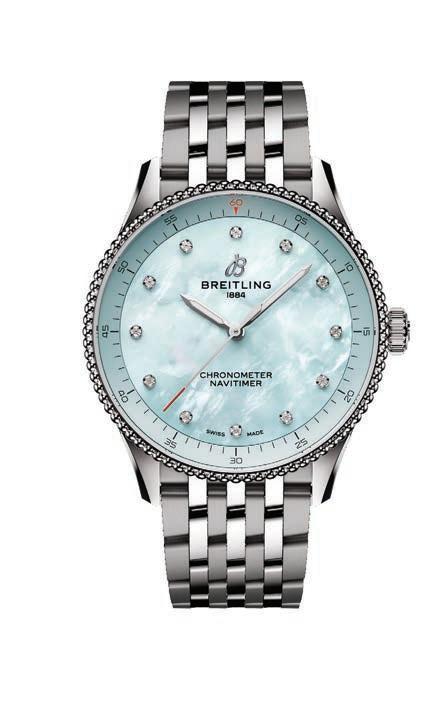
The Navitimer 32 refrains from the circular slide rule design, instead embracing newness in its slender profile and sleek mother-of-pearl dials in shades of pink, light blue, and white. Inside, Breitling’s Caliber 77, a highly accurate SuperQuartz movement, offers the added distinction of being COSC-certified. The fixed-bezel watches are fitted on a leather strap or bracelet.
Breitling’s “For the Journey” campaign echoes the relentless spirit of the Navitimer. Highlights include explorer Bertrand Piccard, basketball celebrity Giannis Antetokounmpo, and football superstar Erling Haaland who join Theron in sharing stories of their personal and professional journeys. And, much like the Navitimer itself, each points to the place where imagination and hard work coalesce, where boundless success is in plain sight.
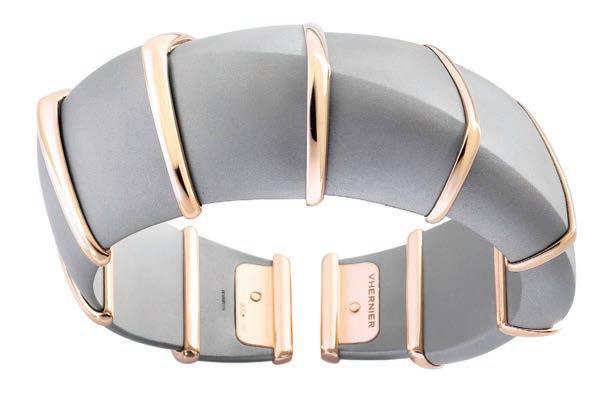
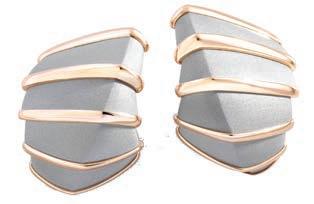
INTRODUCING: ARDIS
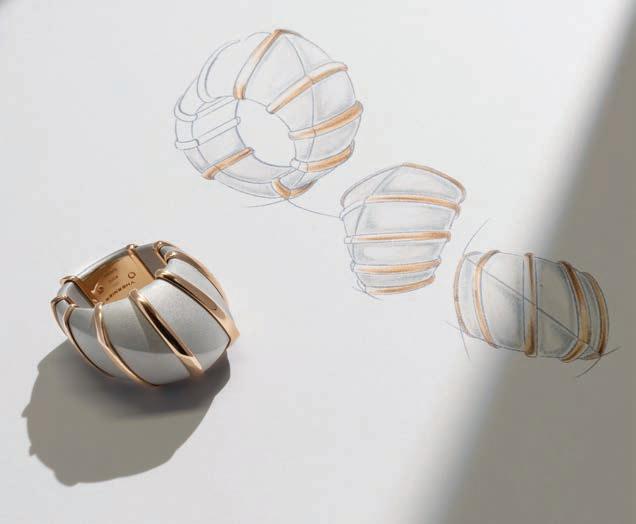
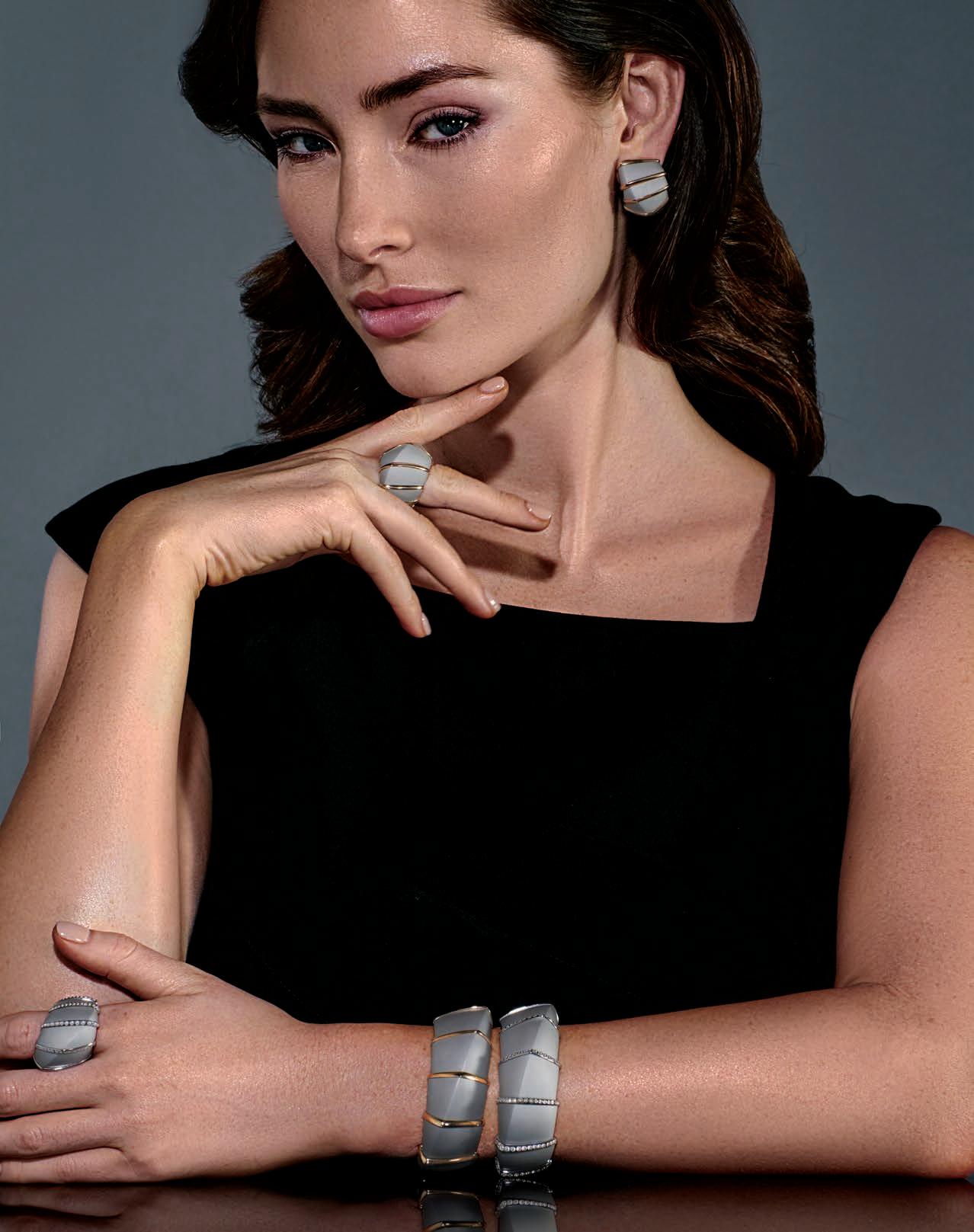
Vhernier’s newest collection ARDIS embodies contemporary elegance through pure lines and bold shapes, inspired by modern sculpture’s clean forms. Featuring a matte, pearlescent aluminum that is soft to the touch and incredibly lightweight, each piece is handcrafted and adorned with rose gold ridges. This interplay of robust lines and dynamic rhythm creates a strong sense of motion, making ARDIS both ultra-modern and timeless.
Ardis Collection Ring $6,300. Bracelet $14,900. Ear Clips $12,000. All in aluminum and 18K rose gold.
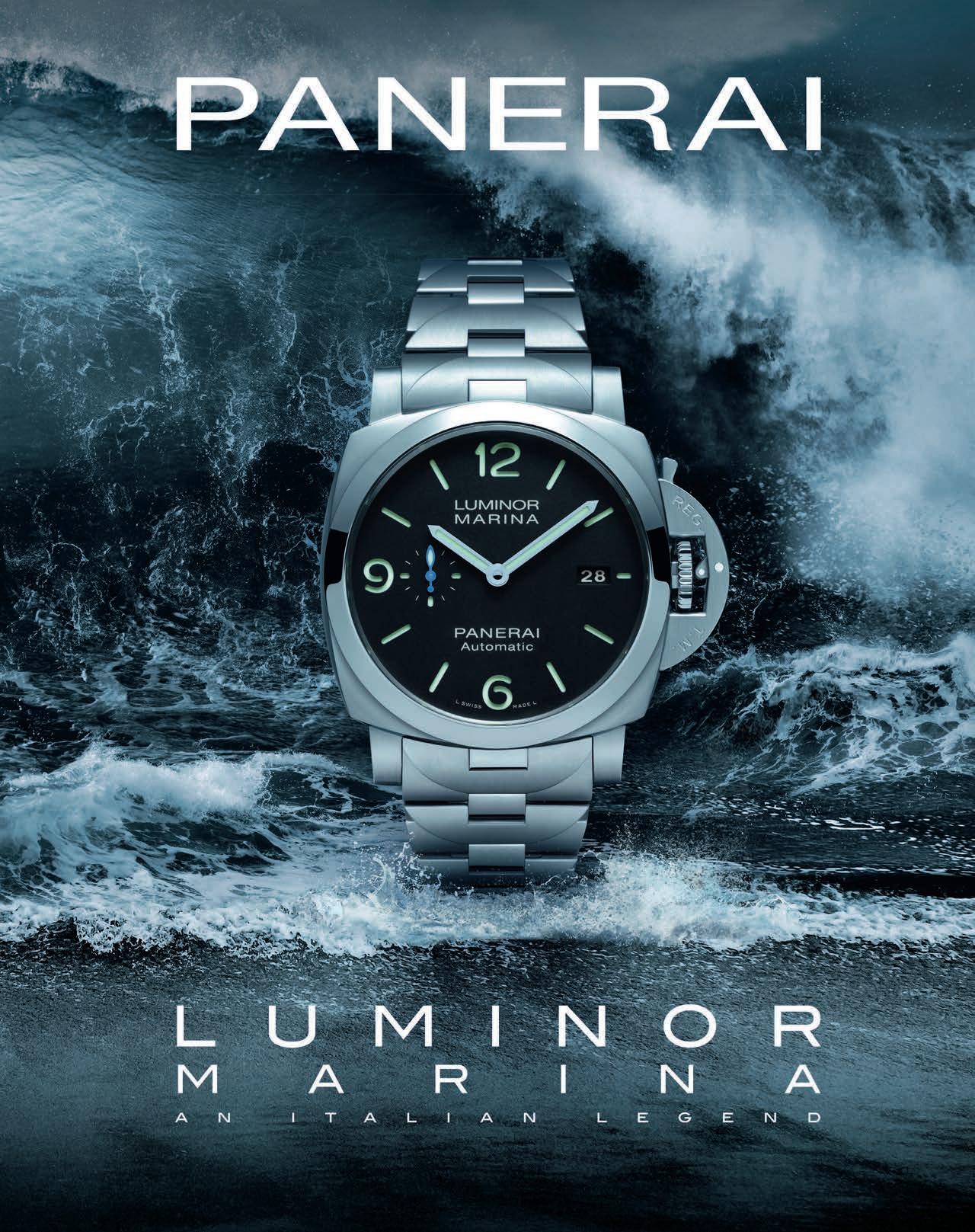
Submersible GMT Navy Seals with 44mm case and black rubber strap.
$10,600
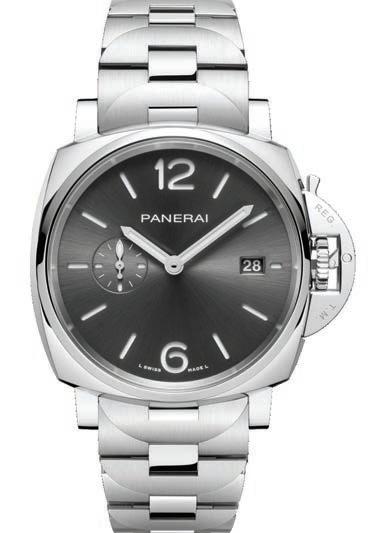
Luminor Due PAM01508
Luminor Due PAM01387
Luminor Chrono Carbotech Navy Seals with 44mm case and black rubber strap. $17,900
Luminor Due PAM01539
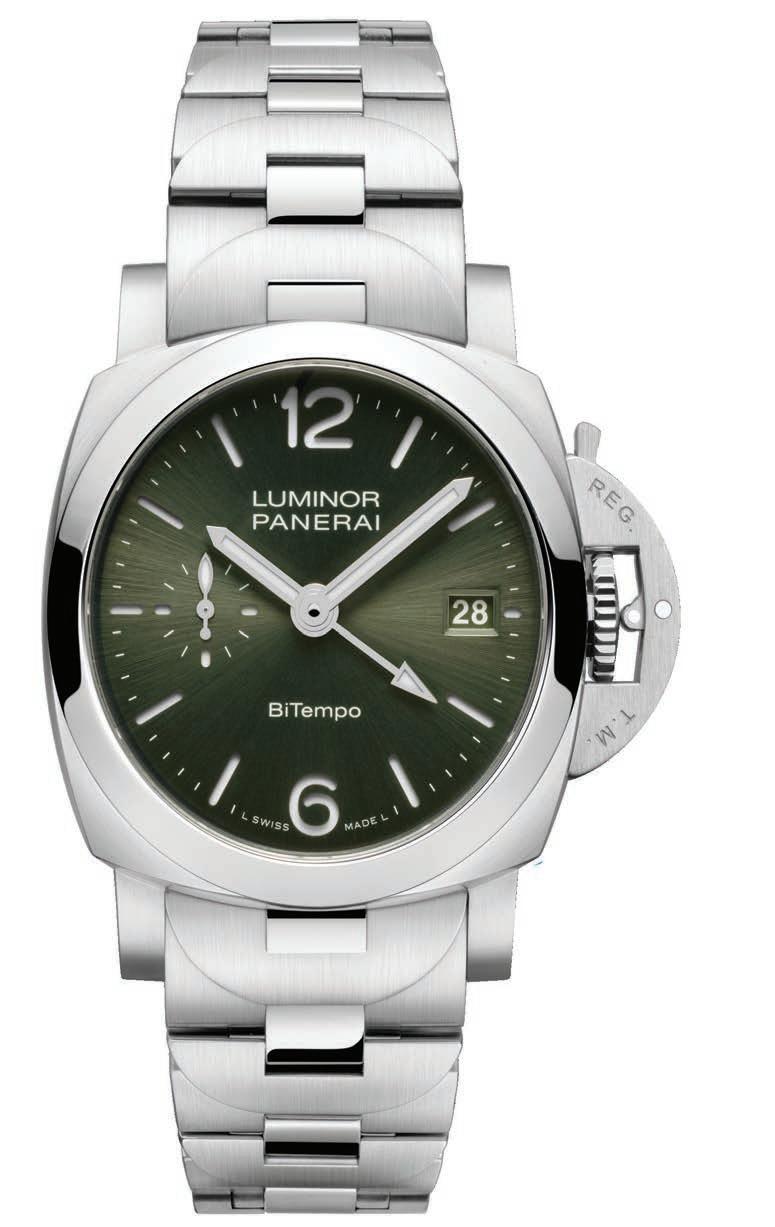
Luminor Quaranta BiTempo PAM01640
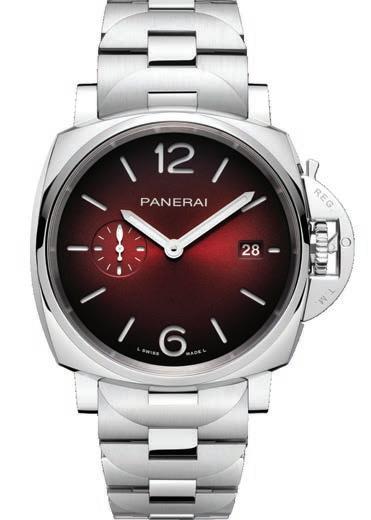
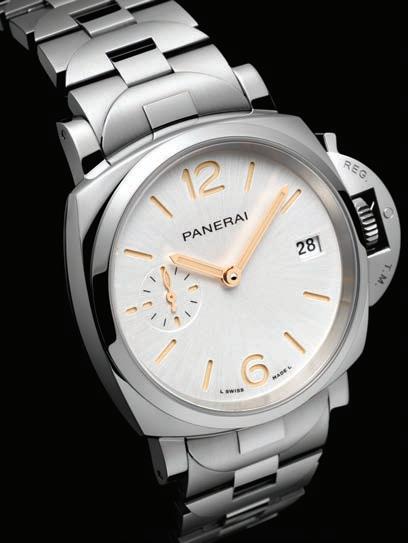
In the Metal: The Panerai Luminor and Luminor Due Get a New Bracelet
Available in both polished steel and Goldtech ™, the freshly redesigned band marks a new chapter in the story of two iconic collections.
By Oren Hartov
The Panerai Luminor line, renowned for its iconic crown-protection device inspired by that of vintage Panerai dive watches made for the Italian Royal Navy, has occupied sacred ground since its introduction to the civilian market in 1993. With its oversized, cushionshaped case, luminous “sandwich” dial, and prominent, smooth bezel, its unique aesthetic has captivated legions of fans. Its one drawback has long been its size: At 47mm or 44mm, its dimensions mean that those with smaller wrists have sometimes felt left out.
But in 2016, the Luminor Due changed this. Smaller and thinner than previous Luminor generations, the Luminor Due allowed access to the classic Panerai tool watch aesthetic in a significantly more wearable package. In 2018, the company iterated upon this idea even further with the Luminor Due 38mm, an almost “dressy” take on the Luminor. Equipped with the inhouse P.900 movement, its more compact dimensions come with 30 meters of water resistance, on-wrist comfort, and good looks.
While most Panerai collections – not only Luminor and Luminor Due but also Radiomir and Submersible–have long been strap watches paired to leather, rubber, and other flexible bands, Panerai began experimenting with metal bracelets as early as 1999. That first bracelet, with its central link inspired by the Luminor’s bridge-shaped crown-protection device, received an upgrade in 2017: This newer, lighter version used no screws in its construction, while its brushed larger links and polished edges and central links provided a sense of cohesion with the watches to which it was affixed.
Newly updated, the 2024 Panerai metal bracelet is the best iteration yet. Featuring a “V”-shaped design
that tapers from the watch case to the buckle, it slims down from 20mm to 16mm on the 38mm Luminor Due and from 22mm to 18mm on the 42mm Luminor. Multiple surface finishes create a sense of dynamism, while the PAM Click Release System ensures that the bracelet can be easily swapped for a strap without the use of a specialized tool. All in all, its unique look, refined link design, and elegant taper set it apart from many other bracelets on the market, making for a handsome and useful accessory to Panerai’s classic timepieces.
Available in two metals, the new bracelet forms an excellent partner to four polished steel watches and two crafted from Goldtech™, Panerai’s proprietary alloy of gold, platinum, silver, and copper. The Luminor Due Metal Bracelet PAM01539 and PAM01387, cased in polished steel and featuring burgundy and anthracite sunbrushed “sandwich” dials respectively, measure 42mm; the steel PAM01508, with a white dial, measures a compact 38mm; and the steel Luminor Quaranta BiTempo PAM01640, a GMT-equipped watch with a green sun-brushed dial, measures 40mm. Each features a matching steel bracelet. Meanwhile, the Luminor Due TuttoOro PAM01494 and PAM01442 – with white sun-brushed and black “sandwich” dials, respectively – measure 42mm in Goldtech™ and feature matching Goldtech™ bracelets.
With each iteration, Panerai’s unique bracelet improves in looks, design, and wearability. Indeed, once you slip one on your wrist, you’ll have a difficult time ever taking it off!
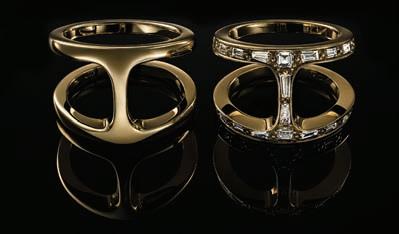
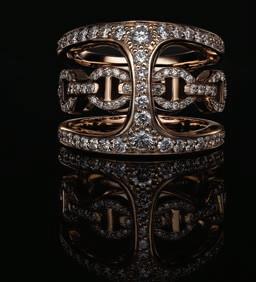
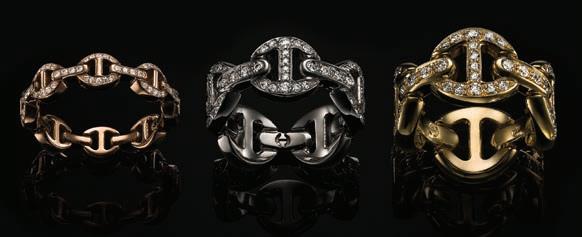
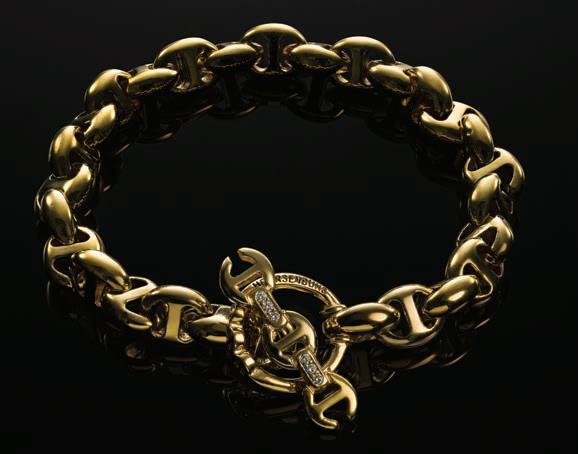
HOORSENBUHS is a Los Angeles-based fine jewelry house and has revolutionized luxury fashion with its signature emblem, the tri-link motif. Founded in 2005 by former photographer Robert Keith, the brand quickly became known for its meticulously crafted rings, cuffs, and bold open-link chains. Each piece embodies a blend of craftsmanship and modern edge, drawing inspiration from ‘70s-era jewelry. With its unique design language and commitment to quality, HOORSENBUHS has earned a loyal following among style connoisseurs and celebrities alike, cementing its status as a powerful force in the world of fine jewelry.
Open link necklaces starting at $22.500 all shown in 18K yellow gold. Antiquated Dame Phantom ring in 18K Rose gold $10,500. Antiquated Dame Tri-link
Rose gold $5,500. Antiquated Classic Tri-link
White gold $10,000. Antiquated Quad-link in
Rose gold $14,000. Dame Phantom ring in 18K yellow gold $3,950. Dame Phantom Clique ring in
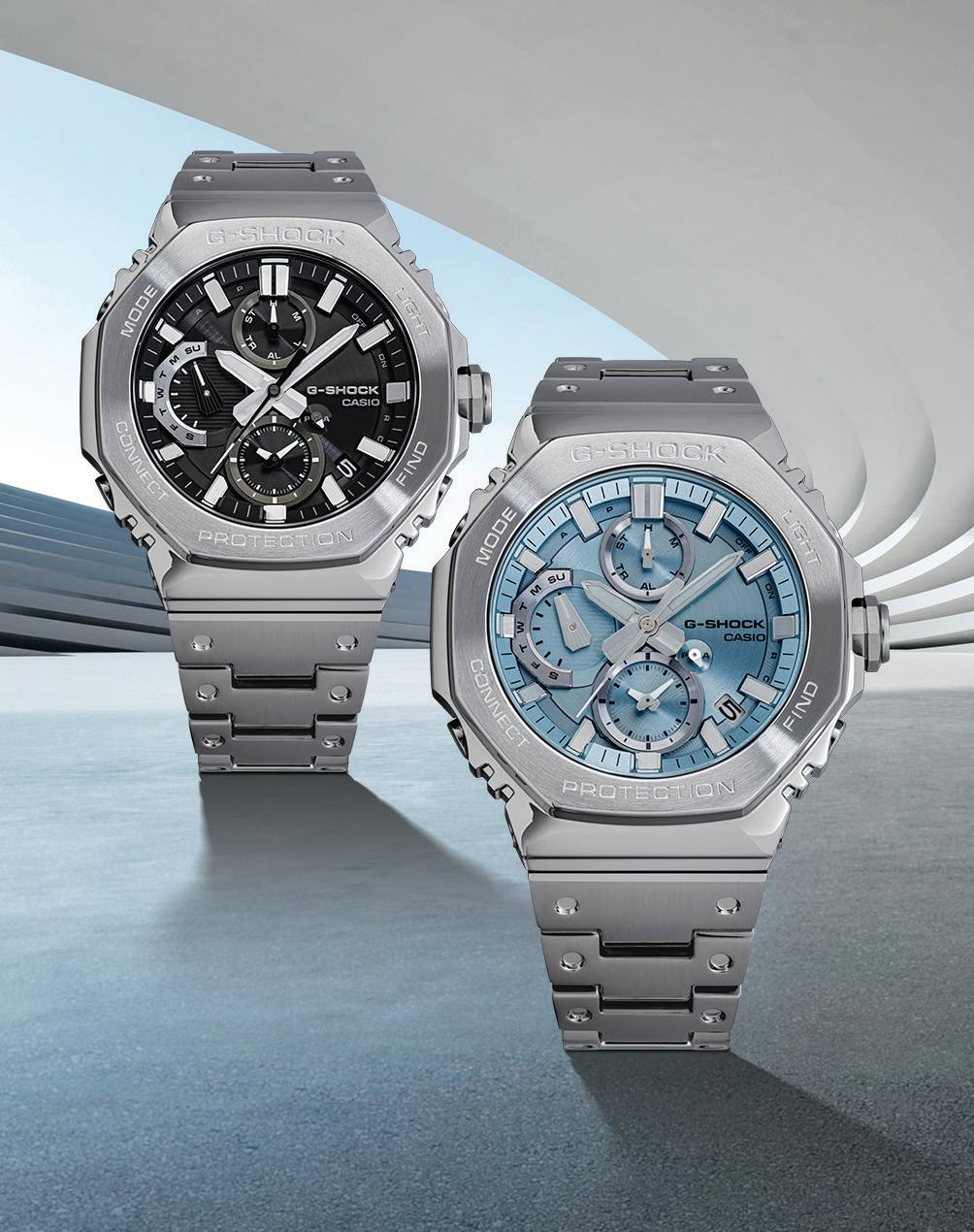
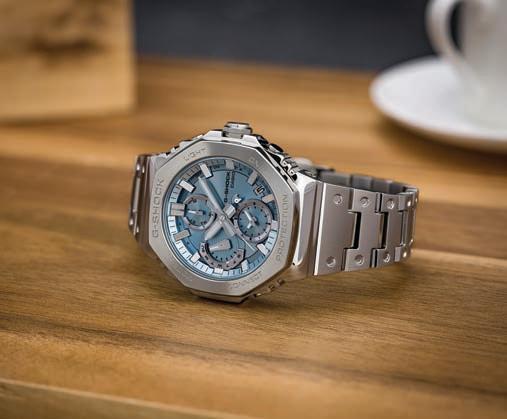
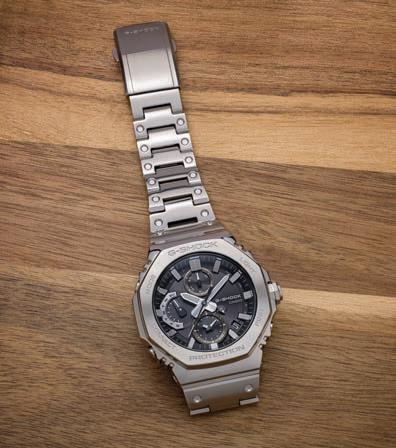
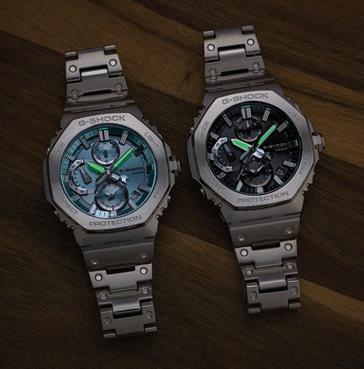
For the first time ever, G-SHOCK’s Full Metal Series features an entirely analog design. To mark the occasion, the brand welcomes two new models to the collection – GMCB2100D-1A and GMCB2100AD-2A –each with black and blue dials.
Blending classic and modern design elements, the duo is inspired by G-SHOCK’s 1983 debut octagonal design. Their bracelets feature deep, inset dimpling – two per link – surrounded by prominent, contemporary brushed and polished finishes. To achieve these details, G-SHOCK notes that the steel exteriors of both watches undergo a series of complex forging, cutting, and polishing processes –resulting in a precisely made case and bracelet.
Like all G-SHOCKs, durability and toughness are a priority. Resin components line the inside of the
steel case and surround the module to protect internal components from impacts, while a three-pronged lug structure helps disperse shock to the connective part of the bracelet.
Both watches are packed with functionality, including Bluetooth®, solar-powered modules, a chronograph, dual and world time capabilities, day, date, an LED light, and a phone finder (when connected to the Casio Watches’ Smartphone App). 200 meters of water resistance ensures a worry-free wearing experience.
CRAFTSMANSHIP MEETS INNOVATION
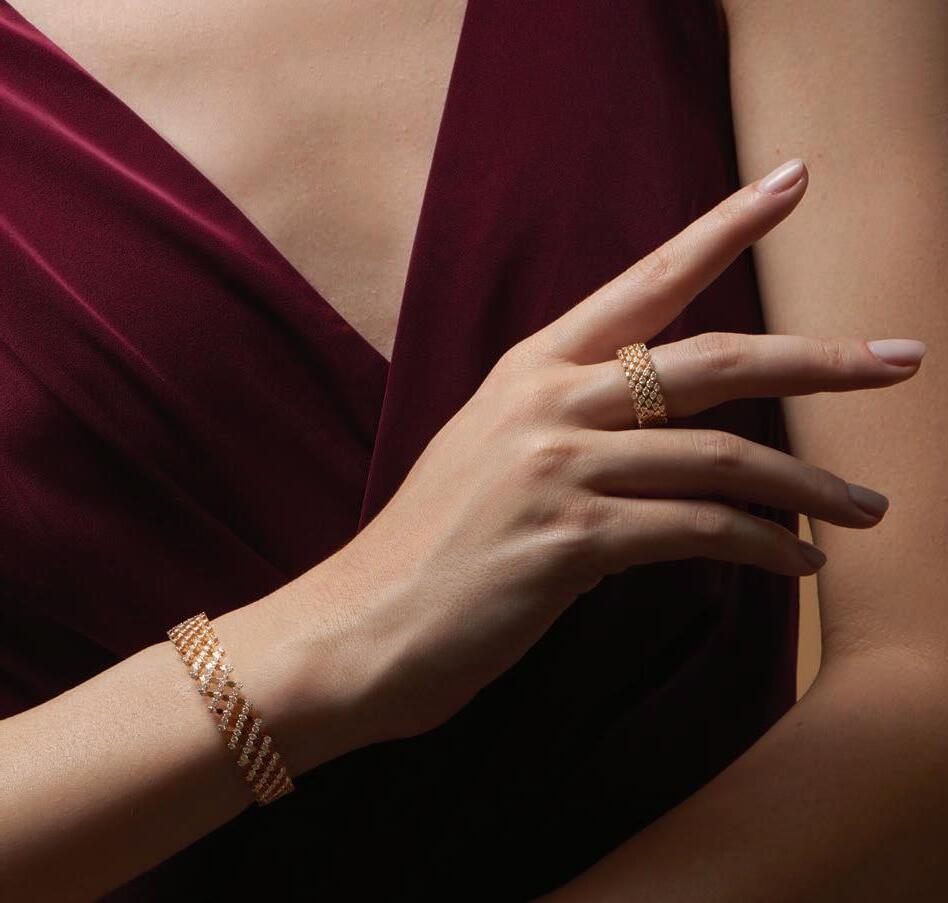
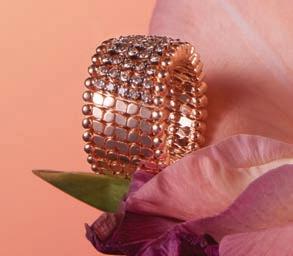
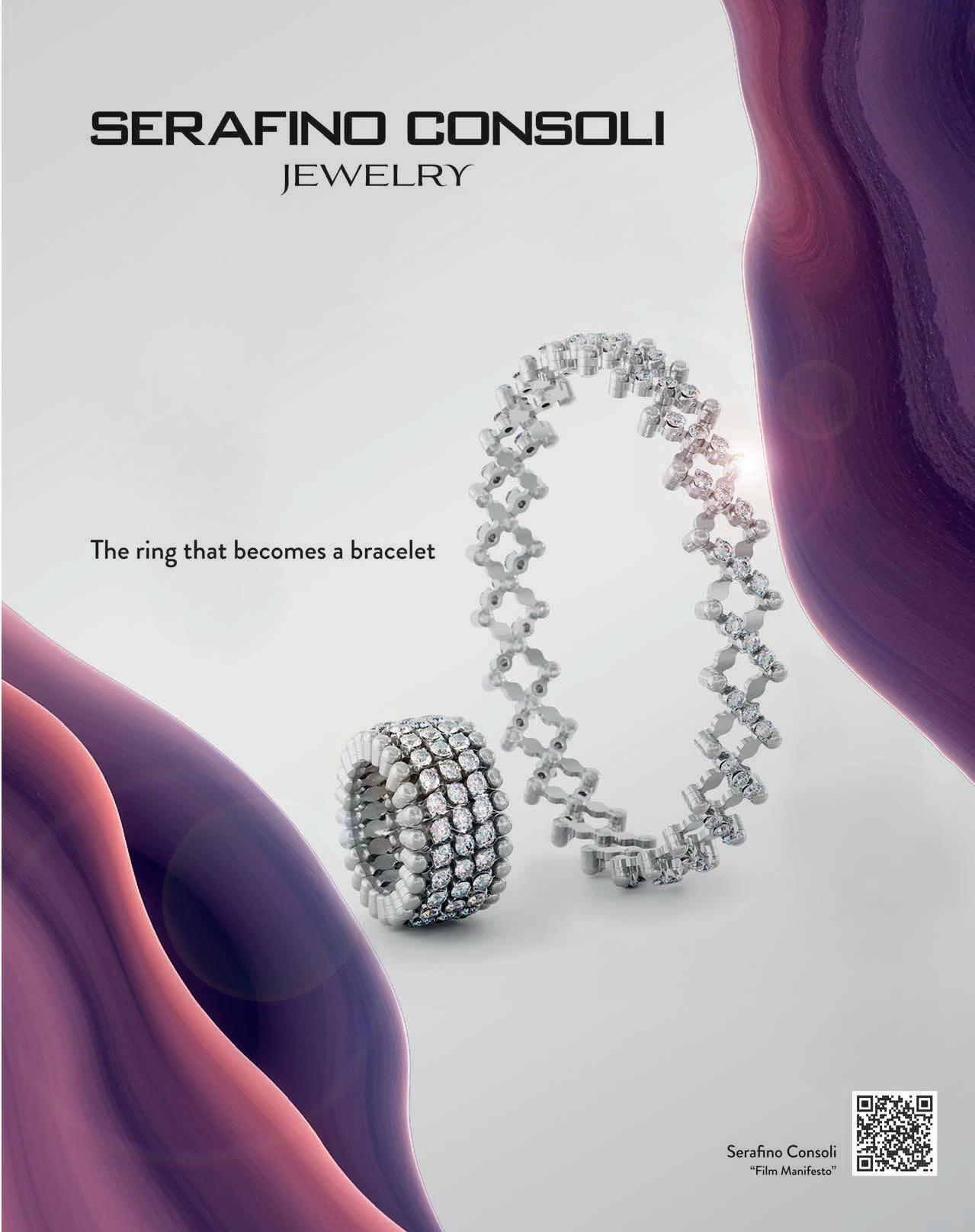
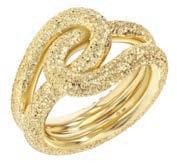
Serafino Consoli revolutionizes jewelry with its patented, transformative designs. Known for rings and bracelets that seamlessly expand and contract to fit any size, each piece blends innovative engineering with artisanal craftsmanship. This fusion of luxury and functionality creates timeless, adaptable jewelry that celebrates individuality and elegance. Handcrafted in Italy, Serafino Consoli’s creations are a testament to ingenuity, where beauty meets practicality in a dazzling display of precision and innovation.
Left Page: Multi size diamond ring $9,960. Diamond ring bracelet worn as a bracelet $30,960. Diamond ring bracelet $19,380. All in 18K rose gold.
Right Page: Diamond ring bracelet in 18K white gold $22,180.
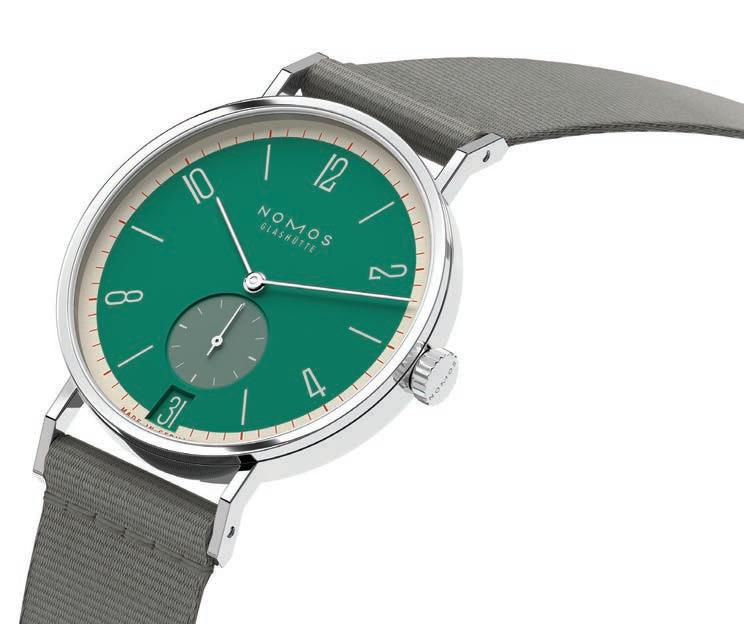
Tangente 38 date 175 Years Watchmaking Glashütte Collection. $2,310 each
NOMOS Glashütte & Colors
Diversity! NOMOS Glashütte presents the iconic Tangente model in 31 different color compositions at once.
An icon is an icon is an icon. What is there left to say? NOMOS Glashütte has long been known for its color expertise. But now, the watchmaking company is presenting its best-selling Tangente, which has remained unchanged for more than three decades, in color. Or rather – in colors. The special edition Tangente 38 date – 175 Years Watchmaking Glashütte is a collection of 31 different colorful versions of the classic watch, each limited to 175 pieces and regulated according to chronometer values.
The icon in color
Color reflects individuality and diversity; it is invigorating and vibrant. Changing an icon so drastically, even refining it, is not without risk. But Tangente 38 date remains appealing in its standard version and is a celebration of fine watchmaking in these 31 different colorways. This special edition brings personality and joy to the world of Haute Horlogerie, as well as a wide range of emotions and moods. Each watch bears its own special name and has its own story – Ariel, Zirkus, Haifischgrau, and Schlossgrün are just a few of their playful German names. From the range of 31 watches, there is a perfect match for every personality.
Color as an investment
The joy of mechanical watches should be accessible to as many people as possible. That is why the price of these
colorful limited-edition watches is lower than that of the standard model. Bringing individuality to the wrist and diversity to the world of fine watchmaking are important to NOMOS Glashütte, which is why the watchmaking company is investing in both.
The date movement, DUW 4101
The hand-wound caliber DUW 4101 – made by NOMOS in Glashütte, Germany, regulated according to chronometer values, and equipped with the NOMOS swing system – ticks inside Tangente 38 date. NOMOS received its first patent for the date mechanism of DUW 4101. The mechanism is integrated into the movement and the date ring is placed around the movement, so the date window on the dial is particularly large and located at the very edge. This is a hallmark of NOMOS watches with a date function, as is the date window matching the color of the main dial. The rich tradition of over 175 years of watchmaking in Glashütte is now being celebrated exactly 31 times in color, with a watch for every day of the month.
Tangente 38 date Schlossgrün. $2,310
SIGNATURE STYLE
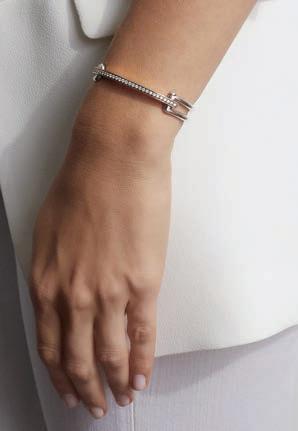
Walters Faith masterfully blends bold, modern design with timeless sophistication. Known for its architectural influences and refined use of diamonds and precious metals, Walters Faith offers jewelry that exudes both strength and grace. Whether worn as everyday pieces or for special occasions, Walters Faith’s collections are a testament to craftsmanship and contemporary luxury, making them a favorite among those who appreciate beauty with an edge.
Left Page
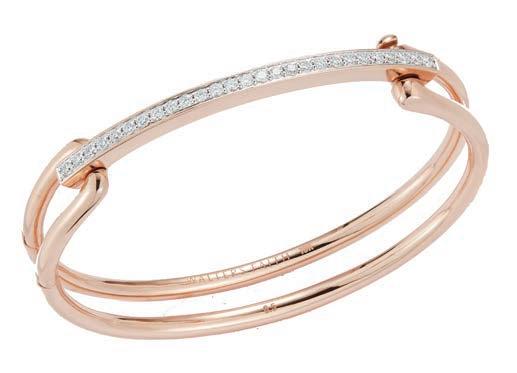
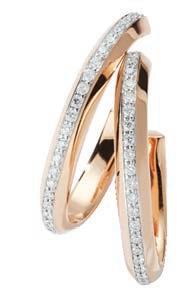
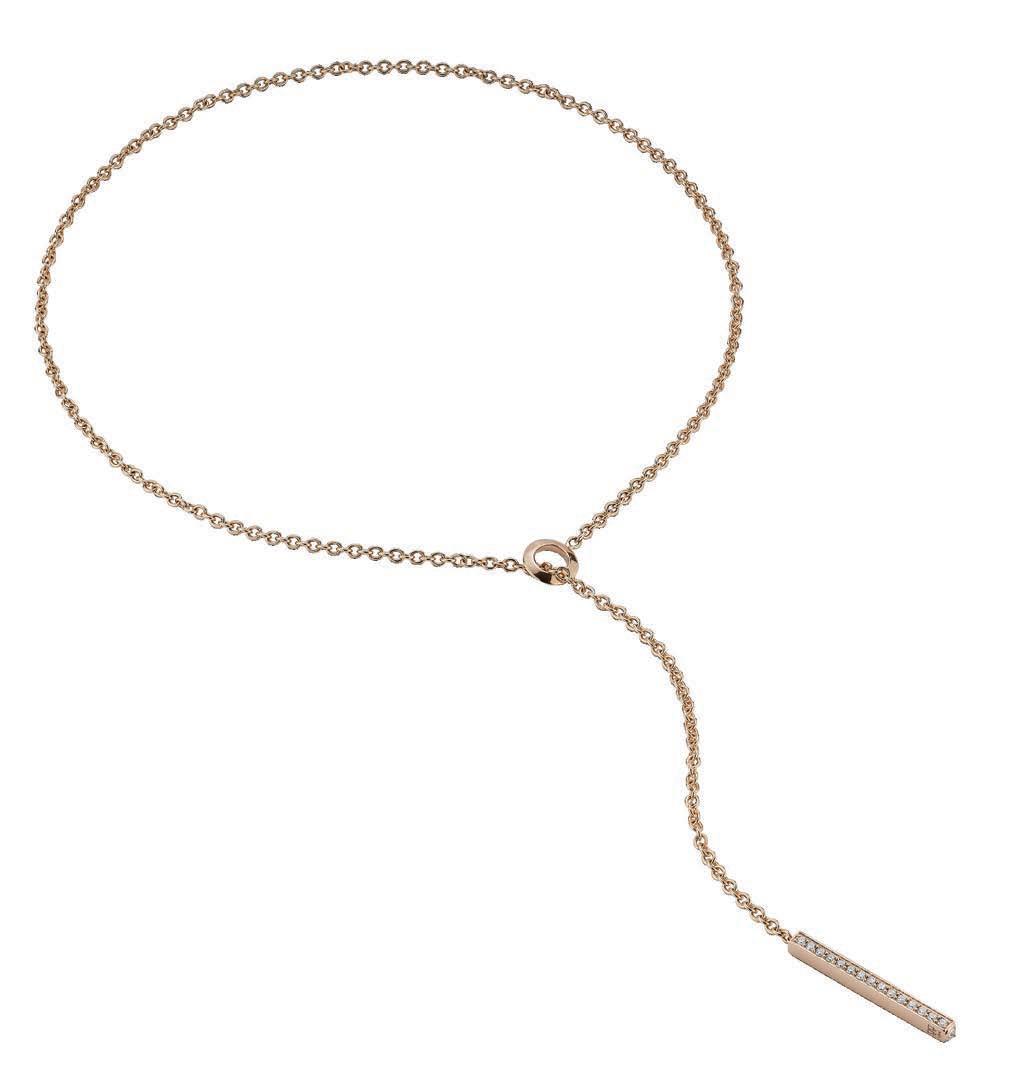
Grant Diamond Bar Lariat Necklace. $6,845 Grant Diamond Knife Edge Hoop Earrings. $7,075 Grant Diamond Bar Bangle. $13,745
Right Page
Bell Diamond Rock Crystal Earrings. $3,565 Huxley Diamond Single Coin Link Rings. $5,695 All in 18K rose gold.
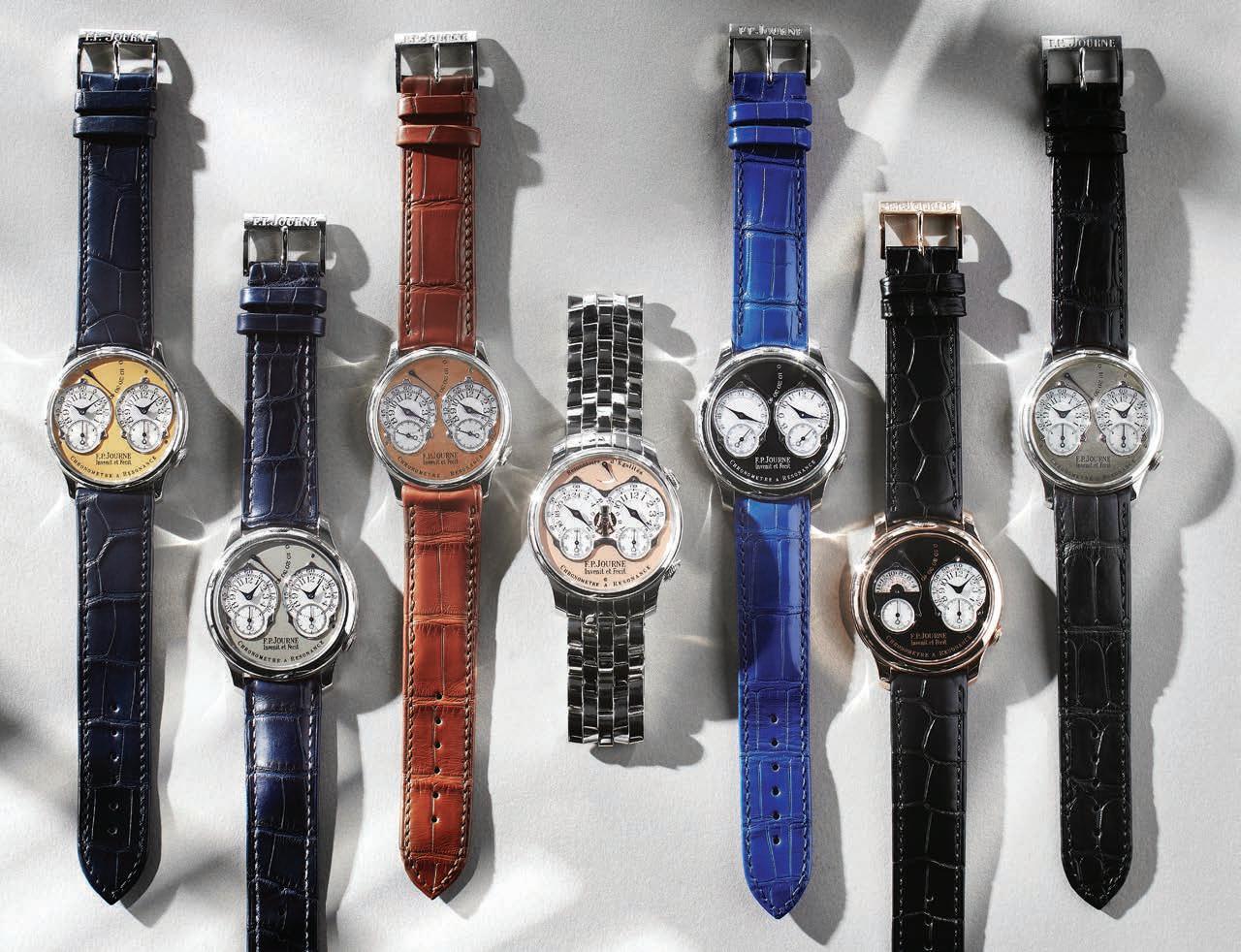
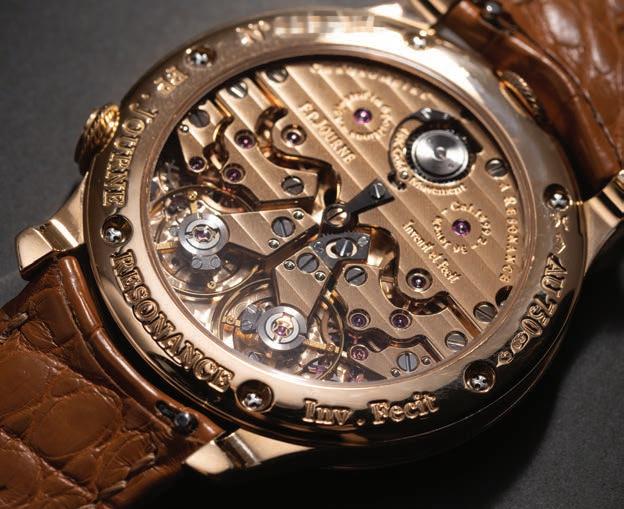
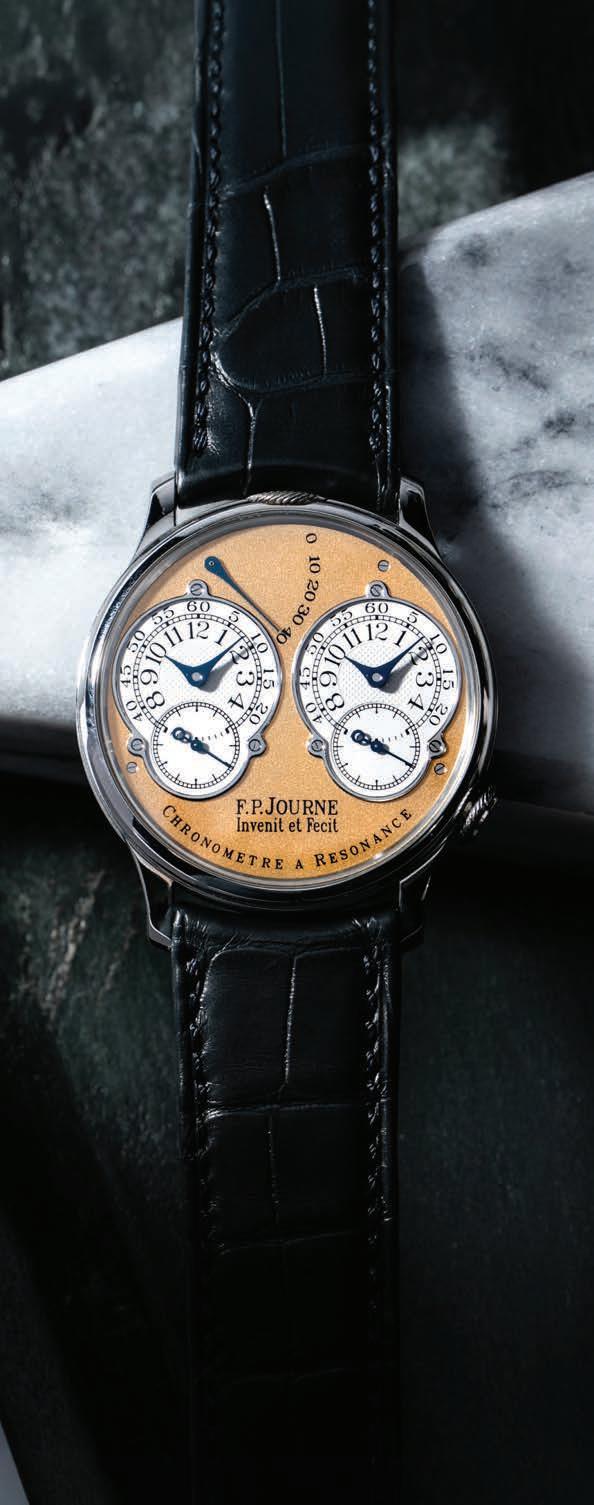
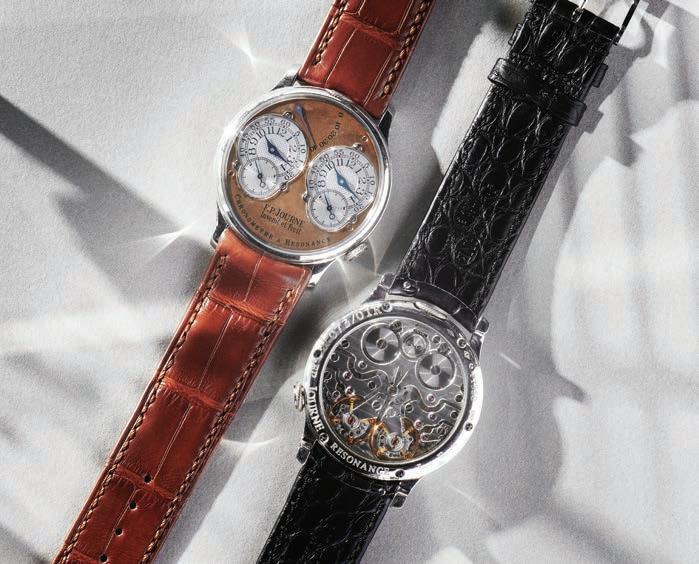
F.P. Journe Complications
A look at why the remontoir and tourbillon are an ultra-rare match made in heaven.
By Jack Forster
The Tourbillon Souverain
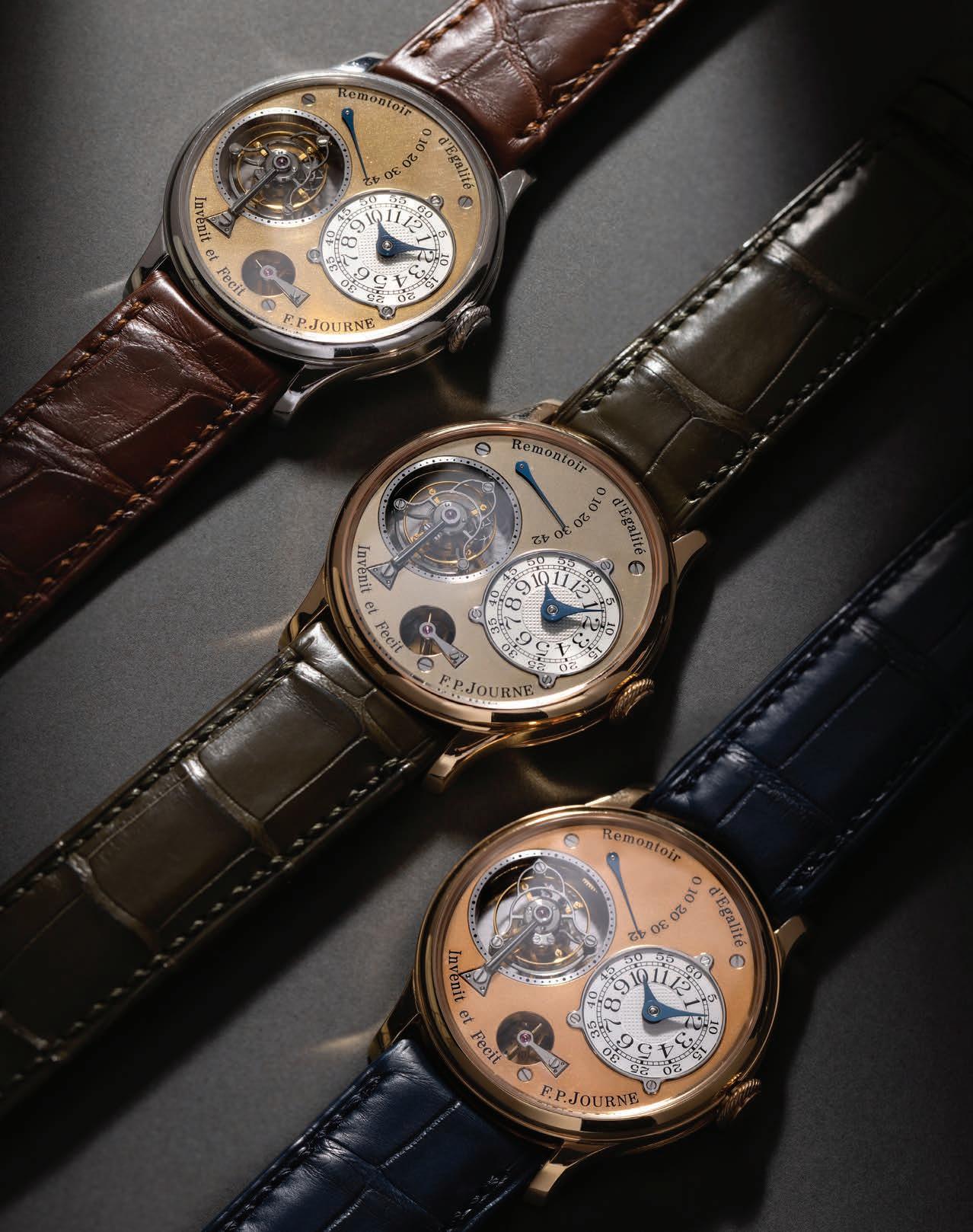
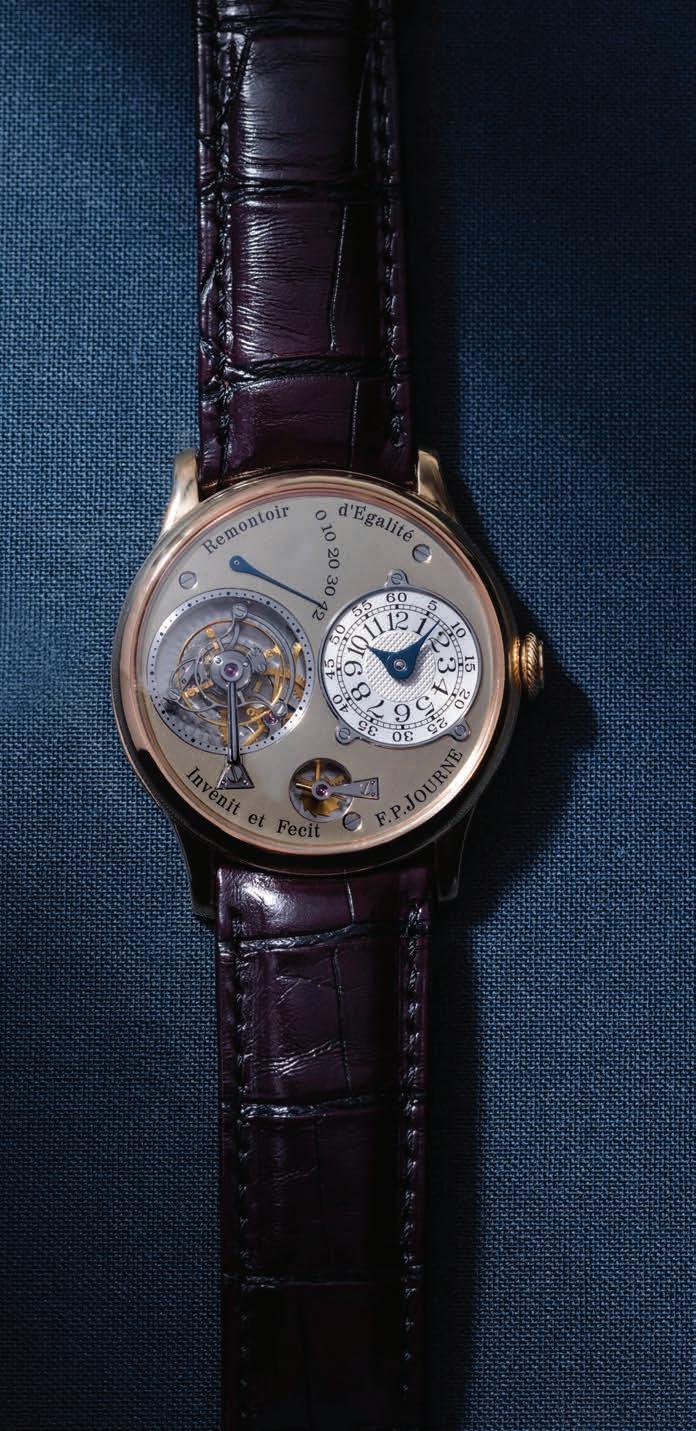
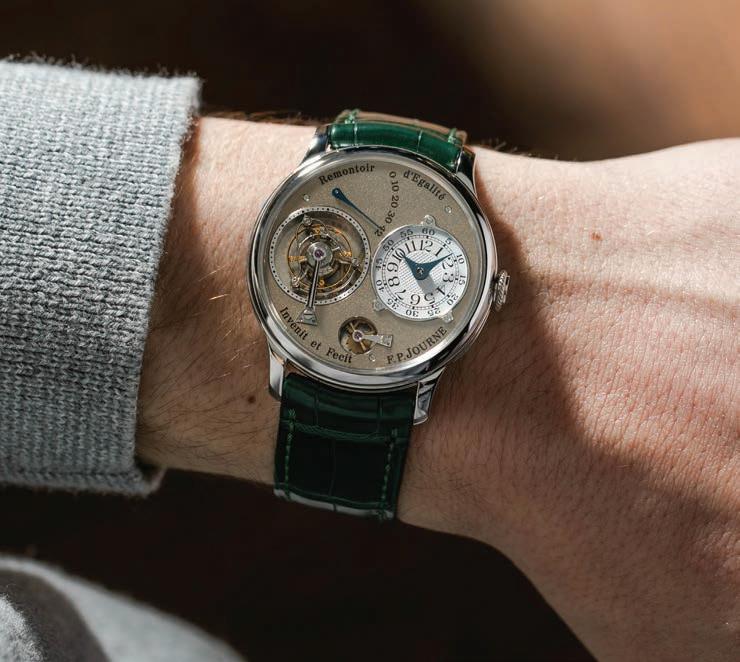
The number of variations on the tourbillon are enormous – there are flying tourbillons, carrousel tourbillons, and conventional tourbillons driven at various speeds (although the majority of tourbillons still have one-minute carriages), as well as a number of different high speed, inclined axis, and multi-axis tourbillons – and then, of course, there are all the exercises in miniaturized and ultra-thin tourbillons. One of the most unusual variations on the tourbillon, however, is the pairing of a tourbillon with the constant force device known as a remontoir. There are, despite the variety of tourbillon wristwatches, pocket watches, and clocks, still relatively few mechanical timepieces that combine the remontoir and the tourbillon, and they were not both included in a wristwatch until 1999, when F.P. Journe launched the Tourbillon Souverain.
The basic motivation behind the tourbillon, which was patented by Breguet in 1801, was to do something about the fact that a watch tends to run at slightly different rates in different physical positions. In Breguet’s time, the only watches were pocket watches and so the problem was how to ensure that the different rates in the vertical positions could be as closely matched to the rates in the flat positions as possible (a watch is timed in six different positions, typically: crown up, crown down, crown right and left, and dial up and dial down). Ideally, the rates in all positions would be exactly the same.
from an external time standard) and more as precision (the ability to keep a close rate). For ships at sea, for instance, it didn’t matter if a chronometer was off by +5 seconds per day; if it was off by +5 seconds every day, then it was a simple matter to calculate the correct time at Greenwich and derive the longitude.
The tourbillon has been controversial almost since its inception. It is a theoretically viable solution to the problem of positional variation in rate, but it presents new problems. It is a complex, delicate mechanism which introduces a considerable additional inertial load. Normally, the last load on the going train of a watch is the lever, which gets energy from the balance to impulse the escapement. In a tourbillon, the going train has to move the entire mass of the balance, escape wheel, escapement, and the cage itself every time the balance unlocks. At the same time, despite the additional load, the going train still has to be able to deliver enough power to keep the balance oscillating at an amplitude consistent with precision. In order for the tourbillon to deliver on its promise, it has to be made with a very high degree of precision, and moreover, the cage has to be as light as possible and yet very rigid.
Precision is defined in watchmaking less as accuracy (the ability for a watch to match a reference time
F.P. Journe’s Tourbillon Souverain is, with respect to the tourbillon, a very traditional construction. It is also a textbook example of a tourbillon done to an extremely high standard of quality. The cage is very fine, in order to keep inertia to a minimum, and the balance is as large as possible (given the size of the
cage) in order to maximize effective inertia and rate stability. The balance spring is a Breguet overcoil type, which reduces variations in rate due to positional error by ensuring symmetrically concentric expansion and contraction of the balance spring, and the balance is free sprung, with timing weights for fine rate adjustment. One interesting aesthetic detail is the fact that the upper pivot of the tourbillon cage is under a cock rather than a balance bridge – a sort of half-flying tourbillon, you might say.
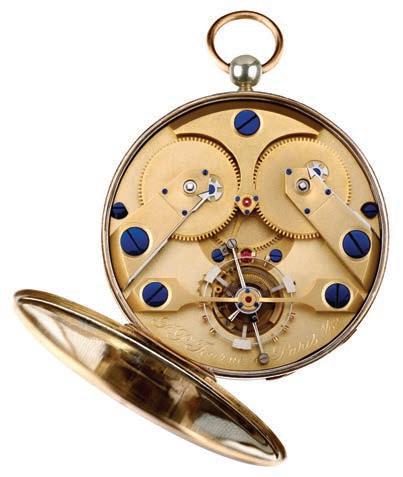
While there is nothing revolutionary about the tourbillon itself in the Tourbillon Souverain, it is an excellent example of a tourbillon executed to the highest standard of quality and craftsmanship, which is what you’d expect from a watchmaker who began construction of his first watch – a pocket tourbillon – at the age of 20 in 1978.
Where the Tourbillon Souverain really distinguishes itself from other tourbillon wristwatches is of course in the presence of the remontoire. The remontoir, like the tourbillon itself, is usually referred to as a complication, although more precisely (and, again, like the tourbillon) it is a regulating device, which is intended to provide a more or less constant supply of torque to the balance. You might reasonably ask why you would need such a thing in the first place, and for an answer, you have to go back in time in the history of watchmaking – several centuries, as a matter of fact. From the beginning, watches were powered by mainsprings (the first extant timepiece with a mainspring is a clock in the shape of a cathedral, built for Phillip the Good, Duke of Burgundy, in 1430), but unlike modern mainsprings, these were made of plain steel rather than the modern high-performance alloys found in today’s mainspring barrels. As a rule, such springs would deliver significantly greater power when fully wound than when they began to unwind significantly. As mainspring torque dropped, so would balance amplitude, and rate stability would begin to suffer.
To solve this problem, the remontoir was invented. The first version was the so-called gravity remontoir, which was created by the Swiss mathematician and horologist Jost Bürgi, which was a mechanism for rewinding
the weight driving a pendulum clock. For portable timekeepers powered by mainsprings, a different approach was needed – this was the so-called spring remontoir. The spring remontoir was invented by John Harrison, during the development of his experimental H2 sea clock, in 1739; Harrison would go on to use the invention in H4, the sea clock–that is to say, marine chronometer –which was the first successful seagoing precision timekeeper.
In contrast to the gravity remontoir, which periodically resets a driving weight – the primary power source – a spring remontoir is a secondary power source, consisting of a driving spring, which is periodically wound up by the going train; the escapement is therefore getting energy from the remontoir rather than the mainspring.
The remontoir is an ingenious mechanism; it is not the only constant force mechanism available to watchmakers. The other bestknown solution is, of course, the fusée, which works very well (they are commonly found in mechanical marine chronometers), but in a watch, they have the disadvantage of taking up a lot of room in the movement, as well as adding a lot of thickness. The fusée chain is a potential point of failure as well; the fusée chain is what connects the fusée cone to the mainspring barrel, so it’s under a lot of tension (just like a bicycle chain) and can be prone to breakage.
The remontoir and the tourbillon would seem therefore to be a perfect marriage as they each address different but complementary problems – the remontoir, that of constant and unvarying energy to the escapement and balance over the entire power reserve, and the tourbillon, that of variations in rate across positions. They have, however, very seldom been put together in the same watch. F.P. Journe obviously understood what putting these two complications together in a wristwatch meant. His implementation of the remontoir is as technically interesting, and cuts as close to the problem the
remontoir is meant to solve, as his tourbillon. A remontoir, bear in mind, is meant to provide unvarying torque; it consists of a secondary spring rewound periodically by the mainspring via the going train. How even the torque actually is depends on how often the remontoir is rewound. The remontoir in the Tourbillon Souverain is reset once per second (which also advances the deadbeat seconds hand), and the remontoir spring is actually a blade spring, visible through a cut out in the mainplate.
Putting the remontoir and tourbillon together in the same watch was an unprecedented technical feat still rare today. In 1999, it was revolutionary. The two complications represent two solutions to two of the most fundamental problems in watchmaking and, in the Tourbillon Souverain, we have them in groundbreaking, first-of-its-kind wristwatch.
The Chronomètre À Résonance:
How
and Why It Works
One of Journe’s most famous complications is also one of his most mysterious.
The problem of creating what F.P. Journe calls a resonance watch is significant; Journe has said, in a lecture delivered several years ago at the Horological Society Of New York, that, if the watch is not constructed and adjusted to a very high degree of precision, the two balances will not resonate with each other. Journe first became interested in the problem in the 1980s and attempted to
create a resonance pocket watch in 1984, but he felt that its performance was unsuccessful. It wasn’t until 1994 that Journe began to develop a wristwatch resonance prototype, with the model launching in 1999.
The history of Journe’s resonance watches from a collector’s standpoint has been very well documented and
described. What is perhaps less clear is what a socalled resonance watch actually is and why it is – that is, what do we mean by “resonance watch” and why, since they are difficult to produce and expensive to own, would someone go to the trouble of making one? In this article, we’ll look at both how the complications work, as well as the rationale and principles behind their design and construction.
What Is Resonance?
Perhaps the first thing to talk about is what “resonance” means. There are a number of intuitive examples. One is a wine glass shattering in the presence of a sound wave of the necessary frequency and amplitude; another is a bridge collapsing as it begins to oscillate in time with a driving force like the wind or marching feet. The simplest definition of resonance is framed in terms of harmonic oscillators, which are oscillators in which the restoring force is proportional to the displacement from the equilibrium position. In a pendulum clock, the restoring force is gravity; in a watch balance, the restoring force is the balance spring, and if the restoring force is proportional to the driving force, then the oscillator is isochronous – its frequency is independent of the amplitude of the oscillations.
This means, of course, that, strictly speaking, every watch is a resonance watch. The balance oscillates at a large amplitude because the driving force from the escapement has the same period as the natural frequency of the oscillator. A system with two pendulums or two balance wheels might also be called a double oscillator system or, more precisely, a coupled oscillator system.
Coupled Oscillators: Pendulums and Balances
Coupled oscillators can have extremely complex, chaotic modes of motion, but what they all end up being is some mixture of just two modes. In one mode, the balances or pendulums swing in the same direction at the same time; both pendulums, for instance, swing from right to left together. In the second mode, the oscillators vibrate synchronously, but in opposite directions; one pendulum, for instance, swings right while the other swings left, and both arrive at the lowest, or equilibrium position, at the same instant.
How can oscillators be coupled? If we’re talking about mechanical oscillators, there are many possibilities. Coupling can be through any medium through which energy from one oscillator can be transferred to the next. As long as there is a physical, mechanical connection between the oscillators which doesn’t lose energy to the environment, the oscillators can be coupled.
The first person to observe this occurring in clocks was Christiaan Huygens, who designed the first pendulum clock in 1657. Somewhat later, while briefly bedridden, he observed two pendulum clocks mounted on the same beam. These were experimental clocks with 100-pound weights hanging from them; they were an attempt to make a pendulum clock practical for a marine chronometer by keeping it vertical while a ship was rocking. Huygens noticed that, after the clocks had been set running, they would begin to oscillate in synchrony but 180 degrees out of phase with each other – the second mode of oscillation described above, which I’ve heard called a “breathing” mode. Moreover, if the clocks were interrupted, they would resynchronize after another half hour. The phenomenon he observed would later be described as ” … an odd kind of sympathy.”
The leap to suspecting that a double pendulum clock might be more precise than a single pendulum clock seems to have been made by Antide Janvier, whose work probably influenced that of Breguet in the development of his resonance, or coupled oscillator, clocks and watches. The thread of Breguet’s work was later picked up by F.P. Journe.
The first question, then, is how do two oscillators couple with each other? The answer is that, in a double oscillator system, if there is a mechanical coupling of the oscillators, they can exchange energy with each other. Demonstrations of double pendulum models often show one pendulum coming to a gradual halt, while the other begins to swing wider and wider; if the pendulums keep swinging the
situation, then it reverses itself and the second pendulum gradually slows and stops, while the first begins to swing again.
This will go on as long as there is kinetic energy to exchange (Clockmakers noticed that, in weight driven pendulum clocks, once the weight had descended to the level of the pendulum bob, the same thing could happen, and the pendulum would stop while the weight oscillated wildly on its chain). Under specific conditions, however, the two pendulums – or balances – will enter a stable breathing mode. This happens because the two pendulums share the total energy of the system between them and share the same natural frequency.
The second question is, why? More specifically, what possible advantage can a double oscillator system offer over a single oscillator system?
Precision of Double, Coupled Oscillators
The answer is that, if one oscillator is disturbed, its error will tend to be distributed through the entire system and so one oscillator – or balance – will tend to correct any error in rate of the other. Breguet, in an undated note quoted by George Daniels, described the problem of a swinging weight causing a pendulum to stop and then continued, “These facts having been established there are still other factors that influence the rate of clocks, even though they are constructed with the greatest care. Some influences are found only in certain places and are almost impossible to overcome. Vibrations transmitted by passing traffic, the number of people in the room, … movements in the building, which throw the clock out of beat and the effects of gravitational changes, are some of the causes of variation in rate which resist the best endeavors of the makers. It occurred to me that if I could make use of the effect of induced movement by using two clocks constructed so that their pendulums could influence each other they would, by their compensating effect, produce a better rate than has been previously achieved … “
“I set up a very heavy frame and fitted to it two, separate clocks and two pendulums hanging one behind the other from a very strong bracket. Each of the clocks was separately regulated and then the two set in motion together with their pendulums oscillating in opposite directions. They ran perfectly together without any difference and always crossed exactly at the center line.”
“If there is any error in the wheels, compensation, or escapement of one of the clocks, the other will influence the change in its rate however small the error [through energy exchange through the coupling medium] but not without, I presume, a very small reciprocal error. I have not yet been able to experiment sufficiently to pass judgement
on this but am quite sure that external influences do not affect the rate, because they cannot influence on clock without a compensating effect on the other.”
The Journe Chronomètre à Résonance
Obviously, if you take Breguet’s experimental system, substitute balances and balance springs for pendulums and gravity, and shrink the whole thing down to wristwatch size, what you get is the Journe Chronomètre à Résonance.
Daniels would go on to conclude, “Breguet was not prepared to pass judgement on the effect on one pendulum of an error in the other and does not seem to have noted this in his earlier experiments. Since, however, the two pendulums remained exactly together with one regulated to run fast, then half the error must have been transmitted to the other. If one were regulated fast or slow by, say, 10 seconds, the other would assume half the error and the two would run five seconds in error … any external influence on the clock causing disturbance of the case, and consequent change of rate would, as Breguet says, be canceled out by its reciprocal effect on the two pendulums.”
In practical terms, this means that two balances closely regulated will tend to return to a stable rate more rapidly if one is disturbed and that the effect of any difference in rate-on-rate stability will also be reduced. This advantage is somewhat offset by the need to construct each going train, escapement, balance spring, and balance very precisely and adjust them very closely; F.P. Journe has said that the daily variation in rate between the two balances must be five seconds or less.
It is often asked whether or not a double balance resonance chronometer is better than a single balance watch, and the reality is, there is no absolute answer. A well-made, adjusted, and regulated modern watch is capable of keeping a rate of only a few seconds’ variation per day to begin with, so any contest between a Chronomètre à Résonance and a high grade modern single oscillator wristwatch would necessarily be a close one. However, there seems to be a clear principle behind the behavior and construction of Journe’s resonance chronometers and their ingenuity, combined with their connection to the history of chronometry, giving them a unique interest.
Finally, it has sometimes been speculated that the two balances are coupled by air friction. Journe himself has said that he has tested his resonance watches by placing a barrier between the two balances, as did Breguet (who also ran his resonance watches in a vacuum) and they still worked. The two balances, according to both Journe and Breguet, are not coupled by air resistance, but rather by the microscopic vibrations transmitted through the mainplate by the balance springs at the extremity of their oscillations.
As minute as this force seems to be, remember that Huygens’ clocks had enormous mass relative to the mass of the pendulums, and it was under those circumstances that a stable “breathing” mode synchronization was observed. As Breguet himself wrote, “This appears to be absurd, but experiment proves it a thousand times over.”
Haute Horology
Photography by Adam Soshnick
Jaeger-LeCoultre Master Tourbillon
Roger Dubuis Sympathie
Lang & Heyne Hektor Gray
Czapek Quai Des Bergues Midnight in Geneva
De Bethune DB25 Midnight Blue
De Bethune DB25 Power Reserve A. Lange & Söhne Saxonia Thin
BOLD STATEMENTS
EMBRACE ICONIC DESIGNS AND TIMELESS ELEGANCE
by Alvin Nguyen
Diamond earrings in 18K white gold $20,150. Three leaves diamond in 18K rose gold $5,850. Petit Garden diamond ring in 18K white gold $5,000. Small flower diamond bracelet in 18K rose gold $10,200. Single flower diamond choker necklace in 18K rose and white gold $34,900. Sautoir diamond necklace in 18K white gold $31,300. Five leaves diamond ring in 18K rose gold $6,950.
Photography
Pasquale Bruni Giardini Segreti
Hoorsenbuhs On him:
Huggie diamond earring in 18K yellow gold $1,500. 5MM
Link diamond toggle necklace in sterling silver $3,320. 5 mm Open Link diamond toggle necklace with diamonds in sterling silver $4,100. Open Link diamond toggle necklace in 18K yellow gold $19,500. RGK Sacred Plate bracelet in 18K yellow gold and sterling silver $10,500. 10MM Monogram plate bracelet in sterling silver $2,550. Chassis I bracelet in 18K yellow gold $9,000. ID Bracelet with diamond toggle in 18K yellow gold and sterling silver $7,900. Dame Phantom ring in sterling silver $750. Quad Link ring in sterling silver $600. Micro Dame Tri-Link ring in sterling silver $200.
Klaasp diamond earrings $6,500. Grand-Link lariat diamond necklace pricing available upon request. 3MM five link diamond bracelet $11,500. 4MM diamond Infinite bracelet pricing available upon request. Antiquated diamond ID Bracelet $17,500. Single station MMV channel set diamond bracelet $21,500. MMV small link diamond bracelet $17,500. Classic tri-link antiquated diamond ring $10,000. Verloop diamond ring $8,500. All in 18K yellow gold.
Timeless or on trend: jewelry essentials have undergone some revamping to wear at all times and acquire by all means
TENNIS BRACELETS
No longer just a simple line of diamonds, they have either been stacked or re-envisioned using new materials, rainbow gemstones, modern settings or assembling motifs one after another that make each piece feel fresh and contemporary. Today’s tennis bracelets offer a level of creativity that goes beyond tradition. This revival has expanded their versatility making them a must-have accessory that easily transitions from casual wear to elegant occasions.
BANGLES
It’s hard to imagine how difficult it is to design, cast, and create a bangle that in the end will be comfortable, wearable, proportionate, light and stylish at the same time. Yet, bangles are making waves this season and being crafted in a variety of metals, styles and gem-setting adding an artistic flair to any outfit. Their versatility makes them perfect for stacking or wearing solo as a statement piece.
Vhernier Calla diamond bracelet. $8,600
Norman Silverman multi shape diamond line bracelet. $45,000
GOLD JEWELRY
Classic gold jewelry has made a strong comeback, becoming a staple in both fine and high jewelry but specially in everyday wear. This resurgence is driven by a renewed appreciation for enduring elegance and simple aesthetics. Designers are reimagining iconic gold pieces with modern twists in order to offer a range of statement pieces to be worn alone. That way, consumers are drawn to the warmth and versatility that gold offers, as its lasting appeal continues to seduce a new generation of jewelry lovers.
Roberto Coin Oro gold necklace. $11,750
DIAMOND EARRINGS
BEJEWELED LINKS
They can range from chunky, oversized links for a statement look to more delicate, refined styles for everyday wear and feature interlocking metal segments. They are sometimes even highlighted with diamonds or mixed with other materials.
Proof that simplicity never goes out of style, diamonds are getting a styling update with intricate designs and unexpected shapes. They offer a perfect mix of minimalism and elegance. Whether it’s a single statement stud or multiple piercings along the ear, this versatile trend is both understated and chic.
Rahaminov Asscher diamond earrings. Pricing available upon request.
Hyde Park Collection emerald diamond link bracelet. Pricing available upon request.
FIND YOUR FORTUNE
tep into the realm of Future Fortune, where the essence of Mother Nature intertwines with the mysteries of outer space, exuding a captivating retro-psychedelic charm. Each piece in this collection narrates a unique story, reflecting the enchanting harmony of the natural world and the boundless marvels of the universe. Featuring futuristic geometric designs and ethereal gemstones, the Future Fortune collection encourages you to celebrate your individuality.
Heartbreaker Opal Locket. $19,200
Aimee Hearts Necklace. $15,000
Infinity Knot Sparkle Ring. $5,500
Bloom III Tanzatine, Green Tourmaline and Diamond Ring. $8,200
Stargaze Mystic Blue Sapphire and Diamond Bangle. $22,000