07 PONYLINES
Polo news from around the world
12 IN THE ZONE
HPA chair Will Lucas looks ahead to a busy 2026 UK season
16 ON THE MAP
The sixth AlUla Desert Polo in Saudi Arabia offered top polo in a unique setting
20 MAGIC TOUCH
Fred Mannix on how the Alegría breeding programme continues to evolve
22 NEW BALL GAME
Texas Polo owner, Paul Hobby, on how the modern polo ball came to be
26 PAVING THE WAY
Michael Klein discusses the driving factors of polo’s growth in Uruguay
28 PASSION PROJECT
How polo became a passion for US Open Women’s Champion, Rebecca Schmeits
30 RUNS IN THE FAMILY
María Vázquez is a key force in the Cambiaso family’s success
32 LASTING LEGACY
Paying tribute to the late polo pioneer Allan Scherer, by his son Brad
36 CULTURAL TREASURE
Discover China’s ancient polo past
38 HERD MENTALITY
George Dill on the key to running a successful polo-horse rental business
40 WORLD CLASS
British Polo Day is the invite-only platform changing polo connections
44 FOR THE LOVE OF THE GAME
Polo player Ivan Weiss on the sport’s unexpected role in his life
50 RICH HISTORY
Sowiniec Polo Club’s co-founder Mateusz Switalski on the revival of polo in Poland
55 ACTION
The Gauntlet of Polo, the Triple Crown, Dubai Silver and Gold Cups, Bryan Morrison Trophy, US Women’s Open and the Women’s Argentine Open
66 ARCHIVE
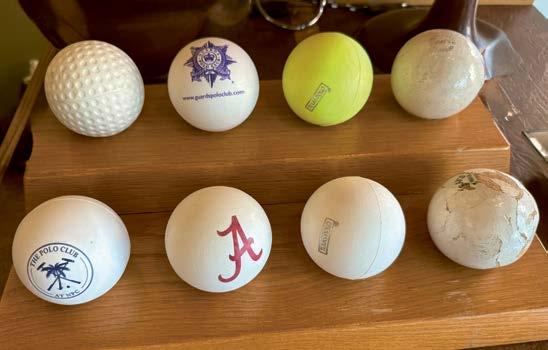
The polo ball carrying a part of history
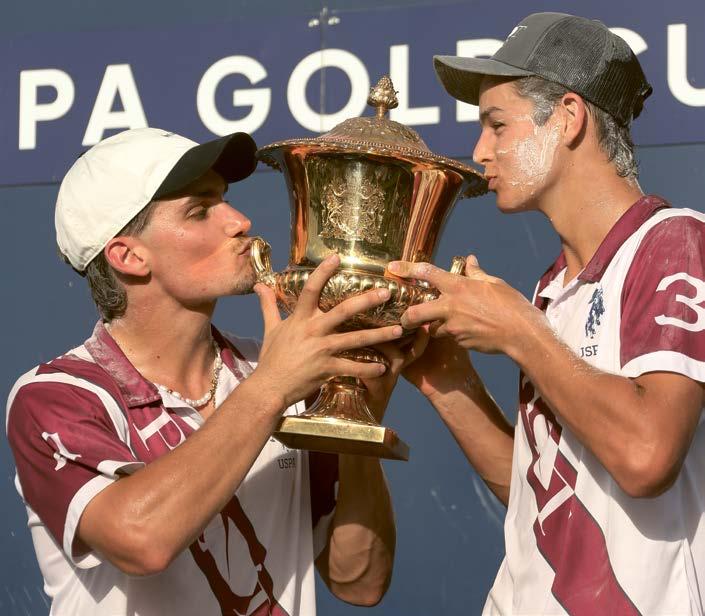
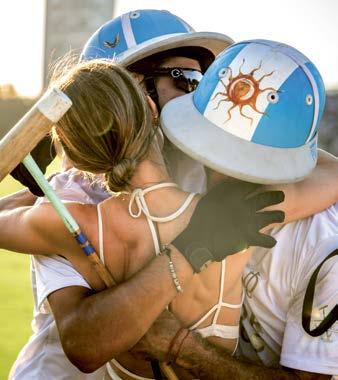
Above: Jeta Castagnola and Lorenzo Chavanne celebrate their rst USPA Gold Cup win
HURLINGHAM MAGAZINE
Publisher Roderick Vere Nicoll
Executive Editor Peter Howarth
Editor Jemima Wilson
Designer Silvia Starace
Chief Copy Editor Holly Quayle
Copy Editors Polly Rappaport, Mikey Fullalove
Contributing Photographer Tony Ramirez
SHOW MEDIA Editorial
Managing Director Peter Howarth 1-2 Ravey Street, London EC2A 4QP + 44 (0) 20 3222 0101 info@show.london show.london
HURLINGHAM MEDIA Sales
+44 (0) 771 483 6102 magazine@hurlinghampolo.com; hurlinghampolo.com
Printing Pureprint Group; pureprint.com
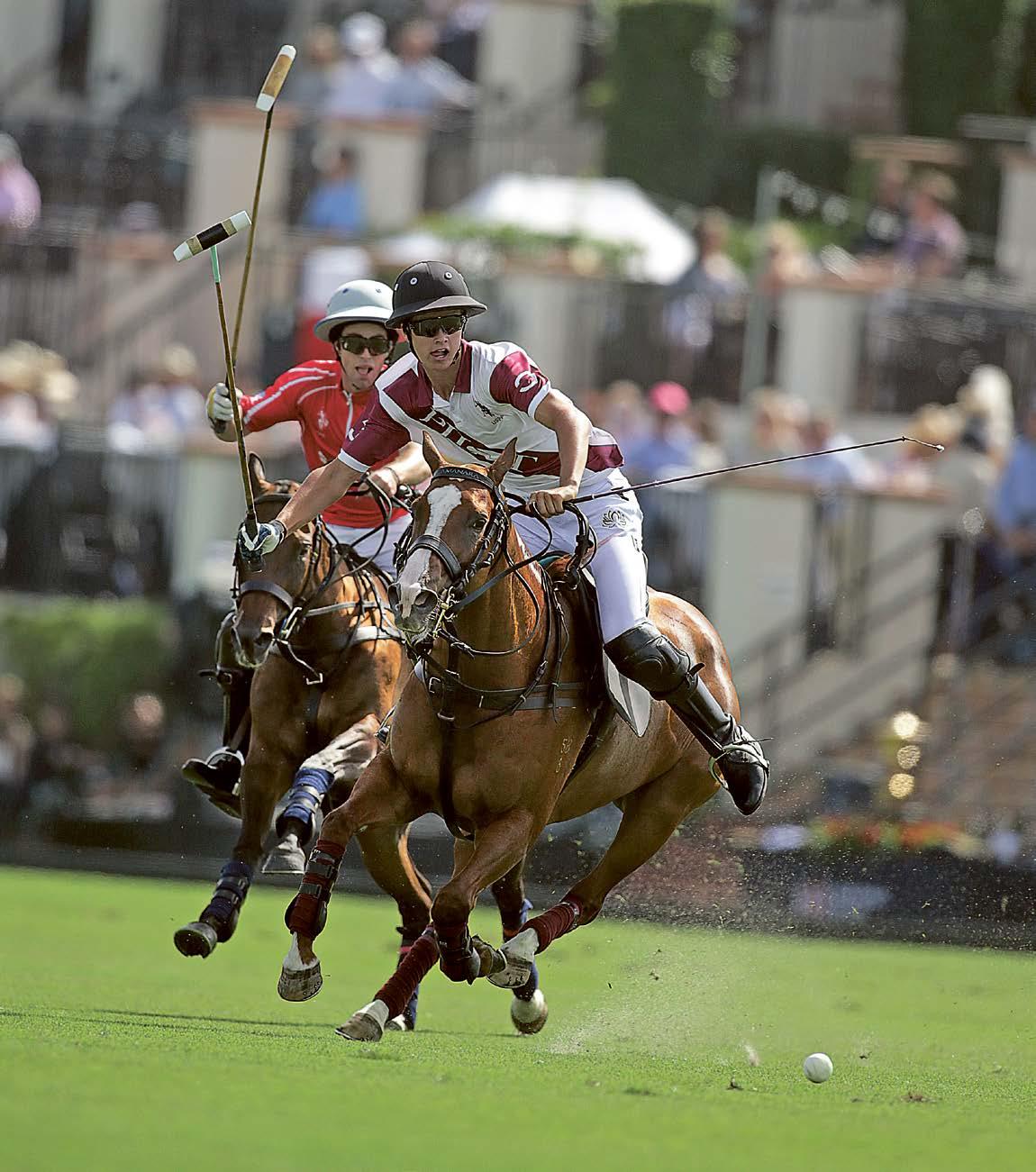
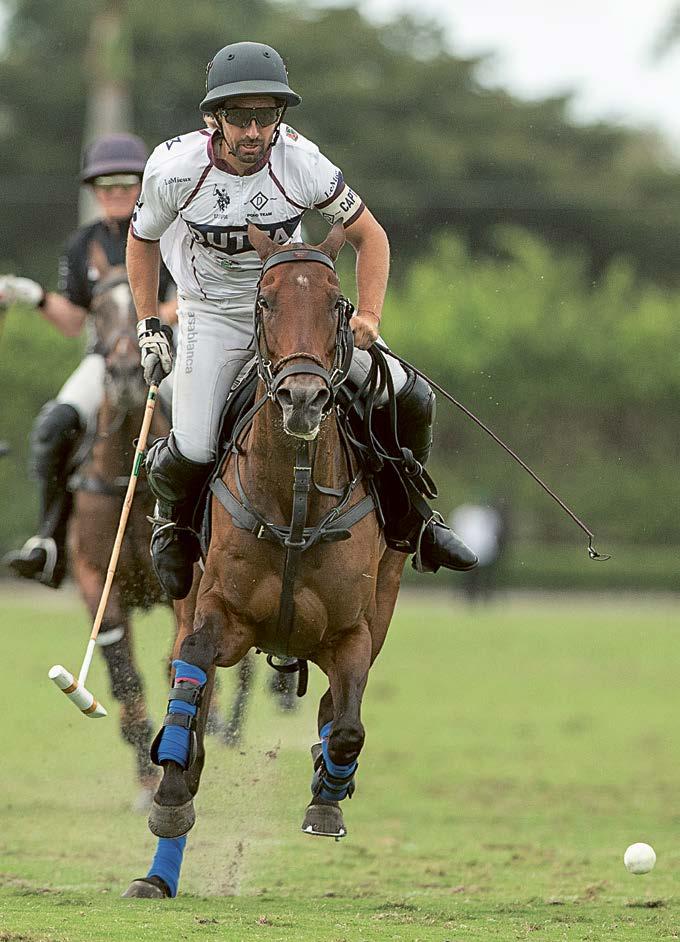
Welcome to the spring issue. On the cover, we have 18-year-old Lorenzo Chavanne. He won the Gold Cup and the US Open, was MVP in both tournaments and the best mounted player in the Gauntlet. Go to the Action and see the report on the Gauntlet – the polo this year was very competitive.
In Talk, Paul Hobby the new owner of Texas Polo, explores the evolution of the modern polo ball. Have you ever wondered who is the crucial figure in the Cambiaso family on and off the field – read Alejo Miranda’s report on María Vázquez. George Dill has had an interesting career path but his real calling in life is running the largest polo-horse rental businesses in the US. George describes his natural, cost-effective approach.
Polo is a great sport but also a backdrop for making friends, doing business and raising money for charity. In Features, Tom Hudson explores how British Polo Day has become a platform incorporating these traits in some spectacular settings. Many players are introduced to the game via intercollegiate polo; Ivan Weiss writes how learning to play at Yale turned into a passion that has taken him and his family all around the world.
Those of you who started playing polo on foot, running around after the grownups had played a game, will enjoy Archive. In it, Mark McIntosh explains how he acquired a polo ball with the signatures of nine top players from the 1970s, six of whom are in the Museum of Polo’s Hall of Fame. There are more articles which I hope you will find interesting.
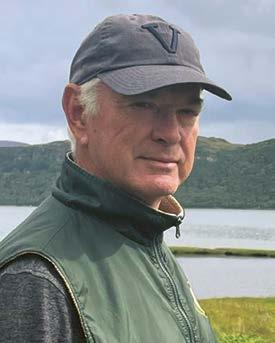

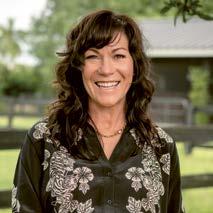
REBECCA “BECKY” SCHMEITS is a driven equestrian and competitive polo player, passionate about horses, wellness and family. Beyond the polo eld, she is a mother of ve children and has two grandchildren. She and her husband Kevin live between Colorado and Florida.

GEORGE DILL is a longtime polo player, breeder and founder of George Dill Farms, which operates one of the largest polo horse rental programmes in North America. His varied career includes founding the Washington Lettuce & Vegetable Company and starting two community banks.

AGUSTINA FONDA is a professional polo photographer capturing the speed, elegance and intensity of the sport. She has photographed in the United States, Europe and her native Argentina. Through storytelling, her images bring matches to life, showcasing athletes, horses and de ning moments.
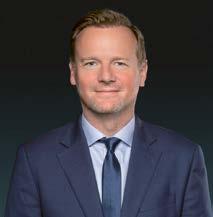
TOM HUDSON is co-founder of British Polo Day. He rst experienced polo at Guards as a schoolboy at St George’s Windsor Castle – however, it was only when he was posted to Dubai that he began to play. He wanted to bring some quintessential British polo magic to the region, and British Polo Day was born.

FACUNDO CRUZ LLOSA
I started playing in my hometown, General Belgrano, when I was 11. My dad has always been a horse breaker and still is. He was also well known for jineteada – a competition similar to a rodeo in Argentina – and rode a famous horse called Zorro. We’ve always had horses at home, and from the age of three I was already on a horse. I rst became interested in polo at my grandmother’s farm, after watching a cousin of my father play.
I have a huge appreciation for horses and I love everything about it. I love watching showjumping here in Florida, and in Argentina I like watching pato, prueba de rienda and jineteada [all traditional gaucho sports].
I play whatever polo I’m invited to, at any level. Right now, I’ve been playing 22-goal in Wellington and 16-goal, and even a 12-goal. I’m a fanatic. I’ll literally play farm polo if you offer it to me. One day, I rode 23 horses in a single day. I had two practice sessions and was still stick-and-balling in the evening.
The perfect game to me is when I’m on my favourite horses. One is Samurai, a stallion from Lucas Luján, the best machine I have. Or my old-school faithful One Jujeña, a mare originally from Chochan [Martín Garrahan]. She’s been with me since I started and is still playing the Open. The season has been so good because I’ve invested in 10 horses of my own, so I’ve been super concentrated.
Dutta is a really good team. We won the CV Whitney. All four of us, including Timmy, the patron, play really well. We’re functioning as a four-man team, the horses feel good and we are very disciplined and concentrated. That’s what’s made the difference.
I will go straight to Brazil for three 23-goal tournaments. After that, I head to Sotogrande, and then to Argentina, where I start at the Jockey Club Open and then play the full season.
On Friday 13 February the polo world celebrated its legends, highlighted by Peter M Brant and Melissa Ganzi, at the record-setting, sold-out 37th annual Polo Hall of Fame Induction and Awards Dinner at the Museum of Polo, with more than 500 guests in attendance at the ceremony. During his illustrious 50-year polo career Brant developed the powerhouse White Birch team and organisation which dominated high-goal polo in the United States for about 25 years, beginning from 1979. Melissa Ganzi, philanthropist, entrepreneur, club owner and high-goal patron, received the Iglehart Award for exceptional lifetime contributions to the sport. Billy Stevens, who turned 99 years old this year, was also inducted into the Hall of Fame, along with Elisabeth “Pansy” Ireland Poe, the rst woman player to obtain a handicap rating with the USPA in 1925, who was inducted into the Polo Hall of Fame posthumously. Equine advocate Clint Nangle was honoured as the posthumous Iglehart Award recipient.
The Horses to Remember honouree of the early pre-Hartman era is Citroen, the award-winning Argentinebred chestnut gelding purchased by Robert Lehman, while Longpocket, Billy Mulcahy’s wiry Australian thoroughbred, was recognised as Horses to Remember, post-Hartman
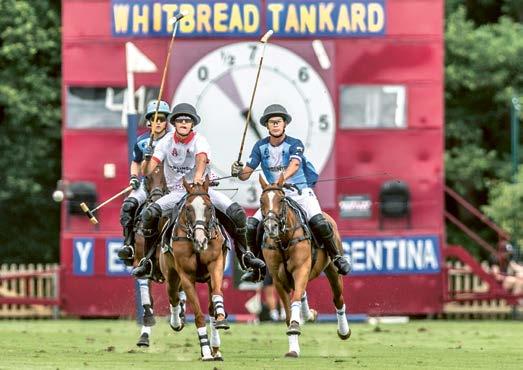
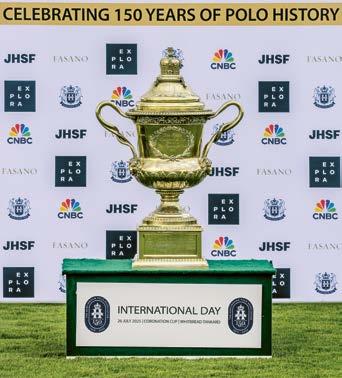
After a fantastic occasion celebrating 150 years of polo in 2025, International Day returns to Guards Polo Club on Saturday 25 July 2026. England will be in action for the Coronation Cup against Uruguay – while Young England will battle Young Argentina to reclaim the Whitbread Tankard. This competitive game has become a must-see match, with some of England’s brightest talents in action to open the day. A range of hospitality and ticket options are available, from a VIP Clubhouse experience to the chance to get up close with eld-side parking – visit guardspoloclub.com to get your tickets.
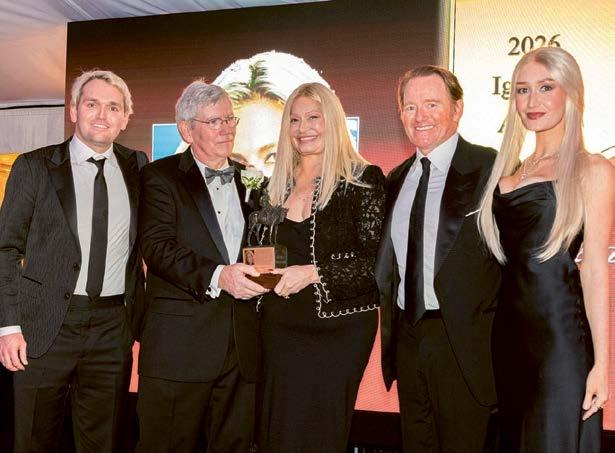
Award era. The Polo Training Foundation (PTF) Player of the Year awards in the annual scholastic and collegiate awards were included for the rst time, and the honourees were Zak Coleman of Texas A&M (Intercollegiate Stephen A. Orthwein Male Player of the Year), Alana Benz of UVA (Intercollegiate Daniel J. Wallace, Jr. Female Player of the Year), Joe Bob Lequerica of Houston (Interscholastic Russell A. Sheldon Male Player of the Year) and Kylie Beard of Maryland (Interscholastic Lynn Thompson Female Player of the Year).
The event’s success was due to generous dinner sponsors Grand Champions Polo Club and Aspen Valley Polo Club, as well as major sponsors Olexa Celine, the Robert I. Goldman Foundation, and U.S. Polo Assn.
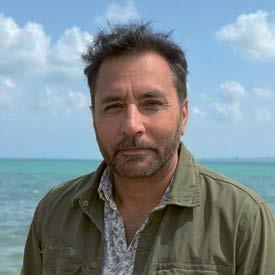
Tanweer Khan’s love of horses dates back to his childhood, when he dreamed of playing polo, a game that’s deeply rooted in Pakistan’s cultural heritage
My uncle was a veterinarian doctor at the Karachi race course and he used to show me amazing race horses. After finishing my neuroradiology fellowship, I was working at a regional medical centre in Maine, in the USA. A neurosurgical colleague played polo and invited me to try playing at his family home, where he had an indoor arena. I like the competitive, warrior spirit of the game.
I have been playing polo for 25 years and have many exciting memories. It’s always an honour every time I play with top polo professionals, especially Cambiaso. I have had the pleasure of playing with or against most of the best 7-10 goal players in the world, playing in many countries, including England, Pakistan, Argentina and the USA. My favourite places to play are Valiente, in Florida, and Denver.
Most of my horses have similar blood lines, but I would say Celine from Diego Cavanagh is my favourite, because she is handy, responsive, has lots of power and a smooth gait and stop.
I mostly play 12-22-goal polo. This summer I am playing 12-goal in Denver with the Valiente organisation. Next winter, I will be back in Wellington, Florida, to play 16 goals. They started calling me Tanbiaso because my nickname is Tan.
Outside of polo, I am a neuroradiologist. I also have sailing certification and a pilot’s licence.
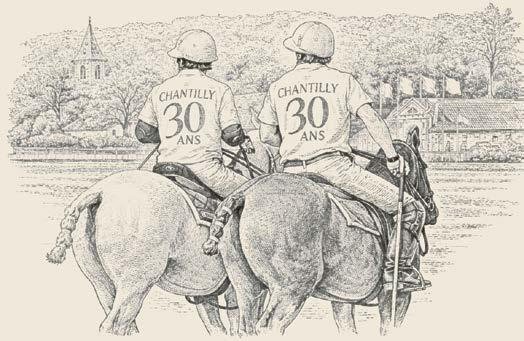
When Patrick Guerrand-Hermès launched the Chantilly project in 1995, his aim was to give polo an open, visible and vibrant space. As the historical home of French polo, Chantilly naturally emerged as the obvious choice, and the Polo Club of Chantilly was built as a gathering place designed to expand the game, welcome new players and inspire vocations. Thirty years later, the ambition has not changed. As part of its 30th anniversary, the club will host the Legends Tournament from 25-28 June, as a tribute to the iconic polo teams that have shaped the history of polo at Chantilly.
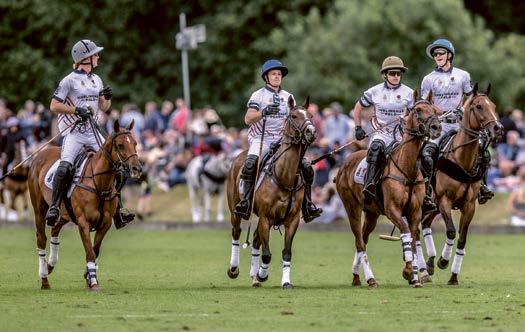
Time to go Down Under for the Beaufort International on Saturday 13 June 2026, as England play New Zealand for the Golden Jubilee, and Young England tackle Young Australia for the Buckmaster Trophy. An unmissable day out, the Beaufort International offers something for everyone; a spectacular day of top-class polo, a vibrant shopping village, and family-friendly entertainment throughout the day. With free entry for under-13s and a range of hospitality, ticket and picnic options, this is the perfect way to start your summer. Tickets are selling fast on beaufortpoloclub.com – get yours now and prepare to cheer your favourite team!
2025 was a banner year for Adolfo Cambiaso. He won the Triple Crown in Argentina for the fth time – no other player has done that. Cambiaso also won the Argentine Open for the 19th time, the same as Horacio Heguy and just one below Juan Carlos Harriott at 20.
Also in 2025, Adolfo Cambiaso won the US, British and Argentine Opens in the same year. Carlos Gracida won the three Opens in 1987,1988 and 1994. He also won the Triple Crown in 1994. Facundo Pieres won the Argentine Open in 2012 and then the US Open and British Opens in 2013.
The National Polo Center (NPC) in Wellington has named Field 2 the Armstrong Field. The recognition came as Stewart Armstrong stepped down from the chairmanship of the USPA. Stewart laid out his vision in an article in Hurlingham (Spring 2020), titled “The Sunday Field”.
There are 20 teams for the English 22-goal season this summer. The patrons come from 10 different countries. England has the most with eight, followed by two for Argentina, France, India and UAE. There are three female patrons and three 10-goal players.
The Polo Charity Trust (PCT) was originally set up in 1992 by the late Viscount Cowdray. Over the years, the charity has made grants totalling over £700,000. Principally, the charity aims to support professional and former professional polo players by providing relief from poverty, sickness and injury.
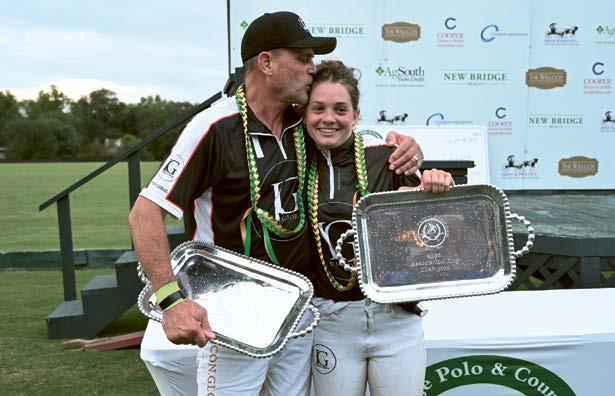
COUNTRY: USA
HANDICAP:3 (WOMEN’S);0 (MIXED)
When did you start to play polo?
I started playing around the age of 15, though I had spent my whole life playing polocrosse. My dad had always played polo on and off, and when he began going to practices again, I naturally tagged along.
What makes polo special for you?
It allows me to combine my passion for horses with my passion for sport and competition. It is a passion I share with my father, and we get the opportunity to share the field.
AGE: 25 my dad, my best friend Charlie Caldwell and good friend Tommy Collingwood. It was the first tournament we had played in together, a fast and open final against a super-competitive team with back-to-back goals from each side. When the final horn went, I looked at Charlie and we couldn’t believe it. I remember going back to the tent and celebrating what we had just accomplished, something no one was expecting on our first run as a team.
What, to you, is a perfect polo game?
The perfect game of polo for me is open and flowing – one where I feel my horses have played to the best of their ability and I have given my best effort to help my team.
What is your most memorable game?
Winning the USPA Association Cup 8-goal final last autumn alongside
What level of polo do you play?
I play mixed polo from 4 to 12 goals and women’s polo from 8 to 22 goals.
Where has polo taken you around the world?
Polo has taken me to many different beautiful places including England, France and South Africa. I am hoping to make it to Argentina this year for the first time.
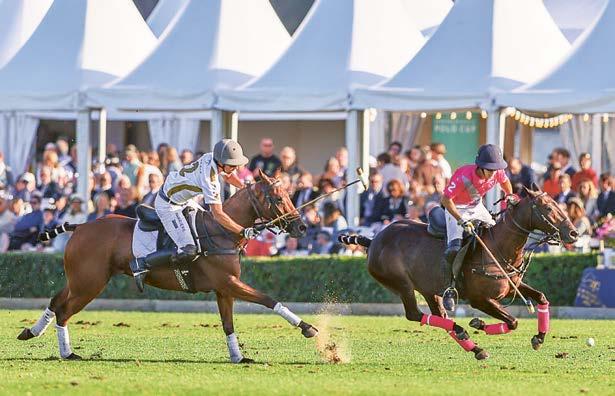
The 2026 season at the Deauville International Polo Club is set to begin with strong momentum, notably marked by a signi cant rise in the level of women’s competition, highlighting the growing prestige of the Ladies Polo Cup. From 6-9 August, the Asia Polo Cup will welcome international players from Hong Kong, Malaysia, Singapore and across Asia, setting the tone for an exceptional month of polo. This will be followed by the unmissable Barrière Deauville Polo Cup from 10-30 August, featuring key tournaments including the Ladies Polo Cup, Coupe d’Argent, Coupe d’Or and Coupe de Bronze. With partners such as Sisley, Arthus Bertrand, La Martina and many others, Deauville continues to establish itself as a leading destination on the international polo scene.
BY CHARLIE HANBURY
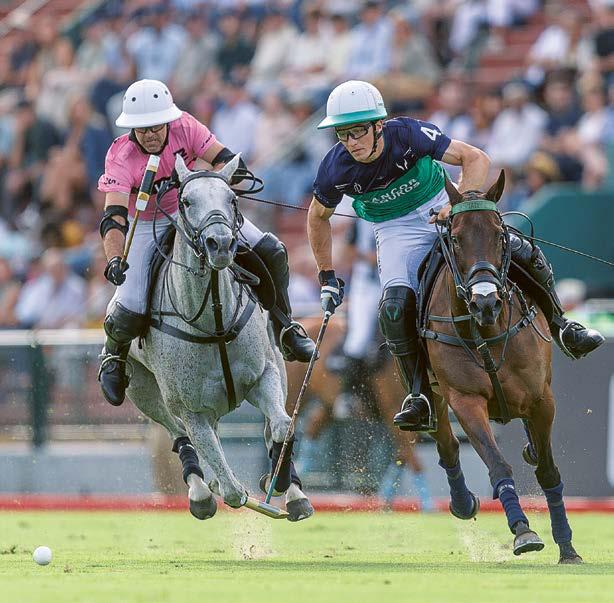
Lovelocks Drogba is out of a mare called Fina Chelsea and by El Padrino. All our foals at Lovelocks are named after their mothers – Drogba being Chelsea’s famous striker. She has the most incredible power, heart and lungs. She plays three chukkas and still runs through people like she’s fresh.
She’s a mare I played in Argentina and England before selling her to Barto Castagnola in 2020. I won the Warwickshire Cup and the Indian Empire Shield with her in 2020 before Barto bought her and won the Queen’s Cup with Les Lions/Great Oaks, then he took her to France where he won both tournaments.
She was born at our farm in Argentina and broken in by Australian Jim Board. She was then made by our team at Lovelocks before I played her and took her to England, then she came back and has played the open for the last five years, winning nine rugs.
She has won the most prizes around the world and is the third horse in history to win BPP at all three Triple Crown tournaments – this year she won BPP at Palermo for the second year in a row.
The combination of Fina Chelsea with El Padrino seems to be incredible, the first three foals of age all play the open with 10-goal players. Lovelocks Malouda has played with Poroto Cambiaso, Pelon Stirling and now Jeta Castagnola this year. Lovelocks Hazard and Lovelocks Drogba have both played with Barto.
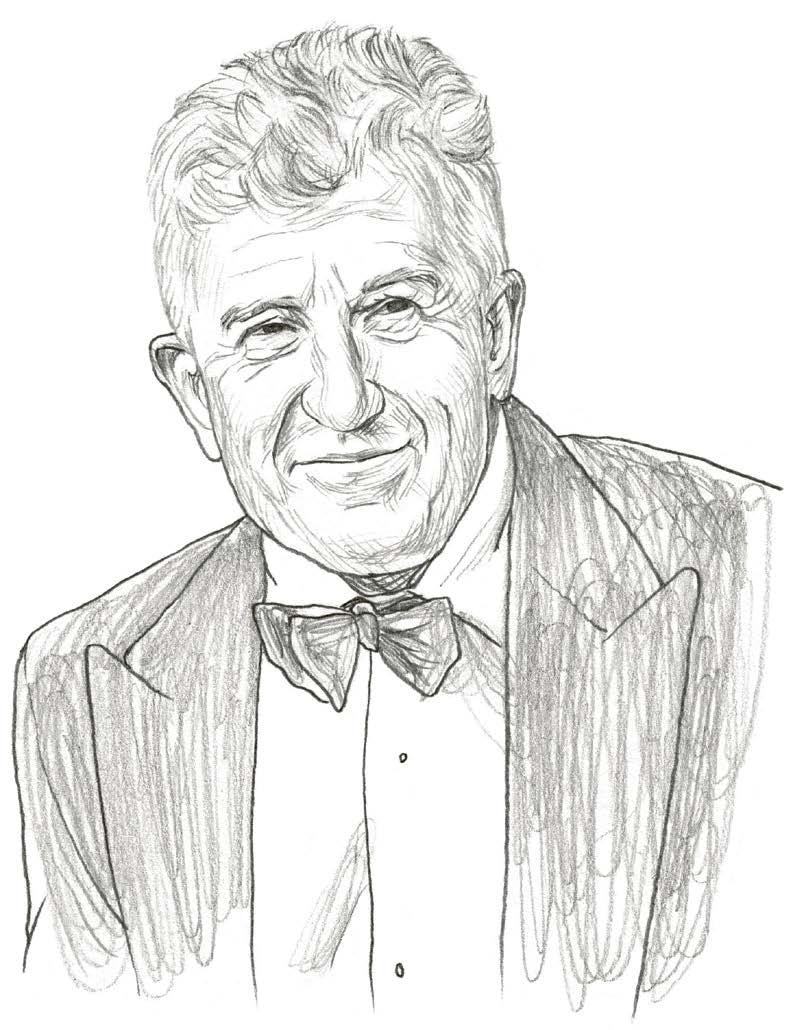
HPA chair Will Lucas reflects on the Hurlingham Polo Association’s 150th anniversary year in 2025 and looks ahead to an exciting 2026 UK season
ILLUSTRATION: PETER JAMES FIELD
As we look ahead to the new season, we’re also proud to look back on 2025 as the Blue Book drops through letterboxes across the country. It was an honour to be at the helm of the HPA as we celebrated the 150th anniversary of the official rules; much has changed in the world and indeed in the sport in that time, but polo remains not just a thrilling sport, but a thriving community around the world.
Our England teams enjoyed a stellar year, playing 10 international matches at home and abroad against Argentina, the USA, Brazil, South Africa, Australia and New Zealand. It was fantastic to welcome Brazil back for International Day, and a brilliant display of teamwork from the England team of Tommy Beresford, Ollie Cudmore, Max Charlton and Louis Hine gave us plenty to be excited about in 2026. The first Young England Women’s International, played against South Africa at Guards in August, may not have ended with a win, but it showed that women’s polo also continues to develop as a growing element of our sport.
The increasing number of international matches played every year leads to a growing international presence, building vital new networks and relationships, not only for the HPA but also for the players themselves. The organisation of these games relies on the passion and generosity of many people, and we are grateful to all those involved across the globe for making the international programme possible.
Closer to home, we made some strong developments in youth polo in 2025. The age restrictions brought in around under-16s in the Victor Ludorum may have divided opinion, but the new Victor Futurum series, linking young home and overseas players in
International Day 2025 marked 150 years of polo in England with a match against Brazil for the Coronation Cup at Guards Polo Club on 26 July
POLO REMAINS NOT JUST A THRILLING SPORT, BUT A THRIVING COMMUNITY AROUND THE WORLD
tournaments at Guards and Cowdray, was an undeniable success and our huge thanks go to all those who made the series possible; the host clubs, players, parents and our generous supporters.
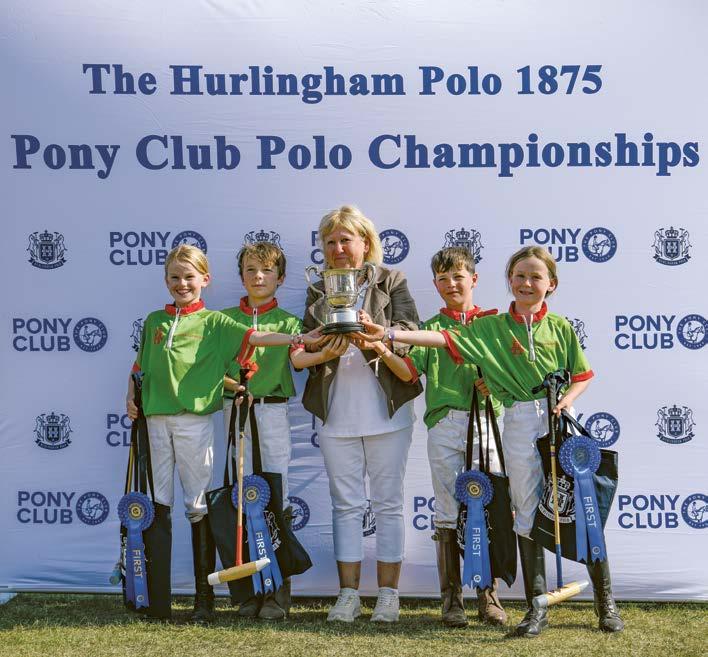
The Pony Club Championships were a bumper event, welcoming over 50 teams to the Cowdray grounds. The Performance Pathway has expanded to include more players, with over 40 young aspiring professionals on the list for the new season. The Pathway has grown every year, with more events – including for parents – and a mentoring scheme for more advanced players. Five members of the Pathway played in the high goal in 2025 and it’s fantastic to see this programme help them participate in the top level.
We saw nearly 700 matches played in the Victor Ludorum this year, and for the first time in 2025 we saw the benefits of our ongoing digital transformation, as every VL tournament appeared on Lineup. This was no small feat, given the variety of clubs that host VL tournaments, but the benefits of a digital system are clear, and we were able to track not just game results, but important data and statistics as well. This information is vital in helping us to inform decisions and improve safety and welfare at every level, not just in the VL.
At the end of the year, we welcomed two new stewards to the roster: Alexie Calvert-Ansari and Richard Bailey, who bring a wealth of polo and business experience to the team. We’re excited to see how they can help during their tenure.
The new season also sees the new Home Grown Player rules come into action at 15-goal and above. The rollout of the new rules prompted plenty of debate, but we are looking forward to

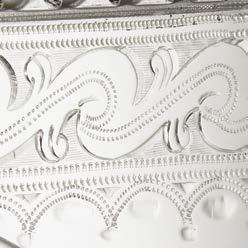

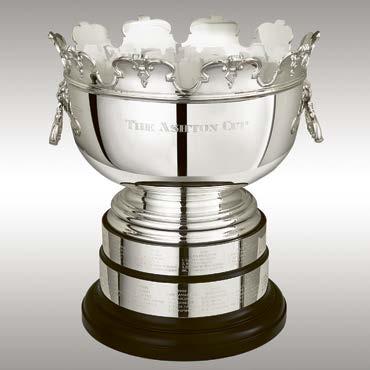
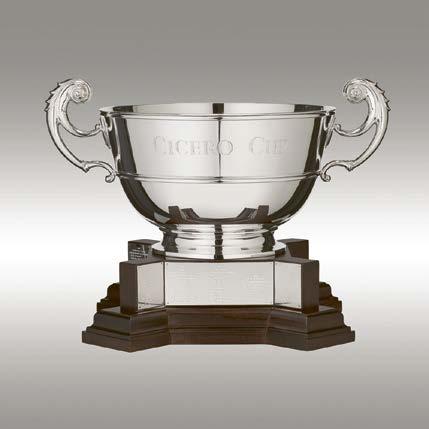

AS WE START THE NEW SEASON, THERE ARE SEVERAL EVENTS TO LOOK FORWARD TO
seeing the effects and reviewing whether changes are needed. The requirement of homegrown status for players in the 22-goal of 5-goals and below opens the door for increased opportunities from a new cohort of players developed on home soil, and we will be watching the situation closely in 2026.
On the commercial front, sponsorship remains challenging, but we are continuing to develop successful partnerships for the HPA. We are delighted to welcome Gusbourne as our official sparkling wine partner, who will provide exciting support to our events, including the Polo Awards, where they will sponsor the Gusbourne Polo Club of the Year. We have also welcomed Bupa Global to the HPA stable, and we are looking forward to working with them to bring their vital services to more players and members. There’s plenty more to come in this space with a view to 2027 and beyond.
The Hurlingham Polo 1875 brand has seen significant new investment and a refreshed management structure over the past 12 months. A sellout concession store at Liberty London and new brand opportunities worldwide – including as official retail partner at Polo AlMarsa Qatar 2025 – continue to introduce the brand to new clients and we are hugely encouraged by the prospects for the future. Hurlingham Polo provided significant support to the Pony Club Championships last season and is committed to expanding their involvement across the levels.
As we start the new season, there are several events to look forward to. The Polo Awards, expanded from the VL Dinner, return to the Underglobe in May 2026. With four new categories – Club, Coach, Player and Pony of the Year – we are
looking forward to celebrating those who shape the polo community at every level. By the time this issue lands with readers, the awards will be imminent, and we hope you will join us in celebrating the deserving winners.
The HPA Coaching Conference, heading into its second year, looks set to be a repeat success, with places sold out well in advance. Returning to the fantastic facilities at Hartpury University, the agenda has expanded to include a live coaching session, a presentation from an equine dental technician and a session with sports scientist Gordon MacLelland focusing on communicating with young athletes and their parents.
With a brilliant year behind us and a busy season ahead, we are thrilled to welcome you to the new season and look forward to seeing you on the field soon.
The 2025 Pony Club Championships welcomed more than 50 teams to Cowdray Park polo grounds
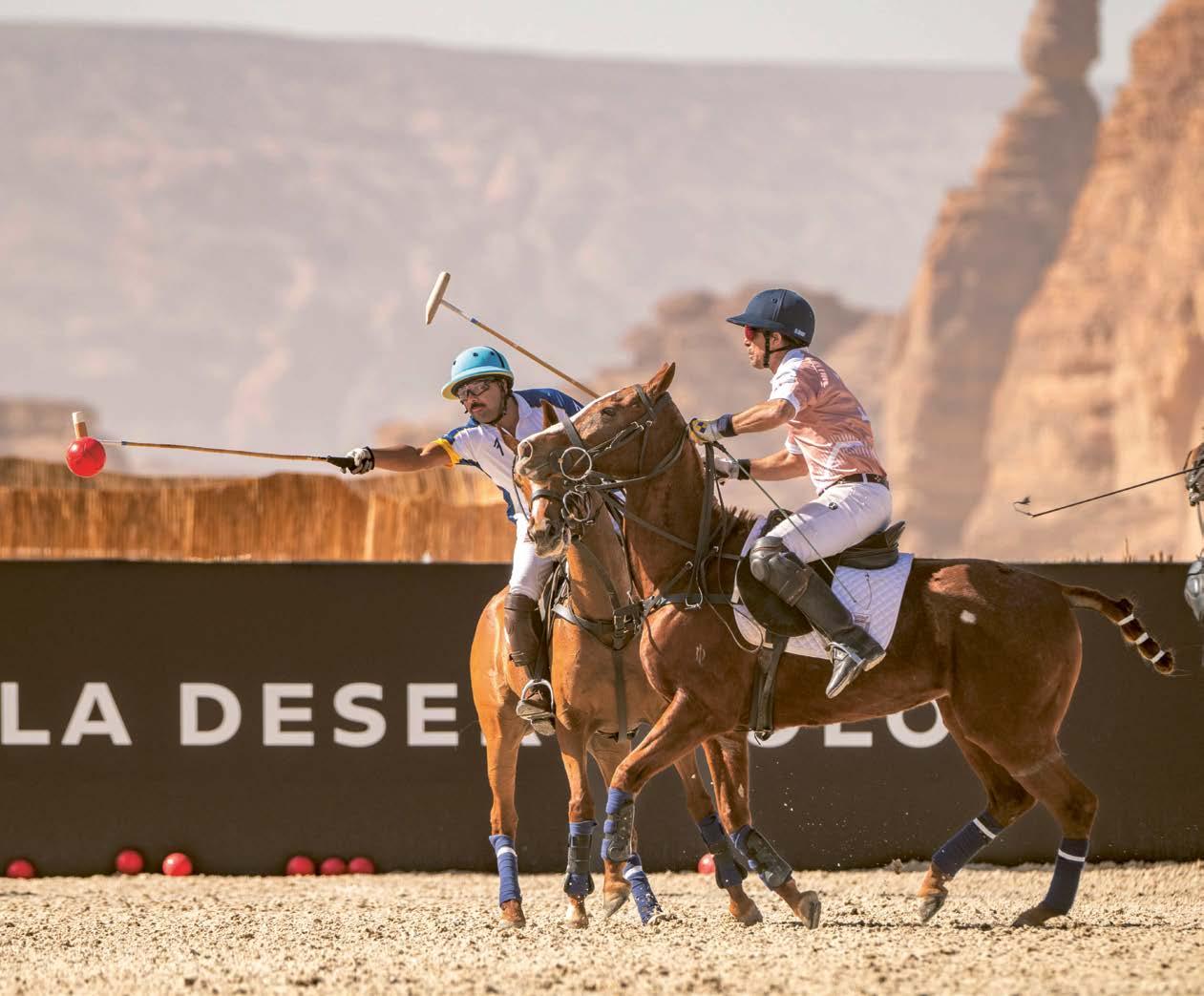
The sixth AlUla Desert Polo in Saudi Arabia in January was proof that this event is fast becoming a highlight of the polo calendar, writes Jemima Wilson
For repeat visitors and new guests alike, the unique landscape and magic of AlUla, Saudi Arabia, never fail to incite wonder in those lucky enough to discover it. As exhibition tournaments go, there is nowhere quite like AlUla to experience elite polo and superlative hospitality in a spectacular setting. You really do need to see it to believe it.
Having asserted itself as one of the cornerstone sporting events in the AlUla Moments calendar, the AlUla Desert Polo showcases the region’s ability to deliver top-level sport in a destination that combines authentic culture and rich history with a modern, international outlook. Organised by the Royal Commission for AlUla (RCU), with support from both the Saudi Polo and Saudi Arabian Equestrian Federations, the tournament also demonstrates AlUla’s long-standing and deep-rooted relationship with horses, and supports Saudi Arabia’s plans to increase participation in all equestrian sports.
‘The strong engagement we have seen once again this year, from players, partners, and spectators, demonstrates AlUla’s growing reputation as a host of world-class sport and our commitment to celebrating equestrian culture in a way that resonates worldwide,’ explains Ziad Alsuhaibani, chief sports of cer at RCU.
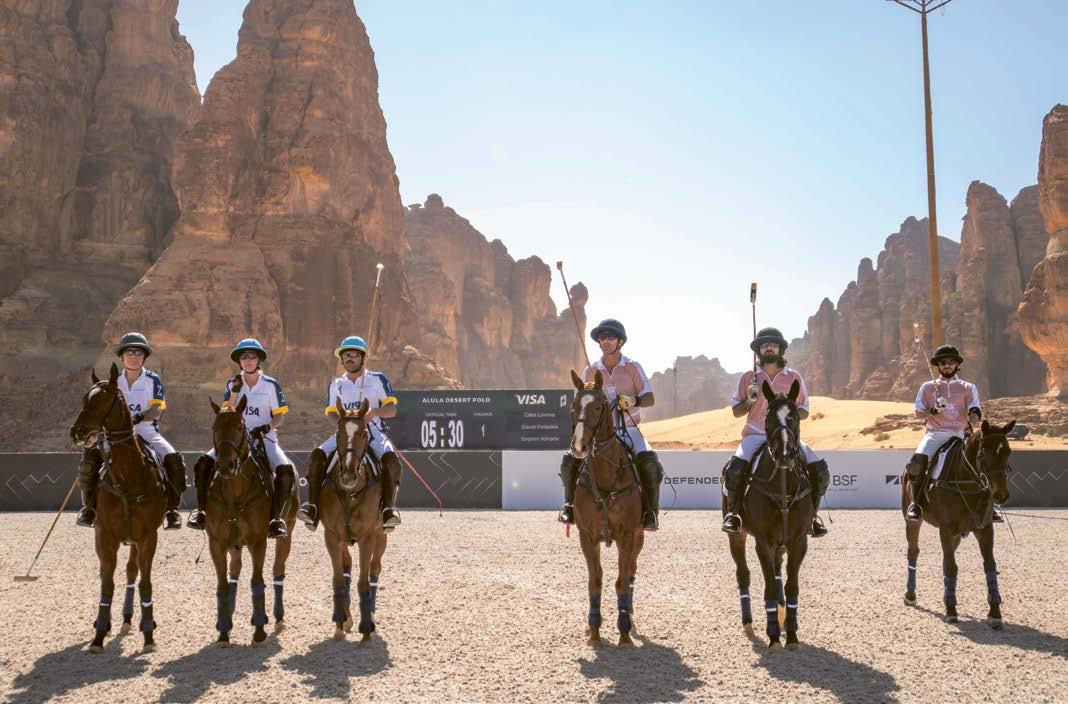
As in previous years, each of the teams taking part in the Desert Polo tournament included a top male or female professional player, along with royal dignitaries and international patrons. This year’s line-ups comprised: David “Pelon” Stirling, Naveen Jindal and HRH Prince Salman bin Mansour Al Saud playing for team AlUla; Pablo MacDonough, Jenny Luttrell and HSH Prince Eugen zu Oettingen as team Defender; Nacho Figueras, Babar Naseem and Faisal AlSuDairy playing for team Dadan; Jejo Taranco, Venkatesh Jindal and Dr Hosam Zowawi as team Budget; Lia Salvo, Alejandro Poma and Faisal Abunayyan playing for team BFS; and Cata Lavinia, David Paradice and Ibrahim AlHarbi as team Visa.
Having been involved in the event since its inception, Pelon Stirling described how the AlUla Desert Polo is now very much on the map as a unique and increasingly popular polo tournament, and how the ongoing partnership with La Dol na provides a strong foundation and a long-term plan and structure for growing polo in Saudi Arabia for the future. And with the aim of inspiring more people in Saudi Arabia to try polo and take up the sport, this year a group of local children was invited to meet some of the professional players, including Pelon and Cata Lavinia, to receive signed polo balls and get up close to the polo ponies.
Opposite: Ibrahim AlHarbi and Nacho Figueras reach for the ball. Below: teams attend the trophy presentation at the nal of the AlUla Desert Polo
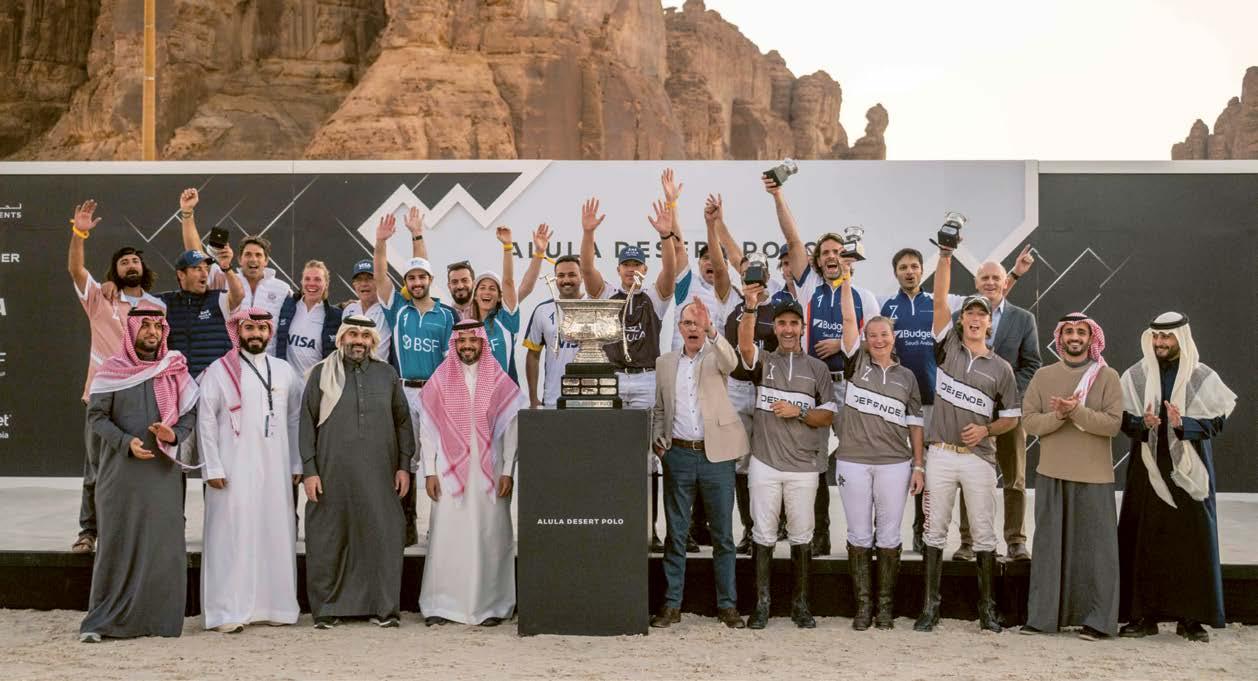
‘Word about AlUla has been growing all around the world,’ says Pelon, ‘and everyone is starting to know it and wants to come and see it for themselves. This year we had a visit from a group of around 60 children – boys and girls – to come and share some very special moments with us at the Desert Polo, and we gave some of them an opportunity to try riding a horse. It is our aim to inspire the next generation of Saudi polo players – and who knows – maybe one of those kids will get into polo and become a future professional 10-goaler! At the rst edition of this tournament we had one or two players from Saudi, and in the last few years we’ve had ve or six different Saudi players every year, so the momentum is already growing. And it’s not just about polo here – the Mohammed Yousuf Naghi AlFursan Equestrian Village project will also facilitate show jumping, dressage, eventing, endurance and horse racing, which will create a whole new ecosystem around it.’
‘It was amazing to see so many young girls and boys smiling and enjoying spending time around the horses,’ says Cata Lavinia, who has visited AlUla twice. ‘The vision for the AlFursan Equestrian Village will give more children the opportunity to learn how to ride, learn about horses and participate in polo and other equestrian sports, which is very exciting.’
The games themselves captivated the spectators, who gathered eagerly on the terrace of the AlFursan Equestrian village to watch the polo action. The rst day was the round-robin stage, which saw AlUla win in Zone A and Defender top in Zone B to go through to Saturday’s nal for the AlUla Desert Polo Trophy, while BFS and Budget contested the subsidiary nal, and Dadan and Visa played for the Wooden Spoon Trophy.
On the nal day, the tournament was won by Defender – MacDonough, Luttrell and HSH Prince Eugen zu Oettingen – who defeated AlUla – Stirling, Naveen Jindal and
HRH Prince Salman bin Mansour Al Saud –9-8 in a close game. The two players wearing the number-three shirts, MacDonough and Stirling, pulled out all the stops – clashing against the dramatic rock formations in the backdrop – showing the crowd just why they are worthy of the 10-goal handicap status.
Above: Team Visa (David Paradice, Cata Lavinia and Ibrahim AlHarbi) lines up against team Dadan (Nacho Figueras, Babar Naseem and Faisal AlSuDairy)
IT IS OUR AIM TO INSPIRE THE NEXT GENERATION OF SAUDI POLO PLAYERS
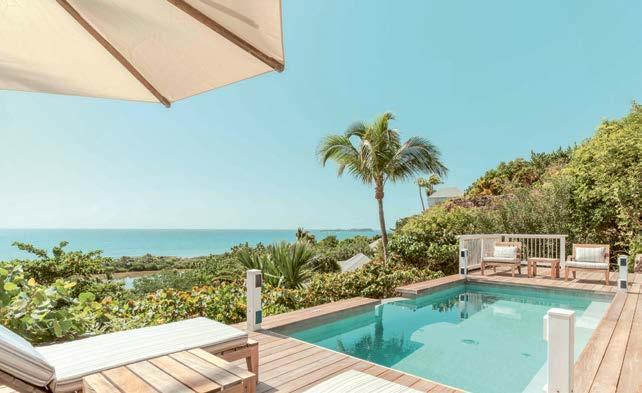
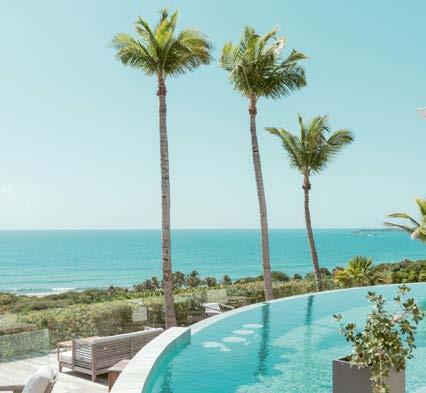
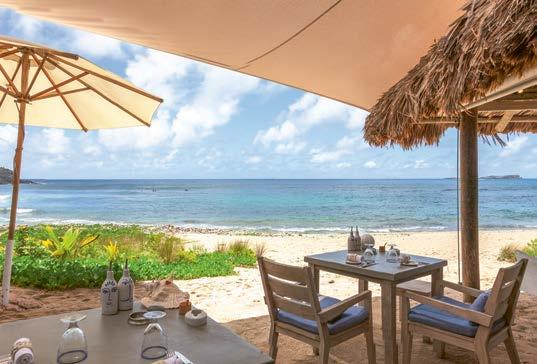
Welcome to St Barth
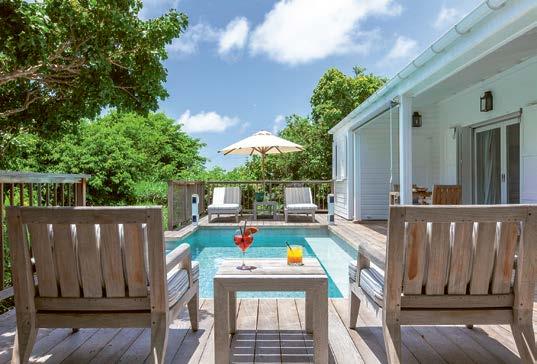
Mention code : HPOLO and get VIP amenities when booking !
22 unique, independent, self-standing ultra-comfortable Villa Suites.
Each one offering a private pool, large terrace and overlooking wonderful Toiny Bay.

Fred Mannix describes how the Alegría breeding programme has evolved over the years and how its mission remains to put horses on Field 1 at Palermo in Buenos Aires
Polo in North America looked very different when my father, Fred Sr, rst entered the sport as a teenager. At the time, the prevailing style was the Texas control-ball game, played largely on quarter horses and racehorses that could not make it on the track. By the time he returned to polo in 1982, the Argentine passing game – adapted from hockey – had taken hold, and thoroughbreds had become the dominant equine athlete, owing to the speed demands of the modern game.
With several ex-racehorses already on the farm, Fred Sr initiated a small breeding effort, but it quickly became clear that sustaining a programme in Alberta was cost-prohibitive. Operations were therefore moved to the T-Cross Ranch in Montana, where the limited band of broodmares was relocated and the breeding programme continued for ve to six years. The challenges proved signi cant: geographic isolation, dif culty securing skilled horsemen capable
of handling and training thoroughbred stock, escalating costs, and losses to wolves among the young horses. These constraints ultimately underscored that North America was not conducive to building a large-scale polo-pony breeding programme.
A major pivot was underway from the moment I went to Argentina for the rst time in 2005 to play for Coronel Suárez with the Araya brothers, chasing quali cation for the Argentine Open. What I saw immediately
was that Argentina had all the ingredients for a world-class breeding programme – and a more vibrant secondary market than anything in North America. From that point forward, we committed to breeding in Argentina.
We started small. Three embryos in the rst year. Then seven. Then 10. By 2008–2009, we had made the decision to move our broodmares and young horses to Argentina from North America and to shut down operations there. In hindsight, that may not have been the most logical business move –but it crystallised our focus. It focused us to go all-in for our pursuit of becoming a top-tier breeding operation in Argentina.
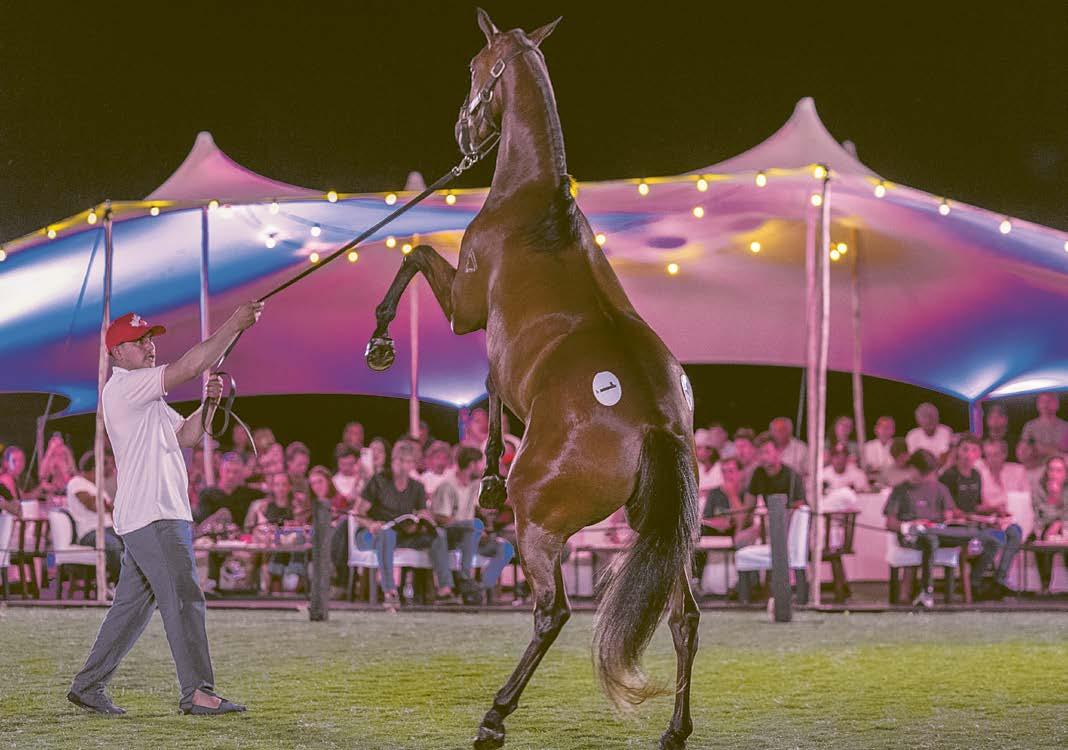
Over the years, we produced some special horses that helped us get all the way to Field 1 and into the nal at Palermo in 2013. The following year, in 2014, we held our rst annual auction, which became another de ning moment for the programme. It allowed us to engage directly with breeders and buyers who shared our passion and our vision for producing high-goal polo ponies. There’s something uniquely thrilling about producing a lly, preparing her for sale as a two-year-old, and seeing a 10-goal player purchase her – knowing she’s going to an organisation that will give her every chance to develop, be cared for properly and hopefully one day run out on Field 1 at Palermo.
Of course, it’s bittersweet to see these animals leave your programme. But there’s also pride in knowing they’re entering some of the best organisations in the world – places run by people who share your standards, your values and long-term vision for the horse.
As we look to the future and continue investing in the Alegría organisation, we are now operating across three elite embryo facilities: ECRA, Biopolo and Don Ercole. Across these three centres, we are producing approximately 80 embryos per year.
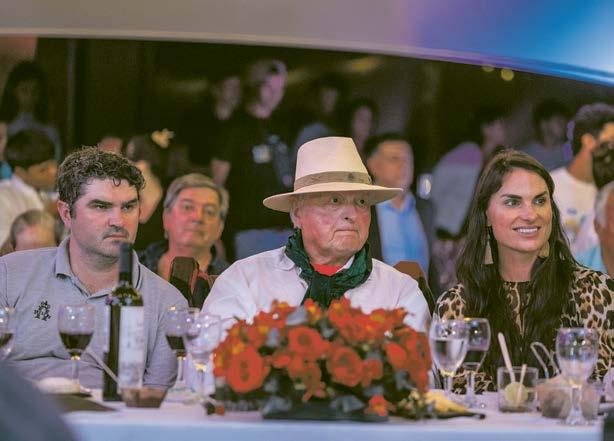
Among the standout horses bred through this programme is Alberta Augusta, currently being played by the greatest of all time, Adolfo Cambiaso. Alberta Augusta was purchased at the annual Alegría “remate” by Mr Dato Beh, who has maintained a long partnership with Adolfo. The mare rst played with Mr Beh’s son, Garvy, in the Coronation Cup against England, where we competed as the Commonwealth. Following that season, Mr Beh sent Alberta Augusta to Argentina for Adolfo to play during the Argentine Triple Crown, where she has shone brightly.
Fast-forward to 2026, and what I’m most proud of isn’t just the horses – it’s the people. The breeders, riders, grooms, vets and partners who have shown relentless commitment to the process. That can’t be overstated. Producing a top polo pony from embryo all the way back to the top of our sport takes years of discipline, patience, grit and consistency. At the end of the day, it’s the people who make it all possible.
Looking ahead, our focus won’t waver. Our mission remains the same: to put horses back on Field 1. I’m excited about the next generation of stallions and mares entering the programme. There’s a kind of magic in this process – something that’s hard to replicate anywhere else in life.
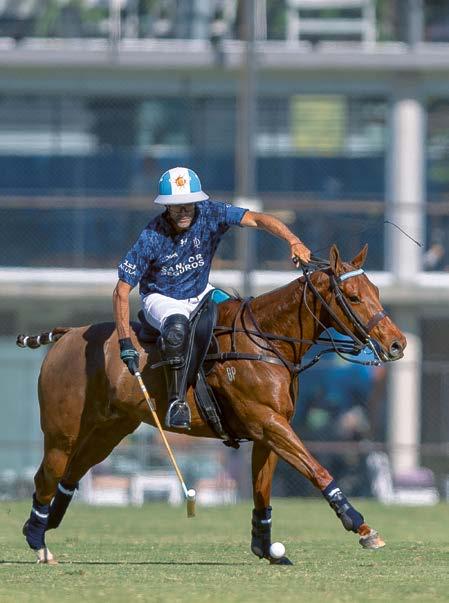
Paul Hobby, the current owner of Texas Polo, explores the evolution of the modern polo ball and how Vinnie Meyer’s quest for perfection revolutionised the game
While the speed of the game, the athleticism of the ponies and the skills of the players often command the most attention, one small object has quietly shaped how polo is played: the ball itself. Every game is ultimately decided by mallet heads meeting the ball surface and generating a result – forward or backward, intended or unintended. The evolution of the polo ball – from carved wood to modern plastic – mirrors the broader story of tradition meeting innovation.
Early forms of polo, played in Persia and Central Asia, used balls fashioned from natural materials. Accounts mention willow root or bamboo, but these balls were far from uniform. Weight, balance and durability varied widely, introducing an element of randomness at times as the game unfolded. Yet, as polo spread through India and Europe, these wooden and bamboo balls remained standard equipment.
By the 19th and early 20th centuries, wooden balls – often made from willow – were the norm in England, Argentina and the US. They produced a distinctive sound off the mallet and rewarded clean striking. Yet, they came with drawbacks. Wooden balls chipped, absorbed moisture and could splinter, sometimes breaking mallet heads or sending fragments across the eld. In wet conditions, they grew heavy and unpredictable, altering both safety and style of play.
Experiments followed. Some clubs tried leather-covered balls or adapted cricket balls, while others explored rubber or cork interiors. None proved fully satisfactory.
The breakthrough came with the introduction of high-impact plastic polo
balls in the late 20th century. Plastics offered uniform weight, resistance to moisture and dramatically longer lifespans than wood, all while reducing the risk of splintering. Early plastic balls, however, were not universally welcomed. Players complained that some felt “dead” or marshmallow-like off the mallet, lacking the crisp response of traditional wood. But too hard could also be a problem. A ball that doesn’t dent at all will be far less controllable and offer less visible surface detail to a player at speed. It is understood generally in polo that when a professional player hits a penalty shot that he or she will ask for a battered (used) ball for that reason. It was in this context that Vinnie Meyer, founder of Texas Polo, made his mark. Drawing on his background in manufacturing and plastics, Meyer set out not merely to replace the wooden ball, but to improve upon it.
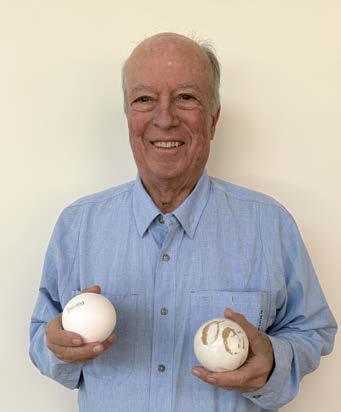
In 1976, he applied precision moulding techniques to create a plastic ball that duplicated the sound, feel and ight characteristics of a high-quality willow ball while holding exact tolerances.
This re nement proved transformative. Texas Polo’s proprietary plastic ball gained acceptance among serious players and clubs, helping to normalise plastic balls at all levels of the game. Media pro les credit these balls with helping “revolutionise the sport”, making play more consistent, safer and less dependent on fragile materials.
Today, Texas Polo balls are used by clubs around the world. Over the course of one week early this year, Meyer was nishing and shipping balls to Ecuador, Dubai, England, the National Polo Center and Singapore, as well as to leading American teams. This global adoption is a signi cant achievement in a sport so married to its traditions. Graphite and breglass mallet shafts, dimpled balls, yellow balls and even cloning of ponies have variously appeared on the polo scene, but have failed to achieve wide adoption. Even something as obvious as Velcro took decades to replace buckles on knee pads.
Modern polo balls remain deceptively simple in appearance, yet their evolution re ects centuries of experimentation. At the highest levels of any sport, details matter that are invisible to the spectator – subtle nuances and advanced materials science often become the difference between winning and losing. The story of the polo ball is part of that phenomenon, continually re ned by those willing to blend respect for tradition with practical innovation.
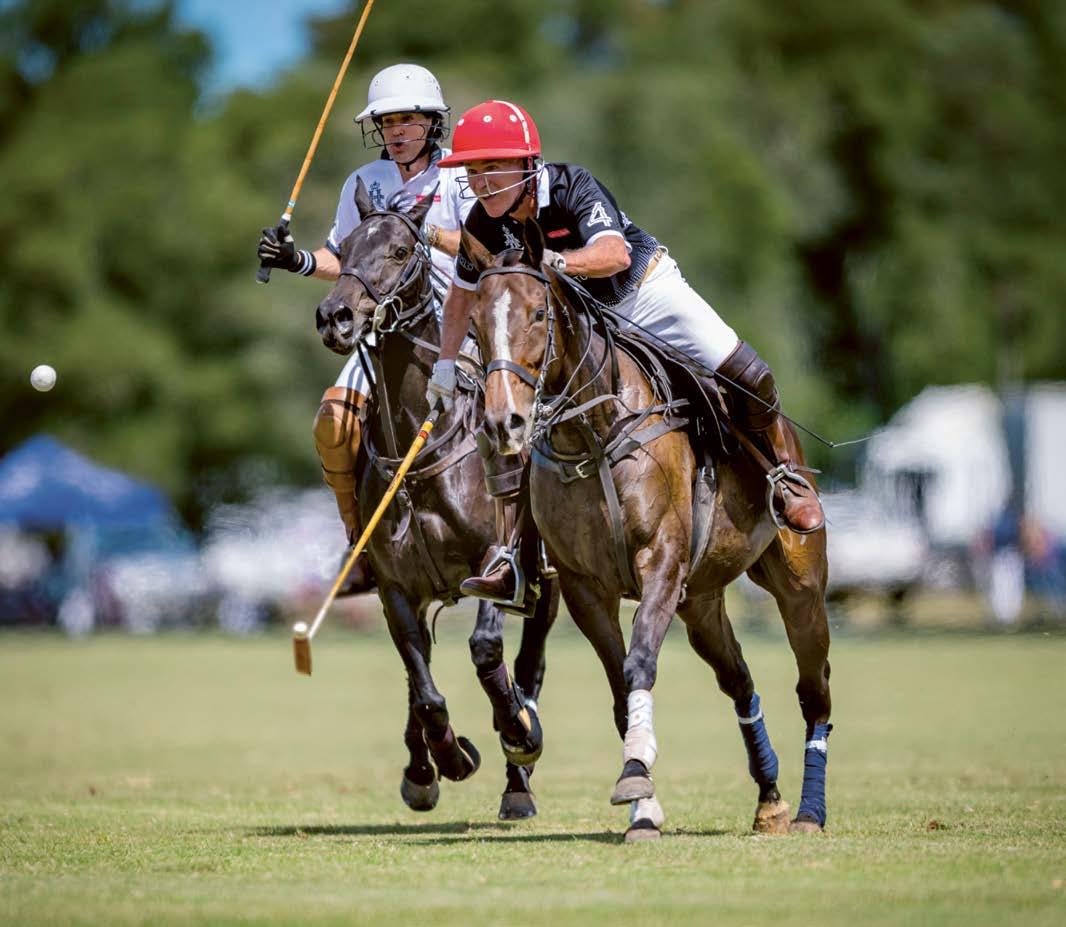


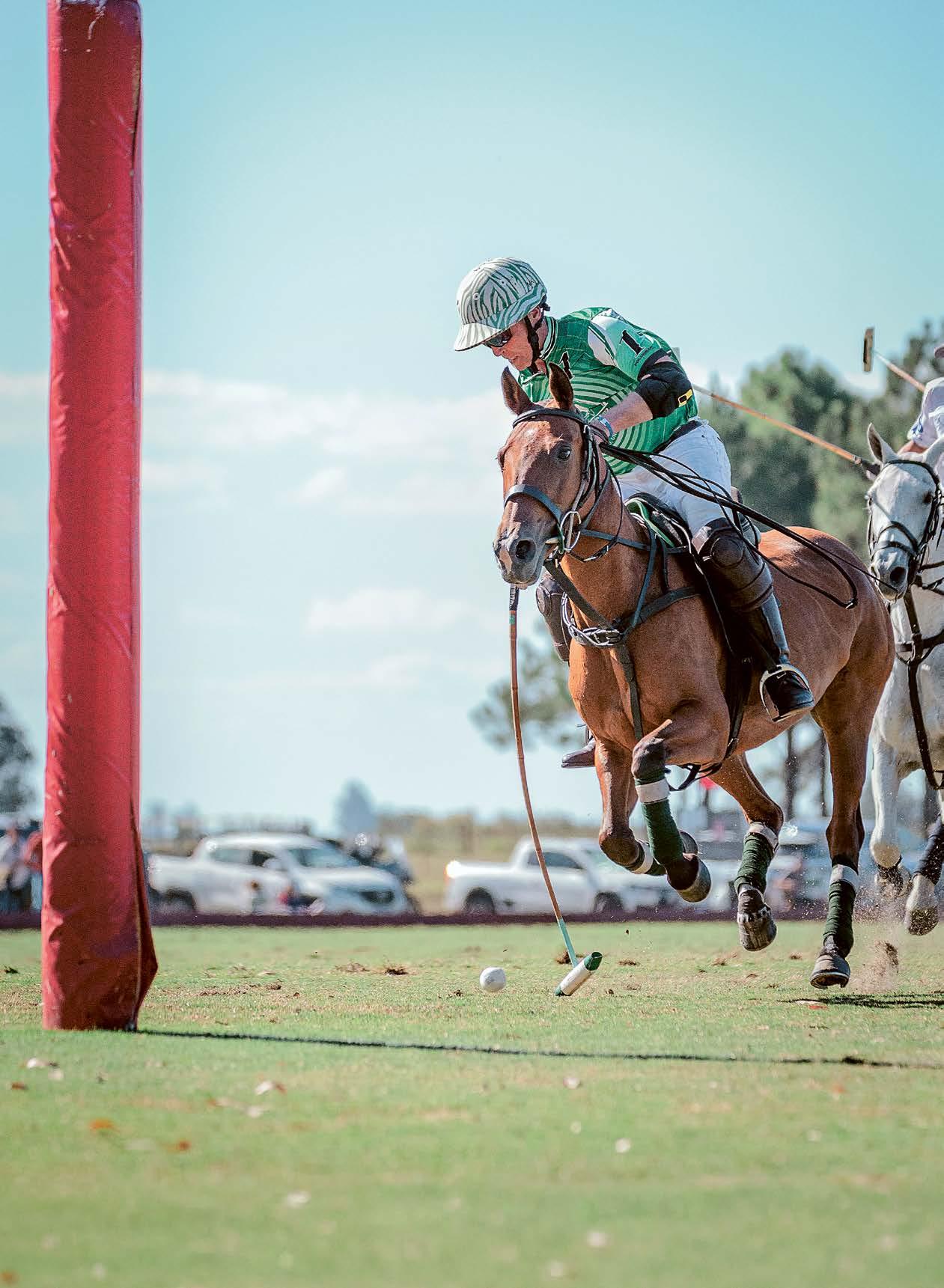
Michael Klein describes how polo is thriving in Uruguay thanks to more competitive tournaments for a wider demographic, easier transportation of horses and significant investment into new developments
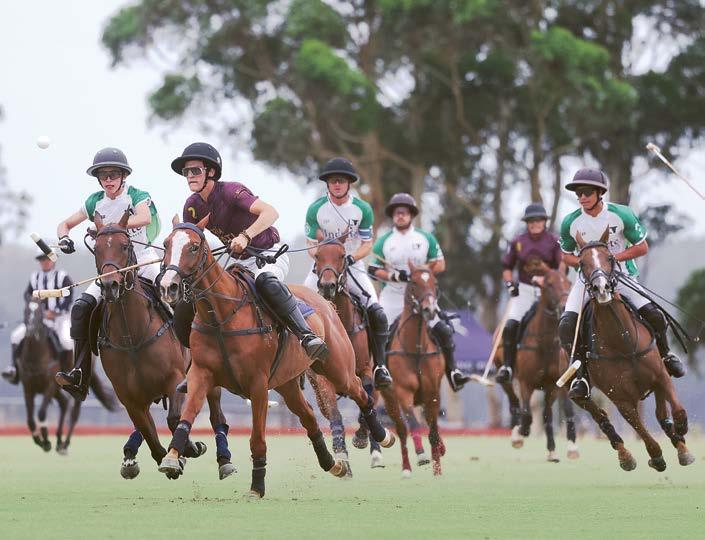
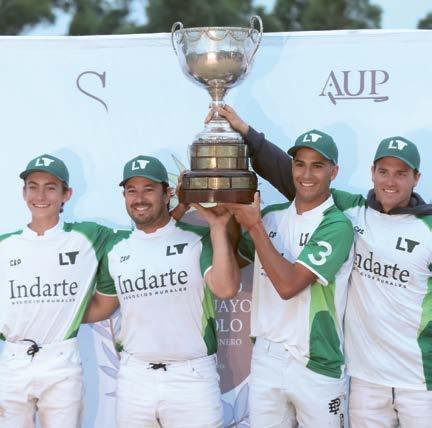
The 18-goal handicap 73rd Uruguayan Open Polo Championship was forced to move its nal forward by one day due to a severe storm – but that was the only disruption in an otherwise remarkable season. Local team Los Tapiales, from Rio Grande, claimed the title with a victory over Cría Opatí, with Santino Taranco, Alejandro Elhordoy, Lucas Criado and Gonzalo Ferrari lifting the trophy in a thrilling nal at Estancia Santa Cruz Polo Club, watched by some 3,000 spectators.
While the Open nal was the season’s centrepiece, Uruguayan polo has experienced signi cant broader growth, with Punta del Este remaining the epicentre of the expansion. This season also marked two historic rsts: the inaugural Feminine Open Championship and a new tournament for junior players – signs of a sport widening its reach across generations and demographics.
The Polo Agency (TPA) and Stirling Polo, the principal organisers of competitive tournaments, both reported substantial increases in activity. Across December and January, 16 tournaments were held, drawing 150 teams, around 278 players and 870 horses. At Santa Cruz, the 2025–26 season saw 250 horses stabled – a 20 per cent increase on the prior year – and 15 member players, a 25 per cent rise. Punta Polo and El Milagro clubs reported similar growth.
A key driver of this expansion has been the opening of the border to Argentine horses. A new equine passport system now allows players to transport horses to Uruguay on a temporary basis with minimal administrative burden. This season, 215 horses travelled under the scheme. The Uruguayan Polo Association (AUP) is monitoring the system closely and, after a period of consolidation, plans to extend it to Brazil and other polo nations – a move that could further accelerate the sport’s regional momentum.
The growth on the eld is being matched by signi cant off- eld investment. Eduardo Costantini has launched a 145-hectare development in partnership with Adolfo Cambiaso for La Dol na Punta del Este, featuring two polo elds and full equestrian facilities, to be nanced through the sale of 471 lots. Separately, the Pieres family, alongside local investors, has announced a 200-hectare development of similar scope.
A KEY DRIVER OF THIS EXPANSION HAS BEEN THE OPENING OF THE BORDER TO ARGENTINE HORSES
Opposite: Michael Klein scores a goal. Above: Milo Laguarda (maroon) leads the pack in the nal of the Uruguayan Open.
Right: From left: Santino Taranco, Alejandro Elhordoy, Lucas Criado and Gonzalo Ferrari
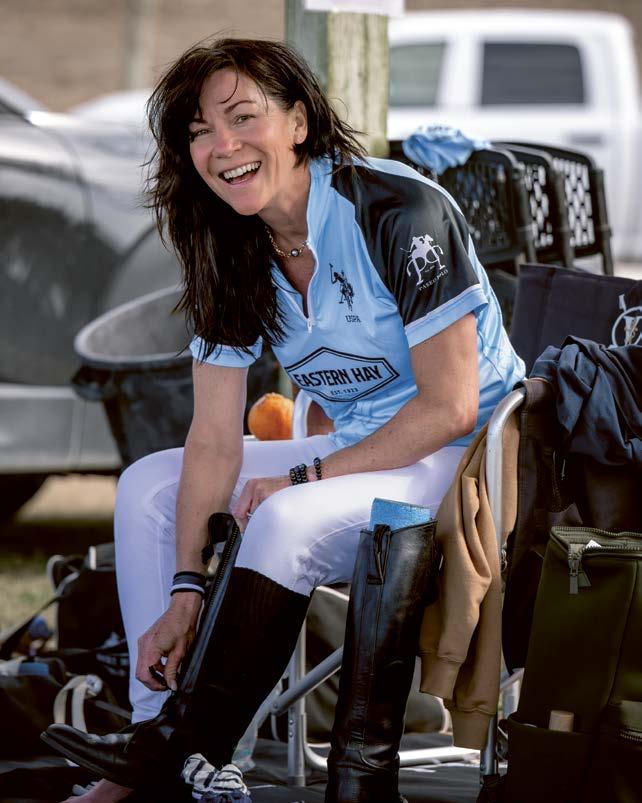
Rebecca Schmeits describes how her passion for horse riding turned into an intoxicating love for polo, and led her to a US Open Women’s Championship title
My rst summer playing polo was in 2016, along with my husband Kevin and our son Vinny, who started the year before. I’ve ridden all my life and was focused on hunter jumpers and my passion for fox hunting. Polo was a natural addition. I just had no idea how involved we’d get in the culture and lifestyle. The sport of polo is intoxicating. It is a chess game with disciplined pieces that can
result in in nite possibilities. The foundation of the horse and their environment, routine and bloodlines can make an average player the MVP. I love that you can’t cheat the sport; it will always reveal your weakness. I am very lucky to share the love of polo with my husband Kevin, our adult kids and our close friends. That is by far the greatest gift polo brings to my life.
Being part of a team, learning from our failures and overcoming them to succeed is my perfect game. I am very ful lled with the women’s league. The Women of Wellington 14-goal league has been a perfect place for me to grow as a player. At home in Colorado we have our summer league with friends and family, and our Rocky Mountain Polo Club (RMPC) brings players from all over the world.
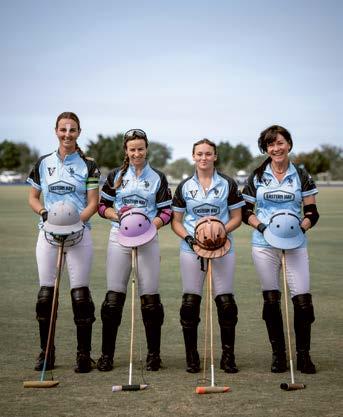
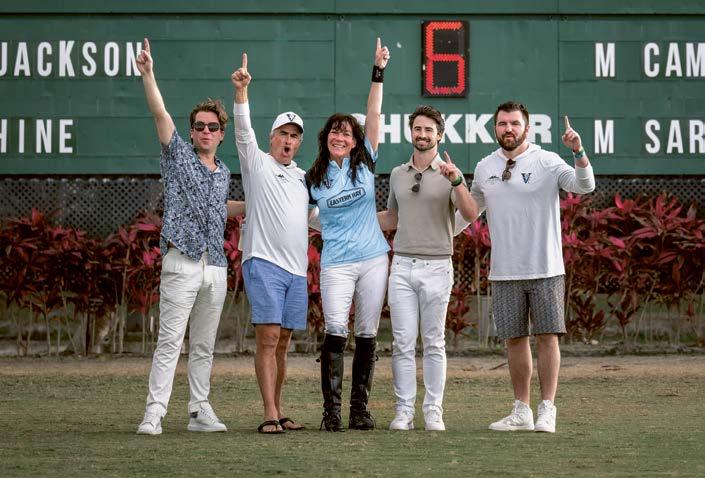
Opposite: Rebecca Schmeits. Above: Victory/Eastern Hay’s Milly Hine, Hazel Jackson, Aspen Tinto and Schmeits. Below, left to right: Becky with some family members after winning the US Open – Vinny Sangaline, Kevin Schmeits, KC Schmeits and Michael Sangaline
We founded the RMPC last year with the goal of creating the ideal summer polo destination. The club is located just south of Denver at the J5/Columbine Equestrian Fields and Barn in partnership with Rob Jornayvaz. The summer series runs from July to September and includes a very competitive lineup of tournaments, with the key biggest event/ tournament being the Denver Polo Classic, hosted by the Denver Children’s Foundation. Our 2025 summer raised upwards of $2m for Denver-based children’s charities, and the RMPC club founder and president Vinny Sangaline is also a member of the Denver
Children’s Foundation. Vinny has created a very special culture at our club – RMPC is not just about the match on the eld, it is a sacred space for friendships and being present for one another through life.
I have settled into women’s high goal very easily and I also love to play 6-8-goal polo mixed in the summer. That said, some of my best memories are being on the eld inspiring friends to learn to play.
Without a doubt, my most memorable polo game was the nals match against La Dol na for the 2026 US Open Women’s Championship. I have an enormous amount of respect for Hazel Jackson, Milly Hine and Aspen Tinto. The leadership from our coach Santi Wulff and the management of the horses from Dami Belardinelli were the foundation for our strength on the eld. There is a formula to success in polo, but we still had to execute the strategy on the eld against a polo empire. Our horses were very capable and we had grown as a team from the wins and the losses leading up to that moment. We were all so focused and determined to play our best – the energy was electric and I think the crowd became an extension of our team.
There have been many horses over the years that have been my teachers, but today a horse that is very special to me is a chestnut gelding by the name of Pica Lionel. He takes me into all of the plays with a plan. He is fast, agile, very smooth and quick in transitions, so I can hit the ball far or keep it close on bouncy elds. He was a machine in the nals match. He always shows me the line to the ball. He never gives up and has a heart like a lion.
The most brilliant part of polo is that it takes me all over the world. Polo players have a great passion for adventure and I have been lucky to have played in Pilar, Bariloche and Costa Careyes several times, but a very special place dear to my heart is the Kingston Polo Club in Jamaica.
I believe it’s important for anyone reading this that, even though you may think your time has passed to achieve a goal, you are incorrect. There is great wisdom that comes from age and experience. You will have to train harder physically for your moment, but you will enjoy every detail of the journey and inspire people along the way.
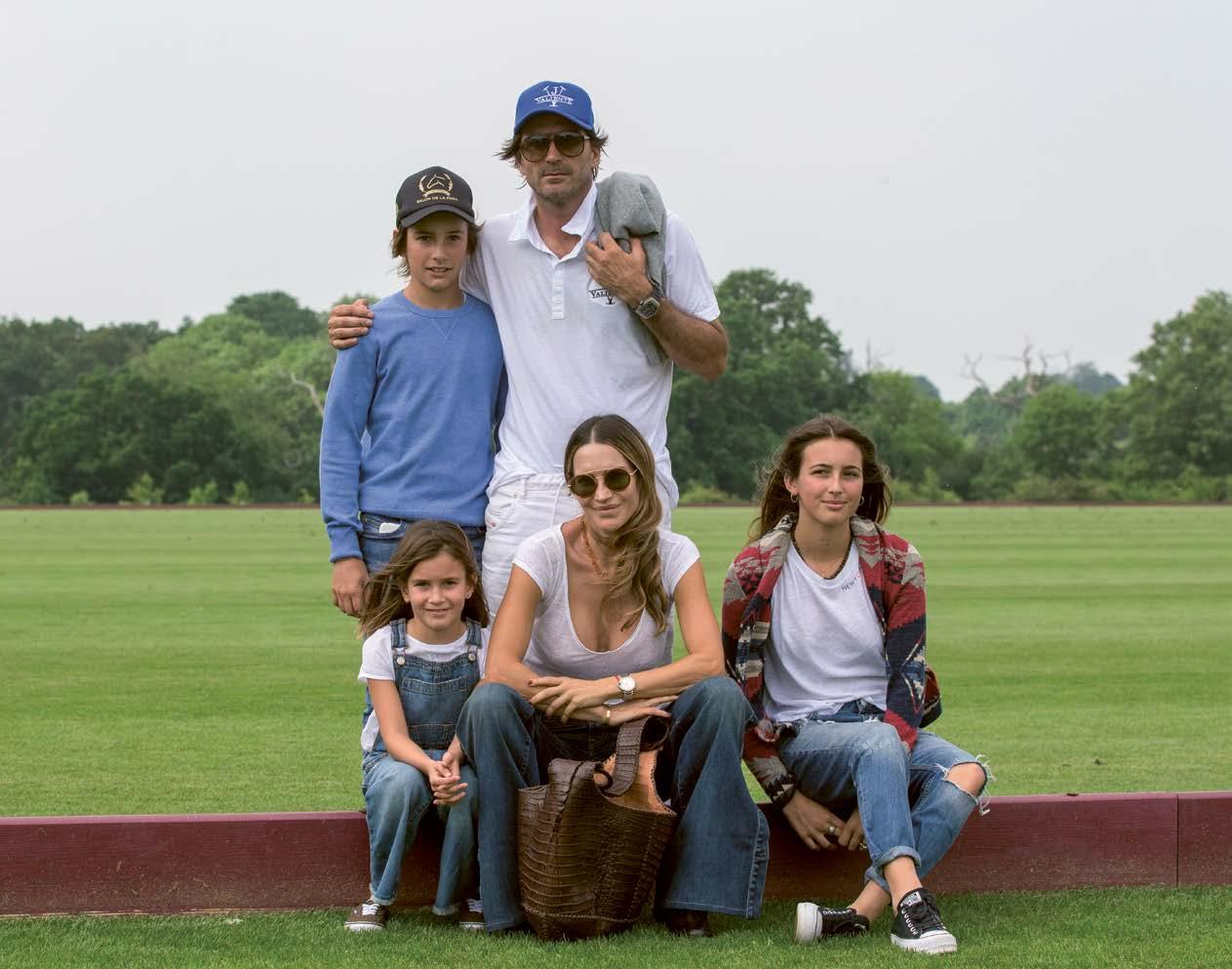
Alejo Miranda explores how María Vázquez is a crucial figure in the Cambiaso family’s success, both on and off the polo field
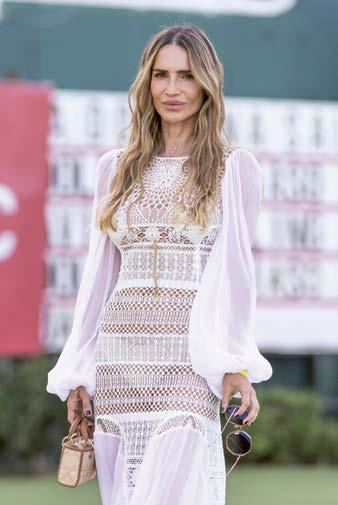
It can easily be mistaken for his own glow, but what may actually dazzle you when watching Poroto Cambiaso play is the re ection of a golden necklace he wears in every game. It’s not just an ornament, a youthful display. In fact, it carries a profound meaning. The necklace has a small plate engraved with the name “María”. Poroto took it from his mother, so she had a replica made. Now mother and son wear the same jewel. This gesture is not merely a re ection of a mother-son love relationship. More importantly, it reveals the imprint María Vázquez has on her family, both on and off the eld.
She does not play; she knows very little about polo. She even admits she doesn’t like the sport outside the world of La Dol na. For her, La Dol na is not just a team – it’s her home. But there’s no doubt María Vázquez is a crucial gure in the Cambiaso family’s success.
‘I’m the psychologist of the house,’ she says. Being married to the greatest polo player who has ever ridden the pampas poses its own challenges. Having a son following in his footsteps, even more so. “Live and let live” would be the approach most people take. And most do. Not her. That doesn’t go with her personality. María is deeply involved in her family’s polo life, and that encompasses her girls Mía and Myla as well.
When she met Adolfo, María – daughter of Argentine career diplomat Jorge Alberto Vázquez – had already made a name for herself in the fashion business.
‘I come from a different world,’ explains María. ‘From a family of intellectuals, where sport was just a complement. I come from the world of fashion, where I have my own place and name. We’ve learned to respect each other’s space. I rst fell in love with the man, and today I admire the player.’
In the mid-1990s, Cambiaso was just kicking off what would become an illustrious career. You could tell he was something special, but no one would have bet he would reach Juancarlitos Harriott levels. María decided to be part of it and put her own professional life aside. ‘I don’t live well thanks to my husband. I live well because I’m part of the success we’ve built together for the past 30 years,’ she once said. ‘That’s achieved with heart, with hard work, with a lot of love and
the sacri ce of my entire family, including my children.’
The Net ix series Polo does a good job in revealing some of the intimacy between María and Adolfo – and her in uence. There’s a scene in which they’re both working out in the gym and she pushes him to try harder. They also both appear in his own documentary series, Cambiaso: the Polo Legend, on Disney+.
But her mark is even more evident in Poroto’s career. Carrying such a name is surely not easy. Filling those boots and trying to follow that trace is much harder. But from a young age, Poroto has proven his talent and his ability to build a name for himself.
‘My task will be to make sure the name he carries doesn’t become a burden,’ she said in an interview with Clickpolo when Poroto was still a kid. More recently, she described their relationship: ‘For some things, he’s very close to me; for others to his father. Depending on what he needs to hear, he goes back and forth between us. We talk about emotional things, about life, about the things he’s going through, even about polo itself. I can’t talk tactics, but I can talk about everything that’s going on inside them with everything they live through. With me, they talk it through. As a mother, you understand other things.
I’M PART OF THE SUCCESS WE’VE BUILT TOGETHER FOR THE PAST 30 YEARS
Opposite: the Cambiaso family all share the polo world.
Above: together at the 2022 Palermo Open semi- nal of the Argentine Triple Crown.
Left: María Vázquez at the 2024 Palermo Open semi- nal
As a pioneer of polo and equestrian developments in Wellington, Florida, as well as a talented polo player and influential figure within the USPA, Allan Scherer will be deeply missed by the polo community and his family, writes his son Brad Scherer
Born in Wisconsin, and raised on his father’s ranch in what was then rural Scottsdale, Arizona, Allan attended Judson School, where he was introduced to polo, thereafter his life’s passion. While at Judson, he was recruited by and then attended Stanford College, where he became the polo team captain and earned undergraduate, JD and MBA degrees, and met his future wife, Maggy.
From 1955 to 1973, Allan was president and CEO of the privately held McGrath-Shank Company, real-estate developers in Southern California. Combining his polo and real-estate expertise, he later acted as consultant to Gulf+Western in its development of the Casa de Campo resort in the Dominican Republic.
In 1978, he was recruited by Bill Ylvisaker, chairman of Gould Corporation, to assist in the creation, development and management of Palm Beach Polo & Country Club in Florida, which under Allan’s direction became the most successful polo-oriented real-estate development in the world. Its unrivalled success ushered polo’s evolution into a totally professionalised sport. In 2005, he was appointed to the board of Southern Union Company and served until its sale in 2012.
Allan’s passion for polo led him around the world. He was a member of the 1966 US Cup of the Americas team, ultimately attaining a 6-goal handicap, which he held for over 25 years, while winning many notable tournaments, including the US Open, Butler Handicap, Paci c Coast Open, Sunshine League (26 goals), French Silver Cup, Pakistan Open, Spanish King’s Cup, Camacho Cup, Benson & Hedges Springbok Championship in South Africa (26 goals) and the Cartier Handicap (26 goals).
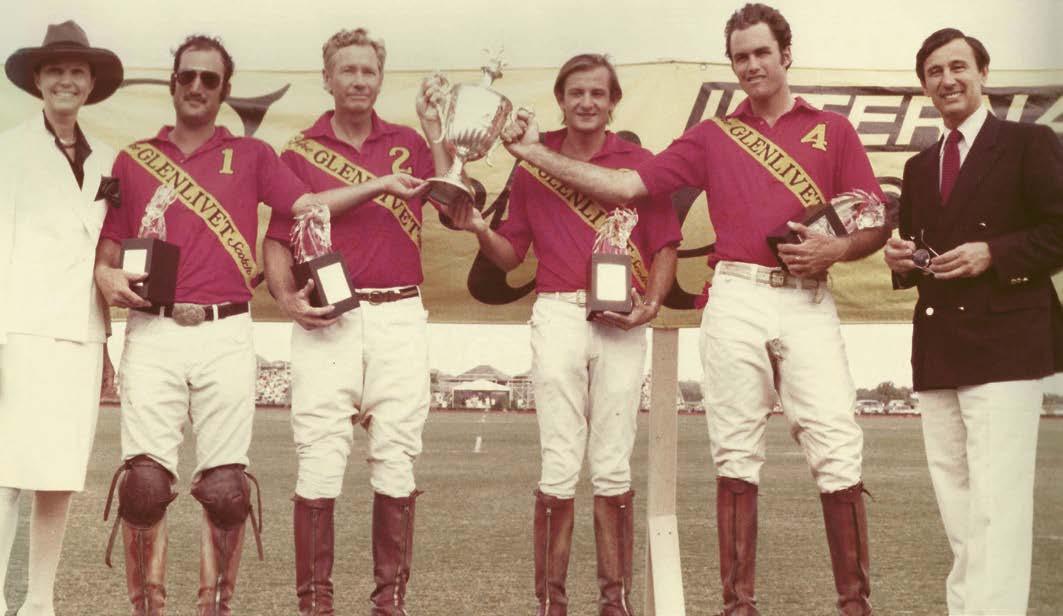
In 1980, Allan formed – and for the next eight years captained – the Glenlivet Polo Team of Wellington, winning many high-goal tournaments until his retirement from the game in 1995. He served as the USPA’s secretary, treasurer – and for another seven years – rst executive director. He also served as the chairman of the USPA Umpire and Tournament committees, contributing to the early creation of the association’s professional umpire programme. In 1989, he selected and coached the US International FIP polo team; the only FIP world polo championship ever won by the United States.
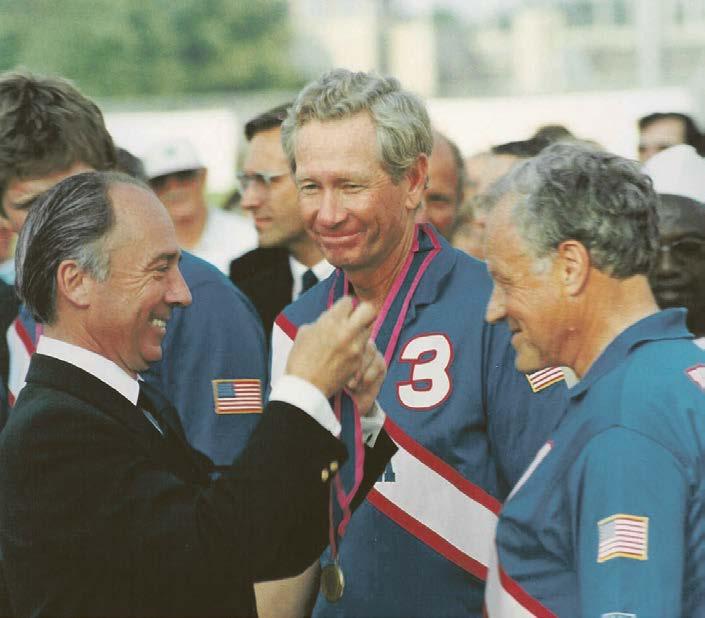
ALLAN’S PASSION FOR POLO LED HIM AROUND THE WORLD
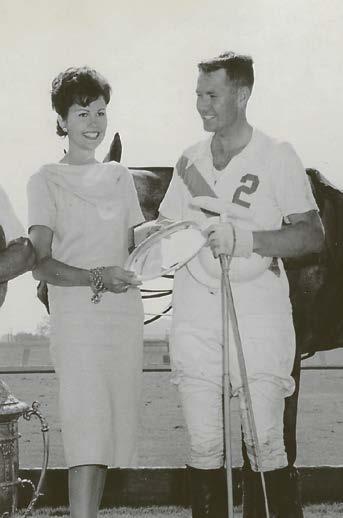
In 1978, together with Maggy, his wife for 63 years until her passing in 2018, he developed Wellington’s rst private polo farm and pioneered much of the area’s equestrian developments. He was also responsible for Wellington’s unique equestrian “lifestyle” expansion to the phenomenon it is today, including the recruitment of the rst equestrian horse shows.
A Palm Beach resident for over 50 years, an exceptionally competitive athlete in polo, tennis and golf for his entire life, Allan will be greatly missed by friends and family, including his sons Brad and Warren, grandchildren CB Scherer, August Scherer and Christina Scherer, and great-granddaughters Surrey Bette Scherer and Sienna Brooke Scherer.

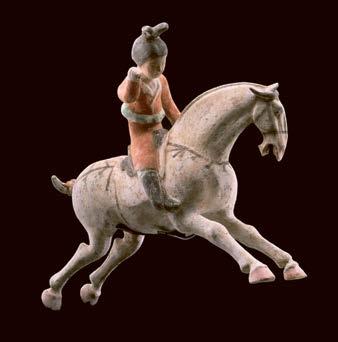
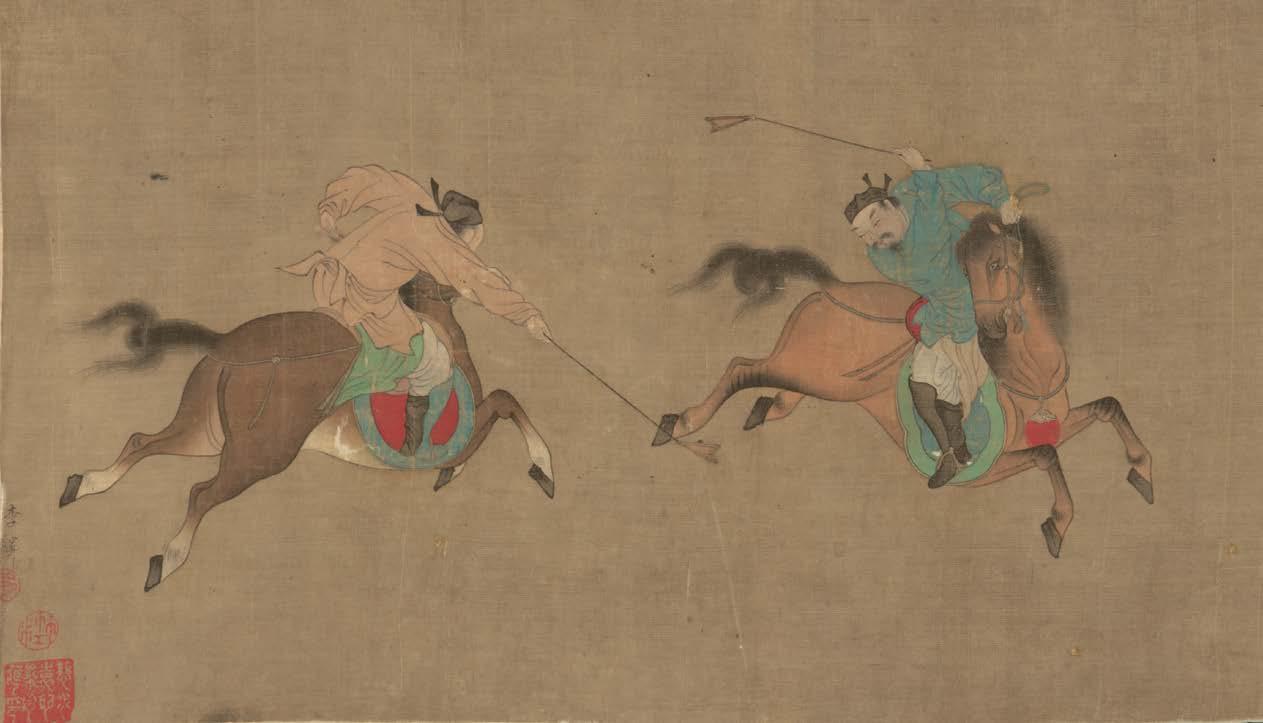
Polo enjoys a profound and enduring legacy in China, where it is not just a sport but a cultural treasure. As we celebrate the Year of the Horse, it is tting to look back at the history of the sport in China. Originating in the Han dynasty (202 BCE-220 CE), polo ourished in the Tang (618-907) and Song (960-1279) dynasties. Tomb murals reveal its ancient sophistication: specialised attire, crescent-tipped mallets and balls of varying materials. Horses were elite breeds, fast, well-trained and often had their tails tied to prevent entanglement during play. Over half of the Tang dynasty emperors played polo, such as Emperor Xuanzong who, according to historical documents, had two Akhal-Teke horses, named Yuhuacong (Jade Flower Steed) and Zhaoyebai (Night-Shining White).
In the Tang dynasty, polo grew through imperial patronage as well as diplomatic and military uses. When, in 709 CE, Emperor Zhongzong married Princess Jincheng to the Tibetan (Tubo) ruler, the Tibetans proposed a friendly polo match. The emperor agreed and sent the Imperial Shence Army team, but they fell behind. To save the dynasty’s honour, future Emperor Xuanzong played with three others against 10 Tibetans. The Chinese were victorious, delighting Emperor Zhongzong.
Under the Song dynasty, the rulers also sponsored polo. The Song court, however,
focused on the recreational and ceremonial nature of the sport. Major festivals were used as the grounds of polo competitions, with banners and music to enhance the spectacle.
Many variants of polo were witnessed in Tang-Song China. “Donkey polo” emerged as a slower-paced form that enabled women to participate. “Field polo on foot” (literally polo played on foot) appeared among commoners seeking to avoid the high cost of keeping horses. The Song dynasty also had imperial women’s polo teams – of cial palace posts dedicated to performance –who presented ceremonial demonstrations each spring at Jinming Pond after the sport became increasingly ritualised.
Eventually, due to warfare and changing horse-breeding policies, ancient Chinese polo declined and disappeared as a living tradition. By the late Qing dynasty (after 1873), modern polo was reintroduced to China through the British, but its rules and structure differed signi cantly from the traditional Chinese game. In recent years, modern polo has begun to reemerge in China with renewed vitality. After modern polo was introduced into China in the late Qing Dynasty, Chinese polo was able to rise and develop, bene tting from the unremitting efforts of generations of polo enthusiasts.
The rst generation of polo players included a group of excellent Chinese players who appeared in Shanghai in the 1930s and ’40s. The second generation included the Inner Mongolia polo team in the 1950s and ’60s as well as the People’s Liberation Army polo team. The third included those from Inner Mongolia in the 1970s and ’80s, and the fourth appeared in the 1990s with the establishment of various polo clubs.
Driven by commercial investment and government support, polo in China today is steadily growing, though it remains a niche and resource-intensive sport. Supported by national policies and individual enthusiasts, several polo clubs have been established, and open tournaments held. Currently there
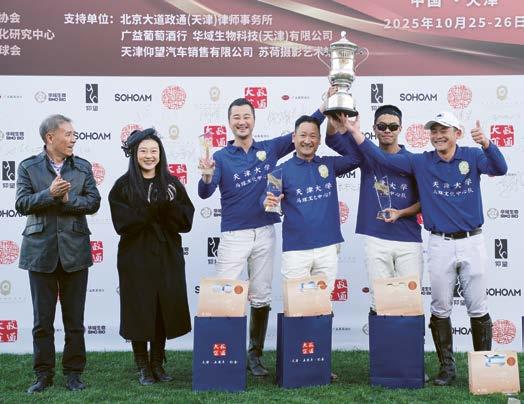
are clubs in Beijing (Tang, Reignwood), Tianjin (Metropolitan), Shanghai (Nine Dragons Hill) and Chongqing (1003). The China Polo Open is held annually in Beijing, while the 1003 Polo Club hosts prominent ladies’ tournaments that highlight the sport’s expanding diversity. Women and young players represent one of the fastest-growing demographics within China’s polo community, signalling a gradual broadening of participation. Meanwhile, to meet the sport’s high performance standards, many polo ponies are imported from Argentina, and pros and coaches often hired from abroad, underscoring both the global connections and signi cant resources required to sustain the game in China.
The game also draws strength from its deep cultural roots and institutional support. In Xinjiang, Tajik polo has been recognised as a form of national intangible cultural heritage, featuring local teams and distinctive rules and equipment re ecting regional traditions. China’s polo heritage has been further exempli ed through diplomacy. During the 2008 Beijing Olympic Games, Chinese leaders presented a painting of women’s polo in the Tang Dynasty to Jacques Rogge, president of the IOC. Ten years later, when President Xi Jinping visited Argentina, he presented another embroidered work of Tang Dynasty women’s polo to President Macri of Argentina.
In 2019, the China Polo Professional Committee, governed by the Chinese Equestrian Association, was established alongside the Chinese National Polo Team. Today, equipped with the latest resources and overseas education, a new generation of young Chinese polo players is emerging. Polo’s growth in China will likely stay concentrated in wealthy urban hubs, with more international tournaments and youth development programmes ahead. Currently, polo in China is developing through an integrated model that combines sports, culture and tourism. It is in a revival stage –
still niche, with rising participation and a mix of modern competition and cultural heritage.
To delve deeper, two new publications offer comprehensive insights: Polo in China offers a history of the sport’s evolution from the Han dynasty to its Republican revival. Polo View presents a visual journey through the sport, featuring photography and insights into its cultural signi cance. As we mark the Year of the Horse, let us cherish this age-old connection between humans and horses, celebrated for centuries on the polo elds of China and continuing to inspire new generations today.
Opposite: female polo
Tang Dynasty.
Above: Mongol Horsemen Playing Polo, Ming Dynasty.
Right: the 2025 Tianjin Polo Open
Longtime polo player, breeder and founder of George Dill Farms, George Dill describes his natural, cost-effective approach to running the largest polo-horse rental businesses in the US
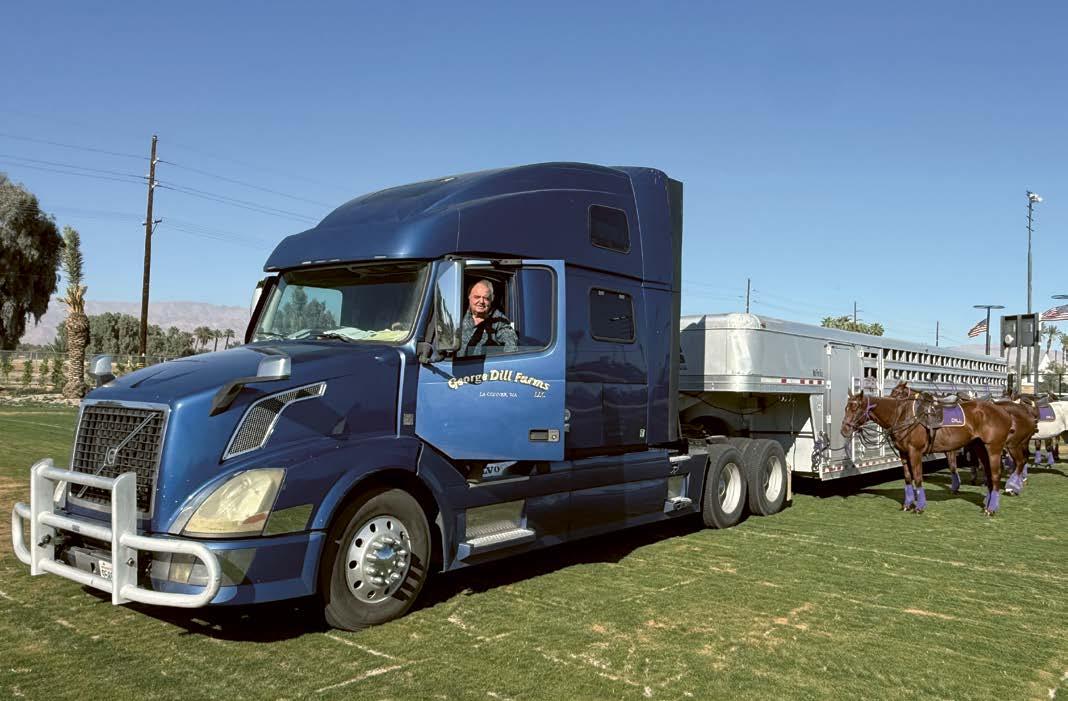
I rst began playing polo in 1995 on a barn-sour Tennessee Walker named Buck. That buckskin always stopped on ‘Woah!’ or ‘Goddammit!’ and I can’t thank him enough for setting my polo life in motion.
I was born in Seattle, Washington, in 1952, but grew up in Salinas, California, where my grandfather started the Garin Company, one of the largest vegetable grower-shippers in California. In 1970 I began studying business at the University
of Portland, in Oregon. While there, I had the opportunity to spend a year and a half studying in Salzburg, Austria. Like many young Americans abroad, the experience was both educational and entertaining. After ve litres of beer I discovered that –according to my friends – I could apparently speak perfect German.
After graduating, I took a job as a produce buyer for Safeway grocery stores. I was stationed in Wenatchee, Washington, where
WHEN HORSES ARE ONLY FED ONCE OR TWICE A DAY, IT CAN LEAD TO DIGESTIVE ISSUES, INCLUDING ULCERS
I typically purchased 70 or so truckloads of apples, pears or cherries every week for distribution through the Safeway system.
In 1986 I started the Washington Lettuce & Vegetable Company. Over time, the business grew to handle the marketing of roughly 4,000 acres of coloured potatoes. Today we are the largest vendor of coloured potatoes in the Paci c Northwest, and our biggest customer is Kroger.
Around that same time I helped start two community banks. The rst returned investors roughly 600 per cent on their six-year investment. The second bank, Fife Commercial Bank, operated for 17 years. During our nal seven years we were the most pro table bank in Washington State, paying a 60 per cent annual cash dividend of $12 per year on a $20 stock price.
I started playing polo in 1995 when I was 43 years old. Polo has taken me all over the world. I’ve played in Australia seven times, New Zealand seven times, Zambia, India, Iran, China and Argentina, where I have travelled and played polo more than 25 times.
Over the years, I also served 15 years as Paci c Northwest Circuit governor for the United States Polo Association, covering Western Canada and seven northwestern states. I then served six years as chairman of the USPA International Committee and 12 years on the board of directors for USPA Global Licensing.
Today we operate the largest polo-horse rental programme in North America. We maintain around 120 horses, with roughly 75 polo-ready horses and 21 young horses in training. Between practice and tournament play, our horses participate in roughly 160 chukkas each week.
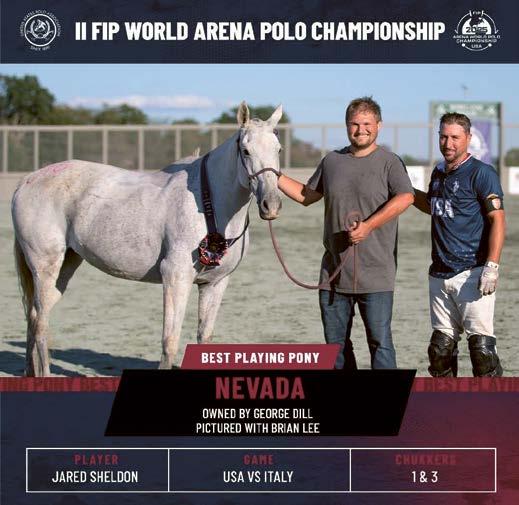
At the 2025 World Arena Cup we supplied 32 horses, representing 35 per cent of the horses competing and 50 per cent of the A-grade mounts. Four of those horses received Best Playing Pony awards during the tournament.
Our rental programme allows clubs to expand tournaments because we have the horses, and they live together in paddocks rather than requiring individual stalls, reducing stabling costs. Rodney Fragodt, owner of the California Polo Club in Los Angeles, told me that using our horses saved
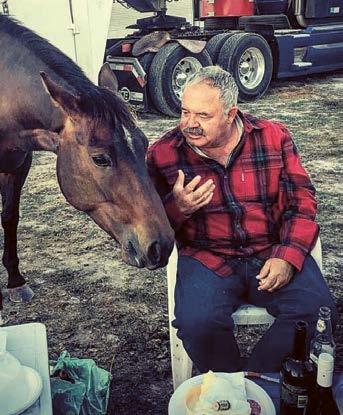
him roughly $75,000 in temporary stabling costs. He also noted that with an adequate supply of horses, his tournament revenue increased signi cantly – by approximately $35,000 during the US Arena Open.
Our horses live in open pastures and shared paddocks where they can move freely and be around other horses. They have feed available 24 hours a day. I’ve always believed horses do better in a herd environment rather than being con ned individually. Being able to interact with other
horses keeps them mentally relaxed and more balanced, even when they are in smaller paddock groups.
Just as important is how they eat. Horses naturally produce stomach acid throughout the day, so they are meant to be grazing almost constantly. When horses are only fed once or twice a day, it can lead to digestive issues, including ulcers. By keeping feed in front of them and allowing them to graze in pasture settings, we help maintain a more natural digestive process. In my experience, horses that live and eat this way stay healthier, perform better and develop into more reliable polo ponies.
After a set of games I walked about a hundred yards across a pasture where 13 of my four-year-olds were turned out.
When they saw me standing at the fence, all 13 came running across the eld. They crowded around, pushing each other aside, each one wanting my attention – they wanted to be scratched and talked to.
When you have horses at that level – wanting your attention and comfortable around people – those are the ones that go on to make the best polo ponies. That’s where they begin to learn, develop and ultimately compete. Moments like that make me feel very good about the programme we’ve built at George Dill Farms.
from

Tom Hudson explores how British Polo Day has become an invite-only platform where influential business relationships are formed and long-lasting friendships are made in some of the most spectacular settings
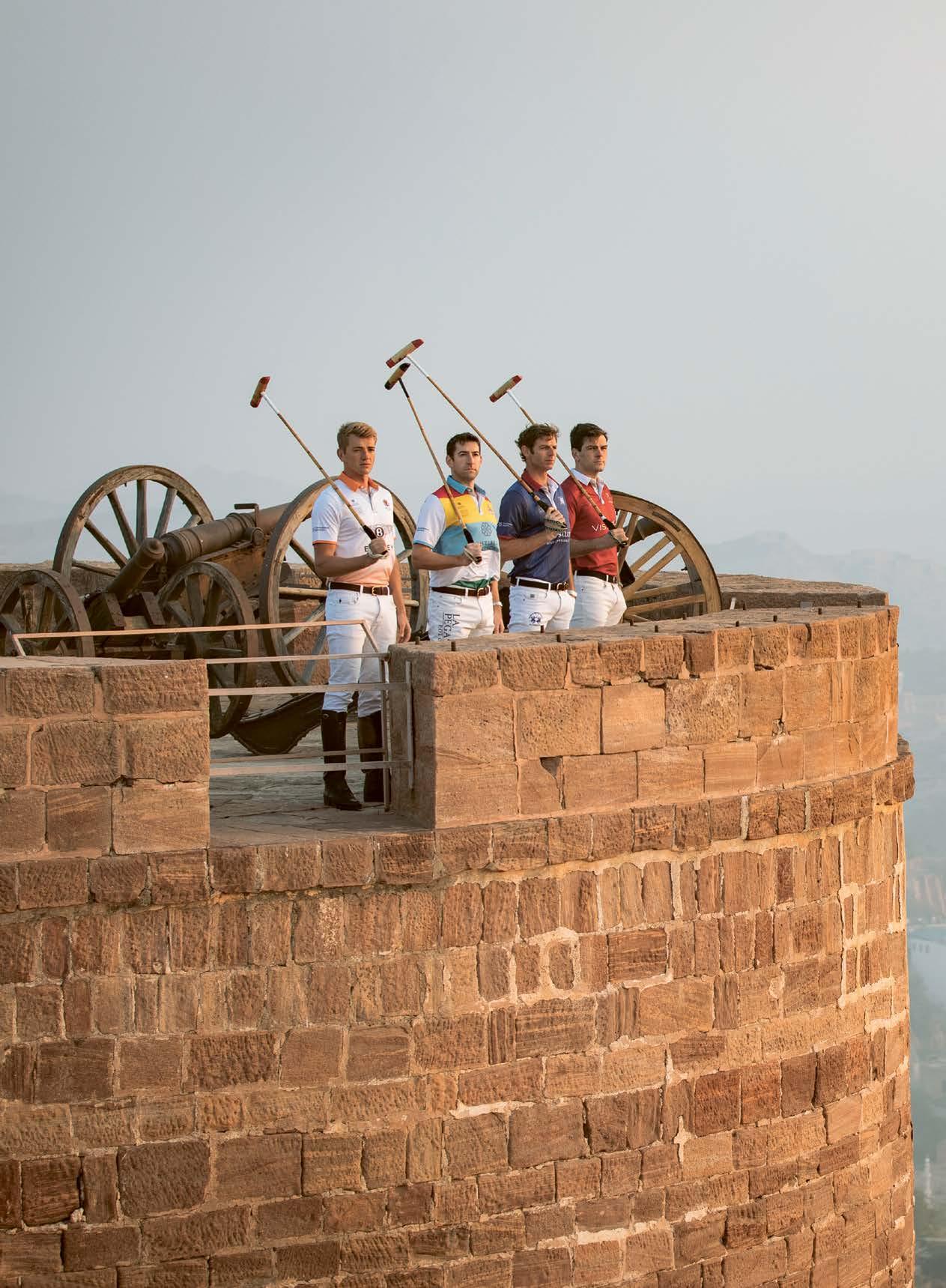
Previous page, left to right: Dirk Uys, Tiernan O’Rourke, Malcolm Borwick and Capt Giles Bromley-Martin on the ramparts of The Mehrangarh Fort at BPD Jodhpur 2018. Right: Ben Vestey with Tom Hudson. Below: Mía Cambiaso and Simon Keyte at British Polo Day in the UK. Opposite British Polo Day at Nihi Sumba, Indonesia

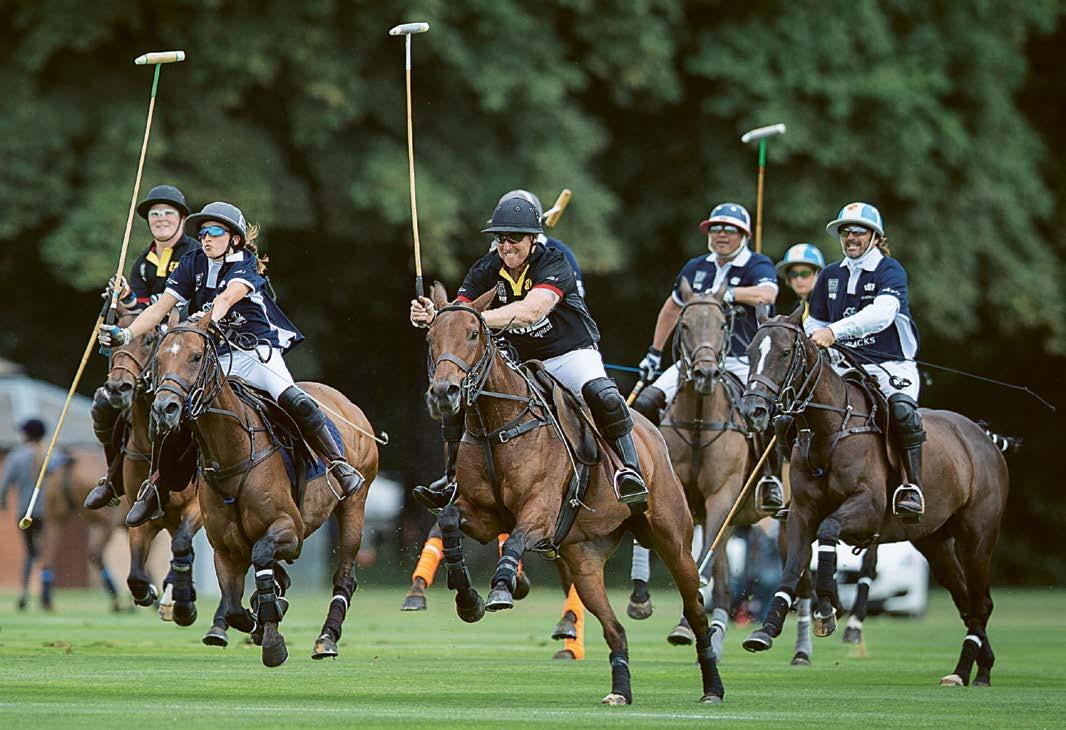
The aim of British Polo Day is simple: to celebrate the history and heritage of polo in iconic destinations, alongside some of the world’s most interesting people.
That was true of our first event in Dubai in 2009, and it remains true today – most recently with our 2025 events in Abu Dhabi, under the patronage of HH Sheikh Falah bin Zayed al Nahyan, and in India with HH The Maharaja of Jaipur and HH The Maharaja of Jodhpur. We are very pleased to be continuing by announcing exclusively here that we will be adding British Polo Day in Oman in 2026.
In the past 18 years, we have hosted more than 85 British Polo Days across 16 countries and raised over $3 million for charitable causes, welcoming guests such as Elon Musk and Sir Richard Branson as well as others of the world’s who’s who.
From the outset, the philosophy was clear. British Polo Day would be invitationonly – not for exclusivity’s sake, but to curate something meaningful. It was about chemistry. About bringing together like-minded people in the right environment.
Over time, it has evolved into what many describe as an “international members’ club” – a platform built on relationships, not transactions.
We have partnered with leading British and global brands, including Royal Salute, VistaJet, Burgess, Harrods and Jaguar Land Rover – companies that understand shared experience is often more powerful than traditional marketing. Recently a tilt to tech has seen India-focused Iron Pillar and healthcare pioneer Clinova – with cofounder Arsalan Karim bitten by the polo bug himself – also recognise the value of this global community, and spending time together in this way.
Each destination brings its own character. In Los Angeles, at the Will Rogers Polo Club, it was about the spirit of the American West. In the UAE, it is golden-hour polo in the desert, followed by majlis-style hospitality. In China, we celebrated the Tang Dynasty origins of the game against the backdrop of the Great Wall. On Sumba Island in Indonesia we played beach polo at Nihi with some of the local horsemen.
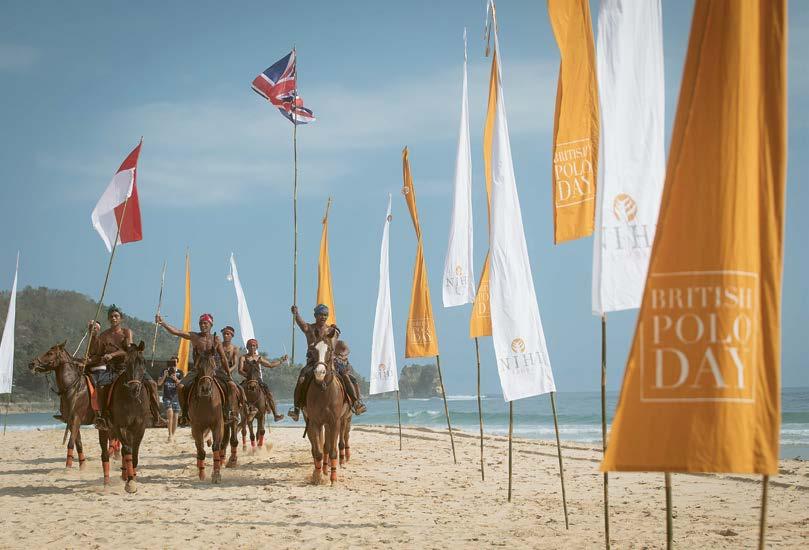
The format adapts. The ethos does not.
Fundamentally, it has always been about people – and about family. Whether it is Adolfo Cambiaso taking the field with his daughter Mía, or Malcolm Borwick with his son Jamie, there is something deeply authentic about polo at its best. We have teams playing for their school, their university, regiment or country, that mean more than some of the modern formulations. Particular highlights were Eton against Mayo College and the British Army playing the Indian President’s Bodyguard.
We also enjoy bringing the first-time polo guest: to enjoy the sport, the setting and the company. That is where the magic lies. It happens in the conversations over lunch. The introductions that lead to partnerships. The friendships that endure long after the final chukka.
Increasingly, British Polo Day has become a convening platform – where business, culture and diplomacy intersect in a way that feels natural rather than forced. That evolution is down to the team – and to my partner Ben Vestey, who invested in taking the platform truly global. In an increasingly digital world, we believe people are craving something more human.
British Polo Day offers that. It creates an environment where relationships form organically – where trust is built not through emails or calls, but through shared experience, often over long weekends in beautiful destinations.
We have seen businesses launched, investments made, and lifelong friendships formed through this platform – even a few marriages and babies thanks to British Polo Day. Often it begins with a simple introduction on the sidelines of a polo field, followed by plans to meet up, and the rest is history.
If the first decade was about growth, the period since Covid has been about refinement. We have learned that more is not always better. Today, the focus is on fewer events, deeper relationships and maintaining the quality that defines British Polo Day. Because ultimately, that is what it has always been about. Not scale for its own sake. Not spectacle for its own sake. But connection. From a desert field in Dubai to some of the world’s most iconic destinations, British Polo Day has become a journey – shaped by the people who have been part of it. And for us, that remains the most rewarding part of all.
Ivan Weiss describes how learning to play polo at Yale turned into a passion that has taken him and his family all around the world, leaving him with many interesting stories to tell
Iwas born in Toronto, Canada, after my parents emigrated in 1968 from Czechoslovakia, but I grew up in Czechoslovakia during the communist regime, as they decided to return in 1973. That experience shaped much of my outlook. Slovakia is really where I consider home, even though my life and work have taken me to many different places around the world.
My family made sure I learned languages from a very early age, so I grew up speaking English and German. At the time Austrian television was one of the few places where we could watch Hollywood movies, and my favourites were set in American colleges
and universities. Watching Soul Man, Risky Business, The Paper Chase, WarGames and my absolute favourite – Dead Poets Society – made me dream about studying at a place like Harvard or Yale. After finishing high school, I initially enrolled in a law school in Slovakia because it seemed like an interesting field of study and a good intellectual exercise at a top university. However, I knew then that I did not want to be a lawyer, so during my first year I started seriously researching universities in the United States. I spent a lot of time in the library of the US Embassy studying rankings and learning how the application process worked.
Eventually, I applied to Harvard, Yale, Stanford and Princeton. At that time, only Harvard and Yale were offering transfer possibilities with full scholarships for international students. I was fortunate to be accepted by Yale as a transfer student.
The group of transfer students was quite small – only 22, with just two international students – and I remember that the first words of the dean of admissions at the transfer dinner were, ‘No, you are not here by mistake,’ which was quite funny, as it was what was on all our minds. We all started laughing and relaxed a little, thinking hopefully he was right. It was truly extraordinary and those years remain some of the best times of my life.
How I got into polo is actually a funny story. I arrived at Yale during orientation week, where different student activities were being presented around campus. I distinctly remember seeing a beautiful blonde girl with blue eyes (Claire) riding a white horse through the old campus, with a mallet in her hand, to promote the polo club. I signed up on the spot. That was the first time I ever sat on a horse in an arena and started learning to ride and play polo. What began as curiosity quickly turned into a real passion.
I have always been drawn to adrenaline sports. Over the years I have been involved in skydiving, alpine skiing, rock climbing, scuba diving, race driving and martial arts, to name but a few. Polo gives me that same sense of intensity and excitement, but in a unique way. It is a fast, aggressive, physically demanding team sport and at the same time allows you to spend time outdoors and be part of a wonderful international community of diverse people.
It is also one of the few team sports that you can continue playing at a meaningful level even as you get older. Many of the
sports I enjoyed earlier in life, such as ice hockey or soccer, are difficult to continue playing competitively later on.
Polo, on the other hand, allows you to stay involved for many years. It also became something my whole family could share. We can all be together outdoors around the horses and dogs with other families at the field. So polo is not just a sport for me, but an important part of our family life as well.
While I love watching the kind of polo you see at the Argentine Open – polo at its very best, where the level of skill, speed, horsemanship and teamwork played there every year is extraordinary – this is a wholly different sport from the game of polo that I play and that most of us play around the world. The level, the horses and the professionalism in Palermo are simply a different universe.
One of my most memorable games to play in was the first match of the European Polo Championship in 2010, when we [Santamarina, Tkacik, Godanyi and Weiss] participated as the first Slovak national polo team ever to compete in either a European or World Championship.
It was a very special moment not just personally but also for polo in Slovakia, as representing your country brings a completely different feeling to the game. Going forwards, like many players, I would love to see polo return to the Olympic Games one day. I think it would be wonderful for the sport and would help introduce it to a much broader global audience.
I have played with some incredible teammates over the years, including Polito Pieres. We played together in the 12-goal Sal Oppenheim Tournament in Ebreichsdorf, Austria, in 2005 or
2006, and it was my very first organised polo tournament. Polito was my first professional player and I was his first patron. A unique situation really. I remember he was only around 19 at the time and played off a four-goal handicap.
The funny part is that he was playing my horses, which, to be honest, were truly terrible. Our team included Polito, Pepe Santamarina, Uwe Zimmermann and myself, and nobody thought we had much of a chance in the tournament, as we were an improvised team put together at the last moment to allow me to play. We were total underdogs, running against top teams like Power Horse.
But throughout the games you could mostly hear the commentator shouting ‘Polito Pieres here, Polito Pieres there’. He was everywhere on the field. In the end, we only lost in the semi-final and finished third overall.
At that time, the polo club in Ebreichsdorf was also quite special. It was run by Esteban Panelo, who with his family created something wonderful and unique. His sons, who later became major stars in polo, were spending time there while they were still very young. I remember Estebitan, Joaquin, Tommy, Benjamin and Facu growing up there, as well as Bautista Bayugar with his father Gustavo. I remember one rainy afternoon playing against Bauti when he was about 12 years old and still playing off zero.
With Fran Elizalde, I played the Prince of Wales’s Championship Cup in Hurlingham together with Pepe Santamarina. At that time, Fran was playing off a five-goal handicap. We had a great time playing those tournaments together and some others later on. His talent was also obvious – he had a natural feel for the game and tremendous ability.
But I was fortunate to play with many great guys throughout the years, such as Mariano Gonzalez, Peke Gonzalez, Santi Trotz, Santi Araya, Paquito de Narváez, Pipe Vercellino and many others I could name here. I would also like to mention some of my coaches who have been so helpful, including JJ Alberdi and Daniel Gonzalez.
What I look for in players is attitude. Attitude is everything. Polo is a team sport, and the way a player approaches the game, their teammates and the horses makes all the difference. Skill and talent are important, but I respect people and players who show a strong sense of attitude and integrity both on and off the field. To show integrity on the field despite all the emotions running wild is for me what defines a great player playing the sport of gentlemen.
Polo is a very emotional and intense sport, and when the adrenaline is high, it can be difficult for people to maintain their composure. That is why I especially admire players who remain fair and principled even in the heat of the game.
In the past I often started my season in Chantilly, near Paris, which has a wonderful polo tradition. Paris in spring is just wonderful. Nowadays, I usually begin the season in Sotogrande before the summer. I then spend the summer months with my family in Santa Barbara, where I play most of my polo. Then later in the year, I usually travel to Argentina in November, and then the season continues in places like Indio/Palm Springs around February or March.
Using the words of Daniel Gonzalez, Santa Barbara is simply paradise. As he often says, he has seen many polo clubs around the world – and so have I – but for us this is truly one of the best places to play polo anywhere in the world. The setting is extraordinary, the fields are beautiful and the atmosphere is very relaxed, while still maintaining a high level of competition.
I went there on my very first holiday trip with my future wife Martina. We loved the place immediately, and later we returned there for our honeymoon as well. Since then, it has become a very special place for us. We have been going back almost every year for the past 12 years and later we started bringing our daughters Vivien and Caroline, who learned to walk, swim, ride horses and bicycles and play tennis there, so I hope they will keep great memories of that place as they grow up.
I involve my family in polo whenever I can. I really enjoy having them with me, and if I travel somewhere without them I try to keep those trips as short as possible. For me, a big part of the joy of polo is sharing the experience with my family. Being together at the field makes it much more meaningful.
I have generally tried to keep polo separate from my work and business life, and for many years I made a conscious effort to avoid work-related conversations around polo. That said, after
SOME OF THE PEOPLE I HAVE MET THROUGH POLO HAVE BECOME VERY GOOD FRIENDS
many years in the sport, some of the people I have met through polo have become very good friends and many of them are also active in similar areas of business. Naturally, there is sometimes some overlap, but it usually comes from friendship and mutual respect rather than business intentions.
In the more than 25 years that I have played polo, the biggest challenges have been the injuries, post-op recoveries and money. But also, let’s not forget finding enough time to ride, getting older, keeping weight down, losing flexibility and muscle volume, finding time to work out, stress at work and… life in general!
When choosing horses, I look for a certain feeling that you can make any play, at any speed, in any situation. Polo happens very quickly, so the connection between horse and rider is crucial. The closer I can get to that sense of complete trust and responsiveness, the more I know that is the kind of horse I want to play.
Over the years I have had many wonderful horses, but a few stand out in my memory: my very first horse Espinaca, and then Terra, Tita and more recently, Madrina. These were horses that gave me that special feeling and also had tremendous character.
Outside polo, I have a strong interest in science, which connects in many ways with the areas I work in professionally. In recent years, I have also rediscovered my passion for art, which I studied as part of the art history curriculum at university.
Although I first started playing polo while I was at university, my involvement with the sport was not continuous. After returning to Slovakia to finish law school, I was unable to play for almost a decade. I eventually picked polo again in a rather unusual way while working on a large infrastructure project in Israel.
I asked one of my business partners, who owned a large oil and gas conglomerate in Argentina, if he could help me get tickets to the Argentine Open, as I decided I wanted to reconnect with polo and travel to Argentina to start playing again. This was before tickets for the Open were easily available online. He tasked his CEO, who in turn entrusted me to his secretary Tamara. While she was taking me to Palermo to watch the games, I was given a piece of advice I still remember: ‘If you want opportunities to play polo here, just tell people you came to buy horses.’
And then she introduced me to her brother-in-law, Pepe Santamarina, who later became one of my closest friends and someone who has guided me through polo over the past 25 years. A month after the Open, I went with Pepe to the Ojo de Agua farm to play and bought my first three horses with all equipment and shipping for $30,000, so that I could start playing in Ebreichsdorf. Those were the days.
And as a last thought on the note of an article on polo players: I do play polo and I love it, but alas, I am not a polo player. As someone a little more cynical than me (Horacio Heguy) once said, ‘I also play tennis, but that does not make me a tennis player.’
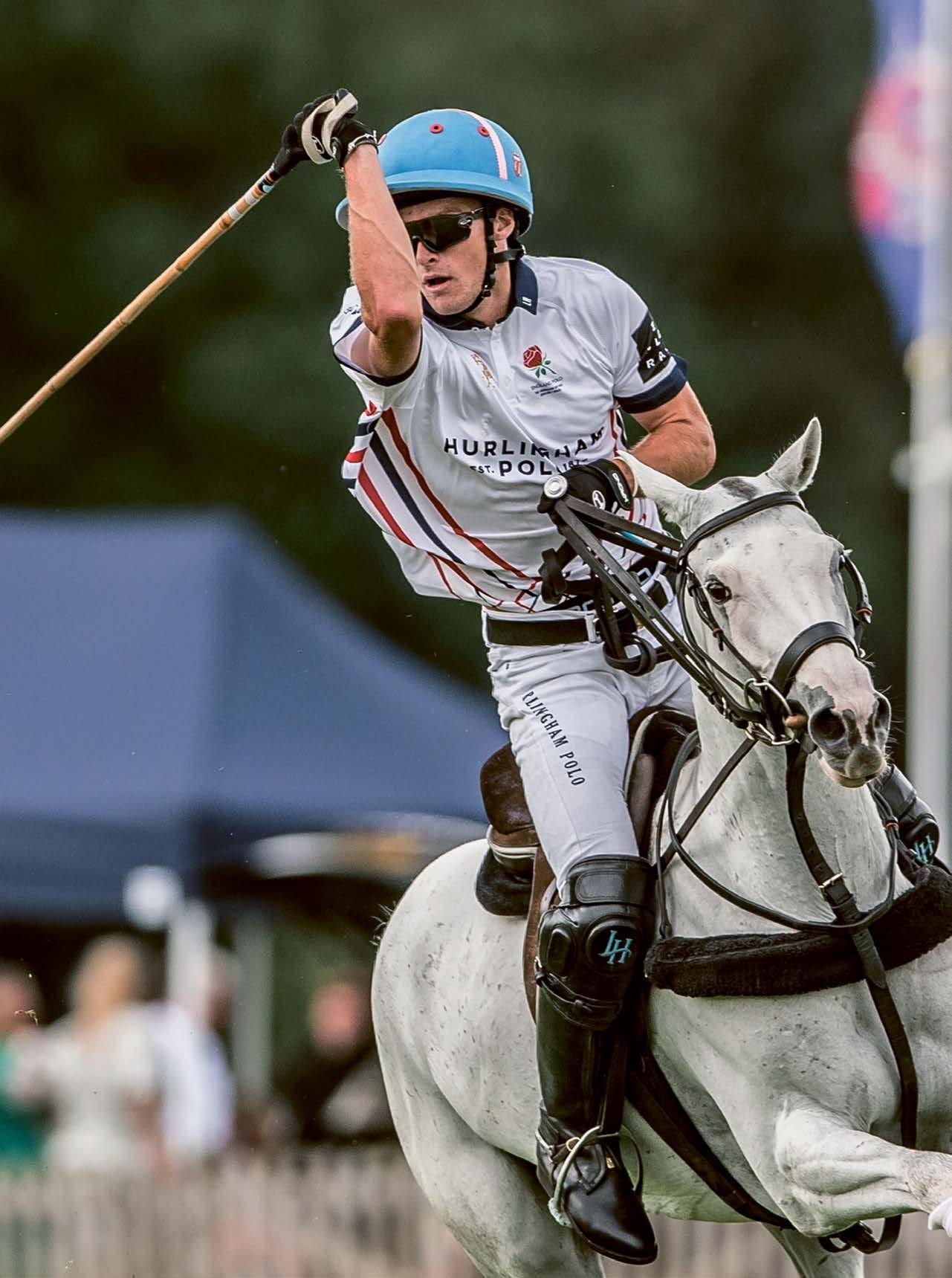

FRIDAY 5 JUNE
CHESTERTON’S
SATURDAY 13 JUNE THE
SATURDAY 20 JUNE
DIAMOND
CIRENCESTER
cirencesterpolo.co.uk
SATURDAY 4 JULY
YOUNG
KIRTLINGTON
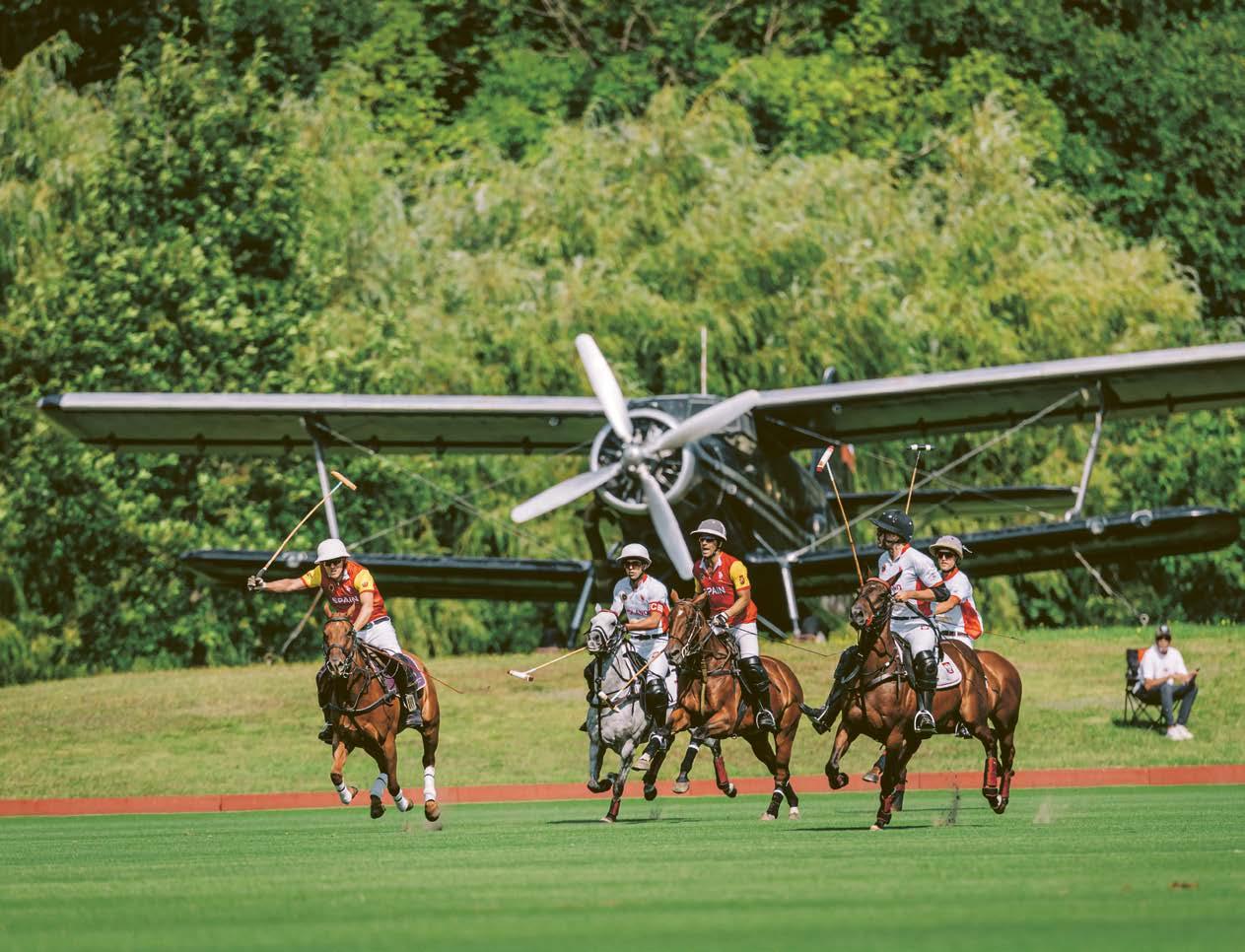
Sowiniec Polo Club’s co-founder Mateusz Świtalski recounts the history of polo in Poland and how, following a revival of the sport in 2002, the country has now become a competitive member of the European polo scene, with a growing number of clubs and players and an exciting future in the sport
The history of polo in Poland began in 1911 in Łańcut, when brothers Alfred and Jerzy Potocki brought to Poland the sport they had discovered while studying at the University of Oxford. Jerzy first encountered polo as a student in 1908, while Alfred began playing regularly a year later. After returning home, it was Alfred who initiated concrete organisational activities, including preparing a playing field, training horses and creating facilities that made regular training sessions and matches possible.
Within a short time, Łańcut became the first fully functioning polo centre in Poland. A sports infrastructure was created, and foreign experience, especially from the United Kingdom, was used in the training of horses and players. From the very beginning, Polish polo developed in close contact with the European polo community, and the centre in Łańcut served as a training base for successive players. As a result, Poland entered the history of polo as one of the pioneers of this sport in Central Europe.
The dynamic development of polo taking place in the interwar period, both in civilian and military circles, was completely interrupted by the second world war. After 1945, the discipline virtually disappeared from Polish sporting life and the continuity of tradition was broken for several decades.
The modern history of Polish polo began in 2002 at Buksza Polo & Riding Club, founded by Paweł Olbrych just south of Warsaw. Buksza became the first real centre for rebuilding the discipline after several decades of absence.
The second pillar of this stage of revival was Żurawno Polo Club, owned by the Czartoryski, one of the oldest aristocratic families in Poland. The involvement of the Czartoryski family in the development of polo in Żurawno had a strong symbolic meaning, as it naturally referred to the aristocratic traditions of the
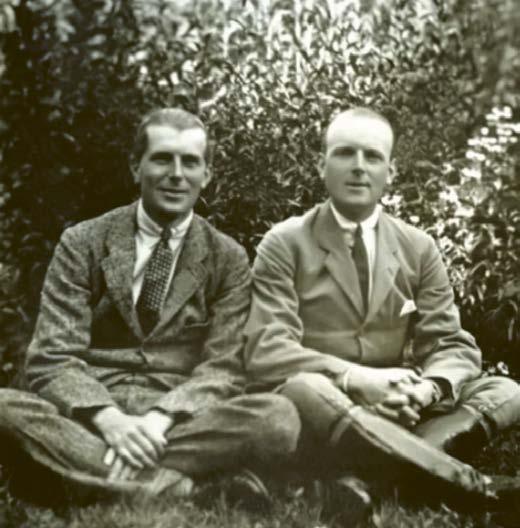
AFTER 1945, THE DISCIPLINE VIRTUALLY DISAPPEARED FROM POLISH SPORTING LIFE
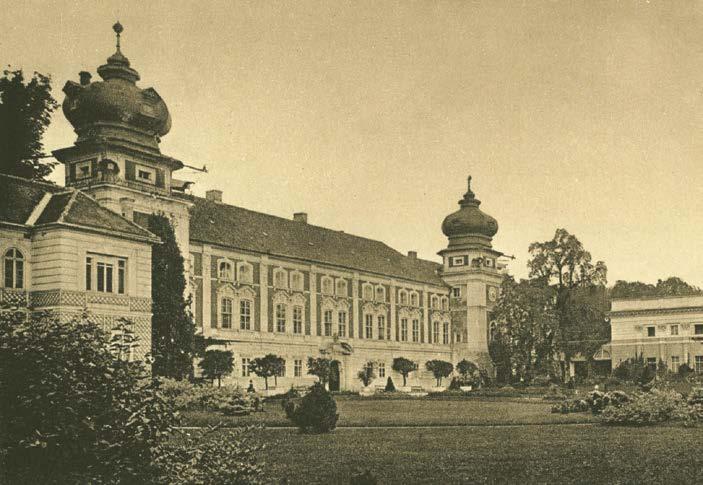
sport and to its beginnings initiated in Łańcut in the early 20th century by Alfred and Jerzy Potocki.
It was around Buksza and Żurawno that the core of the revival of Polish polo was formed in the first years of the 21st century. Through cooperation with foreign clubs and coaches, training trips for players and the gradual development of sporting and organisational standards, a solid foundation was created for the further growth of the entire polo community in Poland.
As the community developed after the first years of revival, new and strong polo centres began to emerge, complementing the base previously created in Buksza and Żurawno. An important role in the next stage of growth was played by Warsaw Polo Club.
A significant development impulse also appeared in the south of the country with the activity of Silesia Polo Club, run by Marek Setkiewicz, who created professional training facilities for players from this part of Poland. At the same time, in the western part of the country, one of the fastest-growing centres became Sowiniec Polo Club, owned by the Świtalski family, which in a short period built a strong sporting and organisational position.
Today, five active polo clubs operate in Poland, and the number of regularly playing athletes exceeds 80. This clearly demonstrates the pace and scale of development of the discipline in recent years.
The centenary polo tournament held in Poland in 2011 was one of the most important moments in the modern history of the
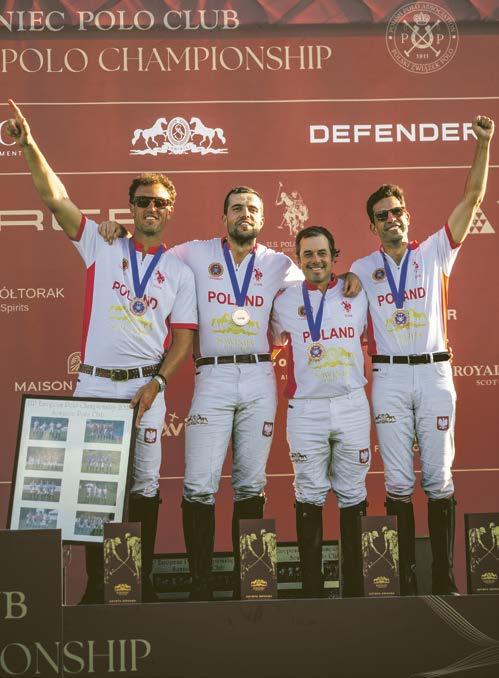
THE EVENT SERVED AS A CLEAR SIGNAL THAT POLO HAD TRULY RETURNED TO POLAND
discipline. The host of the event was Warsaw Polo Club, owned by Tomasz Tokarczyk. The tournament symbolically referred to the first match played in 1911 and highlighted the continuity of more than 100 years of polo in Poland. A particularly meaningful moment of the ceremony was the presentation of the trophy by descendants of the Potocki family.
At the same time, the event served as a clear signal that polo had truly returned to Poland and had firmly strengthened its position on the national sporting scene. The centenary tournament demonstrated that the community had a stable club base, a growing number of players and organisational competence, allowing the delivery of events at a high sporting level. For the entire environment, it was a breakthrough moment, confirming that Polish polo had moved beyond the rebuilding phase and entered a stage of stable and systematic development.
The dynamic development of Polish polo has allowed Poland to move in a short time from a country rebuilding its position to a full-scale host of major international events. The culmination of this process was the XV European Polo Championship held in 2025, a tournament awarded to Poland by the Federation of International Polo, within whose structures the Polish Polo Association also operates.
The competition was held at Sowiniec Polo Club, on two full-sized polo fields maintained by Battro Polo Fields. During the tournament, the most important representatives of global polo structures were present. Reto Gaudenzi, founder of the Snow Polo tournament in St Moritz and long-time president of the Swiss Polo Association, Benjamín Araya, chairman of the Argentine Polo Association, and Piero Dillier, president of the Federation of International Polo, all attended the event.
At the same time, Poland achieved a significant sporting breakthrough. For the very first time in history, the national team won a bronze medal at the European Championship. The combination of organisational success and a real sporting result shows that Poland is no longer merely a developing polo country – it has become a permanent and competitive member of the European polo scene.
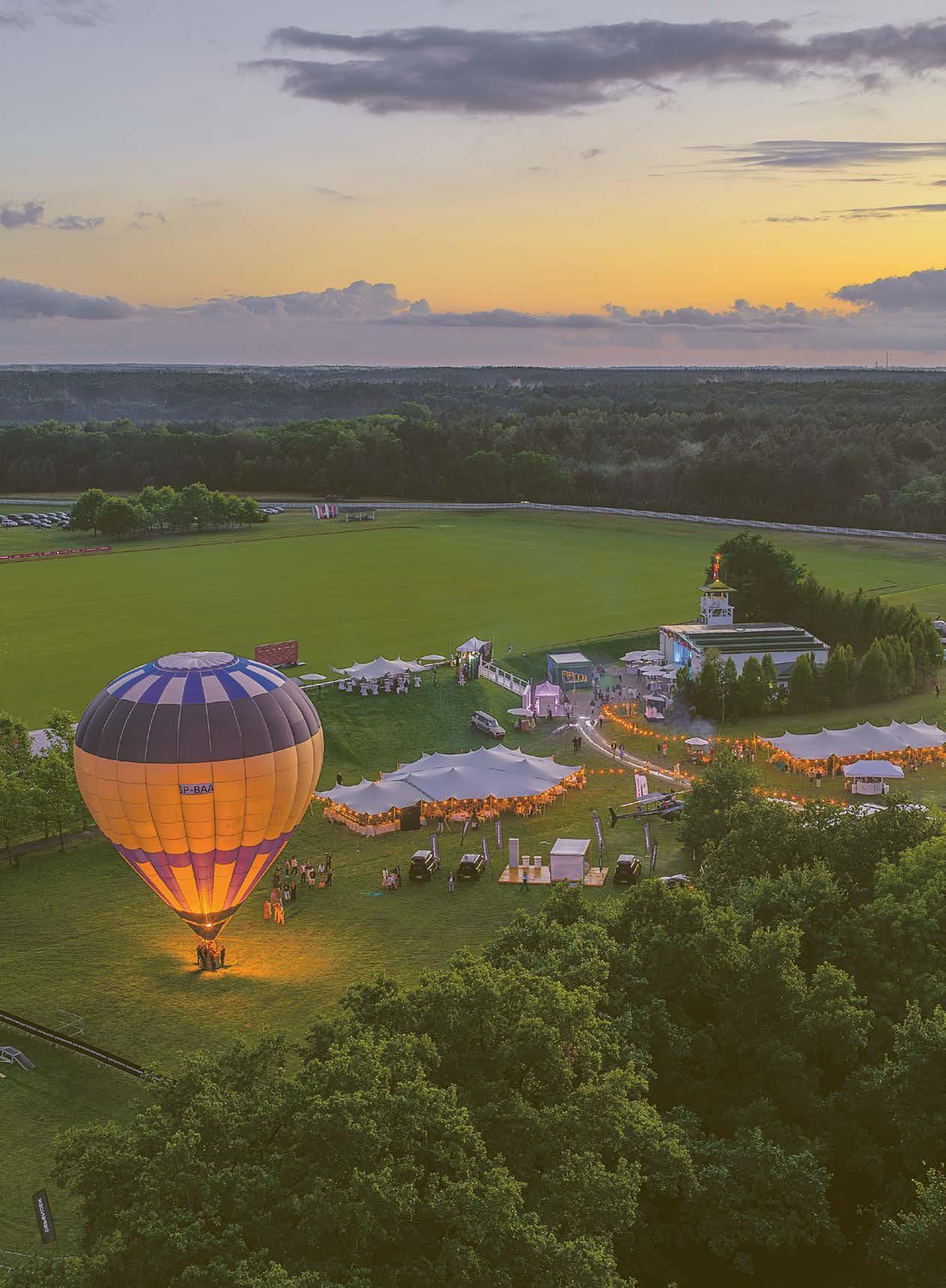
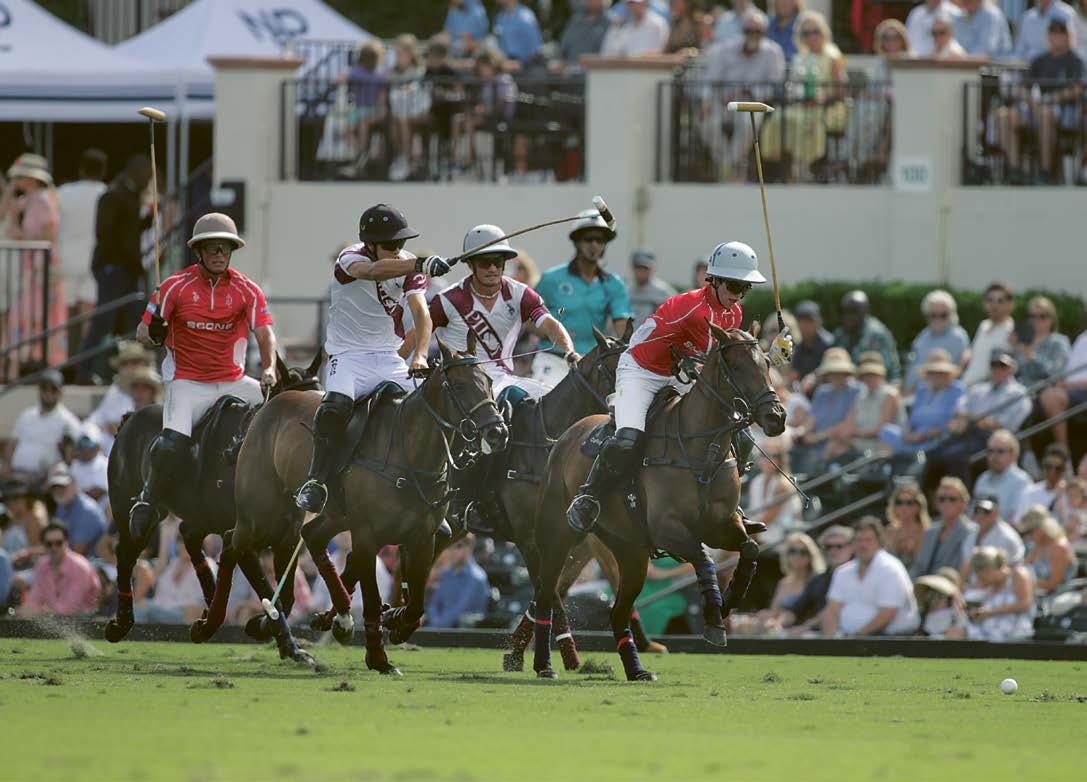
56 GAUNTLET OF POLO
The Dutta Corp took the CV Whitney title, however, Pilot dominated the Gauntlet of Polo with a win in the USPA Gold Cup and the US Open.
58 THE TRIPLE CROWN
The three tournaments saw the players in La Natividad-La Dol na enjoy a string of victories to land a historic win for the family-led team.
60 DUBAI SILVER AND GOLD CUPS
Habtoor Polo took the crown at this year’s Silver Cup at Al Habtoor Polo Resort & Club, while Dubai Wolves by Thera claimed the title in the Dubai Gold Cup.
62 BRYAN MORRISON TROPHY
The biennial International Arena Polo Test Match saw USA and England go head to head in a fast-paced match that saw the home team retain the trophy.
64 US WOMEN’S OPEN
Victory/Eastern Hay defeated La Dol na in a hard-fought and closely won contest for the prestigious title at the National Polo Center.
65 ARGENTINE WOMEN’S OPEN
La Dol na beat defending champions UAE Polo in the Open, taking the lead by ve goals – a win which saw them secure the crown for the fth time.
The Dutta Corp triumphed in its first CV Whitney Cup Final, while Pilot claimed the USPA Gold Cup and US Open Polo Championship Final, reports the United States Polo Association
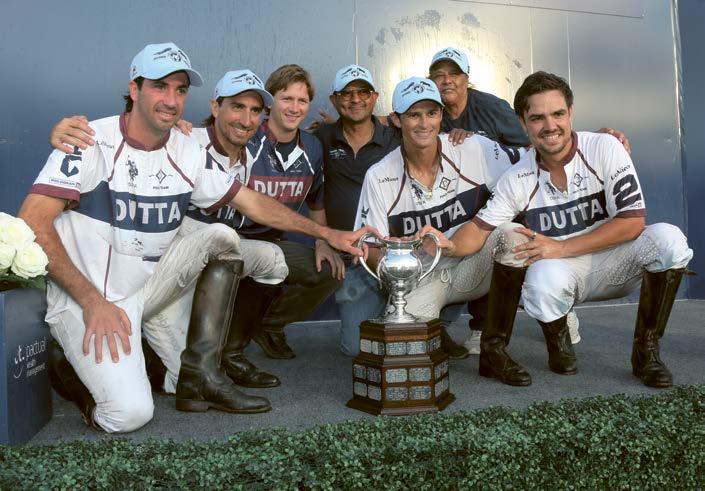
The 2026 Winter Polo Season at the USPA National Polo Center in Wellington, Florida, hosted the three-part Gauntlet of Polo series, which included the CV Whitney Cup, the USPA Gold Cup and the US Open Polo Championship.
Further elevating the Gauntlet of Polo to a global stage, the USPA Gold Cup and the US Open Polo Championship were hosted by ESPN commentator Chris Fowler and broadcasters Kenny Rice and Polo Hall of Famer Adam Snow.
‘The Gauntlet of Polo represents the toughest test in sports and in the US, showcasing the extraordinary talent, teamwork and athleticism that de ne the sport at its highest level, to a global audience on ESPN, as well as beIN Sports and Star Sports,’ said J. Michael Prince, president and CEO of USPA Global, the company that manages the multi-billion-dollar U.S. Polo
Assn. brand. ‘U.S. Polo Assn. is proud to support these historic tournaments and to continue creating inspirational moments between the sport of polo and fans around the world. Congratulations to all the teams who played in The Gauntlet of Polo.’
The rst leg of The Gauntlet of Polo, the CV Whitney Cup, concluded Sunday, 1 March, as La Dol na/Scone (David Paradice, Ru no Merlos, Jesse Bray, Poroto Cambiaso) faced The Dutta Corp (Dylan Rossiter, Lucas Diaz Alberdi, Facundo Llosa, Timmy Dutta) at NPC on U.S. Polo Assn. Stadium Field. Entering the nal as the underdog against the previously unbeaten La Dol na/Scone, The Dutta Corp team took control of the game early and showcased disciplined teamwork to hold its opponent scoreless on the eld until the fth chukka, combining relentless defense, explosive offense and a surge of horsepower.
Peaking at just the right moment, The Dutta Corp team delivered a statement performance, fuelled by a standout performance from Llosa who scored six goals in the rst half. Back-to-back goals from Dutta closed out the fourth chukka and extended the lead, and while La Dol na/Scone came back strong in the fth, The Dutta Corp secured a 14-9 triumph in its rst CV Whitney Cup Final of their Gauntlet career, winning them $25,000 in prize money.
On Sunday, 5 April, the USPA Gold Cup Final pitted La Dol na/Scone(David Paradice, Ru no Merlos, Jesse Bray, Poroto Cambiaso) against Pilot (Curtis Pilot, Mackenzie Weisz, Lorenzo Chavanne, Camilo “Jeta” Castagnola) in the second leg of the Gauntlet. Played in front of a packed crowd at NPC’s U.S. Polo Assn. Stadium Field, the matchup marked the youngest lineup in tournament history, with ve of the eight players being under the age of 25. Pilot trailed 5-2 at halftime before turning the game around in the fourth chukka. From
there, the maroon-and-white Pilot lineup took control, landing a 10-6 victory and $75,000 in prize money.
Leading Pilot with six goals in the nal, Lorenzo Chavanne was named MVP, while his horse V8 Tyson took home Best Playing Pony honours. Sunday’s victory marked Pilot’s third USPA Gold Cup title (2019, 2022, 2026).
The third and nal leg of the Gauntlet of Polo series is the US Open Polo Championship – the pinnacle of high-goal competition – was played 1-26 April, 2026, at the USPA National Polo Center. After losing their rst two games, Pilot gathered momentum and dominated the tournament to win its third US Open title, thanks to the mastery of Jeta Castagnola, Mackenzie Weisz and Lorenzo Chavanne, who worked together seamlessly to control the game right from the start of the rst chukka.
Husband and wife team BTA (KC Krueger, Steve Krueger, Tomas Panelo and Ignacio “Nachi” Viana), had a run of brilliant games to earn their place in the prestigious nal, however, Pilot maintained a multi-goal lead throughout the game, gaining a ve-goal advantage midway through the third chukka. Despite making a strong comeback in the fourth chukka, bridging the score gap to just one goal, BTA were unable to stop Pilot’s momentum and the match ended 15-10 with Pilot crowned champions.
Lorenzo Chavanne won MVP of the nal and his horses Open Texas and Open Silaba won BPP and BPP Argentinian Breed honours respectively. BTA patron KC Krueger – the rst woman to make it to the nals since Gillian Johnston won the US Open Polo Championship in 2002 – won the Sponsor of the Year Award.
Viewers can follow behind-the-scenes, player features, and championship highlights on Global Polo’s YouTube channel, including coverage tied to the USPA Gold Cup and the US Open Polo Championship broadcasts.
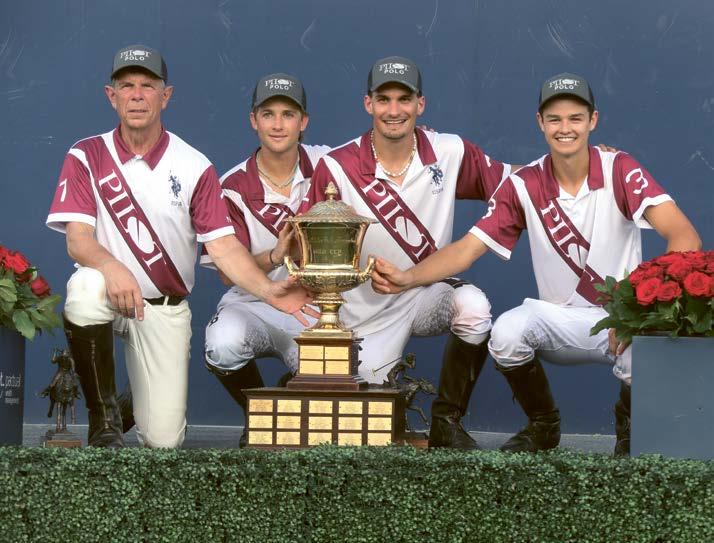
THE GOLD CUP FINAL MARKED THE YOUNGEST LINEUP IN TOURNAMENT HISTORY, WITH FIVE OF THE EIGHT PLAYERS BEING UNDER THE AGE OF 25
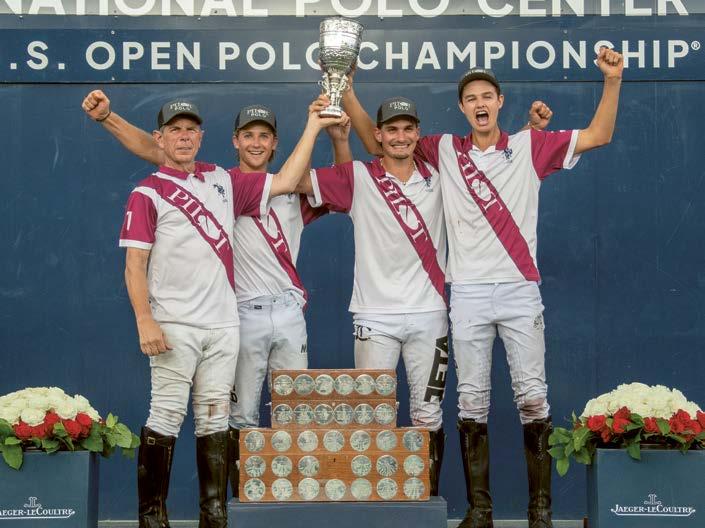
La Natividad-La Dol na may have dominated the three tournaments, but their victories didn’t always come without a ght, reports Alejo Miranda
The outcome was exactly the one everyone had anticipated. It was the road La NatividadLa Dol na had to go through to secure the Argentine Triple Crown that made the 2025 season a thrilling one – just like any other. The Cañuelas alliance was expected to win it all – and they did. The Cambiasos and the Castagnolas were expected to overpower every opponent – yet they didn’t. Fierce resistance stood in their way. Logic prevailed, though not without a lingering touch of drama.
The fusion of the dominant forces from the previous four seasons – Jeta and Bartolomé Castagnola, Adolfo and Poroto Cambiaso – shook the entire polo landscape. As if in a high-stakes poker game, the cards were reshuf ed and dealt again. Every team but La Ensenada was dismantled and reassembled, most often as two-club alliances – Ellerstina-Indios Chapaleufú, La Irenita-La Hache. UAE Polo stood as the lone exception among the contenders.
The only one side that established itself as a genuine challenger was the one led by brothers Facundo and Gonzalo Pieres, joined by the next generation of Heguys – Cruz and Antonio, sons of Eduardo and Alberto – longtime rivals of the Pieres dynasty. The rst warning came in the Hurlingham semi- nals, the opening stanza of the Triple Crown. Ellerstina pushed the second edition of the Dream Team into extra chukkas, but Jeta Castagnola restored order with a goal
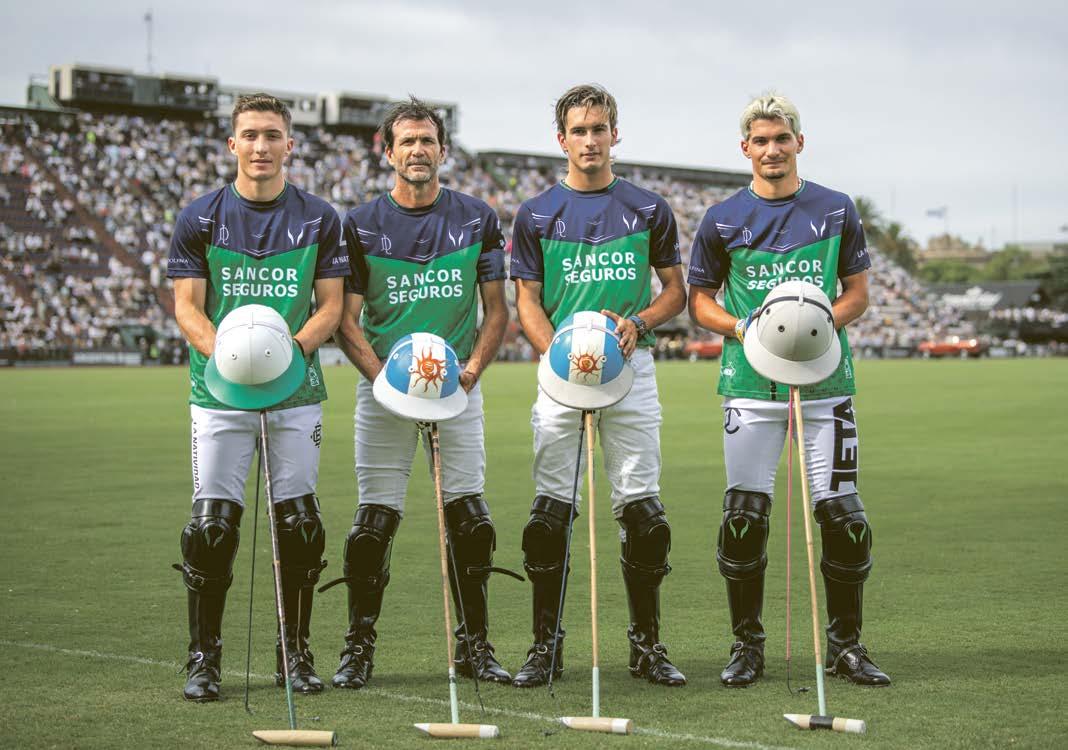
Opposite: From left: Barto Castagnola, Adolfo Cambiaso, Poroto Cambiaso and Jeta Castagnola. This page, from top: Antonio Heguy (in pink) is eyed by Poroto Cambiaso in the nal; Argentine president Javier Milei with Adolfo Cambiaso
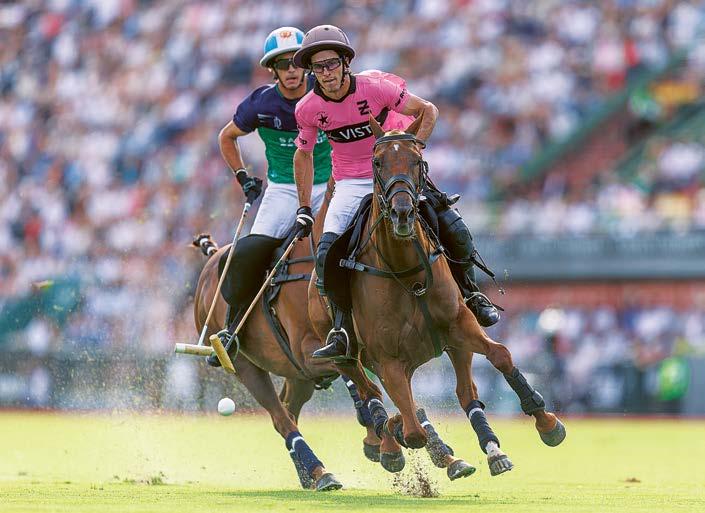
that only he seems capable of scoring. He is the de ning player of this era. The nal against UAE Polo was no formality, yet La Natividad-La Dol na prevailed with authority.
Tortugas, the second jewel of the Crown, brought fresh upheaval: Los Machitos stunned La Irenita, and La Ensenada knocked out UAE. Ellerstina again came close to a seismic upset in the nal, battling until the last whistle before falling short. Two for two for the favourites. It was clear this would not be their last encounter.
The opening weekend in Palermo offered a thrilling preview of what was to come: three matches decided by a single goal and another by two. The semi- nals delivered the tournament’s highest intensity. La NatividadLa Dol na had been cruising until they collided with UAE Polo. Trailing by one at the start of the nal chukka, Jeta once again tilted the balance with two decisive goals. La Irenita, meanwhile, found its poise on the big stage and surged into the semi- nals, building a 9-4 lead midway through the fth chukka, only for Ellerstina to mount a comeback. The anticipated nal was set. These storylines built enormous expectations for the grand nal. A 9-0 run
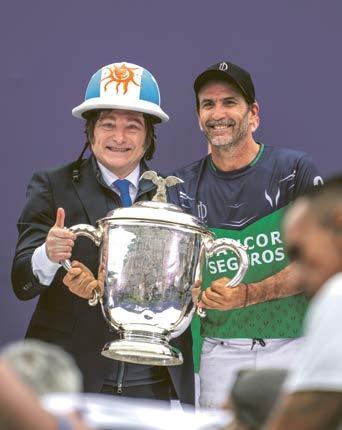
between the third and fth chukkas seemed to settle the contest early. Ellerstina refused to surrender and injected fresh tension into the scoreboard, cutting the de cit to two by the end of the seventh chukka, led by Antonio Heguy – the revelation of the season. But just as momentum appeared to shift, the Cañuelas tandem reasserted control and closed out a 17-13 victory.
Cambiaso entered the season at less than full strength after fracturing his left hand in the Gold Cup nal at Cowdray, which he won alongside his daughter Mía. He missed the Hurlingham opener and began at a measured pace, at times appearing a step behind, assuming more of a facilitator’s role. Whether this was the lingering effect of injury or simply the consequence of turning 50 – read that as admiration, not condescension – was dif cult to tell. In the nal, he answered emphatically. He remains as decisive as ever, delivering his nest performance of the season.
It bears repeating: Cambiaso is 50. He is still riding, he keeps winning. We will see him once more this year, as he sets his sights on equalling Juancarlitos Harriott’s record of 20 Argentine Open crowns.
Habtoor Polo was crowned Dubai Silver Cup champions, while Dubai Wolves by Thera claimed victory in the Gold Cup, reports Luhena Sanches
The Silver Cup 2026 Final took place at Al Habtoor Polo Resort & Club, Dubai, UAE, on 24 January 2026, seeing Habtoor Polo – Mohammed Al Habtoor (0), Carlos Maria Ulloa (8), Bautista Bayugar (8) and Marcos Solari (4) – and UAE Polo – HH Sheikha Maitha bint Mohammed Bin Rashid Al Maktoum (0), Salvador Jauretche (5), Lucas Monteverde Jr (9), Rosendo Torreguitar (6) – go head to head. From the opening chukka, both sides set an uncompromising pace, keeping spectators on the edge of their seats.
UAE Polo struck rst, with Lukin Monteverde opening the scoring and setting an early tone for his team. A disciplined defensive display allowed UAE Polo to hold their ground in the early stages, but Habtoor Polo soon found their rhythm, lifting the tempo and drawing level just before the close of the second chukka.
Eager to regain control, UAE Polo pushed forward with purpose, extending their advantage through well-executed plays. As the intensity mounted, the match evolved into a ercely contested exchange of goals. By the fourth chukka, Félix Esain delivered a vital equaliser for Habtoor Polo, setting the stage for a dramatic nale.
In the decisive moments, Habtoor Polo rose to the occasion, sealing the match with a game-winning goal to claim the Silver Cup title. Celebrations followed as Habtoor Polo marked a triumphant victory, cementing their status as a dominant force in the tournament.
On 14 February 2026, the Dubai Gold Cup 2026 Final erupted into life at the grounds of Al Habtoor Polo Resort & Club. The nal delivered a clash that saw Dubai Wolves by Thera – Habtoor Al Habtoor (1), Cesar Crespo
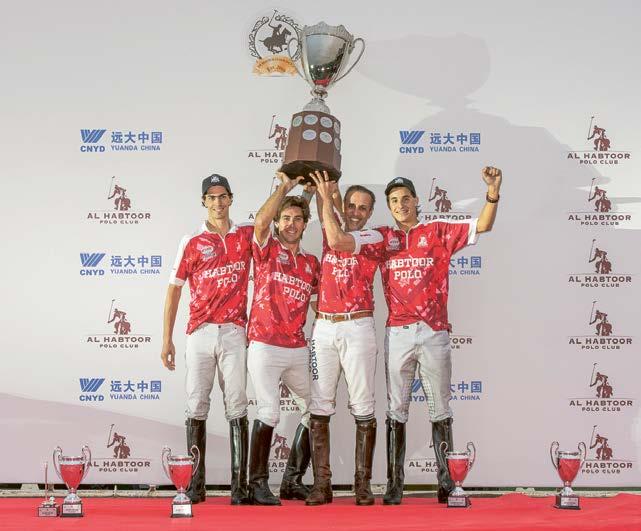
AS THE INTENSITY MOUNTED, THE MATCH EVOLVED INTO A FIERCELY CONTESTED EXCHANGE OF GOALS
(6), Félix Esain (7), Santiago Laborde (6) – face the ultimate test against the tournament’s six-time champions UAE Polo – HH Sheikha Maitha Bint Mohammed Bin Rashid Al Maktoum (0), Salvador Jauretche (5), Lucas Monteverde Jr (9), Rosendo Torreguitar (6) – and the Wolves rose to the occasion from the very rst chukka.
Matching experience with sheer determination, the Wolves seized an early lead and ercely protected their advantage throughout the match. However, UAE Polo refused to back down, applying relentless
pressure and forcing play after play in a battle of precision, speed and tactical brilliance. Interceptions, breakaways and impressive goals turned the eld into a true showcase of world-class polo, but after an intense contest, Dubai Wolves by Thera triumphed to claim the Dubai Open Gold Cup 2026 title.
Saeed Bin Drai, vice chairman of the UAE Polo Federation, presented the awards to the teams of the day. Félix Esain was named Most Valuable Player, while Only Caravina, ridden by Esain, took Best Playing Pony honours. The Best Argentine Pony award went to Open Snowmass, played by Santiago Laborde.
Opposite, from left to right: Bautista Bayugar, Carlos Ulloa, Mohammed Al Habtoor and Marcos Solari. This page, left to right: Cesar Crespo, Habtoor Al Habtoor, Félix Esain and Santiago Laborde
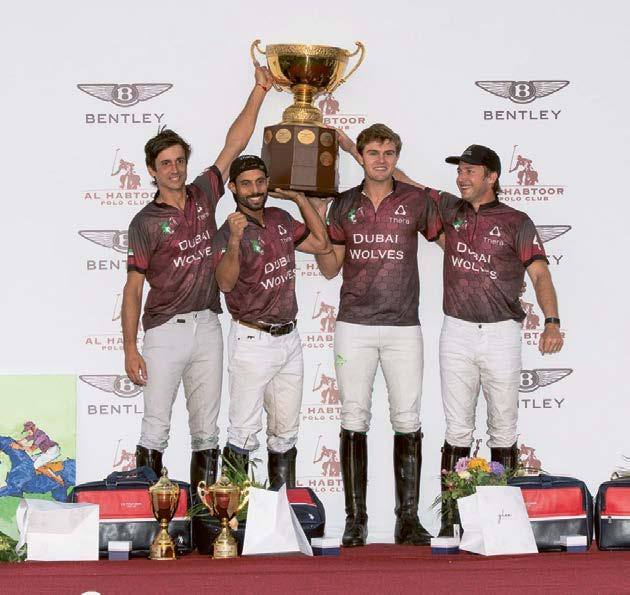
In a thrilling game at the All England Polo Club, Matt Perry led Jack and Josh Hyde to a win over the USA for the rst time since 2023, reports Storm Johnson
A 400-strong crowd watched as Matt Perry (8), Jack Hyde (8) and Josh Hyde (5) lined up opposite the USA’s arena legend Tommy Biddle Jr (8), Felipe Viana (8) and newcomer Ian Schnoebelen (4). The teams were led in by ag bearers from Power of Polo before the match kicked off straight away with two goals from Matt Perry in the rst two minutes.
Felipe Viana – in his rst arena match since his last appearance here in 2023 –answered for the USA to really get the game underway, and it was a relentless pace from then on, with Matt running a blinder to make it 4-2 before the experience of Tommy Biddle shone through and he scored a two-pointer, plus a further goal. Josh Hyde, making his England debut, put his team back in contention with a goal, to bring it to 5-5 in the nal 30 seconds of this action-packed chukka.
Matt came ying out of the gate for the second chukka, and within the rst minutes the score was 8-5 to the home side. By half
time, England led by 10-6, with momentum rmly swinging their way, and goals came thick and fast in the third chukka, which ended 12-8 to England.
The USA continued ghting hard in the nal chukka, but England drew further away, with the score at 16-9 with two minutes to go. Matt scored a stunning goal running the full length of the arena, and a great goal from Ian Schnoebelen in the dying seconds was unfortunately not enough: it was 17-11 at the nal buzzer to put the England team on top.
The MVP award could go to no one other than Matt Perry, with the Best Playing Pony prize awarded to Bugsy, a nine-year-old thoroughbred mare played by Matt and owned by a delighted Mariano Darritchon.
The day opened with an exciting Schools & Universities Polo Association Intercollegiate match, where Great Britain pipped the USA to
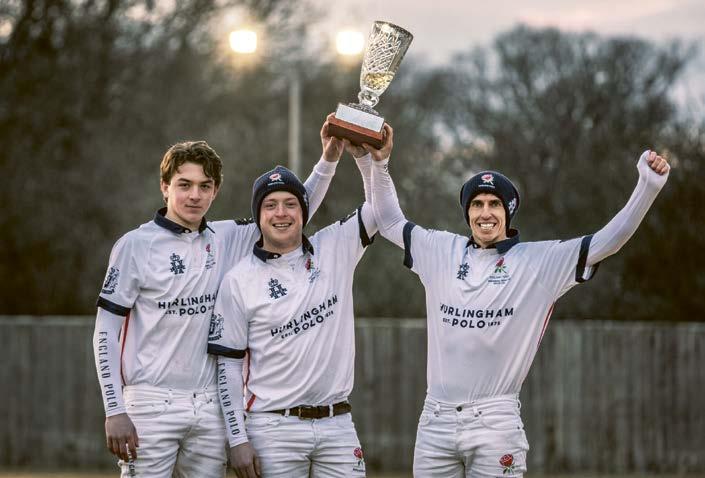
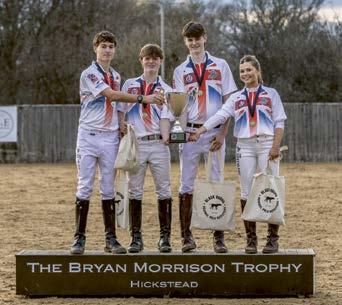
victory in the nal chukka, closing out the scoreboard at 12-11 in a close contest. With two players on each team “half-seating” –playing two chukkas each – it gave even more up-and-coming players the chance to shine. Captain Robbie Slatter (3) led Bruno Bradshaw (2), Angus Smail (1) and Ava Greenland (0) against USA captain Will Mudra (4), Kelsey Bray (1), Luke Howe (1) and Nicole Bailey (1).
The visitors were rst to get on the board, but the home team was able to catch up and pull away to a 5-3 lead by half time. It was all tied up at 7-7 late in the third chukka, then Robbie Slatter scored three goals in quick succession to make it 10-7 going into the nal chukka. A Penalty 1 awarded in the nal seconds could have forced a draw, but Great Britain stayed ahead with the nal score at 12-11. The MVP was awarded deservedly to Kelsey Bray, while Angus Smail and his own retrained racehorse Shadow took home the coveted Best Playing Pony prize.
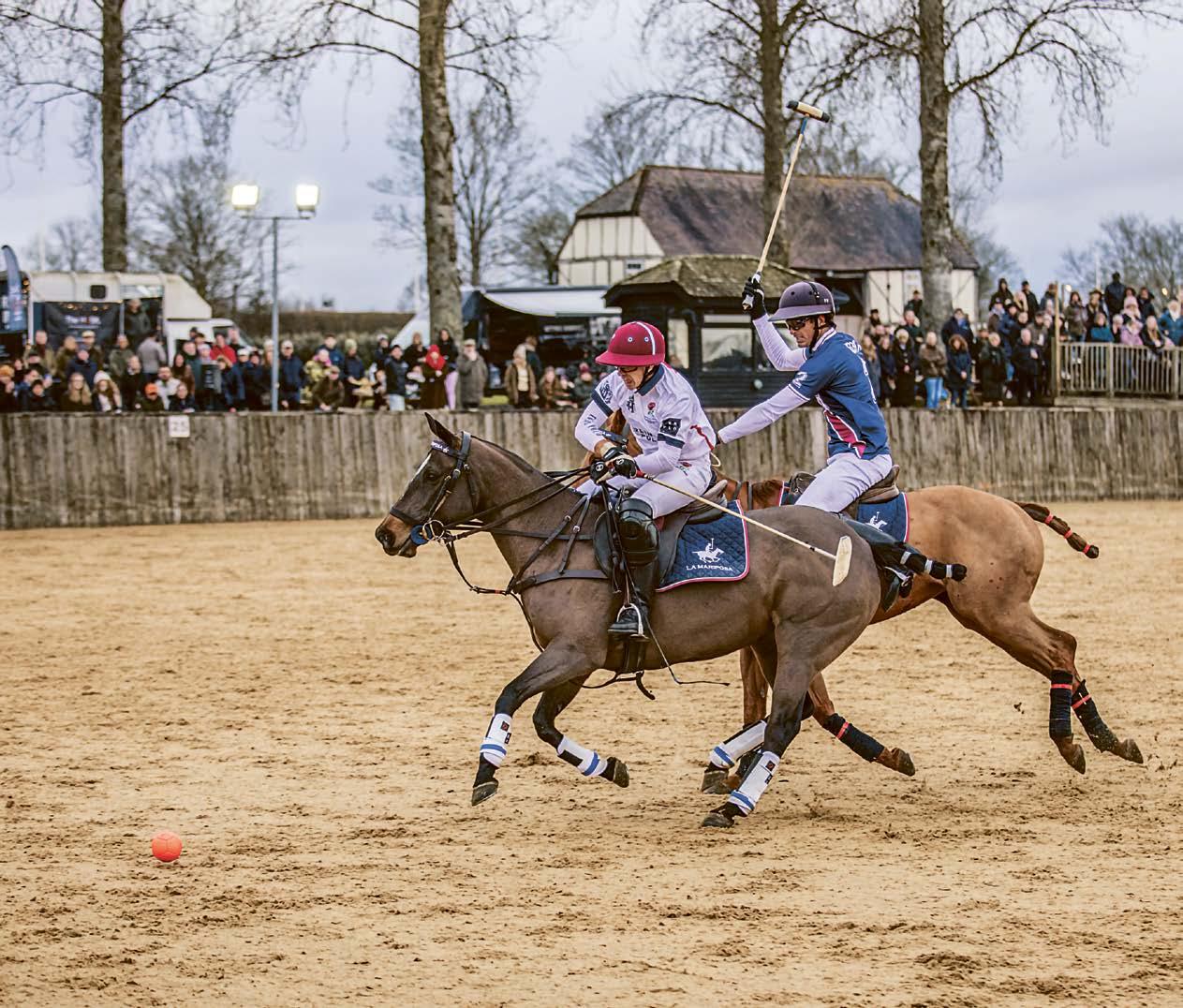
Victory/Eastern Hay defeated La Dol na in a hard-fought contest, reports the United States Polo Association
On Sunday 15 February 2026, La Dol na (Mora Castagnola, Myla Cambiaso, Mía Cambiaso, Micaela Saracco) met Victory/ Eastern Hay (Rebecca Schmeits, Aspen Tinto, Hazel Jackson, Milly Hine) in the US Open Women’s Polo Championship nal. The prestigious tournament was hosted by Port Mayaca Polo Club in Okeechobee, Florida, and concluded at the National Polo Center in Wellington, lling the stands of the U.S. Polo Assn. Field One for the nal game.
La Dol na soared into the nal boasting a 3-0 undefeated record, while Victory/ Eastern Hay arrived in its second high-goal championship match of the season after capturing the USPA Women’s Gold Cup. Seizing the lead in the third chukka, the team in blue controlled the pace of play and never looked back, earning a 7-5 victory and $17,000 in prize money.
Hine opened the scoring for Victory/ Eastern Hay before La Dol na’s Mía Cambiaso answered with a eld goal to tie the rst period. The teams traded goals again in the second chukka, with Mía Cambiaso brie y pushing La Dol na ahead, only for Jackson to level the score 2-all on a breakaway. Shutting out La Dol na in the third chukka, goals from Hine and Jackson lifted Victory/Eastern Hay to a narrow 4-2 advantage at the break.
Kick-starting the second half, Jackson – who won MVP of the nal – was back on the offence to open the fourth period. Scoreless since the second chukka, La Dol na responded with back-to-back eld goals, but a Penalty 1 automatic goal extended Victory/Eastern Hay’s lead 6-4. Jackson and Castagnola exchanged goals in the fth, and Victory/Eastern Hay maintained its defensive pressure throughout the sixth chukka to close out the championship win.
Victory/Eastern Hay’s win saw Jackson earn her fth US Open title (2016, 2018, 2022,
2023, 2026), and Milly Hine became the third player in the history of the tournament to win the championship three times (2024-2026). Rebecca Schmeits and Aspen Tinto each lifted the trophy for the rst time.
Best Playing Pony was presented to chestnut mare Latia Bancada, played by Milly Hine in the third and sixth chukkas. In partnership with USPA Global, both nalists selected a charity of their choice to receive a $2,500 donation, with La Dol na contributing to the Polo Players Support Group and Victory/ Eastern Hay to the Polo Training Foundation.
THE TEAM IN BLUE CONTROLLED THE PACE OF PLAY
Below: winning team Victory/ Eastern Hay, from left: Aspen Tinto, Rebecca Schmeits, Hazel Jackson and Milly Hine
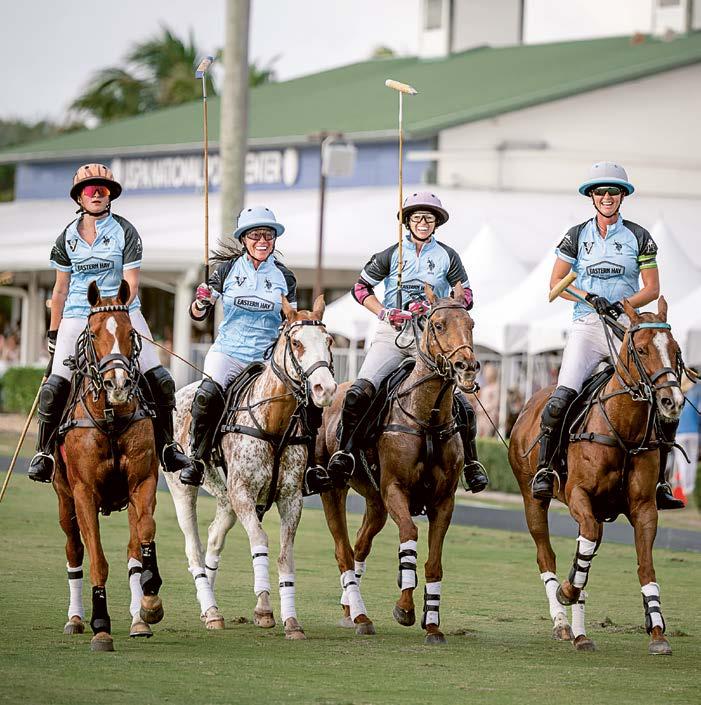
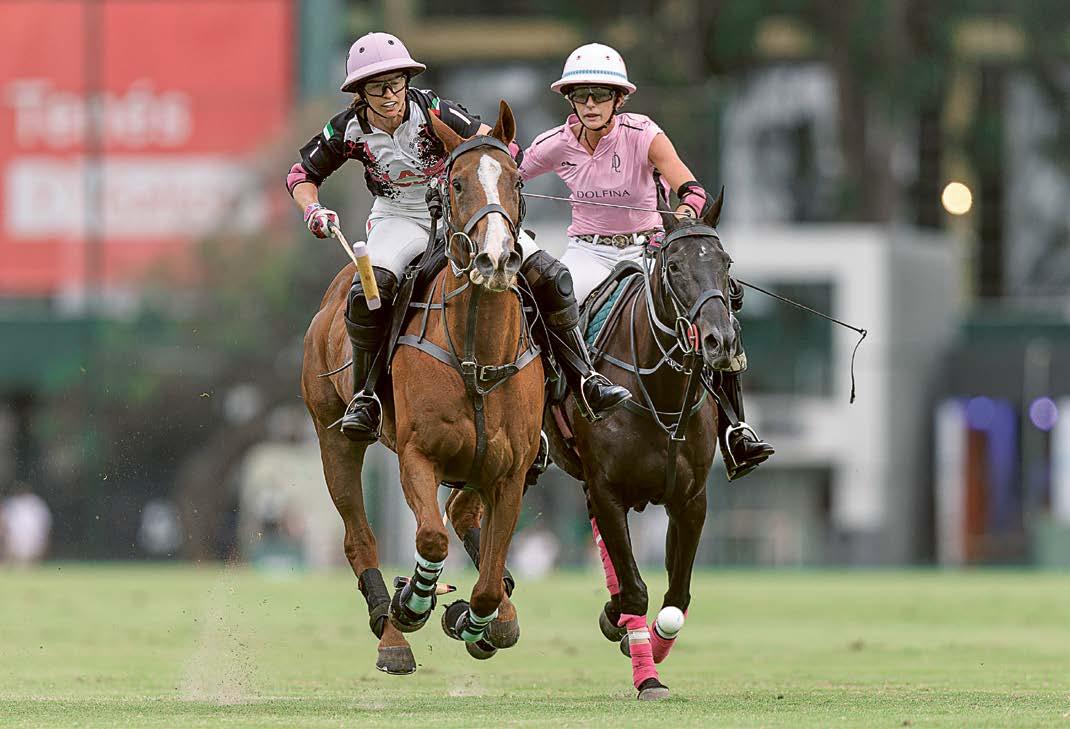
On Saturday 6 December 2025, on Field 2 of the Campo Argentino de Polo Galicia in Palermo, La Dol na secured its fth Women’s Argentine Open title – the most wins by any team. The tournament featured three teams with handicaps ranging from 32 to 36 goals, including some of the best players from Argentina, the USA, France and England.
After two evenly matched chukkas, in which UAE Polo had the upper hand, La Dol na played a superb third chukka, taking the lead and settling into the game. From then on, the Cañuelas-based team displayed its best form, with an outstanding performance
from the entire team and four goals by Mía Cambiaso, making her the top scorer of the nal and MVP. La Dol na closed out the match with a 9-4 victory, after winning all three of its matches in the tournament.
La Dol na has won the Argentine Women’s Open in 2017, 2018, 2021, 2022 and now in 2025, securing ve titles in nine nal appearances – the only team to reach every nal of the championship. With this victory, Mía Cambiaso and Milly Hine also earned their fth title in the tournament, tying with Cande Fernández Araujo as the most successful players in the competition’s history.
Hope Arellano reached three titles, while Cata Lavinia etched her name in the tournament’s history for the rst time.
UAE Polo – formerly known as El Overo UAE – has won four Argentine Open Women’s titles (in 2019, 2020, 2023 and 2024) and it will surely be looking to claim a fth title in 2026.
Hazel Jackson received the Myriam Heguy and Municipality of Cañuelas Fair Play Award, while the AAP Award for Best Horse of the Final went to Don Ercole Heyla, ridden by Cata Lavinia. The AACCP Award for Best Registered Argentine Polo Breed was awarded to Monjita Bag Lady, ridden by Hope Arellano.
Mark McIntosh explains how he acquired a polo ball with the signatures of nine top players from the 1970s, six of whom are in the Museum of Polo’s Hall of Fame
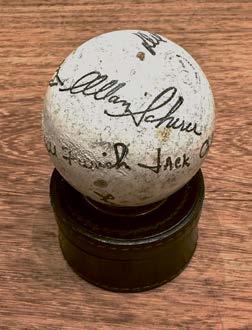
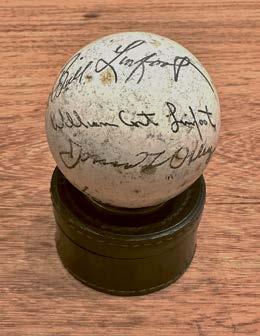
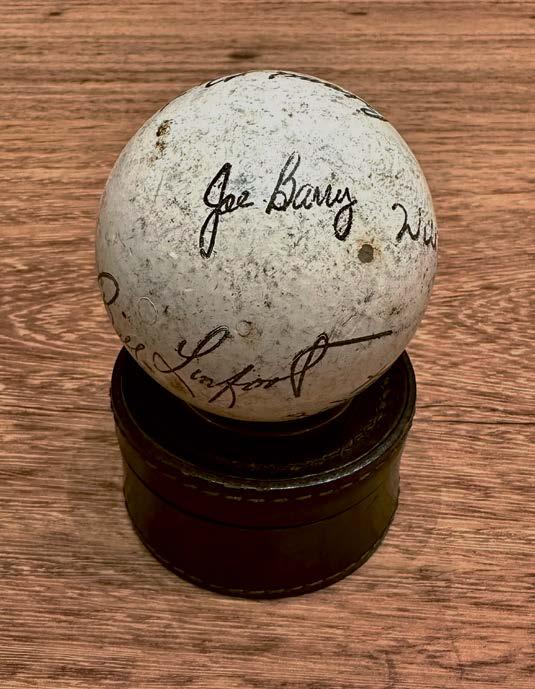
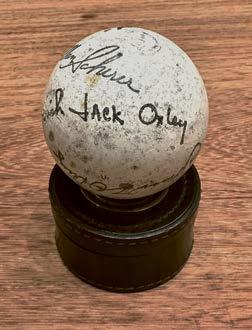
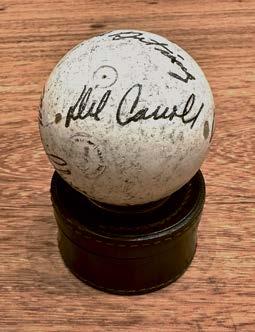
In the mid 1970s, my father would take my siblings and me to Royal Palm Polo in Boca Raton, Florida, every Sunday. My father didn’t play polo, but was friends with many of the regular players through the racing and showjumping world. For him, Sundays at Royal Palm were a time to socialise and spend some time with his children and friends. For my siblings and me, it was fun to watch the matches, but following the last chukka, we were given cut-down mallets and allowed to go and create our own matches on foot on the main field. In those days Mr Oxley had a large tent set up at the far end of the field. The tent served as the bar area where all the players and their friends spent time after play was over. Giving the kids foot mallets and letting us run on the field
kept us out of the tent and gave the adults as much time as desired to socialise. One Sunday, when I was five or six, I think I must have run into the tent a few too many times to ask my dad questions that only kids can come up with. Maybe feeling bad for me or just wanting to get me out of the tent, one of his friends who played that day asked me if I would like a signed ball. He handed me the ball with nine signatures (six are now Hall of Fame inductees*) – Allan Scherer, Del Carroll*, Joe Barry*, Will Farish, Jack Oxley*, John Oxley*, Dr Bill Linfoot*, William Linfoot and Bennie Gutierrez*. I raced back to my brothers and showed them the ball – with all the names that we emulated every Sunday with our cut-down mallets and running strides like horses…




Carmignac invests the majority of its equity in its funds. The funds in which our clients invest. Therefore, we only win if our clients win. Why not talk to your wealth manager?