Scott Anthony Confessions of a Cuban Cigar Smuggler
Love for Tobacco Three Perspectives, One Passion
Barcelona, Between Gaudí and the Epicure No. 2
The Casa Batlló SOFÍA RUIZ
Master Habanosommelier PROFILES
Ra’ed Walid Saqfelhait
The Rise of New World Tobacco in the Middle East
Two Loves, One Tradition Tales Born Among the Casks
Room101 Namakubi When the Cigar Becomes a Ritual
Maestro A Turning Point for Signature Craft Gin MICHEL I.
Monkey Shoulder Rebel with a Cause… GONZALO ROMERO
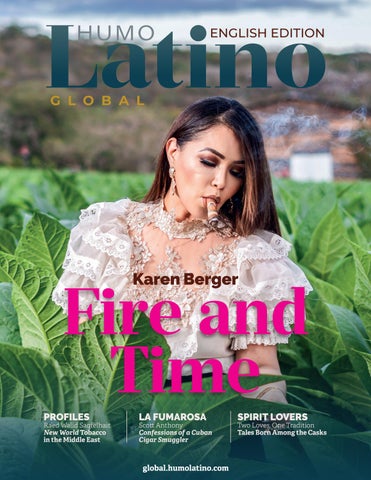
Karen Berger Fire and Time
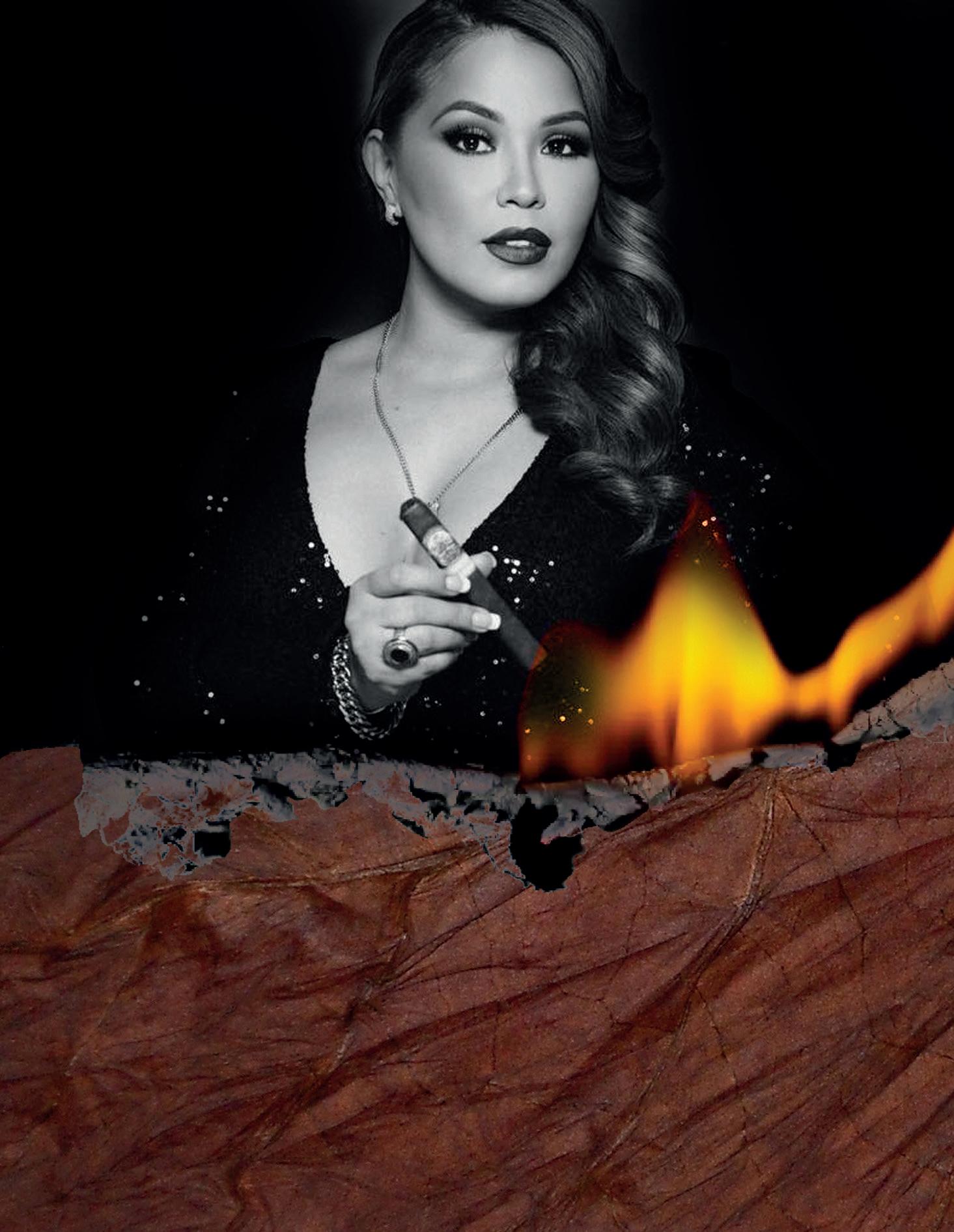
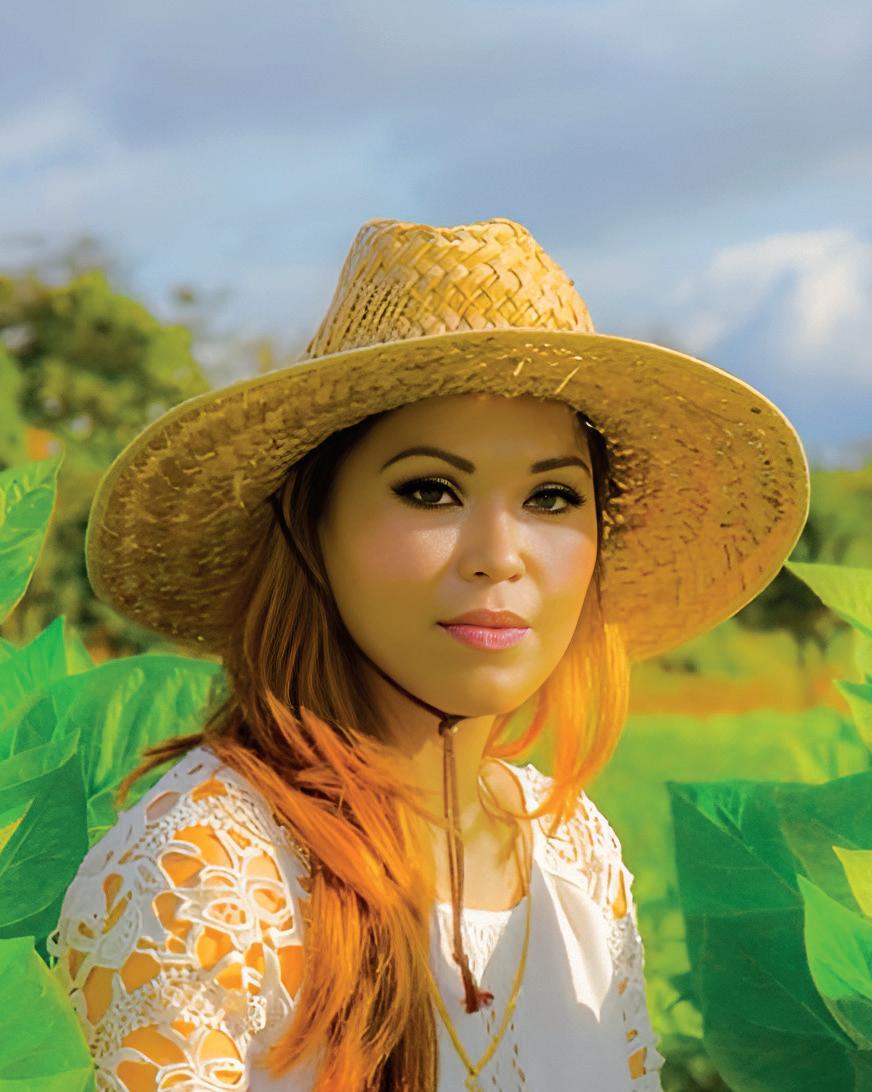
She is a woman who lived through a difficult childhood marked by hardship and hunger. Changing her destiny was rooted in love, determination, and, above all, family. Along the way, she was fortunate to find a man who accompanied her in building the tobacco company she leads today... even if her first dream was to be a dentist.
CÉSAR SALINAS
César Salinas Chávez
Director
Alberto Arizmendi
Editorial Director
GH L
Dominican Republic
Julio César Fuentes
Commercial Director
Honduras
Patricia Pineda
Rolando Soto
Roberto Pérez Santiago
Art Director
Raúl Melo
Publisher
Enrique Quijano
Style Correction
Moisés Licea
Web Master
Yoshua Segovia
Community Manager
COLLABORATORS
Argentina
Gastón Banegas
Canada
Nicolás Valenzuela Voss
Chile
Francisco Reusser
Christopher Sáez
Michel Iván Texier Verdugo
Colombia
Federico Londoño Mesa
Eduardo Márquez
Cuba
José Camilo López Valls
YEAR 2, ISSUE 22, FEBRUARY 2026
Humo Latino Magazine reserves the right to reject unsolicited articles that contravene its thematic profile, as well as those that do not conform to its style standards.
The articles received will be approved in the first instance by members of the Editorial Board. We reserve the right to make changes or introduce modifications to the manuscripts, for the sake
of better reading comprehension, without this implying changing their content.
The authors are responsible for the content published under their signature. Humo Latino Magazine does not assume any responsibility for possible conflicts arising from the authorship of the works and publication of the graphic material that accompanies them.
@humolatinoglobal info@humolatino.com
Editorial
The Rise of the Queen
The tobacco industry, historically a bastion of male influence, has undergone a profound transformation in recent years, in which female leadership is no longer an exception. In this highly competitive arena, the figure of Karen Berger emerges not merely as the heir to a legacy, but as an entrepreneur who has successfully shaped a strategic vision.
She personifies the growth of someone who knows the craft from its foundations. Having started as a roller in Nicaragua at the age of 18 to fund her academic studies in Business Administration, she mastered every link in the production chain: from stemming and leaf selection to the final touch of the cigars. Estelí Cigars Factory, her training ground, was the prelude to a career defined by constant effort to stand out in a high-demand environment.
Following her marriage to Enrique Kiki Berger and his subsequent passing, Karen was compelled to assume leadership of the company. Tasked with the mission of honoring her husband and mentor, as well as her family, she began writing her own chapter in the Tobacco World. Under her direction, the company has secured its place in the U.S., European, and Asian markets.
Known as the Queen of Tobacco, Karen Berger occupies the upper echelons of the industry, breaking paradigms and paving the way for the thousands of women who represent –for the
most part– the workforce in factories across Central America and the West Indies. Guided by the motto Passion, Loyalty, Courage, she has proven that sensitivity is not a weakness, but the necessary strength to lead an influential company.
Because in the end, knowledge and determination have no gender.
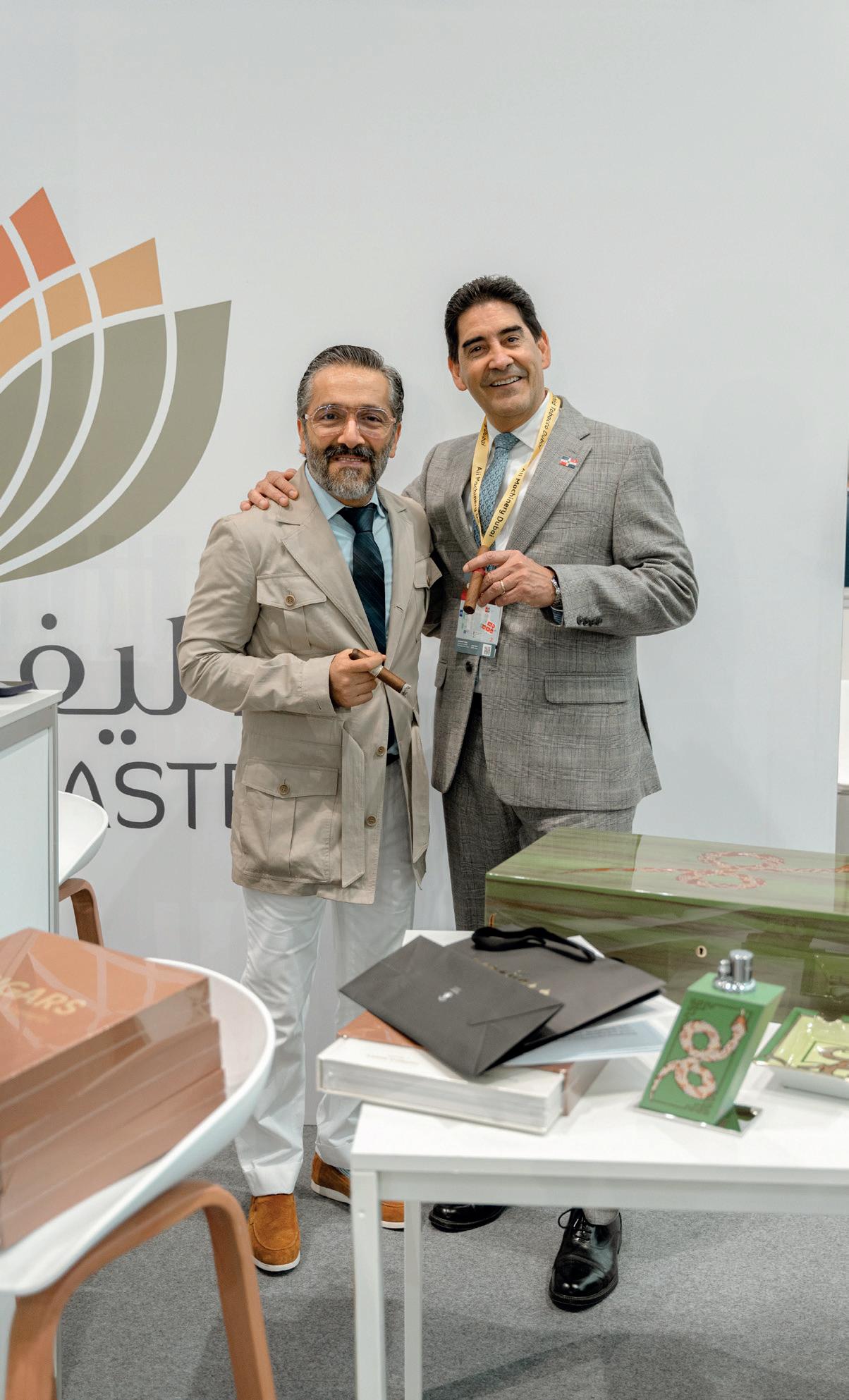
In this issue, we also present the story of Ra’ed Walid Saqfelhait, creator of The Leaf Master, one of the largest distribution companies bringing New World tobacco to the Middle East and Africa. Nearly a decade ago, he established his operations hub in Dubai –a paradise for tobacco enthusiasts and host of the recent World Tobacco Middle East. This event complements the industry’s global circuit, joining the PCA Trade Show in the United States and the InterTabac Trade Fair in Germany.
Finally, thanks to the collaboration of Blanca Czebouz (La Fumarosa), we publish a short story and excerpts from the book Confessions of a Cuban Cigar Smuggler by Scott Anthony, the protagonist of an incredible tale. With more than sixty trips to Cuba –representing millions of dollars in merchandise– adrenaline and risk became a lifestyle recounted with rawness and sincerity.
We hope you enjoy this issue.
B.A.M.F Cigars, Sevilla 1676
A Tribute to the Origin of the Cigar
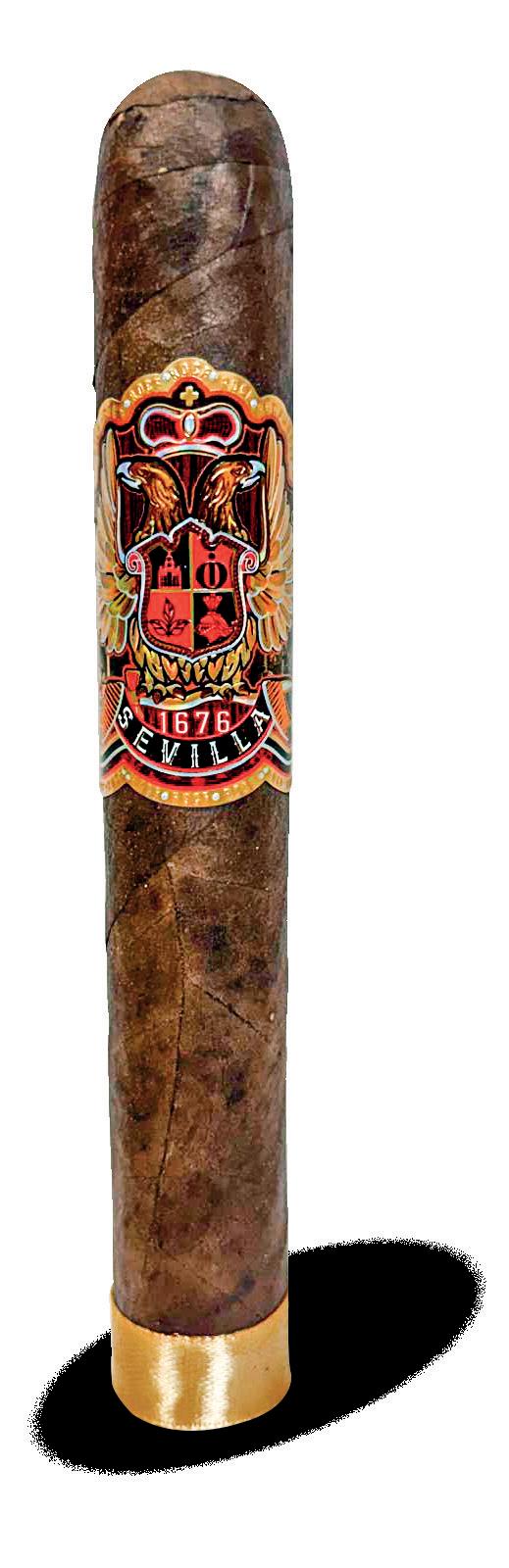
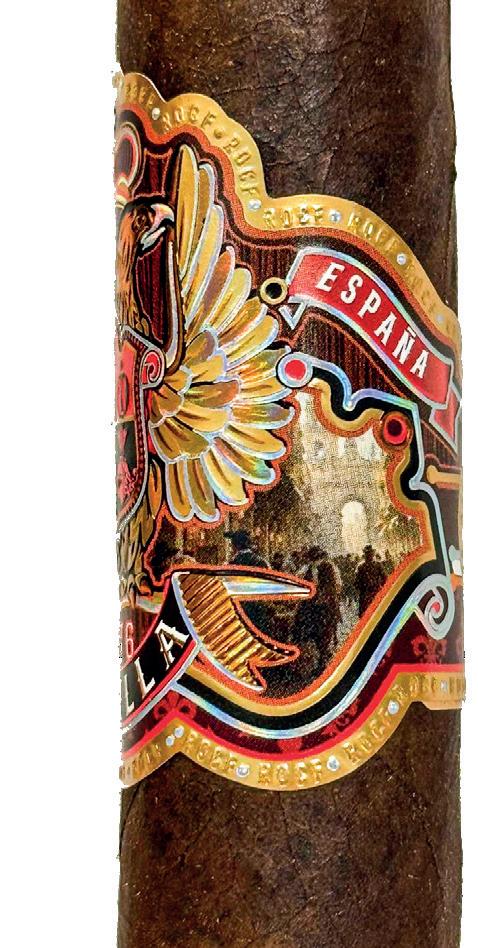
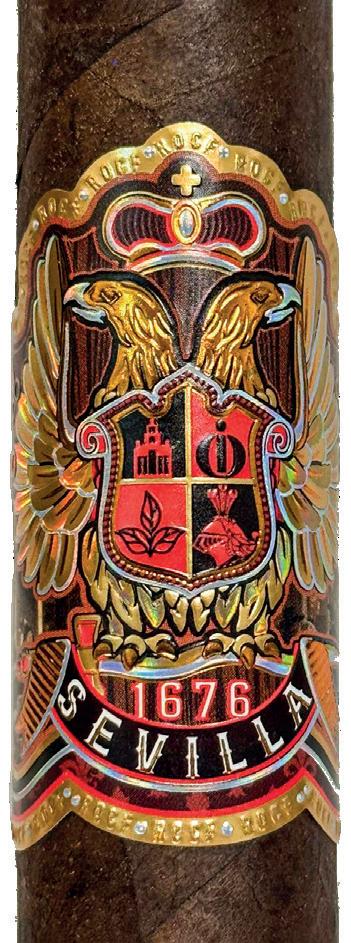
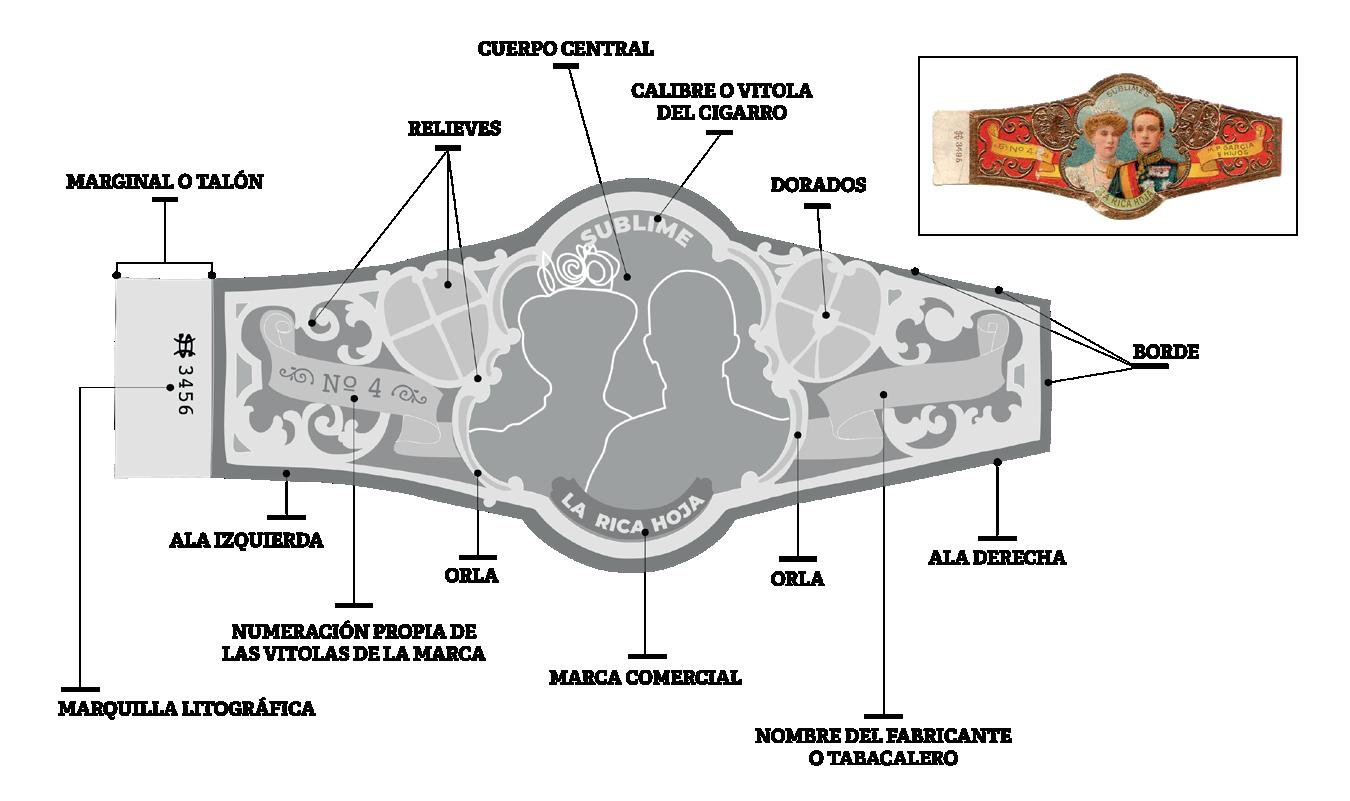
At first glance, the Sevilla 1676 by B.A.M.F Cigars is simply a 6-inch, 58ring gauge Gran Toro, decorated with a very elegant band crafted from five layers of gold leaf. But beneath that exquisite detail lies an important chapter in the history of tobacco.
According to Ismael R. Oliván –a certified tobacconist and instructor for Tobacconist University– when Christopher Columbus and his men passed through the Dominican Republic and Cuba, they witnessed the native population smoking tobacco.
The Taínos were already familiar with the drying and fermentation processes, but they still consumed tobacco in a rudimentary way, rolling a single leaf to smoke.
Thus, when Columbus returned to Spain, he did so with a large shipment of tobacco leaves and seeds. In Seville, in 1676, a way to better enjoy it was invented: the construction format consisting of wrapper, binder, and filler that prevails to this day. This also opened the possibility of creating blends by incorporating more than one leaf into the process.
“This has not changed in hundreds of years, except for the different varieties and origins of the tobaccos used today, but the construction of a cigar remains practically the same,” Ismael explains.
As such, the Sevilla 1676 is crafted with tobaccos from Gran Canaria and Extremadura –specifically from Campo Arañuelo, La Vera, De La Mata, Huelva, and Navalmoral. With this blend, Ismael R. Oliván seeks to recreate the flavor of those first cigars fashioned four centuries ago. “Everyone thinks that the cigar as we know it was created in Cuba, but that is not the case. It was in Seville, and this is my way of making it visible and paying tribute to it.”
This cigar is included within the Factory Reserve Cigar Club package, offering its members the privilege of tasting it for the first time.
Infotep and Procigar Inaugurate
School of Tobacco Artisans
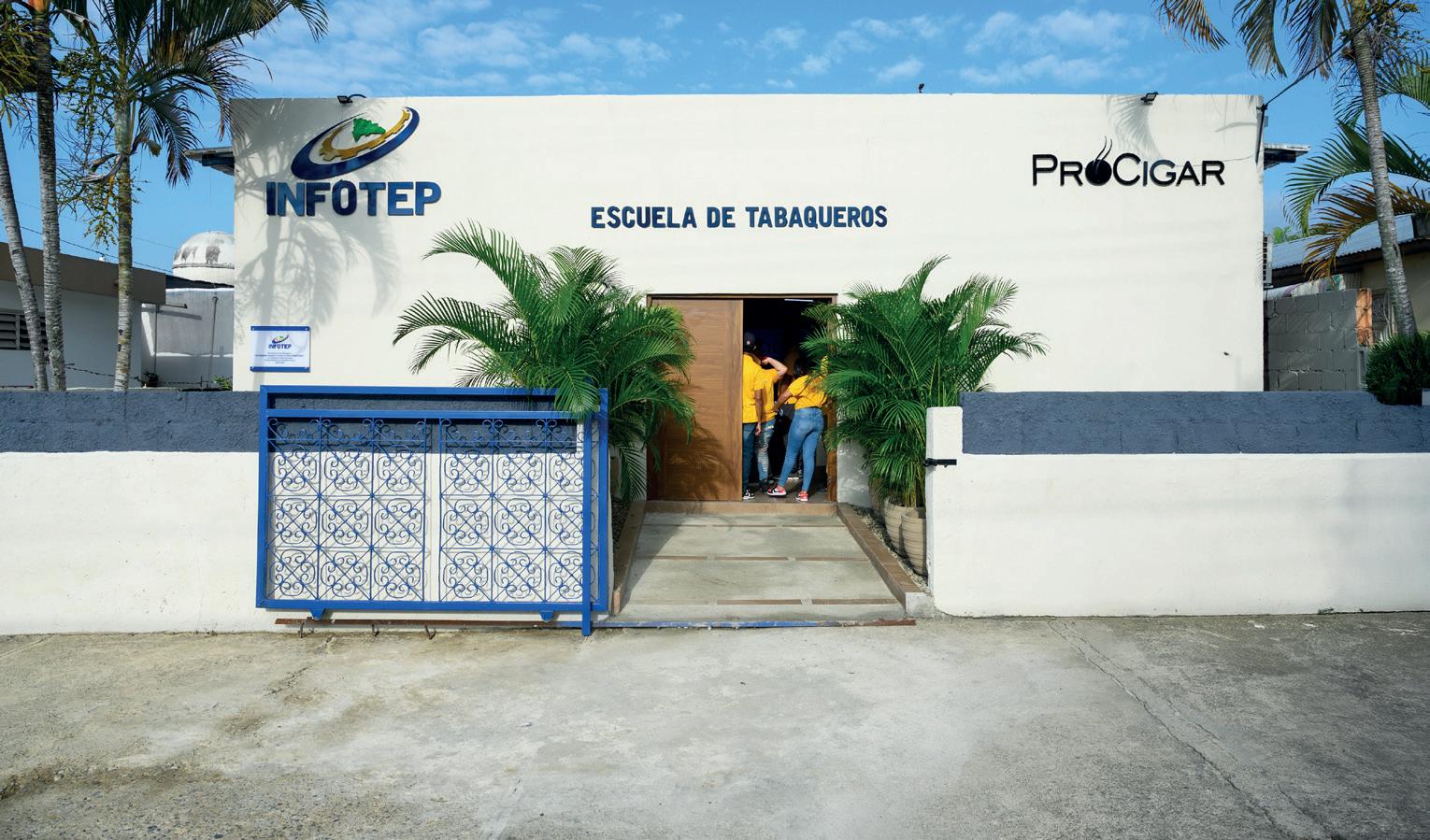
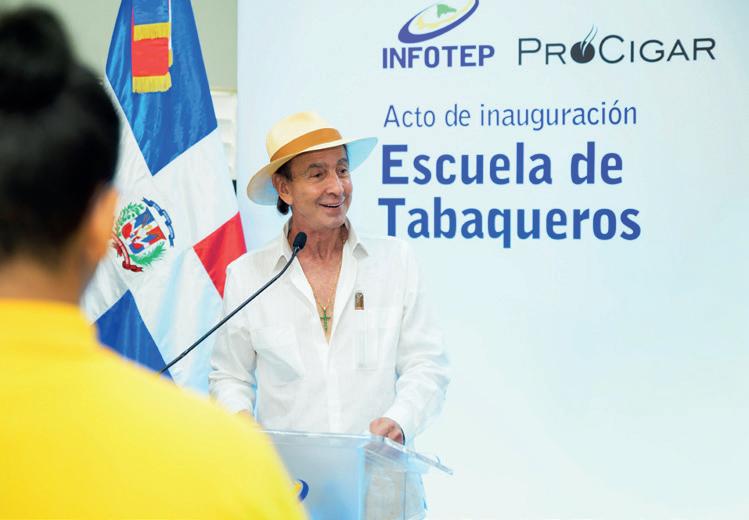
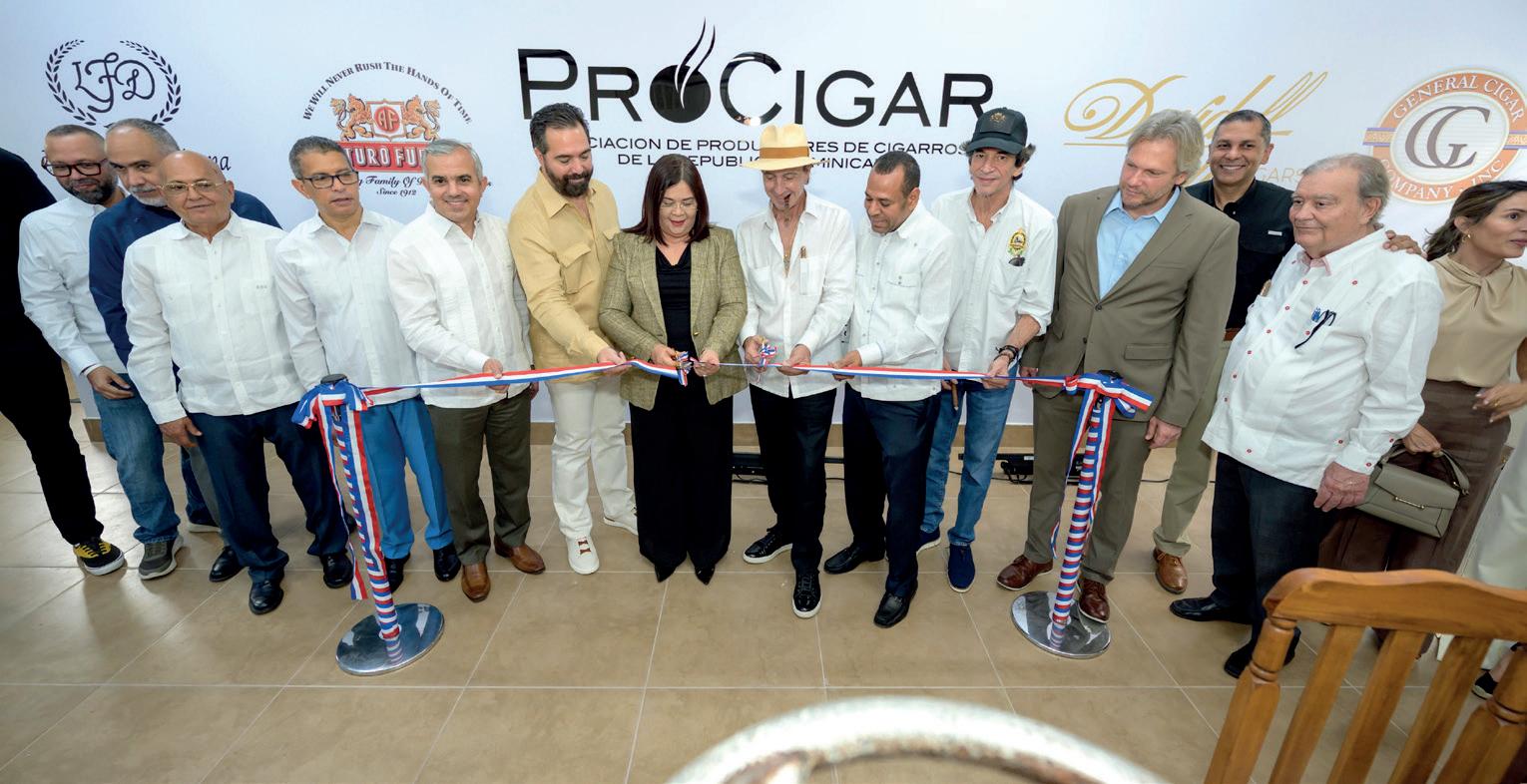
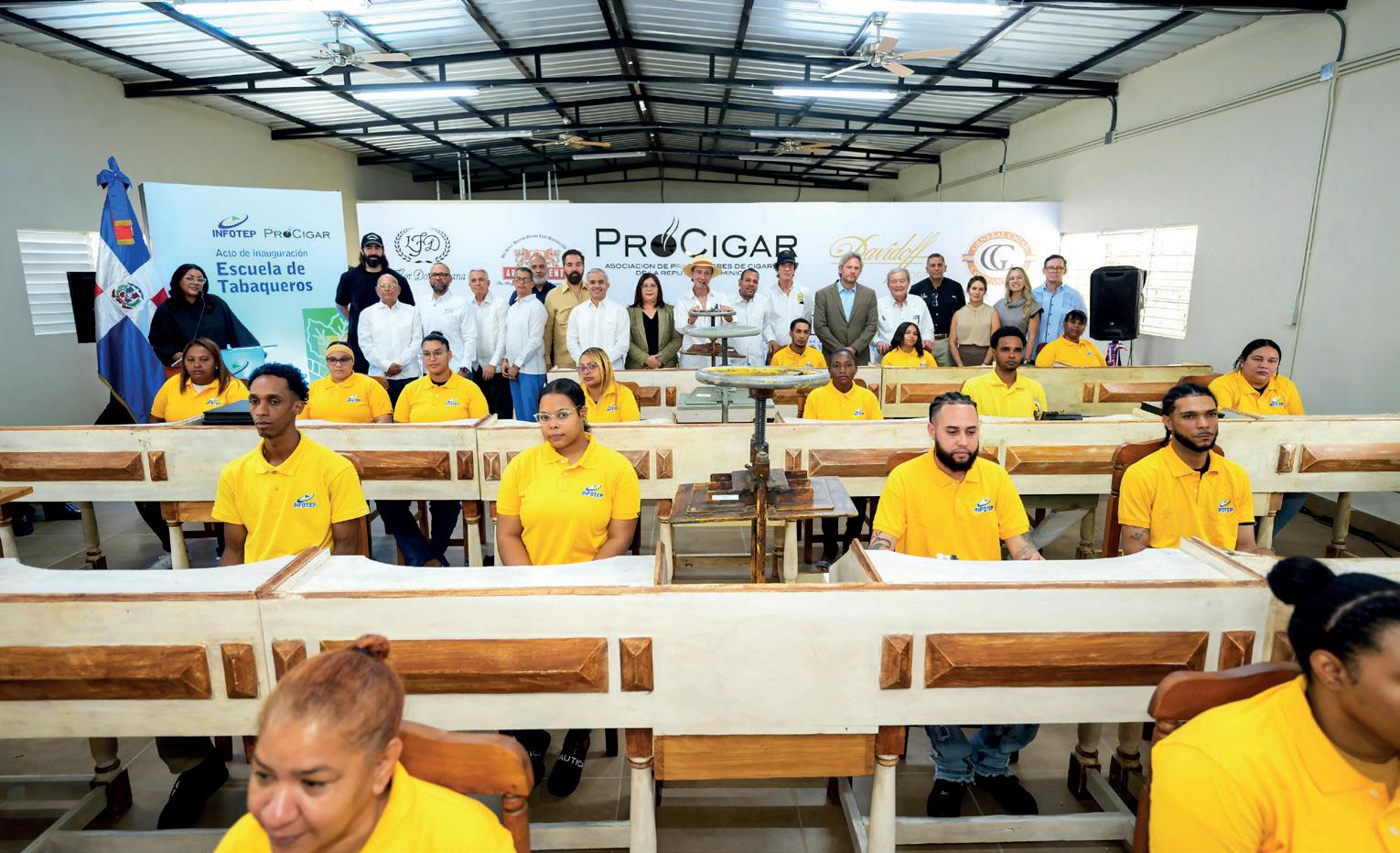
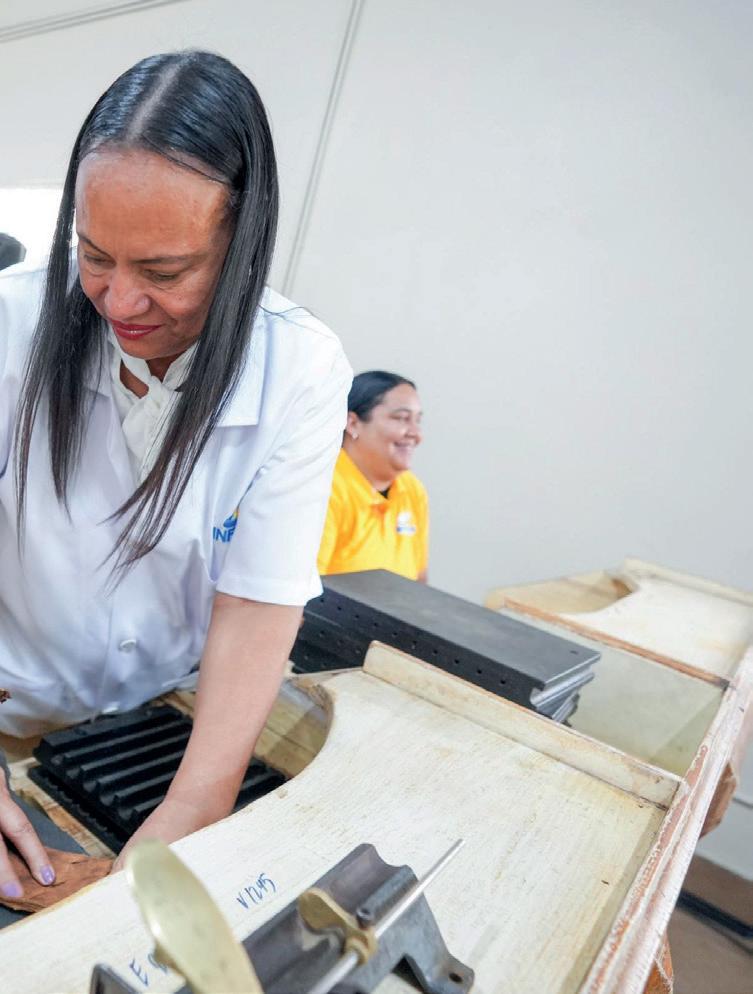
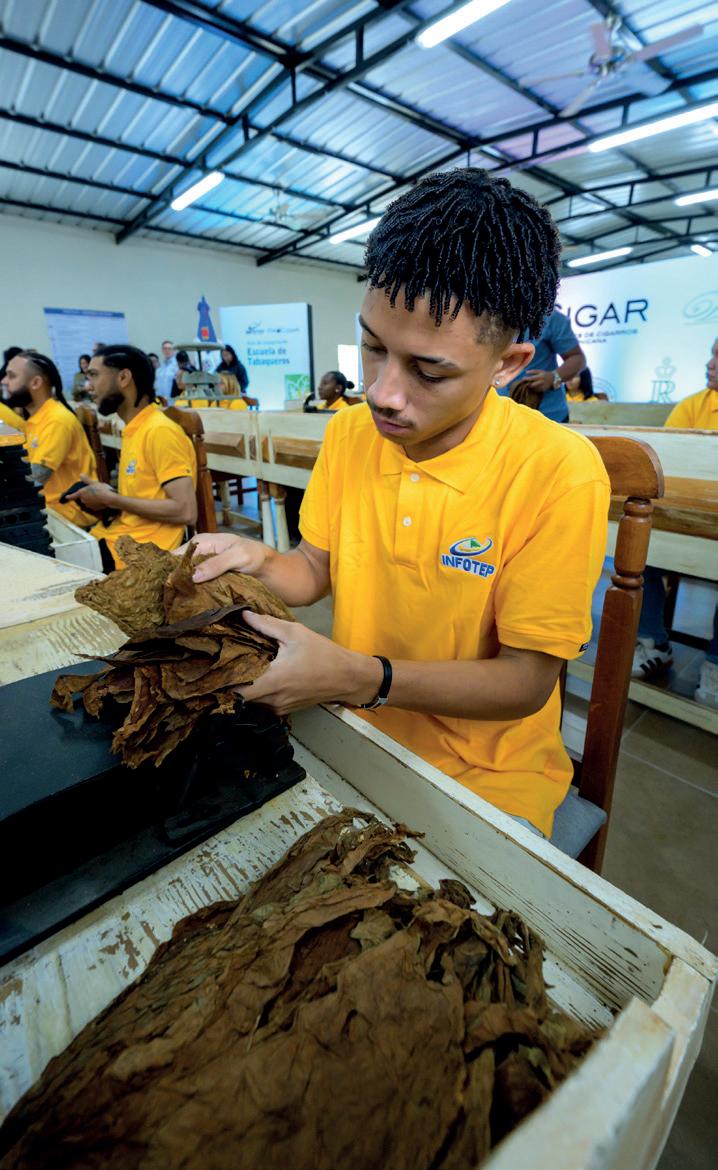
The National Institute of Technical and Vocational Training (Infotep), in partnership with the Association of Dominican Cigar Manufacturers (Procigar), officially inaugurated the Procigar–Infotep School of Tobacco Artisans in Tamboril. This strategic initiative was designed to strengthen workforce development, employment generation, and the long-term sustainability of the Dominican premium cigar industry.
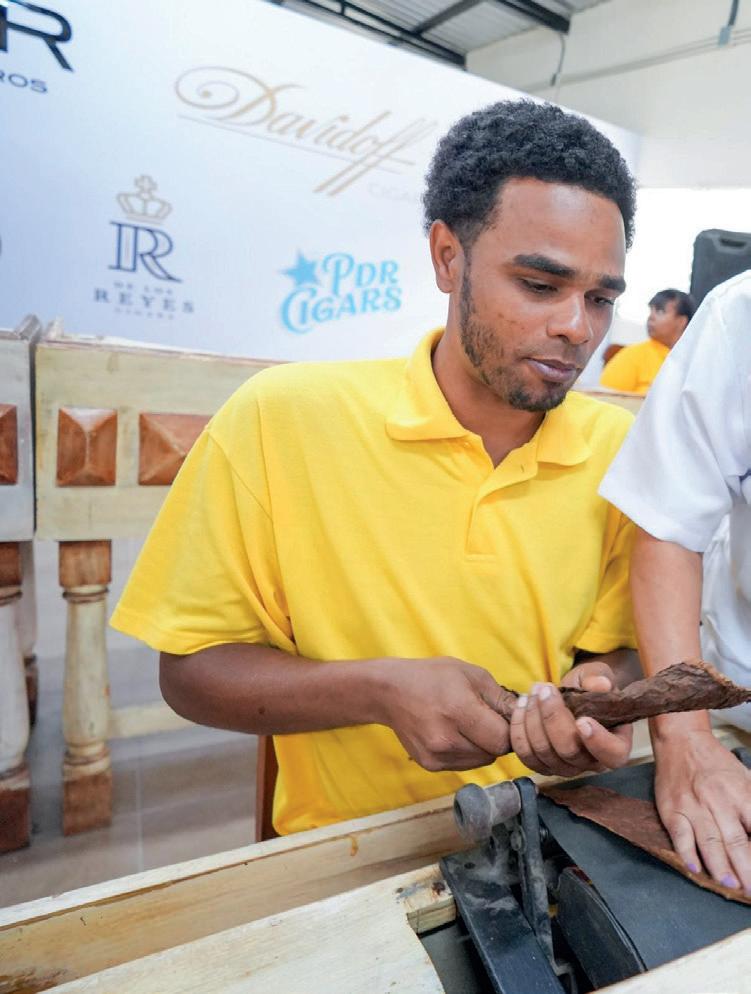
The school addresses a critical need within the sector: the systematic training of new generations of highly skilled artisans under internationally recognized standards. In its initial phase, the program includes four groups dedicated to premium cigar manufacturing, benefiting 88 participants.
Each group will receive 135 hours of intensive technical and practical training, covering all production stages, including leaf selection and processing, stemming, humidification, blending, bunching, pressing, wrapper application, finishing techniques, and quality control.
The President of Procigar, Litto Gómez, stated that the creation of the school is rooted in the industry’s responsibility to preserve excellence and ensure continuity.
“This school was born out of necessity. The Dominican cigar industry depends on the knowledge, discipline, and skill of its artisans. To guarantee quality, prestige, and long-term sustainability, we must train tobacco workers according to international standards established by Procigar. Thus, this institution ensures that the art of cigar making is preserved, strengthened, and passed on with excellence,” he added.
Litto Gómez further highlighted the social and economic impact of the initiative, as graduates will have access to dignified employment opportunities with competitive incomes within one of the Dominican Republic’s most important export industries.
Litto Gómez, president of Procigar.
“These students will not only learn a trade; they will become productive members of society through skilled and honorable work. The tobacco industry creates real opportunities, supports families, and strengthens entire communities while preserving a cultural legacy that is fundamental to our national identity.”
Beyond technical training, the curriculum includes instruction on tobacco culture and its transcendental importance to the Dominican economy. Participants will also be guided under a values-based approach that promotes respect, responsibility, discipline, and courtesy –principles considered essential for professional excellence and personal development within the industry.
The Procigar-Infotep School of Tobacco Artisans will operate with 24 students per course and offers flexible schedules to ensure accessibility. Classes are held Monday through Friday in morning (08:00 to 12:00), afternoon (14:00 to 18:00), and evening (18:00 to 22:00) shifts, as well as Saturdays from 08:00 to 16:00.
Infotep’s Deputy General Director, Maira Morla, underscored that the school represents a decisive step in strengthening human capital and generating a direct positive impact on local economies, while municipal and national authorities highlighted the project as a successful model of publicprivate collaboration.
With this initiative, Infotep and Procigar reaffirmed their shared commitment to workforce excellence, social development, and the global leadership of Dominican premium cigars –an industry that remains a pillar of the national economy and an international benchmark for quality and craftsmanship.
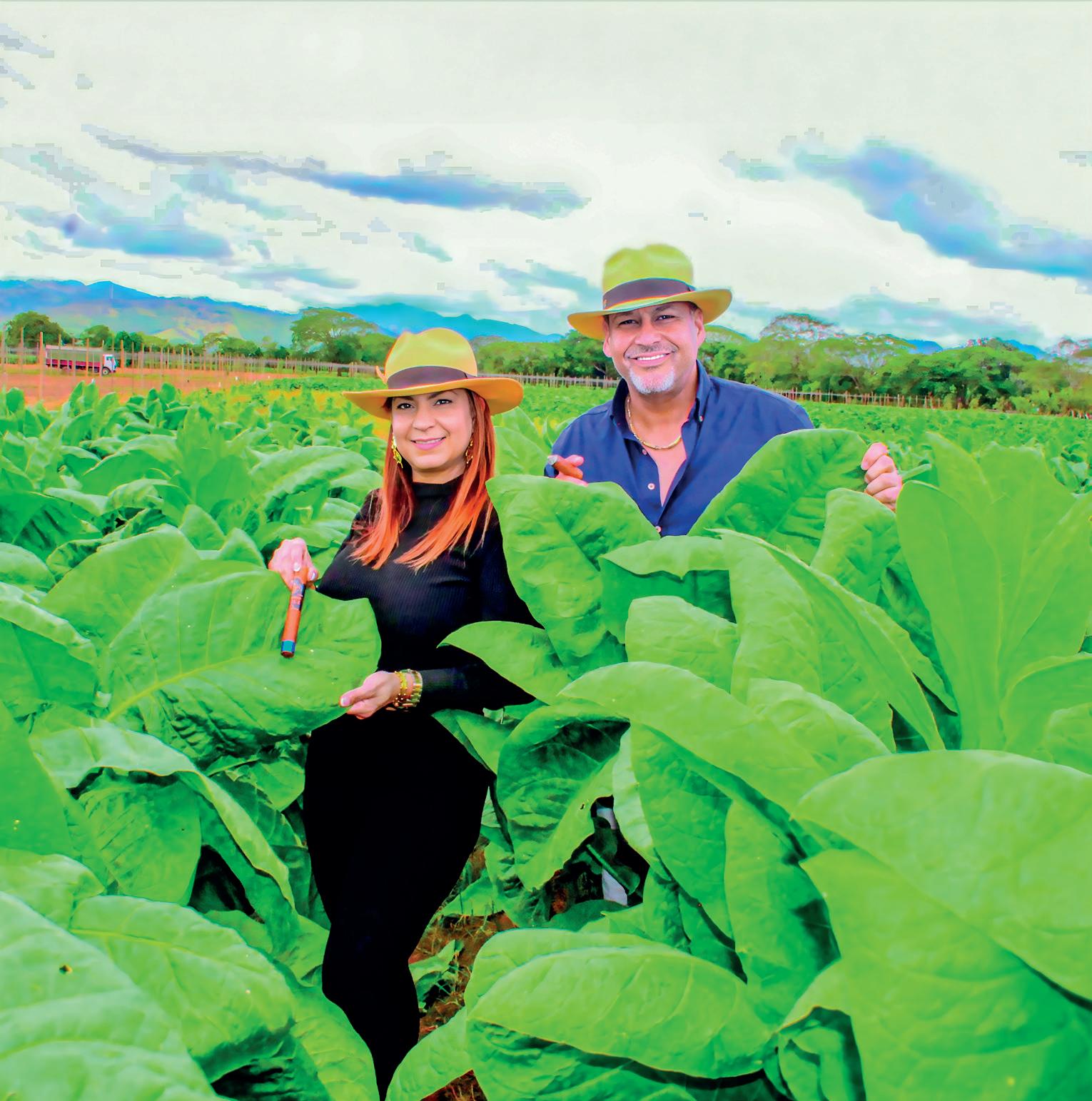
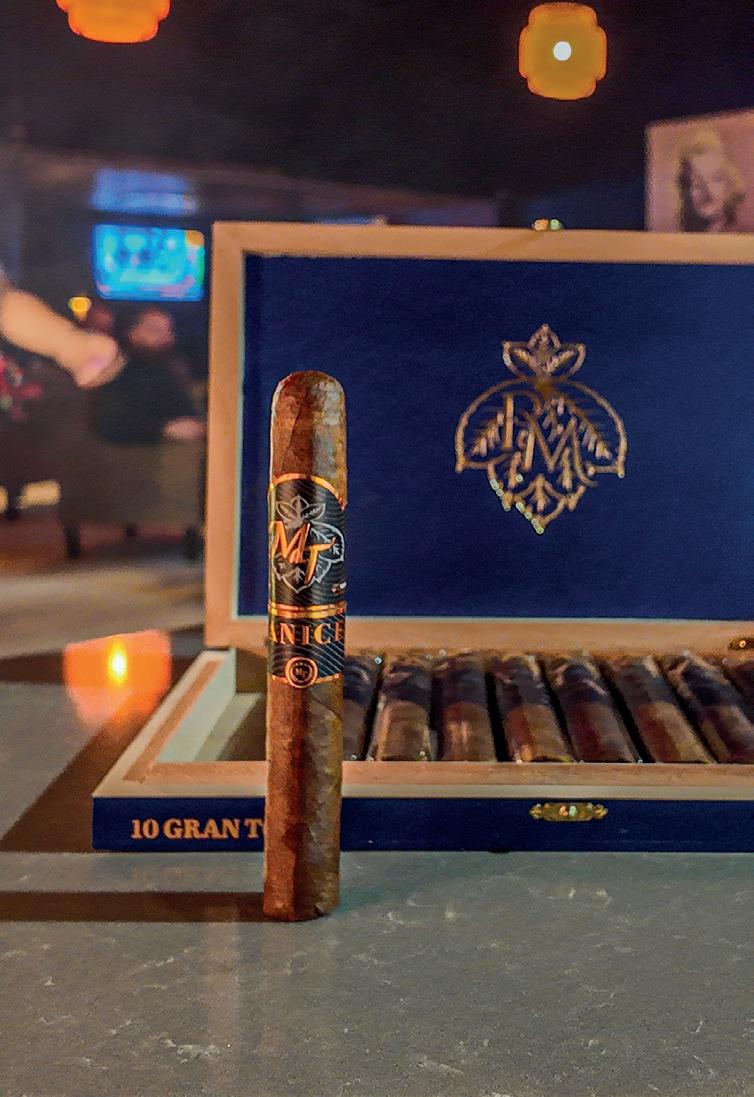
Tabacalera Márquez Torres
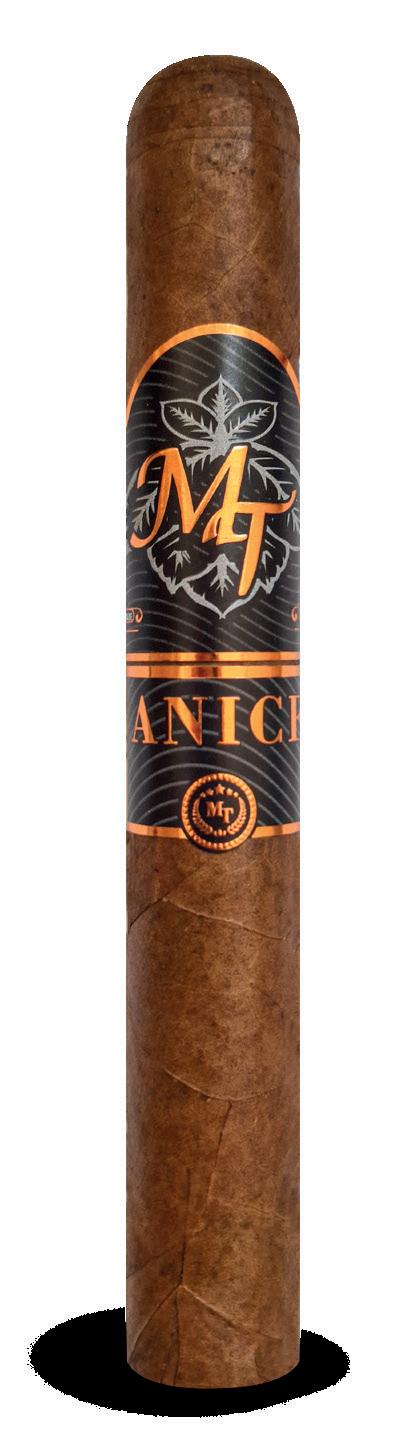
Señor Aniceto
Darwin Marrero
Señor Aniceto is a declaration of love between two sister islands: Borikén (Puerto Rico) and the Dominican Republic. Crafted as an ode to the Cibao Valley, its filler contains a leaf from each of the six provinces that make up this fertile enclave, considered a tobacco paradise. The result is a complex, refined, and deeply evocative smoke that moves with elegance through a myriad of flavors and nuances.
The construction of the cigar is impeccable, a testament to the artisanal mastery of the Dominican hands that crafted it. Its flavor reveals the expertise of the Master Blender, Pito Márquez, whose vision is embodied in every puff.
Márquez named the cigar Señor Aniceto after recognizing his father’s character in the smoking experience. Don Aniceto was a gentleman whose love and affable nature earned him the respect and affection of everyone. Those who did not appreciate him soon discovered his other side: firm, tough, and decisive.
Vivian Torres and Luis Pito Márquez.
The cigar offers an outstanding pricequality ratio within its category. Its construction and the experience it provides are comparable to higher-priced references, positioning it as a competitive option in the segment.
Señor Aniceto is ideal for both the experienced smoker seeking an assertive and sophisticated experience and for those wishing to celebrate a special occasion. Whether in the morning with a coffee or at night accompanied by a Caribbean rum –Dominican or Puerto Rican– any moment is perfect to enjoy it.
CHARACTERISTICS
▶Format: Toro Gordo, 6.5 inches, 55 ring gauge.
▶Wrapper: Habano 2000.
▶Binder: San Andrés.
▶Filler: Dominican (one leaf from each tobacco province).
▶Weight: 21 grams, average.
▶Smoking Time: 90–120 minutes.
▶Suggested Price: $25 USD.
Cold Draw:
A cold draw reveals notes of molasses, not overly sweet, with a smoky touch reminiscent of toasted caramel.
Lighting:
Lighting is effortless, and the burn remains regular and consistent without the need for corrections. The ash, a uniform gray tone, maintains its integrity with elegance.
The Señor Aniceto is, undoubtedly, the crown jewel of Tabacalera Márquez Torres. Its smoke demands grace, patience, and full attention. Flavors are abundant and evolve dynamically, while the strength progressively increases, nearly reaching a full level without losing its refinement.
Final Third:
The deep character of the Señor Aniceto is revealed here. The creaminess gives way to an intense smoke marked by earthy notes, espresso, traces of black pepper, whole wheat bread with oats, and a subtle soy umami. The retrohale intensifies, showing the robust soul of this blend.
Second Third:
Intensity rises; the chocolate evolves into cocoa, and flavors of nuts, hay, and roasted coffee emerge. The creaminess persists through the first half, while the strength transitions from medium to medium-full. The retrohale adds a hint of anise that complements the white pepper, creating an enveloping aromatic experience.
First Third:
In this initial stage, the smoke is creamy, featuring notes of chocolate, gingerbread, cedar, cinnamon, and mild spices. The retrohale surprises with white pepper and an ozonic freshness that anticipates the blend’s latent strength.
Although conceived as a love letter to the Cibao Valley, the Señor Aniceto stands as an exceptional introduction for its creator. For those of us who value the art of smoking as a sensory ritual, this cigar is an invitation to savor Dominican history, culture, and tobacco passion.
Madrid, among smokes
Barcelona, Between Gaudí and the Epicure No. 2
The Casa Batlló
Sofía Ruiz Master Habanosommelier
There are cities or places that become our sanctuary –spaces where we feel relaxed and, in a way, in harmony with the sensations they evoke. For me, Barcelona has become that refuge amidst the chaos of professional and personal routines. After several business trips over the past year, its landscapes, spectacular gastronomy, and the art that saturates the city have gradually transformed it into my second home.
Located in northeastern Spain on the Mediterranean coast, Barcelona is the second-largest city on the Iberian Peninsula, one of the most populous, and the most visited by tourists annually. Perhaps it is due to this very sense of sanctuary? As the capital of the autonomous community of Catalonia, it is also global: a crucible where different cultures melt together, and where tradition, modernity, and dynamism converge.
GENIUS AND STATURE
In my wanderings, I reached the famous Las Ramblas and Passeig de Gràcia, comparable to Avenida de los Insurgentes in Mexico City, Gran Vía in Madrid, or the connection of Piccadilly Circus to London’s main arteries. In the late 19th and early 20th centuries, this boulevard –considered as such due to its width and design– housed the homes of the Catalan bourgeoisie.
Here we find part of the magic of Antoni Gaudí, and the city seems to open up to make way for the universe born of his brilliance and a vision that defies time. Casa Batlló and Casa Milà (better known as La Pedrera) stand out as authentic symbols of an art that beats in the heart of Barcelona.
One cannot think of Catalan architecture without Gaudí; from my perspective, they are one and the same. I will open a small parenthesis to speak more about this figure, who gifted us some of the most extraordinary works in a discipline that can transform a simple circle into a light entrance shaped like a tortoise shell.
As Elies Rogent, director of the Barcelona Architecture School, expressed in 1878 on the day of Gaudí’s graduation: “We have given this title to either a fool or a genius; time will tell...” and so it did.
Antoni Gaudí was born in Reus or Riudoms, Spain, on June 25, 1852, and moved to Barcelona in 1868. Once in university, he alternated his studies with work for prominent architects like Joan Martorell, his main mentor.
Among his early works is Casa Vicens (1883–1885), though on November 3, 1883, he accepted what would be his greatest challenge: the construction of the Sagrada Família. The main structures of this temple are set to be completed this year, 2026, marking the centenary of his passing.
Like many enlightened souls, Gaudí met a tragic end: he was struck by a tram on June 10, 1926. Due to his disheveled, almost beggarlike appearance at the time, he went from being a gentleman of elegant bearing to being practically ignored on the day of his death.
VISIONARY MEN
One afternoon, I set out to visit one of the great works Gaudí left us. Remembering his words –“Originality consists in returning to the origin”– I made my way through the crowds on Passeig de Gràcia to Casa Batlló, located in the famous Manzana de la Discordia (Block of Discord).
The original building was constructed in 1877, and José Batlló i Casanovas purchased it in 1903. Batlló was a Spanish industrialist and businessman, a visionary of his time and the patron of what would become a masterpiece of Spanish Modernism.
Parallelly, another equally visionary Spaniard left his mark in a very different but equally emblematic field: José Gener, the founder of Hoyo de Monterrey, one of the noblest and most iconic Habano brands. Both men, in their respective fields, transformed the everyday into art and left a legacy that continues to inspire.
Gener, originally from Tarragona, arrived in Havana at age 13. By 1865, he had acquired total mastery of tobacco and
purchased the Hoyo de Monterrey farm in San Juan y Martínez, Pinar del Río –the property that gave the brand its name.
A RACING HEART
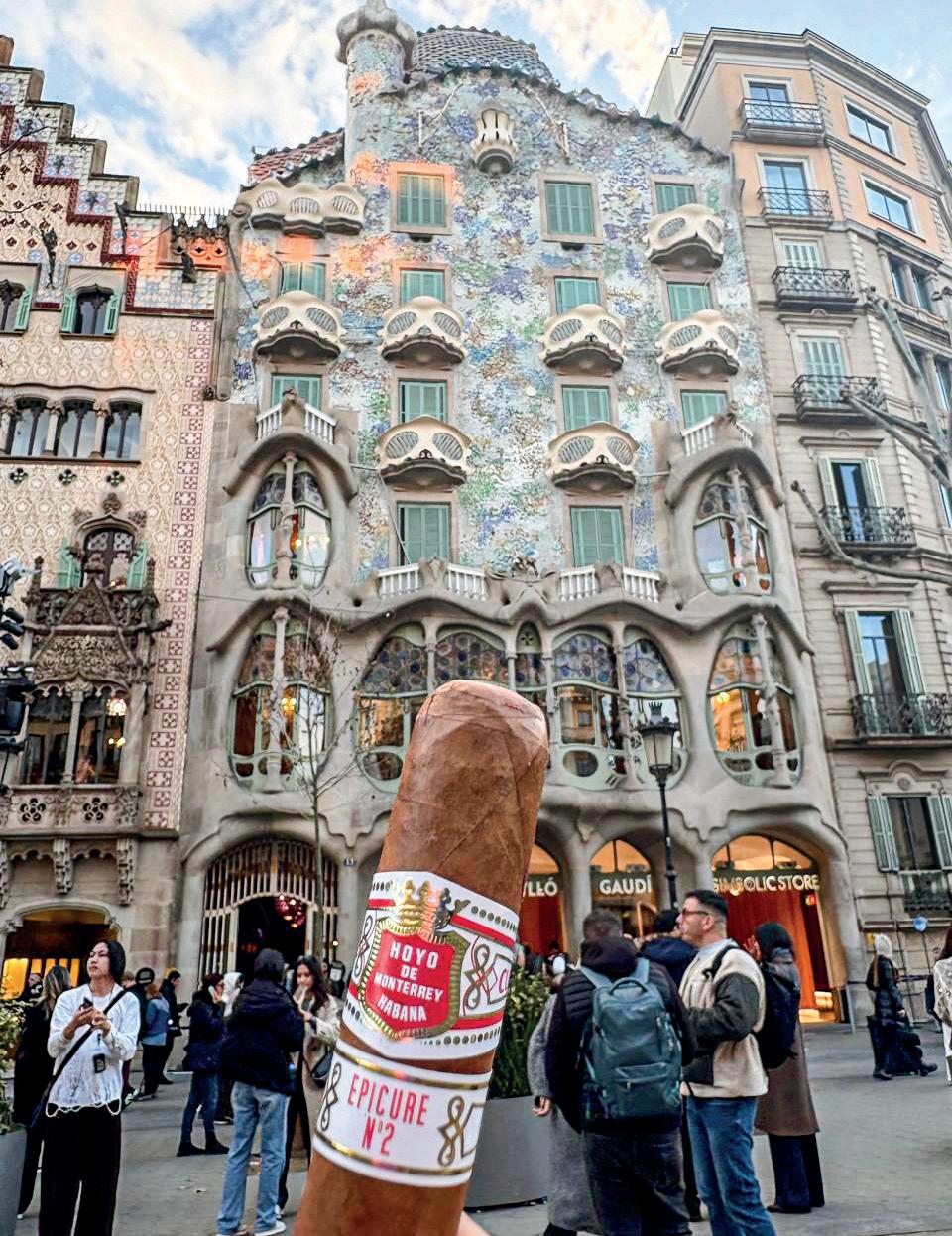
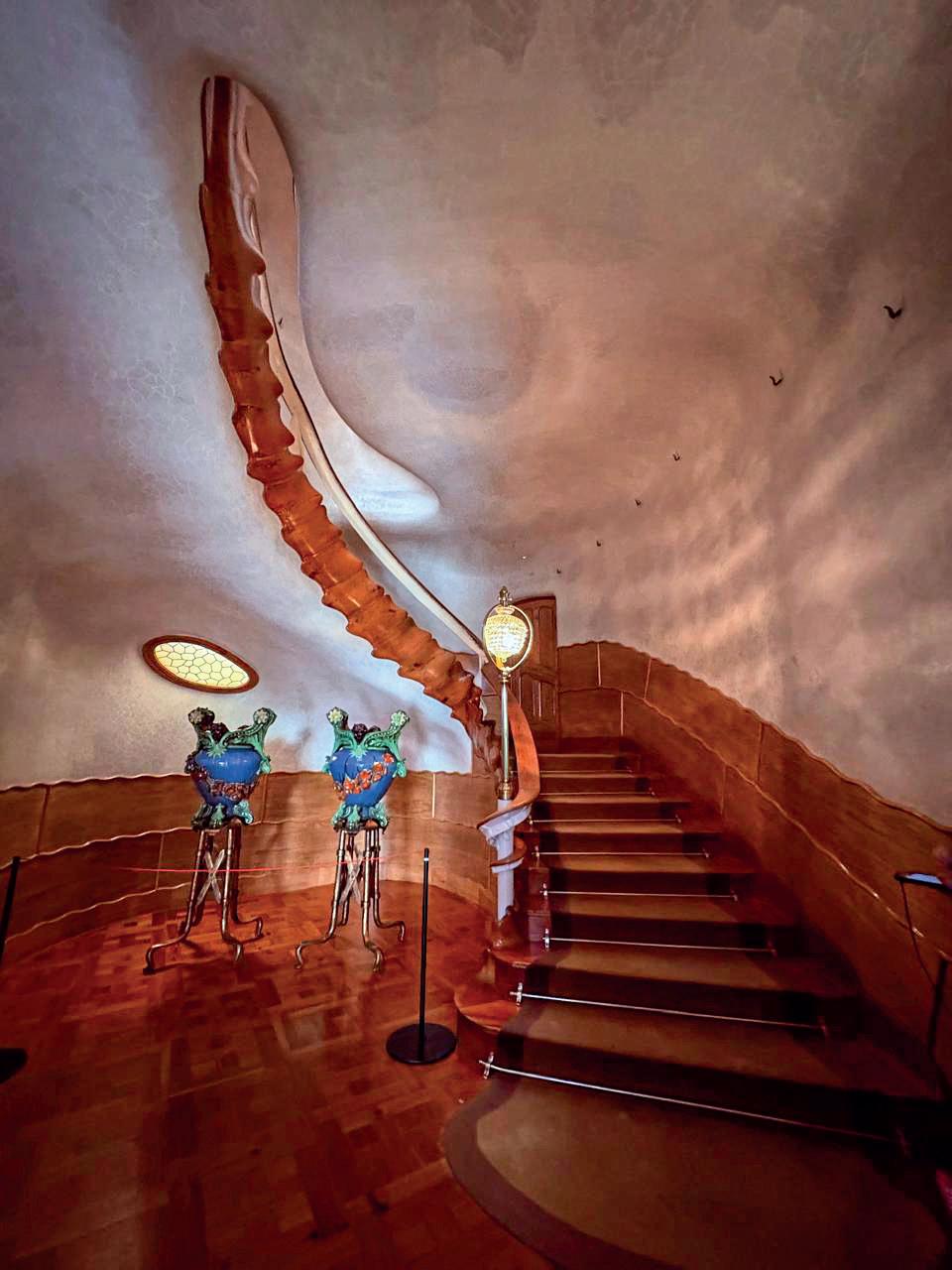
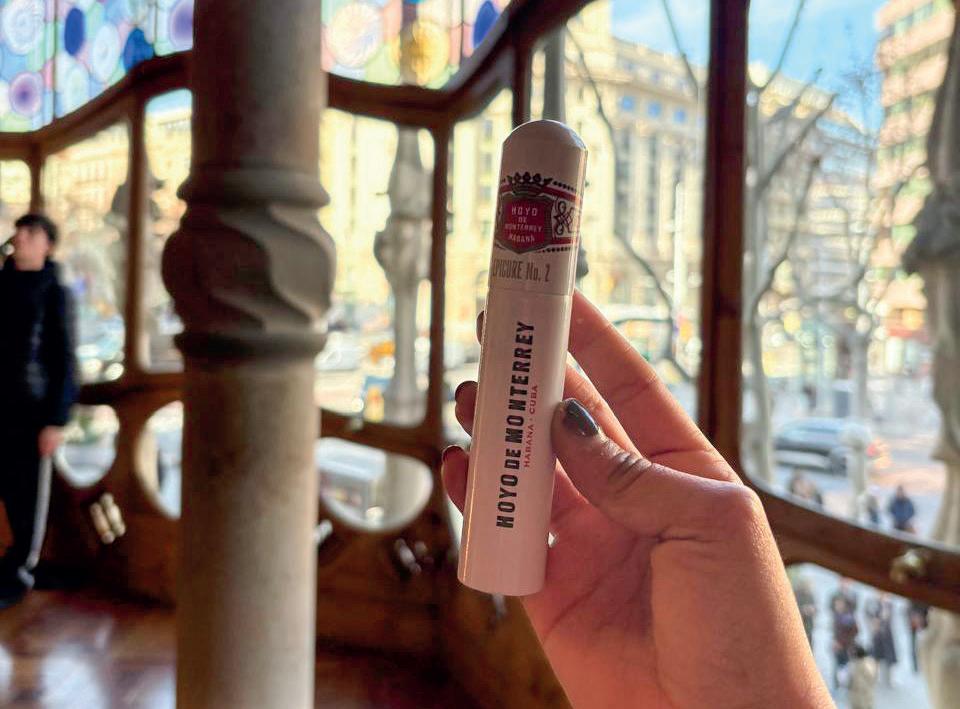
For that day, I chose the vitola I consider most emblematic: the Hoyo de Monterrey Epicure No. 2, a Robusto, 50 ring gauge, 124 mm lengh. It was the first Habano I ever enjoyed when I first entered this culture of fine smoke. Entering the house feels like stepping onto the ocean floor: shellshaped windows and tones of white and blue blend with a spectacular staircase, whose wooden handrail evokes the spine of a whale.
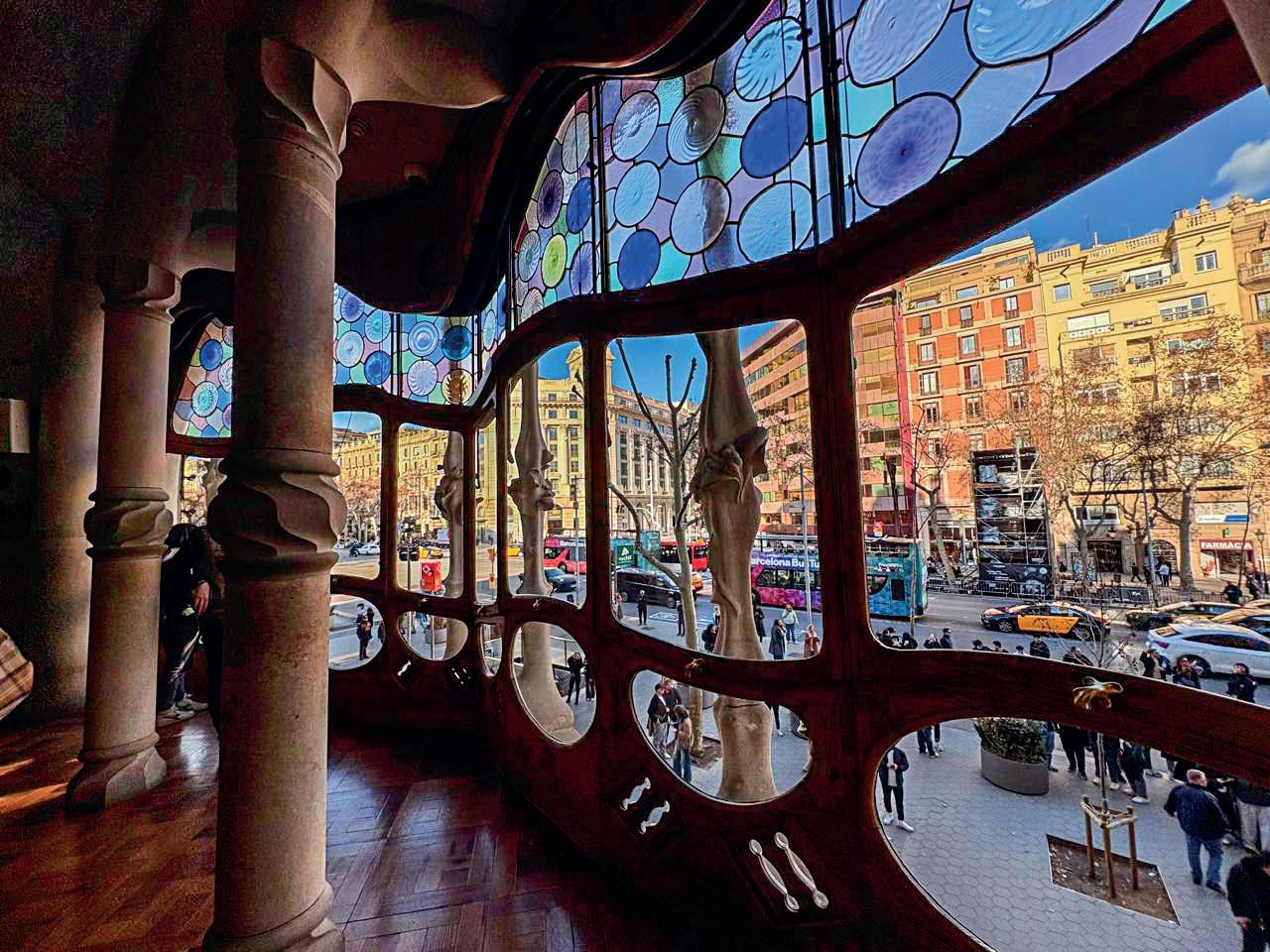
The best moment was crossing the staircase. From the ceiling, snailshaped windows allow a spectacular light to illuminate the first floor. I felt a peace that is hard to describe... because Casa Batlló is experienced through the senses; it accelerates the heart.
The first floor is the heart of the home and a reflection of Gaudí’s identity: his play between architecture and nature. At the front lies Mr. Batlló’s office, where a mushroom-shaped fireplace invites one to imagine the conversations held there and the number of Habanos that must have been lit in that room.
The main salon features a massive window acting as a platform over Passeig de Gràcia. Other highlights include oak doors with organic shapes and a completely undulating ceiling that alludes to the strength of the sea.
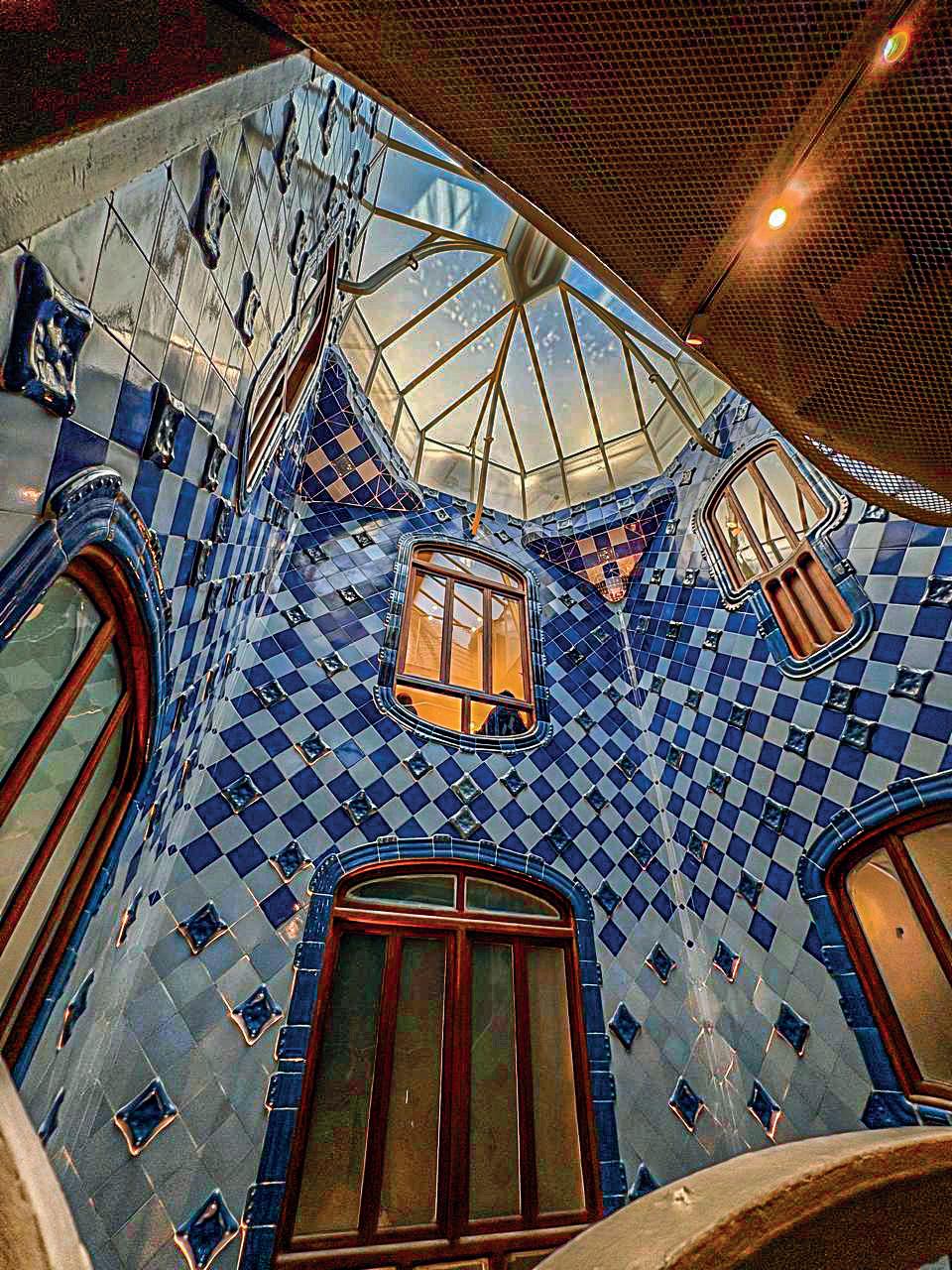
The lightwell warrants a detailed look from the very top of the house. The upper windows are smaller, and as you descend, they become larger; an ingenious effect that allows for a balanced distribution of natural light. You can even interact with the wooden slats at the base of these windows; you will be in for a pleasant surprise.
The varying shades of blue reflected in the tiles lining the high walls of these wells –there are actually two of them– reminded me of the facade of the Casa de los Azulejos in Mexico City, home to the iconic Sanborns.
THE GAUDINIAN MOMENT
Without a doubt, every corner of the house heightens the senses from a personal perspective. Just as it happens with a Habano, every enthusiast enjoys it differently: some prefer a specific third, while others are drawn to the history or the strength of the brand, for example. My philosophy is that every Habano has its moment.
This is exactly what happened to me with the doors. We might take for granted that they are simple, boring rectangles, but at Casa Batlló, the wood takes on circular, star-like, and other shapes that invite exploration. Unfortunately, I found no additional information to explain these motifs in detail, but perhaps this warrants a return visit –and another vitola waiting to be discovered.
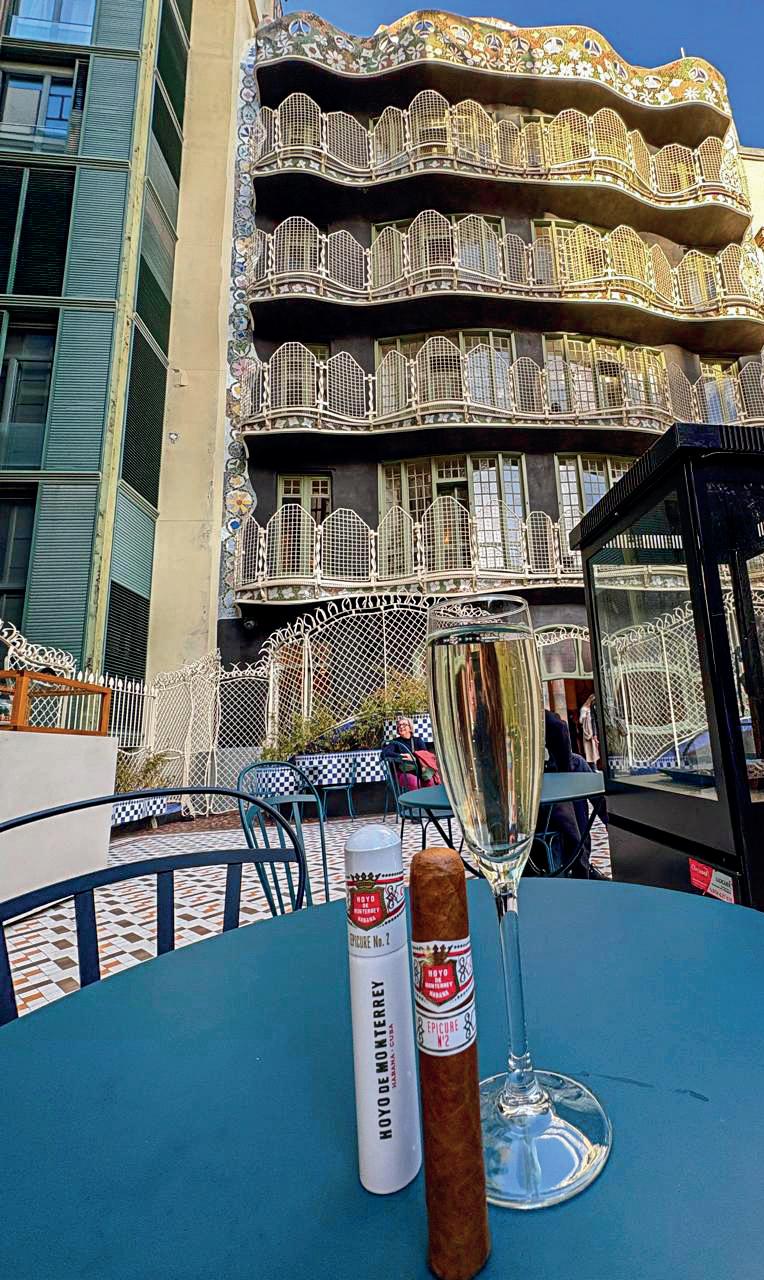
The main courtyard is a small oasis in the heart of enigmatic Barcelona. It was designed as a vertical garden of glass and ceramic, symbolizing a climbing plant. From this vantage point, one can observe the iron balconies protruding from the rooms.
It was then that a Gaudinian moment struck me: a humid chill against my skin. Yet, I dared to sit and enjoy a delicious glass of Cava, a staple in Catalan lands. This brought back the memory of the first time I smoked a Hoyo de Monterrey Epicure No. 2 ten years ago –alongside my bosses– during a sort of job orientation.
Now, that Habano led me to reminisce and reaffirm my path in this world. I knew that later, in another place, I would light up and enjoy, puff by puff, the rich Cuban black tobacco and its culture.
IMAGINATION AND SURREALISM
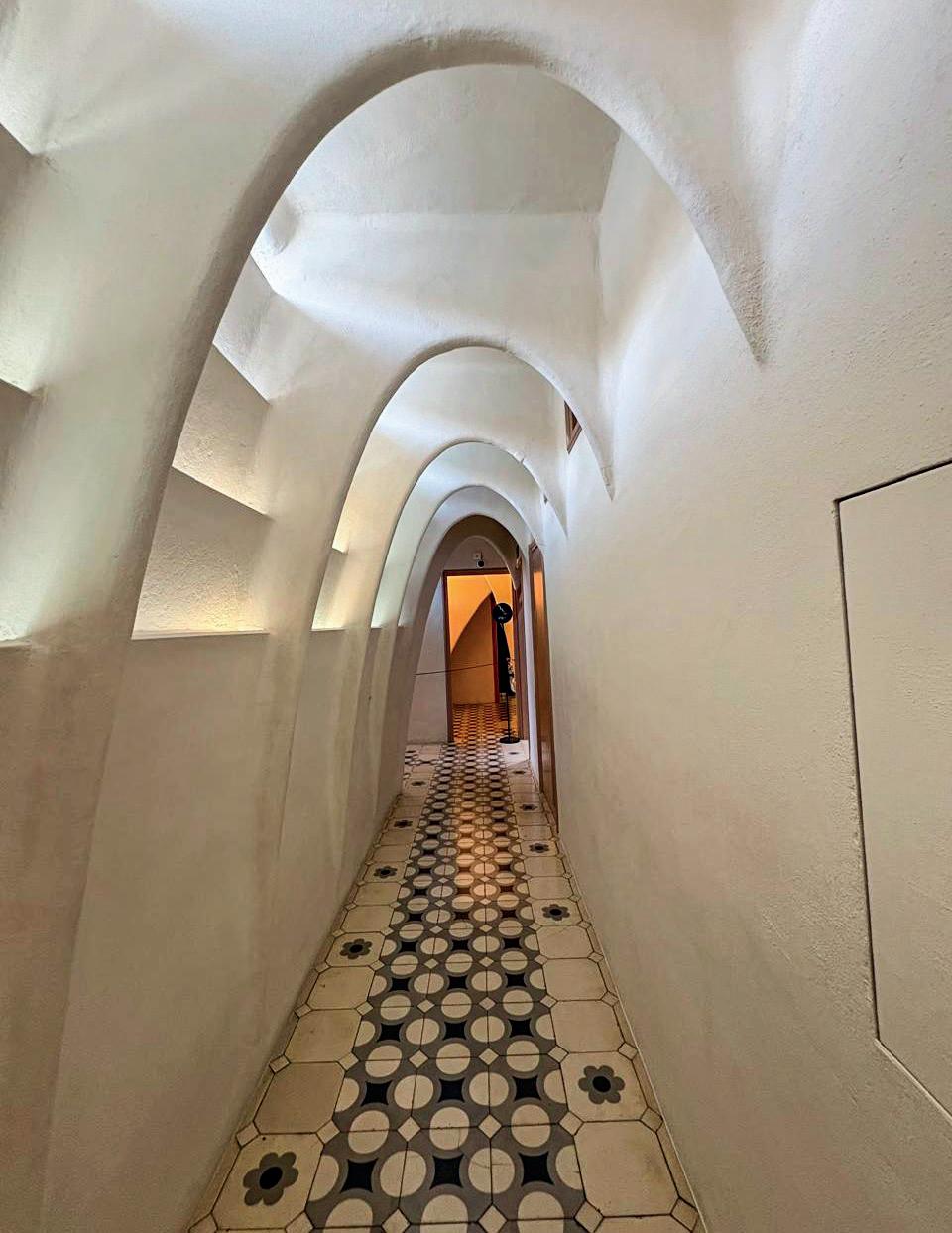
On the top floor of the building, the attic is a space that looks like something out of a Tim Burton film. You can imagine being inside an animal, in an exquisite combination of aesthetics and functionality. The simplicity and minimalism of its forms –between the white color covering the entire room and the play of sixty catenary arches crossing it– resemble an animal’s ribcage.
To my luck, near the end of the tour, the house offers an impressive descent through all its floors, accompanied by an exhibition by Japanese architect Kengo Kuma. Through curtains made of aluminum beads, the installation pays homage to the Mediterranean: its light and shadows, and the colors of its sky and sea.
But... as with every visit, the best is yet to come. When speaking of Casa Batlló, the first thing that comes to mind, of course, is its façade. I wanted to save this space for last, because to truly discover it, you need to traverse and understand Gaudí’s art first. Just like with people, you must get to know them first to later understand their essence and marvel at their gaze.
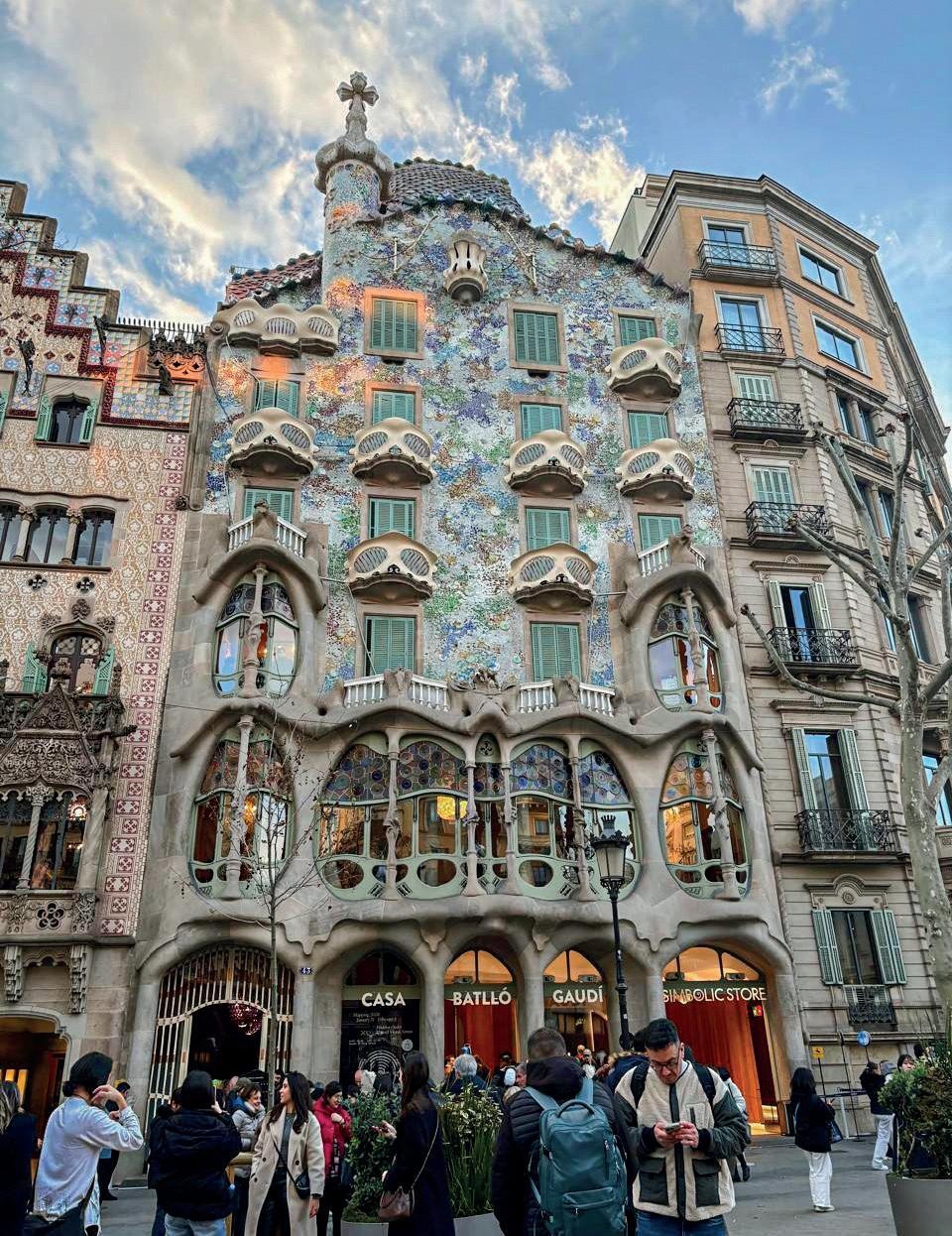
The façade is like Alice in Wonderland brought to life. Filled with imagination and total surrealism, its marine shapes highlight the effect of an undulating surface made of stone, glass, and ceramic. And in the morning light, it glows.
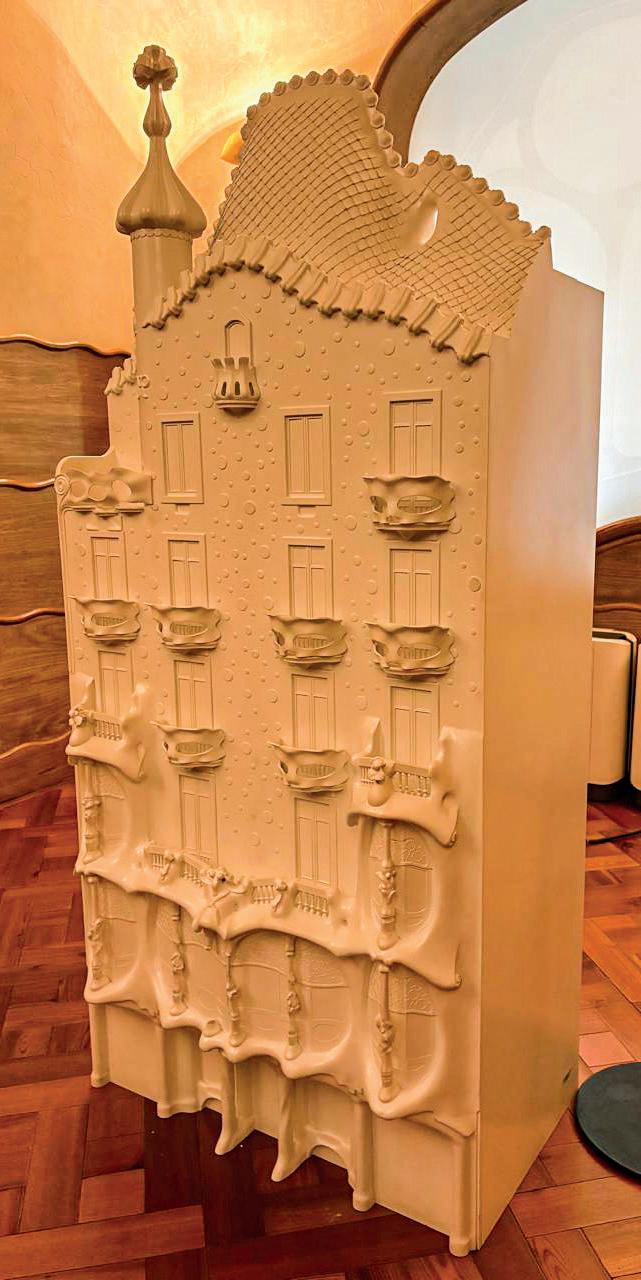
The front incorporates stone columns with bone-like shapes and Modernist floral details. A highly striking feature at first glance are the balcony “masks,” which seem to protrude from the building in three dimensions. The house itself is crowned by a spectacular roof formed by large scales that simulate an animal’s back. Another prominent element is the tower, from which a four-armed cross emerges, corresponding to the cardinal points.
Its blue, green, yellow, and orange tones resemble watercolors about to spread across a blank canvas. Apparently, Gaudí never offered explanations regarding the design or the meaning of the façade’s elements. That is why every visitor makes their own interpretation... Just as in life, where everyone defines their own meaning, and just as it happens with our fine smokes.
Barcelona is my façade, a feeling of refuge, and the sensation that lingers until the very last ash of a Habano.
SOURCE: casabatllo.es
IT IS LIKELY THAT BEHIND THE CIGAR YOU ENJOY, THERE IS A WOMAN.”
Karen Berger Fire and Time
“
César Salinas
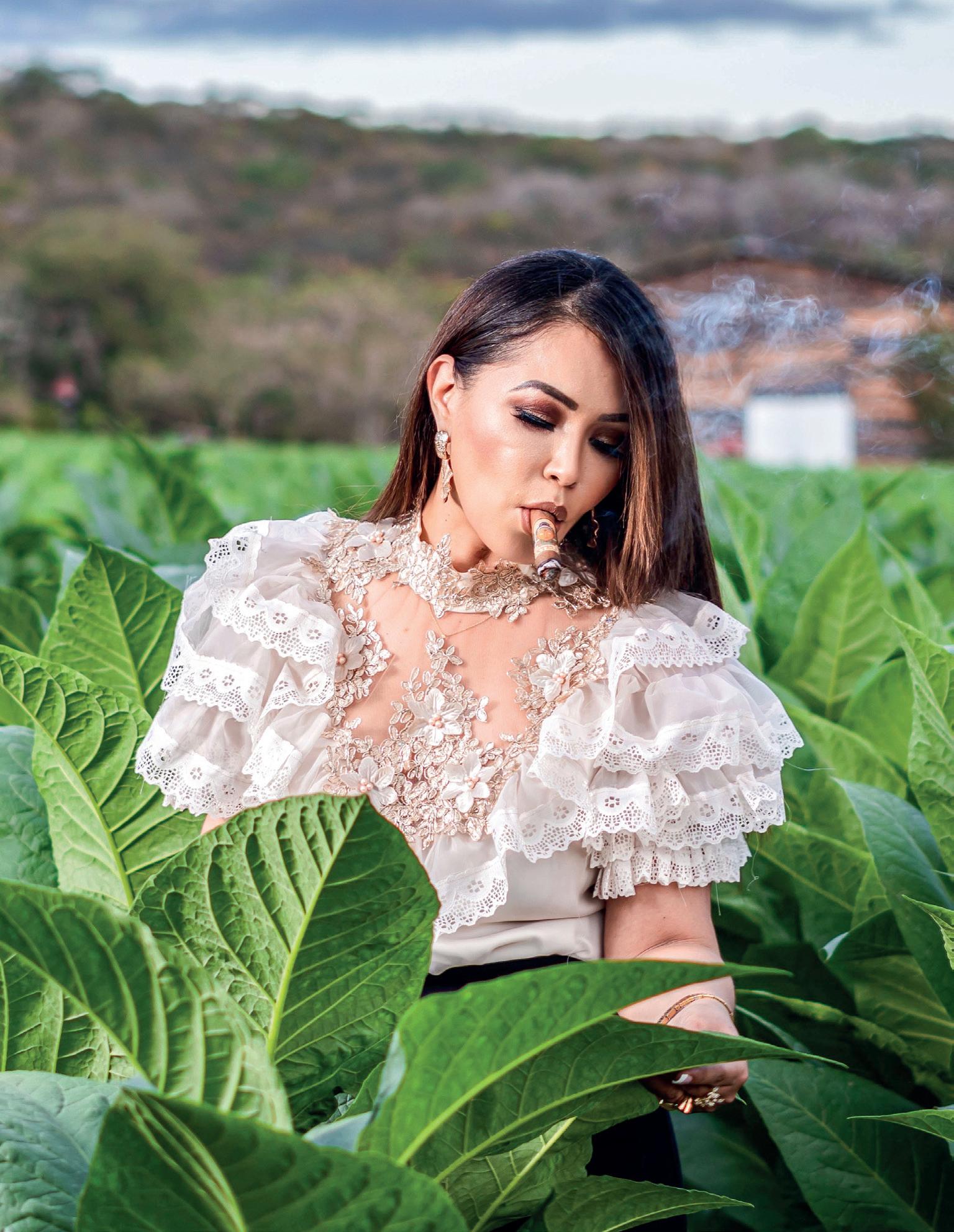
Iworked from seven in the morning until five in the evening; from six to nine I went to university, and I also worked at night. On weekends, I babysat to help pay for school and cover household expenses.” This is Karen Berger. And whoever says she owes everything to her husband is mistaken. Don Kiki Berger was her life partner and mentor, but she is proof that tobacco –like fine steel– only reaches its temper through fire and time.
I have known Karen since she launched her first personal line, K by Karen Berger, about seven years ago. She was the first woman I interviewed in this industry, and I was fascinated by her story. Today, writing about her again after witnessing her personal and entrepreneurial growth –as a man, as a father of daughters, and as the director of a magazine that seeks to highlight the work of women in the industry– fills me with pride and satisfaction.
She is a woman who lived through a difficult childhood marked by hardship and hunger. Changing her destiny was rooted in love, determination, and, above all, family. Along the way, she was fortunate to find a man who accompanied her in building the tobacco company she leads today... even if her first dream was to be a dentist.
CHILDHOOD IS NOT DESTINY
Karen was born in Estelí, Nicaragua. Her family was her father’s fourth marriage. He passed away in 2025 –nearly 100 years old– leaving 16 children; four of them from his last union.
“We grew up in a very humble home, with needs and hunger, but thank God we overcame it: we studied, each of us worked with dignity, and thanks to that, we are here now.”
She was born at the dawn of the 1978 war during the Sandinista Revolution. That year, Estelí was bombed. Everything was scarce from ‘78 to ‘80: shampoo, toothpaste, soap, school supplies, toys, basic necessities...
Her father was a saddler; her mother, a homemaker. Together, they raised four children, providing them with basic education. Upon finishing high school, Karen could not enter university due to a lack of financial resources. It took her two years to finally enroll, during which she worked in a dental office and fell in love with the profession. “I know how to make dental pieces, bridges, crowns, work with porcelain... my dream was to be a dentist, but that career was very expensive, so I opted for Business Administration.”
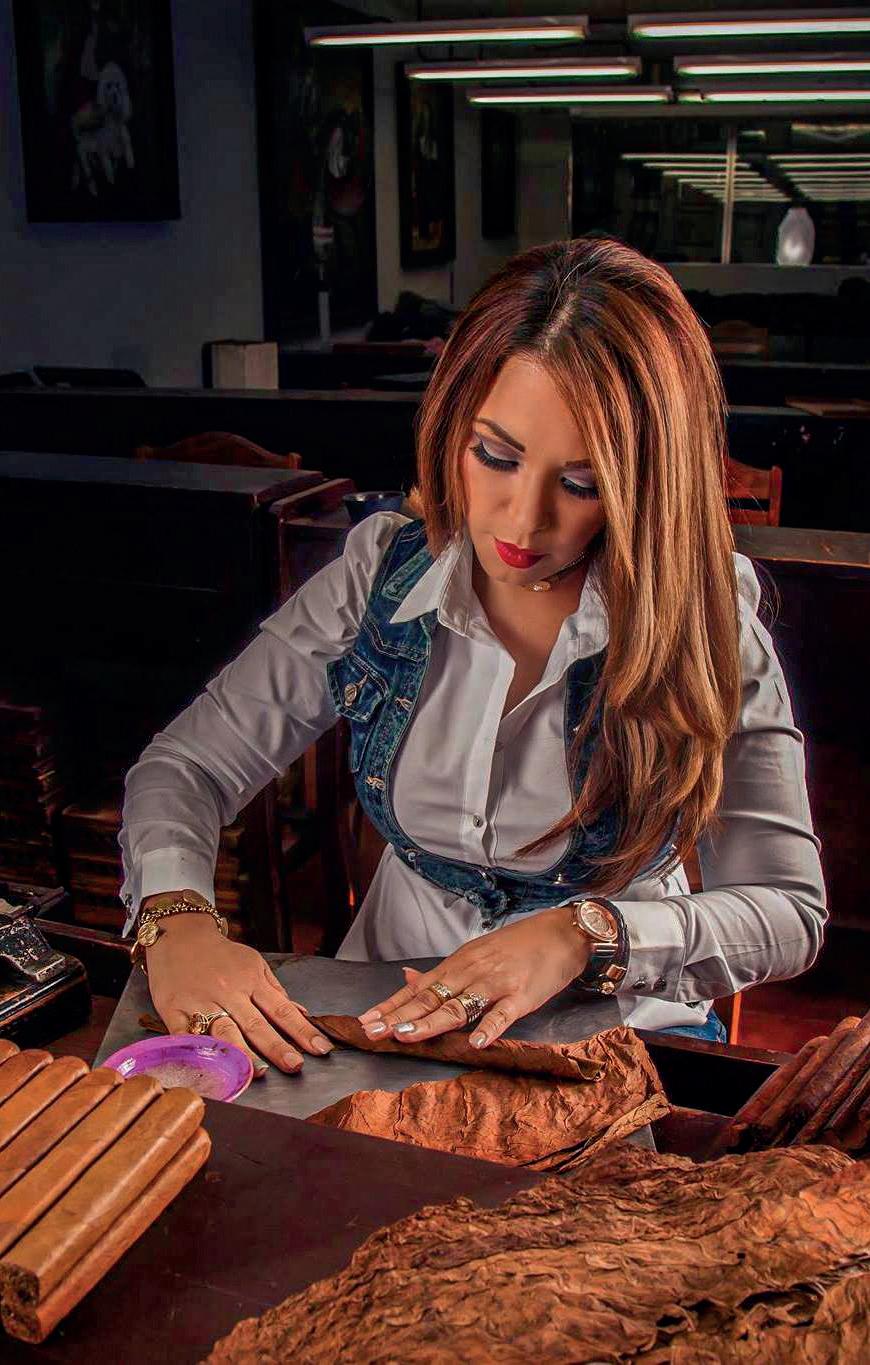
Perhaps that surgical precision required to mold a dental crown granted her the delicate touch needed to roll a wrapper without breaking it.
FIRST STEPS
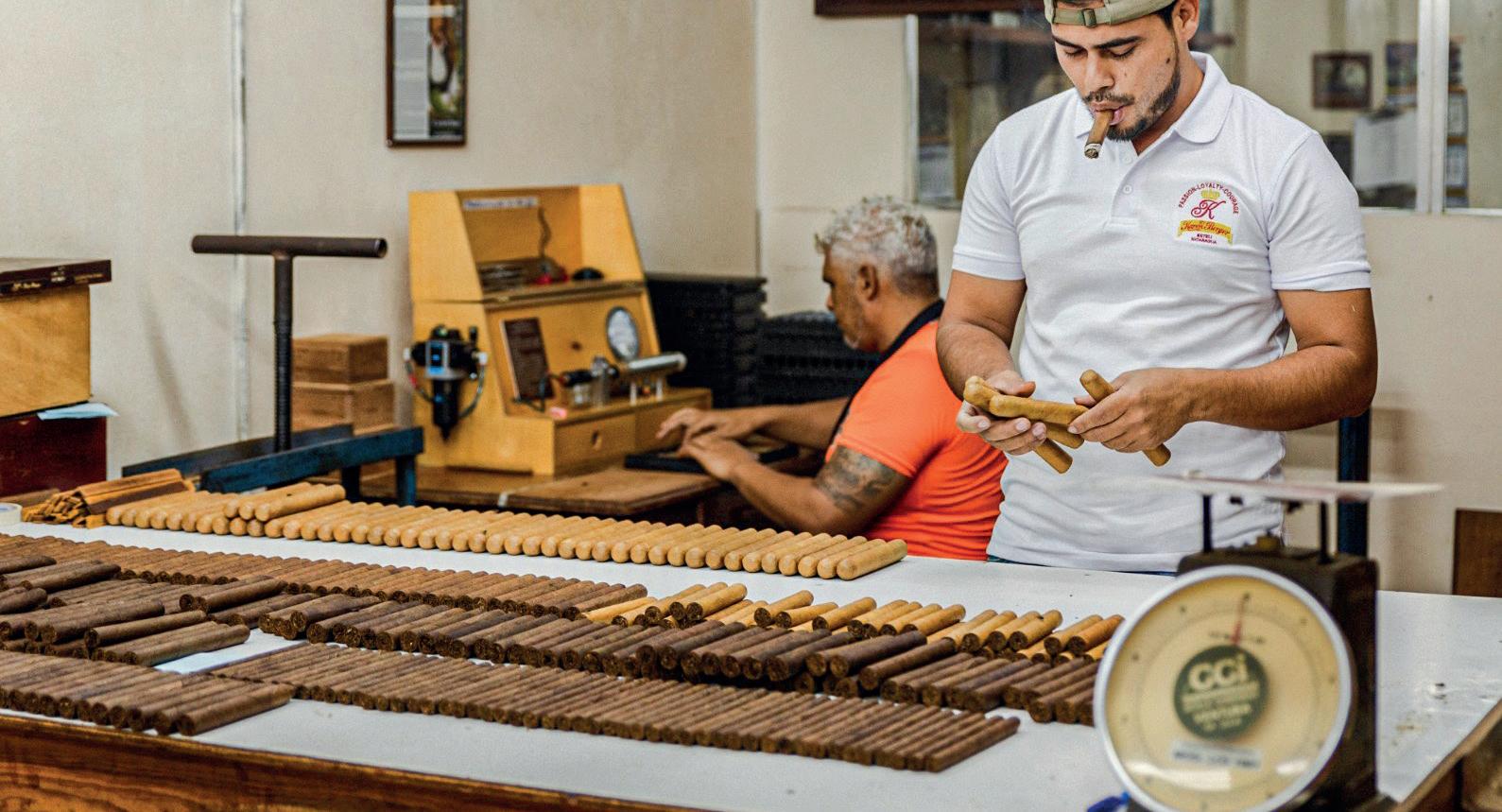
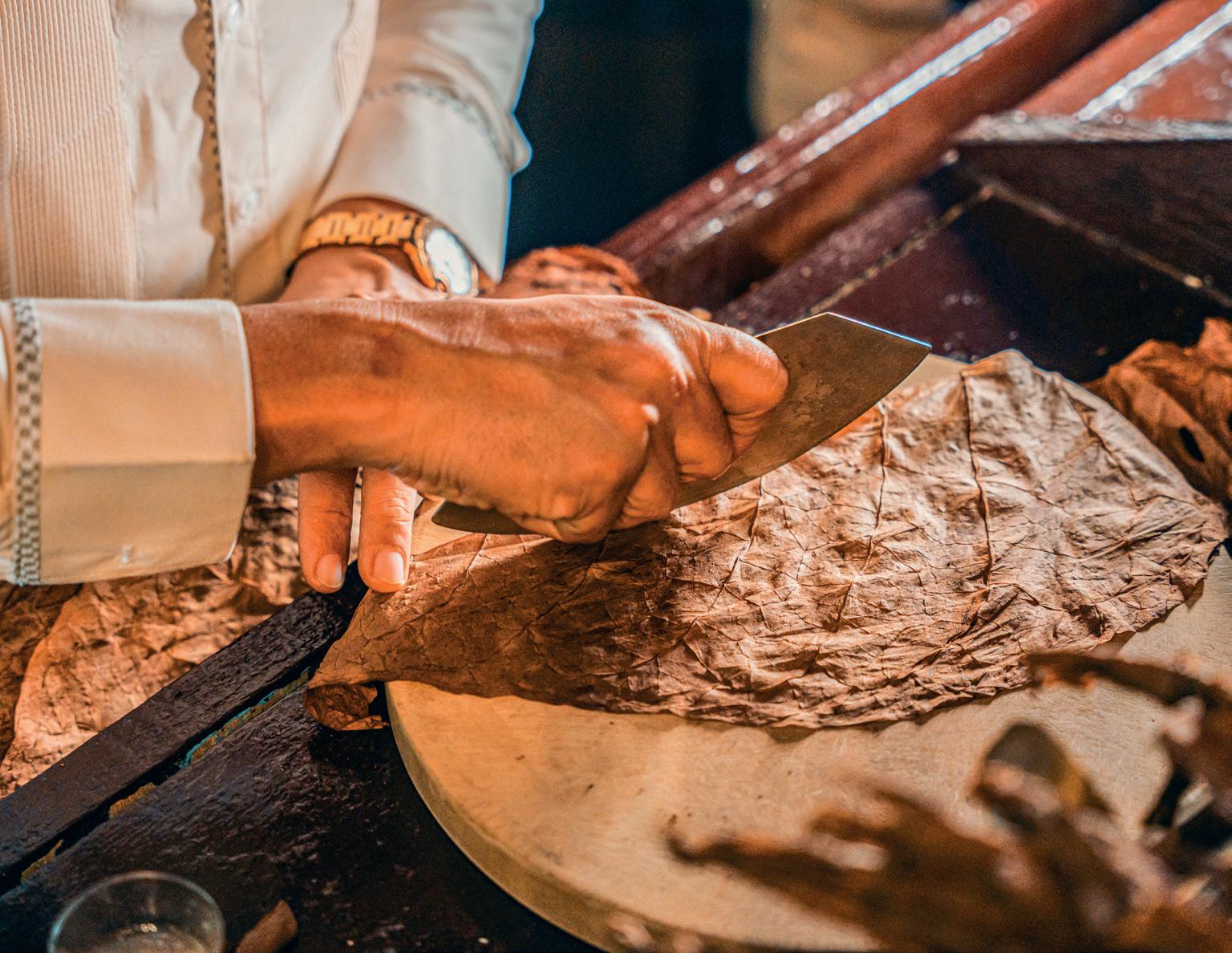
She entered the industry at 18 to pay for her studies, seeking an opportunity as a roller at the Estelí Cigar Factory, which she now owns. In Nicaragua, as in other tobacco-producing countries, people work in pairs, and almost always the woman is the one who rolls the cigar (rolera) because she has a better touch, greater care, and skill.
“As an apprentice, you must give your best effort and learn quickly. I felt the art of tobacco. I hadn’t smoked until then, but since the work I was doing was the final touch on a brand sold in another country, I had to give my best to ensure the final product was excellent.”
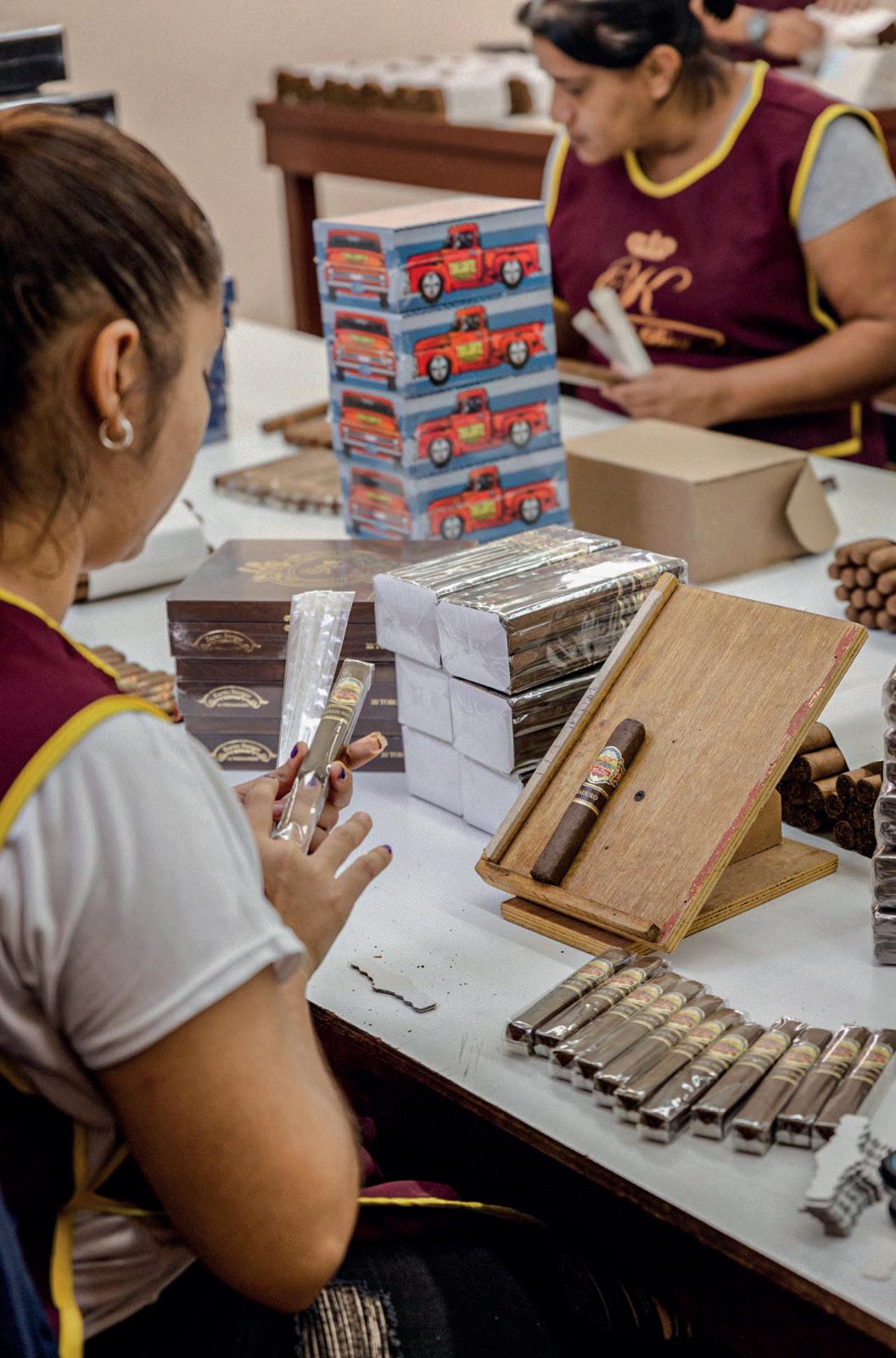
One day, the owner, Don Enrique Kiki Berger, found Karen rolling cigars. “We started a very beautiful relationship there, and later we got married.” But that was just the beginning of a career where she would have to work twice as hard. She decided not to skip any steps and continued working until she mastered most areas: packaging, banding, stemming, leaf selection...
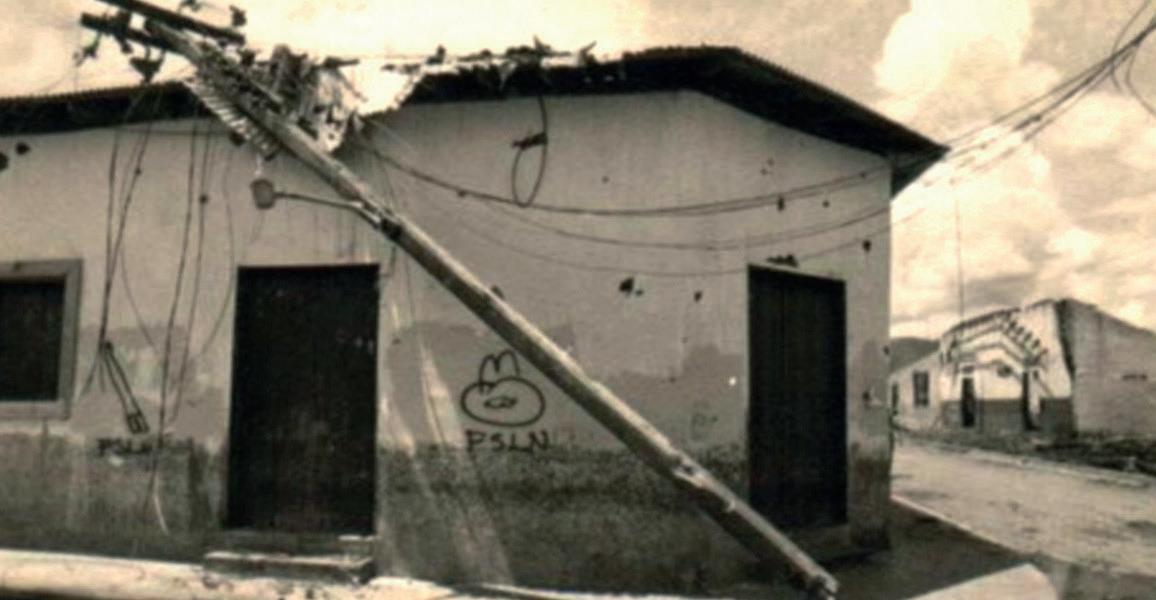
Estelí, in the late 1970s.
Regarding her first smoke, she says it was bittersweet. An angry customer had returned an order, claiming the blend was wrong. Don Kiki got upset with the workers and instructed them to taste what they were making to ensure the blend was correct. “That’s when I tried a cigar for the first time, and I remember it like it was yesterday. That blend was quite strong –a Maduro tobacco, a 5 Vegas– and I loved it. I fell in love. I was 19 years old.”
Every calling has a turning point, and for Karen, it arrived after smoking that first cigar. She suddenly realized everything that must take place for each individual piece to reach an aficionado’s hands: “I even went out to the fields to see how the seedbeds were prepared, the cultivation, and many other processes. On that day, my love for the leaf was born.”
I tried a cigar for the first time then, and I remember it like it was yesterday. That blend was quite strong –a Maduro tobacco, a 5 Vegas–and I loved it. I fell in love. I was 19 years old.”
She has always understood that while tobacco is a passion for every smoker, that bond is only strengthened when one appreciates the immense labor it entails. “Beyond having the opportunity to work alongside my late husband, we shared common interests and passions. Eventually, I graduated and began taking charge of the administrative side of the business.”
Don Enrique Kiki Berger.
DON KIKI, PARTNER AND MENTOR
She was married to Don Enrique for 17 years. He was a very special person in the lives of many Nicaraguan cigar makers, having professionally helped owners of large companies like Oliva Cigars, Drew Estate, or AJ Fernandez when they were just starting small.
Kiki arrived in the U.S. in the 1960s with his father, Max Berger, who in the 1940s had escaped to Cuba when Hitler invaded Poland. Over time, Max set up a factory in Pinar del Río, and Kiki grew up in the business.
Upon the arrival of the Cuban Revolution, Max Berger decided to move to the United States and end his relationship with tobacco. However, his son Enrique did not follow suit. During the tobacco boom of the 1990s, Enrique decided to move to Nicaragua, where he purchased farmland and founded the Estelí Cigar Factory.
In 1995, he decided to create his own brand, launching Don Kiki Red, Green, White, and Brown, and began distributing them in the U.S. But what earned him international fame was the Cuban Crafters Megastore, located in Little Havana, Miami. What he did –ahead of everyone else– was to close deals with tour operators, who brought busloads of tourists to the store to buy items they couldn’t find in their home countries.
Don Orlando Padrón and don Enrique Berger, may they both rest in peace.
In 2001, Kiki was diagnosed with chronic kidney failure. After five years on dialysis, Karen donated her kidney to him in 2006. Together, they even opened a renal dialysis center in Estelí. Karen gave her husband eight more years of life. Don Kiki Berger passed away on September 23, 2014, in the Mount Sinaí Hospital, in Miami. Since then, Karen has worked to continue his legacy and honor the Berger name.
THE CIGAR QUEEN
Karen is known as The Cigar Queen. This was no stroke of luck, but rather the result of her tenacity, strength, and a deep-seated love for a company that gave her everything in life; a company whose motto sums it up perfectly: Passion, Loyalty, Courage.
The premium cigar market remains predominantly male, as it is a product intimately linked to luxury and masculine power. It is there, in the high echelons of the most prestigious brands, in the lounges and events where the industry’s Cigar Lords converge and do business, that Karen Berger earned her title.
It is a paradox, considering this is a sector built by women, who represent more than 60 percent of the workforce in seedbeds, planting, harvesting, manufacturing, packaging, office roles, marketing, and exports. “It is quite difficult for a woman to be taken seriously in this industry,” Karen notes. “They assume we lack the knowledge, both as smokers and as businesswomen or entrepreneurs.”
Yet, knowledge cannot be hidden, and passion even less so. In her, both are undeniable: when she speaks about markets, percentages, trends, history, or technical processes, it becomes clear that you are not just dealing with anyone –you are in the presence of an institution in the making, one that is currently writing a vital chapter in the recent history of tobacco.
We need more empathy, respect, and team unity. The leadership we are achieving is based on our strength, unity, and intelligence.”
MOTHERHOOD AND LEADERSHIP
Being the Cigar Queen requires a nearabsolute nomadism. Karen spends most of the year inhabiting airplanes and departure lounges. Sometimes she returns from a trip only to swap suitcases and head to her next destination. However, on the map of her priorities, the most sacred coordinate remains her home.
The family.
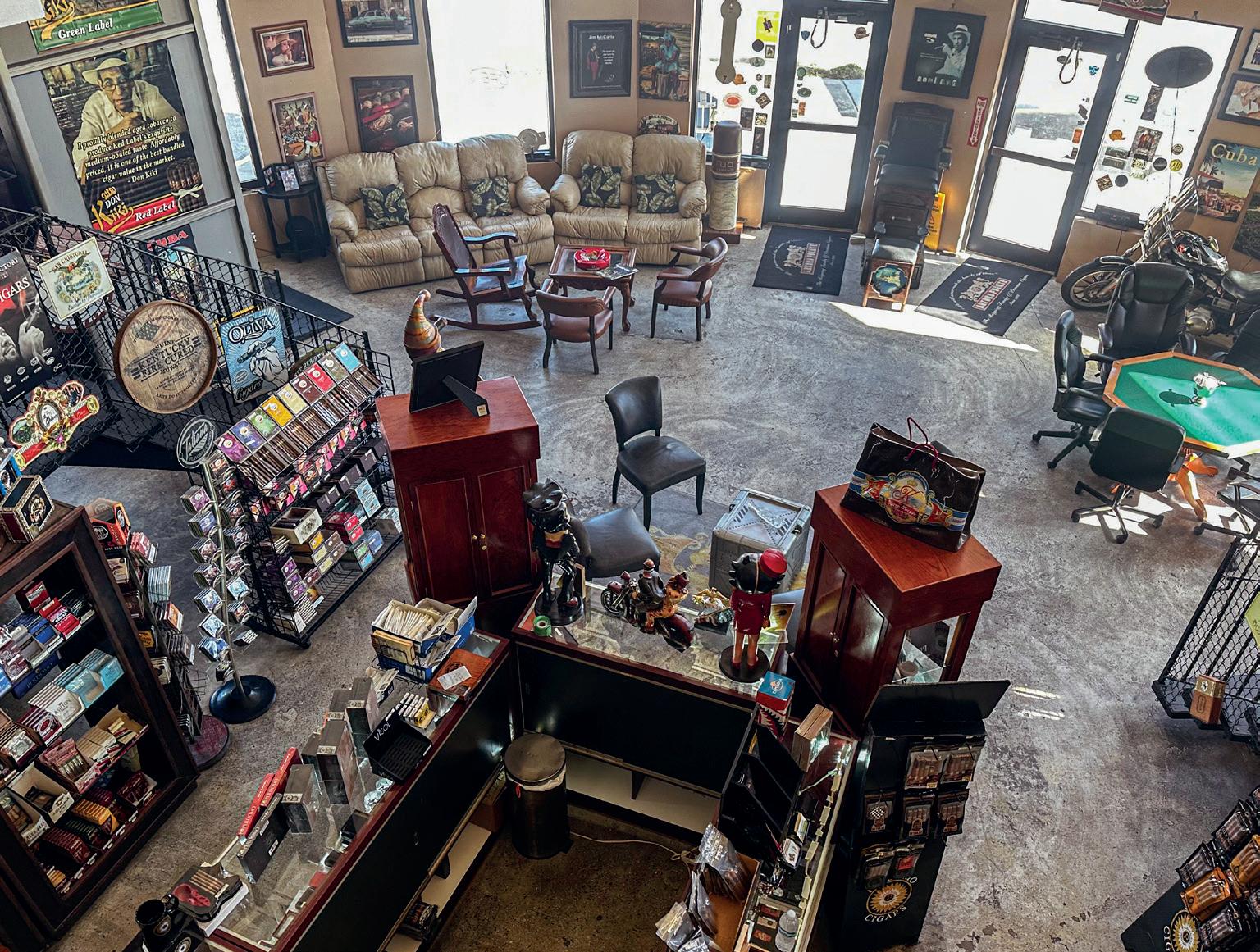
She is not only a woman in the industry but a single mother balancing her maternal role while leading one of the world’s most prominent companies. In this sense, she maintains that one of the greatest challenges she has faced as a brand manufacturer and owner of a cigar lounge –Don Kiki Cigar Superstore in Daytona, Florida– continues to be, without a doubt, her gender.
In an industry that never sleeps, she has found in technology the bridge to ensure she never falters in her most complex role: being a mother of three. Whether she is in a lounge in Dubai or a trade show in Las Vegas, the ritual is nonnegotiable: via FaceTime, she dedicates time to her eight-year-old daughter to supervise every school assignment. This is motherhood practiced against the clock, sometimes from thousands of miles away, proving that leadership is not about command, but about presence; that she can direct a company without missing a single detail of the growth of those who are her true engine.
“I still live with part of the stigma regarding the perceived sensitivity, inexperience, lack of knowledge, and weakness of women in this industry. It is worth noting that, in all fields, it is slightly harder for women to reach the same opportunities as men. However, I believe that as the years go by, we have been overcoming obstacles and breaking those stereotypes to assert our rights.”
In fact, she confesses that one of her dreams –“even if I might not live to see it, I am certainly building it”– is to achieve gender equality and equity in the industry. After so many years in the business, she
continues to fight for a voice, a place, and recognition for all her dedication and hard work, “representing the working class, the voiceless faces of the many women who work in our factories, which is where I come from.”
Women contribute to the Tobacco World with knowledge, determination, hard work, and resilience, fighting to end the sexualization they are subjected to and the machismo that causes so much harm. “We need more empathy, respect, and team unity; more knowledge and support for one another, and vice versa. The leadership we are achieving is built upon our strength, unity, and intelligence.”
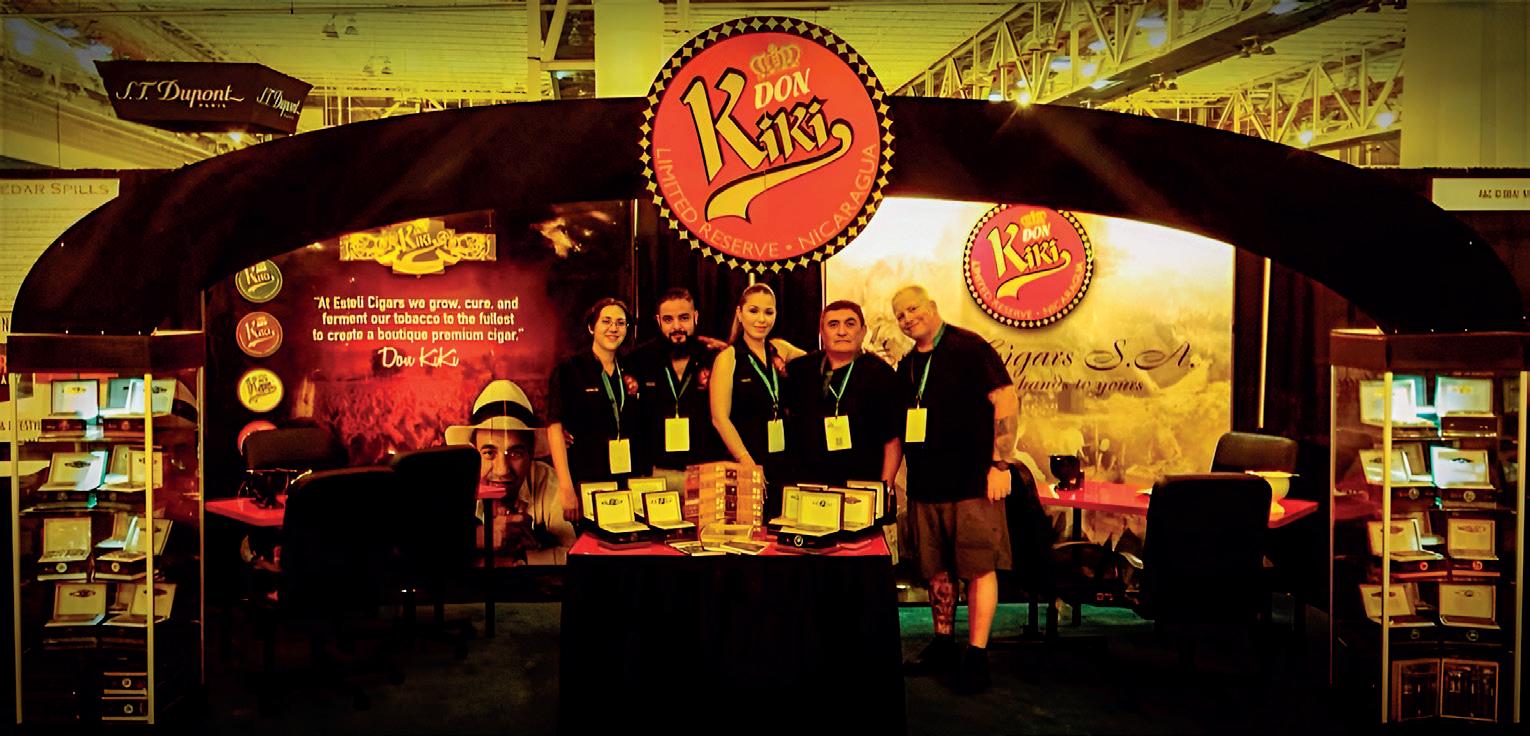
Don Kiki Cigar Superstore, in Daytona Beach, Florida.
THE STRUCTURE
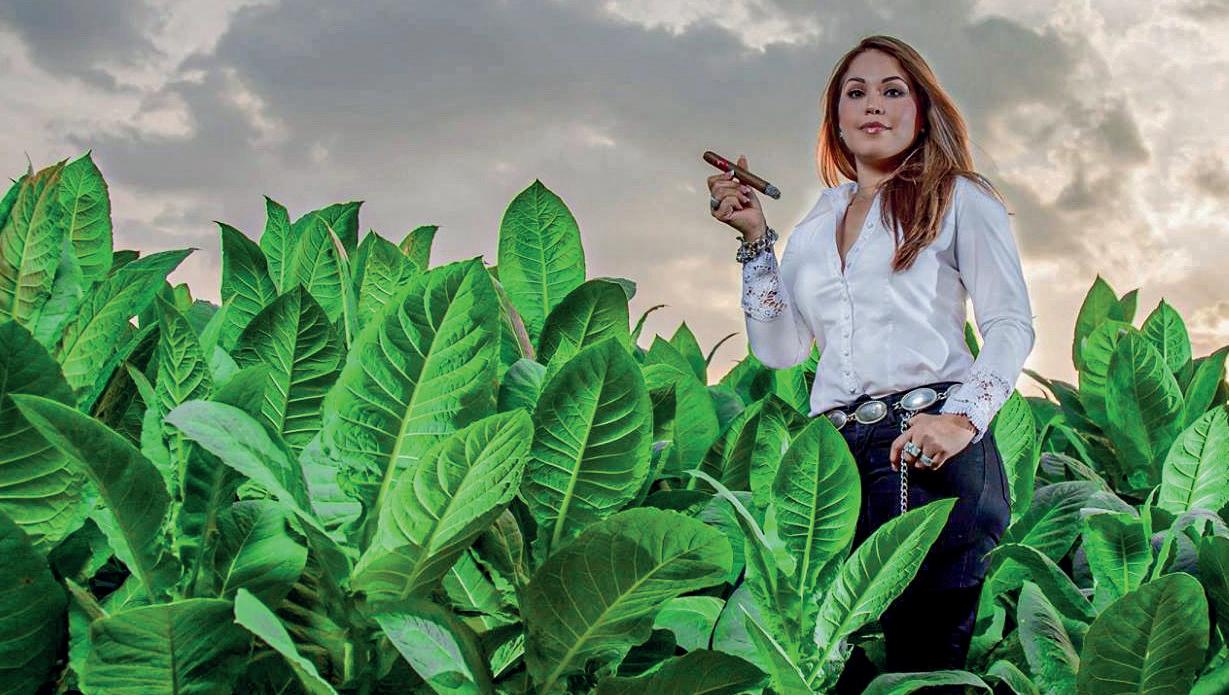
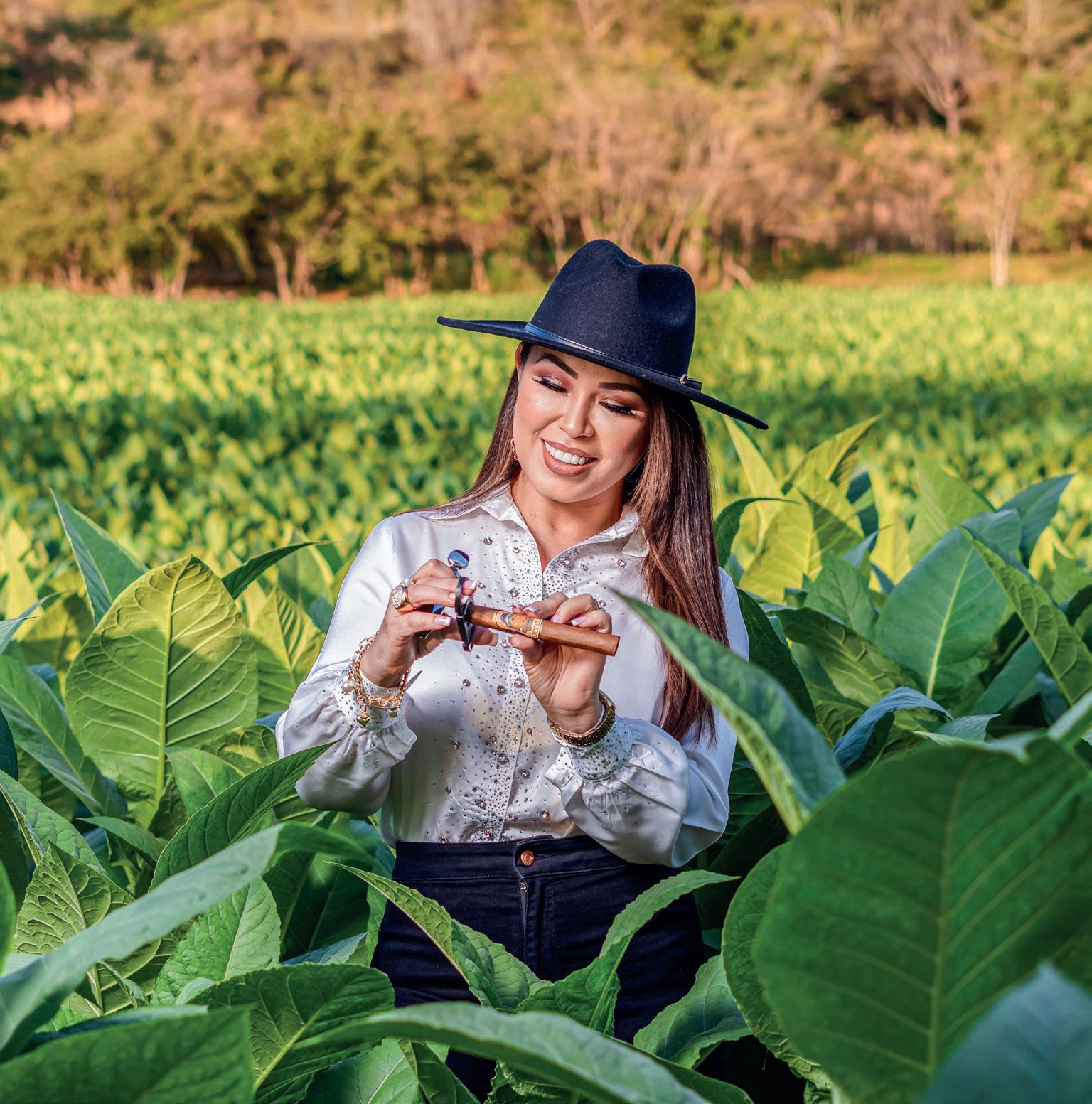
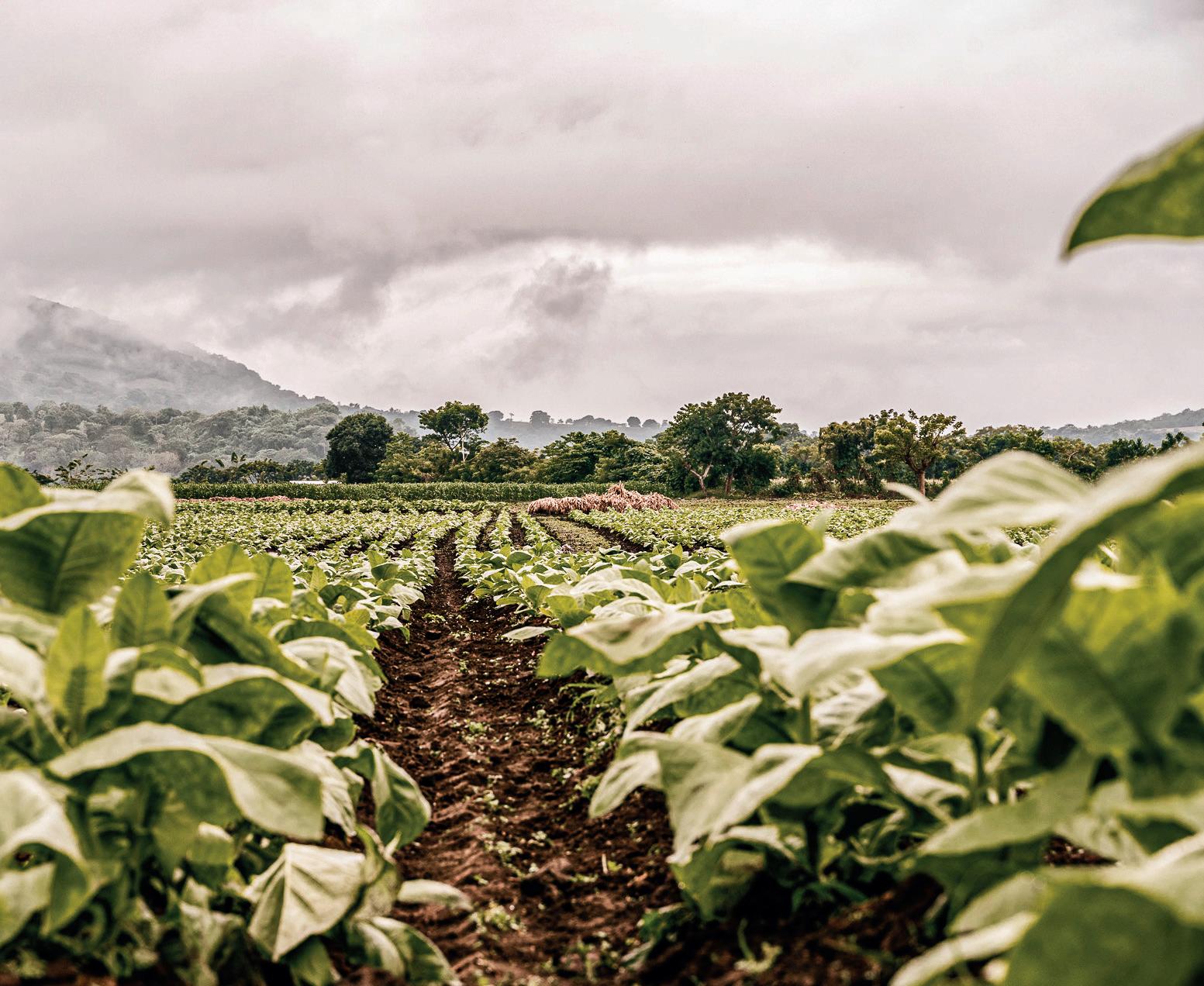
The structure of the farm and factory is a living organism born from the land. With 36 manzanas (approx. 62 acres) of cultivation primarily dedicated to Habano Criollo, Karen oversees a supply chain that knows no intermediaries. They have their own curing barns, and all the filler for her cigars comes from her own fields (vegas), where 65 people are employed. They also incorporate tobaccos from Jalapa and Condega.
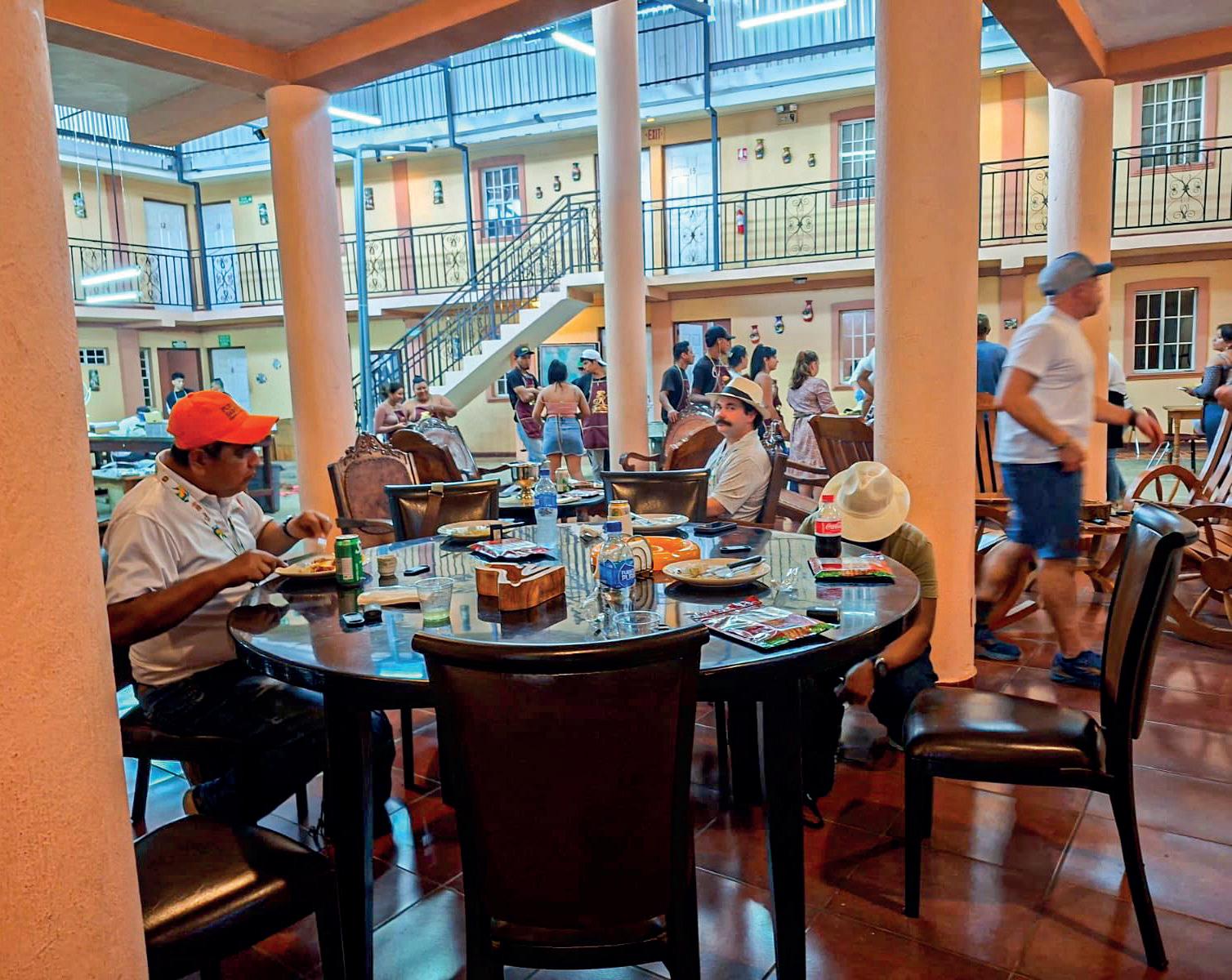
However, the most significant change occurred three years ago, when she decided to relocate her factory to the very heart of Estelí, taking over a former three-story hotel. This was not merely a logistical move, but an act of justice and transparency: she wanted her 28 artisans to have dignified, central access, close to their homes and families, and for the world to be able to enter her home.
Today, the factory is a nerve center for tobacco tourism –a space where visitors
Estelí Cigar Factory.
not only observe the process but breathe the history of a city that, like Karen herself, knows what it means to rebuild from the foundations up.
In fact, she shares that during the Puro Sabor festival and other factory visits, she hosts guests on-site. Instead of being woken by a rooster, they are awakened by the bustle of workers settling into their stations; the first thing they see upon waking is the production floor from the second-floor gallery.
When I go to the factory, I don’t enter as a boss, but as someone who once sat there and knows the work they are doing... we are equals.”
Every line of her brands is crafted in this factory, along with several private labels for the European and U.S. markets. She produces approximately half a million cigars a year because, as she puts it, “I am focused on quality; I do not work based on quantity.”
With great pride and empathy, she recounts that when she walks through the factory performing quality control at the tables of the bunchers and rollers: “I don’t enter as a boss, but as someone who once sat there, who knows the work they are doing... we are equals.”
THE PORTFOLIO
As the heir to her life partner’s tobacco tradition, Karen’s vitolario (portfolio) is a chronology of her own maturity and a statement of principles. Her first creation was K by Karen Berger, launched in 20182019; she clarifies that the “K” refers to Kiki as a tribute. It is a 6-inch, 52-ring gauge BoxPressed Toro, available in Maduro, Habano, Connecticut, and Cameroon wrappers, which remain widely popular as there is a blend for every palate.
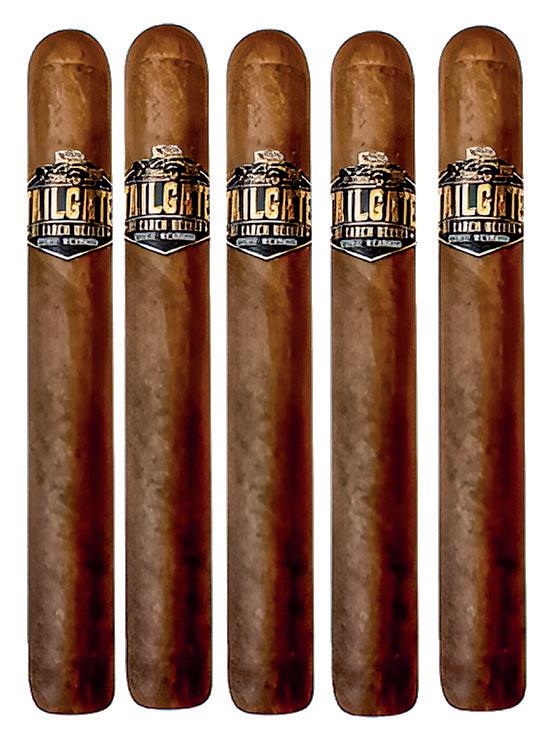
In 2020, she created the Tailgate, a 6-inch, 52-ring gauge featuring a Sumatra wrapper with Nicaraguan binder and filler. It is offered in a 14-count box at a very accessible price point, staying true to her philosophy of offering fair and affordable prices to smokers.
Along this path, the figure of Abdel AJ Fernández emerges not just as a collaborator but as a guardian of the legacy. His relationship with Kiki Berger transcended business; it was a brotherhood forged in mutual respect and the proximity of their estates. Abdel provides wrappers for Karen, and to seal this friendship, they launched the K by Karen Berger 25th Anniversary by AJ Fernández in 2023 –a full-bodied blend with a Connecticut Broadleaf Habano wrapper and a San Andrés Mexico binder, embracing Nicaraguan filler. This cigar celebrated Karen’s quarter-century in the tobacco industry.
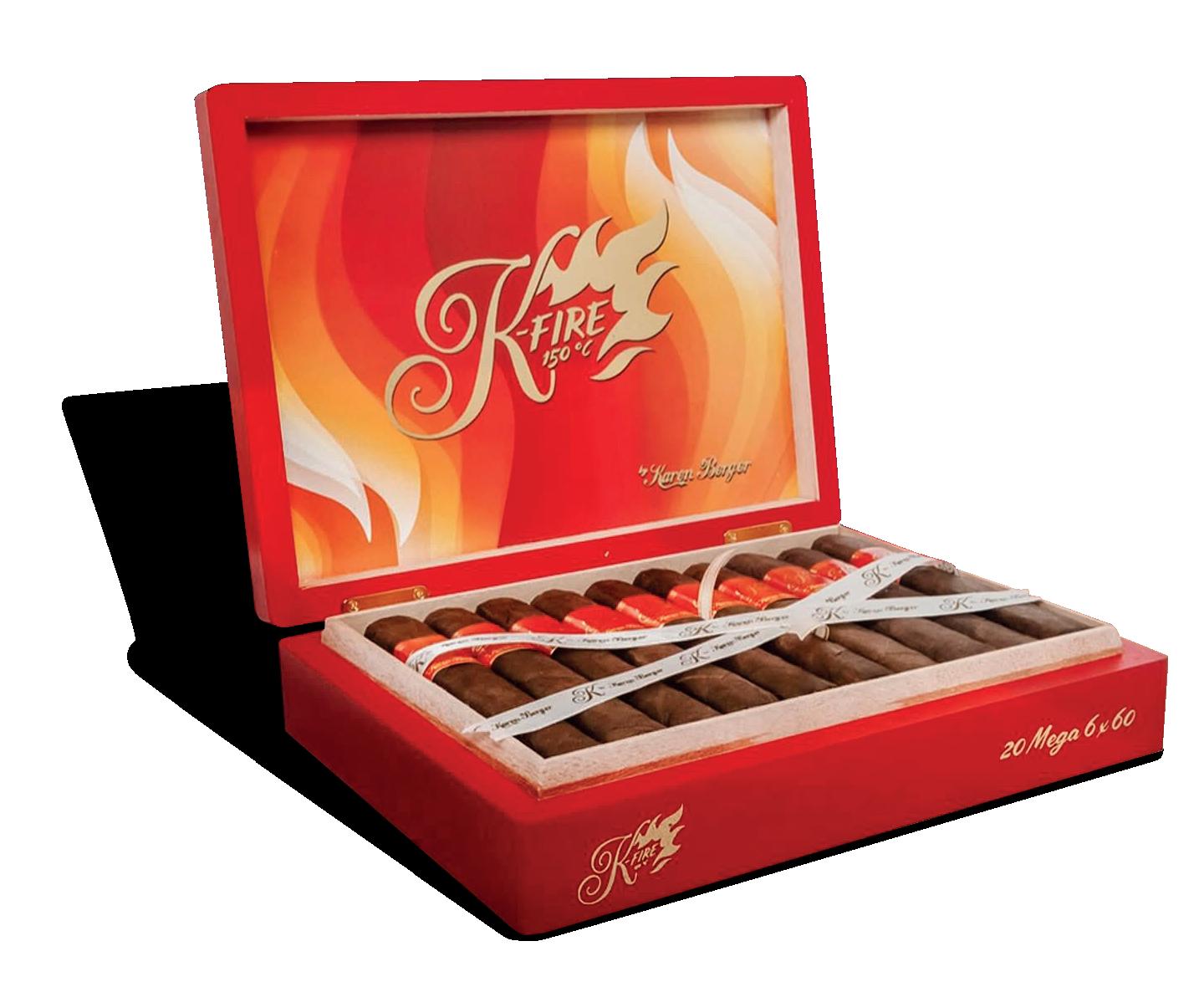
That same year also brought the K-Fire 150°F, a cigar featuring a Mexican Negro San Andrés wrapper, Habano Jalapa binder, and Estelí filler. It was presented in a 6-inch, 52-ring gauge Box-Pressed format in a 20-count box illustrated in reds, oranges, yellows, and white, representing the different temperatures of fire. In this context, 150°F is the maximum temperature tobacco reaches in the fermentation piles (pilones), which is why Karen decided to integrate the figure into the name itself.
By late 2023, her catalog grew with the addition of the K-Fire 150°F Mega, a 6-inch, 60-ring gauge vitola presented in Las Vegas during the 2024 PCA Trade Show.
Last year, through the presence of brand Vice President Bruce Busch at the InterTabac trade fair, Karen Berger Cigars strengthened its international exposure and opened doors to new markets in Asia and Europe. In addition to the 17 countries where the brand is already established, it added points of sale in Italy and France.
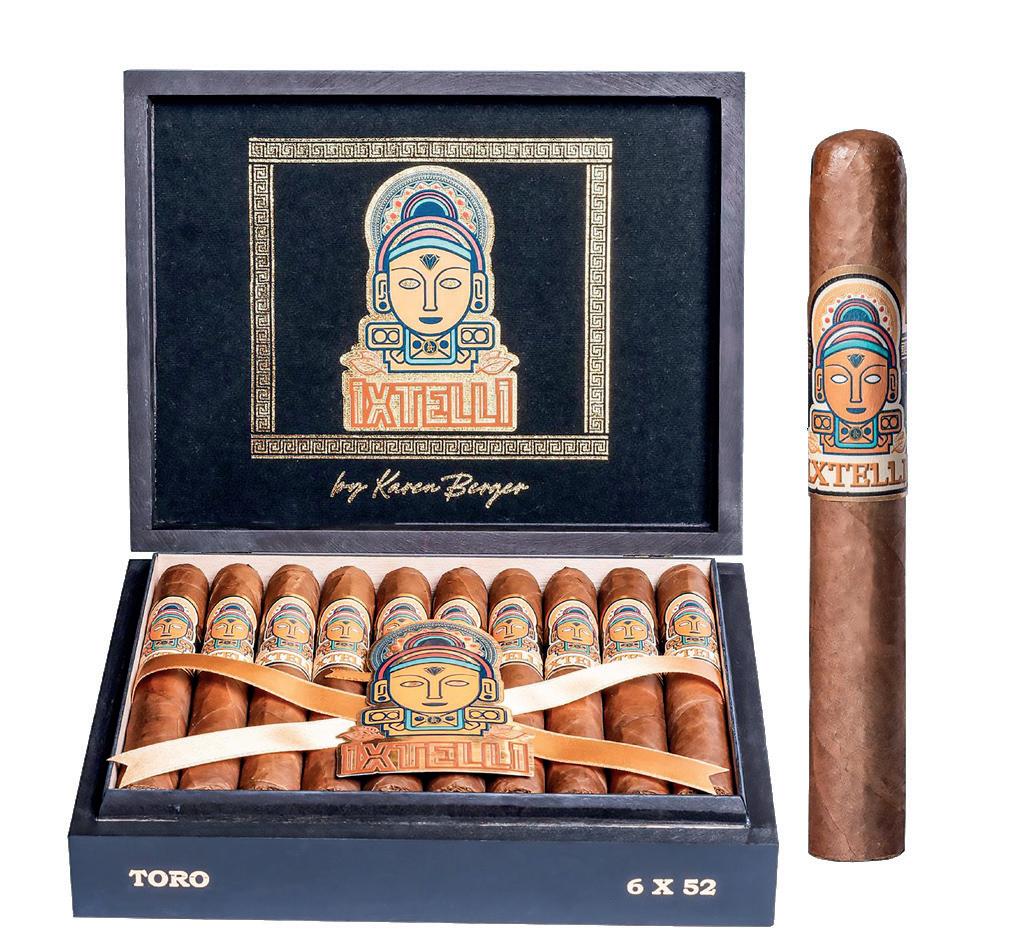
Accompanied by their distributors, Kleinlagel, the event served as the stage for the official presentation of Ixtelli –a tribute to the pre-Hispanic roots of Estelí, Nicaragua– and Halftime, a high-quality quick smoke proposal for the European market. Both lines reflect her passion and commitment to Nicaraguan excellence.
THE 2026 HORIZON
To close this interview, Karen offers Humo Latino an exclusive, revealing the path of her immediate future. In 2026, the portfolio is bolstered by Overtime, an imposing 6-inch, 60-ring gauge with a Maduro wrapper; the line extension of the awardwinning Ixtelli, now in a 5-inch, 50-ring gauge Robusto format that promises to concentrate the strength of Jalapa; and the official launch of Half Time in both Habano and Maduro wrappers –the perfect solution for a short yet intense smoke.
Finally, she reflects on the life journey that Estelí Cigar Factory and Karen Berger Cigars have been –the highs and lows, and witnessing the fall of companies backed by massive investments. She asserts that she has remained standing through consistency and sacrifice, as well as her unwavering faith in God to overcome every challenge: “My only partner is up there,” she says, pointing toward the sky, “guiding me at every moment.”
“I have many dreams yet to fulfill, such as winning Cigar of the Year, continuing to work for the many families who depend on this company, maintaining my husband’s legacy, and becoming the cigarmaker who rises to the heights Kiki once reached... and so much more. I still have a long way to go.” Karen Berger is an admirable woman, an example for those who dream of becoming entrepreneurs and masters of their own destiny; a woman who has blazed a trail and set the standard for what the Tobacco World can –and should– be for all of them.
Ra’ed Walid Saqfelhait
The Rise of New World Tobacco in the Middle East
Raúl Melo
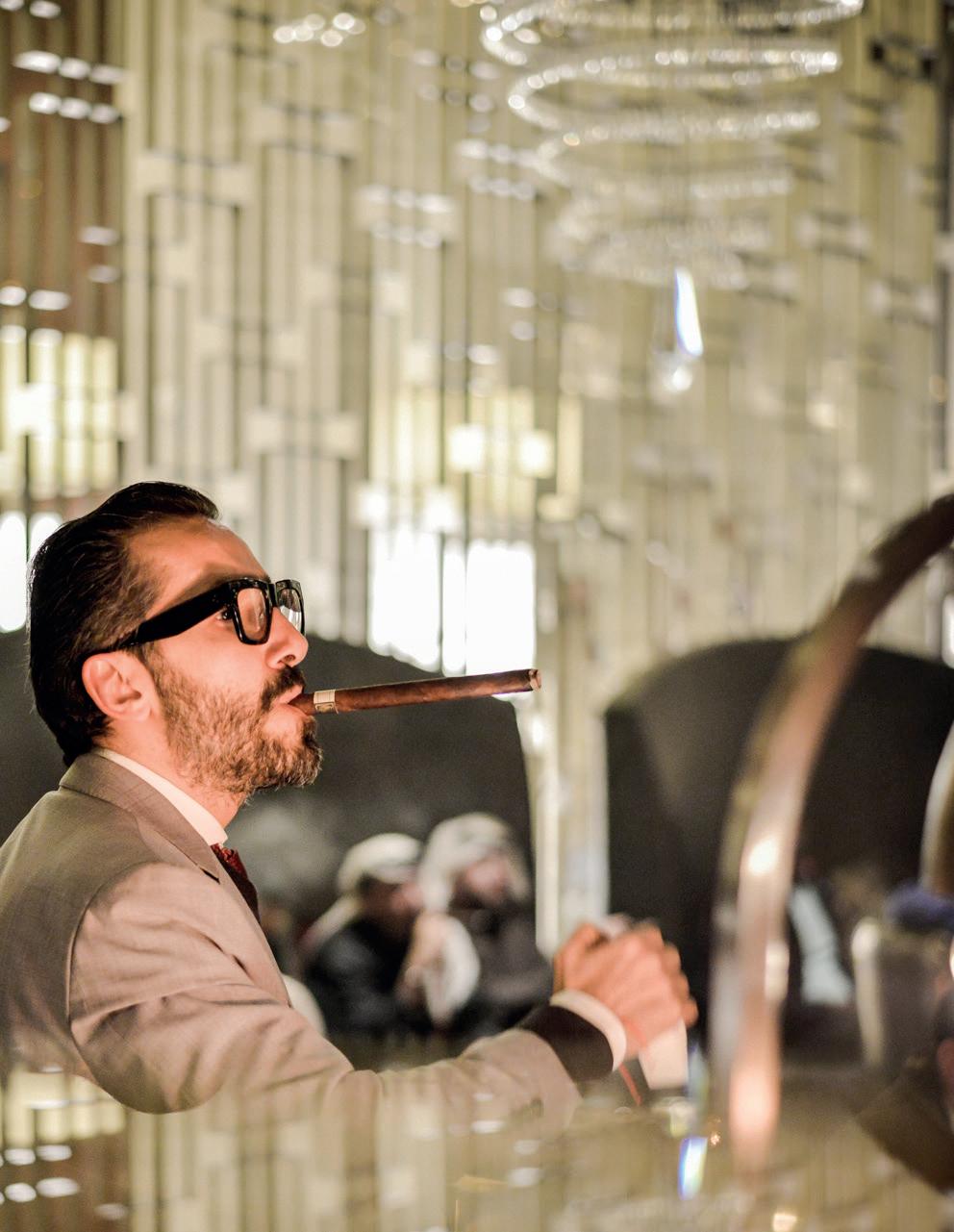
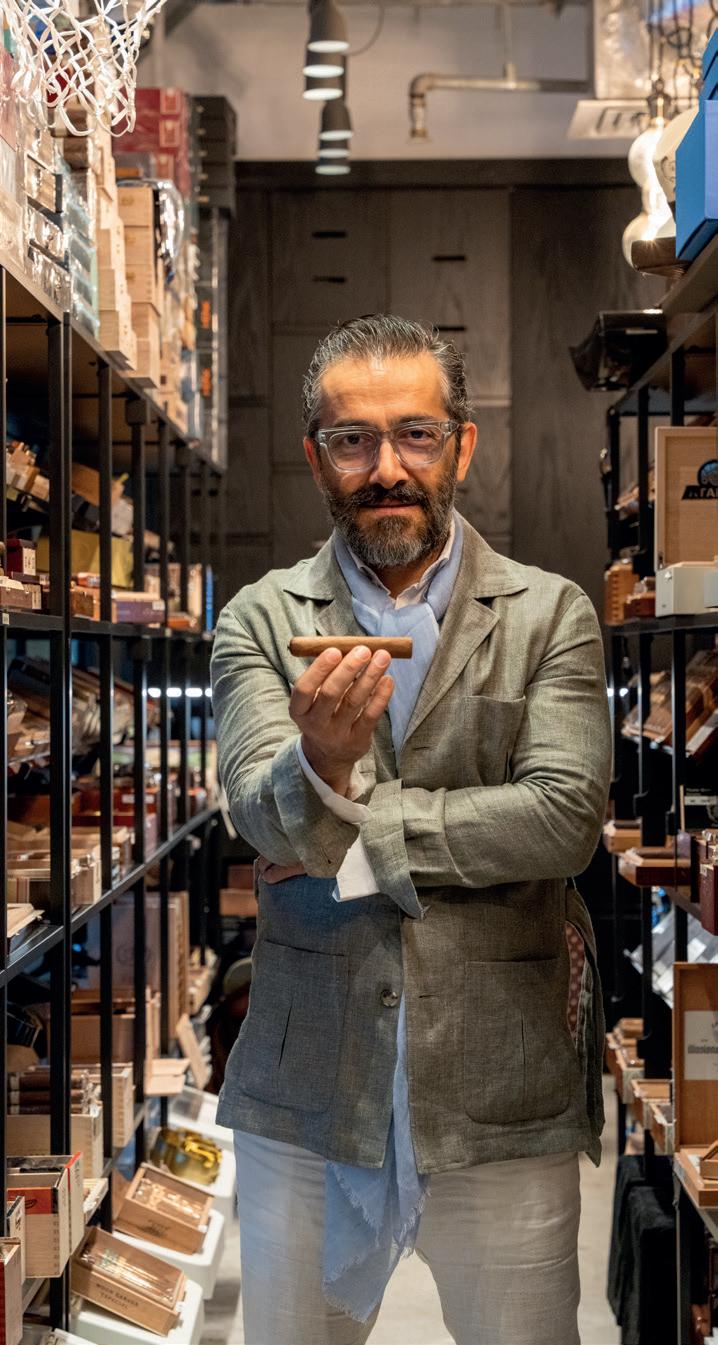
Of Jordanian descent, Ra’ed Walid Saqfelhait was born in Kuwait 56 years ago and raised by a banker amidst travels, relocations, social gatherings, and Habanos. He graduated from the American University in Cairo and completed his professional training as a Certified Public Accountant in the United States, specializing in taking companies public.
Married to a Lebanese woman and father of two daughters studying in the U.S., Ra’ed considers himself a citizen of the world. He has spent the last 28 years of his life in Dubai –a paradise for tobacco enthusiasts– where nearly a decade ago, he established the operations hub for one of the largest New World tobacco distribution companies serving the Middle East and Africa: The Leaf Master.
THE NEW WORLD
After serving as CEO and CFO for multiple conglomerates and developing a successful career in financial services, Ra’ed discovered New World cigars –a definition referring to any origin outside the island of Cuba.
During an interview via Google Meet with Humo Latino, he recalled his first contact with these cigars during a business trip to New York. Following his father’s traditions, he carried a small supply of Habanos, which proved insufficient when his stay in the city was extended.
“I knew it was impossible to get more. I knew nothing about New World cigars, but I tried them, and it was love at first sight. I also considered it a call from God to bring the pleasure of these new flavors back to my homeland.”
At that moment, Ra’ed decided to continue experimenting with these newly discovered blends, sharing them with a friend who would later become his partner, both hooked by the incredible variety that these diverse origins could offer.
Ra’ed Walid Saqfelhait.
The greatest addiction one can have is a steady salary hitting your account month after month. When you open your own business, you realize the risk, the reasons to follow your passion, and then you give everything to succeed.”
In 2017, to begin the importation process, he selected brands like A.J. Fernandez, DH Boutique, and Oliva Cigars, starting with seven to nine different SKUs. “Everyone called us crazy for being interested in cigars that weren’t Cuban, but we were convinced that the construction, profiles, and aromas were amazing and could not be ignored.”
Over the years, many bet against them, expecting them to close at any moment. He views this skeptically but positively: those who didn’t believe in this new market chose to ignore it, while they –through education and patience– built a loyal clientele.
Thus, The Leaf Master was born, one of the first companies to risk everything for New World cigars in the Middle East and Africa, championing an industry in which people of those regions, accustomed to Cuban tobacco, did not yet believe.
THE LEAF MASTER
The challenge was significant. It wasn’t just about introducing and positioning a new cigar brand, but a complete paradigm shift in the market: new brands, origins, profiles, and even colors.
Ra’ed and his partner’s strategy was based on three key pillars: acting as ambassadors for every brand selected for import; focusing on variety over quantity to maximize the industry’s exposure; and, most importantly, consumer education.
According to the company’s vision, to convince an aficionado to give New World tobacco a chance, they must be educated on the history of each brand and each cigar. The goal is to help them understand what a puro means or the art of creating a blend with tobacco from different origins, such as the Dominican Republic, Mexico, Honduras, Nicaragua, etc.
At The Leaf Master, beyond selling one, twenty, or thirty cigars, time is invested in talking with the client –listening and answering their questions, as well as understanding their palate to know what to offer from their wide variety of brands, wrappers, and vitolas.
Additionally, the company organizes regular events with prominent brands like Luciano or Platinum Nova, giving consumers the opportunity to engage directly with the people behind the cigars and understand their role in the global market.
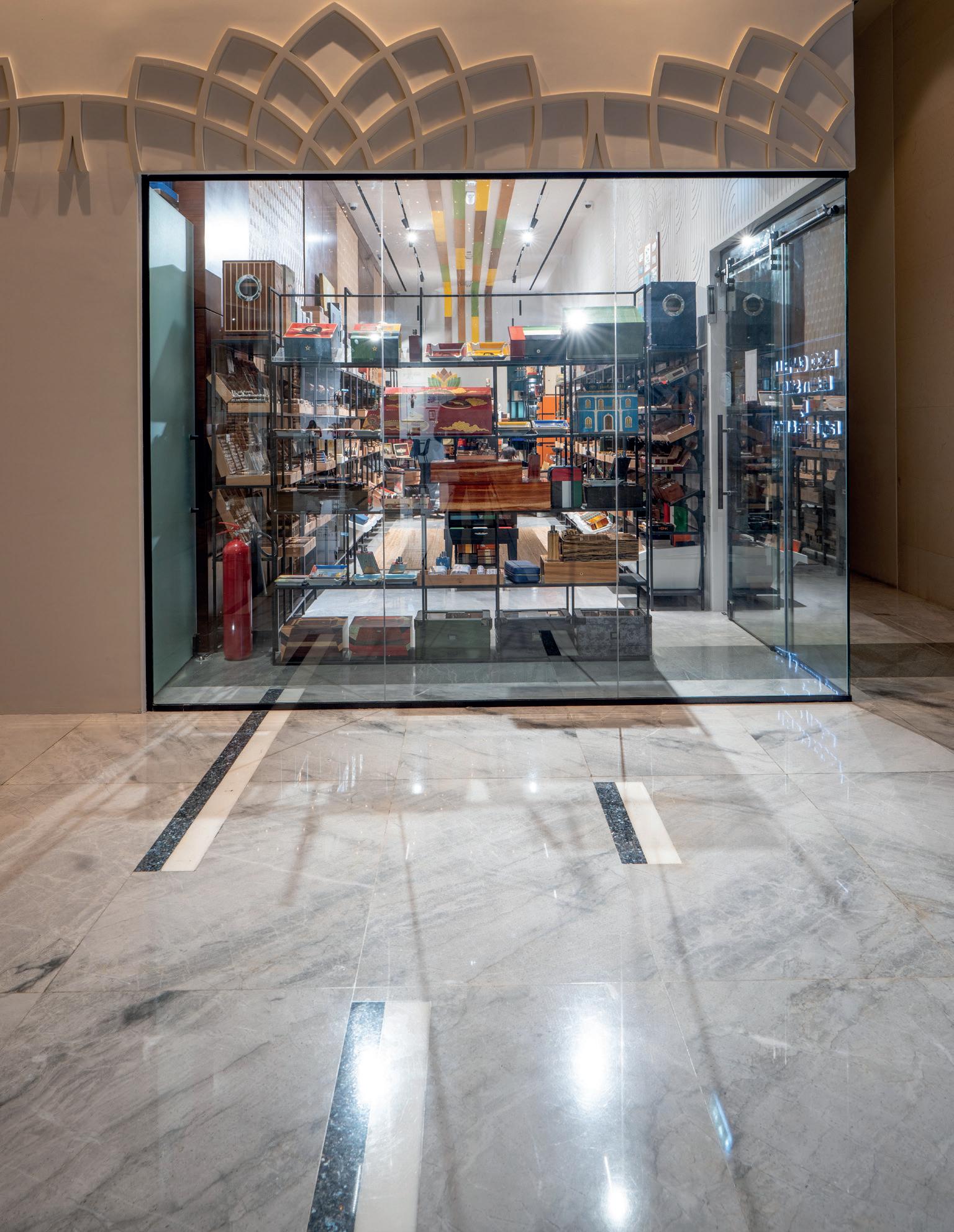
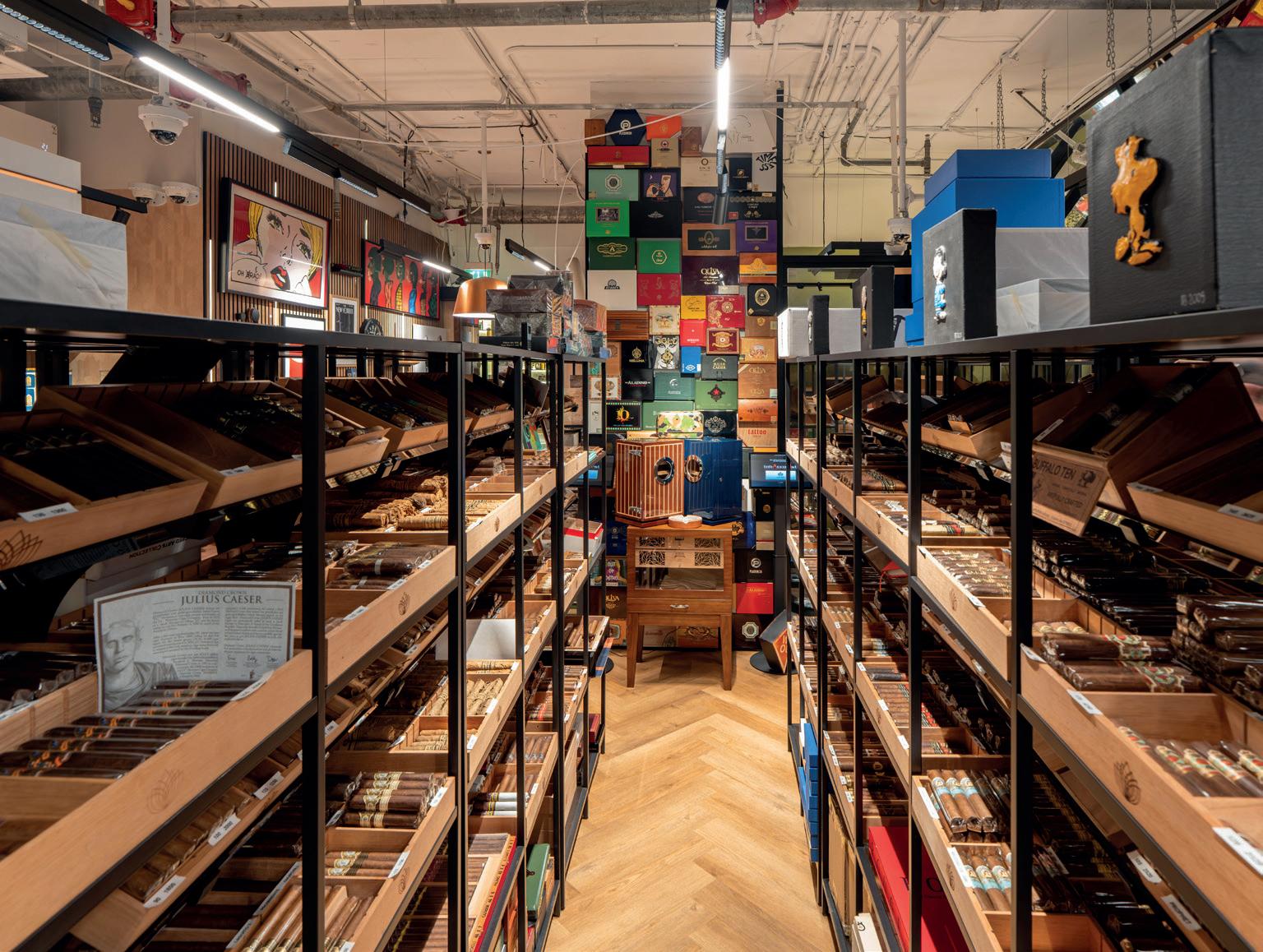
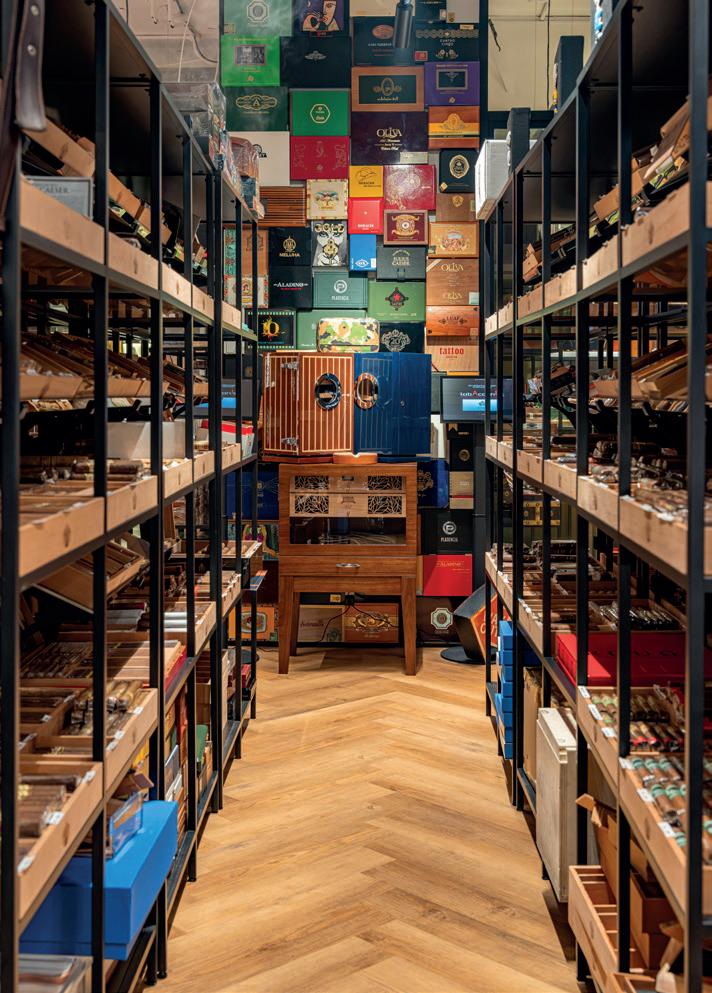
Today, with a business model that includes wholesale and retail sales, reexport, consulting, and duty-free, The Leaf Master distributes more than 900 different SKUs. It has become the largest distributor of New World cigars and accessories in the Middle East and Africa, with establishments in Dubai, Abu Dhabi, and soon in Ras Al Khaimah, the third most important Emirate in the UAE.
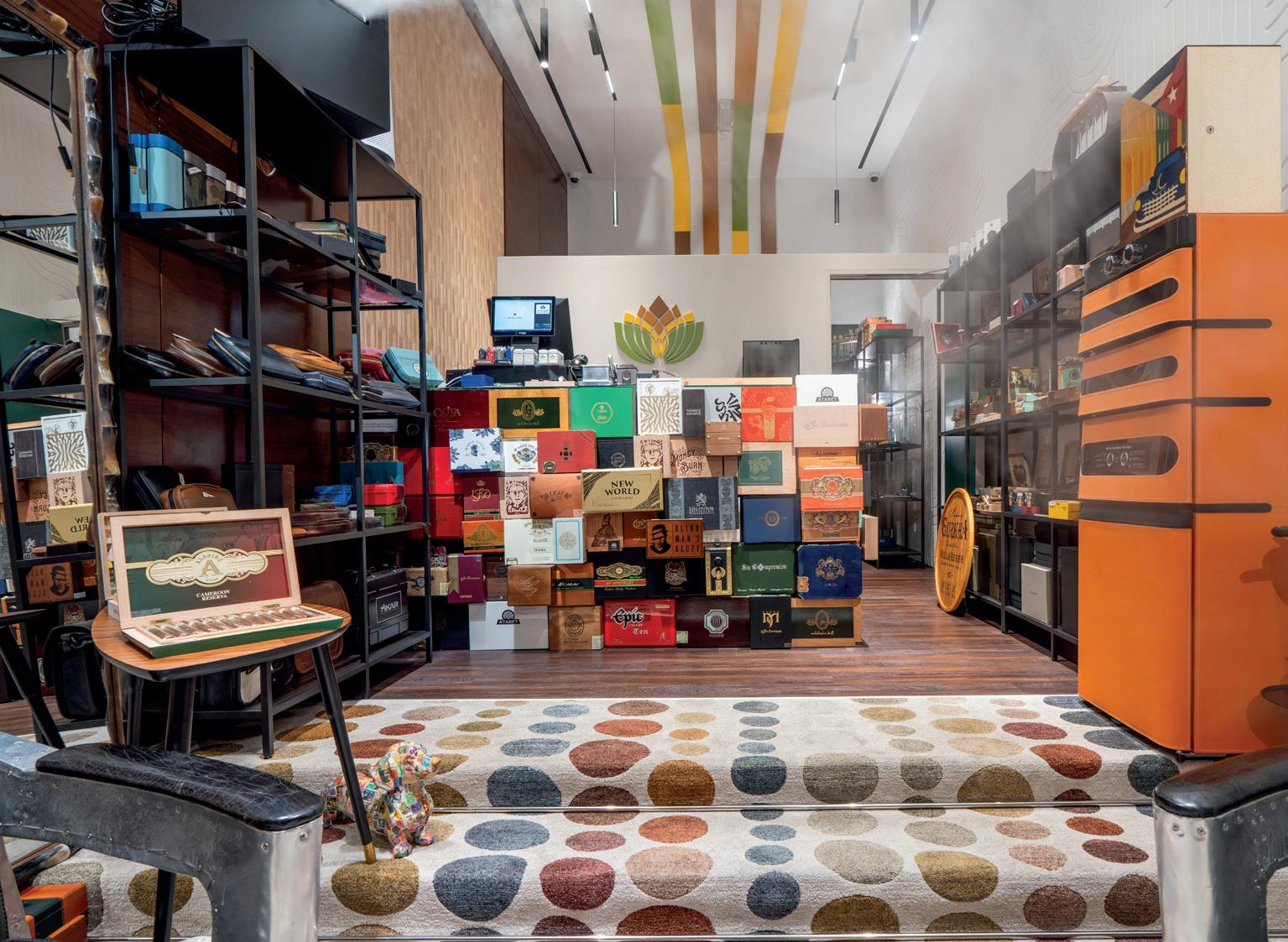
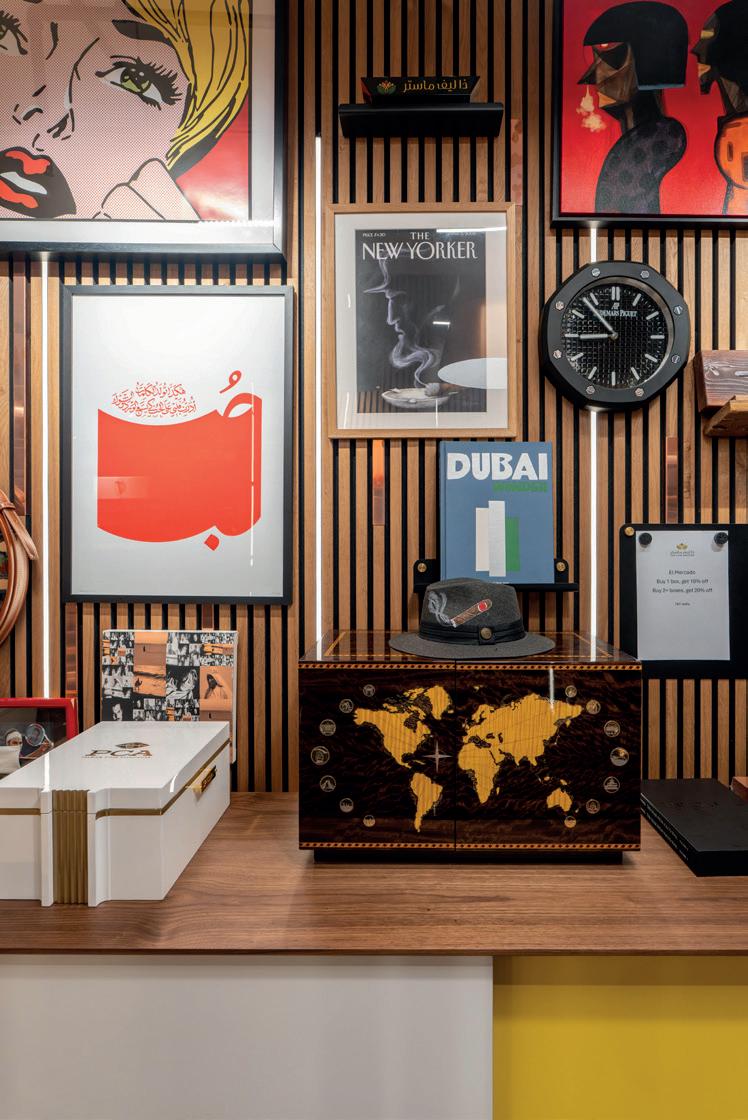
“This isn’t your typical dark shop or lounge; here there is light, art pieces, music, literature, culture… It is a celebration of tobacco,” he says.
This philosophy earned their Abu Dhabi location the recognition for Best International Shop at the Best of The Leaf awards during the last Premium Cigar Association (PCA) Trade Show.
Ra’ed hopes to repeat this achievement with the recent remodeling of his Dubai facilities, where the shop grew from 250 square feet to nearly 750, “and why not? Achieve it for the Ras Al Khaimah shop as well, once it’s ready.”
Sometimes people ask me if I’m still convinced of what I’m doing, and I reply that I wish I had started ten years earlier.”
PREMIUM TOBACCO LANDSCAPE
Tobacco is a complicated business, considering that in the Emirates, taxes on these products are around 250 percent –a fact tourists notice immediately upon entering any establishment. However, this is where the variety strategy becomes vital; The Leaf Master always has something good to offer, adjusting to any budget and palate.
Furthermore, the tobacco market in the Middle East is highly fragmented among those who prefer cigarettes, hookah, the midwakh pipe, or vaping. Yet, The Leaf Master’s educational efforts have
successfully drawn a significant number of these smokers toward premium tobacco.
This is bolstered by the fact that Dubai stands out as one of the most permissive cities regarding tobacco consumption, with countless lounges, restaurants, and available smoking spaces –a condition that has made it an attractive host for premium tobacco industry events.
“It is only a matter of time before the governments in this region eliminate these taxes, recognize that cigars are not cigarettes, that they contribute to tourism, and that the Emirates have the potential to become a tobacco hub.”
WORLD TOBACCO MIDDLE EAST
“In the Middle East, nobody does anything for the industry; they are not united,” Ra’ed recalls from a conversation with a government official regarding premium tobacco taxes. This statement motivated him to become more involved in the industry and seek to learn from those with a long and proven track record.
He decided to approach the PCA, attending every Trade Show since 2018, and subsequently seeking a seat on the Board of Directors for the first time. Despite an extensive resume and executive experience, his candidacy did not come to fruition; however, the PCA invited him to join its committees to understand the organization’s inner workings.
If a customer buys and returns, they trust you; if they return again, there is commitment; but it isn’t until they come back a third time that you can say you’ve created a brand.”
There, he realized that every important issue always revolves around internationalization –a goal achieved through the World Tobacco Middle East, held in November 2025. This successful first edition aims to expand the range of events worldwide, joining the PCA Trade Show in the U.S. and the InterTabac Trade Fair in Germany.
Moreover, he believes it is time to expand the platform the PCA offers into the Middle East, where the government is open to listening and supporting growth, and soon seek to change premium tobacco legislation, as has been done in the United States.
Currently, Ra’ed leads the PCA International Committee and is a member of the Trade Show and Content committees. He ran for a Board of Directors position for the second time but did not secure enough votes in the election held in early 2026.
But his mission does not end there. It extends to improving the organizational structure of World Tobacco Middle East and continuing to work toward the international exposure opportunities the Middle East can offer to U.S.-based manufacturers and retailers. The goal is to continue learning from the example of coordination and unity that the PCA represents for the premium cigar industry.
LaFumarosa
Scott Anthony
Confessions of a Cuban Cigar Smuggler
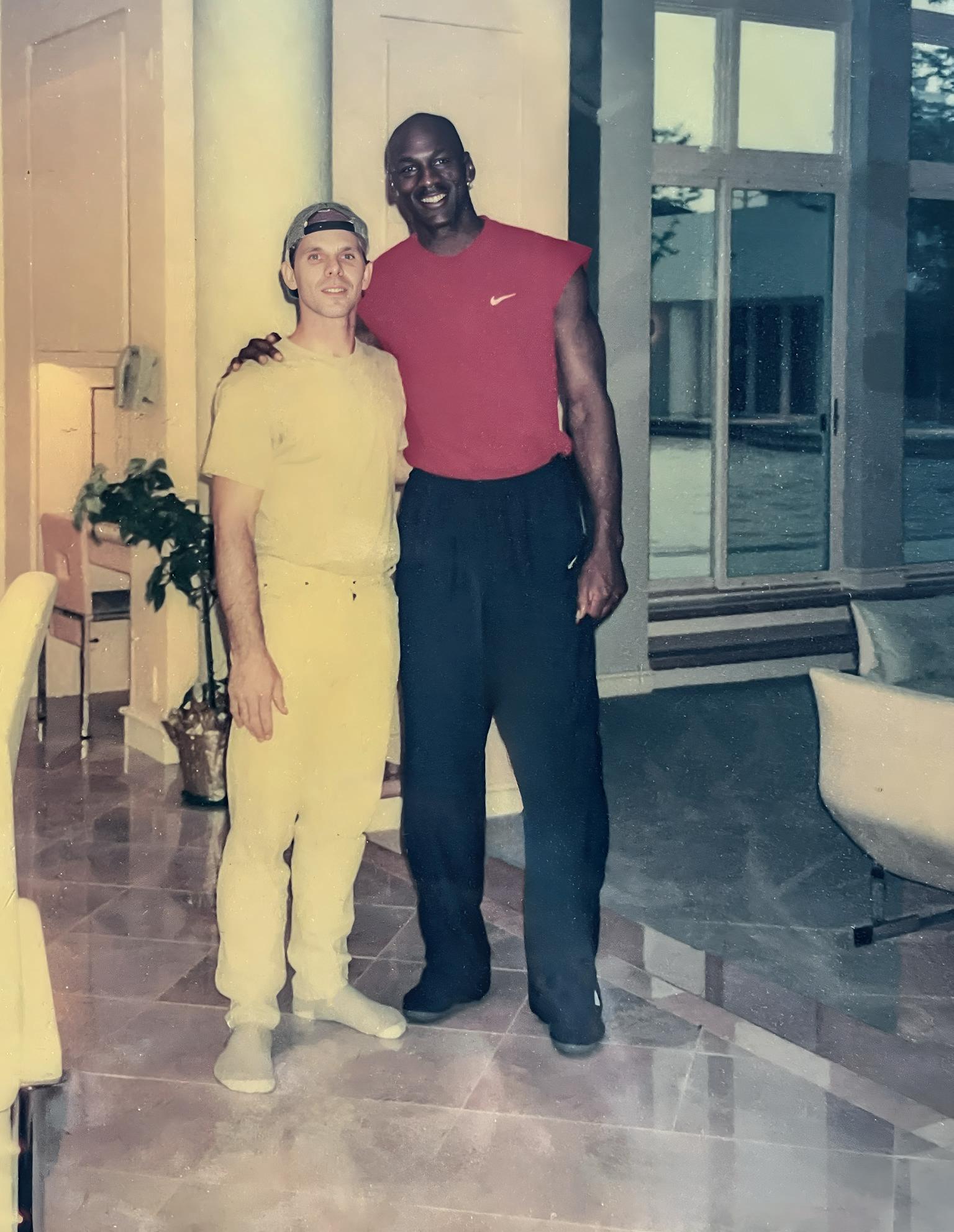
With Michael Jordan, in his home kitchen.
Scott Anthony is not just another true crime author; he has lived everything he writes. Raised on the rough streets of Chicago, he learned the brutal lessons of survival firsthand, rising from a troubled youth to a gang leader in a world marked by danger, loyalty, and betrayal.
Blanca Czebouz
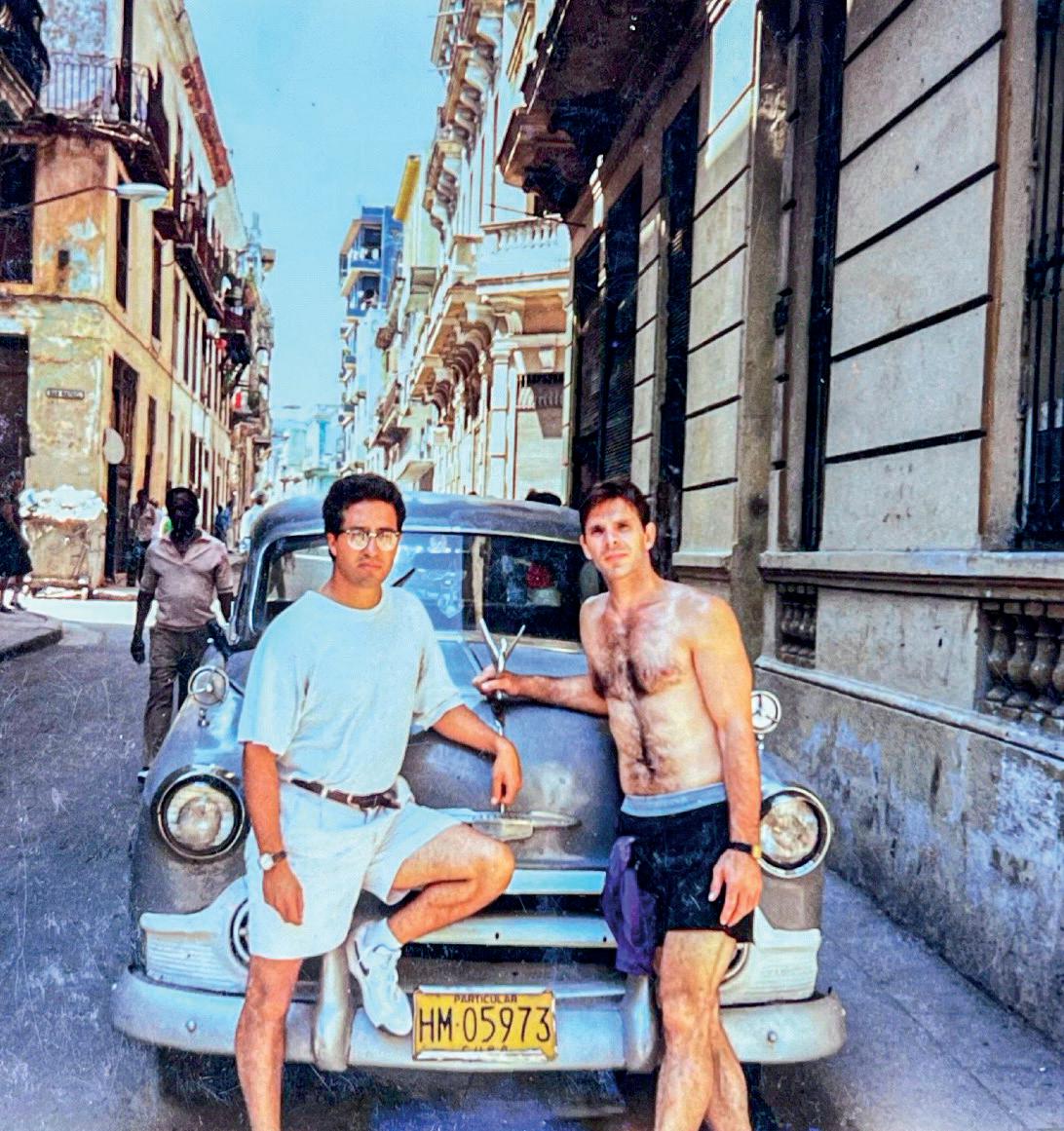
In the 1980s, crime was not just an idea for Scott, but a lifestyle defined by drug dealing and violent robberies. A decade later, his criminal activities evolved into a Cuban cigar smuggling operation that took him to Cuba’s capital more than sixty times, moving millions of dollars in the black market.
Border crossings, bribes, and constant danger became his daily reality until the pressure mounted and he managed to flee the country, escaping justice. For five years, he lived as a fugitive, rebuilding his life under false identities and forged documents, relying on his instinct, discipline, and survivor’s mentality. Finally, he straightened his path and settled in Mexico, where he opened gyms, runs businesses with hundreds of employees, and manages world-class fighters.
A lifelong boxer, kickboxer, and martial artist, as well as a devoted Jiu-Jitsu student, Scott is now a husband and father of eight. As a reformed outlaw turned businessman, he channels his past experiences into gripping stories. And although these tales might seem like they belong in a movie, every word he writes is true: a life testimony that mainstream publishers often overlook.
Below, we present excerpts from the book Confessions of a Cuban Cigar Smuggler, by Scott Anthony.
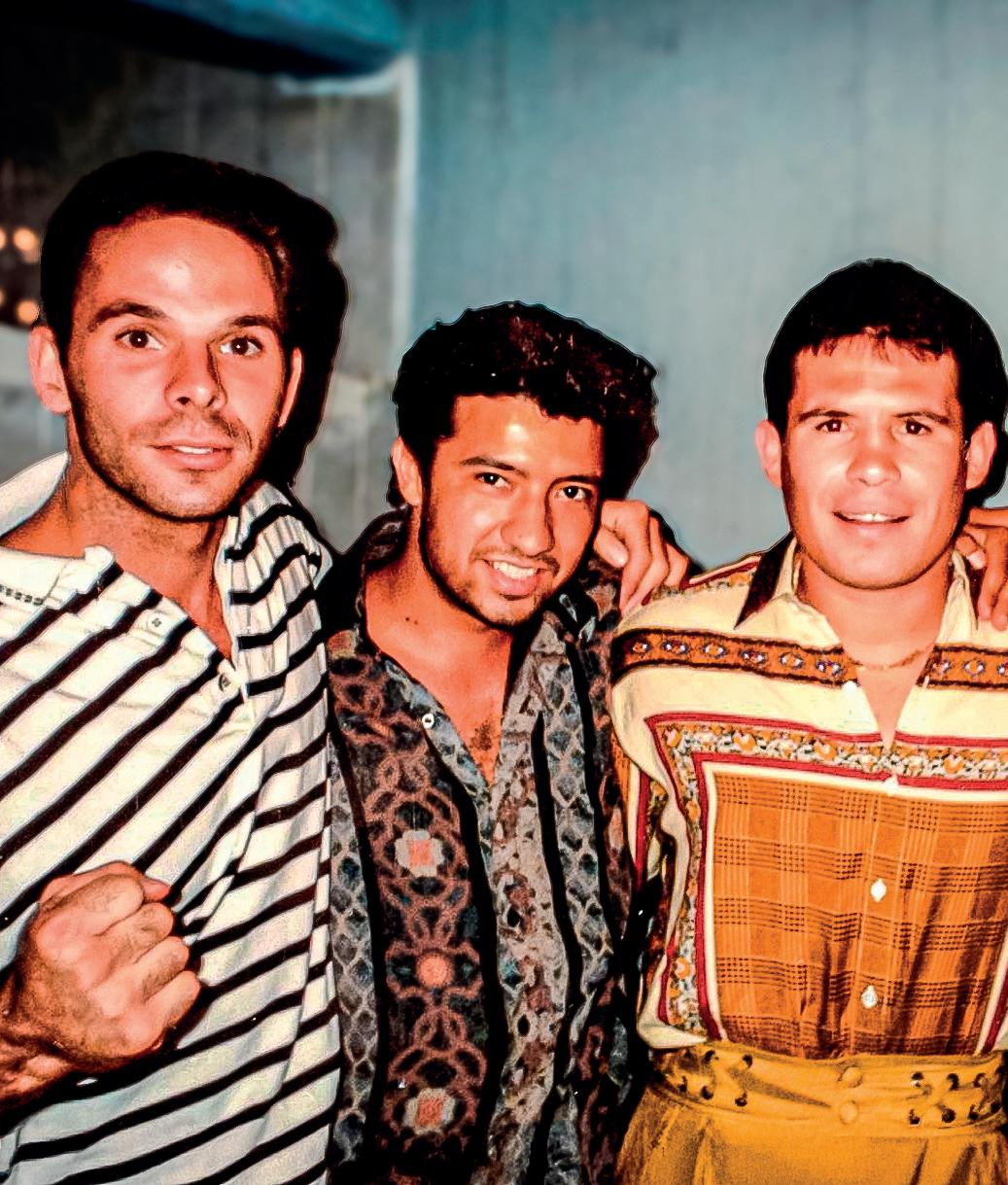
Scott Anthony, his friend Enrique Aldeco, and Julio César Chávez, former world boxing champion.
THE BUY
I was a man on a mission and had no time to waste. As soon as I got back to Mexico, I asked around and finally made my first contact: Arturo Brigante, a Cuban living in this country who sold cigars to businessmen. He showed up with his assistant. He carried himself like a boss: he made a few quick gestures, and the kid went to the car, returning with two suitcases full of Habanos. All I had was $4,400 in cash. I bought forty boxes from him at $110 each. I was willing to risk it all. That was the beginning.
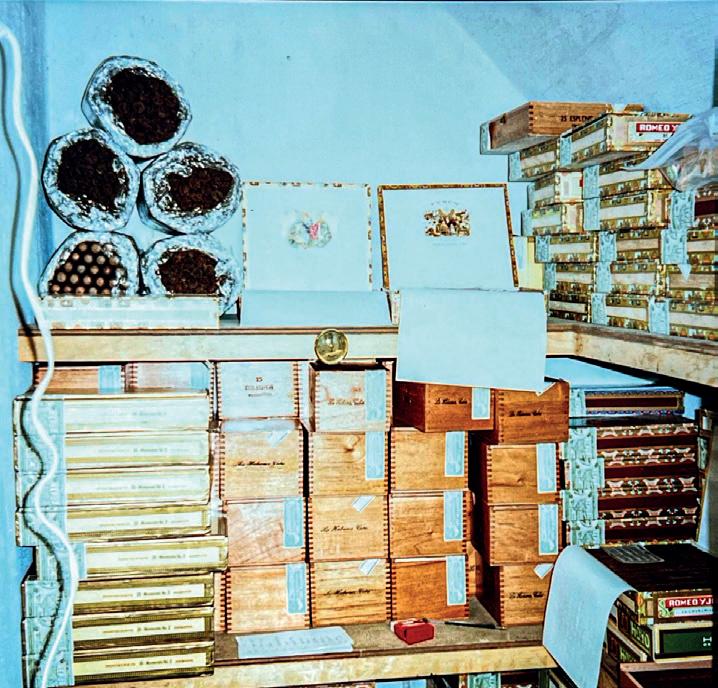
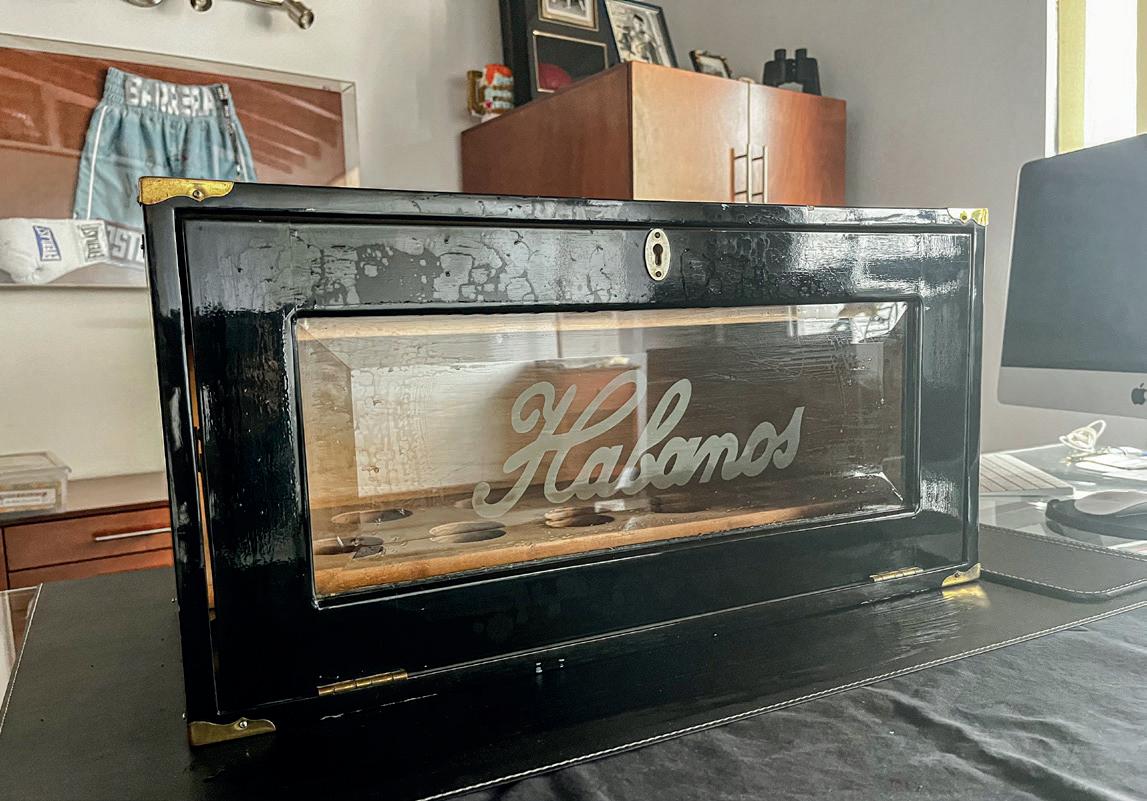
A closet converted into a humidor, with nothing more than a hygrometer and a water humidifier, kept thousands of cigars fresh while they moved through two countries.
FIRST CUBAN CIGAR RUN
By the end of the trip, my two suitcases were full. I had seventy boxes of authentic Cuban cigars that I bought in Havana; there was no doubt about their origin. I traveled all the way here while under federal supervision, risking my freedom and my life to make some money. I wanted to get ahead, and this opportunity presented itself, so you better believe I dove in headfirst.
I was there, in front of the Havana airport, about to walk into the unknown. We went to the counter and checked in; everything went smoothly and easily. The process wasn’t fast; they did everything manually and were very careful not to let any national escape through the airport. Once checked in, we had to line up for Immigration. It was a wall of booths with no way to see what was beyond. It was a long process and we were almost late for our flight. The airline was announcing our names. They knew we had checked in, but we hadn’t boarded yet.
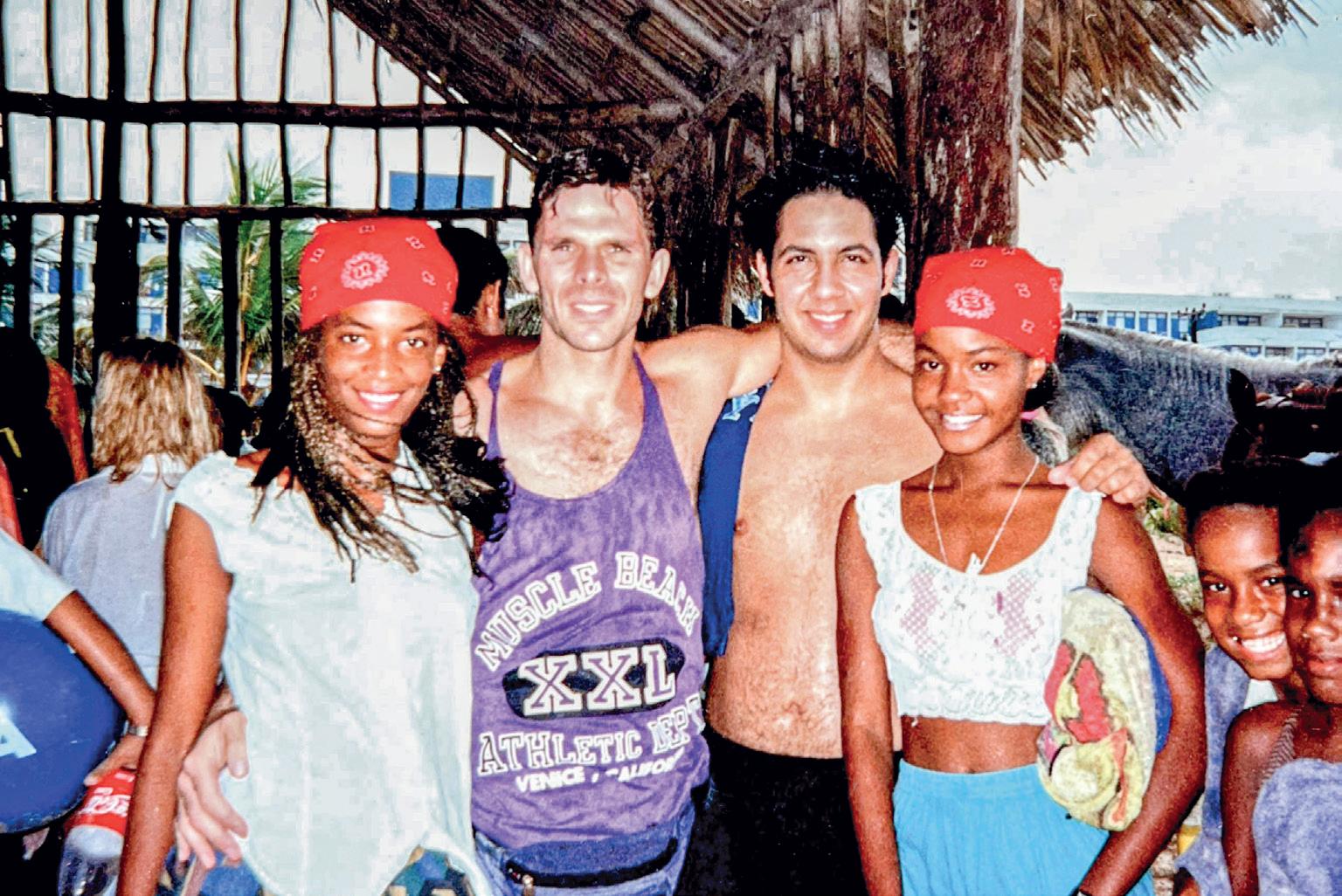
With Eduardo Trujillo, a friend with whom he traveled to Cuba and who helped him smuggle the cigars.
There was a checkpoint. Customs agents made everyone pass their bags and belongings through an X-ray machine. As I left Migration and entered the waiting area, hearing my name poorly pronounced over the speaker, I saw our two checked bags there, in the open. They looked out of place, simply wrong. I put sixty dollars (three twentydollar bills) inside my passport. I tried not to pay attention to the bags and hoped this was normal. It wasn’t.
I was under pressure now. My flight was about to leave and Customs was calling me over the intercom. A small man, about five feet tall and 110 pounds, around thirty years old and looking quite unfriendly, took me into a room. I pretended not to speak Spanish; I only spoke English. He was taken aback by my U.S. passport and the cash inside it.
When I walked out of the room, it looked like Eduardo needed a diaper change. I smiled a bit and watched as two agents took my bags back inside. We boarded a bus. Back then, there were no jet bridges, only buses that took everyone to the runway to board via stairs.
MY FIRST BUST IN CUBA
While I was looking for a luggage cart, a young guy approached me and tried to whisper in my ear. I couldn’t really understand him because he was clearly trying to be discreet. But I heard “Raul” and “only two suitcases.” I was lost. What did he say? What was going on? What I thought he had said was that Raul said to only bring two suitcases. I had the van turn around and we drove all the way back to Capi’s apartment. There, we unloaded everything except for four bags –two each. If the van driver wasn’t suspicious before, he surely was now, and all that commotion probably gave us away.
One of the humidors he manufactured to sell to his clients, but still keeps in his office.
We returned to the airport when it was almost dark, but we still had time to catch the flight if everything went well. There wasn’t much of a line at the Mexicana de Aviación counter. We were walking that way when I felt a tap on my back. I turned around and saw Raul. I told him everything was cool and that we only had two suitcases each. He was cold and distant; he didn’t really look at me, but said, “No, it’s not good. Keep your mouth shut and follow me.”
Several agents surrounded us. We went out through the main airport door and they took us to the arrivals area on the other side. I was calm but alert. What the hell was happening? My suitcases were on a table in the customs area, all empty –about 125 boxes on display for everyone to see. It looked like a mountain. They had experts studying them; there were accountants present, and it was all very formal. After a few hours, it was clear we weren’t going to make our flight.
The ordeal lasted about four hours. Raul finally said they would hold our passports until further notice. They gave me a number to call every day. That was it. We would be held on the island until they decided what to do with us. We went back to Capi’s, who was waiting for us, nervous. He had to leave, but he graciously let us stay in his apartment, knowing this was a mess that could blow up in our faces.
STREET CIGARS
Let’s get one thing straight right now: a cigar is a fuckin’ cigar. It’s a bunch of leaves wrapped the right way so it burns correctly; that’s it. If those leaves happen to grow in Cuba, then you have a Cuban cigar. If a person is an expert roller, they can make a cigar just as well, whether they’re working at home or sweating in a factory, using stolen leaves or government-owned ones. The tools used to roll a cigar are simple, even primitive, and easy to find.
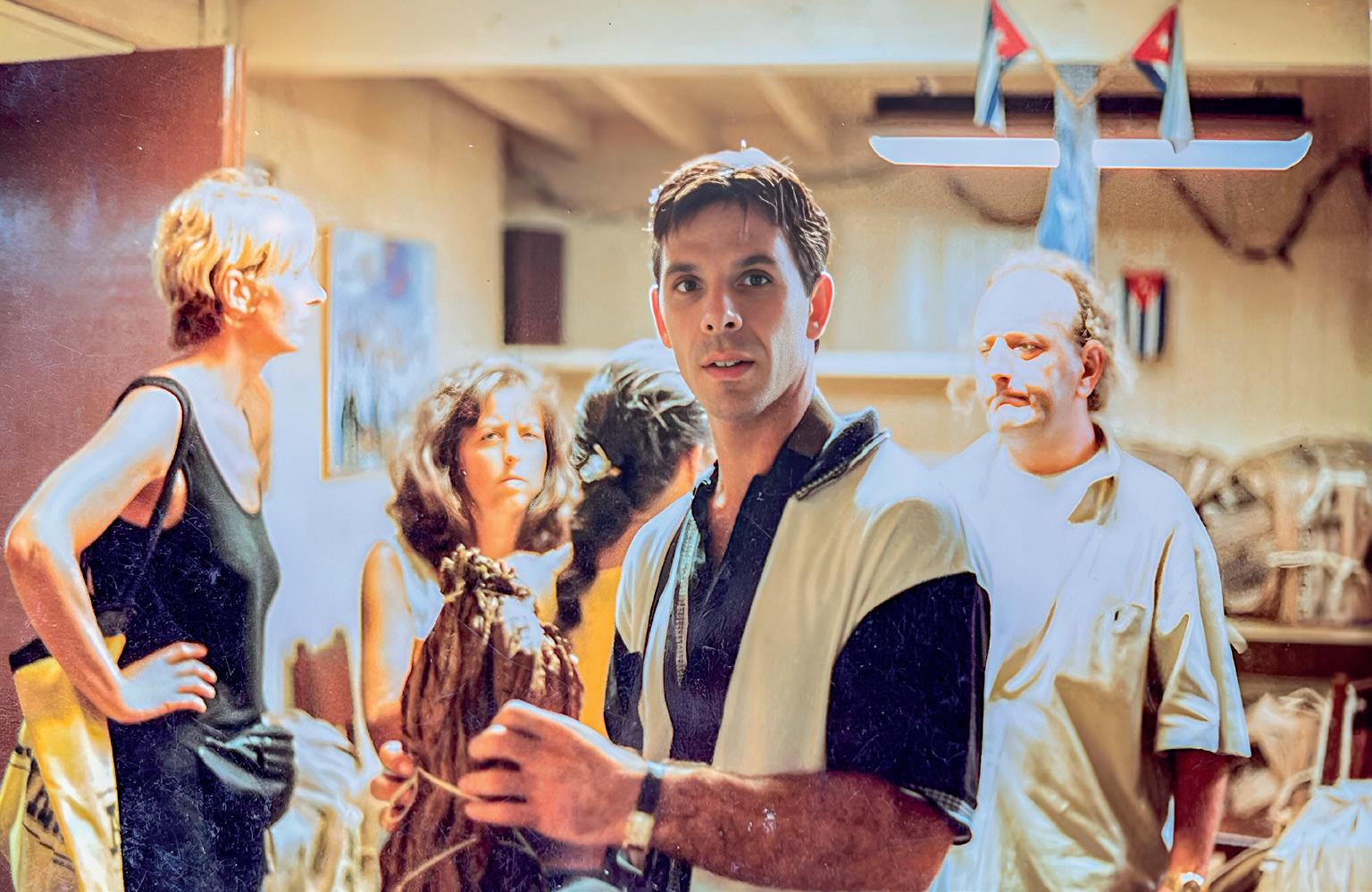
During a visit to a factory in the 1990s.
Finding exactly what I wanted in Havana wasn’t always easy. Certain brands and vitolas were often scarce. On the streets, one hundred percent of the cigars were either stolen or made with stolen products. It’s not like those guys could just take an order from me. The average Cuban didn’t give a damn about cigars; they cared about eating. They sold whatever brand they happened to have in their possession. I had at least fifty different sources to buy from, with new guys offering me deals every day, but I needed quality. That was the hard part. I became a Habanos connoisseur. As I evolved, so did the cigar market. I needed the best, and on the streets, that wasn’t easy. You could find them, sure, but only with persistence and a sharp eye. Some brands were almost impossible to get, both on the street and in the factories.
What most people don’t want to hear is that they’ve bought and smoked street cigars, even though street cigars and factory cigars are usually the same fuckin’ thing. Sorry to burst your bubble, but if you’ve smoked Habanos, the odds that you’ve smoked “street cigars” are close to one hundred percent.
For whatever reason, it bothered me to sell “street cigars” to my customers. It shouldn’t have mattered to me, but it did. I’ve always had a certain kind of honor. I’d rather put a gun in someone’s face to rob them than scam them. I didn’t like lying and cheating to make money. If the cigars are put together right (it’s not rocket science), there isn’t a smoker in the world who could tell the difference –not one. But the profits were much higher than with factory cigars and the inventory was much better. That’s the allure for guys like me from all over the world.
Cuban girls.
That’s why so many people smuggled and sold street cigars: the damn profits were off the charts. Imagine pulling a box off the streets of Havana for twenty dollars and reselling it for a thousand in the United States. That kind of margin doesn’t just give you money; it gets into your blood. The allure, besides the cash, was the chase, the hustle, and the feeling of beating the system. The adrenaline was so strong that it made every risk feel worth it.
THE BIG BUST
I had to go through Immigration and Louie went with me. We were outside and there was absolutely no way to see to the other side. We were trapped, waiting. Time barely moved. For a moment, it felt like time had frozen. The airline was already boarding and they were herding us toward the bus that would take us to the plane.
Out of one side of the security checkpoint came a customs agent carrying two of the suitcases. At the same time, I heard Antonio shout: “Scott!, ya valió madre todo! (it’s all fucked).”
At that moment, Eduardo passed through the Immigration gates, crossed security, came straight to me, and said: “They want the invoices.” I had the invoices and tried to give them to him, but the airline people were literally pulling, dragging, and pushing me to get me out of there.
I didn’t say a word. I got on the bus and, at that moment, Eduardo ran toward the vehicle. He looked like he wanted to cry: “Give me the invoices!”
Three weeks had passed since my incident at the Havana airport. Antonio and Eduardo had returned and recovered some suitcases without a problem, but I still had many suitcases left there.
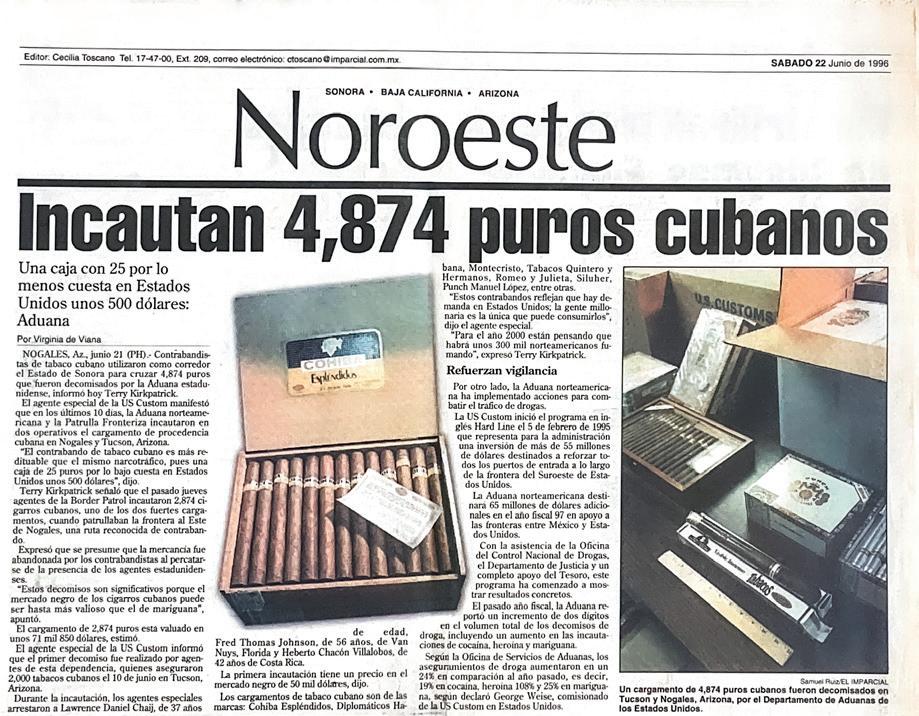
The news of the seizure occupied the eight-column headline in the regional section of the Mexican newspaper El Imparcial in 1996.
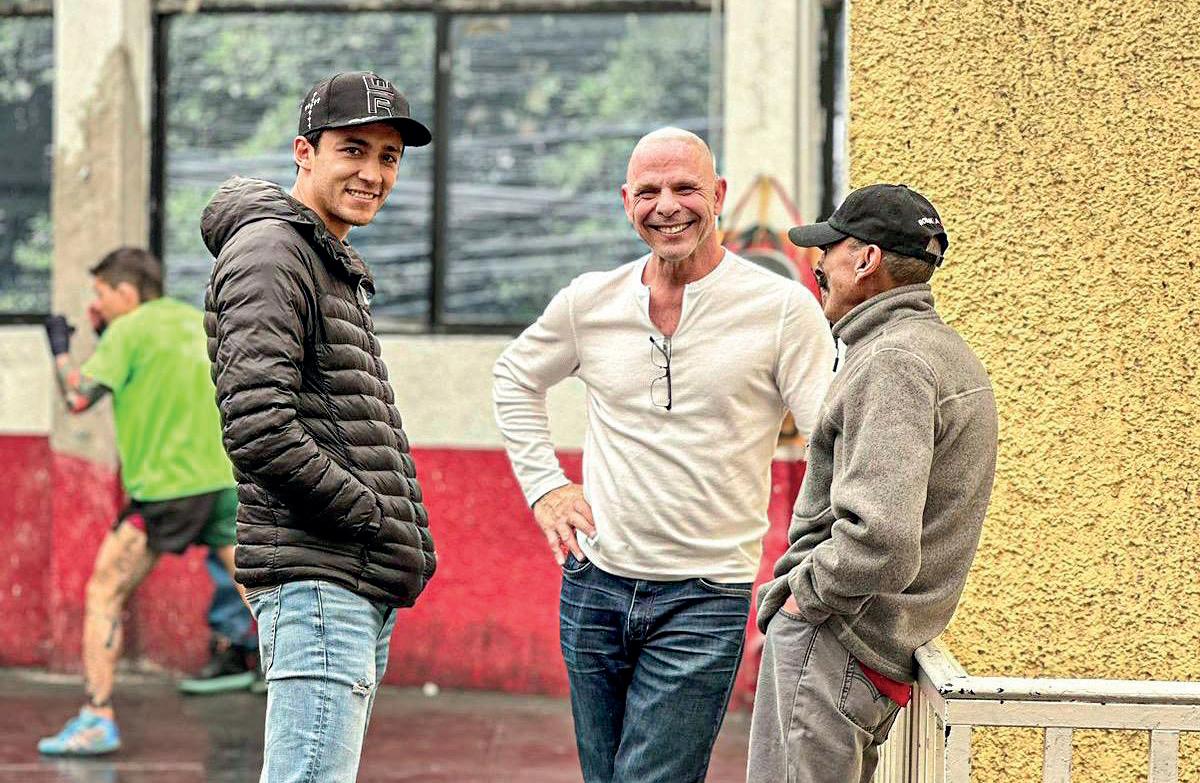
Scott Anthony (center) today.
The plane we were boarding was one of those with stairs at the rear; a long, narrow staircase where I moved slowly to buy time. I was really suffering because they kept pushing me and told me, once again: “You don’t know how lucky you are to be leaving, DON’T BE STUPID.” I had told Louie: “Hey, go back there with them,” but he said: “Fuck you, there’s no way I’m going back.” As the plane taxied, we could see the commotion at the airport. Then we saw them getting into cars and jeeps. They were coming for us at the plane. Luis and I watched as we took off by the grace of God. We were on our way back to Mexico City: just the two of us... but without cigars. I had just lost 400 boxes of cigars and a bunch of suitcases. Fuck.
If you want to dive deeper into this gripping narrative and uncover all the twists and turns of this story, be sure to purchase the book Confessions of a Cuban Cigar Smuggler, by Scott Anthony, on Amazon. A journey into the hidden world of the cigar trade that you won’t want to miss!
@SCOTTANTHONYOG
Book available on Amazon and Barnes & Noble
AMAZON SMOKE
B&N SMOKE
Columns ofsmoke
Love for Tobacco Three Perspectives, One Passion
Cándido Alfonso
February is the month of love, though it almost always stays on the surface. True love –the kind that endures– is rarely loud. Love for premium tobacco belongs to this category: silent, demanding, and profoundly honest. It is not an impulse or a vice; it is culture, ritual, and time well spent. I speak from a very specific place: as one who manages cigar lounges, observes human dynamics daily, and understands that the cigar is, above all, a catalyst for moments.
The first perspective is that of the one who cultivates and works with tobacco. I do not work the land, but I respect it deeply, because without that first link, nothing that happens afterward would exist. The farmer, the master fermenter, and the roller understand something that the modern world often forgets: tobacco is not rushed. It is waited for, cared for, and corrected with humility, for each leaf is accumulated time. This love is silent, disciplined, and absolutely incompatible with haste.
The second perspective is that of the aficionado, and here it is best said plainly: smoking is not the same as savoring. Smoking is automatic; savoring is conscious. In my lounges, I see it every day: the client who arrives out of curiosity and discovers that a premium cigar is not consumed, it is experienced. Savoring implies attention, rhythm, and a willingness to learn. It is understanding why the flavor changes, why the blend matters, and why the context alters the experience.
This distinction is often lost when, out of ignorance or convenience, all tobacco is tossed into the same bag as the industrial cigarette. It is a poor comparison. The cigarette seeks repetition; premium tobacco seeks intention. One responds to anxiety; the other, to the pause. It is no coincidence that many of the important moments in life are celebrated with a good cigar. As Demi Moore rightly said: “There’s something about smoking a cigar that feels like a celebration. It’s like a fine wine. There’s a quality, a workmanship, a passion that goes into the smoking of a fine cigar.” Exactly that: celebration, quality, and passion.
The third perspective is the one that touches me most closely: that of the world that sits in a cigar lounge. My role is not to cultivate the leaf, but to create the space; to listen to stories, to witness celebrations, business closings, reconciliations, and necessary silences. In a lounge, country, age, and profession do not matter. Smoke levels. Completely different people end up sharing a conversation because the cigar creates common ground. That is where the magic happens.
That is the role I assume with responsibility: to educate, guide, and elevate the experience so that the love for premium cigars grows with knowledge, not with excess. Because when it is understood, it is respected. And when it is respected, it is enjoyed better.
Loving premium tobacco is loving the ritual, the conversation, and the shared time. From the leaf to the lounge, from the producer to the aficionado, tobacco is not smoked: it is savored, learned, and shared. And those of us who live this industry from the inside know that there –right there– is its true value.
Two Loves, One Tradition
Tales Born Among the Casks
Yesiré Rosa
Whisky is often marketed as a trophy of status: century-old casks, six-figure auctions, and leather-scented libraries. But if we strip away the marketing noise, we discover that the most extraordinary bottles in the world were not born from a business plan, but from a promise. This is the story of two spirits that are not measured in years, but in heartbeats.
A LOVE LETTER: GRACE MCEWAN’S DRAM
Jim McEwan is to whisky what Mick Jagger is to rock: a living legend. After rescuing distilleries and winning every
imaginable award, he decided that his most intimate work would not bear gold medals, but the name of his wife: Grace.
He wasn’t looking for the strongest whisky, but the most human one. He personally selected casks that captured the essence of his partner: a floral elegance, a lingering sweetness, and that quiet strength that keeps everything standing. When uncorking a Grace McEwan’s Dram, you aren’t just tasting Scottish barley; you are participating in a private toast to 50 years of partnership. It is proof that even in an industry of rugged men, tenderness is the most complex nuance.
GUARDIAN OF A LEGACY: BESSIE WILLIAMSON
If Grace’s story is about sweetness, Bessie Williamson’s is about unwavering loyalty. In 1932, Bessie arrived on the wild Isle of Islay for a summer job. There, she met Ian Hunter, the owner of Laphroaig.
Ian, a solitary man and a perfectionist, found in Bessie the only person capable of loving his legacy as much as he did. After decades of working shoulder to shoulder, Ian bequeathed her the entire distillery upon his death. Bessie was not only the first woman to lead a distillery in the 20th century; she was the one who protected Ian’s heart against large corporations.
The bottle The Bessie Williamson Story –a 25-year-old Laphroaig presented as a book– is the testimony of a woman who spent her life honoring the trust of the man she loved.
“Whisky, like love, is simply time well spent. It is not about how long you wait, but who you choose to share the first sip with.”
Why read and drink these stories?
Because in a world of mass production, these bottles remind us that:
-- Whisky is a time capsule: It holds the climate, the air, and the feelings of when it was bottled.
-- Imperfection is beauty: Unlike a neutral vodka, whisky has character, scars, and memory.
-- It is a bridge: A good dram is not drunk to forget, but to remember.
The next time you raise your glass, don’t just look for notes of vanilla or smoke. Look for the who, because at the end of the day, the best whisky in the world will always be the one that tells your own story.
A Toast to What Truly Matters
In this month of love, I wanted to pause and share these two stories, which prove that whisky is much more than a distilled spirit; it is liquid memory. Jim and Bessie teach us that the best labels are not printed with ink, but with loyalty and promises kept.
Today I ask you, as you hold your glass: what is the story you are writing? To whom would you toast today? Because, in the end, love –much like a fine malt–is the only thing that truly improves with the years.
Room101 Namakubi
When the Cigar Becomes a Ritual
Gastón
Banegas (*)
The world of premium tobacco is smaller than it seems. This is especially true within the boutique universe, where true connections are not measured by production volume, but by trust, expert hands, and leaves that travel steeped in shared history. Within this intimate and demanding territory, Room101 holds a unique place.
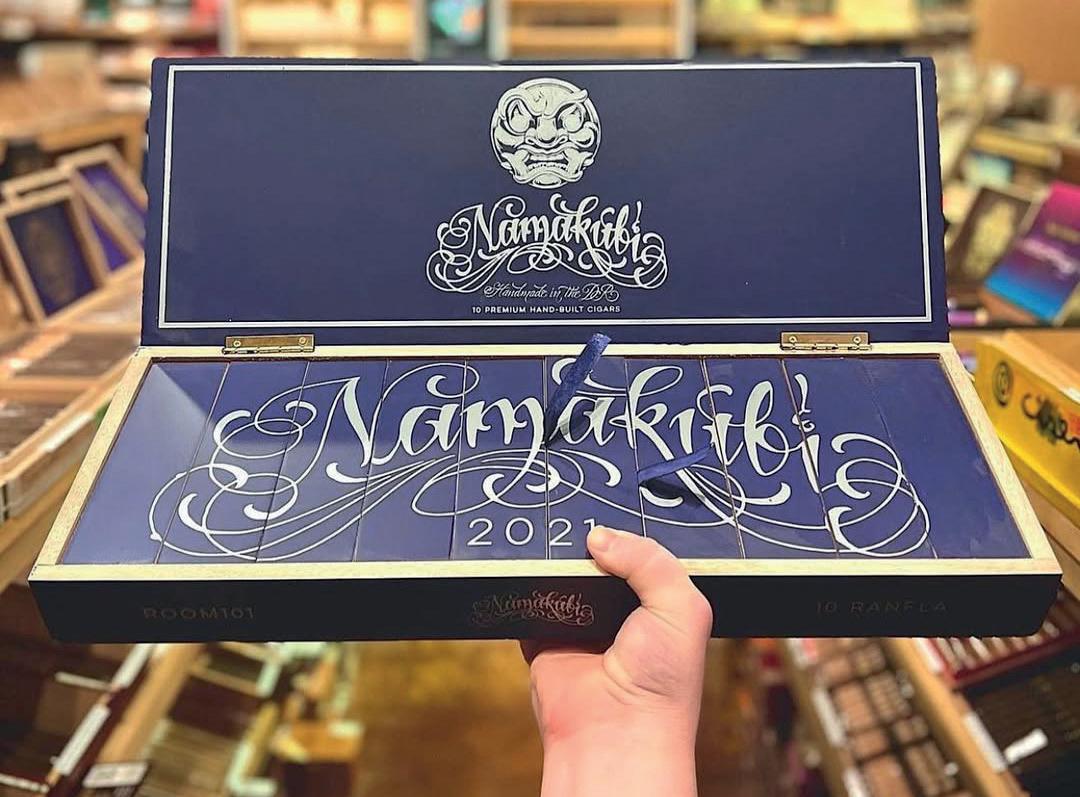
The brand was born in 2009 when Matt Booth –a graphic designer and restless creative– joined forces with Camacho Cigars under the tutelage of Christian Eiroa. The result was immediate: a provocative aesthetic backed by solid
Honduran technique. They didn’t come to repeat formulas; they came to shatter molds.
Following Davidoff’s acquisition of Camacho, the brand went through a transition period. In 2017, Booth went independent to redefine his path. Thus, Room101 found new production roots in the Dominican Republic without ever losing its disruptive spirit or conceptual identity.
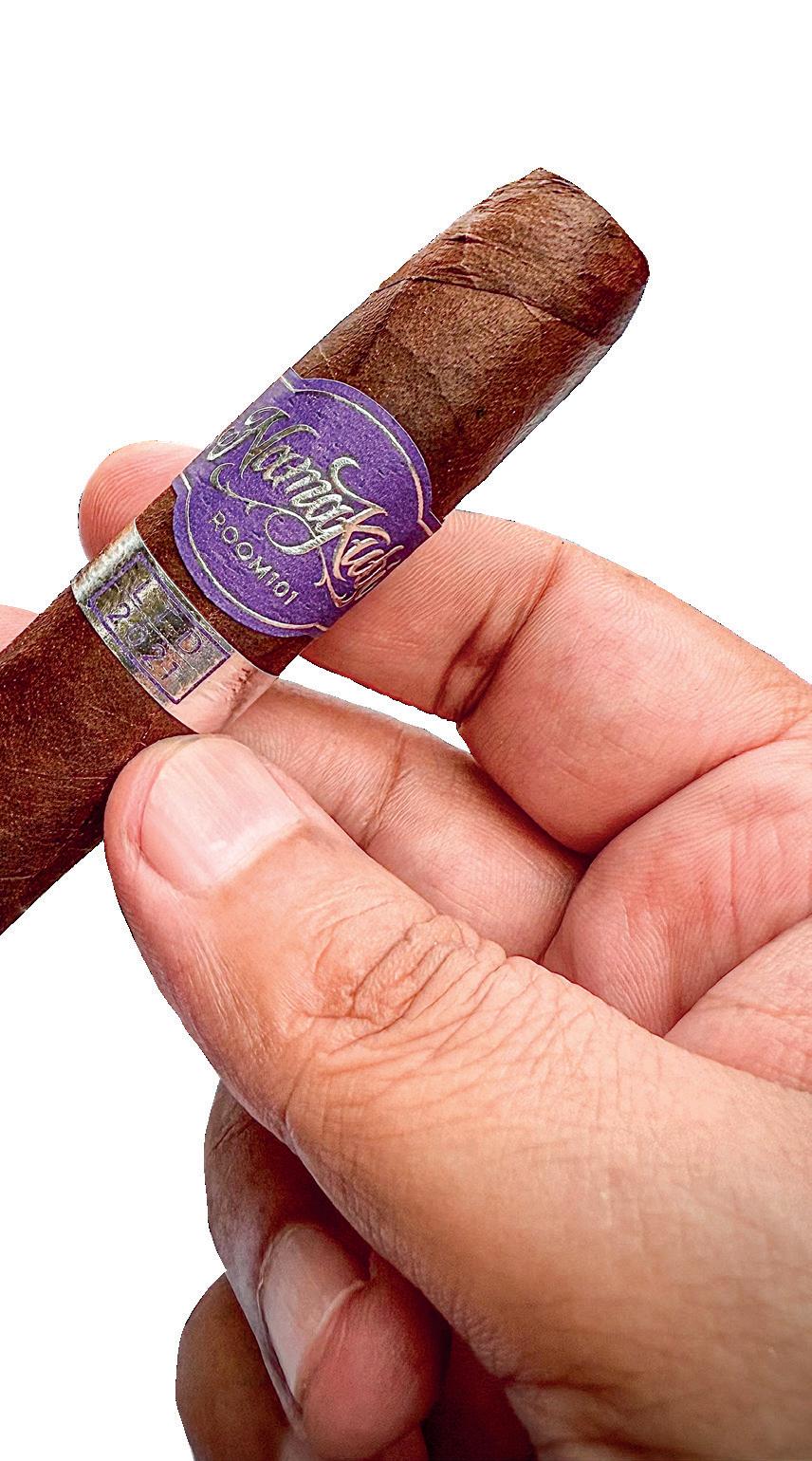
Within this new chapter emerged the Namakubi, a vitola that transcends the sensory to become an experience in itself.
A VITOLA WITH MEANING
Namakubi is a Japanese word meaning “severed head.” In Samurai culture, the term refers to honor, sacrifice, and the culmination of an act. This was no casual choice; the concept permeates every aspect of this cigar.
SENSORY ANALYSIS: A SMOKE WITH A NARRATIVE
From the pre-light, the Namakubi proves expressive. Aromas of cedar, hay, and a delicate floral nuance anticipate a reflective rather than explosive experience.
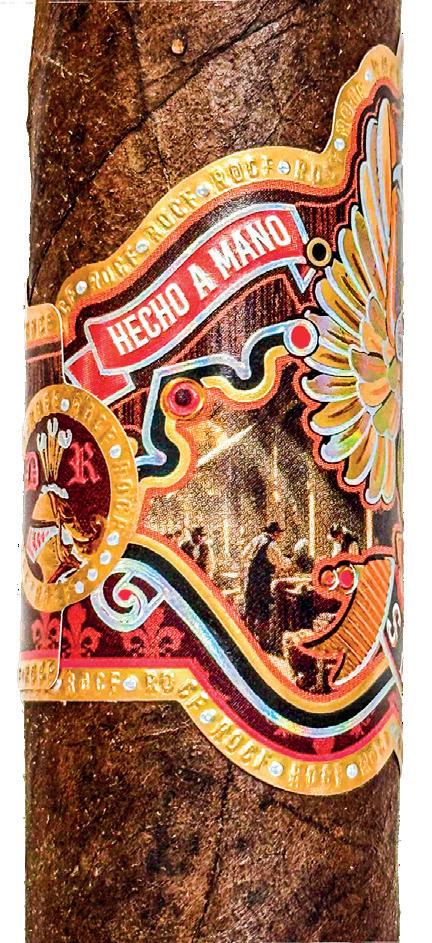
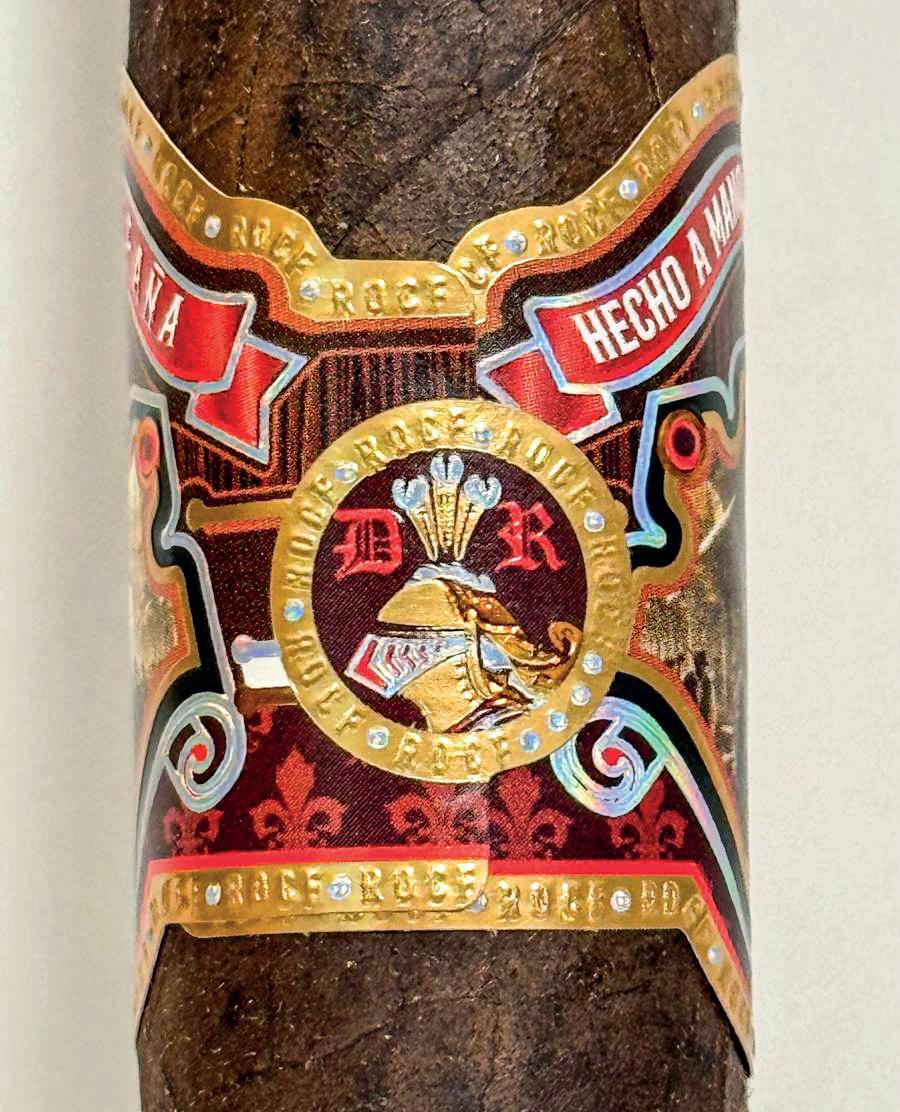
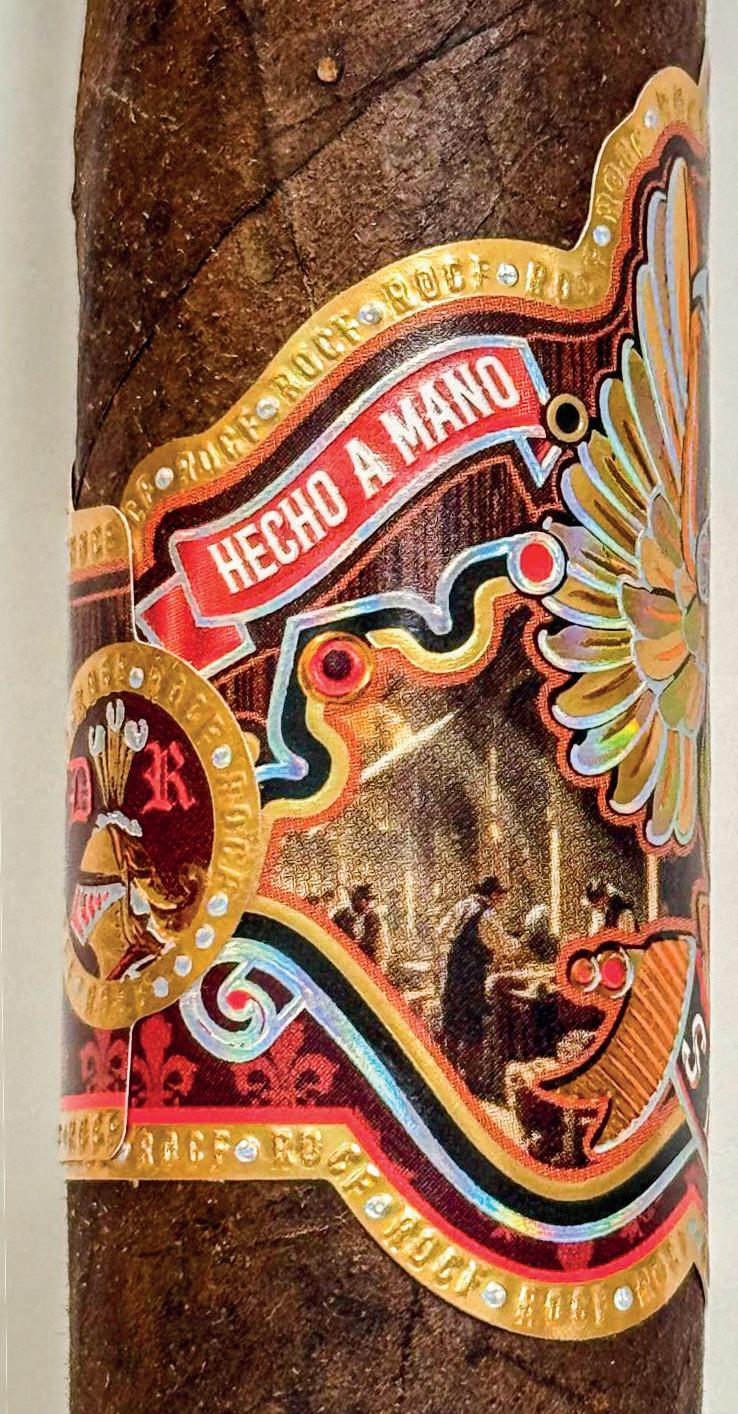
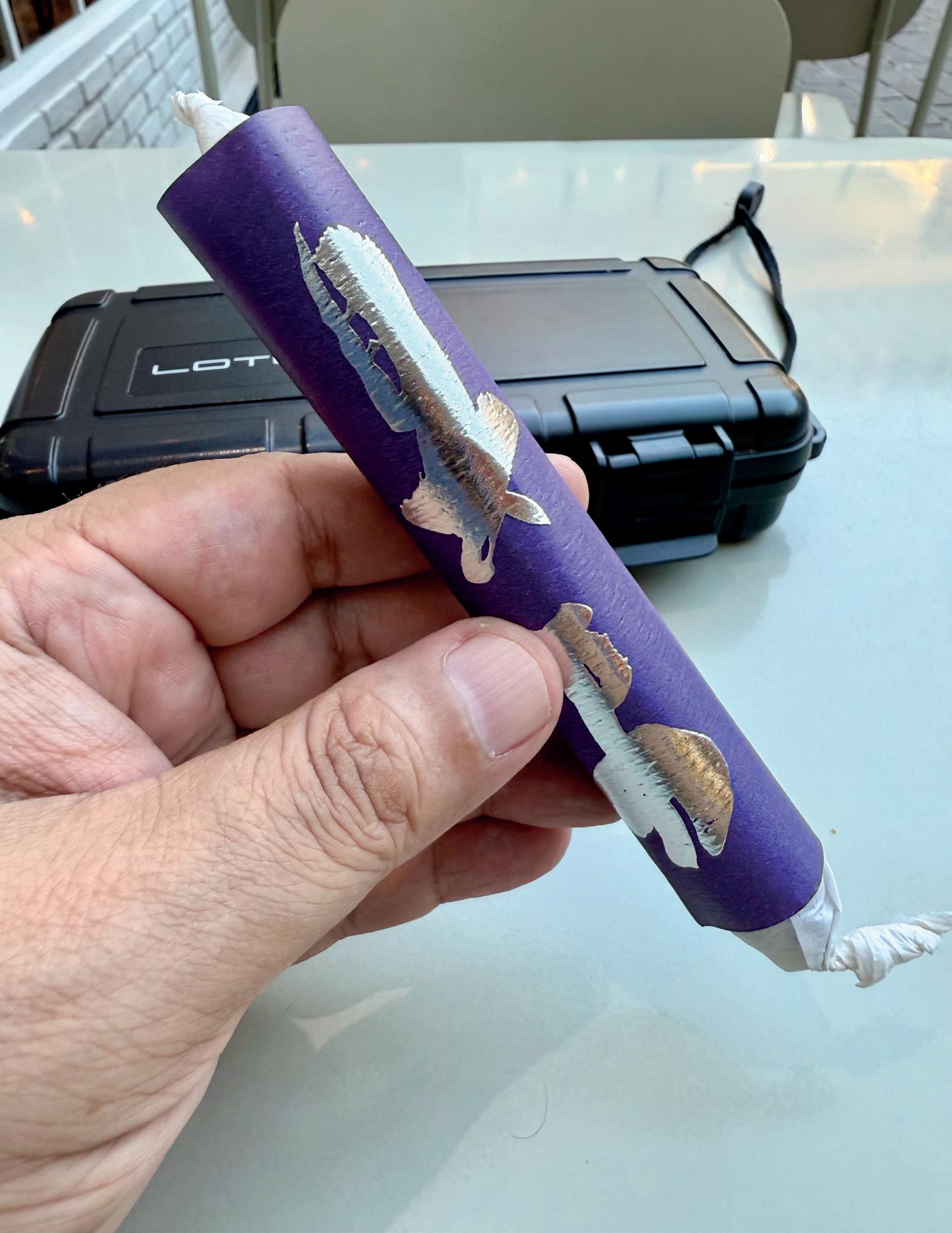
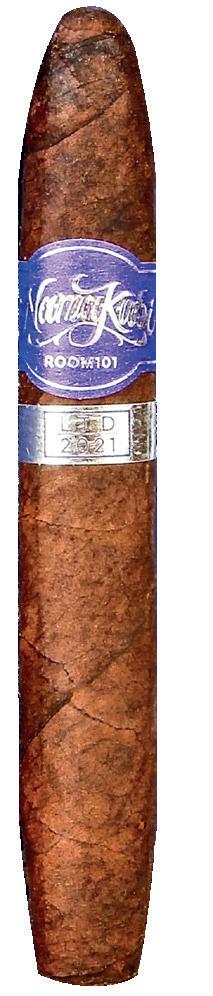
The Perfecto vitola, 5.5-inches, 50-ring gauge, reinforces this idea of precision and ritual. Its purple and silver packaging is visually striking but also serves a social purpose: it was designed as part of an Alzheimer’s awareness campaign, bringing a rare human dimension to the premium tobacco industry.
Production is handled by Tabacalera William Ventura, one of the most respected houses in the Dominican Republic, renowned for its consistency and meticulous attention to detail.
The blend follows the project’s intent:
Wrapper: Habano Ecuador.
Binder: Honduras.
Filler: Honduras and Dominican Republic.
This combination is designed to offer structure, depth, and evolution without sacrificing balance.
During the first third, cedar and mild black pepper dominate, accompanied by an earthy profile. The body sits at a medium point, featuring excellent combustion and a firm draw that conveys control and precision.
The second third marks a clear transition: the wood notes intensify, and a faint, elegant sweetness emerges, rounding out the profile. The strength rises to medium-full, consistently maintaining balance.
In the final third, the cigar deepens. Notes of roasted coffee, a distinct minerality, and sweet spices emerge, adding complexity. The finish is long and lingering, with an earthy echo and a residual sweetness that remains on the palate.
The evolution is coherent and almost ceremonial, free of abrupt shifts.
PAIRING AND CONTEXT
The Namakubi demands a pause. While it works beautifully alongside a fine coffee, it finds a special affinity with Japanese whisky. A Hakushu 12 Year Old highlights its vegetal and mineral profile, while a Hibiki –with the influence of Mizunara oak–achieves a profound harmony with the cigar’s wood and spice notes.
CLOSING
The Room101 Namakubi is not merely a well-constructed vitola. It is a statement –an object that combines design, culture, technique, and a message. In a market saturated with new releases, it serves as a reminder of something essential: the best cigars offer not just flavor, but meaning.
And when that happens, smoking ceases to be a habit and transforms into a ritual.
(*) Gastón Banegas is a Habanosommelier and enthusiast, passionate about whisky and pairings. Based in Buenos Aires, Argentina, he writes about premium tobacco and sensory culture.
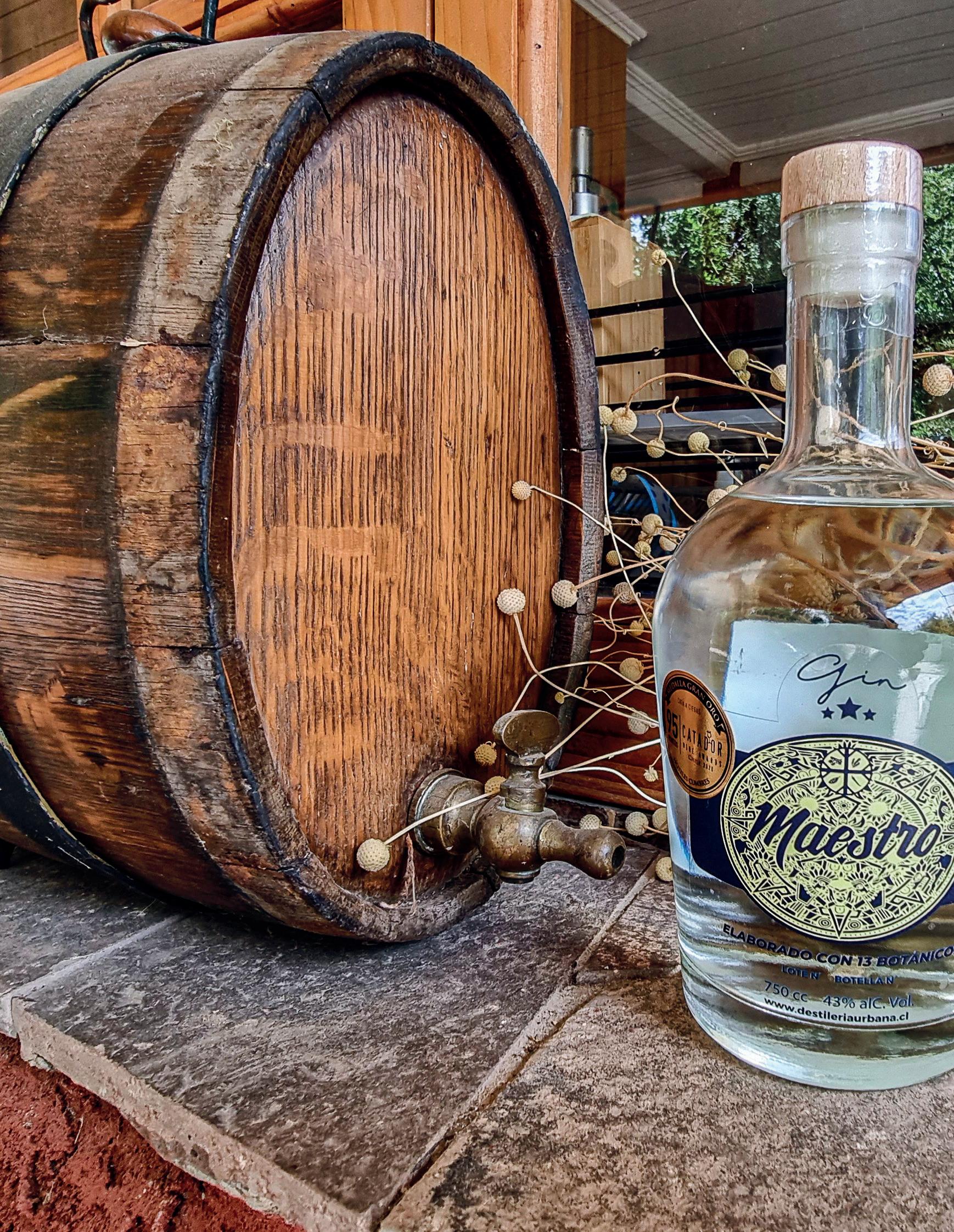
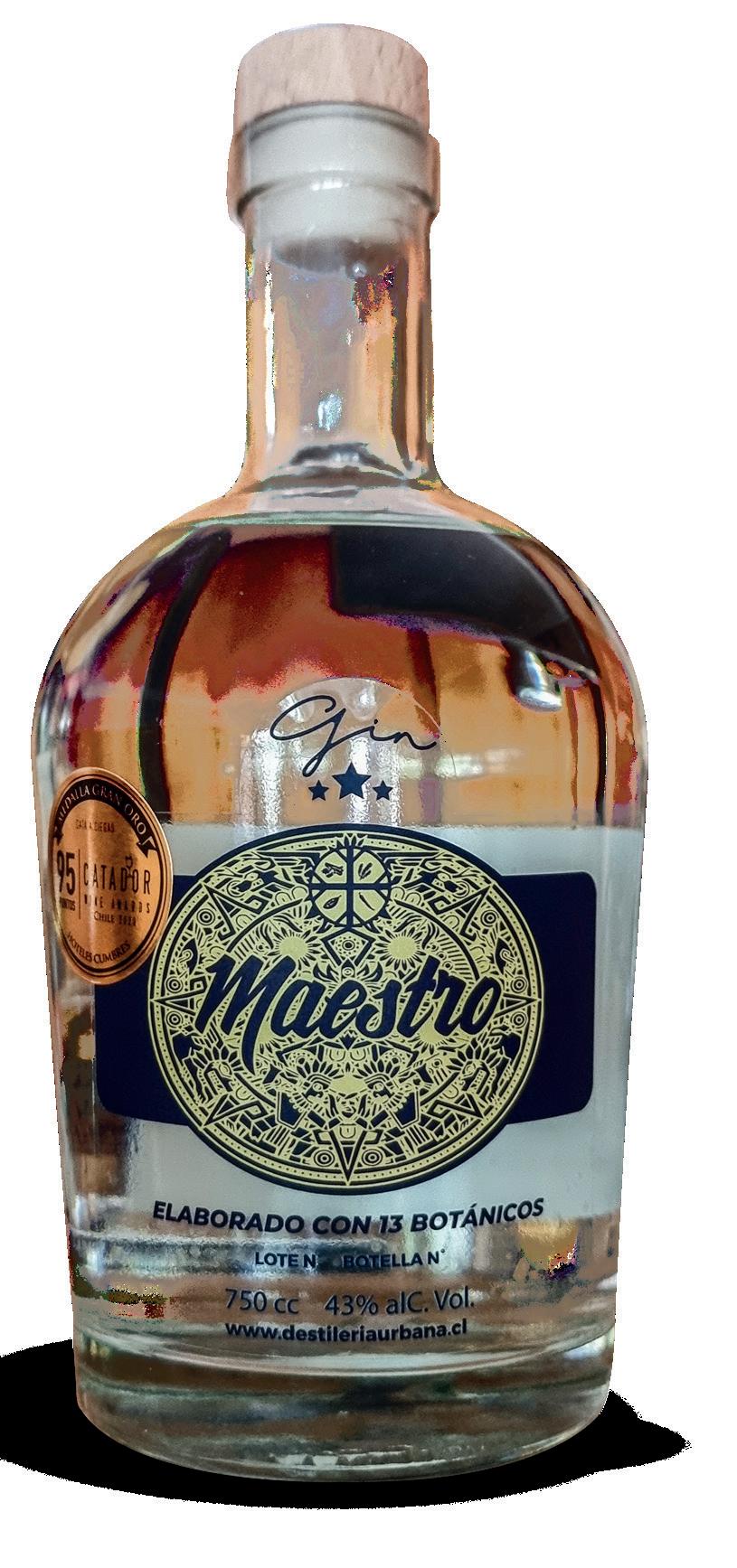
Gin is a distilled spirit characterized primarily by the presence of juniper, which serves as the dominant botanical in its aromatic and flavor profile. It is crafted from a neutral base alcohol –typically grain-based– which is redistilled alongside a selection of botanicals. Common additions include coriander seeds, angelica root, citrus peels, cardamom, spices, and various herbs.
Depending on the recipe and distillation method, the result can range from a crisp, classic style to more modern and aromatic profiles. Among the most recognized styles are London Dry Gin, Plymouth Gin, and contemporary Signature Craft Gins.
The origins of gin date back to the 17th century in the Netherlands, where a medicinal spirit known as genever, flavored with juniper, was produced. This spirit was adopted by English soldiers during European wars and subsequently brought to England, where it evolved into modern gin.
During the 18th century, London experienced the so-called Gin Craze, a period of mass consumption that solidified the drink’s identity within British culture. Over time, distillation techniques were refined, leading to more sophisticated styles –most notably London Dry, which became the classic benchmark for international mixology.
NOSE: This gin presents itself as clean and expressive, with a profile dominated by fresh juniper acting as the aromatic backbone. Citrus notes reminiscent of lemon peel and grapefruit emerge, accompanied by subtle herbal nuances of rosemary and cilantro that add complexity. A gentle swirl of the glass reveals light spicy touches and a delicate floral undertone that rounds out the bouquet.
PALATE: The entry is smooth and balanced, with juniper once again at the forefront, followed by a bright citrus character that provides freshness. The texture is silky, and the alcohol is well-integrated, allowing botanical flavors such as basil, cardamom, and a slight spicy sweetness to develop. The evolution on the palate maintains a harmony between freshness and depth without losing definition.
FINISH: The finish is medium to long, dry, and refreshing. Notes of juniper and citrus linger, accompanied by a lightly spiced herbal echo. The final sensation is clean and elegant, inviting another sip –whether enjoyed neat, on the rocks, or in a classic cocktail like a Gin and Tonic.
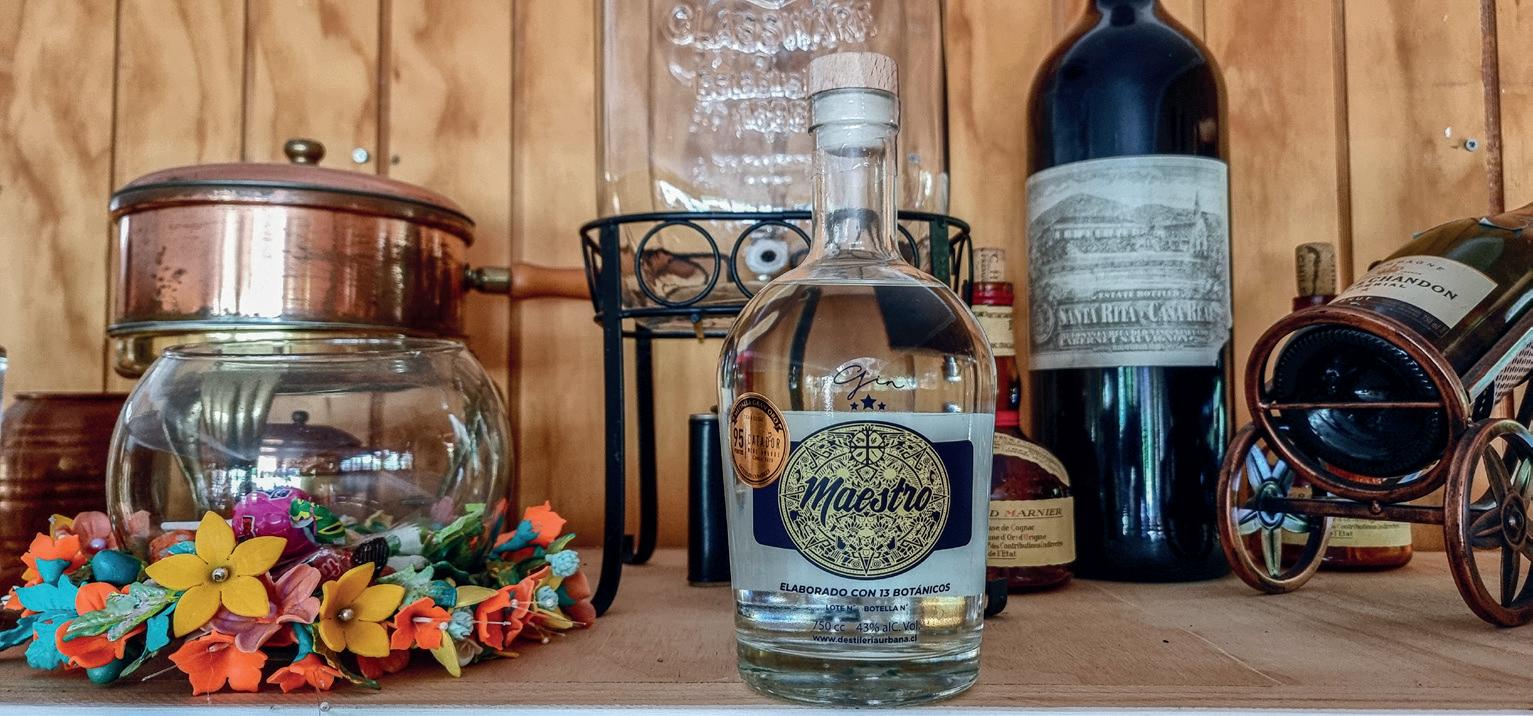
COMMENTS: Crafted from a wheat alcohol base subjected to nine distillations, where the botanicals are macerated before the final run, Gin Maestro marks a “before and after” in the history of signature gins in Chile. It redefines standards of purity and production quality, challenging other master distillers to develop new offerings that continue to drive the constant growth of this globally beloved spirit.
Monkey Shoulder
Rebel with a Cause…
Gonzalo Romero S. @gorosacigar
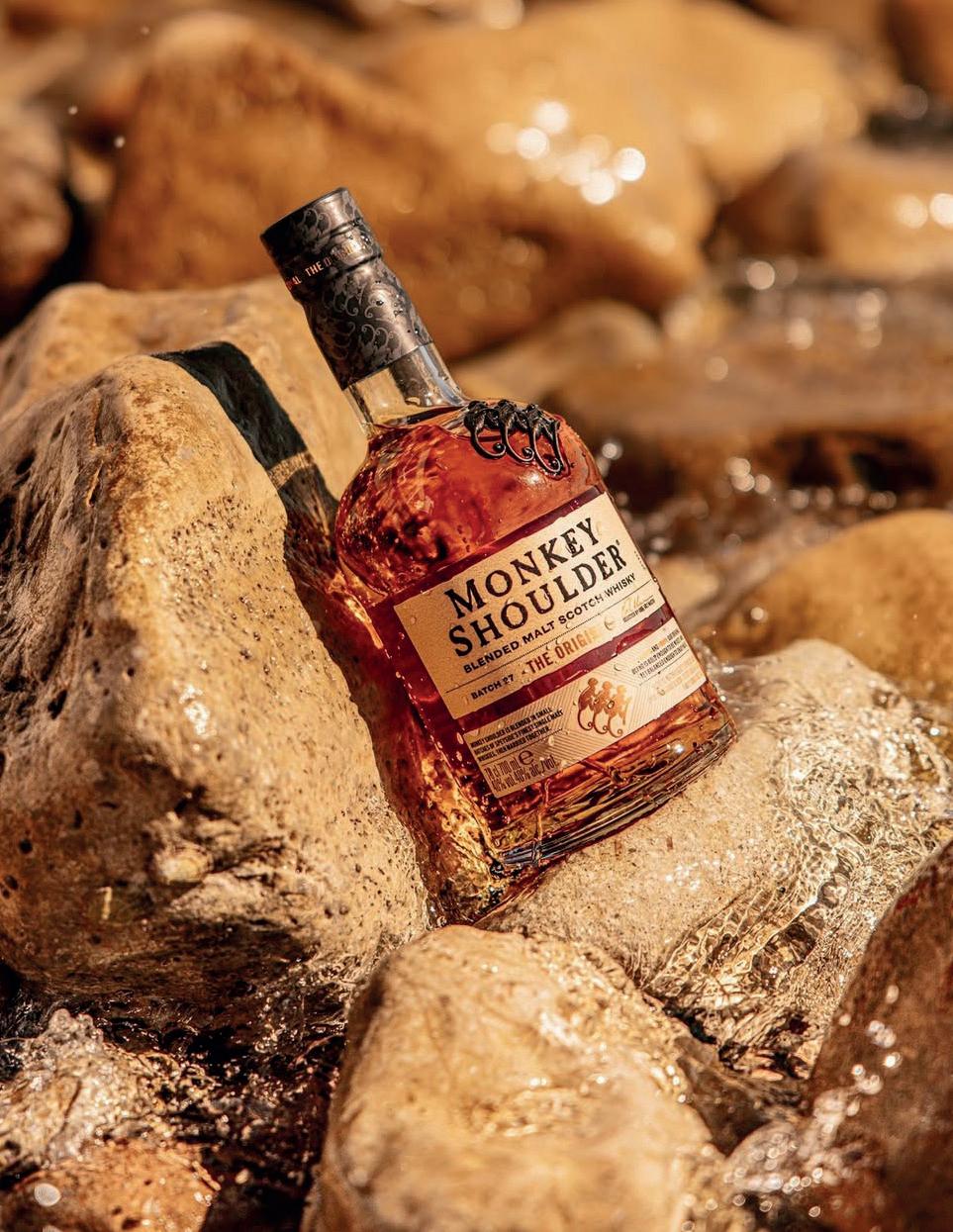
In the heart of Speyside, Scotland, Monkey Shoulder was born –a rebel with a cause that serves as a liquid tribute to the heraldry of hard work. Its name, far from being a marketing whim, pays homage to the malt men of yesteryear who, shovel in hand, turned the malting barley for hours on end.
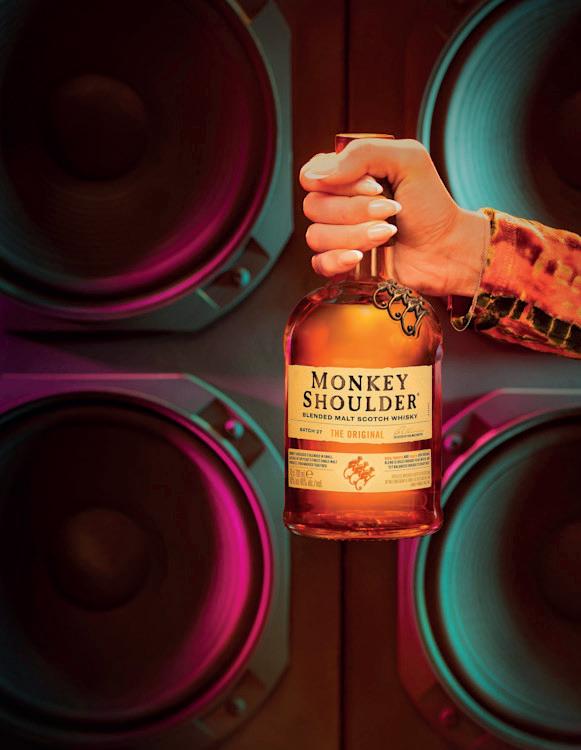
This repetitive labor left a physical toll: a dropped, stiff shoulder they referred to, with rugged familiarity, as monkey shoulder. Today, what was once a laborer’s stigma has been transformed into a badge of honor, patience, and artisanal sweat.
Under the seal of the legendary house William Grant & Sons, this whisky broke the mold in 2005 by presenting a bold and innovative blend: a 100% malted barley Blended Malt, crafted without the intervention of grain spirit.
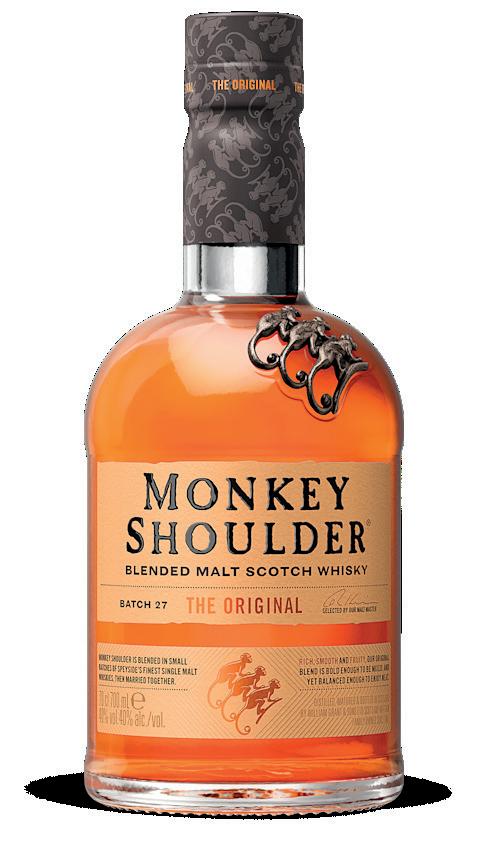
By uniting the mastery of three Speyside giants –Glenfiddich, Balvenie, and Kininvie– a “malt trinity” was born, represented –from my perspective– by the three monkeys on its iconic bottle. The result has been such a resounding success that, according to Drinks International 2023, only giants like Johnnie Walker and The Macallan precede it in global sales.
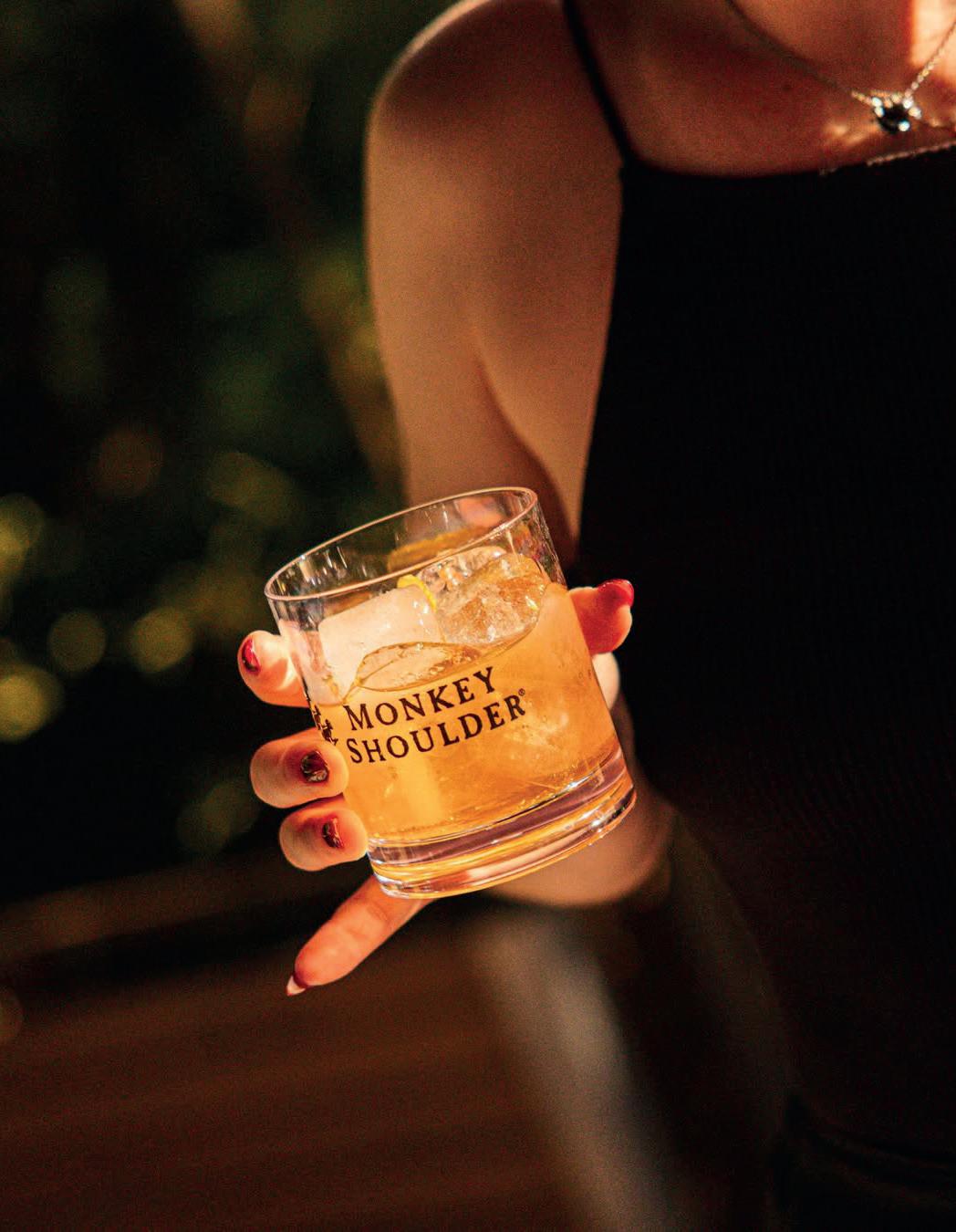
With a 40% ABV and matured in American bourbon casks, Monkey Shoulder offers approachable aromas of vanilla, honey, soft caramel, and a hint of orange. On the palate, it is creamy, featuring notes of light spices and wood without any harshness. The finish is memorable, making the next sip feel like a natural progression.
Monkey Shoulder works perfectly neat, on the rocks, or as a cocktail base –a versatility many Scotch whiskies afford it due to its youthful and rebellious character. It respects tradition while remaining innovative; it is an honest, approachable, and wellcrafted whisky with a story that honors the past and an attitude that looks toward the future.
This label is ideal for those just beginning their journey into the world of whisky, but also for seasoned enthusiasts seeking something different without compromising on quality, connecting with a new generation of spirit lovers.
I look forward to your comments, and I remind you that “gratitude is an expression that increases happiness and attracts success.”