HOW INSURANCE FITS INTO YOUR BUSINESS PLAN UNDERSTANDING TODAY’S HEALTH INSURANCE SUBSIDIES
Presented by:
What Is Foresight?
Foresight: The ability to see what is likely to happen in the future and to take appropriate action. At Hummel, we draw on our decades of experience, varied expertise, and relationships to help our clients exercise foresight to protect their financial futures. We hope you enjoy a small taste of that foresight through this quarterly publication.
Noah Sommers Understanding Today’s Health Insurance Subsidies
Tom Brenner How Insurance Fits Into Your Business Plan
Misty Fraelich-Clark Book Review: The Energy Bus by Jon Gordon
Vaughn Troyer Why Developing People is Essential to Our Success
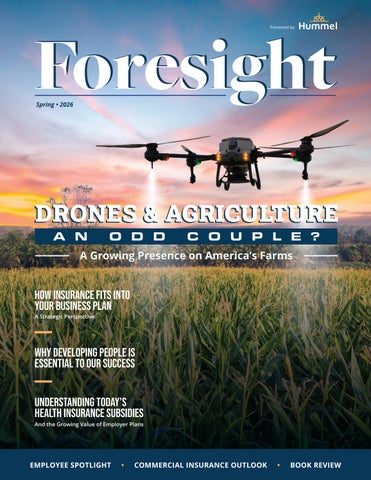
Jon Zimmerly Drones and Agriculture: An Odd Couple?
Matt Yost 2026 Commercial Insurance Outlook
By Jon Zimmerly, Business Risk Advisor
By Noah Sommers, Benefits Risk Advisor
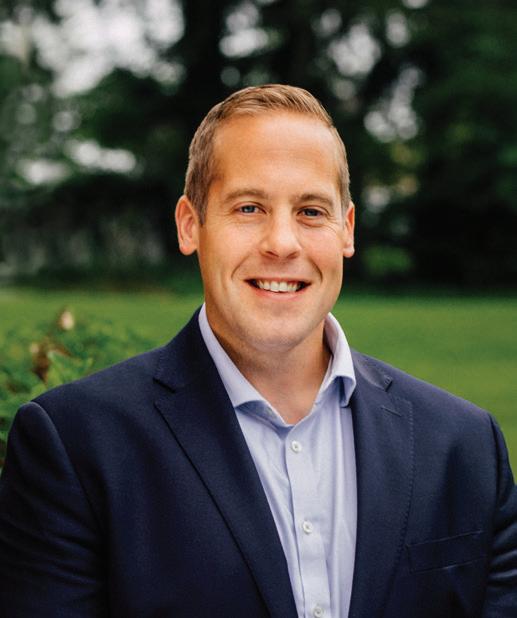
By Tom Brenner, CIC, Principal & Business Risk Advisor
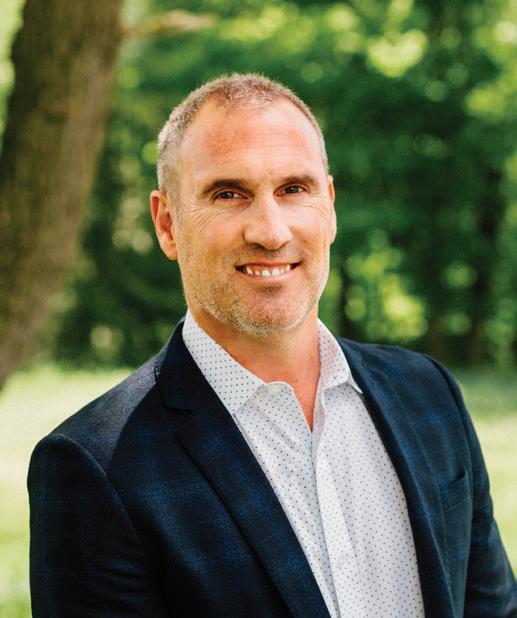
By Matt Yost, CIC, CRM, Principal & Chief Growth Officer
By Vaughn Troyer,CIC, President of Hummel
By Misty Fraelich-Clark, SHRM-CP, PMQ
A Growing Presence on America’s Farms
By: John Zimmerly, Business Risk Advisor
When most people hear the word “drone,” it’s unlikely they think of their local farmers and ranchers. Yet America’s farmers are now one of the largest segments of a rapidly expanding drone industry. Global agricultural drone use has skyrocketed—up 90% since 2020, with 400,000 agricultural drones in use by the end of 2024. [1]
This new technology is bound to have a profound impact on the way American farms are run and how they manage risk.
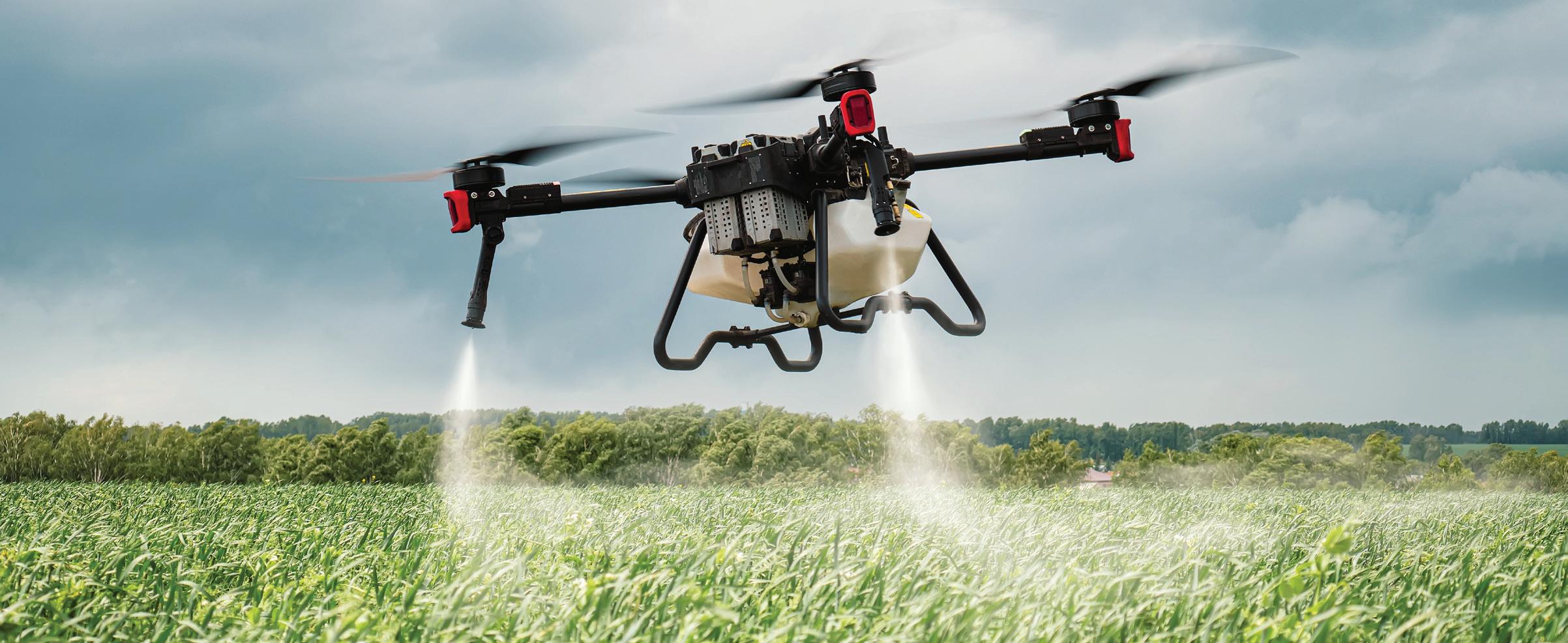
Farmers use this technology for a broad range of applications: simplifying herd management, checking the location and status of animals, and tracking lost livestock. Thermal imaging applications help evaluate crop health, and larger drones can apply chemicals crucial for maximizing yields. With agriculture now using drones to treat 300 crop types across 100 countries, and saving an estimated 222 million tons of water, it continues to find creative ways to integrate this technology. This new technology is bound to have a profound impact on the way American farms are run and how they manage their risk. [1]
DATA-DRIVEN DECISIONS AT LOWER COST
For the farmer, the data generated by drones allows for more informed decision making—quickly and with a low cost of entry. Imaging drones, priced just over $10,000, can inspect fences, evaluate herds, and identify crop stress hot spots. A DJI Matrice 4T, for example, flies at speeds comparable to an all-terrain or utility terrain vehicle but eliminates the risk of bodily injury during inspection.
Switching to thermal cameras, if an animal splits from the herd, the drone can swiftly get a bird’s eye view. The same thermal technology can identify heat anomalies in fields, allowing farmers to intervene before yield loss develops.
With agricultural drone hardware representing the largest share of the drone market globally, and the overall agriculture drone sector projected to reach $10.76 billion by 2030 at a 32.6% compound annual growth rate (CAGR), adoption is accelerating quickly. [2]
SPRAY DRONES: EXPANDING CAPABILITIES
Raising entry costs slightly, spray drones—starting around $20,000—can effectively apply chemicals regardless of ground conditions. For comparison, the U.S. agriculture drone market alone was valued at $506.3 million in 2024 and is projected to grow at 23.5% annually from 2025 to 2030, driven in part by federal incentives and evolving Federal Aviation Administration (FAA) regulations. [3]
By eliminating the need for dry ground, farmers can apply fungicide at the crucial moment—often immediately after rainfall—rather than waiting for fields to dry. Spray drones also excel in awkward field shapes, narrow strips, and small inlets where ground rigs struggle. Many are transported on trailers or even launched directly from a truck bed, boosting efficiency and field coverage per day.
NAVIGATING LICENSING AND REGULATIONS
Innovation doesn’t come without challenges. To operate imaging drones for commercial purposes, farmers must obtain a Part 107 Remote Pilot License, typically after completing a prep course and passing an FAA exam. For spraying fungicides or pesticides, additional requirements apply, including a Part 137 Certificate and a Part 44807 exemption.
As drone operations expand, the regulatory environment continues to evolve. The FAA is developing new Beyond Visual Line of Sight (BVLOS) standards under Part 108, though finalization has lagged, contributing to a backlog of more than 1,200 pilot applications in early 2024. [1]
Many farm and commercial policies exclude drones entirely, creating significant gaps.
RISK MANAGEMENT: A NEW FRONTIER
Drones introduce unique risk management challenges. They are a new technology, their loss data is limited, and although they cost less than a skid steer, they are still considered “aircraft” by insurers. This complicates coverage: many farm and commercial policies exclude drones entirely, creating significant gaps.
Owners often turn to traditional aviation insurance markets for hull coverage, liability, and chemical drift protection. However, hull coverage alone may cost around 40% of the drone’s new value annually, prompting many owners to selfinsure and “fly safer.”
Liability coverages require careful review to ensure policy
language aligns with drone operations. Without proper planning, standard farm or commercial policies can be left full of holes—leaving owners to retain more risk than they intended.
LOOKING AHEAD: DRONES ARE HERE TO STAY
Drones are rapidly expanding across multiple industries, and agriculture is no exception. Farmers can use them to make more informed decisions and intervene faster than ever before. However, it is essential to thoroughly research the licensing and regulatory requirements first— and to loop in risk advisors early to ensure a strong risk management plan.
Happy trails and safe flights!
Jon Zimmerly
UPCOMING DRONE REGULATION CHANGES
What Farmers Should Know About DJI and Foreign-Made Systems (2026)
The regulatory landscape for foreign-manufactured drones—especially DJI—is changing, and that affects upgrade paths, parts availability, and fleet planning.
WHAT CHANGED AT THE END OF 2025?
• On December 23, 2025, the Federal Communications Commission (FCC) added DJI drones and other foreign-made unmanned aerial systems (UAS) to its Covered List, which prevents new models from receiving the FCC equipment authorization required for import, marketing, or sale in the U.S. Existing previously approved drones are not grounded and may continue to be flown under FAA rules. [1]
• Industry explainers emphasize that the action affects future product approvals, not drones already in the market or in your hangar. Retailers may still sell previously authorized inventory. [3], [1]
ARE THERE ANY EXCEPTIONS?
• In January 2026, the FCC clarified limited exceptions allowing certain UAS and components to continue entering the U.S. market through the end of 2026— particularly systems on the Department of Defense Blue UAS Cleared List or those qualifying as domestic end products under Buy American rules. Companies that benefit include Parrot, Teledyne FLIR, Wingtra, Auterion/ModalAI, Zepher, and AeroVironment. [2]
WHAT ABOUT PROJECTS THAT USE FEDERAL FUNDS?
• The American Security Drone Act of 2023 (ASDA), implemented via Office of Management and Budget guidance in late 2025, restricts federal agencies and recipients of federal funds from procuring or operating covered foreign made UAS (including DJI). The Federal Highway Administration (FHA) instructed recipients that, effective December 22, 2025, covered UAS—and associated equipment like controllers, comms links, cameras, and gimbals—may not be purchased or operated with FHWA funds. [4], [5]
WHAT THIS MEANS FOR AGRICULTURE
• You can keep flying your current DJI fleet (if previously authorized and FAA-compliant), but new DJI models cannot receive U.S. authorization without an exemption—affecting upgrade paths and longterm fleet planning. [1]
• Replacement parts for foreign-made systems could face import frictions over time—plan for spares to reduce downtime. [1]
• Expect continued policy preference for domestic or “trusted” platforms, particularly for public entities or projects with federal dollars. [2], [5]
If a broader DJI ban were enacted in the future, what could you do?
1. INVENTORY AND STOCK SPARES NOW. Batteries, props, payload cables, and landing gear are the first bottlenecks in a parts-tight market (parts availability is the practical constraint noted by market analyses). [1]
2. PILOT AN ALTERNATIVE PLATFORM. Evaluate at least one Blue UAS-aligned or domestic leaning ecosystem (e.g., Parrot Anafi USA, Teledyne FLIR, Wingtra for mapping, AeroVironment, or Auterion/ModalAI-based systems) and verify payload compatibility for your ag workflows. [2]
3. VALIDATE DATA FLOW. Ensure imagery, maps, and prescriptions export cleanly from DJI workflows into your agronomy and GIS stack. Maintain vendor agnostic archives.
4. UPDATE SOPS AND TRAINING. Cross-train crews on new ground control station apps and flight envelopes. Refresh drift mitigation and battery safety procedures.
5. REVISIT INSURANCE. Coverage forms may treat platforms differently; confirm hull and liability terms as you transition fleets.
HOW INSURANCE FITS INTO YOUR BUSINESS PLAN: A STRATEGIC PERSPECTIVE
By: Tom Brenner, CIC, Principal & Business Risk Advisor
When entrepreneurs and business leaders sit down to create or review a business plan, the conversation typically centers on revenue growth, market opportunity, staffing, technology, and capital investment. Risk—especially insurance-related risk—is often acknowledged but rarely given the same level of strategic consideration. Yet insurance is not merely an operational expense or a compliance requirement. When integrated thoughtfully, it becomes a foundational pillar of sustainable business growth.
Understanding how insurance fits into your business plan begins with reframing what insurance actually is. Rather than viewing it as a sunk cost or a necessary burden, insurance should be understood as a financial and strategic safeguard— one that protects your progress as your plans move from concept to reality.
INSURANCE AS BUSINESS PROTECTION, NOT JUST AN EXPENSE
Every business decision involves some level of risk. Expanding operations, launching new products, hiring employees, investing in equipment, or entering new markets all carry uncertainty. Insurance exists to absorb some of that uncertainty so unexpected events do not derail years of effort.
Allocating a portion of your budget to insurance is similar to setting aside capital reserves. You hope you never need to use them, but if something goes wrong, they provide stability and protection. A single uninsured loss—whether from a lawsuit, property damage, cyber incident, or employee injury—can halt operations, drain cash flow, and damage reputation. In contrast, an appropriate insurance program ensures that when the unexpected happens, you have financial backing and professional advocacy to help preserve what you have built.
FROM A BUSINESS PLANNING STANDPOINT, INSURANCE HELPS PROTECT:
• Cash flow and balance sheet stability
• Physical and digital assets
• Leadership time and decision-making focus
• Long-term growth initiatives
Without this protection, even profitable businesses can find themselves in crisis mode overnight.
Tom Brenner
One of insurance’s most overlooked roles is the confidence it provides decision-makers. When risks are identified and managed appropriately, leaders can focus on growth rather than constantly worrying about what could go wrong.
For example, many contracts, partnerships, and client relationships require specific insurance coverages before work can begin. Professional liability, general liability, workers’ compensation, or cyber coverage may be prerequisites simply to compete in certain markets. In this sense, insurance isn’t just protective—it’s enabling. It gives businesses access to opportunities they would otherwise be excluded from.
Including insurance within the broader business plan demonstrates foresight and credibility, particularly with lenders, investors, and strategic partners. It shows that leadership understands risk, plans for contingencies, and takes long-term responsibility seriously.
RISK MANAGEMENT AND INSURANCE WORK TOGETHER INSURANCE ENABLES CONFIDENT GROWTH
Insurance is most effective when paired with proactive risk management. In fact, many insurance policies come with requirements or recommendations designed to reduce loss frequency and severity. These may feel like hurdles at first, but they are often aligned with smart business practices.
These measures reduce exposure before an incident occurs. Insurance then acts as the backstop when preventive efforts fail.
From a strategic perspective, this layered approach is invaluable. Fewer incidents mean fewer disruptions, lower premiums over time, and improved operational efficiency. Risk mitigation also strengthens company culture by reinforcing accountability and professionalism throughout the organization.
INSURANCE AS AN ADVOCACY RESOURCE
Another often-misunderstood aspect of insurance is the role it plays after a loss. Insurance is not just a financial reimbursement mechanism; it provides access to experts who help guide businesses through their most challenging moments.
When a claim arises, business owners are suddenly navigating complex processes involving legal considerations, documentation requirements, timelines, and stakeholder communication. Having an insurer—and often a risk advisor—advocating on your behalf allows leaders to focus on maintaining operations rather than becoming consumed by crisis management.
This advocacy is particularly important during:
• Liability claims or lawsuits
• Regulatory investigations
• Property or equipment losses
• Data breaches or cyber incidents
From a planning perspective, knowing you have experienced professionals in your corner changes how you approach risk and recovery strategies.
ALIGNING COVERAGE WITH BUSINESS EVOLUTION
Businesses are not static, and neither are their risk profiles. As operations grow more complex, so do insurance needs. A startup’s insurance program looks very different from that of a mature organization with employees, technology systems, intellectual property, and multiple revenue channels.
Business plans should periodically revisit insurance considerations alongside expansion goals. Questions to evaluate include:
• Have we added new services or products?
• Are we operating in new locations or jurisdictions?
• Have we hired employees or contractors?
• Has our reliance on technology increased?
• Are we handling more sensitive data or higher-value assets?
When insurance evolves alongside the business, it remains relevant and effective instead of becoming outdated or insufficient.
BUDGETING FOR INSURANCE
Treating insurance as a line item without context leads to frustration and underinvestment. Instead, it should be budgeted with the same intentionality as technology, staffing, and marketing.
Strategic budgeting considers:
• The cost of potential losses versus premium expense
• The financial resilience needed to survive a major disruption
• The role insurance plays in supporting contracts and growth initiatives
In many cases, the cost of adequate insurance is significantly lower than the financial impact of an uninsured event. Business plans that acknowledge this reality tend to be more resilient over time.
INSURANCE AS A SIGN OF OPERATIONAL MATURITY
Ultimately, how a business approaches insurance reflects its overall maturity. Organizations that view insurance as part of their strategic framework—rather than an afterthought— are often better positioned to weather economic shifts, regulatory challenges, and unforeseen crises.
Including insurance in your business plan sends a clear message:
• To stakeholders, it signals responsibility.
• To employees, it demonstrates care and stability.
• To leadership, it provides peace of mind.
Insurance may not directly generate revenue, but it preserves the conditions that make revenue generation possible.
BUILDING WITH CONFIDENCE
At its core, insurance is about protecting progress. It exists to ensure that the time, effort, and capital invested in building a business are not undone by a single unexpected event. When integrated thoughtfully into a business plan, insurance supports operational stability, enables growth, and reinforces long-term vision.
Rather than asking, “How little insurance can we get by with?” business leaders are better served asking, “What risks could prevent us from achieving our goals, and how can we prepare for them?”
When insurance is aligned with strategy, it becomes more than a safeguard—it becomes a tool for confident, sustainable growth.
Putting the Human Back in Human Resources
An interview with Misty Fraelich-Clark
In this month’s Employee Spotlight, we’re highlighting a leader whose work goes far beyond policies and processes. Misty Fraelich-Clark brings compassion, clarity, and a deeply human-centered approach to her role as human resources manager. Her commitment to supporting the whole person— professionally and personally—continues to shape a culture where people feel seen, valued, and empowered to thrive.
What is your role at Hummel, how long have you been working here, and what led you to this field?
As the Human Resources Manager at Hummel Group, I bring nearly seven years of dedicated service rooted in a lifelong passion for helping others. My journey into human resources began early in my career, as I was consistently drawn to the people-focused aspects of every role I held, starting at the age of 16. That natural inclination, paired with a strong alignment to my personal values, ultimately led me to a career in human resources and to joining Hummel Group.
What did you do before working at Hummel?
Prior to Hummel Group, I spent nearly a decade with Troyer Cheese, Inc., where I gained extensive experience across multiple business sectors through the lens of human resources. During my tenure, I had the privilege of leading and developing all aspects of the human resources function. I am deeply grateful to the Troyer family for trusting me with that responsibility. The relationships built during that time continue to feel like family, and the experience played a significant role in shaping both my professional expertise and personal growth.
Misty Fraelich-Clark
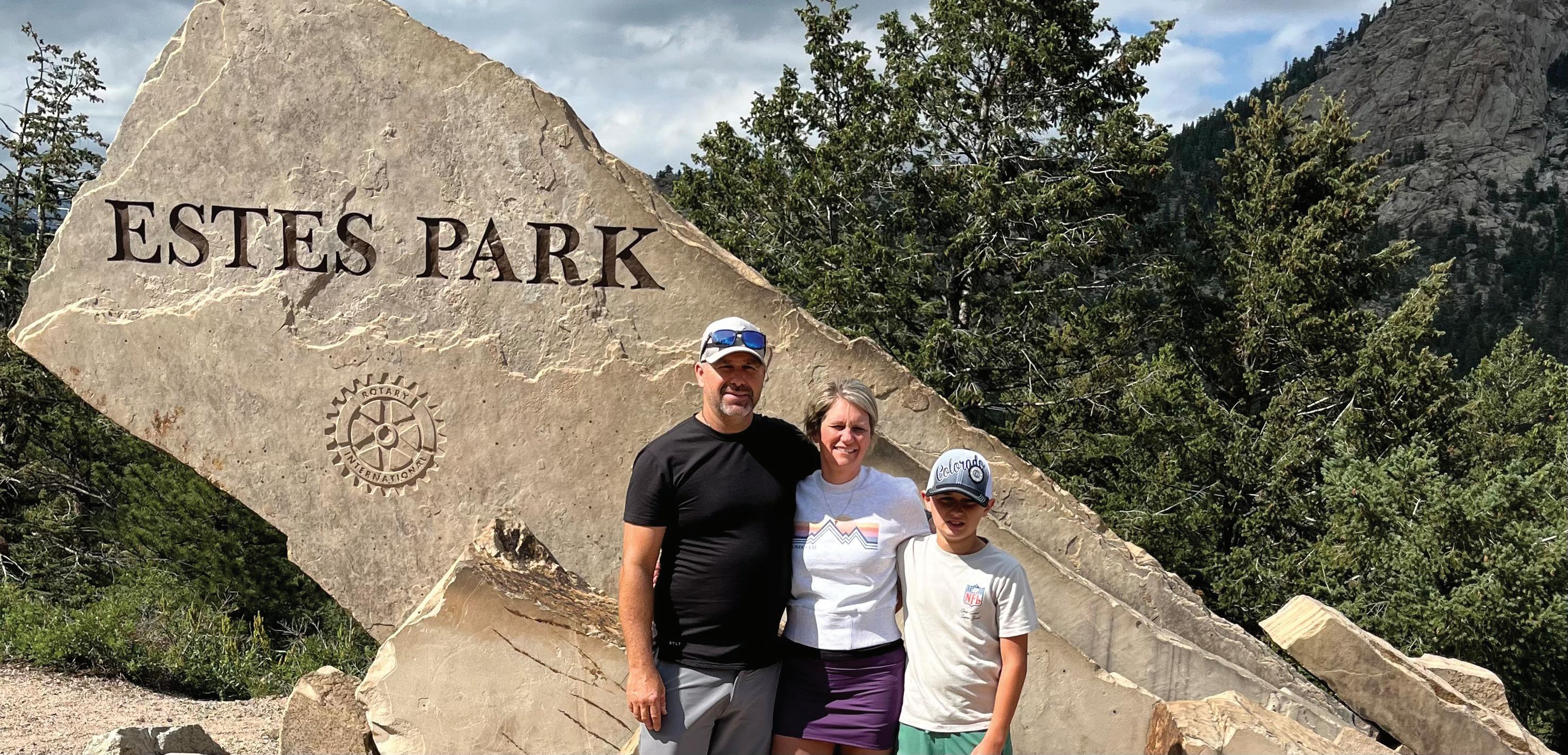
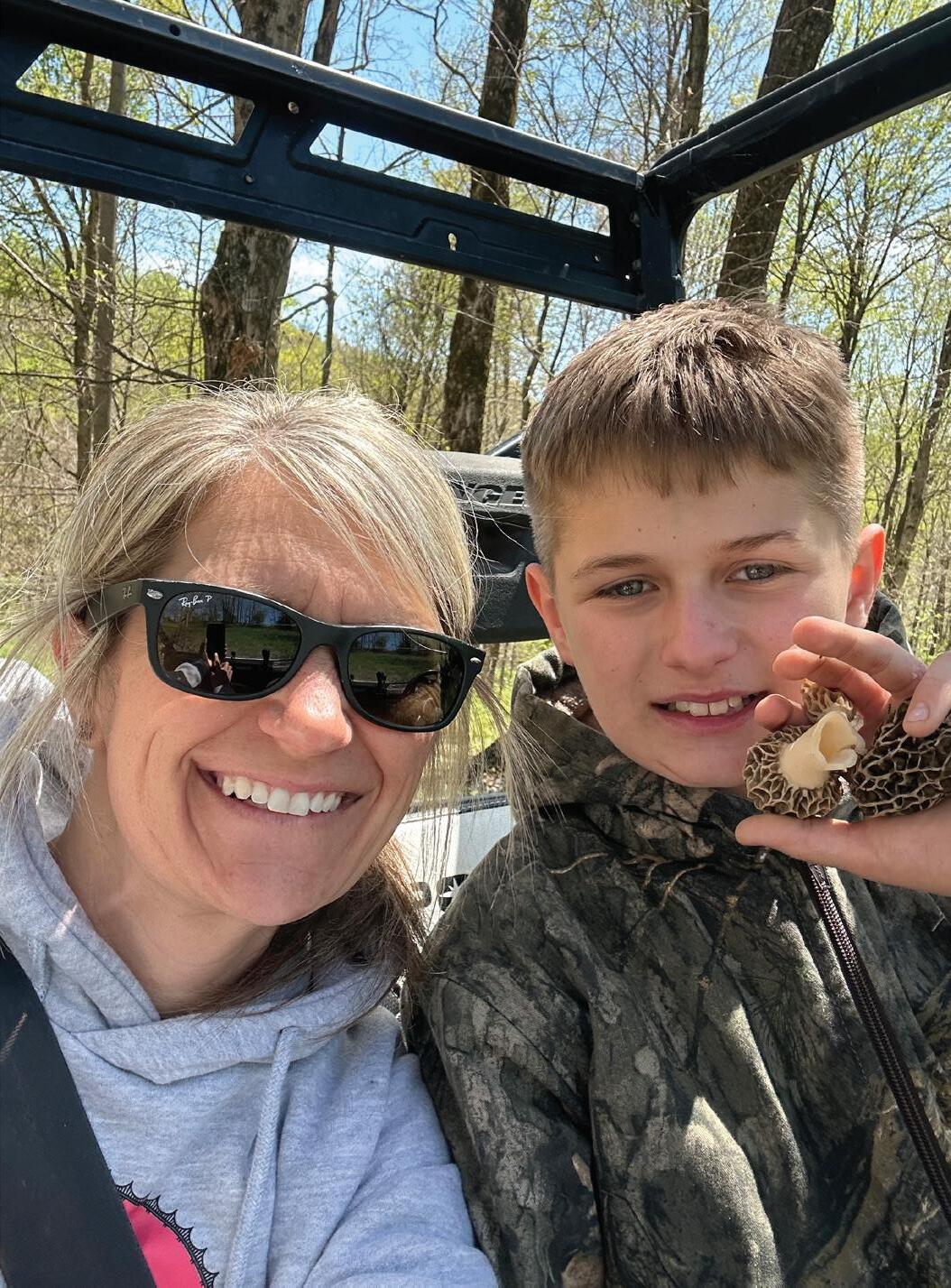
Misty, her husband, and her son in Estes Park, Colorado.
What misconceptions do you most often encounter in your position?
There is a common misconception that human resources is limited to hiring and discipline; my philosophy and approach are much broader. I am passionate about restoring the human element to the human resources profession by providing ongoing support, education, and resources to team members.
My focus is on enhancing lives abundantly by addressing spiritual, physical, financial, emotional, relational, and learning needs. When people are supported in these areas, they are empowered to thrive—both professionally and personally.
What
do you enjoy most about your job?
One of the most rewarding aspects of my role is serving others and continually seeking ways to make professional journeys easier and more fulfilling. This includes creating access to education and resources that foster long-term success for team members and their families.
What
do you find most challenging?
The primary challenges—and opportunities—within my role include building strong talent pipelines, developing intentional onboarding systems, and creating purposeful learning and development opportunities throughout the employment lifecycle. Providing clarity, consistency, and ongoing support is essential to ensuring team members feel confident and valued in their decision to join and grow with Hummel Group.
What does life outside of Hummel look like for you (family, hobbies, travel, etc.)?
Outside of work, I enjoy spending time with my family, including my husband, Denny, of 20 years, and our 13-yearold son Brexton. We love golfing, paddle boarding, boating, fishing, and traveling to the mountains and the ocean together.
I’m committed to living an intentional life. I value starting each day early (God’s time) with Bible reading and a cup of coffee, staying active through walking, running, and strengthening workouts, and maintaining meaningful connections with close friends—all with the purpose of being prepared to serve others well and faithfully pursue what God has planned for my path.
Advice for others?
Be kind, love others well, and keep smiling. You can be the positive energy in someone else’s life.
Misty and her son mushroom hunting.
Misty with co-workers Amber and Rochelle after the Amish Country Half Marathon.
The Energy Bus
By: Jon Gordon
By: Misty Fraelich-Clark, SHRM-CP, PMQ, Human Resources Manager
About nine years ago, I read The Energy Bus by Jon Gordon after it was introduced to me by a former leader. I’ve read many leadership books over the years, but this one has consistently stood out—especially from a leadership and human resources perspective—because of how clearly it connects mindset, energy, and workplace culture. It reinforces the idea that each of us brings energy to our teams every day, and that energy directly influences performance, morale, and relationships.
Written in narrative form, the book emphasizes self-leadership and personal accountability. Gordon explains how our attitudes shape not only our own journey but also the culture of our organizations. In my experience, when leaders intentionally bring positive energy, it can transform team dynamics and create a more supportive, trusting environment where people feel valued and motivated.
A core framework of the book is the 10 Rules for the Ride of Your Life, which offers practical guidance for personal and professional growth:
1. You’re the driver of your bus.
2. Desire, vision, and focus. Move your bus in the right direction.
3. Fuel your ride with positive energy.
4. Invite people on your bus and share your vision.
5. Don’t waste energy on those who don’t get on your bus.
6. Post a “No Energy Vampires” sign at the door.
7. Enthusiasm attracts more passengers and energizes them during the ride.
8. Love your passengers.
9. Drive with purpose and have fun
10. Have a great day every day! Start with intention and keep your energy high.
These rules reinforce the importance of owning our behavior, surrounding ourselves with the right people, and leading with enthusiasm and purpose. As leaders, we have the ability—and responsibility—to inspire others, share vision, and provide trust and clear communication. I have seen firsthand how a leader’s behaviors set the tone, shape the energy and excitement, and strengthen buy-in of their team.
The book also emphasizes empathy, compassion, and genuine care for others. Building authentic relationships is essential, and love is presented as the foundation of every relationship. Developing a culture of appreciation leads to higher engagement and satisfaction, which ultimately benefits the entire organization
Empowerment is a third key takeaway. When we focus on developing others, we create a lasting impact. Empowered teams are more confident, more connected, and better positioned to succeed. Gordon also highlights the importance of joy, noting:
“If he filled his life with joy, his work with joy, and his home with joy…with joy everything would flow better and easier” (Gordon, 2007, p. 153).
I’ve experienced this personally—when teams celebrate wins and express gratitude, morale and productivity noticeably improve. Overall, I highly recommend The Energy Bus to leaders at all levels as a guide for personal responsibility, positive leadership, and creating an energized, engaged workplace culture. You are the driver of your bus—fuel it with joyous energy!
Gordon, J. (2007). The Energy Bus: 10 Rules to Fuel Your Life, Work, and Team with Positive Energy. Hoboken, NJ: John Wiley & Sons.
Book Review
Misty Fraelich-Clark
WHY DEVELOPING PEOPLE IS TO OUR
ESSENTIAL SUCCESS
By: Vaughn Troyer, President of Hummel
As a leader at Hummel, I am often asked what factors I attribute our success to. Strategy, systems, and relationships all play important roles, but none of these are the first answers I give. Instead, I say that our results are primarily a reflection of our talented team members—our people. When you have motivated, honest, and capable individuals, outstanding results often follow. Looking ahead, we recognize that our future success depends on how well we invest in and develop our team members.
The greater risk lies in failing to develop those who remain.
One of the most enduring insights on this topic comes from Henry Ford, who famously said, “The only thing worse than training your employees and having them leave is not training them and having them stay.” That statement captures a truth that takes many leaders years to understand. While it is natural to fear investing time and resources in people who may one day move on, the greater risk lies in failing to develop those who remain. An organization filled with underdeveloped talent will inevitably struggle to perform at a high level.
Hummel is fortunate to operate in communities with businesses that exemplify a strong commitment to people development. I have been encouraged by several local business peers who consistently pour into their employees, whether through on-site learning, exposure to outside speakers, or sending people away for training. I have observed firsthand how their continued investment in people has built organizational capability. When individuals gain new skills, sharpen judgment, and deepen their understanding of the work, the entire organization benefits. Well-developed teams respond more effectively to change, solve problems more thoughtfully, and make better decisions at every level. Training and development are not operating expenses to be minimized; they are investments that compound over time.
People development also strengthens employee engagement and commitment. When individuals see that their growth matters, and leadership is willing to invest time, resources, and trust in them, they are more likely to
bring energy and purpose to their work. Engagement does not come from policies alone; it comes from meaningful opportunities to learn, to be challenged, and to contribute in ways that matter.
Developing our people creates leaders throughout the organization.
Equally important, developing our people creates leaders throughout the organization. Leadership is not confined to titles or positions; it shows up in how individuals take responsibility, support one another, and uphold shared values. By prioritizing development, we build a stronger bench of future leaders who are prepared to step forward when the organization needs them most. It would be nice if building leaders were a quick and easy process, but instead it takes years of commitment and intentional effort from existing leaders to train the next generation.
Finally, our commitment to developing people sends a clear message that we value our team members. A culture that encourages learning and growth becomes one where accountability, excellence, and continuous improvement are sustained. Our future can be bright if we ensure we are investing in people’s growth today.
Vaughn Troyer
Commercial Insurance Market Outlook 2026
By Matt Yost, Principal & Chief Growth Officer
• Reinsurance renewals and market capacity – After five years of a hardening property insurance market and a year of minimal catastrophe (CAT) claims, the total traditional reinsurance capital reached about $500 billion in traditional capital amid the latest renewal cycle. This is allowing reinsurers to increase their appetite and moderate pricing.
• Secondary perils and severe convective storms –While extreme weather events have been on the rise for over a decade, secondary perils—small to mid-sized losses or consequent events following primary catastrophes— have become increasingly prevalent. In particular, severe convective storms (i.e., thunderstorms, hailstorms, and tornadoes) have surged in frequency and severity, leading to considerable damage and commercial property insurance claims.
• Economic & inflationary pressures – Tariffs on internationally sourced goods are having an impact on the cost of goods and services. Additionally, rising health care expenses put upward pressure on the cost of bodily injury claims
• Rising claims costs & social inflation – Legal financing trends such as third-party litigation funding and surging nuclear verdicts have expanded the scope and duration of bodily injury and property damage lawsuits.
• Increased claim severity and challenging legal climate – Companies are being held to high standards in the courtroom for their perceived wrongdoing, causing a significant rise in multimillion-dollar lawsuits and related insurance claims.
• Technology adoption increasing –Technologies such as telematics and in-vehicle cameras are benefiting both insurers and drivers in minimizing claims and enhancing operations.
• Inexperienced drivers – The American Trucking Association estimates the industry was short over 80,000 drivers in 2024, causing companies to relax standards and lower acceptable driving ages. This has caused an increase in auto liability claims.
• Medical inflation – Medical inflation continues to outpace general inflation prompting a 6%–8% year-overyear increase in medical payments per claim in many states.
• Workforce changes – According to the Bureau of Labor Statistics, the share of U.S. workers aged 65–74 is expected to rise 22% by 2033, while the proportion of those aged 75 and older is projected to increase by 79% during the same period. This poses considerable workplace safety concerns, as older employees can be more susceptible to injury.
• Mental health considerations – In many states, new legislation is reshaping how and when workers’ compensation coverage applies to mental health conditions that occur in the scope of employment.
Current Market Trends
• Tightened underwriting capacity – The hard market for commercial excess liability persists, with reinsurers dictating tighter underwriting guidelines. This presents challenges for insureds, with carriers offering lower limits at elevated prices.
• Litigation issues – The nuclear verdicts, social inflation, and claim severity plaguing the underlying general liability and auto liability coverage lines will cause excess layer capacity and pricing issues for insureds.
• Excess & Surplus market solutions – With many policyholders experiencing coverage limitations and elevated pricing in the umbrella/excess casualty market, some are turning to the larger excess and surplus space to remedy potential gaps in protection.
Cyber Liability
Current
Market Trends
• Ransomware risks – Despite a 53% year-over-year decrease in cyber claims in the first half of 2025, the average cost of a ransomware claim increased by 17% to $1.18 million during the same time frame.
• Artificial intelligence (AI) exposures – According to cybersecurity experts, AI software fueled a 202% increase in phishing incidents throughout 2024, with over 80% of email based cyberattacks using this technology in some form.
• Cyber security training – The implementation of mandatory cyber security training for all employees is proving to be one of the best ways to mitigate claims.
What Can You Do?
• Evaluate your commercial property limits and make inflationary adjustments to ensure you are not underinsured. Doing this will reduce the likelihood of experiencing a coinsurance penalty in the event of a claim.
• Develop a documented business continuity plan that will help you remain operational in the event of an incident.
• Review or develop vendor and subcontractor agreements that can insulate you from a lawsuit that could cause a disruption to your business.
• Implement and update employee handbooks with policies pertaining to discrimination, harassment, medical leave, and general employment expectations.
• Examine your risk management practices relative to your fleet of vehicles and drivers. Implement safety programs pertaining to safe driving, driver qualification, hands-free devices, and a family use policy.
• Talk to a Hummel Business Risk Advisor about other strategies that will help mitigate loss!
Compiled by Matt Yost, Principal & Chief Growth Officer
This document is not intended to be exhaustive, nor should any discussion or opinions be construed as legal advice. Readers should contact legal counsel or an insurance professional for appropriate advice.
“State of the Market - 2026 Outlook.” Amwins, 9 Dec. 2025, https://www.amwins.com/ resources-and-insights/market-insights/article/state-of-the-market-2026-outlook.
“Insurance Marketplace Realities 2026.” Edited by Jonathon R. Drummond, WTW, Willis Towers Watson, 2 Oct. 2025, https://www.wtwco.com/en-us/insights/2025/10/insurance-marketplace-realities-2026.
Matt Yost
Understanding Today’s Health Insurance Subsidies
and the Growing Value of Employer Plans
By Noah Sommers, Benefits Risk Advisor
Health insurance remains one of the most important benefits employers offer— and one of the strongest tools for attracting and retaining talent. But as national conversations increasingly center on the individual market and subsidy changes, many employees and business owners are left wondering how these shifts affect them. In reality, recent subsidy changes are elevating the value of employer-sponsored health coverage rather than diminishing it.
This article clarifies the current state of health insurance subsidies, explains why many families and small business owners are experiencing significant changes in costs, and highlights the expanded role employer-sponsored plans can play in providing stability and affordability.
• Part-time employees who previously relied on subsidies may now find individual coverage significantly more expensive than before.
These changes are generating widespread confusion—and prompting many individuals to reevaluate whether the individual marketplace remains the best fit.
WHAT’S CHANGING: THE ROLLBACK TO PRE-PANDEMIC SUBSIDY LEVELS WHY EMPLOYER-SPONSORED COVERAGE IS BECOMING MORE
During the pandemic, the government expanded subsidies under the Affordable Care Act—including increasing income thresholds and reducing premium costs for millions of Americans. These expanded subsidies helped:
• Reduce premiums for individual marketplace enrollees
• Provide significant relief to many small business owners purchasing their own coverage
• Offer meaningful financial support to part time workers who were not eligible for employer benefits
With the recent rollback, income charts have reverted to pre-pandemic levels. As a result:
• Small business owners with higher household incomes are seeing 50% to 100% increases in premiums due to the loss of enhanced subsidies.
• Middle-income families are facing smaller—but still impactful—premium increases.
VALUABLE
As subsidies shrink and individual premiums rise, the relative value of employer-sponsored plans is growing.
1. Employees Losing Subsidies May Seek Employer Eligibility
Employees who previously worked part-time to remain subsidy-eligible are now reassessing their options. If their individual subsidy has disappeared or their premium has spiked, increasing hours to qualify for employer-sponsored coverage may suddenly become the more affordable choice.
This shift can help employers:
• Increase workforce stability
• Strengthen retention
• Offer competitive value without necessarily increasing plan costs
2. Employer Plans Provide Predictability That Individuals No Longer Have
Individual market premiums are directly impacted by federal policy. When subsidies expand or contract, consumers feel immediate financial consequences.
Employer-sponsored plans, by contrast:
• Are not subsidy dependent
• Provide consistent access to coverage
• Offer predictable payroll deductions rather than volatile annual premium swings
3. Employer Plans May Now Outperform Individual Market Pricing
With subsidy reductions, many employees are discovering that:
• The net cost of employer coverage may now be lower than individual coverage
• Employer networks are often broader, and provider access more reliable
• Family coverage through an employer may be more cost effective than purchasing multiple marketplace plans
• Encouraging conversations with human resources or benefits advisors
• Highlighting how employer plans can provide stability amid policy shifts
This clarity empowers employees to make informed decisions, strengthens employer-employee trust, and ensures that benefits are understood—not just offered.
BRINGING CLARITY: WHAT EMPLOYEES AND EMPLOYERS NEED TO KNOW ABOUT TODAY’S SUBSIDIES
Clear communication is critical. Employees need help understanding:
• Why their individual premiums have changed
• What subsidy levels look like today vs. during the pandemic
• How employer-sponsored coverage compares in cost and value
Employers can play a key role by:
• Offering educational materials
• Holding open-enrollment information sessions
SOLUTIONS EMPLOYERS CAN DEPLOY TO STRENGTHEN AFFORDABILITY
As subsidies fluctuate, employers have opportunities to refine or enhance their health plan strategies. A number of solutions can help control costs while improving employee access to care.
1. Health Reimbursement Arrangements (HRAs)
Employers can raise deductibles to reduce premiums, then use an HRA to reimburse part of that deductible. This keeps costs manageable for employees while controlling employer spending.
2. Gap or Supplemental Coverage
Gap plans help offset higher deductibles or out-of-pocket costs, creating predictable affordability for employees without dramatically increasing employer premiums.
Noah Sommers
3. Level-Funded Plans
For small and mid-sized employers, levelfunded plans offer:
• Stable monthly payments
• The potential to receive money back if claims are lower than expected
• Access to claims data that enables proactive costmanagement strategies
4. Self-Funding With Stop Loss Protection
Mid-sized employers can gain plan flexibility and longterm savings potential through self-funding paired with stop loss insurance. This model provides:
• Greater transparency
• More control over plan design
• The ability to retain unused claim dollars
These tools help employers turn rising costs and changing subsidies into opportunities for better strategy—not reactive plan changes.
NOW IS THE TIME TO RE-EVALUATE YOUR STRATEGY
With subsidy changes reshaping the insurance landscape, employers should take proactive steps:
• Evaluate how subsidy changes affect your employees—especially part time staff or those previously enrolled in marketplace plans.
• Review your current funding strategy to ensure it delivers long term sustainability.
• Explore innovative solutions like HRAs, levelfunded arrangements, or supplemental coverage.
• Communicate clearly with employees, helping them understand new cost dynamics and available options.
Employer-sponsored coverage is more valuable than ever. Now is the time to ensure your plan strategy is aligned with both today’s realities and tomorrow’s uncertainties.
If you’d like help reviewing your options or developing a tailored strategy, reach out to your benefits advisor to begin the conversation.
Subsidy Changes Are Reshaping the Landscape—but They Strengthen the Case for Employer Plans
The rollback of enhanced subsidies has created uncertainty in the individual market, impacting small business owners, families, and part-time workers. As subsidies decrease, the affordability gap between individual coverage and employer-sponsored health plans is narrowing—and in many cases reversing.
Employer-sponsored plans are once again becoming the most stable, predictable, and cost-effective option for many households.