Humanities Lab Impact Report | Fall 2022 - Fall 2024
The Humanities Lab at Arizona State University puts humanities research and problem solving into action. A groundbreaking educational initiative that empowers students to tackle complex, real-world challenges through interdisciplinary collaboration, the Lab sponsors courses that inetegrate humanitiesbased inquiry with diverse disciplinary perspectives. Its courses have fostered a deeper understanding of pressing issues such as climate change, international diplomacy, migration, and gun culture.
Students engage in hands-on research, studying with faculty from varied disciplines and community partners to explore the ethical, historical, and cultural dimensions of their work. This collaborative approach not only enhances critical thinking and problemsolving skills but also prepares students to become leaders capable of bringing about better futures. The Lab's unique structure encourages students to move beyond traditional classroom boundaries, producing public art, policy proposals, and digital media projects that address community needs. By
FOREWORD
emphasizing inquiry-driven learning and real-world application, the Humanities Lab cultivates master learners equipped to navigate and address the complexities of our global moment.
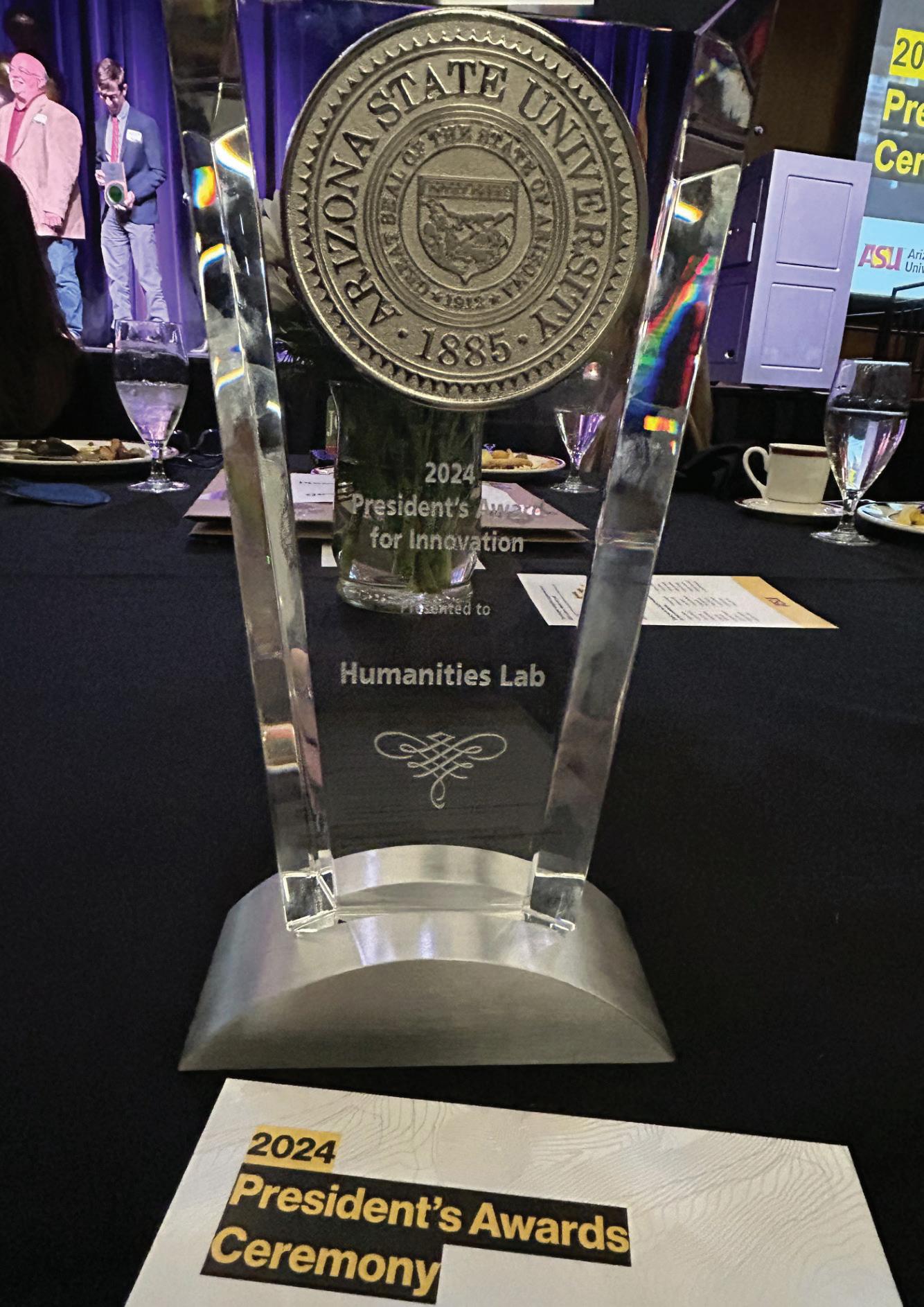
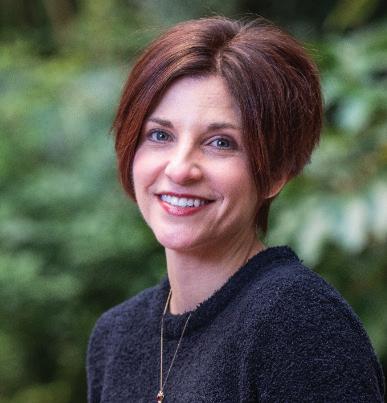
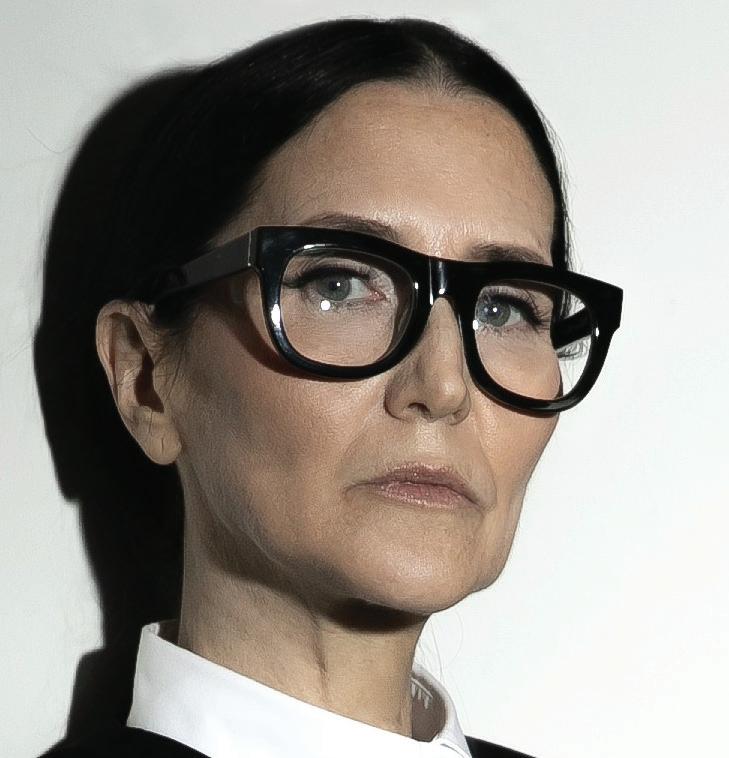
I commend the Humanities Lab co-directors Juliann Vitullo and Heather Switzer for their leadership and the Humanities Lab staff for unflagging energy and vision. Recognized with the 2024 ASU President's Award for Innovation, the Humanities Lab exemplifies the university's commitment to innovative education and societal impact. It stands as a model for how academic institutions can harness interdisciplinary collaboration to prepare students for the challenges of the 21st century.
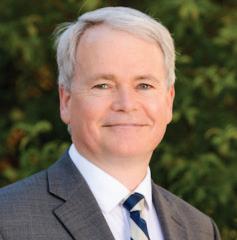
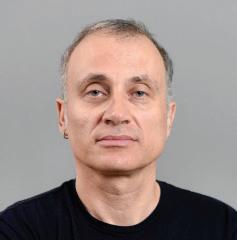
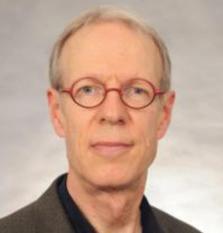
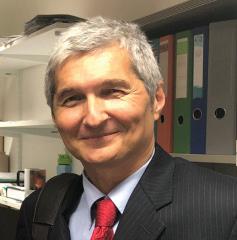
Jeffrey Cohen
Dean of Humanities, The College
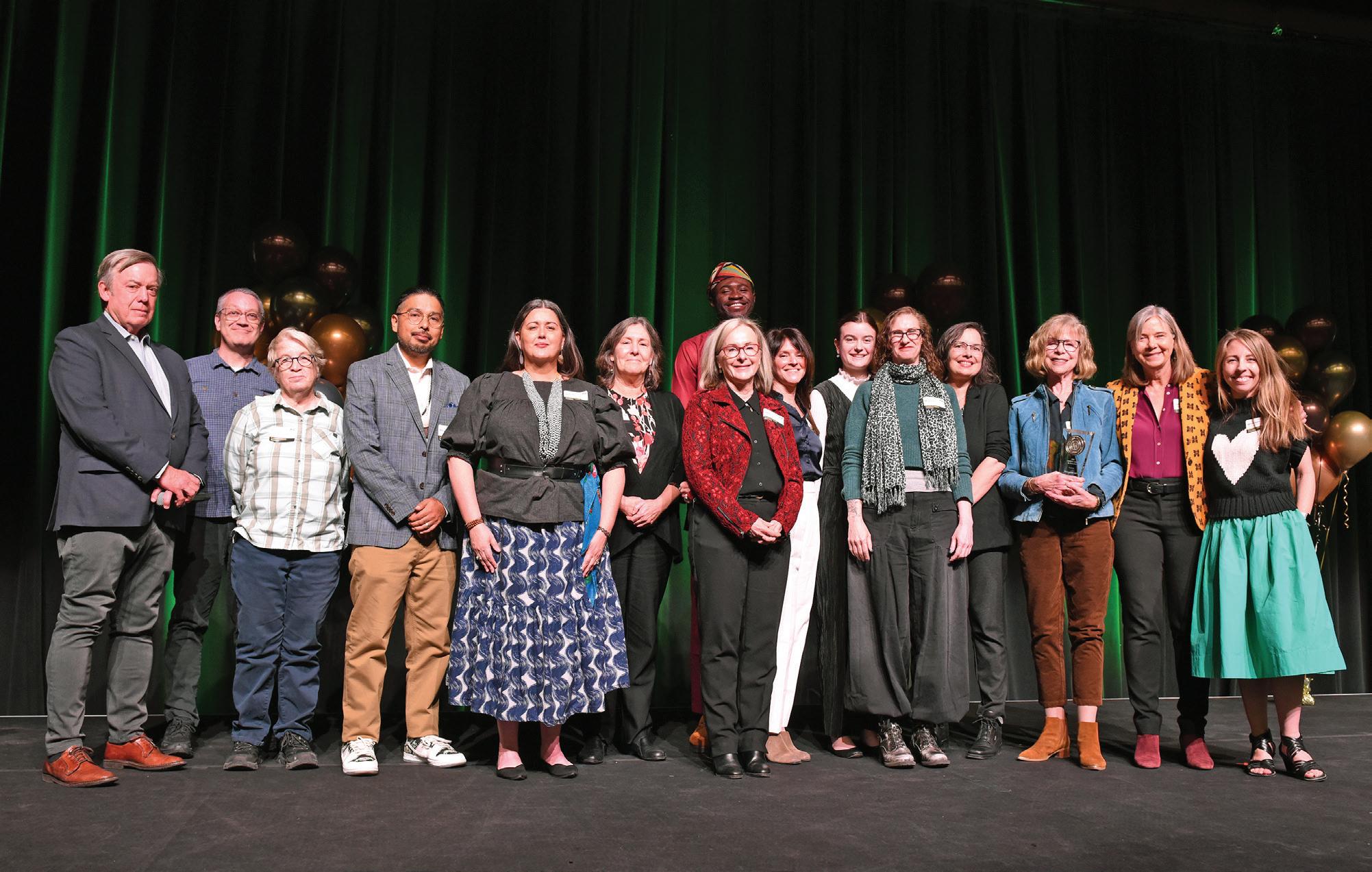
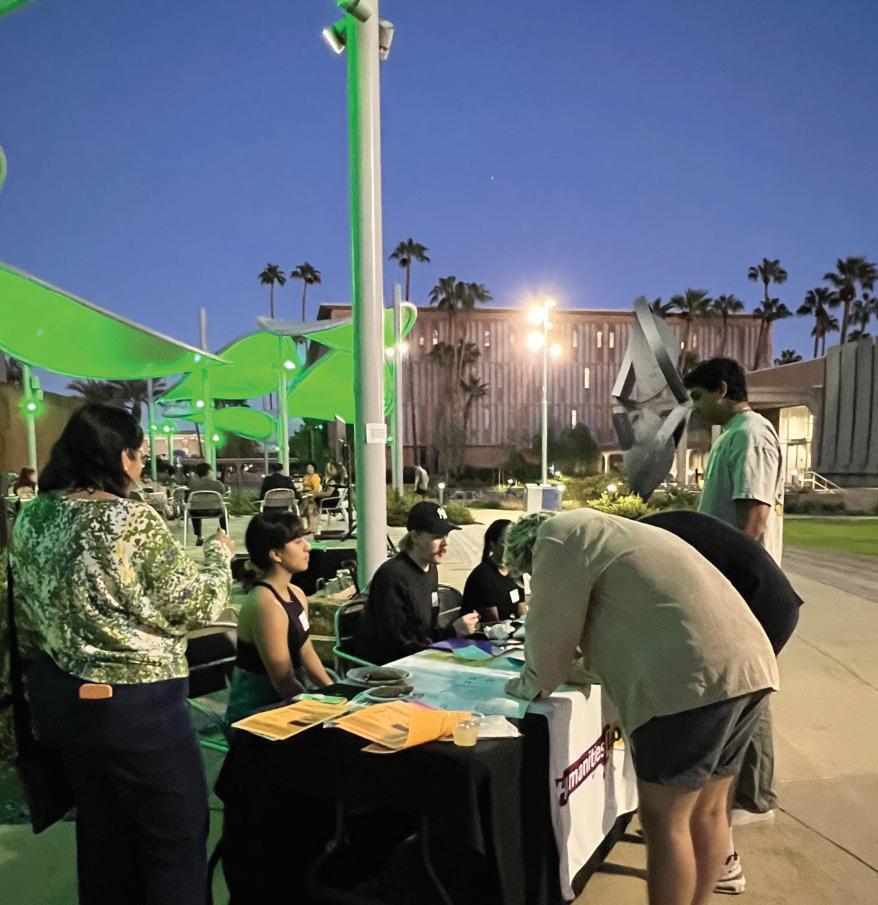
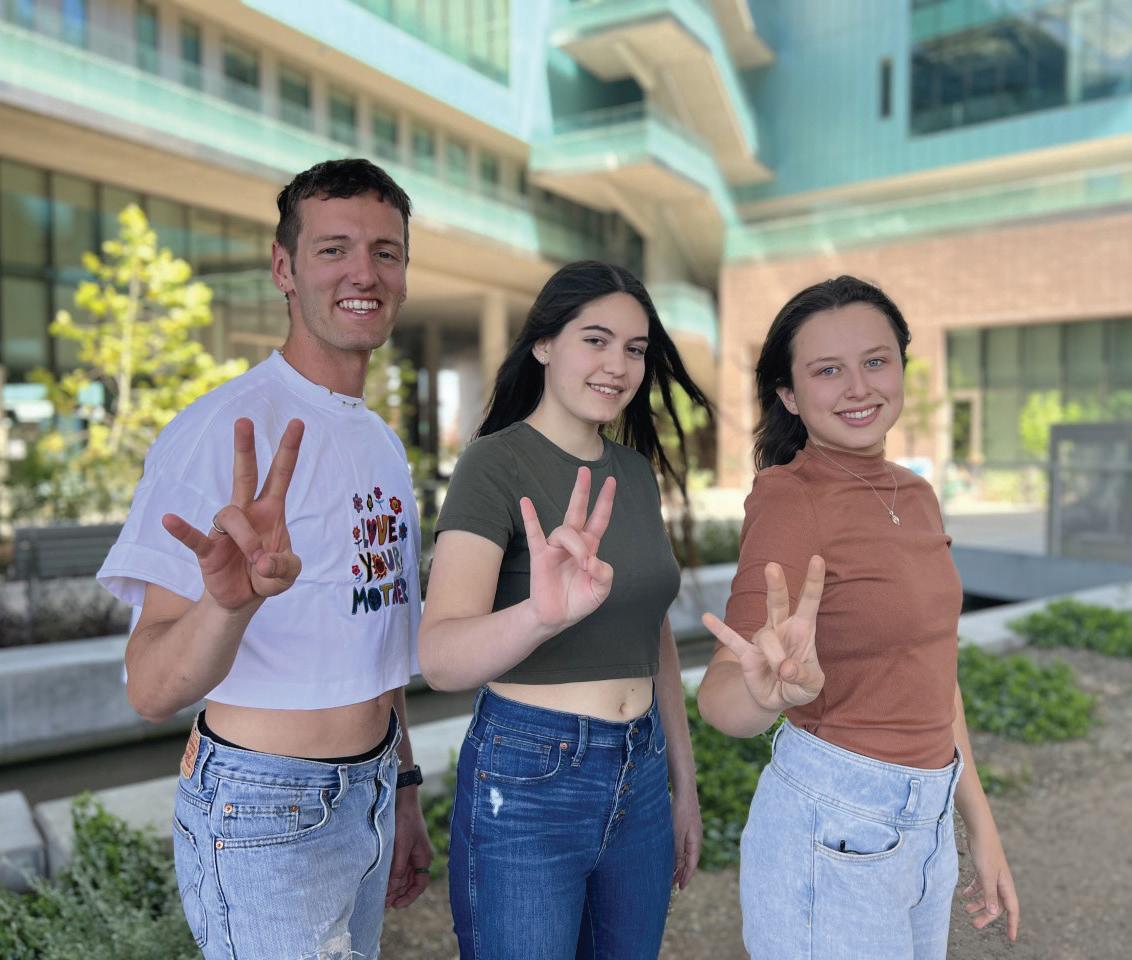
IMAGE BY: TIM TRUMBLE
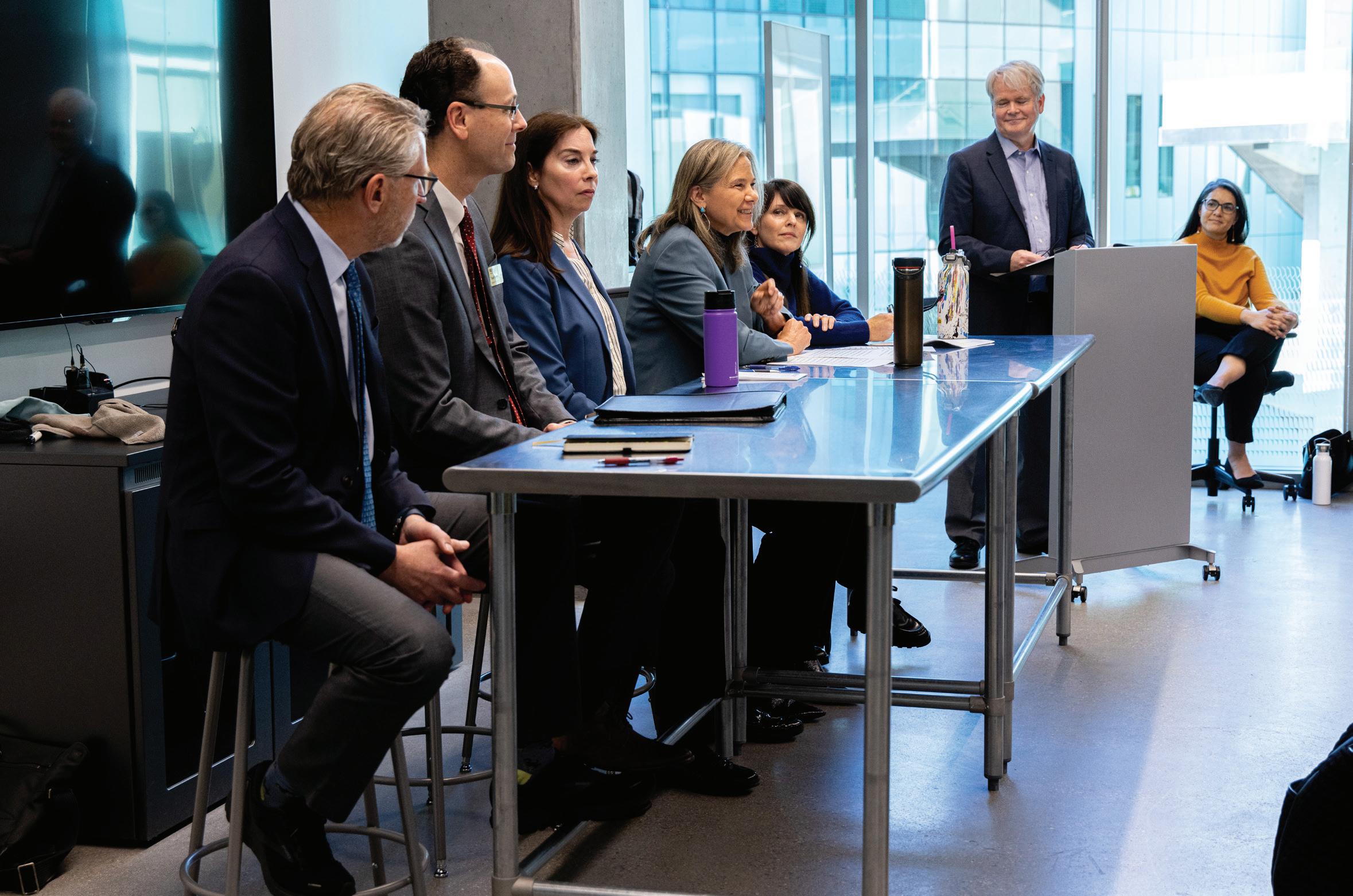
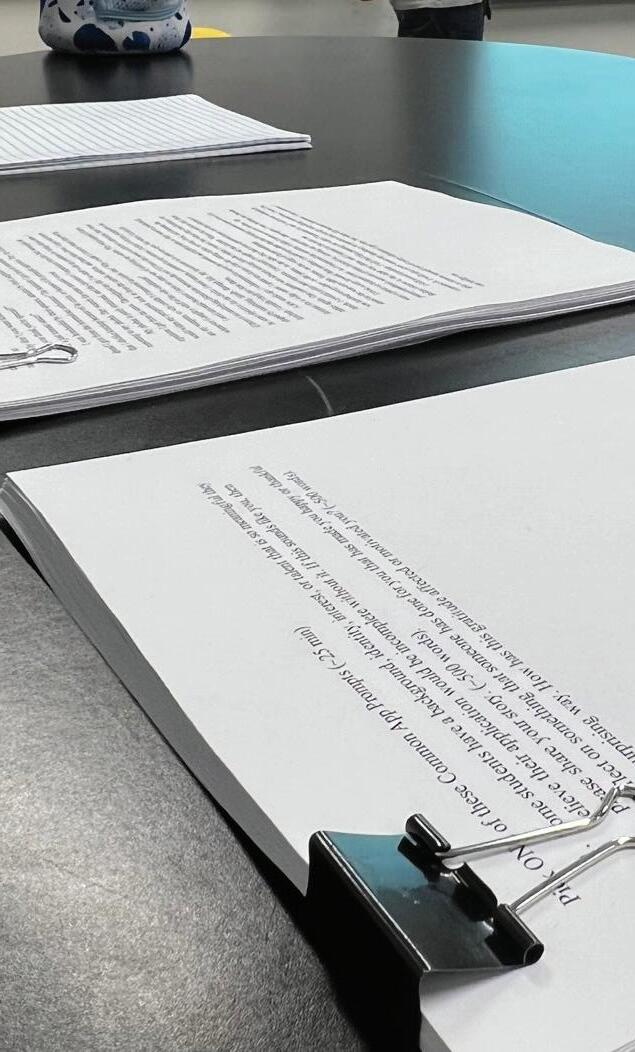
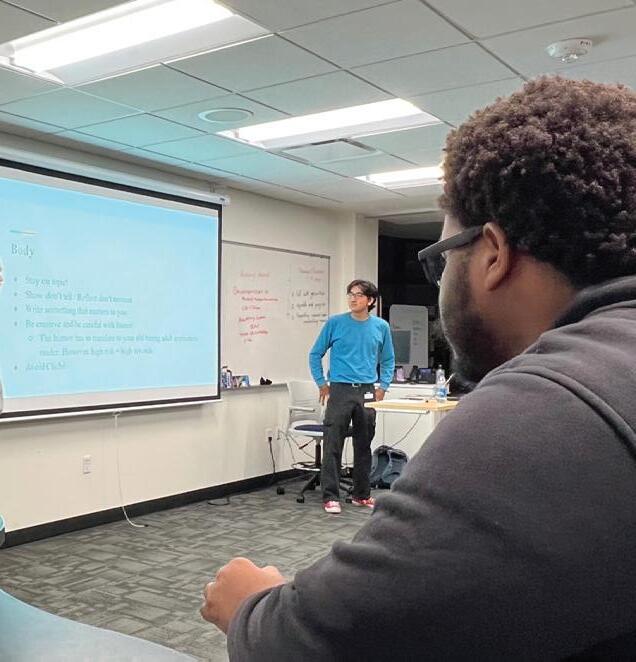
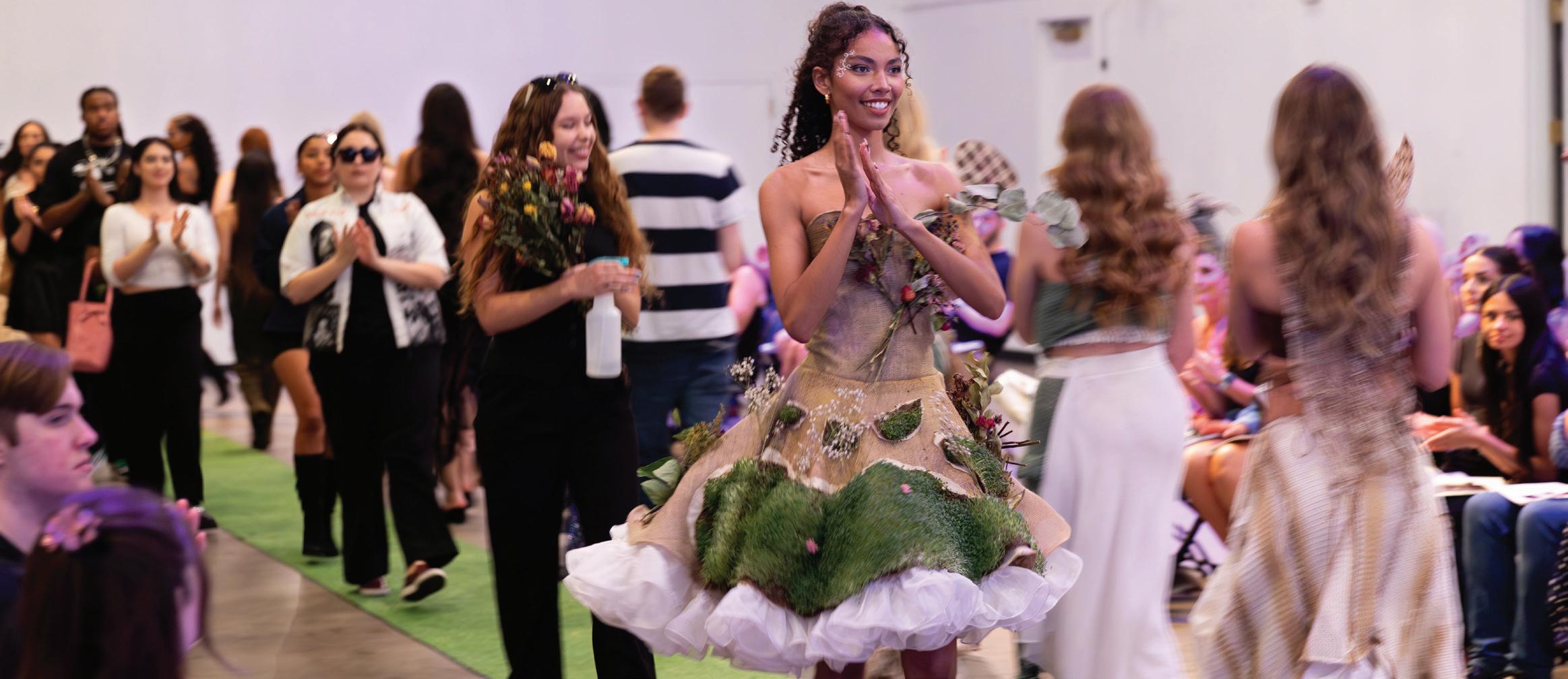
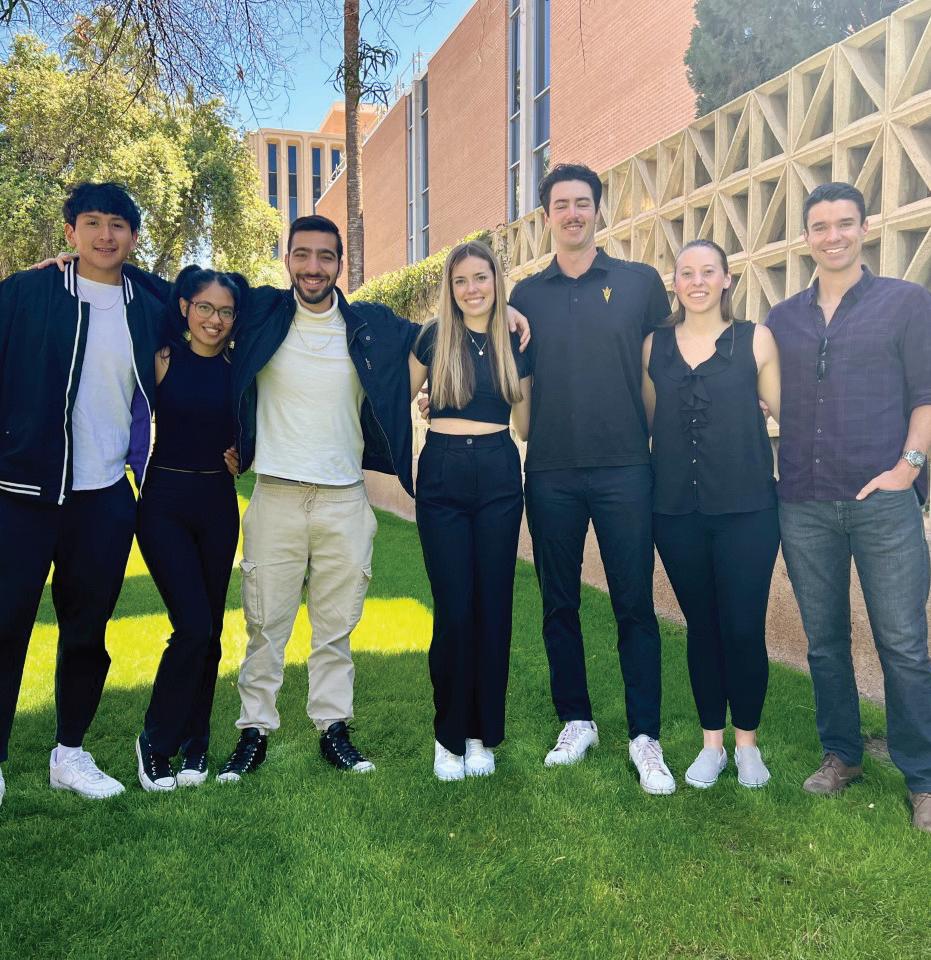
IMAGE BY: MEAGHAN FINNERTY/ DESIGNING THE FUTURE UNIVERSITY, FALL '23
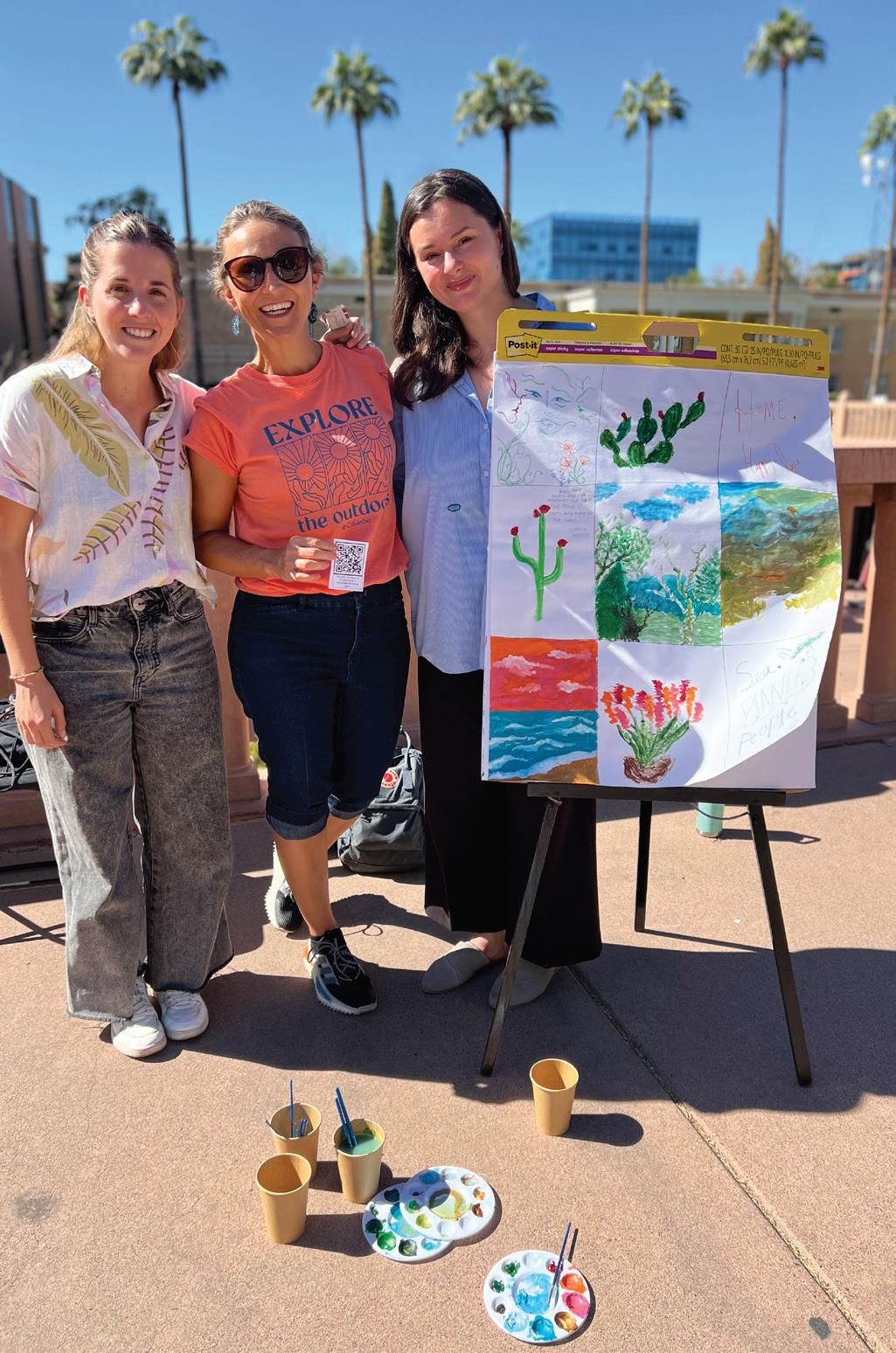
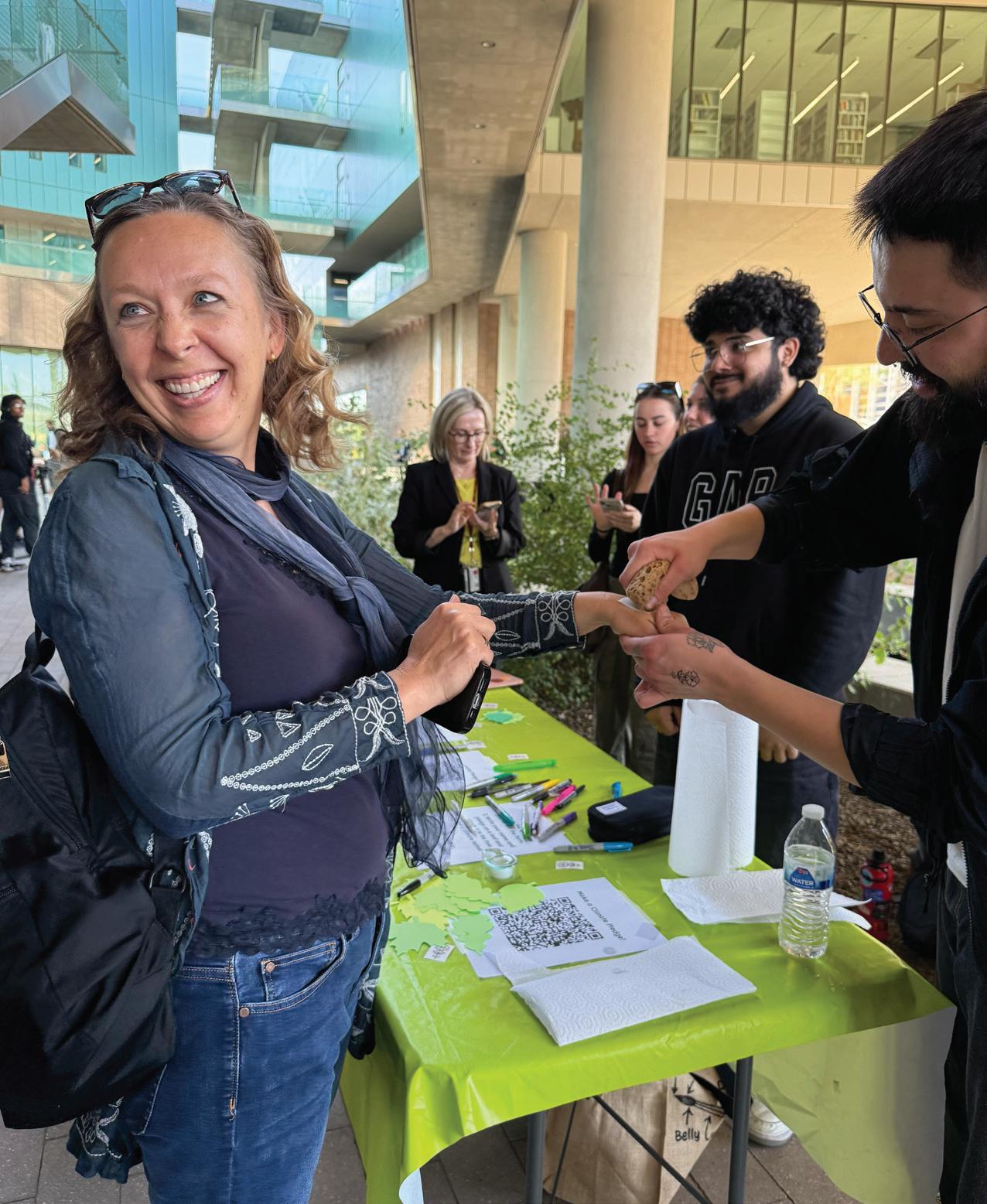
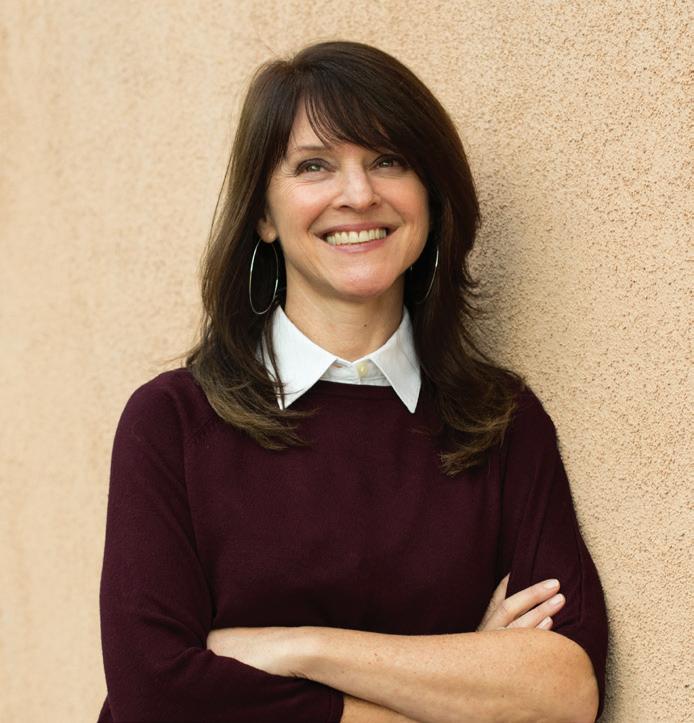
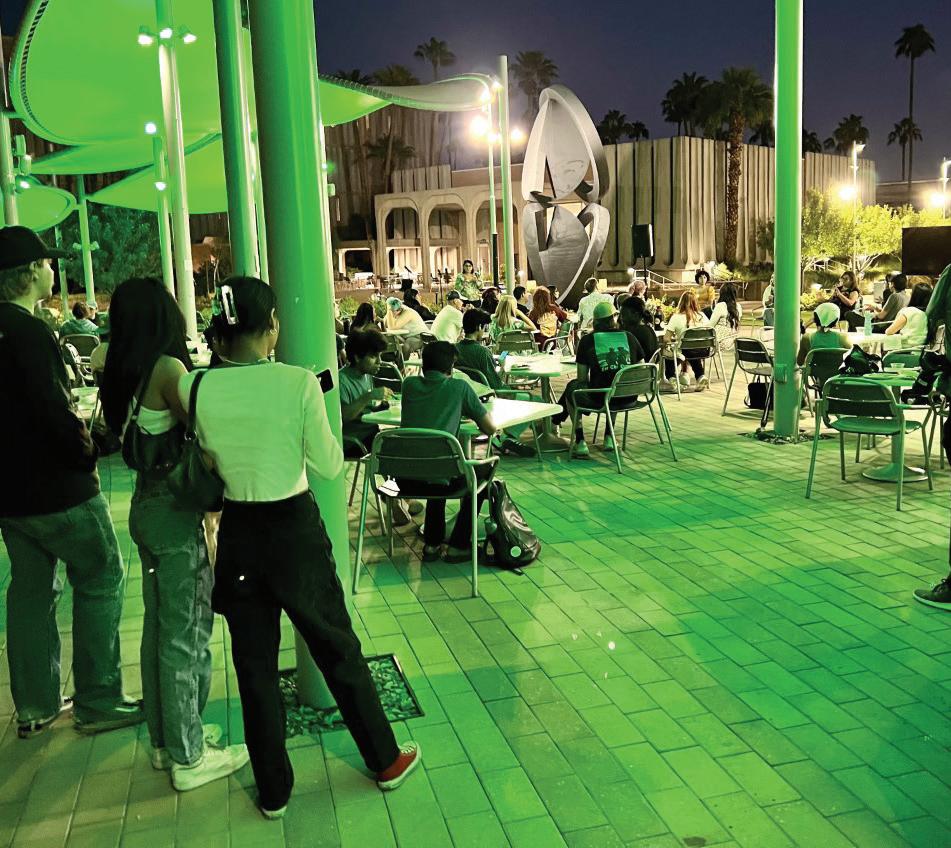
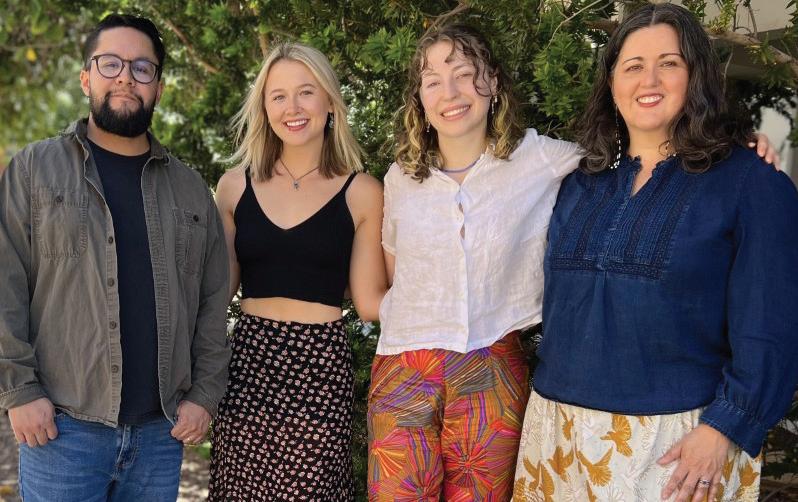
IMAGE BY: MAUREEN KOBIEROWSKI/ PLANETIZING CITIZENSHIP, FALL '24 IMAGE BY: MAUREEN KOBIEROWSKI/ PLANETIZING CITIZENSHIP, FALL '24
06 . LEADERSHIP
A NOTE FROM THE LAB DIRECTORS
08. MISSION + TEAM THE HUMANITIES LAB AND OUR TEAM
10. COLLABORATOR REFLECTIONS
A NEW WAY OF KNOWING, DOING AND BEING. 12. LABS AT A GLANCE
A VIEW ACROSS THE ACADEMIC YEARS/ LAB SPOTLIGHT
14.
INTERDISCIPLINARY TEAMS
INTERDISCIPLINARY INSTRUCTIONAL TEAMS
16.
DESIGN ASPIRATIONS
A FRAMEWORK FOR EXCELLENCE, ACCESS AND IMPACT
32. ENDEAVORS
SEIZE THE MOMENT & BEYOND THE LAB
34. COLLABORATION
COLLABORATIVE INITIATIVES/ SERVING EVERYONE
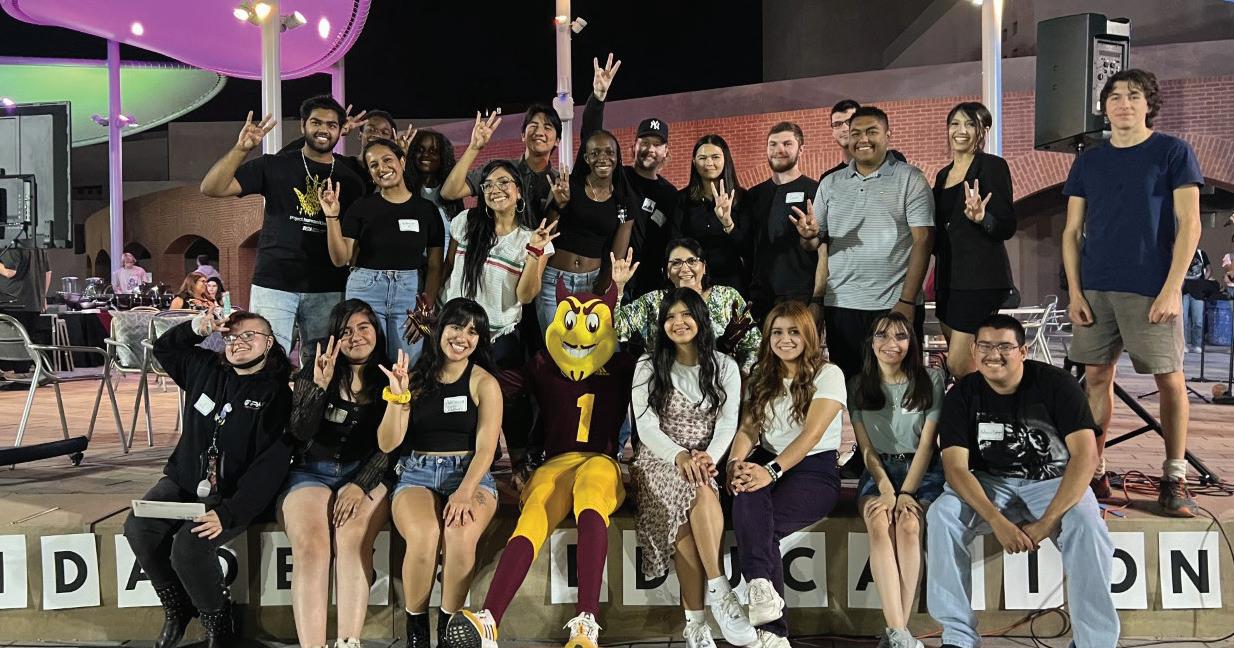
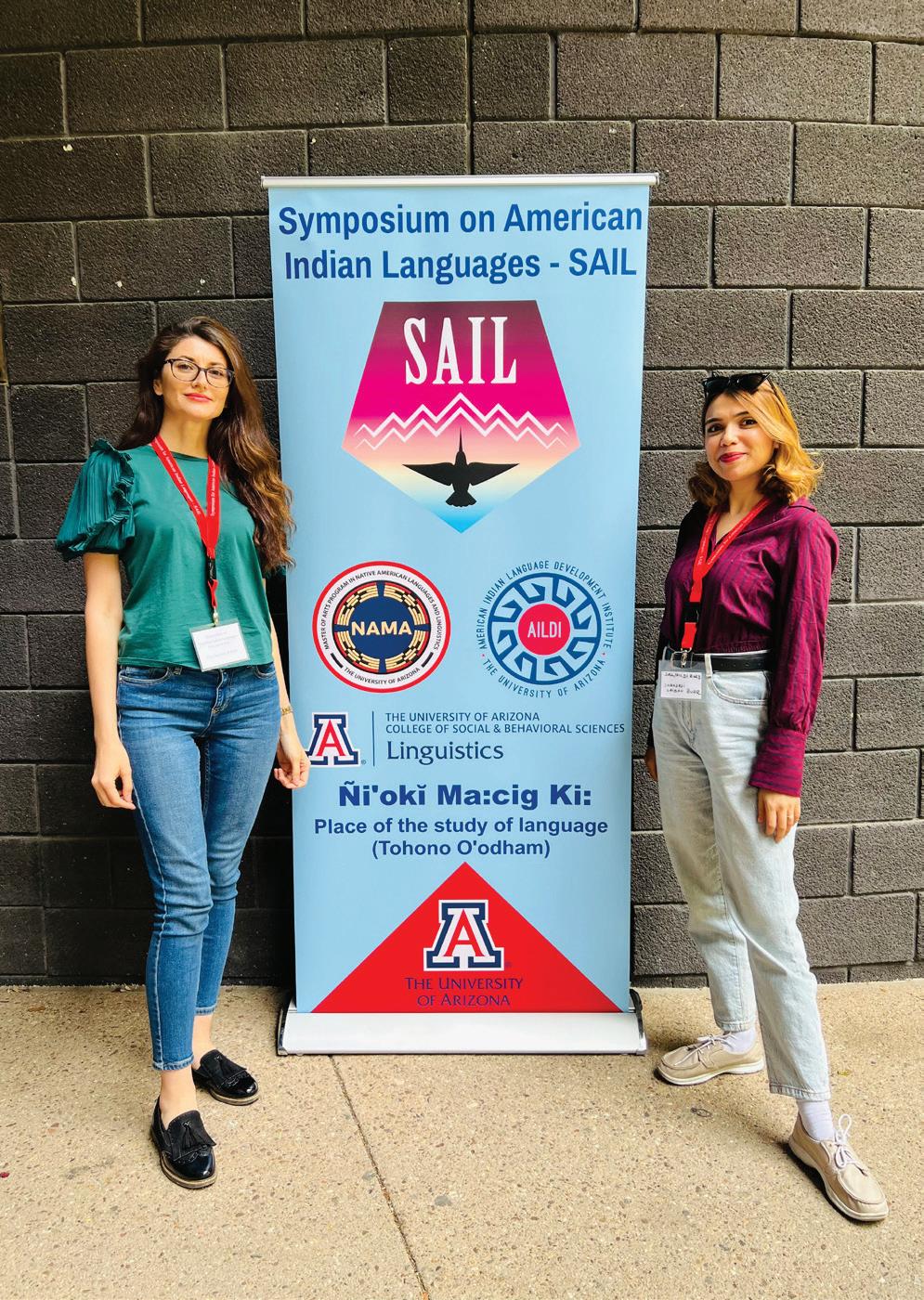
IMAGE BY: MAUREEN KOBIEROWSKI/ AVANZANDO, FALL '22
DIRECTORS' NOTE
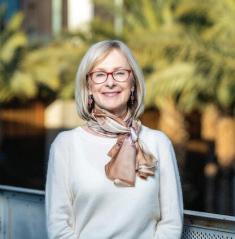
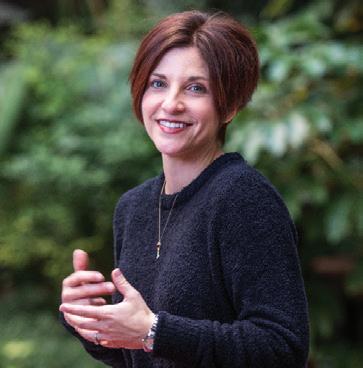
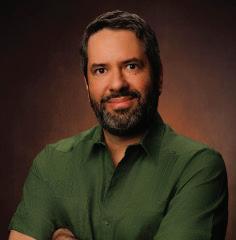
Heather Switzer
Associate Professor of Women and Gender Studies
School of Social Transformation
The Humanities Lab (HL) is a catalyst for collaborative, inquirydriven education at ASU. Our courses offer students the opportunity to take the lead in their education through our praxis-oriented, collaboration-based, and research-driven pedagogy. The result is an exploratory learning experience grounded in humanities inquiry and practical problem solving that empowers all those involved –students, faculty, librarians, staff, community members–to focus not only on what we can do to address pressing social challenges but on what we ought to do. In recognition of our inventive pedagogy, we received ASU’s 2024 President’s Award for Principled Innovation which spotlights and celebrates the Humanities Lab’s role in changing how faculty approach instruction and how students approach research toward real-world impact while leveraging questions concerning history, culture, narrative, and ethics.
Our 2025 Impact Report reflects on the past two years (Fall 2022 - Fall 2024) through the lens of ASU’s 9 design aspirations, which serve as the foundation of every HL course. We share examples of how HL faculty, students, and community partners realize outcomes that actualizeASU’s mission. Highlights from the past two years include invitations to share the HL’s model nationally and internationally. In spring 2023, Heather traveled with a delegation from ASU to Cape Coast, Ghana for the Mastercard Foundation Strengthening Institutional Linkages Symposium to present on strategies for transdisciplinary teaching and learning, and in summer 2023, we both traveled to Duke University to present the Humanities Lab pedagogic model to the Collaborative, Project-Based Learning in Higher Education Symposium. Colleagues at Duke have since published an open access report of the 17 case studies presented at that conference that highlights the benefits of high-impact pedagogies across a range of institutions, from small private colleges to large, public research institutions like ASU. It also shows the uniqueness of our approach at ASU, which foregrounds strategies of inquiry from the humanities, since most project-based learning focuses on the sciences and professional fields.
Humanities Lab courses (called “Labs”) harness humanitiesin-action through transdisciplinary, multigenerational collaborations designed to boost student engagement, enhance learning outcomes, contribute to different communities, and develop active citizens. A pillar of our model is that all Labs feature public-facing events or project outcomes that directly engage external audiences. For example, in spring 2024, public performances of gun culture as final outcomes for Guns, Art-Making, and Truth were supported by a competitive grant from the National Humanities Center, which selected ASU to participate in the inaugural U. S. Being Human Festival and connected the Lab with a national network of humanities outreach. Another notable example is the follow-up work by
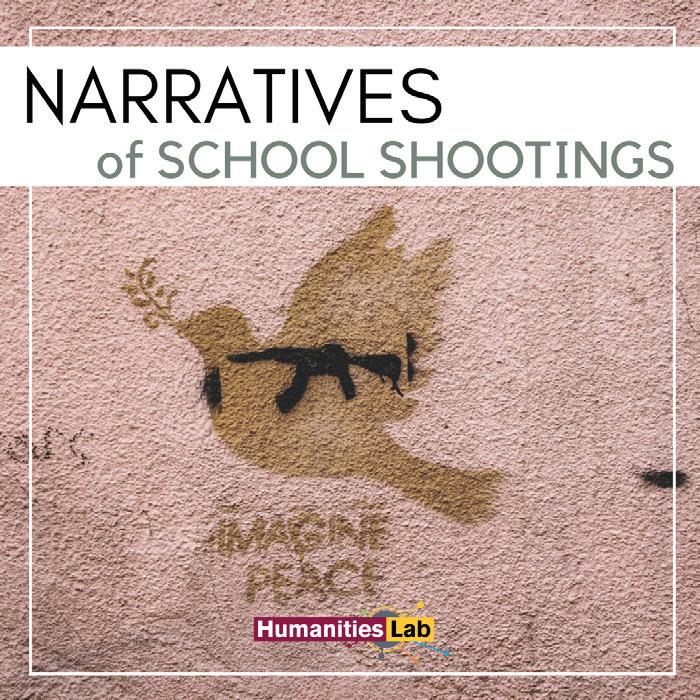
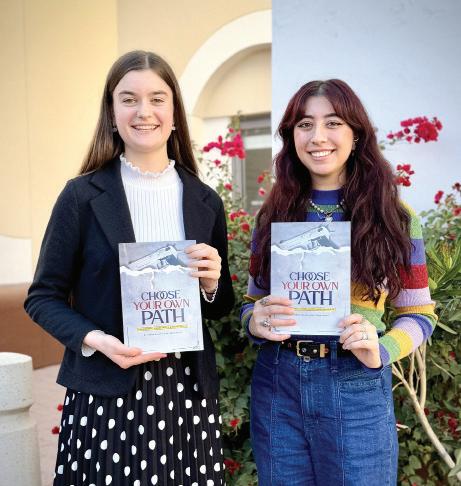
two student teams from the fall 2023 Lab, Narratives of School Shootings. One group (with faculty mentorship) amplified their impact by presenting their research findings on gun violence, school safety and mental health to over 400 K–12 educators at a Trauma-Sensitive Schools Symposium in summer 2024. Their booklet, titled Choose Your Own Path, was vetted and reviewed by mental health professionals and high school leadership administrators. Another group of students from this Lab received an invitation to submit grants to Matthew and Camila McConaughey’s Greenlights Grant Initiative, a program that supports gun safety and community resilience efforts; the students submitted a total of five grants, totalling $600,000, on behalf of Glendale Elementary School District.
In 2024, a team of ASU researchers, including Humanities Lab co-director Dr. Juliann Vitullo, won a $1 million Institutional Impact grant from Wake Forest University’s Program for Leadership and Character to cultivate civic virtues such as openness to different perspectives and civility among Arizona’s undergraduate students, beginning with ASU. The Lab’s role as a pedagogical incubator for social challenge-based courses was a key reason ASU secured this funding, which will foster new curricula centered on civic character throughout ASU and beyond. The grant supports a multi-year project called “Cultivating Civic Virtues Through Action,” in which the HL serves as the platform to integrate character development into courses and faculty training. Thanks to this initiative we have also begun to design future Lab courses with the ASU Farm initiative, which aims to cultivate character through sustainable practices. As we look forward to the 10 year anniversary of the HL’s founding in 2027, we are excited to see how prestigious external grants and cross-college collaborations continue to enrich and expand HL’s impact.
As always we are grateful for the support from The College, Dean Kenro Kusumi, and Dean of Humanities, Jeffrey Cohen, for their commitment to sustaining the mission of the Humanities Lab and to the School of International Letters and Cultures for administrative support. We also appreciate our respective schools (SST and SILC), for their support of our co-leadership, which is truly a labor of love. Finally, the Humanities Lab hums along so successfully because of the vision and leadership of Monica Boyd, chief pedagogic engineer and faculty matchmaker, and Maureen Kobierowski, master storyteller and brand guru, who together create the solid foundation we need to make these opportunities available to our students, colleagues and community.
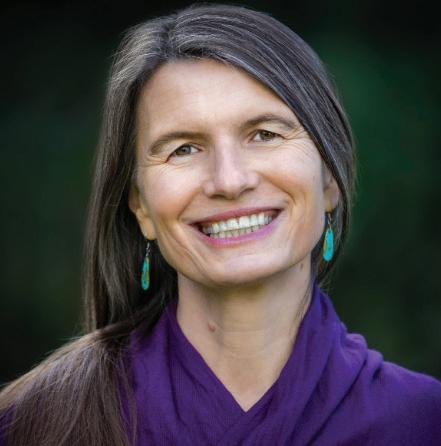
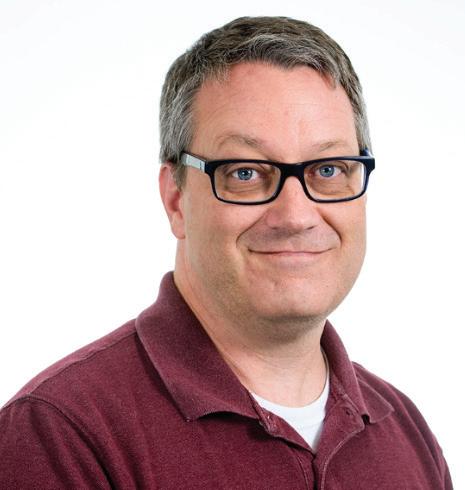
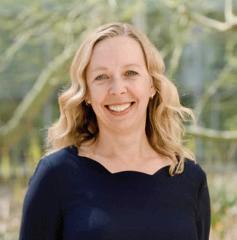
Heather Switzer and Juliann Vitullo Co-Directors, Humanities Lab
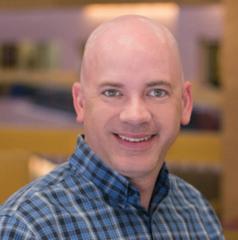
Associate Professor of Italian School of International Letters and Cultures
Juliann Vitullo
HUMANITIES LAB
Our Mission. Our Vision.
Humanities Lab courses go beyond traditional academic boundaries to create new ways of knowing, doing and being through high-impact pedagogy and a commitment to inclusive excellence.
Our courses, called “Labs,” create an experimental, experiential teaching and learning space where interdisciplinary faculty teams and students from diverse academic and cultural backgrounds collaboratively investigate pressing social challenges by using skills developed in the humanities to identify the ideas, ethical issues, historical backgrounds, cultural assumptions, and power relationships that complicate and perpetuate them. Driven by real world questions, Labs have investigated issues related to (im)migration, climate change, food insecurity, sexual violence and gendered insecurity, misinformation, gun violence, educational disparities, energy transitions, and more.
Each Lab is designed to foster multiple perspectives, research-informed action, and use-value through intentional partnerships with communities on and off campus. Student teams take the lead on transformative and principled innovation. What’s more, the Lab creates opportunities for students to share their creative inquiry and proposed solutions with local, national, and global communities and curates their work on our website for edification and use by the communities we serve.
100+ 26% 9/17
Community collaborators
1st generation college students
Number of colleges profs. come from
THROUGH STRATEGIC PARTNERSHIPS, LABS HAVE EXPANDED ACCESS TO MORE THAN 100 NATIONAL AND INTERNATIONAL COMMUNITIES, ENABLING STUDENTS TO INVESTIGATE MULTIPLE PERSPECTIVES AND DISCOVER PRODUCTIVE SOLUTIONS.
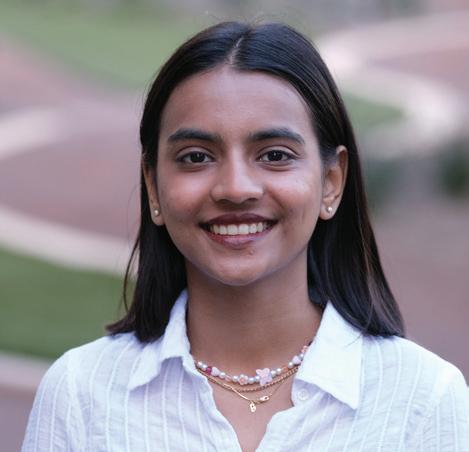
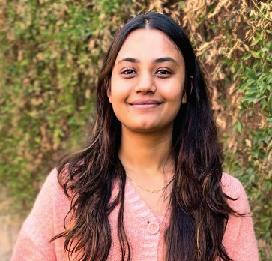
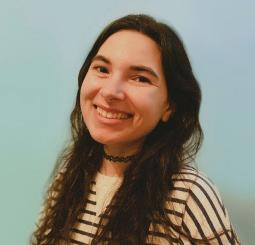
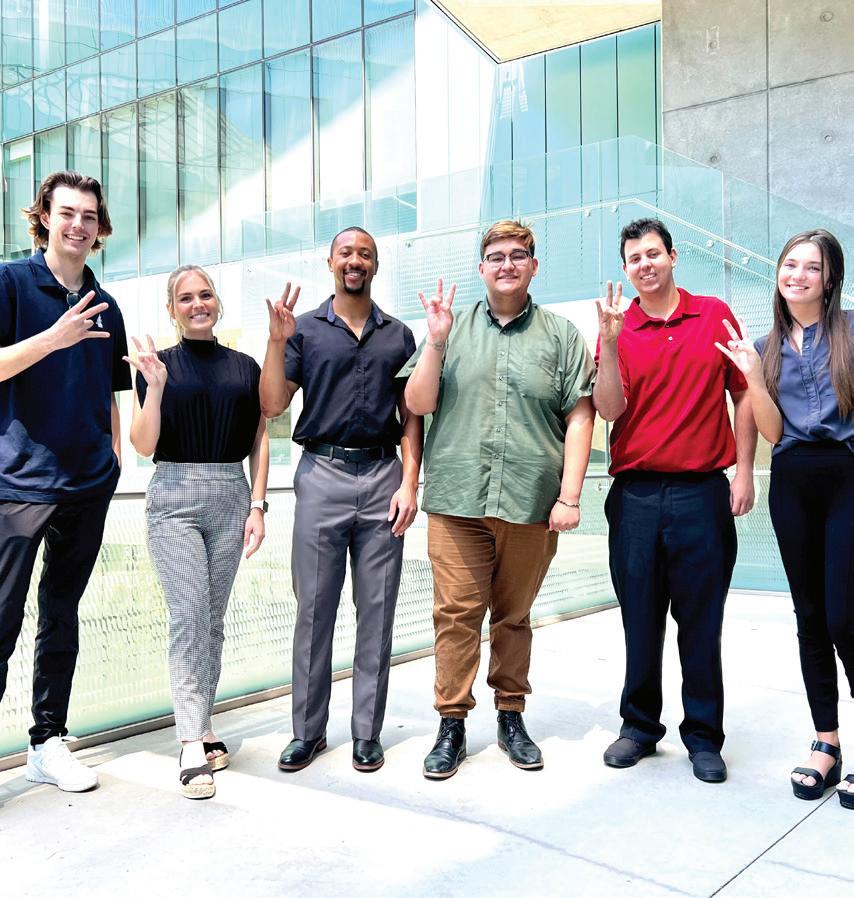
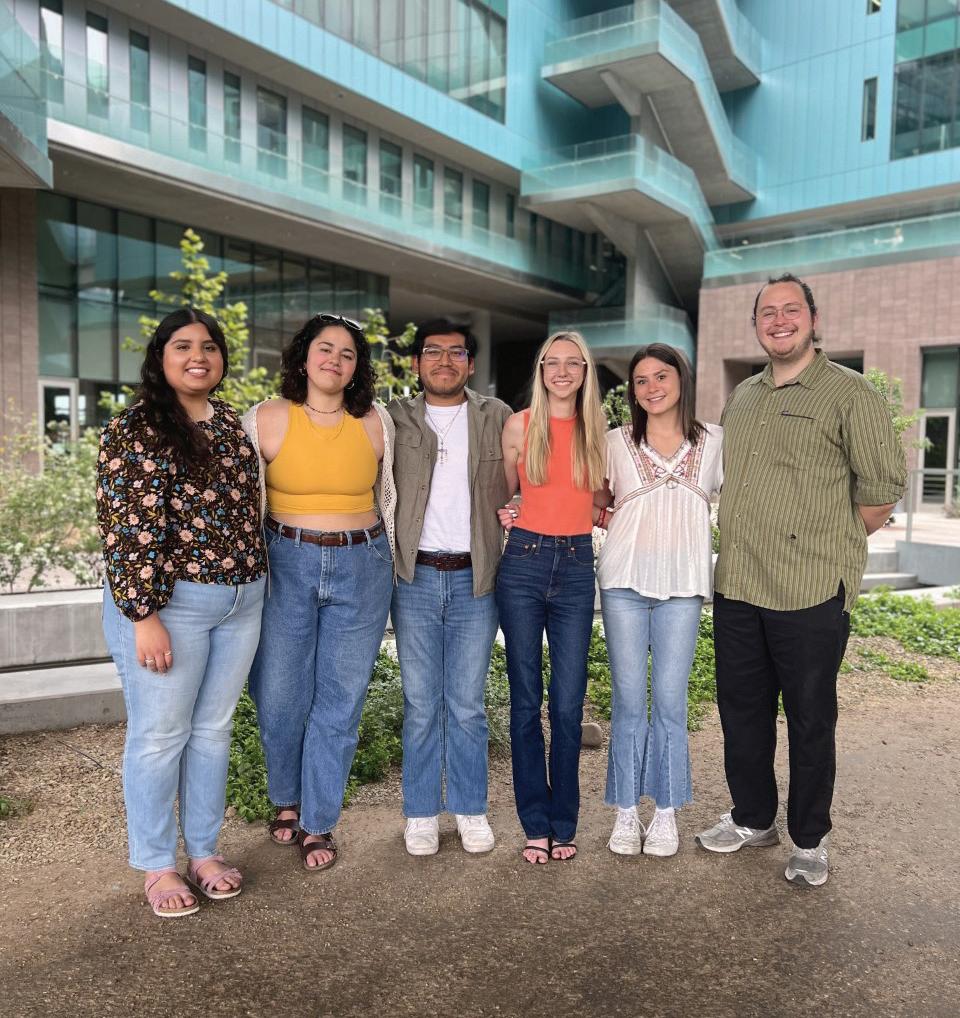
Humanities Lab Team
INCLUSIVE LEARNING
Humanities Labs welcome all learners at every stage of life, from ages 18-85 (freshman to PhD to Mirabella), all in a single classroom where they can bring their personal strengths, values and lived experiences as assets in academic research, dialogue, and action-driven outcomes.
Read more HERE.
Aleks Froelich Program Assistant
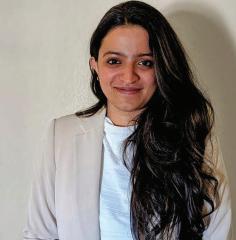
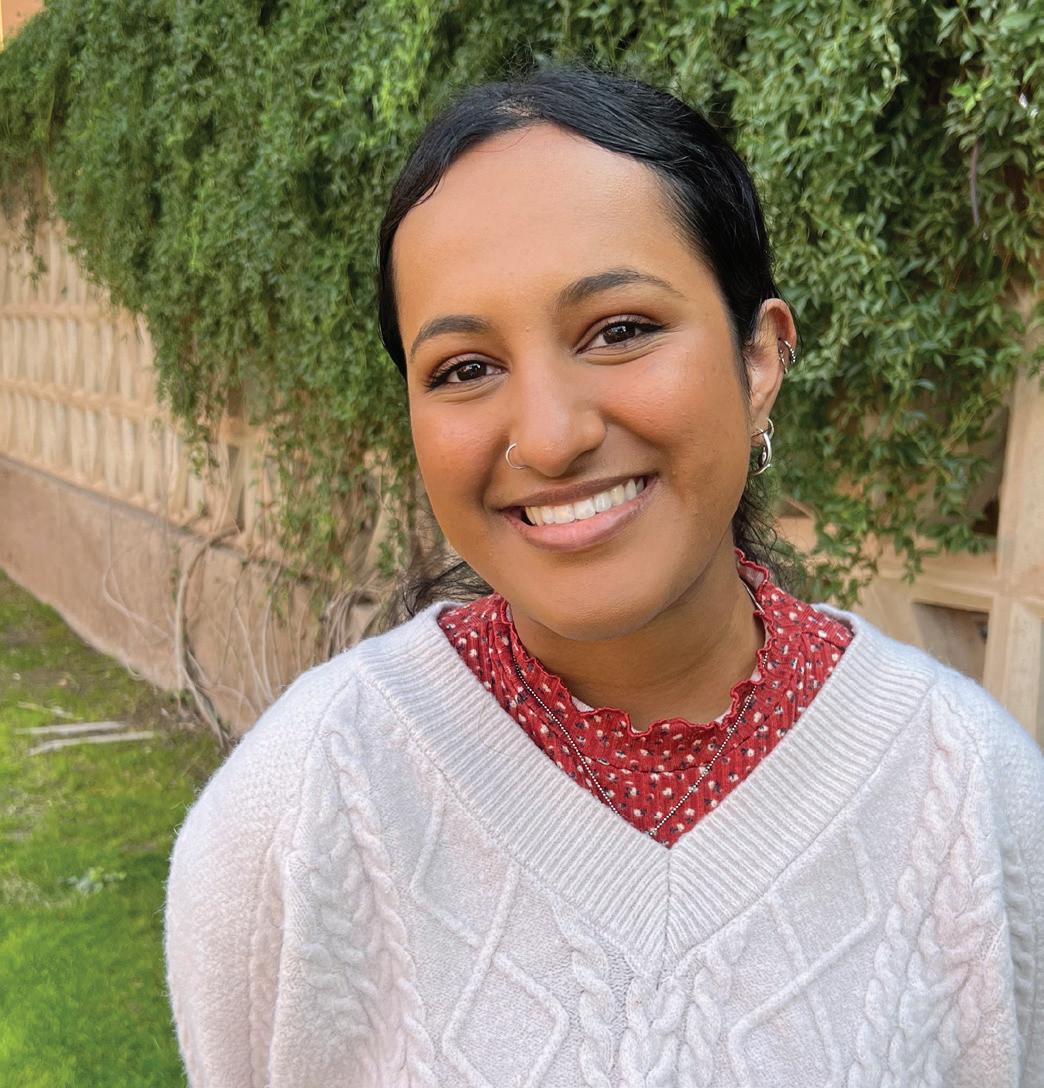
Riva Surana Communications Assistant
Maureen Kobierowski Communications Manager
Monica Boyd Assistant Director
Dhvani Pranav Shah Communications Assistant
Humanities Labs offer new ways of knowing, doing and being.
"Knowledge emerges only through invention and re-invention, through the restless, impatient, continuing, hopeful inquiry human beings pursue in the world, with the world, and with each other."
-- Paulo Friere
Humanities Lab courses invite faculty, undergraduate students, graduate students, embedded ASU librarians, and community experts, consultants and stakeholders into an intentional process of discovery and knowledge production. We want to share below some reflections on this process that inspire us and give us hope:
Nature and culture aren't actually organized into disciplines like our university. Humanities Lab...challenges student teams to pool their disciplinary knowledge and put it to work in order to accelerate real-world impact agendas.
-- Steven Zuiker, Associate Professor in the Mary Lou Fulton College
[Teaching a Humanities Lab] was one of the most memorable experiences I had at ASU. I am passionate about the relevance of the humanities in preparing the next generation to transform the world in holistic ways that ensure our enjoyment, fulfillment, and survival. The Lab provides a space where the sciences and the humanities can collaborate to show students, from all majors, how to incorporate sustainable and fulfilling ways of interacting and being.
-- Dulcee Estevez-Gonzales, principal lecturer in the School of International Letters and Cultures
I learned a lot from the Humanities Lab. Primarily, I came into my group with very little knowledge of experiential learning outside the basic internship experiences, but I had a lot of fun learning about all the different experiential and service learning opportunities that exist beyond the traditional routes.
-- Samantha Tester, MA of History; Designing the Future University Lab student (Spring '23)
Through this course, I realized how many students didn't have the opportunity to engage with school gardens. I learned that a lack of school gardens and environmental education was not just an Arizona issue but a national one. The lab gave me an opportunity to engage with people from different backgrounds and different education levels and helped me come out not only as a better student but also as a better person.
-- Marshall Morgan, Justice Through School Gardens (and Designing the Future University) Lab student (Fall '22)
Teaching Humanities Labs has been one of the most rewarding experiences of my teaching career. The opportunity to coteach a group of interested, self-starting students in an outcomes-oriented course has been an inspiring and invigorating opportunity, year after year. I honestly feel that I learn as much or more from the students as they learn from me because it's a unique forum for them to share their interests and expertise. I never would have guessed I'd have a construction management student who was able to contribute to his group's project by analyzing construction quality/methods in Rio de Janeiro in order to mitigate landslides. Humanities Labs are a unique opportunity for students and professors alike--I am so glad that Arizona State University has made it possible for us (for me!) to experience.
-- Glen Goodman, Senior Director for Latin America with ASU's International Development Initiative and a Clinical Assistant Professor of Brazilian Studies in ASU’s School of International Letters and Cultures
Through this experience, I have gained a more well-rounded perspective on what type of considerations go into making an effective media campaign. Prior to this course, I had never worked on a project like this, as most of my classes are lecture-based, so I really enjoyed that a lot of the learning came from current news and example media campaigns. I also have developed a deeper understanding of the human-ocean relationship and a heightened sense of urgency in mitigating current issues that face the future of the ocean.
– Charlene Bernabe Barrett Honors Student, Biochemistry major / global health minor; Mediating Ocean Futures Lab student (Fall ‘23)
Humanities Lab provides a space for mutual understanding of disciplines and humans, and this mutual understanding is paramount to having hope to make a difference.
-- Mohadeseh Mousazadeh Miandehi, Dept. of English Graduate Teaching Asst.
READING THE FINAL REFLECTIONS AND SELF-EVALUATIONS FROM OUR LAB, I WAS GRATEFUL FOR THE STUDENTS’ ENTHUSIASM FOR CONTINUING TO THINK AND TALK ABOUT US GUN CULTURE AND THEIR DESIRE TO KEEP ON HEARING DIFFERENT VIEWPOINTS AND LEARNING FROM OTHER PEOPLE’S PERSPECTIVES. IT SEEMED WE HAD OPENED UP A LOT OF FEELINGS AS WELL AS IDEAS, AND THE STUDENTS VALUED THE HUMANITIES LAB AS AN OPPORTUNITY VERY DIFFERENT FROM THEIR EXPERIENCES IN OTHER CLASSES.
—LAURA TURCHI HL | GUNS, ART MAKING AND TRUTH CO-FACULTY, CLINICAL PROFESSOR, DEPARTMENT OF ENGLISH
Leverage our Place
The Humanities Lab leverages place-based pedagogies in the desert southwest by inviting local communities to work with ASU students through mutually beneficial partnerships. For example, Beyond the Lab (BTL) students—those who continue their work beyond the initial Lab semester—collaborated with the Salt River Pima Maricopa Indian Community’s O’odham Piipaash Language Program to assist in language preservation with the creation of the Piipaash Language Teaching Guide (Fall 2022 - Spring 2023). Another highlight came from the Energy Justice and Action Lab where students (Fall 2023) worked with the Arizona Worm Farm to support pathways to environmental conservation and waste management related to food systems.
By intentionally centering Indigenous food systems of the desert southwest, the Humanities Lab emphasizes innovative approaches to cultivating food security though Lab courses like Justice through School Gardens (Fall 2022) and Indigenizing Food Systems (Spring 2023) and through our Beyond the Lab program in which student-led projects like the Chi'chil Countermapping Project (Spring 2023) draw on expertise on campus, off campus, and in the natural world to enact social change. Finally, HL courses engage in concerted efforts to sustain our local and natural resources. Energy, Justice and Action Lab (Fall 2023) students, for example, created a proof of concept for a new app called Greenlink designed to engage the greater ASU community in reducing their carbon footprints through a tuition and bookstore discount reward system.
Collaborative experiences like these provide students diverse mentors and a shared sense of purpose for what they are learning, what they are doing, and how they show up in the world.
Enabling Student Success
Enabling student success is at the heart of what we do in the Humanities Lab. Students work in teams to sharpen their own understanding by integrating ideas that may differ from their own. These teaching and learning strategies expand and enrich the foundation for discovering productive solutions.
Starting in Fall 2023, the Humanities Lab offered three consecutive courses on gun violence and gun culture designed to engage student-faculty teams in difficult dialogues involving diverse and often diverging perspectives on guns, gun culture and gun violence in the U.S. today. Student research and advocacy generated outcomes with implications and impact well beyond the classroom. Examples include a Choose Your Own Path booklet, slated for distribution with the Arizona Education Foundation, that prepares students for making difficult decisions for the safety of their community and a “Good Morning America” appearance by Dr. Sarah Lindstrom Johnson with Matthew McConaughey, actor and co-creator of the Green Lights Grant Initiative, to discuss school safety.
Prior to this class, I was admittedly nervous to delve into a controversial topic like school shootings and engage in conversations with people whose perspectives were different from my own. Throughout this class, I realized that it is possible to have civil, respectful conversations about school shootings, and that different perspectives actually help me to expand my own .
– Fiona Sauve
Narratives of School Shootings Lab (Fall ‘23), Guns, Art-making and Truth Lab (Spring '24) and Beyond the Lab (Spring - Fall '24) student
Societal Transformation
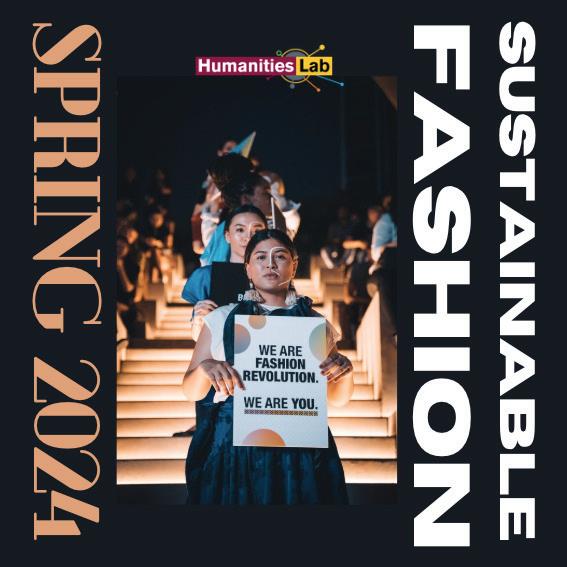
Societal transformation occurs with one question, one hunch, one leap of faith at a time. Every Lab course offers the potential for even small steps toward very large advances in societal flourishing. ASU students in Humanities Lab courses over the past two years have developed actionable climate mitigation strategies for marginalized communities in Brazil; worked to empower women and advance society inline with the United Nations 17 Sustainable Development Goals, and have worked to raise public awareness concerning the impact of fast fashion on our collective resources anywhere, and everywhere, on Earth.
A snapshot across time.
I have taught many project-based learning courses, but what makes the Humanities Lab different is the support to help see projects through to completion . Specifically, a set of three honor’s students worked with the Greenlights Grant Initiative to write 3 state and/or federal grants for underserved school districts to access funding for supports for school safety. Another group of two students participated in a Beyond the Lab and worked with former educators of the year and school mental health professionals to vet their Choose Your Own Path activity. As a community-engaged researcher these activities allowed me to give back to my partners in meaningful ways.
– Sarah Lindstrom-Johnson
Narratives of School Shootings co-faculty (Spring 2024)
Fusing Intellectual Disciplines
IN MANY WAYS ASU IS SUPERIOR TO HARVARD: THE FORMER’S HUMANITIES LAB IS AMONG THE MOST INNOVATIVE IN THE COUNTRY, AND THE SCHOOL HAS RESOURCES SUPERIOR TO THOSE AT MANY FLAGSHIP CAMPUSES.
—JEFFREY HERLIHY-MERA. "WHERE THE HUMANITIES ARE NOT IN CRISIS," LOS ANGELES REVIEW OF BOOKS , 2023
The Humanities Lab at ASU began as an idea in the Spring of 2017 and has since has become a nationally and internationally recognized example of the new American university in action. The Obermann Center for Advanced Studies at the University of Iowa highlighted the Lab as a "...fantastic program at ASU that has inspired us and many others around the country."
Interdisciplinarity is increasingly promoted in higher education today, and the HL continues to be at the cusp of these changes at ASU. We stand out on this increasingly crowded stage because of the unique perspective that defines our pedagogical model–we lead with analytical and methodological strategies developed in the humanities. We have accepted invitations to share our approach in scholarly venues from North Carolina, USA to Ghana, Africa, and we have hosted visiting faculty from Taiwan and Sweden. Students in our courses have traveled around the world through GIEs in Brazil, France, Germany, (and soon!) Puerto Rico, as well as presented their research to a range of stakeholders from diplomats at the US State Department to K-12 educators interested in gun reform.
Rafael Martinez, Assistant Professor of Southwest Borderlands in the College of Integrative Sciences and Arts noted: “The Humanities Lab creates a unique educational experience for students to do applied learning in an interdisciplinary environment [that] …takes faculty and students out of their comfort zones, while having the highest impact on collectively learning.”
Lab faculty come from units across the university, from American Indian Studies to the Fulton College of Engineering and Herberger Institute for the Arts to the Center for Broadening Participation in STEM. What’s more, instructors in our Labs are faculty (teaching, clinical, and tenure-track professors), librarians, expert staff, and even deans. It has also become increasingly common for students to take multiple Labs over the course of their academic careers and even two complementary Labs in the same semester.
THROUGH THE ARIZONA STATE HUMANITIES LAB, UNDERGRADUATES EXPLORE ROTATING THEMES THROUGH COLLABORATIVE PROJECT COURSES, SUCH AS “INDIGENIZING FOOD SYSTEMS,” “DECOLONIZING ‘MADNESS,’“ AND “LANGUAGE EMERGENCY,” THE LAST INVOLVING A PARTNERSHIP WITH ARIZONA INDIGENOUS COMMUNITIES TO WORK ON SUSTAINING “LINGUISTIC AND CULTURAL HERITAGES.
—EDWARD J. BALLEISEN AND RITA CHIN, “THE CASE FOR BRINGING EXPERIENTIAL LEARNING INTO THE HUMANITIES,” DAEDALUS , 2022
MAKING EDUCATION INCLUSIVE, ACCESSBLE
AND RELATABLE
Avanzando Education Pathways
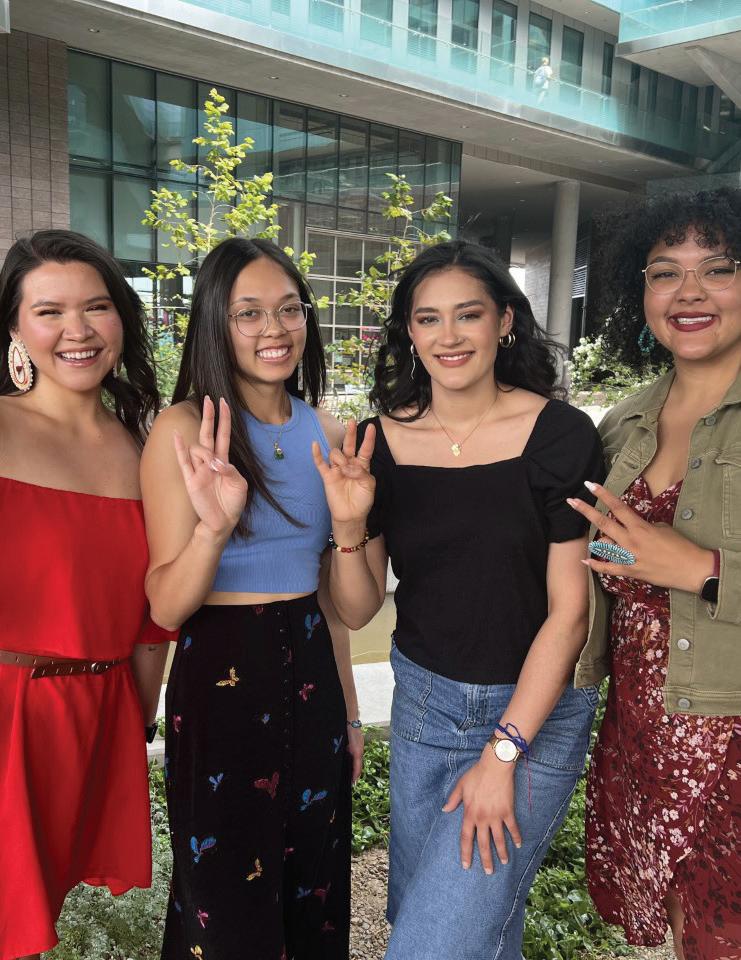
In fall of 2022, we partnered with the ASU Office of Social Embeddedness and Watts College’s the Design Studio for Community Solutions. This collaboration led to ASU HL students partnering with Maryvale High School (MHS) students to share their educational experiences and learning priorities in order to identify and mitigate barriers that members of the Maryvale community face in their quest for higher education.The collective aim of the project was to improve access to higher education in Arizona.
For example, ASU students designed workshops on topics like how to write a college essay and how to access free public WiFi within the village of Maryvale. ASU students also hosted a public event entitled, “Avanzando las Humanidades: Education Stories,” on the Tempe campus as part of Humanities Week 2022. Guests included MHS students and administrators.
Avanzando Education Pathways is a great example of how Lab courses attract students from diverse backgrounds. Since our inception, our courses have continued to attract first generation students as well as students from minoritized communities. Read more HERE
Embedded Socially
The Humanities Lab’s vision is to develop master learners who can thrive in diverse interdisciplinary environments, work in collaborative teams, and take collective responsibility for advancing well-being for people and the planet. This vision requires an ethic of service and drives our expectations that students in our Labs will follow research-inspired leads to create outcomes that are useful and meaningful to the public. This is why Labs have ASU librarians and, often, local and global community partners, embedded into the fabric of the course design and classroom experience.
The Humanities Lab helped me gain a useful perspective in understanding the "human component" of STEM fields. The world revolves around people, and through the lab, I learned how to communIcate with and understand the diverse challenges people face, as well as empathize with them. Before I took the lab, higher academia in humanities was a field I didn't see myself pursuing but the lab has pushed me to consider higher education and graduate programs in the field.
– NITHYA RAMEN
Avanzando Education Pathways student (Fall 2022)
Value Entrepreneurship
Because the Humanities Lab encourages students to take incremental risks as they expand the foundation for discovering productive solutions, we value the ethic of entrepreneurship that organically emerges in many of our courses. Analytical and methodological strategies developed in the humanities inspire students from other disciplines to consider the role that ethics, narrative, history, justice and culture play in the design and development of innovative ventures as solutions for complex social problems.
Beyond the Lab embodies ASU’s commitment to innovation by transforming research into real-world impact. Through interdisciplinary collaboration, we tackled urgent sustainability challenges in fashion, bridging academia and industry to drive meaningful change. This experience not only expanded my research but also demonstrated the power of applied knowledge in shaping a more sustainable future.
Faculty mentor students in research that informs students' action and orients their effort toward socially responsible, meaningful, and accessible outcomes.
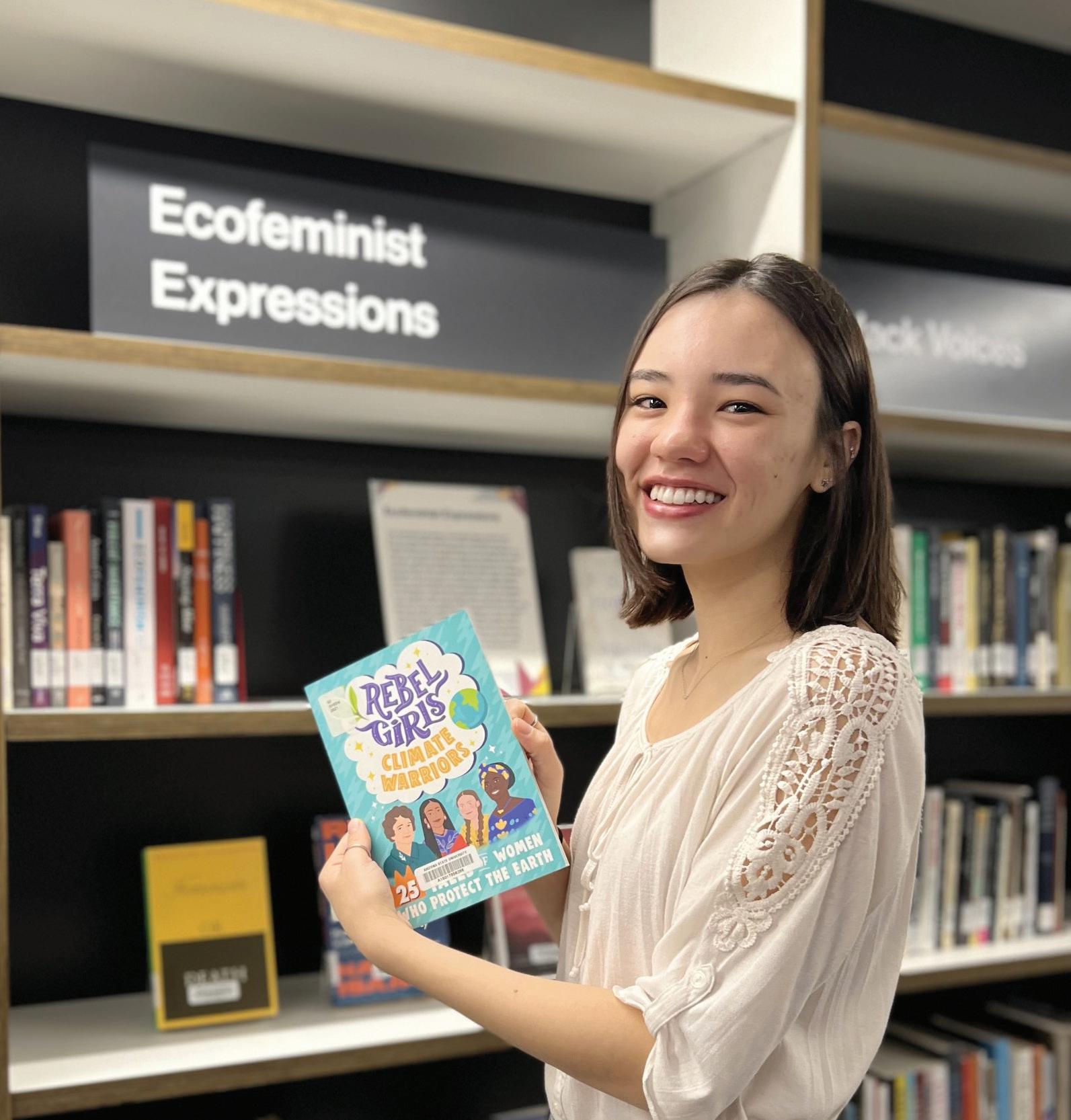
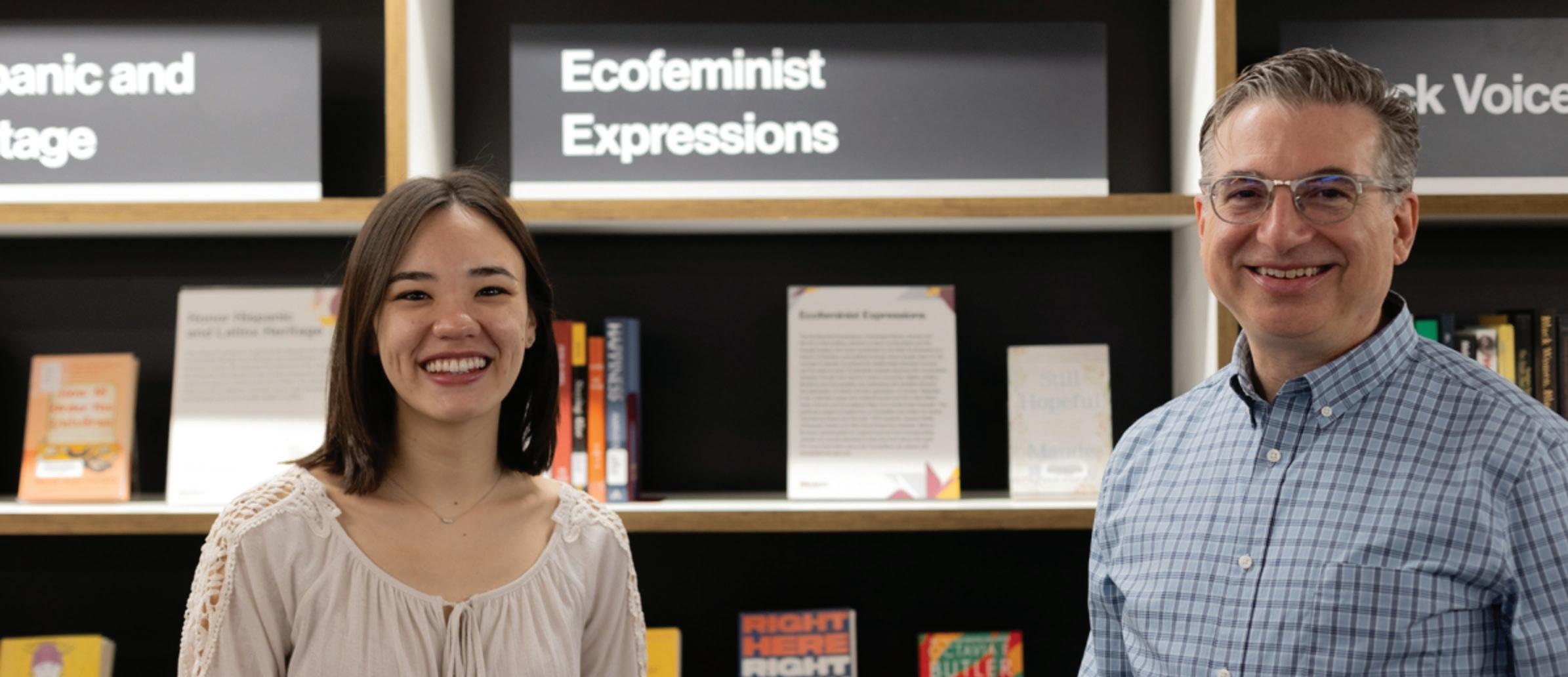
Mimmo was an incredibly supportive figure whose passion for learning and storytelling was clear to myself and my peers in the lab,” which includes her lab and "Ecofeminist Expressions" partner, Chimerezie Okezie, an informatics major in the Ira A. Fulton Schools of Engineering. “Not only did he help us with our research, but he taught us how to better navigate the resources available to us through the ASU Library system so that we could become better researchers on our own.”
– Jessica Hladik
A snapshot across time.
Excerpt from ASU News story, Humanities Lab transforms in-classresearchintoreal-worldimpact. March 22, 2024.
Gendering Peace and Security (Spring 2023; Library collaboration on Ecofeminist Expressions (Spring 2024)
Globally Engage
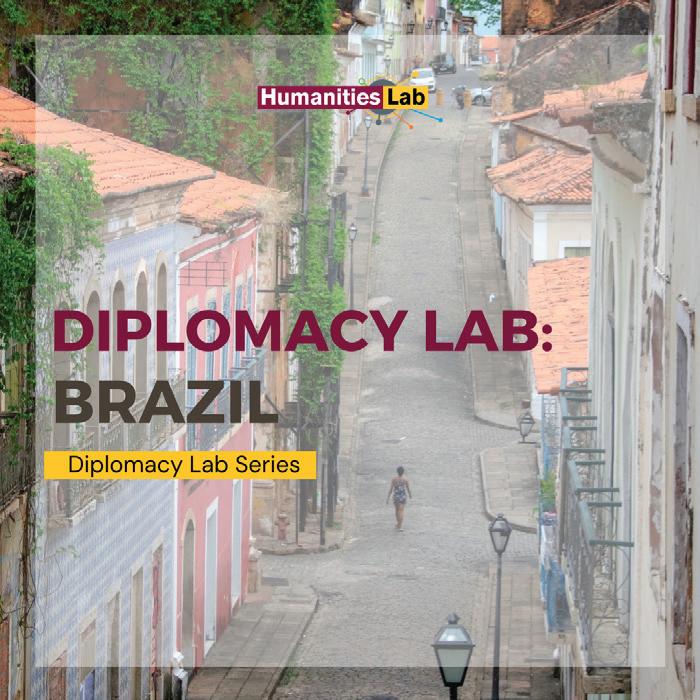
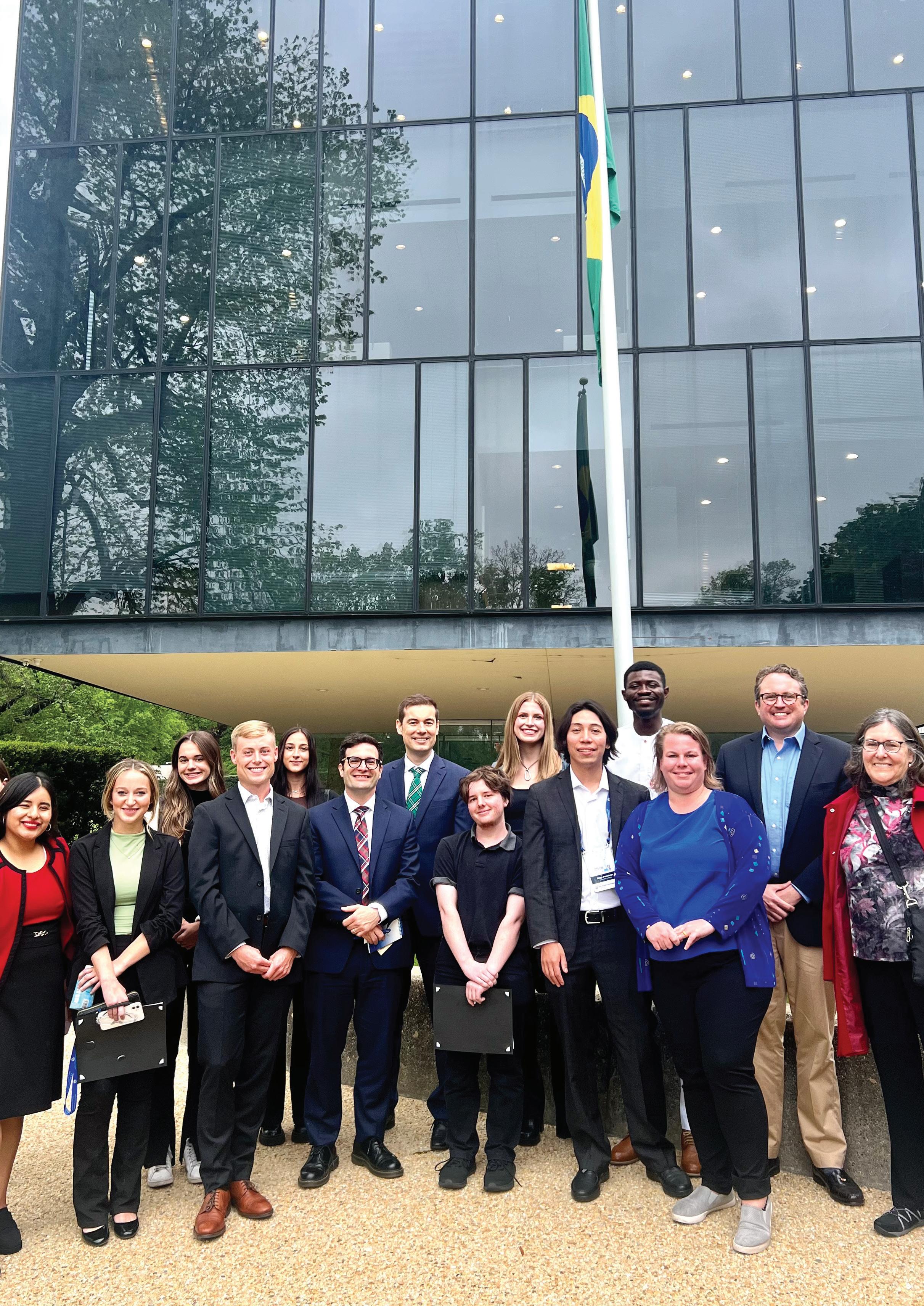
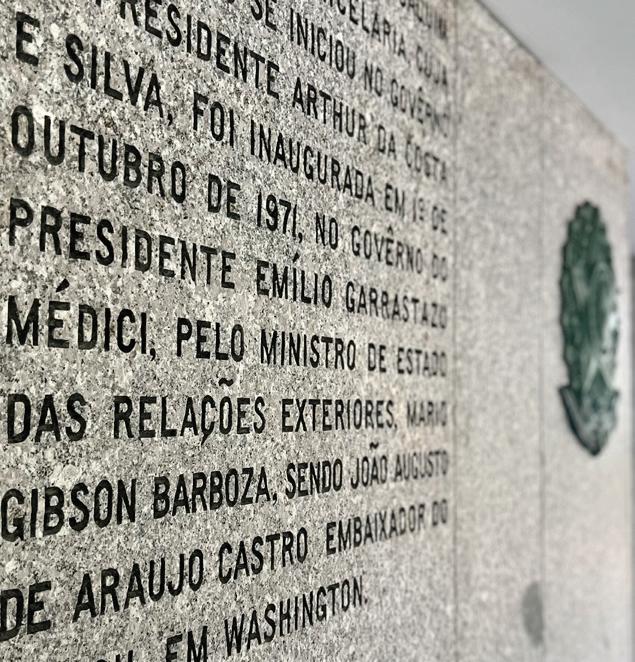
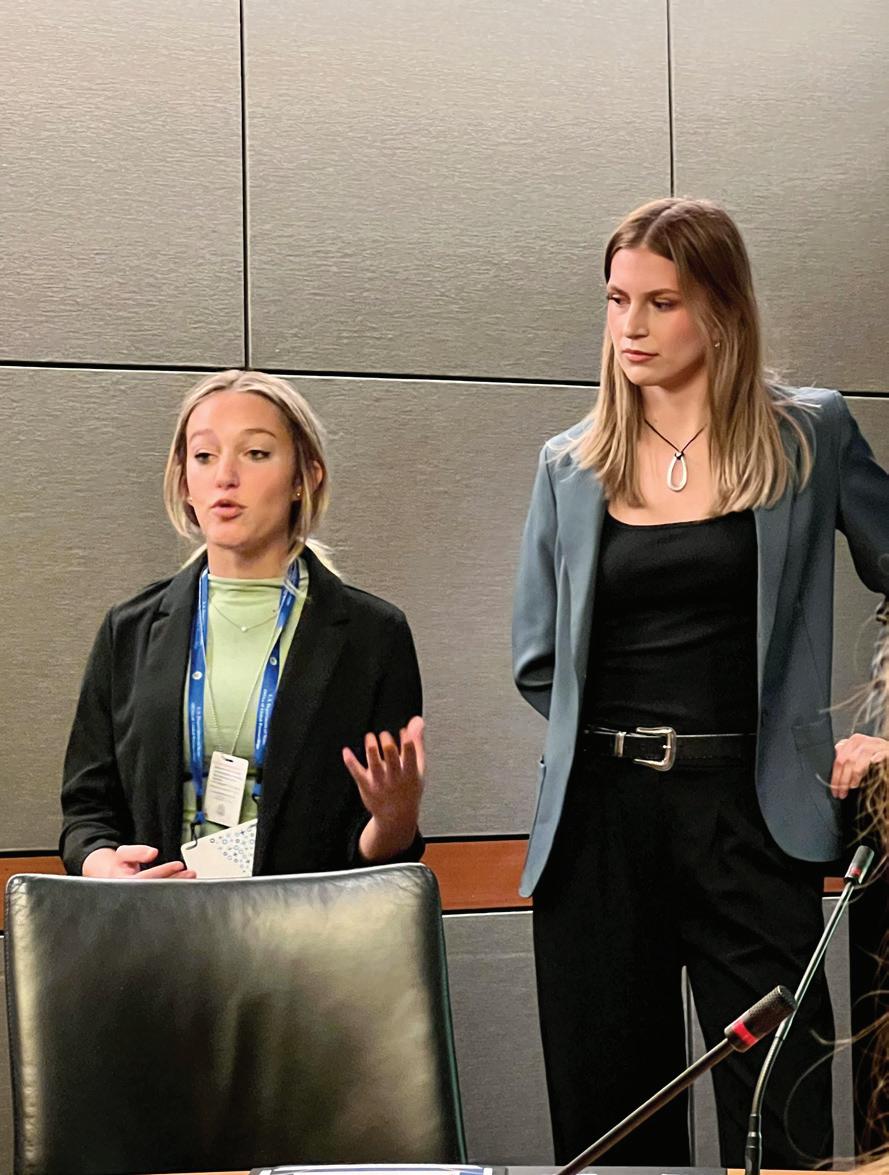
As Lab students learn to consider the cultural, political and economic contexts of the social problems at the center of their research and discovery, they often have the opportunity to engage with communities and experts in the global arena. Examples include ASU’s partnership with the U.S. Department of State’s Diplomacy Lab, which is realized through HL courses like Diplomacy Lab: Latin America (Spring 2023) and Diplomacy Lab: Brazil (Spring 2024). Both of these Labs included GIEs to Brasília and student presentations to foreign service officers at the Department of State in Washington, D.C.
Knowing that my project would end up in the hands of people who are able to enact change was a huge driving factor towards my engagement in this class.
Diplomacy Lab: Brazil
Being able to network with such influential figures changed my idea of my future career and allowed me to see my own place in the grandeur of global politics. I would never have had these conversations and opportunities without ASU’s Humanities Lab and the Diplomacy Lab network.
– Ella Thomas
Diplomacy Lab: Brazil (Spring ‘24) student
Principled Innovation is deeply embedded into the Humanities Lab pedagogical model. It is the foundation of every lab, engaging student-faculty teams to catalyze positive change for humanity.
Within this paradigm, in the fall of '23 the Humanities Lab was awarded a National Humanities Center (NHC) grant for our Guns, Art-making and Truth (GAMT) lab and selected to host a transdisciplinary live event, in Arizona, as part of NHC's inaugural Being Human Festival that took place in various sites nationally.
In addition to this grant, course faculty—Dr. Laura Turchi, clinical professor of English and Arizona Center for Medieval and Renaissance Studies affiliate faculty, and Dr. Daniel Roumain, associate professor of music composition in the School of Music, Dance and Theatre—were also awarded a Humanities Institute seed grant that incorporated the student’s work from the lab in “Building a Public-Facing Toolkit for Responsive and Responsible Activism about Gun Violence.”
The GAMT lab invited their student collaborators to talk about gun culture in a less divisive way and to explore the many nuanced perspectives—then, to analyze these perspectives somatically in small teams, and, with the full class, process these small team experiences. Students were also tasked with conducting new personal field experiences (ex. going to a shooting range, interviewing someone affected by gun violence). Many of these individual experiences developed into their final collaborative projects that comprised GAMT’s NHC Being Human event. Students who opted to interview individuals who had committed gun violence created a “found” poem. With their team, the students created their
Guns, Art-making and Truth
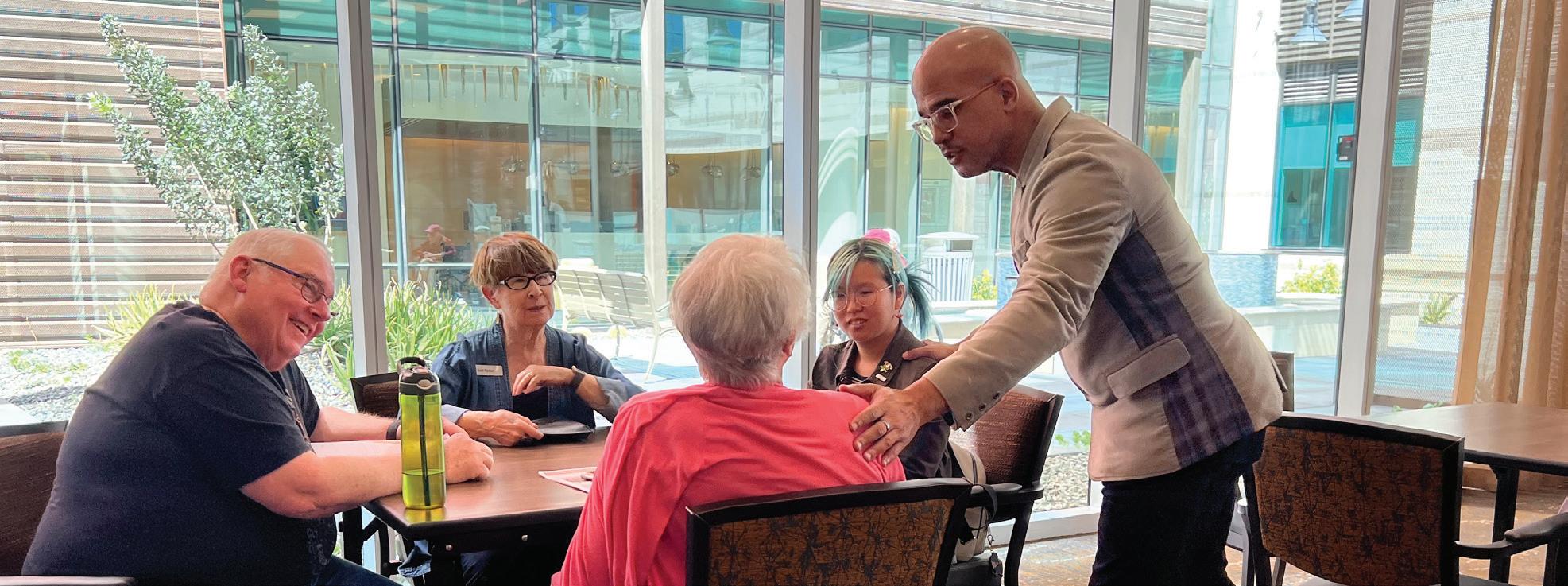
own musical composition to accompany the poem’s performance piece. Another team chose to design a magazine with the intention to create intergenerational conversations about gun culture AND gun violence. All of the student teams presented their outcomes at ASU's senior living retirement community center, Mirabella. Resident Bobbie Reed shared her appreciation that ASU students “are encouraged to take on projects like this and share them with people who are not students in their class and ... with people of another generation to open dialogue.” She sees this as “a movement within ASU” that benefits the greater good.
Practicing Principled Innovation
HUMANITIES LABS ENCOURAGE PRINCIPLED INNOVATION. ADOPTING HUMANISTIC FRAMEWORKS, LAB STUDENTS EVALUATE NOT JUST WHAT THEY CAN DO TO ADDRESS THE SOCIAL CHALLENGES THEY ARE RESEARCHING, BUT WHAT THEY OUGHT TO DO.
—JULIANN VITULLO AND HEATHER SWITZER, LAB CO-DIRECTORS
SEIZE THE MOMENT
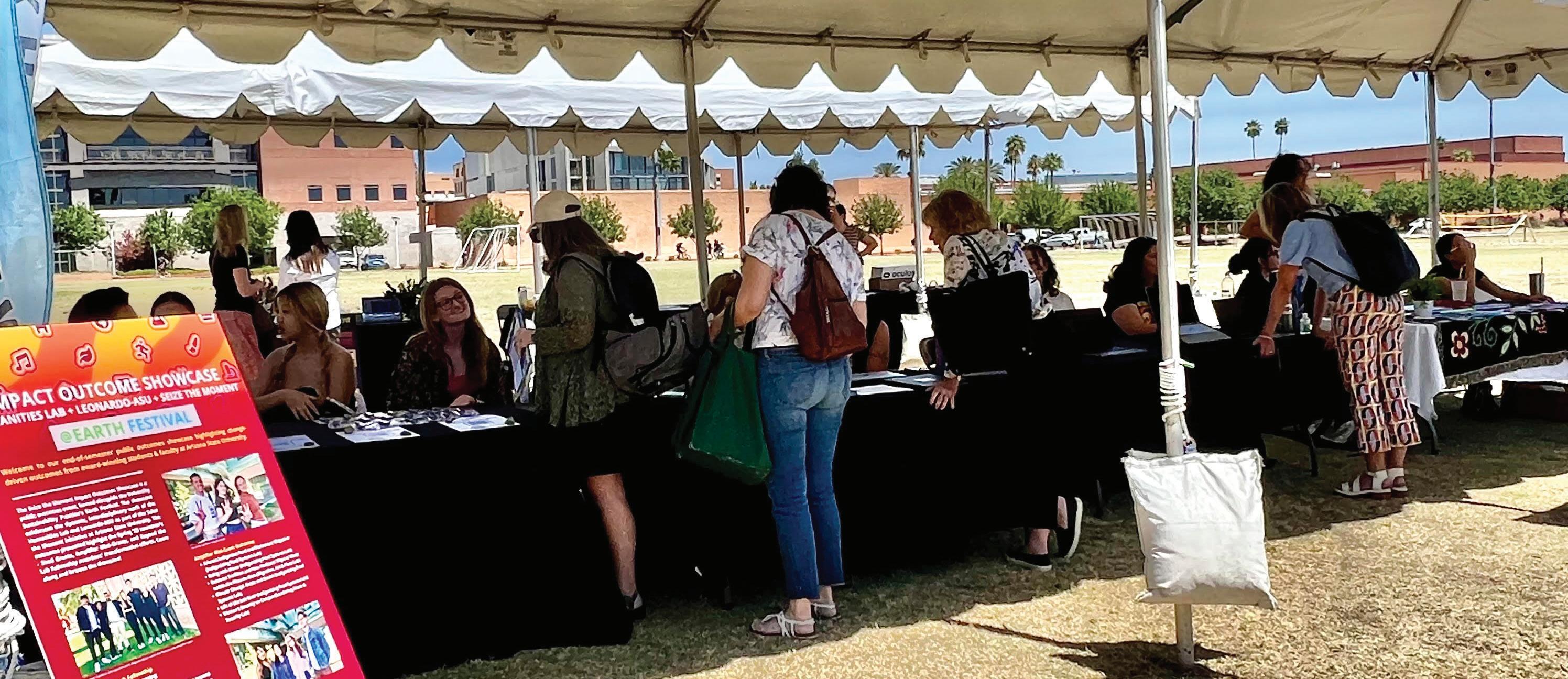
The Seize the Moment (STMFall '21 - Spring '23) was a President's Strategic Initiative grant from the Office of the President of ASU designed to address the challenges of the current moment through transdisciplinary collaborations in the arts, sciences, humanities, and technology in pedagogy,research, and public engagement.
As a joint initiative of Leonardo, the Humanities Lab and the Julie Ann Wrigley Global Futures Laboratory. Thd funding supported Humanities Lab students through Amplifier mini-grant and Beyond the Lab (BTL) grant funding opportunities to enhance their outcomes and public reach to communities.
31
Amplifier Mini-Grants Awarded to Lab students with Seize the Moment grant (Fa'21 - Sp '23)
3
Beyond the Lab Fellowships
Supported 12 students with funding totaling $15,600.
Amplifier Mini-Grants provide Humanities Lab students with up to $1,000 to increase their outcome’s impact and reach by producing podcasts or videos, organizing public events, and more.
Over the course of 2 years 138 students from 17 Seize the Moment themed Humanities Labs applied for Amplifier mini grants totaling 43 applications. Out of these 43 Seize the Moment was able to fund 31 impact outcomes. Through this programming Humanities Lab student teams held a total of 19 public facing events over the course of the STM grant's two year span.
Check out the Seize the Moment webpage more in depth at this link
BEYOND THE LAB
The BTL Chi'chil Countermapping Project tackles the colonial nature of geopolitical maps using "two-eyed seeing" methods to center the Emory Oak trees’ stories as ecoculturally unique and significant to Western Apaches. The ASU student team consulted Apache community members in Arizona and Chihuahua, Mexico throughout the project to respectfully and ethically gather stories,
place names, and language translations. The project engages in transdisciplinary and interdisciplinary storytelling methods, including video, oral stories, pictures, and audio recordings of both Apaches and lands where chi’chil acorns grow. In alignment with Indigenous data sovereignty principles, the stories are the intellectual property of the respective Apache contributors.
The final outcome consists of a revised map with: stories gathered and contributed from Apache individuals,sounds from nature at Oak Flat and other locations, translations in Spanish and Western Apache, GIS data and map display, StoryMaps visual design and field work as well as gathered stories.
View their final outcome here
PIIPAASH LANGUAGE TEACHING GUIDE
In a continued partnership with the Salt River Pima-Maricopa Indian Community’s O’odham Piipaash Language Program (OPLP), and with grant funding from the ASU Seize the Moment initiative, this ASU BTL team sought to create a digital learning application for youth ages 4-6 that would serve as a tool to help safeguard the Piipaash ancestral heritage language. Piipaash is an endangered language as recorded by UNESCO.
Honoring the significance of the language and culture, the team —in addition to taking Piipaash language courses themselves— curated an immersive web application journey that thoughtfully weaves together Piipaash greetings, local biodiversity, culinary traditions, and intricately crafted artifacts, fostering a sense of pride and connection.
Through this dynamic and engaging web application, the team aspires to bridge the gap between elders and youth, ensuring the continuity and vibrancy of the rich Piipaash language.
View their final outcome here
Barrett Honors Thesis Pathway
At the invitation of the Barrett Honors College's (BHC) Director of Academic Planning and Retention, the Humanities Lab continues to offer students the opportunity to complete their Barrett Honors Thesis Pathway project by building on their work in their HL course and their collaborations with HL faculty. In the semester after they complete a HL course, Barrett students enroll in HON 493 to further develop their theses. Since fall 2021, more than 24 students have completed Honors theses focused on the work they started in an HL course. On average, approximately 14% of our overall student enrollment earns automatic honors credit.
Symposiums
- Duke University Future of Higher Education symposium in Durham, North Carolina
- Best Practices in Pedagogy, Research, and Student Support Services Symposium in Cape Coast of Ghana, Africa
- National Humanities Conference in Los Angeles, CA with colleagues from the UC Berkeley's History Lab and University of Iowa’s Obermann Center for Advanced Studies’ Humanities for Public Good
UNESCO/BRIDGES
In collaboration with Joni Adamson, Professor of English and Director of the Flagship Hub of UNESCO BRIDGES Sustainability Science Coalition –the first humanities-led science platform in the world– we hosted a series of Labs including Mediating Ocean Futures; Gendering Peace and Security; Energy, Justice & Action; and Planetizing Citizenship.
Students in the fall 2024 Lab course, Planetizing Citizenship (Joni Adamson and Iveta Silova, co-faculty) hosted an event during Humanities Week entitled “Designing Planetizenship: Manifestos, Constitutions, Declarations, and Art as Tools for Building Inclusive Futures” that featured live blog readings, podcasts and research studies exploring how to rethink democracy and citizenship as inclusive, ecologically centered, and responsive to today’s world challenges. Attendees discovered how manifestos, constitutions, art, and science fiction can spark imagination and collective action on critical issues.
EMERGE Event
In Fall of '22, the Justice Through School Gardens Humanities Lab student-faculty team hosted an exhibit at the ASU EMERGE event, entitled “Eating at the Edges.” Students worked with Joan Barron, local artist and gardening expert, who was embedded into the course as a weekly collaborator, to design a variety of interactive activities ranging from planting their own moringa tree to dialoguing with students around their ARC GIS story maps which visually articulate their semester research on various mitigation strategies to enhance food security for all. Prior to the event, one of the student teams from the course partnered with the Humanities Lab for a social media take-over promotion highlighting their trip to the garden at Garfield Elementary School with the Mollen Foundation.
Migration Concert
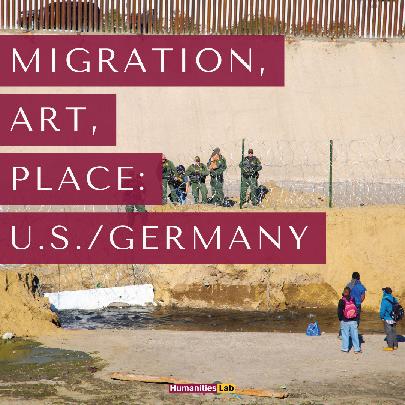
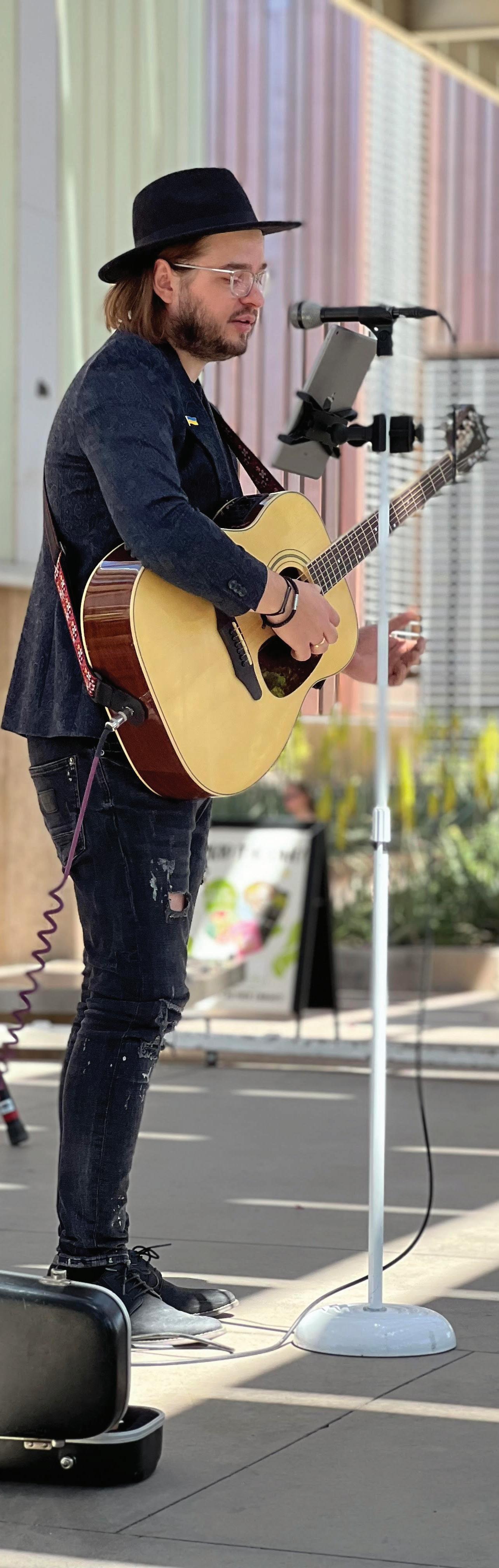
With support from STM Amplifier mini-grant funds, a team of students from the Migration, Art & Place Lab (spring 2023 invited Max Tovstyi from the band the Heavy Crawls to the Memorial Union stage to perform and and share his experience resetting in the US as a refugee from Ukraine, giving voice to global migration stories.
Global Intensive Experiences
In spring '23 the Humanities Lab in partnership with the Global Education Office, offered the first Humanities Lab–Migration, Art-place: Berlin / U.S. Lab–with a Global Intensive Experience. Students and HL faculty traveled to Berlin, Germany, interacted with non-governmental organizations (NGOs), visited cultural and historical sites, and participated in hands-on learning experiences, thus expanding on classroom learning from the previous semester. In spring 2024, students in Diplomacy Lab: Brazil could travel to Brazil and a second iteration of Art, Place, Migration students traveled again to Berlin. In 2025 we anticipate GIEs to Puerto Rico and France, so stay tuned!
Gongster Event
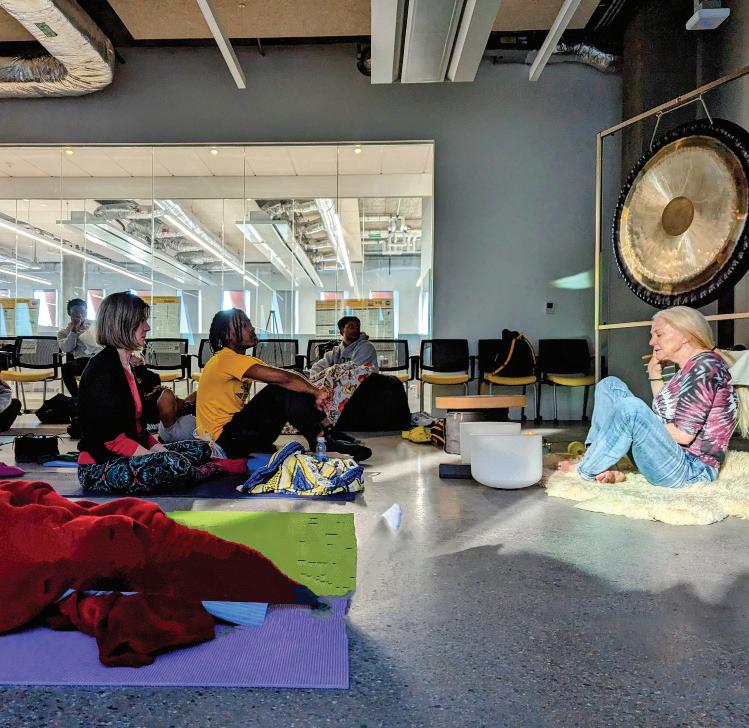
Students in the Making Noise, Making Sound? Humanities Lab (Spring 2023) experienced a sound bath hosted by Lisa Lippincott, a dedicated sound healing practitioner from the Scottsdale Sound Sanctuary, as part of their experiential research investigations into the concept and practice of sound as a form of healing.
U.S. Department of State
In spring ‘23 and '24, HL students traveled to Washington D.C. with their professors to present research on climate change mitigation strategies in Brazil to diplomats, government officials and peers from universities across the U.S. at the U.S. Department of State.
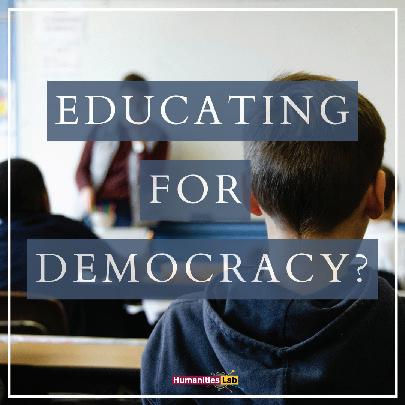
IMAGE BY: CHARLIE LEIGHT/ EDUCATING FOR DEMOCRACY, FALL '24
IMAGE BY: CHARLIE LEIGHT/ GUNS ART MAKING AND TRUTH, SPRING '24
Key for pages 14-15.
FALL 2022
AVANZANDO EDUCATION PATHWAYS,
A1. DULCE ESTEVEZ -GONZALES, CO-FACULTY, SILC
A2. MARA LOPEZ, CO-FACULTY, CENTER FOR BROADENING PARTICIPATION IN STEM
A3. ALEXANDRA HUMPHREYS, LIBRARIAN
JUSTICE THROUGH SCHOOL GARDENS
B1. JOAN MCGREGOR, CO-FACULTY, SHPRS
B2. STEVEN ZUIKER, CO-FACULTY, MLFTC
B3. JOAN BARRON, EMBEDDED COMMUNITY ARTIST
HUMANIZING DIGITAL CULTURE
C1. JASON BRONOWITZ, CO-FACULTY, POLYTECHNIC ENTREPRENEURSHIP AND MANAGEMENT
C2. ELIZABETH GRUMBACH, LINCOLN CENTER OF APPLIED ETHICS
SPRING 2023
DESIGNING THE FUTURE UNIVERSITY,
D1. RICHARD AMESBURY, CO-FACULTY, SHPRS
D2. CHRISTOPHER BOONE, CO-FACULTY, SOS
D3. VANESSA FONSECA-CHAVEZ, CO-FACULTY, CISA
D4. JOYCE MARTIN, LIBRARIAN
MIGRATION, ART, & PLACE: BERLIN/ U.S.
E1. CHRISTIANE REVES, CO-FACULTY, SILC
E2. CLAUDIA SADOWSKI-SMITH, CO-FACULTY, ENGLISH
A1. ALEXANDRA HUMPHREYS, LIBRARIAN
DIPLOMACY LAB: LATIN AMERICA
F1. GLEN GOODMAN, CO-FACULTY, SILC
F2. MARY JANE PARMENTIER, CO-FACULTY, SFIS
GENDERING PEACE AND SECURITY
G1. MIKI KITTILSON, CO-FACULTY, CGF
G2. MOHADESEH MOUSAZADEH MIANDEHI, CO-FACULTY, ENG
G3.MIMMO BONANNI, LIBRARIAN
INDIGENIZING FOOD SYSTEMS
H1. MYLA VICENTI CARPIO, CO-FACULTY, AMERICAN INDIAN STUDIES
H2. MELISSA NELSON, CO-FACULTY, SOS
H3. ALEXANDER SOTO, LIBRARIAN
INTRO TO INTERDISCIPLINARY STUDIES
I1. MONICA BOYD, CO-FACULTY, HLAB
C2. JASON BRONOWITZ, CO-FACULTY, POLYTECHNIC ENTREPRENEURSHIP AND MANAGEMENT
MAKING NOISE, MAKING SOUND?
J1. SERENA FERRANDO, CO-FACULTY, SILC
J2. KIMBERLY MARSHALL, CO-FACULTY, HIDA
J3. MATTHEW OGBORN, LIBRARIAN
FALL 2023
AVANZANDO EDUCATION PATHWAYS,
K1. DARRYL REANO, CO-FACULTY, SESE
K2. DANIEL VARGAS, CO-FACULTY, SILC
K3. LEELA DENVERS, LIBRARIAN
CRIPPING TECHNOLOGY
L1. KRISTA PURUHITO, CO-FACULTY, SANFORD
L2. LAURA CECHANOWICZ, CO-FACULTY, AME
L3. CAELIN ROSS, LIBRARIAN
ENERGY, JUSTICE, AND ACTION
M1. JONI ADAMSON, CO-FACULTY, ENGLISH
M2. GARY DIRKS, CO-FACULTY, LIGHTWORKS
M3. SREYA ANN OOMMEN, POST DOCTORAL SCHOLAR
M4. SHANNON NICKLE, LIBRARIAN
HUMANIZING DIGITAL CULTURE
C1. JASON BRONOWITZ, CO-FACULTY, POLYTECHNIC ENTREPRENEURSHIP AND MANAGEMENT
C2. ELIZABETH GRUMBACH, LINCOLN CENTER OF APPLIED ETHICS
MEDIATING OCEAN FUTURES
N/A. LISA HANN, CO-FACULTY, ENGLISH
N1. CLIFFORD KAPONO, CO-FACULTY, SCHOOL OF OCEAN FUTURES