

Officers
President Frank Kudo
The Official Publication of the Hawaii Society of Certified Public Accountants
President-elect Trisha Nomura
Vice President Adrian Hong
Secretary/Treasurer Chad Funasaki
Assistant Secretary Grayson Nose
Directors * 2025-2027
Ronald Heller
Jill Ishimitsu
Ed Nakano
Darryl Nitta
Natalie Taniguchi
Directors * 2024-2026
Chantal Mentzer (Kauai)
Norman Okimoto
Joel Peralto (Hilo)
Immediate Past President
Ryan K. Suekawa
AICPA Council
Frank Kudo (Designated)
Darryl Nitta (Elected)
Trisha Nomura (At-Large)
Executive Director
Kathy Castillo
Administrative Assistant
Debbie Cortes
Hawaii Society of CPAs
1000 Bishop Street, Suite 802
P.O. Box 1754
Honolulu, HI 96806
Tel: (808) 537-9475
E-mail: info@hscpa.org Web: www.hscpa.org
This publication is designed to provide general information only, and should not be used as a substitute for professional advice. The authors and editors disclaim any liability for any loss or damage resulting from the use of any information or advice herein. Although a reasonable attempt has been made to be accurate, neither the HSCPA nor the authors and editors can guarantee that all information contained herein is correct as of the date of publication.
KALA (the Hawaiian word for money) is published periodically and is the official publication of the Hawai’i Society of Certified Public Accountants. Please direct all inquiries regarding editorial content to HSCPA, P.O. Box 1754, Honolulu, Hawai’i 96806.
President’s Message .
By Dr. Frank Kudo
Federal Interest and Penalty Refund Opportunities .
By Kurt Kawafuchi & Jonathan Amitrano
Where’s Your Second Tax Return? - Part 2 By Tom Yamachika
AI Isn’t Changing EducationIt’s Clarifying What Learning Needs to Become By Donny Shimamoto
Free Virtual Mock CPA Exam
Preparing Early-Career CPAs for Success - The Profession Ready Initiative
Team HSCPA Takes on Trash Talk .
Spring Into Smarter Planning This CPE Season By Art Werner
Y-CPA Buzz: The First-Year Shift Real Talk from Accounting Professionals By Evan Yamamoto
Norman’s Book Review Nominating Report
Income Tax Relief
4
5 6 8 10 11 12 13 14 16 18 19
By Dr. Frank Kudo
Whattruly distinguishesa business,vocation, trade,craft,or practiceoma profession?
Do these terms all mean the same thing, or is there a defining factor that sets a profession apart? The differentiators may include the level of skill required, the amount of formal education, licensure earned through a rigorous examination process, or even a residency or multi‑ year internship before someone is recognized as a professional.
The Oxford dictionary leans heavily on the idea of educational rigor when defining a profession If that is the standard, then medical doctors with a pathway that typically includes at least eight years of higher education followed by a multi year residency and specialized training clearly meet the definition The practice of law and dentistry follow, each requiring roughly seven to eight years of post secondary education along with internships or residency-type experiences
By comparison, many other fields commonly labeled as


“professions” engineering, architecture, pharmacy, clinical psychology, ophthalmology, appraisal, audiology, nursing, physician assistant, teaching, and of course accounting generally require a bachelor’s degree as the educational baseline. Several of these also mandate passing a professional examination, and
Society’s perception of what counts as a “professional” may actually be a stronger determinant than the technical criteria people often cite and that can make the whole discussion confusing and even contradictory.
some require a residency, internship, or supervised apprenticeship under a licensed practitioner before full licensure.
I would say the professions that clearly meet all the criteria are: (1) medical physicians, (2) attorneys, (3) CPA accountants, (4) engineers, and (5) architects. For accountants specifically, it’s important to distinguish between “accountants” in general and those who hold the CPA designation A CPA must earn a bachelor’s degree, complete two to three years of supervised internship under a licensed CPA, pass a rigorous uniform exam with an average pass rate of about 45%, adhere to an enforced
code of professional ethics, and be legally authorized by federal and state governments to certify, attest, and verify financial information CPAs play a critical role in the functioning of the credit and financial markets publicly traded companies cannot list or sell their securities without audited financial statements, and the reliability of those markets depends heavily on the quality of work performed by CPAs.
Integrity is essential in the financial marketplace, where major transactions rely on accurate, truthful documents that reflect an institution’s real financial condition. Accountability, dependability, and trustworthiness form the core of integrity, all grounded in strict moral and ethical conduct. Integrity is what makes the entire financial system function.
In conclusion, I’ve developed a new definition of a profession: it is work performed by someone whose product or service provides assurance that the results are dependable, trustworthy, and accountable to end users.
In other words, a true profession is rooted in integrity and adherence to a strict moral standard. While materiality and significance of the work matter, integrity remains the defining element
By Kurt Kawafuchi & Jonathan T. Amitrano
In late 2025, the Court of Federal Claims, in Kwong v. United States, held that a taxpayer was entitled to relief from a filing deadline during the COVID-19 pandemic The Kwong decision followed the U S Tax Court’s reviewed opinion in Abdo v. Commissioner, which similarly provided relief from a filing deadline arising during the same period
Both courts relied on Internal Revenue Code (I.R.C.) § 7508A, which Congress amended on December 20, 2019 by adding subsection (d). The statute provides that the period beginning on the earliest incident date specified in a disaster declaration and ending 60 days after the latest incident date “shall be disregarded” for purposes of determining various tax-related deadlines
Robert T. Stafford Disaster Relief and Emergency Assistance Act, establishing an incident period beginning January 20, 2020 The disaster period remained in effect until May 11, 2023. Under the plain language of § 7508A(d), this resulted in a mandatory postponement period spanning

For practitioners, the most immediate impact lies in identifying potential opportunities for interest and penalty abatement or refund claims.
(1), including filing tax returns, paying tax liabilities, filing refund claims, petitioning the Tax Court, and determining the amount of interest and penalties
In Kwong v. United States, the Court of Federal Claims addressed whether a taxpayer’s refund suit, filed outside the traditional limitations period under I R C § 6532, was nonetheless timely due to § 7508A(d). The court held that § 7508A(d) operates as a selfexecuting statutory postponement provision


January 20, 2020 through July 10, 2023 (the “COVID-19 Disaster Period”)
Although Kwong and Abdo addressed filing deadlines, the provision may also have implications for penalties and interest assessed or accrued during the disaster period This remains an evolving area of law, but the reasoning in these decisions suggests that additional relief may be available to taxpayers Tax professionals should evaluate whether clients may have viable refund or abatement claims
In March 2020, the President issued nationwide emergency and disaster declarations under the
Recognizing the potentially sweeping implications of this statutory language, Congress subsequently amended § 7508A in 2021 to significantly narrow the mandatory postponement period. However, those amendments apply only to disasters declared after November 15, 2021, and therefore do not affect the COVID-19 Disaster Period The Treasury Department issued regulations under Treas Reg. § 301.7508A-1 that attempted to cap the duration of the postponement period.
The scope of § 7508A(d) is broad It applies to a wide range of timesensitive acts listed in § 7508(a)
Applying the statute’s plain language, the court concluded that the COVID-19 Disaster Period must be fully disregarded, thereby extending the time to file a refund claim As a result, the taxpayer’s suit otherwise timebarred was deemed timely.
Similarly, in Abdo v. Commissioner, the U S Tax Court recognized that § 7508A(d) provides a mandatory suspension of time for affected taxpayers filing a petition with the Court. While Abdo addressed a shorter portion of the COVID-19 period, the court emphasized that the statutory language is unambiguous and not dependent on discretionary action by the Secretary. The Tax Court also signaled skepticism toward regulatory efforts that attempt to limit the statute’s scope.
Continued on Page 7
Where’s your second tax return? Where’s your second tax return?
we spotlighted a bill, House Bill 2429, that essentially would have forced taxpayers to file a second, publicly available, tax return upon pain of losing the benefit of most income tax credits and all general excise tax and use tax exemptions and deductions. This bill, if passed in that form, would have broad implications because there are GET exemptions and exclusions that most people don’t even think about, such as the exemption for salaries and wages. A person who earns a salary and doesn’t file the second public tax return, for example, would be subject to GET on his or her salary.
The last committee to consider the bill with public input was the Senate Ways and Means Committee. In accord with that committee’s normal practice, the committee did not hold a hearing on the bill because a previous Senate committee had already heard it. Instead, WAMheld a decision-making meeting where written testimony could be submitted but oral testimony was not taken.
We submitted testimony on this bill. We made the same arguments we made in this space before, and even attached a copy of our previous Weekly Commentary that ended with: “Someone needs to rewrite this bill or put it out of its misery.”
Wealsodidsomethingunusual.We rewrotethebill.Wewroteadraftthat gotridofthepartsofthe billrequiringsecondtaxreturnsand publicdisclosure.Wereplacedthem withprovisionsthatwouldallow DBEDTtoconductastudyoftax expenditureswiththeinformationthat

isalreadyontaxreturns,likehowthe federalgovernmentallowsthe DepartmentofCommercetoaccess IRStaxreturndata.Weputtheredraft inourtestimony.
WAMadoptedourredraft.
Thecommitteereportdoesn’tsay muchaboutourcontribution.The committeereportstatessimply, “Accordingly,yourCommitteehas amendedthismeasureby:(1)Deleting languagerequiring:(A)Taxpayersto filetaxexpendituredisclosureforms asaconditionforclaimingcertain incoetaxcreditsandgeneralexcise taxandusetaxexemptions;and(B) TheDepartmentofBusiness, EconomicDevelopment,andTourism touseinformationfrothetaxexpendi-
TFHisthe ‘watchdog’ forHawaiitaxpayers’ money Tosupport TFH’smission,please donatehere.
turedisclosureformsintheir evaluationoftheeffectivenessoftax expenditures;and(2) Instead, authorizingDepartmentofBusiness, EconomicDevelopment,andTourism staffwhoareconductinganevaluation oftaxexpendituresto examineincome tax,generalexcisetax,andusetax returns.”
Inthe decision-makingmeeting, however,ChairDelaCruzsaid: “Recommendationistopasswith amendments,totaketheTax Foundation’samendmentsin testimony.”
Nodiscussion.Votetaken.Done.Itall happenedinabout10seconds.
Wegavethemanoff-ramp.Theytook it.We,forone,areverygratefulthata potentialtrainwreckforHawaii taxpayershasbeenavoided.
Wearealsothankfulforthoseofyou whomadetheiropinionsknowntoour lawmakersandsupportedourefforts attheFoundation.
Thejobisnotover,however. ConferenceCommitteemeetingsnow begin. Wearehopefulthatany conferencedraftwillbesimilarto WAM’s.
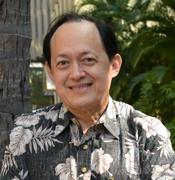
Tom Yamachika is President of the Tax Foundation of Hawaii - the ‘watchdog’ that keeps an eye on Hawaii’s taxes. Tom is also the owner of Aloha State Tax, a small law firm with emphasis on State taxes. Prior to going solo and the TFH, Tom was a principal with Accuity LLP where he managed the tax consulting practice, including quality and risk management and practice development
Taken together, Kwong and Abdo support a straightforward proposition: where § 7508A(d) applies, the relevant period must be disregarded in full when determining deadlines and related consequences. This interpretation has potentially far-reaching implications for interest accruals, penalty computations, and refund claims tied to the COVID-19 Disaster Period.
For practitioners, the most immediate impact lies in identifying potential opportunities for interest and penalty abatement or refund claims. If a tax return or tax payment was due during the COVID-19 Disaster Period, the IRS computed interest or penalties as though deadlines remained operative. Under § 7508A(d), Kwong and Abdo, however, those deadlines were potentially postponed, calling into question whether such interest or penalties properly accrued
Whenevaluatingpotentialclaims, practitionersshouldconsider severalkeyquestions:
Wastherelevanttaxreturnor paymentdueduringthe COVID-19DisasterPeriod?If so,wereinterestorpenalties assessedbasedondeadlines thatmayhavebeen disregarded?
Wastheliabilityassessed duringtheCOVID-19Disaster Period,anddidtheIRS computeinterestorpenalties withoutregardto§7508A(d)?
for relief. Claims should set forth all grounds for the requested refund, as those grounds generally may not be raised for the first time in subsequent refund litigation Given the evolving nature of this area, claims grounded in § 7508A(d) should reference both statutory language and relevant case law, including Kwong and Abdo

Kwong and Abdo present meaningful opportunities for potential refund and abatement arising from the COVID19 Disaster Period While further litigation is likely particularly at the appellate level the current landscape presents a meaningful potential opportunity for taxpayers Tax professionals should act promptly to identify affected clients and preserve their rights, particularly in light of applicable refund claim and refund suit statutes of limitation. Continued from Page 5
The federal refund statute of limitations is governed by I.R.C. § 6511, which generally requires that a refund claim be filed within the later of (1) three years from the date the return was filed, or (2) two years from the date the tax was paid.
For example, if a taxpayer paid interest or penalties in 2025 relating to a 2019 liability that would not have accrued under § 7508A(d), the taxpayer still has time to file a refund claim depending on the applicable limitations period
Hasthetaxpayeralreadypaid theinterestorpenaltiesat issue,givingrisetoapotential refundclaim?
Doesthestatuteoflimitations remainopen,orcanatimely refundclaimorsuitstillbe filedbasedontheextended periodrecognizedin Kwong?
Inaddition,practitionersshould ensurethatrefundclaimsare adequatelysubstantiatedand clearlyarticulatethelegalbasis
Kurt Kawafuchi, Esq , Law Offices of Kurt Kawafuchi, LLLC, concentrating in federal and state, civil and criminal tax controversies and litigation, as well as international and domestic, business & estate planning Formerly, partner with Hochman Salkin Rettig Toscher & Perez, PC, in Beverly Hills, CA
Jonathan T. Amitrano has extensive background in federal and state tax controversy and is a Certified Specialist in taxation law by the California Board of Legal Specialization He has significant experience representing both individuals and businesses before various tax agencies, including the IRS, Franchise Tax Board, the Employment Development Department, and the California Department of Tax and Fee Administration.
recently spent some time listening to a Student-Led Conversations podcast episode focused on AI in education. What struck me wasn’t just the topic. It was how the conversation unfolded.
The episode was hosted by Harshita Multani, a high school senior, joined by David Wood from Brigham Young University and Markus Ahrens from the American Accounting Association. And from the start, it was clear this wasn’t a surface-level discussion about AI’s impact on education Harshita wasn’t asking questions from a distance She was asking from experience. That, to me, is the first signal the profession needs to pay attention to: AI isn’t something students are preparing for It’s already part of how they learn, think, and work
A lot of the conversation around AI both in education and in accounting centers on whether it’s helping or hurting. There’s also the statement that the AI-enabled accountant will replace the accountant not using AI
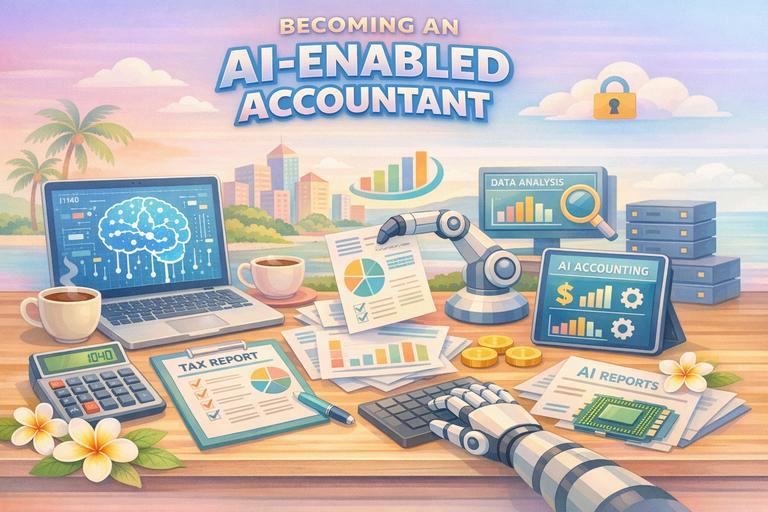
I don’t think either framing gets us very far A more useful question is, “How do I become an AI-enabled accountant?” Because the tool itself isn’t the differentiator. How someone uses it is.
As David described in the episode, AI can either extend thinking or replace it It can be used to challenge ideas, explore alternatives, and deepen understanding or to shortcut the process entirely. That distinction matters. It’s something we’ve talked about on the Accounting Arc
AI Isn’t AI Isn’t Changing Changing Education - EducationIt’s Clarifying It’s Clarifying What Learning What Learning Needs to Needs to Become Become AI Isn’t Changing EducationIt’s What Learning Become
podcast as well: capability versus usage It’s not about whether someone is using AI It’s about whether that use is actually making them more effective. I encourage you to listen to both podcasts to help you better understand potential approaches to becoming an AI-enabled accountant
Another theme that came through clearly is the gap between how AI is being used and how it’s being managed. Markus talked about how universities are working toward more consistent guidance But in practice, faculty are still determining how AI is used in their own classrooms. So, the experience varies. Some students are encouraged to experiment Others are restricted And in many cases, those expectations aren’t clearly defined I I I


I see the same thing happening across firms Some organizations are actively integrating AI into workflows. Others are still trying to define where the boundaries should be In both cases, practice is moving faster than policy And that’s not necessarily a problem but it is something we need to acknowledge. Because it means learning is already happening in real time.
There’s a concern that comes up frequently: that AI will reduce critical thinking or creativity
But I think David offered a more accurate way to think about it AI is an amplifier If someone approaches their work passively, AI reinforces that. If someone approaches their work with curiosity and intent, AI accelerates their development
That aligns with what I’m seeing more broadly AI doesn’t determine outcomes It magnifies how someone engages with their work, which means the conversation we should be having isn’t about limiting the tool. It’s about developing the mindset of the person using it
This is where the implications for education and for the profession become more significant. For a
By Donny Shimamoto CPA CITP, CGMA
Founder & Inspiration Architect Center for Accounting Transformation
long time, learning has been measured by knowledge: Can you produce the right answer under structured conditions? But when information is always accessible, that’s no longer the differentiator. The differentiator becomes:
Can you interpret it?
Can you apply it?
Can you communicate it?
David talked about this in terms of portfolios showing what someone has actually built or improved Markus reinforced that employers will increasingly expect candidates to demonstrate how they’ve used AI in real scenarios, not just say that they’re familiar with it
That’s a shift And it’s already happening
Another point that stood out is how AI is compressing the timeline for professional readiness. Earlier in their careers, students are engaging in work that previously required more experience At the same time, expectations are rising Employers aren’t just looking for familiarity with AI They’re expecting thoughtful, effective use from day one. That doesn’t lower the bar. It raises it. Because while AI can generate output, it doesn’t determine whether that output is appropriate, accurate, or meaningful That responsibility still sits with the professional

If you step back, this isn’t just about education It’s about how the role of the professional is evolving. We’re moving:
From knowledge providers to interpreters.
From processors to advisors. From answering questions to helping define them
And what’s interesting is that higher education is beginning to reflect that same shift Less emphasis is on delivering information more emphasis is on developing critical thinking.
There’s still a lot we don’t know about how AI will continue to evolve As David noted, the range of possible outcomes is wide But one thing is already clear. AI is not a future consideration. It’s a present condition.
The question isn’t whether we adopt it. It’s how intentionally we use it to be:
Better thinkers
Better communicators
Better professionals
Because ultimately, AI doesn’t determine the outcome—WE do.
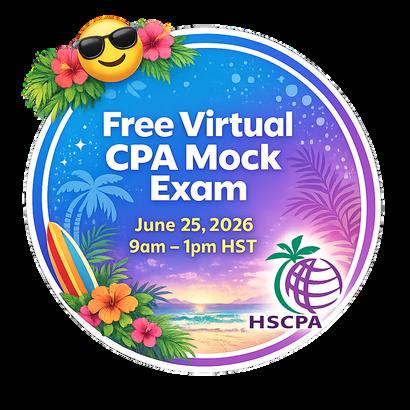
Are you — or someone you know — planning to sit for the CPA Exam soon? This is your chance to put those skills to the test and see just how Exam‑ready you are. Test it out on June 25, 2026!
ThroughourpartnershipwithSurgentCPAReview,theHSCPAisonceagainofferingaFREEopportunity forstudentsandCPAcandidatestogaugetheirreadinessfortheCPAExam.TheExamincludesthethree coresections—AUD,FAR,andREG—plusonedisciplineofyourchoice:BAR,ISC,orTCP.
Duringthe4‑hoursession,participantswillselecttheExamsectiontheywanttotry.Aftercompletingthe mockexam,they’llreceiveascorereporthighlightingstrengthsandareasneedingimprovement—a valuableroadmapforfocusedstudyingbeforetherealCPAExam.
ThisexclusiveopportunityisavailabletoHSCPAmembers,theirstaff,andstudentmembers.Advance

revenue For more information, please call 1 800 397 0249 or visit www.APS.net to see listing details and register for free email updates.
ThinkingofSellingYourPractice?
Sales is the leading marketer of accounting and tax practices in the world We have a large pool of buyers looking for practices as well as the experience to help you find the right fit for your firm and negotiate the best price and terms. To learn more about our risk-free and confidential services, call Ryan Pannell with The Holmes Group at 1-800-397-0249 or email Ryan@apsholmesgroup.com.


The accounting profession is signaling a growing challenge: early career workforce readiness is lagging as business demands and technology especially AI rapidly evolve. In response, the AICPA has launched the Profession Ready Initiative, a major effort to identify the skills new CPAs need and provide practical solutions for employers, educators, and the profession.
Driven by member feedback and insights from the AICPA’s Rise2040 project, the initiative aims to ensure future CPAs can adapt to emerging technologies and succeed across public accounting, business and industry, government, and nonprofit roles. This work focuses on strengthening talent development not altering CPA licensure requirements
A training and development framework for early career CPAs; flexible, tech enabled learning solutions; and resources to help educators align curricula with workforce needs.
An advisory group representing firms, industry, state societies, academia, and regulators is guiding the effort. A third party research firm is reviewing job descriptions, training models, and academic programs through mid-
2026 Stakeholder input—via surveys, interviews, and focus groups will shape the findings
Input from CPAs, educators, and learning experts across Hawai‘i is essential to defining real world skill needs Opportunities to participate will include surveys, focus groups, interviews, and review of draft findings.
In late 2026, the AICPA will analyze all data, refine recommendations, and release an exposure draft for public comment in 2027, with final results expected later that year
Watch for updates, participation opportunities, and key milestones. More information is available at the AICPA’s website or by emailing ProfessionReady@aicpa cima co m
The Profession Ready Initiative is a significant, CPA led effort to strengthen the profession’s future and broad engagement will ensure it reflects the realities of practice and supports meaningful, lasting change
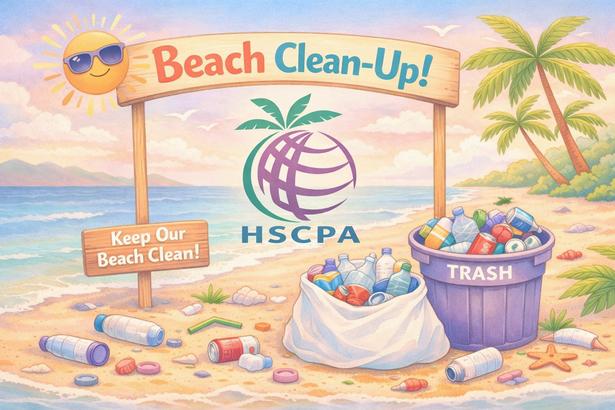
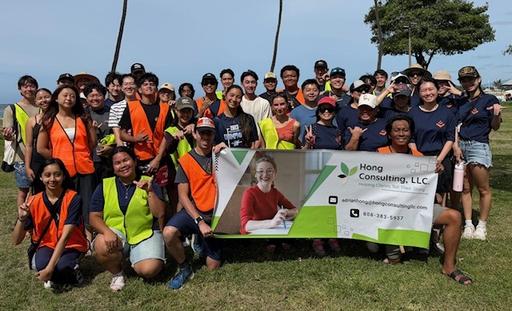
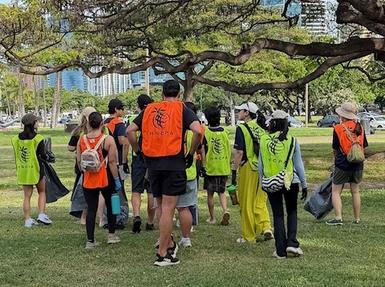
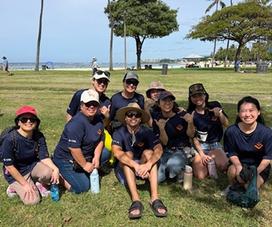
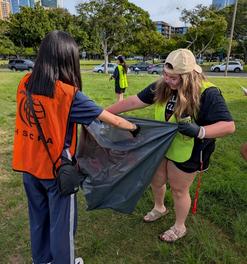
For 16+ years, our young professionals and students have turned “giving back” into “getting picky" – picky about trash, that is – and this year’s April 19th clean up at Ala Moana Beach Park kept the streak going strong.
Our volunteers pros and UH Mānoa club members rolled in bright eyed, bushy tailed, and fully caffeinated for Beach Bingo… the kind where the prize is whatever bizarre trash you can haul back. Armed with gloves and good humor, teams zig zagged the park like seasoned debris detectives.
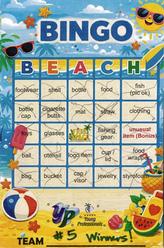
Specialshout‑outto Team5,theonlycrewtoscore ablack-outBingowithmultiple"unusual" finds. Mahaloto AdrianofHongConsulting, LLC for sponsoringthis eventandkeepingthistradition alive.Thankyoualsotothe AccountingClub and BAP students,ourdedicated professionals (includingteam CWA whoshowedupin full formation!),and Britney –oursecurityguard; cheer squadandphotographer.
Together,wecleanedthebeachpark,built community,andprovedonceagainthat HSCPA volunteersknowhowtotakeoutthe trash— literally.

As we move into spring and begin a new CPE season, it’s a natural point to step back and reassess. For many practitioners, this time of year brings a familiar question: what did we just deal with, and how do we not go through that againnext year? That question is more important now than it has been in years. What we’re seeing across practices isn’t just volume. It’s complexity. Clients are making decisions faster Transactions are happening with less lead time. Legislative changes continue to shift the ground underneath planning strategies. At the same time, many firms are still operating ina reactive mode, addressing issues as they arise rather than getting in front of them.
That combination is what’s driving the frustration.
The reality is, most of the problems that made this past season difficult were not new problems.They were planning opportunities that either weren’t identified early enough or weren’t communicated clearly enough to clients.
That’s where this time of year becomes critical.
Right now, the details are still fresh. You remember which clients created issues, which transactions raised questions, and where additional planning could have changed the outcome. If there is a window to turn those experiences into better results, it’s now
One area where this continues to show up is in mergers and acquisitions. We
with Art Werner
are still seeingtransactionswheretax consequences arenotfullyconsidered until late in theprocess.Entitychoice, structure, andtimingdecisionsare often made with incomplete information. Oncethose decisionsare made, the abilitytofix them is limited. Early involvement is wherethe valueis.
We’re also seeingashift in howmidyear planning needs tobe approached. With ongoing legislativedevelopments, including provisions underthe One Big Beautiful BillAct, practitionersarebeing asked questions nowthat don’t have the same answers as theywouldhave had even a year ago. Waitinguntilyear end is no longer an effectivestrategy. Mid-year has become a critical planning window
On the business side, thatsame dynamic applies. Entityleveldecisions, compensation strategies, andtimingof income and deductionsareallbeing affected by changesthatrequire practitionerstostaycurrentandthink proactively. Clientsexpectanswersin real time.
At the same time, thereisincreasing pressure onCPAs tomovebeyond compliance. Financialdecisions,tax implications,andlong-term planning are more interconnectedthanever Clients are notseparating thoseareas, and increasingly,theyexpect their CPA to help themnavigateallof it.
If there is onetakeaway,it’s this: don’t letthispastseasongotowaste.
approach arethe onesthatimprove year after year
Spring issimply thepoint wherethat shiftcanhappen.
If you’reinterestedin continuingthat conversation,I’ll bediscussingmany ofthese issues inmoredetailinthe theseprogramswith theHawaii Society of CPAs.Hopetosee you!
May 7

Mergers & AcquisitionsGuide to Relevant Issues and Choice of Business Entity (4 CPE)
May 12
Mid-Year Tax Strategies: Planning for Individuals
Under the One Big Beautiful Act (4 CPE)
May 13
Mid-Year Tax Strategies: Business Planning and the One Big Beautiful Act (4 CPE)
May 28
Financial Planning Bootcamp (4 CPE)

The best planning opportunitiesyou’ll have all year often comefromthe problems youjustworkedthrough.The firms that takethe timenowtoevaluate what happenedandadjusttheir
Art Werner, JD, MS in Taxation, serves as president and shareholder of Werner-Rocca Seminars, Ltd., specializing in lectures on business, tax, and estate planning for affluent individuals.

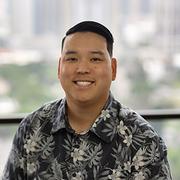
By Evan Yamamoto


enter the workforce each year, it’s important to stay attuned to the new hire experience. The shift from classroom to office can be challenging not only in learning the work itself, but also in navigating generational differences in attitudes, communication, values, and technology
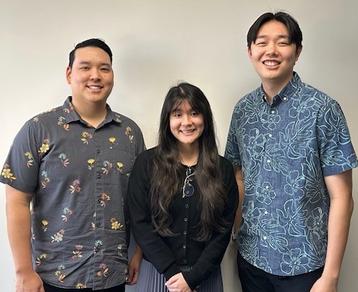
To gain insight into this transition, I spoke with Erick Huang and Jennifer Kojima, both of whom began their accounting careers within the past year, about their move from college student to accounting professional and what their first year has been like.
How would you describe the transition from being a college student to working in a professional environment?
Erick: The transition was challenging, shifting from the freedom and flexibility of student life to a structured schedule was an adjustment However, it was nice focusing solely on work rather than balancing school, clubs, and jobs. Additionally, building a system that supports my daily routine significantly helps the transition
What do you wish you knew prior to starting full time work?
Erick: I wish I had known it is normal to not understand every technical aspect immediately. A lot of learning happens on the job, and it is more important to focus on building a strong foundation and asking good questions, than trying to know everything right away
What advice would you give to your younger self prior to starting full-time work?
How has your work experience aligned with or differed from what you expected?
Jennifer: The work experience has met my expectations With family and friends in the accounting industry, I already knew to expect a steep learning curve and long hours, so the adjustment while challenging wasn’t a surprise My college internship also helped a lot, giving me a real sense of how the work is done and how different it is from what we learn in class.
Jennifer: Enjoy college to the fullest and take advantage of the opportunities presented! I think that it is easy to just go through college to get in and get out. But I think my best memories were participating in business clubs and studying abroad!
How can a smooth transition from the classroom to the office be facilitated?
Jennifer: I think that a smooth transition can be facilitated by having students close to graduating hear from new staff about what the work in the first year is going to be like The actual transition is something we have to get used to ourselves, but I think that knowing what to actually expect helps to prepare us for what’s to come. I also think that doing an internship is an immense advantage in having a smooth transition, as I was able to get accustomed to the accounting system and how workpapers are done I think it also helped me get an idea of what the company culture is like and socialize with everyone in the office.
What challenges have you experienced since starting work, and how did you overcome them?
Jennifer: One challenge I faced early on was getting too caught up in details. Being detail-oriented is valuable, but it can make it easy to lose sight of the bigger picture. I've been working on this by first grounding myself in the main objectives before diving into specifics Stepping back to see how my work connects to the overall goal has helped me better understand what performing an audit truly entails.
What is an example of a time when someone’s feedback really made a difference for you?
Erick: Taking detailed notes was the best feedback I've received. In college, I would take general notes, but in the workplace, detailed notes are essential – even if you think you won't use them Most questions you have later can usually be answered by what you've already written down This habit has helped me juggle multiple engagements and quickly refresh key information.
What would make your job easier?
Erick: AI can boost efficiency by speeding up research and explanations, saving time I would have spent searching on my own But it should be used as a supplement, not a shortcut, and always with professional skepticism verifying that information is supported by valid sources.
What personal goals or achievements would you like to reach over the next year?
Erick: I would like to obtain my CPA license (pending work experience), travel to more countries, and pursue better fitness habits!
Jennifer: A personal goal that I would like to achieve over the next year is to become a more independent worker I think that as I progress through my first year, I focused on being a sponge and absorbing as much information as possible However, I hope to progress from that stage and to be able to be more proactive.



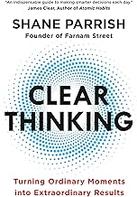
by Shane Parrish

arealwaysamazedby peoplewhoseemtohaveaknack formakingtherightdecisionsat therighttime.Thisbookislikea “cheatcode”onhowyoutoocan consistentlymakegreat decisions.It’stitled“Clear Thinking”becauseyoumakethe bestdecisionswhenyourmindis clearandnotclutteredorbiased. ThankstomygoodfriendRandy Kaya,SeniorVP–Wealth ManagementwithUBSFinancial Services,Inc.foranother awesomebookreferral.
Theauthornotestogetthe resultswedesire,wemustdo twothings.First,wemustcreate thespacetoreasoninour thoughts,feelingsandactions. Second,wemustdeliberatelyuse thatspacetothinkclearly.Once youhavemasteredthisskill,you willhaveanunstoppable advantage.
Thefirsthalfofthebookisabout creatingspace.Thesecondhalf ofthebookisaboutputtingclear thinkingintopractice.The followingaremytakeawaysfrom thebook.Iwastrulyhumbledby howmuchIdidn’tknowabout thinkingclearlyandmakingbetter decisions.Isincerelybelievethis isoneofthemostimpactful booksyou’lleverread.
Theauthorhighlightsfourdefault behaviorsthatusuallymake thingsworse Thispartofthe bookreallystoodoutbecausein reviewingpastdecisionsIhave made,Iinstinctivelyletmydefault behaviorscloudmythinking The fourare:
Best Practices?
This observation really made me go “hmmm.” If you do what everyone does, you’ll get the same results that everyone else gets Best practices aren’t always the best By definition, they’re average
Real wisdom doesn’t come from chasing success, but from building character.
1 EmotionalDefault–We respondtofeelingsratherthan reasonsandfacts
2. EgoDefault–Wereactto anythingthatthreatensour senseofself-worthorour positioninagrouphierarchy.
3. SocialDefault–Weconform tothenormsofourlarger socialgroup.
4 InertialDefault–Weresist changeandpreferideas, processesandenvironments thatarefamiliar,becausewe arehabitformingandcomfort seeking.
Instead, to be successful, not only do you have to be different and think differently, you also need to be right. Then you will stand out.
You unconsciously adopt the habits of people you spend your time with, and those people make it easier or harder for you to achieve what you want.
Few things are more important in life than avoiding the wrong people. If all you see are average people, you will end up with average standards But average standards aren’t going to get you where you want to go Standards become habits, and habits become outcomes. Exceptional outcomes are almost always achieved by people with higherthan-average standards

Therearefourkeystrengthsyou’ll needtotakecommandofyour life
Self-Accountability–Take responsibilityforyour abilities,inabilitiesandyour actions
Self-Knowledge–Knowyour ownstrengthsand weaknesses.
Self-Control–Masteryour fears,desiresandemotions
Self-Confidence–Trustin yourabilitiesandyourvalues toothers
WhentheauthoraskedaCEOofa largepubliccompanytopickone traitthatwouldpredicthow someonewouldturnout,hesaid “that’seasy Howwillingtheyare tochangetheirmindaboutwhat theythinktheyknow
Themostvaluablepeopleweren’t theoneswiththebestinitial ideas,buttheoneswiththeability toquicklychangetheirminds. Theywerefocusedonoutcome overego Bycontrast,thepeople mostlikelytofailwerethose obsessedwithminutedetailsthat supportedtheirpointofview. Theyweretoofocusedonproving theywererightinsteadofbeing right.”
Whenyoucan’tseeaproblem frommultiplepointsofview,you haveblindspots,andblindspots
get you in trouble. The people who frequently find themselves on the wrong side of right are people who can’t zoom in and out and see the problem from multiple angles They get locked into one perspective – their own.
Most people have a personal Board of Directors, those who they go to when they need help or guidance The author suggests our Board should be a mix of high accomplishment and high character people. They should exhibit the principles, the resolve, and the overall patterns of thinking, feeling and acting that we want to make our own Their example helps us navigate the world. They become our North Star.
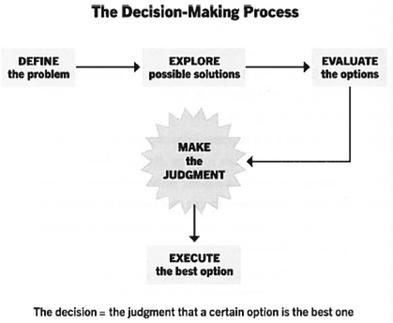
The diagram below summarizes the ideal decision-making process.
Most successful people in the world have all looked short-term stupid on occasion, when they were keeping their options open and waiting for the right time to act.During these times, you’ll have to tolerate people treating you like you’re a fool Warren Buffett sat out most of the dot-com craze of the late ‘90’s, and some people were saying he had lost his touch. He may have looked stupid to some speculators for a few years – until the tech bubble burst and he still had tremendous cash reserves
I sincerely believe this book has the potential to change your life for the better As the author noted towards the end of his book, if you give any of the defaults command of your life, your ultimate destination is regret. Don’t live life by another person’s scoreboard Don’t let someone else choose your objectives in life. Take responsibility for where you are and where you are headed Lastly, real wisdom doesn’t come from chasing success but from building character.

The Annual Election Meeting will be held IN-PERSON at the members' Elect & Engage event on June 19, 2026 at the Prince Waikiki Only Regular members are allowed to vote Following the Election Meeting, installation of the new officers and directors will be conducted
Pursuant to the provisions in Article VI, 6.1 of the HSCPA Bylaws, the Nominating Committee has submitted the following nominations for officers and directors of the Society for the fiscal year beginning July 1, 2026. If any nominee should for any reason become unavailable after notice of the election has been given, and if voting is not conducted by written ballot, then nominations for that office from the floor by any member in good standing who is present at the Annual Election Meeting shall be accepted.
VICE PRESIDENT
Chantal Mentzer - Chantal Mentzer, Inc
ASSISTANT SECRETARY Ryan Suekawa – Deloitte & Touche LLP
DIRECTORS (2026-2028) Norman Okimoto – Hawaiian Financial FCU
Joel Peralto – Peralto & Co., CPAs, Inc. PC
In accordance with the Bylaws, officers automatically accede to the next level of office to serve terms as elected or as designated, and the directors named below will continue to serve their terms as elected or as designated, or may be removed by a vote of at least two-thirds of the voting members present at a designated meeting. The President automatically becomes Immediate Past President when his/her term ends
PRESIDENT
PRESIDENT-ELECT
SECRETARY/TREASURER

Trisha Nomura – Ascend Consulting LLC
Adrian Hong – Hong Consulting LLC
Chad Funasaki – N&K CPAs, Inc.
IMMEDIATE PAST PRESIDENT Franklin Kudo – University of Hawaii – West Oahu
DIRECTORS (2025-2027) Ronald Heller – Torkildson Katz, ALC
Jill Ishimitsu – TRUSTA, AAC
Edmund Nakano – R.C. Wo & Sons, Ltd.
Darryl Nitta – Accuity LLP
Natalie Taniguchi – American Savings Bank

AICPA MEMBERS
Franklin Kudo – University of Hawaii at West Oahu OF COUNCIL
Darryl Nitta – Accuity LLP
As a result of the March 2026 Kona Low event which occurred throughout the State between March 10, 2026, and March 23, 2026, Governor Josh Green signed several proclamations, declaring the Kona Low event an emergency or disaster in accordance with section 127A-14, Hawaii Revised Statutes (HRS).
With the approaching State income tax deadline of April 20, 2026, the Department of Taxation (the "Department") recognizes that taxpayers affected by the March 2026 Kona Low event (the "disaster") may be unable to timely file their State income tax returns and make timely tax payments. Accordingly, the Department will consider requests by taxpayers adversely affected by the disaster to waive penalties and interest for failure to timely file returns and failure to timely pay income taxes for the period of April 20, 2026, to July 20, 2026, on a case-by-case basis. Taxpayers entitled to relief will have until July 20, 2026, to file State income tax returns and make income tax payments without penalties and interest.
For taxpayers entitled to relief, the Department will waive penalties and interest for the period April 20, 2026, to July 20, 2026, for those who fail to timely file the following State income tax returns for tax year 2025, or fail to make timely payment in connection with the following tax returns for tax year 2025:
1. Form N-11, Individual Income Tax Return (Resident)
2. Form N-15, Individual Income Tax Return (Nonresident and Part-Year Resident)
3. Form N-20, Partnership Income Tax Return
4. Form N-30, Corporation Income Tax Return
5. Form N-35, S Corporation Income Tax Return
6. Form N-40, Fiduciary Income Tax Return
7. Form N-70NP, Exempt Organization Business Income Tax Return
Affected taxpayers may request a waiver of late file and/or late pay penalties and interest by completing and filing Form L115, Tax Relief Request for State Declared Disasters. The Department will accept Form L-115 until July 20, 2026, but taxpayers are urged to file their request as soon as possible.
To ensure timely and accurate processing, the Department recommends that affected taxpayers file Form L-115 electronically via Hawaii Tax Online (HTO), https://hitax.hawaii.gov. Beginning on April 9, 2026, Form L-115 will be available for electronic filing via HTO by selecting "2026 Disaster Relief Request." If you have questions regarding electronically filing, please contact Taxpayer Services at 808587-4242 or by email at taxpayer.services@hawaii.gov.
Affected taxpayers who are unable to electronically file Form L-115 may mail it to the address listed below, or deliver it to their local district office. Office locations are available at: https://tax.hawaii.gov/contact.
Mail Form L-115 to:
Hawaiʻi Department of Taxation
Tax Relief Request
P.O. Box 259
Honolulu, HI 96809-0259
Form L-115 must be properly completed before filing with the Department. Taxpayers must mark an applicable checkbox that describes the reason(s) for their request, and must also include a brief, but clear statement (in the space provided on the form) explaining how the disaster adversely affected their ability to meet their tax obligations. The completed form L-115 must be dated and signed by the taxpayer under penalty of perjury (for business taxpayers, the form must be signed by an officer, partner, member, or authorized agent).
After filing Form L-115, taxpayers must file their tax return and pay any taxes owed no later than July 20, 2026. Late file and late payment penalties and interest will begin accruing for returns filed or payments made after July 20, 2026
Please be advised that a waiver will not be preauthorized or pre-approved. The Department will notify the taxpayer if additional information is needed after their Form L-115 has been filed.
The Department notes that the relief described in this Announcement consists of a waiver of penalties and interest; it is not an extension of the deadline to file returns or pay taxes. For tax year 2025, the due date prescribed for the filing of the return, deadline to pay tax, and deadline to pay the properly estimated tax liability to qualify for an automatic six-month extension to file, is April 20, 2026, or the twentieth day of the fourth month following the close of the taxable year for fiscal-year filers. The deadline is not extended to July 20, 2026, for any purpose, including but not limited to the calculation of the lookback period used to determine eligibility to claim a credit or refund under section 235-111, HRS.
Tax forms and information are available on the Department’s website at tax.hawaii.gov. A FAQ section is available at https://tax.hawaii.gov/2026KonaLow
For all inquiries relating to relief for taxpayers affected by the March 2026 Kona Low event, please contact the Technical Section at 808-587-1577, or by email at tax.technical.section@hawaii.gov