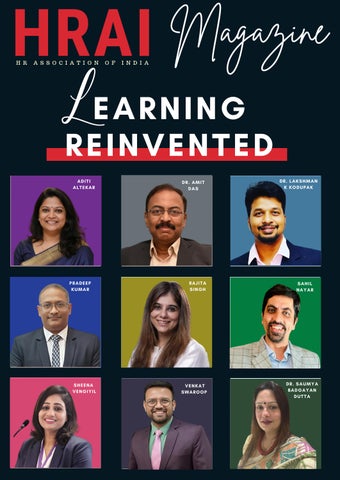
LEARNING REINVENTED: FROM SKILL-BUILDING TO CAPABILITY BUILDING
HRAI EARNING REINVENTED
At HRAI, we believe that the bridge between academia and industry is the foundation for building a future-ready workforce. By fostering collaboration between educational institutions and the corporate world, we can empower students with the skills, mindset, and resilience needed to thrive in a rapidly evolving workplace.
In a world where disruption is constant and learning curves reset faster than job roles evolve, traditional training is no longer enough. The future belongs to organizations that don’t just build skills but build capabilities
This edition, Learning Reinvented: From Skill-Building to Capability Building, explores how learning is shifting from one-time training moments to continuous, adaptive, and deeply personalized development journeys
We spotlight how microlearning is redefining attention, how AI-driven upskilling is accelerating relevance, and how lifelong learning is becoming not just a professional expectation but a mindset
Across the pages, you’ll find insights, frameworks, and real stories that remind us: Learning is no longer a function.
It’s a culture.
A strategy. A catalyst for growth.
As organizations redesign how people learn, one thing becomes clear the most competitive advantage we can build is the ability to keep evolving.
TABLE OF CONTENT
Te HR Association of India (HRAI), founded in 2020 is an esteemed non-profit organization that has been playing a pivotal role in shaping the HR landscape in India. Their primary focus is on exploring, discussing, and promoting the latest business scenarios, market trends, change management, and leadership in the HR industry. HRAI is dedicated to creating a community of professionals, learners, and mentors who share their insights and learn from each other to elevate the standard of HR practices in the country.
HRAI's success is attributed to its commitment to excellence and tireless efforts in facilitating interactions between HR professionals and subject matter experts. Through its initiatives such as panel discussions,
In addition to their educational initiatives, HRAI also recognizes organizations' best practices and individual contributions through awards and conferences These events celebrate the achievements of exceptional professionals and organizations that have made significant contributions to the HR industry in India. Over the years, HRAI has featured more than 1,000 experts and leading minds in the fields of HR, IT, Marketing, Finance, and more, making it a hub for learning and networking.
For HR professionals in India, HRAI offers unparalleled opportunities to connect with like-minded peers, learn from experts, and gain recognition for their hard work and achievements. By joining HRAI, HR professionals can stay updated on the latest trends, best practices, and strategies that can help them take their careers to the next level
HIGHLIGHTS:
HRAI, founded by Dr. Ankita Singh, drives industry initiatives and organizes prestigious awards for organizations, emerging leaders, and trailblazing women leaders. Notable participants include Blue Star Limited, Reliance Retail, Landmark Group, Oracle, Birlasoft, Vedanta and more.
Our commitment to excellence is reinforced through partnerships with the Great Managers Institute and top 100 great managers, who have taken masterclasses and featured in Forbes Magazine.
Elite leaders like Dr. TV Rao, Harjeet Khanduja, and Prasenjit Bhattacharya have graced our one-on-one talk shows, enhancing our members' knowledge base.
Our article initiative showcases thought-provoking articles by eminent leaders from organizations like BCCL, Bajaj Energy, TimesPro, Jio, Welspun Group, Great place to work and Accolite Digital.
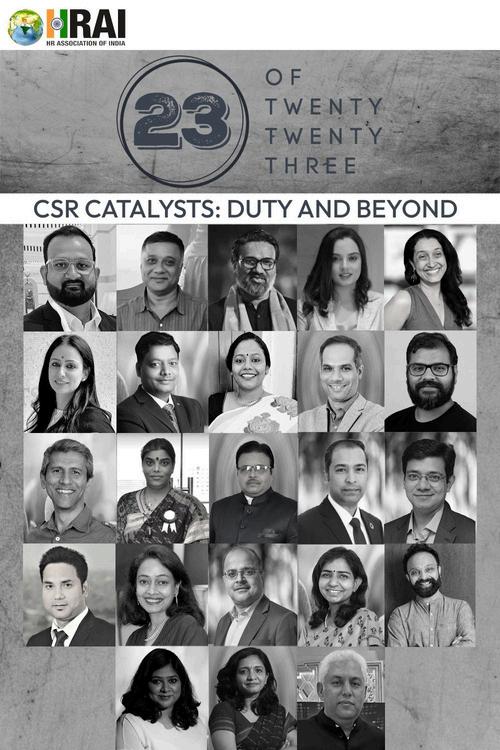
The 23 Of 2023 Initiative recognizes exceptional leaders and entrepreneurs based on a predetermined theme. Featured leaders include those from Adani, Reliance, IBM, Infosys, KPMG, as well as notable celebrities.
ADITI ALTEKAR
HR TECHNOLOGY STRATEGIST
Leap in Workforce Transformation
In the rapidly evolving world of work, Learning & Development (L&D) has transformed from a transactional skill-building exercise to a strategic enabler of organizational agility, innovation, and growth.
This shift is especially pronounced in India, where companies are redefining how talent is developed to sustain competitive advantage amid digital disruption and changing workforce expectations
Reframing L&D as a Growth Engine Capability building goes beyond isolated skills to encompass adaptability, continuous learning, and digital fluency Indian conglomerates such as Tata Group and Reliance Industries are investing in centralized capability centers to align skill development tightly with business strategy.
These centers act as innovation hubs that build agile, future-ready talent pools capable of navigating complex challenges internally and globally.
INDIA’S ASCENT AS A GLOBAL INNOVATION AND BUSINESS HUB IS SUPPORTED BY THE STRATEGIC REINVENTION OF L&D.
Microlearning: Agile and Personalized Learning in Flow Microlearning's rise is reshaping how employees acquire knowledge. Companies like Infosys and Wipro embed bite-sized learning modules directly in workflows, enabling rapid, targeted upskilling crucial for today’s hybrid workforce. This approach supports just-in-time learning that drives higher engagement and practical application, particularly important across dispersed teams in Indian Global Capability Centers (GCCs).
AI-Driven Upskilling: Precision and Scale
Artificial intelligence empowers learning platforms with hyperpersonalization and predictive insights. Indian GCCs in BFSI and manufacturing sectors leverage AI to forecast skill gaps and tailor individual learning journeys. Microsoft's significant investment in AI infrastructure in India exemplifies how both domestic and multinational corporations harness intelligent upskilling to keep pace with evolving job roles and technologies.
Conclusion:
L&D as a Strategic Imperative in India’s Growth Narrative India’s ascent as a global innovation and business hub is supported by the strategic reinvention of L&D. By integrating microlearning, AI-driven personalized upskilling, and lifelong learning cultures, Indian organizations are not just building skills - they are cultivating robust capabilities that fuel long-term growth and adaptability This evolution positions L&D as a key driver of both business transformation and India’s economic trajectory.
ABOUT THE AUTHOR
Lifelong Learning: Embedding Continuous Growth
Leading Indian companies like Adani Group and Bank of Baroda cultivate lifelong learning through digital academies and peer learning ecosystems. Such initiatives infuse a growth mindset across the organization, encouraging employees to embrace adaptability and curiosity as core attributes. This continuous learning culture is becoming a cornerstone of workforce resilience in a volatile economy
Recognized as a forward-looking leader in HR technology, Aditi Altekar currently leads digital HR transformation efforts as DGM – HR Technology Lead atnLeading Conglomerate With over 15 years of experience at Leading Conglomerates, she excels in delivering scalable, secure solutions that streamline HR processes and elevate workforce engagement Aditi combines deep technical expertise with business acumen to navigate complex challenges, fostering collaboration across functions. Her commitment to innovation is complemented by ongoing doctoral studies in Business Administration, reinforcing her dedication to thought leadership and strategic impact. Aditi’s passion for harnessing technology to empower organizations has earned her recognition among the industry’s top emerging leaders featured in HRAI’s 50 Under 50.
Learning Reinvented from skill building to capability building
Give a man a fish, and you feed him for a day. Teach a man to fish and you feed him for a lifetime
We all know this proverb that shaped how generations thought about helping others. The message seemed clear. True help means teaching skills that last
The twentieth century ran with this idea It started with Frederick Taylor when he revolutionized Ford Motors in 1913 by breaking down car assembly into 84 distinct steps. Suddenly, building a vehicle took 83 minutes instead of 12 hours Prices dropped from $850 to $260
This division of labor gave birth to specialized skills, and the approach worked beautifully across industries Even software development was split into frontend and backend roles Manufacturing became increasingly specialized. Everything hummed along efficiently.
But then something shifted
Imagine you ' ve taught someone to fish with great care and patience. They have mastered the technique. Now picture them standing beside a dried up river bed What happens next?
Do they adapt and find new ways to survive, or do they stand there holding their fishing rod, waiting for waters that will never return?
This is our current reality Skills now expire faster than ever before The ground keeps moving beneath our feet. Research shows that job skill requirements have changed by about 25% since 2015, and that number is expected to double by 2027
The answer is not better fishing lessons It is building something deeper. The capability to learn, unlearn, and relearn as the world transforms around us
Organizations that invest in capability building programs for at least 10% of their workforce are twice as likely to improve their overall health compared to those that don't. Companies focused on building capabilities rather than just training specific skills see dramatically better results, with research showing 2 2 times greater benefits in EBITDA during transformations.
The new proverb might read, teach someone to fish and you feed them for a day Teach someone to adapt and they will find food in any season
We do not know what the future holds for us. It can be volatile, uncertain, complex and ambiguous. But one thing is certain The future belongs not to those who know the most skills right now It belongs to those who can become whatever the moment requires.
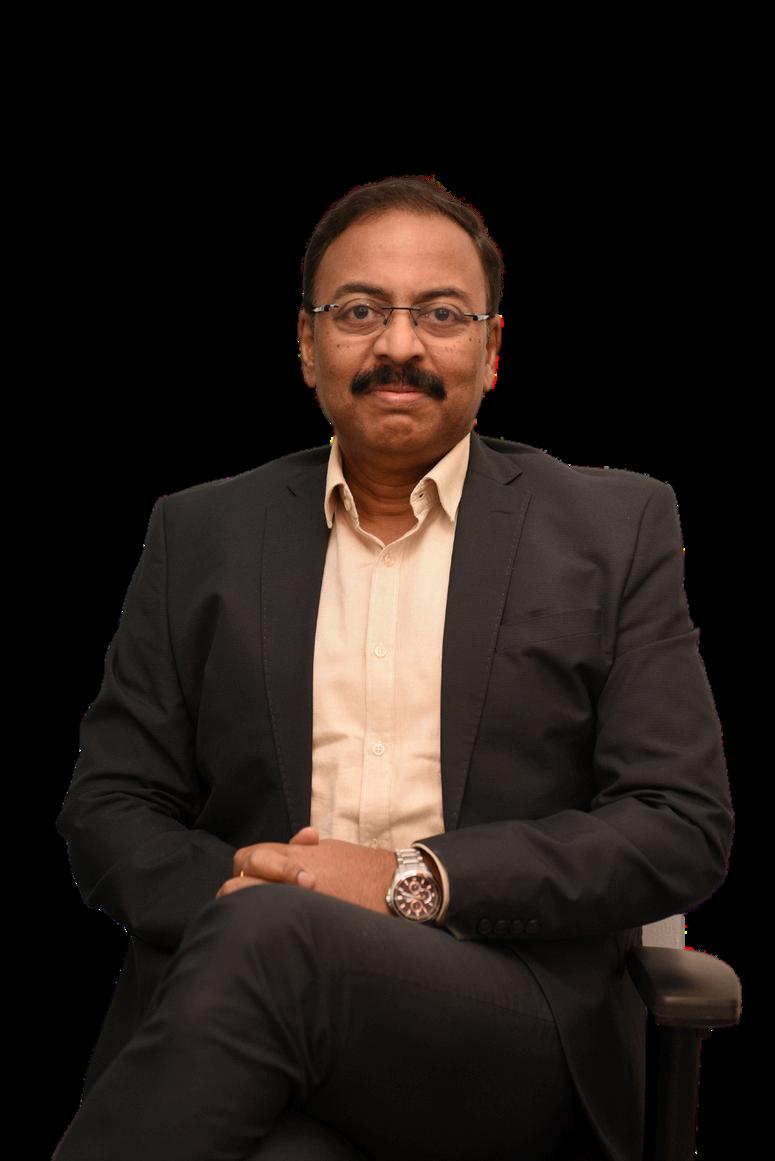
DIRECTOR-HR & CHRO THE TIMES OF INDIA GROUP
The Learning Paradox
We are living in an era where the more we learn, the more obsolete we feel Despite unprecedented investments in skilling programs, leadership development initiatives, and online learning platforms, a quiet sense of inadequacy runs through modern workplaces the fear of not being future-ready.
The World Economic Forum estimates that nearly 44% of workers’ skills will be disrupted within five years Technical expertise that once lasted a decade now decays in less than three. In this environment of accelerating change, learning can no longer be viewed as a one-time intervention or an annual training exercise. It must evolve into an organizational reflex continuous, contextual, and capability-led.
The Shift: From Skill Scarcity to Capability Elasticity
The HR playbook of the past decade revolved around addressing “skill gaps.” However, the challenge has transformed dramatically. The problem is no longer skill scarcity it is the velocity of change. Technology, consumer behaviour, and market dynamics are moving faster than any curriculum can keep up with. Learning, therefore, must evolve from a linear pipeline to an elastic system that expands and contracts with the rhythm of disruption.
At The Times of India, this philosophy has guided our reinvention from a print-first legacy to a multimedia ecosystem. The question we now ask is not “What do our people know?” but rather, “How quickly can our people learn, unlearn, and reapply knowledge?”
This is the pivot many forwardlooking organizations, including The Times of India, are making today: moving from skill-building to capability building, from preparing for the next job to preparing for the next unknown. The Adaptive Leadership Lens
That is the essence of capability the agility to adapt and the curiosity to stay relevant.
Ronald Heifetz’s framework of Adaptive Leadership provides a useful metaphor for this transformation.
He distinguishes between technical problems — those that can be solved with existing expertise and adaptive challenges that require individuals and institutions to rethink deeply held assumptions and behaviours. Skill obsolescence clearly falls into the adaptive category. The issue is not merely acquiring new knowledge but metabolizing change developing the ability to continuously reinterpret what is relevant
For instance, when journalists transitioned from print to digital formats, the real learning was not about mastering new tools or software
It was about thinking in pixels instead of paragraphs, learning to craft stories for both human readers and algorithms, and balancing editorial ethics with engagement metrics.
This kind of shift requires cognitive flexibility, emotional resilience, and a renewed sense of purpose amid uncertainty That is what true capability building looks like.
Designing the Capability Architecture
Building capabilities is not about increasing the number of training hours it is about accelerating learning velocity At The Times of India, we envision this through a Capability Architecture built on three dimensions:
Depth, which develops subjectmatter expertise and anchors professional confidence. Breadth, which enables crossfunctional exposure and fosters collaboration Agility, which allows individuals to apply both depth and breadth effectively under pressure.
This architecture represents a shift in mindset from focusing on what programs we deliver to how quickly people apply what they learn. It transforms learning from a support function to a strategic business enabler.
From Learning Paths to Learning Ecosystems
The era of static “learning paths” is over Today’s learning environments must function as ecosystems dynamic, personalized, and integrated into the flow of work.
At The Times of India, our approach blends AI-curated microlearning with peer-driven knowledge exchanges.
Teams across editorial, technology, and product functions collaborate through internal learning communities, creating capability clouds that are constantly evolving.
The philosophy is simple: organizations should not just create learning programs they should create learning moments. Every project, campaign, and challenge becomes an opportunity for reflection and renewal
Capability as an Inclusion Agenda
The conversation about inclusion in the workplace must now extend to learning
In many organizations, senior employees, field teams, or nondigital staff are unintentionally excluded from upskilling opportunities due to design bias or access barriers. This creates a capability divide a subtle form of inequality that limits institutional agility.
At The Times of India, we have addressed this through Capability Equity, ensuring learning access across levels, generations, and locations From vernacular elearning modules to mobile-first design and reverse mentoring circles, the goal is to make learning democratic. When everyone learns together, the organization stays young, no matter its age
From Growth to Regeneration
The true test of a learning culture is not how fast employees grow but how consistently they regenerate.
When people evolve faster than their organizations, they leave When organizations evolve faster than their people, they lose legitimacy.
The ideal state lies in co-evolution, where individuals and institutions grow in tandem.
This regenerative approach to learning builds institutional endurance It allows legacy organizations like ours to stay rooted in purpose yet restless for progress balancing heritage with hypermodernity.
Learning as a Business Strategy
Capability building can no longer remain a subset of HR strategy it has become the business strategy itself. In every transformation journey, the agility of learning determines the agility of the enterprise.
At The Times of India, as we expand across new business models from digital media to events and experiences our learning agenda sits at the intersection of culture, capability, and commerce.
When employees understand not just what is changing, but why, learning becomes a source of energy rather than anxiety. At that moment, capability building shifts from being a cost to being a competitive advantage.
Leadership as the Chief Learning Model
Transformation begins not with training modules but with leadership modeling.
Leaders who learn publicly send a powerful signal: that learning is not remedial, but aspirational.
At The Times of India, senior leaders actively participate in digital learning, generative AI experiments, and cross-functional knowledge sessions. This is not symbolic it is systemic.
Our philosophy has evolved from role modeling to learning modeling By doing so, we dismantle hierarchies of knowledge and reinforce humility as a leadership virtue.
After all, when leaders stop learning, organizations stop listening.
The 30-Day Capability Reset
Every organization can begin its capability journey with small but visible steps. A 30-day sprint can set the momentum:
Map volatility zones — identify the 20% of roles most exposed to technological change.
Audit learning equity — ensure access parity across levels and functions
Launch a “Learn One, Teach One” campaign make peer learning a norm.
Model from the top — encourage leaders to share what they are learning each month.
Redefine success metrics move from participation rates to application and innovation velocity.
Small, consistent actions build credibility and help institutionalize learning as a core behavior.
“THE
FUTURE WILL NOT BE WON BY THE MOST EFFICIENT ORGANIZATIONS, BUT BY THE MOST ADAPTIVE ONES”.
Final Thoughts: The Verdict on the Future of Learning
The verdict is clear the future will not be won by the most efficient organizations, but by the most adaptive ones.
Capability is fast emerging as the new currency of employability and the true measure of organizational vitality. The enterprises that will thrive are those that view learning not as an event but as a way of being.
At The Times of India, our journey from skill-building to capabilitybuilding has reaffirmed a simple truth: learning is not a department; it is the DNA of relevance.
To sustain leadership in any industry, learning must sit at the heart of strategy shaping culture, guiding transformation, and powering innovation It must be as natural as breathing and as essential as trust.
In a world where knowledge expires faster than news, the only lasting headline will be this:
Learning is the new legacy.
ABOUTTHE AUTHOR
Amit Das is the Director-HR & CHRO at The Times of India Group, where he leads Human Capital function for one of India’s most influential media conglomerate. With over 36 years of experience across reputed organizations such as Britannia Industries, Vodafone, RPG Group, CESC Ltd., and Taj Group of Hotels, he has led large-scale organizational transformation initiatives and seamlessly integrated HR with business strategy to drive sustainable growth across diverse industries. Beyond the corporate world, Amit has played strategic Advisory roles with Government institutions and contributes actively to leading Academic Institutions as a thought leader and industry mentor.
DR. LAKSHMAN KUMAR KODUPAKA
GLOBAL TALENT ACQUISITION LEADER AT SUTHERLAND
A Strategic Talent Acquisition Perspective
Talent Acquisition (TA) is undergoing a fundamental reinvention. As organizations adopt AI-native engineering, cloud modernization, platform-led delivery models, low-code applications, and data-driven operating frameworks, business expectations from TA teams have shifted dramatically. The mandate is no longer to hire for skills alone it is to build a workforce with the capabilities, adaptability, and growth potential to thrive in a fastchanging digital engineering environment
The technology landscape is evolving at a pace that traditional hiring models cannot keep up with. Technical skills that once had a long shelf life now require continual refresh.
Meanwhile, AI and automation are reshaping engineering workflows, making tactical tasks faster and reducing dependency on narrow expertise. With global enterprises investing heavily in digital engineering, analytics, data modernization, and AI-led transformations, the competition for multi-dimensional engineering talent has intensified. This environment requires a new lens through which TA identifies, assesses, and builds talent pipelines.
Skill-based hiring while effective for many years—has reached its limits Filling a requisition based solely on proficiency in Java, .NET, AWS, microservices, DevOps, or testing frameworks no longer guarantees readiness for modern engineering challenges
Tools and frameworks will continue to change; the ability to learn, solve problems, apply engineering judgment, and leverage AI tools will define future success. This is where capability-based hiring becomes a strategic necessity
Why Skill-Based Hiring Is Losing Relevance
Engineering Roles Have Expanded Beyond Traditional Boundaries
Technology roles today are far more complex and interconnected A “DevOps Engineer” may work across reliability engineering, observability, automation, cloud infrastructure, or CI/CD architecture depending on the project. Skills alone cannot decode the breadth of these responsibilities. Hiring simply for tool familiarity often results in mismatches that affect delivery timelines and quality
Technology Is Advancing Faster Than Hiring Cycles
Cloud-native architectures, AIassisted development, and modern engineering platforms evolve every few months. New frameworks, languages, and tools emerge faster than job descriptions can be updated By the time TA closes a skill-based requisition, the business might already be considering newer approaches. Skills are becoming transient, but the ability to learn, adapt, and apply engineering principles remains timeless.
AI Has Redefined Engineering Workflows
Generative AI and engineering copilots now assist developers by generating boilerplate code, producing unit tests, debugging issues, refactoring modules, and even suggesting architectural improvements. Evaluating candidates purely on tactical coding proficiency does not reflect their ability to work in AI-enabled environments TA must assess how effectively candidates can collaborate with AI to enhance productivity and quality.
Business Expectations Have Shifted Toward Outcome Ownership
Organizations no longer want engineers who can only execute tasks They expect talent who can solve problems, design systems, think productively, understand customers, and collaborate seamlessly across teams. Skillbased hiring cannot measure these higher-order capabilities that drive business outcomes.
What Capability Building Means for TA
Capabilities represent a deeper, more holistic view of talent. They reflect what individuals can achieve not just what they know. From a TA standpoint, capabilitybased hiring integrates:
Technical depth and engineering fundamentals
Understanding of systems, products, and architectures
Curiosity, adaptability, and willingness to learn
Collaboration and communication
Comfort with ambiguity and complex problem spaces
Ability to use AI tools to accelerate engineering delivery
Product thinking and customer orientation
These attributes enable individuals to contribute meaningfully across contexts, projects, and evolving tech stacks.
Key Capability Clusters TA Must Prioritize
AI-Augmented Engineering
Engineers who can use AI copilots, test-generation tools, intelligent debuggers, and automation frameworks to improve velocity and quality.
Platform Engineering Mindset
Talent with experience in automation-first principles, cloudnative systems, reliability engineering, infrastructure as code, and secure-by-default development.
Product Engineering Orientation
Individuals who can empathize with customers, understand business value, and deliver solutions in iterative, outcome-driven environments.
Full-Stack Problem Solving Engineers capable of operating across layers, integrating services, and delivering complete solutions end to end.
Data Intelligence Capability
Understanding data flows, modeling, data governance, analytics pipelines, and familiarity with ML-assisted decision-making.
These capability clusters enable talent to move across roles, adapt to new demands, and scale with organizational priorities.
How TA Must Reinvent Its Operating Model
Redesign Job Descriptions Around Capabilities
Traditional job descriptions listing tools or frameworks must evolve into outcome-focused role definitions
For example:
• Instead of “5+ years in Java, Spring Boot,” a capability-based JD emphasizes “Ability to build distributed services, design performant APIs, and leverage AI tools to accelerate development.”
This shift demands collaboration between TA, delivery leaders, and engineering managers to clearly articulate the impact the role must create.
Adopt Capability-Led Assessment Models
Modern evaluation must simulate how engineers work in real-world environments. This includes:
Scenario-based problem
solving
System design discussions
Architecture assessments
AI-assisted coding tasks
DevOps pipeline simulations
Product-thinking case exercise
Behavioral indicators of agility and growth mindset
This assessment style highlights not just competence, but capability and potential
These qualities predict long-term success better than any skill checklist.
Build a Capability-Centric Workforce Strategy
TA must integrate capability development into long-term talent planning by aligning with HR, L&D, and Delivery:
12–24-month capability
forecasting
Cross-functional mobility frameworks
Capability-based career pathways
Proactive talent pipeline development
Internal capability-building programs
This moves TA away from reactive hiring cycles toward proactive, strategic workforce planning.
Strengthen TA as a Strategic Business Advisor
Modern TA teams must become intelligence hubs by providing: Insights on emerging engineering trends
Market and competitor talent analysis
Capability supply insights
Recommendations on new hiring models
AI-enabled sourcing and assessment intelligence
This positions TA as a strategic partner enabling engineering, delivery, and business leadership teams to make smarter workforce decisions
Why Capability Building Is a Business Imperative
Focusing on capabilities creates a workforce that can respond to new technologies, adapt to evolving client expectations, and support long-term growth. It also enables organizations to:
Build future-ready engineering teams
Reduce dependence on narrow, niche skills
Deploy talent quickly across different roles
Deliver higher customer value
Scale efficiently across projects and programs
Operate effectively in AI-native environments
Capability-rich talent becomes a sustainable competitive advantage.
Conclusion: The New TA Talent Formula
The industry is moving toward a new philosophy of workforce readiness:
Capabilities matter more than skills
Mindset outweighs tool knowledge
AI-enabled engineers outperform traditional specialists
Organizations that embrace capability-based hiring will be the ones that lead in the era of AI, automation, and rapid engineering transformation. For TA leaders, this is the moment to redefine how talent is identified, assessed, and nurtured shifting from hiring for today’s skills to building tomorrow’s capabilities.
PRADEEP KUMAR
MANAGER – HR TEKWISSEN SOFTWARE
In the rapidly evolving world of work, learning has taken on a new dimension. The era where structured training programs and defined skill sets ensured career success is fading fast. Technological advancement, shifting work models, and the demand for agility have reshaped the learning landscape
The focus is no longer solely on skills it is now on building capabilities.
Understanding the Shift
Traditionally, learning and development have emphasized skill-building teaching employees specific competencies required to perform particular tasks. While this remains important, the half-life of skills has shortened dramatically What was relevant yesterday may not serve the needs of tomorrow.
Capability building, in contrast, is about cultivating adaptability, problem-solving, and the ability to navigate ambiguity. It focuses on strengthening the individual’s capacity to learn continuously, think critically, and apply knowledge in dynamic contexts.
A skill may teach someone how to operate a system; a capability empowers them to understand why systems change, how to adapt to new ones, and how to guide others through transition. This distinction defines the learning imperative for modern organizations.
The Case for Capability Building:
In an increasingly volatile and interconnected business environment, organizations are realizing that sustainable performance depends on capability development rather than
isolated skill acquisition There are several key drivers behind this transformation:
1.Accelerating Technological Change:Automation, AI, and digital transformation are redefining work at every level. Employees need more than technical expertise they need the ability to learn and evolve alongside technology.
2. Workplace Agility:
The hybrid and global work models have amplified the need for adaptability, collaboration, and cross-functional understanding
3. Leadership Readiness:
The future of leadership is about foresight and resilience. Leaders must be equipped not just with strategic tools but with the mindset to guide teams through constant change.
4.Human-Centric Performance: As routine tasks become automated, human capabilities such as empathy, critical thinking, and creativity become key differentiators.
From Training to Transformation
Capability building moves learning from being an event to becoming a culture. It shifts the focus from “what employees know” to “how they think and respond.” Organizations investing in capability development foster a that is:
Curious – eager to learn and explore new domains.
Resilient – able to withstand and adapt to disruption.
Empowered – confident in applying judgment and initiative.
In this context, the role of HR is pivotal. Human Resources professionals are now the architects of learning ecosystems that integrate formal training with experiential learning, mentoring, digital tools, and realtime feedback mechanisms.
The emphasis is on learning that is contextual, continuous, and collaborative learning that happens in the flow of work rather than outside of it.
The Role of HR in Capability Building
The evolution from skill-building to capabilitybuilding demands a redefinition of HR’s role in learning strategy. HR is no longer simply a provider of programs; it is a strategic enabler of organizational resilience.
Key priorities for HR include:
Designing capability frameworks that align learning outcomes with business strategy. Embedding learning opportunities into daily workflows through technology and collaboration platforms.
Promoting learning agility as a core performance metric.
Creating psychological safety for employees to experiment, fail, and learn
The success of capability building lies not in how many employees complete a course, but in how effectively they can respond to emerging challenges and opportunities
Building Capabilities That Endure
A robust capability development strategy integrates technical, cognitive, and behavioral dimensions. Core capabilities for the modern workforce include:
Learning Agility: The ability to acquire new knowledge, unlearn outdated methods, and apply insights rapidly
Critical and Analytical Thinking: The foundation for effective decision-making and innovation.
Digital Fluency: Comfort with evolving technologies and understanding their application to business outcomes.
Emotional Intelligence: Building trust, empathy, and collaboration within teams
Resilience and Purpose: Maintaining focus, composure, and alignment with organizational values in times of uncertainty.
By fostering these capabilities, organizations create employees who are not only competent but also future-ready.
A Cultural Imperative
Capability building is not solely a learning function it is a cultural imperative. Organizations that cultivate a growth mindset at all levels create environments where learning is viewed as integral to success
When employees feel empowered to question, innovate, and adapt, they contribute more effectively to organizational transformation This culture of learning drives engagement, productivity, and longterm sustainability.
Conclusion
The shift from skill-building to capability building represents one of the most significant transformations in corporate learning. It reflects a recognition that in a world defined by change, enduring success depends not on what employees know, but on how effectively they can learn, adapt, and apply their knowledge.
As HR professionals, our goal must be to design learning ecosystems that inspire curiosity, strengthen confidence, and build capacity for lifelong growth.
Technology may power the tools for learning, but it is human capability that powers progress.
The organizations that understand this truth and invest in developing it will lead the future of work.
ABOUT THE AUTHOR
I am an experienced Human Resources and Administration professional with over 18+ years of progressive experience in HR operations, Talent acquisition, Employee relations, and facilities management across healthcare, logistics, IT & ITES industries. Currently serving as Manager – HR at TekWissen Software Pvt Ltd Visakhapatnam, I specialize in creating positive work environments, streamlining HR processes, and driving employee engagement initiatives. I hold a Master’s degree in Human Resource Management from Andhra University and PG Diploma in Human Resource Management from NMIMS am passionate about building sustainable, people-centric workplaces My approach blends business acumen with emotional intelligence, helping teams perform at their best while maintaining compliance and operational excellence I take pride in fostering trust, promoting collaboration, and delivering impactful results that align people strategies with organizational goals.
RAJITA SINGH
CHIEF PEOPLE OFFICER INDIA, KYNDRYL
There was a time when learning was about collecting skills mastering software, attending workshops, checking boxes We wore our certificates like badges of honor, proof that we were “keeping up.” But in today’s world, keeping up is not the goal anymore The real challenge is staying relevant when the rules keep changing.
Skill-building helps us do things better Capability-building helps us become better while doing things. Skills belong to the outer game of work technique, precision, efficiency. Capabilities belong to the inner game adaptability, curiosity, resilience, and judgment. One makes you competent; the other makes you complete.
From Doing to Becoming Skill is what you can do. Capability is who you become when you’re tested
When we focus only on skills, learning becomes mechanical a reaction to what’s missing. Capability building, on the other hand, turns learning into a living process. It invites people to ask, “How do I respond when what I know stops working?”
That question changes everything Because the world we live in no longer rewards the most efficient it rewards the most adaptable.
Learning in Motion, Not in Modules
Traditional learning programs are often designed like neatly packaged lessons a start, an end, a completion certificate.
But real growth rarely fits into modules It happens through motion: through experience, reflection, and recalibration. Capability building shifts the question from “What did you learn?” to “How did you think?” It’s not just about content; it’s about context. Not about information, but interpretation.
When people learn to connect dots across domains when they can sense patterns and make sound decisions under uncertainty that’s when learning stops being transactional and becomes transformational.
The
Architecture of Capability
Organizations that thrive today design learning as an ecosystem, not an event. They build cultures where learning seeps into the everyday in conversations, collaborations, and experiments. In such systems:
- Curiosity is encouraged, not controlled.
- Reflection is rewarded as much as execution
- Feedback is not an evaluation, but a shared act of sense-making. These are not just learning interventions; they’re design choices that shape how people see themselves at work. When learning becomes a shared rhythm, capability turns into culture.
The Courage to Learn Out Loud
Capability building demands a mindset shift — from fear of failure to freedom to explore
True learners are not those who know more; they’re those who’re willing to be seen trying.
In a rapidly changing world, the bravest act is to learn in public to say, “I don’t know, but I’m learning ”
When that behavior is modeled by leaders, it cascades through the organization, turning vulnerability into velocity.
Because people don’t grow from knowing; they grow from becoming.
Redefining the Role of Learning Leaders
The role of those who enable learning has changed too. We are no longer curators of courses; we are architects of experiences Our work is not to transfer information but to design transformation to create conditions where people think, reflect, and connect meaningfully.
That means shifting our energy from content creation to context creation. From pushing learning to enabling pull-based curiosity. From tracking participation to cultivating practice
When learning is seen as practice something lived, not attended it becomes a capability amplifier.
Rethinking Metrics of Growth
The success of learning can no longer be measured in completion rates or certification counts. The new metrics lie in questions like:
Are people asking better questions?
Are they taking smarter risks?
Are they collaborating across boundaries?
Are they faster at sense-making and decision-making?
These are signals of capability of a system that’s learning in real time. When people begin to see themselves as learners first and employees next, performance naturally follows
“BECAUSE PEOPLE DON’T GROW FROM KNOWING; THEY GROW FROM BECOMING”.
From Transaction to Transformation
Skill-building is transactional it answers what. Capability-building is transformational it explores why and how
This shift changes the entire rhythm of learning:
- From training to thinking.
- From compliance to curiosity.
- From individual efficiency to collective intelligence
It moves learning out of classrooms and into conversations, out of HR frameworks and into the fabric of daily work.
That’s how organizations evolve — not because they trained people to follow, but because they empowered people to figure things out.
Learning as a Social System
When learning is reimagined as a social system, every interaction becomes an opportunity to grow. Mentorship circles, peer learning groups, reflective journals, even project reviews — all become tools for capability building when infused with trust and transparency.
The magic lies not in adding more programs, but in building psychological safety the courage to experiment without fear, to question without consequence, to contribute without hierarchy.
In such environments, learning is not an intervention; it’s the invisible current that powers innovation and belonging.
Becoming a Capability-Led Organization
To move from skill to capability, organizations can start small but think deeply:
1. Design for Reflection: Create time and space for people to think about what they learned and how they applied it
2. Value Questions: Reward inquiry as much as answers.
3. Cross-Pollinate: Encourage people to work across disciplines and perspectives
4. Teach Sense-Making: Help people not just absorb data but derive meaning.
5. Model Learning Behavior: Let leaders show that learning is not a phase it’s a posture Because capability doesn’t emerge from knowledge; it emerges from practice under pressure.
The Future Belongs to the Capable The world ahead won’t be defined by what we know today, but by how fast we can unlearn and relearn tomorrow. Skill will always have its place, but capability will define our pace.
When we learn to connect purpose with performance, reflection with action, and curiosity with courage that’s when learning reinvents itself.
The goal is no longer to fill minds; it’s to free them to build people who can think, adapt, and thrive in ambiguity.
Because in the end, the most valuable skill any of us can build… is the capability to keep learning.
ABOUT THE AUTHOR
Rajita Singh is the Chief People Officer at Kyndryl India, overseeing HR operations. Formerly leading HR at Broadridge Financial Solutions India, she played a pivotal role in enhancing the company's brand as an employer of choice. Rajita is the youngest Convenor of the CII HRIR Panel for the State and is actively engaged in NASSCOM Beyond work, she enjoys car racing, Bharatnatyam dancing, counseling, meditation, doodling, and reading.
SUMIT AGARWAL
LINKEDIN TOP VOICES
Skills Are No Longer Enough Capabilities Are the New Currency
A few weeks ago, during one of my workshops, an employee said something that stayed with me long after the session ended: “I’m good at learning new tools but I don’t feel confident using them when things get tough ” That single line captures a truth about today’s workplace. We are surrounded by digital courses, certifications, and learning platforms that teach us new skills almost instantly And yet, many employees still hesitate when real challenges appear This is because the future of learning is no longer about stacking skills; it is about building capabilities those deeper qualities that allow people to adapt, lead, and thrive in moments of uncertainty. Skills teach us what to do, but capabilities help shape who we become while doing it.
Capability Building Is a Cultural Shift, Not a Training Module
For decades, learning was treated as a transaction: attend a workshop, tick a box, collect a certificate. That model made sense in a predictable world. But today, skills expire faster than ever, and employees find themselves constantly navigating new technologies, shifting expectations, and unprecedented change In this environment, capability building becomes a cultural project, not a training calendar It requires organizations to intentionally build spaces where learning can take root spaces of psychological safety, trust, curiosity, and belonging. When people feel safe to ask questions, admit challenges, and experiment without fear of judgment, they don’t just learn; they evolve This is why the organizations I see thriving are the ones where belonging is intentional, where mistakes are treated as data, where purpose is clearly linked to performance, and where leaders model vulnerability instead of perfection These are the cultures where growth becomes a shared commitment, not an individual struggle.
From Information Consumption to Identity Transformation
My own journey reflects this shift more than any theoretical model ever could
Growing up with cerebral palsy, undergoing four major surgeries, and navigating years of silence and isolation wasn’t a technical learning journey it was a capabilitybuilding one. I learned adaptability when my body didn’t cooperate, resilience when progress was slow, and empathy because I knew what it felt like to be unseen or misunderstood These capabilities shaped me far more than any skill I have picked up along the way And today, when I speak in organizations about inclusion and leadership, I realize that true learning begins when people start seeing themselves differently. This is the heart of capability building it transforms identity, confidence, and the ability to show up fully even in uncertain moments Skills help people perform a function; capabilities help them step into their power
The Future of Learning Is Built on Trust, Not Training Hours
As the workplace shifts toward hybrid models, rapid change, and diverse teams, organizations that focus solely on technical skills will fall behind The real advantage lies in building cultures where people feel psychologically safe enough to stretch, supported enough to grow, and valued enough to experiment. When learning becomes rooted in trust, belonging, and purpose, people don’t just acquire knowledge they unlock potential Capability building encourages resilience, systems thinking, emotional agility, inclusive leadership, and the courage to innovate And it happens not through more training hours but through deeper relationships, braver conversations, and cultures that celebrate progress over perfection.
Learning reinvented is not about making people learn more It is about empowering them to become more It is about shifting from what people can do to who they can be And when organizations make that shift from skills to capabilities they don’t just prepare employees for the next project; they prepare them for the future
SAHIL NAYAR
HR LEADER AND INFLUENCER
swim is a skill. Becoming a lifeguard is a capability. The former helps you stay afloat. The latter helps others survive theEtidexcel courses, presentation skills, negotiation workshops, you name it And while these are important, they often answered the “what” of work, not the “why” or the “how.”
Then came a wake-up call A 2023 World Economic Forum report stated that 44% of skills required for jobs will change within five years. Suddenly, everyone realized that upskilling wasn’t enough.
You can teach someone to code, but can they solve problems creatively when the code fails? You can train a manager to lead meetings, but can they lead minds through uncertainty?
The
Shift: From Doing to Being For decades, organizations invested in skill-building like it was a checklist
That’s where capability building steps in. It’s not about knowing a tool It’s about owning a mindset
Why Capability is the New Currency
In today’s workplace, skills depreciate faster than smartphones. What’s relevant today becomes redundant tomorrow. Capability, however, compounds. It’s like reinvesting dividends, you don’t just grow; you multiply your value over time.
When organizations move from skill to capability, they stop producing task executors and start cultivating thinking contributors Imagine a cricket team where every player knows how to bat, but only a few understand the game. Capability ensures everyone knows the game.
A McKinsey study in 2024 found that companies focusing on enterprisewide capability programs saw twice the productivity gains compared to those that only offered skill-based training The reason? They built ecosystems where learning didn’t end with a certification; it started with curiosity.
“WHEN
ORGANIZATIONS MOVE FROM SKILL TO
CAPABILITY, THEY STOP PRODUCING TASK EXECUTORS AND START CULTIVATING THINKING CONTRIBUTORS.”
Learning in Real Life: A Mirror, Not a Manual
Let’s be honest, learning doesn’t only happen in training rooms. It happens in traffic jams when patience runs thin It happens when a junior gives feedback that makes you rethink your style. It happens when a project fails, and you’re forced to reflect instead of react. Capability building is about connecting these dots It’s the art of converting experiences into expertise. It’s not what happens to you, but what you take away from what happens.
I often tell young professionals: you can have twenty skills and still be replaceable. But if you build three strong capabilities, resilience, reflection, and reinvention, you become indispensable.
Building Capabilities: The New Learning Stack
The future of learning isn’t about training calendars; it’s about learning cultures. Organizations must stop asking “What program should we run this quarter?” and start asking “What problems do we need to solve this decade?”
Building capability is like fitness. You can’t outsource it You can’t crashdiet your way into it It needs consistent investment, feedback loops, and leadership that walks the talk.
Three practices make the difference:
•Contextual learning: Tie every program to real business challenges. Theory is good; application is gold.
•Coaching culture: Replace annual reviews with ongoing reflections. Every conversation can be a catalyst
•Community learning: Create tribes where people learn from each other, not just trainers. Peer learning is the new pedagogy.
From L&D to R&D: Rethinking the Function
Learning and Development now needs to act like Research and Development Test, fail, tweak, and try again Experiment with formats, measure impact, and personalize learning journeys. Because capability isn’t built in a quarter, it’s nurtured over quarters
And leaders? They need to become “Chief Curiosity Officers.” The ones who don’t just ask “What did you learn?” but “What changed because you learned?”
The Human Equation
At its core, learning reinvested is about humanity. The ability to listen, adapt, empathize, and evolve Capability is when competence meets consciousness.
So the next time someone says, “We need to build skills,” remind them: that’s yesterday’s conversation. Today, we build capabilities, because skills fill roles, but capabilities fulfil purpose
And if you ever forget that, just remember this, Google can teach you skills. Life teaches you capability.
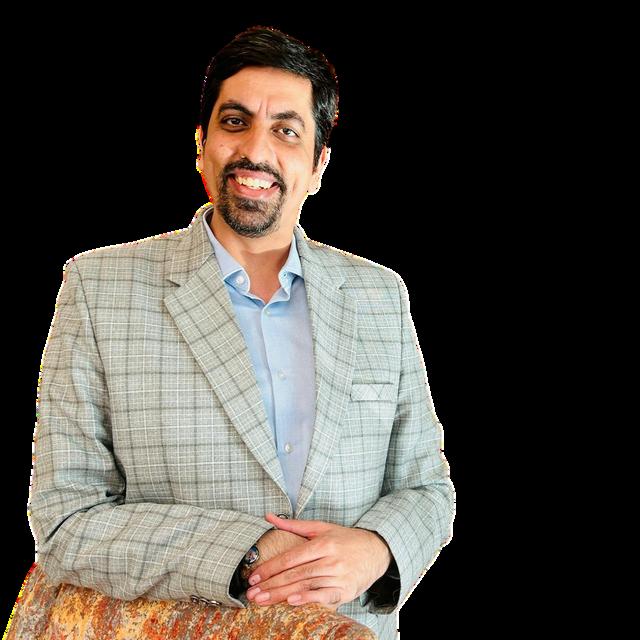
Sahil Nayar is an HR disruptor, who loves blending data with intuition, strategy with storytelling, and innovation with impact. Whether he’s shaping talent strategies, mentoring future leaders, or challenging the status quo, he does it with wit, wisdom, and a relentless drive to transform the way we experience work. An award-winning HR professional, an author, a podcast host, and a Certified Happiness Coach, he’s been recognized over 50 times for his contributions to the field. When he’s not decoding workforce dynamics, you’ll find him on a mountain trail or cruising through Mumbai on his Royal Enfield.
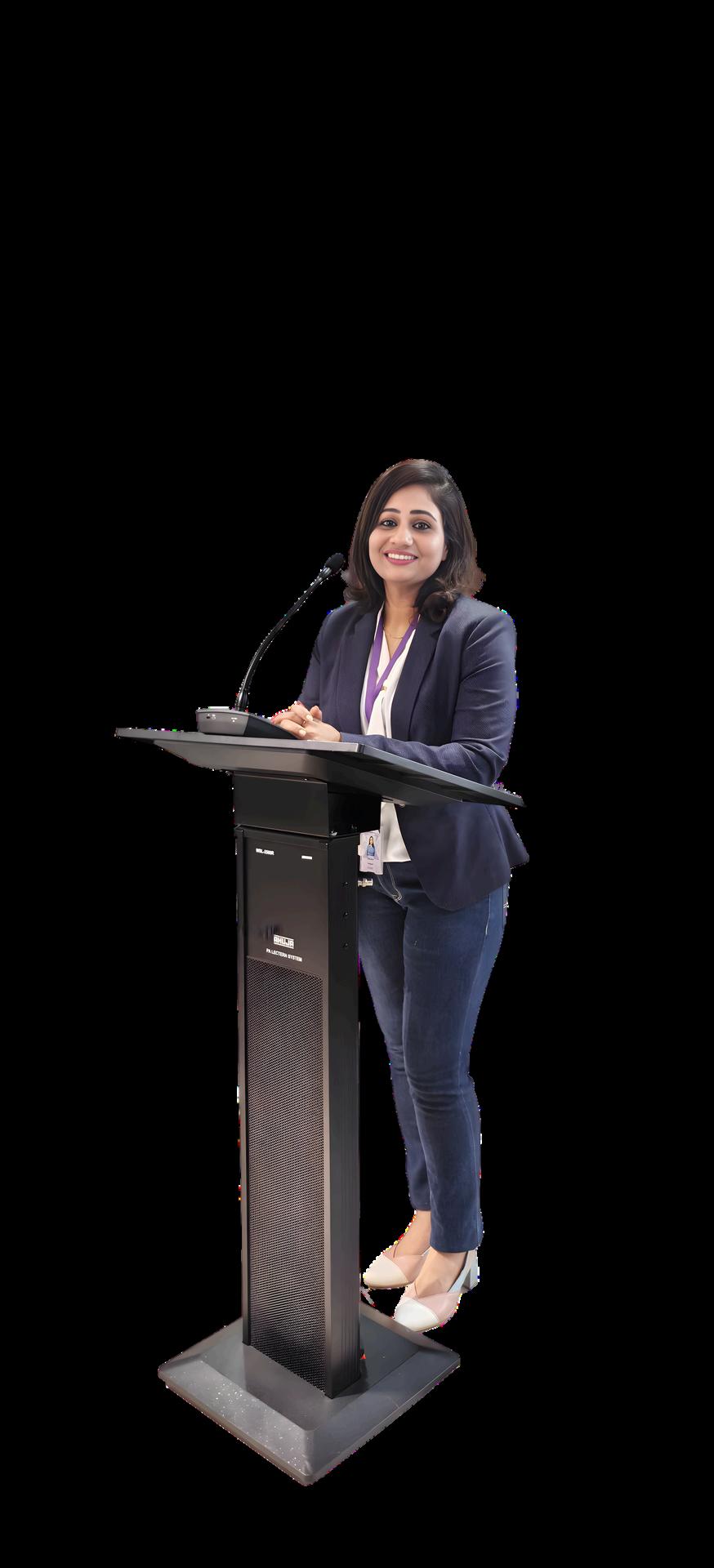
SENIOR MANAGER L&OD
It was quarter-end, and the leadership team gathered for a high-stakes review. The numbers were grim, the market unpredictable. All eyes turned to Arjun, the newly appointed business head.
He had attended every leadership training, mastered negotiation techniques, and could recite the company’s playbook by heart Yet, in that moment of ambiguity, he hesitated. Not because he lacked skills, because he hadn’t built the capability to lead through uncertainty, inspire confidence, and make bold decisions when the path wasn’t clear. That pause cost the team more than time, it cost trust.
This is the reality many leaders face today Skills prepare you for the known. Capabilities prepare you for the unknown. And in a world where disruption is the norm, the difference between the two can define the future of your organization.
From Skills to Capabilities: What’s the Difference?
• Skills are task specific. For Example: writing a report, coding in Python, giving feedback
• Capabilities are broader, adaptive, and contextual. Example: strategic thinking, resilience, collaboration, decision-making under pressure.
While skills are taught, capabilities are cultivated. They require experience, reflection, and behavioural shifts
Why This Shift Matters Now
The pace of change is exponential Skills expire fast Capabilities sustain Hybrid work demands agility. Employees must navigate ambiguity, not just follow SOPs. Leadership is evolving From command - control to influencecollaborate.
AI is automating tasks. Human capabilities like empathy, emotional intelligence, and creativity are the differentiators.
How to Build Capabilities: CAPE Framework
Think of capability building as putting on a CAPE, not just to perform, but to transform. Here's how:
C – Challenge with Heat Experiences
Create immersive, real-world scenarios that stretch learners beyond their comfort zones.
Example: Simulations, role plays, crisis decision-making labs.
A – Anchor with Reflection & Coaching
Embed structured reflection and coaching to deepen learning and self-awareness.
Ask: “What did I learn about myself?” “How did I respond under pressure?”
P – Practice for Behaviour Change
Use nudges, spaced learning, and habit loops to reinforce new behaviours
Measure what truly matters, application, performance, and behavioural shifts.
Example: Use Kirkpatrick Level 3 & 4 manager feedback, and on-the-job outcomes.
Key Takeaways You Can Apply
For L&D Leaders
Audit your programs: Are they skill-heavy or capabilityfocused?
Introduce “stretch zones” in learning journeys.
Partner with business to cocreate real-world challenges.
For Managers
Don’t just send your team to training create on-the-job capability labs in partnership with the Learning team
Use coaching conversations to build judgment and resilience. Celebrate capability wins, not just task completions.
For Learners
Ask for feedback beyond “how did I do?” → “how did I think?”
Seek experiences that stretch you, not just certify you
Build a personal capability map: What do I need to thrive in ambiguity?
In today’s volatile, complex world, the leaders who thrive aren’t just the most skilled, they’re the most capable.
They navigate ambiguity, inspire action, and adapt with purpose And that doesn’t come from a checklist of competencies it comes from experiences that stretch, reflection that deepens, and practice that transforms.
As Learning Architects, HR Leaders, and Business Heads, we have a choice: continue building skills for yesterday’s problems or cultivate capabilities for tomorrow’s possibilities
Let’s choose the latter.
Because when we shift from skillbuilding to capability building, we don’t just prepare people for tasks we prepare them for transformation. And in doing so, we build organizations that are not only future-ready, but future-defining.
ABOUT THE AUTHOR
Sheena Vengiyil is a seasoned Learning & Leadership Development architect with over 16 plus years of experience in designing and delivering impactful learning solutions across industries. Her expertise spans strategic planning, change management, talent development, and technology-enabled learning Sheena is certified in multiple L&D disciplines, including Learning Strategy, Analytics, Facilitation, and Change Agility, with accreditations from Brandon Hall, Dale Carnegie, Knolscape, and the Josh Bersin Academy. She has successfully led global, cross-functional teams and implemented outcome-driven programs rooted in adult learning principles. A recipient of the HR 40 Under 40 award by Jombay, Sheena is known for her influential communication and collaborative leadership. Beyond her professional role, she is passionate about writing, public speaking, emceeing, and voice-over work bringing creativity and inspiration to every endeavour
VENKAT SWAROOP
ASSOCIATE DIRECTOR TEKWISSEN
In today’s rapidly evolving professional environment, learning is no longer about mastering a specific skill or completing a training program It is about cultivating the ability to continuously learn, adapt, and apply knowledge in real-world scenarios.
Organizations that once focused on functional skill-building are now shifting toward capability building and developing holistic competence that empowers individuals and teams to solve problems, navigate complexity, and create value sustainably.
The shift from skill-building to capability building is not just a trend It is a strategic response to the way work and workforce expectations have changed. Skills are specific, often technical, and can quickly become outdated due to technological advancement or market shifts
Capabilities, on the other hand, integrate skills with behaviors, mindsets, and contextual judgment. They enable an individual to remain relevant and effective even when the work environment changes
Consider the example of digital skills. Five years ago, learning tools like Excel, ATS systems, or basic CRM functions was enough Today, professionals must understand automation, workflow integration, data storytelling, and strategic interpretation of analytics. Learning now is not about “knowing the tool” but about “understanding how to leverage insights to drive outcomes.” This mindset shift is the foundation of capability building.
The redefinition of learning also requires organizations to redesign their learning ecosystems. Traditional training formats and classroom sessions, one-time workshops, knowledge dumps are no longer sufficient.
Learning must be personalized, continuous, contextual, and experiential. Real capability building occurs when individuals practice, reflect, and receive feedback while performing real work
Leaders also play a crucial role Capability-driven cultures thrive when leaders model curiosity, encourage experimentation, and reward learning as a behavior, not just results. When learning is embedded into the workday and supported with the right tools, teams begin to view learning as part of their identity, not an activity that interrupts their tasks.
For example, in staffing and talent acquisition, success now requires more than sourcing skills. Recruiters must understand business models, evaluate talentmarket signals, anticipate hiring challenges, build relationships, and use technology intelligently. These capabilities cannot be built through a one-time training session; they require strategic exposure, shadowing, performance feedback, and peer learning
“LEARNING REINVENTED IS NOT JUST A PROCESS. IT IS A MINDSET. AND IT IS THE FOUNDATION FOR BUILDING FUTURE-READY ORGANIZATIONS”.
Organizations that invest in capability building report better retention, stronger leadership pipelines, and higher productivity. Employees feel more confident, adaptable, and aligned with organizational goals
As we look ahead, the question is not “What skills should we teach?” but “What capabilities will help our workforce thrive in uncertainty?”
The answer lies in cultivating continuous learners individuals who are curious, reflective, open to feedback, and willing to challenge old assumptions.
Learning reinvented is not just a process. It is a mindset. And it is the foundation for building futureready organizations
ABOUT THE AUTHOR
TOP 5 LEARNING TRENDS: LEARNING REINVENTED
AI-Enabled Personalized Learning
Learning is shifting from generic modules to curated growth paths. AI now adapts content to individual pace, interests, and skill gaps making development deeply personal and purposeful.
Microlearning & Just-in-Time Learning
Short, practical content — bites, nudges, videos, and interactive modules — is replacing long, exhaustive workshops. Learning now happens in the flow of work, when it’s needed most.
Immersive & Experiential Learning
(AR/VR/Simulations)
From virtual onboarding to real-world simulations, immersive learning is making skill-building more engaging, safe, and application-driven especially for complex or behavioral capabilities.
Learning Communities & Peer-Powered Growth
Learning is becoming social. Cohort-based models, communities of practice, coaching circles, and shared knowledge platforms are reshaping how organizations learn and grow together.
Skills Over Roles
Organizations are moving from job titles to skill portfolios. Reskilling, upskilling, and cross-skilling are now central to workforce planning, internal mobility, and long-term employability.
VICE PRESIDENT – HR BUSINESS STRATEGY, GOLD STAR JEWELLERY
Learning Reinvented: From Skill Building to Capability Building—A Hilarious Journey Through My Accidental Adventures.
If learning were a straight line, my career would be a Jackson Pollock painting: colourful, chaotic, and occasionally leaving people wondering, “What exactly happened here?” But somewhere between handwritten book reviews, selling courses nobody initially wanted, and watching mobile technology evolve faster than my job description, I discovered something profound: skills may get you hired, but capabilities keep you relevant
Yes, dear reader, this is a story of how I unintentionally reinvented myself multiple times mostly because life ambushed me with responsibilities I didn’t sign up for
Chapter 1: Crossword Chronicles
Where My Handwriting Became a National Crisis
My adventure began at Crossword, where I worked as a Customer Care Executive. On paper, the job sounded simple: help customers, manage the shelves, smile politely, and pretend I’ve
read more books than I actually had. But fate (and my manager) had bolder plans.
The Great Book Review Debacle. Each executive was responsible for writing short handwritten book reviews for the shelves they managed cute, inspiring, personal touches that customers loved.
Simple. Except for one tiny problem: My handwriting looked like a doctor’s prescription caught in a hurricane.
One day, after writing what I confidently believed was a poetic, deeply insightful review of a fiction bestseller, a customer picked it up, squinted, tilted their head, squinted again, called their friend, and finally asked the question that haunts me till today:
“Is this Sanskrit?”
Another asked if it was a new secret code being launched by the store.
Even my manager stared at it like it was hieroglyphics discovered during renovation.
The embarrassment hit me like a hardcover dictionary
But in that moment, I learned something crucial:
Skill: Write a review.
Capability: Communicate clearly.
I realised capability isn’t about performing a task it’s about understanding why the task exists and ensuring the outcome makes sense to someone other than yourself.|
This shift in mindset was my first step into learning reinvented where skills are the tools, but capabilities are the craft
Chapter 2: Punwire Mobiles — Agility, Adaptability, and Surviving the Technological Apocalypse
After Crossword, I moved to Punwire Mobiles, blissfully unaware that I was about to be part of a technological revolution that showed no mercy.
I joined thinking I’d be dealing with landline phones, pagers, and the occasional fax machine inquiry the good old, stable technology. You know, things that didn't get replaced every 14 seconds.
And then—boom!
The world decided overnight that mobile phones were the future, and everything else became museum-worthy.
Suddenly, customers were walking in asking complicated questions:
“Does this have an infrared port?” “Is GPRS enabled?”
“Can this phone store more than 20 messages?”
Meanwhile, I was still trying to figure out how to switch the phone on
The Overnight Skill Obsolescence Drama
One day I was confidently selling corded phones; the next day I was explaining mobile specs I had learned 15 minutes before the store opened But this chaos taught me something that no textbook ever did:
Skill: Operating a device.
Capability: Adapting when the entire world upgrades without taking your permission.
I learned agility because survival demanded it.
I developed upskilling habits because embarrassment threatened it.
I embraced change because the market enforced it. Punwire didn’t just teach me technology; it taught me how to learn faster than the world could change.
And that, my friend, is capability at its finest.
Chapter 3: College of Commerce — Where I Learned the Art of Selling… and Storytelling
My next professional adventure took me to a College of Commerce, where I was supposed to sell courses to students
Just to clarify: I had zero background in sales. But life lovingly tossed me into the deep end again.
Each Student Was a New Netflix Advantage Students would walk up to the counter saying things like:
“I want a course that gives me a job in six months, doesn’t require studying, lets me sleep till 10, and also pays well.”
I had two choices: - Cry - Learn concept selling
Guess which one I picked?
To sell courses, I had to sell the future, not the brochure I had to paint a picture, connect dots, answer unasked questions, empathize with fears, and highlight possibilities.
That’s when I learned the difference:
Skill: Explaining features
Capability: Selling a vision.
From confused students to their even more confused parents, I learned to simplify, convince, empathize, and personalize all while maintaining a smile that said, “Yes, you absolutely can do this!”
This wasn't just sales training
This was the school of capability-building disguised as a college desk job. The Big Realization: Skills Expire. Capabilities Evolve.
When I look back, these were not disconnected jobs they were capability gyms.
Crossword taught me communication capability
Punwire Mobiles taught me agility capability.
College of Commerce taught me concept-selling capability.
All accidental. All hilarious in hindsight. All transformative.
Today, as we enter a world where AI can write code, design logos, diagnose diseases, and maybe even write better book reviews our focus must shift.
Skill building is about:
- Completing a task
- Following instructions
- Knowing “how”
Capability building is about:
- Thinking critically - Adapting dynamically
- Knowing “why” and “what next”
“SKILLS HELPED ME START JOBS. CAPABILITIES HELPED ME BUILD A CAREER.”
Capabilities prepare you for the unpredictable like tech disruptions, changing roles, shifting industries, and customers who think your book reviews are Sanskrit.
Conclusion: The Real Secret to Reinventing Yourself
Learning reinvented is not about collecting certificates like Pokémon cards
It’s about building the mindset, adaptability, and resilience to reinvent yourself repeatedly sometimes by choice, sometimes because the universe finds it funny
Every embarrassing moment, every confusing transition, every unexpected responsibility all were capability capsules disguised as chaos So today, when I mentor others, speak on stages, and drive transformations, I know one thing:
Skills helped me start jobs
Capabilities helped me build a career. And if my journey from illegible book reviews to navigating tech revolutions to selling dreams can teach you anything, it’s this:
Don’t chase skills. Build capabilities.
The world changes overnight—make sure you can too
Dr. Saumya Badgayan Dutta is a distinguished HR strategist and senior management leader with over two decades of experience driving transformation in the luxury manufacturing sector. As Vice President – HR Business Strategy at Gold Star Jewellery Pvt. Ltd., she partners with CEOs and boards to align business vision with people and operational excellence. Holding dual PhDs in E-Commerce and Psychology, Dr. Saumya blends digital acumen with behavioral insight to build future-ready, high-performance cultures A TEDx Speaker, World Record holder, and 10x LinkedIn Top Voice, she is recognized for pioneering data-driven, human-centric HR models that accelerate organizational growth Her work spans leadership development, inclusion, and large-scale digital transformation, making her a respected voice in shaping the next era of workplace evolution