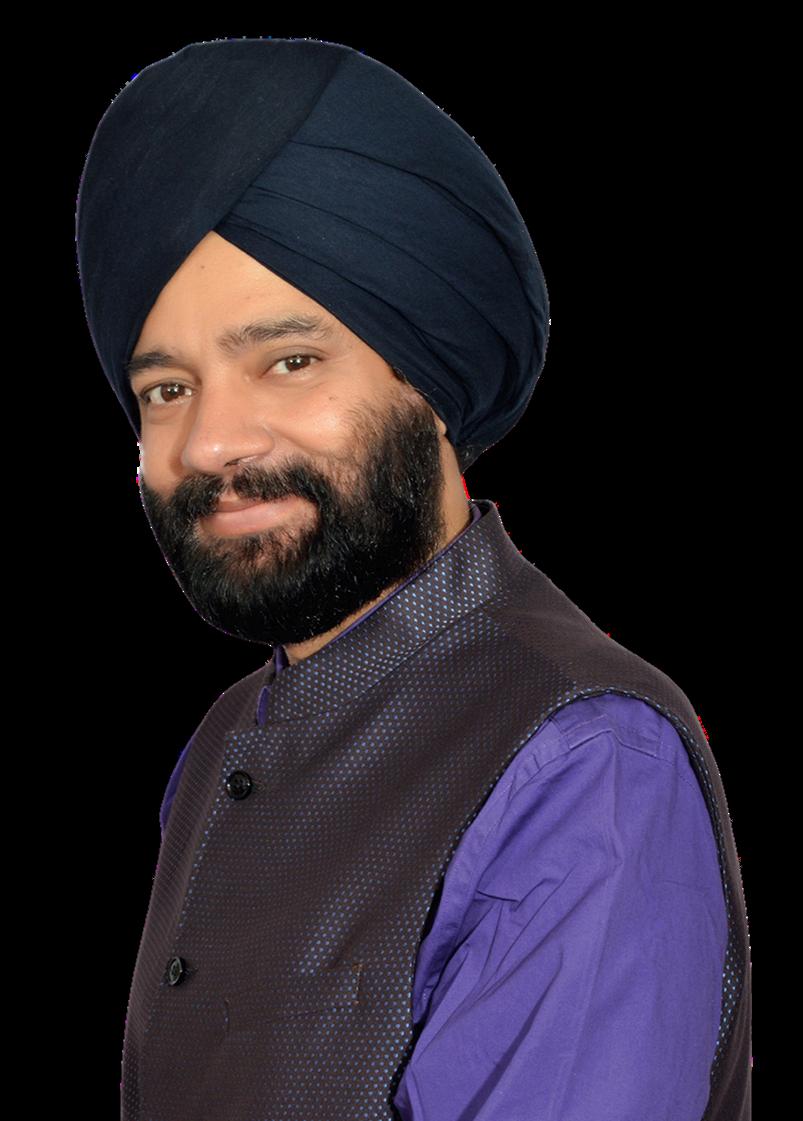
At HRAI, we believe that the bridge between academia and industry is the foundation for building a future-ready workforce. By fostering collaboration between educational institutions and the corporate world, we can empower students with the skills, mindset, and resilience needed to thrive in a rapidly evolving workplace.
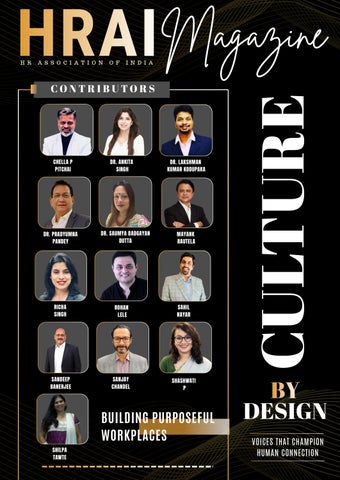
In today’s world of constant evolution, culture is no longer something that simply happens it’s something we intentionally create. This edition, themed “Culture by Design,” dives into the art and science of shaping environments where people thrive, values are lived, and purpose drives performance.
From reimagining workspaces and leadership styles to fostering inclusion, trust, and creativity every story in this issue reflects the conscious choices that organizations make to build cultures that endure.
As you explore these pages, you’ll find voices that champion human connection, celebrate authenticity, and remind us that culture is the invisible thread weaving people, passion, and purpose together.
Because great workplaces aren’t born by chance they’re designed with intent, nurtured with care, and sustained through collective belief.
Sumit Agarwal is a global DEI Advisor to Fortune 500 companies and a trailblazer in Diversity, Equity & Inclusion As the SDG Ambassador for Diversity and Inclusion and a Mentor of Change with NITI Aayog, he brings a unique blend of empathy and innovation to his work Known for using LEGO® SERIOUS PLAY®, Design Thinking, and visual facilitation tools like Moth Cards and Liberating Structures, Sumit has conducted 350+ sessions worldwide A UN-certified inclusion expert and motivational speaker, he transforms complex DEI concepts into actionable strategies that inspire inclusive leadership and lasting organizational change
59
HARJEET
KHANDUJA
SVP- HR, JIO
Harjeet Khanduja is an international speaker, author, poet, influencer, inventor and an HR leader He is also known as RK Laxman of Business He is currently working as the Senior Vice President HR at Reliance Jio He has 4 published patents and authored 9 bestseller books Harjeet has been a LinkedIn Power Profile, TEDx speaker, Guest Faculty at IIM Ahmedabad and XLRI, Board Member of Federation of World Academics, Global Thought Leader, Global Digital Ambassador Harjeet features in Top 200 Global Leadership Voices and ET Top 20 HR Influencers
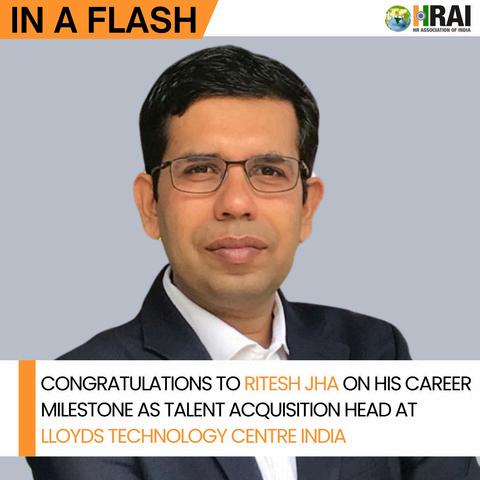
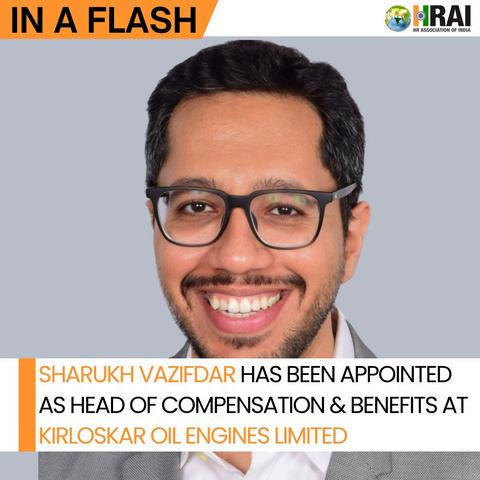
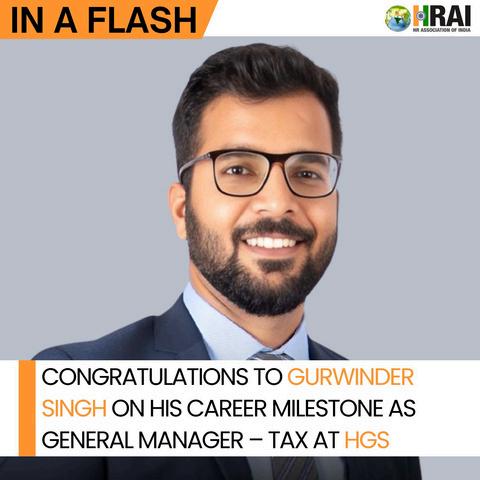
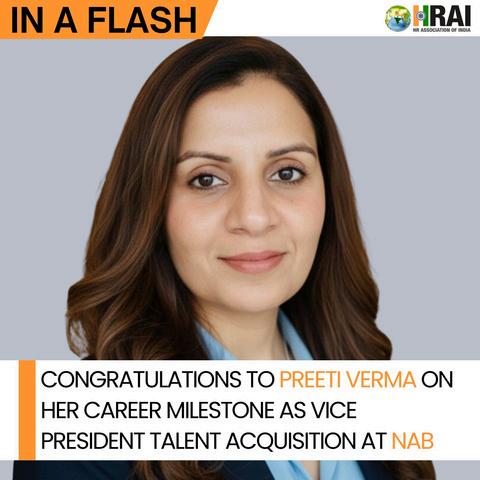
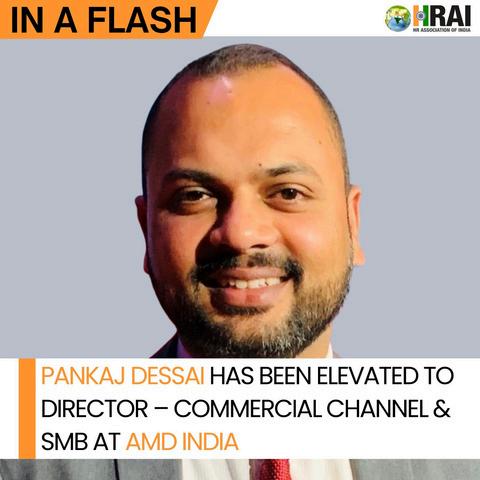
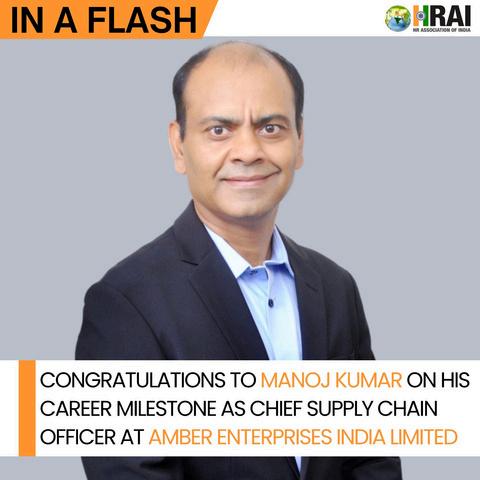
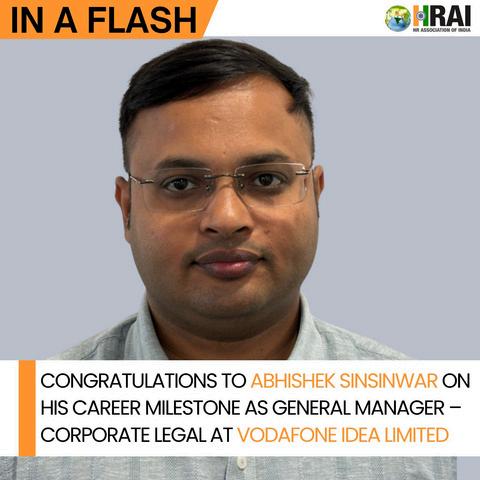
A NEWS INITIATIVE SPOTLIGHTING RECENT APPOINTMENTS AND KEY LEADERSHIP MOVEMENTS IN THE CORPORATE WORLD.
EVENT CHRONICLES
Te HR Association of India (HRAI), founded in 2020 is an esteemed non-profit organization that has been playing a pivotal role in shaping the HR landscape in India. Their primary focus is on exploring, discussing, and promoting the latest business scenarios, market trends, change management, and leadership in the HR industry. HRAI is dedicated to creating a community of professionals, learners, and mentors who share their insights and learn from each other to elevate the standard of HR practices in the country.
HRAI's success is attributed to its commitment to excellence and tireless efforts in facilitating interactions between HR professionals and subject matter experts. Through its initiatives such as panel discussions,
In addition to their educational initiatives, HRAI also recognizes organizations' best practices and individual contributions through awards and conferences These events celebrate the achievements of exceptional professionals and organizations that have made significant contributions to the HR industry in India. Over the years, HRAI has featured more than 1,000 experts and leading minds in the fields of HR, IT, Marketing, Finance, and more, making it a hub for learning and networking.
For HR professionals in India, HRAI offers unparalleled opportunities to connect with like-minded peers, learn from experts, and gain recognition for their hard work and achievements. By joining HRAI, HR professionals can stay updated on the latest trends, best practices, and strategies that can help them take their careers to the next level
HIGHLIGHTS:
HRAI, founded by Dr. Ankita Singh, drives industry initiatives and organizes prestigious awards for organizations, emerging leaders, and trailblazing women leaders. Notable participants include Blue Star Limited, Reliance Retail, Landmark Group, Oracle, Birlasoft, Vedanta and more.
Our commitment to excellence is reinforced through partnerships with the Great Managers Institute and top 100 great managers, who have taken masterclasses and featured in Forbes Magazine.
Elite leaders like Dr. TV Rao, Harjeet Khanduja, and Prasenjit Bhattacharya have graced our one-on-one talk shows, enhancing our members' knowledge base.
Our article initiative showcases thought-provoking articles by eminent leaders from organizations like BCCL, Bajaj Energy, TimesPro, Jio, Welspun Group, Great place to work and Accolite Digital.
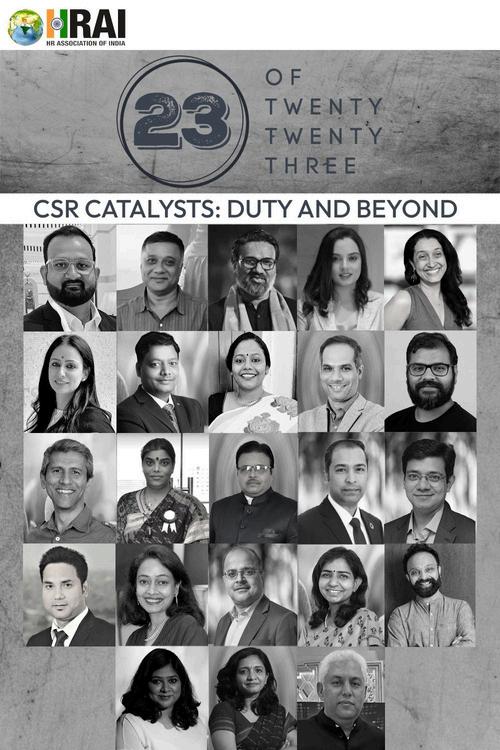
The 23 Of 2023 Initiative recognizes exceptional leaders and entrepreneurs based on a predetermined theme. Featured leaders include those from Adani, Reliance, IBM, Infosys, KPMG, as well as notable celebrities.
CHELLAPANDIAN PITCHAI
Cult not a mind
In today’s dynamic and evolving workplaces, culture is no longer a passive outcome it must be a deliberate design. Organizations that thrive are those that intentionally create environments where people feel psychologically safe, emotionally connected, and professionally empowered At the heart of this design lies belonging the feeling that one’s presence, voice, and contributions matter.
Inclusion is not a checkbox or a one-time initiative. It is a continuous journey, driven by thoughtful leadership, inclusive systems, and a culture that values diversity not just in numbers, but in perspectives, experiences, and ideas. When inclusion is intentional, it fuels innovation. And when innovation thrives, organizations grow not just in scale, but in purpose, resilience, and impact.
Diversity Is the Reason, Inclusion Is the Result:
Diversity brings richness to conversations, creativity to problem-solving, and resilience to teams. It introduces new ways of thinking, challenges assumptions, and expands possibilities. However, diversity alone is not enough Without inclusion, diversity can remain superficial visible but not impactful.
Inclusion is what transforms diversity into belonging. It’s the bridge between representation and participation When employees feel valued, they contribute more meaningfully, collaborate more openly, and innovate more boldly. Inclusion ensures that every voice is heard, every idea is considered, and every individual feels empowered to make a difference.
Culture by Design: From Intent to Impact:
This is where culture by design becomes essential. It’s about converting intent into impact Many organizations express strong intentions around inclusion and psychological safety. Yet, the impact often falls short. The gap between what we say and what we do must
CHELLA PANDIANPITCHAI
(CMM) provides a structured lens to assess and evolve organizational culture from reactive and fragmented to intentional, inclusive, and highperforming.
The CMM outlines five progressive stages of cultural maturity:
Stage 1: Awareness (Reactive Culture):
Culture is informal, often shaped by legacy behaviors
Values are known but not consistently practiced.
Employees begin to understand the values of the organization.
Stage 2: Acceptance (Defined Culture):
Leadership begins to articulate cultural expectations
Values are acknowledged as important but not yet embedded.
Employees accept the importance of demonstrating values
Stage 3: Alignment (Adopted Culture):
Teams agree on shared behaviors and norms. Culture starts to influence decision-making and collaboration
Employees commit to living the values daily
Stage 4: Action (Practiced Culture):
Values are consistently applied across functions.
Inclusion, psychological safety, and belonging are visible.
Values are translated into everyday action.
Stage 5: Acceleration (Embedded Culture):
Culture drives innovation, engagement, and growth.
CHELLAPANDIAN PITCHAI
Why This Matters
Inclusion is not just a moral imperative it’s a business one Inclusive cultures attract top talent, retain high performers, and drive innovation They are more adaptable, more resilient, and more aligned with the needs of a diverse world.
By embracing culture by design and using frameworks like the Culture Maturity Model, organizations can move from intention to impact. They can create workplaces where everyone feels seen, heard, and valued And in doing so, they unlock the full potential of their people and their future
About the Author:
Chella Pandian Pitchai, Global Head of DEI, Culture, Values & Belongingness, Leadership Development & Sustainability at Biocon Biologics, is a pioneering HR leader and certified coach with over 25 years of experience. He excels in architecting inclusive cultures, driving talent development, fostering innovation, and championing sustainability Recognized with awards such as HR Leader of the Year in Malaysia (2017-2019) and among the 501 Most Influential HR Professionals worldwide, Chella is pursuing a Doctor of Business degree in Digital Transformation in HR and is dedicated to women's empowerment and social impact through his global leadership and community initiatives.
DR.ANKITASINGH
The truest measure of leadership isn’t how much we achieve — but what we enable others to become.
There was a time when work was defined by walls office walls, role walls, and mental walls. People came in, did their bit, and went back home leaving their identities, aspirations, and ideas at the door. Organizations grew, yes but often by process, not by purpose.
Then the world shifted. What worked yesterday doesn’t work today. The rules changed not because of technology alone, but because people changed
We learned that performance doesn’t just come from paychecks or policies it comes from purpose.
And that culture isn’t what happens by default; it’s what we design by intent.
“Things don’t fall in place we place them in place. Culture should be by design, not by default.”
So, what does designing culture mean in today’s world? It means replacing legacy pride with learning agility.
It means choosing relevance over rigidity, skill over gender, expertise over experience, and growth over competition.
It means building workplaces where people don’t just fit in they belong and evolve. Let’s explore this through the lens of C.U.L.T.U.R.E.
C – Clarity over Conformity:
Conformity is safe clarity is empowering. When people understand the why behind what they do, they don’t just comply; they contribute Purpose-driven clarity creates alignment, while conformity only breeds obedience.
A leader’s role is not to make everyone the same, but to make sure everyone understands the same purpose
Because when purpose is clear, culture becomes self-sustaining.
U – Unlearn to Learn:
Relevance is the new experience.
The future belongs to those who have the courage to unlearn what no longer serves them. Unlearning isn’t forgetting; it’s releasing the old to make room for the new
Organizations that reward curiosity over comfort will always outlast those that reward tenure over transformation.
Let’s stop asking, “How many years of experience do you have?” and start asking, “What have you learned that still matters today?”
L – Lead with Empathy, Not Authority:
In workplaces of the past, authority commanded respect
In workplaces of the future, empathy earns trust
Empathy doesn’t mean being lenient it means being human.
It means knowing that the same metric can’t measure everyone’s journey When leaders listen before leading, they don’t just manage teams they move hearts.
A culture that values empathy breeds loyalty because people never forget how a workplace made them feel.
T – Trust and Transparency:
Trust is the foundation of every strong culture but it’s often the most fragile
It can’t be demanded; it must be demonstrated. Transparency builds trust, and trust builds belonging
When employees understand how decisions are made, they don’t question the intent behind them
In a culture designed with trust, accountability isn’t imposed it’s owned
U – Uplift through Growth Mindset:
The workplace isn’t a racetrack; it’s a learning ground.
Comparison kills creativity, but growth fuels confidence.
When organizations celebrate progress, not perfection, they create room for risk, reflection, and reinvention.
A growth mindset turns failure into feedback and effort into excellence
The goal isn’t to be better than others it’s to be better than yesterday.
R – Relevance over Routine:
Success stories of the past can easily become comfort zones of the present.
But relevance doesn’t come from repetition it comes from reinvention
A culture that values relevance asks hard questions:
Are we evolving with the world? Are our people learning faster than the market is changing?
Longevity without learning is a slow death. Relevance keeps an organization alive and agile.
E – Empowerment over Endorsement:
True empowerment isn’t about titles or approvals it’s about trust and autonomy
When people are empowered, they take ownership not just of tasks, but of outcomes
Empowerment fuels accountability; it tells people, “You matter Your voice counts ”
And when that happens, innovation doesn’t need an agenda it happens naturally.
Empowered people build empowered organizations and that’s the real competitive advantage.
About the Author:
Dr Ankita Singh is the CPO & Board Director, CIGNEX & Relevance Lab. With 22+ years in HR, primarily in the ITES sector, Ankita has driven transformation through performancedriven practices and inclusive culture. At CIGNEX, her leadership helped the company earn multiple “Great Place to Work” certifications (2017–2021) She has been recognized as “Woman Leader of the Year” by The Times of India Group and featured in Forbes India’s “Top 100 Managers ” Ankita holds an MBA in HR+IT, an Executive MBA from SCMHRD, and a Ph D in Management A respected voice in the industry, Ankita blends strategic insight with a passion for people development and culture building.
DR.LAKSHMANKUMAR KODUPAKA
When purpose, people, and performance are aligned by design, organizations don’t just deliver great code they deliver meaningful outcomes.
Introduction: Designing the Invisible Architecture of Work
In the fast-moving world of digital engineering where frameworks, tools, and technologies evolve faster than business models culture can no longer be an afterthought. It must be designed with the same precision and agility as the products we engineer.
At Sutherland’s Digital Engineering Services (DES), we’ve learned that culture is not a byproduct of success; it’s the blueprint behind it. When purpose, people, and performance are aligned by design, organizations don’t just deliver great code they deliver meaningful outcomes.
This article explores how we intentionally shaped a culture that supports innovation, learning, and belonging grounded in realworld examples from our teams and other digital engineering organizations.
Defining “Culture by Design” in Digital Engineering
In digital engineering, culture is the operating system of the organization. It defines how teams collaborate, make decisions, and learn from both success and failure
Designing culture means being deliberate about three things:
Mindset Alignment: Hiring for curiosity, resilience, and adaptability not just credentials
Work Design: Embedding agility and shared accountability in how teams operate.
Learning Loops: Making continuous learning part of everyday work, not an extra task.Our Tech Academy was designed not as a training center but as a cultural accelerator where engineers
Our onboarding structure includes:
1 Orientation: Immersing new hires into our purpose and how digital engineering creates client impact.
2 Immersion: Pairing with project buddies and joining technical guilds early
3.Engagement: Direct Q&A sessions with delivery leaders and innovation champions
This reimagined model increased early engagement scores by 30% and reduced newhire attrition.
�� Case in point: McKinsey’s study of a large legacy company found that involving 1,000 employees in design-thinking sessions accelerated its digital culture adoption proving that participation fuels belonging
Fostering a Culture of Continuous Learning and Innovation
Innovation doesn’t thrive on process it thrives on curiosity To sustain this, we designed learning sprints within project timelines, making growth part of the workflow rather than an external activity
Learning sprints: 45-minute peer-led sessions on emerging tech (e g , GenAI, Edge, Microservices) Innovation Days: Cross-functional hackathons to solve live client challenges. Leadership modeling: Senior leaders enrolling in AI/ML certifications and leading tech talks.
�� Case in point: Research on corporate hackathons (arXiv, 2021) showed measurable gains in developer satisfaction, collaboration, and innovation velocity In our case, these initiatives fostered internal mobility and made learning aspirational.
DR.PRADYUMNAPANDEY
CEO, PROMEDIEXCEL LEARNING PVT. LTD
CHAIRMAN, ISAB, NOIDA
Culture is built with intent and lived every day through purpose, actions, and connection.
Culture is not what an organization says it’s what it does every day It is the invisible thread that connects people, purpose, and performance Workplace culture shapes how employees think, behave, and engage; it defines whether they simply fulfill responsibilities or find meaning in what they do The difference often lies between culture by default and culture by design
Culture by default evolves unconsciously. It emerges through habits, unspoken rules, and leadership styles that develop without clear intent Such cultures may function but lack coherence and direction. They depend on personalities rather than principles and react to circumstances instead of shaping them.
In contrast, culture by design is deliberate and thoughtful. It is built on clear purpose, consistent leadership behavior, and systems that reflect shared values. It is not left to chance it is led with intent
At a time when talent is mobile, expectations are shifting, and the meaning of work is being redefined, organizations cannot afford to leave culture to evolve on its own They must design it carefully, consciously, and consistently
Designing Culture with Intent:
Building a culture by design begins with one essential realization: culture is not a program to be rolled out it is a way of life to be lived every day. It cannot be outsourced or delegated; it must be owned collectively and led purposefully. While leaders set the tone, culture comes alive through the shared experiences and behaviors of people at every level
The foundation of a designed culture is clarity of purpose Employees today seek more than stability they seek significance When an organization defines why it exists and what it stands for, it creates an anchor that guides decisions, especially in moments of uncertainty.
A clear purpose gives people a reason to care beyond targets and tasks; it gives meaning to effort
Leadership, therefore, becomes the most powerful instrument of culture. Values cannot simply be declared they must be demonstrated When leaders embody the principles they promote, employees notice and follow The opposite is equally true when leadership behavior contradicts stated values, trust erodes and cynicism grows. Hence, consistency between words and actions is non-negotiable
Culture also lives through systems. Recruitment, performance management, promotions, and rewards must reflect the organization’s beliefs. If collaboration is a core value, then performance metrics must reward team success, not just individual achievement. If learning is valued, then experimentation must be encouraged, not penalized. When systems reinforce values, culture shifts from intention to reality
Yet, beyond processes and policies, an intentional culture must also touch hearts.
It should create a work environment where everyone feels connected to the larger purpose where people see how their individual contributions add up to something meaningful. When employees understand the impact of their work, their engagement deepens and their ownership expands They stop working for the organization and start working with it
The Role of Openness and Connection:
A culture by design thrives on openness and trust Transparency is the glue that holds purpose and people together Leaders must communicate honestly, share information freely, and explain the “why” behind their decisions. When communication is authentic, it creates a sense of inclusion and respect
Moreover, leaders must be comfortable when their best assumptions are challenged by their teams.
Constructive disagreement is not a threat it is a sign of engagement When employees feel free to question and contribute ideas, the organization becomes more innovative and adaptive Leadership in a designed culture is not about having all the answers; it is about creating the space where the best answers can emerge
Culture is strengthened not just in town halls or strategy meetings, but in everyday interactions how feedback is given, how recognition is shared, how success is celebrated, and how failures are handled Every conversation becomes a cultural signal Over time, these small, consistent behaviors shape the character of the organization far more deeply than any written value statement
Building Purposeful Workplaces
Designing culture with intent naturally leads to the creation of purposeful workplaces spaces where people don’t just work but belong Purposeful workplaces are built on connection, care, and continuous growth. Employees feel emotionally and intellectually aligned with the organization’s mission. Their motivation stems not from compliance but from commitment
In such workplaces, growth is both personal and collective. The organization invests in developing its people, and in return, people invest their energy, creativity, and loyalty in the organization’s success Purposeful cultures recognize that people bring more than skill they bring aspirations, emotions, and potential. When leaders nurture these dimensions, performance follows naturally
A culture of purpose also values well-being It recognizes that productivity cannot be sustained without balance and empathy. When employees feel respected, heard, and supported, they bring their best selves to work They take pride in the organization’s success because they see themselves reflected in it.
These are the workplaces where retention is not achieved through perks or policies but through connection People stay not because they have to, but because they want to
The Leadership Imperative
The responsibility for designing and sustaining culture rests squarely with leadership Every leader, through everyday choices and conduct, becomes a culture carrier. The way they communicate, resolve conflicts, appreciate effort, or handle setbacks all of it sends messages about what the organization truly values
To lead culture by design, leaders must act as architects, not administrators They must shape not only strategy but also spirit This means being intentional about the environment they create one where clarity coexists with flexibility, where direction is firm but dialogue remains open.
Culture is dynamic; it evolves with every decision and interaction Leaders who understand this treat culture as a living system one that needs nurturing, reflection, and renewal. They know that culture is not built in offsites or campaigns, but in the everyday rhythm of work
Moving from Words to Action
Many organizations proudly speak of integrity, innovation, and collaboration But employees often experience a gap between what is said and what is lived
Closing that gap requires alignment structural, behavioral, and emotional Structures must reinforce values through fair systems; behaviors must mirror those values consistently; and employees must feel an emotional connection to the organization’s purpose.
When these three align, culture transforms from a corporate ideal into a shared experience It becomes self-sustaining a force that attracts, retains, and inspires talent.
DR.PRADYUMANPANDEY
To conclude we can say that, in a world where strategies can be copied and technologies can be replicated, culture remains the one true differentiator.
A culture left to default may drift into mediocrity, but a culture designed with purpose creates workplaces that inspire people to stay, grow, and give their best.
When organizations design culture with intent, foster openness, and connect people to a larger purpose, work becomes more than employment it becomes a shared journey of meaning and growth
Culture by design is not a destination; it is a daily practice. And the most successful organizations are those that understand that culture is not something they have it is something they build, every single day
ABOUT THE AUTHOR:
Dr Pradyumna Pandey is a seasoned HR leader with 30+ years of experience across top Indian and multinational companies like HERO Motocorp, Mother Dairy, ACC Ltd., Holcim, JK Tyre, and Torrent Pharma His expertise includes strategic HR, organizational development, industrial relations, and workforce management.
Renowned for aligning human capital with business goals, Dr Pandey has led transformative initiatives that drive growth, culture, and engagement.
He is currently the CEO of PromediExcel Learning Pvt Ltd and also serves as the Chairman of ISAB, Greater Noida, where he plays a key role in shaping future leaders and strengthening the education ecosystem
DR.SAUMYA BADGAYANDUTTA
The workplace isn't a collection of human resources; it's an extension of the family.
If you were to design the perfect, purposeful workplace from scratch, you’d probably start with vision statements, core value posters, and maybe a ping-pong table to foster "collaborative synergy " You’d host mindfulness workshops and have a feedback system so robust it would make a Swiss watch look simple.
Then, you’d walk into a typical family-owned business in India, and your entire blueprint would be torn up, used to pack a shipment of components, and tossed into a recycling bin that may or may not actually get recycled.
In the grand, chaotic, and utterly charming ecosystem of Indian family businesses, culture isn't designed on a PowerPoint slide It’s a living, breathing entity, simmered slowly over generations like a pot of your grandmom’s secretrecipe sambar. It’s a unique blend of ancient tradition, modern ambition, and the unshakeable belief that any problem can be solved with a strong cup of chai and a firm talking-to from the eldest member of the clan
The "Jugaad" Ethos: Innovation Born from Necessity (and a Lack of Stationery)
Forget Silicon Valley's "fail fast, fail often." The family business motto is "fix fast, fix with whatever is available " This is the land of jugaad, where innovation isn't a department but a survival skill. The purpose it builds is one of incredible resourcefulness
The office printer, held together with cello tape and hope, isn't just a machine; it's a testament to the company's resilience The CFO (also known as Chacha Ji) will look at a broken chair and see not a liability, but a future plant holder that just needs a bit of welding This culture of making-do fosters a profound sense of ownership. Employees don’t just see a problem; they see a puzzle they’ve been implicitly challenged to solve, often with a mix of ingenuity and sheer defiance of physics.
Example: The sales team needs a last-minute presentation for a big client In a corporate setting, this would trigger a flurry of emails to the design team Here, the junior accountant, whose cousin’s friend is a "graphics whiz," is deputized. The presentation is created on a cracked laptop, using a bootleg version of design software, and is delivered with such passionate conviction that the client signs the deal, probably out of a mix of admiration and confusion The purpose? Get it done No excuses
Hierarchy: The Unspoken Org Chart That Actually Works
The formal org chart in a family business is often a work of fiction, right next to the "5Year Strategic Plan" drafted in 1998. The real power structure is a complex web of relationships, seniority, and who remembers whose wedding.
You have the Patriarch/Matriarch: The CEO in theory, the Supreme Leader in practice Their word is law, delivered with the quiet finality of someone who has seen three recessions and still managed to get their daughter married off in a grand ceremony. Then comes the "Young Sir/Madam" (the scion), fresh from an MBA in the West, bursting with ideas about "disruption" and "vertical integration." Their town hall meetings are often met with polite nods and a hidden skepticism that translates to, "Beta, first learn how to correctly drink chai from a kulhad without spilling "
And then, the most crucial cog in the machine: The Office Aunty/Uncle. This person holds no official title but wields power that would make a Roman emperor jealous. They know everyone's salary, everyone's marital status, and exactly which client is annoyed because their Diwali gift was a cheaper box of mithai than last year's.
Their purposeful role? They are the cultural glue, the unofficial HR, and the office morale officer, all rolled into one, often while distributing homemade pickle
Purpose Woven into the Personal
In a global corporate, your purpose might be "to maximize shareholder value " In a family business, your purpose is to ensure that Mr Gupta’s son gets into a good engineering college because Mr. Gupta’s father helped your father start the business in 1972 The workplace isn't a collection of human resources; it's an extension of the family.
This creates a level of loyalty that no employee stock option plan can buy. Your boss knows your child has exams The entire office chips in for a colleague's daughter's wedding. And if you’re looking a bit peaky, you will be force-fed a concoction of ginger, honey, and tulsi by the matriarch, with a side order of unsolicited life advice.
This deeply personal connection is the ultimate "purposeful workplace." You aren't just working for a faceless entity; you are contributing to the well-being of a family you have known for years The company's success is directly tied to the community's prosperity. When the business does well, the entire ecosystem from the chaiwala outside to the raw material supplier in the next town flourishes.
The Relatable Reality: Meetings and Meltdowns
Let’s get relatable Imagine a typical Monday morning meeting in a family-owned garment export house
Young Sir: "Team, data suggests we need to pivot to sustainable, athleisure wear for the European market I’ve prepared a deck "
Patriarch (staring into his chai): "Son, Mr Johri in Delhi has been buying our cotton kurtas for twenty years. His son is getting married We are sending him an extra-large box of laddoos Then we will talk about your... athleisure."
The meeting then devolves into a 20-minute discussion on the quality of said laddoos, the merits of different sweet shops, and a story about the Patriarch’s own wedding, where the laddoos were, apparently, subpar Is this inefficient? By corporate standards, wildly. But in this culture, it’s purposeful It’s reinforcing the foundational principle: relationships first, business second.
Building a Bridge: Infusing "Design" into the "Culture"
So, how does a family business evolve from its beautiful, chaotic, inherent culture to a more "designed" one without losing its soul? The key isn't to replace the sambar with sushi. It's to use the right spices.
1. Formalize the Informal: That Office Aunty who knows everything? Make her the head of a formal "Culture & Communication" committee Her innate wisdom about people is your greatest asset.
2. Channel the Jugaad: Create an "Innovation Fund" where employees can pitch their jugaad solutions with a small budget. Turn that chaotic problem-solving energy into a structured driver of improvement
3. Listen to the Young Blood (Selectively): Give the MBA-returning scion a sandbox a small project or a new vertical where they can test their modern theories. Let them prove their mettle with data, and slowly, the patriarch might see the value in that "athleisure" line after all.
4. Celebrate the "Why": Don’t just have a vision statement; tell the story. Tell the story of how the grandfather started the business with one loom and a big dream. That story is more powerful than any corporate manifesto. It’s a purpose every employee can feel
In the end, the culture of a family-owned business in India is a masterclass in building a purposeful workplace Its purpose isn't abstract; it's tangible. It’s in the shared lunch, the collective worry during a slow season, and the genuine joy during a festival bonus It’s messy, it’s emotional, and it’s occasionally infuriating. But it’s real. It’s a culture built not by design consultants, but by life itself And honestly, no ping-pong table can ever beat the bonding power of a perfectly brewed, collectively shared office chai
About the Author:
Dr. Saumya Badgayan Dutta is a distinguished HR strategist and senior management leader with over two decades of experience driving transformation in the luxury manufacturing sector. As Vice President – HR Business Strategy at Gold Star Jewellery Pvt Ltd , she partners with CEOs and boards to align business vision with people and operational excellence Holding dual PhDs in E-Commerce and Psychology, Dr Saumya blends digital acumen with behavioral insight to build futureready, high-performance cultures A TEDx Speaker, World Record holder, and 10x LinkedIn Top Voice, she is recognized for pioneering data-driven, human-centric HR models that accelerate organizational growth Her work spans leadership development, inclusion, and large-scale digital transformation, making her a respected voice in shaping the next era of workplace evolution.
CHRO, APOLLO HOSPITALS
Compassion is not a soft skill; it’s a professional strength that defines how care is delivered and how people feel supported.
Humanity at the Heart of Healthcare
As a CHRO, I firmly believe that the key to a thriving workplace lies in high engagement and process simplification When we create an empowered environment where people can bring their authentic selves to work, we foster not just productivity but purpose Making space for fun, positivity, and human connection is where true engagement begins
Looking ahead, my long-term goal is to ensure that HR in healthcare becomes a pillar of people welfare where the mental and physical well-being of our caregivers is as valued as the care they provide. Simplifying processes is not just an operational priority; it’s a way to empower healthcare professionals to focus on what matters most: healing and compassion. It’s about making work better, for people, every day.
At Apollo, we have always believed that world-class healthcare is incomplete without humanity at its core. BEKIND was born from the realisation that kindness cannot be left to chance it must be woven into the very fabric of our organisation. By making compassion an organisational commitment, we ensure it influences every interaction across our ecosystem between colleagues, caregivers, and patients alike.
Over time, BEKIND is helping us move beyond a culture focused purely on medical outcomes to one where trust, empathy, and dignity are daily practices.
Defining Compassion in Healthcare
We view compassion as a professional strength, not a soft add-on Through the 10 Commandments of BEKIND and our training programmes, we elevate empathy, listening, and communication to the same level as medical expertise.
These behaviours are now embedded into our performance systems making it clear that success is measured not just by technical proficiency, but also by how care is delivered and how supported our patients and colleagues feel in every interaction.
Future Outlook
In the long run, we envision BEKIND becoming a benchmark for healthcare institutions everywhere. Five years from now, we aspire for kindness to be seen as a standard of care on par with clinical excellence. If BEKIND inspires other hospitals in India and across the world to embed compassion into their systems, its true purpose will be realised redefining healthcare as an experience rooted equally in science and humanity
About the Author:
Leading high-performing teams and crossfunctional projects to drive business strategy. Heading the Strategic HR function for India’s largest healthcare organisation. Possesses international experience of heading HR in European Emerging Markets and the Middle East. An Inclusion & Diversity enthusiast, passionate about Organisation Change Management and HR Transformation. Has held HR leadership roles across various industries including Hospitality, Healthcare, and Financial Services.
VICE PRESIDENT, LEARNING & DEVELOPMENT AND DEI ,AXIS MAX
LIFE INSURANCE
When culture is intentional, work becomes meaningful and that’s when magic happens.
In a quiet corner of our bustling office in Mumbai, a young relationship manager named Meera sat across from a grieving client. The client had just lost her husband, and Meera was helping her navigate the claims process It wasn’t just a transaction it was a moment of human connection, empathy, and trust. Later, when asked why she went above and beyond, Meera simply said, “This is what we do. We are BHAROSA ”
That sentence simple yet profound captures the essence of a purposeful workplace. It’s not just about what people do, but why they do it. And that “why” doesn’t happen by accident It’s the result of culture by design
From Accidental to Intentional Culture:
Many organizations still treat culture as an outcome of legacy, leadership personalities, or informal norms But in today’s competitive talent landscape, especially in sectors like life insurance where trust and relationships are paramount, culture must be intentional
I’ve seen firsthand how organizations that design their culture deliberately through values, rituals, systems, and leadership behaviors create environments where people don’t just work, they thrive For example our senior leadership dedicates a day to speaking to our customers personally and understanding their association and experience with the company. Through this simple act of “Walk the Talk” we emphasize the importance of “Customer Obsession” amongst our team members who go on the live this value and reinforce our purpose to “Inspire People to increase the value of their life”.
Values: The Anchor in a Sea of Change:
In a world of shifting priorities and hybrid work models, values are the anchor. It gives employees a reason to stay, contribute, and grow But purpose isn’t just a slogan on a wall it must be lived
One of the best practices we adopted was integrating purpose & values into performance conversations. Instead of just discussing KPIs, managers asked, “Give me an example of how you lived our core values and purpose ?” This simple shift reframed the dialogue from metrics to meaning.
Simon Sinek famously said, “People don’t buy what you do; they buy why you do it ” The same applies internally Employees commit not to tasks, but to causes
Psychological Safety: The Hidden Engine of Innovation:
While purpose inspires, psychological safety empowers. It’s the invisible force that allows people to speak up, take risks, and admit mistakes. In high-stakes industries like insurance, where compliance and precision are critical, creating a safe space for dialogue is essential
I recall a moment during a leadership development workshop when a mid-level manager shared, “I don’t feel safe enough to say I don’t know ” That vulnerability sparked a powerful conversation, leading to the creation of “Chai pe Charcha” where employees could share challenges without judgment
Research tells us that psychological safety is the number one predictor of team success. In our context, it’s the difference between a team that follows instructions and one that innovates & takes responsibility to serve customers better
Designing
for Belonging and Growth:
Belonging is deeper than inclusion it’s the feeling of being seen, heard, and valued Through our inclusion efforts and the Allyship campaign we structurally solve for HEG’s like women, second career women, caregivers, people with disability. We established hobby clubs which gave people a venue to connect irrespective of their age and an environment that boosted camaraderie in our multi-gen workforce
Growth is the other pillar. Employees today don’t just want jobs they want journeys. Purposeful workplaces invest in continuous development, not just training events Our learning ecosystem includes microlearning, mentorship, and encourages internal mobility One standout initiative is “CATALYST,” which helps women in mid-career roles prepare for leadership. Over the years we have run five batches with atleast 25% of women getting internally promoted or an expanded role within 12 months of completion of the program
Leadership: The Culture Carriers:
Culture lives in conversations, and leaders are its carriers When leaders model vulnerability, curiosity, and purpose, it cascades across the organization. A CHRO once told me, “Culture is what happens when no one is watching ” That’s why we embedded culture into leadership development not as a module, but as a mindset Leaders are trained to ask better questions, listen deeply, and coach with empathy. We moved beyond engagement scores to track culture health through pulse surveys and retention analytics In the life insurance industry, where trust is currency and relationships are long-term, culture is not a soft skill it’s a strategic asset. Designing culture intentionally allows organizations to build workplaces where people feel connected, safe, and inspired to grow As L&D professionals, we are not just trainers we are culture architects We have the tools, the influence, and the responsibility to shape workplaces that don’t just retain talent but elevate it. Let’s move from managing culture to designing it with purpose Because when culture is intentional, work becomes meaningful and that’s when magic happens
ABOUT THE AUTHOR:
Richa Singh is the Vice President; Learning & Development and DEI at Axis Max Life Insurance. Prior to this she was also responsible for driving CSR initiatives of the company She comes with a total of 20 years of work experience across sectors of Hospitality & Life insurance. Richa is a Coach, Mentor and Certified DiSC Trainer. An alumnus of IIM Kolkata, she was recently recognized by HRAI amongst the Top DEI Professionals of the country
NEW APPOINMTMENTS
A news initiative spotlighting recent appointments and key leadership movements in the corporate world.
ROHANLELE
A company’s culture is shaped not by the values written on walls, but by the values leaders live through their actions and behaviours.
Culture begins at the top! How leaders build purposeful workplaces.
From review meetings to boardroom discussions, we often talk about strategy,structures and numbers, but something that equally matters hardly gets the attention it truly deserves! You must be wondering what it is? Well, it is the organizational culture
As we speak about culture, I am reminded of the famous quote from none other than Peter Drucker – ‘Culture eats Strategy for breakfast’
The quote isn’t intended to lesser the significance of Strategy, however it is powerful reminder that culture matters as much as what the Strategy does, if not more!
But why does it not get the attention it deserves and why isn’t it a subject of discussions during internal business reviews or boardrooms? Well, the answer is quite simple – because it is difficult to measure cultures impact on business or to convert its impact in numbers
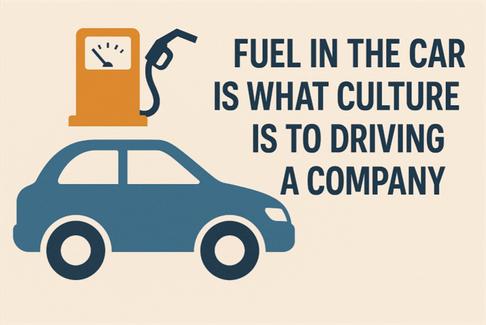
Let’s understand how important the culture is, with example of a car! If you own the best car with the latest features and upgrades, it is of no use without fuel. You can’t experience the joy of riding the best car if the fuel tank is empty. Well, culture is just that ‘fuel’ that propels consistent growth in numbers, market share, profitability and more
share, profitability and more
You may have a great strategy, unique product offering and a talented team in place, however all of this is futile, if the Leadership team doesn’t focus on building a great culture that builds a purposeful workplace. A place where the WHY is not just clear, but everyone works with passion and perseverance to achieve the WHY
Here are 5 things that Leaders must demonstrate at the workplace when it comes to building a great culture!
Live the company values:
Values translate into a great culture if demonstrated and lived!
Leaders must understand, embrace and live the company values each day Well one must remember that a Leader living the Values isn’t enough, but they have a far greater responsibility on their shoulders. They must inspire, coach and mentor their team members to live these values through their behaviour and actions When everyone across the hierarchy truly understand and live the Values, it is only then you build a workplace that stands the test of time and achieves it’s ‘WHY’.
Align your team with organizations Purpose and Goals:
A leader role isn’t just to work towards achieving organizational vision and goals, but to ensure that every team member understand the vision and is aligned and moving ahead in the same direction to achieve the Goals they set out for!
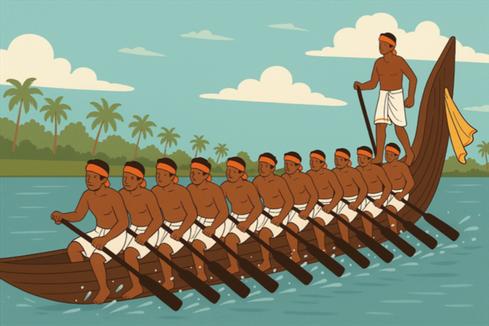
I am reminded of the famous Vallam Kali the traditional boat race of Kerala. It’s a mesmerizing sight to watch dozens of rowers, perfectly synchronized and moving forward with rhythm, precision, and shared purpose The team that wins is not always the strongest, but the one that is most aligned, coordinated and committed to the collective or shared goal
That, in essence, is the leader’s role to create alignment, build rhythm, and ensure that every
member of the team is moving in the same direction. When that happens, the organization doesn’t just move it soars and roars toward victory
Build a workplace on inclusivity and merit, far from discrimination:
As humans we tend to align with those who speak the same language, have a similar belief system, similar religious or spiritual practices. While it is ok to have a personal liking for someone who may share certain similarities with us, but when it comes to building purposeful workplaces, Leaders must think rationally and go beyond their personal likes and dislikes for some people in particular. It is difficult to, but one isn’t really a leader if he/she cannot think rationally and build a workplace based on inclusivity and merit
By inclusivity, it means, a workplace where…
Diversity in religion, gender, age, ethnicity, sexual orientation, disability and background is respected
Everyone can share their ideas, perspectives or disagreements without the fear of bias, ridicule or unfair judgement
Everyone is treated fairly, has equal access to resources and career advancement is based on merit and not personal bias or favouritism.
A truly inclusive workplace isn’t where people just
work together but also grow together!
Embrace feedback as an ornament:
As leaders we often give feedback to our team members. However, how often do we proactively seek feedback from our team members or colleagues? The 360- degree feedback exercise is seen as one more HR thing or an annual ritual and in most cases no work happens on the report that is shared. HR shares the report, it is heard and then the Leader get one more report next year!
As leaders we often give sermons to our team members to take the feedback positively, reflect on it and improve – however do we really walk the talk? Well, in a workplace backed with purpose and passion – Leaders not just embrace feedback but proactively ask for it This is what truly sets apart the Bad, Good and Great Leaders!
Remember the golden rule: Culture eats Strategy for Breakfast:
As a company we may be successful in onboarding the brightest talent which will not only help the company counter fierce competition and but always help the company stay ahead!
However, just onboarding great talent isn’t good enough. The talent needs to believe in the story (company’s purpose) and work with a sense of belongingness This can only happen if leaders understand how important it is to invest one’s time and efforts in building a truly diverse and inclusive workplace, where Values aren’t just a decorative wall piece, but lived every single day through one actions and behaviour The best of the strategy will fail if organizations fail to build a culture that keeps outstanding talent glued to the company’s vision and purpose!
“Leaders must build a culture that propels strategy, accelerates growth, and creates an enterprise that thrives for generations.”
About the
Author:
Rohan Lele, Founder and Principal Consultant, brings over two decades of diverse industry experience spanning petrochemicals, automotive, chemicals, specialty chemicals, power transmission, and engineering sectors. Holding senior HR leadership roles across Indian and global conglomerates, as well as family-owned, B2B, and B2C organizations across India, the APAC, and the Middle East regions An alumnus of M.S. University of Baroda (BBA, MHRM), with executive programs in Strategic HRM from IIM Ahmedabad and Leadership & Change Management from XLRI Jamshedpur A Certified Coach, Leadership Trainer, and NLP Practitioner (ABNLP, USA; ANLP, UK), additionally certified by Dale Carnegie, Talogy International, and in Enneagram Serving as past Director and Chair of the Baroda Management Association, and recipient of multiple accolades including Best HR Professional 2017, 101 Super HR Achievers 2019, and 101 Most Fabulous HR Tech Leaders by the World HRD Congress and CHRO Asia
SAHILNAYAR
HR LEADER AND INFLUENCER
Culture isn’t what’s written on walls; it’s what walks in the hall.
A funny thing about culture; it exists even when you don’t design it
You can’t touch it, yet it touches everything. You can’t see it, yet it’s visible in every meeting, email, and Monday morning stand-up
You can’t hear it, yet it speaks loudly in the silence of disengaged employees and the laughter echoing through collaborative spaces
For years, organizations have spent millions on culture decks, posters, and hashtags
But the truth is, culture isn’t what’s written on walls; it’s what walks in the hall
From Accidental to Intentional Most organizations don’t have a “bad” culture; they have an accidental one It’s like cooking without a recipe, sometimes you get a Michelin-star dish, other times just burnt toast and confusion.
Intentional culture-building begins when leaders stop outsourcing “engagement” to HR and start owning it as a business strategy It’s not a workshop; it’s a way of work
It’s when hiring isn’t just about competence but cultural contribution When performance conversations are as much about values as they are about KPIs.
A McKinsey study found that organizations with a strong sense of purpose outperform competitors by up to 42% in profitability and 40% in employee retention Why? Because when people believe in why they’re working, they’ll give their best even when what they’re doing gets tough.
Psychological Safety: The Oxygen of Culture
Let’s talk about the phrase that’s become the “kombucha” of corporate vocabulary; psychological safety. Everyone’s sipping it, but few are really digesting it.Psychological safety isn’t about being nice It’s about being real It’s the confidence that you can raise a concern, share
a half-baked idea, or say, “I messed up,” without fearing a career heart attack
Google’s Project Aristotle found that the highestperforming teams weren’t the ones with the smartest people but those with the safest environments.
Safety breeds trust Trust breeds honesty Honesty breeds innovation. In other words: If your team can’t speak up, they’ll start checking out.
Culture Isn’t Taught; It’s Caught
You can’t train culture in a two-hour module. You live it every day in decisions made behind closed doors, in how leaders handle dissent, in who gets promoted and who gets ignored.
A Deloitte survey revealed that 82% of employees believe culture is a competitive advantage, but only 19% think their organizations have the “right” one That gap? It’s leadership behaviour
People don’t leave companies, they leave cultures that stop them from being themselves
The future belongs to organizations that design spaces where authenticity isn’t a buzzword, it’s a business practice
The 3C Framework: Crafting Culture by Design
If culture is to be built by design, not default, organizations must work on three deliberate pillars:
1. Clarity:
Purpose can’t be a poster. Employees should know exactly how their role ladders up to the organization’s larger mission The question isn’t what do I do? But why does it matter?
2. Consistency:
Culture can’t change with the leadership rotation or market conditions
SAHILNAYAR
When values hold steady even in crisis, they transform from corporate jargon into collective conviction.
3. Connection:
Human connections are the ultimate productivity tool
Leaders must design moments of genuine bonding not the forced-fun variety, but real conversations that allow empathy to coexist with excellence
After all, people join for the brand but stay for the belonging.
The New Leadership Imperative Leaders today aren’t just managers of performance they’re architects of emotion. They set the tone, energy, and psychological climate
The question isn’t “What’s the culture of your company?”
It’s “What happens when you walk into a room?”
A culture of fear shrinks voices. A culture of respect expands minds A culture of purpose aligns both.
Building Purposeful Workplaces
Purpose-driven workplaces aren’t defined by free snacks or fancy titles; they’re built on shared meaning It’s about people who feel they’re building something bigger than themselves
When individuals find purpose, organizations find performance When leaders build trust, employees build momentum
When culture is designed with intent, success becomes a side effect, not a chase
Because at the end of the day, culture is the shadow your organization casts when no one’s watching. So, design wisely Lead deliberately
And remember, if strategy is what moves the head, culture is what stirs the heart And when both align, work stops being a place you go to and becomes a purpose you grow through.
About the Author:
Sahil Nayar is an HR disruptor, who loves blending data with intuition, strategy with storytelling, and innovation with impact. Whether he’s shaping talent strategies, mentoring future leaders, or challenging the status quo, he does it with wit, wisdom, and a relentless drive to transform the way we experience work An award-winning HR professional, an author, a podcast host, and a Certified Happiness Coach, he’s been recognized over 50 times for his contributions to the field When he’s not decoding workforce dynamics, you’ll find him on a mountain trail or cruising through Mumbai on his Royal Enfield
Culture doesn't happen by accident. It happens by design or it happens by default
And the difference between the two determines whether a workplace becomes a space of purpose, or just a place of payroll Over the years, working across companies, campuses, and communities, I've seen one truth stand tall: great cultures are not built on policies alone. They're built on people who feel seen, safe, and significant. Too often, organizations spend years perfecting their strategy, products, and metrics but leave culture to chance The result?
Engagement drops, burnout rises, and the workplace becomes a silent arena of survival rather than belonging
But culture, when designed with intention, can transform everything
From Statements to Stories:
Purposeful cultures don't live in mission statements framed on reception walls
They live in stories stories whispered in corridors, shared over chai breaks, remembered long after projects end.
Stories of how a manager stood up for fairness when it was easier to look away Of how a leader made time to truly listen, even amid impossible deadlines Of how a person with a disability was not just hired to meet a quota, but empowered to lead, to innovate, to belong Every time an employee feels valued, a new brick gets laid in the invisible architecture of culture. Every time a voice is silenced or a concern is dismissed, that architecture cracks a little.
When I walk into workplaces as a DEI facilitator, I often ask a simple question: "What's the story your people tell about working here?"
Because that story not the strategy deck, not the annual report tells you what your culture truly is
Designing with Intention
Designing culture starts with clarity about the human experience you want to create It's not enough to have diversity goals on a dashboard or engagement scores in a quarterly review We need design elements both
visible and invisible that make people feel they matter: Psychological safety as a norm, not a novelty where mistakes become learning, not liability
Inclusion nudges embedded into meetings, hiring panels, and everyday interactions reminders to invite difference, not just tolerate it
Recognition systems that celebrate collaboration over competition, contribution over credentials
At Great Place to Work®, where I collaborate on culture audits and advisory work, I've witnessed this truth repeatedly: the best workplaces are not those with perfect people. They're those with intentional processes systems that hold space for humanity even when things get hard
Purpose Beyond Policy
Purposeful workplaces aren't just about doing well they're about doing good They connect individual meaning to organizational mission They help people see the thread between their daily tasks and a larger impact whether that's serving communities, solving real problems, or uplifting others When people understand why their work matters, performance stops being compliance and becomes contribution Motivation stops being extrinsic and becomes intrinsic And that's the bridge between engagement and excellence purpose
I've learned this not from textbooks, but from lived experience. When I was rejected by thirty schools as a child, I didn't need pity I needed purpose a reason to keep showing up, to keep believing The organizations that thrive today are those that give their people that same gift: a reason to believe their work matters
The Human Test
Here's a question every organization should ask itself: "If our systems, our policies, our incentives disappeared tomorrow would our people still choose to care?"
If the answer is yes you ' ve built culture by design
If not you ' ve built culture by default
The future of work isn't about perks in the pantry or policies in the handbook
It's about purpose, belonging, and belief.
Because when people feel they're part of something larger than themselves they don't just show up for work They show up for each other
And that's when culture stops being a concept and truly comes alive when it becomes the heartbeat of how we work, how we lead, and how we belong.
CHRO, EVEREADY INDUSTRIES
INSEAD, IIM A, NIPM
We’re designing a future where people, performance, and purpose move in sync.
In a world of constant change, one thing remains true: organizations thrive because of their people.At Eveready, this belief is not just a principle it's our practice We see culture not as something that simply happens, but something we intentionally shape. A “culture by design” approach allows us to create a purposeful workplace where people feel valued, supported, and aligned with a shared mission.
People at the Core:
We recognize that our biggest asset isn’t just our legacy or our market presence it’s our people.Everything we do stems from our commitment to building a human-centric culture where employees are the driving force of success. We believe that when people grow, the organization grows and this is reflected in our Employee Value Proposition (EVP) built on the pillars of: Growth, Culture Building, Agility, Meritocracy, Diversity, Transparency, Collaboration, Caring/Wellbeing, Learning, Innovation, and Inclusion.
These aren’t just buzzwords they are the foundation on which Eveready continues to evolve, adapt, and lead
Growth Through Learning:
At Eveready, we’ve created a robust learning ecosystem to foster continuous development. From functional skill-building to leadership development, we offer a wide range of opportunities tailored to each stage of an employee’s journey.
We conduct regular Training sessions, Capability Building Programs in partnership with top-tier institutions, and Masterclasses led by our leadership team.
These programs are designed not just to upskill, but to empower employees with the mindset needed for future-readiness. We also invest in campus placements with great seriousness, seeing young talent as the fuel for future growth. By teaching, mentoring, and integrating the next generation into our culture, we ensure continuity and innovation go hand in hand.
Meritocracy and Agility in Action:
Our meritocratic approach ensures that performance is recognized and rewarded fairly Employees are evaluated based on impact, not just hierarchy or tenure. We create clear, transparent growth paths and celebrate achievers through structured recognition programs.
Agility, for us, is both a mindset and a capability. Our teams are encouraged to take initiative, collaborate cross-functionally, and adapt quickly to changing business needs This agility enables us to stay relevant in a competitive market while creating opportunities for innovation and leadership at every level
Engagement Beyond Work:
We believe that people do their best work when they feel connected, relaxed, and part of a community That’s why we invest heavily in employee engagement initiatives that go beyond traditional team-building. From celebrating cultural events to wellness days and conducting social and team bonding activities, we create spaces where employees can recharge, connect, and build lasting relationships These moments of joy play a crucial role in building trust, improving morale, and reinforcing a sense of belonging. Our goal is simple: make the workplace not just productive, but personally fulfilling.
Diversity, Inclusion, and Transparency:
A purposeful workplace is an inclusive one. At Eveready, we continue to strengthen our efforts in building a diverse and equitable workforce, with a special focus on empowering women across roles and levels. We are committed to providing equal opportunities to women, ensuring fair representation across functions, and actively driving gender-inclusive hiring. Through leadership sensitization, mentorship, and inclusive growth paths, we support women not just in joining the workforce but thriving within it
Our commitment goes beyond numbers we create a culture where every voice is valued, and where respect, fairness, and openness are lived every day. In a culture where transparency is key, employees are empowered to share feedback, voice opinions, and participate in decision-making processes.
Wellbeing and Employee-Friendly Policies:
We understand that great performance comes from people who feel well physically, mentally, and emotionally That’s why we design policies and practices with a people-first approach Our wellness initiatives cover a wide spectrum, from health and counseling support to flexible work options and leave benefits that accommodate life’s demands
We constantly review and enhance our policies to ensure they are not only competitive but compassionate reflecting our belief that care and productivity go hand in hand.
Innovation and Collaboration: A Culture That Builds:
Innovation doesn’t come from a process it comes from a mindset We encourage employees
to bring forward new ideas, question the status quo, and take calculated risks Platforms for ideation, cross-functional projects, and innovation challenges create an environment where creativity can thrive.
At the heart of this is collaboration Our teams work across boundaries, share ownership, and align around common goals We believe that when we work together, we multiply our impact.
Designing for the Future:
What makes culture truly sustainable is intention At Eveready, we are not leaving culture to chance We listen to our people, adapt with time, and continuously evolve the way we engage, reward, and support them We are proud to be building a workplace where purpose meets people, where every individual feels empowered to contribute, and where culture is not just a backdrop it’s a driving force.
At Eveready, we operate as One Team breaking down silos and promoting collaboration across all levels and functions. We believe true success is shared, and we grow stronger when we move forward together.
We embrace accountability by owning our outcomes with integrity, transparency, and an unwavering commitment to excellence. Every individual is empowered to lead with purpose and take responsibility for driving meaningful results.
In today’s fast-paced world, we act with a strong sense of urgency and agility making quick, informed decisions, adapting rapidly to changing situations and embracing change as
an opportunity to innovate and lead At Eveready, we’re not just building a great culture we’re designing a future where people, performance, and purpose move in sync
ABOUT THE AUTHOR:
Sandeep Banerjee is the Chief Human Resources Officer at Eveready Industries He has a wide range of experience in people management & leadership across a wide array of sectors. His career is marked by a unique ability to bridge the gap between manufacturing and services, thriving in multicultural environments at both MNCs and large Indian enterprises
Being a transformational HR leader, he has successfully ensured cultural & process transformation at EIIL His previous roles at renowned organizations like Prism Johnson, Reliance Industries, and Taj Hotels have further honed his expertise in shaping effective HR strategies.Recognized for his contributions to talent management, Sandeep has received several prestigious awards, including CHRO of the Year by Global HR Excellence and the Change Management Award at the HRAI Awards 2023 He’s also proud to have been honoured with the Indian Achievers Award for navigating complex transformations, as well as accolades like the Top 100 Super Achiever Award and Top 101 HR Minds Award from the World HRD Congress His commitment to excellence has also led to his organization being recognized with the National Best Employer Award.
An alumnus of INSEAD, IIM-A and NUS with a focus on Data Science, Sandeep combines his academic background with a passion for strategic HR practices His expertise includes change management, coaching, and aligning HR initiatives with business goals Above all, he believes in nurturing talent and celebrating employee contributions, driving organizational success through innovative HR practices
Sandeep Banerjee’s wealth of experience and his genuine dedication to people make him a key leader in cultivating vibrant workplace cultures and driving sustainable business growth
Sandeep Banerjee’s wealth of experience and his genuine dedication to people make him a key leader in cultivating vibrant workplace cultures and driving sustainable business growth.
SANJAY CHANDEL
Culture cannot be left to chance it must be designed, lived, and evolved with purpose.
In a world where technology is rewriting how we live and work, culture remains the invisible force that determines whether organizations thrive or merely survive. At Joveo, we’ve learned that culture cannot be left to chance it must be designed, lived, and evolved with purpose
Our journey began with a simple yet bold mission: to revolutionize how the world finds work through the power of AI, automation, and human insight But as we built one of the world’s most advanced recruitment advertising platforms, we realized something profound: technology alone cannot build a better world of work
The culture behind the technology determines how far we can go.
Designing Culture with Intent Not by Default
When Joveo was founded in 2017, we didn’t just build a platform; we built a belief system. It's one where job titles and hierarchies take a backseat to curiosity, innovation, and ownership
We look for people who "think like founders, move like builders, and dream like inventors." Whether you’re a senior leader or a new graduate, what matters most at Joveo is not the level you operate at, but the impact you create This philosophy anchors every element of how we design work from our performance frameworks to our leadership behaviors
From Values to Action: Our Cultural Blueprint Culture by design requires intentional alignment between what we believe and how we behave At Joveo, our values are not abstract posters on the wall; they are embedded in our Competency Framework, the very mirror that reflects how we work.
Our five core values Client Centricity, Owning and Delivering, Quality Obsession, One Team, and Continuous Learning form the foundation of every role, every --
conversation, and every decision Each value translates into specific, observable behaviors:
• Client Centricity - Execution: We are committed to our clients’ success
• Owning and Delivering - Time Management: We take ownership of results and deadlines
• Quality Obsession - Collaboration: We empower teams and pursue excellence relentlessly
• One Team -Communication: We build bridges, not silos
• Continuous Learning - Growth Mindset: We learn and improve continuously.
By linking our values directly to performance expectations, we’ve built a living system where how people work is as important as what they deliver.
This dual focus on outcomes and behaviors keeps our culture grounded, measurable, and scalable
Performance as a Shared Journey
We consciously moved away from the term “performance management ” Instead, we call it Performance Engagement a process rooted in ownership, coaching, and continuous dialogue.
Our Performance Engagement Policy is designed to give every employee control of their own growth It isn’t an annual ritual; it’s an ongoing conversation. Goals and competencies are cocreated between managers and employees, reviewed quarterly, and strengthened through real-time feedback loops
At Joveo, coaching is not reserved for the few. Every manager is expected to be a coach. We train them to listen, explore, and enable rather than direct or dictate The distinction is simple yet powerful:
Managing focuses on telling, directing, and immediate needs
Coaching focuses on exploring, facilitating, long-term improvement, and partnership
This approach has redefined our conversations turning reviews into reflections and feedback into fuel for development
The Anatomy of a Purposeful Workplace:
A purposeful workplace isn’t built on superficial perks It’s built on clarity, connection, and continuous learning.
Clarity:
Every employee should know not just what they’re doing, but why it matters Our goalsetting process ensures that individual goals are directly tied to organizational priorities. We also maintain an updated repository of all roles and responsibilities, accessible to everyone, ensuring transparency about who does what
• Connection:
We encourage cross-functional problemsolving and peer feedback Whether it’s our engineers collaborating with data scientists or marketing teams brainstorming with product leaders, the intent is to create shared ownership of outcomes
• Continuous Learning:
Talent thrives when nurtured. We focus on continuous learning by giving employees access to LinkedIn Learning, courses on our own Learning Management System, Google Cloud skills programs, and AI-related courses.
Design Thinking Applied to Culture
We treat culture-building with the same discipline as product design anchored in empathy, experimentation, and evolution.
• Empathy helps us understand what truly motivates our people whether it’s learning opportunities, autonomy, or recognition.
• Experimentation ensures we’re not static; we pilot new ways of working from asynchronous collaboration to AI-assisted learning and hackathons to fuel creativity and innovation.
• Evolution means that our culture grows with our people adapting as we scale globally, yet staying true to our core values
This mindset is particularly vital in an AI-first company. As we shape the future of work through technology, we’re equally committed to shaping the human experience of work through culture
Building Culture as a Competitive Advantage
At Joveo, culture is not an HR initiative it’s a strategic differentiator It determines how fast we innovate, how deeply we engage, and how responsibly we grow.
Our people policies from performance engagement to recognition and career development are designed with intentionality and empathy. They ensure that every employee feels seen, supported, and stretched. The result? A workplace where individuals don’t just do their jobs they design their growth Where performance is not managed top-down but co-owned across levels. Where innovation is not the privilege of a few but the collective responsibility of all.
Culture by Design: The Future of Work
As organizations navigate the next decade of transformation, the question is no longer whether culture matters, but whether it is being designed deliberately or left to evolve by default
At Joveo, we’ve learned that culture by design is both art and architecture It’s about crafting systems that empower autonomy, embedding values that drive accountability, and nurturing mindsets that fuel innovation
Because in the end, a purposeful workplace isn’t built by policies or platforms it’s built by people who believe that what they do matters.
About the Author:
Sanjay is a highly experienced professional with a distinguished career spanning 27 years across globally recognized organizations, including Taj Hotels, Siemens, AXA, Capita, Sterling, and WNS. His extensive professional expertise covers diverse domains, including Operations, Strategy, and Human Resources Management
Currently, Sanjay serves as the Global Head of People and Culture at Joveo, an AI-powered recruitment advertising platform. Before this role,he held the position of Senior Vice President – Strategy at WNS
Sanjay's strong academic background includes an Executive MBA from IIM, Bangalore, the Advanced Human Resources Program from IIM, Ahmedabad, and a specialization in Strategy Implementation from ISB, Hyderabad.
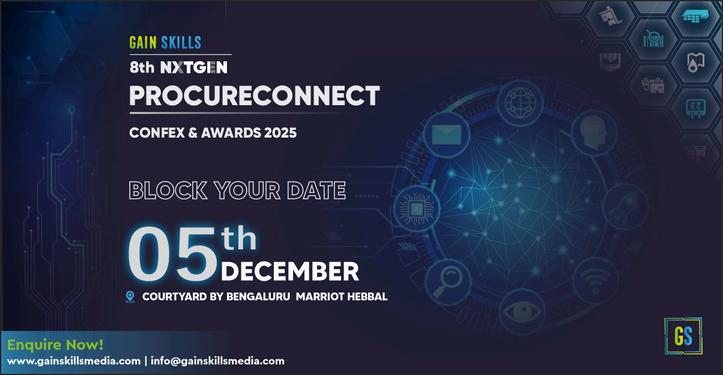
PROCURECONNECT CONFEX & AWARDS 2025
The ProcureConnect Confex & Awards 2025 is set to bring together top procurement, sourcing, supply chain and category management leaders for a high-impact knowledge and networking experience. Scheduled to take place in Chennai, India, this exclusive forum will focus on strengthening procurement agility, supplier collaboration, technology adoption, sustainability, and value-driven transformation
With the theme “Driving Strategic Value: Transforming Procurement Through Innovation, Data & Sustainable Partnerships”, this platform aims to empower procurement professionals to unlock efficiencies, accelerate digital evolution, and build future-ready ecosystems that deliver measurable business impact.
Key Highlights
• Leadership Insights: Learn how top leaders drive resilience, partnerships, and innovation.
• Digital Focus: Explore how AI, automation, and analytics are transforming procurement.
• Networking: Connect with CXOs, CPOs, and industry experts for strategic collaborations.
• Awards: Celebrate excellence at the ProcureConnect Awards.
• Solution Showcase: Experience next-gen tools powering efficiency and sustainability.
Why Attend
• Discover emerging trends and innovations in procurement.
• Connect with top leaders and decision-makers.
• Learn strategies for cost optimisation, risk control, and supplier engagement
• Explore digital tools driving process excellence.
• Benchmark your practices to boost your competitive edge
AWARD CATEGORIES
Individual Categories
Procurement Leader of the Year
Young Procurement Professional of the Year
Procurement Innovator of the Year
Excellence in Supplier Relationship Management
Women in Procurement Leadership Award
Sustainability Champion of the Year
Procurement Transformation Leader
Lifetime Achievement Award
Organisational Categories
Procurement Team of the Year
Excellence in Procurement Transformation
Best in Supplier Relationship Management
Best Use of Digital Technology in Procurement
Sustainable Procurement Initiative of the Year
Excellence in Cost Optimisation
Best ESG & Responsible Sourcing Initiative
Innovation in Procurement Practices
Best Supplier Diversity Program
Excellence in Risk & Compliance Management
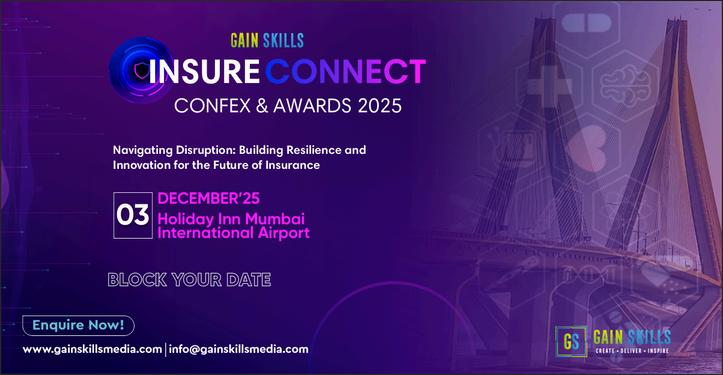
INSURECONNECT CONFEX & AWARDS 2025
The InsureConnect Confex & Awards 2025, scheduled on 3rd December 2025 at Holiday Inn Mumbai International Airport, is set to be a landmark gathering for India’s insurance ecosystem. With the theme “Navigating Disruption: Building Resilience and Innovation for the Future of Insurance”, the forum will convene influential leaders from Life, Health and General Insurance to decode the transformation shaping the sector The platform will spotlight the future of underwriting, claims, customer experience, AI & digital integration, regulatory shifts, risk and resilience models, and the rise of insurtech-driven innovation.
This power-packed confex promises a mix of knowledge exchange, strategic discussions, and celebration of industry excellence through its prestigious awards ceremony.
Key Highlights
Future-Forward Insights
Deep-dive into how digital transformation, AI, data-driven intelligence, and evolving customer expectations are redefining the insurance landscape.
Influential Speaker Line-Up
Hear from CXOs, thought leaders and domain experts presenting real-world strategies, case studies and foresight on industry disruption.
Strategic Networking
A premium platform to engage with senior decision-makers ideal for collaboration, partnerships, and business growth opportunities.
Awards & Recognition
Honouring organisations and professionals leading innovation, service excellence, and transformation across the insurance value chain
Solution & Innovation Showcase
Explore cutting-edge technologies, insurtech products and next-gen solutions reshaping the future of insurance.
Why Attend
Stay ahead of the evolving insurance landscape with actionable insights
Connect with senior leaders to exchange ideas, forge partnerships, and explore growth opportunities
Gain visibility and industry recognition through participation and awards. Learn practical implementation strategies, not just concepts, to future-proof your organisation.
Benchmark your capabilities and identify new avenues for digital, operational and business transformation.
SUMEETKHATRI
“EVERY
EVENT WE CREATE IS BUILT WITH THE INTENT TO SPARK DIALOGUE, INSPIRE CHANGE, AND OPEN DOORS TO NEW POSSIBILITIES.”
As I reflect on the inception of Gain Skills Business Media, I remember when the company operated solely on an idea and a small group of committed individuals. The company had 13 employees then, and I recall being part of a close-knit team working hard every day because we believed in the power of creating platforms that have a real impact in business media and events Today, as we work every day as a team of 70, I see not numbers, but a history of resilience, belief, and shared ambition.
From the very start, the vision that I had was very clear: Gain Skills will not be just a place of employment, but also a place of creativity, collaboration, and development. I have always believed that success is not purely evidenced in terms of revenue and growth, but also by the happiness of the people who move the organization forward. The energy, ideas, and commitment from my team have been key elements at every moment we have succeeded, and I want to give them the assurance that they are valued
Leadership, to me, is less about directing others and much more about listening. At Gain Skills, everyone’s voice matters Whether you’re new to the business or have been in the game for decades, I want everyone to feel their voice counts, as some of the best ideas in the world come from the least likely of places. That mindset has allowed us to foster an environment of innovation, of creativity, and of ownership, and that is invaluable
The future beyond today excites me even more. I dream of Gain Skills Business Media not only being the leading player in this industry but also becoming synonymous with trust, creativity, and impact One day, I will have a full building dedicated to Gain Skills, where floor by floor is
buzzing with ideas, energy, and the habit of making a difference. That is the scale I want to grow - not only in terms of physical space but in terms of reach and the lives we impact
So, what exactly do we do at Gain Skills Business Media? At our core, we design and deliver platforms that bring industries together Whether it’s through large-scale conferences, leadership summits, or prestigious award programs, our goal is to create meaningful opportunities for leaders, innovators, and organizations to connect, collaborate, and grow
We are in the business of curating conversations that matter. Every event we create is built with the intent to spark dialogue, inspire change, and open doors to new possibilities For some, it’s about recognition, being honored for their excellence in their respective fields For others, it’s about networking, meeting like-minded leaders who can become collaborators, mentors, or even business partners And for many, it’s about learning, discovering insights and strategies that can be taken back to their organizations to make a real difference.
Our role doesn’t stop at organizing events We see ourselves as enablers of business ecosystems By blending research, creativity, and execution, we ensure that each initiative resonates with both people and brands. In simple terms, Gain Skills Business Media is where ideas meet action. We don’t just host events; we build experiences that leave a lasting impact And as a founder, nothing excites me more than watching these platforms transform from concepts into spaces where people
walk away with knowledge, recognition, and opportunities that truly matter.
As we prepare for the future, our upcoming events reflect the vision of bringing thought leaders, innovators, and change-makers together under one roof. This November, we are proud to host the 14th CHRO Confex & Awards – Chennai Chapter, scheduled at the iconic ITC Grand Chola This chapter will bring together CHROs and senior HR leaders from across industries to discuss the evolving landscape of human resources, workforce transformation, and the role of leadership in driving organizational change With thought-provoking keynotes, engaging panel discussions, and the recognition of HR excellence, this event will not only inspire but also set new benchmarks for the HR community in India
Following this, we are equally excited about the 13th L&D Confex & Awards – Hyderabad Chapter, a platform that celebrates and elevates the role of Learning & Development in shaping the future workforce In a time when upskilling, reskilling, and continuous learning have become business imperatives, this edition will spotlight cutting-edge strategies, technologies, and practices that enable organizations to unlock human potential. Alongside powerful sessions, the awards will honor those who have redefined the learning ecosystem within their organizations.
These events are not just conferences; they are communities where ideas spark action and collaborations open new horizons They represent what Gain Skills stands for, creating meaningful experiences that empower people, brands, and industries.
What keeps me motivated is not the destination, but the journey with my people Our story is about believing in possibilities, about pushing boundaries, and about creating an organization where both clients and employees feel proud to be associated As I look toward the future, I am confident that together, we will continue to shape Gain Skills into a legacy built on passion, people, and purpose.
“At the heart of Gain Skills Business Media, it has always been, and will always be, about the people”
SHASHWATIP
When we invite people to shape the culture, we invite them to shape the future.
“If you don’t create a culture by design, you’ll get one by default, and it may not be the one you want.”
This quote captures the essence of intentional culture: it must be shaped deliberately, or it will evolve passively, often misaligned with your values and goals
We are living in a time where talent is mobile, values are visible, and purpose is nonnegotiable. People are no longer just asking, “What do I do here?” They’re asking, “Why does it matter?” And if we can’t answer that with clarity, courage, and conviction, we lose more than engagement we lose trust.
“Culture by Design” is not a buzzword It’s a blueprint. It’s the conscious, courageous act of building environments where every person regardless of identity, background, or role feels they belong, they matter, and they can thrive.
How could we do it?
1. Start with purpose:
Not the kind that lives in a framed mission statement, but the kind that lives in our decisions Purpose must be felt in the way we hire, the way we promote, the way we listen. It must be the heartbeat of our culture.
Example: At Unilever, purpose is embedded into its business strategy. Employees are encouraged to align personal values with the company’s sustainability goals, which has helped the company consistently rank among the most attractive employers globally
Data: A Deloitte study found that 73% of employees who say they work for a
“purpose-driven” company are engaged, compared to only 23% at companies without a clear purpose.
Purposeful workplaces don’t happen by accident They begin with clarity: What do we stand for? Who do we serve? What kind of experience do we want our people to have? By answering these questions, organizations can define cultural pillars and embed them into daily operations.
2. Centre Inclusion:
Not as a program, but as a principle. Inclusion is not about making room - it’s about redesigning the room It’s about shifting power, amplifying voices, and building systems that reflect the full spectrum of human experience
Example: Microsoft’s inclusive design approach has not only improved accessibility for employees but also driven innovation in products like Xbox Adaptive Controller, showing how inclusion fuels creativity and business growth
Data: McKinsey’s Diversity Wins report shows that companies in the top quartile for gender diversity on executive teams are 25% more likely to have above-average profitability.
3. Measure What Matters:
Culture is not vibes it’s data. Are people speaking up? Are they being heard? Are they growing? Are they staying?
Example: Google’s Project Aristotle revealed that psychological safety was the single most important factor in high-performing teams. This insight reshaped how managers were trained and how teams were structured
Data: Gallup research shows that companies with highly engaged employees outperform their
The insights from culture surveys and focus groups must be translated into action. We prioritize key themes, co-create solutions with teams, and track progress consistently and transparently
4. Co-create Culture :
Culture is not owned by HR. It’s not dictated by leadership. It’s built by every interaction, every meeting, every moment When we invite people to shape the culture, we invite them to shape the future.
Example: In many companies today, employees are actively involved in shaping company values through open forums and feedback loops This co-creation has helped the company maintain strong engagement even during rapid growth.
The Impact:
When culture is designed with purpose, the results are transformative:
Employees feel connected to their work. Teams collaborate more effectively. Innovation flourishes
Purposeful workplaces attract top talent, retain high performers, and build reputations as employers of choice
Data: LinkedIn’s Global Talent Trends report shows that companies with strong cultures see 33% higher revenue growth and 12% higher employee retention
So we ask ourselves: What kind of workplace are we designing - one that survives, or one that inspires?
Final Thought:
Culture by Design is not a one-time initiative: it’s a daily practice It requires intention, empathy, and a willingness to evolve In a world where people increasingly seek meaning and connection, designing a purposeful workplace isn’t just smart, it’s essential
Let’s stop reacting to culture. Let’s start architecting it.
About the Author:
Shashwati aims to create impact on people and culture in the workplace Her career journey has been marked by a commitment to creating workplaces that celebrate diversity, ensuring equal opportunities for all and creating spaces that are inclusive and psychologically safe. An alumnus from FMS, Delhi, Shashwati is passionate about inclusion in the workplace and conversations around bias & identity She was awarded the prestigious NCPEDPMindtree Helen Keller Award 2021 and features in LinkedIn Top Voices and LinkedIn Creators In India.
Culture is rarely the first thing on your mind when you launch an organization It is either Survival, Growth or Revenue Culture feels like something you can address later, perhaps when things settle down But here is the truth that most founders learn the hard way Culture arrives whether you plan for it or not The only question is whether you will shape it intentionally or let it shape itself
Remember "Mission Mangal"
A scientist who had failed to deliver a moon mission was reassigned to what seemed like an impossible task Mission to Mars And he was not given the team he wanted He was given a group of individuals with scattered minds and divided hearts One wanted to make a pilgrimage to Tirupati. Another was polishing their resume for NASA. Others were drowning in personal struggles. The team never believed it could happen. They were not coming in time. They were not doing their work.
You might be thinking Mission Mangal was just a movie. It was. But it was based on a true story. And if you have spent any time in organizations, you know these behaviors are not fiction. They are Tuesday afternoon. People who do not believe in the mission. People who prioritize personal goals over collective ones. People who are physically present but mentally checked out. When this becomes your reality, your organization becomes a museum and goals remain dreams It is the belief of people that makes or breaks the organization That's why culture becomes extremely important The lead scientist of Mission Managal did not implement stricter timelines or harsher penalties
He did not threaten or micromanage Instead, he built culture on purpose The culture built on purpose defies mathematics It delivers extraordinary results
The lead scientist gathered them together to celebrate the birthday of a scientist in each one of them He asked them a simple question
Why did they become scientists in the first place? Not for the paycheck Not for job security They became scientists to do something extraordinary To push boundaries To make the impossible possible And now, when they finally had a chance to do exactly that, what was stopping them?
That single conversation changed everything Their personal purpose suddenly aligned with the organizational purpose The clock stopped mattering They were not just employees anymore They were on a mission An impossible mission But that mission was now their childhood dream coming alive That is how India joined the Mars club
This is the reward of purpose alignment When people are aligned with the purpose, you do not get incremental improvement You get a transformation You get people who run towards challenges instead of away from them You get innovation born from passion, not pressure
But here is what most leaders miss You cannot assign purpose You can only discover it and align it You have to find the purpose within each employee that naturally connects to your organization's mission
This means rethinking everything. Your hiring process must screen for purpose fit, not just skill fit. Your reward systems must celebrate alignment, not just achievement. Your employee value proposition must speak to meaning, not just money.
The organizations that understand this do not just survive. They soar. They turn ordinary teams into extraordinary ones. They make Mars missions possible.Culture is not an afterthought. It is your organization's superpower, waiting to be unleashed.
SHILPATAWTE
SENIOR VICE PRESIDENT - HR
NETCORE CLOUD PVT LTD
Culture shapes how people think, behave, and collaborate—it drives innovation, engagement, and performance.
About the Author:
In today’s dynamic business landscape, the differentiator between a good organisation and a great one is no longer just its products, technology, or strategy it’s the culture. Culture shapes how people think, behave, and collaborate It drives innovation, engagement, and sustained performance.
When purpose is clear, it acts as a North Star, guiding decisions and behaviours even in times of uncertainty
Designing culture around purpose involves three critical steps:
1.Articulate the purpose clearly – not as a marketing slogan, but as a lived belief
While every organisation has a culture, only a few have a culture that is designed. Most evolve theirs by default shaped by individual leadership styles, legacy processes, and chance rather than intent.
Leading high-performing teams and crossfunctional projects to drive business strategy. Heading the Strategic HR function for India’s largest healthcare organisation. Possesses international experience of heading HR in European Emerging Markets and the Middle East. An Inclusion & Diversity enthusiast, passionate about Organisation Change Management and HR Transformation. Has held HR leadership roles across various industries including Hospitality, Healthcare, and Financial Services.
Culture by Design is the conscious act of architecting a workplace experience where purpose, values, and behaviours are intentionally aligned with business goals and human aspirations It’s about creating an environment where people don’t just work for an organisation, but with it because they deeply believe in what it stands for.
As Peter Drucker famously said, “Culture eats strategy for breakfast ” Strategy sets the direction, but culture determines whether people will walk that path together or not at all
Purpose: The Foundation of Culture
At the heart of every designed culture lies purpose. Purpose answers the “why” behind an organisation’s existence It connects everyday work to a mission that transcends profits and inspires contribution
Today’s employees seek meaning at work as much as financial reward They want to know their contributions create value not only for the organisation but also for society.
2 Translate it into tangible values and behaviours that employees can observe, practice, and measure daily.
3 Reinforce it through systems and processes from performance management to recognition and rewards.
When people see consistency between what an organisation says and what it does, trust deepens and engagement naturally follows
Leadership: The Custodians of Culture
Leaders play the most pivotal role in designing and sustaining culture. Every word they speak, every decision they make, and every action they take becomes a cultural signal
In a purposeful workplace, leadership evolves from command-and-control to empathy, transparency, and inclusion Leaders must reflect and ask:
What kind of culture are we reinforcing through our daily actions?
Do our policies reflect the values we claim to hold?
Are we building an environment where people can thrive, not just survive?
In a culture designed with intent, leadership accountability for culture is explicit it becomes part of performance evaluations, succession planning, and even recruitment criteria Designing Culture Through Experience Culture is not built through policy documents; it’s lived through experiences. Every touchpoint in the employee
About the Author:
journey onboarding, performance discussions, recognition, conflict resolution shapes how people perceive and live the organisation’s values
Leading high-performing teams and crossfunctional projects to drive business strategy. Heading the Strategic HR function for India’s largest healthcare organisation. Possesses international experience of heading HR in European Emerging Markets and the Middle East. An Inclusion & Diversity enthusiast, passionate about Organisation Change Management and HR Transformation. Has held HR leadership roles across various industries including Hospitality, Healthcare, and Financial Services.
Organisations that intentionally design these moments create purposeful experiences that connect people to the company’s story. For instance:
Onboarding that immerses new hires in purpose and values, not just systems and processes
Feedback systems that enable continuous learning rather than annual evaluation
Recognition programs that celebrate collaboration, innovation, and collective success.
Well-being policies that demonstrate genuine care beyond token gestures.
These micro-experiences collectively define the employee’s sense of belonging, trust, and long-term commitment.
The Role of Inclusion and Diversity
Purposeful workplaces are inclusive by design They recognise that diversity of thought, background, and experience fuels creativity, adaptability, and performance
Inclusion doesn’t happen by accident it requires intentional design.It’s about building systems and behaviours that enable every individual to bring their whole self to work.
It’s about building systems and behaviours that enable every individual to bring their whole self to work.
Culture by Design means consciously removing barriers whether structural, procedural, or behavioural that prevent people from contributing fully It’s about fostering psychological safety, encouraging healthy debate, and ensuring every voice is heard
When people feel valued for who they are not just what they do the workplace becomes a source of energy, not exhaustion.
Conclusion: Designing the Future of Work
Building a purposeful workplace is not a onetime initiative; it’s a continuous design process It demands clarity of purpose, courageous leadership, and an unwavering commitment to authenticity.
In an era where talent chooses organisations as much as organisations choose talent, culture is the ultimate competitive advantage.
By designing it intentionally around purpose, people, and performance organisations can unlock extraordinary potential.
Culture by Design is not about perfection; it’s about progress.
It’s about making deliberate choices every day that bring us closer to the workplace we aspire to build.
When people feel connected to a shared purpose and empowered by a culture that values them, they don’t just work they thrive
And that is how truly purposeful workplaces are built.
About the Author:
About the Author:
Shilpa Tawte is currently working as Senior Vice President – Human Resources, with Netcore Cloud Pvt Ltd She is responsible for handling Global Talent Acquisition, Corporate L&D & also handles a few strategic initiatives for HR.
In her previous tenure, she has held several Senior HR Leadership roles working on strategies globally with a focus on creating value for the organisation. She has diverse industry experience comprising of Consulting, Telecom and IT sectors She has also worked on several assignments for many Fortune 500 clients in the field of Human Resources during her tenure with big IT/ Telecom companies like GCX, Datamatics Global Services Ltd, Patni, Syntel Inc & Mastek, to name a few. Her last job was as Global Talent Acquisition & India Head –HR for Global Cloud Xchange, a Reliance Group company.
Leading high-performing teams and crossfunctional projects to drive business strategy. Heading the Strategic HR function for India’s largest healthcare organisation. Possesses international experience of heading HR in European Emerging Markets and the Middle East. An Inclusion & Diversity enthusiast, passionate about Organisation Change Management and HR Transformation. Has held HR leadership roles across various industries including Hospitality, Healthcare, and Financial Services.
Shilpa is actively involved in inculcating a performance-driven culture to enable the organisation to achieve exemplary results
She has been part of many HR groups across Pan India & is recipient of few industry awards like Best in class Leadership award for Recruitment, Women Super Achiever Award from World Women Leadership Congress presented by Femina as well as Dr Tarita Shankar Award for Excellence in HR Sector for Making of Developed India by ET NOW & World HRD Congress