







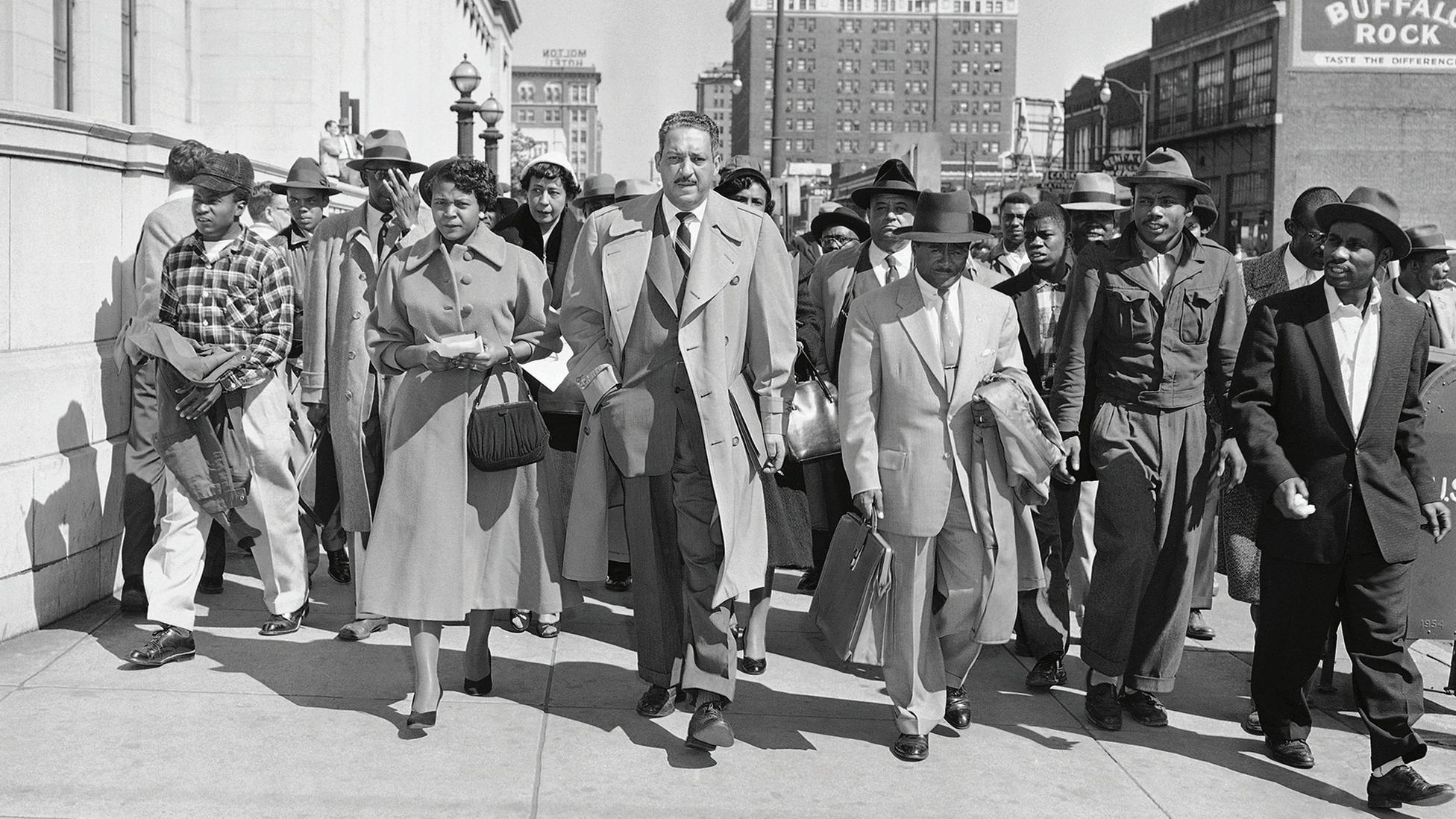



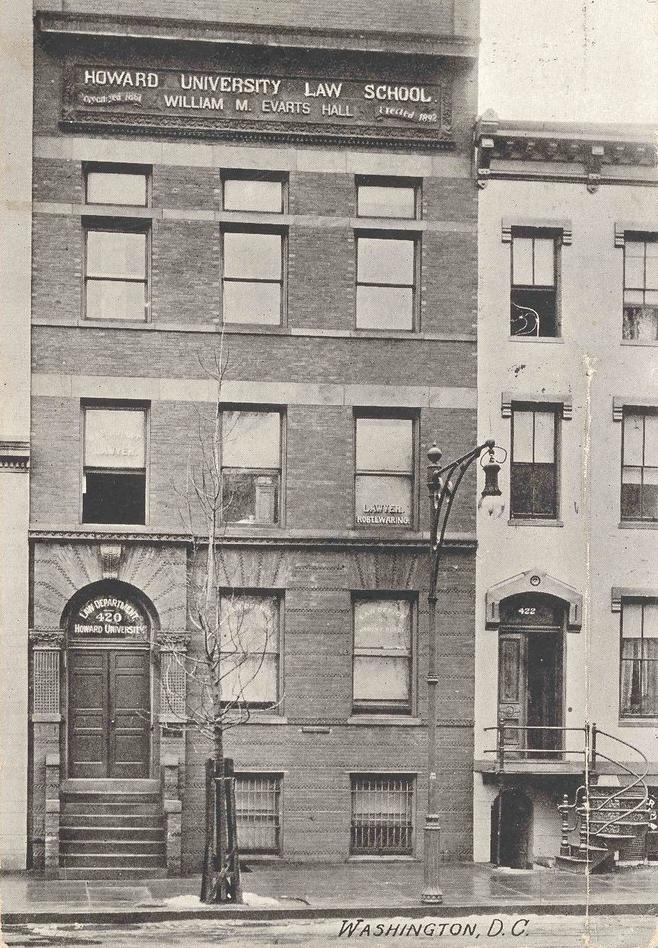

Howard University School of Law, founded in 1869 – just months after the ratification of the Fourteenth Amendment, has stood at the forefront of legal education and civil rights for nearly 160 years. Established under the leadership of inaugural Dean John Mercer Langston, the School of Law began with six students meeting in faculty members’ homes. The school quickly evolved, securing a permanent campus home, expanding enrollment, achieving accreditation from the American Bar Association and the Association of American Law Schools, and producing trailblazers such as Charlotte E. Ray, the nation’s first Black woman lawyer, and Thurgood Marshall, the first Black U.S. Supreme Court Justice. Throughout its history, Howard Law has remained committed to excellence, justice, and access, conferring degrees to students from all backgrounds, across the nation and around the globe.
Celebrated as the training ground for “social engineers,” Howard Law has produced leaders in law, government, and public service. Figures such as Vernon Jordan, Pauli Murray, Judge Damon Keith, Dovey Johnson Roundtree, and Governor Douglas Wilder reflect a legacy rooted in activism and impact. Today, with a faculty of 50 and an average of 185 graduates annually, the school continues its mission of shaping lawyers who transform communities and uphold justice through a tradition as vital now as it was in 1869.


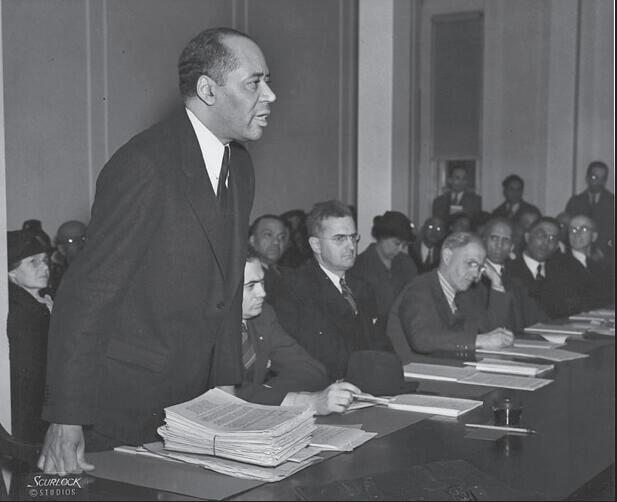
CHARLES HAMILTON HOUSTON DEAN OF HOWARD UNIVERSITY SCHOOL OF LAW (1929-1935)

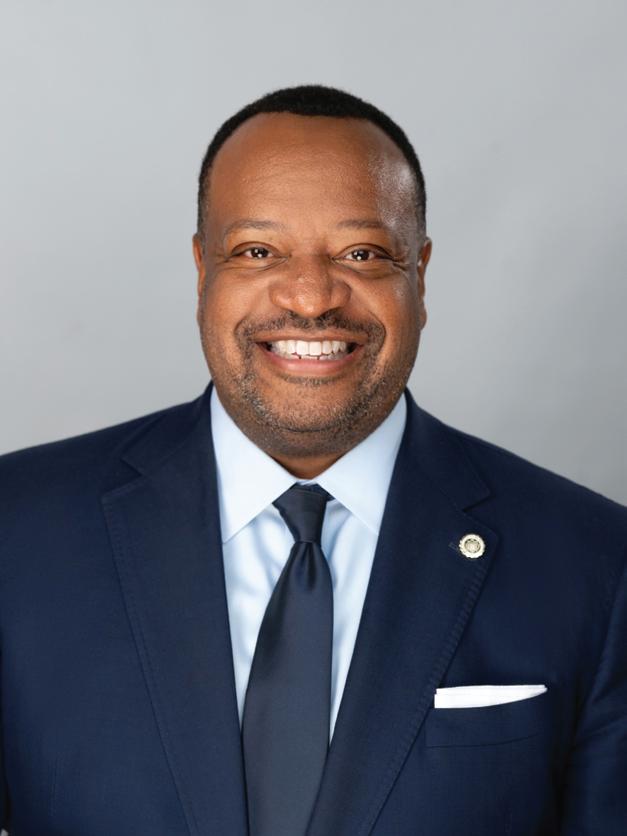
It is my distinct honor and privilege to welcome you to Howard University School of Law. For 156 years, Howard Law has actively addressed pressing legal and social justice issues—spanning civil rights, criminal justice, environmental justice, corporate law, and


Through rigorous academic and ethics training and invaluable practical experiences, our students develop the essential skills to navigate the complexities of the modern practice of law and become social engineers of meaningful change. From impactful externships with governmental agencies and vital advocacy work with non-profit organizations to coveted clerkships with leading law firms, our students gain firsthand experience in shaping policy, defending fundamental rights, and advancing the cause of justice.
We invite you to explore what makes Howard Law an international treasure—an institution where uncompromising excellence is culti-















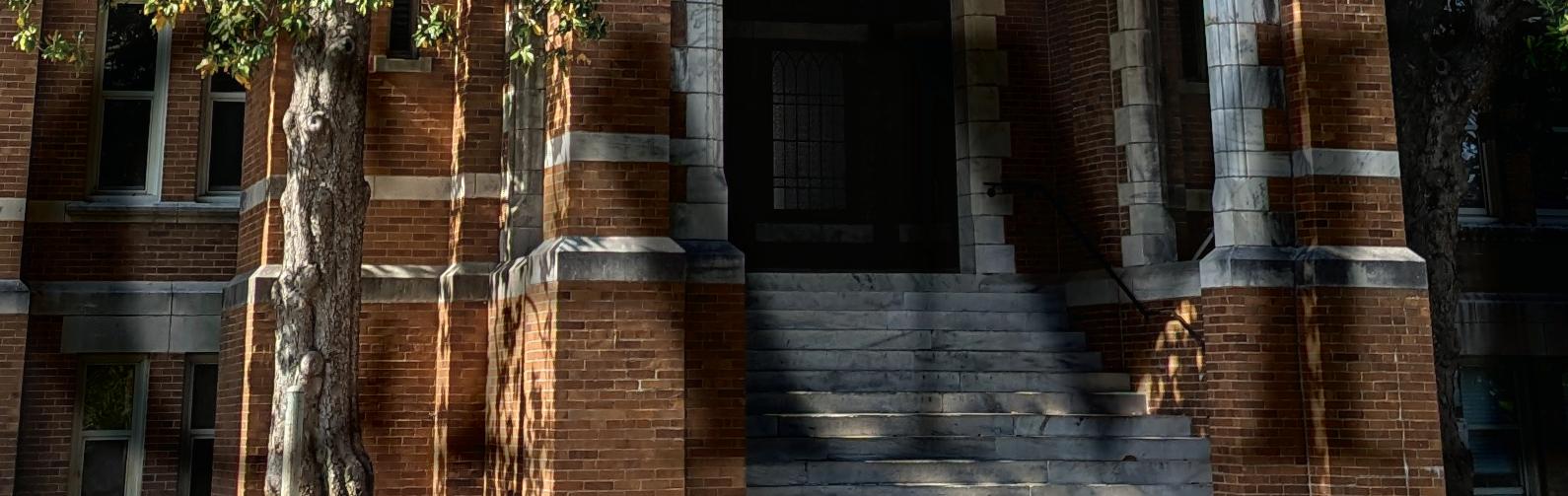
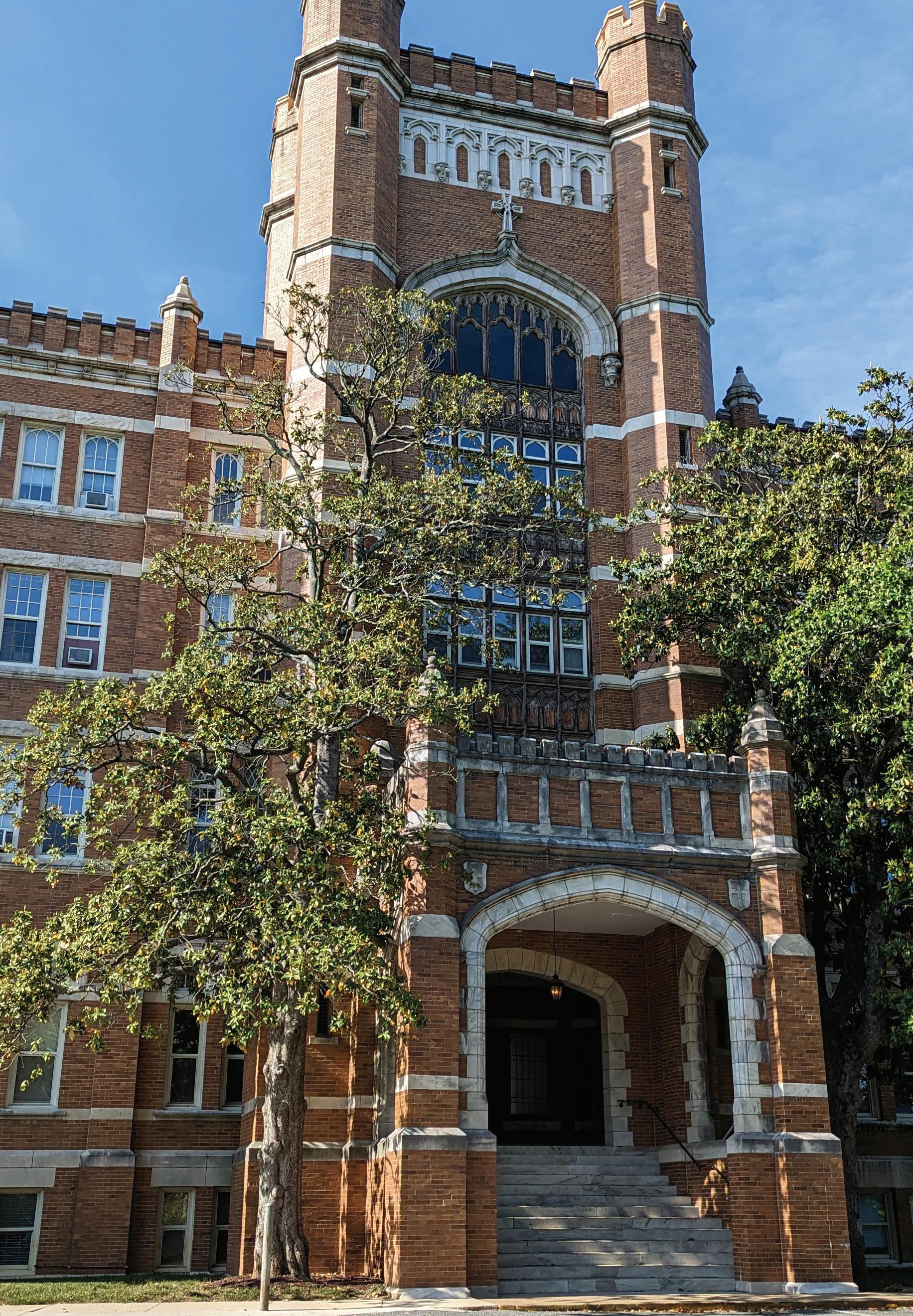
Howard Law is located on its own 19-acre campus in Washington’s Northwest quadrant, bordered by Soapstone Valley Park to the north and Rock Creek Park to the south. The School of Law, which sits on Howard University’s West Campus, consists of six buildings, totaling 231,954 net square feet.
The West Campus is a short walk to the National Zoo and a short car, bus, or Metrorail ride to many historical landmarks and museums. Howard Law’s campus is easily accessible by public transportation and major thoroughfares. The School of Law’s location in a beautiful, residential, and conveniently located section of Washington places you in the city of power, in the center of the action, and in an environment conducive to learning the law.















FRANTZY LUZINCOURT
CLASS OF 2027
J.L GREENE SCHOLAR







VERNON E. JORDAN, JR. CLASS OF 1960

LEADER OF ADVOCACY AND CHANGE IN LAW AND CIVIL RIGHTS





























The Vernon E. Jordan, Jr. Law Library is an iconic place within the Howard University School of Law and a key part of your legal education. Research is fundamental to the study and practice of law, and the law library is the lawyer’s laboratory. The law library provides access to legal technologies and materials, a beautiful facility, and a staff devoted to your law school success.
Taught by librarian instructors, research labs are experiential learning classes that teach you the skills to put your doctrinal learning into practical contexts. Students complete their first year of law school and go into their summer jobs prepared to practice.






HOWARD UNIVERSITY SCHOOL OF LAW
FACULTY AND STAFF PICTURED WITH U.S. SUPREME COURT JUSTICE KETANJI BROWN JACKSON
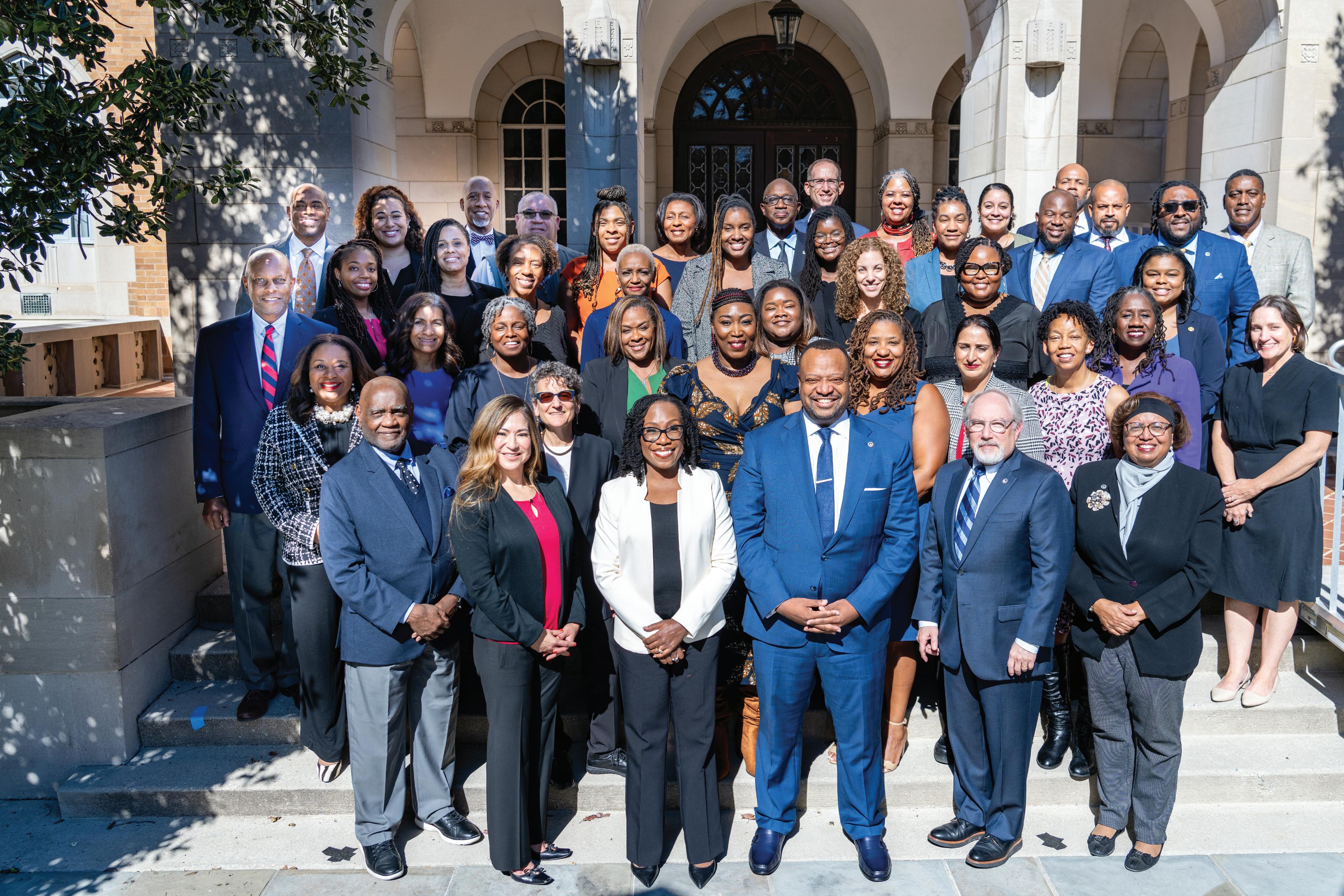


Presidential appointees. Civil rights leaders. Constitutional scholars. White House advisors. Activists. Litigators. Authors. Prosecutors. Public defenders. Judges. International experts. Entrepreneurs. Government officials. Intellectual property pioneers.
At Howard University School of Law, your legal education is shaped by faculty who have done the work— and continue to lead it. Our professors are nationally recognized lawyers, influential scholars, and passionate mentors who bring real-world expertise directly into the classroom.
From civil rights and constitutional law to business, international, and intellectual property law, Howard Law faculty prepare students to lead across every sector of the legal profession. Whether teaching in class or offering one-on-one guidance, our professors are deeply invested in your growth.
At Howard Law, you’ll learn from legal minds who not only teach the law but shape it.

PAULI MURRAY
CLASS OF 1944
TRAILBLAZING CIVIL RIGHTS LAWYER, ACTIVIST, AND PRIEST
KYLA WARMAN
CLASS OF 2027
J.L. GREENE SCHOLAR









































































In the tradition of such legal giants as Charles Hamilton Houston, James Nabrit, and Pauli Murray, the Howard University School of Law’s Clinical Law Center strives to provide our clients with the highest caliber of legal representation and to train our students to become instrumental in creating a more just and equitable legal landscape. Our clinic students do impactful work such as representing clients in court and through transactions, testifying at City Council hearings, writing and submitting white papers and amicus briefs. The Clinical Law Center also hosts a variety of programs, including pro bono trainings and professional development workshops for students, and Know Your Rights trainings and Continuing Legal Education workshops for the community.
Consistently ranked as one of the top clinical law programs in the country, the Clinical Law Center offers ten live-client clinical experiences: the Criminal Justice Clinic, the Child Welfare Clinic, the Civil Rights Clinic, the Fair Housing Clinic, the Estate Planning and Heirs’ Property Clinic, the Investor Justice and Education Clinic, the Intellectual Property Patent Clinic, the Intellectual Property Trademark Clinic, the Movement Lawyering Clinic, and the Reentry Clinic.




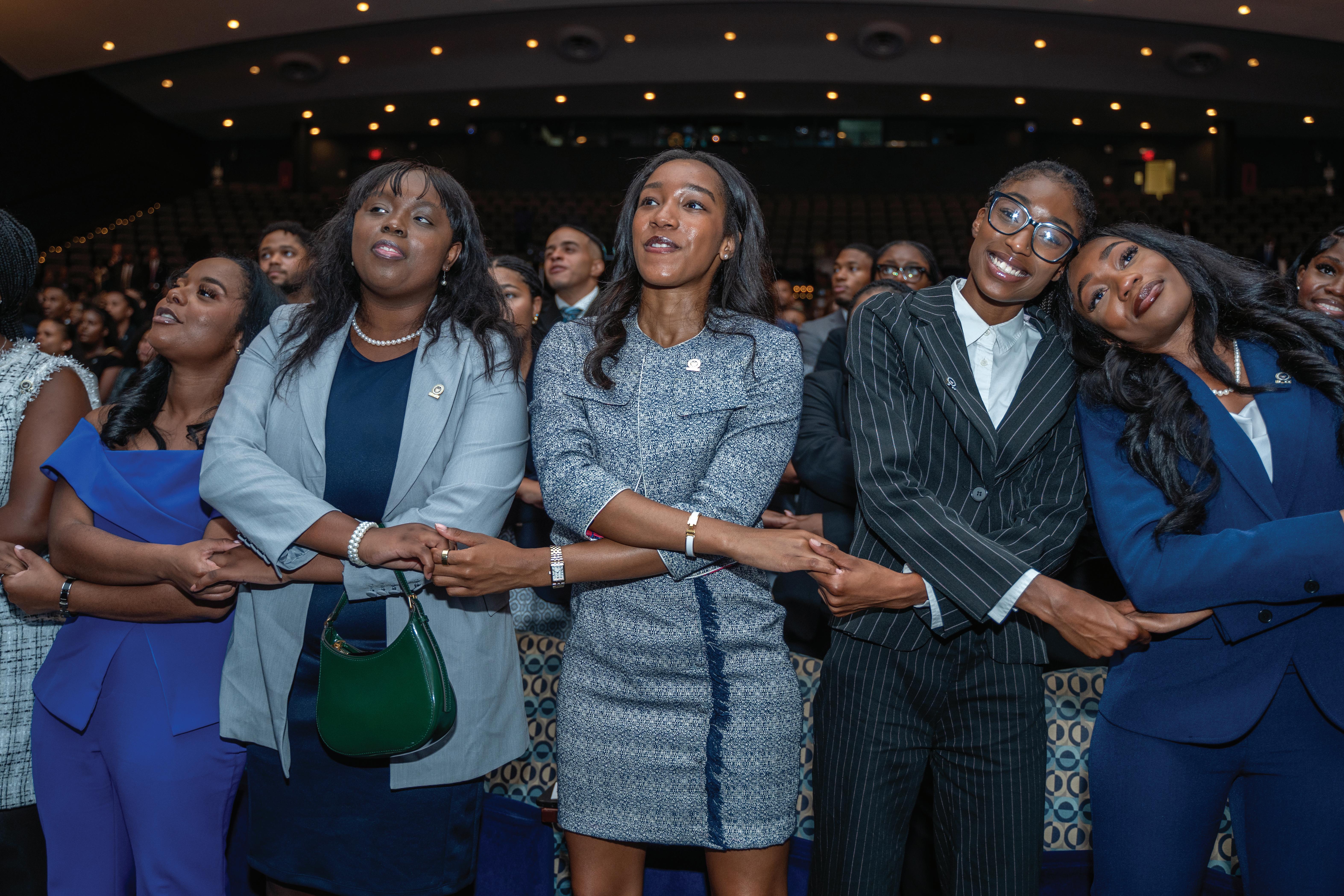
Howard University School of Law offers students dynamic opportunities to build practical skills through its co-curricular programs in oral advocacy and legal writing. These include three award-winning moot court teams—the Charles Hamilton Houston National Moot Court Team, the Huver I. Brown Trial Advocacy Team, and the Goler Teal Butcher International Moot Court Team—as well as two respected student-run publications, the Howard Law Journal and the Howard Human and Civil Rights Law Review.
Moot court team members sharpen their advocacy skills through national and international competitions, while journal members hone their legal research, writing, and editing abilities through a competitive write-on process after their first year. Together, these programs help students become exceptional writers, researchers, speakers, and advocates.
• Semi-finalist, Regional National Trial Competition, University of Maryland School of Law 2024
• Finalist, Regional National Trial Competition, University of Maryland School of Law 2024
• Outstanding Attorney Award, Regional National Trial Competition, University of Maryland School of Law 2024
• Second Best Brief, National INTA Saul Lefkowitz Moot Court Competition 2024
• Top-Ten Overall, John J. Gibbons Criminal Procedure Moot Court Competition, Seton Hall Law 2024
• Outstanding Advocate, South Texas Mock Trial Challenge, South Texas College of Law Houston 2024
• Best Brief, U.S. Nepal International Moot Court Competition
• Best Opening Statement, U.S. Nepal International Moot Court Competition
• First and Second Place Oralist, U.S. Nepal International Moot Court Competition
THURGOOD MARSHALL





















SPENCER JONES CLASS OF 2026



At Howard University School of Law, you don’t just earn a degree—you join a legacy. This is where Thurgood Marshall prepared to argue Brown v. Board. Where Pauli Murray challenged the boundaries of justice. Where leaders like Vernon E. Jordan Jr., Julia Cooper Mack, Sharon Pratt, Isiah Leggett, Douglas Wilder, and Walter E. Washington began their rise.
Today, that tradition lives on through alumni who are blazing trails in all sectors of the legal profession and beyond. They are state and federal judges, members of Congress, chief prosecutors and public defenders, leading public interest lawyers, Fortune 500 general counsel, law school deans and professors, law firm partners and associates, mayors and state attorneys general, sports and entertainment agents, executives, and producers, to name just a few areas of Howard alumni influence.
Their names and photos can be found in the class portraits on our campus walls—and their impact is felt around the world. Howard Law isn’t just a law school. It’s a movement, a family, and a launchpad for those who are serious about shaping the future.



U.S. SUPREME COURT JUSTICE KETANJI BROWN JACKSON DURING HER VISIT TO HUSL.
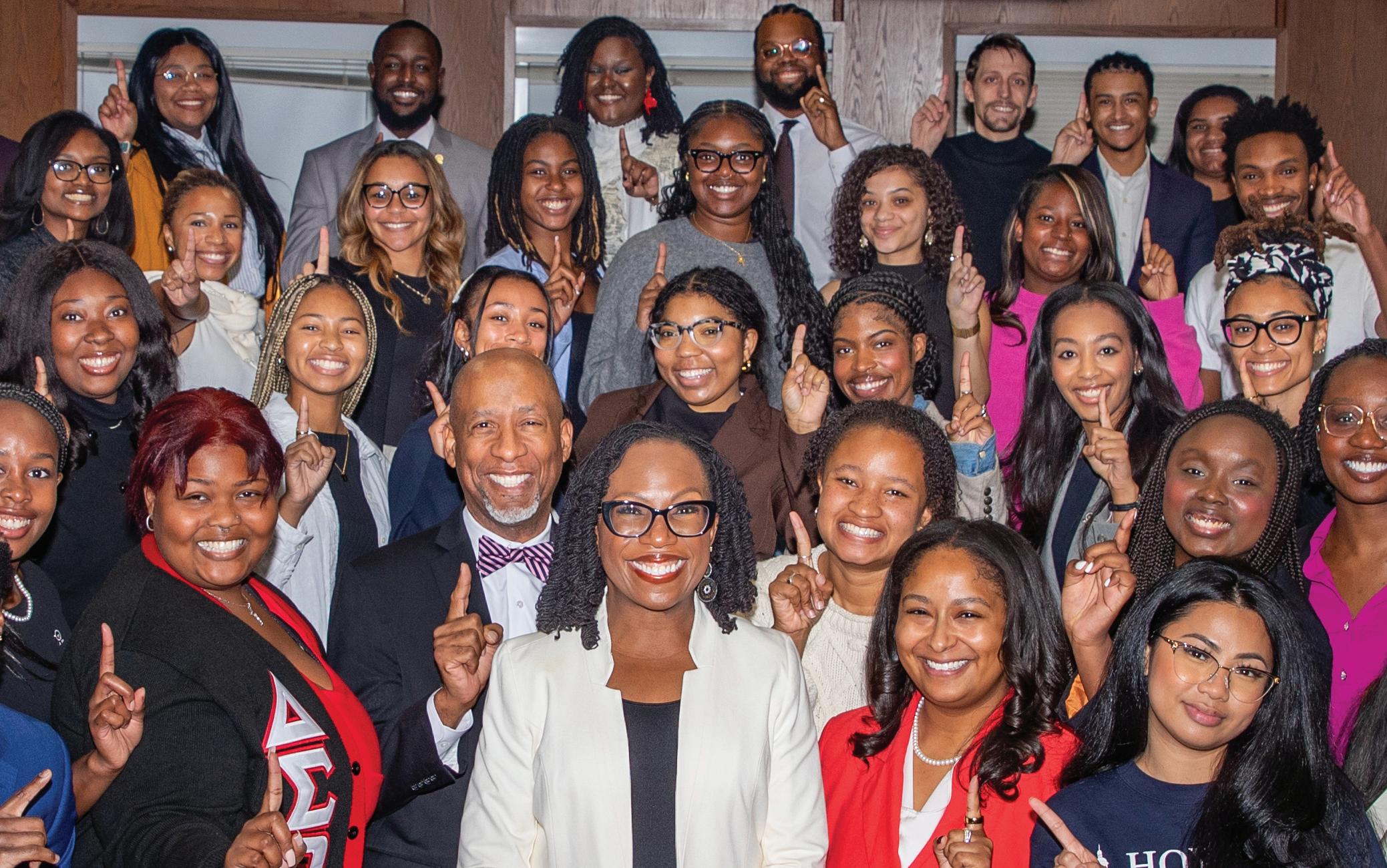


Coupled with Howard Law’s strong curriculum is its commitment to bringing in scholars, experts, lecturers, activists, and leaders in the law to enhance its students’ educational experience. Students at Howard University School of Law have heard four of the nine current Supreme Court justices speak on campus. The guests the law school has welcomed into its community offer insight, advice, and solutions to problems facing the legal community and the world.
Kamala D. Harris
Former Vice President of the United States
Cory R. Booker U.S Senator, New Jersey
Angela Alsobrooks U.S. Senator, Maryland
Ava DuVernay Filmmaker
Brad Smith President of Microsoft
Danny Glover Actor and Activist
Nikole-Hannah Jones Professor, Author and Journalist
Damon T. Hewitt
President and Executive Director of the Lawyers’ Committee for Civil Rights Under Law
Janai Nelson President and Director-Counsel of the NAACP Legal Defense Fund
Thomas Perez Chair of the Democratic National Committee
Kristen Clarke Former Assistant Attorney General for Civil Rights
Alvin Bragg District Attorney, Manhattan
Eric H. Holder, Jr.
Former U.S. Attorney General
Barbara Lee Mayor, Oakland, CA
Former U.S. Representative
Ketanji Brown Jackson Associate Justice, U.S. Supreme Court
Sri Srinivasan Chief Judge, D.C. Circuit
Deborah Archer ACLU President
Loretta Lynch
Former U.S. Attorney General
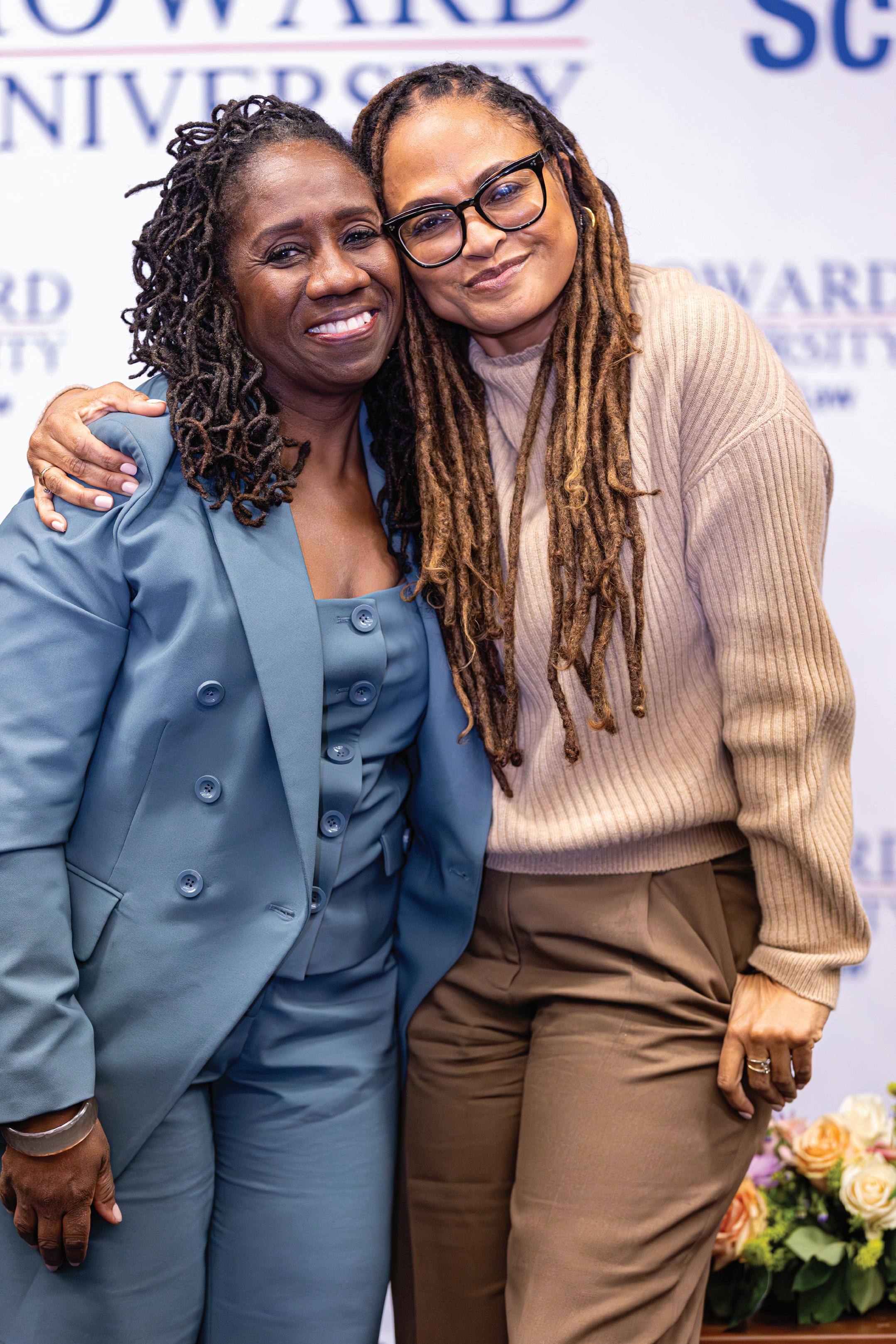
FOUNDING DIRECTOR OF THE 14TH AMENDMENT CENTER FOR LAW AND DEMOCRACY SHERRILYN IFILL WITH FILMMAKER AVA DUVERNAY DURING THE 14TH AMENDMENT LAW AND DEMOCRACY SYMPOSIUM
The Thurgood Marshall Civil Rights Center is Howard Law’s hub for civil rights, human rights, and racial justice advocacy. Building on the legacy of Justice Thurgood Marshall, the Center engages in litigation, policy research, scholarship, and community organizing. Through this work, it equips future lawyers and activists to challenge structural racism and drive transformative social change.
The Environmental and Climate Justice Center addresses the disproportionate impact of environmental hazards on Black, Brown, and low-income communities. For over two decades, dedicated faculty and advocates have expanded environmental law offerings at Howard Law and built pathways for students to become leaders in environmental protection and justice.
THE 14TH AMENDMENT CENTER FOR LAW AND DEMOCRACY
The 14th Amendment Center for Law and Democracy at Howard University School of Law is a multidisciplinary hub dedicated to advancing the values of equality, justice, and citizenship rooted in the 14th Amendment. Led by renowned civil rights lawyer and Howard Law Professor Sherrilyn Ifill, the inaugural Vernon E. Jordan, Esq. Endowed Chair in Civil Rights, the Center brings together law, policy, education, the arts, and civic engagement to explore and expand the amendment’s modern impact. Through research, teaching, public dialogue, and cultural expression, the Center empowers future leaders to shape a more just and inclusive democracy.
Start your journey to Howard Law today— submit your application and take the next step toward your legal career.
If you are applying as a J.D./MBA, transfer, visitor, or LL.M. student, use the links under “Prospective Student.”
Be sure to review all instructions carefully before submitting your application. Reviews begin in October, and decisions are made on a rolling basis—so early submission is encouraged. You can track your application status anytime using the LSAC Online Status Checker.
The LSAC Application System lets applicants submit applications, send documents, and manage all materials in one place. The LSAC Online Status Checker provides real-time updates on your application’s progress, showing when materials are received and any required actions.
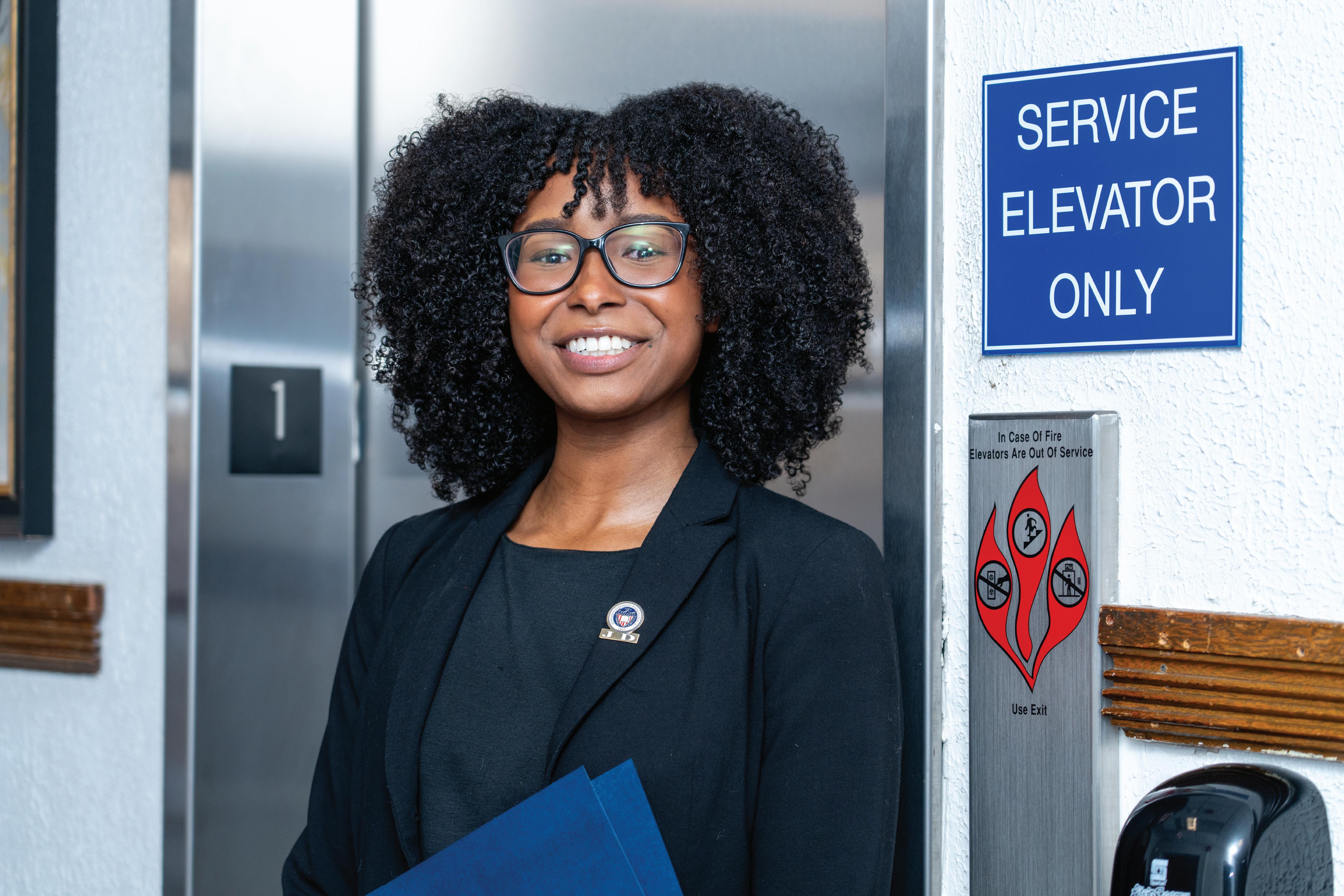
J.D. APPLICANTS APPLY HERE