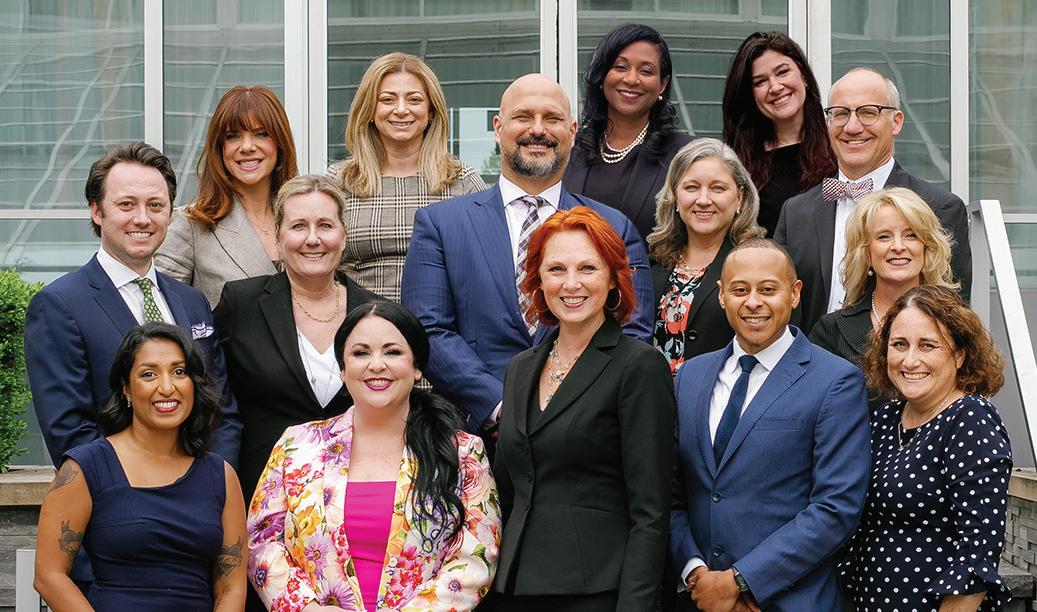
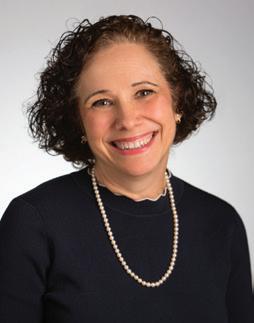
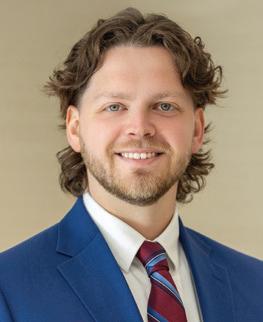
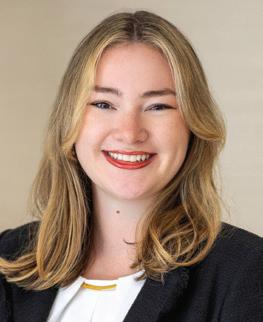
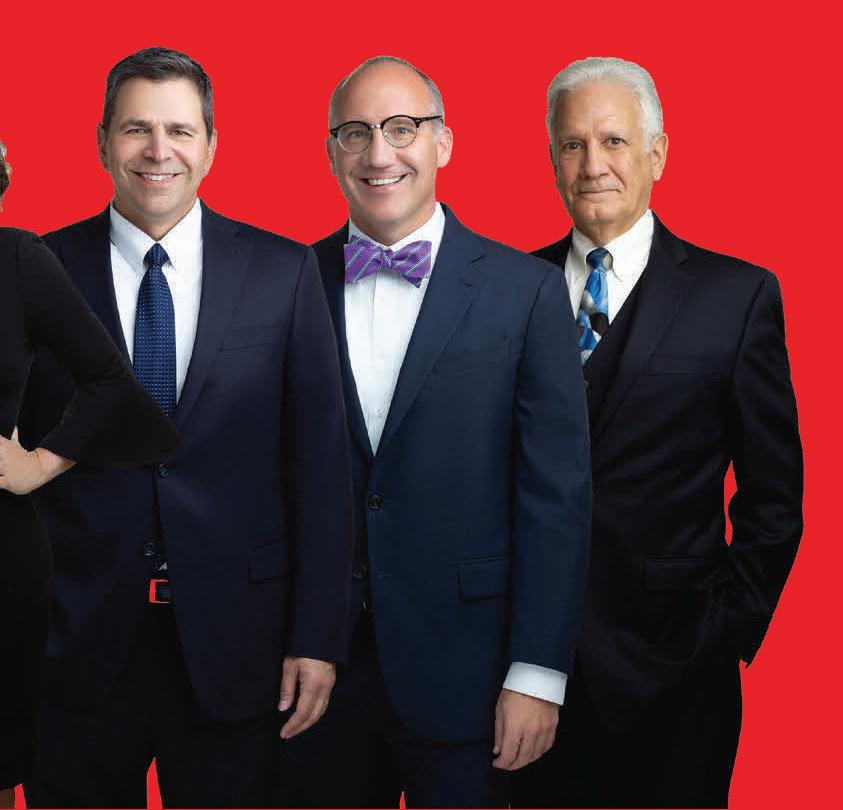
Sam Morgan & Greg Jones have a team of Employment Lawyers with decades of experience providing advice, counsel and representation to Employees and Employers in a wide variety of occupations, for:
• Wrongful discharge cases, including breach of employment contract, discrimination, harassment and retaliation
• Non-payment of compensation disputes, including commission, bonus and incentive compensation arrangements, and FLSA violations
• Enforcement of equity award agreements and minority shareholder rights
• Defending against mobility-killing non-compete and non-solicitation contracts
• Separation agreement reviews and severance negotiations
• Drafting employment contracts
• HR counseling, defending against government investigations
• Serious workplace injury and death cases
Our team includes Senior Associates Barbara Urlaub and Steven Cole, and Of counsel attorneys David Kotzian*, Donald Gasiorek*, Raymond Carey*, and Paul Hines.
*2025 Michigan Super Lawyers Honorees
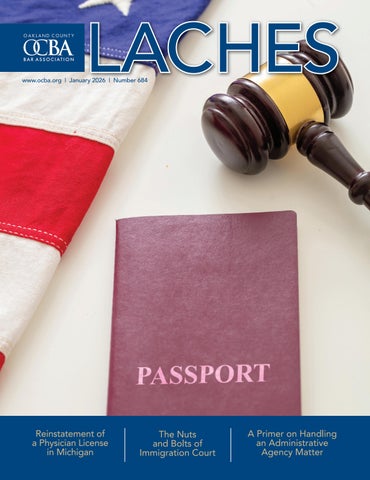
LACHES
OAKLAND COUNTY BAR ASSOCIATION
1760 S. Telegraph Road, Suite 100
Bloomfield Hills, Michigan 48302-0181
(248) 334-3400 • FAX (248) 334-7757
www.ocba.org
2025-2026 BOARD OF DIRECTORS
PRESIDENT
Sarah E. Kuchon
PRESIDENT-ELECT
Aaron V. Burrell
VICE PRESIDENT
Kari L. Melkonian
TREASURER
Victoria B. King
SECRETARY
Syeda F. Davidson
EXECUTIVE DIRECTOR
Jennifer Quick
LACHES EDITORIAL BOARD
Victoria B. King
Syeda F. Davidson
Coryelle E. Christie
Lanita L. Carter
DIRECTORS
Julie L. Kosovec
Emily E. Long
Jennifer L. Lord
Moheeb H. Murray
Kimberley Ann Ward
Layne A. Sakwa
Silvia A. Mansoor
Stephen T. McKenney
James A. Martone
Jennifer J. Henderson
James W. Low
Thamara E. Sordo-Vieira
Xavier J. Donajkowski
Vincent C. Sallan
Articles and letters that appear in LACHES do not necessarily reflect the official position of the Oakland County Bar Association, and their publication does not constitute an endorsement of views that may be expressed. Readers are invited to address their own comments and opinions to:
LACHES | Oakland County Bar Association 1760 S. Telegraph Rd., Ste. 100 Bloomfield Hills, MI 48302-0181
The Nuts and Bolts of Immigration Court: Key Differences and Practical Guidance
Immigration law remains a unique discipline requiring mastery of law, advocacy, and storytelling.
ByJalalJ.Dallo 10
A Primer on Handling an Administrative Agency Matter
In addition to knowing the basics, attorneys must be attuned to the currents transforming agency authority.
ByMatthewP.Allen 14
Reinstatement of a Physician License in Michigan
A variety of legal standards, administrative procedures, and policy considerations influence reinstatement decisions.
ByAlisonFurtaw 19
changes in writing to Oakland County Bar Association, 1760 S. Telegraph, Ste. 100, Bloomfield Hills, MI 48302-0181.
All aboard!
If you didn’t just hear Randy Rhoads’s unmistakable guitar riff from Ozzy Osbourne’s “Crazy Train” in your head, stop reading. Go listen. You can thank me later.
Let’s pause for a moment on the word “crazy.” In today’s world, it is often used in ways that stigmatize people experiencing mental illness. That is not my intent. The word “crazy” originates from the Middle English word crasen, meaning “to shatter or break apart.” That’s how I’m using it: not as an insult, but for that feeling when life has gone off the rails.
When we feel crazy, we feel overwhelmed, lost, burned out, and disconnected. But we do not have to go off the rails on a crazy train. Instead, we can glide on the peace train.
FINDING YOUR PATH TO INNER PEACE
At its core, inner peace is a state of calm and balance. It is about finding your center. Inner peace is not the absence of conflict but the ability to remain centered, even when the world pulls us in every direction. When we stop resisting, let go of what we can’t control, and accept the present moment as it is, we find inner peace.
Inner peace can be cultivated in many ways. Some find calm in stillness, others through movement, creativity, or connection. There is no single “right” way, only the way that feels authentic and sustainable.
CURIOSITY DID NOT KILL THE CAT
When I was a child, I thought Ozzy Osbourne was scary. I had heard stories of him biting the heads off bats and singing “the devil’s music.” When I got older, though, I became curious and listened. What I discovered was a man urging us to stop “living as foes,” to move from hate to love, from destruction to awareness.
A spark of curiosity can mark the first step toward cultivating inner peace. Curiosity breaks assumptions and opens the door to deeper understanding. It invites us to pause before rushing to judgment. That pause can transform how we
FROM CRAZY TRAIN TO PEACE TRAIN:
Finding Inner Peace in a Crazy World
By Sarah E. Kuchon
see people, situations, and even ourselves.
Our assumptions often create emotional reactions. We respond to the story in our minds instead of the reality in front of us. Curiosity interrupts that pattern. It helps us look again and consider what we may not know. Approaching people, situations, and even our own thoughts with curiosity moves us from reaction to reflection. It invites the question “What else might be happening here?” This inquiry softens rigid mental patterns by helping you explore life with an open mind rather than resist it.
CLAIMING YOUR INNER AUTHORITY
When life feels crazy, control feels essential. We
instinctively use control to feel safer. But external control is illusory. It assumes we have power over forces that are outside of our influence. We cannot control other people’s choices, opinions, or feelings or countless other external factors. No matter how hard we try, we cannot script how life will unfold.
Very often, the need to control is rooted in our insecurities and fear that we are not enough or safe unless everything around us is managed. Control becomes a way to guard against disappointment, rejection, or vulnerability. However, when we feel centered and whole, we no longer need such a tight grip. We can allow life to unfold as it is.
When someone judges you, excludes you,
disappoints you, or behaves unfairly, simply say, “Let them.” In e Let em eory, Mel Robbins explains that people’s actions re ect their values and struggles, not your worth. By letting others be who they are, you claim inner authority over what truly belongs to you: your choices, boundaries, and well-being. Next, you say, “Let me,” and turn inward toward your own thoughts, feelings, and behavior. Together, these shifts root you in your center.
Claiming this inner authority transforms our lives. We shift from feeling acted upon by life to becoming active participants. Agency softens anxiety. It turns helplessness into direction. Even in uncertainty, we rediscover our capacity to choose calm over chaos, presence over reactivity, and grounded alignment over feeling overwhelmed. at choice is the quiet foundation of inner peace.
LIVING IN THE HERE AND NOW
In his song “Peace Train,” Cat Stevens shares, “Now I’ve been cryin’ lately / inkin’ about the world as it is.” He goes on to ask, “Why must we go on hating? / Why can’t we live in bliss?” ese lyrics echo the heaviness we feel when
the world feels divided, unpredictable, and out of our control.
Present-moment awareness, also known as mindfulness, is a powerful tool. Peace lives in the space of our own agency, in this breath, this choice, this moment. When we inhabit that space with curiosity and acceptance, we respond, not react, and we create inner peace.
So why can’t we live in bliss? We can, but bliss requires presence. As humans, we worry, protect ourselves, and get swept into the noise of life. We often live in the past or rush toward the future. But bliss is a state of being that can arise only when we accept life as it is.
In e Power of Now, Eckhart Tolle explains that happiness is not determined by external circumstances but by our relationship to the present moment. Happiness arises when we accept life as it is, free from resistance and mental judgment. Unhappiness comes from wanting the moment to be di erent. Bliss, or inner peace, emerges when we are fully present and aligned with the here and now.
RIDING THE PEACE TRAIN
Inner peace can be cultivated in many ways. Some find calm in stillness, others through movement, creativity, or connection. There is no single “right” way, only the way that feels authentic and sustainable.
Inner peace is not a destination. It is a state of being. Inner peace is not the absence of con icts or challenges. It is a mindset shift. It begins when we recognize that we cannot control the train, but we can choose which one we board. Practices such as curiosity, introspection, and mindfulness invite us to slow down, breathe, and, as Cat Stevens urges, “come and join the livin’.” When we choose to cultivate inner peace, we choose to live with steadiness, even in an unsteady world.
If you nd yourself on that “crazy train,” take a breath; step back from the noise, obligations, and judgments; and listen for the rhythm beneath the chaos. ere’s another train waiting, one bound for balance rather than burnout. So, as the song directs us, “glide on the peace train.”
Sarah E. Kuchon is the president of the Oakland County Bar Association.
STEP INTO LEADERSHIP: Run for the OCBA Board of Directors
By Jennifer Quick
Membership in the Oakland County Bar Association isn’t just about belonging to a community — it’s about becoming a leader within it. e OCBA is dedicated to developing leading lawyers, and one of the most meaningful ways to grow as a leader is by serving on our board of directors.
As an OCBA member, you already have opportunities to chair committees, organize events, and share your expertise through LACHES, our agship publication. Board service takes that engagement to the next level. Many current and past directors have described their time on the OCBA board as one of the most ful lling experiences of their careers — one that has strengthened their professional networks, broadened their perspectives, and deepened their impact on the legal community.
Our board members don’t just make decisions; they shape the direction of the association and in uence how we serve our members. e OCBA board is a collaborative group of passionate, forward-thinking attorneys dedicated to advancing our mission — and having fun while doing it.
Serving on the OCBA board helps you grow as a leader in four key ways:
1. Expanding Your Network of Leaders Leadership grows through connection. Serving on the board places you among dynamic, well-connected professionals who share your commitment to excellence. ese relationships often become lasting mentorships and trusted referral partnerships, extending your in uence far beyond your current circle.
2. Strengthening Your Leadership Brand Board service demonstrates that you don’t just practice law — you lead it. Contributing at this level highlights your commitment to the profession and enhances your reputation for leadership, service, and vision.
3. Driving Meaningful Change
e OCBA board is where ideas become actions. By bringing your insight and perspective to the table, you can help steer initiatives that support our members and the profession. Whether it’s advancing access to justice, supporting young lawyers, or building a stronger legal community, your voice matters.
4. Developing as a Strategic inker Board service challenges you to think beyond your individual practice. It invites you to view issues through a broader, more strategic lens — one that enhances your e ectiveness not only within the OCBA but also throughout your career.
If you’re ready to take the next step in your professional growth and help shape the future of our association, consider running for a position on the OCBA’s board of directors.
Completed applications are due no later than 5 p.m. on Monday, February 2.
THE ROLE OF THE OCBA BOARD
e OCBA’s board of directors sets the strategic vision for the association, guiding initiatives that strengthen member value and elevate the profession. Board members play a key role in shaping policy, overseeing the association’s nances, evaluating committee progress, and supporting programs that foster professional growth, leadership development, and community engagement. Uniquely, the OCBA also takes thoughtful positions on matters of public policy that a ect the legal profession, ensuring that the voices of our members help shape legislation and
rulemaking.
As a director, you’ll share both individual and collective responsibility for advancing the OCBA’s mission:
“To serve the professional needs of our members, improve the justice system, and ensure the delivery of quality legal services to the public.”
By contributing your insight and leadership, you’ll help the OCBA continue its legacy of developing leading lawyers — because “Leading Law Professionals” is who we are and what we do.
is year, the Nominating Committee will submit one to two names for each open position. With ve three-year terms available, up to 10 candidates may be placed on the ballot.
HOW TO APPLY
Potential candidates are asked to submit a letter of intent and a Personal Data Form outlining their contributions to the legal profession, their involvement in OCBA committees and programs, and their area of law practice. OCBA bylaws require that to be a director, you must have been a regular OCBA member for the past four consecutive years. When considering applications for board nominations, the Nominating Committee places great emphasis on past bar service.
Personal Data Forms are available at the OCBA or on our website at ocba.org/elections. Watch for our e-blast announcements with links to the forms for additional information. Completed applications are due no later than 5 p.m. on Monday, February 2.
e Nominating Committee will select the slate of candidates and notify the applicants no later than Friday, February 13. A link to the ballot will be emailed to all regular OCBA members on ursday, April 30. e ballot will close by 5 p.m. on Friday, May 8, and the election results will be announced by Tuesday, May 12.
Jennifer Quick is the executive director of the Oakland County Bar Association.
HEA LTH CA RE
LA W FI RM
Wachler & Associates represents healthcare providers, suppliers, and other entities and individuals in Michigan and nationwide in all areas of health law including, but not limited to:
•Healthcare Corporate and Transactional Matters, including Contracts, Corporate For mation, Mergers, Sales/Acquisitions, and Joint Ventures
•Healthcare Corporate and Transactional Matters, including Contracts, Corporate For mation, Mergers, Sales/Acquisitions, and Joint Ventures
•Medicare, Medicaid, and Other Third-Party Payor Audits and Claim Denials
•Medicare, Medicaid, and Other Third-Party Payor Audits and Claim Denials
•Licensure, Staff Privilege, and Credentialing Matters
•Provider Contracts
•Licensure, Staff Privilege, and Credentialing Matters
S
•Billing and Reimbursement Issues
•Provider Contracts
•Billing and Reimbursement Issues
•Stark Law, Anti-Kickback Statute (AKS), and Fraud & Abuse Law Compliance
•Physician and Physician Group Issues
•Stark Law, Anti-Kickback Statute (AKS), and Fraud & Abuse Law Compliance
• Regulatory Compliance
•Physician and Physician Group Issues
•Corporate Practice of Medicine Issues
• Regulatory Compliance
•Provider Participation/Ter mination Matters
•Corporate Practice of Medicine Issues
•Provider Participation/Ter mination Matters
• Healthcare Litigation
• Healthcare Investigations
• Healthcare Litigation
•Civil and Criminal Healthcare Fraud
• Healthcare Investigations
•Civil and Criminal Healthcare Fraud
•Medicare and Medicaid Suspensions, Revocations, and Exclusions
•Medicare and Medicaid Suspensions, Revocations, and Exclusions
•HIPAA, HITECH, 42 CFR Part 2, and Other Privacy Law Compliance
•HIPAA, HITECH, 42 CFR Part 2, and Other Privacy Law Compliance
CALENDAR OF EVENTS
Please Note: The dates listed below were sent to the publisher on November 3, 2025. It is possible that some of the events listed below have since been altered. Please check ocba.org/events for the most up-to-date schedule of events.
JANUARY
BUSINESS & BASKETBALL
Join us at Little Caesars Arena for a special networking event as the Pistons face off against the Indiana Pacers. It’s a great opportunity to build connections with fellow OCBA members and your book of business. Feel free to bring family and friends. Enjoy exclusive savings on tickets, access to a designated networking area, and a free Pistons item. Register by January 4 at ocba.org/pistons
OAKLAND COUNTY BAR FOUNDATION FELLOWS RECEPTION
This exclusive, invitation-only event for Oakland County Bar Foundation Fellows provides a festive setting in which to come together in support of the OCBF and celebrate these dedicated individuals. Enjoy delicious food and drinks and the camaraderie of friends and colleagues. OCBF Fellows can register now at ocba.org/ events. To learn more about the Fellows Program or become a Fellow, visit ocba.org/fellows
FEBRUARY
BAR NIGHT OUT
Warm up your winter evening with great company and conversation at our quarterly Bar Night Out mixer, happening from 5:30 to 7:30 p.m. Connect with fellow OCBA members, expand your professional network, and enjoy a selection of delicious hors d’oeuvres in a relaxed social setting. This event is free for OCBA members, but space is limited — so secure your spot today at ocba.org/events
NEW LAWYERS VS. THE BOARD CHALLENGE
Every year, the New Lawyers Committee invites the OCBA’s board of directors to a competitive challenge. This year, we’ll hit the lanes at the retro-chic bowling alley Bowlero in Royal Oak. Can the New Lawyers Committee retain its title after winning last year’s Topgolf challenge, or will the board take back the coveted trophy? You don’t have to be a new lawyer or a board member to participate — you just have to pick a side! Register at ocba.org/events
A seminar from the Professional Development Committee
Presenters: Derek T. Howard, Doerr MacWilliams Howard, PLLC; Victoria B. King, Sixth Judicial Circuit Court; and Christopher Smith, Sixth Judicial Circuit Court
This Zoom seminar will provide valuable insights from experienced speakers who have served in both circuit courts and private practice. Drawing on their deep understanding of court operations and litigation strategy, they will examine the intricacies of court rules and highlight common pitfalls attorneys face. The program will also address frequent discovery challenges, offering practical solutions to help counsel avoid drawn-out discovery battles. Whether you’re a new attorney or a seasoned practitioner, this seminar will deliver actionable guidance to enhance your litigation skills.
Update on the State of Criminal Law Year-End 2025 (11:30 a.m. – 1 p.m.)
A seminar for criminal defense appointed counsel
Presenter: Alona Sharon, Alona Sharon PC
This Zoom seminar will provide an overview of the most recent published Michigan Court of Appeals cases with a focus on sentencing decisions. Join us for an in-depth discussion of hot topics, emerging issues, and practice pointers in criminal law.
Worth 1.5 hours of criminal and juvenile training credit for appointed counsel
FEBRUARY
14 29 5 12 19
Beyond Billable Hours: Growing Your Client Base (5:30 – 7 p.m.)
A seminar from the Professional Development Committee
Presenters: John Reed, Rain BDM
This engaging in-person seminar offers a dynamic opportunity to strengthen your communication and business development skills while connecting with peers face-to-face. Building on strategies for effective professional relationship management, the program will explore how to translate online connections into meaningful in-person relationships, capitalize on networking opportunities, and expand your client footprint. Participants will also learn techniques for building and maintaining referral networks, asking clients for referrals with confidence, and enhancing business development conversations. The session will conclude with dedicated networking time, allowing attendees to put their new skills into practice and forge valuable professional connections.
Presenters: Judith S. Gracey, The Gracey Law Firm PLLC; TBD
Success in the courtroom starts long before opening statements. This focused seminar equips appointed defense counsel with practical, battle-tested strategies for effective trial preparation and persuasive jury selection. Learn how to craft your case story from the ground up, identify and address potential weaknesses, and select a jury that will truly listen to your client’s side. Whether you’re new to criminal defense or a seasoned advocate, you’ll gain concrete tools to streamline your prep, sharpen your voir dire, and step into trial ready to win. Worth 1.5 hours of criminal and juvenile training credit for appointed counsel
A seminar from the Professional Development Committee Presenters: Zenell B. Brown, Fairness and Accountability Officer, State Court Administrative Office, and Creadell Webb, Chief DEI Officer, First Judicial District of Pennsylvania
Moderator: Richard Lynch, Court Administrator, Sixth Judicial Circuit Court
This seminar explores how effective communication — an essential foundation of the legal profession — can be restored and strengthened amid increasing polarization in workplaces and communities. Participants will examine practical strategies to bridge divides, rebuild trust, and enhance collaboration within their organizations and with clients. Drawing on real-world examples and actionable insights, the program will provide tools to navigate difficult conversations, promote inclusion, and cultivate a culture of respect. Attendees will leave better equipped to lead, communicate, and build stronger professional relationships in an increasingly complex environment. OCBA members are encouraged to register early for this engaging and essential discussion.
Sandra D. Glazier, founding member of Sandra D. Glazier P.C., was recently recognized by the National Association of Estate Planners & Councils (NAEPC) as an inductee into the Estate Planning Hall of Fame and a recipient of the Accredited Estate Planner (Distinguished) designation for 2025. NAEPC leadership presented the award on October 22, 2025, during a special awards ceremony.
Glazier is one of only eight estate planning professionals to receive this prestigious honor in 2025. The award is given annually in recognition of lifetime achievement and outstanding contributions to the practice and profession of estate planning within the professional disciplines of academia, accounting, insurance and financial planning, law, philanthropy, and trust.
Glazier concentrates her practice in probate litigation, estate planning and administration, and family law. Not only does she actively practice in these areas, but she has also been engaged to act as a testifying and consulting expert. Glazier has served as a mediator in probate and family court cases. She is active with the Oakland County Bar Association, having held numerous leadership positions and currently serving as an appointed member of its legislative committee. Glazier is also active in the ABA’s Real Property, Trust and Estate Law Section and currently serves on the Michigan State Bar Probate Section’s council, serving as chair of the section’s Guardianship, Conservatorship, and End of Life Committee.
Plunkett Cooney recently welcomed two new attorneys to its Bloomfield Hills office.
Attorney Peter J. Florian joined the firm’s Torts & Litigation practice group. Florian focuses his practice on general litigation defense, representing a broad range of clients, including policyholders from some of the world’s leading insurance companies, in claims involving premises liability, general negligence such as slip-and-fall incidents, and first- and third-party motor vehicle negligence cases involving personal injury and comparative negligence issues. In addition to his litigation work, Florian has experience handling mortgage workouts and foreclosures, title disputes, and homeowners association contract matters.
Florian earned his law degree, cum laude, from the University of Detroit Mercy School of Law in 2025. While in law school, he was a member of the Business Law Society and served as a junior member of the Moot Court Board of Advocates. He received numerous academic accolades, including awards in basic federal income tax and secured transactions. Florian received his undergraduate degree from Michigan State University in 2019.
Hailey A. Wolf joined Plunkett Cooney’s Torts & Litigation and Transportation Law practice groups. Wolf defends individuals, businesses, insurance carriers, and municipalities in matters involving slip, trip, and fall claims and first- and third-party motor vehicle no-fault benefits. She also has experience assisting clients with immigration matters, including U visas, H-1B visas, and cancellation of removal. Wolf earned her law degree, cum laude, from Wayne State University Law School, where she served as assistant editor of the Wayne Law Review and chancellor of the Jessup International Law Moot Court. She graduated cum laude from Michigan State University’s James Madison College in 2021.
Mathew Kobliska
THE NUTS AND BOLTS OF IMMIGRATION COURT:
Key Differences and Practical Guidance
By Jalal J. Dallo
Practicing before the immigration court is a unique discipline within the broader legal landscape. Unlike criminal or civil litigation, immigration court is governed by the Immigration and Nationality Act, agencyspecific regulations, and administrative procedures rather than traditional state or federal rules of evidence or civil procedure. For practitioners — especially those transitioning from other areas of law — understanding the nuances of immigration court is essential.
I. CORE DISTINCTIONS IN IMMIGRATION PRACTICE
1. Nonadversarial Framing but Adversarial Reality
Although immigration proceedings are technically civil and categorized as administrative, they are adversarial in nature. The Department of Homeland Security (DHS), acting through trial attorneys, actively prosecutes removal cases. Respondents, especially those unrepresented, are at a distinct disadvantage due to the lack of appointed counsel.
The government trial attorneys operate through the Office of the Principal Legal Advisor (OPLA), which is the legal arm of U.S. Immigration and Customs Enforcement (ICE), part of DHS. OPLA is the largest legal program in DHS, and it serves as ICE’s chief legal representative in immigration removal proceedings.
Key Functions of OPLA
- Represents the Government in Immigration Court: OPLA attorneys (also called ICE trial attorneys or “government counsel”) appear on behalf of DHS in removal proceedings before the Executive Office for Immigration Review (EOIR). They prosecute cases against noncitizens whom the government is seeking to remove from the United States.
- Provides Legal Advice to ICE: OPLA advises ICE’s enforcement divisions, such as Homeland Security Investigations and Enforcement and Removal Operations, on a broad range of legal issues, including immigration law, criminal law, constitutional law, and privacy.
- Supports Policy and Litigation: OPLA supports ICE leadership in the development of policies, regulations, and legal positions. It also assists in civil and criminal litigation involving ICE, often in coordination with the Department of Justice.
- Exercises Prosecutorial Discretion: OPLA attorneys have authority to exercise prosecutorial discretion, such as agreeing to dismiss or administratively close cases, offer stipulations, or not oppose certain forms of relief (e.g., asylum or cancellation of removal). This discretion has become a focal point in shifting immigration enforcement priorities under different presidential administrations.
Organizational Structure of OPLA
- Led by the principal legal advisor (a
political appointee or career official).
- Has over 25 field locations aligned with ICE’s enforcement offices across the U.S.
- Employs several thousand attorneys and support staff.
So, if you’re appearing in immigration court, the OPLA attorney is your opposing counsel — representing ICE and the federal government.
2. Evidentiary Flexibility
The Federal Rules of Evidence do not apply in immigration court proceedings, which are classified as civil administrative hearings rather than criminal trials. Instead, immigration judges (IJs) are governed by a more flexible evidentiary standard rooted in “fundamental fairness” and due process, as outlined in 8 C.F.R. § 1240.7(a) and applicable case law. Under this standard, IJs may admit evidence that would be considered inadmissible in federal or state courts, provided it is probative (i.e., tends to prove or disprove a material fact) and inherently reliable.
This relaxed evidentiary framework can cut both ways. On the one hand, it allows respondents to introduce supporting evidence that might otherwise be excluded under strict evidentiary rules — for example, affidavits, hearsay statements, or unauthenticated documents, particularly when corroboration is difficult due to conditions in the respondent’s home country. On the other hand, it permits the government to introduce evidence such as Form I-213 (Record of Deportable/Inadmissible Alien), police reports, or secondhand statements, so long as they meet the threshold of reliability and relevance. This creates strategic considerations for both parties, as objections based on evidentiary technicalities carry less weight, and credibility, corroboration, and the totality of circumstances often play a more decisive role in the judge’s assessment.
Ultimately, while the relaxed rules are intended to promote efficiency and accessibility, they can also present significant challenges, especially when the burden of proof rests on the respondent, such as in applications for asylum, cancellation of removal, or other forms of discretionary relief. Advocates must therefore be vigilant in challenging unreliable or prejudicial evidence and in ensuring that their client’s right to a fundamentally fair hearing is preserved.
3. Discretion Is Paramount
Whether in asylum, cancellation of removal, or adjustment of status cases, discretionary relief is often the linchpin — the decisive factor that determines whether a respondent is ultimately allowed to remain in the United States. While each form of relief has specific statutory eligibility requirements, meeting those criteria merely opens the door; it does not guarantee relief. The IJ retains broad discretionary authority to grant or deny relief based on the totality of the circumstances. As a result, the respondent’s credibility, personal equities, and perceived moral character become critical to the outcome.
In this context, credibility is not just about consistency in testimony — it encompasses demeanor, responsiveness, internal and external corroboration, and the absence of embellishment or evasion. Even minor inconsistencies can be leveraged by DHS to cast doubt on the respondent’s truthfulness, potentially undermining an entire application for relief. At the same time, a finding of credible testimony may significantly bolster a claim, especially where documentary evidence is limited.
The respondent’s equities — such as length of residence in the U.S., family ties (especially to U.S. citizen or lawful permanent resident relatives), steady employment, community involvement, history of paying taxes, and rehabilitation from any past misconduct — are weighed in the judge’s equitable analysis. These factors help paint a picture of the respondent’s integration into American society and whether their continued presence aligns with the public interest.
Perhaps most pivotal is the IJ’s assessment of the respondent’s moral character and overall worthiness of favorable discretion. This is inherently subjective and influenced not only by the facts presented but also by how they are presented — through affidavits, witness testimony, letters of support, and the respondent’s demeanor in court. Any criminal history, past immigration violations, or perceived dishonesty can weigh heavily against a favorable exercise of discretion, even where statutory eligibility is satisfied.
Because discretionary relief is, by nature, not a matter of right, framing the respondent’s narrative in human, compelling terms is essential. The court must be persuaded that the respondent deserves a second chance and that granting relief would not only benefit the individual and
their family but also serve the interests of justice and the public good.
4. Limited Discovery and No Jury
Unlike criminal proceedings or civil litigation in federal court, immigration court does not provide a right to discovery in the traditional sense. There is no reciprocal exchange of evidence, no formal interrogatories or depositions, and no jury. Instead, evidence gathering in removal proceedings is limited, asymmetric, and often slow, placing a significant burden on respondents and their counsel to build a complete and persuasive record with minimal tools.
Most immigration attorneys rely on a combination of Freedom of Information Act requests, DHS file reviews under 8 C.F.R. § 103.2(b)(16), and limited use of subpoenas under 8 C.F.R. § 1003.35(b). The Freedom of Information Act is often the primary vehicle for obtaining immigration and enforcement records, but response times can be delayed and redactions are common. DHS file reviews may offer more timely access to a respondent’s A-file, but they are subject to the discretion of the agency. While subpoenas are theoretically available through the immigration judge, they are rarely granted unless the requesting party can demonstrate clear relevance, materiality, and necessity — often a high bar to meet in practice.
Because there is no jury, the IJ functions as both gatekeeper and finder of fact. The IJ determines what evidence to admit, how much weight to give it, and, ultimately, whether the burden of proof has been met. This dual role magnifies the importance of how evidence is presented, how objections are framed, and how the respondent’s credibility and equities are portrayed. The IJ’s discretion is broad, and appellate review is deferential on factual findings, which makes it all the more critical to develop the record fully and persuasively at the trial level.
This procedural structure creates inherent challenges for respondents, particularly in cases involving criminal records, allegations of fraud, or claims for relief that hinge on subjective factors like credibility, hardship, or moral character. Effective advocacy therefore requires not only an understanding of immigration law but also strategic planning, persuasive storytelling, and creative use of limited procedural tools.
II. THE NUTS AND BOLTS OF IMMIGRATION COURT PROCEEDINGS
1.The Notice to Appear Removal proceedings begin with the issuance of a Notice to Appear (NTA), Form I-862. This document serves as the charging instrument and outlines the allegations against the noncitizen. It typically includes:
• Biographical information.
• Date of entry and manner of entry.
• Alleged immigration violations.
• The statutory grounds for removability under the Immigration and Nationality Act.
The NTA must be properly served on the respondent and filed with the immigration court to vest jurisdiction. Practitioners must carefully review the NTA for inaccuracies, legal defects, or missing time-and-date information, which may affect jurisdiction under Pereira v. Sessions and subsequent decisions.
2. Master Calendar Hearings
The master calendar hearing (MCH) is the immigration court’s version of a pretrial or status conference. It is often brief, procedural in nature, and used to:
• Address pleadings to the NTA allegations.
• Identify forms of relief sought.
• Set deadlines for filing applications and evidence.
• Schedule the individual hearing. Respondents must be present unless excused. During the MCH, counsel should:
• Review and admit or deny factual allegations and removability charges.
• Provide an estimate of hearing time.
• Notify the court of any barriers to relief (e.g., criminal history).
3. Initial Master Hearing Preparation
Prior to the MCH, practitioners should:
• Submit an EOIR-28 (Notice of Entry of Appearance as Attorney or Representative Before the Immigration Court).
• Confirm that their client’s information is accurate in EOIR and DHS systems.
• Serve biometrics instructions and ensure the client completes fingerprinting at the Application Support Center.
• Submit applications (I-589, EOIR-42B, etc.) by the deadline, typically at or before the MCH if instructed.
• Upload documents through the EOIR Courts & Appeals System if practicing in an electronic-filing jurisdiction.
4. Individual Hearings
The individual hearing is the equivalent
of a bench trial. Evidence is presented, witnesses are examined and crossexamined, and legal arguments are made. The government typically presents its case first in removability-only proceedings. If relief from removal is being sought, the respondent bears the burden and proceeds first. Best practices include:
• Filing all exhibits with a clear index, pagination, and appropriate translations.
• Submitting a prehearing brief framing the legal issues.
• Prepping the client and witnesses with mock examinations.
• Identifying and preparing expert testimony in advance.
III. APPLICATION FILING DEADLINES AND CALL-UP DATES
Immigration courts enforce application deadlines stringently. Some key submission timing rules include the following:
• I-589 (Asylum): Must be filed within one year of arrival, unless exceptions apply.
• Relief Applications: Must be filed by the date set at the MCH or risk waiver.
• Call-Up Dates: These are the deadlines set by the IJ for filing evidence, supporting documents, briefs, and witness lists, often 15 or 30 days before the individual hearing. Late filings risk exclusion unless good cause is shown. You could file a motion to accept late filing, but you risk government counsel objecting and/or the judge denying your motion.
IV. DETAINED VS. NONDETAINED DOCKETS
1. Docket Scheduling
Detained respondents are placed on an expedited docket and typically have significantly shorter time frames. Hearings may be conducted via video teleconferencing. Bond hearings may be scheduled separately from removal proceedings but are sometimes held concurrently.
2. Mandatory Detention
Under INA § 236(c), certain respondents are subject to mandatory detention and ineligible for bond. Categories include respondents convicted of:
• Certain aggravated felonies.
• Controlled substance offenses.
• Firearms offenses.
• Crimes of moral turpitude with a sentence over one year. However, there may be room to challenge mandatory detention:
• Matter of Joseph Hearing: Argue that the DHS charge is not sustained by the underlying record.
• Motion to Redetermine
Custody: Present mitigating evidence or argue that a conviction does not categorically fall within a mandatory category.
3. Bond Requests and Parole
If the client is detained, counsel must:
• Evaluate eligibility for bond.
• File a motion for bond redetermination with the court and request a hearing.
• Alternatively, seek parole directly from ICE under humanitarian or public interest grounds (8 C.F.R. § 212.5). For bond, practitioners should submit:
• Support letters.
• Proof of lawful presence by qualifying relatives.
• Evidence of ties to the community and lack of flight risk.
V. FORMS OF DISCRETIONARY RELIEF IN REMOVAL PROCEEDINGS
1. Asylum (INA § 208)
• A discretionary form of relief that permits the respondent to remain in the U.S. and eventually apply for permanent residence.
• Standard: Must demonstrate a well-founded fear of persecution on account of race, religion, nationality, political opinion, or membership in a particular social group.
• Even if the respondent is eligible, the IJ may deny asylum as a matter of discretion (e.g., negative credibility, lack of equities, or criminal history).
• Bars to asylum (such as the one-year filing deadline, firm resettlement, or certain criminal convictions) can prevent eligibility, even if the fear of persecution is real.
2. Withholding of Removal (INA § 241(b) (3))
• Unlike asylum, this is mandatory if the applicant meets the burden: showing it is more likely than not that they will face persecution on a protected ground.
• No discretionary component — if the person qualifies, relief must be granted.
• However, the protection is narrower: no path to permanent residency, no derivative benefits for family, and only protection from removal to the specific country where danger exists.
3. Convention Against Torture
• This is also nondiscretionary.
• The applicant must show it is more likely than not that they will be tortured with the acquiescence or involvement of a public official if removed.
• Like withholding, Convention Against Torture does not confer a path to permanent residency, but it can block removal to the country of danger.
4. Cancellation of Removal for Nonpermanent Residents (INA § 240A(b)) — ‘42B’
• is is discretionary relief available to certain nonpermanent residents.
• e applicant must demonstrate:
1. 10 years continuous physical presence in the U.S.
2. Good moral character during that time.
3. No disqualifying criminal convictions.
4. at removal would result in exceptional and extremely unusual hardship to a qualifying U.S. citizen or lawful permanent resident spouse, parent, or child.
• Relief is discretionary and limited numerically — only 4,000 grants per year.
• Even if the respondent meets the statutory criteria, the IJ retains discretion to deny.
5. Adjustment of Status After Marriage to a U.S. Citizen
When a respondent in removal proceedings marries a U.S. citizen, they may become eligible to adjust status under INA § 245, depending on several factors:
• e marriage must be bona de (not for immigration purposes).
• e respondent must have entered lawfully (e.g., with inspection/parole) unless they are covered by § 245(i).
• No bars to adjustment (e.g., certain criminal grounds, immigration fraud) must apply — or they must be waived.
Where to File — USCIS or Immigration Court?
If the person is in removal proceedings, the immigration judge has exclusive jurisdiction over adjustment of status applications, unless proceedings are terminated.
In such cases, the I-130 petition can be led with U.S. Citizenship and Immigration Services (USCIS), and after it is approved, the respondent can request that the court terminate proceedings so they can adjust with USCIS, or they can apply for adjustment in court.
6. Termination or Administrative Closure of Removal Proceedings
A. Termination
• Termination of proceedings may be requested when:
o e respondent becomes eligible for relief before USCIS (e.g., adjustment of status following an approved I-130).
o DHS agrees to move to dismiss the case under Matter of S-O-G& F-D-B-, 27 I&N Dec. 462 (A.G. 2018); Matter of G-D-, 27
I&N Dec. 767 (BIA 2020); and the more recent DHS prosecutorial discretion memos under Mayorkas or subsequent administrations.
• Termination allows the client to le for adjustment of status with USCIS (which is often faster and less contentious than doing so in court).
B. Administrative Closure
• Allows the court to pause proceedings (without terminating).
• Used to be common when the I-130 was pending or if the person had DACA, TPS, or another pending bene t. However, Matter of Castro-Tum, 27 I&N Dec. 271 (A.G. 2018), restricted IJs’ ability to administratively close. While that decision was later vacated under Biden’s administration (see EOIR PM 21-18), whether administrative closure is granted still depends on jurisdiction and local court practice.
Practical Strategy Example
If your client marries a U.S. citizen and:
• Entered with inspection (or has § 245(i) grandfathering);
• Has no bars to adjustment (or can waive them); and
• Has a strong I-130 petition that is likely to be approved;
en consider taking the following steps:
1. File the I-130 with USCIS.
2. After I-130 approval, le a motion to terminate the removal proceeding with ICE/ DHS support.
3. If the court grants termination, the client can le I-485 with USCIS.
4. If termination is denied or opposed, the client may still le I-485 in court, provided they are eligible.
VI. PROFESSIONAL CONDUCT AND ETHICAL OBLIGATIONS
1. Candor with the Court e immigration judge relies heavily on attorney representation regarding dates, availability, lings, and procedural posture. Misrepresentations — intentional or due to disorganization — can damage credibility.
2. Managing Client Expectations
Immigration relief is discretionary and unpredictable. Be honest about chances of success. Use written advisals (with translations if necessary) to con rm understanding of outcomes, rights, and appellate options.
3. Withdrawal Procedures
To withdraw, counsel must le a motion to withdraw and obtain permission from the
IJ. Until it is granted, appearance obligations remain in force.
VII. HOW IMMIGRATION COURT DIFFERS FROM CRIMINAL OR CIVIL COURT
• No jury: IJs act as judge and fact nder.
• Limited evidentiary rules: e fundamental fairness standard applies.
• No right to appointed counsel: Representation is at the noncitizen’s expense.
• Limited or no discovery: ere are no interrogatories or depositions.
• Relief is discretionary: Unlike civil damages or criminal defenses, relief often requires a showing of positive equities.
VIII. CONCLUSION: TECHNICAL PRECISION AND HUMAN STORYTELLING
Immigration court practice is a hybrid of law, advocacy, and storytelling. Mastery of the rules and deadlines must be complemented by compassion, narrative skill, and cultural competence. Whether your client is detained and facing imminent removal or a longtime resident seeking cancellation, your preparation can make the di erence between deportation and relief.
Understanding the granular requirements — from the NTA to bond strategy, call-up deadlines, and evidentiary presentation — allows attorneys to ful ll their role as both legal technician and human rights advocate.
When practiced with care and professionalism, immigration law remains one of the most challenging yet profoundly meaningful areas of legal advocacy.
Attorney Jalal “J.” Dallo is a dedicated advocate in the elds of criminal defense and immigration law, stemming from a lifelong commitment to justice, in uenced by over 35 years of martial arts training. is discipline instilled in him the values of integrity, resilience, advocacy, and the protection of those whose rights, freedom, and way of life are at stake.
With over 16 years of legal experience, Dallo has successfully represented clients across Michigan and throughout the United States. A returning contributor to Laches, he also plays a key role in authoring the Institute of Continuing Legal Education’s Michigan Model Criminal Jury Instructions. Beyond his legal practice, he has been invited to speak at colleges and universities, sharing his insights on law and justice. Committed to service, he provides pro bono and low bono representation, driven by a deep sense of responsibility to those facing lifealtering legal challenges.
A Primer on Handling an Administrative Agency Matter
By Matthew P. Allen
INTRODUCTION
This article provides an overview of the basic structure of administrative agencies, a summary of the main issues lawyers should consider when representing a client in an administrative agency investigation or proceeding, and an update on some recent court decisions that have curbed the power and authority of administrative agencies in the United States.
The executive branch has joined the judicial branch in limiting the authority of federal agencies: The Trump administration’s “Department of Government Efficiency” has been tasked by executive order with “deregulating” administrative agencies by repealing agency regulations, reducing agency staff and employees, and attempting to dismantle some agencies entirely. In addition, the White House attempted to remove a Federal Reserve Board governor — and former Michigan State University professor — in a manner that challenges a 90-year-old Supreme Court decision limiting the ability of the president to remove certain agency officials. Not since President Roosevelt’s New Deal have we seen such a fundamental shift in administrative law. It makes it an interesting time to examine administrative agencies. And since every U.S. citizen has some interest regulated by an administrative agency, this is a timely topic for our Oakland County legal community.
I’ve represented companies and individuals in a host of federal, state, and municipal administrative agency investigations, licensing examinations, enforcement actions, and litigation. The agencies I have worked with include the U.S. Securities and Exchange Commission; the Federal Trade Commission; the Federal Election Commission; the U.S. Department of Commerce Bureau of Industry and Security; the Michigan Corporations, Securities & Commercial Licensing Bureau; the Detroit Buildings, Safety Engineering, and Environmental Department; and many others. Frequently, clients facing a regulatory inquiry face parallel criminal exposure from the U.S. Department of Justice or Michigan Department of Attorney General, in addition to private suits for damages by disappointed investors, consumers, or customers.
This article provides an outline of basic issues to consider when preparing to represent a client in an administrative agency matter.
WHAT ARE ADMINISTRATIVE AGENCIES, AND WHERE DO THEY COME FROM?
Starting in the 1930s, President Roosevelt’s New Deal rapidly proliferated the U.S. “administrative state” by creating a host of new agencies with new powers meant to reform government to better respond to the economic, social, and political challenges our country was facing.
It’s been said administrative agencies have become “a veritable fourth branch of the Government.” They are created by congressional and state legislation, and they usually “reside” in the executive branch. The scope and reach of agency powers are defined by statute and interpreted by the courts. These agencies make rules and regulations for all areas of society where Congress or state legislatures identify a need for government
intervention and oversight, including as examples:
• How securities are sold to the public.
• What export controls should be applied to which goods sent to which countries.
• What substances companies can put in our food, air, and water.
• How much society should pay for our nation’s social security.
• What the rules of commerce are for companies doing business in the United States.
• What work rules companies and unions can impose on employees.
• What the requirements are for fair and free elections.
• How our national security should be ensured.
And the list goes on and on. In many instances, Congress authorizes these agencies to investigate, adjudicate, and enforce the rules they have written. This creates constitutional tension between, on the one hand, ensuring that agencies exercise only the power and authority Congress has given them, with appropriate oversight by the executive branch, and, on the other hand, providing enough discretion to the agencies so they can effectively apply their technical expertise in whatever area they were created to administer.
Over the decades, government administrations at every level have championed either increasing government agency regulation for the protection of citizens (colloquially known as “big government”) or decreasing the scope and reach of agency rules and regulations (“small government”). Sometimes the debate is whether the central federal government or the states should regulate a certain area. At this moment, the most recent iteration of Chief Justice Roberts’s U.S. Supreme Court and the Trump administration have made decisions that reflect their belief that federal administrative agencies have extended beyond their proper constitutional authority. These decisions have already begun to create new “subissues” of administrative law in the lower courts that will make their way back to the High Court.
FIVE-STEP ROAD MAP FOR RESPONDING TO AN ADMINISTRATIVE AGENCY
While there are innumerable state and federal administrative agencies and industries they regulate, the basic model of administrative procedure and decision-making is similar. So whether your client is being investigated or sued by an administrative agency, is seeking relief against another party in an agency proceeding, or is seeking other regulatory relief from an agency, the steps below can be applied to advise your client.
STEP 1: Understand Your Client’s Potential Criminal Exposure and Law Enforcement Involvement
Many administrative rule regimes contain specific authorization for criminal charges and penalties. For example, the U.S. Department of Commerce Bureau of Industry and Security (BIS) is authorized by statute to regulate, investigate, and adjudicate export control and tariff code disputes and impose various civil and regulatory licensing penalties on any person who “violates, conspires to violate, or causes a violation” of the Export Control Reform Act or any Export Administration Regulation. See, generally, 50 USC 4801-4852. Congress also included a provision allowing the imprisonment of a person for up to 20 years for “willfully” committing, attempting to commit, or conspiring to commit specific “unlawful acts” set forth in the statute. See 50 USC 4819(b). It’s the same in Michigan: For example, the governor and Legislature empower the Michigan Corporations, Securities & Commercial Licensing Bureau to regulate and enforce the Michigan Uniform Securities Act, including investigating any “false or misleading” statements or omissions in connection with the purchase or sale of securities. See, generally, MCL 451.2102; MCL 445.2034. A person who “willfully violates this act or a rule adopted or order issued under this act … is guilty of a felony punishable by imprisonment” for up to 10 years. MCL 451.2508.
This is in addition to other types of general criminal charges potentially available to the U.S. government or the state of Michigan, such as conspiracy, false pretenses, conversion, embezzlement, mail fraud, and wire fraud.
So, for example, if your client is being investigated by BIS for engaging in transactions “with intent to evade” export control laws or tariff codes, it is important to understand whether investigators may view your client as having “willfully” done so, thus exposing your client to referral by BIS to the U.S. Department of Justice for criminal investigation. In a document-intensive case, sometimes your client’s opinion of their intent and “willfulness” may be different from the view federal agents take of your client’s knowledge of wrongdoing as reflected in the documents. The more complex or unsettled the law — think tax, campaign finance, and similar laws — the greater likelihood that your client may have effective mens rea defenses to criminal charges. If your client faces criminal exposure, that changes the risk calculus of cooperating in the regulatory investigation or administrative proceeding for various reasons, including but not limited to:
• Fifth Amendment Rights vs. Cooperation. An individual client has a Fifth Amendment right to remain silent in
civil or criminal proceedings. However, if they cooperate — by giving interviews or testimony — they may waive that right in a later criminal case. Waiver rules vary by jurisdiction, so counsel must be attentive to local law.
• Adverse Inferences in Civil and Regulatory Cases. While silence can’t be used against a client in criminal court, civil regulators and plaintiffs may draw adverse inferences from it. This creates a tension between preserving criminal defenses and risking civil liability. One strategy is to seek a stay of civil proceedings pending resolution of related criminal matters, citing due process, judicial efficiency, or comity.
• Balancing Liberty and Business Interests. Protecting against criminal exposure may harm a client’s regulated business. Clients often must weigh their liberty and business interests when deciding whether to cooperate. Tools like immunity, nonprosecution, or deferred prosecution agreements can help. Companies should consider conducting internal investigations and how they might support cooperation efforts.
• Identifying the Client and Managing Conflicts. Corporations lack Fifth Amendment rights, so their cooperation strategy differs from that of individual officers. Companies may try to deflect blame onto individuals. Counsel must identify and manage conflicts and consider common interest agreements to share privileged information without waiver; requirements for these agreements may differ by jurisdiction.
• Privilege, Cooperation, and Waiver Risks. Attorney-client and work product privileges are critical in regulatory investigations with criminal overlap. Disclosure of internal investigations may waive privilege, depending on the jurisdiction. For example, the Sixth Circuit does not recognize “selective waiver,” meaning any voluntary disclosure to the government waives privilege in all contexts.
Sometimes the risk of cooperating in the face of criminal exposure pays off. For example, I obtained a declination of prosecution from the DOJ and Federal Election Commission in exchange for my client’s cooperation efforts in an investigation of potential violations of the Federal Election Campaign Act, and various FEC regulations, relating to a “dark money” political campaign finance structure. But cooperating in the face of criminal exposure requires very clear communication with your client about the risks, as well as a
trusted dialogue with regulators and prosecutors.
STEP 2: Study the Agency-Enabling Legislation: What Is the Scope of the Agency’s Authority? What Authority Has the Legislature Delegated to the Agency? Administrative agencies can only be created by legislation, and they can exercise only those powers delegated to them in their enabling statute. That authority can be broad or narrow or anywhere between, but it always needs to be expressly endowed to be exercised. The U.S. Supreme Court has recently ruled that statutory silence or ambiguities about an agency’s lawinterpreting power do not imply a delegation of that power by the legislature to the agency. See Loper Bright Enterprises v. Raimondo, 144 S. Ct. 2244, 2265-66 (2024). So the statutory delegation must expressly empower the agency with authority. The statute must state some “intelligible principle” of the agency’s tasks and discretion, or else the delegation will be an unconstitutional attempt to provide broad legislative power to an executive branch agency. See Pickens v. Hamilton-Ryker IT Solutions, LLC, 133 F.4th 575, 587-88 (6th Cir. 2025). Courts have upheld very broad delegations of authority as constitutional. Some examples of broad constitutional delegations:
• The Fair Labor Standards Act delegates authority to the secretary of labor to define by regulation when an employee works “in a bona fide executive, administrative, or professional capacity.”
• The Federal Trade Commission is empowered by the Federal Trade Commission Act to prevent people and entities from using unfair methods of trade or competition affecting commerce.
• Michigan’s Natural Resources and Environmental Protection Act empowers the Michigan Department of Environment, Great Lakes, and Energy to protect and conserve the state’s water resources and control pollution of surface and underground waters.
• The Michigan Uniform Securities Act empowers the Michigan Department of Licensing and Regulatory Affairs — through the Corporations, Securities & Commercial Licensing Bureau — to regulate the issuance, purchase, and sales of securities within the state of Michigan.
An agency cannot act beyond its express authority. So read the enabling legislation. Don’t skip this part. As an example of this point, I convinced
the Federal Election Commission and Department of Justice to issue a written declination of enforcement action and prosecution against my client in exchange for his cooperation. Section 30122 of the Federal Election Campaign Act makes it unlawful to “make” a political contribution in the name of another. The FEC added a regulation penalizing secondary actors, saying no person shall “knowingly help or assist any person in making a contribution in the name of another.”
Because my client was merely a director of the company that allegedly made the political contribution in the name of another company, he was a secondary actor in assisting the company’s alleged violation of Section 30122. And because this enabling election law statute did not make secondary actors liable for “helping or assisting” violations of the election laws, the FEC and DOJ lacked constitutional authority to charge my client for violating the election contribution law at issue. The government agreed. As a result, the FEC issued an interim rule removing the regulatory provision making it unlawful to “help or assist” a violation of Section 30122 of the act because it extended beyond the conduct Congress delegated to the FEC to regulate. See 88 FR 33816-02, 2023 WL 3620498 (May 25, 2023).
STEP 3: What Does the Administrative Procedure Act Say, and How Have Recent Supreme Court Decisions Affected Judicial Review Under the APA?
Congress and most state legislatures have enacted Administrative Procedure Acts that provide general legislative directives and guidelines for agencies to follow in their structure and operations. The federal APA is found at 5 USC 500-808, and the Michigan APA at MCL 24.201-328. Some states, such as Michigan, pattern their APA after the Revised Model State Administrative Procedure Act, drafted by the National Conference of Commissioners on Uniform State Laws, which has approved and recommended the uniform APA for enactment in all states.
APA statutes are generally structured with the following main components, with citations to the federal and Michigan APA provisions for reference:
• Rulemaking Procedures — Provides procedures for how agencies in that jurisdiction shall process and publish rules governing their administration. There may be formal and informal rulemaking procedures, required notice and comment periods on proposed rules, requirements for public hearings and input, and requirements for regulatory impact statements about the cost and burdens the proposed rule will impose on agencies and the public, among other
issues. See, e.g., 5 USC 553, 561-570; MCL 24.231-266.
• Adjudication Procedures — Provides due process protections for contested proceedings before the agency, including identification, qualifications, and powers of hearing officers, usually administrative law judges; notice requirements for respondents; scope of any discovery; hearing requirements, including any applicable rules of evidence, burdens of proof, presumptions, form of witness testimony, and maintenance of the record; and requirements for final decisions and orders. See, e.g., 5 USC 554-559; MCL 24.271-288.
• Judicial Review of Agency Decisions —
These provisions outline what rights parties have to judicial review, the forum and venue of judicial proceedings, the types of actions reviewable, the categories of relief available, and the critically important scope and standard of judicial review available. See, e.g., 5 USC 701-706; MCL 24.301-306.
The U.S. Supreme Court has recently limited the deference federal courts are required to give to agency legal interpretations of federal statutes. See Loper Bright Enterprises v. Raimondo, 144 S. Ct. 2244, 2265-66 (2024). My view is that this correspondingly requires the court to overrule prior decisions permitting federal courts to defer to agency interpretations of their own rules, called the Auer doctrine for the case in which it was applied. See Matthew P. Allen, A Matter of Deference, American Bar Association (Mar. 3, 2025).
Be sure to study the detailed commentary and analysis contained in the uniform APA relating to a provision at issue because it may prove a helpful reference when advocating an interpretation of the corollary rule in your state’s APA or even the federal APA.
An example shows how the APA can benefit your client. I recently persuaded the Securities and Exchange Commission to withdraw an “extraordinary circumstances” standard it had imposed on my client as a condition to rejoining the securities industry, ruling it exceeded the agency’s authority under the Investment Advisers Act of 1940 and the Securities Exchange Act of 1934. See SEC Release No. 6872 (April 11, 2025).
Under SEC Rule of Practice 193 (17 CFR 201.193), a person barred from the industry may reapply by showing it’s “in the public interest.” In a 1994 SEC release (No. 34720), the commission distinguished between “qualified” bar orders (allowing reentry after a set time) and “unqualified” ones (implying permanent exclusion). The release introduced the “extraordinary circumstances” standard for unqualified bars, though this
standard isn’t in Rule 193 and lacked interpretive guidance. Importantly, the 1994 release didn’t go through APA notice and comment procedures.
We argued the 1994 release was a legislative rule because it imposed new legal duties not found in Rule 193. Legislative rules require APA compliance, including public vetting. See Mann Constr., Inc. v. United States, 27 F.4th 1138 (6th Cir. 2022). Because the SEC hadn’t followed APA procedures, the rule was invalid and couldn’t be applied to our client.
In its final order, the SEC granted our client’s application and stated it would no longer use the “extraordinary circumstances” test under Rule 193. See SEC Release No. 6872, at 5.
STEP 4: Learn the Rules — Impact of Agency Regulations, Rules, Guidelines, Manuals, and Guidebooks
Because finding and succeeding on constitutional or APA challenges to an agency’s structure or rulings is a rare occurrence, and judicial review of agency final decisions is limited, lawyers must put their best case forward under the agency’s rules. This means understanding all the regulations, rules, guidelines, letter rulings, no-action letters, rules of practice, manuals, and guidebooks that may apply to the agency action. Federal regulations are published in the Federal Register and then codified in the Code of Federal Regulations
(CFR). The CFR is divided into 50 titles that cover broad areas subject to federal regulation. In Michigan, regulations are published in the Michigan Register and then codified in the Michigan Administrative Code. Both are overseen by the Michigan Office of Administrative Hearings and Rules, which is part of the Department of Licensing and Regulatory Affairs.
Administrative agencies in different jurisdictions or regulating different subject matters each have different procedural and substantive rules governing their proceedings. The example below illustrates the types of laws, rules, and manuals applicable in the federal regulation of the purchase and sale of securities.
In Section 10(b) of the Securities Exchange Act of 1934, Congress makes it unlawful to use any “manipulative or deceptive device or contrivance” in connection with the purchase or sale of any security in violation of “rules and regulations as” the SEC may prescribe. 15 USC 78j(b). Rule 10b-5 was created by the SEC to enforce Section 10(b) under the authority delegated there. Rule 10b-5 generally prohibits fraud, fraudulent statements or omissions, and deceit in connection with the purchase or sale of any security. 17 CFR 240.10b-5. The SEC is empowered by Congress to investigate and bring enforcement actions against individuals and entities suspected of violating the federal securities statutes or the
SEC “rules and regulations thereunder.” 15 USC 78u. Congress authorized the creation of selfregulatory agencies like the Financial Industry Regulatory Authority (FINRA) to regulate and enforce the Exchange Act and, in FINRA’s case, FINRA Rules governing broker-dealers, under the oversight of the SEC. 15 USC 78o-3.
e SEC’s Division of Enforcement oversees the agency’s civil law enforcement function by investigating and prosecuting securities law violations, including violations of Section 10(b) and Rule 10b-5. e division’s more than 100page Enforcement Manual is a reference for SEC enforcement sta and contains important details defense lawyers should master in order to navigate their client’s rights and strategies, including types of SEC investigations; how they are ranked within the commission; how whistleblowers are used; how criminal referrals are made to the DOJ; the Wells process to try to resolve the investigation; how assertions of attorney-client, Fifth Amendment, and other privileges a ect the investigation; and detailed cooperation tools and procedures, among many other provisions. FINRA has its own manual containing similar rules and provisions for FINRA investigations of broker-dealers and their agents.
If the SEC nds cause to sue your client for Section 10(b) or Rule 10b-5 violations after an investigation concludes, it can do so by ling a civil action in a federal court with competent jurisdiction over your client, or by ling an in-house administrative action before an SEC administrative law judge. ere are signi cant consequences for your client depending on the SEC’s decision. In federal court, your client is protected by the familiar due process protections of the Federal Rules of Civil Procedure and Federal Rules of Evidence. In SEC administrative actions, however, the SEC Rules of Practice apply. 17 CFR 201.100-900. ese are very di erent from —
and o er fewer procedural rights and protections to your client than — the Federal Rules of Civil Procedure and Evidence. But there are also bene ts to proceeding in an administrative action in certain cases.
STEP 5: Research and Understand Important Court Decisions at May A ect Your Rights and Claims Before the Agency Courts seem to be constantly interpreting some aspect of administrative law, so case law research is critical. Since we’re using securities law as our example, here are some recent decisions in addition to the cases discussed above a ecting the authority of the SEC and FINRA:
SEC v. Jarkesy, 603 U.S. 109 (2024) — Seventh Amendment Requires Jury Trial of SEC Penalty Cases
e Supreme Court held that the U.S. Constitution prohibits the SEC from bringing civil penalty actions as in-house administrative proceedings. e court found that statutory penalty cases were “suits at common law” under the Seventh Amendment and therefore required a jury to decide. e court found that securities penalty cases were not “public rights” matters that could be taken from Article III courts and decided by the executive branch.
Alpine Sec. Corp. v. FINRA, 121 F.4th 1314 (DC Cir. 2024), cert denied, 2025 WL 1549780 (S. Ct. 2025) — Regulation by Private Entities Must Be Supervised by Government Agency
FINRA is a private entity that Congress permits to regulate certain parts of the securities industry under the supervision and ultimate control of the SEC. In Alpine, FINRA expelled a broker-dealer member
for violating FINRA rules in an expedited proceeding. Because FINRA’s decision was not reviewable by the SEC before it took e ect, the court held that Alpine was likely to succeed on its claim that FINRA’s decision violated the private nondelegation doctrine, “which requires that a private entity statutorily delegated a regulatory role be supervised by a government actor.”
West Virginia v. EPA, 597 U.S. 697 (2022) — Agencies Limited When Regulating ‘Major Questions’
Part of a series of High Court decisions in 2022 that presaged a decline of judicial deference to agency decisions, West Virginia v. EPA refused to defer to the Environmental Protection Agency’s interpretation of a Clean Air Act provision that the EPA claimed as the statutory basis to regulate greenhouse gas emissions by power plants. e court found that the EPA rule would make industrywide changes of “vast economic and political signi cance” and, under the “major questions” doctrine, the EPA could do so only with express permission from Congress, which the court found it did not have.
CONCLUSION
“[Administrative law] moves pretty fast. If you don’t stop and look around once in a while, you could miss it.” Not exactly Ferris Bueller’s advice, but equally prescient. For legal practitioners, staying ahead in any administrative proceeding requires not only a rm grasp of statutory frameworks and procedural rules but also an awareness of the broader constitutional currents shaping the apparent transformation of agency authority. Stay tuned.
Matthew P. Allen, an attorney with Miller, Can eld, Paddock and Stone, PLC, has tried and arbitrated a wide variety of cases, ranging from felony matters in Detroit’s criminal courts to bet-thecompany securities cases. Allen has been named a leading lawyer in Michigan and the United States by the Best Lawyers in America, Michigan Super Lawyers, and Leading Lawyers. Allen is also a Fellow in the Litigation Counsel of America, an invitation-only trial lawyer honorary society composed of less than 0.5% of American lawyers.
REINSTATEMENT OF A PHYSICIAN LICENSE IN MICHIGAN:
Legal Standards, Administrative Procedures, and Policy Considerations
I. INTRODUCTION
When a physician’s license is suspended or revoked, it essentially ends the physician’s career and ability to make a living. This may seem severe, but license sanctions are designed to protect the public and prevent professional misconduct. In Michigan, however, there is a structured process for rehabilitation and reentry into practice once a disciplined physician demonstrates genuine and sustained improvement. The Michigan Public Health Code allows for the reinstatement of a suspended or revoked license through a formal administrative process overseen by the Bureau of Professional Licensing under the Department of Licensing and Regulatory Affairs (LARA). Final administrative decisions are made by the Michigan Board of Medicine and its Disciplinary Subcommittee.
II. LEGAL AND ADMINISTRATIVE FRAMEWORK
By Alison Furtaw
This article explores the legal and administrative framework for reinstating medical licenses in Michigan, focusing on physicians regulated under the Michigan Public Health Code. While the primary focus is on physician reinstatements, the same rules and regulations also apply to other health care providers. This article reviews the statutory requirements, administrative procedures, evidentiary standards, and policy considerations that influence reinstatement decisions. Additionally, it discusses practical and empirical factors that impact the likelihood of successful reinstatement, such as the severity of misconduct, evidence of rehabilitation, and the discretionary role of the Michigan Board of Medicine’s Disciplinary Subcommittee.
It is crucial to hire counsel experienced in the reinstatement process because many administrative steps are involved in achieving reinstatement success. The process stems from the authority granted to the Board of Medicine under Article 15 of the Public Health Code, codified at MCL §§ 333.16201-333.16245. The Bureau of Professional Licensing manages these provisions, while hearings are conducted by the Michigan Office of Administrative Hearings and Rules (MOAHR). According to MCL 333.16245(1), “a revoked license can be reinstated if evidence shows that the reasons for the disciplinary action have been addressed and that reinstatement is in the public interest.” MOAHR hearings are generally held remotely.
III. PROCEDURAL CLASSIFICATION AND ELIGIBILITY FOR REINSTATEMENT
Procedures depend on whether a license is lapsed, suspended, or revoked. Lapsed licenses can be reinstated through relicensure, whereas suspended and revoked licenses require a formal petition, a more complex process. The statutory waiting period varies: three years after general revocation and five years in cases involving controlled substances, criminal convictions, or fraud. A reinstatement petition cannot be filed until the minimum waiting period has elapsed. There are no exceptions to the waiting period.
A common question is whether a decision by the Michigan Board of Medicine, including the denial of a physician’s license reinstatement, can be challenged through administrative or judicial channels. The answer is that appellate review is limited, reflecting the board’s broad discretion in matters of professional judgment.
Applicants may initially request a reconsideration from the board. This internal review enables the board to correct factual inaccuracies, resolve procedural irregularities, or clarify its reasoning. While reconsideration offers an opportunity to highlight errors, it is rarely enough to overturn a decision without compelling evidence of mistake or oversight.
Under the Michigan Administrative Procedures Act, MCL 24.201 et seq., a party aggrieved by a final agency decision can seek review in circuit court. Judicial review is limited to the administrative record created during the board’s proceedings, including the MOAHR hearing transcript, exhibits, and supporting documents. Board findings of fact are upheld if supported by substantial evidence, and courts may overturn a decision only if it is arbitrary, capricious, or unlawful. Courts can correct misapplications of statutory or procedural law. Appeals generally must be filed within 30 days of the board’s final order. Although judicial review exists, successful appeals are uncommon; there typically need to be procedural mistakes, legal misinterpretation, or a serious lack of evidence to have a chance of winning an appeal.
IV. EVIDENTIARY REQUIREMENTS AND REHABILITATION STANDARDS
Applicants must provide clear and convincing evidence that they have addressed the causes of discipline, maintained competence, and restored good moral character. Evidence generally includes completing continuing medical education and clinical refresher programs; participating in the Health Professional Recovery Program, when relevant, or documented therapy, counseling, or boundary training; and engaging in community service or professional mentorship that shows ethical improvement. The Disciplinary Subcommittee interprets rehabilitation very broadly to include not only abstaining from misconduct but also providing positive evidence of accountability, remorse, and ongoing professionalism.
V. ADMINISTRATIVE HEARING AND BOARD DISCRETION
After the petition and supporting documents are submitted, the case moves to a MOAHR hearing, where counsel will represent the petitioner and can present witnesses, affidavits, and expert evaluations. The standard of proof requires clear and convincing evidence that reinstatement would not be against public health, safety, or welfare. The Disciplinary Subcommittee has broad discretion and may impose conditions such as probation, limited practice, or participation in monitoring programs. Decisions are highly fact-dependent and guided by the board’s disciplinary precedents as well as its overall
impression that the petitioner will succeed if given a second chance.
VI. FACTORS INFLUENCING REINSTATEMENT OUTCOMES
Several factors influence the likelihood of reinstatement. The severity and type of misconduct are key; reinstatement is more probable in cases involving administrative or competency issues than in those involving moral turpitude, patient harm, or criminal convictions. Applicants who can provide documentation of multiple years of rehabilitative behavior, such as consistent employment, volunteer work, and adherence to required treatment, generally have a better chance before the board. Full cooperation with previous disciplinary orders, honesty, and acknowledgment of wrongdoing greatly improve the chances of success. Participating in structured programs such as the Health Professional Recovery Program and having qualified legal representation are also associated with higher success rates for reinstatement.
VII. STATISTICAL AND COMPARATIVE PERSPECTIVES
Exact data for Michigan are not publicly available; however, LARA’s yearly summaries and administrative orders show patterns similar to national trends. In Michigan, an informal review of disciplinary dockets shows that reinstatement success rates are over 60% for cases involving procedural or clinical issues but drop below 25% for cases related to criminal convictions or patient exploitation. These numbers highlight the discretionary and fact-specific nature of the process. When you are representing a client in a criminal case that could impact licensing, it is important to consult with an experienced licensing attorney before allowing your client to plead, as most criminal convictions make it very difficult or even impossible to restore the physician’s license.
VIII. POLICY CONSIDERATIONS
For a successful reinstatement application, it is crucial to understand the policy considerations that influence the board’s decision-making process. Reinstating a physician’s license in Michigan involves several overlapping policy goals: protecting the public, rehabilitating professionals, and maintaining the integrity of the medical field. The state’s approach reflects a careful balance of these sometimes-conflicting priorities, aiming to combine regulatory deterrence with the societal value of second chances. Therefore, this article includes a review of the policy considerations employed by the board.
a. Public Protection as a Paramount Objective
The Michigan Public Health Code clearly states that protecting public health, safety, and welfare guides all licensing decisions. From this perspective, reinstatement should occur only when the applicant’s return to practice no longer endangers public trust or patient safety. Therefore, the board’s Disciplinary Subcommittee reviews petitions not as acts of forgiveness but as evaluations of future risk. The Disciplinary Subcommittee considers whether the physician has gained enough insight, made necessary changes, and developed professional skills to prevent repeating the conduct that led to discipline. This risk-based approach emphasizes prevention over punishment, noting that reinstatement is conditional, not automatic, and is based on credible evidence of reform.
b. Rehabilitation and Professional Redemption
Michigan’s reinstatement policy also reflects the rehabilitative principles embedded in administrative law. These are similar to the principles a sentencing judge might apply in a criminal case. By providing a clear pathway to reinstatement, akin to a
form of probation, the state encourages active participation in corrective programs such as the Health Professional Recovery Program, ethics coursework, and ongoing medical education. is policy approach recognizes that rehabilitation bene ts not only the individual practitioner but also the public interest by restoring skilled professionals to the workforce.
c. Transparency and Deterrence e reinstatement process also acts as a tool for public transparency. Reinstatement decisions are publicly accessible records published by LARA and included in its disciplinary action reports. When the public sees that reinstatement is granted only to genuinely rehabilitated professionals, it hopefully enhances trust in the regulatory system and the medical eld overall.
A complementary policy goal is deterrence. erefore, Michigan’s process requires substantial evidence of reform and sets a high evidentiary standard. e use of standardized forms, electronic ling via MiPLUS, and delegation to MOAHR for hearings illustrates an evolving administrative approach that balances due process
with limited resources. is structure aligns with modern administrative law principles emphasizing procedural consistency, accessibility, and accountability.
IX. CONCLUSION
e reinstatement of a physician’s license in Michigan is not a routine process. Success depends not only on the passage of time but also on a clear record of rehabilitation, consistent compliance with conditions, and convincing proof of public trustworthiness. Physicians who approach the process with transparency, thorough documentation, and acknowledgment of previous misconduct are more likely to succeed. Conversely, applicants who lack evidence of rehabilitation or fail to demonstrate insight face signi cant challenges before the board.
Alison Furtaw, senior counsel at Dykema’s Detroit o ce, focuses on complex criminal, regulatory, and civil cases. As a former assistant U.S. attorney and Michigan assistant attorney general, she has extensive experience handling cases at both the federal and state levels. During her tenure as an assistant U.S. attorney in Detroit, Furtaw investigated and prosecuted several complex federal criminal cases.
She now defends health care professionals facing licensing issues, disputes with the Michigan Department of Attorney General, and internal investigations. She is the current chair of the State Bar of Michigan’s Administrative & Regulatory Law Section.
References:
1. Mich. Comp. Laws § 333.16226 (2025).
2. Bureau of Prof’l Licensing, Dep’t of Licensing & Regul. Affs., Reinstatement and Reclassification Information (2025), https://www.michigan.gov/lara/bureau-list/bpl/ reinstatement-and-reclassification-information.
3. Mich. Comp. Laws § 333.16245(1) (2025).
4. Id. § 333.16245(2).
5. Id. § 333.16245(1).
6. Mich. Office of Admin. Hearings & Rules, Licensing and Regulation — Health Professions, https://www. michigan.gov/lara/bureau-list/moahr/licensing/health.
7. Federation of State Med. Boards, U.S. Medical Regulatory Trends and Actions Report (2024).
My father was a metallurgical engineer. He spent the majority of his career working in steel mills producing the metals that support much of our lives. I mention my dad not to brag about him — something that I will readily do — but to set the stage for a critical lesson that he imparted to his family around the dinner table.
Every dinner o ered an opportunity for us to bond over a daily family debrief. As we shared our victories and challenges, we would discuss how we got there. Planning was an important component of these conversations. Did we anticipate! To this day, my sister, brother, and I joke about the impact this simple word has had upon our daily lives and how it led each of us to become planners.
I thought about the import of “anticipate” recently as I read the Just Horizons: Charting the Future of the Courts nal report. is project — launched in 2019, sustained through the COVID-19 pandemic, and completed in 2022 — sought to identify and “better anticipate and understand emerging social, technological, and environmental trends that could disrupt the meaningful delivery of justice by our nation’s courts.” Just Horizons: Charting the Future of the Courts, p. VI. In summary, the Just Horizons council evaluated where courts are with an eye toward where courts should or need to go in the future. In doing so, the council identi ed six challenges or “areas of vulnerability” courts will confront over the next decade:
1. Including a forward-looking, anticipatory capacity in court governance.
2. Focusing on user-centered experience and inclusive design.
3. Embracing a data-driven mindset.
4. Understanding and managing the role of private entities in court work.
What Would Ferris Bueller Say?1
By Richard Lynch
5. Preparing for emergencies.
6. Cultivating a future- t court workforce and workplace.
Id., p. 16.
Why should or even would you, dear reader, have an interest in the minutiae of court operations and management? Certainly, many of you maintain practices that rarely lead you to the courthouse. Regardless of your practice area, the legal profession is clearly linked to the courts. us, to the extent that courts evolve and improve their performance, the legal profession bene ts from this progress.
Each of you, in some capacity, engages in future forecasting. Your plans may bear a striking resemblance in whole or in part to those outlined in the Just Horizons report or, perhaps, not so much. However, the existence of the plan demonstrates that you are evaluating the data, forecasts, and news to anticipate imminent and future changes. is varies depending upon each of our circumstances,
resources, and networks. For example, the future planning for a newly minted attorney opening a solo practice will di er from that of a large law rm or a court. Still, we all need to engage in the process. As Ferris Bueller said, “Life moves pretty fast. If you don’t stop and look around once in a while, you could miss it.”
I ask that you consider the six bullet points listed here. Do you believe that they address pressure points in whole or in part that you recognize in your court experiences? If you use courts infrequently, how have the shift to remote hearings and e- ling and changing dispute resolution patterns a ected your practice? For more-frequent users, have the changes to case evaluation, the resolution of more cases through dispute resolution and the subsequent reduction in trial practice, or increasing docket demands changed the way that you practice? What are your thoughts on how courts could perform their roles more e ectively?
Have you ever reached out directly or through your state or local bar association to address these concerns? Have you participated in the planning and presentation of bench/bar conferences? Do you practice in professional or community bodies that may in uence the development or modi cation of courts? Or do you simply bemoan the fate of the courts and the pain they cause you in your e ort to e ectively and e ciently practice law?
Recently, the Sixth Circuit Court engaged in a strategic planning program. It focused on jurors and jury service. Evaluating comments from veniremembers2 and jurors (see bullet 2) and using years of data (see bullet 3), the court evaluated past use patterns and looked at ways to more e ciently utilize jurors. e goal was to reduce the imposition created by jury service, reduce the number of people called to court but never summoned to a courtroom, improve our e ciency and reduce the costs associated with the jury system, and,
ultimately, improve the overall jury experience (bullets 1, 2, and 6). Since implementing these changes over the summer, the court has noticed process improvements. In the best of all possible worlds, you have also bene ted from our planning.
I o er the jury a strategic planning process as an example, not a destination. I feel con dent that you will continue to see courts in general and the Sixth Circuit Court continue to evolve over the years. We may not move at lightning speed; however, I can
assure you that courts continue to evaluate where they are, the services they deliver, and what they can do to improve their role in the justice system.
Ultimately, we each bear an obligation to the maintenance, improvement, and continuation of the legal system. Please accept this article as an invitation to let us know how we are doing and areas where you believe we may improve or demonstrate great success. Turning back to Ferris the philosopher, “Only the meek get pinched. e bold survive.” You
may reach me at lynchr@oakgov.com
Richard Lynch is the court administrator for the Oakland County Circuit Court.
Footnotes:
1. Normally, I would cite to specific authority. For this article, I am relying upon my memories of the movie. I apologize to all Ferris fans if my memory is imperfect and will join your call to “Free Ferris!”
2. “A prospective juror; a member of a jury panel.” Black’s Law Dictionary, Eighth Edition, p. 1590.
As Ferris Bueller said, “Life moves pretty fast. If you don’t stop and look around once in a while, you could miss it.”
September 2025 (Continued on page 24)
Anderson
9/29/2025
Anderson
Brennan
Cohen
Cunningham
2024-209863-NF
Edward Slavinski v. Fremont Insurance Co.
2024-206894-CH
Fred Bender v. Heron Bay Homeowners Assn.
2024-291283-FC People v. Harris
Frances Murphy
Christen Fox
Shawn Desai
Evan Alexander
Andrew McGarrow
Lisa Dwyer
JURY TRIALS & UTILIZATION
Robbery
Danielle Librandi
Michael Norman
Cunningham Matis
2024-291351-FH People v. Zaya 2023-284555-FH People v. Milliner
Cunningham
2024-291262-FH People v. Redmond 2025-292553-FH People v. Iroegbu
Law touches every aspect of our lives, directly or indirectly, concretely or intangibly, positively or negatively. at is why no education is complete without at least a basic understanding of the law. Each year, the OCBA’s Law Related Education Committee organizes the Youth Law Conference (YLC) to educate high school students about the general legal process and career options in the legal eld.
THE IMPORTANCE OF LRE
Law-related education (LRE) is not just an item to check o a curriculum. It is a civic necessity, especially in our law-based democratic system. LRE in high school plays a crucial role in developing informed and responsible citizens and providing young adults with the tools they will need to navigate the complexities of adulthood. Exposing students to the wide range of opportunities and professions in the legal eld inspires
FOSTERING THE NEXT GENERATION’S RESPONSIBLE CITIZENS:
The OCBA’s Youth Law Conference
By Alec D’Annunzio
them to work toward making a positive di erence in society. Without access to LRE in high school, students can quickly become apathetic, disengaged, or mistrusting of our legal system and even our democracy. Exposing students to the topics explored at the YLC deepens their appreciation for legal institutions and personalizes their active role in our democracy. It also helps students recognize the importance of following the law, understand the consequences of unlawful actions, and advocate for themselves and others.
WHAT IS THE YLC?
e YLC is a daylong interactive conference for high school juniors and seniors structured to foster engagement between students and prominent legal professionals. e overarching goal of the YLC is to make the law more accessible to our society’s next generation of responsible
citizens. anks in large part to funding from the Oakland County Bar Foundation and its generous supporters, the OCBA has been able to put on the YLC nearly every year since 1998. In that time, nearly 5,200 students have attended the YLC to learn about the legal process through topics that are important to them.
e YLC starts with a keynote speech from a prominent leader in the legal eld to inspire students about the law’s role in their lives. In the past few years, keynote speakers have included circuit court judges, a Supreme Court justice, and a secretary of state. After the keynote, students attend their choice of breakout sessions with other members of the bench and bar to explore legal interests and issues pertaining to modern students and young adults. Past topics for breakout sessions have included pathways to law school and legal careers, di erent careers within the legal eld, computer forensics and traditional forensic evidence, conviction integrity, rights and responsibilities when interacting with law enforcement, election law and civic engagement, cyberbullying, legal advocacy across various issues and professions, the breadth of constitutional rights, and many more.
At its core, the YLC is the event all lawyers wish they could have attended in high school.
e YLC is meant to not only teach students about the law’s wide reach in our lives but also make it less daunting to younger generations. As current stewards of the law, the organizers and
speakers of the YLC aim to demystify the profession and show students what lawyers actually do. Despite popular culture’s portrayal of the eld, the majority of the legal profession does not involve spending each day in grand courtrooms arguing constitutional issues. Students need to know their rights when approached by the police, how to negotiate or draft a contract, how and why assets can be dispersed, what authority governmental and private institutions possess, and how to advocate for those who cannot do so themselves.
THE GOALS OF THE YLC
Growing up, I knew no lawyers. Looking back now, I am not even certain I knew the role of a lawyer outside of a courtroom. I did not fall in love with the law until college, where there were countless courses and programs available for students with legal interests. It did not take long for me to realize that I could have better tailored my collegiate education toward my professional goals if I had discovered the law and its role in our daily lives sooner. Bridging that disconnect is the guiding principle in organizing the YLC: How can we, as legal professionals, develop a program properly geared toward the interests, curiosities, and concerns of tomorrow’s leaders?
High school students and their curricula get more sophisticated and dynamic each year. To foster interest in and provide access to the legal profession, legal professionals must also provide students with more dynamic opportunities to explore the full scope of the law. at is why the YLC aims to teach students what decades of pop culture has worked to discredit: Lawyers are people, too. Even more, students can and should strive to enter the legal profession.
But the YLC is not a one-way street. e organizers and speakers are not there to talk at the students. e YLC actively encourages students to voice their perspectives and collaborate on current legal issues facing our society, especially
younger persons and students. Each year, the LRE Committee invites students to provide feedback on what interests them, what they want to see, and what would be more applicable to their lives. e LRE Committee pores over that feedback and works tirelessly to implement those changes into the next year’s program. As with any dynamic process, developing the YLC requires its organizers to take stock of what works and what does not. Over the past few years, the LRE Committee has seen a noticeable improvement in students’ satisfaction with the organization and scope of the YLC. Students consistently rate their enjoyment and appreciation of the YLC at around 85%, on average.
A CALL TO ACTION
e YLC aims to cultivate a more informed
and engaged society by exposing students to the legal system, their rights, and the responsibilities of citizenship. More than that, however, the YLC aims to empower today’s enthusiastic students to become tomorrow’s responsible legal professionals.
e YLC is not just a learning opportunity — it is a call to action for the next generation of stewards of the profession we love.
Alec D’Annunzio is an assistant prosecuting attorney for Oakland County. He currently chairs the OCBA’s Law Related Education Committee and represents Oakland County in the State Bar of Michigan’s Representative Assembly. Previously, he worked as a research attorney for the Michigan Court of Appeals and a legislative sta er in the Michigan House of Representatives.
In the recent past, I had the distinct privilege of coaching Little League Baseball for over a decade. One of the finest moments from that experience was our team’s 10-and-under district championship in 2021, which allowed us to travel to Norway, Michigan, within Dickinson County in the Upper Peninsula, along the scenic U.S. Highway 2, and just west of the Hiawatha National Forest for the state tournament. Even though our team never made it out of pool play (blame the manager!), I have many fond memories from the state tournament — the beautiful playing surface with a grass infield, the kids’ faces as they were introduced over the loudspeaker, the stunning woods beyond the outfield fence, the ability to connect with 15 other teams from across our great state, and the friendliness of the Norway Area Little League volunteers.
What resonates most from the tournament, however, happened on the last day, when instead of heading straight home after we were eliminated, I pivoted back to the fields to take
THE OAKLAND COUNTY BAR FOUNDATION:
‘Playing It Forward’ Through the Youth Law Conference
By Andrew M. Harris
one last look with my sons. There, I came across the manager of the hometown Norway team. We shared our love for the game and the special experience, and he thanked our team for being good sports. Then, after a pause, he said that it feels best to “play it forward.” That simple yet powerful exchange endures the most.
“Playing it forward” is a powerful theme baked into the Oakland County Bar Foundation’s mission, which you can always find as part of this article in Laches. In particular, informing young people about the law and the practice of law is integral to “educating the public as to their legal rights and obligations.” One special way the OCBF helps educate the next generation about the law is through its consistent grants to the OCBA, which in turn sponsors the Youth Law Conference.
To provide a more fulsome perspective of the YLC, I spoke with Mark Berke, an attorney with 28 years of experience, the last 13 of which involved running his own general practice in
MISSION
The Oakland County Bar Foundation’s mission is to ensure access to justice and an understanding of the law in our community. It is dedicated to:
— Improving and facilitating the administration of justice in Oakland County and throughout the state of Michigan;
— Ensuring to the fullest extent possible that legal services are made available to all members of the public;
— Promoting legal research and the study of law as well as the diffusion of legal knowledge;
— Promoting the continuing legal education of lawyers and judges; and
— Educating the public as to their legal rights and obligations, and fostering and maintaining the honor and integrity of the legal profession.
If you know an organization that could use assistance to pursue these goals within Oakland County, please refer them to ocba.org/ocbfgrants, where they can find information about applying for a grant from the foundation.
Southfield. In addition to his general practice, Mr. Berke prosecutes child support cases for the attorney general’s office and serves as a magistrate judge for the 47th District Court in Farmington Hills, where he can sometimes be called to service in the middle of the night or on weekends to handle warrants or arraignments.
Mr. Berke is also active and energetic within the community, participating in the OCBA’s chapter of the American Inns of Court and serving on several boards, including the Novi Youth Hockey Association (nine years after his son, who now plays at Indiana University, played youth hockey). He also finds time to play “beer league” hockey himself at the Birmingham Ice Arena and frequently finds his zen through yoga. Among Mr. Berke’s numerous endeavors, there is nothing more fulfilling to him that his experience with the YLC.
Mr. Berke’s involvement with the YLC dates back roughly a decade. Currently, he works on a six-person committee that meets monthly to diligently plan the event. The YLC features a keynote speaker. Past conferences have included notable names, such as Michigan Supreme Court Justices Richard Bernstein and Kyra H. Bolden, as well as Michigan Secretary of State Jocelyn Benson. The YLC then proceeds to a judges’ panel with a moderator (a position often filled by Mr. Berke), where our esteemed members of the bench field questions from
the roughly 140-180 high school juniors and seniors in attendance. Next, students select from a series of breakout sessions on topics they may confront in their early years, such as tra c stops, the legal consequences of being an “adult,” or the intricacies of election law. Students may also have the opportunity to consider a fact pattern from the conference organizers to introduce their minds to legal issue spotting and analysis and, perhaps, learn whether the depictions of the law they see on television align with reality. e YLC concludes with a crowd-pleasing favorite — the Law Dogs, which either represent the Oakland County Sheri ’s K-9 Unit or are the kinder, gentler versions of the species that serve as “therapy beasts.” e students learn how the four-legged volunteers aid in ghting crime or provide comfort to help victims work through trauma.
rough his years of experience with the YLC, Mr. Berke consistently sees students appreciate its interactive nature, and some even expand their minds to consider a career within our noble profession. From these observations, Mr. Berke feels immeasurably rewarded and, therefore, strongly recommends that attorneys volunteer for the YLC, especially if they are
interested in the next generation.
By press time, the November 18, 2025, YLC, headlined by Oakland County Circuit Court Judge Kwamé L. Rowe and held at the impressive Michigan State Management Education Center in Troy, will be complete. While the paths of the students in attendance are unknown, their experience at the YLC will, at a minimum, better inform them about the bedrock of our democracy (the law). We know, too, that Mr. Berke and many others (including the undersigned) will be
doing their best to “play it forward,” a task with rewards that are — when all is said and done — arguably unsurpassed by any of the other bells and whistles of the profession.
Andrew M. Harris is a shareholder with Maddin, Hauser, Roth & Heller, P.C. in South eld, Michigan, where his practice includes business litigation and commercial real estate. Harris is also a licensed civil mediator. He lives in Birmingham with his wife (Ti any), two teenage sons (Roger and Russell), and two dogs (Maizey and Blue).
EXCELLENCE
The mission of the Oakland County Bar Association is to serve the professional needs of our members, enhance the justice system, and ensure the delivery of quality legal services to the public. We fulfill our mission through our 29 committees, regular networking events, and numerous educational programs for both OCBA members and the public. We work hand in hand with the OCBA volunteer board directors and members, and we partner closely with the courts. Below are recent examples of the OCBA at work in service to the bar and the community.
OCBA Inn of Court Chapter
On September 10, the OCBA’s Inn of Court chapter of the American Inns of Court kicked off its 2025-26 year with an orientation and mixer at the Iroquois Club in Bloomfield Hills. At the Inn’s monthly meetings, teams connect with fellow legal professionals to exchange insights, explore timely legal issues, and promote the highest standards of ethics, civility, and professionalism. The meetings offer a unique blend of mentorship, meaningful dialogue, and lasting relationships that strengthen our legal community and the efficiency of justice in Oakland County.
The Inn’s first meeting was held on October 22, 2025, at the OCBA. Team 1 presented on “How to Survive Bullies: Clients, Colleagues, Clerks, and the Court.” By discussing, sharing experiences, and offering advice, members of the Inn program advance the highest levels of integrity, ethics, and civility.
Dinner with the Oakland County District Court Judges
OCBA officers and staff and Oakland County District Court judges meet annually to discuss how they can support one another. Their 2025 dinner was held on October 20 at Crispelli’s in Berkley with nearly 20 judges in attendance. OCBA staff shared yearlong statistics on District Court Case Evaluation and the OCBA Mediation Service, which started in October 2024. An open dialogue followed regarding ways that both programs can be improved to better serve the courts, attorneys, and the public.
Seminar on Lawyers’ Role in Preserving the Rule of Law
On September 17, 2025, the OCBA hosted an evening seminar exploring the vital role attorneys play in defending the rule of law in today’s complex legal and political landscape. Featuring distinguished speakers Daniel D. Quick, former president of both the OCBA and the State Bar of Michigan, and Barbara L. McQuade, former U.S. attorney and legal analyst, the program covered the ethical and civic responsibilities of lawyers as guardians of justice. Ms. McQuade also spoke about her acclaimed book, Attack from Within. At the end of the presentation, Ms. McQuade held a book signing for those who purchased a copy at the event.
ASSOCIATION STAFF
Executive Director
Jennifer Quick (jquick@ocba.org)
Deputy Director
Katie Tillinger (ktillinger@ocba.org)
Finance Director
Susan Maczko (smaczko@ocba.org)
Programs Manager
Cristin Doble (cdoble@ocba.org)
Court and Public Services Manager
Janise Thies (jthies@ocba.org)
Marketing Communications Specialist
MB Cairns (mcairns@ocba.org)
Marketing Associate
Alexa Enders (aenders@ocba.org)
Bookkeeper
Mayly McRae (mmcrae@ocba.org)
Administrator – Laches and Foundation
Lori Dec (ldec@ocba.org)
Programs Administrator
Victoria Smith (vsmith@ocba.org)
Unless otherwise indicated, please call (248) 334-3400 for assistance.
Kenneth Neuman, Jennifer Grieco, Stephen McKenney, Matthew Smith, and David Mollicone
OCBA Sustaining Member Reception at Fogo de Chão
On September 29, the Membership Committee hosted an exclusive complimentary reception at Fogo de Chão in Troy to thank the OCBA’s 2025 Sustaining Members for their continued commitment to the association. Guests enjoyed an evening of delicious food, refreshing drinks, and lively conversation while connecting and building camaraderie with fellow Sustaining Members. The event provided a wonderful opportunity to show appreciation for the invaluable support and engagement of those who help strengthen the OCBA community.
From left to right: David Mollicone, Robert Zawideh, Howard Collens, and Jennifer Grieco.
From left to right: John Schrot, Judge Denise Langford Morris (ret.), Donald Carney, and Andrew Harris.
From left to right: Mark Berke, Paul Stablein, and Judge Denise Langford Morris (ret.).
From left to right: Brooke Lauren Archie and Chui Karega.
From left to right: Judge Cynthia Walker and Judith Gracey.
From left to right: Daniel Quick, Judge David Lawson, Michael Sullivan, and Brian Einhorn.
From left to right: Stephen McKenney and Aaron Burrell.
From left to right: Eric Pelton and Elizabeth Luckenbach.
From left to right: Lynn Sirich and Judith Cunningham.
From left to right: Alison Brandt, Richard Kollins, Wanda Roberts, and Ashley Lowe.
From left to right: Roger Meyers, Jordan Bolton, Brian Moore, and Daniel Sharkey.