




















































Winning an energy efficiency makeover helps Union Second Baptist Church advance its mission














Air it out DTE replaces compressed air nozzles at no cost to improve efficiency












PRESIDENT’S LETTER
A CLOSER LOOK Plan energy-efficient cooling upgrades that pay off with the help of DTE.
SPRING SAVINGS Try these five low-cost ways to save energy this season.
4 QUESTIONS Protect your business from utility scams by staying alert to the warning signs.
INDUSTRY INSIDER Michigan Saves helps businesses finance energy efficiency upgrades.
DID YOU KNOW? DTE replaces compressed air nozzles at no cost to improve energy efficiency.
OLD BUILDINGS Take the first steps toward upgrading your older space with this guide.
ENERGY ASSESSMENT A free assessment from DTE can jump-start your efficiency journey.
NEW CONNECTIONS Builders should notify DTE early to get projects energized on schedule.
FROM THE GROUND UP DTE offers rebates for new construction to start businesses off right.













18 21 26 27 5 6 12
SMALL BUSINESS A nutrition store got a glow-up through DTE’s program.


ENERGY JOURNEY
The historic Union Second Baptist Church won an energy efficiency makeover from DTE.

A FREE subscription to EnergySmarts for Michigan Business magazine awaits you online at dteenergy.com/subscribebiz.

MIGREENPOWER Michigan Barber Academy brightens its community’s future in more ways than one.
As business leaders, you know how much reliable power matters. It keeps your doors open, your teams productive and your customers taken care of. We take that responsibility seriously, and every day, our team is focused on delivering the dependable energy you expect — and making smart, long-term investments to keep improving.
I’m proud to share that this work is driving real results for your business. 2025 was the most reliable year for DTE electric customers in nearly two decades.
We reduced the time customers spent without power by 60% in 2025, building on a 70% improvement the year before. Fewer outages and faster restoration mean less disruption, more certainty and more time focused on your customers, not your backup plans.
These results come from years of deliberate, sustained investment and disciplined execution.
In 2025, we:
• Prevented thousands of outages using technology that can detect and address issues before they impact customers.
• Trimmed thousands of miles of trees — the leading cause of power interruptions — to reduce risk before storms arrive.
• Rebuilt aging infrastructure, replacing poles, power lines and substations to strengthen the system from the ground up.
Together, these steps are helping us move from simply reacting to problems to now anticipating and preventing them. And when outages do occur, we’re restoring power faster. Our improved processes — from using drones to advanced mapping — help crews quickly get to the right place with the right equipment so they can restore service more efficiently and safely.
We know there’s more work ahead, and we’re committed to continuing these improvements to keep up with a growing economy, new technology and an increasingly electric future. We’re excited to be your partner in that future — helping provide the reliable energy foundation your business needs to grow and thrive here in Michigan.
Sincerely,

Matt Paul President and Chief Operating Officer, DTE Electric


Published and distributed by DTE Energy, One Energy Plaza, Detroit, MI 48226 dteenergy.com
EDITOR
Anne Santori

EnergySmarts for Michigan Business welcomes your comments. Send inquiries, questions or comments to: EnergySmarts for Michigan Business 1590 WCB DTE Energy One Energy Plaza Detroit, MI 48226-9952 or email EnergySmartsMI@dteenergy.com
PUBLISHING PARTNER Hour
Publishing 5750 New King Drive, Suite 100 Troy, MI 48098 248.691.1800
GENERAL MANAGER
Edward J. Peabody
MANAGING EDITOR
Olivia Sedlacek
ART DIRECTOR
Kevin Martin
GRAPHIC DESIGNER
Sabrina Seldon
PRODUCTION MANAGER
Crystal Nelson
PRODUCTION ASSISTANT
Alessandra Taranta
CONTRIBUTORS
Paris Giles Jordan Jewell
Becky Kalajian
Wensdy Von Buskirk
EnergySmarts for Michigan Business magazine is published by DTE Energy. © 2026 DTE Energy. All rights reserved. Reproduction in whole or in part without permission is prohibited. EnergySmarts for Michigan Business is a registered trademark of DTE Energy. While every e ort is made to ensure accuracy, EnergySmarts for Michigan Business and Hour Media LLC cannot be responsible for content, opinions, practices or how the information herein is said. All materials submitted, including, but not limited to, images, logos and text that appear, are assumed to be the property of the provider, and EnergySmarts for Michigan Business and Hour Media LLC are not responsible for unintentional copyright infringement. EnergySmarts for Michigan Business reserves the right to refuse any advertisement. DTE Energy and EnergySmarts for Michigan Business and Hour Media LLC make no endorsement of any company listed in this publication.
For a free subscription to EnergySmarts for Michigan Business, subscribe online at dteenergy.com/subscribebiz.
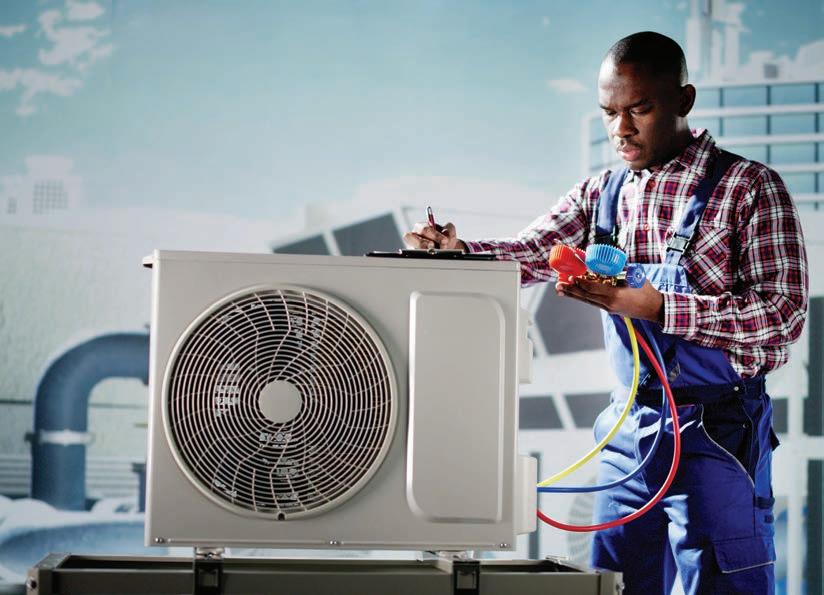
Plan efficient cooling upgrades that pay off with the help of DTE.
As Michigan businesses ease out of the harsh winter and into warmer weather, many are starting to ask an important question: Is our cooling equipment working for us or against us?
For older systems, especially chillers, the answer isn’t always obvious at first. But the signs tend to show up right when businesses need cooling the most.
Eric Anderson, program manager for DTE’s Energy Efficiency Program for Business, says the signs are often felt before they’re seen. “Inconsistent cooling or challenges maintaining temperature set points” are a common red flag, he explains, along with growing “complaints about occupant comfort.”
Over time, systems that once ran smoothly begin to struggle. Age plays a big role, too; Anderson notes that most systems are expected to last 15 years, and once equipment passes that mark, maintenance costs rise and replacement parts can be harder to find. Pair that with increases in usage, and many businesses realize they’re pouring money into systems that are past their prime.
To make these upgrades more attainable, DTE’s Energy Efficiency Program for Business offers a wide range of rebates. Incentives are available for replacing major cooling equipment such as airconditioning units, heat pumps and chillers, as well as for adding controls like optimal start and stop, demand controlled ventilation and occupancy detection. There are also rebates for system improvements like variable frequency drives and upgrades from constant to variable air volume systems.
For businesses concerned about upfront costs, financing can bridge the gap. Through Michigan Saves, customers can spread payments over time, sometimes with zero interest. Anderson has worked with a business that invested about $220,000 in advanced chiller plant controls. Program rebates covered over $50,000 of the cost, and the customer received 0% financing for the remaining balance, making it far easier to move forward with the project.
Using optimized cooling controls can cut your energy use by up to 30%
The good news? Today’s cooling technology is far more efficient than what it replaces. Anderson breaks these solutions into two categories: equipment and controls. Highefficiency air conditioners, heat pumps and chillers can deliver immediate results. But controls are where many businesses see surprisingly large efficiency gains.
Simple operational changes, like scheduling increases in temperature during unoccupied hours, adding optimal start logic or using chilled water reset strategies can improve comfort while cutting energy use by up to 30%.
Anderson stresses that timing matters. “The earlier DTE is aware of the projects, the more we are able to support throughout the process,” he says.
Early conversations can help businesses uncover opportunities, reserve rebates, and turn cooling upgrades into long-term wins for comfort, efficiency and the bottom line.
TOOLBOX
Learn more about ways to save at dteenergy.com/business.

Out with the old
Take the first steps toward upgrading your older building with this guide.
It’s easy to be charmed by the character of an old building. However, when it comes to energy use, Michigan business owners who are operating in an older space with outdated equipment may feel overwhelmed and not quite sure how or where to start to make their business more efficient.
Fortunately, through DTE’s programs, there’s plenty that owners of old buildings, and all business customers, can do today to move toward energy efficiency. Here’s your step-by-step guide:
1.
Schedule a free energy assessment. No matter the building type, the first step for business customers looking to make positive changes is to schedule a complimentary energy assessment. These are free and easy to schedule online or by phone. A DTE advisor will visit and assess the property, and some upgrades — including LED light bulbs, smart thermostats and hot-water pipe wrap — can often be installed right then at no cost.
2.
Read your report.
After the energy assessment, you’ll receive a report detailing areas where the advisor spotted potential for improvement as well as rebates available to help offset (if not cover completely) the cost of potential projects. Note that there’s no obligation to take any action.
3.
Connect with a contractor.
Business customers are welcome to work with any contractor of their choice on improvement projects. DTE can also provide a list of participating contractors who are knowledgeable about the application and rebate process.
4.Apply for rebates.
Contractors can often help with this step. “Ninety-nine percent of our applications come directly from the contractors,” says Melissa Grace, Small and Medium Business Program manager.

Through DTE’s programs, there’s plenty that owners of old buildings, and all business customers, can do today to move toward energy e ciency.


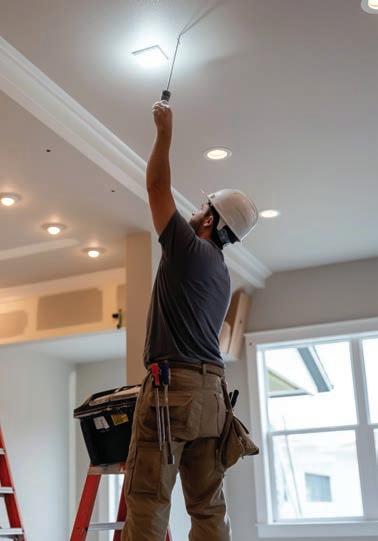
For older buildings as well as newer spaces, lighting is usually the simplest area to tackle. Some common rebates related to lighting measures include:
• Exterior LED lights: $5 to $148, based on hours and wattage.
• Network lighting controls (reservation required): $480 per 10,000 square feet.
• Interior lighting power density: $165 per kilowatt reduced.
• Garage lighting power density: $190 to $540 per kilowatt reduced.
Older buildings also often benefit from upgrades that improve insulation. Some of the available rebates include:



A free DTE energy assessment will help you find the best ways to save


• R-24 roof insulation: $38 per 1,000 square feet of roof.
• R-42 ceiling insulation: $58 per 1,000 square feet of ceiling.
• Wall insulation (reservation required): $442 per 1,000 square feet of wall.
• High-performance glazing: $17 per 100 square feet.
• Window film: $17 per 100 square feet.
5.Apply for nancing.
DTE partners with Michigan Saves to provide financing options that further help make efficiency improvements possible. Through the partnership, special


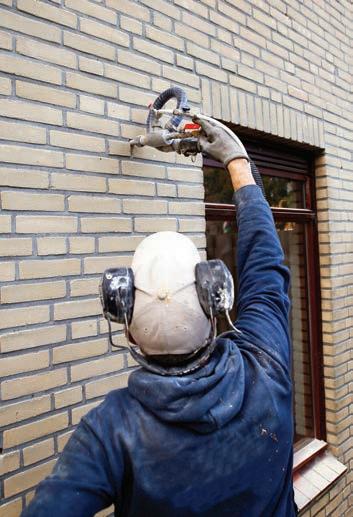


financing is offered at as low as 0% APR with terms up to 36 months for projects up to $250,000.
6.
Enjoy your more energy-e cient space! These few simple steps can make a big difference at your business, and DTE is here to make the process as seamless as possible. Get started today!
For more information or to schedule a free energy assessment, call 855.748.2525 or visit dteenergy.com/smallbusiness. TOOLBOX

Winning DTE’s Energy Efficiency Makeover Contest allows the historic Union Second Baptist Church to advance its mission of stewardship.

For more than a century, Union Second Baptist Church has been a beacon in River Rouge, just southwest of Detroit.
Established in 1918, the congregation has weathered social change, economic shifts and the passage of time without losing sight of its mission: loving God and loving God’s people.
Today, the mission includes caring for the church’s physical home through thoughtful energy stewardship.
That commitment recently earned Union Second Baptist recognition as one of three grand-prize winners of DTE’s Small Business Energy Efficiency Makeover

Contest, which jump-starts energy efficiency journeys for small businesses and organizations.
A legacy worth preserving Pastor Richard Thomas says Union Second Baptist’s story is deeply intertwined with his community’s history. Founded more than 100 years ago, the church moved into its current building in the 1950s, when members marched together from the original site to the new sanctuary.
“For us — having such a historic building — improving energy efficiency is part of
ENERGY JOURNEY, continued on page 10


honoring that legacy,” Thomas says. “Investing in the building’s future ensures it can continue serving generations to come.”
Thomas says energy efficiency aligns naturally with the church’s spiritual values. Stewardship, he explains, is not just about finances or time but about caring wisely for everything entrusted to the congregation.
This belief came to life a few years ago when the church switched its incandescent lighting in the main sanctuary to energy-efficient LEDs.
The congregation took notice, Thomas says.
“When the church models wise stewardship, it sparks conversation and awareness,” he says. “Practical changes that reduce waste and improve comfort
“For us — having such a historic building — improving energy e ciency is part of honoring that legacy.
Investing in the building’s future ensures it can continue serving generations to come.”
—PASTOR RICHARD THOMAS, UNION SECOND BAPTIST CHURCH
are ways that faith can be lived out in everyday, practical decisions.”
Not too long after switching to LEDs, the church leadership received a postcard and follow-up email about DTE’s Small
Contest.
The 2025 contest, which ran from August through October, invited all small businesses and nonprofits receiving DTE service and in good standing to share their energy challenges. Three winners were selected, each receiving $5,000 in energy efficiency improvements, along with media exposure. Each finalist also received an in-depth professional energy assessment, providing valuable insights.
Church administrator D’Angelice Benford encouraged Thomas and the board of deacons to enter, even though the pastor was at first skeptical of what the contest offered.
“I thought, ‘Is this real?’” he says.
After learning more, the leadership decided they had nothing to lose. They applied, mentioning the sanctuary’s LED lighting
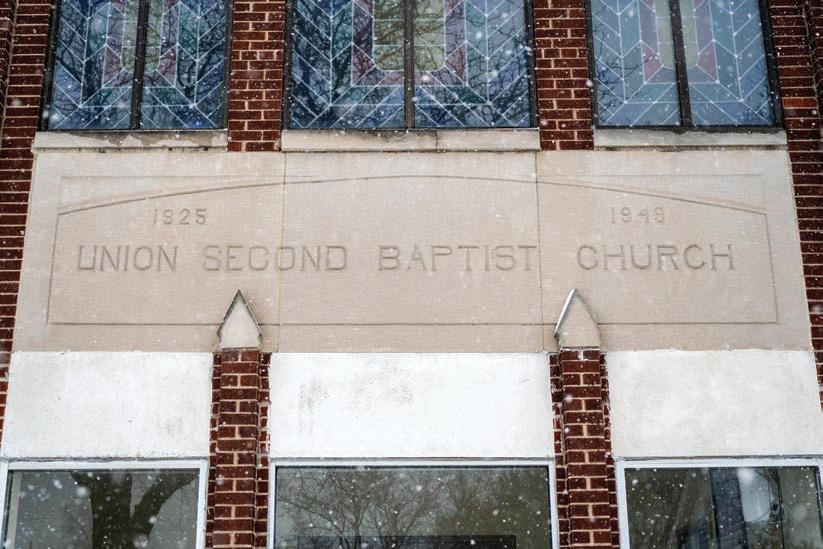
Union Second Baptist Church has occupied its current space in River Rouge for over 60 years. E ciency upgrades help the church care for its building and congregation.
upgrades but also explaining how the church’s aging infrastructure, rising energy costs and limited resources had been barriers to making further improvements on their own.
The pastor describes the walk-through with energy efficiency experts as “transformative.”
During the assessment, the DTE energy advisor identified issues the church hadn’t noticed, including drafts around stainedglass windows installed decades ago, inefficient lighting on the lower level and small but costly problems like running toilets.
The church is also planning future HVAC improvements, such as addressing an aging boiler system that requires frequent repairs.
“These upgrades are about functionality — how the building feels, how it operates and how it supports us week after week,” Thomas says.
Union Second Baptist Church won $5,000 in energy efficiency improvements from DTE
“The assessor really opened our eyes,” Thomas says. “The warm air from radiators was competing with cold drafts near the windows, while more than 50 fluorescent lights in offices, meeting rooms and the fellowship hall were consuming more energy than necessary.”
With the $5,000 prize, Union Second Baptist plans to prioritize energy-efficient lighting upgrades on the lower level, a heavily used space for ministry meetings, youth programs and community events.
The goal, he says, is for the physical space to reflect the congregation’s welcoming spirit.
“Our congregation is warm, multigenerational and familyoriented,” Thomas says. “These upgrades help the building mirror the spirit of the people inside.”
Thomas says lower energy costs will allow the church to redirect funds toward youth programming, community outreach efforts like the church’s “Feed the Streets” initiative and ongoing building maintenance.
“Efficiency creates opportunity,” the pastor adds. “Every dollar saved strengthens our ability to serve faithfully and functionally.”
The 2026 Small Business Energy Efficiency Makeover Contest kicks off Aug. 12 and runs through Oct. 7. Visit dteenergy.com/makeover to enter.
The pastor encourages other organizations — especially those in older buildings — not to count themselves out, even if they are small with limited resources.
“Sometimes we disqualify ourselves before we even start,” he says, adding that the assessment alone brought value by highlighting ways to save energy and money.
His advice to others considering the contest is simple: Ask questions, invite help and don’t assume energy efficiency isn’t for you.
Through faith-driven stewardship and practical action, Union Second Baptist Church will continue to shelter worship, community and service within its historic walls for generations to come — modeling how a thoughtful use of resources is another way of caring for people.
“Sometimes the first act of stewardship is simply saying yes to the opportunity,” Thomas says. “Winning the contest simply accelerated our progress.”

As a MIGreenPower partner, Desmond Dunbar’s barber academy brightens his community’s future.
Desmond Dunbar is a force of energy and light, with a pay-it-forward mentality to match.
Recently, these qualities culminated in the grand opening of his Michigan Barber Academy in Eastpointe, just outside Detroit — and participation in DTE’s MIGreenPower program supporting renewable energy.
The 1,600-square-foot academy with 10 chairs and a training room invites aspiring barbers to master both the technical skills and the professionalism needed to pass the state licensing exam and build a lasting career.
For Dunbar, the academy is not only a training school for technical skills; it’s also a community center that offers life skills.
“It’s a mission,” says Dunbar, who has spent years honing his shears, techniques and ability to connect closely with his clients.

Dunbar has been teaching barbering since 2009 and says he has noticed the industry changing. While technology has made it easier to learn cutting techniques, he says something essential has been lost along the way.
“Customer service — putting the client first — that’s what’s missing,” he says.
At the Michigan Barber Academy, Dunbar says, students are taught old-school values: punctuality, consultation, listening and respect. Those principles will be reinforced not just in textbooks but through daily practice and example.
“If the people in leadership set the standard, the industry will follow,” he says.
The academy’s physical layout reflects Dunbar’s teaching philosophy. The front of the space serves as a clinic floor with 10 barber chairs, followed by a dedicated theory classroom and a small office.
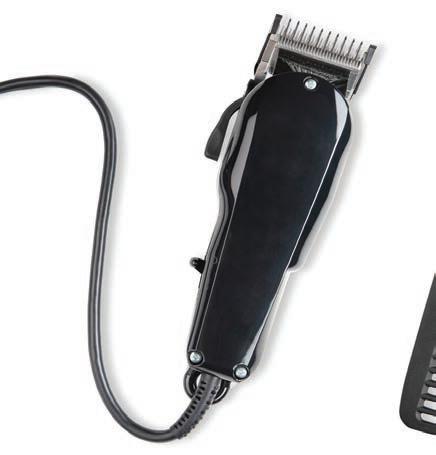

“[MIGreenPower] fits with growth, responsibility and empowerment. If we have more sustainability initiatives like this, our businesses will benefit in the future.”
—DESMOND DUNBAR, OWNER OF THE MICHIGAN BARBER ACADEMY
Dunbar says smaller learning environments give students more handson experience and prevent them from getting lost in the shuffle.
“In big schools, a student might go a whole week and only do one haircut,” he says. “Here, we want more reps, more detailed training and more attention.”
Beyond the core curriculum, Dunbar plans to offer free community events, résumé workshops, professional development sessions and even a junior barber academy for younger students interested in the trade.
“I want this to be a place people come to for answers,” he says. “Not just haircuts, but life questions.”
His commitment to community extends beyond barbering. Prior to opening, Dunbar enrolled his business in DTE’s MIGreenPower program.
MIGreenPower enables any DTE electric customer to attribute their electricity use to DTE’s wind and solar parks throughout Michigan. Dunbar says the program aligns with his values.
“I feel like the world would operate a little bit better if we were not as wasteful with the energy we have,” he says.
With MIGreenPower, small businesses


can reduce their carbon footprint, meet key sustainability goals and support the development of future renewable energy projects in the state.
Small-business customers can enroll in MIGreenPower for just $1 a month, with a simple sign-up process that requires no equipment installation or maintenance. Participation can be adjusted or canceled at any time.
Dunbar says signing up was an easy decision to make.
“It fits with growth, responsibility and empowerment,” he says. “If we have more sustainability initiatives like this, our businesses will benefit in the future.”
He adds that the enrollment process was straightforward and took very little time.
“The research [about the benefits of MIGreenPower] took longer than the sign-up,” Dunbar says. “The sign-up itself was simple.”
Dunbar says his participation in MIGreenPower isn’t just about the benefits for his business. It’s also about supporting job creation and building something that lasts.
“When you support sustainability, you’re helping provide jobs and opportunities for families,” he says. “Even if my hand isn’t directly in it, I know I’m helping people.”

For Dunbar, enrolling in MIGreenPower is another way to lead by example — just like teaching professionalism to young people in the community.
“It sets the standard for the next generation,” he says. “That’s what the academy is all about.”
Dunbar says his goal is based on a simple vision.
“I want to spread my light as far as I can — one student, one client and one thoughtful choice at a time.”
Small businesses can join MIGreenPower for as little as $1 a month with the option to adjust or cancel participation at any time. The sign-up is simple, with no equipment installation or maintenance required. To learn more, email MIGreenPower consultant Tony Lee at tony.lee@dteenergy.com or call 313.235.1415. Visit migreenpower. com to get started.

Lincoln Park Nutrition replaced its old uorescent lights with bright and e cient LEDs at little cost through DTE.
A
nutrition store got a glow-up through DTE’s Small and Medium Business Program.
Lincoln Park Nutrition serves up teas, shakes and good vibes. The bustling shop, located in a Downriver suburb of Detroit, draws a steady stream of customers who stop in for energy drinks and protein shakes on their way to work, school or the gym.
Inside, co-owner Lisa Gonzalez moves quickly behind the counter, filling oversize cups with brightly colored iced teas and shakes so thick they require jumbo smoothie straws.
Wearing black leggings, a hoodie that reads “Your Local Energy Dealer” and her hair pulled into a topknot, Gonzalez chats with customers as a line forms at the register.
The business recently got a makeover with new LED lighting, covered almost entirely by rebates from DTE. Gonzalez and co-owner Cassandra Clickard
participated in DTE’s Small and Medium Business Program, which offers complimentary energy assessments and rebates designed to help businesses lower energy use with minimal effort.
While the owners are already seeing energy savings reflected on their monthly electric bill, the benefits go well beyond cost. The new lighting has transformed the atmosphere inside the shop, making the colorful drinks pop — both in person and on social media.
“Before, we had quite a few lights out and they had a yellow tone, which wasn’t great,” Gonzalez says. “We had the new lights installed in less than an hour, in and out, and it looks so much better in here.”
Gonzalez didn’t have formal training in business or marketing when she

started Lincoln Park Nutrition. She’d used Herbalife Nutrition products for years before opening the storefront and was excited to bring a quick health and wellness option to her hometown.
Four years later, the business has become a community staple, regularly giving back through donations and local support, including sponsorships for Gonzalez’s son’s hockey team, the Allen Park Lasers.
That connection is what led the owners to DTE’s Small and Medium Business Program.
SMALL BUSINESS, continued on page 16

“We
had the new lights installed in less than an hour. … Now, the store looks better. It’s a better environment for my employees and a better environment for my customers.”
—LISA GONZALEZ, CO-OWNER OF LINCOLN PARK NUTRITION
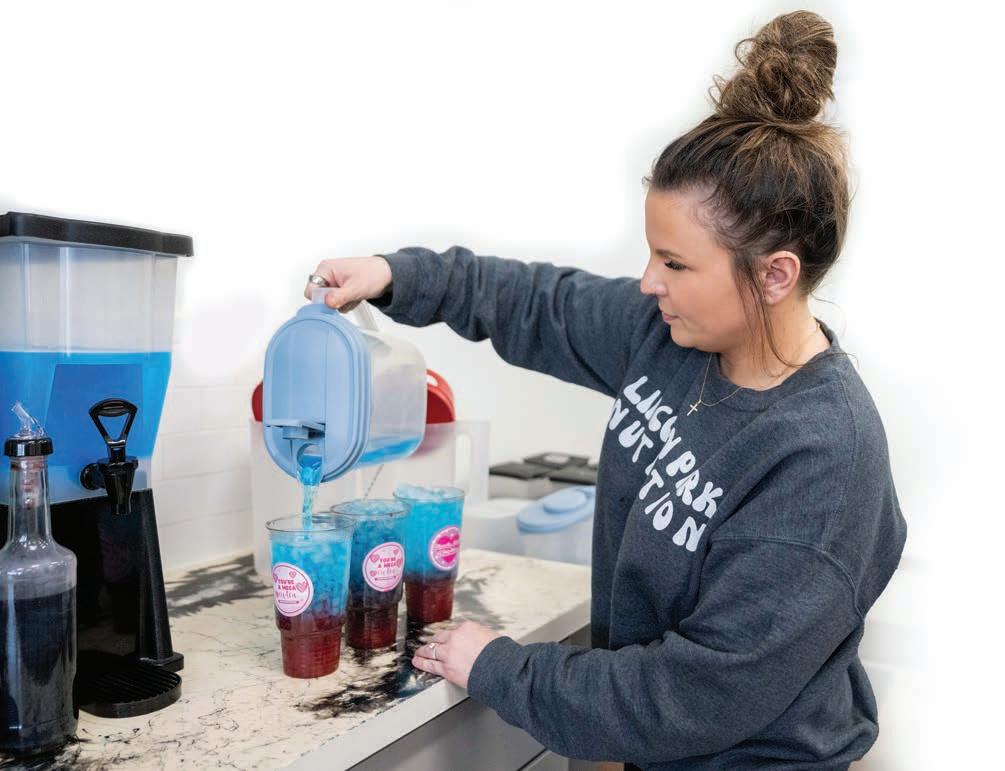
Jeremy Cappello, DTE program lead, coaches the hockey team and started stopping by Lincoln Park Nutrition for morning teas.
“You know Jeremy — he’s always looking at the lighting,” Gonzalez jokes.
Cappello encouraged Gonzalez and Clickard to participate in the program after noticing the shop’s outdated fluorescent tube lighting, which was inefficient, uneven and unflattering in photos.
“In a retail environment like this, it’s obviously really important to have good lighting to display product,” Cappello says.
The first step in DTE’s Small and Medium Business Program is a free energy assessment, conducted by a qualified DTE
energy advisor. The advisor evaluates how a business uses energy and identifies opportunities to save. Many businesses receive no-cost upgrades installed during the visit, such as screw-in LED bulbs, exit sign retrofits, smart thermostats or advanced power strips.
The program also helps identify energysaving projects that can be more complex and extensive, often requiring the expertise of a contractor. When business owners decide to move ahead with a project, DTE guides them through the rebate application process as well.
At Lincoln Park Nutrition, the recommended improvement was a full lighting upgrade. Verb Energy of Livonia completed the installation and took care of applying for rebates. The work was done outside business hours to avoid disrupting customers.
Updated lighting helps show o the brightly colored drinks at Lincoln Park Nutrition.
Rebates covered nearly the entire project cost, even though Gonzalez and Clickard rent their space, making the decision an easy one. LED lighting uses significantly less energy than traditional fluorescent tubes and requires no warm-up time.
“I flick my lights, and they instantly turn on,” Gonzalez says. “Now, the store looks better. It’s a better environment for my employees and a better environment for my customers.”
The improvement is especially noticeable on social media, where Gonzalez regularly shares photos of themed drinks inspired by holidays, movies and popular artists. Customers often snap photos in front of the shop’s dedicated selfie wall, helping to spread the word online.

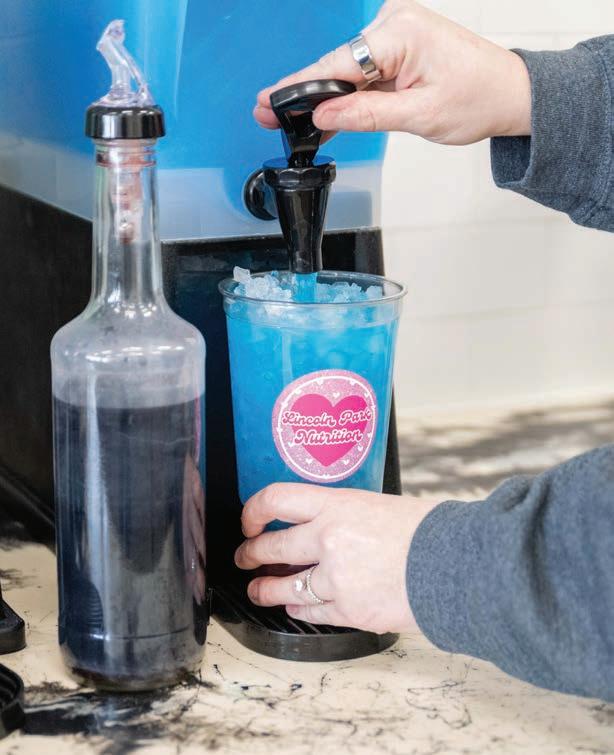
a host of energy drinks and shakes at Lincoln Park Nutrition.
“We take a lot of pictures in here,” Gonzalez says. “It’s so much brighter and whiter now.”
Cappello says Lincoln Park Nutrition is a perfect example of how small businesses — even ones that rent — can benefit from the program with little time and effort.
“Lisa’s busy, and she doesn’t even own this space,” he says. “But to press the easy button and have it done — why not?”
Learn more and schedule your free energy assessment at dteenergy.com/smallbusiness
Follow Lincoln Park Nutrition on Facebook or Instagram at lincolnparknutrition .














































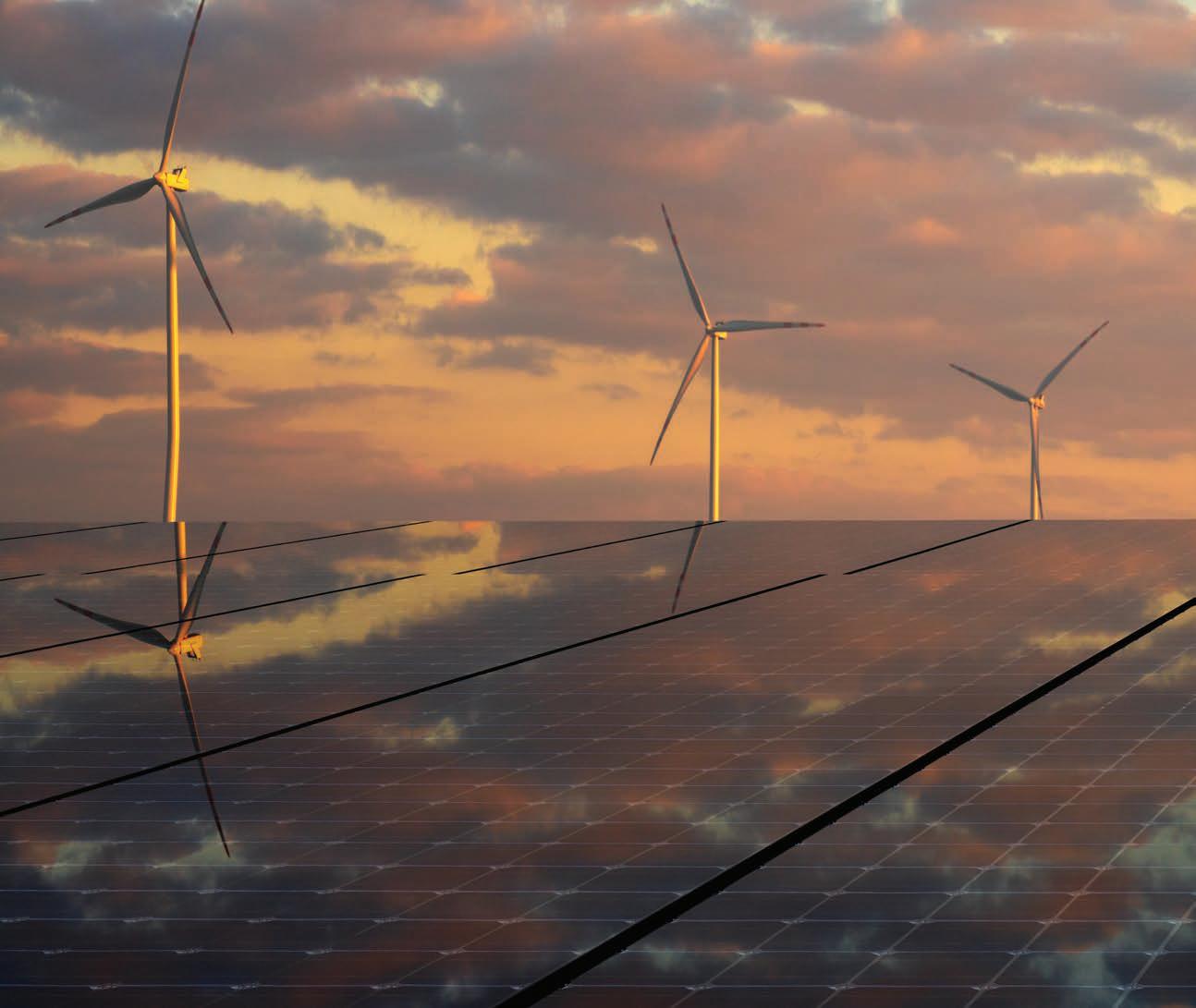

Discover how DTE can help you save through a free energy assessment.
Planning to improve your business’s energy efficiency can feel like a daunting task, but getting started is easier than you may think, and DTE is here to help throughout the process.
The first step is to schedule a complimentary energy assessment online or by phone. A qualified DTE team member will visit and survey the property to look for opportunities for upgrades.
“We may also cold-approach small businesses,” says Outreach Manager Mike Cauzillo. Some businesses may even be eligible for on-the-spot upgrades. These direct installations are always free and don’t require any additional action.
Products that advisors bring with them and may install during the assessment include:
• ENERGY STAR®–certified LED light bulbs.
• Exit sign retrofits.
• Advanced power strips.
• Smart thermostats.
• Faucet aerators.
• Showerheads.
• Hot-water pipe wrap.


After the assessment, business operators get a custom report detailing other potential energy-saving improvements that can’t be done right then but may qualify for rebates. LED lighting, lighting controls, gaskets and strip curtains, antisweat heaters, and electronically commutated motors for cooling or freezing units are especially common suggested measures.
ASSESSMENT, continued on page 20






















































“The customer bene ts by saving money on the cost of their project and reducing their energy consumption, which generally helps on their monthly bill and oftentimes creates a more comfortable atmosphere for their employees and customers.”
—MIKE CAUZILLO, DTE OUTREACH MANAGER

“Restaurants and convenience stores, or other places with both lighting and refrigeration inefficiencies, tend to benefit a great deal from the program,” Cauzillo says. “For gas customers, we will also inquire about their furnace, boiler and water heater maintenance schedule or replacement needs.”
Operators may work with a contractor of their choice or browse a list of participating contractors who are familiar with DTE’s programs and rebates.
“We will walk them through the application process, if needed — from submitting their reservation to the point they receive their rebate check,” Cauzillo says.
(DTE encourages business customers to notify of their plans to make improvements
ahead of time to reserve their place in line, as rebates are distributed on a first-come, first-served basis.)
“We typically see a large portion of the project cost be covered by the rebates and bonuses we offer,” Cauzillo adds.
However, there’s no obligation to take any action. The suggestions in the report are just that: suggestions. If it’s not the right time to make upgrades, save the information for later — no strings attached.
DTE is also available to guide businesses through large-scale custom projects, and recently, incentives geared toward new construction have been added to the smallbusiness suite.
DTE’s “lookback” feature means business
owners can even submit claims for projects completed up to two years prior.
“The customer benefits by saving money on the cost of their project and reducing their energy consumption, which generally helps on their monthly bill and oftentimes creates a more comfortable atmosphere for their employees and customers,” Cauzillo says. “DTE benefits by driving efficiency awareness and measurable reductions. This also provides a very positive community presence for DTE so customers can partner with us on the common goal of using less energy.”
To schedule your free energy assessment, call 855.748.2525 or visit dteenergy.com/smallbusiness. TOOLBOX
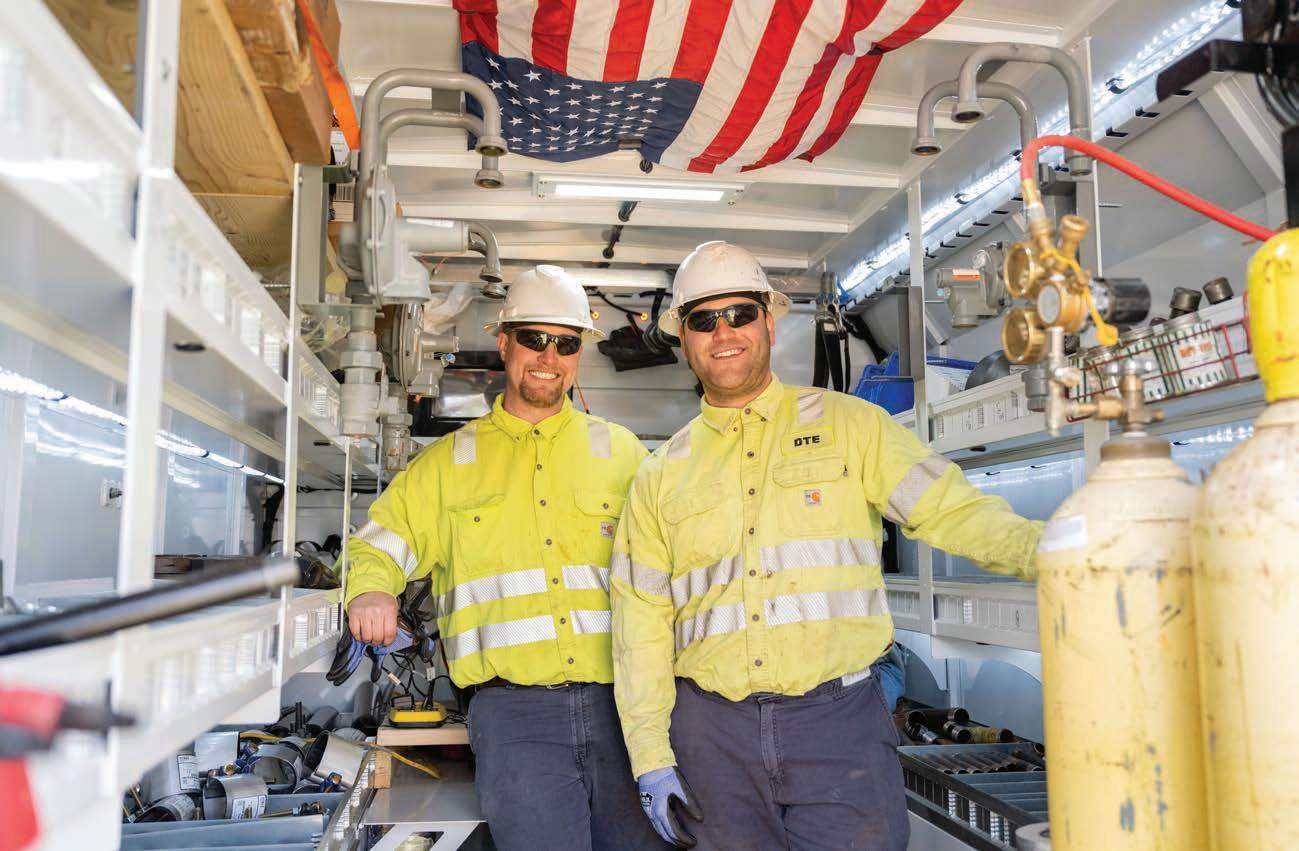
Early planning and clear communication help builders avoid delays and get projects energized on schedule.
Whether you’re working on a residential development or a commercial construction project, few things are more rewarding than keeping your project on schedule and moving smoothly from start to finish.
That is exactly what DTE aims to achieve.
The energy company has streamlined how customers request and connect gas and electric service — giving builders a clearer road map from early planning to final energization.
“When projects start with the right conversations, they finish stronger,” says
Sandeev Sarna, director of regional customer operations for DTE. “Our goal is to take the guesswork out of the process and help customers move confidently from planning to power.”
Every new service connection begins the same way: contacting DTE (see the Toolbox on page 23 for the right number to call for gas or electric work) to generate a work order. From there, DTE planning and service teams work directly with the developer or contractor to gather documentation, evaluate site
NEW CONNECTIONS, continued on page 22
“When projects start with the right conversations, they nish stronger. Our goal is to take the guesswork out of the process and help customers move con dently from planning to power.”
—SANDEEV SARNA, DIRECTOR OF REGIONAL CUSTOMER OPERATIONS FOR DTE
conditions and coordinate with joint energy companies.
The most important step? Getting started early.
“Contact us as soon as you’re in the planning phase,” Sarna says. “Early engagement gives us time to design the right solution and helps customers avoid costly delays.”
That early coordination allows DTE to flag potential challenges — whether that be easements, site readiness or engineering complexity — well before construction gets underway.
Electric service planning becomes more precise as a project’s design comes together. Costs are confirmed after the system design is complete and can vary based on several factors, including:
• The size of the service property.
• Total power demand.

• Transformer and conduit needs.
• Relocations, easements or privateroad crossings.
Before construction begins, customers receive an agreement that clearly outlines project-specific costs, providing transparency.
For larger, often multiphase developments, timelines depend largely on project readiness. Once construction is scheduled, underground electric installation typically takes four to six weeks.
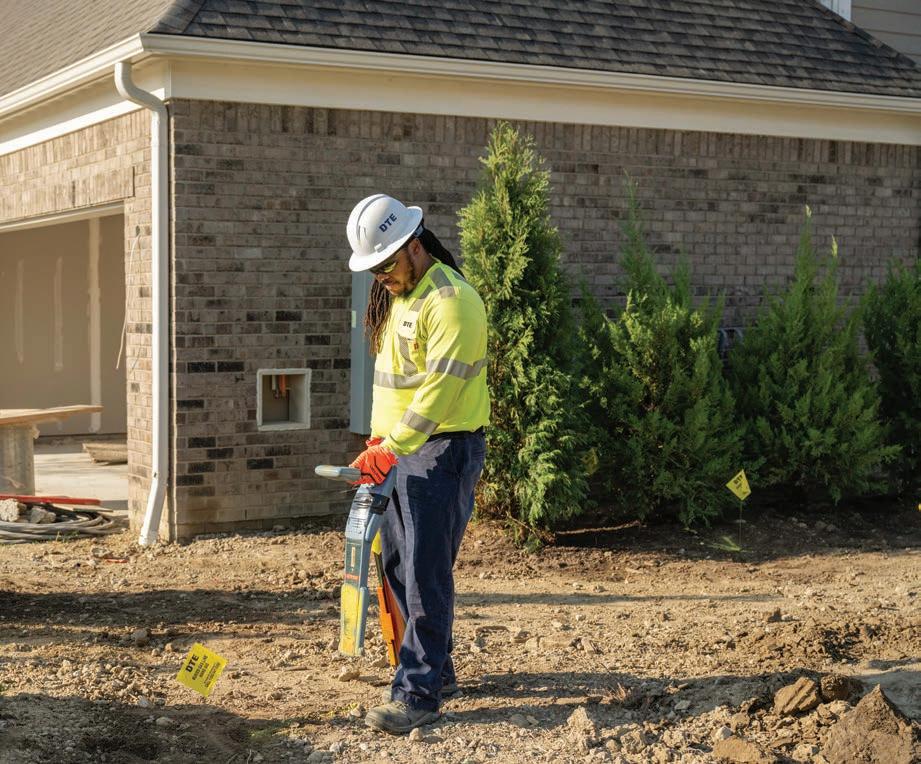
The process generally includes contractors trenching the site, installing conduit and transformers, and pulling cable across the property.
After that work is complete, a DTE splicing crew typically arrives within seven to 10 days to splice lines, energize the system and turn service on.
Single-home service moves much faster —
once all requirements are met. Crews can begin work after:
• The home passes inspection.
• The meter location is approved.
• Charges are paid.
• The site reaches final grade.
Electric service for individual homes is typically installed within one to 10 days after the requirements are fulfilled.
According to Sarna, the most common delays are also the most preventable. Missing paperwork, unsigned easements, incomplete grading or late payments can all push timelines back.
“Clear communication and site readiness make all the difference,” he says. “When everything’s in place, projects move.”
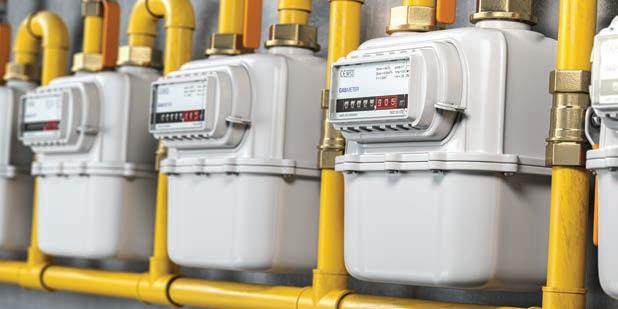
Gas service follows the same core principle: Early outreach leads to smoother execution.
“Contact us as soon as possible, even
before you’ve prepared the site and poured the foundation,” says Karina Lucchese, principal supervisor of residential gas sales for DTE.
Timing and cost depend on multiple factors, including proximity to existing gas infrastructure, changes to original specifications, permitting requirements, weather conditions and local road regulations.
While large builders are often familiar with the process, Lucchese notes that smaller or independent builders may be navigating gas service for the first time — making early communication even more critical.
“Letting us know the details early — and keeping us informed of any changes as the build progresses — helps us support the project more effectively,” she says.
Ongoing communication ensures that service plans evolve alongside the build, reducing surprises and last-minute adjustments.
Tools built for builders
To make the process easier, DTE offers online tools, detailed road maps, and step-by-step guidance for both electric and gas service.
Through DTE’s Builder & Developer Hub, customers can:
• Request new service.
• Track project status.
• Access detailed requirements and resources.
With the right preparation and a clear road map, developers can focus on building, confident that power will be there when they need it.
Get energized: dteenergy.com/builders DTE service area map: dteenergy.com/servicemap
Electric: 800.338.0178
Gas
Southeast Michigan: 800.338.0178
Greater Michigan: 800.533.6220
POWER CONNECTION ROAD MAP
Initial Request
Work order created.
Document Collection
Site plans and load information submitted.
Planner Assignment
Initial review and customer outreach.
Site Strategy
Front-lot or rear-lot design, temporary power and relocations reviewed.
Preliminary Layout
Transformers, routing and load needs identified.
Engineering Check
Method of service evaluated, if required.
Engineering Meeting
Energy companies and developer align on layout and responsibilities.
Final Design
GIS design completed and cost estimates prepared.
Easements and Agreements
Customer reviews and signs required documents.
Preconstruction Walk
Site at final grade, routes staked and crossings in place.
Final Walk
Construction readiness confirmed.
Construction
Trenching, conduit installation and cable placement.
Splicing and Energizing System connected and power turned on.
Meter Requests
Orders submitted per building or home.
Meter Installed Service energized.
Customer requirements vary by project type and phase.
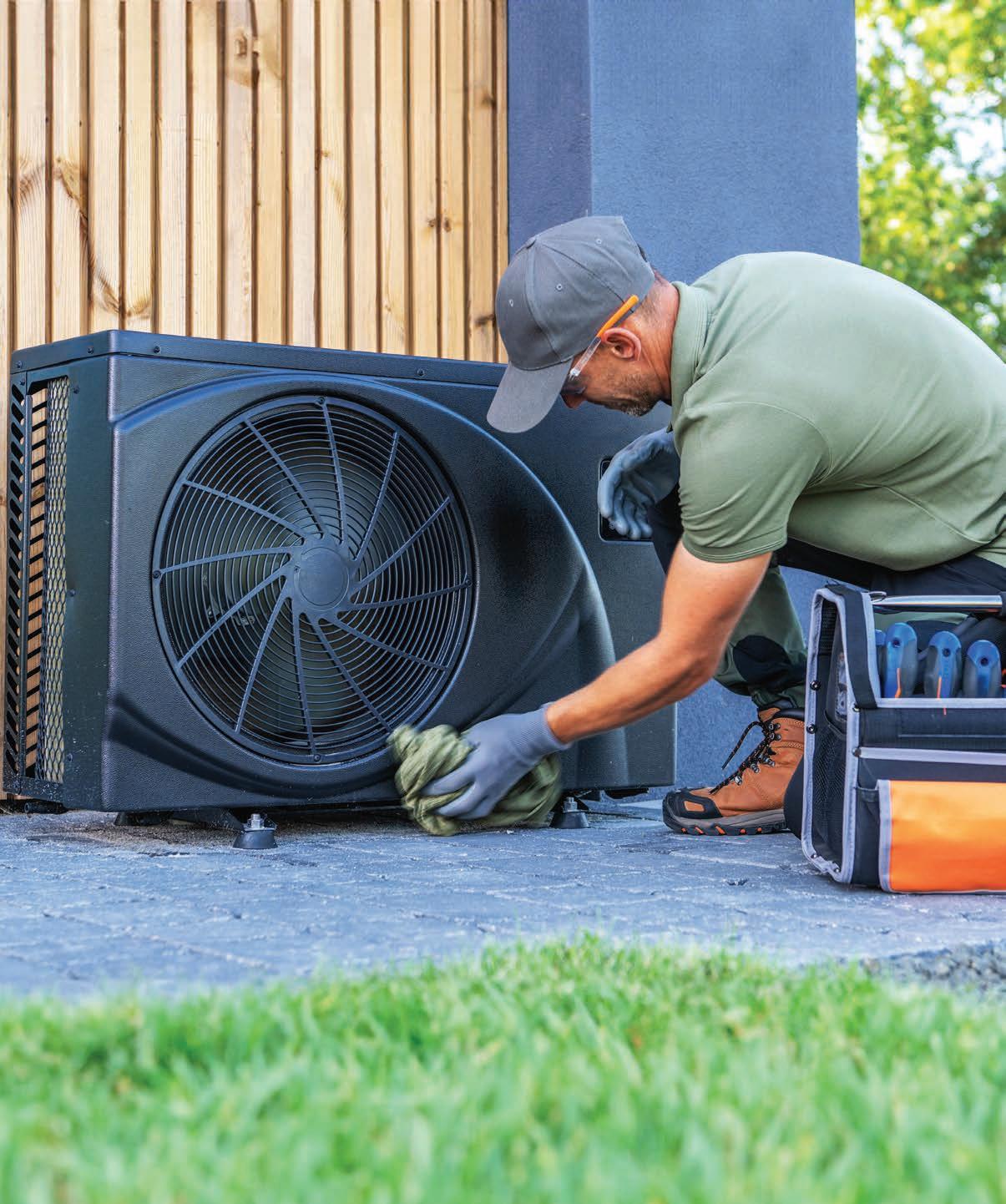
Try these five low-cost ways to save energy during Michigan’s seasonal temperature flux.
Michigan’s spring weather is anything but predictable. A wintry chill can morph into sunny warmth in a single day.
For business owners, this yo-yo weather can challenge HVAC systems that must uctuate between heating and cooling demands, a pattern that creates energy waste and high energy bills.

and most commercial buildings have builtin equipment to take advantage of that.
To counter this, businesses can leverage the milder days of spring using simple strategies that cost very little. Here are some ways you can outsmart the weather when Mother Nature is most ckle.
1.
Install smart thermostats. The biggest energy drain in spring starts with dueling heating and cooling systems. When temperatures swing 20 to 30 degrees in a single day, manual thermostats often fail to keep up.

An air-side economizer pulls in outside air when it is cooler than the indoor air. To make sure you are receiving the most bene t from your economizer, have your dampers inspected to make sure they aren’t stuck or dirty.
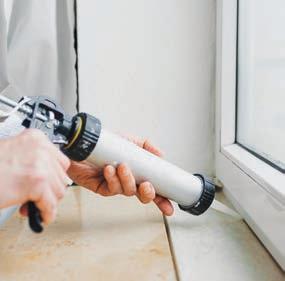
3.Seal the envelope. Every crack and leak around your doors and windows is draining your pocketbook. Take a moment to check weather stripping around doors and caulking around windows. These small xes will help seal the building’s energy envelope, which helps your HVAC system operate much more e ciently.
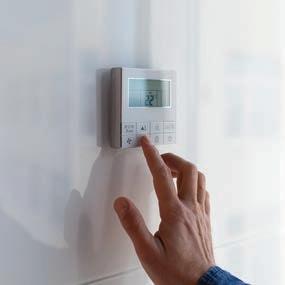
The solution? A smart thermostat. Modern smart thermostats align with outdoor weather forecasts. If you don’t have a smart thermostat, your business may be eligible to receive one for free with an energy assessment. Go to dteenergy.com/smallbusiness to schedule a complimentary assessment.
2.
Capitalize on “free” cooling and economizers.
Spring’s warmer days are often tempered by cool mornings and evenings,
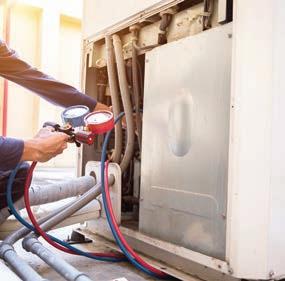
Replace your lters: Pollen and spring dust clog lters quickly, forcing fans to work harder.
Clean your HVAC coils: Use a soft-bristle brush or shop vac with a brush hose attachment to remove as much debris as possible.
Calibrate your fans: If you have ceiling fans, make sure they rotate counterclockwise to create a cooling breeze, then increase your set temperature.
5.Reduce “vampire load” and internal heat. When spring’s sunny days arrive, take a walk around to see whether there are empty o ces or other rooms. Close the vents and unplug unused electronics to eliminate “vampire load,” or the energy wasted by devices even when they’re turned o .
Using blinds and shades can be a great help in decreasing energy costs. On cooler spring days, keep southfacing shades open to capture solar heat gain. On unseasonably warm afternoons, close them to reduce your HVAC system’s cooling load.
4.Perform shoulderseason maintenance. Michigan springs are a good time to prepare for humid days later. Dirty or uncalibrated systems are often the culprit when it comes to higher energy costs. Here are three quick and easy steps to make sure your HVAC system is ready to go when summer arrives.
As you walk, take a moment to check the lights to ensure cool LEDs are in use instead of heat-emitting incandescent bulbs.

Spring’s unpredictable temperature swings require a solid HVAC strategy. With just a few minutes checking and implementing the above low- and no-cost solutions, your business will smoothly navigate the seasonal changes Michigan is known for.
To learn about DTE’s programs to help businesses save energy, call 855.748.2525 or email saveenergy@dteenergy.com. TOOLBOX
DTE’s Small and Medium Business Program sets customers up for efficiency from the start with rebates for new construction.
To help make it easier for small-business owners to start off on the right path, DTE has recently expanded its Small and Medium Business Program to include energy efficiency rebates focused on new construction.
In the small-business sector especially, new construction and major renovations often go hand in hand. A business owner might turn a boutique into a burger joint or a convenience store into a coworking space. That creates unique challenges but plenty of opportunity for DTE to collaborate with business owners in moving toward energy efficiency.
Kevin Salatrik, who works with larger organizations for DTE, notes that overlap can sometimes exist between small or midsize and large businesses — think manufacturing plants, large offices or warehouses. The inclusion of newconstruction rebates in both the Small and Medium and Large Business programs creates a more seamless experience for customers.
Salatrik says the DTE team can determine whether “one project would fit better in the other program.” He adds, “We work together to let the customer know, and then we handle those requests accordingly.”
DTE typically finds that businesses like mom-and-pop restaurants and shops, smaller office buildings, churches and the like fit firmly within the small and

medium business category. The added new-construction rebates and the Small and Medium Business Program as a whole are especially useful to smaller businesses like these because they’re the types of enterprises that don’t always have extra cash available for efficiency improvements, let alone major overhauls.
“That’s the intent of our program — to be able to help them a little bit more financially,” notes Program Manager Melissa Grace.
Through the program, operators most commonly receive rebates that help offset the cost of projects related to lighting, refrigeration, hot water and HVAC systems.
It’s easy to get started. Business customers are encouraged to schedule a free energy assessment online or by phone. A skilled DTE energy advisor will visit the property and assess it for potential areas of improvement. Some quick fixes like LED lighting or advanced power strips can often be installed on the spot at no cost. You’ll also get a detailed report of additional opportunities to improve energy efficiency, along with corresponding rebates, and DTE is ready to help guide you through the process from application to check.
Already completed an improvement project? No problem. With DTE’s “lookback” feature, you can submit claims for projects done up to two calendar years prior, excluding equipment maintenance.
For new construction, DTE provides incentives to business owners who prioritize energy efficiency.
“How new construction works is there’s a baseline that businesses are required to meet according to state building codes, and we offer incentives for when they go above and beyond that baseline, meaning putting in more-efficient equipment,” Grace explains.
Businesses that install high-efficiency equipment benefit not only from the incentives but also from long-term energy savings.
Salatrik says, “The benefits to the businesses are sometimes just a small investment into themselves [that] saves them more energy over time.”
For more information, call 855.748.2525 or visit dteenergy.com/smallbusiness TOOLBOX







































Customers can avoid utility scams by staying alert to the warning signs.
Scammers continue to target businesses by posing as energy companies, often using urgency and fear to pressure victims into making quick payments. To help customers stay informed and protected, Amina Kidd, corporate security manager at DTE, shares information about common scams, warning signs and what to do if you believe you’ve been targeted.
“DTE cares about its customers, and we want them to know what scams are out there and how to protect themselves,” Kidd says. “Helping customers recognize scams is an important part of keeping them safe and preventing unnecessary financial loss and stress.”
1.
What kinds of scams have business customers experienced in the past?
Business customers are most often targeted by the “threat of disconnection” scam. “The scammers will call business customers during peak times, typically between 11 a.m. and 2 p.m., to demand payment and threaten to disconnect their service if payment is not paid within a certain time frame,” Kidd explains. “Because these calls feel urgent and disruptive, businesses may panic and make payments using Bitcoin, Zelle, Cash App or prepaid debit cards. DTE does not accept those payment methods and will not threaten to shut off a customer’s power
through a one-time, urgent phone call.”
2.
What should business customers look out for to avoid becoming a victim of a scam?
Kidd says there are clear red flags to watch for. “One is the threat of disconnection within a short period of time, like 30 minutes, if payment is not made immediately,” she says. “Another warning sign is being asked to use unique or specific payment methods like Bitcoin or a barcode to be scanned at a retail store, as these payment requests are strong indicators of a scam.”
3.
What is currently the most common type of utility scam, and how does it work?
“The ‘threat of disconnection’ scam is by far the most common scam that business customers have been victimized by,” Kidd says. She notes that last year, scammers took fraudulent payments from businesses using Bitcoin machines found in gas stations and liquor stores. “These machines are simply a method for people to convert cash into Bitcoin, not for taking payments,” she explains. “Scammers send victims a QR code tied to a Bitcoin wallet they control. When the victim puts cash in the machine, it converts to Bitcoin
that only the scammers can access. It’s important to remember DTE does not take payments via Bitcoin.”
4.
What steps should business customers take if they believe they’ve been scammed?
“Contact DTE to report what happened as soon as possible,” Kidd says. “If a payment was made using a debit card, credit card or personal bank account, customers should immediately contact their bank or card company. These payments can typically be reversed within certain time constraints. Payments made using Bitcoin or prepaid debit cards are rarely recovered.” Kidd also encourages customers to contact local law enforcement. “If law enforcement is not aware of the magnitude of the issue, they will never allocate those resources to pursue the culprits,” she says.
Finally, Kidd urges customers to trust their instincts. “Most victims indicate they saw red flags while they were being scammed but went forward anyway because the scammer sounded convincing or because they were worried about the disconnection,” she says. “If something doesn’t seem right, hang up and call 800.477.4747.”
and Michigan Saves help businesses nance energy e ciency improvements.
Energy e ciency upgrades can feel out of reach for many businesses and nonpro ts. Even when improvements may result in longterm savings, cost and complexity can be obstacles.
Through a partnership between DTE and Michigan Saves, customers now have access to a ordable nancing designed to remove those barriers. Michigan Saves, the United States’ rst nonpro t green bank, works with trusted lenders and contractors to help businesses move energy e ciency projects from planning to installation.

For readers who may be unfamiliar, what is Michigan Saves?
Michigan Saves is the nation’s rst nonpro t green bank, created to make it easier and more a ordable for people to invest in their homes and buildings. We work through trusted lenders and contractors to provide low-interest nancing for energy e ciency, clean-energy building upgrades. Our role is to remove nancial barriers so businesses can move forward with improvements that lower operating costs, improve comfort, and replace ine cient or failed equipment.
Michigan Saves, DTE customers can access rates as low as 0% APR
DTE supports the partnership by providing an interest rate buydown, allowing Michigan Saves to o er reduced nancing rates for qualifying gas and electric projects, including lighting, HVAC, refrigeration and industrial equipment. Add in rebates through DTE’s Energy E ciency Program for Business, and customers can often signi cantly lower both up-front and long-term costs.
Here, Michigan Saves CEO Sally Talberg shares how this partnership is helping Michigan organizations turn energy savings into smart, sustainable investments.


Why is energy e ciency such an important opportunity for small and midsize businesses right now?
Businesses face tremendous cost pressures, often with thin margins and uncertain expenses like health care. Fortunately, energy costs are one of the few operating expenses that businesses can lower with the right kind of investments. E ciency upgrades — like HVAC, insulation and lighting — deliver immediate savings and long-term cost stability. Right now, there are more incentives, utility programs and nancing tools available than ever before, making it possible to upgrade without major up-front capital. DTE
rebates for small and medium businesses bring down costs even further. For many businesses, energy e ciency isn’t just about sustainability — it’s about protecting cash ow.
As CEO of Michigan Saves, what challenges do you hear most often from business owners when it comes to upgrading their buildings?
The most common concerns are up-front cost, complexity and time. Many business owners know upgrades are needed but aren’t sure where to start or how to prioritize projects. Others worry about disruption to daily operations or taking on additional debt. Our job is to simplify the process and show how nancing can align project costs with energy savings.
“The key is not to let uncertainty delay savings. Energy e ciency is one of the few investments that pays you back month after month.”
MICHIGAN SAVES CEO SALLY TALBERG
How does the partnership with DTE make these projects more a ordable for businesses?
Through our partnership, qualifying DTE customers can access interest rate buydowns, including rates as low as 0% APR for certain energy e ciency projects. That means businesses can pair DTE incentives with Michigan Saves nancing to signi cantly reduce overall project costs and avoid any up-front costs.
What types of projects can businesses nance through Michigan Saves?
Common projects include commercial HVAC systems, insulation, lighting upgrades, building envelope improvements and energy controls. The focus is on improvements that
reduce energy use, lower operating costs and improve building performance.
What surprises business owners most about getting started?
Many are surprised by how streamlined the process is. Businesses don’t need to have everything gured out — we help guide them through the steps. Applications are straightforward, and nancing is o ered through familiar, trusted lenders. Once they see how quickly projects can move from idea to installation, con dence increases.
What advice would you give to business owners who are interested but hesitant to start?
Start with a conversation, not a commitment. Talk to your utility, a contractor or Michigan Saves to understand your options. Even small upgrades can make a meaningful di erence, and nancing allows you to preserve cash for other priorities. The key is not to let uncertainty delay savings. Energy e ciency is one of the few investments that pays you back month after month.
TOOLBOX
To learn more about nancing through Michigan Saves, visit michigansaves.org
DTE replaces compressed air nozzles at no cost to improve energy efficiency.
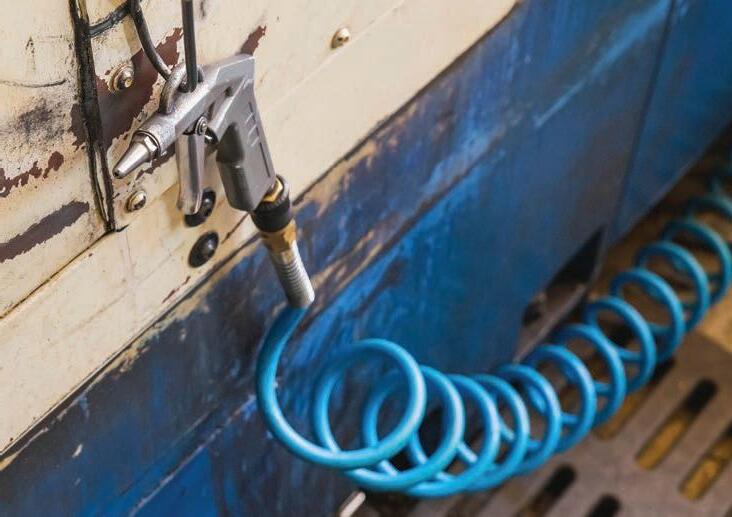
Compressed air is used every day in businesses across Michigan, often without much thought about how much energy it consumes. From blowing dust off parts to cleaning workspaces, compressed air nozzles are common in many operations. Outdated or inefficient nozzles can waste significant energy, increase electricity use and place unnecessary strain on your system.
“A wide variety of businesses use air nozzles in their operations without realizing they can be a huge source of energy waste,” says Kevin Salatrik, program lead for DTE’s Energy Efficiency Program for Business.
To address that issue, DTE offers free, energy-efficient compressed air nozzles to qualifying electric customers. The nozzles are designed to use less air while maintaining the same level of performance.
“A common misconception is that these nozzles won’t provide comparable psi,” Salatrik says. “They may not sound as loud or seem as powerful at first, but quite honestly, they’re performing the same task, and they save electricity and lower operating costs annually for the company.”
Compressed air nozzles are used by a wide range of small and midsize businesses, including medical facilities, auto repair shops, laundries, schools and manufacturing operations. In high
“The goal of [replacing compressed air nozzles] is to help the customer save energy and be more energy e cient. It’s not to change their process or ask them to do anything di erent.”
—JEREMY CAPPELLO, DTE PROGRAM LEAD
school shop classes, for example, nozzles are used to blow wood shavings off equipment. In manufacturing, fixed nozzles may remove debris from parts after cutting or punching, while handheld nozzles are used to clean workspaces.
Many customers are surprised to find out DTE provides energy-efficient nozzles at no cost.
“We give these out because there are more energy-efficient options available for customers to use,” says Jeremy Cappello, DTE program lead. “Using these products leads to reduced equipment usage, which can lower maintenance and repair costs, extend equipment life and create less strain on backup compressors. The nozzles are literally completely free. A customer simply raises their hand and says they’re interested.”
Rather than offering one standard solution, DTE takes what Cappello calls a “concierge approach.”
“It’s not one-size-fits-all; we’re going to work with you and your process,” he says. “By really getting to know the customer, we can understand their needs and fit them appropriately within DTE’s energy efficiency programs.”
The process begins when a customer contacts DTE to express interest. An energy advisor visits the site, reviews current equipment and may provide samples to test. DTE then supplies the selected nozzles at no cost and follows up to ensure everything is working properly.
“The goal of this is to help the customer save energy and be more energy efficient,” Cappello says. “It’s not to change their process or ask them to do anything different.”
To learn more or to schedule an assessment for free compressed air nozzles, visit dteenergy.com/smallbusiness. TOOLBOX
Saving



























UpgradeCosts withSpecial Financing-As Lowas0%APR!
AffordableFinancingDesigned forBusinessOwnersLikeYou
Whetheryou’reupgradinglighting, refrigeration,HVAC,orother energy-savingequipment,we’ve partneredwithDTEEnergytooffer specialfinancingaslowas0%APR withtermsupto36monthsfor projectsupto$250,000on qualifyingenergyefficiencyprojects.

1.ScantheQRcodetoexploreDTE BusinessRebates&Incentives
2.FindanauthorizedMichigan Savescontractortohelpyou applyforfinancing
3.Getyourpreliminaryreservation letterfromDTE
4.Completeyourproject