AIR Magazine - Jetex Abu Dhabi - December'25/January'26
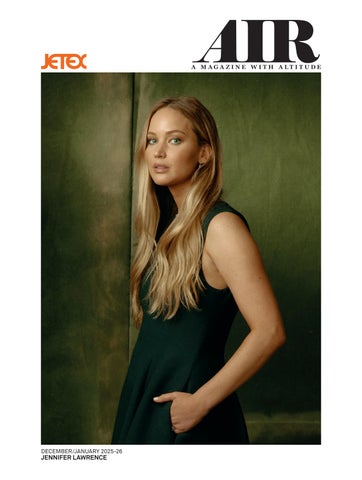
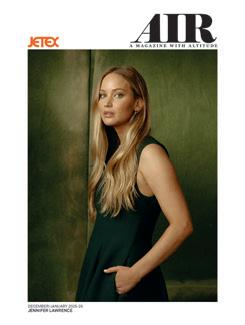
DECEMBER/JANUARY 2025-26
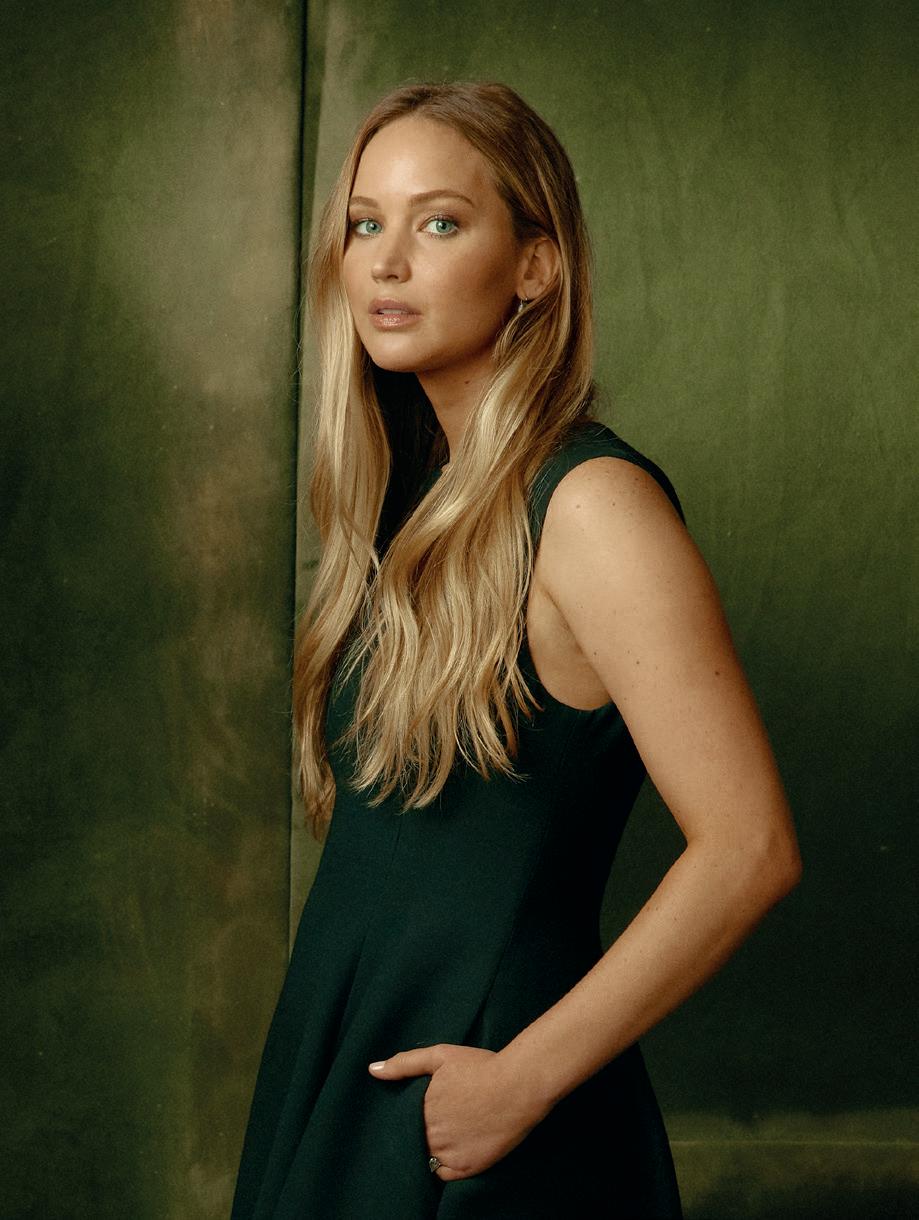
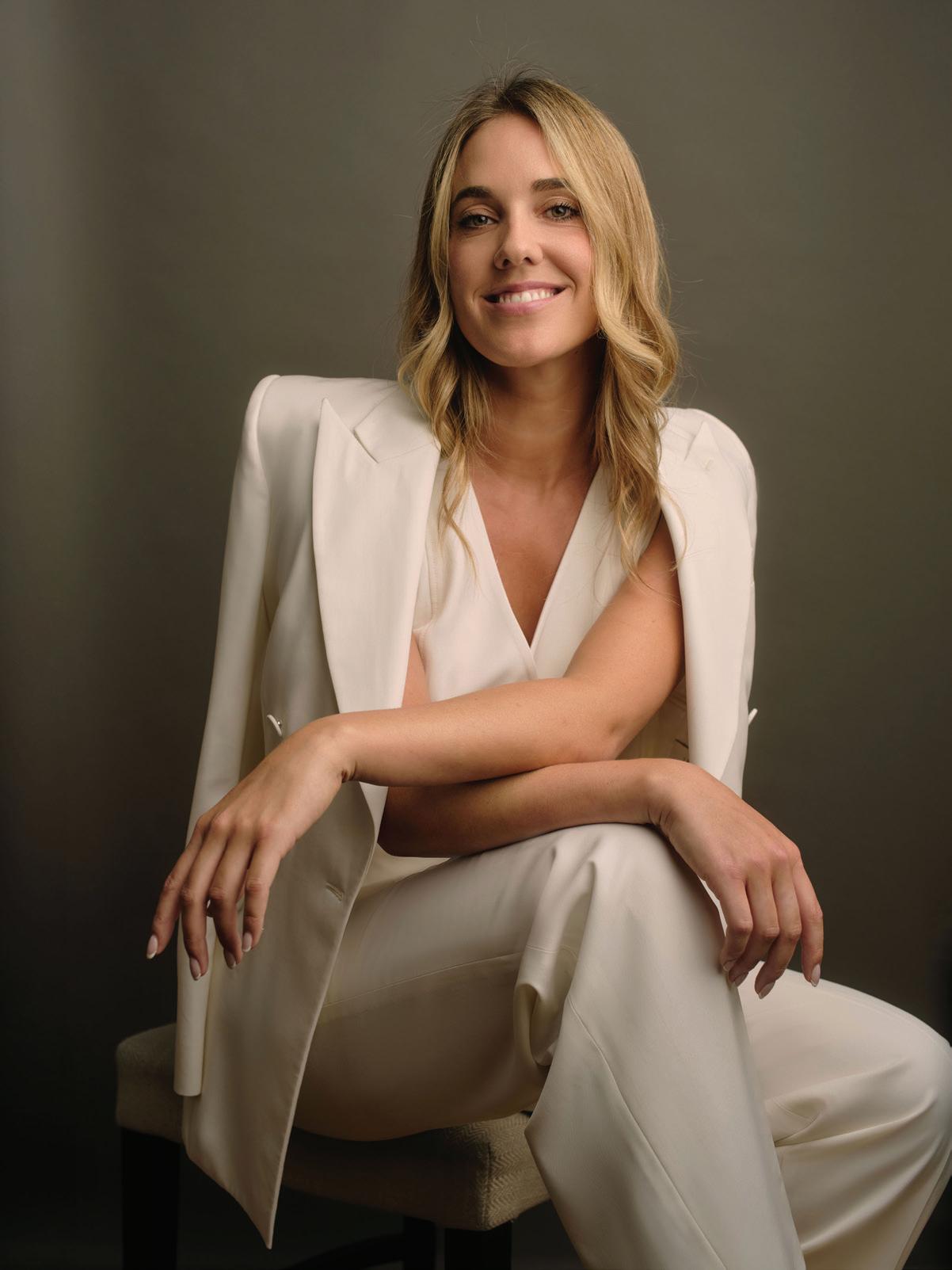
JENNIFER LAWRENCE
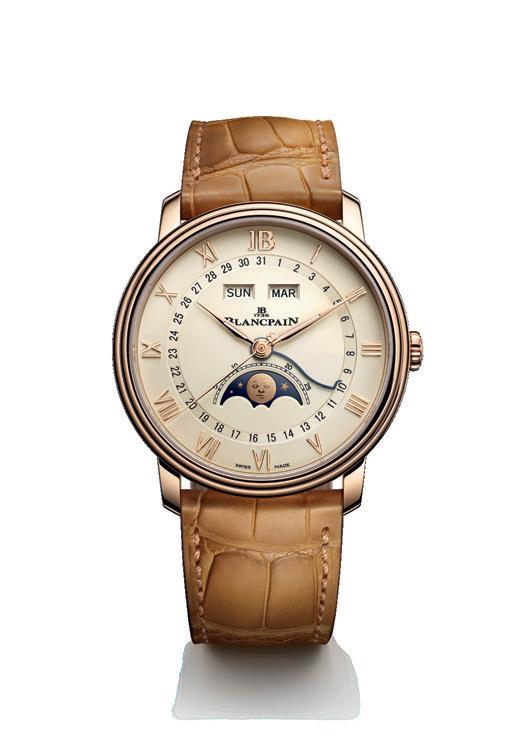
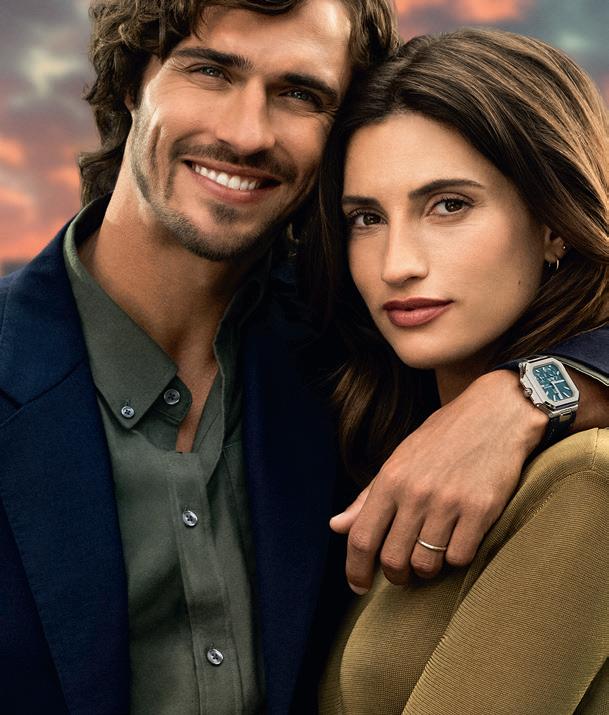
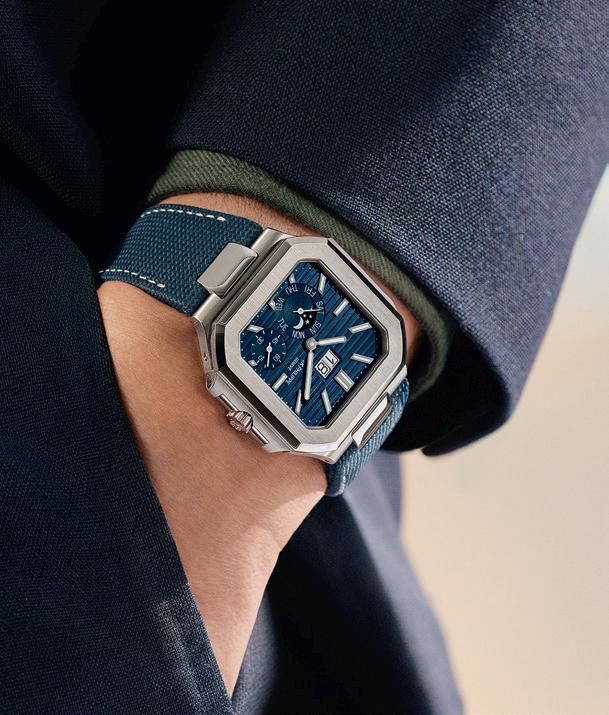
A Villeret is for eternity.
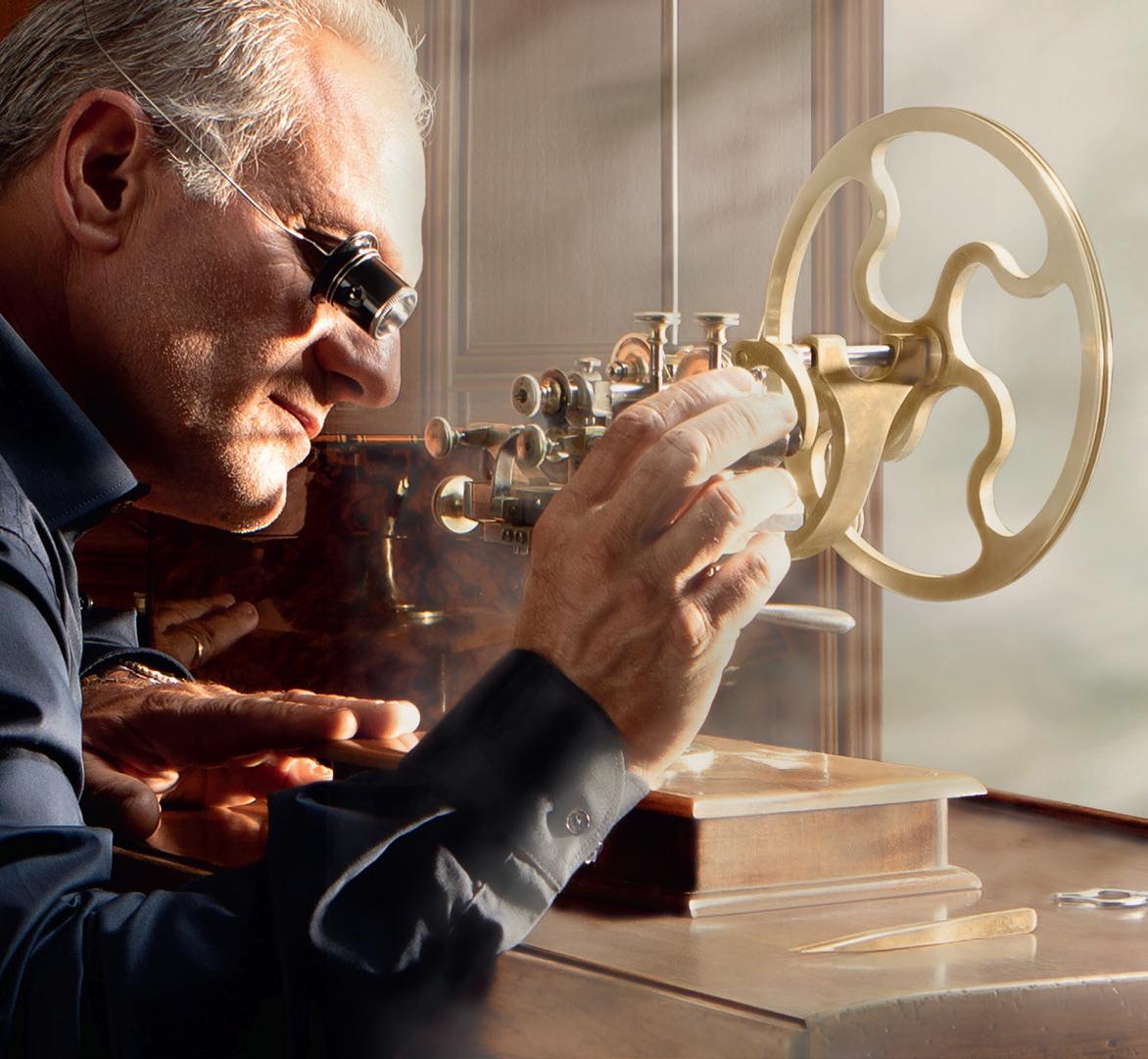
Featuring an endless array of watchmaking’s most fascinating complications, the Villeret bears authentic testimony to the talent of our watchmakers. Essentials imbued with timeless elegance.
Atelier Tourbillon, Blancpain – Le Brassus
terres d’instinct
FEATURES
Forty Two Mother Superior
Jennifer Lawrence on the problem with male directors and how being a mother helped achieve a career-best performance in her latest role.
Fifty Caught On Film
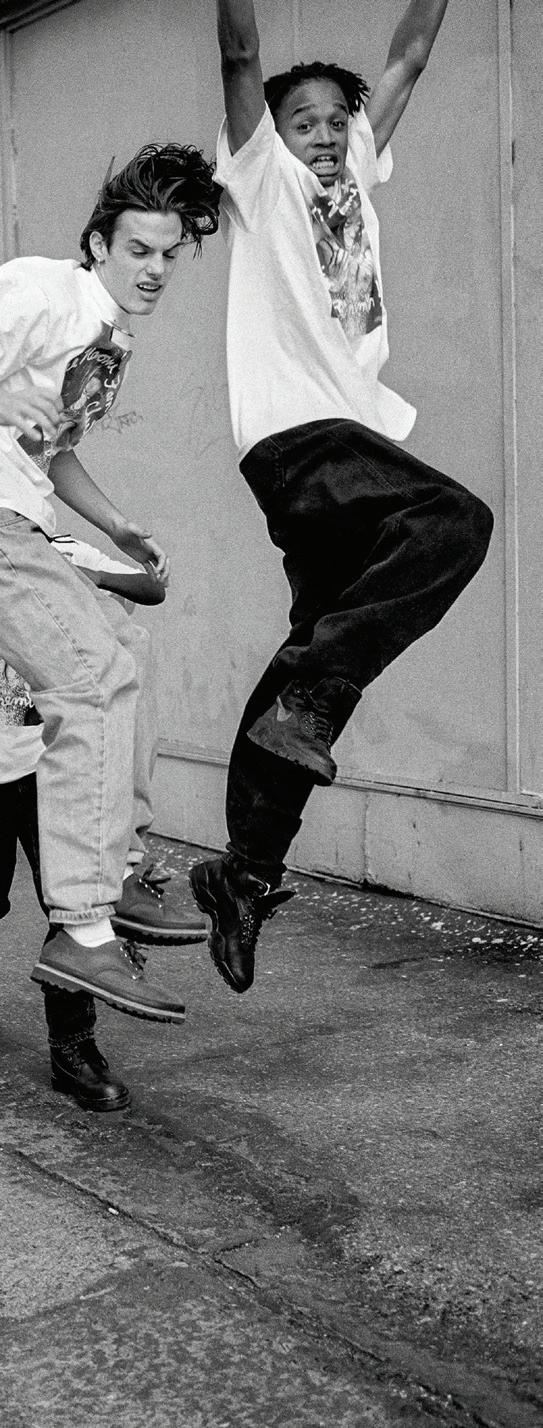
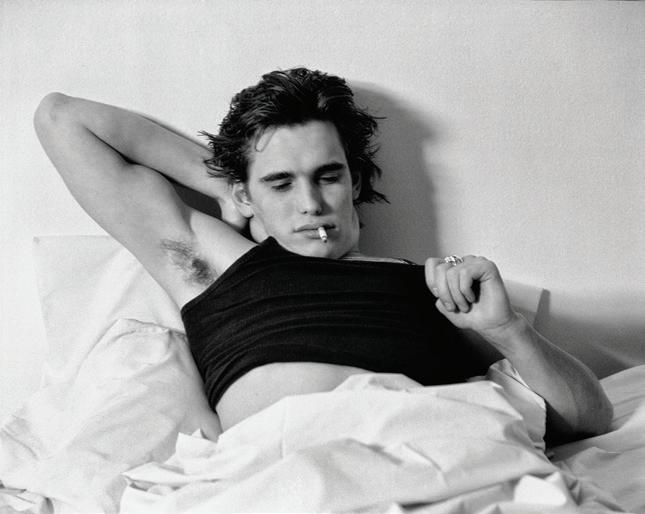
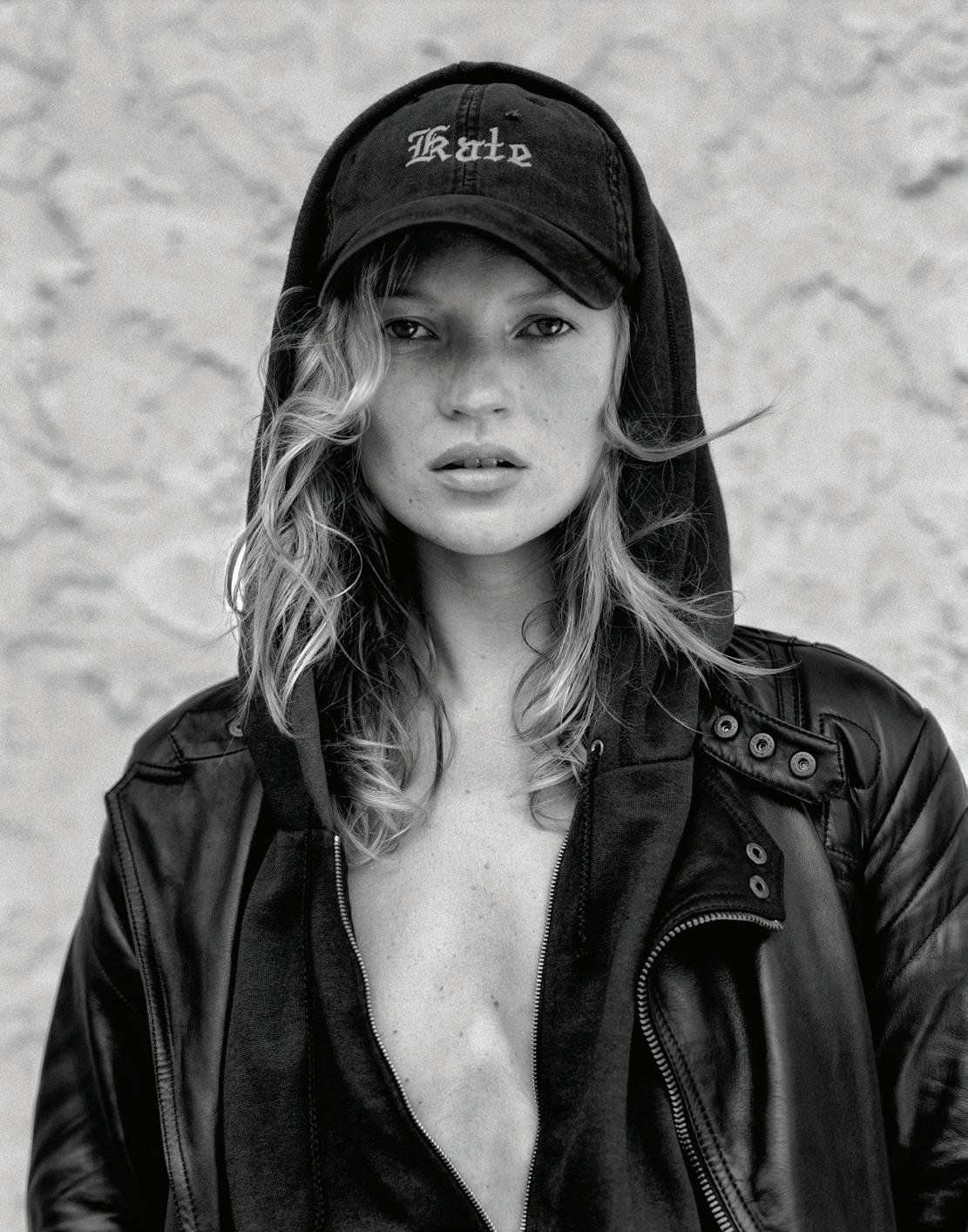
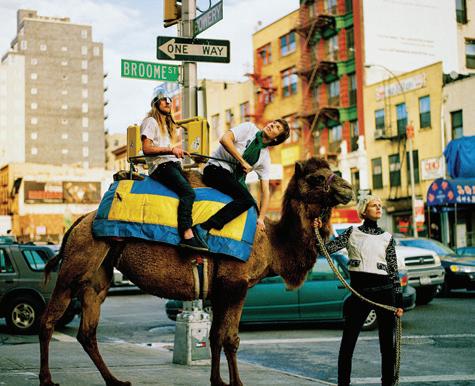
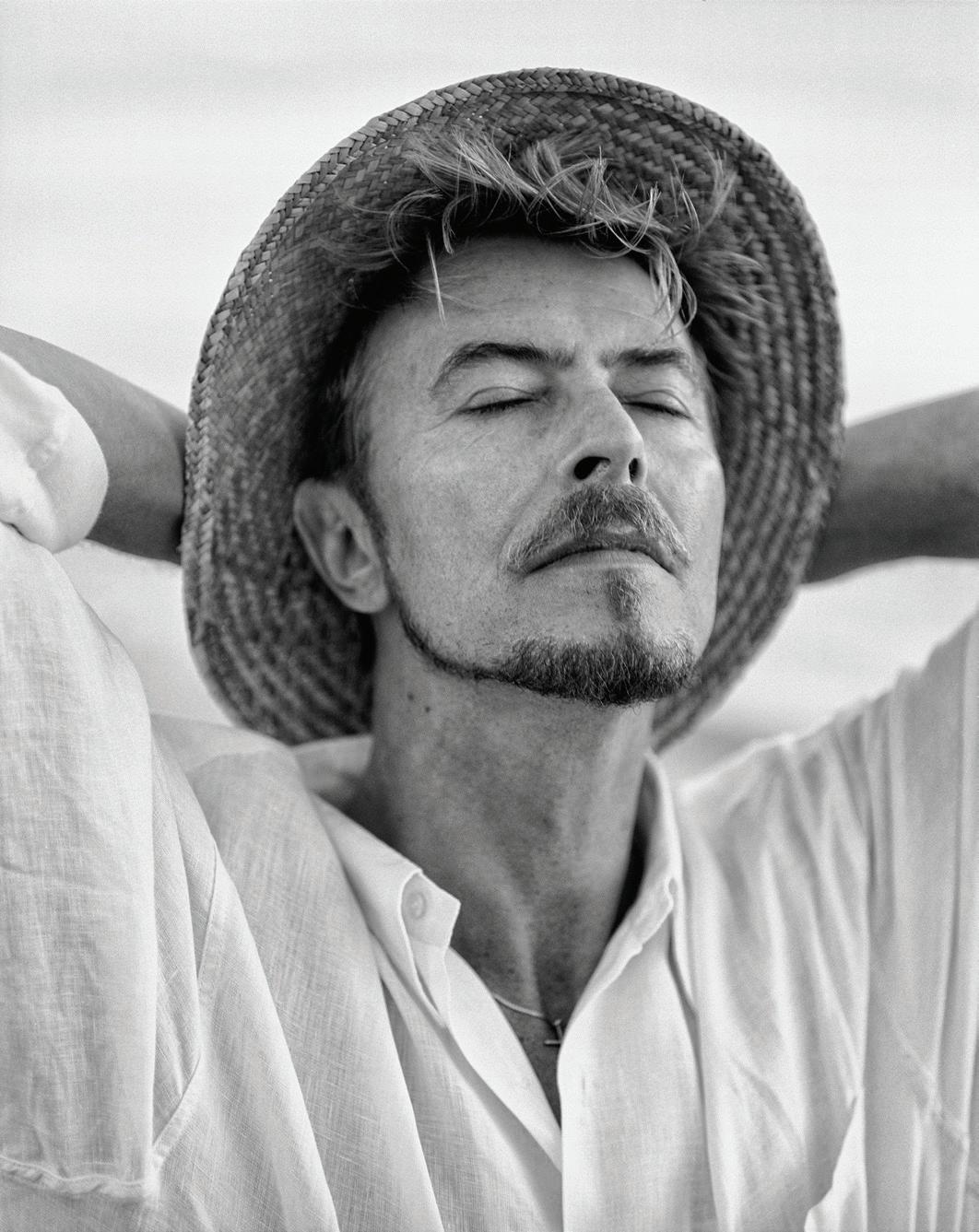
To celebarte 50 years behind the lens, Bruce Weber has collated 500 images for a new book that showcaes his unique visual style.
Fifty Six Cut From A Different Cloth
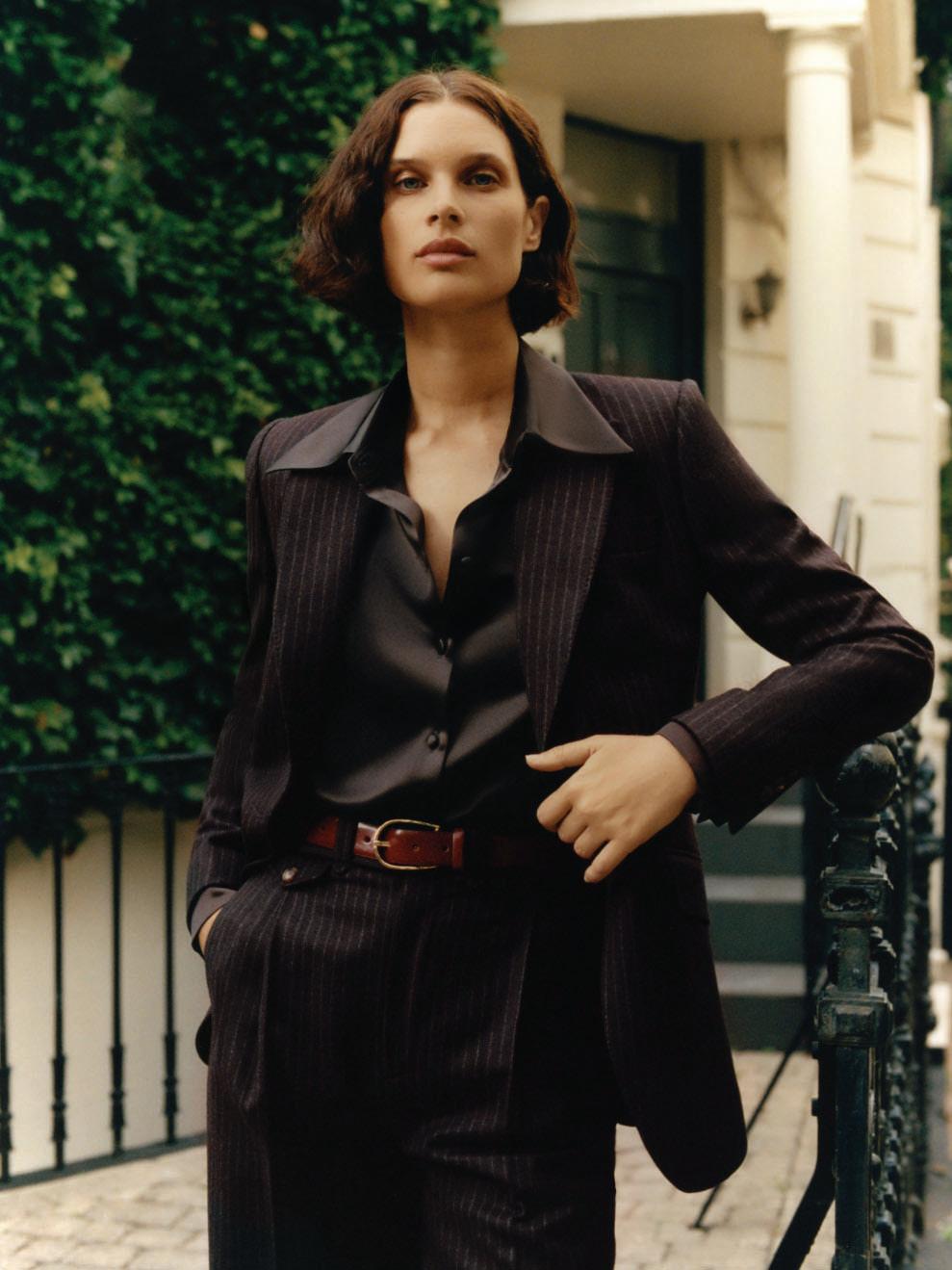
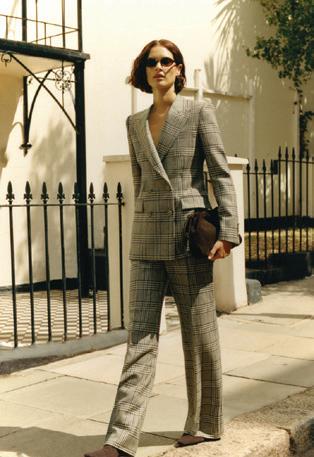
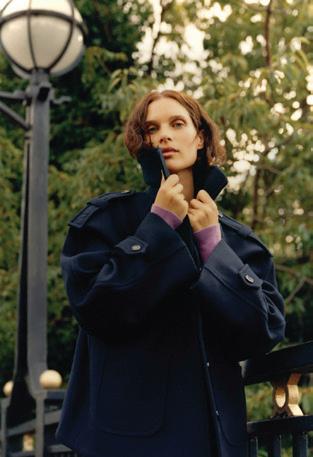
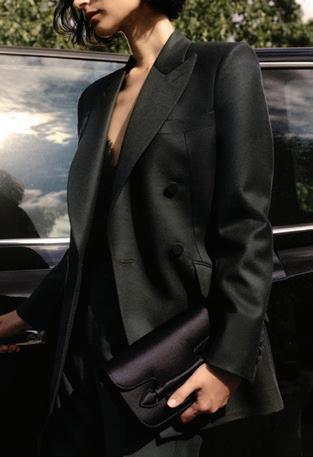
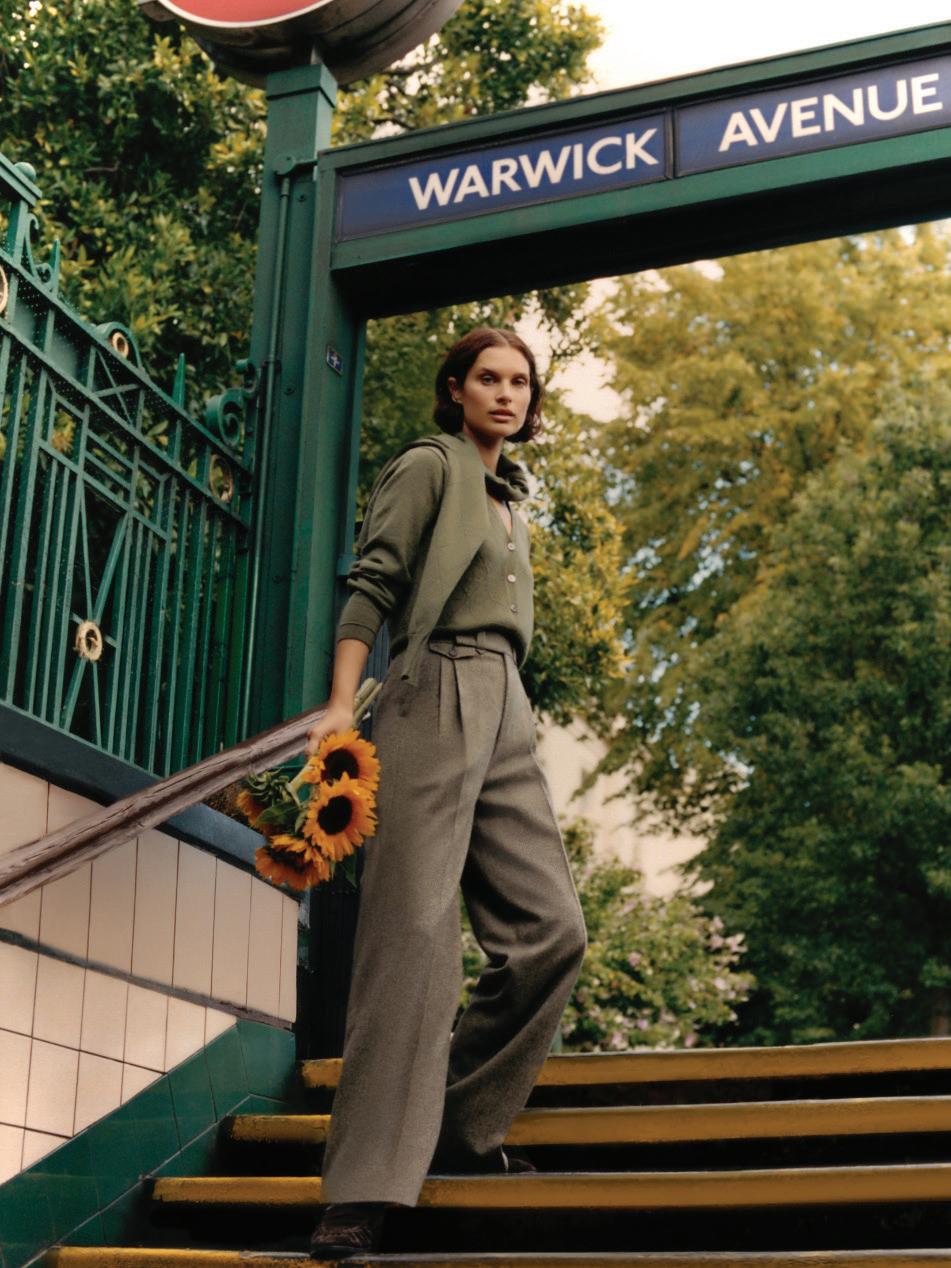
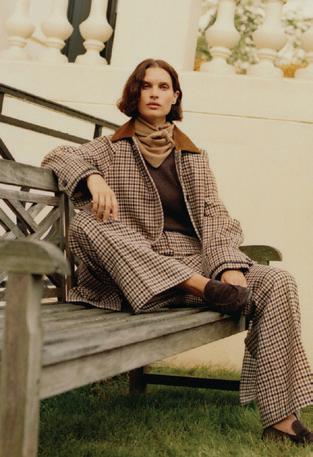
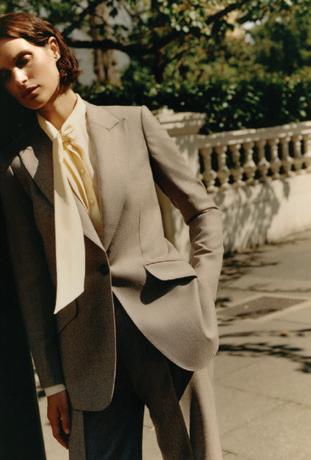
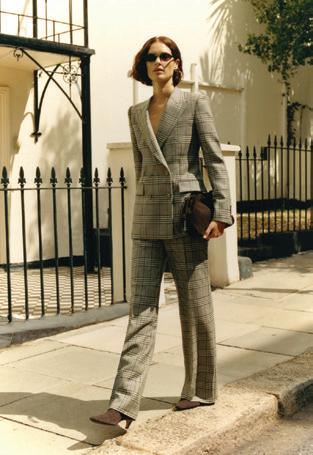
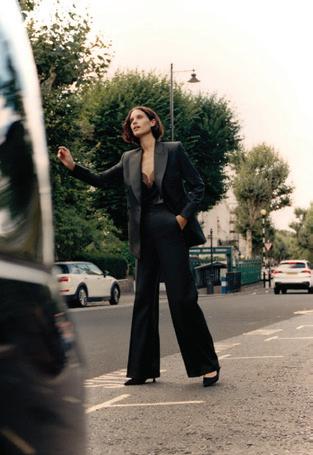
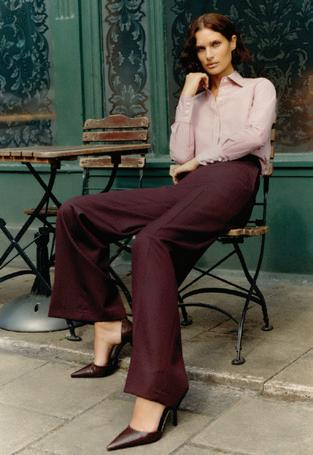
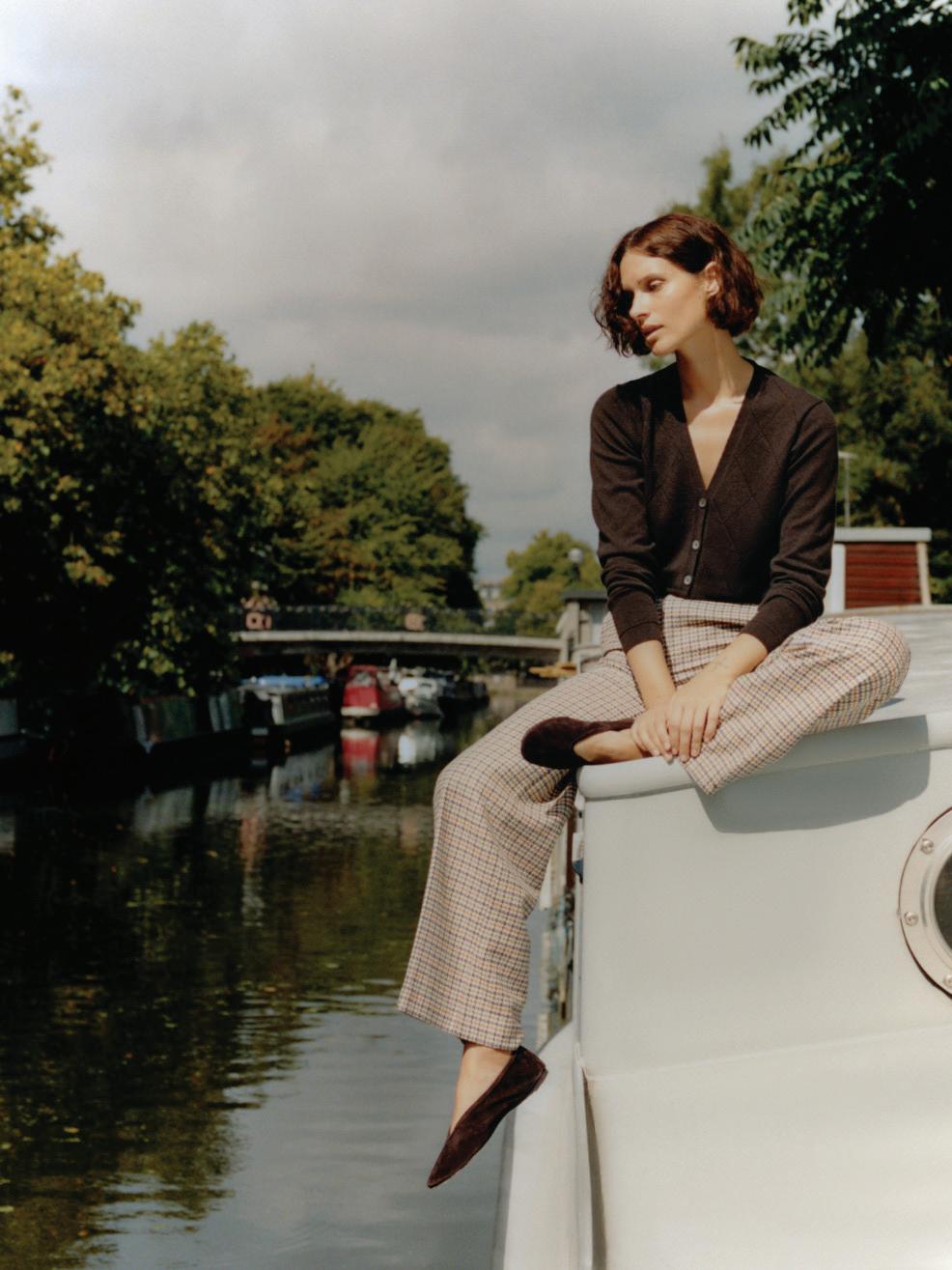
How Daisy Knatchbull brought a woman’s touch — and an all-female team of tailors — to Savile Row.
Credit: Knatchbull
REGULARS
Eighteen Radar
Twenty Objects of Desire
Twenty Two Art & Design
Twenty Six Jewellery
Thirty Four Timepieces
Sixty Two Motoring
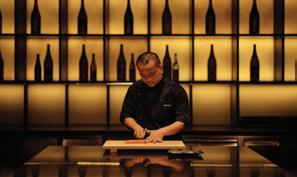
Sixty Six Gastronomy
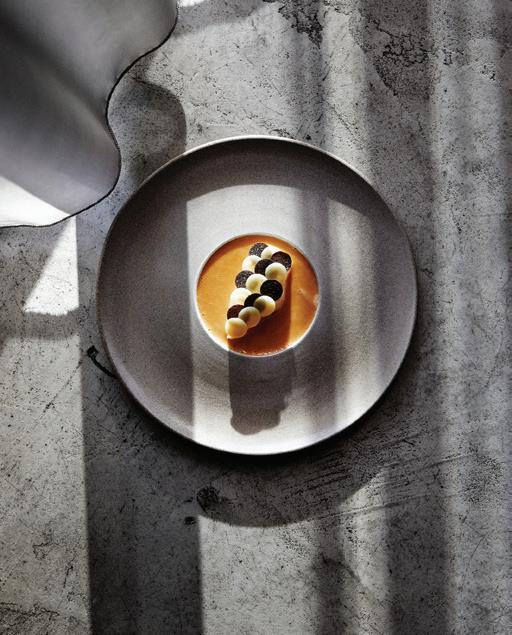
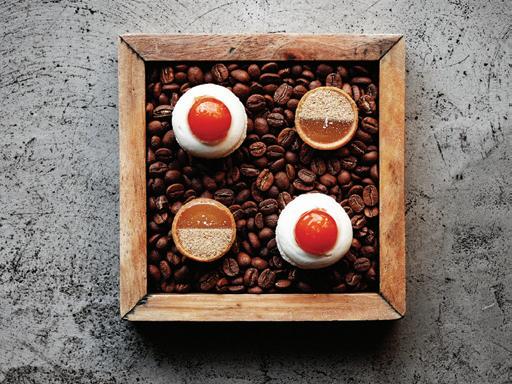
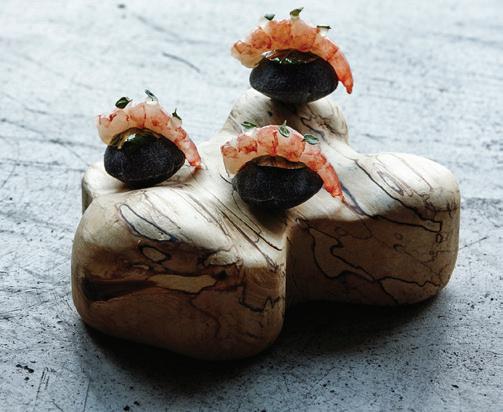
How Mikael Svensson gave up his dream of ice hockey stardom to land stars from Michelin and a deserved reputation as a champion of sustainability.
Seventy Two What I Know Now Dubai, UAE
EDITORIAL
Editor-in-Chief & Co-owner
John Thatcher john@hotmedia.me
COMMERCIAL
Managing Director & Co-owner
Victoria Thatcher victoria@hotmedia.me
PRODUCTION
Digital Media Manager Muthu Kumar muthu@hotmedia.me
Welcome Onboard
DECEMBER/JANUARY 2025-26
As the year comes to a close, you may find yourself pausing between celebrations, reunions, and long-awaited moments of rest to reflect on the journeys that shaped your 2025. Whether you crossed continents for business, discovered new destinations, or returned to familiar places that feel like home, each journey carried its own meaning. And we are honoured that Jetex was part of yours.
This year, you witnessed our network grow, our partnerships deepen, and our commitment to innovation strengthen. But the true heart of our work has always been you. Your trust, your curiosity, and your passion for experiencing the world inspire us to continue raising the bar for what modern private aviation can be.
During this festive season, we hope you find time to reconnect with loved ones, with yourself, and with the joy that travel brings. As you look to the year ahead, know that every detail of your future journeys is already being shaped with care: from seamless arrivals to elevated hospitality and a growing focus on sustainability, ensuring that your travels remain as meaningful as they are effortless.
On behalf of all of us at Jetex, we wish you a joyful holiday season and a New Year filled with clarity, comfort, and extraordinary experiences.
As always, thank you for choosing Jetex for your global private jet travels. All of us look forward to taking you higher in utmost comfort and luxury — and with complete peace of mind.
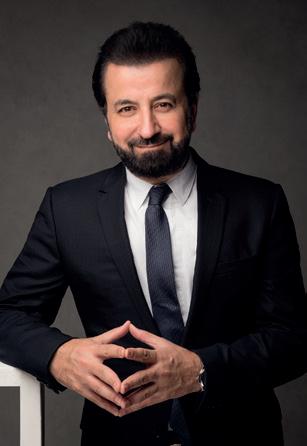
Adel Mardini Founder & Chief Executive Officer
Cover : Jennifer Lawrence by Austin Hargrave/AUGUST
Where Time Meets Travel
Jetex & Jacob & Co. Unveil Their First Collaborative Timepiece
At the intersection of aviation, design and high horology, a new collaboration is taking flight. Jetex has revealed its first-ever luxury timepiece created with Jacob & Co., the celebrated high-jewellery and watchmaking maison. Unveiled during Dubai Watch Week 2025 and timed with Jetex’s 20th anniversary, the limited-edition Epic X Jetex marks the brand’s bold expansion into the world of luxury lifestyle.
Inspired by the sensibilities of today’s private-jet traveller, Jetex invited Jacob & Co. to reinterpret the iconic Epic X through a distinctly Jetex lens. The result is a timepiece that bridges performance and artistry: the familiar 41mm Epic X silhouette reimagined with a full dial, a striking diamond-pattern surface, and the unmistakable Jetex orange that has become synonymous with global luxury aviation. Ergonomic, vibrant, and effortlessly wearable, the Epic X Jetex is designed for those who move fluidly
between continents and cultures.
“The art of watchmaking is close to many private jet travellers who are both luxury connoisseurs and devoted collectors,” says Adel Mardini, Founder & CEO of Jetex. “The Epic X Jetex timepiece is an emblematic creation linking the two brands as well as two essential luxury universes.”
Throughout Dubai Watch Week, held last month, collectors and enthusiasts had the opportunity to experience the new design, which will also be showcased at Jetex’s terminals in Dubai and Abu Dhabi. For Jacob Arabo, Founder & Chairman of Jacob & Co., the collaboration felt instinctive: “We cater to the same clients, people who demand the very best and the rarest experiences.”
Combining Jetex’s pioneering spirit with Jacob & Co.’s daring craftsmanship, the partnership introduces a timepiece that transcends function: an object crafted not just to tell time, but to tell a story.
‘ The art of watchmaking is close to many private jet travellers who are both luxury connoisseurs and devoted collectors ’
Adel Mardini, Founder & CEO of Jetex
CRAFTED FOR LIFE’S MOST EXCEPTIONAL MOMENTS
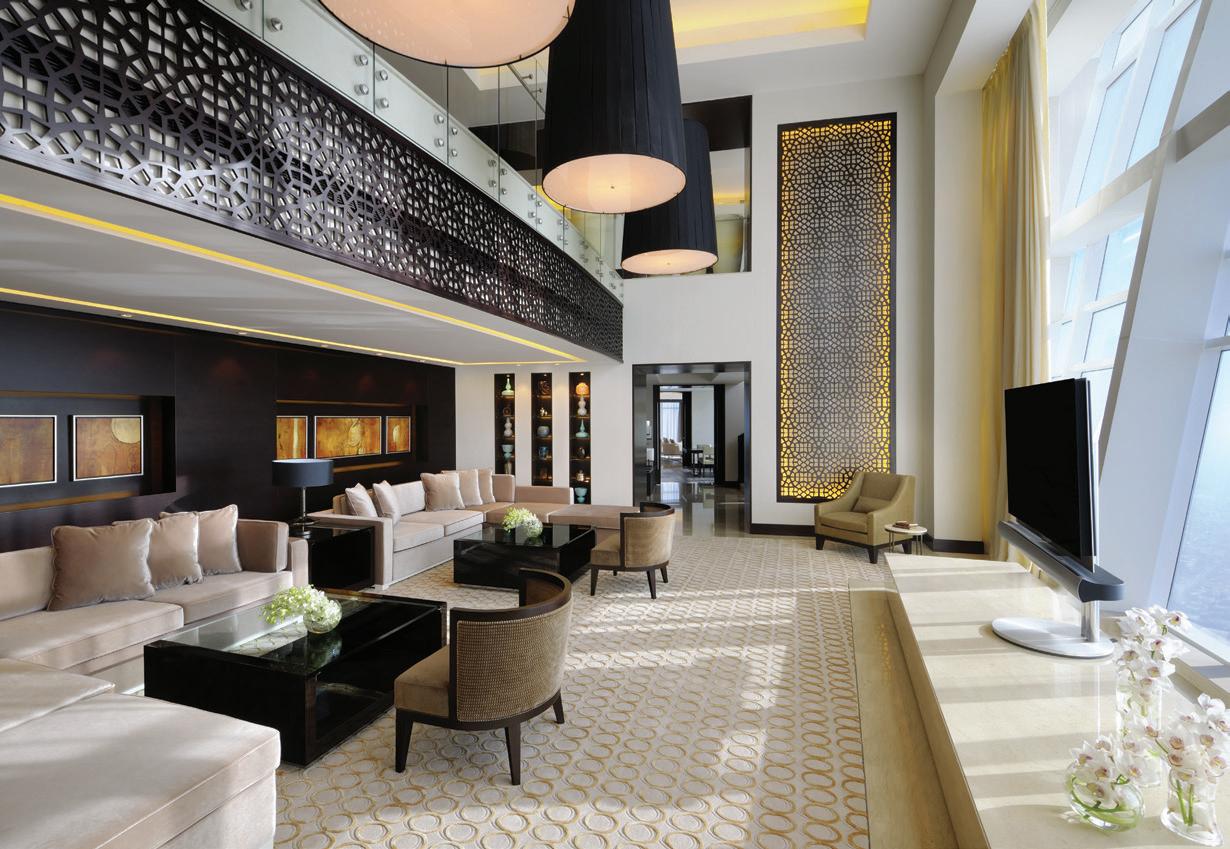
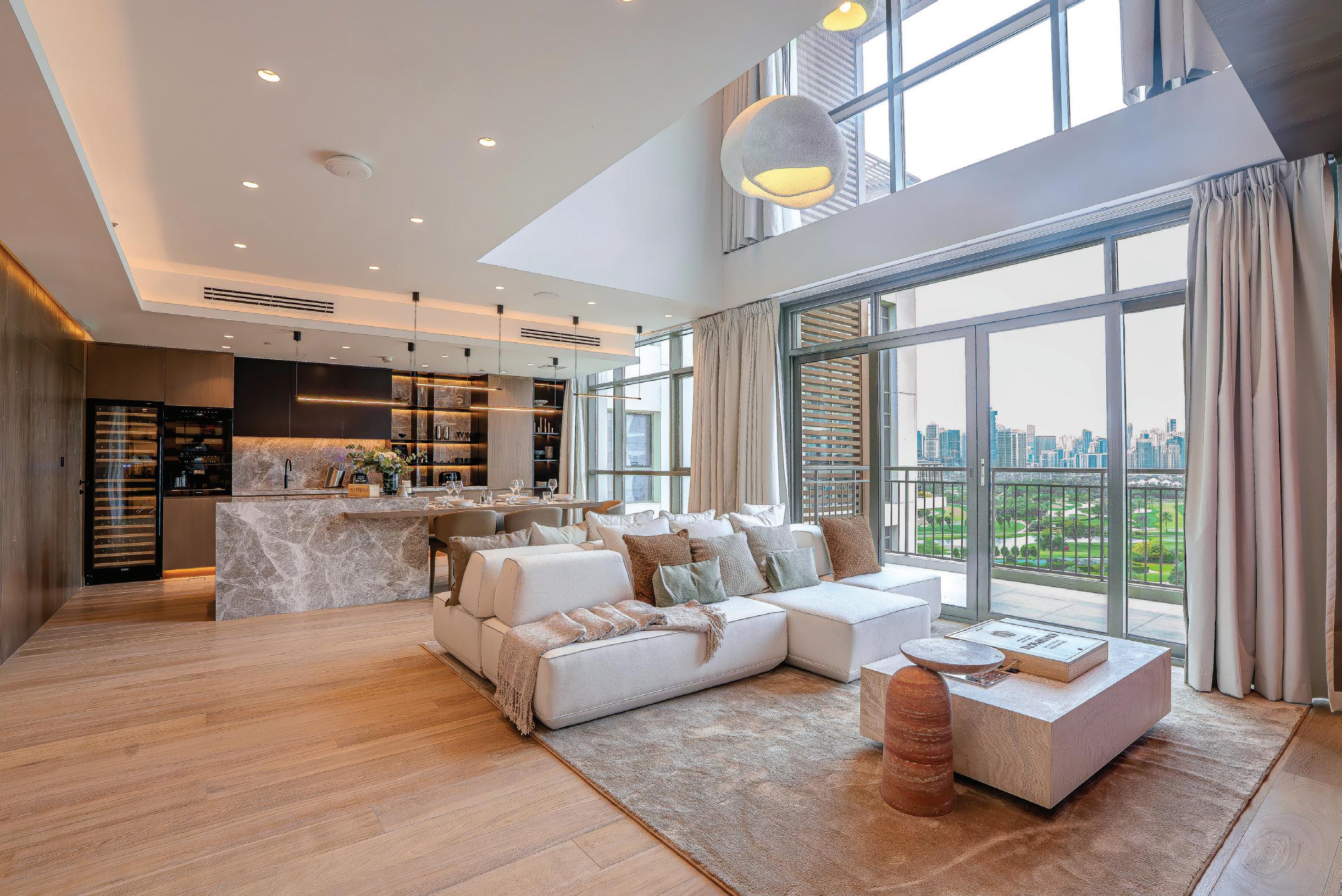
A sanctuary in the sky, the 70th floor duplex Penthouse Suite at JW Marriott Marquis Dubai is a perfect blend of elegance, exclusivity, and contemporary luxury. Spanning 624 sqm, this expansive penthouse is crafted for refined living, comfort, and privacy. Thoughtful design, bespoke furnishings, and premium features create a distinguished setting designed for business leaders and discerning travelers seeking an extraordinary stay.
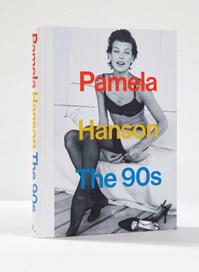
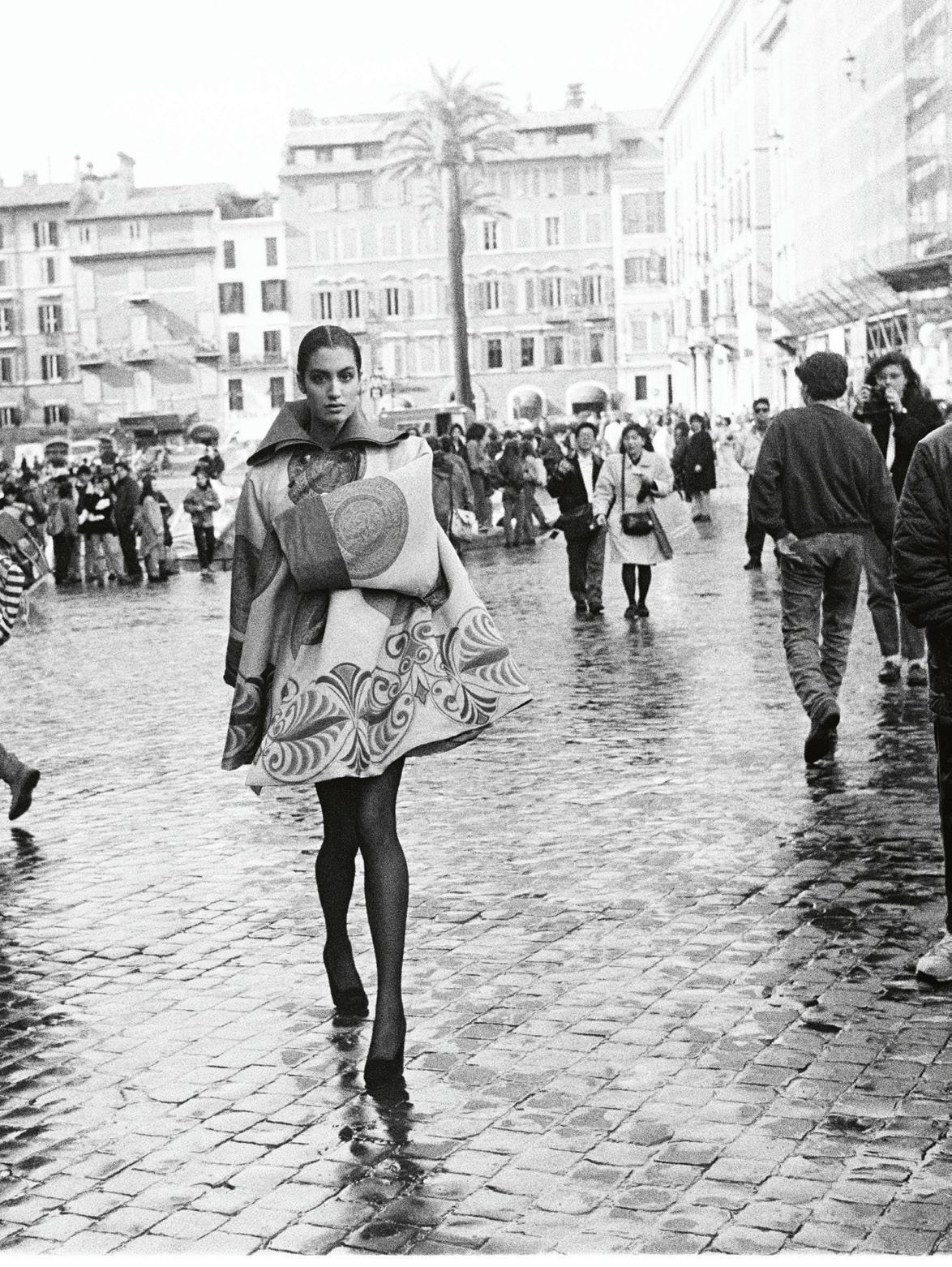
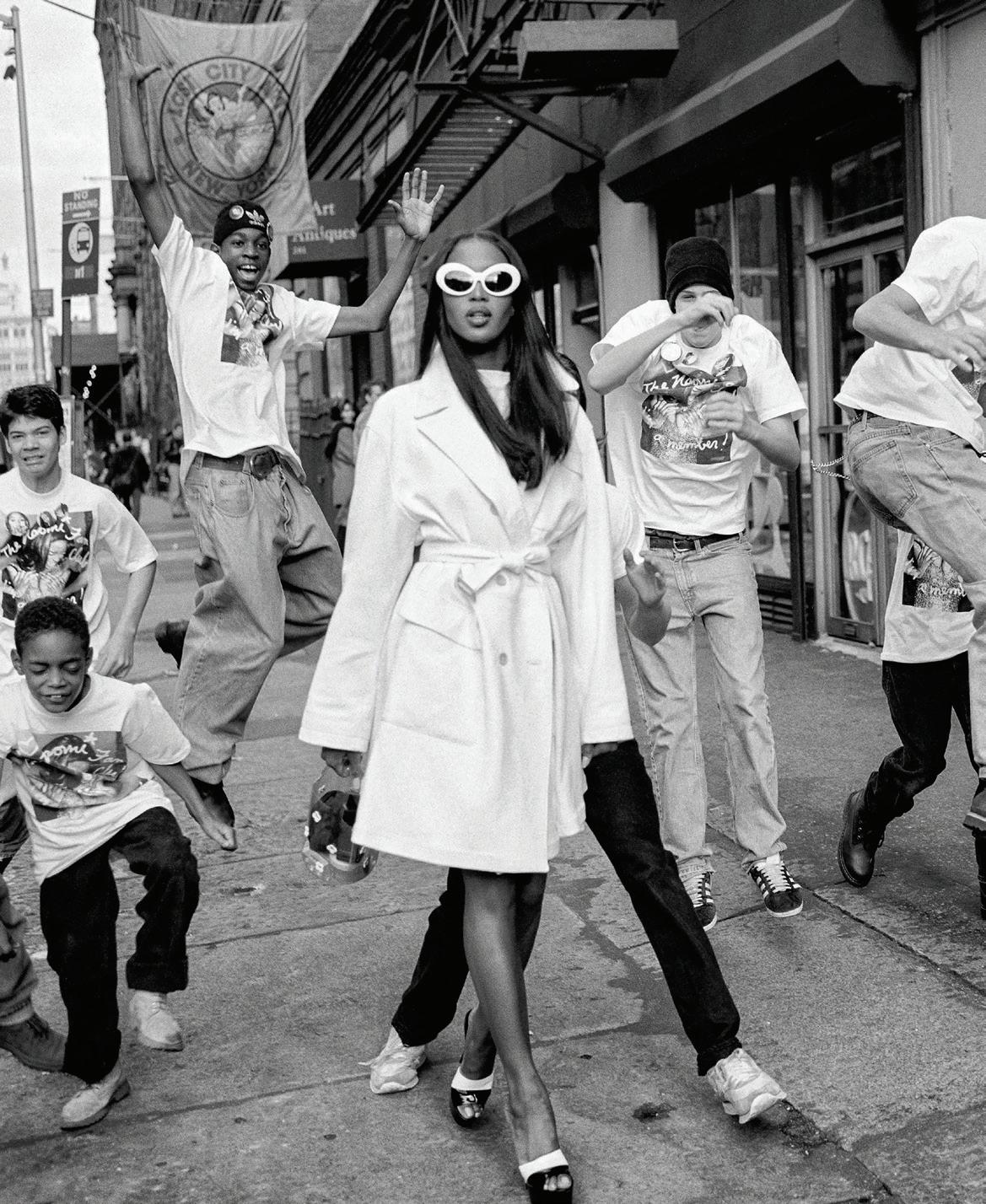
A glorious retrospective of an era of fashion defined by supermodels and carefree glamour, Pamela Hanson: The ‘90s, is the acclaimed photographer’s first major book release in over two decades. “This book is a love letter to a decade that changed everything,” says Hanson. “It’s about beauty, freedom, fun — and the women who defined a generation.” Merging big-budget editorials with outtakes and behindthe-scenes moments, Hanson’s awardwinning work is defined by how she captures texture, light, and emotion. Featured inside are portraits of the decade’s biggest names in fashion: Kate Moss, Christy Turlington, Naomi Campbell, Carla Bruni and Linda Evangelista among them.
Pamela Hanson: The ‘90s is out now, published by Rizzoli
OBJECTS OF DESIRE
Master craftsmanship, effortless style and timeless appeal; this month’s must-haves and collectibles
A new addition to Boghossian’s Merveilles collection, Merveilles Blue is a limited-edition line that employs the use of a patented setting developed over four years to make the metal almost invisible and allow light to flow freely through each stone — diamonds and
sapphires selected for their luminosity and deployed in varying sizes. These Merveilles Blue earrings are available in three sizes, small, medium, and large, and their design takes its creative cues from the rare halos that encircle the sun and moon.
BOGHOSSIAN MERVEILLES BLUE
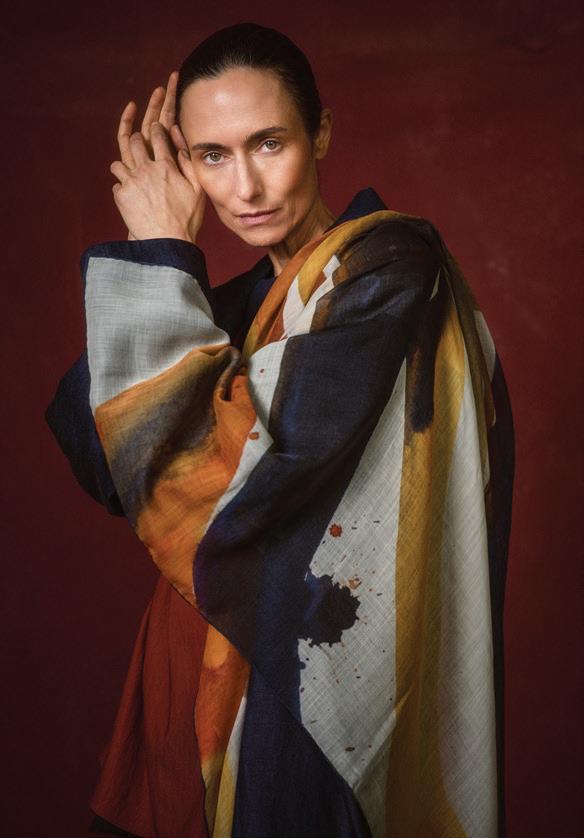
From her atelier in London’s Belgravia Mews, artist and designer Darshana Shilpi Rouget creates limited-edition silk and cashmere scarves, each design created in collaboration with other artists and produced by artisans in Como, Italy. “Each scarf is an artwork in its own
right, its fluidity perfect for draping, wrapping, folding or hanging — allowing each piece to become a deeply personal reflection of its owner,” says Rouget. The scarves are delivered in wheat straw paper boxes or optional handcrafted Paulownia wood cases from Japan.
ALBA AMICORUM WINTER 2025
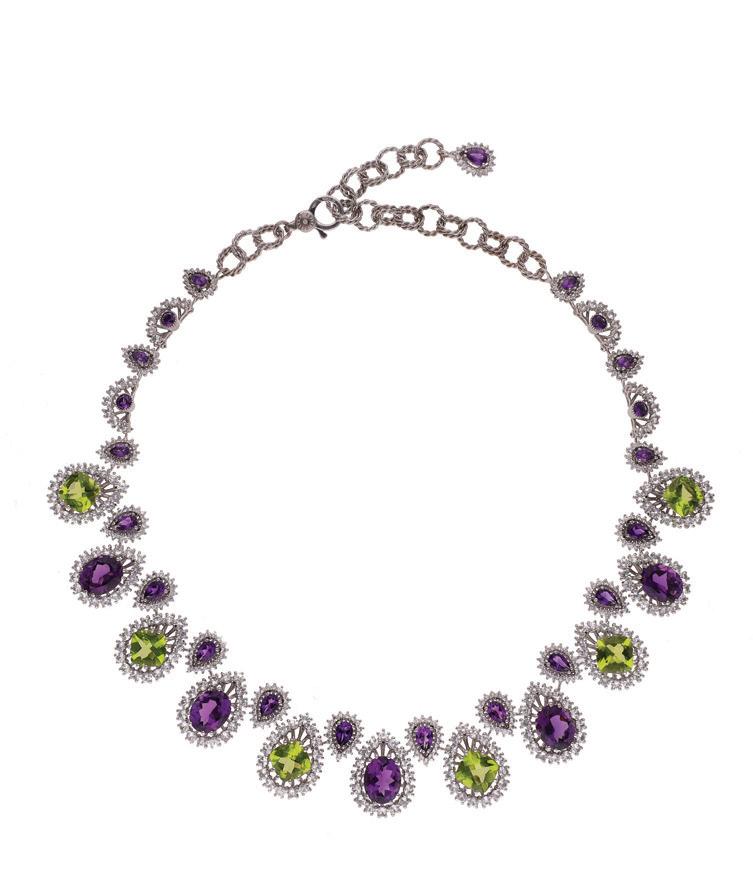
DOLCE&GABBANA ELEGANZA COLLECTION
Italian goldsmithing tradition meets refined romantic jewels as Dolce&Gabbana’s Eleganza collection makes its bow. Set on 18-carat yellow, white and rose gold, the fine jewellery line — which encompasses necklaces, bracelets, rings and earrings — sees
stones used in different cuts and various sizes to add another layer of visual interest already secured by the superb selection of vibrant colours: London Blue topaz, amethysts and aquamarines, as well as peridots, rhodolites and sapphires serve up a feast for the eyes.
OBJECTS OF DESIRE
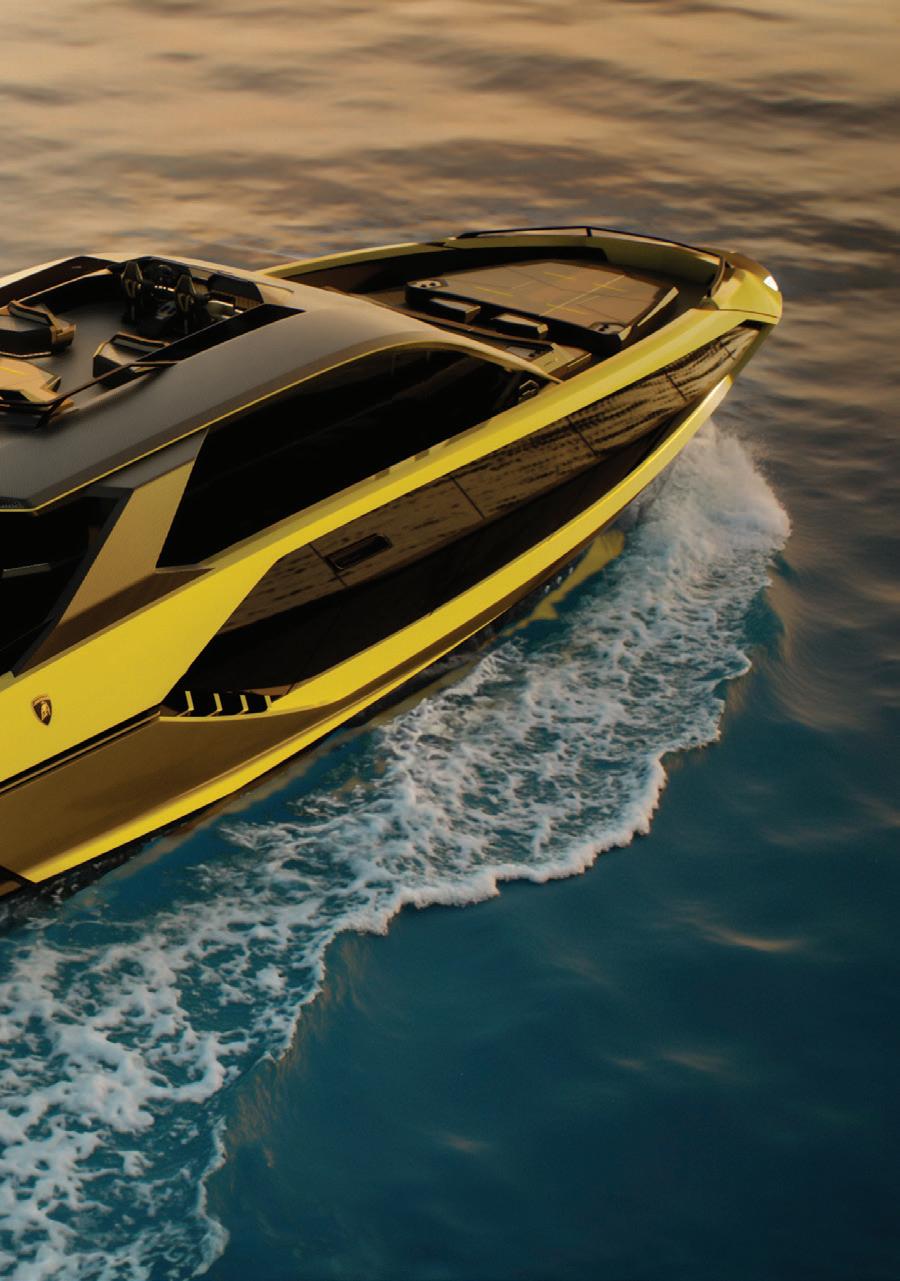
LAMBORGHINI X THE ITALIAN SEA GROUP
TECNOMAR FOR LAMBORGHINI 101FT
Created to take the thrill of driving a Lamborghini from the road to the sea, the Tecnomar for Lamborghini 101FT also features many elements of Lamborghini’s celebrated car design — its exterior is inspired by the new Fenomeno. “We are taking Lamborghini’s DNA to sea:
performance, design, and innovation come together in a motoryacht that redefines the concept of nautical luxury,” hails Stephan Winkelmann, Chairman and CEO of Automobili Lamborghini. The yacht can accommodate nine guests, has three cabins, and can hit 45 knots.
Limited to just 50 cars worldwide, the BMW 7 Series Suhail Edition — which debuted in Riyadh — pairs artistry with performance. “More than a celebration of automotive excellence, it is a tribute to the cultural legacy, craftsmanship, and forward-thinking spirit of the
Middle East,” highlights Karim-Christian Haririan, Regional Director, BMW Group Middle East. It’s also a car that represents the pinnacle of BMW Individual, a programme that allows clients to personalise their cars with all manner of luxury materials, colours and trims.
BMW
7 SERIES SUHAIL EDITION
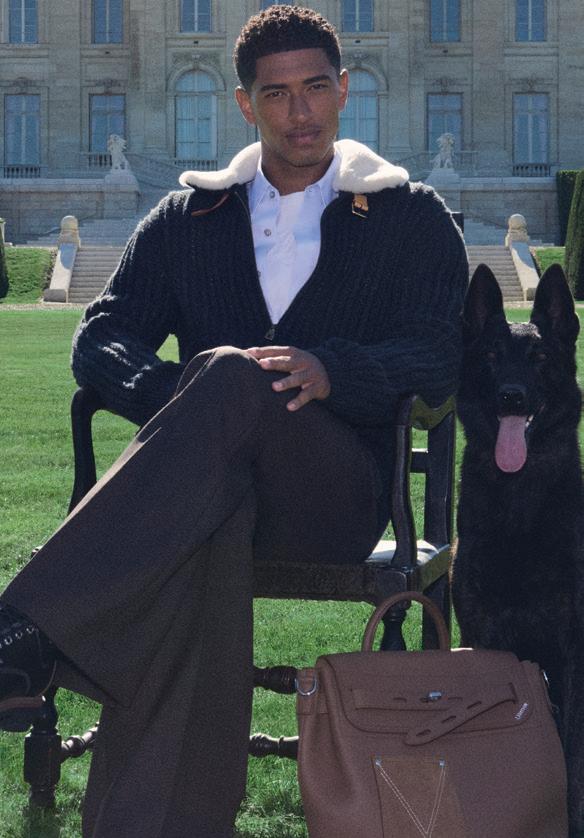
A new line of leather goods designed by Pharrell Williams that draws on workwear for inspiration, LV Touch features four styles, from a hobo through to a slingbag, each piece featuring signature elements to align them: a suede front pocket with a topstitched V and a V-shaped carabiner decorated with monogram flowers. The other defining features are the quality of the materials (grained calfskin paired with suede accents and linings) and adaptability — the Verso Hobo introduces an innovative, reversible design.
LOUIS VUITTON LV TOUCH
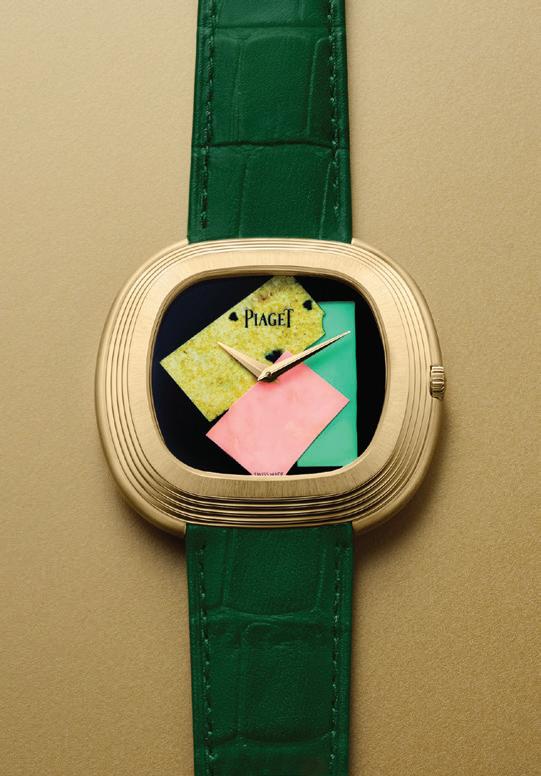
PIAGET
ANDY WARHOL WATCH ‘COLLAGE’ LIMITED EDITION
Andy Warhol was an avid watch collector, amassing more than 300 at the time of his passing. Among them were several pieces from Piaget, and the brand honours that link with a new timepiece, the Andy Warhol Watch ‘Collage’ Limited Edition. Marquetry is employed to apply thin slices of ornamental stones — yellow Namibian serpentine, pink opal and green chrysoprase — to a black onyx base, while on the reverse is an engraved rendition of the Andy Warhol self-portrait on which the dial design is based.
OBJECTS OF DESIRE
Let’s Dance
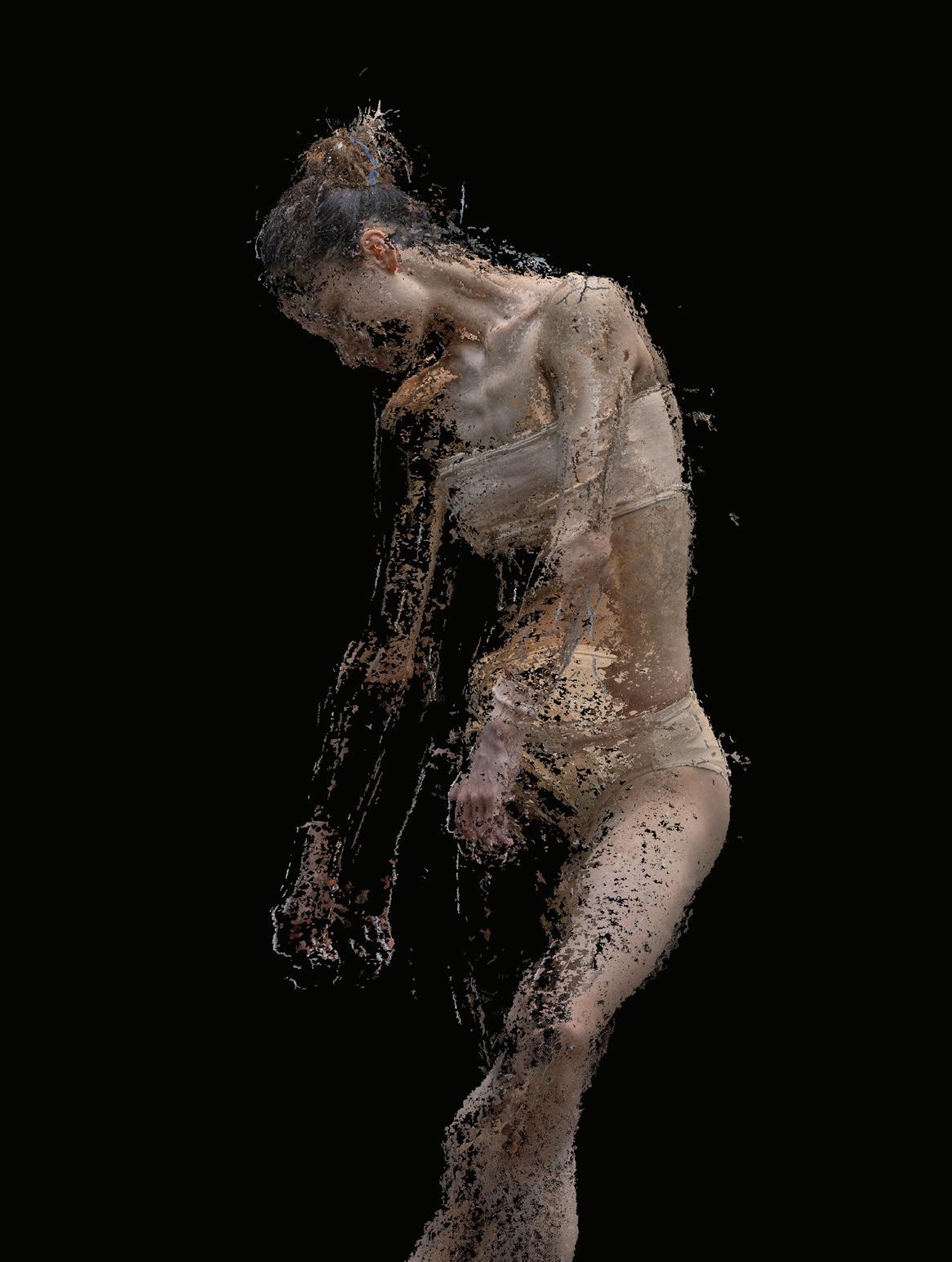
In a staggering exhibition, renowned choreographer Wayne McGregor explores the future of bodies in an AI world
WORDS: MARTIN ROBINSON
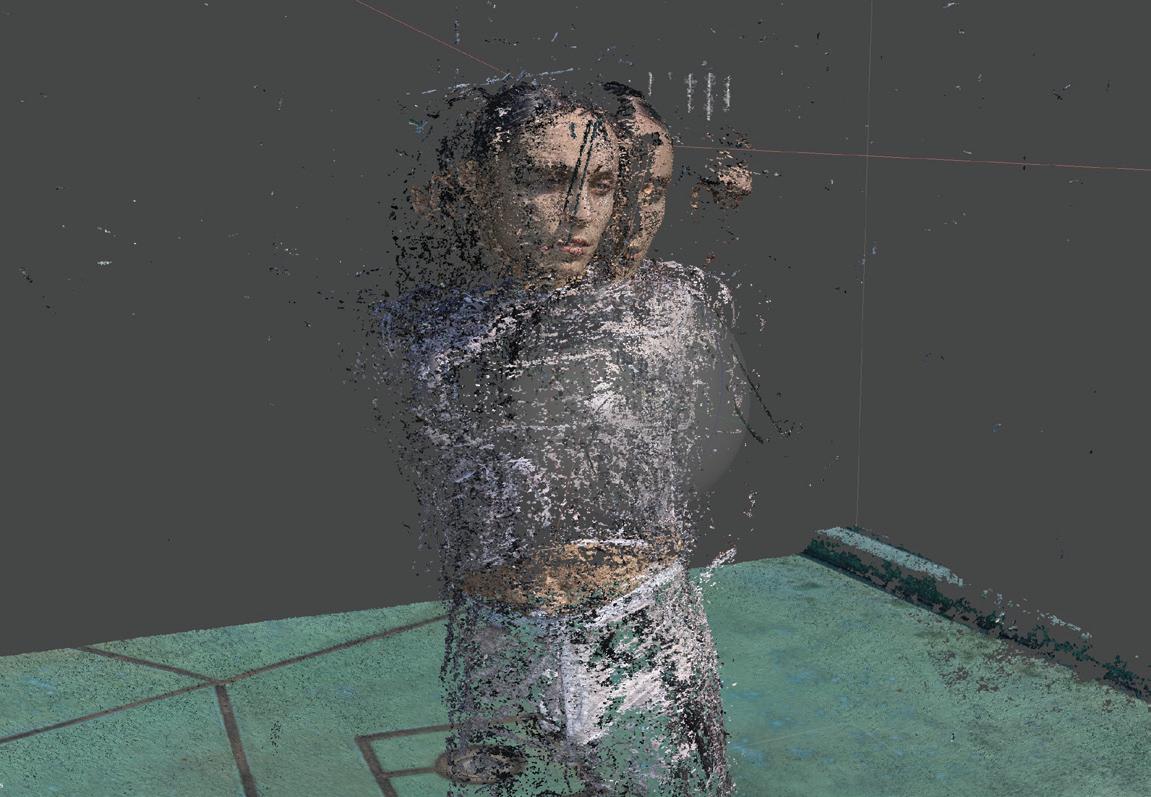
Previous pages: Wayne McGregor, On The Other Earth, Hong Kong Ballet (Wang Qingxin) 2025; Wayne McGregor, On The Other Earth, Company Wayne McGregor (Jasiah Marshall) 2025. Both photos by Ravi Deepres and Luke Unsworth
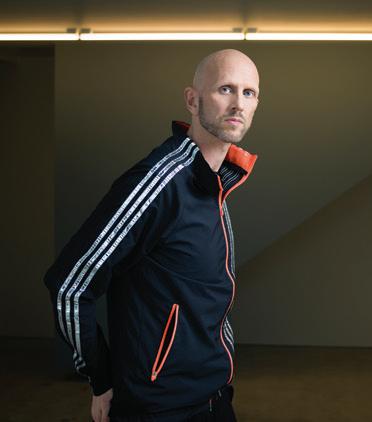
This page, from top to bottom: Wayne McGregor, On The Other Earth, Company Wayne McGregor (Salvatore de Simone) 2025. Photo by Ravi Deepres; Wayne McGregor, On The Other Earth, Hong Kong Ballet (Gouta Seki) 2025. Photo by Ravi Deepres; Sir Wayne McGregor. Photo by Pål Hansen
Opposite page: Wayne McGregor, On The Other Earth, Company Wayne McGregor (Naia Bautista). Photo by Ravi Deepres and Luke Unsworth
Calling Sir Wayne McGregor a choreographer is like calling Stanley Kubrick a director. Correct of course, but it hardly begins to capture the totality of their auteur approach. One of the most fascinating parts of this exciting exhibition at London’s Somerset House is the look inside McGregor’s studio, where you see glimpses into his notebooks and how he annotates his choreography like musical notations. He records and files his work in archives. One notebook shows him methodically analysing the suicide of Francis Bacon’s lover/muse George Dyer on the eve of an exhibition in Paris, and how Bacon didn’t react when told; how would you turn this moment into dance? Well, there is literally method to McGregor’s madness, the kind of madness — which in the pre-TikTok days used to be called intellectualism — that possessed Kubrick. And technology is not feared but harnessed. Which is where we find ourselves with Infinite Bodies, an exhibition that showcases an artistic vision fulfilled through an expansive approach to collaboration and new tech to create an experience which is frequently exhilarating and rewards participation; yes, you should be prepared for a bit of a dance. The first work here is a new piece called OMNI, which he made with George Lucas’s SFX company Industrial Light & Magic, who he previously worked with on ABBA Voyage. It has simulations of two dancers moving together across a shifting void space. Using performance capture tech, their bodies shift in transparency, so that we are seeing skeletons or cardio-vascular systems moving together in constant flux. Shown on a screen in life-sized scale, it makes for a hypnotic piece that has more physicality than your average CGI; things have come a long way since Star Wars: The Phantom Menace. Further cuttingedge exploration comes in a piece called
Future Self, developed by McGregor with digital contemporary art group Random International, with a soundtrack by Max Richter. It’s an interactive one, a ‘living’ sculpture made of a brass grid made up of 10,000 LED lights. When you approach it — and ideally dance — it lights up to echo your movements, which sounds simple but feels uniquely satisfying and uncanny in this set-up, effectively showing your body moving without its physicality. It’s like staring at your soul or, perhaps, your digital afterlife. What McGregor is exploring are notions of physical intelligence, something existing beneath IQ and EQ — with the emphasis on beneath, for this form of intelligence is usually taken for granted. Infinite Bodies could easily
‘ The future is convincingly being pulled into focus here and it’s weirdly reassuring ’
have been an apocalyptic attack on digital society at the further expense of our bodies, but McGregor has more of an intelligent approach, questioning what the human body means in the age of AI, and looking to the future when our daily lives may involve living in both the virtual and physical realms. For all the future optimism, there’s an unnerving edge to these exhibits too. In Audience, 64 glass mirrors sit in a room and when you walk into it, they all turn towards you. It’s funny and disturbing, a pithy joke about our need to be seen — or rather, in the social media world, to see ourselves reflected back by others as we wish.
Not all of it works. AISOMA, made with Google Arts & Culture Lab, encourages you stand in front of a screen and dance for eight seconds. You have your movements analysed, and the system will then draw from McGregor’s archives to replay suggested extra moves for you to try. It’s clunky and unsatisfying, your on-screen avatar a mere wire outline; plus the top suggestions for your next moves prove quite difficult (my spine would have cracked). Oddly, but excitingly for those who love an adventure, the climax to the exhibition doesn’t happen at Somerset House, but off-site at Stone Nest in the West End, a venue of sufficient size to host something
spectacular. Called On the Other Earth, it allows you to walk inside a huge, totally immersive 360-degree screen, putting you into the heart of a succession of scenes featuring dancers from McGregor’s company, which are both intimate and, as you stand on top of a building, frequently exhilarating. Digital art bringing a physical rush? Or physical art bringing a digital rush? The future is convincingly being pulled into focus here, and it’s weirdly reassuring, if just for the fact you know McGregor has worked out a system to shut down the Terminators. Wayne McGregor: Infinite Bodies is at Somerset House, London, until February 22
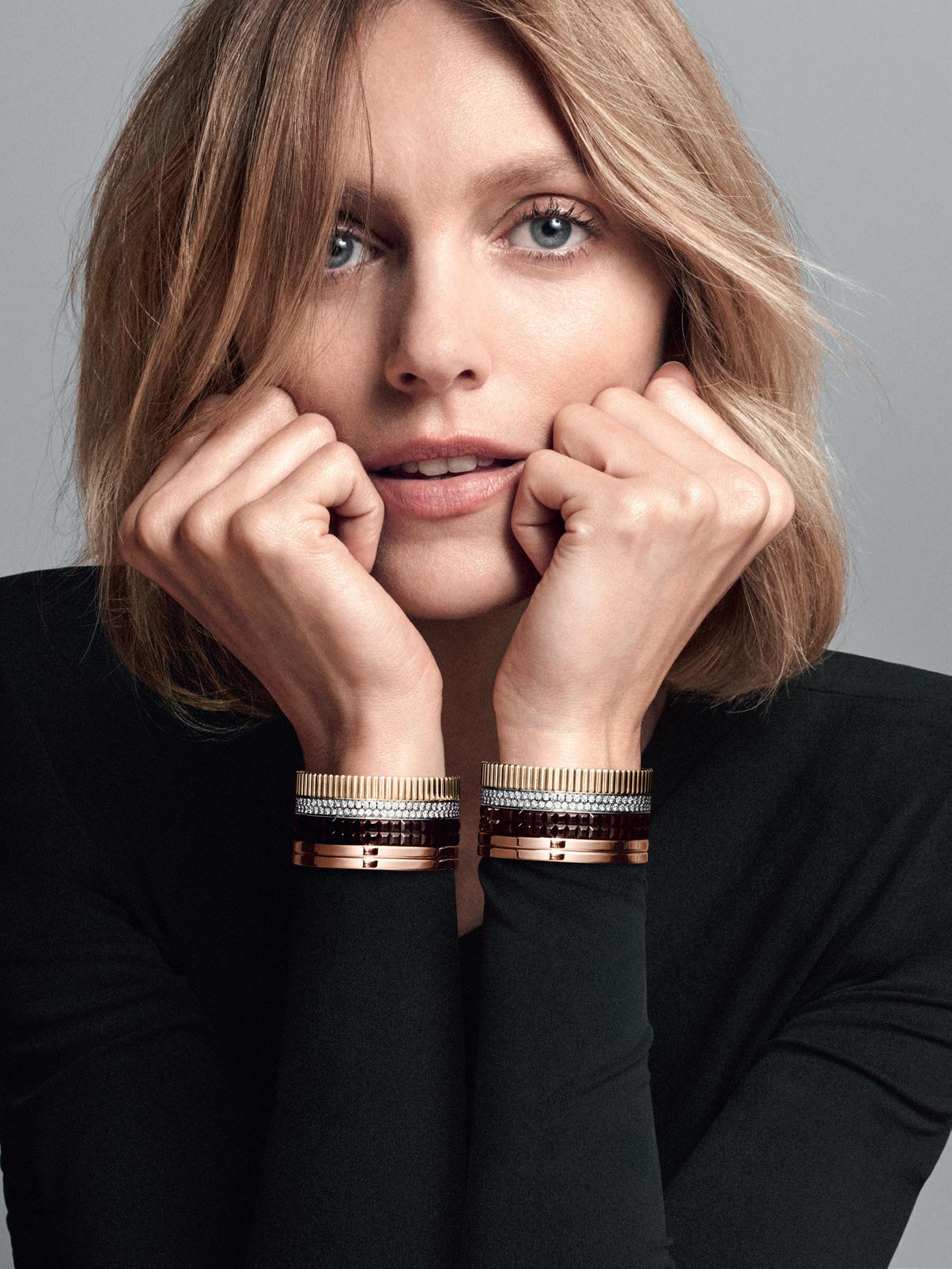
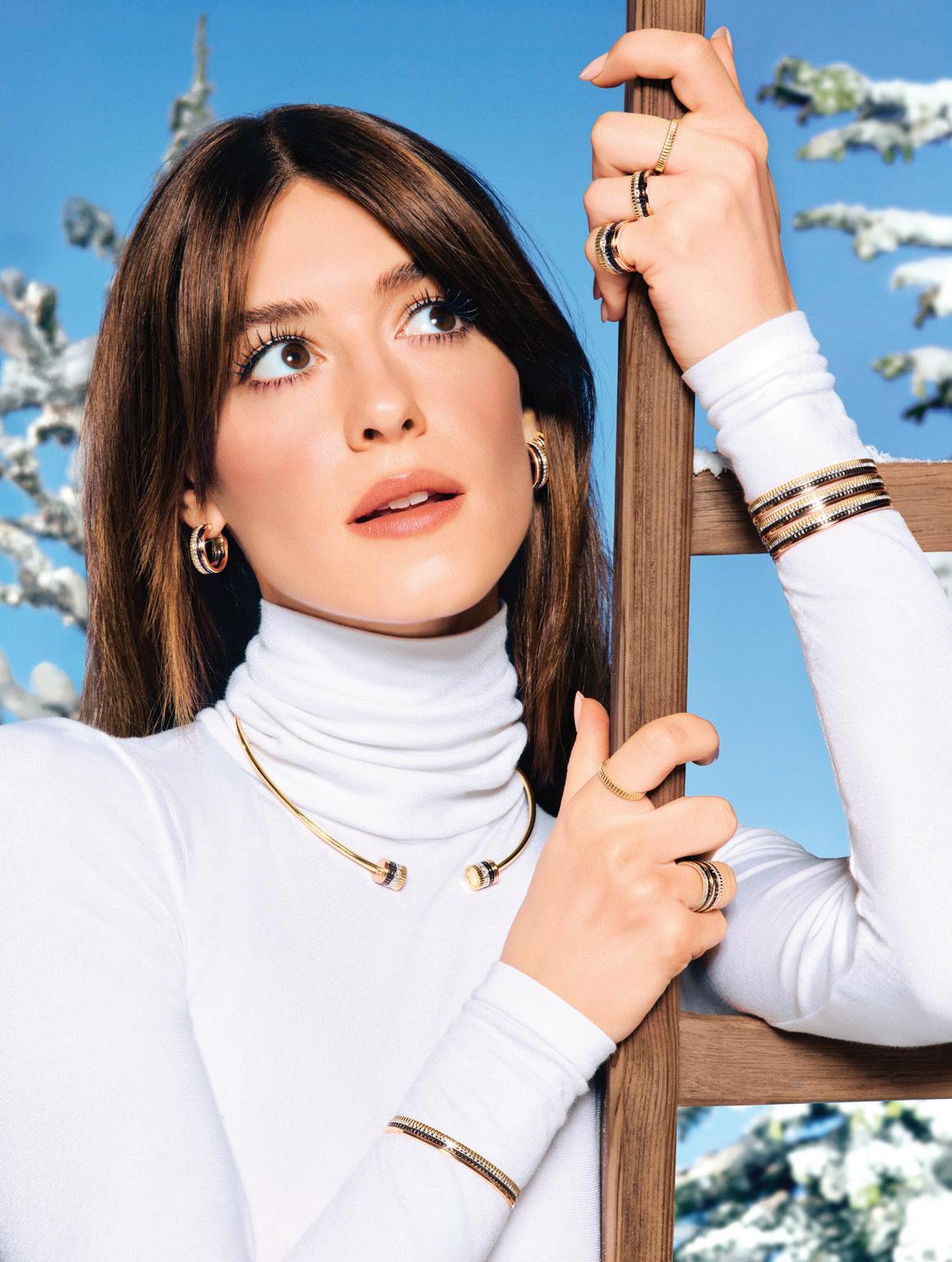
This page: Daisy EdgarJones wears Quatre Classique creations in yellow gold, white gold, pink gold, diamonds and brown PVD
Opposite page: Plume de Paon pendant earrings, set with rosecut diamonds, paved with diamonds, in white gold
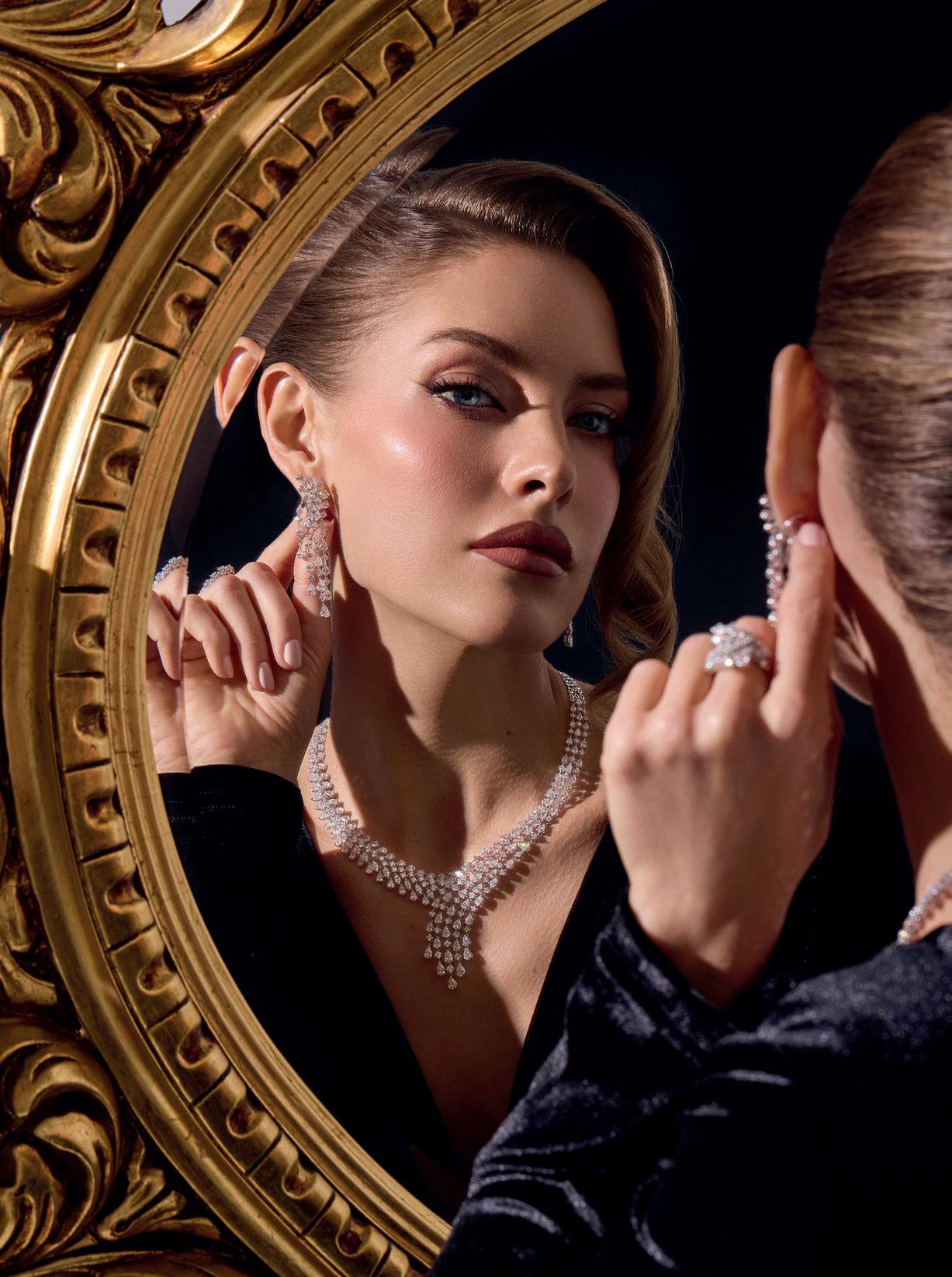
Boucheron’s alluring line up of dazzling jewellery makes the season bright
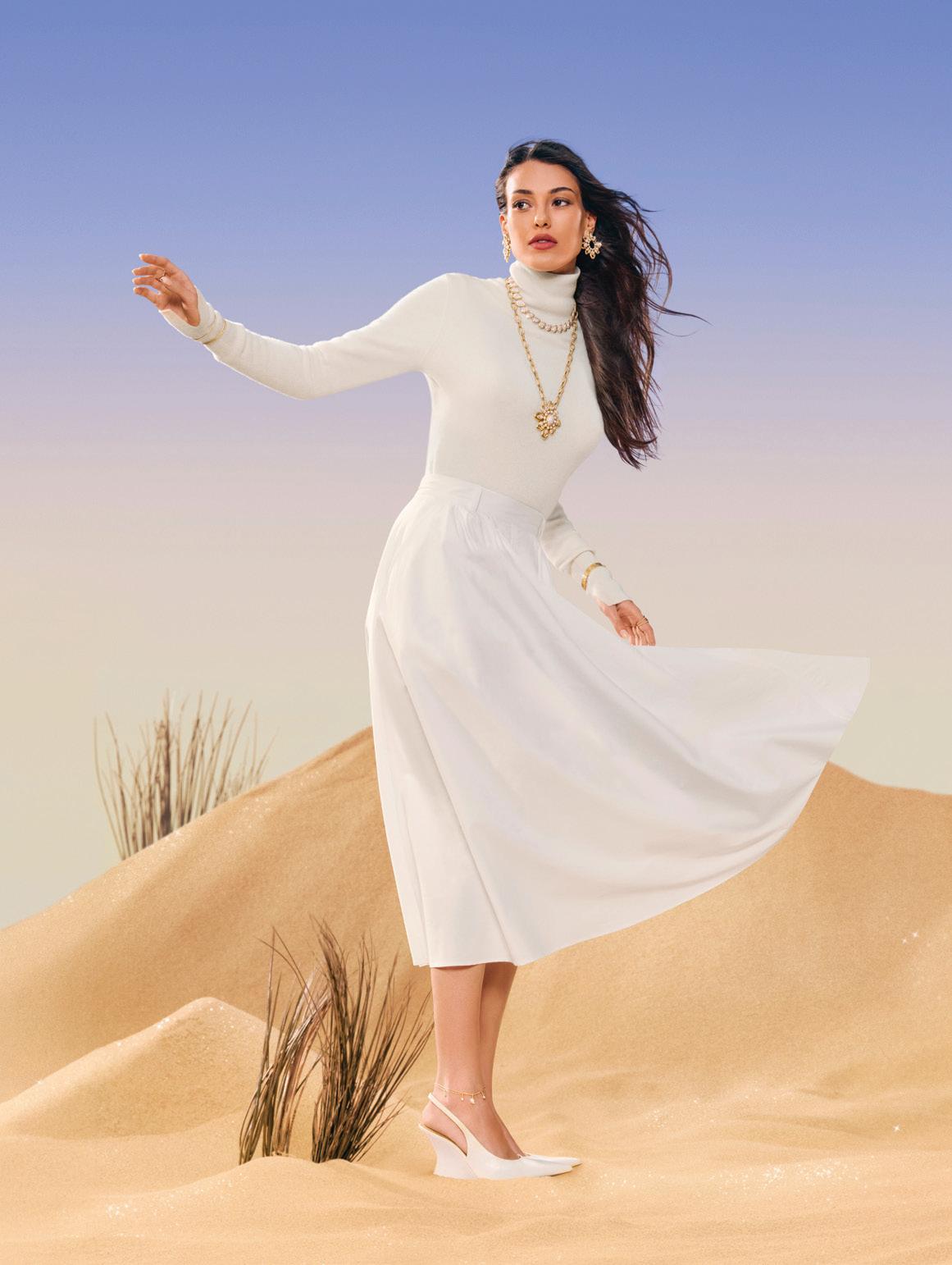
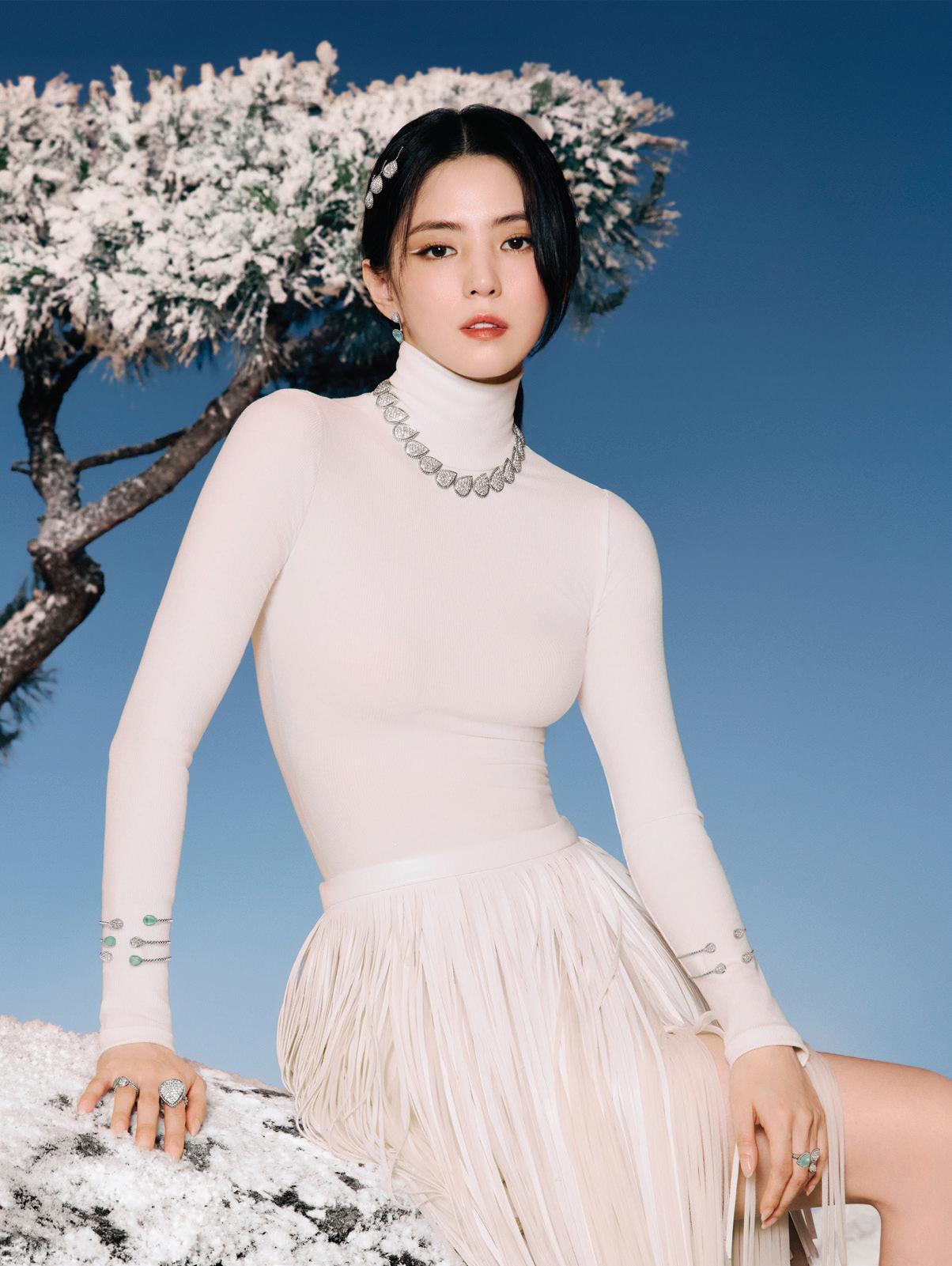
To add its own unique sparkle to the festive season, Boucheron has paired a trio of its signature creations — Quatre, Serpent Bohème, and Plume de Paon — with a quartet of ambassadors, Hollywood star Daisy Edgar-Jones and Turkish actress and model Dilan Deniz among them.
The origins of the serpent motif at Boucheron date all the way back to 1888, when founder Frédéric Boucheron gifted his wife a necklace in the shape of a serpent, a symbol of love, protection and eternity. It was formally introduced into the house with the launch of the Serpent Bohème collection in 1968, its distinctive design features (the serpent’s head represented by a droplet in shades of gold or precious stones) and highly
skilled craftsmanship (the gold hand-hammered and chiselled to evoke the texture of scales) hallmarks of a collection that continues to enchant — particularly the recent Serpent Bohème Vintage collection, which played on the design’s rich heritage.
Another motif steeped in tradition — one that inspired Frédéric Boucheron — is the peacock feather, the basis for Plume de Paon’s beautiful designs. Delve into Boucheron’s archive and you’ll find the form of a feather featuring in brooches and hair ornaments as far back as the 1860s, the complexity of the motif not only showcasing Boucheron’s technical mastery and high-jewellery savoir-faire, but also its ability to translate nature’s beauty into wearable art.
‘ A glittering showcase of technical mastery and high‑jewellery savoir‑faire ’
And while Quatre may not boast the long history of Serpent Bohème or Plume de Paon, having launched in 2004, it swiftly became an icon of the house. A beguiling blend of classic elegance and modern design, its many iterations artfully mix textures, techniques (including Boucheron’s historic grosgrain pattern) and materials, adding depth and contrast.
‘Tis the season to be jolly, particularly while wearing one of Boucheron’s masterful creations.
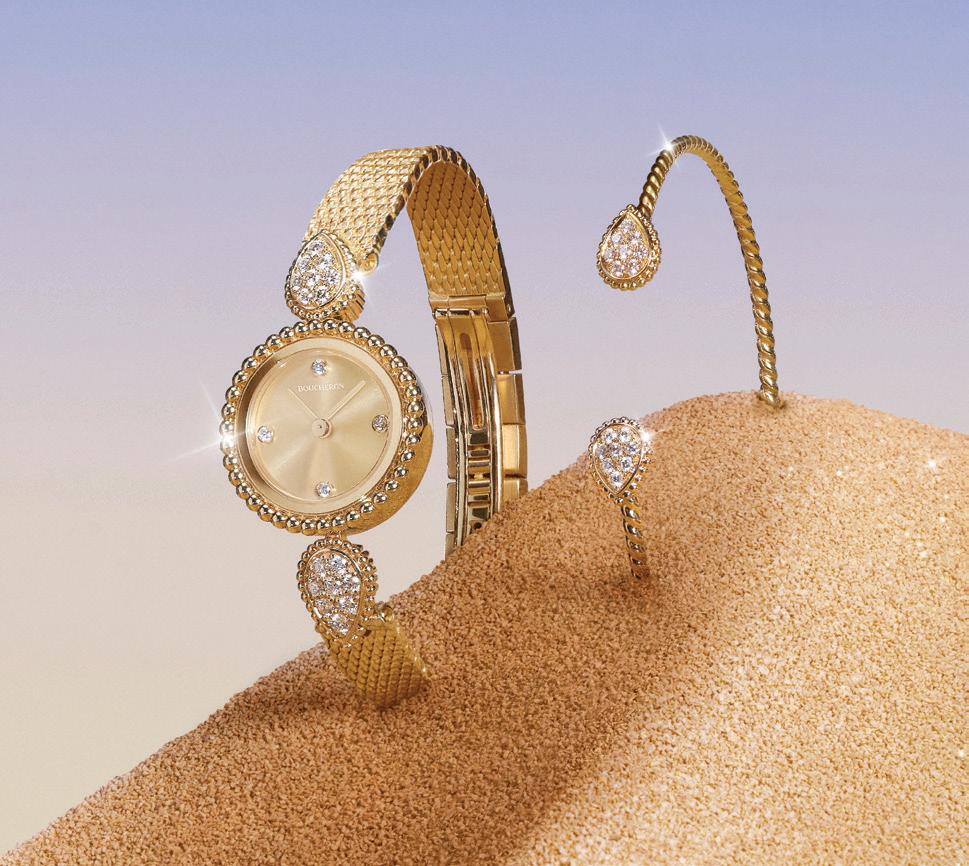
Previous pages, from left to right: Serpent Bohème watch in yellow gold, set with diamonds, with sunray brushed dial and yellow gold bracelet; Serpent Bohème double XS motif bracelet, paved with diamonds, in yellow gold; Dilan Deniz wears Serpent Bohème Diamant creations, in yellow gold and diamonds These pages: Han So-hee wears Serpent Bohème Diamant creations, in white gold and diamonds, as well as Serpent Bohème Aquaprase creations, in white gold and set with an aquaprase
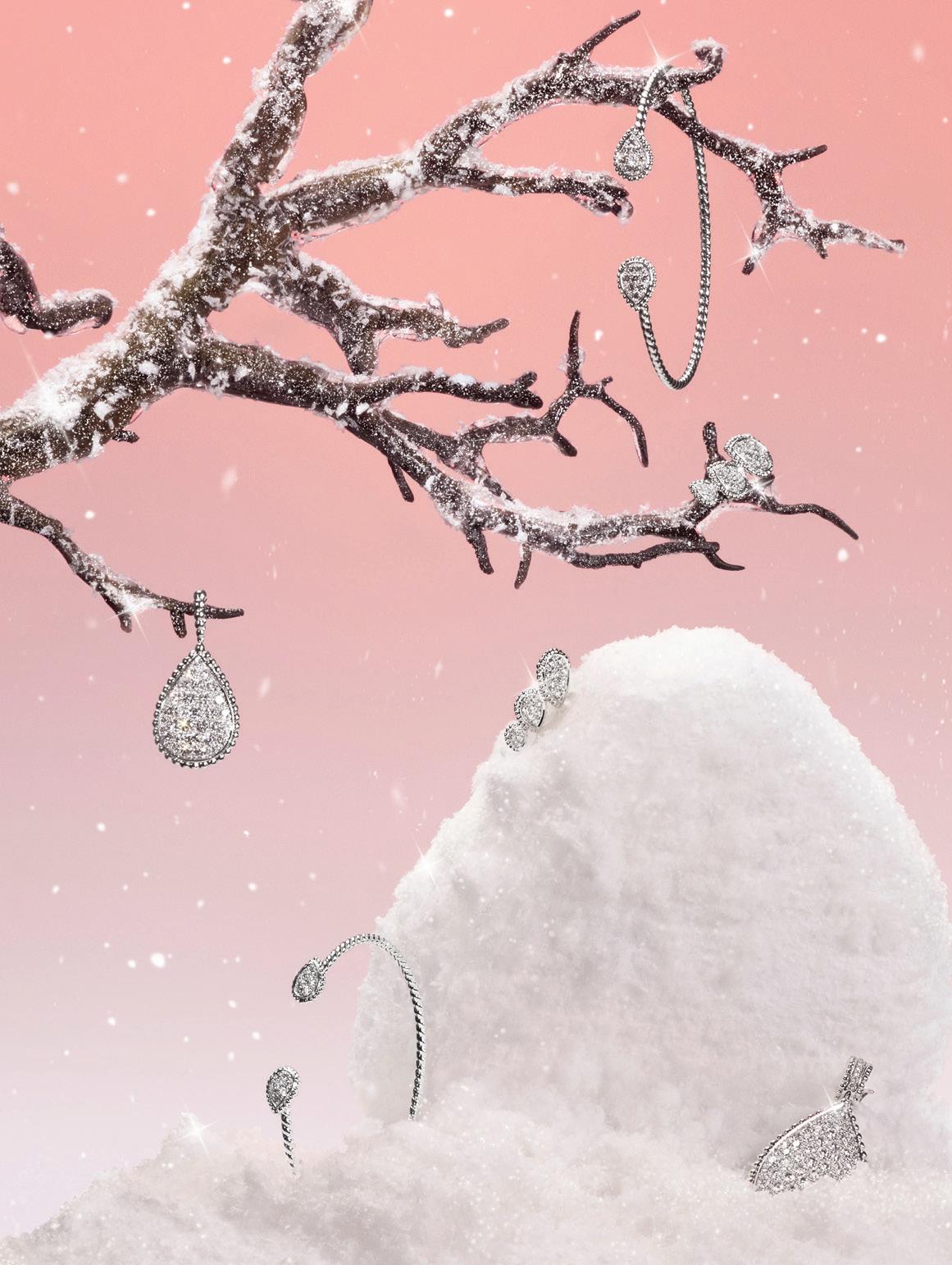
Opposite page: Mina wears Quatre Classique Tube creations in yellow gold, white gold, pink gold, diamonds and brown PVD This page: Serpent Bohème double XS motif bracelet, paved with diamonds, in white gold; Serpent Bohème triple motif stud earrings, paved with diamonds, in white gold
The Family Way
and futureproofing the family business
Patek Philippe’s president Thierry Stern on making mistakes, listening to clients
Times may change, but at Patek Philippe certain things remain the same. The fourth generation of his family to lead the company, Thierry Stern was appointed president of Patek in 2009, having started formal training with the brand in 1990. Under his leadership, it has continued its tradition of innovation and craftsmanship, with Stern fiercely safeguarding the company’s independent legacy.
“I grew up in the watch world and my whole life has been built around a sense of responsibility to continue what my father and grandfather began,” says Stern. “I don’t think of running Patek Philippe as a pressure, it is more a source of pride. I simply love what I do, and I want to do it well — for myself, for the brand and for the next generation.”
He’s certainly doing it well; Patek long regarded as the pinnacle of traditional Swiss watchmaking. Yet, Stern is also aware that there is no time to rest on one’s laurels.
“Of course, we must evolve; a company that doesn’t is a dead company. People change, customers evolve, and we have to adapt. That balance between heritage and innovation is the challenge and I’m the one who must decide how far we can go while remaining true to who we are. That’s my responsibility: to say, we can cross this border, try this new material, this new shape, this new colour and this still feels like Patek Philippe.
“When we launched the Calatrava Pilot [2015] and the new Cubitus line [2024], those were not just products, they were statements about our willingness to take a risk. We’ve designed so many watches over the years that I know risk is part of creativity. The Cubitus isn’t an achievement to me, it’s part of a process and there will always be something new. You should never fire all your bullets at once, so the best Cubitus is yet to be released.”
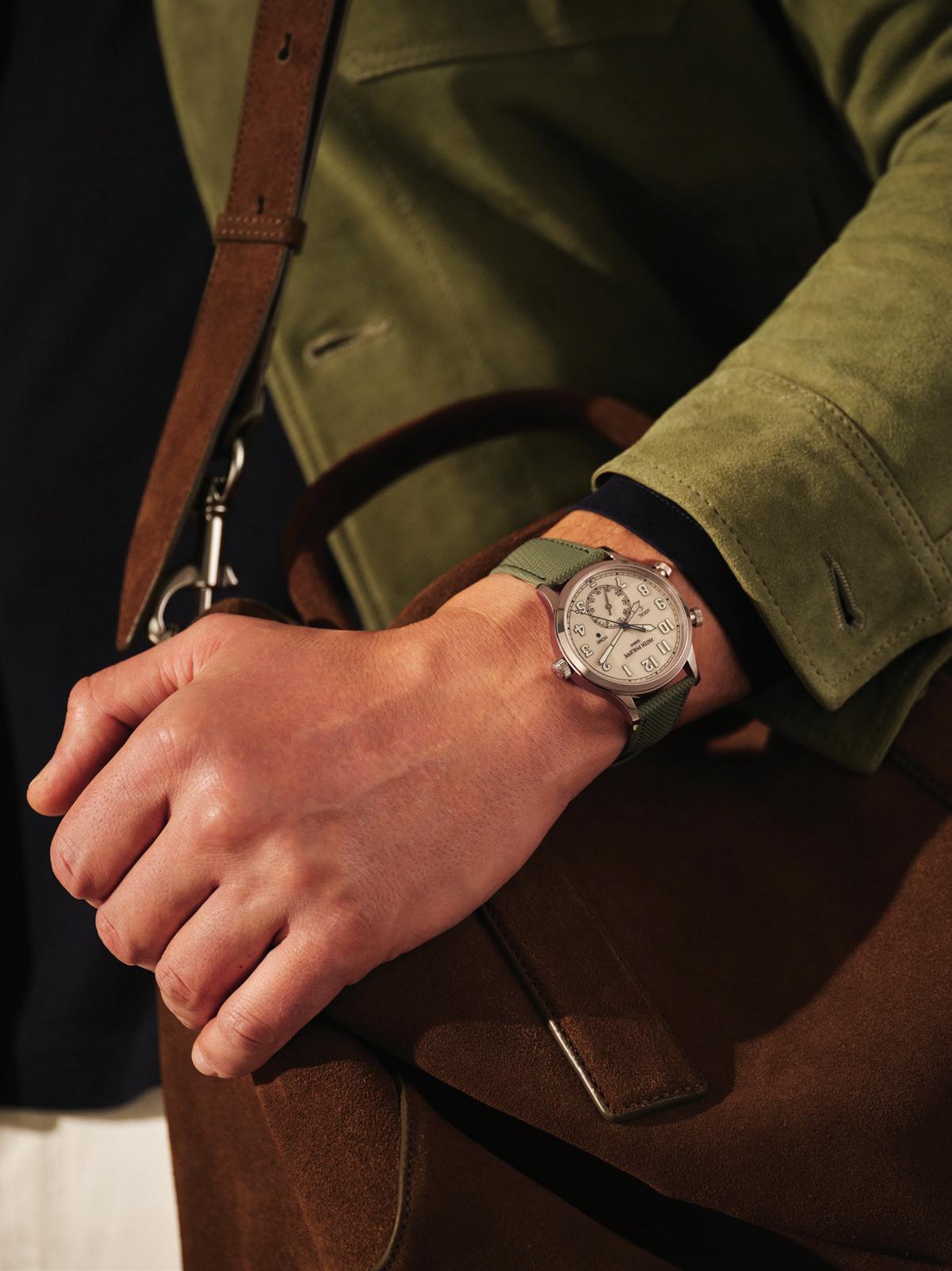
The latest ‘bullets’ fired include a new interpretation of the Calatrava Pilot Travel Time, Patek’s hallmark of fine workmanship present on the Ivory lacquered dial, blackened white gold applied numerals with luminescent coating, and charcoal grey, white gold sword-style hands. It’s worn on a khaki green, composite material strap, its white gold buckle a nod to the harnesses
‘That balance between heritage and innovation is the challenge and I’m the one who must decide how far we can go ’
worn by pilots to keep their survival kits and parachutes readily deployable.
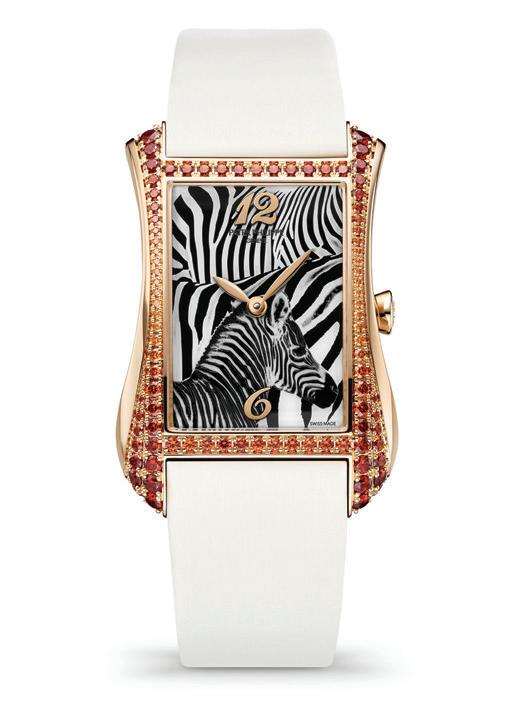
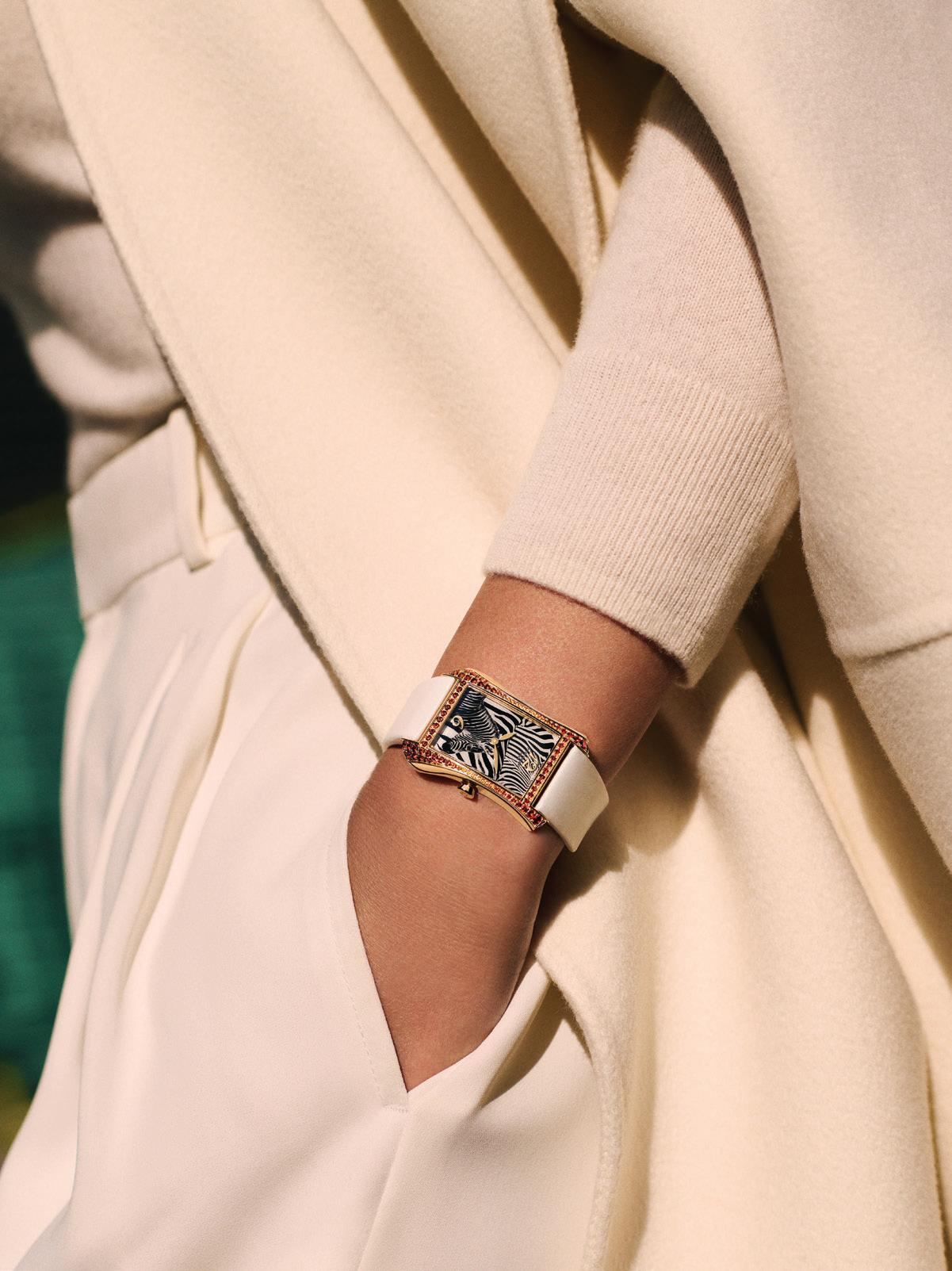
Then there’s the new Gondolo Serata, a dress watch that debuted in 2006 and noticeable for its Art Deco-inspired curves. The new interpretation features a striking dial, on which is an original zebra motif, a pattern applied via an innovative technique involving a sapphire crystal dial engraved and black varnished on both sides. It’s housed in a rose gold case set with 94 brilliant-cut spessartite gemstones.
“Part of keeping the spirit of Patek alive is supporting the people who make it possible: the engravers, the enamellers, the artisans whose skills
define what we do. Many of them would struggle to survive on their own, and it’s our duty as a brand to stand by them. My father and grandfather always told me: help those people, work with them, they are your future and you are theirs. That’s how we build the future together.”
The near future will see Patek add to its women’s collection. “Women’s watches have always been dear to me. I treat them exactly the same way as I treat men’s watches. The knowledge and appreciation are just as deep. My only regret is that I didn’t push the ladies’ collection earlier, because I now see how much potential and interest there is. Creating complicated watches for women isn’t easy — you have to find the perfect style, and you need to master the art of small, thin movements. Small calibres are a strength at Patek and from there, we can design elegant cases around them. I plan to push the ladies’ line further, and next year, we have something special coming.”
Releasing new models always carries a risk, but while Patek fires bullets it remains bullet proof. “Some people say Patek never fails, and of course that’s flattering, but I know we have
Opposite page: Calatrava Pilot Travel Time This page: Thierry Stern
‘ Our challenge is to satisfy growing demand without losing our soul ’
made mistakes — and that’s how you learn,” says Stern. “The secret is to stay focused. We’ve never changed our strategy; we simply make watches, and we do it as best we can. My family has always been hands-on in the company — we’re not just shareholders, we’re involved in design, in decisions, in daily work. That closeness allows us to listen to our customers, our retailers, our distributors, and to synthesise all those voices into one coherent product. Something everyone respects about Patek Philippe is that there is no concession when it comes to quality. And because we’re family-owned, no shareholders are pushing us to cut corners.
“Even in this fast, digital world, the essence of what we make doesn’t change. Many young clients today are very successful very early; they might earn millions at 25, and they come to us wanting their first watch to be a grand
complication or a minute repeater. But part of our role is to educate and to show that the best watch for your wrist isn’t always the most expensive one. When they visit the manufacturer or see how a watch is made, they understand. They’re smart; they appreciate authenticity when they see it.”
As younger clients enter Patek’s world, so too will the younger Sterns. “We’ve never relied much on influencers on social media. It’s not really our world. Maybe that will change with the new generation — my sons are in their early 20s, and they understand the digital side better than I do. They will find their own way, but they know they must start by learning the foundations. I’ll still be here to guide them, to ‘drill’ them a bit when necessary. It’s easier to design a watch than to manage 3,000 people, but both are essential to keeping the spirit alive. I’m proud of how they’re
growing into the business. They have the right attitude — respectful, polite, grounded. That’s how I was raised, and I hope they’ll carry that forward.
“Demand is extraordinary today and our challenge is to satisfy growing demand without losing our soul. When eventually I step away, I want to hand over a company that is strong, clean and full of potential, not one burdened with problems for the next generation to fix. I want my children to be able to create, to enjoy, to keep building without having to clean up a mess.
“If, at the end of my tenure, people can say, ‘He did a good job’, then I’ll be happy. I try to improve year after year. And when the day comes that I reach perfection, well, that will be the time to retire. Until then, there’s still so much to learn, and so much to make.”
Perfection, you suspect, is just a matter of time at Patek Philippe.
These pages: Gondolo Serata
History Repeating
Chopard embraced the freedom and bold design cues of the 1960s and early ’70s — and that ethos lives on today
WORDS: MING LIU
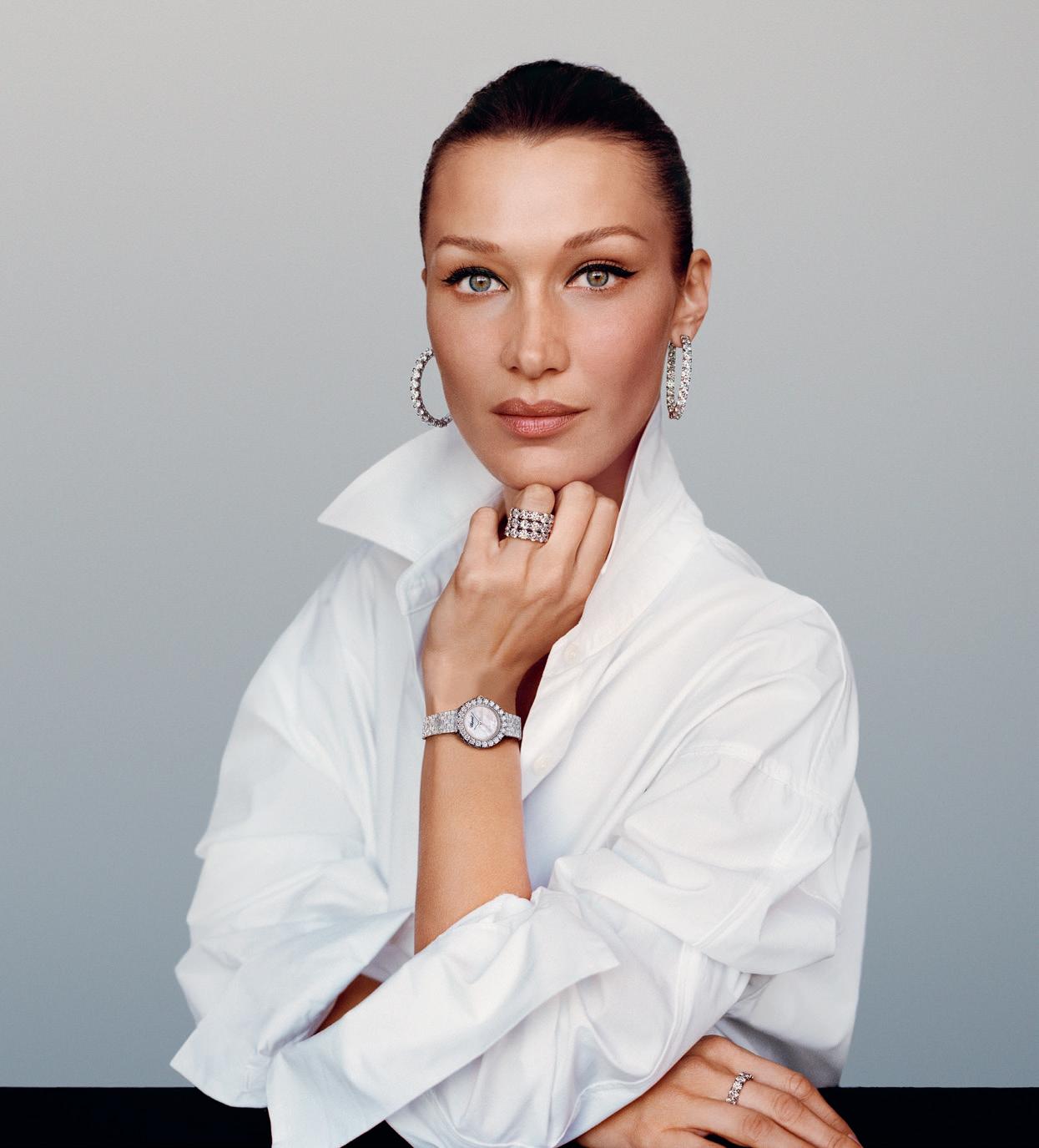
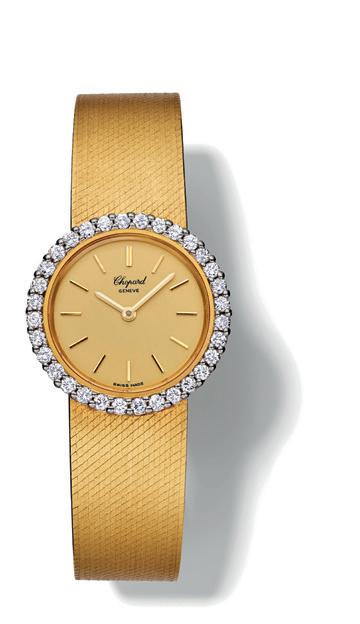
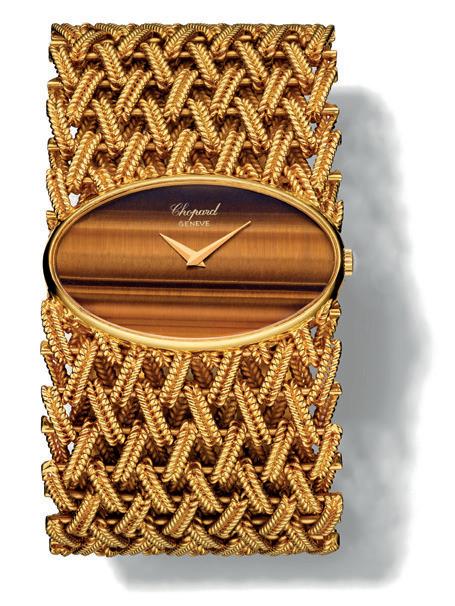
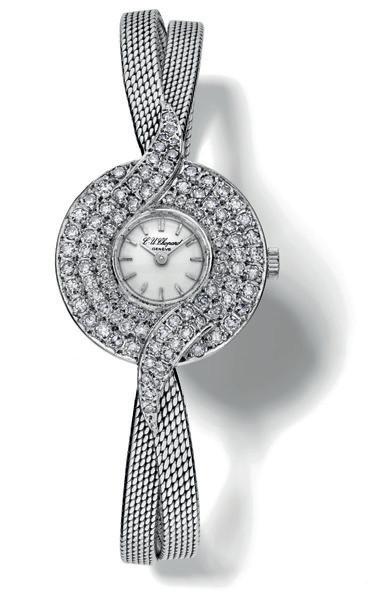
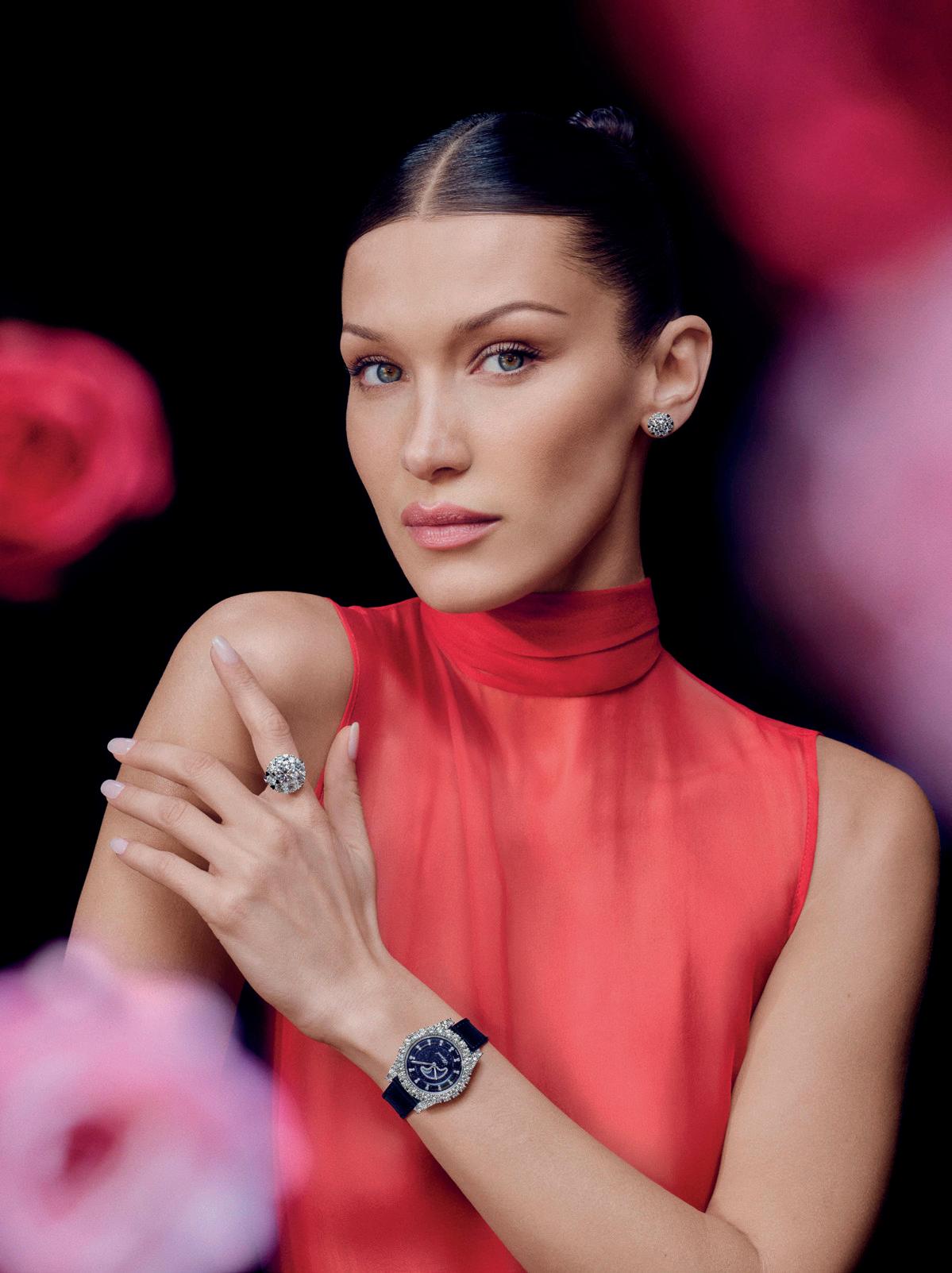
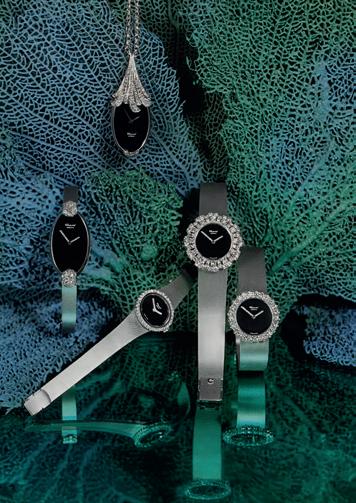
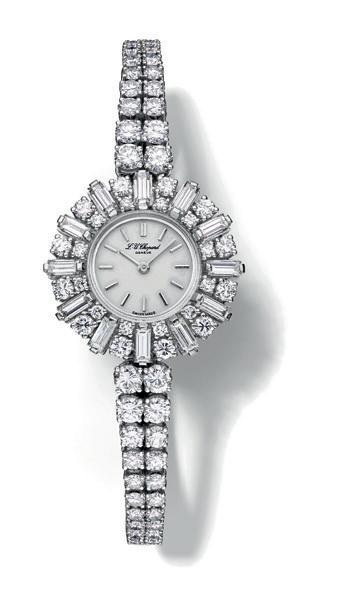
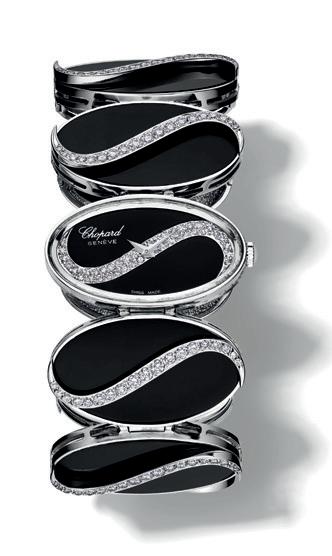
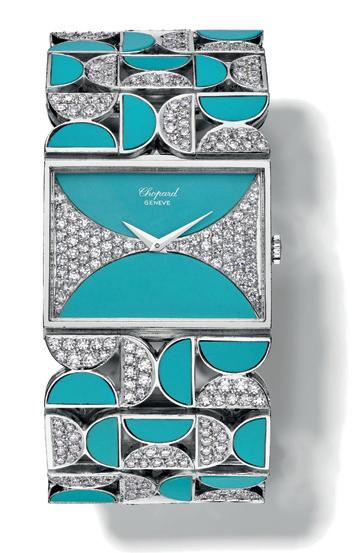
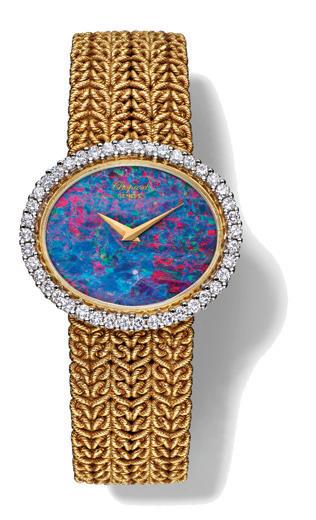
Opening pages, from left to right: selection of ladies’ wristwatches from between1965-1972; Bella Hadid wears L’Heure du Diamant timepiece, ring and earrings.
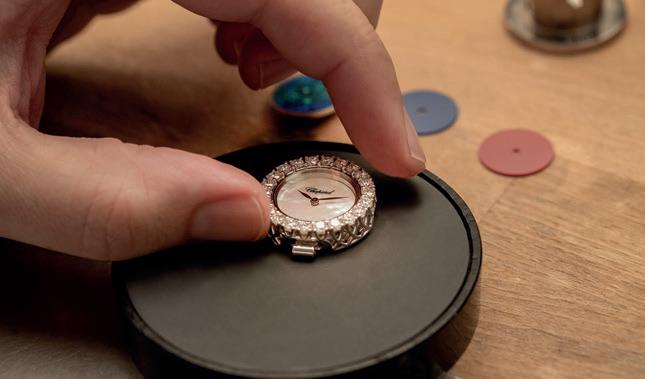
by Ethan James Green Oppposite page: selection of ladies’ wristwatches from between1964-1978; vintage Chopard print advertisements; making of L’Heure du Diamant ornemental stone dial
Step back to the Swinging Sixties and a distinct frisson is in the air. Andy Warhol and David Hockney are the poster boys of the pop art movement; The Beatles, The Rolling Stones and The Who are blasting on the airwaves, and the mini skirt and going bra-less are de rigueur, as women channel a newfound sense of liberation.
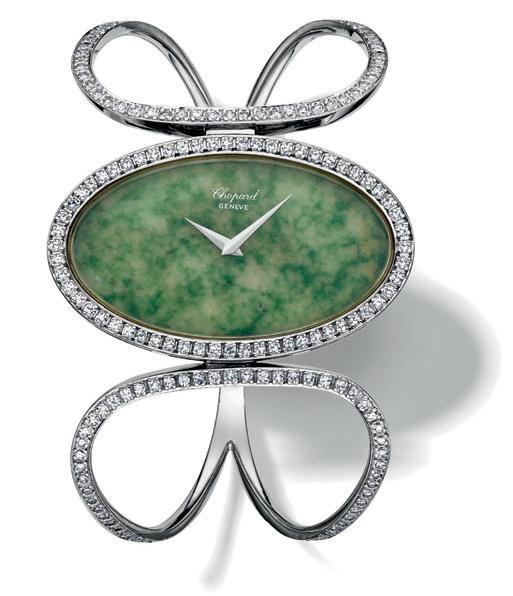
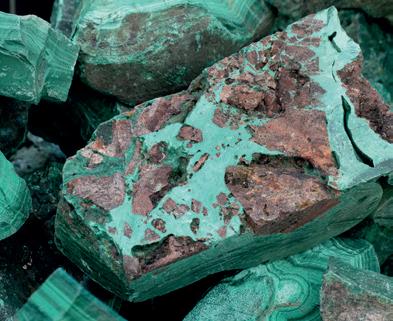
Not to be outdone, watchmakers are also in on the act, embracing the freedom with standout and eye-catching designs — the more rakish, the better — paired with brightly hued dials notably crafted in hardstones and exotic materials, from vibrant malachite and tiger’s eye to sensual coral to exotic wood.
“The Pop Art and contemporary art movement saw very bold colours — and jewellers were looking at this and putting that into their palettes,” says Dianne Batista, head of jewellery at Phillips in New York. “The 1950s saw precious gems and slightly more conservative styles, with little wristwatches featuring very small diamonds. But now comes this big moment of freedom and breaking out of the mould. That inspired a woman to make her own statement with these timepieces.”
Headlining this era-defining moment was Chopard, a house that in many ways was perfectly teed up to be at the forefront of 1960s watch design. The Scheufele family, which acquired the brand in 1963, has had its own manufacture in Pforzheim, a German epicentre for goldsmithing, jewellery and watchmaking expertise, since 1904. So the maison was well placed to capture the Swinging Sixties’ rebellious and experimental mood, harnessing its jewellery and goldsmithing savoir-faire to play with new colours and techniques.
Cue not only diamond bezels, but bezels coolly punctuated with turquoise and lapis lazuli beads and cabochons, or bezels of woven gold thread, strung with hardstone beads that matched their
‘ Chopard is always willing to take a risk and show humour in jewellery ’
coloured dials. “The idea was to craft pieces that a woman would want to wear as a piece of jewellery,” Batista points out. “It was no longer just a time mechanism.”
At the time, Chopard’s current copresident and artistic director Caroline Scheufele was at school, but the Swinging Sixties still made a strong impression on her. “It was a cool and daring time — life was very different,” she recalls. “I remember our first booth at Baselworld watch fair, which was orange in colour with this big, long-haired carpet.”
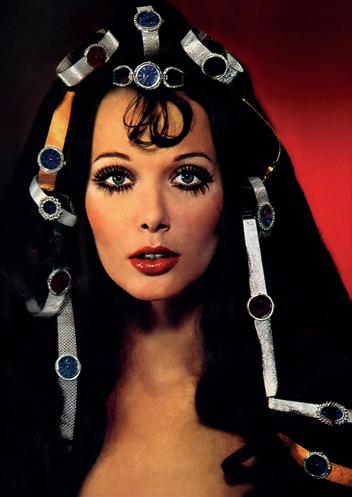
Chopard’s ultra-stylish advertisements during this time also embodied the mood: a smattering of natty watches displayed against bold bright backgrounds, with cases in futuristic oval shapes, popping with lapis lazuli, malachite and tiger’s eye dials. One particularly striking ad from 1968 styled a model to resemble Elizabeth Taylor in her role playing Cleopatra in the 1963 film of the same name, her hair draped with an array of chic gold watches. Elsewhere, a fascination with the exotic is captured in a 1969 photograph of a model wearing a turban paired with a bejewelled headband, a gold Chopard watch in her hand. Featuring interlocking openwork oval shapes of twisted gold, the craftsmanship on display is exquisite.
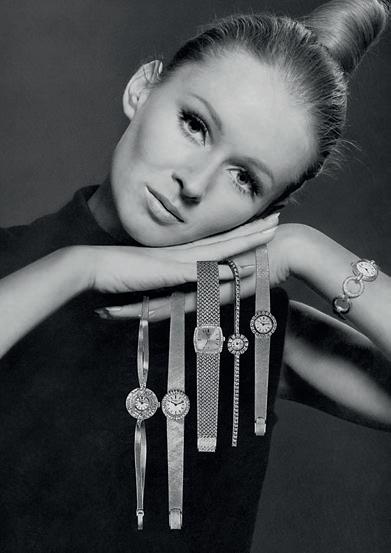
One of Caroline Scheufele’s favourite ads, meanwhile, is a model with short hair, looking directly at the camera, her head in her hands and watches on show front and centre. “I love the imagery, the face — and that she’s looking right at you,” she says. “I love going to our museum and being inspired by the colour combinations,” she adds. “There is so much variety and [so many] hues.”
Today, Scheufele sees that legacy of bold 1960s and ’70s design continue most notably in Chopard’s L’Heure du Diamant watch collection. Themed around a showstopper diamond bezel in a crown setting, using V-shaped claws to secure the gemstones to achieve maximum sparkle and luminosity, and paired with a hardstone dial, the watches evoke Chopard’s daring spirit.
The latest L’Heure du Diamant iterations are now powered by Chopard’s tiny and ultra-thin calibre 10.01-C, and new complications — including this year’s Chopard L’Heure du Diamant Moonphase — are being introduced to the collection.
The range of vintage gold bracelets, embracing everything from mesh to Milanese, chains to braids, also inspire Scheufele, as well as speaking to the family’s commitment to preserving jewellery-making skills, all of which are still done in Pforzheim. “It’s highly technical to get that soft finish, and you have all different kinds of bracelets, from mesh to bark styles,” says Scheufele. “It really is know-how from the past, from that era. We still have all this technique in-house.”
Hardstone watches are all the rage right now, and neither Scheufele nor Batista are surprised. Scheufele has observed increasing demand for colour on the red carpet after years of clients requesting diamond jewellery. “Hardstones are obviously a way to have lots of colours that you don’t have in the gems,” she says. For Batista — whose everyday watch is a vintage Chopard — the “groovy” designs of the Swinging Sixties exude the same kind of fun and playfulness that is trending in jewellery right now. “These pieces are very much of the moment and contemporary,” she notes. “Yet it still feels very much like high jewellery. The craftsmanship is so exquisitely precise… Chopard is always willing to take a risk and show humour in jewellery, which is what I like.”
Photo
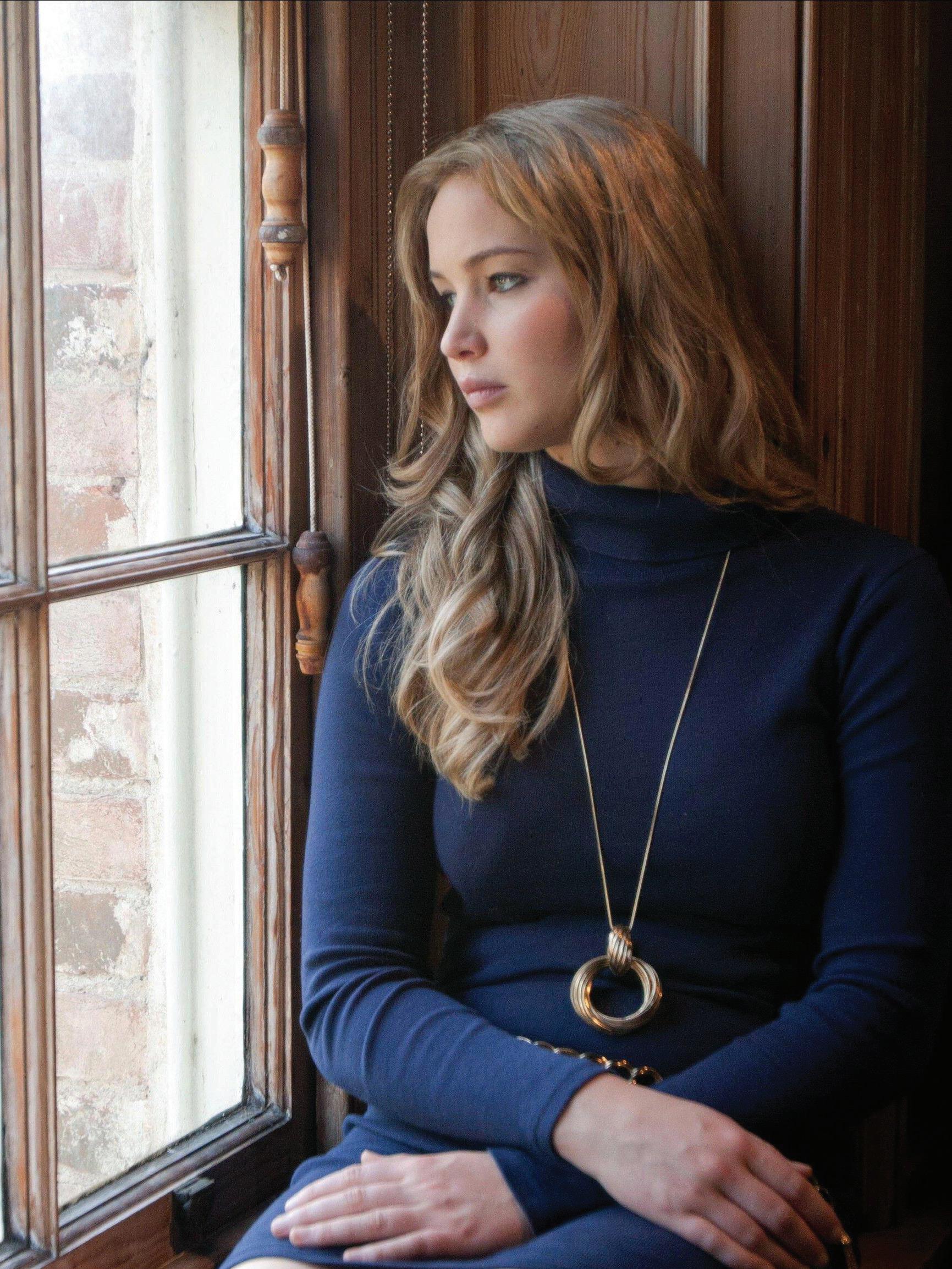
How being a mother helped Jennifer Lawrence achieve a career-best performance in her latest role
WORDS: JULIA LLEWELYN SMITH
Jennifer Lawrence had just given birth to her first child when Martin Scorsese got in touch with a proposal. The director of Taxi Driver wanted to co-produce a film with her (as well as being an Oscar-winning actress, Lawrence also has her own production company).
Scorsese was also insistent that the starring role of Grace in Die My Love (adapted from Die, My Love, a 2012 novel by the Argentinian author Ariana Harwicz), a lonely young mother descending into full-blown postnatal psychosis, could only be played by Lawrence herself.
“This is a challenge. This is the kind of thing you should be doing. Go take a chance,” he told her. “Knock any sense of a comfortable character off the board and just go for it.”
At the time, Lawrence (who is married to Cooke Maroney, an American art dealer) tells me, “My baby was six weeks old. I was a little tired, I had the ‘Oh, wow, my entire life is different, every day is different’ moments. I was having an identity crisis, for sure.
“But generally”, she assures me, her postpartum experience was “lovely” — and it was from within that sense of overriding contentment that she read Harwicz’s novel and steeled herself to plunge into the crazed darkness of Grace’s story.
By the time the shoot began — with renowned indie film-maker Lynne Ramsay directing and Robert Pattinson co-starring as Grace’s concerned husband — Lawrence was five months pregnant with her second child.
“I was really excited to have another baby,” she says. “My toddler was getting to the age where he was like, ‘You stink. Get away from me!’ and I was thinking how nice it would be to have a little baby again.”
Her next revelation comes from nowhere. “But after he was born I actually got really bad postpartum [depression], which came to me as a total surprise, because I felt like I knew
‘There’s a tendency with male directors I’ve worked with to make it all about them’
what to expect from motherhood. I was really slammed, it really caught me off-guard.”
Looking back now, she says that if she’d first picked up a copy of Die, My Love in those early weeks after having her second child, rather than her first, “feeling the way I was, I would have closed the book after the second page.
“I wouldn’t have been able to go there. Because you want to get away from those feelings, you don’t want to dive into them.”
In hindsight, Lawrence feels relieved she didn’t yet have actual experience of postnatal depression when preparing to play Grace. “I could go to those places, because to me at the time, they were imaginary,” she says. “Then it happened to me afterwards and I was like… Ohhhh!”
In fact, if anything, being in the second trimester of her pregnancy only helped Lawrence attain the almost feral energy needed to bring to the screen a violently unpredictable character who walks naked through a burning forest, prowls through the grass on all fours clutching a knife, and throws herself through a plate-glass window.
“There’s this thing when you’re pregnant that you feel like you’re invincible,” she says. “You’re so fierce, so protective, kind of ‘Get out of my way’ to everybody! If only you could bottle it.”
If Lawrence gets an Oscar nomination for her extraordinary performance, as many who have seen the film are already predicting, it will be her fifth (she won the Best Actress award for Silver Linings Playbook in 2013).
Not bad for an actress who is still only 35, and who made her name in the lucrative, yet sometimes creatively unfulfilling, world of the blockbuster franchise, playing both
Raven Darkholme in the X-Men films and Katniss Everdeen in The Hunger Games.
In 2015, she was reportedly the highest-paid actress in the world, earning an estimated $52 million in a single year from her screen work alone.
Yet in 2018, disillusioned by superstardom, Lawrence cut ties with Creative Artists Agency, the Hollywood behemoth that had represented her for years. She’d had enough of having to go everywhere flanked by security guards, there to protect her against hysterical teenage fans, and was traumatised by the experience, in 2014, of having nude photographs leaked online.
“I don’t know how I can act, when I feel cut off from normal human interaction,” she said at the time. “I had let myself be hijacked.”
After a two-year break from acting, Lawrence returned in Don’t Look Up, Adam McKay’s 2021 sci-fi comedy about global warming. Next came Causeway, in which she played a soldier recovering from a brain injury, and a comedy, No Hard Feelings, both of which were also produced by Lawrence’s company Excellent Cadaver.
Her star power helps her to recruit other top-tier talent — in the case of Die My Love, Nick Nolte and Sissy Spacek to play Grace’s in-laws — and green light the kind of art-house films that might otherwise struggle to see the light of day.
She personally picked out Ramsay, the 55-year-old Glaswegian behind Ratcatcher and We Need to Talk about Kevin, who hadn’t completed a film since You Were Never Really Here, in 2017.
“Lynne is an artist in every sense of the word,” says Lawrence. “She finds the truth in everything.”
Star and director are sitting side-byside in a hotel room in central London. Tall, with long — currently blonde — hair and wearing an ankle-length white satin skirt, Lawrence exudes charisma and confidence, embodying Sean Penn’s recent conclusion that she is “the last movie star” in Hollywood.
Opposite page: still from X-Men: First Class (2011)
Ramsay is a contrastingly subdued figure, speaking quietly, hands tucked between her knees. It’s the first time the two women have seen each other since Lawrence arrived in the UK from New York, where she lives with Maroney and their two sons, now aged three and eight months.
When Die My Love premiered in May at Cannes (where it received a nineminute standing ovation) Lawrence’s youngest, whom she left behind in the US, was only five weeks old.
“I was like, finally I can sleep. I was in an empty hotel room, but I just heard phantom crying all night long. I was even sleeping with earplugs.”
I suggest this ties in perfectly with the film’s themes of how early motherhood messes with your mind. “It certainly does,” Lawrence says. “Sleepdeprivation really does a number on your memory.”
During filming, in rural Canada, she found it a challenge to keep her own identity as a relatively new (and
‘There’s this thing when you’re pregnant that you feel like you’re invincible’
doting) mother entirely separate from Grace’s increasingly unhinged hormone-fuelled behaviour.
“It was so confusing and hard for me to break away ‘What would I do?’ from ‘What would Grace do?’. There was such a funny moment when Lynne wanted me to wake up the baby and hold it.
“I was like, ‘Lynne, no one whose baby is asleep in the crib is going to wake it up. That’s the best moment for a parent!’ Lynne shrugged, she was like, ‘Grace doesn’t give a f---, she’s bored.’
“That gave me so much information about Grace: she just doesn’t care to be friendly and nice.”
At Cannes, Lawrence told the audience: “I highly recommend having kids if you want to be an actor.” Now, she says, “I mean I hope people aren’t
going to take that literally. But as an actor, you work with your feelings, with emotion. And, as a mother, you love and you fear on such an astronomical level, there are emotions you weren’t even aware of, and a depth to those emotions you weren’t even aware of.”
Lawrence, who grew up in a middleclass family in Kentucky and whose career began when she was spotted by a talent scout on a family holiday to New York aged 14, has spoken before of how much she loves working with female directors (in Winter’s Bone, which earned her her first Oscar nomination, The Beaver and Causeway), comparing their “calm” and “collaborative” approach to the “hissy fits” and “toxic masculinity” she witnessed from, for example, the disgraced X-Men director Bryan Singer.
“There’s a tendency with male directors I’ve worked with, to make it all about them,” she says now. “There’s a neediness to them.
“While Lynne is not afraid to observe, to stand back and let us [actors] have a freedom”, an approach she identifies as “inherently female”.
Ramsay clarifies: “Trust is built up beforehand,” she says. “But obviously if things are not going the way I want them to, I’m going to move.”
“Oh, yeah, she can be…” Lawrence makes a throat-slitting gesture and they both laugh.
One area where Ramsay showed her mettle was while filming the intimate scenes. Lawrence has previously spoken about how before her first experience shooting such scenes, for the 2016 film Passengers, she got “really, really drunk” to calm her nerves, adding she was uncomfortable in part because her costar Chris Pratt was married in real life.
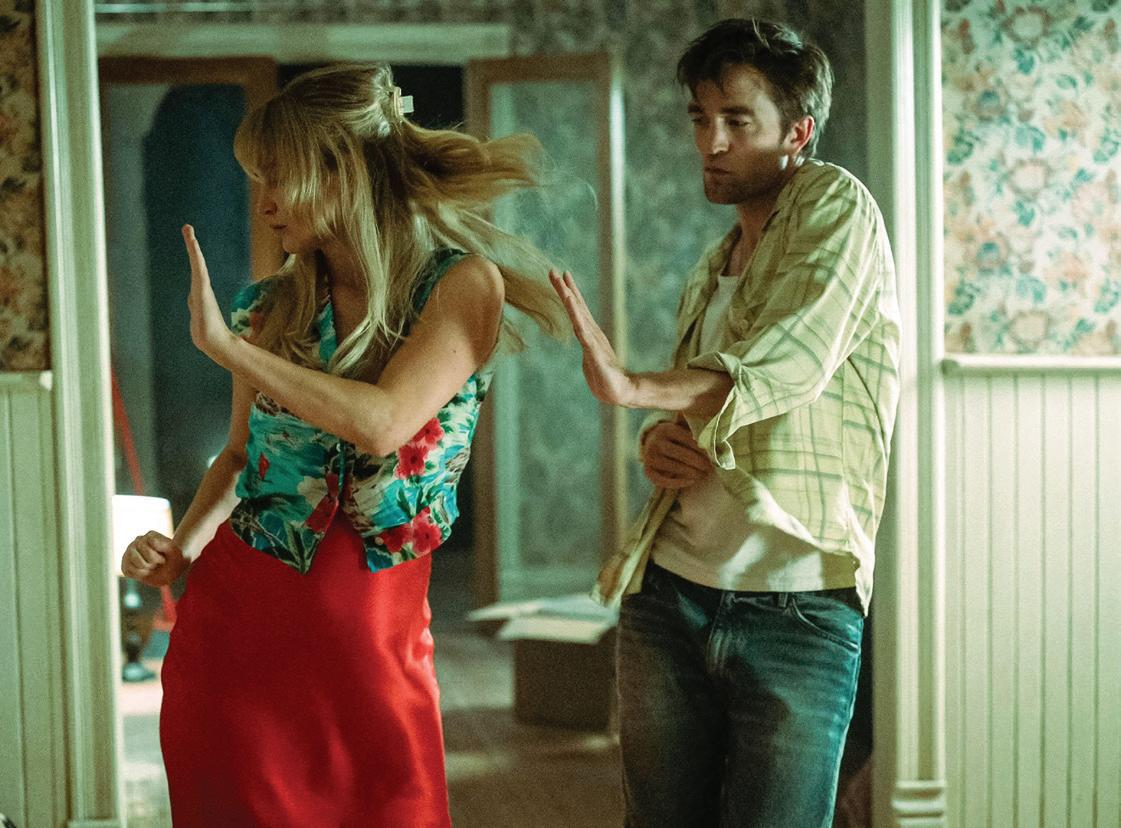
To break the ice between Pattinson and Lawrence, Ramsay decreed the pair attend interpretative dance classes before filming began. “We didn’t know each other very well, so we couldn’t have been more self-conscious,”
Lawrence says of the experience. “After that, anything she asked us to do on set couldn’t have been more embarrassing.”
Indeed, on the very first day of the shoot, Ramsay told Lawrence and Pattinson to recall what they had done in the dance class then, says Lawrence, “asked if we would do it naked!”
The resultant sequence appears on screen in all its glory — chaotic, uninhibited and moving. “Rob and I are both happy in our relationships, so we had a level of trust that could make you go that far, which there might not have been otherwise.”
Did Lawrence compare war stories with Pattinson, who — like her — has deftly manoeuvred from blockbuster teen idol, in the Twilight and Harry Potter films, to serious player? “You would think so, but not really,” she says.
“It’s kind of ‘what is there to talk about?’ We both understand the experience so deeply.” Instead, the common ground over which
they bonded was parenthood, since Pattinson’s partner Suki Waterhouse had given birth to their first child in March 2024.
“We more related that way,” says Lawrence, “doing what everyone with babies does, which is to show each other pictures and videos non-stop.”
Lawrence, who once compared her life to the scene in a Britney Spears pop video in which the forlorn star peers from her limousine at screaming fans, has, it seems (almost), found normality.
New York is a city where she can (mainly) live anonymously; where, as she said recently, “I go to exercise class, I go to restaurants, I take my kid to school… for the most part, everybody is very respectful”.
Next year, she’ll work again with Scorsese, who is directing her opposite Leonardo DiCaprio in an adaptation of Peter Cameron’s novel What Happens at Night. Before then, if March does see her return to the Oscars, she’ll be doing so on her own terms and nobody else’s.
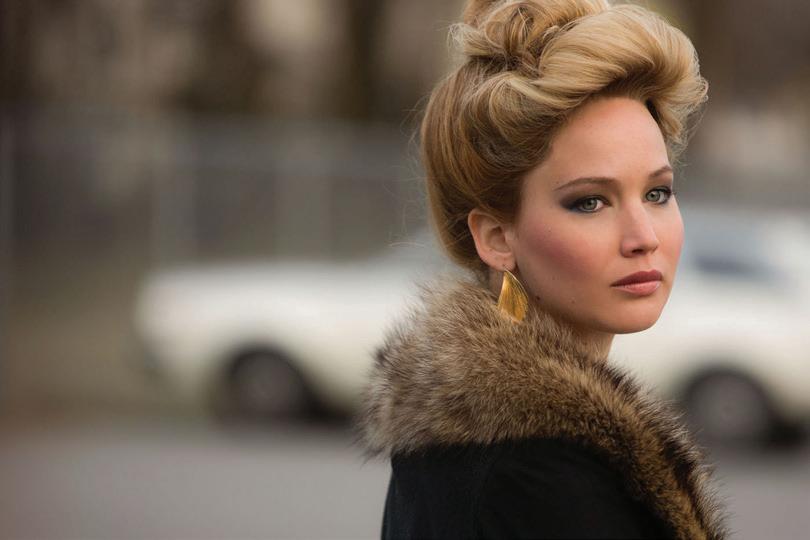
These pages, from left to right: still from Die My Love (2025); still from American Hustle (2013)
SMOOTH SAILING
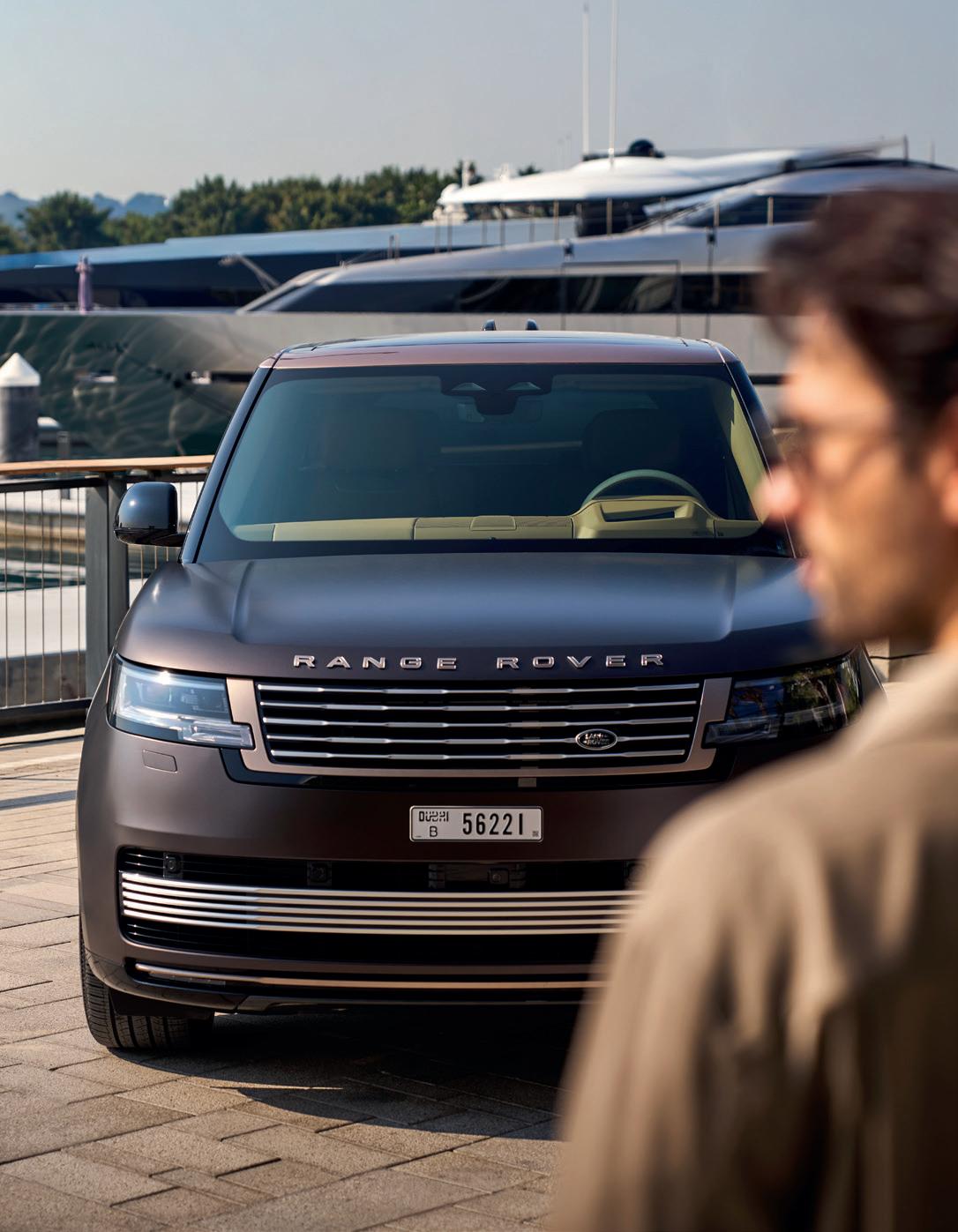
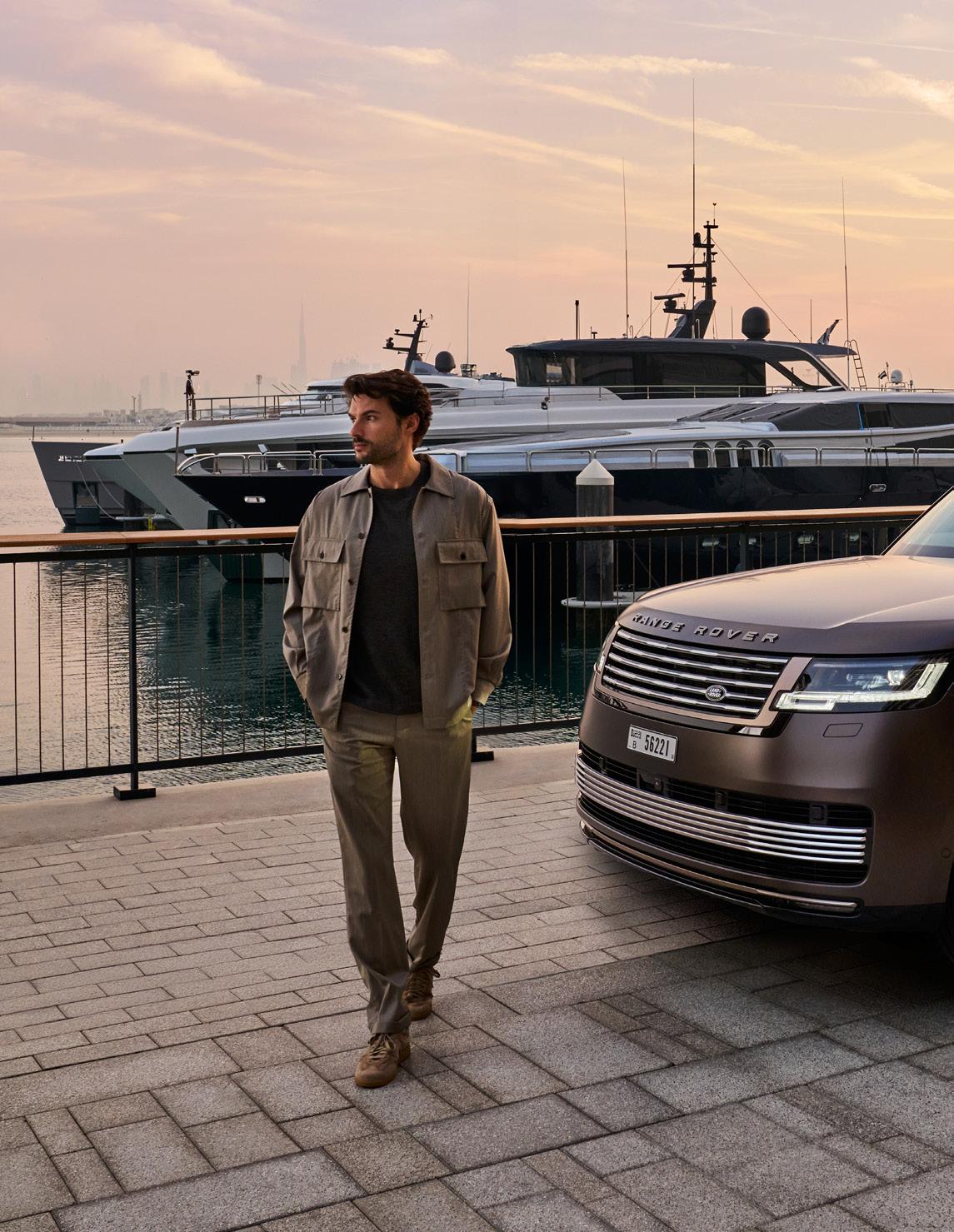
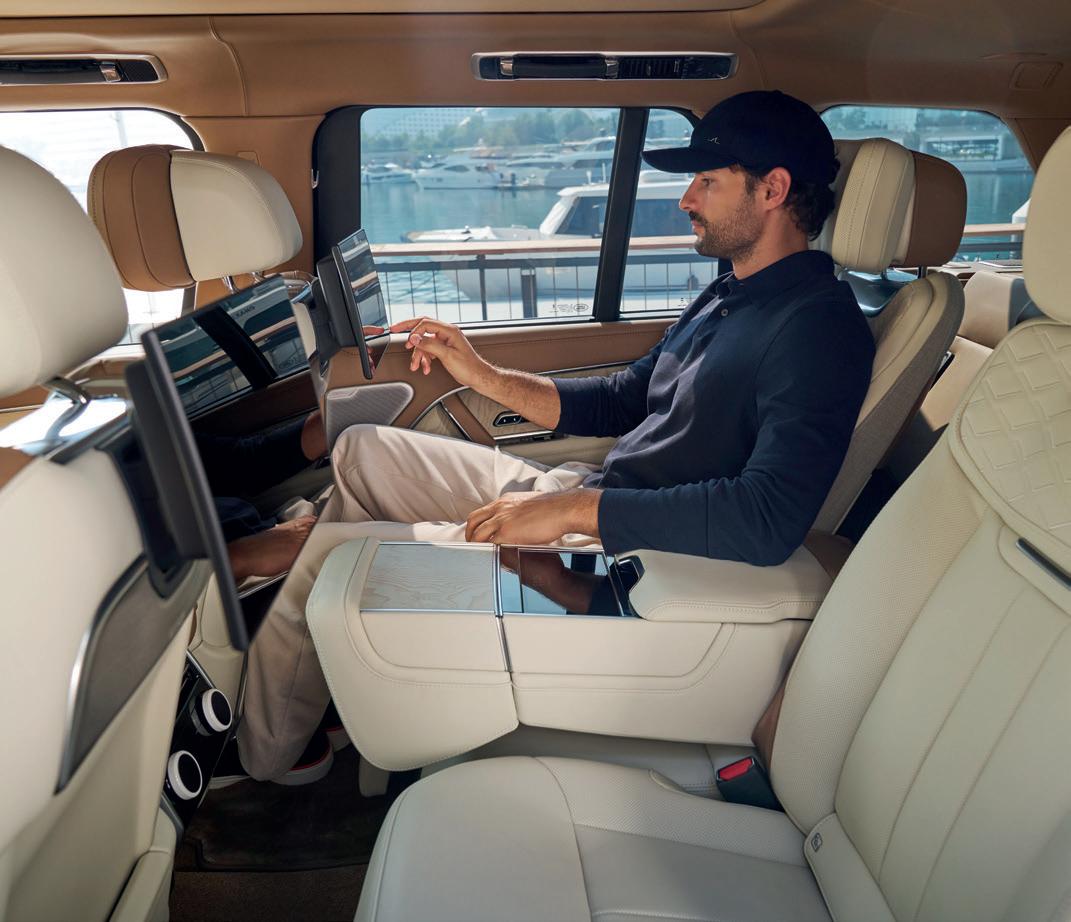
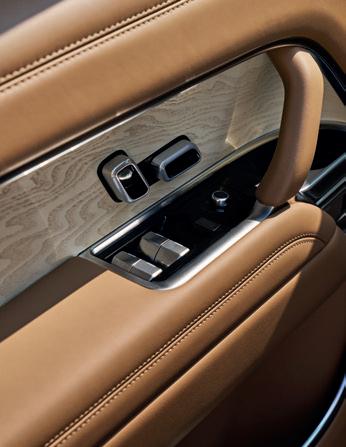
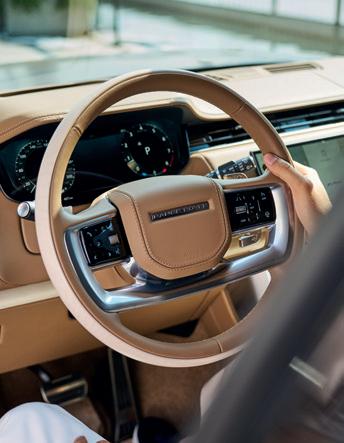
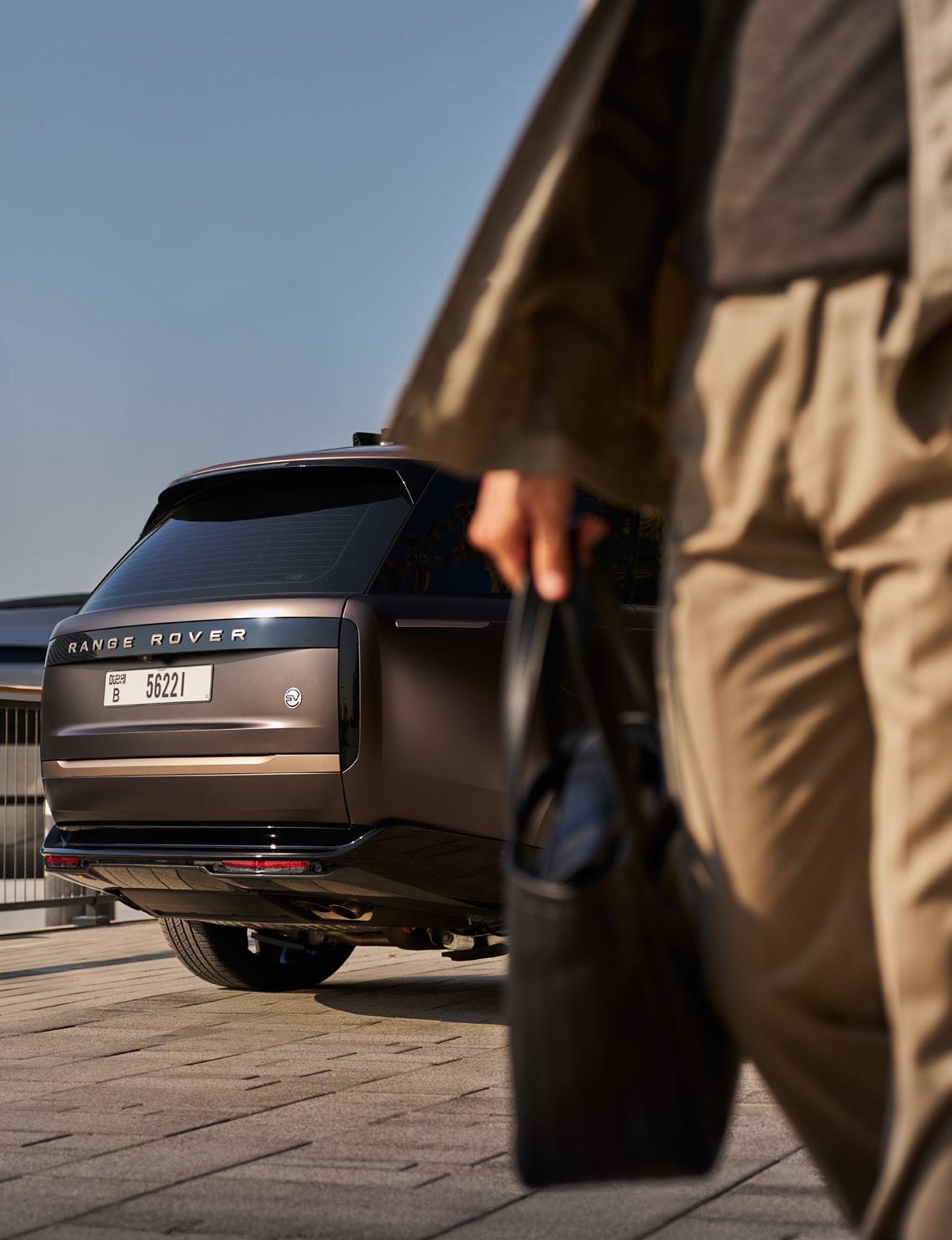
Fine craftsmanship, exquisite detailing, superior styling and the soft power a ride so smooth it feels like you’re floating, the Range Rover SV is the pinnacle of luxury, a car that exudes a sense of serenity
PHOTOGRAPHER: SABRINA RYNAS LOCATION: D-MARIN MARSA AL ARAB MARINA
Page 6-7
Stylist
Jade Chilton
Page 1
Top: COS Jacket: Dunhill
Pants: Dunhill
Shoes: Santoni
Pages 2 and 3
Top: COS Jacket: Dunhill
Pants: Dunhill Shoes: Santoni
Page 4
Top: COS Jacket: Dunhill
Pants: Dunhill
Bag: Rimowa Shoes: Santoni
Page 5
Top: Dunhill
Pants: Dunhill
Shoes: Santoni
Cap: Paul and Shark
Top: Paul and Shark
Jacket: Paul and Shark
Pants: Dunhill
Cap: Paul and Shark
Shoes: Santoni
Page 8
Top: COS Jacket: Dunhill
Pants: Dunhill Bag: Rimowa Shoes: Santoni
To celebarte 50 years behind the lens, Bruce Weber has collated 500 images for a new book that showcaes his unique style
WORDS: RICHARD GODWIN
The American fashion photographer Bruce Weber is responsible for some of the most alluring images of the past 50 years. His Calvin Klein underwear campaigns once stopped traffic in Times Square. He also discovered the “first male supermodel”, Jeff Aquilon, playing water polo in 1978.
As such there are people, says Weber, who find meeting him a bit of a let down. “Someone once came up to me and said: ‘Hey, I’m really disappointed! I always thought Jeff Aquilon was you! And now that I see you, I realise you’re not nearly as handsome.’”
Perhaps not. Weber, 79, a bearlike man with an Ernest Hemingway beard, is talking to me from his home in Montauk (the extremely expensive far tip of New York’s Long Island) which he shares with his wife, Nan Bush, and their four dogs: Lucky, Giaco, Spirit and Gordie. He’s dressed like a roadie – bandana, lumberjack shirt – but the burly masculine appearance seems slightly at odds with a soft, almost tentative way of speaking.
We’re talking about his weighty new photobook, Bruce Weber. My Education, 500 images from a 50-year career. It’s not a retrospective, he says, more his way of honouring the figures who have schooled him in the ways of fashion over the years: former Vogue creative director Grace Coddington; the stylist and editor Joe McKenna; as well as muses he has returned to: Kate Moss (“she’s a trooper!”), Stella Tennant and the wrestler, Peter Johnson. “A lot of people were so kind to me, and I wanted to write about them because I didn’t want them to be forgotten.”
‘ I was really kind of nerdy and square. I didn’t have a lot of friends ’
It is an intoxicating book, full of images you will know even if you don’t think you know – like the one of Aquilon mid-dive from 1982. He really has photographed them all: Beyoncé, River Phoenix, Amy Winehouse, David Bowie, Queen Elizabeth II’s corgis, plus lots and lots of lithe young Americans.
One of his favourites is a group of US military personnel. You wouldn’t know it but those guys hated each other when they met. “Those guys realised in the end how ridiculous it was not to care for each other. They were totally macho guys. But I’ve always felt when I’ve photographed army guys that they have this sensitivity. They’ve seen things we haven’t seen.”
Our conversation ought to be pure celebration – but there is a slight air of a wounded beast about Weber. At the height of the #MeToo era, he was one of many fashion world figures accused of sexual misconduct.
When the accusations were made public, Weber was promptly dropped by regular clients including Ralph Lauren, Versace and Abercrombie & Fitch, while Dame Anna Wintour, then editor of American Vogue, wrote that though Weber was a “personal friend” she was putting their working relationship on
hold “for the foreseeable future”. Weber vigorously denied the allegations and defended his reputation. He had settled three cases against him by 2021 and while his standing seems at least partially restored (Coddington was recently pictured getting her copy of My Education signed), it isn’t fully. When I bring up the allegations, he immediately shoots back: “I have to ask you this question: is this why they wanted to do a story on me?”
No, I reply. But I wouldn’t be doing my job if I didn’t ask. “I mean, it was really terrible,” he says. “It was a sad time. Not just for me but for the people accusing – and also for so many photographers and painters and stylists and so on. We all suffered. It was like being in a war.”
It should perhaps be stressed that the allegations against Weber, while serious, appear to be milder than those levelled at fellow fashion darlings like Terry Richardson and Mario Testino (both of whom have denied all allegations against them). It hardly seems astonishing, looking through his photos, that things might have happened on set. Still, it’s striking, when I bring up the allegations that the presiding tone is self-pity.
What hurt most, he says, was being abandoned by former friends. “I take great pride in my work and the relationships I have with people. But it was a specific time when I felt that the fashion community really let a lot of people down. But I had my wife, I had my good friends, I had my dogs – and that really helped me get through.”
Suffice to say that many of his photographs really do seem to belong to a different era, for better or worse – an era of permissiveness and taboo-breaking, but also an era when billboards really could stop traffic, magazines had money and clout and everyone had a lot more time. “Every time I hear of a magazine not existing anymore, I feel like I lost a friend,” he says.
I’d hesitate to use the word innocence about his pictures – but there is a freshness and freedom to them that feels almost childlike. One of Weber’s signatures is animals. He bonded with Ralph Lauren over their love of dogs and there are many memorable horses, elephants, bears and donkeys in My Education, as well as many touching pictures of children and of families – including Kate Moss dozing on her mum’s bed. Even
in his nudes, the gaze doesn’t feel aroused so much as enchanted.
Weber grew up in 1950s Greensburg, a coal mining town in Pennsylvania where his father Alvin owned a furniture store. “I was really kind of nerdy and square. I didn’t have a lot of friends.” If that sounds a little humdrum, actually, his parents seem to have led almost impossibly glamorous lives. “For people who lived in a very small town, they were quite bohemian,” he says. “I was obsessed by them. They would go off to Europe and come back full of stories. My dad was a great sportsperson, always in great shape, walking around with his shirt off. And he took the most beautiful photographs of my mom. She was real pretty.”
The photographer Helmut Newton once told him that all photographers are chasing the same photograph all their lives. The first photographs Weber can remember taking were of his mum, Ruth – and he seems to be of the opinion even now that they weren’t as good as the pictures that his dad took. Both of his parents had various affairs and liaisons, he recalls, as well as stand-up rows in restaurants. “It was always constant craziness.” But they were obsessed with one another. In the book, he describes his mother turning to him and his sister Barbara in the middle of a family road trip: “I want you to know. He always comes first.”
While his parents were off living their lives, young Bruce would prowl around his father’s study alone, rifling through
books, watching movies and cutting out pictures of Elizabeth Taylor from magazines. It was clearly formative. “I went to all the psychiatrists to talk about my parents all the time,” he laughs. “A friend of mine said: ‘You know Bruce, you wouldn’t be able to photograph people the way you do if you didn’t have parents like that.’ You know, they weren’t hugely encouraging. They were kind of selfish. But because of that I developed a self-reliance. Years later, people might say: ‘Hmm, we don’t really like your pictures.’ But I had some fortitude. I was quite strong.”
The first man he can remember taking really good pictures of was his roommate at college – a farmboy with blue eyes and jet black hair. “He was the best-looking guy in the school,” he recalls. “He had rebuilt a motorcycle and after school, I’d sit on the back and hold on tight and I’d go out in the fields with him and take pictures. I thought: ‘This is fun. This is photography!’” Photography, I suggest, might allow a shy, awkward kid to be part of the glamour, to be integral to it – but without having to play a direct part himself.
“It’s interesting you say that,” he says. “I remember once noticing that if I had an underwater camera, I could hold my breath forever, it seemed. If I didn’t, I’d have to get out of the water right away. I was always kind of shy but I felt comfortable with the camera. It opened my world.” His most significant break was
meeting his wife on a shoot in the late 1960s – she had the fashion contacts which allowed him to develop his portfolio. He would go on to be a formative influence on Ralph Lauren while his cult photobook, Bear Pond, is said to have inspired the Abercrombie & Fitch aesthetic.
He also produced many idiosyncratic movies, including the Oscar-nominated documentary Let’s Get Lost (1988) about the legendary 1950s jazz singer and trumpeter Chet Baker, by then ravaged by heroin. “He had an innocence about him that was really beautiful. He was kind of like a child. I’ve always been attracted to people who were like that, they could be 90 or 100 but there’s still a child in there.”
It’s not hard to detect the child in Weber, even at the ripe age of 79. A part of him, I sense, is still trying to impress his parents. He relates a story about a time his father visited him in New York at the height of his success and asked what he thought of the four enormous Calvin Klein billboards in Times Square that his son had shot. “He said: ‘I think it’s time you did something a little more serious.’”
But he does feel that he won his approval in the end. “When we were cleaning his place in Florida after he died, we found every tear sheet I ever did in his drawers in his bedroom. I never knew it. Just talking about him makes me feel really sad – and good, you know?”
How does he go about creating intimacy in his pictures? “I always think about what this photograph means to the person. It probably doesn’t mean so much to them, but it means a lot to their kids or their family. I think about that a lot. When I photograph young people, I think about how they might chance upon this picture 25 or 30 years from now – and they’ll be able to see a bright light in their youth. I really like that.”
He has said that you need to be a bit in love with someone to take a really good picture of them. Is that something that can be misconstrued?
“I don’t know,” he says. “I hope there’s a lot of love, a lot of beauty in my pictures. I’d be disappointed if there wasn’t.”
Bruce Weber. My Education, is out now, published by Taschen taschen.com
CLOTH
How Daisy Knatchbull brought a woman’s touch to Savile Row
WORDS: JOHN THATCHER
It was during the Victorian era that Savile Row became synonymous with tailoring, Henry & Poole — which from 15 Savile Row still operates today — credited with being the first tailor to open on the storied street. In the intervening years there have been subtle changes as younger tailors joined the Row and its clientele shifted from royalty, aristocrats and bankers to creative professionals and celebrities, but for well over a century it had remained resolutely male-focused.
That was until Daisy Knatchbull had an idea.
“I had always had an interest in fashion and had worked within different roles in the industry, including journalism, styling and PR. It was when I was working as Communications Director for Huntsman that I really got to know Savile Row — its incredible heritage and the incomparable craftsmanship that defines the street and is seen on every suit made there.
“It was also at this time, however, that I started to realise that men had enjoyed what Savile Row had to offer, whilst women for so long had been lacking the same experience.”
As well as an idea, Daisy also had a novel way to introduce it.
“In 2016, I became the first woman in history to wear a morning suit and top hat to Royal Ascot (at that time women weren’t even able to wear trousers!). The reaction was overwhelmingly positive
‘ Having an all-female team helps to create an environment of empathy, comfort and trust ’
and it opened my eyes to how hungry women were for the same level of elegance and craftsmanship that men had long enjoyed through tailoring. I wanted to bring a modern, female-led business to Savile Row and create a space where women can feel seen and have their needs met whilst enjoying the same bespoke experience that has defined Savile Row for generations. There was definitely a clear gap in the market.”
That gap was filled in 2019, when Daisy opened The Deck at 19 Savile Row, the street’s first shopfront exclusively for women. Such was its success that by 2023 larger premises were sought, culminating in a move to 32 Savile Row and a change in name — from The Deck to Knatchbull — to reflect a wider product offering and its development into a brand.
“Opening Knatchbull definitely challenged the long-standing traditions,” recalls Daisy. “However, we were welcomed with open arms. I’d say the largest challenge was actually opening a store post-Brexit and during the pandemic, a time when a lot of people
were saying that retail as we knew it would never be the same. I was met with a lot of surprise – it was definitely a bold move. But I saw it as a real opportunity and am extremely proud of what my incredible team and I have achieved.”
Daisy’s team of tailors is all female, an important factor. “By offering an all-women tailoring team, we create a space where our clients feel truly seen and understood. There are so many nuances to being a woman and so many different experiences we go through in life that alter our body shape — whether that be IVF, pregnancy, menopause or mastectomies. Our tailors understand this deeply and recognise the emotional relationship that many women have with clothing. We never want a fitting to be an intimidating process and feel that having an all-female team helps to create an environment of empathy, comfort and trust.”
Growing that trust has in turn built a loyal, ever-growing customer base.
“When I first founded Knatchbull, we wanted to create beautifully tailored pieces that epitomised classic elegance with a modern femininity. Our offering was simple yet intentional — well cut and beautifully made suits,” outlines Daisy.
“Today, having learnt so much about our clients, Knatchbull has grown exponentially but in a very organic way.
Whilst bespoke tailoring remains our core offering, we have introduced a
‘ I wanted to bring a modern, female-led business to Savile Row ’
ready-to-wear range which is updated each season with pieces that are designed to be worn alongside and complement our bespoke arm. Our bespoke bridal category has grown rapidly, as has our evening wear offering. We don’t just make suits but today are able to do anything from dresses, skirts, gowns, overcoats and abayas.”
What has remained constant is Knatchbull’s commitment to quality. “We use the finest natural materials — worsted wool, silk, cashmere, velvet, corduroy and linen. We are lucky to work with some of the best fabric mills in the world, such as Loro Piana, and Holland & Sherry.”
Added to that is Knatchbull’s admirable awareness of its social and environmental impact — the company achieved B-Corp certification last year, becoming the first brand on Savile Row to do so.
Like a lot of Savile Row tailors, trunk shows play a big role in Knatchbull’s brand building. Last month, Daisy brought her tailors to Dubai and will do so again in January.
“Savile Row is so much more than a location — it is a street that is associated with incredible craftsmanship and artistry. It’s where the bastions of British tailoring reside. A suit from Savile Row brings credibility and trust — people all around the world understand that what you’re offering comes with tradition, precision, and is created by the best tailors in the world,” states Daisy.
“The women in Dubai are confident
and empowered; they possess a strong sense of style and sophistication. Beyond this, though, they are remarkably open, approachable and generous with their networks. They actively share connections and cultivate collaboration, which makes building relationships with them so enriching.”
A recent collaboration that showcases Knatchbull’s expanded horizons was with Aerin Lauder’s lifestyle brand, AERIN, a limited-edition capsule which includes a reinterpretation of Knatchbull’s signature travel jacket — an item beloved by Lauder.
“I met Aerin years ago and she became both a friend and client. We both have a mutual appreciation of craftsmanship, quality and beautiful design, and wanted to create a capsule that blended the refined tailoring of British heritage with the ease and elegance of American style.”
Reinterpreting items is a recurring request from Knatchbull’s bespoke clients. “One of my favourite aspects of what I do is hearing the stories behind the commissions — there are so many incredibly touching stories. Recently, we had a bride who had lost her mother but wanted her close to her on her special day, so she had her mother’s veil sewn into the lining of her dress. Another client had her late father’s ties made into a jacket lining. There really isn’t anything that we can’t do when it comes to bespoke.”
Likewise, there are no limits on where Daisy’s drive may take Knatchbull next.
Covered In Glory
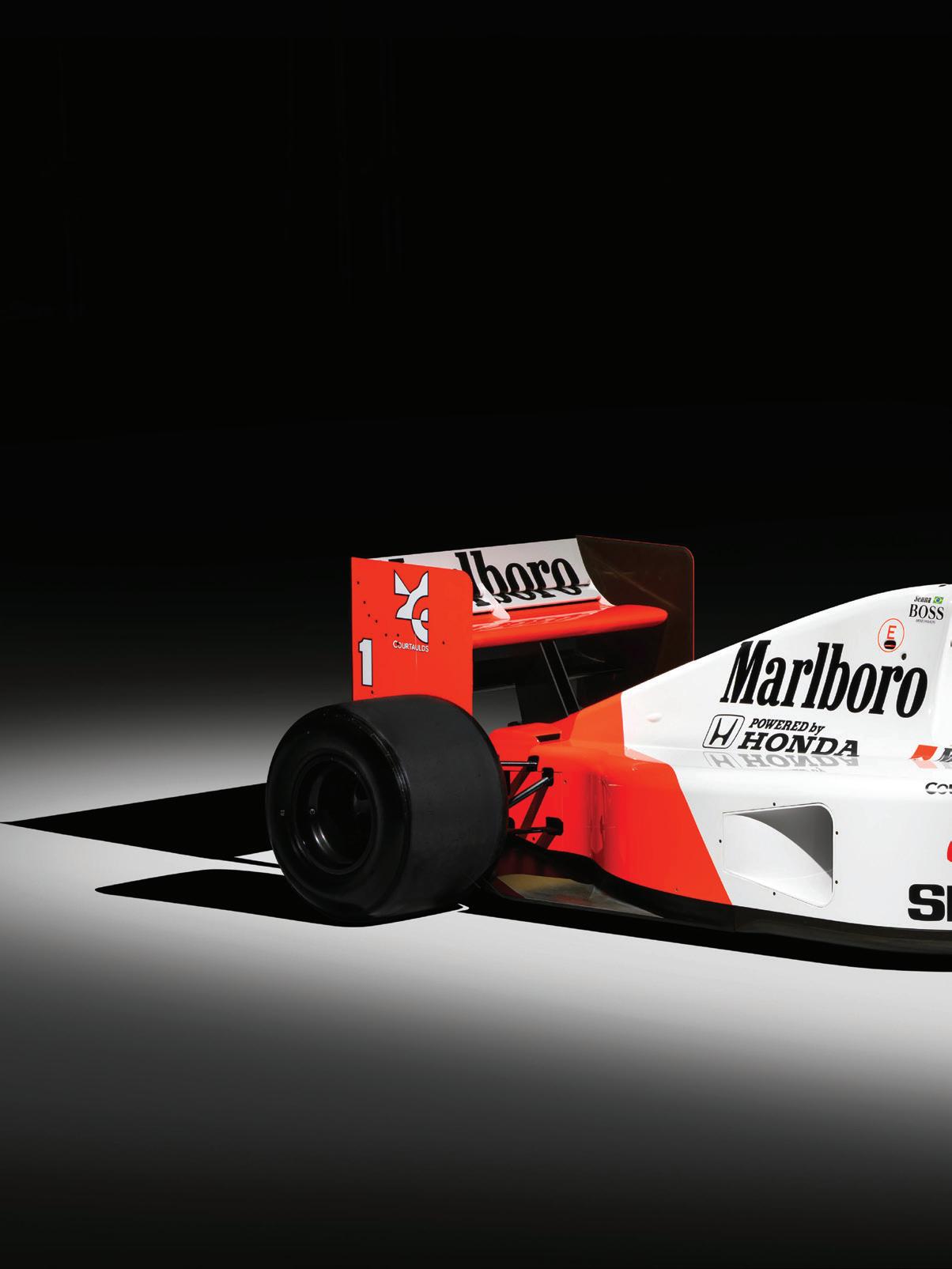
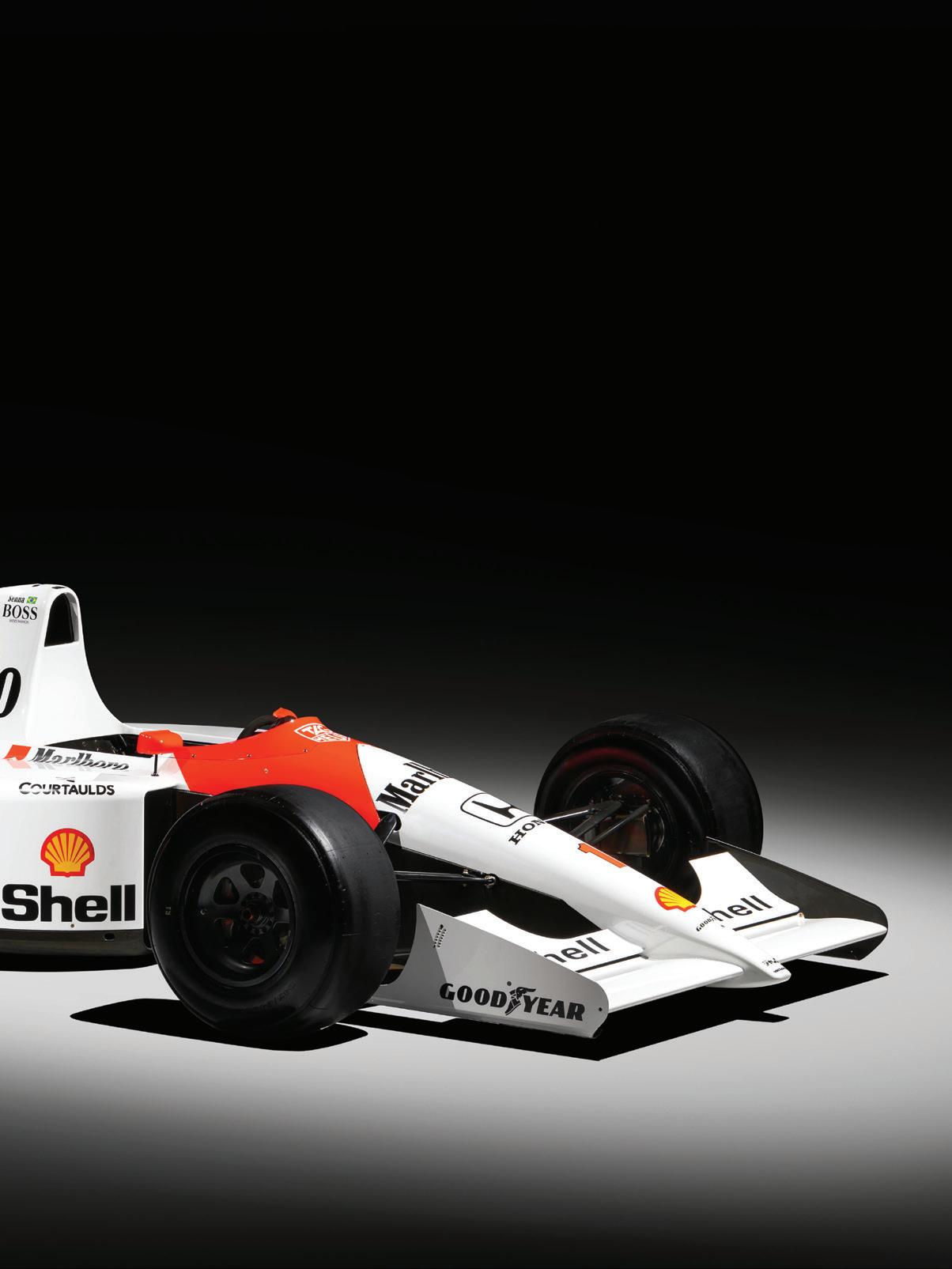
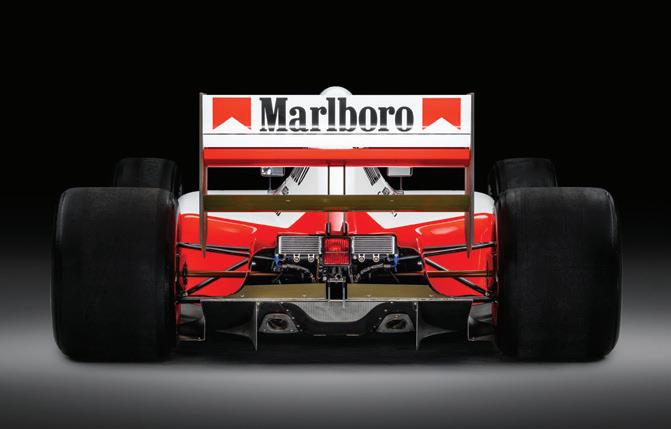
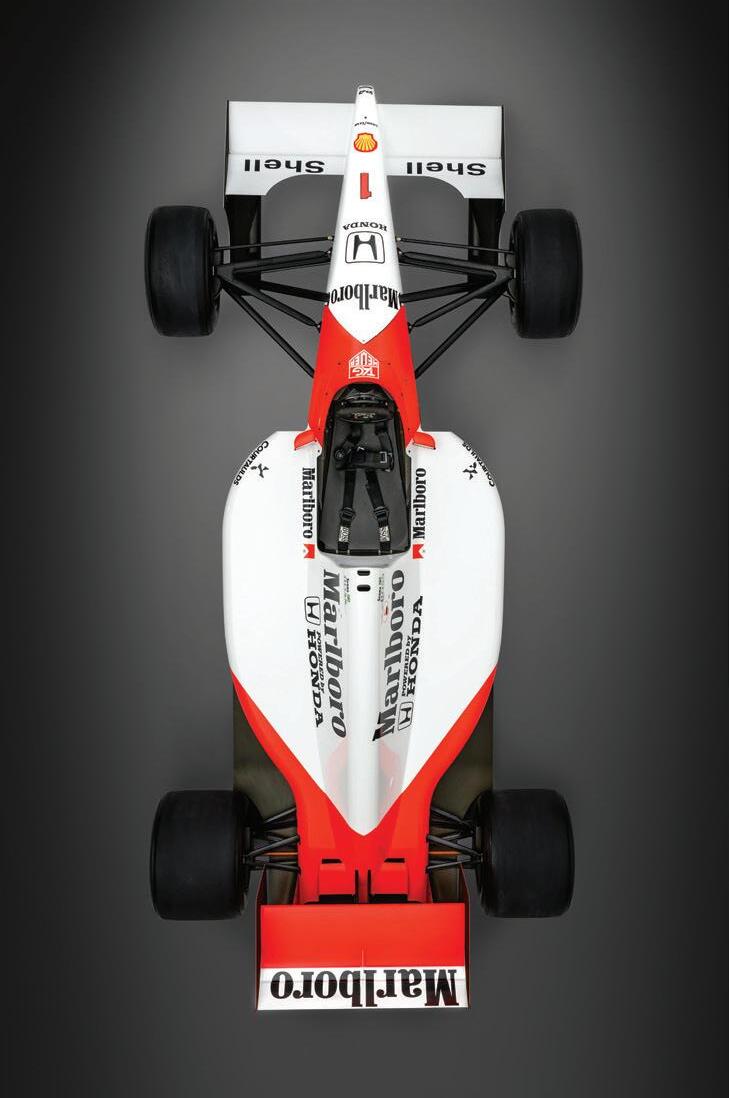
This month, RM Sotheby’s will auction Ayrton Senna’s 1991 Brazilian Grand Prix–winning McLaren MP4/6, a car as legendary as its mercurial driver
WORDS: PAUL JAMES
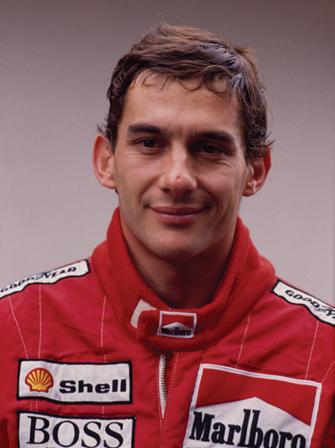
Ayrton Senna won multiple poles, races and titles — as well as the hearts and admiration of many – throughout a Formula One career defined by fearless driving, but none meant as much to him as his debut win in Brazil, his cherished homeland.
The year was 1991, and after seven seasons of failing to win at Interlagos, the emotional weight of the weekend was huge — for Senna and for Brazil, the expectation was intense. “The human heat this weekend was so great that we had to win this time. It couldn’t be any other way,” said Senna after leaving the podium.
Yet, despite Senna’s assuredness, it could have quite easily gone another way.
Having started the race on pole, Senna was swift to press home his advantage. Calm, precise and in full control, by the quarter-way stage he had started to pull away, the partisan crowd responding to his dominance with a soundtrack of adulation. Then, by lap 45 of the 71-lap race, observers noticed Senna shifting awkwardly, hinting at early gearbox trouble. Indeed, just a few laps later, and more than threequarters of the way through the race, his gearbox failed, leaving him able to drive in no other gear but sixth.
Senna’s previous seven attempts to win in Brazil were beset with similar mechanical problems, engine failure curtailing his first four efforts and again in 1990, when he started in pole. Senna was gaining legendary status for consistently leading or fighting at the front, even when misfortune struck. The following year, in the tarmacmelting heat and intense pressure that propelled his heart rate to a reported 180 bpm, Senna was determined to alter his narrative, and his mastery over this car became the stuff of motorsport mythology. “It wasn’t the greatest win of my life,” Senna said, “but it was the hardest fought one.”
The car he drove to an improbable victory that day, the McLaren MP4/6, will be auctioned by RM Sotheby’s this month, a car that’s been billed as one of the most significant Formula 1 cars ever offered at auction, hence its presale estimate of of USD$12,000,000 to $15,000,000, with bidding opening on December 8 and closing on December 11.
“Few figures in motorsport have captured the world’s imagination like Ayrton Senna,” said Nick Wiles, RM
Sotheby’s Car Specialist. “Anything connected to him, a helmet, a suit, even something he once touched, has become sacred to collectors. Senna transcended the role of driver long before his tragic passing; he became an icon. But even within that realm, there are levels, and this car sits at the very top. The McLaren MP4/6 that carried him to victory at his home Grand Prix in Brazil, in what Senna himself called the ‘hardest-fought race of his life,’ represents the pinnacle of Formula 1 collecting. It’s difficult to imagine anything more significant or more desirable to a collector.”
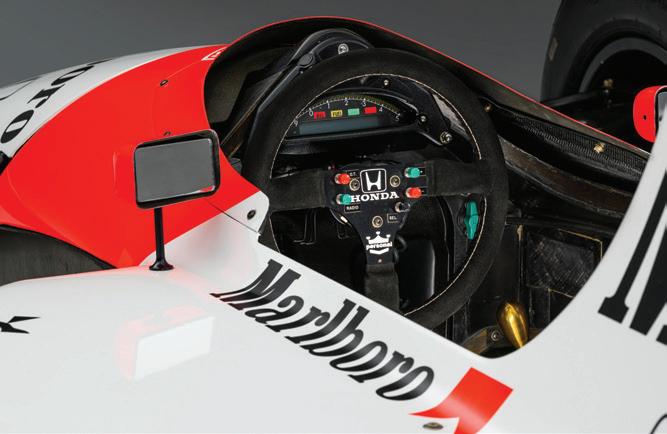
Constructed as the prototype for McLaren’s 1991 campaign, MP4/6/1 marked Senna’s first experience with the new Honda V-12-powered machine that would carry him to his third and
‘ It’s difficult to imagine anything more significant or more desirable to a collector ’
final World Championship. Of just 11 MP4/6 chassis built, this example is uniquely distinguished as the first built and arguably the most singularly memorable, maintaining a perfect 100 per cent win record from its sole Grand Prix start.
Throughout the season, both before and after its historic race, MP4/6/1 served as a factory development and test car for Senna, Gerhard Berger, and official McLaren test drivers.
Following its retirement from testing in October 1991, it remained in McLaren’s possession for nearly 30 years before being recommissioned by McLaren Heritage upon the acquisition by its sole private owner in 2020.
More than the car that Senna drove to memorable success, the MP4/6 represents the end of an era, the last manually shifted car to win a Formula 1 World Championship, and the final triumph of the legendary McLaren Honda partnership. Its impact endures as a symbol of Senna’s brilliance, McLaren’s engineering dominance, and the raw, mechanical purity of early 1990s Formula 1.
Senna’s life ended on the track at Imola, Italy, during 1994’s San Marino Grand Prix, when the steering column of his car snapped at a speed of 218 km/h, forcing him into a concrete wall. Over 3 million people lined the streets of São Paulo for his funeral procession. Ironically, a series of accidents that race weekend, one also fatal during qualifying, left a deeply affected Senna to declare that he “didn’t feel like racing anymore.”
“Ayrton was more than a champion — he was a symbol of hope for all Brazilians,” said Pelé, the only other person able to command such devotion from his fellow countrymen.
Which is what makes this Brazilian Grand Prix-winning car such an iconic piece of motoring — and, indeed, sporting — memorabilia.
Ice Man
How Mikael Svensson gave up his dream of ice hockey stardom to land stars from Michelin — and a well deserved reputation as a champion of sustainability
WORDS: JOHN THATCHER
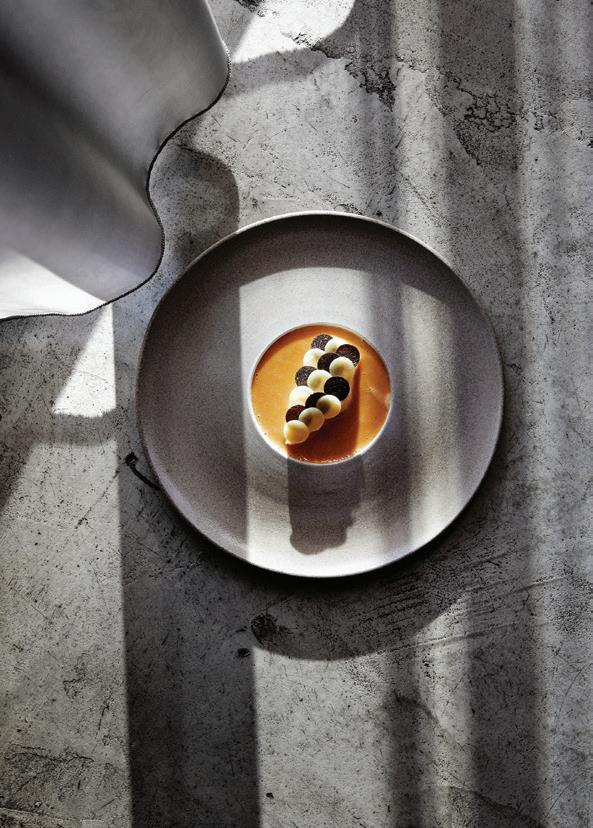
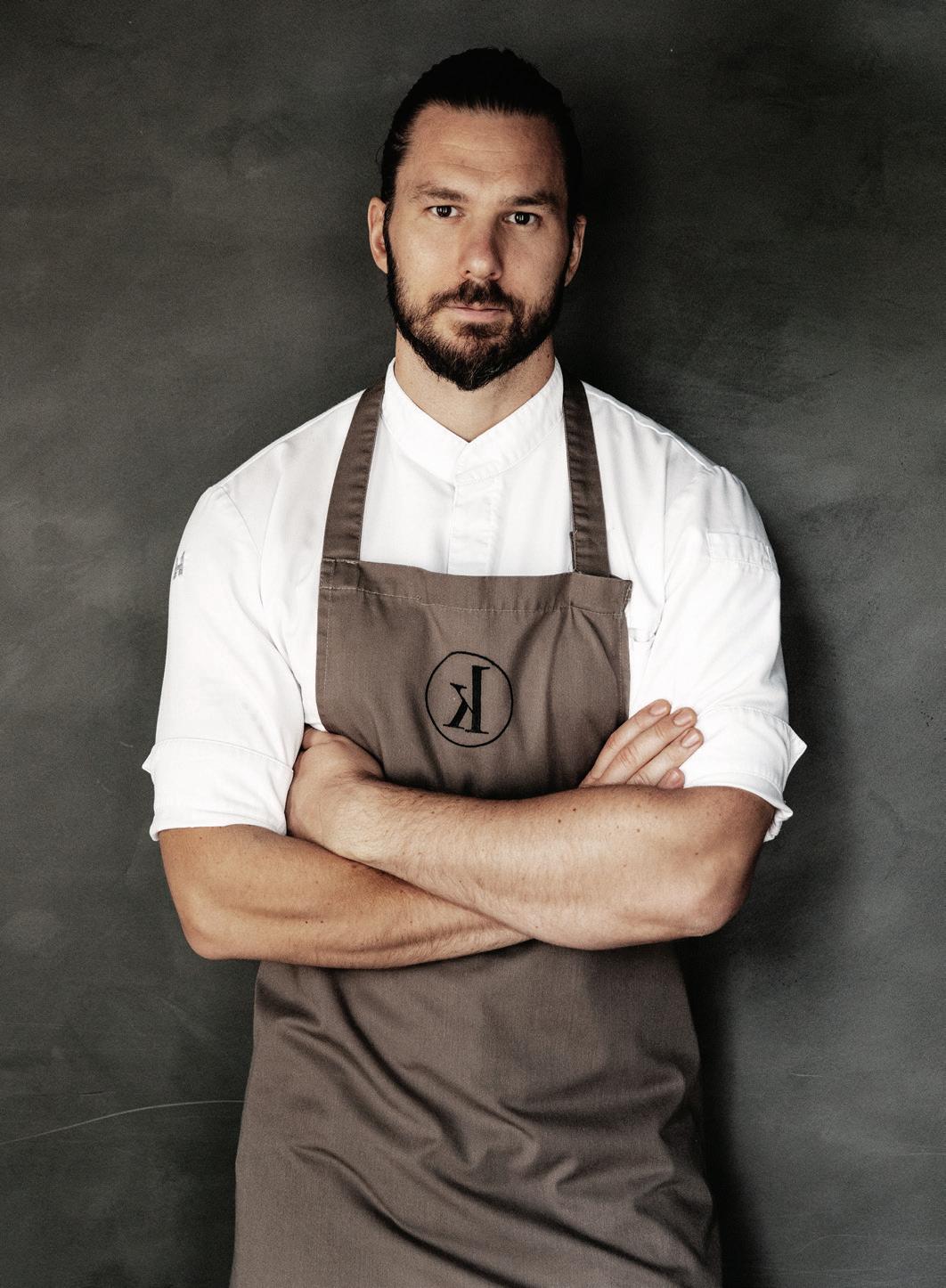
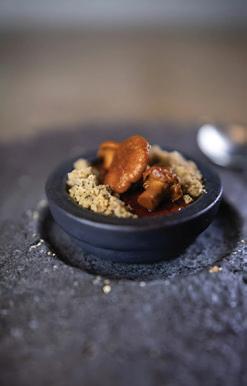
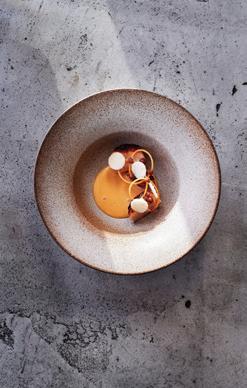
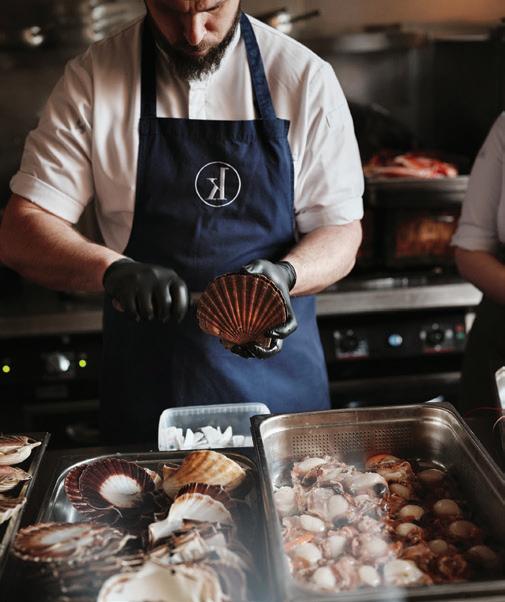
Had things gone to plan, Mikael Svensson may well have starred for the Swedish national ice hockey team, his childhood consumed by the sport and his school days bookended with practice and timeintensive gym workouts. But plans change, and Svensson is instead a star turn in the kitchen at Kontrast in Norway, a fact highlighted by Michelin, who awarded the Oslobased restaurant two stars along with a green star, the latter muchcoveted — and well earned — by the sustainability-conscious Svensson.
Those years training for a career on the ice rink instilled discipline in Svensson, a skill that has proved invaluable in the pressurised world of Michelin-level fine dining. “The moment I started my first job at a Michelin-starred restaurant (Le Canard in Oslo) at the age of 20, it opened my eyes to the demands of excellence — from the quality of ingredients to the pace of work and attention to detail on every plate,” says Svensson, who moved across Europe in search of not just experience but inspiration, finding it in places like Martín Berasategui’s eponymous three-starred restaurant in San Sebastián and the legendary Noma.
“Le Canard was formative because I was so young and inexperienced. The learning curve was steep, from just mastering the basics to being able to work across all sections, taste and understand how to build flavours, and grasp the hard work behind every dish.”
Also formative was Skåne, Svensson’s birthplace in Sweden’s southernmost county. “Summer evenings, the smell of my father lighting up the grill, my mother preparing all the garnishes, the new potatoes in summer, and how we had late dinners outside in the long Swedish summer evenings.” Such memories are ingrained in Svensson, along with an understanding of how Skåne’s make up — diverse farming and fishing industries, rolling hills and forests, and a strong focus on sustainable development and green energy — sustains a community.
It fostered Svensson’s passion for hyper-seasonality and sustainable
‘It’s important to push beyond the safe zone to understand how far we can take things’
practices, and when the first iteration of Kontrast outgrew the space it occupied within an eco-hotel, Svensson moved it 2.5 km away to Vulkan, a neighbourhood in the heart of Oslo that has since become a model for green urban living.
Svensson’s ingredients are gathered from local, organic and wild sources, which means that Kontrast’s dishes change in accordance with not just the seasons but Norway’s fluctuating climate. It also means that Svensson is limited to what’s available. Though, rather than hindering creativity, it inspires it. “Definitely. The limitations of what ingredients are available encourage us to explore what we have on hand. It also pushes us to dig deeper into herbs and spices to enhance flavours and find new ways to process ingredients,” says Svensson. It also works to enthuse his team. “We openly discuss ideas and new techniques, brainstorming together, and staff are encouraged to explore their own ideas. Open discussion often sparks inspiration; someone may suggest something that becomes exactly what we were looking for. A lot comes from testing, exploring, and daring to fail. It’s important to push beyond the safe zone to understand how far we can take things — how we can cook and present different ingredients, and how we can continue to develop ourselves.”
However, when Norway fails to deliver the goods (“Norway is a small country, and the growing season for vegetables varies year to year, affecting quality and yield”), Svensson must look further afield, and often encounters a problem. “Finding ingredients that are grown, harvested, or treated sustainably while meeting our quality standards is a big challenge. The food industry still struggles to provide organic or sustainable options consistently.”
It’s one of the reasons why, in 2020, Svensson joined forces with American-born chef Will Moffat — who at the time was working on fermentation with restaurateur and microbiologist, David Quist — to launch b.culture, a fermentation project that transforms kitchen by-products into high-quality kitchen staples.
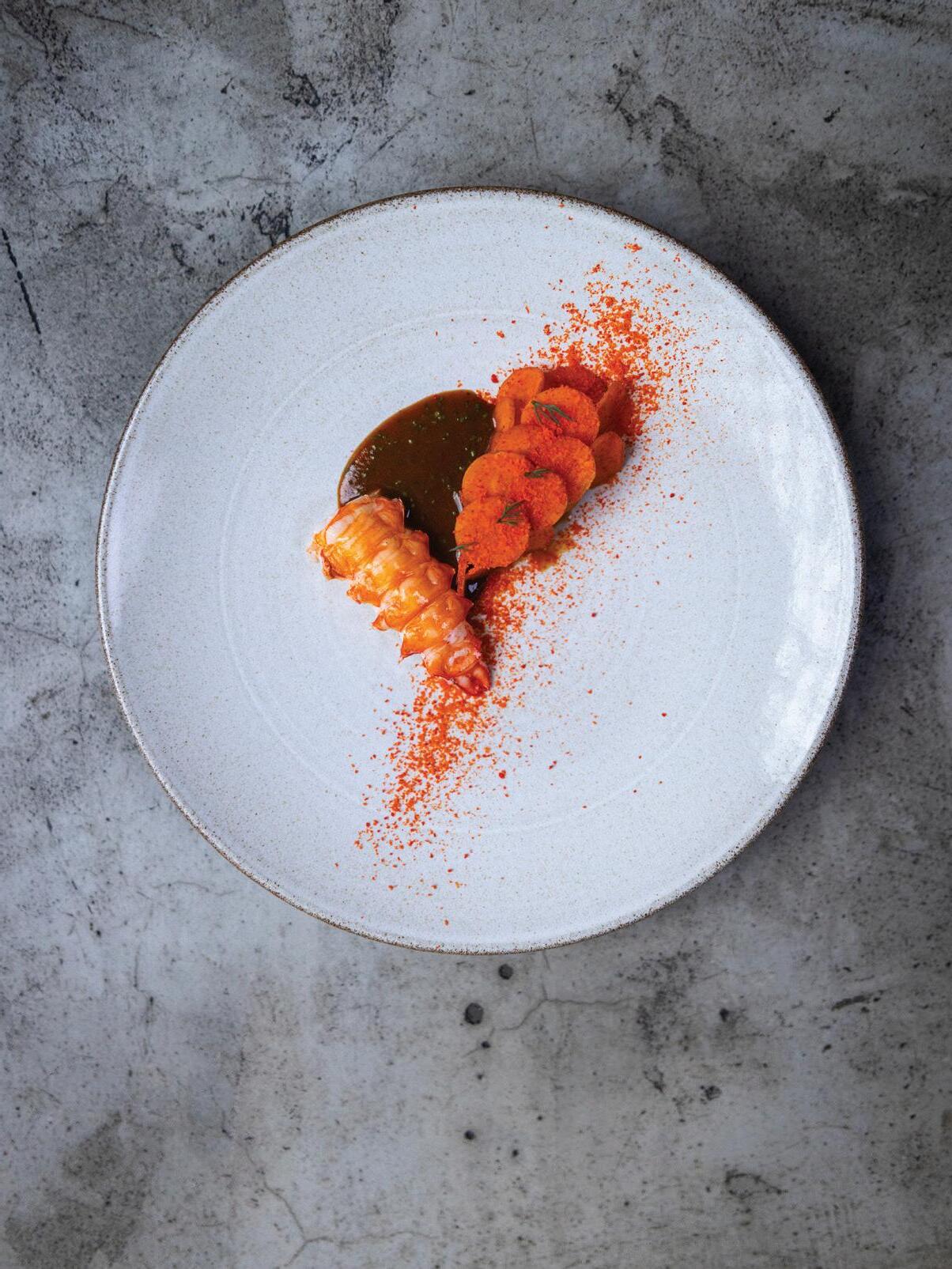
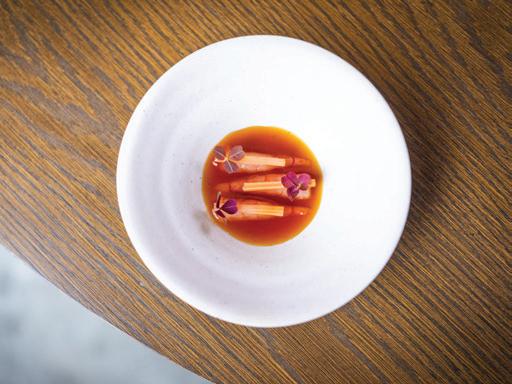
“I wanted to rethink how we handle ingredients at Kontrast and make better use of our by-products,” outlines Svensson. “I also missed using products like soy and miso in my cooking, aiming for a Norwegian approach while keeping the depth of flavour these ingredients provide. Will [Moffat] helped me see that we weren’t solving bigger problems — just our own. We wanted to offer solutions for by-products from restaurants and producers on a larger scale. For example, for our Langoustine Garum, the lobster heads and shells originally came from Kontrast’s by-products; now we source directly from our suppliers.
“b.culture continues to grow, partnering with producers to manage their by-products, boost sustainability, and improve profitability. The bigger we get, the more producers we can support, making a real impact on the environment. I’m proud of the growth so far, though we’re still far from its full potential.”
That’s also the case for Svensson and Kontrast, with a third Michelin star within their grasp. “It’s hard to know exactly what is needed — there’s no checklist. For me, and for Kontrast, the focus is always on improvement: becoming a better restaurant, creating a better experience for our guests, being a better workplace for our team, and improving our sustainability practices with a focus on zero waste. Recognition for me or the restaurant is secondary; my main ambition is to create a great restaurant and a memorable experience for our guests. I’m not done as a cook; I’m still thirsty for knowledge and new skills. I want to keep developing and see how far Kontrast can go.”
Ice hockey’s loss is very much gastronomy’s gain.
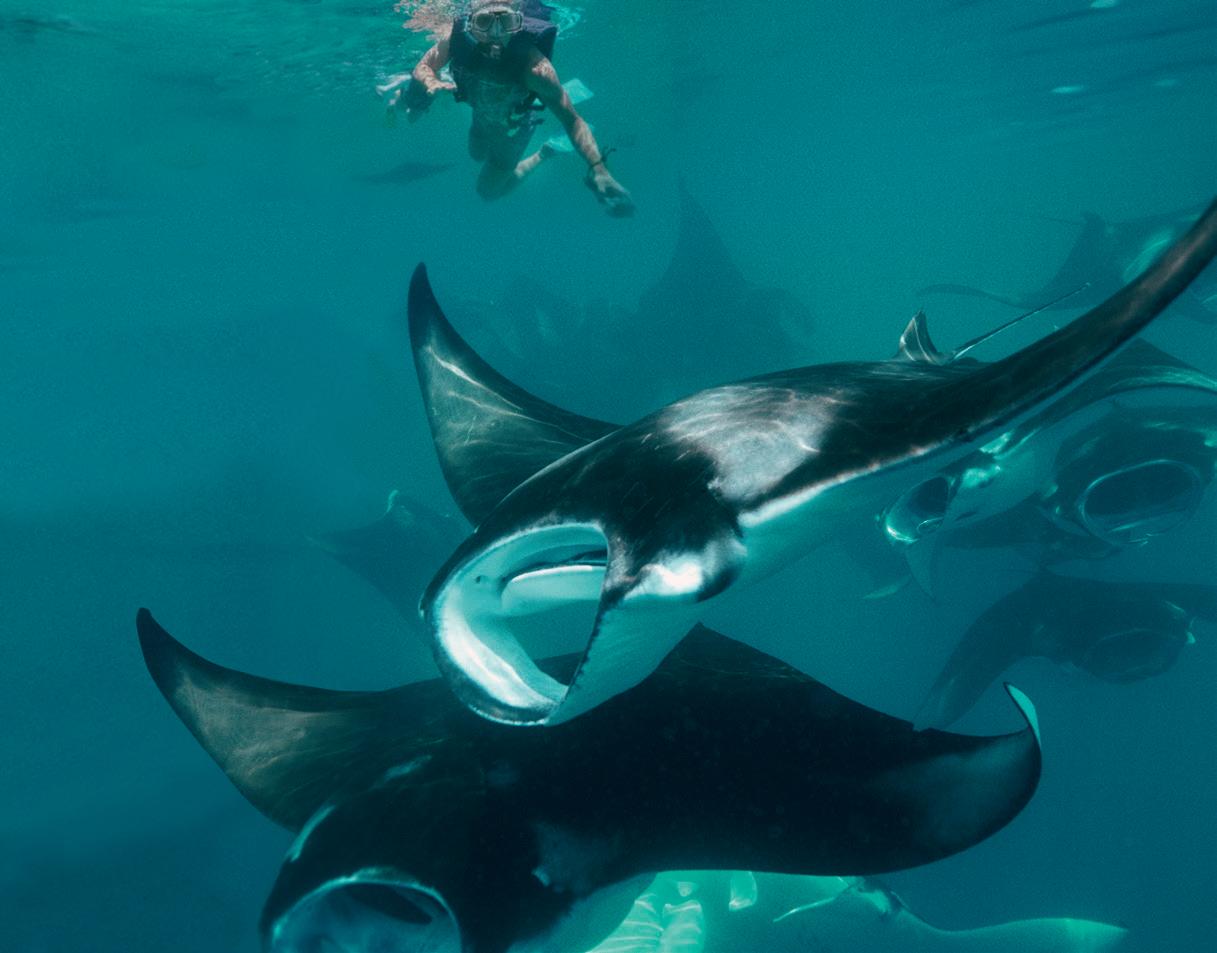
Double Delight
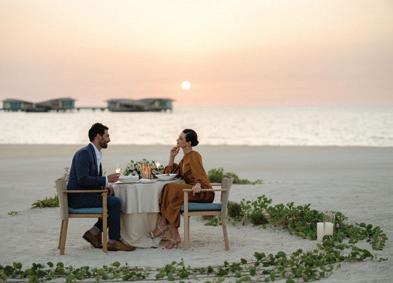
Two extraordinary island retreats – Nujuma, a Ritz-Carlton Reserve and The St. Regis Red Sea Resort – invite you to experience Saudi Arabia’s Red Sea coast at its most serene and spectacular
Winter in the Red Sea isn’t a season; it’s a state of mind. Here, the air is warm, the light golden and time stretches to the rhythm of the tides. Across the crystalline archipelago, two destinations offer distinct visions of escape: Nujuma, a Ritz-Carlton Reserve, where nature and starlight guide the soul; and The St. Regis Red Sea Resort, where refined design and serene stillness exist in perfect harmony. Each offers a distinct world of its own, yet both are united by beauty, warmth and a sense of wonder.
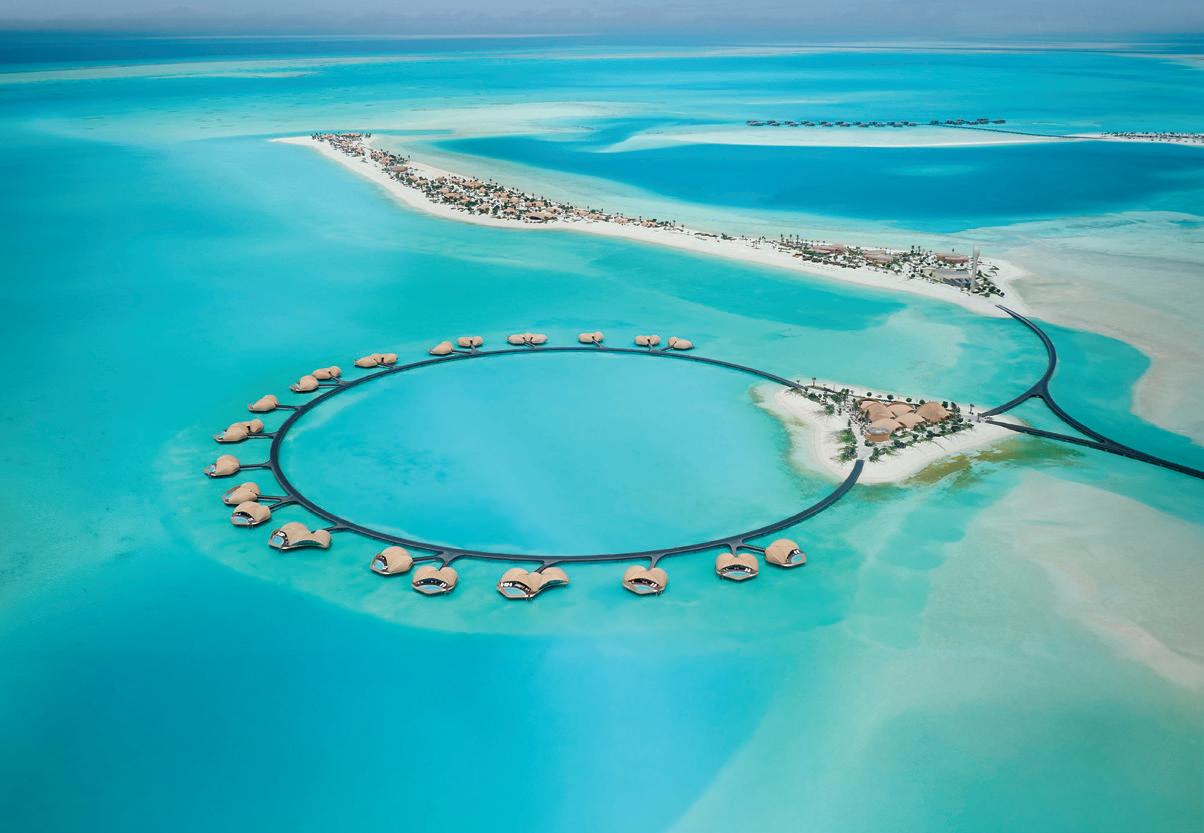
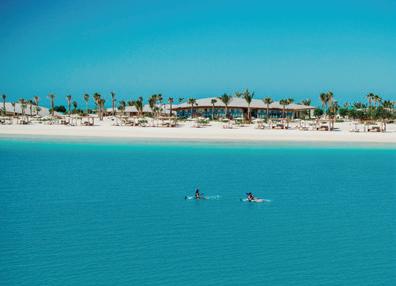
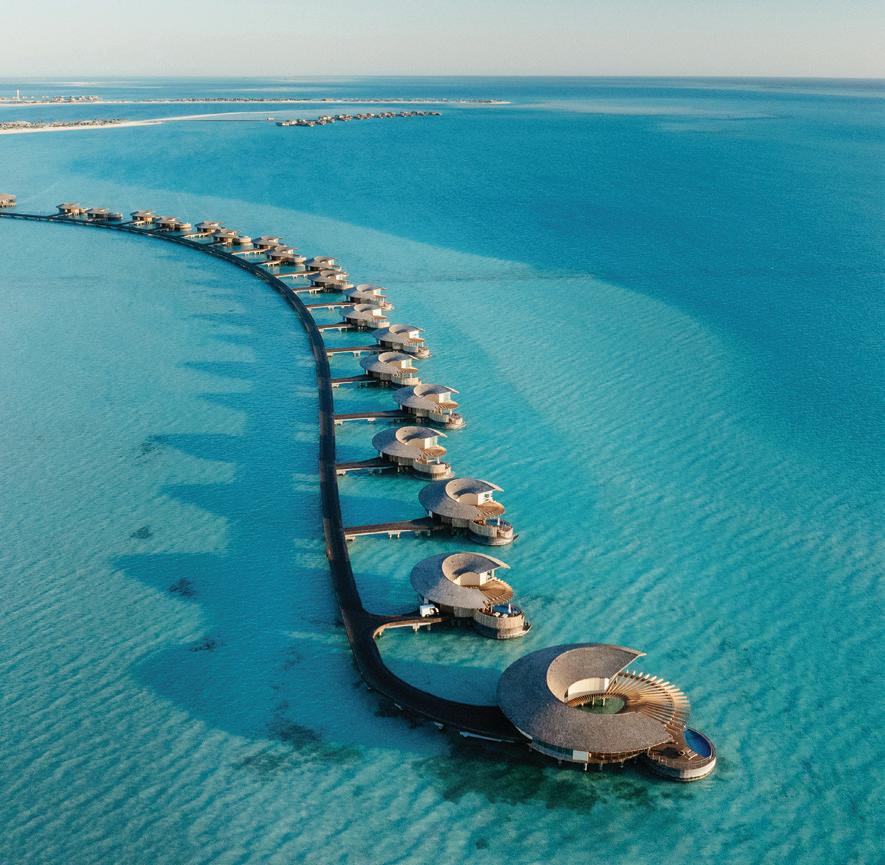
This winter, the horizon whispers of something extraordinary. On a private island amid the Red Sea’s shimmering archipelago, Nujuma, a Ritz-Carlton Reserve invites you to realign with nature in its purest form. The villas — sculpted like seashells — hover over the water or nestle along white sand beaches, each offering intimate views of a sky full of stars. Here, the rhythm of waves becomes your soundtrack. You’ll join guided dives deep into a reef system among the world’s most untouched. You’ll paddleboard into the first rays of dawn as desert hills catch the first blush of winter sun. At Neyrah Spa, ritual meets renewal: treatments that draw on marine
botanicals, while an in-house astronomer unpacks constellations overhead.
What makes this a winter escape like no other? The air holds just enough crispness to linger on the shore; the sea remains inviting, clear, calm. In this season of pause, you rediscover the pulse of the island: its mangroves, its reef teeming with life, the silence between waves. Each guided nature walk with the resort’s naturalist rewrites how you see this land-and-sea ecosystem as alive, shifting, full of story.
Luxury here is quiet. The villas are solar powered, their design by Foster + Partners hiding in plain sight against the horizon. And the winter landscape means evenings are spent under stars with a telescope, a hibiscus-infused Sun House Sipper mocktail and a sense that you’ve slipped somewhere beyond everyday time.
Nujuma invites you to reconnect with nature, with stillness, with yourself — and to carry that sense of renewal home.
The St. Regis Red Sea Resort rests on its own private island in the Ummahat archipelago — a hideaway defined by balance, beauty and ease.
Accessible by seaplane or speedboat, this exclusive spot captures the essence of a Red Sea winter: calm waters, golden
This page, from top to bottom: Nujuma, a Ritz-Carlton Reserve
light and a timeless sense of escape.
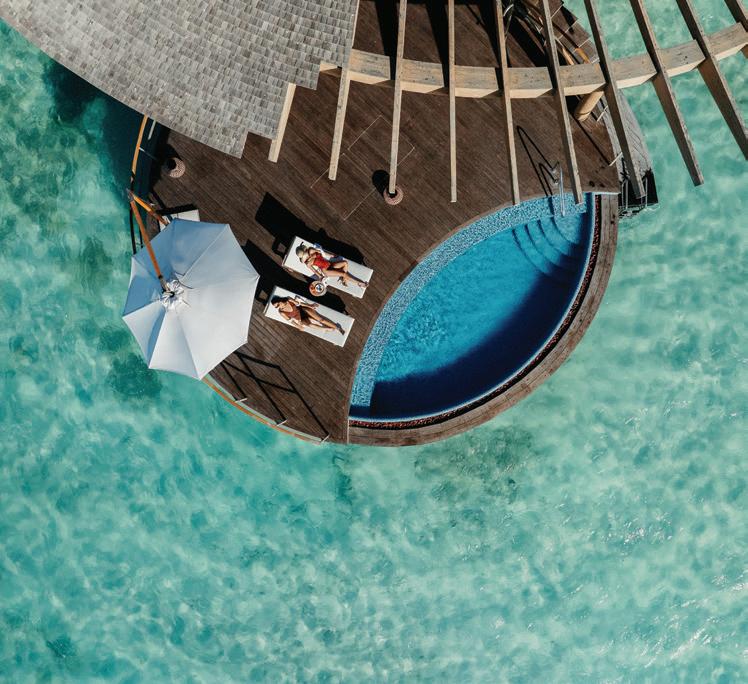
A place where refinement breathes easy, 90 over-water and beachfront villas offer private pools and wide sundecks — each designed to dissolve the divide between water and world. Inside, and a measured, artful luxury that never ages, coupled with The St. Regis’ signature butler service, ensures no detail is left to chance. The spa offers bespoke rituals that integrate local elements: Red Seainspired treatments that invite renewal, radiance and stillness of mind.
Why consider The St. Regis for winter? The golden hours last longer in that soft winter glow; the sea breeze brings fresh clarity; the island atmosphere kindles reflection. Out in the water you’ll snorkel through coral gardens, paddleboard across calm flats, or simply float in turquoise warmth while the rest of the world contends with chill.
Dining here features a rich palette — from beachfront elegance to refined international menus. Every meal feels like an occasion, specially composed. Signature restaurants, crafted service and the rhythm of the sea make every moment count.
When day turns to evening, step onto your villa deck and watch the sky soften into pink-lavender hues. Let your butler pour your drink and allow the gentle night air to draw you into the sense that winter is meant to be savoured — in a place where poised grace lingers long in your memory. stregisredsearesort.com; nujumareserve.com
This page, from top to bottom: The St. Regis Red Sea Resort
Dina Kamal
FOUNDER AND CREATIVE DIRECTOR, DINAKAMAL
The best advice I’ve ever had is simple but powerful: trust your instinct. It’s the one thing that has guided me through every major decision, especially the ones that didn’t come with a clear map. Whenever I follow that first instinctive pull, things tend to fall into place, sometimes unexpectedly, but always in an interesting direction.
My greatest achievement is keeping my curiosity alive. It’s what pushes me to look past the surface, to ask why something feels refined, or balanced, or meaningful. Curiosity keeps my mind awake, and it keeps my work honest.
I learnt — mostly the hard way — that you don’t need to see the full route before you start. Life works better when you allow room for change, for opportunity, for the unexpected turn
that leads somewhere different than what you originally planned. Creating options as you go isn’t uncertainty; it’s actually a form of freedom.
If I could adjust one thing about myself it would be to worry less. Not to become carefree, but to carry things more lightly, the way you feel when you finally let something go and realise you didn’t need to hold it so tightly.
Perfect happiness, for me, is a moment that shifts your state of mind — somewhere calm, where you feel unhurried and a little unbound, like floating without moving. It doesn’t have to be grand; it just needs to make you breathe differently.
If I could choose one small superpower it would be the ability to finish a
thought without three new ones arriving at the same time. My mind has a habit of racing ahead as if it’s running late, which is energising but also slightly amusing.
My greatest extravagance, the one luxury I value more than anything else, is time. Quiet, unstructured time where ideas arrive at their own pace, which somehow always ends up being the best part of the day. It’s in those pauses that clarity and ideas happen with more ease. In a world that moves fast, that kind of time feels special, and it’s where my best work always begins.
If I could speak to my younger self I’d tell her to notice the details, to enjoy the process rather than rushing to outcomes. The small things usually end up being the real turning points.