Cabbage

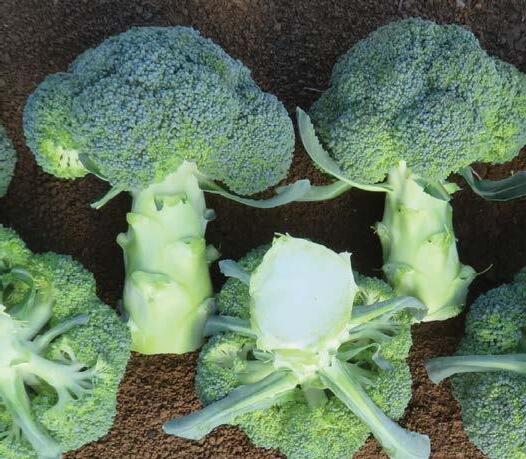
Larson RZ


• Dark green colour with flat-round head shape.
• Large plant frame. Short, round core.
• Versatile harvest-time slot. Very little purple discolouration in cold weather. Lambada



• Smooth dome shape heads with medium to fine bead and dark green colour. 350 – 450 g.
• High cut-out percentage with few stem leaves for easy harvest and stripping.
• Strong against head-rot in winter conditions.
• Versatile variety with a wide harvest window from summer to winter.
The team at Terranova Seeds wish you all a Merry Christmas and a Happy New Year

Sowing Good Wishes for the Festive

Upper North Island Alan McKee, Mobile: 021 956 701, Email: alan.mckee@tnseeds.com
East Coast & Manawatu Graeme Jackson, Mobile: 021 396 359, Email: graeme.jackson@tnseeds.com
Ohakune & Horowhenua Kathryn Wells, Mobile: 021 475 482, Email: kathryn.wells@tnseeds.com
South Island David Stewart, Mobile: 021 352 764, Email: david.stewart@tnseeds.com
Auckland/Protected Cropping Ingrid Ennis, Mobile: 021 435 493, Email: ingrid.ennis@tnseeds.com Freephone: 0800 TERRANOVA (0800 837 726) Customer service: Ph: 09 275 1919




Industry good
32 A lighter touch in buttercup squash field demonstrations
36 New regen demo farm
36 Robot targets weeds only
37 Updating the Codes of Practice: a spotlight on nutrient management
40 Seaweed for growers
44 Te Ahikawariki celebrates its first birthday Markets and
48 Subtropicals heating up
51 Baby food to boost banana industry
52 Origin stories multiply consumer interest
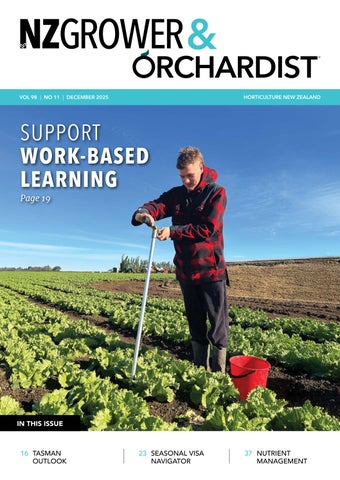
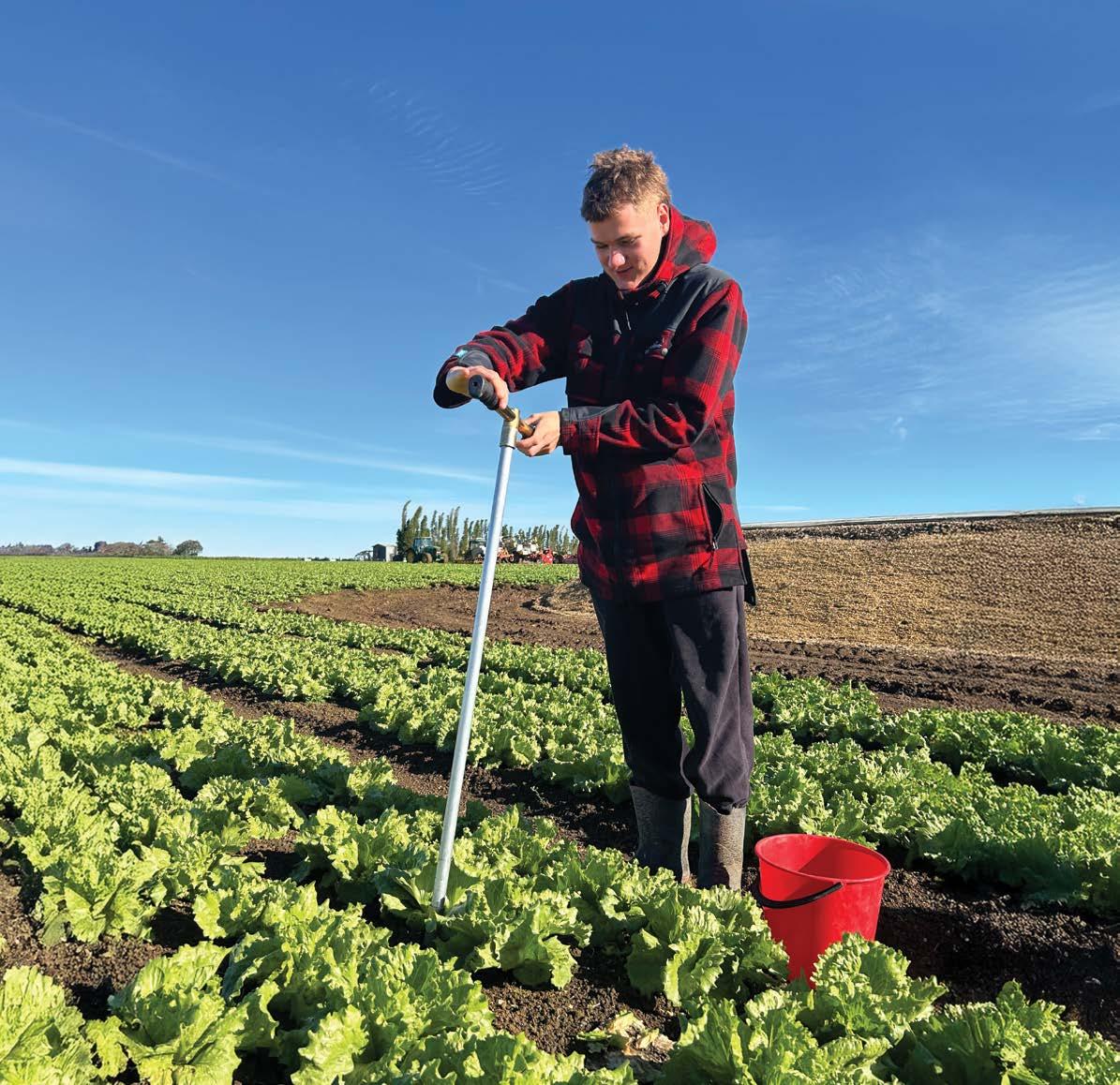
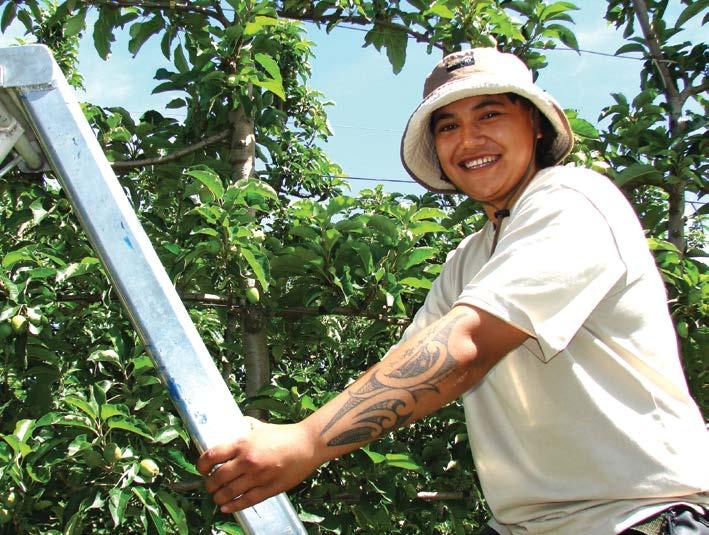
On the cover: Francois Bell chose work-based learning through Primary ITO’s pilot Horticulture Cadetship Programme. See page 19. Photo courtesy of Primary ITO.
55 Improving fresh produce data reporting
56 Forging the future through innovation and resilience
58 Dutch insights for covered crop growers
61 Weekly Briefing
What’s New
A regular advertorial section of new products and services. This publication does not endorse the products or services featured here.
43 Revolutionising New Zealand horticulture: the electric advantage
60 Lincoln University’s investment in horticulture pays off in students’ careers
Kevin Bayley
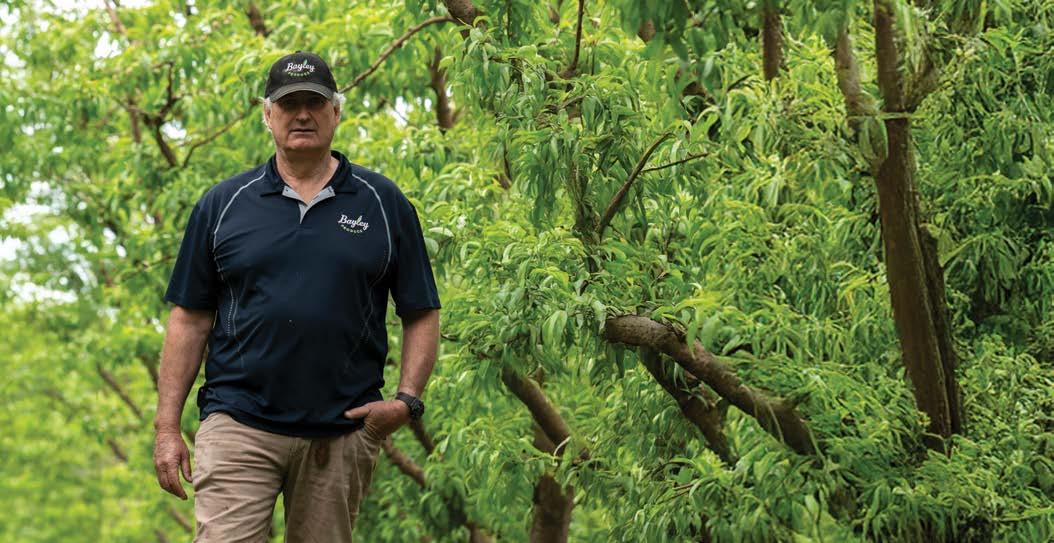
Kevin has been growing fruit in Hawke’s Bay for more than 30 years. Bayley’s Produce, a family run orchard and cropping business, is one of the premier growing operations in the region. For this issue, Kevin shares his thoughts in an opinion piece on nursery terms of trade. See page 28.
Delwyn Dickey
Based near Matakana, Delwyn has spent most of her career in magazine production, journalism and writing. Time also spent as a commercial grower and agricultural tutor helped to focus her interest in recent years, including with Our Land and Water – The National Science Challenge. She talks to Northland’s subtropical growers on page 48.
Sarah Dobson
Sarah is a consultant for Agrilink NZ, with a background in working on environment and sustainability projects within the vegetable sector. After growing up near Pukekohe, she now lives in Wellington and can’t remember the last time it wasn’t windy. She contributes for this issue on the Code of Practice for Nutrient Management on page 37.
Dereck Ferguson
Dereck is an agronomy consultant in Hawke’s Bay with over 25 years’ experience managing horticultural and forage crop programmes. A member of the A Lighter Touch (ALT) Industry Stakeholder Advisory Group, he is the technical lead for the NZ Buttercup Squash Council/ ALT project on soil-borne disease management –and shares results on page 32.
Carly Gibbs
Carly has a background in community and national newspaper journalism – writing for leading New Zealand lifestyle magazines as well as horticulture publications. Carly lives in Te Puke, with her husband and two sons, on a kiwifruit orchard. For this issue she previews January’s Katikati Avo Fest and meets the organisers on page 10.
CONTENTS
CONTRIBUTORS





Emily Laskin
Originally from California, Emily has spent her career working with growers and farmers on large-scale multi-stakeholder projects. She currently supports the vegetable product groups as project coordinator at Horticulture Executive Services Ltd. On page 44 she updates us on Te Ahikawariki.
Kim Parkinson
Kim Parkinson is a newspaper reporter, freelance writer and orchardist who lives on a citrus and avocado farm in Makaraka, Gisborne, with her partner Chris. They grow mandarins, lemons, limes, tangelos, Hass avocados and Avogrey® Greenskins. For this issue she visited citrus grower Matt Carter on page 13.
Helena O’Neill
Helena is a journalist with a background in community and rural reporting. She lives in North Waikato with her husband, four children and their Irish wolfhound. She asks Māori Kiwifruit Growers and the Ministry for Primary Industries to explain cultural consumers on page 52.
Tim Robinson
With over 33 years in the primary industries, Tim specialises in translating technical and scientific research into practical solutions for growers. Building on a family legacy in orcharding and agricultural chemical supplies, he has spent 16 years leading industry field trials. He reports on buttercup squash trials on page 32.




4 Bernadine Guilleux, HortNZ chair
6 Kate Scott, HortNZ chief executive
INDUSTRY LEADERSHIP REGULARS
56 Kate Trufitt, Potatoes New Zealand chief executive
58 Dinah Cohen, TomatoesNZ general manager
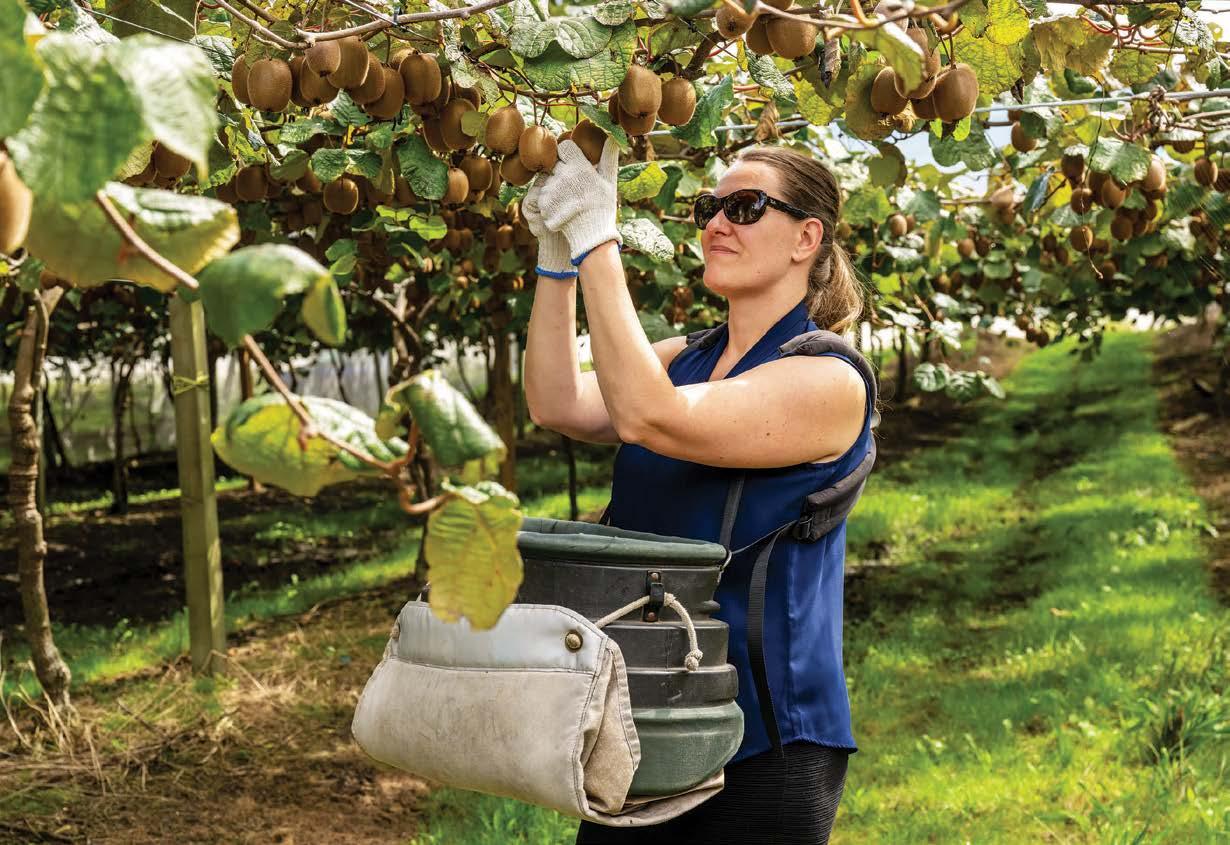
Horticulture Work-based Training
Do you or your team members want to develop new skills and knowledge in horticulture? Get in touch with Primary ITO today to find out more about training options for you and your business.
• Level 2 to Level 5
• Certificates and Apprenticeships
• Support and Funding Available
• Specialist training programmes in Fruit, Indoor and Outdoor Crop Production, Nursery, Post-Harvest and Distribution.
Talk to your local Training Adviser today: primaryito.ac.nz | 0800 20 80 20 | info@primaryito.ac.nz

&
NZGrower & Orchardist is produced by Horticulture New Zealand and is free for all levy payers. The magazine is partially funded by a grant from the NZ Fruitgrowers’ Charitable Trust to ensure all fruit growers in New Zealand receive a copy each month. The magazine is also supported by Vegetables NZ, Process Vegetables NZ, TomatoesNZ, Potatoes NZ and Onions NZ.
The individual comments and views in this magazine do not necessarily represent the view of Horticulture New Zealand.
CELEBRATING 20 YEARS OF GROWING
As 2025 draws to a close, HortNZ will mark its 20th anniversary, a significant milestone that marks two decades of collective leadership across our sector.
Bernadine Guilleux : HortNZ chair
Copyright © 2025 NZGrower & Orchardist
NZGrower & Orchardist:
ISSN: 3021-3606 (Print)
ISSN: 3021-3614 (Online)
Editor: John Gauldie, editor@hortnz.co.nz
Advertising Manager: Debbie Pascoe, 027 485 8562, debbie.pascoe@hortnz.co.nz
Design: Scenario.co.nz, 04 385 9766, joy@scenario.co.nz
Subscriptions: subs@hortnz.co.nz, 04 472 3795
This publication uses vegetable-based inks and environmentally responsible paper produced from Forest Stewardship Council® (FSC®) certified, Mixed Source pulp from Responsible Sources.
Paper produced using Elemental Chlorine Free (ECF) and manufactured under the strict ISO14001 Environmental Management System.
The wrapper we use is 100 percent recyclable, it is LDPE 4 (Low Density Polyethylene) Soft Plastic and meets the required standards. For further information refer to: www.recycling.kiwi.nz/our-story
Formed on 1 December 2005 through the merger of the New Zealand Fruitgrowers Federation, the New Zealand Vegetable and Potato Growers Federation, and the New Zealand Berryfruit Federation, HortNZ was created to bring growers together and have a clear presence and voice in Wellington. It was the then Agriculture Minister, the late Jim Anderton, who launched HortNZ in front of guests at an event at the National Library in Wellington. What the Minister highlighted back then was that critical mass carries weight and a coordinated effort to increase effectiveness and efficiency makes good sense.
I am pleased to welcome the appointment of our new independent director, Ripeka Evans.
Ripeka will further strengthen our governance and help ensure every decision we make reflects the complexity and connections of today’s food systems and the regional communities we serve.

As we look ahead, projects like the AGMARDT-funded The Common Ground will aim to help us better align across product groups and organisations, to maintain that strong voice in Wellington and strengthen our shared purpose to serve growers.
Fast forward 20 years, HortNZ today is still focused on outcomes in these two areas. We continually hone our advocacy and influence policy on issues that are relevant to us all, and we look for efficient and effective ways to ensure the ongoing success of a sustainable, profitable and respected horticulture sector in New Zealand.
In that time, industry’s governance has evolved alongside the growers of the day.
We’ve strengthened our systems and processes, invested in leadership and capabilities, and placed greater emphasis on skills around the board table.
We’ve strengthened our systems and processes, invested in leadership and capabilities and placed greater emphasis on skills
The board is backing growers to build further cooperation and develop a forward-looking focus to set the sector up for further success in the next 20 years.
INTRODUCING HORTNZ’S NEW INDEPENDENT DIRECTOR

Ripeka Evans has been appointed to the HortNZ Board as an independent director. She has 40 years of governance experience, excelling in both executive and non-executive roles across diverse sectors, including media, education, health and cultural identity. Her current roles include director and deputy chair at TVNZ, director and deputy chair at Tupu Tonu – the Ngāpuhi Investment Fund, and a director at Wellington Regional Council Holdings and Greater Wellington Rail.
Ripeka brings connectedness and practical primary sector experience to the HortNZ Board. As a shareholder and Kaitiakisteward of kiwifruit orchards, she understands the realities and responsibilities of food production and supply for Aotearoa New Zealand.
Ripeka holds a Master of Business Administration degree – Research, Innovation & Entrepreneurship, Human Resource Management, Marketing and the Business Environment – from Massey University. She is of Ngāpuhi, Ngāti Kahu, Te Aupōuri and Ngāti Porou descent. Visit hortnz.co.nz to learn more about the HortNZ Board directors.
WE CONTINUALLY HONE OUR ADVOCACY AND INFLUENCE POLICY ON ISSUES THAT ARE RELEVANT TO US ALL
WE LOOK FOR EFFICIENT AND EFFECTIVE WAYS TO ENSURE THE ONGOING SUCCESS OF A SUSTAINABLE, PROFITABLE AND RESPECTED HORTICULTURE SECTOR IN NEW ZEALAND
TIME TO REFLECT ON A CHALLENGING YEAR
As summer finally settles in and we edge toward the festive season, it feels like the right moment to pause, catch our breath and reflect on a year that tested us – but also showed the resilience that defines New Zealand growers.
Kate Scott : HortNZ chief executive
Over the past 12 months, I’ve spent a lot of time on orchards, in packhouses and across fields.
Everywhere I’ve been, one thing has stood out: growers’ deep pride in producing high-quality food for New Zealanders and consumers overseas.
Whether it’s onions pushing through Pukekohe soils, berries ripening under the skies or the summer fruit crops of the south, the commitment to feeding Kiwi families and global customers is unmistakable.
But let’s be honest. Our sector is at a critical point. Weather events are more frequent and more extreme. Costs continue to rise. Profitability is uneven and, in some cases, under real strain. Regulatory pressure is evident.
And yet, growers keep stepping up day after day, rain or shine.
Innovation is happening at every scale –smarter water use, low-emissions growing systems, new varieties and new technologies.
Strong
At HortNZ, one of our key roles has been to make sure that the people making the decisions, the ones writing rules and designing frameworks, understand what it really takes to grow food in New Zealand.
This year, we pushed hard for policies that acknowledge the realities growers face on the ground. Certainty is the word we keep coming back to, because without it, long-term investment becomes impossible. As growers know all too well, horticulture is a long-term game.
We’ve also continued to advocate strongly for the Recognised Seasonal Employer (RSE) scheme, especially in the face of ongoing challenges to the long-term viability of the scheme. Growers care deeply about the wellbeing of Pacific workers, and the scheme has transformed businesses here as well as communities in the Pacific. But the uncertainty created by the ongoing review is challenging. We need confidence that future settings will work for employees, growers and Pacific nations – and we will keep pressing for that.

Water security remains the issue that underpins everything that we do. Without reliable water, there is no horticulture.
biosecurity systems and rapid response capability aren’t optional –they’re essential
Collaboration across regions and across sectors is strengthening. This is the quiet progress that rarely makes the headlines, but it’s shaping the future of horticulture in a way that will allow us to be a thriving and essential part of the future food ecosystem.
That’s why we’ve welcomed new thinking around storage options for the Heretaunga Plains and elsewhere. A national water strategy that recognises the value of domestic food production, alongside environmental goals, is overdue.
Biosecurity, too, demanded attention this year, with two fruit fly incursions and more recently the detection of yellowlegged hornets in Auckland. These events are a sharp reminder of how quickly our industry could be disrupted. Strong biosecurity systems and rapid response capability aren’t optional – they’re essential.
TO EVERY GROWER ACROSS NEW ZEALAND,
THANK YOU
FOR
YOUR
RESILIENCE,
YOUR
HARD WORK AND YOUR COMMITMENT TO PRODUCING FOOD THAT FEEDS THE COUNTRY
Our recent grower sentiment survey shows that biosecurity and robust protection from pests and diseases is the highest priority for those who responded.
And then, in July, Nelson, Tasman and Marlborough were hit hard once again. Flooded orchards, damaged market gardens, wrecked infrastructure – a brutal repeat for growers who have already endured too many weather events.
Innovation is happening at every scale – smarter water use, low-emissions growing systems, new varieties and new technologies
What stood out, though, was the way growers backed each other, rallied their communities and got on with the recovery. HortNZ worked closely with government to support immediate relief and coordination on the ground. The simple opportunities to bring impacted communities together over a meal or a drink is where we can truly see the sense of connection that comes from those impacted by such events.
Yet despite all this, 2025 also brought reasons to celebrate.
Our sector continues to post record export earnings, reinforcing horticulture’s growing importance to the New Zealand economy. And as summer fills roadside stalls and supermarket shelves with asparagus, cherries, berries, lettuces, tomatoes, potatoes and sweetcorn, it’s impossible not to feel proud of the people behind it all.
As we look ahead to 2026, HortNZ will stay focused on the fundamentals: getting the policy settings right and championing a climate where horticulture can thrive. We will continue to be collaborative for impact, credible through our actions and courageous in the way we represent our growers and our people.
To every grower across New Zealand, thank you for your resilience, your hard work and your commitment to producing food that feeds the country.
Planting in 2026/27? Contact us now to reserve your 2026 autumn budding for 2027 delivery.
sales@gnl.nz
0800 472 3833
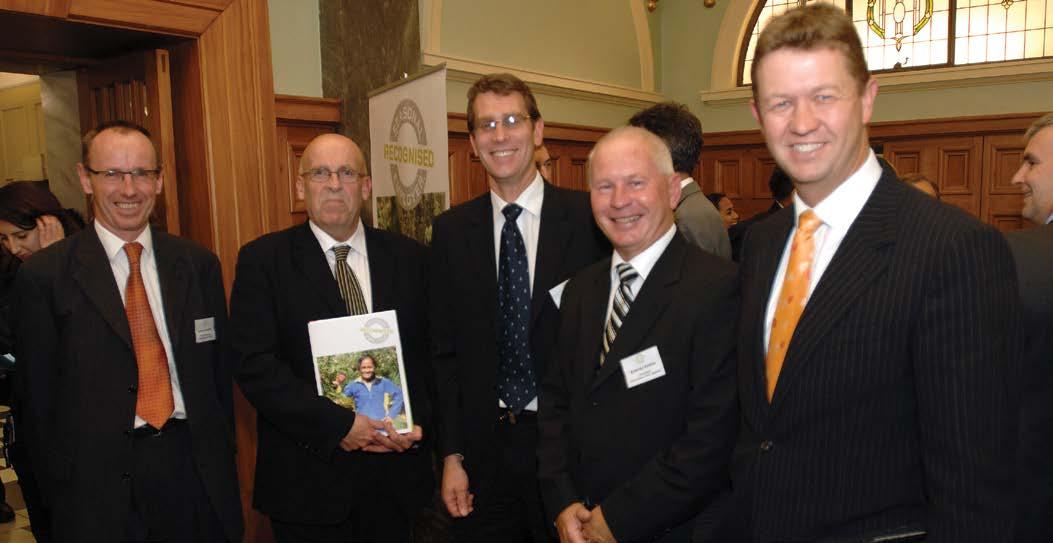
At Parliament for the launch of the Recognised Seasonal Employer scheme in 2007 with industry leaders and ministers at the time, including from left: James Buwalda, chief executive of the Department of Labour, David Benson-Pope, Minister of Social Development and Employment; Peter Silcock, chief executive of HortNZ, Andrew Fenton, HortNZ president, and David Cunliffe, Minister of Immigration
HORTNZ MARKS 20TH ANNIVERSARY
This December marks 20 years since Horticulture New Zealand (HortNZ) was established through the merger of three long-standing industry bodies: New Zealand Fruitgrowers Federation (est. 1916); New Zealand Vegetable and Potato Growers Federation (est. 1957); and the New Zealand Berryfruit Federation (est.1978).
On 1 December 2005, these organisations united to create a single voice for growers.
Andrew Fenton became the inaugural chair and president, serving until 2013 and remaining a director until 2015.
He was later honoured with the 2025 Bledisloe Cup for his outstanding contribution to horticulture.
Peter Silcock was appointed chief executive and led the organisation until 2015.
At the 2005 launch event in Wellington, then Agriculture Minister Jim Anderton, spoke about the important role horticulture plays in the lives of all New Zealanders.
“What is our roast lamb dinner without the roast potatoes. What is Christmas without strawberries, apricots, raspberries and other seasonal fruit,” he said, before going on to outline the sector’s $4.7 billion a year contribution to the economy, including $2.2 billion of export earnings.
Over the past 20 years, New Zealand horticulture has achieved a remarkable amount, growing into one of the country’s most dynamic and resilient primary sectors.
One of the most significant milestones has been the implementation of the Recognised Seasonal Employer (RSE) scheme.
The scheme has become a global benchmark for ethical seasonal labour, giving growers access to a stable and reliable workforce while delivering enormous social and economic benefits for Pacific communities.
Alongside this, the sector’s response to Covid-19 stands out as a significant achievement.
Faced with closed borders and fractured supply chains, growers, packhouses, exporters and government agencies worked together to keep fruit and vegetables flowing to both domestic and global markets.
The sector’s recovery from major biosecurity challenges such as the Psa outbreak in kiwifruit turned a crisis into a platform for future growth.
Other crops such as New Zealand apples, cherries and berries are now commanding premium prices around the world thanks to investment in new genetics, market development and post-harvest technology.
Horticulture is New Zealand’s fastest-growing primary sector
Across the board, growers have embraced innovation. Protected cropping, precision horticulture, improved water management and automation have reshaped how the sector operates.
NZGAP has become one of the horticulture sector’s most important achievements, giving New Zealand growers a credible, domestic assurance system that meets the expectations of regulators, retailers and increasingly discerning consumers.
HortNZ chief executive Kate Scott reflects on the transformation since 2005.
“Back then, there were over 7000 commercial growers. Today, there are around 4300. While the total number of growers has decreased through consolidation, the number of hectares under production has increased, thanks in large part to innovation and technology.
“Horticulture is New Zealand’s fastestgrowing primary sector – going from eight percent of primary sector exports in 2005 to 14 percent today, overtaking forestry as the third largest sector behind dairy and meat.
The horticulture sector’s future ambition is set out in its strategic plan, the Aotearoa Horticulture Action Plan (AHAP). This seeks to double farmgate returns for growers by 2035.
To achieve this goal, collaboration is key, says Kate.

Twenty years ago Grower
In Jim Anderton’s 2005 speech, he also spoke about the challenges facing growers – which had included recent floods and European Union import requirement issues.
HORTICULTURE IS NEW ZEALAND’S FASTEST-GROWING
PRIMARY SECTOR
“Initiatives such as our partnership with AGMARDT through its The Common Ground programme is a good example of that, as is the wider collaboration within the vegetables sector.
“A bold vision for the future of our sector along with a unified approach will streamline efforts, reduce administrative burdens and amplify advocacy through one strong voice.
“We are working together to deliver greater outcomes for growers, and to avoid duplication while maximising the impact of projects and aligning our efforts to support the AHAP.”
“Some of these challenges require a coordinated industry response and a body like Horticulture New Zealand has a useful and critical role to play,” he said.
“This requires an effective partnership within the industry, and that will assist to build an effective partnership with the Government.”
Kate says that this focus remains just as – if not more – important today as it was in 2005, particularly given the increasing global volatility and overall uncertainty faced by growers across everything they do.
“Growers deserve enormous credit for the hard work, dedication and belief that have made HortNZ’s 20-year milestone possible.
“We stand alongside growers to drive a stronger and more sustainable future for New Zealand horticulture.”
magazine (now NZGrower & Orchardist) featured the inaugural HortNZ board, from left, standing: Debbie Hewitt, Peter Scott, Ru Collin, Peter Silcock (chief executive), Tony Ivicevich and David Eder. Seated: Brian Gargiulo, Andrew Fenton (president) and John Allen

ENERGISING AVOCADO GROWERS
Katikati Avo Fest on Saturday 10 January is set to serve as a much-needed morale booster for the Bay of Plenty’s avocado sector, following devastating spring winds and stiff competition from overseas suppliers.
Carly Gibbs
Katikati is known as the avocado capital of New Zealand, and that’s a title worth celebrating.
For 22 summers, the town has hosted the grassroots Katikati Avo Fest, drawing up to 4000 visitors each time and raising a combined $230,000 for charity.
Next month’s summer festival, on 10 January, aims to serve as an energiser for both the community and Bay of Plenty avocado growers, some of whom lost up to 80 percent of their fruit in a severe wind event in September. The damage also affected the health of their trees, which will affect next year’s crop.
NZ Avocado chief executive Brad Siebert says the sector is rallying to recover, with financial relief and wellbeing services ‘activated’.
The Bay of Plenty is one of the primary commercial growing regions for avocados, producing half of New Zealand’s total crop.
Brad says there will be an impact on the industry’s export volumes coming out of the Bay of Plenty following the storm, which has been officially classified by the Ministry for Primary Industries (MPI) as a “localised adverse event”.
It’s been very tough, but everyone always lets their hair down at the festival and we hope they enjoy themselves
Despite the heartache, Jacqui Knight, promotions manager at Katch Katikati, which manages the Katikati Avo Fest, says the festival, like the industry, is “soldiering on”. The sector has thrown its full support behind the festival, with 80 percent of sponsors being local packhouses.
The Katikati Avo Fest has attracted top music talent over the years, including the likes of Tiki Taane, pictured here last year, on the DMS Main Stage.
Photo courtesy of Garry Brandon Photography
‘We’re in this together’
Toni Morrison, spokesperson for sponsor DMS, told NZGrower & Orchardist that their staff’s “hearts went out to growers”.
The festival celebrates the passion behind every orchard, and the role avocados play in everyday Kiwi life
“We’re just as worried as everyone else when things go wrong, especially with the weather. We’re in this together,” she says. “It’s been very tough, but everyone always lets their hair down at the festival and we hope they enjoy themselves.”
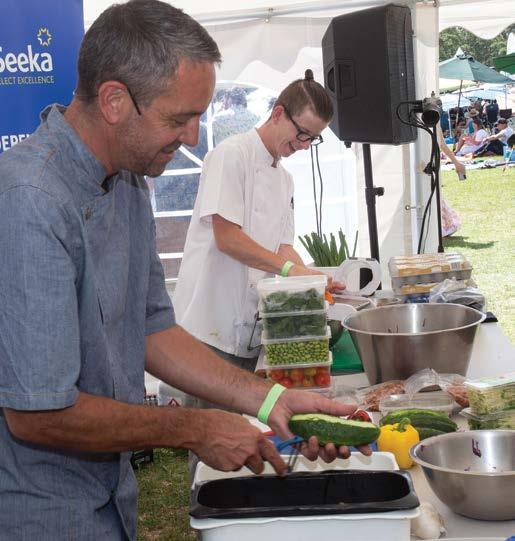
January’s Katikati Avo Fest will feature celebrity chef Chelsea Winter, who will host hourly, avo-inspired cooking demonstrations in the Seeka Kitchen Marquee. There’ll also be live music on the DMS Main Stage, from country music sensation Tami Neilson, performances by The Lady Killers (comprising Tina Cross, Suzanne Lynch, and Jackie Clarke), The Relatives, and Sonar Flare. There’ll also be a variety of food and drink vendors.


Avocados go boujee in the Seeka Kitchen Marquee. Pictured is last year’s guest chef, Brad King from Falls Retreat. Photo courtesy of Garry Brandon Photography
Keeping going
Toni says the festival is an ideal opportunity to promote Bay-grown avocados and champion growers, a view shared by Seeka’s marketing and communications manager, Rhian Ecclestone, who says their sponsorship on this occasion, will also highlight innovation.
Seeka is launching a new avocado-based oil brand at the festival. Although its name will remain a secret until then, Rhian shares that the brand will be part of Seeka’s value recovery initiative, transforming waste into profitable products for both growers and the business. Another example is Seeka’s Kiwi Crush – a range of frozen and freeze-dried kiwifruit products.
Katikati business sponsors and avocado growers, Ross Tanner of Tanner Spraying and Sam Ogden of Netpro, are hopeful for more of those good news stories. “Fingers crossed, there is some light at the end of the tunnel,” Sam enthuses, agreeing that “Other things can happen around avocados.
New season, new opportunities
As the industry charts its path forward, the 2025–2026 harvest was in full swing as this story goes to print.
NZ Avocado was working to capitalise on opportunities with exporters targeting key markets in Asia, Australia and new emerging markets in North America. Domestic market development also continued, with around 40 percent of the harvest consumed locally.

“NZ Avocado’s efforts are focused on facilitating coordinated promotions, supply chain transparency, and direct engagement with supermarkets to improve grower returns,” Brad says.
“We know that in Mexico, for example, the byproduct from their avocados is being used to make recyclable and biodegradable cutlery.”
Next month’s summer festival aims to serve as an energiser and morale booster for both the community and Bay avocado growers. Pictured is the 2024 event. Photo courtesy of Anna Menendez Photography
Robert Knyvett, trustee of festival owners Katikati Fun Fest Charitable Trust, says there’s an “interrelationship” between avocado and kiwifruit growers in Katikati. Over the years, financial contributions and attendance from both groups have been vital in supporting the festival and have demonstrated unity and solidarity.
Following previous weather impacts on yields and exports, the 2024–2025 avocado season had shown hope. Robert, who owns 7ha of avocados and 5ha of green and gold kiwifruit in Katikati, says his orchards performed well, although with “a lot of hard work”.
In Robert’s case, harvests ranked his crops as follows: avocados first, Zespri SunGold™ second, and Hayward third. “I just happened to have a fluke year where I was four times the industry average for most bins on (my two) orchards –217 bins off 143 trees.”
Robert manages his own orchards and distributed 800 cubic metres of avocado mulch, which he obtained from a fellow grower who was removing avocado trees to make room for kiwifruit. He noted that this made a significant difference. “Even my struggling trees are now producing at least one bin per tree.”
“The industry’s resilience and coordinated response will be central to turning things around in a highly competitive global environment as other origins produce larger volumes across more extended seasons.”
When it comes to the Katikati Avo Fest, he says it’s an opportunity to celebrate not only a ‘beloved fruit’ but also growers’ dedication.
“The festival celebrates the passion behind every orchard, and the role avocados play in everyday Kiwi life,” he says. “The celebration ensures avocados remain a prominent feature and continue to be a source of pride for the region.”
Tickets to the Katikati Avo Fest are available at iticket.co.nz and katikatiavofest.co.nz
Any profits are reinvested in the community, supporting various local groups and activities.
FESTIVAL ROOTS
Originally started as a ‘food festival’ by its owners, the Katikati Fun Fest Charitable Trust, and supported by the Pakeke and Katikati Lions Clubs, the event officially rebranded as an avocado festival in 2008, and event management company Katch Katikati now runs it for the trust.
Local packhouse sponsors helped initiate the festival’s catchphrase, ‘Supporting Avocado Growers’.
This is really exciting, it takes a long time to put citrus through a quarantine import and trial process, but there is some great material coming through
OUTLOOK FOR CITRUS
To find out about his year in Tairāwhiti Gisborne, NZGrower & Orchardist caught up with First Fresh citrus grower Matt Carter. Trees have performed pretty well this year, he says, but market conditions have been tough. The future lies in improving quality and popular new varieties.
Kim Parkinson
Matt Carter owns Hill Road Orchard in Ormond with his wife Cath. They grow oranges and a selection of newer varieties like seedless lemons, pink lemons, blood oranges and finger limes. Matt is a First Fresh field service and new product development manager and Citrus NZ Research & Development committee member.
First Fresh is one of the largest fruit growers and suppliers in the Gisborne region along with Kaiaponi Farms and Zeafruit. First Fresh works with approximately 100 local Gisborne growers and owns, leases or manages orchards with around 70ha planted in citrus.
These managed blocks encompass virtually every variety of citrus, including navel, late navel, Midknight and Harwood Late oranges, four varieties of Satsuma mandarin, two types of grapefruit, Meyer lemons, limes, tangelos, Encore mandarins, Richards Special and Afourer mandarins.
They also have more recent plantings of licensed citrus varieties such as Tango mandarins (a seedless Afourer type) and seedless Eureka lemons. That means they are harvesting most weeks of the year.
Reflecting on 2025, Matt Carter says overall it has been a pretty good year with trees now recovering from extreme weather events of the last few years like Cyclone Gabrielle, and there have been relatively strong OGRs (orchard gate returns).
“However, crops have been lighter, and the quality was variable, mainly due to wind blemish (cosmetic damage),” Matt says. “I think that given what is happening with other crops in Gisborne at present, citrus is still performing relatively well.”
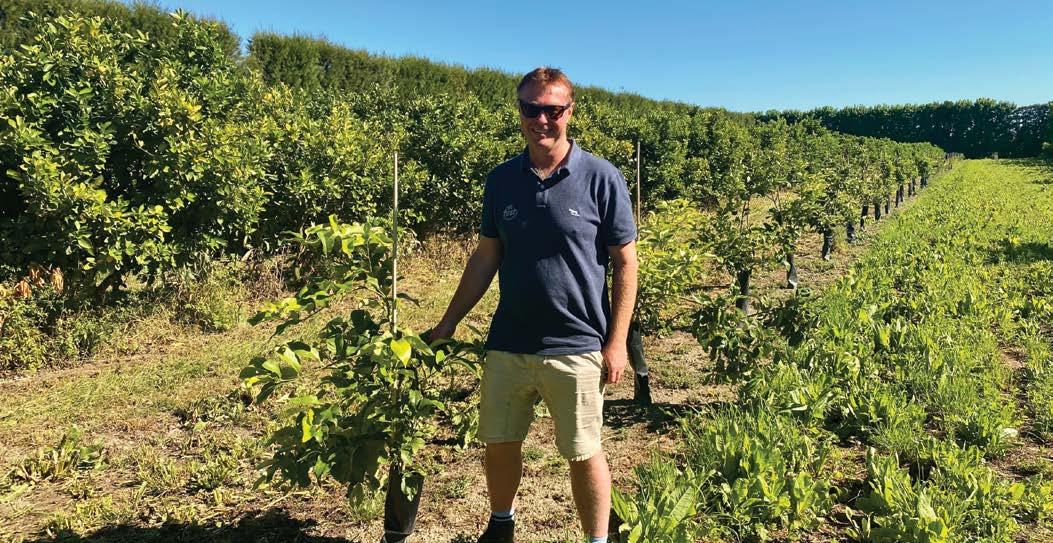
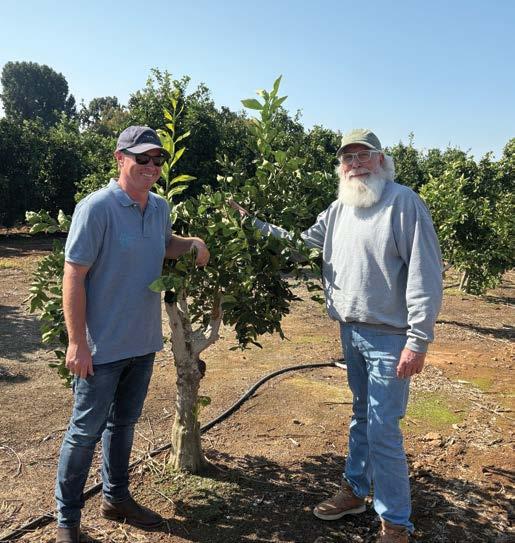
Matt Carter stands beside a row of new varieties being trialled by First Fresh including Italian pink lemons and early and late navel oranges

Looking forward, First Fresh is feeling positive about next year – flowering has been good and the trees are looking healthy.
It is usually mid-December when the natural fruit drop has finished and they can assess next year’s crop. But early indications are good.
New varieties
First Fresh is working with the NZFTC (New Zealand Fruit Tree Company) to bring new varieties of citrus to growers in New Zealand. There are currently around 30 new varieties in various stages of trial or quarantine that have not been seen here before.
We are expecting this to begin producing more fruit in 2026, so something to keep an eye out for next year
“This is really exciting, it takes a long time to put citrus through a quarantine import and trial process, but there is some great material coming through, some of which is already in production elsewhere in the world and proving very popular,” Matt says.
One of the early successes from this is the 2PH Seedless Eureka lemon. This is already very successful globally, and
there are now close to 40ha planted in New Zealand in Gisborne, Hawke’s Bay, Tolaga Bay and Northland.
“We are expecting this to begin producing more fruit in 2026, so something to keep an eye out for next year.”
On a recent research and development trip to California, Matt Carter visited Wonderful Citrus in Delano, the largest grower of fresh citrus in the world, with 10,000ha growing in the California region alone, and a total of 30,000ha growing across the United States, Central and South America.
Wonderful are also the licensed grower and marketer of the 2PH Seedless Eureka in the United States (as First Fresh are for New Zealand). “Gaining their insight and tips in the growing, packing and marketing of this variety was invaluable,” Matt says.
Tree health
“It’s taken a while, but this spring, trees seem to have bounced back a lot better. Growers have been working on improving their trees over the last couple of years and it now seems to be paying dividends,” Matt says.
First Fresh has worked with growers to improve overall tree health by rebuilding the roots and soils.
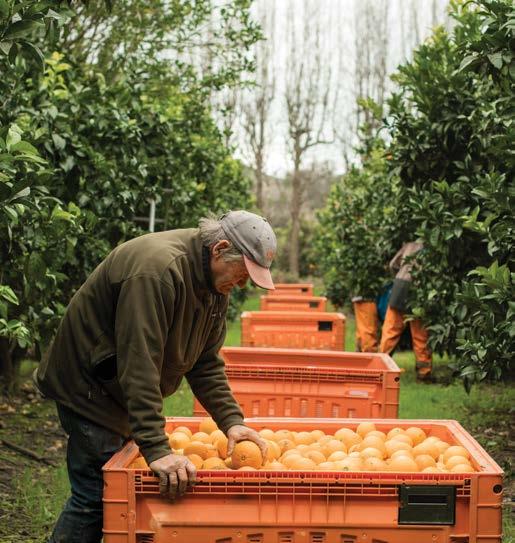
In terms of trends, this season navel oranges have been the standout crop with good-sized fruit, decent pack-outs and good prices. The navel market has a relatively good balance, although demand has exceeded supply for much of the season.
The new variety of seedless lemon grown by First Fresh
Harvesting navel oranges in Gisborne. Photo by Strike Photography
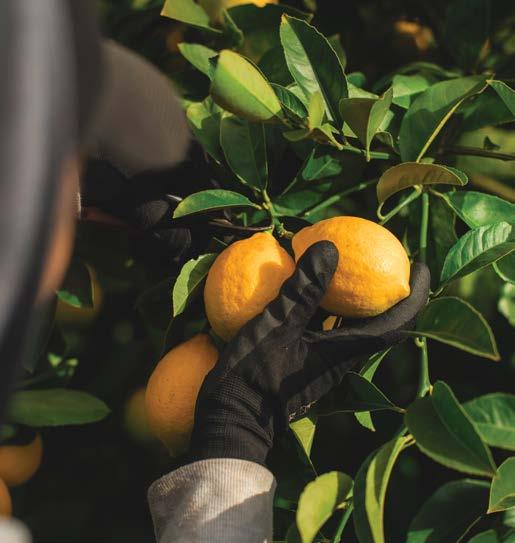
Globally, there is a trend towards seedless citrus, and that is starting to become evident in New Zealand.
“We have always had a decent amount of seedless citrus with Satsumas and navel oranges, but new varieties such as Tango (a seedless Afourer mandarin) in the summer, and the new Seedless Eureka lemon (exclusive to First Fresh) will be very popular with consumers as the volume of these crops builds,” Matt says.
Internal quality (flavour) this season has been fantastic across the board.
“With navel oranges in particular, there is a really good CNZ (Citrus New Zealand) quality standard, that requires an independent maturity test to be taken from each block to clear it for harvest. This is then checked in the market with supermarket testing taking place throughout the season to verify the maturity clearances.


Growers

“This programme has seen consumer acceptability of navels increase over the years and has helped with generating increased values back to growers. It wasn’t long ago that navel orange growers might average $0.65–0.70 per kg OGR. Now we have some growers averaging well over $1.50 per kg.
“Being able to increase pack-out or yield on a crop and do that consistently makes financial sustainability a lot easier.”
Lime growers have been competing with Vietnamese imports for the past few seasons and have suffered as a result. They used to get good prices from December to February, bringing up their average price.
Unfortunately, now there is a consistent supply coming in from Viet Nam during the New Zealand off-season. With good quality fruit at lower prices, local growers have lost this advantage, but the lower retail prices have seen a spike in demand and growers are able to sell more volume as fresh fruit rather than send it away for processing.
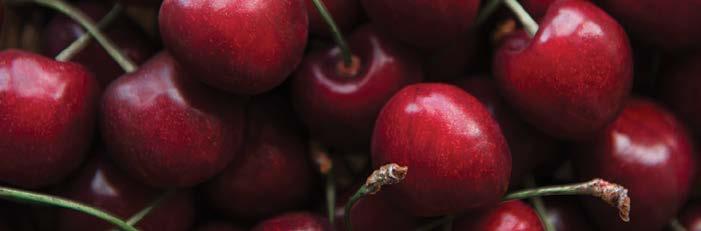

Matt Carter with California grower Randy Skidgel
Meyer lemons ready for harvest. Photo by Strike Photography
serving the fruit industry for 69 years
TASMAN FLOODS FORCE RETHINK
Tasman’s floods raised issues from gravel extraction to building resilience, and Julian Raine says the region must use the experience to better prepare for the future.
Anne Hardie
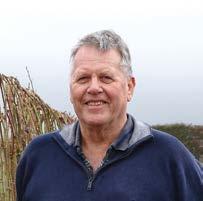
Julian Raine – grower, dairy farmer and former HortNZ president – says only a small number of growers had blocks in the path of the winter floods, but the damage was extensive in the Motueka and Moutere valleys.
Localised areas experienced a one-in-100year flood with properties inundated not only beside major rivers, but in valleys where small streams became raging torrents. Some areas like Riwaka escaped the first flood in late June but were badly affected by the second flood just a couple of weeks later.
In the worst hit locations, floods deposited silt, washed away production, and flooded accommodation, packhouses, coolstores and machinery, Julian says.
“Most growers have weathered it reasonably well, but many have some damage and a few have a lot of damage. In Lower Moutere, some guys had over a metre of water through orchards from waterways that breached.”
Floodwaters swept through apples, pears, kiwifruit and blueberry crops, stripping topsoil in some locations and leaving silt behind. While the impact on affected growers has been tough, Julian says the effect on overall regional production will be negligible.
What matters now, he says, is using the experience to become more resilient.
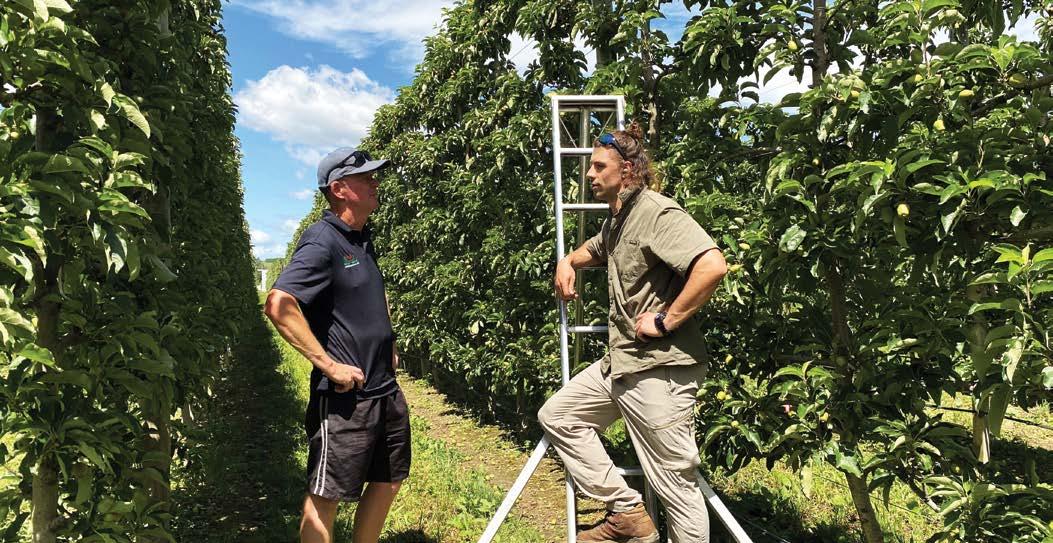
Wai-West Horticulture’s apple production manager, John Schrider, talks with seasonal worker, Archie Smith from Nelson, during thinning
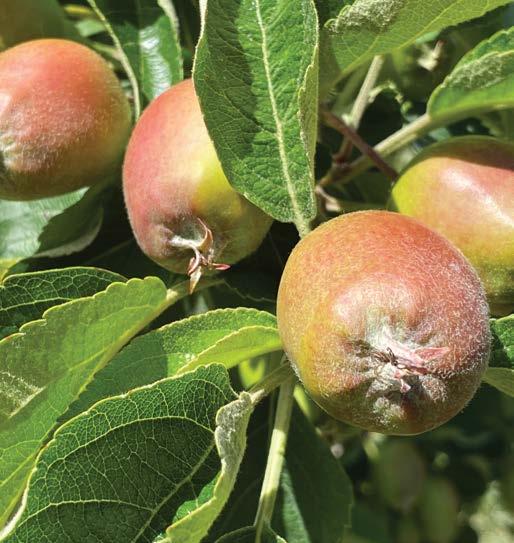
SonyaTM apples on the Waimea Plains showing promise for this season
“We’ve just got to be more resilient and think about these things in the future. Put back what has been lost but think about where we position things and plant things. So that we build in a bit more resilience in our infrastructure.”
In areas prone to flooding, he says floor heights should be raised for sheds, accommodation and offices and thought given to locating buildings outside natural flood pathways.
“We need to use the experience and the information wisely to build better going into the future.”
Julian also believes stop banks need to be reassessed with the council because both ‘official’ and ‘unofficial’ stop banks exist that are not always well placed.
You’ve got to be eternally optimistic. Otherwise, you wouldn’t get out of bed in the morning!
“It’s where you place those and you might have to give the river or stream a bit more elbow room to move. I would advise them to be more generous with margins than we have done in the past.”
River gravel has become a contentious issue in the wake of the floods and he says there are riverbeds that now sit higher than the surrounding land, leaving stop banks as the only protection. He doesn’t support a blanket approach to gravel extraction and suggests the answer is working with nature and the council to achieve a satisfactory outcome.
“I think each case has to be treated on its own merit. You can’t blanket one way or the other – too much or too little. You have to take an approach that gives us more resilience. It’s about balancing the environmental effects with physical effects and taking a bit more common sense rather than having blanket responses.
FEATURES:
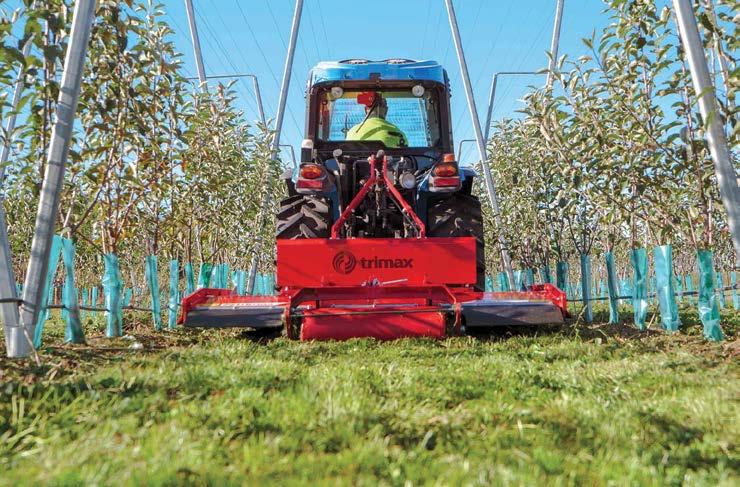
Gear driven rotary orchard mower
Robust, durable design
No daily maintenance
Designed & manufactured in New Zealand

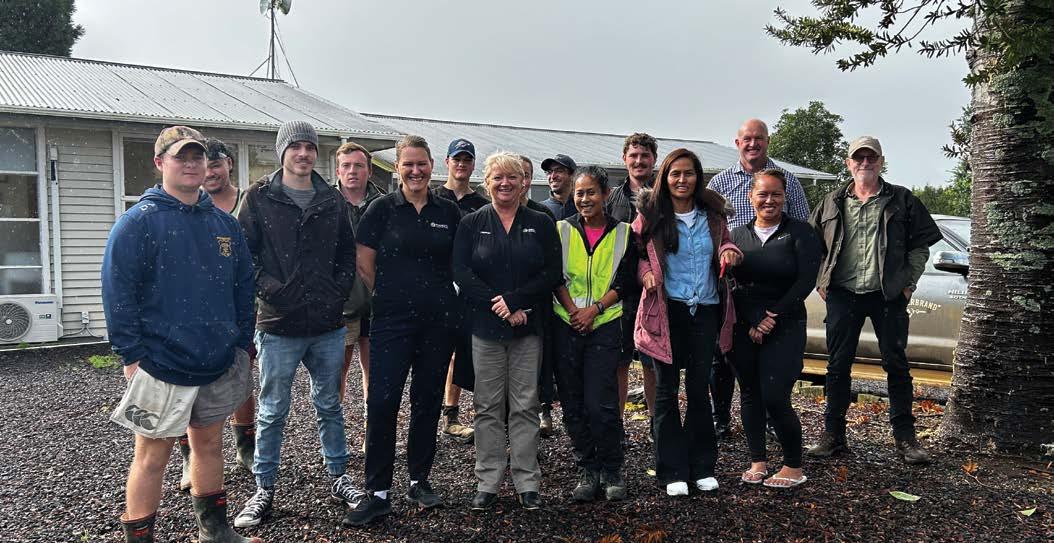
A community of support – Tasman growers including many directly affected by the winter floods, met up at Riwaka Hotel recently for a pre-Christmas get-together
“The council takes the royalties for it, so they need to work with contractors, environmentalists and once you talk to the experts, there are places where more gravel should have been taken and there are places where it probably shouldn’t have been taken. So, we just have to take a bit more of a scientific approach rather than a blanket approach. It seems to be all or nothing. We just have to be smarter about how we deal with these things.”
Sedimentation is another concern as floods wash soil from farms and orchards into the bay.
“The sedimentation that occurs in Tasman Bay is quite significant and you have to consider the people who earn their livelihoods fishing and shellfish and the environmental effects on Tasman Bay. It’s more of a holistic approach that is needed, rather than one size fits all.
“It’s my farm or orchard disappearing out into Tasman Bay which is not good for the ecology or the livelihoods of people who depend on Tasman Bay. We’re losing sediment which is our land and that isn’t good either.”
Julian’s dairy farm at Motupiko was in the thick of the floods, whereas his horticulture crops on the Waimea Plains escaped the floods and after a slow start to spring, the apples are underway.
“We had good winter chill and we’ve had late snow events, but interestingly, the flowering was about average – about normal. Flowering has been longer and slower, but about normal. Just a steady stream of flowers. That’s good and bad, depending on which crop (variety).
“I like a condensed flowering and it’s not condensed. Flowering is reflected in your harvest, and I like it reasonably tight because it allows you to be more specific to get your fruit off at optimum maturity rather than stretched out. It makes picking difficult because you have to work on averages – it just makes it harder picking.”
Looking ahead, there’s now the potential for the usual summer dry. But on the plains, the Waimea Dam is commissioned, and Julian says growers now have options they did not have before, such as higher-value gold kiwifruit.
We need to use the experience and the information wisely to build better going into the future
“We couldn’t plant gold kiwifruit before because we didn’t have surety of water. There’s not many of us left though – while waiting for the dam to be built we lost kiwifruit blocks because of the water restrictions and you can’t put such a valuable crop at risk.”
Looking ahead to the season, he’s optimistic.
“You’ve got to be eternally optimistic. Otherwise, you wouldn’t get out of bed in the morning!”
HORTICULTURE FACES TRAINING CRISIS
After years of uncertainty, the latest reforms to New Zealand’s vocational education and training system risk further alienating employers and letting down both the industry and learners. A new strategy by food and fibre chief executives calls for a shift in mindset.
John Gauldie
On 1 January 2026 work-based horticulture learning currently overseen by Te Pūkenga will transition temporarily to a new Food and Fibre Industry Skills Board. It’s the final chapter in the long saga of consolidation of Industry Training Organisations (ITOs), the creation and subsequent disestablishment of Te Pūkenga, and the reprioritisation of provider-led delivery.
The transition includes Primary ITO, which currently has 1500 work-based enrolments in horticulture programmes across the country (including all horticulture production and services).
The Government’s reforms envisage work-based learning shifting from Primary ITO to regional polytechnics and other private training providers by 2028. The Food and Fibre
Industry Skills Board will then focus solely on standardssetting and programme endorsement.
Primary ITO operations lead Ginny Vincent says the new organisation will continue to deliver work-based learning in a holding pattern until the end of 2027.
However, it’s not at all clear that regional polytechnics and private training providers will take over and offer work-based learning that adequately serves the needs of the primary sector.
Ginny says the industry and Government need to move quickly to ensure certainty for learners, employers and providers alike.
“By June 2027 we won’t be able to take on new enrolments. So the runway is fairly short. By the end of 2026 the industry really needs a solid understanding of where we’re heading.”
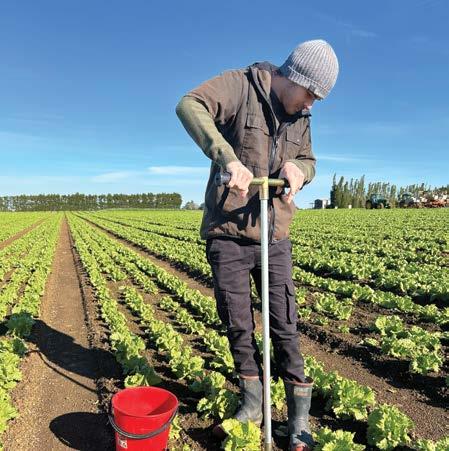
Primary ITO’s pilot Horticulture Cadetship Programme in Pukekohe could be expanded to other growing regions. Photo courtesy of Primary ITO
Industry concerns
Vocational Education Minister Penny Simmonds introduced the Industry Skills Boards in July, saying they would give industry a strong voice in work-based learning and ensure the system delivers the right skills, in the right places.
However, recent government proposals have only deepened the industry’s concerns. These include a 10 percent reduction in funding rates for workbased learning, the rejection of industry-recommended members for governance roles including the new Food and Fibre Industry Skills Board, a lack of legislative clarity in the Education and Training Amendment Bill, and the cancellation of funding for the Food & Fibre Centre of Vocational Excellence. Heavy cuts in funding for workforce analysis and planning will make it difficult to forecast industry requirements.
“The horticulture sector already faces significant workforce challenges, including skill shortages and an ageing workforce. Undermining work-based learning will only exacerbate these issues and threaten the long-term sustainability of the industry.”
Exodus from formal training
Nevertheless, since 2021, employers have steadily withdrawn from formal training programmes. In the fruit and vegetable sector alone, work-based learning collapsed by nearly 63 percent, dropping from 2000 learners in 2021 to just 745 in 2024.
The total number of learners in both work-based and classroombased learning is also declining, although polytechnics do not break down enrolment data specific to fruit and vegetable production qualifications.
Industry leaders are worried that providers – including polytechnics, wānanga and private training establishments – will make commercial decisions about the kinds of work-based learning they offer. Without a clear strategy, there is a risk they cherry-pick the most profitable offerings, undermining access to training with low-volume enrolments that have high value to industry.
Work-based learning works
HortNZ’s chief executive Kate Scott believes that the most effective learning in horticulture happens in authentic environments – “out in the paddock, in the lab, on the orchard, or in the packhouse” – where learners are mentored by experienced professionals.
The industry voice of what’s needed and their clear support of work-based learning is so important right now
Yet current Government policy appears to prioritise classroom-based, campus-centric learning models, a shift that risks marginalising the environments where horticultural expertise is best cultivated, Kate says.
As providers watch these falling enrolment numbers, there is little incentive to offer potentially loss-making qualifications.
This downward spiral has been exacerbated by a tough economic environment – forcing employers to focus on immediate concerns.
However, Kate says this isn’t a story of employers abandoning work-based learning. Rather, it’s the tale of an education system that has progressively set up work-based learning to fail. Current options available to industry have consistently failed to deliver the outcomes needed.
“Employers continue to train informally but often find it too hard to engage with a compliance-heavy system that doesn’t serve their needs,” Kate warns. “The message from employers is unequivocal – the current system doesn’t work.”
Sector reset
In response Kate has joined with other sector chief executives, working alongside Muka Tangata (the Workforce Development Council for the food and fibre sector), to launch the Food and Fibre Workforce Capability Strategy.
The strategy is backed by major industry bodies including HortNZ, Beef + Lamb NZ, DairyNZ, and Federated Farmers.
Work-based learning in Pukekohe – authentic growing environments are where horticulture expertise is best cultivated. Photo courtesy of Primary ITO
The strategy’s central thesis is clear: “We need a shift in mindset – from chasing volume to value generation.”
For too long, the sector argues, workforce development has been “driven by enrolment numbers and learner-led demand, rather than targeted investment in high-impact skills.”
Targeted training in strategic areas is “not just good for business; it is essential to achieving New Zealand’s broader economic and trade ambitions.”
Twelve decisive actions
The strategy outlines twelve specific actions needed to rebuild the system, organised around three themes: changing how government invests, what it invests in, and how that investment is used.
The horticulture sector already faces significant workforce challenges, including skill shortages and an ageing workforce
Key proposals include establishing a ‘low-volume, high-value’ training fund of $10–20 million to support critical skill areas “with high impact on industry output, productivity, and profitability” but which aren’t commercially viable under current enrolment-driven funding models.
Other actions address the need for flexible, sectorwide qualifications that recognise significant mobility within the industry and modernised assessment approaches.
Notably, the strategy calls for returning eligibility for workplace training to workers with work visas, recognising that migrant workers make up a vital part of the food and fibre workforce.
Concrete solutions
Ginny says she agrees with the strategy but there is work that needs to take place in the interim so that work-based learning has a clear direction.
“Work-based learning is the way to go to keep your staff growing and adapting. There’s value to it with skills and knowledge being taught on job and the learning being accessible for everyone. But we need to refresh the models to meet the environment we’re in.”
She says one innovative example is Primary ITO’s Horticulture Cadetship Programme. The pilot ran in Pukekohe in 2024/2025 and expanded to the Bay of Plenty. There are plans to expand to other growing regions with industry support.
Local growers saw an opportunity to bring together a cohort of learners from local businesses, each enrolled in a Primary ITO apprenticeship, specialising in fruit or vegetable growing (indoor or outdoor), or nursery production.
In contrast to the traditional Primary ITO apprenticeship, cadetship learners benefit from peer support through shared study sessions and site visits, creating strong industry networks. In addition, a dedicated advisor works alongside employers to oversee training requirements and progress – tasks normally undertaken by employers, saving them substantial time.
“The Pukekohe cadetship was a really successful pilot,” Ginny says. “We’d like to continue rolling it out but we need industry support.
“The industry voice of what’s needed and their clear support of work-based learning is so important right now.”
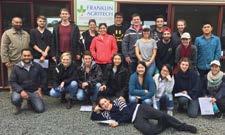
STUDY HORTICULTURE
Certificate L4 and Diploma L5 Learn while you earn
• People working full time in Horticulture (NZ Citizens/ PRs or Work visa holders) can study one day/ week and complete practical requirements at their workplace.
• Complete Certificate or Diploma in one year duration (40 weeks/year).
• Learn generic growing skills in your study and crop-specific skills in your workplace.
• Full support is provided by the FIAT staff throughout the study and later.

Some video links:
• www.youtube.com/ watch?v=Dgf9NnjLcdQ
• www.youtube.com/ watch?v=uqJmrsam8D0
Please contact specifying if you are a NZ citizen/PR or a Work Visa holder: Dr Raj Saini 027 278 2789 | +64 9 236 3738 | horticareers@gmail.com 760 Glenbrook Road, Kingseat, Auckland 2679 www.agritech.ac.nz Contact us
‘Franklin Agritech is a part of Rupex Growtech which has been operating successfully for 25 years in New Zealand’ www.fiat.ac.nz | www.rupex.co.nz
KNOW YOUR HORNETS
New Zealand is battling its first yellow-legged hornet incursion. Overseas, the invasive predator has decimated honeybee populations. This serious threat has resulted in a comprehensive biosecurity response.
Biosecurity New Zealand believes it’s unlikely the yellow-legged hornet (Vespa velutina) is present outside Auckland. However, if not contained and eradicated, the species is likely to spread anywhere honeybees are found.
More than 120 people are now working on the hornet response, including teams conducting on-the-ground searches. It’s unlikely to be a quick fix and the response could potentially stretch over several summers.
A single hornet can kill 25–50 bees per day and rob brood nests to feed their own larvae
This hornet is a serious threat to honeybees and could have major implications on the ability of honeybees to effectively pollinate crops. A single hornet can kill 25–50 bees per day and rob brood nests to feed their own larvae.
Overseas, the yellow–legged hornet has been a significant problem for beekeepers due to its aggressive and effective predation of honeybees and wild bee populations. Reports from France suggest up to 30 percent colony destruction.
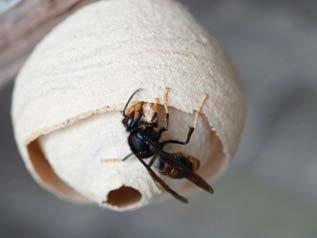
Hornets are larger than common wasps

Report a sighting
Don’t attempt to remove or control a suspected hornet nest yourself or spray a hornet or nest with insecticide. It is very important for Biosecurity New Zealand to know where the hornets are active. Any attempt to control them risks pushing them away, making it difficult to find and manage them.
If you think you have found a hornet or its nest, try to take a clear photo and report via: report.mpi.govt.nz or call the exotic pest and disease hotline: 0800 809 966
YELLOW-LEGGED HORNET – FACTS
A type of wasp, known to be aggressive and has a painful sting
Large (20 to 30mm long) compared to honeybees and common wasps (typically 11 to 16mm)
Black head, yellow face, black thorax, distinctive dark legs with bright yellow tips
Wings a smoky brown colour, not transparent like common wasps
Large nests (up to 80 cm tall) but early embryo nests in the spring season the size of a tennis ball
Originally from Asia, widespread across Southeast Asia
Introduced to Europe in early 2000s and spotted in USA in 2023, not found in Australia
An early embryo hornet nest can be the size of a tennis ball
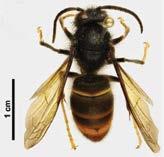
From left to right: Yellow-legged hornet, German wasp, Asian paper wasp, Australian paper wasp
NAVIGATING NEW ZEALAND’S SEASONAL VISA LANDSCAPE
New Zealand’s seasonal labour settings are undergoing the most significant period of change in more than a decade. What was once a clear, single-pathway system has evolved into a multi-layered framework designed to meet a broader range of workforce needs across the primary industries.
This expanding system brings both opportunity and complexity. On one hand, there is now a broader mix of visa settings that respond to different skill levels, seasonal peaks and industry-specific pressures. While new visa categories offer employers more targeted options for different roles and skill levels, the proliferation of pathways also makes it harder to navigate the rules, understand obligations and manage the true cost of securing labour.
For horticulture, this means the sector must remain deeply engaged and consistently vocal. New visa settings cannot be assumed to work in the sector’s favour by default. Employers must remain proactive and engaged to ensure future policy remains practical, cost-effective and aligned with the realities of horticultural production.
The RSE scheme: Still the anchor for horticulture and viticulture
Despite the introduction of new visa pathways, the Recognised Seasonal Employer (RSE) scheme remains the core mechanism for securing a workforce that requires scaling up quickly during peak seasons in horticulture and viticulture.
Under the scheme, approved employers can recruit workers from nine Pacific nations and Timor Leste for up to 7 months per 11-month period (or 9 months for Kiribati and Tuvalu). No other sector in New Zealand requires seasonal workforces numbering in the hundreds to thousands at a single time, and the RSE scheme remains the only visa pathway specifically designed to support large groups of seasonal workers.
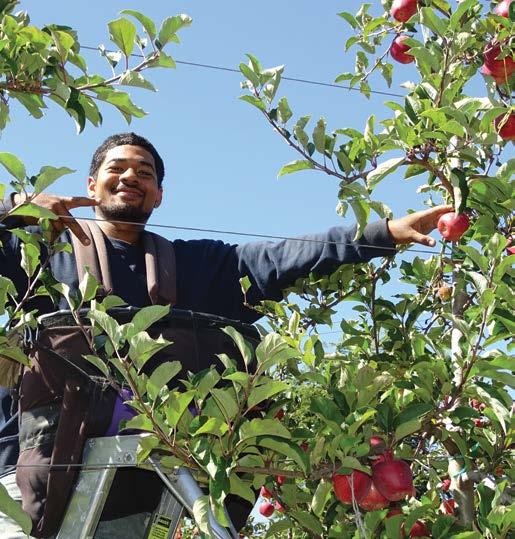
Accredited Employer Work Visa: For skilled, permanent, non-seasonal roles
The Accredited Employer Work Visa (AEWV) is New Zealand’s primary visa for recruiting skilled, full-time, non-seasonal workers. It is not intended for seasonal horticultural roles such as picking, thinning or packing but is particularly important for filling persistent skill shortages — roles where the domestic labour market cannot consistently supply qualified candidates.
Global Workforce Seasonal Visa: For multi-year, skilled workers
The Global Workforce Seasonal Visa (GWSV) sits within the AEWV framework but operates differently in practice. Unlike other visas, there is no requirement to recruit New Zealanders first. It allows accredited employers to hire experienced seasonal workers for up to 3 years, acknowledging that some seasonal roles face chronic skill shortages.
For horticulture, its application is narrow — the only eligible role is Agricultural and Horticultural Mobile Plant Operator — but it provides a stable, multi-season option for employers who rely on experienced machinery operators.
Supplementary Seasonal Employment Visa: Filling short-term gaps
The Supplementary Seasonal Employment (SSE) Visa allows people who are already in New Zealand — typically visitors, students or working holidaymakers — to undertake short-term seasonal horticulture or viticulture work for up to 6 months.
The RSE scheme remains the core mechanism for horticulture’s peak seasonal workforce. Photo by Anne Hardie
Seasonal visa navigator
Purpose Large-scale seasonal labour for horticulture and viticulture
Skill level
Pay
Pastoral care
minimum wage (higher after 2 seasons)
Skilled or specialist full-time roles
Skilled, experienced seasonal roles
Short-term seasonal labour for people already in NZ
however settlement information required (such as how to access healthcare, banking, tenancy rights and employment support)
Length of visa 7–9 months Up to 5 years (skill level 1–3), 3 years (skill level 4–5) 3-year visa Up to 6 months Time in New Zealand per year
Pathway to residence?
(depending on role)
Eligible horticulture roles Picking, thinning, pruning, packing
Managers, technicians, supervisors Mobile plant operators only
Crop planting, maintenance, harvesting, or packing (if already in NZ)
Peak Seasonal Visa: Horticulture exempt
A further addition to the seasonal visa system is the Peak Seasonal Visa (PSV). This visa provides a short-term option for lower-skilled seasonal roles in primary industries outside horticulture, enabling accredited employers to bring in workers for brief, high-demand periods when the local labour supply is not sufficient.
Strong
pastoral care standards are therefore essential to ensure worker wellbeing, support community integration and protect the sector’s reputation and social licence
The PSV was designed to support industries such as dairy, seafood, meat processing, wool, forestry and seasonal tourism — sectors that experience short, sharp seasonal peaks but do not require large cohorts of workers. Horticulture is excluded, as the government considers the RSE scheme to already provide a purpose-built, reliable workforce solution for horticulture and viticulture.
Each year, the RSE scheme brings more than 17,000 (cap is 20,750) Pacific workers to New Zealand and includes extensive pastoral care and accommodation requirements that do not apply under the PSV.
Because horticulture depends on such a large and concentrated seasonal workforce, widening the PSV to include horticulture would risk fragmenting the labour supply and could undermine the stability and predictability of the RSE workforce. The same risk applies in reverse: opening the RSE scheme to other industries would dilute access to Pacific workers and erode the sector’s ability to plan and secure the large, coordinated workforce it needs each year. Keeping horticulture aligned with a single, structured scheme remains essential to ensuring the sector has reliable access to the labour scale it requires.
There is, however, an ongoing perception of unfairness because PSV employers are not required to meet the pastoral care and accommodation standards that apply to RSE scheme employers. This distinction reflects the scale and intensity of horticultural seasonal labour. Unlike other industries, horticulture brings in large groups of overseas workers who live in employer-provided accommodation for months at a time, often in remote or rural areas with limited transport and services. Strong pastoral care standards are therefore essential to ensure worker wellbeing, support community integration and protect the sector’s reputation and social licence.
That said, RSE settings need to be risk-based, cost-effective and economical for employers.
As the visa landscape becomes more complex and new seasonal pathways emerge, it is increasingly important to ensure RSE requirements strike the right balance between safeguarding worker wellbeing and maintaining an enduring, competitive horticulture sector.
To discuss any of these visas: RSE queries to rebecca.fisher@hortnz.co.nz
All other seasonal visa queries to sarah.cameron@hortnz.co.nz



CLEARING THE WAY – SAFELY
Cornelia Luethi
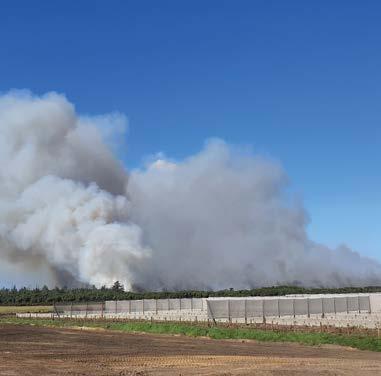
When a fire intended to clear vegetation trimmings escaped its boundary in December 2021, it ignited one of the most complex wildfires in New Zealand’s recent history. For growers, the incident is a stark reminder that removing unwanted vegetation – including managing orchard trimmings – can carry significant fire risk if not planned carefully.
The blaze began on 18 December 2021, when a fire was lit under a valid fire permit on a property being developed for avocado production. The landowner had cleared unwanted vegetation into several burn piles. Although the activity was permitted, and there was an attempt to extinguish the initial fire by burying it, the fire re-ignited. Within hours, the situation escalated.
The fire spread rapidly through mixed fuels, including shelterbelts, scrub and peat-rich wetlands. It moved unpredictably, driven by highly variable winds that changed direction throughout the day, as well as burning underground.
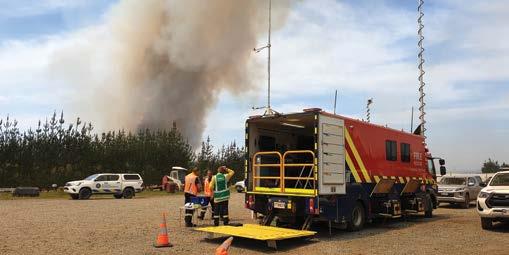
The fire burned for 52 days, scorching more than 2800ha near Waiharara, north of Kaitāia, in the Far North. It tore through wetlands, devastated a conservation area, damaged culturally significant sites and forced evacuations of homes in the seaside settlement of Kaimaumau. More than 100 firefighters from around New Zealand fought the blaze in helicopters and on the ground: the firefighting cost alone exceeded $10 million.


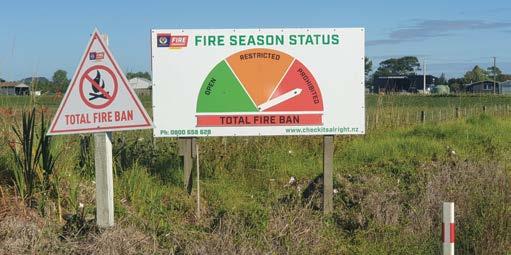
www.checkitsalright.co.nz is Fire and Emergency New Zealand’s national fire season and permit information platform.
The site allows landowners to:
Check current fire season status
Apply for permits
Access safe burning checklists
Understand weather-related fire danger.
“Waiharara was my welcome to Northland fire,” he reflects. “We fought it for 52 days straight. It was extremely challenging terrain – swamps, peat, shelterbelts and unpredictable wind. Access was difficult, and we needed helicopters to reach the fires.”
Fire and Emergency New Zealand encourages growers to checkitsalright.co.nz, to avoid another incident like 2021’s Northland blaze that burned for 52 days
Although the landowners had a permit, several compounding factors allowed the fire to escape:
• A burn pile was buried before being fully extinguished, likely causing an underground peat fire. Although burying a fire pile can help extinguish it, in peat soils this is dangerous as the fire can burn underground through a process called smouldering combustion. These fires can persist for months, or even years, and are extremely difficult to extinguish.
Insights from the front line Mitchell Brown, the community risk manager for Fire and Emergency New Zealand’s Northland District, was the first senior officer to arrive at the fire. Mitchell has spent decades in frontline firefighting and today he leads fire prevention and risk management programmes across Northland.
• Variable winds changed direction frequently, driving the fire unpredictably.
• Fuel sources, including shelterbelts and orchard vegetation, were nearby.
“It’s easy to become complacent,” Mitchell says. “People think, ‘I’ve burned piles like this for 20 years without an issue.’ But conditions change. One dry week, one gust of wind, one buried ember – that’s all it takes.”
Managing fire risk
Orchard planning should include a designated area for vegetation disposal, particularly if burning is intended. Choosing the right site for a burn pile can make a critical difference in managing risk.
The burn area should have clear access for firefighting vehicles and be away from shelterbelts, scrub, peat, and other flammable vegetation. Also consider using shelterbelt plants with lower flammability.
Firebreaks – such as regularly mown grass strips or bare soil lanes – should be incorporated to prevent a fire from travelling across the orchard or into neighbouring vegetation. It is also essential to have a reliable water source nearby. In large-scale incidents, helicopters may be used – so water tanks with open tops or on-site ponds that can be accessed by monsoon buckets provide vital support.
“The easier it is for us to access water and the fire site, the faster we can contain it,” Mitchell explains. Growers can also pre position fire extinguishers, hoses, or portable water tanks during any permitted burn.”
Think in terms of risk
Careful planning during orchard design or redevelopment can significantly reduce fire risk and improve emergency response if a fire does occur. It would also be prudent for growers to review their insurance to confirm not only that they are covered if a fire escapes from their property, but also whether they are protected if a neighbouring landowner’s fire spreads onto theirs.
Although no prosecution resulted from the Waiharara fire, growers should not assume that a permit protects them from liability.
“If someone repeatedly ignores advice, or shows negligence, prosecution is definitely on the table,” Mitchell notes. “And even when there is no prosecution, the personal, financial and community impacts can be enormous.”
Mitchell urges orchardists to think ahead, even outside of formal fire season declarations: “Just because you can burn legally does not mean it is safe.”
The key is to think in terms of risk, not just rules. Conditions change rapidly during New Zealand summers. Even if a
burn is legal in the morning, wind changes or temperature spikes in the afternoon could quickly escalate the risk.
“It’s always better to postpone a burn than try to put out a runaway fire,” he says.
Publisher’s note
This article is an abridged version of the full article from the December 2025 edition of Avoscene, reprinted here with permission.

More than 100 firefighters fought the blaze north of Kaitāia Key is to think in terms of risk, not just rules
IF THE HORTICULTURAL INDUSTRY WANTS TO REMAIN WORLD-CLASS, THE CONTRACTS THAT UNDERPIN IT NEED TO REFLECT SHARED RESPONSIBILITY, NOT ONE-SIDED PROTECTION.
OPINION
THOUGHT LEADERS
THE UNFAIR TERMS OF TRADE WHEN BUYING TREES
Orchardists across the country are bearing the brunt of commercial risk in contracts with nurseries, argues grower Kevin Bayley. It’s a long-standing problem he says, and nothing is changing. In this opinion piece, he shares his vision for a better working relationship between growers and nurseries. After all, neither can flourish without the other.
Kevin Bayley
Across the horticultural industry, there’s a growing frustration that many growers will recognise – the unfair terms of trade when ordering trees. Orchardists invest heavily in new plantings, often years in advance, yet when things go wrong, it’s almost always the grower left carrying the cost.
A one-sided arrangement
Anyone who’s ordered trees for a new orchard block knows how it works. You place an order well ahead, pay a substantial deposit, and often make progress payments while the nursery grows the trees. Two years later, your land
is cleared and ready to plant, you expect your 15,000 trees — but you might receive only 250 trees. It sounds extreme, but examples like this are far from rare.
And when it happens, there’s usually no comeback. Nurseries rely on contracts packed with disclaimers and “best endeavours” clauses that protect them completely. Meanwhile, if the grower tried to reduce or cancel their order — say, scaling back from 15,000 to 250 — it would be treated as a breach of contract. The imbalance is obvious: nurseries face almost no commercial risk, while orchardists bear all of it.
Hawke’s Bay grower Kevin Bayley
Hiding behind the fine print
When issues arise, nurseries are quick to point to the fine print. Their terms of trade are written to leave them legally untouchable. Phrases like “subject to availability” or “no guarantee of supply” effectively give them a free pass. The moment there’s a shortfall, a delivery delay, or a quality problem, the response is the same: “It’s in the terms of trade.”
Growers know that challenging a contract like this is rarely worth it. The legal costs would far exceed the value of the trees, and the relationship with the nursery would likely be damaged beyond repair. So most simply absorb the loss and move on — even when tens of thousands of dollars are at stake.
The seven-day problem
Then there’s the matter of quality. Most nursery contracts allow only seven days to identify and report defects after delivery. On paper that might seem fair, but in practice it’s unrealistic. Problems such as rootstock incompatibility, latent disease, or weak growth may not reveal themselves for months.
By the time those issues become visible, the planting season is over, and the warranty period has long expired. Once again, the nursery points back to its terms, and the orchardist is left holding the loss.
Why it’s not good enough
Nurseries face their own challenges — weather, labour, disease, and supply chain issues can all disrupt production — but that doesn’t justify transferring all the risk onto growers. The current system rewards nurseries for taking orders but doesn’t hold them accountable for delivering on them.
This imbalance undermines trust and discourages investment. It also threatens the industry’s credibility. The horticultural sector prides itself on integrity, innovation and partnership. Yet the way many nursery contracts are written tells a different story — one of self-protection rather than shared responsibility.
What needs to change
It’s time for a more balanced approach. Nurseries and orchardists both depend on each other, and fair terms should reflect that. A few simple changes would go a long way:
Fair supply clauses
If nurseries can’t meet agreed quantities, there should be a clear process for refund and compensation for large variations, not a blanket exemption.
Realistic defect periods
Defect reporting should match the biological realities of horticulture, not arbitrary time limits.
Mutual flexibility
Both sides should have reasonable options to adjust orders when circumstances genuinely change.
Transparency and communication
If shortfalls or production problems arise, growers should be told early, not at delivery time.
A call for fairness
At its heart, this issue isn’t about blame — it’s about fairness. Orchardists understand risk; it’s part of farming life. But they shouldn’t be asked to shoulder the nursery’s risk as well.
If the horticultural industry wants to remain world-class, the contracts that underpin it need to reflect shared responsibility, not one-sided protection. Nurseries should stop hiding behind their terms of trade, and both sides should commit to fair, transparent dealings that let growers plan with confidence.
Thought leaders
Disclaimer: The individual comments and views in this opinion piece do not necessarily represent the view of Horticulture New Zealand, the publisher of NZGrower & Orchardist
NZGrower & Orchardist serves the horticulture community by sharing a broad range of authentic grower voices to generate discussion, change and an environment where all growers can thrive. Contact editor@hortnz.co.nz to share your thoughts.
The N.Z. Passionfruit Growers Association Incorporated 2025 Commodity Levy
Thank you for voting on the Passionfruit New Zealand Commodity Levy Order. The referendum closed on 10 November 2025, with 85% support in favour; the weighted result is 83% in favour. We really appreciated everyone who took the time to have their say – we received votes from 79% of growers. Contact: Rebekah Vlaanderen for more info treasurer@passionfruit.org.nz
THE PASSIONFRUIT COMMODITY LEVY REMAINS AT 3% FROM 2025
EMS REVIEW: YOUR PATHWAY TO FRESHWATER COMPLIANCE
Ailsa Robertson : HortNZ environment policy manager and Kate McDermott : NZGAP technical advisor
NZGAP’s revised environmental standard will help growers meet changing regulations with confidence.
NZGAP is reviewing its Environment Management System (EMS) add-on so that it remains credible and effective for growers to meet emerging regulatory and market requirements.
Understanding the regulatory changes


Freshwater farm plans are a key method to achieve catchment water quality objectives. Freshwater farm plans, governed by national regulations, manage diffuse discharges from agriculture. Such discharges include nutrients and sediment, and pathogens like E. coli if you farm animals. These contaminants lost via leaching or run-off can impact freshwater and freshwater ecosystems.
Amendments to the Resource Management Act have changed freshwater farm plan compliance. Once the new regulations are introduced, industry organisations such as NZGAP will be able to apply to provide certification and audit services for its members who need a freshwater farm plan. The Minister will provide national approval based on a set of criteria. The criteria will be in the regulations released next year.
The other recent change involves area thresholds. Now, farms will require a freshwater farm plan if they have 50ha or more of orchards or vineyards, pastoral, arable or mixed land use – or 5ha or more of other horticulture (e.g. vegetables, berries). It is important to know, however, that regional councils can choose to set lower thresholds in their regional plans.
Joining the Dots provides a systems approach to help build confidence for growers
For several years we have strongly advocated for the national approval pathway for industry programmes. Our consistent message has been to minimise duplication and the burden of compliance. To achieve this, the system must leverage existing programmes that meet the criteria. This means recognising a programme’s standard and rules, benchmarked to the regulations.
Revised freshwater farm plan regulations are due in the coming months. Once released, NZGAP will make any necessary adjustments to the EMS in the new year to ensure that in the future the EMS add-on will not only meet market requirements but also regulatory requirements.
Refreshing the Codes of Practice
Alongside this, Horticulture New Zealand’s environmental Codes of Practice are being revised. The updates reflect the latest research, practices and decision-support tools. The revised Codes of Practice will underpin the updated EMS standard. See the article on page 37 in this issue highlighting changes to the Nutrient Management Code of Practice. The Codes of Practice extend applied research to the farm or orchard through farm plans.
Joining the Dots – a systems approach
Online Orchard Irrigation Supplies
Call our experts 0800 130 905 www.irrigationexpress.co.nz
The Joining the Dots systems approach connects research, codes of practice, farm planning and assurance. This approach shows how research-based practices are developed, implemented and verified. Reporting supports continuous improvement in research and implementation of practices. Audited farm plans are central to this system. They translate research and codes of practice into practical, risk-based actions.
Building confidence for growers on the journey is critical to success. Joining the Dots provides a systems approach to support this – from building a risk-based farm plan to applying decision-support tools.
Why review the EMS?
Updating the EMS is an opportunity to provide a clear, industry-led pathway for growers – a pathway that meets evolving regulatory requirements and reflects updated Codes of Practice.
Our
consistent message has been to minimise duplication and the burden of compliance
The EMS was first released in 2019 to support growers to meet regional farm environment plan requirements. Since then, we have seen a shift in regulatory expectations and industry research. Several extension projects since 2019 have supported over 200 GAP certified growing businesses to develop their EMS plans.
NZGAP is also exploring alignment with international market standards. For example, LEAF Marque and the new GLOBALG.A.P. Environmental Sustainability Standard (ESS). The ESS is expected to be launched soon. We aim to support growers to meet both domestic regulations and overseas market expectations.
A new version of the EMS is expected to be complete early next year. Growers with the current EMS will have time to transition. Every effort will be made to align regulatory timeframes with GAP audits to avoid unnecessary duplication.
What does this mean for growers?
For growers already registered with the EMS, registrations remain valid while the freshwater regulations are on hold, provided implementation continues. For those already certified, we recommend continuing certification, to maintain compliance with any regional farm environment plan obligations and to ensure readiness for upcoming requirements under the freshwater farm plan regulations.
We will be in touch to advise growers of the next steps when there is further clarity on requirements and timeframes in the regulations, including timeframes for audit.
We welcome growers to be part of testing of the revised EMS. Please get in touch with the NZGAP team if you are interested. We also encourage growers to become familiar with the updated Codes of Practice. Visit www.nzgap.co.nz for more information.
Key actions for growers
Stay informed about the EMS review and upcoming changes.
Complete your annual EMS self-assessment and keep records current. Review the draft Codes of Practice and provide feedback.


Wood Pellet Energy Solution

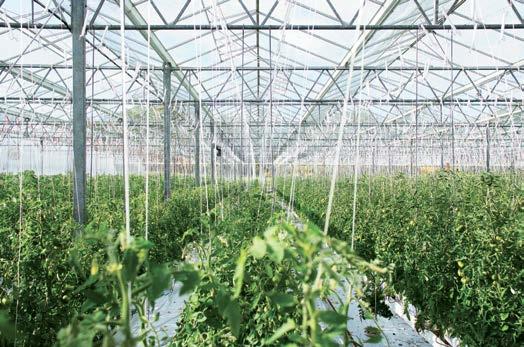
First released in 2019, the NZGAP Environment Management System (EMS) add-on is now under review
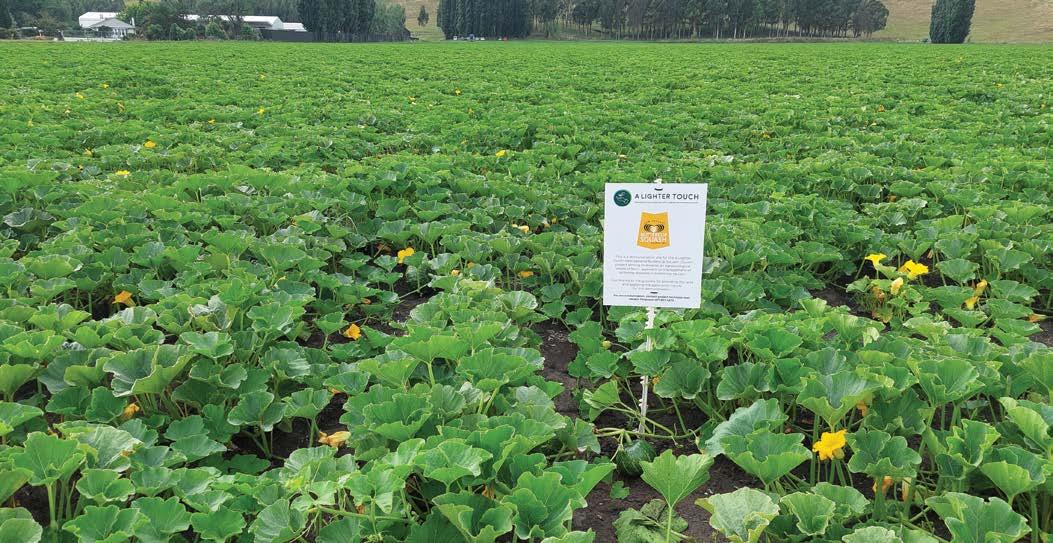
A LIGHTER TOUCH IN BUTTERCUP SQUASH FIELD DEMONSTRATIONS
Across the industry, there is increasing anticipation for the day we can manage soil-borne disease and crop stress with truly ‘a lighter touch’ approach. Field demonstrations in Hawke’s Bay and Gisborne showed mixed results in harvest outcomes, while building essential knowhow about formulating combined biological and conventional crop protection programmes.
Tim Robinson and Dereck Ferguson : horticultural researchers and consultants
The NZ Buttercup Squash Council, under the A Lighter Touch (ALT) programme, has been conducting field demonstrations to investigate this approach. Two large-scale demonstrations were conducted in Hawke’s Bay and Gisborne during the 2024/25 season, focusing on how biologicals, biostimulants and nutritional products could be integrated into a standard commercial crop programme. The products applied fall into several categories, such as biobactericides and biofungicides, biostimulants and stress relievers, and nutritional products (see table 1) – and used under condition of anonymity.
The objectives were to:
Demonstrate a programme approach to soil-borne disease management
Assess whether these additional inputs could enhance soil health and plant resilience
Determine if they could be practically integrated into crop programmes, and Verify that they were safe to use without adversely affecting plant physiology or crop performance.
The Hawke’s Bay demonstration area
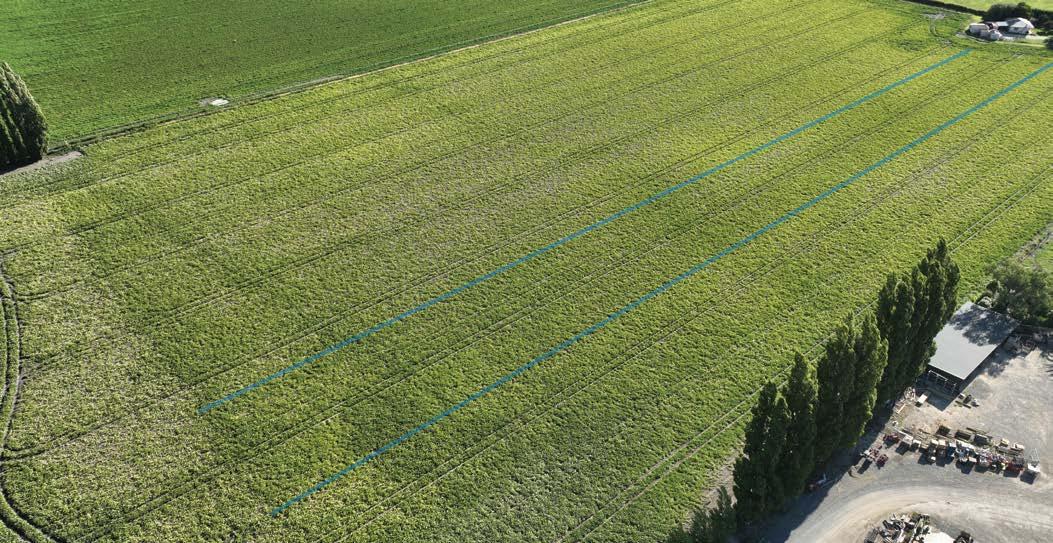
Drone image of the demonstration area (marked in blue lines) in March 2025
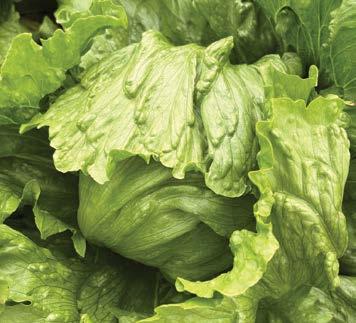
Crisphead
Kaniere, Gabasa & Ohau: Make up the Lefroy cool season crisphead programme and are adaptable for various growing locations. These varieties are well wrapped and protected, have a blistered leaf surface, good colour, consistent heart filling and high uniformity. These varieties have BL that range between 1-32 and 1-41. Gabasa also has HR:LNSV, IR: Fol:1,4. Ohau has the most vigour and best suited to the coolest conditions.
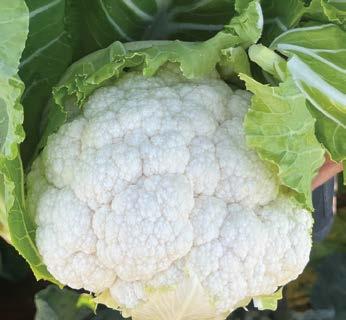
PLANT FOR SUCCESS
Cauliflower
Ibanez: Harvest autumn and spring. Semi erect, well presented head. 1-1.5kg.
Blanco: Harvest autumn and spring. Medium frame, fine to medium floret. Well covered curd.
Pelous, Champ, Darbos, Bamba: Harvest cool season ranging from 125-145 day maturity. Excellent white well tucked curds on strong framed plants.
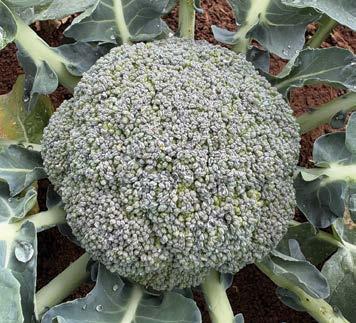
Broccoli
Chavez: Clubroot tolerant broccoli for shoulder/warm season harvest. Firm high dome, uniform maturity for high % first cut. Marquez & Sanchez: Medium/fine well domed heads, medium dark green with good size. Compact plant with minimal stem trimming. Marquez transplant to harvest 75-80 days in autumn and 110-120 days in spring. Sanchez transplant to harvest 90-130 days.
The demonstrations were established as sprayer-width strips within commercial paddocks, with products applied at key crop stages from pre-plant incorporation and pre-emergence to vining, flowering and pre-harvest. Assessments included visual canopy evaluations and NDVI (Normalized Difference Vegetation Index) imagery, root health, fruit yield and grading, sunburn incidence, post-harvest rejection rates and residue testing.
Together, these
demonstrations
highlight both the potential and challenges of not only adopting a lighter touch approach but also in any conventional cropping system
In Hawke’s Bay, the demonstration was hosted by Brownrigg Agriculture in Poukawa. The paddock had a long history of cropping and variable soils, and seasonal weather added extra pressure. A dry spring necessitated irrigation to establish the crop, which led to soil compaction. Heavy rainfall in late December then resulted in temporary surface ponding. January was cooler and cloudier than usual, slowing canopy growth. Harvest didn’t happen until late March, stretching the crop beyond the usual 92–95 day maturity.
Despite the use of multiple products, application timings and methods, no phytotoxicity was observed in either demonstration. Results from the multi-residue analysis came back free of any residue; however, it did pick up a residue from the application of phosphorus acid in the ALT programme, and the NZ Buttercup Squash Council cautions against using this product at this stage.
AT PRE-HARVEST, 23%
OF FRUIT IN THE DEMONSTRATION AREA SHOWED SUNBURN COMPARED WITH 41% + 50% IN THE CONTROL AREAS

Even under these conditions, the demonstration yielded some promising results. Sunburn emerged as the main difference. At pre-harvest, 23 percent of fruit in the demonstration area showed sunburn compared with 41 percent and 50 percent in the control areas (either side of the demonstration area). Severe sunburn was significantly lower in the demonstration, offering an important quality benefit. When yields were assessed, no statistical differences were found; however, numerically, the demonstration area harvested more bins per hectare and had fewer rejected fruit (see tables 2 and 3). Rejection rates due to sunburn and immaturity were 5.1t/ha in the demonstration, compared with 8.4t/ha and 6.6t/ha in the controls. This resulted in an average improvement of 2.3t/ha of marketable yield, which is a significant outcome from a grower’s perspective.
Squash being weighed and graded at harvest
The Gisborne demonstration, hosted by LeaderBrand Produce, faced tough growing conditions. Soil conditions were very dry at planting, which meant deep seeding to reach sufficient moisture. Continued drying, followed by a heavy December rainfall triggered uneven germination across the paddock. Due to uneven establishment and subtler differences between ALT and standard treatments, there was no difference detected by NDVI or crop inspections, therefore no further harvest assessments were conducted.
Together, these demonstrations highlight both the potential and challenges of not only adopting a lighter touch approach but also in any conventional cropping system. They also reiterate the difficulties in balancing the drive of commerce with the need for sustainable soil management practices.
Both demonstration sites faced establishment challenges resulting from a dry spring and continuously cropped soils. While the Gisborne demonstration did not result in measurable differences, the Hawke’s Bay site showed that improvements in harvest outcomes are possible. Much has been learned by the project team about formulating a combined biological and conventional crop protection programme, the critical timing required, and possible limitations to overcome.
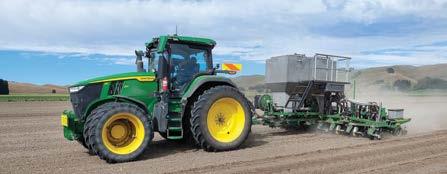
SQUASH
PROJECT PROVIDES ALL-OF-HORT INSIGHTS
Developing an agroecological ’whole of farm’ approach to soil-borne disease management in buttercup squash is the focus of a NZ Buttercup Squash Council –A Lighter Touch project, to help growers minimise yield and financial losses.
This article, which compares ‘a lighter touch’ approach to growing squash to standard practice, is the third in a series sharing results and insights from the project. In the first article ‘Grower input essential to project success’ (NZGrower & Orchardist February 2025), a grower survey and workshops were identified as central components underpinning a toolkit and protocols for the season’s trials.
The second article (NZGrower & Orchardist September 2025) explored soil testing, with quantitative PCR (qPCR, or real time Polymase Chain Reaction) to predict soilborne disease before planting) following squash crop trials in Hawke’s Bay and Gisborne in summer 2023–2024.
Future work will continue with repeat demonstrations, including comparisons of alternative service crops of vetch and ryegrass grown before this season’s squash planting, and further refinement of treatments and timing of applications. Investigation continues into the benefits of composting for improved soil structure and biology. Pot trials are also in the mix, looking at responses of different products within a controlled environment, grown in a soil already loaded with soil-borne pathogens.
Acknowledgement: This work was funded by the New Zealand Buttercup Squash Council and the Ministry for Primary Industries under the A Lighter Touch programme.
Product description
Trichoderma sp. based bio fungicides
Bacillus sp. based biofungicide
Humic/fulvic acid based biostimulant
Bacterial based biostimulant
Amino acid based biostimulant
Seaweed based biostimulant
Phosphorous acid based stimulant
Stress mitigating biostimulants
Bacterial based biofungicide
Calcium based plant biostimulant
Complete foliar fertiliser
Silica based biostimulant
Table 1: During the demonstration a wide range of biobactericides and biofungicides, biostimulants and stress relievers, and nutritional products were integrated into a standard commercial crop programme
Table 2: Harvest parameters – Hawke’s Bay 25 March 2025
Table 3: Post-harvest rejections – Hawke’s Bay 31 March 2025
Planting buttercup squash in early December last year
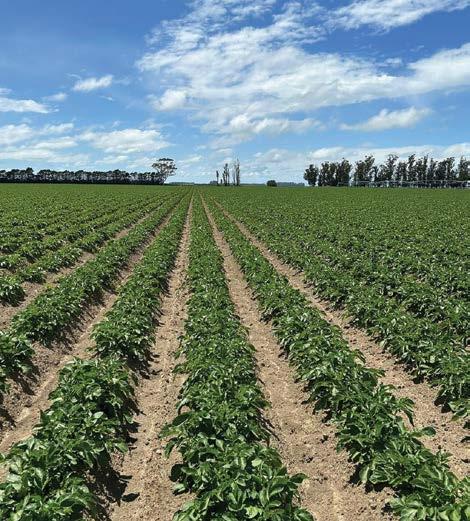
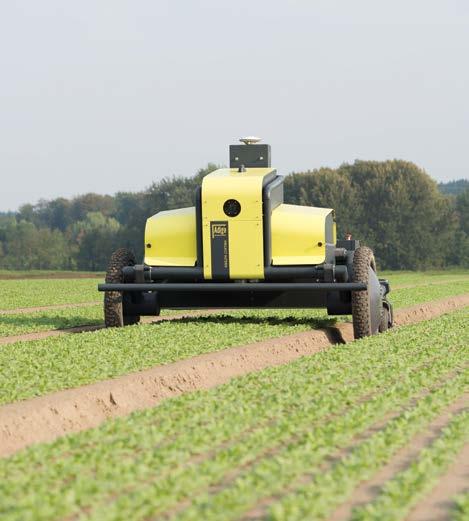
NEW REGEN DEMO FARM
The Lincoln University McCain Foods NextGen Regenerative Farm is a new 20ha demonstration farm, converting part of the Lincoln University Research Dairy Farm into a future-focused arable and cropping farm.
Professor Alison Bailey, head of Lincoln University Farms, says the demonstration farm will compare regenerative practices with conventional cropping methods in a mixed farm system, and test the impact of arable farm management on soils emerging from pasture.
The collaboration between McCain Foods and Lincoln University will involve trialling leading regenerative agriculture practices combined with advanced technology on high-value crops in a 1:8 potato rotation. The trial will last eight years and be open to other collaborative partners.
The research team, led by Lincoln University’s Dr Pieter-Willem Hendriks and Tika Schellevis (McCain Foods), is supported by a steering group with farmer and sector representatives. The first potato crops are expected to be planted in the autumn of 2026.
www.lincoln.ac.nz
ROBOT TARGETS WEEDS ONLY
Croplands, Nufarm’s spray equipment platform, has partnered with Kilter to bring Norway’s autonomous AX-1 robot to vegetable farmers in Australia and New Zealand.
The AX-1 applies herbicide only to weeds by depositing droplets every six millimetres. The robot analyses crop imagery, targeting weeds directly whilst saving chemical inputs.
As a light-weight autonomous solution, the AX-1 allows early application of critical sprays on soft soils. It is adaptable to bed width. The AX-1 runs on diesel, works well in fleets, and the classifier can switch between varying crop types.
Kilter chief executive Anders Brevik said European tests showed “a significant increase in crop yields” as the AX-1 “controls hard-to-treat weeds without causing phytotoxic effects on the crop.”
Currently operating in Europe with classifiers for 21 vegetables, Kilter and Croplands recently secured a Hort Innovations Grant for Australian testing. Croplands will be distributing the product throughout Australia and New Zealand with localised third-party support. Pricing ranges from AUD $250,000–$300,000.
croplands.com
Part of the Lincoln University Research Dairy Farm is being converted into a regen arable and cropping farm
New Zealand trials of the autonomous Kilter AX-1 are planned in the near future
UPDATING THE CODES OF PRACTICE: A SPOTLIGHT ON
NUTRIENT MANAGEMENT
HortNZ and Agrilink NZ are currently updating a series of environmental industry codes of practice. The Nutrient Management Code of Practice has undergone a significant update to support growers amidst the changing regulatory landscape.
Sarah Dobson : consultant at Agrilink NZ and Ailsa Robertson : environment policy manager at HortNZ
Nutrient management is an important, and sometimes challenging, part of a productive and sustainable growing operation. With freshwater farm plan regulations again on the horizon, the Nutrient Management Code of Practice has been updated for outdoor fruit and vegetable growers to make it easier to meet industry standards and keep ahead of the new requirements.
The first version of the Nutrient Management Code of Practice came out in 2014. It helped growers and regulators understand how nutrient use in horticulture is managed using good and best practices to minimise losses to freshwater. Since then, there have been several key developments in research, practices and tools.
The 2025 version builds on this and includes nutrient cycling processes, block-scale risk assessments, a nutrient management plan workbook, and links to decision-support tools. The code of practice directs growers to prepare
a comprehensive nutrient management plan following a simple step-by-step process.
A plan demonstrates how nutrients, particularly nitrogen and phosphorus, are managed to minimise losses to freshwater through leaching or run-off.
Nutrient management plans sit within an overall farm plan, influenced by the surrounding catchment context the horticultural operation sits within, including the values and challenges for freshwater.
Comprehensive plans include:
Nutrient management goals and objectives
Risk assessment results for each production block
Risk-based practices
The use of decision-support tools, and An annual review cycle.
Propagators of Gisela® cherry rootstocks and Geneva® apple rootstocks.
Waimea has been at the forefront of bringing new rootstocks and varieties to NZ, to assist growers in having some of the most highly efficient and productive orchards in the world.
We are pleased to be continue this with the production of trees on Gisela® cherry rootstocks and Geneva® apple rootstocks.


Please contact the Sales team to discuss availability:
Grant Bryan, 0274 201 003, grant.b@waimea.group
Kate Marshall, 0274 201 033, kate.m@waimea.group


www.waimeanurseries.co.nz

The code of practice incorporates decision-support tools into nutrient management planning. Decision support tools help growers pull key information together to make informed choices about how best to manage environmental risks with confidence.
A key nitrogen decision support tool for commercial vegetable growers is the SVS (Sustainable Vegetable Systems) Tool. The SVS Tool is a nitrogen budgeting tool to inform seasonal fertiliser needs.
The tool integrates key information on crop type, crop nitrogen needs across the growth cycle, and available soil nitrogen based on soil test results, to inform the timing and rate of fertiliser applications based on crop demand and soil nitrogen levels, and other production and environmental factors. An article on the SVS Tool, “Balancing the Equation: How the SVS Tool helps growers optimise nitrogen” is available in last month’s November issue of NZGrower & Orchardist
The code of practice also refers to Zespri’s nitrogen balance calculator. This tool supports kiwifruit growers to balance season nitrogen inputs when planning for the next crop. It is available through Zespri’s canopy member portal. HortNZ, Agrilink NZ and NZGAP (Good Agricultural Practice) began the code of practice review in mid-2024.
A technical advisory group consisting of growers and agronomists from fruit and vegetable production provided review through the development. Their feedback ensured the code of practice is practical and effective for outdoor production. The updated code of practice was also socialised with industry groups and regulators.
Luke Postuma, grower and technical advisory group member, explains that “the updated code’s risk-based approach provides growers with the clear tools and resources they need to both support horticultural production to continue whatever their production system, while putting in place systems to protect our environment.”
A recurring theme was the need to support growers to develop their nutrient management plan. Therefore, an Excel-based workbook that steps growers through the process was developed alongside work on the code of practice. The completed workbook provides a clear process to guide decision making and continuous improvement, and evidence for regulators and industry accreditation programmes.
The nutrient management plan workbook was tested with five growers in November 2025, spanning commercial vegetable, avocado and citrus production. Their feedback resulted in alterations to the workbook to make it an
Figure 1.2: Steps to building and updating a Nutrient Management Plan using this Code of Practice
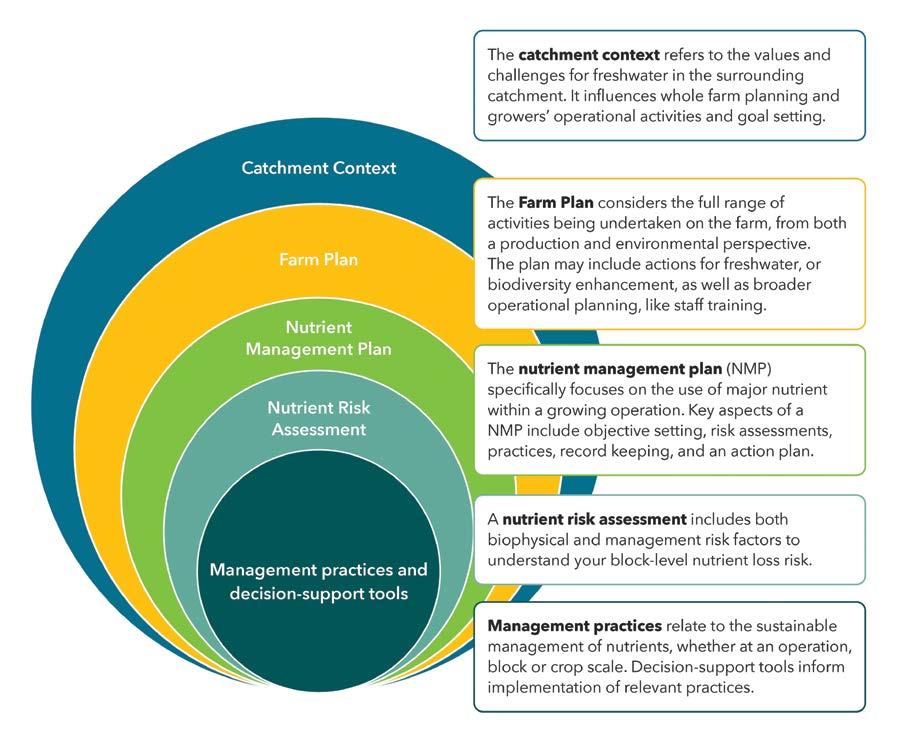
easier process to follow, along with minor changes to the code of practice. Growers were overall very positive about the updated code of practice and found the workbook particularly useful to support nutrient management plan requirements. The project team greatly valued the time and input provided by these growers.
“The new workbook should make it easier for growers to illustrate to auditors and regulators that our nutrient management practices are based on science and sound logic and that we are continually looking at ways of producing more from less,” says Bryan Hart, growing manager at A.S. Wilcox & Sons.
The draft code of practice remains open for feedback until the end of December 2025. Comments and suggestions can be made via the HortNZ website.
The final versions of the codes of practice will underpin the updated version of the NZGAP Environment Management System (EMS) add-on. The EMS is currently under review with a new version scheduled for release in the first half of next year. (Find more information about this on page 30). By following the Nutrient Management Code of Practice and the EMS, growers will be able to meet industry standards and be prepared for freshwater farm plan requirements.
For a list of all codes of practice subject to the current review, visit the HortNZ website. The updated codes of practice have been funded through the Growing Change project by HortNZ, and the Essential Freshwater Fund administered by the Ministry for the Environment.

To see the code of practice and give your feedback, visit www.hortnz.co.nz
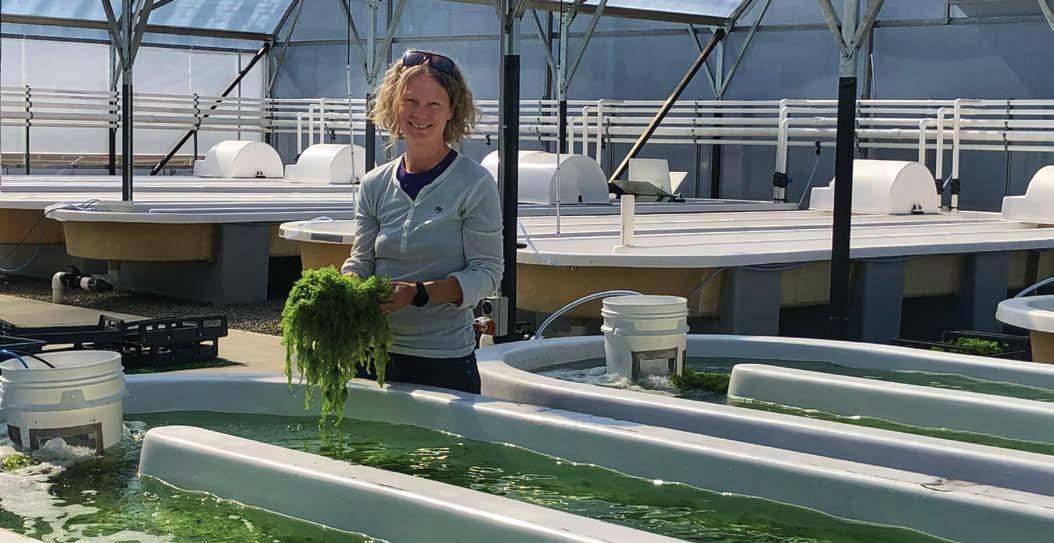
SEAWEED FOR GROWERS
Worldwide, growers are increasingly turning to seaweed-based biostimulants and biopesticides. NZGrower & Orchardist spoke with New Zealand seaweed experts to prime growers with essential information about what seaweed products actually contain and what to look for if you are considering a seaweed-based product.
John Gauldie
Seaweed-based products represent one of the fastestgrowing segments in agricultural inputs. The global seaweed-based biostimulants market is projected to reach nearly US$1.8 billion by 2030, growing at 10 percent annually, according to a 2023 World Bank market report.
Major agrochemical companies are investing heavily as they face what Alex Pressman, chief executive of Tasman-based seaweed product manufacturer Waikaitu, says is “the three Rs: resistance, regulatory removal, and resource constraints.”
A prime example is the post-harvest foliar pesticide acibenzolar-S-methyl, a synthetic plant activator widely used in New Zealand to stimulate systemic acquired resistance, reducing the symptoms of Psa (Pseudomonas syringae pv. actinidiae) in kiwifruit.
Last year the European Commission withdrew its approval of the pesticide due to concerns about its endocrinedisrupting properties. This will oblige European Union Member States to withdraw authorisations for products containing this pesticide.
Looking for alternatives, researchers at the University of Waikato and the Bioeconomy Science Institute have discovered that the complex carbohydrates in Ulva (sea lettuce) species from New Zealand act as elicitors; compounds that trigger plant defence mechanisms. These mechanisms render the plant less susceptible to pathogens such as Psa.
The researchers have received Government funding for a 5-year project to test the efficacy on kiwifruit, apple and tomato. Related to Psa, Pst (P. syringae pv. tomato) is present in New Zealand, but does not have a major
Dr Marie Magnusson (pictured at the Coastal Marine Field Station, University of Waikato, Tauranga) and Dr Christopher Glasson from the University of Waikato, and Bioeconomy Science Institute principal scientist Dr Joel Vanneste, are working together to uncover the benefits of complex carbohydrates in seaweed in protecting our horticulture industry. Photo supplied by M. Magnusson
commercial impact on tomato crops. However, year-round tomato production in greenhouses makes tomatoes useful for the research, compared to the longer fruiting cycle of kiwifruit and apples. Interestingly, Pst is a bigger problem overseas, for example in Australia where studies have shown Pst developing resistance to copperbased crop protection products.
One of the project’s researchers, Dr Marie Magnusson from the University of Waikato, says the project farms and processes its own seaweed at the University of Waikato’s Coastal Marine Field Station in Tauranga. The methodology ensures a standardised comparison of the effects of the elicitors with different plant systems, concentrations, and disease pressure.
thousands of years, its current resurgence is relatively recent and there is still a lot unknown about the exact mechanisms at work.
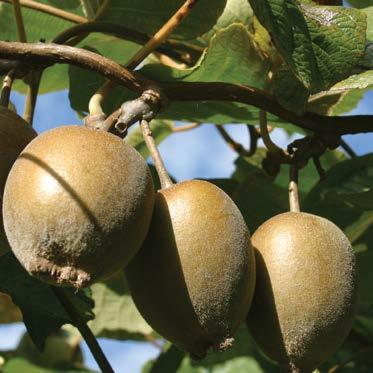
“Part of our research includes determining the best time and process for application of our product.”
Understanding what’s in the bottle
Compounds in seaweed trigger plant defence mechanisms that make kiwifruit less susceptible to pathogens like Psa
It will be several years before the research project concludes – and any commercialisation of a new seaweed-based mode of action against Psa will require regulatory approval.
However, seaweed-based biostimulants (which do not require regulatory approval if they make no crop protection claims) are widely available and come with all sorts of formulations, claims and processing methods.
Existing products include both soil and foliar applications. They range from general seaweed extracts to seaweedenhanced fertilisers. Marie says while some products may contain elicitor sugars, those products may not be formulated specifically to control pest and disease.
“You may notice effects on increased plant health and vigour from the combined effect – maybe just an effect on the soil microbiome making plants healthier,” Marie says.
“There are so many things that will work as biostimulants because you’re feeding the soil and the microbes, and there are so many interactions.
“Things made in a similar way will probably work similarly. Fermented seaweed products will have more similarities in their mode of action than chemically extracted seaweed products. With fermentation, you also get all that bacterial biomass and bacterial products with lots of bioactives.”
Some products are formulated to work as part of an NPK nutritional programme, while others apply to specific environmental stressors such as drought or salinity.
Waikaitu science officer Mareike Babuder says that, although seaweed has been part of agriculture for
However, research indicates that the combinations of active compounds in seaweed extracts enhance environmental stress tolerance and not necessarily a single compound. Additionally, it’s not always a matter of how much of active compound A or B is in an extract, but rather the pure presence of them as they work as an elicitor that affects the plant’s biochemical pathways, physiological processes and has effects on gene expression.
“It’s a cocktail, not one single key active ingredient,” she says, “so there’s not a clear blueprint (yet) on specific mechanisms of its efficacy or dosages needed to achieve certain, predictable results. There are many variables in the equation, but we are getting better in understanding them. It’s not as easy as with synthetics.”
Healthy scepticism among growers
While some growers swear by their seaweed inputs, it’s not uncommon to hear other grower stories about trialling seaweed biostimulants and finding the results inconclusive.
Marie compares the effect to people taking vitamin supplements. “If plants are under stress, you will see an effect. But if everything’s already good – if your plants are doing well, getting good amounts of sun and water with no real stress – the gains might be meaningful but small, like 5 percent. So it might be challenging to quantify and differentiate from just a good season.”
She also emphasises the systems-level benefits: “Because applying biostimulants effectively feeds the soil, long-term you’re likely to see benefits to the whole system, not just the plant.”
Clare Bradley, chief executive at Paeroa-based seaweed company AgriSea NZ, encourages growers to look for products with real trial data in New Zealand conditions.
“Some advisors are cautious due to experience with low-quality, non-active products,” she explains. “Some growers have tried low-quality ‘seaweed products’ and lost confidence.
“How it’s made determines if it works. Many imported products are powdered by-products with active compounds already stripped out, or chemically extracted liquids where key bioactives have been denatured.”
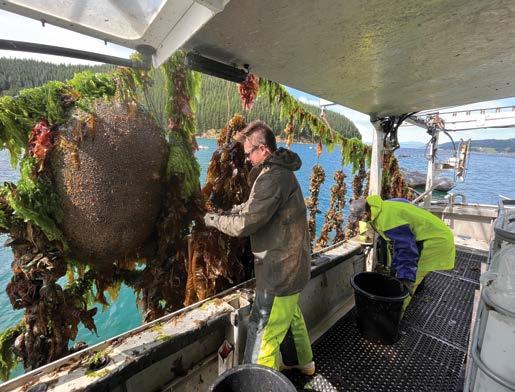
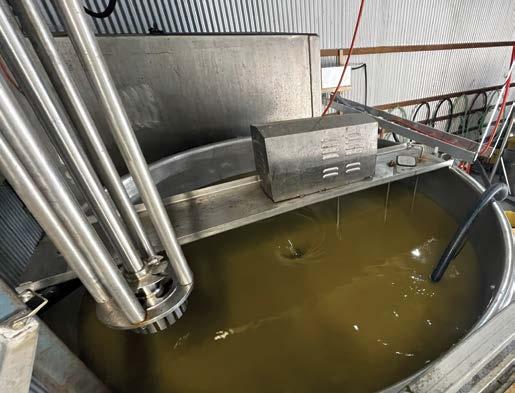
When it comes to processing, the best method to extract the bioactive compounds depends on its purpose. Cold fermentation works well, but some active compounds can only be extracted with heat/drying and acid or alkaline extraction. The processor needs to be aware that depending on the extraction method used, some compounds will either not get extracted or will get destroyed in the process. Additionally, extracts that are processed using specific solvents such as potassium hydroxide are not certified for organic farming practices.
Feedstock – New Zealand grown and which species? As seaweed-based products become more mainstream, traceability is likely to become more important and can help give growers confidence in the integrity and quality of the product.
Marie says seaweed researchers are excited about the potential of New Zealand-produced seaweed products for horticulture because “seaweed fits so well with New Zealand to make a unique product for primary production here.”
Growers may be interested in using products with a New Zealand seaweed feedstock because of the reliability and speed of supply, or simply to support New Zealand seaweed companies.
Michael Lakeman, chair of the Aotearoa New Zealand Seaweed Association (ANZSA), says New Zealand’s emerging seaweed production sector remains underdeveloped. The association does not have specific data on the proportion of New Zealand-sourced seaweed products sold versus imported product for horticulture applications.
The local supply landscape includes three main sources: Undaria pinnatifida (Wakame), beachcast seaweed including Ecklonia radiata (Native kelp), and emerging aquaculture facilities.
Aquaculture – basically raceway ponds with a paddle wheel that keeps the algae floating around the pond – use seawater with very low inputs. No new wild seaweed needs to be collected once the brood stock is established.
Seaweed aquaculture is not only a sustainable solution, but can also be used to scrub nutrients from farm discharge. At some Queensland seaweed aquaculture facilities the main product is environmental remediation within the state’s voluntary nitrogen trading scheme, with a biostimulant product as an added bonus.
Clare also urges growers to buy local, and notes the challenge in local production compared to many lowlabour unit countries or from deforestation sources that do not require the same capital investment as aquaculture/ farmed seaweed.
“This is why AgriSea has taken a bio-refinery approach and is creating value from waste streams to ensure the longevity of the local seaweed sector and encourage farmed seaweed – plus provide continuous innovative tools for farmers and growers.”
Wakame, an invasive species in New Zealand, is harvested from mussel lines under the Ministry for Primary Industries Commercial Use Policy. The Government is currently reviewing the policy, with consultation expected through February 2026.
Michael sees regulatory change as crucial: “The current situation isn’t achieving effective control of Undaria’s spread, yet prevents most coastal communities from making commercial use of a high-value resource increasingly established in their waters.
“Well-designed regulations can unlock benefits for coastal economies whilst ensuring no additional harm comes to coastal ecosystems,” he adds, noting “significant economic interest from export markets with potential application in food, biostimulant and health supplement uses.”
Seaweed extract after processing with a cold extraction method.
Photo courtesy of Waikaitu
Harvesting Undaria in the Marlborough Sounds from mussel lines is labour intensive. Photo courtesy of Waikaitu
REVOLUTIONISING NEW ZEALAND HORTICULTURE: THE ELECTRIC ADVANTAGE
New Zealand’s horticultural sector is experiencing a quiet revolution and it’s being powered entirely by electricity. E-Motors NZ is transforming how orchardists and growers approach their daily operations with innovative electric vehicles that are as tough as they are intelligent.
At the forefront of this transformation are two gamechanging brands: Pickman Mini-Trucks and Pickman PICCA – 100 percent electric workhorses designed specifically for the unique demands of the New Zealand growing industry.
Elevate your lift – the Pickman PICCA advantage
The PICCA isn’t just another utility vehicle – it’s a complete rethinking of how work gets done in orchards and vineyards. This compact powerhouse combines lifting, tipping and towing capabilities with remote control operation, allowing workers to remain safely on the elevated platform while manoeuvring the vehicle below.
“Way less chance of making mistakes, slipping and falls. We enjoy much higher staff morale and a better quality of work. Our PICCA (Ladybird) is an absolute winner!”
Built for New Zealand conditions
What sets these electric vehicles apart is their purposeful design for real-world New Zealand conditions. Whether it’s the early morning frost of Central Otago or the summer heat of Hawke’s Bay, these machines are engineered for all-weather usage. Rain, shine, or frost, they keep working when you need them most.
Safety and efficiency combined
Traditional orchard work often involves repetitive ladder climbing, heavy lifting and fatigue-inducing manual labour. The Pickman and PICCA vehicles eliminate these hazards while dramatically improving productivity. Workers stay safer, feel less fatigued and maintain higher morale throughout the demanding seasons.
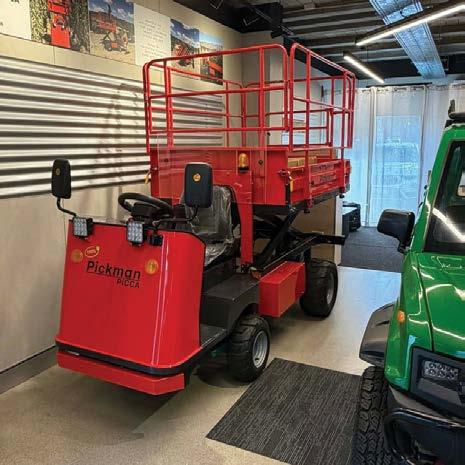
The remote-control functionality of the PICCA is particularly revolutionary, operators can focus on the precision work of picking or pruning while the vehicle responds to their commands, positioning itself exactly where needed.
E-Motors NZ brings these innovations exclusively to the New Zealand market. These machines are purpose-built solutions, for the specific challenges Kiwi growers face. A choice of colours adds a touch of personality or brand alignment to these serious workhorses.
Confidence in your investment
Every Pickman and PICCA comes with a comprehensive three-year warranty covering both battery and body, providing peace of mind for your investment.
E-Motors NZ were pleased to deliver the first Pickman PICCA to a Cromwell based cherry grower over 12 months ago. They have used their PICCA for a full year of seasonal tasks with huge cost savings and staff satisfaction. Here’s what Euan White, operations manager at Forest Lodge Orchard – Electric Cherries in Cromwell, has to say about their 100 percent electric Pickman PICCA purchase:
“We use our fabulous little remote-controlled PICCA for picking, pruning and general orchard maintenance at Forest Lodge Orchard. It’s robust, and lifts, loads and tows. We now benefit from significant labour saving, way less staff fatigue and it’s much safer than working with ladders.”
E-Motors NZ offers its products with nationwide support and delivery, ensuring you’re never far from expert assistance. Visit the E-Motors NZ showroom on Glenda Drive, Queenstown, to experience these revolutionary electric vehicles firsthand.
The future of orchard and vineyard work is electric, efficient and available now! www.e-motors.nz
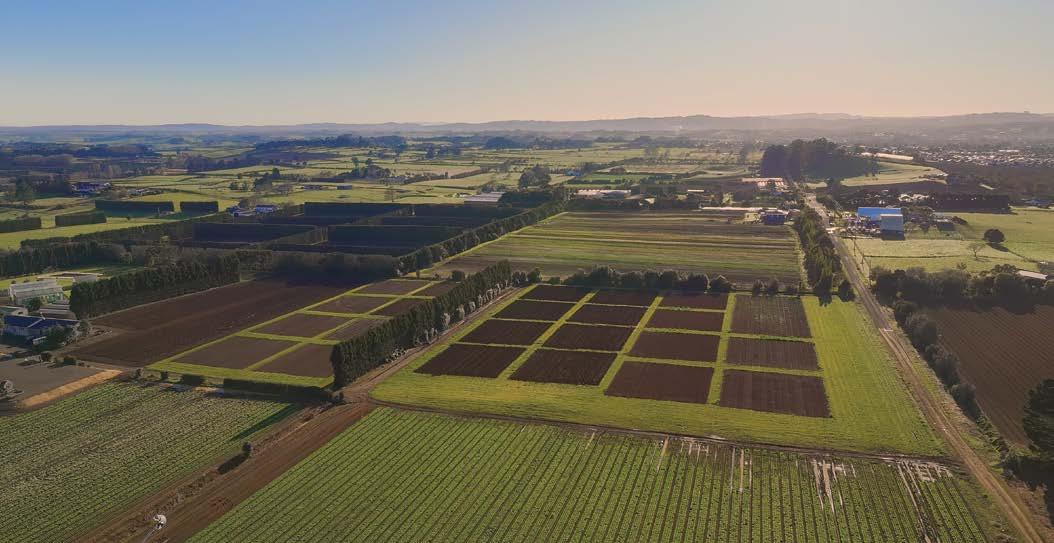
TE AHIKAWARIKI CELEBRATES ITS FIRST BIRTHDAY
It’s been a year of hard but rewarding work on and off the Pukekohe Research and Development Farm, where Te Ahikawariki/ Vegetable Industry Centre of Excellence (VICE) is based.
Emily Laskin : Te Ahikawariki research and extension lead
This work has been fuelled by a passion to create a collaborative space that supports vegetable research and delivers for vegetable growers and mana whenua. Te Ahikawariki, a name gifted to the facility by Ngaati Te Ata, represents the vision of a sustainable vegetable production system that is environmentally and culturally aligned. The programme has made great strides to achieve this vision in its first year.
Since its inception in late 2024, the programme has funded a wide variety of vegetable research projects, developed maatauranga science methodologies, created grower extension resources, held industry events, and provided
scholarships for postgraduate students conducting vegetable research – just to highlight a few of its contributions to the sector.
The crown jewel of the programme has been the development of a working model for a research farm. Adapting growing practices to a 25x30m plot size whilst ensuring research and growing requirements are met for 30+ plots simultaneously requires incredible organisation and collaboration. The team from Te Ahikawariki is grateful to work with onsite partners Balle Bros, Bioeconomy Science Institute and A Lighter Touch to transform the vegetable research farm vision to reality.
Together with onsite partners Balle Bros, Bioeconomy Science Institute, and A Lighter Touch, Te Ahikawariki is bringing the vegetable research farm vision to reality
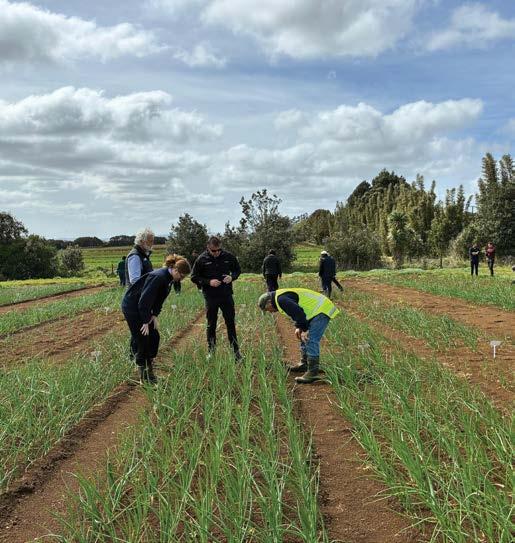
Te Ahikawariki’s Spring Summit provided an opportunity to extend the results of the first season of research projects
Working closely with the industry and mana whenua has allowed Te Ahikawariki to develop its commercial offering as well. Industry partners are now able to hire trial blocks to conduct their own research on the demonstration farm, which provides a space for private as well as publicly funded research, where the growing requirements for the crop are maintained.
Working on such a diverse portfolio of projects has enabled management to optimise the research operations on site and identify the programme’s unique selling point
Te Ahikawariki will reach the end of its Ministry for the Environment grant funding period in 2026, but with the momentum the programme has gathered over the past year, the question is not whether it will continue: it’s how.
While routes for continued funding are explored, the commercial offering remains unchanged. If you are interested in conducting research on the Pukekohe Research and Demonstration Farm, please contact a member of the team. vegcentreofexcellence.nz
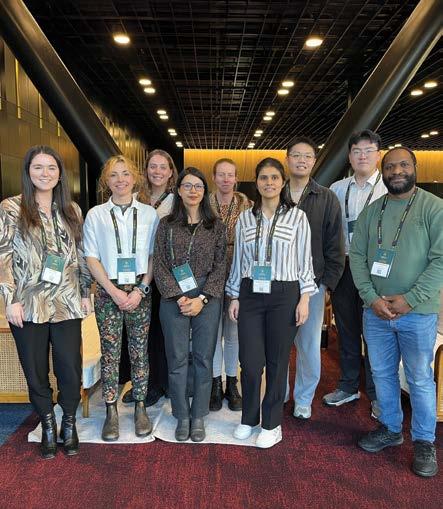
Te Ahikawariki provided scholarships to nine postgraduate students. Their research topics span from buttercup squash breeding, to the role of earthworms and their vermicast in sustainable vegetable production, to quantifying broccoli wastage. The scholars presented their research at the Horticulture Conference in August 2025
PEOPLE CAPABILITY
Te Ahikawariki has endeavoured to bolster the vegetable industry by developing resources to attract and retain talent and upskill growers. The programme recognises that providing research funding is not enough; a successful vegetable industry is propelled by passionate and fulfilled individuals.
Te Ahikawariki’s work in this space consists of a range of workstreams including grower capability grants, courses and resources, scholarships, internships and resources for students, and working directly with universities to promote vegetable-related coursework.
Note that Maaori words in this article use double vowels instead of macrons, which is the appropriate Waikato Tainui spelling convention used in Pukekohe
Te Ahikawariki research and extension
To date, Te Ahikawariki has funded 27 research and extension projects, 13 of which are now complete. The programme’s primary research focus is on water quality and minimising the impact of vegetable growing on the environment and building knowledge between maatauranga and science approaches. The common goal to improve outcomes in this critical space is the basis for the relationship between mana whenua and local vegetable growers.
Completed project highlights SLAKES/Nitrachek (Water Quality/ New Technology)
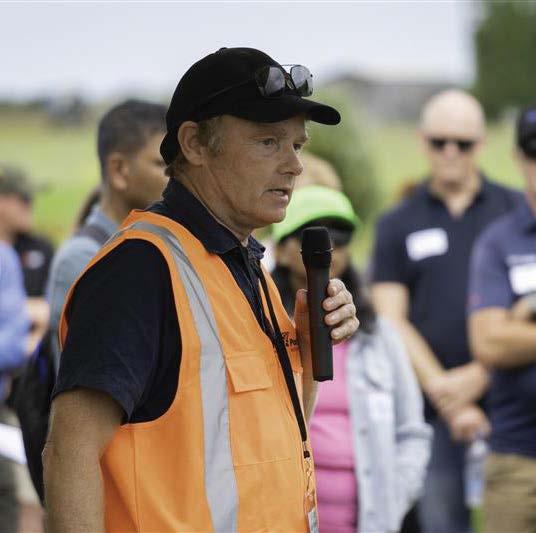
Potatoes
Dan Bloomer and Olivia Webster from LandWISE conducted a tour of growing regions in the North Island testing and extending two novel soil health analysis methods: the SLAKES app for assessing soil aggregate stability in the field, and the use of the Nitrachek device, which provides low-cost and lab-accurate in-field soil nitrate tests. With correct calibration, both tools were found to provide reliable, farmer-friendly alternatives to lab testing.
Smart Trapping in Sweetcorn (New Technology/Pest and Disease)
New Zealand’s Iain Kirkwood speaking about the Sustainable Vegetable Systems Tool at the Vegetables Big Day Out 2025
Led by Fruitfed Supplies, this project compared the efficacy of novel AI-driven ScoutLabs smart traps for corn earworm (Helicoverpa armigera) against traditional bucket traps. The smart traps provided pest counts three days earlier than conventional methods. This timeliness offers a valuable window to act sooner, often with softer insecticides such as Bacillus thuringensis. It also enables more localised Integrated Pest Management (IPM). With interest already building among growers, this technology is now being expanded to target potato tuber moth with Potatoes New Zealand.
Brassica Drench Trial (Pest and Disease)
This project, which was a collaboration with Syngenta and one of the first trials to utilise Te Ahikawariki’s research plots, investigated the efficacy of Durivo® insecticide
drench in cabbage seedlings. The work demonstrated consistent control of diamondback moth (Plutella xylostella) larvae for up to 26 days after transplanting, allowing young plants to establish before foliar sprays are needed. Aphid control and plant vigour were also strong. Other project outcomes highlighted the need for careful resistance management, including that Durivo® should not be followed by Group 28 (diamide) foliar sprays in the same crop, and Durivo® should be limited to the 1 December to 31 March planting window.
Upcoming/ongoing project highlights
Soil Health Cultural Indicator (Maatauranga Maaori)
This project is a partnership between Ngaati Te Ata, Ngaati Tamaoho and Ngaati Tipa. The project seeks to weave maatauranga Maaori (knowledge and culture) together with contemporary ‘conventional’ science. The development of a soil cultural health indicator enables mana whenua to apply their maatauranga and exercise kaitiakitanga, manaakitanga and mana whakahaere now and into the future with an intergenerational timeframe. This enables mana whenua to build on the deep history of understanding of the whenua while maintaining sovereignty over their knowledge and data. The weaving of ‘western’ scientific and Maaori knowledge bases, as well as improving understanding of maatauranga Maaori in growing practice, is core to Te Ahikawariki’s purpose and creates a framework for more work to be done in this space into the future.
BioScout Demonstration (New Technology/Pest and Disease)
BioScout is an AI-driven spore trap that identifies airborne spores in real time, giving growers information on disease presence in the environment before infection occurs in the crop. A collaboration between Te Ahikawariki and A Lighter Touch, this technology is being trialled in an onion paddock on the Pukekohe Research and Demonstration Farm. The BioScout unit has been trained to identify Stemphylium vesicarium spores and data will inform fungicide applications during the season.
VEGETABLES BIG DAY OUT IS BACK IN 2026!
Vegetables Big Day Out 2026 – 5 March 2026 – is set to be Te Ahikawariki’s best event yet, featuring four dedicated areas across the farm delivering valuable industry insights. From cutting-edge agritech demonstrations and in-field presentations to informative indoor seminars, expert panels, and a bustling trade show, attendees will find plenty of opportunities to learn and connect.
Sustainable Vegetable Systems in Potatoes (Water Quality)
The Sustainable Vegetable Systems (SVS) Nitrogen (N) management tool is designed to enhance understanding of crop N dynamics, improve fertiliser use efficiency, and reduce environmental impacts. Potatoes New Zealand and Te Ahikawariki are working together to trial this management tool in two blocks of potatoes on the Pukekohe Research and Demonstration Farm to optimise N applications and prove the SVS use case in potatoes.
The event will feature a keynote speaker from the Queensland Department of Primary Industries. Topics will include Sustainable Vegetables System (SVS), biofortification of crops, geothermal energy use in glasshouses, careers in the vegetable sector, and much more.
Follow the QR code above.


These are just a few examples of the types of projects that have been funded and managed by Te Ahikawariki. Working on such a diverse portfolio of projects has enabled management to optimise the research operations on site and identify the programme’s unique selling point. The goal is to continue to provide this service to industry for many years to come.
Dear Onions New Zealand members
The Onions New Zealand grower and marketer levy is changing. The grower and marketer levy will change to $3.00 and $2.00 per tonne respectively.
The new levy collection system will be managed through the Grower Hub and be entirely self-declaring for domestic and export or marketer levy.
November sales will be the last month eligible for the current (old) levy rate. Please make sure your last declarations under the current levy rate are submitted before December 20th 2025 via the Grower Hub or direct declaration.
For sales occurring and levy declarations for December onwards, please self-declare on the Grower Hub portal.


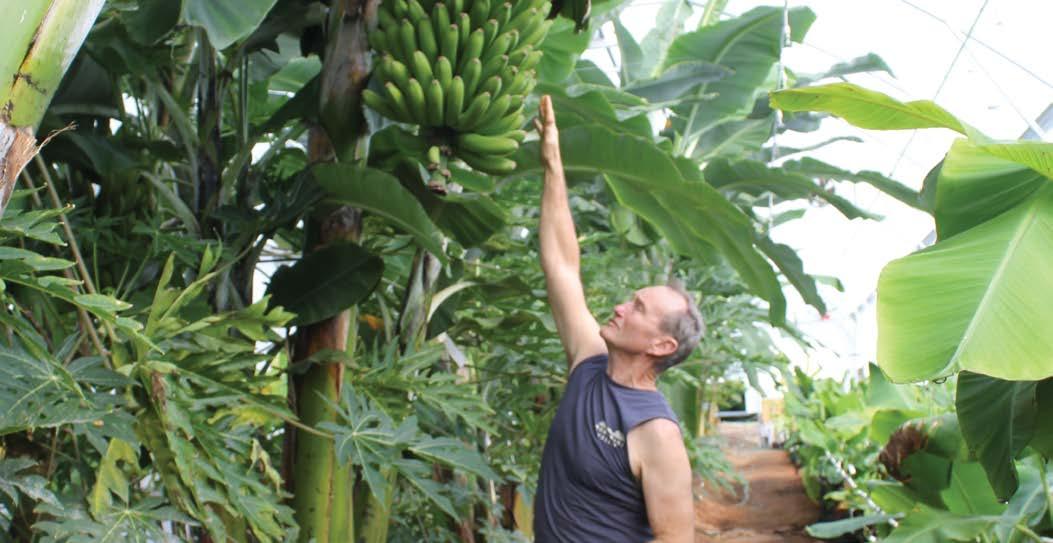
SUBTROPICALS HEATING UP
As the warming Northland climate tilts more to conditions in New South Wales in Australia than to other parts of New Zealand, more growers are trying their hand at growing tropical and subtropical crops.
Delwyn Dickey
Australian native finger limes – more at home in lower Queensland and northern New South Wales – are being grown in Kerikeri and Gisborne, while coffee growers have formed a collaborative group.
Most other subtropical growers however are smaller, scattered growers going it alone, finding out by trial and error what production suits the crops on their piece of land and selling through local farmers’ markets and restaurants.
Modest-sized banana plantations can now be found dotted around the north. The largest pineapple grower has around 40,000 plants in the ground.
The economic feasibility of scaling up some of these new crops was tackled in new reports by Scarlatti and BioPacific Partners for regional economic development agency Northland Inc.
Banana and pineapple were looked at, as was leafy salad plant moringa, and root crops ginger and turmeric. The report also examined field crops soybean and sunflower as some farmers eye up on-farm diversity. Mango and papaya production were also covered in a separate report.
Banana grower and subtropical plant nurseryman Geoff Mansell of Kotare Subtropicals at Maungatapere feels the report was a good starting point for new growers, including that it contained a calculator so anybody could put in their own figures and work out their own feasibility. That it provides details of the Ministry for Primary Industries and NZGAP compliance requirements was also a winner.
Geoff Mansell of Kotare Subtropicals in the banana polyhouse in Maungatapere. Photo by Delwyn Dickey
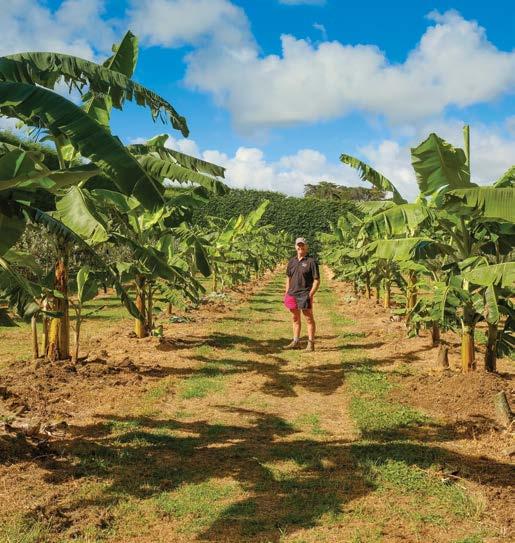
Due diligence was needed, however, especially around set-up costs, he says, as funding constraints hadn’t allowed for agronomy to be included.
While the north is warming up, he says, not all of Northland is subtropical and some tropical and subtropical crops can still only be grown in some nooks and crannies with suitable microclimates.
Northland’s geography is also mostly hills and valleys, so Geoff was pleased to see the 10 percent of land-use capability (LUC) 1 to 3, most suitable for cropping, had been acknowledged – although again, not all was suitable for subtropicals.
Costs for covered structures that could be needed along with various types of irrigation weren’t generally covered in the report, which could well affect the viability of some crops regardless of the report findings, he says.
“Soil type, contour, the number of frost-free days, wind, altitude in relation to sea level, water availability – all that sort of thing has to be considered.”
Growing his own bananas mostly outdoors, with a smaller amount in an unheated polyhouse, Geoff could vouch for the difference cover makes. From 15 months inside to produce a bunch of bananas, to 18 months to two years outside.
Transport wasn’t considered a big issue in the report – something Geoff disagrees with, especially if door-to-door chilled transport was needed. The cost of getting fresh product to the bigger Auckland markets is one of the reasons growers sold locally. But overall, he found the report useful.
Soil type, contour, the number of frost-free days, wind, altitude in relation to sea level, water availability – all that sort of thing has to be considered
Access to coolstores is needed to preserve quality and potentially control ripening for many subtropical fruits. If looking to value-add growers need to be aware there are currently no contract food processing or freeze-drying facilities, with onsite staff, in the north.

We are delighted to announce the launch of our dedicated Retail Travel Division, now supporting both RSE recruitment travel and personal holiday bookings.
Our experienced travel expert Karen Inwood brings a wealth of industry knowledge and is here to assist you with every aspect of your journey – whether for business or leisure.
Karen Inwood – karen@rsetravel.nz | 021 188 2325
Subtropical crops can be grown in some Northland areas with suitable microclimates

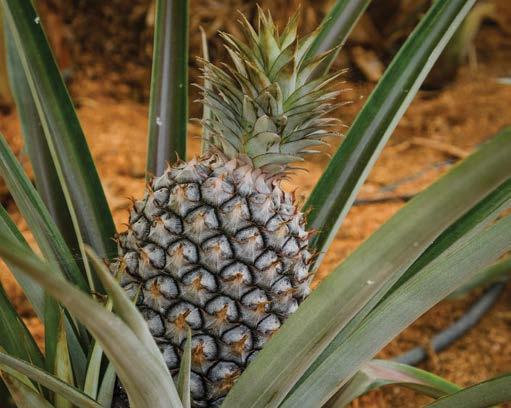
Bananas
With around 100ha already planted around the north, bananas are the most visible of the new subtropical crops. Their lush broad green leaves are synonymous with the tropics.
While several different cooler climate variates are being grown locally, the report modelled the smaller ladyfinger varieties. Much smaller than the Cavendish – of which New Zealand imports over 80,000t annually, ladyfinger variates also produce less in our cooler climes than overseas.
Planting at 800 plants/ha, growers can expect an annual yield of 14t – with around 70 percent commercial grade. Growers could see a farmgate value of between $1.50 and $3.00/kg, with low-grade fruit receiving half that price.
Establishment costs could vary from between $40,000–$113,000/ha depending on land development, if irrigation, wind and frost protection was needed, and cost of plants. Profit per hectare after costs ranged from a loss of -$8,836 to an expected $6,138 to an optimistic $32,757. Labour accounted for around 70 percent of annual costs.
Returns for other crops like avocados, tamarillos and oranges growing on the same good quality soil, were all considerably better than for bananas in an average year. However, in a good year when everything worked in their favour, bananas were comparable with avocados and much higher than both tamarillos and oranges.
Fresh bananas were considered feasible for small-scale production with a total of 190–300ha meeting expected demand.
Pineapples
With its ability to travel well and with low labour production costs, the popular Smooth Cayenne variety is the darling of the global pineapple trade with New Zealand currently importing over 9000t annually.
Queen and Red varieties are cold-tolerant and doing well in Northland with the largest grower having around 40,000 plants in the ground.
Susceptible to root rot, the plants need to be grown on slopes or mounds. Open field production was looked at. While they produce better under cover, this would add $400,000-$600,000/ha to production.
The Queen variety for fresh fruit was modelled with 30,000 to 35,000 plants/ha with each producing about 0.7–1kg of fruit annually.
This would produce between 16 and 31.50t/ha each year of which around 80-90 percent would be of commercial grade with a farmgate value of $2.15 per kg. Sub-par fruit would bring in about half that.
Low set-up costs could be around $58,000/ha or up to $142,000/ha including irrigation, wind and frost protection.
Profit per hectare after costs ranged from a loss of -$4,268 to an expected $26,241 to an optimistic $73,791, putting it on par with avocado.
Returns for kiwifruit, avocados, tamarillos and oranges growing on the same good quality soil, were considerably better than pineapple in a poor year. Pineapple was on par with kiwifruit and avocado in an average year, and brought in 25 percent more than kiwifruit – the next highest performer – in a good year.
Minimal processing at harvest means up to 30ha or up to 750t a year could be processed manually before semi-automatic machinery would likely be needed.
Photo by Trefor Ward
Photo by Trefor Ward
Bananas Pineapples
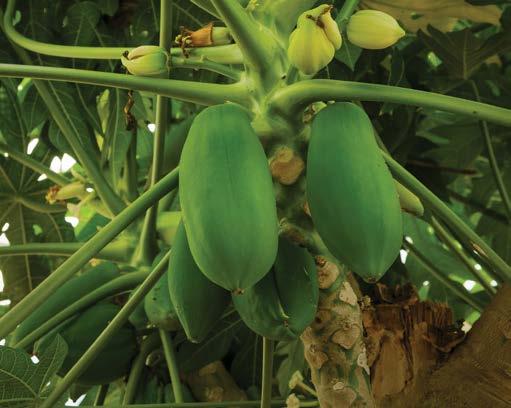
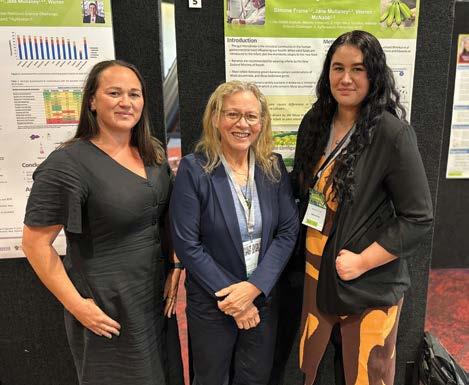
Fresh pineapples were considered feasible for small-scale production with 20–30ha meeting expected demand, while set-up costs and low volumes made cold pressed juice not feasible.
Papaya and mango
Each year New Zealand imports 2000t of fresh mango and 700t of fresh papaya. For local production, papaya looks a better option. Papaya trees planted three metres apart can potentially produce 800t of fruit off 20ha, compared to 140t of mango.
Sensitivity to climate variations means maintaining consistent quality is currently difficult. Both crops are better suited to growing under cover – increasing establishment costs and affecting viability.
Another home advantage is papaya’s thin skin which doesn’t travel well over long distances – affecting the quality of imported fruit.
Of the 800t of papaya produced from a 20ha block, 10 percent would be substandard, 60 percent could be processed into freeze dried papaya, with the remaining 240t sold fresh.
Growers could expect to receive around $5/kg for papaya. After looking at the overall costs to establish orchards and with low ongoing growing costs, papaya was a clear winner with opportunities for both fresh fruit and value-add products from fruit, leaves, skin and seeds, while mango was considered unfeasible.
BABY FOOD TO BOOST BANANA INDUSTRY
Northland’s growing banana industry could provide first foods for weaning infants, following a study at the Riddet Institute at Massey University.
PhD candidate Simone Frame (Ngāti Maniapoto) is investigating how the infant gut responds to specific prebiotic structures in New Zealand-grown bananas. She is working with Far North grower Austenz Ltd’s Toni-Nere Austen (Te Rawawa, Ngāti Kahu, Ngāti Hine) and the Bioeconomy Science Institute’s Dr Jane Mullaney (Ngāti Porou/ Ngāti Raukawa).
The theory is that New Zealand’s cooler climate and slower growing bananas will produce the distinct starch profiles they are targeting and be different from bananas grown in tropical zones in the world.
Simone says she wants to be a part of research science that can be used to achieve Māori aspirations. She is taking science and using her skills and knowledge to help Māori develop a new industry.
www.riddet.ac.nz
From left, Northland banana grower Toni-Nere Austen, Dr Jane Mullaney and Simone Frame present banana research
Photo by Trefor Ward
Papaya
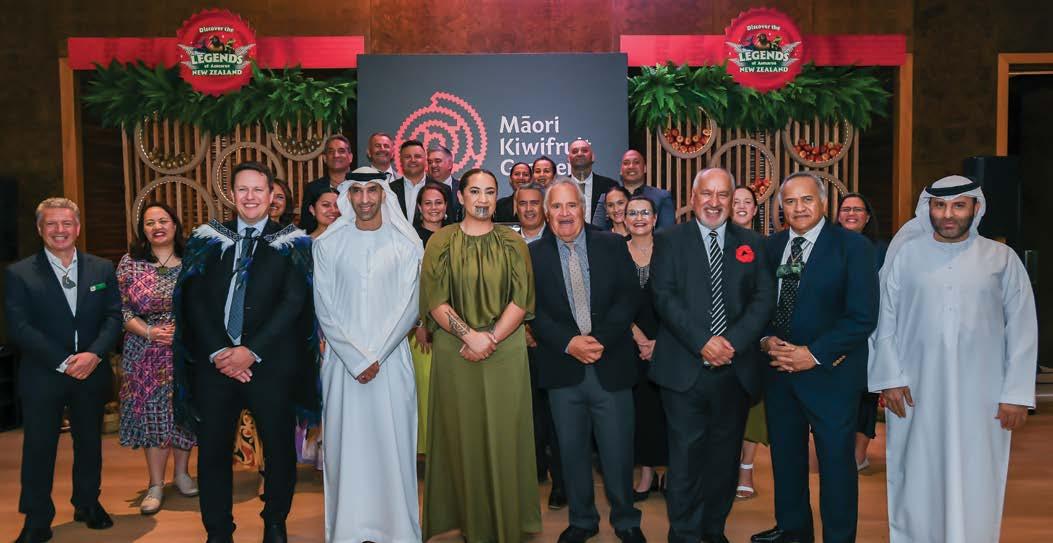
ORIGIN STORIES MULTIPLY CONSUMER INTEREST
New research is showing the growing interest in food origin stories and how this is gaining growing sway with global consumers. Māori Kiwifruit Growers (MKGL) was part of a recent trade delegation in Dubai, making successful connections with key industry players through sharing its Māori brand origin story.
Māori Kiwifruit Growers chair Geoff Rolleston says brand origin stories are another way of promoting New Zealand.
“Everyone seems to benefit, not just kiwifruit, and not just Māori growers. It’s apples, it’s the country’s industry as a whole. It’s got a broad appeal and is particularly good for all growers because ultimately it’s going to boost sales, and hey, that’s what we’re after.”
In 2023, Māori kiwifruit growers exported their first shipment of kiwifruit to Hawai’i and became the sole suppliers to the Hawaiian market.
Helena O’Neill

“When we started in Hawai’i, it was almost a natural thing for us to do, because the Hawaiians and Māori
we’ve got a cultural connection. We just hit it off with our Hawaiian distributors, starting with a small number of containers initially, but we were able to build that. So immediately we saw a potential, and that opportunity in Hawai’i translated into a bigger revenue than we anticipated.”
Securing a foothold in the United Arab Emirates (UAE) market was more challenging, Geoff says. MKGL has partnered with fruit exporters Mr Apple and Zespri to launch kiwifruit grown by New Zealand orchards.
It’s a good example of increasing Māori trade through leverage of international arrangements and trade agreements – one of the outcomes in the Aotearoa Horticulture Action Plan
The Māori Queen led a Kiingitanga delegation to the United Arab Emirates recently, supporting the work of Māori Kiwifruit Growers Ltd
The Māori Queen, Te Arikinui Kuini Nga wai hono i te po VIII, led a Kiingitanga delegation in Dubai in early October.
“One thing I must acknowledge is that the presence of the Māori Queen at our Dubai launch was a real game-changer. In terms of opening other doors, being the Māori Queen, the royal-to-royal connection was just huge,” Geoff says. “I think the way we interact with people is a little bit different. We are quite social by nature, and I think our approach is a bit more simple; not so transactional at the point of engagement, that comes later. The thing is to just really open that door, set a scene more or less, and we do it through waiata (song). Everybody we’ve met in the UAE, we’ve done a bit of a kōrero (conversation) with them, and then we all sing after it. They absolutely love that, and that’s breaking down barriers.”
Collaborative
marketing and reinvestment
Under a collaborative marketing deal with Zespri, MKGL will earn a fee for marketing 10 containers of fruit in the UAE in partnership with established New Zealand fruit exporter Mr Apple. MKGL’s fee will be reinvested into training and capability-building for Māori growers in the horticulture heartland of rural New Zealand.
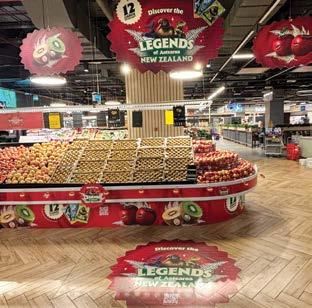
“We’re not just marketing fruit,” Geoff says. “We’re building futures. It’s about collaborating to create long-term relationships and intergenerational prosperity.”
He says the Māori economy is built on an intergenerational outlook. In kiwifruit, multi-owner Māori orchards plough profits into health, education and economic development for owners and their descendants.
Developing a brand origin story
He says having a Māori brand origin story allows growers to demonstrate a point of difference in the marketing and allows connections with consumers.
...the royal-to-royal connection was just huge
“We want to promote ourselves as a good collaborative marketer in other regions. We want to expand our reach. We’re utilising our points of difference in our promotions and marketing to ultimately sell more fruit for all, and the benefits are for the whole industry. It’s for every grower in this sector. It’s not just for Māori growers, it’s for all of us.
Last year, the Ministry for Primary Industries (MPI) released a report, Māori Brand Origin Stories, exploring consumer demand opportunities for Māori brands.
MPI manager of data insights Grant Bell says research shows Māori growers have a genuine opportunity to unlock significant export demand through authentic, consumer-aligned origin stories.
The research identified a group of consumers (called cultural consumers) who have a high interest in authentic cultural origins, which influences their decisions on food and drink purchases. People in this group tend to be younger (25–44 years) and have slightly higher disposable incomes.
“China alone has an estimated 394 million cultural consumers, the US has 57 million, Japan has 26 million, the UK has 11 million, and Australia has 5.4 million.”
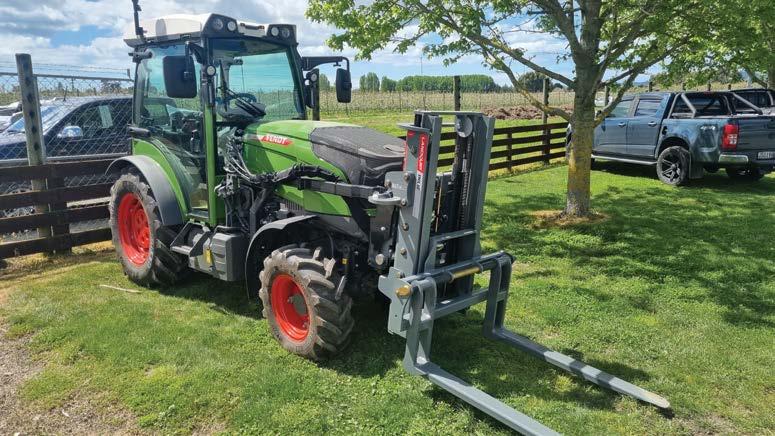
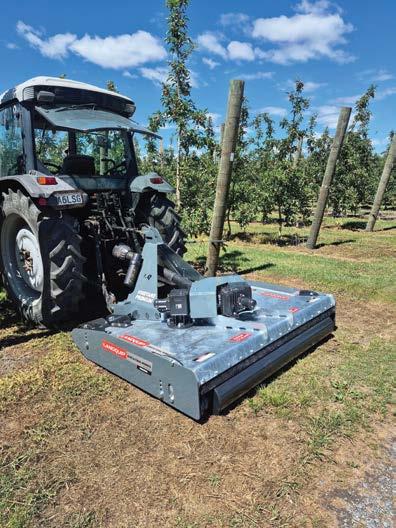
New Zealand apples and kiwifruit for sale in Dubai under a collaborative marketing deal with Zespri and Mr Apple
Premium Orchard and Vineyard equipment made in NZ
NZ conditions
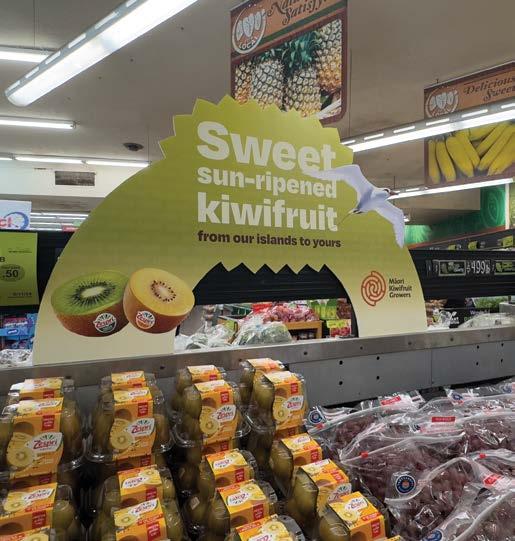
Kiwifruit for sale in Hawai’i through a collaboration of Māori Kiwifruit Growers and Zespri
“New Zealand has a strong reputation for producing high-quality food and drink, but we’re competing against countries like France, Italy and Japan with centuries-old food stories. Māori origin stories give our growers a unique cultural narrative that is difficult to replicate.”
‘Being Māori’ alone isn’t enough – you need to communicate what that means in ways consumers can understand and value
But while there are significant opportunities for Māori brands, the research showed overseas consumers don’t know a lot about Māori culture.
“Another challenge is communicating the value of Māori culture to cultural consumers in a way that’s simple and resonates with them. Māori values like manaakitanga, whanaungatanga, and kaitiakitanga are rich and meaningful, but they can be difficult to explain quickly to consumers without prior knowledge.”
Grant notes it’s important that origin stories don’t replace fundamental requirements – products still need to taste great, be competitively priced and meet quality standards. “An origin story on a poor product won’t succeed.”
Multiplying consumer interest
While fresh produce can seem interchangeable to consumers, origin stories give products personality and identity, which resonates with consumers and makes them memorable.
Māori origin stories give our growers a unique cultural narrative that is difficult to replicate
When consumers understand the cultural values behind production, they’re more likely to believe claims about quality, sustainability and authenticity.
“Origin stories must genuinely reflect the business’s cultural values and practices. This is important in the social media age, where consumers increasingly scrutinise brand claims, and inauthentic stories risk backlash that can significantly erode business value and sometimes business survival.”
Origin stories can work across different ownership structures. Whether fully Māori-owned, in partnership, or Māori suppliers to larger organisations, the focus should be on authentic cultural values in production and business practices rather than just ownership percentage.
Grant says the most unexpected finding was the limited interest consumers showed in Māori products without an origin story to provide context. He says 58 percent of cultural consumers want to try Māori products when they’re presented with an effective origin story, compared to just 12 percent without one.
“This underscored that ‘being Māori’ alone isn’t enough – you need to communicate what that means in ways consumers can understand and value. We anticipated origin stories would help pique consumer interest in products, but the scale was higher than we expected. Effective origin stories multiplied interest by four to five times.”


IMPROVING FRESH PRODUCE DATA REPORTING
Each year, United Fresh publishes Fresh Facts, providing detailed statistics about New Zealand’s fruit and vegetable industry. Fresh Facts 2025 shows fruit exports soaring –driven by kiwifruit exports.
New Zealand’s fresh and processed produce exporters achieved a combined value of $6.85 billion FOB (free on board) in the year to 30 June 2025.
“Fresh fruit exports alone generated $5.68 billion FOB, a $1.69 billion (42 percent) increase over 2024,” says Jacob Lawes, project manager United Fresh Technical Advisory Group. “Kiwifruit continues to be our largest export crop, contributing $3.66 billion FOB towards our fresh produce exports, up 35 percent compared to 2024.”
The total export value differs from the $8.2 billion figure published in the Government’s Situation and Outlook for Primary Industries (SOPI) report in June, mostly because United Fresh does not include wine within the fresh fruit and vegetable industry.
Dr Hans Maurer, chair of United Fresh’s Technical Advisory Group, explains, “Consolidated industry reporting continues to adjust to the fact that what industry realistically considers to be ‘Horticulture’ and ‘Fresh Produce’ does not include outdoor grape production and wine making. This change assists greatly in focusing our collective minds on the true size of our industry, its challenges and its opportunities.”
Data generation within the domestic industry remains a work in progress, which can make crop-specific analysis more difficult. Hans says some data providers are able and/or willing to provide more comprehensive data sets than others.
“There are always exceptions in situations where the desire for data availability has to be balanced against commercial sensitivities or regulatory constraints.”
However, he sees progress and encourages industry organisations to collect and report farm and orchard gate value in support of the collective progress of the industry.

$6.85 billion total export value
$1.93 billion New Zealand retail fresh spend
$331 million import value
$4.89 billion farmgate return 74,286 hectares


FORGING THE FUTURE THROUGH INNOVATION AND RESILIENCE

As we close out the year and look towards 2026, there’s genuine cause for optimism in our industry. Despite the challenges – and yes, there are plenty – we’ve made significant strides in areas that will shape our future for decades to come.
Kate Trufitt : Potatoes New Zealand chief executive
Most encouragingly, we’ve taken some positive steps forward in attracting new talent to the industry. The reinvigorated Young Grower of the Year in Canterbury, alongside our continued support for the Pukekohe Young Grower of the Year event has brought fresh energy and enthusiasm that’s been inspiring to witness.
The Potatoes New Zealand Youth Council is playing a crucial role in representing this next generation, fostering growth and encouraging the leadership that will drive innovation in the years ahead.
Investing in what matters
Earlier this spring, we published our Annual Report, detailing where the levy goes and what Potatoes New Zealand has delivered for growers. We’re working hard to keep costs efficient and ensure every grower sees value in return – through advocacy, market development, field walks, trials and conferences that provide access to the latest research, practical insights and peer networking. Our vital services in seed certification and biosecurity continue to underpin industry success.
Positive start for 2026 crop
Hopefully we’ve seen the end of the erratic spring conditions, which has made finding planting days tricky. Despite the weather it seems Canterbury has performed well.
Roger Blyth from Seed & Field reports that planting has been relatively smooth. Seed performed well in the ground despite some initial moisture concerns, and whilst a slightly cooler spring meant plant growth took a bit longer than expected, crops are now accelerating quickly. It’s looking good, though Roger is quick to add there’s still a long way to go to get potatoes into the shed.
On the pest management front, aphid pressure, whilst significant across all crops, remains well managed with appropriate programmes. Psyllid pressure has been low – the first signs only appearing recently with nothing yet on commercial crops.
Roger also notes that while we’ve come a long way in better understanding psyllid and Liberibacter over the last five years, we’re still learning about this pest. It’s great to see the psyllid coming into an Integrated Pest Management focus as part of the Canterbury Potato Liberibacter Initiative.
Speaking to Potatoes New Zealand chair Paul Olsen, it’s clear the North Island has also had issues with the unsettled weather, with spring planting running a little behind schedule. As I write, some growers are still planting in Manawatū. This may be reflected in next year’s harvest timing depending on the season ahead, but growers are adapting as they always do.
Market realities and opportunities
We’re realistic about market conditions. Margins have tightened, with our Annual Report detailing fresh potato sales values down 11.7 percent and volumes by 11.2 percent. The domestic market has faced pricing pressure, and even process growers are contending with falling consumption. Export prices have remained relatively subdued since February and March, with consumption in Fiji down slightly.
However, there are bright spots. The surge in crisp exports demonstrates that opportunities exist for those who can adapt to changing market demands. This isn’t the time to lose heart – it’s the time to double down on innovation and efficiency.
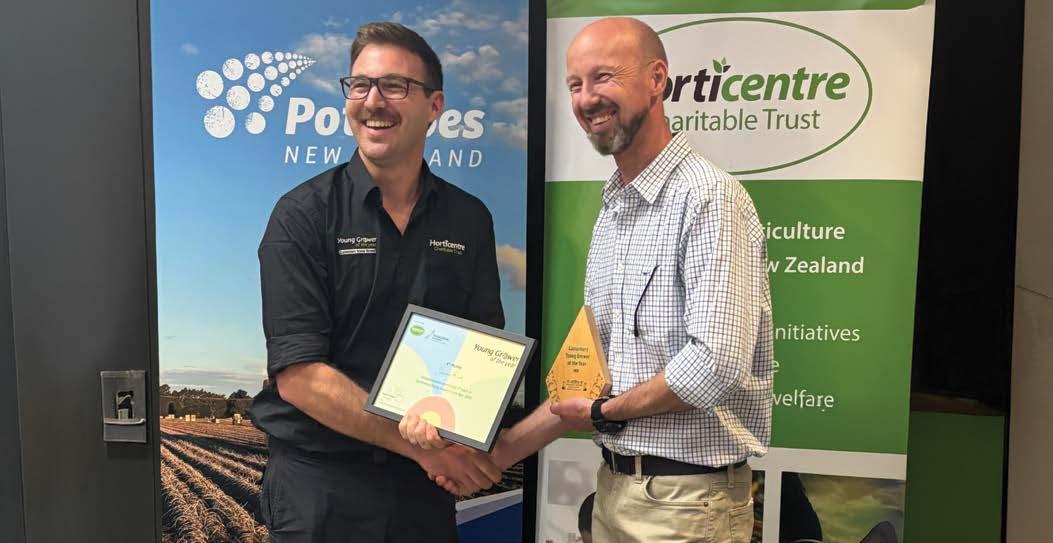
A note of thanks
This year we bid farewell to technical manager Iain Kirkwood, who has retired and joined the grey nomad community. We thank Iain for his positive contribution to Potatoes New Zealand and to the wider horticulture industry. Throughout his career I know he has had a significant impact on horticulture here and across the Tasman and we wish him all the best in this next chapter.
As we head into the new year, let’s stay laser-focused on the big-ticket items – growing our markets, investing in innovation, and ensuring long-term resilience for our industry.
You’ve always got to look forward. While we don’t expect a silver bullet in the short term, the investments we’re making in innovation, in people, and in our industry’s infrastructure will show returns. The challenges are real, but so is our capacity to meet them. With stable grower numbers, increasing hectares, promising new talent coming through, and continued investment in the fundamentals, we’re building the foundation for a stronger future.
I hope you will find time to relax with family and friends over the holiday season. And here’s to good growing and better margins in 2026!
If you have any questions, please contact Potatoes New Zealand.
Phone: 0800 399 674
Email: info@potatoesnz.co.nz
Website: www.potatoesnz.co.nz
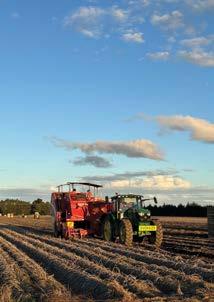
Steven Rink, production manager for Oakley’s Premium Fresh Vegetables, receiving the Canterbury 2025 Young Grower regional title from Canterbury Growers chair Rob Lindsay

DUTCH INSIGHTS FOR COVERED CROP GROWERS
Dinah Cohen : TomatoesNZ general manager
In early November, we were lucky that Marc Groenewegen took time out of his busy schedule consulting to New Zealand growers, to address an industry-wide Q&A which resulted in over 30 industry colleagues coming together online and in person in Pukekohe. Marc covered a range of topics and below are some of the notes from what he said.
PepMV (pepino mosaic virus) symptoms are generally worse on larger varieties of tomato; and/or when there are other virus issues present; and/or over winter in poor light and cooler 24-hour temperatures.

Ideally plants need to be grown with 700 joules of light and at an average temperature of +/-18°C. Maintaining a strong crop rather than pushing the plant to grow will also help.
ToBRFV (tomato brown rugose fruit virus) resistant varieties have greatly improved over the last five years in terms of the fruit quality and yields that they produce. The risk of getting the virus and the inevitable crop losses that would ensue, is too high for most growers.
IN OTHER NEWS…
Crates no longer retailer specific
Following a change in the interpretation of Clause 11 in the Grocery Supply Code, with immediate effect, plastic reuseable crates are no longer retail specific – meaning that a supplier (i.e. grower) can use any of the three crate companies to send their produce to Woolworths NZ and Foodstuffs North Island and South Island. If you use a wholesaler, it would be a good idea to touch base with them, otherwise choose the crate company that you have a good relationship with and look to renegotiate your grocery supply agreement to make sure they can supply you with the volume that you require. If you come across any issues with retailers refusing your produce due to the crate, please let me or Sarah Cameron from HortNZ know: sarah.cameron@hortnz.co.nz
TomatoesNZ and Aotearoa Horticulture Action Plan
Anna Rathé, the Aotearoa Horticulture Action Plan (AHAP) programme manager, approached the TomatoesNZ Board about running through a ‘tech stack’ to better understand the opportunities and challenges facing the fresh tomato industry.
Four board directors, representing a good crosssection of all tomato growers in terms of location and size of operation, came together under the guidance of Miriam Hall, AHAP programme team member representing research and Bioeconomy Science Institute business manager.
We discussed all aspects of the industry including cultivars, breeding, pollination, harvesting and postharvest protocols, exports and domestic consumption, labour, technology and pest and disease management. During the meeting we discovered that there is a wealth of knowledge already within even just a small selection of grower representatives, but that perhaps some resources need to be refreshed and/or made more accessible for the whole industry.
Ultimately the aim was to look for where the opportunities might lie to allow tomato growers to be more profitable and to expand the industry. It was sobering to then visit a cucumber grower and hear how the current price they are receiving per piece is 20 cents less than the grower needs to break even, and 40 cents under the preferred price to really be profitable. We have much work to do for the benefit of all greenhouse growers!
Energy and CO2
Growers in the Netherlands have benefitted from more stable gas prices recently, but fluctuating electricity prices. Dutch growers now have access to a minimum of two but more commonly three different forms of power that they can switch between, depending on price. Often gas still features but along with biomass, residue heat from data centres, heat from urban waste burners and if growers are situated near each other, then they can connect into the same geothermal supply to reduce the costs. (In the west of the Netherlands, most growers are connected up to a geothermal bore.)
These alternatives do not produce a cheap supply of food grade CO2, so growers have adapted and are learning to grow with reduced CO2 injections. (Marc talked about a 30 percent reduction last year. They are looking to reduce this further in the coming year.) Some of the learnings include:
• Having fewer plants with less leaf density
• Changing the nutrient levels
• Reducing the irrigation doses to be less frequent with a later start time, so the substrate is resaturated later
• This all leads to smaller leaves but bigger fruit, with less inputs including less CO2
Pest and disease management
Whitefly, caterpillars and spiders (in cucumbers and tomatoes) along with Tuta absoluta (tomatoes only) are all issues for Dutch growers. Some of the controls include:
Netted vents or insect screens (as another layer to energy screens)
Beneficial insects
Cameras mounted on robotic trolleys to scout for pests
Yellow sticky traps which are sent to Biobest or Koppert to help determine pest pressures for targeted spraying in terms of location, timing and specific type of caterpillar, etc.
If you have any questions about anything fresh tomato related, please don’t hesitate to contact me: dinah.cohen@tomatoesnz.co.nz
GREENHOUSES
• Fully automated roof and side ventilation
• Insect-screening of vents optional
• Energy efficient twin or singleskin cladding
• Super heavy duty Duratough cladding
• Building permits and consent work included
• Ultra-strong RHS frame all bolted assembly
• Your growing under-cover solution for 40 years



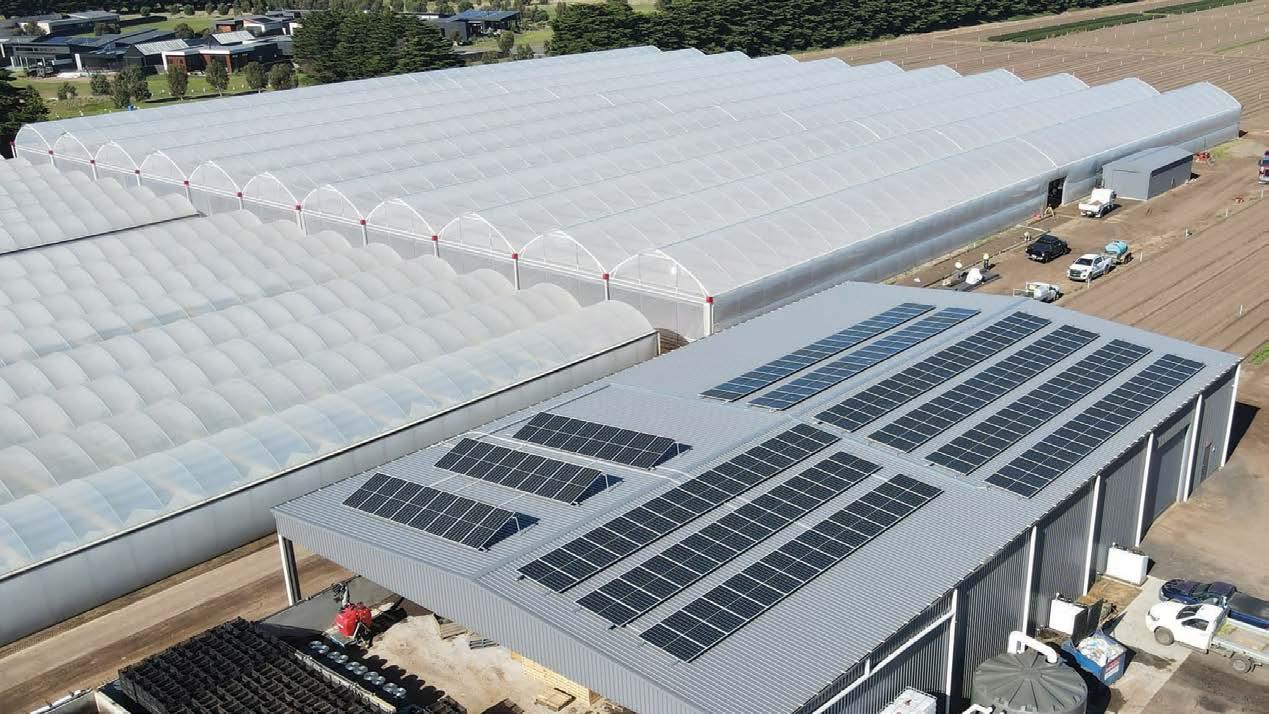
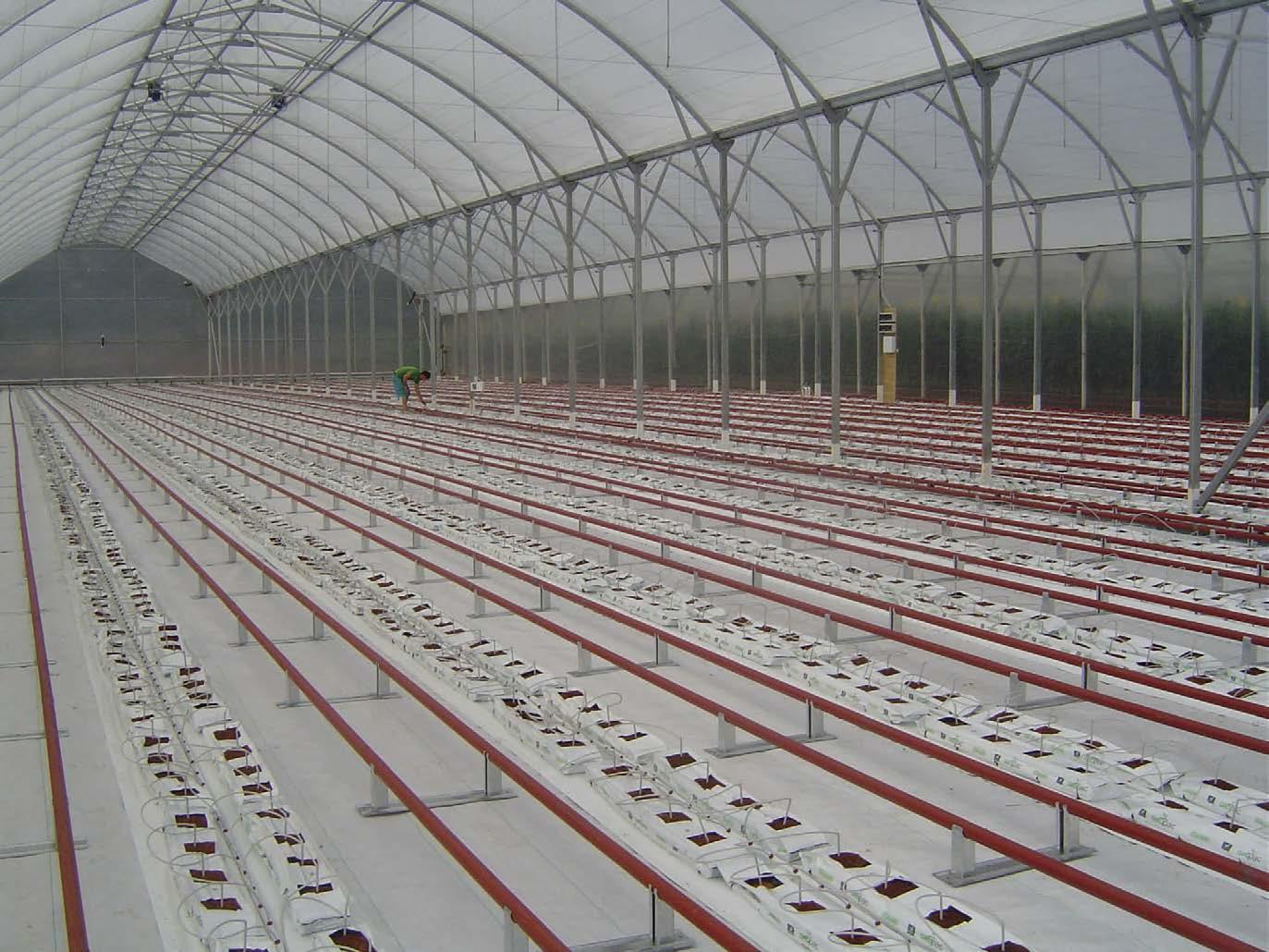
LINCOLN UNIVERSITY’S INVESTMENT IN HORTICULTURE PAYS OFF IN STUDENTS’ CAREERS
Last month current student Jake Linklater was crowned Young Horticulturalist of the Year. Last year the title belonged to Lincoln alumna Anna England. They are two examples of how Lincoln University students excel in the industry. Jake is studying towards a Bachelor of Science majoring in Conservation and Ecology while he works part-time managing the Nova Natives nursery. The 29-year-old father of two had experience in horticulture, but wanted to improve his skillset and understand the science behind his work.
“There are certain things I learnt during my studies that I actually use all the time at work now, such as the way to understand volumetric water content in the soil. I didn’t expect the soil physics to be so interesting and useful.
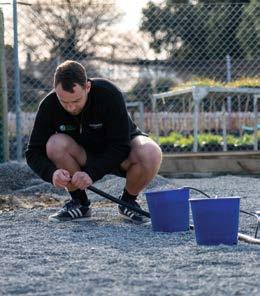
“It felt like the perfect way to get into the industry. It was such a nice learning environment, and I think the practical aspect, like the labs growing and trialling crops, was really good.”
At Lincoln University, we’ve continued to make great progress with our investments in horticultural programmes and facilities. Our new Plant and Horticultural Sciences major is now part of the Bachelor of Science, and we’ve opened a $2.1 million glasshouse designed to enhance teaching and research.
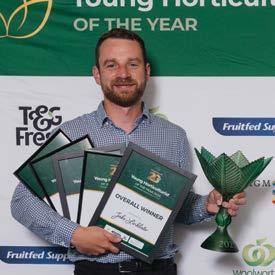
The glasshouse, named Te Whata, has 684m2 across three temperature-controlled spaces. It’s kitted out with the latest tech, with variable lighting, ventilation, water supply and shade all hooked up to state-of-the-art data monitoring equipment. We’ve also upgraded our existing glasshouse heating system.
“I did a soil science paper last year and that really helped me understand how the nursery soil media works. There was an ecology paper I took which helped me understand the diverse aspects of biology and how they integrate together.
“There was a lot of stuff in the competition that came up which I wouldn’t have known unless I did those courses at uni.”
Anna wasn’t from a plant production background. She was living in rural Taranaki, unsure of where to go with a degree in business, when she decided it was finally time to pursue her interest in horticulture.
“Studying at Lincoln toward a Diploma in Horticulture seemed like the next step to further this passion of mine and hopefully land me an awesome job.”
Anna now works as a Sales Coordinator at Elliotts Wholesale Nursery in North Canterbury and is loving her career.
“Studying was a great way to build a sense of direction in what I wanted to do in life.
The Plant and Horticultural Sciences Major allows students to hone in on the principles and practical application of horticultural science. We’ve got a wide range of dedicated plant and horticulture programmes, so you can pick which part of the industry you want to specialise in.
Our Diplomas in Horticulture, Horticultural Business or Horticultural Management are a perfect way to get started in your career or to retrain. You might want to dive deeper with a Bachelor of Science majoring in Plant and Horticultural Sciences or a Bachelor of Commerce (Horticulture).
You can even study our Diploma of Horticulture in your region if you live in Nelson, Bay of Plenty or the surrounding areas. If you’ve already spent time studying science or horticulture, our Master of Horticultural Science can take your education to the next level.
www.lincoln.ac.nz/anna-england
Before winning the main title, Jake won the Young Plant Producer of the Year held at Lincoln University earlier this year

FEEDBACK
NEEDED ON FLOOD AND EROSION TAX RULES
Inland Revenue (IRD) is seeking grower feedback on tax rules. As a consequence of how tax rules apply when land improvements are damaged or destroyed by flooding or erosion, taxpayers may be interpreting and applying the relevant provisions in different ways. Currently there is no specific legislated boundary between what is a repair and what is a replacement of a land improvement – rather this relies on general interpretation principles. Certainty in this area is important to manage compliance costs and to ensure growers can correctly claim deductions for flood or erosion related expenditure.
To help explain the context, IRD has provided a letter including an example of an orchard business facing several types of damage after a severe flood. To find out more and provide feedback for IRD, please contact HortNZ senior policy advisor sarah.cameron@hortnz.co.nz
“ENERGY PACKAGE” RELEASED
Many growers, and greenhouse growers in particular, may be interested in how the Government is working to improve New Zealand’s energy security and self-sufficiency.
The Government has released an “Energy Package” with actions to address New Zealand’s energy challenges.
The actions include:
• Doubling New Zealand’s renewable energy by 2050 through legislative changes and fast-track consenting
• Delivering a Liquified Natural Gas import facility
• Leveraging Government’s purchasing power to drive new energy projects.
The Ministry of Business, Innovation and Employment has told HortNZ that next year, following implementation of the Energy Package, the Government will review whether anything further would be required.
SIGN UP
Get the latest horticulture policy and risk updates, industry programmes and events in your inbox and have your say with HortNZ’s Weekly Briefing. Email comms@hortnz.co.nz to receive the weekly email.