제25기 유엔 전문가 교육 결과보고서 - The 25th Training Program on the United Nations and the 2030 Agenda Final Rep
Special thanks to.
Group Programmes Unit, United Nations Department of Global Communications
Produced by. Education Department, Hope to the Future Association
CSO Representative at the United Nations Department of Global Communications (UN DGC)
Special Consultative Organization with the United Nations Economic and Social Council (ECOSOC)
Memberof the United Nations Academic Impact (UNAI) Korea
Web www.hopetofuture.org | Address 4F., Dana Bldg., Bongeunsa-ro 176, Gangnam-gu, Seoul, Republic of Korea 06125 Tel +82-2-6952-1616 | Email webmaster@hopetofuture.org
Managing
Director
Jin Hoan Choung | President
Editor-in-Chief
Hyeonkyung
Ha | Program Manager
PROGRAM OVERVIEW
Program Introduction
The Training Program on the United Nations and the 2030 Agenda represents a crucial step in engaging and mobilizing youth to participate actively in global governance and international affairs. In today’s interconnected world, the involvement of young people in addressing global challenges is more important than ever. This program, delivered virtually, is designed to immerse participants in the complexities of global issues and the multifaceted strategies employed by the United Nations to tackle them.
Aligned with the UN Youth Strategy, the program underscores the indispensable role that young people play in the realization of the SDGs and the advancement of the United Nations Agenda. Through their engagement, young individuals are empowered to contribute to sustainable development, foster inclusive decision-making, and drive transformative change at local, national, and global levels.
Hosted by Hope to the Future Association, in collaboration with the United Nations Department of Global Communications, this online training program offers high school students an unparalleled opportunity to engage directly with experts and gain a comprehensive understanding of the UN's mission and operations. Despite the virtual format, the program maintains its commitment to delivering a robust educational experience. Participants are exposed to a wide array of topics, ranging from peace and security to sustainable development and human rights protection, through a series of expert-led lectures, interactive workshops, and virtual networking sessions.
The program's focus on the Sustainable Development Goals (SDGs) provides participants with a deeper understanding of the UN’s global agenda and the critical importance of youth participation in its implementation. By familiarizing students with the SDGs, the program equips them with the critical thinking, leadership, and communication skills necessary to navigate and influence the future of international relations. The online format also allows for a diverse group of students from around the world to connect, collaborate, and share perspectives, enriching the overall learning experience.
The 24th iteration of this training program continues to provide an in-depth exploration of the United Nations' efforts to achieve its objectives, particularly in the context of SDG implementation. By offering a global platform for young people to discuss and address these challenges, the program helps cultivate a new generation of leaders who are informed, skilled, and motivated to contribute to a more just, peaceful, and sustainable world.
Through their participation in this online training program, students become part of a global network of changemakers committed to addressing the world’s most pressing challenges. The program not only educates but also inspires action, encouraging participants to apply their newfound knowledge and skills to make meaningful contributions within their communities and beyond. As they prepare to lead in an increasingly complex world, these young individuals are equipped to play a pivotal role in advancing the United Nations Agenda and achieving the SDGs, paving the way for a brighter future for all.
Despitetheseandotheradvances,prosperityhasnotbeensharedbyall. Inequalities,extremepoverty,unemployment,socialexclusionandenvironmental degradationcontinuetobeprominentfeaturesofsocietiesaroundtheworld. Discriminationandprejudiceremainmajorbarrierstobuildinginclusivesocieties. Manyvulnerablesocialgroupsfindtheirsituationworsening.Theimpactsof climate change will fall most heavily on those who did least to cause the problem.
At the heart of the 25th Training Program on the United Nations and the 2030 Agenda lies a resolute focus on the SDGs, an evolutionary framework conceived to transcend the achievements of the Millennium Development Goals (SDGs). These SDGs encompass a sweeping vision, drawing on the triumphs of the past while galvanizing the global community to transcend poverty in all its facets.
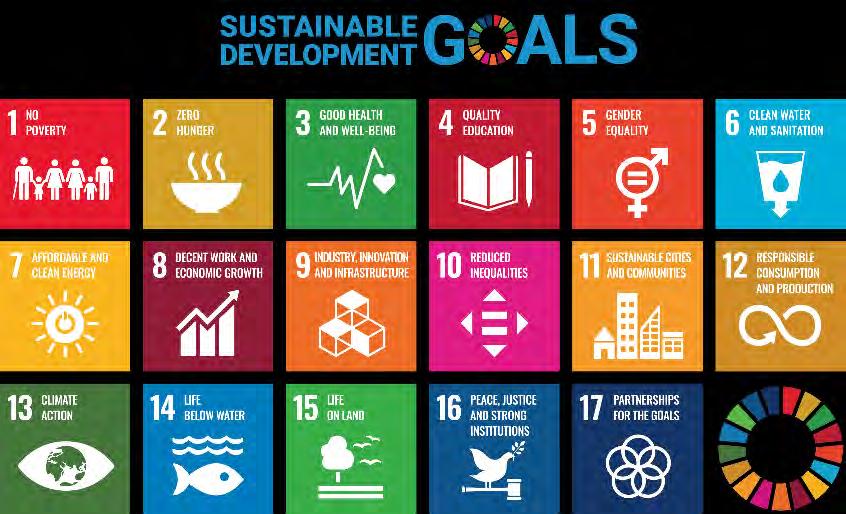
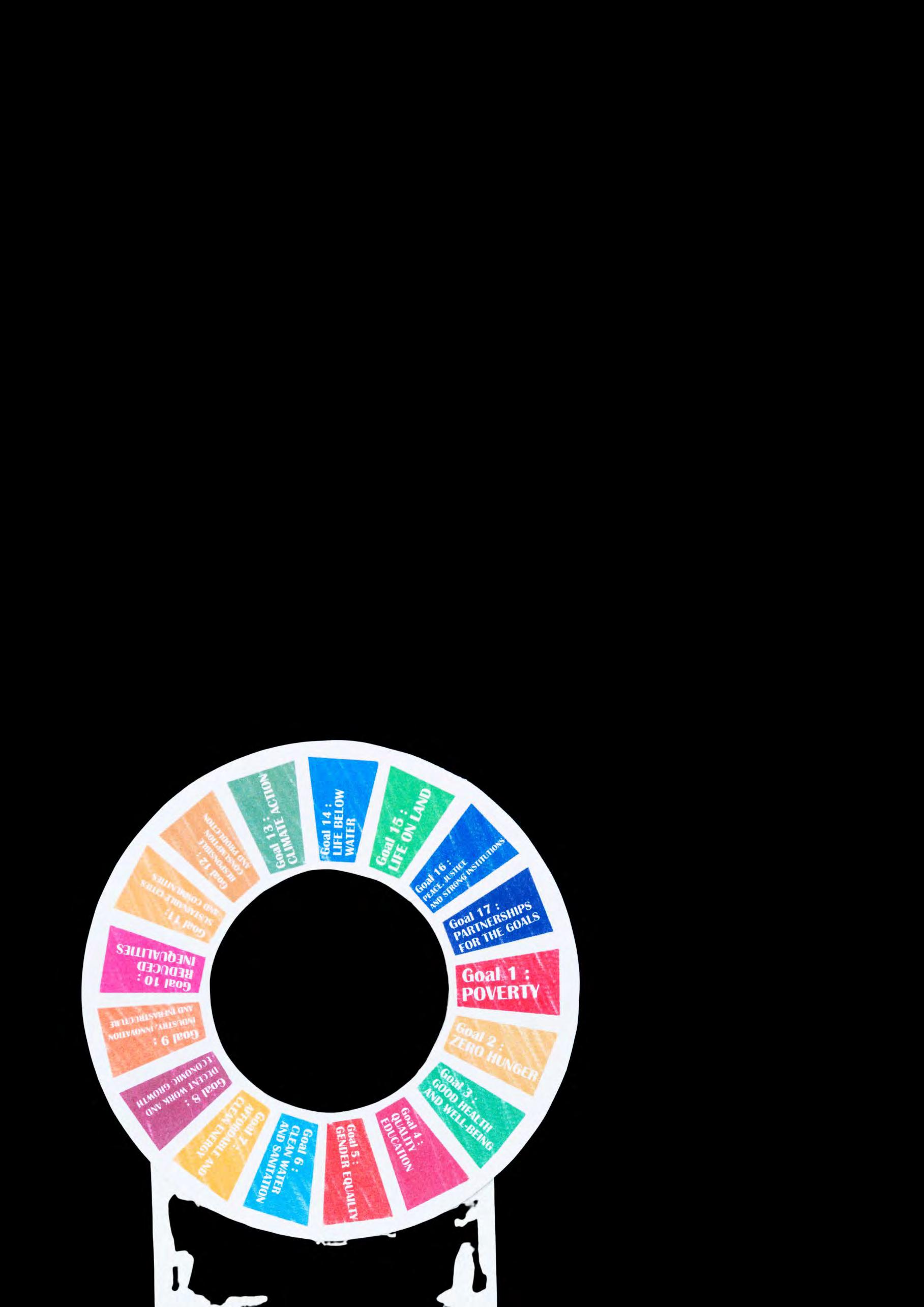
The Sustainable Development Goals (SDGs), adopted in 2015 by all United Nations Member States, represent a comprehensive blueprint for achieving a better and more sustainable future for all by 2030. The 17 goals address a broad array of global challenges, including poverty, inequality, climate change, environmental degradation, peace, and justice. The SDGs are unique in that they are universally applicable, meaning they call on all countries, regardless of their income levels, to take action to promote prosperity while protecting the planet. This universal call to action recognizes that achieving these goals is not just the responsibility of governments but requires the active participation of all sectors of society, including the private sector, civil society, and individuals.
One of the defining features of the SDGs is their interconnected nature. Success in one goal often depends on tackling issues more commonly associated with another. For example, ensuring quality education (Goal 4) is closely linked to gender equality (Goal 5) and decent work and economic growth (Goal 8). This interconnectedness reflects the complexity of global challenges and the need for integrated solutions. According to the United Nations Development Programme (UNDP), progress on the SDGs is uneven across regions and countries, with challenges such as climate change and inequality requiring accelerated action. The UN's 2023 SDG Progress Report highlights that while there has been notable progress in some areas, the world is not on track to achieve the goals by 2030, particularly in light of setbacks from global events like the COVID-19 pandemic.
The SDGs also emphasize the principle of "leaving no one behind," which calls for the inclusion of all people, especially the most vulnerable, in development efforts. This principle is central to the SDGs' focus on eradicating poverty (Goal 1) and reducing inequalities (Goal 10). The United Nations has stressed that achieving the SDGs will require addressing the root causes of poverty and inequality, such as discrimination and exclusion, while also empowering marginalized communities to participate in decision-making processes. This inclusive approach is vital for building societies that are resilient and capable of withstanding global shocks.
Climate action (Goal 13) is another critical area where urgent progress is needed. The 2023 Intergovernmental Panel on Climate Change (IPCC) report underlines that climate change is accelerating faster than previously anticipated, with devastating impacts on ecosystems, economies, and communities worldwide. The SDGs call for immediate and ambitious efforts to mitigate climate change and adapt to its effects, including transitioning to renewable energy sources, promoting sustainable agriculture, and enhancing disaster risk reduction. The United Nations Framework Convention on Climate Change (UNFCCC) plays a key role in facilitating international cooperation on climate action, helping countries to implement their commitments under the Paris Agreement.
Although not legally binding, the SDGs entrust governments with the responsibility to establish national frameworks that embody the essence of the 17 Goals. The onus of monitoring and evaluating advancements towards these Goals rests primarily with individual countries, demanding the acquisition of precise, accessible, and timely data. This Agenda is far more than a mere blueprint; it's a clarion call for people, planet, prosperity, peace, and partnership. It's a resolute endeavor to fortify universal peace within the realm of greater freedom. Akin to
this initiative, we recognize that vanquishing poverty, in all its dimensions, is our paramount global challenge, an essential prerequisite for sustainable advancement.
Unified in collaborative partnership, countries and stakeholders alike commit to actualizing this plan. With unyielding determination, we strive to emancipate humanity from the clutches of destitution and to mend and safeguard our ailing planet. To catalyze this transformation, we pledge to adopt audacious steps, pivoting the world towards an enduringly sustainable and resilient trajectory. On this collective odyssey, we affirm that none shall be left behind.
The 17 SDGs and their 169 corresponding targets stand as a testament to the grandeur and aspiration of this universal Agenda. These Goals are designed not only to build upon the legacy of the MDGs but also to fill the gaps left by them. They are intricately woven, inseparable, and poised to balance the triad of sustainable development: the economic, social, and environmental dimensions.
Crucially, the youth of today stand as the torchbearers of these aspirations. Their energy, creativity, and passion hold the potential to infuse new life into these Goals. As we navigate the intricacies of this Agenda, we must recognize the indispensable role of youth in catalyzing change, igniting innovation, and driving progress. It's their spirit of advocacy, their willingness to question, and their capacity to inspire that will shape the trajectory of these Goals.
02 Youth Engagement and International Solidarity
Youth engagement is increasingly recognized as a critical component in the global effort to achieve the SDGs. The United Nations has consistently emphasized that young people are not just beneficiaries of sustainable development but are also essential drivers of change. With more than 1.8 billion people between the ages of 10 and 24, the largest youth population in history, young people have the potential to significantly influence the direction of global development. The UN’s Youth Strategy, "Youth 2030," underscores the importance of harnessing the energy, innovation, and leadership of young people to accelerate progress on the SDGs and build a more inclusive, equitable world.
One of the key aspects of youth engagement is fostering their participation in decision-making processes at all levels. This is particularly important in addressing issues that disproportionately affect young people, such as unemployment, education, and climate change. The United Nations has established various platforms, such as the UN Youth Delegates Programme and the Youth Forum at the Economic and Social Council (ECOSOC), to ensure that young voices are heard in international deliberations and that their perspectives shape global policies.
International solidarity is another crucial element of youth engagement. In today’s interconnected world, the challenges faced by one community or country can quickly become global in scope. The COVID-19 pandemic is a stark reminder of how interconnected our fates are. Young people, with their global awareness and strong sense of social justice, are uniquely positioned to foster international solidarity and cooperation. The United Nations Secretary-
General’s "Our Common Agenda" report emphasizes the need for renewed multilateralism and greater solidarity across generations and borders.
Education is a fundamental tool for empowering young people to engage in global issues and foster international solidarity. Participants in the Training Program at the United Nations are expected to develop a deeper understanding of the UN's work, gaining insights into the complexities of international relations and the multifaceted efforts to achieve the SDGs. The expected outcomes for participating youth are multifaceted and transformative. Participants will emerge with enhanced knowledge of the United Nations' operations and its strategies for tackling global challenges through the SDGs. They will develop critical leadership and public speaking skills, broaden their global networks, and gain a heightened sense of responsibility toward promoting international solidarity and justice. Importantly, the program aims to inspire a lifelong commitment to global citizenship, equipping participants with the tools and motivation to take action within their communities and on the global stage to support the UN's mission and advance the global agenda for sustainable development.
By empowering young people and fostering a sense of global citizenship, the international community can tap into the creativity, passion, and commitment of the next generation to drive sustainable development. The United Nations, through its various programs and initiatives, continues to support and amplify the role of young people in shaping a more just, peaceful, and sustainable world. As young leaders continue to push for change, their engagement in global governance and their commitment to international solidarity will be pivotal in realizing the ambitious vision of the SDGs by 2030.
PARTICIPANT LIST
Speakers
Joon Oh
Save the Children
Donald Lee
ATD (All Together in Dignity) Fourth World
Ken Chamuva Shawa
International Labour Organization (ILO)
Deepayan Basu Ray
United Nations Regional Centre for Peace and Disarmament in Asia and the Pacific (UNRCPD)
Kadir Jun Ayhan
James Madison University
Ana Maria Manero Valles
United Nations Department of Global Communications (UNDGC)
Luis Angel Flores
United Nations Human Settlements Programme (UN-Habitat)
Junghyun Kim
Food and Agriculture Organization of the United Nations (FAO)
Yeonji Kim
Green Climate Fund (GCF)
Arnaud Debauge
United Nations Development Programme (UNDP) Seoul Policy Centre Sujung An
United Nations Women
Youngjin Lee
World Federation of United Nations Associations (WFUNA)
Minji Kwag
United Nations Development Programme (UNDP) Human Development Report Office
Carine Valarche
Department for Environment, Food and Rural Affairs of the United Kingdom
Jiwoo Seo Pohang University of Science and Technology
Jiyun Seong University of Manchester
SDGs GROUP WORK
TOPIC PROPOSAL
1. Team Members
Jinseo Kim, Korea Christian International School
Geonhee Bak, Korean Minjok Leadership Academy
Irene Yewon Yoon, BC Collegiate Upper
Ashley Chung, Seoul Foreign School
2. Project Title
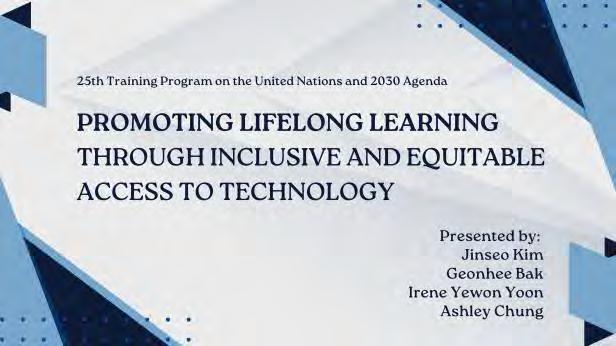
Promoting Lifelong Learning through Inclusive and Equitable Access to Technology
3. SDG Alignment
3.1 Relevant SDGs and Rationale
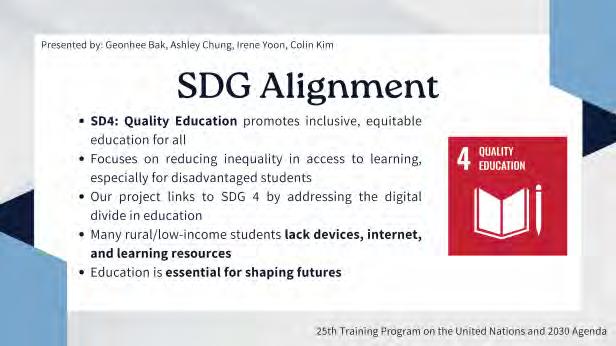
This project directly aligns with SDG 4: Quality Education, which aims to ensure inclusive and equitable quality education and promote lifelong learning opportunities for all. A core focus of SDG 4 is reducing inequality in access to education, particularly for students from disadvantaged backgrounds. This project addresses the persistent digital divide in education, where students in rural and low-income communities lack access to digital devices, stable internet connections, and online learning resources. As education increasingly relies on digital platforms, unequal access to technology directly translates into unequal learning outcomes. Addressing this divide is essential because education remains one of the most effective pathways out of poverty and a key driver of long-term social and economic mobility.
3-2. Relevant SDG Target
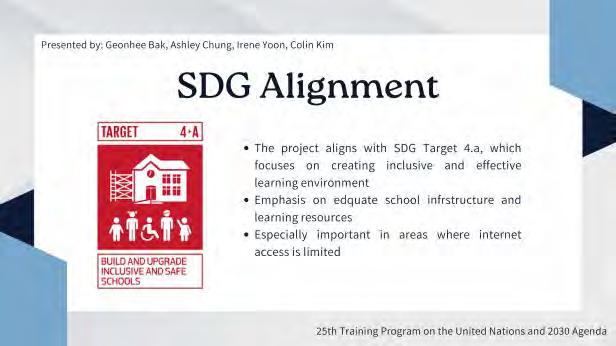
The project aligns with SDG Target 4.a, which focuses on building an inclusive and effective learning environment. It focuses on schools having adequate infrastructure as well as resources to teach students. Our project contributes to this change because by improving access to digital learning resources, students can have a better learning environment. This change especially applies for where internet access is limited.
4. Problem Statement
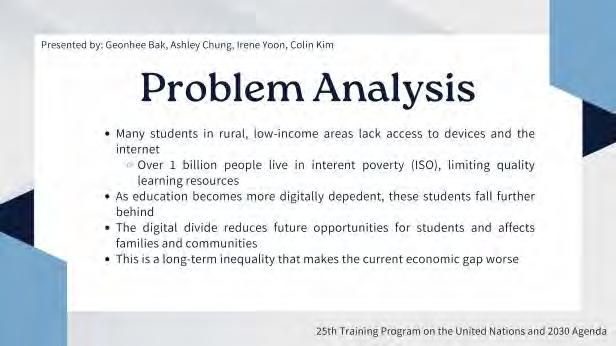
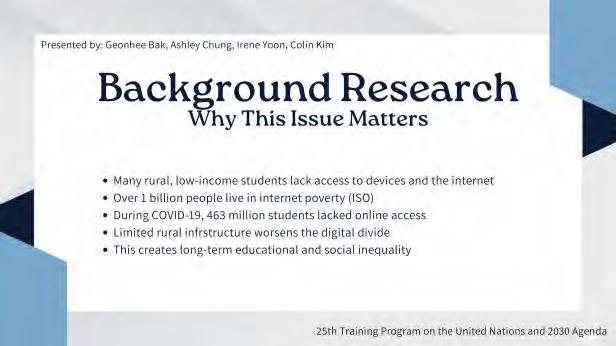
In many rural and low-income communities, students are unable to fully participate in modern education due to limited access to digital devices and reliable internet connections. More than 1 billion people live in Internet poverty according to ISO. This leads to a significant loss in quality learning resources. While the evolution of digital tools are growing exponentially and more schools rely on online materials and
platforms, students in these communities often do not have devices, stable internet. In fact, according to UNICEF, more than 463 million students were unable to access the Internet during COVID, leaving behind huge gaps. This problem is especially severe in rural regions where infrastructure is significantly limited compared to urban areas. As a result, many students fall behind and miss opportunities. The digital divide does not just influence the student but also the family who relies on their next generation to provide for their community. This issue matters because it’s not just a “now” problem but it’s a long-term inequality.
5. Solutions & Expected Outcomes
The project will produce a safer educational environment for students in rural/developing nations, increasing connectivity, and eventually leading to accessible, online pursuits for all students. In the wake of a new method of learning and teaching, many schools would be able to assign resources in different sectors, increasing educational efficiency, along with potential advocacy briefs/speeches regarding how to provide and strengthen educational prowess, eventually branching out and influencing other students to do the same, that is, providing viable education such as online accessibility and increase work efficiency for students and teachers whilst also allowing other individuals to access the internet altogether. Ultimately, the project seeks to create long-term systematic change by making online education accessible to a wider audience in a sustainable and practical way.
6. Feasibility & Measurability Check
6-1 Strengthening Digital Infrastructure in Public Libraries
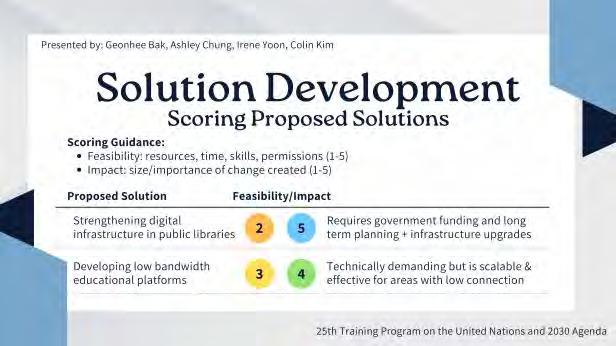
This solution is feasible as a long-term initiative but cannot be fully implemented within a student-led project timeline. Infrastructure upgrades would require government funding and formal approval from local authorities/officials, but students could contribute as well through researching, advocating, and developing proposals. Libraries and community stakeholders would likely support the improvements for more digital access because students who don’t have good internet at home would directly benefit. The success of this solution can be measured through quantitative indicators like increased usage of library computers, improved internet availability, and higher participation in digital services in libraries. Qualitative indicators can be feedback by students and library staff members, along with improvements in students’ ability to access online resources for learning.
6-2.
Developing Low-Bandwidth Educational Platforms
Creating or adapting low-bandwidth educational platforms is moderately feasible within a limited timeframe, particularly if the focus is on creating a simple prototype or adding into existing platforms instead of building a full system from scratch. This requires some technical knowledge along with collaboration with educators, but is still quite realistic considering external support. There would likely be stakeholder participation since students and teachers in areas with low internet availability would directly benefit from reduced data use. The effectiveness can be measured
quantitatively through metrics like the number of people accessing the platform, decrease in data consumption, and completion rates of education content. Qualitative measures could include user feedback, surveys, and observed improvements in learning accessibility.
6-3 Creating a Guide for Effective Mobile Device Use
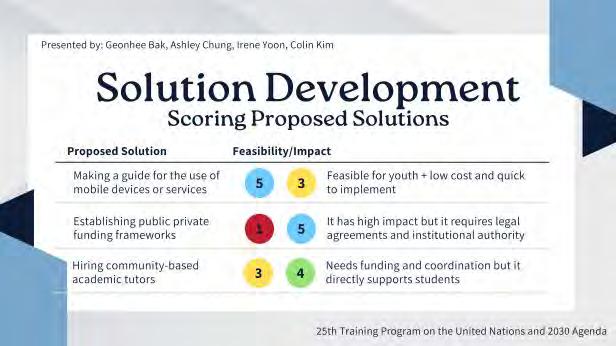
Developing a practical guide for efficient mobile device and data usage is highly feasible and can be fully implemented by students in a short period. This solution requires minimal resources and leverages students’ research and design skills. Stakeholder participation should also be high since it directly supports people with reliance on mobile devices for internet access. The success can be measured quantitatively through the number of guides distributed, page views (if it’s shared online), as well as survey results that can show improved digital navigating skills or reduced data usage. Qualitative indicators could be feedback from guide users and increased confidence in using mobile devices for education.
PROJECT PLANNING
1. Project Overview
1-1. Project Title
Promoting Lifelong Learning through Inclusive and Equitable Access to Technology
1-2.
Executive Summary
This project examines the digital divide in education, focusing on how unequal access to digital devices and reliable internet disproportionately affects students in rural and low-income communities. As education becomes more digitalized, limited access to digital information may prevent many students from participating fully in learning, which exacerbates existing educational and social inequalities. This issue matters because over one billion people globally live in poverty, and students without consistent digital access face reduced academic outcomes and long term opportunities.
Our research looks at global data and national case studies, including information from the COVID-19 pandemic, which revealed that low income students experienced learning disruptions at rates that are 2-3 times higher than their higher income peers. These findings show that digital inequality is not temporary. To address this challenge, the project proposes three complementary solutions: strengthening digital infrastructure in public libraries, developing low-bandwidth educational platforms, and creating a practical guide for the effective use of mobile devices and data-saving services. These solutions could lead to systemic change with youth led actions. The expected impact includes improved educational access, reduced learning gaps, and progress towards more inclusive and equitable education that aligns with SDG 4: Quality Education.
2. Background Research
2-1.
Global Background
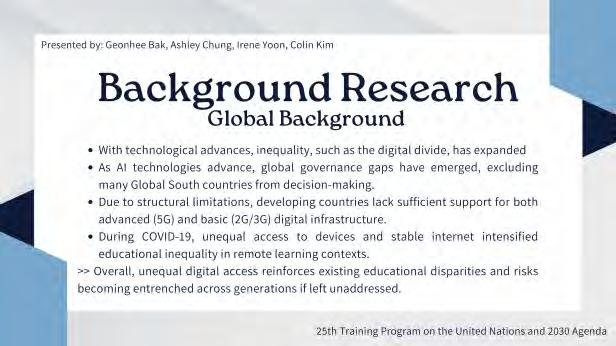
The rise of the Y2K era marked the efficacy of producing cutting-edge technology innumerable times. Not only has tech evolved numerous times, but also lengthened its extent, and during the 21st century, tech has redefined itself to include AI systems. Although this newfound revelation proves to advance educational progress, it creates an unfair scarcity between those who are able to acquire this technology and those who are not able to. Around 118 countries - mostly from the Global South - lack global AI governance discussions, and AI-field corporate powerhouses are located in developed nations such as the United States and China, creating huge disparities regarding AI-based technology and potentially educational tools (United Nations, 2025).
A meeting held in 2023 of the General Assembly discussed the Fourth Industrial Revolution, but with the exclusion of many developing or poor nations, which led to the representative of Nepal pointing out how digital technologies have the potential to bridge economic and technological disparities, but have made insufficient progress in doing so; and claimed many nations neglected to help the Group of Least Developed Countries adopt advanced 5G networks or enhance existing 2G/3G networks that could increase work efficiency and lower maintenance costs. Delegates of this conference, specifically representatives of developing nations, agreed that leaving and neglecting developing nations to opt for further development of technological embrace regarding developed nations should not occur without the presence of proper supplementation provided by developed nation delegates (United Nations, 2023).
Additionally, statistics indicate that Africa has the largest connectivity gap out of any nation, where 23% of the population has no network, whilst Eastern Europe and the Commonwealth of Independent States (CIS) report that 11% of the population has no network. The connectivity gap is even wider when comparing the connectivity charts of African youth to European’s, as over 60% of African youth are not online, whilst European youth only have 4% of youth not online (Royall). Furthermore, reports indicate that this digital divide will only grow further if left unchecked, as the internet becomes a much more widely accessible tool only for some groups of youth.
A case study was conducted in 2022 to analyze the learning disparities between families with ample digital technology and families who lack it, and how this difference caused educational differences during the COVID-19 pandemic. By utilizing multiple surveys and interviews, the results indicated that each student had levels of discomfort and annoyance due to the online workspace; however, the discomfort was higher for students who had poor internet quality, accessibility issues, a lack of materials such as laptops, and communication issues. The findings of this study indicate that unequal access to digital tools increases the existing educational inequalities during remote learning (Phillips & Shipps, 2022, 1-15).
2-2. Local/National Background
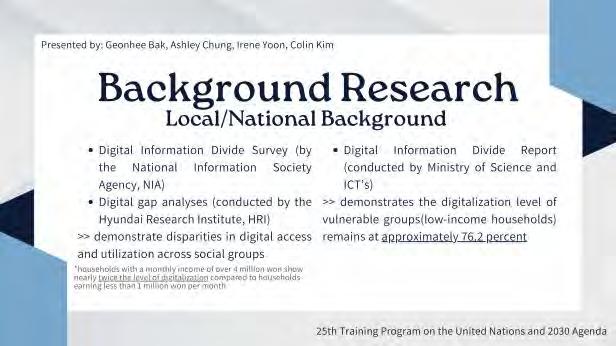
In South Korea, digital technologies are widely distributed, however a clear digital divide still exists between students from low-income and high-income households within the educational environment. While Korea’s internet penetration rate exceeds 97 percent, this macro-level figure does not fully capture inequalities in digital access, usage capacity, and student participation in learning. In reality, the quality of digital environments and the ability to use technology effectively depend on a household’s economic background.
Reports such as the Digital Information Divide Survey conducted by the National Information Society Agency (NIA) and digital gap analyses by the Hyundai Research Institute (HRI) demonstrate disparities in digital access and utilization across social groups, including income level, disability status, age, and educational background. Especially households with a monthly income of over 4 million won show nearly twice the level of digitalization compared to households earning less than 1 million won per month.
According to the Ministry of Science and ICT’s Digital Information Divide Report, the digitalization level of vulnerable groups, including low-income households, remains at approximately 76.2 percent, constantly lower than other social groups. This shows that, at the government and policy level, digital inequality is closely linked to social and economic levels.
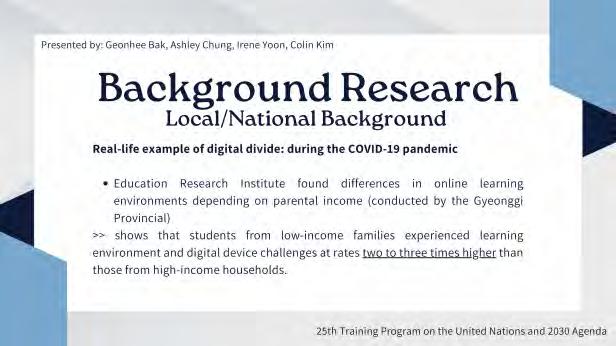
A real-life example of this divide can be observed during the COVID-19 pandemic, when educational disparities widened due to differences in home environments and parental economic capacity. Surveys show that students from low-income families experienced learning environment and digital device challenges at rates two to three times higher than those from high-income households. Experts warn that this situation has shown “K-shaped polarization,” in which parental income disparities are increasingly transferred into educational achievement gaps among children.
2-3. Why This Issue Matters
The issues of digital divide pose a major debilitator for developing nations, as without proper technologies or technological advancements, progress to further develop the nation cannot be made, such as certain Sustainable Development Goals, which may require additional funding in comparison.
The youth should have concern for this arising problem, as this issue will only worsen for the future, leading to further inequalities in the developing nation’s job opportunities, economic growth, education, and the creation of a two-tiered society, specifically between the technologically advanced and the technologically outmoded. The inequalities that arise will eventually impact work efficacy and efficiency, as there will be fewer workers in the job market due to underqualification. If corporations for future adolescents were to be founded, they may lack a proper workforce, as there would be fewer people involved in the field.
Furthermore, many representatives of developing nations claimed that the ethical and moral responsibilities of this inequality lie with the developed nations, and that developed nations should strive to cooperate in projects aimed at contributing to developing nations. It is a sound argument in terms of moral accountability, as the more economically powerful developed nations should most definitely help developing nations. Additionally, if developing nations are not provided with environmentally safe and sustainable energy sources, it will detriment nature and global nations, as climate change is an uncontrollable externality.
3. Problem Analysis
3-1.
Problem Statement
In rural and low-income communities, many students are unable to fully participate in modern education due to limited access to digital devices and reliable internet connections. More than 1 billion people live in Internet poverty according to ISO. This leads to a significant loss in quality learning resources. While the evolution of digital tools are growing exponentially and more schools rely on online materials and platforms, students in these communities often do not have devices, stable internet.
This impacts the students the most; they are directly affected by this digital divide, losing future opportunities. This problem is especially severe in rural regions where infrastructure is significantly limited compared to urban areas. This is a significant problem because the digital divide does not just influence the student but also the family who relies on their next generation to provide for their community. It’s not just a “now” problem but it’s a long-term inequality. Overall, the digital divide in education highlights a growing gap between students who can and can not access online learning tools. Without direct actions, this inequality will prevent students from pursuing their future and create long-term social and economic disparities in rural areas. Addressing this issue is crucial and requires improving the current educational system.
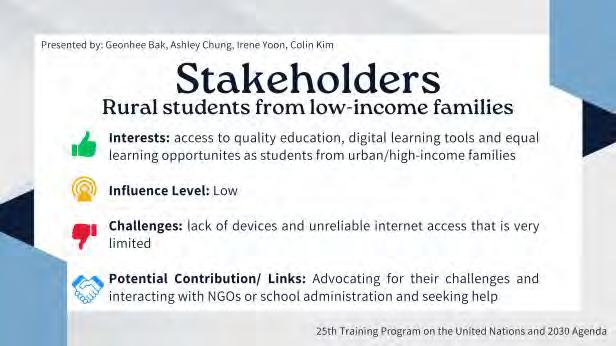
Access to quality education, digital learning tools, and equal learning opportunities comparable to those of urban or high-income students
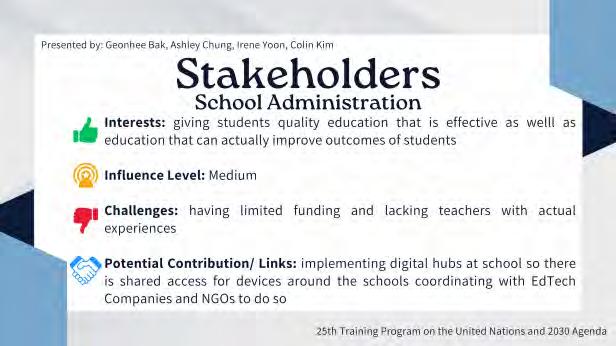
School administration Providing effective education that improves student learning outcomes
Low Limited or no access to digital devices and stable internet; insufficient digital literacy skills
Advocating for their challenges and interacting with NGOs. Communicating with NGOs or school administration and seeking help.
Medium Limited funding; shortage of teachers with experience in digital or blended learning
Implementing digital hubs at school so there is shared access for devices around the schools that can be accessed by lowincome students. Coordinating with EdTech Companies and NGOs to implement digital learning tools and distribute devices.
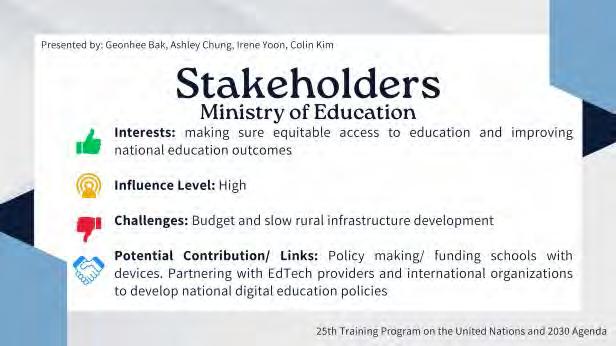
Ministry of Education
Ensuring equitable access to education and
High Budget constraints; slow development
Policy making as well as funding the schools with devices students can
EdTech companies
improving national educational outcomes of rural digital infrastructure access. Partnering with EdTech providers and international organizations to develop national digital education policies and request funds.
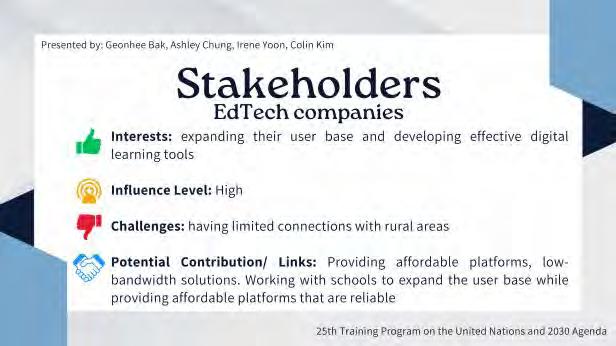
Expanding user base and developing effective digital learning platforms
High Limited outreach and operational experience in rural and lowincome areas
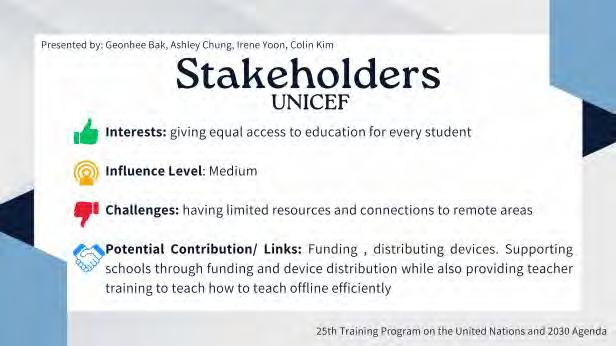
UNICEF
Promoting equal access to education for all children
Medium Limited resources; logistical challenges in reaching remote communities
Providing affordable platforms, lowbandwidth solutions. Working with schools to expand the user base while providing affordable platforms that are reliable to students from low-income families.
Funding support, distributing devices. Supporting government and schools through funding and device distribution while also providing teacher training to teach them on how to teach offline while still being efficient like they can online.
4. Case Studies
4-1.
Case Study #1
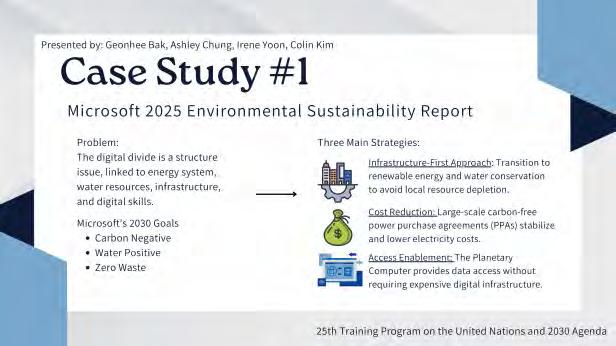
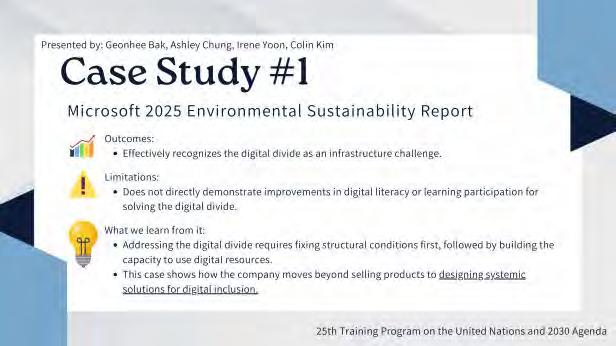
The Microsoft 2025 Environmental Sustainability Report emphasizes that the digital divide cannot be solved solely through device distribution, but must be addressed by transforming the structural conditions of digital access, including energy systems, infrastructure stability, and digital skills development. Microsoft’s sustainability framework aiming to become carbon negative, water positive, and zero waste by 2030 demonstrates how environmental sustainability and digital inclusion are
closely interconnected.
The company outlines three primary strategies to address the problem: an infrastructural approach, cost reduction, and digital skills development. By transitioning basic infrastructure such as replacing fossil fuel-based power supplies with renewable energy and conserving water resources they seek to prevent the depletion of local power and water supplies. Additionally, they have reduced and stabilized electricity price volatility through large-scale carbon-free power purchase agreements (PPAs). After establishing the foundational infrastructure and network, Microsoft enables data access without expensive infrastructure by utilizing the Planetary Computer, an AI-based data platform.
This initiative has been partially successful because it recognizes the digital divide as a structural infrastructure issue and addresses it accordingly; however, it does not directly demonstrate improvements in digital literacy or online class participation. Based on this case, solving the digital divide requires first addressing structural challenges, followed by developing the capacity to utilize these resources effectively. Furthermore, this example illustrates how a company like Microsoft can move beyond merely providing products to becoming a designer of solutions for the digital divide.
4-2. Case Study #2
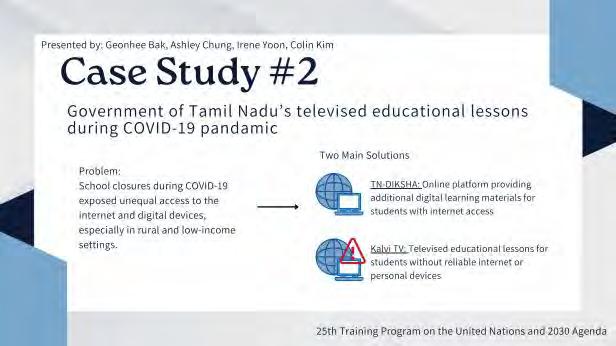
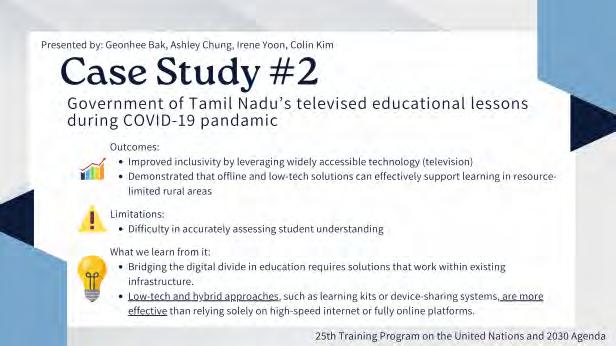
During the COVID-19 pandemic, the government of Tamil Nadu initiated a program that used televised educational lessons (Kalvi TV) and an online learning platform called TN-DIKSHA. This allowed for students without stable internet or personal devices to access learning through widely accessible technologies like the television, while students who had internet access could use digital platforms for additional learning materials.
The program was largely successful as it did not assume universal internet access and took digital divide into consideration. However, there were still limitations such as lack of interaction between students and teachers, which hindered the ability to assess student understanding accurately.
This case demonstrates that offline and low-tech solutions can play a critical role in reducing educational inequality, especially in resource-constrained settings. It uses a mixed media approach in order to be more inclusive than online only systems. It also shows the importance of designing solutions such as learning kits or device sharing systems that work within existing infrastructure rather than relying only on fast internet.
5. Solution Development
5-1.
Long List of Possible Solutions
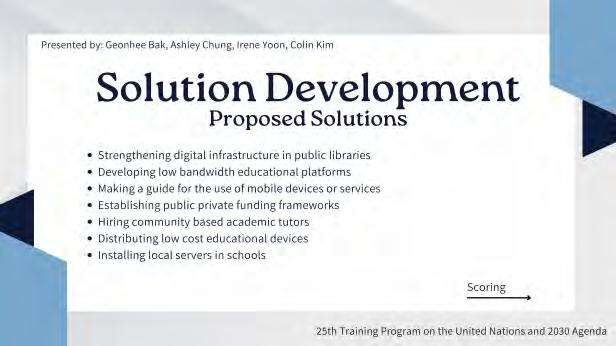
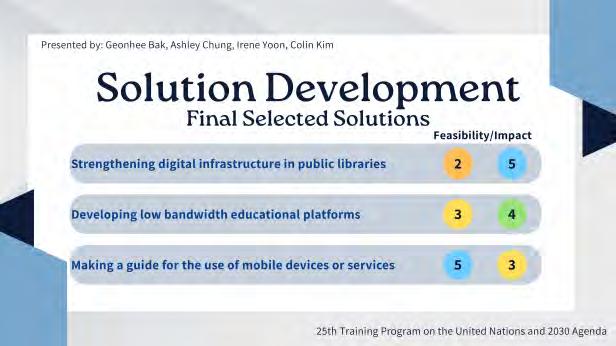
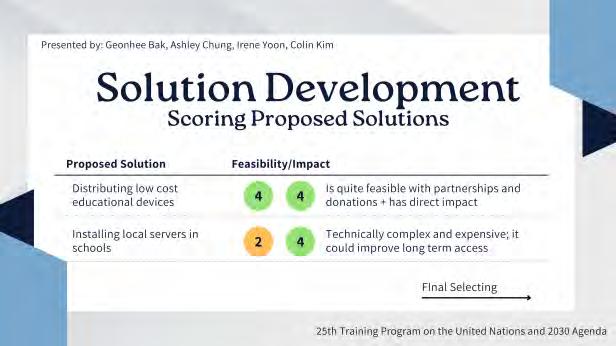
Strengthening digital infrastructure in public libraries
Creating a simple guide containing the use of mobile devices and data saving tools
Installing local servers in schools
Developing low bandwidth educational platforms for students with limited internet access
Hiring community based academic tutors
Establishing public private funding frameworks with legal agreements
Distributing low cost educational devices
5-2. Feasibility & Impact Assessment
5-3. Final Selected Solutions
6. Expected Impact
6-1.
Short-term Impact
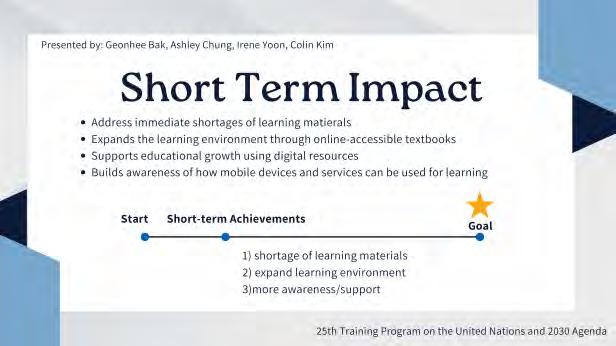
In the short term, the project is expected to address immediate learning barriers by improving access to educational materials and creating more inclusive learning environments. Students will gain increased access to online textbooks and learning resources through public digital spaces such as libraries. Additionally, the mobile device usage guide will improve students’ awareness of how to effectively use limited data and existing devices for educational purposes.
6-2.
Long-term Impact
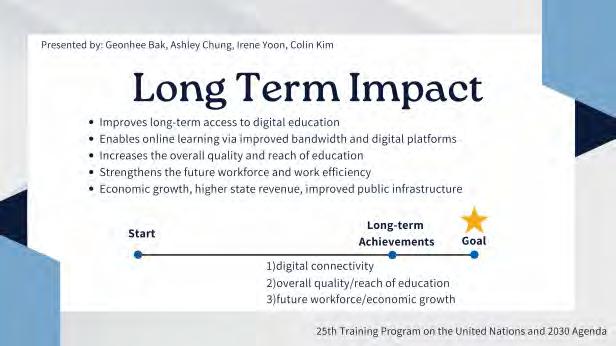
In the long term, the project aims to reduce educational inequality by expanding sustainable digital access points and improving connectivity through low-bandwidth platforms. The quality and quantity of education would increase remarkably, and in the long run, would enhance the potential workforce and work efficiency for future workers. In turn, the increased efficiency would lead to a net positive feedback loop with advancements and developments brought to the country by a stronger workforce, which may also generate more revenue for state funding, and may also lead to better infrastructure of public spaces, resolve multiple capital-related issues such as lack of shelter, food, water, etc.
6-3.
Expected Challenges
The expected challenges of this project include the amount of capital and resources needed as a down payment and as maintenance costs, costs in installing new IXPs, local servers, and other types of network infrastructure necessary. Acquiring income to cover these costs would require reliable stakeholders and/or other connections, along with potential investor/stakeholder conflicts of interest, and many more.
7. References
국내 디지털 격차 현황 . (2000). In 현대경제연구원 . 강용중 . https://www.hri.co.kr/kor/report/reportview.html?mode=4&uid=796&language=KOR&page=698 2024 디지털정보격차 실태조사 결과 . (2025, March 27). 과학기술정보통신부 https://www.msit.go.kr/bbs/view.do?sCode=user&nttSeqNo=3173670&bbsSeqNo=7 9
2 년째원격수업 저소득‧맞벌이취약계층교육격차더벌어진다 . (2021, February 21). 중앙일보.https://www.joongang.co.kr/article/23996812
2025 Environmental Sustainability Report: Accelerating progress to 2030. (n.d.).
Jafar, K., Ananthpur, K., & Venkatachalam, L. (2023). Digital divide and access to online education: new evidence from Tamil Nadu, India. Journal of Social and EconomicDevelopment,25(2),313–333.https://doi.org/10.1007/s40847-023-002361
COVID-19: At least a third of the world’s schoolchildren unable to access remote learning during school closures, new report says. (2020, August 26). UNICEF. Retrieved January 8, 2026, from https://www.unicef.org/press-releases/covid-19least-third-worlds-schoolchildren-unable-access-remote-learning-during
Internet Poverty Index: more than 1 billion people live in Internet poverty worldwide (n.d.). Internet Society Foundation. Retrieved May 19, 2023, from https://www.isocfoundation.org/2023/05/internet-poverty-index-more-than-1-billionpeople-live-in-internet-povertyworldwide/?gad_source=1&gad_campaignid=18448539282&gbraid=0AAAAAoZgpa hO8GBKv8tHUZgTWjC8jfbpE&gclid=Cj0KCQiAyP3KBhD9ARIsAAJLnnagmyUpPsl B4E9lX2M
Phillips, B., & Shipps, B. (2022). The Persistent Digital Divide: The Case Study of a Minority Serving Institution. The Journal of the Southern Association for Information Systems, 9(2), 15. https://aisel.aisnet.org/cgi/viewcontent.cgi?article=1037&context=jsais
Royall, E. (n.d.). Addressing the Digital Divide. UN-Habitat. Retrieved January 8, 2026, from https://unhabitat.org/sites/default/files/2021/11/addressing_the_digital_divide.pdf
Royall, E. (n.d.). AssessingtheDigitalDivide. UN-Habitat. Retrieved January 8, 2026, from https://unhabitat.org/programme/legacy/people-centered-smartcities/assessing-the-digital-divide
United Nations. (2023, October 6). Widening Digital Gap between Developed, Developing States Threatening to Exclude World's Poorest from Next Industrial Revolution, Speakers Tell Second Committee | UN Meetings Coverage and Press Releases. UN Meetings Coverage and Press Releases. Retrieved January 8, 2026, from https://press.un.org/en/2023/gaef3587.doc.htm
United Nations. (2025, April). AI’s$4.8trillionfuture:UNwarnsofwideningdigital divide without urgent action. UN News Global perspective Human stories. Retrieved 2026, from https://news.un.org/en/story/2025/04/1161826#
World Social Summit under the title Second World Summit for Social Development. (2025, September 8). ConnectingHumanity:ABlueprintforClosingtheDigitalDivide | Second World Summit for Social Development 2025. Division for Inclusive Social Development. Retrieved January 8, 2026, from https://social.desa.un.org/worldsummit-2025/blog/connecting-humanity-a-blueprint-for-closing-the-digital-divide#
Internet Poverty Index: more than 1 billion people live in Internet poverty worldwide (n.d.). (2023, May 19). Internet Society Foundation. Retrieved January 8, 2026, from https://www.isocfoundation.org/2023/05/internet-poverty-index-more-than-1-billionpeople-live-in-internet-povertyworldwide/?gad_source=1&gad_campaignid=18448539282&gbraid=0AAAAAoZgpa hO8GBKv8tHUZgTWjC8jfbpE&gclid=Cj0KCQiAyP3KBhD
Climate Anxiety: How Environmental Crisis Affects Mental Health Team 2
TOPIC PROPOSAL
1. Team Members
Ashley Lee, Cornerstone Collegiate Academy of Seoul
Minchae Kang, Chadwick International
Gayoung Kim, The Collegiate Academy
Yian Jun, Korea Christian International School
2. Project Title
Climate Anxiety: How Environmental Crisis Affects Mental Health
Subtitle
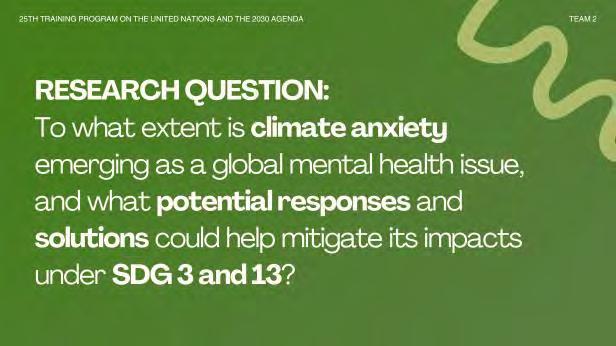
To what extent is climate anxiety emerging as a global mental health issue, and what are potential youth-led and UN-led responses that could help mitigate its impacts on well-being under SDG 3?
3. SDG Alignment
3-1. Relevant SDGs and Rationale
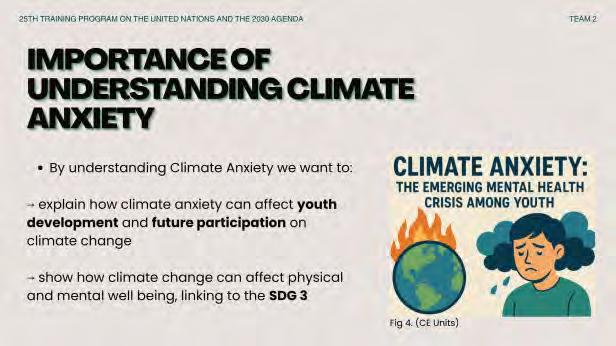
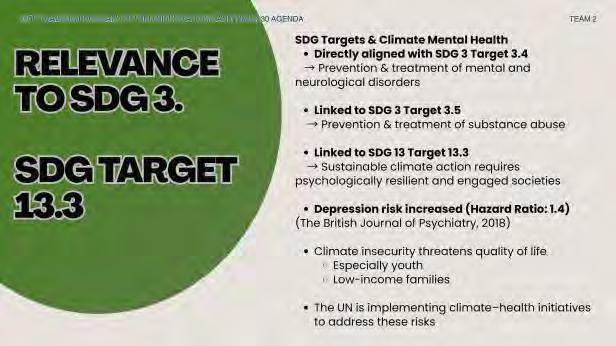
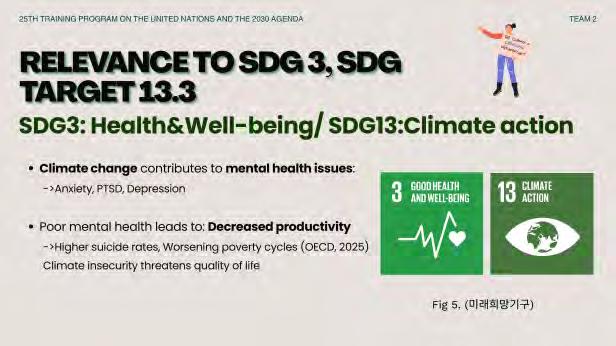
This project deals directly with SDG 3: Health and Well-being. That is why we wanted to respond to a number of mental health problems, such as anxiety, PTSD (PostTraumatic Stress Disorder), and depression caused by climate change. The most important point in SDG 3 is to focus on ensuring that all generations in the world can live healthily and promote well-being. To this end, we are trying to address the rise of non-communicable diseases, mental health disorders, and premature death. When mental health deteriorates, productivity decreases, suicide rates increase, and the vicious cycle of poverty intensifies (OECD, 2025). Climate insecurity can significantly threaten the quality of life. To alleviate this problem, the UN’s climate and health initiatives are also being implemented.
3-2. Relevant SDG Target
In particular, the detailed objectives of SDG 3 - Target 3.4, promoting the prevention and treatment of mental health and neurological disorders, and Target 3.5, prevention and treatment of substance abuse, are in line with this topic. For example, depression’s hazard ratio increased to 1.4 (The British Journal of Psychiatry, 2018). Climate insecurity can significantly threaten the quality of life, especially for vulnerable groups such as young people and low-income families. To alleviate this problem, the UN's climate and health initiatives are also being implemented.
4. Problem Statement
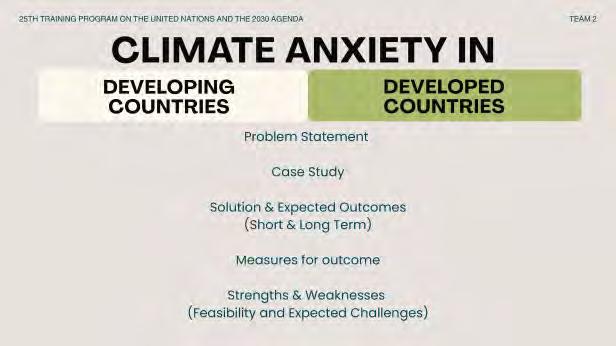
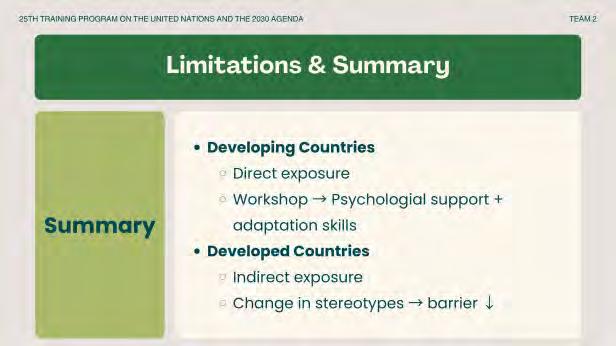
Climate anxiety manifests differently across countries depending on levels of development and exposure to climate impacts. In developing countries, it is largely driven by direct exposure to climate hazards that threaten livelihoods, food security, and basic survival, turning climate change into an immediate psychological burden, which is exacerbated by limited access to mental health services. Conversely, in developed countries, climate anxiety is more often shaped by indirect exposure, such as constant media consumption, which fuels persistent worry and feelings of helplessness despite lower levels of direct physical risk, in which treatment is hindered by stigma.
4-1. Developing Countries
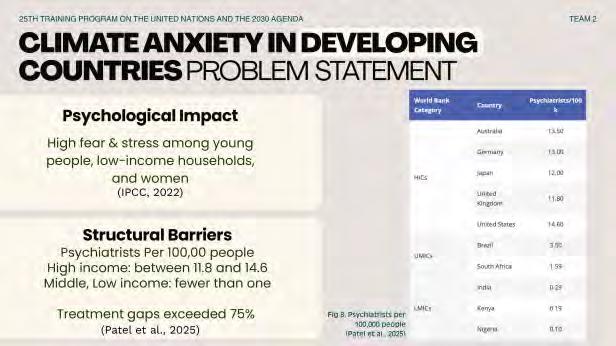
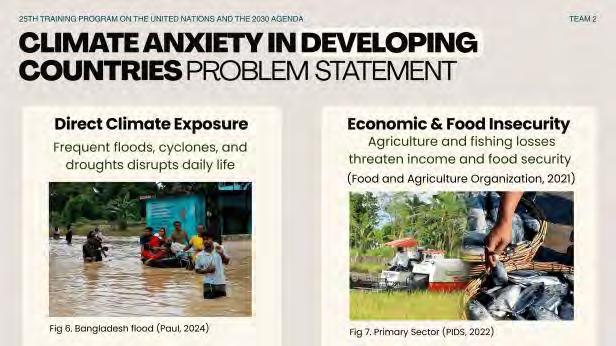
In many developing countries, climate anxiety is a lived psychological burden shaped by repeated first-hand experiences of environmental disruptions. In the case of Bangladesh, frequent flooding and cyclones have become a part of everyday life, which regularly result in damaged homes, schools, and sources of income. For communities in developing countries that depend on agriculture or fishing, climate hazards such as floods, droughts, and cyclones create ongoing uncertainty around food security and financial stability. Disrupted crop yields and declining fish stocks undermine household income, increasing vulnerability to poverty (Food and Agriculture Organization, 2021). This constant exposure places extreme strain on young people, low-income households, and women, who often have limited access to mental health services and social protection (IPCC, 2022)
Specifically, high-income nations reported between 11.8 and 14.6 psychiatrists per 100,000 people, while most low and middle-income countries had fewer than one psychiatrist per 100,000. Furthermore, treatment gaps exceeded 75% in many lowresource settings, indicating that the majority of people with mental health needs are not receiving care (Patel et al., 2025). Such disparities in the provided evidence reveal broader structural problems, including underfunding and insufficient infrastructure, that exacerbate the risk and effects of anxiety and trauma that derive from climate stressors in developing countries.
4-2 Developed Countries
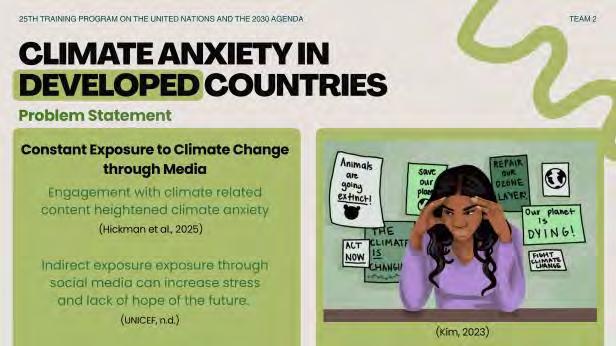
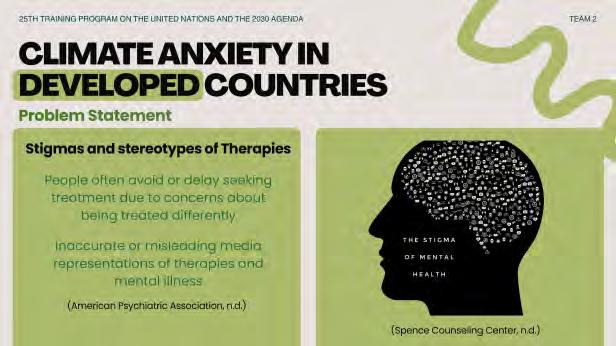
Over the years, climate anxiety has emerged as a significant socio-psychological issue in many developed countries. This issue is driven less by direct exposure to climate impacts, instead, more by constant information exposure and social media usage. Studies show that engagement with climate-related content, especially on platforms such as TikTok and Snapchat, contributes to heightened climate anxiety and a sensation of “climate doom,” which are associated with emotional distress even in relatively climate-secure regions (Hickman et al., 2025). This issue is frequently seen among students and young adults, a group highly exposed to social media, who report persistent worry and difficulty concentrating (Yeenet, 2023). Moreover, many young adults and students fear to receive help from therapies due to stigmas and prejudice despite the spread of climate stress and anxiety. According to the American Psychiatric Association, people often avoid or delay receiving help from treatments
due to concerns of being treated differently. The public and self stigma revolving around mental illness also contributes to the negative attitude towards therapies, due to the fear of being discriminated against and perceived as ‘weak’.
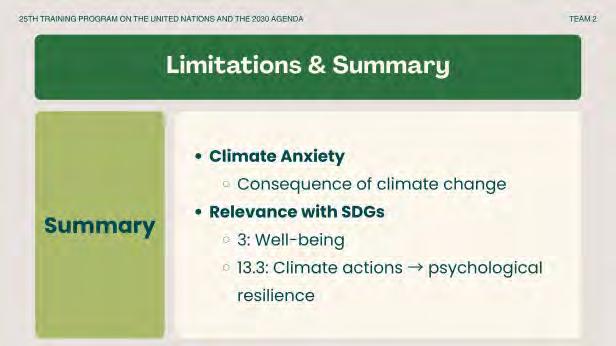
Across both contexts, climate anxiety undermines overall well-being, productivity, and social stability, directly conflicting with SDG 3 (Good Health and Well-being). Without targeted, context-sensitive interventions that address both psychological support and structural barriers, climate anxiety risks becoming a long-term public health challenge, particularly for younger generations.
5. Solutions & Expected Outcomes
5-1.
Developing Countries: Community-Based Mental Health Workshops
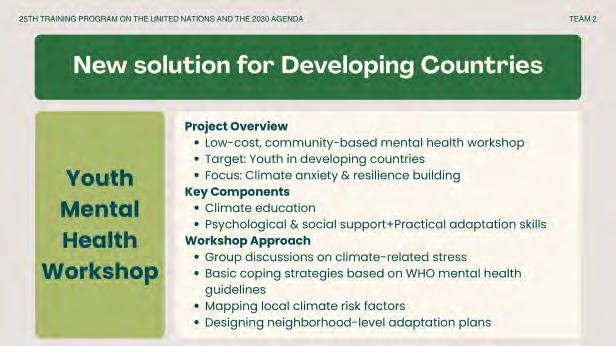
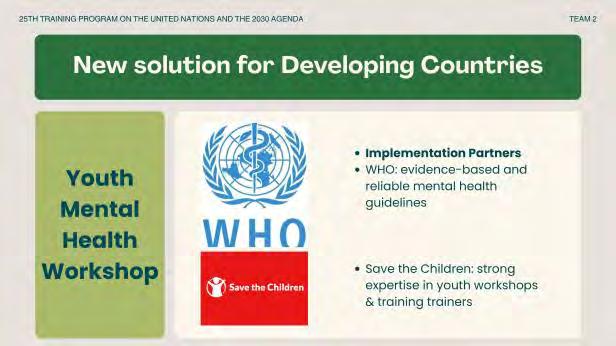
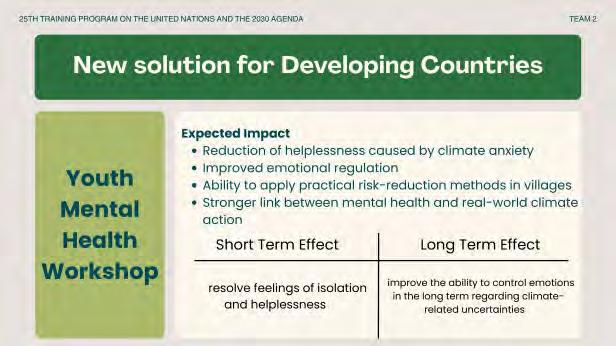
Our project suggests a mental health workshop. This project aims to create a lowcost, community-based workshop for young people in developing countries. Climate education, psychological and social support, and practical adaptation capabilities will be helpful. It will be important for participants to talk about climate-related stress together and learn basic coping strategies based on the mental health guidelines of the WHO (World Health Organization). It will also be meaningful to include hands-on training-oriented activities, such as mapping local risk factors and devising adaptation plans for our neighborhoods. Through this process, participants will be able to free themselves from the helplessness caused by climate anxiety. By connecting mental health with real-world climate response, participants will be able to learn to control their emotions and find specific risk-reduction methods that can be practiced in villages. International and NGO organizations would be good for the implementation organization. Especially, Save the Children and WHO are going to be a nice fit. WHO is reliable in that it has proven guidelines. Moreover, Save the Children is suitable for workshops and training trainers.
5-2 Developed Countries: Social Media–Based Anti-Stigma Campaign
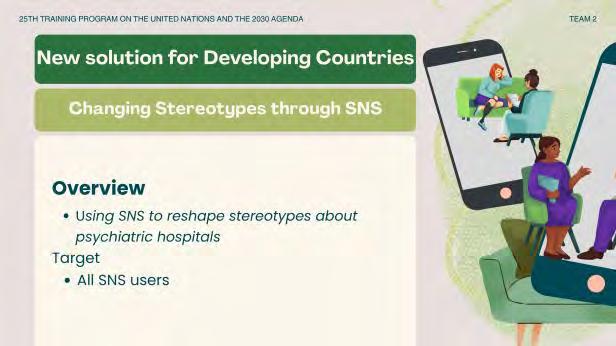
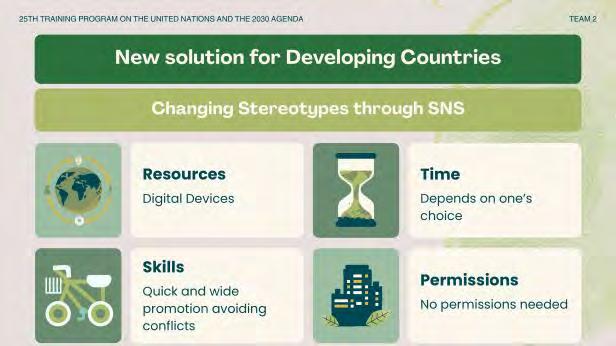
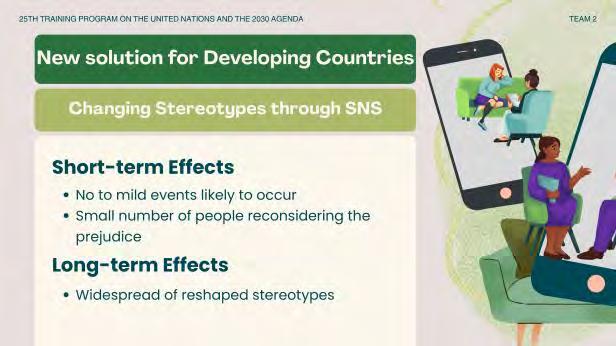
Our project will focus on leveraging the advantages of SNS, a social networking service, where people can interact with each other around the world conveniently and quickly. Anyone interested in resolving climate anxiety can be involved in it, since all the requirement is a digital device to access SNS. Through uploading posts that promote healthier thoughts about psychiatric hospitals through SNS, the project aims to eliminate stigmas and lower the barrier to visiting psychiatric hospitals that typically exists due to fear, so that people with climate anxiety can visit psychiatric hospitals easily.
Anyone with fear toward the psychiatric hospitals may be able to wash it away by introducing the nature-based interventions, such as forest bathing, and ACT, acceptance and commitment therapy (Innocenti et al., 2025). Having them acknowledge that therapies are indeed much more peaceful and patient-centered, balancing the perception of reality and belief, they may feel much more comfortable visiting the psychiatric hospitals.
For anyone who has negative stereotypes about psychiatric hospitals, not only
introducing calm therapies may help, but also proving statistically how safe the hospitals are is more likely to reshape their thoughts. By persuading people, they would be encouraged to receive proper therapies and treatments on time, just like how people visit hospitals even at the slightest signs of a cold. Then, fewer people would be able to suffer from anxiety resulting from worrying about climate change, improving the daily well-being of people.
6. Feasibility & Measurability Check
6-1
Developing Countries
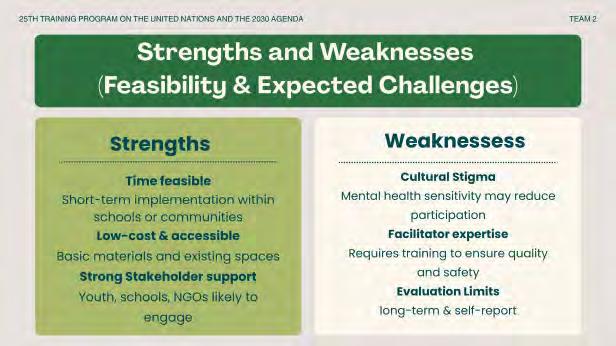
The proposed solution of a community mental health workshop is largely feasible within realistic time and resource constraints, though it also presents minimal limitations. In terms of time feasibility, it can be fairly quickly implemented over a short timeframe, as the program would be able to fit within a community or school-based program without requiring extensive preparation for resources. From a resource perspective, the project is low-cost and accessible, relying on basic materials such as printed WHO mental health guidelines, and can be conducted in existing community spaces such as schools, which reduces financial barriers and makes the initiative suitable for low-resource settings. However, limited funding may restrict the scale of implementation and the number of communities reached. Stakeholder support is additionally strong, as youth, schools, and local NGOs are likely to support a program that addresses both mental well-being and climate resilience. Partnership with organizations such as the WHO and Save the Children further strengthens the feasibility by providing credible guidelines and experience in training facilitators. Nevertheless, participation may vary depending on cultural attitudes towards mental health, which could affect engagement in some communities. In terms of skills, the workshop can be designed and facilitated by trained educators or NGO staff, although additional training may be required to ensure consistent quality across different locations.
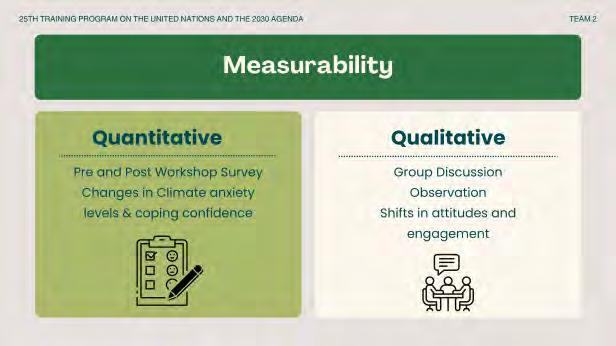
The effectiveness of the workshop can be evaluated through a combination of quantitative and qualitative measures. Quantitative indicators, such as pre- and postworkshop surveys, can assess changes in levels of climate anxiety and coping confidence. As qualitative evidence, group discussions could be observed and recorded in each session, which later can provide deeper insight into shifts in attitudes, emotional well-being, and willingness to engage in local adaptation efforts. While these measures allow for meaningful evaluation, due to the fact that they rely on selfreported data may limit precision and the level of objectiveness. Overall, despite some constraints, these measures offer a realistic way to assess whether the workshop meaningfully reduces feelings of helplessness and supports healthier responses to climate-related stress.
6-2 Developed Countries
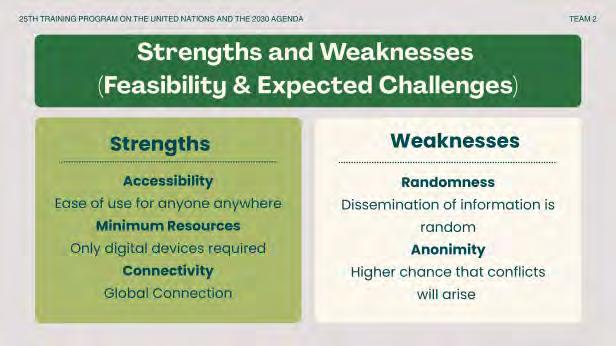
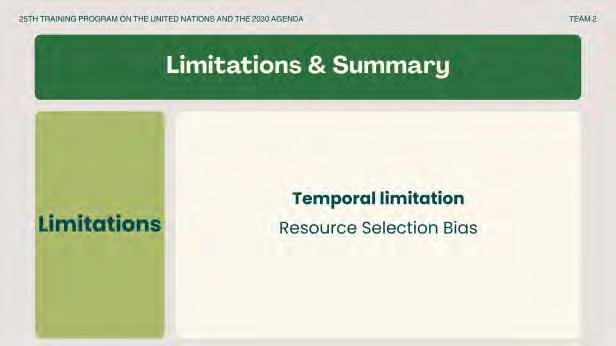
The use of SNS itself does not require much time – instead, the spread of the idea is a matter of time. Since SNS is a large community where people worldwide use to express their ideas freely, promotion may not be spread widely enough to change
enough people’s views about psychiatric hospitals without sufficient efforts. Still, simply owning digital devices would enable the promotion of anyone, anywhere, at any time, which boosts convenience. However, the advantage of SNS – convenience and anonymity – could become an obstacle to overcome. Debates may arise much more easily than person-to-person confrontations due to anonymity, which can easily exacerbate conflicts. Preventing this scenario will likely require skills to converse or persuade people effectively. Overcoming these potential challenges is therefore essential to reshape the current negative stereotypes about psychiatric hospitals.
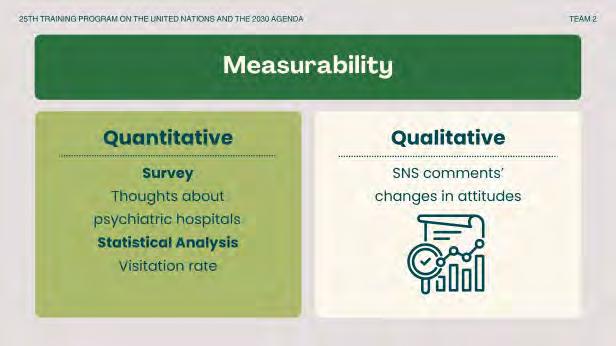
Quantitative measures of outcomes could be enabled mainly by surveys or statistics. Comparing the results of surveys of people about their thoughts on psychiatric hospitals or the patients in them before and after promotion will show how effective the survey was in terms of changing people’s stereotypes. Statistics related to the number of patients who have visited psychiatric hospitals compared to the periods before the promotion will also be able to show how much people are influenced by the promotion. One of the qualitative indicators could be changes in the attitudes of people in SNS. A decrease in aggressive or opposing comments from people will imply the changes in thoughts, which can prove that the project has worked successfully.
PROJECT PLANNING
1. Project Overview
1-1. Project Title
Climate Anxiety: How Environmental Crisis Affects Mental Health
1-2. Executive Summary
Climate anxiety has recently emerged as a significant yet underexamined mental health consequence of the global climate crisis. While climate change is commonly framed in environmental and economic terms, its psychological effects increasingly shape how individuals experience stress and emotional well-being. This research project explores the extent to which climate anxiety is developing as a global mental health issue, and examines potential solutions in mitigating its impacts with reference to SDG 3 and 13. The findings of the project indicate that climate anxiety manifests unevenly. In developing countries, it is closely linked to direct exposure to climate hazards that undermine food security and financial stability, exacerbated by limited access to mental health care. In developed nations, climate anxiety is driven by more indirect factors, particularly through sustained social media usage, alongside prevalent stigma surrounding mental health issues that hinder treatments. Young people, low-income households, and women are identified as particularly vulnerable across both contexts. In response, the project suggests two context-specific interventions: a community-based youth mental health workshop that targets alleviation of structural barrier concerns for developing countries and a social media based initiative aimed at reducing stigma toward mental health care in developed countries. Collectively, these approaches are intended to enhance psychological resilience and relieve feelings of hopelessness.
2. Background Research
2-1. Global Background
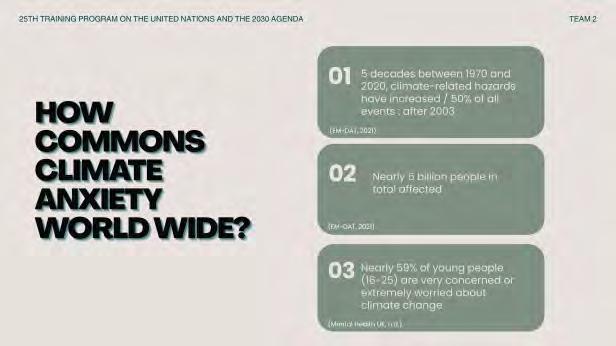
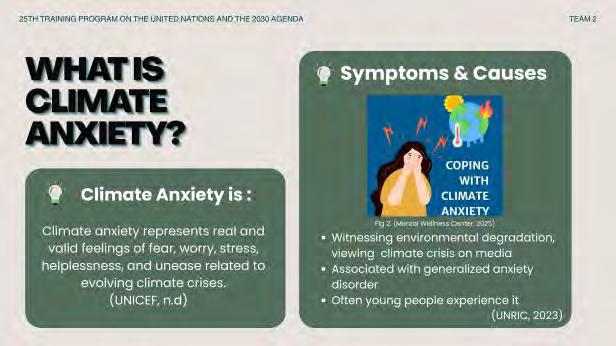
Climate change is increasingly seen as a global mental health issue. Beyond environmental and economic harm, it has been shown to affect emotional well-being among people around the world. According to UNRIC, stress, anxiety, and eco-grief related to climate change are rising psychological responses to environmental damage and the fear of future climate impacts.
In recent years, climate anxiety has become an ongoing worry and emotional distress directly tied to climate change and its long-term effects (Carbon Brief, 2025). These effects come not only from direct experiences with extreme weather events but also from indirect stressors such as constant media coverage and heightened awareness of global climate risks.
As climate-related risks are increasingly covered in daily news, many young people
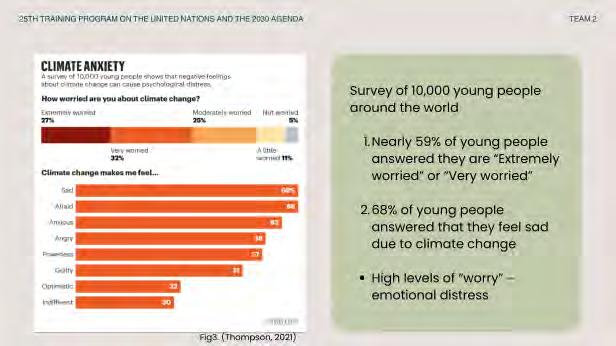
and children become aware of governments’ inaction on global climate efforts. A landmark study conducted in countries such as France, the U.K., and the U.S. involving over 10,000 adolescents found that nearly 60% reported feeling “very worried” or “extremely worried” about climate change (UNRIC, 2023). This widespread worry is closely associated with negative emotions, showing that people can experience climate anxiety even without direct exposure to climate disasters (WHO, 2022). At the same time, individuals living in regions already experiencing severe climate impacts often suffer from post-traumatic stress and persistent fears of displacement, intensifying the psychological weight of climate change (IPCC, 2022). Soothing this divided aspect, but also the unified spread of anxiety, would be important for future generations to take climate action in the future.
2-2. Local/National Background
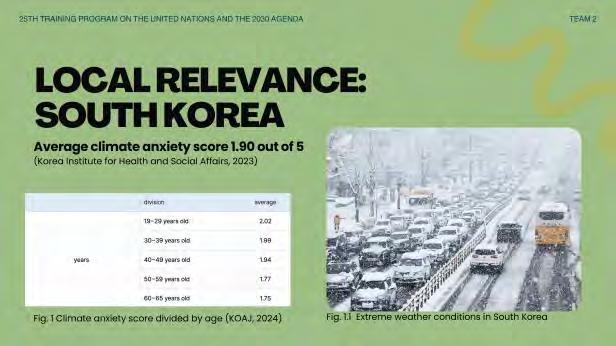
In the local/national context of South Korea, climate anxiety is increasingly discussed, as extreme weather has become visible and personally relevant, particularly among younger generations. Individuals are becoming progressively cognizant of climate change due to the drastic escalation of temperatures, alongside heatwaves, flooding, and wildfires that occur with increasing frequency, evolving from a distant environmental concern to a societal threat that Korean residents confront daily. The Korea Institute for Health and Social Affairs (KIHASA)’s study in 2023 targeted 2000 Korean adults aged from 19 to 65 and reported a mean climate anxiety score of 1.90 out of 5, revealing a trend of younger age groups exhibiting significantly higher levels of concern than older populations (Kim et al., 2023). This generational divide illustrates pronounced apprehension among youth who perceive long-term environmental risks as a direct threat to their future quality of life.
A concrete example within the nation comes from Gangwon Province, where climaterelated disasters have produced measurable mental health effects. Subsequent to the 2019 Gangwon wildfires, a clinical study of survivors and residents reported high rates of psychological symptoms, including insomnia (59.2%) and anxiety (50%), indicating clear mental health consequences beyond physical damage (National Center for Mental Health, 2019). Such local and tangible evidence in the highly relevant setting of Korea highlights the urgent need for SDG 3-aligned responses that combine climate resilience and mental health support for affected communities and youth.
2-3. Why This Issue Matters
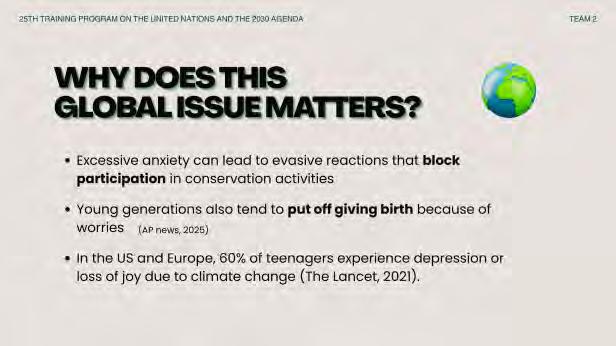
Climate anxiety is very relevant to SDG 3, which aims for a healthy life and good access to coverage for all ages. In the US and Europe, 60% of teenagers experience depression or loss of joy due to climate change (The Lancet, 2021). Excessive anxiety can lead to evasive reactions that block participation in conservation activities. Young generations also tend to put off giving birth because of worries (AP News, 2025). It will impact the future population. imbalance of responsibility and influence on productivity. Climate anxiety also shows that nature is no longer a safe and predictable space, and is an indicator of the severity of the environmental crisis. Addressing climate anxiety is therefore essential not only for individual well-being, but also for sustaining collective capacity for climate action and resilience. Without adequate mental health support, climate anxiety may undermine social cohesion and
weaken long-term responses to climate change, particularly among youth. This highlights the need to integrate mental health into climate policies, reinforcing SDG 3 as a foundation for effective and inclusive climate action.
3. Problem Analysis
3-1.
Problem Statement
A. Developing Countries
In many developing countries, climate anxiety is not only a fear of the future but a chronic psychological burden shaped by repeated, direct exposure to climate hazards. Sudden disasters such as floods, cyclones, and wildfires can disrupt essential community infrastructure, including food systems, housing, schooling, and health services, producing acute distress and trauma. Over time, slow-onset changes such as rising sea levels, shifting rainfall patterns, and prolonged drought can generate persistent uncertainty about livelihoods and survival. These stressors are closely linked to worsening mental health outcomes, especially among young people, lowincome households, and women, who often have limited access to mental health services. As a result, climate anxiety can directly hinder progress toward SDG 3 by increasing vulnerability to anxiety disorders, depression, and post-traumatic stress while weakening communities’ capacity to recover and adapt.
B. Developed Countries
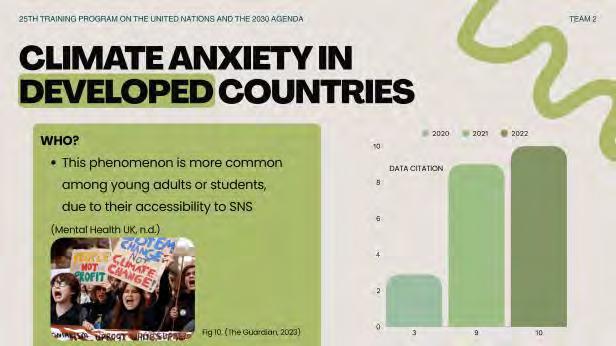
An increase in news outlet coverage and constant exposure from social media heightens the feeling of urgency among people who are exposed to information about climate change. This phenomenon is most common among younger generations, due to their accessibility to SNS (Mental Health UK, n.d.). This problem is seen to be very significant because climate anxiety is correlated with climate participation (AP News, 2025). However, young adults and students are shown to be very hesitant in reaching out for help in therapies to manage stressful and anxious emotions due to societal and personal stigmas around therapeutic interventions (American Psychiatric Association, n.d.). This affixed problem could seriously hinder the perception of climate change and the resilience of the younger generation. It is important to tackle this complication before it becomes more widespread, to build positive perception about the ongoing climate crisis, and to pass down the efforts of climate action to the new younger generation.
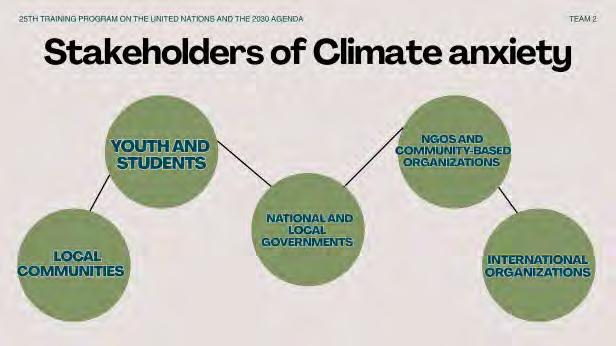
NGOs and CommunityBased Organizations Protection of vulnerable populations, Sustainability of development projects
International Organizations Achievement of the SDGs, Global health equity
High (High trust and access at the local level)
Very High (Provision of guidelines, funding, and global coordination)
B. Developed Countries
Stakeholder Interest Influence Level
News outlet Productivity of the company, Coverage of various information
High
Dependence on external funding, Human resources, and capacity limitations
Difficulty in adapting global frameworks to local contexts
Policy and institutional support, Coordination with international partners
Implementatio n of workshops and training programs
Evidencebased mental health guidelines, Financial and technical support
Challenges Potential Contribution
Hindrance of information, limitation of the review of all information
Spreading positive and insightful information about climate change
SNS (Social Productivity of High Limitations of Spread
media companies) the company, media usage within platforms checking information, negative ideas might be spread positive information about therapies and climate action (frame it in a positive direction)
Youth and Students Future stability, relief of environmental stress
Psychiatric health care Accessibility of health care, positive perception of therapy
4. Case Studies
4-1. Case Study #1
Medium Limitation to access mental health care services due to fear of therapies and social/personal stigmas As future generations, leverage the perception of environmental reality and mental health, incorporating it into future climate action
Low People are not seeking health care due to social stigmas and negative perceptions of therapy. Use effective and adaptable therapeutic interventions to refine climate anxiety among people
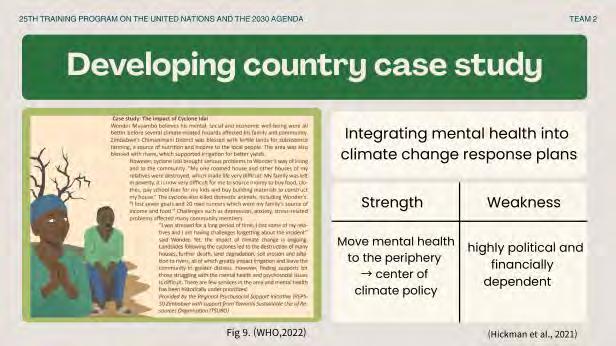
The WHO’s Mental Health and Climate Change: Policy Brief highlights how climate change intensifies mental health and psychosocial risks, particularly in contexts where mental health systems are already under-resourced. The policy brief notes that in settings such as Zimbabwe, access to mental health and psychosocial support remains limited, and mental health has historically received low policy priority. As climate-related shocks and slow-onset impacts increase distress, communities face a widening gap between mental health needs and available services. The WHO therefore emphasizes that effective climate action should include mental health and psychosocial well-being as core components not as optional add-ons. The key lesson from this case is that climate anxiety and climate-related trauma cannot be addressed through awareness alone; they require sustained political commitment, funding, and cross-sector cooperation (e.g., health, education, disaster management, and community organizations) to expand mental health support within climate adaptation and response systems (World Health Organization [WHO], 2022).
4-2. Case Study #2
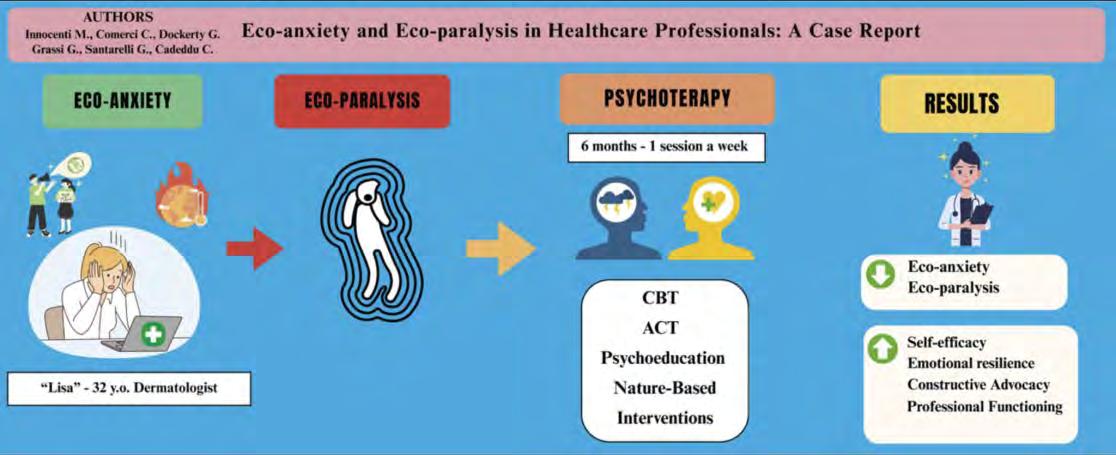
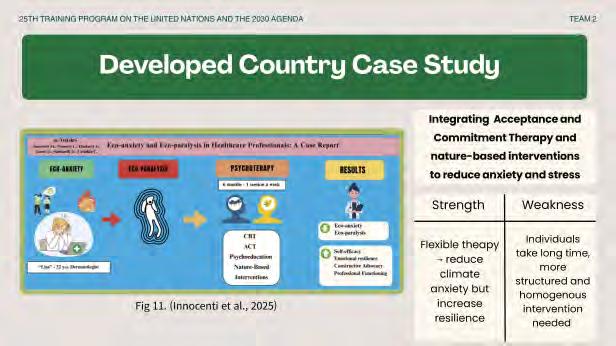
This project explores the psychological effects of climate change on healthcare professionals through the experience of a dermatologist suffering from climate-related distress. The project integrated Cognitive Behavioral Therapy (CBT), Acceptance and Commitment Therapy (ACT), and nature-based interventions to process the grief and the goal of increasing self-efficacy, and reconnecting with nature. In conclusion, the interventions of CBT and ACT enabled her to reshape emotional responses and accept the realities of environmental decline, helping her address her ecological (climate) grief. This case study helped me learn that therapeutic interventions incorporating ACT and nature-based interventions help reduce eco-anxiety (climate anxiety), but also accept the realities of environmental decline. This gave me an idea of how certain therapeutic interventions can be utilized to balance the perception of environmental decline and a positive demeanour, apart from climate anxiety.
5. Solution Development
5-1. Long List of Possible Solutions
A. Developing Countries
Youth mental health workshop
Policy Research & analyze
Technology transfer
Promote mental health awareness campaigns
B. Developed Countries
Changing stereotypes of psychiatric hospitals through SNS
Reducing the perpetrator and victim binary through a lecture
Promoting to write and publish fact-based articles/news that can overwhelm the exaggerated/fake news
5-2. Feasibility & Impact Assessment
A. Developing Countries
Proposed Solution
Youth Mental Health Workshop
Feasibility (1-5)
Resources 1
Requires low-cost materials, existing community spaces, and guidelines, with support from NGOs such as Save the Children
Time 1 Can be implemented within a short timeframe through pilot workshops.
Skills 1
Can be facilitated by trained youth leaders or NGO staff using standardized materials.
Permissions 1
Requires approval from local schools or community centers, which is realistic with an NGO partnership
Total: 4/4
Policy Research & Analysis
Resources 1
Requires minimal physical resources
Time 0
Policy change is slow and often takes years
Skills 0
Requires advanced research and policy expertise.
Impact (1-5) Notes
Directly addresses climate anxiety by combining mental health support with practical adaptation skills.
Reaches vulnerable youth, builds coping capacity, reduces feelings of helplessness, and strengthens community resilience.
5/5
High feasibility and high impact.
Directly aligned with SDG 3.
Policy research may influence long-term structural change, but its effects are indirect and uncertain.
3/5
Low youth agency and limited immediate impact on mental wellbeing
Technology Transfer
Permissions 0
Implementation depends on policymakers beyond the youth's control
Total: 1/4
Resources 0
Requires significant financial capital and infrastructure
Time 0 long implementation timeline
Skills 0 requires technical expertise
Permissions 0 Depends on the government and international agreements
Total: 0/4
Promote mental health awareness campaigns
Resources 1
Low cost. It could be done digitally through social media platforms.
Time 1
Easy to implement within short time periods.
Skills 1
Requires only basic organization skills.
Permissions 1
Does not require community approval
It could reduce climate risks in the long term, but mental health benefits are indirect.
4/5
High potential impact, but unrealistic for a youth-led or short-term project
Raises awareness, yet does not directly account for mental health challenges experienced in real life or provide any practical coping strategies.
1/5 potentially useful as a supplement, but insufficient as a standalone solution.
Total: 4/4
B. Developed Countries
Proposed Solution
Promoting to write and publish fact-based articles/news that can overwhelm the exaggerated/fak e news
Feasibility (1-5) Impact (1-5) Notes
Resources 0
Money to hire the journalists/reporters, as well as evidence to use in the article required
Time 0
Although it is very reliant on the skills and abilities of the writers, writing takes a long time
Skills 0
One should know how to write an article and how to publish it
Permissions 0 The government’s permission is needed
Total: 0/4
Reducing the perpetrator and victim binary through a lecture
Resources 0
At least the government’s, although the UN is the best, support is needed
Time 0
Preparing all the materials, lecturers, places, etc, requires some time
Skills 0
Size/importance of change createdAs the cause of climate anxiety is often due to excessive worry caused by exaggerated or even fake news/articles, publishing enough healthy and factbased articles to overwhelm the tabloids could turn people’s heads away from them.
Size/importance of change created -
Reducing the binary between the perpetrator and the victim of climate change can alleviate the feelings of pessimism and powerlessness, as well as distress and hatred toward the “perpetrator,” which can lead to
Changing stereotypes of psychiatric hospitals through SNS
Teaching skills required
Permissions 0
The government/UN’s approval is needed
Total: 0/4
Resources 1
Using SNS only requires a digital device
Time 1
The amount of time to invest depends on one’s decision
Skills 0
One should know how to use the SNS to promote quickly and widely to reach as many people as possible. Also, knowing how to avoid conflicts even when the other person is aggressive is crucial to avoid any conflicts from arising.
Permissions 1
No permissions needed for promoting in SNS
Total: 3/4
5-3. Final Selected Solutions
A. Developing Countries
Youth Mental Health workshop
B. Developed Countries
exacerbation of anxiety, ultimately mitigating climate anxiety.
Size/importance of change createdChanging the negative stereotype, which is especially severe in Korea, about psychiatric hospitals can encourage people to visit even with minor symptoms of anxiety, just like how people visit the hospital with minor symptoms of a cold. This can ultimately prevent mental health issues from exacerbating, as well as promote better well-being with better mental health.
6. Expected Impact
6-1. Short-term Impact
A. Developing Countries
With short-term impact, conversations with peers with similar anxiety will form a perception that “I am not the only one like this.” It will be able to resolve feelings of isolation and helplessness, which are key factors of climate depression, with sustainable peers. Through the practice of expressing emotions in language, anxiety and depression can be recognized as organized emotions
B. Developed Countries
No immediate changes on a great scale are expected, but altering the thoughts of some people using SNS could be immediately achievable by leading them to reconsider the harmful stereotypes they have had. These small changes can lead to a greater long-term impact by having more people spread their thoughts through the internet in the best-case scenario.
6-2. Long-term Impact
A. Developing Countries
Long-term impact is expected to improve the ability to control emotions in the long term regarding climate-related uncertainties. It will change to a focus on preventing chronicization of anxiety and depression. It will be able to strengthen psychological resilience to recover even in stressful situations and convert mental health support into daily health care. It will also reduce the social costs of mental illness and reduce the cost of citizens. Responsible sense of citizenship can be shown.
B. Developed Countries
There is a positive prospect for the long-term effect. If the promotion spreads widely through SNS, more people, not only in Korea but around the world, will be given a chance to contemplate the current stigmas and negative stereotypes surrounding psychiatric hospitals: are they genuine truths, or are they simply accumulations of misconceptions? With more people acknowledging the stigmas regarding psychiatric hospitals, the number of people with better thoughts about the hospitals will increase exponentially; more people will be able to persuade their families or acquaintances about the stereotype.
6-3. Expected Challenges
A. Developing Countries
One anticipated challenge is encouraging consistent and open participation from local participants. Mental health may remain a sensitive topic in some communities, with stigmas potentially preventing involvement, as climate anxiety may not be easily
recognized or discussed. Young people may, in those cases, feel hesitant to share their feelings, especially in group settings. Building trust and creating an emotionally safe environment would take time, and early sessions may involve limited engagement.
Another challenge involves workshop facilitator expertise. Even with clear guidelines, leading conversations related to stress, fear, and emotional well-being requires sensitivity and a level of experience. Without sufficient preparation and support in facilitator education, they may struggle to respond appropriately to participants’ concerns.
Ultimately, measuring and assessing the long-term impacts of the workshop may be limited and difficult. Emotional and behavioral changes often occur gradually, and short-term feedback may not fully reflect lasting improvements. Furthermore, participant responses would be recorded as self-reported surveys, which can hinder precise and objective measurement of outcomes.
B. Developed Countries
As the internet is a place where people can express their feelings freely – and most importantly, anonymously – controversies and debates between people can easily escalate. Moreover, intense controversies may lead to extreme polarization, forcing people to fall into a “us” and “them” binary. This scenario will not only fail the whole purpose of promotion but will exacerbate the stigmas. Thus, preventing or mitigating, if preventing has failed, the conflicts is crucial so that the negative ideas about psychiatric hospitals will not.
The promotion may not spread at all in the first place, too, unlike the intention. Since SNS is used globally, countless users exist, making it difficult for an individual’s idea to spread widely. Since the goal is to change stereotypes about psychiatric hospitals, which requires much more than just a single individual’s change, as many individuals as possible should see; without the people, no stereotypes and stigmas can be changed. Hence, overcoming the number of users and promoting the ideas will be a big obstacle to overcome.
7. References
Hickman, C., Marks, E., Pihkala, P., Clayton, S., Lewandowski, R. E., Mayall, E. E., Wray, B., Mellor, C., & Van Susteren, L. (2021). Climate anxiety in children and young people and their beliefs about government responses to climate change: a global survey. The Lancet Planetary Health, 5(12), e863–e873. https://doi.org/10.1016/s2542-5196(21)00278-3
Climate Change 2022: Impacts, Adaptation and Vulnerability. (n.d.). IPCC. https://www.ipcc.ch/report/ar6/wg2/
Dunne, D. (2025, August 7). Explainer: What is ‘climate anxiety’? Carbon Brief. https://www.carbonbrief.org/explainer-what-is-climate-anxiety/ Food and Agriculture Organization of the United Nations. (2015). Climate change and
food
Security: risks and responses. FOOD AND AGRICULTURE ORGANIZATION OF THE UNITED NATIONS. Retrieved January 10, 2026, from https://openknowledge.fao.org/server/api/core/bitstreams/a4fd8ac5-4582-4a6691b0-55abf642a400/content
Hong, J. S., Hyun, S. Y., Lee, J. H., & Sim, M. (2022). Mental health effects of the Gangwon wildfires. BMC Public Health, 22(1), 1183. https://doi.org/10.1186/s12889-022-135608
Innocenti, M., Comerci, C., Dockerty, G., Grassi, G., Santarelli , G., & Cadeddu, C. (2025). High-efficiency, reusable electrokinetic filtration platform for high-flux nanoplasticsequestrationandself-poweredoperation-sciencedirect. Science Direct. https://www.sciencedirect.com/science/article/abs/pii/S1369702125005310
Intergovernmental Panel On Climate Change. (2023, February). Download: Climate change2022:Impacts,adaptationandvulnerability. Download: Climate Change 2022: Impacts, Adaptation and Vulnerability | Climate Change 2022: Impacts, Adaptation and Vulnerability. https://www.ipcc.ch/report/ar6/wg2/downloads/
Italie, L. (2025, July 30). The emotional toll of climate change is broad-ranging, especially for young people. AP News. https://apnews.com/article/climate-changeanxiety-grief-resilience-a9049734b8b6498fb2cd6631f1f6360e
Orpwood, G. (2025, January 29). What is climate anxiety and what can we do about it?. Mental Health UK. https://mentalhealth-uk.org/blog/what-is-climate-anxiety-andwhat-can-we-do-about-it/
Patel, N. M., Savaliya, G. V., Mehta, P. J., & Kataria, L. R. (2025). Global Disparities in Mental Health Systems: A Comparative Cross-sectional Study of Ten Countries with Different Income Levels. Indian Journal of Psychological Medicine, 02537176251379999. https://doi.org/10.1177/02537176251379999
United Nations . (2023, December 5). Climatechange:ItsimpactsonmentalhealthUnited nations western europe. United Nations Regional Information Centre for Western Europe. https://unric.org/en/climate-change-its-impacts-on-mental-health/
Sheppard, S. (2022, June 3). Why Mental Health is a priority for action on climate change. World Health Organization. https://www.who.int/news/item/03-06-2022-whymental-health-is-a-priority-for-action-on-climate-change?utm_source=
World Health Organization: WHO. (2022, June 3). Why mental health is a priority for action on climate change. WHO. https://www.who.int/news/item/03-06-2022-whymental-health-is-a-priority-for-action-on-climate-change
Mph, S. C. M. (2022, June 13). Ifclimatechangekeepsyouupatnight,here’show to cope. Harvard Health. https://www.health.harvard.edu/blog/is-climate-changekeeping-you-up-at-night-you-may-have-climate-anxiety-202206132761
한국언론진흥재단 뉴스빅데이터 메타데이터 기후변화_20241231. (2025, December 5). 공공데이터포털 https://www.data.go.kr/data/15153229/fileData.do
Baek, J., & Kim, H. (2024). Effects of climate change on mental health and policy implications (보건복지포럼, 통권 334 호, pp. 4–20). Korea Institute for Health and Social Affairs. https://doi.org/10.23062/2024.08.2
Climate Change and Health (CCH). (2022, June 3). Mental health and Climate Change:PolicyBrief. https://www.who.int/publications/i/item/9789240045125
From eco-anxiety to eco-paralysis: A case study on behavioral responses to climate change in healthcare professionals. (2025). In ScienceDirect. Matteo Innocenti, Chiara Comerci, Giulia Dockerty, Giovanni Grassi, Gabriele Santarelli, Chiara Cadeddu. https://doi.org/10.1016/j.joclim.2025.100585
Team 3
From Digital Waste to Civic Wealth: Transforming Waste Heat into Sustainable Urban Resources
TOPIC PROPOSAL
1. Team Members
Ri Hwan Ahn, Seoul International School
Alvin Kang, Korea Christian International School
Jaywoo Huh, Dankook University High School
Hongjoo Ryu, Branksome Hall Asia
2. Project Title
From Digital Waste to Civic Wealth: Transforming Waste Heat into Sustainable Urban Resources
3. SDG Alignment
3-1. Relevant SDGs and Rationale
This project addresses the environmental externalities of data centers by transforming waste heat into a reusable urban resource. It aligns with the following Sustainable Development Goals:
SDG 6: Clean Water and Sanitation
This project contributes to SDG 6 by proposing the reuse of data center waste heat stored through thermal energy storage (TES) to support seawater desalination. By supplying low-grade thermal energy to desalination processes, the project reduces electricity demand and associated carbon emissions while supporting sustainable water management.
SDG 7: Affordable and Clean Energy
The project supports SDG 7 by improving energy efficiency rather than generating new energy. Reusing waste heat helps reduce overall energy consumption and promotes cleaner energy systems by maximizing the value of energy already produced.
SDG 9: Industry, Innovation, and Infrastructure
Data centers represent both a challenge and an opportunity for modern infrastructure. By retrofitting existing digital infrastructure to serve additional functions such as heating greenhouses or powering desalination this project promotes resilient, innovative, and sustainable industrial systems.
SDG 12: Responsible Consumption and Production
This project directly addresses SDG 12 by challenging the current linear model of energy use, in which resources are consumed once and discarded. Repurposing waste heat for agriculture and water production promotes circularity, waste reduction, and more responsible consumption patterns across sectors.
3-2. Relevant SDG Target
SDG 9.4 focuses on modernizing infrastructure and retrofitting industries to make them environmentally sustainable through significantly improved resources. In our own words, this target aims to upgrade our current industrial systems so they can produce more while relying on cleaner tech to minimize waste. To support this change, our project utilizes waste heat as an energy source by linking it to greenhouses and desalination plants. We will effectively retrofit high-consumption digital infrastructure into a “green” resource hub.
4. Problem Statement
The rapid expansion of the digital economy has transformed data centers into the invisible backbone of modern life, yet their environmental footprint is reaching a critical breaking point. Driven by the global surge in AI and cloud computing, these facilities consume massive amounts of electricity and freshwater while venting high-grade thermal energy as "waste." While the benefits of data are global, the consequences are intensely local. In high-density hubs from Dublin to Seoul data centers strain municipal power grids and compete for local water supplies.
This creates a "Digital Gentrification" effect, where local residents and low-income families bear the brunt of rising utility costs and energy insecurity while remote corporations reap the profits. This problem is urgent because our current "linear" infrastructure ignores the potential of waste heat as a civic resource. Without immediate policy shifts toward transparency and heat recovery, we risk a future where technological progress directly undermines the environmental and resource security of the communities hosting it.
5. Solutions & Expected Outcomes
5-1.
Core Solutions
Our project proposes an integrated solution combining technical reuse of waste heat with youth-led policy and consumer engagement.
A. Waste Heat Reuse for Greenhouses and Desalination
Redirect waste heat from data centers to nearby greenhouses for agricultural heating.
Use stored thermal energy to support low-temperature desalination processes, reducing electricity demand.
B. Youth-Led “Green Energy Badge” System
Establish a voluntary certification for companies that minimize energy use and actively reuse waste heat.
Similar to eco-labels for agricultural products, this badge would signal responsible energy practices to consumers.
C. Public Awareness and Digital Campaigns
Launch social media campaigns (e.g., Instagram) that visualize data center energy use and highlight companies that adopt circular energy practices.
Encourage consumers to support companies with certified recycledenergy practices and track collective impact through AI-based statistics.
5-2. Expected Outcomes
The expected outcomes of this project include:
Reduction of waste heat emissions from data centers
Increased public awareness and civic responsibility regarding digital energy use
Decreased consumer endorsement of unsustainable companies
Stronger alignment between digital growth and SDGs 7, 9, and 12
By promoting recycled energy use and transparent energy practices, the project encourages sustainable infrastructure (SDG 9), cleaner energy systems (SDG 7), and responsible consumption (SDG 12).
6. Feasibility & Measurability Check
6-1. Feasibility Analysis
Thermal Energy Storage(TES) is a realistic solution, rather than some companies in progress with this project. We don’t need many times, and we can complete it within our actual schedule. Resource feasibility is no problem because we already have information for thermal energy storage and the skill to transfer or transmit heat already has it. Stakeholder feasibility is no problem too, because already many people and some companies used a lot, and I think this solution doesn't have any problem or disadvantage, maybe people can approve.
This solution can use quantitative indicators in reduction percentages, before & after comparisons. By choosing these we need to know how much thermal energy storage or how much energy can be recycled, or we can investigate ways to reduce the emission of waste heat. And if we compare before and after, we can realize it all at once for how much energy recycling and storage.
A voluntary "Green Rating" system for tech companies. Companies that disclose their energy/water usage and optimize for the circular economy receive a Sustainability Seal, boosting their brand value among the next generation of consumers.
Technical Feasibility
Approximately 90% of electricity consumed by data centers is converted into heat, creating a large reusable thermal resource.
Existing technologies such as air-source heat pumps and thermal energy storage systems can capture and redistribute this heat effectively.
Time Feasibility
This project is designed as a research-based and policy-oriented proposal rather than a construction project.
Development of certification criteria, case study analysis, and public campaigns can be completed within one academic semester.
Resource Feasibility
Existing frameworks such as SDG indicators and Power Usage Effectiveness (PUE) metrics provide a foundation for evaluation.
Access to digital platforms and school networks enables low-cost public engagement.
Stakeholder Feasibility
The proposal offers a “win–win” scenario: companies gain positive ESG visibility, while communities benefit from transparency and efficiency.
Voluntary participation lowers barriers compared to mandatory regulation.
Skill Feasibility
The project requires research, analysis, and communication skills rather than infrastructure construction.
Students can evaluate sustainability reports, design rating rubrics, and communicate findings effectively.
6-2. Measurability
A. Quantitative Indicators:
We will measure how many companies agree to disclose their real-time data or apply for our "Green Seal."
We can track the increase in the number of apps that include an "Environmental Impact" tab in their settings or App Store description.
We can measure if participating companies show a year-over-year
reduction in their water consumption or a higher percentage of recycled hardware components (SDG 12).
We will track the engagement (likes, shares) on posts that "Celebrate" or "Reward" a company for achieving a high grade.
B. Qualitative Indicators:
We will monitor if companies start using "Digital Sustainability" and "Circular Economy" in their marketing materials as a response to our reward system.
We will interview corporate sustainability officers to see if our rating influenced their internal decisions to prioritize energy-efficient server designs.
We will observe if "Grade A" companies see a rise in user loyalty or positive brand sentiment compared to "Grade C" or non-disclosing companies.
PROJECT PLANNING
1. Project Overview
1-1. Project Title
From Digital Waste to Civic Wealth: Transforming Waste Heat into Sustainable Urban Resources
1-2. Executive
Summary
Data centers have become essential infrastructure for AI, cloud computing, and modern digital services, yet their environmental footprint is growing rapidly. These facilities demand large amounts of electricity and, in many cases, significant water for cooling. A major inefficiency is that most of the electricity consumed ultimately becomes waste heat, which is frequently released into the environment rather than recovered and reused. As demand for AI workloads increases, the International Energy Agency (IEA) notes that global data center electricity consumption could rise from an estimated 460 TWh in 2022 to more than 1,000 TWh by 2026, roughly comparable to Japan’s current electricity consumption. In parallel, water demand is also a growing concern: the IEA has been cited as estimating that a typical 100 MW hyperscale data center can use up to about 2 million liters of water per day, comparable to the daily use of thousands of households.
While the benefits of digital services are shared globally, the environmental and resource burdens are often concentrated locally especially in “data hub” regions where grid capacity and water availability are already constrained. This project proposes an integrated approach that transforms waste heat into a civic resource. Technically, we explore (1) thermal energy storage (TES) to stabilize and shift recovered heat, (2) greenhouse heating to support low-carbon local food production, and (3) low-temperature desalination support to reduce electricity needs for freshwater production in coastal settings. Socially, we propose a youth-led Sustainability Seal and public campaign to reward transparent, circular energy practices and discourage unsustainable digital growth. Expected outcomes include increased waste-heat recovery, improved resource efficiency aligned with SDGs 6, 7, 9, and 12, and strengthened public demand for accountable digital infrastructure.
2. Background Research
2-1. Global Background
Globally, data centers are estimated to account for roughly 1–2% of total electricity consumption, and demand is expected to grow sharply with the expansion of AI services. According to the IEA (2024), data center electricity consumption could double by 2026, reaching over 1,000 TWh equivalent to the entire electricity consumption of Japan. This global trend creates a significant inequality factor; while
the benefits of high-speed data are global, the environmental costs such as the 600 billion liters of water consumed annually by US data centers are localized, often impacting water-stressed regions.
UNEP also highlights that the “invisible” nature of cloud services can reduce accountability across the supply chain from upstream extraction of materials to energy use and e-waste unless sustainability standards and reporting practices are strengthened. This patterns-of-inequality is evident in "Data Hub" cities where the "right to data" increasingly conflicts with the "right to basic energy security." International reports emphasize that without a shift toward a circular economy where waste heat is treated as a resource the digital sector will remain a primary hurdle in achieving the Paris Agreement goals.
2-2. Why This Issue Matters
The environmental impact of data centers directly relates to multiple Sustainable Development Goals, especially SDG 6 (Clean Water and Sanitation), SDG 7 (Affordable and Clean Energy), SDG 9 (Industry, Innovation, and Infrastructure), and SDG 12 (Responsible Consumption and Production). As artificial intelligence, cloud computing, and digital services expand, data centers consume increasing amounts of electricity and water while releasing large quantities of unused waste heat. Without sustainable management, this growth undermines global efforts to reduce emissions and conserve resources.
Youth should care about this issue because today’s digital habits shape tomorrow’s infrastructure. Young people are major users of AI tools, streaming services, and online platforms, yet they will also inherit the long-term environmental consequences of unsustainable digital growth. If current practices continue, future generations may face greater water scarcity, higher energy costs, and intensified climate impacts. Ethically, allowing valuable energy to be wasted while communities struggle with water shortages raises serious concerns about fairness and responsibility. Environmentally, inefficient data centers contribute to carbon emissions and resource depletion. Addressing this issue encourages innovation that balances technological progress with sustainability, ensuring that digital development supports, not harms, the well-being of future generations.
2-3. Local/National Background
In South Korea, data centers are growing quickly as artificial intelligence, cloud computing, and digital services become more common. According to the International Energy Agency (IEA), electricity demand from data centers is rising around the world, and Korea is part of this trend. Many of the country’s largest data centers are concentrated in the Seoul metropolitan area, where energy demand is already high due to population density and industrial activity. As data centers continue to expand, they are placing increasing pressure on the national power grid. Reports from Korean media note that a large share of data center electricity use is concentrated around Seoul, raising concerns about energy imbalance and local strain on infrastructure. In some cases, a single large data center can use as much electricity as a small city, which highlights how energy-intensive digital infrastructure has become. Water use is
another growing concern. Data centers rely heavily on water for cooling, and Korea has experienced more frequent droughts in recent years due to climate change. According to the Ministry of Environment, future water stress could make it harder to secure stable water supplies, especially for energy-intensive industries. Because of these challenges, reusing waste heat from data centers, such as for seawater desalination, presents a practical solution. This approach helps reduce wasted energy while supporting Korea’s broader goals for sustainability and environmental responsibility.
3. Problem Analysis
3-1. Problem Statement
The rapid expansion of data centers has emerged as a significant environmental and social challenge for technology companies, governments, local communities, and surrounding ecosystems. As artificial intelligence and digital infrastructure are now essential to modern society, restricting or banning data centers is neither realistic nor desirable. Instead, this project proposes three technical solutions to mitigate the environmental impacts of data center waste heat, along with one complementary approach that engages youth as key agents of long-term systemic change.
Data centers consume substantial electricity, generate continuous thermal output from dense server loads, and often require significant water for cooling. Among these impacts, this project focuses on waste heat, which represents a major lost opportunity: low-grade thermal energy is typically released into the environment instead of being repurposed to support urban heating, industrial processes, or agricultural demand.
The consequences of unmanaged waste heat and related resource use are wideranging. Host communities may experience higher electricity prices and water stress; governments face growing difficulty meeting national and international climate targets; and ecosystems are exposed to increased emissions and thermal pollution. As AI, cloud computing, and streaming accelerate data center demand, these pressures are likely to intensify.
If current practices continue, data centers risk locking in long-term environmental strain that conflicts with the United Nations Sustainable Development Goals (SDGs), particularly those related to climate action, responsible consumption, and sustainable infrastructure. Without policy intervention and investment in waste heat recovery and efficiency-oriented infrastructure, large amounts of low-grade thermal energy will continue to be wasted rather than used to offset urban heating, industrial processes, or agricultural needs. Addressing this challenge is therefore not only a technical issue, but also a critical opportunity to align digital growth with sustainable development.
Data center operators (e.g., Google, Microsoft, AWS) Low-cost energy, stable cooling, uptime, regulatory flexibility
High Retrofitting is expensive and complex; incentives are misaligned (operators pay for power, cities benefit from reused heat); sustainability is often secondary to uptime/cost
Design new data centers with heat recovery systems from the start
Partner with district heating or nearby users (greenhouses/i ndustry)
Invest in advanced cooling and waterefficiency
Disclose energy/water/h eat-recovery metrics
Governments & regulators Balance digital growth with climate and resource commitment s
Medium Concern about discouraging investment; regulatory lag; fragmented jurisdiction (energy/water/l and use)
Mandate energyefficiency and waste-heat reuse standards.
Offer tax incentives for heat recovery and renewable integration
Require transparency in energy and water reporting
Integrate data centers into climate/resour ce planning
UN& international bodies Sustainable development norms and coordination
Low Limited enforcement power; reliance on voluntary
Set global norms and reporting standards for
commitments; slow consensusbuilding data centers
Promote best practices (heat reuse, water efficiency)
Integrate data centers explicitly into SDG and climate frameworks
environmental NGOs Monitor emissions, water use, transparency
Low Limited access to proprietary data; risk of being labeled “anti-tech”; attention cycles
Expose greenwashing and hidden environmental costs
Pressure firms and governments to disclose data
local communities affected by water usage, heat discharge, land use, electricity prices
Low Limited leverage; often excluded from early planning; bear costs without direct benefits
Apply public pressure through local councils, media, and activism
Community benefit agreements (ex. lower heating costs)
Support data center projects only when sustainability conditions are met
4. Case Studies
4-1. Case Study #1: Reusing Data Center Waste Heat in Agriculture
One of the most promising applications of data center waste heat is in the agricultural sector, particularly in greenhouse farming. In colder climates, greenhouses rely
heavily on artificial heating to maintain stable growing conditions during winter months, often using fossil fuel–based energy sources. By capturing and redirecting waste heat from nearby data centers, agricultural facilities can significantly reduce their dependence on conventional heating systems.
The Netherlands provides a leading example of this approach. Known for its advanced agricultural technologies, the country has established collaborations between data center operators and local farmers. In these projects, waste heat generated by data centers is piped directly into greenhouses, where it helps maintain optimal temperatures for growing vegetables and flowers. This symbiotic relationship reduces carbon emissions, improves energy efficiency, and supports sustainable food production.
Several companies are advancing this model in practice. Energiacres captures waste heat and carbon dioxide from data centers to support controlled environment agriculture (CEA), reducing food miles and strengthening local food security. Similarly, Canada-based QScale designs data centers with integrated greenhouse systems to promote regional food autonomy. Beyond agriculture, countries such as the Netherlands and Sweden have also implemented large-scale systems that reuse data center waste heat for residential heating.
These cases demonstrate that data centers do not have to function solely as climate liabilities. When heat and carbon dioxide are treated as resources rather than waste, data centers can become anchor infrastructures that support food production and local sustainability. The key lesson is that effective sustainability outcomes are achieved when digital and physical systems are designed together from the outset, rather than retrofitted after environmental damage has already occurred.
4-2. Case Study #2: Waste Heat Reuse for Seawater Desalination
A second innovative application of data center waste heat can be found in the water sector, particularly in seawater desalination. A concrete example of this approach was studied in Barcelona, Spain, where researchers examined the feasibility of using waste heat from a data center to support desalination through low-temperature thermal processes such as membrane distillation.
In this case, excess heat generated by data center servers was captured and redirected to assist the desalination process instead of being released into the surrounding environment. The primary objective was to reduce the large amount of electricity typically required to convert seawater into freshwater, thereby linking digital infrastructure with water systems in a more energy-efficient and sustainable manner.
Studies referenced by the International Energy Agency (IEA) and the International Renewable Energy Agency (IRENA) indicate that this approach is technically feasible because desalination is highly energy-intensive and can benefit from the low-grade heat produced by data centers. The Barcelona pilot project demonstrated reduced energy demand and lower emissions at a small scale. However, the initiative did not expand to full commercial deployment due to high upfront infrastructure costs, limited suitable locations near coastlines, and the need for close coordination between data center operators and water utilities.
This case study highlights both the potential and the limitations of reusing data center waste heat for desalination. While the environmental benefits are clear, scaling such solutions requires supportive policy frameworks, integrated urban planning, and longterm investment. Ultimately, the case underscores the importance of planning sustainable digital growth in parallel with water and energy infrastructure. This solution directly contributes to SDG 6 (Clean Water and Sanitation), SDG 7 (Affordable and Clean Energy), and SDG 12 (Responsible Consumption and Production) by improving resource efficiency without relying on additional energy sources.
5. Solution Development
5-1.
Long List of Possible Solutions
Thermal Energy Storage (TES) Systems: Implementing advanced storage systems to capture waste heat generated by servers. This allows the energy to be stabilized and used later for various heating needs, ensuring that "discarded" energy becomes a reliable resource.
Greenhouse Agriculture Complexes: Redirecting waste heat and Carbon Dioxide from data centers into industrial-scale greenhouses. This creates an optimal growing environment for local food production, reducing the carbon footprint of the agricultural supply chain.
Seawater Desalination Facilities: Utilizing the high-grade waste heat from coastal data centers to power desalination processes. This addresses water scarcity by converting seawater into freshwater for local communities without using additional electricity for heating.
Youth-Endorsed Sustainability Seal: A voluntary, reward-based rating system for tech companies. Companies that provide transparent data on their resource usage and implement heat-reuse technologies (like TES or Greenhouses) are awarded a "Youth Choice" certification to boost their brand value.
5-2. Feasibility & Impact Assessment
Waste heat is already being used for agriculture. Despite more technology and resources being needed, it is quite possible, and the expected impacts are huge.
This solution requires more technical, scientific
Facilities skills and resources. However, the impact could reduce the cost of freshwater production and provide critical support to water-stressed regions.
ES systems are widely used and technically feasible with existing infrastructure. It can significantly improve seasonal energy efficiency.
The sustainability seal is highly feasible and can amplify long-term impact by shaping public awareness and future policy demand.
The data center’s waste heat keeps the algae at optimal growth temperatures. The algae, in turn, absorb CO2 and can be harvested to create biofuels or animal feed.
Requires precise biological maintenance and large physical footprints. While it captures CO2, the scale is currently too small to offset total data center emissions significantly.
Theoretically eliminates water/land use and utilizes solar power, but remains a long-term (1020 year) project. High launch costs and rocket emissions create an "environmental paradox.
Transforming heat into a public good for schools and low-income housing has massive social impact, but requires high-
cost infrastructure and complex municipal cooperation.
5-3. Final Selected Solutions
Thermal Energy Storage (TES) Systems
Greenhouse Agriculture Complexes
Seawater Desalination Facilities
Sustainability Seal
Sustainability Seal SNS Challenge
6. Expected Impact
6-1. Short-term Impact
In the short term, our project aims to ignite immediate awareness regarding the "invisible" environmental footprint of the digital economy, specifically the high energy and water consumption of AI and cloud computing. We expect to see an increase in corporate transparency as tech companies begin to disclose real-time resource usage data to qualify for our Youth-Endorsed Sustainability Sea. This period will be characterized by behavioral shifts, where companies prioritize "Early Adopter" status to gain positive PR and trust among Gen Z consumers
6-2. Long-term Impact
In the long term, the project envisions a systemic transition from a linear "extract-usediscard" model to a circular economy where data centers function as "Green Resource Hubs”. Over time, the integration of Thermal Energy Storage (TES), greenhouse agriculture, and desalination facilities will transform waste heat into a vital civic resource, lowering community heating costs and enhancing local water and food security. Ultimately, this initiative seeks to influence global policy, establishing youthled sustainability standards that mandate heat-reuse technologies and prevent "Digital Gentrification" in communities hosting digital infrastructure.
6-3. Expected Challenges
Financial/Technical: Retrofitting existing facilities is expensive and "technically messy".
Skill Gaps: A current lack of professionals experienced simultaneously in heat recovery and greenhouse agronomy.
Digital Gentrification: The risk that local residents bear the brunt of rising utility costs while corporations reap the benefits unless heat-reuse policies are mandated.
7. References
Demand: Global electricity use to grow strongly in 2025 and 2026. (n.d.). IEA. https://www.iea.org/reports/electricity-mid-year-update-2025/demand-globalelectricity-use-to-grow-strongly-in-2025-and-2026
Jachman, M. (2022, August 29). Data centers get larger, hotter, making them attractive sources of heat. ACHR News. https://www.achrnews.com/articles/146987data-centers-get-larger-hotter-making-them-attractive-sources-of-heat
Desalination. (n.d.). EU Blue Economy Observatory. https://blue-economyobservatory.ec.europa.eu/eu-blue-economy-sectors/desalination_en
Energiacres. (n.d.). Growing food with data center waste heat https://energiacres.com/
Energy and AI. (2025). In IEA. https://www.iea.org/reports/energy-and-ai
Data centre electricity consumption by region, Base Case, 2020-2030. (2025, April 10). IEA. https://www.iea.org/data-and-statistics/charts/data-centre-electricityconsumption-by-region-base-case-2020-2030
United Nations Environment Programme. (2022). UNEP releases guidelines to curb the environmental impact of data centres https://www.unep.org/technicalhighlight/unep-releases-guidelines-curb-environmental-impact-data-centres
Wang, X., et al. (2024). Low-temperature waste heat recovery for desalination applications Desalination, 590, 117061. https://www.sciencedirect.com/science/article/pii/S001191642400924X
TOPIC PROPOSAL
1. Team Members
Hannah Yi, Ivy Collegiate School
Minseong Kim, Korean Christian International School
Eunsung Ko, Chadwick International
Jaehyun Kim, Yongsan International School of Seoul
2. Project Title
Protecting Decent Work and Economic Equity in the Age of Artificial Intelligence
3. SDG Alignment
3-1. Relevant SDGs and Rationale
This project examines how artificial intelligence (AI) is reshaping employment patterns and contributing to economic inequality. It aligns with the following Sustainable Development Goals:
SDG 1: No Poverty
SDG 1 aims to eradicate poverty in all its forms by addressing its structural causes. SDG 1 ensures that everyone lives peacefully without suffering, which strongly connects to our topic since AI is replacing human jobs. This phenomenon causes more people to suffer from the loss of their jobs, which indirectly leads to poverty. It also connects to the unemployment problem that many people in the future may go through if proper regulations and policies are not set, raising more reasons why this problem should be settled. In the real world, SDG 1 calls out for action to end poverty.
SDG
8: Decent Work and Economic Growth
SDG 8 focuses on providing fair income to people regarding their work, protection for social, laboring rights, job security, unemployment, and lastly reducing youth unemployment and education. This goal prioritizes how the different humans around the globe can get equal treatment in their incomes, supporting their backgrounds.
The second part of this goal focuses on having economic growth. Strengthening financial institutions, rapid growth, and all are goals of SDG 8.
Equality between people and unemployment, are two factors related to my topic. In the topic of AI replacing human jobs, I find equity, rather than equality, is the aspect that fits my topic the most. Since the development of AI won’t stop, within a few years, typical jobs will get replaced. From low-skilled work, AI will eventually take more and
more jobs as the years go on. From then on, until AI replaces high-skilled jobs, the gap between the rich and the poor will expand dramatically. To address this problem, this SDG aims to provide support and maintain equality among people in their lives, by supporting people based on their needs.
3-2. Relevant SDG Target
SDG Target 8.5: Full Employment and Decent Work with Equal Pay
Decent Work and Economic Growth focuses on promoting productive employment and ensuring that economic progress does not come at the cost of workers’ livelihoods. Specifically, Target 8.5 aims to achieve full and decent employment for all people, which encompasses both fair wages and job security despite economic shifts due to technology and innovation. In simple terms, this target seeks to reduce unemployment and protect workers during periods of economic and technological transformation like AI. As artificial intelligence replaces or transforms many jobs, especially low-skill and low-income positions, the risk of unemployment and income loss skyrockets. Our project on the impact of AI automation displays how it is reshaping the job market and disproportionately affecting young adults and low-income households. We aim to emphasize responsible and ethical AI adoption, inclusive employment practices, and balancing innovation with workforce protection. With great innovations come great responsibilities, and we must carefully include technology in the labor market in order to maintain a fair-for-all employment system. Our project will contribute to the target goal by examining how ethical AI policy and government regulation can reduce AIdriven job displacement. By promoting responsible AI adoption, the project will meet SDG 8’s goal of ensuring that technological development leads to decent work and inclusive economic growth, rather than increased unemployment and inequality.
4. Problem Statement
Artificial intelligence is rapidly replacing human labor across multiple industries, creating serious social and economic consequences. In the short term, widespread automation leads to rising unemployment and income loss, particularly among workers performing routine or low-skilled tasks. These workers are at higher risk of falling into poverty due to limited access to retraining programs and alternative employment opportunities.
In the long term, unchecked AI-driven job displacement threatens economic stability. As unemployment increases and household incomes decline, consumer spending decreases, potentially leading to economic slowdown or deflation. Without adequate labor protections and policy responses, technological progress may undermine economic systems rather than strengthen them.
A. Geographic and Institutional Scope
This issue is occurring at a global scale; AI is rapidly threatening low-skilled jobs, as well as repetitive labor that requires precision. Not only does it impact industrialized countries, but it also affects developing countries as they depend heavily on lowskilled labor in agriculture, manufacturing, and other services. These automations can
replace these jobs and leave the workers unemployed. They have different consequences, but both sides of the world suffer nevertheless.
B. Affected Groups
The primary groups that are affected by AI’s job replacement are low-skilled and low-income families who are vulnerable The consequences or harm they experience from AI replacing their jobs are suffering from poverty and the threat of life.
C. Why This Problem Matters
Artificial Intelligence is replacing human labor in industries such as manufacturing, retail, and customer services, typically faster than workers can adapt. This problem occurs at a global level, as governments and companies worldwide adopt automation to increase work efficiency and reduce costs, devoid of sufficient protections for workers. Low-skill and lowincome workers are most affected, as their jobs are more vulnerable to automation and they often lack the necessary retraining programs or alternative job employment opportunities. As a result, many face unemployment, unstable income, and a higher risk of falling into poverty and economic inequality. This problem matters because it directly undermines the goals of SDG 8. This is because unmanaged AI-driven job displacement threatens decent work and weakens economic stability. If left unaddressed, SDG 8’s objective to promote inclusive economic growth and fair employment for all is bound to fail.
5. Solutions & Expected Outcomes
5-1.
Proposed Solution
Our group plans to gather people’s mindsets together in one place. By doing this, it isn’t only raising awareness, but it’s forming a principal foundation among people. For this, we will first establish an organization. Secondly, we will gather group members. Third, we plan to go around Korea and give speeches to audiences. During these sessions, we will also record them to later upload them to social media.
Our group will first make an organization. Our organization differs from charities; it will focus on gathering people's ideas in order to address this issue. Since teenagers can’t actually give a huge impact on this problem, we want to gather professionals, adults, and teenagers, everyone available. The organization’s mission is not to raise money, it is to raise the voices of everyone.
Due to the fact that this topic doesn’t have a clear solution, we are going to propose our ideas to other major communities. Once an organization is formed, we are going to give speeches by visiting places. In the speech, we are going to contain information such as what the problem is, which UNSDG it is closely related to, why this is important, and suggest possible proposals for this idea.
Also, by giving speeches about the influence of AIs on employment to the public around Korea, people will be aware of the damage and unemployment caused by AI’s job replacement. After giving speeches, our team’s next solution is to post the recorded speeches on social media platforms like Instagram or Facebook to make it accessible to a larger group of people. This allows the public to gain a deeper understanding of our topic by linking with SDG1 and SDG8, and emphasizes that AI’s job replacement is a significant problem for everyone.
5-2. Expected Outcomes
By giving detailed application of law and regulations related to AI usage in our speech, we are not just carelessly raising awareness. We aim to give a speech that will shift everyone’s opinions, potentially gathering enough people to sign a proposal for the Deputy of Labor and implementing our laws in real life. We have a definite goal: to actually influence the law. We recognize the complications we would have to go through, but we are starting with a concrete aim that will do more than spread awareness; it can actually contribute to the issue-solving process.
We are also strengthening our foundation by creating an organization. Realistically, the more people we have, the stronger our words will be. Many voices would combine together to express our concerns and opinions as an organization, which would help us reach our final goal: to actually make an impact and solve the issue.
Our project will establish a student-led policy and advocacy organization that will focus on addressing AI-driven unemployment under SDG 8 (Decent Work and Economic Growth). Although SDG 8 is our primary goal, this organization will extend to areas like SDG 1 (No Poverty), SDG 10 (Reduced Inequalities), and SDG 4 (Quality Education). AI-driven unemployment can push workers into poverty, especially lowincome and low-skill workers. Furthermore, AI does not affect all workers equally, as marginalized groups are more likely to lose jobs and less likely to access retraining Finally, reskilling and workforce training are central to our solution of promoting education pathways for displaced workers. Rather than functioning solely as a general awareness group, the organization will serve as a platform for collecting diverse public perspectives and transforming them into actual, structured policy proposals. The organization will host several public speaking sessions across Korea that explain how AI impacts employment, which workers are affected, and what labor protections and retraining policies could reduce harm. These sessions will be recorded and published online to the media, thereby ensuring sustained access and broader reach beyond limited in-person events.
Before speech sessions, the organization members will meet and brainstorm about possible proposal outcomes. Once the proposals are set by the members, we are going to present it to the speech audience, and request them from the policy makers. This document will outline specific measures such as AI job-impact assessments and government-supported reskilling programs. This will be submitted to labor-related institutions such as the Ministry of Labor or shared with larger civic organizations to produce actual change in society. By converting public input into concrete policy recommendations, this project aims to transcend simple awareness and contribute
directly to institutional discussions on how AI can be safely and ethically adopted without increasing unemployment or economic inequality.
6. Feasibility & Measurability Check
Our initial plan doesn’t need much support, we just need a supervisor. The role of the supervisor is simple. Help us register, gather members, and help us finalize our speeches. We gain support from our supervisor, while we research the tools and knowledge once we form our organization. We do have the necessary resources and access, making our solution feasible resource-wise
A. Stakeholder feasibility
People who join our organization and listen to our speeches will mostly be persuaded and take action and make solutions for the AI’s job replacement. Problems of AI’s job replacement are addressed to the public already, and some might even be suffering from it. Our speech and unification through our organization will actually provide them a more visible and clear way to solve and gather opinions. Nations and other organizations are aware of the problem, and our organization and the things we do will help them to make regulations and policies for AIs. While some people may support and participate in our organization, others who do not feel threatened and concerned also may not be persuaded.
B. Skill feasibility
Our team is capable of creating organization and doing social media campaigns. Our action does not require developing new technologies or skills, but just speaking in public and creating an organization. We aim to gather a small number of people first to create our organization and gradually increase the size and scale. Posting recorded speeches can be done by creating our organization’s account and making progress there.
C. Measurability
The growth rates of participants in our organization will indicate how many people were persuaded by our speech. An increase in participation will reflect not only the number of individuals persuaded by our speech, but also our audience’s willingness to act upon the issue. Additionally, participant growth grants us more power and impact; multiple voices speaking up about a shared goal increases our chances to make a global impact. Thus, our outcomes will be measured by participant growth rate.
D. Qualitative indicators:
Interview insights
Interview insights from affected workers and students: We will gather reflections from interviews with workers, students, and community members on how AI-driven job displacement affects their sense of job security, future planning, and trust in institutions. These insights and data
help evaluate whether the project improves general understanding of worker concerns and emphasizes gaps in existing labor protections.
Open-ended survey responses
Open-ended survey responses after public speaking sessions: After speeches or workshops, our organization will collect written responses describing how participants’ understanding of AI’s impact on employment and reskilling options has changed. These responses will clearly indicate whether or not the project is actually influencing the participant's ability to think more critically about policy-based solutions rather than viewing AI as “unavoidable”.
Observations or feedback from stakeholders
Feedback from institutional stakeholders: Qualitative feedback from educators or civic groups regarding topics like usefulness and clarity will show whether the recommendations are understandable and considered credible by stakeholders with influence.
Changes in attitudes or behaviors
Observed shifts in attitudes toward policy action: Evidence of changes in participant attitudes, such as increased support for government-led reskilling programs or ethical AI regulations observed through discussion comments and responses will demonstrate movement from simply passive concern toward support for institutional solutions.
PROJECT PLANNING
1. Project Overview
1-1.
Project Title
Protecting Decent Work and Economic Equity in the Age of Artificial Intelligence
1-2.
Executive Summary
This project examines how AI-driven automation is reshaping employment and widening economic inequality, with a particular focus on the disproportionate impact on low-skilled and low-income workers. While AI can raise productivity and efficiency, unmanaged job displacement can increase income insecurity and raise poverty risks directly conflicting with SDG 8 (Decent Work and Economic Growth) and SDG 1 (No Poverty).
Our project will respond through a student-led non-profit advocacy organization that (1) collects perspectives from diverse stakeholders (students, workers, experts, civic groups), (2) converts these insights into structured policy proposals, and (3) delivers public outreach through speeches across Korea and recorded social media content. The project aims to shift public discourse from general awareness to policy engagement by proposing practical measures such as job-impact assessments, reskilling pathways, and stronger worker protections in the AI transition.
2. Background Research
2-1.
Global Background
Artificial Intelligence is replacing the jobs and everyday tasks of humans very rapidly worldwide. It completes the work way more efficiently and faster than humans, and people with low-skilled jobs that AIs are especially taking over often suffer from poverty. This is not a national-scale problem happening in a single country, but a global-scale issue that raises concerns from many people.
According to the United Nations International Labour Organization, one in four jobs worldwide is exposed to the risk of automation. Jobs that are simple and low-skilled tend to be exposed to these risks of automation more often, which addresses the significance of AI’s influence on increasing unemployment and poverty as a result. UNICEF also reports that young people are increasingly fearing AI’s job replacement and concerns that AIs will lead them to the risk of poverty.
The AI’s influence on unemployment tends to replace the jobs that require simple or low-skilled tasks the most. Even though it doesn’t lead to full replacement, humans in the workplace are working less with AIs, which can still reduce their wages or working hours. Also, AIs deepen the global inequality and are frequently in vulnerable groups like women and youth.
2-2. Why This Issue Matters
AI is rapidly taking over human jobs. This causes unemployment and less diversity in the job market, and its long-term effects would be increased poverty. Our issue is relevant to SDG 1: No Poverty, and SDG 2: Decent Work and Economic Growth. It connects to SDG 1 because this goal will be less likely to be achieved when our concerns come into reality and increase poverty. It connects to SDG 8, as having AI as a replacement for jobs would not ensure secure working environments and would lessen employment. The youth should especially care about this issue as they are the most affected by it, alongside less-skilled workers. If this issue continues, in the future, there will be a significant decrease in employment rates and job diversity, and an increase in poverty. This issue holds social and ethical importance as it will destabilize society and violate workers’ rights.
2-3. Local/National Background (South Korea)
In South Korea, the rapid adoption of automation and artificial intelligence has created significant shifts in the labor market. This can especially be observed in various industries such as manufacturing, retail, and service sectors. According to a 2021 report by the Korea Employment Information Service, nearly 40% of jobs in Korea face a medium to high risk of automation within the next decade. Data also labels repetitive and routine tasks as the most vulnerable. Hence, older workers and lowskill laborers are particularly exposed. This evidently leads to rising concerns about unemployment and constantly shrinking opportunities for stable careers. Moreover, a 2023 OECD review of Korea’s labor market confirms the trend that while productivity gains from AI and robotics are undoubtedly high, the country risks increasing inequality if workers face poor transitions to new jobs.
To combat this issue, the Korean government has responded with initiatives like the “National Strategy for Artificial Intelligence” and other skill training programs made possible through the Ministry of Employment and Labor. Yet, many workers still lack access to these retraining and job transition support. For instance, in cities like Gwangju and Ulsan, community education centers have begun offering digital literacy and AI-related courses. However, uptake remains low due to cost and barriers to awareness. These local examples highlight the already proliferating influence of AI on South Korea. Without comprehensive policy frameworks that protect decent work and support worker transitions, which are the goals of SDG 8, AI automation serves as an imminent threat to widen inequality and unemployment, making this a pressing national issue.
3. Problem Analysis
3-1. Problem Statement
The problem that our team tackles is the negative impact of AI’s improvement on people’s employment. What is happening is that as AIs get more and more advanced and improved, it completes most of the simple tasks much faster and cheaper than humans. This leads to increased unemployment, and many people are threatened from the risk of poverty. Right now, especially people working on low-skilled jobs are
impacted the most, since AIs perform better outcomes and results than what the original workers could show. However, it is also a problem for everyone, since AIs will keep getting advanced without proper policies or regulations to prevent them from replacing jobs. In conclusion, AI job replacement is an urgent global problem that threatens humans to poverty and should be rectified through proper regulations and policies.
3-2. Stakeholder Mapping Table
Stakeholder Interest
Low-skilled workers
Job security, stable income
AI & tech companies
Efficiency, profit, innovation
Influence Level Challenges Potential Contribution
Low High exposure to automation; limited retraining access
High Balancing innovation with social/moral responsibility
Provide lived experience; participate in surveys/interviews; inform policy priorities
Develop ethical AI; publish transparency metrics; fund reskilling; decide how much they will automate the current workers
Governments Economic stability, worker protection
Students / future workers Career stability, fair opportunities for income
Labor unions / civic groups
High Slow policy cycles; competing pressures
Medium Uncertainty about future job markets
Worker rights, labor conditions Medium
Limited leverage over private firms
4. Case Studies
Design regulation, transition support, reskilling systems, and labor protections
Advocate for skills reform, AI literacy, and fair transition policies
Organize dialogue; amplify worker concerns; pressure for reforms; codesign policy proposals
4-1. Case Study #1: Germany’s Kurzarbeit & Automation Transition
Germany expanded its Kurzarbeit (short-time work) system to help workers whose jobs were reduced or transformed due to rapid automation and digitalization. Instead of abruptly laying workers off, this change allowed companies to reduce working hours while the government subsidized wages and supported retraining programs. Ultimately, this case study succeeded because it focused not on job loss but on job preservation and a smooth transition instead. The evidently strong cooperation between government bodies and employers ensured that workers remain employed and gain new skills. We’ve learnt from this example that AI and automation do not necessarily have to cause mass unemployment if governments intervene early with secure worker protection and reskilling practices. This success directly supports the goals of SDG 8: Decent work and economic growth.
4-2. Case Study #2: International Labour Organization’s ‘AI For Equality’ in Indonesia
One relevant case study for this topic is the International Labour Organization’s “AI for equality at Work” initiative, which discovers how AI can be used responsibly so that it aligns with the principle of SDG 8: Decent work and economic equality. The initiative focused on organizing discussions between government officials, employers, and labour organizations to determine how AI may affect employment rates, fairness, and economic equality in India. This project was successful, as it built a shared understanding of how AI may affect decent work and economic quality. However, its impact was limited due to the lack of actual binding regulations or a concrete implementation guide. Because the initiative was focused mainly on discussion and policy guidance rather than enforceable action, measurable improvements were not present. Nonetheless, this project is useful because it illustrates how institutional and global coordination for shared decision-making is necessary for improvement
4-
3. Case Study #3: Singapore’s SkillsFuture Program
Singapore launched SkillsFuture, which is essentially a national program that provides citizens with training credits to learn new skills relevant to diverse topics encompassing AI, data, and digital jobs. The government directly partnered with companies and training providers to align education with labor market needs. Moreover, the program was a big success because it was easily accessible, government-funded, and tied directly to employment outcomes. Workers could proactively reskill and transition to new occupations before losing their jobs due to the increasing automation. Finally, we have learned from this instance that preventing AIdriven unemployment requires lifelong learning systems, not reactive responses that take place after the job loss actually occurs.
5. Solution Development
5-1. Long List of Possible Solutions
Public speeches on AI-driven unemployment, recorded and shared on social media
Public speeches on AI-driven unemployment, recorded and shared on social media 5
Making a public speech requires our team to register the public space and posting it on social media can be done by creating an organization's social media account.
Even though a small number of people gather in our speech, the impact will be higher through social media posts of our speeches.
Before speech sessions, brainstorm ideas with the organization members on proposals. Then, for the last part of the speech, talk about it. Also, recommend these proposals to the policymakers
Creating a non-profit organization needs a few registrations.
Gathering people from small numbers will allow our team to slowly increase the size of our organization and have a bigger impact and influence.
For collaborating with different institutions, this needs coordination and approval, which isn’t feasible since we can get denied. However, it can convey a huge impact to diverse people through education.
5-3. Final Selected Solutions
Public speeches on AI-driven unemployment, recorded and shared on social media and topic proposals requested to policymakers
Creating a non-profit advocacy Organization
Realistically, we choose the 2 solutions, creating an organization and also giving public speeches, then posting them on social media.
6. Expected Impact
6-1. Short-term Impact
In the span of a few months, we would be able to see whether our speech was impactful to our audience or not. It would not have a direct or noticeable impact right away, but more people would be aware of our concern, our motivation, and our organization. Even changes as small as gaining only two participants in our organization would show progress.
6-2.
Long-term Impact
If this project continued for a year, it would create authentic community-level, institutional, and policy-oriented change. At the community level, sustained public engagement and digital publication of discussions would likely increase informed participation among various students, workers, and civic groups regarding how AI affects employment and economic security. Over time, this would shift public dialogue away from the fear of automation to evidence-based discussions on worker protection and reskilling programs.
In terms of sustainability, the student-led advocacy organization would ultimately develop a repeatable model for collecting public input and producing policy briefs while engaging stakeholders annually. This consistent structure allows future students to continue the work without restarting from zero, which ensures long-term relevance as AI models continue to evolve. At the policy level, continuous submission of advocacy briefs and recommendations to labor-related institutions and civic organizations would strengthen the likelihood of influencing discussions around AI governance and workforce training. Even if formal policy change may take time, the project would contribute to shaping institutional awareness, long-term planning, and employment protection. In the long-term, our project will continue to support SDG 8 by promoting decent work and inclusive economic growth.
6-3. Expected Challenges
Expected challenges that may occur are too small a number of people accumulate in our public speech or organization. In the long term, if there is no significant increase in the size of our speech or organization, our ideas and what we assert about AI and its influence over employment will not be impactful enough to make changes.
7. References
AI for equality at work in Indonesia: Harnessing technology to create fair, inclusive and decent workplaces. (2025b, November 27). International Labour Organization. https://www.ilo.org/resource/news/ai-equality-work-indonesia-harnessingtechnology-create-fair-inclusive-and OECD-Futureofwork. (n.d.). https://www.oecd.org/en/topics/policy-issues/future-ofwork.html
Kurzarbeit: Germany’s Short-Time Work Benefit. (n.d.). IMF NEWS https://www.imf.org/en/news/articles/2020/06/11/na061120-kurzarbeit-germanysshort-time-work-benefit
García, A. V. (2024). A review of the effectiveness of short-time work programmes: The Spanish case from a comparative perspective. The Economic and Labour RelationsReview, 35(4), 1000–1030. https://doi.org/10.1017/elr.2024.60
How Women’s Systemic Exclusion from Political Power Reinforces Social and Economic Inequality
TOPIC PROPOSAL
1. Team Members
Soyul Lee, Daewon Foreign Language High School
Sayoon Kim, Cheongna Dalton School
Jeong-in Moon, Korean Christian International School
Jay Yoo, Seoul International School
2. Project Title
How Women’s Systemic Exclusion from Political Power Reinforces Social and Economic Inequality
3. SDG Alignment
3-1. Relevant SDGs and Rationale
Our topic, which focuses on women's exclusion in politics and its impact on society and economy, relates to the following SDG goals: SDG 5, Gender Equality, and SDG 10, Reduced Inequalities. The topic was largely influenced by SDG 10, Reduced Inequalities. We chose our topic from the discussion we had on the broad concept of economic inequality that different social groups often face. This SDG largely matters as inequality often stops further development or causes division in our society. The topic primarily evolves around SDG 5 as it explores the inequalities that women, specifically, face. This includes gender based violence and workplace discrimination. We later connected this issue with the lack of political representation, and potential solutions to these concerns. Mitigating gender inequality, especially in politics, is crucial since the lack of representation of certain groups often leads to the creation of policies that may be infeasible or fail to satisfy the main stakeholders.
3-2. Relevant SDG Target
Our target is mostly related to SDG 5.5, which aims to ensure women’s full and effective participation and equal opportunities for leadership at all levels of decisionmaking in political, economic, and public life. In other words, this target seeks a society where women can actively participate in decision-making processes without facing structural or cultural barriers, and where leadership is based on ability rather than gender. Our project contributes to achieving this change by raising awareness about gender inequality in leadership and decision-making spaces, providing educational initiatives that empower girls and women to develop confidence and leadership skills. Through these efforts, our project supports the goal of creating more inclusive leadership opportunities for women and girls.
4. Problem Statement
Women’s systemic exclusion from political power reinforces gender inequality and intensifies social and economic harm. When few women hold decision-making roles, laws and public policies are less likely to fully reflect women’s needs, including protections against gender-based violence, fair workplace conditions, and measures to reduce the gender pay gap. This problem exists at the national and global level, especially within political systems where few women have decision-making power. As a result, laws and policies often do not fully reflect women’s needs.Women, particularly low-income women and mothers, are most affected by the gender pay gap and unfair working conditions. Many women also suffer from gender-based violence because governments fail to create strong protection and support systems.When women are excluded from political power, gender inequality continues and becomes normal. Increasing women’s political participation is important to reduce violence, close the pay gap, and create a fairer society. Without women’s voices in politics, policies remain incomplete and fail to protect half of the population.
5. Solutions & Expected Outcomes
Through this project, the expected outcomes are policies and actions to provide women with equal rights and social representation as men. Firstly, the distribution of self-defense tools to women can ensure safety and security, especially considering the fact that women are vulnerable to gender based violence. By providing women with such tools, not only can the chance of being involved in such crimes be decreased, but also the harms that women will need to face can be reduced.
Secondly, the SNS can be used to increase women’s representation in politics. The main reasons for women's exclusion from politics include the incumbency advantage that male candidates have, which is derived from gender stereotypes. Since SNSs are easily accessible in modern society, they can be utilized to change society’s view on women, especially female politicians. The methods can include posts about the concerns regarding the lack of female representation in politics and real-life examples, interviews with female politicians, and so on. By advocating for women’s inclusion in politics, the women’s rights-related policies can become more feasible and satisfy the stakeholders as they can be based on first-hand experiences of women from various backgrounds. The social media campaign can include activities such as monitoring the female representation in politics and the proposed policies regarding this issue and interviewing female politicians.
Lastly, paying more attention to organizations such as UN Women and Women's Peace & Humanitarian Fund (WPHF) can help to spread the goal to advocate for gender equality, contributing to creating successful outcomes from this project.
6. Feasibility & Measurability Check
All three of our solutions seem to be feasible for the following reasons. Firstly, the self defense tools can be easily purchased both online and offline, which reduces potential
challenges regarding time management or lack of skills. The distribution can also be done easily. As the governments of Seoul and Jeju have done, we can create a form for the individuals who are interested, and distribute the kits to those who signed up. The only challenge that we might face regarding this is the cost of the self-defense tools and gaining interest from the public. However, these can be solved in ways such as collaborating with other organizations or governments with similar goals, or promoting this on social media. The SNS awareness campaign, which is the second solution, can be done without major difficulties. In current society, creating social media accounts and posts can be done easily, which relieves burdens on time management, resources, and skills. The only challenge that can arise during an SNS campaign is creating posts regarding real-life cases or interviews with stakeholders, as some topics may be sensitive or the stakeholders might not feel comfortable sharing them. However, this isn’t a major concern since there is a wide range of stakeholders or real-life cases that we can interview or research about, and some topics can be less sensitive compared to others, and some stakeholders can be willing to share their perspectives on our topic. Our last solution is paying attention to organizations that are related to women's rights and representation in society, such as UN Women and Women's Peace & Humanitarian Fund (WPHF), by joining and subscribing to them. Joining or subscribing to an organization isn’t challenging, as we can simply visit their website and fill out forms or go through the necessary steps. For instance, UN Women offers a Google Form for people who are willing to subscribe to their newsletters. With all these given, all three of our solutions seem to be feasible and realistic.
These solutions and the outcomes can be measured in two ways: quantitative indicators and qualitative indicators. For distributing self-defense tools, we can measure through a reduction in the percentage of gender based violences and observations or feedback from the stakeholders, especially the women who have experienced such crimes. The outcome for SNS campaigns can be primarily measured through SNS page views or reach, and a change in the public’s view of female politicians. Lastly, supporting the campaigns can be measured through the organization’s status prior to and after the subscription, and the public’s view on women’s rights and the lack of female representation in politics.
PROJECT PLANNING
1. Project Overview
1-1. Project Title
How Women’s Systemic Exclusion from Political Power Reinforces Social and Economic Inequality
1-2. Executive Summary
Women are systematically excluded from political decision-making at national and global levels. They remain underrepresented in parliaments, ministerial roles, and leadership positions, limiting their influence over laws and policies. This reflects structural gender bias within politics and restricts women’s ability to shape governance outcomes. Large consequences are driven by the lack of equal representation, such as workplace discrimination and weak responses to genderbased violence. Women of marginalized groups are most affected, while women in society as a whole are also impacted. Despite the existence of law and statistics –such as the Framework Act on Gender Equality and data on the proportion of women who experienced gender-based violence by the EU in 2021– these measures have not resulted in meaningful solutions for women. They continue to face discrimination, and the lack of women’s voices in political decision-making remains a serious issue. To mitigate these concerns, we came up with three solutions: promotion of gender equality through political exposure of the issue on social media and collaboration with organizations as long-term solutions, and distribution of self-defense tools as a shortterm solution. Through these, we expect a reduction in harms against women as an immediate effect, and an overall increase in women's representation in politics as a long-term outcome.
2. Background Research
2-1. Global Background
Women’s systematic exclusion from political power is a critical global issue that exacerbates social and economic inequalities across various regions. Although the issue is especially pervasive in less developed nations, that does not mean developed countries are absent from its shortcomings. Even in high-income democracies, the lack of political representation remains a highly problematic issue. This problem is most evident with the drastically low number of women in government positions of power. According to the UN Department of Economic and Social Affairs, women hold just 27.2% of seats in parliament globally. Women are even more underrepresented in executive leadership roles. Globally, they make up only about 23% of cabinet ministers, and fewer than one in ten countries have gender-balanced cabinets. While these statistics have been on the rise since the 21st century, the rate of increase is still not on course for reaching complete gender equality. Structural barriers such as
discriminatory political institutions, gender-based violence in politics, unequal access to campaign financing, and disproportionate unpaid care responsibilities further restrict women’s ability to enter and remain in political office. As a result, women’s exclusion from political power not only reflects existing inequalities but actively reinforces long-term social and economic disparities across both developed and developing nations.
2-2. Why This Issue Matters
This issue is highly relevant to the SDGs in that it directly undermines SDG 5 (Gender Equality), which aims to ensure women’s full and effective participation and equal opportunities for leadership at all levels of decision-making. Women’s exclusion from political power also negatively impacts SDG 10 (Reduced Inequalities) and SDG 16 (Peace, Justice, and Strong Institutions), as political systems that fail to represent women are less inclusive and less equitable. Without women’s voices in leadership, policies often overlook issues such as wage inequality, access to healthcare, education, and social protection, slowing progress toward sustainable development. Ethically, the exclusion of women from political leadership violates principles of equality, fairness, and human rights by denying half the population an equal voice in decisions that affect their lives. Socially, it weakens democracy by limiting diverse perspectives in governance and policymaking. Environmentally, women’s political participation has been linked to stronger support for sustainable and communityfocused environmental policies, making women’s inclusion essential for achieving long-term, inclusive, and sustainable development for future generations.
2-3. Local/National Background (South Korea)
Case 1: South Korea has maintained the widest gender gap among OECD nations for 27 years, with women earning approximately 31.2% less than men, about 2.6 times the OECD average. This display appears in society as a “career break” phenomenon, where the gap widened drastically after 30 due to childbirth burdens. According to Statistics Korea, women are twice as likely to hold a low wage. A 2024 Ministry of Gender Equality and Family report highlighted that even in government-invested public institutions, a significant gap of around 20% persists. This is largely driven by the lack of women in senior decision-making roles, reflecting a glass ceiling that remains prevalent even within the public sector.
Case 2: In Korean society, gender-based violence often appears in the form of domestic violence. Domestic violence is frequently treated as a private family matter rather than a serious social crime. Victims are pressured to adjust while offender punishment and victim protection remain weak. This reflects deeper gender inequality and power imbalances within the family and society. The statistics of the EU it shows that the majority of women have experienced GBV throughout their lives. According to the government report by the Ministry of Gender Equality and Family, domestic violence remains widespread in Korea despite existing laws. There was the case titled <First Dating Violence Case> from Gyeongju in 2018. It was finalized with no charges for the perpetrator. It shows how difficult it is for victims to take legal action due to social pressure and weak enforcement.
3. Problem Analysis
3-1. Problem Statement
The systemic absence of women from high-level governance creates a critical disconnect between public policy and the lived experiences of half the population. This political vacuum ensures that national and global structures remain indifferent to gender-specific crises. Consequently, legislative frameworks often lack the teeth required to dismantle the gender pay gap or establish robust safety nets against gender-based violence, effectively institutionalizing inequality within the state apparatus. While this disparity undermines entire societies, the most severe repercussions are felt by economically vulnerable women and mothers, who navigate unfair labor markets and inadequate protection systems without a political voice. Addressing this is vital because political exclusion perpetuates a cycle where injustice becomes the status. Until women hold equal decision-making power, laws will remain structurally incomplete, failing to provide the security and economic equity essential for a truly fair society.
Victims of domestic violence Protection, services, justice
High Facing lower incomes than their male coworkers, Victims of the glass-ceiling effect
High Having a lower or no chance to receive an education.
Become politically active and aware of the situation.
Ministry of Gender Equality and Family
Gender equality and safety
Although it may be challenging, they might contribute by spreading the state of their oppression online.
High Exposure to domestic violence and the creation of trauma. Utilise first-hand experience to make actual, impactful policies or laws.
High Resistance from those who are currently in
They can pass laws and legislation that increase women’s political
representation and inclusion.
4. Case Studies
4-1. Case Study #1: Iceland’s Equal Pay Certification
Iceland strengthened pay equity by introducing a mandatory equal pay certification system that requires organizations meeting the threshold to demonstrate equal pay practices through certification. Driven by a parliament with over 40% female representation, the government redefined the gender wage gap as a punishable offense rather than a market issue. By imposing strict financial penalties for noncompliance, the state successfully shifted the responsibility of pay equity onto employers, demonstrating that closing the gap is a matter of proactive political intervention. Success was driven by strong political will, fueled by high female representation in parliament. This allowed the government to reclassify the wage gap as a legal violation, shifting accountability from individual employees to the entire corporate system. The real lesson is that we must focus on the quality of jobs, not just the number of women working. It is not enough to simply hire more women; the government must ensure those jobs have equal value and fair treatment. Iceland shows that true change happens when laws force companies to value women’s work as much as men’s, proving that improving the quality of work conditions is the only way to close the gap for good.
4-2. Case Study #2: EU Gender-Based Violence Survey
Gender-based violence is a global issue that affects one in three women worldwide, with domestic violence being the most common form. Domestic violence involves patterns of abuse used to gain or maintain power and control within close relationships.GBV stems from systemic gender inequality and power imbalances in society, and while women are affected, men and children also can be victims. This problem is not limited to peaceful societies and becomes more severe during conflict. International agreements have acknowledged the violence of human rights. Currently, there is a Korean law named < Framework Act on Gender Equality>, which mainly focuses on formal equality rather than addressing the structural disadvantages women face in reality. Many cases of domestic violence continue to be treated as private family matters rather than serious violations of women’s rights. The law also places limitations on victim-centered positions, which can discourage survivors from reporting abuse by social stigma or fear
5. Solution Development
5-1. Long List of Possible Solutions
Social media advocacy and public education on women’s political exclusion
Surface level of solution, but still effective as the problem is delivered to people across the globe.
Short-term solution, and cannot directly help increase female representation in politics. However, still effective to help victims of poor laws for women.
There is a chance that the email may not be answered or our voices can be dismissed, but it is still a notable attempt.
Another point to think about would be figuring out how or where we can publish these interviews
As members of the public, we also should focus on the topic actively.
5-3.
Final Selected Solutions
Political Exposure of the Issue on Social Media (awareness → policy relevance)
Collaboration with Organizations (UN Women, WPHF) to amplify verified resources
By distributing self-defense tools, we can expect immediate impacts of providing women the ability to avoid the gender based violence or harms caused by such crimes. In addition, through SNS campaigns and subscribing to or supporting the organizations, we can start spreading awareness to society regarding the exclusion of women from politics and gain attention from the public.
6-2.
Long-term Impact
By providing self-defense tools to women, we can hope to see a reduction in the number of gender based violence cases and harms caused by it. Moreover, through consistent SNS campaigns and support for the organizations, we can change the view of the public on female politicians, which will eventually lead to an increase in the representation of women in politics, contributing to the creation of women’s rightsrelated policies that are realistic and impactful.
6-3.
Expected Challenges
The potential challenges regarding the distribution of self-defense tools include costs of the tools and gaining attention from the public. These can be solved through collaboration with the government or other organizations with similar goals, or by promoting through social media, as social media is easily accessible in the current society. One potential challenge with SNS campaigns is creating posts regarding reallife cases or interviews due to the sensitivity of certain issues or unwillingness to interview. However, this isn’t much of a problem since there are less sensitive cases that we can research and create posts about. Regarding interviews, if a politician is unwilling to interview, we can either interview another politician or refer to interviews that can be found on social media or the news.
7. References
Global Gender Gap Report 2024. (2024). In WorldEconomicForum. Kusum Kali Pal, Kim Piaget, Saadia Zahidi, and Silja Baller. https://www.weforum.org/publications/global-gender-gap-report-2024/digest/
Lee, S., & Kim, C. (2019). Statistical Analysis of Korean Welding Industry (IV). Journal ofWeldingandJoining, 37(2), 66–69. https://doi.org/10.5781/jwj.2019.37.2.10
Federal Ministry for Education, Family Affairs, Senior Citizens, Women and Youth (BMBFSFJ). (n.d.). https://www.bmbfsfj.bund.de/bmbfsfj/meta/en
Survivors of gender-based violence in Sri Lanka at risk as crucial protection services shutter. (2022, September 19). UNFPA. https://www.unfpa.org/news/survivorsgender-based-violence-sri-lanka-risk-crucial-protection-services-shutter
Gender-Based Violence Information Pack: Strengthening Refugee and Migrant Children’s Health Status. (n.d.). UNICEF. https://www.unicef.org/serbia/en/media/16751/file
U.S. Department of Justice. (2025). Domestic Violence. Justice.gov; U.S. Department of Justice. https://www.justice.gov/ovw/domestic-violence
Ministry directs Hanoi to punish husband for domestic violence. (2019, August 30). Vnexpress. https://e.vnexpress.net/news/news/ministry-directs-%20hanoi-to-punishhusband-for-domestic-violence-3974984.html
Protocol Additional to the Geneva Conventions of 12 August 1949, and relating to the Protection of Victims of International Armed Conflicts (Protocol 1) (No. 17512). (1977). https://treaties.un.org/doc/Publication/UNTS/Volume%201125/volume-1125-I17512-English.pdf
Seoul Seeks Countermeasures for Random Crimes with District Offices -. (2023, August 23).English.seoul.go.kr. https://english.seoul.go.kr/seoul-seekscountermeasures-for-random-crimes-with-district-offices/
Emma Watson launches 10 by 10 by 10. (n.d.). UN Women.https://www.unwomen.org/en/news/stories/2015/01/emma-watsonlaunches-10-by-10-by-10
Progress for women in politics, but glass ceiling remains firm. (2014, March 11). UN Women. https://www.unwomen.org/en/news/stories/2014/3/progress-for-women-inpolitics-but-glass-ceiling-remains-firm
Women in Parliament 1995-2025. (2025). In Inter-Parliamentary Union https://www.ipu.org/resources/publications/reports/2025-03/women-in-parliament1995-2025
INDIVIDUAL WORK
Depression as a Preventive Signal for Suicidal Ideation in South Korean Youth
Jinseo Kim
Korea Christian International School / Grade 10
EXECUTIVE SUMMARY
Depression and suicide are ongoing global problems (United Nations, 2025), and are the leading cause of death for South Korean adolescents (Ho, 2024). Depression in particular was identified to be a major sign of suicidal ideation (Li et al., 2008, 86-93). This research paper aims to discuss the major problem of mental illnesses among South Korean youth, identifying possible indicators of suicidal ideation, and preventive frameworks that could be applied.
1. Background & Research
1-1. Depression and Wellbeing in Relation to Sustainable Development Goals and United Nations Conventions
Mental health and emotional well-being have been recognized as an essential component of the many Sustainable Development Goals and frameworks established by the United Nations, particularly for SDG 3: Good Health and Well-Being (United Nations, 2025), which explicitly states in Target SDG 3.4 that global citizens should aim to reduce premature mortality from non-communicable diseases while promoting
mental health and well-being. This properly underscores the necessity of addressing depression and suicide as a preventable public health concern. Within this framework, adolescent mental health occupies a crucial position that allows the intervention and prevention of early-onset depressive disorders that are correlated with long-term morbidity, impaired educational attainment (Fergusson & Woodward, 2002), and elevated suicide risk.
Additionally, international human rights organizations further reinforce the importance of mental health in adolescents, such as the National Center of Mental Health, the APEC Digital Hub for Mental Health, etc. The United Nations Office of the High Commissioner addresses the right of children and/or adolescents to health care and protection from psychological harm, and ruled to ensure that every child can access information or materials aimed to promote his or her health, spiritual and moral wellbeing, and physical and mental health (United Nations Office of the High Commissioner, 1989). With this information in mind, early identification and treatment of mental health issues such as depression are not only public health priorities. Still, they are also obligatory for nations under international conventions. A failure to address depressive symptoms during adolescence may therefore represent a missed preventive opportunity and a broader shortcoming when fulfilling global commitments to youth well-being and sustainable development.
1-2. Existing Depression and Suicide Statistics in South Korean Adolescents
South Korea has undergone multiple economic and political shifts over the past few decades. Within the span of a century, growing from one of the lowest-income countries to one of the highest-income countries, it experienced many stages of development, such as the Korean War, April Revolution, Asian and Global Crises, and the Pandemic Crisis (Lee, 2024). However, this rapid, unregulated development neglected to prioritize mental health, which proved to be one of the main concerns for common youth, for example, South Korea had the second-highest suicide rate and the overall highest suicide rate amongst OECD nations.
Epidemiological evidence further highlights a concern about the growing mood burdens of mental disorders. From 2002 to 2013, the prevalence and diagnosis of
depression nearly doubled, whilst the portion of individuals receiving antidepressant medication rose from one-quarter to one-half (Kim et al., 2020).
Beyond clinical evidence, large-scale digital analyses suggest that depressive symptomology is prominent in online sites, specifically, social media. A big data analysis of major South Korean social media sites, such as Twitter, found that out of 161 thousand documents publicly posted by adolescents, over 86 thousand of those documents contained signals of depression and distress classification, and flagged depressive symptoms were blatant in certain posts, such as psychomotor retardation and/or agitation, suicidal ideation, recurrent thoughts of death, etc. were vehemently expressed in online spaces, highlightning the lack or need for robust online therapeutic actions for adolescents expressing depressive symptoms in social media posts (Song et al., 2023).
Additionally, it was reported that only 2.2% of patients who had depressive symptoms visited a doctor (Kim et al., 2021), and it was shown that 12.4% of adolescents had a previous history of suicidal ideation/attempts, and 83.3% of them had mental disorders (Jung J. et al., 2019).
While there is a substantial amount of existing evidence that demonstrates the rising burden of depression and suicide-related outcomes amongst South Korean adolescents, understanding the underlying factors and determinants of depressive symptoms in adolescents is essential in determining their role as a key identifier for suicidal ideation due to its complex and unexpected determinants that pose a threat to South Korean youth (Fergusson & Woodward, 2002).
1-3.
Depression as an Indicator of Suicidal Ideation in Adolescence
Depression has been consistently identified as one of the strongest psychological correlates of suicidal ideation (De Man, 1998, 108-114), particularly during adolescence, a period that is infamously known for high impulsivity (Romer, 2012). Therefore, it is important to not only identify and diagnose depressive symptoms, but also prevent suicide or suicidal ideation as a whole.
To preface, a few of the most debilitating aspects of facing depression are heightened anxiety (Hanson, 2022), persistent sadness and hopelessness, a sense of worthlessness, and existentialism (Tomer et al., 2007, 26-36), which may increase vulnerability to suicidal ideation. However, it is crucial to note that depression does not always cause suicidal ideation; rather, it may impair the individual from disengaging themselves from these distressing thoughts or affective states (Westheide et al., 2008). The persistence of these depressive symptoms may intensify or prolong suicidal ideation once it emerges. As such, proper diagnosis and treatment are necessary components to prevent suicidal ideation, particularly when intervention is feasible.
The relationship between depression and suicide can be elucidated further by the Interpersonal Theory of Suicide (ITPS), a theory that posits suicidal ideation emerges from the simultaneous presence of Thwarted Belongingness and Perceived Burdensomeness (Orden et al., 2010).
Thwarted Belongingness
Perceived Burdensomeness
Capability for Suicide
The persistent alienation or a lack of meaningful connections.
The belief that the existence of one’s existence burdens others, and that one’s non-existence relieves another’s burden in turn.
The reduction in fear of death and increased tolerance for physical or psychological pain, often through repeated exposure to distressing or painful experiences (to note, however, suicidal ideation does not require full capability).
Depressive symptoms such as worthlessness, emotional numbness (Christensen et al., 2022), and social withdrawal (American Psychiatric Association, 2013) intensify both constructs, thereby increasing the potential vulnerability to suicidal ideation. Consequently, early identification and treatment of depressive symptoms are fundamental components of suicide prevention efforts during adolescence.
1-4. Understanding the Taboo Nature of Depression in South Korean Society
Whilst depression functions as a robust indicator of suicidal ideation, its expression and impact vary from sociocultural and geopolitical climates. In South Korea, structural and cultural factors may amplify the relationship between depression and suicidal ideation. For example, South Korea is known for its “Hurry-hurry culture”, formally known as “빨리빨리 문화” (Gi, 2024), which tends to accelerate decisions at the cost of rational judgement, intense academic competition (Helena et al., 2023), high parental expectations, and an unnecessarily strong emphasis on achievement over journey may potentiate the onset of depressive symptoms, especially when adolescents feel inadequate when compared to others and failure to meet external
expectations. These experiences reinforce depressive cognitions of worthlessness and self-burdenedness.
Furthermore, unhealthily long study hours, limited opportunities in social engagement, and a persistent taboo surrounding mental health (Park & Jeon, 2016) may discourage or outright prevent help-seeking behavior in South Korean adolescents (Kang, 2024). Considering the Interpersonal Theory of Suicide, we can conclude that a great many factors of South Korea may lead South Korean adolescents to fall into depression, as the conditions for the ITPS are met when under South Korea’s cultural conventions and environment. This socioeconomic culture may contribute to intensifying both thwarted belongingness and perceived burdensomeness, thereby increasing the vulnerability to suicidal ideation. As a result, depressive symptoms experienced by South Korean adolescents may be more likely to potentiate suicidal ideation through complex factors, including culturally reinforced perceptions of social value, identity, and isolation.
2. Problem Statement
Despite growing awareness of the current adolescent mental health agenda at international levels, depression amongst South Korean adolescents remains underdiagnosed, undertreated (Kim et al., 2021), and insufficiently integrated into suicide prevention frameworks. Despite depression being empirically established as a robust indicator of suicidal ideation during adolescence, structural, cultural, and institutional barriers in the socioeconomic and geopolitical environment of South Korea limit early detection and action. Consequently, depression in South Korean adolescents may function as a particularly potent yet overlooked precursor to suicidal ideation.
Thus, the core problem addressed in this paper is not solely over the rising prevalence of depression or suicidal ideation amongst South Korean adolescents, but rather, the failure to recognize depression as an actionable early warning for suicidal ideation. Addressing this disconnect would prove essential to developing culturally responsive prevention strategies, improving help-seeking behaviors, and reducing suicidal risk among South Korean youth.
3. Conceptual Models
3-1. South Korean Culture’s Effect on the Interpersonal Theory of Suicide
(Refer to Background & Research for definitions of Perceived Burdensomeness, ThwartedBelongingness, and CapabilityforSuicide)
South Korean Culture, Expectations
Comparative Expectations
South Korean Culture, Inadequacy
Parental Expectations
Societally reinforced expectations where individuals compare their academic achievement, social status, personal success, etc., to peers, increasing the vulnerability to negative self-evaluations and perceived failure.
Family reinforced pressures that emphasize high academic performance, conformity, and achievement as values of personal worth, which may increase stress, internalize failure, and perceived burdensomeness when expectations are met.
Worthlessness
Social Withdrawal
Hopelessness
A depressive cognitive state involving persuasive negative self-perception and diminished sense of personal value.
A behavioral disengagement from social interactions. Reinforces isolation and thwarted belongingness.
A cognitive state marked by pessimism about the future and the belief that current circumstances are unlikely to improve.
Perceived Inadequacy
A chronic sense of inferiority arising from unfavorable social comparison(s), characterized by beliefs regarding being less capable, successful, or valuable than peers.
3-2. SSAMH as a Mediator Variable for Seeking Mental Help
Individual exhibits depressive symptoms
Social Stigma Around Mental Health (SSAMH)
Depressive symptoms refer to the persistent cognitive or behavioral disturbances, such as sadness, fatigue, hopelessness, etc., that may not yet meet full diagnostic criteria but still significantly impair functioning. As established beforehand, these symptoms often present only internally and may remain unrecognized without prior screening in adolescents.
SSAMH only occurs when the environment in question has pre-existing stigmas surrounding the action of seeking mental help. Societal mental health stigmas refer to the culturally reinforced negative beliefs, biases, and stereotypes surrounding mental illness. Therefore, stigmas surrounding mental health may discourage or outright prevent seeking mental health help.
Seeking Mental Help
Help-seeking behavior encompasses any attempt to obtain psychological support, including counseling, psychiatric services, or trusted personal support. It is worth noting that SSAMH functions as a key barrier to seeking mental health services by reducing perceived acceptability and accessibility, and therefore must be resolved to prevent suicidal ideation in South Korean youth.
4. Proposed Solutions
4-1. Preventive Solution: Implementation of School-Based Screenings & Therapy
Identifying depressive symptoms is crucial to preventing suicidal ideation. Thus, a proper approach to address the apparent disconnect between depressive symptoms and suicide prevention would be to implement school-based, stigma sensitive depression screenings and referral programs integrated into existing educational infrastructures. This routine-based, confidential mental health screening system, administered by trained professionals, can facilitate early identification of depressive symptoms before suicidal ideation fully develops. By embedding these programs within South Korean schools, we would reduce reliance on self-initiated help-seeking, which is often suppressed by societal stigma.
In addition, coupling screening initiatives with culturally adapted education about psychology and therapy, targeted mainly for students, parents, and educators, may reduce societal stigma around mental health and normalize seeking psychological support. By reframing depression as a treatable condition and as an early warning indicator rather than personal weakness, the program could directly help address the sociocultural barriers that limit intervention, whilst still aligning with adolescent wellbeing frameworks and sustainable development goals.
It is worth noting that preventive measures may be less economically burdensome than healthcare measures for attempted and failed suicides, as suicide prevention programs such as ASSIP report that although initial costs for prevention sessions have higher costs, ASSIP poses to be much less economically burdensome as the patient has a significantly lower likelihood to continue using or relying on medical resources in the long-run, which may end up costing much more than direct ASSIP sessions (Park et al., 2018); and although ASSIP targets post-attempt populations, the cost effectiveness of these programs is sufficient to suggest that preventive mental health interventions similarly reduce long-term systematical burden.
5. Expected Impact
Resolve of StigmaRelated Biases
Lower Rates of Depression
The solution’s referral programs and depression screenings would ameliorate or eliminate the societal biases that exist in South Korea by exposing people to it and normalizing it as a valid way to seek help. Education regarding psychology and therapy may help adolescents learn about the process of speaking out, ensuring that SSAMH is not a barrier to seeking mental help.
Depression screenings and referral programs would ensure that depressive symptoms are addressed early, reducing maladaptive health harm, with culturally adapted psychology and therapy lessons ensuring that families and
Lower Rates of Suicidal Ideation
educators can emotionally and clinically support adolescents.
As depression is a direct correlate to suicidal ideation (De Man, 1998, 108-114), and with lower rates of depression would cause lower rates of suicidal ideation. Additionally, the adoption of therapeutic programs in South Korean schools would allow mental support for students who are or were suffering from suicidal ideation, and would lower suicidal ideation even after the initial intensity of suicidal ideation lowers (Mental Health America, n.d.).
6. References
American Psychiatric Association. (2013). DiagnosticandStatisticalManualofMental Disorders, 5th Edition: DSM-5. American Psychiatric Association. https://ia800707.us.archive.org/15/items/info_munsha_DSM5/DSM-5.pdf
Christensen, M. C., Ren, H., & Fagiolini, A. (2022, April 4). Emotional blunting in patients with depression. Part I: clinical characteristics. Spinger Nature Link, 21. https://link.springer.com/article/10.1186/s12991-022-00387-1
De Man, A. F. (1998, June 22). Correlates of Suicide Ideation in High School Students: The Importance of Depression. The Journal of Genetic Psychology, (1), 105-114. https://www.tandfonline.com/doi/abs/10.1080/00221329909595385
Fergusson, D. M., & Woodward, L. J. (2002, March). MentalHealth,Educational,and Social Role Outcomes of Adolescents With Depression. JAMA Psychiatry. https://jamanetwork.com/journals/jamapsychiatry/fullarticle/206141
Gi, H. J. (2024, January 30). Daegu Newspaper. ‘빨리빨리 ’ 문화와 정확성 . https://www.idaegu.co.kr/news/articleView.html?idxno=448111
Hanson, J. (2022, May 4). Identifying anxiety, depression signs. Mayo Clinic Health System. Retrieved January 10, 2026. https://www.mayoclinichealthsystem.org/hometown-health/speaking-ofhealth/addressing-your-mental-health-by-identifying-the-signs-of-anxiety-anddepression
Helena, R., de Groot, M., & Jolles, J. (2023, January 9). The moderating effect of resilience on the relationship between academic stress and school adjustment in Korean students. Frontiers. Retrieved January 11, 2026. https://www.frontiersin.org/journals/psychology/articles/10.3389/fpsyg.2022.941129/f ull
Ho, J. M. (2024, May 29). Suicide remains No. 1 cause of death among young Koreans. https://www.koreatimes.co.kr/southkorea/society/20240529/suicideremains-no-1-cause-of-death-among-young-koreans
Jung, J. S., Park, S. J., Kim, E. Y., Na, K. S., Kim, Y. J., & Kim, K. G. (2019, June 6). Prediction models for high risk of suicide in Korean adolescents using machine learning techniques. PLoS One. Retrieved January 9, 2026. https://pubmed.ncbi.nlm.nih.gov/31170212/
Kang, A. (2024, September 29). Addressing Adolescent Suicide in South Korea. Journal of Nonprofit Innovation https://scholarsarchive.byu.edu/cgi/viewcontent.cgi?article=1124&context=joni
Kim, G. E., Jo, M. W., & Shin, Y. W. (2020, October 12). Increased prevalence of depression in South Korea from 2002 to 2013. Scientific Reports. Retrieved 2026. https://www.nature.com/articles/s41598-020-74119-4
Kim, H., Shin, C., Lee, S., & Han, C. (2021). StandardizationoftheKoreanVersionof thePatientHealthQuestionnaire-4.ClinicalPsychopharmacologyandNeuroscience Retrieved January 11, 2026. https://www.cpn.or.kr/journal/view.html?doi=10.9758/cpn.2021.19.1.104
Koo, S. K. (2018, August 9). DepressionStatusinKorea. PubMed Central. Retrieved January 9, 2026. https://pmc.ncbi.nlm.nih.gov/articles/PMC6110326/
Lee, C. L. (2024, April). A Very Quick Look at the Economic Development of Korea Korea University at Sejong. Retrieved 2026. https://unosd.un.org/sites/unosd.un.org/files/day_1_quick_look_of_korean_economy .pdf
Li, H. S., Lim, S., Choi, I., & Lee, K. U. (2008). Prevalence and Risk Factors Associatedwith SuicideIdeationandAttempts inKoreanCollege Students. 5(2), 8693. https://www.kci.go.kr/kciportal/landing/article.kci?arti_id=ART001284888#
Mental Health America. (n.d.). Willmysuicidalthoughtsevergoaway?MentalHealth America. Retrieved 2026. https://screening.mhanational.org/content/will-my-suicidalthoughts-ever-go-away/
Orden, K. A. V., Witte, T. K., Cukrowicz, K. C., Braithwaite, S., Selby, E. A., & Joiner, T. E. (2010, April). The Interpersonal Theory of Suicide - PMC. PMC. Retrieved January 10, 2026. https://pmc.ncbi.nlm.nih.gov/articles/PMC3130348/
Park, A. L., Maillart, A. G., Müller, T. J., Exadaktylos, A. E., & Michel, K. (2018, October 19). Cost-effectiveness of a Brief Structured Intervention Program Aimed at Preventing Repeat Suicide Attempts Among Those Who Previously Attempted Suicide. JAMA Network. Retrieved 2026. https://www.assip.org/wpcontent/uploads/2022/11/Cost-effectiveness_of_a_Brief_Structured_Intervent.pdf
Park, J. I., & Jeon, M. (2016, November 30). The Stigma of Mental Illness in Korea Journal of Korean Neuropsychiatric Association. Retrieved 2026. https://jknpa.org/pdf/10.4306/jknpa.2016.55.4.299
Rizvi, A., Harmer, B., & Saadabadi, A. (2024, April 20). SuicidalIdeation-StatPearls - NCBI Bookshelf. NCBI. Retrieved January 9, 2026. https://www.ncbi.nlm.nih.gov/books/NBK565877/
Romer, D. (2010). Adolescent risk taking, impulsivity, and Brain Development: Implications for Prevention. Developmental Psychobiology, 52(3), 263–276. https://doi.org/10.1002/dev.20442
Song, J., Song, T. M., Lee, S., & Seo, D. C. (2023, August 28). Depression in South KoreanAdolescentsCapturedbyTextandOpinionMiningofSocialBigData. MDPI. Retrieved 2026.https://pmc.ncbi.nlm.nih.gov/articles/PMC10487740/
Tomer, A., Eliason, G. T., & Wong, P. T. P. (Eds.). (2007). Existential and Spiritual IssuesinDeathAttitudes. Taylor & Francis Group.
United Nations. (2025). Goal 3 | Department of Economic and Social Affairs Sustainable Development Goals. Retrieved January 11, 2026. https://sdgs.un.org/goals/goal3#targets_and_indicators
United Nations Office of the High Commissioner. (1989, November 20). Convention on the Rights of the Child | OHCHR. OHCHR. Retrieved January 11, 2026. https://www.ohchr.org/en/instruments-mechanisms/instruments/convention-rightschild
Westheide, J., Quendow, B. B., Kuhn, K. U., Hoppe, C., Mahkorn, D. C., Hawellek, B., Eichler, P., Maier, W., & Wagner, M. (2008, March 11). Executiveperformanceof depressed suicide attempters: the role of suicidal ideation. Spring Nature Link. Retrieved 2026. https://link.springer.com/article/10.1007/s00406-008-0811-1
Young, K. M. (2025, August 19). KAIST researchers find key piece of puzzle in battle against clinical depression. Korea JoongAng Daily https://koreajoongangdaily.joins.com/news/2025-08-19/business/tech/KAISTresearchers-find-key-piece-of-puzzle-in-battle-against-clinical-depression/2378836
How can the localized
renewable
energy plan help address unreliable electricity access among off-grid rural communities in developing regions?
Geonhee Bak
Korean Minjok Leadership Academy / Grade 10
Executive Summary
Despite the rapid global expansion of renewable energy, many aid-funded renewable energy projects in developing countries fail and remain underutilized. This failure is largely due to aid efforts focusing primarily on installation, which often leads to the impractical application of technologies. Additionally, many projects deploy inappropriate technologies that do not account for the specific conditions of the recipient countries. Other challenges include low actual power consumption (kWh) caused by structural inconsistencies and system collapse after aid support ends. Renewable energy generation is a critical component in achieving the Sustainable Development Goals (SDG 7) and global climate targets, making it essential to address these issues. Furthermore, despite the global increase in renewable energy use, significant inequalities in electricity access persist. This disparity directly affects the development of education, health, and the overall economy. If youth and communities are excluded from access, sustainability efforts may ultimately fail.
To address this global issue, we must focus on designing a systemic financial framework, generating practically usable power, attracting private investment, and engaging youth as designers in this challenge. Based on these priorities, we have developed three proposed solutions: a system package, blended finance, and the design of appropriate renewable energy models. The anticipated impacts of this approach are significant in both the short and long term. In the short term, it will reduce abandoned projects and lower investment risk. In the long term, it could mitigate global energy inequality, attract sustained private investment, and cultivate a new generation of leaders capable of integrating technology, finance, and institutions in sustainable energy transitions.
1. Background & Research
1-1. Global statistics and the UN context of installed renewable energy
With the rapid growth of renewable energy capacity worldwide, the global electricity access rate is approximately 91%, and renewables account for 46.2% of the global installed capacity, closely following fossil fuels at 47.3%. However, 71% of renewable energy installations are concentrated in Asia. In contrast, Africa, Eurasia, and Central and South America combined account for only 2.8% of new renewable energy installations. This disparity highlights the uneven distribution of renewable energy development, and despite its potential, growth in Africa remains slow.
This chart illustrates the recent trend confirming renewables as the fastestgrowing source of capacity. It also highlights a slowdown in non-renewable energy and significant decommissioning of fossil fuel plants in several countries. Despite a record-high renewable energy installation of 582 GW in 2024 a 15.1% increase over the previous year achieving the goal of tripling renewable energy capacity by 2030, as agreed upon by over 130 countries at COP28, will require an annual growth rate of approximately 16.6% over the next five years. To realistically meet this target, growth rates must be evaluated alongside the renewable energy installation rates in the least developed countries. In these countries, the average annual growth rate is only 5.5%, which means it would take over 40 years to reach the overall target level. This demonstrates that the pace of technological diffusion is not directly translating into improved electricity access, and energy inequality remains unresolved.
1-2. SDG 7: Affordable and Clean Energy
This global issue focuses on SDG 7.1.1, 7.2.1, and 7.b.1. According to IRENA’s Tracking SDG 7: The Energy Progress Report 2025, the report outlines the progress made for each SDG and identifies the tasks that remain. Specifically, SDG indicators 7.1.1, 7.2.1, and 7.b.1 represent:
Proportion of the Population with Access to Electricity
7.2.1 - Share of Renewable Energy in Total Final Energy Consumption
7.b.1 - Installed Renewable Energy-Generating Capacity in Developing and Developed Countries
For SDG 7.1.1, the global electricity access rate increased from 87% in 2010 to 92% in 2023. Additionally, the number of people without access to electricity decreased by 19 million from the previous year, reaching 666 million. The severity of this global electricity access issue varies by region. Central and South Asia is nearing universal electricity access, with the number of people lacking access declining significantly from 414 million in 2010 to 27 million in 2023. In contrast, sub-Saharan Africa experienced an increase of 30 million people gaining electricity access over the same period; however, the access gap narrowed by only 5 million. This region currently accounts for 85% of the world's population without access to electricity access. Countries such as Nigeria, the Democratic Republic of the Congo, and Ethiopia mostly located in sub-Saharan Africa are among those most affected. Furthermore, disparities in electricity access also exist between urban and rural areas. IRENA’s “Tracking SDG 7: The Energy Progress Report 2025” offers a solution: mini-grids and stand-alone off-grid solar systems, which are decentralized energy solutions. These decentralized solutions have proven more effective and cost-efficient than grid extension in regions with severe electricity shortages, accounting for the majority of new connections in sub-Saharan Africa. Moreover, they can contribute to expanding the economic participation of women and girls.
SDG 7.2.1 and 7.b.1 both relate to renewable energy. According to this report, the share of renewable energy in total final energy consumption (TFEC) in 2022 was 17.9%, reflecting a modest increase of only 3 percentage points over 15 years. This slow growth makes achieving the goal of tripling renewable energy by 2030 particularly challenging. In fact, the power sector grew by 56% compared to 2015, with approximately 30% of that growth attributed to renewable energy. The report also provides data on per capita renewable energy installation capacity: the global average is 478 W, while developed countries average 1,162 W. In contrast, developing countries average only 341 W, and Sub-Saharan Africa reaches just 40 W, which covers only basic service levels. This disparity highlights that although Least Developed Countries (LDCs), Landlocked Developing Countries (LLDCs), and Small Island Developing States (SIDS) are making progress, they still lag significantly behind.
According to IRENA’s SDG 7: The Energy Progress Report 2025, renewable energy is actively progressing; however, developing countries continue to lag in both speed and equity. Therefore, the implementation of SDG 7 is urgently needed to address these disparities.
1-3. Real-life example in South Korea
Before examining specific examples of SDG 7 in Korea, we will first review the current status of SDG 7 in South Korea. The following tables are sourced from the official website of the Republic of Korea, Indicator Nuri. Data on SDG 7.1 (the percentage of the population with access to electricity (SDG 7.1.1) in South Korea is similar to global figures, demonstrating a rapid increase in electricity access as of 2021.
The second graph, SDG 7.2.1 (Renewable energy share in total final energy consumption), is based on data from the Energy Statistics Research Team of the Energy Information Statistics Center of the Korea Energy Economics Institute. This graph represents the share of renewable energy in South Korea's total energy consumption, and shows a gradual increase over time.
This graph is related to SDG 7.b.1 (Installed renewable energy-generating capacity in developing and developed countries), shows renewable energy generation capacity based on information from IRENA. It shows that South Korea's per capita renewable energy generation capacity increased dramatically from 260W to 426W between 2018 and 2020, compared to other periods.
Next, we will examine two examples of South Korea's performance related to SDG 7.
First, despite the global expansion of renewable energy facilities, Korea's actual progress in transitioning to renewable energy is constrained by grid limitations and institutional bottlenecks. According to the Institute for Energy Economics and Financial Analysis (IEEFA), although Korea's renewable energy capacity has increased sixfold since 2013, actual power generation has only tripled. This indicates a very low utilization efficiency of Korea's renewable energy facilities. Given these factors, Korea's renewable energy transition rate lags behind that of major advanced countries by approximately 15 years and falls below
the OECD average. The reasons for Korea's insufficient renewable energy transition rate are as follows:
Renewable energy installations are complete, but the infrastructure to connect them to consumers has not been established (due to local opposition, monopolies, etc.).
The PPA system in Korea has resulted in a complex structure rather than a virtuous cycle (unlike in other countries, PPAs have lost their price competitiveness).
The limitations of the Renewable Portfolio Standard (RPS) conflict with the PPAs, preventing people from actually expanding renewable energy generation.
In conclusion, Korea's failure to achieve a substantial renewable energy transition can be attributed to its focus on simple facility expansion. Therefore, to achieve an efficient renewable energy transition in Korea, qualitative growth is necessary, taking into account the power grid, market structure, and institutions.
2. Problem Statement
As the installation and use of renewable energy increase worldwide, disparities in the adoption rates are becoming more pronounced. While global renewable energy installations are rising overall, some regions, such as Sub-Saharan Africa, continue to have limited access and low usage rates. These disparities hinder comprehensive preparation for global climate change. Furthermore, the deployment and use of renewable energy sources are closely tied to the electricity supply challenges faced by local residents, complicating their access to basic necessities.
Despite these challenges, our society has yet to develop practical and concrete solutions to sustainably increase the adoption of renewable energy. Moreover, as discussed in the background research above, there are significant institutional challenges related to renewable energy. Additionally, even when considered solely as a power supply issue, technology transfer is not adequately tailored to the specific needs of the recipient country, indicating that this problem remains unresolved.
Therefore, this article will explore how we can help address the inequalities that exist in rural communities in developing countries, where designing renewable energy systems without considering local conditions perpetuates these disparities.
3. Case Studies
3-1. Case Study 1: Bangladesh — Policy-Driven Financial Sustainability for Aid-Funded Off-Grid Solar
The research of “Transforming aid-funded renewable energy systems: A case study of policy-driven financial sustainability in rural Bangladesh” shows a solution to the problem of off-grid solar power systems installed with aid in Bangladesh losing
sustainability because of insufficient funds for maintenance and repairs to ensure their continued use. To maintain the off-grid PV systems, which are supported by aid, requires significant costs, but the areas where the technology is installed cannot afford these costs. This presents a structural problem in that the national power grid is extended to these off-grid areas, leaving such PV systems neglected.
To address this issue, this research analyzed the PV system based on the national power grid using the “System Advisor Model”. The System Advisor Model is a software tool developed by the U.S. National Renewable Energy Laboratory (NREL), which analyzes and simulates the performance and costs of various renewable energy systems. This study also used NREL software to simulate maintenance costs for two different systems, which are the net metering and a fixed-price purchase tariff (FIT) system. Net metering is a way to purchase electricity based on the amount consumed; on the other hand, the fixed-price purchase system (feed-in tariff or FIT) purchases electricity at a fixed price over a long period of time. Consequently, the study found that solar power systems received through aid were more economically viable than those currently supported by government policies when they connected with the national power grid.
While other previous studies have focused on technology, this research suggests policy solutions, such as financial and compensation. It also demonstrates that the reason for system failures is financial and policy issues, not technology. By proposing these solutions, this research shows the sustainability of aid-based renewable energy systems.
3-2.
Case Study 2: Developing Countries Aid Composition and the Stagnation of Renewable Energy Deployment
While renewable energy generation is rapidly expanding worldwide, hydropower remains the largest contributor among various renewable energy sources. However, despite this growth, challenges persist. One significant issue is that energy aid does not necessarily facilitate a transition to renewable energy. This research paper examines the causes of stagnation in renewable energy deployment in developing countries by categorizing renewable energy into hydropower the most widely used and non-hydropower generation methods. The study demonstrates that the critical factor is not the technical quality or type of aid but rather how renewable energy deployment is structured. It identifies three types of energy aid: hydropower-based renewable energy aid, non-hydropower renewable energy aid, and non-renewable energy aid, as well as policy- and institution-centered energy aid.
First, providing hydropower-based renewable energy aid shows the highest efficiency, which is why it is widely used internationally. Hydropower-based renewable energy mainly increases the use of hydropower generation through renewable energy aid and distribution-related aid. Since hydropower systems already possess a higher technological level compared to other renewable technologies, hydropower-based renewable energy systems are able to approach the renewable energy transition more efficiently. Second, non-hydro renewable energy aid refers to supporting renewable energy generation methods except hydropower, such as solar or wind power. However, research indicates that this type of energy aid can be inefficient for
renewable energy transitions and may even have counterproductive effects. When the recipient country’s conditions are not aligned with the technology, particularly when the country’s level of technological development is low, such aid systems struggle to attract private investment, and they have difficulties in sustaining the technology. Nevertheless, when renewable energy aid is provided, some countries show positive outcomes. Lastly, this paper examines non-renewable energy aid and policy- and institution-centered energy aid, both of which interrupt the development of hydropower and non-hydro renewable energy. Non-renewable energy aid, particularly investments in fossil fuel power plants, locks countries into long-term use of these energy sources, which slows the transition to renewable energy. In the case of policyand institution-centered energy aid, newly established policies may prioritize stabilizing existing energy systems rather than promoting renewable energy development, or regulatory frameworks and procedures may become excessively complex, which ultimately delays the adoption of renewable energy technologies.
Based on this case study, it exposed the structural problems of aid that arise from the international community's focus on already developed hydropower generation and the choice of support methods that do not fit local circumstances for the remaining renewable energy generation. Through this, we could understand that in order to significantly increase the supply of renewable energy, aid that goes beyond simple financial support and focuses on technology, systems, and capabilities that can attract private investment is necessary.
4. Proposed Solutions
The solution to the challenges of renewable energy aid depends on considering the specific conditions of the recipient country. In some cases, local resources and technologies exist but remain underutilized. To address these issues related to renewable energy installation and development, aid must take into account various factors, including the environment, technological capacity, institutional frameworks, legal systems, and cultural context of the recipient region and country. Effective installation and utilization of renewable energy systems require institutional, financial, and technological solutions, which can be categorized according to their level of intervention.
4-1. System-Level Solutions: System Package and the performance evaluation criteria
We cannot achieve the international renewable energy goals by improving only a few countries; every country, including developing nations, must enhance their renewable energy systems. Although some countries, such as South Korea, Saudi Arabia, and the UAE, have significant renewable energy installations, their consumption of renewable energy remains very low in comparison. To address this issue, we need to provide developing countries with comprehensive system packages and revise the performance evaluation criteria to better reflect and encourage higher consumption relative to the capacity of renewable energy power generation systems.
The system package includes:
Locally Optimized Facilities
Energy Storage Systems
Maintenance Models
This solution addresses the problem at an international level but requires facilities that are locally optimized. If the facilities are not tailored to the recipient country’s conditions, they cannot be effectively integrated into the local society and will likely be neglected. Therefore, the international community must directly consider these conditions by visiting the country or obtaining sufficient information from the government. Based on this information, they should make informed decisions when selecting renewable energy technologies. Additionally, companies or organizations developing these technologies must avoid overdesigning systems to generate excessive power, as this can increase maintenance costs. Designers should aim for modular designs whenever possible, allowing for partial replacement of components. After establishing the basic generation system, energy storage must be included. Energy storage is crucial for using energy on demand; for example, solar energy can only be used during the daytime without storage. Finally, an operation and maintenance model is necessary, including local technician training, simple manuals, and specified consumable replacement schedules, to ensure the technology’s sustainability. This training and documentation will reduce dependence on external experts, thereby increasing the likelihood of timely repairs within the community.
The performance evaluation criteria are based on installed capacity(GW) and installation completion rates. If we only consider the installed capacity(GW), people can’t know the amount of production of energy coming from the renewable energy system. To change the key indicators from the installed capacity(GW) into an annual actual power supply (kWh/year) or average capacity utilization rate. In addition, we can add some other indicators that show sustainability and social utilization. By introducing sustainability indicators, it shows the usage rates for a certain period after the installation and frequency of failure etc, that help the improvement of the renewable energy system. In the case of the social utilization indicator, it is an indicator that shows whether this renewable energy is actually being used in real life, and it is an indicator that can go beyond simply confirming the availability of electricity and actually change the lifestyle of the people in the area.
4-2. Financial-Level Solutions: blended finance and Minimum Revenue Guarantee
In addition to institutional changes, financial solutions are necessary to address this renewable energy development challenge. These solutions can be implemented at a national level, a step below the aforementioned changes. The following are detailed financial solutions:
Blended Finance and AID as Catalysts
Using Minimum Return Guarantees to Attract Private Capital
First, the governments can introduce a new financial system created by integrating blended finance and aid as a catalyst. In this financial structure, blended finance serves to lower the barriers to entry for private investment, while aid as a catalyst does not provide permanent, ongoing support, but rather adapts to the country or region and is sustained by local residents. Basically, blended finance is a structure designed to allow public and private capital as different roles. In this case, the system aims to establish a system where public capital absorbs risks in the early stages of technology introduction, while private capital takes charge of scaling up and long-term operations after the project is stabilized. This risk absorption of public funds serves as a tool to reduce and minimize the risks of subsequent private investors. When private capital comes in after public funding and their capital enables the project to operate easily, the proportion of public funding can be reduced and converted into commercial capital, transforming aid into a sustainable industry in the region.
Another financial solution is a minimum revenue guarantee (MRG). Most renewable energy projects have high upfront costs and they are risky. Furthermore, in developing countries, electricity price volatility and demand predictions are uncertain. These factors hinder investment in renewable energy. To address this, a minimum revenue guarantee (MRG) could be introduced. This would involve public funds covering the difference if profits fall below a certain level, then they pay investors a return. In other words, it's a system that guarantees a minimum level of profit. However, payments should not be based solely on the amount of energy generated. If payments were based solely on the amount of energy generated, there could be situations where significant power generation is achieved, but actual demand is lacking. In this case, MRG should be based on cash flow to determine how much energy is actually consumed, ensuring operational sustainability.
4-3. Youth-Level Solutions
As the international community and governments expand the use of renewable energy, what solutions can youth offer to address the renewable energy challenge? There are a variety of solutions offered by youth:
Conducting a project to design a localized renewable energy model.
Analyzing renewable energy failure cases.
Youth policy proposals (to the UN, governments, international organizations, etc.).
Writing a hypothetical project proposal covering financing, technology, operations, and maintenance.
Among these ideas, we selected a project to design a local, customized renewable energy model as the most effective and impactful solution for youth. This project will be implemented in three basic steps.
A. Analysis of specific regional characteristics
B. Selection of renewable energy model types and design elements
C. Renewable energy model design
The first step is to analyze specific regional characteristics. As mentioned earlier, understanding the local conditions and designing technology is paramount. When analyzing these regional characteristics, they can be broadly categorized into four categories.
Based on these four categories, the type of renewable energy model can be selected in the next step. For example, high solar irradiance can influence the type of renewable energy model and the support method. Based on existing power grid conditions and average household income, the degree of advanced technology adoption can be determined. If public facilities exist, technological dissemination can be centered on those facilities.
The last step is designing a practical renewable energy model based on the previously researched and determined factors. While the design process for this practical renewable energy model focuses on the technical aspects, it must also include the following:
A. Cost (installation, operating costs, and long-term cost recovery potential)
B. Maintenance method (in the event of a breakdown, technicians, consumable replacement cycle)
C. Post-installation operation plan (power usage, responsible party, post-relief operation method)
In addition to the technical views such as cost, maintenance method, and postinstallation operation plan, it is also important to focus on how the technology will be used after installation so that the technology can be actually used when installed.
These youth-focused solutions to address global issues will not simply view young people as consumers of renewable energy, but as problem solvers capable of designing systems. This approach will provide them with opportunities to understand the technology, systems, and finances of the international community. Furthermore, these youth renewable energy model design projects will connect them with the international community to address issues in their own communities.
5. Expected Impact
5-1. Short-term Impact
The three solutions will have both long-term and short-term impacts on our
sustainable future. The short-term period refers to approximately 1 to 3 years. Although renewable energy projects have been installed, it has been challenging to see them consistently and fully utilized. However, the shift toward policies focused on actual utilization rates, as mentioned above, is expected to reduce the number of renewable energy projects abandoned after installation. As renewable energy projects become more active, private investment will increase through blended financing and minimum return guarantees, leading to the establishment of local renewable energy systems. Furthermore, by implementing the youth-level solutions presented at the end, young people will be able to participate actively as problem solvers in addressing global issues.
Short-term expected impacts include:
Reduce the number of renewable energy projects abandoned after installation.
Shift policy focus from "installed capacity" to "actual power consumption."
Expand private investment.
Rapidly establish localized renewable energy systems.
Increase youth participation.
5-2. Long-term Impact
The solutions presented above are expected to have long-term effects beyond the short term. Long-term refers to a period of approximately 10-15 years, which will likely be effective in managing the system after aid ends. I believe that by starting with blended financing and ultimately operating through private financing, a self-sufficient renewable energy system can be established for the local people. Although, if these renewable energy systems were built globally, the gap in renewable energy utilization between countries would be narrowed, reducing inequality. Additionally, societies that receive aid and make these systems would be able to adapt to these systems, developing their own local technologies and operational methods, and contributing substantially to improving their quality of life. In the long-term, we believe that helping young people design renewable energy systems will help bring up future generations who are interested in and understand global technologies, finances, and institutions.
Long-term expected impacts include:
Building a self-sufficient renewable energy system through private investment
Mitigate the gap in renewable energy utilization between countries
Cultivate future generations with the ability to understand and address global issues
Social transformation across education, health, and productivity
6. References
Renewable energy statistics 2025. (2025, July 1). https://www.irena.org/Publications/2025/Jul/Renewable-energy-statistics-2025
Renewables boom highlights growing regional divide. (2025, July 10). https://www.irena.org/News/pressreleases/2025/Jul/Renewables-Boom-HighlightsGrowing-Regional-Divide?utm_src=newsraid.com
United Nations Statistics Division. (n.d.). SDG indicators. https://unstats.un.org/sdgs/report/2023/Goal-07/
International Energy Agency. (2024). Access to electricity (in SDG7: Data and Projections). IEA. https://www.iea.org/reports/sdg7-data-and-projections/access-toelectricity
International Renewable Energy Agency. (2025, July 10). Renewables boom highlights growing regional divide. https://www.irena.org/News/pressreleases/2025/Jul/Renewables-Boom-HighlightsGrowing-Regional-Divide?utm_src=newsraid.com International Renewable Energy Agency. (2025). Tracking SDG7: The energy progress report 2025 [PDF]. https://www.irena.org//media/Files/IRENA/Agency/Publication/2025/Jun/IRENA_POL_Tracking_SDG7_en ergy_progress_2025.pdf
International Renewable Energy Agency. (2025). Tracking SDG7: The energy progress report 2025 [PDF]. https://www.irena.org//media/Files/IRENA/Agency/Publication/2025/Jun/IRENA_POL_Tracking_SDG7_en ergy_progress_2025.pdf
United Nations. (n.d.). Sustainabledevelopmentgoal7:Ensureaccesstoaffordable, reliable, sustainable and modern energy for all https://www.un.org/sustainabledevelopment/energy/
Statistics Korea. (n.d.). SDG Indicator 7: Affordable and clean energy https://www.index.go.kr/unity/potal/sdg/7/SDGIndicator.do
Kim, M. (2025, June 5). BottleneckstorenewableenergyintegrationinSouthKorea Institute for Energy Economics and Financial Analysis (IEEFA). https://ieefa.org/resources/bottlenecks-renewable-energy-integration-south-korea
Yi, H., & Kim, K. N. (2025). Transforming aid-funded renewable energy systems: A case study of policy-driven financial sustainability in rural Bangladesh. Renewable Energy, 246, 122752. https://doi.org/10.1016/j.renene.2025.122752
Jain, P., & Bardhan, S. (2024). Sustainable energy deployment in developing countries: The role of composition of energy aid. Economic Systems, 48(3), 101195.
https://doi.org/10.1016/j.ecosys.2024.101195
How can a patient-centered system help individuals to self manage their mental health and reduce inequality?
Yian Jun
Korea Christian International School / Grade 10
Executive Summary
Despite the development of medical technology, the depression rate is still rising globally. Depression directly connects with SDG 3.4, which is reducing mortality from non-communicable diseases and promoting mental health. Especially in South Korea, the incidence of depression is not resolved due to prejudice against psychiatry. The United Nations defines sustainable development as a balance of economy, society, and the environment, but depression destroys the core of this social sustainability. This paper finds that circadian rhythm disruption, stress hormone imbalance, and behavioral addiction patterns can not be solved only by pharmacological approaches. It proposes a way that behavioral science-based mental health communication using cortisol-melatonin rhythm system. Also, it suggests taking care of an individual's mental health by themselves through scientific proof like statistical graphs. The solution promotes patient autonomy and the change of medical paradigm that focuses on the root. It aims to emphasize the role of patient sovereignty.
1. Background & Research
Depressive disorder is a common mental disorder. It is known as depression. It involves a depressed mood or loss of pleasure or interest in activities for long periods of time. (World Health Organization: WHO & World Health Organization,2025) Also the covid-19 influenced depression. In the first year of the COVID-19 pandemic, global prevalence of anxiety and depression increased by 25%, according to a scientific brief released by the World Health Organization(WHO). Director of the Department of Mental Health and Substance Use at WHO, said “While the pandemic has generated interest in and concern for mental health, it has also revealed historical underinvestment in mental health services. Countries must act urgently to ensure that
mental health support is available to all.” (World Health Organization,2022). This statistic below shows how prevalent depression is.
Mental Health, Brain Health and Substance Use (MSD, 2021)
Korea has a serious depression problem. In 2024, the suicide rate was the highest since 2011. The annual number of sucides was 14872, and the suicide rate is up 6.6% from the previous year. (보건복지부, 2025). In Korea, especially the youth generation’s figure is increasing sharply. In the last five years, patients in their 20s increased the most, with 128.1% in depression disorders (건강보험심사평가원, 2021).
The scientific cause of depression is the imbalance of neurotransmitters. Examples of neurotransmitters that cause depression include serotonin and cortisol. The concentration of neurotransmitters between synapses must be adequate in order to continue the daily lids without depression. Therefore, if the resorption of cells before synaptic connection is prevented, the serotonin level increases, which is the basis of this principle of SSRI, an antidepressant. However, why does the prevalence of depression not decrease despite the presence of antidepressants? It was inferred that the dopamine addiction graph in the book <Upward Spiral> takes the form of an index function symmetrical to the origin, and that the longer it lasts close to the asymptote, the more addictive it becomes. After taking antidepressants, it was found that the serotonin level graph had a form similar to that of the addiction graph. Therefore, it was a pity to see a newspaper article that 80% of depressive patients experience recurrence after a complete cure and commit suicide in despair because they do not understand this mechanism. I thought that the frame for treatment should be changed.
(Bio-Rad, 2023)
Another problem with mental health issues in Korea is the perception and stigma of psychiatry. Many scholars started to feel we need investment in mental health academia and the role of communicator became large. An example of a communicator is the Huberman lab. An American neurologist named Andrew Huberman scientifically explained how to focus efficiently and make the day lively. His scientific approach is to maximize productivity by raising the brain’s level of arousal. He focused on neurotransmitters in the brain. After watching his video, I drew a serotonin and cortisol graph. The unfortunate part was that Korea does not have the same existence as Huberman. The most famous science communicator in Korea now talks about how to apply science to daily life, rather than explaining a positive way to look at life.
2. Problem Statement
The main problem is that the current depression treatment system prioritizes the pharmacological side while excluding behavioral, educational factors. This leads patients to lack understanding of their own disease mechanisms. It prevents progress toward SDG 3 and increases recurrence rate.
3. Case Studies
3-1. Case Study 1: WHO’s special initiative for Mental Health
Recognizing that mental and neurological diseases account for a large proportion of diseases worldwide and the proportion continues to increase, the WHO pushed for special mental hea;th initiatives. It sought to close these service and treatment gaps in Argentina, Bangladesh, Cambodia, Ghana, Jordan, Nepal, Paraguay, the Philippines, Ukraine, and Zimbabwe. SIMH worked with these countries to innovate mental health services, especially supporting the level of primary and secondary care. As of the end of 2024, at least 72.3 million people have access to newly available services at the local level, achieved with a small fiscal investment of just $0.40 per person. (WHO, 2023)
Rather than short-term prescriptions such as drug distribution, behavioral science and structural approaches to properly educate and system health workers are much more sustainable and efficient in public health. This means that it is of paramount importance to efficiently allocate medical resources and spread knowledge in order to achieve the SDG3 on mental health promotion.
3-2. Case Study 2: Social Prescribing
The National Health Service in the UK has faced difficulties in prescribing antidepressants, but the quality of life of patients has not improved. (NHS, 2023)It is the social prescription which is introduced to solve this problem. Social prescription is a system in which doctors recommend various activities to patients in the community, such as walking, gardening, and artistic activities, instead of giving them medicine. (Gov UK,2022) As a result, patients are not just passive beings who are treated for diseases, but are reborn as subjects of health that self-regulate their lives. This is considered a representative example of the recovery of patient sovereignty.
In fact, 59% of patients who received social prescriptions said they had less depression, and more than 40% said they had less loneliness. (United Response, 2022)The role of the link worker in connecting this process between doctors and patients illustrates the future direction of the medical science communicator job. In the other words, it can be said thay real healing begins when scientific principles or theories can be naturally melted into the patient’s daily life and behavior and explained.
3-3. Case Study 3: Maybelline ‘Brave together’
Launched in 2020, May belline New York’s Brave Together campaign is a long-term commitment to eliminate stigma around anxiety and depression around the world and provide practical support to those in ness, Recognizing the reality that one in five people around the world suffer from mental health problems, and young women in particular are more affected, Maybelline has shifted away from traditional beautyfocused brands to social responsibility. (WHO foundation, 2024)
The program is largely run on three pillars. First, it conducts education so that the public can notice the signs of mental difficulties, and provides 24-hour crisis support that can be helped by text messages at any time, It also supports research around the world and builds up extensive information. Maybelline’s broad commercial clout has made conversations about mental health natural, and as a result, more than 350,000 people have received free professional counseling so far. It also works with more than non-profit organizations in 25 countries.
In particular, mental health support information was directly included in Maybelline’s marketing channel or product package to lower medical barriers and provide natural access to the space where the younger generation usually stays. This case demonstrates that a company’s influence can transform its brand platform into a channel of early public intervention and peer support.
4. Proposed Solutions
Despite continuous advances in medical technology and drug treatment, the prevalence of depression worldwide has not decreased. The World Health Organization defines depression as one of the major non-communicable diseases, which is directly related to the SDGs 3.4, which aims to improve mental health and reduce early mortality (WHO,2022). Sustainable development, as defined by the UN, presupposes a balance of economy, society, and environment, but depression undermines the core foundation of social sustainability by causing individual functioning and social relations to weaken.
Recent documents have highlighted that depression is not just a result of neurotransmitter imbalances, but rather occurs in the interaction of biological and behavioral factors such as the collapse of sleeping patterns, failure to regulate cortisol due to chronic stress, and lifestyle (NID,2023). In particular, the biological rhythm control system, represented by cortisol and melatonin, plays a key role in sleep, emotional control, and stress recovery, but these systems are difficult to recover in the long term with medication alone. This represents that the psychiatric approach centered on symptom relief does not sufficiently address the underlying mechanisms of depression. For example, I was curious about how I could actually derive serotonin levels, and I realized the importance of lifestyle habits such as sunbathing while listening to the “Win your life” lecture. After that, in the hope of informing many people, I opened a science channel with my friends of autonomous clubs to produce and post card news on the importance of antidepressants and lifestyle habits. I was able to feel the small reward of science communication by telling people that I felt happy about delivering a way to improve my life and that my friend who felt depressed felt much better.
In addition, I looked at the morning routine recommended by a brain science professor and sorted the graphs of cortisol and melatonin. We became interested in the biological clock, which controls the body, and we learned that the core of the biological clock is the period protein, which controls the biorhythm. It was found that when the proteins in the cell are saturated, they bind to different proteins and inhibit the activity of clock genes, reducing the amount of protein again. I am confident that better results will be achieved if the public learns about this fact.
To compensate for these limitations, this paper proposes a behavioral science-based mental health approach with medical and health science communication as a core strategy. Medical science communication goes beyond simply conveying scientific and medical knowledge, and is an interactive communication process that helps individuals understand their biological conditions and behavioral patterns and connect them to daily practice (Nutbeam, 2008) . In particular, in the field of mental health, medical science communication plays a key role in strengthening self-regulation ability and treatment compliance by explaining complex mechanisms such as circadian rhythm, stress hormone regulation, and the relationship between sleep and emotions in the language of individual experience (WHO, 2017).
In this process, adolescents can become an important execution subject of medical science communication. Adolescence is a period when the biorhythm is unstable and the exposure to the digital environment is long, making it particularly vulnerable to circadian rhythm disturbance and stress accumulation, but at the same time, it is also
a group in which scientific information acquisition and peer communication are active. Adolescents can play the role of a “translator” in medical science communication by scientifically understanding the effects of daily behaviors such as sleep deprivation, night smartphone use, and academic stress on cortisol and melatonin secretion and explaining them in a language that peers can sympathize with.
In addition, the science-based mental health communication led by adolescents alleviates the stigma of seeing depression as a lack of individual will or a personality problem, and makes them perceive mental health problems as an interaction of biological and environmental factors. This promotes help-seeking behavior and contributes to reorganizing mental health as a prevention-oriented public health issue. In fact, communication that strengthens health literacy has been reported to have the effect of improving individual self-management skills and long-term health outcomes (Nutbeam, 2008)
Ultimately, a mental health approach based on medical science communication aims to shift away from an expert-health treatment model and toward a paradigm shift in which individuals, including adolescents, understand and manage their mental health. This patient sovereignty-centered approach redefines mental health as a key element of social sustainability and can substantially contribute to the promotion of sustainable mental health targeted by SDGs 3.4.
5. Expected Impact
5-1.
Short-term Impact
Intelligibility toward mental health will increase. This will prevent people from making their disease worse. And daily habits will improve. Based on what they understand about disease mechanisms, they are going to make customized habits and solutions. Also, a social atmosphere to ask for help is going to be formed due to science communication.
5-2. Long-term Impact
In the long term, the recurrence rate will decrease. Then, suicide rate will decrease. Patient sovereignty is going to recover. Patients sometimes lose their options for treatment due to medical law. Before losing that option, you will be able to take care of your health, plan for the future, and lead an independent life. It will also contribute to achieving SDG3.
6. References
Dollish, H. K., Tsyglakova, M., & McClung, C. A. (2023). Circadian rhythms and mood disorders: Time to see the light. Neuron, 112(1), 25–40. https://doi.org/10.1016/j.neuron.2023.09.023
England, N. (n.d.). Social prescribing. NHS England. https://www.england.nhs.uk/personalisedcare/social-prescribing/
Korb, A. (2015). The upward spiral: Using neuroscience to reverse the course of depression,onesmallchangeatatime. New Harbinger Publications.
Mental Health, Brain Health and Substance Use (MSD). (2017, January 3). Depression and other common mental disorders. World Health Organization. https://www.who.int/publications/i/item/depression-global-health-estimates
Mental Health, Brain Health and Substance Use (MSD). (2021, October 8). Mental Health Atlas 2020. World Health Organization. https://www.who.int/publications/i/item/9789240036703
Nutbeam, D. (2008). The evolving concept of health literacy. Social Science & Medicine,67(12), 2072–2078. https://doi.org/10.1016/j.socscimed.2008.09.050
Social prescribing: Applying All Our Health. (2022, January 27). GOV.UK https://www.gov.uk/government/publications/social-prescribing-applying-all-ourhealth/social-prescribing-applying-all-our-health
United Response. (2022, July 12). Mentalhealthandwellbeingplan:Ourresponseto the government’s call for evidence. https://www.unitedresponse.org.uk/newsitem/mental-health-and-wellbeing-plan-our-response-to-the-governments-call-forevidence/
World Health Organization. (2022, March 2). COVID-19 pandemic triggers 25% increase in prevalence of anxiety and depression worldwide https://www.who.int/news/item/02-03-2022-covid-19-pandemic-triggers-25-increasein-prevalence-of-anxiety-and-depression-worldwide
World Health Organization. (2022, June 17). World mental health report. https://www.who.int/teams/mental-health-and-substance-use/world-mental-healthreport
World Health Organization. (2023). The WHO special initiative for mental health: Universal health coverage for mental health. https://iris.who.int/items/3abf8e9f-1ed34437-83cf-932cdd2c4be8
World Health Organization. (2025, August 29). Depressive disorder (depression) https://www.who.int/news-room/fact-sheets/detail/depression
World Health Organization. (n.d.). WHO special initiative for mental health. https://www.who.int/initiatives/who-special-initiative-for-mental-health
The biochemical Basis of Depression | Bio-Rad. (n.d.). www.google.com. https://share.google/tmC1Vl4Ij2jBU1l0D
Digital Colonialism and the Global South: Can Data Sovereignty
Dismantle the New Empire of Extraction?
Hongjoo Ryu
Branksome Hall Asia / Grade 11
Executive Summary
The concept of digital colonialism has emerged as a new method of control by a select number of tech firms. The majority of these firms are situated in the United States and use this control to dictate how billions of people around the world engage with each other, conduct business, and interact with one another online (Coleman, D., 2019; Kwet M., 2019). A prime example of digital colonialism is the way in which lots of the data that is acquired from the Global South is transported to the Global North via the technologies that are built in the Global North and is subsequently monetized with very little of the value being returned to the communities that created the data (Couldry, N., & Mejias, U. A., 2019; UNCTAD 2019). This mirrors the patterns of traditional colonialism, wherein colonized areas of the world had their land and resource assets extracted and brought to Europe, where they underwent a similar process of value extraction, resulting in massive profits for Europeans (Coleman, D., 2019).
This paper posits that the mechanisms through which digital colonialism operates are interconnected. These five mechanisms are the monopoly power of large tech firms on the Internet; their control of the infrastructure for the Internet, which includes everything from the data centers and wires to the software that enables the Internet; the growth of global surveillance capitalism; the reliance of governments in many countries on foreign technology platforms (including Google, Apple, Facebook, etc.) to perform core government functions; and the culture-and-knowledge hegemony of the Global North (Coleman D., 2019; Kwet M., 2019; Zuboff S., 2019). The examples of Facebook's Free Basics, the role of Cambridge Analytica in recent elections in Kenya, and the development of indigenous payment systems such as M-PESA, PIX, and UPI illustrate both the risks of and pathways to digital sovereignty (Coleman D., 2019; De Freitas, M. V. 2025; Ndemo B., 2023).
Two levels of solutions for the problem of inclusivity and access to the digital economy have been identified. A systemic, or "grand," solution focuses on improving connected infrastructure in a particular region along with legal structures and frameworks while at the same time adding additional levels of engagement in the area of global governance reform carried out by the region's respective state partners and global organizations. The second-level solution works at the individual level, primarily focusing on instilling digital literacy through the availability of open-source use and youth-driven platforms and associations. The two solutions outlined above together provide the necessary elements to transform those living in the Global South from passive consumers of digital economy services into active co-authors of digital economies in their respective regions.
1. Background & Research
1-1. The Digital Divide as Colonial Infrastructure
There are stark structural gaps in the digital economy. Approximately 2.9 billion people are not using the Internet today (a majority of whom are from the Global South United Nations Conference on Trade and Development (UNCTAD), 2021). In addition, there is unequal access to network infrastructure, with approximately 80 percent of Internet traffic within Africa travelling through servers located in Europe. The requirement to use European-based servers to access the Internet creates unaffordable costs, as well as an additional level of foreign surveillance (Ndemo B., 2023; De Freitas, M. V. , 2025). The same types of patterns exist in Latin America, where many routes to access the Internet must still go through connections located in places such as Miami that are operated by foreign enterprises (De Freitas, M. V. , 2025).
Major undersea cables and cloud storage centers are largely controlled by corporations like Amazon, Meta, and Google (Coleman, D., 2019; UNCTAD, 2019). This is reminiscent of how, historically, some of the European colonies constructed railway systems primarily as a means to transport raw materials from the various mine and agricultural sites in Africa to the ports located along the coastal areas. In today's world, the flow of data through fiber-optic cables and data centers is facilitating the transfer of behavioral data from the Global South to data processing facilities located within the Global North, which convert it into profits virtually without any benefit for the individuals located within the Global South (Coleman, D., 2019; Kwet M., 2019).
Yet another barrier that is creating knowledge & technology divides as a result of this physical codependency is knowledge and technology divides. For example, many of the AI systems currently in use have been trained using data sets that are primarily collected in North America and Europe (Birhane A., 2020; Ghozali, I. F., 2025). Additionally, since these datasets are all a reflection of a particular language, skin tone, and culturally specific norms, as a result, all forms of voice recognition technologies are less accurate regarding the accents of many of the people living in
Africa and Asia, and similarly, the technology used for the recognition of faces has more errors when discriminating towards individuals with darker skin (Birhane A., 2020). Additionally, many of the company's content moderation policies are based on Western cultural and political norms, resulting in the silencing or inaccurate labeling of local forms of speech from other regions (Ndemo B., 2023). This creates an "epistemic injustice" because the Global South is being made to live within a system built on the basis of preconceived notions that the Global South was not involved in creating (Couldry, N., & Mejias, U. A., 2019).
Economic extraction completes the picture: users in Lagos, Nairobi, or Jakarta produce content, provide data, and purchase goods via e-commerce. The vast majority of the revenues generated from these activities are kept by a small number of large corporations, largely based in the United States, along with a handful of Chinese corporations (Kwet M., 2019; UNCTAD, 2019). Google is a market leader in online advertising in most parts of the world; Facebook's billions of dollars from targeted advertising using user information, much of which comes from the Global South (Coleman, D., 2019; Zuboff S., 2019), is thus not invested back into local infrastructure or jobs.
1-2. Historical Parallels with Classical Colonialism
This exhibits a similarity with historical examples of colonialism; classical colonialism extracted materials such as gold and rubber from colonized territories while simultaneously providing industrial growth in Europe (Coleman, D., 2019). Digital colonialism mimics this extraction method through the mining of data. Information pertaining to the behavior of users including browsing history, facial images, social graphs, etc. is mined from users by proprietary algorithms and sold to businesses, advertisers, and other contractors (Couldry, N., & Mejias, U. A., 2019; Zuboff S., 2019).
Infrastructure developed during colonialism was built to support resource extraction, not local development (Coleman, D., 2019). Likewise, although there are now new platforms and projects to provide connectivity to underserved regions, they are based on the same assumption as colonial infrastructure that is, to provide consumers with restricted access to the internet, thereby creating a dependency on the ecosystem of the company that sponsors the service (Kwet M., 2019; Ndemo B., 2023). Rather than building open public networks, these initiatives promote the creation of closed and proprietary business ecosystems.
The ideology driving these projects may also seem familiar the justification for colonialism was based on a mission to "civilize" and "progress" societies in the developing world (Coleman, D. 2019). Today, technology corporations use similar rhetoric about "connecting the world" and "empowering" people while still controlling their platforms and user data (Kwet M., 2019; Amrute 2019).
Additionally, there are still significant instances of labor exploitation. For example, in Kenya and many other countries, individuals are employed as content moderators for multinational technology corporations under terrible working conditions and for substandard wages, often without the benefit of adequate mental health support (Kwet M., 2019). Individuals working as cobalt miners in the Democratic Republic of Congo
are also subjected to unsafe working conditions to produce batteries that power smartphones and laptops that drive the digital economy (Coleman, D. 2019).
1-3. Theoretical Lens: Dependency, Surveillance Capitalism, and Platform Imperialism
According to dependency theory, the Global South is constrained to the role of supplier (raw materials) in the global economic system, while the Global North has the capacity to take these materials and manufacture value-added goods from them. Digital colonialism follows a similar framework. The Global South is an exporter of raw data (data is a product). The Global North possesses the analytics, algorithms, and platforms needed to convert that data into monetary profit (Couldry, N., & Mejias, U. A., 2019; De Freitas, M. V. , 2025).
Surveillance Capitalism is a term coined to describe the harvesting of individual, private experience as free raw input for the purpose of creating monetarily profitable data through the act of datafication. According to Zuboff, surveillance capitalism enables companies to use this extra data to create predictions about how individuals will behave. Because prediction equates to profit, companies have the incentive to not only observe but also to manipulate user behavior (Zuboff S., 2019). When weak regulation exists in the Global South, the end result is an environment that allows for tracking without meaningful consent and nudging users toward specific behaviors without meaningful consent.
American-based platforms like Google, Facebook, or Amazon create relationships of dependency by creating a global system of expansion and ownership of intellectual property. These platforms create and control global channels of communication, trade, and culture, which prevents local competitors from succeeding. Electronic colonialism refers to the use of American-made technology and American-created content that creates dependent relationships long before the creation of the Internet (Nothias T., 2025).
2. Problem Statement
Digital colonialism is having a negative impact on the ability of states and communities within the Global South to create their own digital future. Currently, a few global platforms provide much of the regulation of political messaging, payment platforms, and the organization of public information, as well as the management of one’s identity on the internet. These platforms have a combination of economic power and symbolic power; they produce and control the backbone of the internet infrastructure and the data driving that infrastructure, and they also play the role of defining how you behave on the internet through their algorithms and terms of service.
5 problems arise from this situation: First, economic extraction occurs as Southern countries are losing wealth; the value that has been produced by local individuals is captured and exported to other countries (UNCTAD, 2019). Second, given that a foreign entity has control of the infrastructure, foreign companies can monitor and/or shut down critical digital services. Third, the ability of a company to use global surveillance capital to invade personal privacy, as well as to disrupt democracy, by
using micro-targeting techniques to attract voters is illustrated in the Cambridge Analytica case (Coleman, D., 2019; Cadwalladr, C., & Graham-Harrison, E. , 2018).
Fourth, the dependence on foreign companies for any state function, such as the ability to validate an election or even access to identification. Last but not least, the control of culture and knowledge by foreign companies determines which languages, histories, and values will remain viable in the digital world (Ricaurte P., 2019; Birhane A., 2020).
The responses being provided at the present time are inadequate. Countries such as South Africa, Brazil, and Kenya have enacted laws regulating the protection of personal data based on the European Union's General Data Protection Regulation (GDPR), but limited enforcement resources and expertise prevent these countries from effectively enforcing such laws (Coleman, D., 2019; Ndemo B., 2023; UNCTAD, 2021). Corporations can easily challenge these regulations in court and/or move their operations to more pro-business jurisdictions.
The lack of comprehensive legislative data protection in several regions of the Global South, like many countries in Africa, Asia, and Latin America, means that most citizens have been exposed to an extremely high level of data collection without the protections that data protection legislation would provide (UNCTAD, 2020).
If regions of the Global South do not work collaboratively together, continue to build up their public digital infrastructure, and encourage youth to be involved in their respective communities, they may remain a digital periphery with respect to the Global North. Consequently, people in the Global South will continue to rely on platforms they do not own and operate under rules they did not enact, while the economic and political gains from the Digital Age continue to flow away from their regions.
3. Case Studies
3-1. Facebook’s Free Basics in Africa
In 2013, Facebook launched Free Basics (formerly Internet.org) as a way to provide people who could not afford mobile data plans with access to a limited number of websites. This service would allow people to access online content without incurring any charges; however, all of the sites that were available through this program were selected by Facebook, which meant that the program did not provide users with internet access to the open web (Kwet M., 2019). Instead of a humanitarian initiative on behalf of Facebook, the company considered Free Basics to be an opportunity to acquire users and their data and to establish an avenue for Facebook to increase its number of users (Ndemo B., 2023).
Activists in India asserted that Free Basics violated the principle of net neutrality based on the fact that different providers of content were treated differently; thus, the Indian regulator for telecommunications (TRAI) held public discussions on the subject and determined that Free Basics did, in fact, violate the principle (Amrute, 2019). Eventually, in 2016, TRAI prohibited all zero rating (i.e., free access to) offers and subsequently required Free Basics to cease operations in India (Amrute, 2019). In fact, a member of Facebook's board of directors has publicly stated that the "anti-
colonialism" sentiment had "devastated" India's economy, indicating the underlying colonial mentality on the part of Facebook that motivated the creation of Free Basics (Amrute, 2019).
Free Basics has continued to provide limited access to users in a number of African countries. There was little comprehension among users as to the extent of the amount of data being collected by Facebook regarding the users' behaviors (Ndemo B., 2023). A study conducted by Global Voices indicated that many users believed they were using the "free" service, but in fact they were paying significant fees to mobile telecommunications companies for the service (Ndemo B., 2023).
3-2. Cambridge Analytica and Kenyan Elections
The Cambridge Analytica incident illustrates how "data colonialism" can possess a direct impact on democratic processes. Cambridge Analytica obtained, through harvesting the personal data of tens of millions of Facebook users without direct consent, the ability to create highly personalized profiles of those users for the purpose of creating customized political messaging for use in elections (Cadwalladr, C., & Graham-Harrison, E., 2018). In Kenya, Cambridge Analytica was contracted to create a new brand for the ruling party during the 2013 and 2017 general elections and to develop platforms and strategies for communicating that brand to voters (Coleman, D., 2019).
Reports have suggested that Cambridge Analytica used fear-based messaging and tactics to divide Kenyan voters in both targeted online and SMS text messages during the general elections (Cadwalladr, C., & Graham-Harrison, E., 2018). At the same time, the elections relied on an electronic results transmission system that was managed by a French technology firm. After opposition parties questioned election results, the courts had limited ability to audit the election results transmission system because key data related to the electronic transmission of presidential election results was located on servers that were outside of Kenya's legal jurisdiction (Coleman, D., 2019).
The Cambridge Analytica case demonstrates that social media-generated personal data can be leveraged by foreign firms to influence domestic political outcomes, and core democratic functions, like elections, that are reliant on technologies developed and operated by foreign technology firms can become vulnerable to being compromised when domestic courts and regulators are unable to obtain the necessary information to protect the integrity of the electoral process (Coleman, D., 2019; Ndemo B., 2023).
3-3. M-Pesa, PIX, and UPI as Sovereignty Models
Many stories highlight dependence, but there are also examples that highlight independence from foreign platforms and use of technology for independence in development. M-Pesa, a mobile money service in Kenya that was established in 2007, provides a good illustration of how countries in the Global South can leverage technology for their own benefit, creating their own digital ecosystems. M-Pesa enables the transfer of funds over mobile phone networks via basic feature phones and is now an everyday fixture of Kenya's economy (De Freitas, M. V. , 2025). As M-
Pesa operates as a local business and under the regulation of the Kenyan government, much of the associated revenue and data stays within the Kenyan economy.
Digital public infrastructures developed by the State are further evidenced in Brazil's PIX, which is a payment system created by Brazil's Central Bank, and India's Unified Payments Interface, which is an interface connecting multiple banks and apps together, creating millions of low-value transactions through a single shared stateowned platform (Banco Central do Brasil, 2020).
In both cases, the state retains control of the foundational digital public infrastructure, as opposed to leading them into control of private global companies. These systems demonstrate the ability for the Global South to create and develop large-scale digital platforms that integrate common goals of society while maintaining ownership of a private entity's sensitive financial information (De Freitas, M. V. , 2025; UNCTAD, 2019). The models presented here provide a foundation from which to begin a more comprehensive Digital Sovereignty Strategy.
4. Proposed Solutions
4-1. Systemic Pathway
At an institutional level, the Global South has the opportunity to create a Regional Digital Sovereignty Pact based on the following three areas of interest:
A. Build and share regional infrastructure.
Regional organizations, including MERCOSUR, ASEAN, and the African Union, should collaborate to develop regional data centers, internet exchange points, and submarine cables owned by the public or in a mixed ownership format (African Union, 2020; Ndemo B., 2023). By retaining more data traffic within the region, it reduces overall costs and minimizes the risk of outside media surveillance. In addition, it enables regulators across the region to enforce local laws while retaining authority over data stored in the region's storage facilities (UNCTAD, 2021).
B. Data Protection Coordination & Digital Taxation
Countries within the region need to coordinate their data protection and privacy legislation to prevent technology companies from being able to use individual state law against another state's law in the region against one another. Provided they are backed by adequate, independent funding, regulations similar to the EU's GDPR can provide users of the internet with clear rights to access, edit, delete, and manage their data (Coleman, D., 2019; UNCTAD, 2020). At the same time, the digital tax structure in the region should ensure that technology companies that have users in the region pay a fair share of taxes based on where their users reside, following and improving upon the discussions taking place under the auspices of the OECD (UNCTAD, 2019).
C. Revamp the governance of digital spaces globally.
Countries from across the Global South require a more assertive, unified voice within organizations that develop digital regulations, such as the United Nations Global Digital Compact Process, the International Telecommunications Union, and trade negotiations taking place through the World Trade Organization (UNCTAD, 2021; Ndemo B., 2023). Creating a “Digital Bandung” style gathering of countries from the South, movements, and others would allow for the identification and development of common principles: the idea of sovereignty when it comes to data; equitable and equal access to infrastructure; respect for local cultures; and limiting surveillance capitalism (De Freitas, M. V. , 2025; Nothias T., 2025).
While implementing the above measures would not eliminate Platform Power (or the ability for one or a few firms to dominate a specific region overnight), they would create greater challenges for any firm to dominate a region, provide governments with tools to protect their citizens, and provide support to local innovators.
4-2. Youth-Level Pathway
Youth in the Global South are already among the most engaged online in the world. They have the ability to push back on digital colonialism, both through their everyday decisions and through cooperative efforts. The Youth Level Pathway includes three areas of focus: literacy, tools, and organizing.
A. Digital literacy that provides an understanding of how power differentiates between platforms and provides skills to access them.
Digital education in school systems is primarily about how to use the devices and applications, and for youth, that is not enough. Students must also understand how companies make money from the information they collect about users, how and where algorithms are used to determine what type of content a user sees on a daily basis, and why some user accounts are more visible than others (Zuboff S., 2019; Ndemo B., 2023). Educators can include lessons regarding the implications of online privacy, targeted advertising, and misinformation in their social studies and/or civic education curriculum. This allows students to view digital colonialism as a real-world impact and not simply an abstract concept.
B. Creating and choosing Free and Open Source Software (FOSS).
Youth can learn how to use and create their own Free and Open Source Software (FOSS), which provides access for users to study, modify, and share code (Stallman, as cited in Kwet M., 2019). Instead of relying only on proprietary platforms owned by large corporations, schools and universities can promote the use of open-source tools for coding, design, and communication. In addition, student groups can design and maintain local servers or community-based social networking sites as group projects to facilitate the use of FOSS. In doing so, they will gain technical experience
while understanding that platforms do not need to be owned by large corporations.
C. Advocacy and Youth Organizing
With their ability to influence policymaking, youth have previously demonstrated the capability to do so. Many young activists, developers, and students were part of the Indian “Save the Internet” campaign that ultimately stopped Free Basics (Amrute, 2019). Together, youth groups can also advance the cause of strong data protection, combat harmful zero-rating agreements, and encourage community-owned networks. In addition, youthled organizations can develop partnerships with like-minded organizations in different parts of the world to share strategies and resources for fighting digital colonialism and to advance the cause of digital rights (Ndemo B., 2023).
This pathway does not rely on having formal authority. It is about changing how people perceive knowledge, habits, and local institutions through grassroots initiatives. Eventually, youth who are trained digitally on these issues will go on to become lawyers, engineers, teachers, and policy makers who can advocate for digital sovereignty in formal settings.
5. Expected Impact
In the short term, the establishment of a Regional Digital Sovereignty Pact would reduce the proportion of the traffic that travels through the Global North, thereby increasing the negotiating power of Southern regulators. Strengthening the consistency of the rules governing data protection and taxation will enable some value to be retained in the digital economies of the local jurisdictions (UNCTAD, 2019; 2021). At the same time, actions initiated by youth will bring greater awareness of the issue of privacy and platform power into classrooms and other venues, making it increasingly difficult for companies to exploit the lack of knowledge.
As a result of these shifts over time, the Global South’s online role could be significantly different than it currently is; these regions can move beyond being just providers of unprocessed data and become locations for the creation of their own digital platforms and AI systems designed around local users’ needs and culture/language (Birhane A., 2020; De Freitas, M. V., 2025). For example, PIX and UPI show that establishing public digital infrastructure is achievable on a large scale (Banco Central do Brasil, 2020; De Freitas, M. V. , 2025). If it achieves better representation in existing global institutions, Southern nations will be able to help establish the global rules concerning the flow of data, AI, and digital commerce, rather than merely accepting them.
If both sets of solutions progress simultaneously, the use of digital technology can help to create a more equitable and balanced global order, affording individuals in developing nations more control over their respective data, more influence over the way that their preferred platforms operate, and a larger share of the wealth created
by them through the use of digital platforms. That is the practical definition of the concept of digital sovereignty.
6. References
African Union. (2020). Digital transformation strategy for Africa 2020–2030. African Union Commission.
Amrute, S. (2019). Tech colonialism today. EPIC
Banco Central do Brasil. (2020). PIX:Brazil’sinstantpaymentsystem. Banco Central do Brasil.
Birhane, A. (2020). Algorithmic colonization of Africa. SCRIPTed,17(2), 389–409.
How can a Youth-Led advocacy help South Korea reskill
their strategy in terms of AI, economic development, and employment distribution?
James (Eunsung) Ko
Chadwick International / Grade 9
Executive Summary
Artificial intelligence (AI) is quickly taking over industries, automating tasks and affecting how companies hire and pay workers. Although A.I. may lift productivity in the short term, studies show it can also heighten inequality as low-skill jobs vanish faster than workers can retrain. The IMF estimates that 40% of jobs worldwide are subject to AI, and the World Economic Forum (WEF) anticipates that 23% of jobs will change by 2027, putting reskilling as a major issue. In South Korea, both the OECD Estimates indicate that high-skilled workers benefit from exposure to AI, while lowskilled workers may suffer: lower wage growth and reduced hirings. This report connects these trends with SDG 8 (Decent Work and Economic Growth), SDG 1 (No Poverty), SDG 10 (Reduced Inequalities), and SDG 4 (Quality Education). It then advocates for a youth-led organization that would convene public forums, gather ideas from numerous people, and issue an evidence-based policy urging AI jobimpact assessments, more robust reskilling pathways and fair labor protection. Anticipated outcomes include enhanced public awareness, increased stakeholder engagement, and actionable policy recommendations to safeguard vulnerable workers in the context of AI-induced economic transformation.
1. Background & Research
1-1. Global trends: AI automation is happening sooner than many systems can adapt
AI isn’t one technology, but a purpose tool that can be an addition to many jobs, especially those involving data work, writing, analysis, interpersonal communications,
customer service, and administrative work. Like this, AI has affected countless aspects of modern society. The IMF suggests that 40% of global jobs are exposed to AI, and this exposure may be higher in advanced economies. However, the IMF also cautions against the absence of adequate policies, the exacerbation of inequality, and the unequal distribution of economic gains.
Meanwhile, a job change is not always “complete substitution.” The International Labour Organization (ILO) has studied job exposure to generative AI and determined that in most cases the principal effect will be augmentation (AI automates some tasks, but humans must still perform others), of occupations. The ILO also emphasizes that even augmentation can transform job quality and working conditions, advocating for proactive policies to ensure “orderly, fair and consultative transitions,” such as social regulations.
The World Economic Forum (WEF) expects significant change in jobs; in its The Future of Jobs report, employers estimate that 23% of current jobs will be different by 2027, with many more new and displaced roles. There is one big reason why reskilling isn't an optional thing – it's a must.
1-2. How AI will accelerate economic inequality
Artificial intelligence can compound inequality in real life in multiple ways:
A. Unequal ability to adapt.
Workers with strong educational backgrounds, digital skills and professional networks are easier to adapt more. Those with fewer skills or less access to resources, such as time, money, and training, have a high change of falling further behind.
B. Wage polarization.
As technology increases productivity, the difference between the high and the low-skilled workers will drastically be shown. Workers with the skills to use AI often illustrate valuable and may earn higher wages, while workers who perform routine tasks see their wages pressured or eliminated. Due to this, the gap between the rich and the poor is only going to widen.
C. The benefits primarily went to companies and capital owners.
If AI is about increasing profits as much or more than it is about cutting labor costs, then income can be redistributed toward companies and investors, instead of workers. Income goes to the people who use AI, not the workers. Unless regulation, labor protections or collective bargaining mandate a fair share of the gains.
The OECD Korea report reviews international research that shows AI favours highincome and high-skilled workers, while the impact on low-skilled workers can be adverse, including poor employment growth and wage growth.
1-3. Relevance with South Korea
South Korea is a powerful high-tech economy, but it also has a range of dangerous inequalities that threaten to feed AI-driven inequality in this transition.
In the case of South Korea, I found three main reasons might be responsible for this. According to the OECD, a high share of employment in small and medium-sized enterprises (SMEs) is there. SMEs have been less willing to adopt AI in Korea than other countries, but the level of employment from SMEs is very high in Korea. This is relevant because SMEs do not have the resources to train workers, develop ethical guidelines or engineer seamless transitions compared to big-sized enterprises.
Second, the OECD report suggests that the negative implications of AI may not be evenly distributed. In Korea, this is said to be concentrated among younger workers, low- to medium-skilled workers, and women. This negative effect of conventional AI on regular full-time employment growth. It also points out that conventional AI seems to be linked to slower wage growth for low-skilled workers (for full-time permanent employees).
What this means is that the AI transition isn’t just about its new technology, rather it is about fairness; who gets the chances, who gets support, and who gets left behind.
1-4. Connection to the SDGs
A. SDG 8 Decent Work and Economic Growth
Target 8.5 states that all nations need to attain full and productive employment and decent work for everyone. This includes young people, people with disabilities, and equal pay for work of equal value. If there are no shields for workers during technological disruption, then AI-mediated displacement and erratic income will defeat the purpose of technology.
SDG 1 No Poverty
SDG 1 aims to end poverty and strengthen social protections as well as access to services for those in vulnerable situations. When low-income workers lose their jobs or experience wage reductions, unemployment rates increase. When rates increase, but workers don’t have a robust safety net to take advantage of, poverty risk goes up.
B. SDG
10 Reduced Inequalities
SDG 10 is all about lessening income and opportunity disparities within and between countries. If AI mostly helps high-skill groups while hurting lowskilled ones, inequality increases. While the world aims for a utopia for everyone, AI’s current usage seems to contradict SDG 10.
C.
SDG 4 Quality Education
SDG 4 aims to ensure inclusive and equitable quality education and promote lifelong learning. In an AI economy, education is no longer just school learning: it also means affordable access to reskilling and training for workers of all ages.
2. Problem Statement
AI-powered automation is moving more quickly than many workers who can be retrained, particularly at low-skill and low-wage levels involving routine tasks (support work in manufacturing or basic office administration, scripts for customer service operators or some retail procedures). When these workers lose jobs, many of them have little or no savings and insufficient access to high-quality training. This makes them experience a long-term wage decline and a great change in poverty. Meanwhile, AI can increase productivity and profits but without fair systems to share benefits globally, the gains may accrue largely to firms and high-skilled workers, deepening economic inequality.
This is a global problem, but South Korea is an important case in point because it has a high-tech economy with many employees working for small and medium-sized enterprises (SMEs), where training and transition support are rarer. A recent study explains the effects could weigh more on younger workers, low to medium-skilled workers, and women. Traditional AI exposure can also have negative effects on wage growth of low-skilled workers (among full-time permanent employment). If the risks are not properly managed, it would challenge SDG 8, the objective of decent work and inclusive growth, compound pressure on SDG 1 (ending poverty) and SDG 10 (reducing inequality), by making worse-off social strata closer to poverty while exacerbating inequalities.
3. Case Studies
3-1. Case Study 1: South Korea’s government-led K-digital training
The South Korea Ministry of Employment and Labor (MOEL) has emphasized that it is broadening the scope of practical training to address labor market transformations due to the Fourth Industrial Revolution. The MOEL said the government will train 180,000 people on new digital technologies, including AI, during 2021-2025 through K-Digital Training. The case demonstrates that reskilling programs can be scaled through national policy and directly address digital transformation challenges. It also suggests that training should be tailored to future industries and again, bolstered by public infrastructure.
Lessons learned: Student advocacy can press for more access to these programs, better outreach to vulnerable workers, and an explicit safety net for those who are not well-positioned to take advantage of training (because of time constraints, costs, lack of child care, or transportation).
3-2. Case Study 2: SkillsFuture Singapore
SkillsFuture Singapore is a national system offering learning opportunities, training support and job redesign. It also links people to career initiatives and job-matching platforms. This is important because it recognizes reskilling as something that should be part of the lifelong cycle, and not just a one-time response to an emergency.
Lessons learned: To develop this lifelong learning culture in Korea, it can lower the barriers for workers to find and trust Continue reading "Academy of Lifelong Learning: Korea – Pulling up Workers with Skills" Guild-led training (quality control, transparent pathways from training → employment, guidance for workers).
3-3. Case Study 3: Microsoft Global Skills Initiative
Microsoft launched a global skills initiative aiming to help 25 million people gain digital skills, using job-skill data, free learning paths, and low-cost certifications. Microsoft also emphasized inclusive recovery for groups hardest hit by job loss, including lowerincome groups and underrepresented communities.
Lessons learned: Private companies can do their part, by offering free training material and job-skill data for example, but public policy and schools still matter, because not everyone has ready access to the devices, time or confidence required to learn alone.
4. Proposed Solutions
My proposed solution is to establish a student-led organization dedicated to advocacy and research focused on AI-driven job displacement and inequality in South Korea. Rather than simply “raising awareness,” this organization would aim to create a pathway from public sentiment, gathered through evidence, to concrete policy proposals.
Step 1: Public forums and listening sessions (offline and online)
I would organize public lectures in schools, community centers, and youth forums. Following each session, short polls and open-ended response surveys would be conducted to collect opinions on key themes, including:
Which jobs people consider most threatened by AI
What barriers exist to training (such as cost, time, location, or confidence)
What kinds of protections people want (reskilling support, job placement assistance, and transparency from employers)
Step 2: Collaboration with schools and training centers
I would collaborate with schools and local training centers to develop small “AI and Career Readiness” workshops. This initiative directly relates to SDG 4 by encouraging practical lifelong learning and improving AI literacy.
Step 3: Development of a policy proposal and advocacy brief
Based on the literature review and the evidence gathered from public engagement, I would develop a policy brief that recommends:
Pre-emptive AI job-impact assessments for large-scale workplace automation, including which jobs and tasks are affected and what transition measures are in place
Targeted reskilling support for low-skilled and low-wage workers, including training access, career guidance, and job placement assistance
Stronger labor standards during technological transitions, emphasizing transparency and consultation so workers are not unexpectedly displaced by automation
Step 4: Communication with key stakeholders
I would present the findings to labor-related institutions and share the report with educators, community organizations, and mass media outlets. Through this process, I aim to encourage meaningful discussions on how AI can be used ethically without worsening unemployment and inequality.
5. Expected Impact
5-1. Short-term (within 3–6 months)
More informed public discussion of AI and labor issues, particularly among students and families
The formation of a stakeholder network, including students, workers, teachers, and local community groups
Collection of quantitative data from surveys and interviews that could contribute to future policy discussions
5-2. Long-term (1–2 years or beyond)
Stronger support for reskilling programs through wider outreach and more transparent access for vulnerable groups
Increased public demand for ethical AI use in workplaces, including transparency, consultation, and transition planning
A stronger “skills-first” approach aligned with SDG 8 (Decent Work and Economic Growth) and SDG 4 (Quality Education)
5-3. How I will assess the success of this project
Quantitative indicators:
Number of participants and new members involved
Number of events held and survey completion rates
Social media engagement metrics
Number of stakeholder meetings
Whether the policy brief is formally submitted and acknowledged
Qualitative indicators:
Key themes from interviews with affected workers and students
Changes in open-ended responses before and after events
Feedback from educators and civic organizations regarding the clarity and usefulness of the recommendations
6. References
Generative AI and jobs: A global analysis of potential effects on job quantity and quality. (2023). In International Labour Organization (ILO Working Paper 96). Paweł Gmyrek, Janine Berg, David Bescond. https://www.ilo.org/sites/default/files/wcmsp5/groups/public/%40dgreports/%40inst/d ocuments/publication/wcms_890761.pdf
International Monetary Fund. (2024, January 14). AIwilltransformtheglobaleconomy. Let’s make sure it benefits humanity https://www.imf.org/en/Blogs/Articles/2024/01/14/ai-will-transform-the-globaleconomy-lets-make-sure-it-benefits-humanity
Ministry of Employment and Labor (MOEL). (n.d.). Employment policy: Vocational skillsdevelopmentpolicy. https://www.moel.go.kr/english/policy/employment.do
OECD/Korea Labor Institute. (2025). Artificial Intelligence and the Labour Market in Korea. OECD Publishing. https://www.oecd.org/content/dam/oecd/en/publications/reports/2025/10/artificialintelligence-and-the-labour-market-in-korea_af668423/68ab1a5a-en.pdf
United Nations. (n.d.). Goal 1: No Poverty. https://sdgs.un.org/goals/goal1
United Nations. (n.d.). Goal 4: Quality Education. https://sdgs.un.org/goals/goal4
United Nations. (n.d.). Goal 8: Decent Work and Economic Growth (Target 8.5). https://sdgs.un.org/goals/goal8
United Nations. (n.d.). Goal 10: Reduced Inequalities. https://sdgs.un.org/goals/goal10
World Economic Forum. (2023, May 1). Future of Jobs Report 2023: These are the jobs and skills in demand. https://www.weforum.org/stories/2023/05/future-of-jobsreport-2023-jobs-skills/
World Economic Forum. (2023). The Future of Jobs Report 2023
Smith, B. (2020, June 30). Microsoft launches initiative to help 25 million people worldwide acquire the digital skills needed in a COVID-19 economy. The Official Microsoft Blog. https://blogs.microsoft.com/blog/2020/06/30/microsoft-launchesinitiative-to-help-25-million-people-worldwide-acquire-the-digital-skills-needed-in-acovid-19-economy/
How can youth-led urban planning initiatives improve equitable access to green spaces for adolescents in high-density cities?
Jaehyun Kim
Yongsan International School of Seoul (YISS) / Grade 10
Executive Summary
Rapid global urbanization has reshaped cities into dense, highly structured environments that often prioritize economic productivity and efficiency over humancentered design. In high-density cities, adolescents frequently experience limited and unequal access to green spaces such as parks, recreational areas, and natural environments, despite extensive evidence demonstrating their importance for physical health, mental well-being, and social development. This paper examines how urban density, land-use policy, and socio-economic inequality interact to restrict adolescent access to green spaces, approaching the issue through an urban studies framework aligned with the United Nations Sustainable Development Goals (SDGs), particularly SDG 11 (Sustainable Cities and Communities) and SDG 3 (Good Health and Well-Being).
Figure 1 Globaldistribution of urban population density and major urban agglomerations
Drawing on interdisciplinary research and in-depth comparative case studies from Seoul, New York City, and Singapore, this paper argues that traditional top-down planning models frequently overlook adolescent needs and lived experiences. It proposes youth-led urban planning initiatives, such as student advisory councils, school–city partnerships, and community-based green interventions, as scalable and equitable solutions. By empowering adolescents as active stakeholders in urban development, cities can reduce spatial inequality, improve youth health outcomes, and promote long-term urban sustainability.
1. Background & Research
1-1. Global Urbanization and Adolescents in Cities
Urbanization is one of the most influential demographic and spatial transformations of the modern era. Globally, the share of people living in urban areas rose to about 55% in 2018 and is projected to increase substantially by mid-century (United Nations, 2019). Adolescents represent a substantial portion of this urban population, especially in rapidly growing metropolitan regions across Asia, Europe, and North America. Despite their numerical significance, young people are rarely treated as a central demographic group in urban planning.
Urban studies scholars emphasize that cities function as systems that shape everyday behavior, opportunity, and inequality. The built environment influences how residents move, socialize, exercise, and experience stress. For adolescents, whose physical, emotional, and cognitive development is ongoing, the quality of urban space can strongly shape well-being over time (World Health Organization [WHO], 2016).
1-2.
Green Spaces and Adolescent Physical Health
Green spaces (parks, playgrounds, sports fields, green corridors, and tree canopy) support adolescent physical health by enabling exercise, informal play, and active transportation. Reviews of evidence from WHO and other public health bodies consistently link accessible urban greenery to increased physical activity and improved health outcomes (WHO, 2016; WHO Regional Office for Europe, 2017).
In dense urban environments, adolescents often lack access to safe and nearby outdoor spaces. When green spaces exist, they may be overcrowded, poorly maintained, or designed primarily for young children or adults. This discourages regular use and contributes to sedentary lifestyles. Over time, unequal opportunities for physical activity can widen health disparities between adolescents living in different neighborhoods (WHO, 2016).
1-3. Green Spaces, Mental Health, and Cognitive Development
Access to green space also affects mental health and cognitive functioning. Evidence reviews indicate that exposure to natural environments can reduce stress and support mental well-being through psychological restoration, stress alleviation, and social cohesion pathways (WHO, 2016; WHO Regional Office for Europe, 2017). In highpressure urban contexts, where academic competition, social comparison, and constant digital engagement are common, green spaces function as restorative environments for adolescents
1-4. The Built Environment, Safety, and Screen-Time Substitution
Urban form indirectly shapes adolescent behavior. In neighborhoods with limited green space, heavy traffic, or safety concerns, families may restrict outdoor activity. City health indicators and planning dashboards increasingly track “walkable access to parks” because proximity affects physical activity and health at a population level (New York City Department of Health and Mental Hygiene, n.d.). When outdoor
options are limited, adolescents may spend more leisure time indoors, often substituting recreation with screen-based activities.
1-5. Spatial Inequality and Urban Justice
Urban inequality is often expressed spatially. Spatial justice frameworks argue that social and economic inequalities are embedded in the physical layout of cities: who gets quiet streets, shade, quality parks, and safe public space versus who does not. In practice, wealthier neighborhoods tend to have larger parks and better-maintained facilities, while lower-income areas may face limited open space access and weaker investment.
New York City illustrates these patterns: district-level profiles show that many community districts contain very small shares of city-owned parkland, and inequities can overlap with race and income (New Yorkers for Parks, n.d.). These disparities translate into unequal daily opportunities for exercise, social interaction, and stress relief; factors that matter significantly during adolescence.
1-6. United Nations Framework and SDG Alignment
The United Nations recognizes access to green and public spaces as a cornerstone of sustainable development. SDG 11 aims to make cities inclusive, safe, resilient, and sustainable, and Target 11.7 calls for universal access to safe, inclusive, and accessible green and public spaces, particularly for children and youth (UN-Habitat, n.d.; United Nations, 2015). This paper connects Target 11.7 to SDG 3’s emphasis on mental health and well-being (United Nations, 2015).
UN-Habitat also emphasizes participatory urban governance and provides toolkits to support participatory decision-making, reinforcing that inclusive planning improves legitimacy and outcomes (UN-Habitat, 2022). Youth-led planning fits this model by treating adolescents as stakeholders whose lived experiences can improve the design and governance of green spaces.
2. Problem Statement
Despite growing recognition of the importance of green spaces, many high-density cities continue to marginalize adolescent needs in urban planning processes. Green spaces are often unevenly distributed, inaccessible, or designed without youth input. Adolescents particularly those from lower-income neighborhoods face limited opportunities for physical activity, stress relief, and social interaction. The absence of youth-centered planning mechanisms reinforces spatial inequality, contributes to physical and mental health disparities, and undermines broader sustainability goals under SDG 11 and SDG 3 (UN-Habitat, n.d.; WHO, 2016).
Figure 2 Key targets of Sustainable Development Goal 11 (Sustainable Cities and Communities)andSustainableDevelopmentGoal3(GoodHealthandWell-Being)
3. Case Studies
3-1. Case Study 1: Seoul, South Korea: Density, Academic Pressure, and Youth Exclusion
Figure 3 Spatial distribution of green spaces and built-up areasinSeoul
Seoul is a high-density megacity where land scarcity and redevelopment pressures make large new parks difficult to deliver quickly. The Seoul Metropolitan Government (SMG) has promoted urban greening strategies including expanding parks and gardens and integrating greenery into daily urban life (Seoul Metropolitan Government, 2023). Programs under Seoul’s “Garden City” approach emphasize connecting fragmented green spaces and expanding accessible gardens across streets and building areas (Seoul Metropolitan Government, n.d.). Recent updates also highlight rooftop garden expansion as part of improving comfort and urban resilience (Seoul Metropolitan Government, 2025).
However, adolescent access is shaped not only by total green coverage but by usability and time. Many Korean adolescents face long school days and after-school academies. Small or tightly regulated green spaces may be less attractive for teens who need places for active recreation and peer socializing. This suggests a policy gap: planning may increase “green” metrics without ensuring youth-friendly design and programming.
Key lessons learned include increasing green space quantity is insufficient without youth-centered design (Seoul Metropolitan Government, 2023), policy should consider adolescent schedules and desired activities, not only landscaping aesthetics, and finally youth consultation can improve usability, perceived safety, and everyday access.
3-2. Case Study 2: New York City, United States: Environmental Justice and Youth Stewardship
Figure 4 Distribution of public green spaces and park access across New York City, highlighting spatial inequalities betweenneighborhoods
New York City shows clear neighborhood differences in park access and open space distribution. Districtlevel “open space profiles” highlight that many community districts have low shares of city-owned parkland, and inequities often overlap with communities of color and historically disinvested areas (New Yorkers for Parks, n.d.). The city also tracks population proximity to parks (e.g., within a quarter mile of smaller sites and a half mile of larger parks) as a health-relevant indicator (New York City Department of Health and Mental Hygiene, n.d.).
One response has been community and youth stewardship models: programs that engage young people in park programming, restoration, gardening, and neighborhood greening. While stewardship does not replace capital investment, it can increase park use, strengthen community ownership, and build civic capacity. In urban studies terms, these initiatives shift youth from being passive “users” to co-producers of public space.
Key lessons from New York City’s experience highlight that measuring access to green space involves more than total acreage alone. Factors such as distance, spatial distribution, and the quality of parks are equally important in determining whether adolescents can realistically and regularly use these spaces (New York City Department of Health and Mental Hygiene, n.d.). In addition, youth stewardship initiatives demonstrate that involving adolescents in the care and programming of parks can strengthen civic engagement and foster a stronger sense of neighborhood cohesion (New Yorkers for Parks, n.d.). However, these benefits are most effective when green space interventions are supported by equity-focused public investment and long-term maintenance strategies, ensuring that improvements are sustainable
and accessible across diverse communities rather than concentrated in already advantaged areas.
3-3. Case Study 3: Singapore: Integrated Green Urbanism and YouthRelevant Connectivity
Figure 5 Land cover and vegetation distribution across Singapore, illustrating the integration of green infrastructure within a highdensityurbanenvironment
Singapore is often cited for integrating greenery into a dense city through connected parks, corridors, and multi-use networks. The Park Connector Network (PCN), led by NParks, is designed as an island-wide recreational connectivity linking parks and nature areas using corridors along roads, canals, and other underused spaces (Asian Development Bank, 2018; National Parks Board, n.d.).
Transport and mobility guidance also describes the intention to develop park connector loops to make it convenient to travel from park to park, supporting everyday active movement (Land Transport Authority, 2017).
For adolescents, this network model is significant because it increases the number of routes where greenery is encountered daily not only as destination parks but as corridors that support walking, cycling, and social mobility. Youth-relevant planning in Singapore is reinforced when schools and community programs engage students with nearby green networks.
Key lessons from Singapore’s approach to green urbanism emphasize the importance of connectivity and institutional coordination in maximizing access to green spaces within dense cities. Networked green infrastructure, such as interconnected park systems and green corridors, can significantly increase daily access to greenery even when land availability is limited (Asian Development Bank, 2018). Connectivity plays a critical role, as safe and continuous routes reduce the “last-mile” barrier that often discourages adolescents from using parks regularly (Land Transport Authority, 2017). Furthermore, sustained utilization of green spaces depends on strong institutional support, including coordinated planning, ongoing operations, and clear safety regulations, which together ensure that green infrastructure remains accessible, wellmaintained, and actively used over time (National Parks Board, n.d.).
4. Proposed Solutions
Addressing green space inequality for adolescents requires multi-level, youthcentered strategies.
A. Policy-Level Solutions: Institutionalize Youth Participation
Cities should establish formal youth advisory councils within planning departments and require youth consultation for major public space projects. Participatory toolkits and governance frameworks already exist and can be adapted to local contexts (UN-Habitat, 2022). Policies should also require equity assessments for green space projects measuring distribution, quality, and access rather than only total area.
B. School–City Partnerships: Turn Underused Spaces into Youth-Designed Green Areas
Schools can collaborate with municipalities to redesign underutilized spaces such as rooftops, courtyards, edges of athletic fields, or underused paved areas into student-designed green areas. Seoul’s rooftop garden initiatives show that retrofitting buildings can add usable green space even in dense districts (Seoul Metropolitan Government, 2025). School-based projects also create consistent daily access, which is crucial for adolescents with limited time.
C. Community-Based and Temporary Interventions
Pop-up parks, community gardens, temporary street closures, and “tactical urbanism” projects can test youth-centered designs quickly and build public support for permanent changes. In neighborhoods with low park access, these interventions can deliver immediate benefits while longer-term planning proceeds.
D. Implementation Challenges and Safeguards
Youth participation can become tokenized if students are consulted without real influence. Safeguards include clear roles, transparent decision processes, and feedback loops where agencies explain which youth recommendations were adopted and why. Funding and maintenance must also be planned from the start; otherwise, new green spaces can deteriorate and reduce trust.
5. Expected Impact
5-1. Short-term Impact
In the short term, youth participation in green space planning can increase adolescents’ sense of belonging, civic responsibility, and environmental awareness (UN-Habitat, 2022). Improved access to nearby, youth-friendly green spaces is expected to support physical activity and mental well-being through stress reduction and restoration pathways (WHO, 2016; WHO Regional Office for Europe, 2017).
5-2. Long-term Impact
Over the long term, institutionalizing youth-led planning can contribute to healthier, more inclusive cities. As green networks and equitable park distribution improve, cities can reduce health disparities linked to neighborhood environment (WHO, 2016). Youth who grow up as active participants in city-making are more likely to become engaged citizens, strengthening social cohesion and advancing sustainable urban development under SDG 11 (United Nations, 2015; UN-Habitat, n.d.).
6. References
Asian Development Bank. (2018, October 9). Park connectors: Living large in small spaces. https://development.asia/case-study/park-connectors-living-large-smallspaces (development.asia)
Gehl, J. (2010). Citiesforpeople. Island Press.
Jacobs, J. (1961). ThedeathandlifeofgreatAmericancities. Random House.
Land Transport Authority. (2017). Walking & cycling design guide (2nd ed.). https://www.lta.gov.sg/content/dam/ltagov/industry_innovations/industry_matters/de velopment_construction_resources/pdf/ActiveMobilityProposalsandRequirements/W alking%20Cycling%20Design%20Guide%20SG.pdf (lta.gov.sg)
Lefebvre, H. (1968). Ledroità laville [The right to the city]. Anthropos.
National Parks Board. (n.d.). Park Connector Network (PCN). Retrieved January 25, 2026, from https://pcn.nparks.gov.sg/ (pcn.nparks.gov.sg)
New York City Department of Health and Mental Hygiene. (n.d.). Activedesign: Park access (data explorer). Retrieved January 25, 2026, from https://a816dohbesp.nyc.gov/IndicatorPublic/data-explorer/active-design/ (a816dohbesp.nyc.gov)
New Yorkers for Parks. (n.d.). Open space profiles (research library). Retrieved January 25, 2026, from https://www.ny4p.org/data-and-research/researchlibrary/open-space-profiles (ny4p.org)
Seoul Metropolitan Government. (n.d.). GardenCitySeoul(policyarchive). Retrieved January 25, 2026, from https://english.seoul.go.kr/seoul-policy-archive/garden-cityseoul/ (english.seoul.go.kr)
Seoul Metropolitan Government. (2023, June 2). Seoul’sroadmaptoexpandthecity’s urban green spaces. https://english.seoul.go.kr/seouls-roadmap-to-expand-the-citysurban-green-spaces/ (english.seoul.go.kr)
Seoul Metropolitan Government. (2025, August 20). Little forests for rest and temperaturecontrol:Seoulexpandsrooftopgardens. https://english.seoul.go.kr/littleforests-for-rest-and-temperature-control-seoul-expands-rooftop-gardens/ (english.seoul.go.kr)
Tan, K. W. (2006). A greenway network for Singapore. Landscape and Urban Planning, 76(1–4), 45–66. https://doi.org/10.1016/j.landurbplan.2004.10.004
(sciencedirect.com)
UN-Habitat. (n.d.). 11.7 public space. Retrieved January 25, 2026, from https://unhabitat.org/11-7-public-space (unhabitat.org)
UN-Habitat. (2022). Tools to support participatory urban decision making (Toolkit). https://unhabitat.org/sites/default/files/download-managerfiles/Tools%20to%20Support%20Participatory%20Urban%20Decision%20Making.p df (unhabitat.org)
United Nations. (2015). Transforming our world: The 2030 Agenda for Sustainable Development (A/RES/70/1). https://www.un.org/en/development/desa/population/migration/generalassembly/doc s/globalcompact/A_RES_70_1_E.pdf (un.org)
United Nations, Department of Economic and Social Affairs, Population Division. (2019). World urbanization prospects 2018: Highlights (ST/ESA/SER.A/421). https://population.un.org/wup/assets/WUP2018-Highlights.pdf (population.un.org)
World Health Organization Regional Office for Europe. (2016). Urban green spaces and health: A review of evidence. https://www.who.int/europe/publications/i/item/WHO-EURO-2016-3352-4311160341 (who.int)
World Health Organization Regional Office for Europe. (2017). Urban green space interventions and health: A review of impacts and effectiveness. https://iris.who.int/bitstream/handle/10665/366036/WHO-EURO-2017-6358-4612466715-eng.pdf?sequence=1 (iris.who.int)
How Can Deepfake Regulations Prevent Abuse and Sexual Exploitation of Women in the Media?
Hannah Yi
Ivy Collegiate School / Grade 9
Executive Summary
The rapid development of photoshop programs and generative AI has allowed easy creation of deepfakes the realistic fabrication of video, photo, or audio content. This tool can be useful while making advertisements, movies, and so on. However, this technology has increasingly been used to create non-consensual, sexual content disproportionately targeting women. These videos are often used for blackmailing, harassment, and psychological abuse. Victims experience trauma, anxiety, and professional consequences, yet current regulations struggle to address this form of digital abuse.
In response, regulating deepfake technology will prevent this form of abuse. Strong legal frameworks can criminalize the creation and distribution of non-consensual deepfake content, and content removal. Additionally, clear consent laws and harsher penalizations can help protect victims and deter offenders.
By strengthening deepfake regulations, governments can protect women's rights, ensure digital safety, and prevent gender violence. These policies should also encourage responsible AI development while ensuring that this technology is not weaponized to exploit or abuse women.
1. Background & Research
Deepfake technology makes it possible for a person to edit and clone images, video, and audio that is nearly indistinguishable from reality Though deepfakes were originally invented for good purposes such as entertainment and educational films, they can now easily be used for other purposes that are detrimental to society. One of the most disturbing types of deepfakes is the production of non-consensual sexual
content of women. Global research shows that approximately 90–96% of deepfake content circulating online is pornographic in nature, and nearly 99% of victims are women, indicating that deepfake abuse is overwhelmingly gendered and used to exploit female victims without their consent. Easy access to AI tools has allowed anyone to misuse its technology for generating harmful content.
The United Nations is increasingly acknowledging technology-facilitated genderbased violence as a serious human rights concern. UN Women reports that between 16% and 58% of women worldwide have experienced some form of online abuse, including harassment, stalking, threats, and the non-consensual distribution of intimate images (UN Women, 2024). Another UN report states that 38% of women globally have personally experienced online violence, while 85% have witnessed it happening to others (UN Office at Geneva, 2025).
Sexual deepfake content increases this damage by fabricating erotic content of women without their consent, leading to psychological trauma, reputational damage, social isolation, and so on.
On a local level, in South Korea, there has been an increase in digital sex-related crimes. Government data indicates a dramatic rise in deepfake-related offenses, with some reports showing a more than threefold increase in one year. The major targets in this sexual exploitation are young women, mainly in their teens and twenties. Advocacy centers report tens of thousands of cases annually, with victims seeking help to remove explicit content and pursue legal action. The main worrying aspect for the targets is “distribution anxiety,” which relates to the fear of being re-exposed.
In response, legal changes have begun to be adopted and applied by different governments worldwide. In South Korea, for instance, there are penalties for the possession, use, and distribution of overt deepfake pornography, which carry prison sentences and fines for those who violate this rule. Similarly, in the United Kingdom, there has been the enactment of online safety legislation to ban unsolicited pornography, and in the United States, there has been the enactment of the Take It Down Act, which forces the removal of non-consensual deepfakes in 48 hours after it has been reported.
Statistical data proves the need for regulatory action. Studies indicate that millions of deepfake videos are circulating online, with the vast majority containing sexual content. Surveys show that a small but concerning percentage of individuals admit to creating fake intimate images of themselves, suggesting that this trend has become somewhat normalized. Public attitude is not resolutely opposed to deepfake pornography, despite the potential damage.
The issue of deepfake abuse is associated with the United Nations’ Sustainable Development Goals (SDGs). SDG 5, in particular, aims at achieving gender equality; this problem is relevant as deepfake abuse can be associated with violence against women taking advantage of technology. Preventing this abuse can be associated with SDG 5.2 (eliminate violence against women), and SDG 5.b (enhance the use of enabling technology for women’s empowerment), as the problem aims at eliminating violence against women and applying enabling technology to improve the
empowerment of women. SDG 16 addresses the problem of creating a balance in achieving peace, justice, and good institutions, which involves creating a legal system to govern people in a safe way in the digital world. SDG 9 addresses the problem of responsibility in innovation and infrastructure through good governance of technology in order to benefit humanity.
Overall, the rise of deepfake sexual abuse represents a serious issue in the digital age. It primarily affects women and girls in many ways, thereby aggravating gender equality issues arising from the misuse of such technology. Although legislative actions are being taken, it has become necessary to provide appropriate regulation, effectiveness, and education on this matter of deepfake abuse in order to take on this challenge as a human rights issue in itself.
2. Problem Statement
The rapid development of artificial intelligence technology has also led to the use of deepfake technology, which can easily produce realistic images or videos. While this technology can be used for various purposes, it has been misused to create nonconsensual pornography, which primarily affects women. Research has indicated that most of the images created using deepfake technology are pornographic, and the victims of the images are always women. Creating such images is a form of technology misuse, which can be considered a violation of privacy, dignity, and the rights of the individual. Such images can lead to emotional trauma and distress.
Despite increasing awareness, the legal systems in place are inadequate to prevent offenders and provide immediate relief to victims. The legal systems in place are different in various nations, and many social platforms do not have access to transparent systems to remove offensive content promptly. In such circumstances, perpetrators operate with anonymity and victims struggle for justice and control to recover their online identities.
3. Case Studies
3-1. Case Study 1: United Nations, UN Women; 16 Days of Activism
The United Nations has increasingly recognized technology-facilitated gender-based violence as a major human rights issue, with deepfake abuse uprising as a serious issue. Through UN Women and allied agencies, the organization has incorporated digital violence into its global advocacy campaigns, including the annual 16 Days of ActivismAgainstGender-BasedViolence. This points to an upsurge in the misuse of artificial intelligence to create non-consensual sexual imagery, especially targeting women. UN Women has published multiple reports documenting how online harassment and manipulated media exacerbate gender inequality and psychological harm. The UN continues to work with UNESCO and the Office of the High Commissioner for Human Rights to advance norms globally on digital safety and ethical uses of AI; this includes urging member states to reform legal frameworks and enhance protection systems for survivors. However, while the UN plays a crucial role in setting global standards, actual impact is usually at the mercy of national
implementation. The above case further shows that while international advocacy is very important in terms of agenda-setting, effective change requires domestic enforcement mechanisms and sustained political will.
3-2. Case Study 2: South Korea’s Digital Sex Crime Legislation
South Korea has emerged as a global leader in combating digital sex crimes, including deepfake pornography. Due to the escalating use of sexual abuse content created through AI technology, South Korea has adopted rigorous legislation aimed at preventing the spread and production of explicit deepfake porn materials, as well as preventing the possession and watching of such content. This has led to an improved rate of case resolutions concerning cyber sex crimes, with cybercrime investigation squads having been created within the Korean National Police Agency. In addition, South Korea has instituted initiatives such as free removal assistance for victims and legal advice. Despite these initiatives, several challenges exist, such as the difficulty in tracking offenders who carry out their activities anonymously and the toll on victims who have to go through the legal process.
4. Proposed Solutions
One realistic and sustainable solution is the implementation of digital literacy education and awareness campaigns within schools and local communities. Educational institutions can introduce workshops, seminars, or modules on deepfake technology: how it is designed and created, risks that can be brought on by AIgenerated sexual content, and long-term psychological and social impacts on victims. These programs further allow students to critically evaluate online content, identify manipulated media, and understand consent within the digital environment, thereby fostering responsible behaviors among young people online. Engagement is more plausible with student-led initiatives, such as student ambassadors or digital safety clubs, as students tend to take messages from their peers more seriously. Increased awareness enables the wider support of victims through a decrease in victim-blaming and an increase in empathy and understanding regarding digital abuse as a serious form of gender-based violence.
Another effective approach is partnering with NGOs and online safety organizations that specialize in digital rights and gender-based violence prevention. Many nonprofit organizations provide free educational resources, speakers, and advocacy toolkits that schools can utilize. Collaborating with these organizations allows students to gain access to professional knowledge and global perspectives on online abuse. Schools can host guest lectures, awareness weeks, or community forums led by NGO representatives to discuss legal protections, reporting mechanisms, and survivor support systems. These partnerships strengthen local initiatives by connecting them to international movements, ensuring that student activism aligns with broader global efforts to combat digital exploitation. Through such collaborations, students can actively participate in campaigns that promote online safety and advocate for stronger protections for women.
5. Expected Impact
5-1. Short-term Impact
In the short term, education and awareness initiatives for digital literacy can significantly help raise awareness about deepfake technology and online abuse for students. Participants would learn to avoid and detect misleading deepfake media and learn to avoid digital harassment and online abuse, thus reducing the distribution of non-consensual deepfake content. NGO collaborations also ensure that schools can immediately leverage their knowledge and legal advice to deal with such incidents effectively. These initiatives ensure that a safe online environment is available for digital interactions for students.
5-2. Long-term Impact
In the long term, sustained educational efforts of digital literacy create responsible citizens of the next generation who know how to properly use technology and the concept of consent. With increased knowledge, societies begin to shift toward decreased tolerances of such activities. The collaboration of NGOs adds to the voices heard in the efforts of digital safety policy reform. Digital safety will be incorporated into the educational curriculum, adding to the cultural shift, as these efforts result in the prevention of gender violence online against women.
6. References
Nelken-Zitser, J. (2024, September 30). South Korea could give those who watch deepfake porn 3 years in prison or a fine of up to $23K. Business Insider. https://www.businessinsider.com/south-korea-threatens-deepfake-porn-viewersthree-years-prison-fine-2024-9
Deepfake, AI-related digital sex crimes targeting women, children surge in Korea (2025, April 10). Korea JoongAng Daily. https://koreajoongangdaily.joins.com/news/2025-0410/national/socialAffairs/Deepfake-AIrelated-digital-sex-crimes-targeting-womenchildren-surge-in-Korea/2282432
Tech firms must block unsolicited nude images under new UK rules. (2026, January 9). Reuters. https://www.reuters.com/legal/litigation/tech-firms-must-blockunsolicited-nude-images-under-new-uk-rules-2026-01-08/
AI and anonymity fuel surge in digital violence against women | The United Nations Office at Geneva. (2025, November 11). The United Nations Office at Geneva. https://www.ungeneva.org/en/news-media/news/2025/11/113136/ai-and-anonymityfuel-surge-digital-violence-against-women
Digital abuse in focus as UN opens 16 days of activism. (n.d.). India. https://india.un.org/en/306070-digital-abuse-focus-un-opens-16-days-activism
Inequality as the Sealing of Choice
Soyul Lee
Daewon Foreign Language High School / Grade 10
Executive Summary
Inequality has commonly been defined as economic disparity, differences in political rights, or imbalances in legal status. However, such definitions tend to focus on outcomes that have already become visible and fail to sufficiently explain the structural mechanisms that operate prior to those outcomes. In particular, factors such as gender, culture, and religion do not merely produce differences among individuals; rather, they often function by restricting or sealing off the very possibilities that individuals could have had.
This study begins from this critical awareness and seeks to redefine inequality not as a “gap in outcomes,” but as a “sealing of possibilities.” This is the new philosophy theory that I’ve defined. To do so, it analyzes the classical Korean female hero novel Hong Gye-wol Jeon, examining how women’s abilities existed yet were structurally constrained by social conditions. The discussion then expands to the relationship between universal ethics and particular ethics, as well as the ethical legitimacy of cultural and religious norms. While drawing on existing philosophical theories, this paper does not subordinate itself to them; instead, it proposes a new ethical perspective that stands independently.
At the core of this paper lies a framework I newly propose, referred to as the theory of the sealing of choice and choice-possibility. This perspective does not regard human beings as fully formed ethical subjects, but as beings who possess unrealized possibilities. Inequality and peace are thus reconfigured as questions concerning how these possibilities are treated. Furthermore, by examining the contemporary case of restrictions on women’s education in Afghanistan, this paper explores the practical applicability of this theory and connects it to SDG 4 (quality education) and SDG 5 (gender equality).
1. Background & Research
Hong Gye-wol Jeon is a female hero novel from the late Joseon period, depicting a woman protagonist who renders distinguished service to the state through exceptional intelligence and martial ability. On the surface, the work appears progressive in that it affirms women’s capacity for education and social participation. However, a closer analysis reveals a fundamental limitation: Hong Gye-wol’s abilities can only be fully realized after she disguises herself as a man and acquires male status. Only then does she receive social recognition and gain access to the public sphere. This narrative implies that, despite women possessing abilities equal to or greater than those of men, social approval required the prior negation of female identity.
Rather than interpreting this structure as simple female superiority, this paper understands it as a device that exposes how the social order of the time sealed women’s latent capacities. Hong Gye-wol Jeon simultaneously proves the existence of women’s abilities and reveals the abnormal conditions required for those abilities to be expressed. In this sense, the text is not merely a literary work but an ethical text that makes visible the structure through which potential is suppressed.
2. Case Studies
The prohibition of secondary and higher education for women under the Taliban regime in Afghanistan represents one of the most explicit contemporary examples of the sealing of choice-possibility. This policy goes beyond restricting career options or social participation; it eliminates future choices themselves. Education is not merely the transmission of knowledge but a condition that enables individuals to explore who they might become. When education is denied, women are deprived of the opportunity to examine their own aptitudes, capacities, and aspirations. This is a state in which neither the freedom to fail nor the freedom to revise one’s direction is permitted. From the perspective of choice-possibility, Afghan women are not those who have made “wrong choices,” but those who have been denied entry into the structure of choice itself.
Similar mechanisms can be observed in Iran’s compulsory hijab regulations. While such rules may appear to concern dress codes alone, they in fact operate as systems that sequentially restrict access to public space, employment, mobility, and speech. Although compliance appears to be a single choice, non-compliance leads to educational exclusion, social stigmatization, and legal punishment, ultimately resulting in the loss of future choices. The ethical question here is not whether wearing the hijab is right or wrong, but whether the rule allows individuals to revise their lives or fixes them into a single identity. A forced choice is not a genuine choice; it is fixation disguised as choice.
Practices such as child marriage in certain regions can be understood in the same way. Child marriage is not merely an issue of early marriage but one that deprives individuals of time to continue education, explore occupations, or reconsider life trajectories. Its core problem lies in enforcing a life in which failure is not allowed. A choice made at a young age structurally restricts future possibilities, even when that
choice proves harmful. Ethically problematic, therefore, is not the timing of the choice itself, but the fact that it renders subsequent choices impossible.
3. Structural Inequality and Economic Conditions
Inequality does not always appear in overt forms of prohibition. Economic poverty also produces the sealing of choice-possibility. Individuals raised in environments with limited educational access may formally possess freedom of choice, yet the number of paths realistically available to them is extremely narrow. In such contexts, failure is often attributed to lack of effort or poor decision-making. However, choice-possibility theory does not reduce these outcomes to individual responsibility, because such failures occur within structures that never provided repeatable opportunities for choice in the first place.
This perspective rejects an understanding of human beings as subjects defined by a single decision. Humans are not beings determined by one choice, but beings who require the possibility of choosing again. Human dignity lies not in having made the “right” choice, but in whether the possibility to revise one’s direction remains open. Conventional ethics tends to judge choices by their outcomes, asking whether they were right or wrong or socially beneficial. Such approaches close the world too quickly after a decision is made, treating failure as a final judgment. Choice-possibility theory instead asks whether alternative choices remained possible after the decision.
From this standpoint, failure is not an ethical stigma but a descriptive term indicating that a particular choice did not lead to a specific goal. What matters is whether that failure blocked future choices or generated new ones. A choice is not a leap toward a single outcome, but a branching point that enables further choices. Inequality, therefore, is not merely a difference in opportunity, but a condition in which certain individuals or groups are structurally deprived of the right to choose again.
The conflict between universal ethics and particular ethics is often framed as a question of which values are superior. Choice-possibility theory reframes this debate by focusing on the structure of choice. Cultural or religious norms are not problematic in themselves; they become ethically unjustifiable when they convey the message that no further choices are permitted. Any ethical system that seals an individual’s capacity to repeatedly choose forfeits its moral legitimacy. This criterion also allows for the critique of cultural assimilation, insofar as externally imposed universal norms may destroy existing choice structures and impose new forms of fixation.
In this framework, responsibility does not mean the ability to always choose correctly. Responsibility means accepting one’s choices, including failures, and remaining prepared to choose again. Humans need not be perfectly rational to be ethical subjects; rather, it is precisely because they are imperfect and must repeatedly choose that they become ethical beings. Ethical value lies not in a single flawless decision, but in the refusal to abandon oneself after a choice has been made.
4. Conclusion
While Kant emphasized the universality of moral judgment, choice-possibility theory directs attention to the prior condition: whether individuals were granted repeated opportunities to form moral will at all. This does not reject Kant, but extends the ethical domain to the conditions under which moral agency itself can emerge.
Literary works such as Hong Gye-wol Jeondo do not directly transform institutions, but they perform an ethical function by rendering suppressed possibilities imaginable. The figure of Hong Gye-wol dismantles the assumption that women “cannot be so,” and makes latent capacity visible. In this sense, literature functions within choicepossibility theory as a form of solution not by offering immediate answers, but by reopening questions about the possibilities society has sealed. As inequality is redefined in this way, new paths toward resolution become conceivable, allowing us to uphold our responsibilities as global citizens.
5. References
Kant, I. (1785). Groundwork of the Metaphysics of Morals.
Nussbaum, M. C. (2011). Creating Capabilities: The Human Development Approach. Harvard University Press.
UNESCO. (2023). Education under attack in Afghanistan.
UN Women. (2022). Women’s rights in Afghanistan: Where are we now?
Hong Gye-wol-jeon. (Joseon Dynasty). Classical Korean heroic novel.
BBC News. (2023). Afghanistan: Taliban restricts women’s access to education and public life.
Seeing Global Issues as Interconnected: A Reflection on the Training Program
Ashley Chung
Seoul Foreign School / Grade 10
The experience at the TrainingProgramontheUnitedNations was a very unique experience for me, not only because of the various speakers that we got to listen to, but also because it changed my perspective on how I think about global issues and how they all interlink. Rather than learning about the United Nations and different sectors through articles, I got to experience learning about it through people who are currently employed under various departments of the UN. Therefore, this entire experience at the conference proved to be worthwhile for me.
What stood out to me the most was the variety of perspectives we were exposed to. Each speaker came from a different background, worked in different fields, and focused on different issues, yet all of their work was connected through the broader mission of the UN and different SDGs. Issues like climate change, poverty, and gender equality were discussed altogether. The speakers taught me to see them as challenges that influence and reinforce one another. Even though my main academic interest is in educational equality, I found myself constantly drawing connections between the lectures and my interests. The conference was forcing me to think holistically and helped me realize that progress in one area often depends on progress in others.
One of the most impactful moments of the conference was listening directly to experts involved in international decision-making.
Joon Oh’s lecture really stayed in my memory because it changed how I think about development and the role of youth. He stressed how development isn’t just about new technology, like robot cleaners, but if those advances actually reach everyone. He showed how poverty lines change with time since money’s value changes, which helped me internalize that poverty is not a fixed category, but one shaped by economic reality. This is where his story about two towns, one focusing on basic survival, the other on comfort and overconsumption, made development feel real, especially since he explained he had lived through such a transition himself. What stood out most was his message to youth. He mentioned we do not need to give up our national identity to become global citizens, but we do need to expand how we see ourselves, respect diversity, and take responsibility for issues like climate change and sustainability that go beyond borders.
Another lecture that I remember is the lecture from Yeonji Kim on UNFCCC and climate change. As a topic, I have been learning about it many times but hearing a lecture on this topic from a global perspective somehow made it feel different from other times. In other lectures, there is a focus on a single narrative, but this lecture showed how different countries face this problem in different ways and how some countries face environmental threats head-on and others have to balance development and sustainability. It made me see how hard it is to reach a global agreement on a problem whether it is effective and realistic or not.
Another lecture that stood out was one by Donal Lee. He showed us that poverty was not only about money but about other aspects of one’s life. What I found most interesting was how he managed to relate it to aspects like one’s access to certain basic needs, as opposed to associating it with one’s personal failing. His lecture made it clear that poverty affects every part of someone’s life and creates long-term barriers that are difficult to escape. Listening to him helped me understand why it is often related to other global concerns.
I think Priscilla Kini’s discussion of gender equality was very engaging since it was grounded in projects she did and different Q&A sections instead of just a lecture. Because of this her discussion of gender equality was more concrete. What stood out to me was when she discussed empowerment in such a manner. She talked about empowering women and girls in a manner that empowers the community, rather than the individual, which is something I think is very important. Additionally, she linked the idea of gender equality with poverty and educational inequality, which made me see the issues as connected rather than separate.
Although there were no lectures that focused specifically on educational equality, this made me more engaged throughout the lectures. Education is one field I do care about; during the whole conference, therefore, I could relate a lot of the topics to access to learning. For example, poverty reduces educational opportunities; gender inequality bars equal rights to education in many regions, while climate change disrupts education through displacement and other environmental disasters. Even when education was not explicitly mentioned, it was always somewhere in the background. This realization has made me believe that educational equality is not a separate issue, but one that is deeply tied into many other SDGs and global issues.
Another significant aspect of the experience was the group project that was completed at the end of the day. Instead of merely reflecting on what we learnt, we were able to put it into practice by collaborating with peers to develop a group presentation. We had to listen intently and collaborate together because everyone had different opinions. This process reminded me of the collaborative nature of the UN itself and how changes and decisions come from the collaboration of people with different perspectives and viewpoints.
On a more personal note, it caused me to think differently about problems in the world and my own interests. It forced me to think of climate change, poverty, gender inequality, and other educational issues as not just separate world problems, but as interconnected pieces of a much larger whole. It caused me to think more deeply about my approach to learning and problem-solving, as well as my fields of study and their implications in relation to world problems even if they are indirect.
Overall, the Training Program on the United Nations became an experience that influenced me in how I understand global challenges and international cooperation. Listening to experts from different UN departments made these issues feel more real and complex, while also
highlighting how closely connected they are. The lectures related to climate change, poverty, and gender equality stood out not only for their content but also for how clearly they demonstrated the need for solutions.
Even though none of the lectures explicitly referred to my interest, education equity, I think that my interest in it was further strengthened by showing how deeply it is connected to other Sustainable Development goals. The chance to work on a project together helped reinforce, on one level,the importance of cooperation when addressing global issues as well as keeping an open mind. This also applied when I was listening to different lectures. I think that, while being an academic event, It was also a point for me on a personal level, allowing me to think more critically, connect ideas, and reflect on how I can engage global issues moving forward.
INSTITUTION INTRODUCTION
Hope to the Future Association
Status
NGO Representative at the United Nations Department of Global Communications (UN DGC) and the United Nations Economic and Social Council (ECOSOC)
Website www.hopetofuture.org
Email webmaster@hopetofuture.org
Contact +82-2-6952-1616
Hope to the Future Association (HFA) is a non-profit organization registered under the Ministry of Foreign Affairs of the Republic of Korea. Since 2014, HFA has been associated with the United Nations Department of Global Communications (UN DGC) as a Civil Society Organization, and in 2018, it registered as an official member of United Nations Academic Impact (UNAI) Korea, expanding its scope as an educational institution.
HFA's mission is to foster global competence and raise awareness about the importance of global citizenship education and international development among domestic and international youth. HFA provides guidance and academic inspiration with a global focus, empowering young people to become active global citizens who can positively impact their communities and the world.
To achieve its mission, HFA offers International Understanding Education Programs and Sustainable Sponsorship Programs. These programs provide a platform for youth to discuss and explore international issues, including the United Nations and its agenda regarding the Sustainable Development Goals (SDGs). HFA believes that advocating for the United Nations and its agenda as a common goal is essential for creating a sustainable and peaceful world.
Overall, HFA strives to inspire and empower the global youth to become leaders and advocates for positive change through global citizenship education and a focus on international development.
Main Programs
01. Training Program at the United Nations
- Conducts youth-focused training sessions at the UN Headquarters in Geneva and New York
Features insightful lectures by senior UN officials and international experts
- Enhances participants' understanding of the Sustainable Development Goals (SDGs) and key global issues within the UN's purview.
- Facilitates discussions with the UN Ambassador from the Republic of Korea.
02. International Model United Nations - 'Yale MUN & Yale MUN Korea'
- Established a formal partnership with the Yale MUN Secretariat in February 2018 to organize YMUN Korea
- Provides MUN training sessions led by UN Ambassadors and global experts, focusing on enhancing public speaking and diplomacy skills among youth ambassadors/delegates
03. Global Youth Forum on the United Nations
- A four-day program designed to deepen participants' understanding of the UN and international organizations
- Concentrates on the theme of 'Sustainable Development Goals and Peace’
04. UN SDG Book Club Korea
- Launched in 2020 as the first UN-affiliated book club in Korea, initiated through a proposal from UN Publications
- Engages members with books recommended by the UN and features lectures by experts in literature and Sustainable Development Goals
05. Youth Solidarity Magazine 'Global Citizen'
- Includes interviews with former ambassadors, professionals from international organizations, and ESG entrepreneurs
- Features articles and content created by youth journalists
06. Donation Campaign for Children in Africa - 'Container of Hope'
- Sends a 40ft container filled with translated English books, shoes, and school supplies to developing countries in Africa
- Supplies and donations are collected through campaigns led by student volunteers
Partners / Sponsors
Group Programmes Unit, Visitors Services, United Nations Department of Global Communications
With kind cooperation and support and support of the DGC Group Programmes Unit, HFA is able to organize a diversified and a highquality UN Training curriculum the Korean Youth every year. The Visitor Centre provides UN Expert briefings and guided tours to visitors from around the world.
Ritsumeikan Asia Pacific University
Under the principles of 'Freedom, Peace and Humanity,' 'International Mutual Understanding,' and the 'Future Shape of the Asia Pacific Region,' APU was established on April 1, 2000 with the aid of Oita Prefectur, Beppu City and more. APU's philosophy is to create a university campus that produces graduates with the skills they need to contribute to international society based on the fundamental principles of the campus. APU has been one of the biggest sponsors of Hope to the Future Association since 2013.
ⓒ HOPE TO THE FUTURE ASSOCIATION 2025. All Rights Reserved.
All photographs and textual content, including essays, featured in this report are the property of Hope to the Future Association, unless specified otherwise. Certain images and statistical data incorporated within student essays are credited to their respective sources, as noted within the document. While some materials may lack explicit references, their use is intended solely for educational and informational purposes. Unauthorized reproduction, distribution, or commercial exploitation of any content from this report without express permission from Hope to the Future Association is strictly prohibited.
Publish Date February 1, 2026
Publisher Hope to the Future Association
Address 4F., Dana Bldg., Bongeunsa-ro 176, Gangnam-gu, Seoul, Republic of Korea