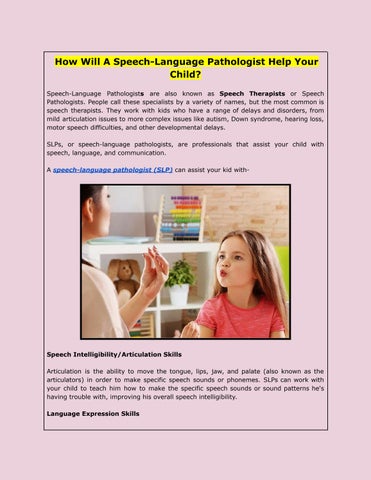
How Will A Speech-Language Pathologist Help Your Child? Speech-Language Pathologists are also known as Speech Therapists or Speech Pathologists. People call these specialists by a variety of names, but the most common is speech therapists. They work with kids who have a range of delays and disorders, from mild articulation issues to more complex issues like autism, Down syndrome, hearing loss, motor speech difficulties, and other developmental delays. SLPs, or speech-language pathologists, are professionals that assist your child with speech, language, and communication. A speech-language pathologist (SLP) can assist your kid with-
Speech Intelligibility/Articulation Skills Articulation is the ability to move the tongue, lips, jaw, and palate (also known as the articulators) in order to make specific speech sounds or phonemes. SLPs can work with your child to teach him how to make the specific speech sounds or sound patterns he's having trouble with, improving his overall speech intelligibility. Language Expression Skills
Language is a symbolic, rule-governed system that is used to transmit a message, whereas voice is a physical motor skill to speak. What your youngster says is referred to as expressive language. Speech-language pathologists can assist your child in learning new words as well as how to combine them to build phrases and sentences so that he or she can communicate with you and others. Listening and Receptive Language Your child's ability to listen and understand words is referred to as receptive language. Young children's receptive language skills (what they understand) are usually stronger than their expressive language skills (what they can say). An SLP can assist your child in learning new vocabulary and how to use it in following directions, answering questions, and engaging in simple interactions with others. Stuttering/Speech Fluency Stuttering is a type of communication impairment that affects the fluency of one's speaking. It is marked by disfluencies or interruptions in the flow of speech and usually begins in childhood. Disfluencies in speech are something that everyone has. SLPs can teach your child skills for controlling this behavior, improving his speech fluency and intelligibility in the process. Swallowing and Feeding Problems In addition to speech and language disorders, speech-language pathologists can be trained in pediatric swallowing and eating issues. This is due to their extensive knowledge of the architecture and functions of the mouth cavity and beyond as SLPs. Some SLPs have also received training in myofunctional problems, such as tongue thrust. If your child has any of the above-mentioned issues, you should look for an experienced speech-language pathologist. There are many prestigious pediatric rehabilitation centers in Dubai that offer child speech therapy, PROMPt therapy, intensive speech therapy, etc depending on the condition of the children.